
Grade 9 Worksheets
9,323 grade resources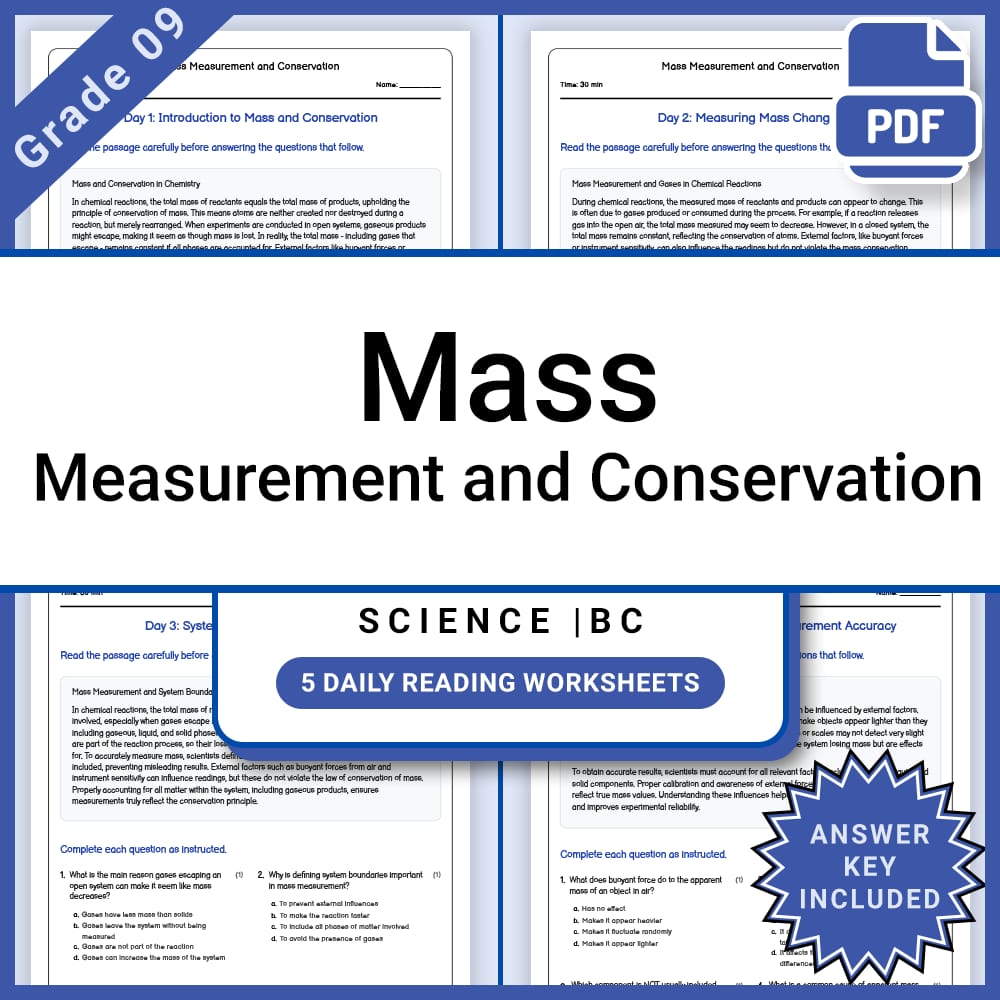
Grade 9 Science – Mass Measurement and Conservation Daily Worksheet + Answer Key
JCreated byJ.S SheetsLearning Objectives
- Understand the principle of mass conservation in chemical reactions.
- Identify factors affecting measured mass in experiments.
- Explain why apparent mass changes occur when gases escape.
Also included in: Grade 9 Science Lesson Group BC Framework | Chemistry, Physics, and More +1 more
Instant download
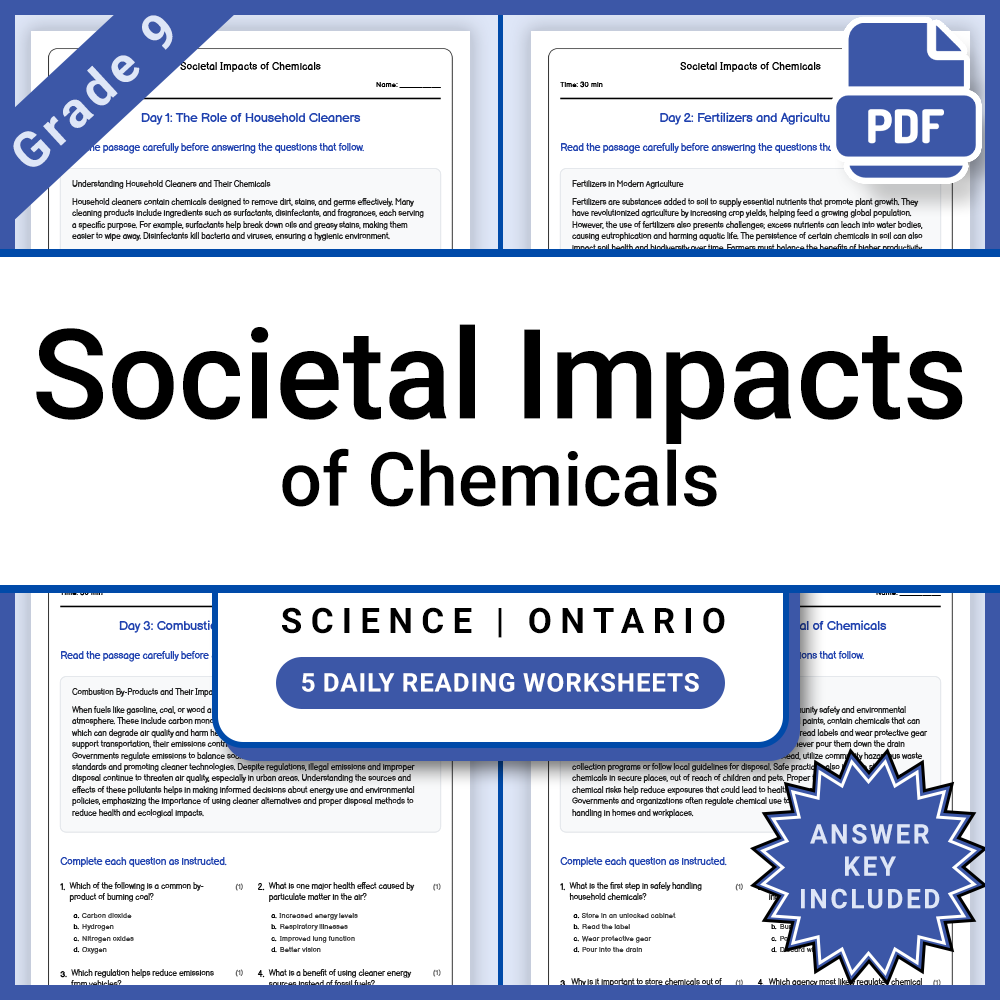
Grade 9 Science – Societal Impacts of Chemicals Worksheet + Answer Key
JCreated byJ.S SheetsLearning Objectives
- Understand the chemical properties of common household products.
- Analyze how chemical use benefits society and the environment.
- Evaluate risks associated with chemical exposure and handling.
Also included in: Grade 9 Science Lesson Group: Ontario Curriculum Daily Reading Worksheets +1 more
Instant download
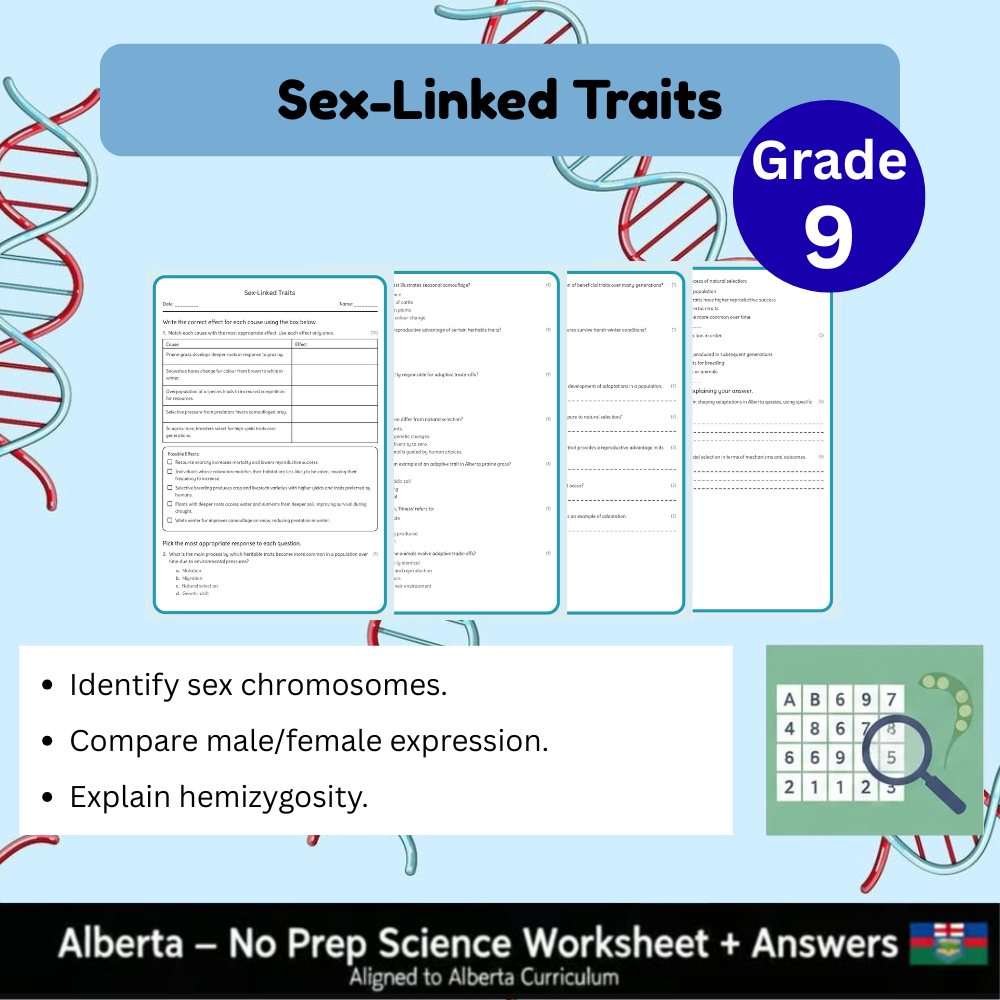
Grade 9 Science – Sex-Linked Traits Worksheet (PDF) – Alberta Standards
 Created byBright Mind Resources
Learning Objectives
- Understand the role of sex chromosomes in inheritance.
- Identify how sex-linked traits are expressed differently in males and females.
- Explain mechanisms such as hemizygosity and dosage compensation in mammals.
Instant download
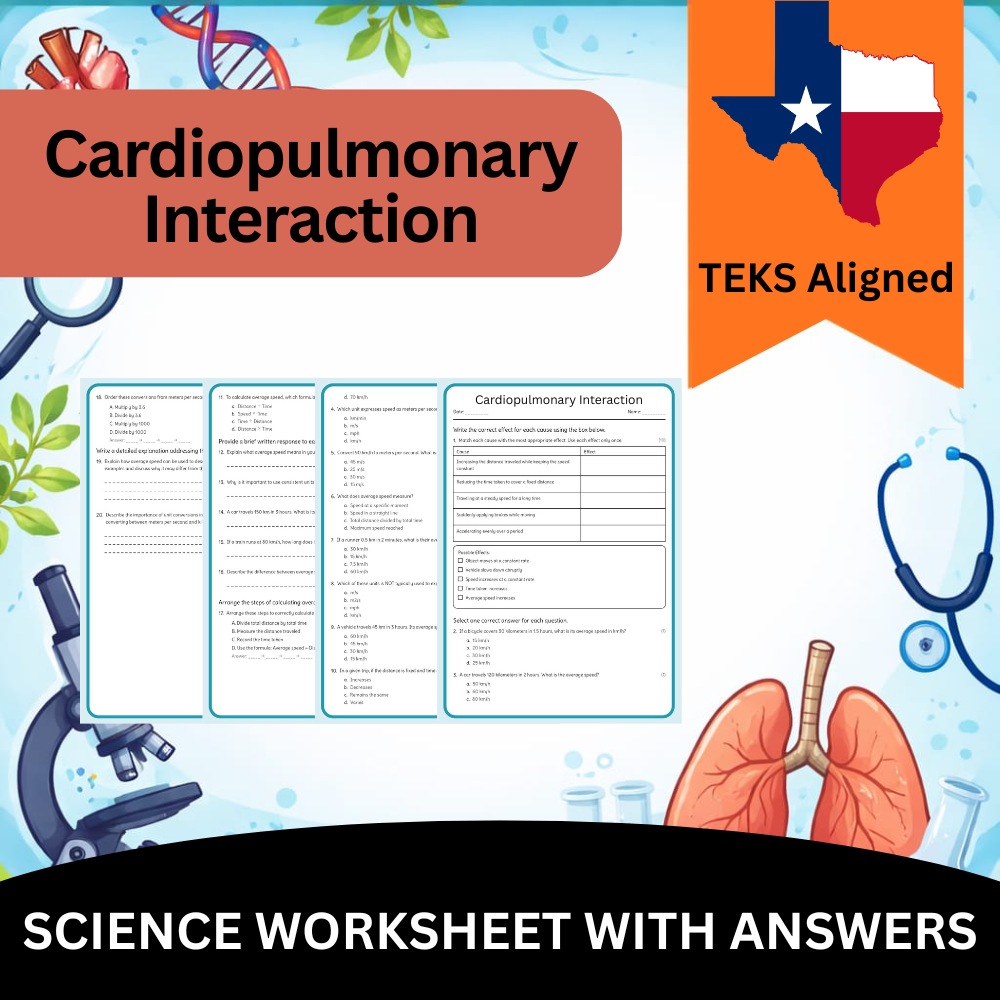
Grade 9 Science – Cardiopulmonary Interaction Worksheet (Answer Key) | TEKS Aligned
Created byBright Mind ResourcesLearning Objectives
- Understand how the cardiovascular and respiratory systems work together to deliver oxygen and remove carbon dioxide.
- Identify the roles of chemoreceptors in regulating breathing and circulation.
- Describe the physiological responses to changes in blood gas levels.
Also included in: Grade 9 Science Unit | Human Body Systems Worksheets & TEKS Aligned Bundle +3 more
Instant download
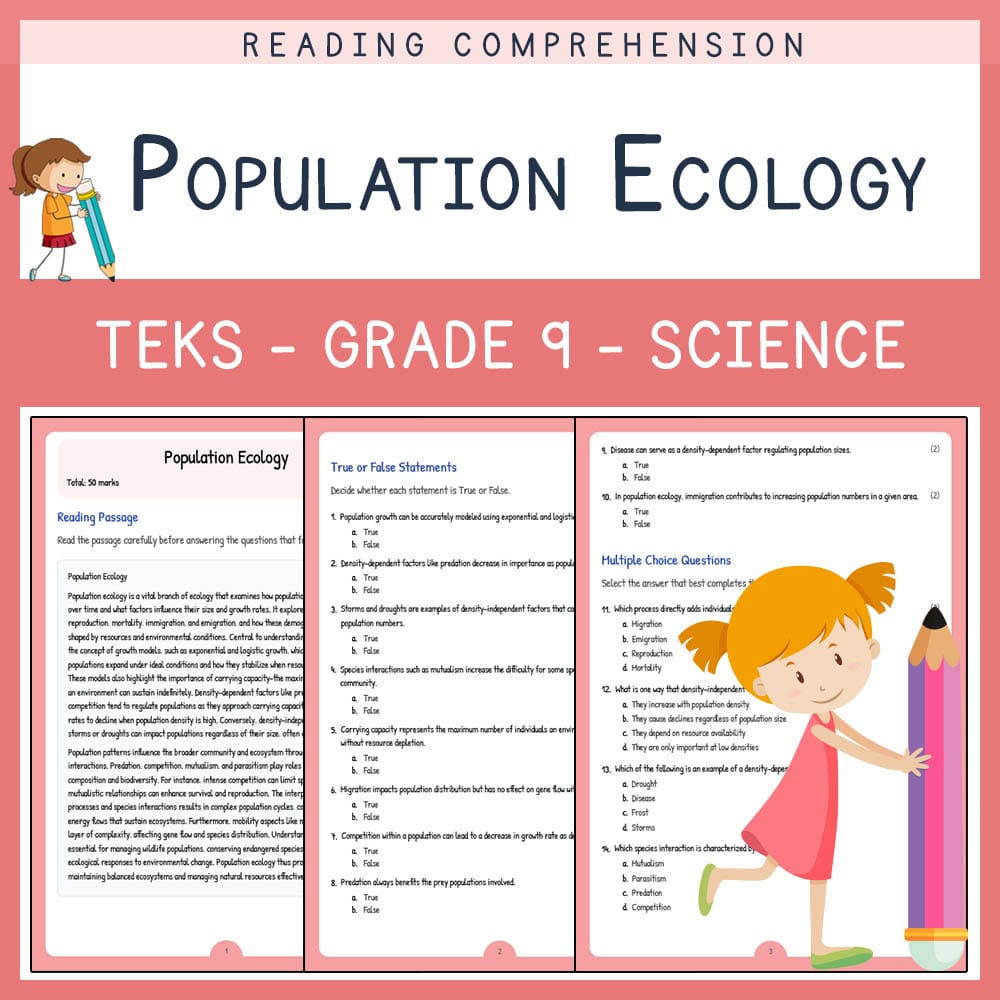
Grade 9 Science | Population Ecology Worksheet | TEKS-Aligned
 Created byLumora Learning
Learning Objectives
- Explain the key concepts and factors affecting population growth and decline.
- Analyze how density-dependent and density-independent factors influence populations.
- Describe species interactions and their effects on community structure.
Instant download
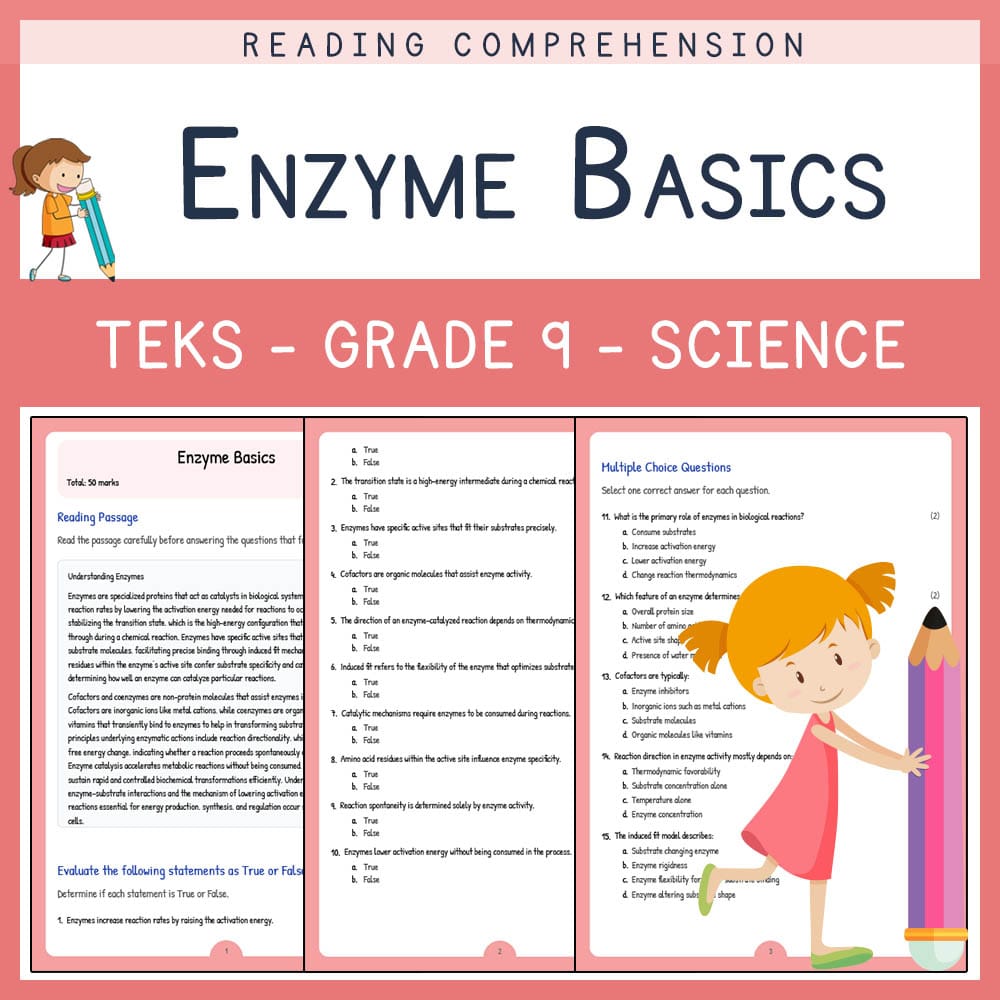
Grade 9 Science | Enzyme Basics Worksheet | TEKS-Aligned
Created byLumora LearningLearning Objectives
- Understand the fundamental role of enzymes as biological catalysts.
- Describe how enzyme structures relate to substrate specificity and catalytic efficiency.
- Explain the concepts of activation energy and transition states in enzymatic reactions.
Instant download
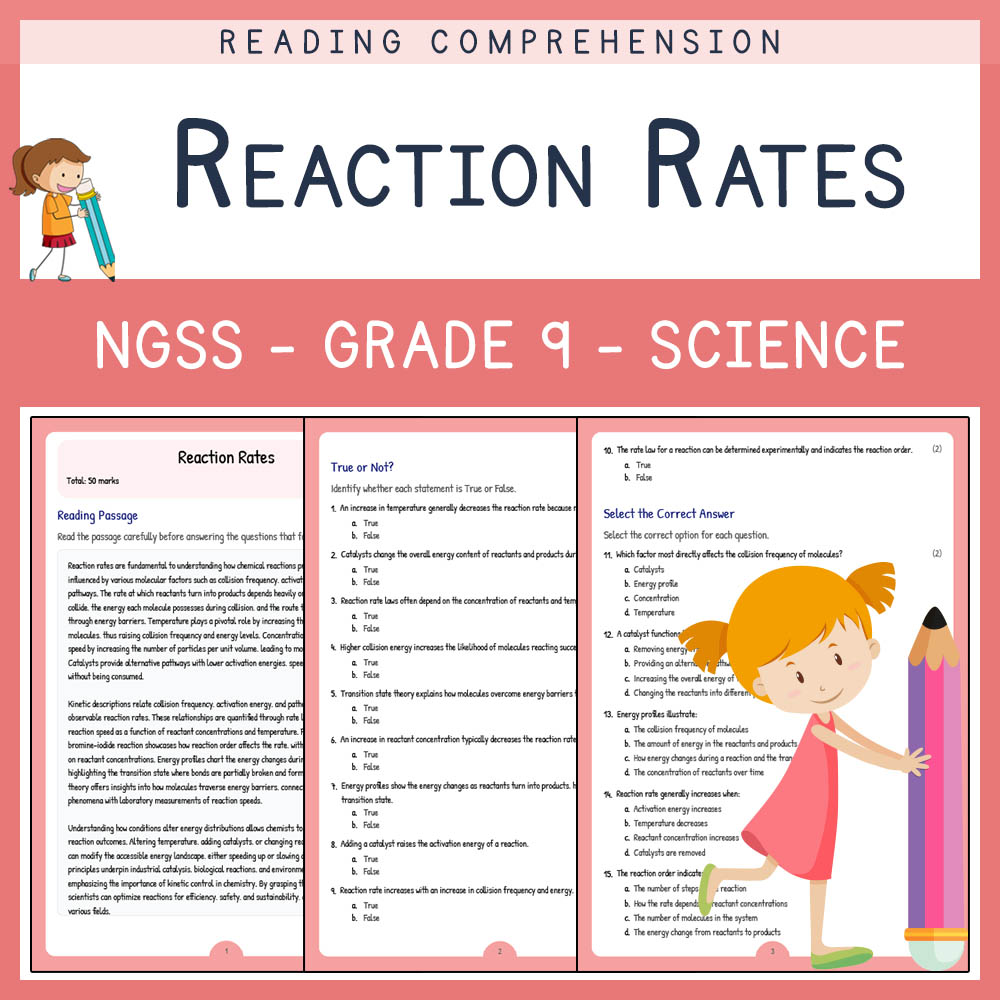
Grade 9 Science | Reaction Rates Worksheet & Answer Key (NGSS-Aligned)
Created byLumora LearningLearning Objectives
- Understand how collision frequency, activation energy, and reaction pathways influence reaction rates.
- Describe how temperature, concentration, and catalysts modify energy distributions and affect reaction speed.
- Explain the concepts of rate laws and reaction order through real-world examples.
Instant download
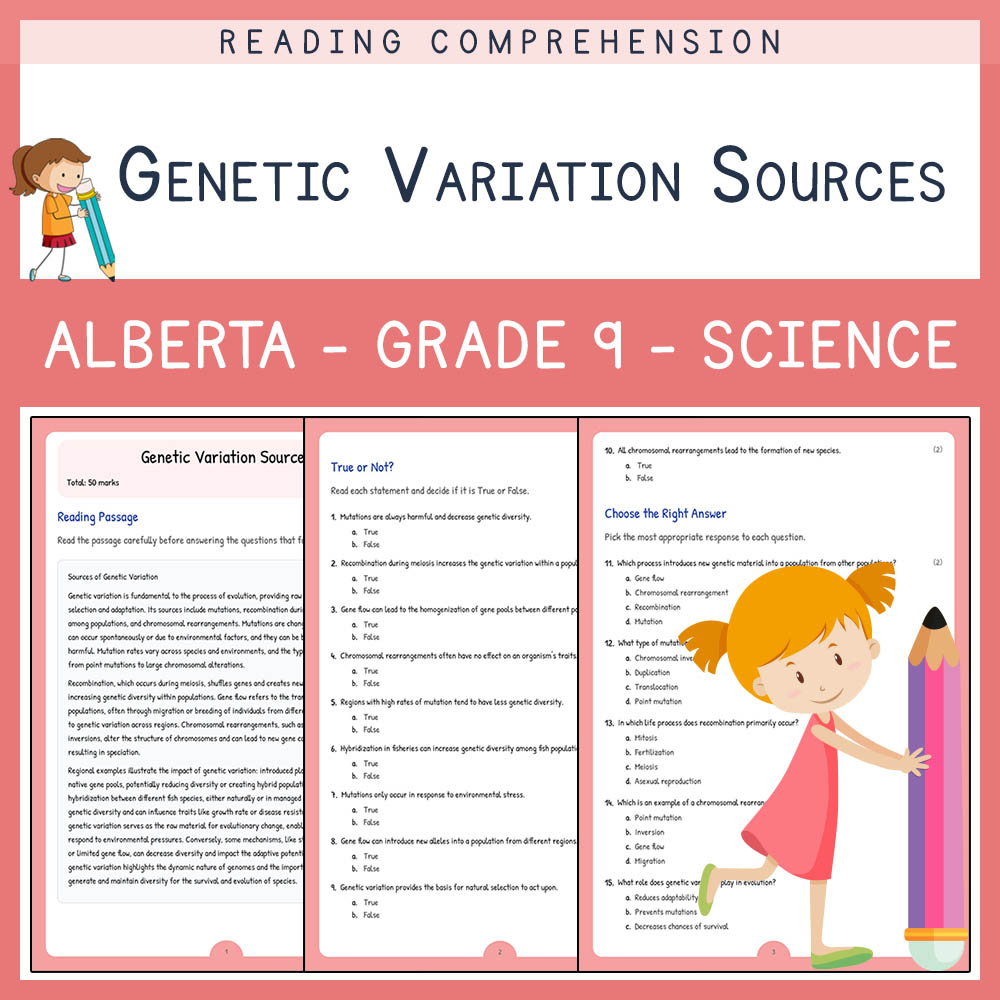
Grade 9 Science | Genetic Variation Sources Worksheet | Alberta Standards
Created byLumora LearningLearning Objectives
- Define key sources of genetic variation including mutation, recombination, gene flow, and chromosomal rearrangements.
- Explain how mutation rates and types affect genetic diversity.
- Describe mechanisms that increase or decrease genetic variation in populations.
Instant download
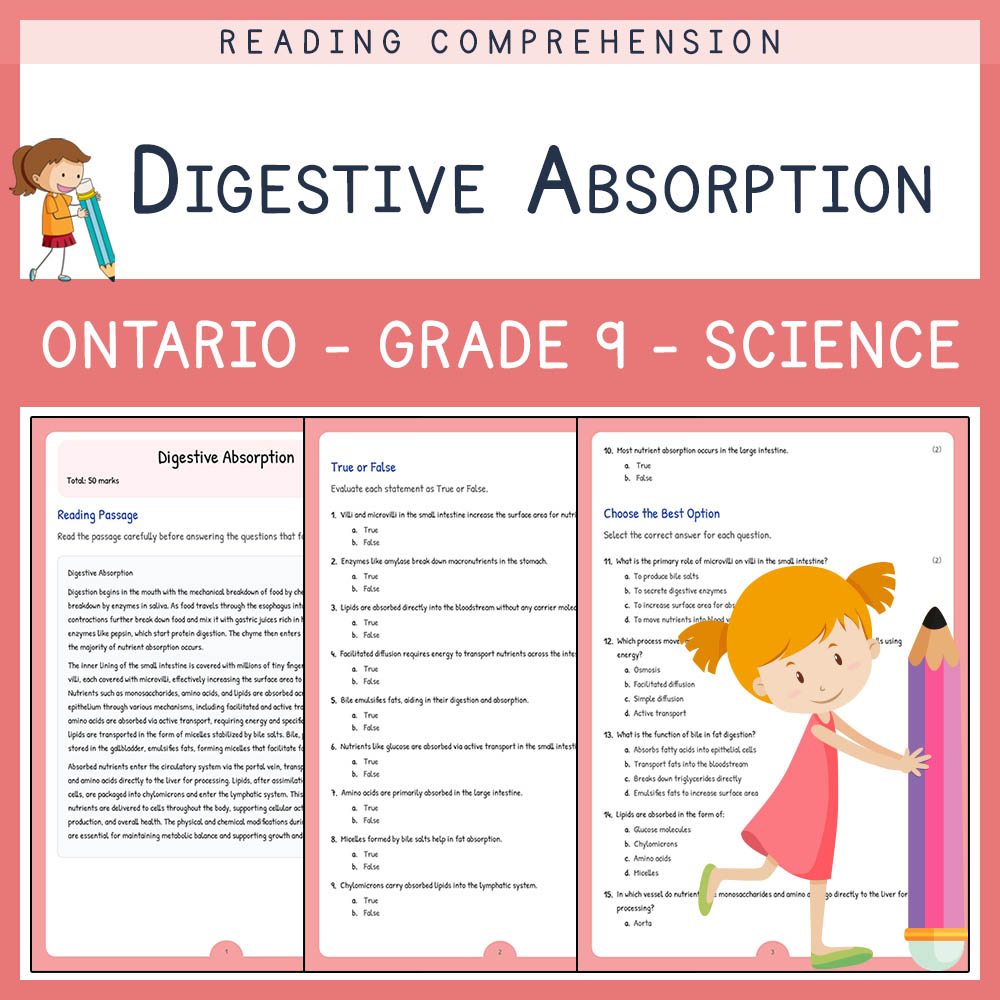
Grade 9 Science | Digestive Absorption Worksheet | Ontario Standard
Created byLumora LearningLearning Objectives
- Explain the mechanical and chemical processes involved in digestion and nutrient absorption.
- Describe the structure and function of villi and microvilli in increasing surface area for absorption.
- Understand how enzymes facilitate the hydrolysis of macronutrients into absorbable units.
Also included in: Grade 9 Science | Life Systems Lesson Bundle | Ontario Framework
Instant download
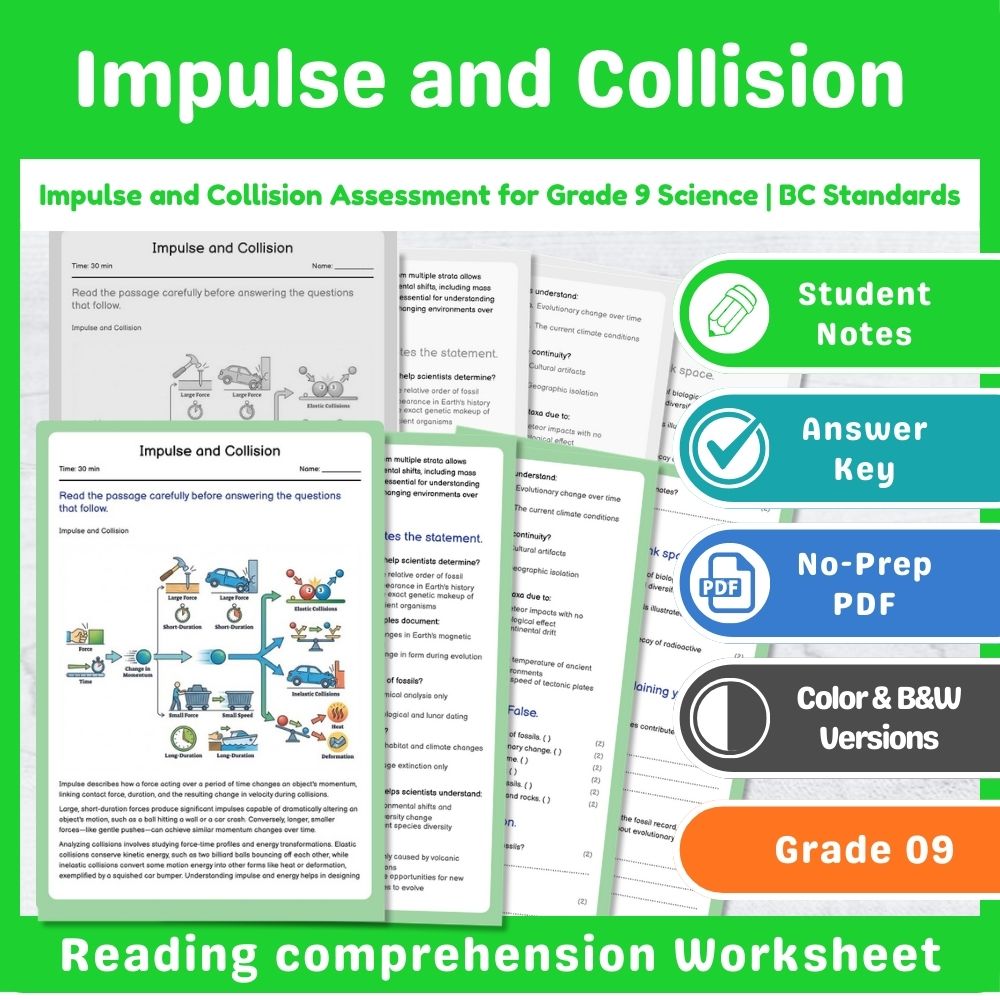
Impulse and Collision Assessment for Grade 9 Science | BC Standards
 Created byPrism Point Learning
Learning Objectives
- Understand how force acts over time to change an object's momentum in collisions.
- Differentiate between elastic and inelastic collisions based on energy conservation.
- Analyze force-time graphs and energy transformations during collisions.
Instant download

Grade 9 Science – Cell Structure Daily Reading Worksheet with Answer Key
JCreated byJ.S SheetsLearning Objectives
- Identify the main components of a cell.
- Describe the functions of key organelles.
- Understand how cell structure relates to its function.
Also included in: Grade 9 Science Lesson Group Bundle | BC Framework Activities & Worksheets +1 more
Instant download

Grade 9 Science | Observable Properties Reading Worksheet (PDF + Rubric)
JCreated byJ.S SheetsLearning Objectives
- Define and describe observable properties of materials.
- Identify common observable properties such as colour, hardness, and solubility.
- Explain how observable properties are used to classify and distinguish substances.
Also included in: Grade 9 Science Unit Bundle – Chemistry, States & Atomic Structure Worksheets +1 more
Instant download

Grade 9 Science | Genetic Data Analysis Worksheet with Short Notes (PDF)
 Created byMeadowlark Worksheets
Learning Objectives
- Interpret molecular and phenotypic information to infer inheritance patterns.
- Understand techniques such as PCR markers, SNP variants, and sequencing reads.
- Compare observed data to expected ratios to detect linkage, heterozygosity, or selection.
Instant download
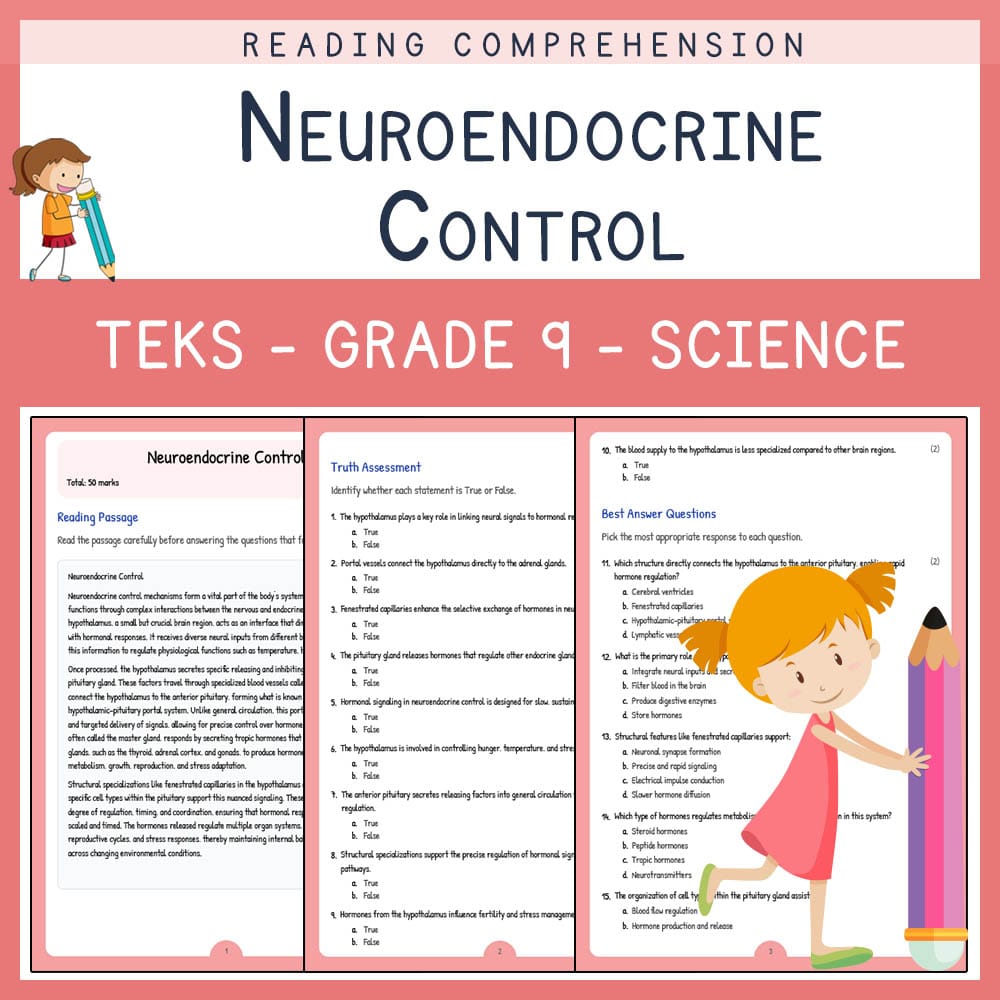
Grade 9 Science | Neuroendocrine Control Worksheet | TEKS Aligned
Created byLumora LearningLearning Objectives
- Describe how the hypothalamus links neural inputs to hormonal responses.
- Identify the structural specializations that support neuroendocrine regulation.
- Explain how anatomical features like fenestrated capillaries and portal vessels enable precise hormonal control.
Instant download
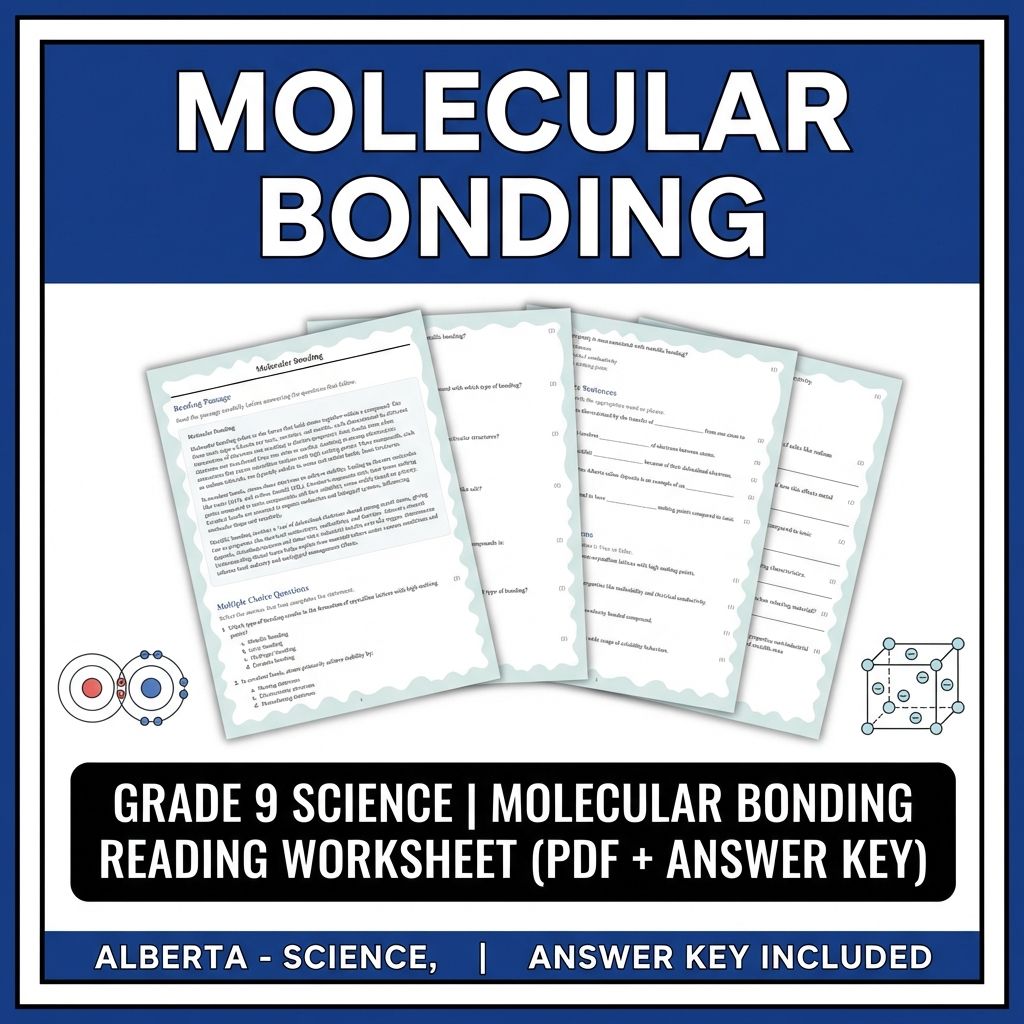
Grade 9 Science | Molecular Bonding Reading Worksheet (PDF + Answer Key)
JCreated byJ.S SheetsLearning Objectives
- Understand the differences between ionic, covalent, and metallic bonding based on atom interactions.
- Identify properties of compounds resulting from different bond types, such as melting points, solubility, and crystal structures.
- Relate bonding types to real-world materials and applications, including industrial and environmental contexts in Alberta.
Also included in: Grade 9 Science Unit Bundle – Chemistry, States & Atomic Structure Worksheets +1 more
Instant download
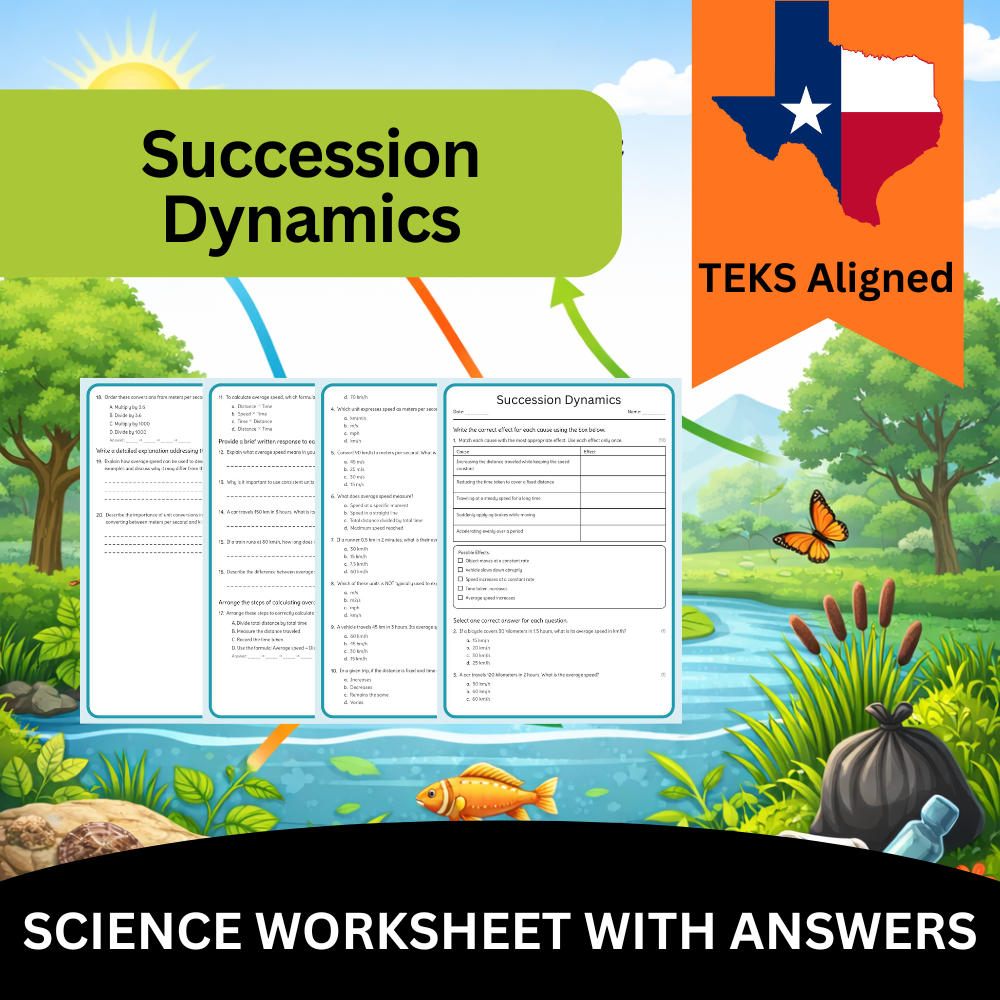
Grade 9 Science | Understanding Succession Dynamics Worksheet (PDF)
Created byBright Mind ResourcesLearning Objectives
- Explain the differences between primary and secondary succession.
- Identify factors that influence ecosystem succession stages.
- Analyze species traits and dispersal mechanisms involved in succession.
Also included in: Grade 9 Science UNIT Bundle | Ecosystems & Biogeochemical Cycles TEKS-Aligned +3 more
Instant download
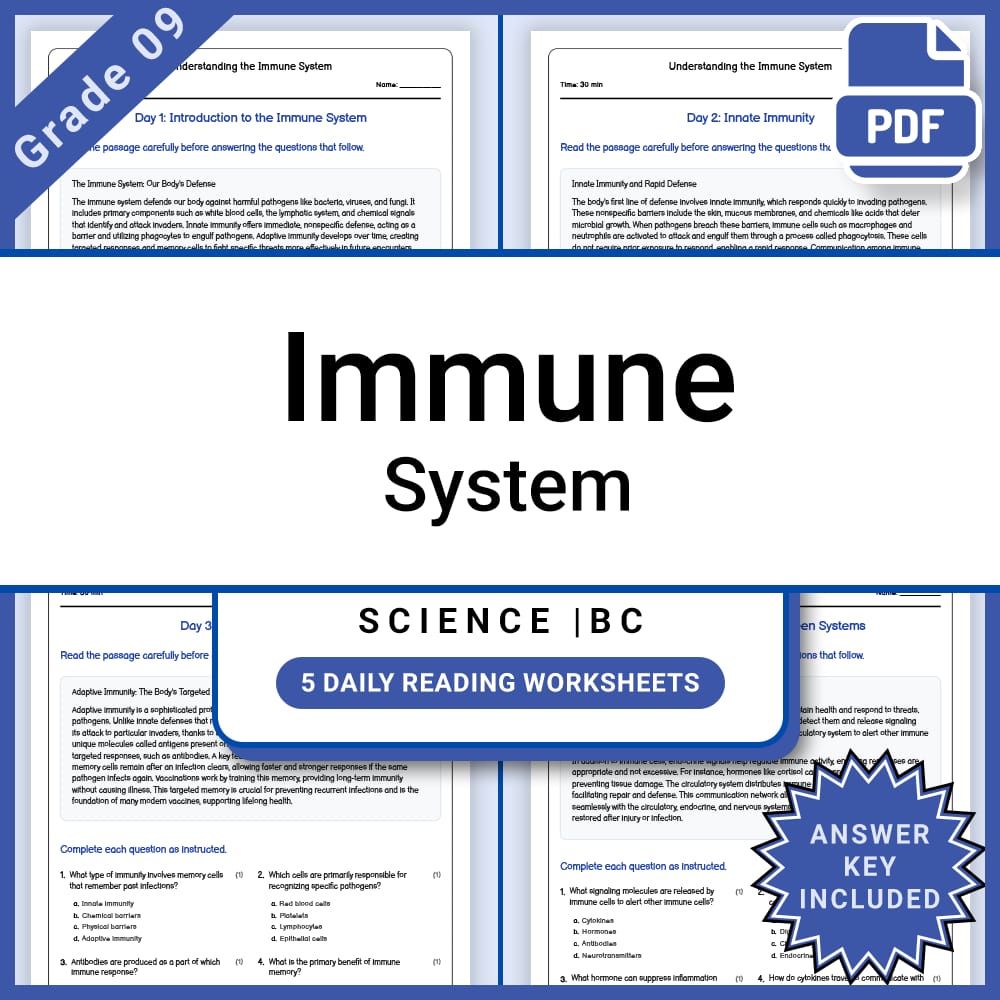
Grade 9 Science – Immune System Daily Reading Worksheet + Answer Key
JCreated byJ.S SheetsLearning Objectives
- Identify key components of the immune system
- Differentiate between innate and adaptive immune responses
- Explain how immune communication integrates with other body systems
Also included in: Grade 9 Science Lesson Group Bundle | BC Framework Activities & Worksheets +1 more
Instant download

Grade 9 Heat Quantification Worksheet | NGSS Practice PDF
 Created byClear Sky Classroom
Learning Objectives
- Understand the concepts of heat transfer mechanisms including conduction, convection, and radiation.
- Apply mathematical formulas involving specific heat capacity, mass, and temperature change to calculate thermal energy transfer.
- Explain sign conventions for heat flow and energy change in closed systems.
Also included in: Grade 9 Energy Transformations Science Lesson Bundle Worksheets | NGSS +1 more
Instant download
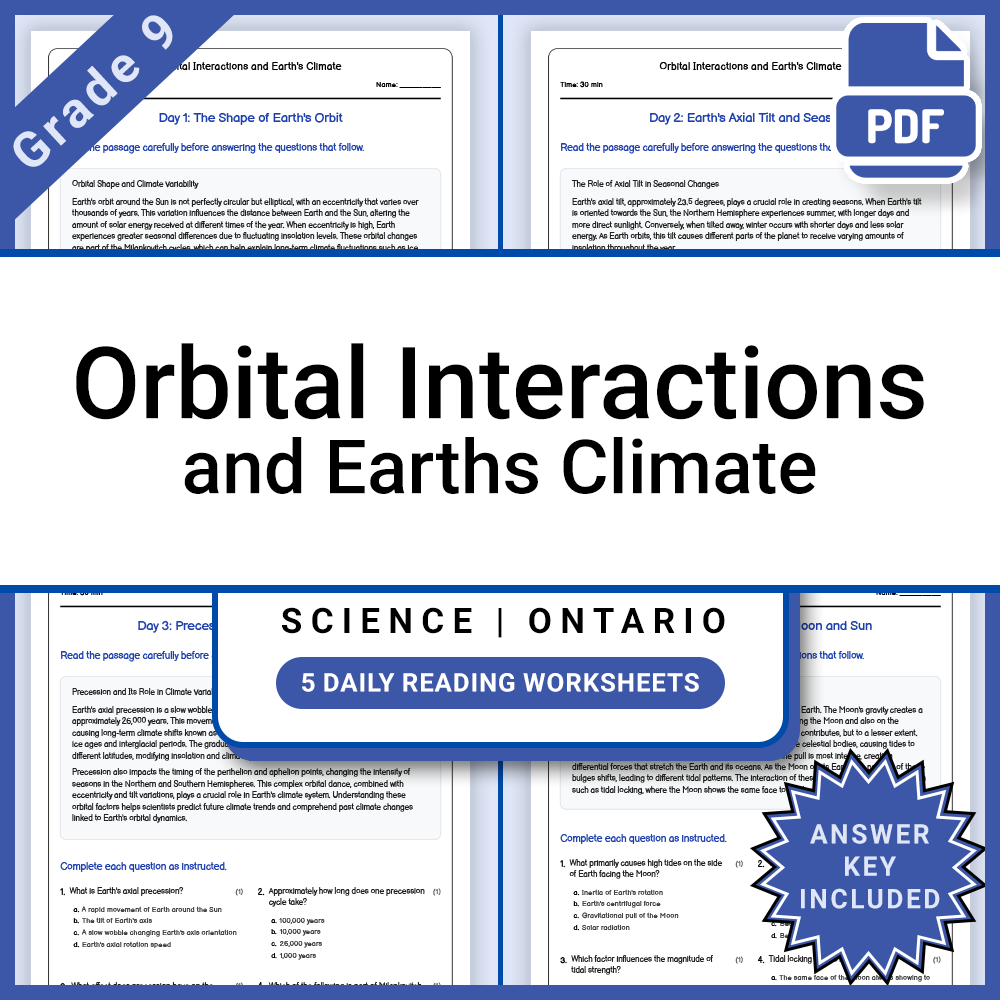
Grade 9 Science – Orbital Interactions and Climate | Worksheet + Answer Key
JCreated byJ.S SheetsLearning Objectives
- Understand how Earth's orbital parameters influence climate and insolation patterns.
- Explain tidal forcing from the Moon and Sun through gravitational effects and geometry.
- Connect orbital dynamics to observational climate phenomena such as day length and tidal ranges.
Also included in: Grade 9 Science Lesson Group Bundle – Earth Systems & Planetary Concepts +1 more
Instant download

Grade 9 Seasonal | Christmas Around the World Worksheet | PDF + Answer Key
 Created byShaNova Worksheets
Learning Objectives
- Compare Christmas traditions across different cultures around the world.
- Identify unique customs, foods, and celebrations associated with Christmas in various countries.
- Understand how local history and beliefs influence holiday customs.
Instant download

Grade 9 Science | Hydrologic Fluxes Worksheet with Short Notes (Printable PDF)
Created byMeadowlark WorksheetsLearning Objectives
- Explain surface and subsurface water flow processes using water-budget frameworks.
- Interpret discharge hydrographs and groundwater level records for streamflow analysis.
- Relate precipitation, evapotranspiration, and human withdrawals to water resource variability.
Also included in: Grade 9 Science | Earth Systems & Geology Unit Worksheet Bundle (Printable PDFs) +1 more
Instant download
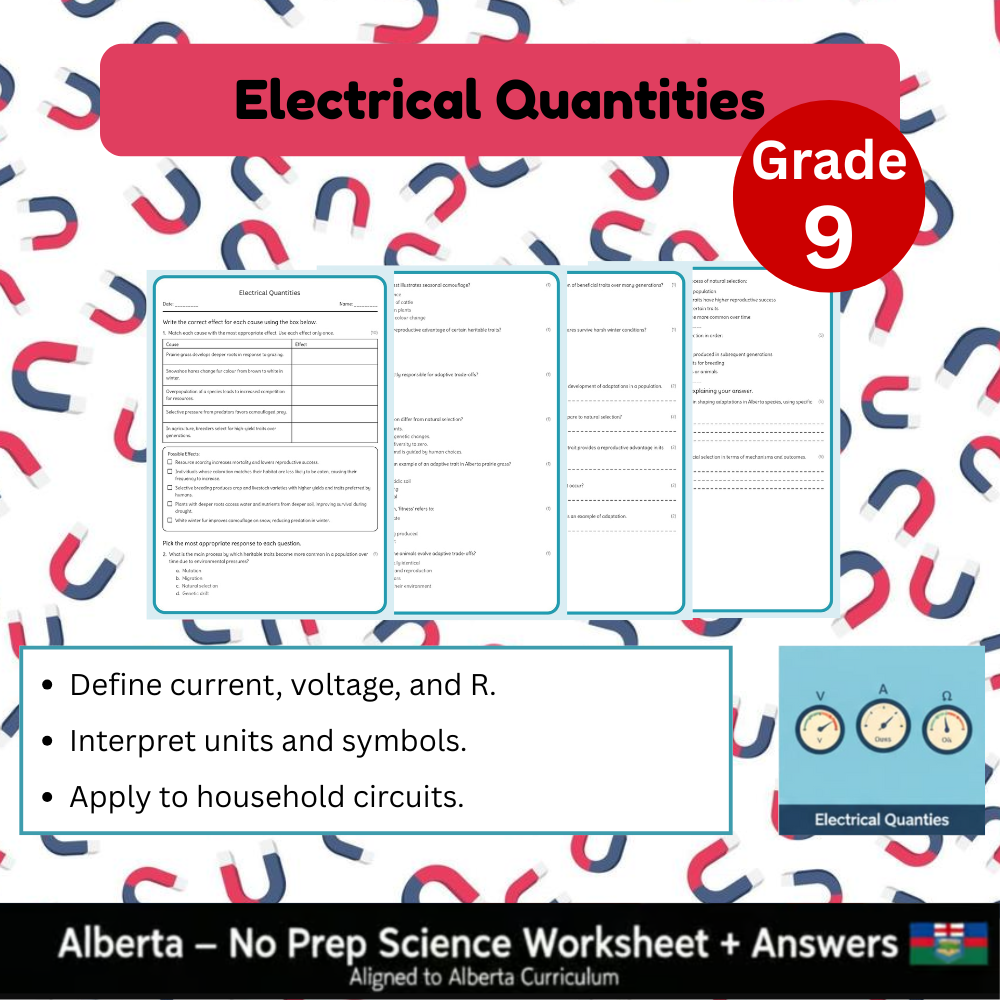
Grade 9 Science – Electrical Quantities Worksheet (PDF) – Alberta Standards
Created byBright Mind ResourcesLearning Objectives
- Understand and define electric current, voltage, and resistance as fundamental electrical quantities.
- Interpret the units and symbols associated with electric current, voltage, and resistance.
- Apply qualitative reasoning to regional electrical systems including transmission, household circuits, and manufacturing components.
Instant download

Grade 9 Science – Energy Transfer in Mechanical Daily Worksheet + Answer Key
JCreated byJ.S SheetsLearning Objectives
- Identify the different types of energy in mechanical systems.
- Describe how energy transfers occur through work, collisions, and friction.
- Explain how mechanical energy is converted into thermal energy.
Also included in: Grade 9 Science Lesson Bundle | Physics and Energy Concept Worksheets +1 more
Instant download

Grade 9 Science | Microscopy Basics Worksheet with Short Notes (Printable PDF)
Created byMeadowlark WorksheetsLearning Objectives
- Understand how optical and electron microscopes produce magnified images of specimens.
- Explain the concepts of magnification, resolution, and contrast in microscopy.
- Identify the differences between light and electron microscopes in terms of application and capabilities.
Instant download

Analyzing Evidence in Canadian History | Social Studies Worksheet Grade 9
JCreated byJ.S SheetsLearning Objectives
- Develop skills to critically analyze historical sources and evidence.
- Evaluate the credibility, perspective, and relevance of different sources such as treaties, photographs, and government records.
- Understand how evidence shapes historical narratives, considering Indigenous and settler viewpoints.
Also included in: Grade 9 Social Studies Bundle | Constructing Historical Narratives +1 more
Instant download

Grade 9 Chemical Reactions Worksheet | Practice & Alberta Standard PDF
Created byClear Sky ClassroomLearning Objectives
- Explain how chemical reactions rearrange atoms to form new products while conserving mass
- Interpret balanced chemical equations to connect qualitative observations with quantitative particle counts
- Identify and compare common types of chemical reactions such as combustion, synthesis, and decomposition
Instant download

Grade 9 Science | Trophic Structure Worksheet (Answer Key) – TEKS Aligned
Created byBright Mind ResourcesLearning Objectives
- Understand the components and organization of trophic levels in ecosystems.
- Describe how energy flows through food chains and webs.
- Explain the concepts of trophic efficiency and trophic cascades.
Also included in: Grade 9 Science UNIT Bundle | Ecosystems & Biogeochemical Cycles TEKS-Aligned +3 more
Instant download

Grade 9 Science – Biogeochemical Cycles Worksheet (Answer Key) | TEKS Standard
Created byBright Mind ResourcesLearning Objectives
- Explain the movement of elements such as carbon, nitrogen, and phosphorus among Earth's reservoirs.
- Identify key processes like photosynthesis, decomposition, nitrogen fixation, and weathering in biogeochemical cycles.
- Analyze how fluxes and reservoir sizes influence ecosystem responses to environmental disturbances.
Also included in: Grade 9 Science UNIT Bundle | Ecosystems & Biogeochemical Cycles TEKS-Aligned +3 more
Instant download

Grade 9 Science | Plate Boundaries Worksheet with Short Notes (Printable PDF)
Created byMeadowlark WorksheetsLearning Objectives
- Understand the mechanisms driving divergent, convergent, and transform plate boundaries.
- Identify surface expressions such as mid-ocean ridges, subduction zones, and transform faults.
- Analyze evidence like seafloor age patterns, paleomagnetic stripes, and earthquake distributions related to plate tectonics.
Also included in: Grade 9 Science | Earth Systems & Geology Unit Worksheet Bundle (Printable PDFs) +1 more
Instant download
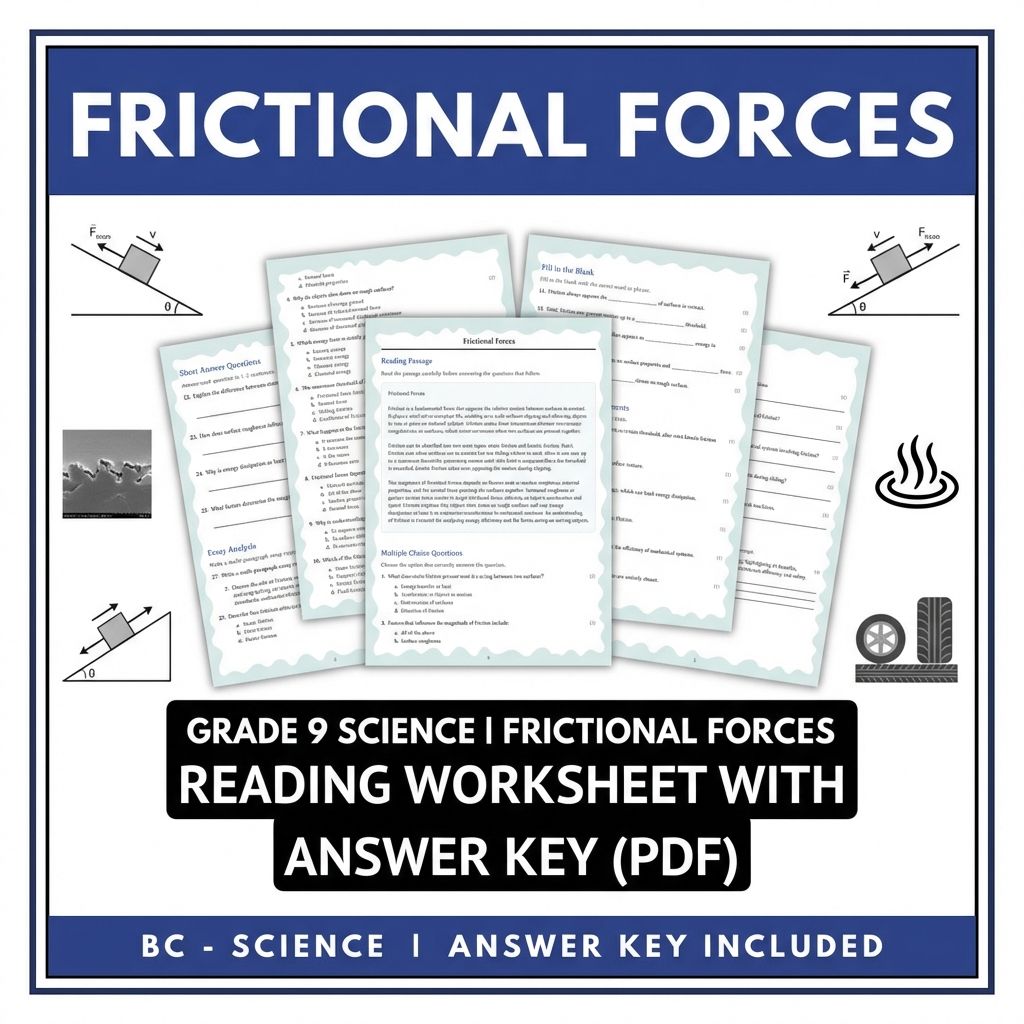
Grade 9 Science | Frictional Forces Reading Worksheet with Answer Key (PDF)
JCreated byJ.S SheetsLearning Objectives
- Understand the concept of friction and how it opposes relative motion between surfaces.
- Differentiate between static and kinetic friction and their effects during motion.
- Explain factors that influence the magnitude of frictional forces, including surface properties and normal force.
Instant download

Grade 9 Science – Understanding Net Force | Daily Reading Worksheet
Created byBright Mind ResourcesLearning Objectives
- Define net force and explain its significance in motion.
- Identify forces acting on an object and determine their vector sum.
- Understand how balanced and unbalanced forces affect motion.
Also included in: Grade 9 Forces, Motion & Energy Science Lesson Bundle for Daily Reading | BC +1 more
Instant download

Grade 9 Science Power and Efficiency Worksheet | Energy Transfer Ontario
 Created byChalk and Compass
Learning Objectives
- Explain power as the rate of energy transfer and use the correct units to compare power values.
- Differentiate average power and instantaneous power in simple energy-transfer situations.
- Calculate and interpret mechanical efficiency as useful work or output energy divided by input energy.
Also included in: Grade 9 Science Work, Energy & Forces Lesson Bundle | Ontario +1 more
Instant download
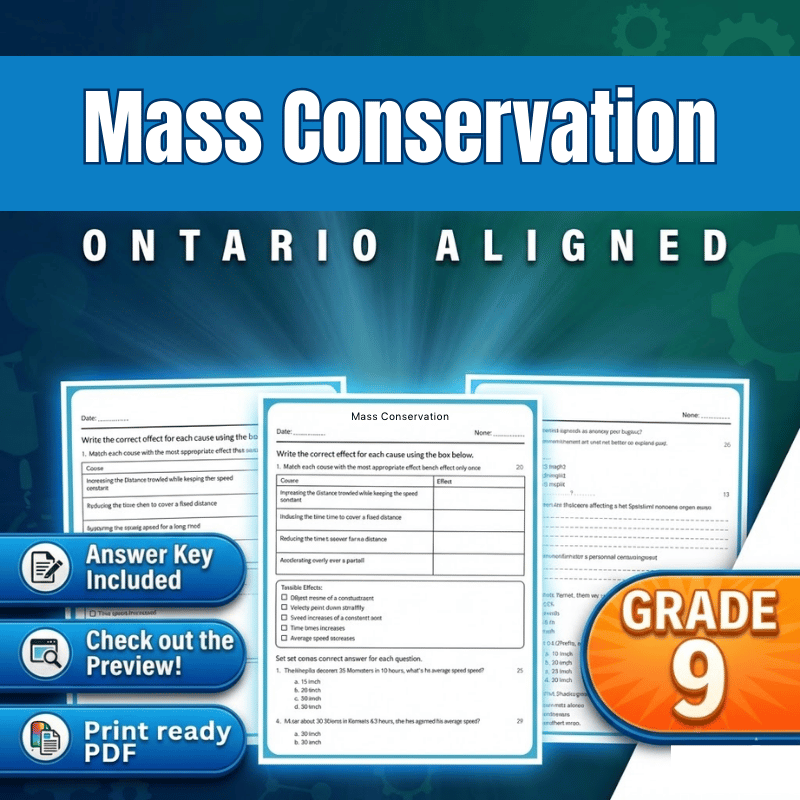
Grade 9 Science – Mass Conservation Worksheet (Ontario) – Science (PDF)
Created byBright Mind ResourcesLearning Objectives
- Understand the principle of conservation of mass in closed systems during chemical reactions.
- Explain how total mass of reactants equals total mass of products in chemical processes.
- Differentiate between apparent mass changes caused by gas exchange and true mass conservation.
Instant download

Grade 9 Science | Reaction Categories in Chemistry - Daily Reading Comprehension
 Created byCoral Reef Learning
Learning Objectives
- Understand key concepts related to Science
- Apply knowledge through practice questions
- Demonstrate comprehension of the material
Instant download

Grade 9 Quadratic Factoring Worksheet | Solve by Factor Form CCSS
 Created byBRIGHT PATH RESOURCES
Learning Objectives
- Factorise quadratics into the form (x − r)(x − s)
- Use the zero-product property to find solutions of (x − r)(x − s) = 0
- Interpret the number and location of solutions from the factors
Also included in: Grade 9 Factoring, Rational Expressions & Quadratics Maths Lesson Bundle +1 more
Instant download

Grade 9 Factor Meaning Worksheet | Common Core Factoring & Algebra Practice
Created byBRIGHT PATH RESOURCESLearning Objectives
- Interpret what a factor does to the value of an expression (multiplying a whole quantity).
- Use coefficients to explain how scaling changes an output.
- Interpret exponents as repeated multiplication and apply this meaning in expressions.
Also included in: Grade 9 Factoring, Rational Expressions & Quadratics Maths Lesson Bundle +1 more
Instant download

Grade 9 Social Studies | Enlightenment Ideas Worksheet (California Standards)
 Created bySunny Desk Resources
Learning Objectives
- Explain key Enlightenment ideals such as reason, liberty, and progress.
- Describe how thinkers like John Locke and Voltaire influenced political philosophy.
- Analyze how Enlightenment ideas helped shape modern political institutions and reforms.
Also included in: World Civilizations Grade 9 Social Studies Full-Year Worksheet Bundle | California +1 more
Instant download

Enlightenment Ideas Worksheet | Social Studies Grade 9 Standards Practice
JCreated byJ.S SheetsLearning Objectives
- Explain key Enlightenment ideals such as reason, liberty, and progress and how they influenced political thinking.
- Describe how Locke’s ideas about natural rights and accountability shaped views of government.
- Analyze how Voltaire’s criticism of intolerance and the separation of powers influenced modern political institutions.
Instant download

Respiratory Exchange Practice Worksheet | Grade 9 Science
Created byPrism Point LearningLearning Objectives
- Explain how gas exchange at the alveolar–capillary interface depends on diffusion driven by partial pressure gradients, surface area, and membrane thickness.
- Describe how ventilation mechanics and anatomical dead space affect effective breathing and gas exchange efficiency.
- Analyze how oxygen uptake and carbon dioxide removal depend on haemoglobin affinity, perfusion matching, and ventilation–perfusion relationships.
Also included in: Grade 9 Body Systems and Cells Science Ontario Lesson Bundle Test Prep
Instant download

Grade 9 Science – Molecular Evidence in Evolution Daily Worksheet + Answer Key
JCreated byJ.S SheetsLearning Objectives
- Understand the role of DNA, RNA, and protein sequences in evolutionary studies.
- Identify homologous genes and their significance in determining common ancestry.
- Explain the concept of molecular clocks and how sequence divergence estimates divergence times.
Also included in: Grade 9 Science Lesson Bundle | Evolution and Genetics TEKS Framework +1 more
Instant download

Science Worksheet Power and Rates Grade 9 | Standards-Aligned Practice
JCreated byJ.S SheetsLearning Objectives
- Explain power as the rate of energy transfer or the rate of doing work.
- Compare situations using power by considering both energy and time.
- Use examples (e.g., motors and appliances) to reason about why higher power changes how quickly something happens.
Also included in: Grade 9 Forces, Energy, and Matter Transformations Science lesson bundle +1 more
Instant download

Grade 9 Nucleic Acid Structure Daily Reading Worksheet | TEKS Biology
Created byBRIGHT PATH RESOURCESLearning Objectives
- Identify key details about nucleotides as the building blocks of nucleic acids
- Explain basic structural features of DNA and RNA at a Grade 9 level
- Use passage information to answer questions about stability and information flow
Also included in: Grade 9 Genetics Molecular Biology Science Reading Worksheets Bundle | TEKS +1 more
Instant download

Grade 9 Social Studies | Analyzing Evidence Worksheet (BC Standard) (PDF)
Created bySunny Desk ResourcesLearning Objectives
- Evaluate the credibility of historical sources by considering origin, purpose, and context.
- Analyze how perspective and bias can shape what evidence shows (and what it leaves out).
- Build evidence-based historical claims that connect specific sources to a historical question.
Also included in: Grade 9 Sources and Evidence Social Studies Lesson Bundle: BC +1 more
Instant download

Grade 9 Science – Work & Energy Daily Reading Worksheet | Standards BC
Created byBright Mind ResourcesLearning Objectives
- Understand the concept of work in physics.
- Learn how work relates to energy transfer.
- Identify examples of positive and negative work in everyday activities.
Also included in: Grade 9 Forces, Motion & Energy Science Lesson Bundle for Daily Reading | BC +1 more
Instant download

Grade 9 Science – Work & Energy Daily Reading Worksheet | Ontario Standards
Created byBright Mind ResourcesLearning Objectives
- Understand the concept of work in physics
- Identify different forms of energy (kinetic and potential)
- Calculate work done by a force
Also included in: Grade 9 Work, Energy & Forces Science Daily Reading Lesson Bundle | Ontario +1 more
Instant download

Grade 9 Science Worksheet | Chemical Changes with Ontario Standards (PDF)
 Created byEvergreen Desk Education
Learning Objectives
- Distinguish chemical changes from physical changes by linking observable evidence to new substances.
- Identify common indicators of chemical change: temperature change, gas production, precipitate formation, and persistent colour change.
- Explain chemical change using a microscopic reactant-to-product model rather than only macroscopic rearrangement.
Also included in: Grade 9 States & Energy to Chemical Reactions Science Lesson Bundle (Ontario) +1 more
Instant download

Grade 9 Science – Biotech Ethics Daily Reading Worksheet with Answer Key
JCreated byJ.S SheetsLearning Objectives
- Understand the key ethical considerations in biotechnology.
- Analyze benefits and risks associated with genetic manipulation.
- Explore societal and environmental implications of biotech advances.
Also included in: Grade 9 Science Lesson Bundle on Genetics and DNA TEKS Aligned +1 more
Instant download

Grade 9 ELA Speaker Reasoning Worksheet | Common Core (PDF)
 Created byGolden Apple Studio
Learning Objectives
- Evaluate a speaker’s argument by analyzing point of view, reasoning, and use of evidence.
- Determine whether evidence directly supports a claim or only replaces it with a vague assertion.
- Analyze rhetorical choices and appeals to explain how they shape audience interpretation.
Also included in: Grade 9 ELA Full-Year Worksheet Bundle | CCSS Common Core
Instant download
Browse more categories
About Grade 9 Worksheets
Browse 9,323 printable Grade 9 worksheets across algebra, biology, literature, and history — each a ready-to-print PDF with optional answer keys.
Every worksheet on MyTeachingSheets is created by independent teacher-authors and reviewed before publication. All resources download as printable PDFs for classroom, homework, or at-home practice, and many include answer keys. Preview any worksheet free before buying.