
Grade 9 Worksheets
9,323 grade resources
Grade 9 Science | Organelle Function - Daily Reading Worksheet
 Created byCoral Reef Learning
Learning Objectives
- Identify the structure and function of mitochondria.
- Explain how mitochondria produce energy for the cell.
- Describe the internal features of mitochondria such as cristae.
Also included in: Biology and Ecosystems Lesson Bundle – Grade 9 Science AP Daily Reading +1 more
Instant download

Variation Mechanisms Worksheet | NGSS Grade 9 Science printable PDF
Learning Objectives
- Understand the genetic mechanisms such as mutations, chromosomal rearrangements, and recombination that generate heritable variation.
- Identify different sources of allelic diversity and how they affect phenotype and population genetics.
- Explain how molecular changes influence gene expression and protein function, leading to phenotypic variability.
Also included in: Grade 9 Heredity Lesson Bundle: Inheritance & Trait Variation NGSS +1 more
Instant download

Grade 9 Holiday | Easter day for Mastering Origins of Easter | PDF + Answer Key
 Created byShaNova Worksheets
Learning Objectives
- Understand the religious significance of Easter in Christianity.
- Identify symbols and traditions associated with Easter across different cultures.
- Analyze texts and images to deepen understanding of faith-based celebrations.
Also included in: Grade 9 Holiday Easter ELA Reading Custom Bundle: Common Core Framework
Instant download

Relative Motion Worksheet | Grade 9 Science Activities
 Created byPrism Point Learning
Learning Objectives
- Explain how relative motion depends on the choice of frame of reference
- Use vector ideas (speed and direction) to combine motion in different reference frames
- Distinguish between displacement and distance when comparing observed motion
Also included in: Forces, Motion & Energy Lesson Bundle | Grade 9 Science (Alberta)
Instant download

Feedback Mechanisms Worksheet | NGSS Grade 9 Science Assessment
 Created bySkylark Worksheets
Learning Objectives
- Explain how negative and positive feedback mechanisms help maintain internal conditions within narrow limits.
- Describe sensor-effector loop logic and the role of set points in feedback control.
- Compare rapid corrective responses with slower hormonal adjustments using real physiological examples.
Also included in: Cellular Systems and Regulation Lesson Bundle | Grade 9 Science | NGSS +1 more
Instant download

Grade 9 Holiday | D Day for Mastering Legacy of Courage | PDF + Answer Key
Created byShaNova WorksheetsLearning Objectives
- Analyze how individual stories from D-Day contribute to a collective legacy of courage, sacrifice, and resilience.
- Explain how remembrance practices (memorials, speeches, personal accounts) shape national identity and solidarity.
- Reflect on the human cost of war and describe ways peace can be valued and protected today.
Also included in: Grade 9 Holiday D-Day Social Studies Lesson Bundle | C3 Framework
Instant download
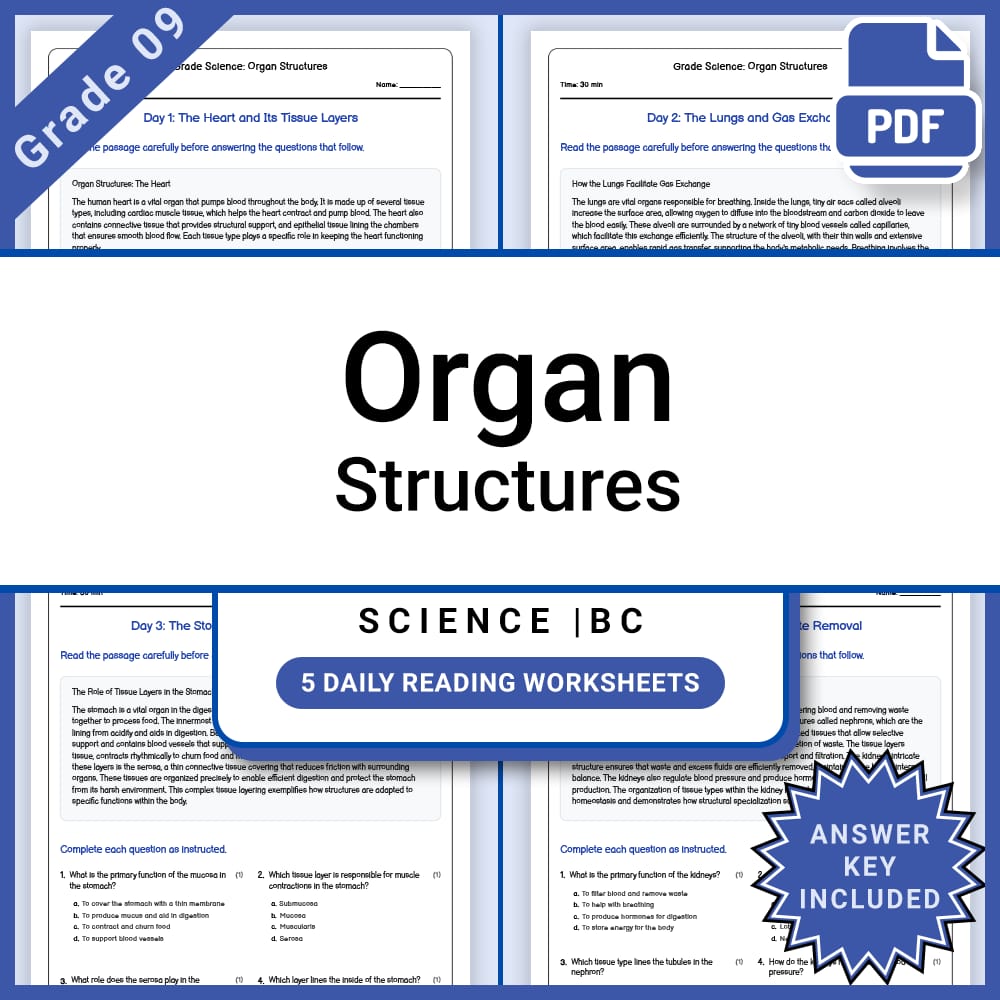
Grade 9 Science – Organ Structures Daily Reading Worksheet + Answer Key
JCreated byJ.S SheetsLearning Objectives
- Identify different tissue types in organs such as the heart.
- Understand how tissue layers contribute to organ function.
- Recognize the organization of tissues within the heart.
Also included in: Grade 9 Science Lesson Group Bundle | BC Framework Activities & Worksheets +1 more
Instant download
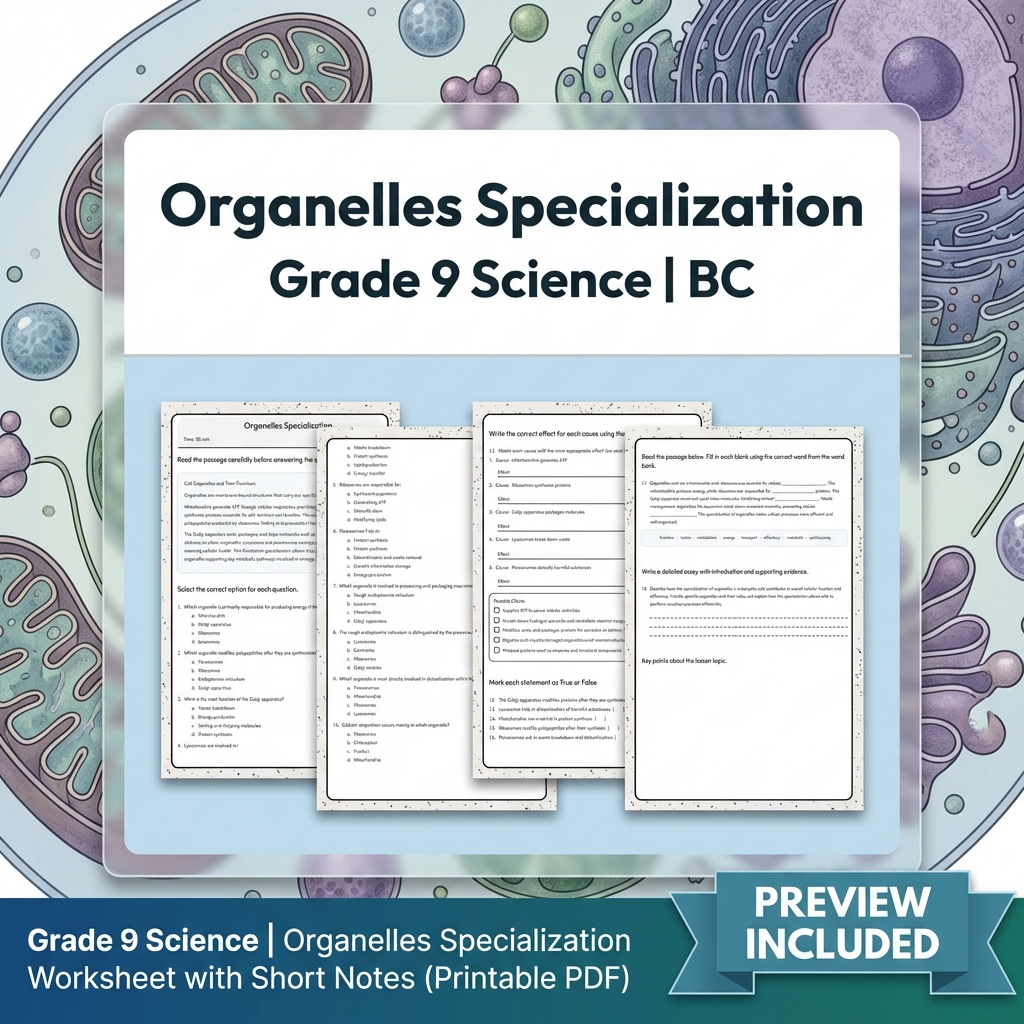
Grade 9 Science | Organelles Specialization Worksheet with Short Notes(PDF)
 Created byMeadowlark Worksheets
Learning Objectives
- Understand the functions of various organelles within eukaryotic cells.
- Identify how organelle specialization contributes to cellular efficiency and coordination.
- Describe the roles of mitochondria, ribosomes, endoplasmic reticulum, Golgi apparatus, lysosomes, and peroxisomes.
Also included in: Grade 9 Science Lesson Bundle | BC Framework Worksheets (15-Piece Collection) +1 more
Instant download
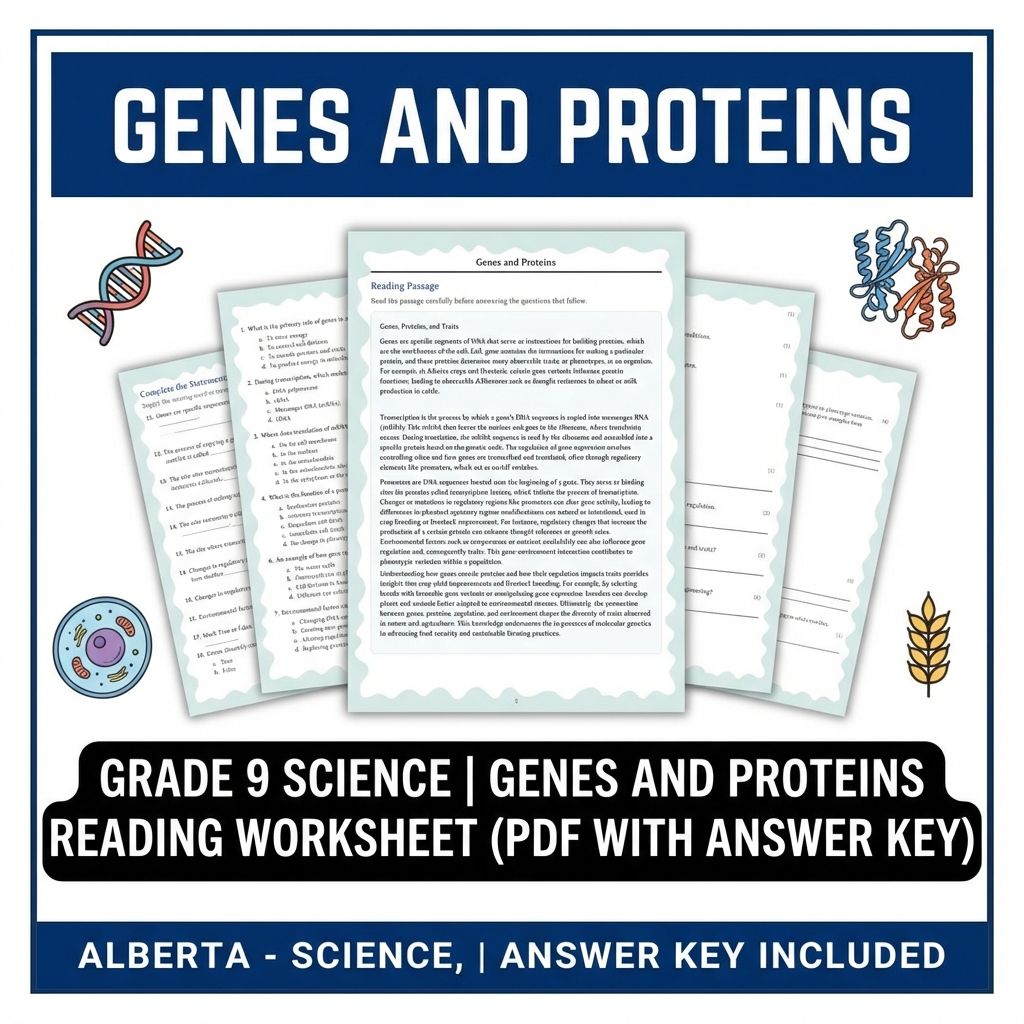
Grade 9 Science | Genes and Proteins Reading Worksheet (PDF with Answer Key)
JCreated byJ.S SheetsLearning Objectives
- Explain the role of genes as DNA segments that encode proteins and regulate traits.
- Describe the processes of transcription and translation in gene expression.
- Understand how gene regulation affects phenotype and how environmental factors influence gene activity.
Also included in: Grade 9 Science Unit Bundle | Genetics, Cell Biology & Biotechnology Worksheets +1 more
Instant download

Organelle Interactions Worksheet | Grade 9 Science Activities
Created byPrism Point LearningLearning Objectives
- Explain how information and proteins move between the nucleus, rough endoplasmic reticulum, Golgi apparatus, and vesicles
- Describe how mitochondria, lysosomes, and peroxisomes support cellular energy, recycling, and detoxification
- Connect organelle interactions to maintaining cellular homeostasis
Instant download

Grade 9 Gas Behaviour Worksheet | Pressure, Volume & Temperature Ontario
 Created byChalk and Compass
Learning Objectives
- Explain gas pressure using the particle model, focusing on particle collisions with container walls.
- Describe how changes in gas volume and temperature qualitatively affect pressure.
- Connect microscopic particle motion to observable gas behaviours in everyday contexts.
Also included in: Matter and Chemical Change - Grade 9 Bundle +1 more
Instant download

Grade 9 ELA - Tense Consistency Worksheets (PDF) | Common Core Standards
 Created byGolden Apple Studio
Learning Objectives
- Use consistent verb tenses to improve clarity and logical flow in Grade 9 narratives and explanations.
- Identify when a tense shift is appropriate (past events vs. present claims) and apply it intentionally.
- Correct tense errors involving agreement, timing, and perfect tenses (has/have/had + past participle).
Also included in: Grade 9 ELA Writing Precision Tense, Punctuation & Word Choice Lessons CCSS +1 more
Instant download

Grade 9 Social Studies – Industrial Foundations Worksheet (PDF)
 Created bySunny Desk Resources
Learning Objectives
- Explain major causes of industrialization from the late 19th to early 20th centuries, including technology, resources, and economic opportunities.
- Analyze how industrial growth changed communities in terms of land use, labor systems, and trade.
- Evaluate the roles of Canadian and Indigenous contributions in shaping industrial development and its effects on society and the environment.
Also included in: Grade 9 Urbanization & Social Change Social Studies Lesson Bundle (BC) +1 more
Instant download

Integrated Physiology Worksheet | Grade 9 Science Assessment & Student Practice PDF
Learning Objectives
- Understand how molecular, cellular, and organ interactions lead to physiological properties.
- Link genetic variation to cellular responses and organ system functions.
- Interpret biochemical, histological, and organ function data in health and disease.
Also included in: Grade 9 Science Lesson Bundle: From Molecules to Organisms NGSS Structures +1 more
Instant download
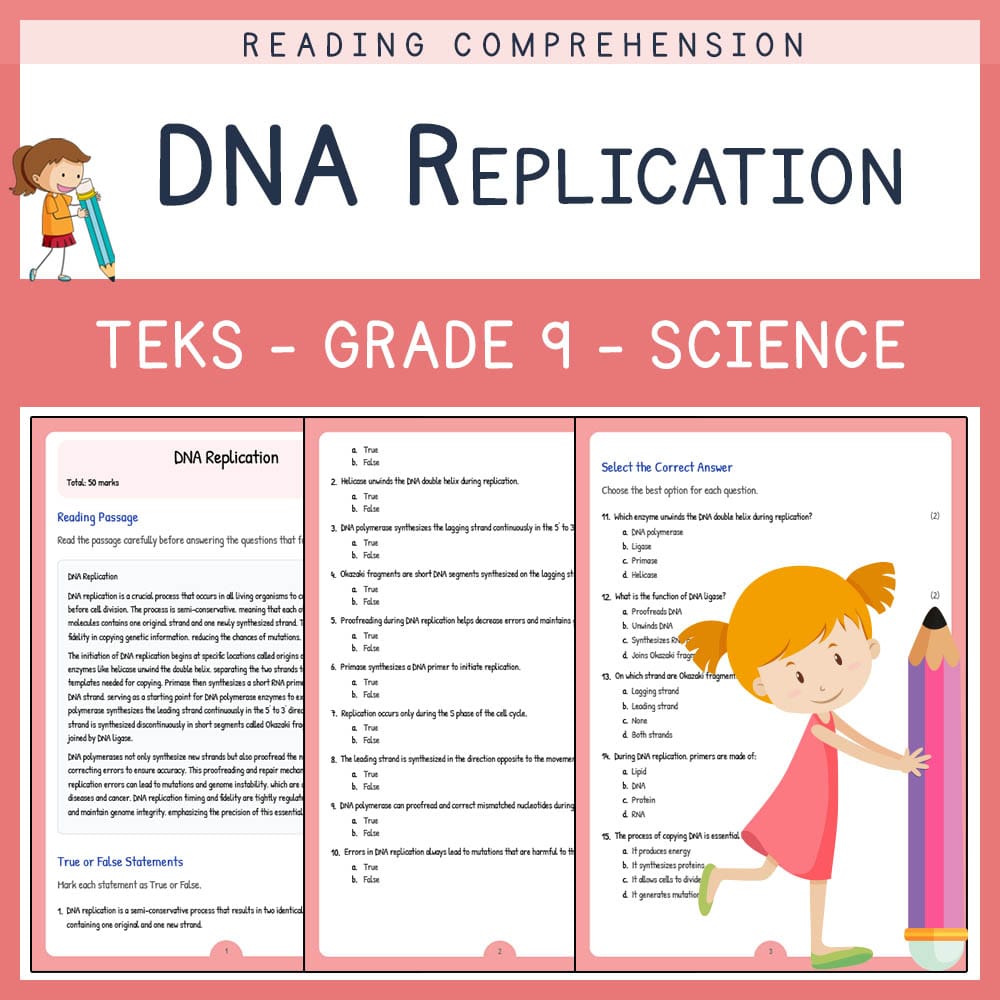
Grade 9 Science | DNA Replication Worksheet | TEKS Aligned
 Created byLumora Learning
Learning Objectives
- Explain the semi-conservative nature of DNA replication.
- Identify the roles of enzymes such as helicase, primase, and DNA polymerase during replication.
- Describe the processes of leading and lagging strand synthesis, including Okazaki fragments.
Also included in: Grade 9 Science | Genetics & Biotechnology Lesson Bundle | TEKS Aligned
Instant download
Grade 9 Science | Calvin Cycle Worksheet (Answer Key) – TEKS-Aligned
 Created byBright Mind Resources
Learning Objectives
- Describe the steps of the Calvin cycle and their purpose in photosynthesis.
- Identify the main enzymes and molecules involved in the cycle.
- Explain how energy from ATP and NADPH is used in carbon fixation and sugar synthesis.
Also included in: Grade 9 Science | Photosynthesis & Metabolic Pathways Unit Bundle (TEKS Aligned) +3 more
Instant download
Grade 9 Science – Balancing Equations Daily Reading Worksheet + Answer Key
JCreated byJ.S SheetsLearning Objectives
- Understand the importance of conservation of atoms in chemical reactions
- Identify unbalanced atoms in chemical equations
- Learn how to balance chemical equations by adjusting coefficients
Also included in: Grade 9 Science Lesson Group BC Framework | Chemistry, Physics, and More +1 more
Instant download
Grade 9 Science | Control Criteria in Causal Inference Worksheet (PDF)
Created byMeadowlark WorksheetsLearning Objectives
- Define the key control criteria used to establish causality in research.
- Explain how variable isolation, replication, and baseline characterization influence causal interpretation.
- Assess the impact of residual confounding and uncontrolled variation on causal claims.
Also included in: Grade 9 Science | Critical Thinking & Data Analysis Unit Bundle (Worksheets) +1 more
Instant download

Ocean-Atmosphere Coupling Worksheet for Grade 9 AP Science Practice
Created byPrism Point LearningLearning Objectives
- Explain how changes in ocean sea surface temperature and ocean heat content can influence atmospheric convection and circulation.
- Describe how ENSO-related anomalies create teleconnections that affect regional climate patterns.
- Use time-lag and energy-budget reasoning to connect ocean variability to weather and longer-term climate signals.
Also included in: Earth Systems & Climate Evidence Lesson Bundle | Grade 9 Science | AP
Instant download

Speciation Processes Test Prep Printable | Grade 9 Science
Created byPrism Point LearningLearning Objectives
- Explain how reproductive isolation, geographic separation, and genetic divergence can lead to speciation
- Compare allopatric and sympatric speciation and identify real-world examples of each
- Describe how hybrid zones and polyploidy can influence the formation of new species
Also included in: Grade 9 Evolution & Speciation Science Lesson Bundle NGSS Framework
Instant download
Grade 9 Science – Earth's Spheres Daily Reading Worksheet + Answer Key
JCreated byJ.S SheetsLearning Objectives
- Identify components of the geosphere, hydrosphere, atmosphere, and biosphere.
- Describe interactions among Earth's spheres using conceptual models and diagrams.
- Recognize material and energy exchanges such as nutrient transport, gas fluxes, and ocean upwelling.
Also included in: Grade 9 Science Lesson Bundle – AP Framework Daily Reading Worksheets +1 more
Instant download
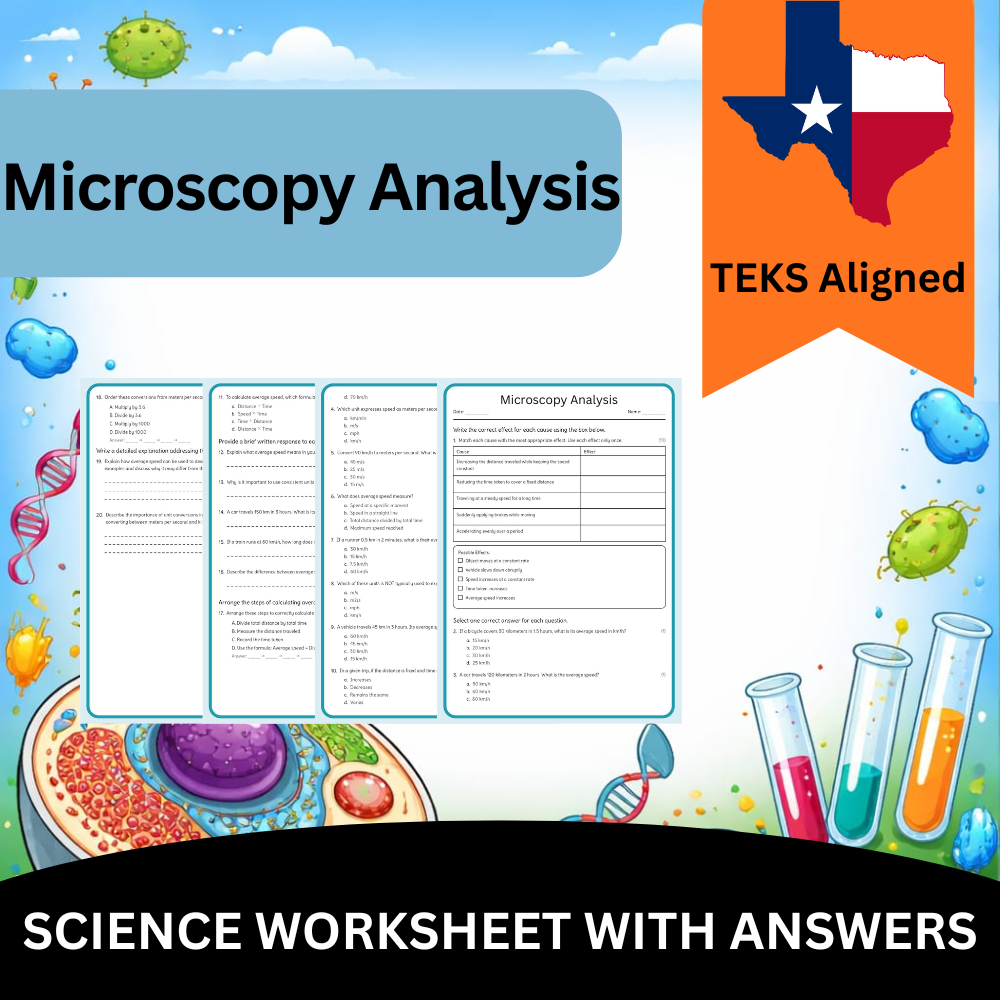
Grade 9 Science | Microscopy Analysis Worksheet (Answer Key) – TEKS-Aligned
Created byBright Mind ResourcesLearning Objectives
- Understand how to interpret microscopy images and data.
- Identify features such as scale bars, staining patterns, and contrast techniques in images.
- Explain the differences between electron and fluorescence microscopy.
Also included in: Grade 9 Science Unit | Cell Structures & Transport Mechanisms Pack(TEKS-Aligned) +3 more
Instant download
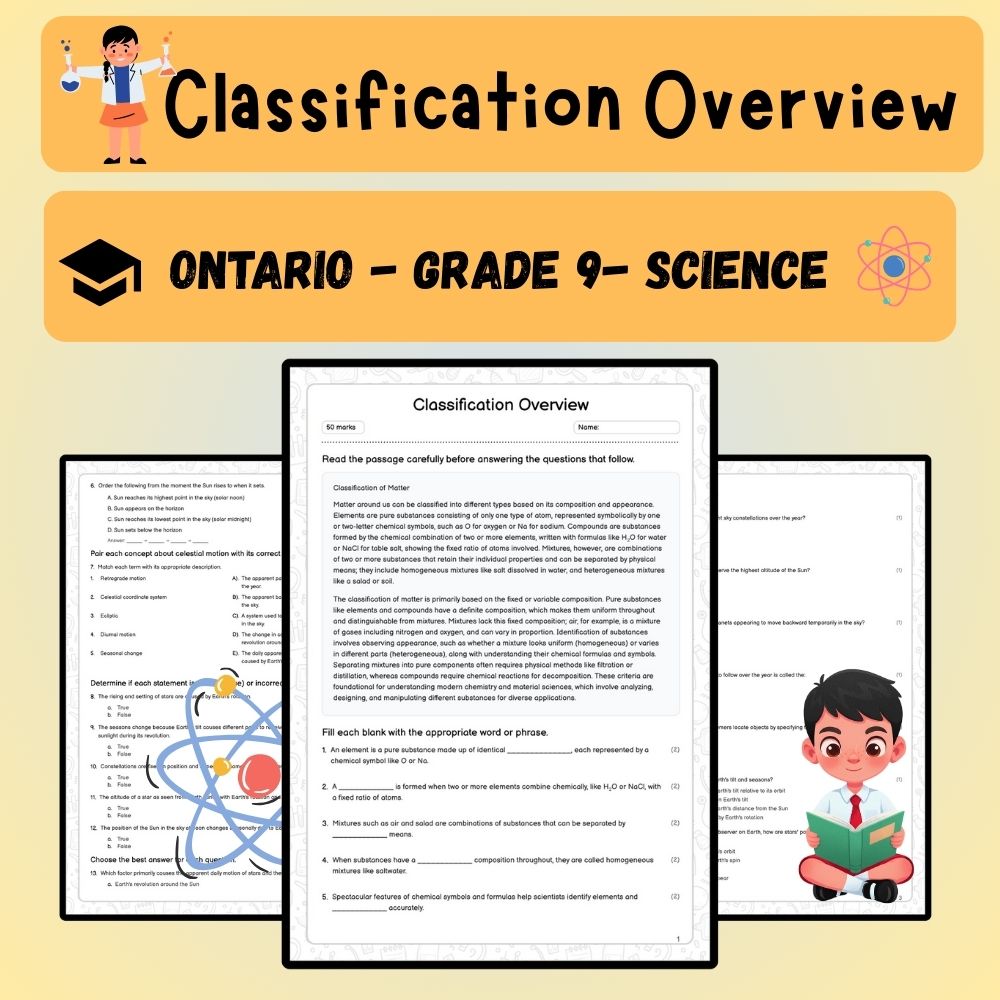
Grade 9 Science | Classification Overview Worksheet (PDF) – Ontario Standards
Created byPrism Point LearningLearning Objectives
- Understand the differences between elements, compounds, and mixtures based on their properties.
- Identify and classify substances as pure or impure, and homogeneous or heterogeneous mixtures.
- Apply symbols and formulas to represent elements and compounds accurately.
Also included in: Grade 9 Science UNIT Worksheet Pack | Chemical Properties, Energy & Reactions +1 more
Instant download

Grade 9 Science Transport Mechanisms in Cells Daily Worksheet + Answer Key
JCreated byJ.S SheetsLearning Objectives
- Understand the basic processes of diffusion and osmosis
- Identify the difference between passive and active transport
- Describe vesicular transport, including endocytosis and exocytosis
Also included in: Grade 9 Science Lesson Group Bundle TEKS Daily Reading Worksheets +1 more
Instant download
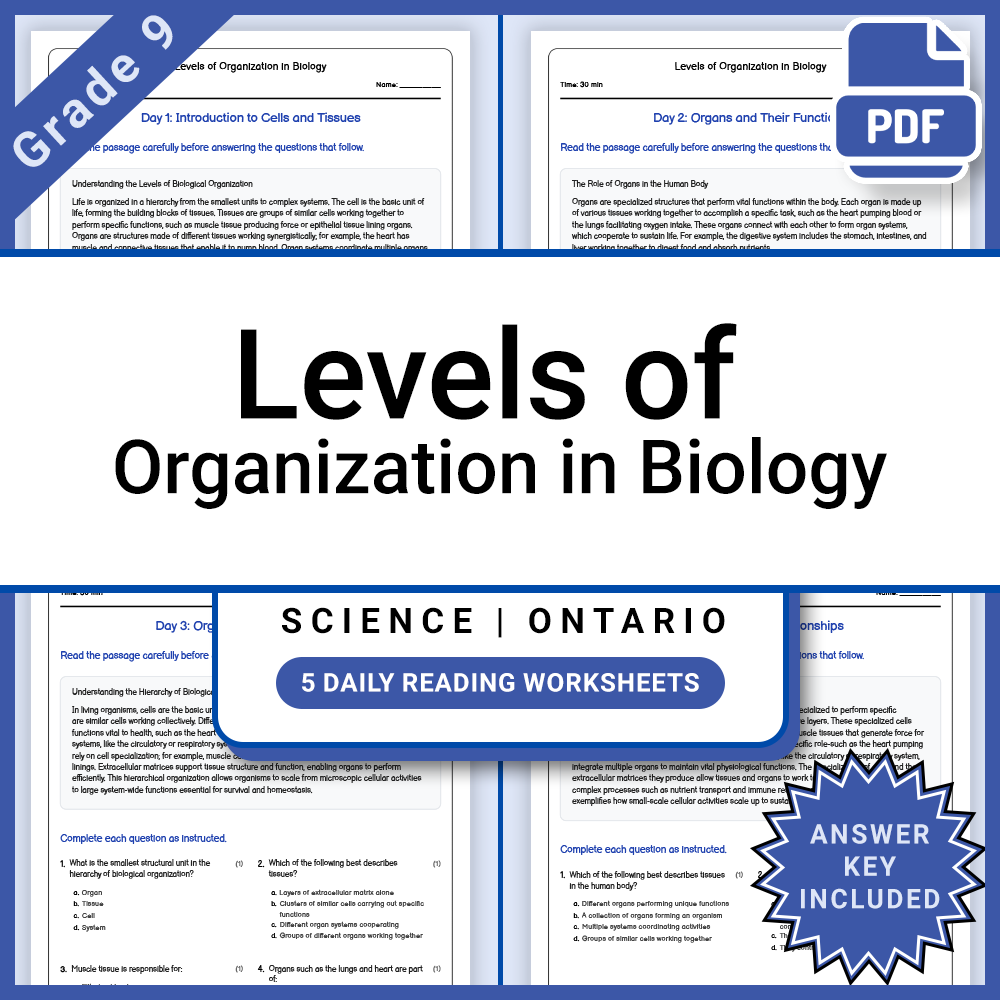
Grade 9 Science – Levels of Organization Daily Reading Worksheet + Answer Key
JCreated byJ.S SheetsLearning Objectives
- Understand the hierarchical relationships among cells, tissues, organs, and systems.
- Identify canonical examples of each level of organization.
- Explain how cellular specialization contributes to organ functions.
Also included in: Grade 9 Science Lesson Group | Human Body Systems, Environment & Energy +1 more
Instant download
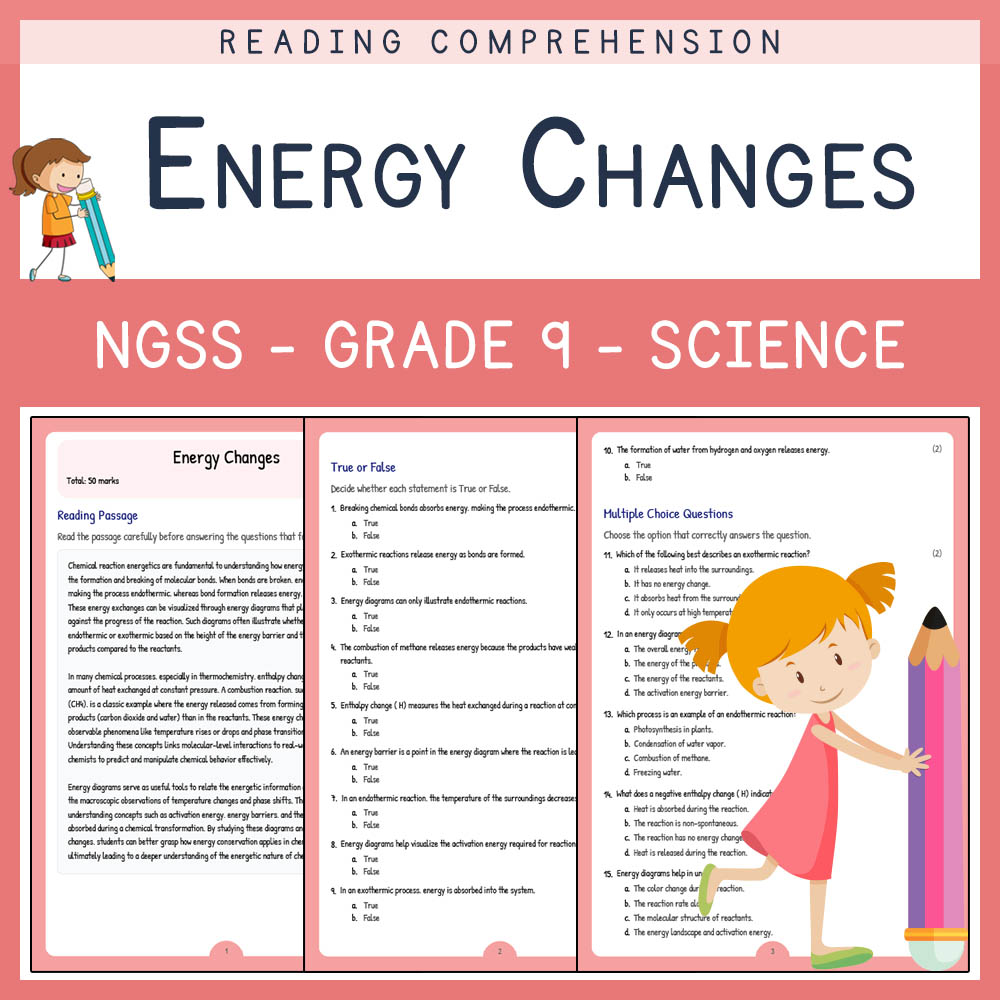
Grade 9 Science | Energy Changes Worksheet (PDF + Answer Key) – NGSS Aligned
Created byLumora LearningLearning Objectives
- Understand the concept of energy changes during chemical reactions, including endothermic and exothermic processes.
- Interpret energy diagrams to relate molecular interactions to observable temperature and phase changes.
- Identify and describe the role of bond breaking and formation in energy changes.
Instant download
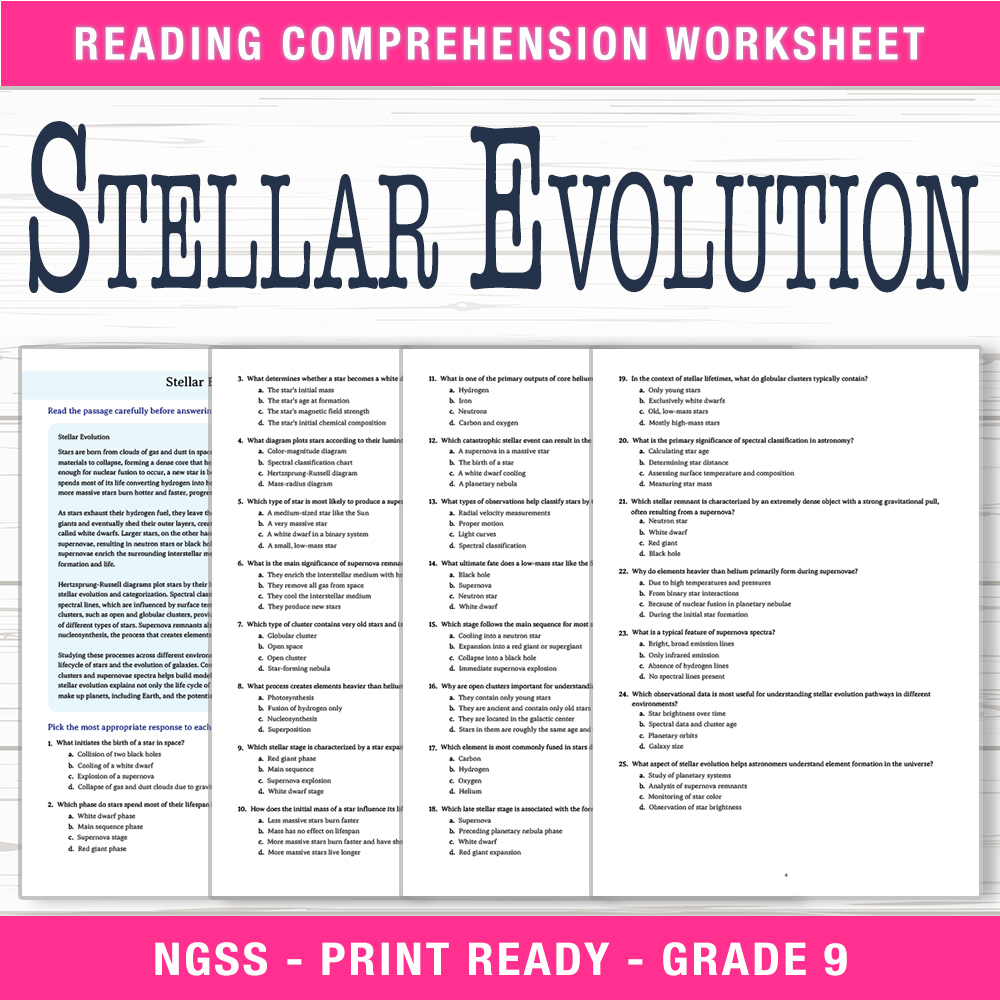
Grade 9 Science – Stellar Evolution Worksheet (PDF + Answer Key)
 Created byRiverstone Classroom
Learning Objectives
- Describe the main stages of stellar evolution from star formation to terminal outcomes.
- Explain the role of Hertzsprung-Russell diagrams and spectral classification in understanding stars.
- Identify differences in stellar lifecycles based on mass and other properties.
Instant download
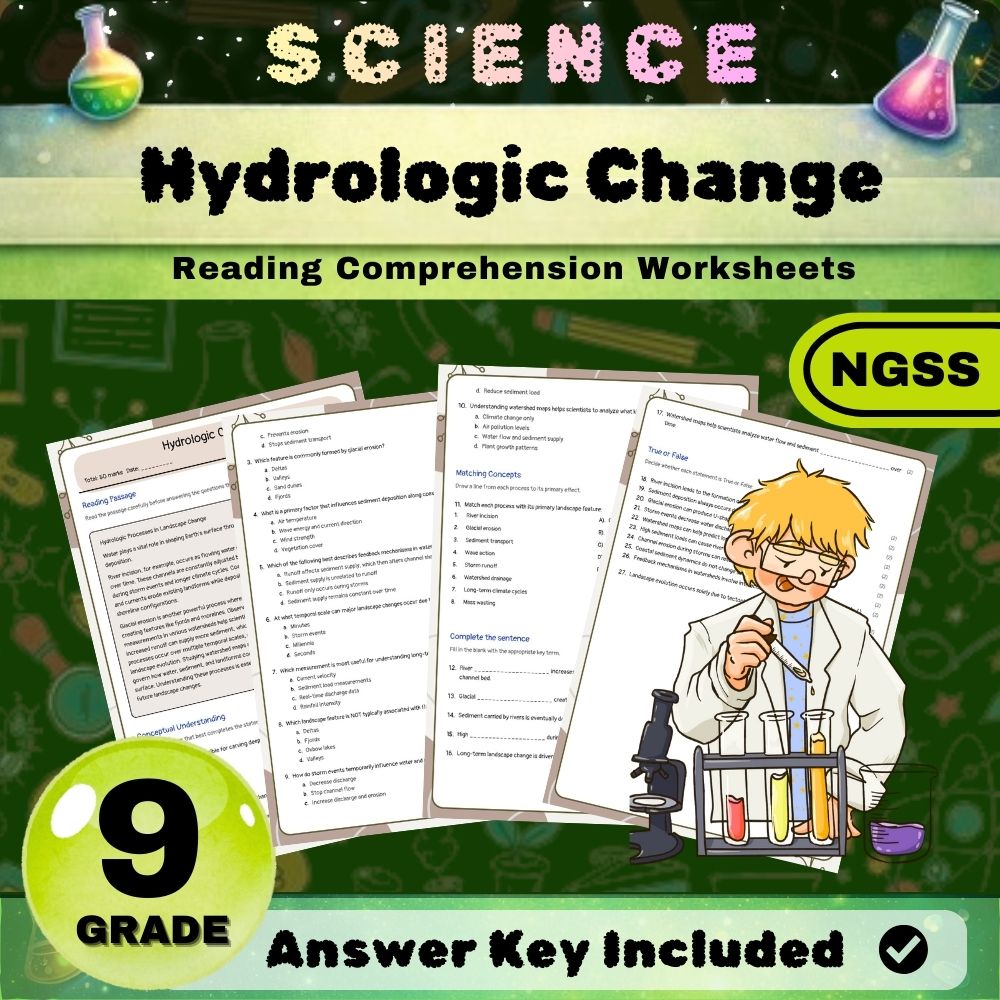
Grade 9 Science – Hydrologic Change Worksheet (NGSS) | SCIENCE NGSS
 Created byMaple Path Learning
Learning Objectives
- Analyze hydrologic data to understand water's role in landscape shaping.
- Interpret discharge records, sediment measurements, and watershed maps.
- Explain the feedbacks between runoff, sediment supply, and channel morphology.
Also included in: Grade 9 Science | Earth's Systems NGSS Unit Bundle (NGSS-Aligned Instruction) +1 more
Instant download
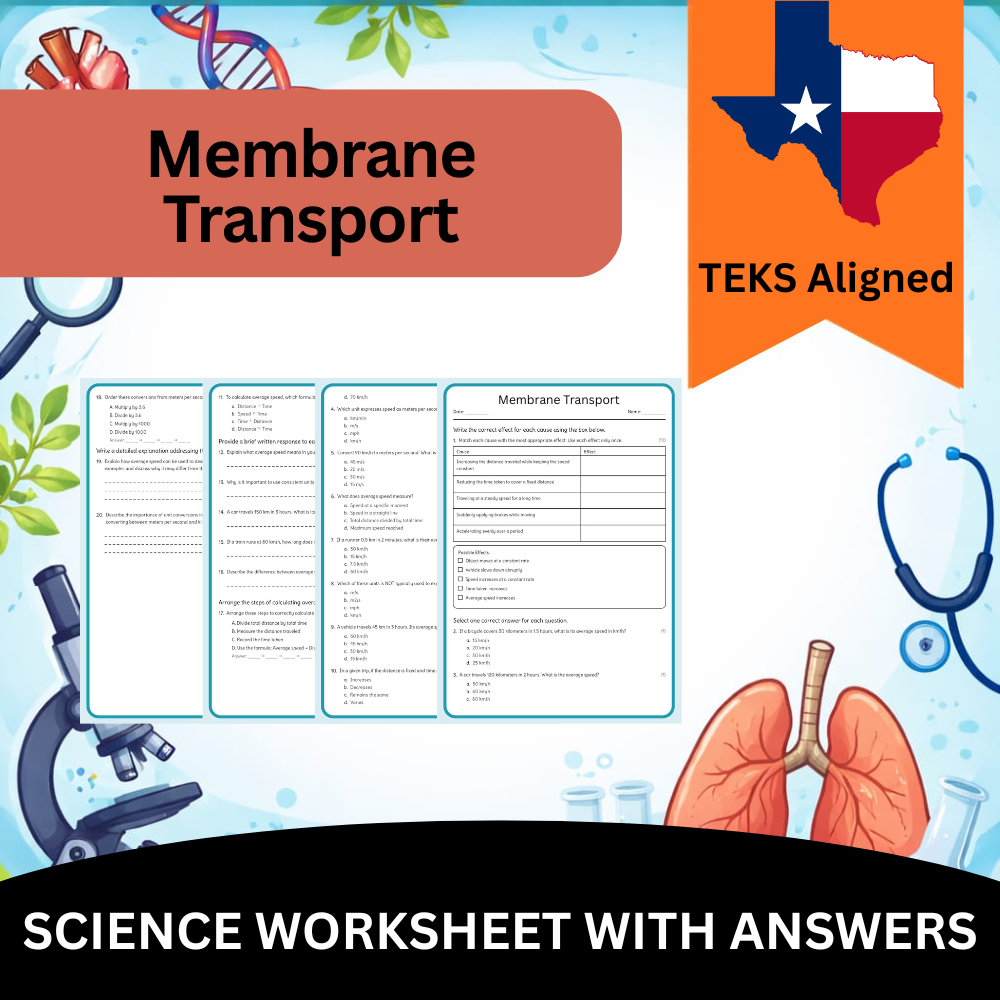
Grade 9 Science | Membrane Transport Worksheet (Answer Key) – TEKS Aligned
Created byBright Mind ResourcesLearning Objectives
- Describe passive and active processes of molecular transport across membranes.
- Explain the role of various transport mechanisms in maintaining cellular homeostasis.
- Identify examples of vesicular transport such as endocytosis and exocytosis.
Also included in: Grade 9 Science Unit | Human Body Systems Worksheets & TEKS Aligned Bundle +3 more
Instant download

Grade 9 Science | Newton's Laws Worksheet | BC Aigned
Created byLumora LearningLearning Objectives
- Understand the three laws formulated by Sir Isaac Newton and their applications to motion.
- Identify real-world examples illustrating Newton's laws.
- Explain how forces influence the motion of objects.
Instant download

Comparative Evaluation Worksheet | NGSS Grade 9 Science Assessment PDF
Created bySkylark WorksheetsLearning Objectives
- Use quantitative and qualitative criteria to compare competing engineering design solutions.
- Evaluate trade-offs among efficiency, durability, cost, and safety using a structured decision framework.
- Incorporate life-cycle cost, manufacturability, and environmental impact into a comparative matrix.
Also included in: Grade 9 Engineering Design Prototyping & Modeling Lesson Bundle | NGSS +1 more
Instant download
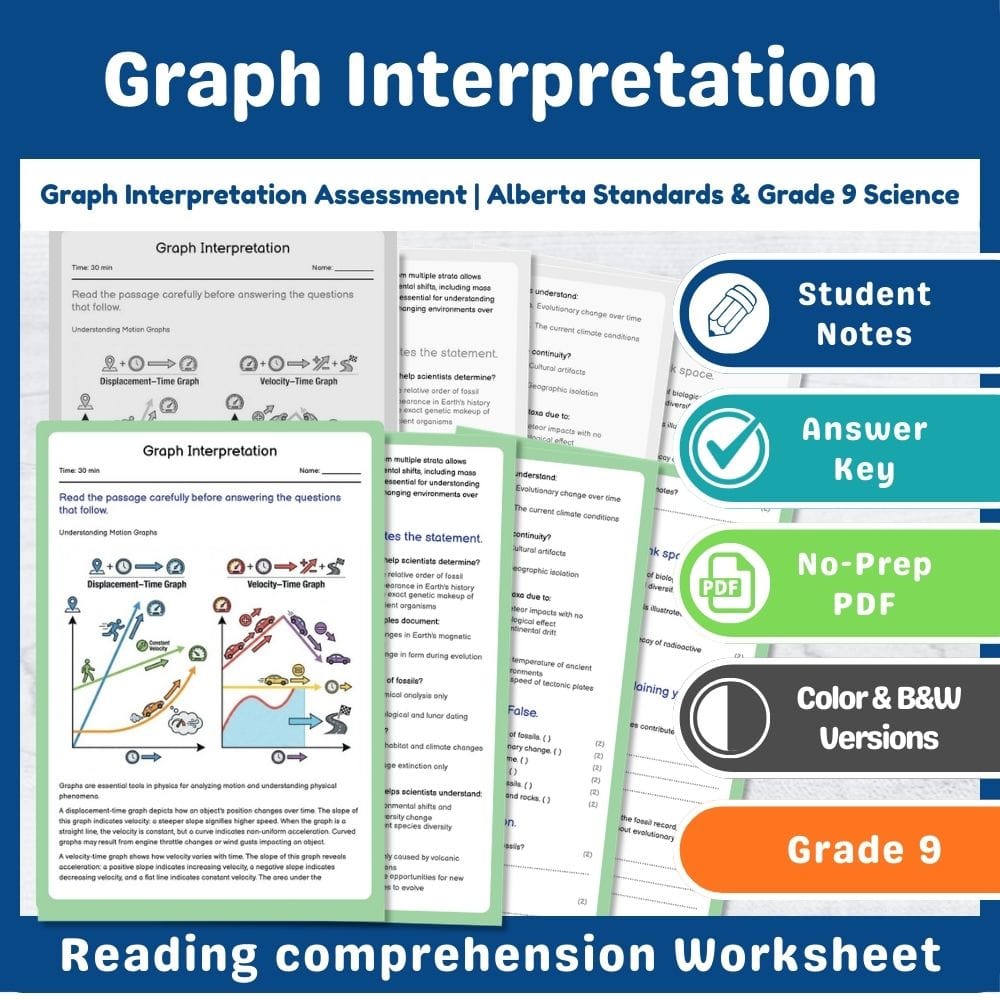
Graph Interpretation Assessment | Alberta Standards & Grade 9 Science
Created byPrism Point LearningLearning Objectives
- Understand how the slope of a displacement–time graph relates to velocity.
- Interpret the area under a velocity–time graph as displacement.
- Identify non-uniform acceleration patterns from curved graphs.
Also included in: Grade 9 Forces and Motion Science Lesson Bundle Alberta Framework +1 more
Instant download
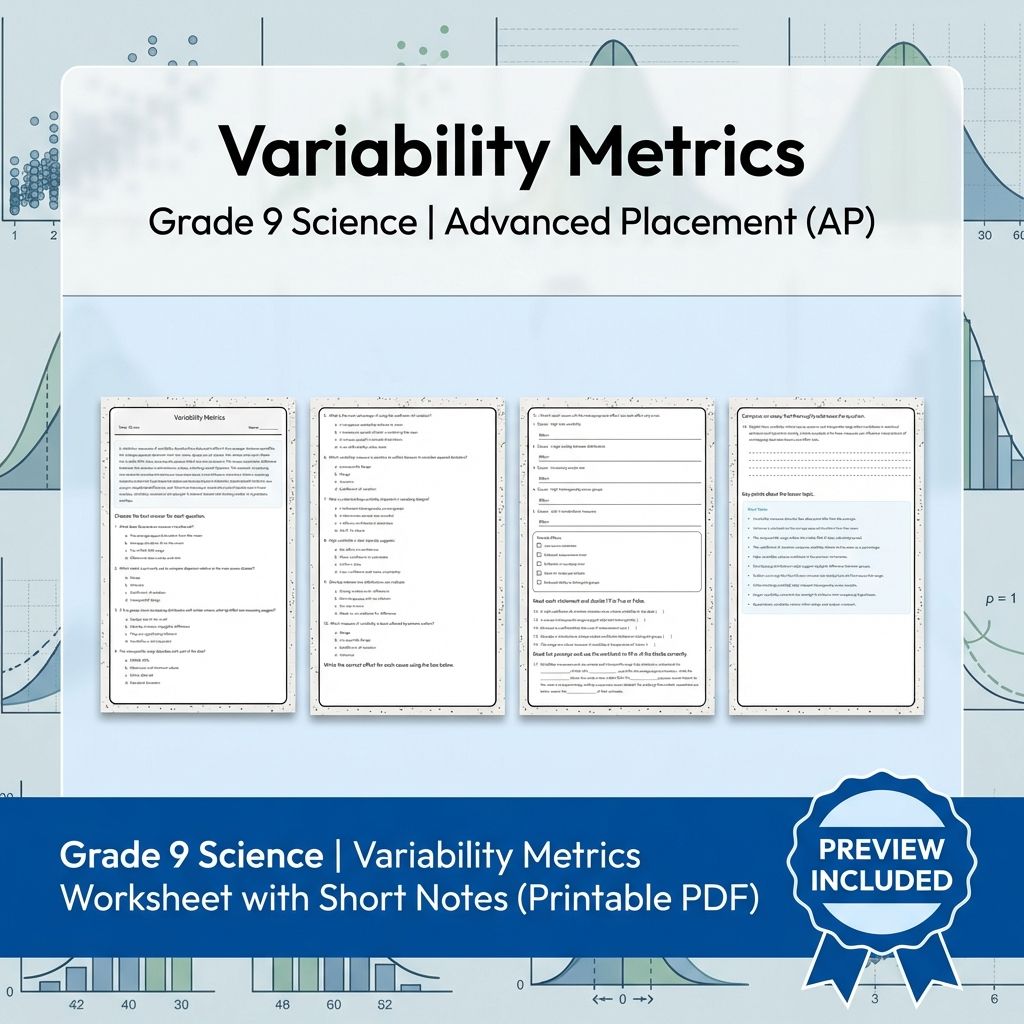
Grade 9 Science | Variability Metrics Worksheet with Short Notes (Printable PDF)
Created byMeadowlark WorksheetsLearning Objectives
- Understand the measures of dispersion such as variance, interquartile range, range, and coefficient of variation.
- Interpret how each variability metric informs confidence in data estimates.
- Relate variability measures to sampling design and heterogeneity across groups.
Also included in: Grade 9 Science | Critical Thinking & Data Analysis Unit Bundle (Worksheets) +1 more
Instant download
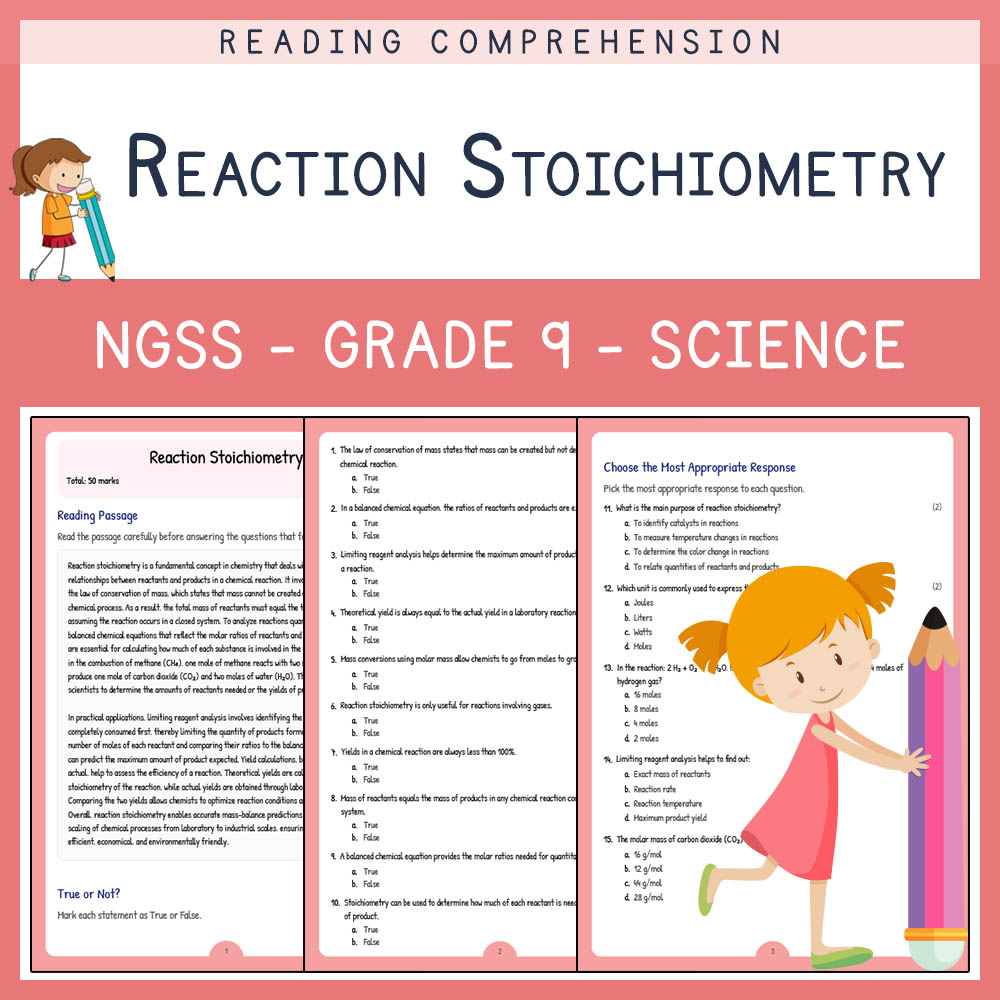
Grade 9 Science | Reaction Stoichiometry Worksheet PDF with Answer Key
Created byLumora LearningLearning Objectives
- Understand the concept of molar relationships in chemical reactions.
- Apply conservation of mass to balanced chemical equations.
- Calculate reactant and product quantities using molar mass conversions.
Instant download

Grade 9 Remainder Theorem Worksheet | Polynomial Remainders CCSS
 Created byBRIGHT PATH RESOURCES
Learning Objectives
- Use the Remainder Theorem to find the remainder when dividing a polynomial by (x − a)
- Evaluate p(a) quickly by substitution, without performing long division
- Use remainders to solve for unknown parameters inside a polynomial
Also included in: Grade 9 Factoring, Rational Expressions & Quadratics Maths Lesson Bundle +1 more
Instant download

Juneteenth: Celebrating Freedom Reading Comprehension | Grades 9–10
Learning Objectives
- Explain the historical significance of Juneteenth and why it is celebrated.
- Describe common Juneteenth traditions (parades, music, storytelling) and what they symbolize.
- Analyze how cultural celebrations strengthen community bonds and collective identity.
Also included in: Juneteenth: Freedom & Equality Bundle | Reading Comprehension | Grades 9–10 +2 more
Instant download
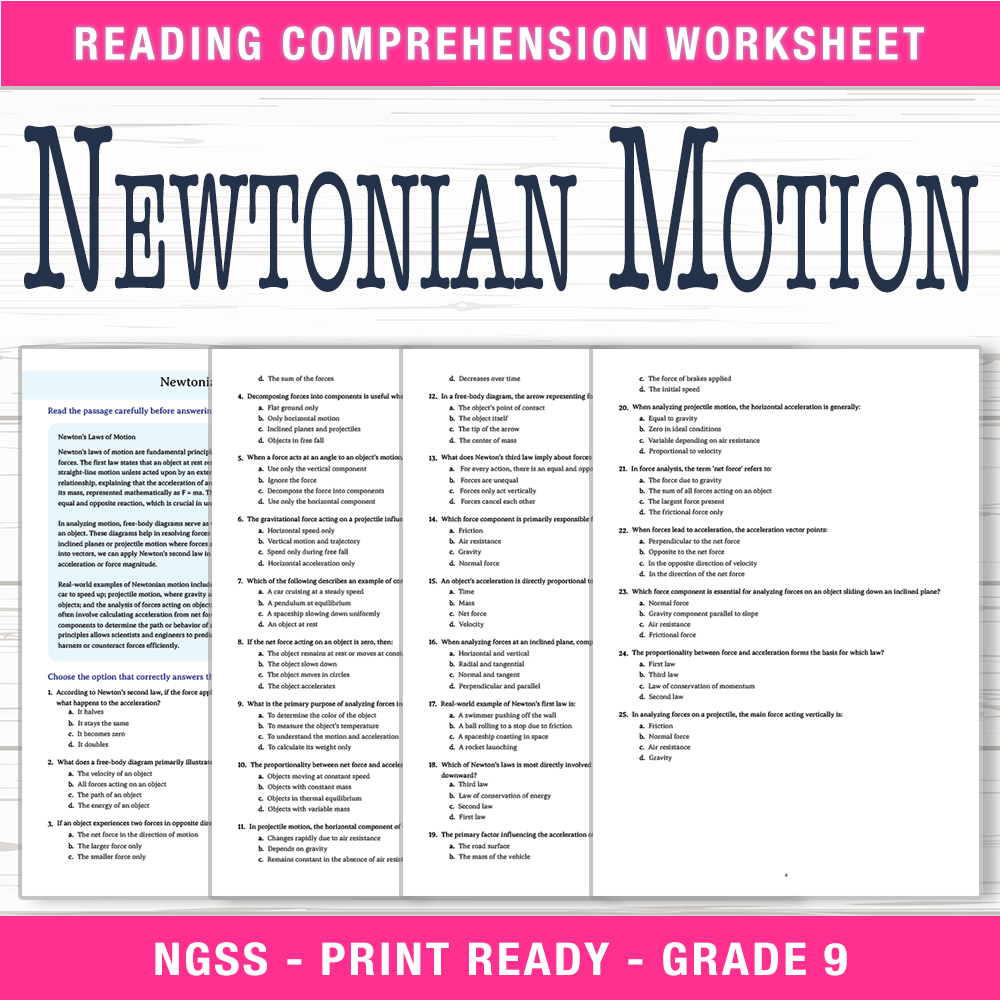
Grade 9 Science – Newtonian Motion Worksheet (PDF + Answer Key)
Created byRiverstone ClassroomLearning Objectives
- Understand the relationship between net force, mass, and acceleration as described by Newton's second law.
- Interpret free-body diagrams to analyze forces acting on objects in motion.
- Apply vector decomposition techniques to solve problems involving force components and predict motion trajectories.
Instant download
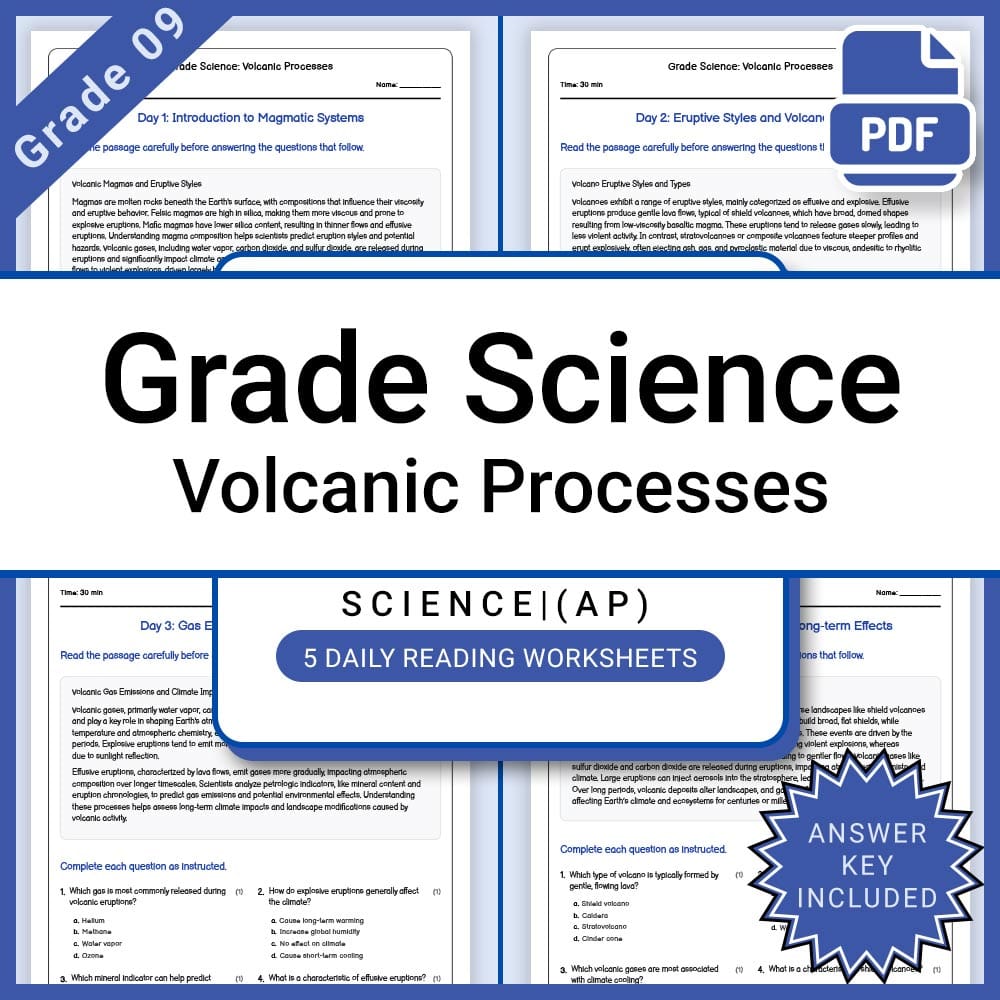
Grade 9 Science – Volcanic Processes Daily Reading Worksheet + Answer Key
JCreated byJ.S SheetsLearning Objectives
- Identify different types of magmas and their properties
- Understand the relationship between magma viscosity, volatile content, and eruptive style
- Recognize volcanic gas emissions and their impact on climate and environment
Also included in: Grade 9 Science Lesson Bundle – AP Framework Daily Reading Worksheets +1 more
Instant download

Grade 9 |World Earth Day for Mastering Environmental Awareness| PDF + Answer Key
Created byShaNova WorksheetsLearning Objectives
- Understand the historical roots of Earth Day and its significance.
- Identify key figures and pivotal moments in the environmental movement.
- Analyze how collective action influences environmental policies.
Instant download
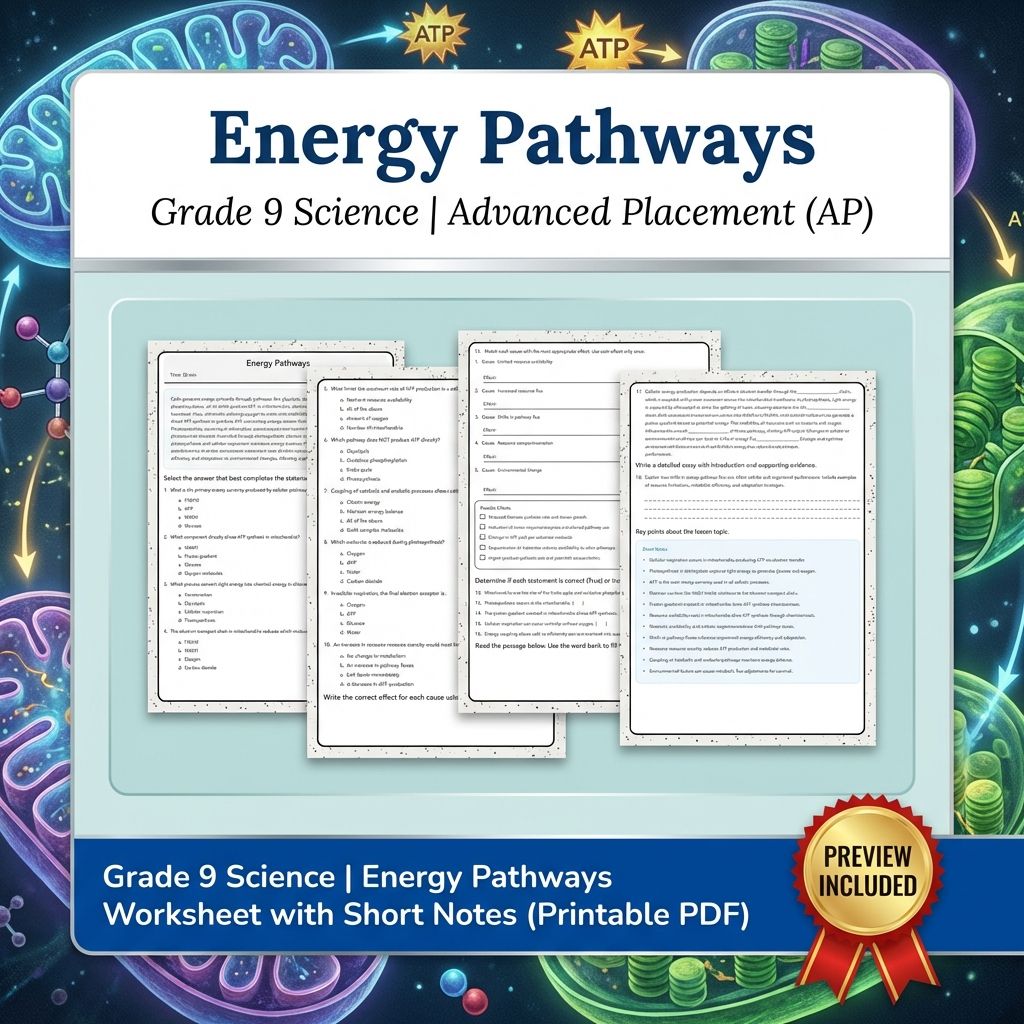
Grade 9 Science | Energy Pathways Worksheet with Short Notes (Printable PDF)
Created byMeadowlark WorksheetsLearning Objectives
- Understand cellular energy production mechanisms including ATP synthesis.
- Analyze the coupling of catabolic and anabolic reactions in energy transfer.
- Compare the roles of photosynthetic and respiratory electron transport chains.
Also included in: Grade 9 Science Unit | Cellular Processes & Ecosystems Worksheet Pack (PDF) +1 more
Instant download

Level Overview Worksheet Pack | Grade 9 Science Activities
Created byPrism Point LearningLearning Objectives
- Describe the biological hierarchy from molecules to organisms
- Explain how emergent properties appear at higher levels of organization
- Connect tissue, organ, and organ system structure to overall biological function
Also included in: Cells and Body Systems Lesson Bundle | Grade 9 Science | BC +1 more
Instant download
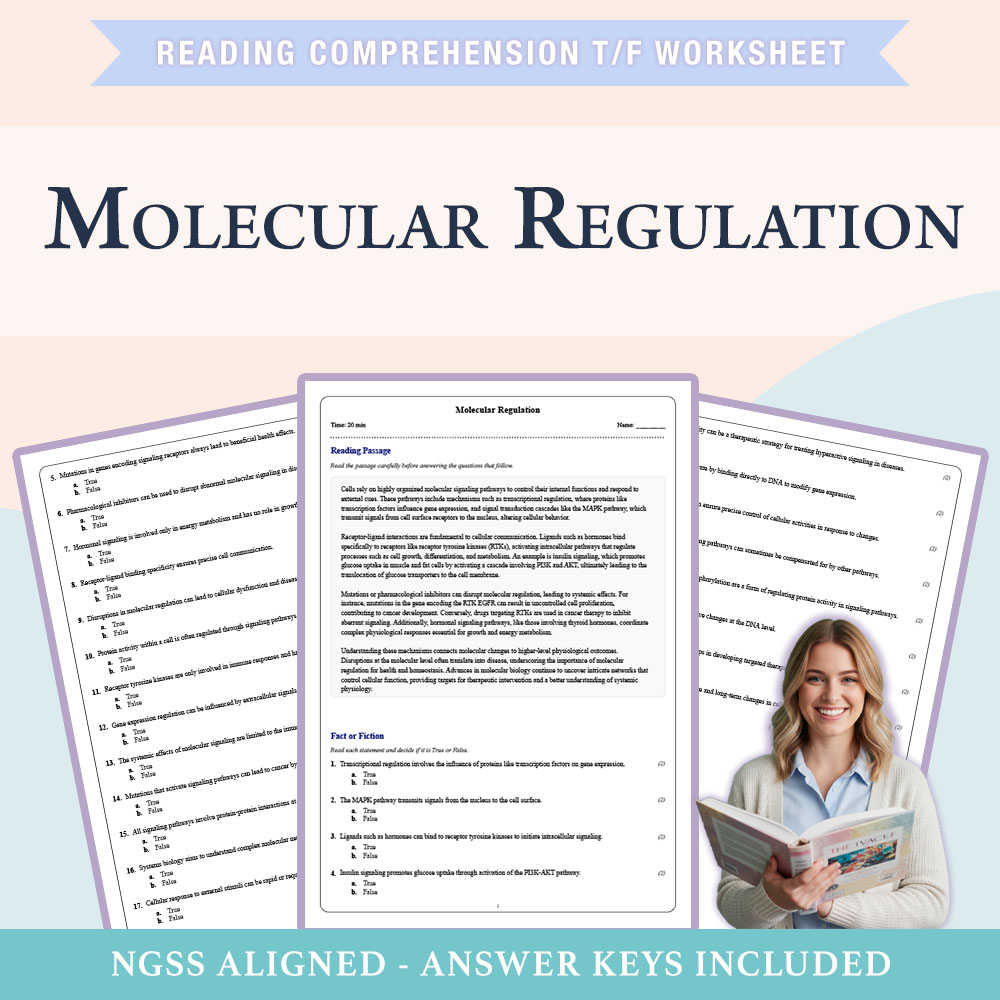
Grade 9 Science | Molecular Regulation Worksheet (PDF + Answer Key)
 Created byCopper Leaf Classroom
Learning Objectives
- Understand the key mechanisms of molecular signaling pathways that regulate gene expression and protein activity.
- Recognize how molecular perturbations affect cellular function and systemic physiology.
- Interpret examples like insulin signaling and receptor tyrosine kinase pathways in biological contexts.
Also included in: Grade 9 Science | Cellular Functions & Physiology Bundle (PDF + Answer Key) +1 more
Instant download
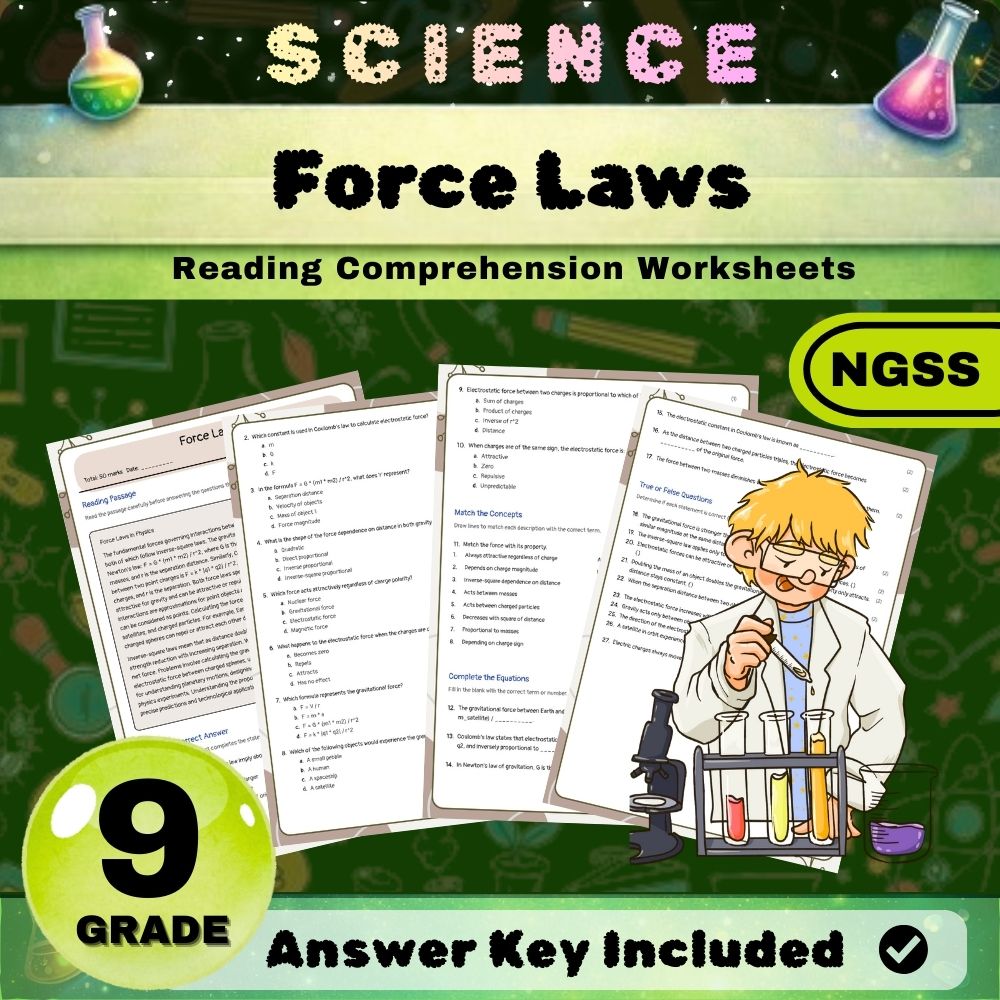
Grade 9 Science | Force Laws Worksheet (NGSS) – PDF
Created byMaple Path LearningLearning Objectives
- Understand the inverse-square dependence of gravitational and electrostatic forces.
- Apply quantitative formulas to calculate the magnitude of forces between objects.
- Determine the direction of forces using vector representations.
Also included in: Grade 9 Science | Motion and Stability Forces & Interactions NGSS Unit Bundle +1 more
Instant download
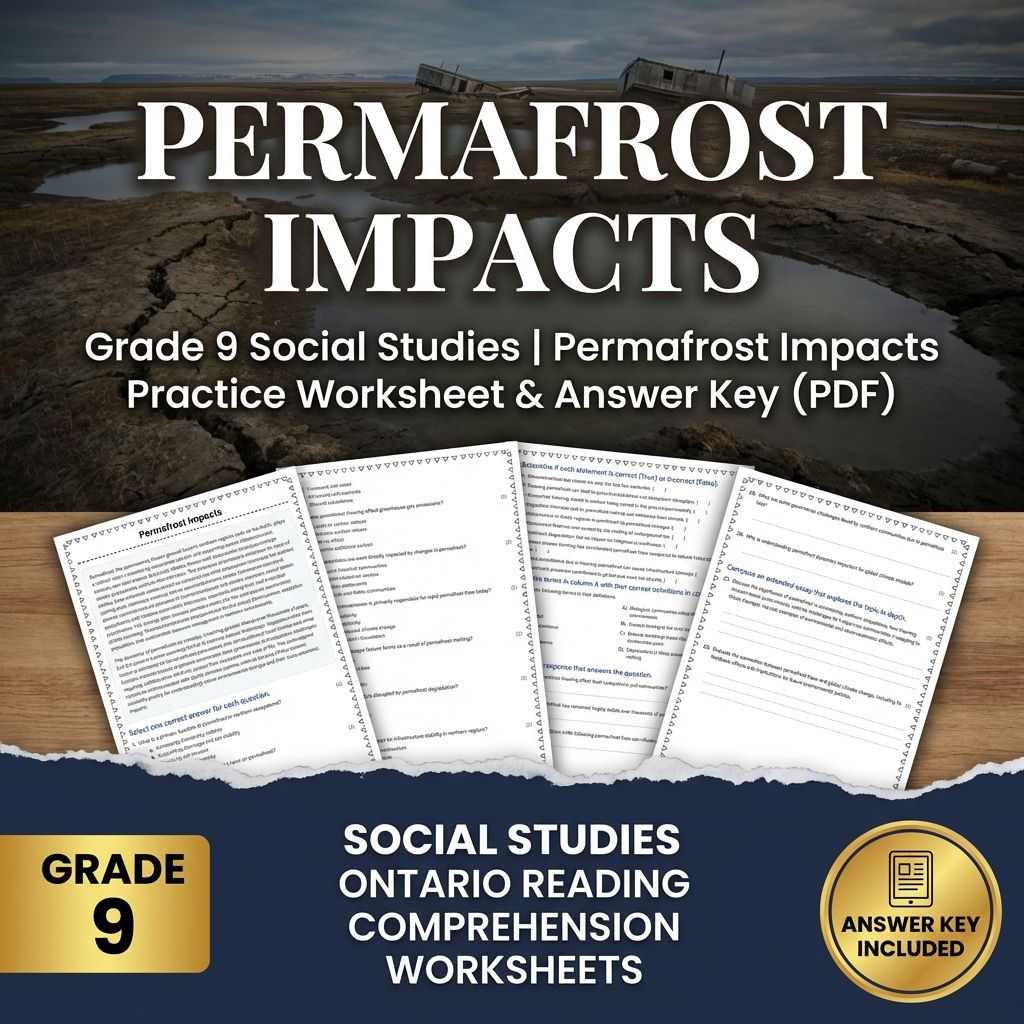
Grade 9 Social Studies | Permafrost Impacts Practice Worksheet & Answer Key
JCreated byJ.S SheetsLearning Objectives
- Explain the significance of permafrost for northern ecosystems, infrastructure, and livelihoods.
- Identify causes and consequences of permafrost thawing, including ground subsidence and hydrological changes.
- Analyze how climate change has affected the continuity of permafrost over millennia and in recent decades.
Also included in: Grade 9 Social Studies Unit Bundle | Ecosystems, Climate & Landforms Practice +1 more
Instant download

Grade 9 Science | Reproductive Modes - Daily Reading Comprehension
Created byCoral Reef LearningLearning Objectives
- Identify different reproductive strategies: sexual and asexual
- Understand how organisms reproduce via various methods
- Compare advantages and disadvantages of each reproductive mode
Also included in: Reproduction and Heredity Lesson Bundle | Grade 9 Science | Alberta +1 more
Instant download
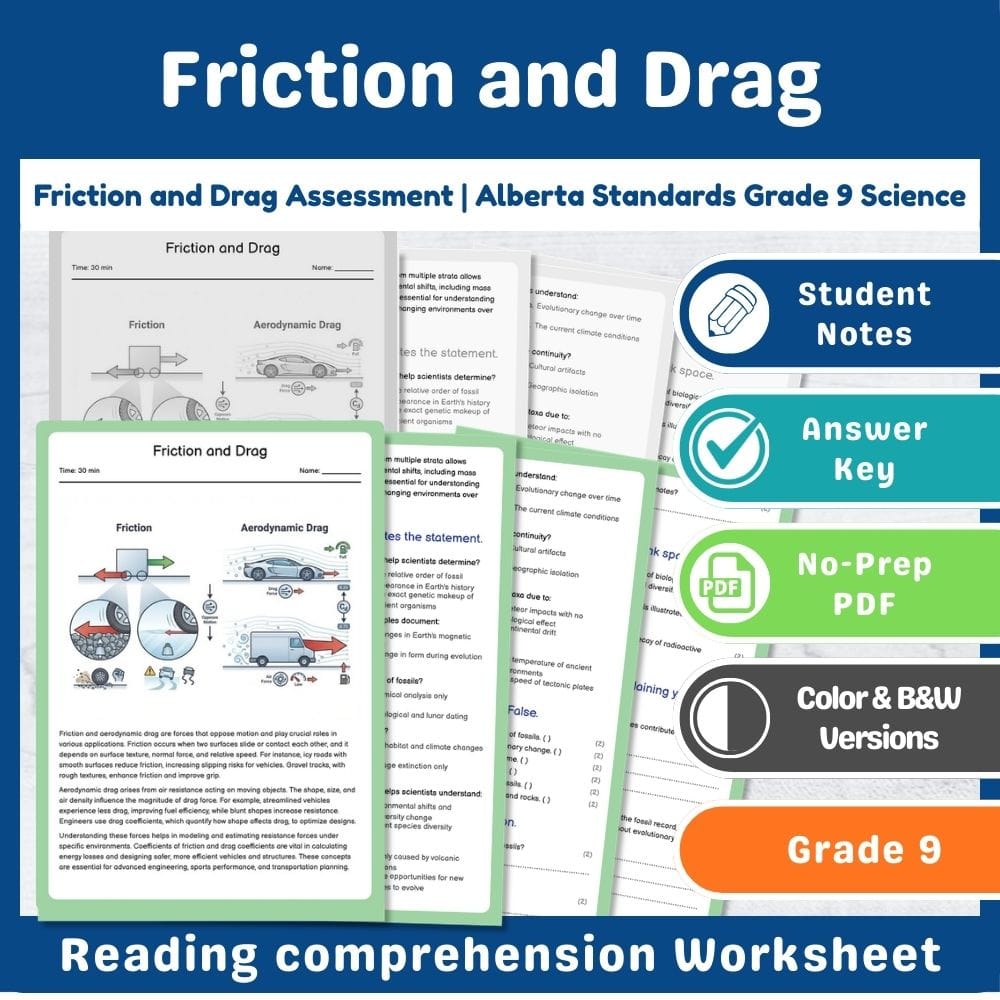
Friction and Drag Assessment | Alberta Standards Grade 9 Science
Created byPrism Point LearningLearning Objectives
- Explain how friction and aerodynamic drag oppose motion and convert mechanical energy into thermal energy.
- Describe the factors affecting friction on icy roads and gravel tracks.
- Identify the variables influencing aerodynamic drag on various structures.
Also included in: Grade 9 Forces and Motion Science Lesson Bundle Alberta Framework +1 more
Instant download
Grade 9 Science – Organelles Specialization Daily Reading Worksheet + Answer Key
JCreated byJ.S SheetsLearning Objectives
- Understand the structure and function of key organelles in eukaryotic cells.
- Identify the role of mitochondria in energy production.
- Explain how different organelles work together to maintain cellular function.
Also included in: Grade 9 Science Lesson Group Bundle | BC Framework Activities & Worksheets +1 more
Instant download
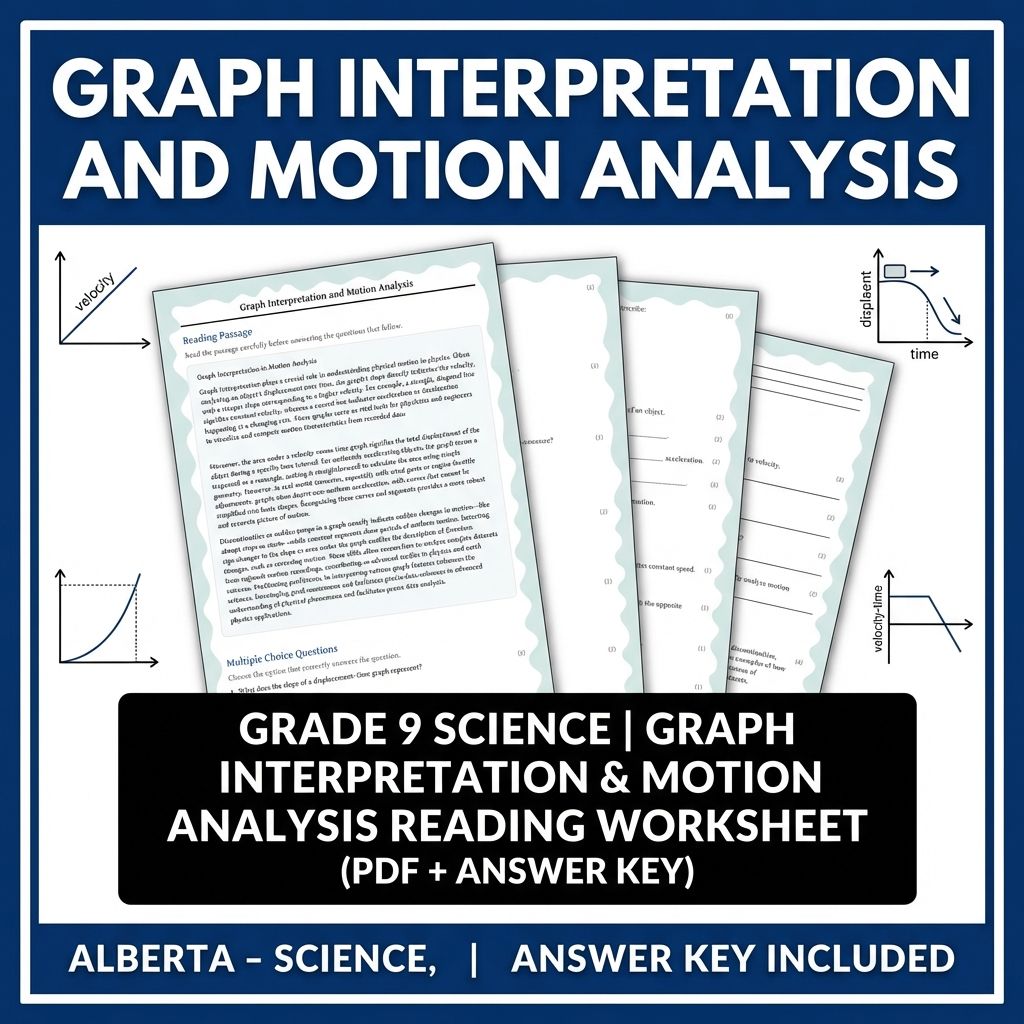
Grade 9 Science | Graph Interpretation & Motion Analysis (PDF + Answer Key)
JCreated byJ.S SheetsLearning Objectives
- Understand how the slope of displacement-time, velocity-time graphs relates to physical motion parameters.
- Interpret the area under a velocity-time graph to determine displacement.
- Identify curved graphs indicating non-uniform acceleration and understand their physical causes.
Also included in: Grade 9 Science Unit Bundle | Motion, Forces & Energy Activities (PDF) +1 more
Instant download
Browse more categories
About Grade 9 Worksheets
Browse 9,323 printable Grade 9 worksheets across algebra, biology, literature, and history — each a ready-to-print PDF with optional answer keys.
Every worksheet on MyTeachingSheets is created by independent teacher-authors and reviewed before publication. All resources download as printable PDFs for classroom, homework, or at-home practice, and many include answer keys. Preview any worksheet free before buying.