
Grade 9 Science Worksheets
6,926 worksheets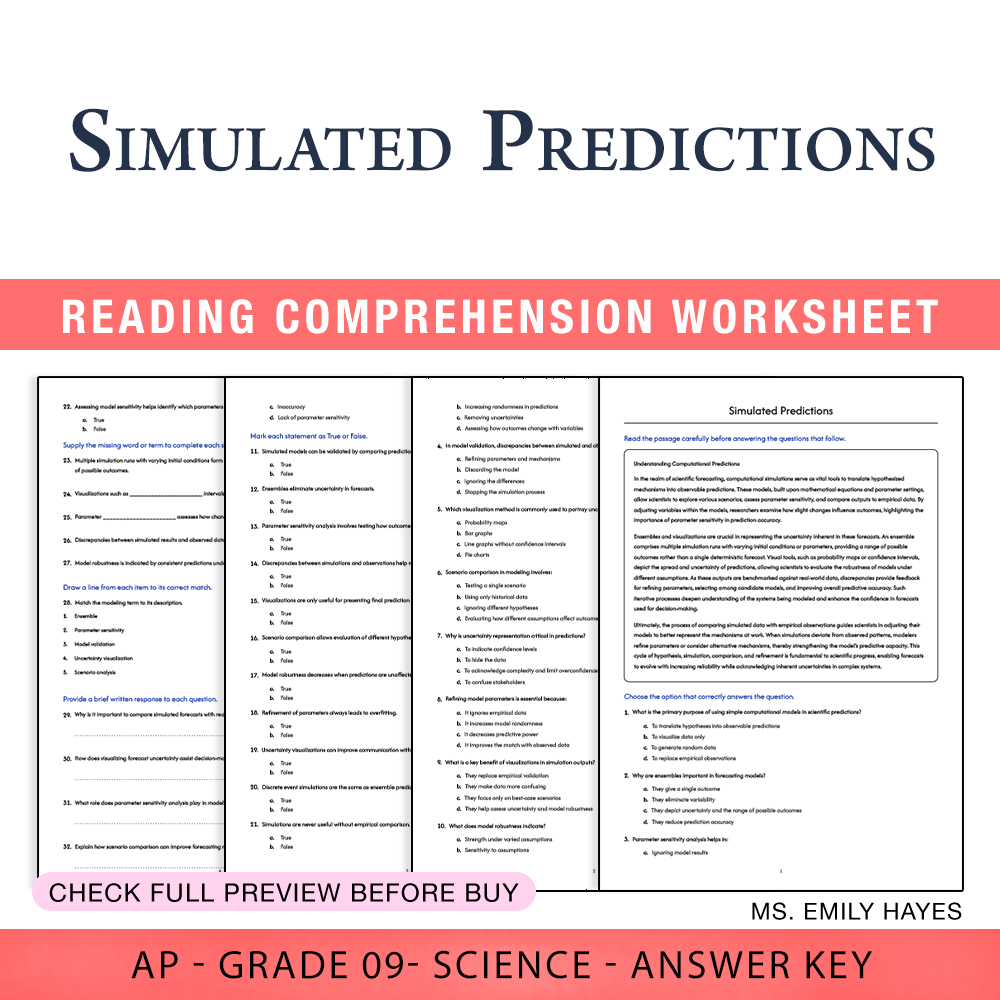
9th Grade Science | Simulated Predictions Worksheet (PDF+ Answer Key)
 Created byCopper Leaf Classroom
Learning Objectives
- Explain the role of simple computational simulations and numerical models in generating predictions from hypotheses.
- Describe how parameter sensitivity and scenario comparison influence forecast accuracy.
- Illustrate how ensembles and visualizations depict uncertainty in predictions.
Also included in: Grade 9 Science | Scientific Data Analysis & Inquiry Skills (PDF+ Answer Key) +1 more
Instant download
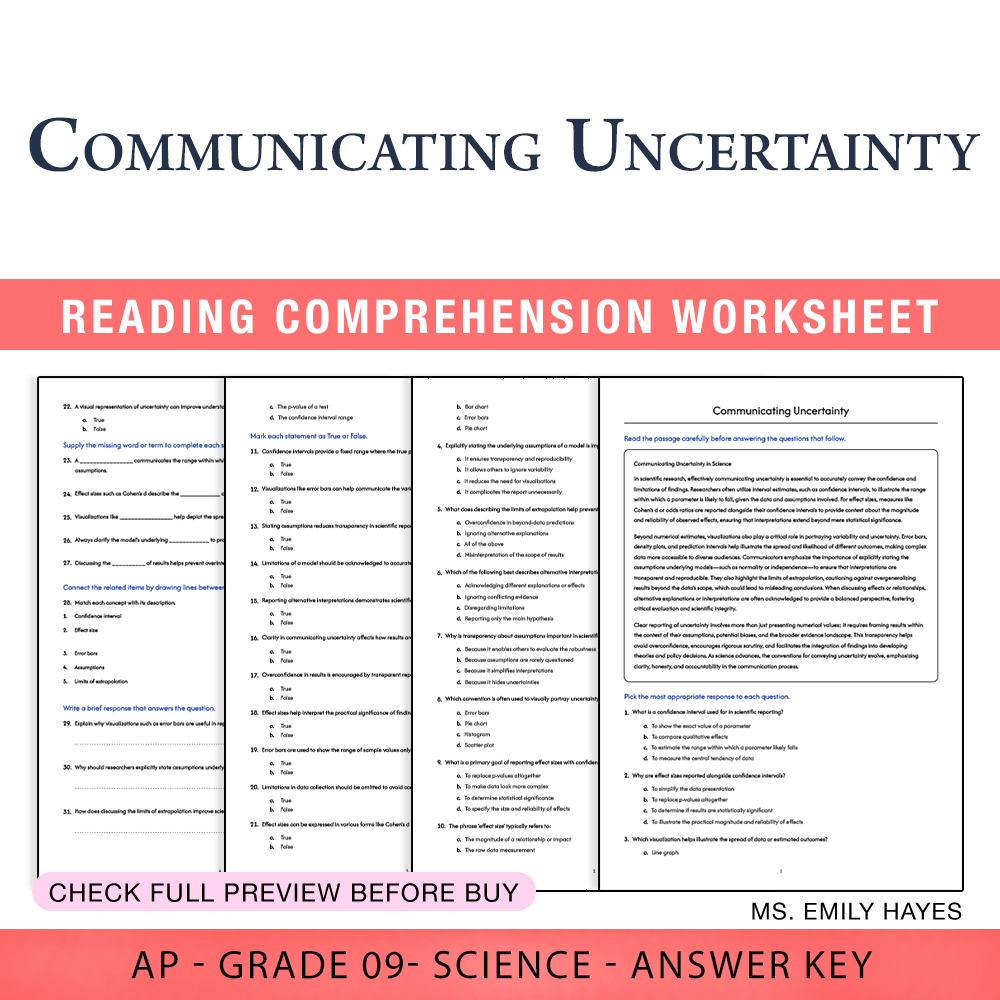
9th Grade Science | Communicating Uncertainty Worksheet (PDF+ Answer Key)
Created byCopper Leaf ClassroomLearning Objectives
- Understand the conventions used for conveying uncertainty and confidence in scientific communication.
- Identify different types of estimates and visualizations used to express variability and effect sizes.
- Evaluate the role of assumptions and limitations when reporting inferential results.
Also included in: Grade 9 Science | Scientific Data Analysis & Inquiry Skills (PDF+ Answer Key) +1 more
Instant download
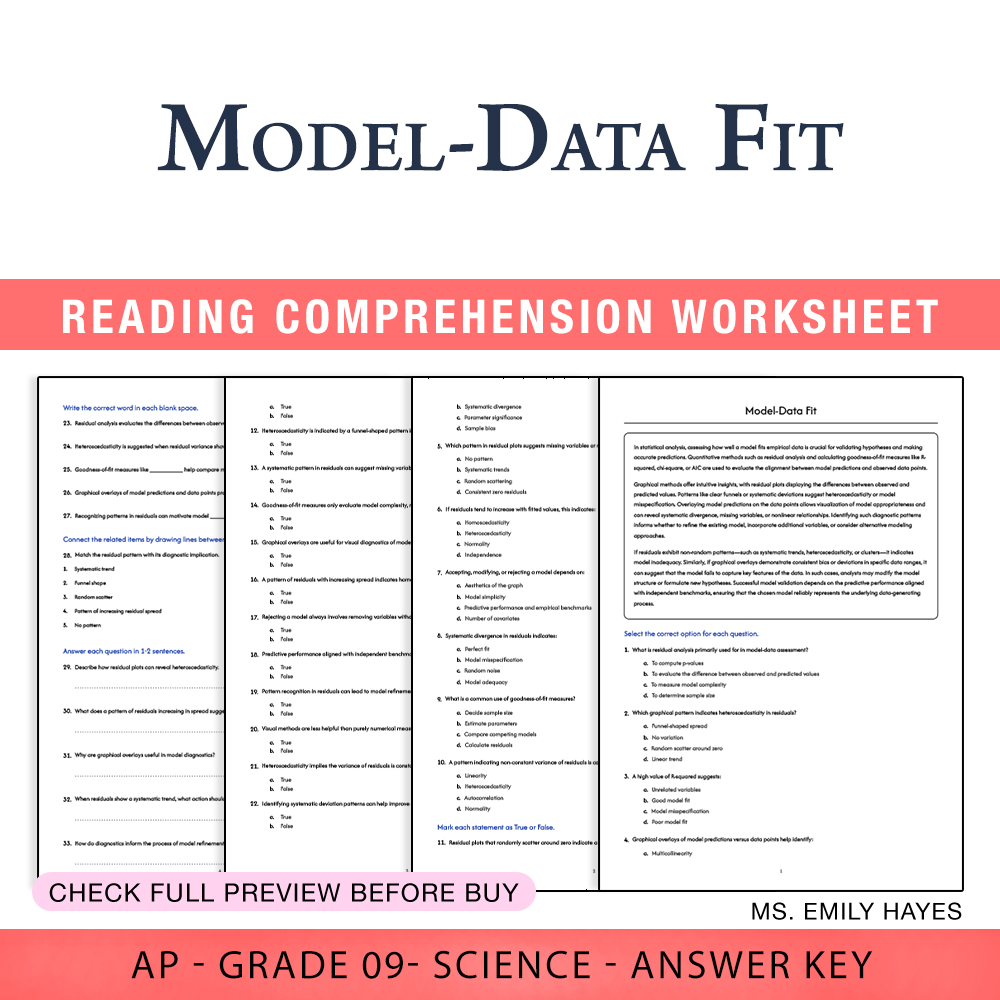
Grade 9 Science | Model-Data Fit Worksheet (PDF+ Answer Key)
Created byCopper Leaf ClassroomLearning Objectives
- Explain the concepts of residual analysis and goodness-of-fit measures.
- Interpret graphical outputs such as residual plots and overlays.
- Identify patterns indicating model inadequacy or violations of assumptions.
Also included in: Grade 9 Science | Scientific Data Analysis & Inquiry Skills (PDF+ Answer Key) +1 more
Instant download
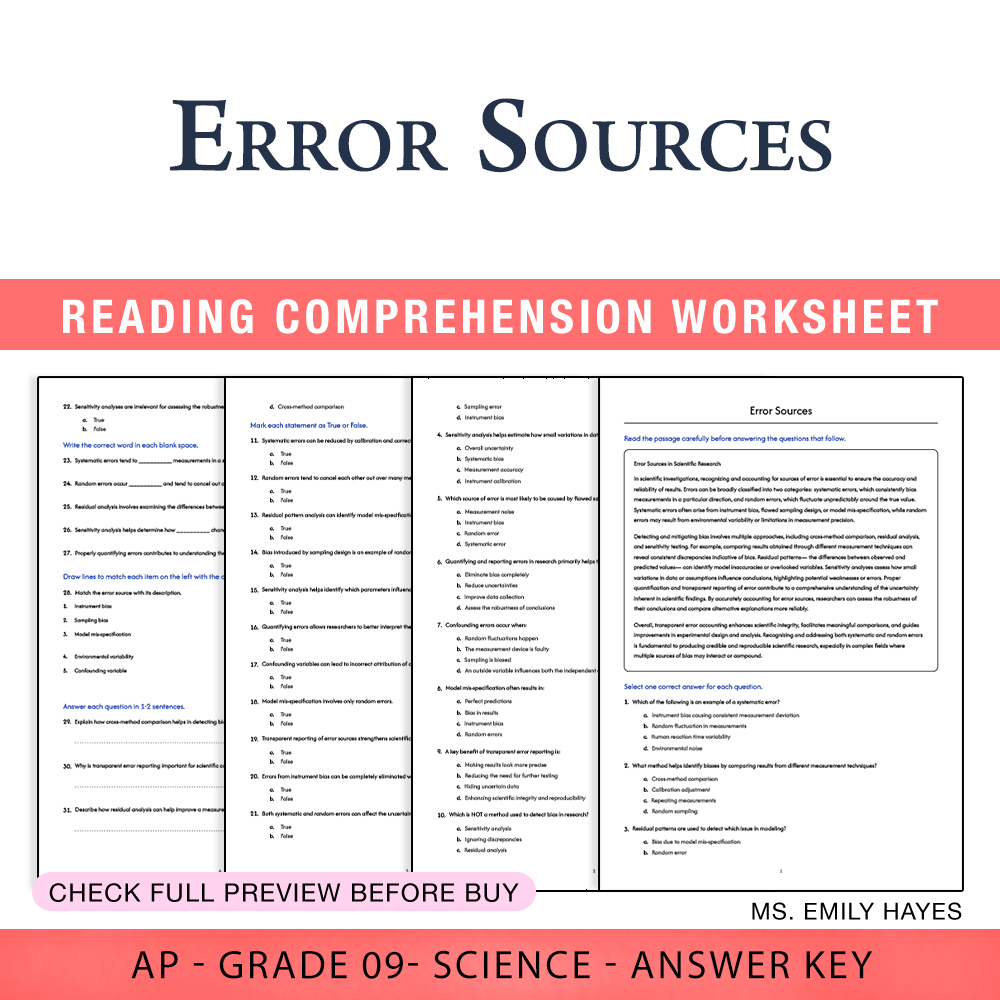
Grade 9 Science | Error Sources Worksheet (PDF+ Answer Key)
Created byCopper Leaf ClassroomLearning Objectives
- Identify various sources of systematic and random errors in scientific research.
- Describe methods used to detect bias and errors, including cross-method comparison and residual analysis.
- Explain how quantified errors contribute to the overall uncertainty in measurements and conclusions.
Also included in: Grade 9 Science | Scientific Data Analysis & Inquiry Skills (PDF+ Answer Key) +1 more
Instant download

Design Cycle for Engineering Solutions Worksheets Grade 9 Science
 Created byBRIGHT PATH RESOURCES
Learning Objectives
- Explain the steps in a design cycle and how feedback leads to improvements.
- Identify design requirements and constraints in an engineering problem.
- Use evidence to justify a design refinement.
Also included in: Grade 9 Engineering Design Worksheets Bundle | Science & Technology +1 more
Instant download

Engineering Design Communication Worksheets | Grade 9 Science
Created byBRIGHT PATH RESOURCESLearning Objectives
- Explain how data and diagrams help communicate design decisions to others.
- Identify how labeled component relationships support understanding of a design.
- Use reasoning to connect test results to design changes, including trade-offs.
Also included in: Grade 9 Engineering Design Worksheets Bundle | Science & Technology +1 more
Instant download
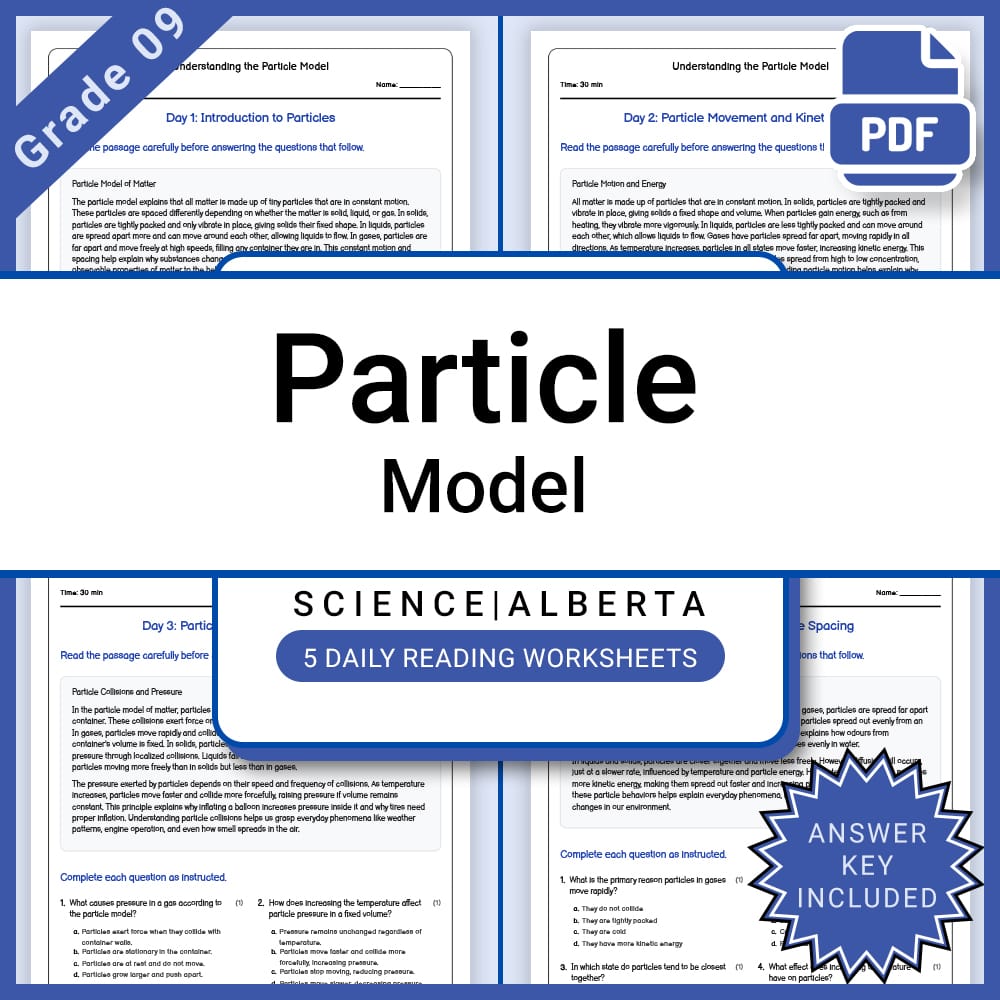
Grade 9 Science – Particle Model Daily Reading Worksheet + Answer Key
JCreated byJ.S SheetsLearning Objectives
- Describe the basic concept of the particle model of matter.
- Explain how particles are arranged in solids, liquids, and gases.
- Understand the relationship between particle movement and properties like diffusion and pressure.
Also included in: Grade 9 Science Lesson Bundle | Alberta Framework +1 more
Instant download
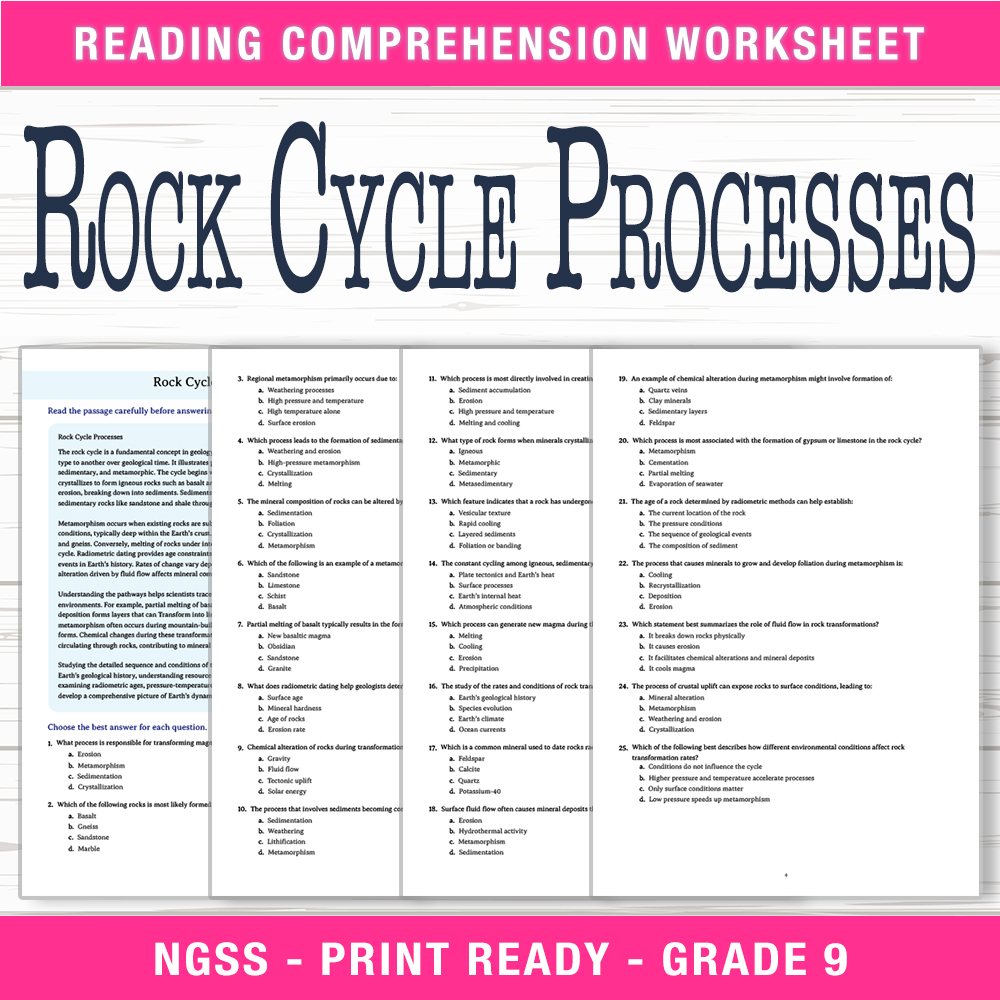
Grade 9 Science | Rock Cycle Processes Worksheet (PDF + Answer Key)
 Created byRiverstone Classroom
Learning Objectives
- Describe the main processes involved in the rock cycle, including melting, crystallization, erosion, deposition, sedimentation, and metamorphism.
- Identify examples of rocks formed through various cycle pathways, such as basalt from partial melting and sandstone from sediment deposition.
- Explain how pressure, temperature, and radiometric age data constrain the temporal sequence of rock transformations.
Also included in: Grade 9 Science Unit | Earth Processes & Climate Worksheet Bundle
Instant download
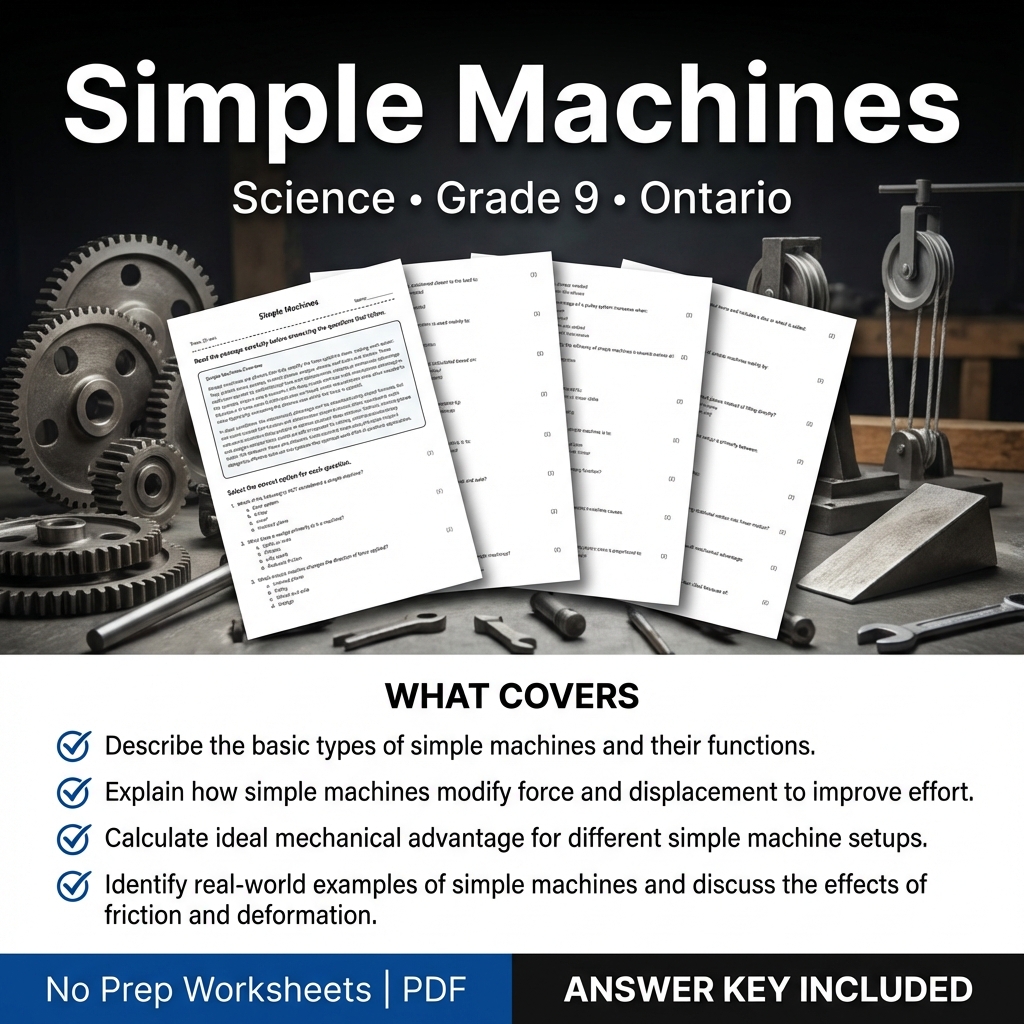
Grade 9 Science Worksheet on Simple Machines | Ontario Standards Practice
 Created byCoral Reef Learning
Learning Objectives
- Describe the basic types of simple machines and their functions.
- Explain how simple machines modify force and displacement to improve effort.
- Calculate ideal mechanical advantage for different simple machine setups.
Instant download
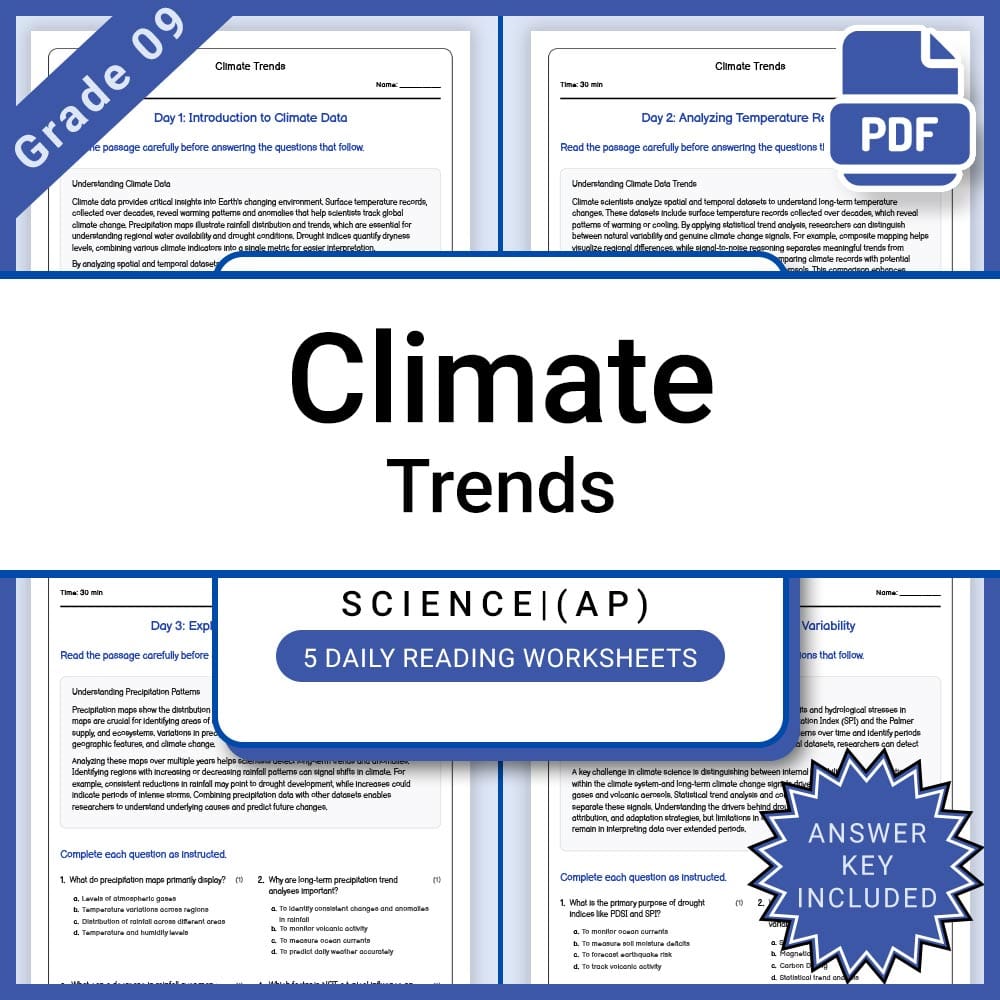
Grade 9 Science – Climate Data Daily Reading Worksheet with Answer Key
JCreated byJ.S SheetsLearning Objectives
- Understand the types of climate datasets and data representations
- Identify key features in surface temperature, precipitation, and drought data
- Apply basic interpretation skills to analyze climate trends and anomalies
Also included in: Grade 9 Science Lesson Bundle – AP Framework Daily Reading Worksheets +1 more
Instant download
9th Grade Science | Nucleic Acid Structure Worksheet with Short Notes ( PDF)
 Created byMeadowlark Worksheets
Learning Objectives
- Describe the key structural differences between DNA and RNA.
- Explain the significance of base pairing and strand orientation in genetic replication.
- Identify the chemical components that distinguish DNA from RNA and their roles in cellular functions.
Instant download
Grade 9 Science | Mountain Building Worksheet (PDF) – BC Standards & Activities
 Created byBright Mind Resources
Learning Objectives
- Understand the processes that lead to mountain formation such as plate convergence and crustal folding.
- Identify the geological features and events associated with orogenic (mountain-building) processes.
- Explain how weathering and erosion modify mountain landscapes over time.
Instant download
Grade 9 Science – Mixtures and Separation Daily Reading Worksheet + Answer Key
JCreated byJ.S SheetsLearning Objectives
- Identify different types of mixtures such as homogeneous and heterogeneous.
- Describe physical methods used to separate components of mixtures.
- Understand examples of mixtures like saltwater, soil, and air.
Also included in: Grade 9 Science Lesson Group: Ontario Curriculum Daily Reading Worksheets +1 more
Instant download
Grade 9 Science | Power Distribution Reading Worksheets (PDF + Answer Key)
JCreated byJ.S SheetsLearning Objectives
- Understand the components and architecture of power distribution systems.
- Identify how voltage transformation and network topology affect system reliability.
- Explain regional constraints and environmental considerations in power transmission.
Also included in: Grade 9 Science Bundle | Electricity, Energy & Magnetism (PDF + Answer Keys) +1 more
Instant download
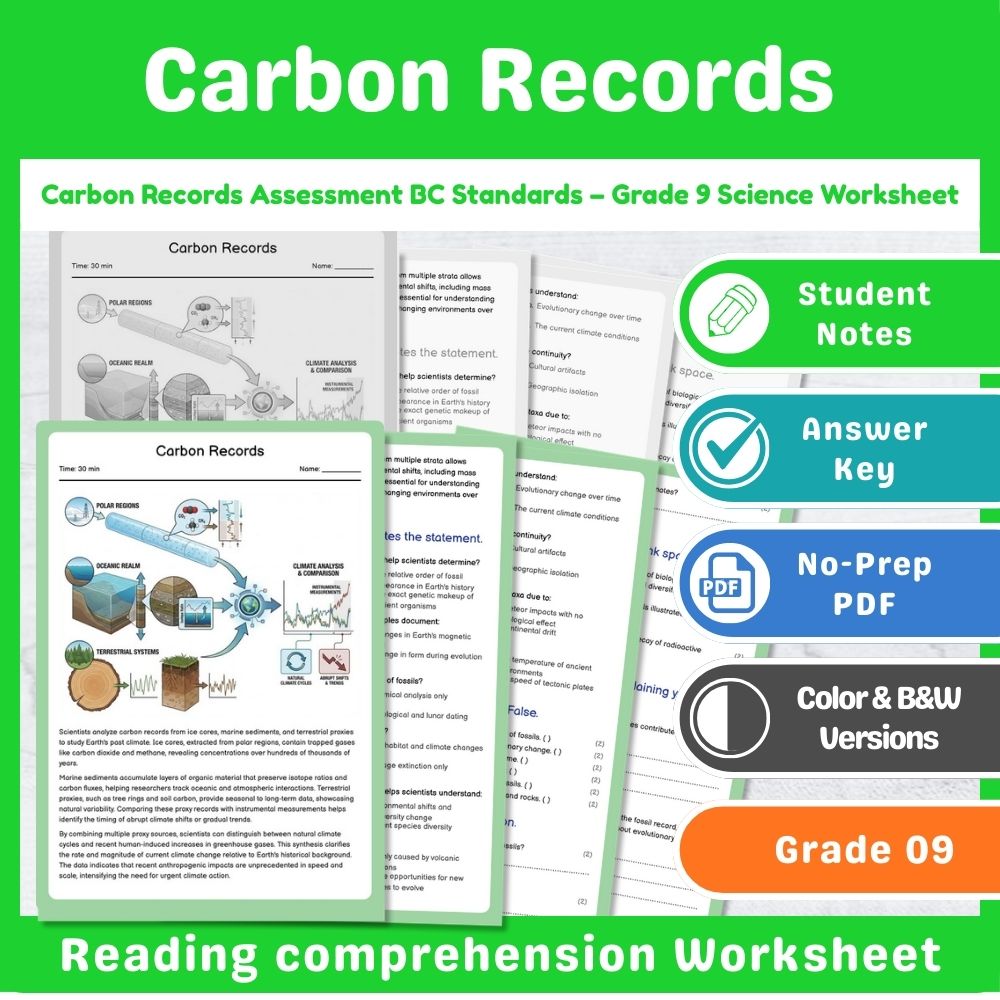
Carbon Records Assessment BC Standards – Grade 9 Science Worksheet
 Created byPrism Point Learning
Learning Objectives
- Understand how ice cores, marine sediments, and terrestrial proxies record past atmospheric carbon levels.
- Identify methods used to analyze past greenhouse gas concentrations.
- Explain the significance of long-term carbon trends in understanding climate change.
Also included in: Grade 9 Science Mini Bundle – Earth & Space Assessment & Activities
Instant download

Energy Systems and Decarbonization Worksheet | NGSS Grade 9 Science
 Created byCedar Grove Learning
Learning Objectives
- Understand the transition processes in energy systems towards decarbonization.
- Analyze the role of renewable energy, storage, and carbon capture in reducing greenhouse gases.
- Evaluate trade-offs between reliability, cost, and environmental impact in energy planning.
Instant download

Grade 9 Science | Mixtures & Separation - Daily Reading Comprehension
Created byCoral Reef LearningLearning Objectives
- Differentiate between homogeneous and heterogeneous mixtures
- Identify examples of mixtures from daily life
- Describe physical methods used to separate components of mixtures
Instant download
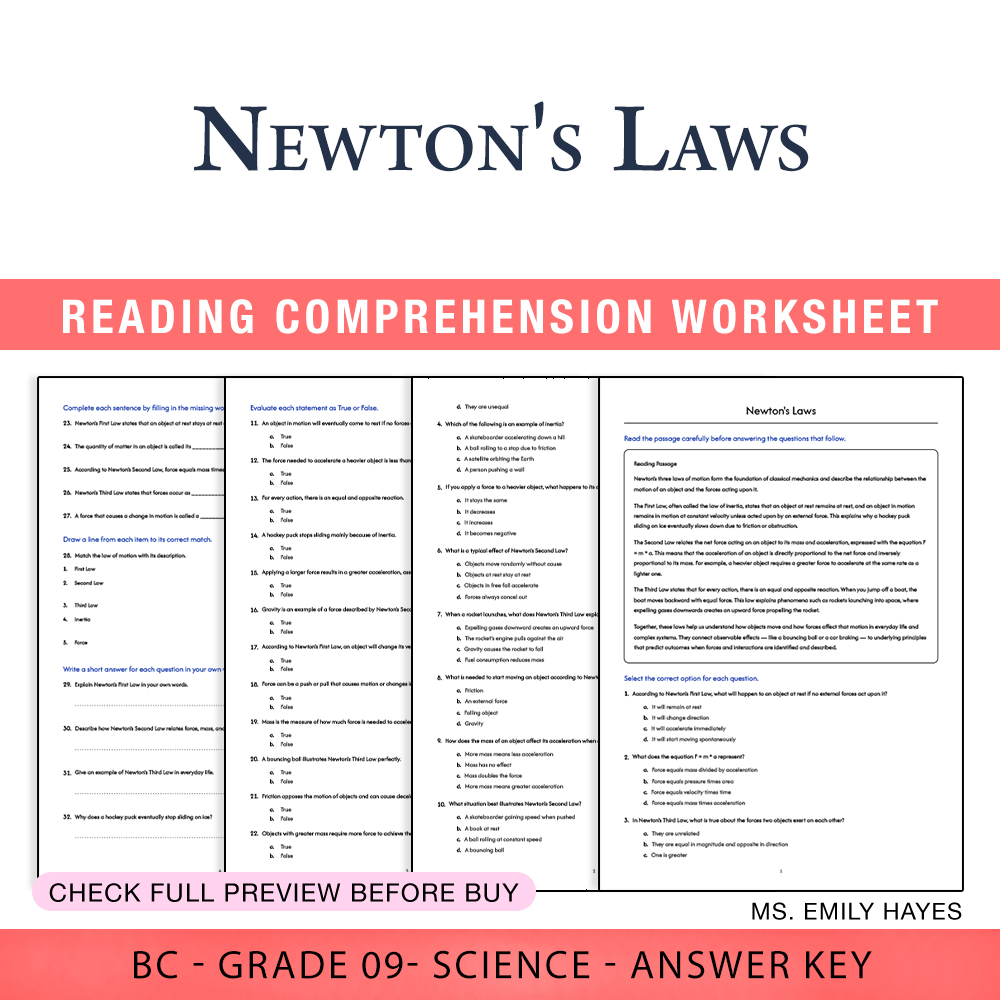
9th Grade Science | Newton's Laws of Motion Worksheet (PDF+ Answer Key)
Created byCopper Leaf ClassroomLearning Objectives
- Understand and explain Newton's three laws of motion.
- Identify real-world examples illustrating each of Newton's laws.
- Apply Newton's laws to analyze motion and forces in various situations.
Also included in: Grade 9 Science Worksheet Bundle | Forces, Energy & Motion (PDF + Answer Key) +1 more
Instant download

Cell Organelle Systems and Cooperation Worksheets Grade 9 Science
Created byPrism Point LearningLearning Objectives
- Explain how organelles cooperate to support cellular metabolism
- Compare the roles of rough and smooth endoplasmic reticulum
- Describe how transport vesicles and the Golgi apparatus move materials
Instant download

Microscopy Magnification, Resolution and Contrast Worksheets Grade 9
Created byPrism Point LearningLearning Objectives
- Explain how light microscopes and electron microscopes form images
- Distinguish magnification from resolution when interpreting microscope images
- Interpret scale bars to estimate the actual size of structures
Instant download

Cell Organelle Systems and Cooperation Worksheets Grade 9 Science
Created byPrism Point LearningLearning Objectives
- Explain how organelles cooperate to support cellular metabolism
- Compare the roles of rough and smooth endoplasmic reticulum
- Describe how transport vesicles and the Golgi apparatus move materials
Instant download

Cell Organelle Systems and Cooperation Worksheets Grade 9 Science
Created byPrism Point LearningLearning Objectives
- Explain how organelles cooperate to support cellular metabolism
- Compare the roles of rough and smooth endoplasmic reticulum
- Describe how transport vesicles and the Golgi apparatus move materials
Instant download

Cell Organelle Interactions and Protein Trafficking Worksheets Grade 9
Created byPrism Point LearningLearning Objectives
- Trace the pathway of a protein from genetic instructions to secretion
- Explain how the rough endoplasmic reticulum and Golgi apparatus process proteins
- Describe how transport vesicles move proteins between cell compartments
Instant download
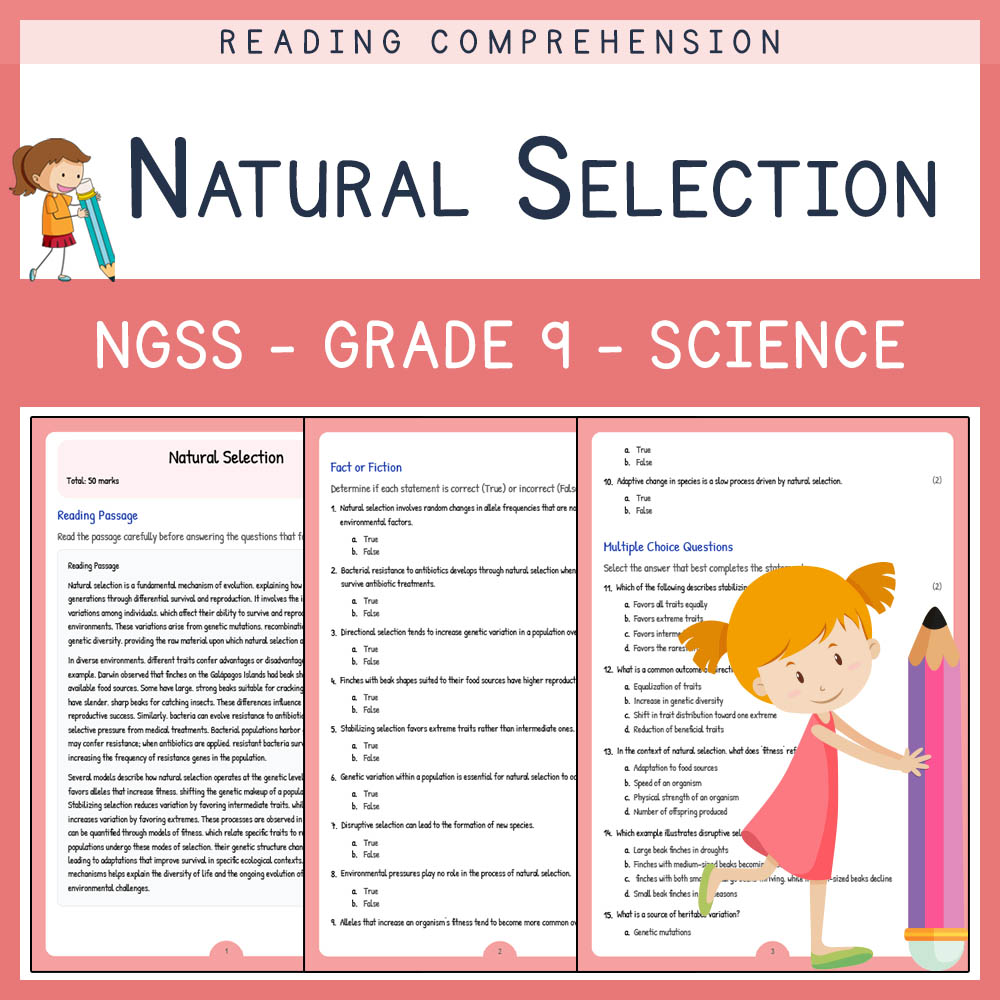
Grade 9 Science | Natural Selection Worksheet with Answer Key (PDF) – Evolution & NGSS
 Created byLumora Learning
Learning Objectives
- Understand the mechanisms of natural selection and how it leads to evolutionary change
- Identify examples of natural selection in nature, such as beak morphology and bacterial resistance
- Explain the concepts of variation, inheritance, and selective pressures in evolution
Instant download

Grade 9 Science Worksheet | Thermoregulation TEKS (PDF) Bundle
 Created byEvergreen Desk Education
Learning Objectives
- Explain how the hypothalamus and thermoreceptors coordinate heat gain and heat loss through feedback loops.
- Describe how the skin and vasculature adjust heat loss using vasoconstriction and vasodilation.
- Analyze how sweating, shivering, and metabolic-rate changes affect body temperature under different environmental conditions.
Instant download
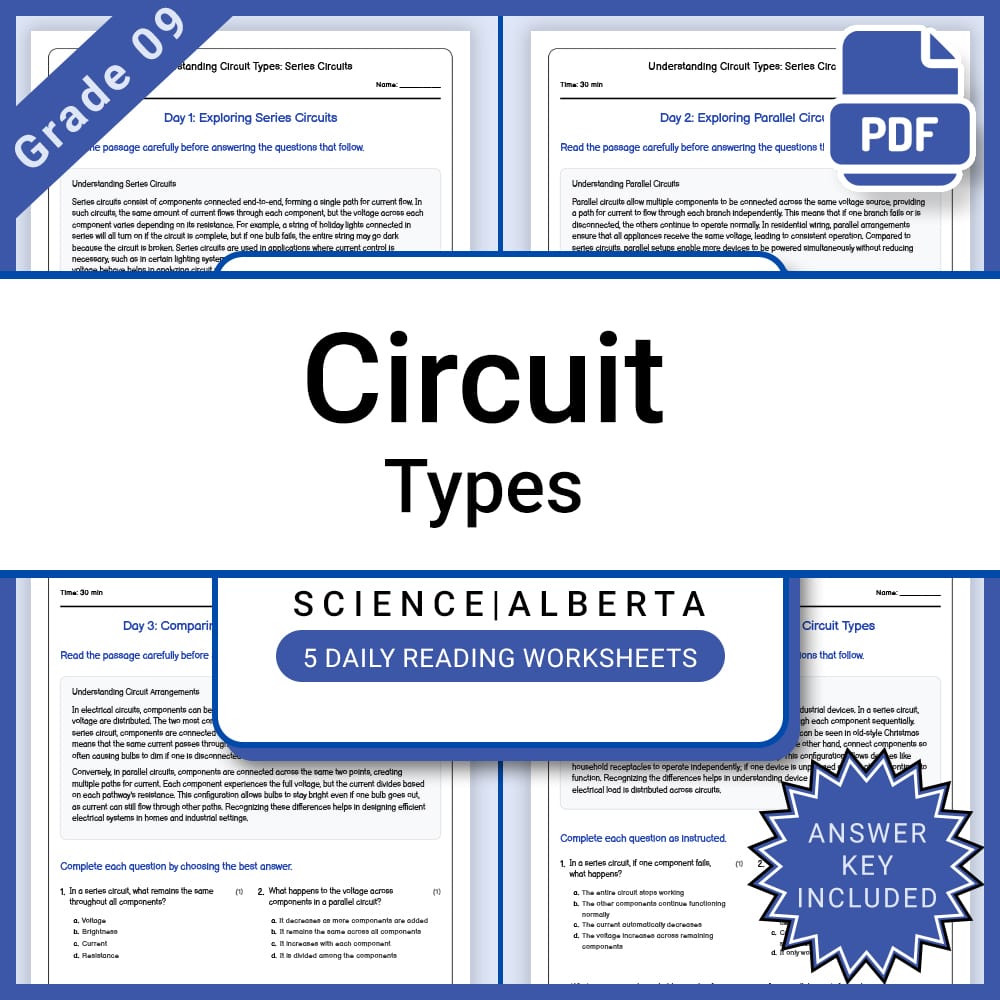
Grade 9 Science – Circuit Types Daily Reading Worksheet + Answer Key
JCreated byJ.S SheetsLearning Objectives
- Define series circuits and describe their main characteristics.
- Identify the behavior of current and voltage in series circuits.
- Differentiate between series and parallel circuit arrangements.
Also included in: Grade 9 Science Lesson Bundle: Electrical Systems and Energy Concepts +1 more
Instant download

Grade 9 Science | Population Regulation in Ecology - Reading Comprehension
Created byCoral Reef LearningLearning Objectives
- Understand the concept of population growth and carrying capacity.
- Identify factors that regulate population sizes such as competition, predation, and resource limitation.
- Interpret logistic growth models and predator-prey cycles.
Instant download
Grade 9 Science | Gas Behavior Worksheet (Ontario) (PDF)
Created byBright Mind ResourcesLearning Objectives
- Explain how the particle model describes pressure, volume, and temperature relationships in gases.
- Describe how microscopic particle motion leads to observable gas properties such as pressure and flow.
- Understand how macroscopic gas laws emerge from particle behavior without using equations.
Instant download

Particle Model Worksheet | Grade 9 Science Activities
Created byPrism Point LearningLearning Objectives
- Explain how the particulate model describes solids, liquids, and gases using particle spacing and motion
- Use the particulate model to predict diffusion, changes in pressure, and temperature effects
- Connect particle collisions and kinetic energy to observable macroscopic properties
Instant download
Grade 9 Science | Physical Changes Worksheet – Ontario (PDF)
Created byBright Mind ResourcesLearning Objectives
- Explain the different types of physical changes such as melting, freezing, evaporation, condensation, and dissolving.
- Differentiate between reversible and irreversible physical changes.
- Describe how energy transfer occurs during phase changes.
Instant download

Cell Structure and Function Comparison Worksheets Grade 9 Science
Created byPrism Point LearningLearning Objectives
- Identify differences in organelle abundance among specialized cell types
- Explain how smooth endoplasmic reticulum supports lipid production
- Relate mitochondrial abundance to cellular energy requirements
Instant download

Cell Theory and Cellular Organization Worksheets Grade 9 Science
Created byPrism Point LearningLearning Objectives
- Explain the three central principles of cell theory
- Compare unicellular and multicellular organisms
- Describe how cell specialization supports organism function
Instant download

Microscopy Analysis and Cellular Evidence Worksheets Grade 9 Science
Created byPrism Point LearningLearning Objectives
- Interpret scale bars when estimating cellular structure dimensions
- Explain how resolution limits affect microscopy image interpretation
- Compare evidence from electron and fluorescence microscopy
Instant download

Cell Membrane Structure and Selective Permeability Worksheets Grade 9
Created byPrism Point LearningLearning Objectives
- Identify the main structural components of the cell membrane
- Explain how phospholipid structure creates a hydrophobic interior
- Distinguish the roles of integral and peripheral proteins
Instant download

Tissue Structure and Function Worksheets Grade 9 Science
Created byPrism Point LearningLearning Objectives
- Explain how epithelial structure supports protection and selective exchange.
- Compare extracellular matrix properties in bone, blood, and other connective tissues.
- Relate muscle cell organization to contraction and force production.
Instant download

Cell Membrane Transport Mechanisms Worksheets Grade 9 Science
Created byPrism Point LearningLearning Objectives
- Define diffusion, facilitated diffusion, and osmosis
- Compare passive and active transport by energy use and gradients
- Explain how membrane proteins support facilitated diffusion and active transport
Instant download

Prokaryotic vs Eukaryotic Cells Worksheets Grade 9 Science
Created byPrism Point LearningLearning Objectives
- Compare the size and internal organization of prokaryotic and eukaryotic cells
- Identify the nucleoid, chromosomes, and plasmids in prokaryotic cells
- Explain how membrane-bound organelles support eukaryotic cell compartmentalization
Instant download
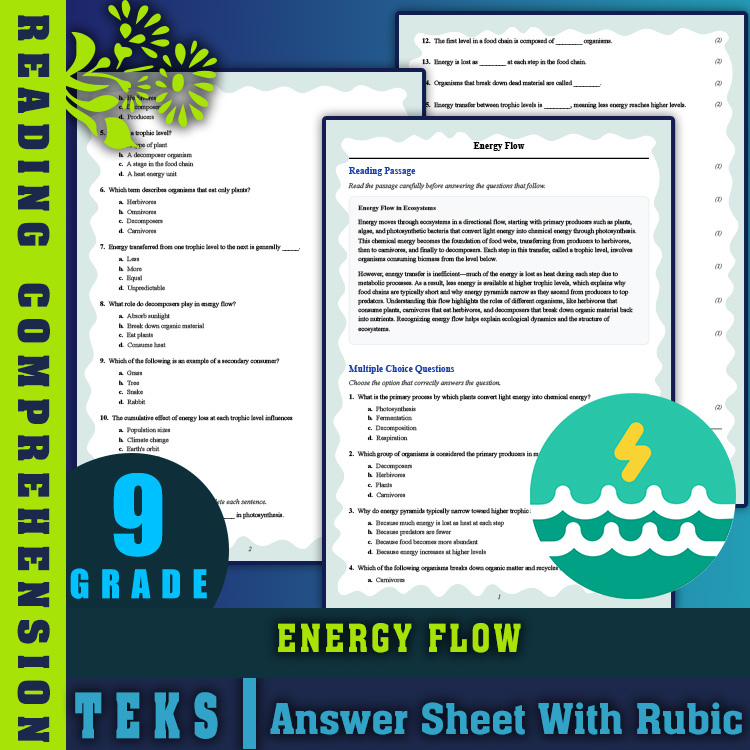
9th Grade Science | Energy Flow Reading Worksheet with PDF Answer Key
JCreated byJ.S SheetsLearning Objectives
- Describe the process of energy transfer through ecosystems from producers to consumers.
- Explain how energy is lost at each trophic level and how this affects food chain length.
- Identify the roles of producers, herbivores, carnivores, and decomposers in energy flow.
Instant download

Grade 9 Science – Plate Tectonics Exploration Daily Reading Worksheet
 Created byQuiet Forest Education
Learning Objectives
- Understand the structure and composition of Earth's outer layer.
- Identify and describe different types of plate boundaries.
- Explain the mechanisms driving plate motions and their surface expressions.
Also included in: Earth and Space Systems Grade 9 Science Daily Worksheets Bundle | Ontario +1 more
Instant download
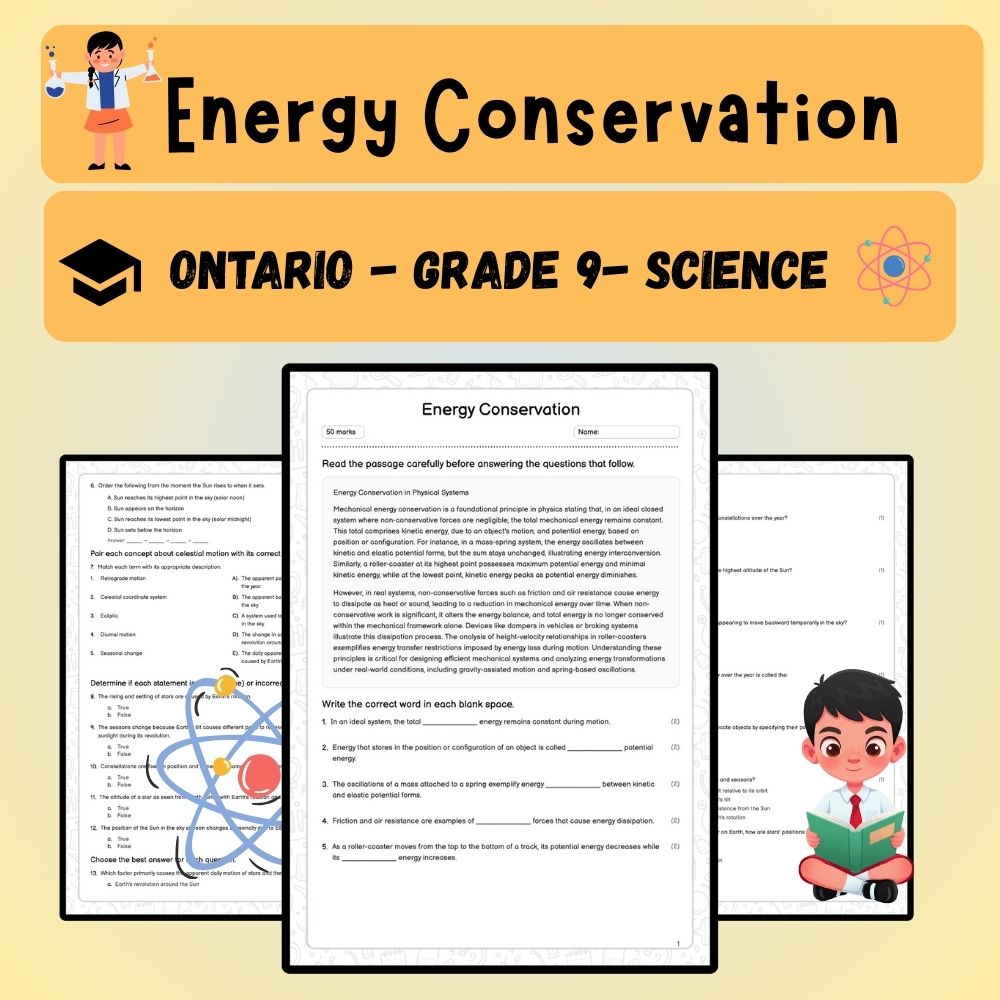
Grade 9 Science | Energy Conservation Worksheet (Answer Key) – Ontario Standard
Created byPrism Point LearningLearning Objectives
- Explain the principle of mechanical energy conservation in ideal systems.
- Describe how non-conservative forces affect energy exchange and system efficiency.
- Illustrate energy interconversion using spring-mass and gravitational models.
Also included in: Grade 9 Science Unit | Forces, Motion & Energy Worksheets (Ontario Standards) +1 more
Instant download
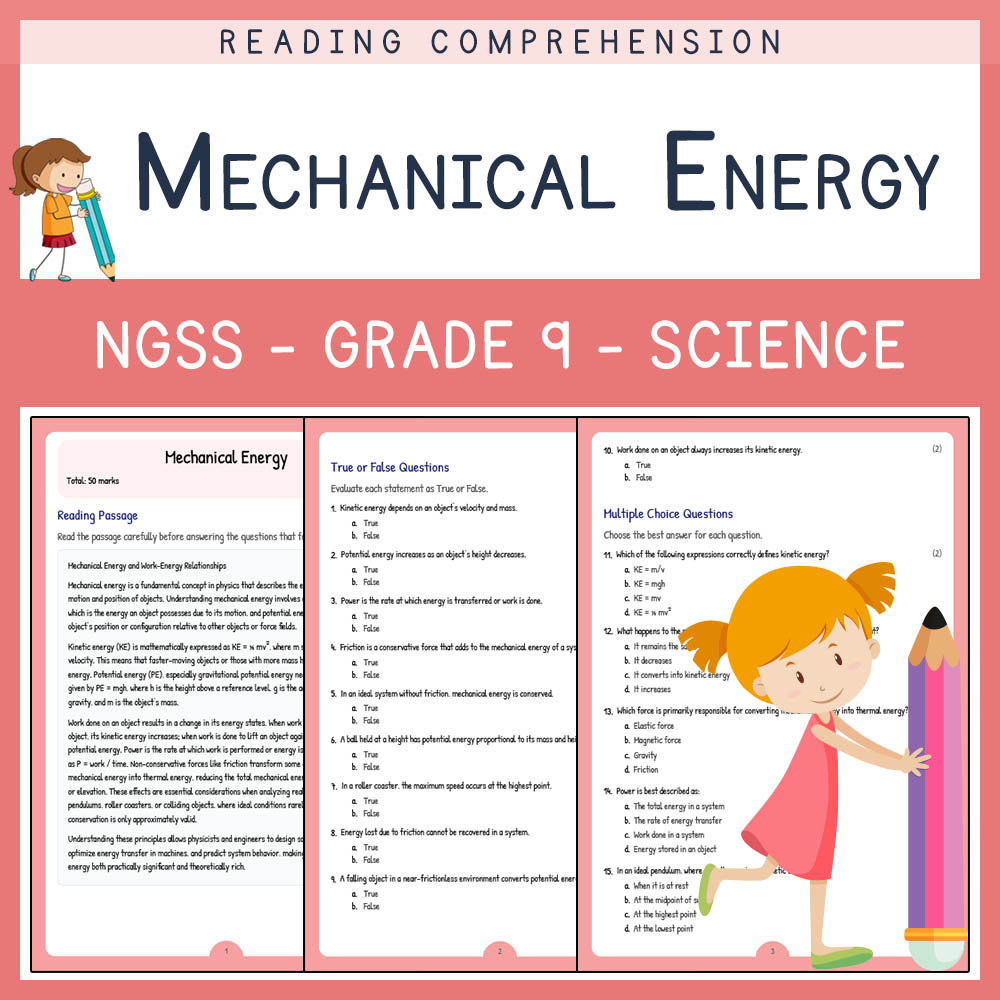
Grade 9 Science | Mechanical Energy Worksheet (PDF & Answer Key) for NGSS Alignment
Created byLumora LearningLearning Objectives
- Describe the forms of mechanical energy including kinetic and potential energy.
- Apply the work-energy theorem to analyze energy transfer in systems.
- Explain the effect of non-conservative forces, such as friction, on mechanical energy.
Instant download
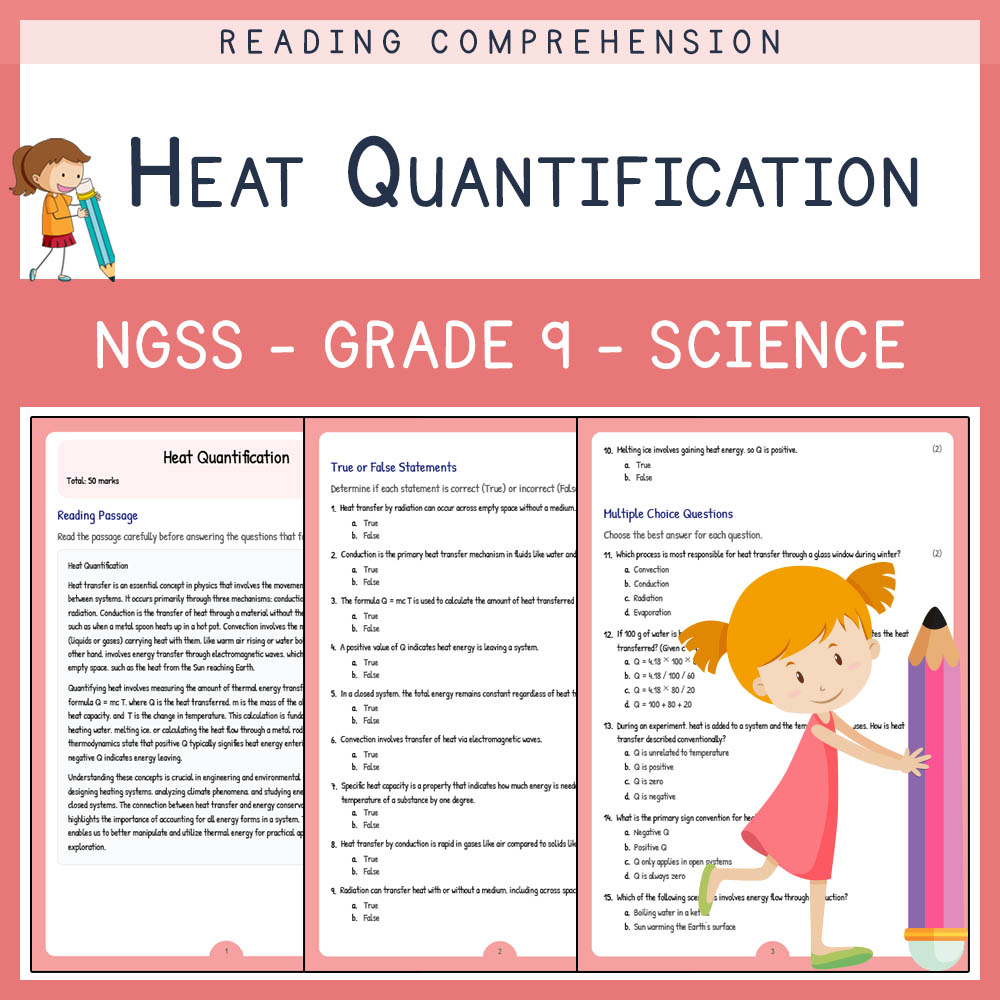
Grade 9 Science | Heat Quantification Worksheet PDF with Answer Key (NGSS Aligned)
Created byLumora LearningLearning Objectives
- Understand and explain the concepts of heat transfer mechanisms: conduction, convection, and radiation.
- Calculate thermal energy transfer using specific heat capacity, mass, and temperature change in different scenarios.
- Interpret sign conventions related to heat flow and energy changes in isolated and open systems.
Instant download
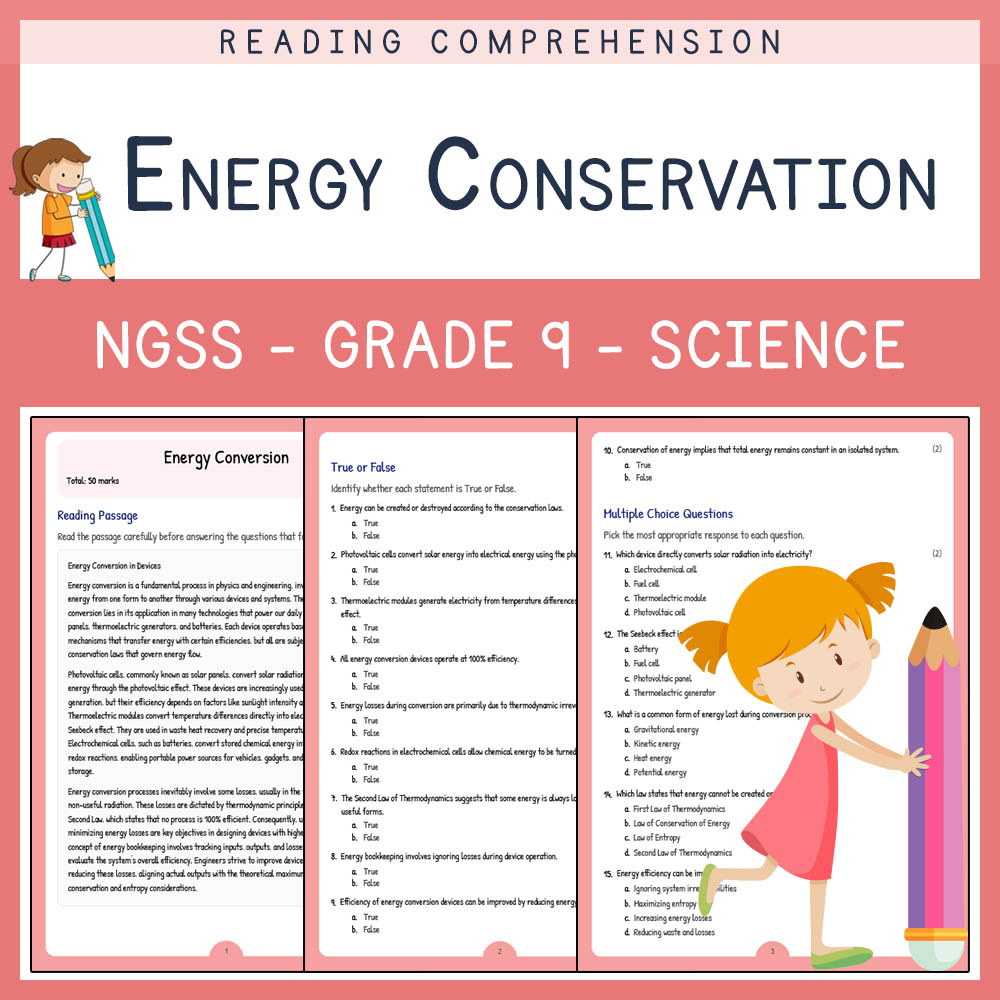
Grade 9 Science | Energy Conservation Worksheet & Answer Key (NGSS-Aligned)
Created byLumora LearningLearning Objectives
- Understand the principles of energy conservation in both closed and open systems.
- Identify and analyze energy transfer processes using diagrams and mathematical models.
- Explain the concept of energy reservoirs and how they relate to total energy constancy.
Instant download
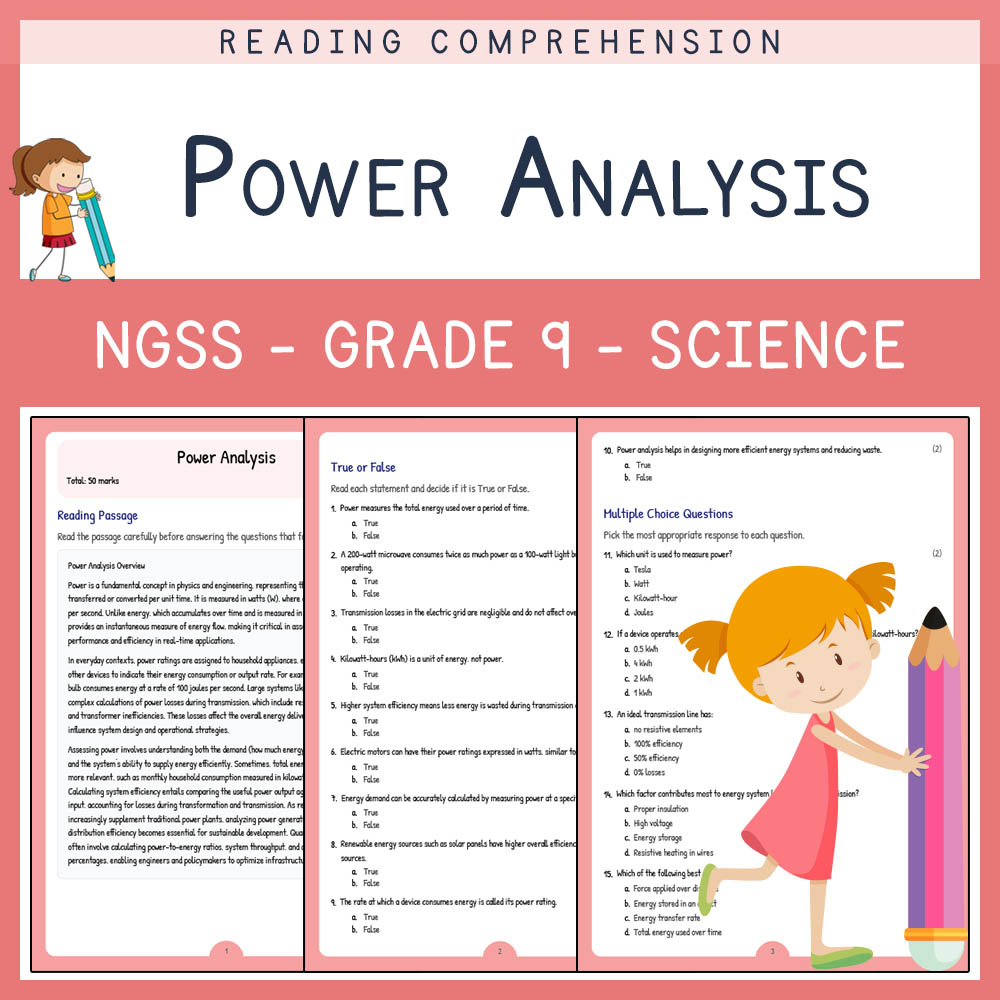
Grade 9 Science | Power Analysis Worksheet & Answer Key – NGSS-Aligned
Created byLumora LearningLearning Objectives
- Understand the concept of power and its distinction from energy.
- Apply methods to calculate energy demand and system performance over time.
- Evaluate the efficiency and effectiveness of various energy systems and technologies.
Instant download

Mass Conservation Assessment | BC Standards Grade 9 Science
Created byPrism Point LearningLearning Objectives
- Understand the principle of conservation of mass during chemical reactions.
- Interpret balanced chemical equations to identify atom counts.
- Explain how mass remains constant before and after a chemical change.
Instant download
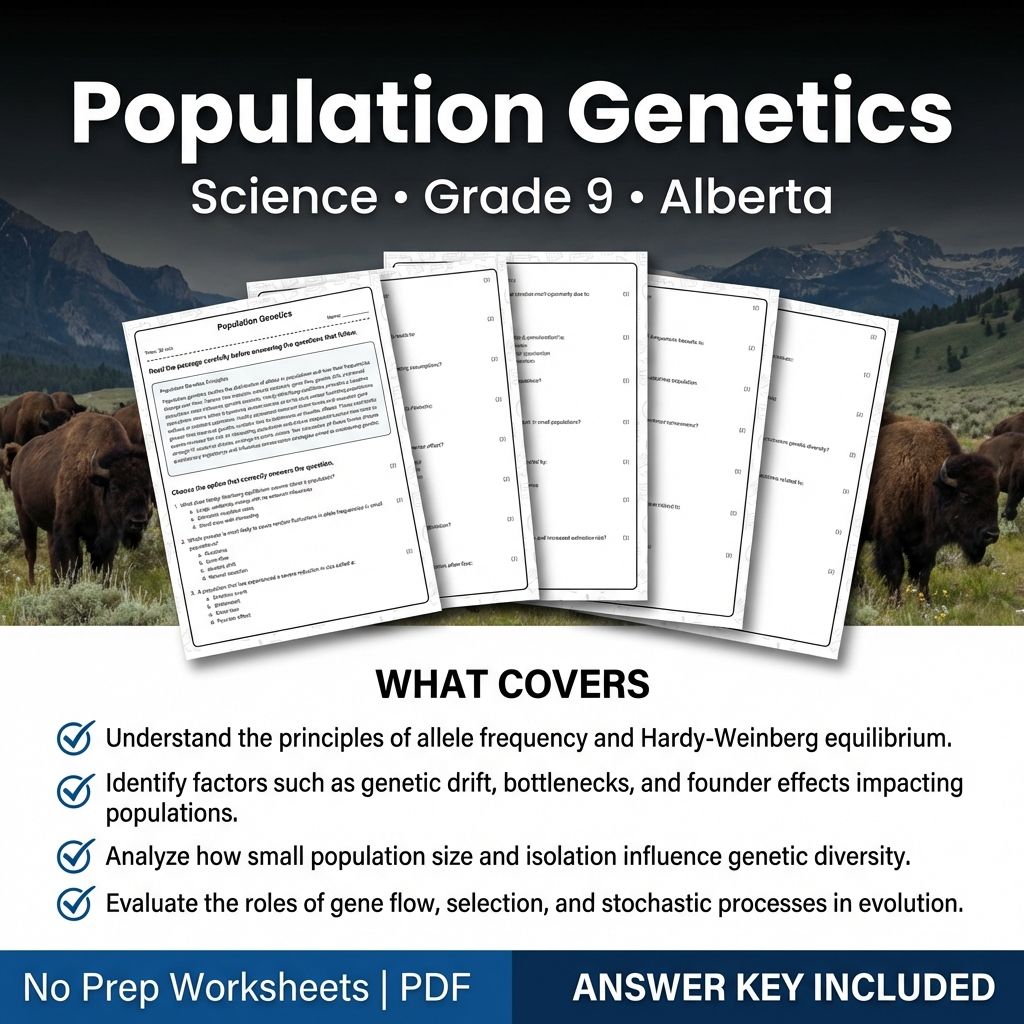
Population Genetics Worksheet for Grade 9 Science | Alberta Standards
Created byCoral Reef LearningLearning Objectives
- Understand the principles of allele frequency and Hardy-Weinberg equilibrium.
- Identify factors such as genetic drift, bottlenecks, and founder effects impacting populations.
- Analyze how small population size and isolation influence genetic diversity.
Instant download

Cell Essential Functions Worksheet | Grade 9 Science Practice
Created byPrism Point LearningLearning Objectives
- Explain how cell membranes regulate transport of nutrients and wastes to support homeostasis
- Describe how cellular energy use (ATP and chemical reactions) helps cells build structures and grow
- Use evidence such as uptake rates and growth patterns to connect cellular structure to cell function
Instant download

Uncertainty in Graphs Assessment for Grade 9 Science | Standards-Aligned
Created byPrism Point LearningLearning Objectives
- Understand how uncertainty is represented in data displays such as error bars and uncertainty bands.
- Interpret the significance of overlapping uncertainty ranges across different conditions.
- Connect the size of uncertainty to the credibility of observed patterns and trends.
Also included in: Grade 9 Scientific Inquiry Practices Science Lesson Bundle: General
Instant download
About Grade 9 Science Worksheets
Find Science worksheets built for Grade 9. All 6,926 cover core skills, practice, and review, each an instant PDF download.
Every worksheet on MyTeachingSheets is created by independent teacher-authors and reviewed before publication. All resources download as printable PDFs for classroom, homework, or at-home practice, and many include answer keys. Preview any worksheet free before buying.