
Grade 9 Science Worksheets
6,926 worksheets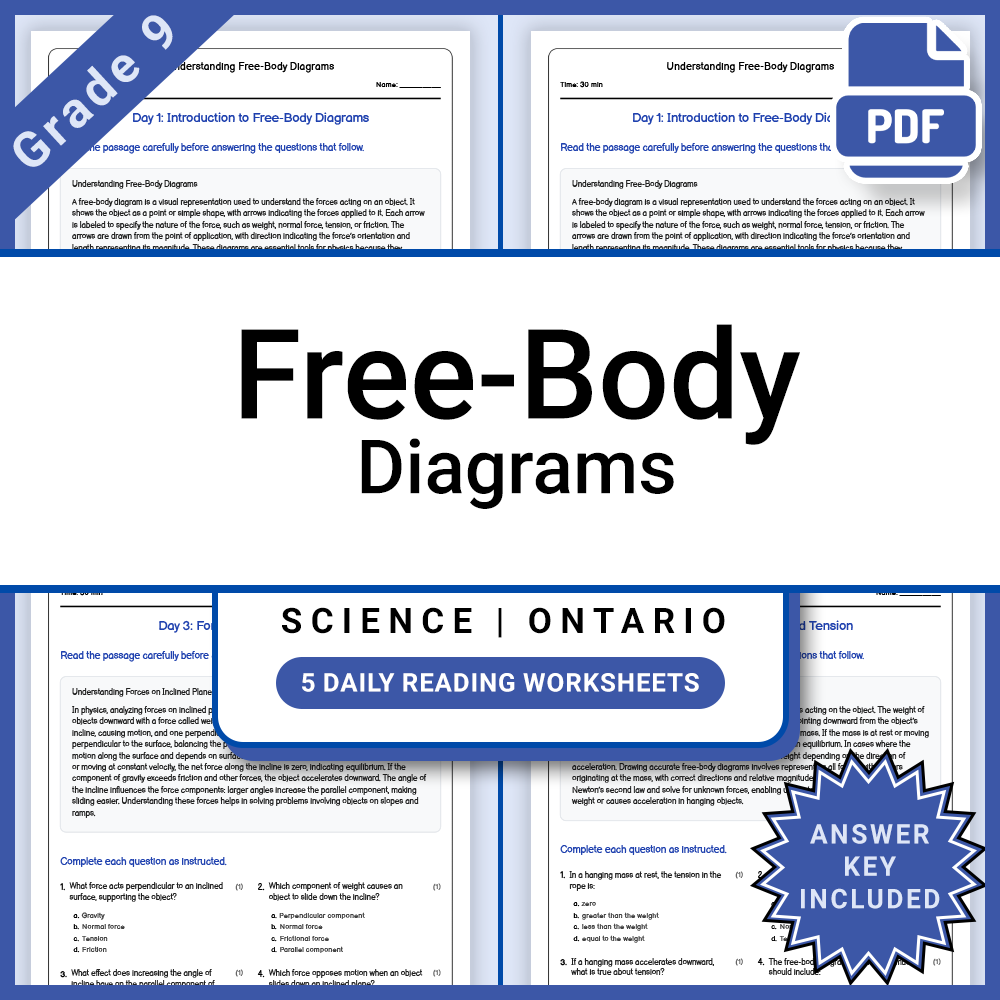
Grade 9 Science – Free-Body Diagrams Daily Reading Worksheet + Answer Key
JCreated byJ.S SheetsLearning Objectives
- Recognize and interpret free-body diagrams for simple objects
- Identify the common forces involved in free-body diagrams
- Understand the conventions for force vectors, points of application, and coordinate systems
Also included in: Grade 9 Science Lesson Group: Physics and Motion Worksheets Bundle +1 more
Instant download
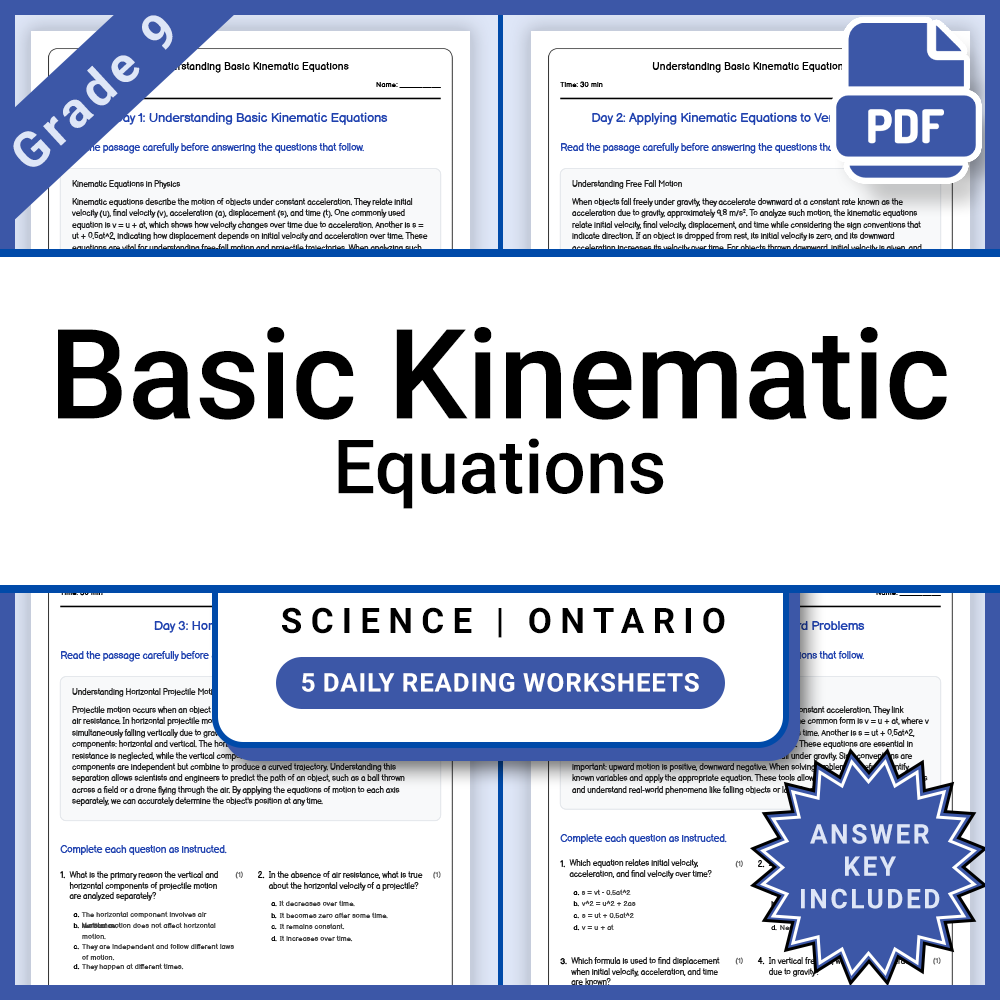
Grade 9 Science – Basic Kinematic Equations Daily Reading Worksheet + Answer Key
JCreated byJ.S SheetsLearning Objectives
- Interpret the fundamental kinematic equations linking displacement, velocity, acceleration, and time.
- Understand the physical meaning of variables u, v, s, a, and t in motion scenarios.
- Apply kinematic equations to different contexts such as free-fall and projectile motion.
Also included in: Grade 9 Science Lesson Group: Physics and Motion Worksheets Bundle +1 more
Instant download
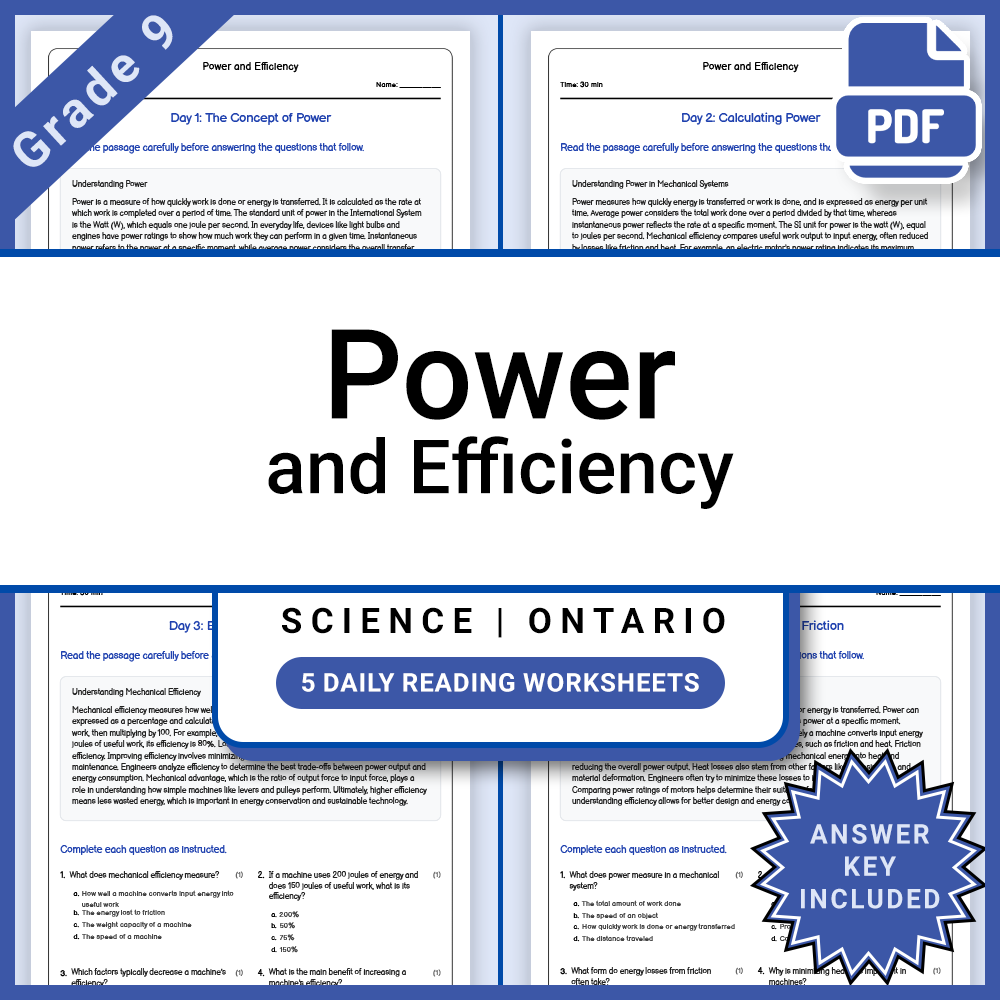
Grade 9 Science Power and Efficiency Daily Reading Worksheet + Answer Key
JCreated byJ.S SheetsLearning Objectives
- Understand the concept of power as the rate of energy transfer or work per unit time.
- Identify the units used to measure power, including Watts.
- Explain the difference between average and instantaneous power.
Also included in: Grade 9 Science Lesson Group: Physics and Motion Worksheets Bundle +1 more
Instant download
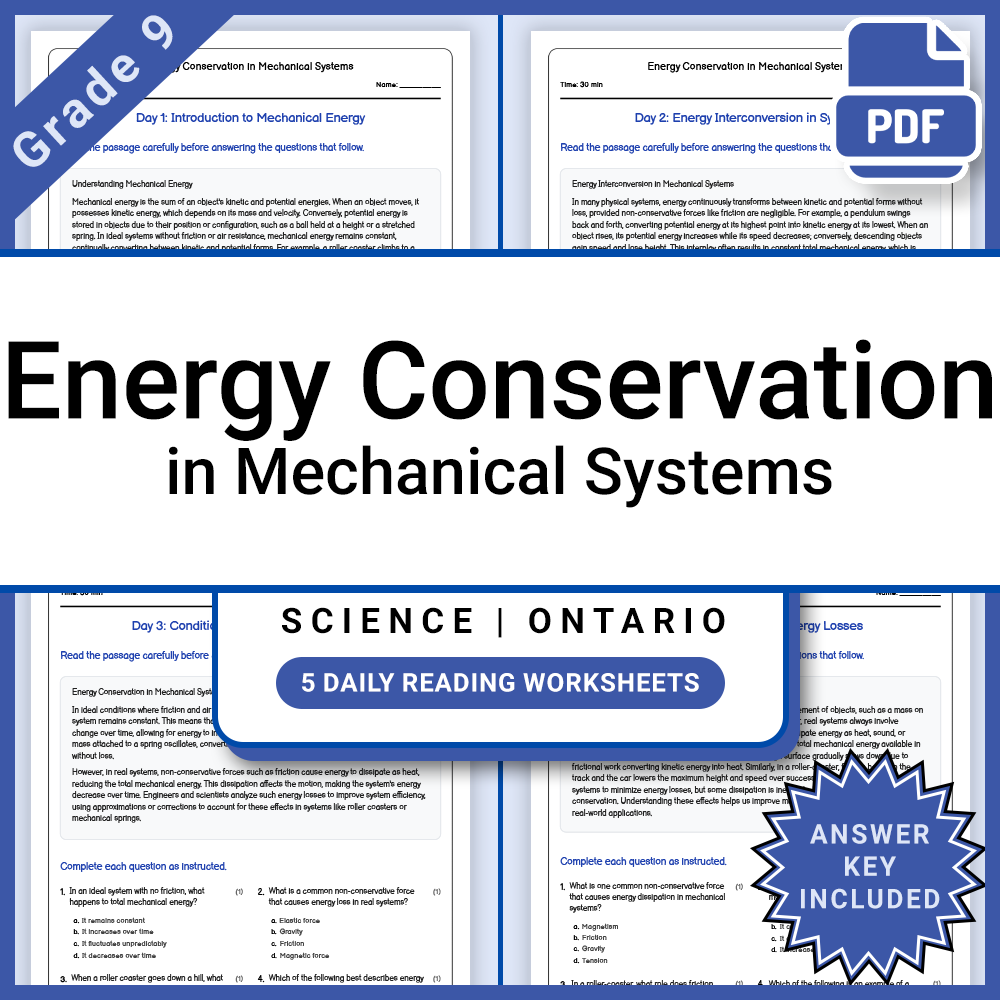
Grade 9 – Energy Conservation in Mechanical Systems Worksheet + Answer Key
JCreated byJ.S SheetsLearning Objectives
- Understand the concepts of kinetic and potential energy.
- Learn how energy transforms between kinetic and potential forms in systems.
- Recognize the impact of non-conservative forces like friction on energy conservation.
Also included in: Grade 9 Science Lesson Group: Physics and Motion Worksheets Bundle +1 more
Instant download
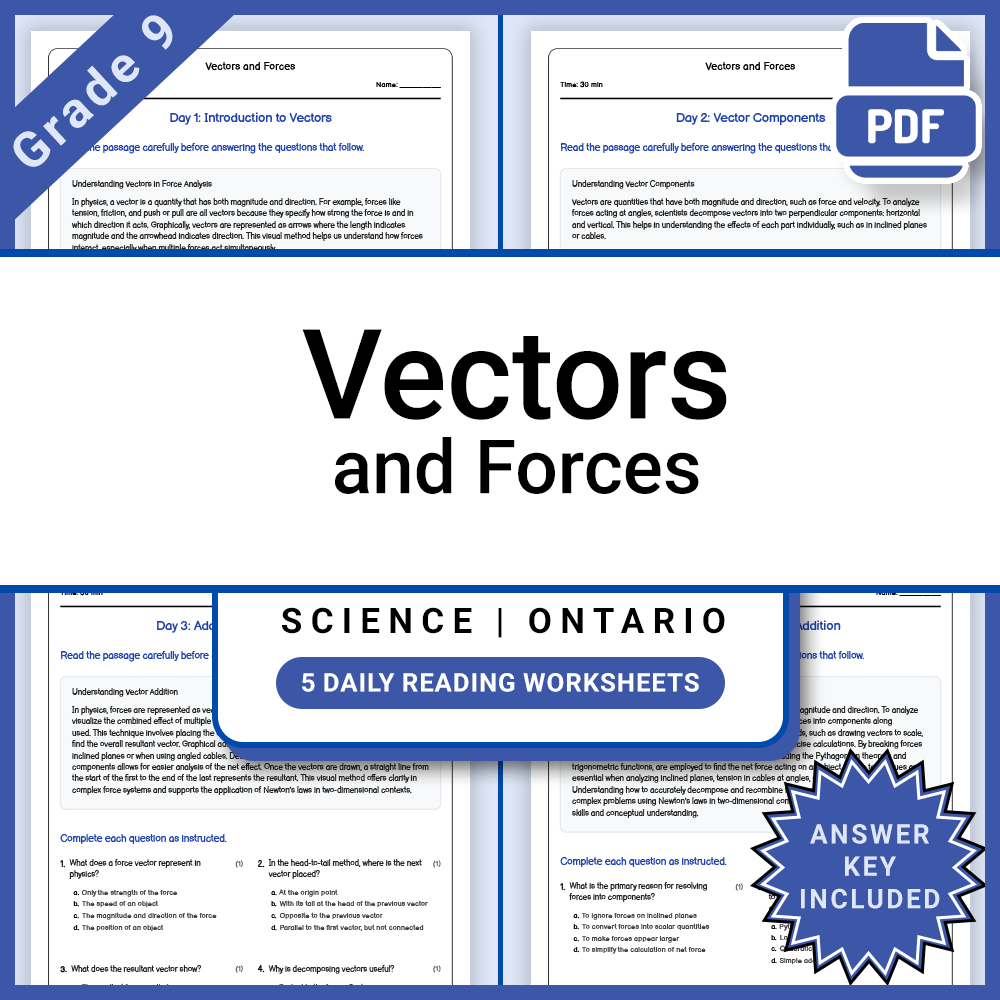
Grade 9 Science – Vectors and Forces Daily Reading Worksheet + Answer Key
JCreated byJ.S SheetsLearning Objectives
- Understand the concept of vectors as quantities with magnitude and direction
- Learn to represent forces graphically using vectors
- Resolve vectors into components along orthogonal axes
Also included in: Grade 9 Science Lesson Group: Physics and Motion Worksheets Bundle +1 more
Instant download

Grade 9 Science | Vectors & Forces - Daily Reading Comprehension
 Created byCoral Reef Learning
Learning Objectives
- Understand the concept of vectors representing forces including magnitude and direction
- Learn to resolve forces into their components along orthogonal axes
- Calculate the resultant of multiple forces graphically and analytically
Instant download
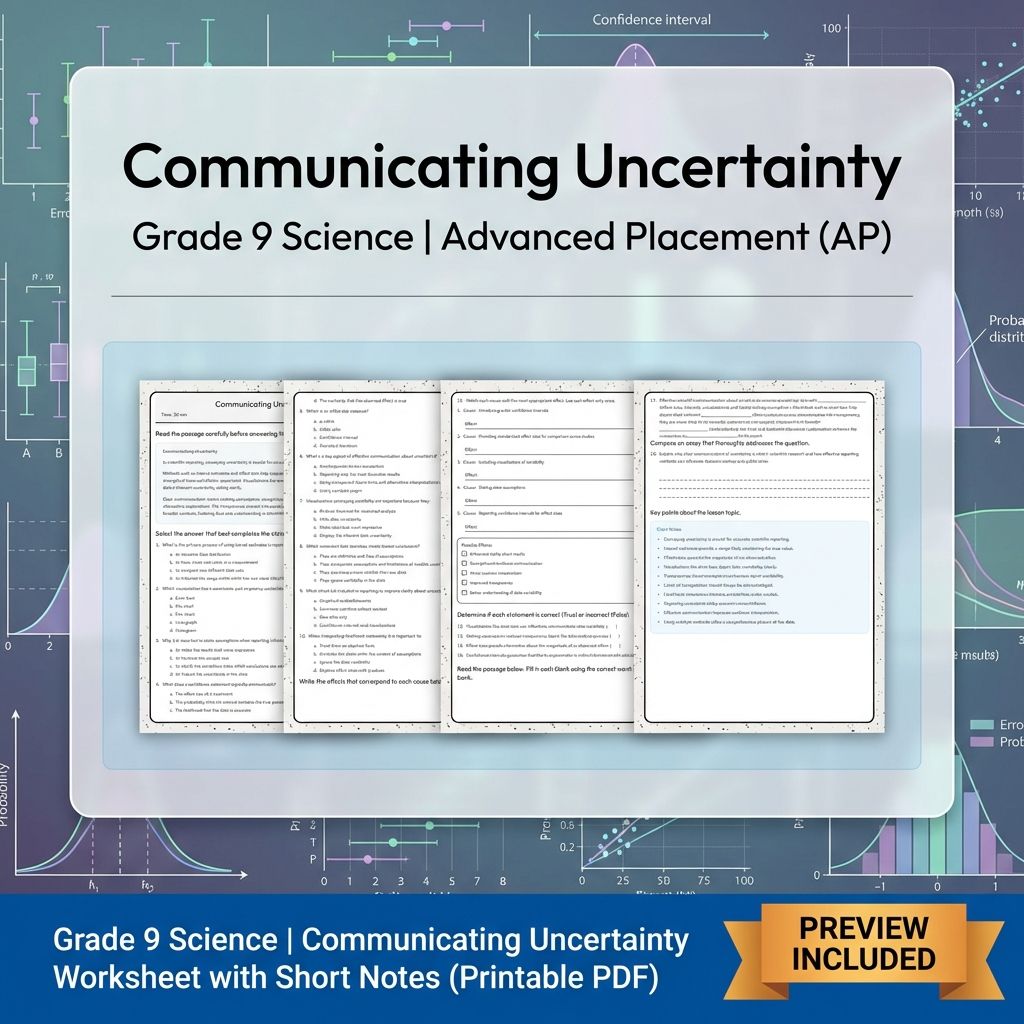
Grade 9 Science | Communicating Uncertainty Worksheet with Short Notes (PDF)
 Created byMeadowlark Worksheets
Learning Objectives
- Understanding conventions for conveying quantitative uncertainty and confidence in inferential claims.
- Identifying different methods such as interval estimates, effect sizes, and likelihood statements.
- Recognizing the importance of clarity about assumptions, limits, and interpretations when reporting results.
Also included in: Grade 9 Science | Critical Thinking & Data Analysis Unit Bundle (Worksheets) +1 more
Instant download
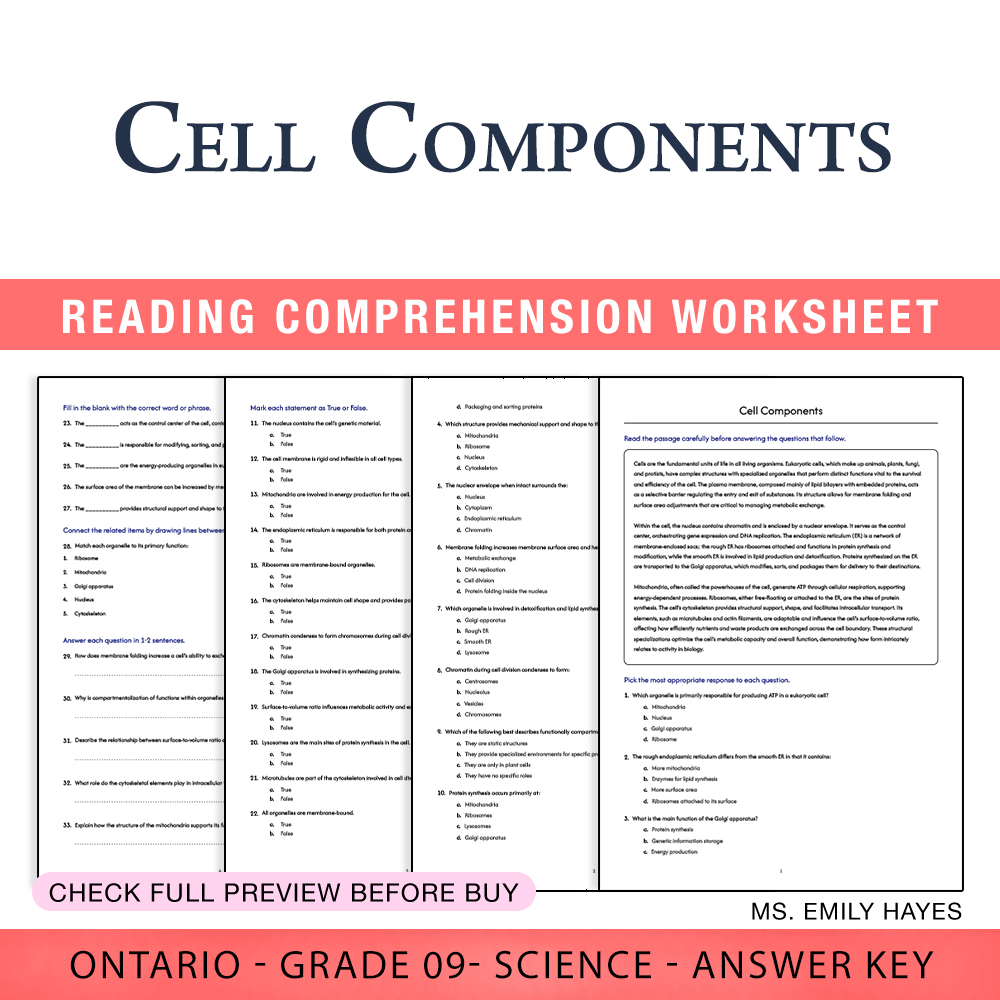
9th Grade Science | Cell Components Worksheet (PDF + Answer Key)
 Created byCopper Leaf Classroom
Learning Objectives
- Describe the major organelles of eukaryotic cells and their functions.
- Explain how structural features like membrane folding and compartmentalization influence metabolic rates and exchange across cell boundaries.
- Relate the morphology of cell components to their roles in cellular processes.
Instant download
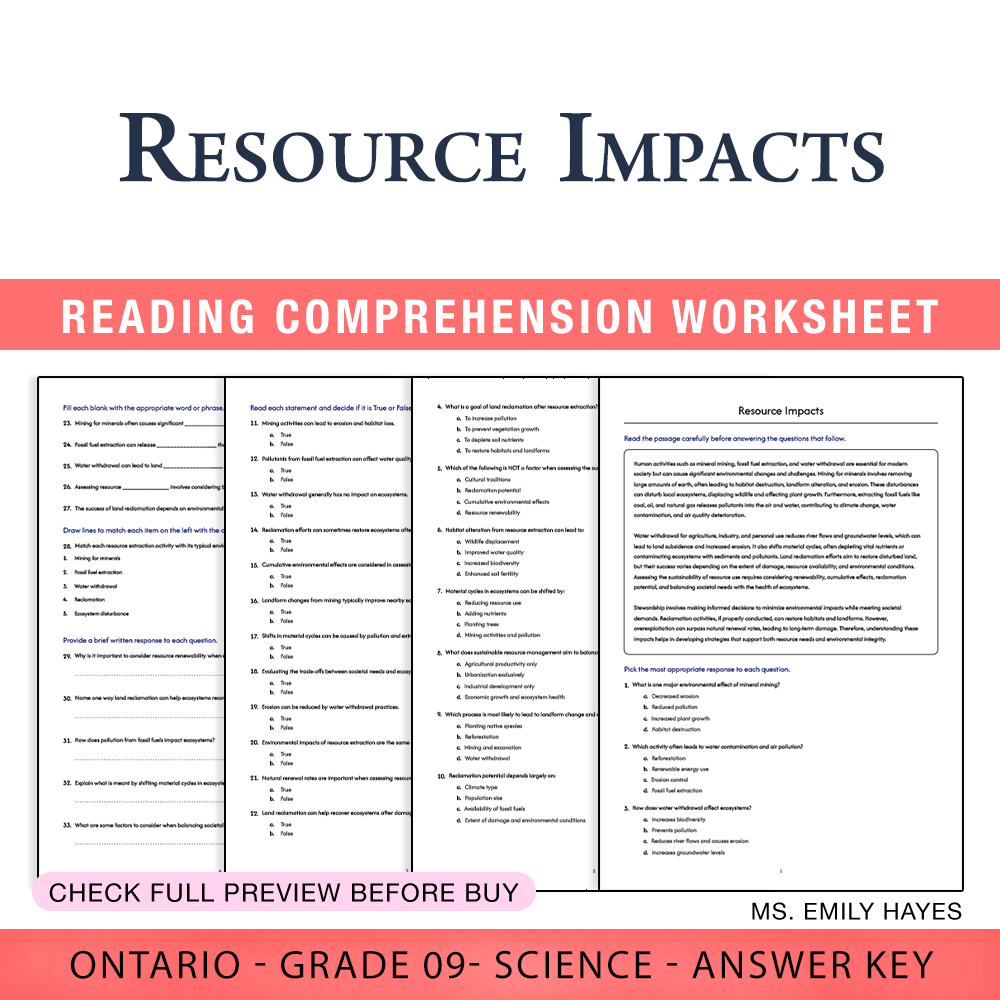
9th Grade Science | Resource Impacts Worksheet (PDF + Answer Key)
Created byCopper Leaf ClassroomLearning Objectives
- Analyze how resource extraction affects ecosystems, landforms, and material cycles.
- Evaluate criteria for sustainability, including resource renewability and environmental trade-offs.
- Understand the environmental effects of mineral mining, fossil fuel extraction, and water withdrawal.
Instant download
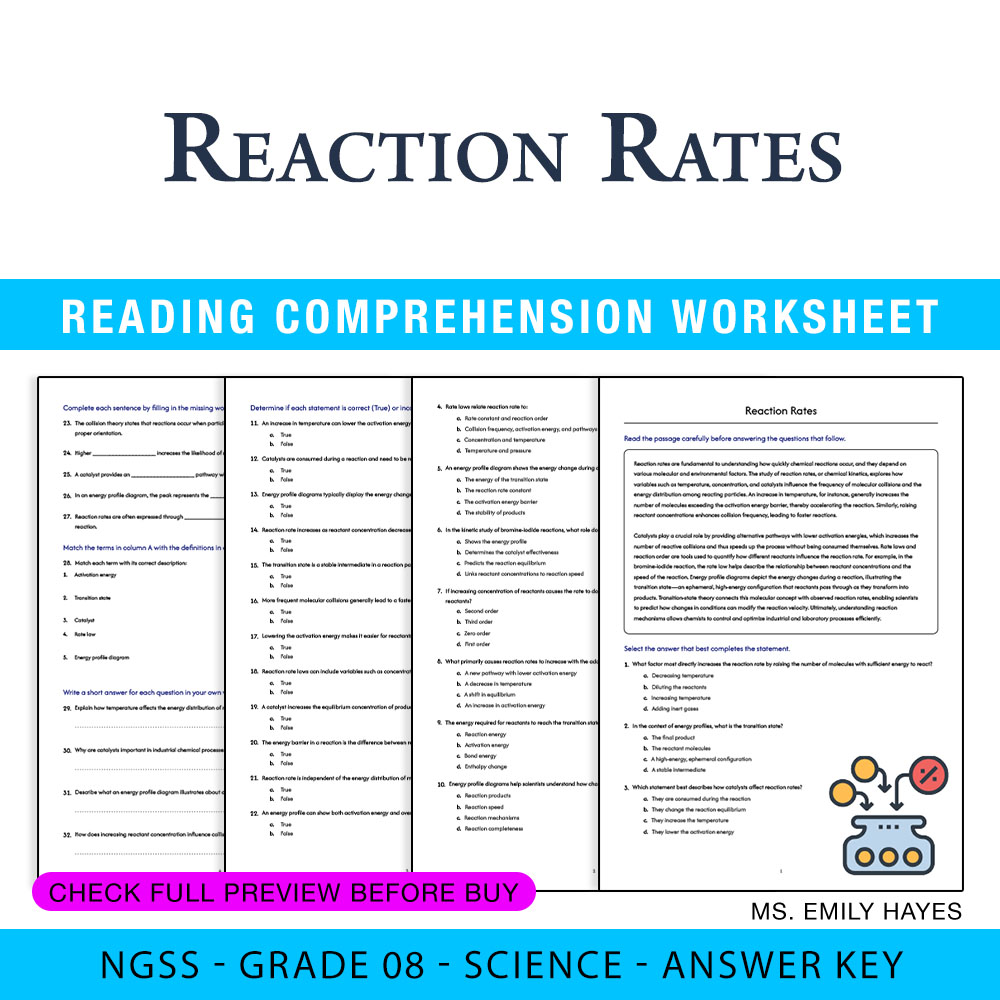
9th Grade Science | Reaction Rates Worksheet (PDF+ Answer Key)
Created byCopper Leaf ClassroomLearning Objectives
- Explain how temperature, concentration, and catalysts affect reaction rates.
- Describe the relationship between collision frequency and reaction speed.
- Interpret rate laws and reaction order in chemical kinetics.
Instant download

Grade 9 Genetic Drift Daily Reading Worksheet | TEKS Science Biology
 Created byBRIGHT PATH RESOURCES
Learning Objectives
- Explain genetic drift as a random change in allele frequencies.
- Identify key vocabulary including allele and frequency.
- Describe how small populations and chance events can cause allele loss or fixation.
Also included in: Grade 9 Evolution and Classification Biology Reading Worksheets Bundle | TEKS +1 more
Instant download

Classification Foundations Worksheet for Grade 9 Science | TEKS Aligned
JCreated byJ.S SheetsLearning Objectives
- Describe the purpose of biological classification and how it supports communication about biodiversity
- Explain how traditional taxonomic ranks and binomial nomenclature help organize organisms
- Compare traditional classification with modern approaches that use evolutionary relationships and clades
Instant download
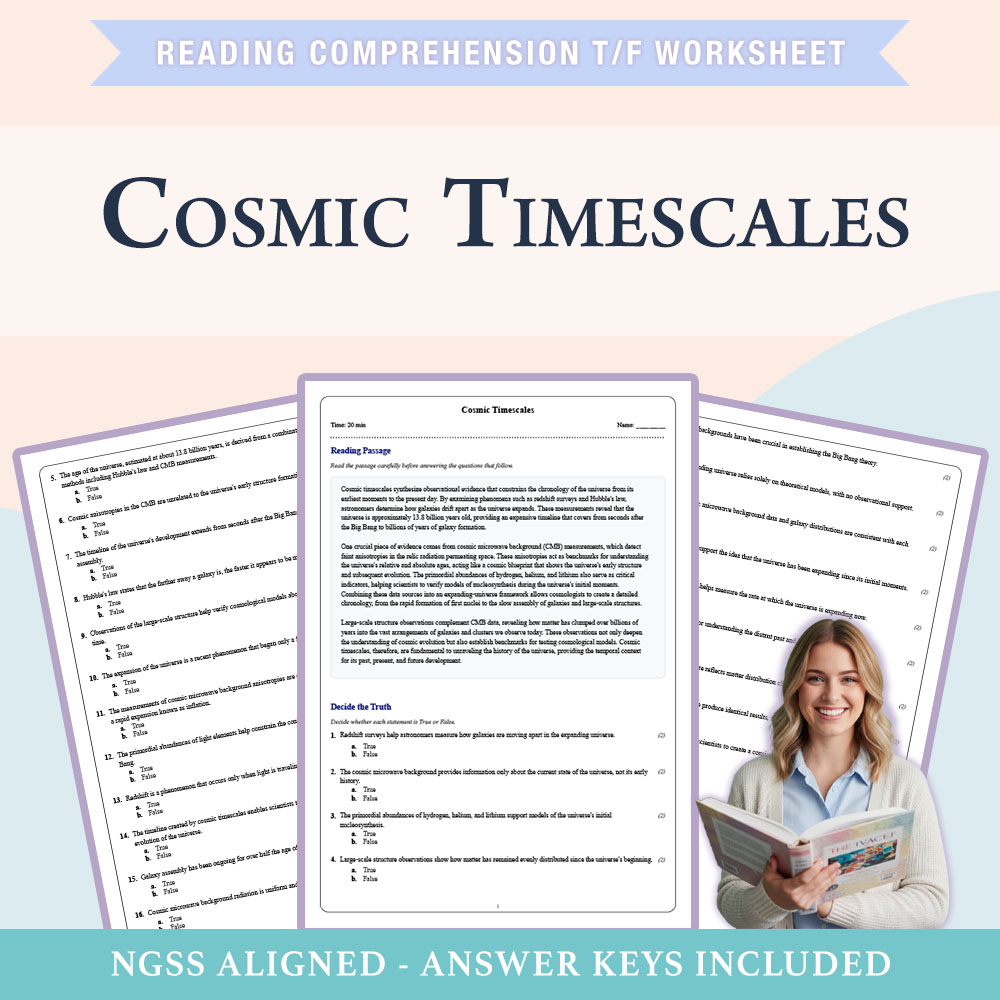
9th Grade Science | Cosmic Timescales Worksheet (PDF + Answer Key)
Created byCopper Leaf ClassroomLearning Objectives
- Understand the concept of cosmic timescales and how observational evidence constrains the age of the universe.
- Evaluate statements about galaxy formation, cosmic microwave background, and redshift surveys as true or false.
- Describe key methods used by astronomers to determine the age and development of the universe.
Also included in: Grade 9 Science | Space, Motion & Cosmology Worksheet Bundle (PDF + Answer Key) +1 more
Instant download
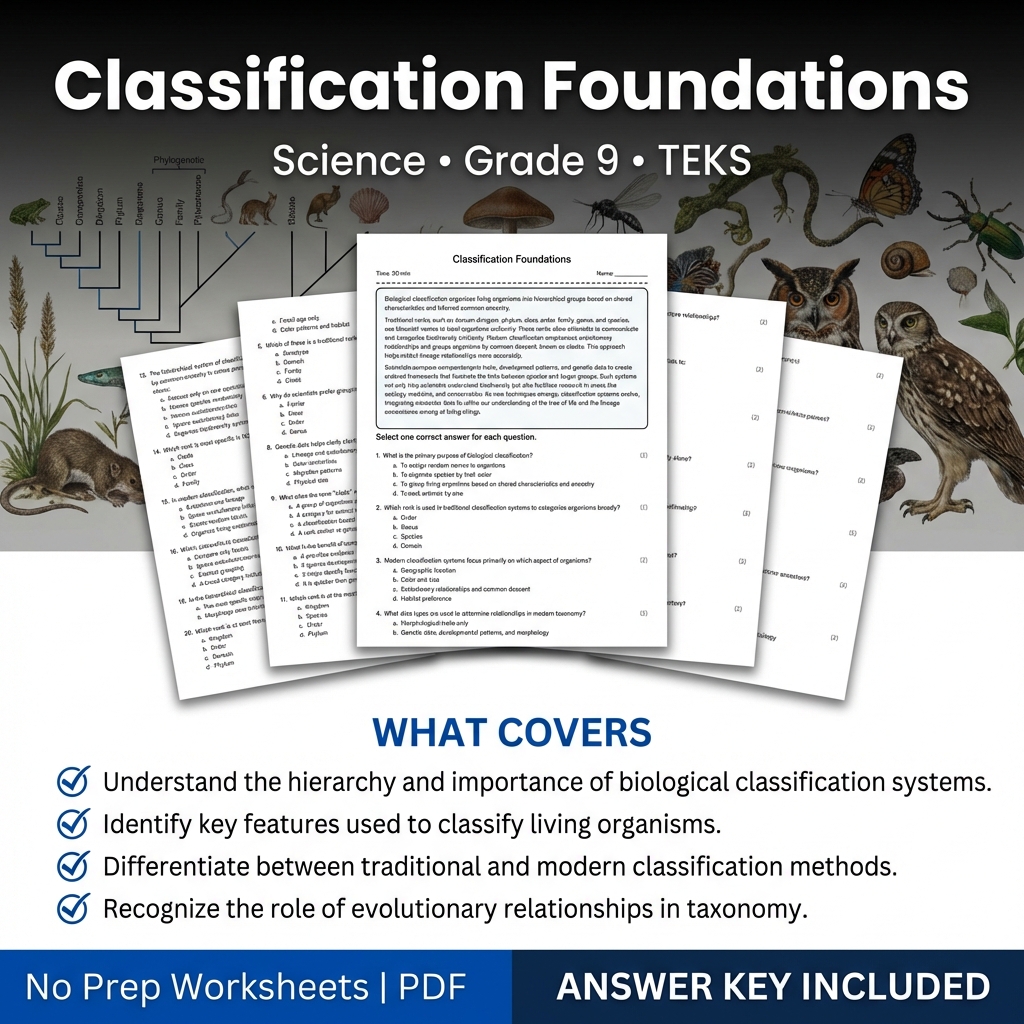
Classification Foundations Worksheet for Grade 9 Science | TEKS Aligned
Created byCoral Reef LearningLearning Objectives
- Understand the hierarchy and importance of biological classification systems.
- Identify key features used to classify living organisms.
- Differentiate between traditional and modern classification methods.
Instant download
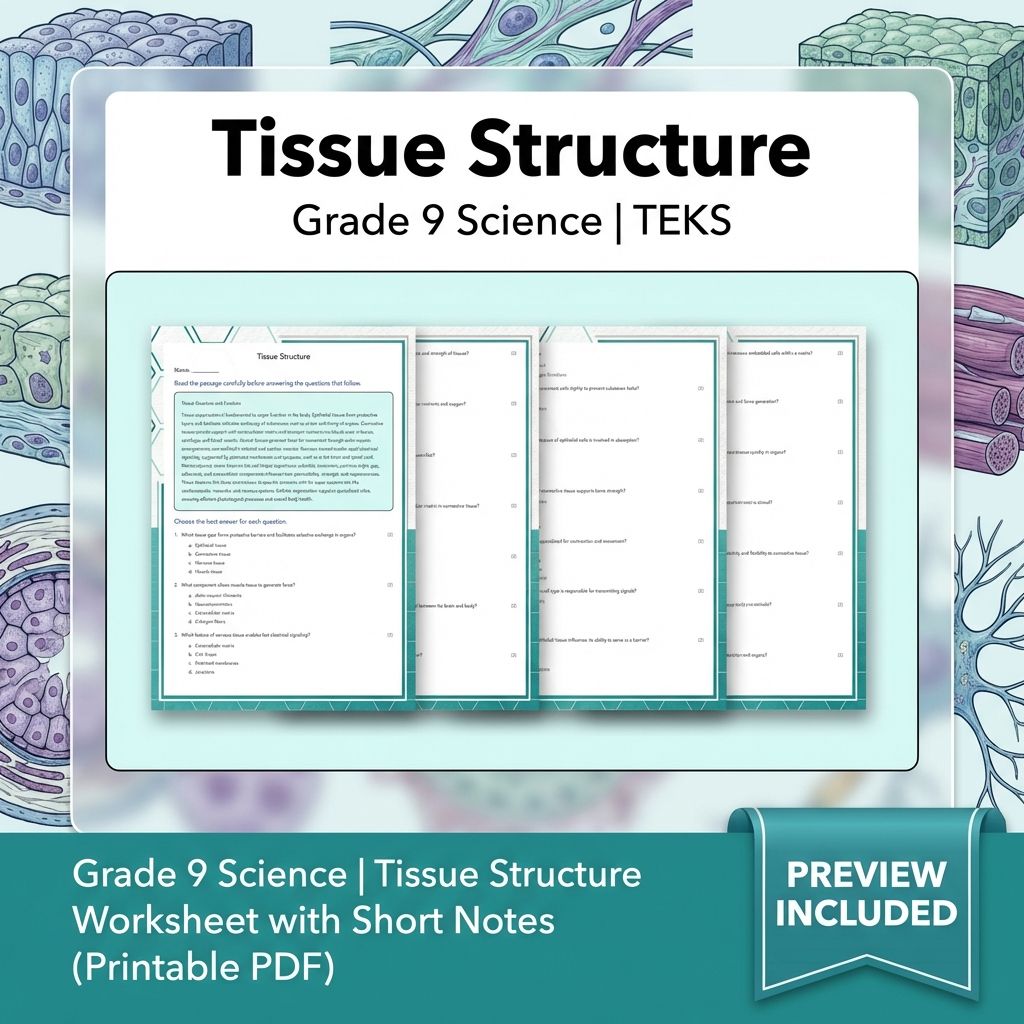
Grade 9 Science | Tissue Structure Worksheet with Short Notes (Printable PDF)
Created byMeadowlark WorksheetsLearning Objectives
- Understand the organization of different tissue types and their roles in organ systems.
- Identify microscopic features of tissues and relate their structure to function.
- Describe how cellular organization supports physiological roles in tissues.
Instant download

Mountain Building Worksheet Practice for Grade 9 Science AP
 Created byBright Quill Resources
Learning Objectives
- Explain how crustal shortening and thickening during orogenesis lead to uplift and mountain belt formation
- Describe how metamorphism, isostatic adjustment, and erosion work together during long-term landscape evolution
- Use evidence from structural cross sections, uplift rates, and thermochronology to connect plate convergence to topography
Instant download
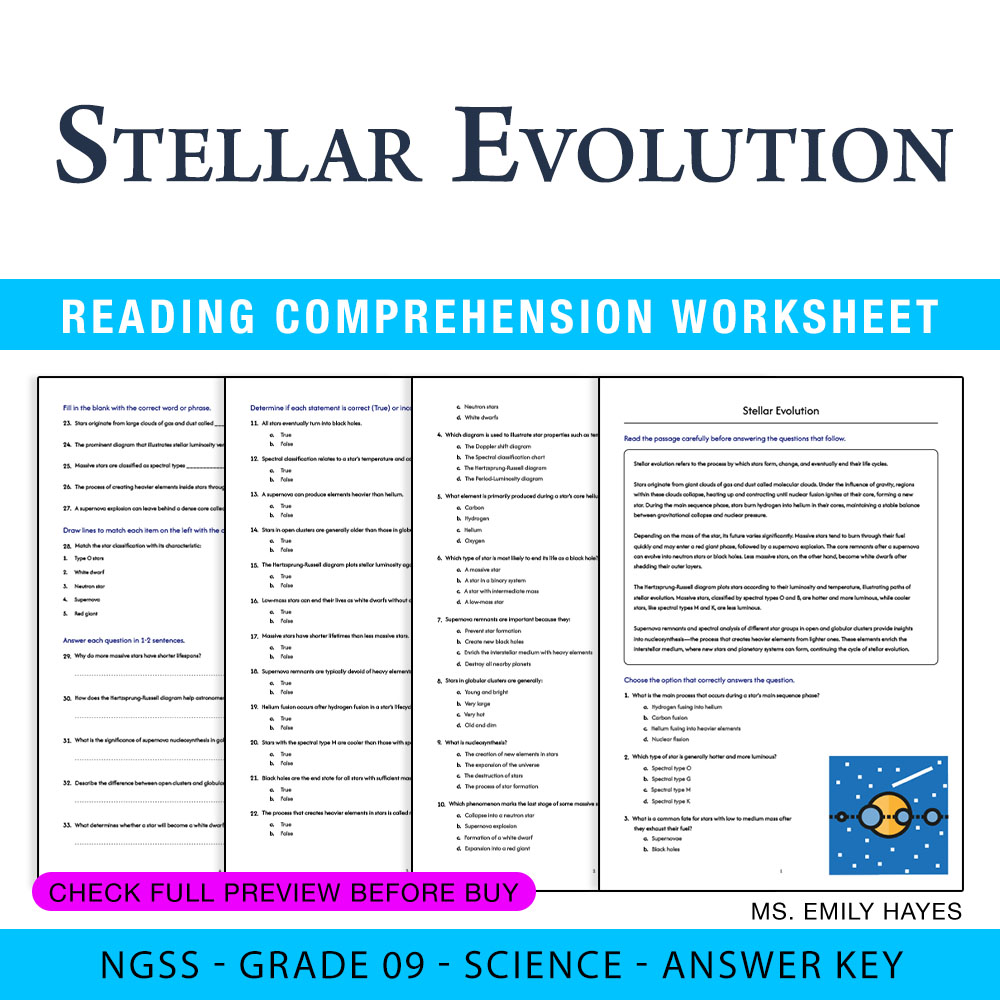
9th Grade Science | Stellar Evolution Worksheet (PDF+ Answer Key)
Created byCopper Leaf ClassroomLearning Objectives
- Describe the key stages in the life cycle of a star from formation to final outcome.
- Explain how the Hertzsprung-Russell diagram illustrates stellar properties and evolution.
- Identify spectral classifications and their relation to star temperature and luminosity.
Instant download

Grade 9 Science – Chemical Equations & Reactions | Daily Reading Worksheet
 Created byBright Mind Resources
Learning Objectives
- Learn about the conservation of matter in chemical reactions.
- Identify elements in unbalanced chemical equations.
- Practice balancing chemical equations by adjusting coefficients.
Also included in: Waves & Forces Grade 9 Science Daily Reading Worksheets Lesson Bundle | General +1 more
Instant download

Measurement Fundamentals Worksheet | Grade 9 AP Science Practice
Created byBright Quill ResourcesLearning Objectives
- Explain how metric units and precise definitions support consistent measurement in science.
- Describe how instrument resolution and calibration affect measurement reliability and data quality.
- Connect measurement results to tabular and graphical representations to support scientific claims.
Instant download
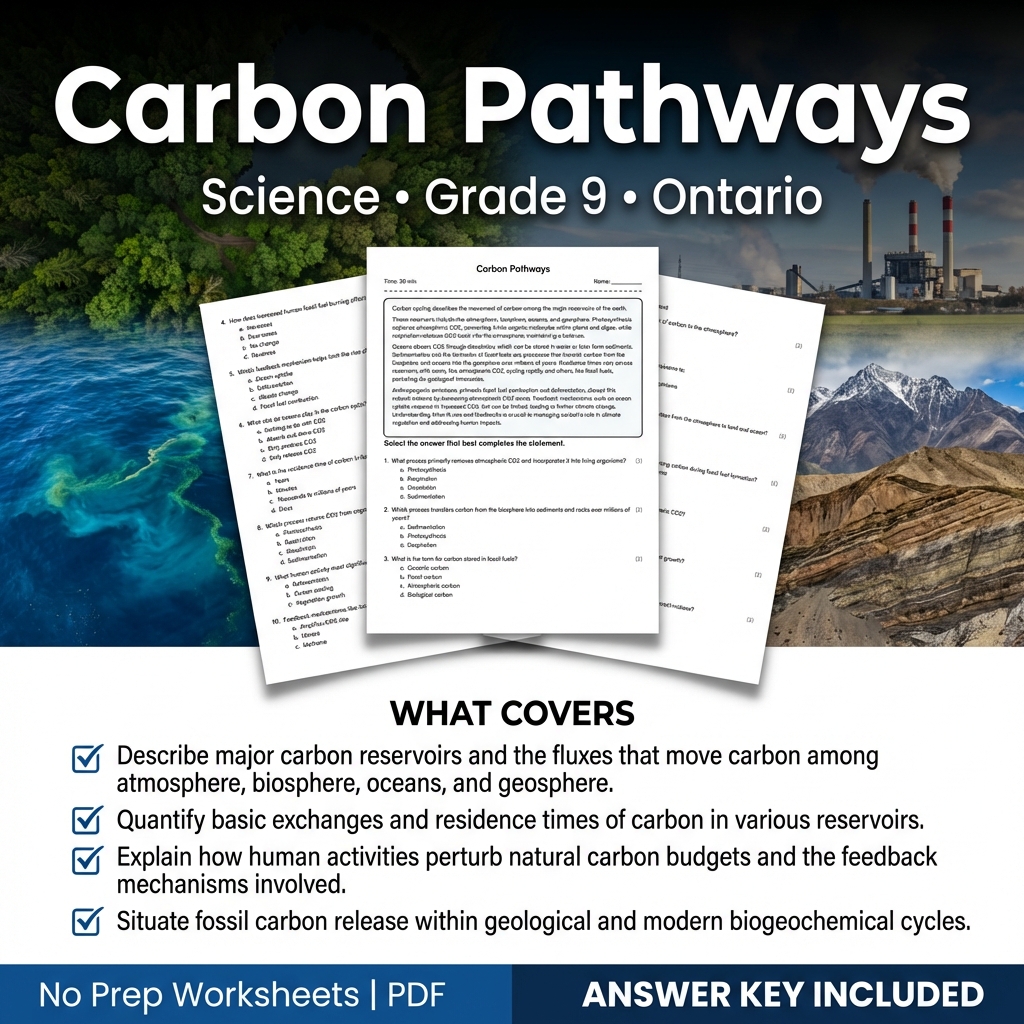
Carbon Pathways Worksheet for Grade 9 Science | Ontario Standard
Created byCoral Reef LearningLearning Objectives
- Describe major carbon reservoirs and the fluxes that move carbon among atmosphere, biosphere, oceans, and geosphere.
- Quantify basic exchanges and residence times of carbon in various reservoirs.
- Explain how human activities perturb natural carbon budgets and the feedback mechanisms involved.
Instant download
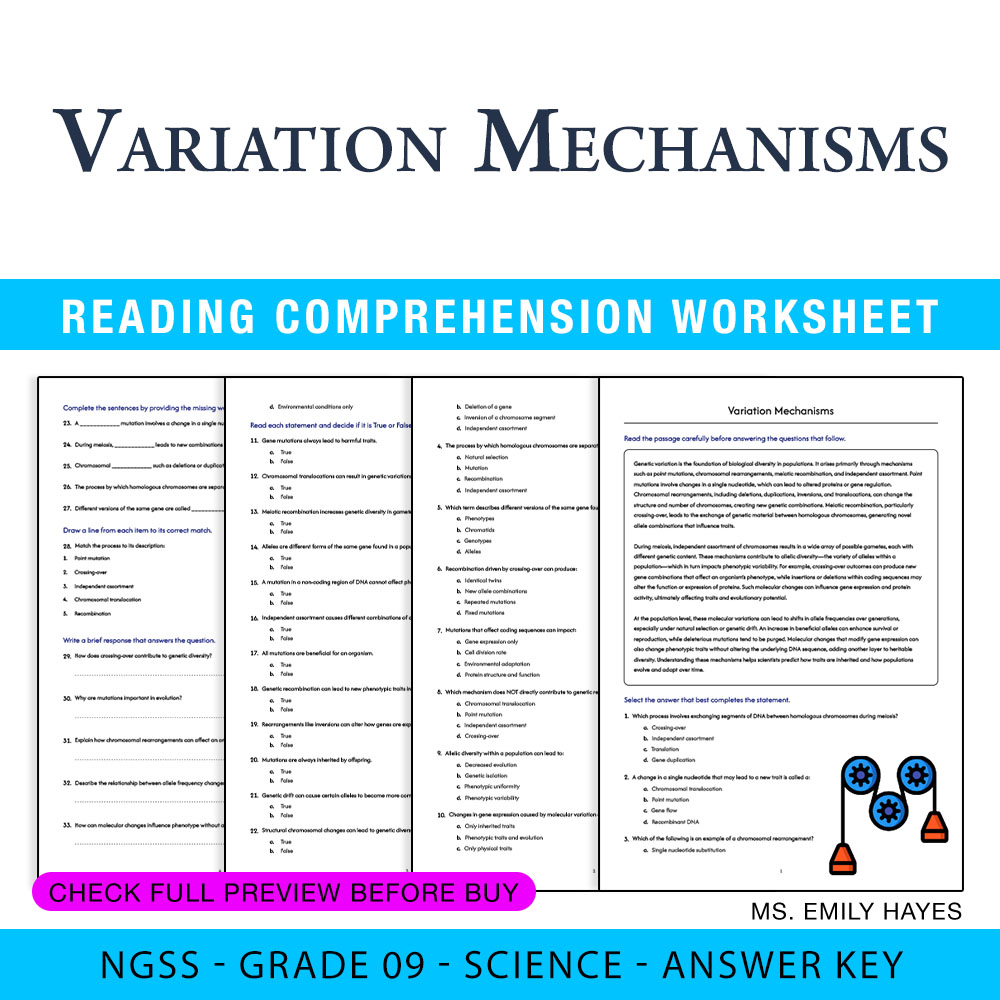
9th Grade Science | Variation Mechanisms Worksheet (PDF+ Answer Key)
Created byCopper Leaf ClassroomLearning Objectives
- Describe the mechanisms that generate genetic variation such as mutations, chromosomal rearrangements, and recombination.
- Explain how variation at the molecular level influences phenotypic traits and heritable diversity.
- Analyze how allele frequency shifts and gene expression changes relate to population genetics.
Instant download

Climate Drivers Practice Worksheet | Grade 9 Science NGSS Review
 Created byPrism Point Learning
Learning Objectives
- Use the Earth’s energy budget to explain how solar input and surface reflectivity (albedo) affect climate.
- Describe how greenhouse gases and ocean heat transport influence regional climate and weather patterns.
- Interpret how observational records and climate proxies support attribution of short-term variability and long-term trends.
Instant download

Grade 9 Optimization Tradeoffs Worksheet | California Standards Practice PDF
 Created byClear Sky Classroom
Learning Objectives
- Explain how optimization balances competing goals using criteria and constraints.
- Identify common tradeoffs among strength, mass, cost, durability, and efficiency in engineering design.
- Use evidence and models to compare design alternatives and choose a best-fit option.
Instant download

Grade 9 Molecular Regulation Worksheet | Gene Expression & Cell Signaling NGSS
 Created byAmber Owl Education
Learning Objectives
- Explain how molecular signaling pathways regulate gene expression and protein activity.
- Describe how receptor-ligand binding and signal transduction cascades connect to changes in cell behavior.
- Interpret how mutations or inhibitors can disrupt signaling and produce systemic physiological effects.
Also included in: Grade 9 Science Cell Regulation & Organ Systems Lesson Bundle | NGSS +1 more
Instant download
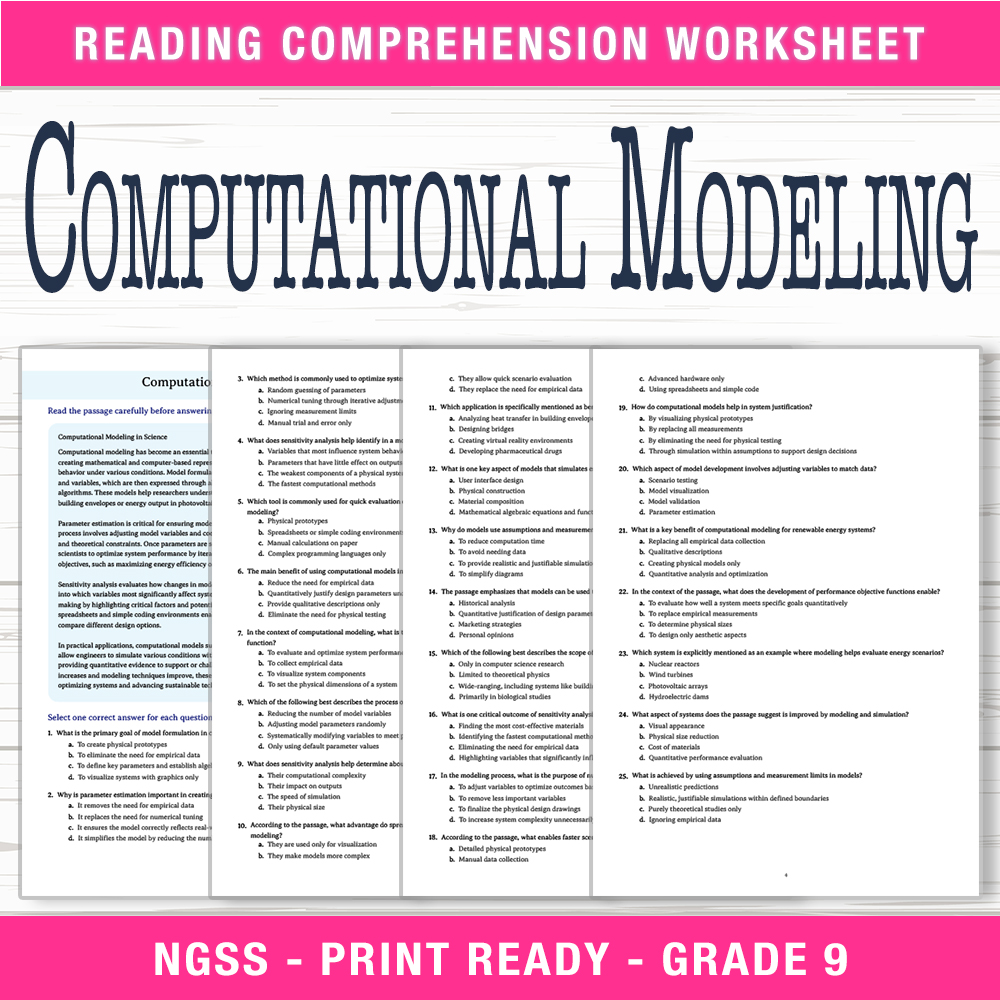
Grade 9 Science | Computational Modeling Worksheet (PDF + Answer Key)
 Created byRiverstone Classroom
Learning Objectives
- Understand the role of mathematical models in system analysis and design.
- Apply basic computational methods to evaluate scenario outputs.
- Develop proficiency in using spreadsheets or simple coding for model parameter estimation.
Also included in: Grade 9 Science | Engineering Design & System Evaluation Unit Bundle
Instant download

Grade 9 Simple Machines Worksheet | Mechanical Advantage & Force Ontario
 Created byChalk and Compass
Learning Objectives
- Compare how simple machines change input force, output force, and displacement.
- Explain the relationship between mechanical advantage and ideal mechanical advantage.
- Identify key parts and use cases of levers, pulleys, inclined planes, wedges, wheel and axle, and screws.
Also included in: Grade 9 Science Work, Energy & Forces Lesson Bundle | Ontario +1 more
Instant download

Grade 9 Work Calculations Worksheet | Dot Product, Cosine & Ontario Science
Created byChalk and CompassLearning Objectives
- Calculate work using W = F d cos(θ) for constant forces at an angle to displacement.
- Explain why the work from a variable force can be found from the area under a force–distance graph.
- Choose the correct method for computing work in everyday physics situations.
Also included in: Grade 9 Science Work, Energy & Forces Lesson Bundle | Ontario +1 more
Instant download

Grade 9 Science | Systems Interactions Worksheet | BC Aligned
 Created byLumora Learning
Learning Objectives
- Understand how multiple bodies and forces interact in mechanical systems.
- Apply Newton’s laws, net force analysis, and energy concepts to predict system motion.
- Analyze energy transfer, dissipative processes, and internal forces in complex systems.
Instant download
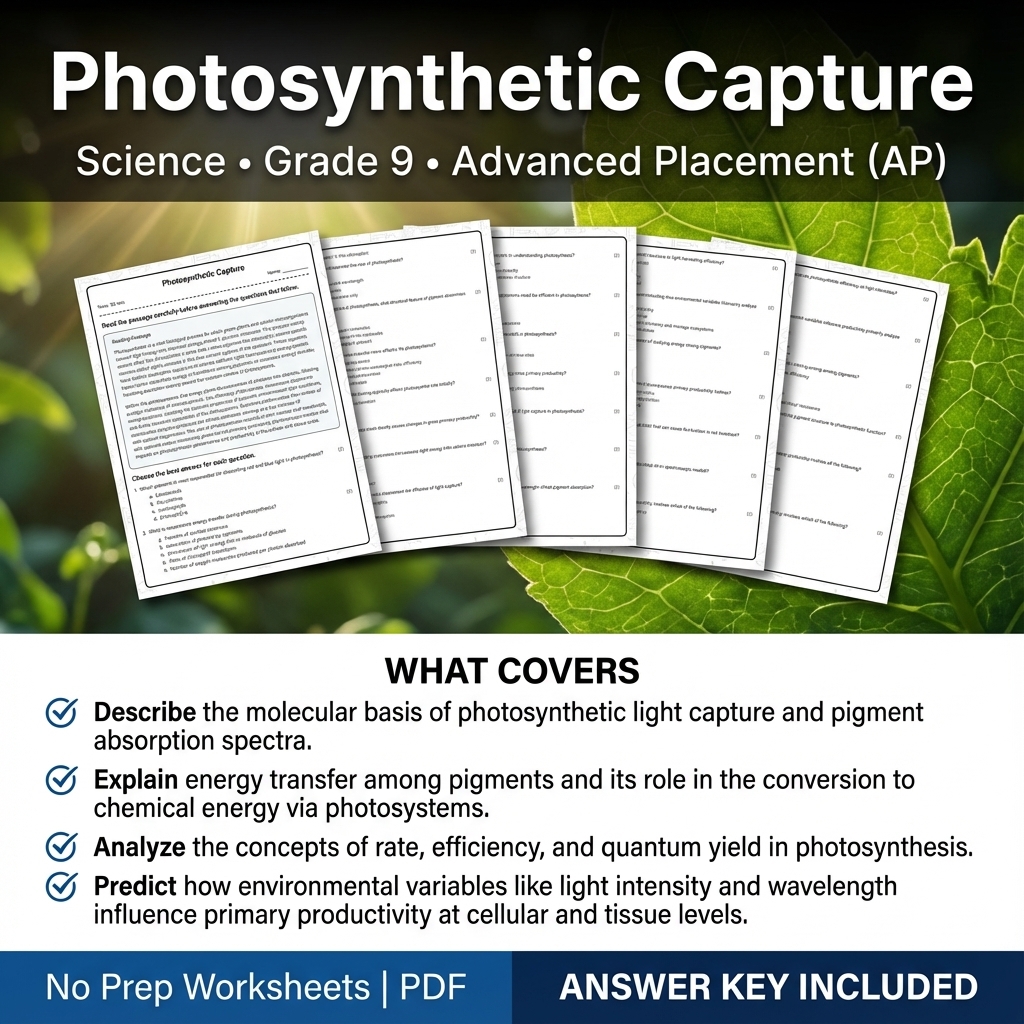
9th Grade Science | Photosynthesis Worksheet (Printable PDF + Answer Key)
Created byCoral Reef LearningLearning Objectives
- Describe the molecular basis of photosynthetic light capture and pigment absorption spectra.
- Explain energy transfer among pigments and its role in the conversion to chemical energy via photosystems.
- Analyze the concepts of rate, efficiency, and quantum yield in photosynthesis.
Also included in: Grade 9 Science Unit Worksheet Bundle | Cell Function to Ecosystem Dynamics +2 more
Instant download
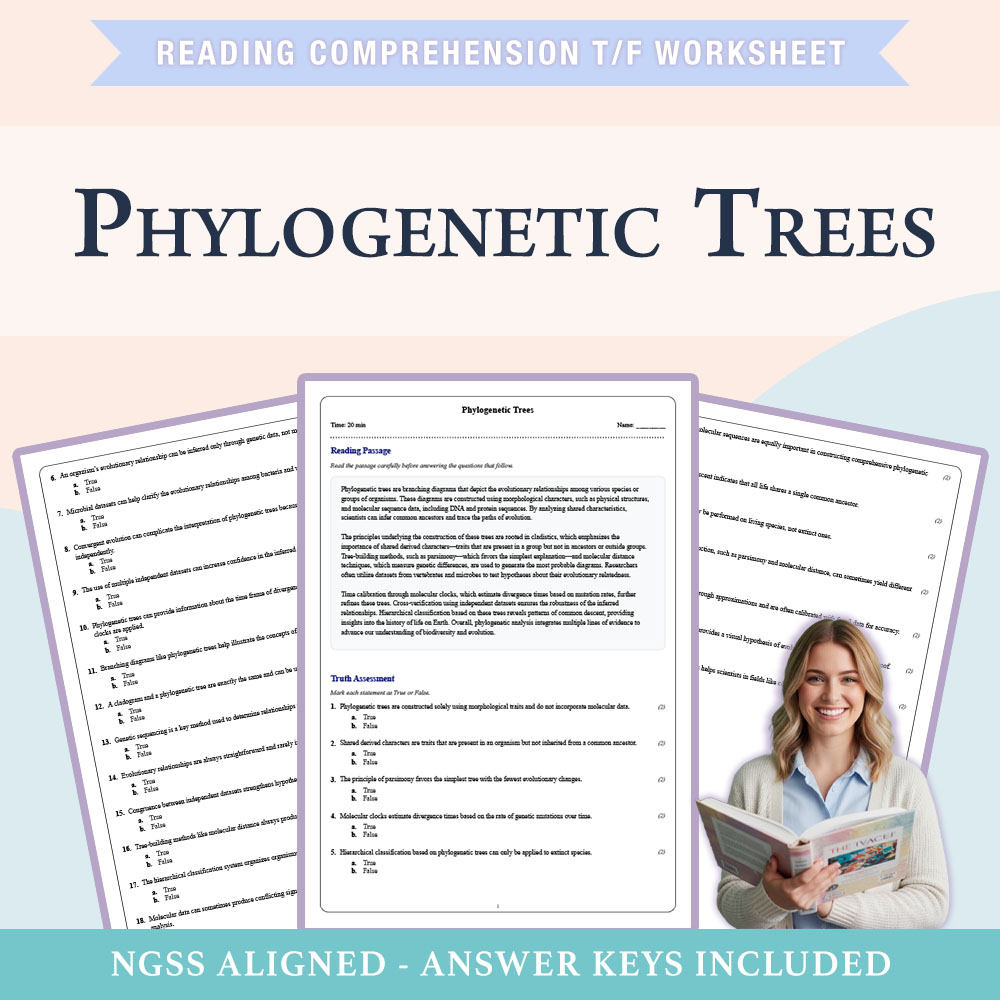
9th Grade Science | Phylogenetic Trees Worksheet (PDF + Answer Key)
Created byCopper Leaf ClassroomLearning Objectives
- Understand the construction and interpretation of phylogenetic trees and their role in depicting evolutionary relationships.
- Identify key principles such as shared derived characters, molecular clocks, and hierarchical classification in phylogenetics.
- Differentiate between methods like parsimony and molecular distance and their application in tree-building.
Also included in: Grade 9 Science | Evolution & Speciation Worksheets Bundle (PDF + Answer Key) +1 more
Instant download
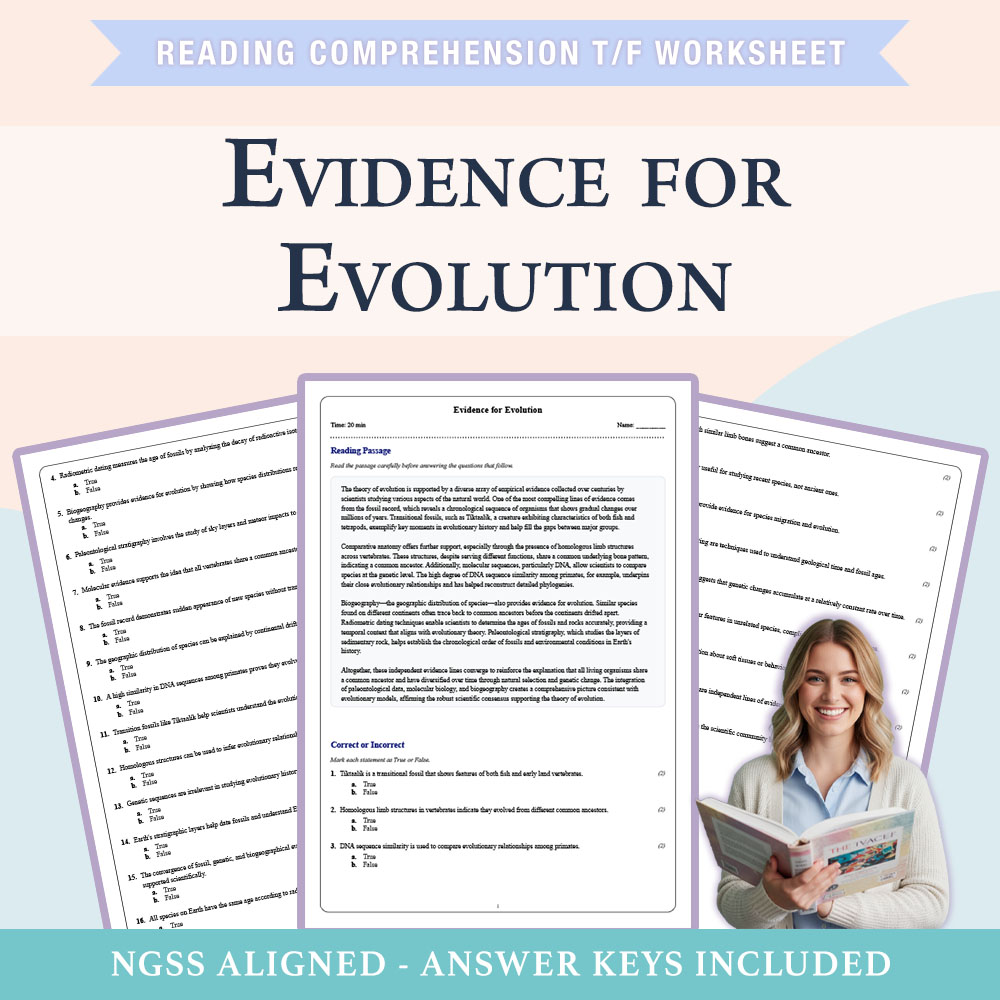
9th Grade Science | Evidence for Evolution Worksheet (PDF + Answer Key)
Created byCopper Leaf ClassroomLearning Objectives
- Understand the multiple lines of empirical evidence supporting common ancestry
- Recognize examples of transitional fossils, homologous structures, and genetic similarities
- Appreciate how fossil records, molecular data, and biogeography intertwine to support evolution
Also included in: Grade 9 Science | Evolution & Speciation Worksheets Bundle (PDF + Answer Key) +1 more
Instant download
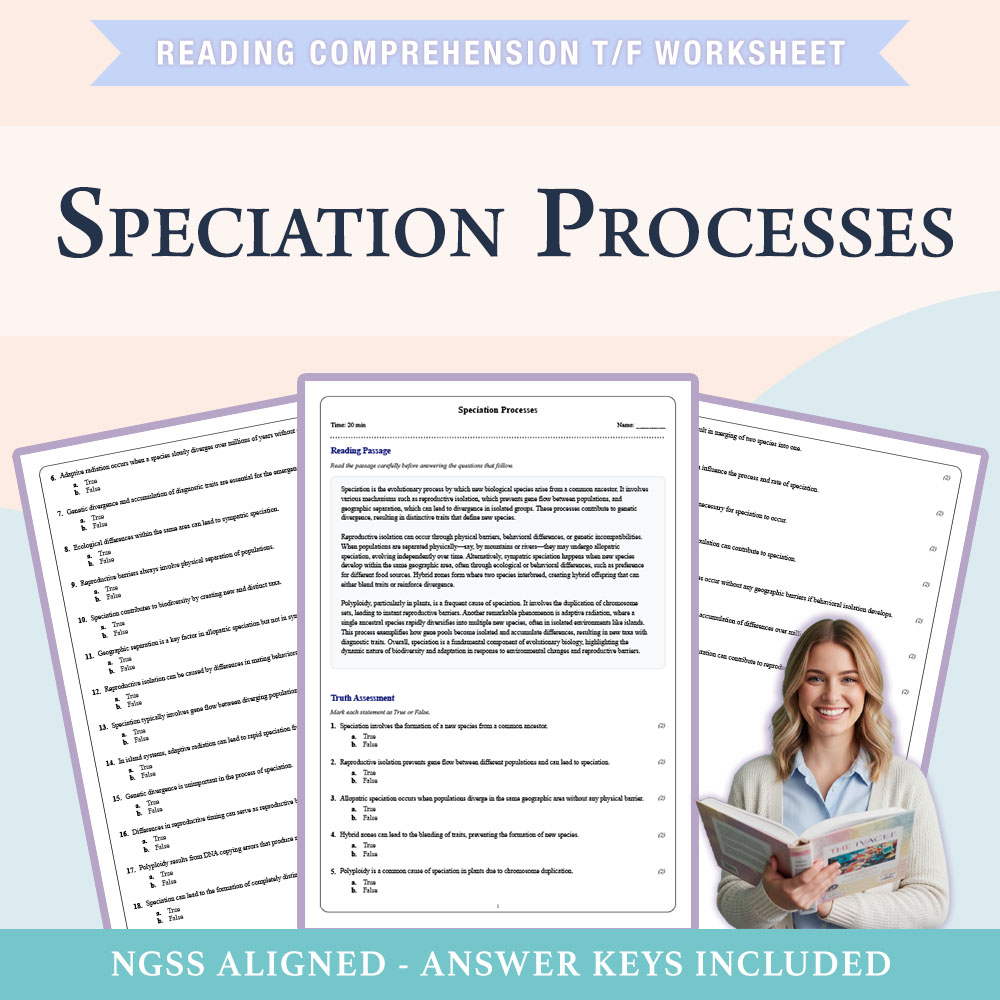
9th Grade Science | Speciation Processes Worksheet (PDF + Answer Key)
Created byCopper Leaf ClassroomLearning Objectives
- Understand the mechanisms that lead to the formation of new species
- Identify different models and examples of speciation including allopatric and sympatric speciation
- Recognize the role of hybrid zones, polyploidy, and adaptive radiation in species divergence
Also included in: Grade 9 Science | Evolution & Speciation Worksheets Bundle (PDF + Answer Key) +1 more
Instant download
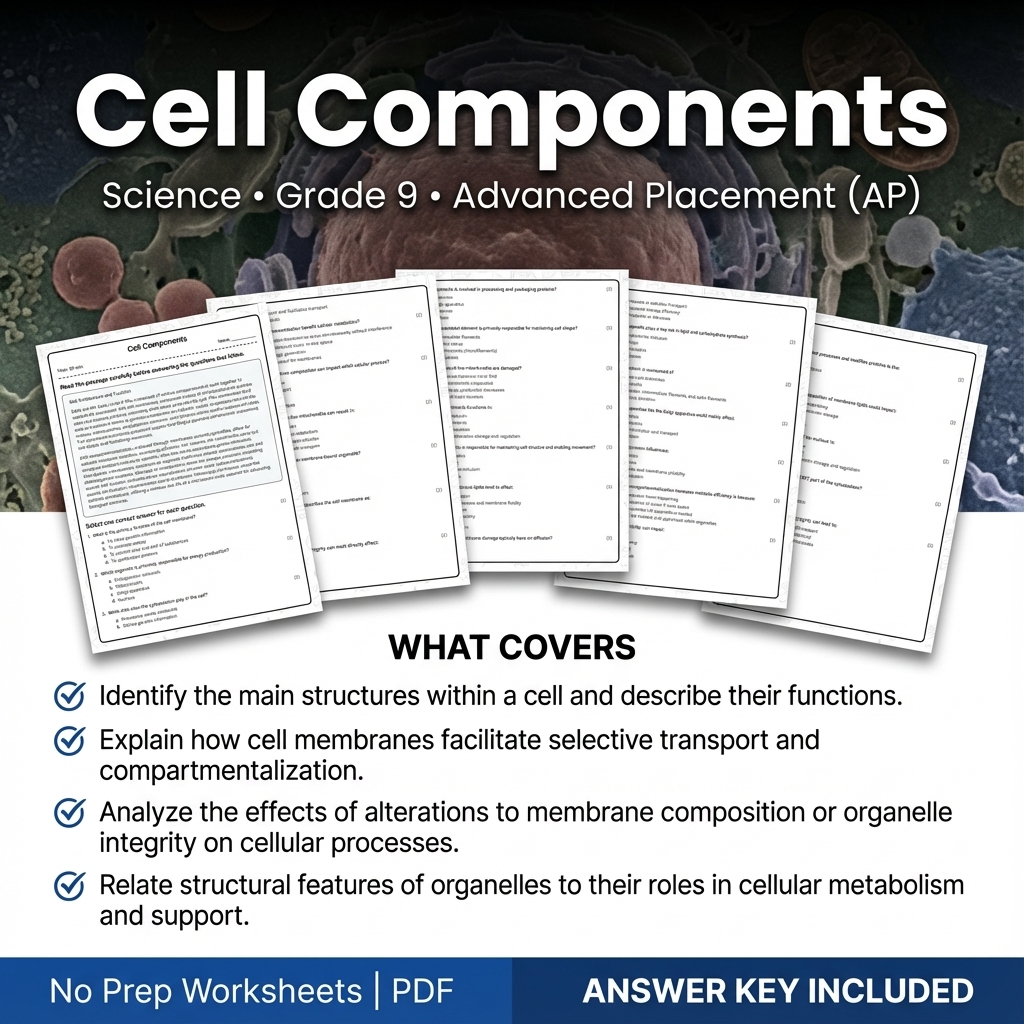
Grade 9 Science | Cell Components Worksheet (Printable PDF + Answer Key)
Created byCoral Reef LearningLearning Objectives
- Identify the main structures within a cell and describe their functions.
- Explain how cell membranes facilitate selective transport and compartmentalization.
- Analyze the effects of alterations to membrane composition or organelle integrity on cellular processes.
Also included in: Grade 9 Science Unit Worksheet Bundle | Cell Function to Ecosystem Dynamics +2 more
Instant download
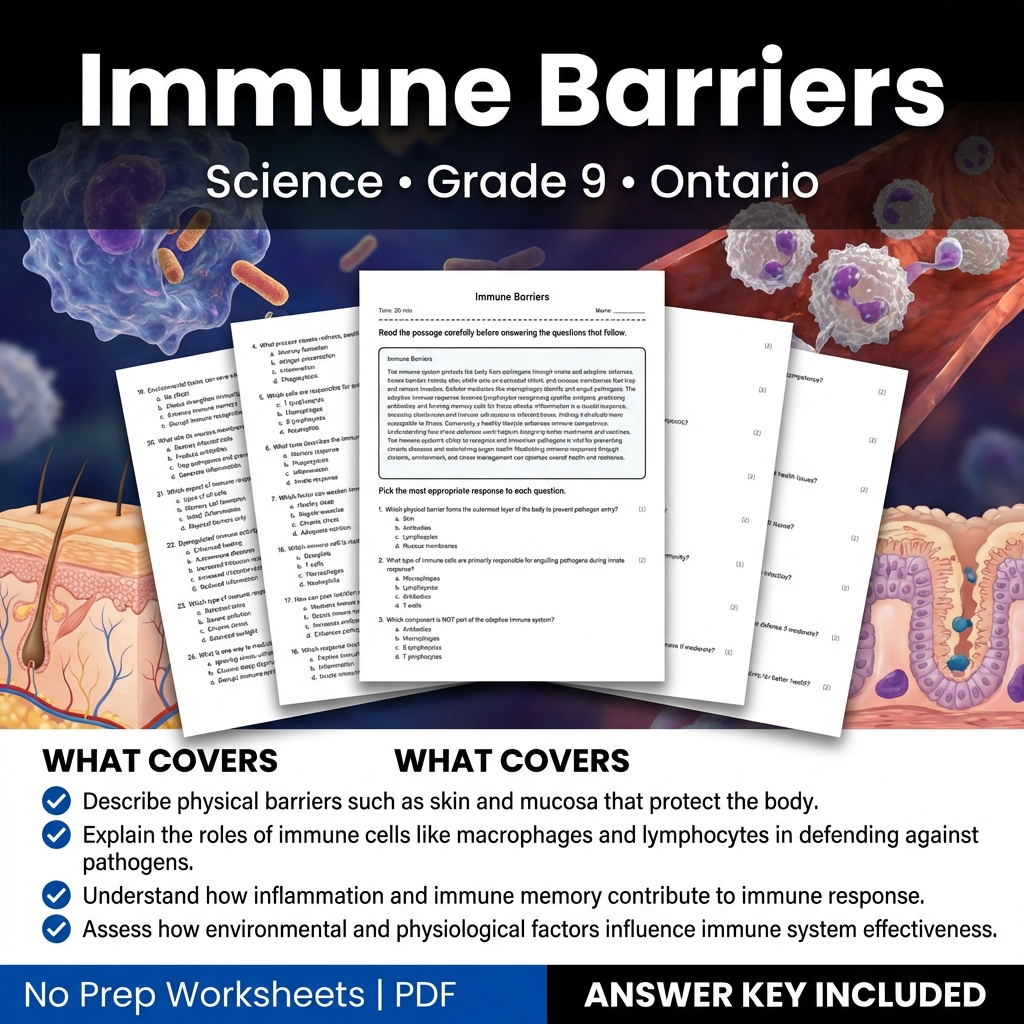
Grade 9 Science Worksheet on Immune Barriers | Ontario Standards
Created byCoral Reef LearningLearning Objectives
- Describe physical barriers such as skin and mucosa that protect the body.
- Explain the roles of immune cells like macrophages and lymphocytes in defending against pathogens.
- Understand how inflammation and immune memory contribute to immune response.
Instant download
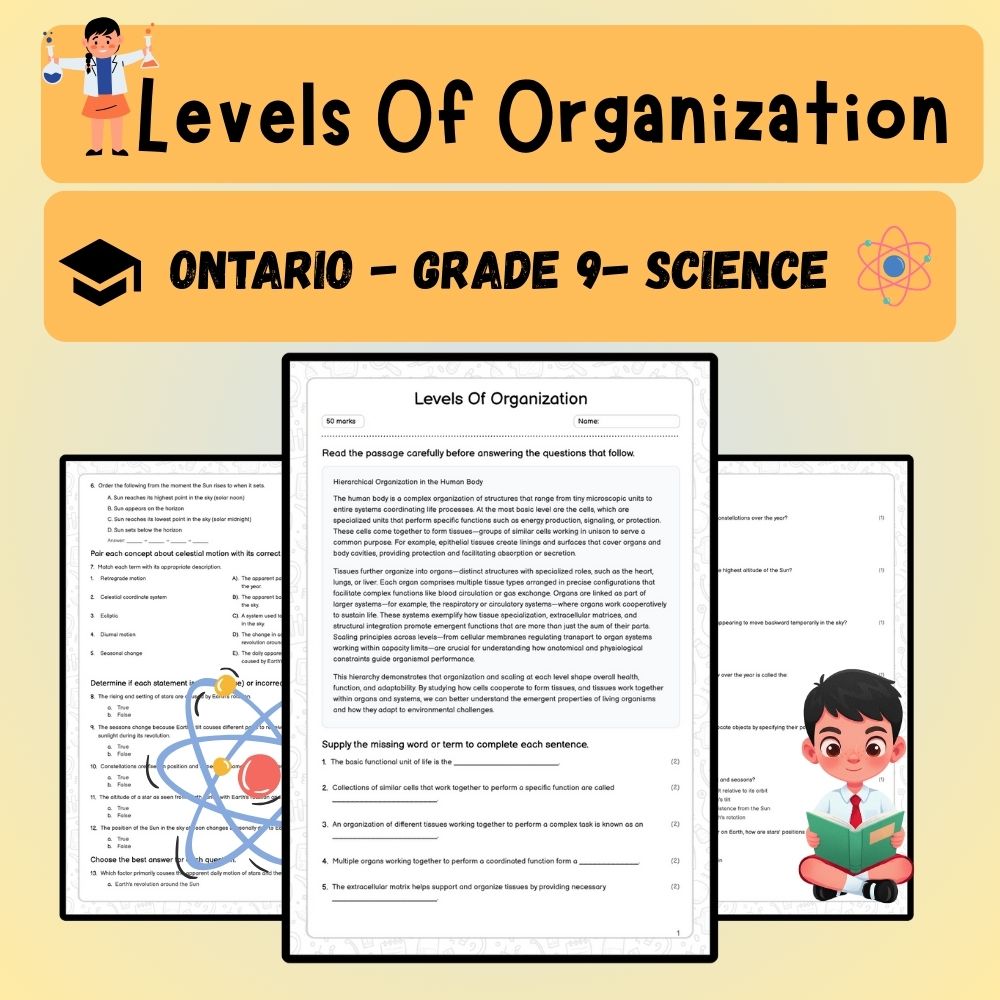
Grade 9 Science | Levels Of Organization Worksheet (PDF) Aligned with Ontario Standards
Created byPrism Point LearningLearning Objectives
- Explain the hierarchical relationship among cells, tissues, organs, and systems.
- Describe how cell specialization and extracellular matrices contribute to organ functions.
- Analyze how tissue arrangement supports organ-level processes.
Also included in: Grade 9 Science Unit Bundle | Human Body Systems & Cell Functions +1 more
Instant download
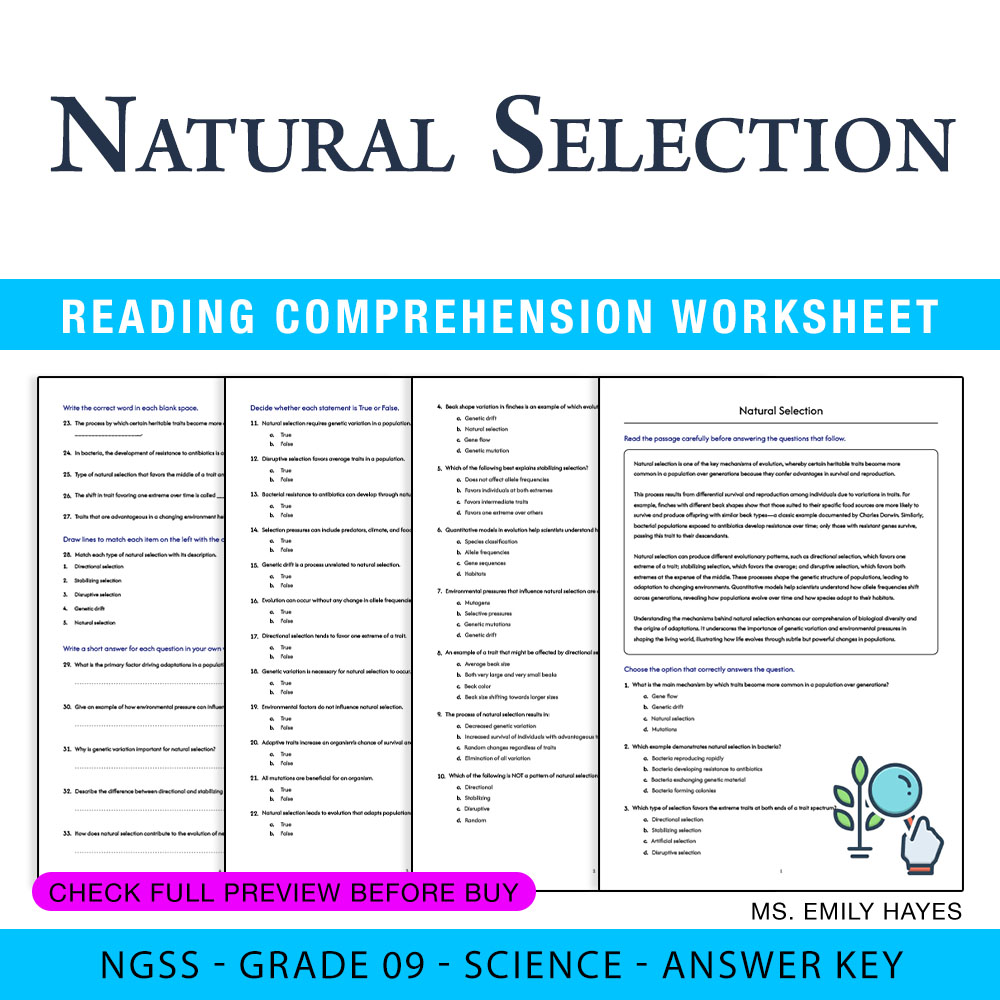
9th Grade Science | Natural Selection Worksheet (PDF+ Answer Key)
Created byCopper Leaf ClassroomLearning Objectives
- Explain the concept of natural selection and how it causes adaptation in populations.
- Describe mechanisms such as variation, inheritance, and selective pressures that drive evolution.
- Analyze examples like beak morphology shifts in finches and bacterial antibiotic resistance.
Instant download
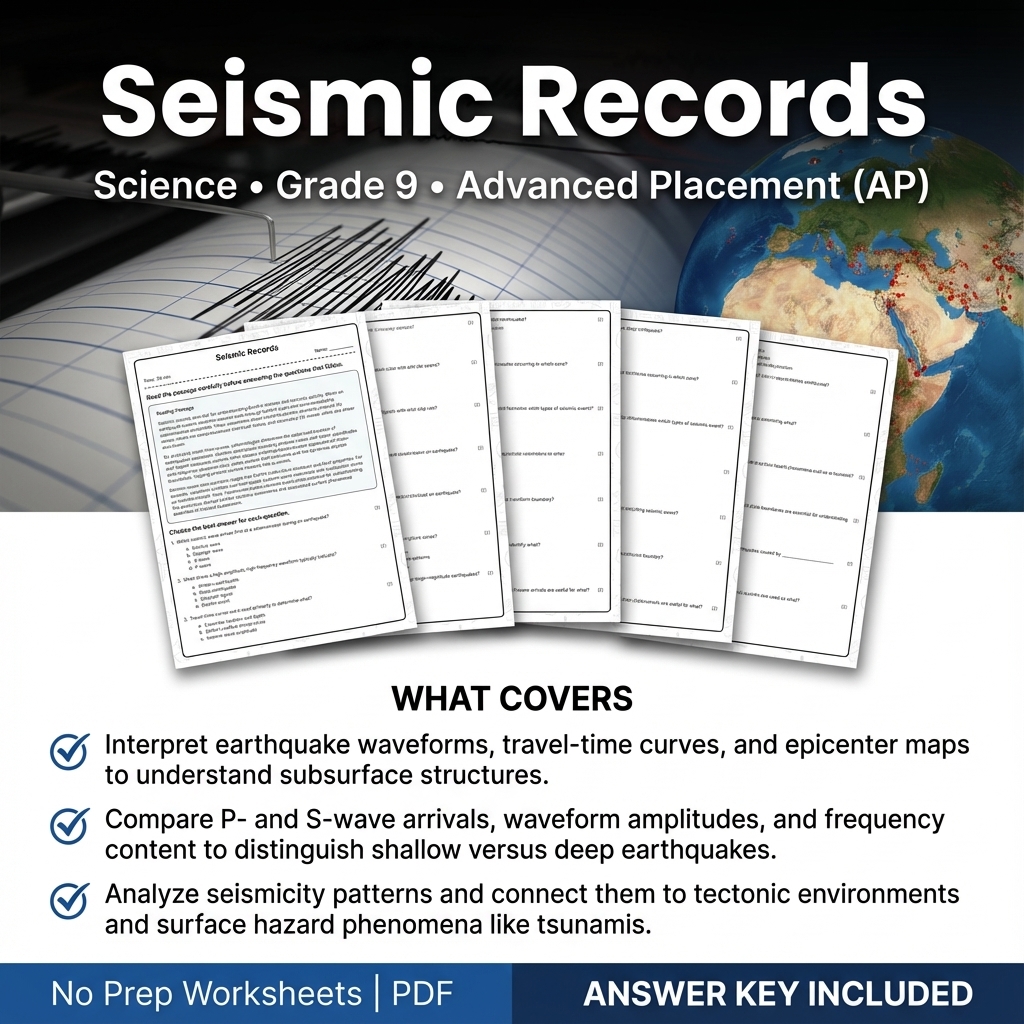
9th Grade Science | Seismic Records Worksheet (Printable PDF + Answer Key)
Created byCoral Reef LearningLearning Objectives
- Interpret earthquake waveforms, travel-time curves, and epicenter maps to understand subsurface structures.
- Compare P- and S-wave arrivals, waveform amplitudes, and frequency content to distinguish shallow versus deep earthquakes.
- Analyze seismicity patterns and connect them to tectonic environments and surface hazard phenomena like tsunamis.
Also included in: Grade 9 Science Unit | Earth Processes & Climate Worksheets Pack (PDF & Answer Keys) +2 more
Instant download

Grade 9 Science | Mountain Building Worksheet (Printable PDF + Answer Key)
Created byCoral Reef LearningLearning Objectives
- Explain the processes involved in mountain formation, including crustal shortening and uplift.
- Identify the geological evidence supporting long-term landscape evolution.
- Describe how mountain-building episodes influence regional climate and erosion patterns.
Also included in: Grade 9 Science Unit | Earth Processes & Climate Worksheets Pack (PDF & Answer Keys) +2 more
Instant download
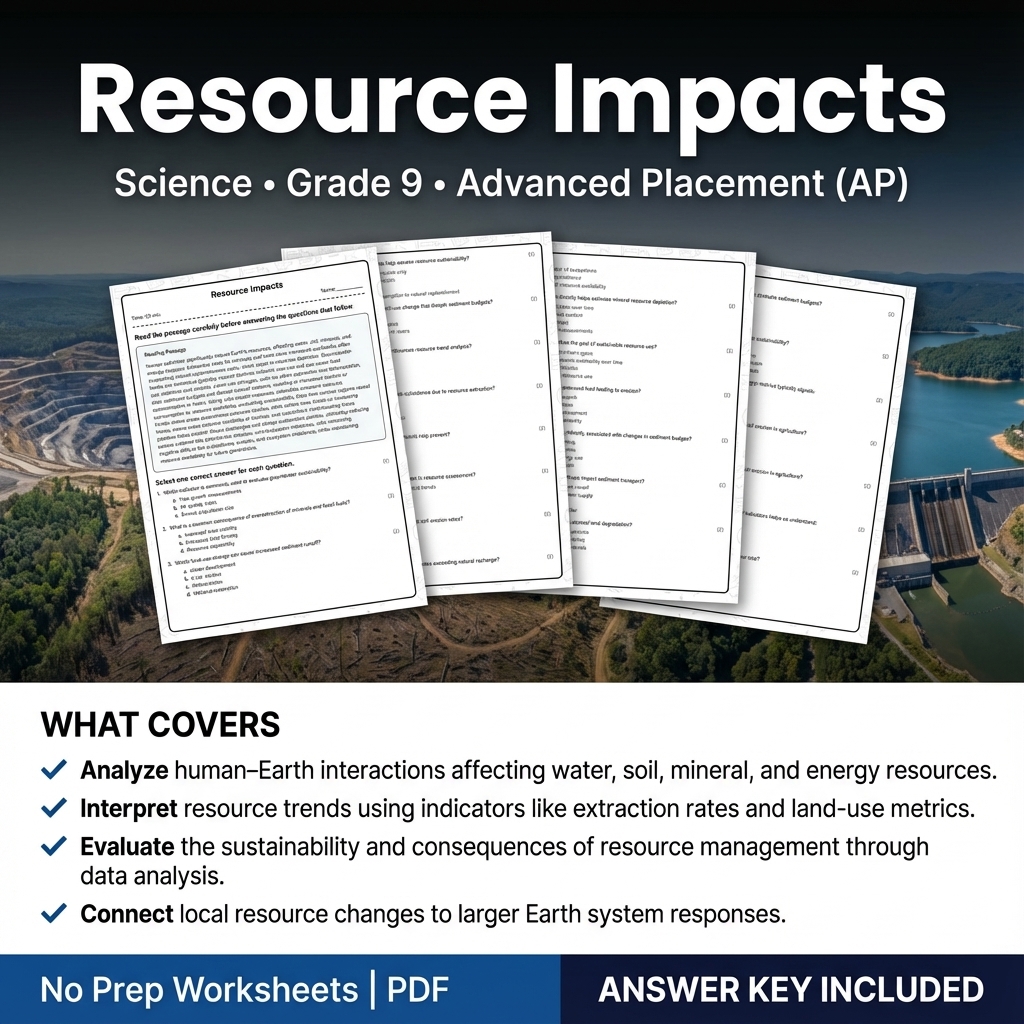
Grade 9 Science | Resource Impacts Worksheet (Printable PDF + Answer Key)
Created byCoral Reef LearningLearning Objectives
- Analyze human–Earth interactions affecting water, soil, mineral, and energy resources.
- Interpret resource trends using indicators like extraction rates and land-use metrics.
- Evaluate the sustainability and consequences of resource management through data analysis.
Also included in: Grade 9 Science Unit | Earth Processes & Climate Worksheets Pack (PDF & Answer Keys) +2 more
Instant download
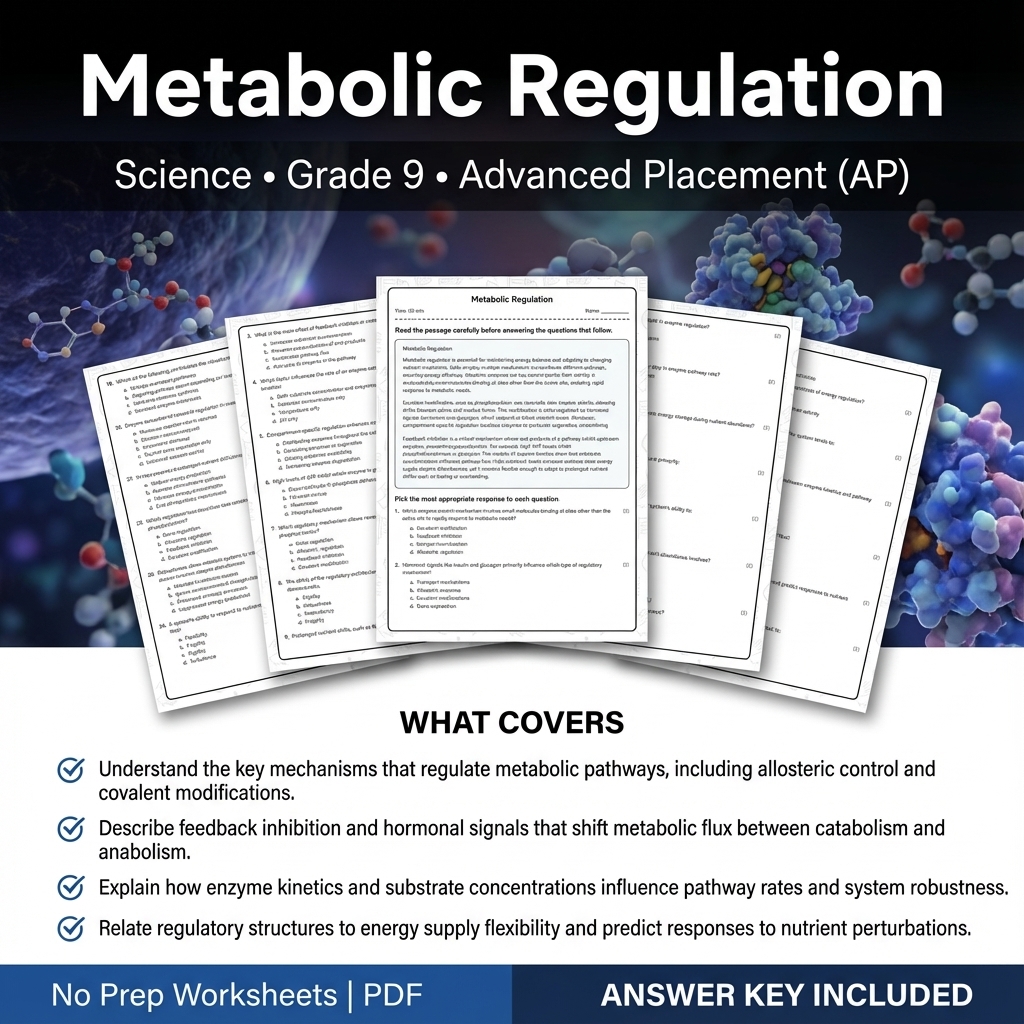
Grade 9 Science | Metabolic Regulation Worksheet (Printable PDF + Answer Key)
Created byCoral Reef LearningLearning Objectives
- Understand the key mechanisms that regulate metabolic pathways, including allosteric control and covalent modifications.
- Describe feedback inhibition and hormonal signals that shift metabolic flux between catabolism and anabolism.
- Explain how enzyme kinetics and substrate concentrations influence pathway rates and system robustness.
Also included in: Grade 9 Science Unit Worksheet Bundle | Cell Function to Ecosystem Dynamics +2 more
Instant download

Grade 9 Science – Surface Processes & Weathering | Daily Reading Worksheet
Created byBright Mind ResourcesLearning Objectives
- Identify different types of weathering and explain their effects on Earth's surface.
- Describe how chemical and physical weathering contribute to landscape change.
- Understand the role of weathering in soil development and geomorphic patterns.
Also included in: Grade 9 Earth Processes Science Daily Reading Worksheets lesson bundle | NGSS +2 more
Instant download

Grade 9 Science – Earth's Internal & Surface Processes | Daily Reading Worksheet
Created byBright Mind ResourcesLearning Objectives
- Identify and describe Earth's internal layers
- Explain how Earth's internal processes influence surface features
- Recognize evidence supporting plate tectonics mechanisms
Also included in: Grade 9 Earth Processes Science Daily Reading Worksheets lesson bundle | NGSS +2 more
Instant download

Grade 9 Science – Rock Transformations & Cycle | Daily Reading Worksheet
Created byBright Mind ResourcesLearning Objectives
- Understand the processes involved in the rock cycle.
- Identify different types of rocks: igneous, sedimentary, and metamorphic.
- Explain how rocks change form through melting, cooling, erosion, deposition, and metamorphism.
Also included in: Grade 9 Earth Processes Science Daily Reading Worksheets lesson bundle | NGSS +2 more
Instant download
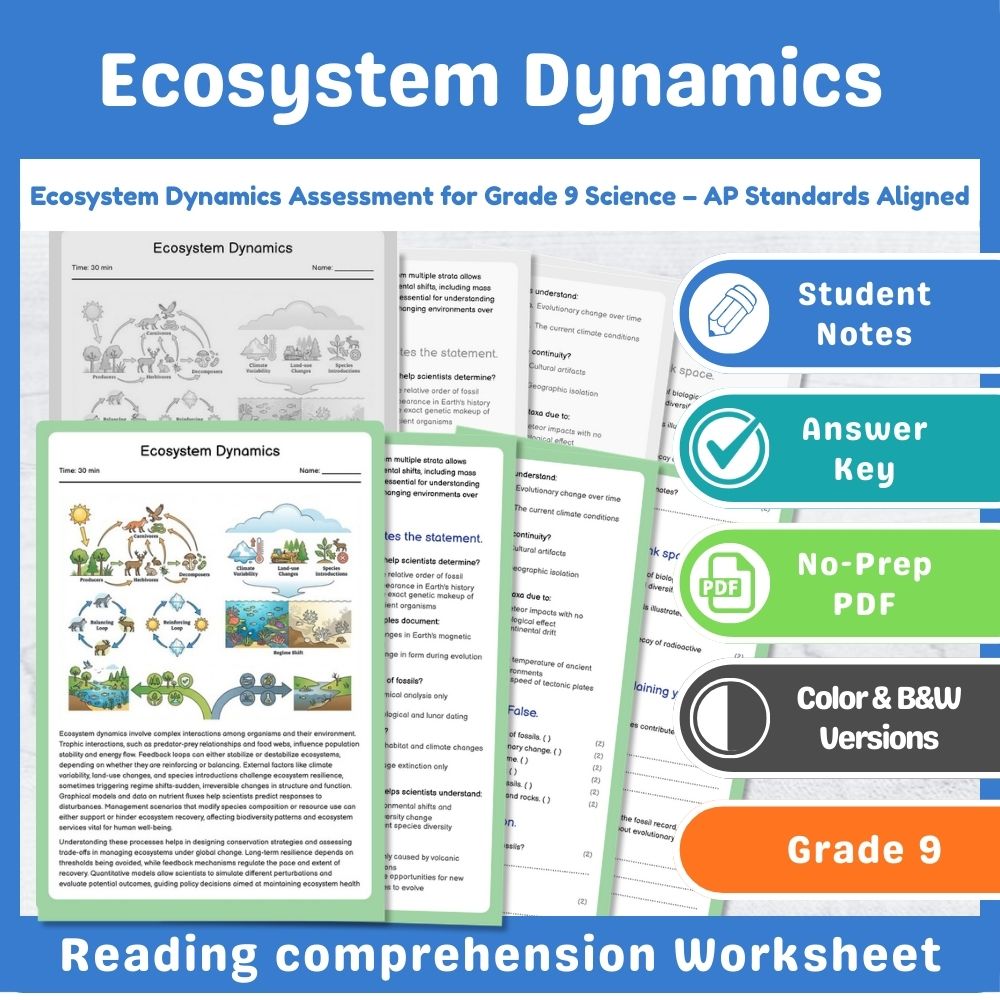
Evidence of Evolution Assessment for Grade 9 Science | AP Standards
Created byPrism Point LearningLearning Objectives
- Understand the different types of evidence that support the theory of evolution.
- Identify key fossil, genetic, and anatomical evidence.
- Evaluate how scientific evidence is used to support evolutionary relationships.
Also included in: Grade 9 Science Mini Bundle | Biology & Ecosystems Unit AP Standards
Instant download

Grade 9 Science | Optimization Tradeoffs Worksheet Elena | California Standards
Created byLumora LearningLearning Objectives
- Explain what optimization and tradeoffs mean in engineering and scientific design
- Identify criteria and constraints when comparing multiple design alternatives
- Use models and evidence to justify which design is “best” under given goals
Instant download
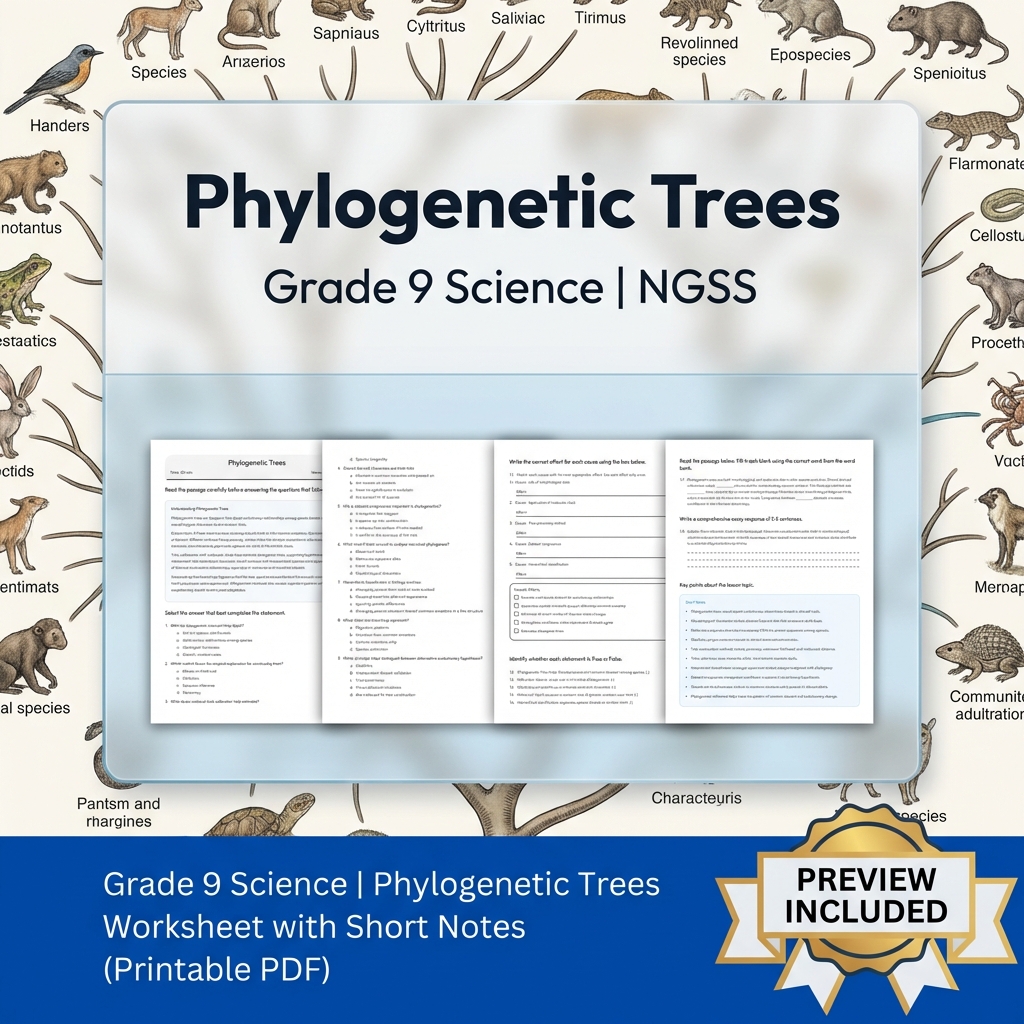
Grade 9 Science | Phylogenetic Trees Worksheet with Short Notes (Printable PDF)
Created byMeadowlark WorksheetsLearning Objectives
- Understand how to construct and interpret phylogenetic trees using morphological and molecular data.
- Identify shared derived characters and their significance in evolutionary relationships.
- Explain different tree-building methods such as parsimony and molecular distance.
Also included in: Grade 9 Science | Biological Evolution: Unity and Diversity NGSS Unit Bundle +1 more
Instant download
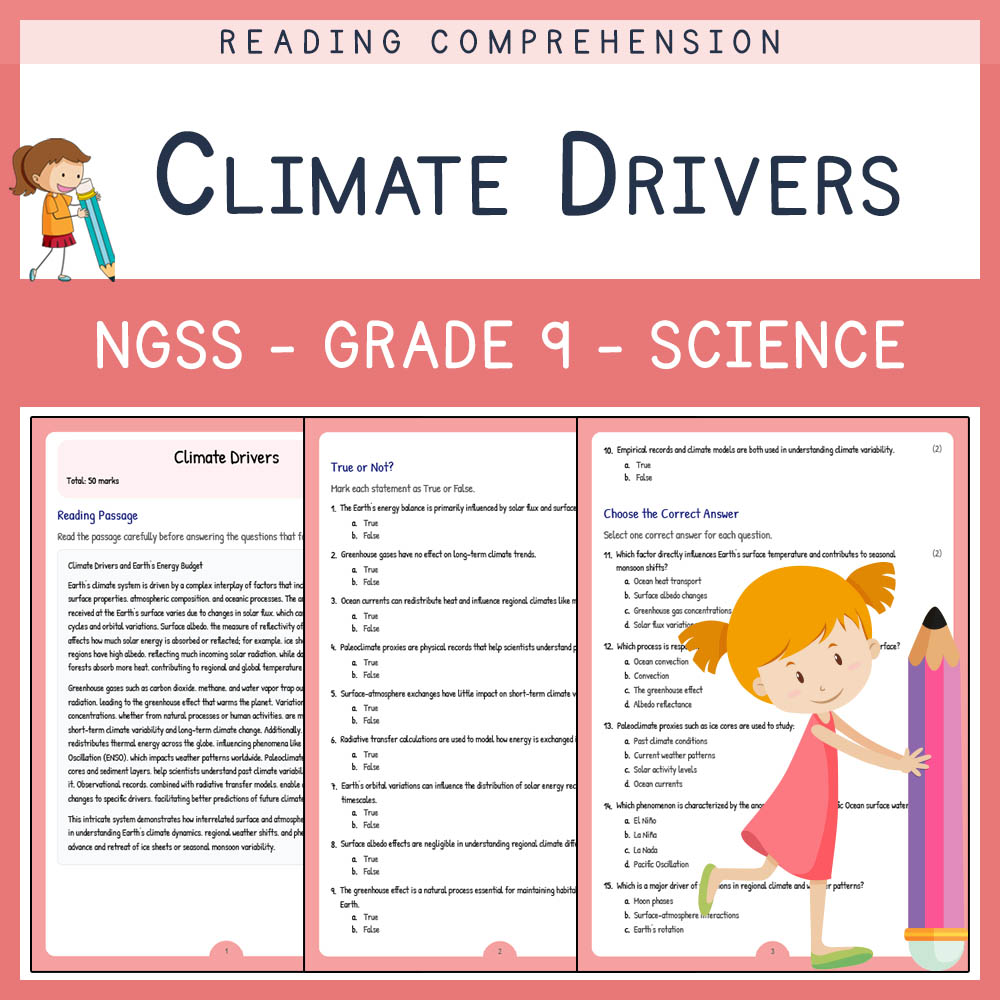
Grade 9 Science | Climate Drivers Worksheet with Answer Key for NGSS Standards (PDF)
Created byLumora LearningLearning Objectives
- Understand the key factors influencing Earth's climate and regional weather patterns.
- Analyze how surface-atmosphere interactions affect short-term variability and long-term climate trends.
- Interpret data from observational records, radiative transfer calculations, and paleoclimate proxies related to climate drivers.
Instant download

Grade 9 Science – Ecosystem Services & Biodiversity | Daily Reading Worksheet
Created byBright Mind ResourcesLearning Objectives
- Identify different types of ecosystem services
- Understand the importance of biodiversity for ecosystem functions
- Recognize human impacts on ecosystem services
Also included in: Ecosystem Ecology Grade 9 Science Daily Reading Worksheets Bundle | TEKS +2 more
Instant download
About Grade 9 Science Worksheets
Find Science worksheets built for Grade 9. All 6,926 cover core skills, practice, and review, each an instant PDF download.
Every worksheet on MyTeachingSheets is created by independent teacher-authors and reviewed before publication. All resources download as printable PDFs for classroom, homework, or at-home practice, and many include answer keys. Preview any worksheet free before buying.