
Grade 9 Science Worksheets
6,986 worksheets
Grade 9 Power Distribution System Architecture Worksheet | Alberta Science
 Created byBRIGHT PATH RESOURCES
Learning Objectives
- Explain the main stages in moving electricity from generation to consumers.
- Describe how voltage transformation supports long-distance power transmission.
- Use a simple sequence to predict how faults can spread through a network.
Instant download

Grade 9 Science | Free-Body Diagrams - Daily Reading Comprehension
 Created byCoral Reef Learning
Learning Objectives
- Understand the purpose and components of free-body diagrams
- Identify forces acting on an object in different scenarios
- Learn the conventions for drawing force vectors including size, direction, and point of application
Instant download
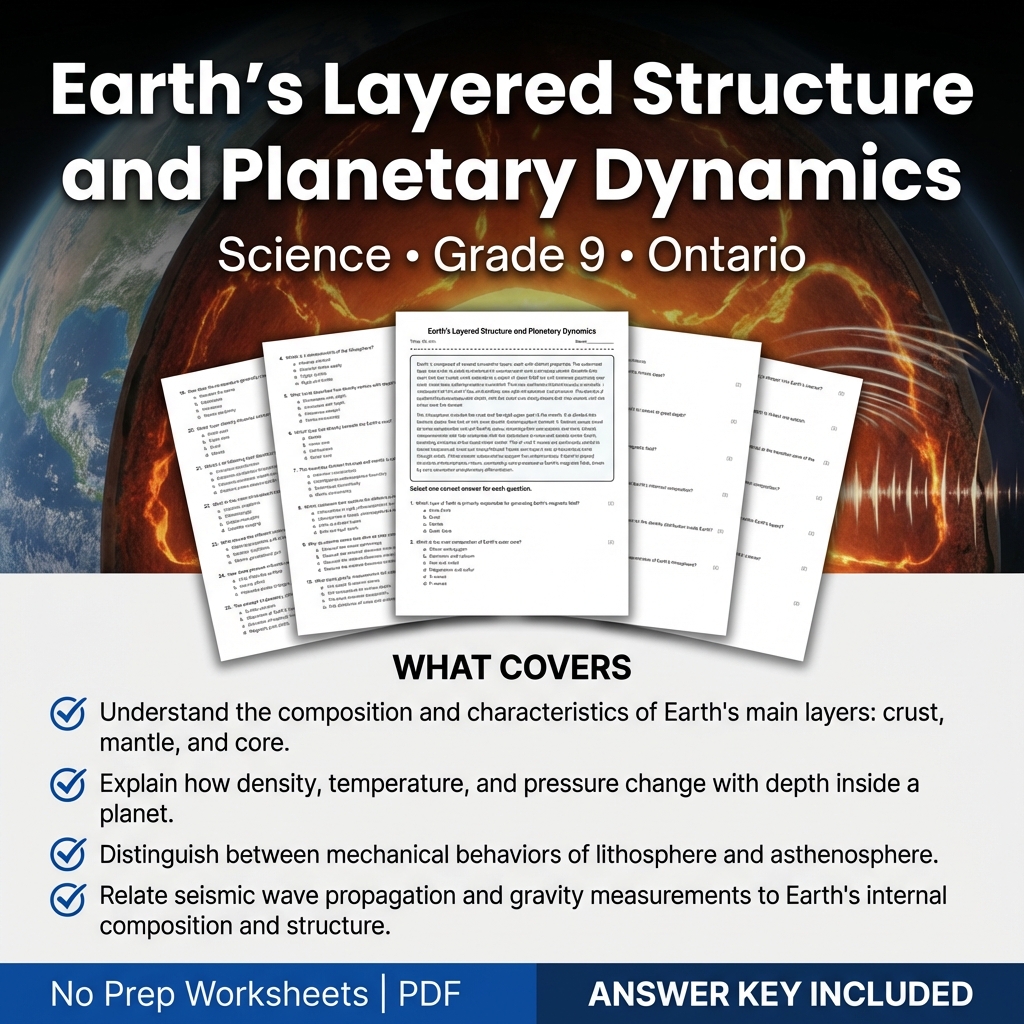
Earth's Layered Structure and Planetary Dynamics Worksheet | Ontario Grade 9
Created byCoral Reef LearningLearning Objectives
- Understand the composition and characteristics of Earth's main layers: crust, mantle, and core.
- Explain how density, temperature, and pressure change with depth inside a planet.
- Distinguish between mechanical behaviors of lithosphere and asthenosphere.
Instant download
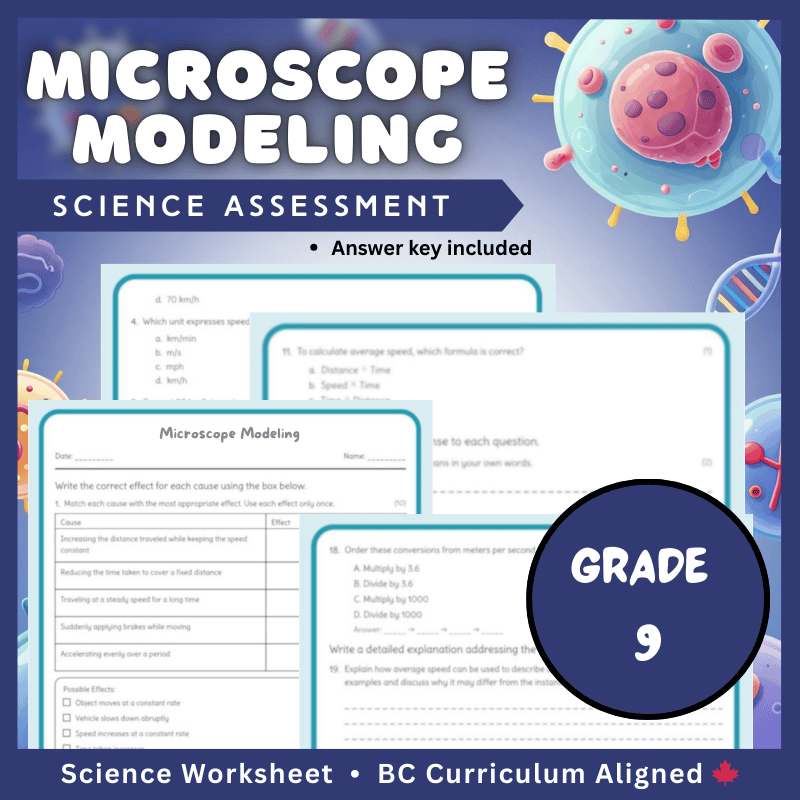
Grade 9 Science| Microscope Modeling Worksheet (PDF) for Cell Structure Analysis
 Created byBright Mind Resources
Learning Objectives
- Understand how microscopes provide visual models of cell structures and scales.
- Identify different types of microscopes and their uses in cell observation.
- Explain how diagrammatic and physical models help interpret microscopic observations.
Instant download

Grade 9 Science | Environmental Health - The Impact of Air Pollution on Humans
Created byCoral Reef LearningLearning Objectives
- Understand how air pollutants affect cellular health.
- Identify common air pollutants and their sources.
- Recognize the health risks associated with air pollution exposure.
Instant download
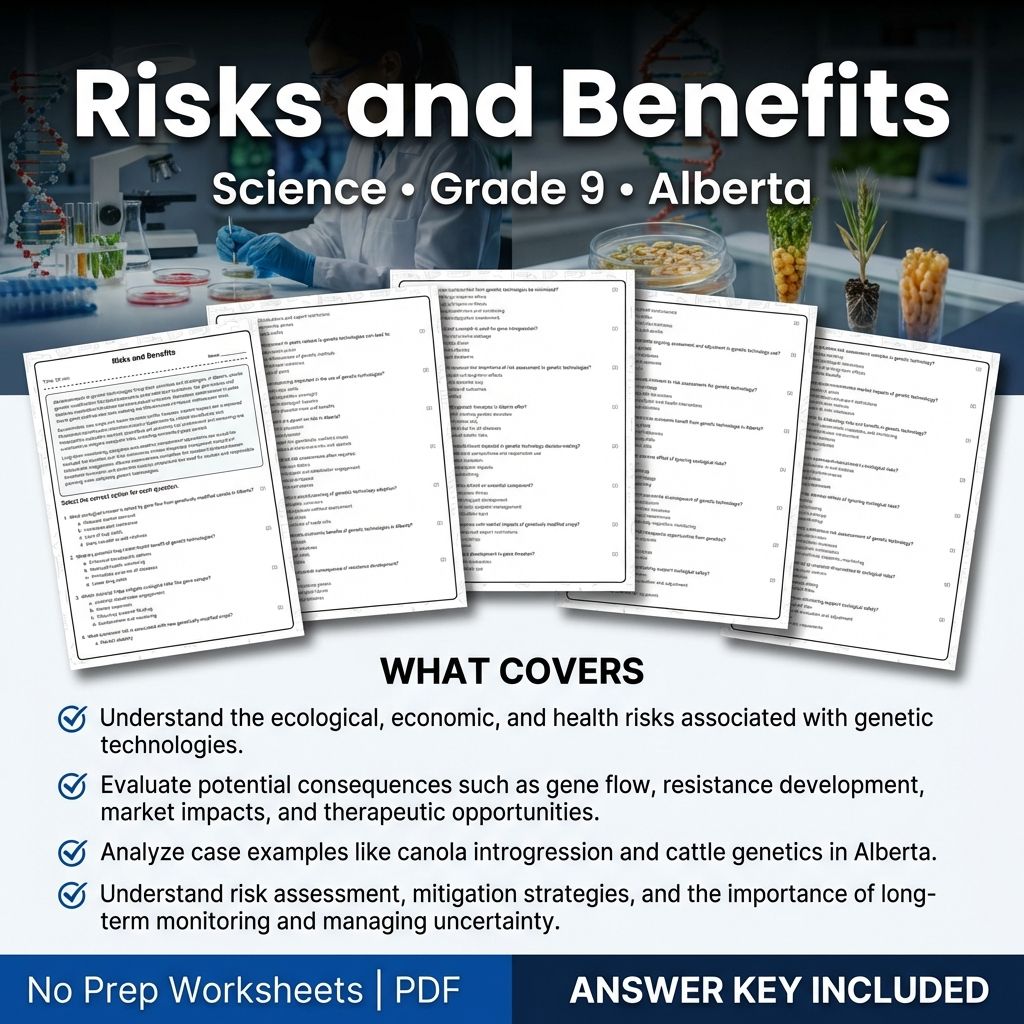
Risks and Benefits Worksheet | Alberta Grade 9 Science Practice
Created byCoral Reef LearningLearning Objectives
- Understand the ecological, economic, and health risks associated with genetic technologies.
- Evaluate potential consequences such as gene flow, resistance development, market impacts, and therapeutic opportunities.
- Analyze case examples like canola introgression and cattle genetics in Alberta.
Instant download
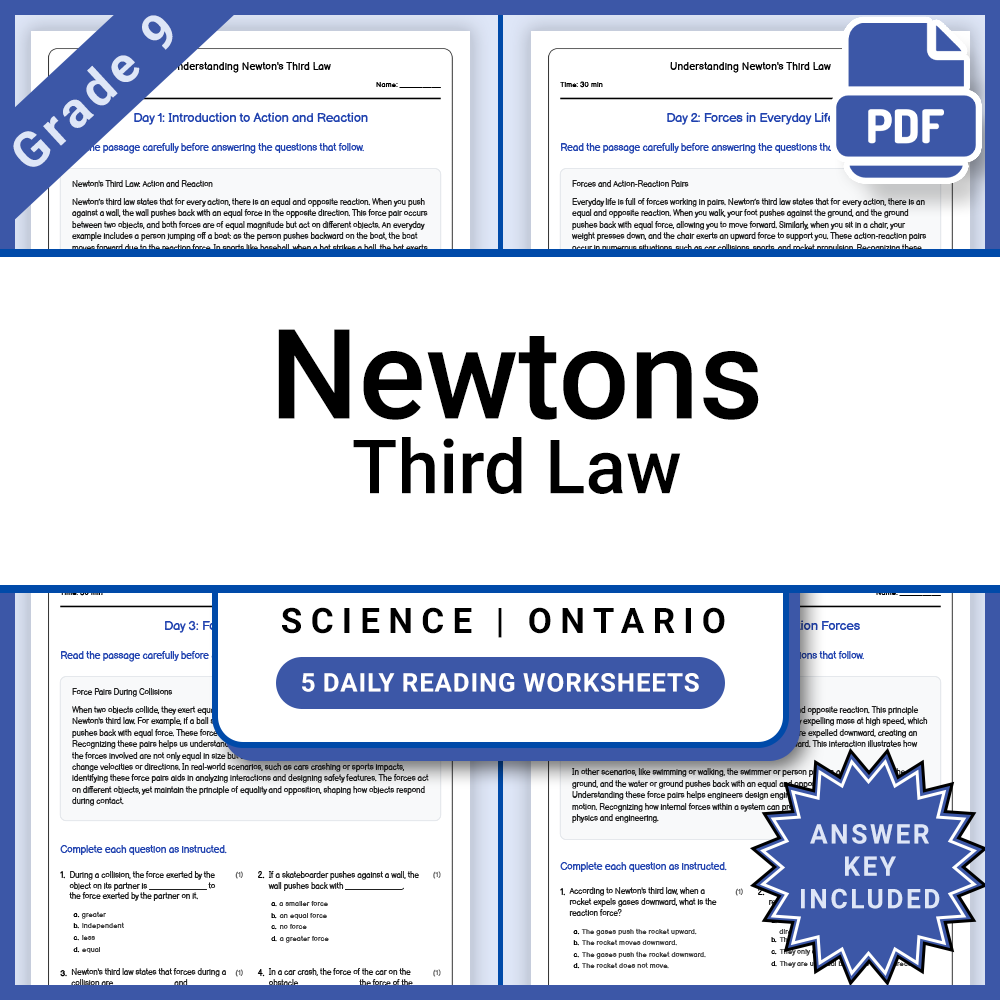
Grade 9 Science – Newton's Third Law Daily Reading Worksheet + Answer Key
JCreated byJ.S SheetsLearning Objectives
- Identify action-reaction force pairs in various scenarios.
- Explain the concept that forces in a pair have equal magnitude and opposite direction.
- Apply Newton's third law to analyze real-world interactions such as collisions and propulsion.
Also included in: Grade 9 Science Lesson Group: Physics and Motion Worksheets Bundle +1 more
Instant download

Grade 9 Science – Inclined Planes & Forces | Daily Reading Worksheet
Created byBright Mind ResourcesLearning Objectives
- Understand key concepts related to Science
- Apply knowledge through practice questions
- Demonstrate comprehension of the material
Also included in: Grade 9 Forces, Motion & Energy Science Lesson Bundle for Daily Reading | BC +1 more
Instant download
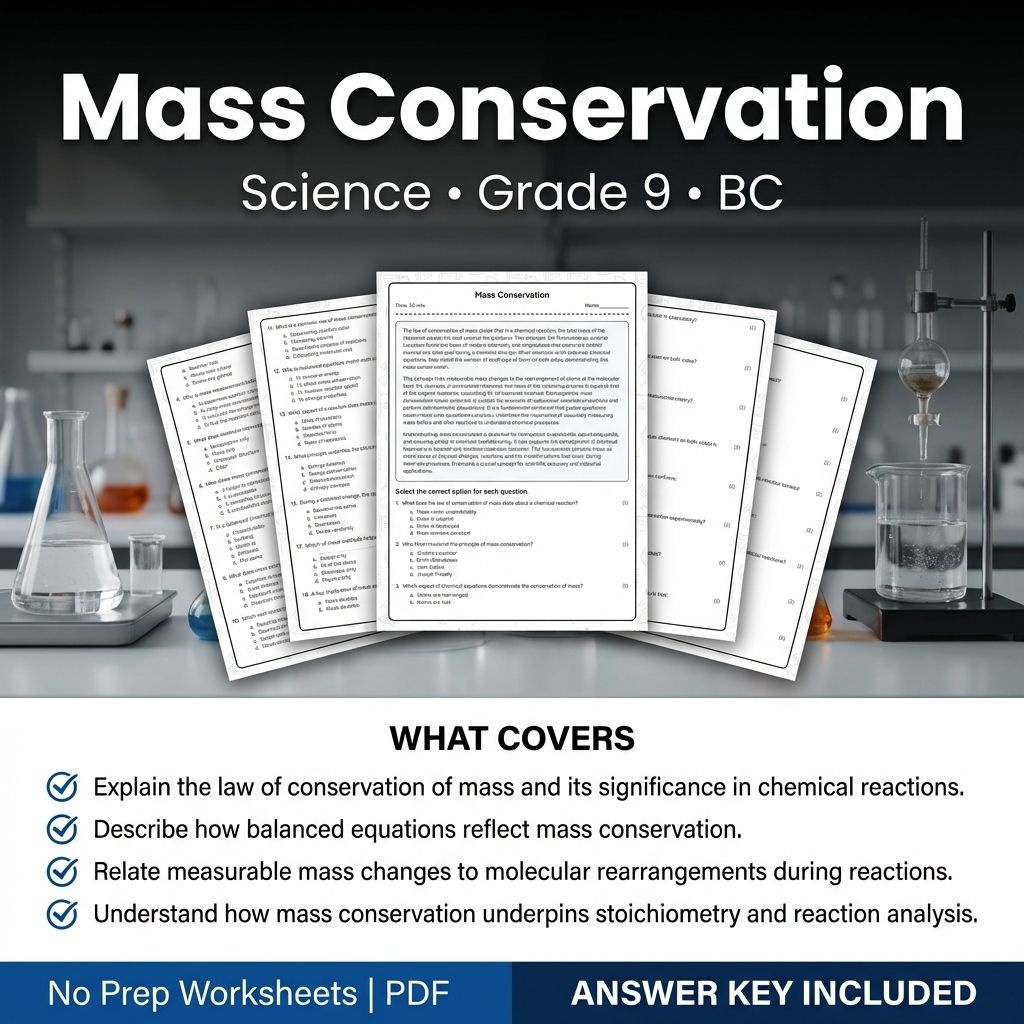
Grade 9 Science | Mass Conservation Worksheet & Answer Key (Printables)
Created byCoral Reef LearningLearning Objectives
- Explain the law of conservation of mass and its significance in chemical reactions.
- Describe how balanced equations reflect mass conservation.
- Relate measurable mass changes to molecular rearrangements during reactions.
Instant download
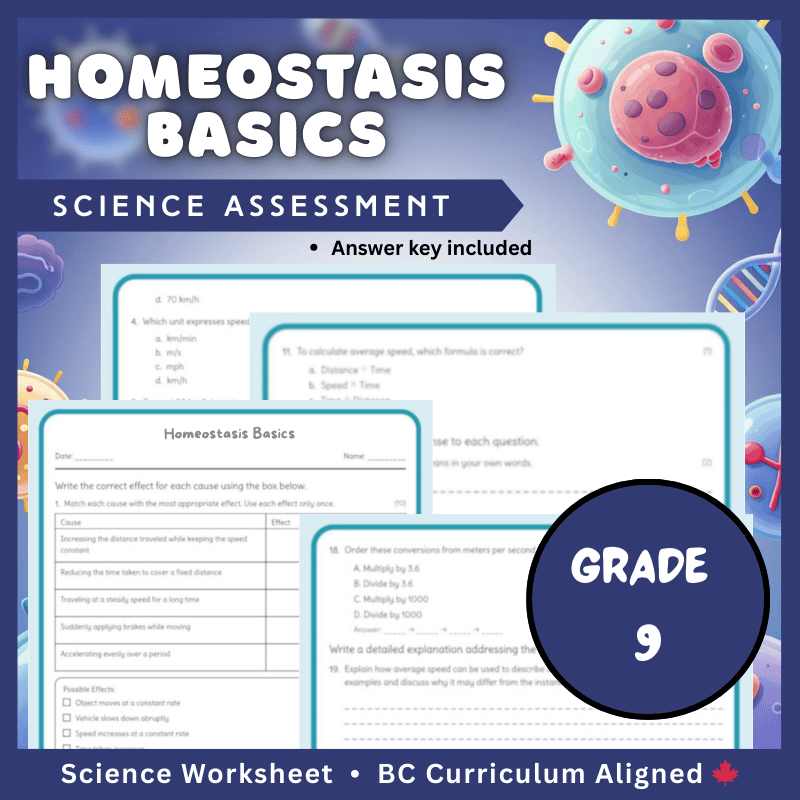
Grade 9 Science | Homeostasis Basics Worksheet (PDF) – Standards-Based Practice
Created byBright Mind ResourcesLearning Objectives
- Understand the concept of homeostasis and its importance in maintaining internal body conditions.
- Identify the systems involved in homeostasis and their feedback mechanisms.
- Explain how various body systems coordinate to regulate temperature, pH, and blood glucose levels.
Instant download

Grade 9 Science | Milankovitch Cycles Worksheet | BC Standards
 Created byLumora Learning
Learning Objectives
- Understand the concept of Milankovitch cycles and their influence on Earth's climate.
- Identify the three main orbital parameters that vary in Milankovitch theory.
- Explain how variations in Earth's orbit affect glacial and interglacial periods.
Also included in: Grade 9 Science | Earth Systems Unit Bundle | BC Aligned Worksheets
Instant download
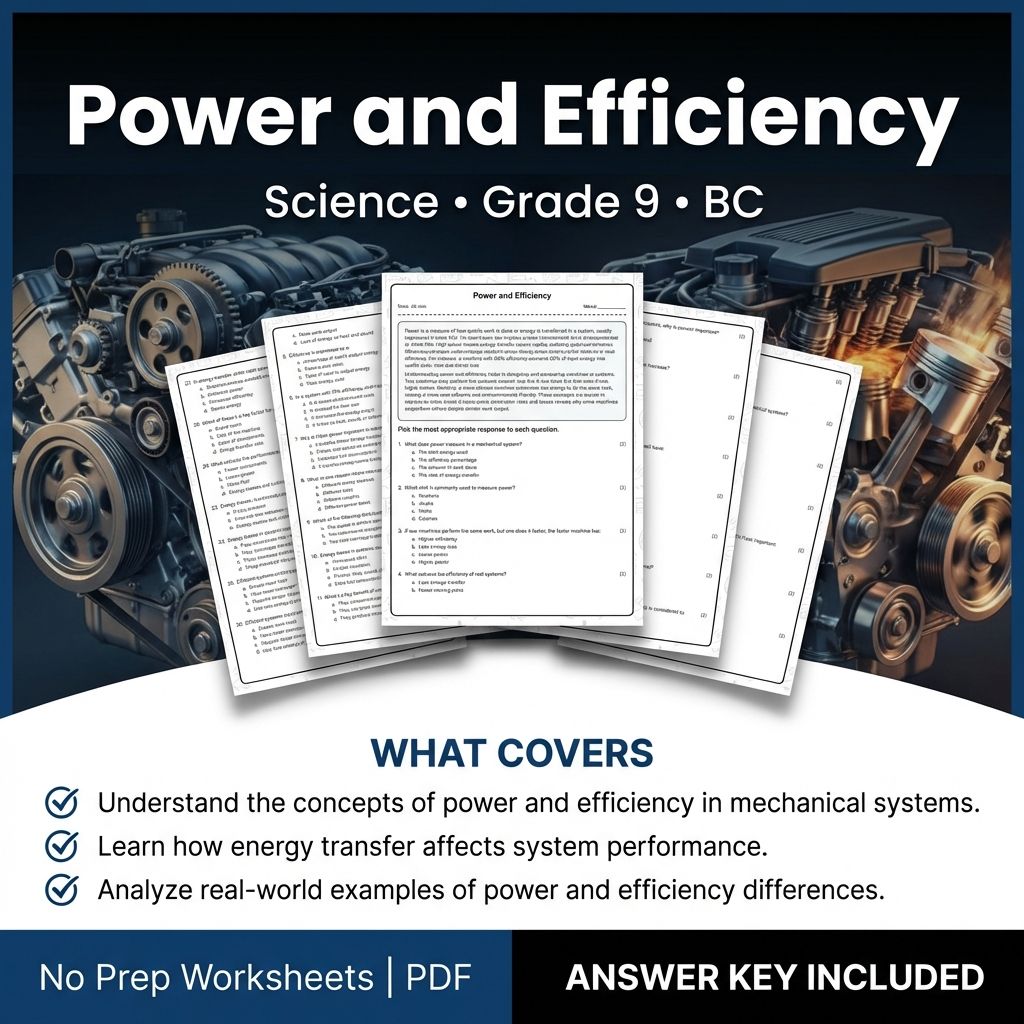
Power and Efficiency Grade 9 Science Worksheet | BC Standards
Created byCoral Reef LearningLearning Objectives
- Understand the concepts of power and efficiency in mechanical systems.
- Learn how energy transfer affects system performance.
- Analyze real-world examples of power and efficiency differences.
Instant download
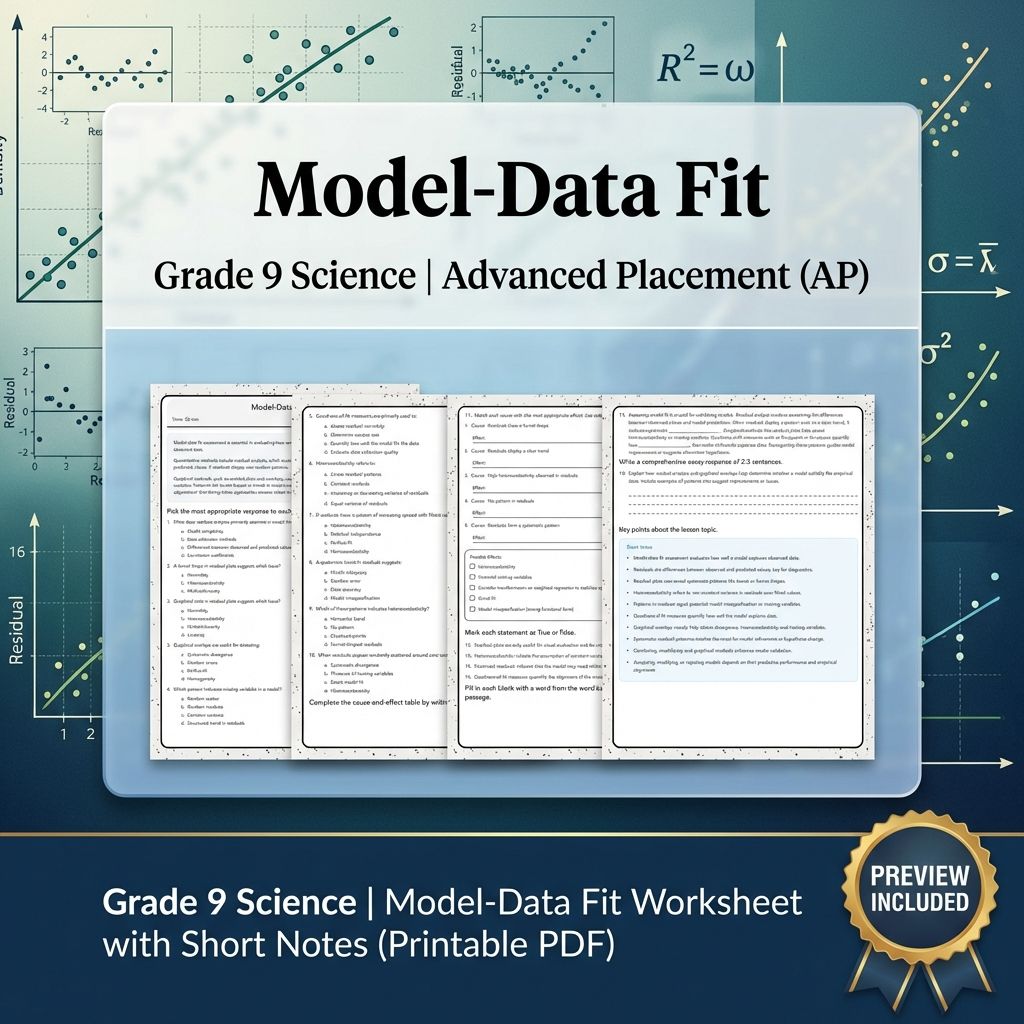
Grade 9 Science | Model-Data Fit Worksheet with Short Notes (Printable PDF)
 Created byMeadowlark Worksheets
Learning Objectives
- Understand the methods for assessing the fit of models to empirical data.
- Identify diagnostic patterns that indicate model inadequacies.
- Explain how residual analysis and goodness-of-fit measures inform model refinement.
Also included in: Grade 9 Science | Critical Thinking & Data Analysis Unit Bundle (Worksheets) +1 more
Instant download

Natural Selection Worksheet for Grade 9 Science | Classroom PDF & Answer Key
Created byCoral Reef LearningLearning Objectives
- Understand the basic principles of natural selection and how it leads to evolution.
- Identify examples of natural selection in real-world scenarios.
- Distinguish between different types of selection: directional, stabilizing, and disruptive.
Instant download
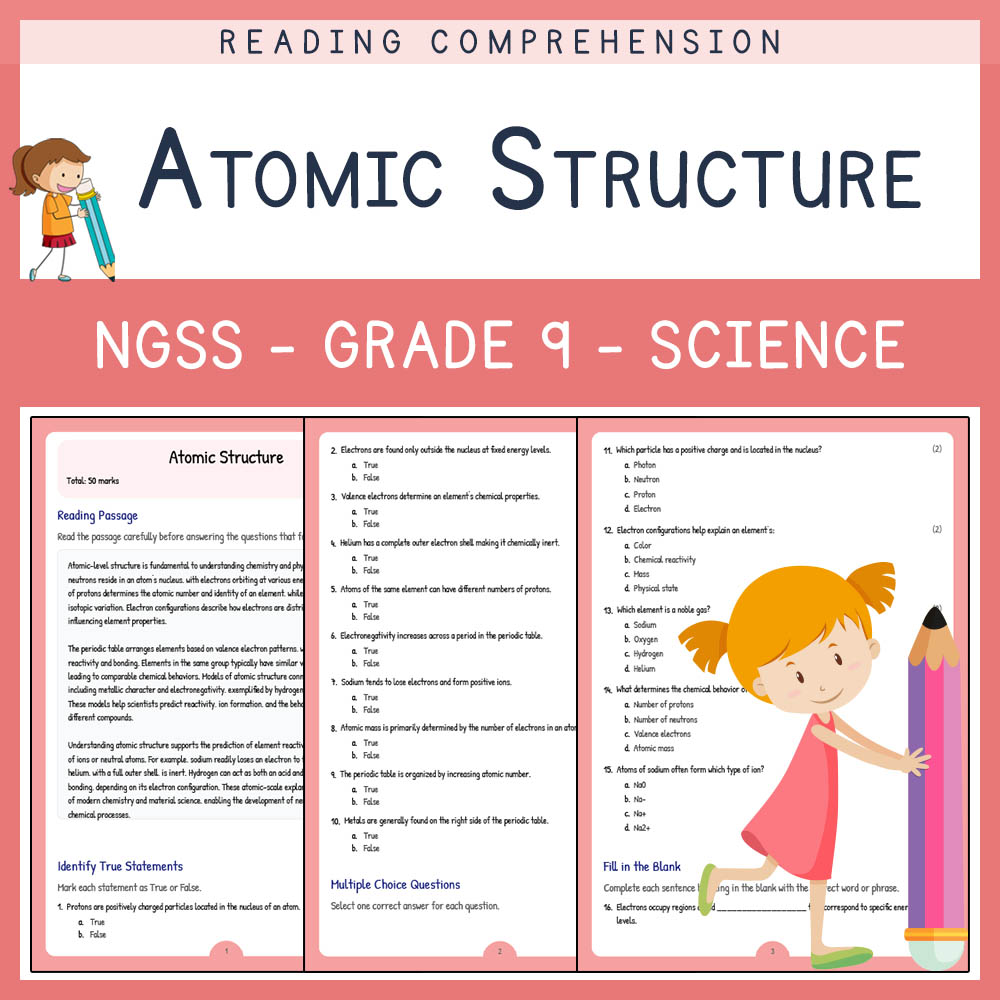
Grade 9 Science | Atomic Structure Worksheet (PDF + Answer Key) – NGSS Aligned
Created byLumora LearningLearning Objectives
- Describe the components of an atom, including protons, neutrons, and electrons.
- Explain how electron configurations relate to element properties.
- Identify patterns in the periodic table based on valence electrons.
Instant download

Greenhouse Effect Worksheet | Grade 9 Science Practice & Review
 Created byPrism Point Learning
Learning Objectives
- Explain how greenhouse gases trap outgoing longwave radiation and affect Earth’s energy balance
- Identify common greenhouse gases and describe both natural and human sources
- Interpret statements about greenhouse effect processes and measurable climate responses
Also included in: Earth and Space Systems Lesson Bundle | Grade 9 Science | BC Framework +1 more
Instant download
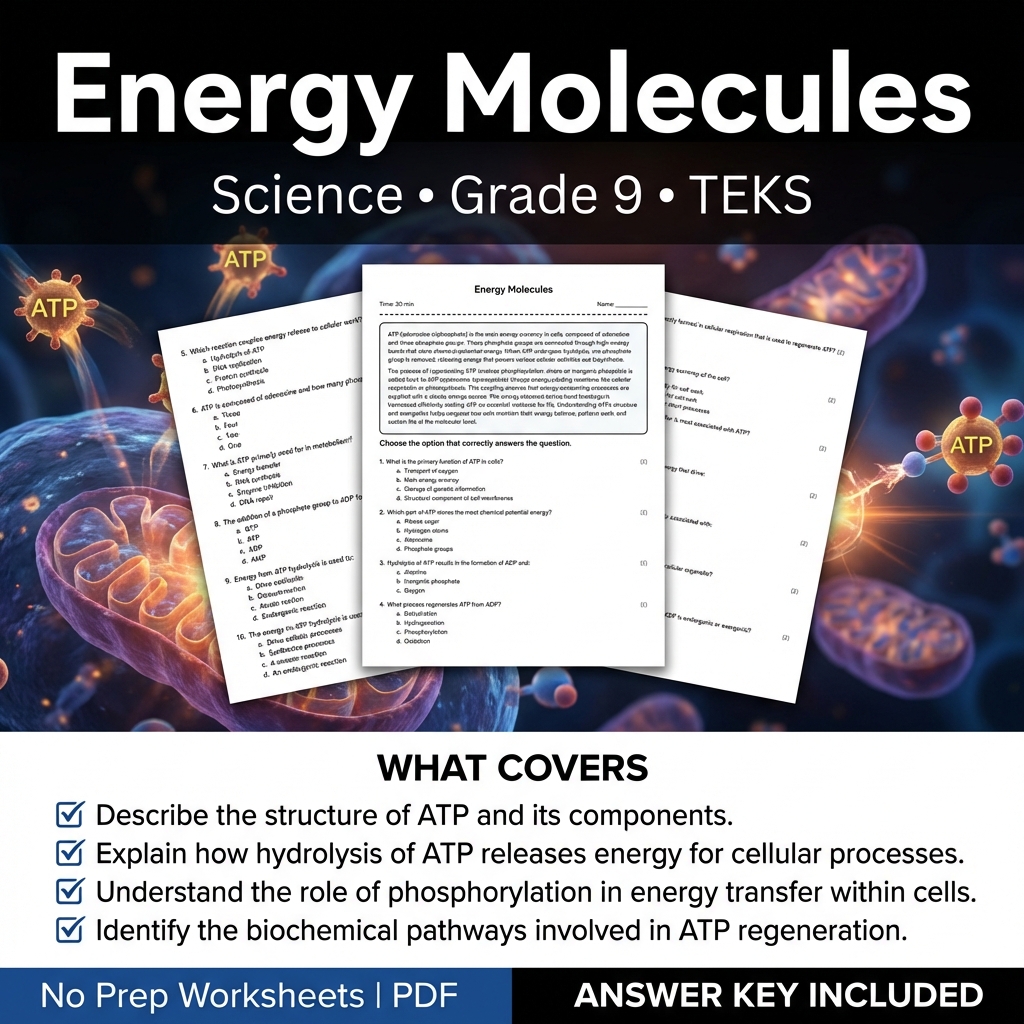
Grade 9 Science Worksheet on Energy Molecules | TEKS Aligned
Created byCoral Reef LearningLearning Objectives
- Describe the structure of ATP and its components.
- Explain how hydrolysis of ATP releases energy for cellular processes.
- Understand the role of phosphorylation in energy transfer within cells.
Instant download
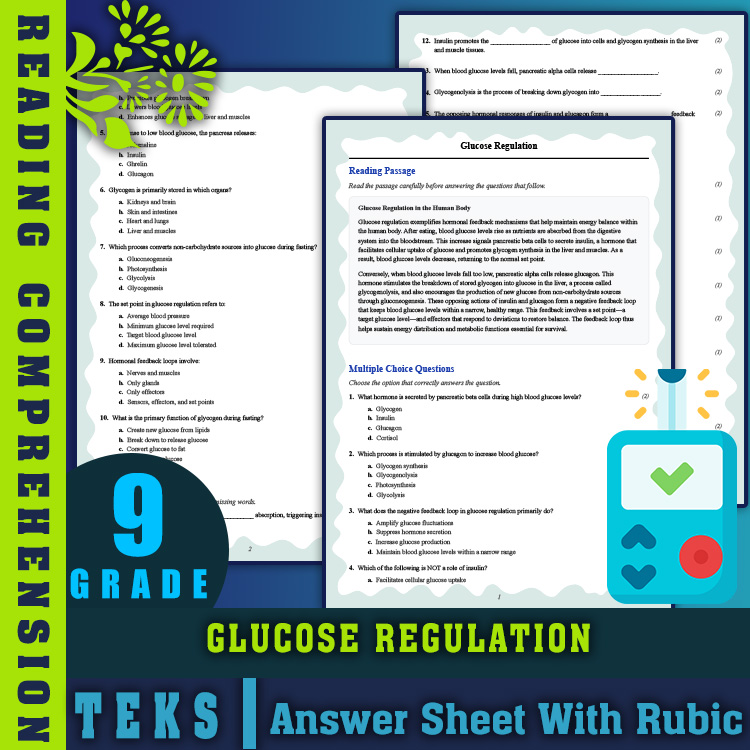
9th Grade Science | Glucose Regulation Reading Worksheets (PDF + Rubric)
JCreated byJ.S SheetsLearning Objectives
- Understand the hormonal feedback mechanisms involved in glucose regulation
- Describe how insulin and glucagon maintain blood glucose levels within a set range
- Explain the roles of pancreatic beta and alpha cells in energy homeostasis
Instant download

Grade 9 Science | Milankovitch Cycles Worksheet (PDF) BC Standards
 Created byEvergreen Desk Education
Learning Objectives
- Explain how eccentricity, axial tilt, and precession affect Earth’s incoming solar energy (insolation).
- Describe why Milankovitch cycles operate on timescales of tens to hundreds of thousands of years.
- Interpret how climate feedbacks and geological evidence connect orbital changes to glacial and interglacial periods.
Instant download

Grade 9 Science Worksheet – Crystal Lattices (PDF) BC Standards
Created byEvergreen Desk EducationLearning Objectives
- Explain how unit cells and repeating 3D arrangements form crystal lattices.
- Compare ionic, metallic, and covalent network lattices using structure-property relationships.
- Predict how lattice type affects properties such as brittleness, electrical conductivity, and melting point.
Instant download
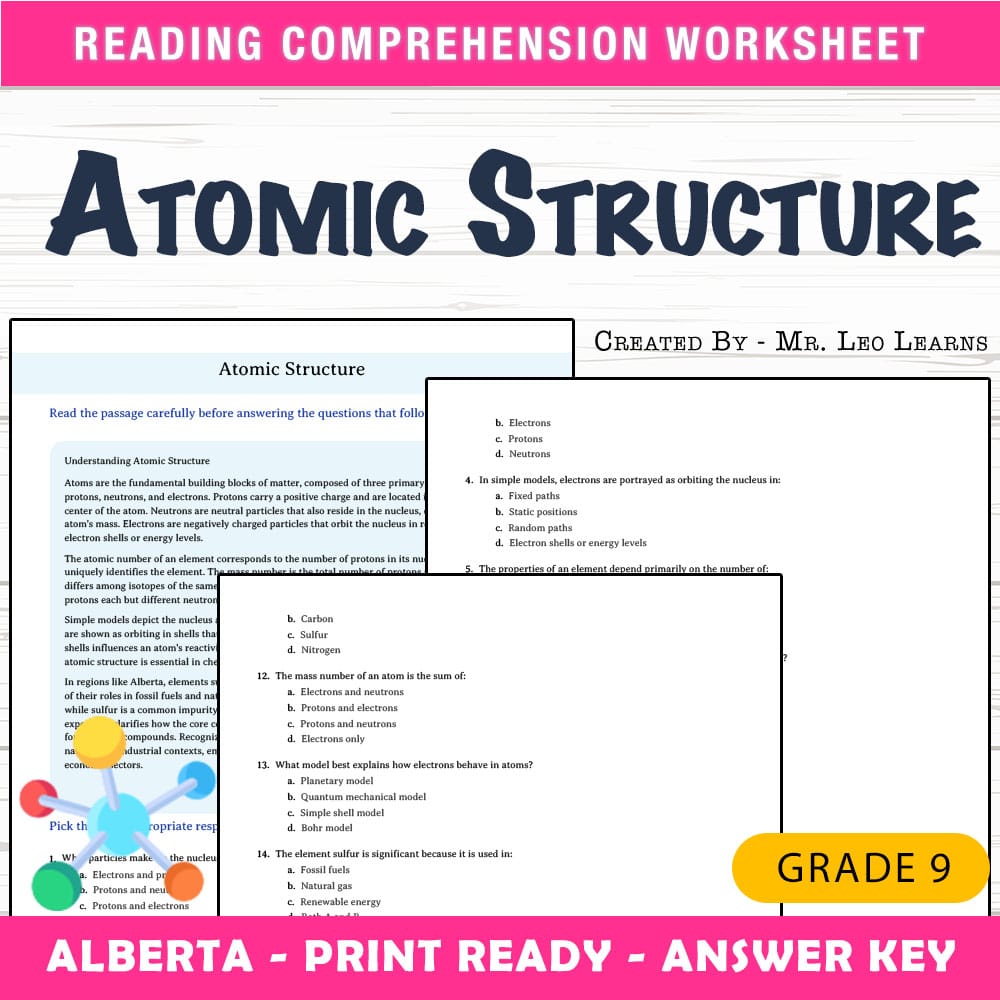
Grade 9 Science — Worksheet MCQ Paper for Atomic Structure
 Created byThe Resource Hub
Learning Objectives
- Understand the basic components of an atom: protons, neutrons, and electrons.
- Explain how atomic number and mass number relate to isotopes and element identity.
- Describe simple models of nuclei and electron shells to interpret chemical behavior.
Also included in: Grade 9 Science Bundle | Matter and Chemical Change Worksheets Pack +1 more
Instant download

Mechanical Energy Conservation Worksheets Grade 9 Physics
Created byPrism Point LearningLearning Objectives
- Explain when total mechanical energy remains constant in an ideal system.
- Describe kinetic and potential energy transformations during motion.
- Explain how friction changes mechanical energy through negative work.
Also included in: Physics: Forces and Energy Lesson Bundle | Grade 9 Science | Ontario +1 more
Instant download

Grade 9 Science Reaction Essentials Worksheet (BC Standards) – PDF
Created byEvergreen Desk EducationLearning Objectives
- Explain how chemical bonds break and form during reactions and how this relates to energy changes.
- Interpret symbolic chemical equations using states, subscripts, and stoichiometric coefficients.
- Use the relative amounts indicated by coefficients to reason about reactants and products in simple reactions.
Instant download

Grade 9 Energy Conservation Worksheet | Alberta Use Practice PDF
 Created byClear Sky Classroom
Learning Objectives
- Explain how mechanical energy conservation relates kinetic and gravitational potential energy
- Use energy bookkeeping to predict feasible motion considering non-conservative losses like friction
- Identify energy transfers and dissipation in real Alberta contexts (hydroelectric dams and skiers)
Instant download
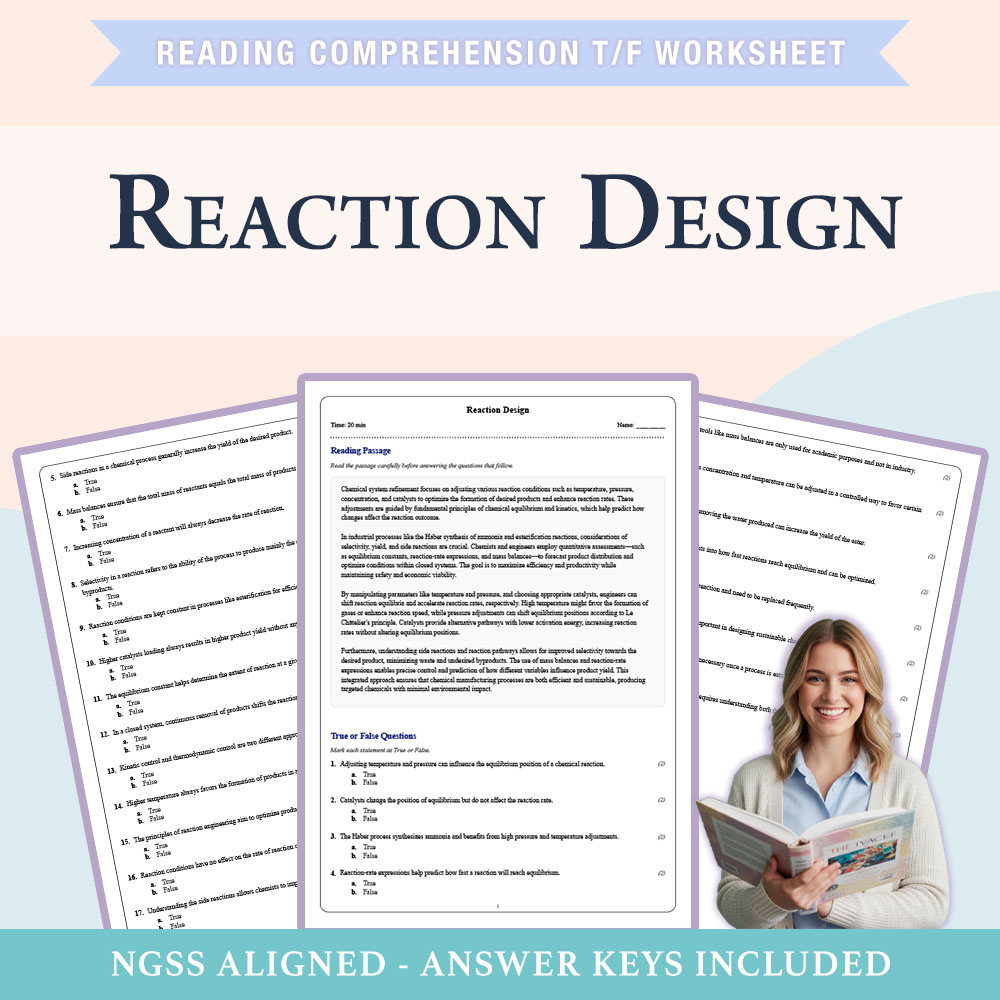
Grade 9 Science | Reaction Design Worksheet (PDF + Answer Key)
 Created byCopper Leaf Classroom
Learning Objectives
- Understand how temperature, pressure, concentration, and catalysts influence chemical reactions in system refinement.
- Recognize the principles of equilibrium and kinetics in designing chemical processes.
- Apply quantitative tools like equilibrium constants and reaction-rate expressions to predict product distribution.
Also included in: Grade 9 Science | Reaction & Atomic Structure Unit Bundle (PDF + Answer Key) +1 more
Instant download
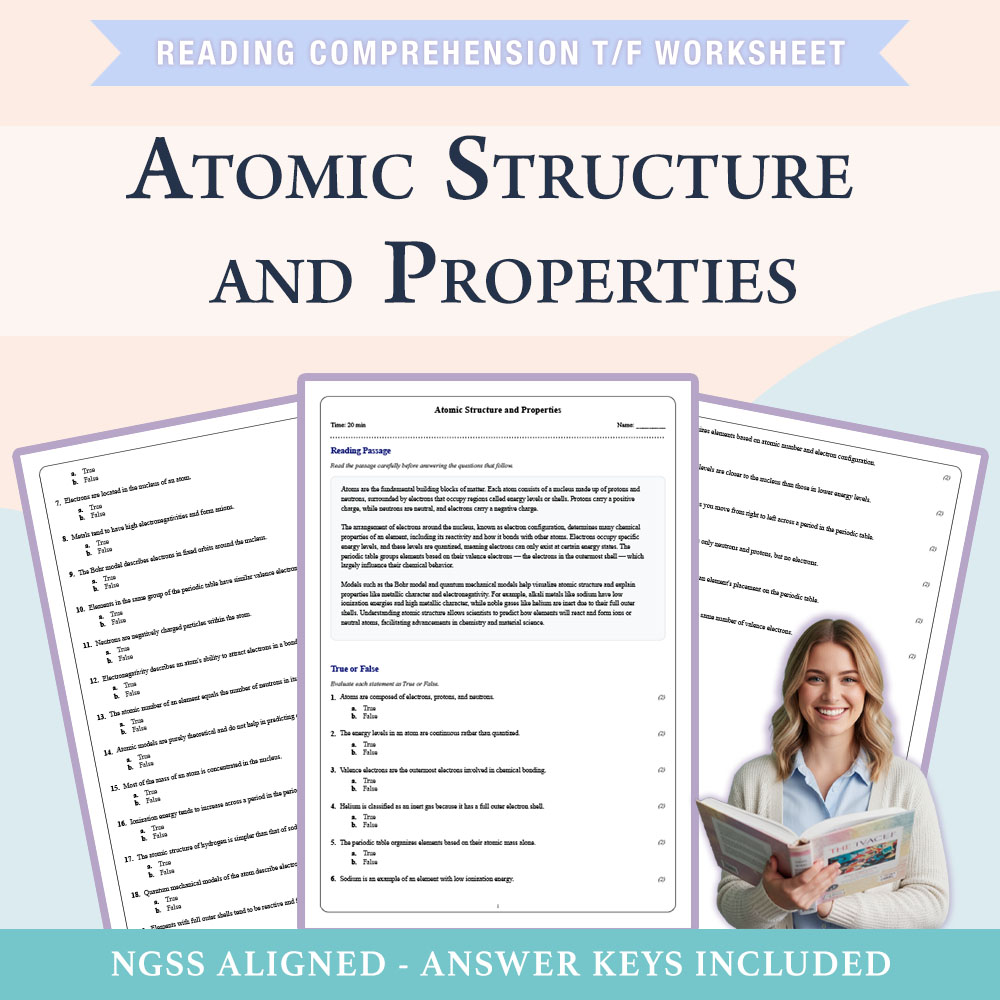
9th Grade Science | Atomic Structure and Properties Worksheet (PDF + Answer Key)
Created byCopper Leaf ClassroomLearning Objectives
- Understand the fundamental particles that make up atoms and their roles in atomic structure.
- Describe how electron configurations and energy levels influence chemical behavior.
- Explain how the periodic table organizes elements based on valence electrons and properties.
Also included in: Grade 9 Science | Reaction & Atomic Structure Unit Bundle (PDF + Answer Key) +1 more
Instant download
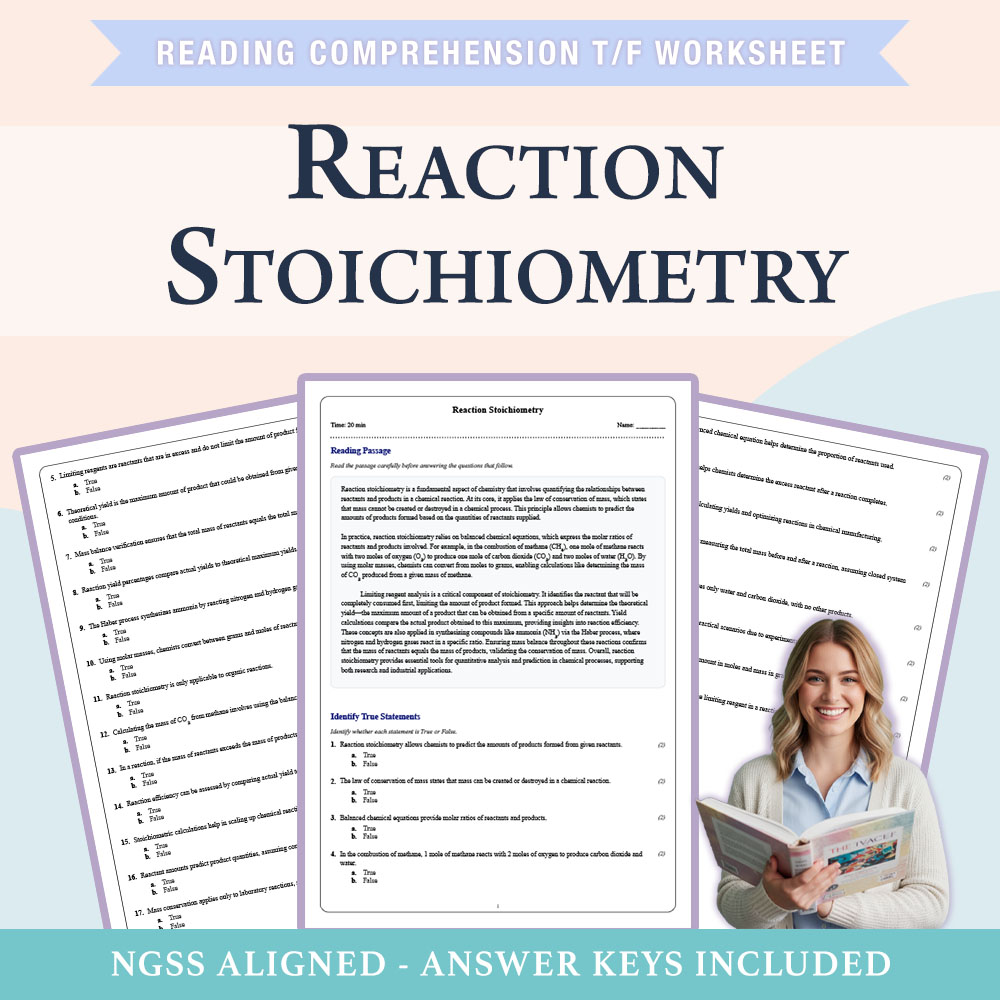
9th Grade Science | Reaction Stoichiometry Worksheet (PDF + Answer Key)
Created byCopper Leaf ClassroomLearning Objectives
- Understand the principles of conservation of mass in chemical reactions.
- Interpret balanced chemical equations to relate moles, mass, and particle counts.
- Explain limiting reagent concepts and calculate theoretical yields.
Also included in: Grade 9 Science | Reaction & Atomic Structure Unit Bundle (PDF + Answer Key) +1 more
Instant download
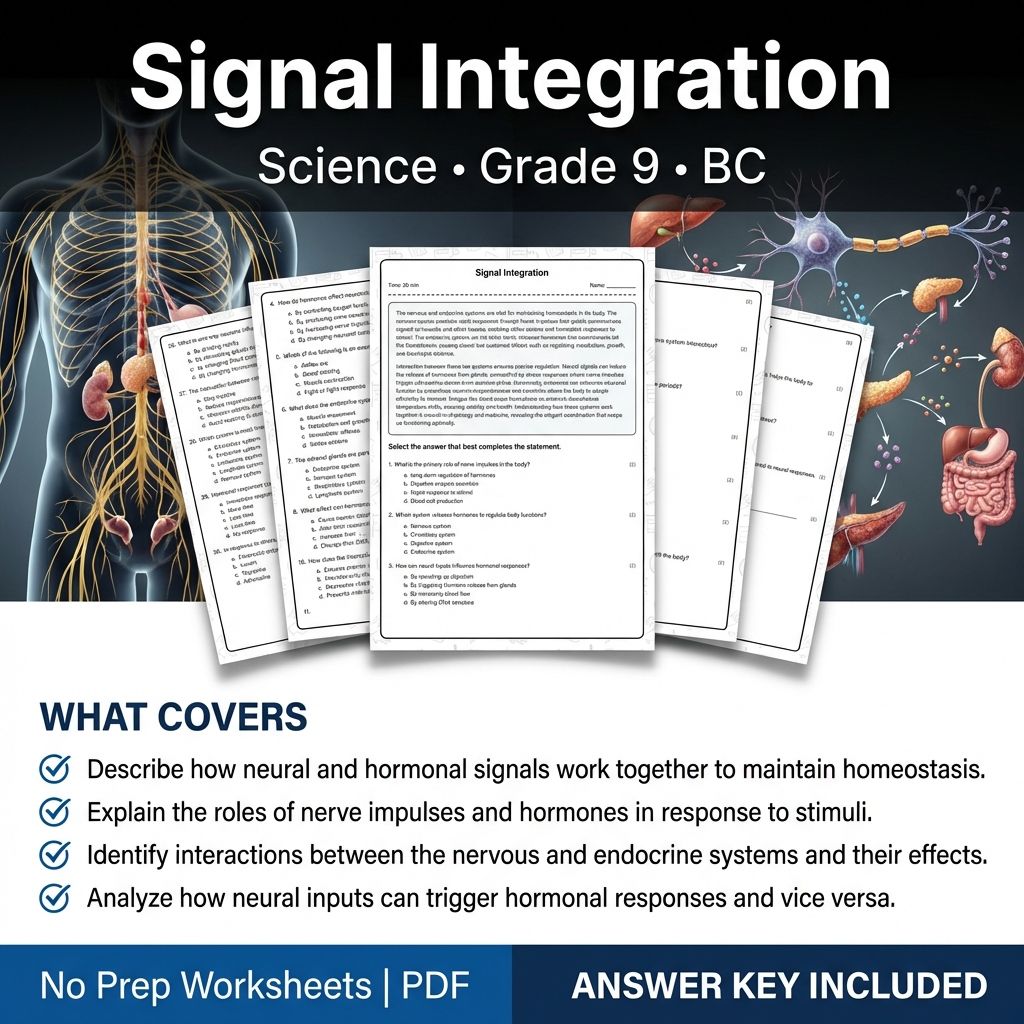
Signal Integration Grade 9 Science Worksheet | BC Standards Practice
Created byCoral Reef LearningLearning Objectives
- Describe how neural and hormonal signals work together to maintain homeostasis.
- Explain the roles of nerve impulses and hormones in response to stimuli.
- Identify interactions between the nervous and endocrine systems and their effects.
Instant download
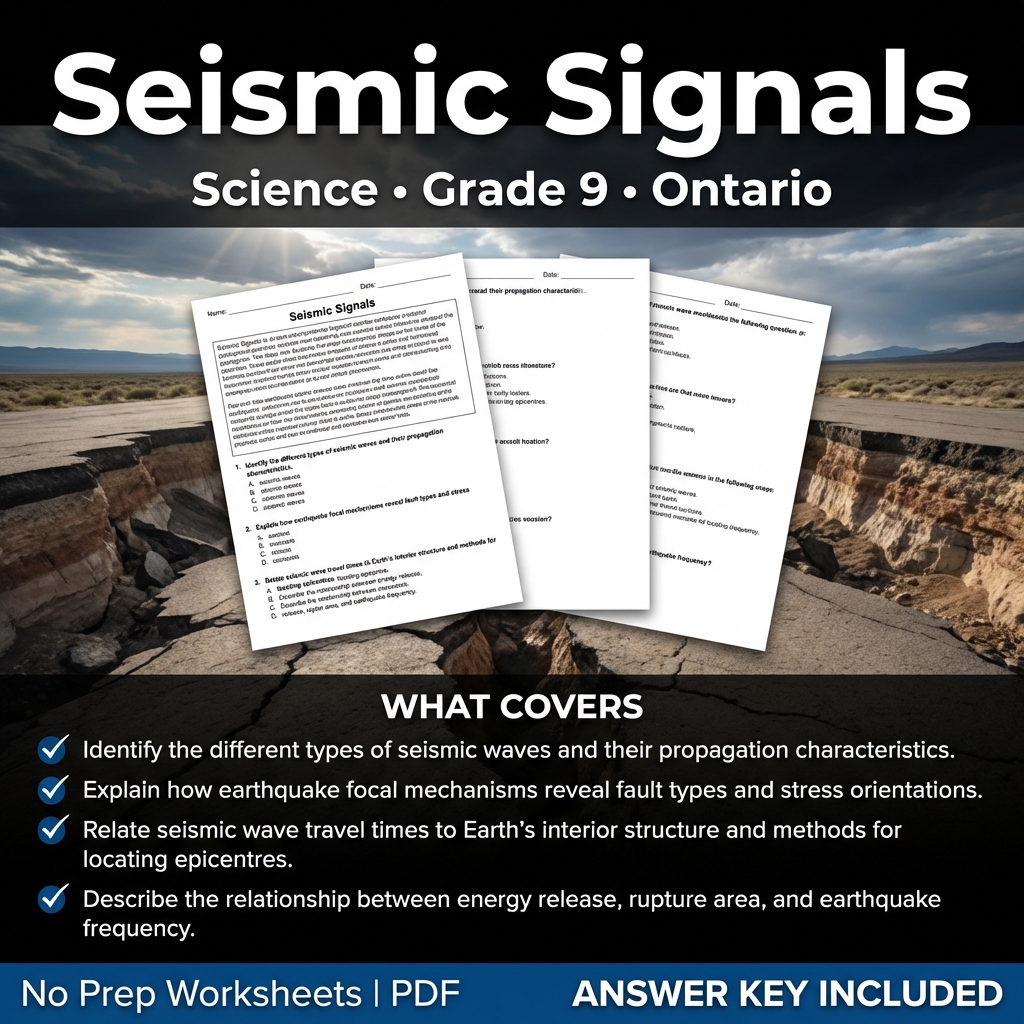
Seismic Signals Science Worksheet | Grade 9 Ontario Standard Practice
Created byCoral Reef LearningLearning Objectives
- Identify the different types of seismic waves and their propagation characteristics.
- Explain how earthquake focal mechanisms reveal fault types and stress orientations.
- Relate seismic wave travel times to Earth's interior structure and methods for locating epicentres.
Instant download

Power and Efficiency Worksheet Pack | Grade 9 Science Activities
Created byPrism Point LearningLearning Objectives
- Explain how power describes the rate of energy transfer and relate it to how quickly work is done.
- Calculate and interpret efficiency as the fraction of input energy that becomes useful output energy.
- Analyze how energy losses (heat, sound, deformation) reduce efficiency in real machines.
Also included in: Forces and Motion Lesson Bundle – Grade 9 Science Framework BC +1 more
Instant download
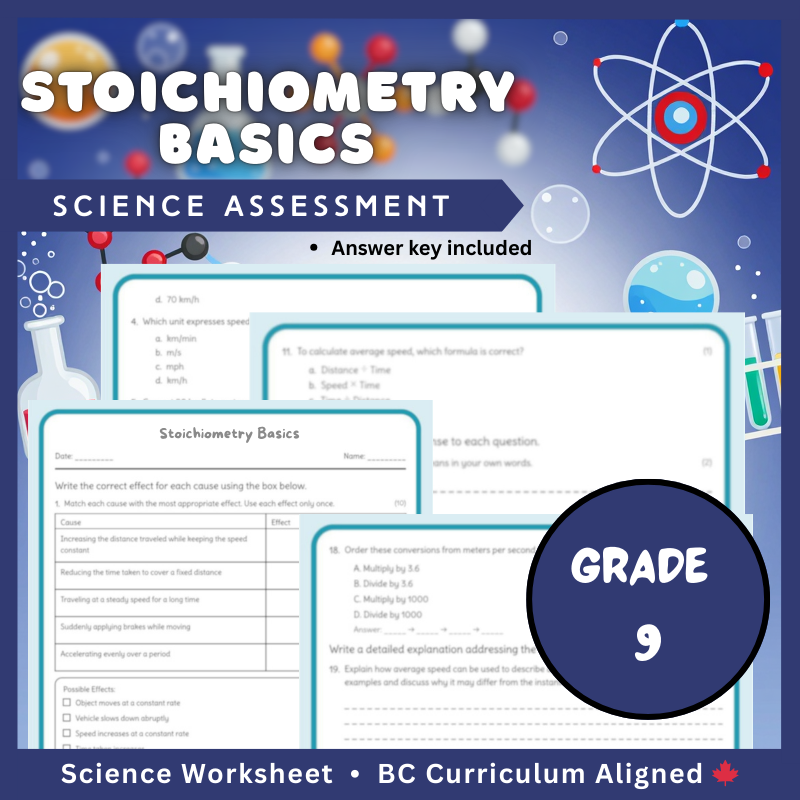
Grade 9 Science | Mastering Stoichiometry Basics Worksheet (PDF)
Created byBright Mind ResourcesLearning Objectives
- Understand the concept of mole relationships in chemical reactions.
- Use molar mass to convert between mass and moles of substances.
- Interpret coefficients in balanced equations to determine mole ratios.
Instant download
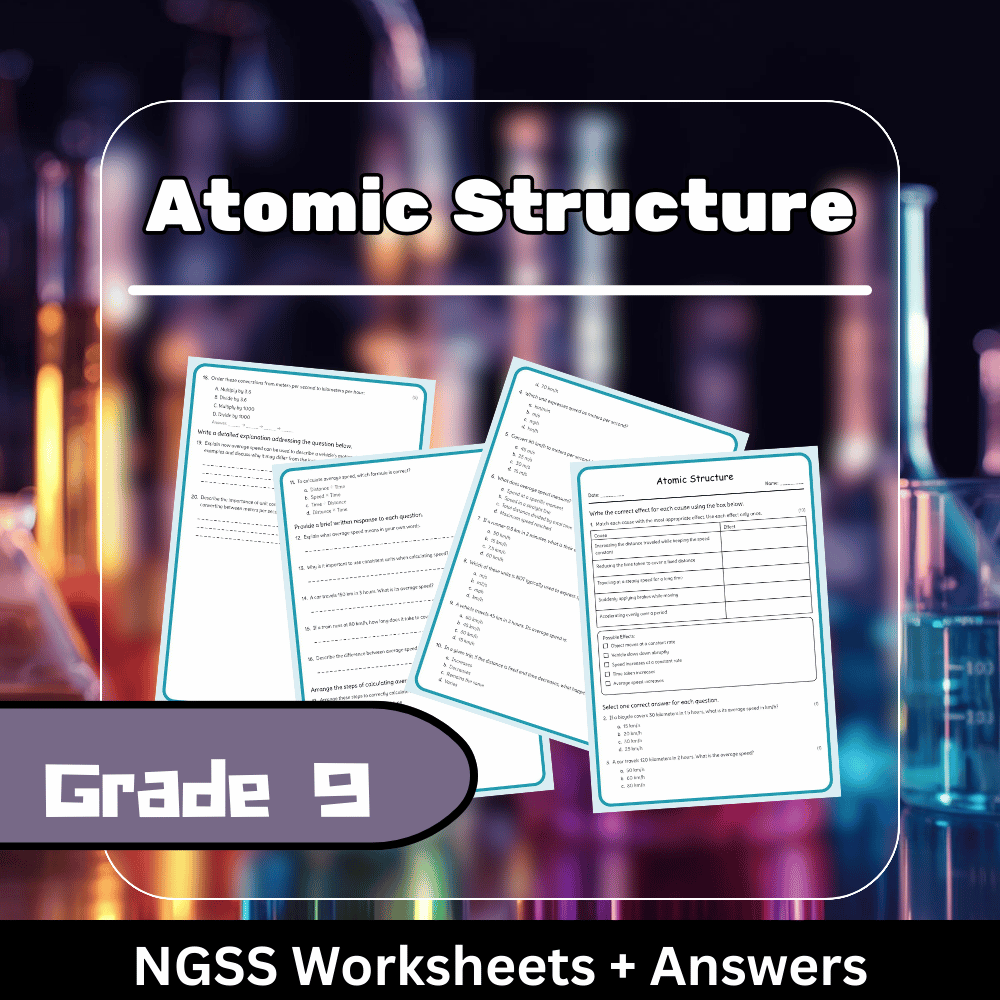
Grade 9 Science | Atomic Structure Worksheet (Answer Key) aligned with NGSS
Created byBright Mind ResourcesLearning Objectives
- Describe the fundamental particles of atoms: protons, neutrons, and electrons.
- Explain electron configurations and their significance in atomic behavior.
- Organize elements using the periodic table based on valence electrons.
Instant download

Particle Conservation Worksheet Grade 9 Science Activities
Created byPrism Point LearningLearning Objectives
- Explain particle conservation by describing how atoms rearrange during chemical reactions.
- Use the particulate view to justify why total mass and the number of atoms of each element stay the same.
- Interpret reactants and products as collections of atoms rather than matter being created or destroyed.
Instant download
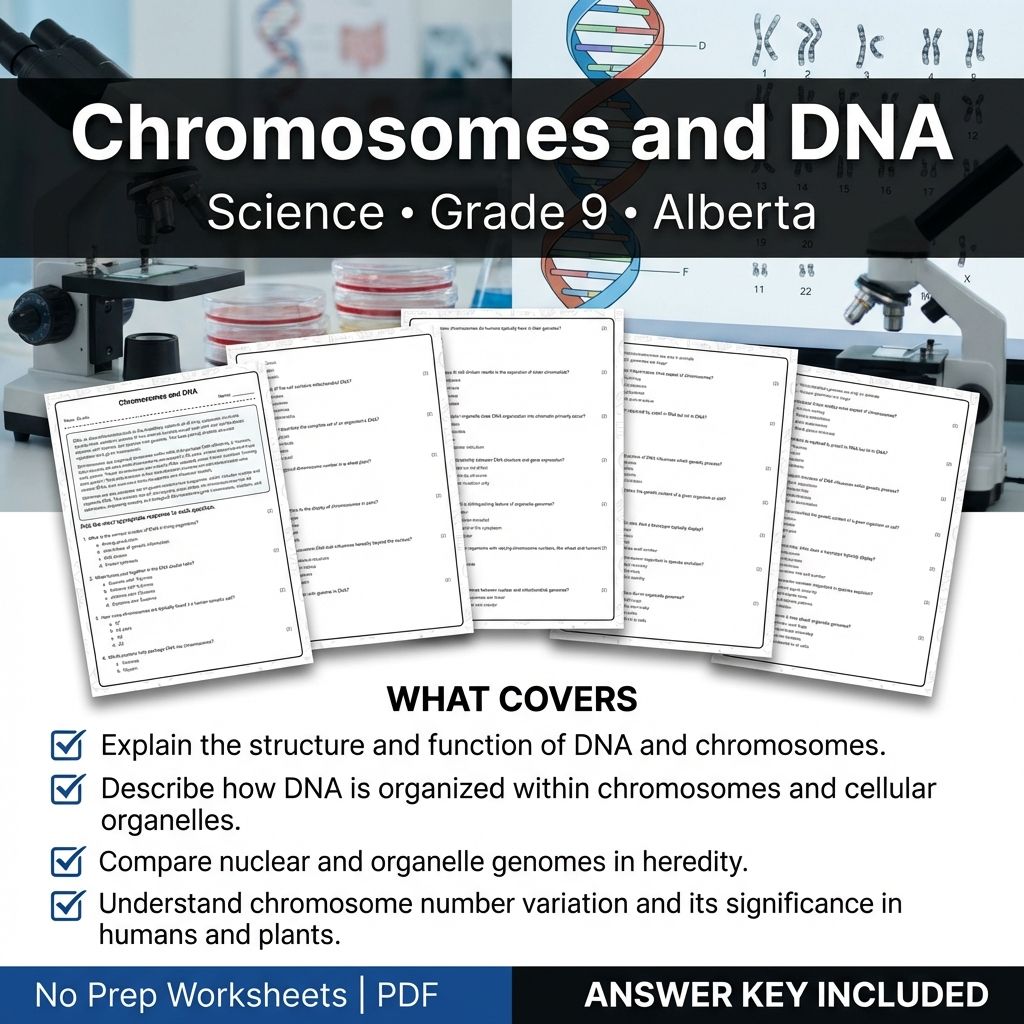
Chromosomes and DNA Worksheet | Grade 9 Science | Alberta
Created byCoral Reef LearningLearning Objectives
- Explain the structure and function of DNA and chromosomes.
- Describe how DNA is organized within chromosomes and cellular organelles.
- Compare nuclear and organelle genomes in heredity.
Instant download
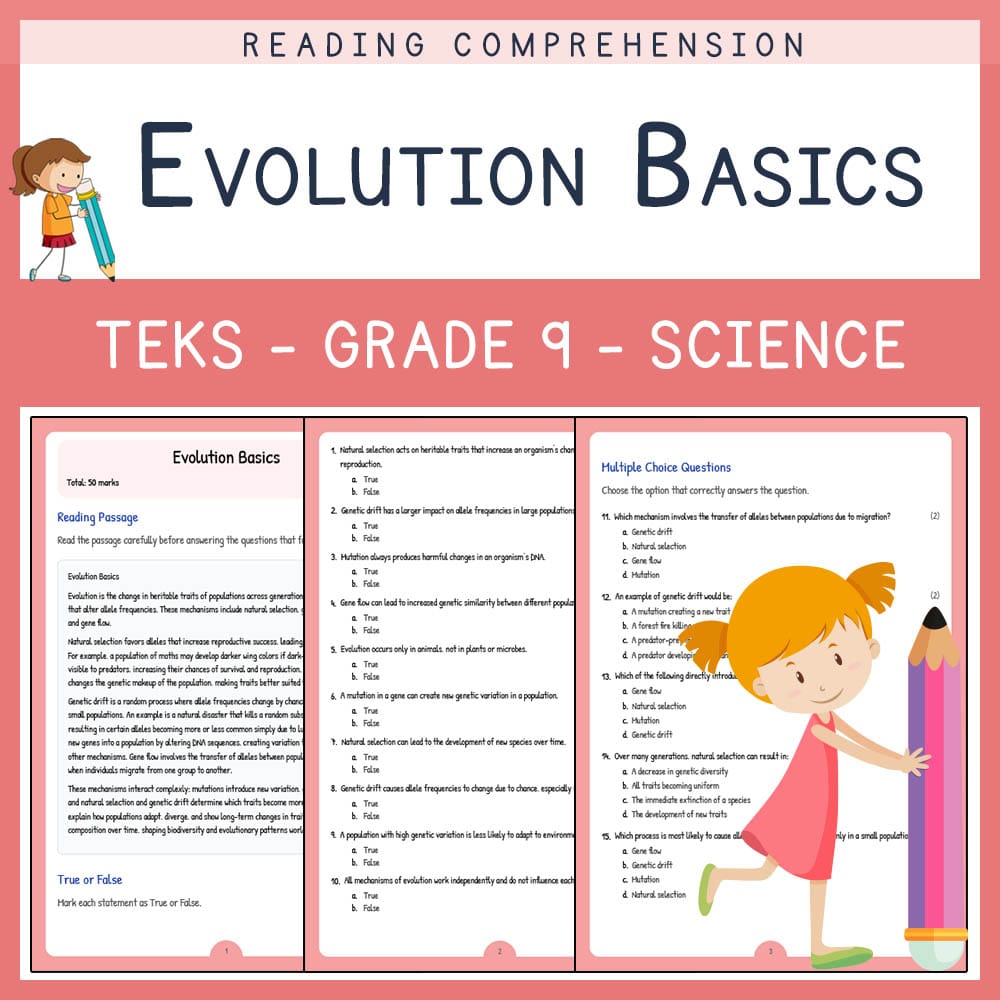
Grade 9 Science | Evolution Basics Worksheet | TEKS Aligned
Created byLumora LearningLearning Objectives
- Understand the fundamental mechanisms of evolution, including natural selection, genetic drift, mutation, and gene flow.
- Explain how these mechanisms interact to produce long-term changes in populations.
- Identify examples of evolution in real-world scenarios.
Instant download

Grade 9 Science | Phylogenetic Trees Worksheet | TEKS Aligned
Created byLumora LearningLearning Objectives
- Understand the structure and purpose of phylogenetic trees in evolutionary biology.
- Identify monophyletic, paraphyletic, and polyphyletic groups within trees.
- Distinguish between rooted and unrooted phylogenetic trees and interpret branch lengths.
Instant download

Grade 9 Science | Adaptive Radiation Worksheet | TEKS-Aligned
Created byLumora LearningLearning Objectives
- Define adaptive radiation and describe its key features.
- Identify examples of adaptive radiation in nature.
- Understand the role of ecological niches and key innovations in speciation.
Instant download
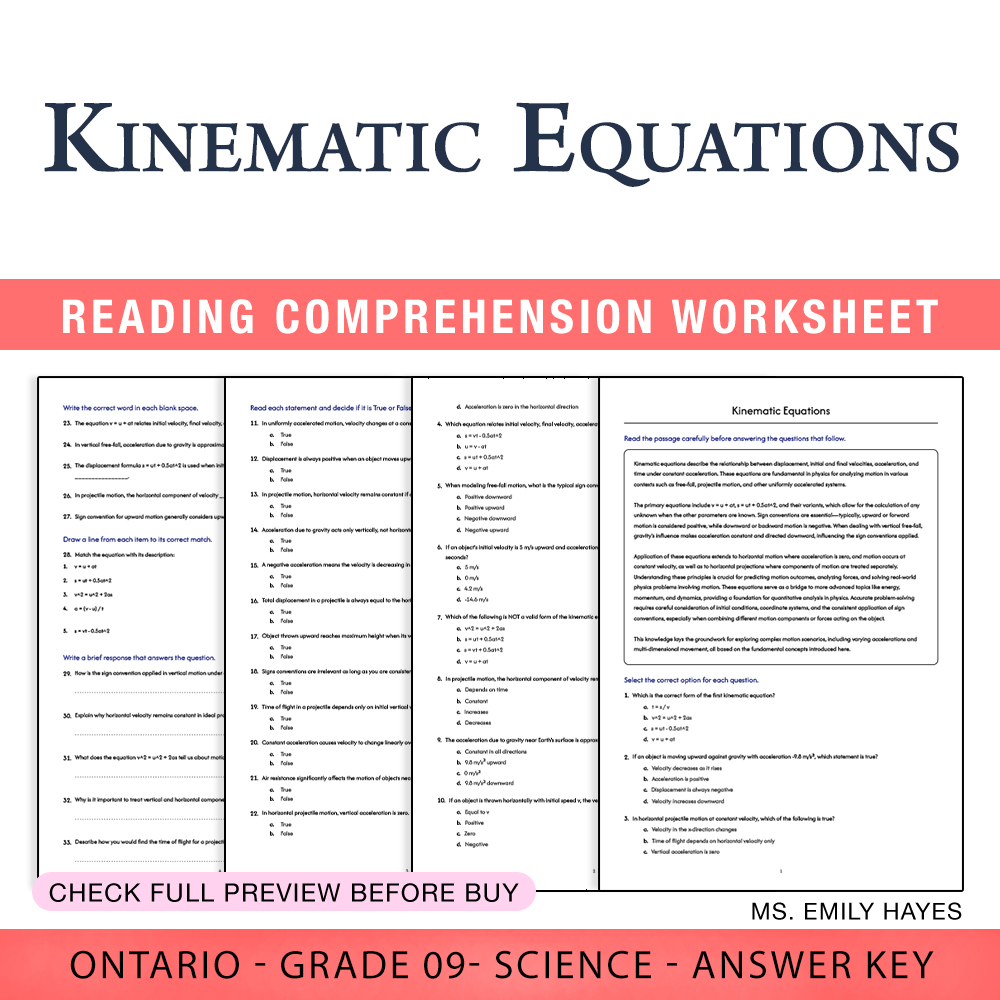
9th Grade Science | Kinematic Equations Worksheet (PDF + Answer Key)
Created byCopper Leaf ClassroomLearning Objectives
- Understand and explain the key kinematic equations involving constant acceleration.
- Apply the equations to analyze vertical free-fall motion and horizontal projectile motion.
- Interpret sign conventions and component-wise treatment in motion problems.
Instant download
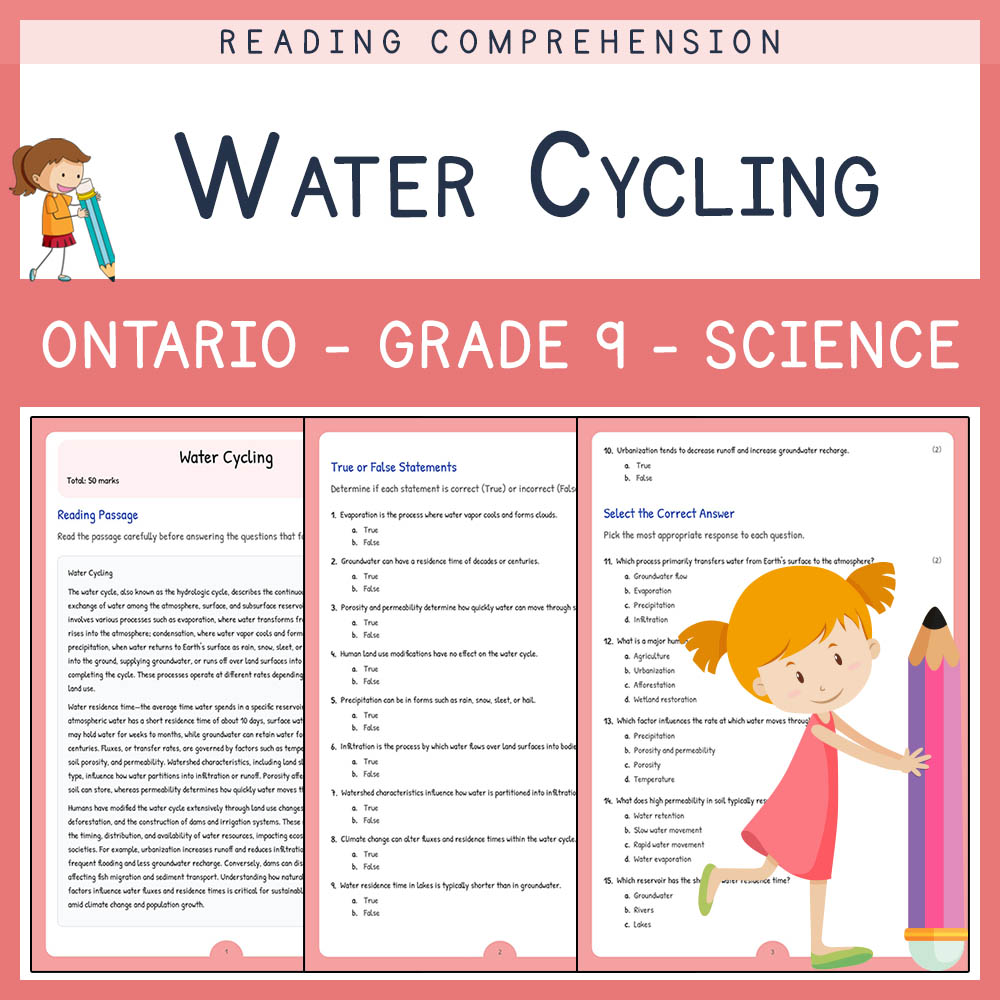
Grade 9 Science | Water Cycling Worksheet Elena | Ontario Standards
Created byLumora LearningLearning Objectives
- Describe the components of the hydrologic cycle and how water moves among reservoirs.
- Explain the processes of evaporation, condensation, precipitation, infiltration, runoff, and groundwater flow.
- Analyze the factors affecting water residence time and fluxes in different reservoirs.
Instant download
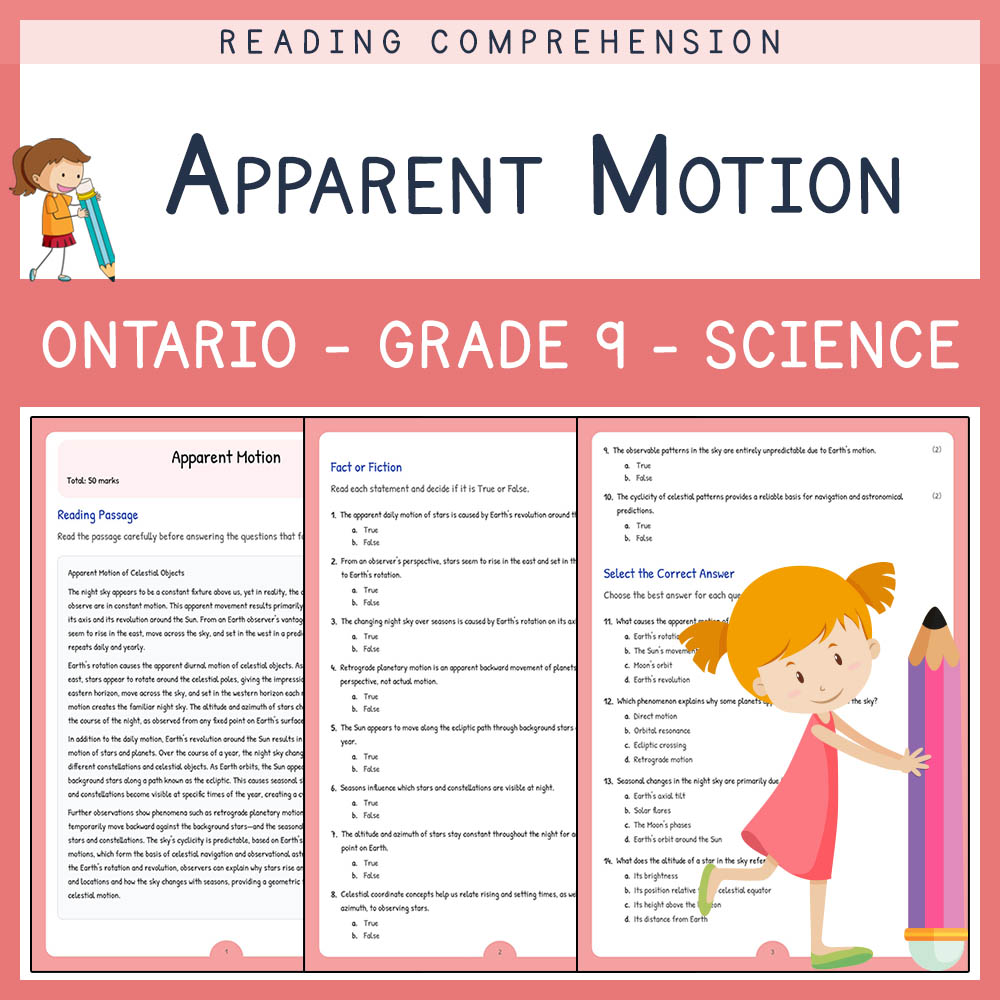
Grade 9 Science | Apparent Motion Worksheet | Ontario | Assessment PDF
Created byLumora LearningLearning Objectives
- Understand the causes of apparent diurnal and annual motion of celestial objects from Earth's perspective.
- Describe how Earth's rotation and revolution lead to observable sky changes over nights and seasons.
- Apply celestial coordinate concepts such as rising, setting, altitude, and azimuth to explain observed phenomena.
Instant download
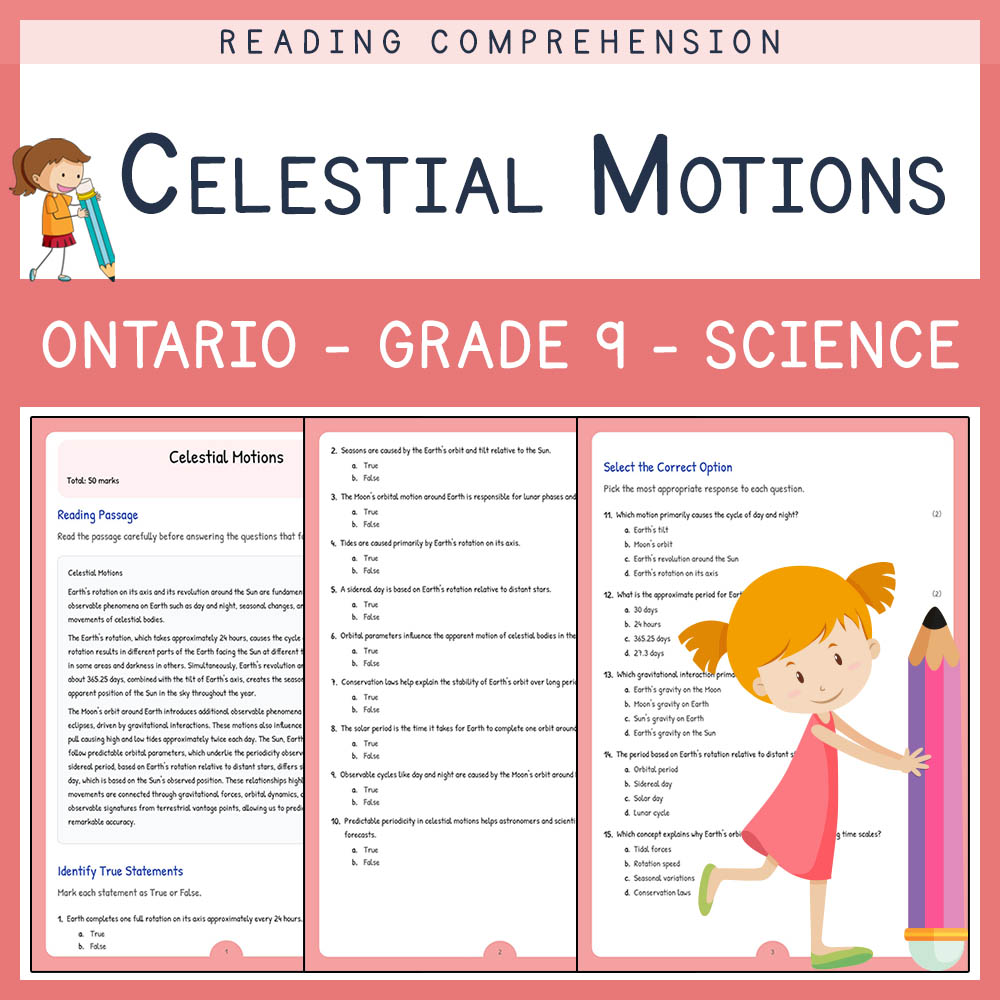
Grade 9 Science | Celestial Motions Worksheet Elena | Ontario Standard
Created byLumora LearningLearning Objectives
- Describe the Earth's rotation, revolution, and orbital parameters and how they cause observable cycles like day and night.
- Explain the relative motions of the Moon and Sun and how gravitational interactions lead to tidal phenomena.
- Differentiate between sidereal and solar periods and relate these to Earth's observable celestial cycles.
Instant download
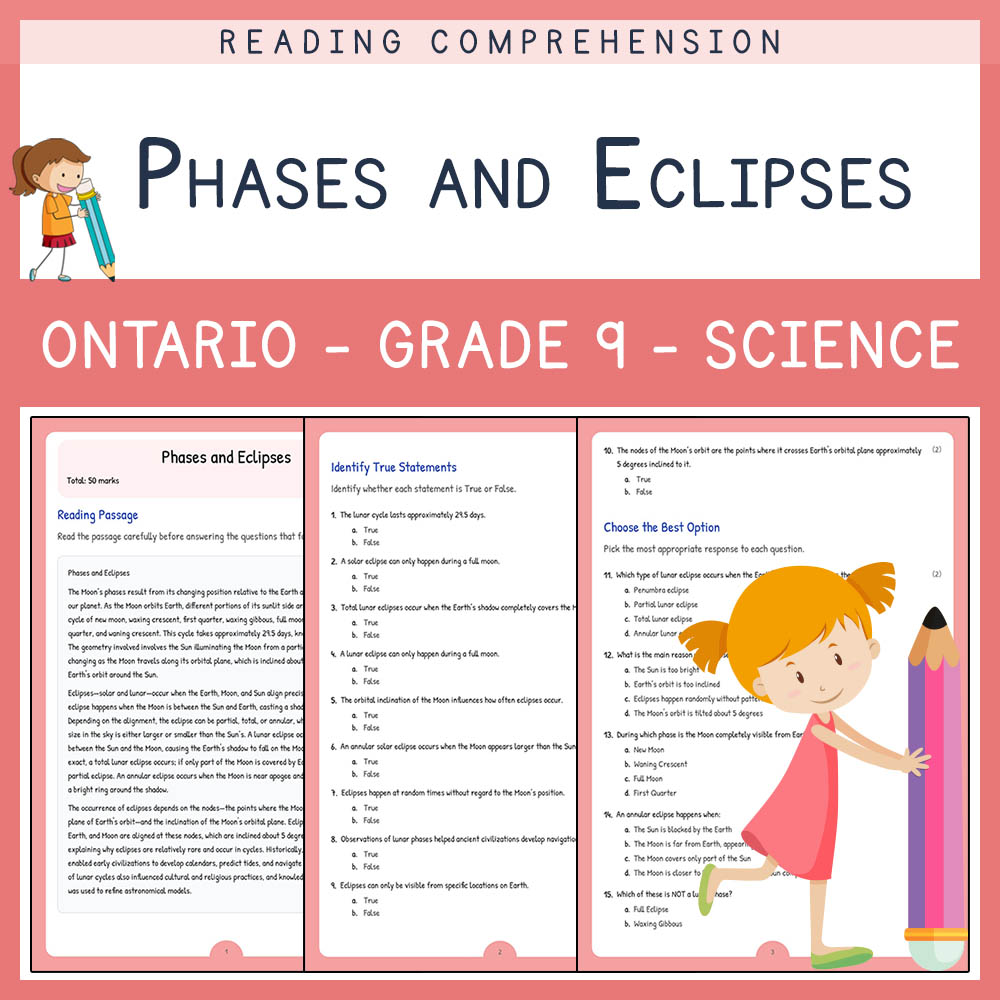
Grade 9 Science | Phases and Eclipses Worksheet Elena | Ontario Standard
Created byLumora LearningLearning Objectives
- Describe the different phases of the Moon and how they are caused by Earth-Moon-Sun alignment.
- Explain the geometry behind solar and lunar eclipses, including partial, total, and annular types.
- Identify the conditions necessary for eclipses to occur, such as node alignment and orbital inclination.
Instant download
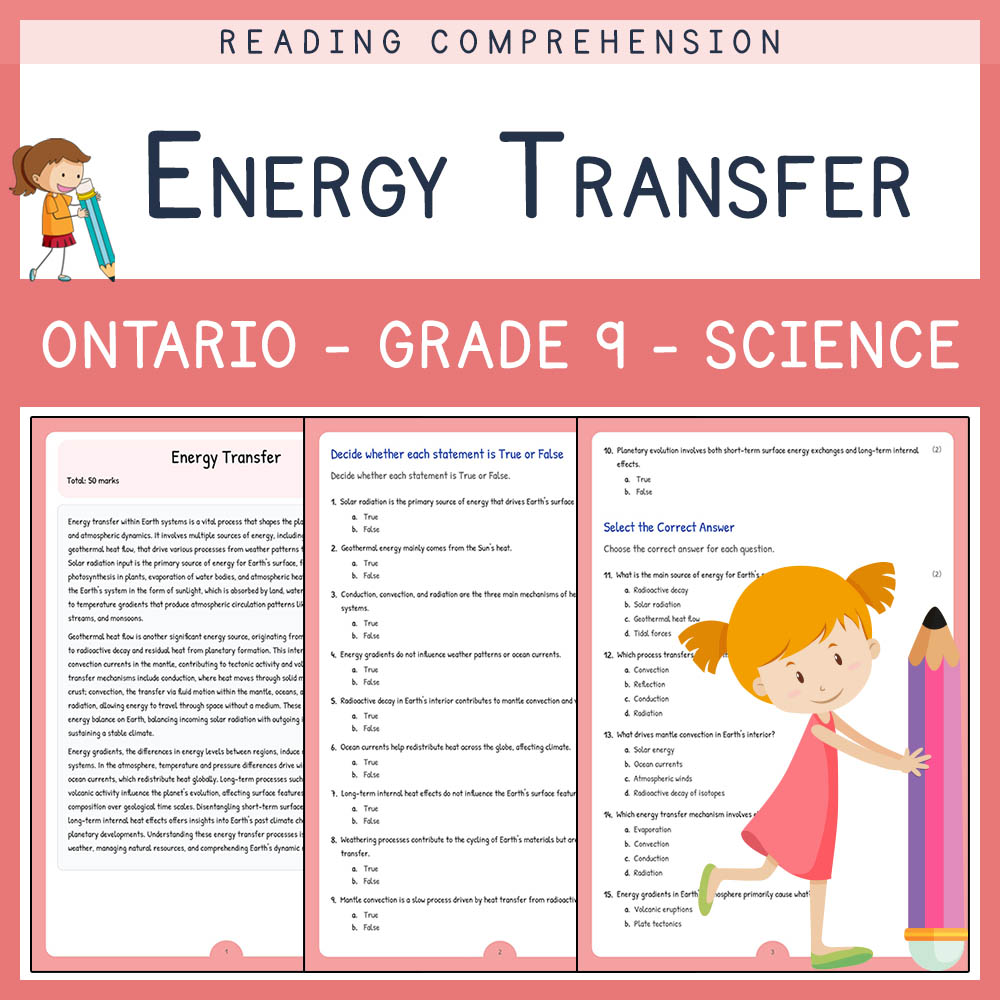
Grade 9 Science | Energy Transfer Worksheet Elena | Ontario Standards
Created byLumora LearningLearning Objectives
- Explain the sources and mechanisms of energy transfer within Earth's systems.
- Describe how energy gradients influence atmospheric and oceanic circulation.
- Analyze the relationship between radioactive decay and mantle convection.
Instant download
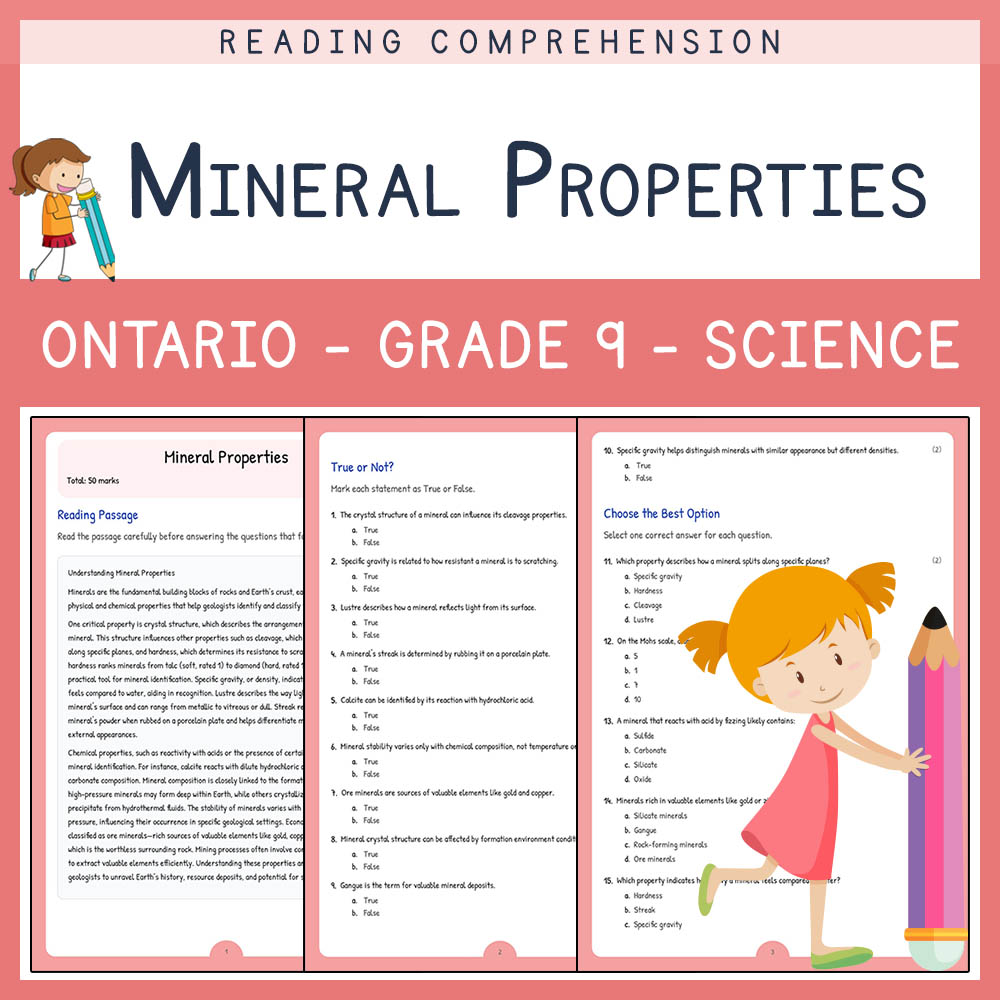
Grade 9 Science | Mineral Properties Worksheet Elena | Ontario Standards
Created byLumora LearningLearning Objectives
- Describe diagnostic physical and chemical properties of common rock-forming minerals.
- Explain how mineral composition relates to formation environment and stability under varying temperature and pressure conditions.
- Connect mineral assemblages to petrogenetic histories and economic significance, including distinctions between ore minerals and gangue.
Instant download
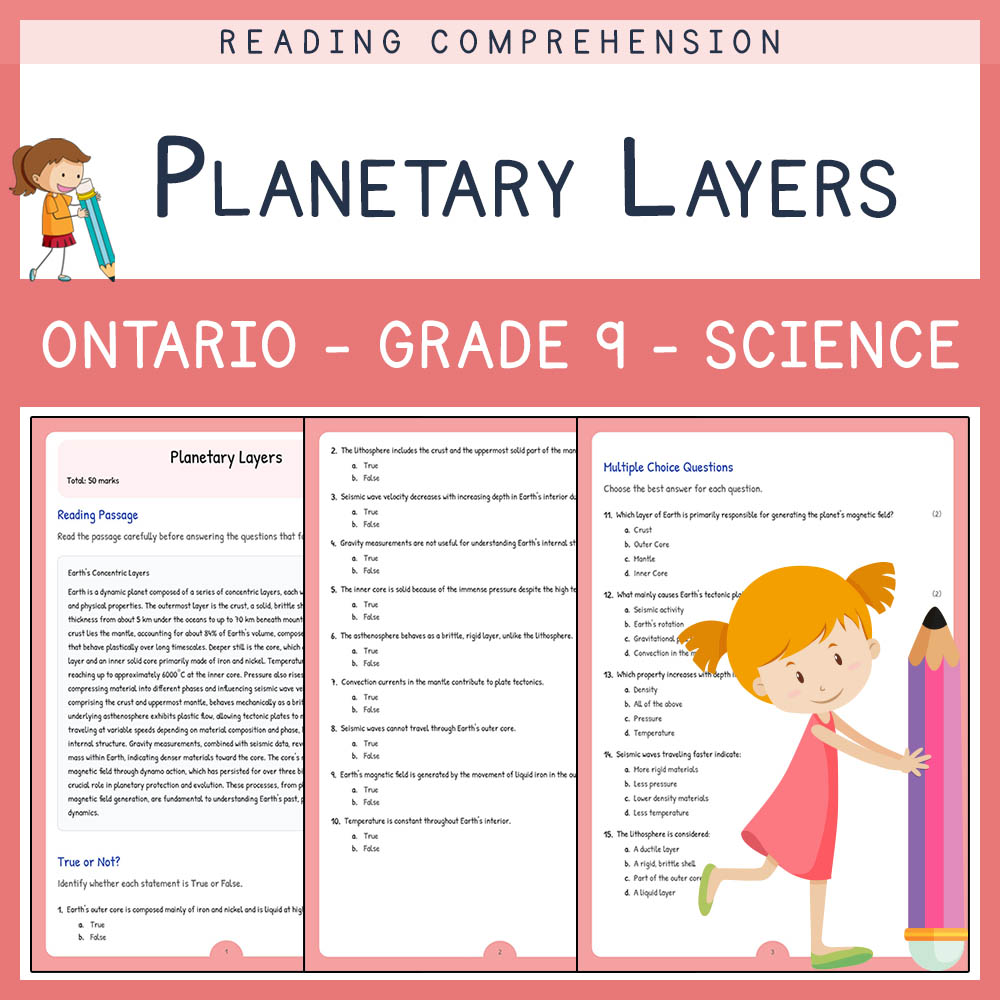
Grade 9 Science Worksheet | Planetary Layers | Ontario Standards
Created byLumora LearningLearning Objectives
- Describe Earth's main concentric layers and their properties.
- Explain differences between lithosphere and asthenosphere in mechanical behavior.
- Analyze how density, temperature, and pressure vary with depth inside Earth.
Instant download

Grade 9 Science | Watershed Change Worksheet Elena | Ontario Standard
Created byLumora LearningLearning Objectives
- Explain human impacts such as urbanization, deforestation, agriculture, and infrastructure on watershed processes.
- Describe consequences of watershed alterations, including effects on runoff, sediment load, nutrient fluxes, and groundwater recharge.
- Relate changes in watershed activities to channel morphology, flood frequency, and aquatic ecosystem health.
Instant download
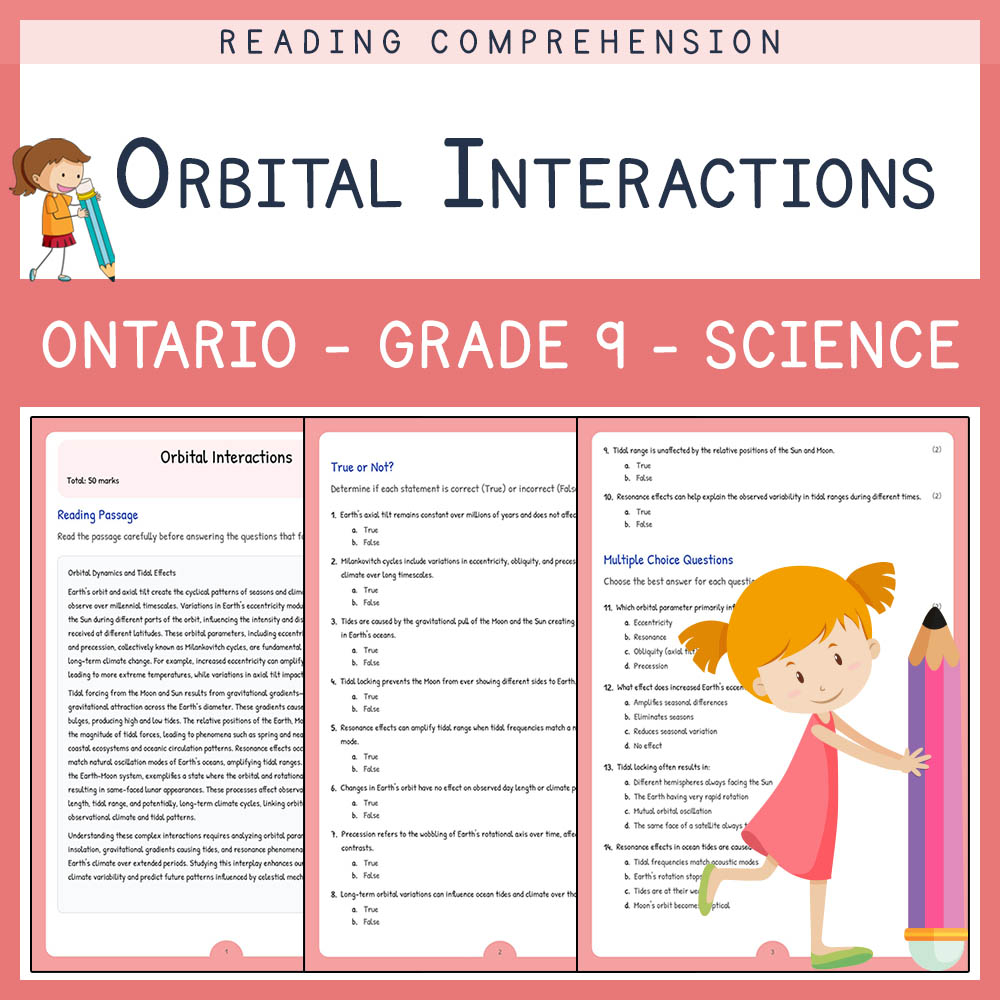
Grade 9 Science | Orbital Interactions Worksheet | Ontario Standards
Created byLumora LearningLearning Objectives
- Understand how orbital parameters such as eccentricity, axial tilt, and precession influence seasonal insolation and climate variability.
- Explain the gravitational and geometric basis of tidal forcing from the Moon and Sun.
- Analyze resonance effects and tidal locking phenomena in orbital dynamics.
Instant download
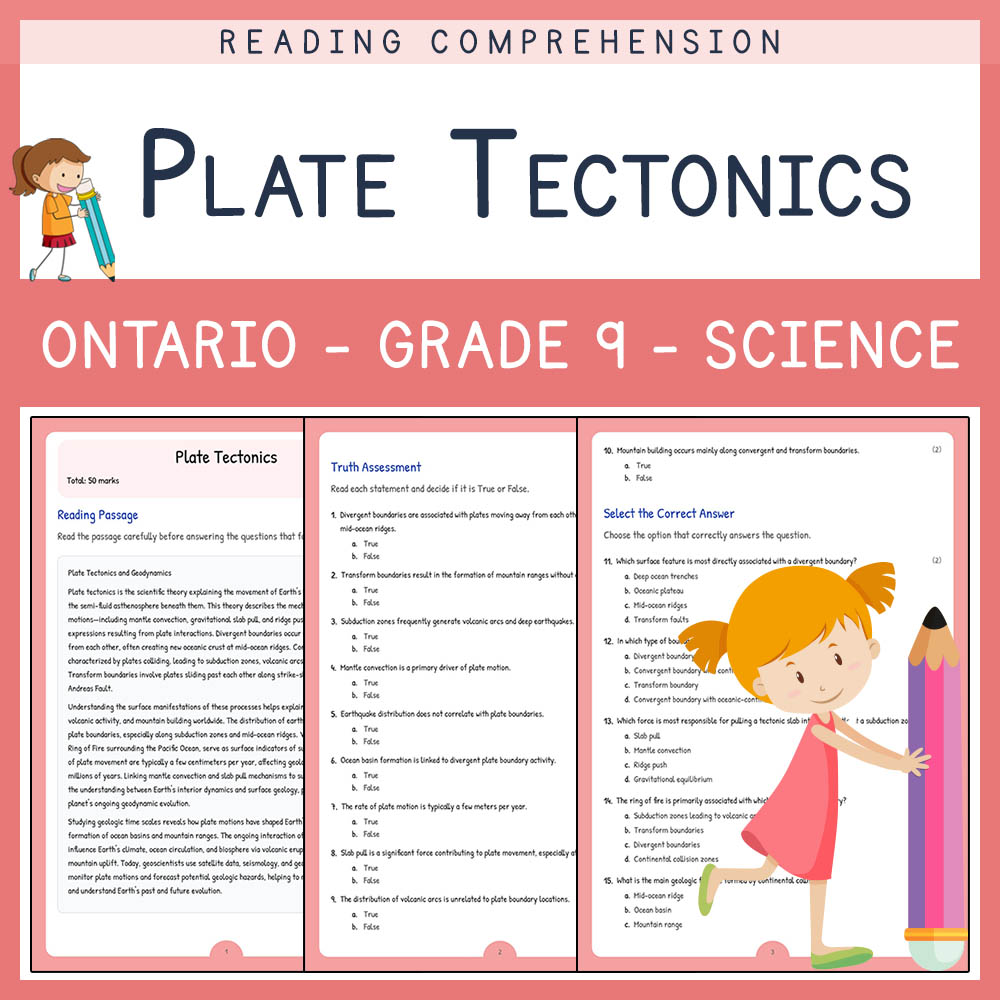
Grade 9 Science | Plate Tectonics Worksheet Elena | Ontario Standards
Created byLumora LearningLearning Objectives
- Understand the mechanisms of plate tectonics and surface expressions such as boundaries and subduction.
- Explain how lithospheric plate motions produce geological features like volcanism and mountain building.
- Link mantle convection and slab pull to the driving forces of plate movements.
Instant download
About Grade 9 Science Worksheets
Find Science worksheets built for Grade 9. All 6,986 cover core skills, practice, and review, each an instant PDF download.
Every worksheet on MyTeachingSheets is created by independent teacher-authors and reviewed before publication. All resources download as printable PDFs for classroom, homework, or at-home practice, and many include answer keys. Preview any worksheet free before buying.