
Science Worksheets
44,620 subject resources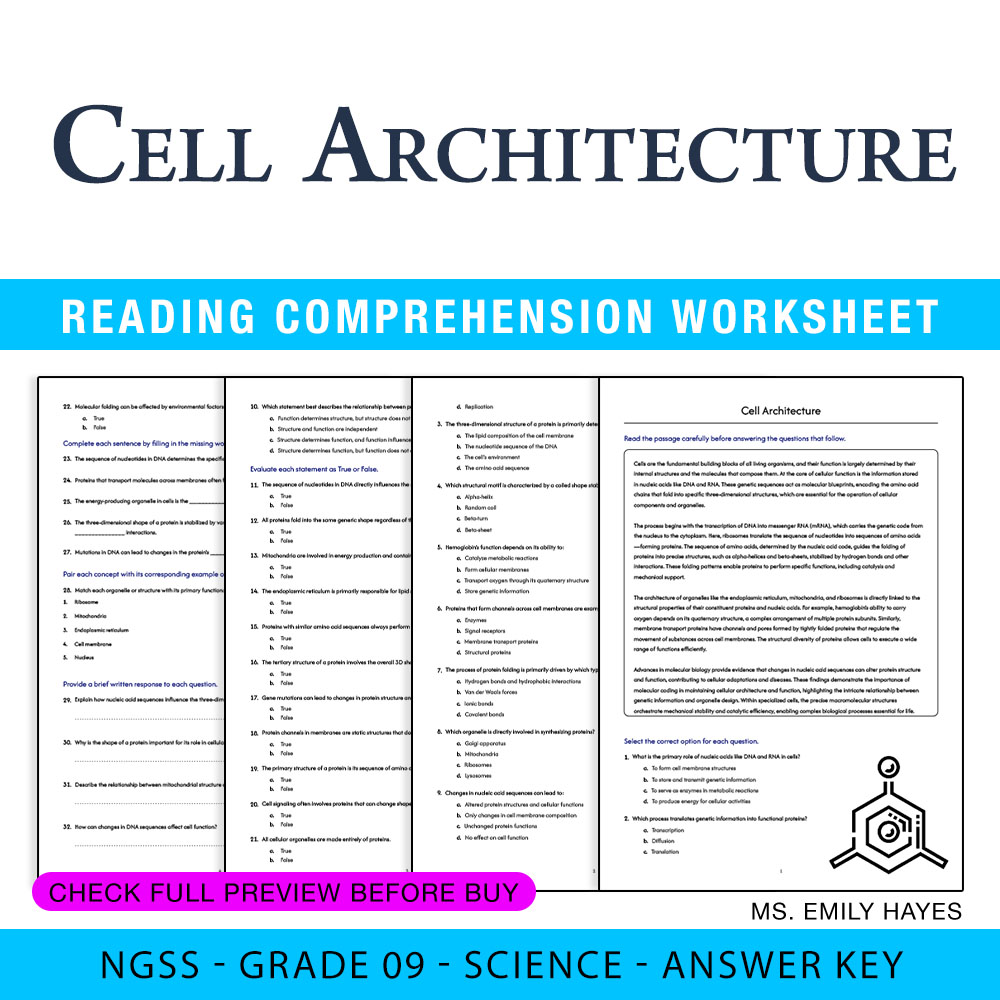
9th Grade Science | Cell Architecture Worksheet (PDF+ Answer Key)
 Created byCopper Leaf Classroom
Learning Objectives
- Understand how nucleic acid sequences determine the three-dimensional structure of proteins that form cellular components.
- Explain the connection between molecular coding and organelle architecture such as ribosomes, endoplasmic reticulum, and mitochondria.
- Describe how structure relates to function in macromolecules like hemoglobin and membrane transport proteins.
Instant download
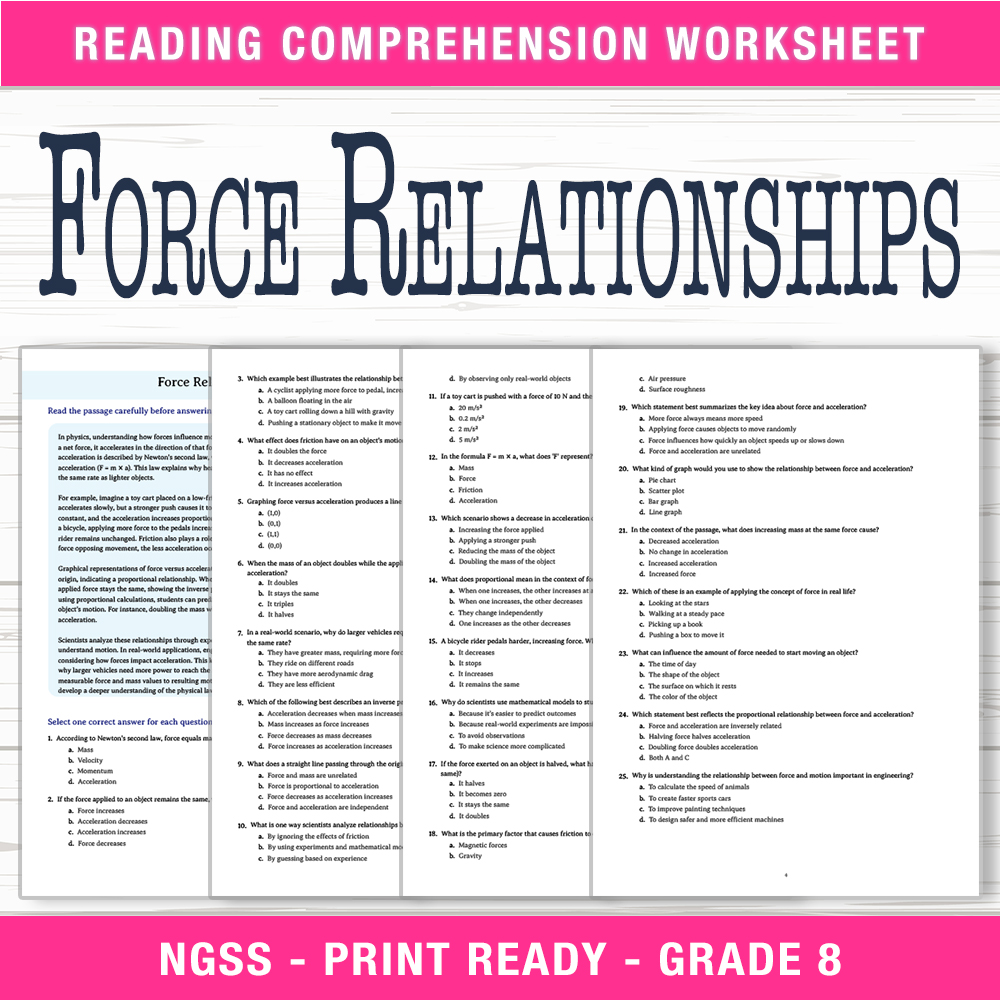
Grade 8 Science – Force Relationships Worksheet (PDF + Answer Key)
 Created byRiverstone Classroom
Learning Objectives
- Understand how net force, mass, and acceleration are related through mathematical models.
- Analyze examples involving toy carts, bicycles, and friction to connect force and motion.
- Use graphical representations and calculations to predict changes in motion.
Also included in: Grade 8 Science Unit | Momentum, Forces & Magnetism Worksheets (PDF)
Instant download

Grade 11 Science – Understanding Newton's Laws & Daily Reading Worksheet
 Created byBright Mind Resources
Learning Objectives
- Explain the concept of inertia as described in Newton's First Law.
- Identify examples of objects at rest and in uniform motion in daily life.
- Describe how forces influence motion according to Newton's Laws.
Also included in: Motion & Forces Grade 11 Science Daily Reading Worksheets Lesson Bundle | BC +1 more
Instant download
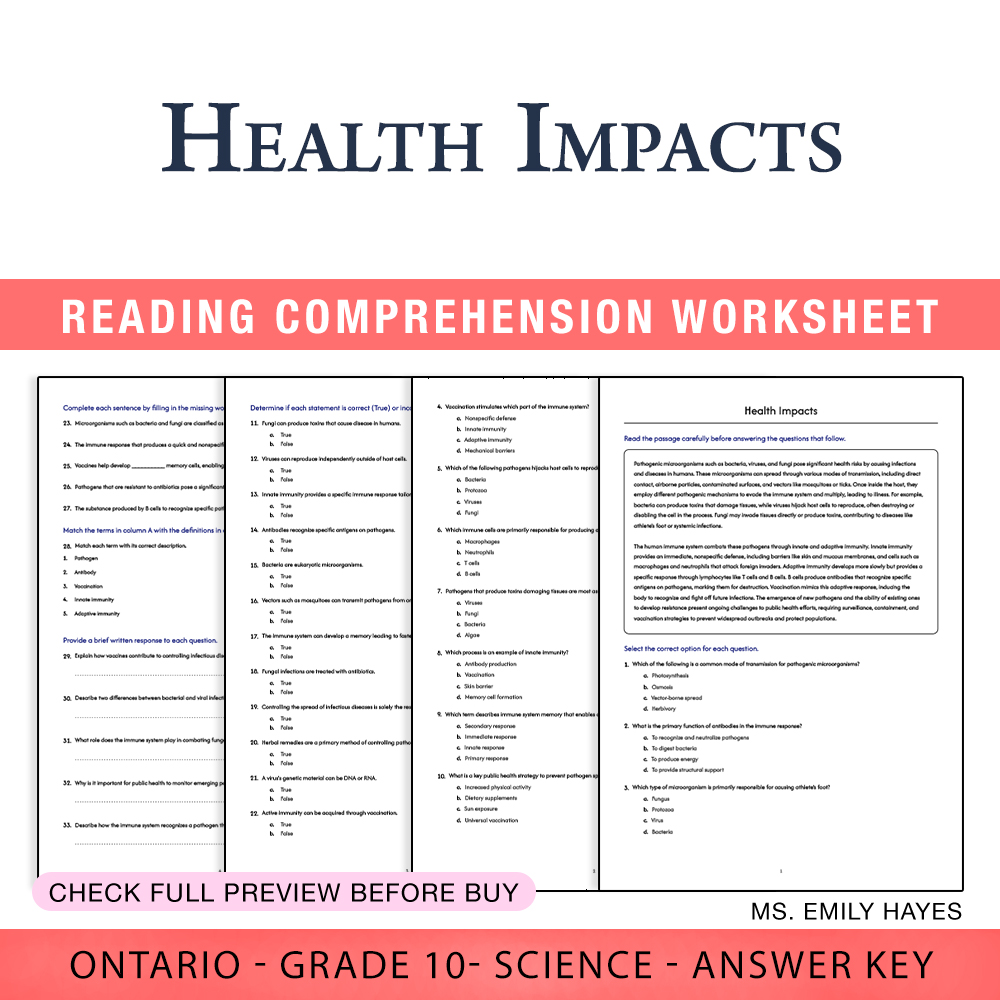
Grade 10 Science | Health Impacts Worksheet (PDF + Answer Key)
Created byCopper Leaf ClassroomLearning Objectives
- Describe the modes of transmission and pathogenic mechanisms of microorganisms.
- Differentiate bacterial, viral, and fungal disease processes.
- Explain the principles of innate and adaptive immunity, including antibody recognition.
Instant download

Grade 11 Ecosystem Components Worksheet | Abiotic & Biotic Factors Ontario
 Created byChalk and Compass
Learning Objectives
- Distinguish between biotic and abiotic components of terrestrial and aquatic ecosystems
- Explain how ecosystem boundaries and spatial scales affect ecological description
- Describe how abiotic gradients shape species distributions and assemblages
Also included in: Environmental Science - Grade 11 Bundle +1 more
Instant download
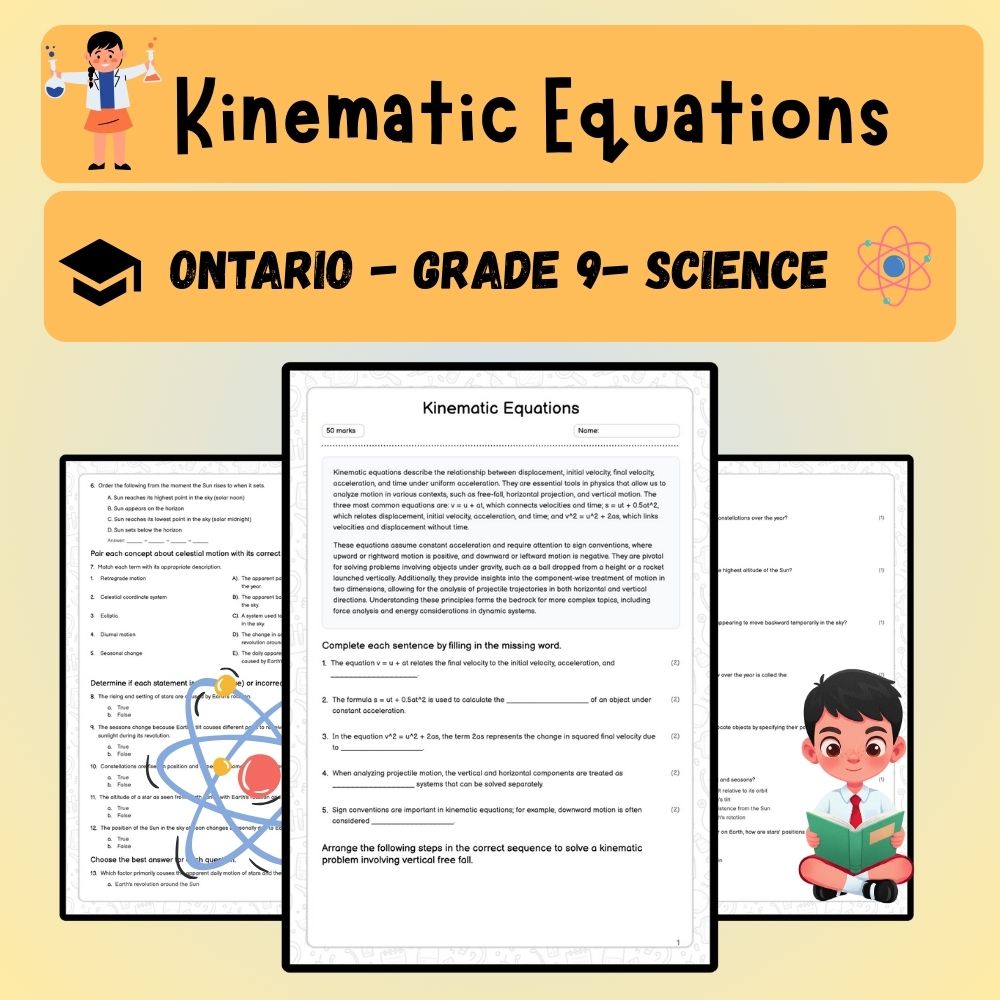
Grade 9 Science | Kinematic Equations Worksheet (PDF) | Ontario Standards
 Created byPrism Point Learning
Learning Objectives
- Understand and explain the fundamental kinematic equations for constant acceleration.
- Apply the equations to problems involving free-fall and projectile motion.
- Analyze motion components in horizontal and vertical directions under gravity.
Also included in: Grade 9 Science Unit | Forces, Motion & Energy Worksheets (Ontario Standards) +1 more
Instant download
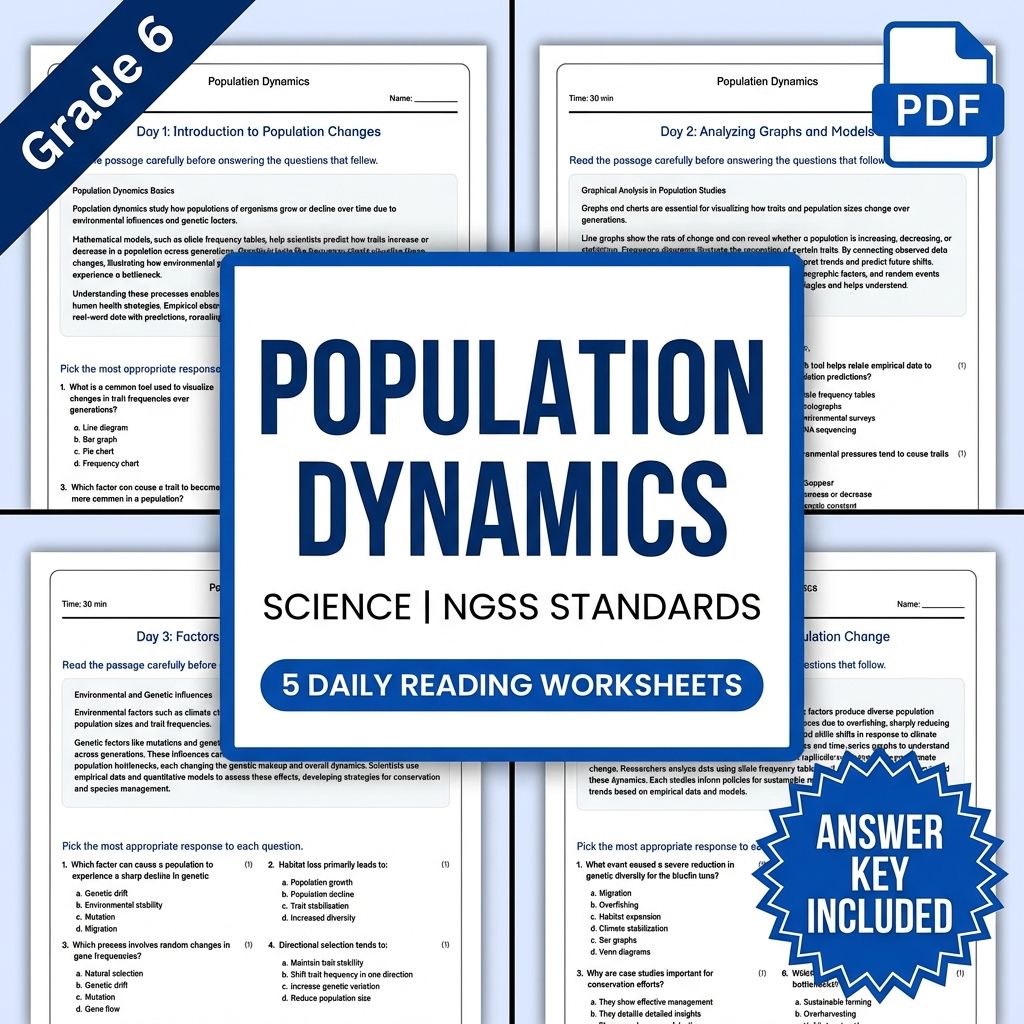
Grade 6 Science – Population Dynamics Daily Reading Worksheet (PDF + Answer Key)
Created byCopper Leaf ClassroomLearning Objectives
- Understand how trait frequencies and population sizes change over generations in response to environmental factors.
- Interpret graphical data such as frequency charts and time-series graphs to analyze population trends.
- Apply proportional reasoning and simple models to predict and compare scenarios like shifts, stability, and bottlenecks.
Instant download
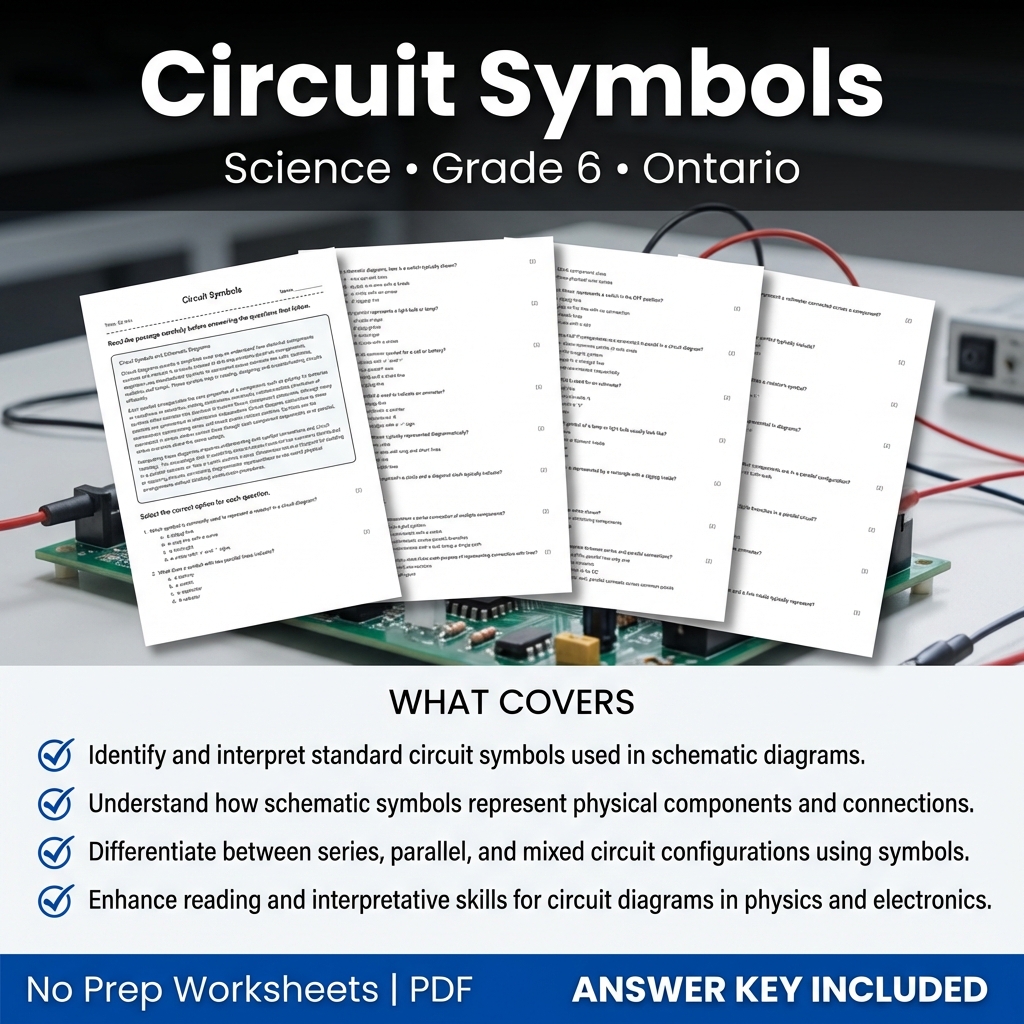
Grade 6 Science Worksheet on Circuit Symbols | Ontario Standards
 Created byCoral Reef Learning
Learning Objectives
- Identify and interpret standard circuit symbols used in schematic diagrams.
- Understand how schematic symbols represent physical components and connections.
- Differentiate between series, parallel, and mixed circuit configurations using symbols.
Instant download

Grade 12 Science – Chemical Fate & Pollution Processes | Daily Reading Worksheet
Created byBright Mind ResourcesLearning Objectives
- Understand the processes involved in the transport and transformation of chemicals in soil and water systems.
- Identify key factors influencing chemical partitioning, degradation, and persistence.
- Apply knowledge of chemical fate to case studies involving agricultural runoff and petrochemical spills.
Also included in: Grade 12 Environmental & STSE Science Daily Reading Lesson Bundle | Alberta +1 more
Instant download
Grade 11 Science | Adaptive Radiation Worksheet (PDF) Aligned with TEKS Standards
Created byBright Mind ResourcesLearning Objectives
- Explain the concept of adaptive radiation and its role in biodiversity.
- Identify ecological factors that promote speciation through adaptive radiation.
- Describe morphological and behavioral adaptations associated with niche partitioning.
Also included in: Grade 11 Science | Evolution & Phylogenetics Worksheet Bundle (TEKS Aligned) +2 more
Instant download
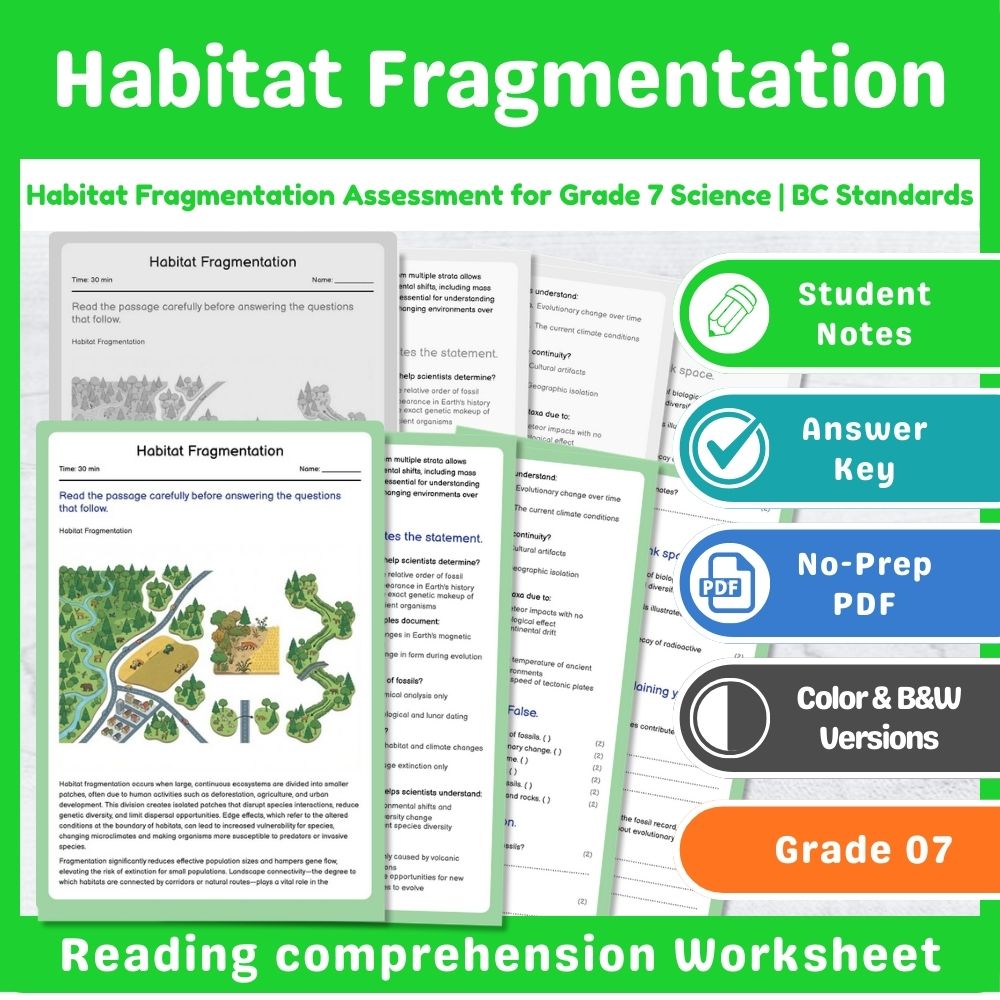
Habitat Fragmentation Assessment for Grade 7 Science | BC Standards
Created byPrism Point LearningLearning Objectives
- Understand the concept of habitat fragmentation and its effects on ecosystems.
- Identify how edge effects influence species and microclimate in fragmented habitats.
- Explain the impact of landscape connectivity and corridors on biodiversity conservation.
Instant download

Grade 8 Science | Environmental Monitoring Worksheet (PDF + Answer Key)
Created byRiverstone ClassroomLearning Objectives
- Understand measurement protocols used in monitoring ecosystems and water resources.
- Identify indicators of ecological health and their significance.
- Explore methods for mitigating human impacts on environments.
Instant download
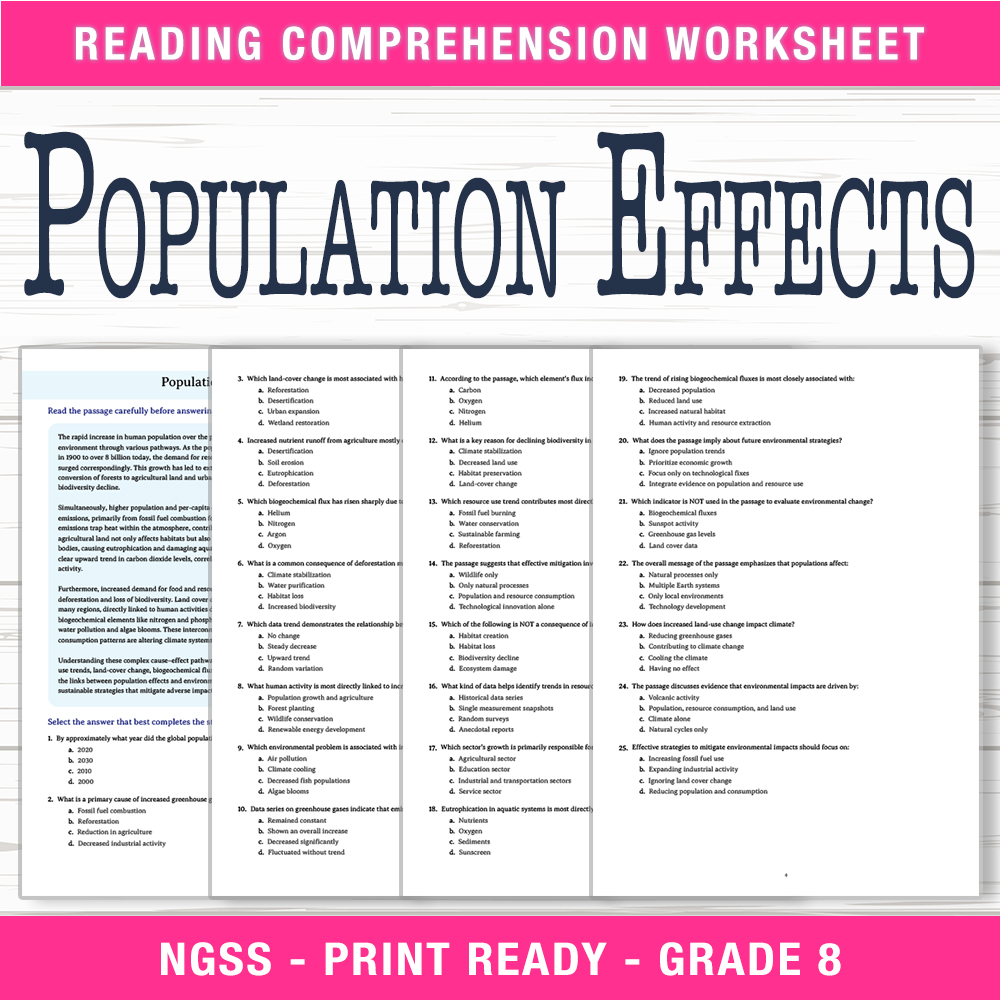
Grade 8 Science | Population Effects Worksheet (PDF + Answer Key)
Created byRiverstone ClassroomLearning Objectives
- Understand how population growth influences resource consumption and Earth system changes.
- Analyze data trends related to greenhouse gases, land use, and nutrient fluxes.
- Evaluate cause-effect relationships between demographic patterns and environmental impacts.
Instant download
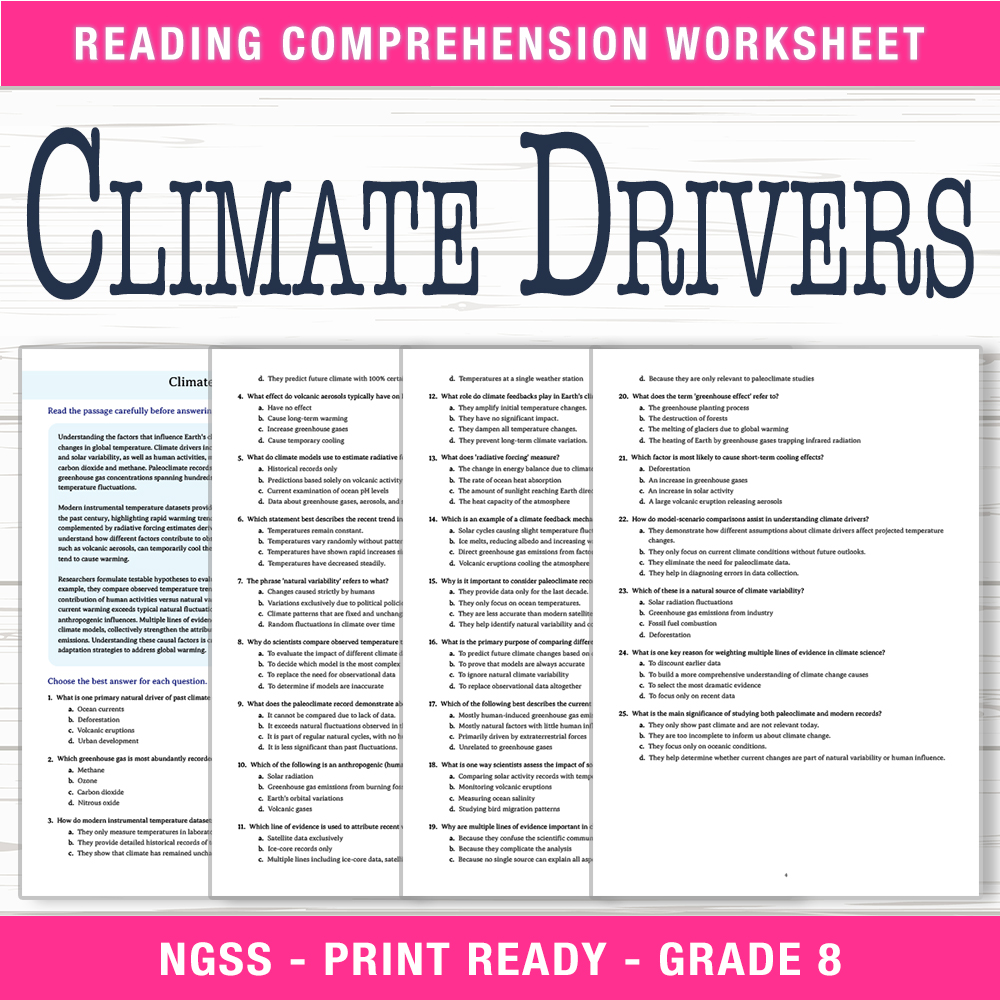
Grade 8 Science | Climate Drivers Worksheet (PDF + Answer Key)
Created byRiverstone ClassroomLearning Objectives
- Identify and describe the major natural and anthropogenic factors influencing global temperature changes.
- Assess multiple lines of evidence, including ice-core data and instrumental records, to attribute causes of climate change.
- Formulate testable questions regarding climate drivers and evaluate scientific evidence to support conclusions.
Instant download

Grade 8 Science | Natural Hazards Worksheet (PDF + Answer Key)
Created byRiverstone ClassroomLearning Objectives
- Understand how historical observations and instrumental data contribute to hazard assessment.
- Interpret patterns, frequency, and magnitude of natural hazards from various data sources.
- Recognize the role of hazard mapping and early-warning systems in disaster risk reduction.
Instant download

Energy Concepts Worksheet | Grade 11 AP Physics Practice Pack
Created byPrism Point LearningLearning Objectives
- Define work, kinetic energy, and potential energy and relate them to changes in an object’s total energy.
- Explain energy conservation in closed systems using energy bar charts and scalar energy functions.
- Distinguish conservative and nonconservative forces and connect conservative forces to potential energy landscapes, equilibrium, and stability.
Also included in: Physics Principles - Grade 11 Bundle
Instant download

Energy Molecules Worksheet Pack | Grade 9 Science Activities
Created byPrism Point LearningLearning Objectives
- Describe ATP as an energy molecule and identify its main structural parts
- Explain how ATP hydrolysis releases usable energy for cellular work
- Model how phosphorylation helps regenerate ATP by coupling energy-releasing and energy-consuming processes
Instant download
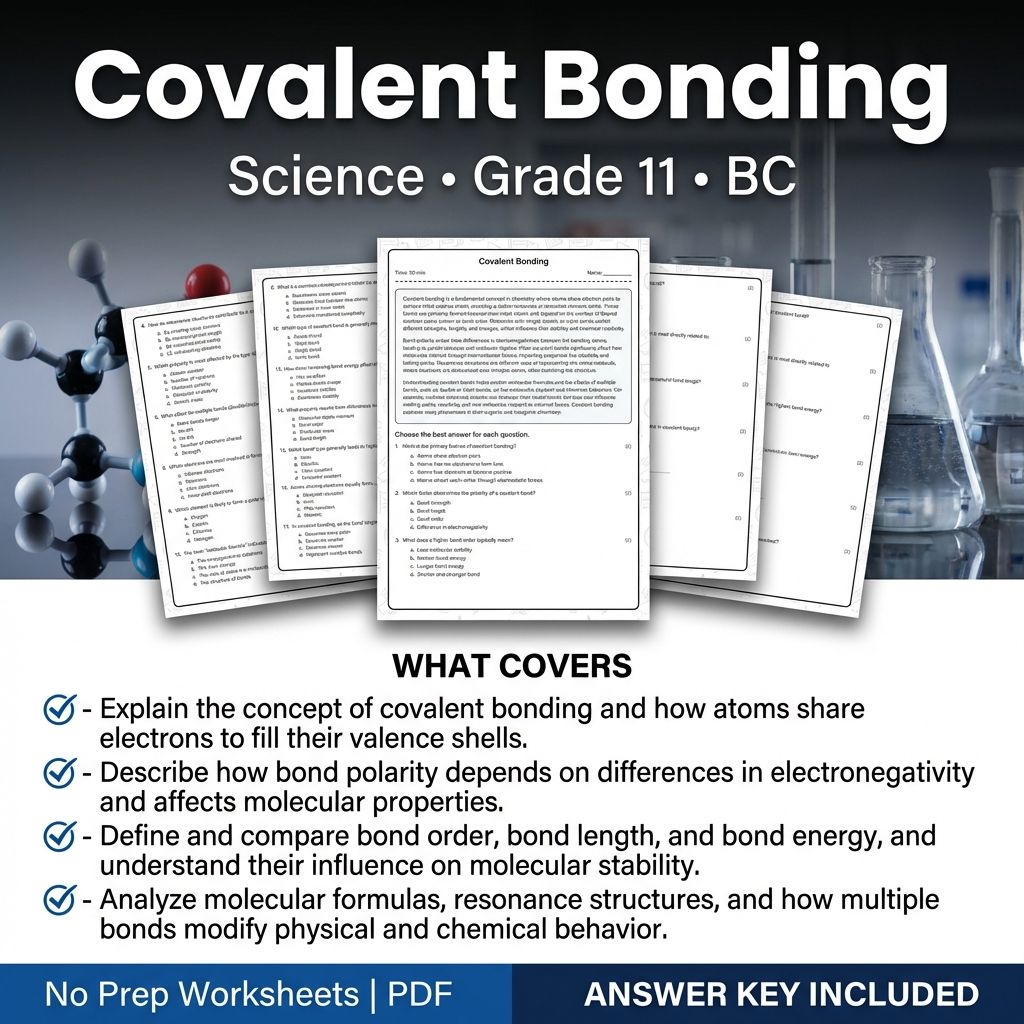
11th Grade Science | Covalent Bonding Worksheet with Answer Key (Printable PDF)
Created byCoral Reef LearningLearning Objectives
- Explain the concept of covalent bonding and how atoms share electrons to fill their valence shells.
- Describe how bond polarity depends on differences in electronegativity and affects molecular properties.
- Define and compare bond order, bond length, and bond energy, and understand their influence on molecular stability.
Instant download

Plate Mechanisms Practice Worksheet | Grade 7 Science | Review
Created byPrism Point LearningLearning Objectives
- Explain how mantle convection, slab pull, and ridge push contribute to plate motion.
- Describe how different plate-mechanism strengths can affect plate velocity and direction.
- Use evidence and vocabulary to interpret tectonic events connected to plate motion.
Also included in: Earth's Systems & Processes Lesson Bundle | Grade 7 Science | BC +1 more
Instant download
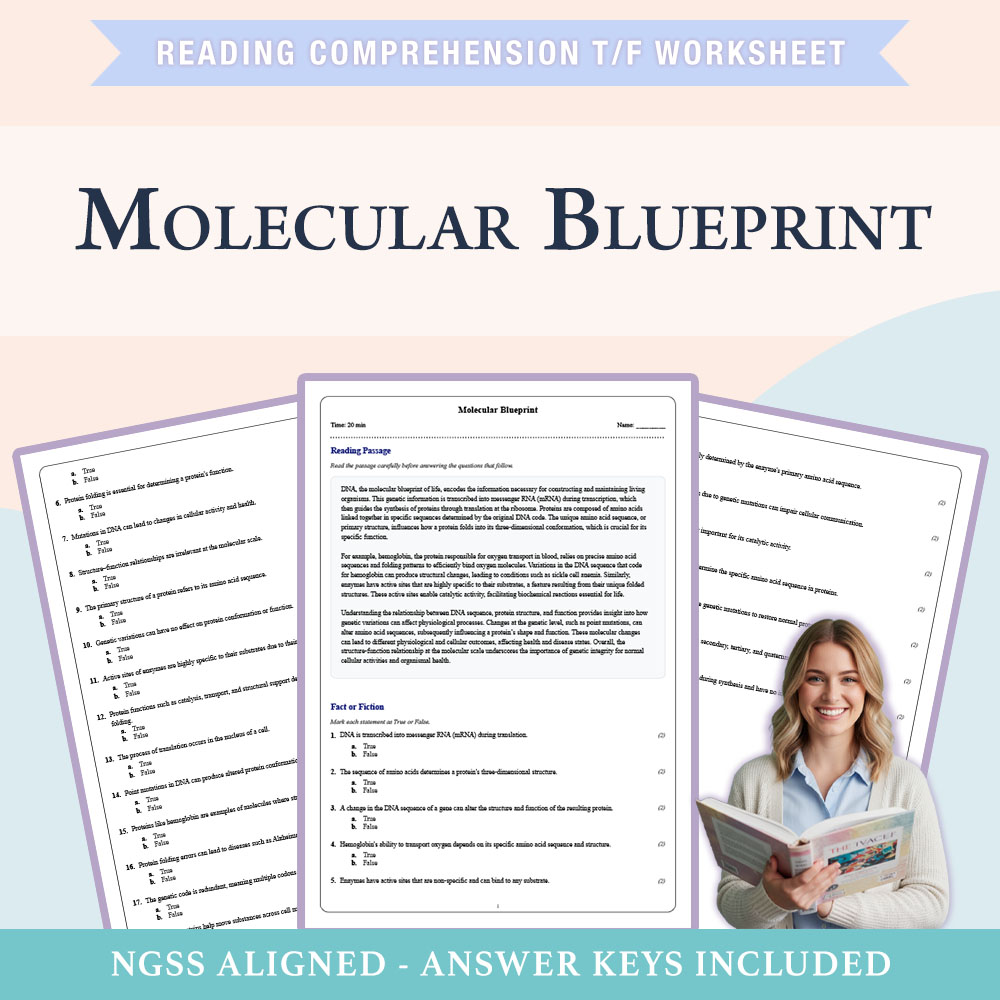
11th Grade Science | Molecular Blueprint Worksheet (PDF + Answer Key)
Created byCopper Leaf ClassroomLearning Objectives
- Understand how DNA sequences determine protein structure and function.
- Explain the processes of transcription and translation in protein synthesis.
- Identify how variations in genotype can affect protein conformation and cellular activity.
Also included in: Grade 11 Science Bundle | Cellular Metabolism & Organization (PDF + Answer Key) +1 more
Instant download
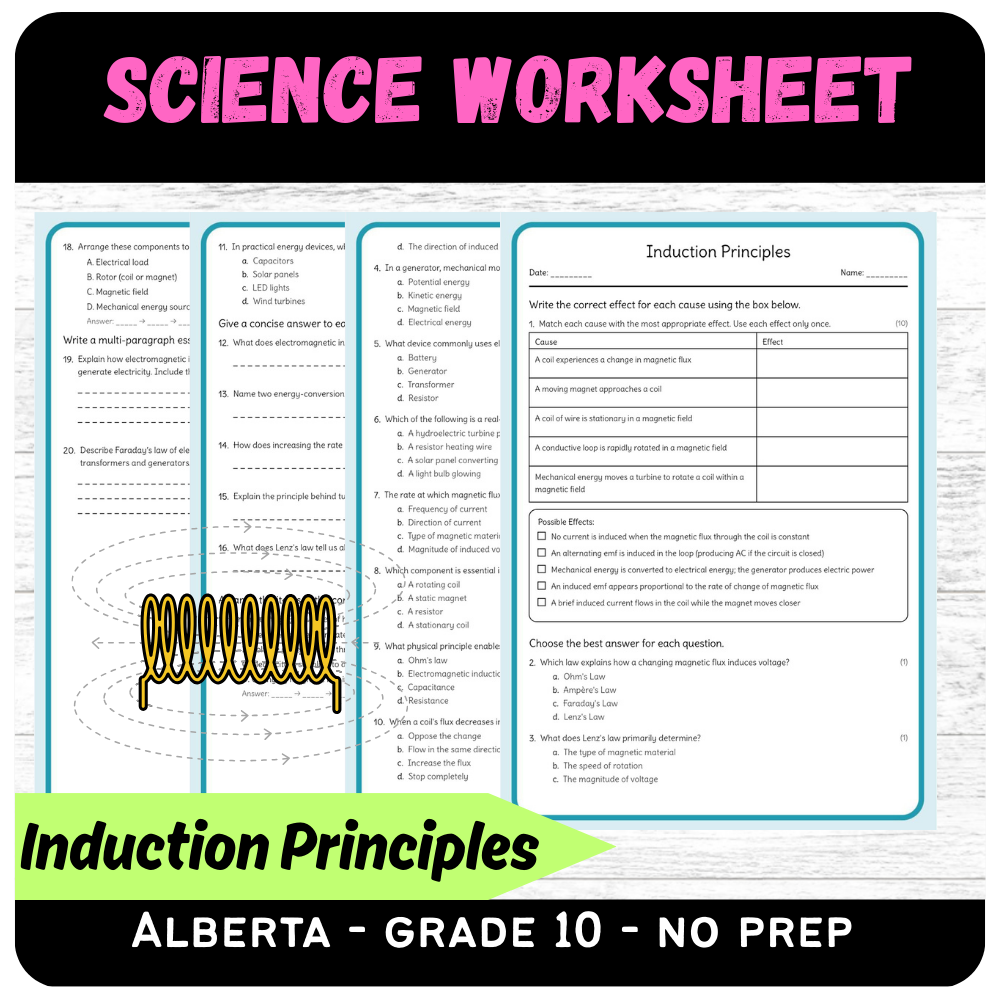
Grade 10 Science – Induction Principles Worksheet (PDF) – Alberta Standards
Created byBright Mind ResourcesLearning Objectives
- Explain the basic concept of electromagnetic induction and how changing magnetic flux induces voltage.
- Describe Faraday’s law and the directionality described by Lenz’s law in electromagnetic induction.
- Identify real-world examples of electromagnetic induction in energy-conversion devices such as turbines and transformers.
Instant download

Grade 7 Plate Mechanisms Worksheet | BC Practice PDF
 Created byClear Sky Classroom
Learning Objectives
- Explain how mantle convection, slab pull, and ridge push contribute to plate motion
- Describe the role of density differences and buoyancy in driving convection cells
- Use evidence and vocabulary to compare the relative effects of different plate mechanisms
Instant download
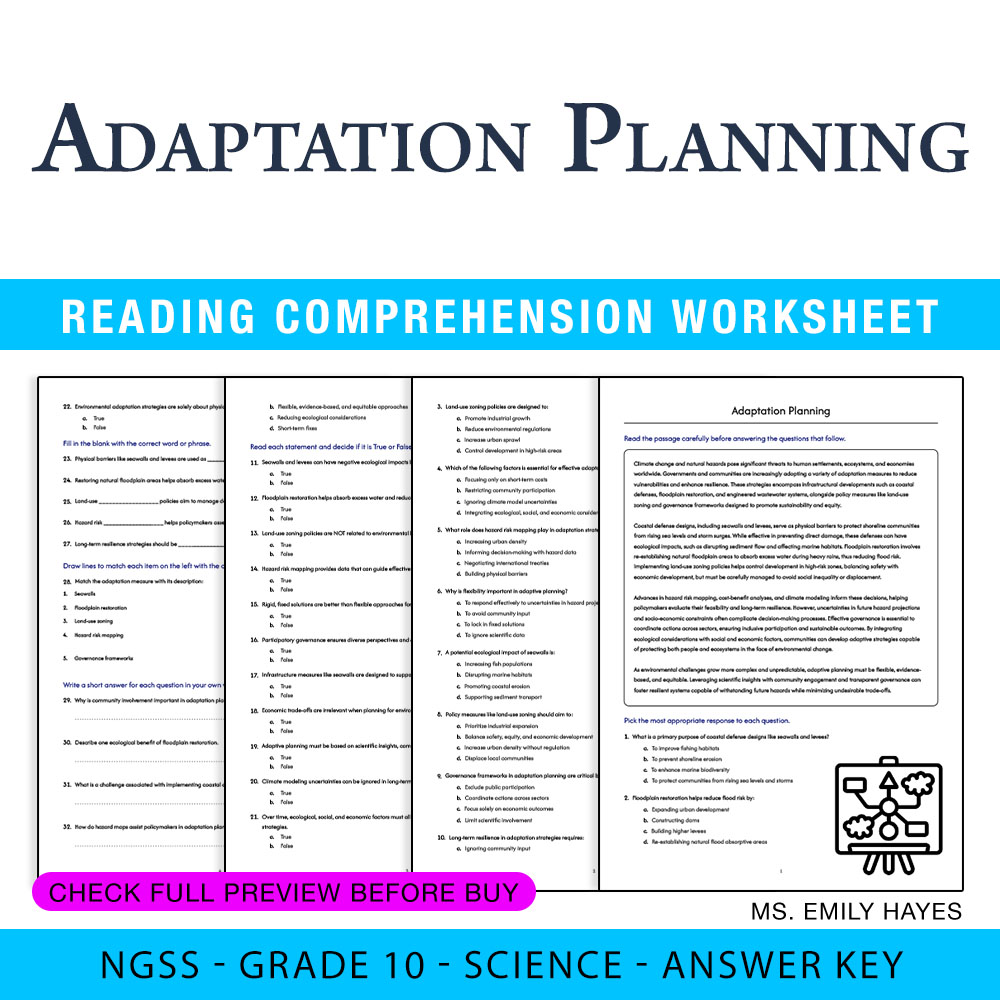
10th Grade Science | Adaptation Planning Worksheet (PDF+ Answer Key)
Created byCopper Leaf ClassroomLearning Objectives
- Evaluate infrastructural strategies and policy options for reducing environmental vulnerability.
- Analyze trade-offs in ecological, social, and economic aspects of adaptation measures.
- Assess the feasibility and resilience of proposed adaptation projects using risk and cost-benefit data.
Instant download
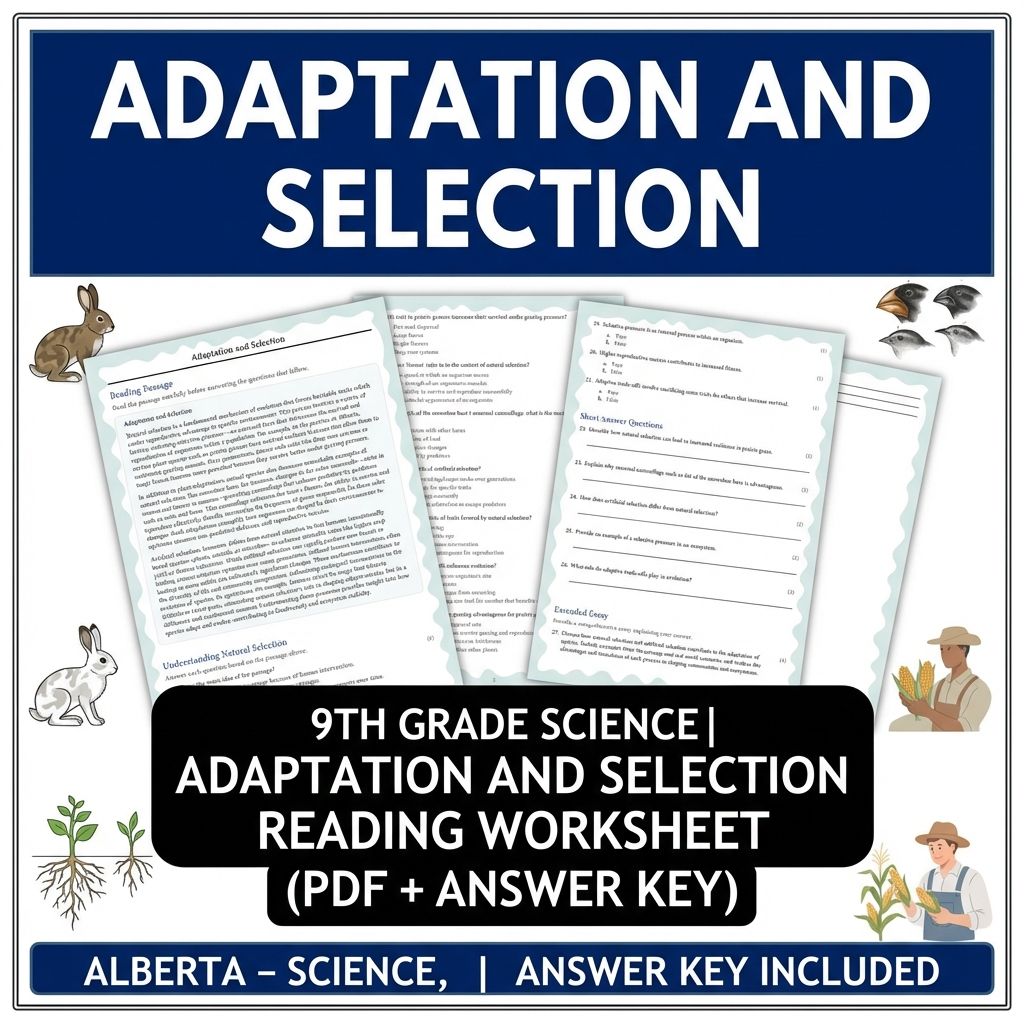
9th Grade Science | Adaptation and Selection Worksheet (PDF + Answer Key)
JCreated byJ.S SheetsLearning Objectives
- Explain the process of natural selection and how it leads to adaptation in populations.
- Identify examples of selective pressure and describe their effects on species.
- Differentiate between natural selection and artificial selection in shaping traits.
Also included in: Grade 9 Science Unit Bundle | Genetics, Cell Biology & Biotechnology Worksheets +1 more
Instant download
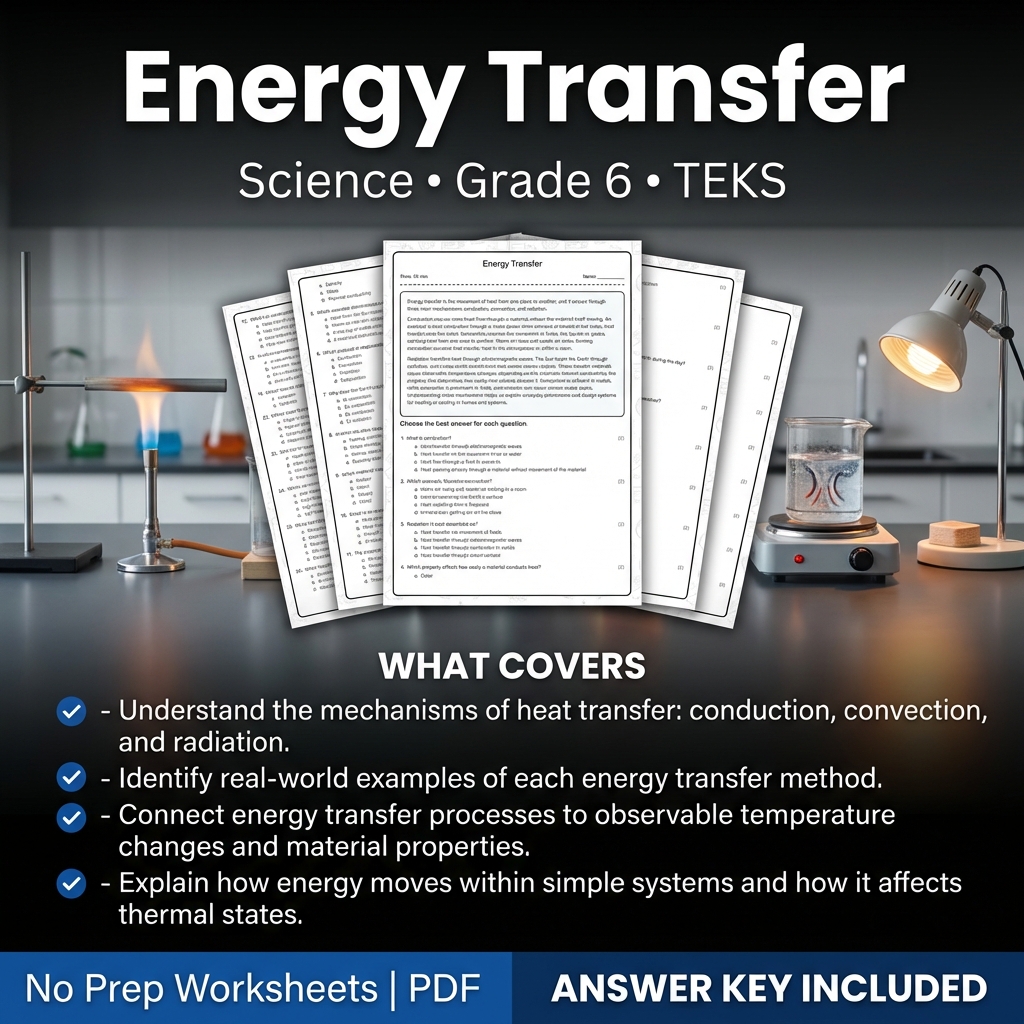
Energy Transfer Worksheet for Grade 6 Science | TEKS Aligned Practice
Created byCoral Reef LearningLearning Objectives
- Understand the mechanisms of heat transfer: conduction, convection, and radiation.
- Identify real-world examples of each energy transfer method.
- Connect energy transfer processes to observable temperature changes and material properties.
Instant download

Adaptation and Speciation Worksheet | NGSS Grade 6 Evolution Activity
WCreated byWorksheet HavenLearning Objectives
- Understand the basic processes of adaptation and speciation.
- Identify how environmental and genetic factors contribute to species divergence.
- Recognize evidence that supports the occurrence of speciation events.
Instant download
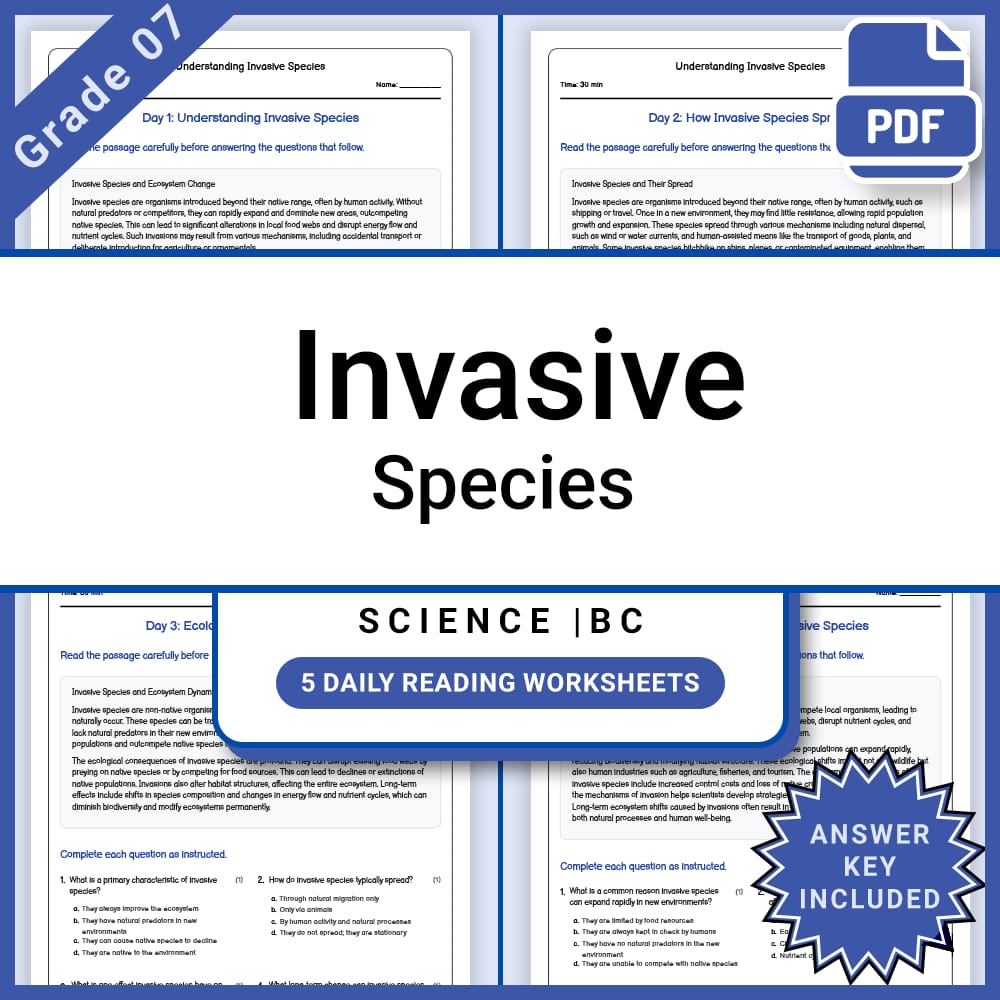
Grade 7 Science – Invasive Species Daily Reading Worksheet + Answer Key
JCreated byJ.S SheetsLearning Objectives
- Identify key ideas about invasive species and their ecological impact.
- Evaluate understanding through multiple choice, true/false, short answer, and essay questions.
- Summarize the mechanisms and consequences of invasive species invasion.
Also included in: Grade 7 Science Lesson Group: Ecosystems and Population Framework +1 more
Instant download

Grade 10 Tissue Organization Worksheet | Practice & Alberta PDF
Created byClear Sky ClassroomLearning Objectives
- Explain how cells with similar structure and function form tissues that perform collective roles
- Compare plant vascular tissues with animal epithelial and connective tissues in terms of their structures and functions
- Describe how tissue architecture and properties influence organ-level performance in Alberta ecosystems and agricultural systems
Instant download

Grade 12 Electron Configuration Worksheet | Alberta Chemistry Practice
 Created byEvergreen Desk Education
Learning Objectives
- Explain how Aufbau, Pauli exclusion, and Hund’s rules determine electron configuration for main-group elements.
- Predict valence electrons and common ion charges from electron configurations and subshell filling.
- Use configuration logic to justify periodic trends in bonding tendency and chemical reactivity.
Instant download

Grade 7 Science | Density & Volume - Daily Reading Comprehension
Created byCoral Reef LearningLearning Objectives
- Understand the concept of density and how it relates mass and volume.
- Identify and compare density and volume in different materials.
- Recognize that density is an intensive property that does not depend on the amount of material.
Instant download
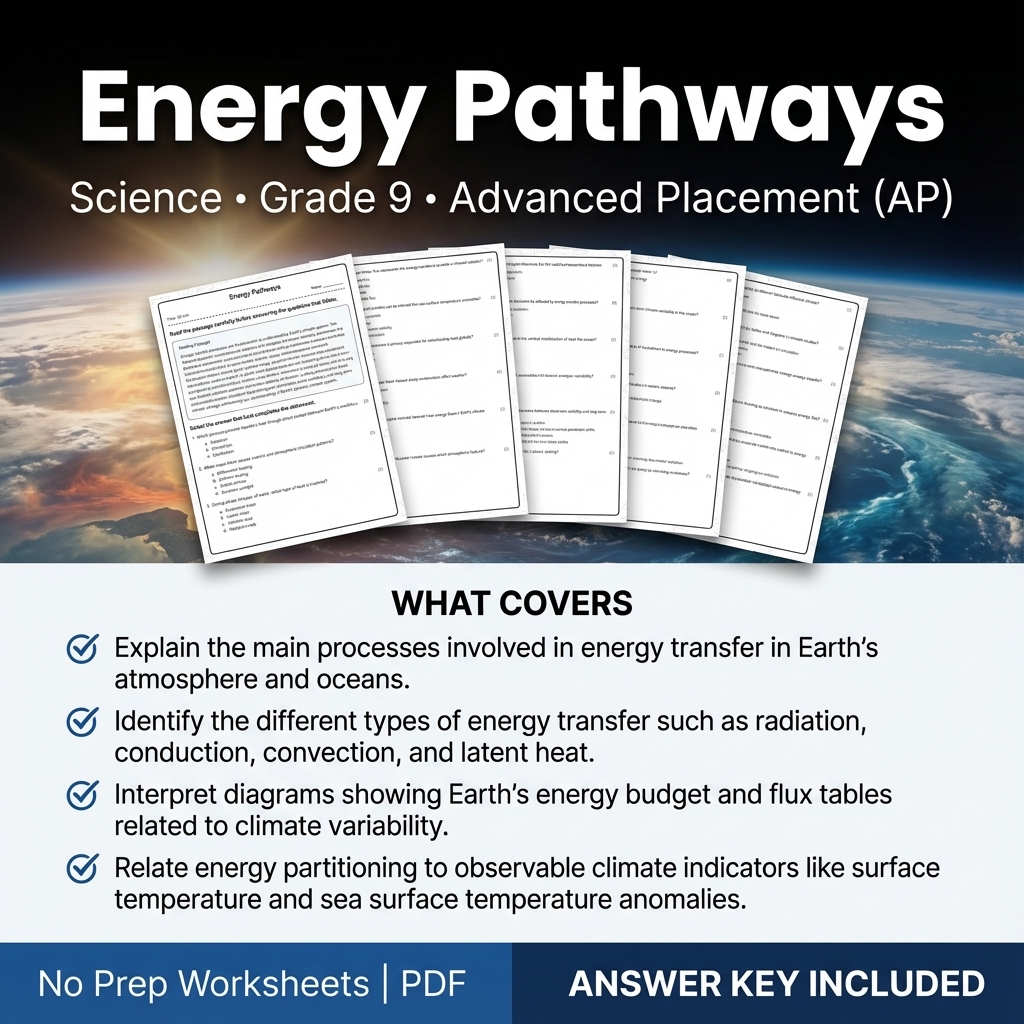
Grade 9 Science | Energy Pathways Worksheet (Printable PDF + Answer Key)
Created byCoral Reef LearningLearning Objectives
- Explain the main processes involved in energy transfer in Earth's atmosphere and oceans.
- Identify the different types of energy transfer such as radiation, conduction, convection, and latent heat.
- Interpret diagrams showing Earth's energy budget and flux tables related to climate variability.
Also included in: Grade 9 Science Unit | Earth Processes & Climate Worksheets Pack (PDF & Answer Keys) +2 more
Instant download
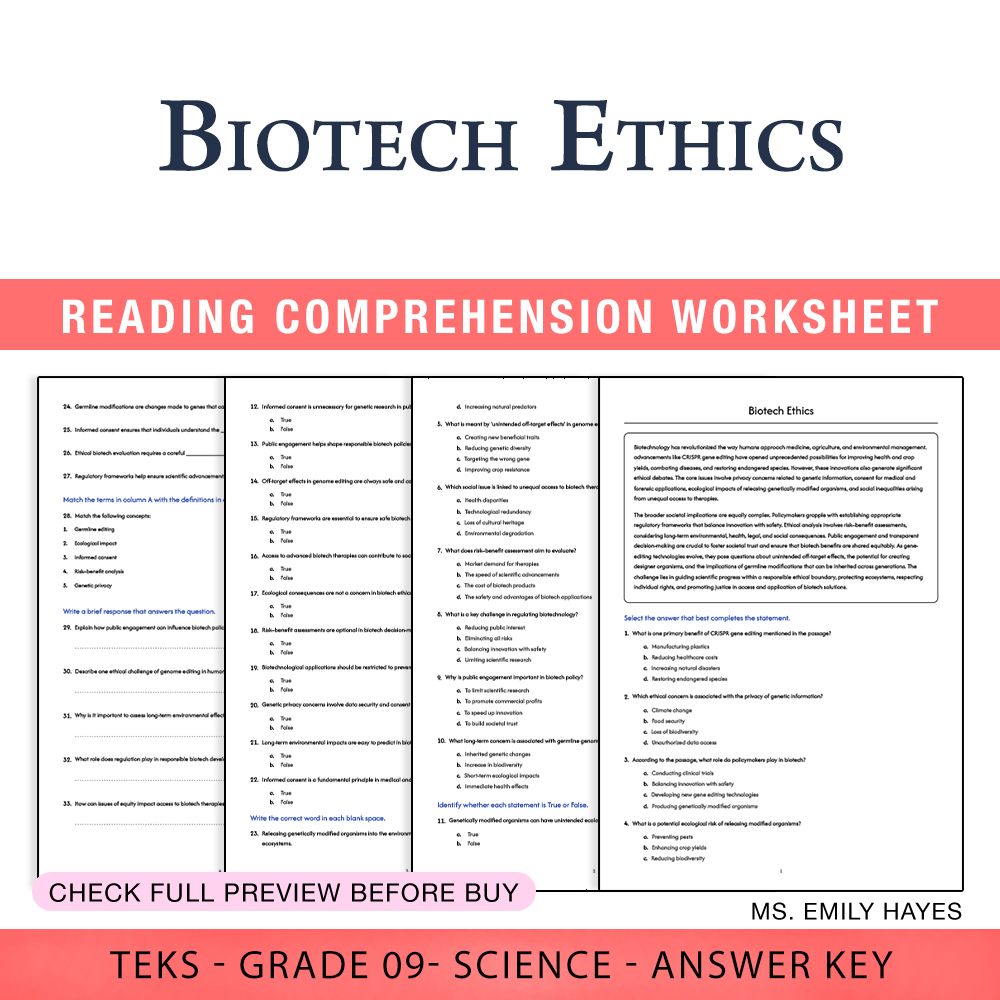
Grade 9 Science | Biotech Ethics Worksheet (PDF+ Answer Key)
Created byCopper Leaf ClassroomLearning Objectives
- Analyze the societal implications of biotechnology advancements.
- Evaluate ethical considerations related to genetic modification.
- Discuss regulatory frameworks and their roles in biotech ethics.
Instant download

Grade 12 Science – Genomic Technologies & DNA Structure | Reading Worksheet
Created byBright Mind ResourcesLearning Objectives
- Understand the structure and components of DNA.
- Explain the principles of DNA replication and double helix structure.
- Identify key genomic technologies such as PCR, DNA sequencing, and CRISPR.
Also included in: Biological Concepts Grade 12 Science Daily Reading Lesson Bundle | TEKS +2 more
Instant download

Grade 12 Science – Biodiversity Conservation & TEKS Daily Reading Worksheet
Created byBright Mind ResourcesLearning Objectives
- Identify different types of biodiversity
- Understand causes of biodiversity loss
- Recognize conservation strategies and their importance
Also included in: Biological Concepts Grade 12 Science Daily Reading Lesson Bundle | TEKS +2 more
Instant download
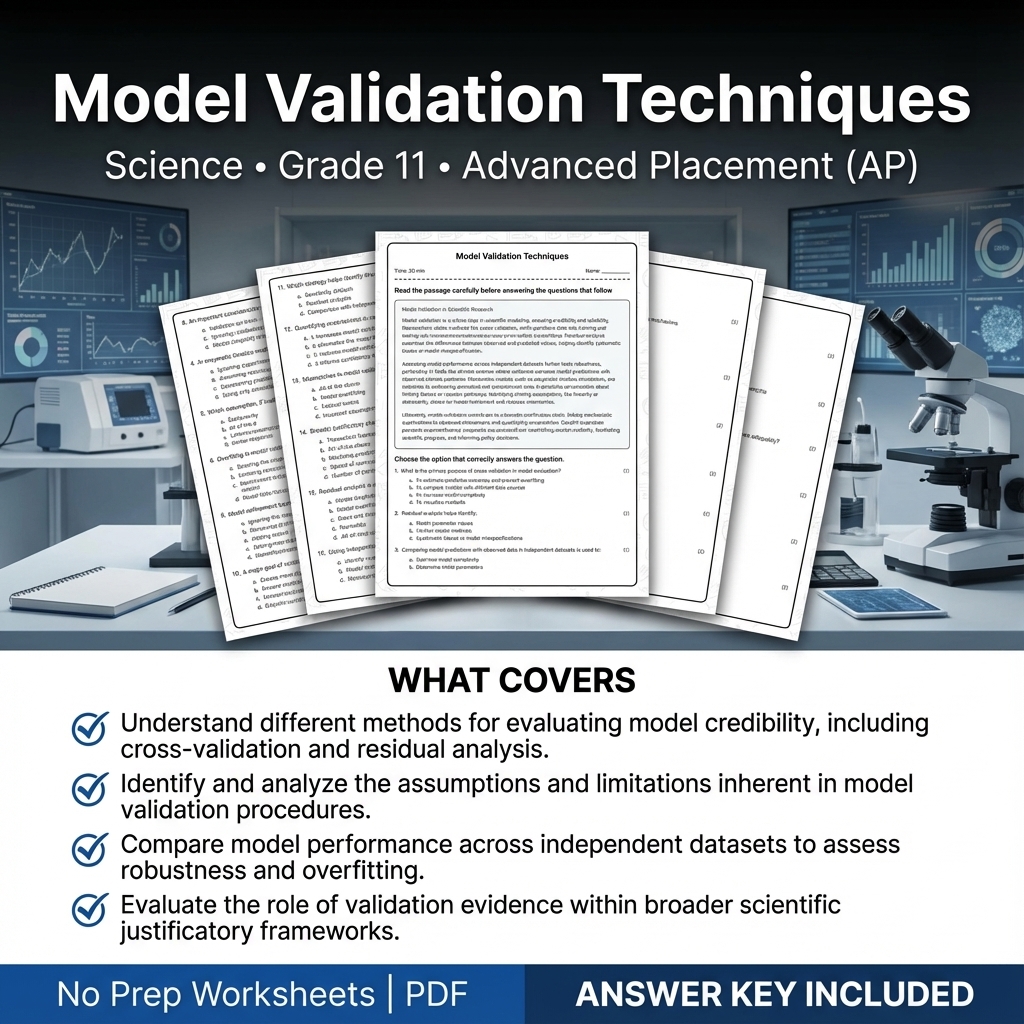
Grade 11 Science | Model Validation Techniques Worksheet (Printable PDF + Answer Key)
Created byCoral Reef LearningLearning Objectives
- Understand different methods for evaluating model credibility, including cross-validation and residual analysis.
- Identify and analyze the assumptions and limitations inherent in model validation procedures.
- Compare model performance across independent datasets to assess robustness and overfitting.
Also included in: Grade 11 Science Unit | Scientific Analysis & Data Skills Worksheet Pack +1 more
Instant download
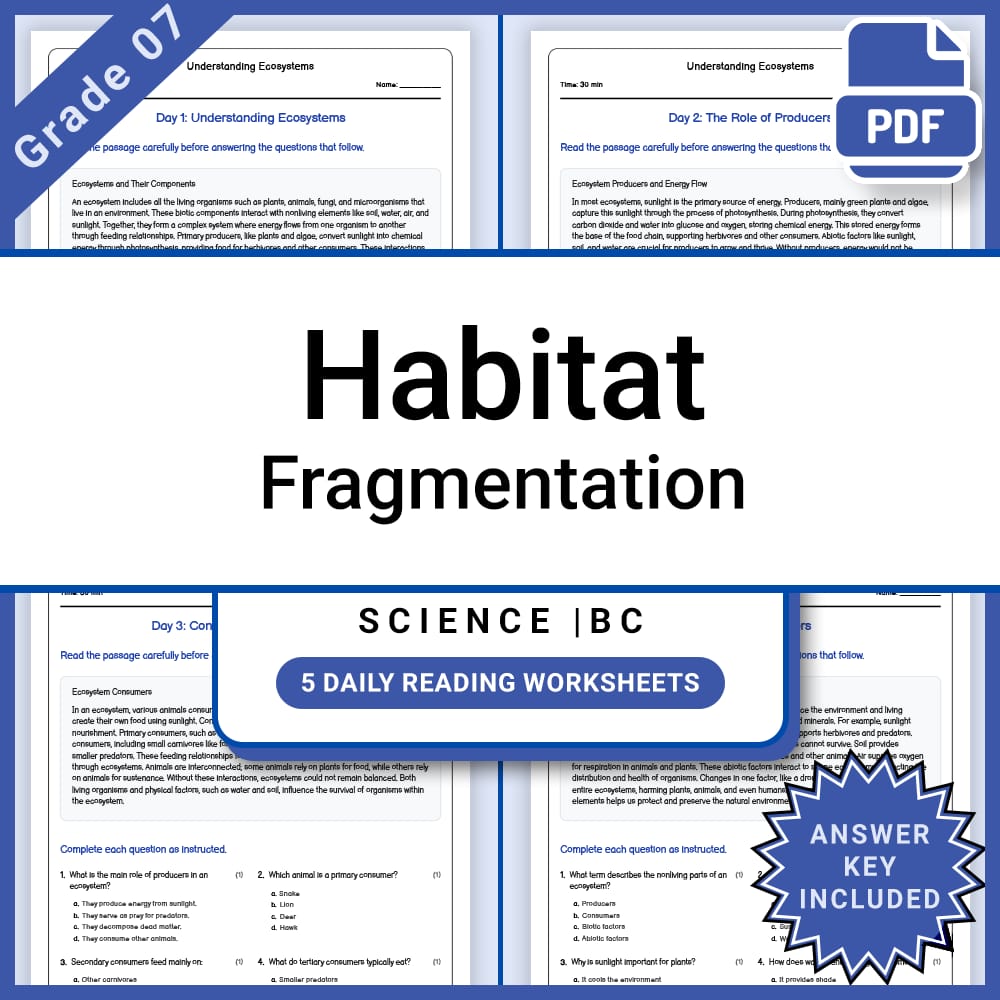
Grade 7 Science – Habitat Fragmentation Daily Reading Worksheet + Answer Key
JCreated byJ.S SheetsLearning Objectives
- Define habitat fragmentation and explain its causes.
- Describe how fragmentation affects ecosystems and species.
- Identify strategies to mitigate negative effects of habitat fragmentation.
Also included in: Grade 7 Science Lesson Group: Ecosystems and Population Framework +1 more
Instant download
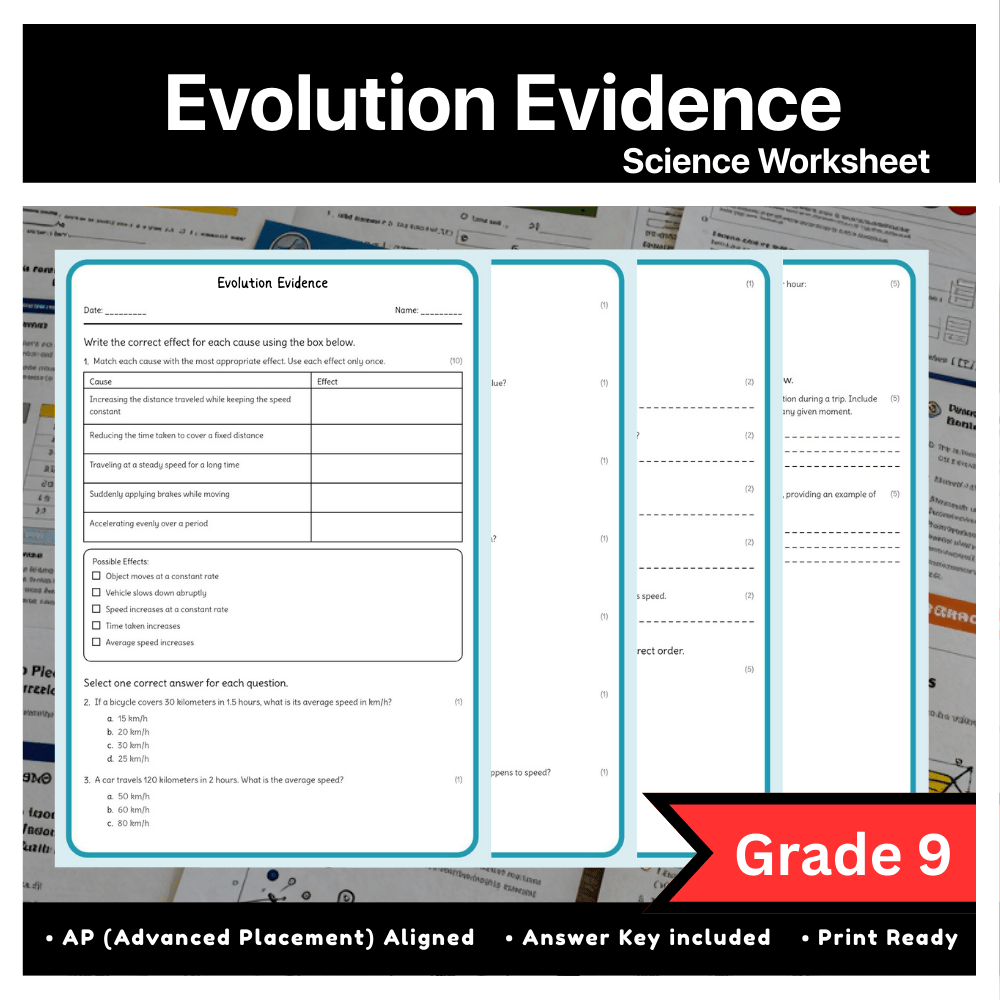
Grade 9 Science – Evidence for Evolution Worksheet (AP Standards + Key) (PDF)
Created byBright Mind ResourcesLearning Objectives
- Interpret multiple lines of evidence supporting the theory of evolution, including fossil records, comparative anatomy, and molecular data.
- Describe mechanisms such as natural selection, genetic drift, gene flow, and mutation that cause changes in allele frequencies and produce adaptive traits.
- Evaluate scenarios like antibiotic resistance and environmental adaptation using evolutionary models and evidence.
Instant download

Grade 10 Science | Bond Polarity Worksheet | AP Aligned
 Created byLumora Learning
Learning Objectives
- Describe how electronegativity differences influence bond polarity.
- Represent bond dipoles using vector and quantitative methods.
- Differentiate between polar covalent and ionic bonds on a continuum.
Instant download
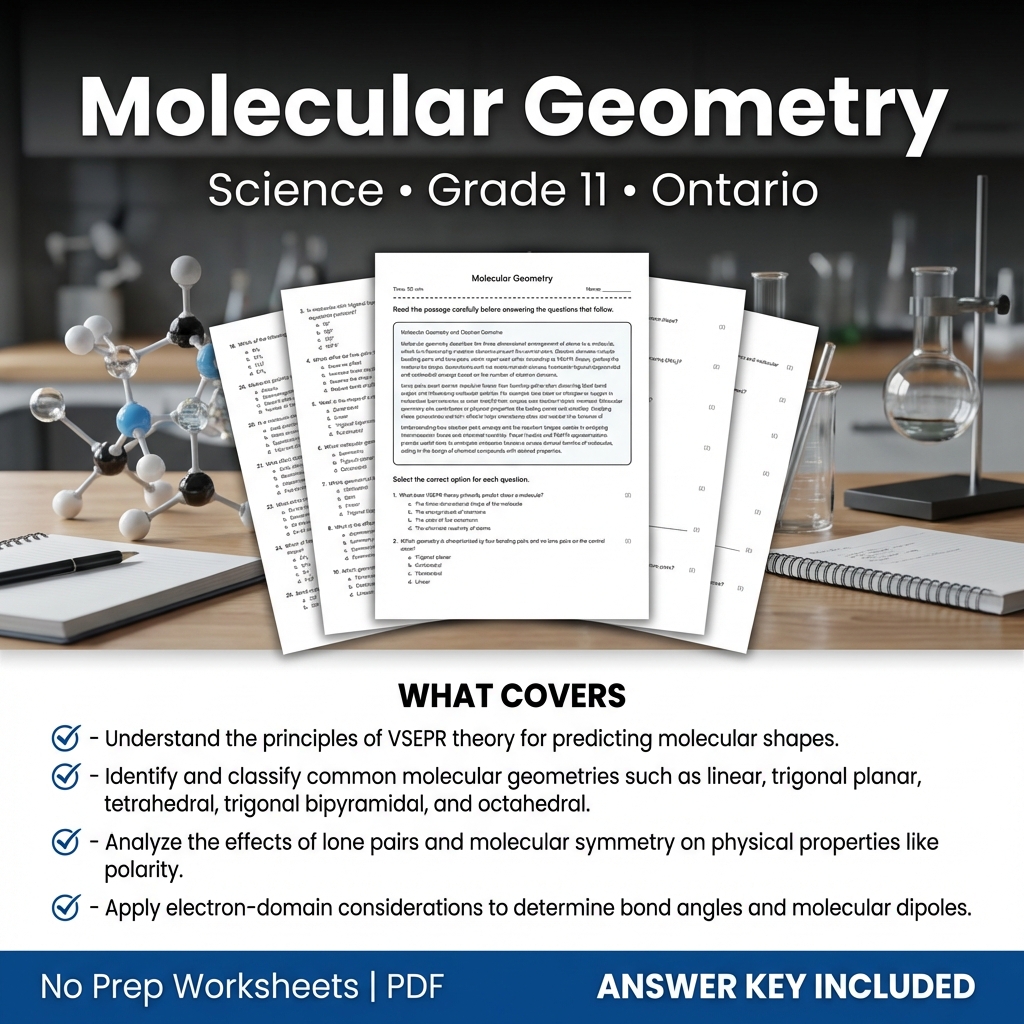
Molecular Geometry Worksheet | Science Assessment for Grade 11 Ontario
Created byCoral Reef LearningLearning Objectives
- Understand the principles of VSEPR theory for predicting molecular shapes.
- Identify and classify common molecular geometries such as linear, trigonal planar, tetrahedral, trigonal bipyramidal, and octahedral.
- Analyze the effects of lone pairs and molecular symmetry on physical properties like polarity.
Instant download
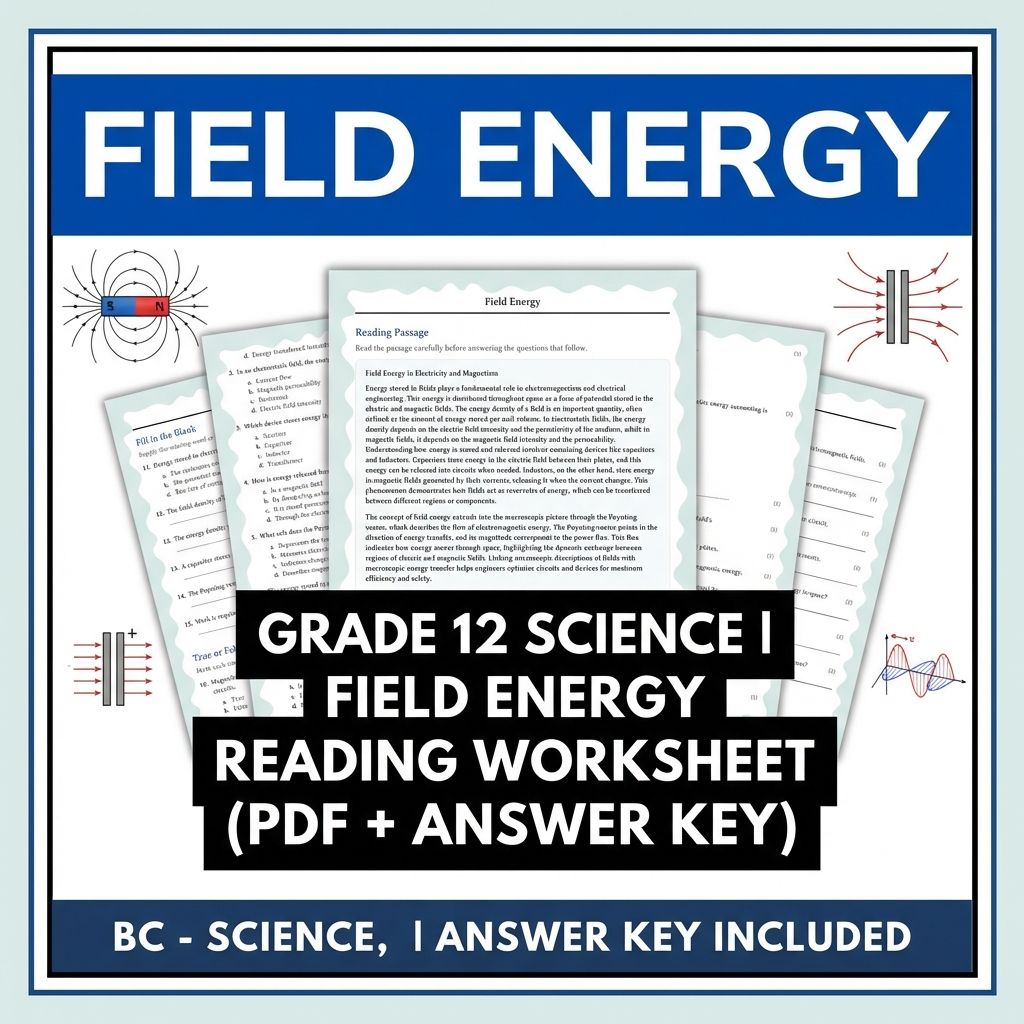
Grade 12 Science | Field Energy Reading Worksheet (PDF + Answer Key)
JCreated byJ.S SheetsLearning Objectives
- Define energy density in electrostatic and magnetic fields.
- Explain how capacitors and inductors store and release energy in circuits.
- Describe the concept of field energy as distributed in space and how work is required to assemble charge configurations.
Instant download

Grade 10 Astronomical Climate Cycles Worksheet | Practice & PDF
Created byClear Sky ClassroomLearning Objectives
- Explain how Earth’s tilt, orbital eccentricity, and precession influence the distribution and timing of incoming solar energy.
- Describe how astronomical models can connect to changes in seasonal intensity and long-term insolation patterns.
- Interpret how geological and paleoclimate records provide evidence for repeating climate rhythms.
Instant download
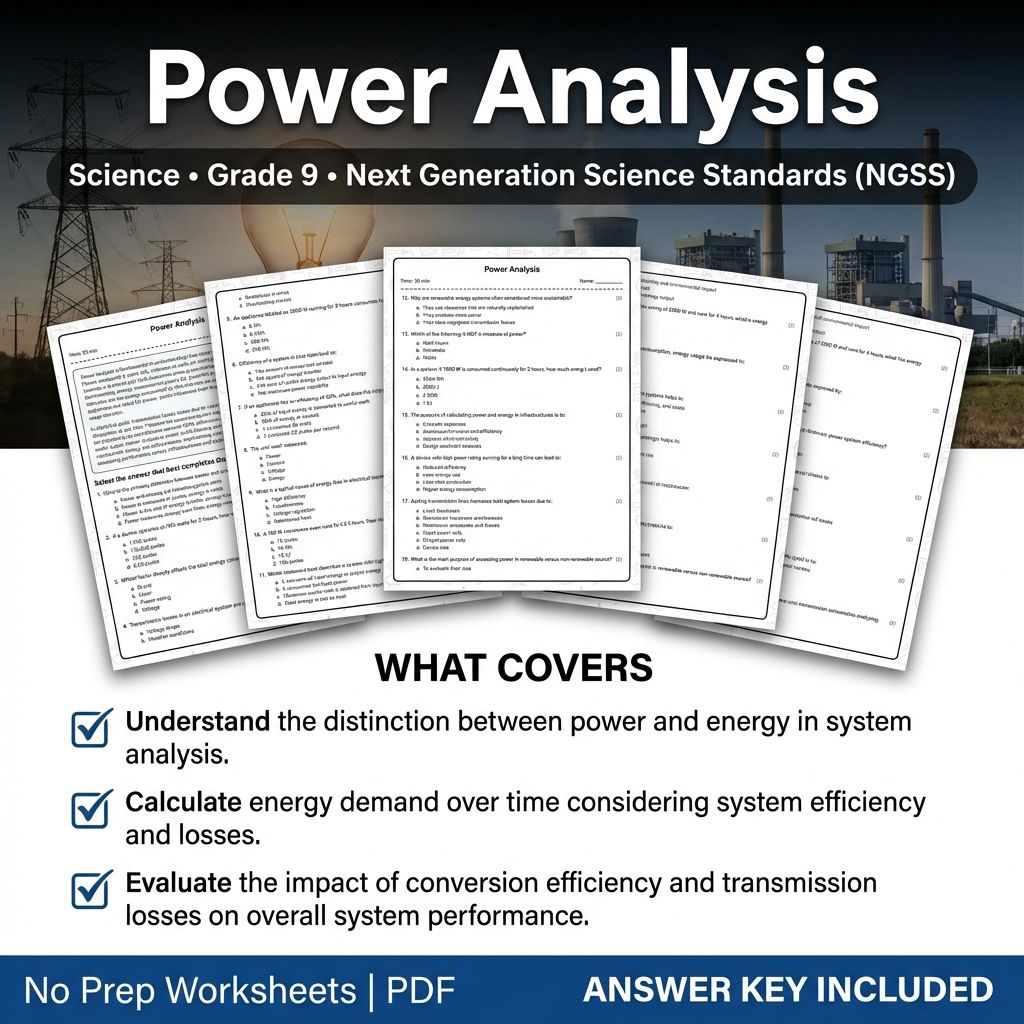
Grade 9 Science | Power Analysis Worksheet & Answer Key (Printable PDF)
Created byCoral Reef LearningLearning Objectives
- Understand the distinction between power and energy in system analysis.
- Calculate energy demand over time considering system efficiency and losses.
- Compare power ratings and energy consumption in household appliances and electrical systems.
Also included in: Grade 9 Science UNIT Bundle | Energy, Power, Heat & Conservation Worksheets +1 more
Instant download

Grade 12 Science | Modeling Systems Worksheet | TEKS Aligned
Created byLumora LearningLearning Objectives
- Understand the role of conceptual and quantitative models in system analysis.
- Differentiate between deterministic and stochastic modeling frameworks.
- Apply principles of dimensional analysis, scaling, and sensitivity testing.
Instant download

Equilibrium Grade 7 Science Worksheet | NGSS-Aligned Assessment & Practice
JCreated byJ.S SheetsLearning Objectives
- Understand the concept of equilibrium as the state where forces balance and the vector sum of forces equals zero.
- Differentiate between static and dynamic equilibrium in various physical situations.
- Identify and analyze forces such as normal force, gravitational force, tension, and their role in achieving equilibrium.
Also included in: Grade 7 Forces and Interactions Science Lesson Bundle: NGSS Practice Set +1 more
Instant download

Population Change Worksheet | NGSS-Aligned Grade 8 Science Practice
JCreated byJ.S SheetsLearning Objectives
- Understand factors influencing population dynamics, including carrying capacity and feedback mechanisms.
- Identify biotic and abiotic factors that cause population increase or decline.
- Analyze case studies such as invasive species, overharvesting, and drought effects on populations.
Also included in: Grade 8 Ecosystem Dynamics Science Lesson Bundle NGSS – 4 Worksheets +1 more
Instant download

Ecosystem Models Worksheet | NGSS-Aligned Grade 8 Science Practice
JCreated byJ.S SheetsLearning Objectives
- Understand the components and functions of ecosystem models, including biotic and abiotic factors.
- Interpret how resource flows, feedbacks, and boundaries influence ecosystem stability and resilience.
- Analyze system diagrams and stock-and-flow models to predict responses to environmental changes.
Also included in: Grade 8 Ecosystem Dynamics Science Lesson Bundle NGSS – 4 Worksheets +1 more
Instant download
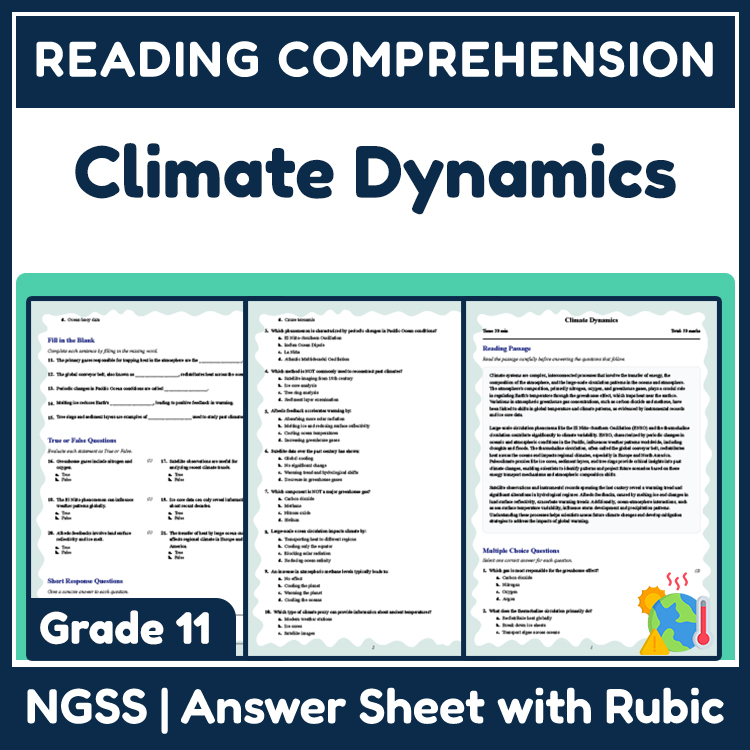
Grade 11 Science | Climate Dynamics Reading Worksheet PDF (Answer Key & Rubric)
JCreated byJ.S SheetsLearning Objectives
- Understand the mechanisms that influence climate variability such as greenhouse effect, albedo feedbacks, and ocean-atmosphere interactions.
- Interpret instrumental, satellite, and paleoclimate data to analyze climate change patterns.
- Explain the role of features like El Niño–Southern Oscillation and thermohaline circulation in climate systems.
Also included in: Grade 11 Science | Ecosystems & Earth Systems Worksheet Bundle
Instant download
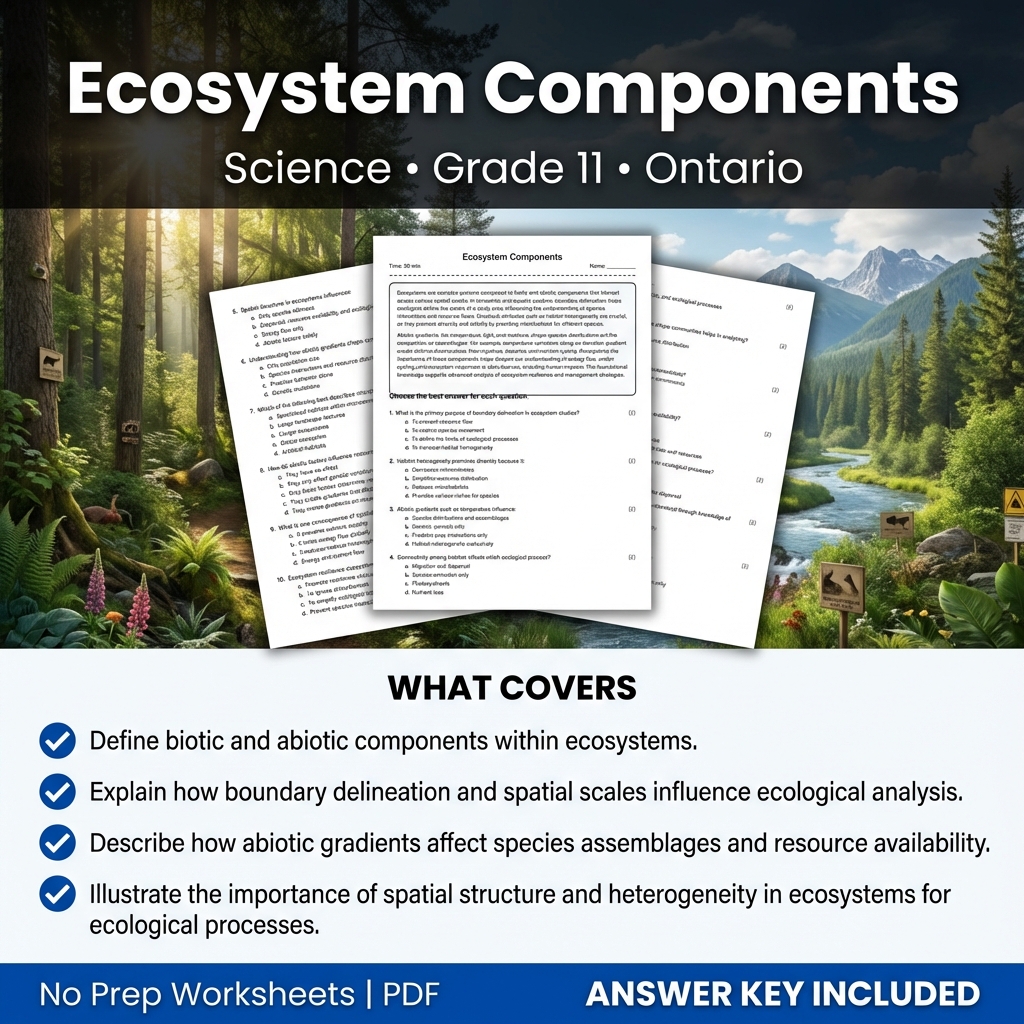
Ecosystem Components Grade 11 Science Worksheet | Ontario Standards
Created byCoral Reef LearningLearning Objectives
- Define biotic and abiotic components within ecosystems.
- Explain how boundary delineation and spatial scales influence ecological analysis.
- Describe how abiotic gradients affect species assemblages and resource availability.
Instant download
Browse more categories
About Science Worksheets
Find Science worksheets spanning core skills, practice, and review. All 44,620 resources are instant PDF downloads for the classroom or home.
Every worksheet on MyTeachingSheets is created by independent teacher-authors and reviewed before publication. All resources download as printable PDFs for classroom, homework, or at-home practice, and many include answer keys. Preview any worksheet free before buying.