
Science Worksheets
44,628 subject resources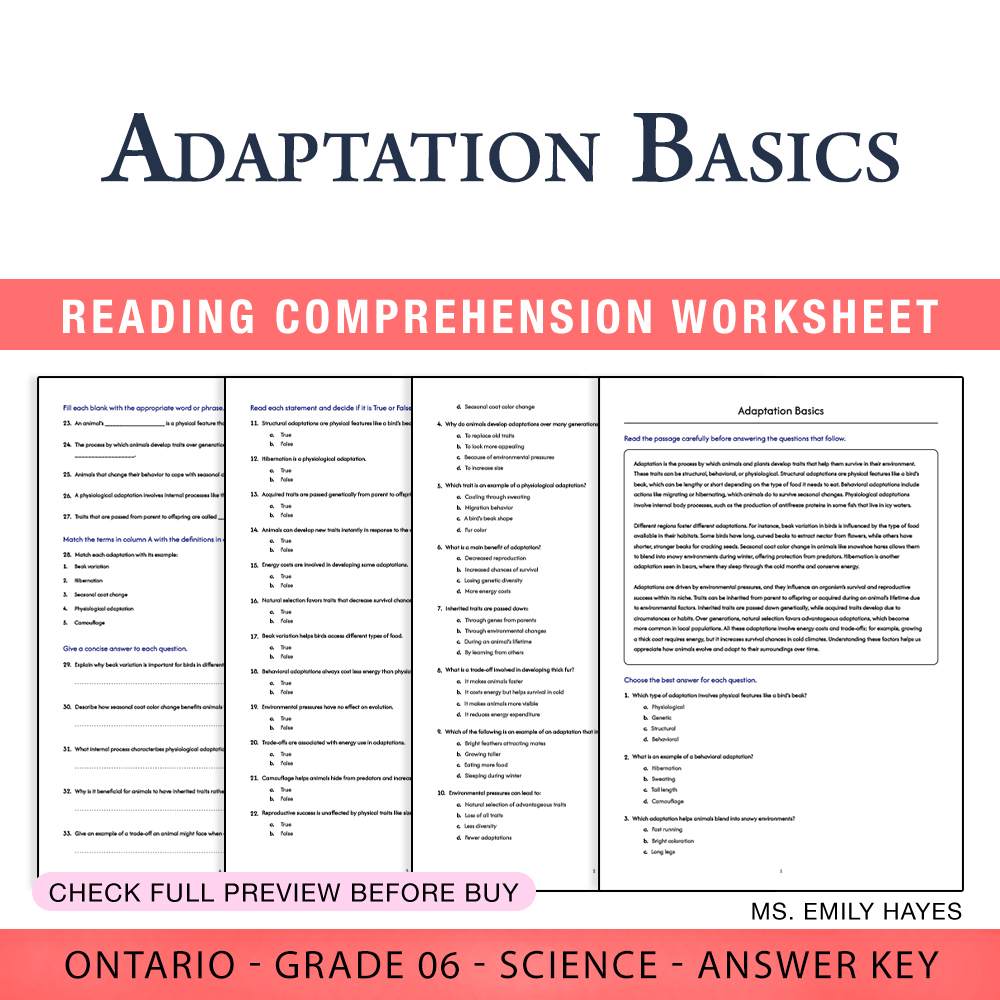
6th Grade Science | Adaptation Basics Worksheet (PDF+ Answer Key)
 Created byCopper Leaf Classroom
Learning Objectives
- Understand the three main types of animal adaptations: structural, behavioral, and physiological.
- Identify regional examples of adaptations such as beak variation, seasonal coat color change, and hibernation.
- Explain how adaptations contribute to survival and reproductive success within specific niches.
Instant download
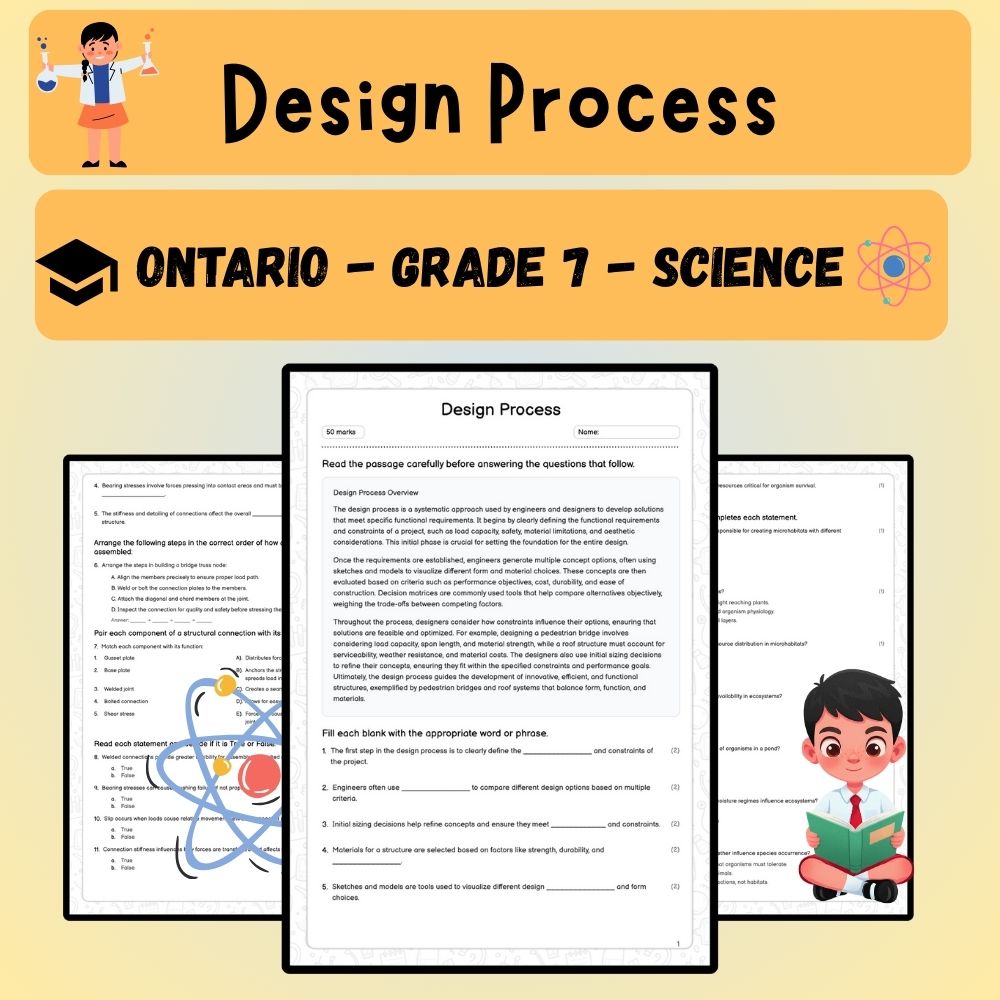
Grade 7 Science - Design Process Worksheet (PDF) – Ontario Standards
 Created byPrism Point Learning
Learning Objectives
- Understand the steps involved in the design process from defining requirements to selecting solutions.
- Identify key performance objectives and how they influence design choices.
- Apply decision matrices and sketches to compare different design alternatives.
Also included in: Grade 7 Science Unit | Structural Engineering & Material Testing Worksheets Bundle +1 more
Instant download
Human Footprint Worksheet for Grade 10 Science | Alberta Standards
 Created byCoral Reef Learning
Learning Objectives
- Understand how human activities impact Earth systems including land, water, and atmosphere.
- Identify regional examples of land-use change and resource extraction effects.
- Evaluate the long-term environmental consequences of urban expansion and resource development.
Instant download
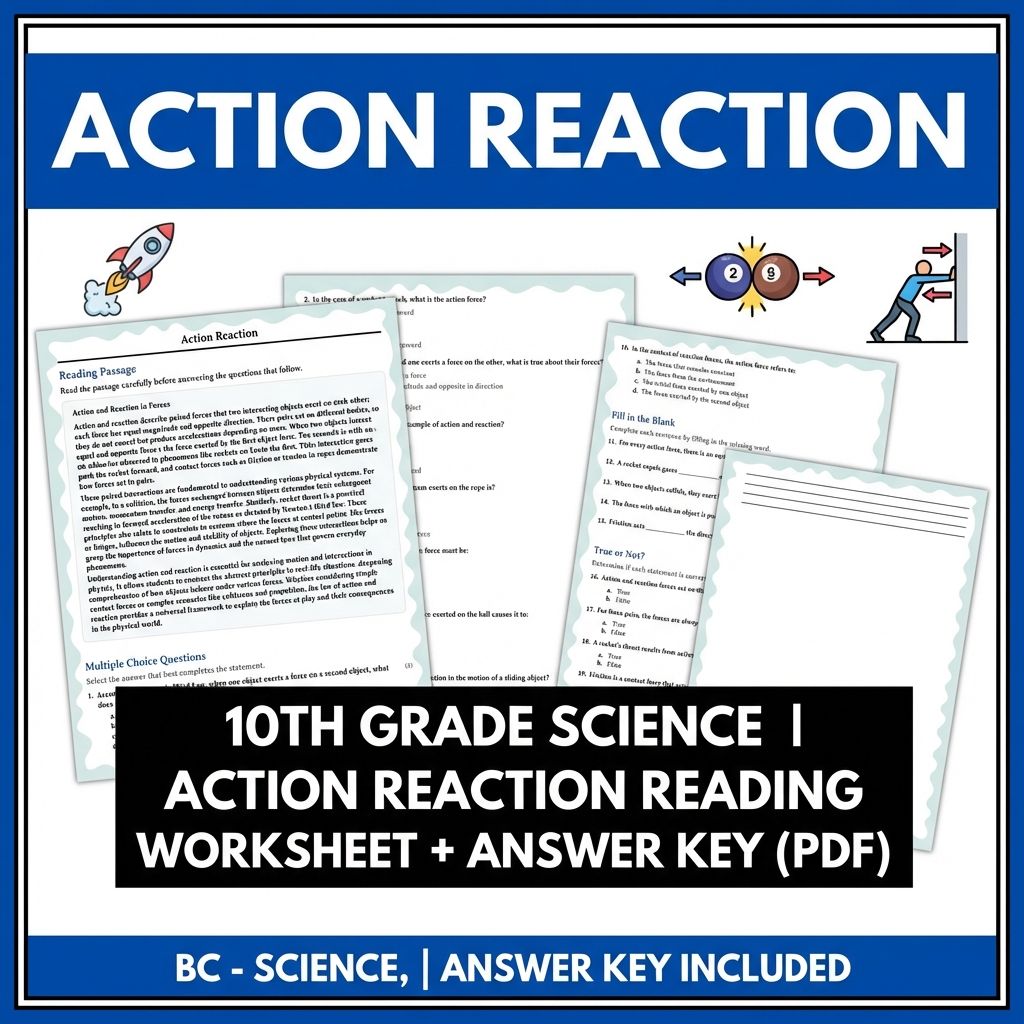
10th Grade Science | Action Reaction Reading Worksheet + Answer Key (PDF)
JCreated byJ.S SheetsLearning Objectives
- Explain the concept of paired forces in action and reaction.
- Describe how equal and opposite forces affect different objects.
- Analyze real-world examples like collisions and rocket thrust using Newton's Third Law.
Instant download
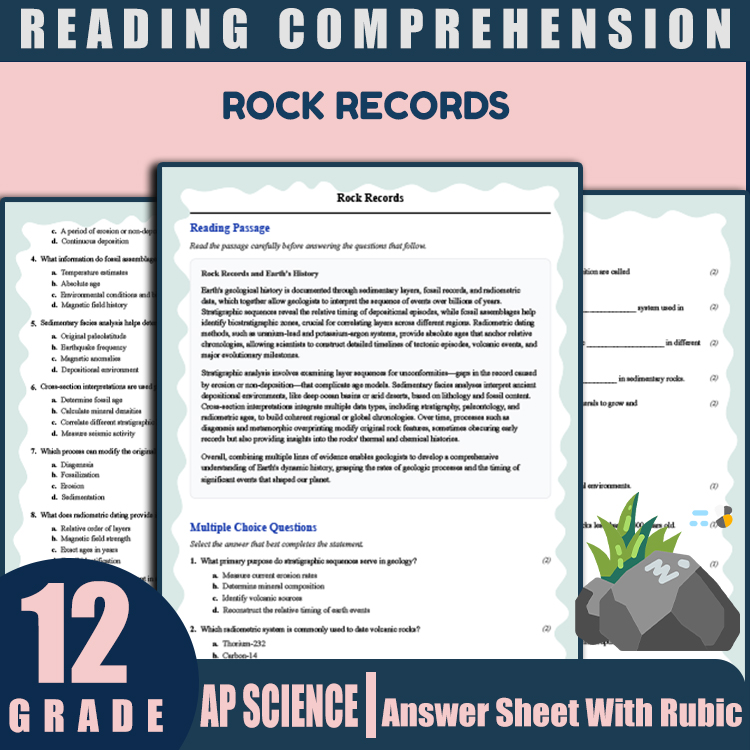
12th Grade Science | Rock Records Worksheet (Answer Key) for AP Standards
JCreated byJ.S SheetsLearning Objectives
- Interpret stratigraphic sequences and fossil assemblages to reconstruct Earth's history.
- Identify how radiometric age data contribute to understanding geologic processes.
- Evaluate sedimentary facies models and cross-section interpretations in correlating depositional environments.
Also included in: Grade 12 Science Unit | Earth Systems & Climate Change Worksheet Bundle (PDF) +1 more
Instant download
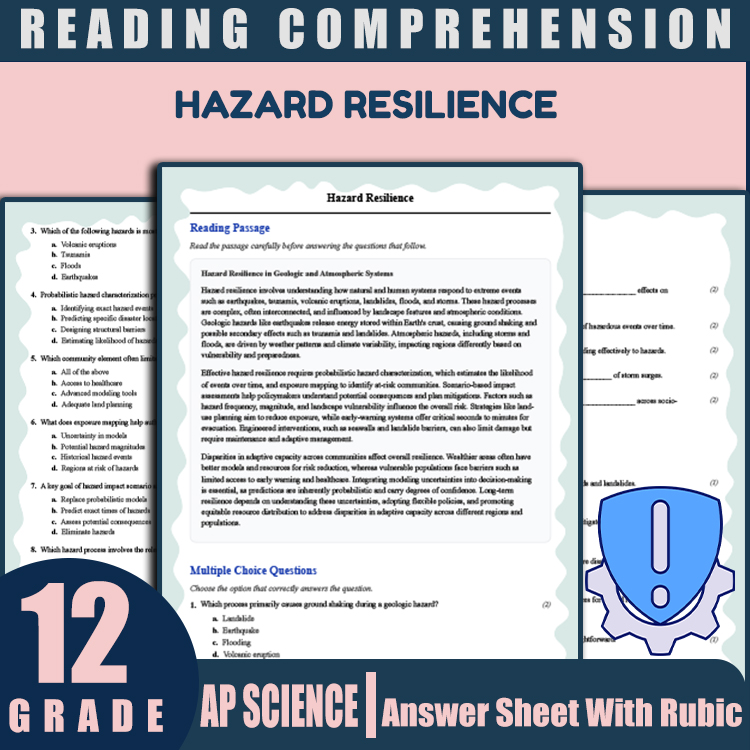
Grade 12 Science | Hazard Resilience Reading Worksheets & Answer Key (PDF)
JCreated byJ.S SheetsLearning Objectives
- Understand the processes behind geologic and atmospheric hazards such as earthquakes, tsunamis, and storms.
- Analyze how hazard probability, landscape vulnerability, and resilience strategies affect risk reduction.
- Evaluate approaches like land-use planning, early-warning systems, and engineered interventions in hazard scenarios.
Also included in: Grade 12 Science Unit | Earth Systems & Climate Change Worksheet Bundle (PDF) +1 more
Instant download
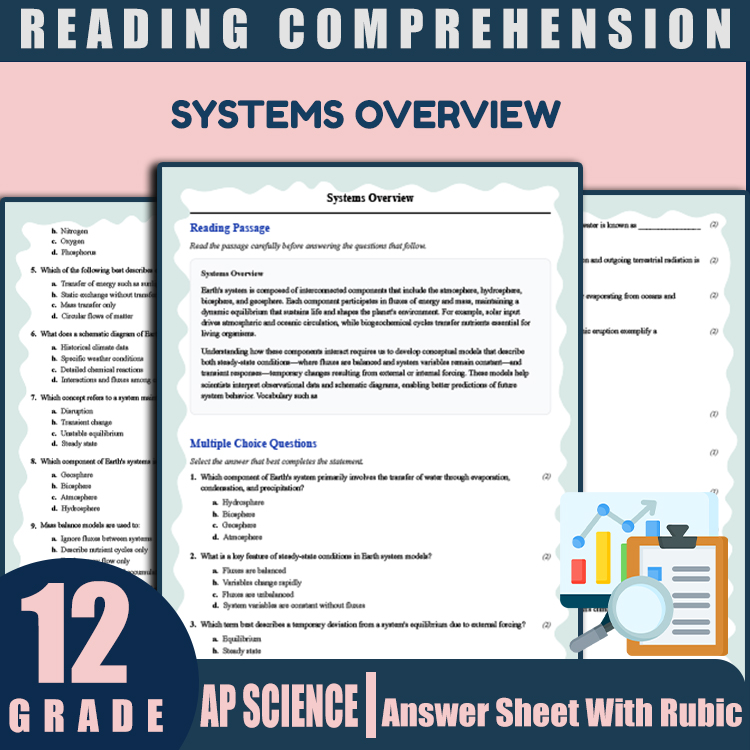
Grade 12 Science | Systems Overview Reading Worksheet (PDF + Rubric)
JCreated byJ.S SheetsLearning Objectives
- Understand the major components and fluxes of Earth's systems, including atmosphere, hydrosphere, biosphere, and geosphere.
- Analyze energy and mass balance models used to describe interactions among Earth's subsystems.
- Interpret conceptual models of steady-state and transient responses in Earth systems.
Also included in: Grade 12 Science Unit | Earth Systems & Climate Change Worksheet Bundle (PDF) +1 more
Instant download
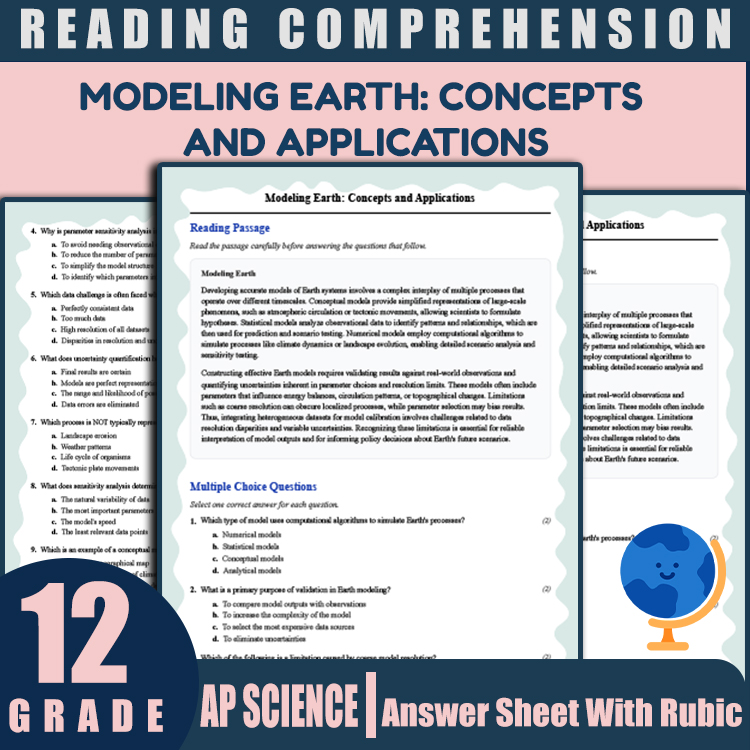
Grade 12 Science | Modeling Earth: Concepts & Applications Reading Worksheet
JCreated byJ.S SheetsLearning Objectives
- Understand the role of models in representing Earth processes across various timescales.
- Analyze the construction, validation, and limitations of energy-balance, circulation, and landscape evolution models.
- Interpret model outputs through diagrams and uncertainty quantification techniques.
Also included in: Grade 12 Science Unit | Earth Systems & Climate Change Worksheet Bundle (PDF) +1 more
Instant download
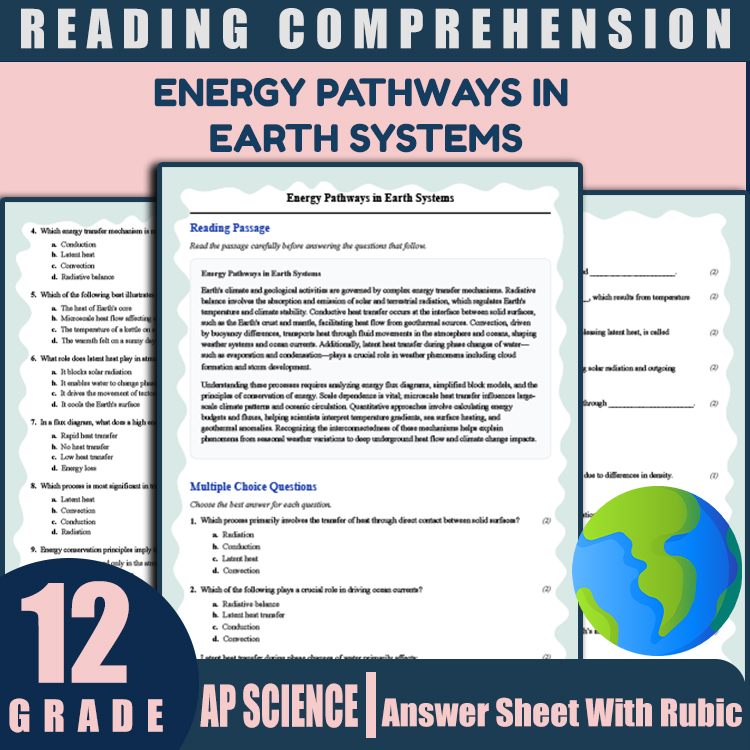
Grade 12 Science | Energy Pathways in Earth Systems Reading Worksheet
JCreated byJ.S SheetsLearning Objectives
- Explain the mechanisms of energy transfer such as radiative balance, conduction, convection, and latent heat within Earth systems.
- Relate energy transfer processes to observable phenomena like weather patterns, ocean currents, and geothermal activity.
- Use quantitative reasoning to analyze energy budgets, flux diagrams, and block models connecting microscale to macroscale geophysical phenomena.
Also included in: Grade 12 Science Unit | Earth Systems & Climate Change Worksheet Bundle (PDF) +1 more
Instant download
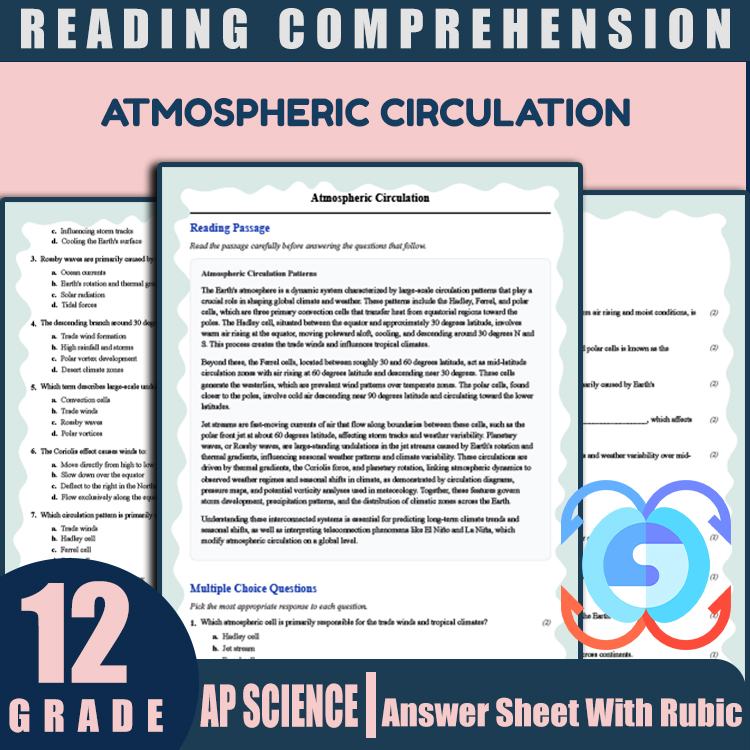
12th Grade Science | Atmospheric Circulation Reading Worksheet & Answer Key
JCreated byJ.S SheetsLearning Objectives
- Describe the main components of large-scale atmospheric cells and their roles in climate patterns.
- Explain how thermal gradients and Coriolis effects influence pressure systems and storm tracks.
- Connect atmospheric circulation patterns to observed weather regimes and seasonal climate shifts.
Also included in: Grade 12 Science Unit | Earth Systems & Climate Change Worksheet Bundle (PDF) +1 more
Instant download
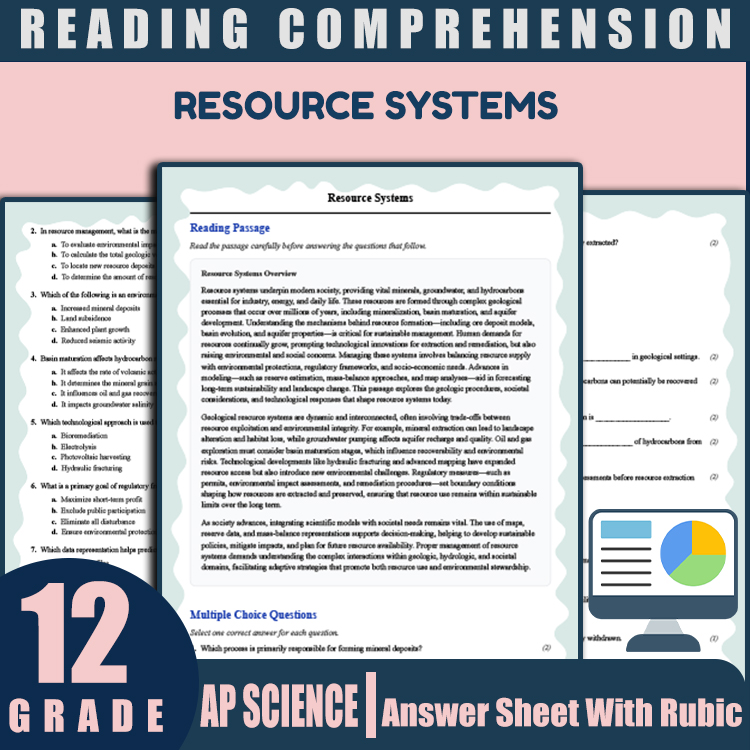
Grade 12 Science | Resource Systems Reading Worksheet (PDF + Answer Key)
JCreated byJ.S SheetsLearning Objectives
- Analyze the interactions between geologic resources, extraction processes, and societal demands.
- Assess the sustainability constraints of mineral, groundwater, and hydrocarbon systems using models and data representation.
- Evaluate trade-offs among resource availability, environmental impact, and technological adaptation in resource management.
Also included in: Grade 12 Science Unit | Earth Systems & Climate Change Worksheet Bundle (PDF) +1 more
Instant download
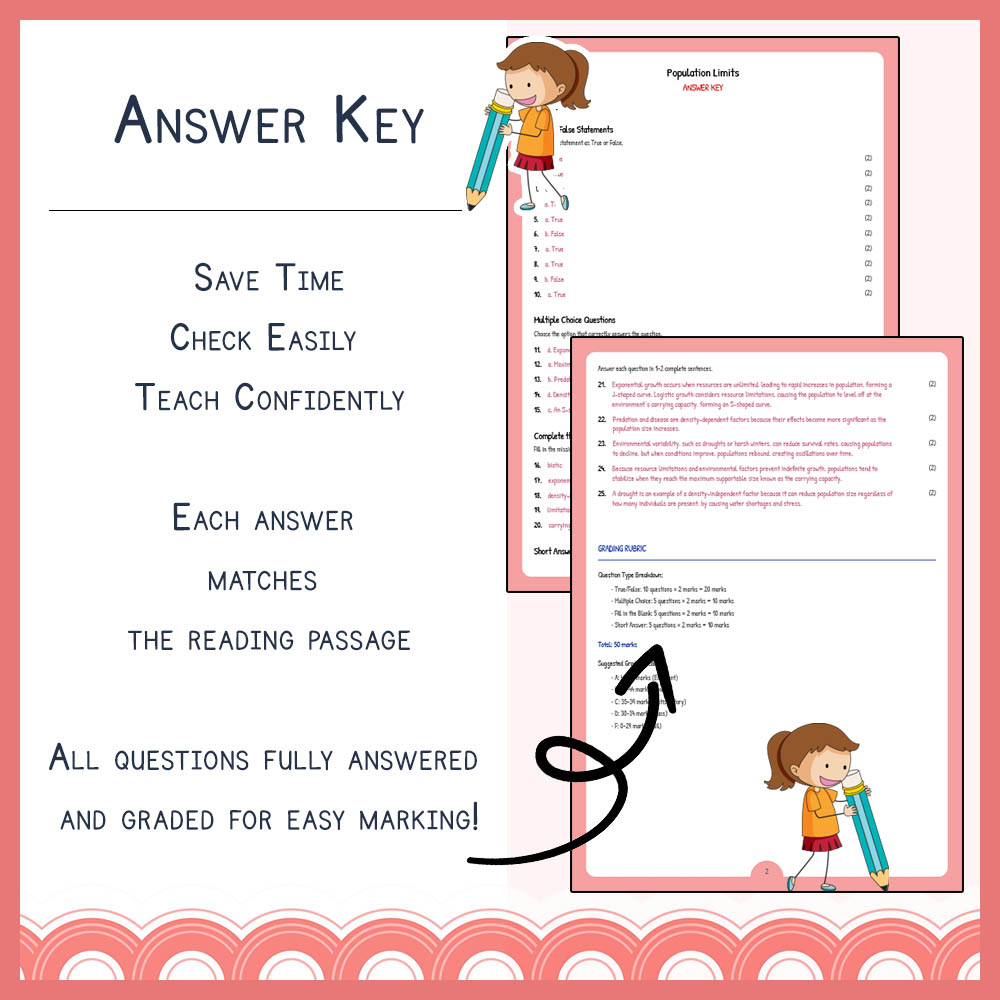
Grade 7 Science Assessment | Population Limits Worksheet | Ontario
 Created byLumora Learning
Learning Objectives
- Explain basic concepts of population growth models, including exponential and logistic growth.
- Identify limiting factors such as food, predation, disease, and abiotic stresses that affect populations.
- Distinguish between density-dependent and density-independent influences on populations.
Instant download
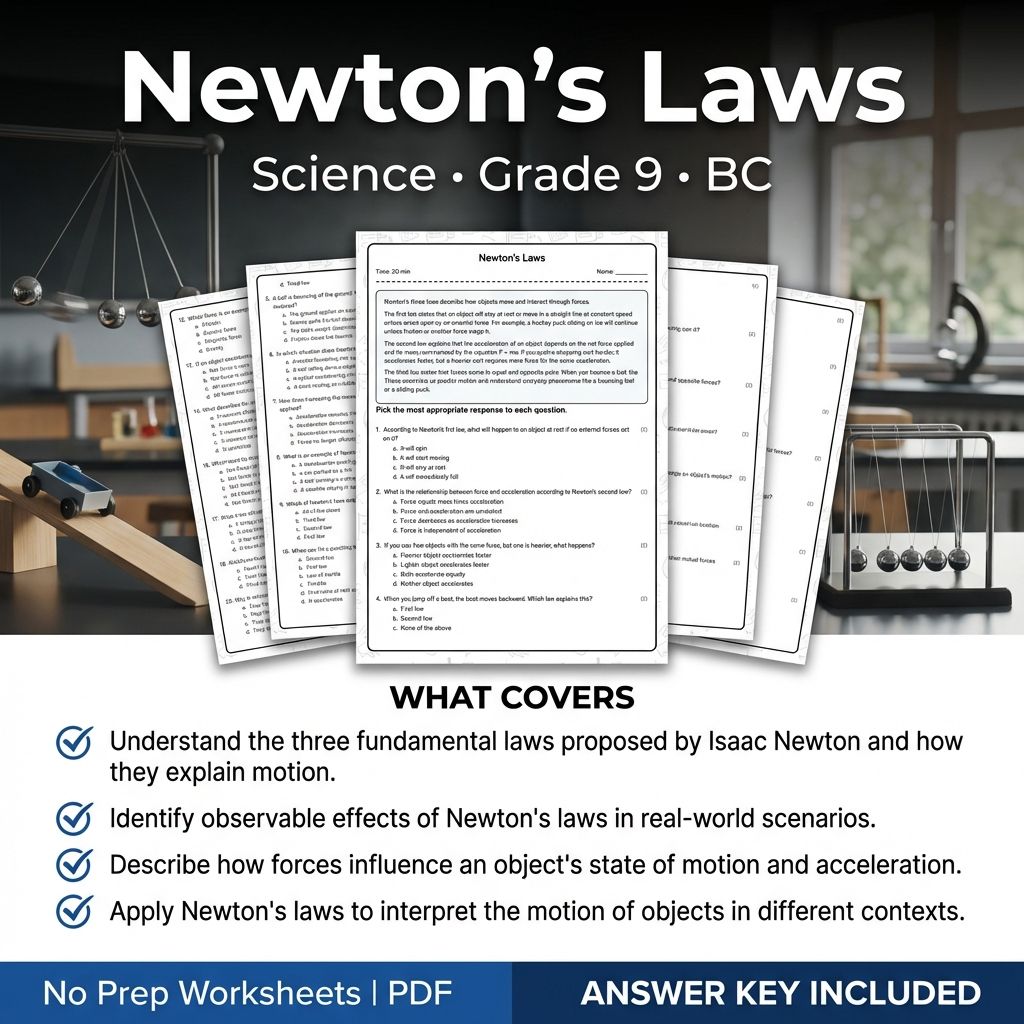
Newton's Laws Grade 9 Science Worksheet with Answer Key | BC Standards
Created byCoral Reef LearningLearning Objectives
- Understand the three fundamental laws proposed by Isaac Newton and how they explain motion.
- Identify observable effects of Newton's laws in real-world scenarios.
- Describe how forces influence an object's state of motion and acceleration.
Instant download
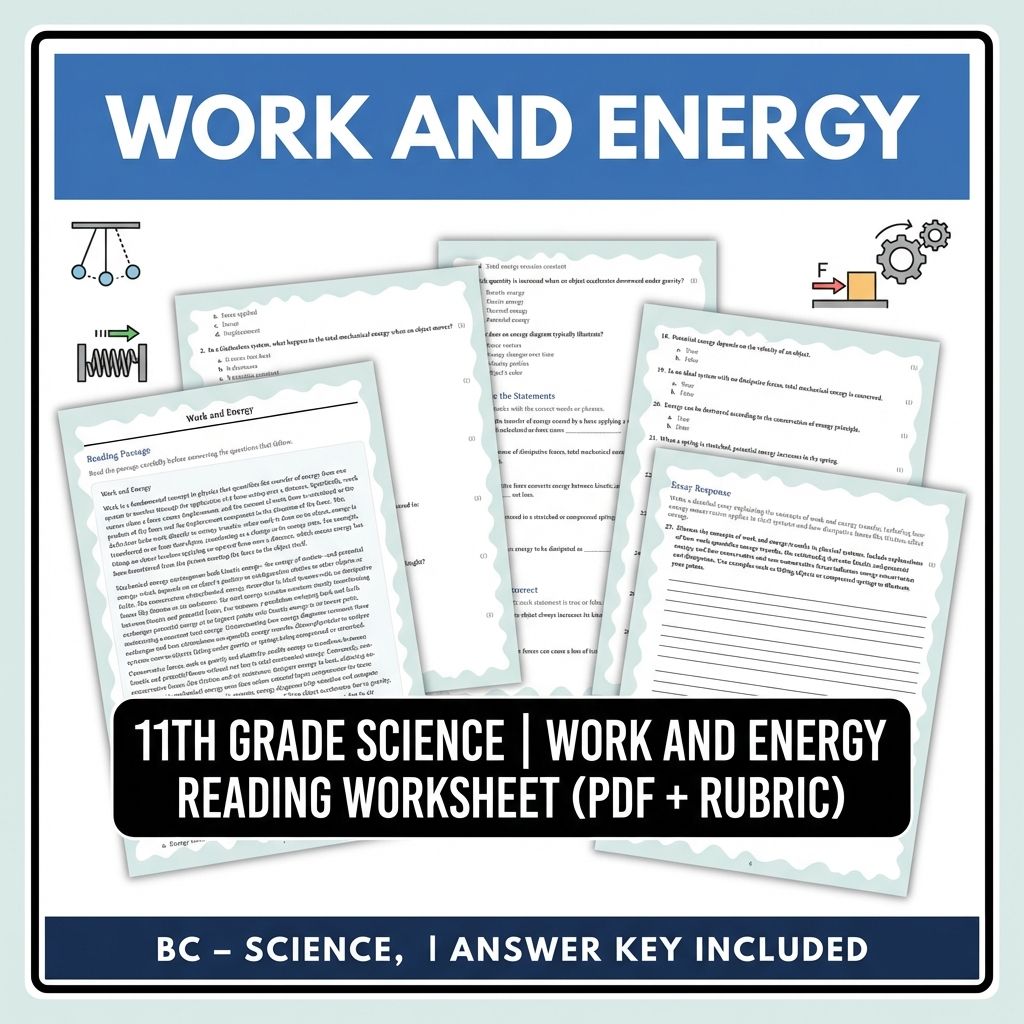
11th Grade Science | Work and Energy Reading Worksheet (PDF + Rubric)
JCreated byJ.S SheetsLearning Objectives
- Explain how work is related to energy transfer in physical systems.
- Differentiate between kinetic and potential energy within mechanical energy.
- Describe how conservative and non-conservative forces affect energy in a system.
Instant download
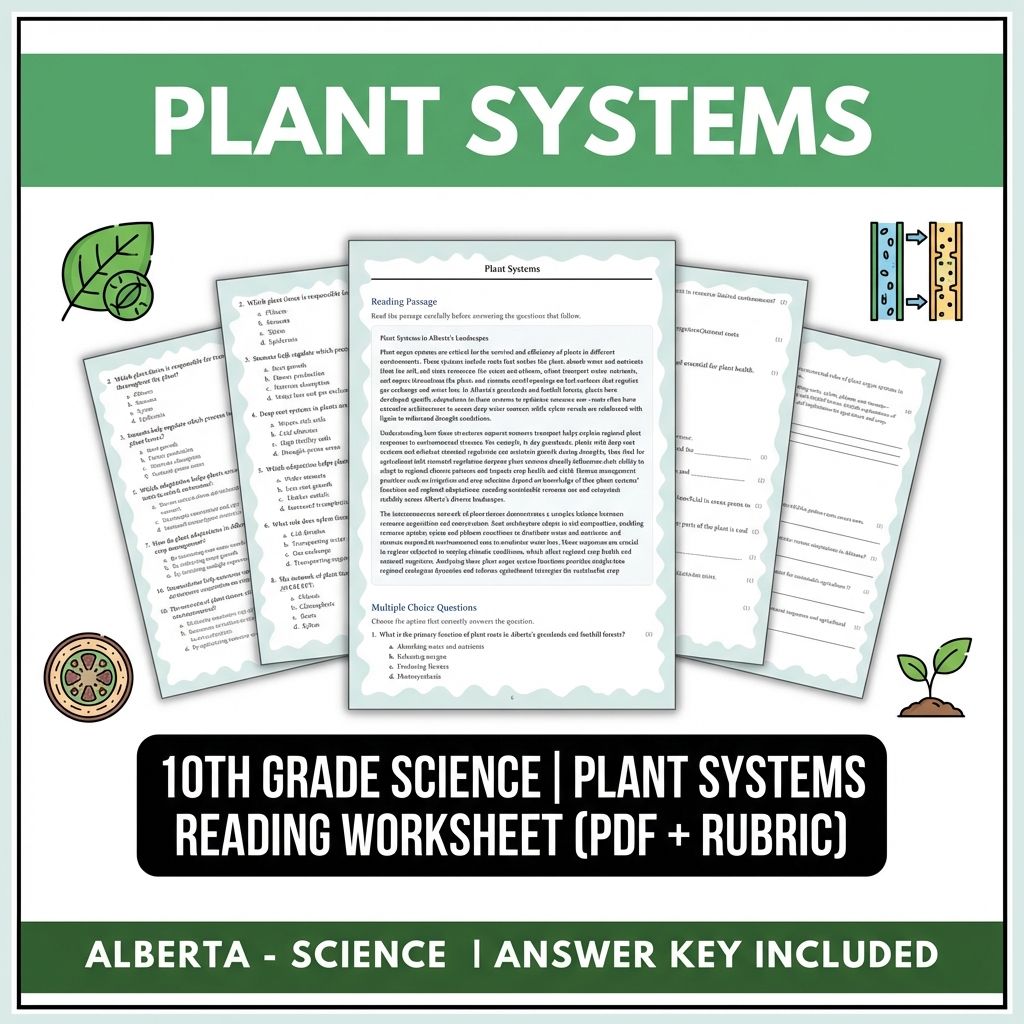
10th Grade Science | Plant Systems Reading Worksheet (PDF + Rubric)
JCreated byJ.S SheetsLearning Objectives
- Describe the structure and function of plant organ systems in water, nutrient, and resource transport.
- Explain how plant adaptations for resource acquisition vary in Alberta's grasslands and foothill forests.
- Identify the roles of roots, xylem, phloem, and stomata in plant water and nutrient movement.
Also included in: Grade 10 Science | Cell Systems, Energy, & Homeostasis (Standards-Aligned) +1 more
Instant download

Physiological Regulation Worksheet | Grade 11 Science Practice
Created byPrism Point LearningLearning Objectives
- Explain how physiological regulation maintains internal stability using sensors, control centers, and effectors.
- Distinguish negative feedback from positive feedback and predict how each changes the direction of a variable.
- Apply regulation concepts to real examples such as blood glucose and blood pressure control.
Also included in: Homeostasis & Body Systems Lesson Bundle | Grade 11 Science | Texas TEKS
Instant download
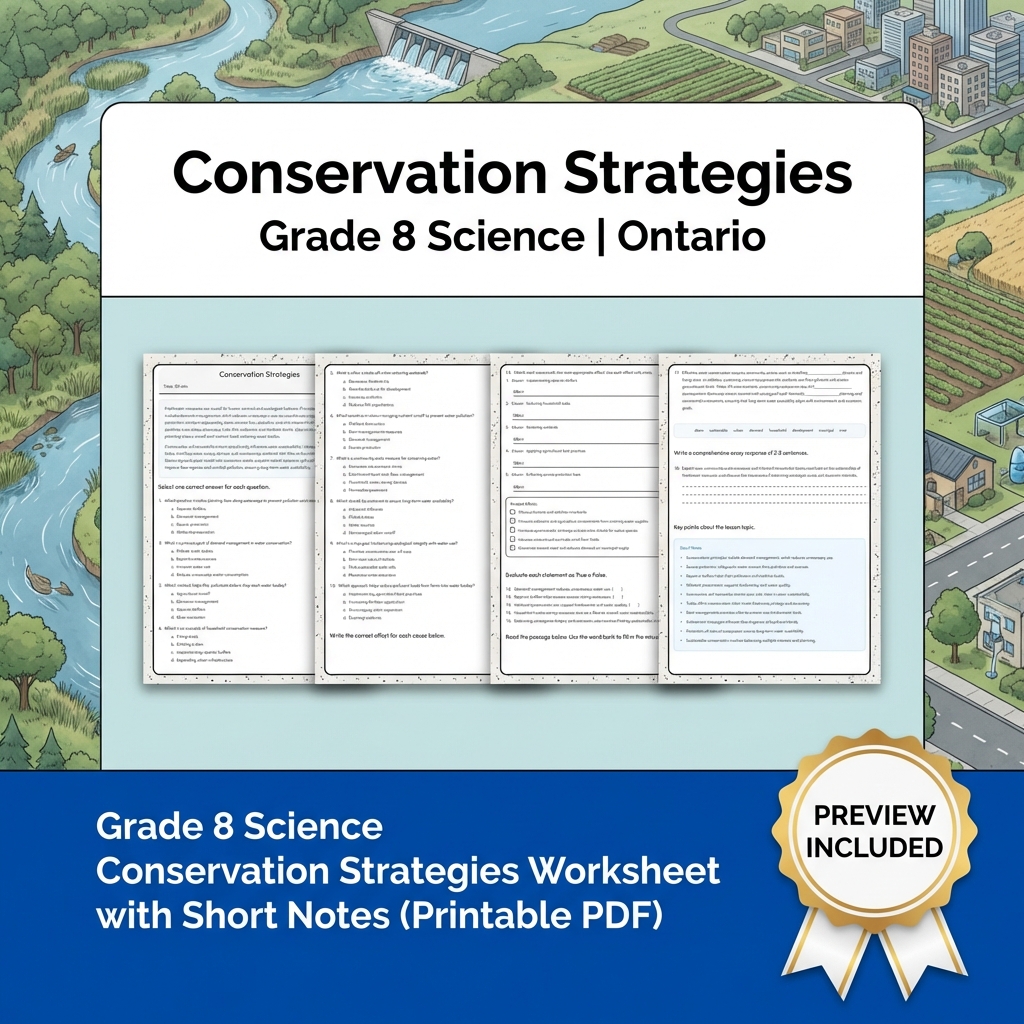
Grade 8 Science Conservation Strategies Worksheet with Short Notes
 Created byMeadowlark Worksheets
Learning Objectives
- Understand key principles and methods for sustainable water management.
- Identify trade-offs among water supply, ecological health, and economic use.
- Describe community and household measures to protect freshwater resources.
Also included in: Grade 8 Science Watershed and Water Systems Lesson Group – Ontario Framework +1 more
Instant download
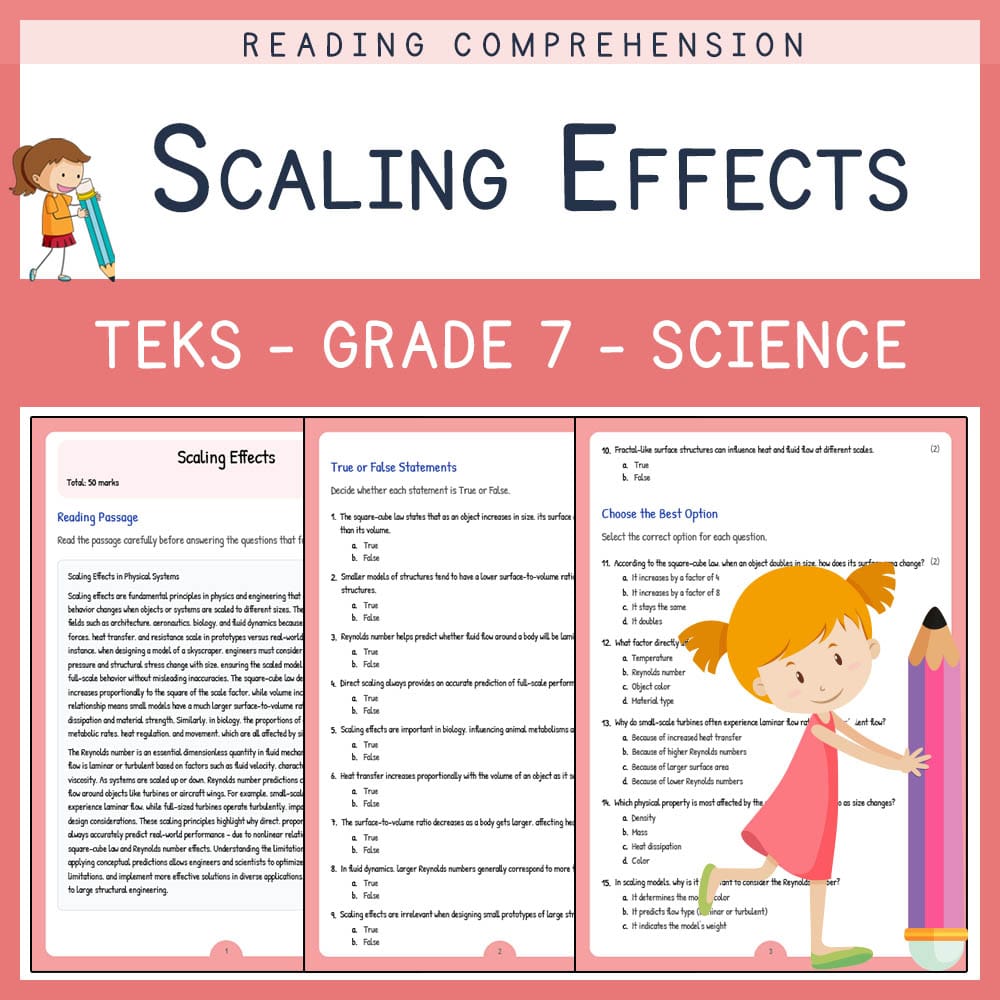
Grade 7 Science | Scaling Effects Worksheet | TEKS-Aligned
Created byLumora LearningLearning Objectives
- Understand how scaling impacts physical behavior in structures, turbines, and biological systems.
- Analyze the relationships between surface area, volume, and size in scaled models.
- Explain the significance of Reynolds number in fluid flow at different scales.
Instant download
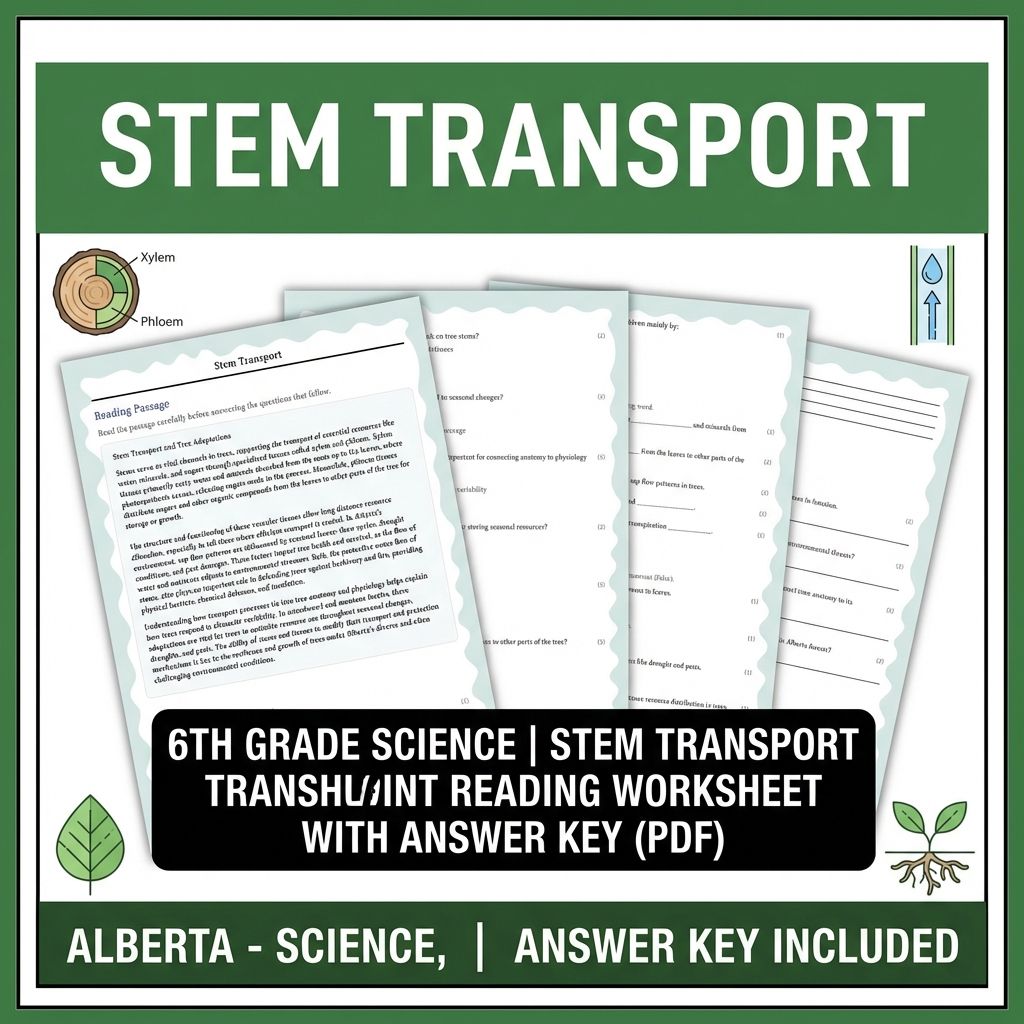
6th Grade Science | Stem Transport Reading Worksheet with Answer Key (PDF)
JCreated byJ.S SheetsLearning Objectives
- Understand how stems and vascular tissues transport water, minerals, and sugars in trees.
- Explain the roles of xylem and phloem in resource transport.
- Describe how environmental factors like freeze–thaw cycles and drought influence sap flow.
Also included in: Grade 6 Science Unit Bundle | Ecosystems and Biodiversity (Answer Keys Included) +1 more
Instant download
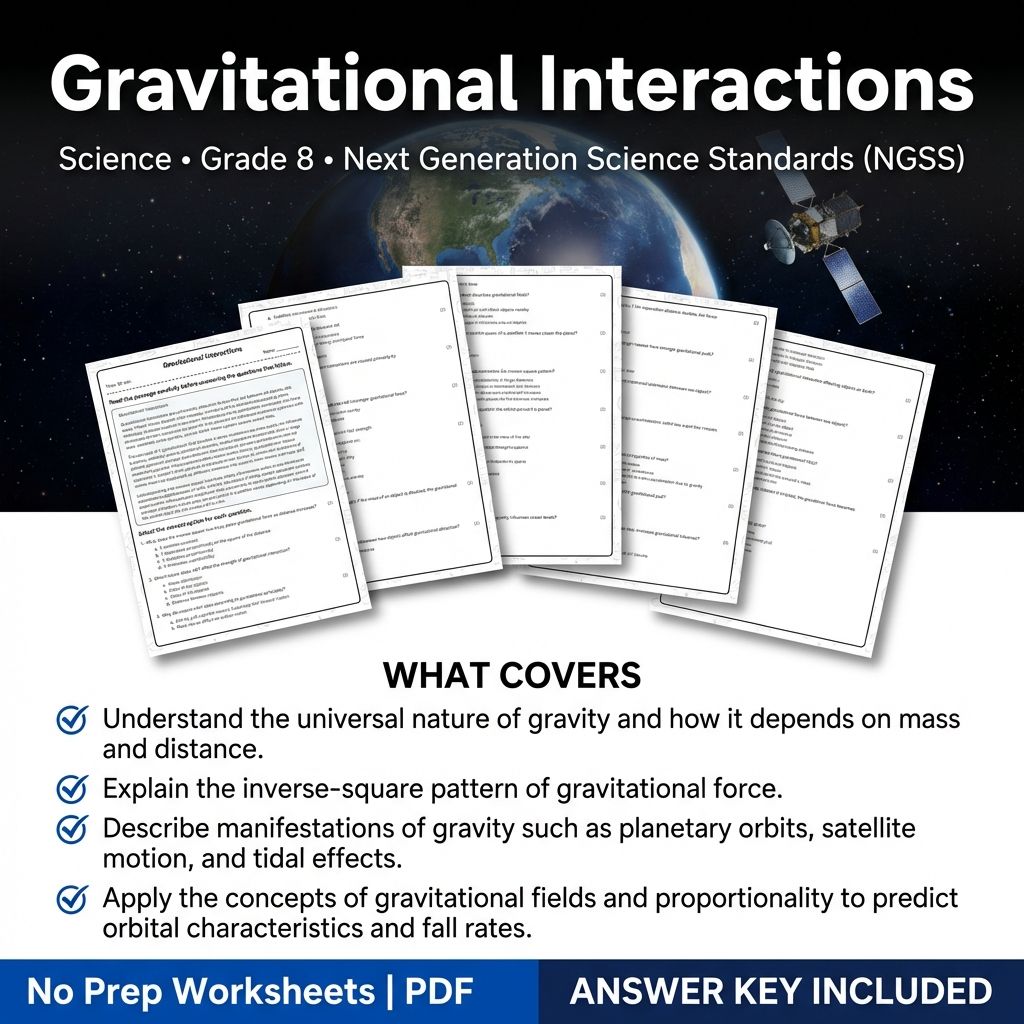
8th Grade Science Worksheet | Gravitational Interactions + Answers (Printable)
Created byCoral Reef LearningLearning Objectives
- Understand the universal nature of gravity and how it depends on mass and distance.
- Explain the inverse-square pattern of gravitational force.
- Describe manifestations of gravity such as planetary orbits, satellite motion, and tidal effects.
Instant download
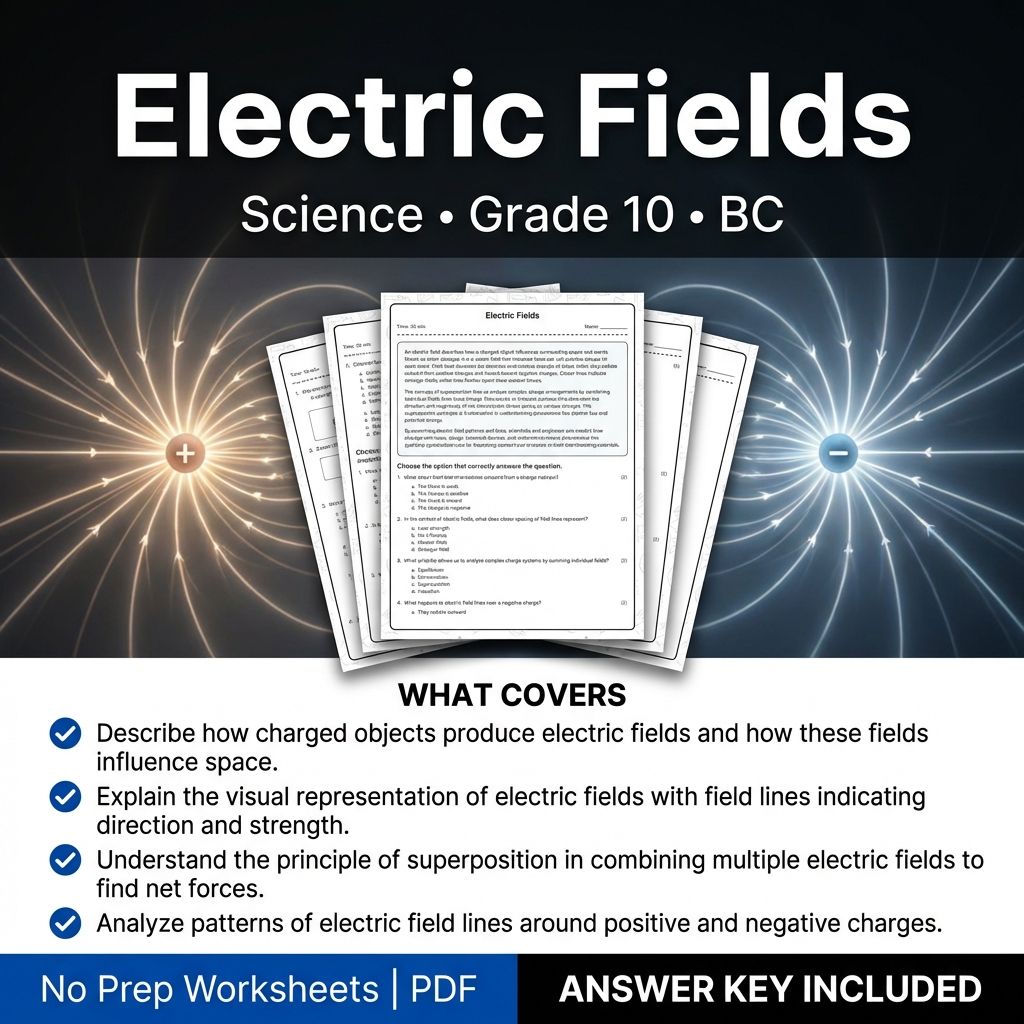
10th Grade Science | Electric Fields Worksheet with Answer Key (Printable PDF)
Created byCoral Reef LearningLearning Objectives
- Describe how charged objects produce electric fields and how these fields influence space.
- Explain the visual representation of electric fields with field lines indicating direction and strength.
- Understand the principle of superposition in combining multiple electric fields to find net forces.
Instant download

10th Grade Science | Impulse and Momentum Worksheet (PDF+ Answer Key)
Created byCopper Leaf ClassroomLearning Objectives
- Explain the concept of impulse and how it relates to change in momentum.
- Understand the conservation of momentum in isolated collisions.
- Differentiate between elastic, inelastic, and perfectly inelastic collisions.
Also included in: Grade 10 Science AP | Physics & Energy Concepts (PDF+ Answer Key) +1 more
Instant download
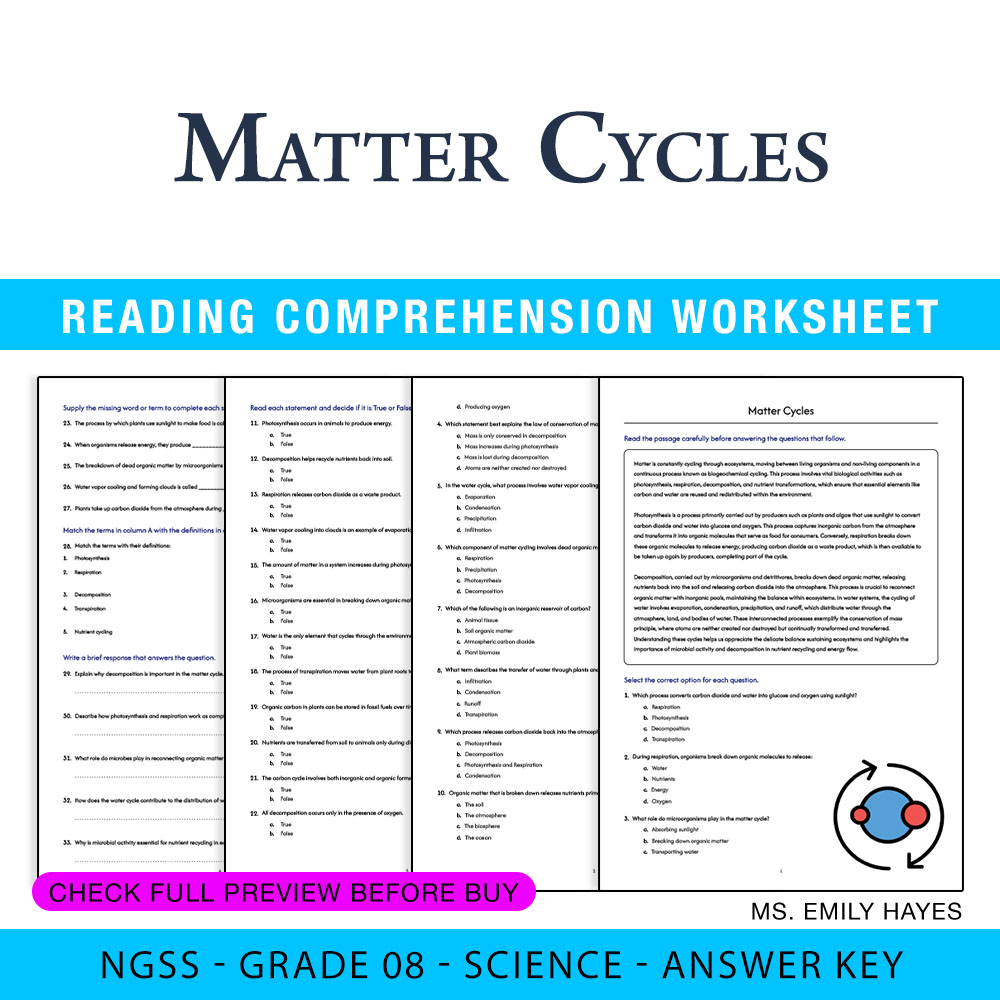
8th Grade Science | Matter Cycles Worksheet (PDF+ Answer Key)
Created byCopper Leaf ClassroomLearning Objectives
- Explain how matter is cycled between living organisms and the environment.
- Describe the processes of photosynthesis, respiration, decomposition, and nutrient transformations.
- Trace the movement of carbon and water atoms through different parts of ecosystems.
Instant download
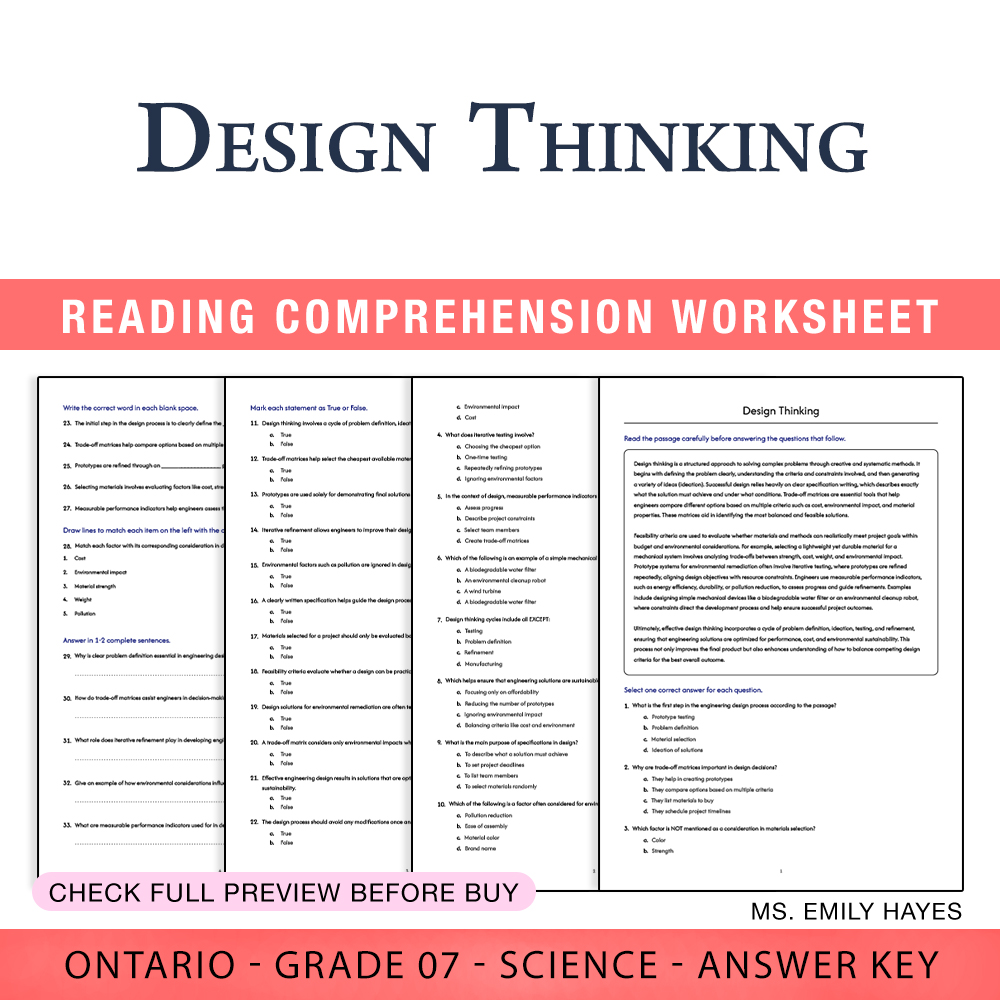
7th Grade Science | Design Thinking Worksheet (PDF+ Answer Key)
Created byCopper Leaf ClassroomLearning Objectives
- Understand the fundamentals of engineering design processes including problem definition, criteria, and constraints.
- Learn how to write clear specifications and use trade-off matrices for decision-making.
- Apply concepts of feasibility, material selection, and environmental factors in designing simple mechanical and environmental systems.
Instant download
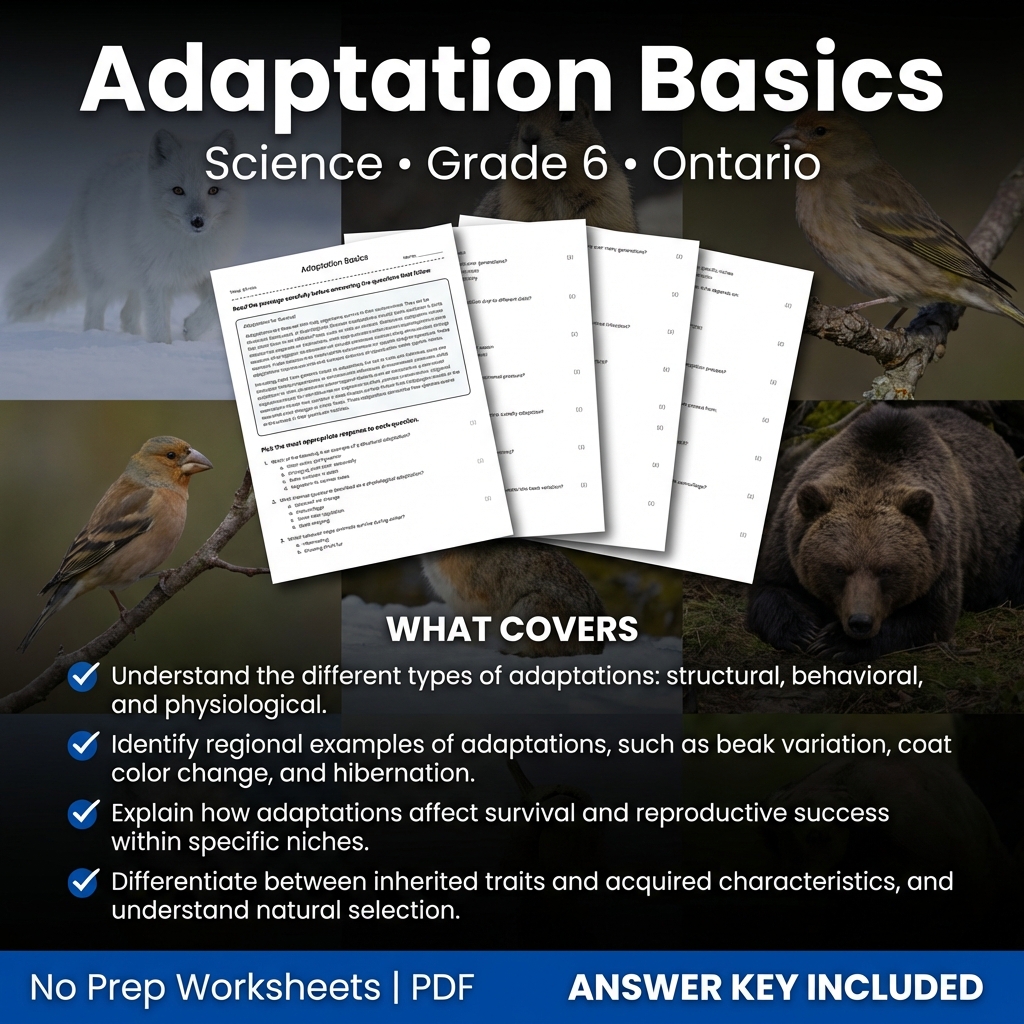
Adaptation Basics Science Worksheet | Ontario Grade 6 Assessment
Created byCoral Reef LearningLearning Objectives
- Understand the different types of adaptations: structural, behavioral, and physiological.
- Identify regional examples of adaptations, such as beak variation, coat color change, and hibernation.
- Explain how adaptations affect survival and reproductive success within specific niches.
Instant download
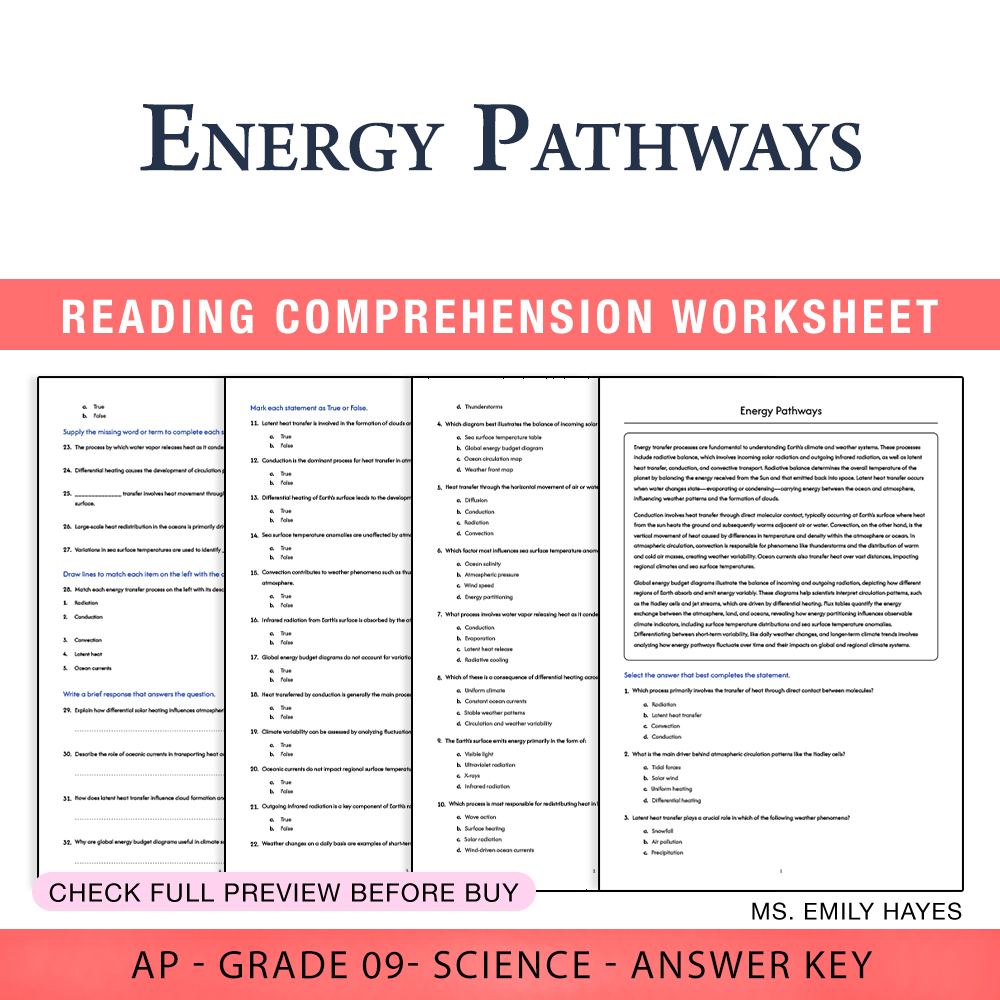
Grade 9 Science | Energy Pathways Worksheet (PDF+ Answer Key)
Created byCopper Leaf ClassroomLearning Objectives
- Describe the processes of radiative balance, latent heat transfer, conduction, and convection in atmospheric and oceanic systems.
- Interpret global energy budget diagrams and flux tables to understand circulation patterns.
- Relate energy partitioning to observable climate indicators such as surface temperature and sea surface temperature anomalies.
Also included in: Grade 9 Science | Earth and Space Sciences AP Worksheet (PDF + Answer Key) +1 more
Instant download
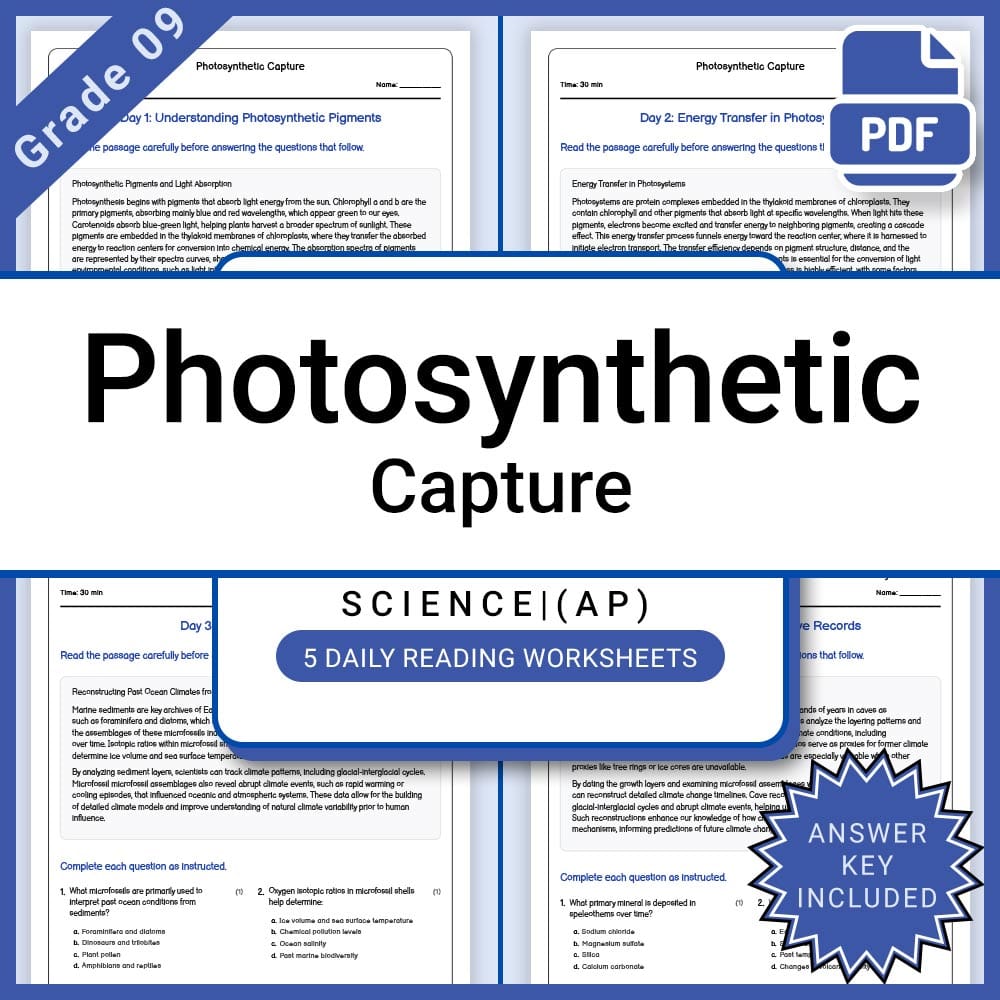
Grade 9 Science – Photosynthetic Capture Daily Reading Worksheet + Answer Key
JCreated byJ.S SheetsLearning Objectives
- Understand the role of pigments in absorbing light during photosynthesis.
- Identify different types of photosynthetic pigments based on their absorption spectra.
- Explain how energy is transferred among pigments to the reaction centers.
Also included in: Grade 9 Science Lesson Bundle | AP Curriculum Worksheets for Key Topics +1 more
Instant download
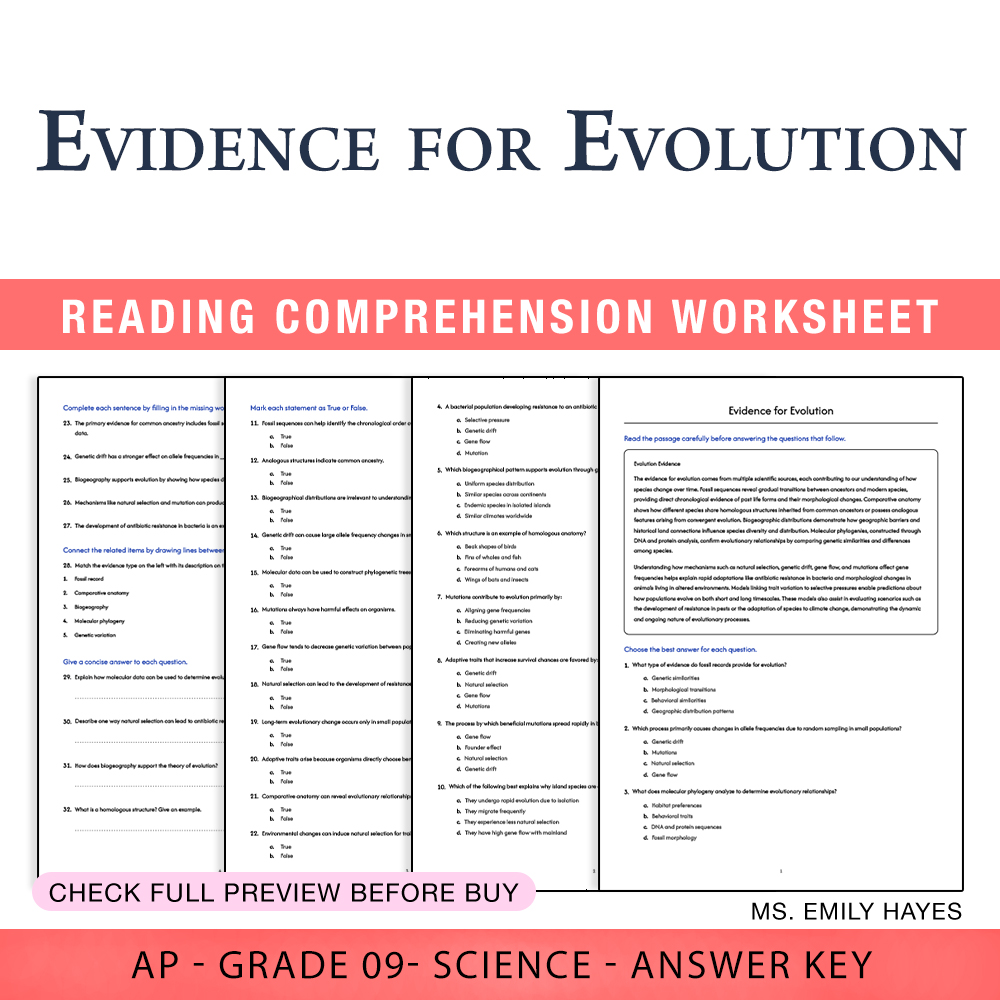
9th Grade Science | Evidence for Evolution Worksheet (PDF+ Answer Key)
Created byCopper Leaf ClassroomLearning Objectives
- Interpret multiple lines of evidence supporting the theory of evolution, including fossil records, comparative anatomy, biogeography, and molecular data.
- Describe mechanisms like natural selection, genetic drift, gene flow, and mutation that drive evolutionary changes.
- Apply models linking selective pressures to population responses and evaluate scenarios such as antibiotic resistance and environmental adaptations.
Also included in: Grade 9 Science | Biology & Ecosystems AP Worksheet Bundle (PDF+ Answer Key) +1 more
Instant download

Energy Profiles Science Worksheet | Standards-Aligned Grade 9 Assessment
JCreated byJ.S SheetsLearning Objectives
- Describe the concept of energy profiles and their significance in chemical reactions.
- Differentiate between exothermic and endothermic reactions based on energy profiles.
- Identify transition states and activation energy barriers in reaction pathways.
Instant download
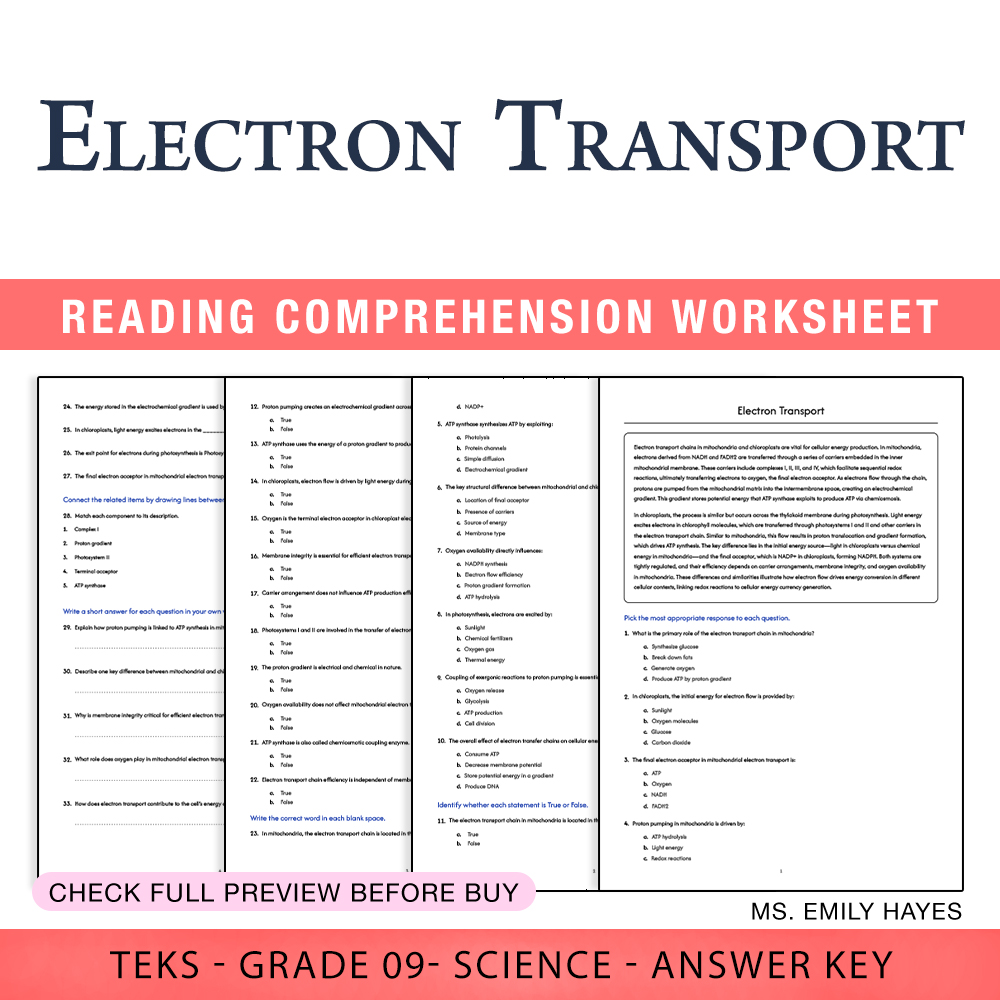
9th Grade Science | Electron Transport Worksheet (PDF+ Answer Key)
Created byCopper Leaf ClassroomLearning Objectives
- Describe the process of electron transport chains in mitochondria and chloroplasts.
- Explain how electron flow couples with proton pumping to generate ATP.
- Identify the differences between mitochondrial and thylakoid electron transport pathways.
Instant download

Grade 7 Science | Modelling Ecosystems - Daily Reading Comprehension
Created byCoral Reef LearningLearning Objectives
- Understand the concept of ecological models
- Identify components of ecological models
- Differentiate between conceptual and quantitative models
Also included in: Interactions and Ecosystems Lesson Bundle Grade 7 Science – Alberta +1 more
Instant download

Resource Limits Worksheet | Grade 6 Science NGSS Practice & Assessment
Created byPrism Point LearningLearning Objectives
- Explain how limiting resources affect individual organisms and population sizes
- Interpret measurement patterns (such as resource gradients) to predict where species will be most abundant
- Connect carrying capacity to population fluctuations in different environments
Also included in: Grade 6 Species Interactions Science Lesson Bundle | NGSS
Instant download
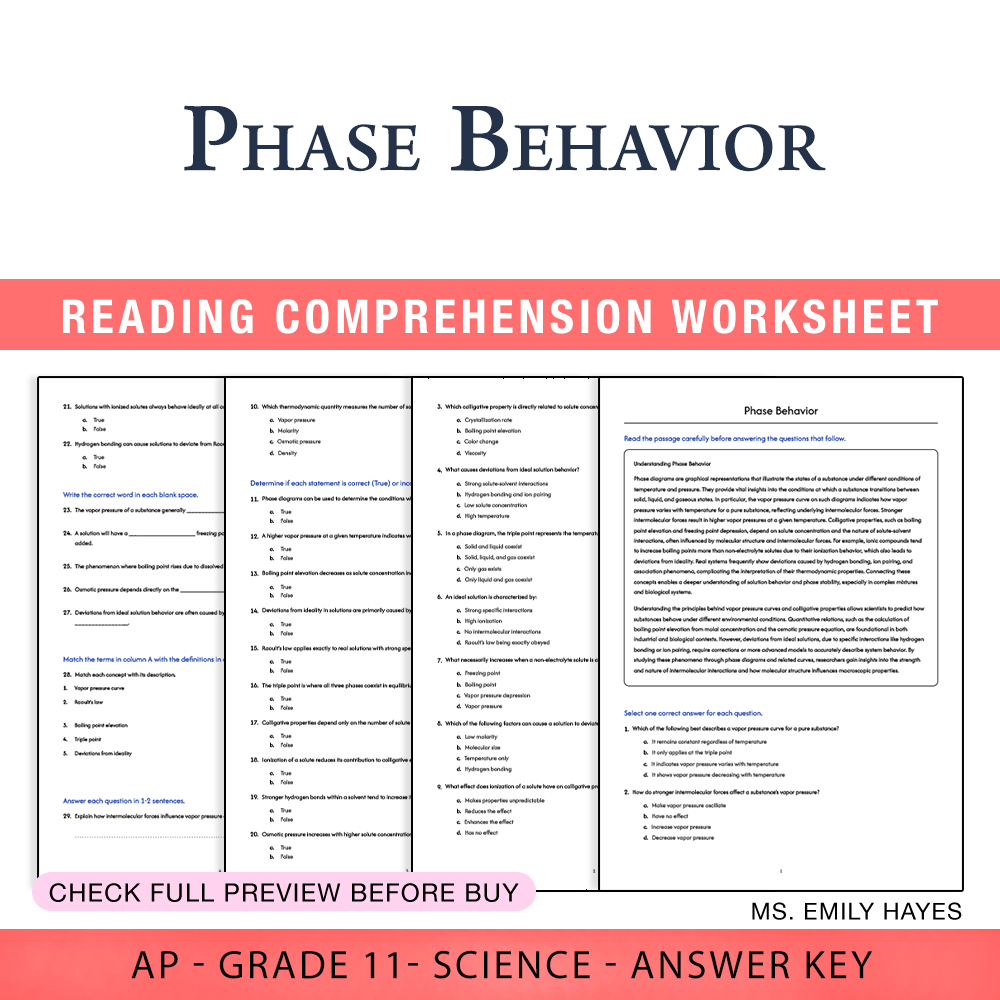
11th Grade Science | Phase Behavior Worksheet (PDF+ Answer Key)
Created byCopper Leaf ClassroomLearning Objectives
- Interpret phase diagrams, vapor pressure curves, and colligative properties through intermolecular interactions.
- Connect solute-solvent interactions, vapor-liquid equilibria, and freezing-point depression to molecular forces.
- Apply quantitative relations for boiling point elevation and osmotic behavior in idealized systems.
Also included in: Grade 11 Science | Chemistry Foundations AP Worksheet Bundle (PDF+ Answer Keys) +1 more
Instant download
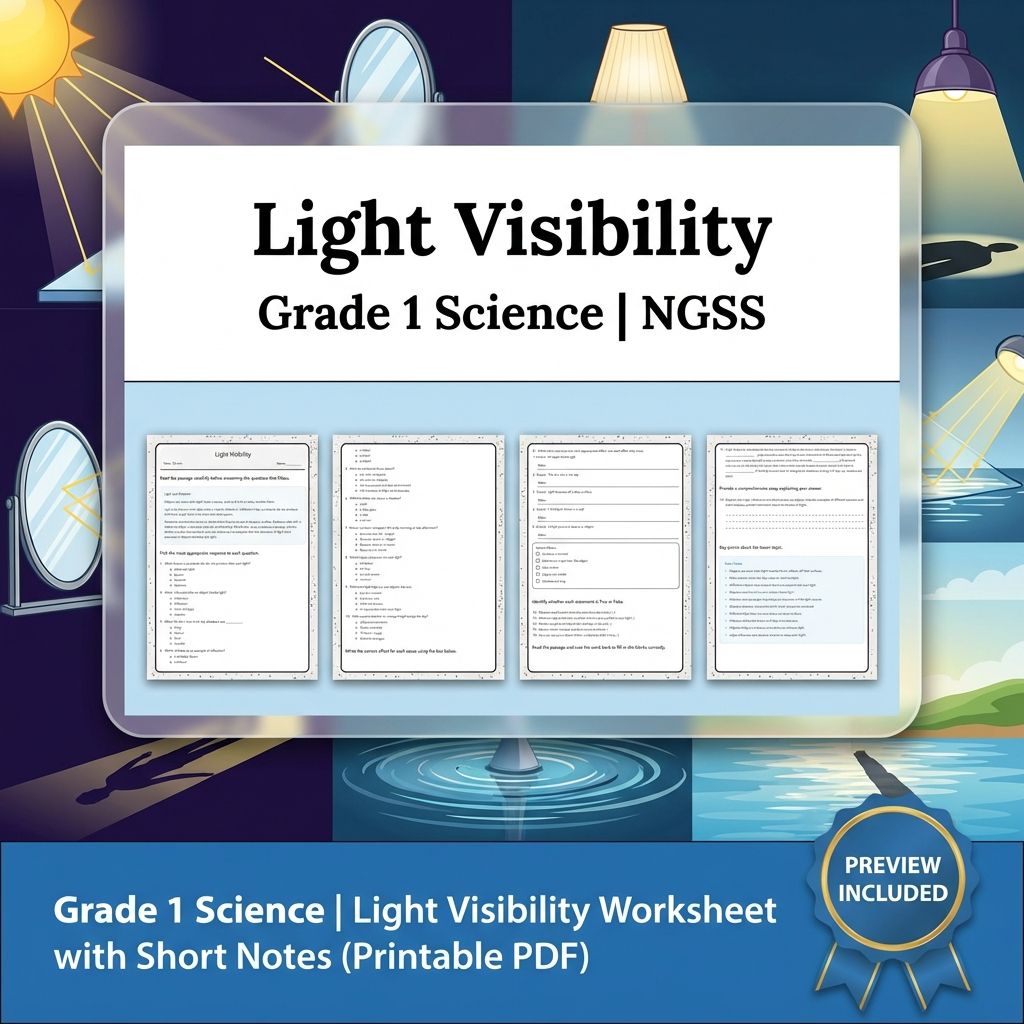
Grade 1 Science | Light Visibility Worksheet with Short Notes (Printable PDF)
Created byMeadowlark WorksheetsLearning Objectives
- Understand how objects are seen when illuminated by light sources.
- Learn how reflection and shadows help us see objects in different conditions.
- Identify examples of light sources, reflection, and shadow formation.
Also included in: Grade 1 Science NGSS Unit Bundle | Waves & Information Transfer Applications +1 more
Instant download
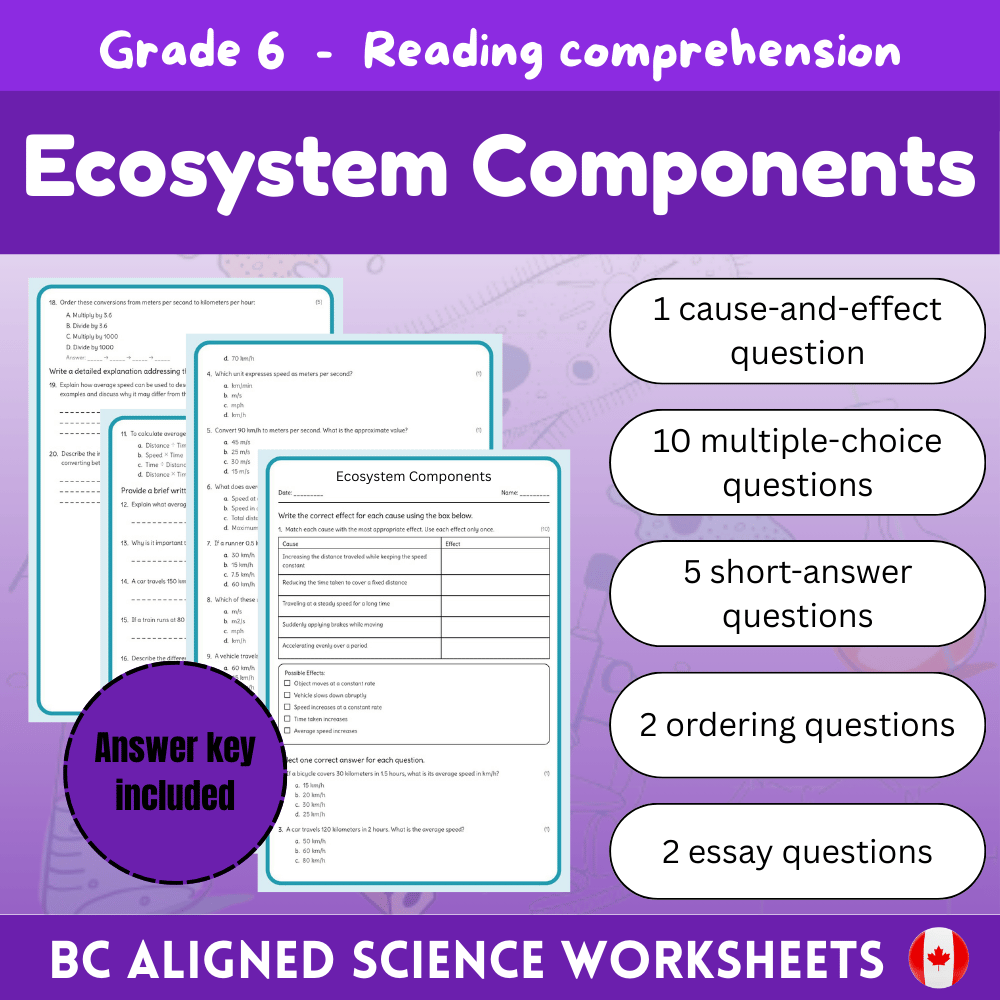
6th Grade Science | Ecosystem Components Worksheet + Answer Key (PDF)
 Created byBright Mind Resources
Learning Objectives
- Understand the roles of biotic and abiotic factors in an ecosystem.
- Identify different components that make up an ecosystem.
- Explain how biotic and abiotic factors interact to influence habitats.
Instant download
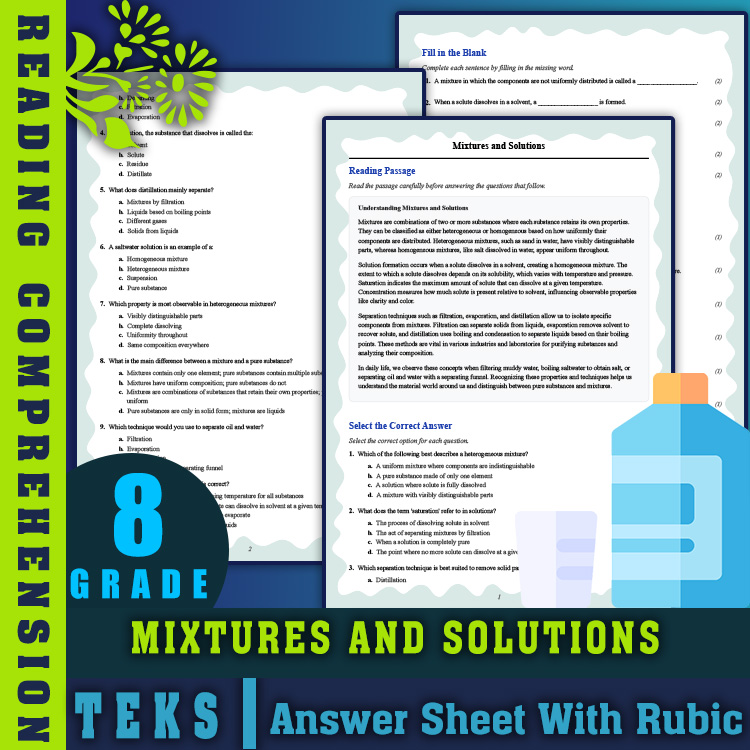
8th Grade Science | Mixtures and Solutions Reading Worksheet (PDF + Answer Key)
JCreated byJ.S SheetsLearning Objectives
- Understand the differences between heterogeneous and homogeneous mixtures.
- Identify common techniques for separating mixtures such as filtration, evaporation, and distillation.
- Explain the concepts of solubility, saturation, and concentration in solutions.
Instant download

Ecosystem Resilience Mechanisms Worksheet | Grade 11 Biology TEKS
 Created byBRIGHT PATH RESOURCES
Learning Objectives
- Identify the main idea of an informational passage about ecosystem resilience
- Define key vocabulary terms related to resilience and ecosystem responses
- Explain how species interactions and feedbacks can buffer disturbances
Instant download
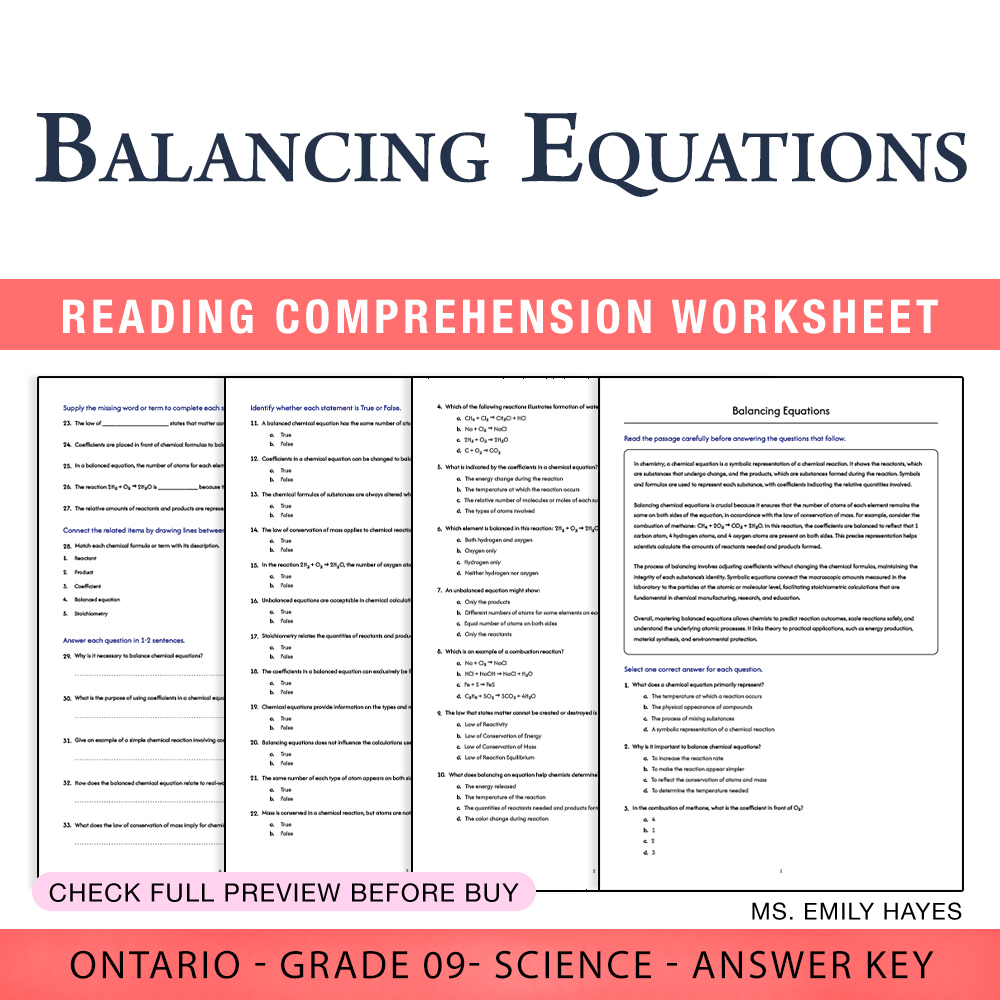
9th Grade Science | Balancing Equations Practice Worksheet (PDF + Answer Key)
Created byCopper Leaf ClassroomLearning Objectives
- Understand the importance of balancing chemical equations to reflect the law of conservation of mass.
- Recognize the symbols and notation used in chemical equations.
- Demonstrate the ability to balance simple chemical reactions such as combustion and formation of water.
Instant download

Grade 9 Science – Newton's Second Law | Daily Reading Worksheet + Answer Key
JCreated byJ.S SheetsLearning Objectives
- Explain the basic concept of Newton's second law
- Identify the mathematical formula F = ma
- Distinguish between mass and weight
Also included in: Grade 9 Science Lesson Group: Physics and Motion Worksheets Bundle +1 more
Instant download
Grade 9 Science – Free-Body Diagrams Daily Reading Worksheet + Answer Key
JCreated byJ.S SheetsLearning Objectives
- Recognize and interpret free-body diagrams for simple objects
- Identify the common forces involved in free-body diagrams
- Understand the conventions for force vectors, points of application, and coordinate systems
Also included in: Grade 9 Science Lesson Group: Physics and Motion Worksheets Bundle +1 more
Instant download
Grade 9 Science – Basic Kinematic Equations Daily Reading Worksheet + Answer Key
JCreated byJ.S SheetsLearning Objectives
- Interpret the fundamental kinematic equations linking displacement, velocity, acceleration, and time.
- Understand the physical meaning of variables u, v, s, a, and t in motion scenarios.
- Apply kinematic equations to different contexts such as free-fall and projectile motion.
Also included in: Grade 9 Science Lesson Group: Physics and Motion Worksheets Bundle +1 more
Instant download
Grade 9 Science Power and Efficiency Daily Reading Worksheet + Answer Key
JCreated byJ.S SheetsLearning Objectives
- Understand the concept of power as the rate of energy transfer or work per unit time.
- Identify the units used to measure power, including Watts.
- Explain the difference between average and instantaneous power.
Also included in: Grade 9 Science Lesson Group: Physics and Motion Worksheets Bundle +1 more
Instant download
Grade 9 – Energy Conservation in Mechanical Systems Worksheet + Answer Key
JCreated byJ.S SheetsLearning Objectives
- Understand the concepts of kinetic and potential energy.
- Learn how energy transforms between kinetic and potential forms in systems.
- Recognize the impact of non-conservative forces like friction on energy conservation.
Also included in: Grade 9 Science Lesson Group: Physics and Motion Worksheets Bundle +1 more
Instant download
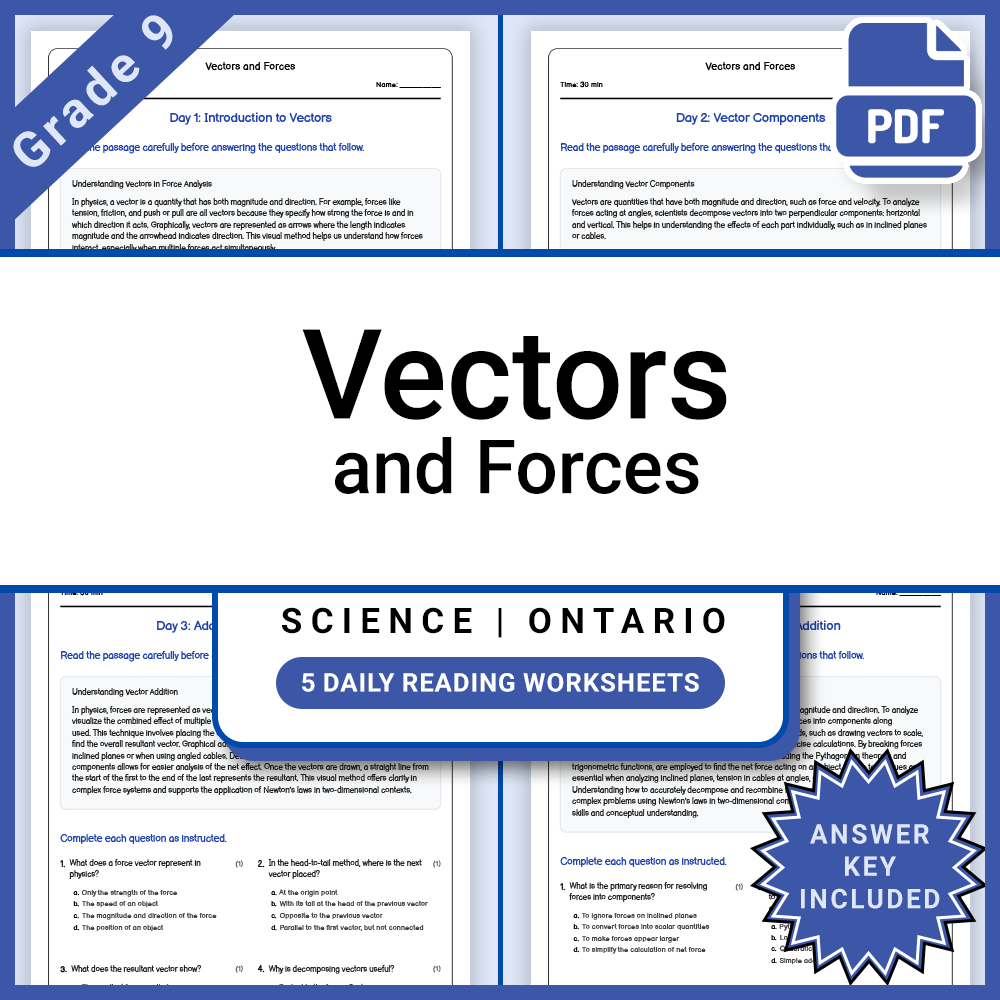
Grade 9 Science – Vectors and Forces Daily Reading Worksheet + Answer Key
JCreated byJ.S SheetsLearning Objectives
- Understand the concept of vectors as quantities with magnitude and direction
- Learn to represent forces graphically using vectors
- Resolve vectors into components along orthogonal axes
Also included in: Grade 9 Science Lesson Group: Physics and Motion Worksheets Bundle +1 more
Instant download
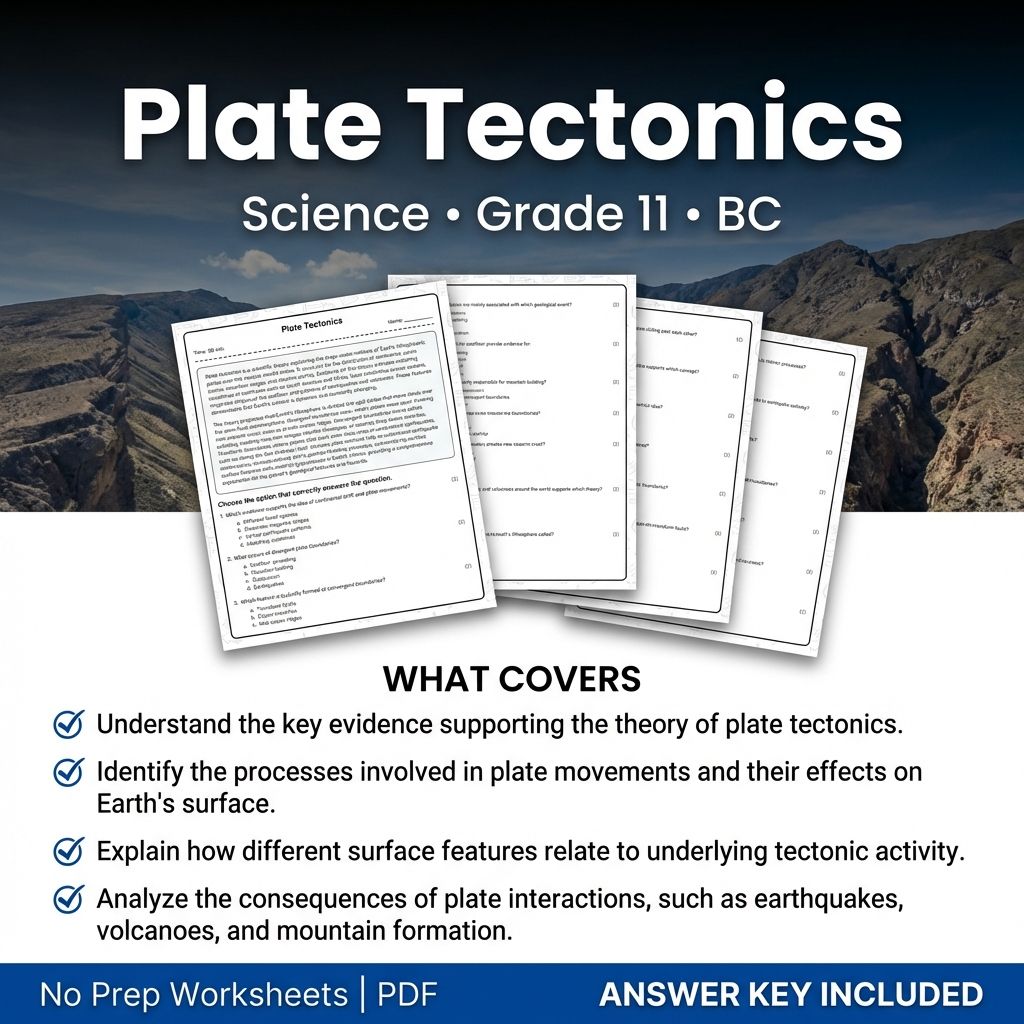
11th Grade Science | Plate Tectonics Worksheet & Answer Key PDF
Created byCoral Reef LearningLearning Objectives
- Understand the key evidence supporting the theory of plate tectonics.
- Identify the processes involved in plate movements and their effects on Earth's surface.
- Explain how different surface features relate to underlying tectonic activity.
Instant download
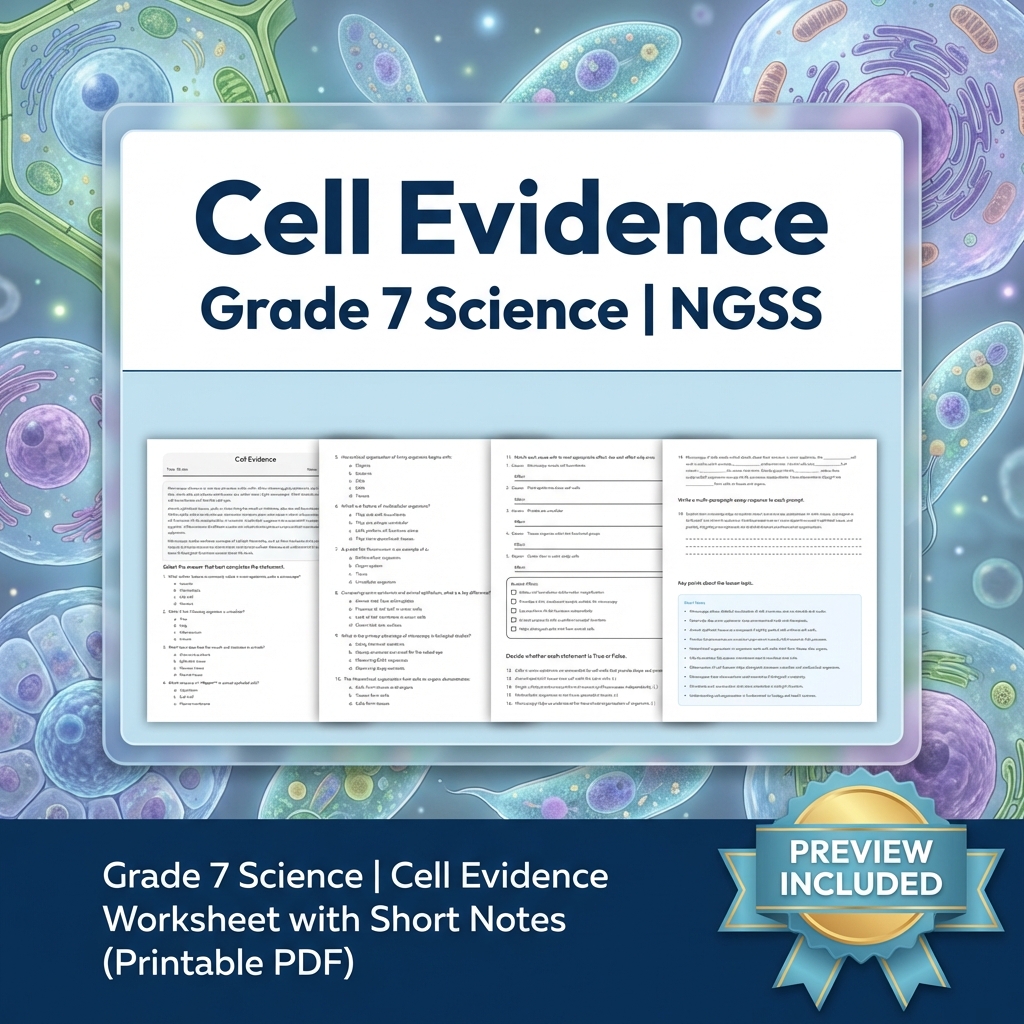
Grade 7 Science | Cell Evidence Worksheet with Short Notes (Printable PDF)
Created byMeadowlark WorksheetsLearning Objectives
- Understand how microscopy reveals the structure of plant and animal cells.
- Identify and compare features of unicellular and multicellular organisms.
- Recognize cellular components such as cell walls, plasma membranes, and organelles.
Also included in: Grade 7 Science NGSS Unit Bundle Molecules to Organisms: Structures & Processes +1 more
Instant download

6th Grade Science – Design Problem Worksheet (General Standards) (PDF)
 Created byMaple Path Learning
Learning Objectives
- Understand the key components of a design problem, including needs and constraints.
- Learn how to generate solution ideas using sketches, measurements, and goals.
- Explore real-world examples of designing protective cases for fragile items.
Instant download
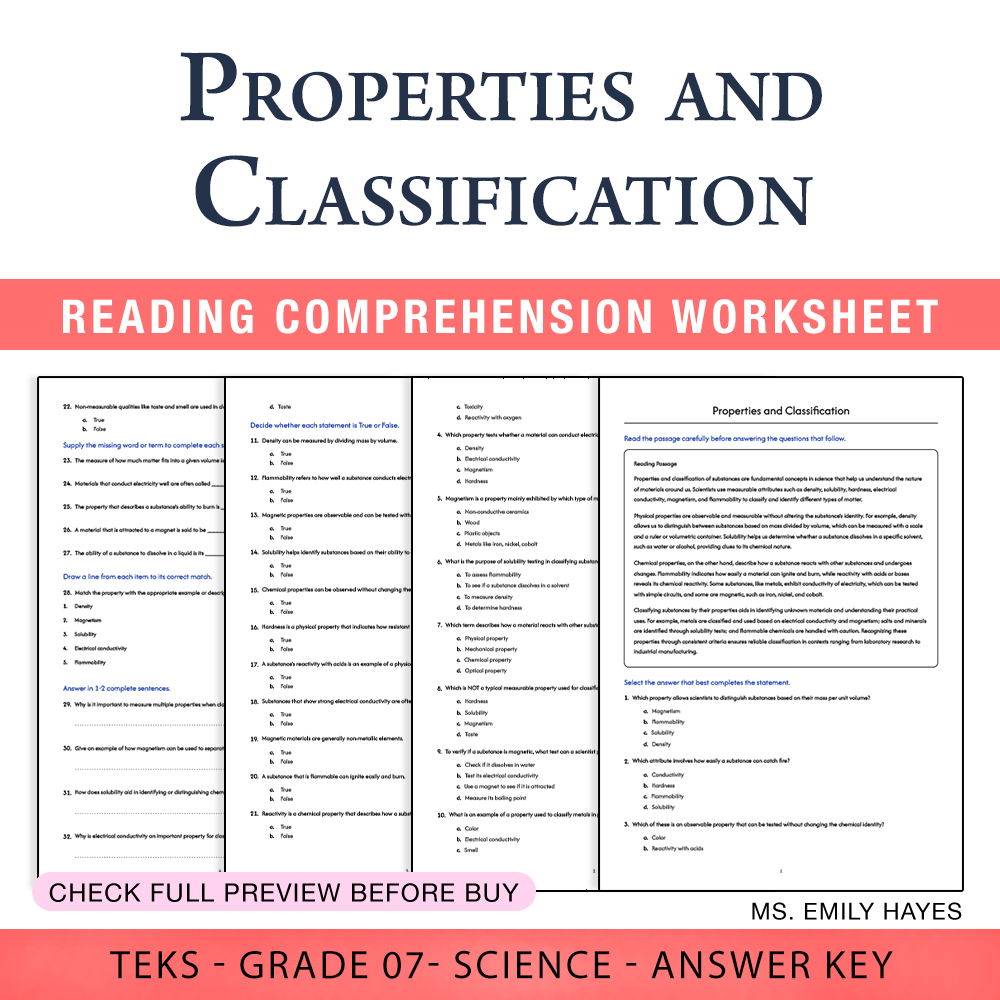
7th Grade Science | Properties and Classification Worksheet (PDF+ Answer Key)
Created byCopper Leaf ClassroomLearning Objectives
- Understand and define physical and chemical properties used to classify substances.
- Identify measurable attributes such as density, solubility, hardness, electrical conductivity, magnetism, and flammability.
- Apply observable and quantitative criteria to distinguish elements, compounds, and mixtures.
Instant download
Browse more categories
About Science Worksheets
Find Science worksheets spanning core skills, practice, and review. All 44,628 resources are instant PDF downloads for the classroom or home.
Every worksheet on MyTeachingSheets is created by independent teacher-authors and reviewed before publication. All resources download as printable PDFs for classroom, homework, or at-home practice, and many include answer keys. Preview any worksheet free before buying.