
Science Worksheets
44,628 subject resources
Grade 4 Soil Types and Their Properties Worksheet | Ontario Science
 Created byChalk and Compass
Learning Objectives
- Identify sand, silt, clay, and loam using particle size distribution and basic properties.
- Describe how soil texture affects permeability, aeration, and nutrient retention.
- Explain how organic content can improve soil structure, fertility, and water-holding capacity.
Also included in: Grade 4 Science Rocks, Soil & Rock Cycle Lesson Bundle – Ontario +1 more
Instant download

Grade 4 Science Population Changes and Survival Traits Worksheet Ontario
Created byChalk and CompassLearning Objectives
- Explain how population size can increase or decrease over generations due to birth rate, resources, predation, and disease.
- Describe how adaptations—physical and behavioral—help individuals survive and increase the chance that their traits become more common.
- Connect numerical changes in species abundance to traits that affect survival in a changing environment.
Also included in: Grade 4 Science Habitat & Biodiversity Lesson Bundle | Ontario +1 more
Instant download

Grade 4 Science Succession Worksheet | Primary & Secondary Succession Ontario
Created byChalk and CompassLearning Objectives
- Explain the difference between primary and secondary succession after a disturbance.
- Describe how pioneer species and soil development change an ecosystem over generations.
- Predict how resource availability and species interactions shift as succession progresses.
Also included in: Grade 4 Science Habitat & Biodiversity Lesson Bundle | Ontario +1 more
Instant download
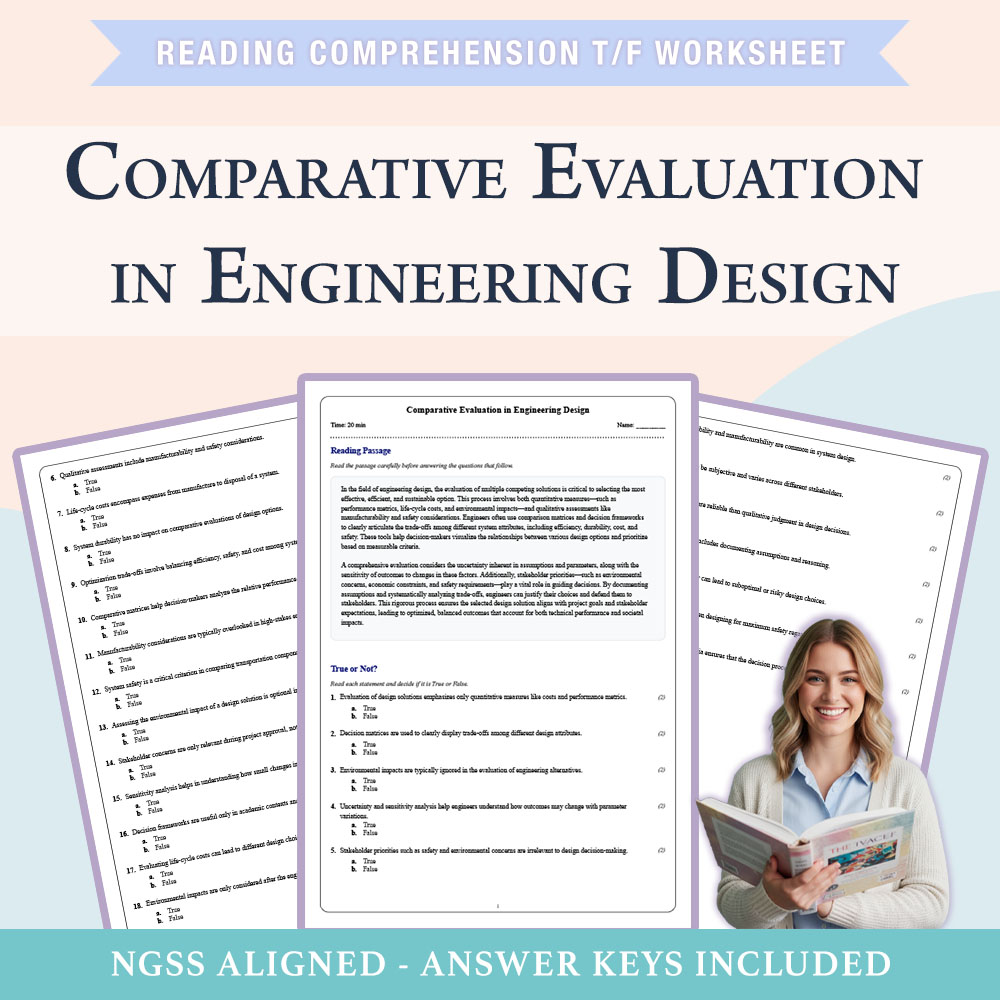
Grade 9 Science | Comparative Evaluation in Engineering Design (PDF + Answers)
 Created byCopper Leaf Classroom
Learning Objectives
- Understand the principles of evaluating competing design solutions using quantitative and qualitative metrics.
- Recognize the importance of decision frameworks and matrices in selecting optimal systems based on multiple criteria.
- Assess the role of uncertainty and stakeholder priorities in engineering evaluations.
Also included in: Grade 9 Science | Engineering Design & Modeling Bundle (PDF + Answer Key) +1 more
Instant download
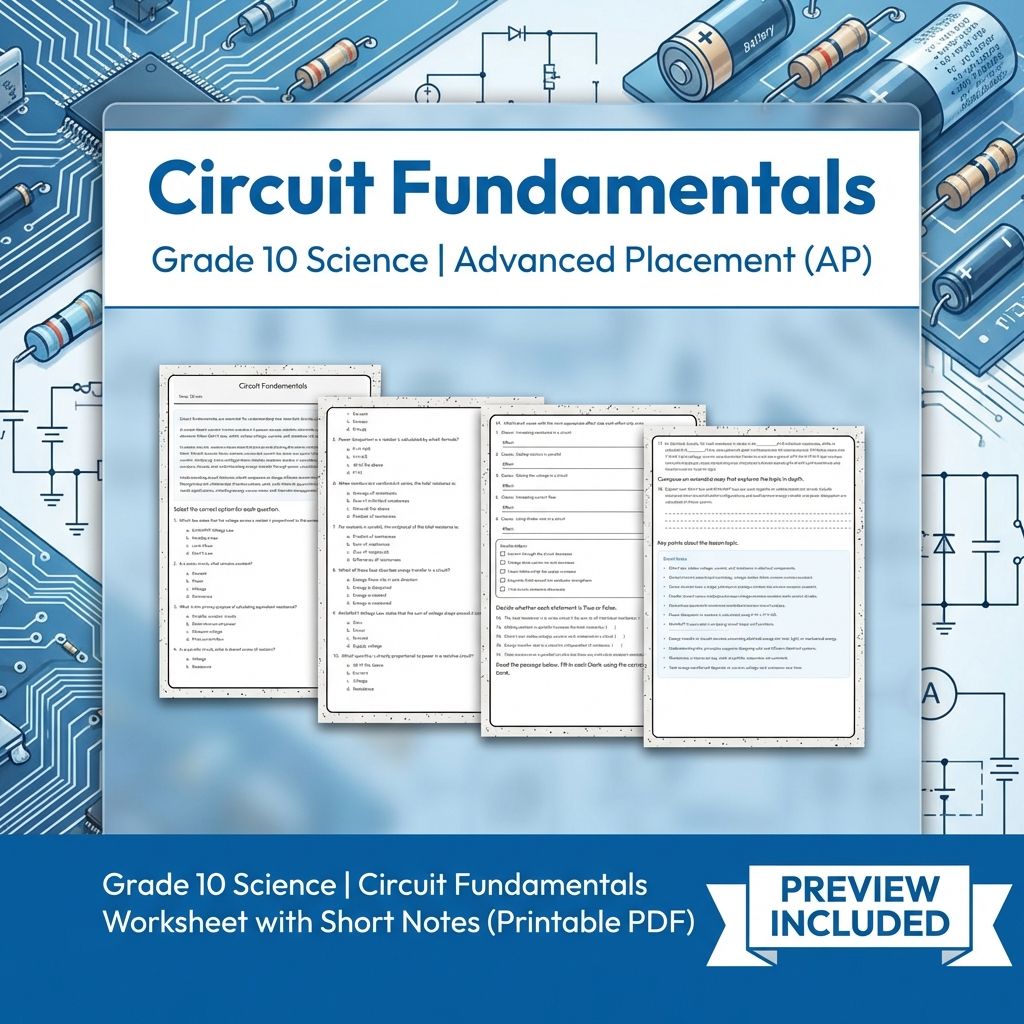
Grade 10 Science | Circuit Fundamentals Worksheet with Short Notes (PDF)
 Created byMeadowlark Worksheets
Learning Objectives
- Understand the basic components and functions of direct-current circuits.
- Apply Ohm's law and Kirchhoff's laws to analyze series and parallel circuits.
- Calculate equivalent resistance in complex circuits.
Instant download

Grade 9 Science | Mass Conservation - Daily Reading Comprehension
 Created byCoral Reef Learning
Learning Objectives
- Understand the principle of mass conservation in chemical reactions
- Identify examples of mass conservation in real-world scenarios
- Learn to apply the concept to simple chemical equations
Also included in: Matter and Chemical Change Lesson Bundle – Grade 9 Science Alberta +1 more
Instant download

Grade 9 Science | States of Matter - Daily Reading Comprehension
Created byCoral Reef LearningLearning Objectives
- Identify the three main states of matter: solid, liquid, and gas.
- Describe the characteristic properties of each state of matter.
- Understand how temperature and pressure influence state changes.
Also included in: Matter and Chemical Change Lesson Bundle – Grade 9 Science Alberta +1 more
Instant download
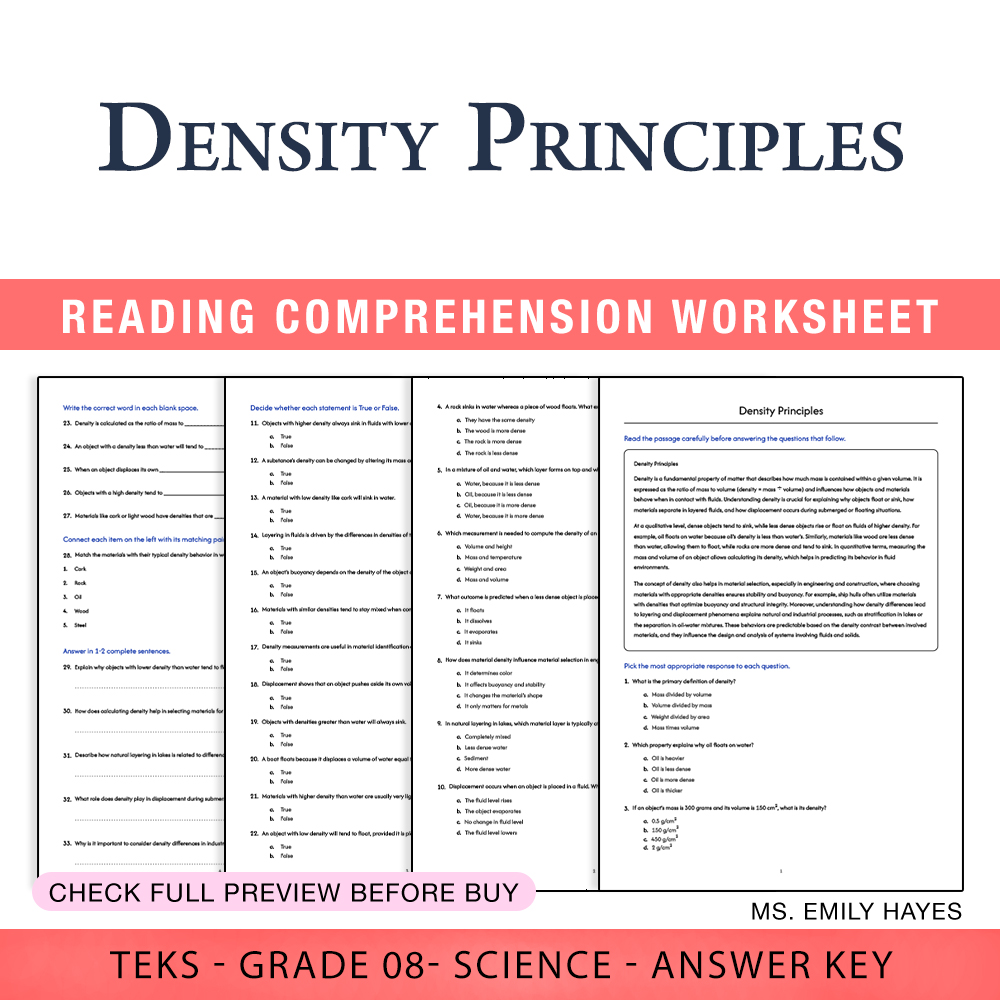
Grade 8 Science | Density Principles Worksheet (PDF+ Answer Key)
Created byCopper Leaf ClassroomLearning Objectives
- Understand the concept of density as a ratio of mass to volume and its significance in predicting material behavior in fluids.
- Explain how density differences cause phenomena like buoyancy, layering, and displacement in liquids and solids.
- Calculate basic density using given mass and volume measurements and interpret the results for material comparison.
Instant download
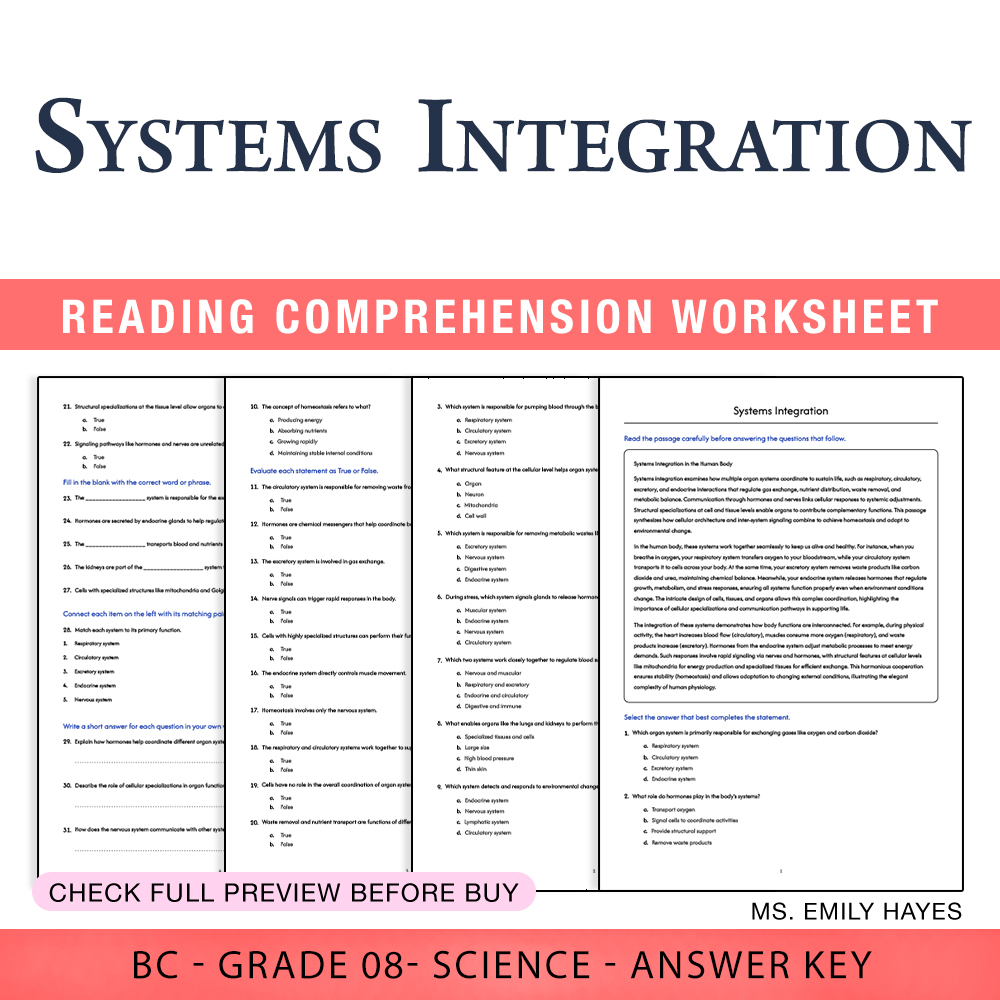
8th Grade Science | Systems Integration Worksheet (PDF+ Answer Key)
Created byCopper Leaf ClassroomLearning Objectives
- Understand how multiple organ systems coordinate to maintain homeostasis.
- Explain the roles of the respiratory, circulatory, excretory, and endocrine systems in systemic regulation.
- Describe how cellular structures support organ functions and inter-system communication.
Also included in: Grade 8 Science Bundle – Cell Structure, Systems & Organisms (PDF + Answer Key) +1 more
Instant download

Grade 7 Science – Mountain Building Worksheet (PDF) | BC Standards
 Created byEvergreen Desk Education
Learning Objectives
- Explain how orogeny forms mountains through crustal shortening, thickening, and uplift during plate convergence.
- Describe how continental collisions and subduction-related compression contribute to mountain-belt structures.
- Connect erosion and isostatic adjustment to how uplifted mountain landscapes evolve over time.
Instant download
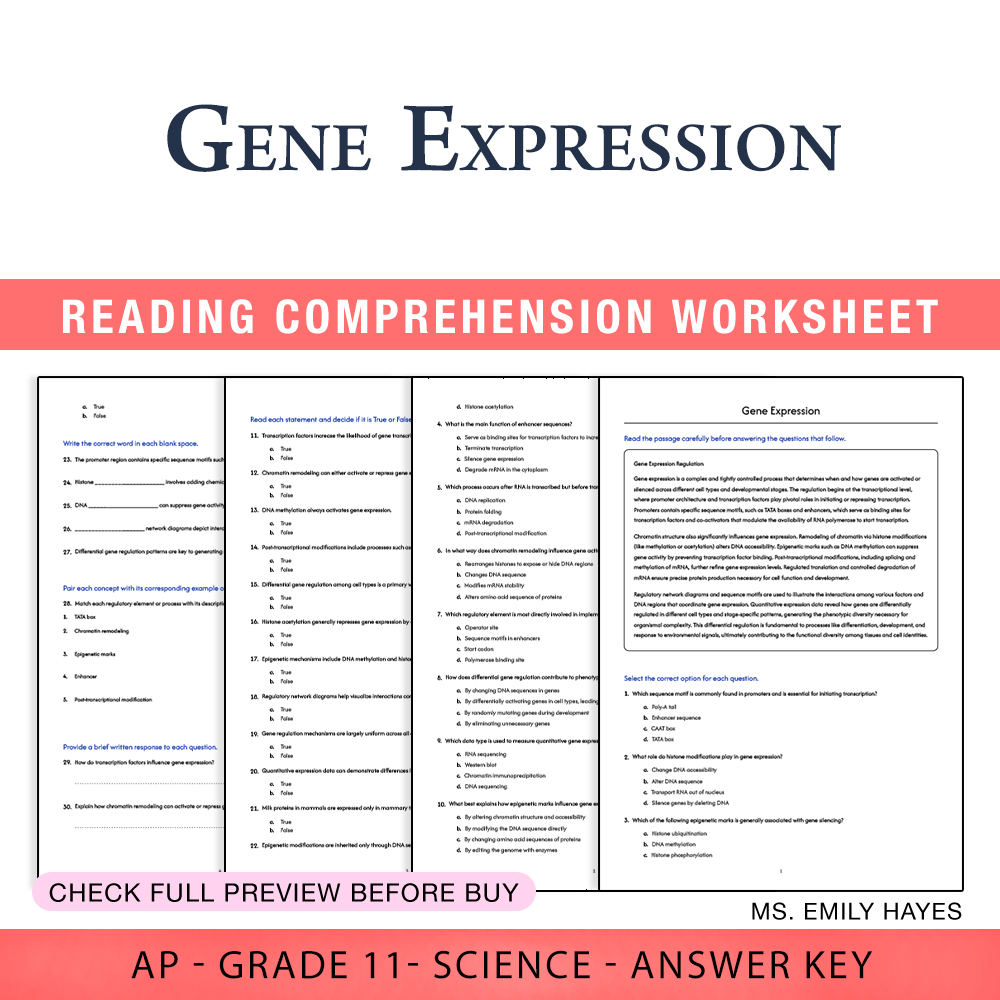
Grade 11 Science | Gene Expression Worksheet (PDF+ Answer Key)
Created byCopper Leaf ClassroomLearning Objectives
- Explain the mechanisms regulating gene expression from transcription to post-transcriptional modifications.
- Identify the roles of promoter architecture, transcription factors, chromatin remodeling, and epigenetic marks in gene regulation.
- Analyze how sequence motifs, regulatory network diagrams, and expression data illustrate gene regulation.
Also included in: Grade 11 Science | Biology & Ecosystems AP Worksheet Bundle (PDF+ Answer Keys) +1 more
Instant download
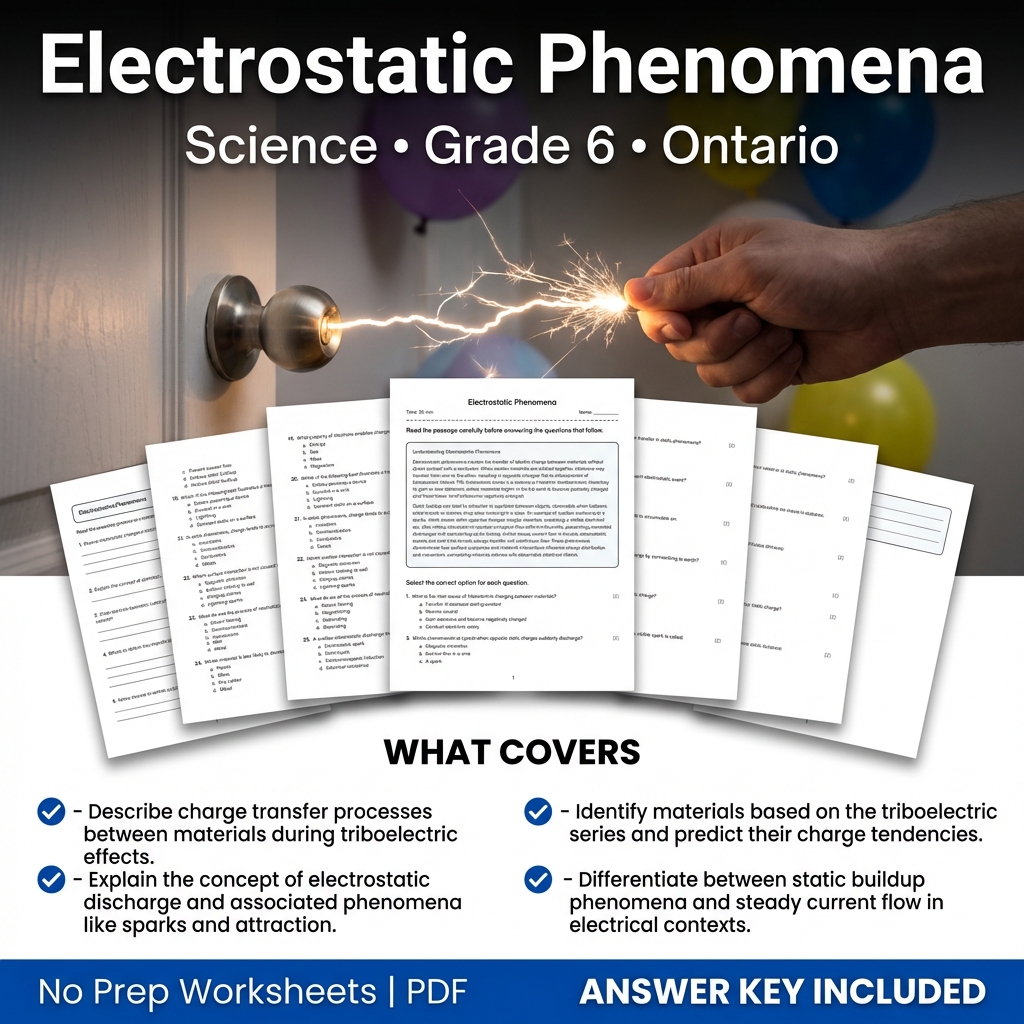
Grade 6 Science Worksheet on Electrostatic Phenomena – Ontario Standard
Created byCoral Reef LearningLearning Objectives
- Describe charge transfer processes between materials during triboelectric effects.
- Explain the concept of electrostatic discharge and associated phenomena like sparks and attraction.
- Identify materials based on the triboelectric series and predict their charge tendencies.
Instant download
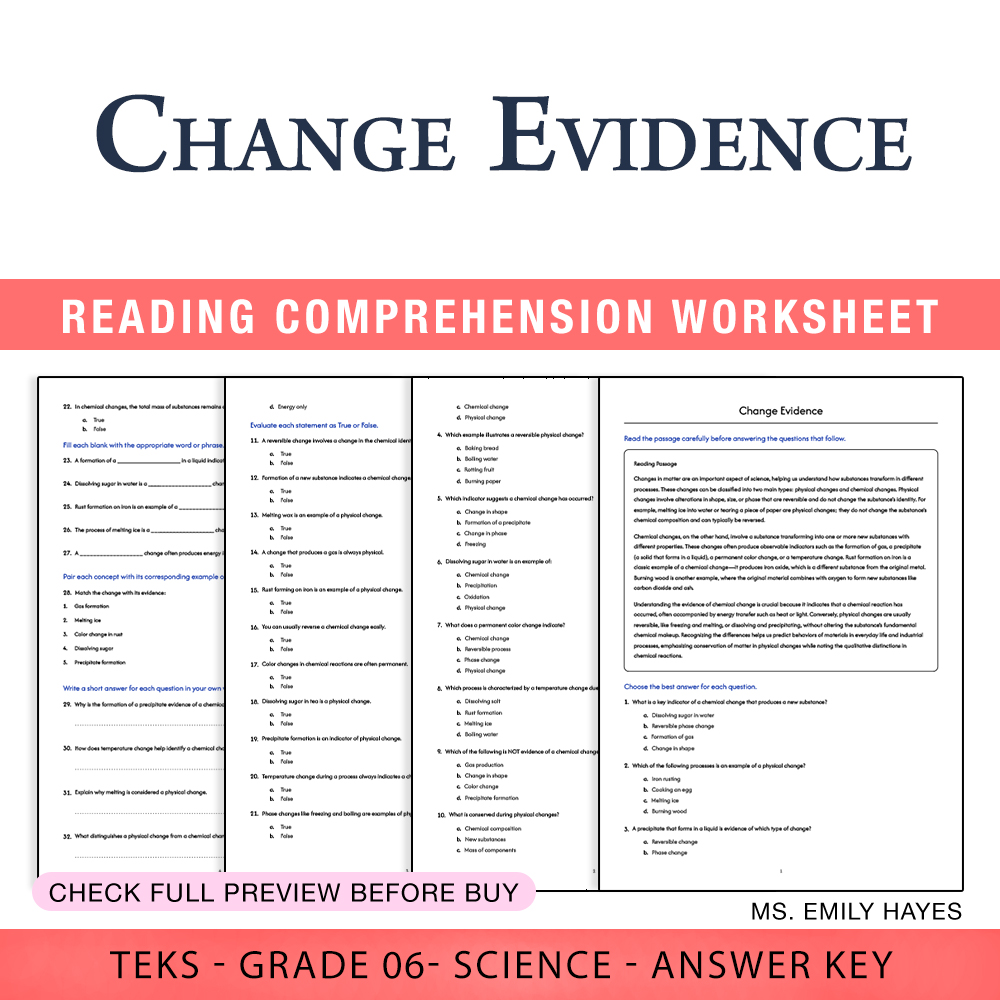
6th Grade Science | Change Evidence Worksheet (PDF+ Answer Key)
Created byCopper Leaf ClassroomLearning Objectives
- Distinguish between physical and chemical changes through observable indicators.
- Identify examples of physical and chemical changes in everyday life.
- Understand characteristic evidence of chemical processes such as gas formation, precipitate, color change, and temperature change.
Instant download
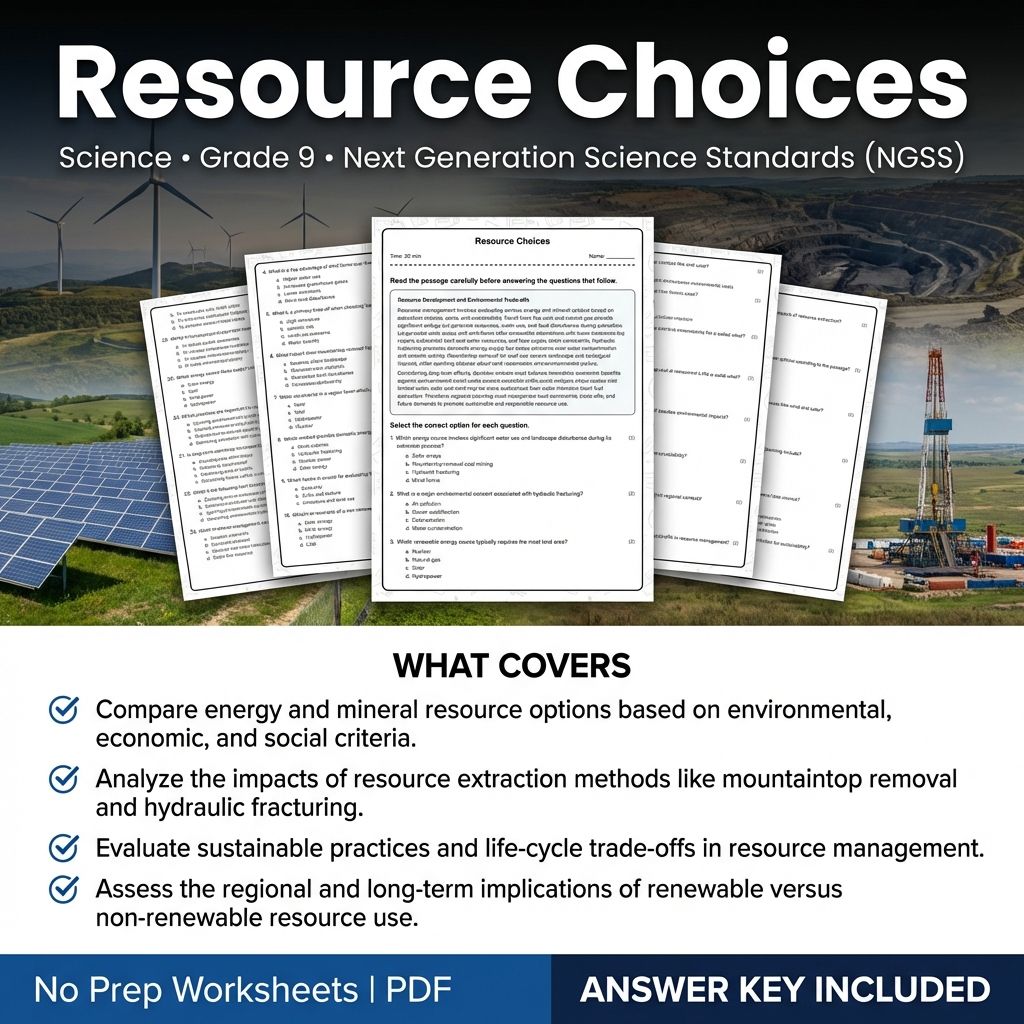
9th Grade Science | Resource Choices Worksheet + Answer Key (Printable PDF)
Created byCoral Reef LearningLearning Objectives
- Compare energy and mineral resource options based on environmental, economic, and social criteria.
- Analyze the impacts of resource extraction methods like mountaintop removal and hydraulic fracturing.
- Evaluate sustainable practices and life-cycle trade-offs in resource management.
Also included in: Grade 9 Science UNIT Worksheet Pack-Resource Management & Energy Decarbonization +1 more
Instant download
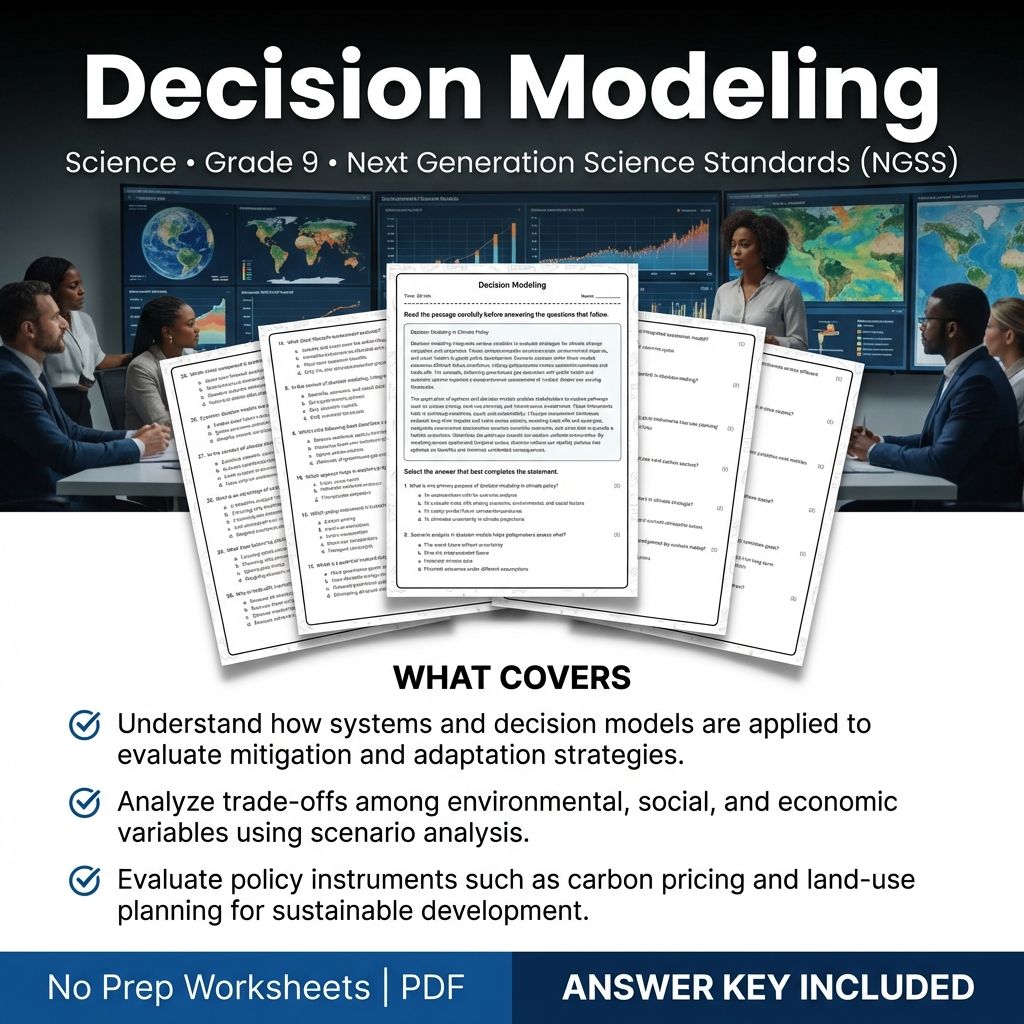
Grade 9 Science | Decision Modeling Worksheet & Answer Key (Printable PDF)
Created byCoral Reef LearningLearning Objectives
- Understand how systems and decision models are applied to evaluate mitigation and adaptation strategies.
- Analyze trade-offs among environmental, social, and economic variables using scenario analysis.
- Evaluate policy instruments such as carbon pricing and land-use planning for sustainable development.
Also included in: Grade 9 Science UNIT Worksheet Pack-Resource Management & Energy Decarbonization +1 more
Instant download

Grade 7 Science | Clouds and Precipitation Worksheet | California Standards
 Created byLumora Learning
Learning Objectives
- Explain how rising air cooling leads to cloud formation through condensation and/or freezing
- Describe how droplet and ice-crystal growth leads to precipitation types
- Connect energy transfers during phase changes to weather patterns
Instant download
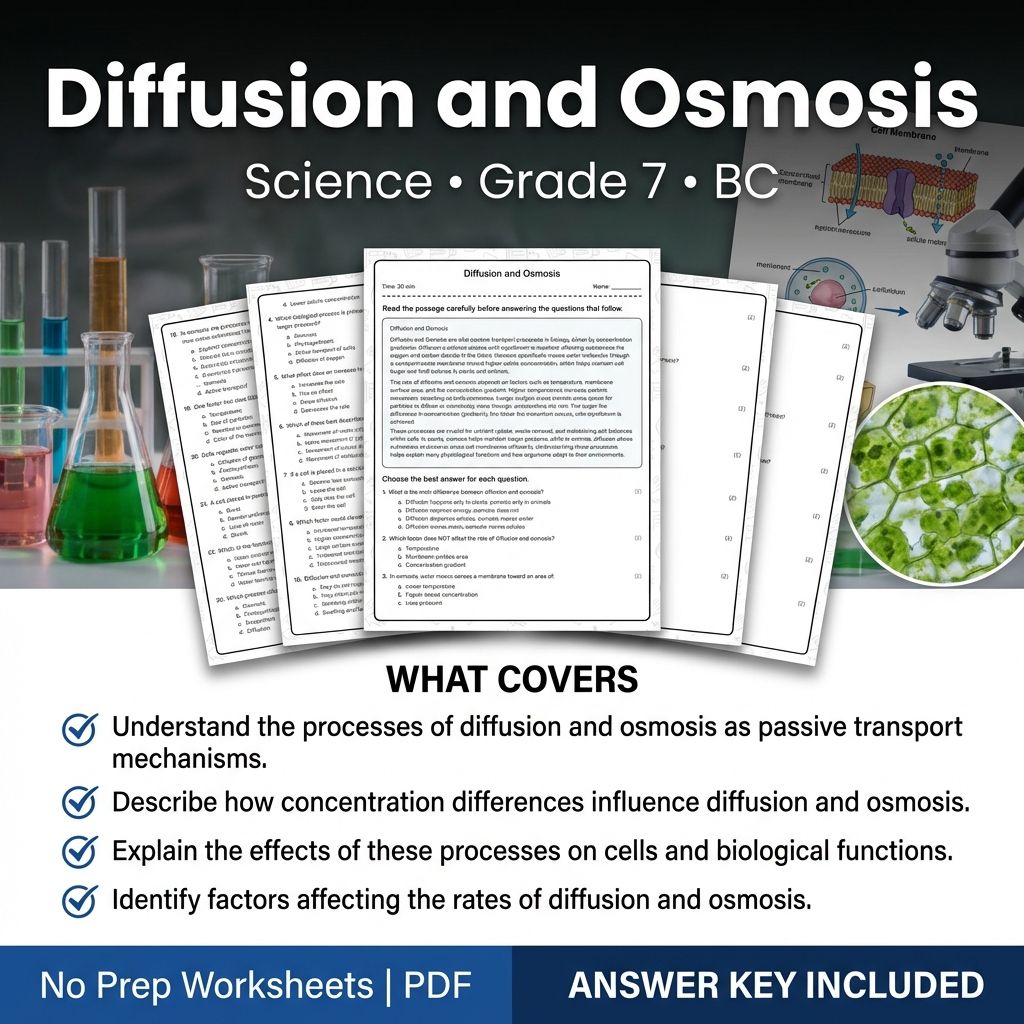
7th Grade Science | Diffusion and Osmosis Worksheet + Answer Key (Printable PDF)
Created byCoral Reef LearningLearning Objectives
- Understand the processes of diffusion and osmosis as passive transport mechanisms.
- Describe how concentration differences influence diffusion and osmosis.
- Explain the effects of these processes on cells and biological functions.
Instant download
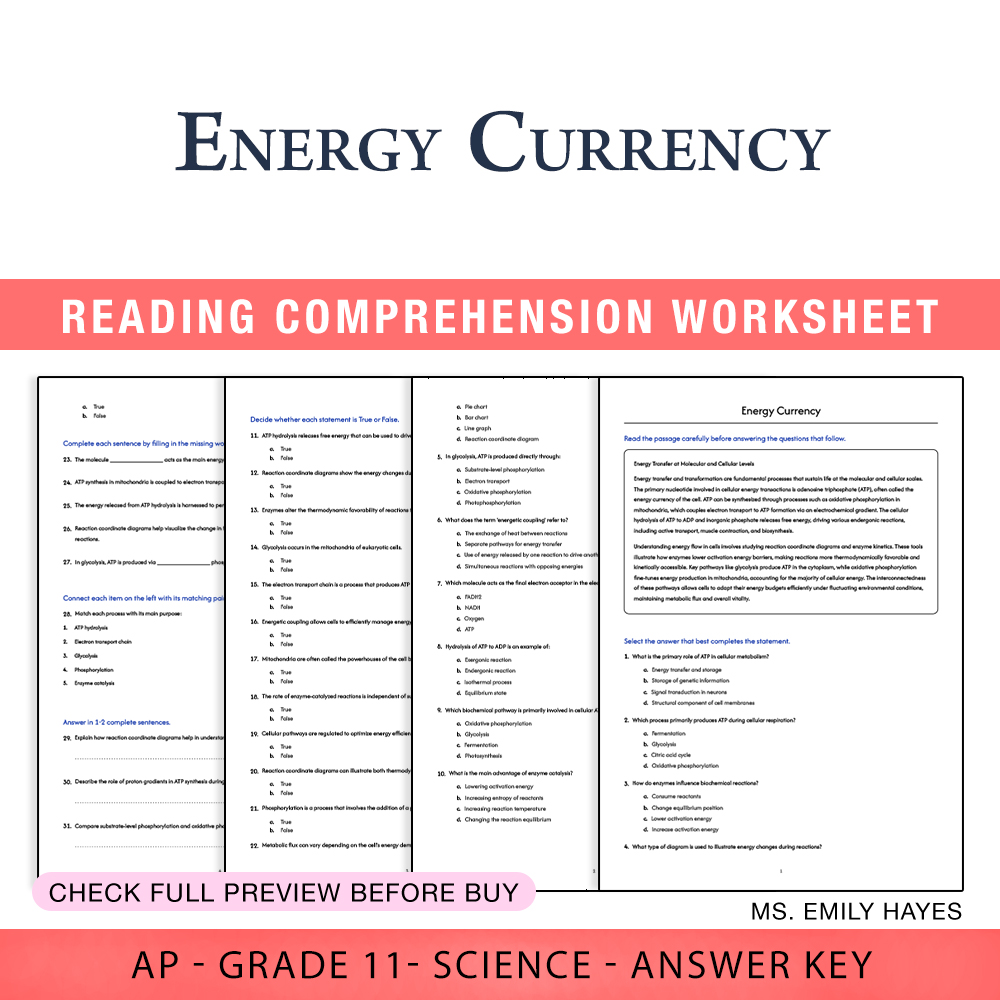
11th Grade Science | Energy Currency Worksheet (PDF+ Answer Key)
Created byCopper Leaf ClassroomLearning Objectives
- Explain the principles of molecular and cellular energy transfer and transformation.
- Describe ATP synthesis, hydrolysis, and energy coupling mechanisms in cellular processes.
- Interpret reaction coordinate diagrams and enzyme kinetics related to bioenergetics.
Also included in: Grade 11 Science | Biology & Ecosystems AP Worksheet Bundle (PDF+ Answer Keys) +1 more
Instant download

Grade 6 Science – Orbital Dynamics & Satellite Motion | Daily Reading Worksheet
 Created byBright Mind Resources
Learning Objectives
- Understand different types of satellite orbits such as elliptical and near-circular
- Identify how orbital speed varies with distance from the central body
- Explain the balance of gravitational force and inertial motion in satellite orbits
Also included in: Space Systems Grade 6 Science Daily Reading Worksheets Bundle | Ontario +1 more
Instant download

Adaptation and Speciation Worksheet | NGSS Grade 6 Science Practice
JCreated byJ.S SheetsLearning Objectives
- Explain the processes of adaptation and speciation and how populations diverge into new lineages.
- Identify factors such as geographic, behavioral, and genetic changes that contribute to speciation.
- Analyze evidence for speciation events, including morphology, reproductive compatibility, and biogeographic patterns.
Also included in: Grade 6 Evolution and Natural Selection Science Lesson Bundle NGSS +1 more
Instant download
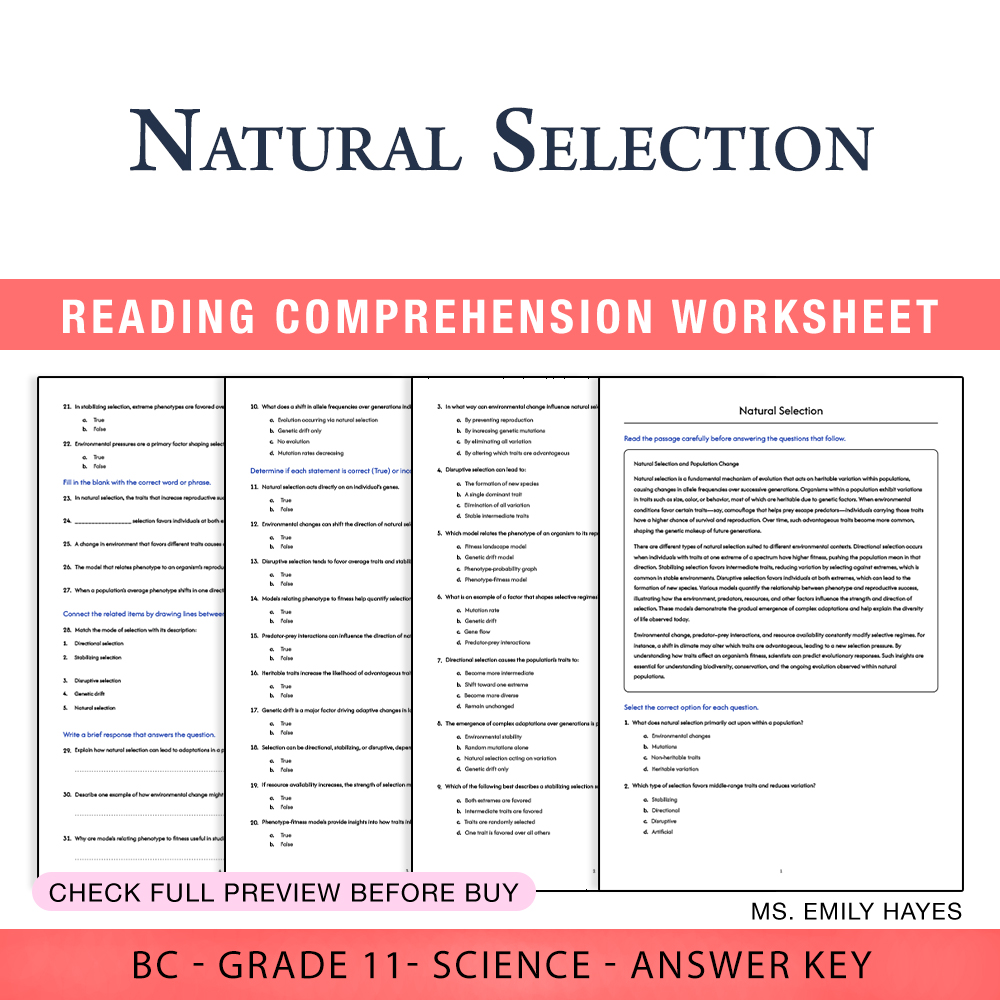
Grade 11 Science | Natural Selection Worksheet (PDF + Answer Key)
Created byCopper Leaf ClassroomLearning Objectives
- Explain how natural selection acts on heritable traits in populations.
- Identify different modes of selection: directional, stabilizing, and disruptive.
- Describe how environmental factors influence selective pressures.
Also included in: Grade 11 Science BC | Genetics, Evolution & Cell Biology (PDF + Answer Keys) +1 more
Instant download
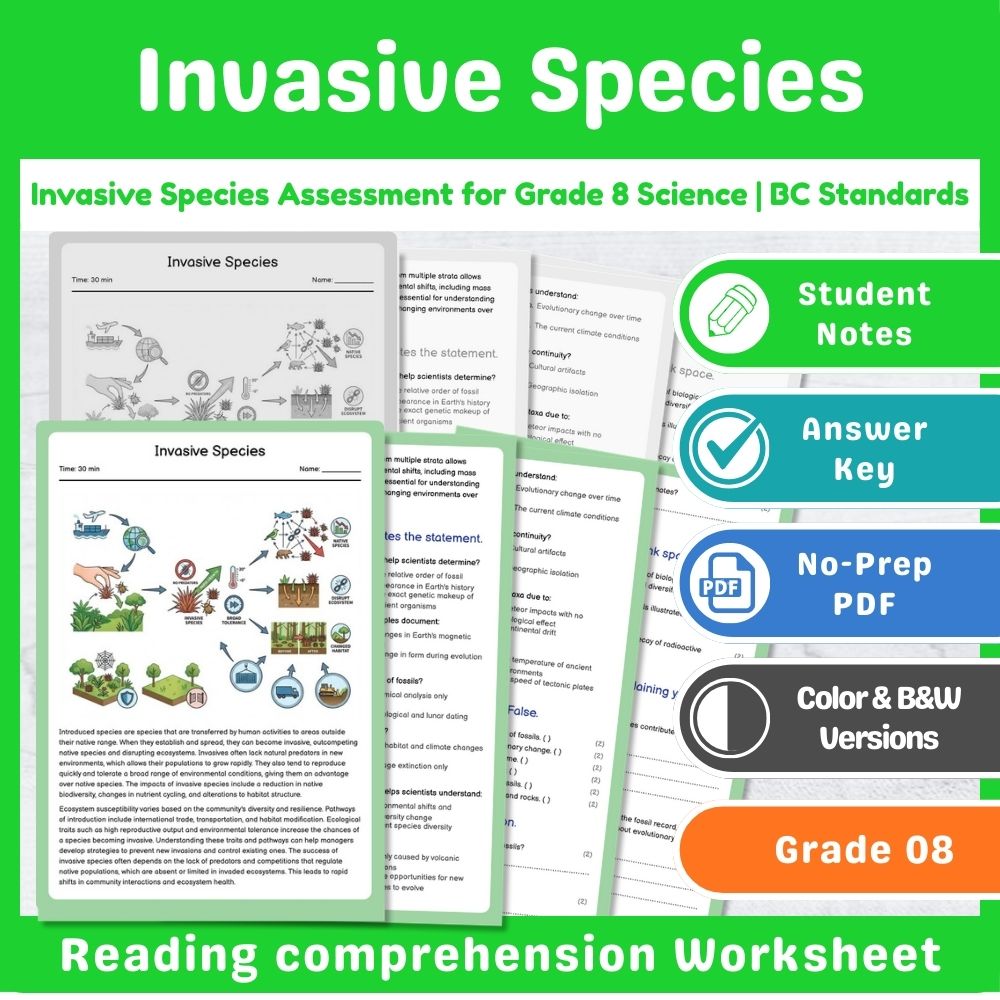
Invasive Species Assessment for Grade 8 Science | BC Standards
 Created byPrism Point Learning
Learning Objectives
- Understand how introduced species become invasive and the impacts on native ecosystems.
- Identify pathways of species introduction and ecological traits that favor invasion.
- Analyze how invasive species alter community interactions and ecosystem processes.
Instant download

Grade 10 Science | Understanding Organ Systems - Reading Comprehension
Created byCoral Reef LearningLearning Objectives
- Identify the main organs involved in the human digestive system.
- Describe the structure and function of the stomach, intestines, and liver.
- Explain how the digestive organs work together to process food.
Also included in: Cells and Systems Lesson Bundle | Grade 10 Science | Alberta Framework +1 more
Instant download

Grade 10 Science | Homeostatic Balance - Daily Reading Comprehension
Created byCoral Reef LearningLearning Objectives
- Understand the concept of homeostasis and its importance in maintaining internal stability.
- Identify mechanisms involved in temperature regulation in mammals.
- Describe the role of sensor-effector loops and metabolic adjustments.
Also included in: Cells and Systems Lesson Bundle | Grade 10 Science | Alberta Framework +1 more
Instant download

Grade 10 Science | Cell Types - Daily Reading Comprehension
Created byCoral Reef LearningLearning Objectives
- Identify the basic differences between prokaryotic and eukaryotic cells
- Understand the structural complexity of different cell types
- Recognize examples of prokaryotic and eukaryotic organisms
Also included in: Cells and Systems Lesson Bundle | Grade 10 Science | Alberta Framework +1 more
Instant download

Grade 10 Science | Cell Basics - Daily Reading Comprehension
Created byCoral Reef LearningLearning Objectives
- Understand the fundamental structure of a cell.
- Identify key features of cell components such as the membrane, cytoplasm, and genetic material.
- Recognize examples of plant and moss cells relevant to Alberta ecosystems.
Also included in: Cells and Systems Lesson Bundle | Grade 10 Science | Alberta Framework +1 more
Instant download
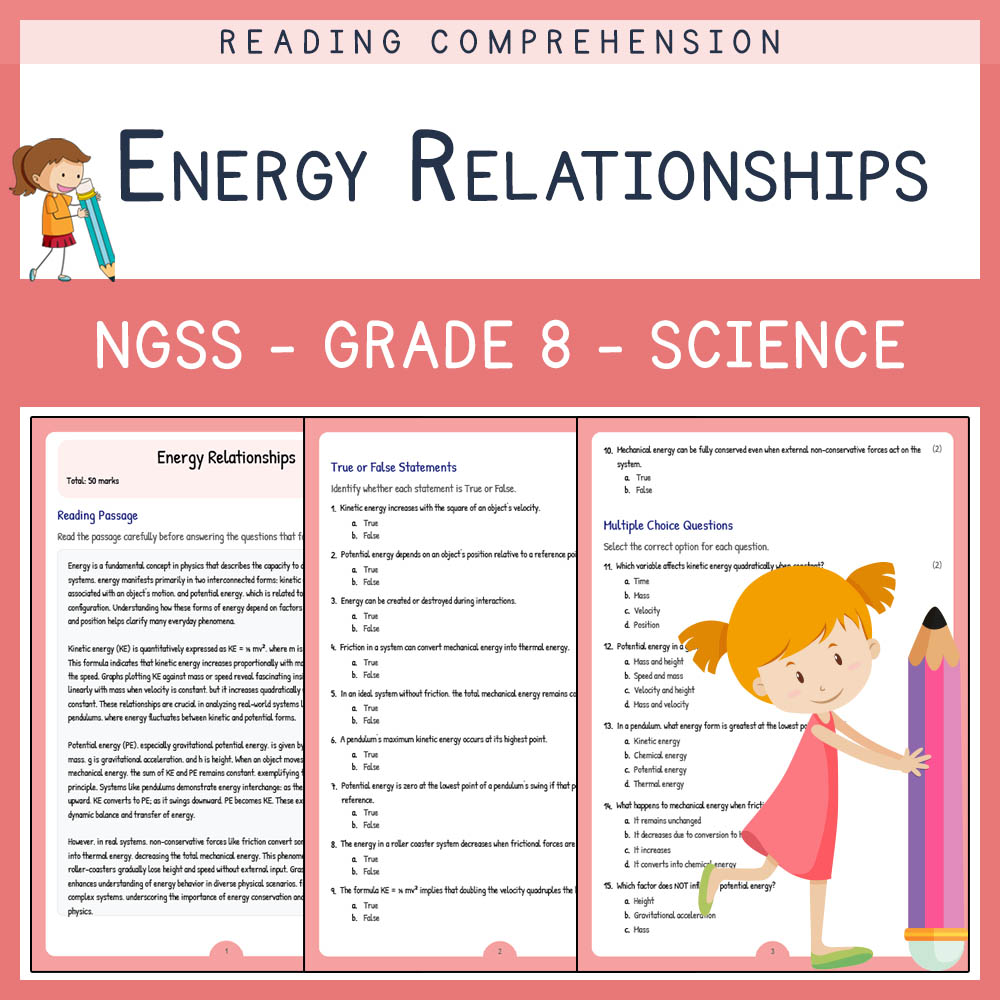
Grade 8 Science | Energy Relationships Worksheet & Answer Key (NGSS Aligned)
Created byLumora LearningLearning Objectives
- Understand the quantitative relationships between kinetic and potential energy and how they depend on mass, speed, and position.
- Interpret graphical displays relating kinetic energy to mass and the square of speed.
- Analyze energy interchange in systems such as pendulums and roller-coaster models.
Instant download
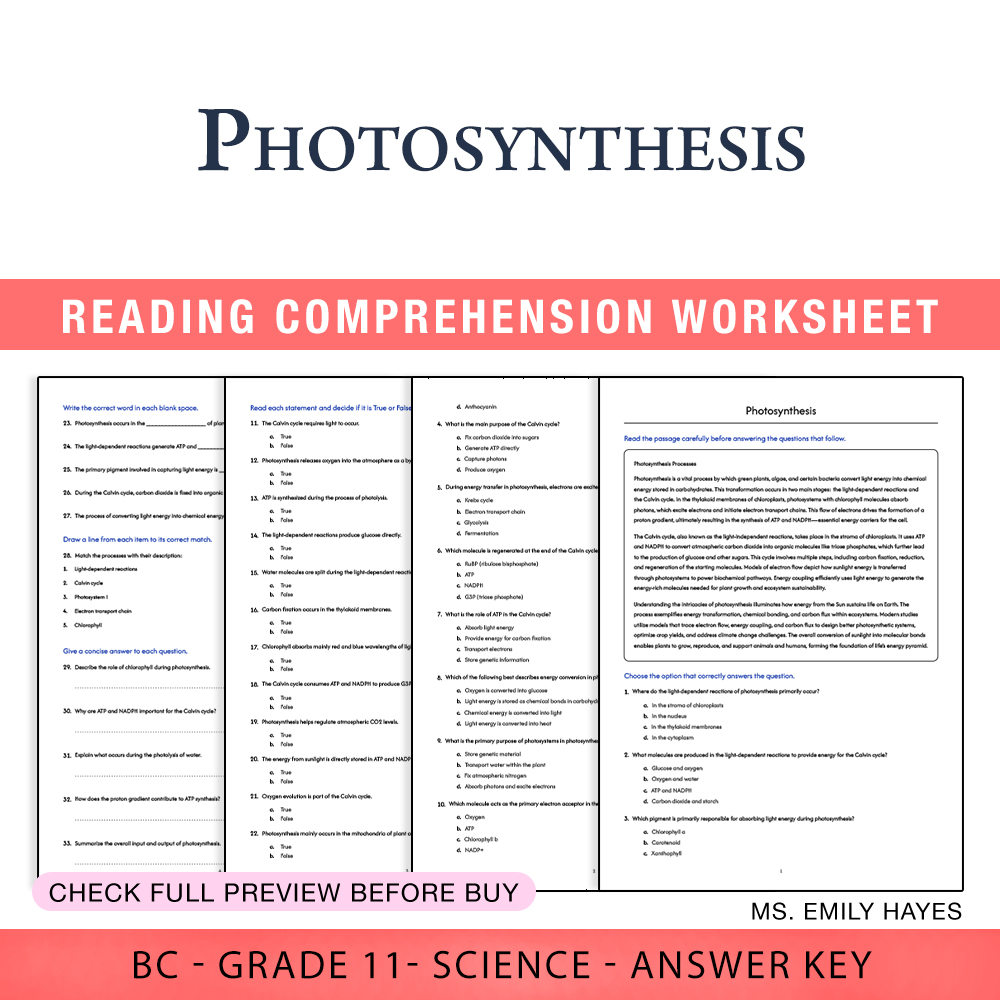
11th Grade Science | Photosynthesis Worksheet (PDF + Answer Key)
Created byCopper Leaf ClassroomLearning Objectives
- Describe the process of photosynthesis, including light-dependent reactions and the Calvin cycle.
- Explain the roles of photosystems, electron transport, ATP, and NADPH in energy conversion.
- Analyze how light energy is transformed into chemical energy within the chloroplasts.
Also included in: Grade 11 Science BC | Genetics, Evolution & Cell Biology (PDF + Answer Keys) +1 more
Instant download
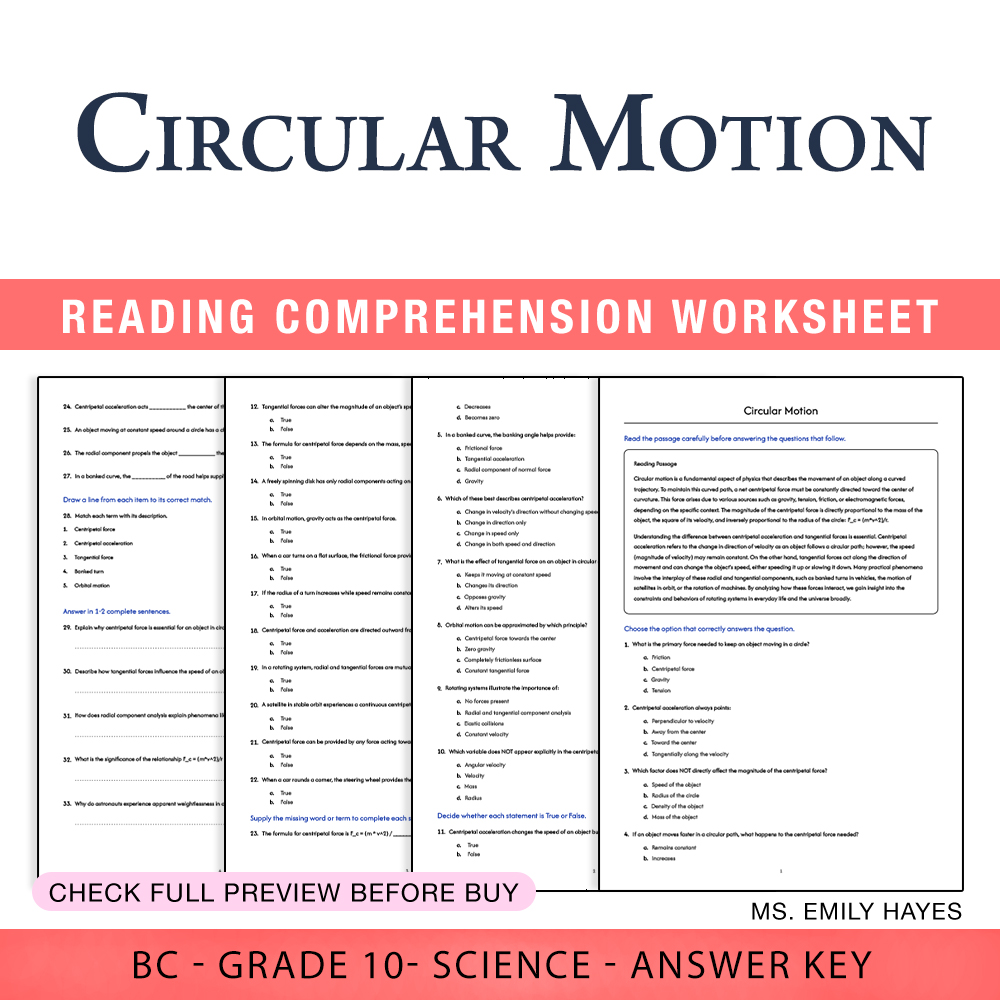
Grade 10 Science | Circular Motion Worksheet (PDF+ Answer Key)
Created byCopper Leaf ClassroomLearning Objectives
- Understand the concept of centripetal force and its role in circular motion.
- Differentiate between centripetal acceleration and tangential forces.
- Explain real-world phenomena involving radial and tangential components in rotating systems.
Also included in: Grade 10 Science BC | Forces, Motion & Fields Worksheets (PDF + Answer Key) +1 more
Instant download
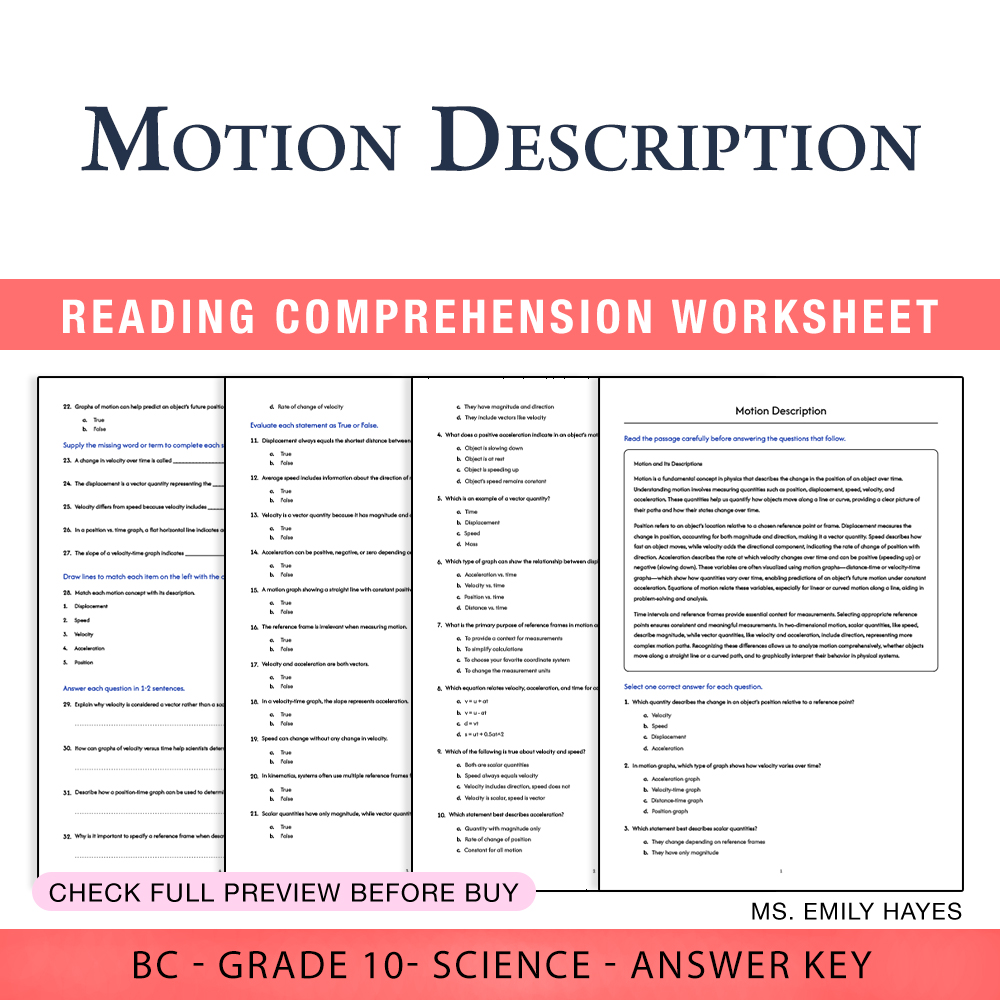
Grade 10 Science | Motion Description Worksheet (PDF+ Answer Key)
Created byCopper Leaf ClassroomLearning Objectives
- Explain key kinematic quantities such as position, displacement, speed, velocity, and acceleration.
- Describe how time and reference frames provide context for measuring motion.
- Interpret and analyze motion graphs and equations relating variables in one- and two-dimensional motion.
Also included in: Grade 10 Science BC | Forces, Motion & Fields Worksheets (PDF + Answer Key) +1 more
Instant download
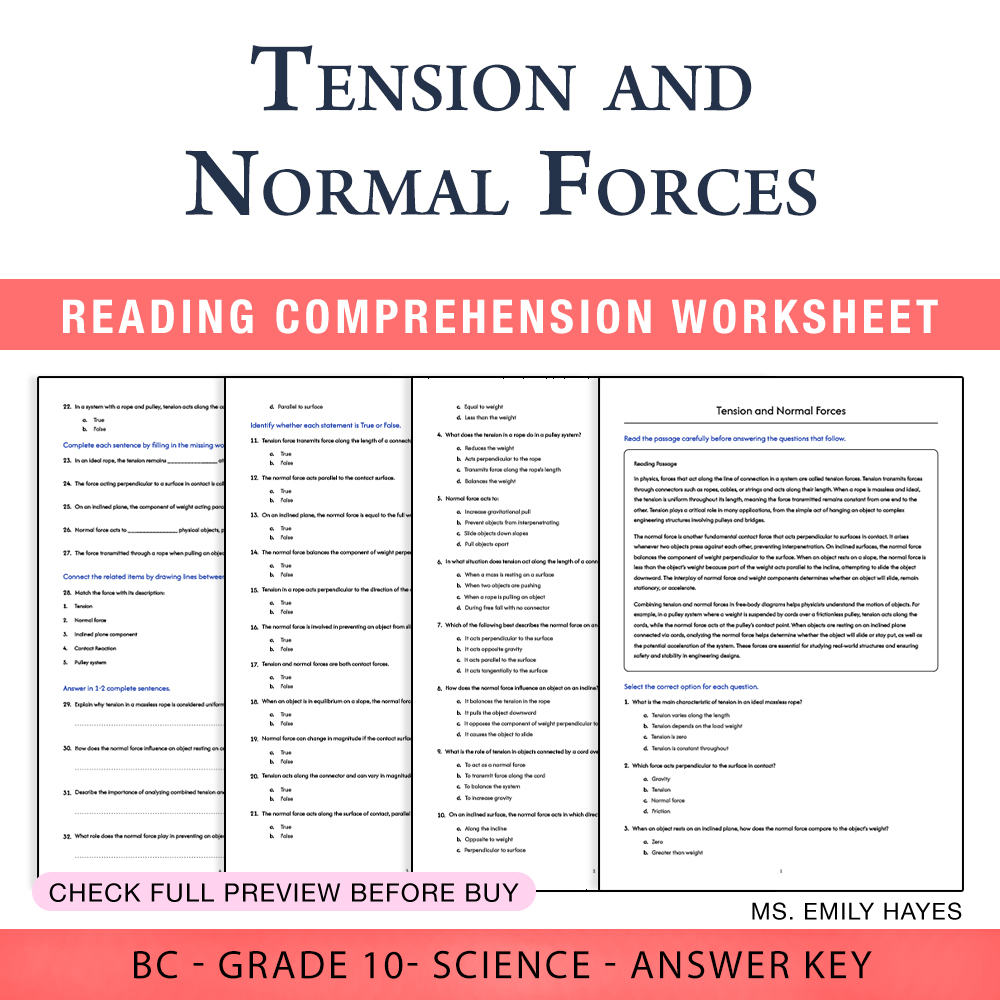
Grade 10 Science | Tension and Normal Forces Worksheet (PDF + Answer Key)
Created byCopper Leaf ClassroomLearning Objectives
- Understand how tension transmits forces through connectors and acts along their length in different situations.
- Explain how the normal force arises from contact and balances components of weight on inclined surfaces.
- Analyze the combined effects of tension and normal force in objects connected by cords or resting on slopes.
Also included in: Grade 10 Science BC | Forces, Motion & Fields Worksheets (PDF + Answer Key) +1 more
Instant download
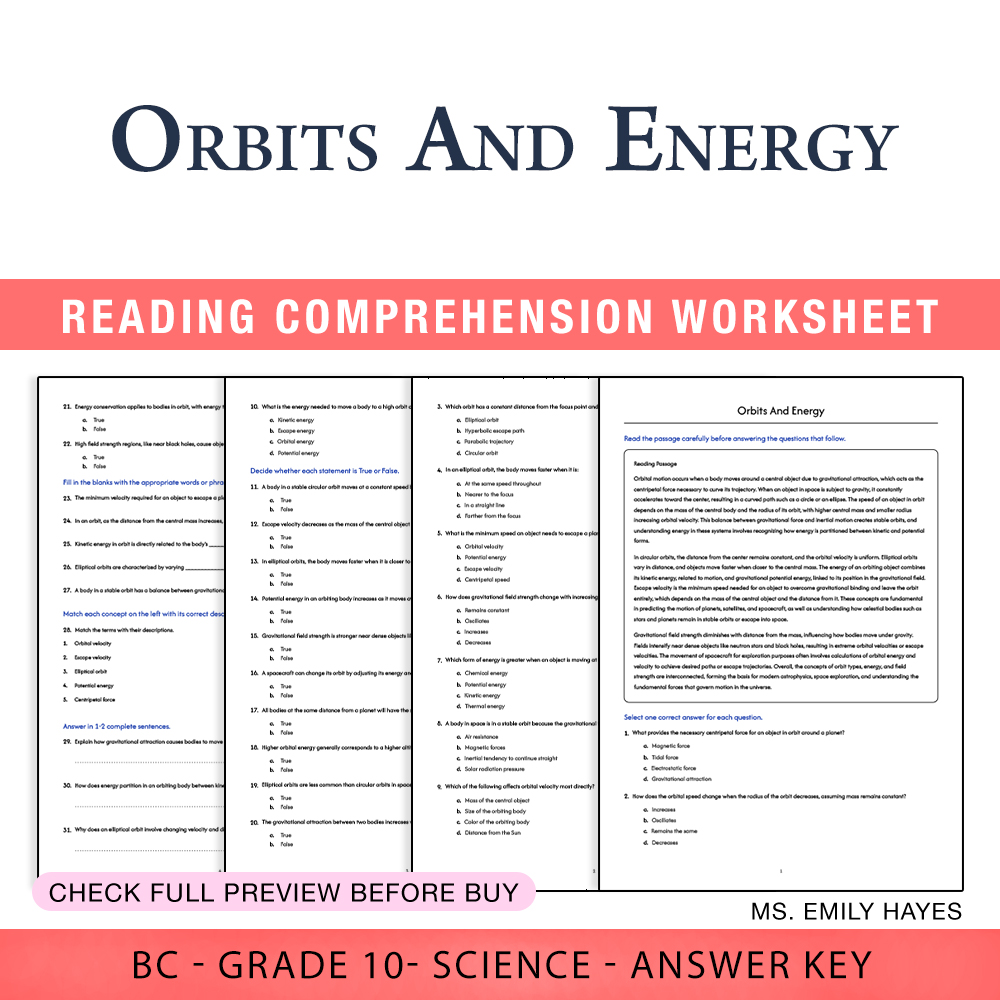
Grade 10 Science | Orbits and Energy Worksheet (PDF + Answer Key)
Created byCopper Leaf ClassroomLearning Objectives
- Explain how gravitational attraction provides the centripetal force for orbital motion.
- Describe the relationship between orbital speed, central mass, and orbital radius.
- Differentiate between circular and elliptical orbits and understand energy partitioning.
Also included in: Grade 10 Science BC | Forces, Motion & Fields Worksheets (PDF + Answer Key) +1 more
Instant download
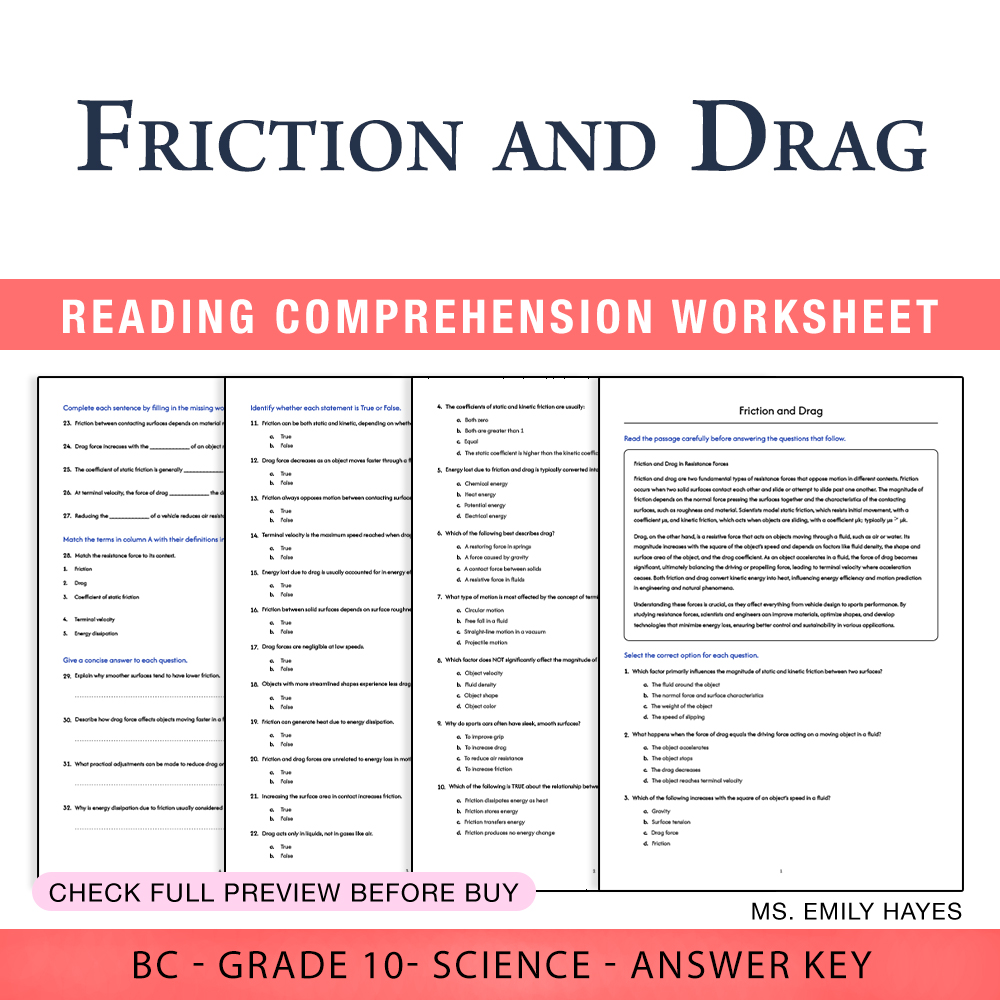
10th Grade Science | Friction and Drag Worksheet (PDF+ Answer Key)
Created byCopper Leaf ClassroomLearning Objectives
- Explain the mechanisms of friction and drag and how they oppose motion.
- Describe factors affecting static and kinetic friction between surfaces.
- Understand how drag force increases with speed and achieves terminal velocity.
Also included in: Grade 10 Science BC | Forces, Motion & Fields Worksheets (PDF + Answer Key) +1 more
Instant download
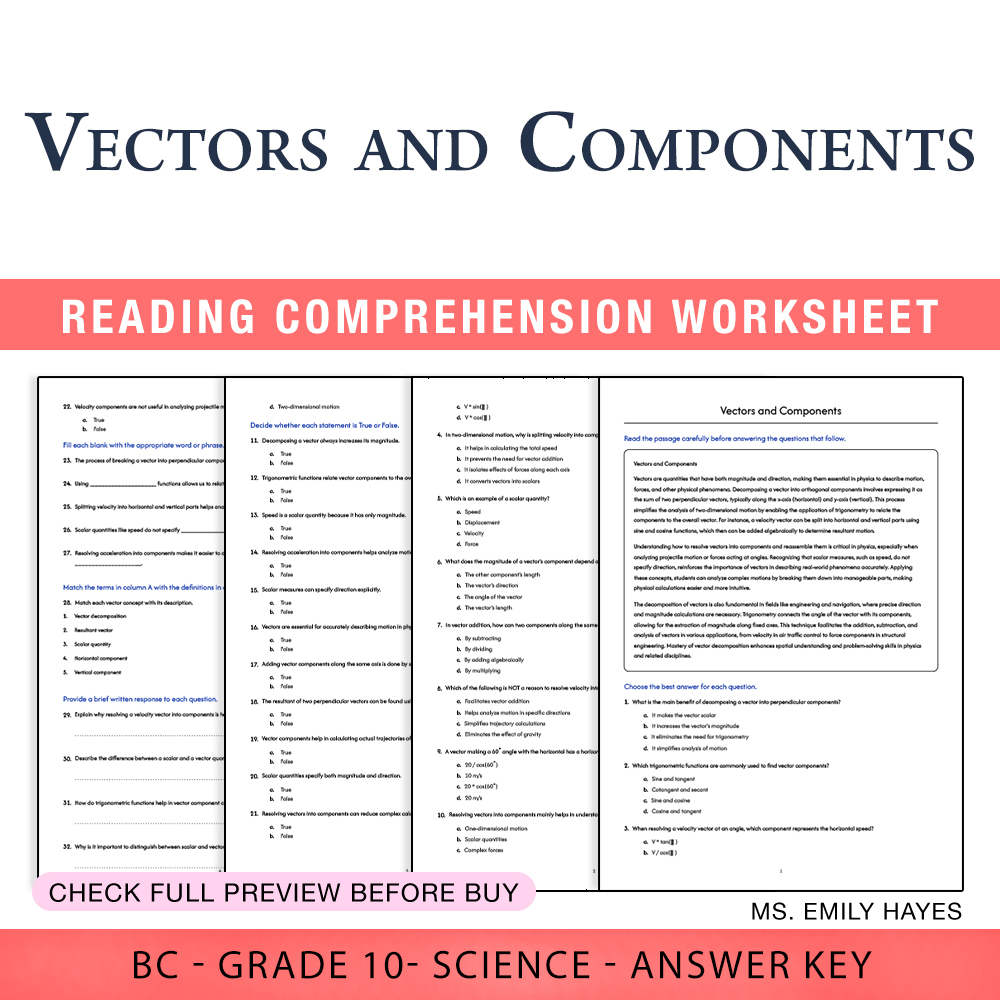
Grade 10 Science | Vectors and Components Worksheet (PDF+ Answer Key)
Created byCopper Leaf ClassroomLearning Objectives
- Understand the concept of vector decomposition into perpendicular components.
- Apply trigonometric functions to relate vector components to magnitude and direction.
- Analyze two-dimensional motion by resolving velocity and acceleration into horizontal and vertical components.
Also included in: Grade 10 Science BC | Forces, Motion & Fields Worksheets (PDF + Answer Key) +1 more
Instant download
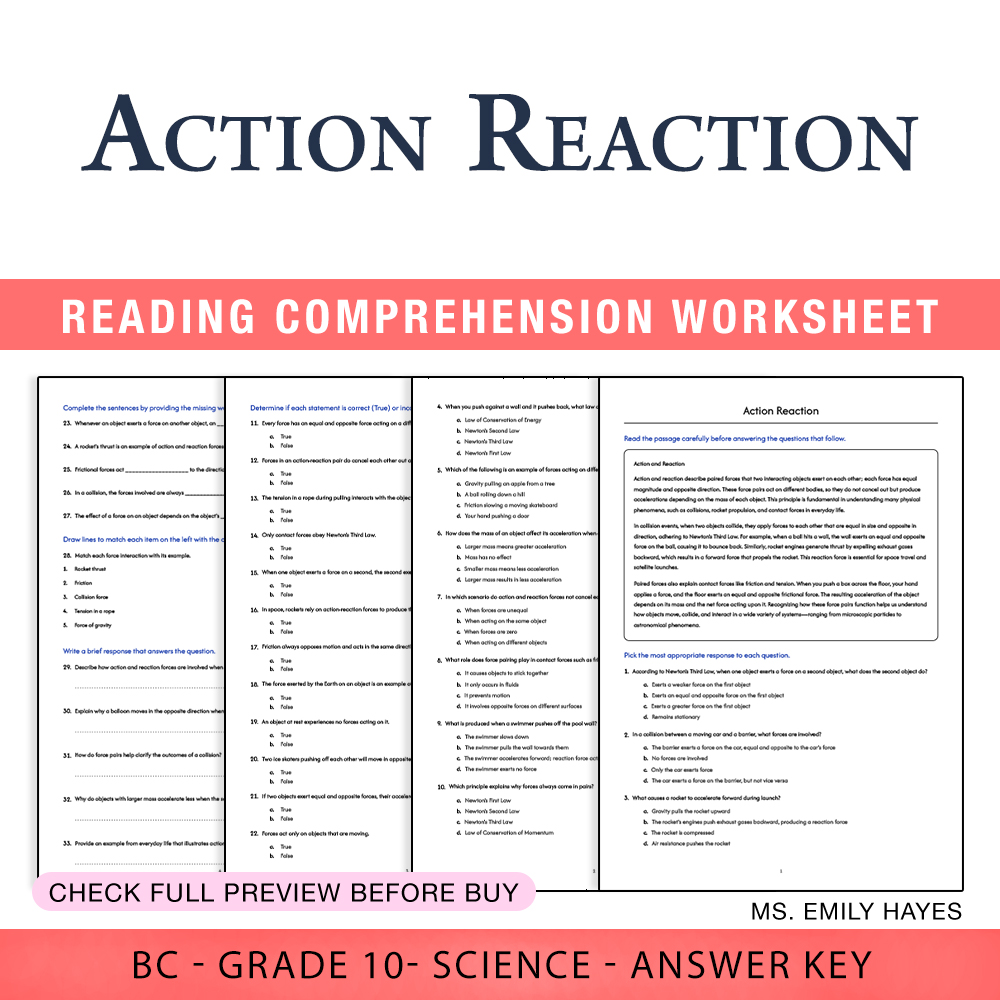
Grade 10 Science | Action and Reaction Forces Worksheet (PDF+ Answer Key)
Created byCopper Leaf ClassroomLearning Objectives
- Understand the concept of paired forces in action and reaction.
- Explain how forces act on different objects and their effects on motion.
- Identify real-world examples of Newton's Third Law, including collisions and rocket thrust.
Also included in: Grade 10 Science BC | Forces, Motion & Fields Worksheets (PDF + Answer Key) +1 more
Instant download
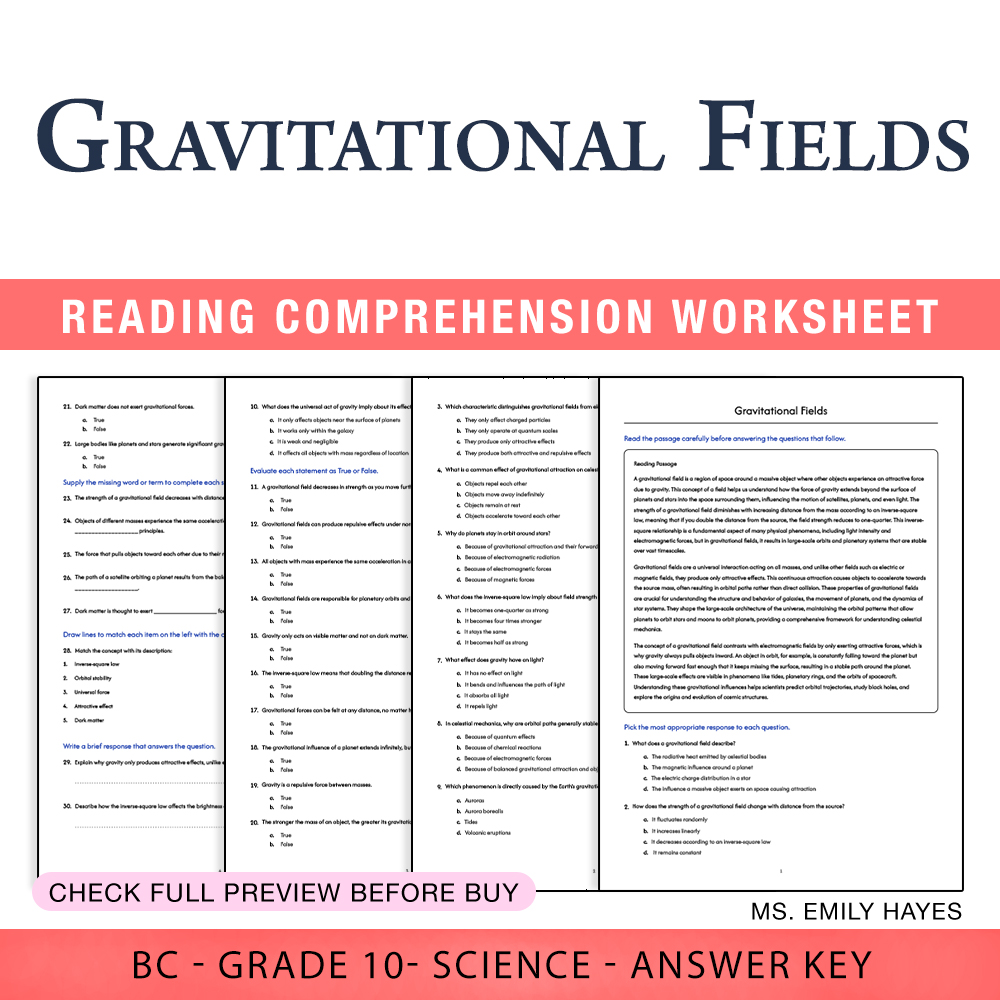
10th Grade Science | Gravitational Fields Worksheet (PDF+ Answer Key)
Created byCopper Leaf ClassroomLearning Objectives
- Explain the concept of a gravitational field and how it influences objects in space.
- Describe the inverse-square relationship between field strength and distance from a mass.
- Differentiate gravitational fields from other force fields by their universal attraction and large-scale effects.
Also included in: Grade 10 Science BC | Forces, Motion & Fields Worksheets (PDF + Answer Key) +1 more
Instant download
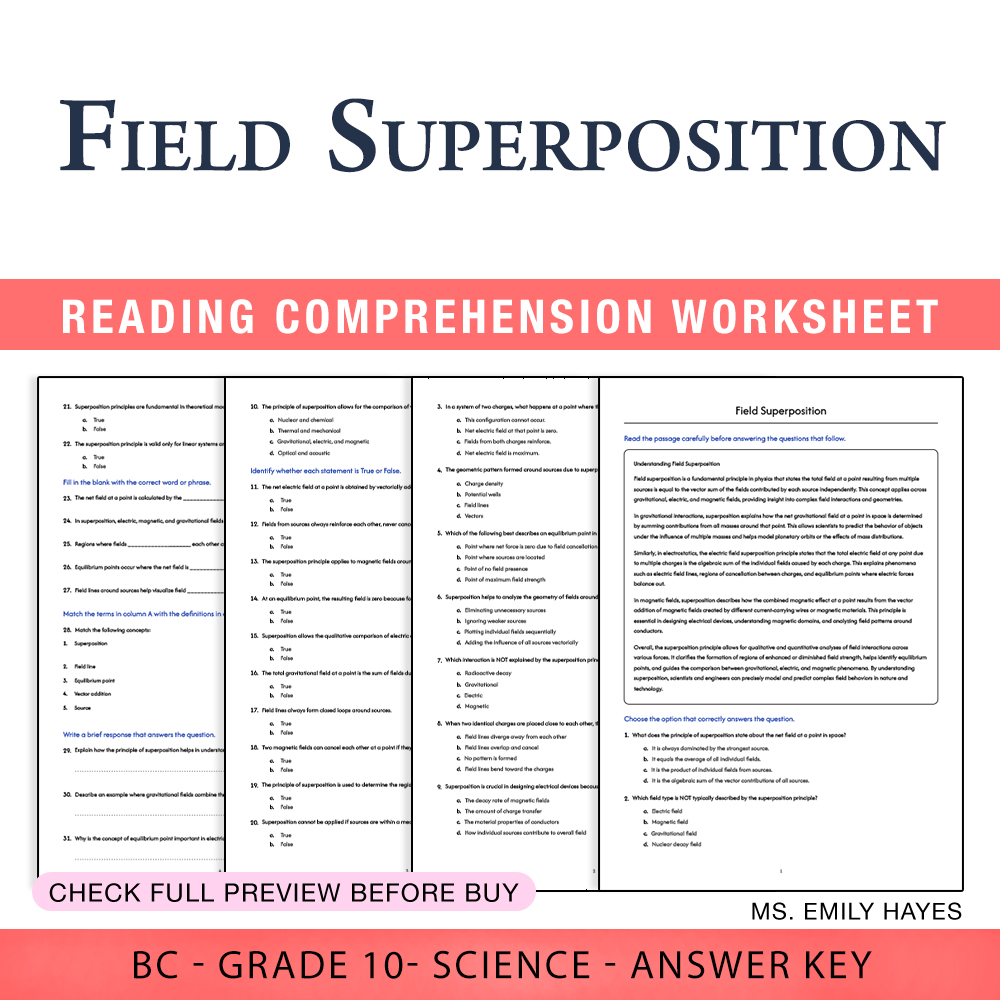
Grade 10 Science | Field Superposition Worksheet (PDF+ Answer Key)
Created byCopper Leaf ClassroomLearning Objectives
- Understand the principle of field superposition and its application in physics.
- Calculate the resultant field at a point due to multiple sources.
- Identify regions where fields reinforce or cancel each other.
Also included in: Grade 10 Science BC | Forces, Motion & Fields Worksheets (PDF + Answer Key) +1 more
Instant download
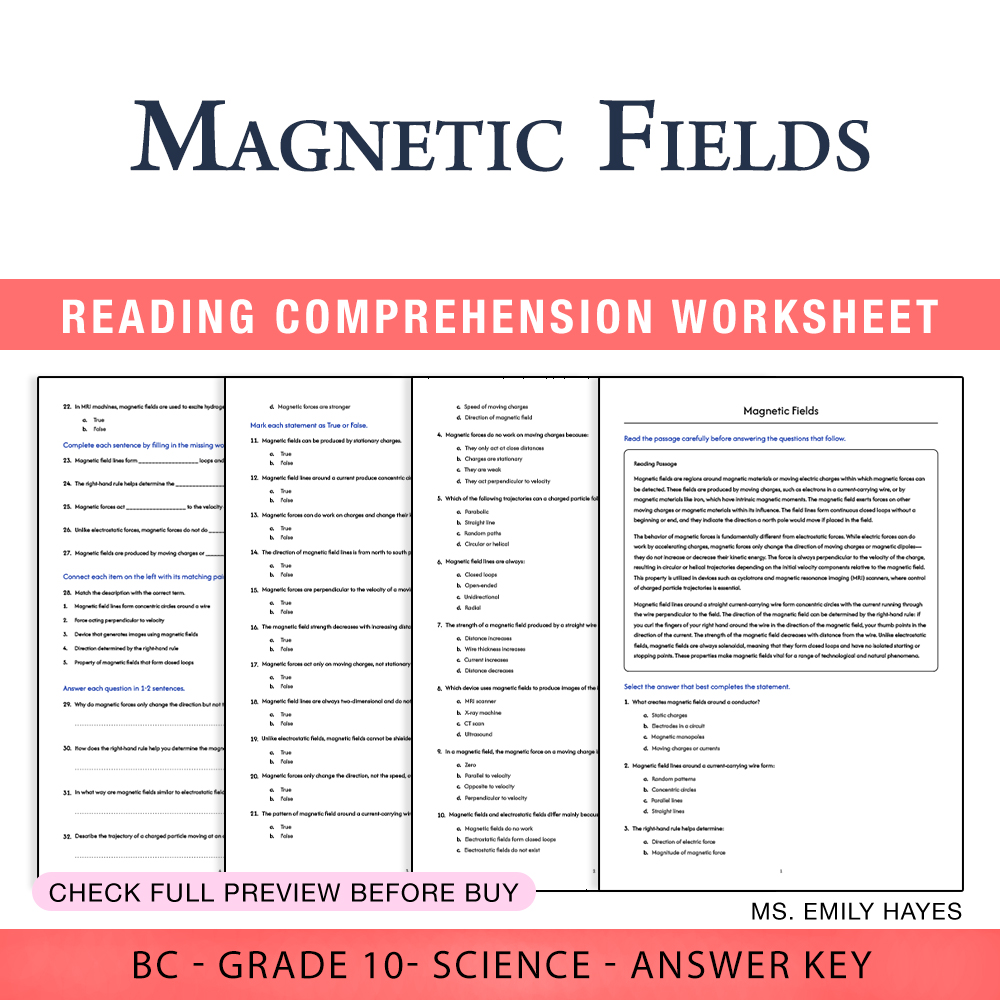
10th Grade Science | Magnetic Fields Worksheet (PDF+ Answer Key)
Created byCopper Leaf ClassroomLearning Objectives
- Explain how magnetic fields are generated by moving charges and electric currents.
- Interpret the representation of magnetic field lines and their direction.
- Describe the effects of magnetic forces on moving charges and their trajectories.
Also included in: Grade 10 Science BC | Forces, Motion & Fields Worksheets (PDF + Answer Key) +1 more
Instant download
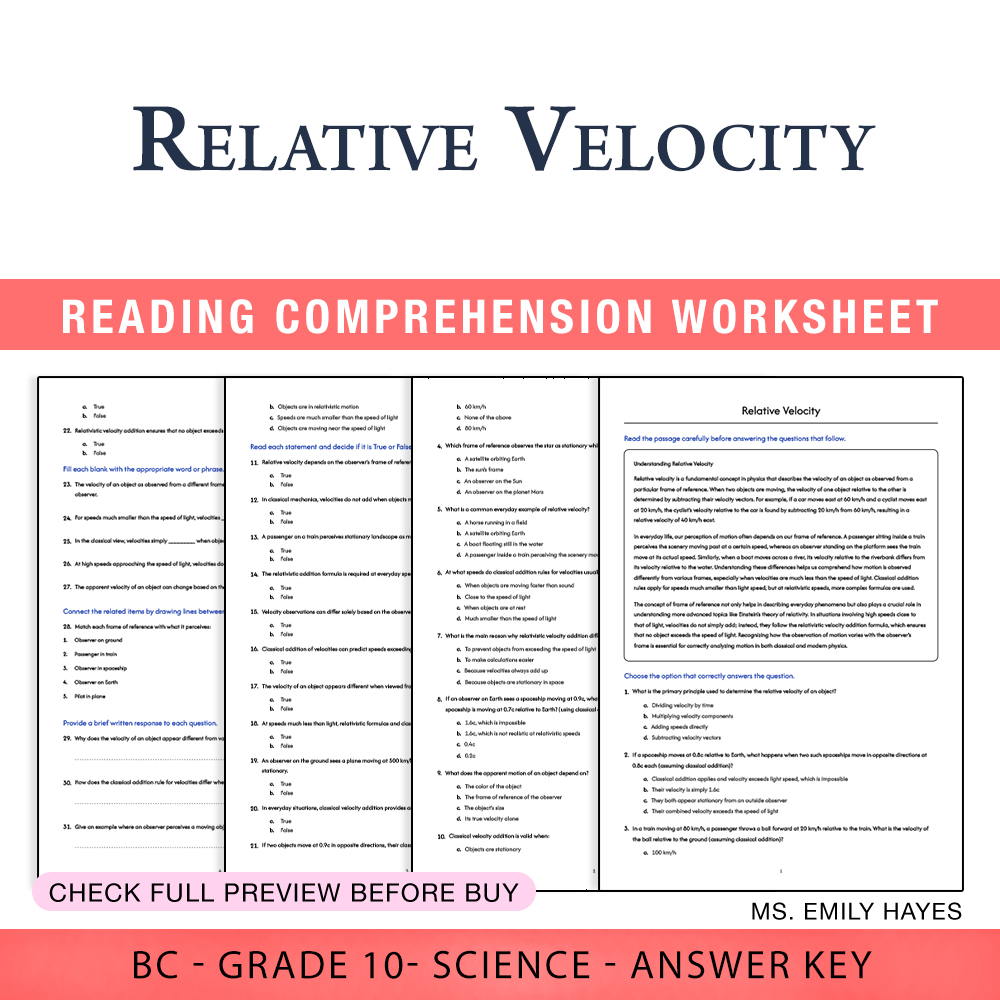
Grade 10 Science | Relative Velocity Worksheet (PDF+ Answer Key)
Created byCopper Leaf ClassroomLearning Objectives
- Understand the concept of relative velocity and how it is calculated between different reference frames.
- Apply basic vector subtraction to find the apparent velocity of objects from different perspectives.
- Explain the effect of frame of reference on the observation of motion, including everyday examples.
Also included in: Grade 10 Science BC | Forces, Motion & Fields Worksheets (PDF + Answer Key) +1 more
Instant download
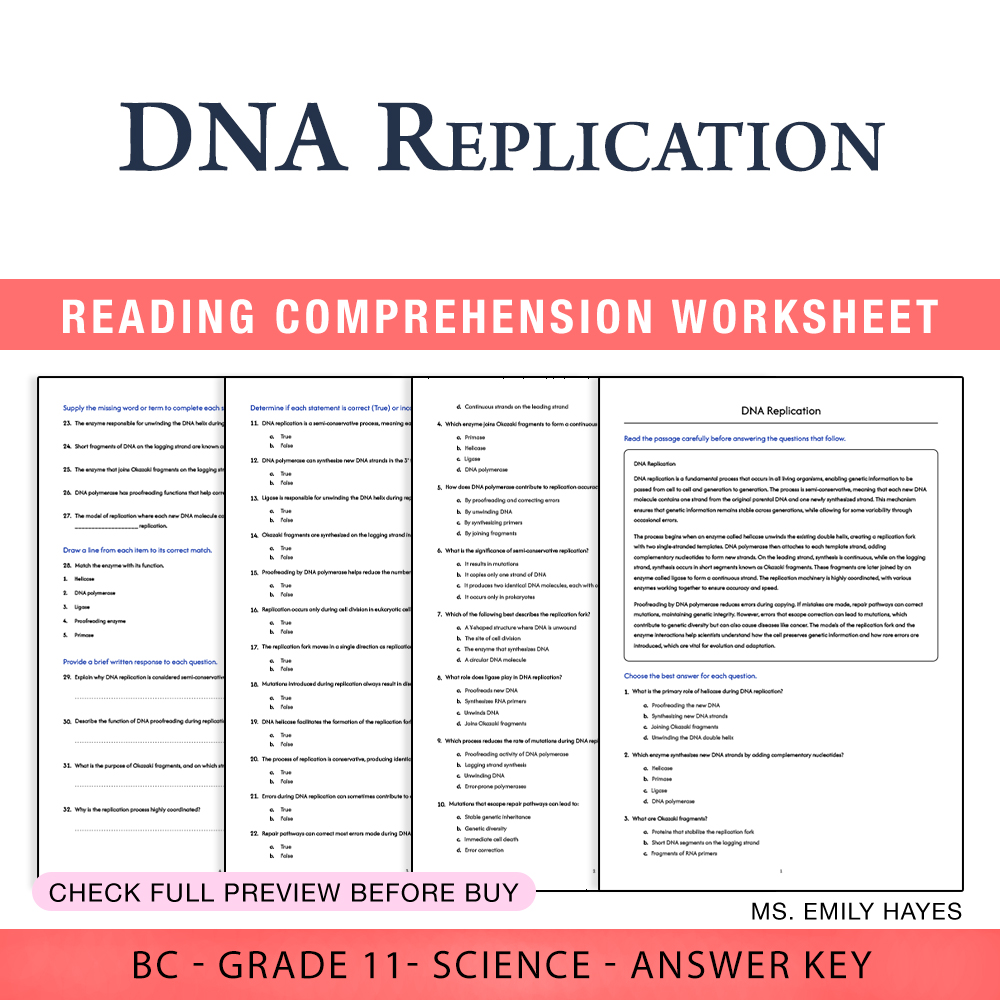
11th Grade Science | DNA Replication Worksheet (PDF + Answer Key)
Created byCopper Leaf ClassroomLearning Objectives
- Describe the process of semi-conservative DNA replication.
- Identify the roles of key enzymes such as helicase, DNA polymerase, ligase, and proofreading enzymes.
- Explain how replication forks are formed and function during DNA replication.
Also included in: Grade 11 Science BC | Genetics, Evolution & Cell Biology (PDF + Answer Keys) +1 more
Instant download
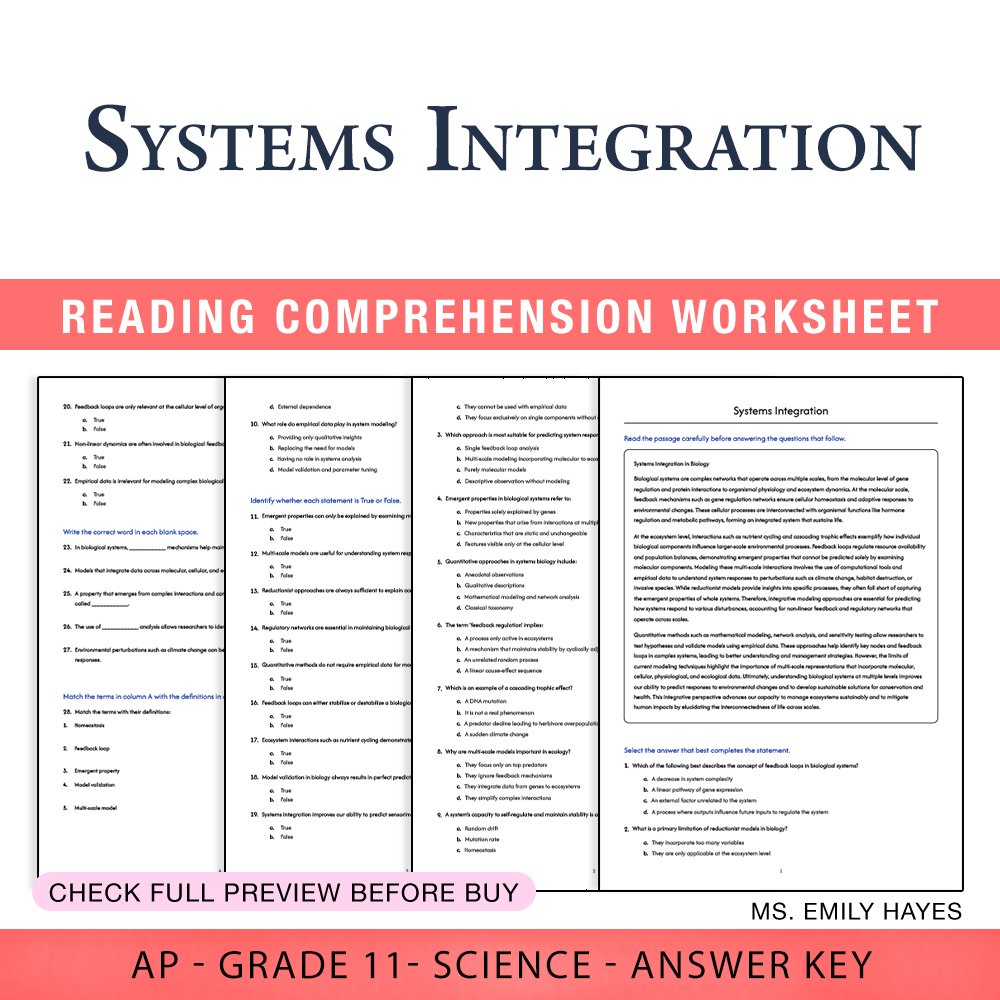
11th Grade Science | Systems Integration Worksheet (PDF+ Answer Key)
Created byCopper Leaf ClassroomLearning Objectives
- Understand how biological systems operate across molecular, cellular, organismal, and ecosystem levels.
- Describe feedback loops and regulatory networks in biological systems.
- Explain the use of modeling and quantitative approaches to predict system responses to perturbations.
Also included in: Grade 11 Science | Biology & Ecosystems AP Worksheet Bundle (PDF+ Answer Keys) +1 more
Instant download
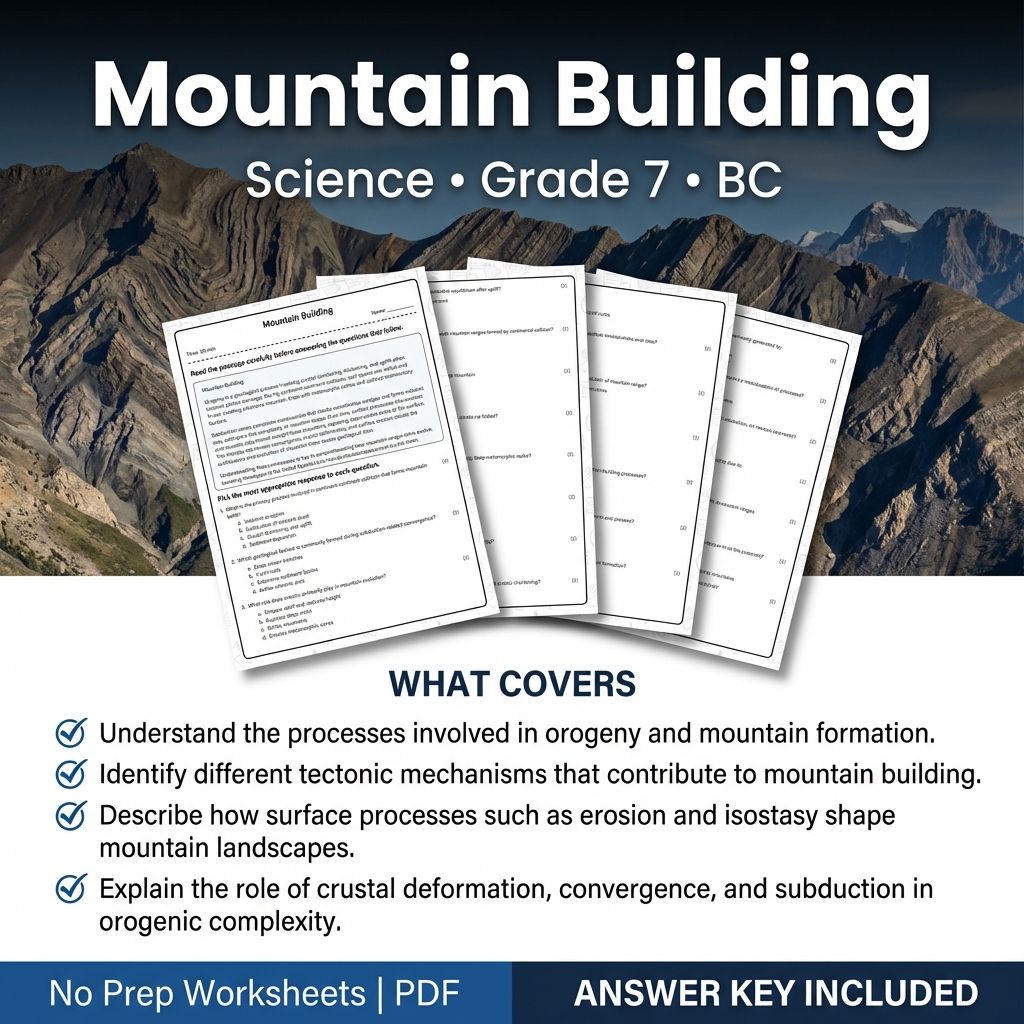
7th Grade Science | Mountain Building Worksheet & Answer Key (Printable PDF)
Created byCoral Reef LearningLearning Objectives
- Understand the processes involved in orogeny and mountain formation.
- Identify different tectonic mechanisms that contribute to mountain building.
- Describe how surface processes such as erosion and isostasy shape mountain landscapes.
Instant download
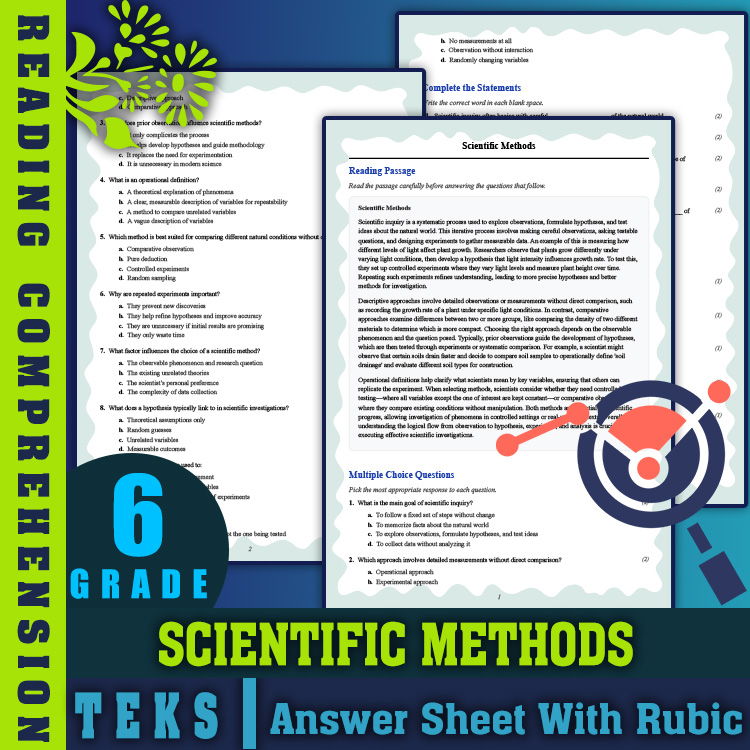
6th Grade Science | Scientific Methods Reading Worksheets (PDF & Answer Key)
JCreated byJ.S SheetsLearning Objectives
- Understand the iterative process of scientific inquiry and question formulation.
- Differentiate between descriptive and comparative scientific approaches.
- Learn how to select appropriate methodologies based on observable phenomena.
Instant download
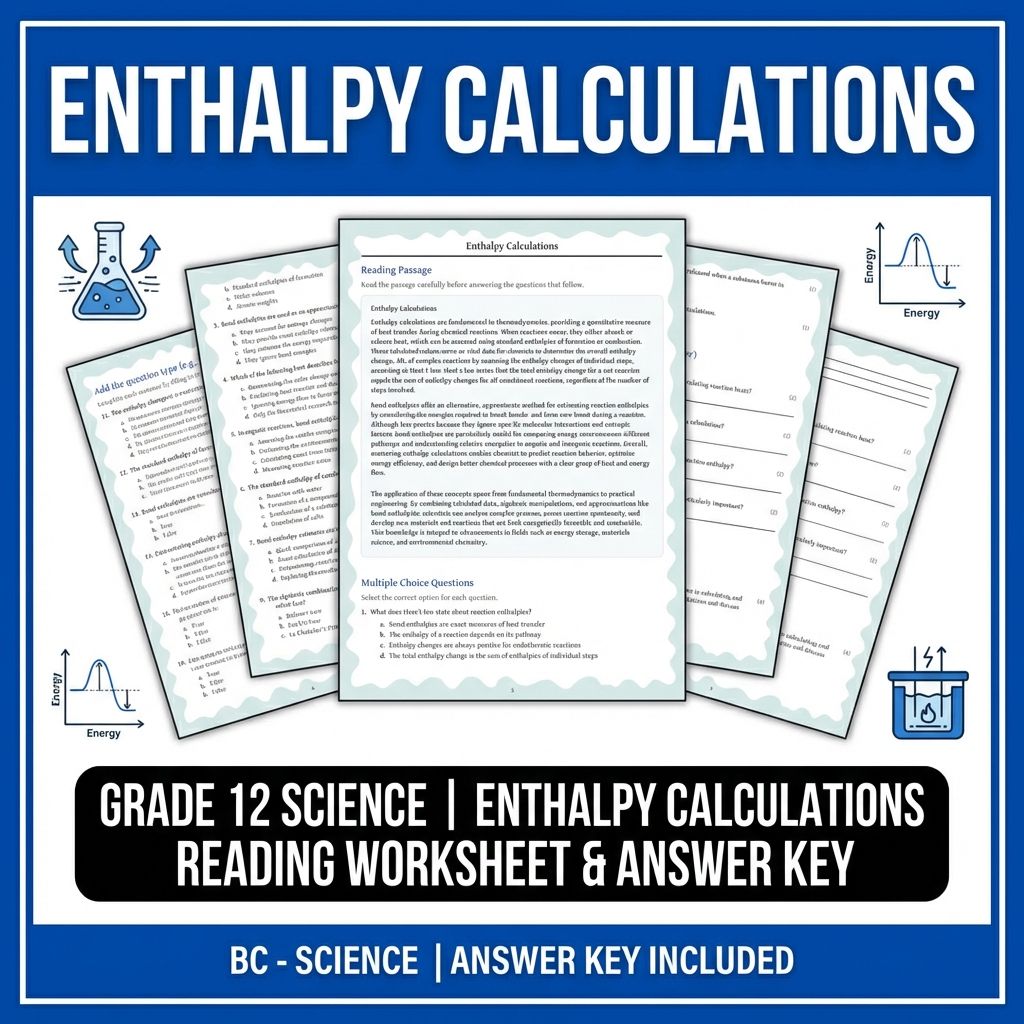
Grade 12 Science | Enthalpy Calculations Reading Worksheet & Answer Key
JCreated byJ.S SheetsLearning Objectives
- Understand how standard enthalpies of formation and combustion are used to quantify heat changes.
- Apply Hess's law to combine enthalpy terms algebraically for reaction calculations.
- Estimate reaction enthalpies using bond enthalpies and analyze reaction trends.
Instant download
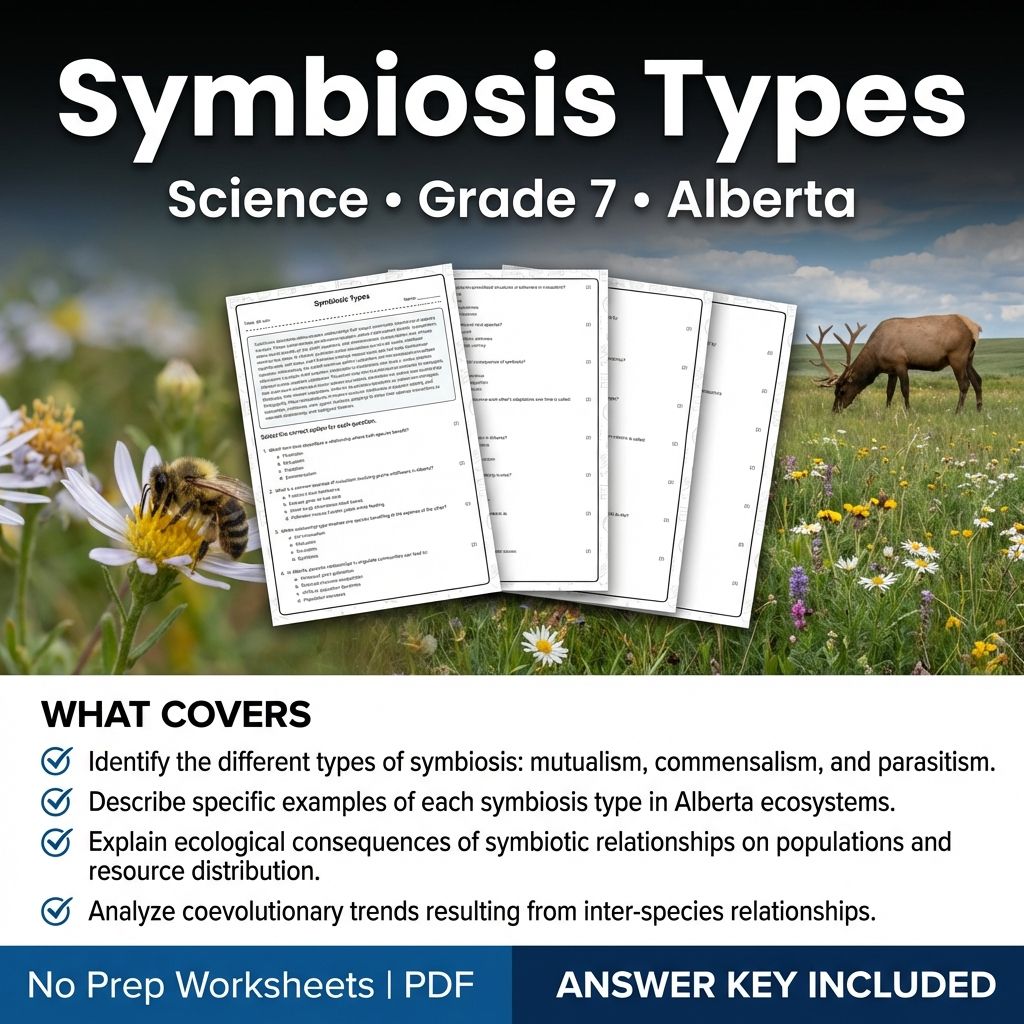
Symbiosis Types Worksheet | Grade 7 Science | Alberta Standards
Created byCoral Reef LearningLearning Objectives
- Identify the different types of symbiosis: mutualism, commensalism, and parasitism.
- Describe specific examples of each symbiosis type in Alberta ecosystems.
- Explain ecological consequences of symbiotic relationships on populations and resource distribution.
Instant download
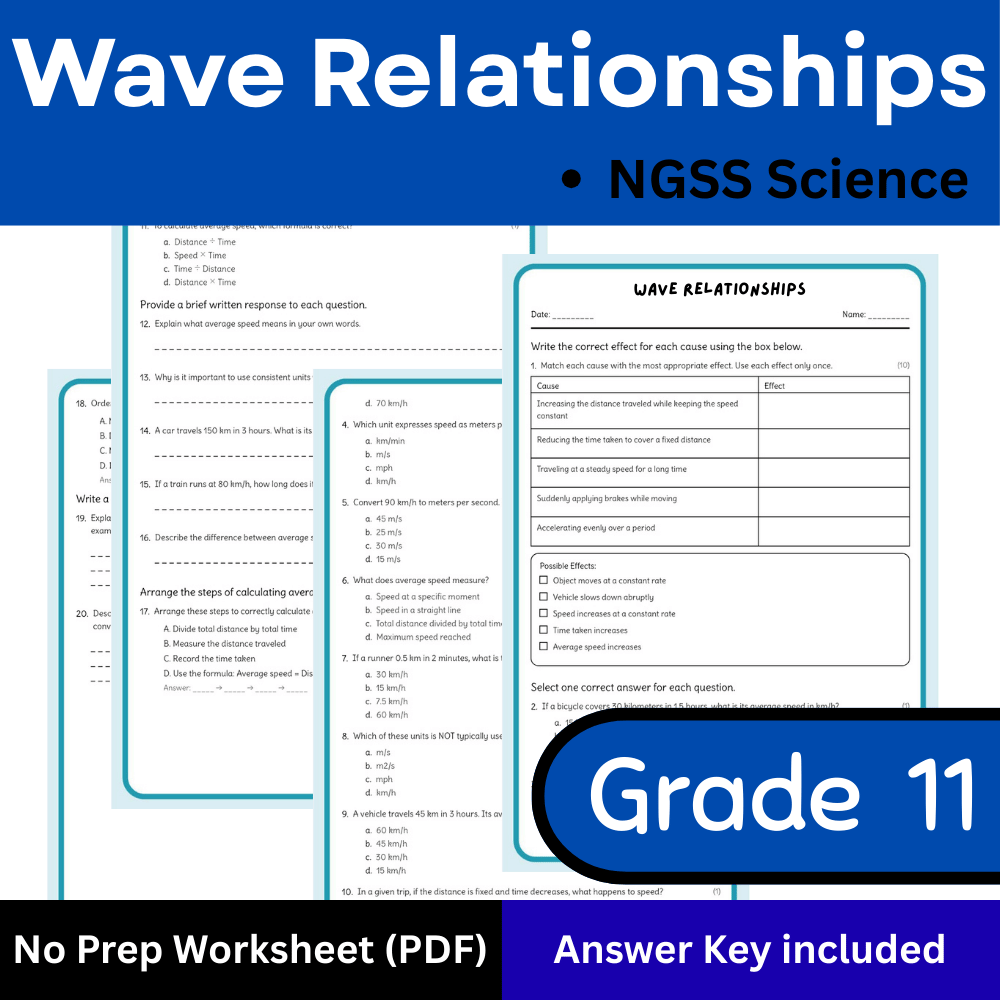
11th Grade Science | Wave Relationships Worksheet (Answer Key) – NGSS
Created byBright Mind ResourcesLearning Objectives
- Understand the mathematical relationships among wave properties such as speed, frequency, and wavelength.
- Describe the differences and similarities between transverse and longitudinal waves using examples.
- Analyze wave behaviors like refraction and dispersion through graphs and calculations.
Instant download
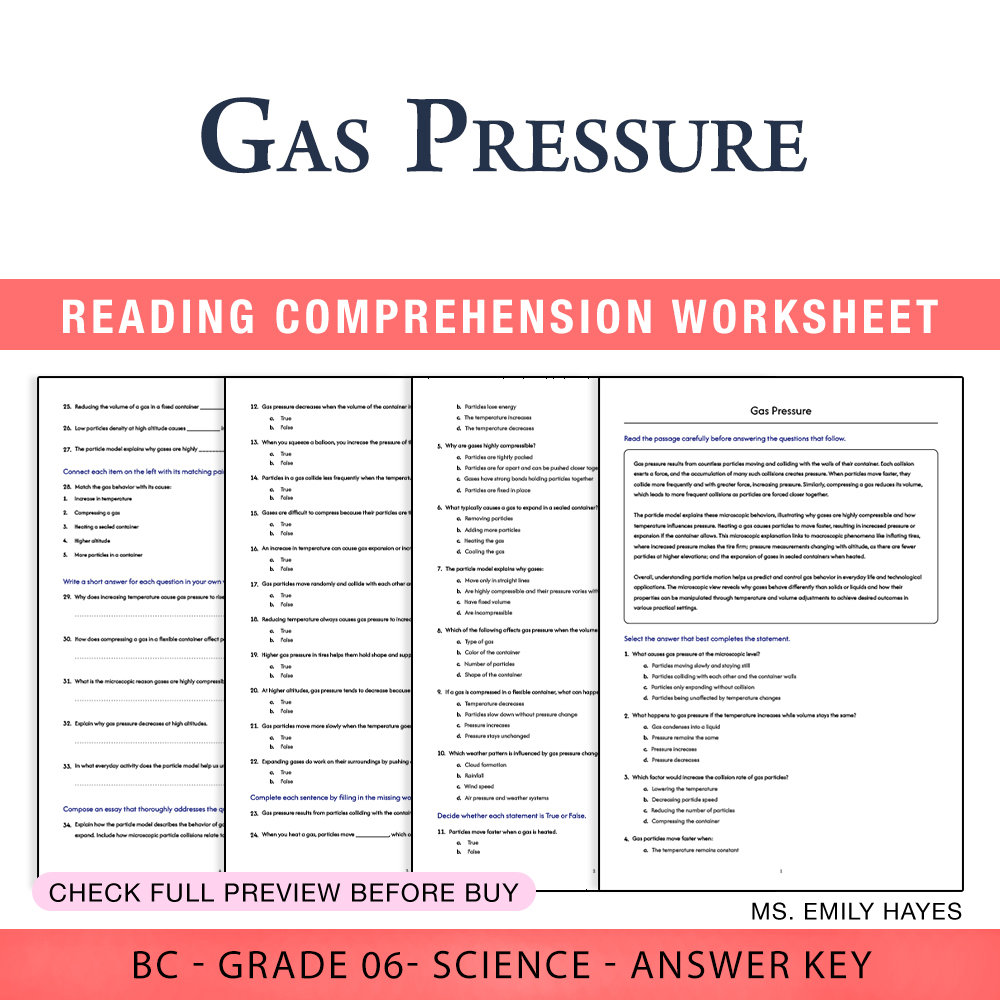
6th Grade Science | Gas Pressure Worksheet (PDF+ Answer Key)
Created byCopper Leaf ClassroomLearning Objectives
- Explain how gas pressure results from particle collisions with container walls.
- Describe how temperature and volume changes affect gas pressure according to the particle model.
- Relate microscopic gas behavior to real-world applications such as inflating tires and altitude pressure changes.
Also included in: Grade 6 Science BC| Reaction Rates & Chemical Properties (PDF+ Answer Keys) +1 more
Instant download
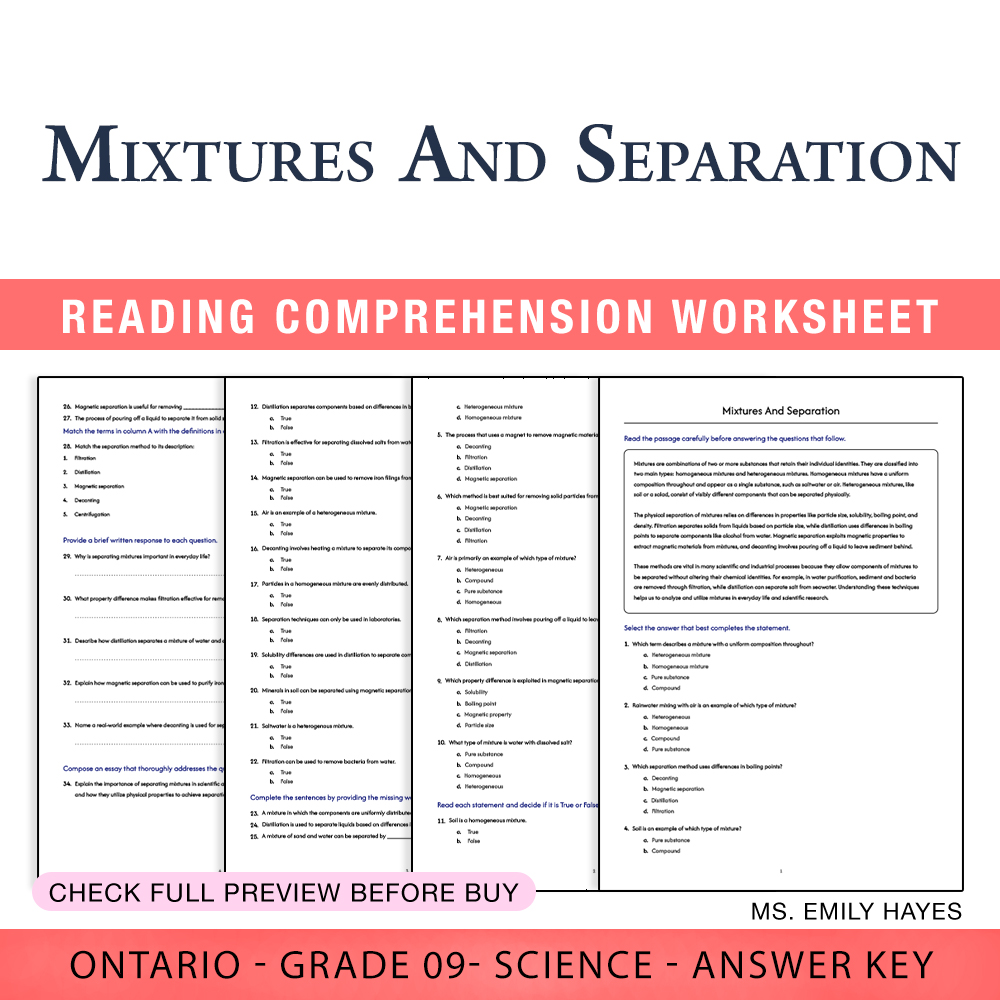
Grade 9 Science | Mixtures and Separation Worksheet (PDF + Answer Key)
Created byCopper Leaf ClassroomLearning Objectives
- Explain the difference between homogeneous and heterogeneous mixtures.
- Describe physical methods used to separate mixture components based on their physical properties (filtration, distillation, magnetic separation, decanting).
- Identify examples of mixtures such as saltwater, soil, and air, and relate them to separation principles.
Instant download
Browse more categories
About Science Worksheets
Find Science worksheets spanning core skills, practice, and review. All 44,628 resources are instant PDF downloads for the classroom or home.
Every worksheet on MyTeachingSheets is created by independent teacher-authors and reviewed before publication. All resources download as printable PDFs for classroom, homework, or at-home practice, and many include answer keys. Preview any worksheet free before buying.