
Science Worksheets
44,295 subject resources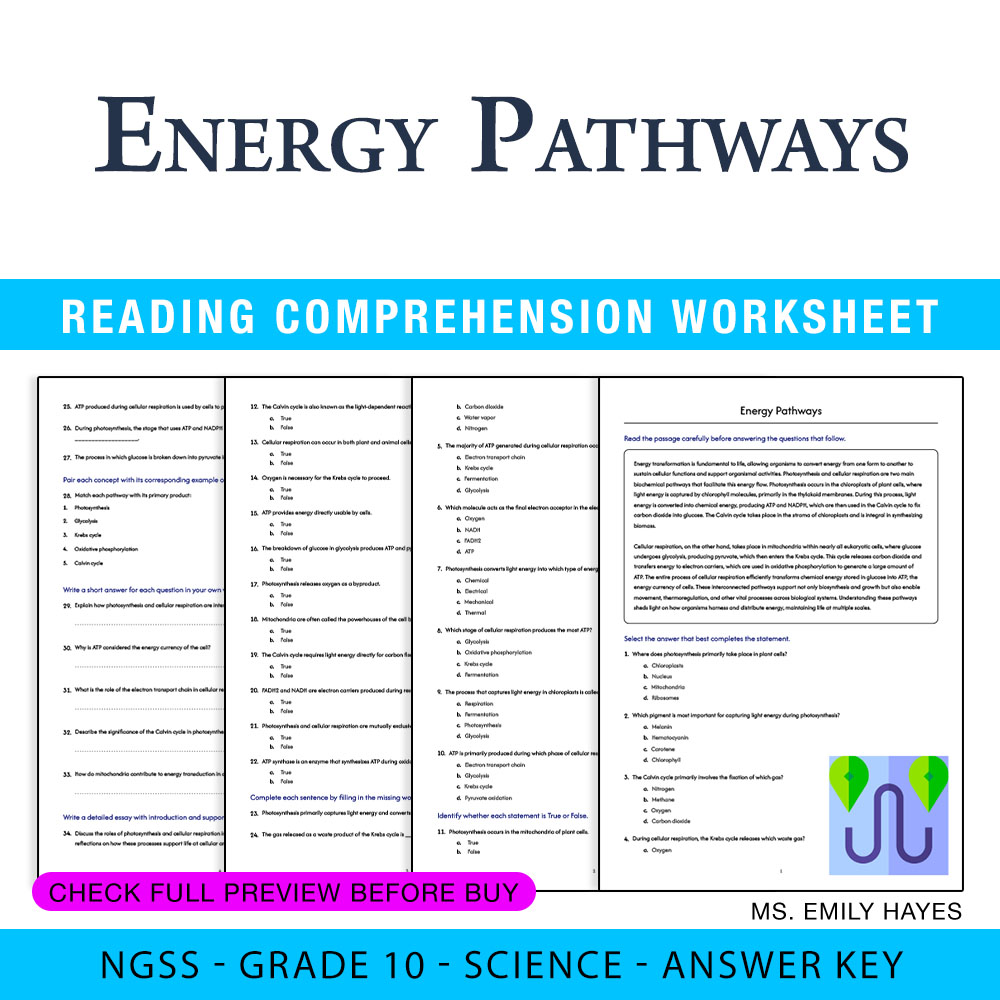
10th Grade Science | Energy Pathways Worksheet (PDF+ Answer Key)
 Created byCopper Leaf Classroom
Learning Objectives
- Explain the process of photosynthesis and its role in energy capture.
- Describe cellular respiration pathways and their relationship to ATP production.
- Illustrate how energy transduction supports life processes across cellular and organismal scales.
Instant download
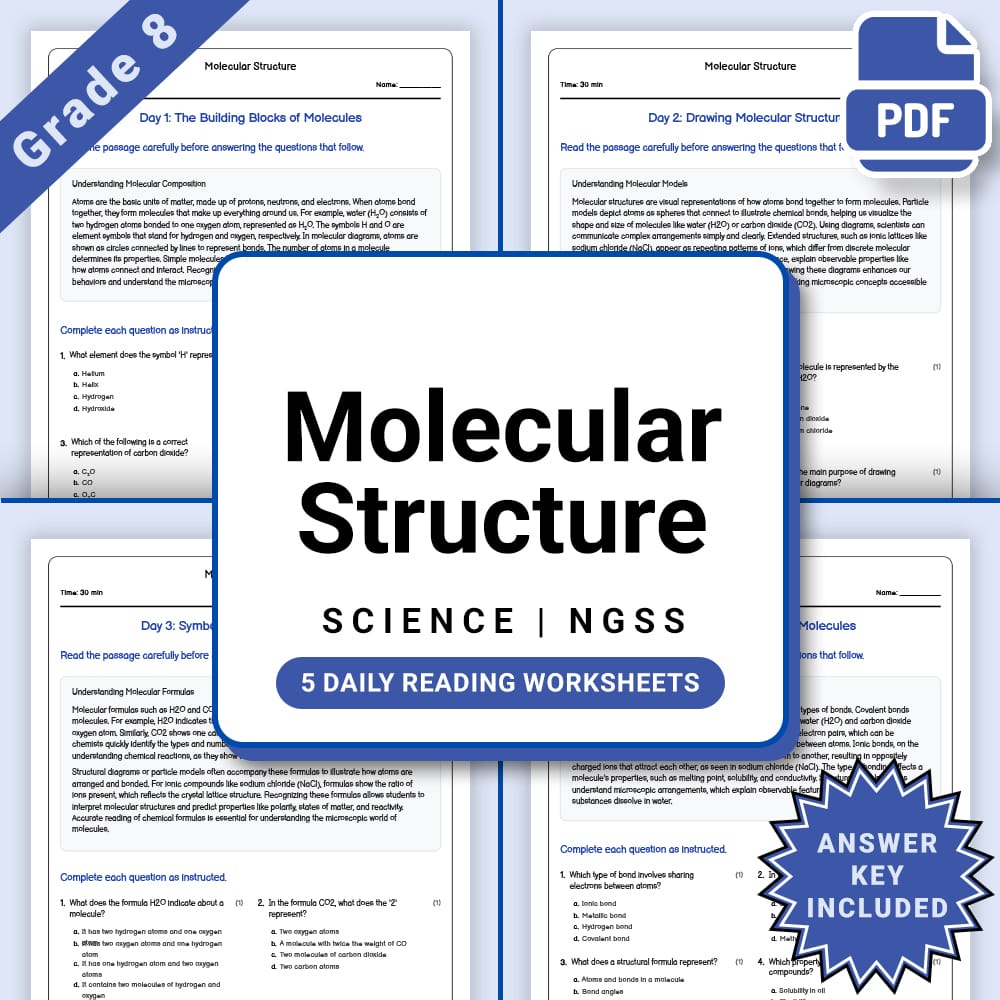
Grade 8 Science – Molecular Structure Daily Reading Worksheet(PDF + Answer Key)
Created byCopper Leaf ClassroomLearning Objectives
- Understand basic atomic composition of simple molecules
- Identify element symbols and how atoms combine
- Learn to interpret particle models and symbolic formulas
Instant download

Anatomical Clues Assessment | TEKS Grade 11 Science Printable Worksheet
 Created byPrism Point Learning
Learning Objectives
- Explain how homologous and analogous structures reflect evolutionary relationships.
- Identify vestigial organs and their significance in evolutionary biology.
- Analyze comparative anatomy to infer common ancestry among species.
Also included in: Grade 11 Evolution, Speciation & Phylogeny Science Lesson Bundle | TEKS
Instant download
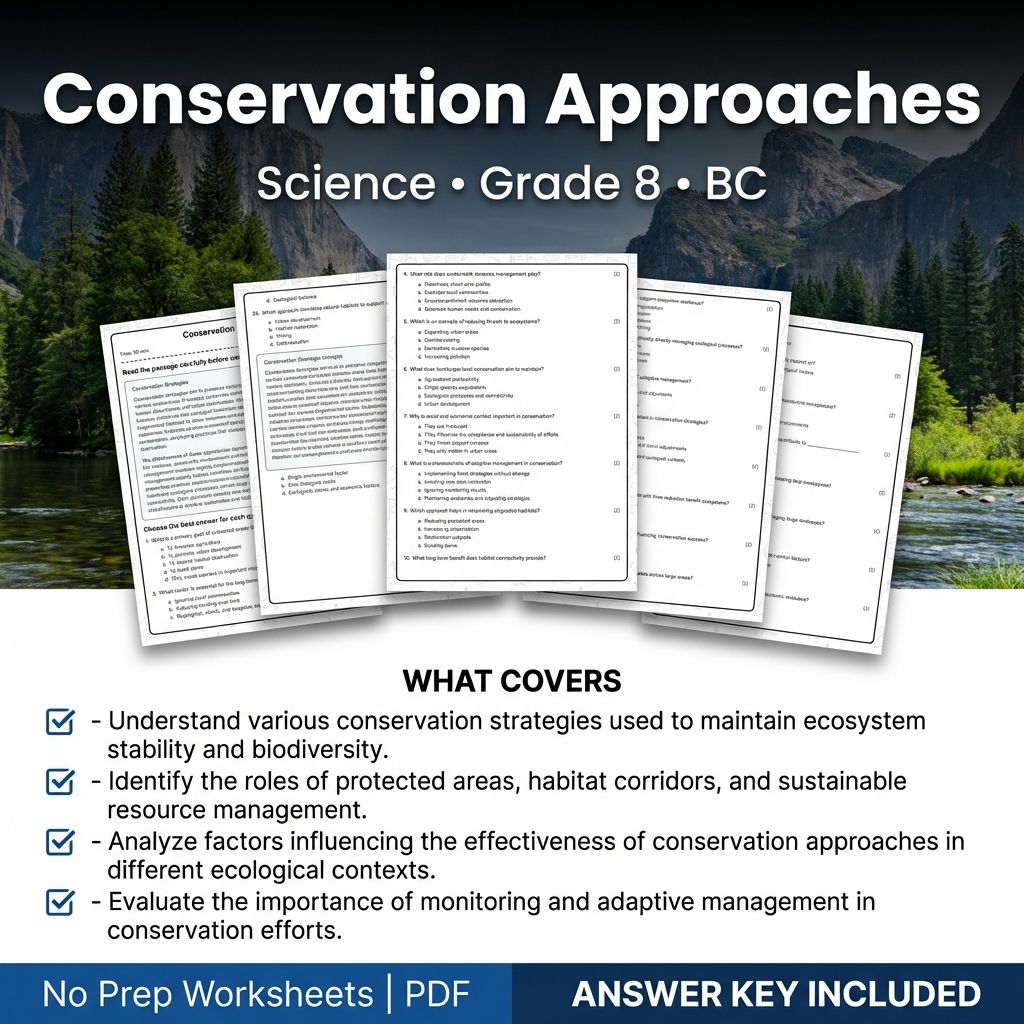
Grade 8 Science | Conservation Approaches Worksheet & Answer Key (Printable PDF)
 Created byCoral Reef Learning
Learning Objectives
- Understand various conservation strategies used to maintain ecosystem stability and biodiversity.
- Identify the roles of protected areas, habitat corridors, and sustainable resource management.
- Analyze factors influencing the effectiveness of conservation approaches in different ecological contexts.
Instant download
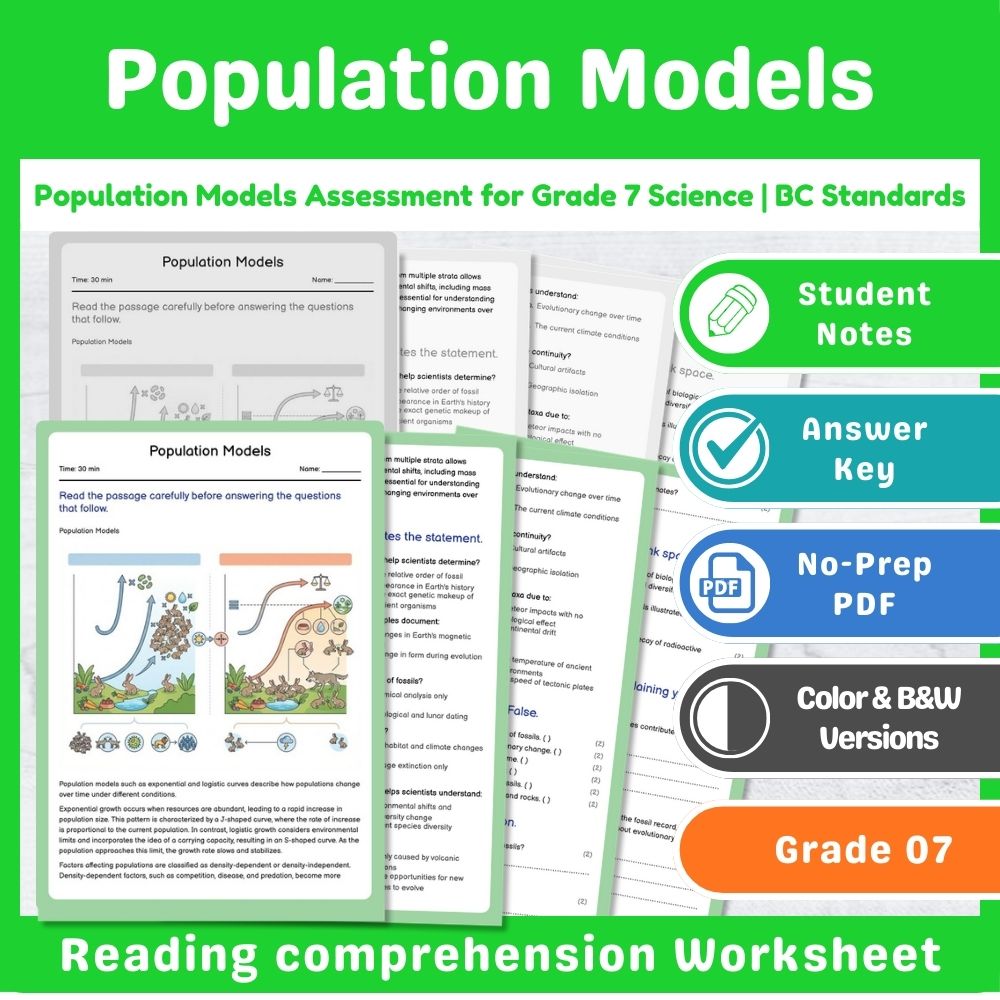
Population Models Assessment for Grade 7 Science | BC Standards
Created byPrism Point LearningLearning Objectives
- Understand the differences between exponential and logistic population growth models.
- Explain factors influencing population change, including density-dependent and density-independent factors.
- Interpret patterns in real-world population dynamics using simple models.
Instant download

Grade 10 Science | Multiple Evidence Lines Worksheet | California Standards
 Created byLumora Learning
Learning Objectives
- Explain how multiple independent evidence lines support the idea of common ancestry and evolutionary change
- Identify key contributions of fossil records, molecular data, and biogeographic patterns to evolutionary explanations
- Evaluate how converging evidence strengthens scientific claims about how biodiversity arises
Instant download

Grade 5 Design Optimization Worksheet | NGSS Practice PDF
 Created byClear Sky Classroom
Learning Objectives
- Explain how iterative testing and controlled trials help improve a design.
- Identify common failure modes and use test data to decide what to change next.
- Apply trade-off reasoning to balance competing criteria such as cost, durability, and performance.
Instant download

Grade 8 Science – Water Treatment & Purification | Daily Reading Worksheet
 Created byBright Mind Resources
Learning Objectives
- Understand key concepts related to Science
- Apply knowledge through practice questions
- Demonstrate comprehension of the material
Also included in: Grade 8 Water Systems Science Daily Reading Worksheets Lesson Bundle | Ontario +1 more
Instant download

Grade 8 Science – Water Treatment & Processes | Daily Reading Worksheet
 Created byQuiet Forest Education
Learning Objectives
- Understand the basic principles and stages of water treatment processes.
- Identify the mechanisms used to remove suspended solids, pathogens, and contaminants.
- Recognize the importance of water treatment in protecting environmental and public health.
Also included in: Grade 8 Science Full Year Bundle Ontario Daily Reading Worksheets
Instant download
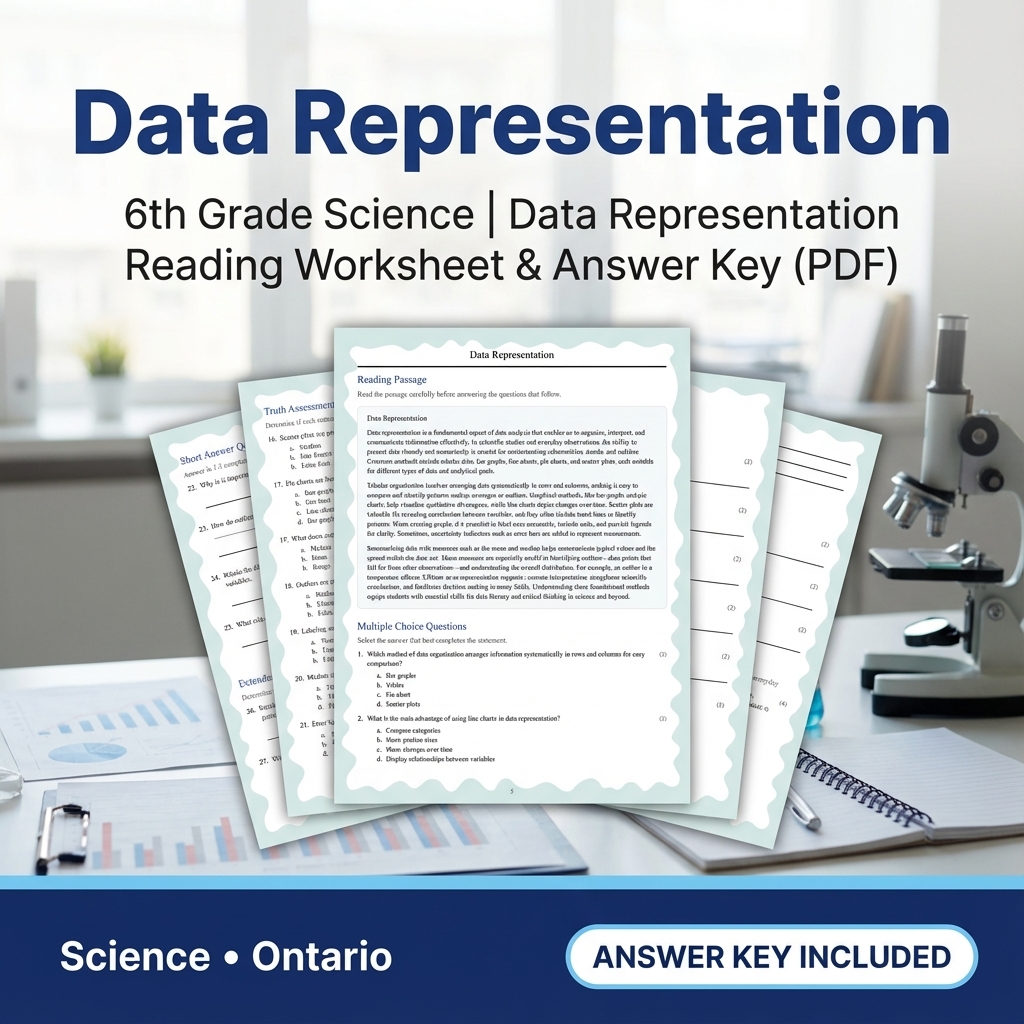
6th Grade Science | Data Representation Reading Worksheet & Answer Key (PDF)
JCreated byJ.S SheetsLearning Objectives
- Understand various methods of data collection and organization.
- Learn to select appropriate graphs and charts for visualizing data.
- Interpret trends, outliers, and patterns from graphical and tabular data.
Also included in: Grade 6 Science Unit | Inquiry, Data, & Ethical Practices Worksheet Pack +1 more
Instant download
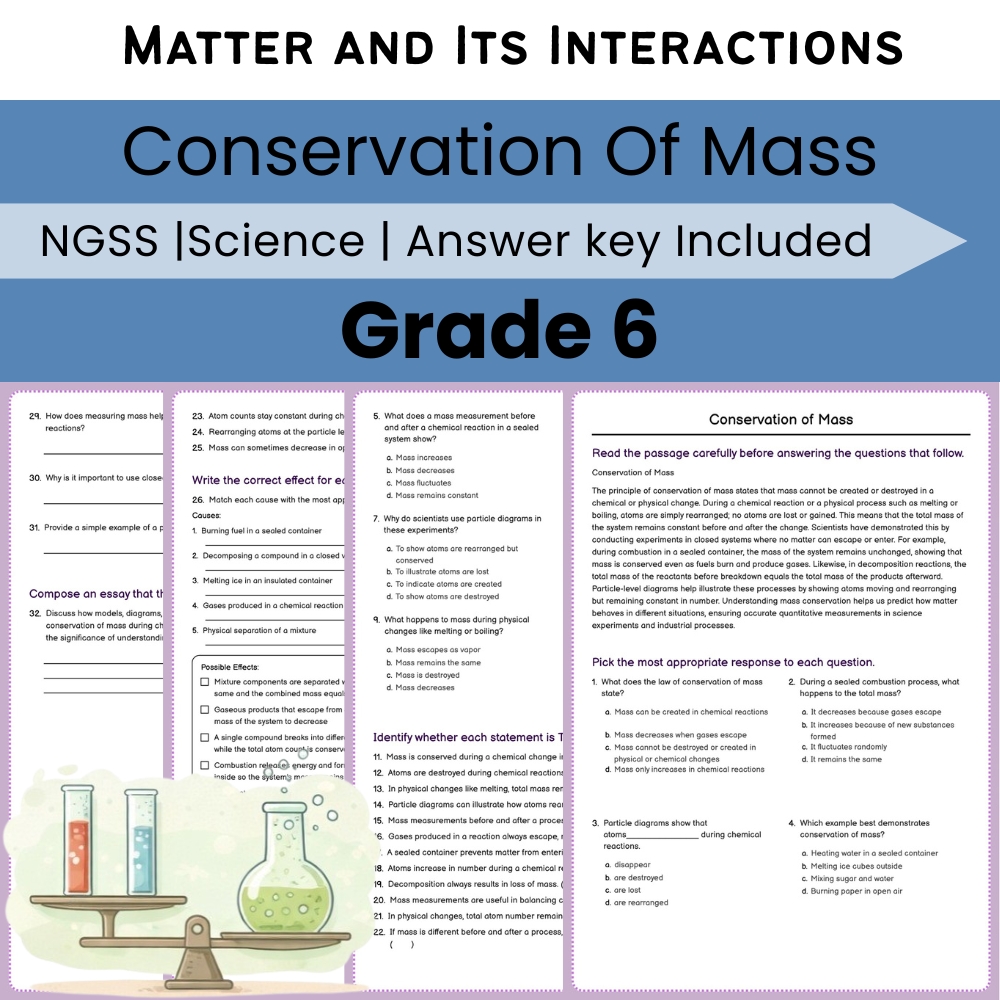
Grade 6 Science | Conservation of Mass Worksheet + Answer Key (Printable PDF)
Learning Objectives
- Understand the principle of conservation of mass in physical and chemical changes.
- Trace atoms and mass during chemical reactions and physical processes.
- Use models and diagrams to demonstrate mass conservation at the particle level.
Also included in: Grade 6 Science | Matter and Its Interactions NGSS Unit Bundle - Assessments & Worksheets +1 more
Instant download

Change Indicators Test Prep Printable | Grade 7 Science BC Standards
Created byPrism Point LearningLearning Objectives
- Identify observable indicators of chemical change, such as gas formation, persistent color change, temperature change, and precipitate formation
- Explain why multiple indicators together provide stronger evidence for chemical change than a single sign
- Use simple measurements alongside observations to support claims about whether a chemical change occurred
Also included in: Matter & Chemical Change Lesson Bundle — Grade 7 Science British Columbia +1 more
Instant download

Energy And Change Worksheet Practice | Grade 7 Science
Created byPrism Point LearningLearning Objectives
- Explain how energy changes during exothermic and endothermic chemical reactions using temperature evidence
- Relate energy input and release to bond breaking and bond formation
- Use energy-change evidence, along with other signs, to distinguish chemical from physical changes
Also included in: Matter & Chemical Change Lesson Bundle — Grade 7 Science British Columbia +1 more
Instant download
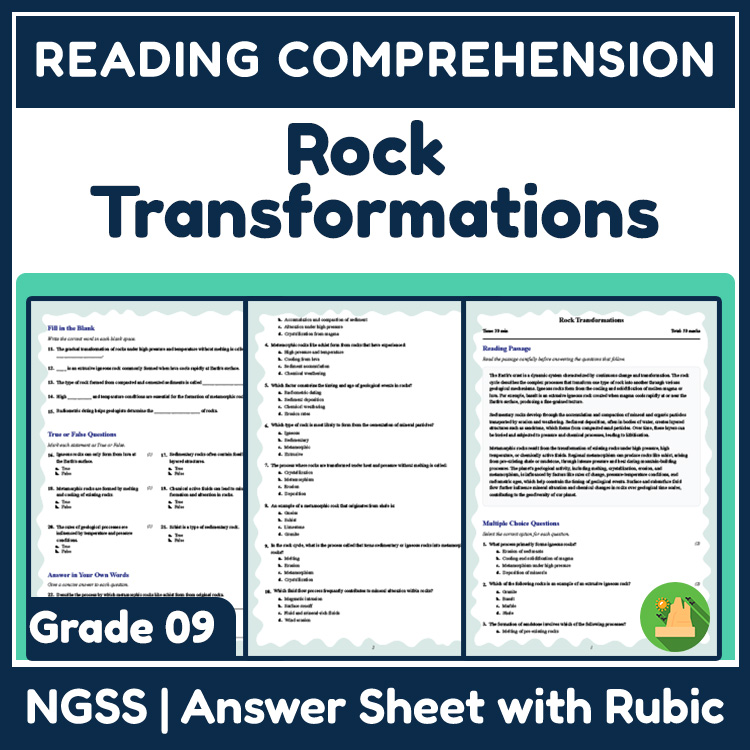
9th Grade Science | Rock Transformations Reading Worksheet & Answer Key (PDF)
JCreated byJ.S SheetsLearning Objectives
- Describe the processes of the rock cycle, including igneous, sedimentary, and metamorphic formations.
- Explain how different geological conditions influence rock transformation and cycle pathways.
- Identify examples of rock formation processes such as melting, erosion, and metamorphism.
Instant download
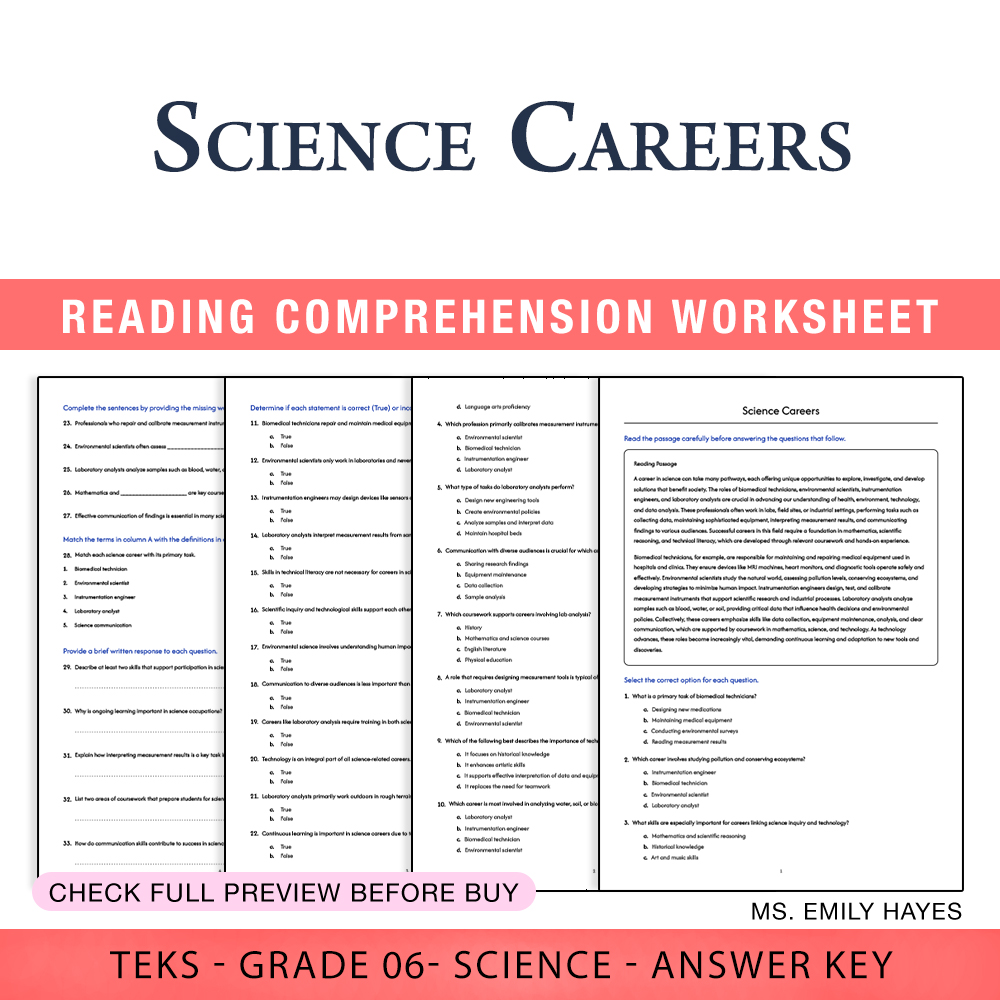
6th Grade Science | Careers in Science Worksheet (PDF+ Answer Key)
Created byCopper Leaf ClassroomLearning Objectives
- Identify various science-related careers and their typical tasks.
- Understand the skills and coursework necessary for science occupations.
- Describe how scientific inquiry and technological skills are linked in careers.
Instant download
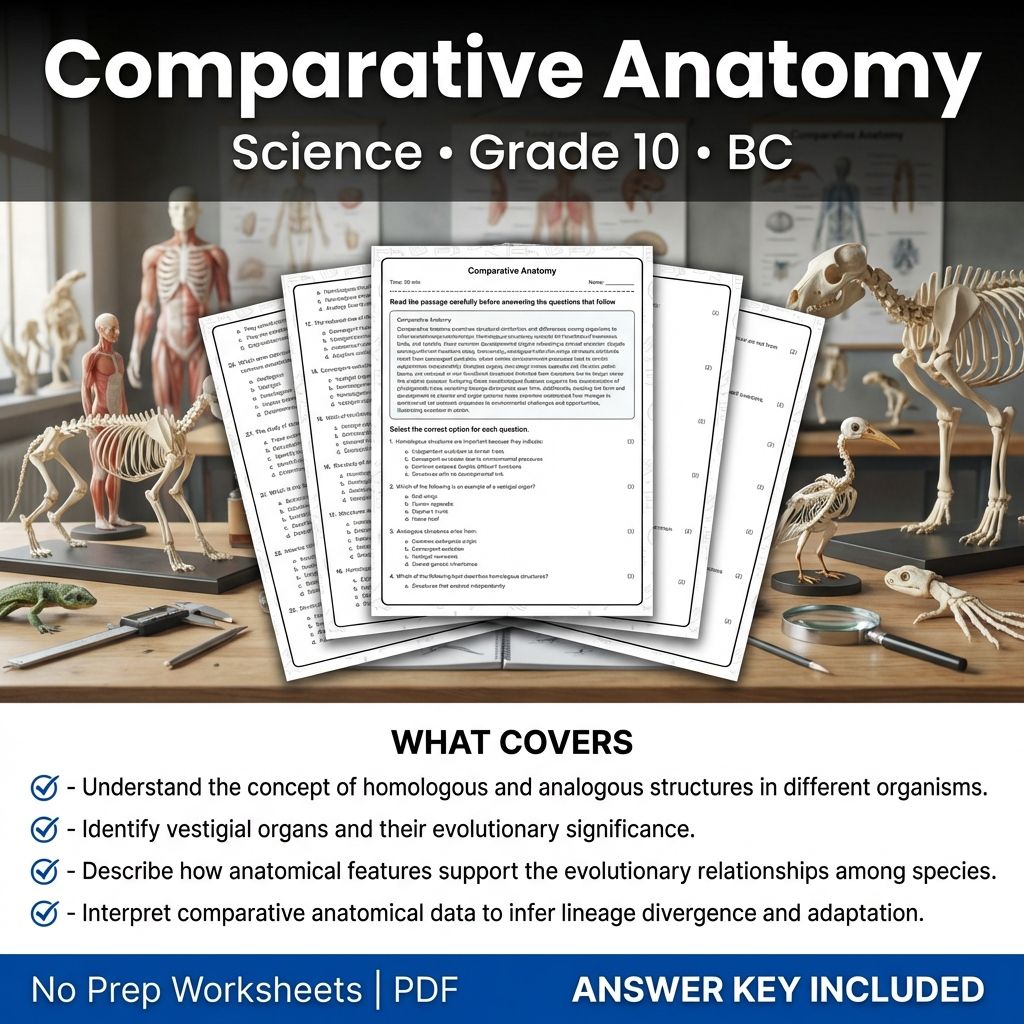
Grade 10 Science Worksheet | Comparative Anatomy Practice with Answer Key (PDF)
Created byCoral Reef LearningLearning Objectives
- Understand the concept of homologous and analogous structures in different organisms.
- Identify vestigial organs and their evolutionary significance.
- Describe how anatomical features support the evolutionary relationships among species.
Instant download
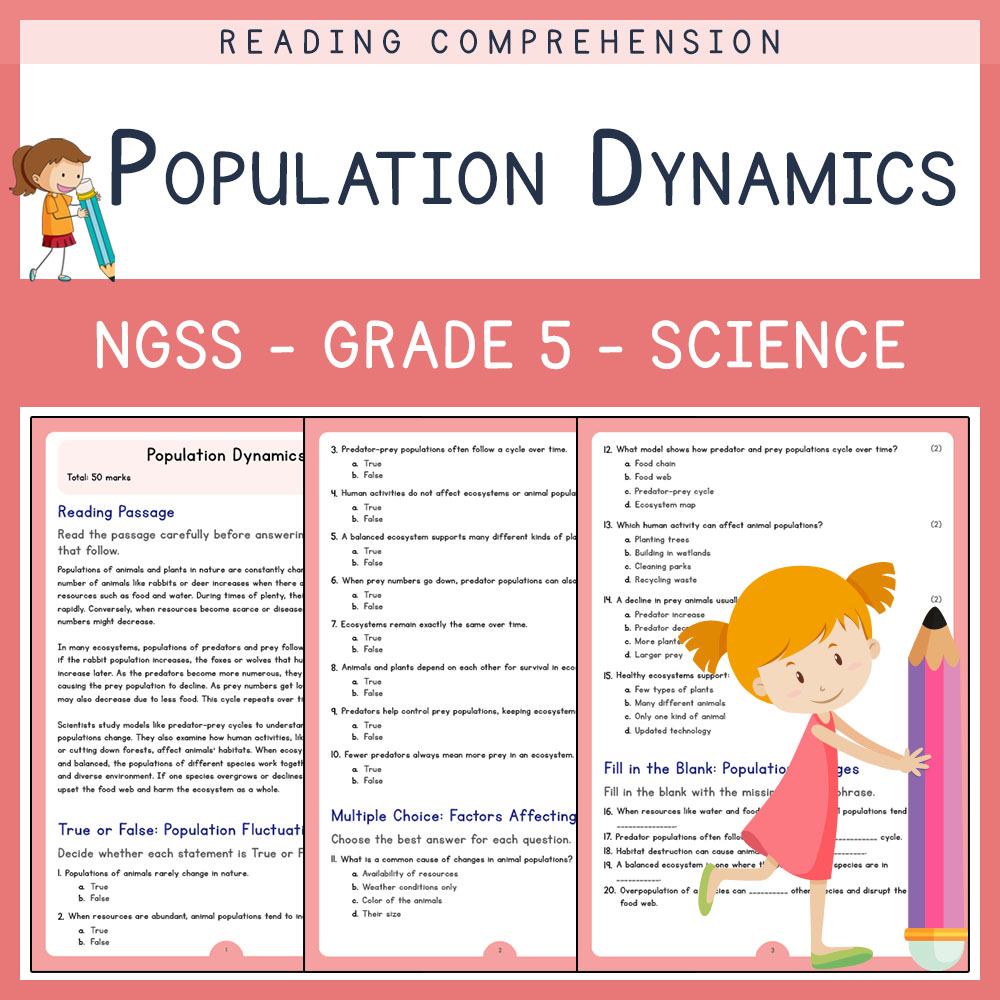
Grade 5 Science | Population Dynamics Worksheets (PDF) | NGSS Aligned
Created byLumora LearningLearning Objectives
- Understand how resource availability, predation, disease, and environment affect species populations.
- Identify models like predator-prey cycles and habitat resources that influence populations.
- Explain how population changes impact food webs and ecosystems.
Instant download

Grade 6 Science | Trade-off Decisions - Daily Reading Comprehension
Created byCoral Reef LearningLearning Objectives
- Understand what trade-offs are in design choices
- Identify trade-offs in simple real-life scenarios
- Recognize how improving one feature can impact others
Instant download

Nuclear Processes Worksheet | Science Assessment for Grade 12 Alberta
JCreated byJ.S SheetsLearning Objectives
- Understand the principles of radioactive decay and half-life.
- Explain nuclear reactions and conservation of nucleon number.
- Apply quantitative decay laws to real-world scenarios.
Instant download

Grade 12 Science Worksheet on Nuclear Energy | Standards-Aligned Practice
JCreated byJ.S SheetsLearning Objectives
- Understand the principles of nuclear fission and fusion energetics.
- Explain the concept of binding energy per nucleon and its significance.
- Describe chain-reaction criteria and reactor physics principles for energy release.
Instant download

Harmonic Motion Worksheet for Grade 12 Science | Standards-Aligned Practice
JCreated byJ.S SheetsLearning Objectives
- Understand the principles of simple harmonic motion and sinusoidal models.
- Describe the concepts of natural frequency, phase, and energy exchange in oscillatory systems.
- Apply quantitative relationships linking amplitude, period, damping, and resonance in mass-spring and pendulum systems.
Instant download

Kinematics Vectors Worksheet | Grade 12 Science | Alberta Standards
JCreated byJ.S SheetsLearning Objectives
- Understand the representation of displacement, velocity, and acceleration as vectors in one and two dimensions.
- Apply vector decomposition and parametric equations to model projectile motion and analyze trajectories.
- Interpret regional examples such as drone flight paths and wind effects in planar motion.
Instant download

Electromagnetic Induction Worksheet | Alberta Science Grade 12 Assessment
JCreated byJ.S SheetsLearning Objectives
- Explain the principles of electromagnetic induction, including Faraday's law and Lenz's law.
- Describe practical applications of electromagnetic induction in power systems and generators.
- Analyze how changing magnetic flux induces emf and current in electrical circuits.
Instant download
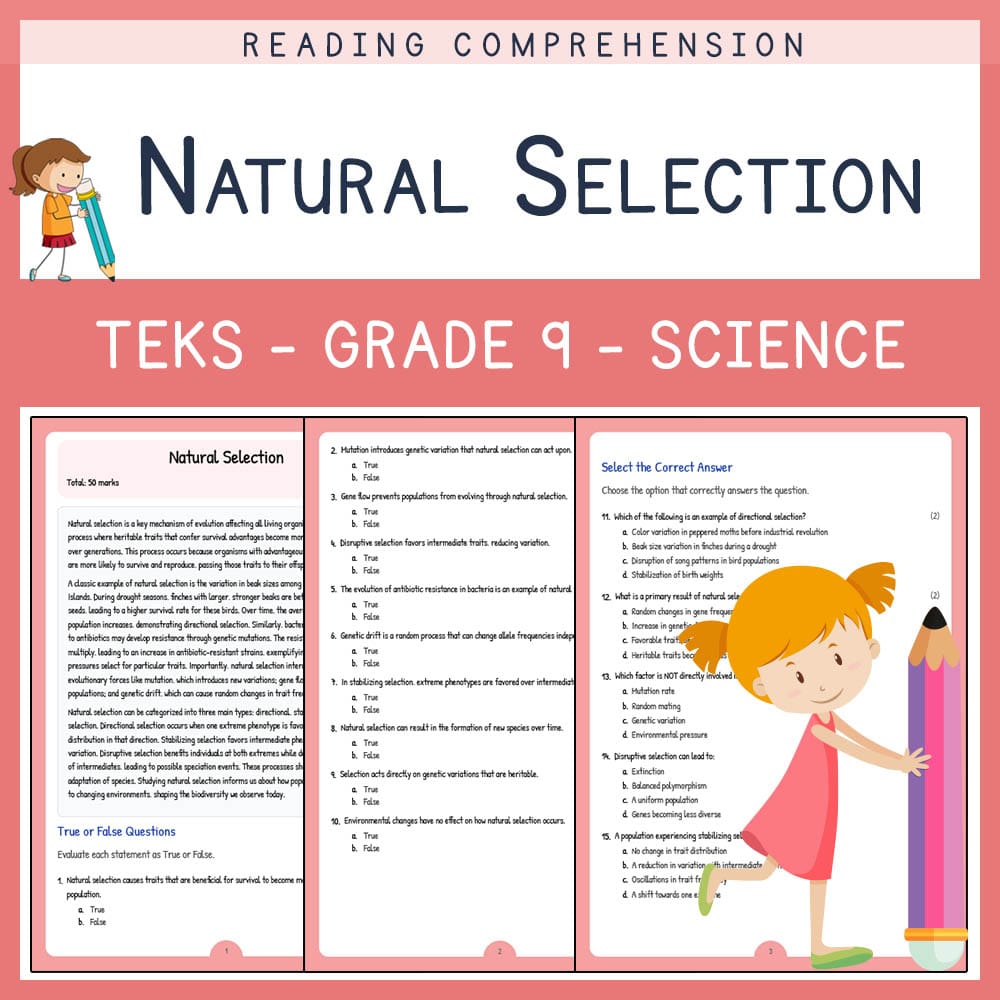
Grade 9 Science | Natural Selection Worksheet | TEKS Aligned
Created byLumora LearningLearning Objectives
- Understand the fundamental principles of natural selection and how it drives evolution.
- Identify examples of natural selection in nature, such as beak variation and antibiotic resistance.
- Describe different types of selection: directional, stabilizing, and disruptive.
Instant download

Grade 5 Transfer by Media Worksheet | Practice & Standards PDF
Created byClear Sky ClassroomLearning Objectives
- Explain how energy transfers through different media such as light, sound, heat, and electrical circuits
- Identify the source, transfer route, and destination of energy in everyday scenarios
- Compare energy transfer mechanisms to show that energy changes location and form without disappearing
Instant download
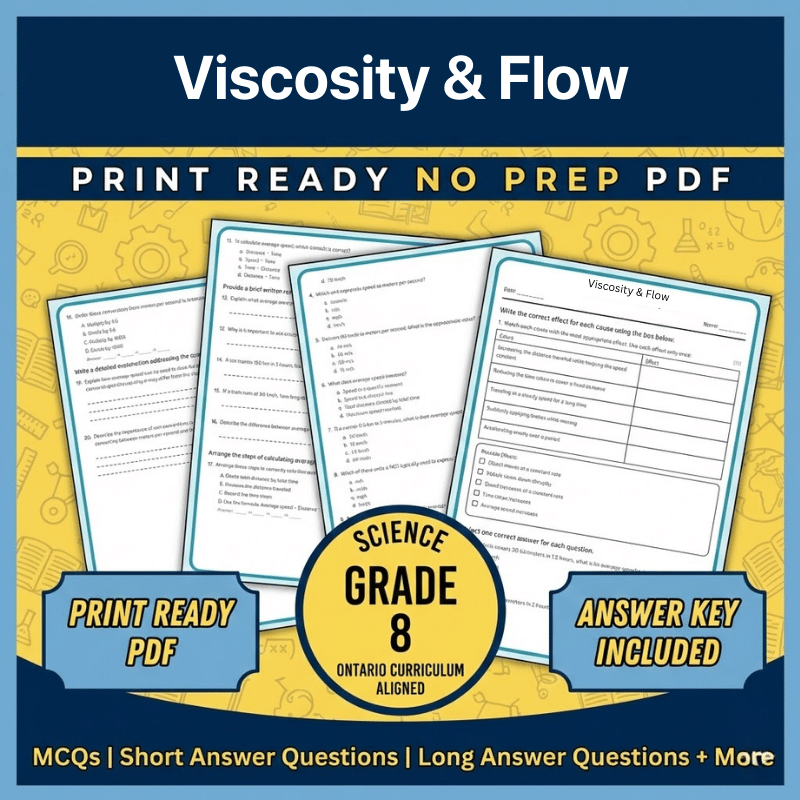
Grade 8 Science | Viscosity and Flow Worksheet (Ontario) (PDF)
Created byBright Mind ResourcesLearning Objectives
- Define and distinguish between dynamic and kinematic viscosity.
- Explain how viscosity affects flow rates in pipes and other systems.
- Identify factors influencing viscosity, such as temperature and shear effects.
Instant download

Biodiversity Value Assessment | TEKS Standards Grade 10 Science Worksheet
Created byPrism Point LearningLearning Objectives
- Define biodiversity and its components such as genetic, species, and ecosystem diversity.
- Explain the importance of biodiversity for ecosystem resilience and services.
- Identify threats to biodiversity and strategies for conservation.
Also included in: Grade 10 Ecosystems Science Lesson Bundle for TEKS Assessment Worksheets
Instant download

Grade 10 Science | Balancing Equations - Daily Reading Comprehension
Created byCoral Reef LearningLearning Objectives
- Understand the principle of conservation of mass in chemical reactions.
- Identify atoms and molecules before and after a chemical reaction.
- Learn how to balance chemical equations using coefficients.
Instant download

Grade 11 Evidence And Data Worksheet | NGSS Practice PDF
Created byClear Sky ClassroomLearning Objectives
- Explain how evidence supports or weakens scientific explanations using patterns in data.
- Differentiate reliable evidence from unreliable evidence by considering measurement error and reproducibility.
- Identify key qualities of strong data: relevance, precision, and consistency across comparable conditions.
Instant download

Heat Transfer Models Worksheet | Grade 7 Science Practice
Created byPrism Point LearningLearning Objectives
- Explain how temperature differences drive heat transfer in conduction, convection, and radiation.
- Use a simple heat-transfer model to describe the direction of energy flow during everyday processes.
- Connect observable temperature changes to changes in thermal energy and possible heat-transfer mechanisms.
Instant download

Grade 6 Scientific Models Worksheet | NGSS Practice PDF
Created byClear Sky ClassroomLearning Objectives
- Explain how scientific models represent systems that are too large, too small, or too complex to study directly
- Identify how models connect observable evidence to underlying ideas and state what a model can and cannot represent
- Use comparisons between model outputs and real measurements to evaluate model limitations and suggest improvements
Instant download
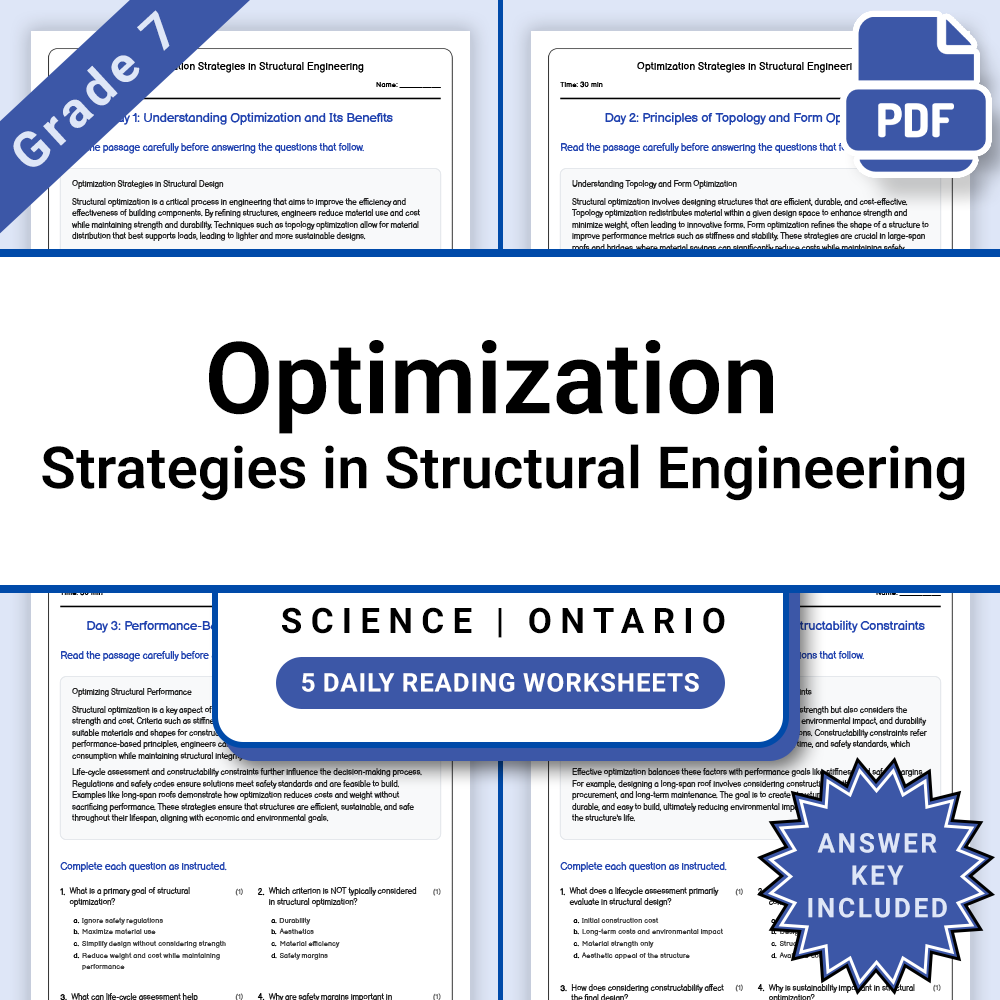
Grade 7 Science – Optimization Strategies Daily Reading Worksheet + Answer Key
JCreated byJ.S SheetsLearning Objectives
- Understand the concept of structural optimization
- Identify benefits of design refinement
- Learn about topology and form optimization principles
Also included in: Grade 7 Science Lesson Bundle: Engineering & Structural Materials Ontario +1 more
Instant download

Grade 12 Science | Inheritance Patterns Worksheet | Florida NGSSS Aligned
Created byLumora LearningLearning Objectives
- Explain how allele segregation during meiosis leads to predictable inheritance patterns.
- Use Punnett-square reasoning to predict genotype and phenotype probabilities for monohybrid crosses.
- Differentiate between genotype and phenotype and interpret how dominance affects observable traits.
Instant download
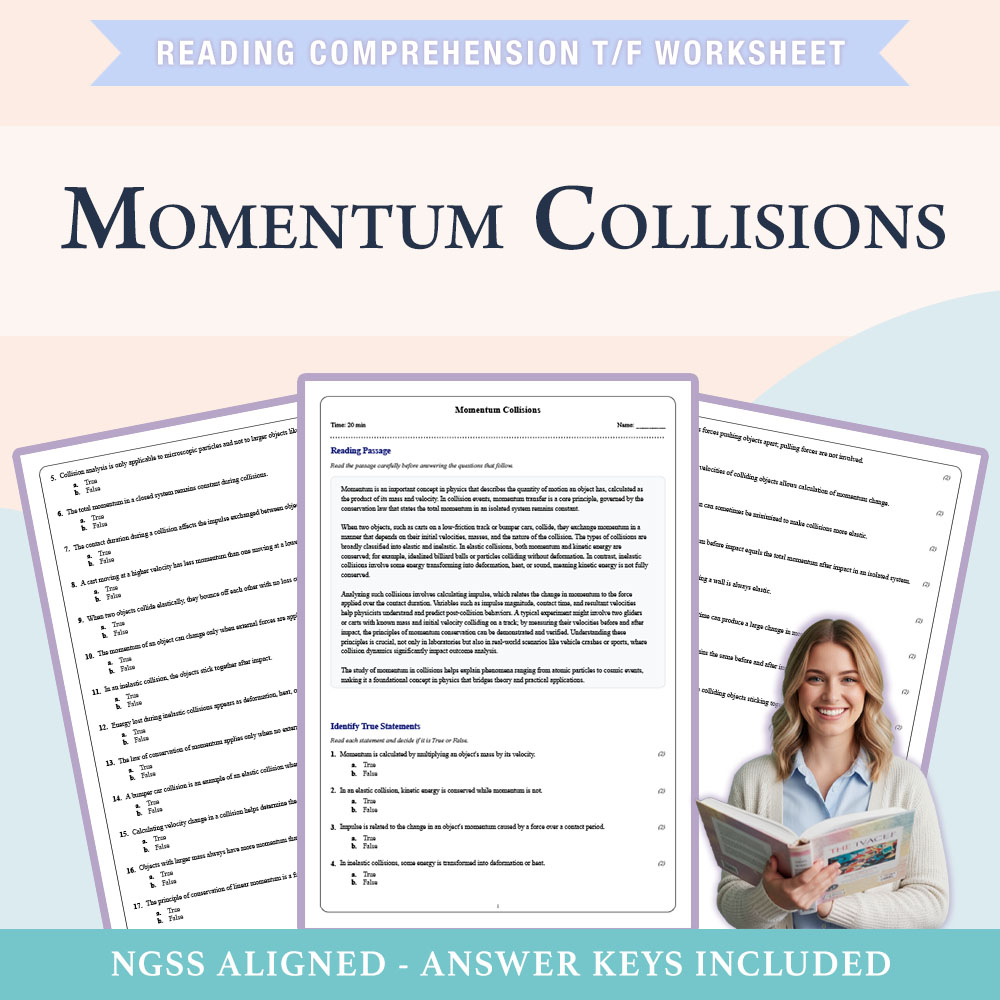
Grade 8 Science | Momentum Collisions Worksheet (PDF + Answer Key)
Created byCopper Leaf ClassroomAlso included in: Grade 8 Science | Motion, Forces & Magnetism Unit Worksheets (PDF + Answer Keys) +1 more
Instant download
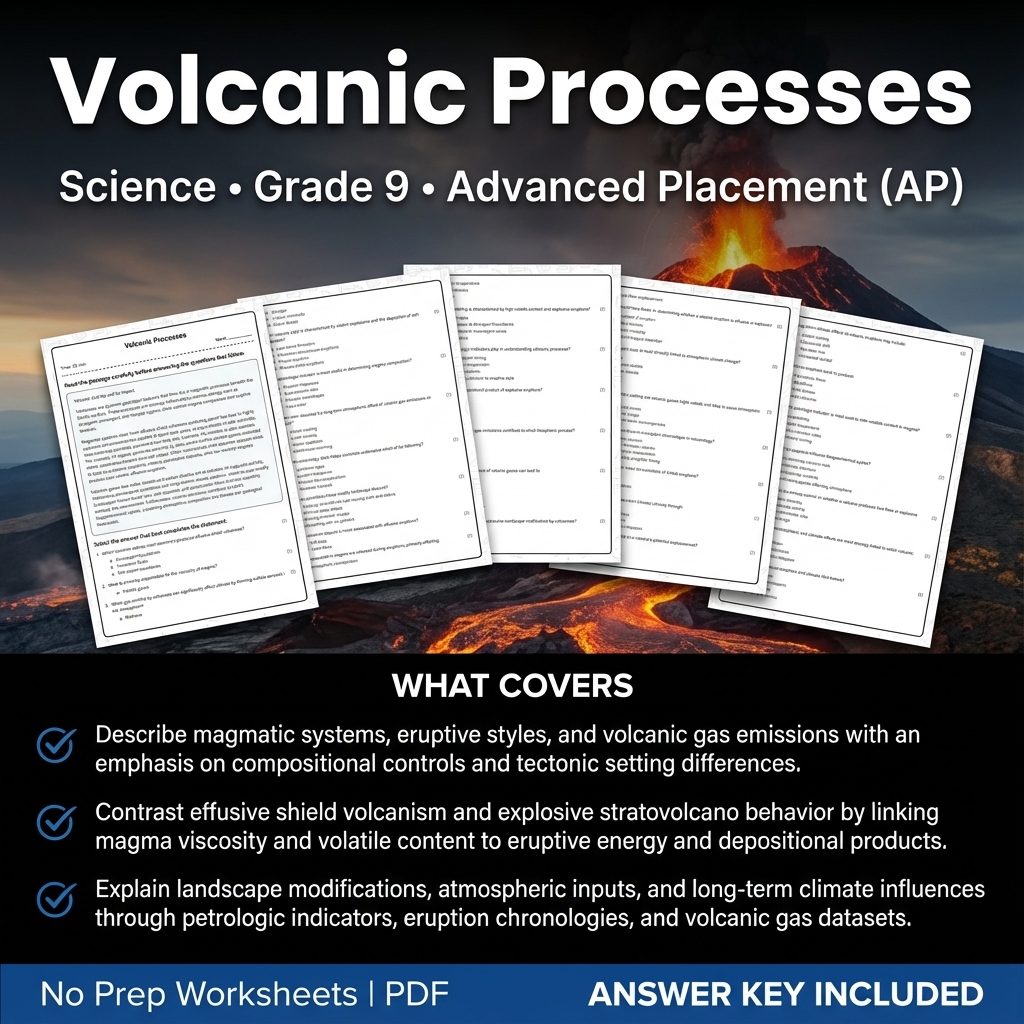
Grade 9 Science | Volcanic Processes Worksheet (Printable PDF + Answer Key)
Created byCoral Reef LearningLearning Objectives
- Describe magmatic systems, eruptive styles, and volcanic gas emissions with an emphasis on compositional controls and tectonic setting differences.
- Contrast effusive shield volcanism and explosive stratovolcano behavior by linking magma viscosity and volatile content to eruptive energy and depositional products.
- Explain landscape modifications, atmospheric inputs, and long-term climate influences through petrologic indicators, eruption chronologies, and volcanic gas datasets.
Also included in: Grade 9 Science Unit | Earth Processes & Climate Worksheets Pack (PDF & Answer Keys) +2 more
Instant download
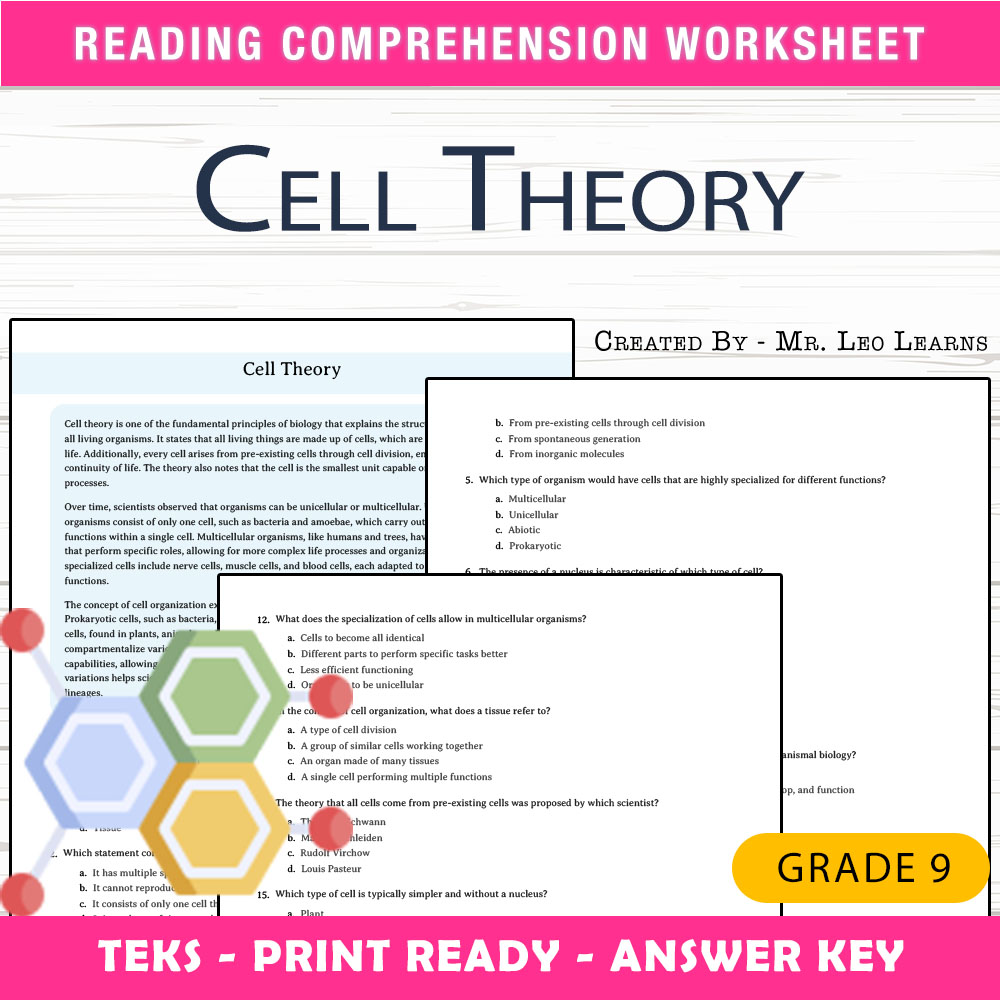
Grade 9 Science — Cell Theory Worksheet for Mastery | PDF + Answer Key
 Created byThe Resource Hub
Learning Objectives
- Describe the fundamental principles of cell theory and their significance in biology.
- Differentiate between unicellular and multicellular organisms based on cellular organization.
- Explain how cell structure relates to cellular function across diverse taxa.
Also included in: Grade 9 Science Unit Bundle | Cell Structures & Transport Mechanisms Worksheets +1 more
Instant download
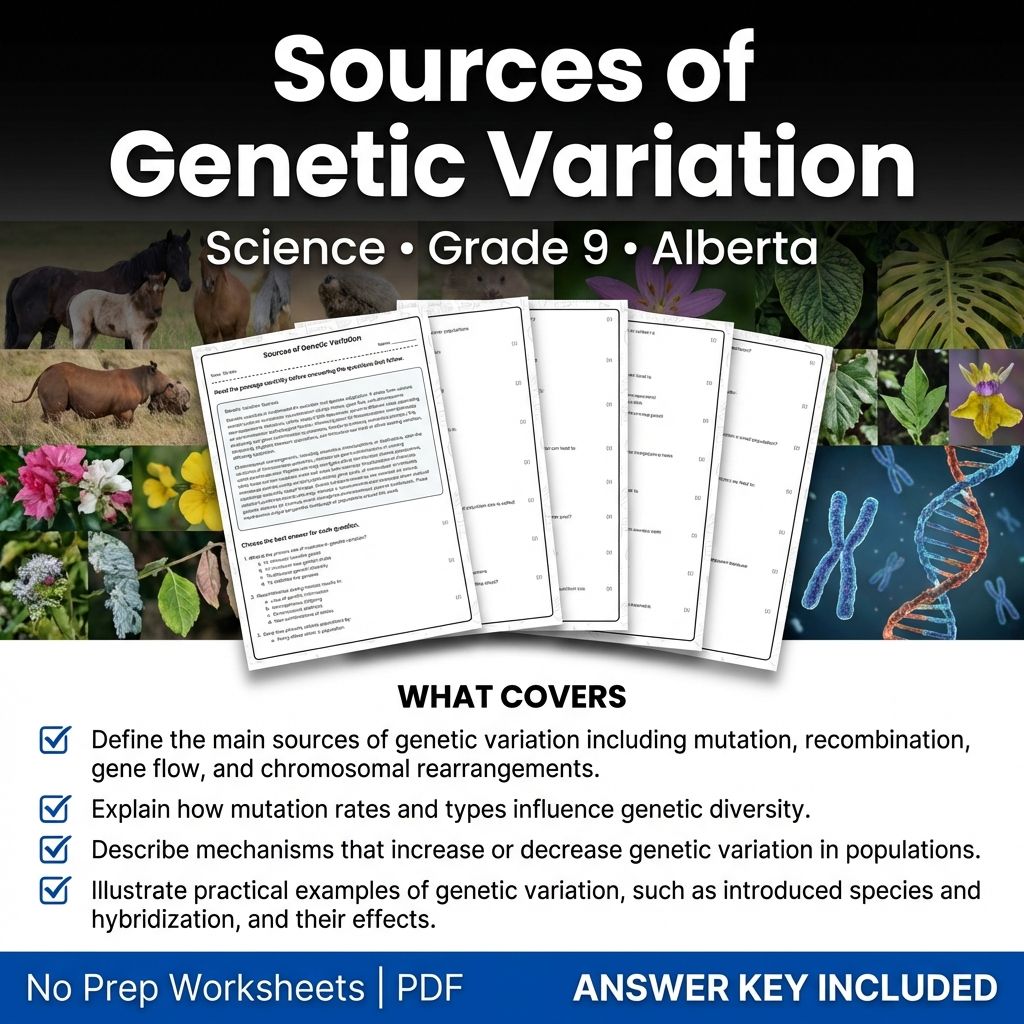
Sources of Genetic Variation Worksheet for Grade 9 Science Alberta
Created byCoral Reef LearningLearning Objectives
- Define the main sources of genetic variation including mutation, recombination, gene flow, and chromosomal rearrangements.
- Explain how mutation rates and types influence genetic diversity.
- Describe mechanisms that increase or decrease genetic variation in populations.
Instant download
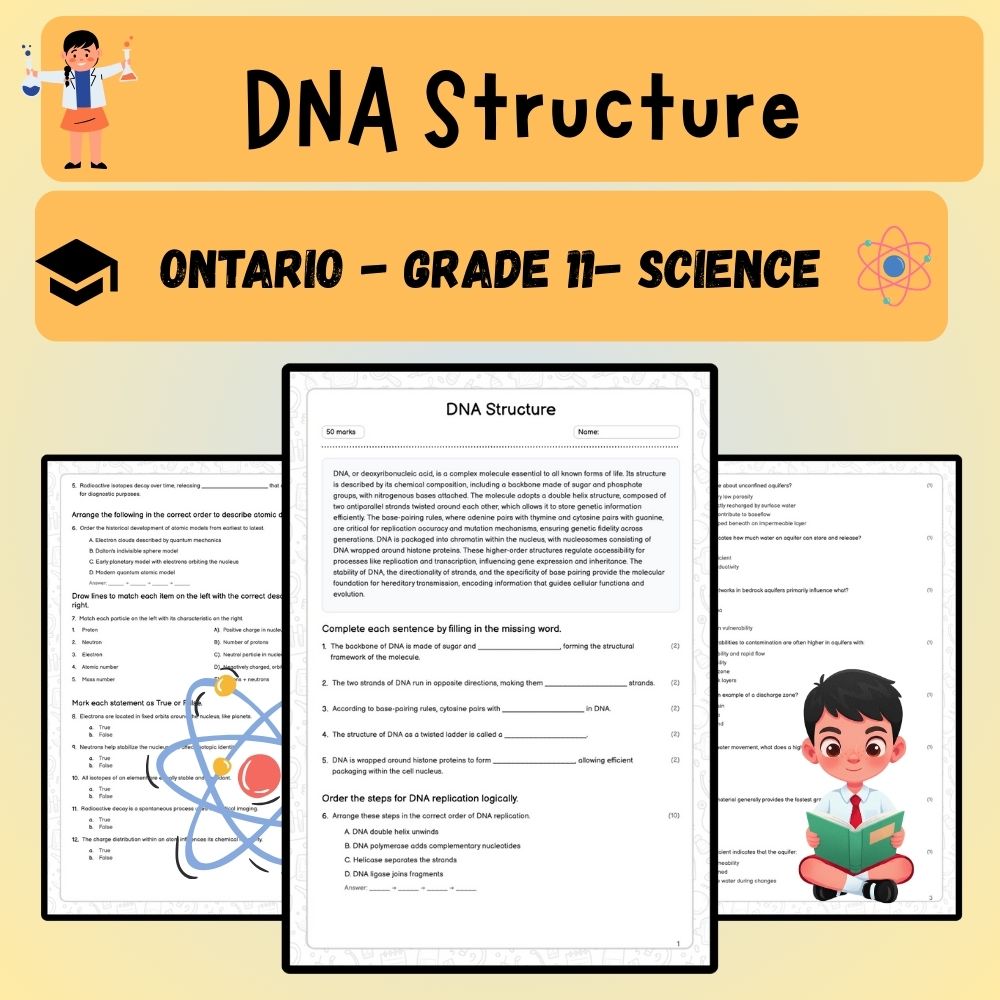
Grade 11 Science | DNA Structure Worksheet – Ontario Standards
Created byPrism Point LearningLearning Objectives
- Describe the molecular components of DNA and their chemical nature.
- Explain the antiparallel and double-helical structure of DNA strands.
- Identify base-pairing rules and their significance for replication and inheritance.
Also included in: Grade 11 Science | Cellular Metabolism & DNA Processes Worksheet Bundle +1 more
Instant download
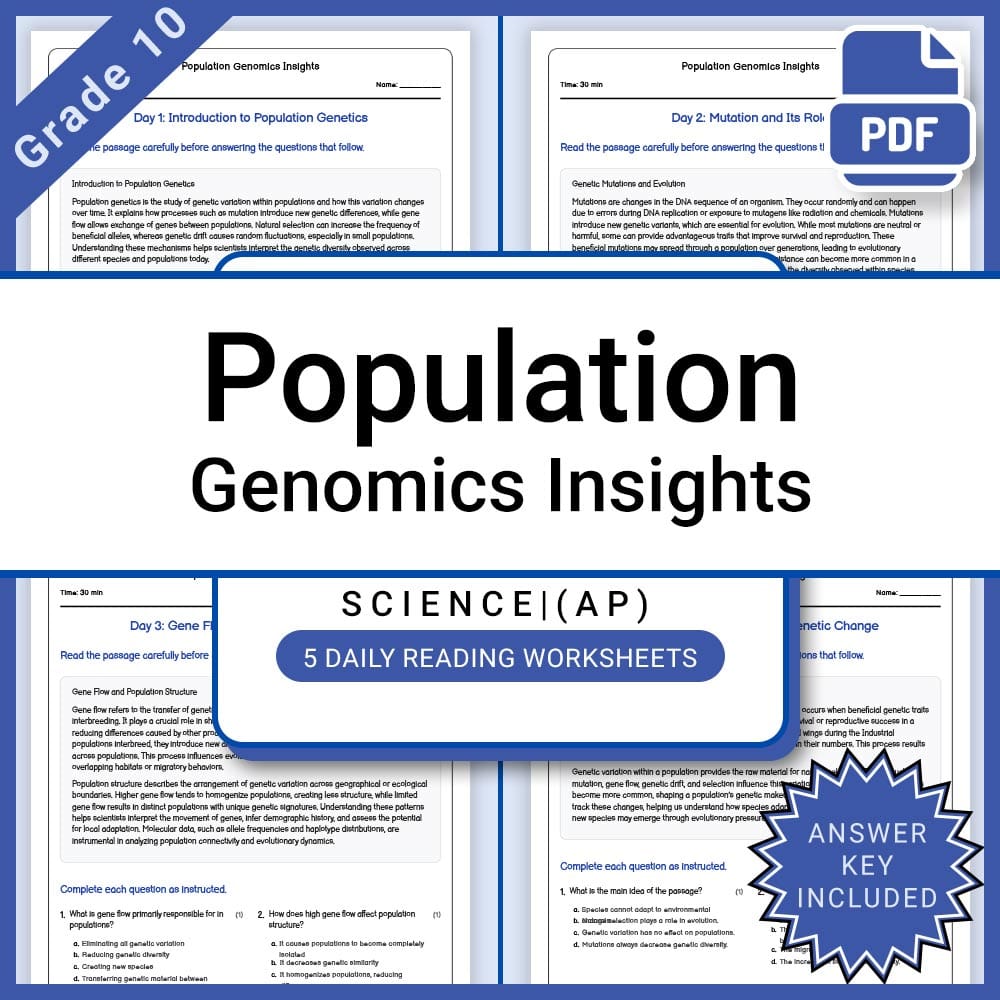
Grade 10 Science – Population Genomics Daily Reading Worksheet + Answer Key
JCreated byJ.S SheetsLearning Objectives
- Understand the concept of genetic variation within populations.
- Describe mechanisms like mutation, gene flow, selection, and genetic drift.
- Learn how genomic data can reveal population history and adaptation.
Also included in: Grade 10 Science Lesson Group Bundle | AP Framework & Daily Worksheets
Instant download
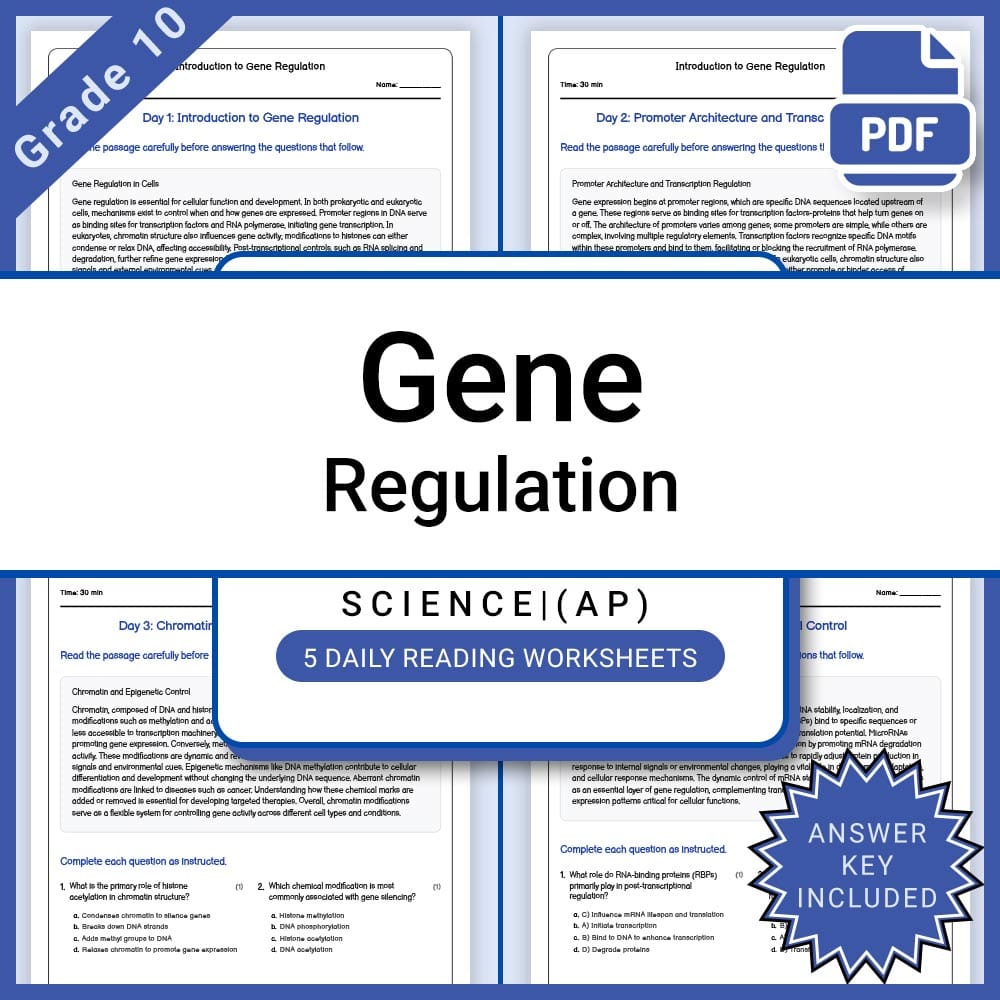
Grade 10 Science – Introduction to Gene Regulation Worksheet with Answer Key
JCreated byJ.S SheetsLearning Objectives
- Understand key concepts related to Science
- Apply knowledge through practice questions
- Demonstrate comprehension of the material
Also included in: Grade 10 Science Lesson Group Bundle | AP Framework & Daily Worksheets
Instant download
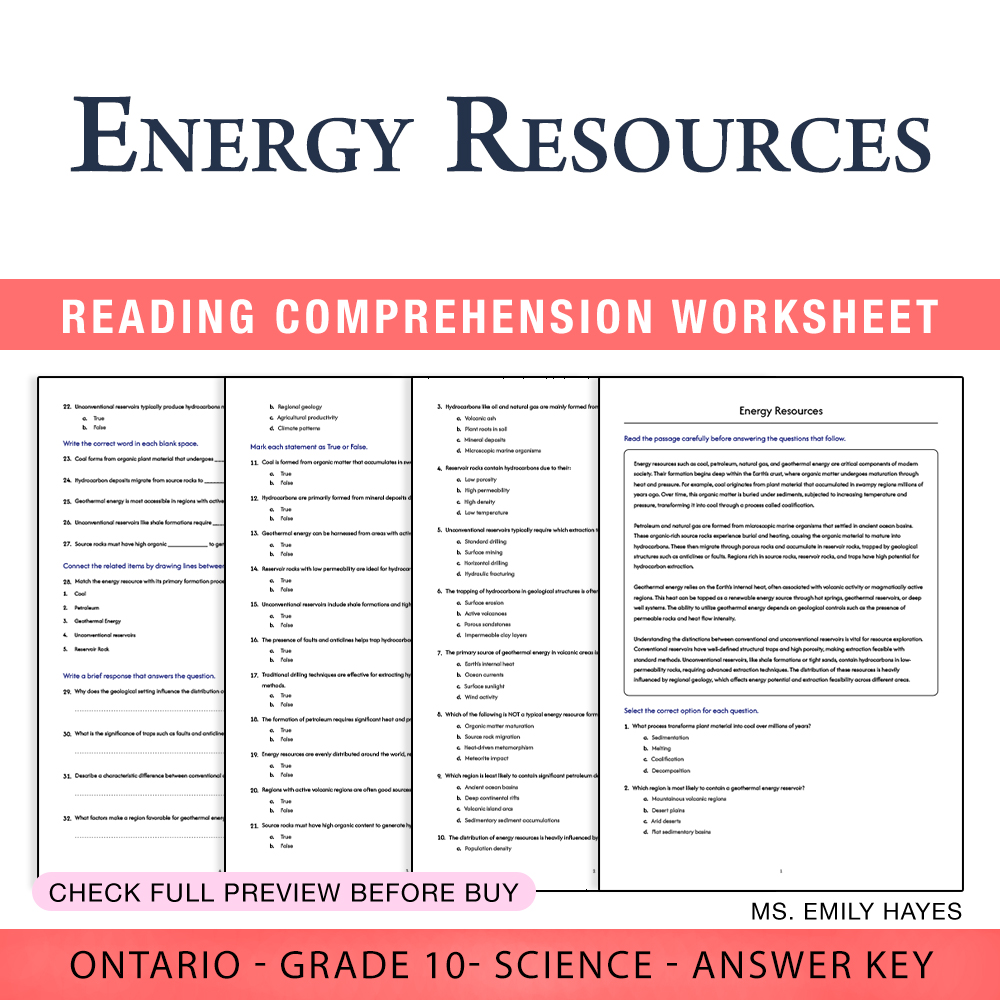
Grade 10 Science | Energy Resources Worksheet (PDF + Answer Key)
Created byCopper Leaf ClassroomLearning Objectives
- Describe the geological origins and distribution of coal, petroleum, and natural gas.
- Explain the characteristics and formation processes of geothermal energy.
- Identify and differentiate between conventional and unconventional reservoirs.
Instant download

Grade 7 Fitness and Survival Worksheet | Natural Selection | NGSSS
 Created byEvergreen Desk Education
Learning Objectives
- Explain how an organism’s traits can affect its fitness in a specific environment.
- Describe how natural selection can shift which heritable traits are favored as environments change.
- Connect heritable variation to how populations respond over time, even within the same species.
Instant download
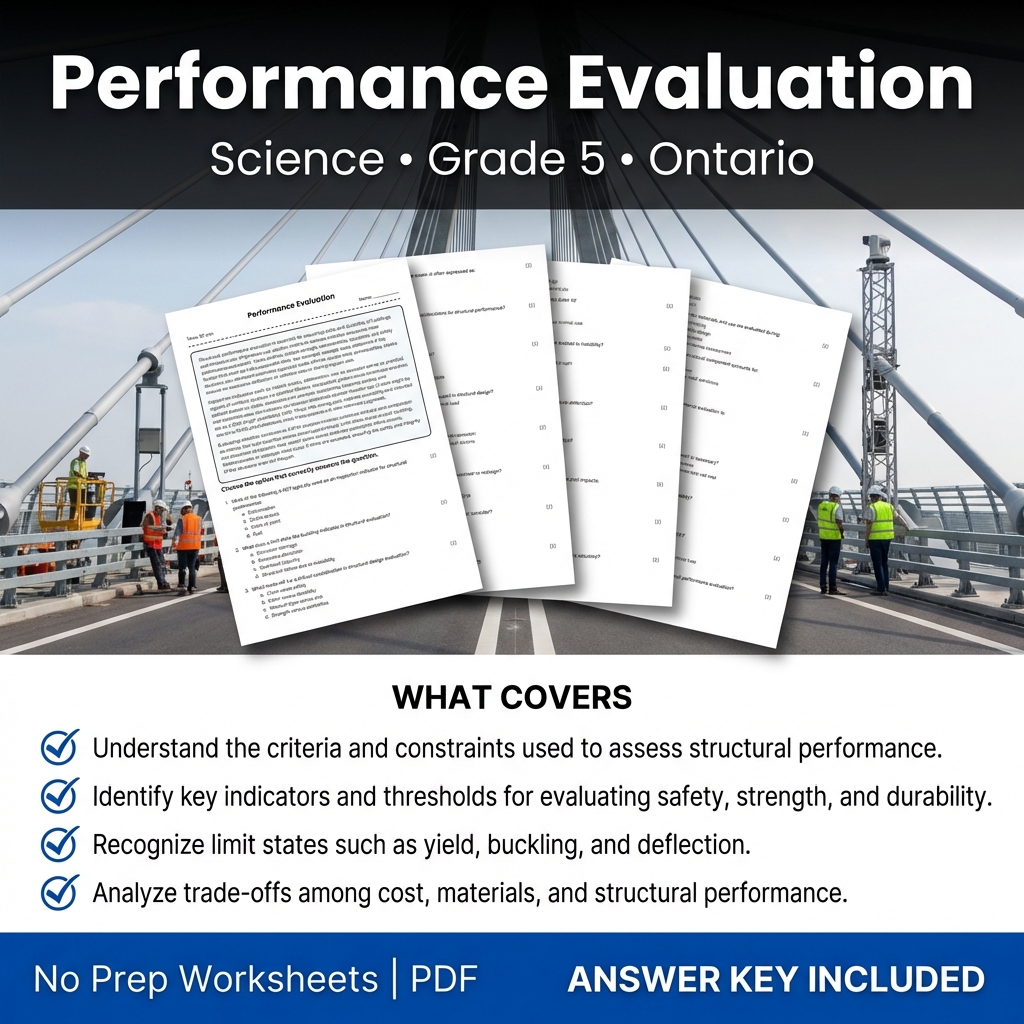
Grade 5 Science Worksheet on Performance Evaluation | Ontario Standards
Created byCoral Reef LearningLearning Objectives
- Understand the criteria and constraints used to assess structural performance.
- Identify key indicators and thresholds for evaluating safety, strength, and durability.
- Recognize limit states such as yield, buckling, and deflection.
Instant download

Grade 12 Devices and Radiation Worksheet | Practice & PDF
Created byClear Sky ClassroomLearning Objectives
- Explain how reflection, refraction, interference, and absorption affect electromagnetic radiation in devices.
- Analyze how wavelength and wave behavior influence imaging resolution and sensor detection.
- Apply wave-interaction concepts to justify design choices in communication and measurement systems.
Instant download
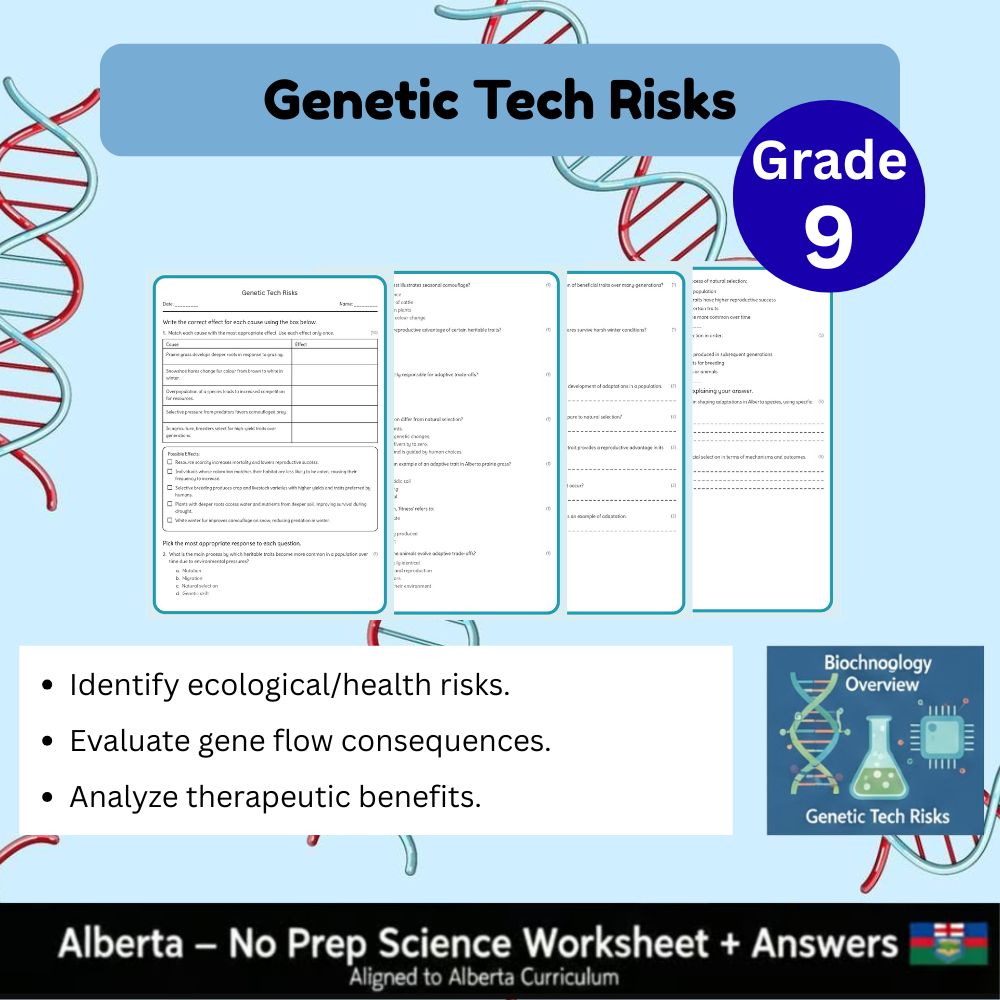
Grade 9 Science | Risks and Benefits of Genetic Technologies Worksheet (PDF)
Created byBright Mind ResourcesLearning Objectives
- Understand the ecological, economic, and health risks associated with genetic technologies.
- Evaluate potential consequences such as gene flow, resistance, and market impacts.
- Analyze benefits like therapeutic opportunities and mitigation strategies.
Instant download

Carrying Capacity Worksheet for Grade 10 Science TEKS Standards
JCreated byJ.S SheetsLearning Objectives
- Explain the concept of carrying capacity and how it relates to population growth and survival
- Describe how limiting factors like resources, predation, disease, and waste can change carrying capacity
- Interpret why populations often fluctuate around carrying capacity and what happens when they exceed it
Instant download
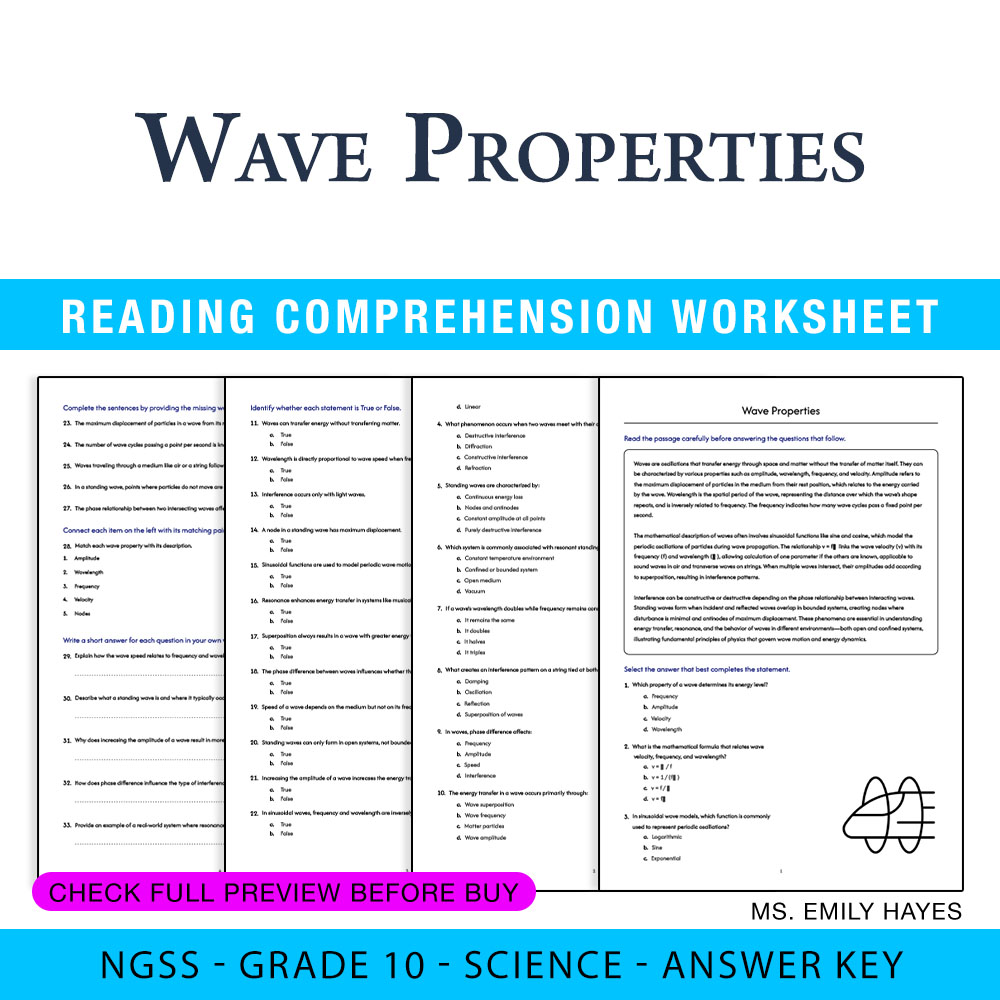
Grade 10 Science | Wave Properties Worksheet (PDF + Answer Key)
Created byCopper Leaf ClassroomLearning Objectives
- Explain the mathematical relationships that characterize wave properties such as amplitude, wavelength, frequency, and velocity.
- Describe how sinusoidal functions model wave behavior and how superposition leads to interference patterns.
- Analyze the formation of standing waves and their significance in energy transfer and resonance in various systems.
Instant download

Grade 9 Science | Force Fundamentals - Daily Reading Comprehension
Created byCoral Reef LearningLearning Objectives
- Understand the concept of force and how it affects object motion.
- Identify different types of forces, including contact and non-contact forces.
- Recognize real-world examples of forces in Alberta settings.
Also included in: Forces and Motion Mechanical Systems Lesson Bundle | Grade 9 Science Alberta +1 more
Instant download
Browse more categories
About Science Worksheets
Find Science worksheets spanning core skills, practice, and review. All 44,295 resources are instant PDF downloads for the classroom or home.
Every worksheet on MyTeachingSheets is created by independent teacher-authors and reviewed before publication. All resources download as printable PDFs for classroom, homework, or at-home practice, and many include answer keys. Preview any worksheet free before buying.