
Grade 10 Worksheets
9,388 grade resources
Grade 10 Maths Worksheet | Mastering Vertex Form (Ontario) (PDF)
 Created byClear Sky Classroom
Learning Objectives
- Understand the structure and features of quadratic functions in vertex form.
- Convert quadratic equations from standard form to vertex form.
- Interpret the vertex and transformations of quadratic graphs algebraically and graphically.
Also included in: Grade 10 Maths Lesson Group - Solving Quadratics and Transformations +1 more
Instant download

DNA Sequencing, PCR & Targeted Gene Editing Worksheet | TEKS Grade 10
 Created byBRIGHT PATH RESOURCES
Learning Objectives
- Define key genomic technology terms in context (DNA, nucleotide sequence, PCR, DNA sequencing, genome editing).
- Identify how genomic tools generate information about DNA and genes.
- Explain, in a simple way, why amplification, reading order, and targeted edits matter for genetics.
Also included in: Grade 10 Genetics & Molecular Biology Science Worksheets Bundle | TEKS +1 more
Instant download
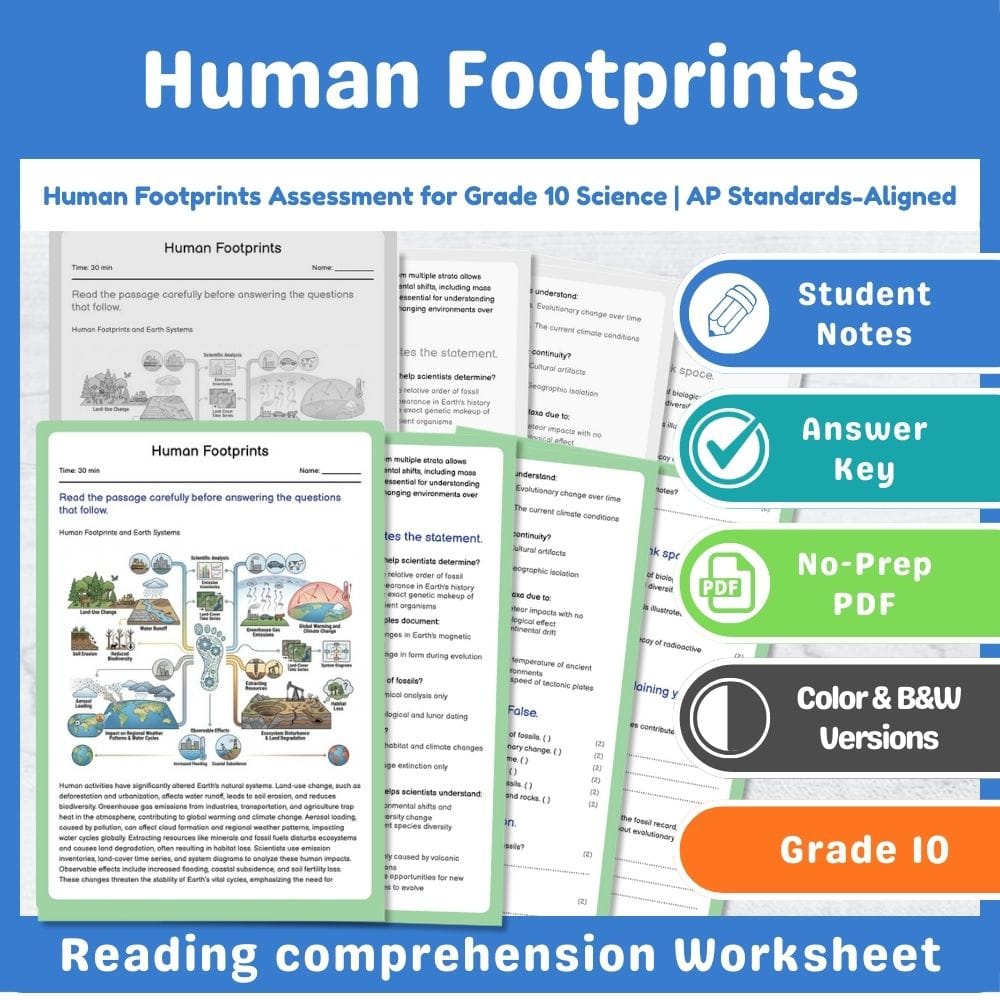
Human Footprints Assessment for Grade 10 Science | AP Standards-Aligned
 Created byPrism Point Learning
Learning Objectives
- Understand how human activities alter Earth's land, water, and air systems.
- Identify indicators and signs of environmental change caused by human actions.
- Analyze data and diagrams to evaluate human impact on ecosystems.
Also included in: Lesson Bundle | Grade 10 Science Earth and Space Standards-Aligned
Instant download

Grade 10 Social Studies | Industrial Growth Worksheet (TEKS) (PDF)
 Created bySunny Desk Resources
Learning Objectives
- Explain how industrialization and technological innovation reshaped economies and daily life.
- Analyze how urbanization changed labor, living conditions, and social class structures.
- Describe how global capitalism expanded trade and created economic interdependence.
Also included in: Grade 10 Global Conflicts Social Studies Full-Year Worksheet Bundle – TEKS +1 more
Instant download

Grade 10 Science – Land Use Effects Worksheet (NGSS - PDF)
 Created bySilver Birch Teaching
Learning Objectives
- Understand how human land use changes impact ecosystems, water cycles, and biodiversity.
- Identify indicators of ecological and biogeochemical consequences due to land-cover change.
- Analyze empirical data from land-use maps, remote sensing, and biotic surveys.
Also included in: Grade 10 Climate Change & Land Use Science Lesson Bundle Worksheets – NGSS +1 more
Instant download

Grade 10 Science | Computational Concepts Worksheet | AP Aligned
 Created byLumora Learning
Learning Objectives
- Understand basic computational approaches for modeling dynamic systems.
- Explain the concepts of discrete time stepping, parameter sweeps, and sensitivity analysis.
- Recognize assumptions and limitations inherent in numerical simulations.
Instant download

Paleoclimate Evidence Worksheet for Grade 10 Science NGSS aligned
JCreated byJ.S SheetsLearning Objectives
- Understand the types of proxy records used in paleoclimate reconstruction.
- Identify key indicators and methods for analyzing paleoclimate data.
- Compare paleoclimate records with instrumental data to assess climate change trends.
Instant download

Collision Theory Worksheet Pack | Grade 10 Science Activities
Created byPrism Point LearningLearning Objectives
- Explain how collision frequency and collision energy affect reaction rates using collision theory.
- Describe activation energy and the role of energy barriers in determining whether collisions lead to reactions.
- Connect temperature and concentration changes to particle-level behavior and observed chemical rates.
Also included in: Grade 10 Chemistry & Dynamic Equilibrium Lesson Bundle | Alberta Science
Instant download

Grade 10 Science – Comparative Design & Observation Practices | Worksheet
 Created byBright Mind Resources
Learning Objectives
- Understand key concepts related to Science
- Apply knowledge through practice questions
- Demonstrate comprehension of the material
Also included in: Grade 10 Scientific Reasoning Science Lesson Bundle | AP Daily Reading +2 more
Instant download

Grade 10 Science – Coastal Defense Strategies | Daily Reading Worksheet
Created byBright Mind ResourcesLearning Objectives
- Understand different infrastructural responses to protect coastal communities.
- Evaluate the advantages and trade-offs of various coastal defense methods.
- Analyze risk maps and hazard data to determine appropriate adaptation strategies.
Also included in: Grade 10 Daily Reading Science: Environmental Systems Lesson Bundle | NGSS +2 more
Instant download

Grade 10 Science | Food Chains Worksheet | TEKS Aligned
Created byLumora LearningLearning Objectives
- Describe the components of food chains and how energy flows through ecosystems.
- Differentiate between primary producers, herbivores, carnivores, and decomposers.
- Explain the concept of food webs and how complex interactions increase ecosystem stability.
Instant download

Grade 10 Science – Understanding Uniform Circular Motion | Daily Worksheet
 Created byQuiet Forest Education
Learning Objectives
- Define uniform circular motion and identify its key features.
- Explain the role of centripetal force in maintaining circular motion.
- Derive and understand the relationships v = rω and a_c = v^2/r.
Also included in: Motion and Forces Grade 10 Science Daily Reading Worksheets Bundle | Ontario +1 more
Instant download

Grade 10 Science – Membrane Transport & Cell Structure | Daily Reading Worksheet
Created byQuiet Forest EducationLearning Objectives
- Identify the components of the plasma membrane
- Understand the fluid mosaic model structure
- Differentiate among transport protein types
Also included in: Cell Biology Grade 10 Science Daily Reading Worksheets Bundle | Ontario +1 more
Instant download
Grade 10 Science – Endocrine Coordination Worksheet (Worksheet + Answer Key) PDF
Created byBright Mind ResourcesLearning Objectives
- Explain how hormones regulate growth, metabolism, and reproduction.
- Identify key glands involved in endocrine coordination.
- Describe feedback loops and their role in hormone regulation.
Also included in: Grade 10 Science | Body Systems & Homeostasis Worksheet Bundle (TEKS Aligned) +5 more
Instant download

Grade 10 Social Studies — Worksheet MCQ Paper for Mastering Cultural Identity
 Created byThe Resource Hub
Learning Objectives
- Explain how migration and globalization can reshape cultural identity in communities.
- Analyze the tension between cultural preservation and cultural adaptation in historical and contemporary contexts.
- Evaluate how power structures and demographics influence debates about cultural change.
Also included in: Grade 10 Modern World History Social Studies Custom Bundle California
Instant download

Ecosystem Roles Test Assessment | Grade 10 Science Worksheet Ontario
Created byPrism Point LearningLearning Objectives
- Explain how microorganisms contribute to decomposition and nutrient cycling in ecosystems.
- Describe nitrogen fixation and how it connects microbial activity to plant growth.
- Analyze how symbiotic microbial partnerships (rhizosphere and mycorrhizae) influence soil fertility and ecosystem resilience.
Also included in: Grade 10 Cells & Energy Science Lesson Bundle Ontario Framework Pack
Instant download

Factors Affecting Reaction Rates Worksheet for Grade 10 Science
JCreated byJ.S SheetsLearning Objectives
- Identify the key factors that influence the speed of chemical reactions.
- Explain how temperature, concentration, surface area, and catalysts modify reaction rates.
- Analyze real-world examples of reaction rate modifications in industrial and environmental contexts.
Also included in: Grade 10 Science Practice Worksheets: Alberta Science Full-Year Bundle
Instant download

Grade 10 Worksheet B: Energy Pathways Photosynthesis | NGSS
Created byClear Sky ClassroomLearning Objectives
- Explain how photosynthesis and cellular respiration are coupled pathways that transform energy into ATP and biomass.
- Describe energy transduction steps in chloroplast thylakoids and mitochondria, including ATP yield and carbon/oxygen flow.
- Analyze how energy pathways support biosynthesis, movement, and thermoregulation across cellular and organismal scales.
Also included in: Grade 10 Cellular Regulation and Energy Pathways Science Lesson Bundle | NGSS +1 more
Instant download
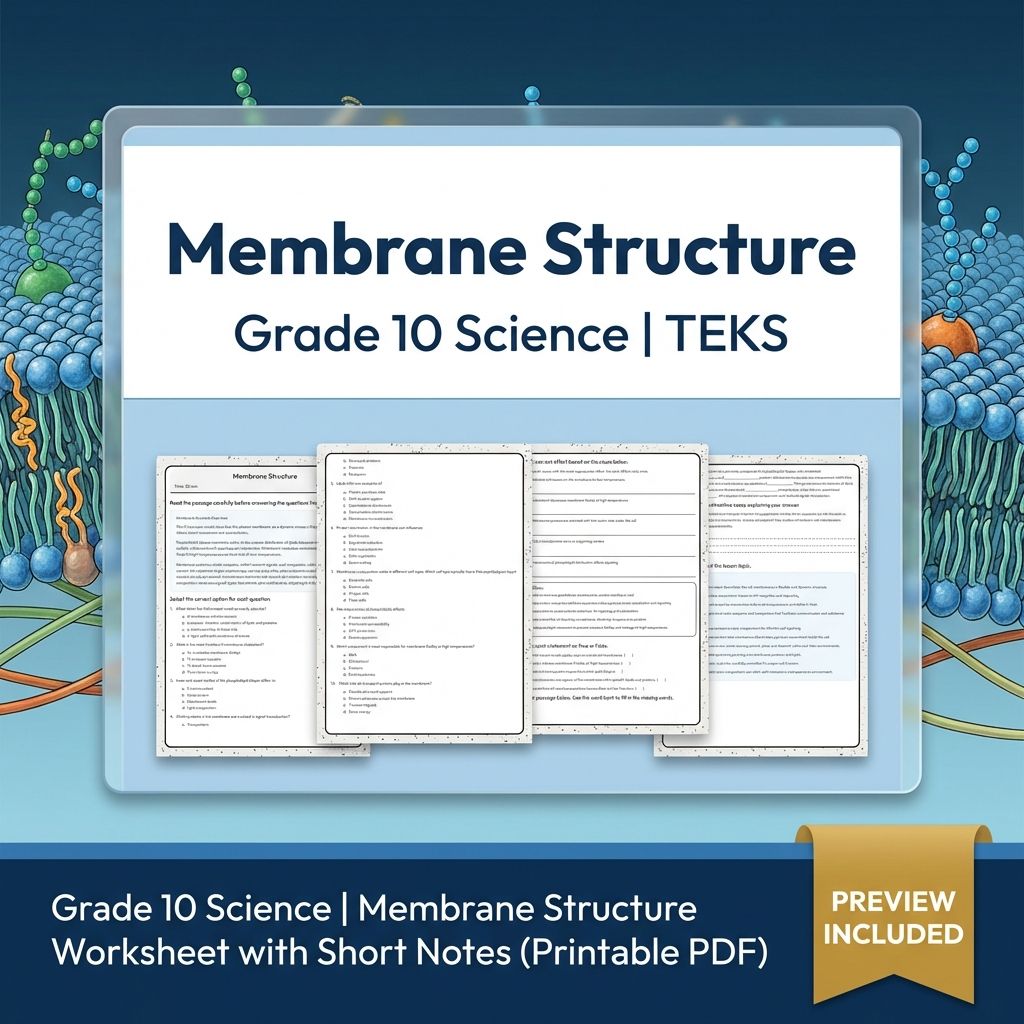
Grade 10 Science | Membrane Structure Worksheet with Short Notes (Printable PDF)
 Created byMeadowlark Worksheets
Learning Objectives
- Describe the fluid mosaic model and its components.
- Explain the asymmetry of the phospholipid bilayer.
- Discuss cholesterol's role in membrane fluidity at different temperatures.
Instant download

Grade 10 Science | Field Superposition Worksheet | BC-Aligned
Created byLumora LearningLearning Objectives
- Explain the principle of field superposition and how it applies to multiple sources.
- Calculate combined field strength at a point due to various sources using vector addition.
- Describe how superposition results in regions of cancellation or reinforcement in fields.
Instant download
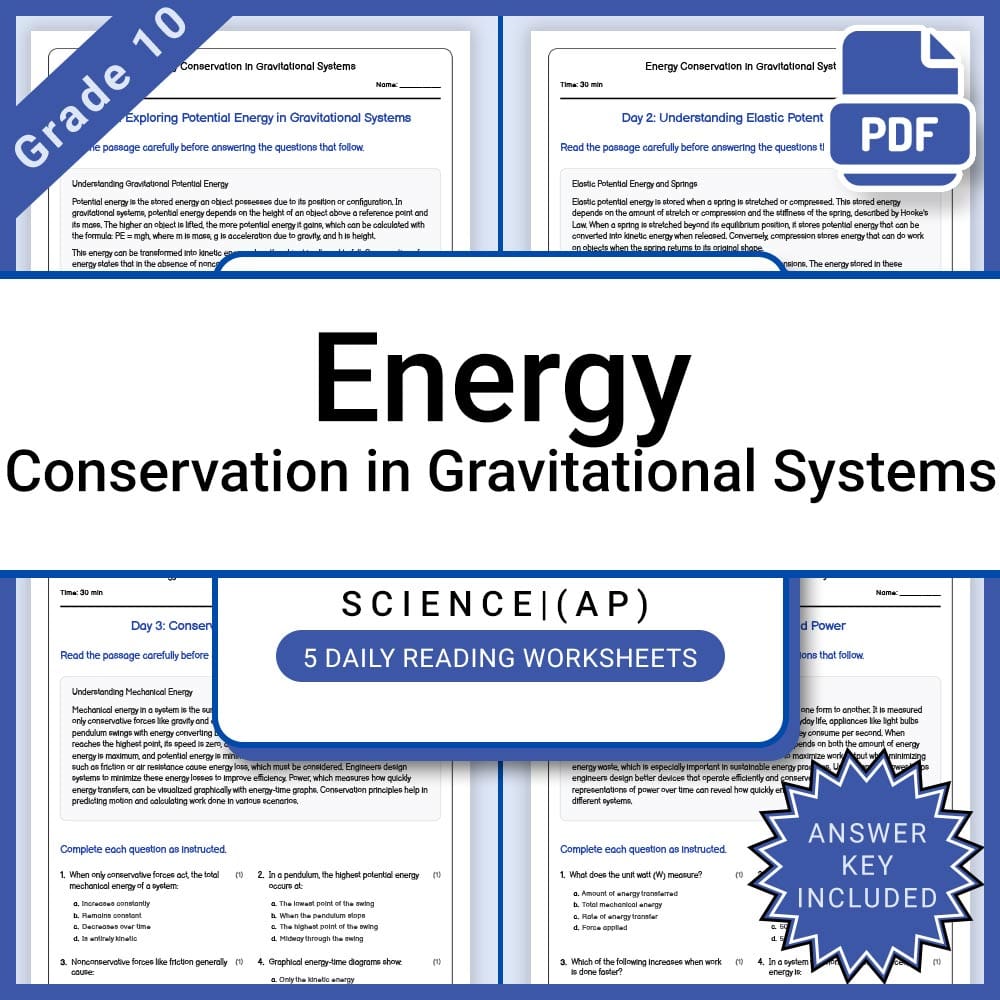
Grade 10 Science – Energy Conservation Daily Reading Worksheet + Answer Key
JCreated byJ.S SheetsLearning Objectives
- Understand the concept of gravitational potential energy
- Identify factors influencing potential energy in gravitational systems
- Apply formulas to calculate potential energy
Instant download

Valence Patterns Worksheet | Standards-Aligned Science Practice for Grade 10
JCreated byJ.S SheetsLearning Objectives
- Understand how electron configurations influence element behavior and periodic trends.
- Identify valence electron patterns and their relation to chemical reactivity.
- Explain the connection between atomic structure and properties like ion formation and metallic character.
Also included in: Grade 10 Energy, Forces, and Reactions Science Lesson Bundle +1 more
Instant download

Grade 10 Science – Reaction Rates & Chemistry | Daily Reading Worksheet
Created byBright Mind ResourcesLearning Objectives
- Understand the concept of reaction rate and factors influencing it
- Identify the effects of temperature, concentration, surface area, and catalysts on reaction speed
- Interpret empirical data related to reaction kinetics
Also included in: Chemical Reactions Grade 10 Science Daily Reading Worksheets Bundle | NGSS +2 more
Instant download

Grade 10 Science | Atmospheric Processes - Daily Reading Comprehension
 Created byCoral Reef Learning
Learning Objectives
- Identify basic atmospheric phenomena such as pressure systems, moisture transport, and thermal gradients.
- Understand regional weather phenomena including Chinook winds, frontal systems, and convective storms.
- Explain how atmospheric composition, aerosols, and surface albedo influence energy balance.
Also included in: Earth and Space Systems Lesson Bundle – Grade 10 Science Alberta +1 more
Instant download

Grade 10 Science – Biogeochemical Cycles Daily Reading Worksheet + Answer Key
JCreated byJ.S SheetsLearning Objectives
- Understand the movement of water through the environment
- Identify key processes in the water cycle
- Explore human impacts on water movement and cycle
Also included in: Grade 10 Science Lesson Group – Ecosystems and Environmental Impact Worksheets +1 more
Instant download
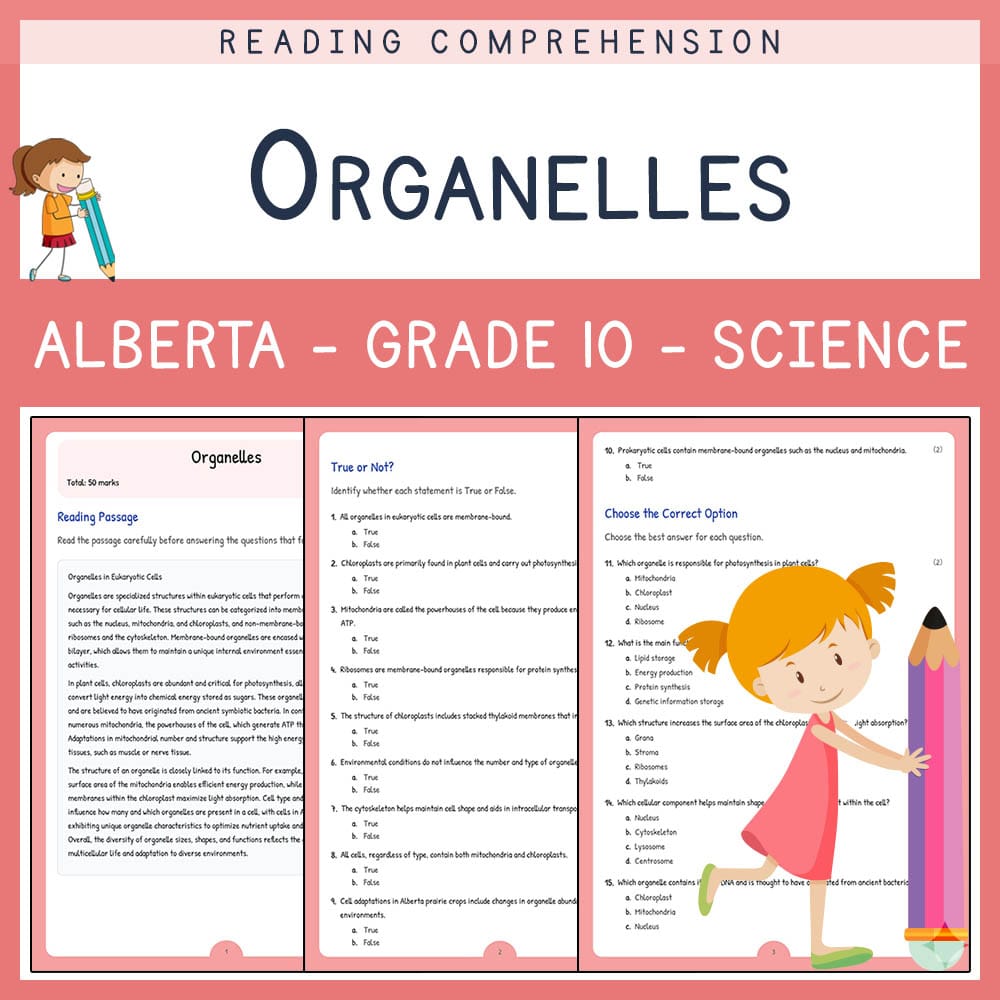
Grade 10 Science | Organelle Worksheet Elena | Alberta Standards
Created byLumora LearningLearning Objectives
- Describe the structure and function of membrane-bound and non-membrane-bound organelles in eukaryotic cells.
- Explain how organelle variations support different tissue types and environmental adaptations in Alberta landscapes.
- Identify the roles of chloroplasts and mitochondria in energy conversion and cellular processes.
Also included in: Grade 10 Science | Cells and Systems Custom Bundle Worksheets | Alberta
Instant download

Kinematic Graphs Worksheet | Grade 10 Science Activities
Created byPrism Point LearningLearning Objectives
- Interpret position–time, velocity–time, and acceleration–time graphs using slope and area ideas
- Connect graph features (steepness, sign, and curvature) to instantaneous vs. average kinematic quantities
- Use kinematic graph reasoning to estimate motion variables and relate them to real transportation scenarios
Also included in: Grade 10 Work, Energy & Electricity Lesson Bundle | Alberta Science
Instant download

Grade 10 Health Worksheet | Integrated Health & Wellness (Ontario PDF)
Created bySunny Desk ResourcesLearning Objectives
- Explain holistic health by describing how biological, social, emotional, and behavioral factors interact across life stages.
- Apply a systems perspective to predict how lifestyle choices and relationships can affect long-term well-being.
- Use health literacy to evaluate health information and identify early signs that support timely prevention or intervention.
Also included in: Grade 10 Decision-Making Health Lesson Bundle | Ontario Framework +1 more
Instant download

Grade 10 Science– Planetary Comparisons & Surface Conditions | Reading Worksheet
Created byBright Mind ResourcesLearning Objectives
- Understand differences in atmospheres of Earth, Mars, and Venus
- Compare greenhouse effects across terrestrial planets
- Analyze planetary magnetic fields and volatile inventories
Also included in: Grade 10 Sustainability Science Daily Reading Worksheets lesson bundle | Alberta +1 more
Instant download

Surface Change Climate Links Worksheet | Grade 10 Earth Science Activity
Created byPrism Point LearningLearning Objectives
- Explain how changes to Earth’s surface can influence climate through physical mechanisms.
- Use evidence from long-term records to connect surface changes to temperature and precipitation trends.
- Evaluate the strength of a claim by matching environmental changes to expected processes.
Instant download
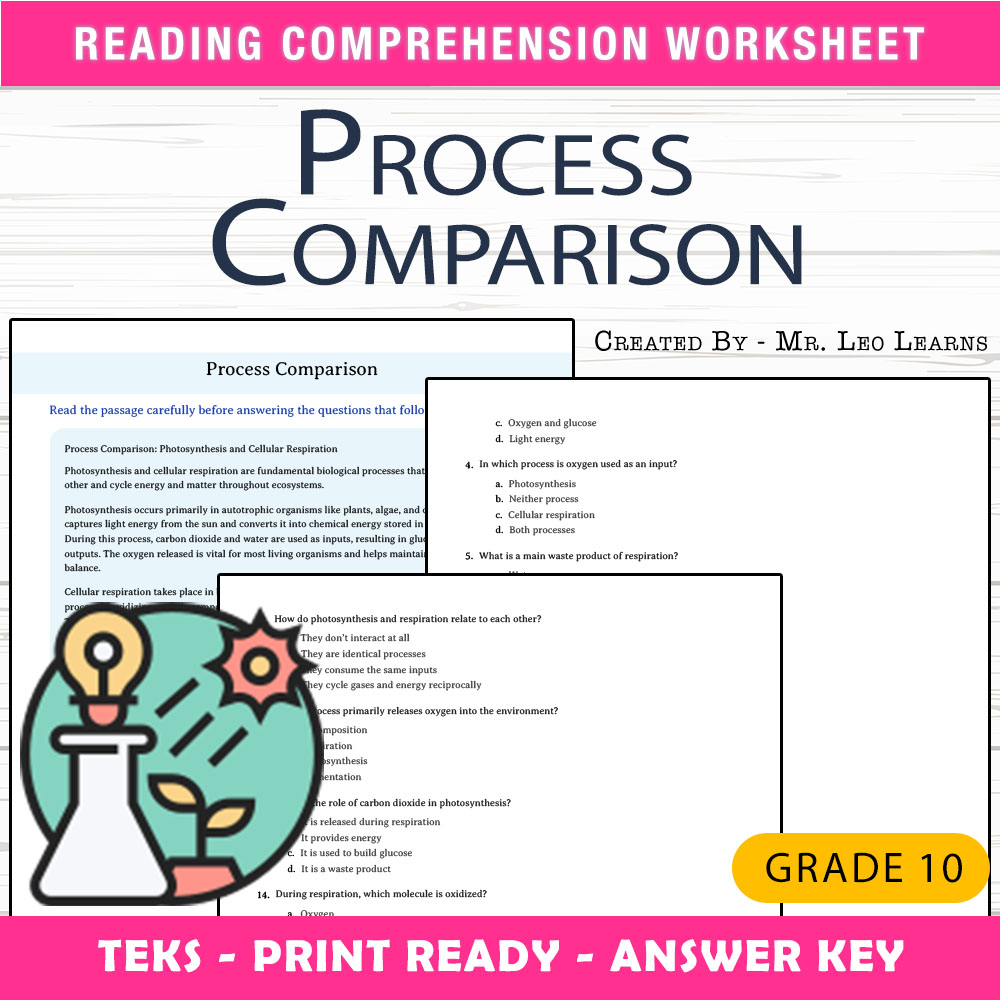
Grade 10 Science — Process Comparison Worksheet for Mastery
Created byThe Resource HubLearning Objectives
- Compare the inputs and outputs of photosynthesis and cellular respiration.
- Understand the cycle of energy and matter between organisms and environments.
- Identify the reciprocal relationship between the processes at cellular and ecosystem scales.
Also included in: Grade 10 Science Unit Bundle | Energy, Photosynthesis & Cellular Respiration +1 more
Instant download

Grade 10 Science – Bond Polarity & Electronegativity | Daily Reading Worksheet
Created byBright Mind ResourcesLearning Objectives
- Define bond polarity and explain how electronegativity differences influence bond character.
- Differentiate between polar covalent and ionic bonds based on electronegativity.
- Represent dipole moments both quantitatively and vectorially.
Also included in: Grade 10 Stoichiometry & Atomic Structure Science Reading Lesson Bundle | AP +2 more
Instant download
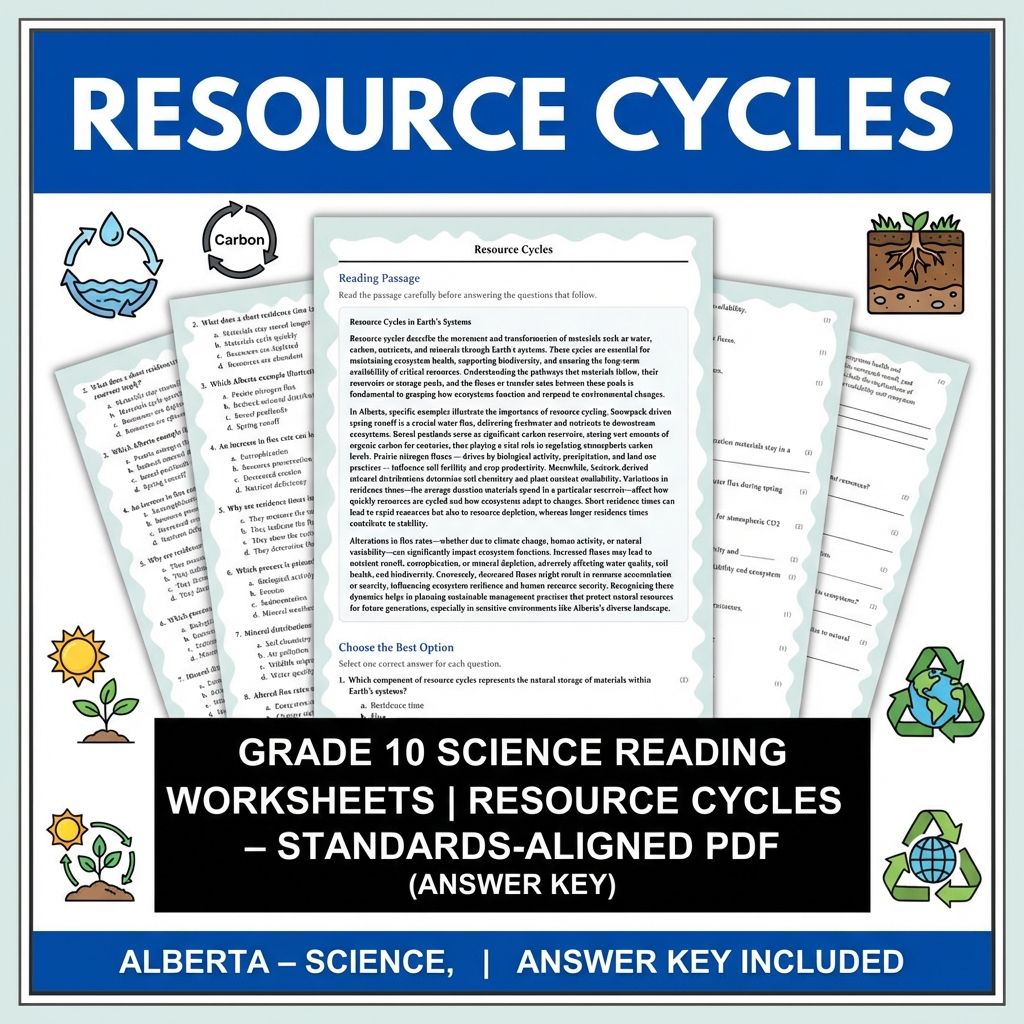
Grade 10 Science | Resource Cycles – Standards-Aligned PDF (Answer Key)
JCreated byJ.S SheetsLearning Objectives
- Describe the key components and pathways involved in Earth's resource cycles.
- Explain the significance of reservoirs, fluxes, and residence times within resource cycles.
- Analyze examples of resource cycling in Alberta, including snowpack-driven runoff, peat carbon storage, nitrogen fluxes, and mineral distributions.
Also included in: Grade 10 Science Unit Bundle – Earth Systems, Climate & Remote Sensing Worksheets +1 more
Instant download

Species Interactions Worksheet | Grade 10 Science Activities
Created byPrism Point LearningLearning Objectives
- Explain how species interactions (competition, predation, parasitism, mutualism, and commensalism) influence community structure and biodiversity.
- Describe how niches and competitive exclusion affect which species can coexist in the same habitat.
- Use interaction ideas to predict possible cascading effects in an ecosystem.
Also included in: Grade 10 Evolution, Speciation & Biodiversity Lesson Bundle | BC Science +1 more
Instant download

Grade 10 Health Communication Skills Worksheet (Ontario Standards) (PDF)
Created bySunny Desk ResourcesLearning Objectives
- Explain how active listening supports respectful conversations
- Describe effective ways to express feelings and ideas clearly
- Apply strategies for constructive feedback and conflict resolution
Also included in: Grade 10 Social-Emotional Learning Health Lesson Bundle (Ontario) +1 more
Instant download
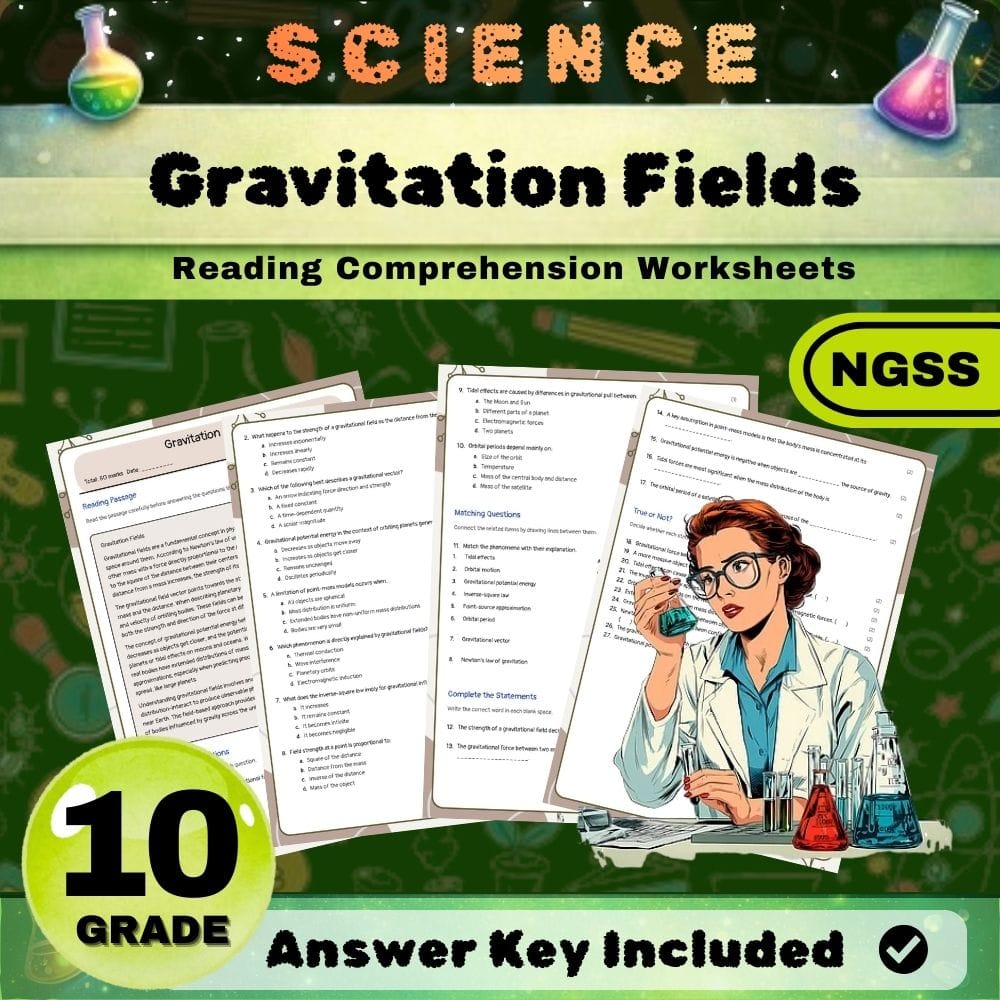
Grade 10 Science - Gravitation Fields Worksheet (NGSS) (PDF)
 Created byMaple Path Learning
Learning Objectives
- Explain the inverse-square law behavior of gravitational fields and how it relates to point-masses.
- Apply Newtonian gravity concepts to predict orbital motions and trajectories.
- Describe how gravitational field vectors and potential are used to analyze system dynamics.
Also included in: Grade 10 Science Motion and Stability Forces and Interactions NGSS Lesson Bundle +1 more
Instant download

Grade 10 Science — Worksheet MCQ Paper for Mastering Earth's Spheres
Created byThe Resource HubLearning Objectives
- Understand the interactions among the geosphere, hydrosphere, atmosphere, and biosphere.
- Apply systems thinking to analyze coupled environmental processes.
- Interpret flow diagrams and mass-balance models to track perturbations across spheres.
Also included in: Grade 10 Earth and Space Sciences Lesson Bundle | AP Curriculum +1 more
Instant download

Signal Integration Practice Worksheet | Grade 10 Science NGSS Review
Created byPrism Point LearningLearning Objectives
- Explain how nervous and endocrine systems coordinate responses through signal integration
- Describe receptor specificity and how receptor binding initiates signal transduction
- Compare how synaptic transmission and hormone signaling use second-messenger systems and amplification
Also included in: Grade 10 Cellular Regulation and Energy Science Lesson Bundle (NGSS)
Instant download

Grade 10 Science – Work & Energy Change | Daily Reading Worksheet
Created byBright Mind ResourcesLearning Objectives
- Understand how forces transfer energy to objects during movement
- Interpret graphical relationships between energy and relevant variables
- Connect force-based descriptions with measurable energy outcomes in systems
Also included in: Grade 10 Energy & Models Science Lesson Bundle | CA Standards Daily Reading +1 more
Instant download

Grade 10 Science – Design Foundations in Engineering Daily Reading Worksheet
Created byBright Mind ResourcesLearning Objectives
- Understand the importance of defining criteria and constraints in engineering problems.
- Identify key components of the engineering design process, including model construction and solution generation.
- Apply qualitative and quantitative measures to evaluate design solutions.
Also included in: Grade 10 Engineering Design Science Daily Reading Lesson Bundle | NGSS +2 more
Instant download
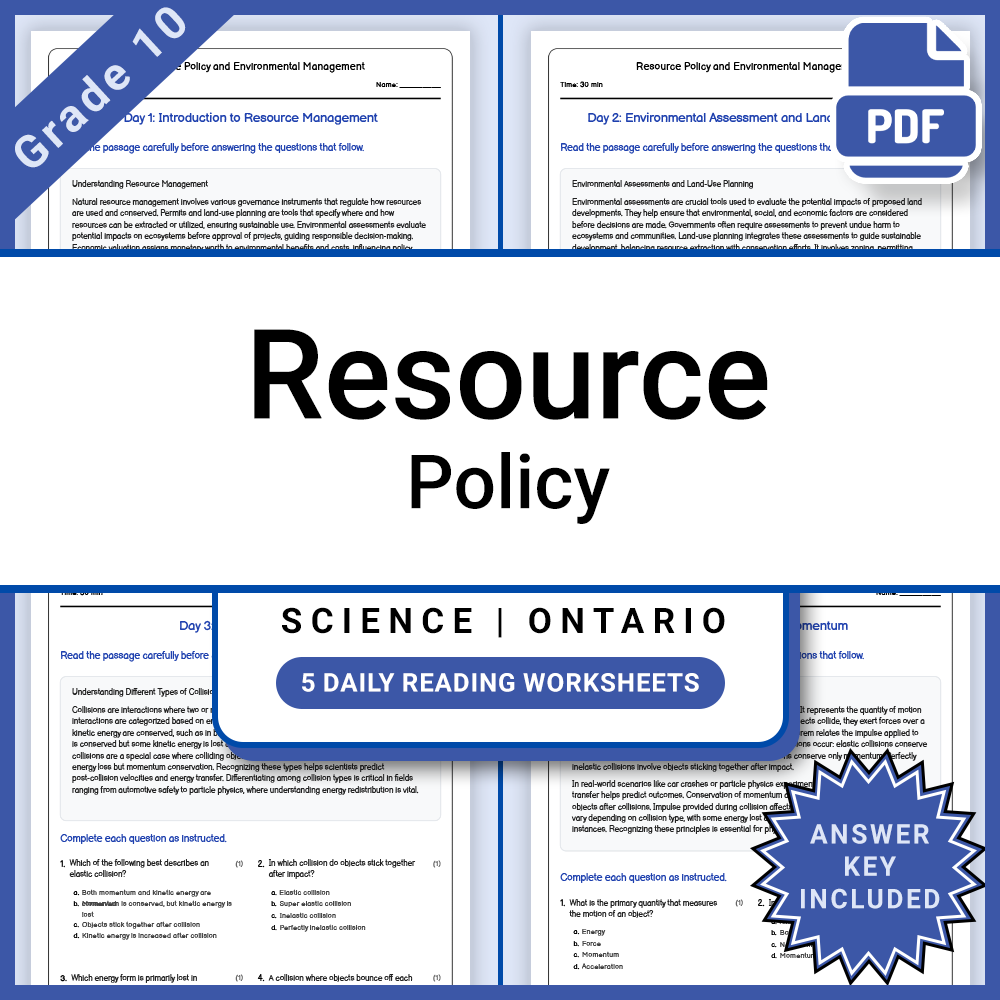
Grade 10 – Resource Policy and Environmental Management | Worksheet + Answer Key
JCreated byJ.S SheetsLearning Objectives
- Understand key governance tools used in natural resource management.
- Identify the role of permitting, land-use planning, and environmental assessments.
- Explain how economic valuation influences resource policies.
Also included in: Grade 10 Science Lesson Bundle | Earth and Resource Management +1 more
Instant download

Grade 10| Women's history month kickoff Worksheet for Mastery | PDF + Answer Key
 Created byShaNova Worksheets
Learning Objectives
- Reflect on the significance of women’s history in fostering inclusion and activism.
- Identify traits of civic leadership exemplified by women leaders.
- Brainstorm ways to embody leadership qualities in local and global communities.
Also included in: Grade 10 Women's History Month Holiday Worksheets Bundle for Engagement
Instant download

Grade 10 Population Genomics Worksheet | AP Practice & PDF
Created byClear Sky ClassroomLearning Objectives
- Explain how allele frequency changes are shaped by mutation, genetic drift, gene flow, and natural selection
- Interpret how population structure and demographic history can be inferred from genomic data
- Use basic allele frequency and phylogenetic ideas to connect molecular variation to population-level patterns
Also included in: Grade 10 Population, Genetics, and Cellular Processes Science Lesson Bundle AP +1 more
Instant download

Grade 10 Health Decision-Making Worksheet (Ontario) | PDF
Created bySunny Desk ResourcesLearning Objectives
- Explain how personal values, peer pressure, cultural background, and relationship dynamics can influence sexual decision-making.
- Practice using consent and communication principles to evaluate choices and reduce risk.
- Identify strategies for respectful decision-making that support trust and mutual understanding.
Also included in: Grade 10 Decision-Making Health Lesson Bundle | Ontario Framework +1 more
Instant download

Grade 10 TEKS Ecosystem Components & Interactions Science Worksheet
Created byBRIGHT PATH RESOURCESLearning Objectives
- Identify major ecosystem components and describe their roles.
- Explain how energy flow and matter cycling connect ecosystem parts.
- Use ecosystem vocabulary to answer science questions.
Also included in: Grade 10 Ecology & Environmental Interactions Science Worksheets | TEKS +1 more
Instant download

Grade 10 Science – Evaluating Photovoltaic Models Daily Reading Worksheet
Created byBright Mind ResourcesLearning Objectives
- Understand the importance of comparing simulation predictions with empirical data
- Learn methods for validating models using real-world measurements
- Analyze data to identify reliability and failure modes in photovoltaic systems
Also included in: Grade 10 Engineering Design Science Daily Reading Lesson Bundle | NGSS +2 more
Instant download

Grade 10 ELA – Analyzing Paragraph Structure & Coherence | Daily Worksheet
Created byQuiet Forest EducationLearning Objectives
- Identify the components of well-organized paragraphs
- Analyze how transition words improve coherence
- Understand the importance of logical sequence in paragraph development
Also included in: Writing Grade 10 ELA Daily Reading Worksheets Lesson Bundle | teks +1 more
Instant download
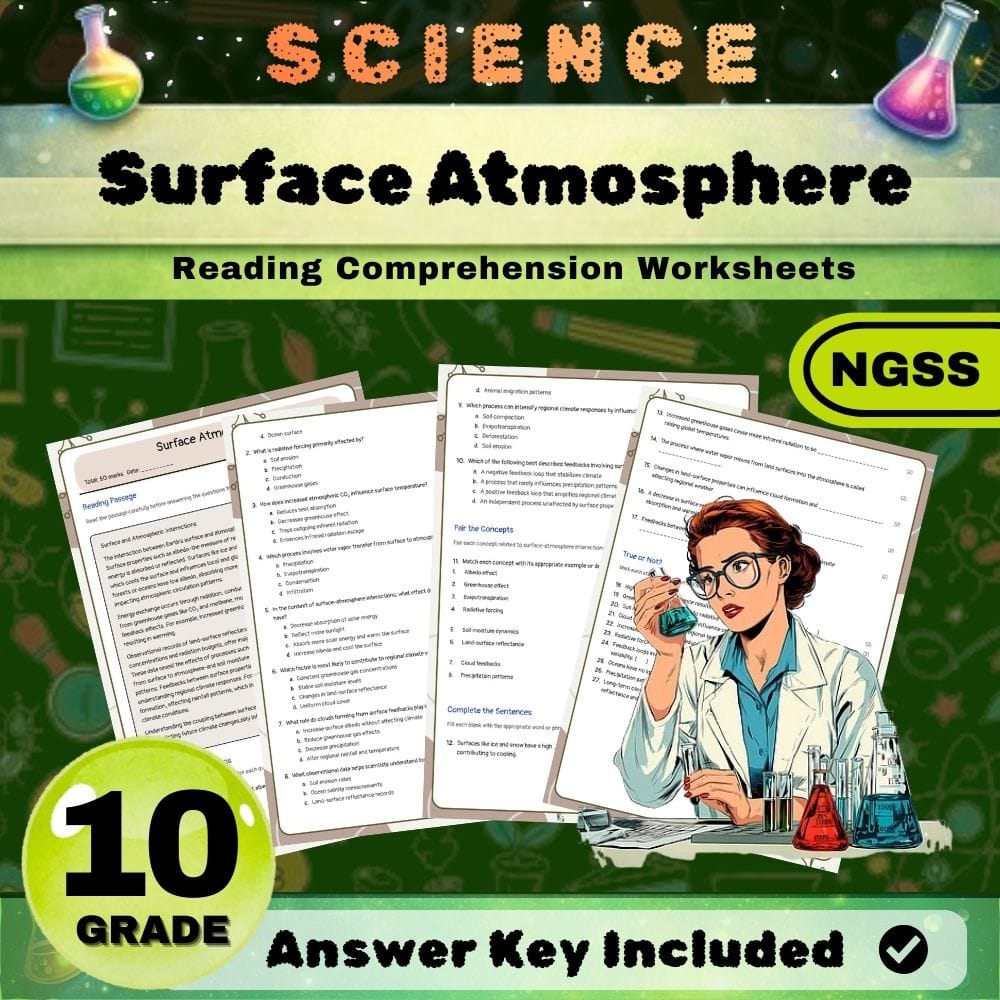
Grade 10 Science Surface Atmosphere Worksheet | NGSS (PDF)
Created byMaple Path LearningLearning Objectives
- Explain the interactions between surface properties and atmospheric processes, including energy exchange and radiative forcing.
- Describe how albedo effects influence climate variability and surface-atmosphere coupling.
- Analyze observational data related to greenhouse gases, radiation budgets, and land-surface reflectance.
Also included in: Grade 10 Earth’s Systems Science Worksheets Bundle | NGSS +1 more
Instant download
Browse more categories
About Grade 10 Worksheets
Find Grade 10 worksheets covering algebra, biology, literature, and history. All 9,388 resources download instantly as PDFs for classwork, homework, or review.
MyTeachingSheets worksheets are made by real teacher-authors and checked before they go live. Download any as a print-ready PDF for lessons, homework, or independent practice — most include answer keys, and previews are always free.