
Grade 10 Science Worksheets
7,038 worksheets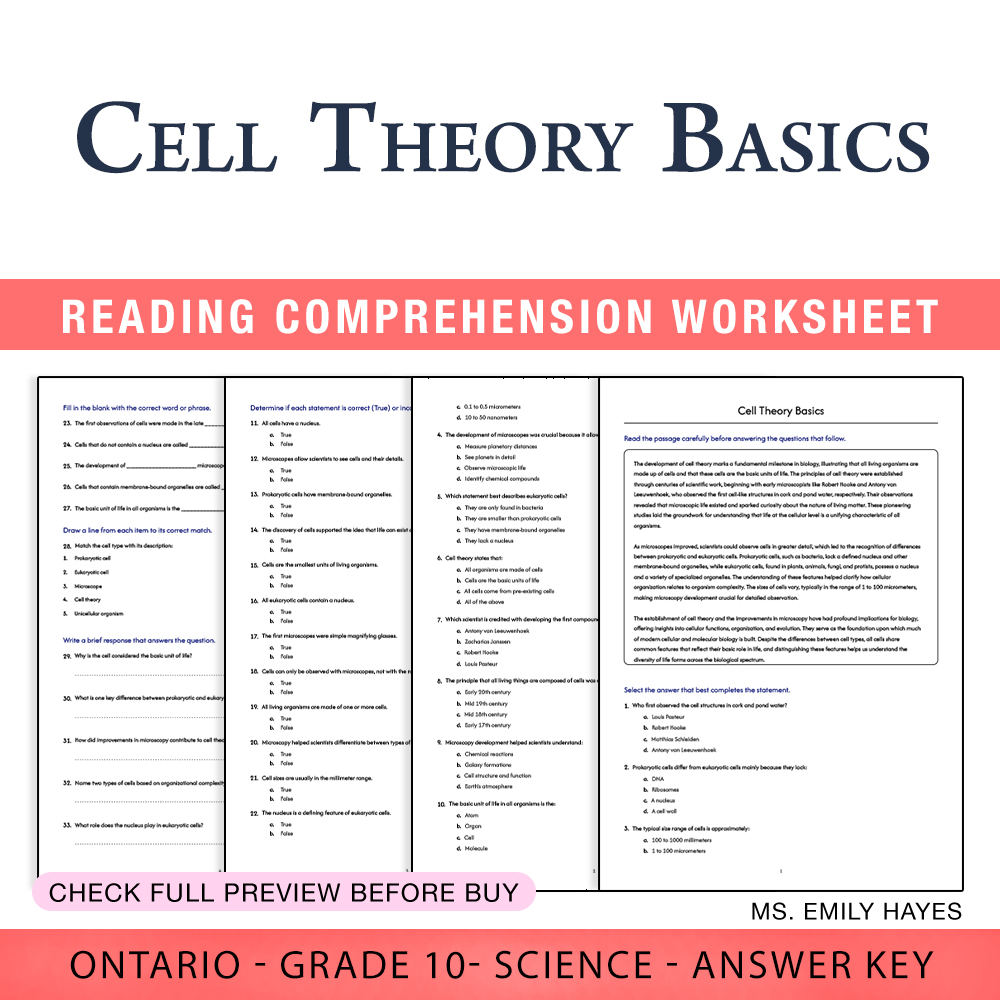
Grade 10 Science | Cell Theory Basics Worksheet (PDF + Answer Key)
 Created byCopper Leaf Classroom
Learning Objectives
- Understand the fundamental principles of cell theory and their historical development.
- Differentiate between unicellular and multicellular organisms and their organizational complexity.
- Identify the basic sizes and scales relevant to cells and microscopy.
Instant download
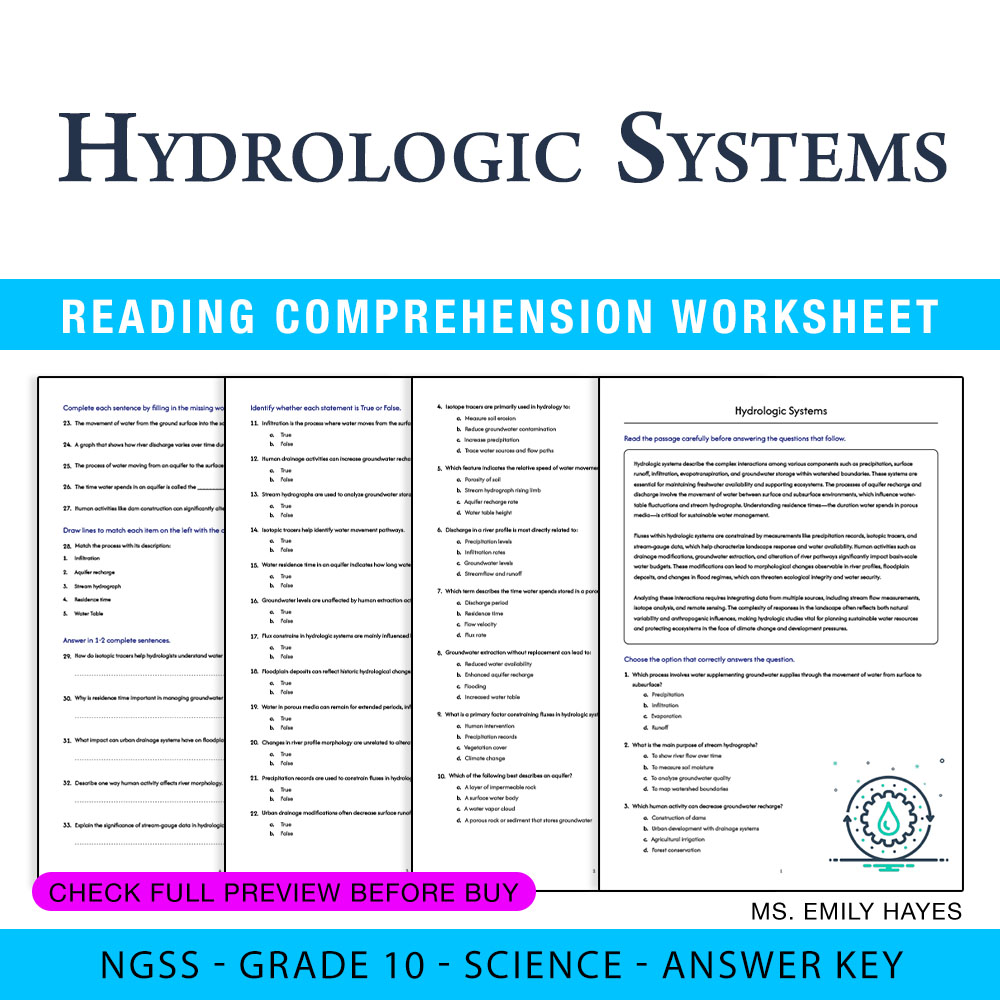
Grade 10 Science | Hydrologic Systems Worksheet (PDF+ Answer Key)
Created byCopper Leaf ClassroomLearning Objectives
- Understand the key components and processes of hydrologic systems within watersheds.
- Analyze how human activities influence water budgets and landscape features.
- Interpret data related to precipitation, streamflow, and groundwater.
Instant download
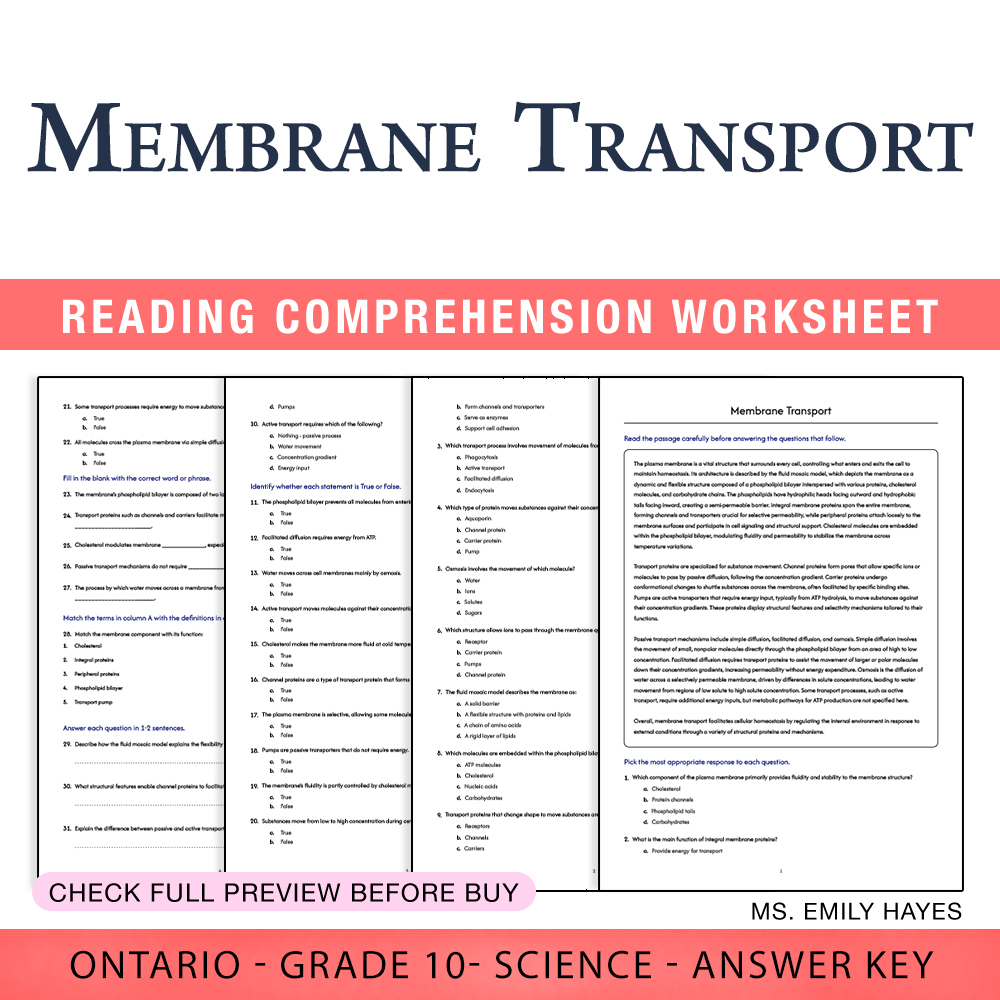
Grade 10 Science | Membrane Transport Worksheet (PDF + Answer Key)
Created byCopper Leaf ClassroomLearning Objectives
- Describe the structure of the plasma membrane using the fluid mosaic model, including the roles of phospholipids, proteins, and cholesterol.
- Differentiate between transport protein types such as channels, carriers, and pumps by their structure and function.
- Explain passive transport mechanisms—simple diffusion, facilitated diffusion, and osmosis—in terms of concentration gradients and membrane permeability.
Instant download
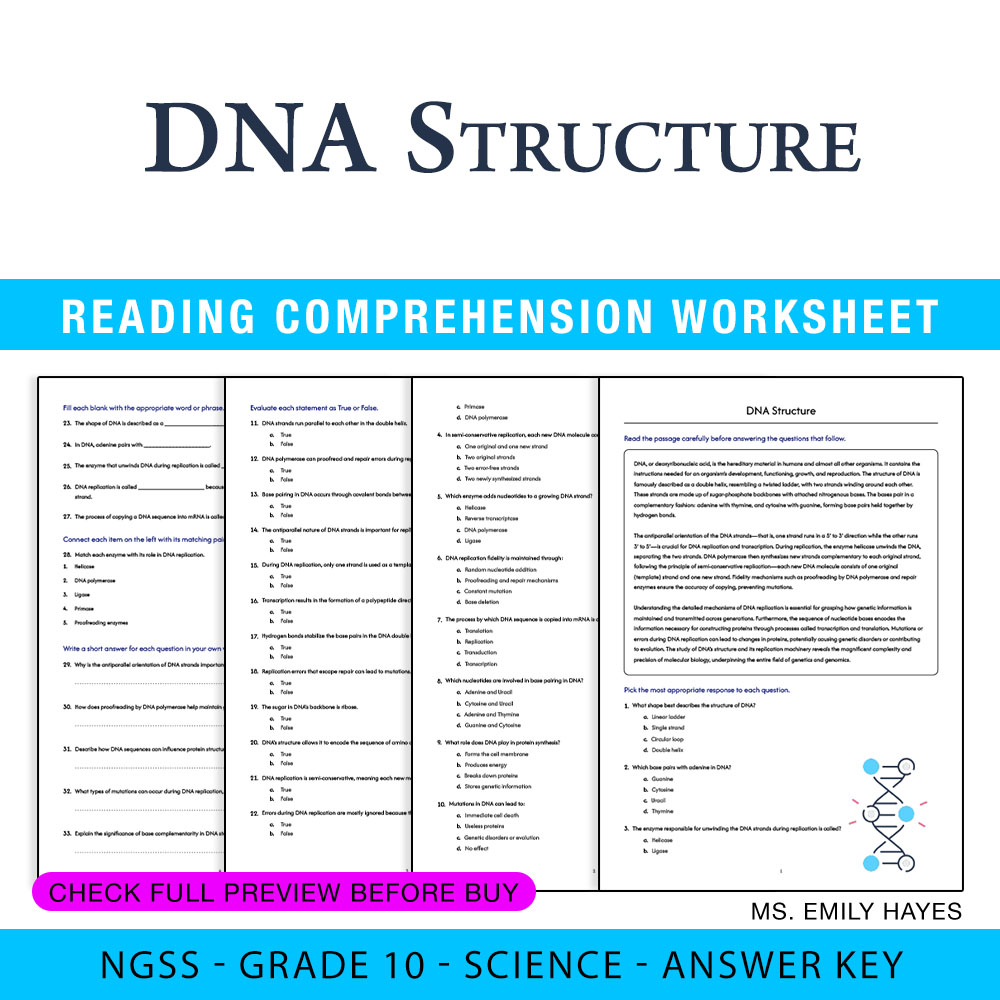
10th Grade Science | DNA Structure Worksheet (PDF+ Answer Key)
Created byCopper Leaf ClassroomLearning Objectives
- Describe the double helix geometry of DNA and its significance
- Explain the process of semi-conservative DNA replication and the roles of key enzymes
- Connect nucleotide sequences to protein synthesis through transcription and translation
Instant download
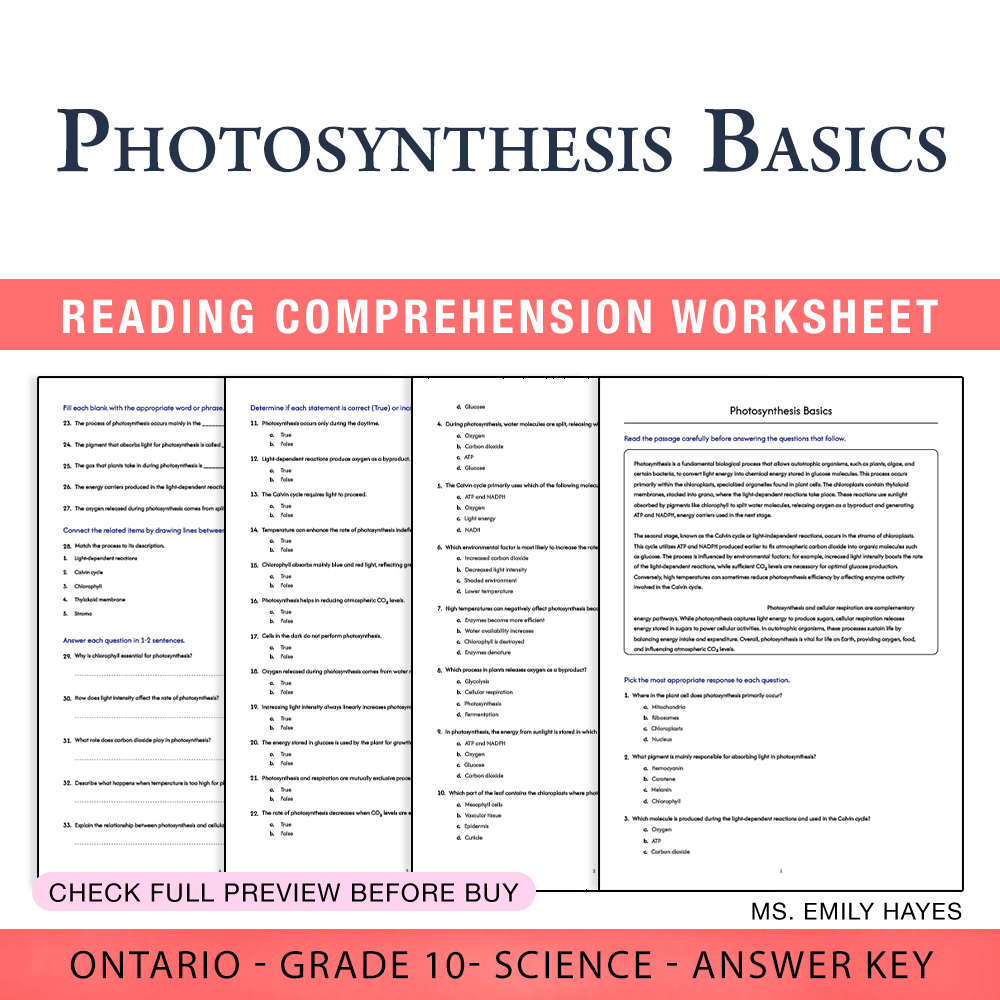
10th Grade Science | Photosynthesis Basics Worksheet (PDF + Answer Key)
Created byCopper Leaf ClassroomLearning Objectives
- Describe the process of photosynthesis, including light-dependent reactions and the Calvin cycle.
- Identify the role of chloroplasts, pigments, and key molecules involved in photosynthesis.
- Explain how environmental factors such as light intensity, CO₂ levels, and temperature influence photosynthesis rate.
Instant download
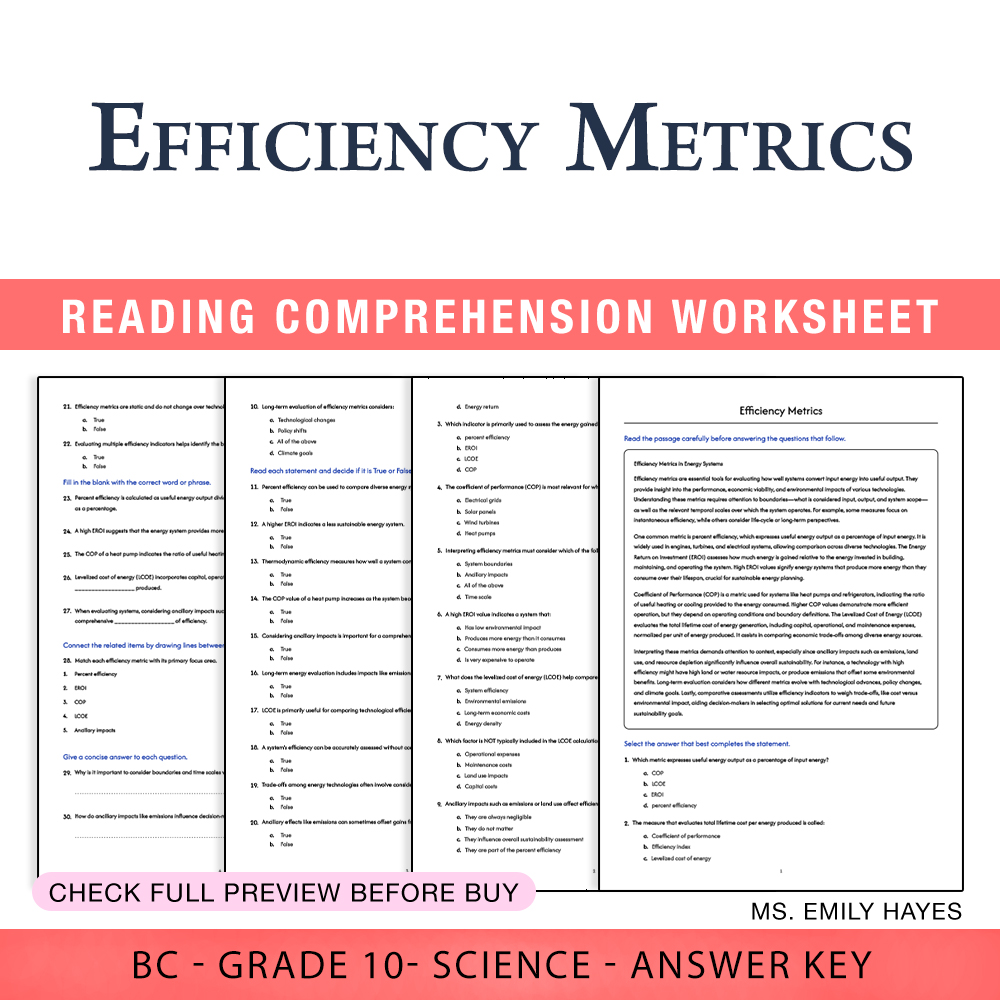
Grade 10 Science | Efficiency Metrics Worksheet (PDF + Answer Key)
Created byCopper Leaf ClassroomLearning Objectives
- Understand different measures of system efficiency such as percent efficiency, EROI, COP, and LCOE.
- Interpret how boundaries, time scales, and ancillary impacts influence efficiency evaluation.
- Compare technologies using efficiency indicators considering trade-offs and long-term effects.
Also included in: Grade 10 Science BC – Energy, Thermodynamics & Ecosystems (PDF + Answer Key) +1 more
Instant download
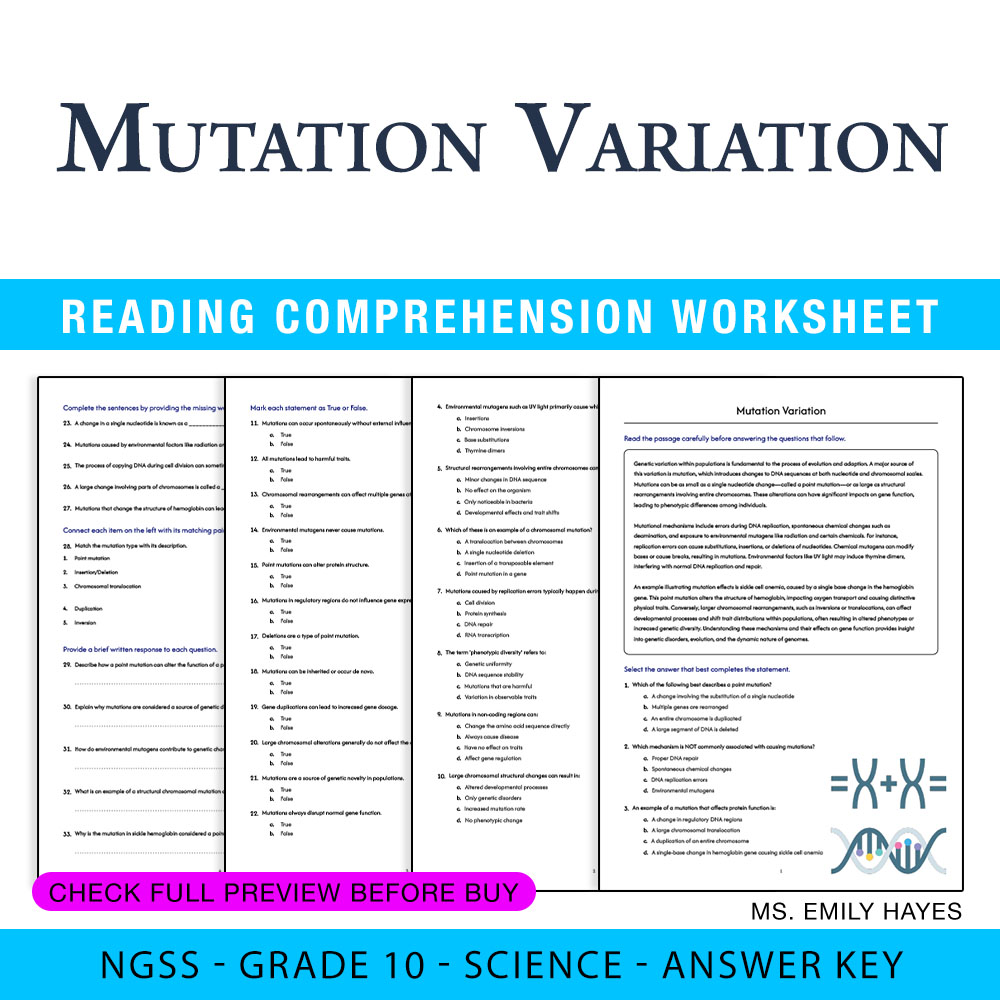
10th Grade Science | Mutation Variation Worksheet (PDF+ Answer Key)
Created byCopper Leaf ClassroomLearning Objectives
- Explain how genetic mutations at nucleotide and chromosomal levels contribute to genetic variation.
- Identify different types of mutations, including point mutations, insertions, deletions, and structural rearrangements.
- Describe mechanisms that lead to mutations, such as replication errors, chemical changes, and environmental mutagens.
Instant download
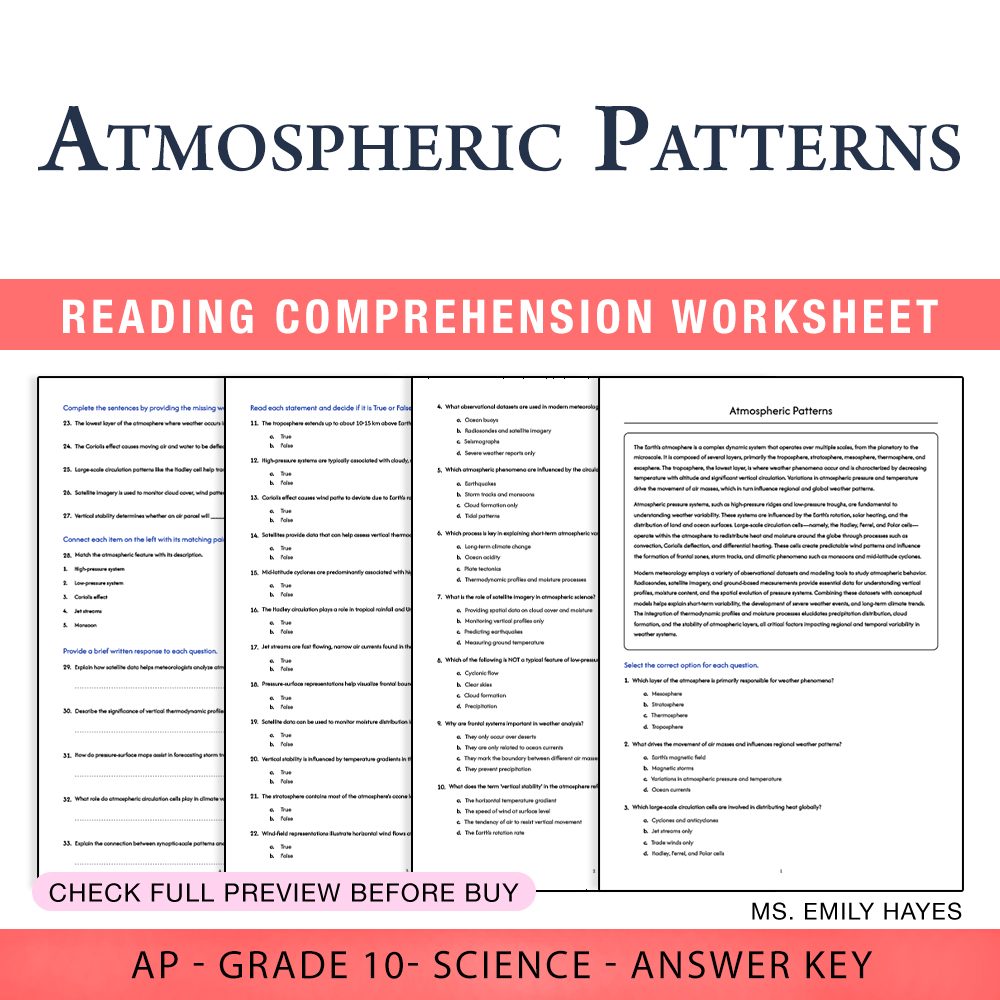
10th Grade Science | Atmospheric Patterns Worksheet (PDF+ Answer Key)
Created byCopper Leaf ClassroomLearning Objectives
- Describe the structure and dynamics of atmospheric pressure systems and circulation cells.
- Interpret hypsometric, wind-field, and pressure-surface representations of atmospheric phenomena.
- Connect large-scale synoptic patterns to regional weather events such as monsoons and cyclones.
Also included in: Grade 10 Science AP – Surface Processes & Earth Systems (PDF + Answer Key) +1 more
Instant download
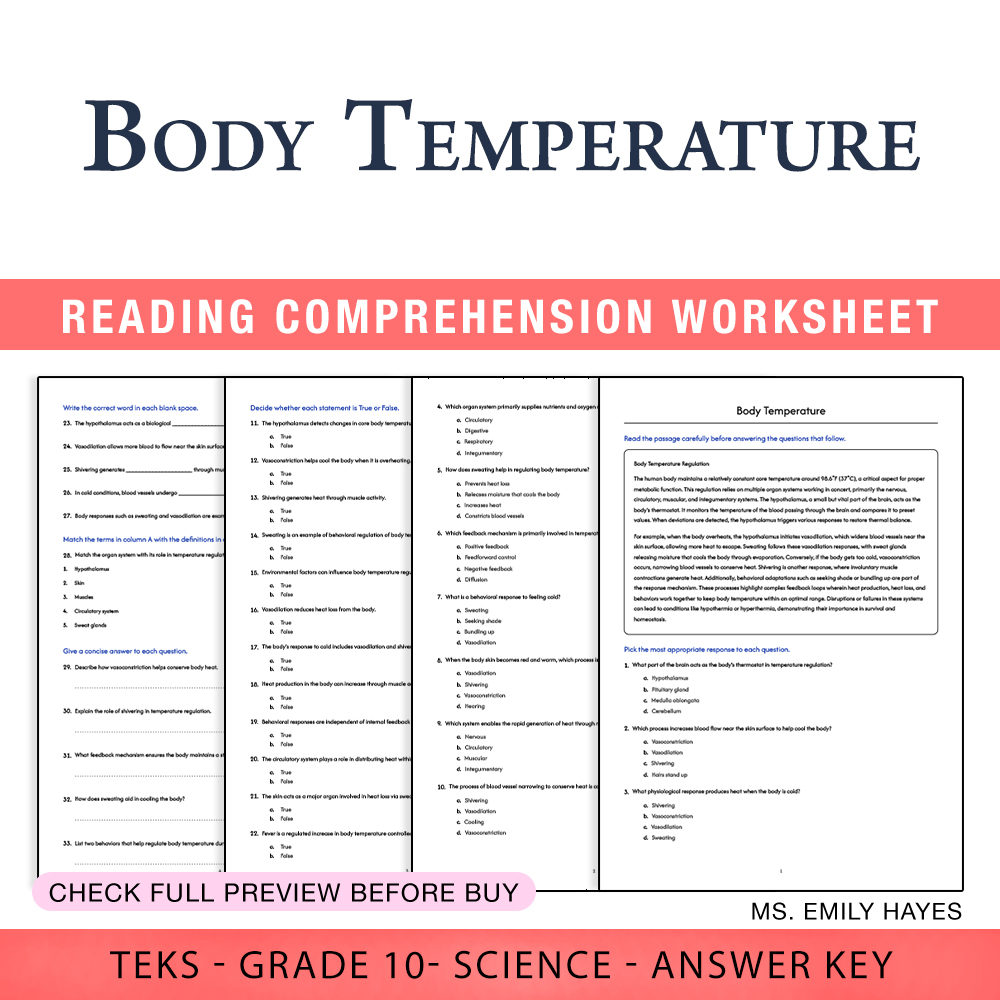
Grade 10 Science | Body Temperature Concepts Worksheet (PDF+ Answer Key)
Created byCopper Leaf ClassroomLearning Objectives
- Understand the mechanisms involved in body temperature regulation.
- Identify the roles of different organ systems in maintaining thermal equilibrium.
- Describe the feedback processes involved in temperature control.
Instant download
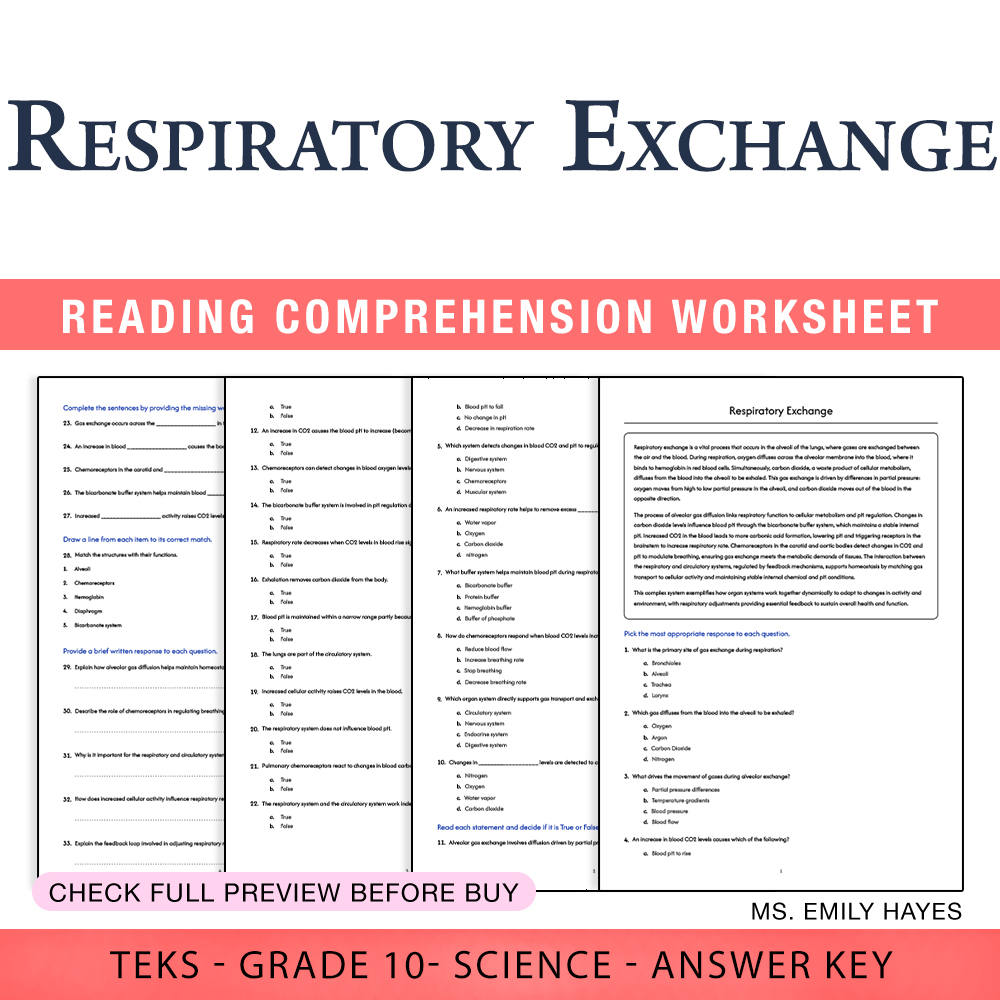
10th Grade Science | Respiratory Exchange Worksheet (PDF+ Answer Key)
Created byCopper Leaf ClassroomLearning Objectives
- Explain the process of alveolar gas diffusion and its role in oxygen and carbon dioxide transfer.
- Describe how changes in CO2 concentration affect blood pH and respiratory rate.
- Understand the interaction between the respiratory and circulatory systems in maintaining homeostasis.
Instant download
10th Grade Science | Meiosis & Variation Worksheet (PDF + Answer Key)
Created byCopper Leaf ClassroomLearning Objectives
- Explain the processes involved in meiosis and how they generate genetic variation.
- Describe the roles of homologous pairing, recombination, independent assortment, and chromosomal segregation.
- Link cytogenetic and molecular mechanisms to changes in genotypic and phenotypic variation.
Also included in: Grade 10 Science | Key Concepts in Biology & Ecosystems (PDF+ Answer Key) +1 more
Instant download
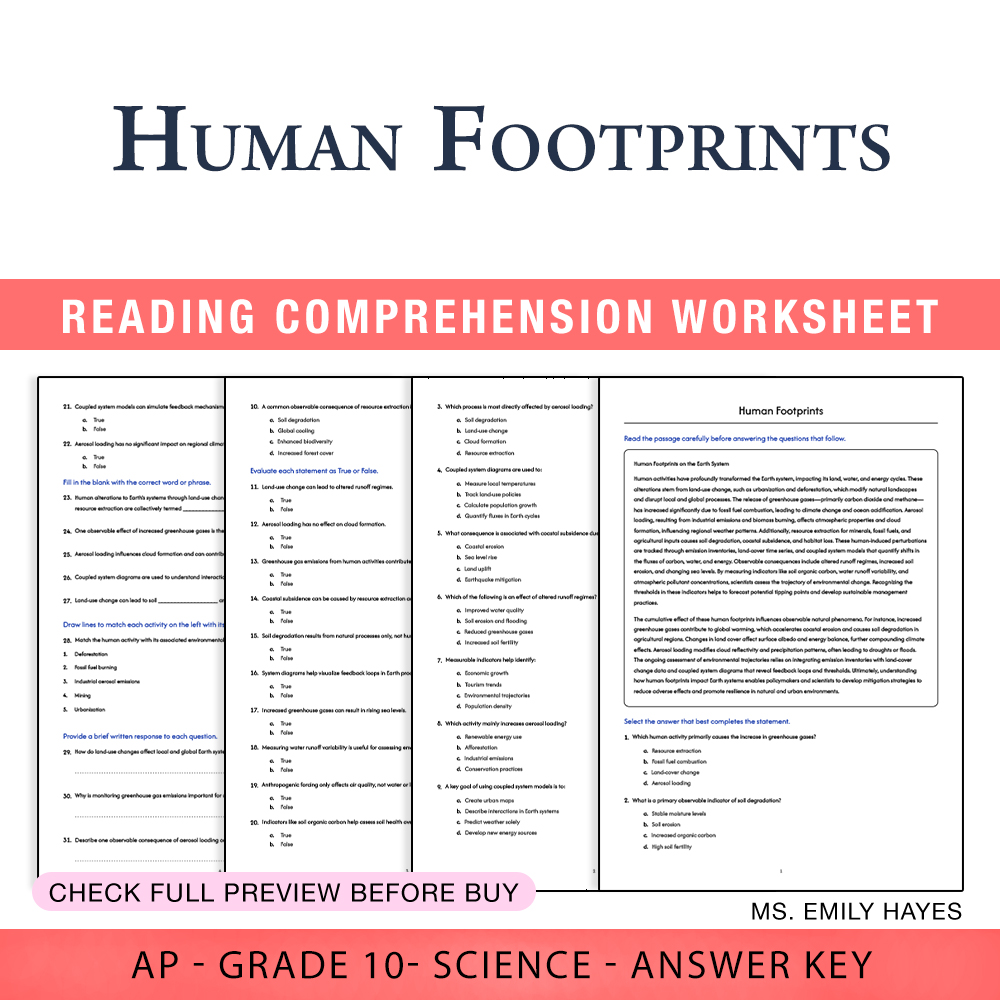
10th Grade Science | Human Footprints Worksheet (PDF+ Answer Key)
Created byCopper Leaf ClassroomLearning Objectives
- Understand how human activities alter Earth's land, water, and energy systems.
- Learn to identify indicators used to measure environmental changes due to anthropogenic forcing.
- Analyze the impacts of land-use change, greenhouse gas emissions, aerosol loading, and resource extraction.
Also included in: Grade 10 Science AP – Surface Processes & Earth Systems (PDF + Answer Key) +1 more
Instant download
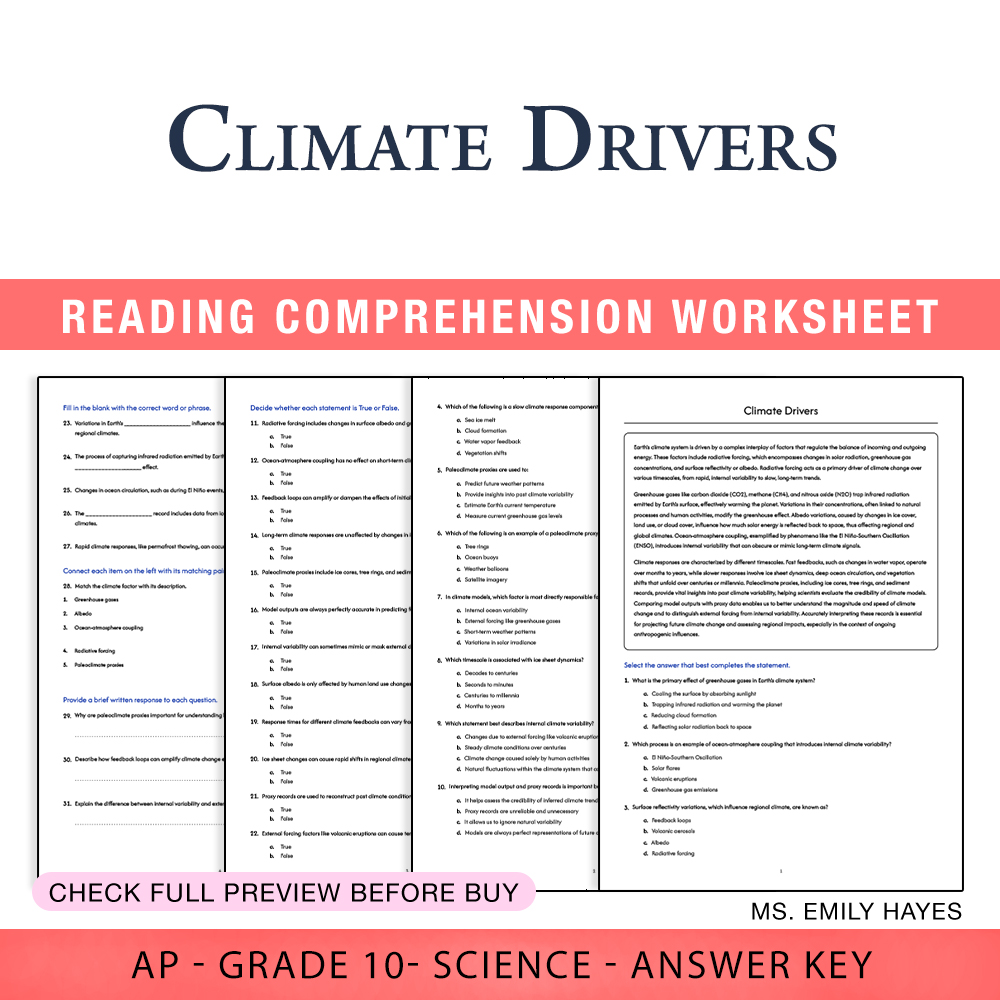
10th Grade Science | Climate Drivers Worksheet (PDF+ Answer Key)
Created byCopper Leaf ClassroomLearning Objectives
- Analyze the factors influencing Earth's climate, including radiative forcing, greenhouse gases, and albedo variations.
- Interpret energy-balance models, feedback loop diagrams, and paleoclimate proxies to understand climate changes.
- Evaluate the timescales of climate response and distinguish between internal variability and external forcing.
Also included in: Grade 10 Science AP – Surface Processes & Earth Systems (PDF + Answer Key) +1 more
Instant download
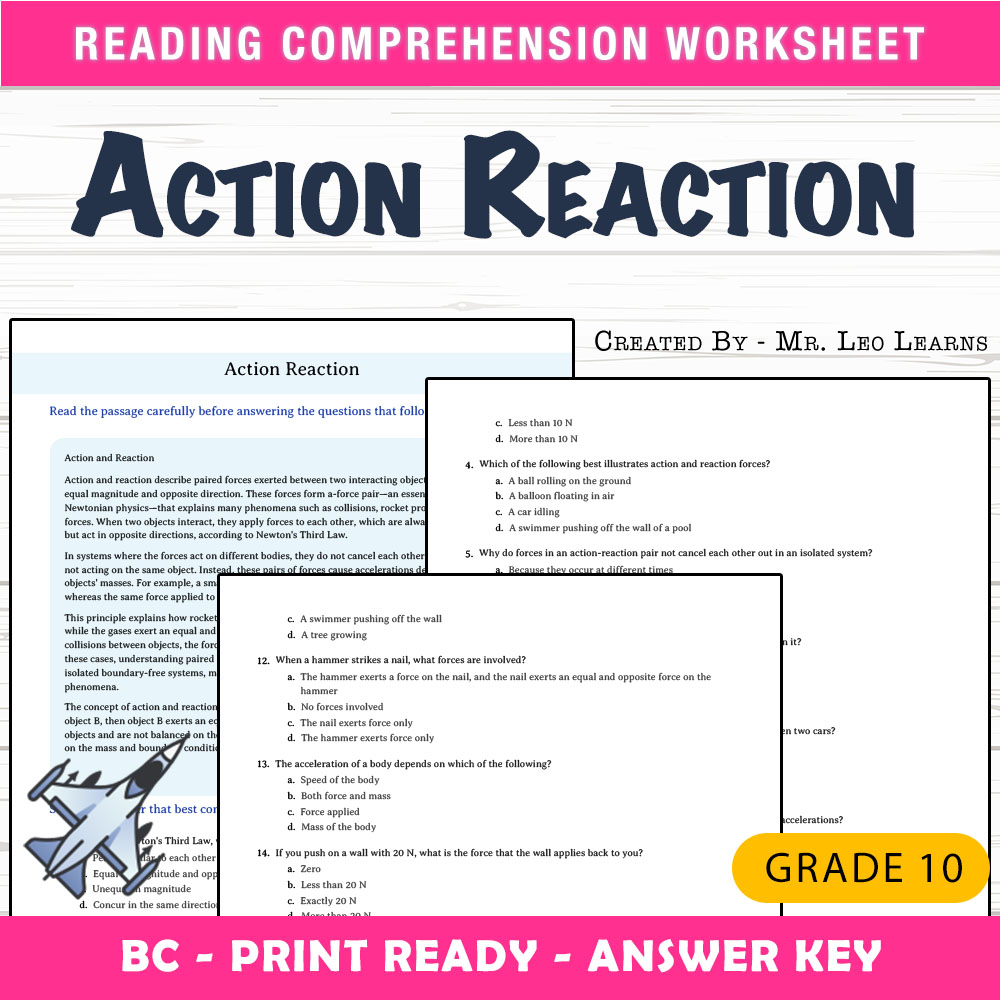
Grade 10 Science — Action Reaction Worksheet for Mastery | PDF + Answer Key
 Created byThe Resource Hub
Learning Objectives
- Understand the concept of paired forces in action and reaction.
- Identify examples where action-reaction forces play a role.
- Explain how equal and opposite forces affect objects differently depending on mass.
Also included in: Grade 10 Science | Forces, Motion & Fields UNIT Worksheet Bundle +1 more
Instant download
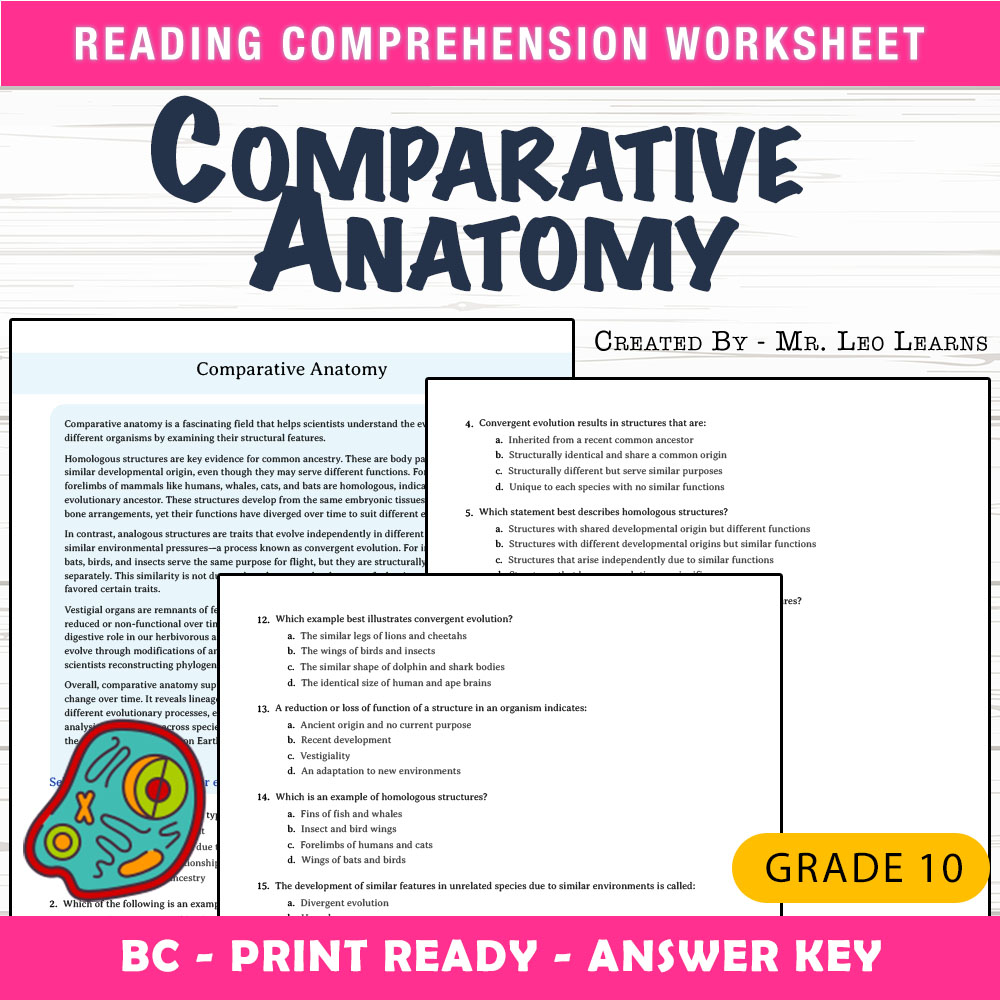
Grade 10 Science — Worksheet MCQ Paper for Mastering Comparative Anatomy
Created byThe Resource HubLearning Objectives
- Understand the concept of homologous and analogous structures in comparative anatomy.
- Identify examples of vestigial organs and explain their significance.
- Describe how anatomical features support evolutionary relationships among species.
Also included in: Grade 10 Science Unit on Evolution & Biodiversity +1 more
Instant download
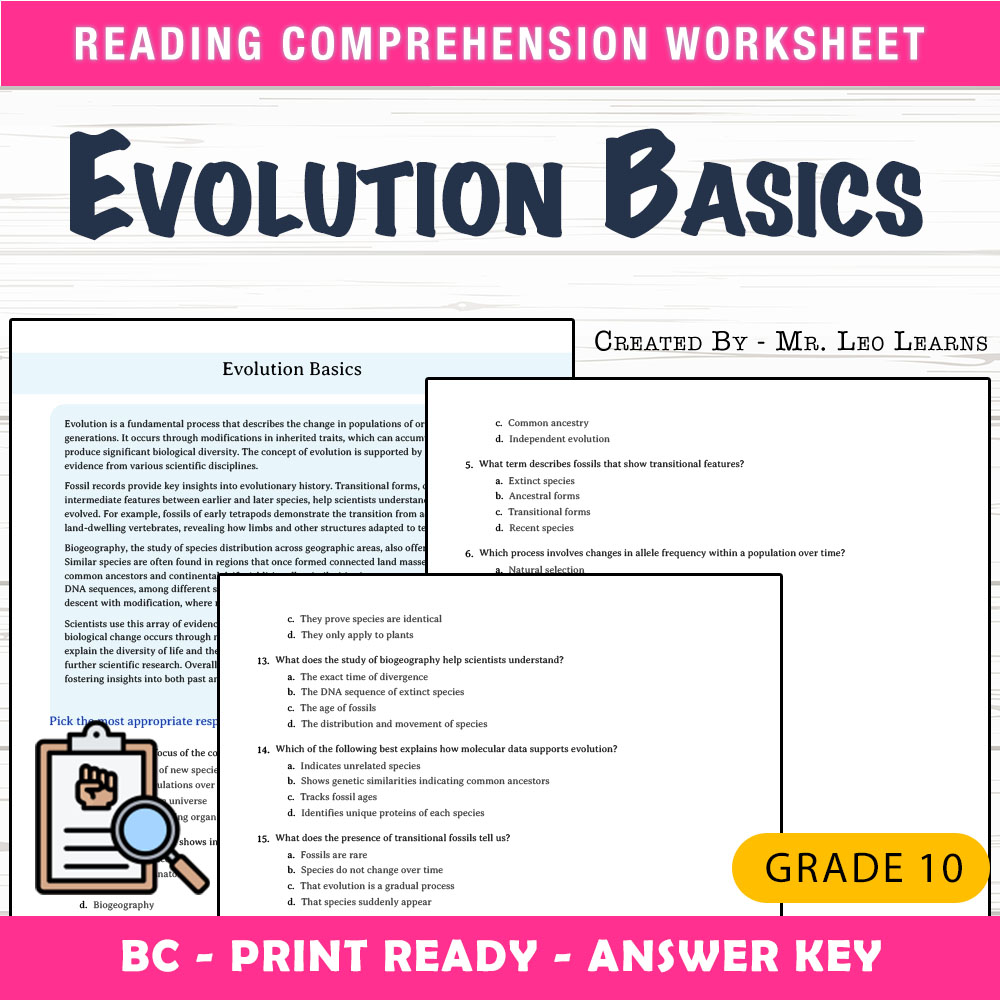
Grade 10 Science — Worksheet MCQ Paper for Mastering Evolution
Created byThe Resource HubLearning Objectives
- Understand the fundamental concept of evolution and how it explains biological change over time.
- Identify different types of evidence supporting evolution, including fossil record, biogeography, and molecular similarities.
- Explain the significance of transitional forms and common ancestry in the process of evolution.
Also included in: Grade 10 Science Unit on Evolution & Biodiversity +1 more
Instant download
Grade 10 Science — Worksheet MCQ Paper for Mastering Circular Motion
Created byThe Resource HubLearning Objectives
- Understand the concept of centripetal force and its role in circular motion.
- Differentiate between centripetal acceleration and tangential acceleration.
- Explain how radial and tangential components affect phenomena like banked turns and orbital motion.
Also included in: Grade 10 Science | Forces, Motion & Fields UNIT Worksheet Bundle +1 more
Instant download
Grade 10 Science — Field Superposition Worksheet MCQ Paper for Mastery
Created byThe Resource HubLearning Objectives
- Understand that the net field at a point is the vector sum of contributions from all sources.
- Visualize resulting field patterns such as regions of enhancement and cancellation.
- Identify equilibrium points between two masses or charges.
Also included in: Grade 10 Science | Forces, Motion & Fields UNIT Worksheet Bundle +1 more
Instant download
Grade 10 Science — Worksheet MCQ Paper for Mastering Evolutionary Synthesis
Created byThe Resource HubLearning Objectives
- Understand how fossil, anatomical, developmental, and molecular evidence integrate to explain biodiversity.
- Recognize mechanisms such as natural selection, genetic drift, and gene flow in evolution.
- Analyze case studies like island finch radiations and transitional fossils to understand divergence.
Also included in: Grade 10 Science Unit on Evolution & Biodiversity +1 more
Instant download
Grade 10 Science — Worksheet MCQ Paper for Mastering Speciation Processes
Created byThe Resource HubLearning Objectives
- Understand the genetic mechanisms leading to speciation.
- Differentiate between allopatric and sympatric speciation.
- Identify processes such as reinforcement, hybrid zones, and polyploidy that contribute to speciation.
Also included in: Grade 10 Science Unit on Evolution & Biodiversity +1 more
Instant download
Grade 10 Science — Worksheet MCQ Paper for Mastering Species Interactions
Created byThe Resource HubLearning Objectives
- Understand the different types of species interactions, including competition, predation, parasitism, mutualism, and commensalism.
- Explain how species interactions influence community structure and biodiversity.
- Analyze the role of keystone predators and mutualists in ecosystems.
Also included in: Grade 10 Science Unit on Evolution & Biodiversity +1 more
Instant download
Grade 10 Science — Worksheet MCQ Paper for Sources of Variation
Created byThe Resource HubLearning Objectives
- Understand the different sources of heritable variation such as mutations, recombination, and chromosomal rearrangements.
- Learn how natural selection acts on genetic variation within populations.
- Explore the importance of genetic diversity for adaptation and evolution.
Also included in: Grade 10 Science Unit on Evolution & Biodiversity +1 more
Instant download
Grade 10 Science — Worksheet MCQ Paper for Mastering Atomic Particles
Created byThe Resource HubLearning Objectives
- Understand the basic structure of an atom including protons, neutrons, and electrons.
- Identify how the number of protons determines the element.
- Explain the relationship between atomic number, mass number, and subatomic particles.
Also included in: Grade 10 Science | Matter & Chemical Change UNIT Worksheet Pack (BC Framework) +1 more
Instant download
Grade 10 Science — Worksheet MCQ Paper for Mastering Balancing Equations
Created byThe Resource HubLearning Objectives
- Understand the principle of conservation of mass in chemical reactions.
- Learn how coefficients are used to balance chemical equations.
- Identify different balanced chemical equations representing the same transformation.
Also included in: Grade 10 Science | Matter & Chemical Change UNIT Worksheet Pack (BC Framework) +1 more
Instant download
Grade 10 Science — Worksheet MCQ Paper for Mastering Bonding Types
Created byThe Resource HubLearning Objectives
- Identify and distinguish between ionic, covalent, and metallic bonds.
- Understand how bond types relate to electron transfer, sharing, and delocalization.
- Relate periodic table positions to bonding types and predict properties of compounds.
Also included in: Grade 10 Science | Matter & Chemical Change UNIT Worksheet Pack (BC Framework) +1 more
Instant download
Grade 10 Science — Isotopes And Ions Worksheet MCQ Paper | PDF + Answer Key
Created byThe Resource HubLearning Objectives
- Define isotopes and explain how they differ from each other in atomic structure.
- Describe ions and how they are formed through gain or loss of electrons.
- Differentiate between isotopic variations and ionic charges and their impact on atomic properties.
Also included in: Grade 10 Science | Matter & Chemical Change UNIT Worksheet Pack (BC Framework) +1 more
Instant download
Grade 10 Science — Worksheet MCQ Paper for Mastering Periodic Trends
Created byThe Resource HubLearning Objectives
- Understand the concept of periodic trends such as atomic radius, ionization energy, and electronegativity.
- Identify how nuclear charge and electron shielding influence atomic properties across periods and down groups.
- Interpret patterns of element behavior related to periodic trends.
Also included in: Grade 10 Science | Matter & Chemical Change UNIT Worksheet Pack (BC Framework) +1 more
Instant download
Grade 10 Science — Worksheet MCQ Paper for Mastering Stoichiometric Ratios
Created byThe Resource HubLearning Objectives
- Understand how balanced chemical equations relate reactants and products through molar ratios.
- Calculate the mass of products or reactants involved in a chemical reaction using stoichiometry.
- Apply the mole concept and molar masses to convert between mass and moles.
Also included in: Grade 10 Science | Matter & Chemical Change UNIT Worksheet Pack (BC Framework) +1 more
Instant download
Grade 10 Science — Biodiversity Overview Worksheet MCQ Paper
Created byThe Resource HubLearning Objectives
- Understand the concept of biodiversity at genetic, species, and ecosystem levels.
- Identify factors that influence biodiversity patterns across regions.
- Explore how environmental gradients, climate stability, and disturbance affect biodiversity.
Also included in: Grade 10 Science Unit on Evolution & Biodiversity +1 more
Instant download
Grade 10 Science — Orbits And Energy Worksheet MCQ Paper
Created byThe Resource HubLearning Objectives
- Explain how gravitational attraction is responsible for orbital motion.
- Understand how orbital speed depends on central mass and radius.
- Differentiate between circular and elliptical orbits and relate energy forms to orbital states.
Also included in: Grade 10 Science | Forces, Motion & Fields UNIT Worksheet Bundle +1 more
Instant download
Grade 10 Science | System Responses Reading Worksheet & Answer Key (PDF)
JCreated byJ.S SheetsLearning Objectives
- Understand how complex system responses integrate cellular processes, organ functions, and environmental signals.
- Identify mechanisms of multi-scale coordination and signaling networks in adaptive responses.
- Evaluate trade-offs between short-term compensation and long-term fitness in biological systems.
Also included in: Grade 10 Science | Cell Systems, Energy, & Homeostasis (Standards-Aligned) +1 more
Instant download
Grade 10 Science | Energy Forms Reading Worksheet with Rubric (PDF)
JCreated byJ.S SheetsLearning Objectives
- Understand the concepts of kinetic and potential energy and how they interconvert.
- Explain conservation of energy principles in ideal and real systems.
- Apply examples of energy transfer and storage in real-world contexts such as snowmobiling and hydro reservoirs.
Also included in: Grade 10 Science Bundle | Energy, Circuits & Mechanics (Answer Keys Included) +1 more
Instant download
Grade 10 Science | Induction Principles Reading Worksheet PDF & Answer Key
JCreated byJ.S SheetsLearning Objectives
- Explain the concept of electromagnetic induction and how changing magnetic flux induces voltage.
- Describe Faraday’s law and its quantitative relationship between flux change and induced emf.
- Understand the directionality of induced current according to Lenz’s law.
Also included in: Grade 10 Science Bundle | Energy, Circuits & Mechanics (Answer Keys Included) +1 more
Instant download
Grade 10 Science | Homeostatic Balance Reading Worksheet & Answer Key (PDF)
JCreated byJ.S SheetsLearning Objectives
- Explain the concept of homeostasis and its importance in living organisms.
- Identify key mechanisms involved in maintaining internal stability.
- Describe how temperature regulation and osmotic balance function in mammals and freshwater fishes.
Also included in: Grade 10 Science | Cell Systems, Energy, & Homeostasis (Standards-Aligned) +1 more
Instant download
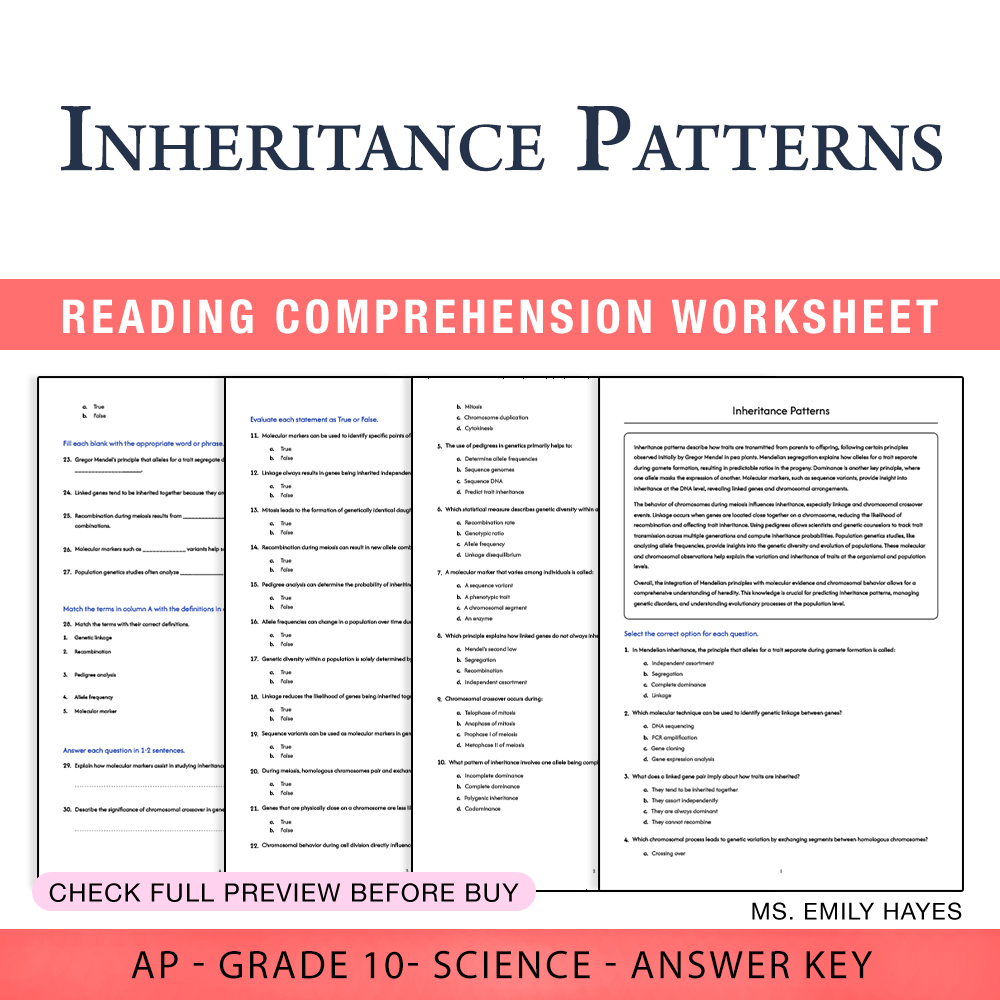
10th Grade Science | Inheritance Patterns Reading Worksheet (PDF & Answer Key)
JCreated byJ.S SheetsLearning Objectives
- Understand how alleles segregate and assort to determine phenotypes and genotypes.
- Explain Mendelian principles such as segregation and independent assortment.
- Analyze pedigree charts to trace trait inheritance across generations.
Instant download
Grade 10 Science | Biodiversity Change Reading Worksheet (PDF & Answer Key)
JCreated byJ.S SheetsLearning Objectives
- Understand factors influencing biodiversity loss and recovery
- Analyze evidence methods used in biodiversity studies
- Evaluate human impacts on ecological resilience
Also included in: Grade 10 Science | Evolution & Biodiversity Unit Worksheet Bundle
Instant download
10th Grade Science | Genomic Technologies Reading Worksheet & Answer Key (PDF)
JCreated byJ.S SheetsLearning Objectives
- Understand key genomic technologies such as PCR, DNA sequencing, and CRISPR.
- Explain how recombinant DNA methods are used in biotechnology.
- Analyze societal and ecological considerations related to genomic tools.
Instant download
Grade 10 Science | Pedigree Analysis & Genetics Mastery (PDF + Answer Key)
JCreated byJ.S SheetsLearning Objectives
- Understand the principles of pedigree analysis and how family records are used to interpret inheritance patterns.
- Identify different modes of inheritance such as autosomal dominant, autosomal recessive, and X-linked traits through pedigree signatures.
- Predict genotype probabilities and recurrence risks based on pedigree data.
Instant download
Grade 10 Science | Carbon Cycling Reading Worksheet (PDF + Answer Key)
JCreated byJ.S SheetsLearning Objectives
- Explain the process of carbon cycling among different Earth reservoirs.
- Identify the roles of photosynthesis and respiration in carbon movement.
- Describe human impacts on natural carbon fluxes and their effects on climate.
Instant download
Grade 10 Science | Biodiversity Drivers Reading Worksheet (PDF + Answer Key)
JCreated byJ.S SheetsLearning Objectives
- Understand the key factors influencing species richness and community composition.
- Evaluate how habitat fragmentation, invasive species, land-use change, and climate shifts impact biodiversity.
- Analyze mechanisms like genetic diversity, metapopulation structure, and connectivity in species survival.
Also included in: Grade 10 Science | Ecosystems & Biodiversity Uanit Worksheets
Instant download
Grade 10 Science | Plate Boundaries Reading Worksheet (PDF + Answer Key)
JCreated byJ.S SheetsLearning Objectives
- Describe the different types of plate boundaries and their characteristics.
- Explain the processes associated with divergent, convergent, and transform boundaries.
- Identify geologic phenomena resulting from plate interactions, such as earthquakes, volcanoes, and mountain formation.
Also included in: Grade 10 Science Unit | Earth Systems & Climate Change Worksheets Bundle
Instant download
Grade 10 Science | Collision Theory Reading Worksheets (PDF + Answer Key)
JCreated byJ.S SheetsLearning Objectives
- Understand the fundamental principles of collision theory in chemical reactions.
- Explain how energy and orientation affect the likelihood of effective molecular collisions.
- Analyze real-world examples such as catalytic converters and refinery catalysts to see collision theory in action.
Also included in: Grade 10 Science Unit Bundle | Chemical Reactions & Properties Worksheets +1 more
Instant download
10th Grade Science | Energy Flow Reading Worksheet with Answer Key (PDF)
JCreated byJ.S SheetsLearning Objectives
- Explain how energy enters and moves through ecosystems, highlighting the role of sunlight and photosynthesis.
- Describe the transfer of energy between trophic levels and understand why energy decreases at higher levels.
- Identify the relationships between food chains, food webs, and energy flow within ecosystems.
Instant download
Grade 10 Science | Evidence for Evolution Reading Worksheet (PDF + Answer Key)
JCreated byJ.S SheetsLearning Objectives
- Understand the various lines of evidence supporting common ancestry and evolution.
- Explain how fossil records, comparative anatomy, embryology, and molecular data contribute to evolutionary studies.
- Interpret phylogenetic relationships and patterns of divergence among species.
Also included in: Grade 10 Science | Evolution & Biodiversity Unit Worksheet Bundle
Instant download
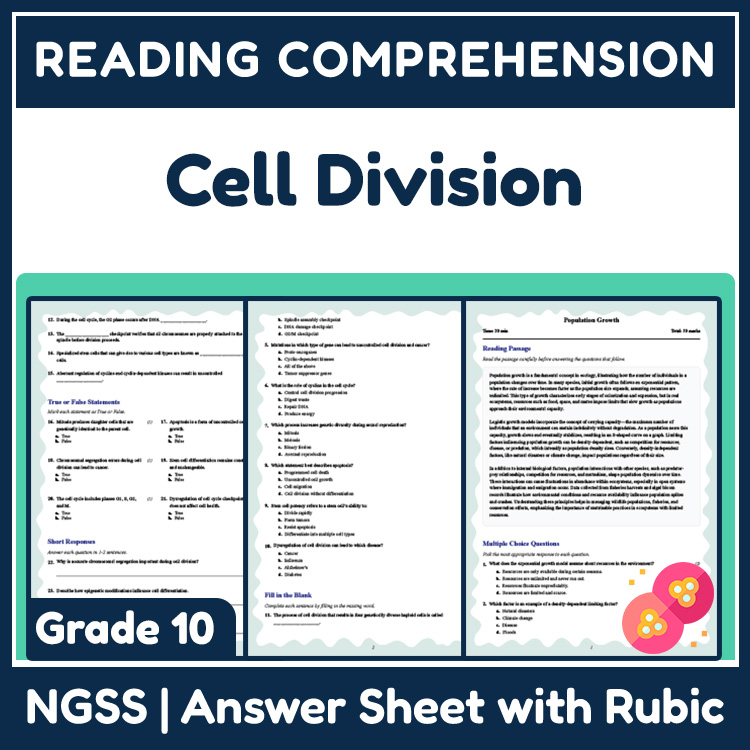
Grade 10 Science | Cell Division Reading Worksheet with Answer Key (PDF)
JCreated byJ.S SheetsLearning Objectives
- Understand the processes of mitosis and meiosis and their roles in cell division.
- Explain the cell cycle, checkpoints, and how dysregulation can lead to diseases such as cancer.
- Describe mechanisms of differentiation and the significance of stem cell potency in development.
Also included in: Grade 10 Science Unit | Cellular & Physiological Systems Worksheets
Instant download
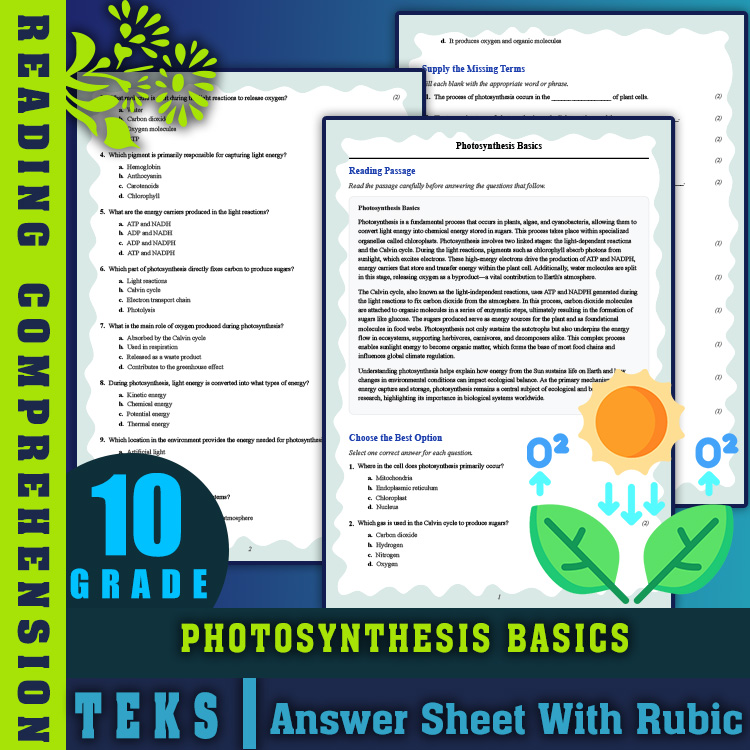
10th Grade Science | Photosynthesis Basics Reading Worksheet & PDF Answer Key
JCreated byJ.S SheetsLearning Objectives
- Explain the two main stages of photosynthesis: light reactions and the Calvin cycle.
- Identify the products and reactants involved in each stage of photosynthesis.
- Describe the importance of photosynthesis for ecosystems and energy flow.
Instant download
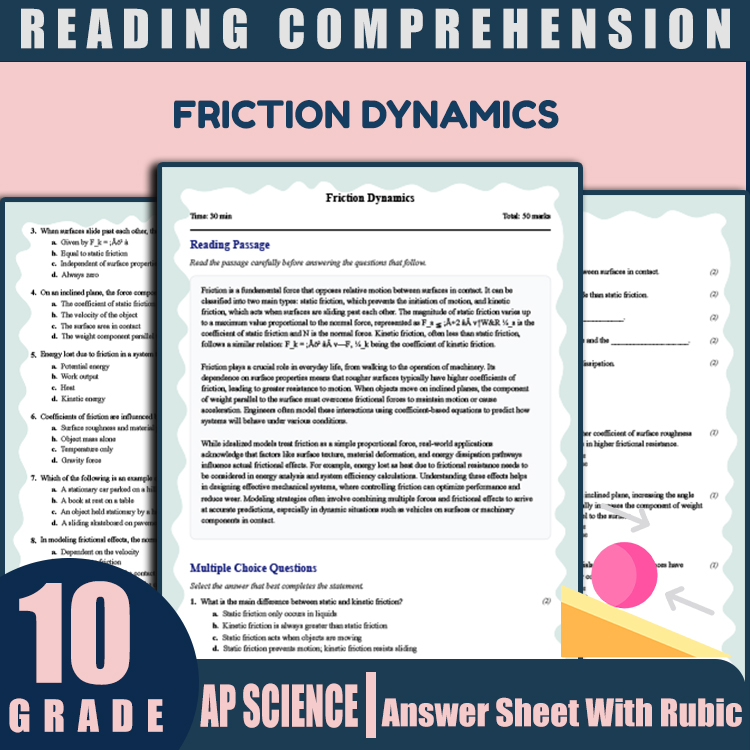
Grade 10 Science | Friction Dynamics Reading Worksheet (PDF + Answer Key)
JCreated byJ.S SheetsLearning Objectives
- Describe the difference between static and kinetic friction and how each depends on the normal force and surface properties.
- Analyze how frictional forces influence motion on inclined planes and surface contact scenarios using coefficient-based models.
- Understand how friction contributes to energy dissipation and how it affects the net force in dynamic systems.
Also included in: Grade 10 Science Unit Bundle | Motion, Forces & Energy Worksheets (PDF) +1 more
Instant download
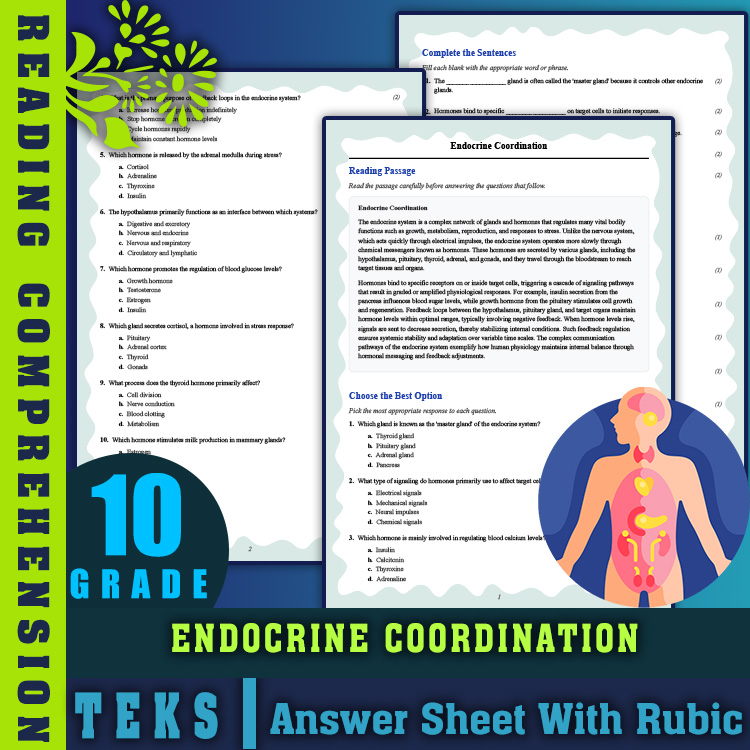
Grade 10 Science | Endocrine Coordination Reading Worksheet (PDF + Rubric)
JCreated byJ.S SheetsLearning Objectives
- Understand the role of hormones and endocrine glands in regulating bodily functions.
- Explain the feedback mechanisms involved in endocrine system regulation.
- Describe how hormones communicate and produce physiological effects.
Instant download
About Grade 10 Science Worksheets
Find Science worksheets built for Grade 10. All 7,038 cover core skills, practice, and review, each an instant PDF download.
Every worksheet on MyTeachingSheets is created by independent teacher-authors and reviewed before publication. All resources download as printable PDFs for classroom, homework, or at-home practice, and many include answer keys. Preview any worksheet free before buying.