
Grade 10 Science Worksheets
7,038 worksheets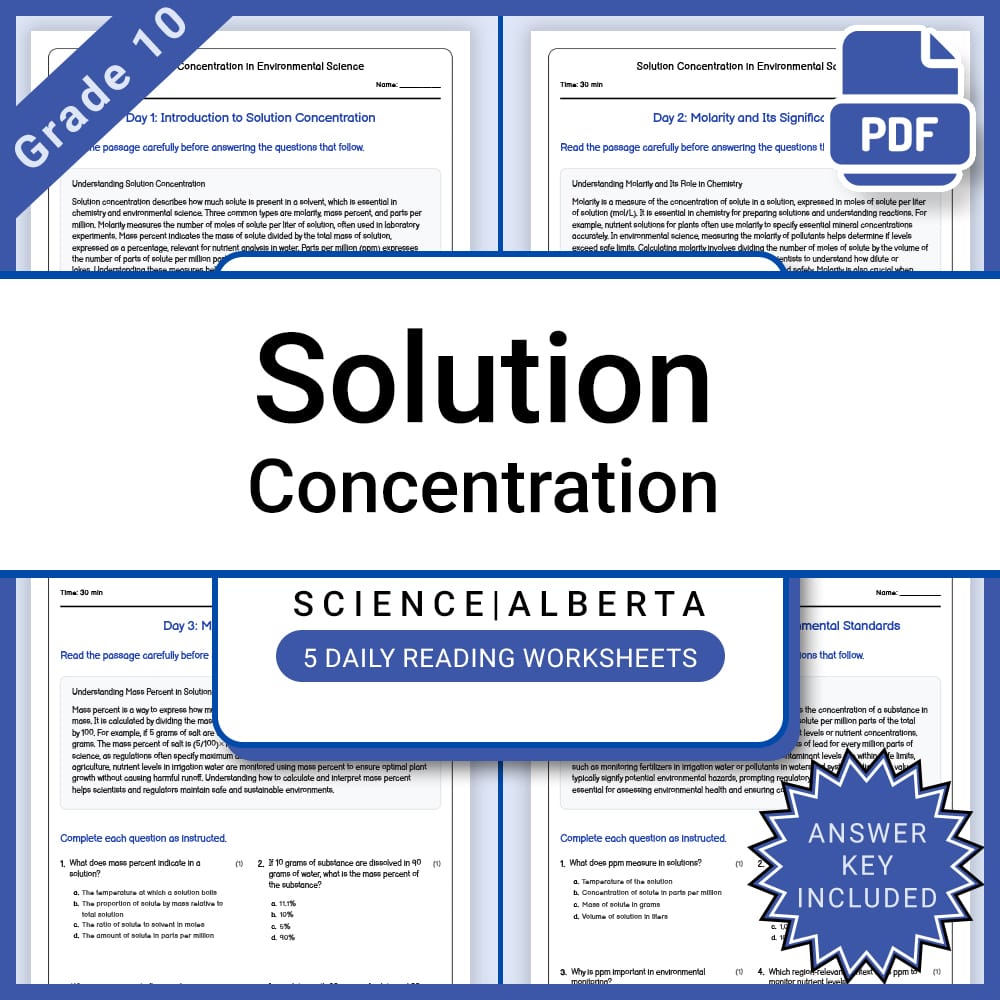
Grade 10 Science – Solution Concentration Daily Reading Worksheet + Answer Key
JCreated byJ.S SheetsLearning Objectives
- Understand the different types of solution concentration: molarity, mass percent, and parts per million.
- Identify real-world examples of solution concentration in environmental contexts.
- Explain the relationship between solution concentration and physical properties of solutions.
Also included in: Grade 10 Science Lesson Group Bundle Alberta | Worksheets & Activities +1 more
Instant download

Grade 10 Science | Design Problem Constraints Worksheet | General Standard
 Created byLumora Learning
Learning Objectives
- Explain how design constraints (time, cost, safety, energy use, and available materials) limit the set of acceptable solutions.
- Identify which design requirement or constraint a proposed design choice helps satisfy.
- Use cause-and-effect reasoning to justify why a solution is feasible and appropriate under given constraints.
Instant download

Science Worksheet Design Problem Constraints | Grade 10 Assessment
JCreated byJ.S SheetsLearning Objectives
- Explain how design constraints shape the range of acceptable engineering solutions
- Identify examples of constraints (time, cost, safety, energy use, and materials) in real design scenarios
- Justify design choices by linking each choice to specific requirements and constraints
Also included in: Grade 10 Trade-Offs and Prototyping Science Lesson Bundle | General +1 more
Instant download
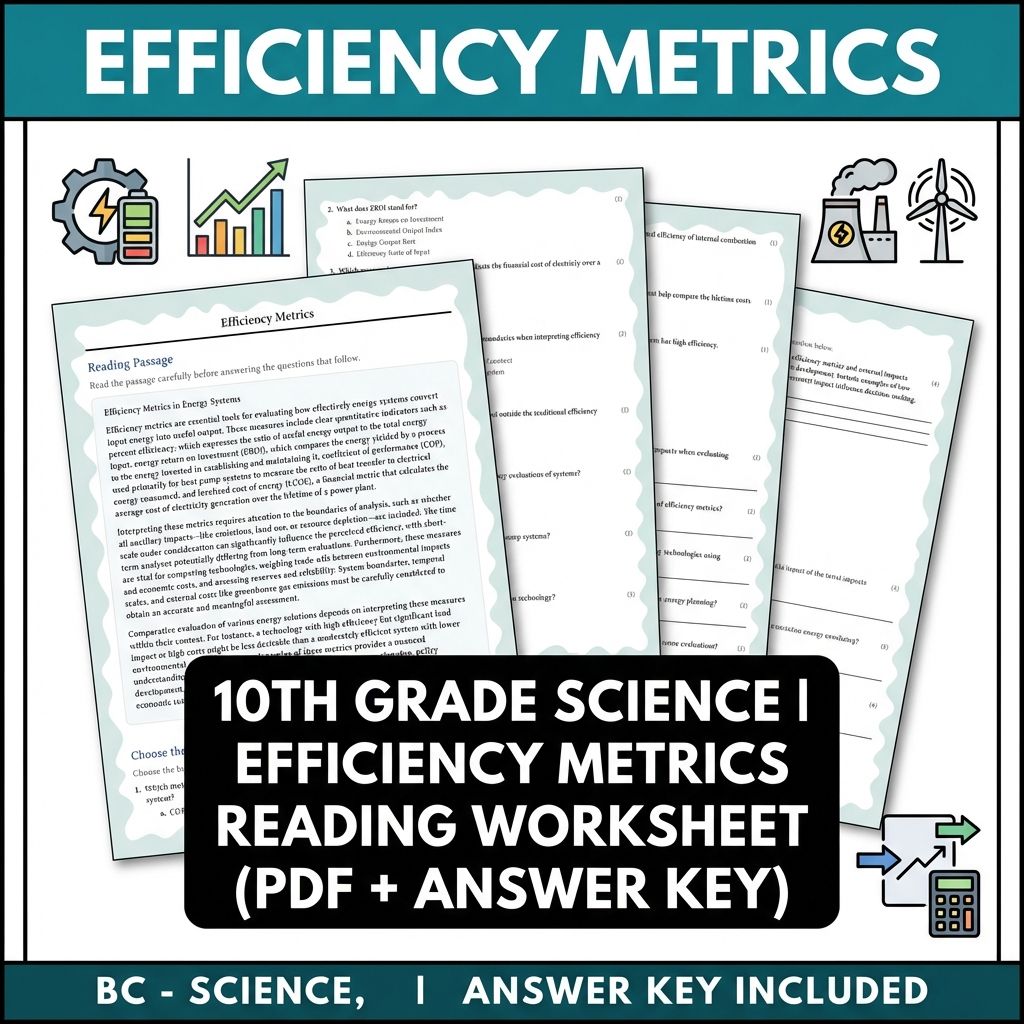
10th Grade Science | Efficiency Metrics Reading Worksheet (PDF + Answer Key)
JCreated byJ.S SheetsLearning Objectives
- Understand various efficiency metrics used to evaluate systems and technologies.
- Interpret efficiency indicators like percent efficiency, EROI, COP, and LCOE.
- Analyze how boundaries, time scales, and impacts influence efficiency assessments.
Instant download

Grade 10 Design Problem Constraints Worksheet | Practice & PDF
 Created byClear Sky Classroom
Learning Objectives
- Explain how design constraints (time, cost, safety, energy, and materials) limit acceptable solutions.
- Identify and distinguish success criteria from constraints in a design problem.
- Justify design choices by linking each major decision to specific constraints.
Instant download
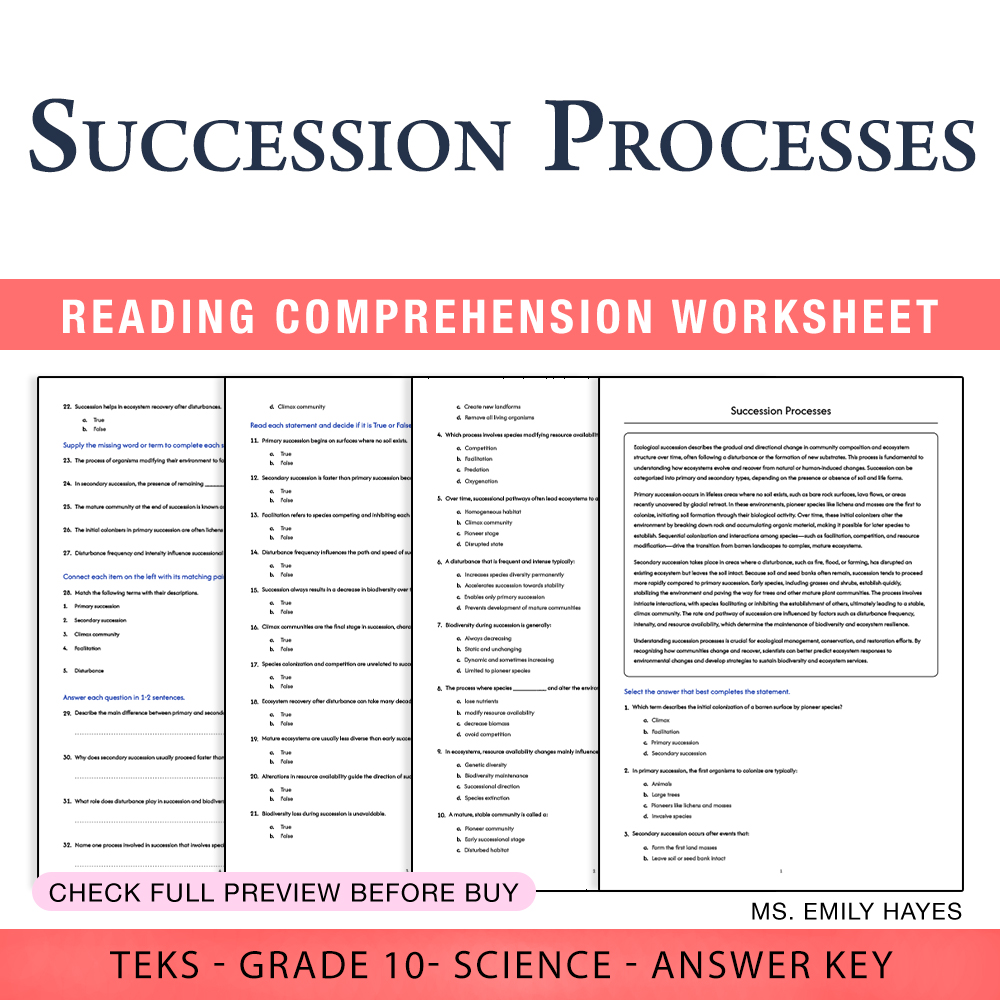
10th Grade Science | Succession Processes Worksheet (PDF+ Answer Key)
 Created byCopper Leaf Classroom
Learning Objectives
- Understand the difference between primary and secondary succession.
- Identify the processes involved in ecological succession.
- Explain how disturbance influences succession and biodiversity.
Instant download

Grade 10 Cell Types From Regulation Worksheet | Practice & PDF
Created byClear Sky ClassroomLearning Objectives
- Explain how differential gene expression can create specialized cell types in multicellular organisms
- Describe how turning genes on or off affects protein production and cell function
- Analyze how timing and intensity of gene regulation influence developmental pathways
Instant download
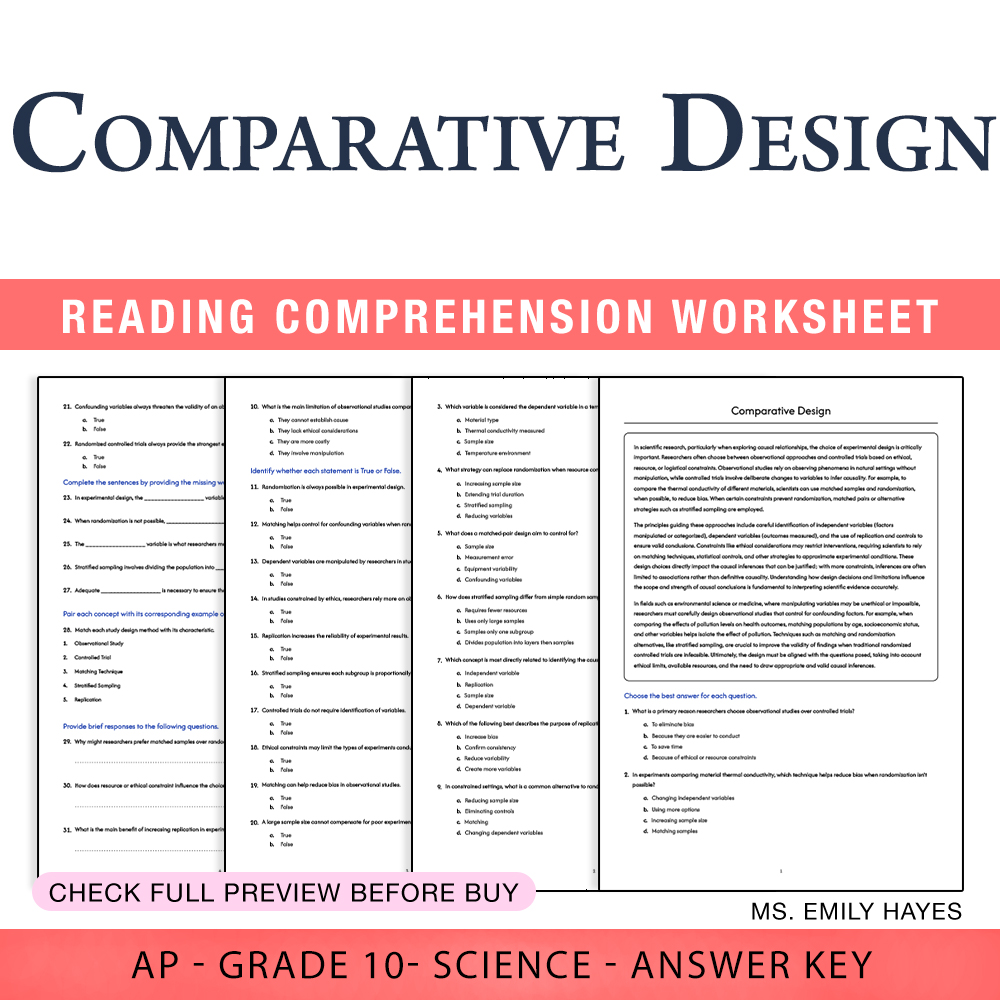
10th Grade Science | Comparative Design Worksheet (PDF+ Answer Key)
Created byCopper Leaf ClassroomLearning Objectives
- Identify key principles of comparative observational and controlled trial approaches.
- Describe how constraints influence experimental design and causal inference.
- Differentiate between independent and dependent variables in experimental contexts.
Also included in: Grade 10 Science AP | Data Analysis & Modeling Skills (PDF + Answer Key) +1 more
Instant download
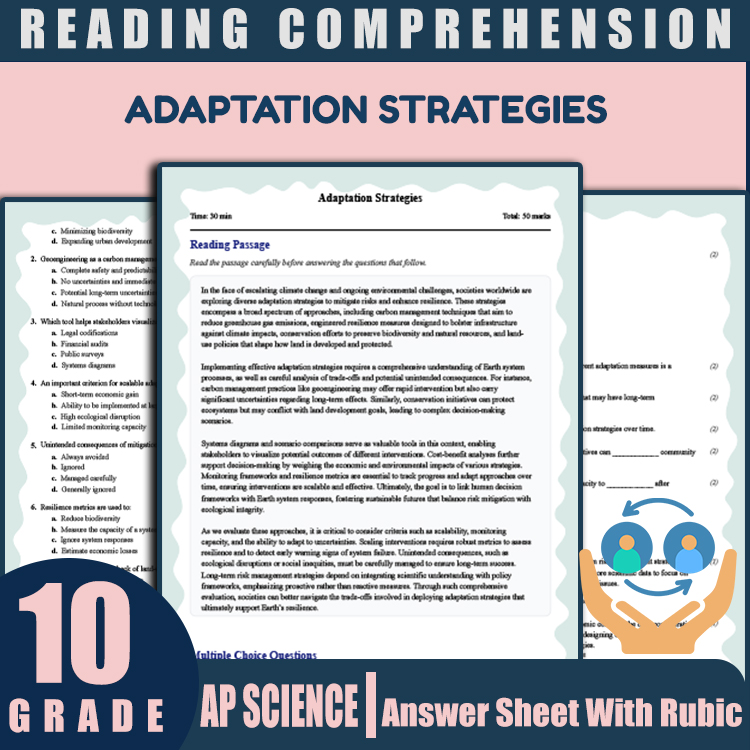
10th Grade Science | Adaptation Strategies Reading Worksheet (PDF + Rubric)
JCreated byJ.S SheetsLearning Objectives
- Understand key concepts of mitigation and adaptation within Earth systems.
- Analyze trade-offs among carbon management, engineered resilience, conservation, and land-use policies.
- Apply systems diagrams, scenario comparisons, and cost-benefit reasoning to evaluate intervention strategies.
Also included in: Grade 10 Science Unit | Earth Processes & Climate Worksheets (PDF + Answer Key) +1 more
Instant download
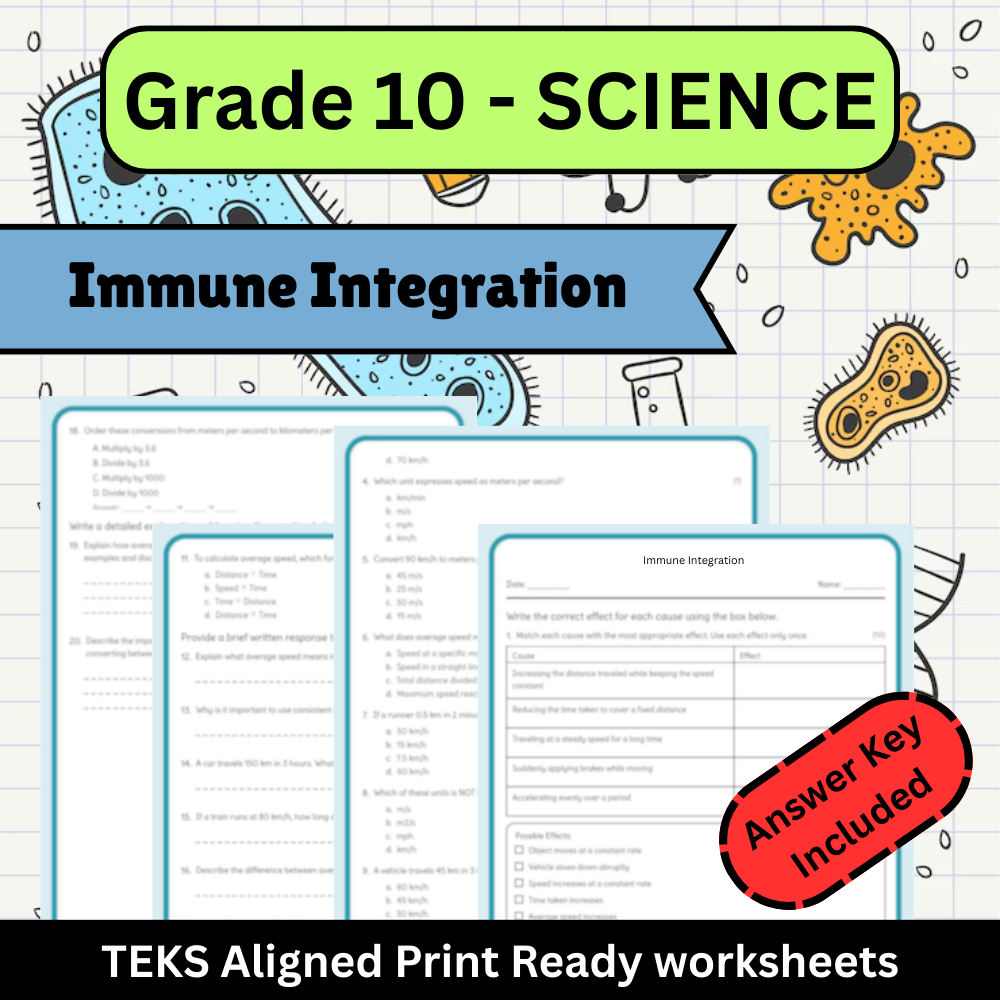
Grade 10 Science | Immune System Integration Worksheet (Worksheet + Answer Key) for TEKS Standards
 Created byBright Mind Resources
Learning Objectives
- Explain how the immune system contributes to maintaining homeostasis in the body.
- Describe the physiological responses involved in immune signaling, such as inflammation and fever.
- Analyze how chronic immune activation can disrupt homeostasis and overall health.
Also included in: Grade 10 Science | Body Systems & Homeostasis Worksheet Bundle (TEKS Aligned) +5 more
Instant download
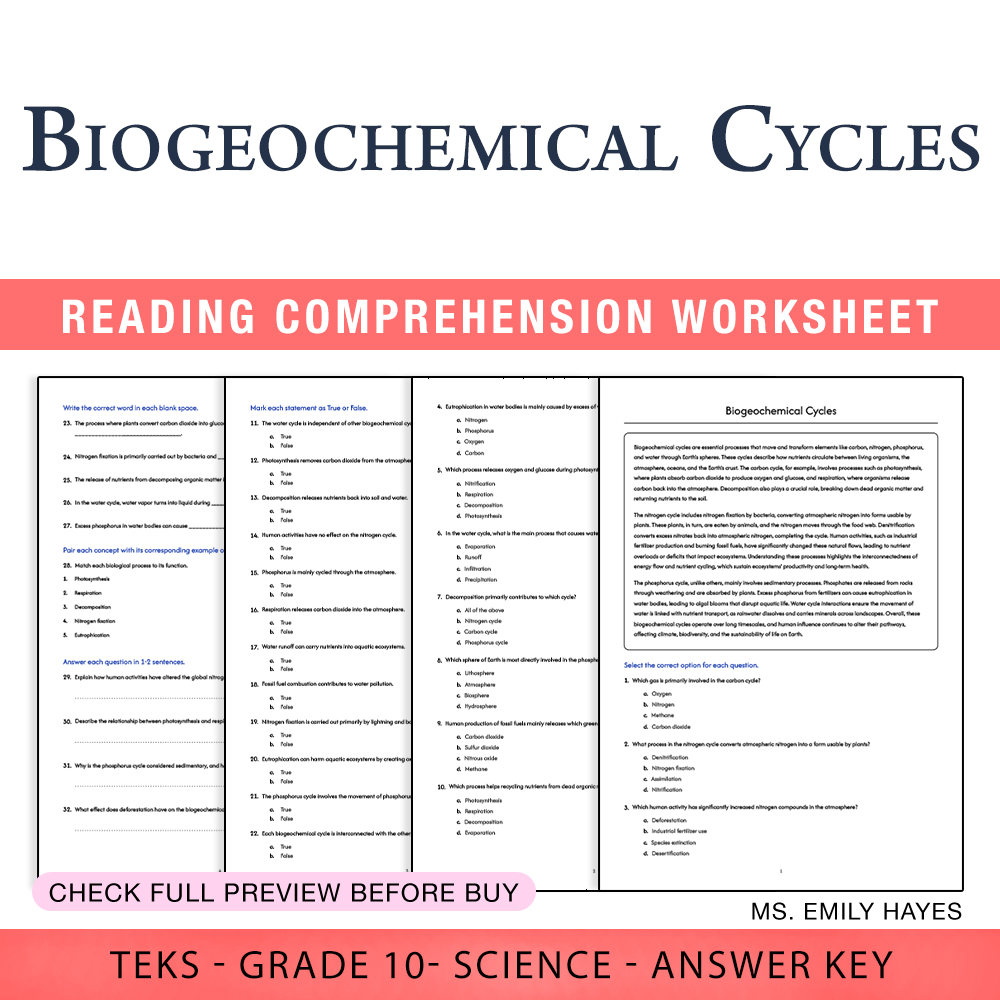
Grade 10 Science | Biogeochemical Cycles Worksheet (PDF+ Answer Key)
Created byCopper Leaf ClassroomLearning Objectives
- Describe the main types of biogeochemical cycles and their pathways.
- Explain how biological, physical, and human activities influence nutrient cycling.
- Identify key processes such as photosynthesis, respiration, and decomposition in nutrient flow.
Instant download
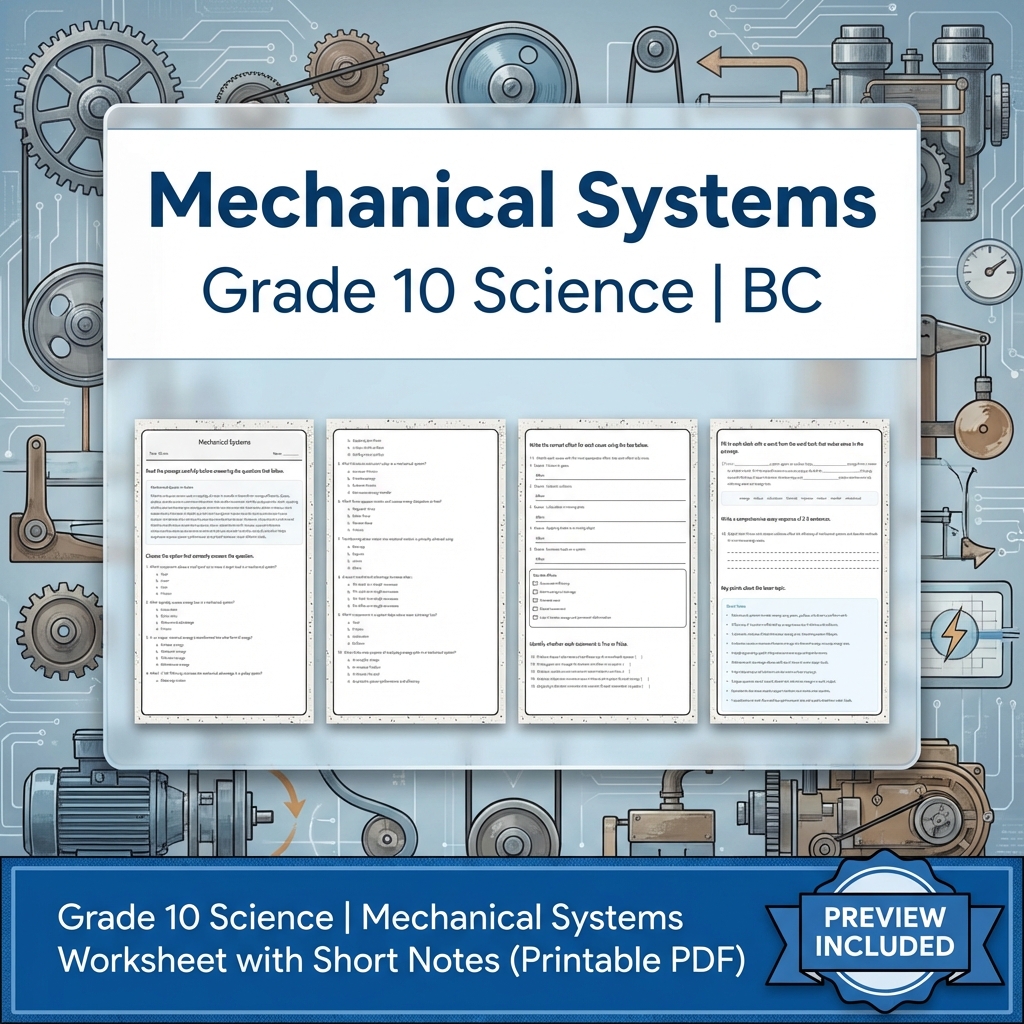
Grade 10 Science | Mechanical Systems Worksheet with Short Notes (Printable PDF)
 Created byMeadowlark Worksheets
Learning Objectives
- Understand how mechanical systems transfer and transform energy through forces, motions, and mechanical advantage.
- Explain the role of different components such as gears, pulleys, levers, and engines in energy transfer.
- Analyze how energy losses due to friction and collisions affect system efficiency.
Also included in: Grade 10 Science Lesson Bundle | Energy & Thermodynamics Worksheets +1 more
Instant download
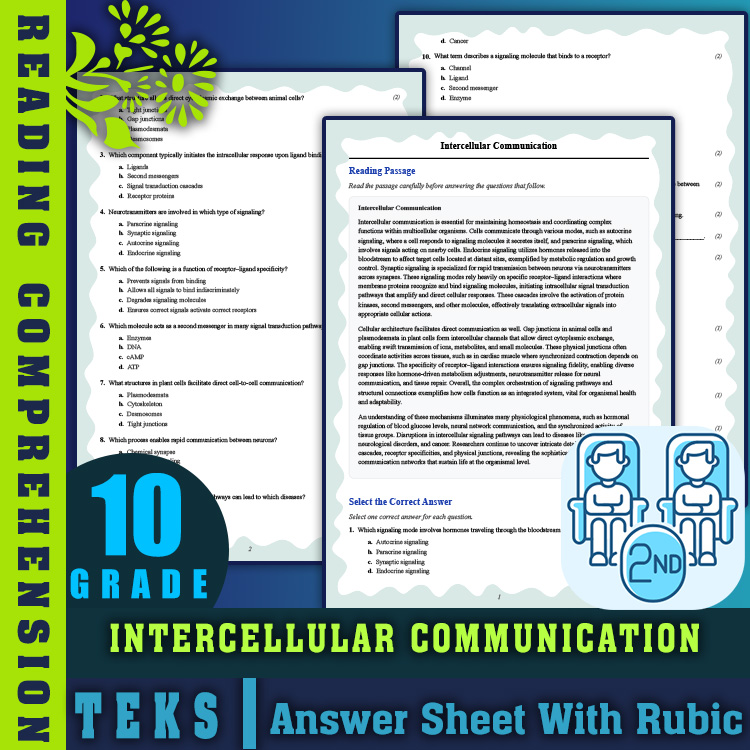
10th Grade Science | Intercellular Communication Reading Worksheet & Answer Key
JCreated byJ.S SheetsLearning Objectives
- Describe the different modes of intercellular signaling including autocrine, paracrine, endocrine, and synaptic signaling.
- Explain the roles of membrane receptors and signal transduction cascades in cellular communication.
- Identify examples of intercellular communication mechanisms in physiological systems.
Instant download
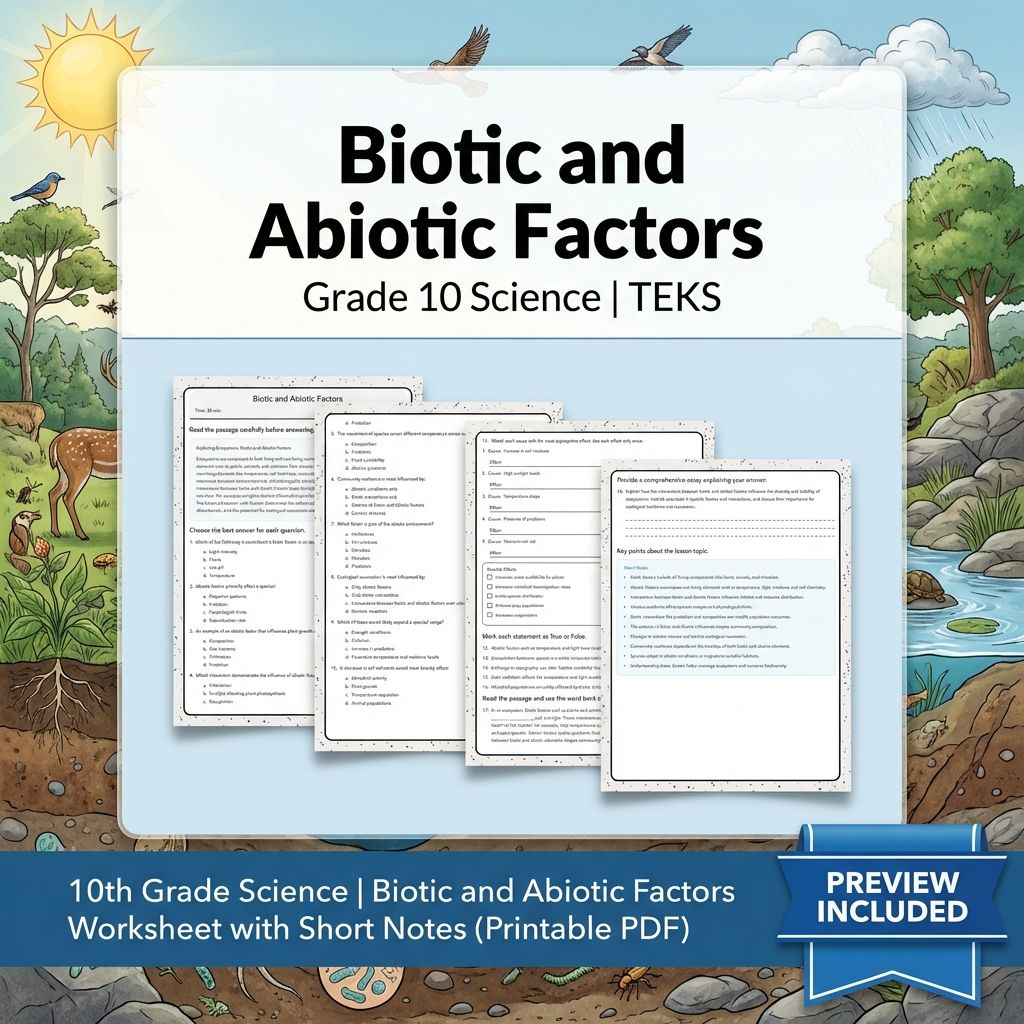
10th Grade Science | Biotic and Abiotic Factors Worksheet with Short Notes (PDF)
Created byMeadowlark WorksheetsLearning Objectives
- Understand the difference between biotic and abiotic factors in ecosystems.
- Identify examples of biotic and abiotic factors.
- Explain how interactions between these factors affect habitats and species.
Instant download
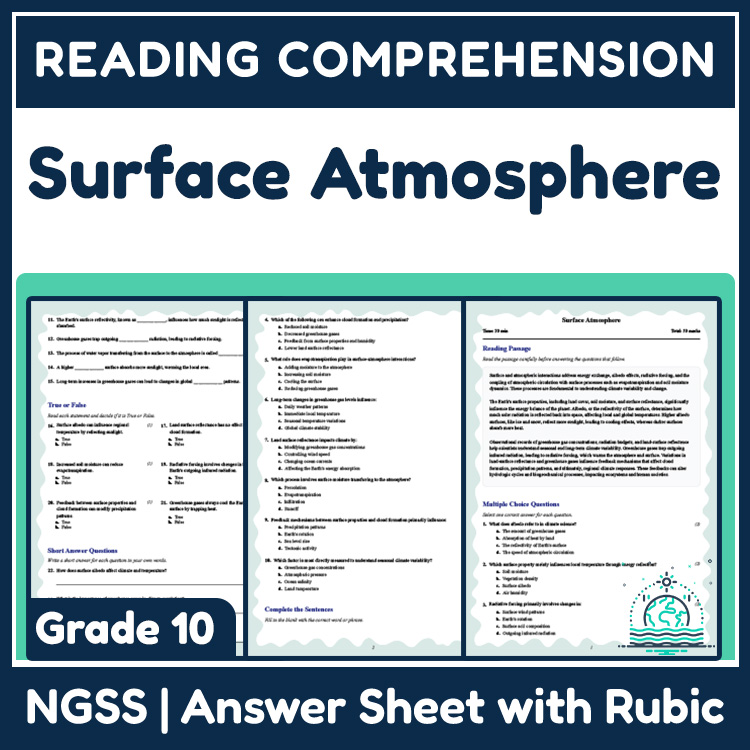
10th Grade Science | Surface Atmosphere Reading Worksheet (PDF + Answer Key)
JCreated byJ.S SheetsLearning Objectives
- Understand the interactions between surface and atmospheric processes including energy exchange and radiative effects.
- Explain how surface properties influence climate variability and regional climate responses.
- Describe the role of land-surface reflectance, greenhouse gases, and other factors in climate dynamics.
Also included in: Grade 10 Science Unit | Earth Systems & Climate Change Worksheets Bundle
Instant download
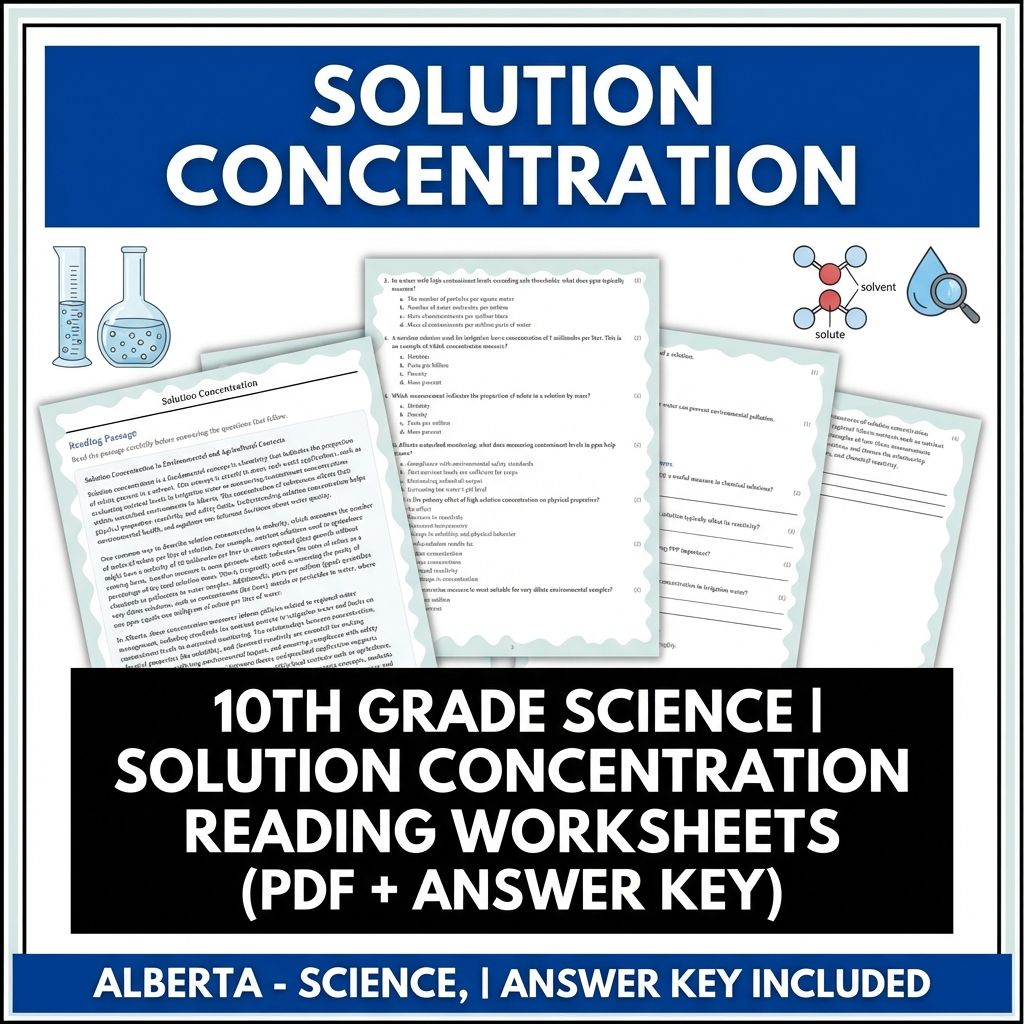
10th Grade Science | Solution Concentration Worksheets (PDF + Answer Key)
JCreated byJ.S SheetsLearning Objectives
- Understand different ways to measure solution concentration such as molarity, mass percent, and parts per million.
- Interpret environmental and agricultural contexts related to nutrient levels and contaminant monitoring in Alberta.
- Relate concentration measures to physical properties, reactivity, and environmental compliance.
Also included in: Grade 10 Science Unit Bundle | Chemical Reactions & Properties Worksheets +1 more
Instant download

Work and Power Worksheet for Grade 10 Science | NGSS-Aligned Practice PDF
JCreated byJ.S SheetsLearning Objectives
- Understand the relationship between force, displacement, and work using the work–energy theorem.
- Calculate power as the rate of energy transfer in various contexts such as lifting weights and vehicle acceleration.
- Manipulate algebraic expressions for work integrals and convert units between joules, watts, and common engineering units.
Also included in: Grade 10 Energy Conservation and Conversion Science Lesson Bundle: NGSS
Instant download
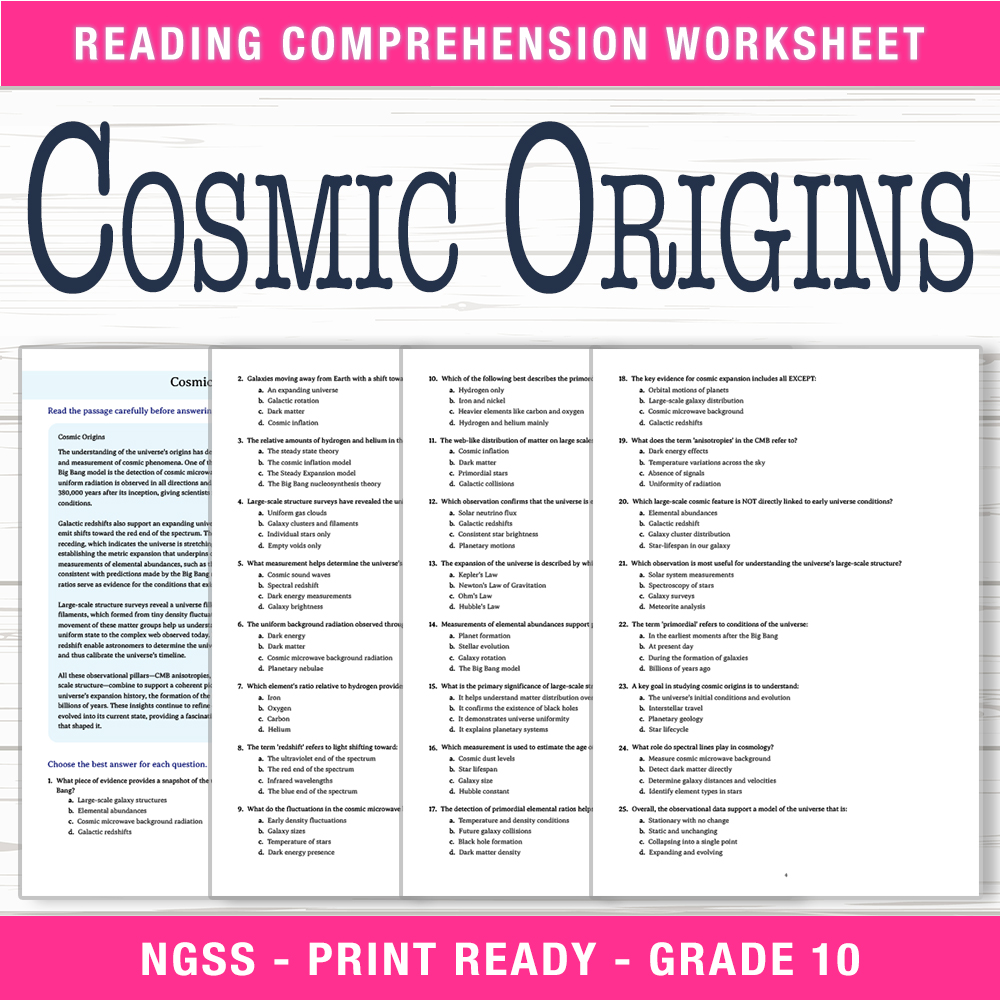
Grade 10 Science | Cosmic Origins Worksheet (PDF + Answer Key)
 Created byRiverstone Classroom
Learning Objectives
- Describe the observational evidence supporting models of cosmic origins such as the Big Bang theory.
- Explain how measurements like cosmic microwave background radiation, galactic redshifts, and elemental abundances inform our understanding of universe expansion and early conditions.
- Identify key observations that support an expanding universe and the formation of elements in the early universe.
Also included in: Grade 10 Science Unit | Stellar, Planetary & Geologic Worksheets bundle
Instant download
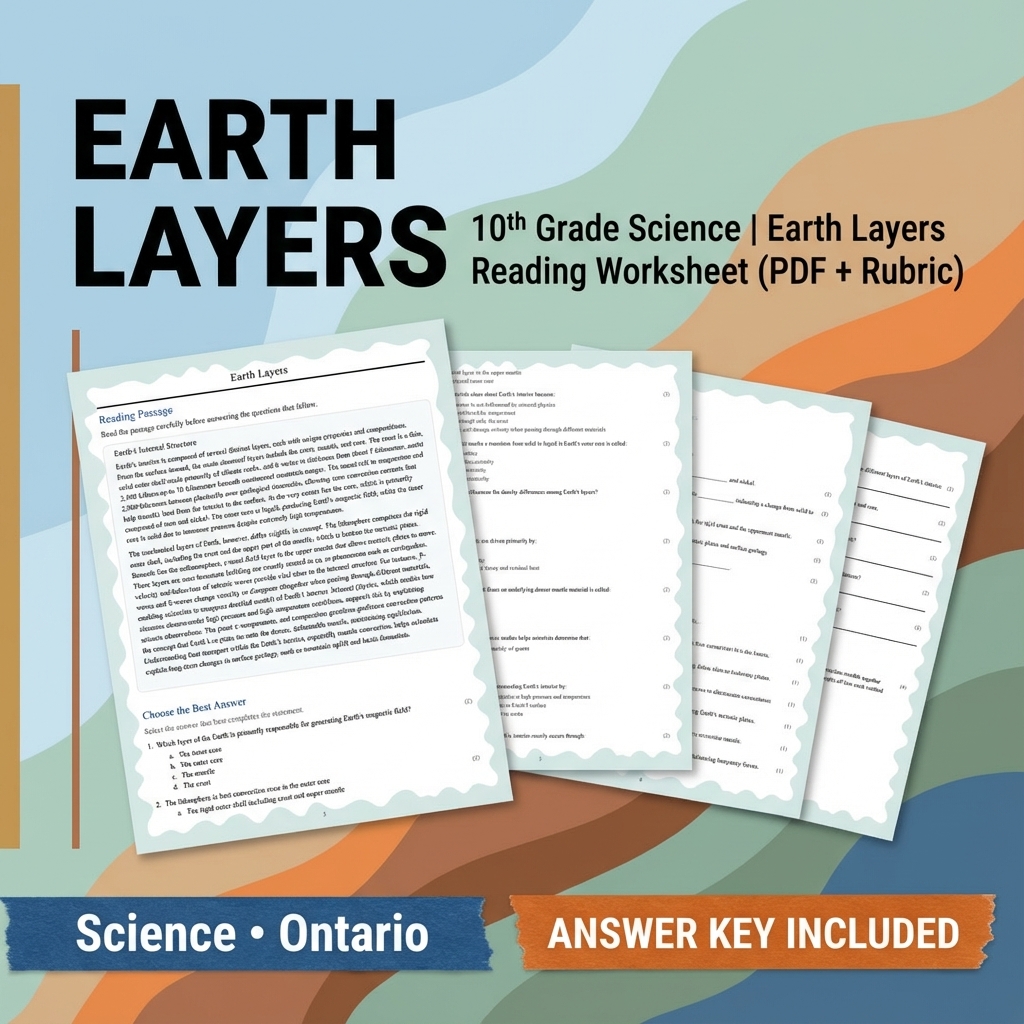
10th Grade Science | Earth Layers Reading Worksheet (PDF + Rubric)
JCreated byJ.S SheetsLearning Objectives
- Describe the chemical and mechanical layers of Earth's interior, including the crust, mantle, and core.
- Explain how seismic wave behaviour and mineral physics inform models of Earth's internal structure.
- Discuss the concepts of density, composition, and temperature gradients within Earth's layers.
Also included in: Grade 10 Science Unit Bundle – Earth Dynamics & Resources (PDF + Rubrics) +1 more
Instant download
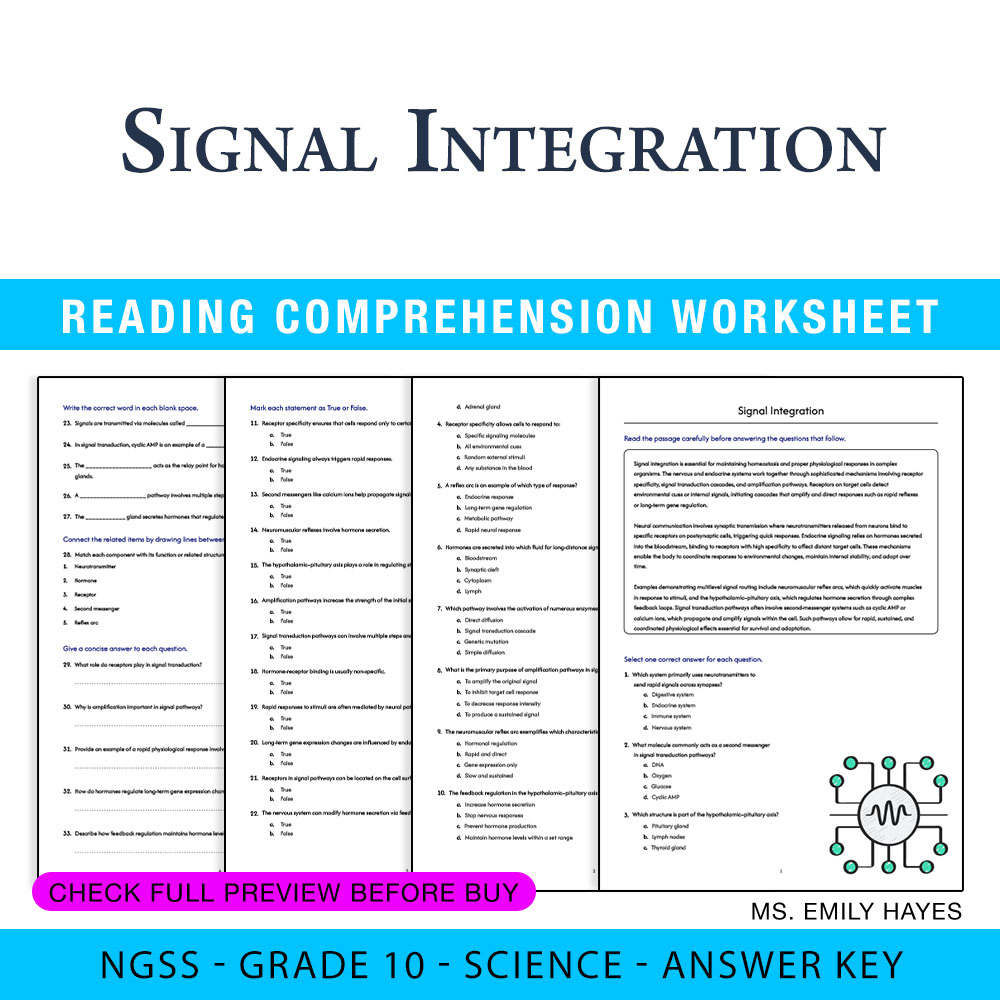
Grade 10 Science | Signal Integration Worksheet (PDF+ Answer Key)
Created byCopper Leaf ClassroomLearning Objectives
- Describe how nervous and endocrine systems coordinate responses through signal integration.
- Explain mechanisms such as receptor specificity, signal transduction cascades, and amplification pathways.
- Identify examples like neuromuscular reflex arcs and hypothalamic-pituitary axis communication.
Instant download
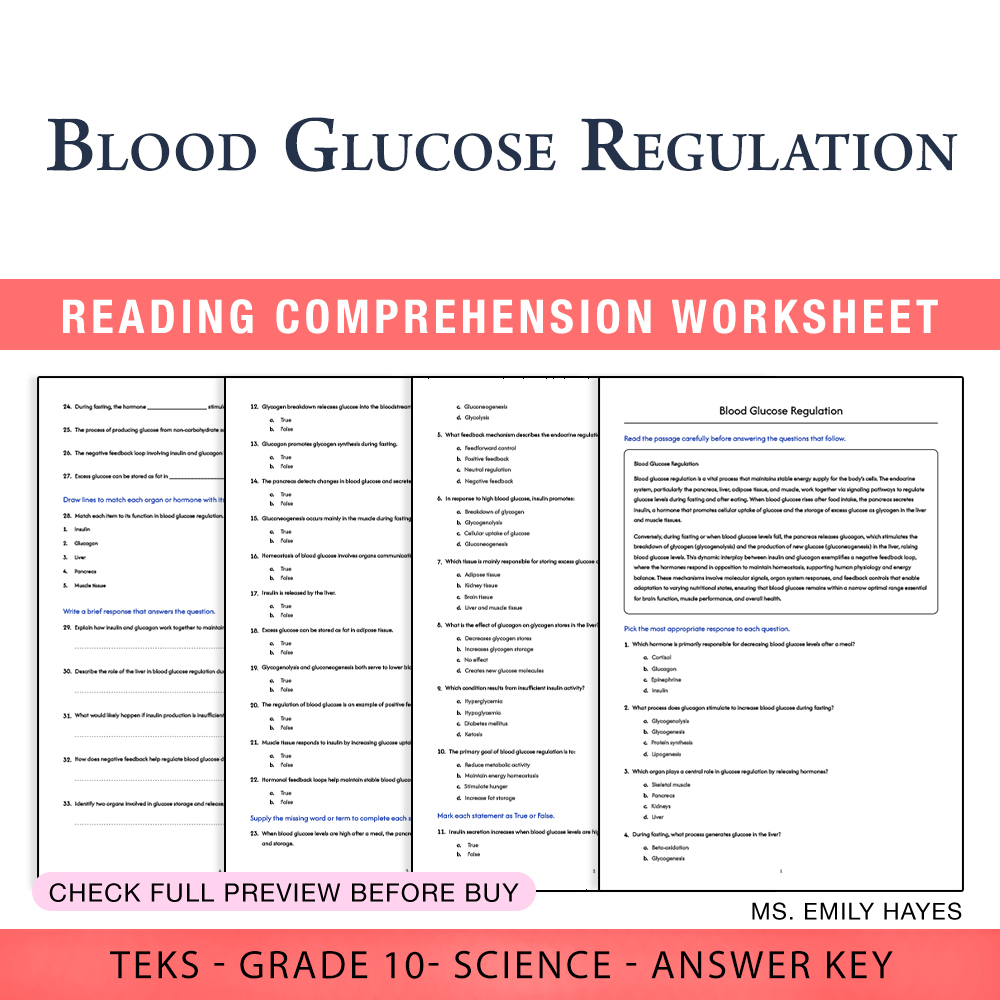
10th Grade Science | Blood Glucose Regulation Worksheet (PDF+ Answer Key)
Created byCopper Leaf ClassroomLearning Objectives
- Understand the hormonal regulation of blood glucose levels involving insulin and glucagon.
- Identify organs and tissues involved in glucose homeostasis.
- Explain the feedback mechanisms that maintain stable blood glucose concentrations.
Instant download

Grade 10 Friction And Drag Worksheet | BC Practice PDF
Created byClear Sky ClassroomLearning Objectives
- Distinguish friction and drag as resistance forces and explain how each opposes motion
- Apply coefficient-of-friction ideas and normal force to predict friction trends
- Explain how drag depends on speed and how terminal velocity occurs
Instant download

Grade 10 Science – Atomic Structure Worksheet (NGSS Aligned) PDF
 Created bySilver Birch Teaching
Learning Objectives
- Analyze electron configurations, nuclear composition, and periodic trends to predict elemental properties.
- Understand how the periodic table models valence electron patterns and ion formation.
- Explain the relationships among isotopes, atomic mass, and reactivity.
Also included in: Grade 10 Chemical Reactions & Equilibrium Science Lesson Bundle NGSS +1 more
Instant download
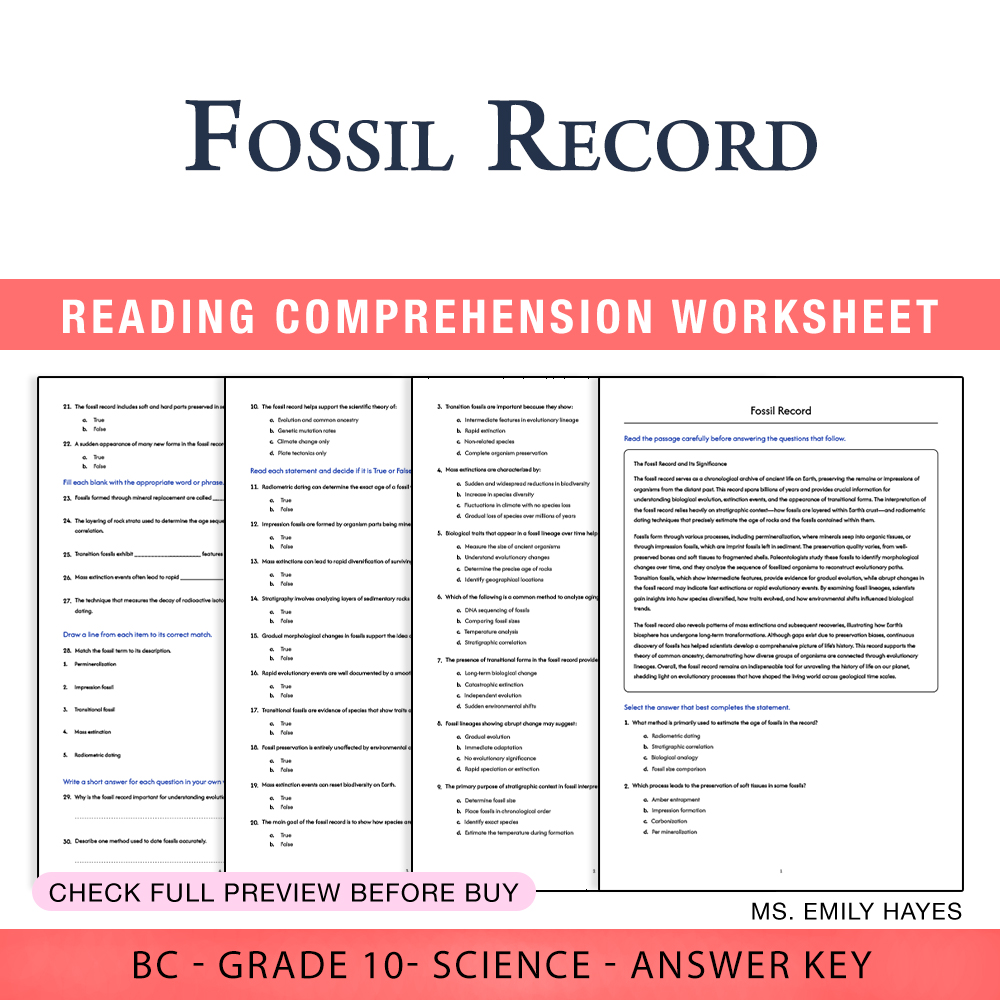
10th Grade Science | Fossil Record Worksheet (PDF+ Answer Key)
Created byCopper Leaf ClassroomLearning Objectives
- Understand how the fossil record documents evolutionary history and morphological changes.
- Identify methods used to interpret the age and significance of fossils.
- Differentiate between transitional forms and extinction events in the fossil record.
Also included in: Grade 10 Science BC | Evolution, Biodiversity & Ecology (PDF + Answer Key) +1 more
Instant download
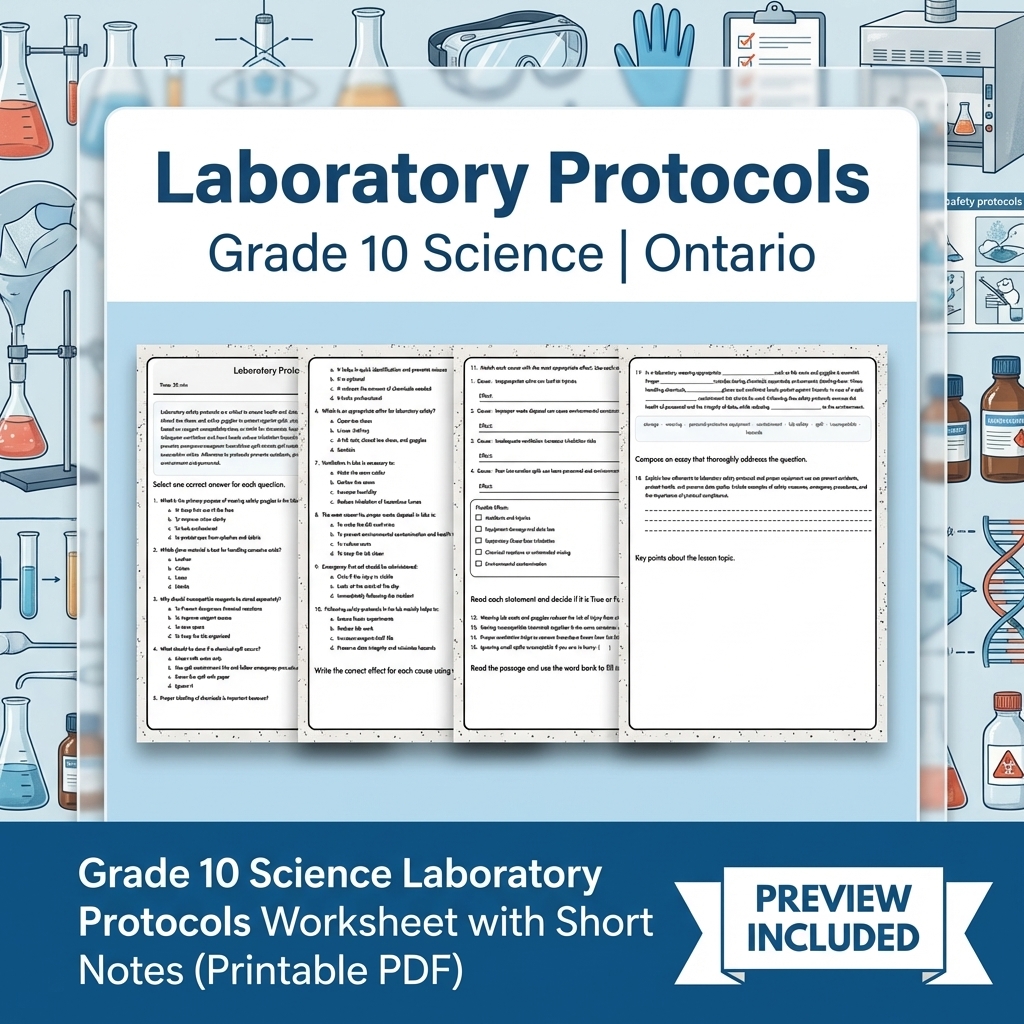
Grade 10 Science Laboratory Protocols Worksheet with Short Notes (Printable PDF)
Created byMeadowlark WorksheetsLearning Objectives
- Understand essential safety protocols in laboratory settings.
- Identify appropriate personal protective equipment standards.
- Recognize proper lab storage, segregation, and labeling techniques.
Also included in: Grade 10 Science Lesson Group Bundle | Ontario Curriculum Worksheets +1 more
Instant download
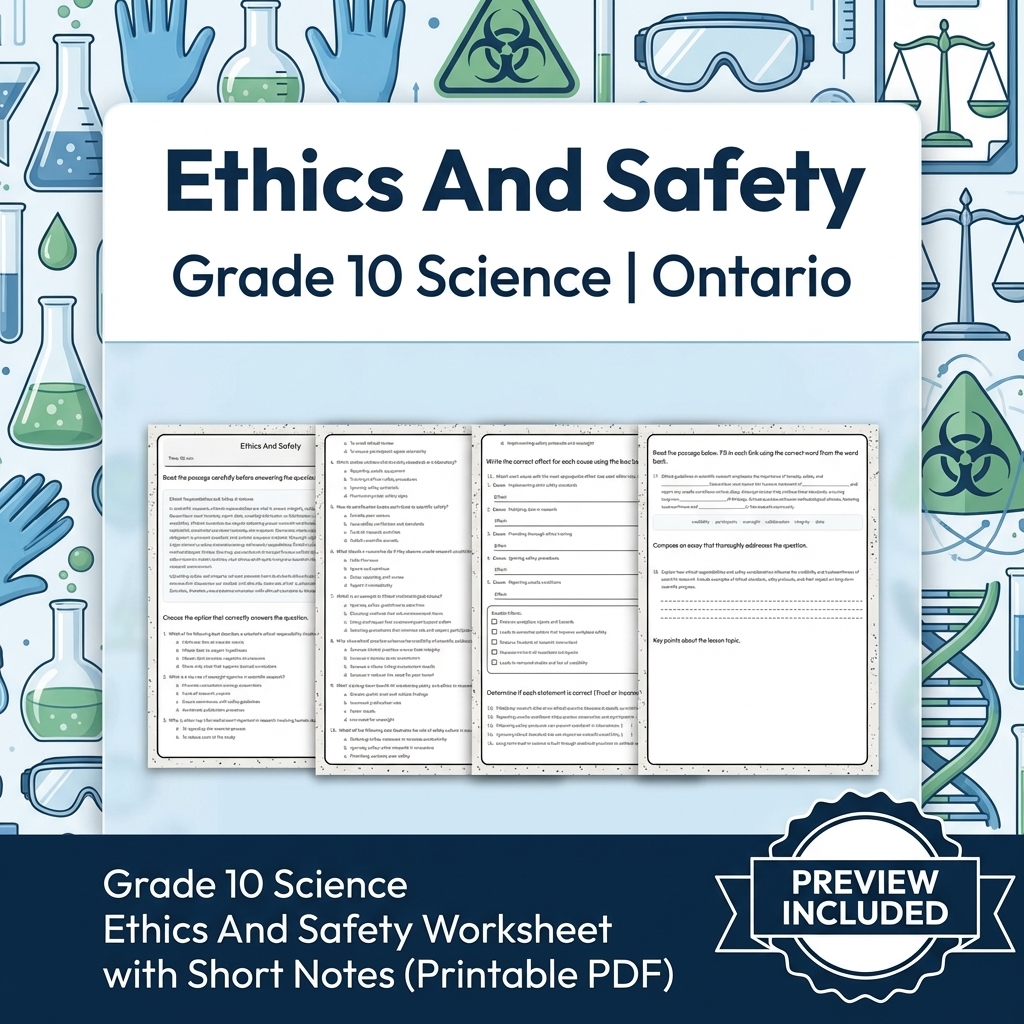
Grade 10 Science Ethics And Safety Worksheet with Short Notes (Printable PDF)
Created byMeadowlark WorksheetsLearning Objectives
- Understand the importance of ethical responsibilities in scientific work.
- Identify safety protocols and reporting obligations in research environments.
- Recognize how ethical considerations influence methodological choices and credibility.
Also included in: Grade 10 Science Lesson Group Bundle | Ontario Curriculum Worksheets +1 more
Instant download
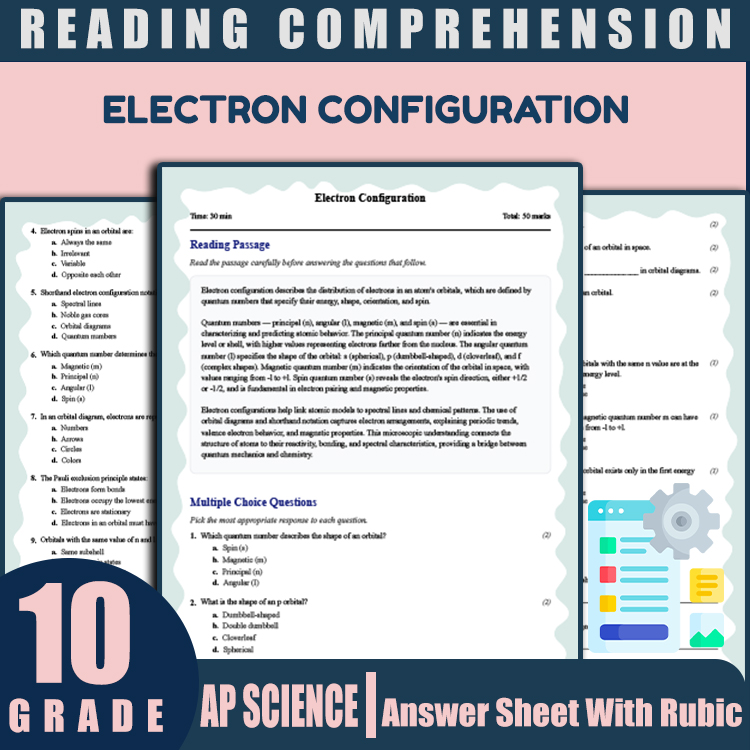
10th Grade Science | Electron Configuration Reading Worksheet (PDF + Answer Key)
JCreated byJ.S SheetsLearning Objectives
- Understand the role of quantum numbers in describing electron positions within an atom.
- Identify orbital shapes, energies, and their relationship to electron distribution.
- Interpret orbital diagrams and configuration shorthand to connect microscopic models with spectral and chemical properties.
Also included in: Grade 10 Science Unit Worksheet Bundle | Chemical Reactions & Atomic Structure +1 more
Instant download

Homeostasis Worksheets: Physiological Set Points Grade 10 Science
 Created bySunny Desk Resources
Learning Objectives
- Describe how homeostasis maintains internal conditions within tolerances despite external changes.
- Explain how sensor-effector loops help regulate variables in living systems.
- Evaluate trade-offs involved in maintaining stability through controlled transport and metabolic adjustments.
Also included in: Cell Structure, Homeostasis & Energy Lesson Bundle: Grade 10 Science Alberta +1 more
Instant download

Grade 10 Circulatory System Worksheet | Human Physiology NGSS Science
 Created byBRIGHT PATH RESOURCES
Learning Objectives
- Understand the structure and function of the heart and blood vessels
- Identify key features of the circulatory system
- Explain how blood circulates through the body
Also included in: Human Physiology Grade 10 Science Daily Reading Worksheets Lesson Bundle | Ngss +1 more
Instant download

Grade 10 Science – Analytical Techniques & Spectroscopy Daily Reading Worksheet
Created byBright Mind ResourcesLearning Objectives
- Understand the principles of spectroscopic techniques used in analytical chemistry.
- Identify different applications of spectroscopy, chromatography, and titration.
- Interpret instrumental data related to environmental and industrial analyses.
Also included in: Grade 10 Chemistry Science Lesson Bundle Daily Reading Worksheets | Alberta +1 more
Instant download
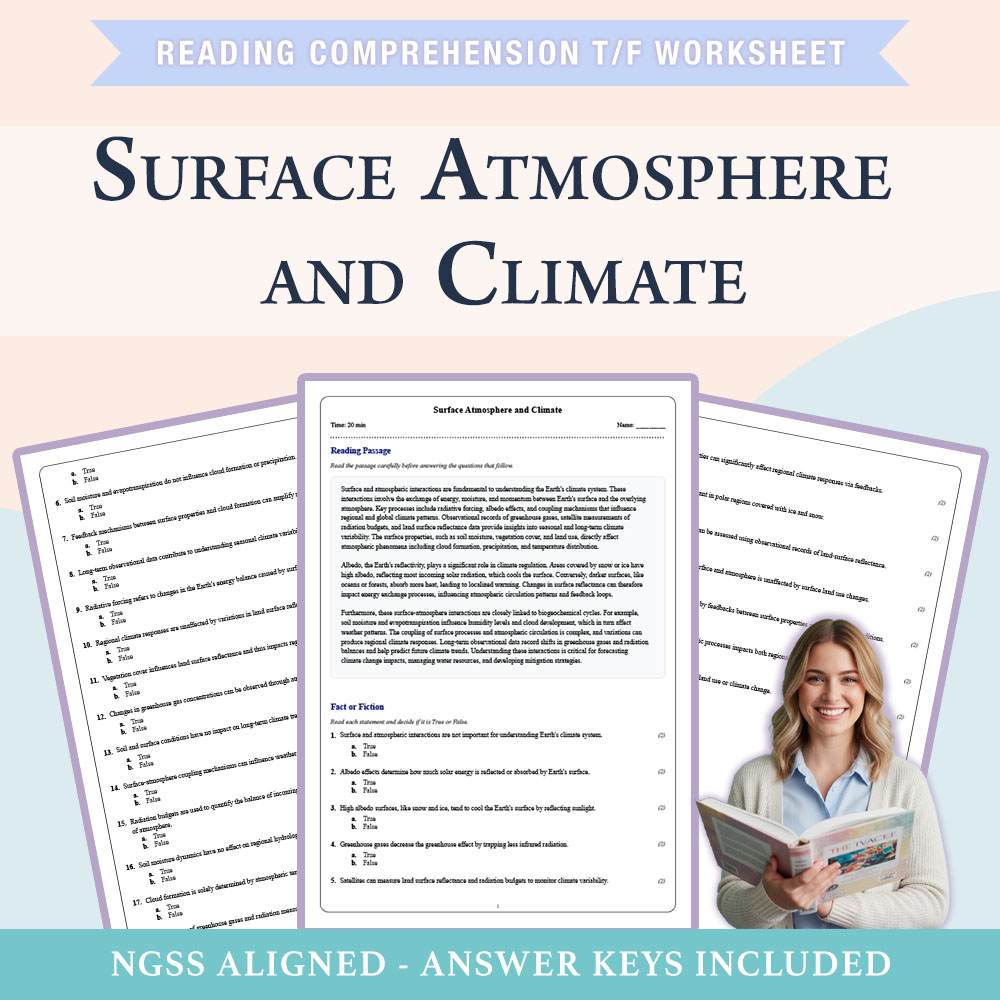
10th Grade Science | Surface Atmosphere and Climate Worksheet (PDF +Answer Key)
Created byCopper Leaf ClassroomLearning Objectives
- Understand the interactions between surface properties and atmospheric processes.
- Identify how energy exchange and radiative forcing influence climate variability.
- Analyze the feedback mechanisms between surface reflectance, cloud formation, and precipitation patterns.
Also included in: Grade 10 Science | Earth Systems & Climate Change Bundle (PDF + Answer Key) +1 more
Instant download

Extinction Patterns Worksheet | Grade 10 Science Activities
 Created byPrism Point Learning
Learning Objectives
- Explain how background extinction and mass extinctions differ in causes and impacts on biodiversity.
- Identify major drivers of extinction patterns, including environmental change, habitat loss, invasive species, and rapid climate shifts.
- Describe how fossil and genetic evidence can reveal past extinction events and changes in community composition.
Also included in: Grade 10 Evolution, Speciation & Biodiversity Lesson Bundle | BC Science +1 more
Instant download

Grade 10 Science – Stoichiometry Basics Worksheet (Ontario Standard, PDF)
 Created byEvergreen Desk Education
Learning Objectives
- Explain the mole concept and use Avogadro’s number to relate moles and particles.
- Calculate molar mass and convert between grams and moles using molar mass.
- Use balanced chemical equations to determine molar ratios and perform mass-to-mass conversions.
Also included in: Grade 10 Chemistry Fundamentals Science Lesson Bundle Worksheets: Ontario +1 more
Instant download

Grade 10 Science | Bonding Types Worksheet (Ontario) PDF
Created byEvergreen Desk EducationLearning Objectives
- Distinguish ionic, covalent, and metallic bonding using electron transfer vs electron sharing models.
- Explain how bonding type and structure relate to physical properties such as melting point, conductivity, and hardness.
- Use lattice structures, molecular geometry, and polarity to predict molecular behavior.
Also included in: Grade 10 Chemistry Fundamentals Science Lesson Bundle Worksheets: Ontario +1 more
Instant download
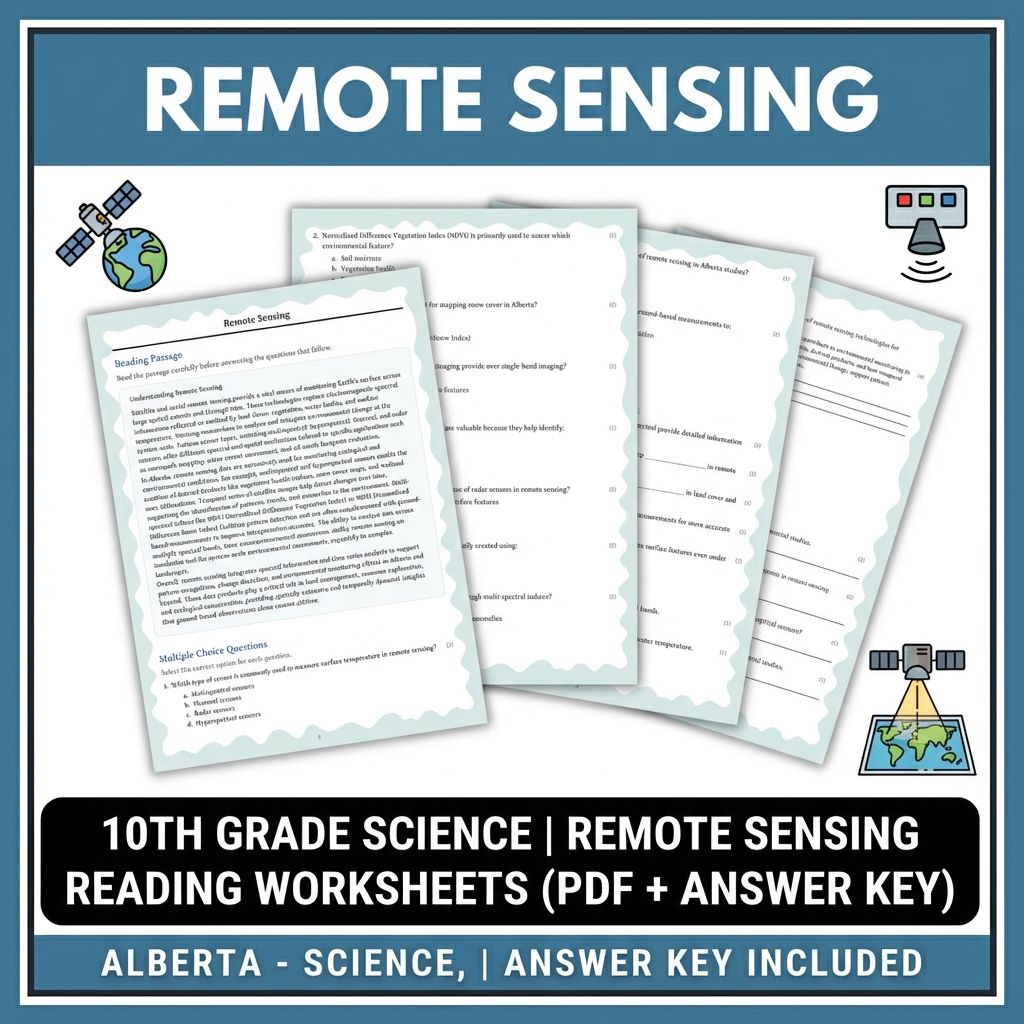
10th Grade Science | Remote Sensing Reading Worksheets (PDF + Answer Key)
JCreated byJ.S SheetsLearning Objectives
- Understand the principles and applications of satellite and aerial remote sensing.
- Identify sensor types and spectral information used in environmental monitoring.
- Learn about derived products like snowpack mapping, oil-sands footprint assessment, and prairie wetland monitoring.
Also included in: Grade 10 Science Unit Bundle – Earth Systems, Climate & Remote Sensing Worksheets +1 more
Instant download

Grade 10 Science | Model Refinement Worksheet | AP Aligned
Created byLumora LearningLearning Objectives
- Understand the process of iterative model improvement through comparison with observed behavior.
- Learn how to estimate parameters and include additional processes such as damping or friction in models.
- Apply residual analysis and sensitivity assessment to refine models effectively.
Instant download

Grade 10 Science | Quantitative Communication Worksheet | AP Aligned
Created byLumora LearningLearning Objectives
- Understand conventions and strategies for communicating quantitative results.
- Apply uncertainty notation, significant digits, and graphical annotations appropriately.
- Interpret and justify conclusions using numerical summaries, confidence intervals, and visual aids.
Instant download

Grade 10 Science | Variables & Constraints Worksheet | AP Standards
Created byLumora LearningLearning Objectives
- Identify and classify independent, dependent, and controlled variables in experiments.
- Explain the role of constraints in shaping observational and experimental approaches.
- Analyze scenarios to determine operational definitions, boundary conditions, and limitations.
Instant download
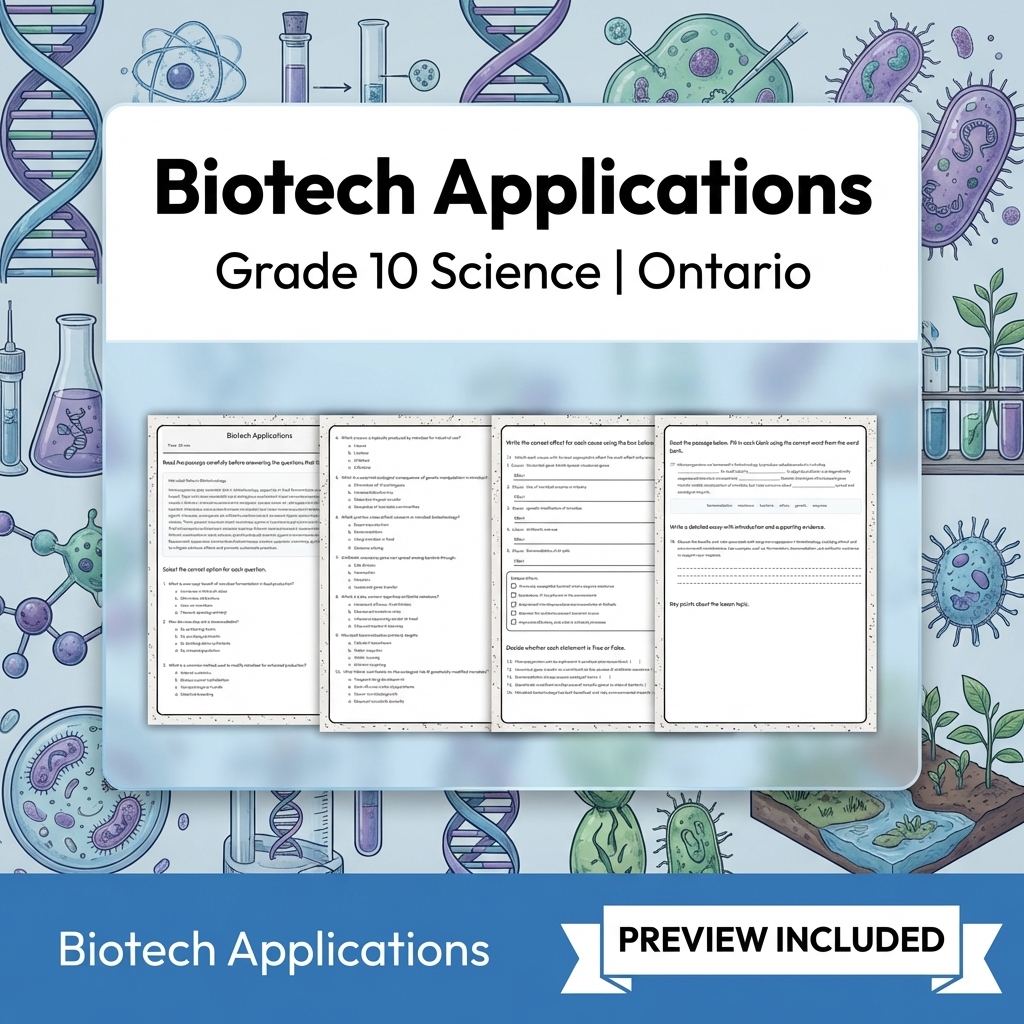
Grade 10 Science | Biotech Applications Worksheet with Short Notes
Created byMeadowlark WorksheetsLearning Objectives
- Understand key biotechnological applications of microorganisms in fermentation, bioremediation, and enzyme production.
- Explain the principles of genetic manipulation of microbial systems for product synthesis.
- Analyze issues related to antibiotic resistance, horizontal gene transfer, and ecological impacts of microbial biotechnology.
Also included in: Grade 10 Science Lesson Group Bundle | Ontario Curriculum +1 more
Instant download
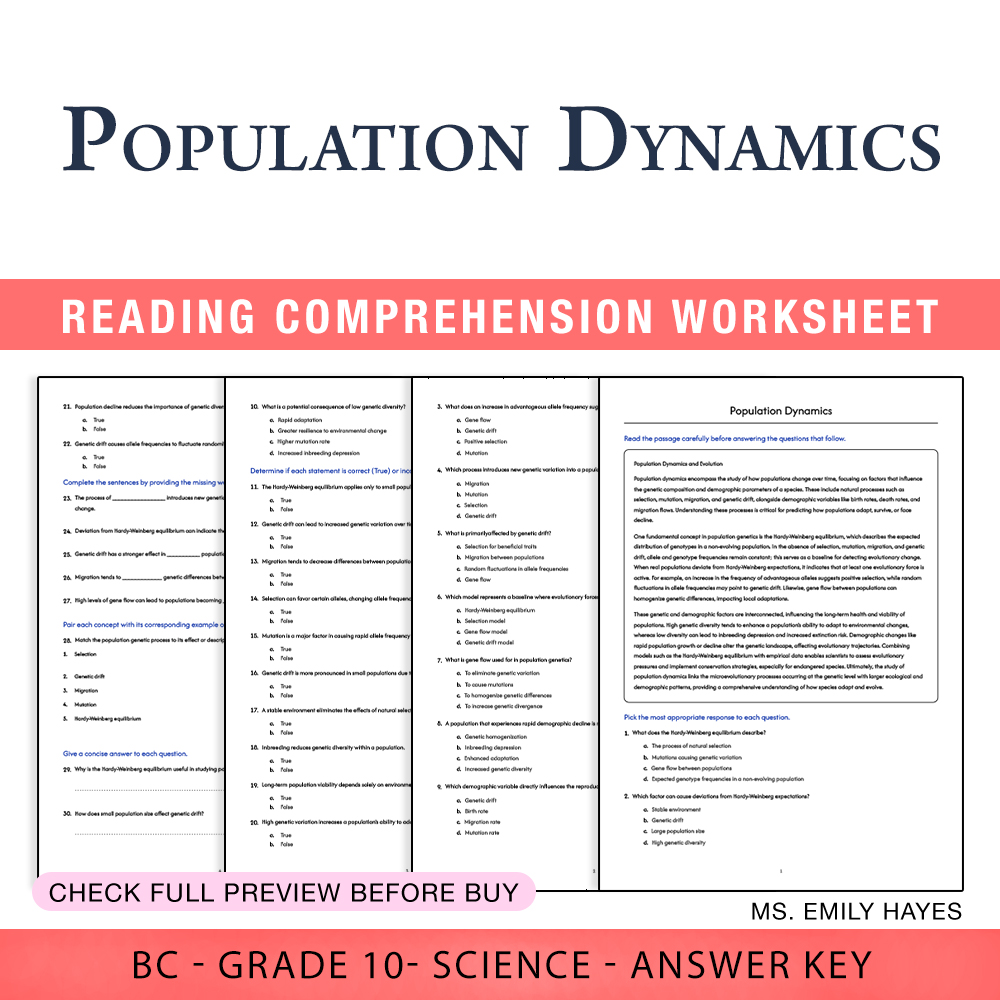
10th Grade Science | Population Dynamics Worksheet (PDF+ Answer Key)
Created byCopper Leaf ClassroomLearning Objectives
- Understand the principles of population genetics and how evolutionary forces influence allele frequencies
- Identify different models and concepts in population ecology and their significance
- Explain the Hardy-Weinberg equilibrium and what deviations indicate about evolutionary processes
Also included in: Grade 10 Science BC | Evolution, Biodiversity & Ecology (PDF + Answer Key) +1 more
Instant download
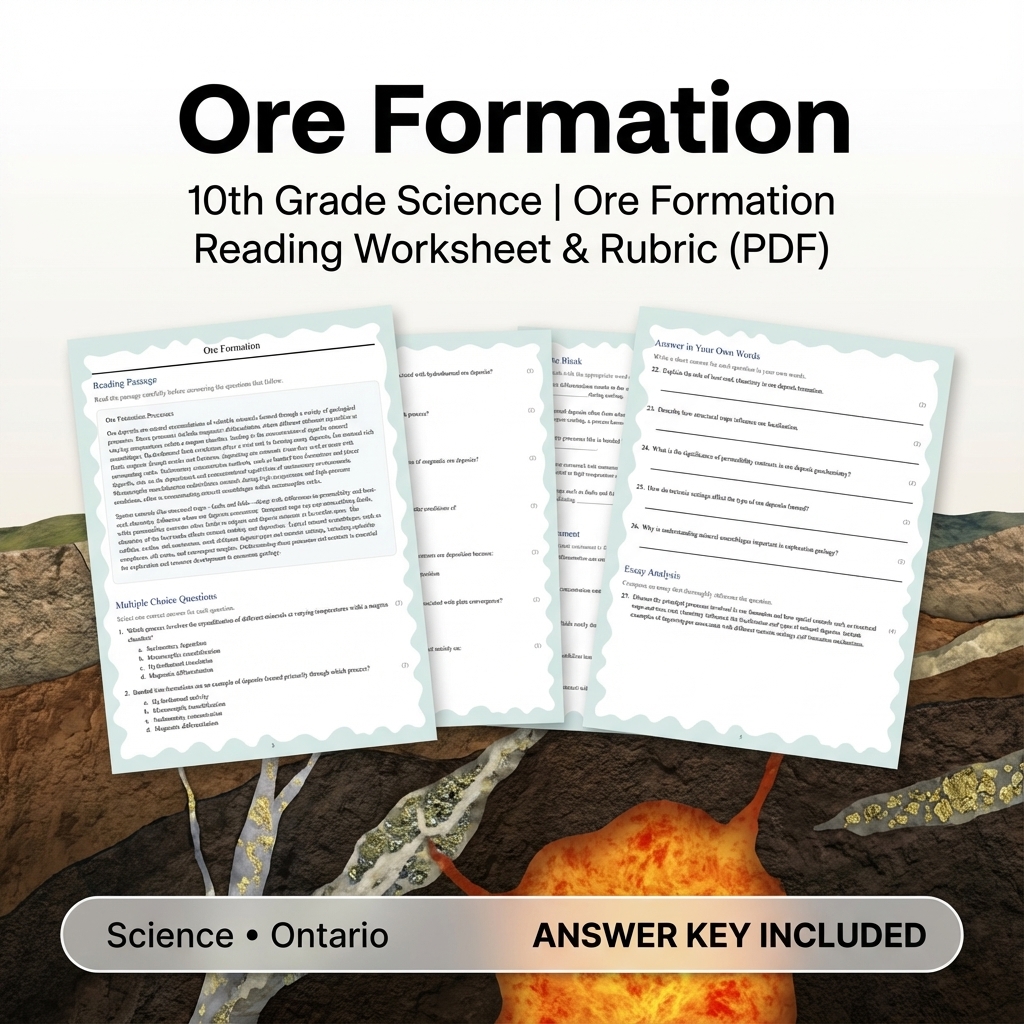
10th Grade Science | Ore Formation Reading Worksheet & Rubric (PDF)
JCreated byJ.S SheetsLearning Objectives
- Understand the principal processes involved in ore formation including magmatic, hydrothermal, sedimentary, and metamorphic mechanisms.
- Identify the types of mineral deposits associated with different ore-forming processes and tectonic settings.
- Describe spatial controls such as structural traps, permeability contrasts, and host-rock chemistry that influence ore localization.
Also included in: Grade 10 Science Unit Bundle – Earth Dynamics & Resources (PDF + Rubrics) +1 more
Instant download
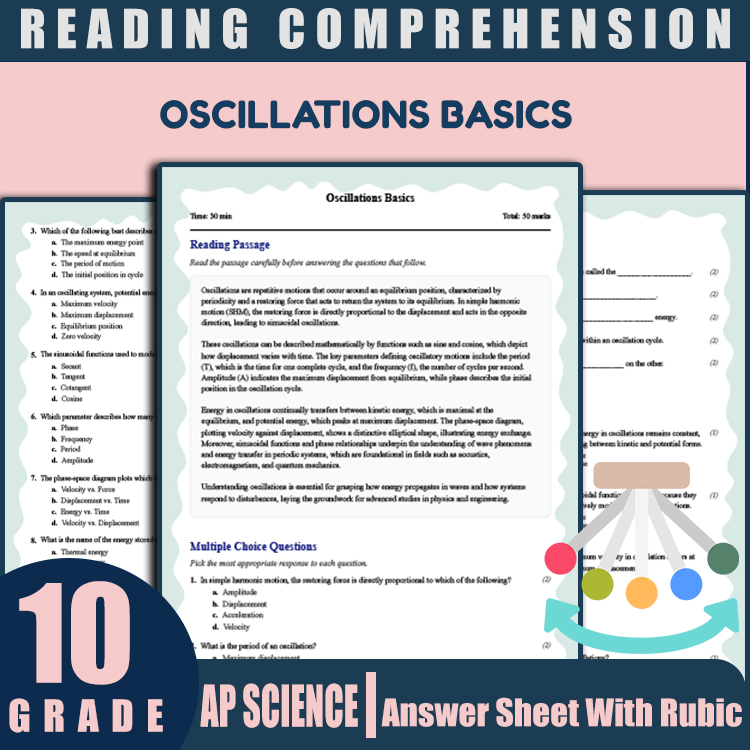
10th Grade Science | Oscillations Basics Reading Worksheet (PDF + Answer Key)
JCreated byJ.S SheetsLearning Objectives
- Understand the principles of simple harmonic motion and how restoring forces influence oscillations.
- Define key parameters such as period, frequency, amplitude, and phase in oscillatory systems.
- Explain the energy partitioning between kinetic and potential energy during oscillations.
Also included in: Grade 10 Science Unit Bundle | Motion, Forces & Energy Worksheets (PDF) +1 more
Instant download
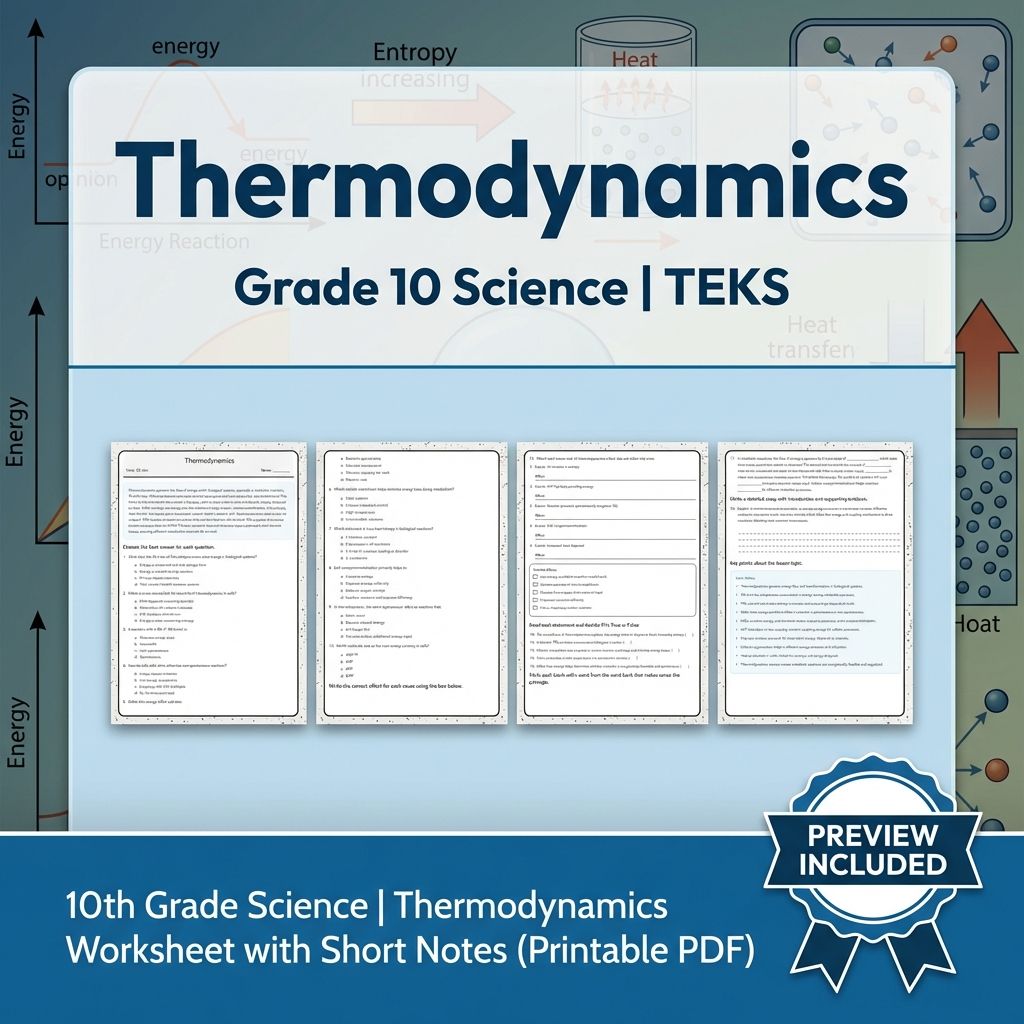
10th Grade Science | Thermodynamics Worksheet with Short Notes (PDF)
Created byMeadowlark WorksheetsLearning Objectives
- Understand the fundamental principles of thermodynamics as they relate to biological systems.
- Explain how the first and second laws of thermodynamics apply to metabolic reactions.
- Quantify the concept of Gibbs free energy and its importance in biological spontaneity.
Instant download
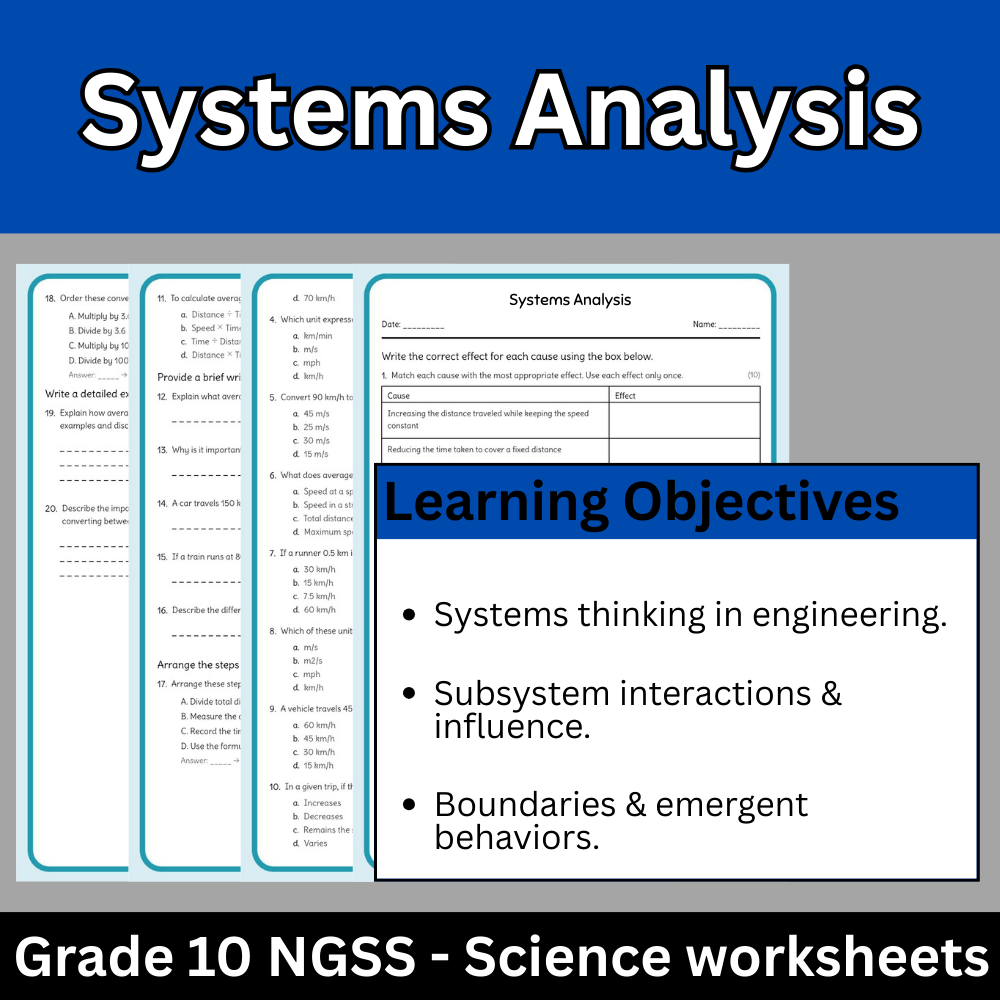
Grade 10 Science | Model Evaluation Worksheet (PDF) – NGSS Standards
Created byBright Mind ResourcesLearning Objectives
- Understand the role of quantitative data in model validation.
- Analyze prototype data to compare with simulation results.
- Learn methods for assessing reliability and predicting failure modes.
Instant download

Grade 10 Science | Atomic Structure Worksheet | AP Aligned
Created byLumora LearningLearning Objectives
- Describe the subatomic components of atoms and their roles.
- Explain how emission spectra and scattering experiments provide evidence for atomic models.
- Connect electron distribution and nuclear charge to elemental identity and isotopic variation.
Instant download
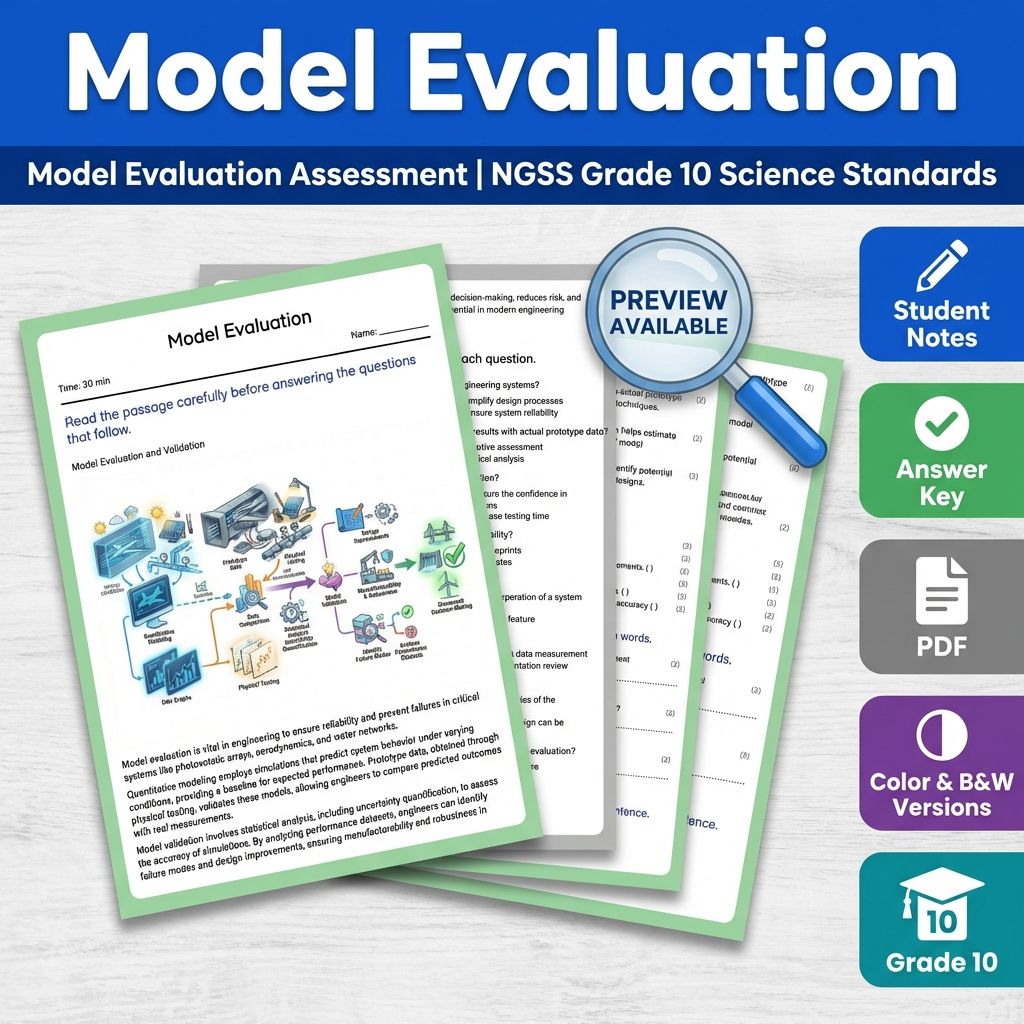
Model Evaluation Assessment | NGSS Grade 10 Science Standards
Created byPrism Point LearningLearning Objectives
- Understand the role of quantitative analysis in model validation.
- Analyze prototype data and compare it with simulation outcomes.
- Evaluate model reliability and predict failure modes using statistical metrics.
Also included in: Grade 10 Science Assessment Mini Bundle | Engineering Design & Systems
Instant download

Grade 10 Science – Ecosystem Roles & Microorganisms | Daily Reading Worksheet
Created byBright Mind ResourcesLearning Objectives
- Understand how microorganisms contribute to decomposition in ecosystems.
- Identify key microbial processes like nutrient cycling and nitrogen fixation.
- Recognize the importance of microbes in maintaining soil fertility and ecosystem stability.
Also included in: Grade 10 Cell Processes & Energy Science Daily Reading Lesson Bundle | Ontario +1 more
Instant download
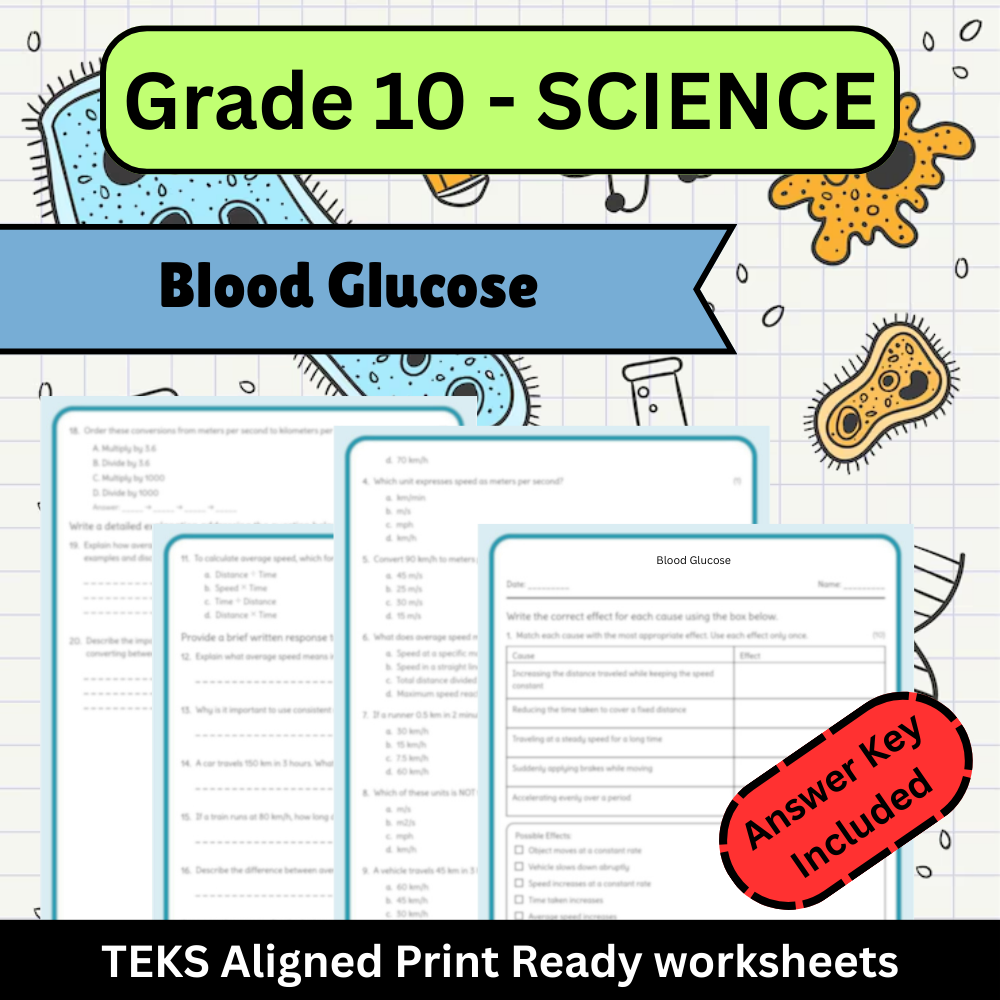
Grade 10 Science | Blood Glucose Regulation Worksheet + Answer Key| TEKS Aligned
Created byBright Mind ResourcesLearning Objectives
- Explain how the endocrine system helps regulate blood glucose levels.
- Identify the roles of insulin and glucagon in blood glucose regulation.
- Describe feedback mechanisms involved in maintaining energy homeostasis.
Also included in: Grade 10 Science | Body Systems & Homeostasis Worksheet Bundle (TEKS Aligned) +5 more
Instant download
About Grade 10 Science Worksheets
Find Science worksheets built for Grade 10. All 7,038 cover core skills, practice, and review, each an instant PDF download.
Every worksheet on MyTeachingSheets is created by independent teacher-authors and reviewed before publication. All resources download as printable PDFs for classroom, homework, or at-home practice, and many include answer keys. Preview any worksheet free before buying.