
Grade 6 Worksheets
8,578 grade resources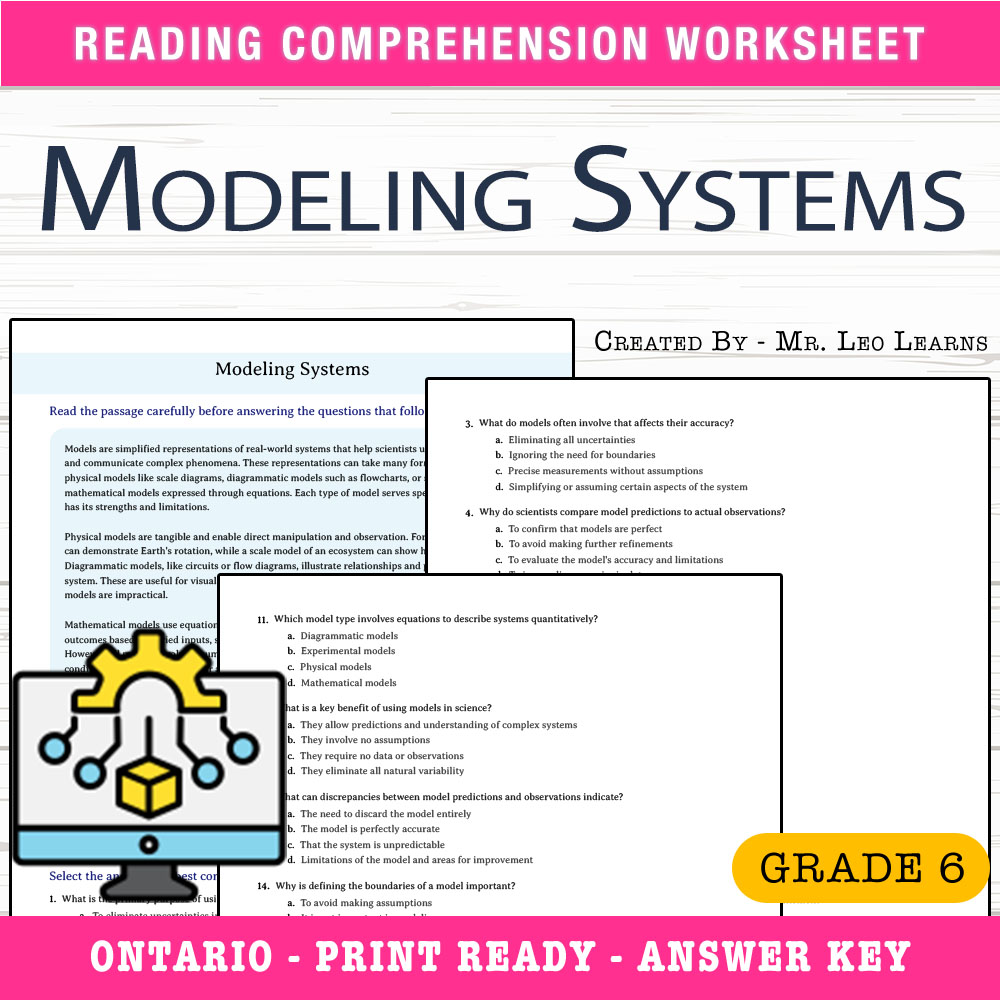
Grade 6 Science — Modeling Systems Worksheet for Mastery
 Created byThe Resource Hub
Learning Objectives
- Understand the purpose of different types of models in representing complex systems.
- Identify assumptions, boundaries, and limitations when constructing models.
- Analyze how model predictions compare to observable outcomes to assess accuracy.
Also included in: Grade 6 Science Unit | Scientific Skills & Responsible Practice Worksheet Bundle +1 more
Instant download
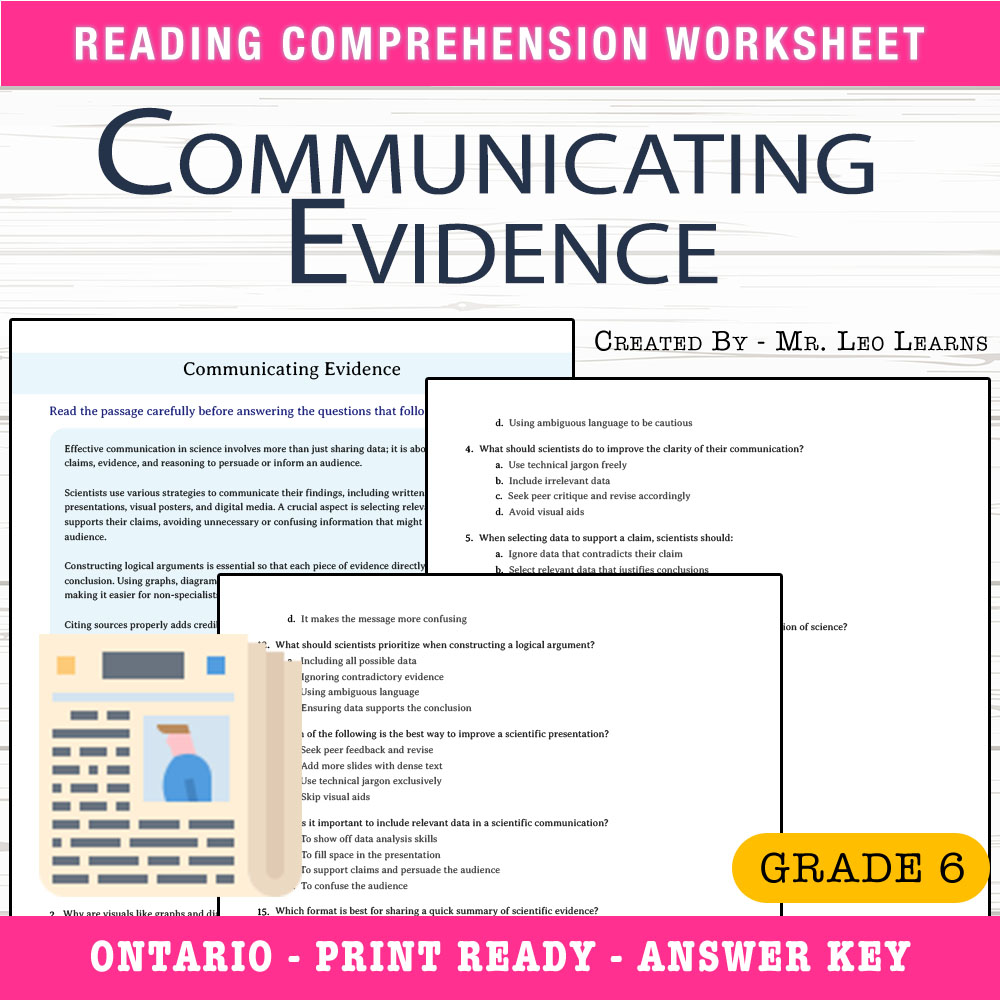
Grade 6 Science – Communicating Evidence Worksheet for Mastery
Created byThe Resource HubLearning Objectives
- Understand core strategies for effectively communicating scientific evidence.
- Learn how to select relevant data and construct logical arguments.
- Recognize different formats for presenting scientific information, including oral, written, and visual methods.
Also included in: Grade 6 Science Unit | Scientific Skills & Responsible Practice Worksheet Bundle +1 more
Instant download
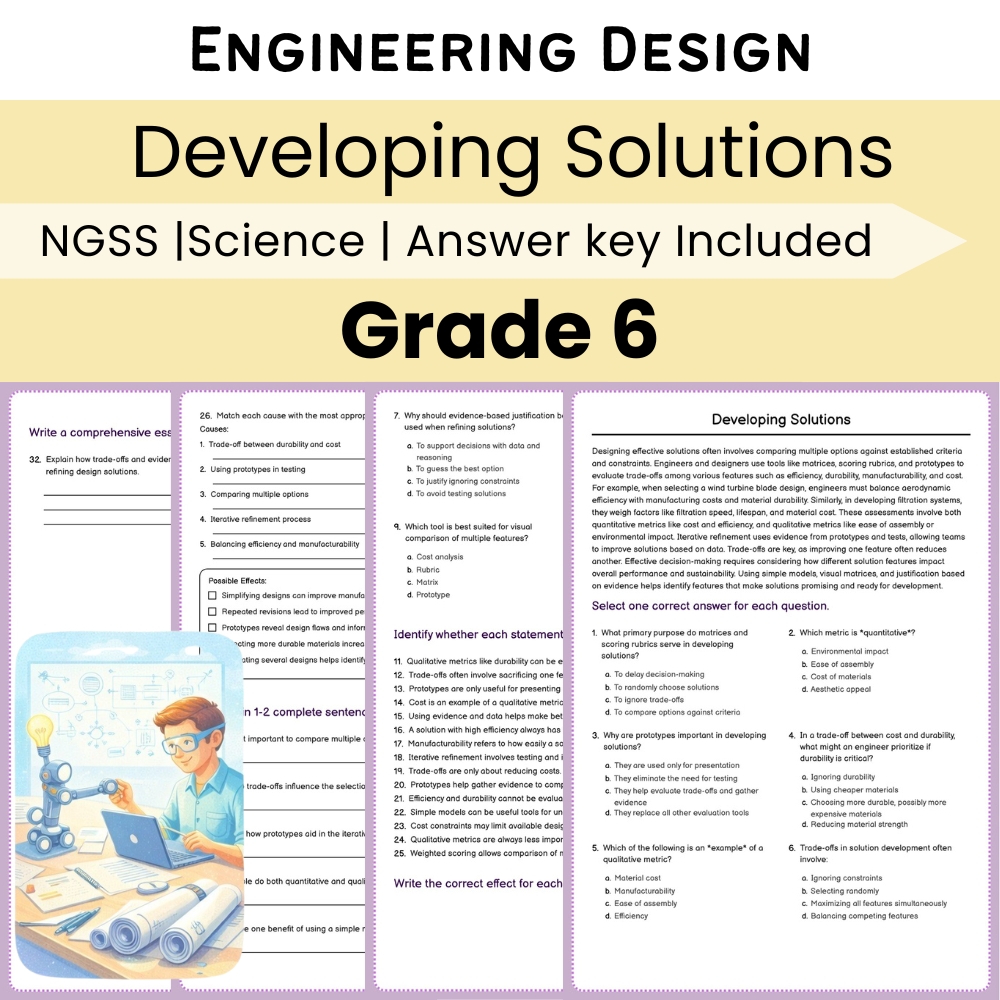
Developing Solutions Worksheet | Grade 6 Science Printable PDF NGSS Aligned
Learning Objectives
- Compare multiple design solutions using matrices, scoring rubrics, and prototypes.
- Evaluate and rank design options based on quantitative and qualitative metrics.
- Understand how trade-offs influence the selection of solutions.
Also included in: Grade 6 Science NGSS Engineering Design Unit Bundle | Problem Solving Worksheets +1 more
Instant download
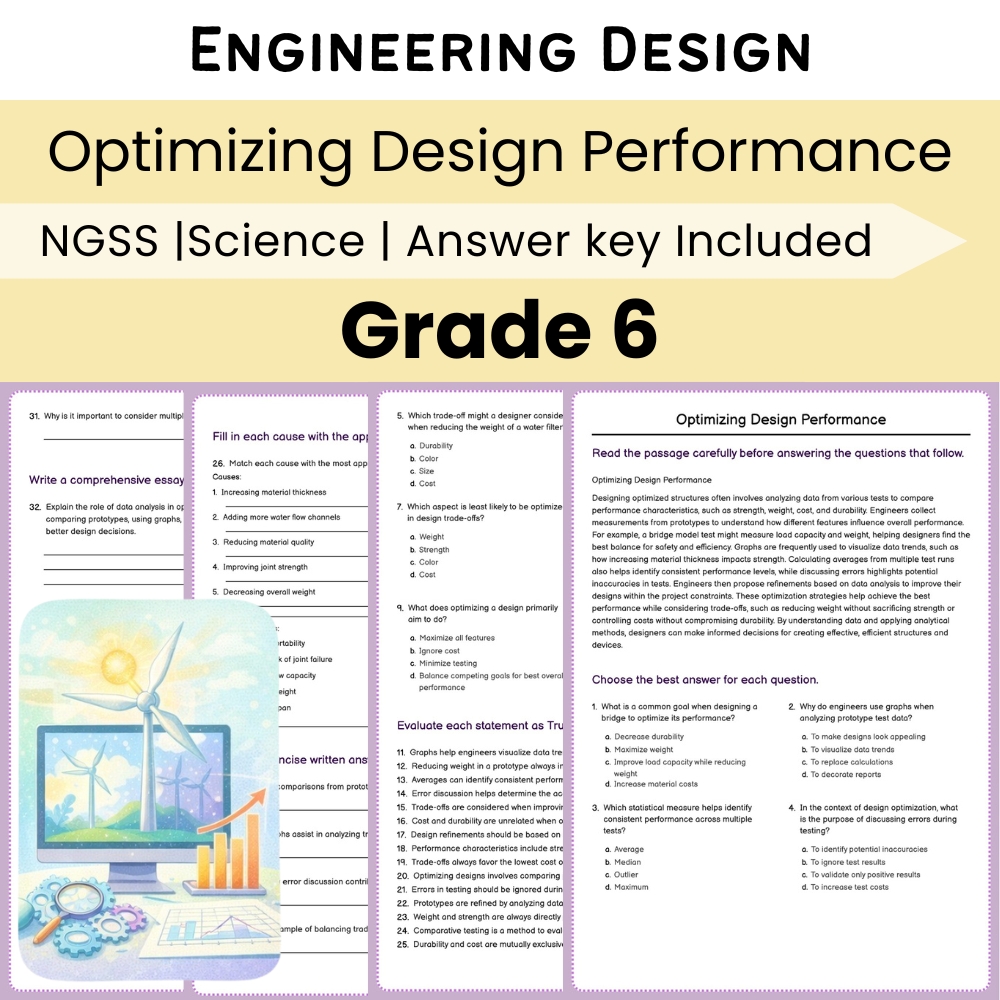
Optimizing Design Performance Science Worksheet | Grade 6 NGSS printable PDF
Learning Objectives
- Analyze data from comparative tests of different prototypes to determine performance characteristics.
- Interpret graphs, averages, and discuss errors to support design trade-offs.
- Apply optimization strategies that balance goals like strength versus weight or cost versus durability.
Also included in: Grade 6 Science NGSS Engineering Design Unit Bundle | Problem Solving Worksheets +1 more
Instant download

Grade 6 Mixture Separation Worksheet | NGSS Practice & PDF
 Created byClear Sky Classroom
Learning Objectives
- Explain why mixtures can be separated without forming new substances
- Identify physical properties used to separate mixture components (such as density, particle size, boiling point, and solubility)
- Use correct vocabulary to describe common separation methods (filtration, evaporation, distillation, and chromatography)
Instant download

Grade 6 Halloween Community Spirit Worksheet with Answer Key PDF
 Created byShaNova Worksheets
Learning Objectives
- Identify key ideas from a Halloween Day passage and connect details to the theme of community spirit.
- Determine whether statements about Halloween traditions are true or false based on reading knowledge.
- Choose the best answer to interpret meanings of words and events in a passage.
Instant download
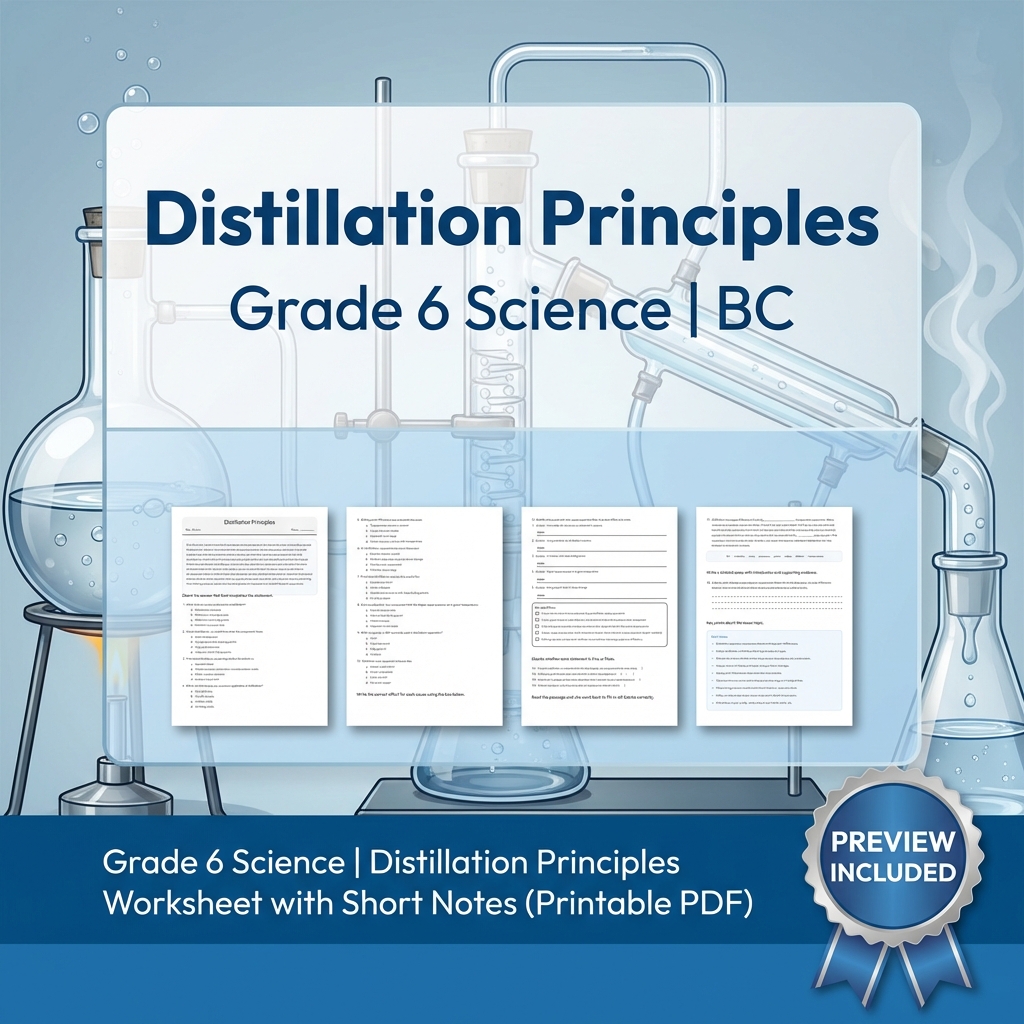
Grade 6 Science | Distillation Principles Worksheet with Short Notes (PDF)
 Created byMeadowlark Worksheets
Learning Objectives
- Understand the basic principles of distillation and phase changes
- Differentiate between simple and fractional distillation techniques
- Identify real-world applications of distillation in separating liquids
Also included in: Grade 6 Science | Matter, Properties & Change UNIT Worksheet Bundle +1 more
Instant download
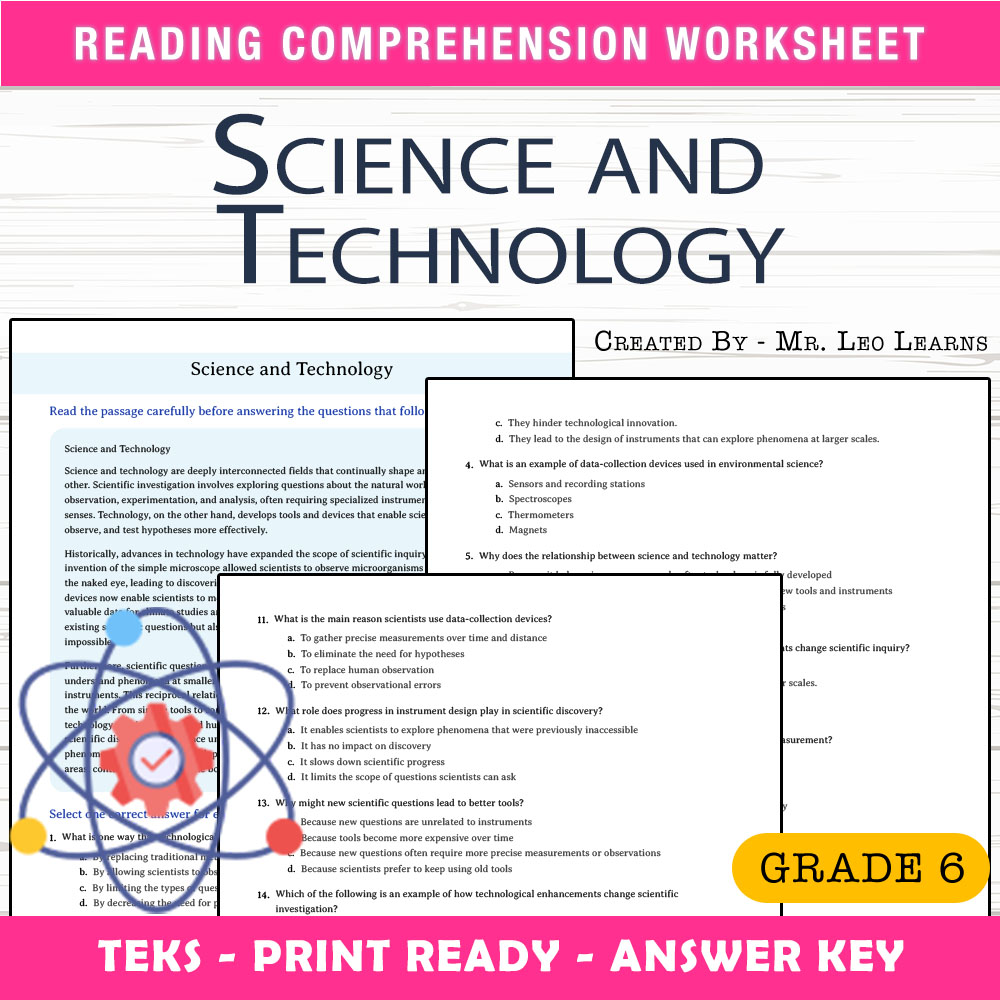
Grade 6 Science — Science and Technology Worksheet for Mastery
Created byThe Resource HubLearning Objectives
- Understand the reciprocal relationship between scientific investigation and technological development.
- Learn how instruments and tools extend observation and measurement in science.
- Identify examples of scientific instruments such as microscopes, sensors, and data collection devices.
Instant download
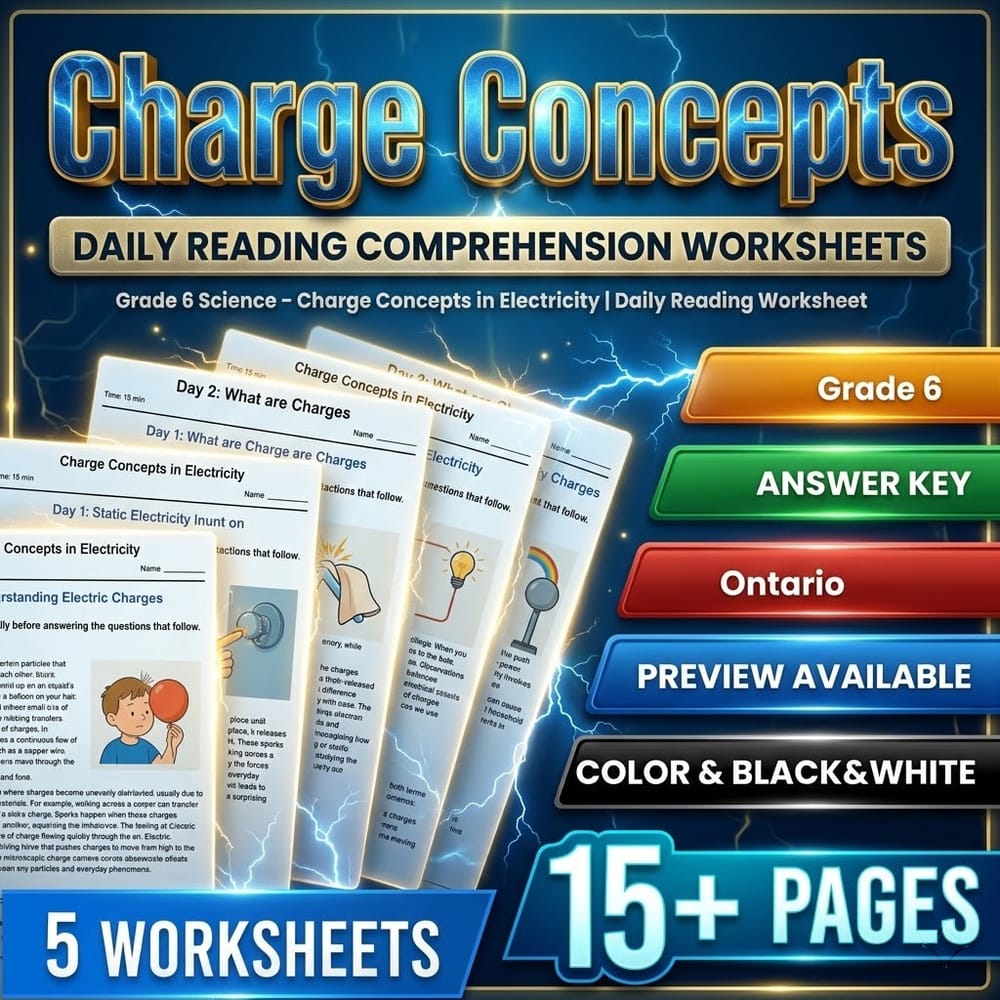
Grade 6 Science – Charge Concepts in Electricity | Daily Reading Worksheet
 Created byQuiet Forest Education
Learning Objectives
- Define electric charge and distinguish between static and current electricity.
- Explain how charge separation happens and how charge flows in conductors.
- Connect everyday phenomena like sparks and hair attraction to electric charges.
Also included in: Electricity Grade 6 Science Daily Reading Worksheets Bundle | Ontario +1 more
Instant download
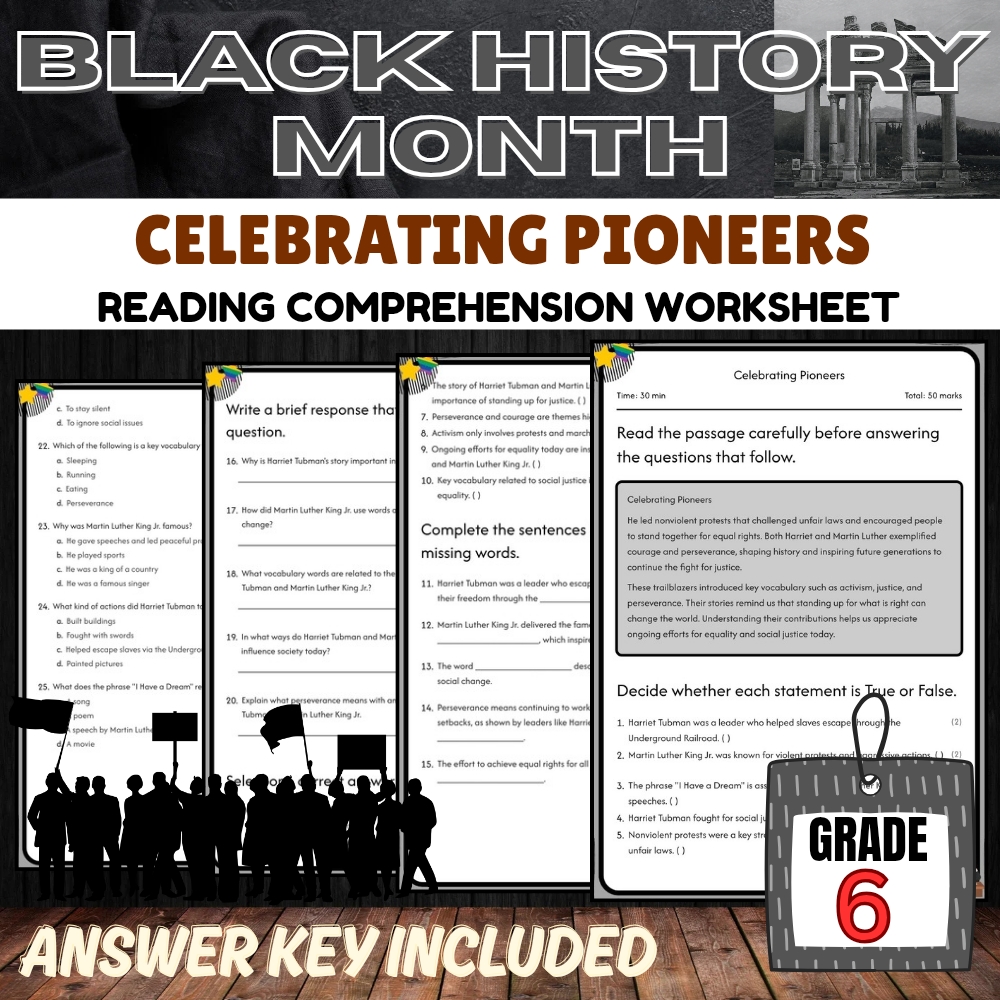
Grade 6 Black History Month Worksheet for Celebrating Pioneers |PDF + Answer Key
Created byShaNova WorksheetsLearning Objectives
- Learn about important African American leaders who fought for civil rights.
- Understand the contributions of pioneers like Harriet Tubman and Martin Luther King Jr.
- Recognize key vocabulary related to activism and justice.
Instant download
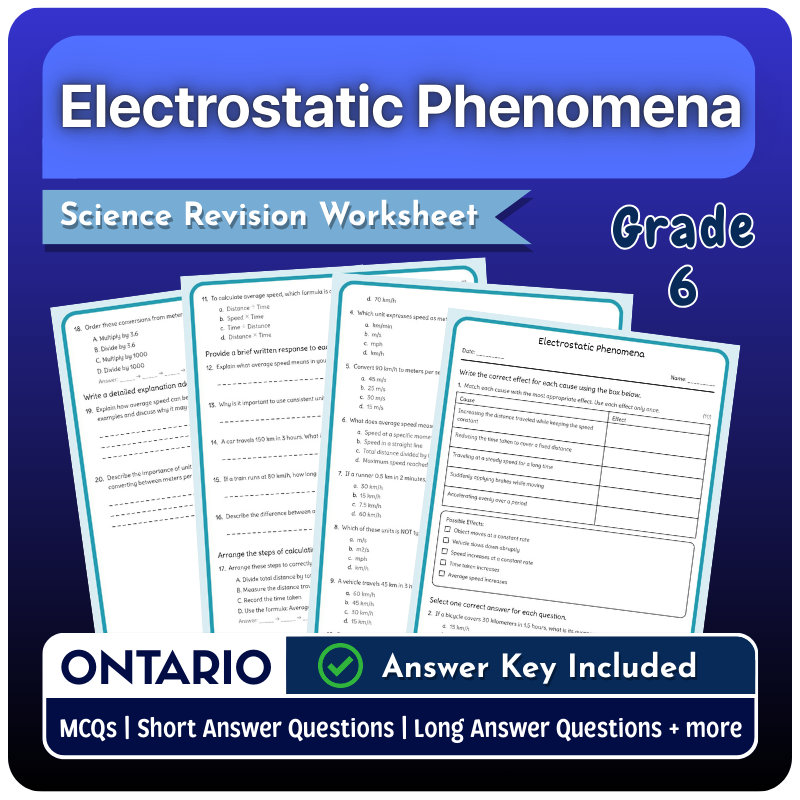
6th Grade Science | Electrostatic Phenomena Worksheet (PDF) Ontario Standard
 Created byBright Mind Resources
Learning Objectives
- Understand the causes and effects of static charge transfer between materials.
- Identify and interpret the triboelectric series and its application in predicting charge tendencies.
- Describe phenomena such as attraction, repulsion, and discharge sparked by static electricity.
Instant download
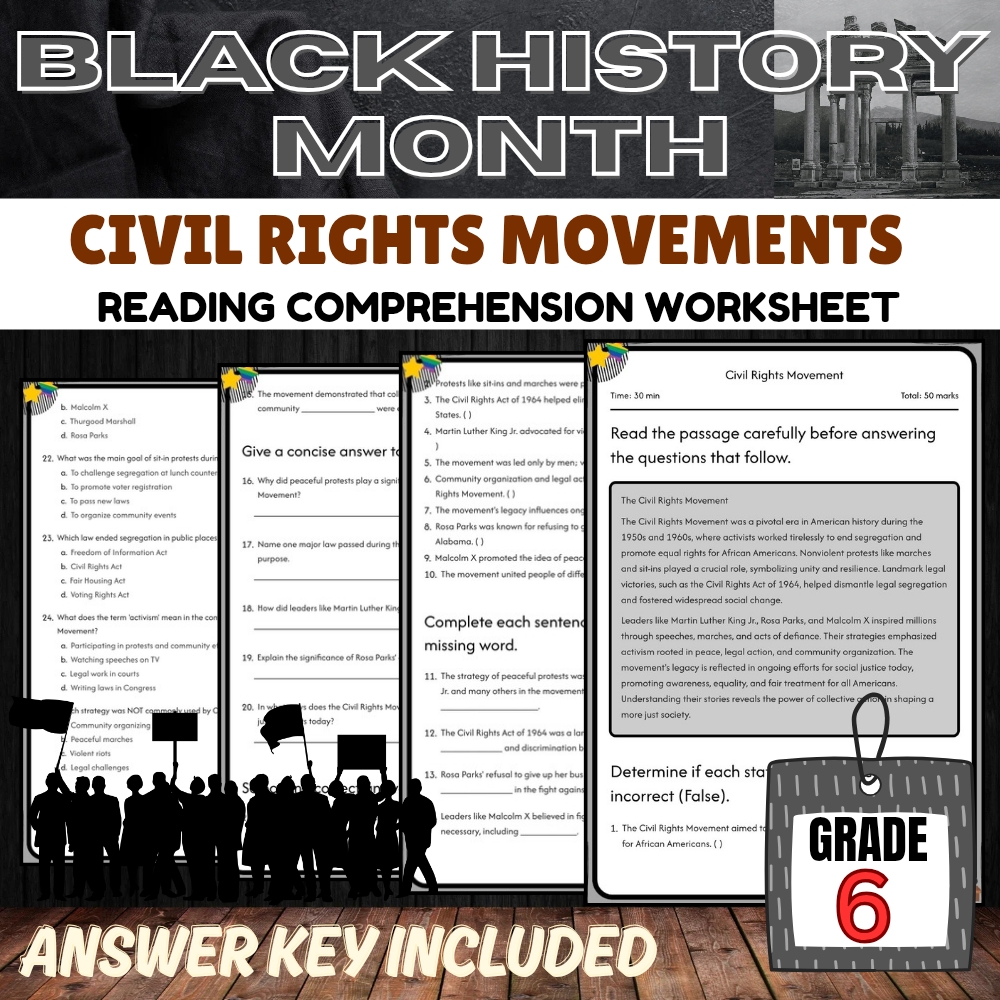
Grade 6 | Black History Month Civil Rights Movement Worksheet | PDF + Answer Key
Created byShaNova WorksheetsLearning Objectives
- Understand key events and strategies of the Civil Rights Movement.
- Learn the significance of activism, protests, and legal victories in social change.
- Explore vocabulary related to rights, protests, and laws relevant to the movement.
Instant download
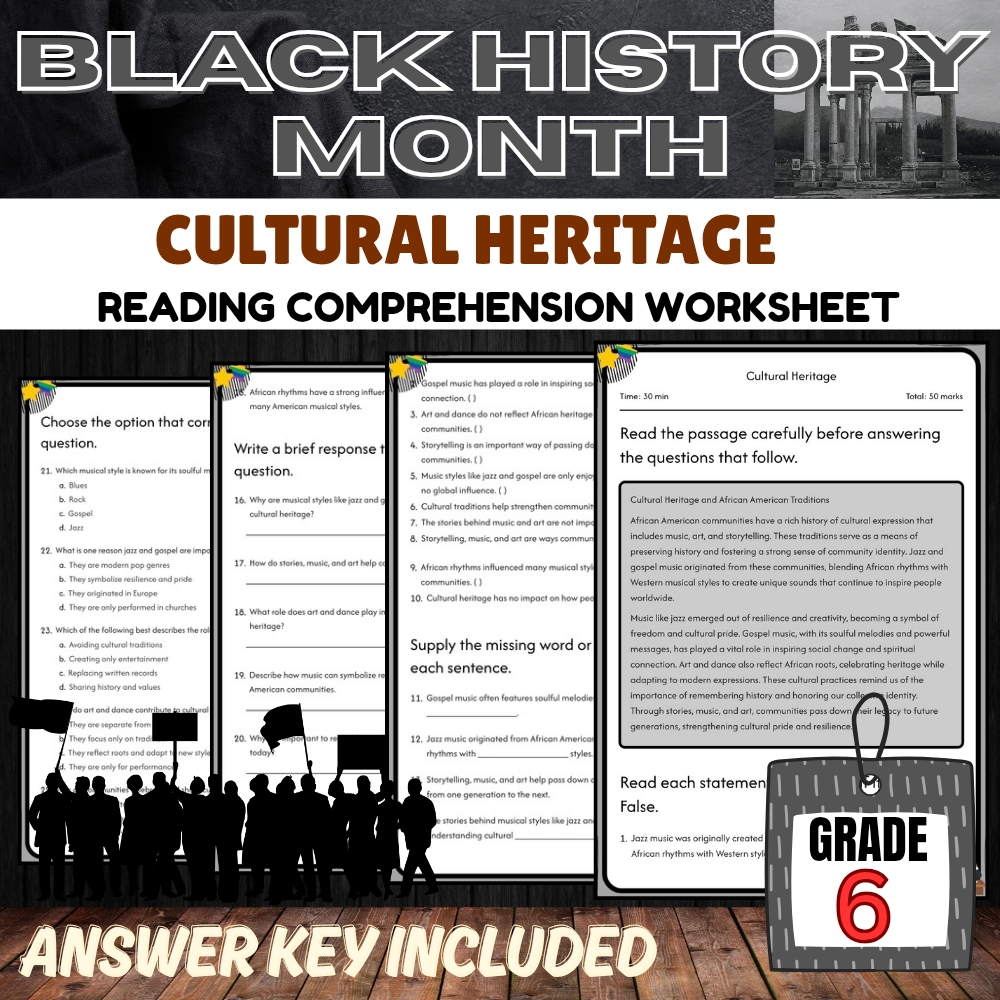
Grade 6 Holiday Black History Month Cultural Heritage Worksheet|PDF + Answer Key
Created byShaNova WorksheetsLearning Objectives
- Understand the significance of cultural traditions, music, and art within African American communities.
- Explore the stories behind musical styles like jazz and gospel.
- Identify vocabulary related to culture and tradition.
Instant download
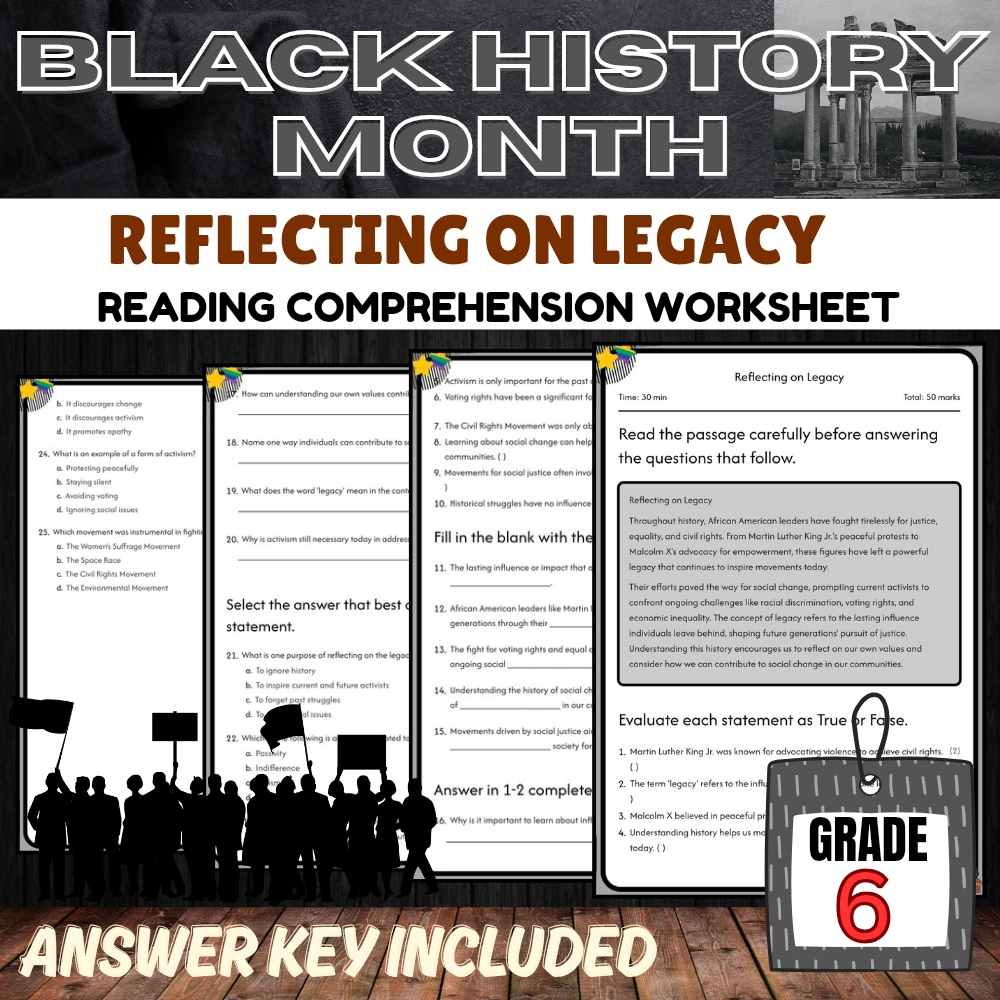
Grade 6 | Black History Month Reflecting on Legacy Worksheet | PDF + Answer Key
Created byShaNova WorksheetsLearning Objectives
- Analyze the lasting impact of African American leaders and movements.
- Understand how historical struggles inform current questions of justice and equality.
- Reflect on personal values and the importance of activism today.
Instant download

6th Grade ELA Source Synthesis Worksheet – Reading & Comprehension (PDF)
 Created byGolden Apple Studio
Learning Objectives
- Define source synthesis and distinguish it from summarizing sources separately.
- Explain how to combine agreements and additions across texts while staying faithful to each source.
- Choose the most precise supporting detail when sources differ and acknowledge limitations when evidence is missing.
Also included in: Grade 6 Evidence Based Reading & Writing English Language Lessons General ELA +1 more
Instant download

Grade 6 Science – Organ Systems Overview Daily Reading Worksheet | BC Standards
Created byBright Mind ResourcesLearning Objectives
- Identify the main organs of the circulatory system.
- Describe the primary functions of the circulatory system.
- Understand how the circulatory system interacts with other body systems.
Also included in: Grade 6 Science: Organ Systems & Adaptations Daily Reading Lesson Bundle | BC +1 more
Instant download
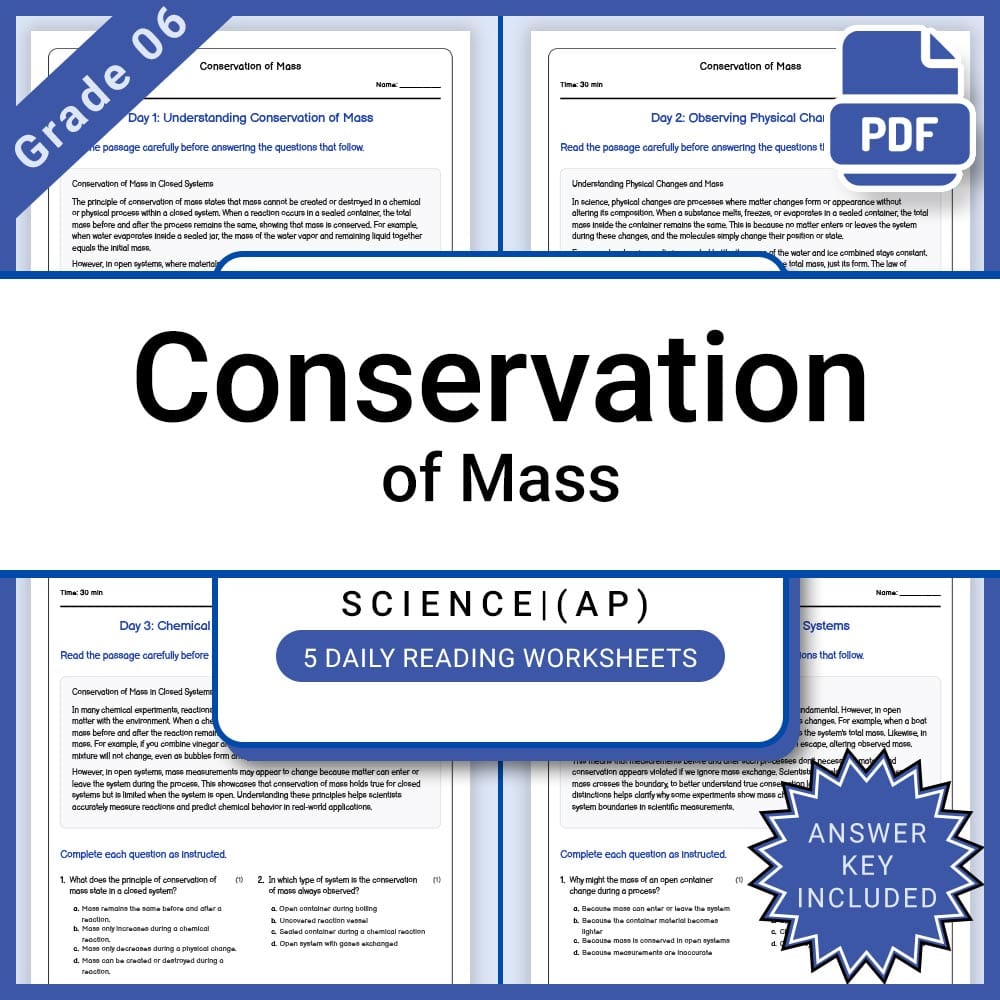
Grade 6 Science – Conservation of Mass Daily Reading Worksheet + Answer Key
JCreated byJ.S SheetsLearning Objectives
- Understand the principle of mass conservation in closed systems.
- Identify examples of physical and chemical processes that illustrate mass conservation.
- Distinguish between closed and open systems regarding mass exchange.
Also included in: Grade 6 Science Lesson Bundle | States of Matter, Energy, and More +1 more
Instant download
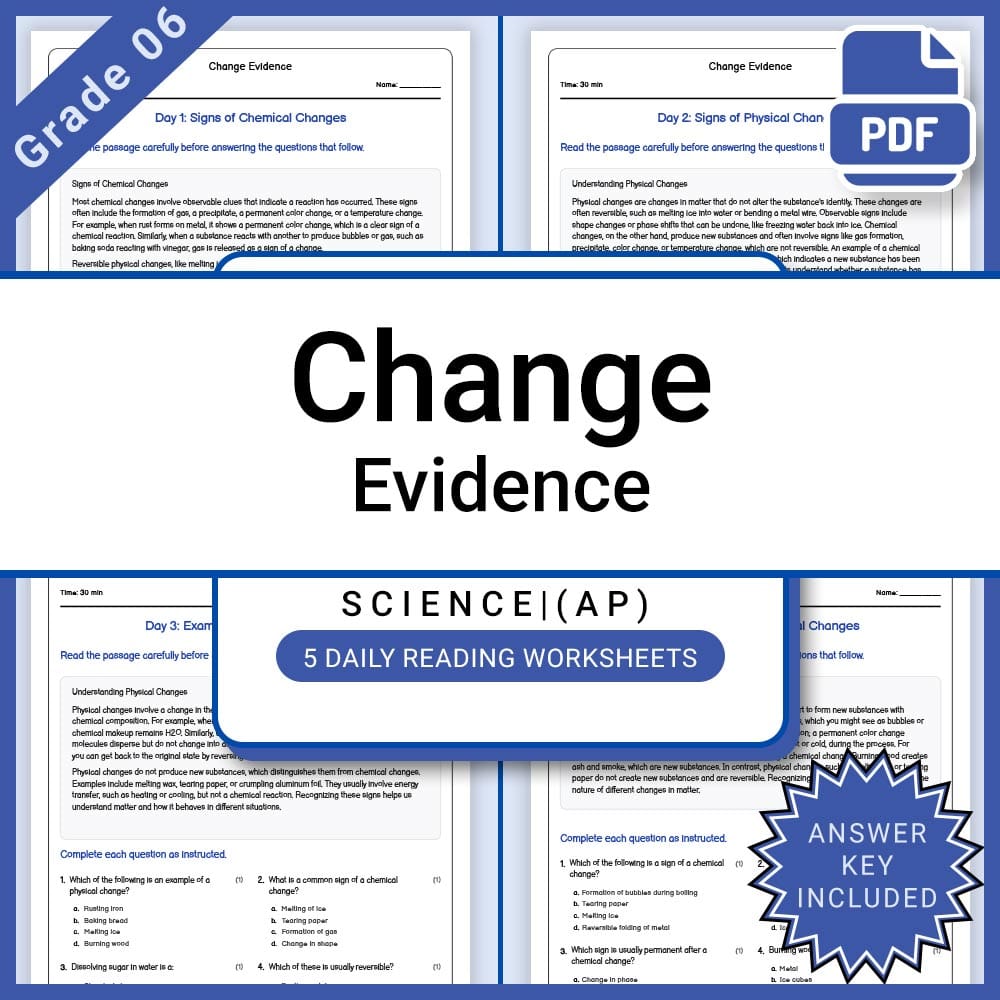
Grade 6 Science – Change Evidence Daily Reading Worksheet with Answer Key
JCreated byJ.S SheetsLearning Objectives
- Identify observable indicators of chemical changes
- Differentiate between physical and chemical changes using examples
- Understand the signs that indicate a chemical reaction has taken place
Also included in: Grade 6 Science Lesson Bundle | States of Matter, Energy, and More +1 more
Instant download
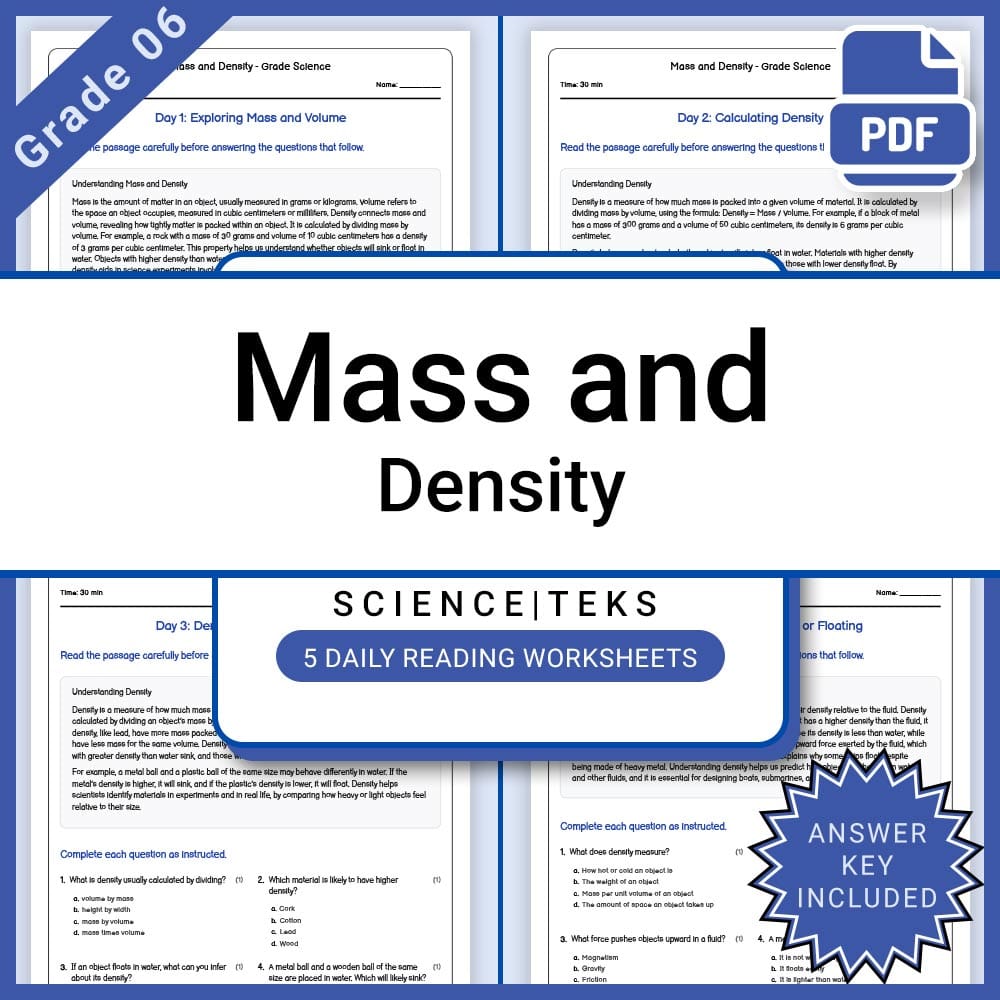
Grade 6 Science – Mass and Density Daily Reading Worksheet + Answer Key
JCreated byJ.S SheetsLearning Objectives
- Define and measure mass and volume of various objects.
- Calculate density using mass and volume measurements.
- Interpret density values to classify objects as solids or liquids.
Also included in: Grade 6 Science Lesson Bundle | States of Matter, Energy, and More +1 more
Instant download
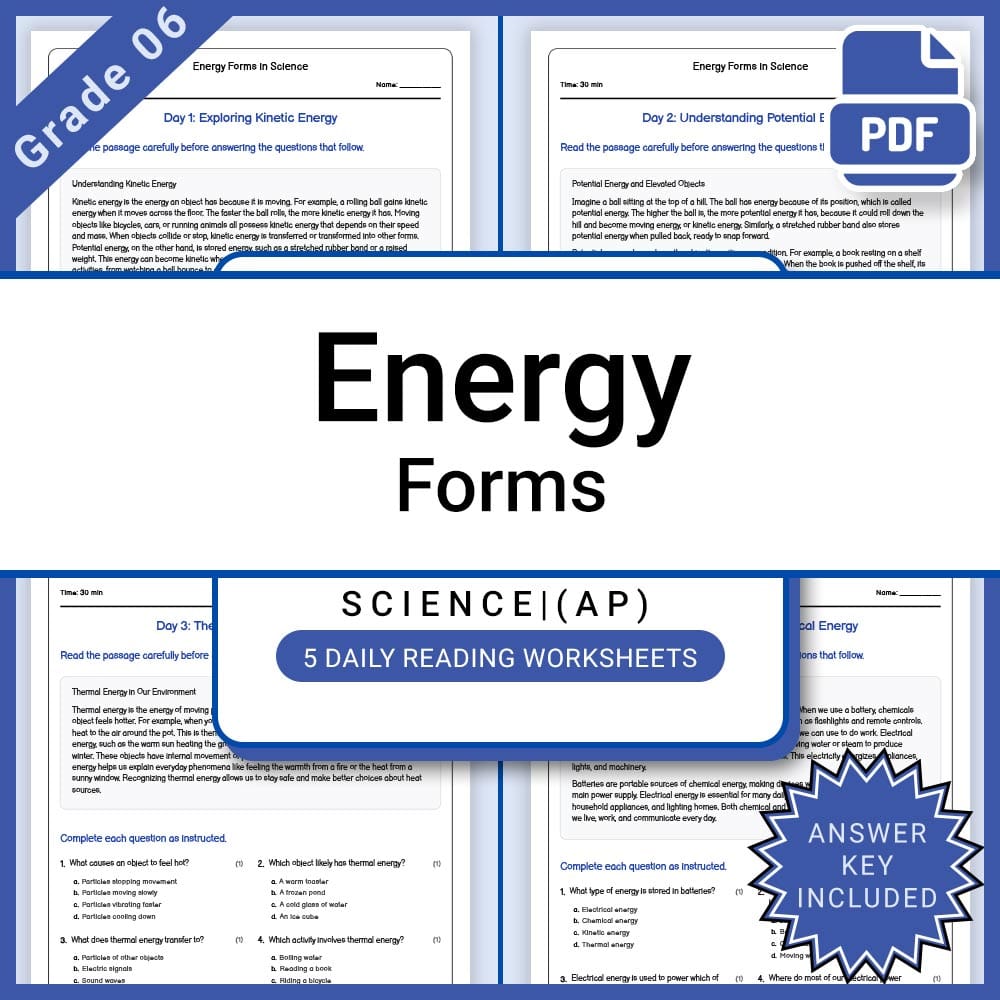
Grade 6 Science – Energy Forms Daily Reading Worksheet + Answer Key
JCreated byJ.S SheetsLearning Objectives
- Identify different forms of energy including kinetic, potential, thermal, chemical, and electrical.
- Relate each energy form to familiar phenomena such as moving objects, stretched springs, warm objects, and batteries.
- Describe how energy is associated with motion, position, and internal molecular activity.
Also included in: Grade 6 Science Lesson Bundle | States of Matter, Energy, and More +1 more
Instant download
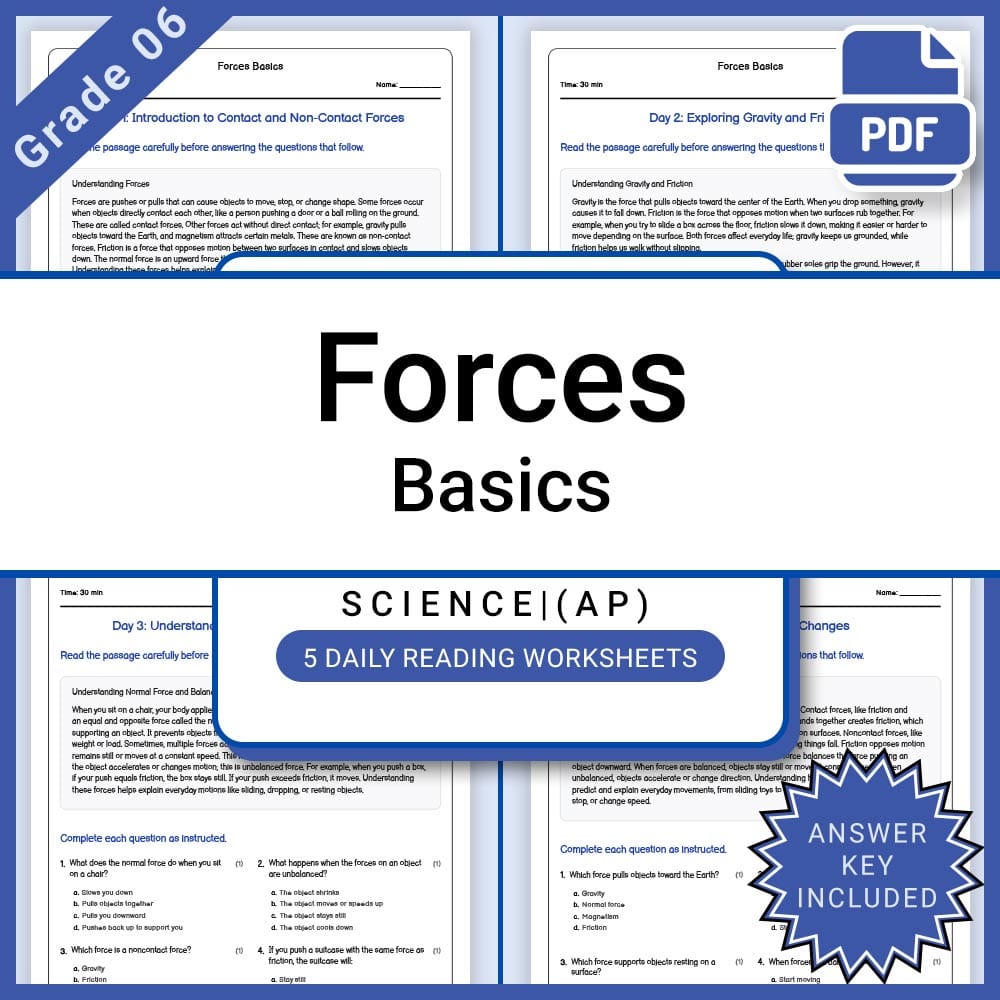
Grade 6 Science Forces Basics Daily Reading Worksheet with Answer Key
JCreated byJ.S SheetsLearning Objectives
- Understand the difference between contact and non-contact forces
- Identify examples of gravity, friction, and normal force
- Explain the concepts of balanced and unbalanced forces
Also included in: Grade 6 Science Lesson Bundle | States of Matter, Energy, and More +1 more
Instant download
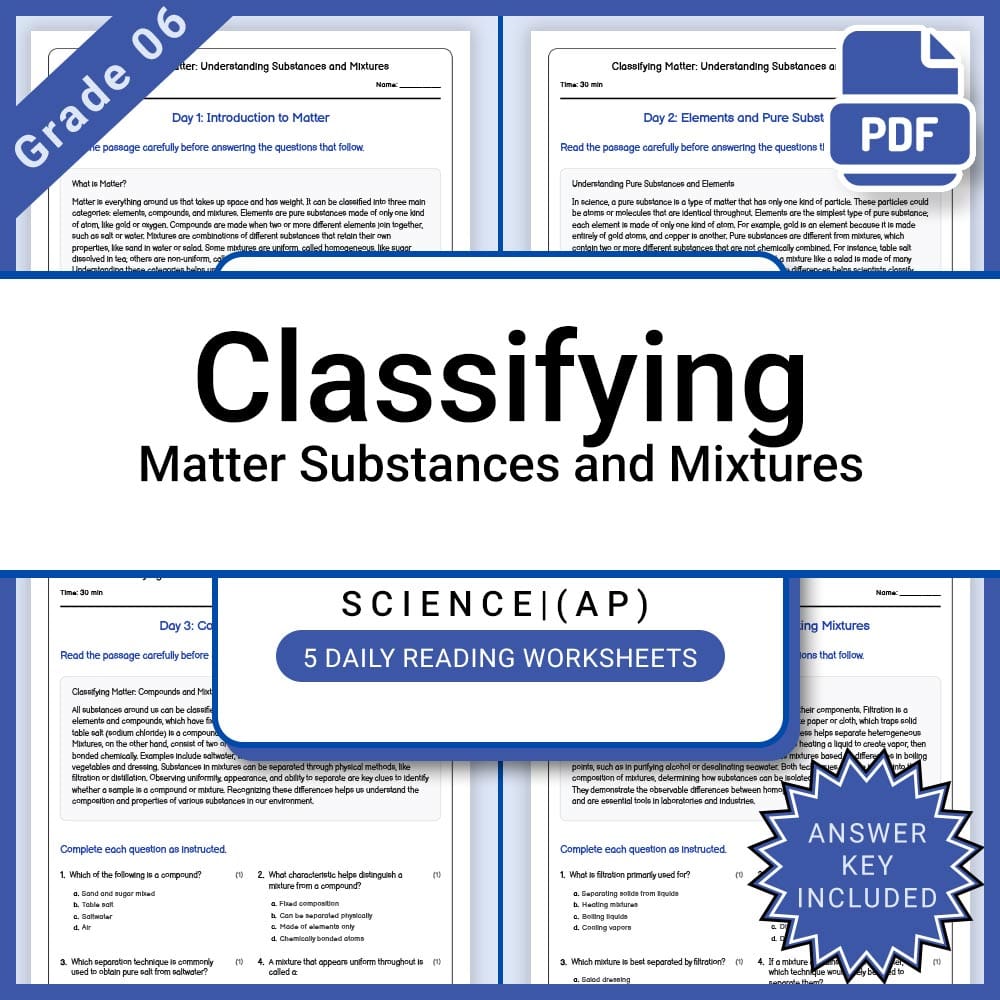
Grade 6 Science – Classifying Matter Daily Reading Worksheet + Answer Key
JCreated byJ.S SheetsLearning Objectives
- Define matter and distinguish between elements, compounds, and mixtures.
- Identify observable characteristics that differentiate pure substances from mixtures.
- Understand basic separation techniques such as filtration and distillation.
Also included in: Grade 6 Science Lesson Bundle | States of Matter, Energy, and More +1 more
Instant download

Earth Structure Worksheet | Grade 6 Science Activities
 Created byPrism Point Learning
Learning Objectives
- Explain how Earth's internal layers and plate motion drive tectonic processes.
- Compare divergent, convergent, and transform plate boundaries and predict their effects on Earth’s surface.
- Connect real-world events like earthquakes, volcanic eruptions, and mountain building to plate boundaries.
Also included in: Grade 6 Earth and Space Science Lesson Bundle TEKS (8 worksheets) +1 more
Instant download
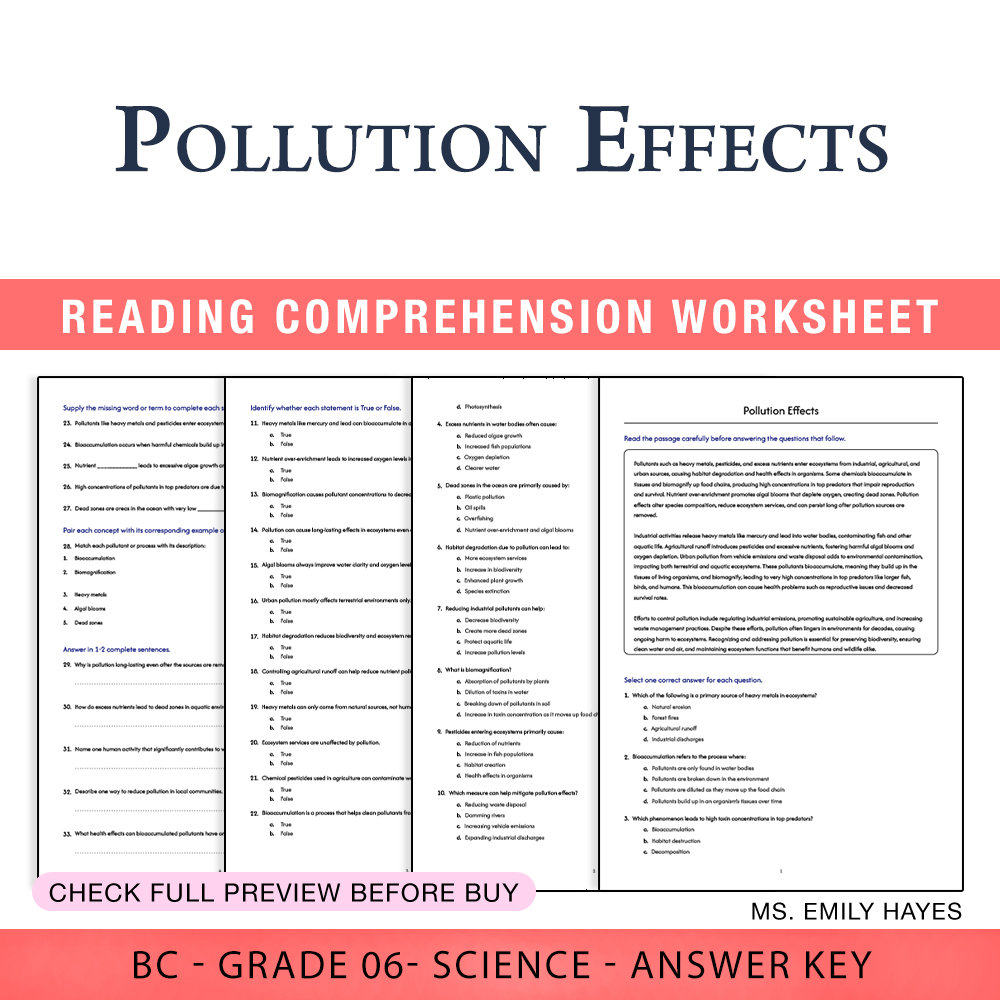
6th Grade Science | Pollution Effects Worksheet (PDF+ Answer Key)
 Created byCopper Leaf Classroom
Learning Objectives
- Understand the sources and types of pollutants affecting ecosystems.
- Explain how pollutants bioaccumulate and biomagnify in food chains.
- Describe the consequences of nutrient over-enrichment and habitat degradation.
Also included in: Grade 6 Science BC | Ecosystems and Human Impact Unit (PDF + Answer Keys) +1 more
Instant download
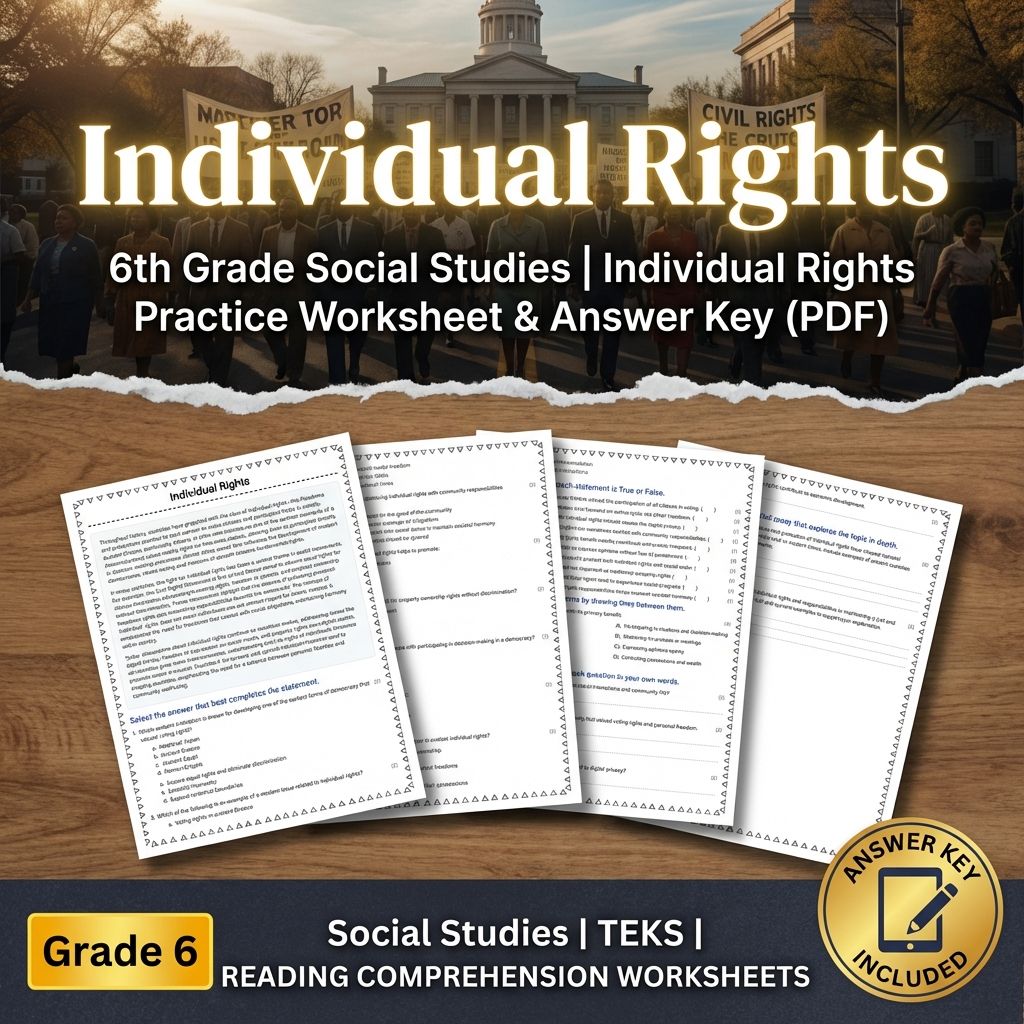
6th Grade Social Studies | Individual Rights Practice Worksheet & Answer Key
JCreated byJ.S SheetsLearning Objectives
- Understand the core concepts of individual rights such as voting, free speech, and property ownership.
- Analyze historical examples of societies that recognized individual rights, including ancient democracies and modern movements.
- Evaluate how individual rights influence social interactions, societal development, and cohesion.
Also included in: Grade 6 Social Studies Bundle – Laws, Rights & Civic Engagement (Answer Keys) +1 more
Instant download
6th Grade Social Studies | Laws and Norms Mastery Worksheet (PDF & Answer Key)
JCreated byJ.S SheetsLearning Objectives
- Understand the difference between laws and social norms in maintaining social order.
- Identify historical and modern examples of laws and norms.
- Explain how laws and norms influence citizens' rights and responsibilities.
Also included in: Grade 6 Social Studies Bundle – Laws, Rights & Civic Engagement (Answer Keys) +1 more
Instant download
6th Grade Social Studies | Civic Engagement Practice (PDF & Answer Key)
JCreated byJ.S SheetsLearning Objectives
- Define civic engagement and identify different ways people participate in civic life.
- Explain the importance of town hall meetings, referendums, and community service in shaping policies.
- Analyze how active participation impacts societal norms and government functions.
Also included in: Grade 6 Social Studies Bundle – Laws, Rights & Civic Engagement (Answer Keys) +1 more
Instant download

Grade 6 Holiday Malala Day for Mastering Reading Comprehension |PDF + Answer Key
Created byShaNova WorksheetsLearning Objectives
- Describe key events in Malala Yousafzai’s early life and activism.
- Explain how Malala’s actions connect to human rights and girls’ education.
- Use evidence from a passage to determine which statements are true or false.
Instant download
6th Grade Science | Organ Systems Daily Reading Worksheet (PDF & Answer Key)
Created byCopper Leaf ClassroomLearning Objectives
- Understand the organization of body systems and their functions.
- Identify the roles of tissues and organs in circulatory, respiratory, digestive, and nervous systems.
- Describe how organs work together within each system and how cellular functions relate to overall body processes.
Instant download
Eastern Mediterranean Geography Social Studies Worksheet for Grade 6
JCreated byJ.S SheetsLearning Objectives
- Identify key geographical features of the eastern Mediterranean region.
- Explain how mountains, rivers, and deserts influenced early settlement patterns.
- Describe the role of fertile areas like coastal plains in supporting communities.
Also included in: Grade 6 Social Studies | Ancient Israel and Judaism Unit Bundle +1 more
Instant download

Grade 6 Science | Graph Selection - Daily Reading Comprehension
 Created byCoral Reef Learning
Learning Objectives
- Understand when to use different types of graphs to represent data.
- Identify the appropriate graph for continuous data, categorical data, and data relationships.
- Learn how to label axes properly and choose scales that accurately portray datasets.
Also included in: Evidence and Investigation Lesson Bundle | Grade 6 Science | Alberta +1 more
Instant download

Physical and Chemical Changes Worksheet | NGSSS Grade 6 Science
JCreated byJ.S SheetsLearning Objectives
- Identify and distinguish between physical and chemical changes in matter.
- Recognize evidence that indicates whether a change is physical or chemical.
- Describe real-world examples of each type of change.
Also included in: Grade 6 Matter, Energy, and Forces Science lesson bundle – Florida (NGSSS) +1 more
Instant download

Speed and Velocity Worksheet | Standards-Aligned Grade 6 Science Practice
JCreated byJ.S SheetsLearning Objectives
- Understand the difference between speed and velocity in describing motion.
- Explain how direction affects velocity even when speed remains constant.
- Calculate average speed using total distance and elapsed time.
Also included in: Grade 6 Matter, Energy, and Forces Science lesson bundle – Florida (NGSSS) +1 more
Instant download

States of Matter Worksheet | Standards-Aligned Grade 6 Science Practice
JCreated byJ.S SheetsLearning Objectives
- Describe the different states of matter: solids, liquids, and gases.
- Explain how particles behave in each state of matter.
- Identify changes in state and relate them to energy and particle motion.
Also included in: Grade 6 Matter, Energy, and Forces Science lesson bundle – Florida (NGSSS) +1 more
Instant download

Heat and Temperature Worksheet | Standards-Aligned Grade 6 Science Practice
JCreated byJ.S SheetsLearning Objectives
- Understand the difference between heat and temperature and how they relate to energy transfer.
- Describe how heat moves from warmer to cooler regions and how this affects systems.
- Explain why the same temperature does not necessarily mean the same amount of energy.
Also included in: Grade 6 Matter, Energy, and Forces Science lesson bundle – Florida (NGSSS) +1 more
Instant download

Thermal Energy Transfer Worksheet | Standards-Aligned Grade 6 Science Practice
JCreated byJ.S SheetsLearning Objectives
- Understand the three main mechanisms of thermal energy transfer: conduction, convection, and radiation.
- Identify examples of each energy transfer mechanism in real-world situations.
- Explain how the medium involved affects the process of thermal energy transfer.
Also included in: Grade 6 Matter, Energy, and Forces Science lesson bundle – Florida (NGSSS) +1 more
Instant download
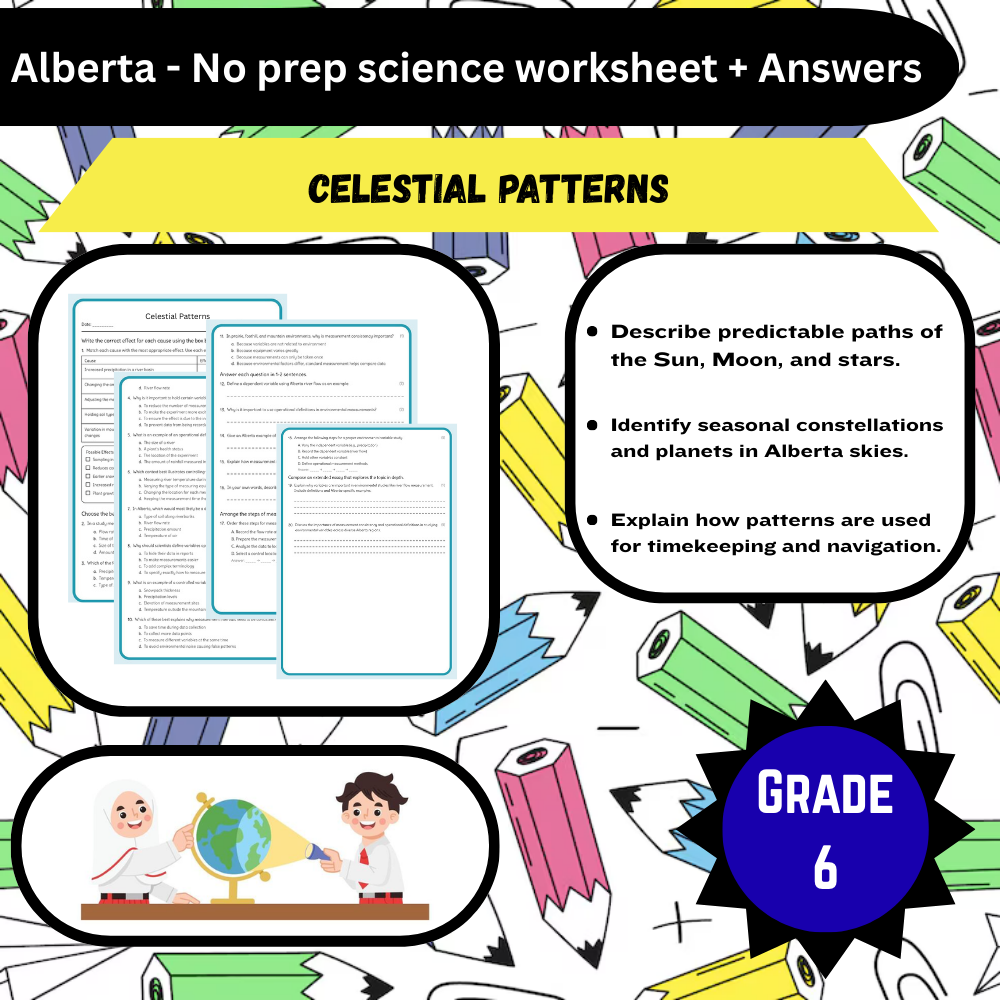
6th Grade Science | Celestial Patterns Worksheet (PDF) – Alberta Standards
Created byBright Mind ResourcesLearning Objectives
- Describe the predictable paths of the Sun, Moon, planets, and constellations as seen from Earth.
- Identify seasonal constellations and planetary apparitions in Alberta skies.
- Explain how celestial patterns can be used for timekeeping and navigation.
Instant download
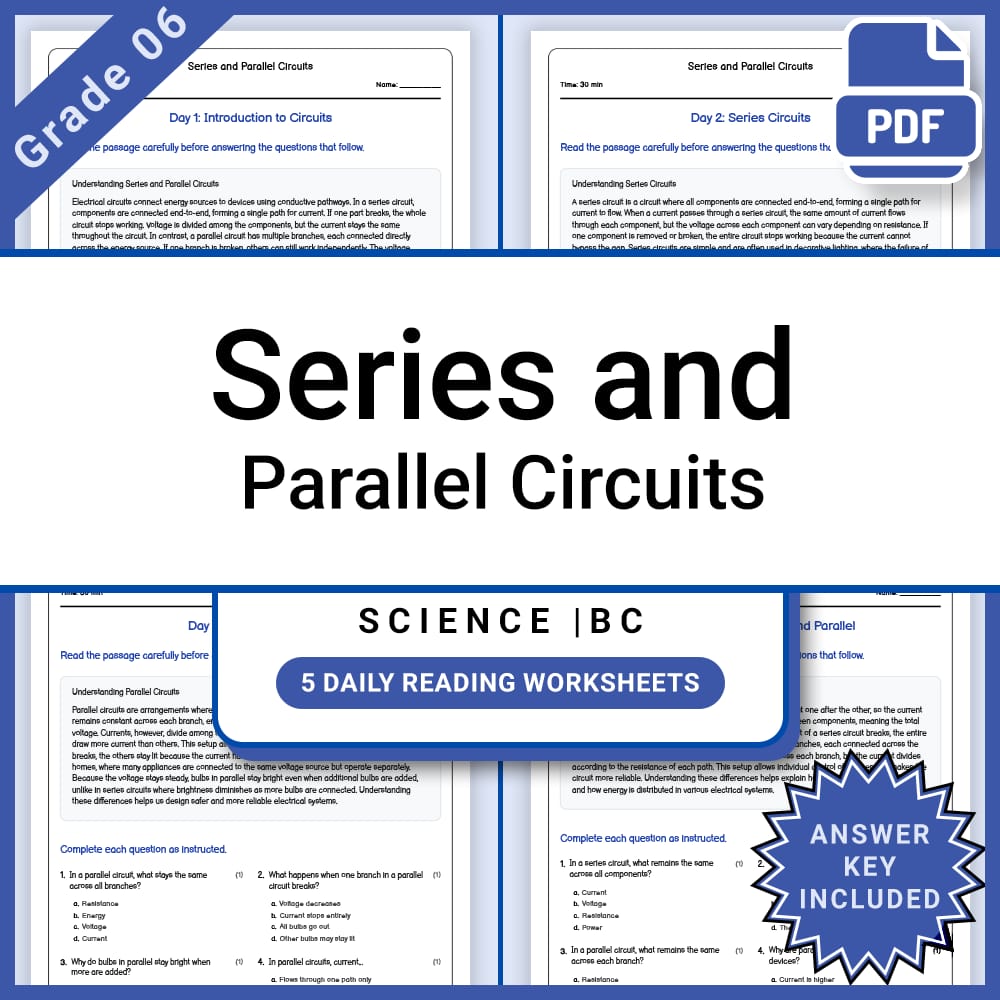
Grade 6 Science – Circuits Daily Reading Worksheet with Answer Key
JCreated byJ.S SheetsLearning Objectives
- Understand key concepts related to Science
- Apply knowledge through practice questions
- Demonstrate comprehension of the material
Also included in: Grade 6 Science Lesson Group | Waves, Light, Energy, Circuits & Technology +1 more
Instant download

Grade 6 Science – Observational Instruments & Observation Tools | Worksheet
Created byBright Mind ResourcesLearning Objectives
- Understand the different types of telescopes used to observe the solar system
- Recognize how different wavelengths reveal planetary features
- Compare ground-based and space-based observatories
Also included in: Space Systems Grade 6 Science Daily Reading Worksheets Bundle | Ontario +1 more
Instant download
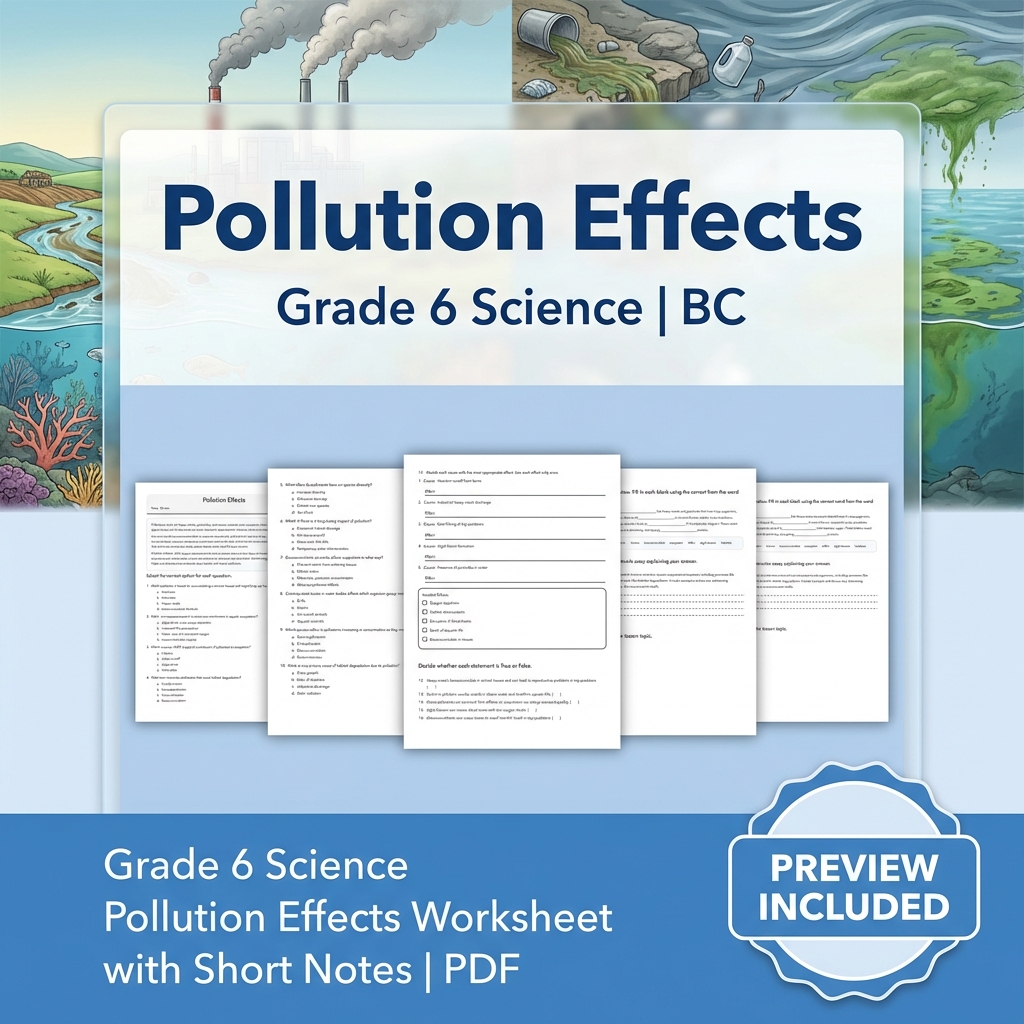
Grade 6 Science Pollution Effects Worksheet with Short Notes | PDF
Created byMeadowlark WorksheetsLearning Objectives
- Understand how pollutants enter ecosystems and affect living organisms.
- Identify the processes of bioaccumulation and biomagnification.
- Explain the impact of nutrient over-enrichment on aquatic environments.
Also included in: Grade 6 Science | Ecosystems & Interdependence UNIT Worksheet Bundle +1 more
Instant download
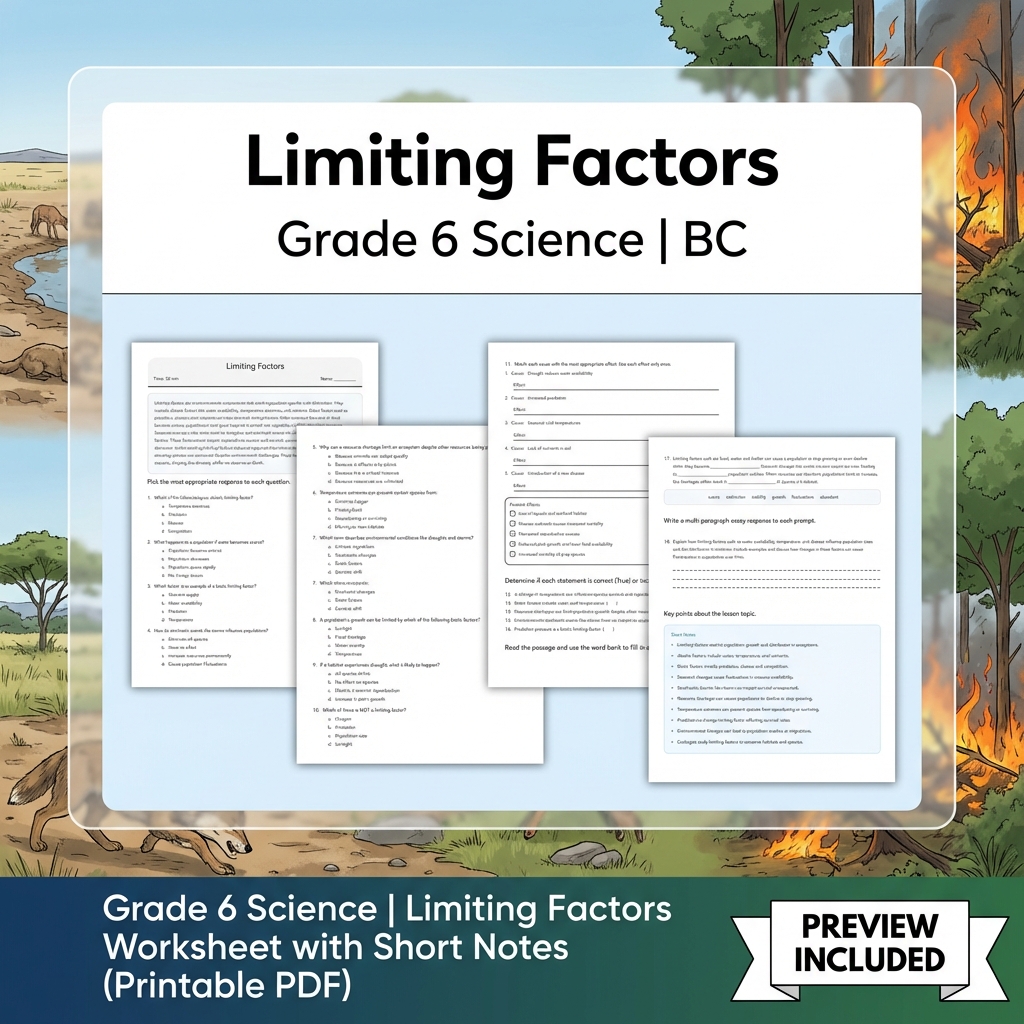
Grade 6 Science | Limiting Factors Worksheet with Short Notes (Printable PDF)
Created byMeadowlark WorksheetsLearning Objectives
- Understand what limiting factors are in ecosystems.
- Identify abiotic and biotic factors that restrict population growth.
- Explain how changes in limiting factors affect species survival.
Also included in: Grade 6 Science | Ecosystems & Interdependence UNIT Worksheet Bundle +1 more
Instant download
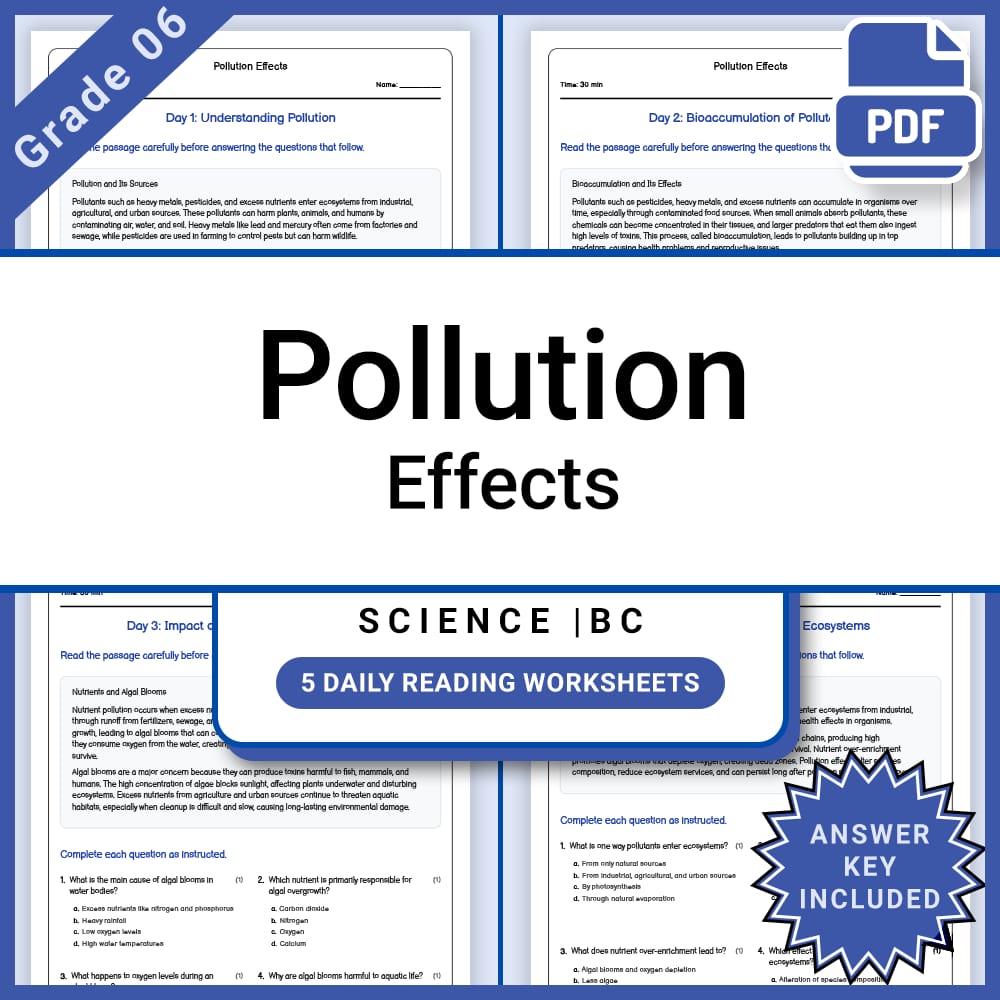
Grade 6 Science Pollution Effects Daily Reading Worksheet with Answer Key
JCreated byJ.S SheetsLearning Objectives
- Identify different types of pollutants and their sources
- Understand how pollutants impact ecosystems and organisms
- Learn the concept of bioaccumulation and biomagnification
Also included in: Grade 6 Science Lesson Group Bundle on Ecosystems and Ecology +1 more
Instant download
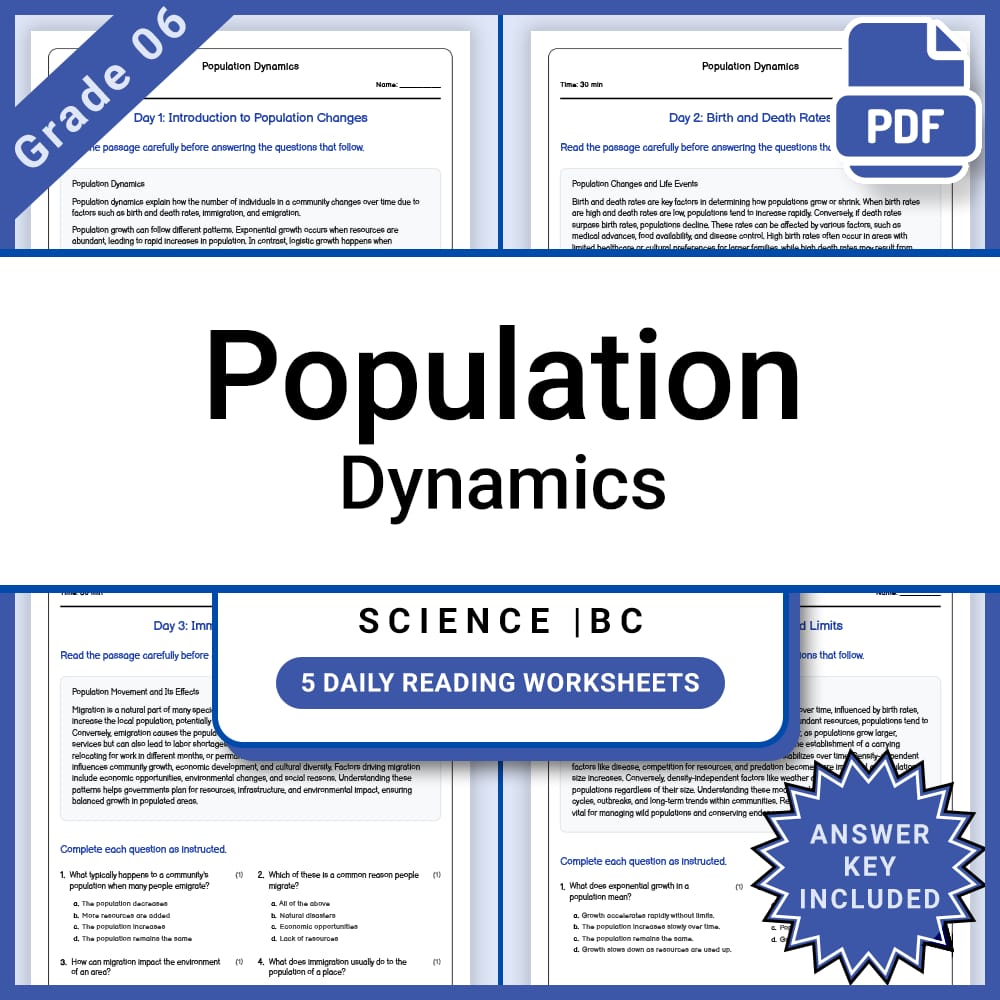
Grade 6 Science – Population Dynamics Daily Reading Worksheet with Answer Key
JCreated byJ.S SheetsLearning Objectives
- Understand basic concepts of population growth and decline
- Identify factors affecting population changes
- Differentiate between growth models such as exponential and logistic growth
Also included in: Grade 6 Science Lesson Group Bundle on Ecosystems and Ecology +1 more
Instant download
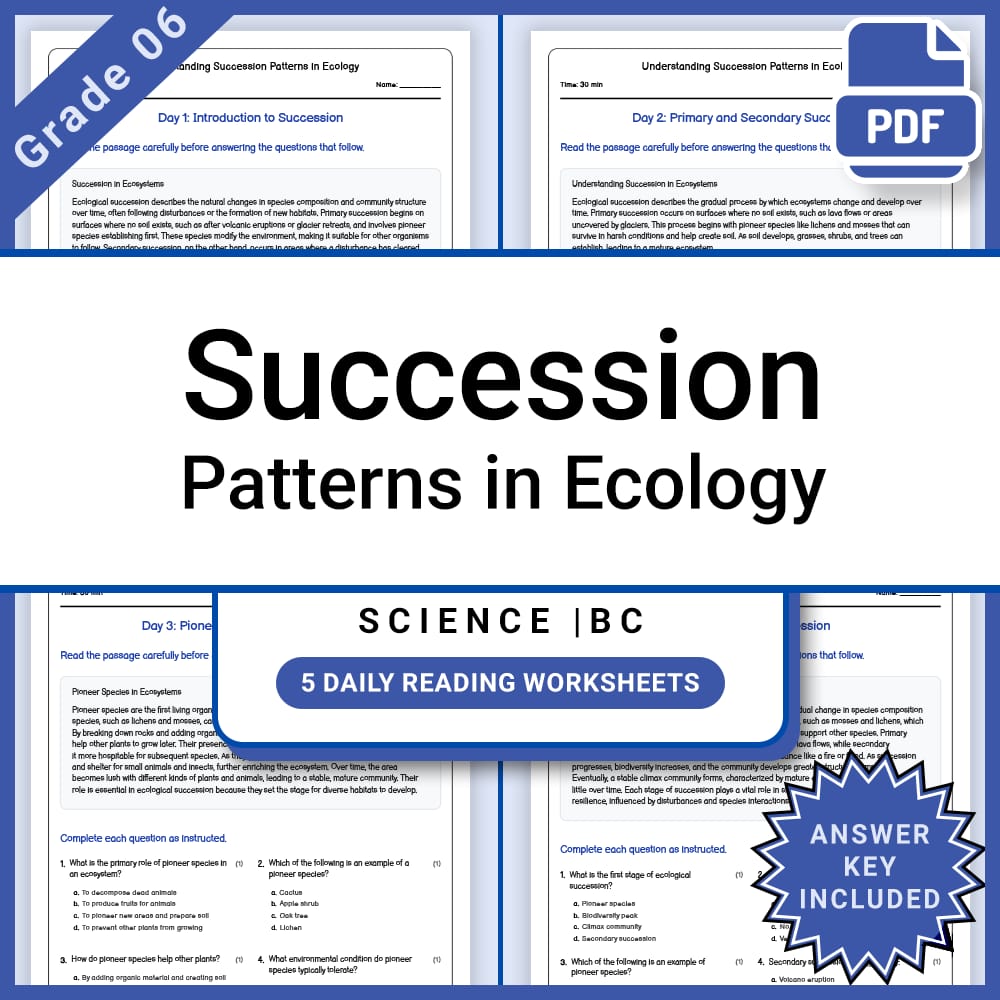
Grade 6 Science – Succession in Ecology Daily Reading Worksheet + Answer Key
JCreated byJ.S SheetsLearning Objectives
- Define ecological succession and distinguish between primary and secondary succession.
- Identify pioneer species and their roles in succession.
- Understand how succession leads to changes in biodiversity and community structure.
Also included in: Grade 6 Science Lesson Group Bundle on Ecosystems and Ecology +1 more
Instant download
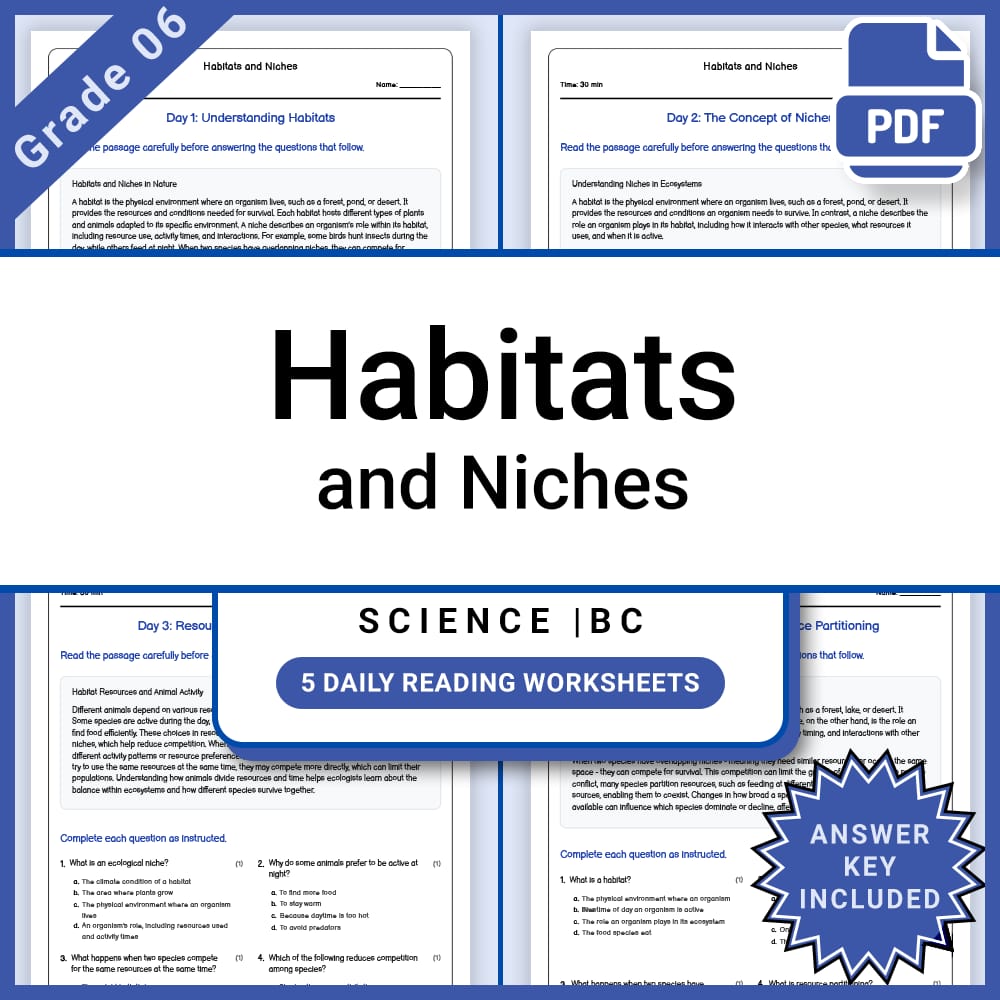
Grade 6 Science – Habitats and Niches Daily Reading Worksheet + Answer Key
JCreated byJ.S SheetsLearning Objectives
- Understand key concepts related to Science
- Apply knowledge through practice questions
- Demonstrate comprehension of the material
Also included in: Grade 6 Science Lesson Group Bundle on Ecosystems and Ecology +1 more
Instant download
Grade 6 Science – Habitat Fragmentation Daily Reading Worksheet + Answer Key
JCreated byJ.S SheetsLearning Objectives
- Describe what habitat fragmentation is and identify its causes.
- Understand how habitat fragmentation affects animal and plant species.
- Recognize ways to mitigate the effects of habitat fragmentation.
Also included in: Grade 6 Science Lesson Group Bundle on Ecosystems and Ecology +1 more
Instant download
Grade 6 Science – Producers And Consumers Daily Reading Worksheet + Answer Key
JCreated byJ.S SheetsLearning Objectives
- Identify the role of producers in an ecosystem.
- Explain how producers make food through photosynthesis.
- Differentiate between producers and consumers.
Also included in: Grade 6 Science Lesson Group Bundle on Ecosystems and Ecology +1 more
Instant download
Grade 6 Science – Food Chains Daily Reading Worksheet with Answer Key
JCreated byJ.S SheetsLearning Objectives
- Identify the main components of a simple food chain
- Understand how energy transfers from producers to consumers
- Recognize the roles of different organisms in a food chain
Also included in: Grade 6 Science Lesson Group Bundle on Ecosystems and Ecology +1 more
Instant download
Browse more categories
About Grade 6 Worksheets
Browse 8,578 printable Grade 6 worksheets across math, ELA, science, and social studies — each a ready-to-print PDF with optional answer keys.
MyTeachingSheets worksheets are made by real teacher-authors and checked before they go live. Download any as a print-ready PDF for lessons, homework, or independent practice — most include answer keys, and previews are always free.