
Grade 6 Science Worksheets
5,969 worksheets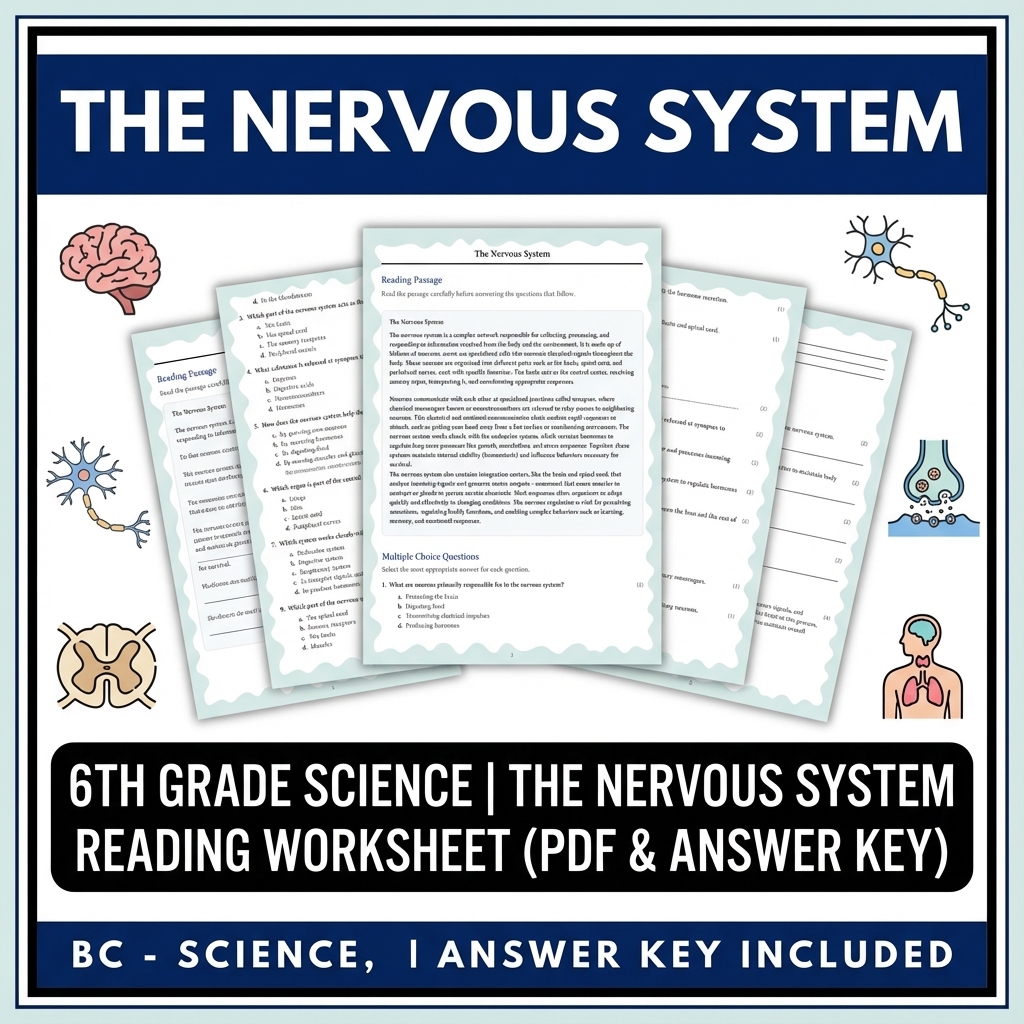
6th Grade Science | The Nervous System Reading Worksheet (PDF & Answer Key)
JCreated byJ.S SheetsLearning Objectives
- Describe the basic structure and functions of the nervous system.
- Explain how neurons transmit electrical impulses.
- Identify the roles of different parts of the nervous system in coordinating responses.
Instant download
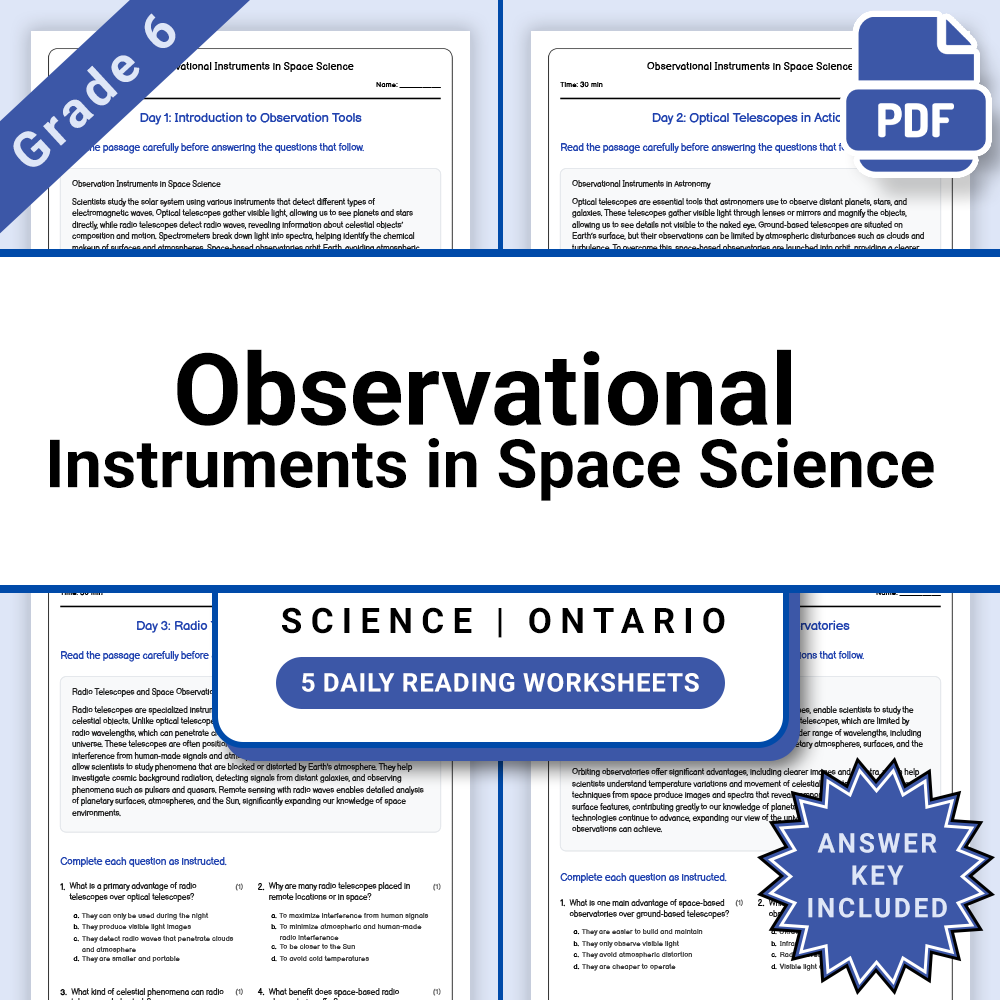
Grade 6 Science – Observational Instruments in Space Daily Worksheet + Answer Key
JCreated byJ.S SheetsLearning Objectives
- Identify different types of telescopes and observatories used to study the solar system.
- Explain how various wavelengths reveal details about planetary surfaces, atmospheres, and the Sun.
- Understand the advantages of space-based instruments over ground-based ones.
Also included in: Grade 6 Science Lesson Bundle | Sun, Earth, Moon & Space Concepts +1 more
Instant download
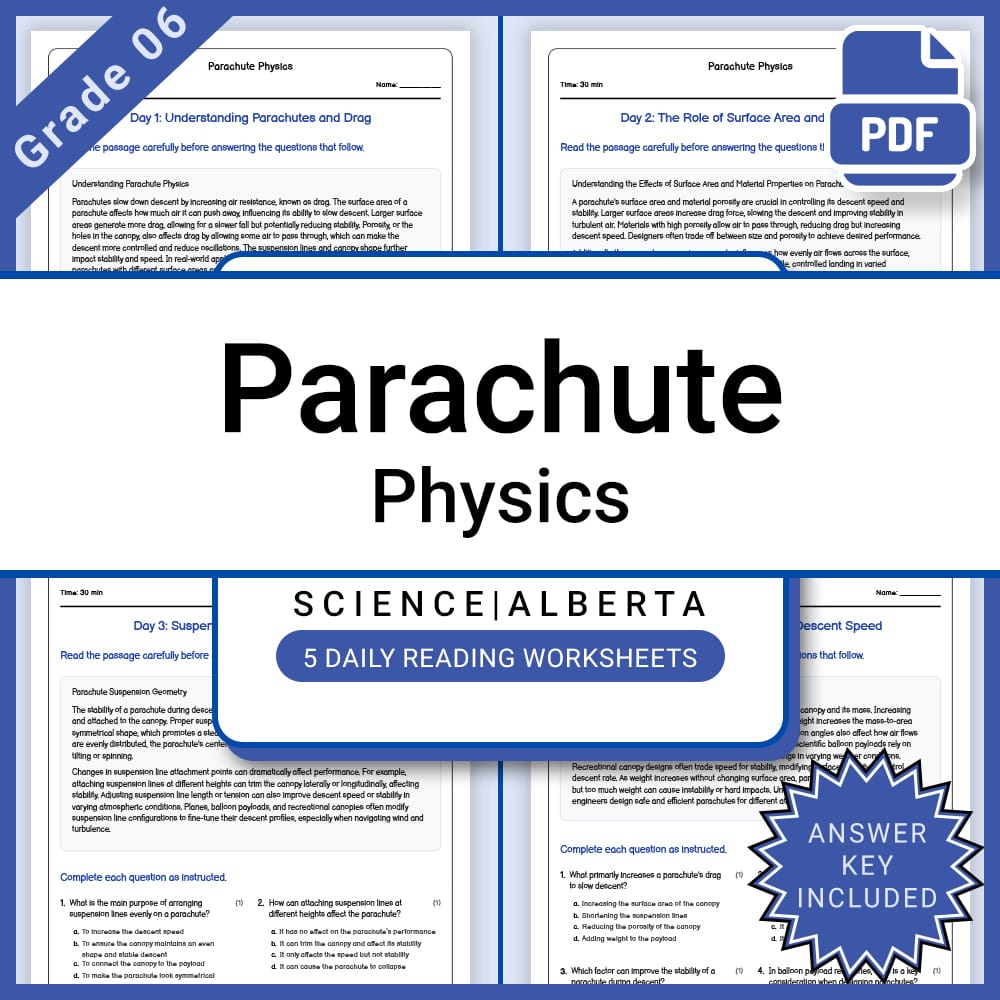
Grade 6 Science Parachute Physics Daily Reading Worksheet with Answer Key
JCreated byJ.S SheetsLearning Objectives
- Understand how surface area and porosity affect drag and descent rate
- Learn how canopy design influences parachute stability and speed
- Explore real-world examples of parachute modifications in balloon recovery and recreational use
Also included in: Grade 6 Science Lesson Bundle: Flight, Weather, and Aerodynamics +1 more
Instant download
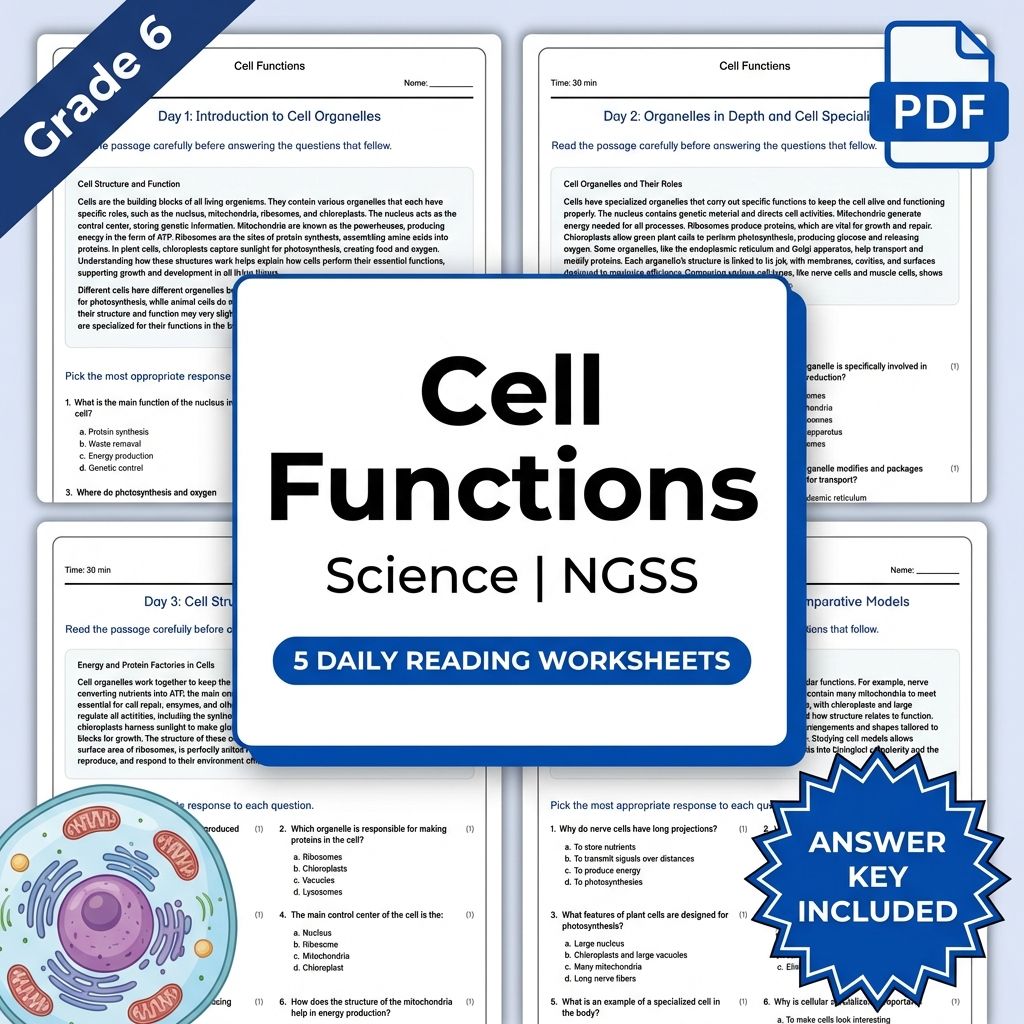
Grade 6 Science – Cell Functions Daily Reading Worksheet (PDF+ Answer Key)
 Created byCopper Leaf Classroom
Learning Objectives
- Understand the roles of different organelles within a cell.
- Identify the structure and functions of nucleus, mitochondria, ribosomes, and chloroplasts.
- Compare plant and animal cell organelles and their specialized roles.
Instant download
Grade 6 Science – Forest Disturbance Regimes Daily Worksheet + Answer Key
JCreated byJ.S SheetsLearning Objectives
- Identify the role of fire in shaping forest ecosystems.
- Recognize different disturbance regimes such as insects, wind, and floods.
- Understand how disturbance frequency and intensity affect forest recovery.
Also included in: Grade 6 Science Lesson Bundle – Ecosystems, Trees, and Land Management +1 more
Instant download
Grade 6 – Instrumentation Principles in Electronics Worksheet + Answer Key
JCreated byJ.S SheetsLearning Objectives
- Understand the functions of ammeters and voltmeters in electrical circuits
- Learn the proper placement of measurement instruments in series and parallel
- Identify the units of current and voltage (amperes and volts)
Also included in: Grade 6 Science Lesson Group – Circuits and Energy Ontario Framework +1 more
Instant download
Grade 6 Science – Electrostatic Phenomena Daily Reading Worksheet + Answer Key
JCreated byJ.S SheetsLearning Objectives
- Understand how objects become charged through contact and separation.
- Identify common electrostatic phenomena such as attraction, repulsion, and sparks.
- Describe the concepts of charge transfer, grounding, and charge neutralization.
Also included in: Grade 6 Science Lesson Group – Circuits and Energy Ontario Framework +1 more
Instant download
Grade 6 Science – Natural Resources Daily Reading Worksheet + Answer Key
JCreated byJ.S SheetsLearning Objectives
- Identify different types of natural resources such as soil, minerals, freshwater, and fossil fuels.
- Understand how natural resources are formed and distributed across regions.
- Explore the environmental and economic implications of resource extraction.
Also included in: Grade 6 Science Lesson Bundle: Space, Water, Earth, and Resources TEKS +1 more
Instant download
Grade 6 Science – Ethical Dimensions Daily Reading Worksheet with Answer Key
JCreated byJ.S SheetsLearning Objectives
- Understand the importance of privacy in medical data
- Identify ethical issues related to data use
- Recognize the criteria for ethical decision-making in science
Also included in: Grade 6 Science Lesson Bundle | TEKS-Aligned Activities and Worksheets +1 more
Instant download
Grade 6 Science – Lunar Phases Daily Reading Worksheet + Answer Key
JCreated byJ.S SheetsLearning Objectives
- Explain the sequence of lunar phases based on relative positions of the Sun, Earth, and Moon.
- Describe the illumination geometry that produces different lunar phases.
- Identify the appearance of the New Moon and its position relative to the Sun and Earth.
Also included in: Grade 6 Science Lesson Bundle | Sun, Earth, Moon & Space Concepts +1 more
Instant download
Grade 6 Science – Eclipses and Tides Daily Reading Worksheet with Answer Key
JCreated byJ.S SheetsLearning Objectives
- Understand the basic concepts of solar and lunar eclipses.
- Distinguish between umbra and penumbra during an eclipse.
- Describe how the alignment of Earth, Moon, and Sun causes eclipses.
Also included in: Grade 6 Science Lesson Bundle | Sun, Earth, Moon & Space Concepts +1 more
Instant download
Grade 6 Science – Making Water Choices Daily Reading Worksheet with Answer Key
JCreated byJ.S SheetsLearning Objectives
- Interpret data related to water resource management
- Evaluate different options for water allocation based on scientific evidence
- Understand how decision-makers weigh risks and benefits in water policies
Also included in: Grade 6 Science Lesson Bundle | TEKS-Aligned Activities and Worksheets +1 more
Instant download
Grade 6 Science Satellite Systems Daily Reading Worksheet with Answer Key
JCreated byJ.S SheetsLearning Objectives
- Understand the basic functions of artificial satellites.
- Identify different categories and roles of satellites in Earth observation, communication, navigation, and scientific research.
- Learn about orbital choices such as geostationary and polar orbits.
Also included in: Grade 6 Science Lesson Bundle | Sun, Earth, Moon & Space Concepts +1 more
Instant download
Grade 6 Science – Earth Structure Daily Reading Worksheet with Answer Key
JCreated byJ.S SheetsLearning Objectives
- Identify the different layers of Earth's internal structure.
- Understand the processes that drive plate movements and tectonic activity.
- Recognize different types of plate boundaries and their features.
Also included in: Grade 6 Science Lesson Bundle: Space, Water, Earth, and Resources TEKS +1 more
Instant download
Grade 6 Science Societal Impacts Daily Reading Worksheet with Answer Key
JCreated byJ.S SheetsLearning Objectives
- Understand how water treatment improves public health
- Analyze the societal benefits of environmental regulations
- Evaluate evidence related to scientific interventions
Also included in: Grade 6 Science Lesson Bundle | TEKS-Aligned Activities and Worksheets +1 more
Instant download
Grade 6 Science – Biomedical Technicians Daily Reading Worksheet with Answer Key
JCreated byJ.S SheetsLearning Objectives
- Identify the role of biomedical technicians in scientific and medical laboratories.
- Understand the typical tasks performed by biomedical technicians, such as data collection and equipment maintenance.
- Recognize the skills and coursework necessary for a career in biomedical technology.
Also included in: Grade 6 Science Lesson Bundle | TEKS-Aligned Activities and Worksheets +1 more
Instant download
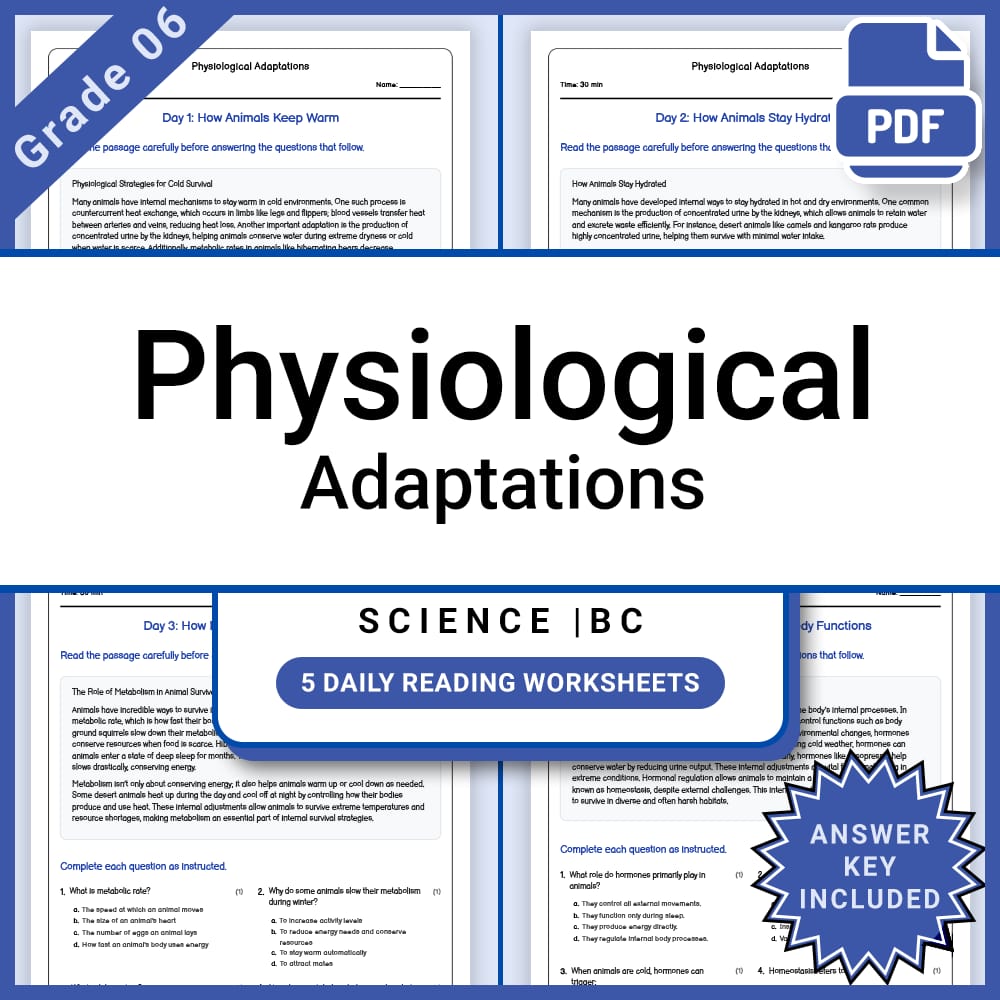
Grade 6 Science – Physiological Adaptations Daily Reading Worksheet + Answer Key
JCreated byJ.S SheetsLearning Objectives
- Understand how animals maintain internal body functions to survive in cold environments.
- Identify key physiological processes like heat exchange, water conservation, and metabolic regulation.
- Explain the significance of internal adaptations in animal survival and resource access.
Also included in: Grade 6 Science Lesson Group | Body Systems and Adaptations Bundle +1 more
Instant download
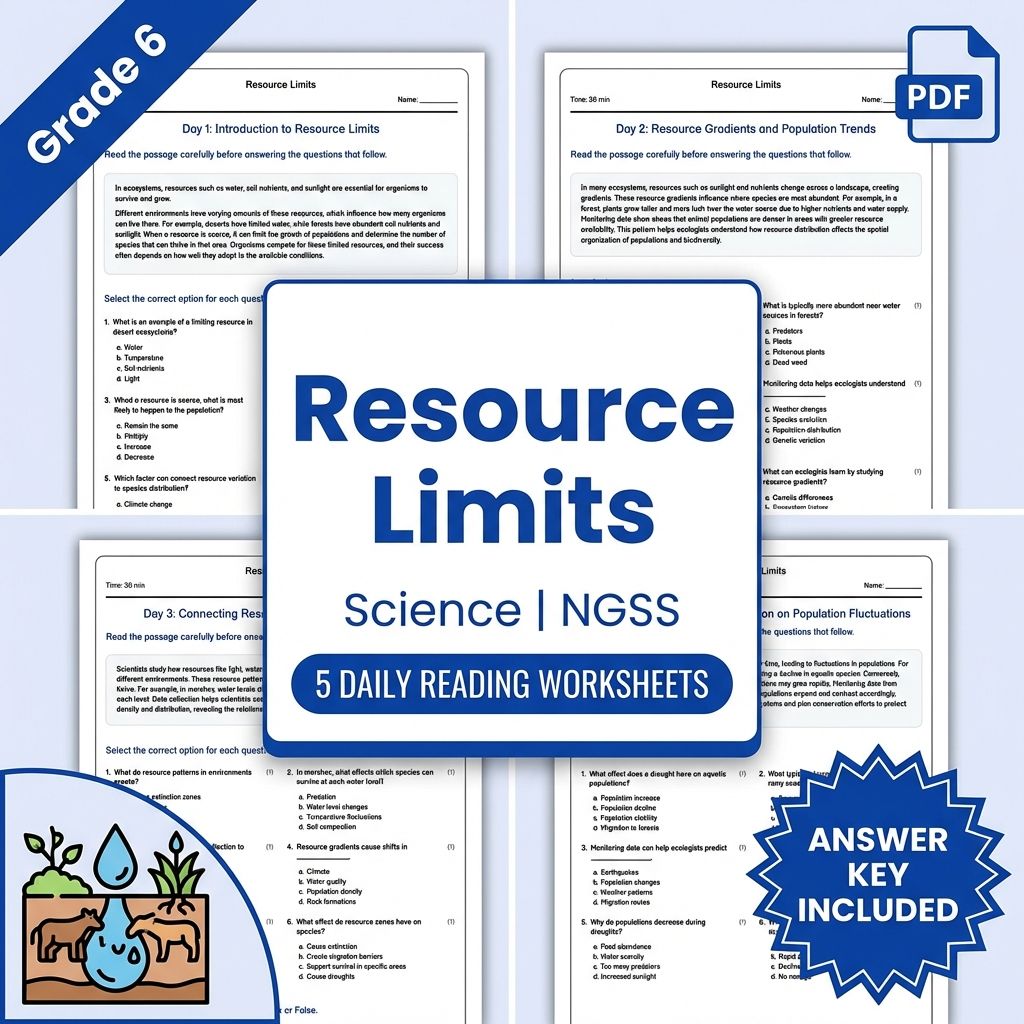
Grade 6 Science – Resource Limits Daily Reading Worksheet (PDF+ Answer Key)
Created byCopper Leaf ClassroomLearning Objectives
- Understand how resource availability affects individual organisms and populations.
- Identify limiting resources such as water, nutrients, and light in different ecosystems.
- Interpret data related to resource gradients and population distribution.
Instant download
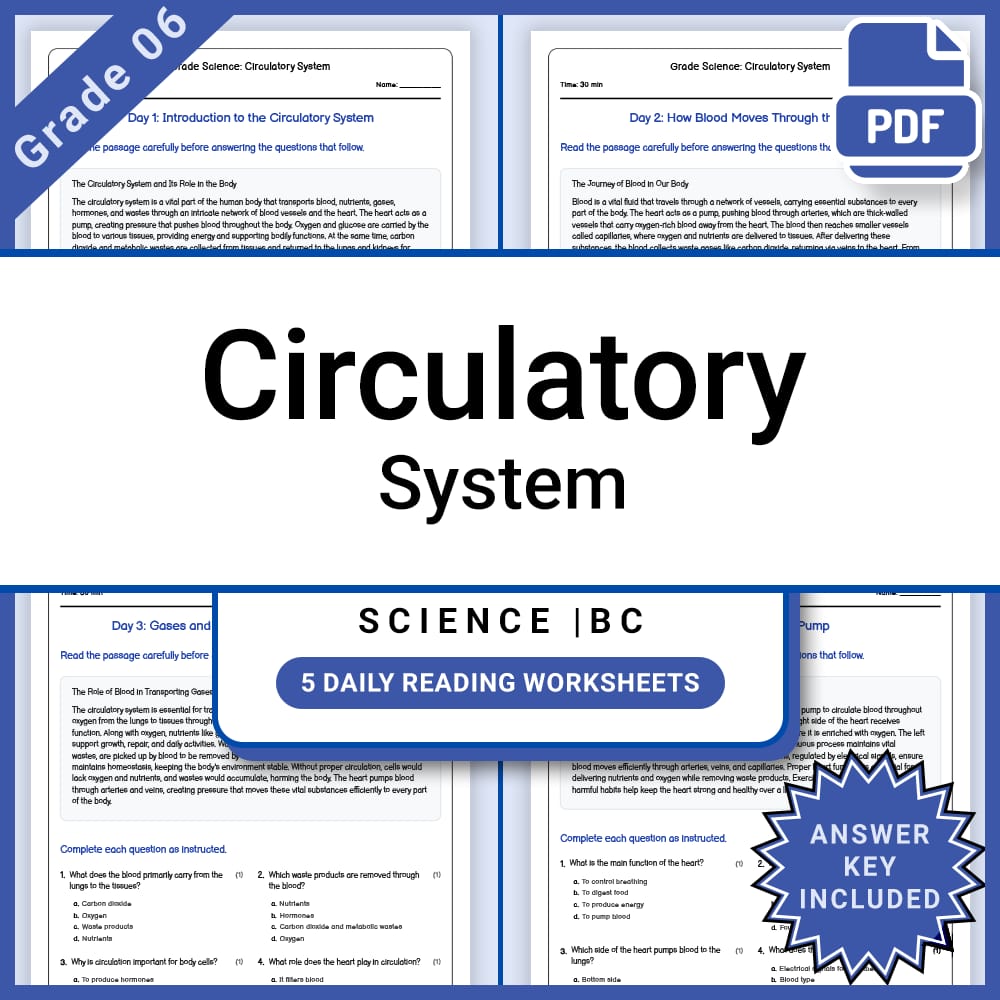
Grade 6 Science – Circulatory System Daily Reading Worksheet with Answer Key
JCreated byJ.S SheetsLearning Objectives
- Understand the basic functions of the circulatory system
- Identify components such as heart and blood vessels
- Explain how blood transports gases, nutrients, and wastes
Also included in: Grade 6 Science Lesson Group | Body Systems and Adaptations Bundle +1 more
Instant download
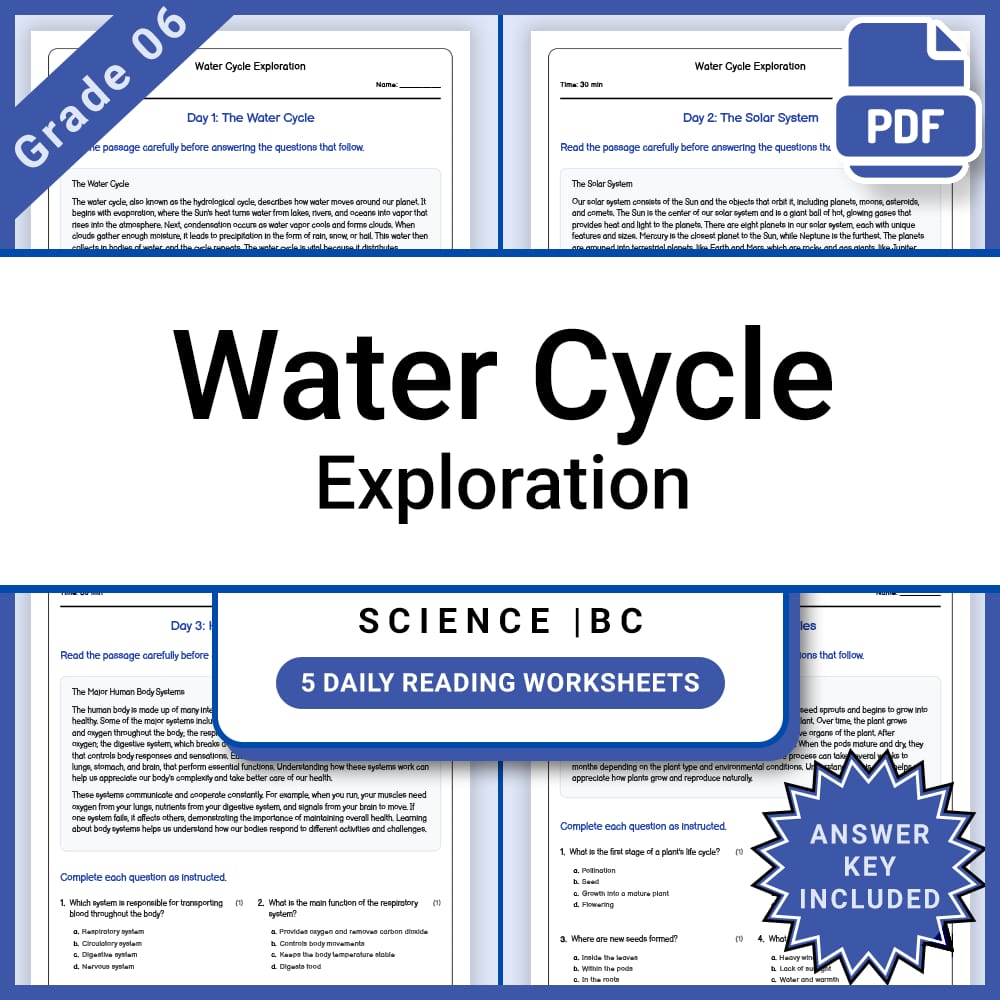
Grade 6 Science Water Cycle Exploration Daily Reading Worksheet + Answer Key
JCreated byJ.S SheetsLearning Objectives
- Understand the stages of the water cycle
- Identify key processes involved in water movement
- Explain the importance of the water cycle to Earth's environment
Also included in: Grade 6 Science Full Year Bundle | Body Systems, Waves, Ecology & More
Instant download
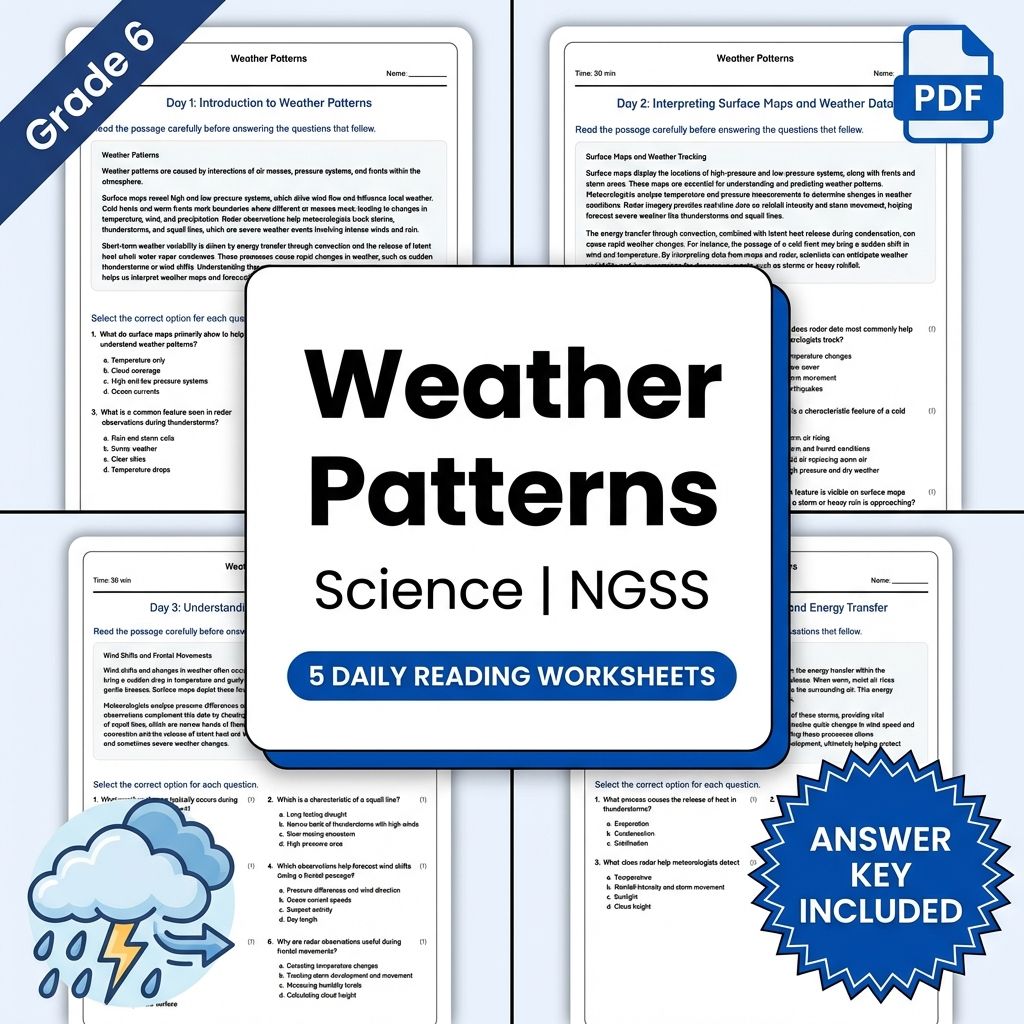
6th Grade Science | Weather Patterns Daily Reading Worksheet (PDF + Answer Key)
Created byCopper Leaf ClassroomLearning Objectives
- Understand how air masses, pressure systems, and fronts interact to produce local and regional weather.
- Interpret surface maps, temperature, and pressure measurements to identify weather features.
- Recognize how convection and latent heat contribute to short-term weather variability.
Instant download
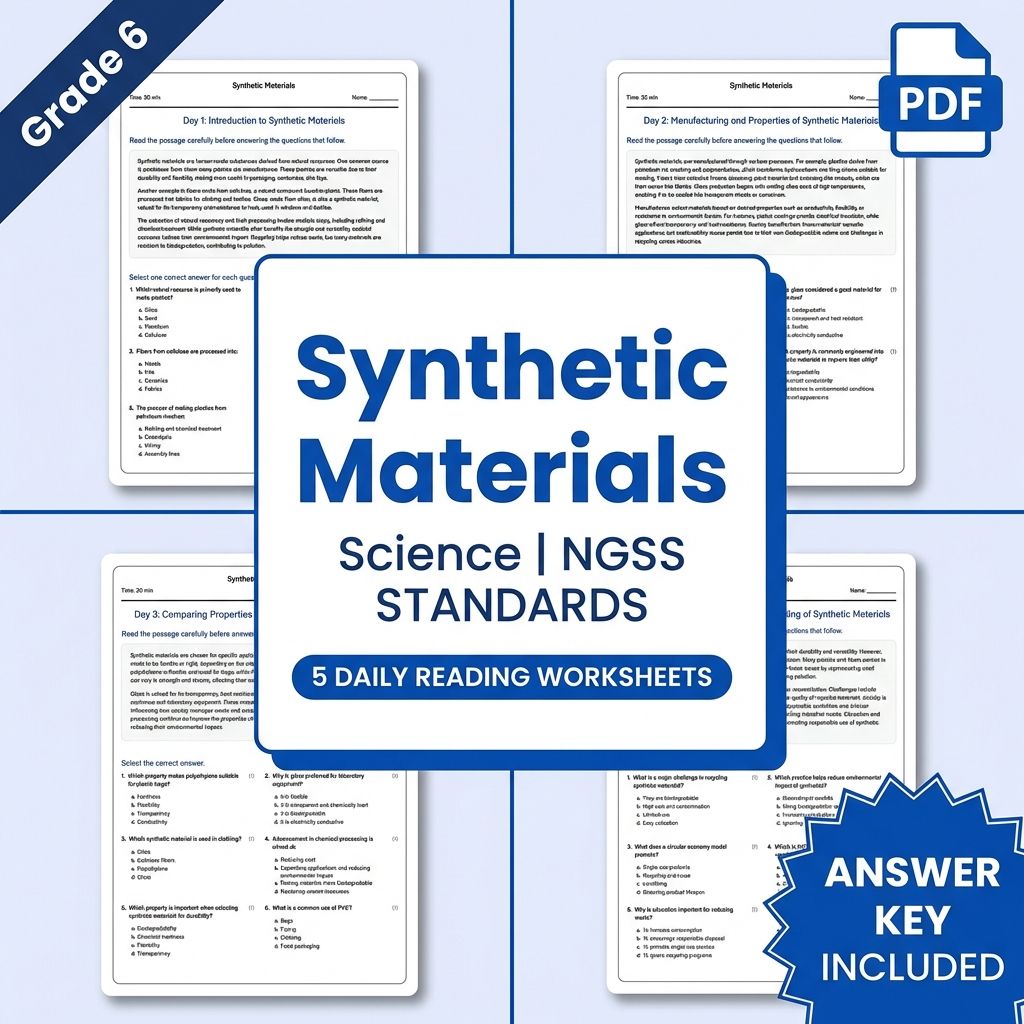
Grade 6 Science – Synthetic Materials Daily Reading Worksheet (PDF+ Answer Key)
Created byCopper Leaf ClassroomLearning Objectives
- Understand the origins of synthetic materials from natural resources.
- Compare properties of substances used for specific purposes, such as durability and biodegradability.
- Describe processes involved in resource extraction and product manufacturing.
Instant download
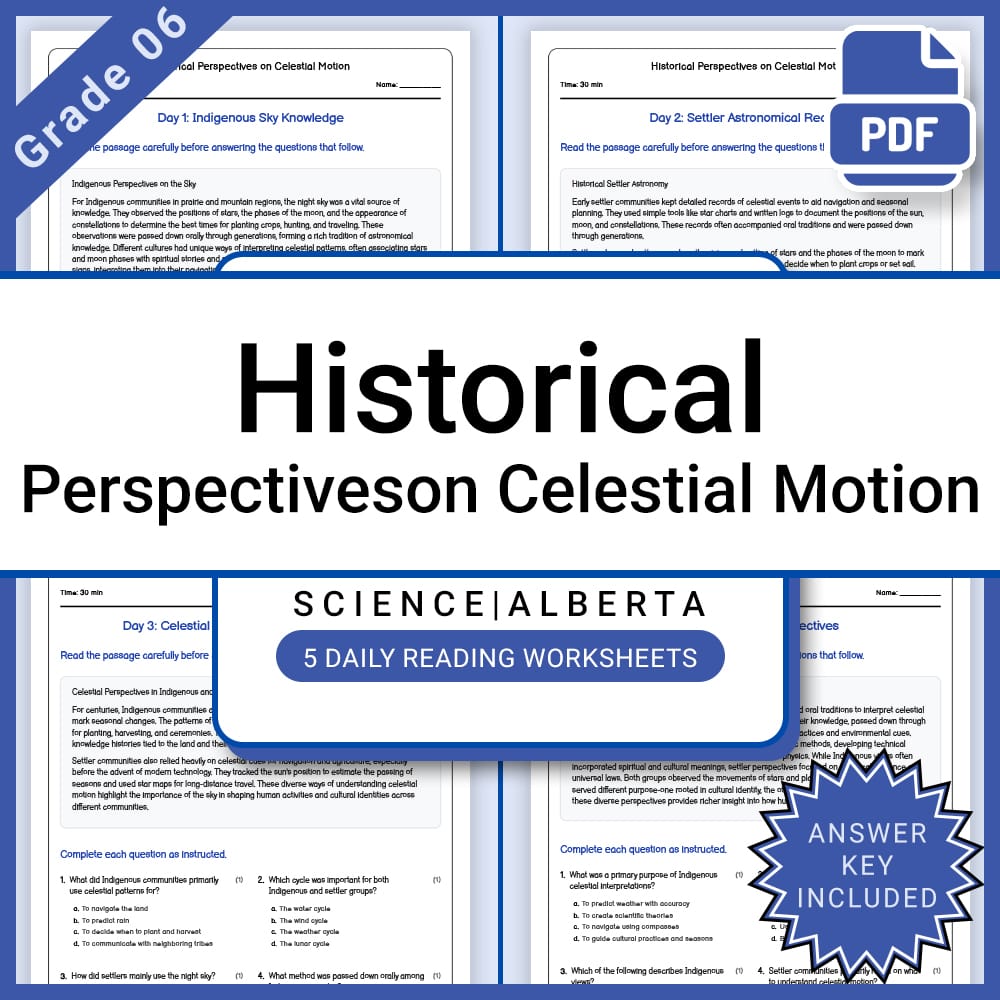
Grade 6 Science – Historical Perspectives Daily Reading Worksheet + Answer Key
JCreated byJ.S SheetsLearning Objectives
- Understand key concepts related to Science
- Apply knowledge through practice questions
- Demonstrate comprehension of the material
Also included in: Grade 6 Science Lesson Group: Earth & Space Reading Worksheets Bundle +1 more
Instant download
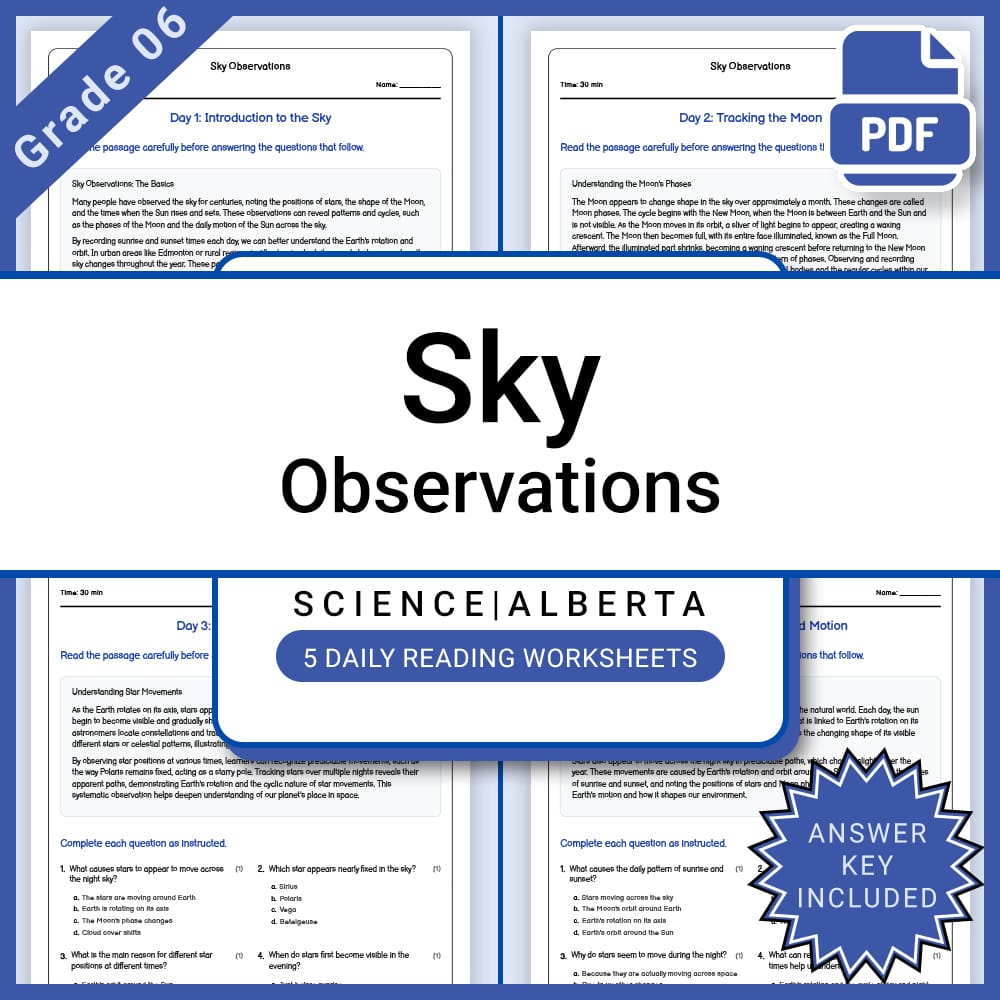
Grade 6 Science Sky Observations Daily Reading Worksheet with Answer Key
JCreated byJ.S SheetsLearning Objectives
- Identify basic features of the sky such as stars, the Moon, and the Sun.
- Record sunrise and sunset times accurately.
- Describe observable patterns related to Earth's rotations and movements.
Also included in: Grade 6 Science Lesson Group: Earth & Space Reading Worksheets Bundle +1 more
Instant download
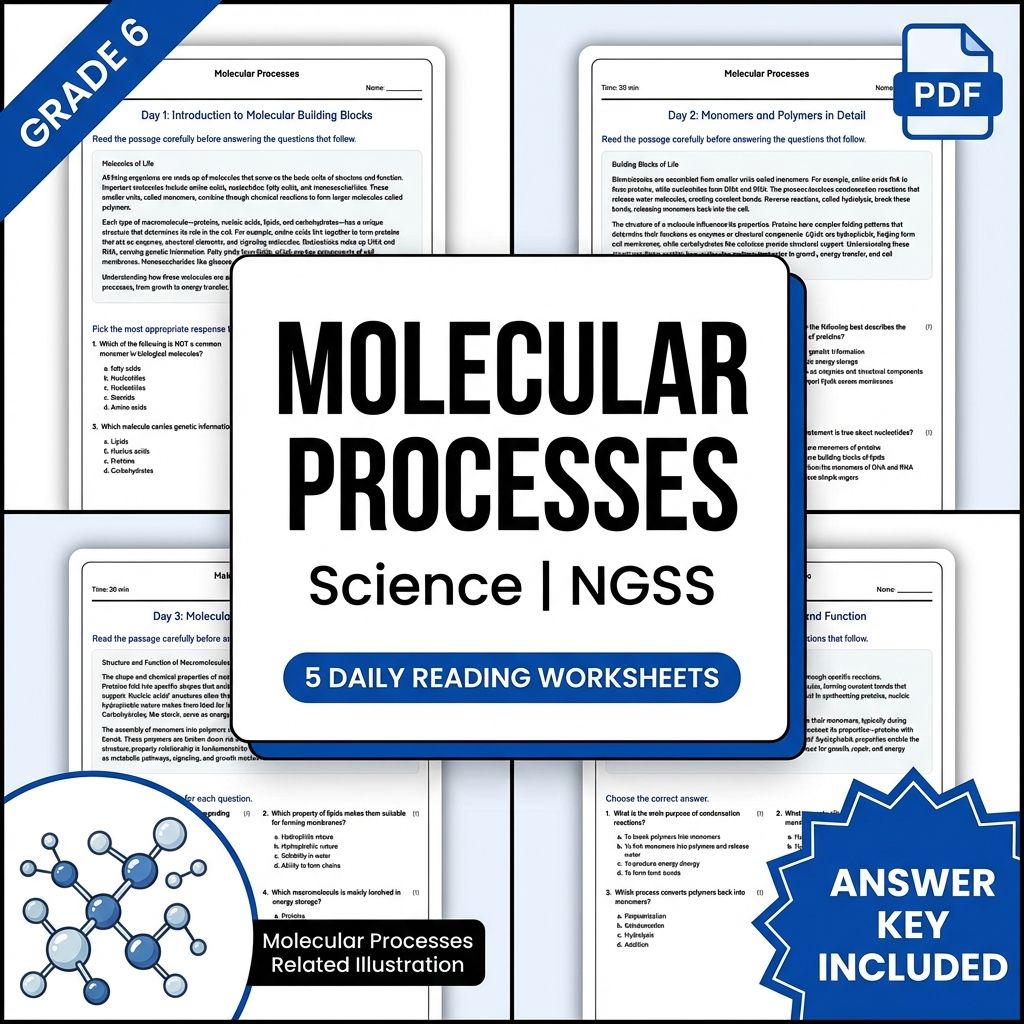
6th Grade Science |Molecular Processes Worksheet (PDF+ Answer Key)
Created byCopper Leaf ClassroomLearning Objectives
- Understand the basic building blocks of life, including amino acids, nucleotides, fatty acids, and monosaccharides.
- Explain how monomers assemble into polymers through condensation reactions.
- Describe how biochemical structures determine functions such as enzyme activity, membrane transport, and growth.
Instant download
Grade 6 Science – Human Impacts on Forests Daily Reading Worksheet + Answer Key
JCreated byJ.S SheetsLearning Objectives
- Understand various ways humans affect forests.
- Identify specific human activities that alter forest ecosystems.
- Develop reading comprehension skills related to environmental science.
Also included in: Grade 6 Science Lesson Bundle – Ecosystems, Trees, and Land Management +1 more
Instant download
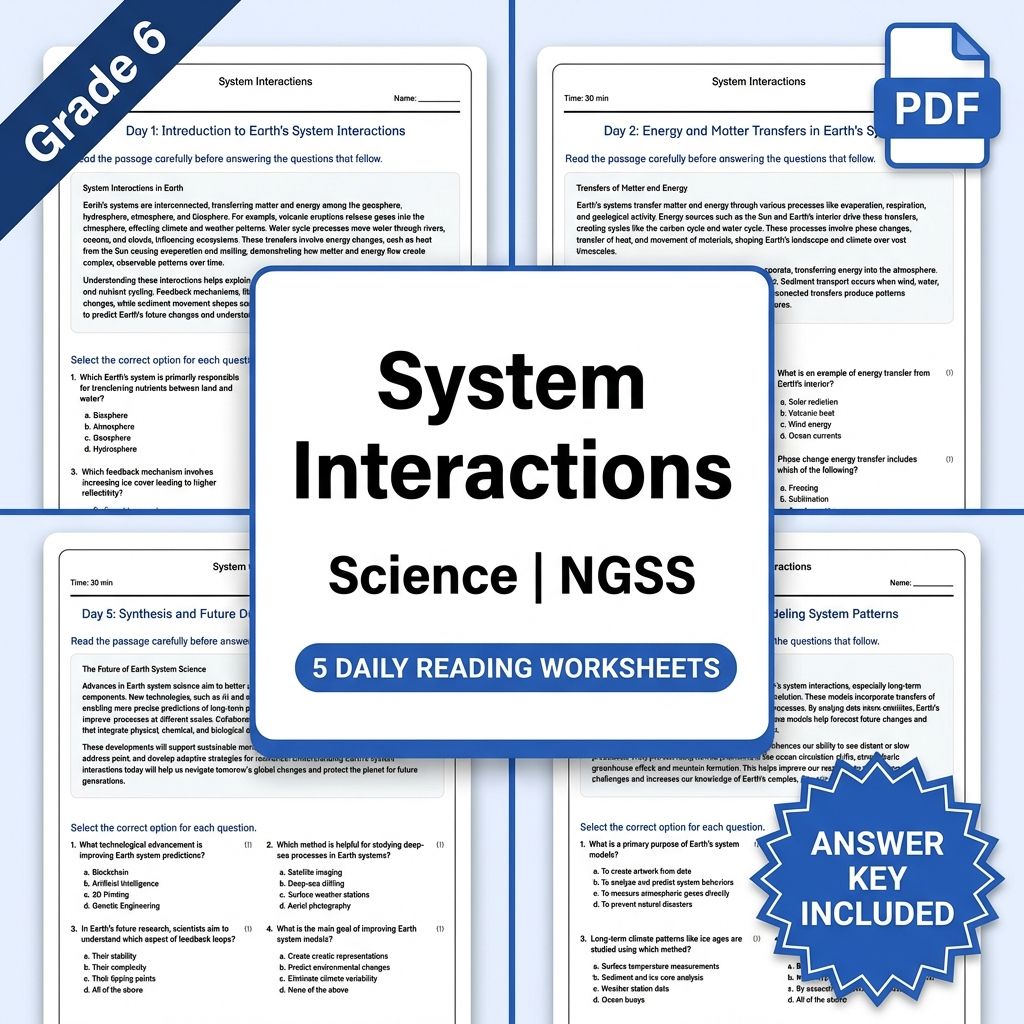
Grade 6 Science – System Interactions Daily Reading Worksheet (PDF+ Answer Key)
Created byCopper Leaf ClassroomLearning Objectives
- Understand how Earth's systems transfer matter and energy through coupled interactions.
- Identify feedback mechanisms such as albedo change and sediment transport.
- Describe energy sources, phase changes, and their role in system patterns over time.
Instant download
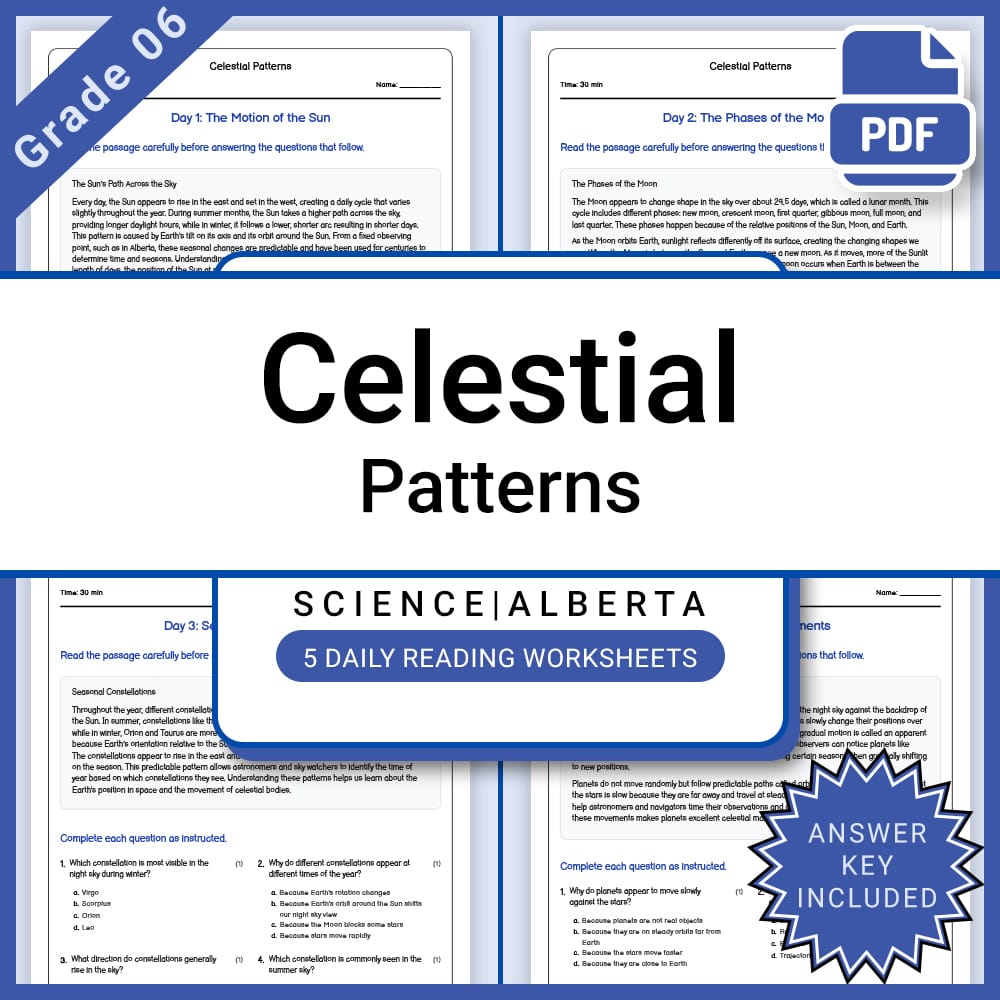
Grade 6 Science – Celestial Patterns Daily Reading Worksheet + Answer Key
JCreated byJ.S SheetsLearning Objectives
- Understand the Sun’s path across the sky throughout different seasons.
- Identify how celestial objects like the Sun, Moon, and planets move in predictable patterns.
- Describe the importance of seasonal star patterns and planetary movements for navigation and timekeeping.
Also included in: Grade 6 Science Lesson Group: Earth & Space Reading Worksheets Bundle +1 more
Instant download
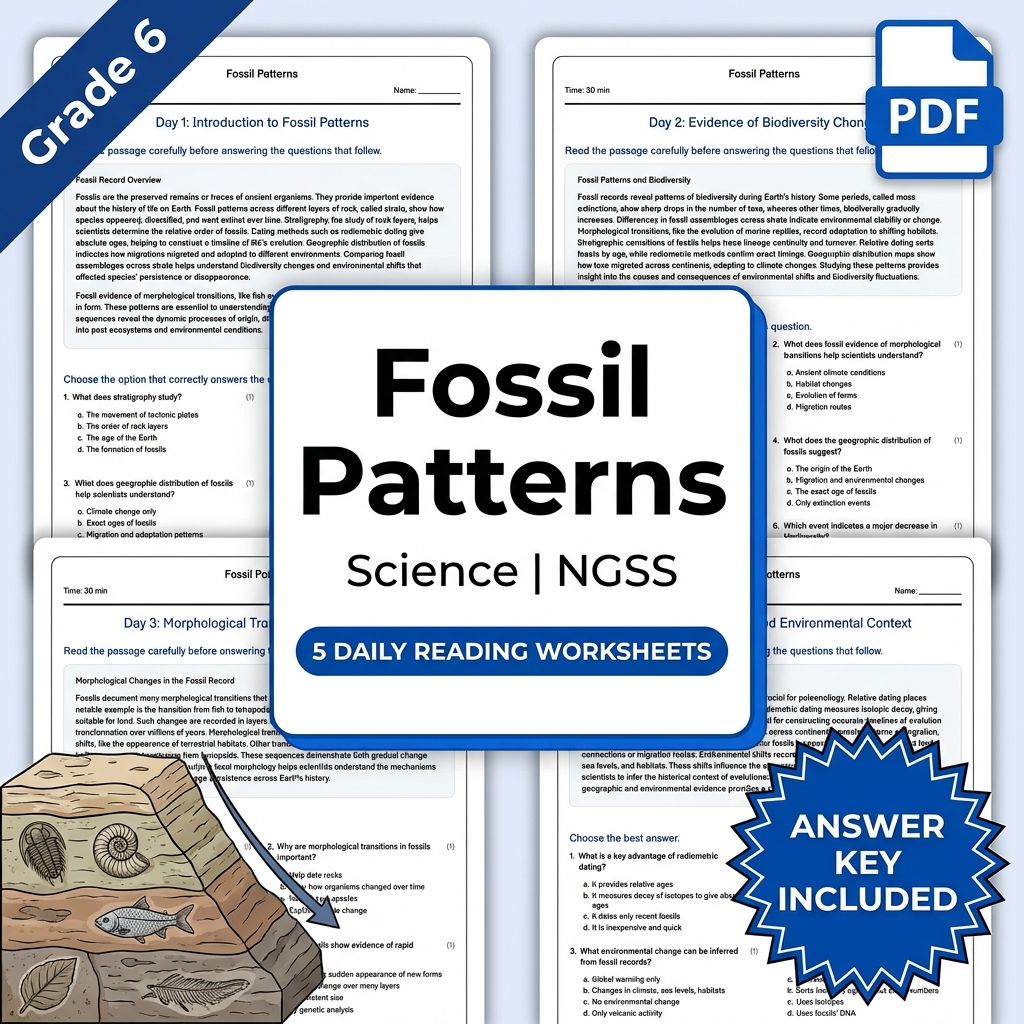
6th Grade Science | Fossil Patterns Reading Worksheet (PDF+ Answer Key)
Created byCopper Leaf ClassroomLearning Objectives
- Identify patterns of fossil occurrence across different geological layers.
- Understand how stratigraphy reveals the sequence of organism development and extinction.
- Analyze morphological transitions in fossils, such as fish to tetrapods.
Instant download
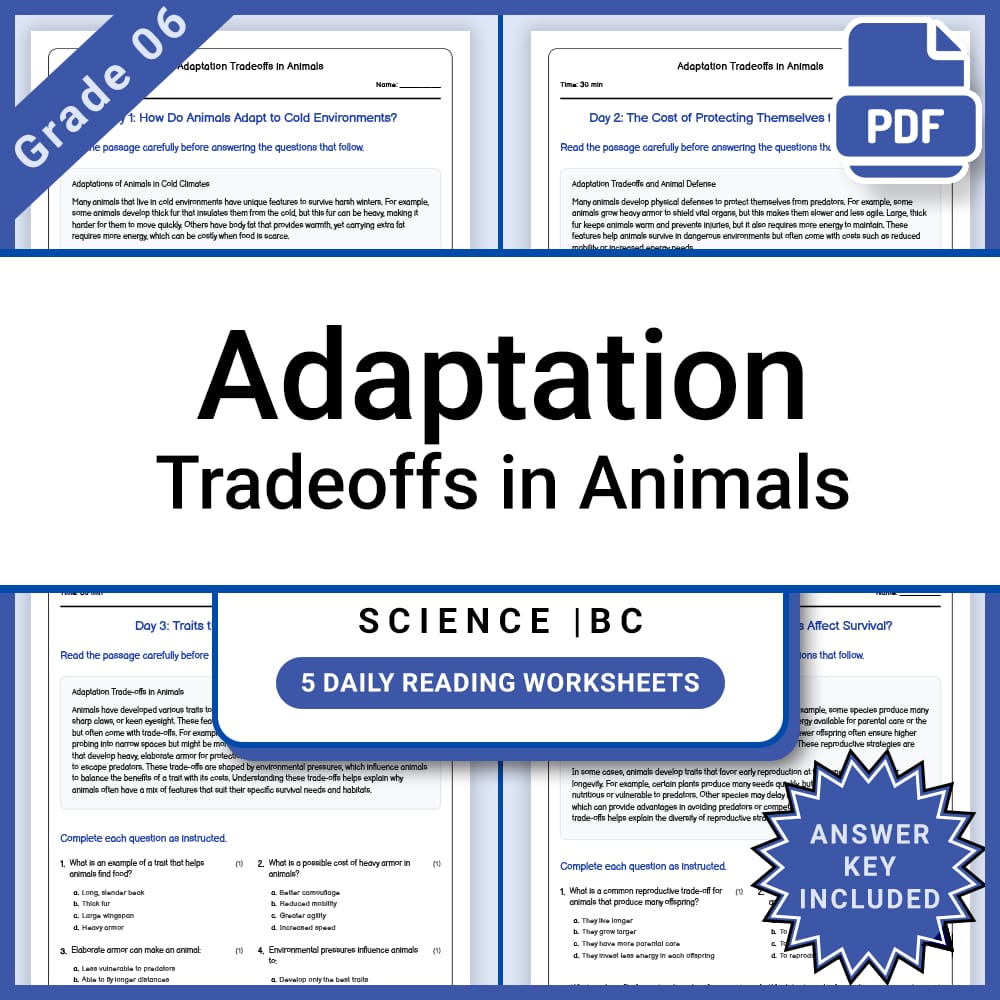
Grade 6 Science – Adaptation Tradeoffs Daily Reading Worksheet + Answer Key
JCreated byJ.S SheetsLearning Objectives
- Understand how structural and physiological features help animals survive in cold environments.
- Analyze the trade-offs of various adaptations, such as heavy armor versus mobility.
- Evaluate the costs and benefits of adaptations and their impact on survival and evolution.
Also included in: Grade 6 Science Lesson Group | Body Systems and Adaptations Bundle +1 more
Instant download
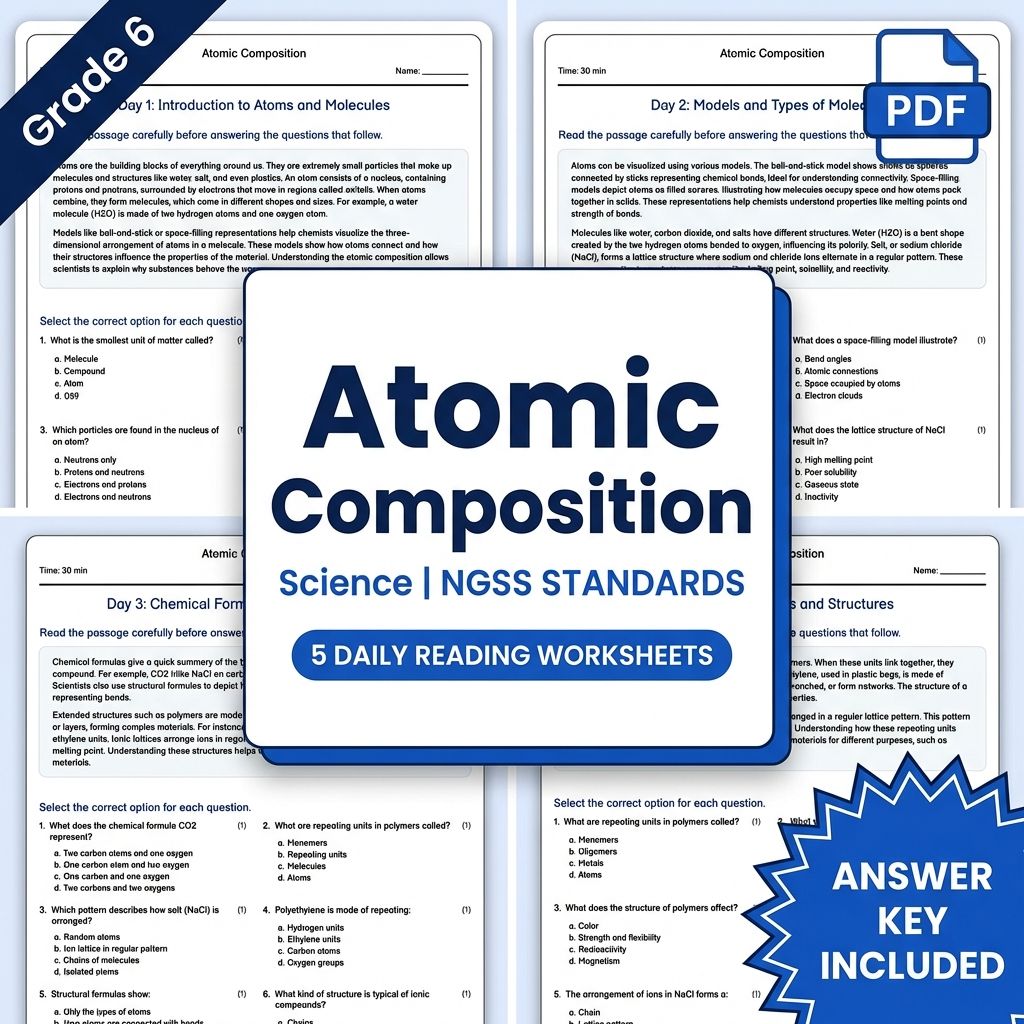
6th Grade Science | Atomic Composition Daily Reading Worksheet(PDF + Answer Key)
Created byCopper Leaf ClassroomLearning Objectives
- Understand the basic structure and components of atoms.
- Describe how atoms combine to form molecules like H2O and NaCl.
- Identify different models used to represent molecules and atomic structures.
Instant download
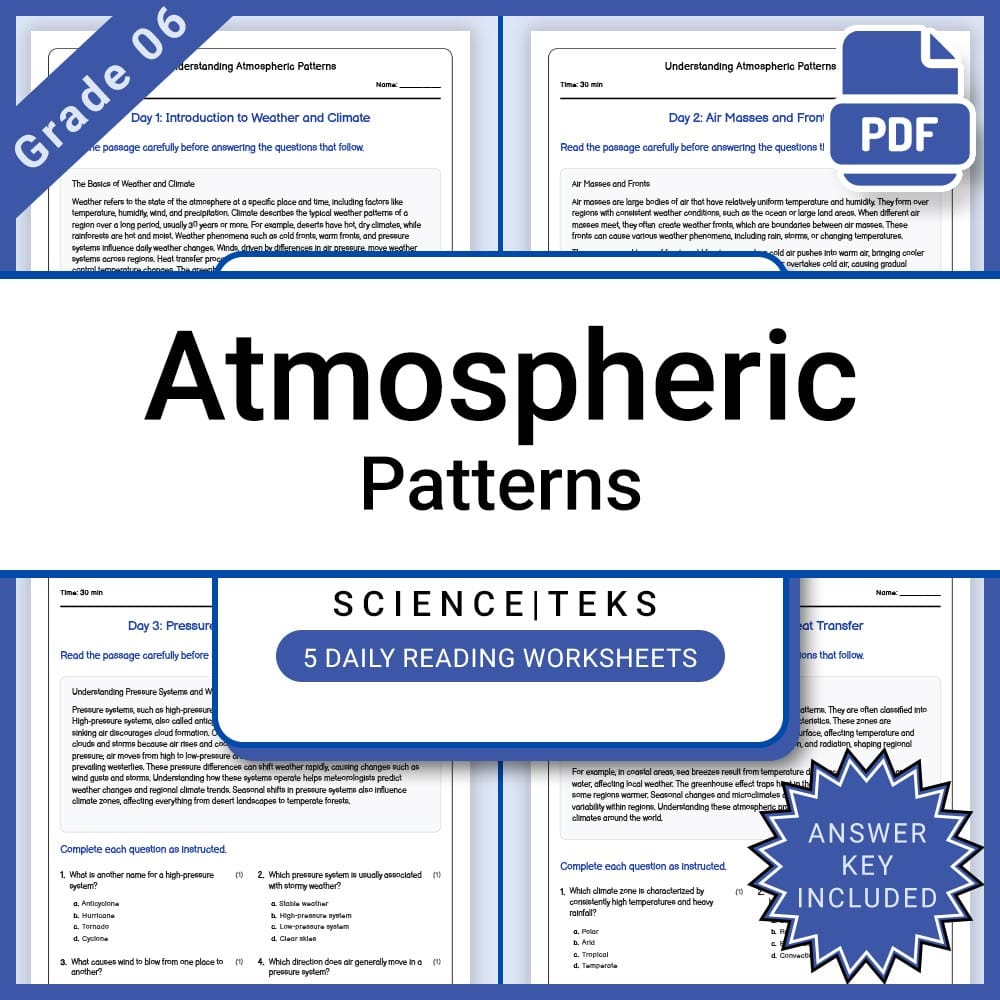
Grade 6 Science – Atmospheric Patterns Daily Reading Worksheet + Answer Key
JCreated byJ.S SheetsLearning Objectives
- Identify basic weather phenomena such as fronts, pressure systems, and winds.
- Describe the key components of the atmosphere and how they influence weather and climate.
- Explain how heat transfer and the greenhouse effect contribute to regional climate variability.
Also included in: Grade 6 Science Lesson Bundle: Space, Water, Earth, and Resources TEKS +1 more
Instant download
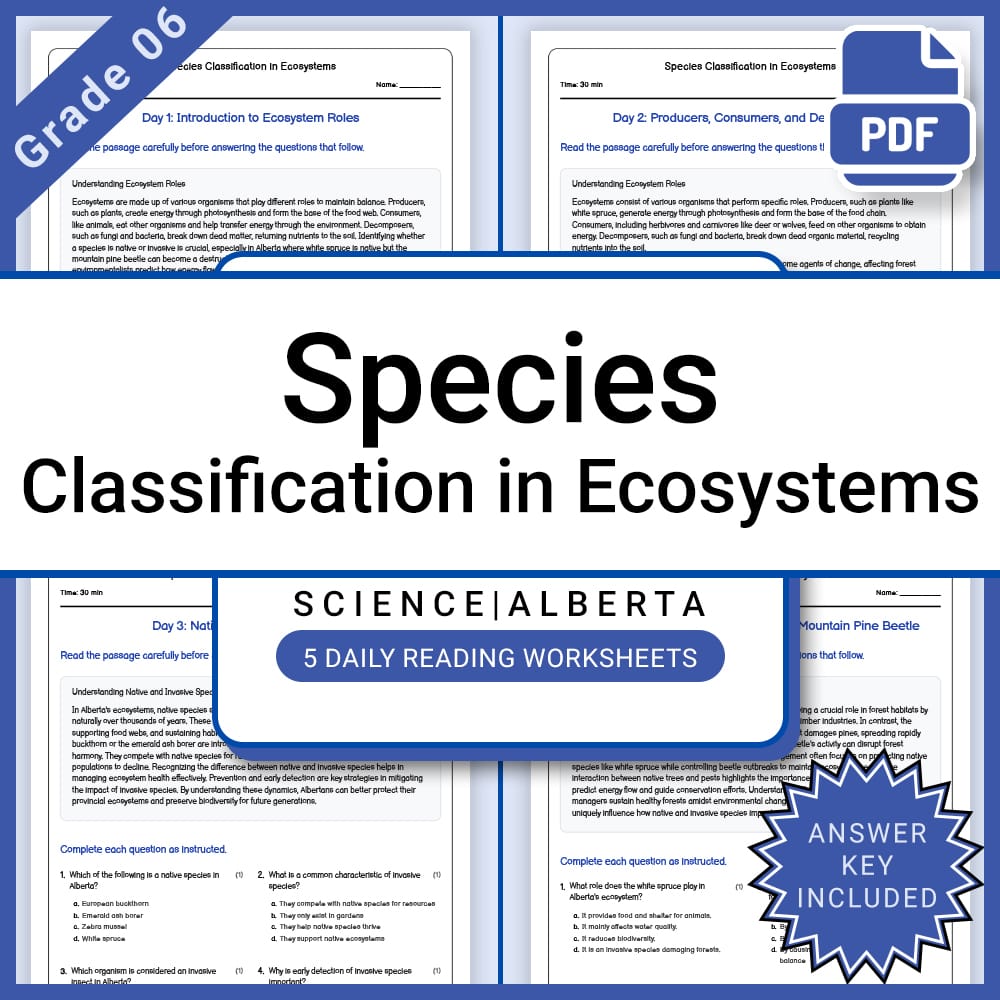
Grade 6 – Species Classification in Ecosystems Daily Worksheet + Answer Key
JCreated byJ.S SheetsLearning Objectives
- Understand the different roles of organisms within an ecosystem.
- Identify native versus invasive or pest species.
- Learn how species classification helps predict energy flow and ecosystem health.
Also included in: Grade 6 Science Lesson Bundle – Ecosystems, Trees, and Land Management +1 more
Instant download
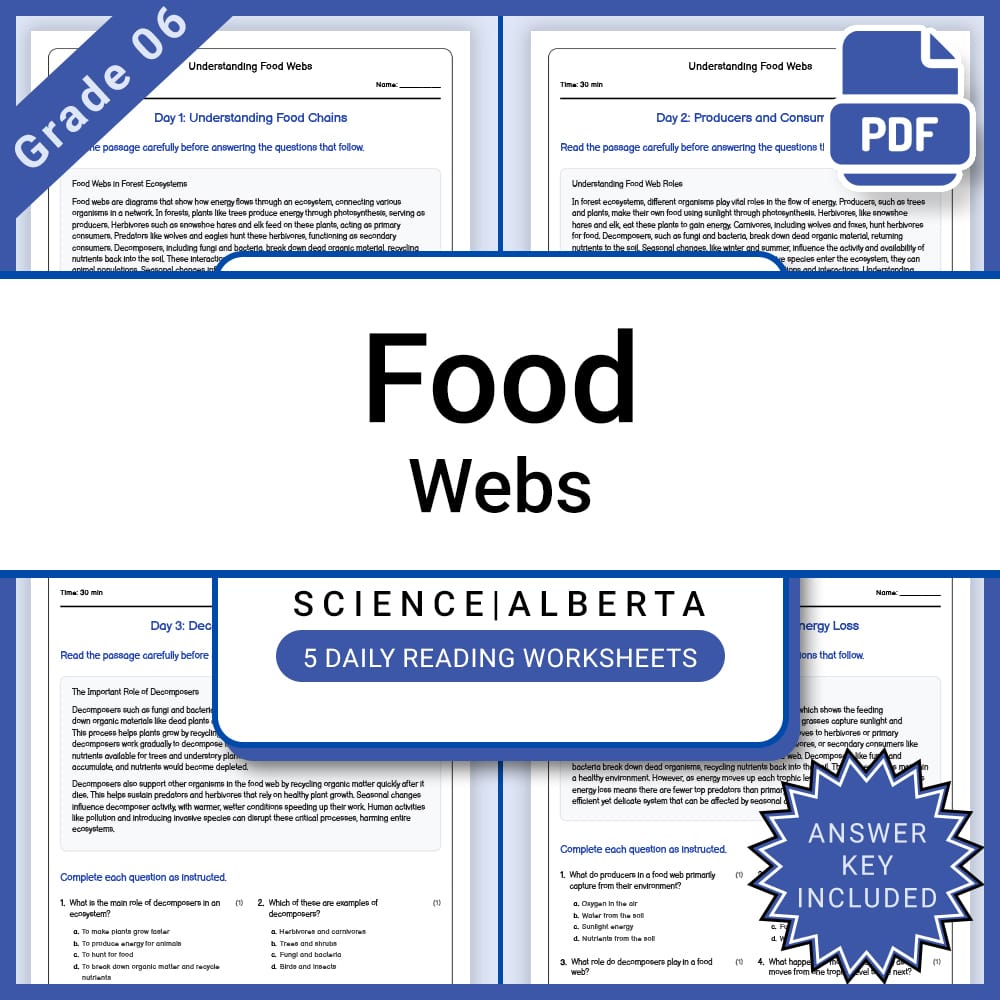
Grade 6 Science – Food Webs Daily Reading Worksheet with Answer Key
JCreated byJ.S SheetsLearning Objectives
- Identify the roles of producers, consumers, and decomposers in an ecosystem.
- Understand the flow of energy through a food web.
- Recognize the impact of seasonal changes and disruptions on food webs.
Also included in: Grade 6 Science Lesson Bundle – Ecosystems, Trees, and Land Management +1 more
Instant download
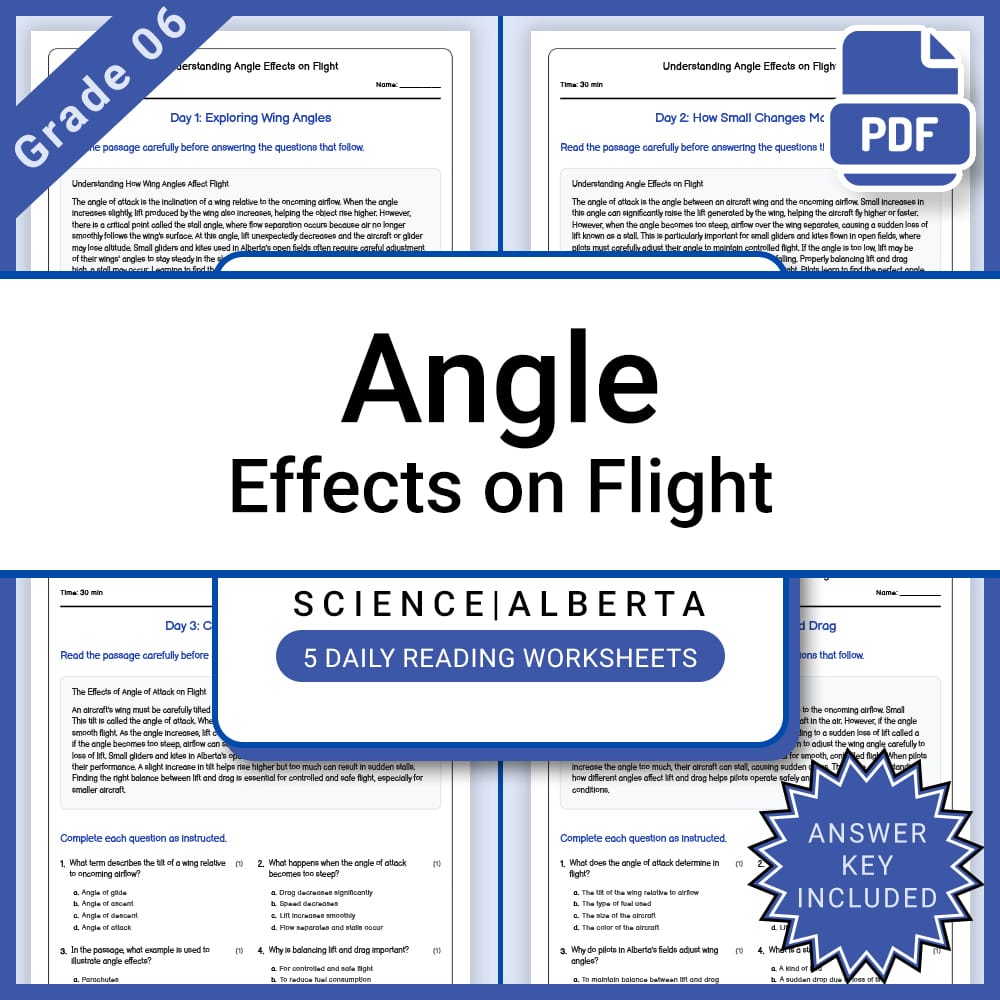
Grade 6 Science – Angle Effects on Flight Daily Reading Worksheet + Answer Key
JCreated byJ.S SheetsLearning Objectives
- Explain how the angle of attack influences lift and drag in flight.
- Identify the critical angle where flow separation causes a stall.
- Describe how small modifications in wing angles affect performance.
Also included in: Grade 6 Science Lesson Bundle: Flight, Weather, and Aerodynamics +1 more
Instant download
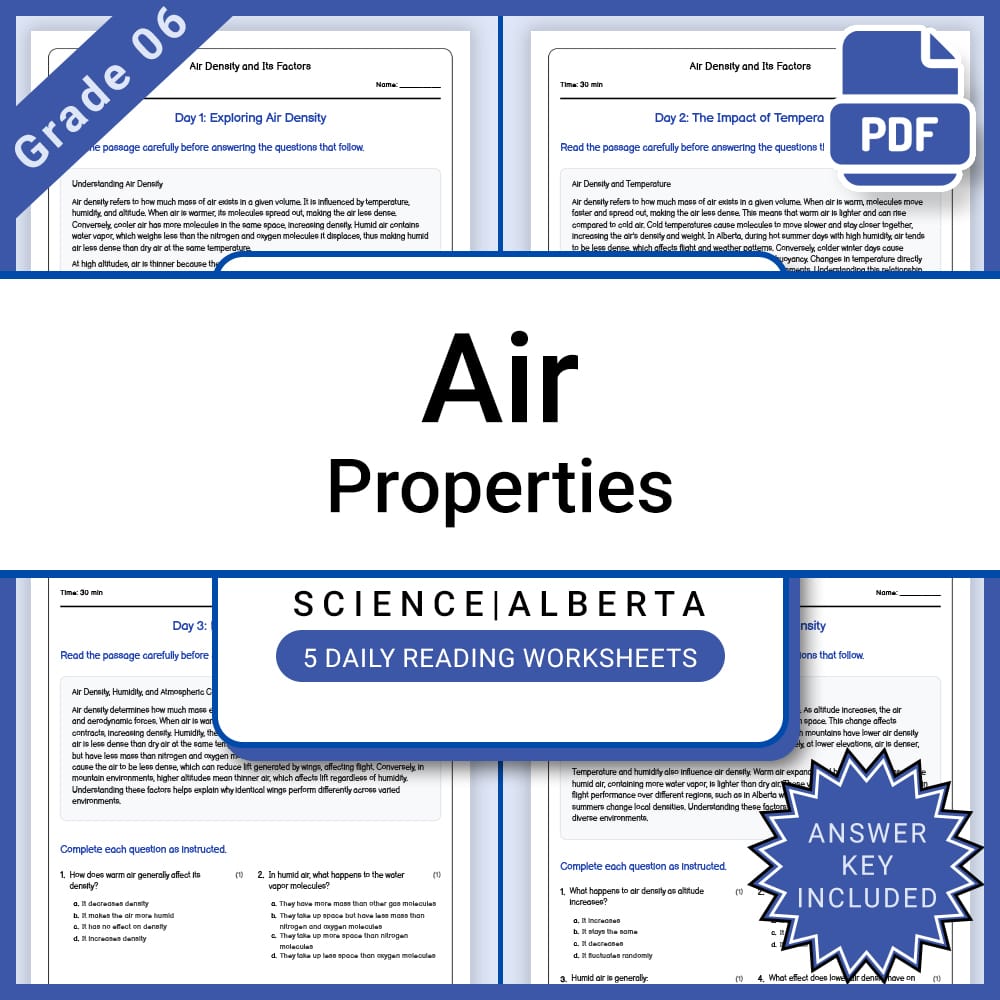
Grade 6 Science – Air Properties Daily Reading Worksheet with Answer Key
JCreated byJ.S SheetsLearning Objectives
- Understand the composition of air
- Recognize how air density changes with altitude and temperature
- Explain how air pressure is caused by gas molecules colliding
Also included in: Grade 6 Science Lesson Bundle: Flight, Weather, and Aerodynamics +1 more
Instant download
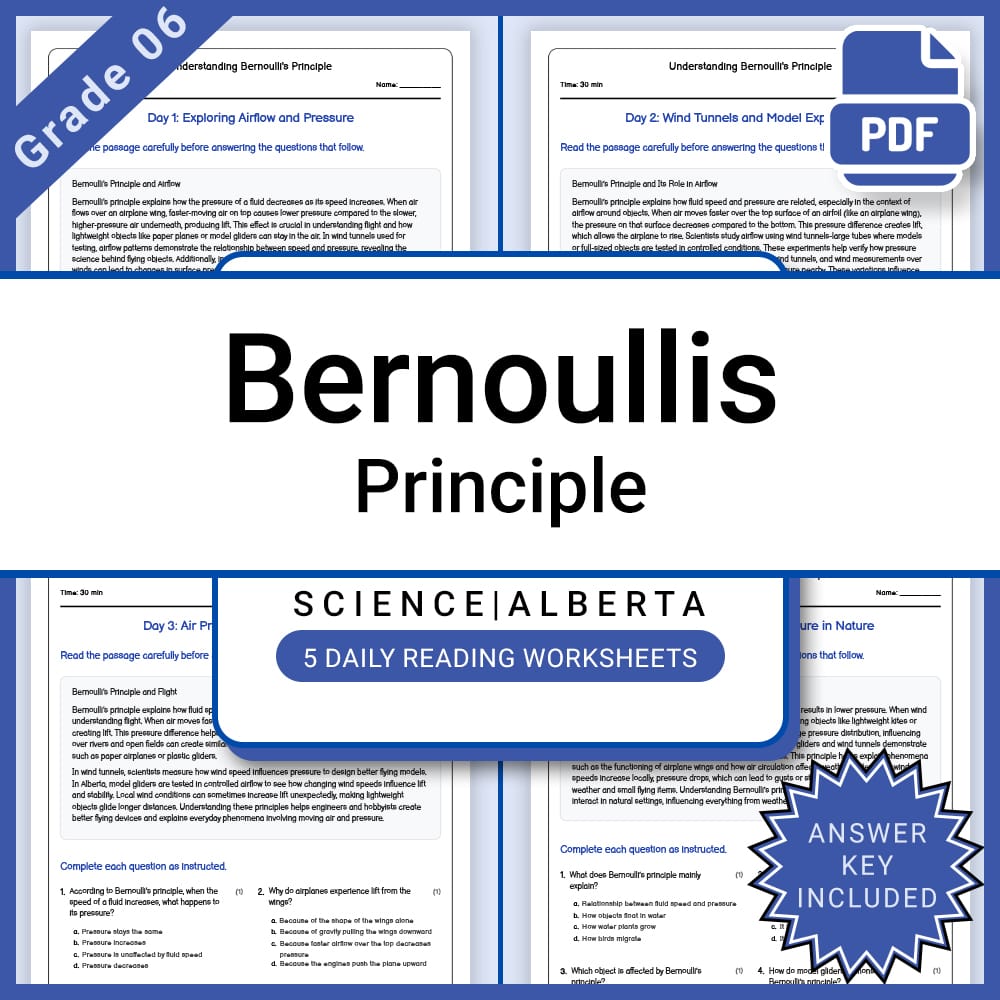
Grade 6 Science – Bernoulli's Principle Daily Reading Worksheet + Answer Key
JCreated byJ.S SheetsLearning Objectives
- Identify how airspeed affects pressure around objects
- Explain the concept of lift in relation to fluid flow
- Describe real-world examples of Bernoulli's principle in action
Also included in: Grade 6 Science Lesson Bundle: Flight, Weather, and Aerodynamics +1 more
Instant download
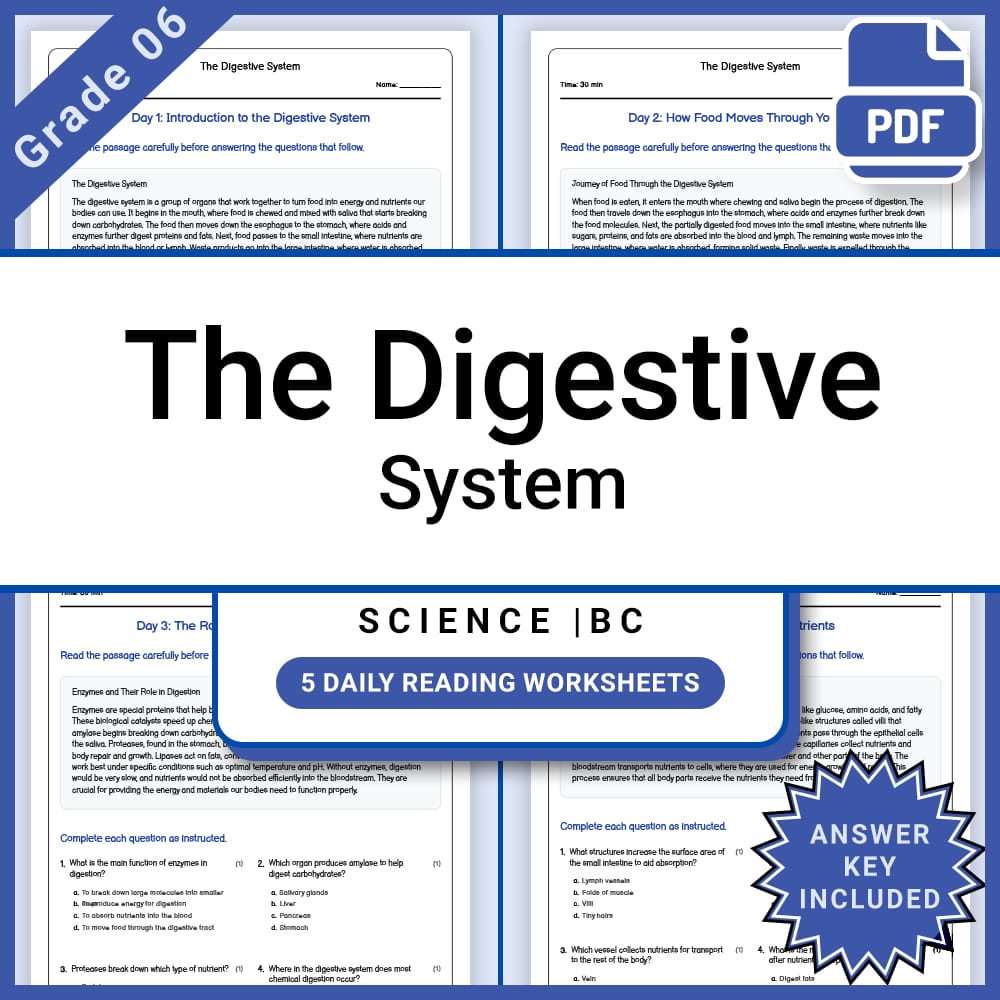
Grade 6 Science – Digestive System Daily Reading Worksheet with Answer Key
JCreated byJ.S SheetsLearning Objectives
- Understand key concepts related to Science
- Apply knowledge through practice questions
- Demonstrate comprehension of the material
Also included in: Grade 6 Science Lesson Group | Body Systems and Adaptations Bundle +1 more
Instant download
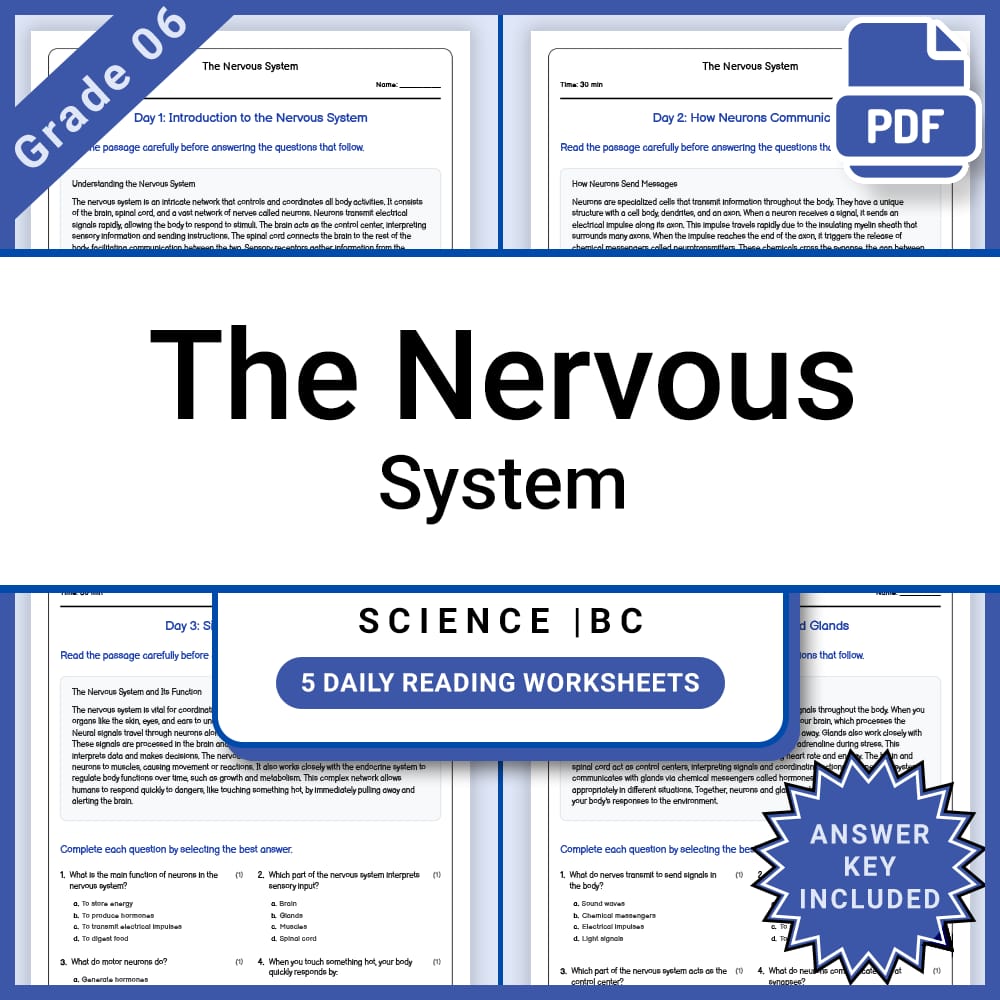
Grade 6 Science – Nervous System Daily Reading Worksheet with Answer Key
JCreated byJ.S SheetsLearning Objectives
- Identify parts of the nervous system
- Understand functions of neurons
- Describe how the nervous system communicates and coordinates responses
Also included in: Grade 6 Science Lesson Group | Body Systems and Adaptations Bundle +1 more
Instant download
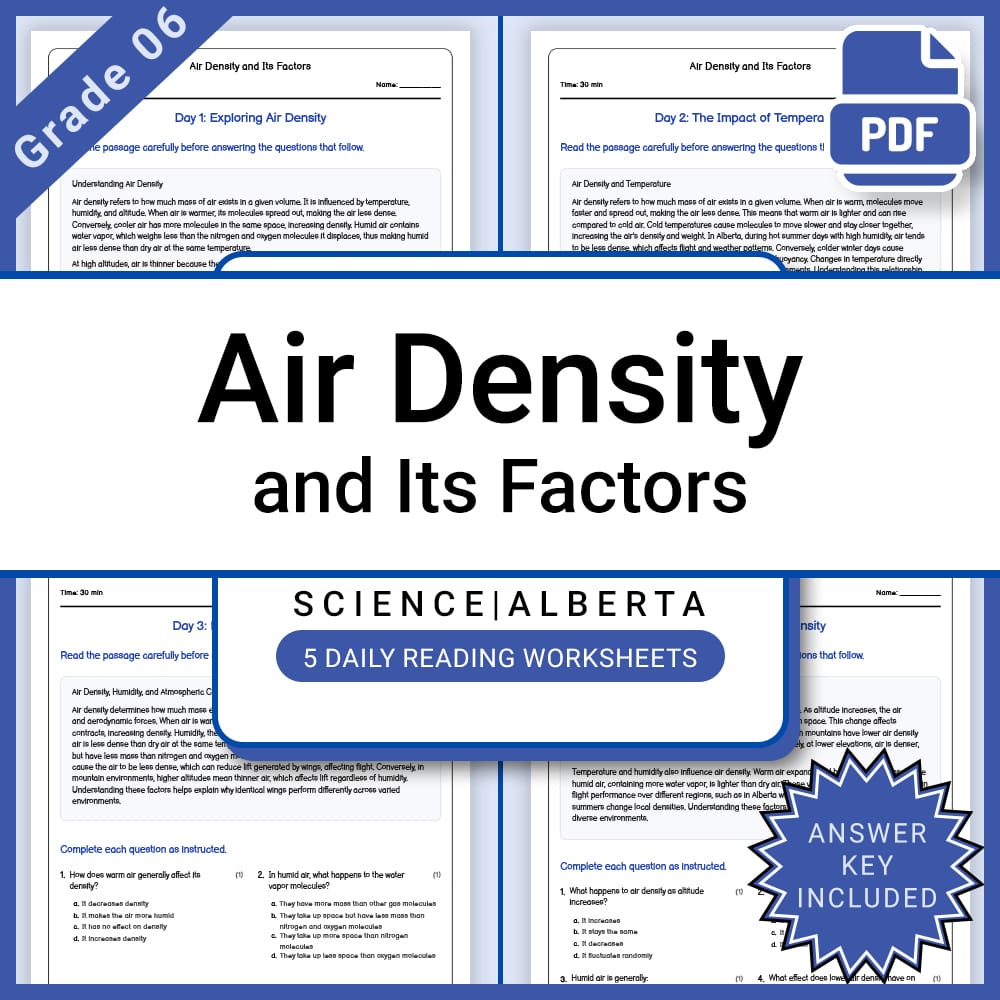
Grade 6 Science – Air Density and Its Factors Daily Worksheet + Answer Key
JCreated byJ.S SheetsLearning Objectives
- Identify factors that affect air density
- Understand how temperature, humidity, and altitude influence air density
- Explain the relationship between air density and buoyancy
Also included in: Grade 6 Science Lesson Bundle: Flight, Weather, and Aerodynamics +1 more
Instant download
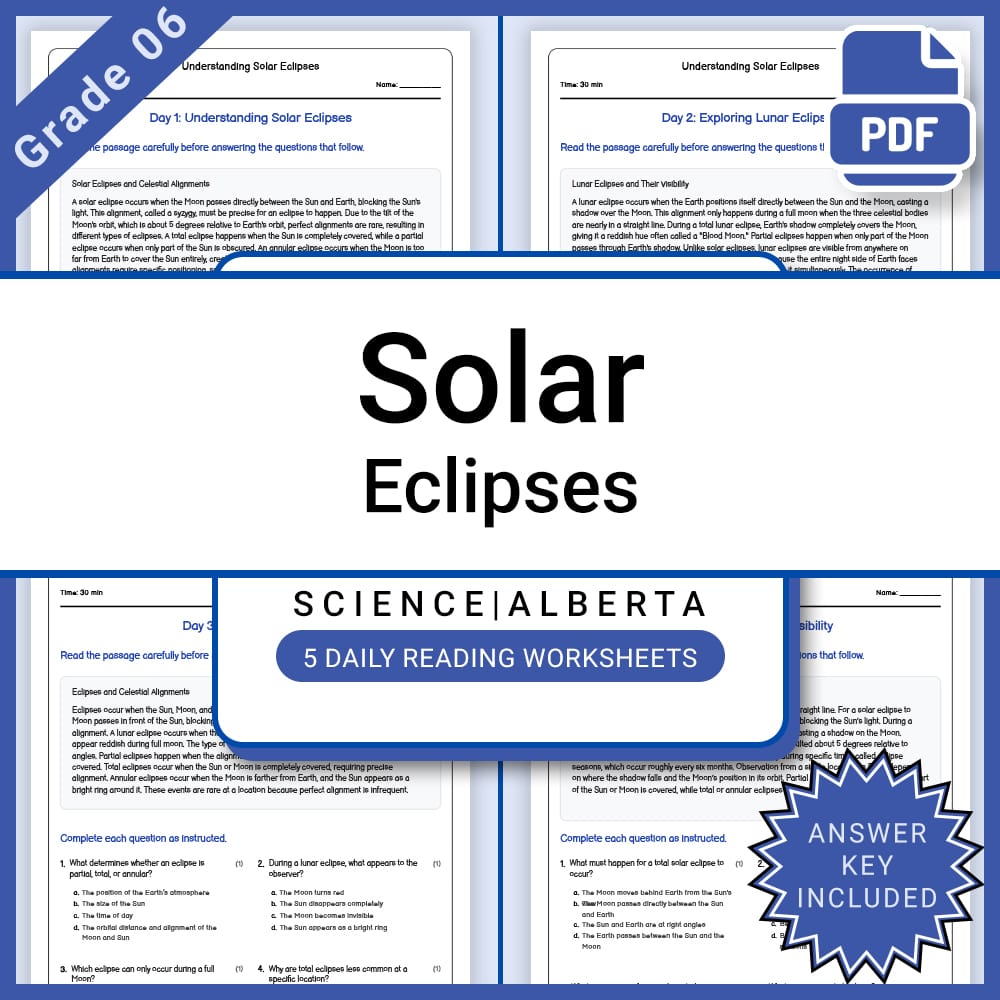
Grade 6 Science – Solar Eclipses Daily Reading Worksheet + Answer Key
JCreated byJ.S SheetsLearning Objectives
- Explain how the Sun, Moon, and Earth align during a solar eclipse.
- Identify the conditions that lead to partial, total, and annular eclipses.
- Describe why eclipses are relatively rare at a given location.
Also included in: Grade 6 Science Lesson Group: Earth & Space Reading Worksheets Bundle +1 more
Instant download
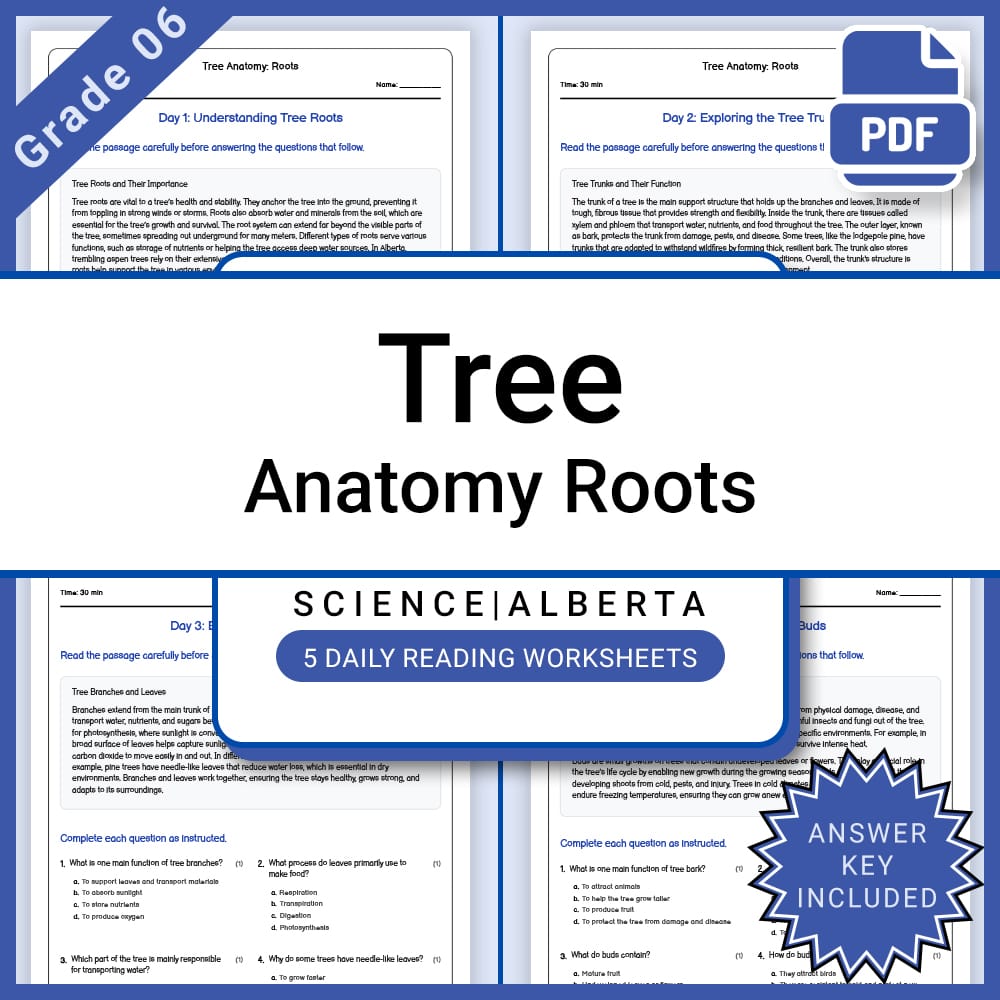
Grade 6 Science – Tree Roots Daily Worksheet + Answer Key | Alberta Standards
JCreated byJ.S SheetsLearning Objectives
- Identify the major structures of tree roots
- Explain the role of roots in supporting tree survival
- Describe how roots transport nutrients and water
Also included in: Grade 6 Science Lesson Bundle – Ecosystems, Trees, and Land Management +1 more
Instant download
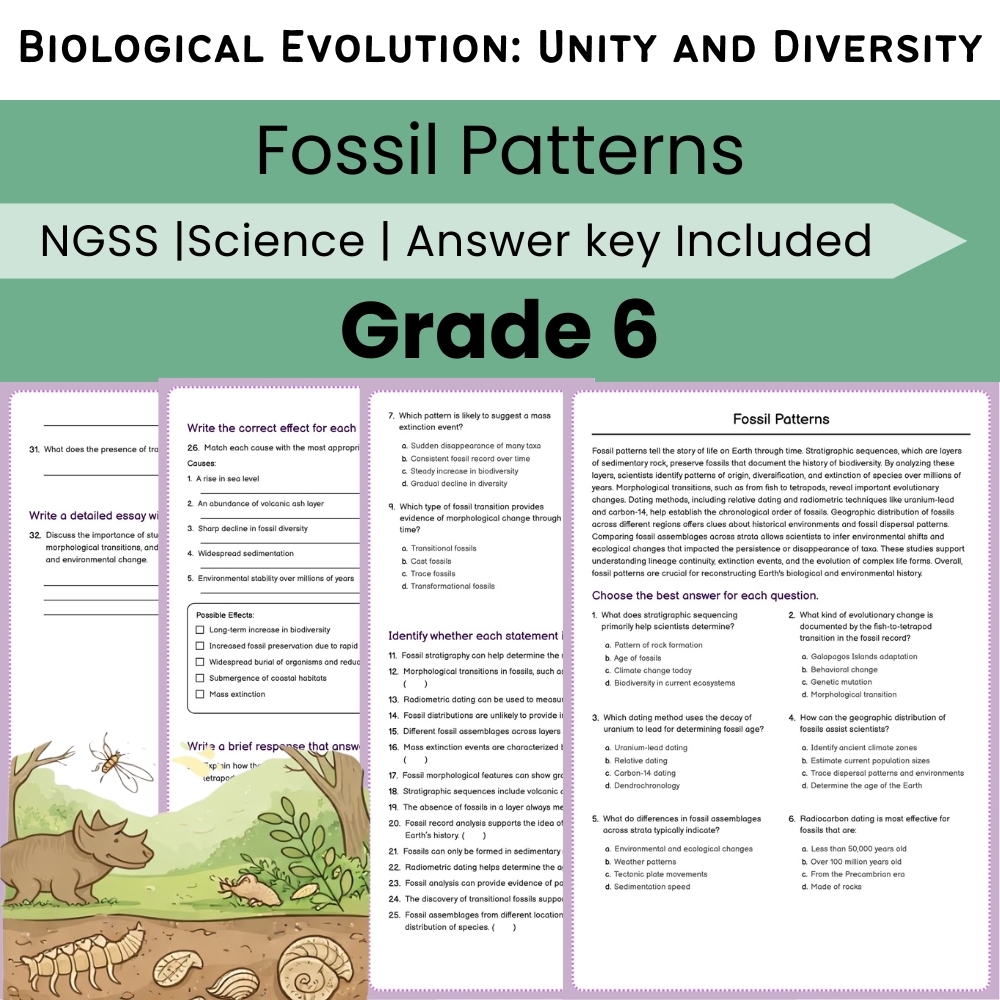
Grade 6 Science | Fossil Patterns Worksheet – NGSS Assessment & Student Practice (Printable PDF)
Learning Objectives
- Analyze fossil occurrences and stratigraphic sequences to understand patterns of origin, diversification, and extinction.
- Identify morphological transitions in the fossil record, such as fish-to-tetrapod examples.
- Use temporal, relative, and radiometric dating methods to determine lineage continuity and turnover.
Also included in: Grade 6 Science | Biological Evolution: Unity and Diversity Unit Bundle (NGSS-aligned Worksheets) +1 more
Instant download
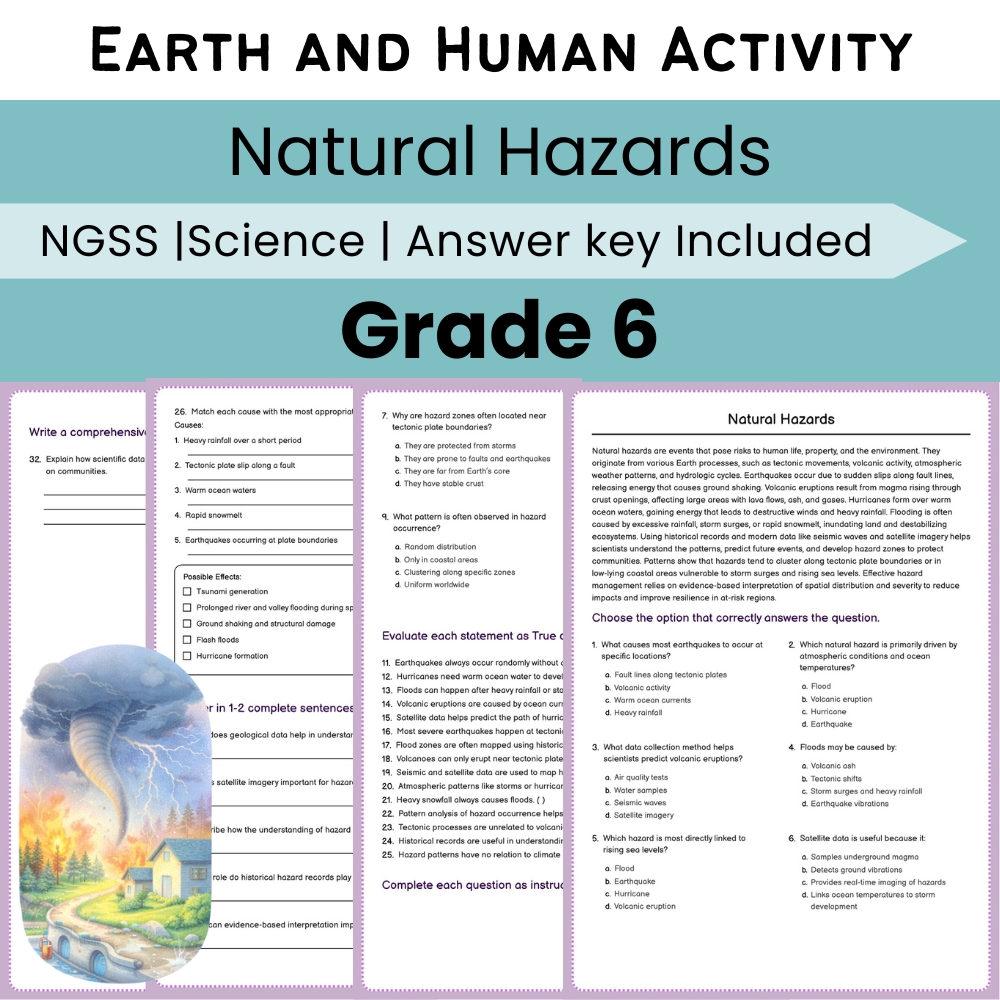
Natural Hazards Worksheet | Grade 6 Science Printable PDF & Assessment
Learning Objectives
- Understand the origins and patterns of natural hazards such as earthquakes, volcanoes, hurricanes, and floods.
- Analyze the effects of these hazards on communities and infrastructure.
- Evaluate relationships among tectonic, atmospheric, and hydrologic processes to explain hazard occurrence.
Also included in: Grade 6 Science | Earth & Human Activity NGSS Unit Bundle (4 Worksheets) +1 more
Instant download
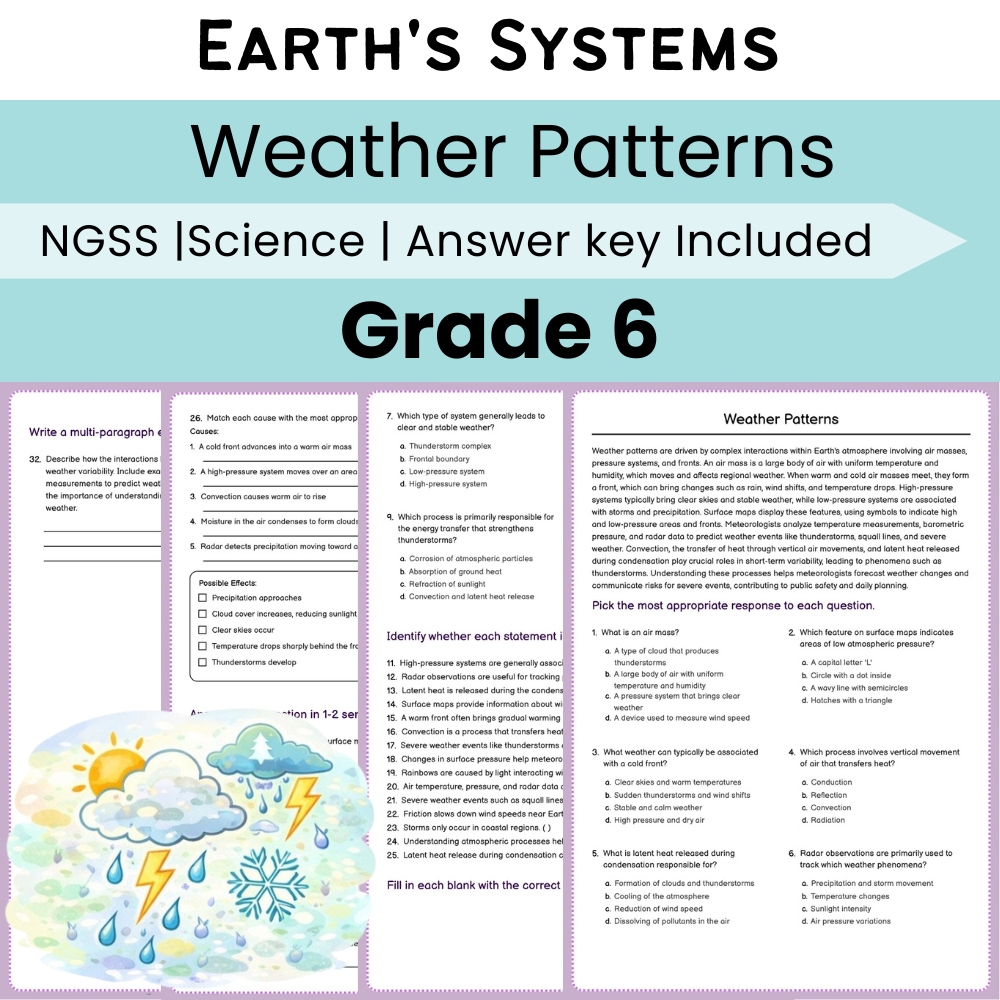
Weather Patterns Worksheet | NGSS Grade 6 Science printable PDF
Learning Objectives
- Describe atmospheric processes that produce local and regional weather.
- Interpret surface maps, temperature, and pressure measurements to analyze weather events.
- Explain how convection and latent heat release influence short-term weather variability.
Also included in: Grade 6 Science | Earth's Systems Unit Worksheet Bundle (NGSS Aligned) +1 more
Instant download
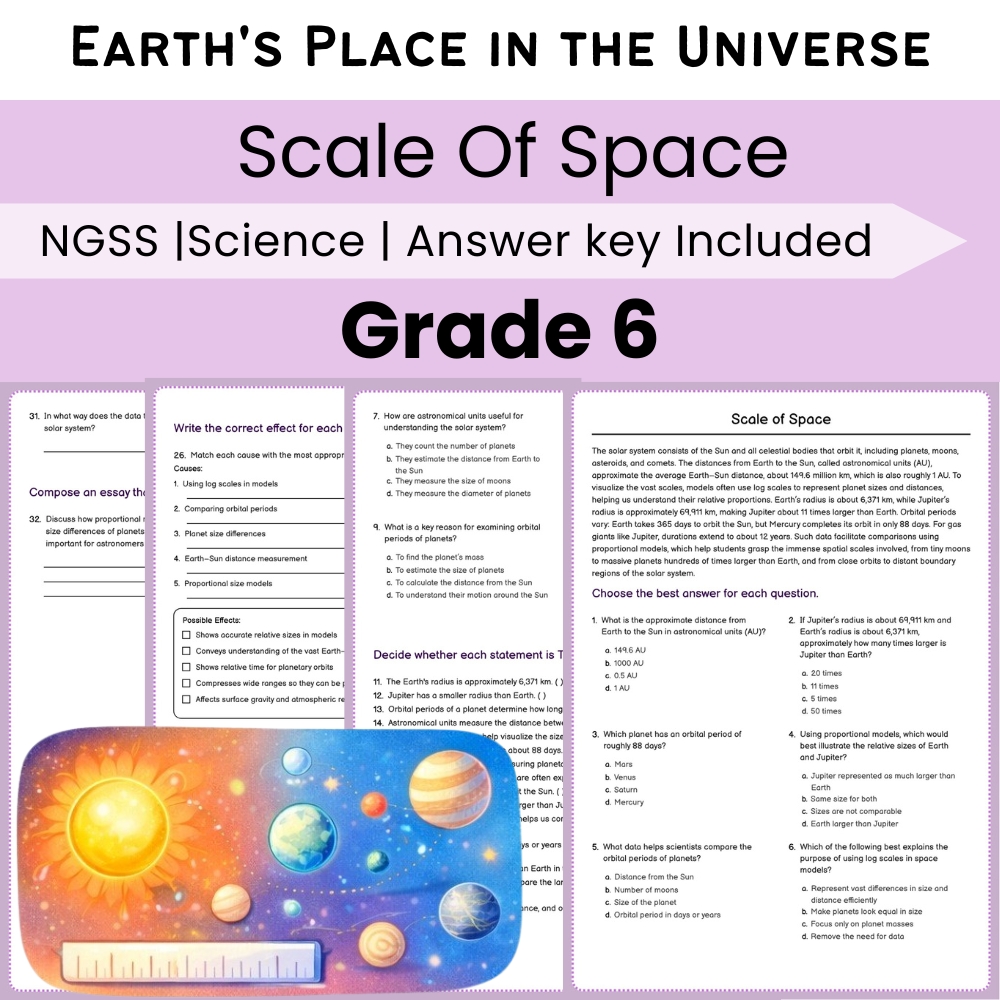
Scale of Space Worksheet | NGSS Grade 6 Science assessment & student practice
Learning Objectives
- Understand the relative sizes, distances, and periods of orbit of planets within the solar system.
- Compare planetary properties using astronomical units, radii, and orbital periods.
- Interpret data tables and charts to analyze spatial relationships within the solar system.
Also included in: Grade 6 Science | Earth's Place in the Universe Unit Bundle (NGSS Aligned Worksheets) +1 more
Instant download
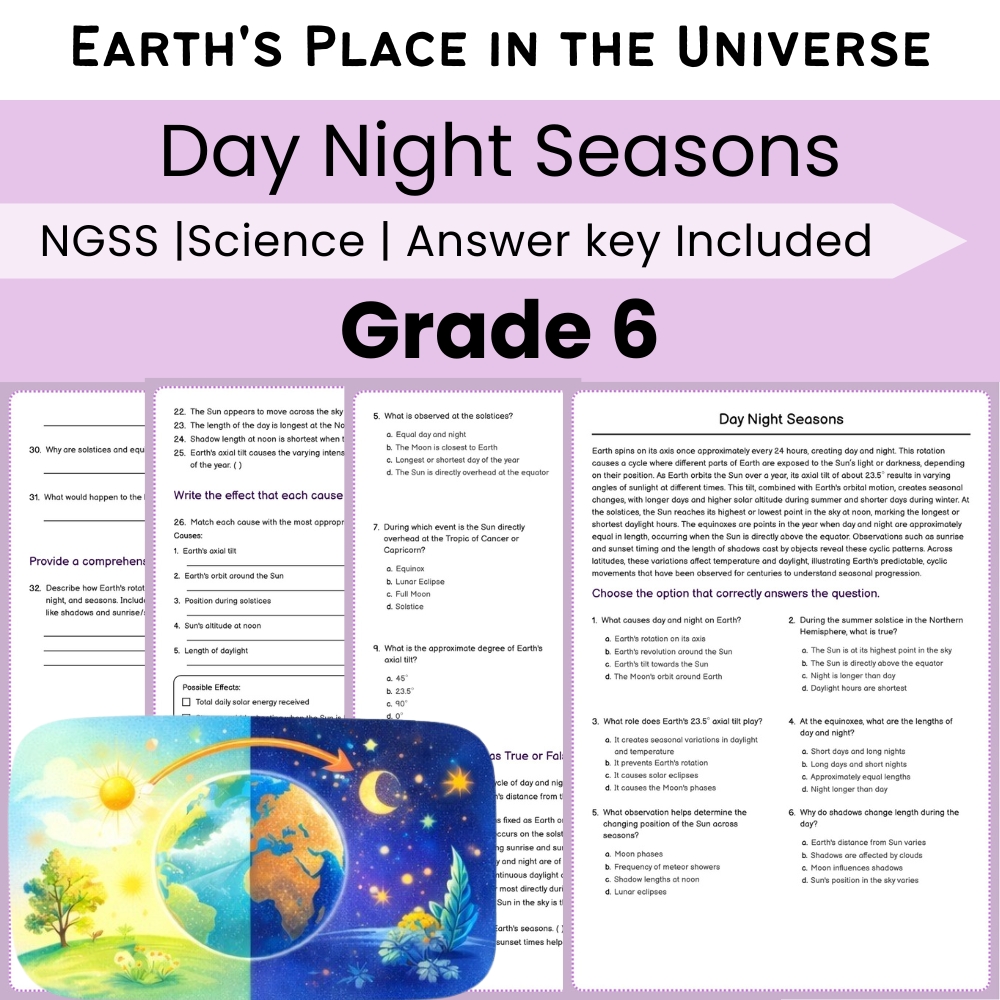
Day Night Seasons Science Worksheet | Grade 6 Science printable PDF
Learning Objectives
- Understand Earth's rotation and its effect on day and night.
- Describe how Earth's tilt and orbit cause seasons and variations in daylight.
- Identify key points about solstices and equinoxes as markers of seasonal change.
Also included in: Grade 6 Science | Earth's Place in the Universe Unit Bundle (NGSS Aligned Worksheets) +1 more
Instant download
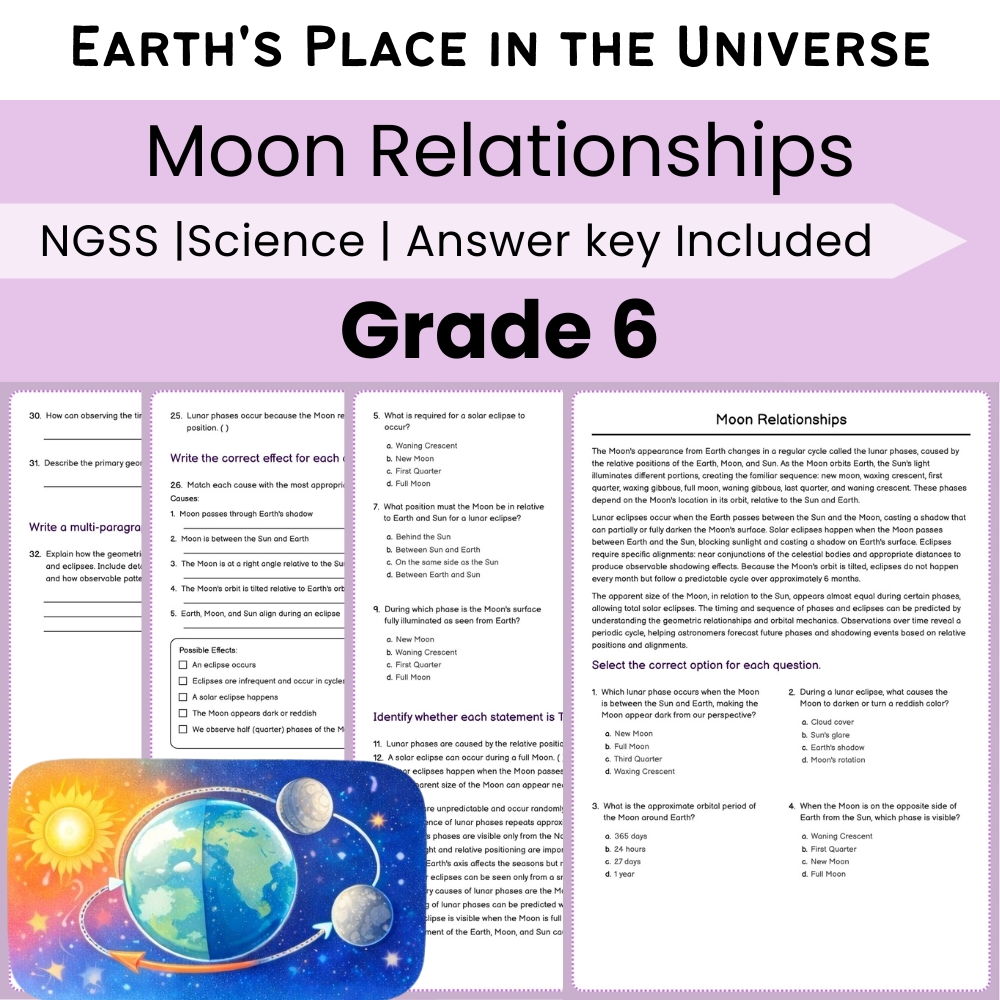
Moon Relationships Worksheet | NGSS Grade 6 Science Printable PDF
Learning Objectives
- Explain the geometric relationships among Earth, Moon, and Sun that produce lunar phases and eclipses.
- Identify the sequence of primary lunar phases and the conditions for solar and lunar eclipses.
- Describe how the apparent size and alignment of the Moon influence visibility of phases and eclipses.
Also included in: Grade 6 Science | Earth's Place in the Universe Unit Bundle (NGSS Aligned Worksheets) +1 more
Instant download
About Grade 6 Science Worksheets
Explore Grade 6 Science worksheets for classwork, homework, or review. Our 5,969 printables download instantly as PDFs.
MyTeachingSheets worksheets are made by real teacher-authors and checked before they go live. Download any as a print-ready PDF for lessons, homework, or independent practice — most include answer keys, and previews are always free.