
Grade 6 Science Worksheets
5,969 worksheets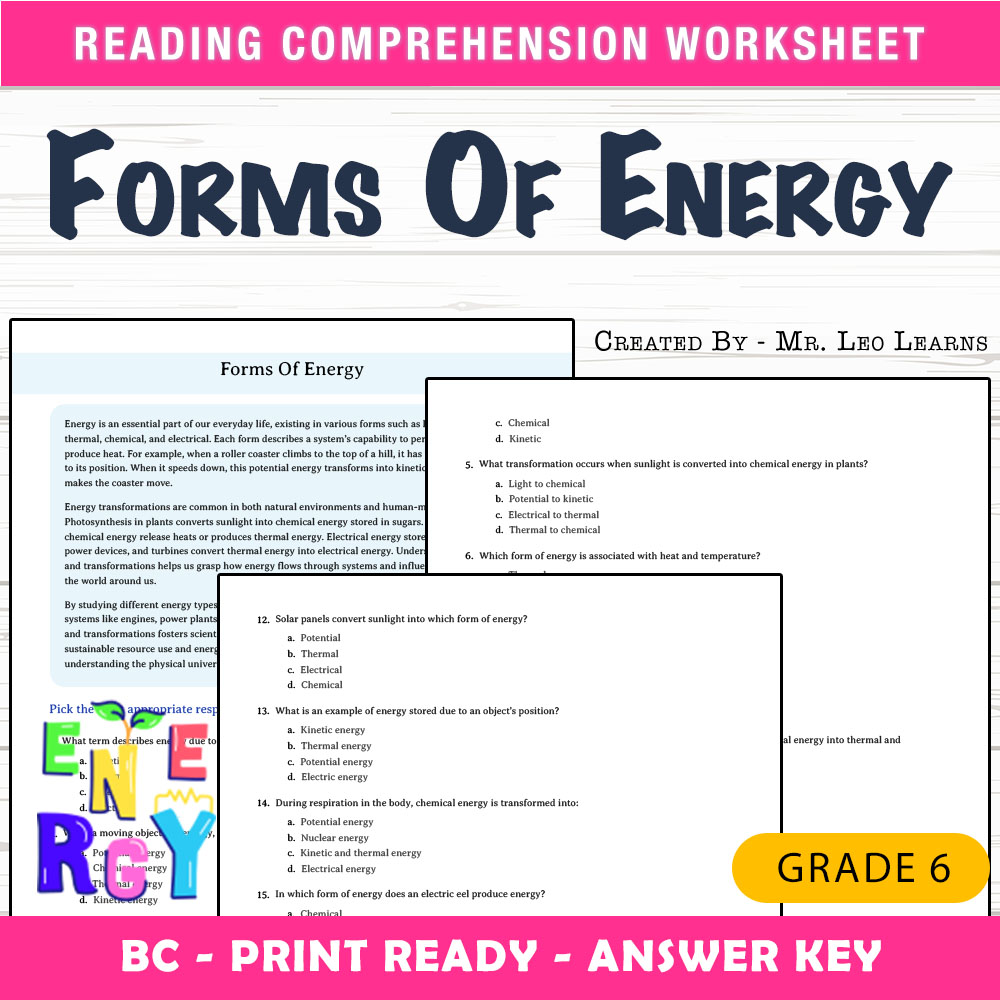
Grade 6 Science — Forms Of Energy Worksheet MCQ Paper
 Created byThe Resource Hub
Learning Objectives
- Identify different forms of energy such as kinetic, potential, thermal, chemical, and electrical.
- Understand how energy transforms from one form to another in natural and engineered systems.
- Recognize common examples of energy transformations and their significance.
Also included in: Grade 6 Science Energy, Waves & Circuits UNIT Bundle | BC Standards +1 more
Instant download
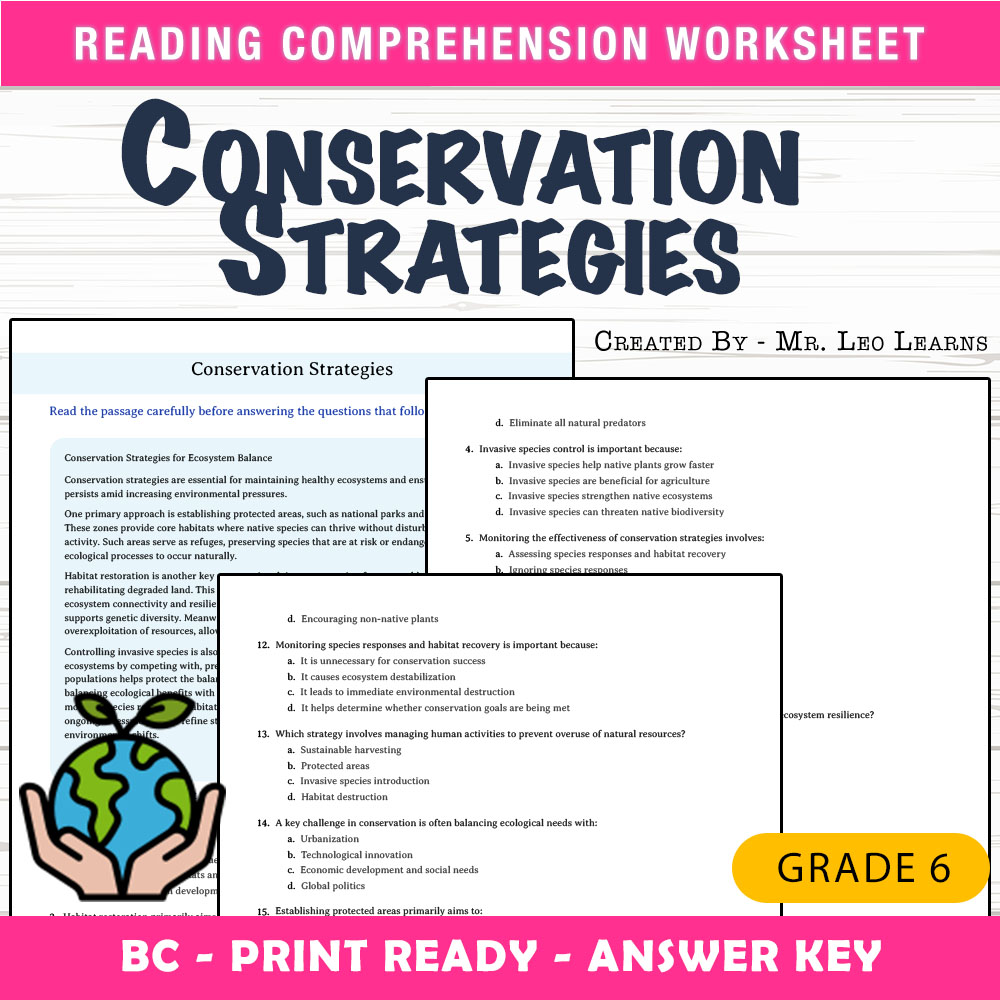
Grade 6 Science — Conservation Strategies Worksheet MCQ Paper
Created byThe Resource HubLearning Objectives
- Understand different conservation strategies used to maintain ecosystem balance.
- Identify the purposes and trade-offs of protecting habitats, restoring ecosystems, and managing invasive species.
- Evaluate the importance of monitoring and assessing the effectiveness of conservation efforts.
Also included in: Grade 6 Science Ecosystems & Interdependence Worksheet Bundle – BC Curriculum +1 more
Instant download
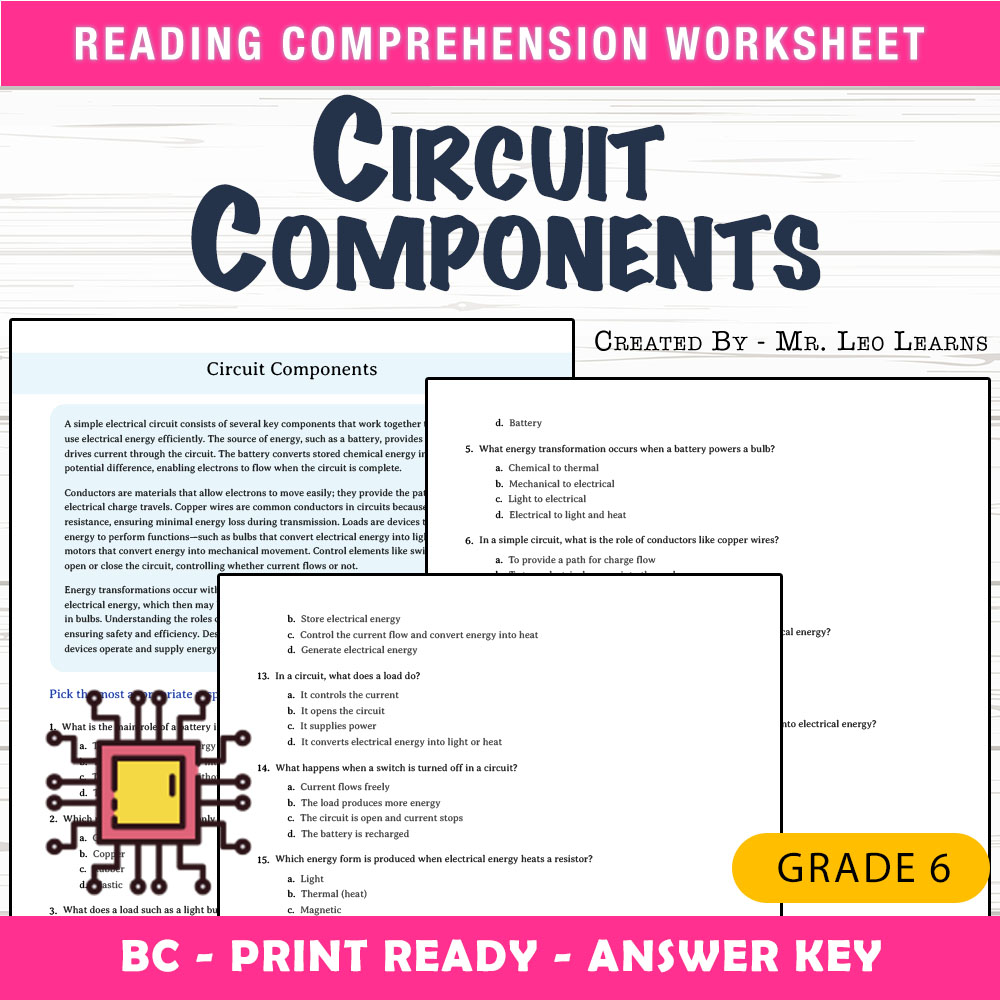
Grade 6 Science — Worksheet MCQ Paper for Mastering Circuit Components
Created byThe Resource HubLearning Objectives
- Identify different components used in simple electrical circuits.
- Describe the roles of sources, conductors, loads, and control elements.
- Explain energy transformations in electrical devices.
Also included in: Grade 6 Science Energy, Waves & Circuits UNIT Bundle | BC Standards +1 more
Instant download
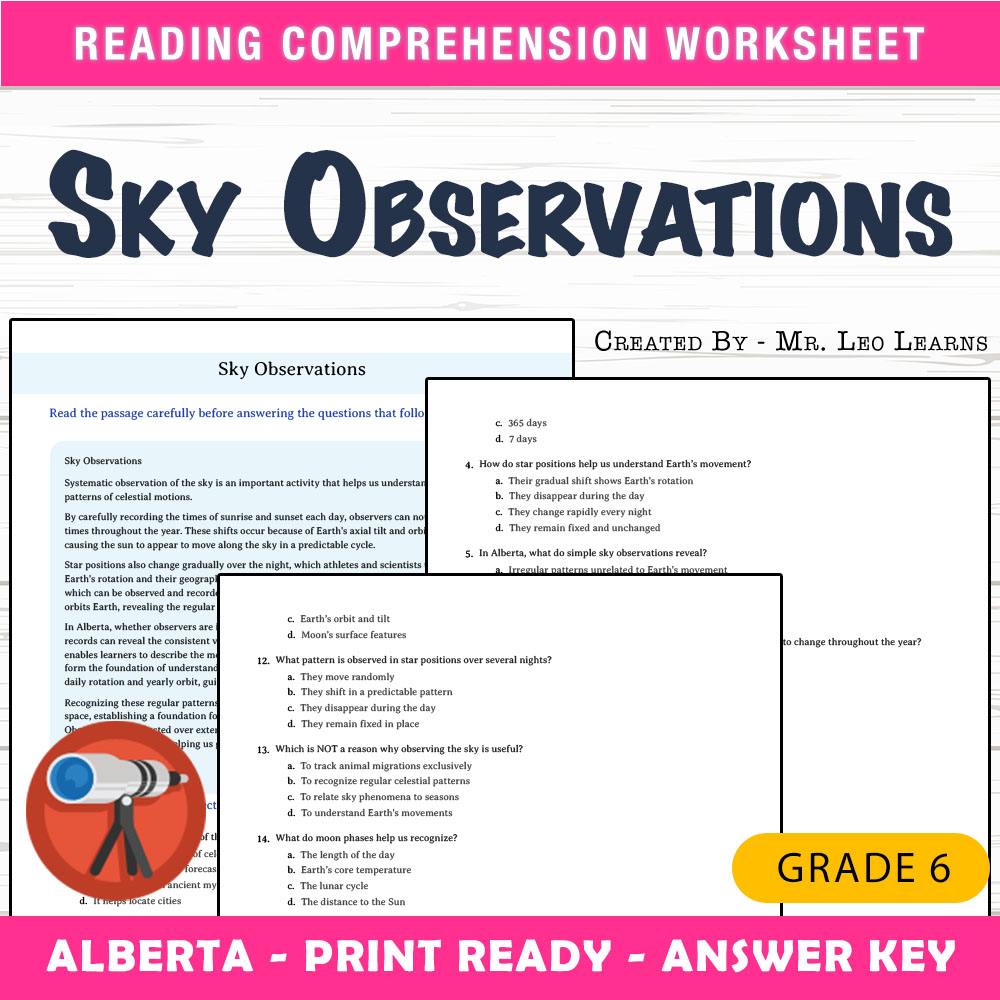
Grade 6 Science — Sky Observations Worksheet MCQ Paper for Mastery
Created byThe Resource HubLearning Objectives
- Understand the importance of systematic sky observations for recognizing patterns.
- Identify the observable patterns of the Moon, Sun, and stars related to Earth's movements.
- Learn how to record and interpret data on sunrises, sunsets, moon phases, and star positions.
Also included in: Grade 6 Science Sky Science Unit Bundle – Celestial Motion & Earth-Sun Relations +1 more
Instant download
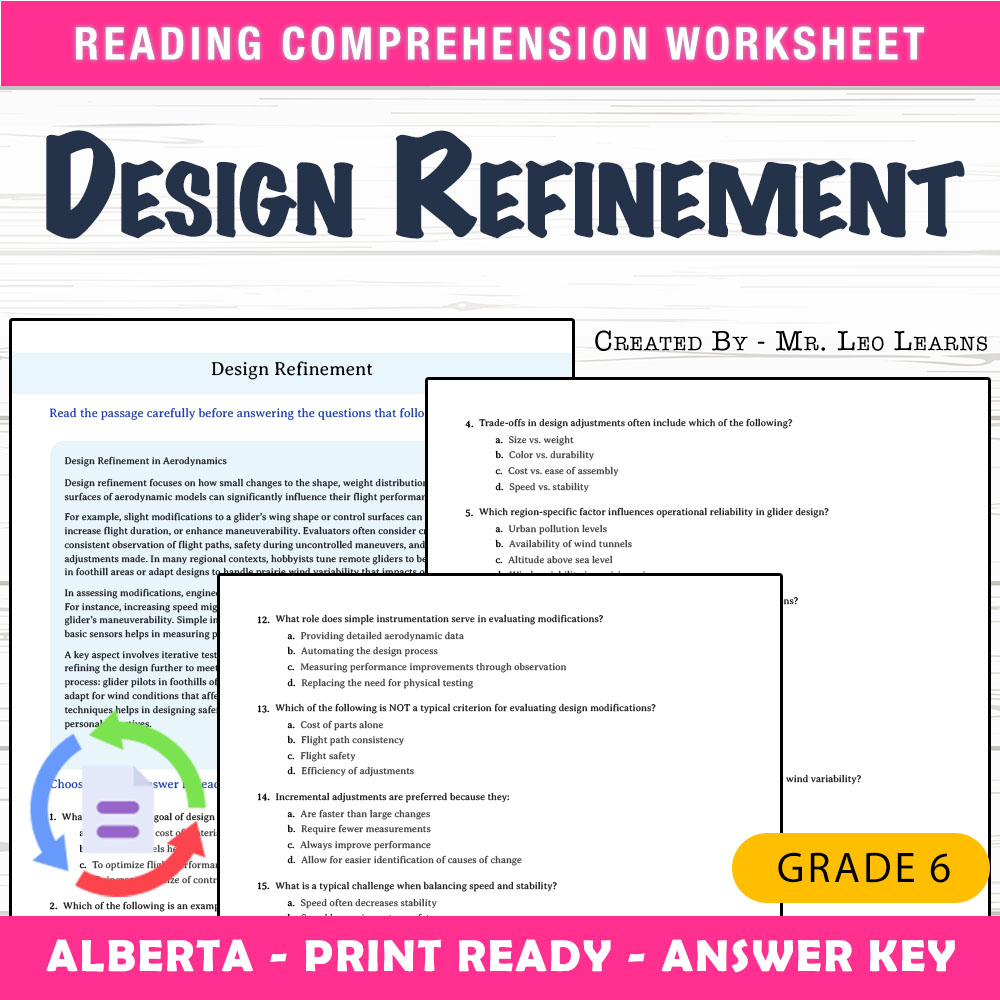
Grade 6 Science — Worksheet MCQ Paper for Mastering Design Refinement
Created byThe Resource HubLearning Objectives
- Understand how incremental adjustments to design affect aerodynamic performance and safety.
- Identify criteria used to evaluate modifications in aerodynamic models.
- Analyze trade-offs between speed, stability, and payload in design refinement.
Also included in: Grade 6 Science | Air and Aerodynamics UNIT Worksheet Bundle (Alberta Framework) +1 more
Instant download
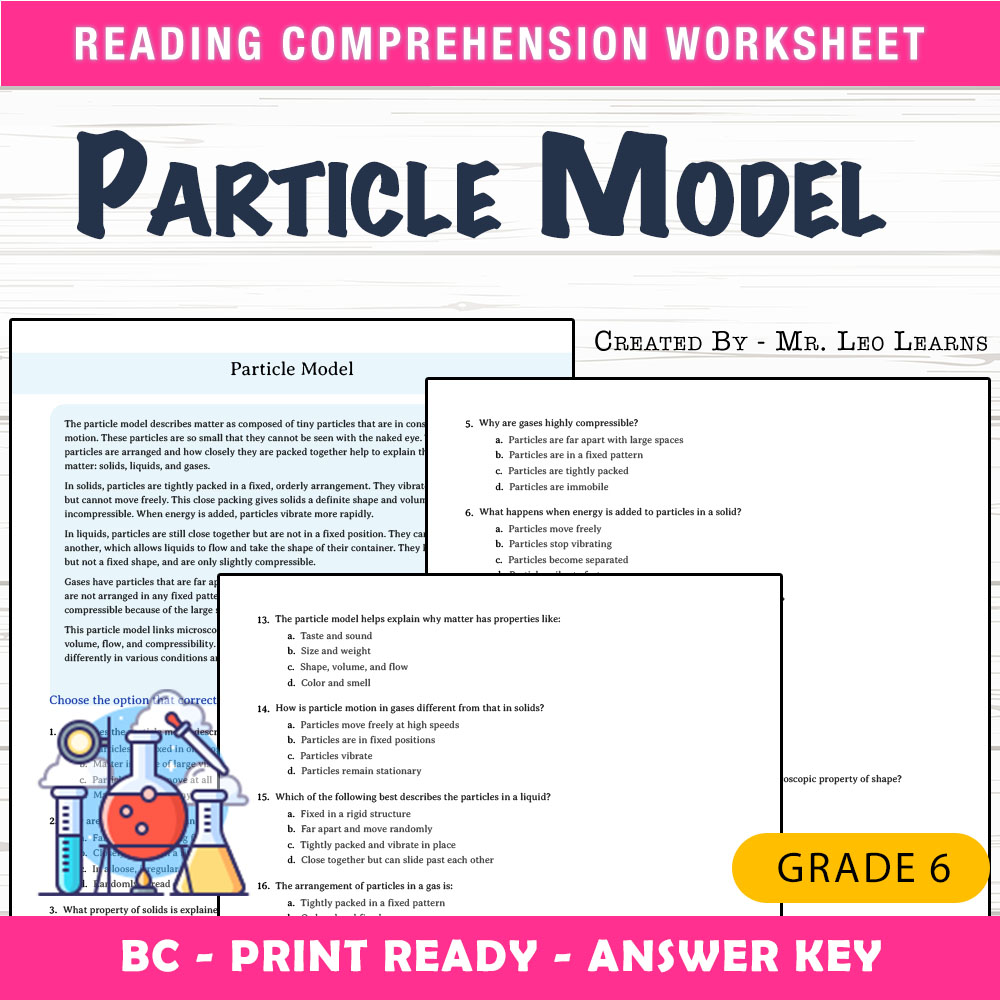
Grade 6 Science — Particle Model Worksheet MCQ Paper for Mastery
Created byThe Resource HubLearning Objectives
- Understand that matter is made up of tiny particles in constant motion.
- Identify the arrangement and movement of particles in solids, liquids, and gases.
- Explain how particle behaviour links to properties like shape, volume, and flow.
Also included in: Grade 6 Science | Matter, Properties & Change Worksheet Bundle (BC Framework) +1 more
Instant download
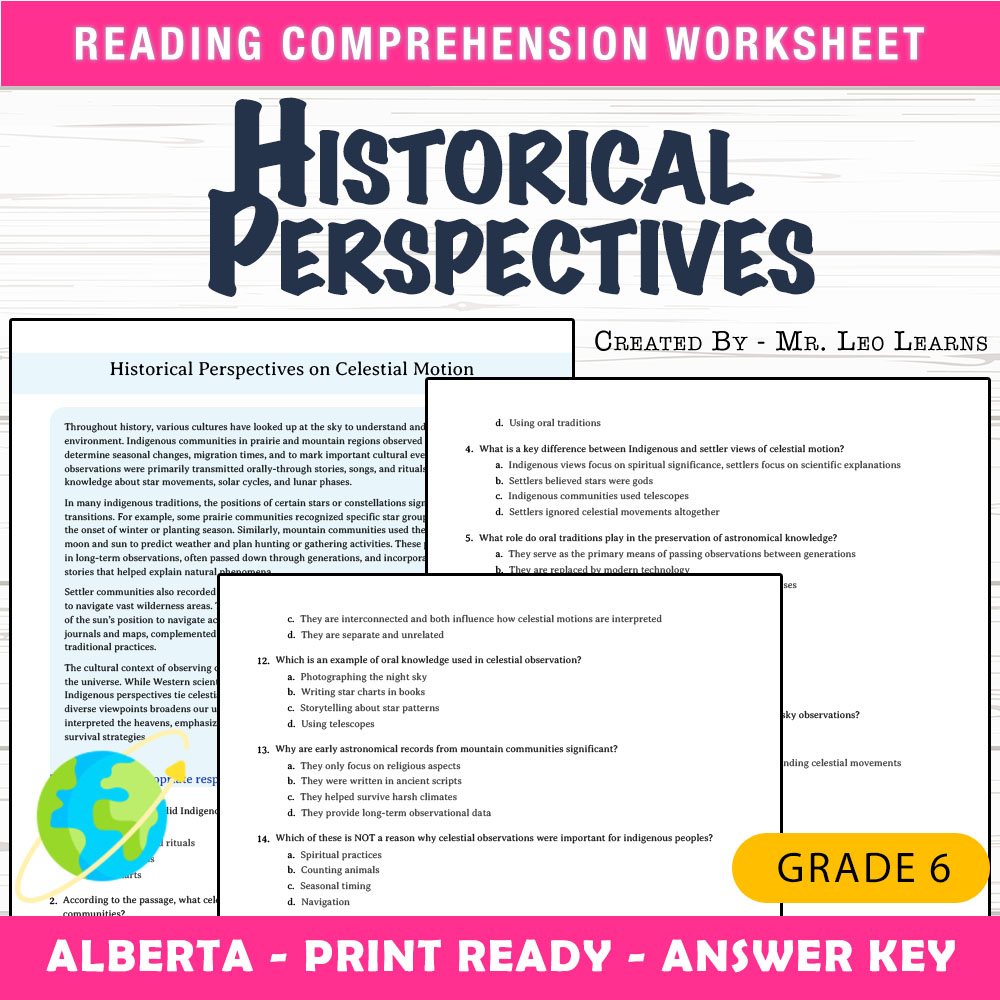
Grade 6 Science — Worksheet MCQ Paper for Mastering Celestial Motion
Created byThe Resource HubLearning Objectives
- Understand how Indigenous and settler communities historically observed celestial patterns.
- Identify different cultural methods used to interpret sky phenomena for practical purposes.
- Recognize the significance of oral traditions and early records in understanding celestial movements.
Also included in: Grade 6 Science Sky Science Unit Bundle – Celestial Motion & Earth-Sun Relations +1 more
Instant download
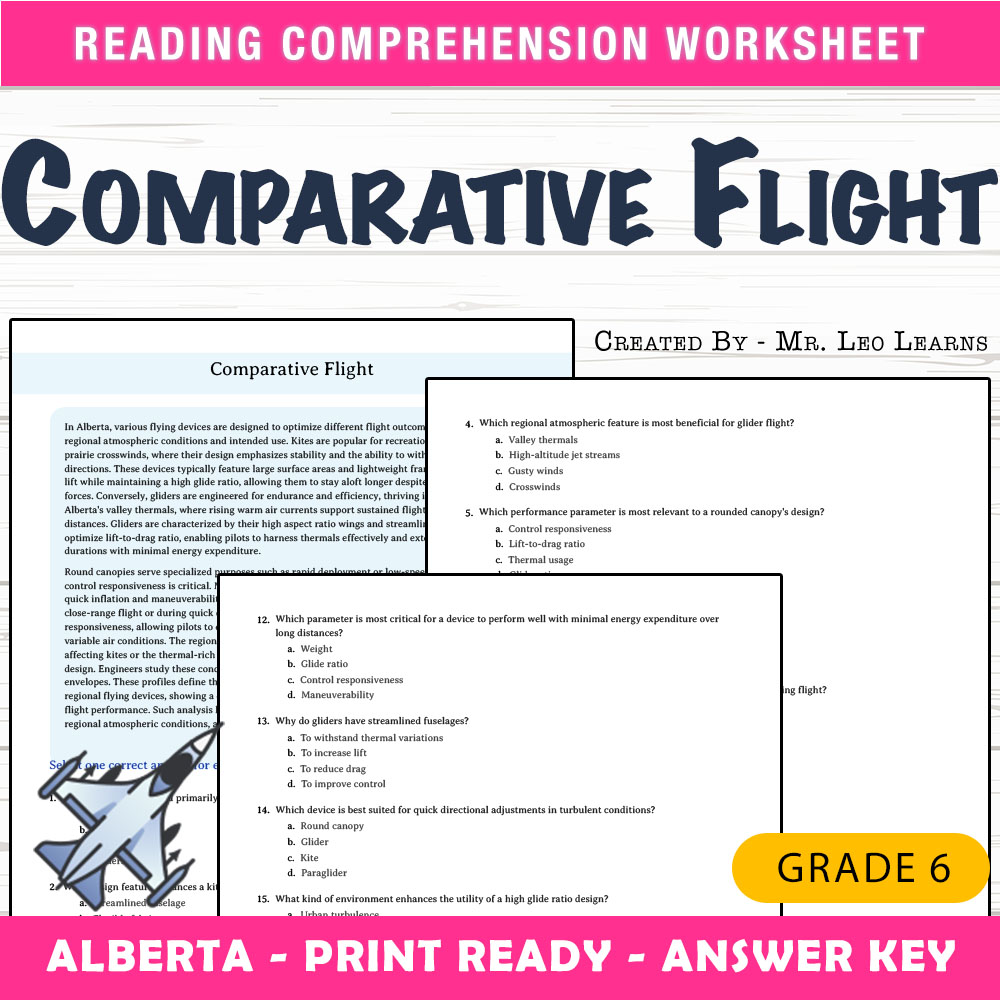
Grade 6 Science — Comparative Flight Worksheet MCQ Paper
Created byThe Resource HubLearning Objectives
- Compare the glide ratio, lift-to-drag performance, and control responsiveness of different flying devices.
- Explain how design parameters influence endurance and maneuverability in kites, gliders, and round canopies.
- Understand regional atmospheric influences, such as prairie crosswinds and valley thermals, on flight performance.
Also included in: Grade 6 Science | Air and Aerodynamics UNIT Worksheet Bundle (Alberta Framework) +1 more
Instant download
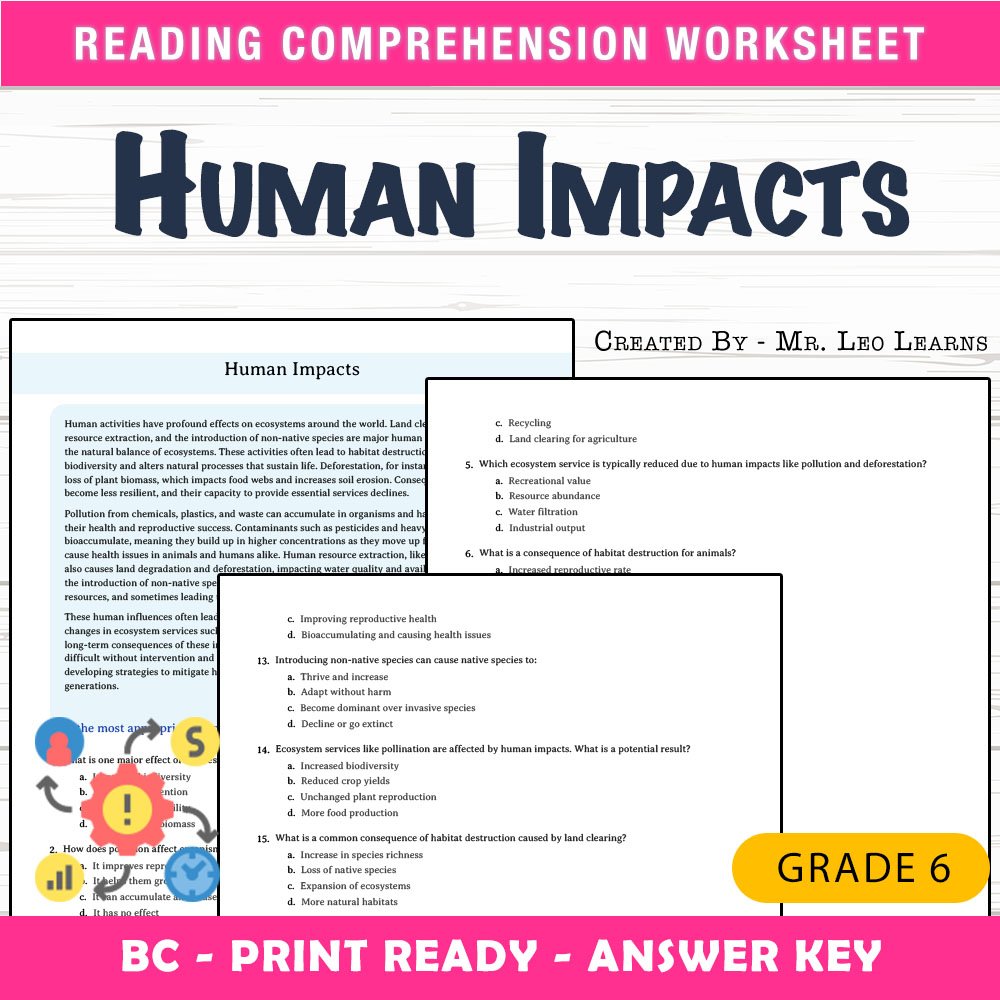
Grade 6 Science — Human Impacts Worksheet MCQ Paper for Mastery
Created byThe Resource HubLearning Objectives
- Understand how human activities affect ecosystems and biodiversity.
- Identify the consequences of pollution, land clearing, and resource extraction.
- Recognize the impacts of introducing non-native species to ecosystems.
Also included in: Grade 6 Science Ecosystems & Interdependence Worksheet Bundle – BC Curriculum +1 more
Instant download
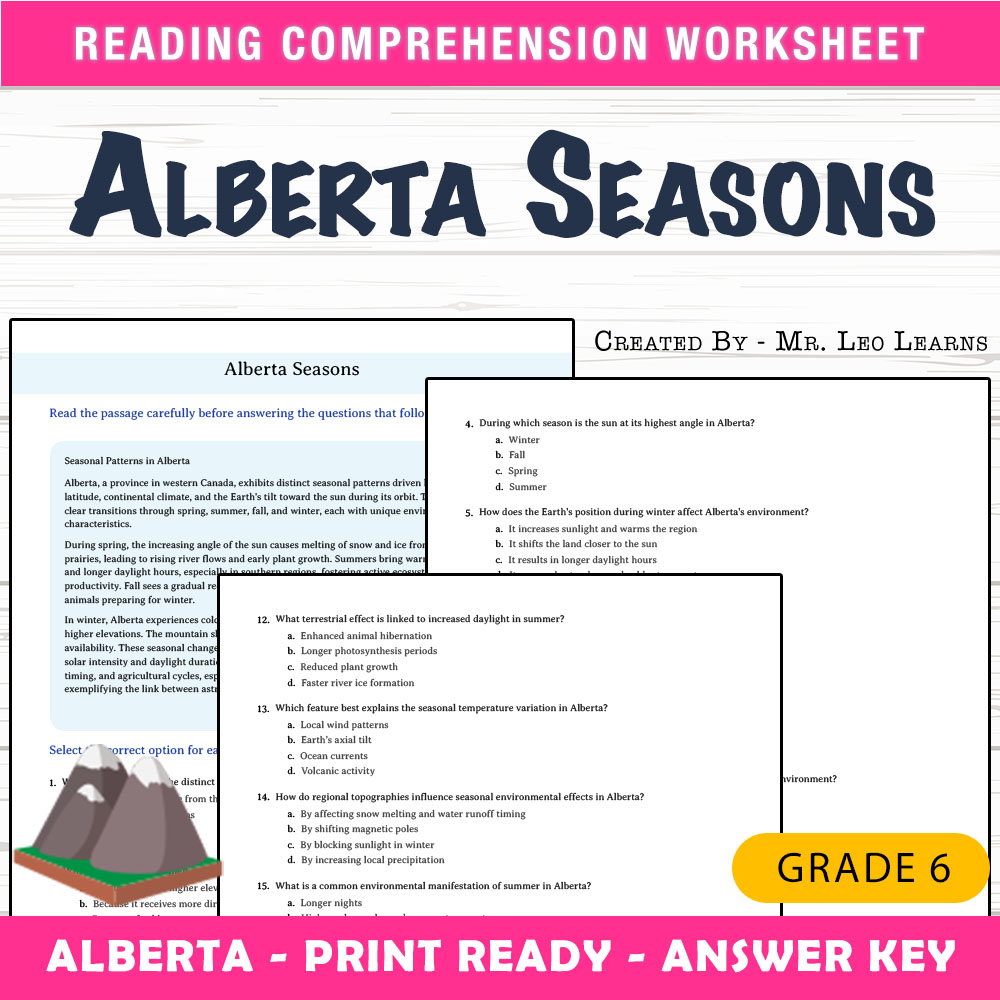
Grade 6 Science — Alberta Seasons Worksheet MCQ Paper for Mastery
Created byThe Resource HubLearning Objectives
- Understand how Earth's tilt and orbit affect seasonal patterns in Alberta.
- Identify the environmental changes associated with different seasons in Alberta.
- Explain the relationship between astronomical causes and terrestrial environmental effects.
Also included in: Grade 6 Science Sky Science Unit Bundle – Celestial Motion & Earth-Sun Relations +1 more
Instant download
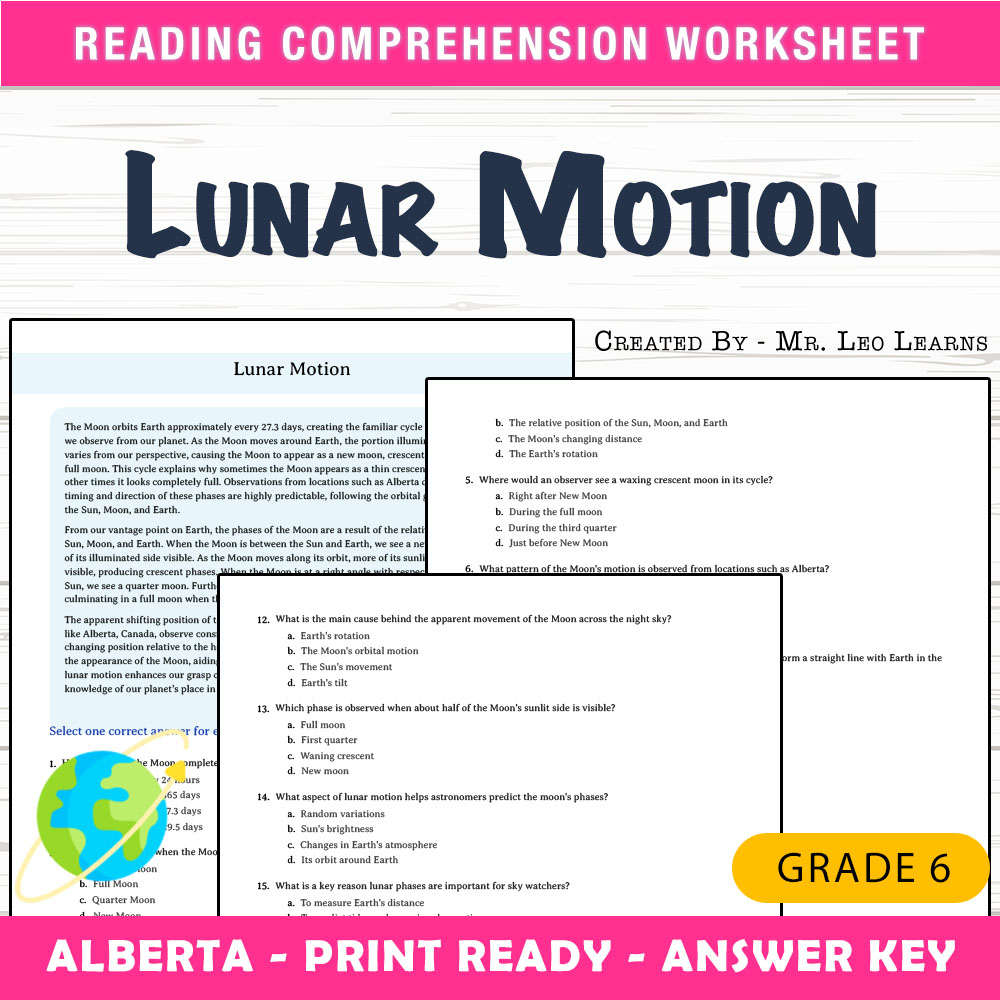
Grade 6 Science — Worksheet MCQ Paper for Mastering Lunar Motion
Created byThe Resource HubLearning Objectives
- Describe how the Moon orbits Earth and the resulting phases observed from Earth.
- Explain the geometry behind lunar phases and their cycle.
- Identify observable patterns of lunar position and phase changes from different locations.
Also included in: Grade 6 Science Sky Science Unit Bundle – Celestial Motion & Earth-Sun Relations +1 more
Instant download
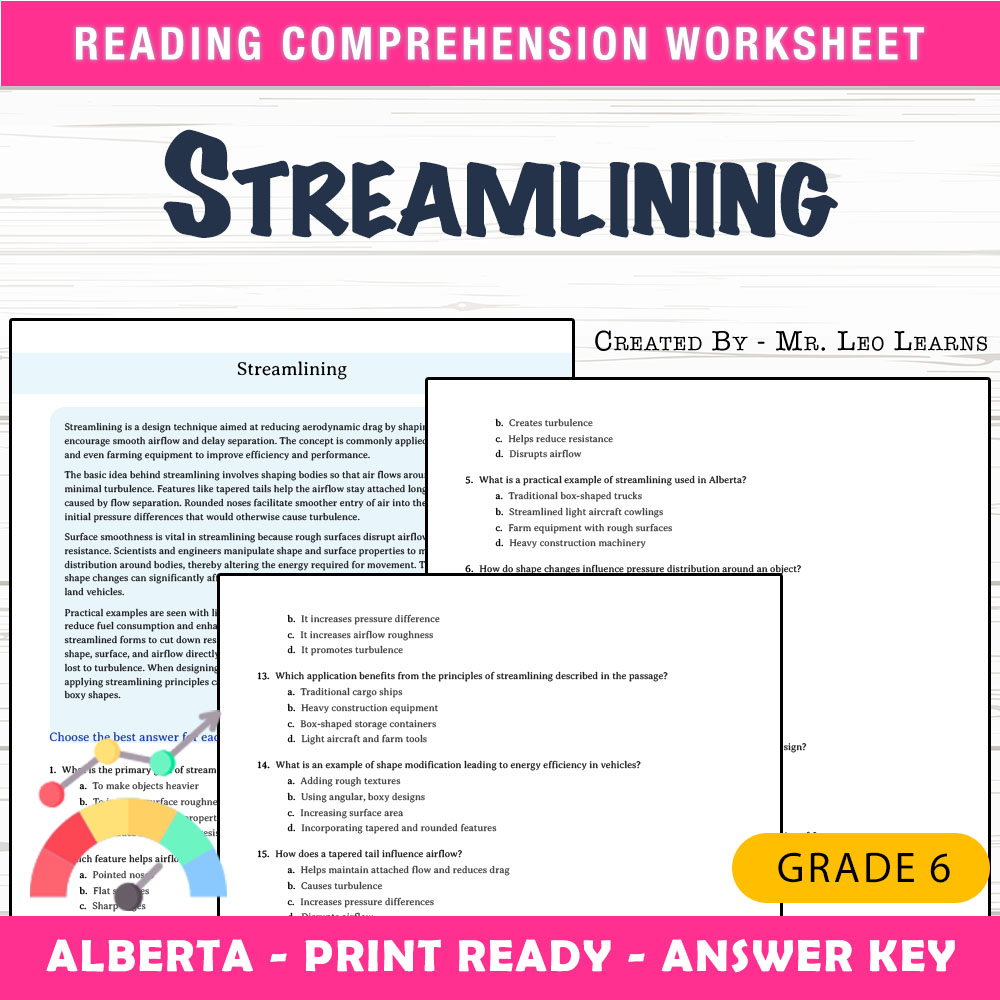
Grade 6 Science — Streamlining Worksheet MCQ Paper for Mastery
Created byThe Resource HubLearning Objectives
- Understand how streamlined shapes reduce aerodynamic resistance.
- Identify key features such as tapered tails and rounded noses in design.
- Explain the impact of shape changes on airflow, pressure distribution, and energy use.
Also included in: Grade 6 Science | Air and Aerodynamics UNIT Worksheet Bundle (Alberta Framework) +1 more
Instant download
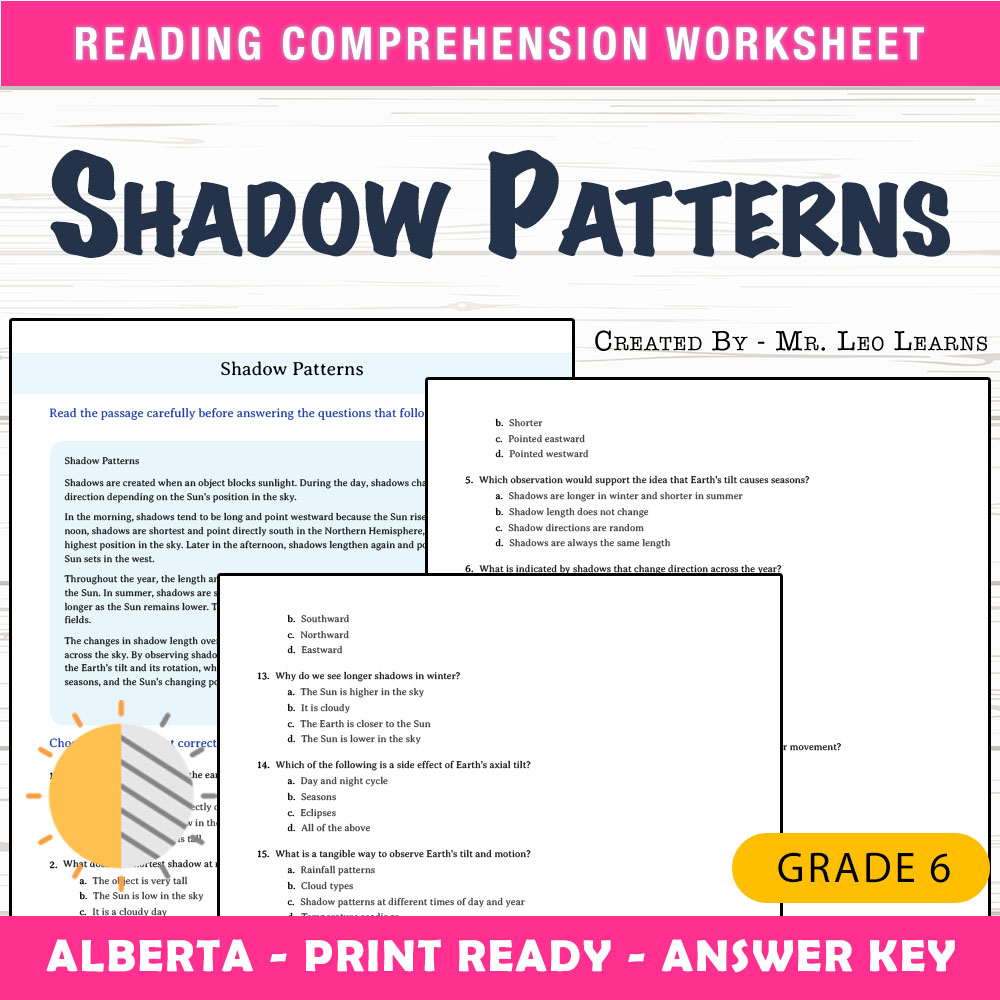
Grade 6 Science — Shadow Patterns Worksheet for Mastery
Created byThe Resource HubLearning Objectives
- Understand how daily and seasonal changes in the Sun's position affect shadow length and direction.
- Identify patterns in shadow behaviors across different times of the day and year.
- Explain how shadow observations provide evidence of Earth's motion and axial tilt.
Also included in: Grade 6 Science Sky Science Unit Bundle – Celestial Motion & Earth-Sun Relations +1 more
Instant download
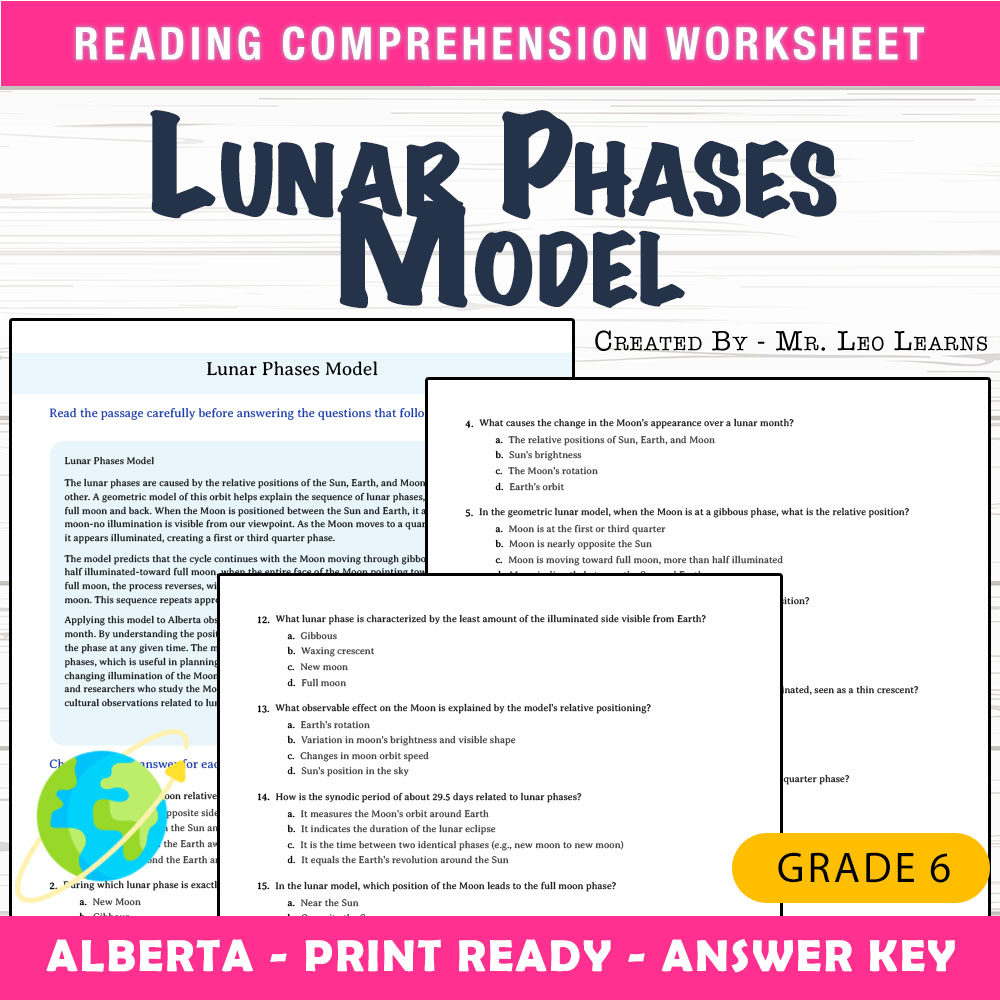
Grade 6 Science — Lunar Phases Model Worksheet for Mastery
Created byThe Resource HubLearning Objectives
- Understand the geometric model of lunar phases and how it explains the sequence and timing of these phases.
- Describe how the relative positions of Sun, Earth, and Moon influence the Moon's appearance from a given viewpoint.
- Apply the lunar phases model to predict the timing and sequence of moon phases during observation periods.
Also included in: Grade 6 Science Sky Science Unit Bundle – Celestial Motion & Earth-Sun Relations +1 more
Instant download
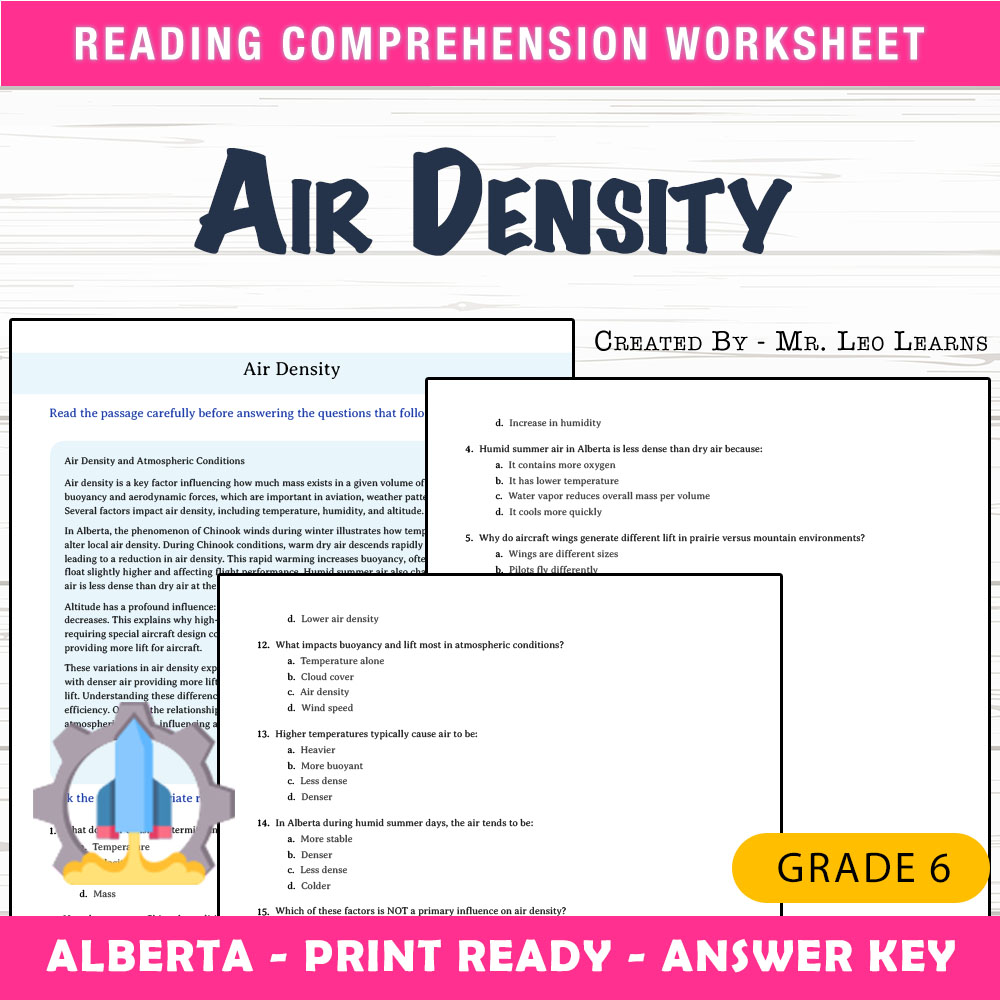
Grade 6 Science — Air Density Worksheet MCQ Paper for Mastery
Created byThe Resource HubLearning Objectives
- Understand how temperature, humidity, and altitude influence air density.
- Explain the effect of air density on buoyancy and aerodynamic forces.
- Analyze how atmospheric conditions affect lift and wing performance in different environments.
Also included in: Grade 6 Science | Air and Aerodynamics UNIT Worksheet Bundle (Alberta Framework) +1 more
Instant download
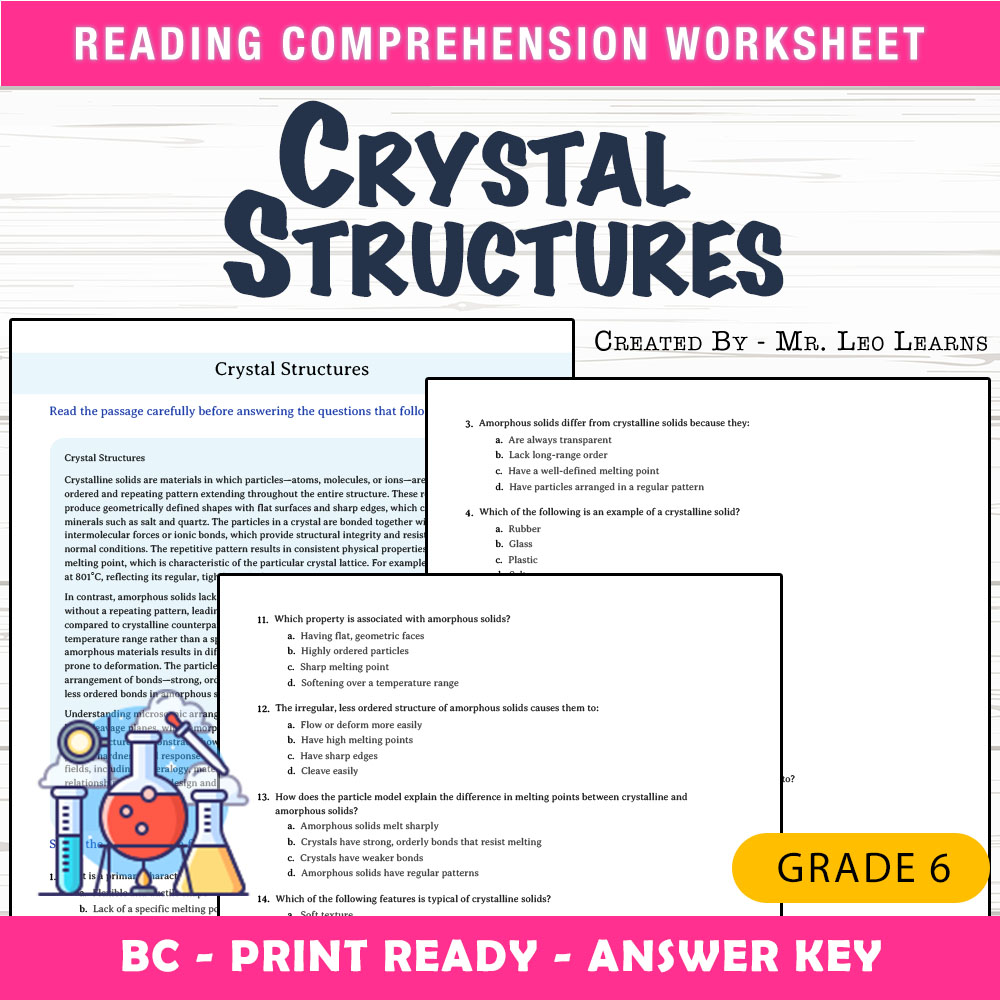
Grade 6 Science — Worksheet MCQ Paper for Mastering Crystal Structures
Created byThe Resource HubLearning Objectives
- Understand the arrangement of particles in crystalline versus amorphous solids.
- Identify properties linked to crystal structures such as melting point and brittleness.
- Explain how microscopic particle arrangements influence observable behaviors of solids.
Also included in: Grade 6 Science | Matter, Properties & Change Worksheet Bundle (BC Framework) +1 more
Instant download
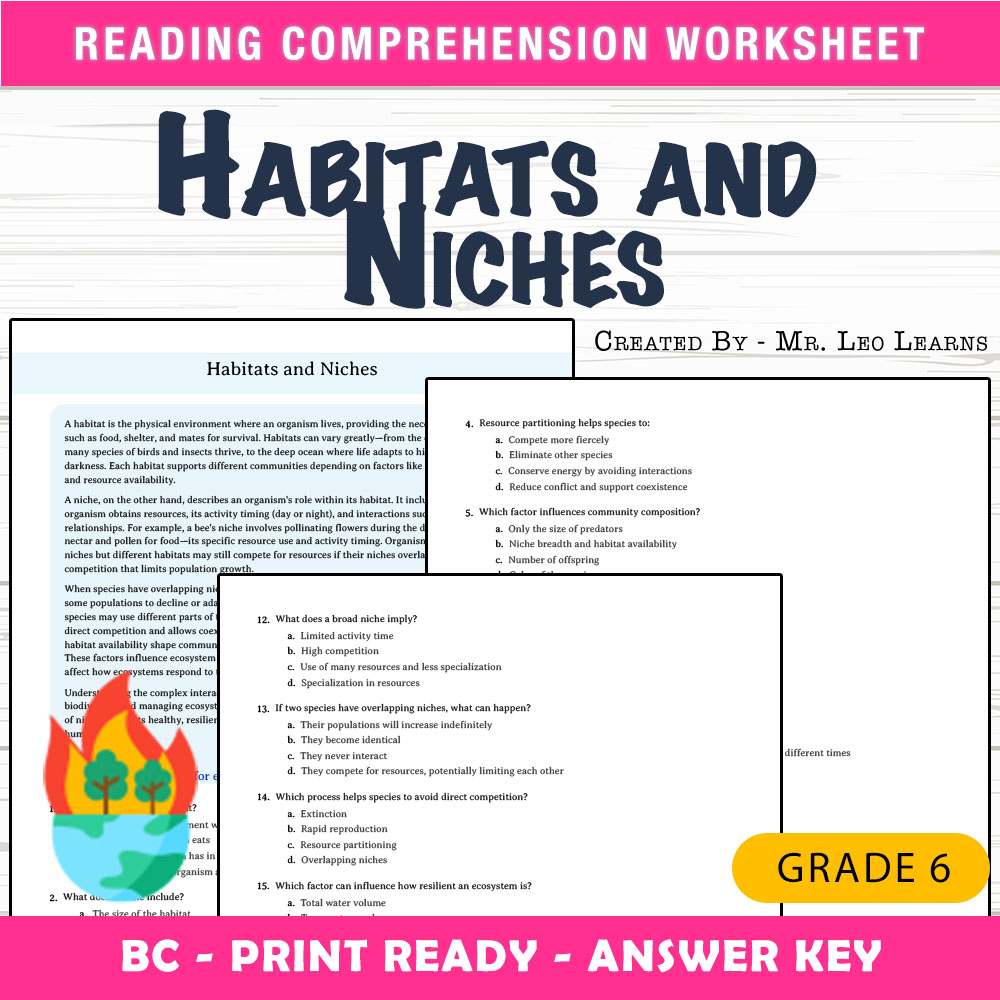
Grade 6 Science — Habitats and Niches Worksheet MCQ Practice
Created byThe Resource HubLearning Objectives
- Understand the difference between habitats and niches in ecosystems.
- Identify how species compete and coexist based on their niches.
- Learn how resource partitioning supports biodiversity and ecosystem stability.
Also included in: Grade 6 Science Ecosystems & Interdependence Worksheet Bundle – BC Curriculum +1 more
Instant download
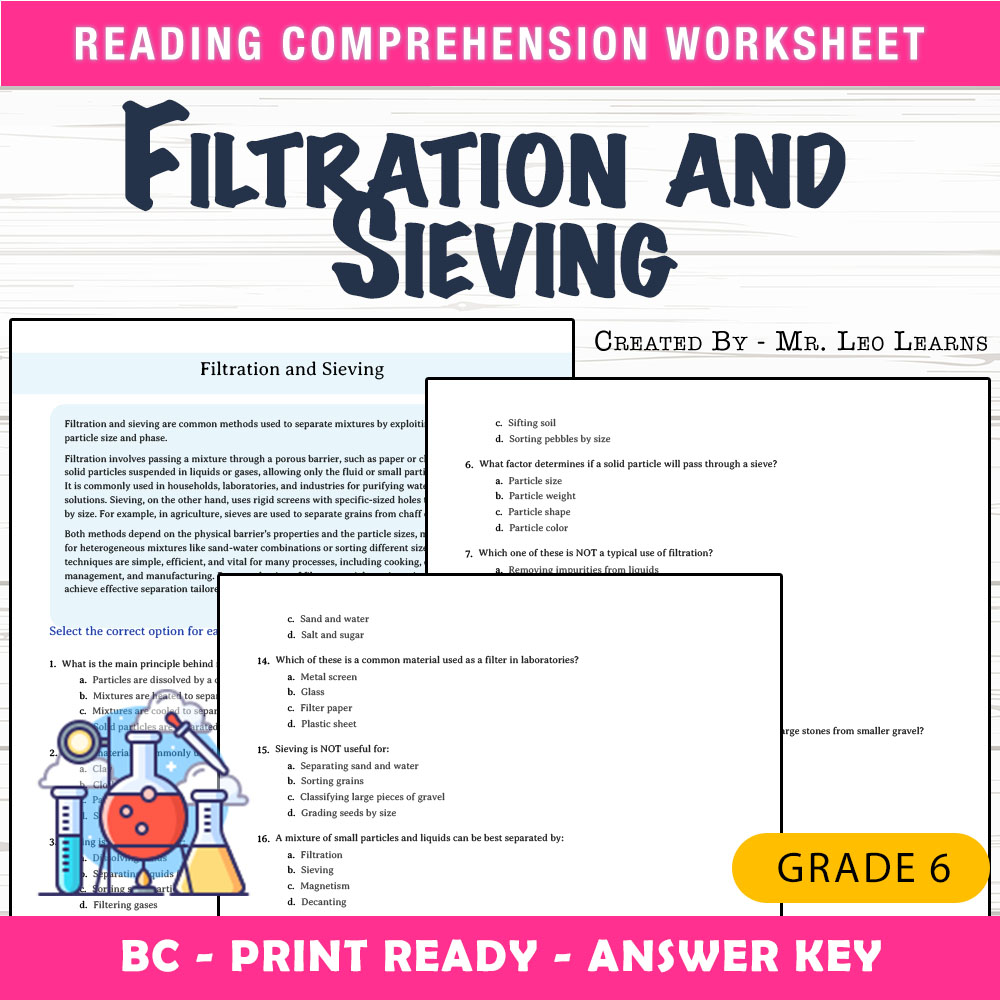
Grade 6 Science — Filtration and Sieving Worksheet for Mastery
Created byThe Resource HubLearning Objectives
- Understand the concept and differences between filtration and sieving.
- Identify suitable materials and methods for separating mixtures using filtration and sieving.
- Explain the applications of filtration and sieving in real-world scenarios.
Also included in: Grade 6 Science | Matter, Properties & Change Worksheet Bundle (BC Framework) +1 more
Instant download
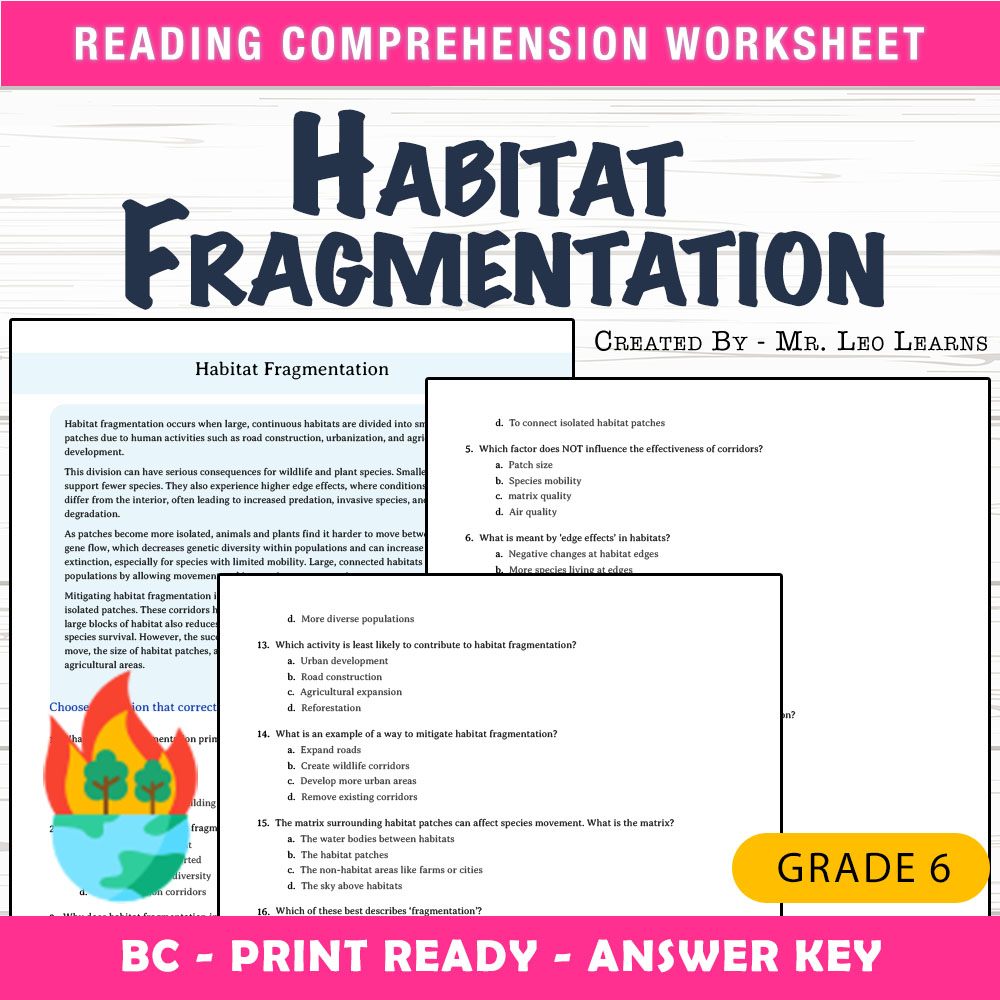
Grade 6 Science — Habitat Fragmentation Worksheet MCQ Paper for Mastery
Created byThe Resource HubLearning Objectives
- Understand the concept of habitat fragmentation and its causes.
- Identify the ecological impacts of habitat fragmentation.
- Learn about strategies to mitigate the effects of habitat fragmentation.
Also included in: Grade 6 Science Ecosystems & Interdependence Worksheet Bundle – BC Curriculum +1 more
Instant download
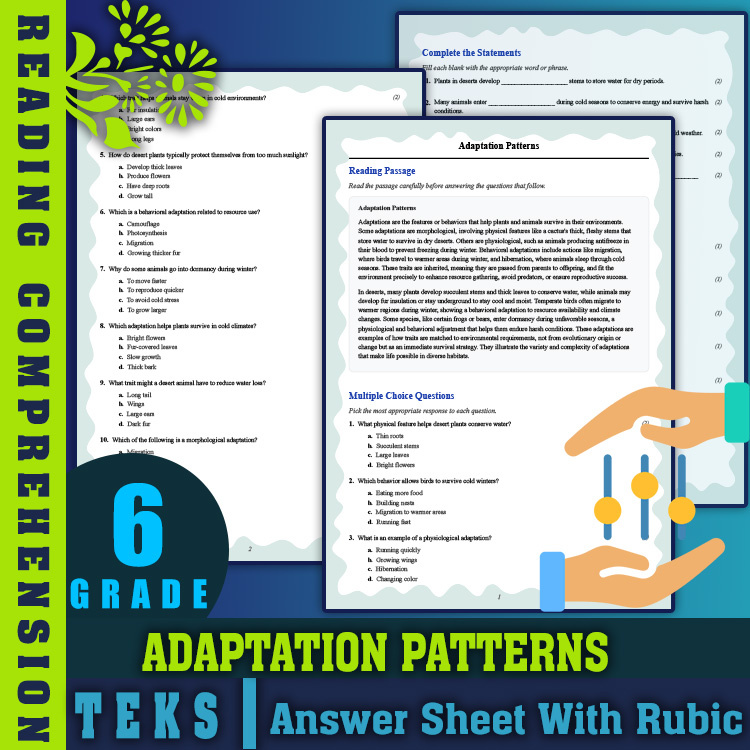
6th Grade Science | Adaptation Patterns Reading Worksheet & Answer Key (PDF)
JCreated byJ.S SheetsLearning Objectives
- Understand morphological, physiological, and behavioral adaptations in animals and plants.
- Identify examples of adaptations such as succulent stems, leaf modifications, fur insulation, and migration.
- Explain how inherited traits enable organisms to survive in different environments.
Instant download
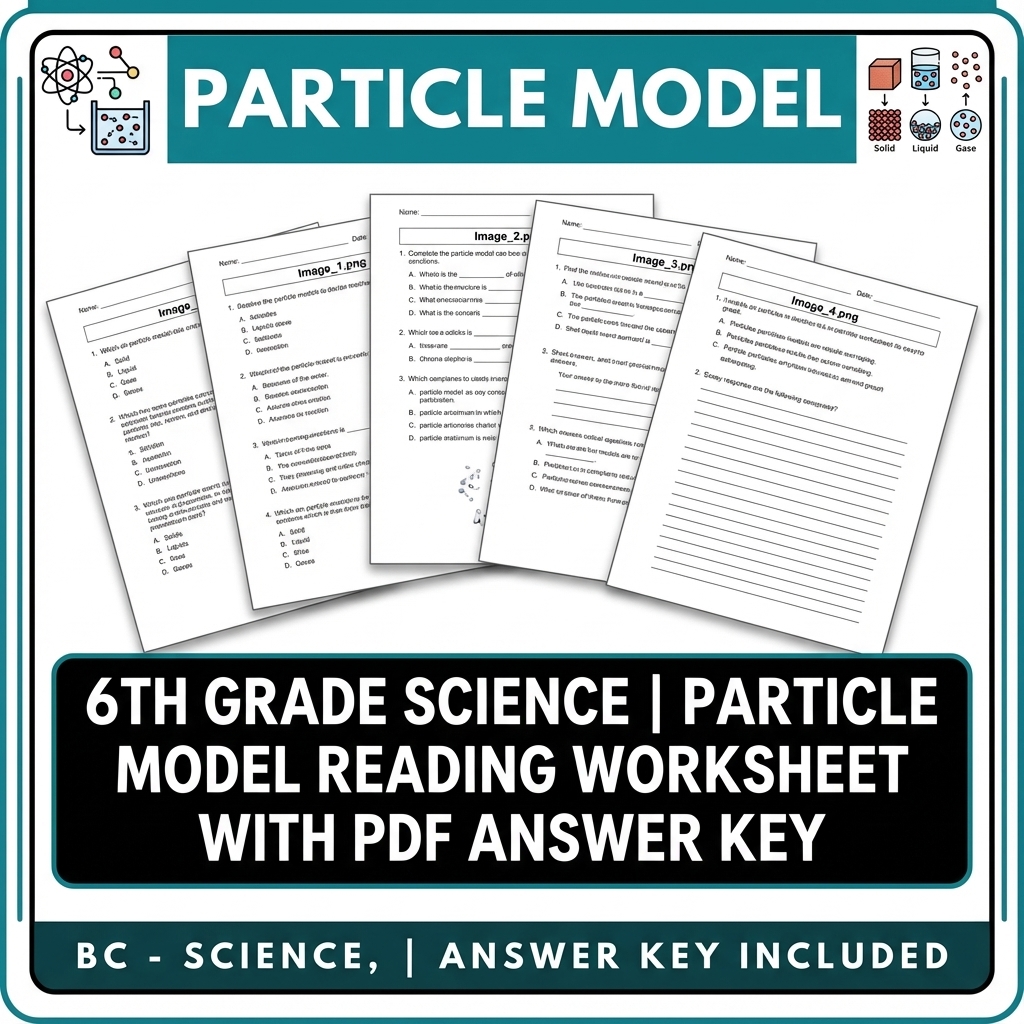
6th Grade Science | Particle Model Reading Worksheet with PDF Answer Key
JCreated byJ.S SheetsLearning Objectives
- Understand the basic principles of the particle model of matter.
- Describe how particles are arranged in solids, liquids, and gases.
- Explain how particle arrangement affects properties like shape, volume, and flow.
Instant download
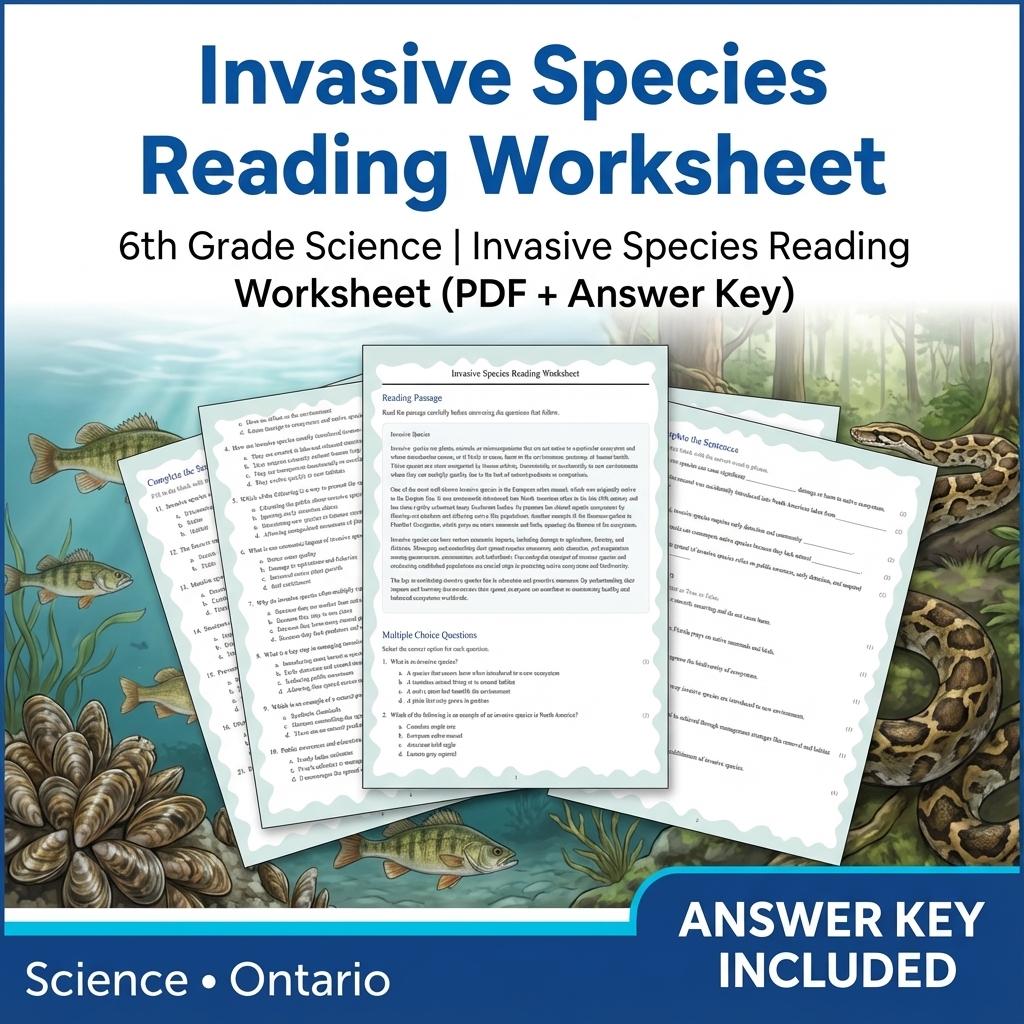
6th Grade Science | Invasive Species Reading Worksheet (PDF + Answer Key)
JCreated byJ.S SheetsLearning Objectives
- Understand what invasive species are and how they affect ecosystems.
- Identify common invasive species and their impacts on native habitats.
- Learn ways to manage and prevent the spread of invasive species.
Also included in: Grade 6 Science Unit Bundle – Ecosystems, Biodiversity & Environmental Impact +1 more
Instant download
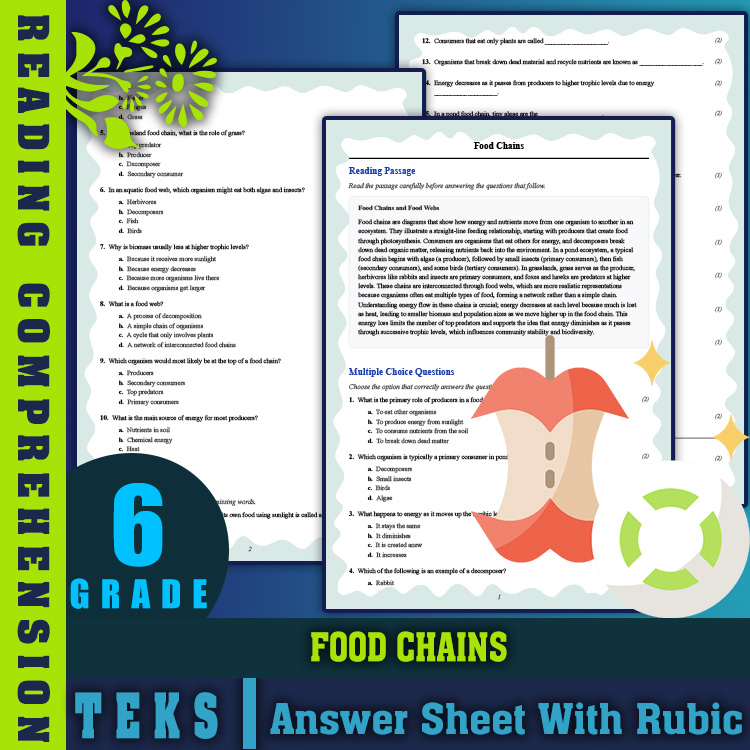
6th Grade Science | Food Chains Reading Worksheet with Answer Key (PDF)
JCreated byJ.S SheetsLearning Objectives
- Understand the structure and function of food chains and food webs.
- Identify producers, consumers, and decomposers in various ecosystems.
- Explain energy transfer and energy loss between trophic levels.
Instant download
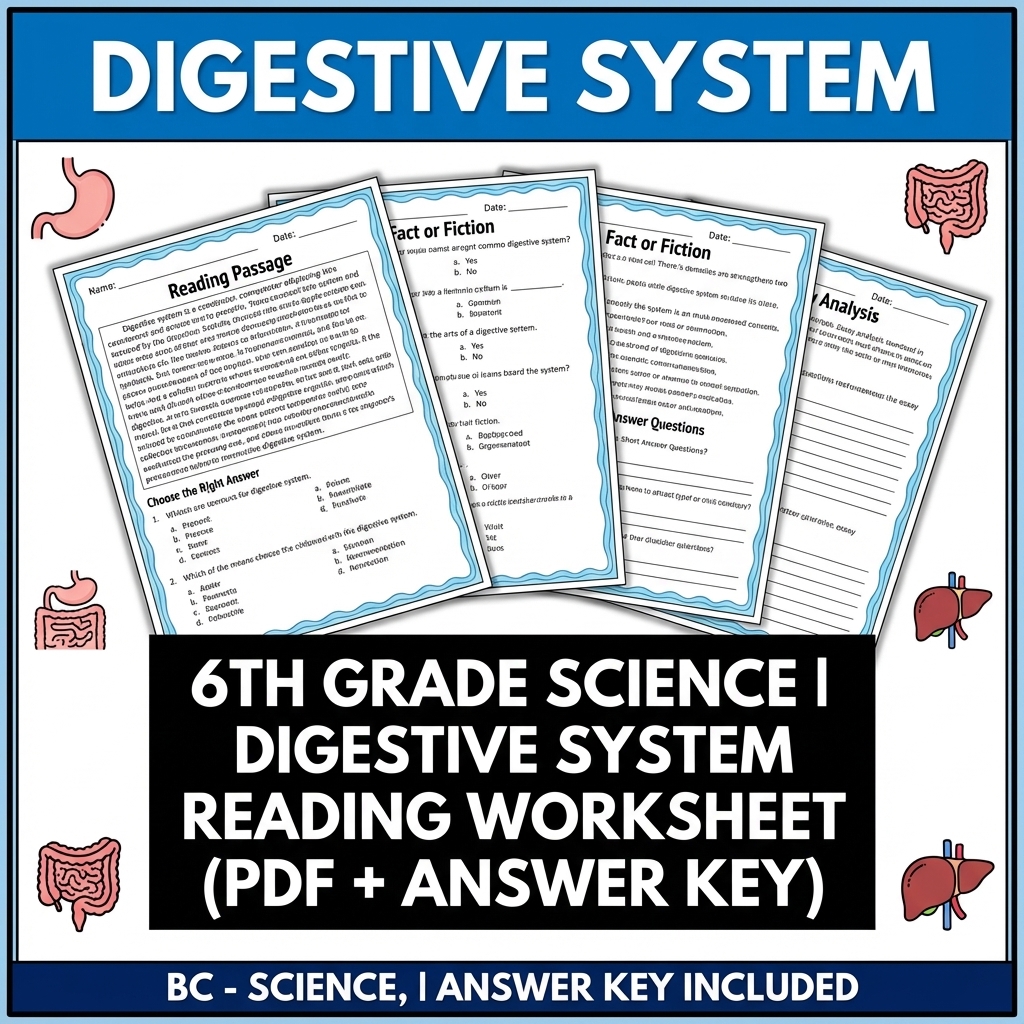
6th Grade Science | Digestive System Reading Worksheet (PDF + Answer Key)
JCreated byJ.S SheetsLearning Objectives
- Understand the organs involved in digestion and their functions.
- Identify the chemical and mechanical processes in digestion.
- Explain how nutrients are absorbed into the bloodstream and lymph.
Instant download
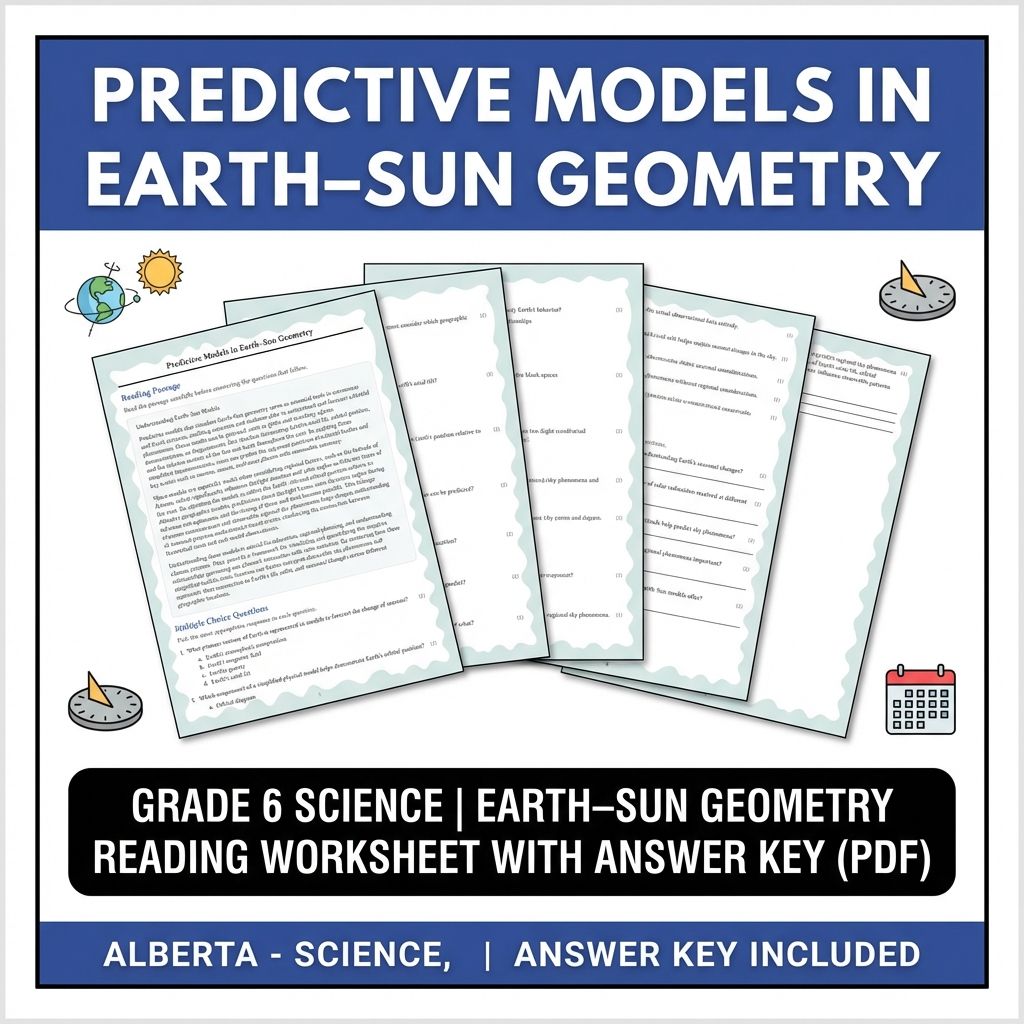
Grade 6 Science | Earth–Sun Geometry Reading Worksheet with Answer Key (PDF)
JCreated byJ.S SheetsLearning Objectives
- Understand how models represent Earth–Sun geometry to predict celestial events.
- Identify components like axial tilt and orbital position in models.
- Explain how simplified models help forecast regional sky phenomena and calendar patterns.
Also included in: Grade 6 Science | Celestial Motion & Sky Observation Worksheets Bundle +1 more
Instant download
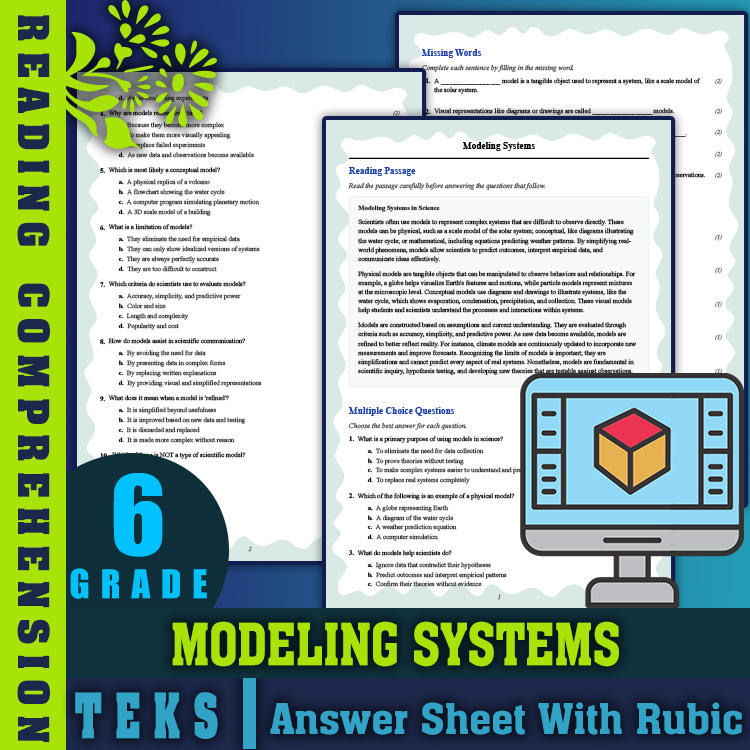
6th Grade Science | Modeling Systems Reading Worksheet & Answer Key (PDF)
JCreated byJ.S SheetsLearning Objectives
- Understand the concept of scientific models and their purposes.
- Identify different types of models used in science and evaluate their effectiveness.
- Analyze how models are constructed, tested, and refined based on empirical data.
Instant download
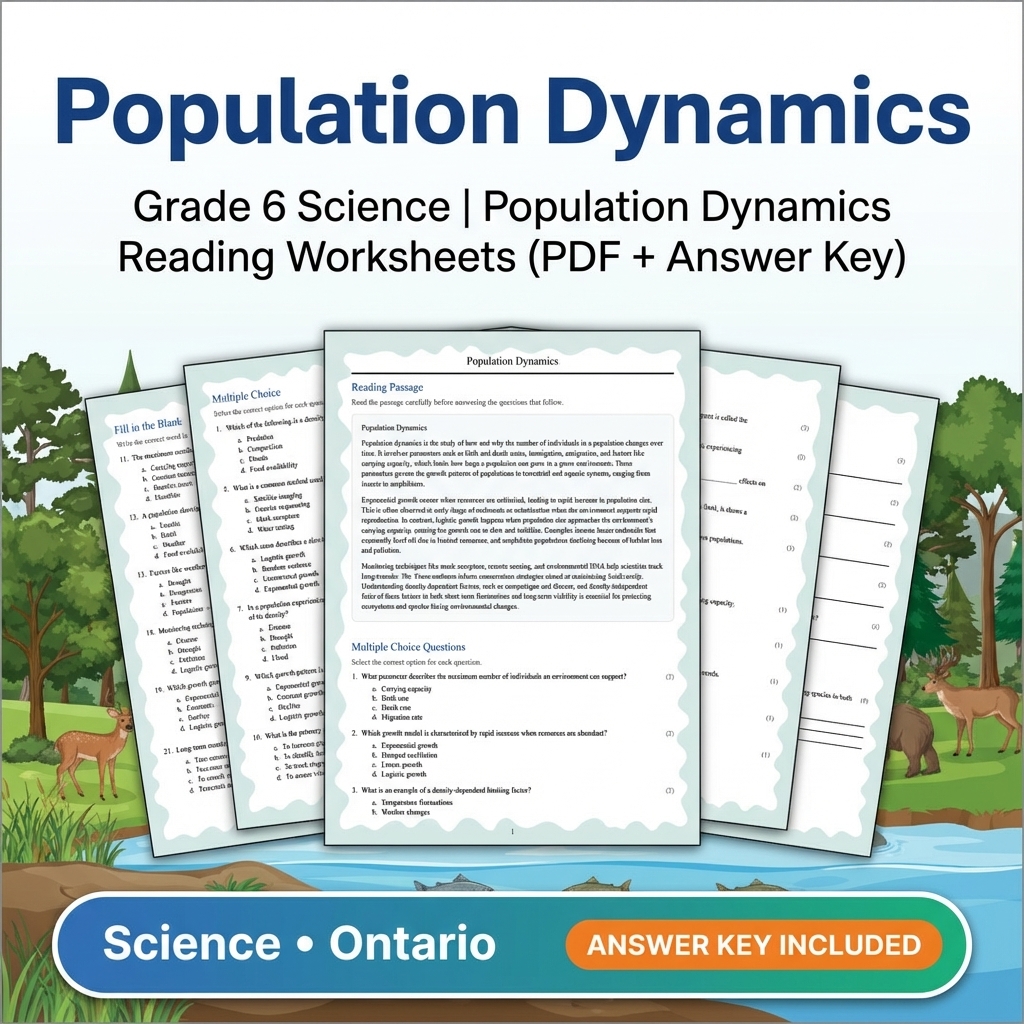
Grade 6 Science | Population Dynamics Reading Worksheets (PDF + Answer Key)
JCreated byJ.S SheetsLearning Objectives
- Understand the parameters that influence population growth and decline, including birth rates, death rates, immigration, and emigration.
- Identify the concepts of logistic and exponential growth models in real-world ecosystems, such as insect outbreaks and amphibian declines.
- Differentiate between density-dependent and density-independent factors affecting populations.
Also included in: Grade 6 Science Unit Bundle – Ecosystems, Biodiversity & Environmental Impact +1 more
Instant download
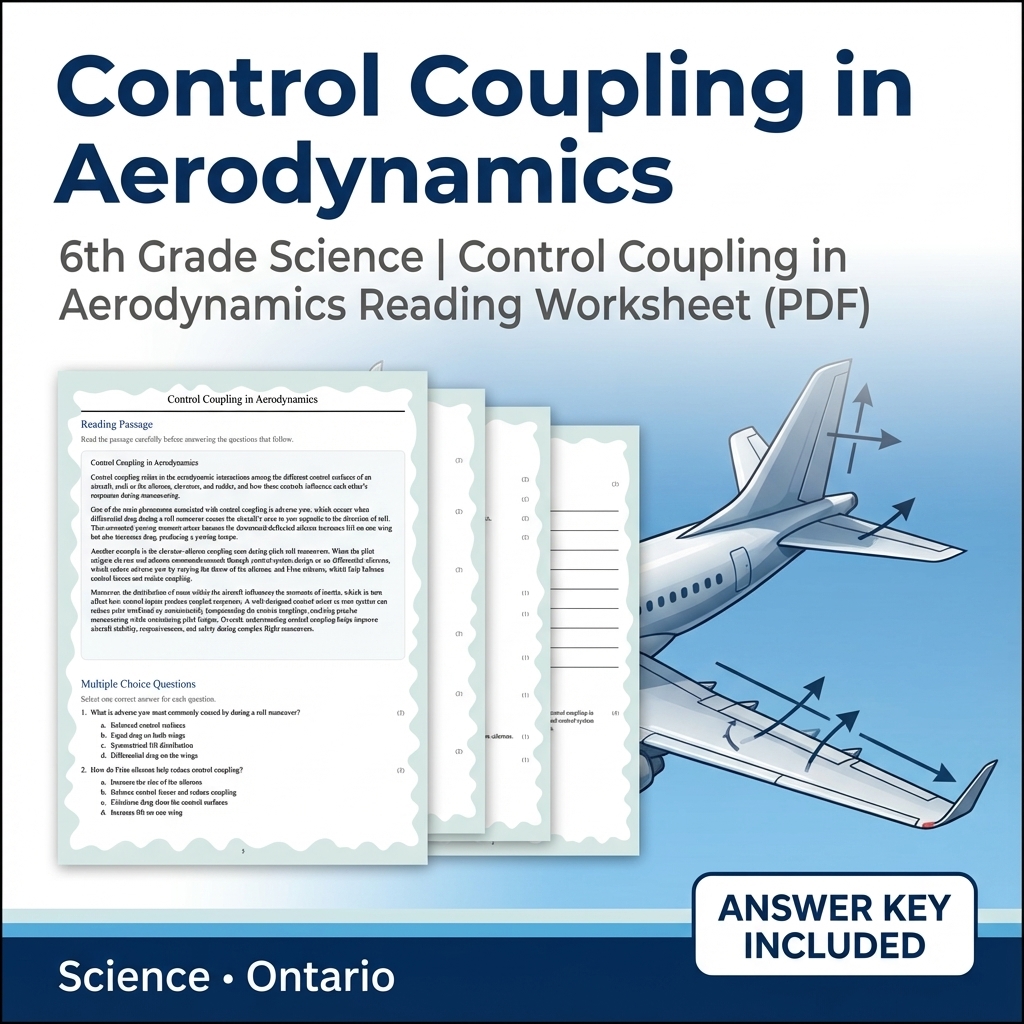
6th Grade Science | Control Coupling in Aerodynamics Reading Worksheet (PDF)
JCreated byJ.S SheetsLearning Objectives
- Understand the concept of control coupling and its effects in aerodynamics.
- Identify different types of control coupling such as adverse yaw and elevator–aileron coupling.
- Explain techniques used to mitigate control coupling effects, including differential and Frise ailerons.
Also included in: Grade 6 Science | Aerodynamics & Flight Unit Worksheet Pack (PDF + Answer Keys) +1 more
Instant download
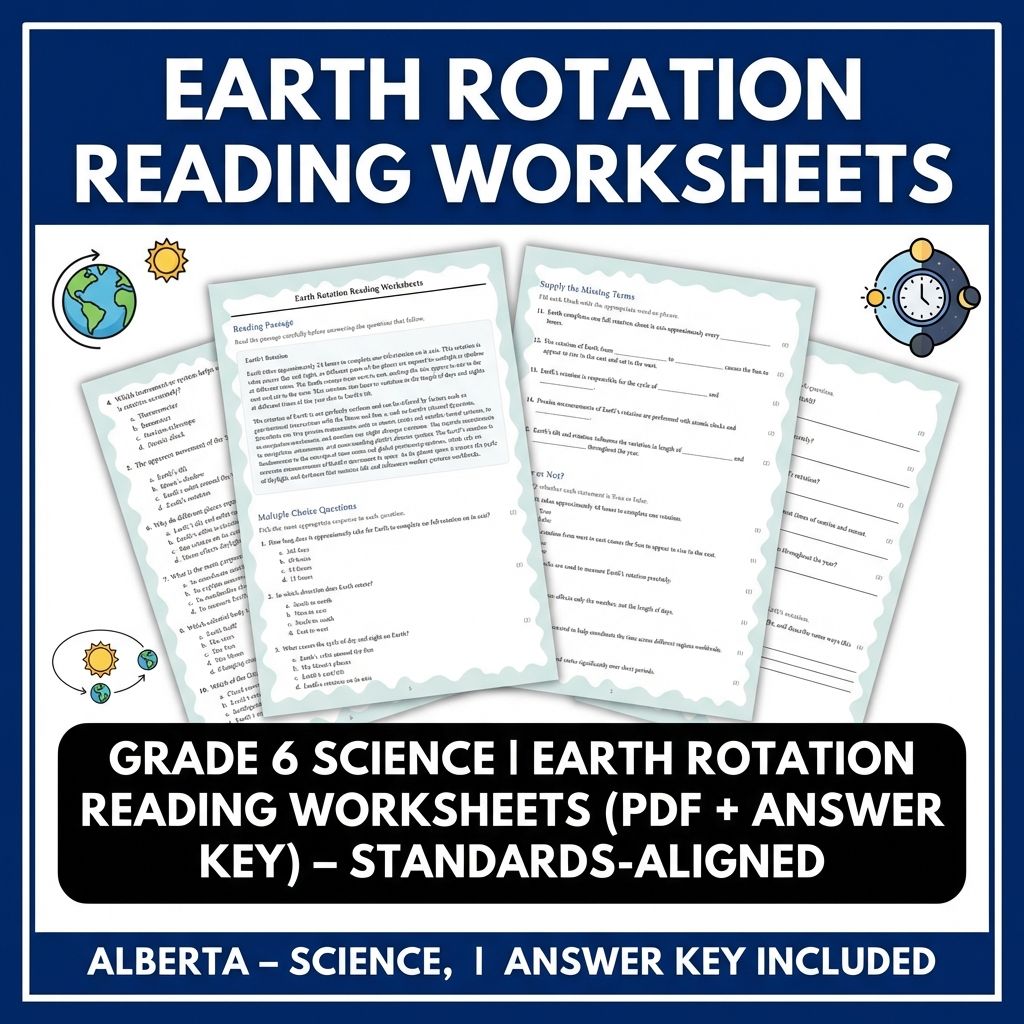
Grade 6 Science | Earth Rotation (PDF + Answer Key) – Standards-Aligned
JCreated byJ.S SheetsLearning Objectives
- Understand the concept of Earth's rotation and its effects on day and night cycles.
- Identify the causes and observations related to Earth's rotation.
- Analyze how Earth's rotation influences time zones and celestial observations.
Also included in: Grade 6 Science | Celestial Motion & Sky Observation Worksheets Bundle +1 more
Instant download
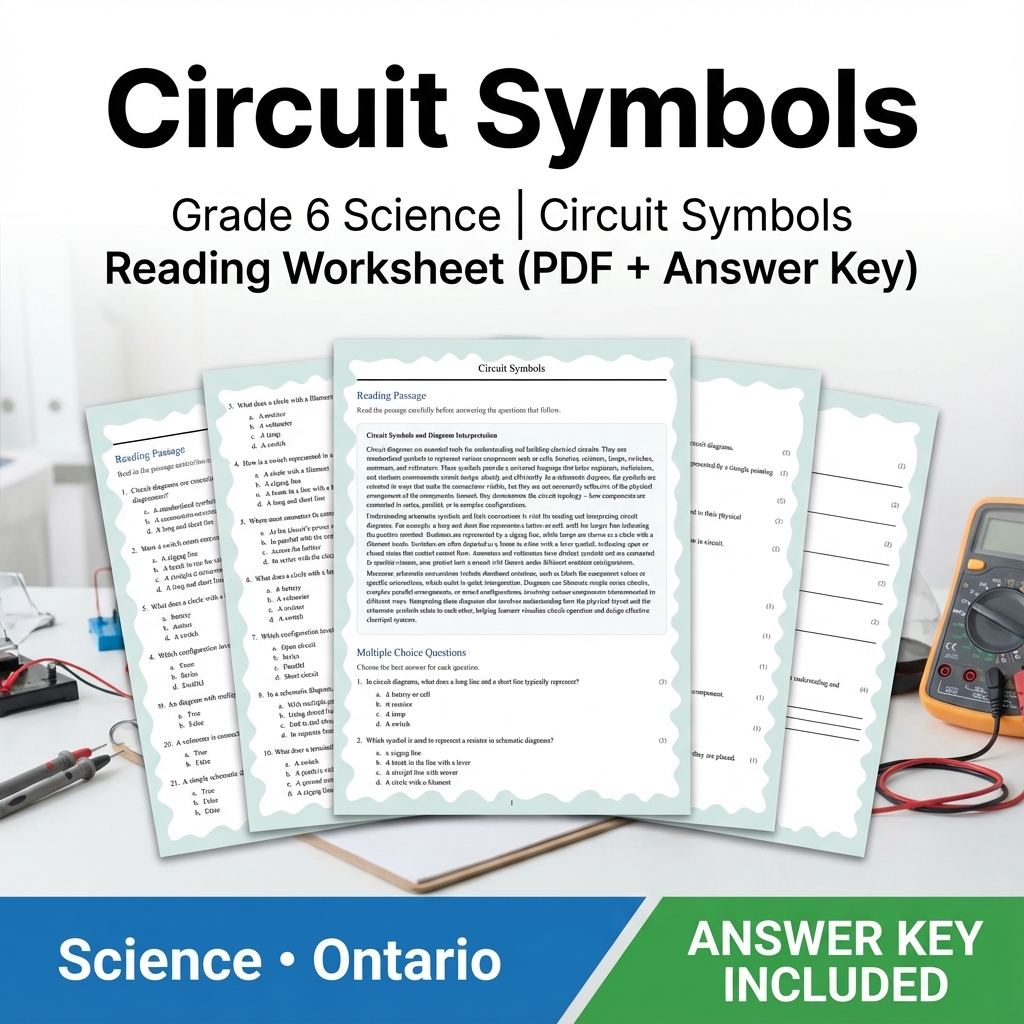
Grade 6 Science | Circuit Symbols Reading Worksheet (PDF + Answer Key)
JCreated byJ.S SheetsLearning Objectives
- Understand standard schematic symbols used in electrical circuits.
- Learn how to interpret circuit diagrams to predict circuit behavior.
- Identify connections and configurations such as series and parallel circuits.
Also included in: Grade 6 Science Circuit & Electricity Unit Bundle – Worksheets & Answer Keys +1 more
Instant download
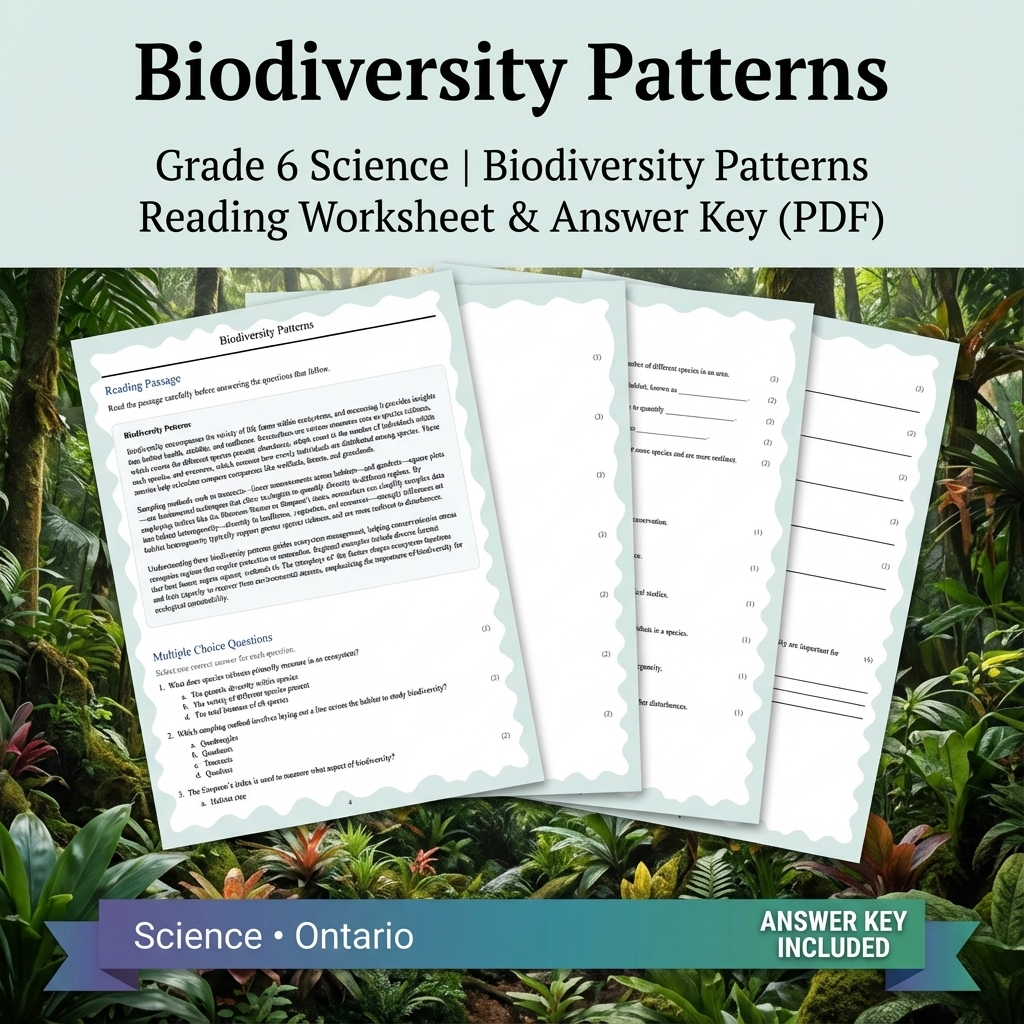
Grade 6 Science | Biodiversity Patterns Reading Worksheet & Answer Key (PDF)
JCreated byJ.S SheetsLearning Objectives
- Understand the concept of biodiversity and the indices used to measure it.
- Identify sampling methods such as transects and quadrats for biodiversity assessment.
- Interpret spatial patterns of biodiversity and their relation to habitat heterogeneity.
Also included in: Grade 6 Science Unit Bundle – Ecosystems, Biodiversity & Environmental Impact +1 more
Instant download
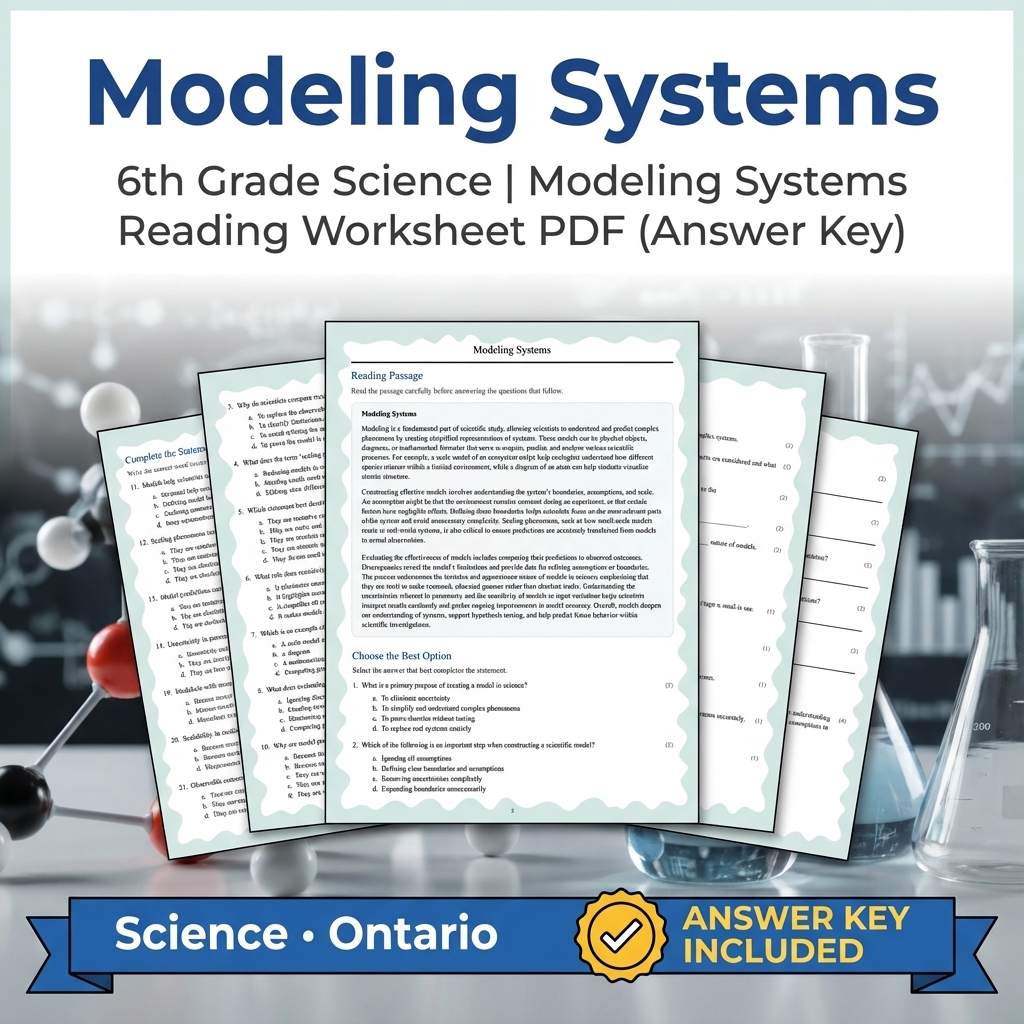
6th Grade Science | Modeling Systems Reading Worksheet PDF (Answer Key)
JCreated byJ.S SheetsLearning Objectives
- Understand the purpose of different types of scientific models and how they represent complex systems.
- Identify assumptions, boundaries, and scaling factors in various models.
- Compare model predictions with observable outcomes to evaluate limitations and refine models.
Also included in: Grade 6 Science Unit | Inquiry, Data, & Ethical Practices Worksheet Pack +1 more
Instant download
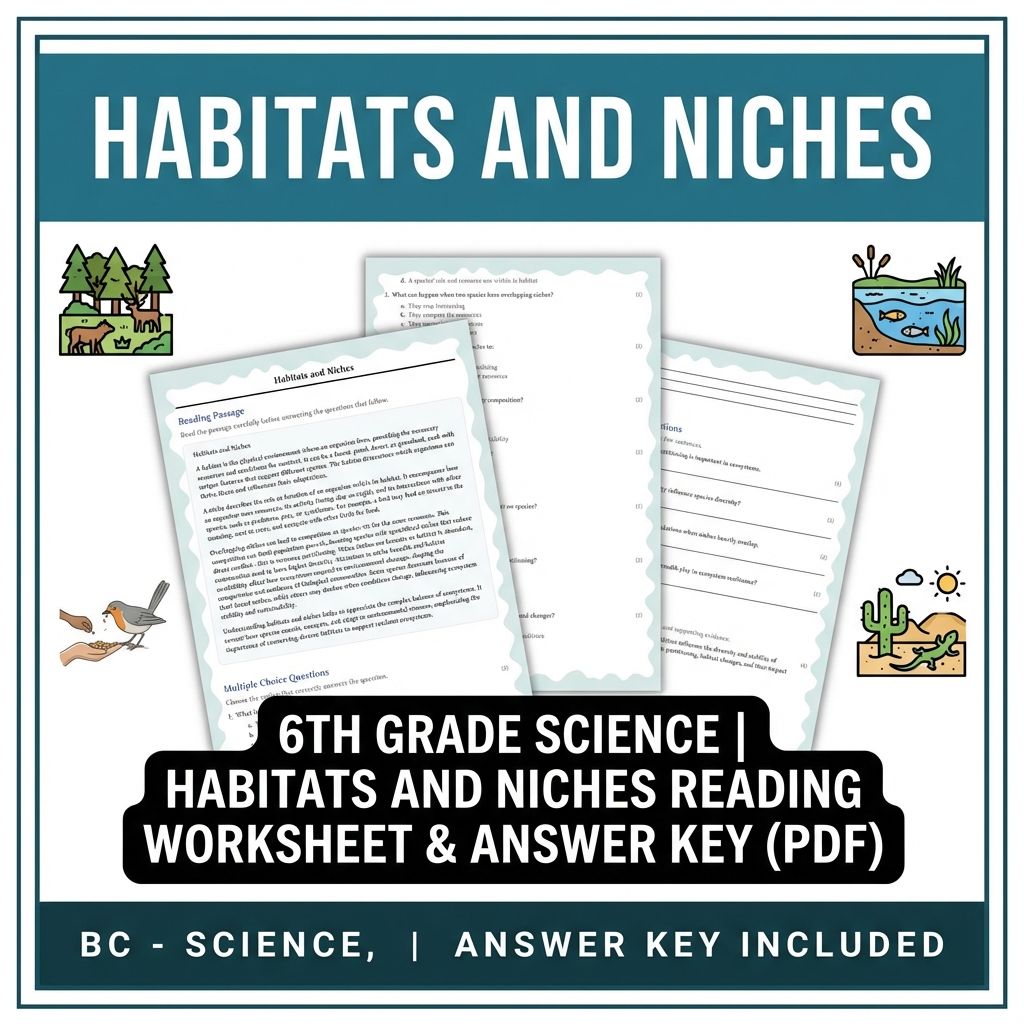
6th Grade Science | Habitats and Niches Reading Worksheet & Answer Key (PDF)
JCreated byJ.S SheetsLearning Objectives
- Understand the difference between habitats and niches in ecosystems.
- Identify how overlapping niches create competition among species.
- Describe resource partitioning and its role in supporting coexistence.
Instant download
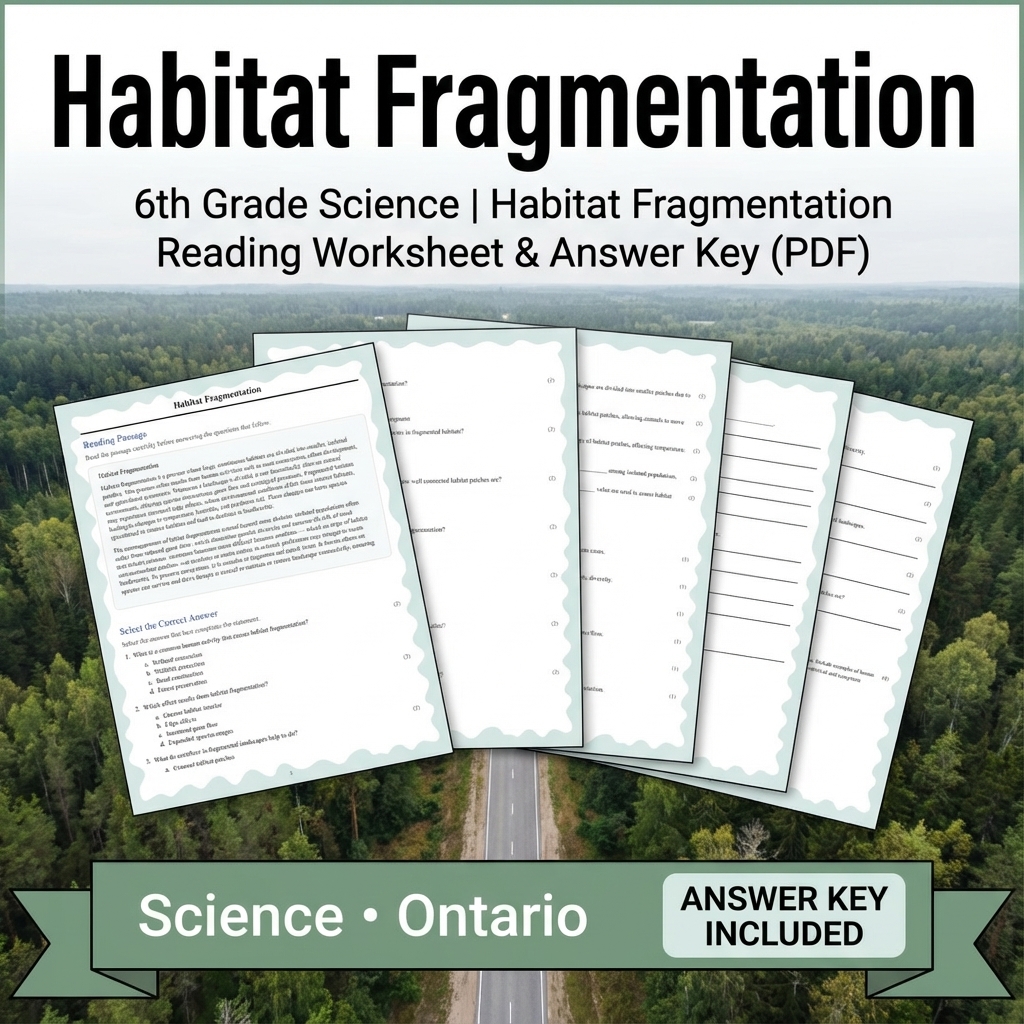
6th Grade Science | Habitat Fragmentation Reading Worksheet & Answer Key (PDF)
JCreated byJ.S SheetsLearning Objectives
- Understand the concept of habitat fragmentation and its causes.
- Identify the ecological impacts of habitat fragmentation on species and ecosystems.
- Describe landscape metrics used to assess habitat fragmentation and connectivity.
Also included in: Grade 6 Science Unit Bundle – Ecosystems, Biodiversity & Environmental Impact +1 more
Instant download
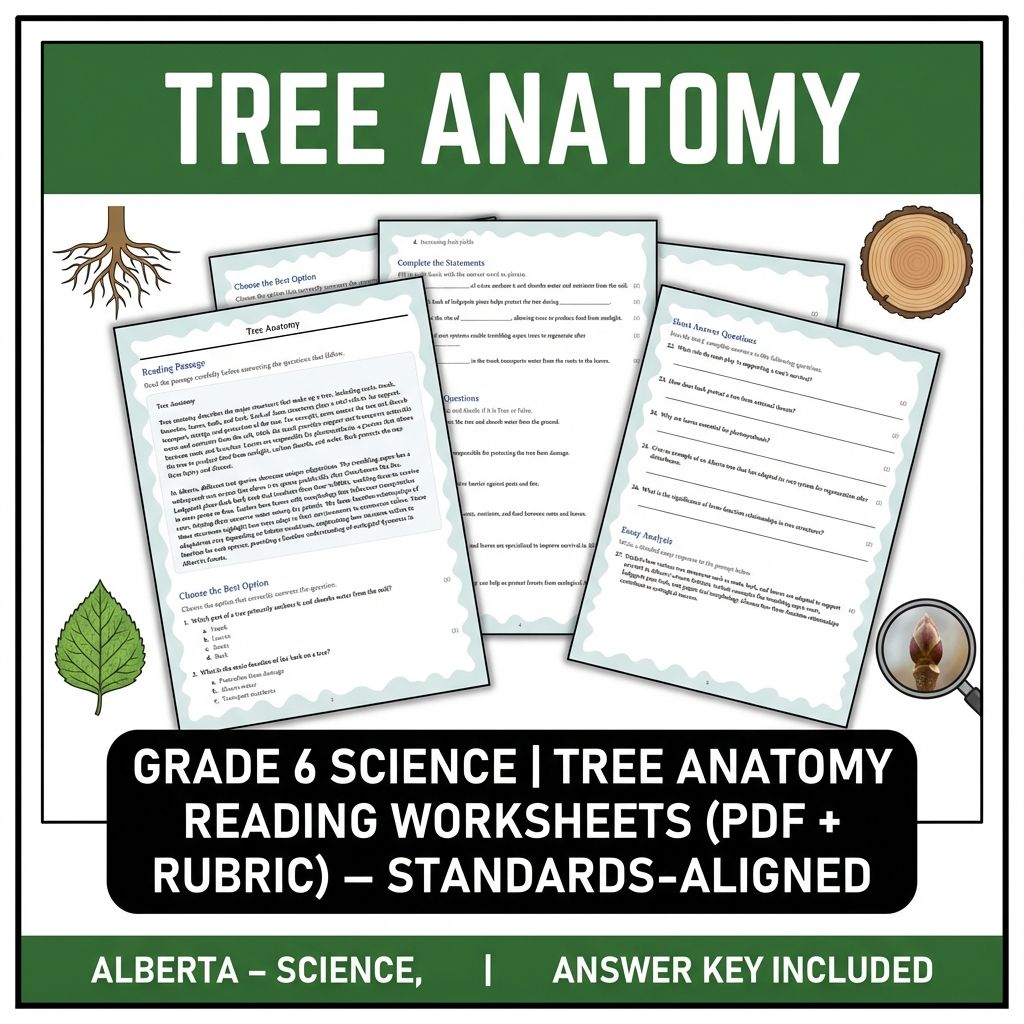
Grade 6 Science | Tree Anatomy Worksheets (PDF + Rubric) – Standards-Aligned
JCreated byJ.S SheetsLearning Objectives
- Identify the major structures of a tree and understand their functions.
- Explain how tree structures support adaptation and survival in different habitats.
- Describe examples of tree adaptations in Alberta, including roots, bark, and leaves.
Also included in: Grade 6 Science Unit Bundle | Ecosystems and Biodiversity (Answer Keys Included) +1 more
Instant download
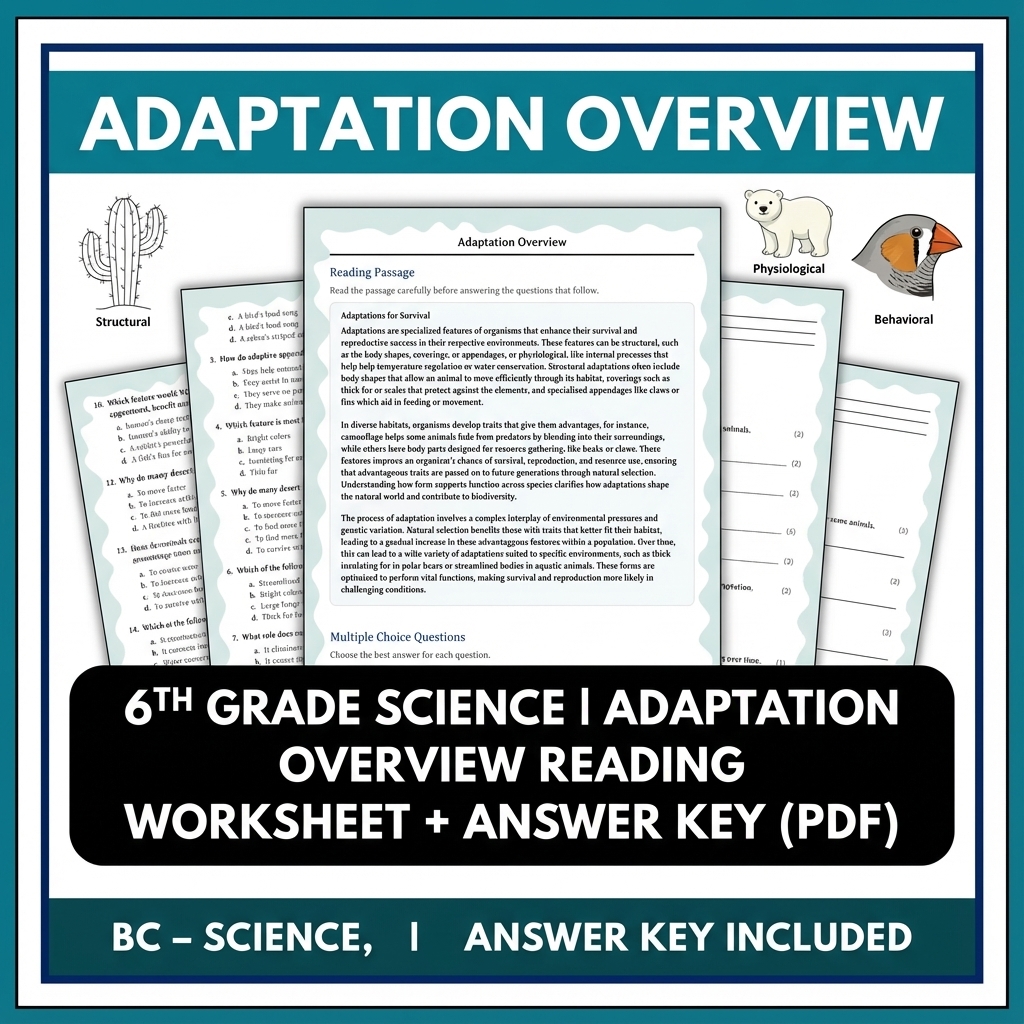
6th Grade Science | Adaptation Overview Reading Worksheet + Answer Key (PDF)
JCreated byJ.S SheetsLearning Objectives
- Understand what structural and physiological adaptations are and how they help organisms survive.
- Identify specific features that serve adaptive functions in different species.
- Learn how natural selection favors advantageous traits that improve resource acquisition, defense, or reproduction.
Instant download
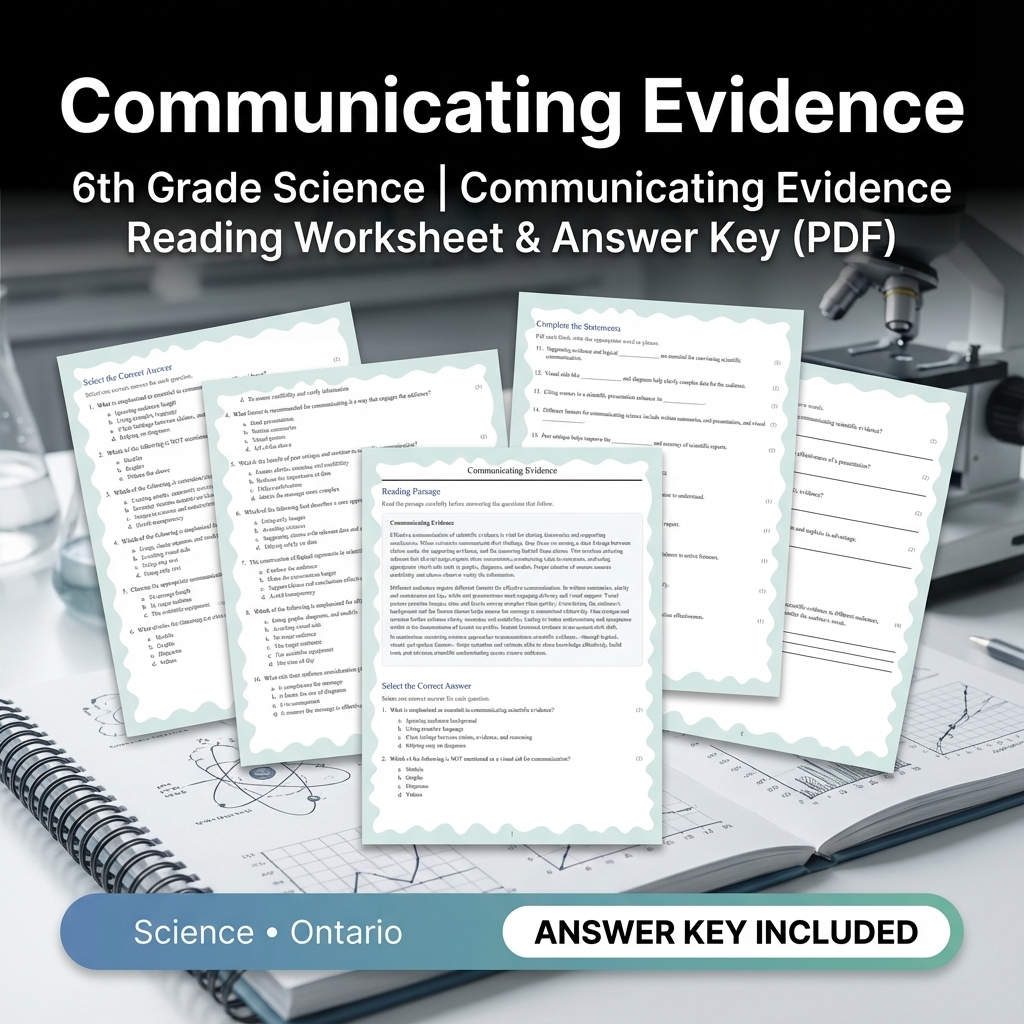
6th Grade Science | Communicating Evidence Reading Worksheet & Answer Key (PDF)
JCreated byJ.S SheetsLearning Objectives
- Understand core methods for communicating scientific evidence clearly and effectively.
- Identify how to support claims with relevant data and logical reasoning.
- Recognize different formats for presenting scientific information, including visual and oral formats.
Also included in: Grade 6 Science Unit | Inquiry, Data, & Ethical Practices Worksheet Pack +1 more
Instant download
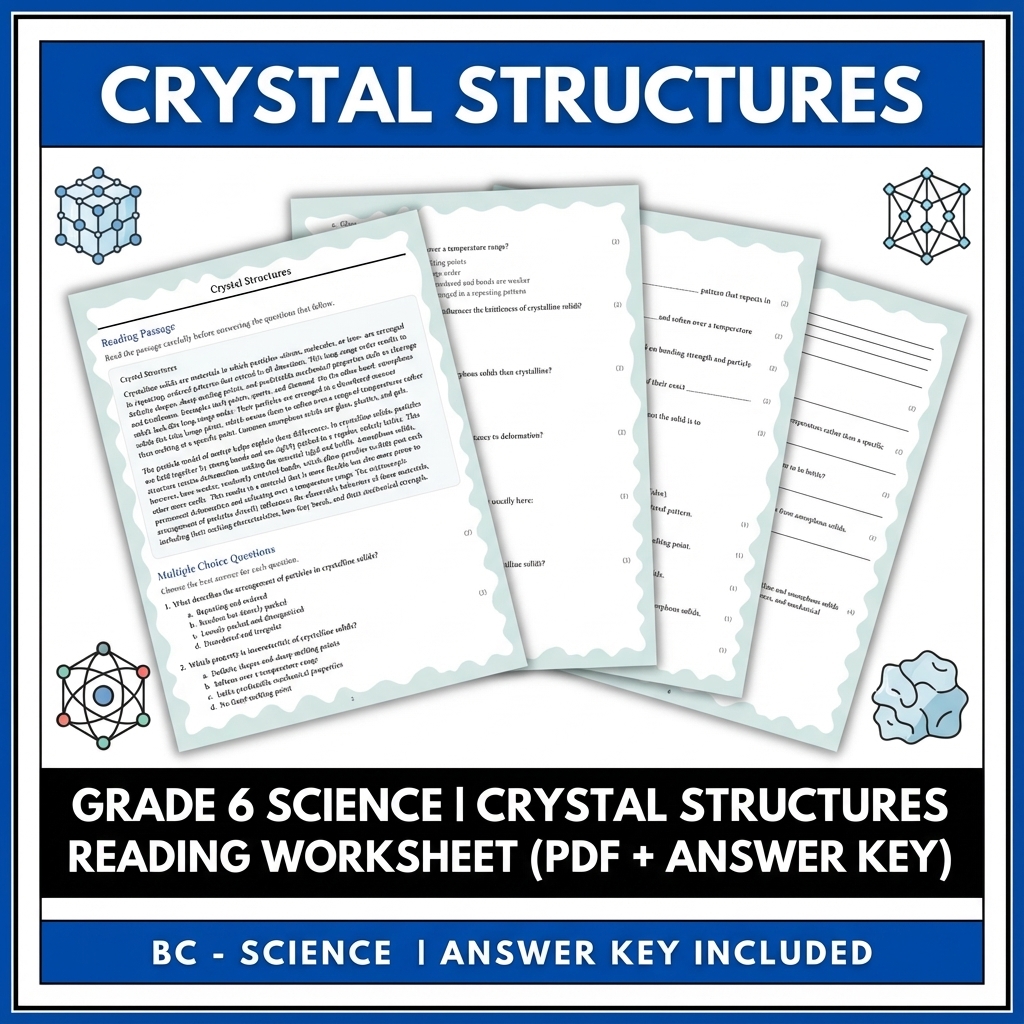
Grade 6 Science | Crystal Structures Reading Worksheet (PDF + Answer Key)
JCreated byJ.S SheetsLearning Objectives
- Understand the arrangement of particles in crystalline and amorphous solids.
- Describe how particle bonding influences the properties of different solids.
- Compare observable behaviors of crystalline and amorphous structures such as melting points, brittleness, and cleavage.
Instant download
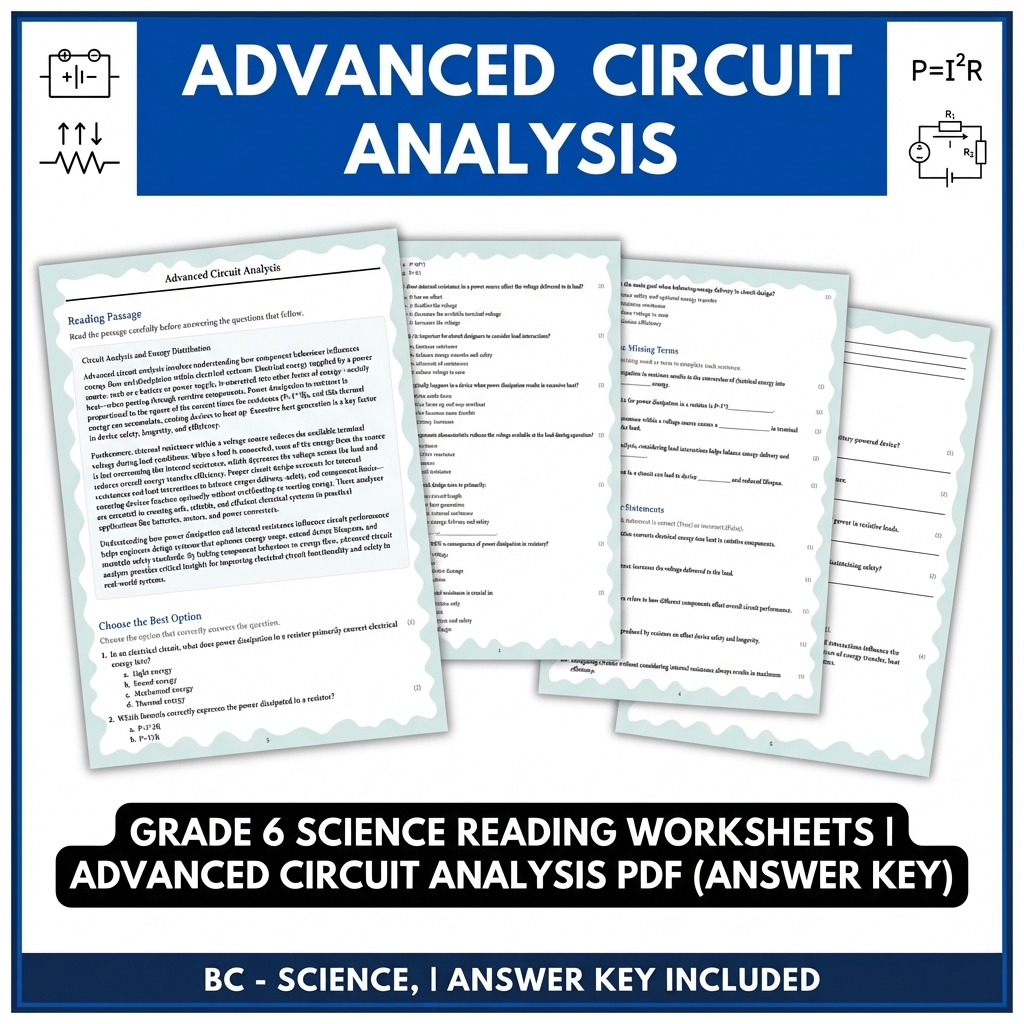
Grade 6 Science Reading Worksheets | Advanced Circuit Analysis PDF (Answer Key)
JCreated byJ.S SheetsLearning Objectives
- Understand how power dissipation in resistive elements converts electrical energy into heat.
- Explain how internal resistance affects voltage and energy delivery in circuits.
- Analyze how load interactions influence circuit performance and safety.
Instant download
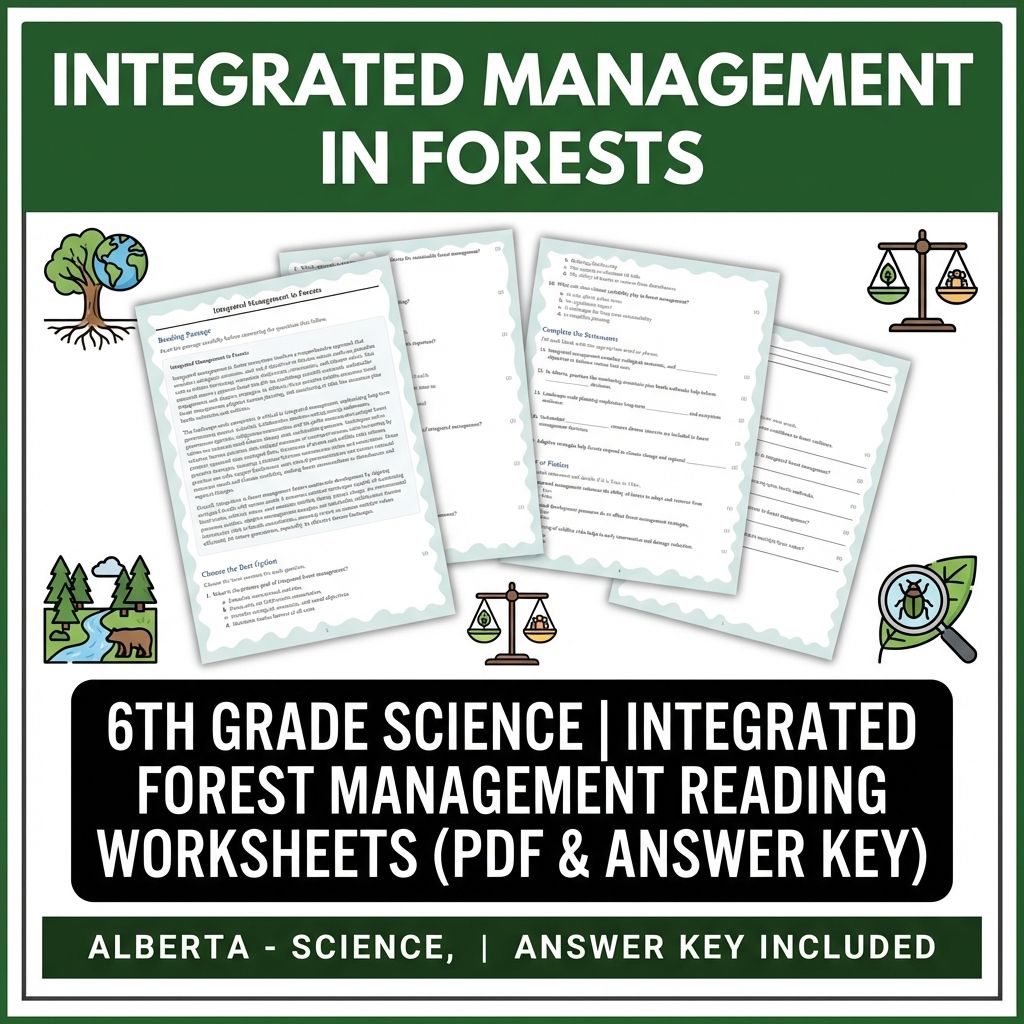
6th Grade Science | Integrated Forest Management Worksheets (PDF & Answer Key)
JCreated byJ.S SheetsLearning Objectives
- Understand the principles of integrated management in ecological, economic, and social contexts.
- Identify approaches used in Alberta for sustainable forest management.
- Explain how landscape-scale planning and stakeholder collaboration contribute to long-term resilience.
Also included in: Grade 6 Science Unit Bundle | Ecosystems and Biodiversity (Answer Keys Included) +1 more
Instant download
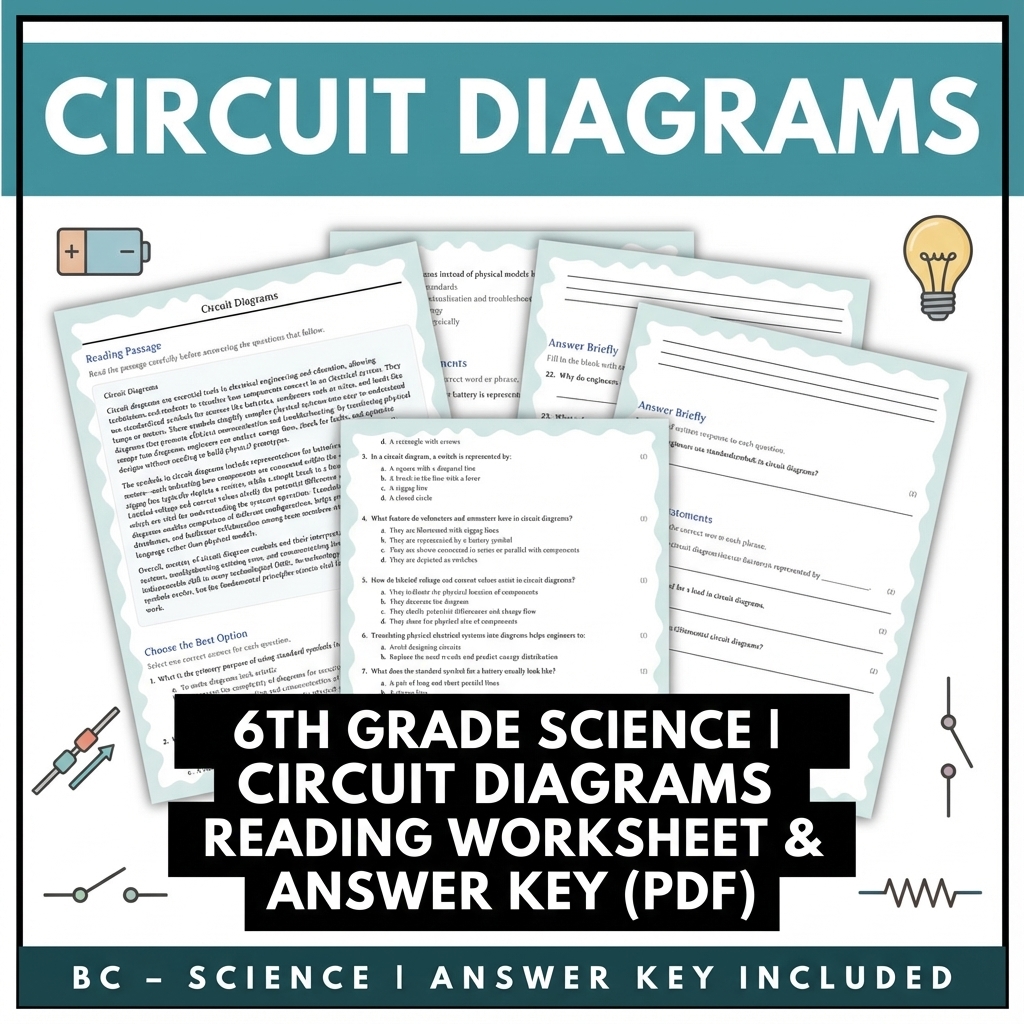
6th Grade Science | Circuit Diagrams Reading Worksheet & Answer Key (PDF)
JCreated byJ.S SheetsLearning Objectives
- Understand standard symbols used in circuit diagrams to represent sources, conductors, and loads.
- Learn how to translate physical electrical systems into simplified diagrams.
- Identify and interpret symbols for batteries, resistors, switches, and meters in diagrams.
Instant download
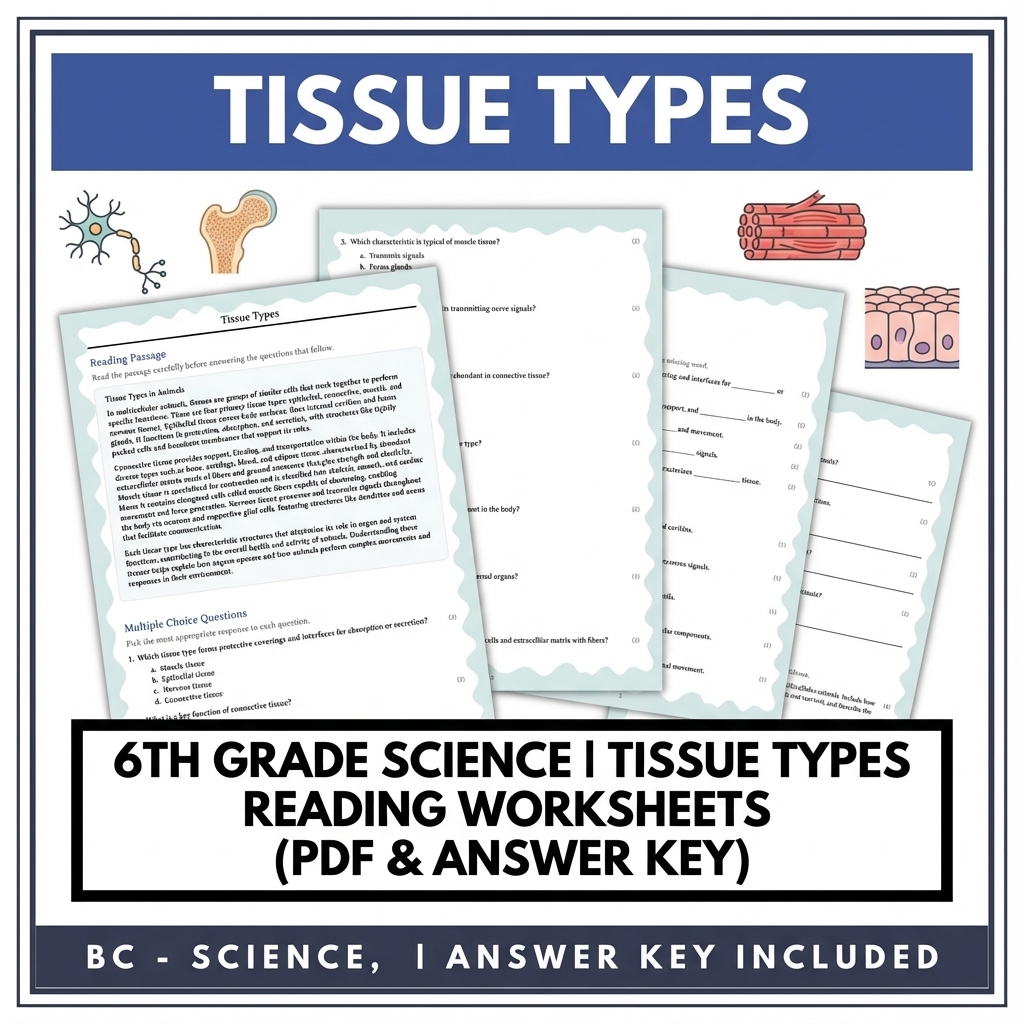
6th Grade Science | Tissue Types Reading Worksheets (PDF & Answer Key)
JCreated byJ.S SheetsLearning Objectives
- Identify the four main tissue types in multicellular animals.
- Describe the functions and structures of epithelial, connective, muscle, and nervous tissues.
- Explain how different tissue types contribute to organ functions and animal movement.
Instant download
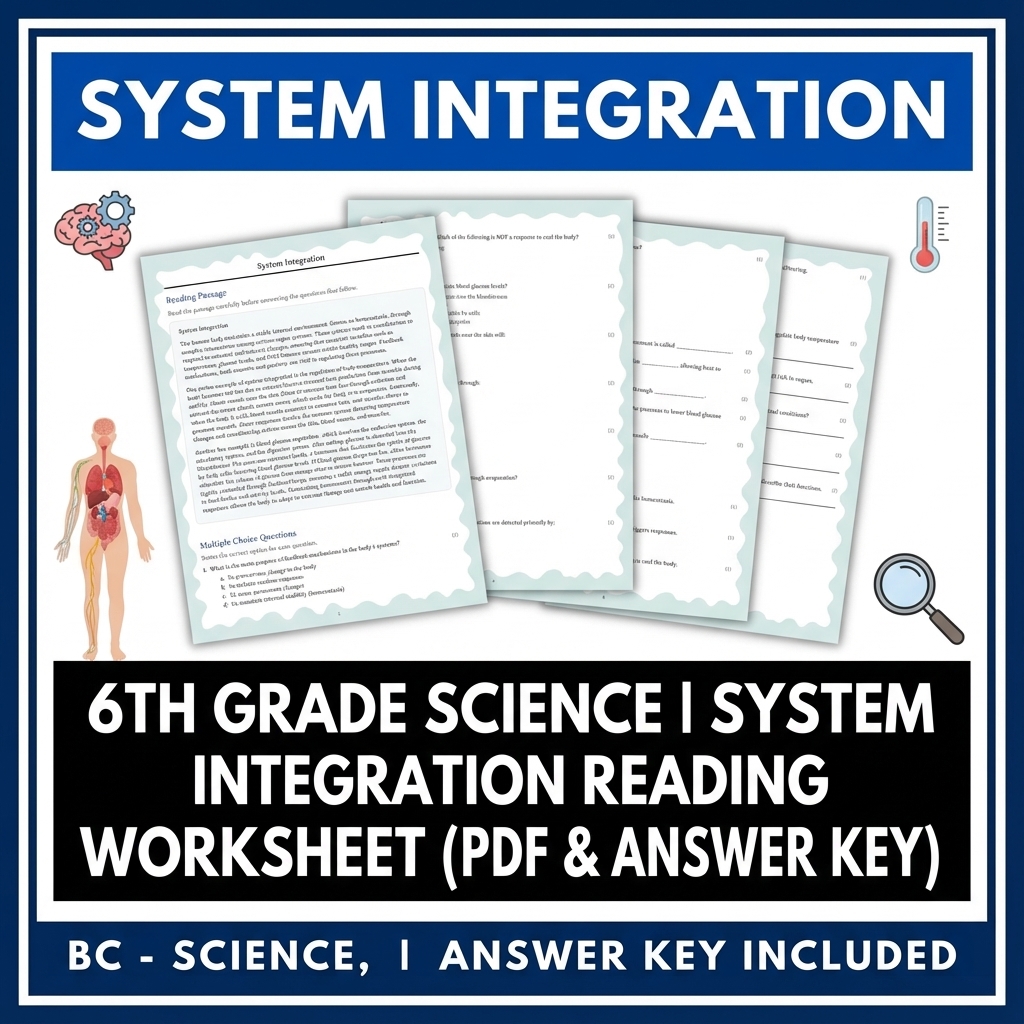
6th Grade Science | System Integration Reading Worksheet (PDF & Answer Key)
JCreated byJ.S SheetsLearning Objectives
- Understand how organ systems work together to maintain homeostasis.
- Identify feedback mechanisms involved in regulating body temperature and blood glucose.
- Recognize the roles of nervous, endocrine, and circulatory systems in system integration.
Instant download
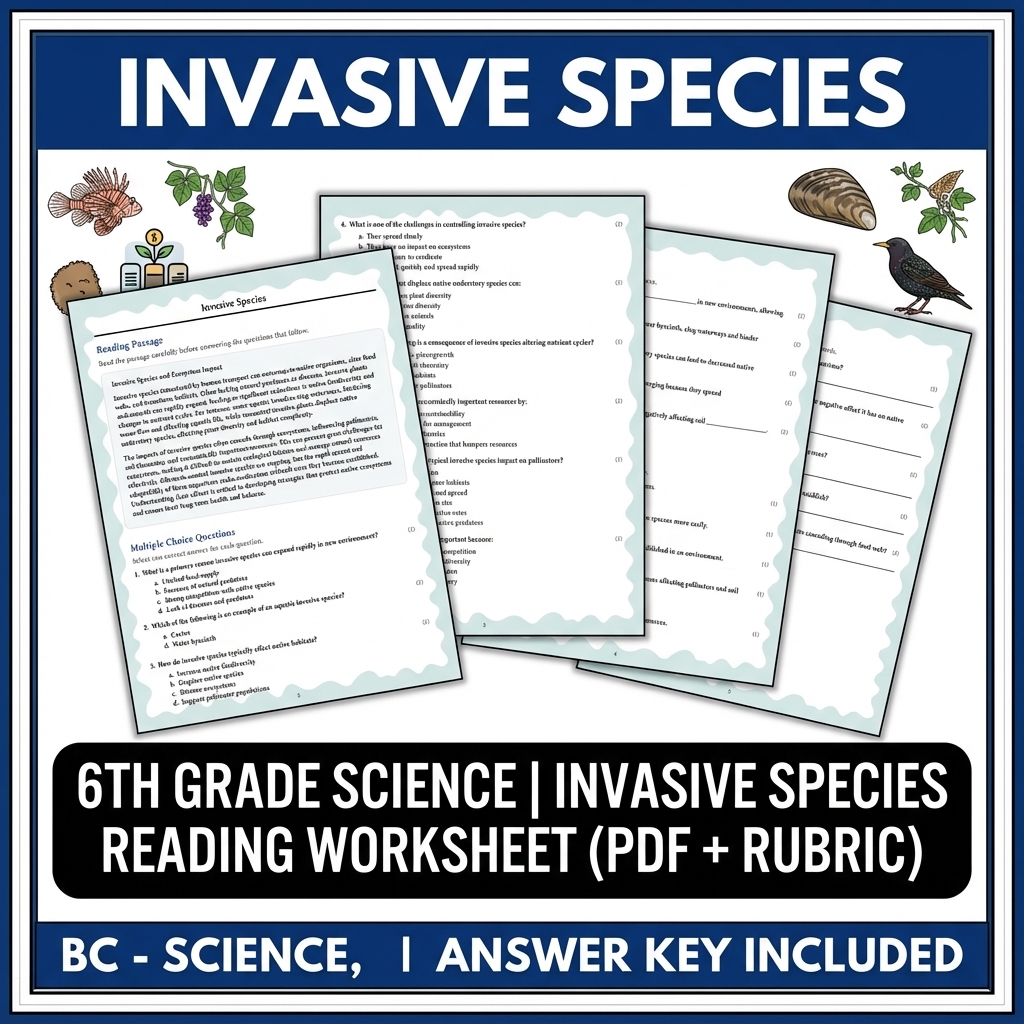
6th Grade Science | Invasive Species Reading Worksheet (PDF + Rubric)
JCreated byJ.S SheetsLearning Objectives
- Understand what invasive species are and how they impact ecosystems.
- Identify examples of invasive plants and animals.
- Explain the ecological consequences of invasive species on native biodiversity and habitats.
Instant download
Grade 6 Science | Mass Conservation Reading Worksheet & Answer Key (PDF)
JCreated byJ.S SheetsLearning Objectives
- Understand the principle of conservation of mass in physical and chemical changes.
- Recognize the differences between open and closed systems regarding mass change.
- Identify examples and misconceptions related to mass conservation in various processes.
Instant download
6th Grade Science | Light Properties Reading Worksheet & Answer Key (PDF)
JCreated byJ.S SheetsLearning Objectives
- Explain the wave-particle nature of light and its key properties such as wavelength, frequency, and energy.
- Identify the differences between visible, ultraviolet, and infrared light based on their wavelengths and energy levels.
- Describe how light's properties influence how materials transmit, absorb, or reflect specific colors.
Instant download
6th Grade Science | Adaptation Tradeoffs Reading Worksheets (PDF + Rubric)
JCreated byJ.S SheetsLearning Objectives
- Explain the concept of adaptation trade-offs in organisms.
- Identify examples of structural and physiological trade-offs in animals and plants.
- Analyze how environmental pressures influence the balance of costs and benefits in adaptations.
Instant download
Grade 6 Science | Alberta Seasons Reading Worksheet (PDF & Answer Key)
JCreated byJ.S SheetsLearning Objectives
- Describe the seasonal patterns in Alberta and their influencing factors.
- Explain how Earth–Sun relationships create environmental cycles in Alberta.
- Identify the effects of seasonal changes on local ecosystems and human activities.
Also included in: Grade 6 Science | Celestial Motion & Sky Observation Worksheets Bundle +1 more
Instant download
About Grade 6 Science Worksheets
Explore Grade 6 Science worksheets for classwork, homework, or review. Our 5,969 printables download instantly as PDFs.
MyTeachingSheets worksheets are made by real teacher-authors and checked before they go live. Download any as a print-ready PDF for lessons, homework, or independent practice — most include answer keys, and previews are always free.