
Grade 7 Science Worksheets
6,039 worksheets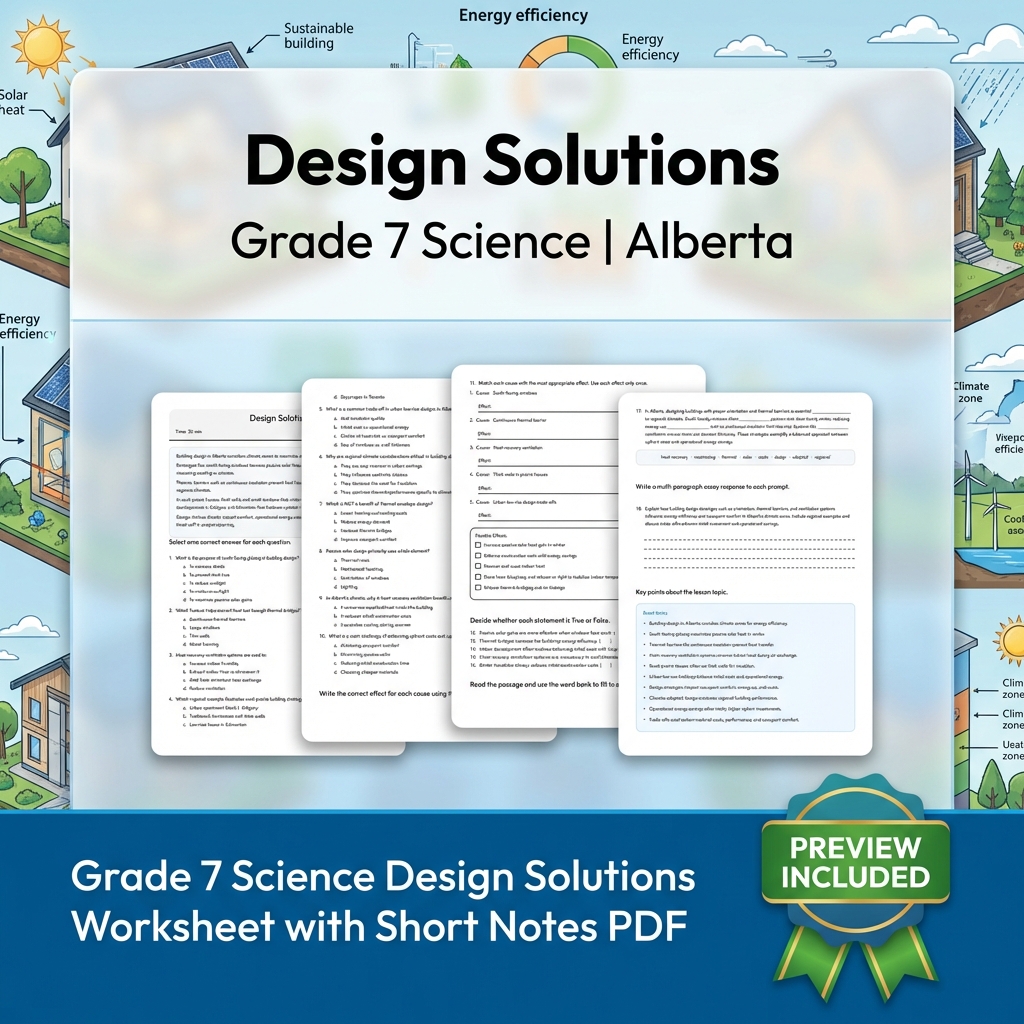
Grade 7 Science Design Solutions Worksheet with Short Notes PDF
 Created byMeadowlark Worksheets
Learning Objectives
- Understand key design strategies used in building solutions to optimize thermal performance.
- Identify methods such as passive solar gains, thermal barriers, and heat-recovery ventilation.
- Analyze regional building examples and their trade-offs between materials, energy, and comfort.
Instant download

Argumentation Models Worksheet | TEKS Grade 7 Science Practice
JCreated byJ.S SheetsLearning Objectives
- Construct evidence-based arguments using a clear claim, relevant evidence, and logical reasoning.
- Critique and compare argumentation models by checking how well evidence supports a claim.
- Use quantitative results and graphical representations to strengthen or refute hypotheses.
Instant download
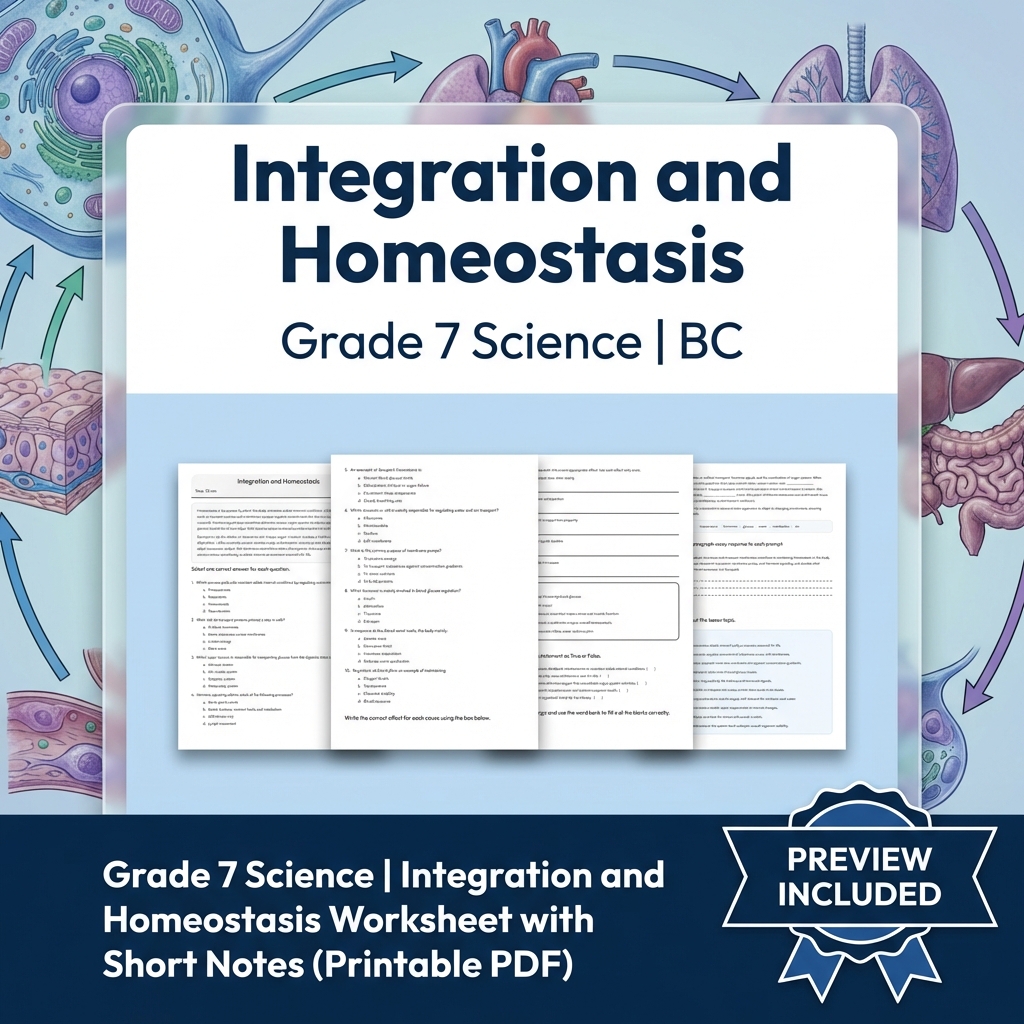
Grade 7 Science | Integration and Homeostasis Worksheet with Short Notes (PDF)
Created byMeadowlark WorksheetsLearning Objectives
- Understand how cellular structures and transport processes work together to maintain homeostasis.
- Identify key mechanisms such as transport proteins, membrane pumps, and hormone signaling.
- Explain how various organ systems coordinate to regulate nutrient levels, ions, and water balance.
Also included in: Grade 7 Science Lesson Bundle | Cell Structures & Functions Worksheets +1 more
Instant download
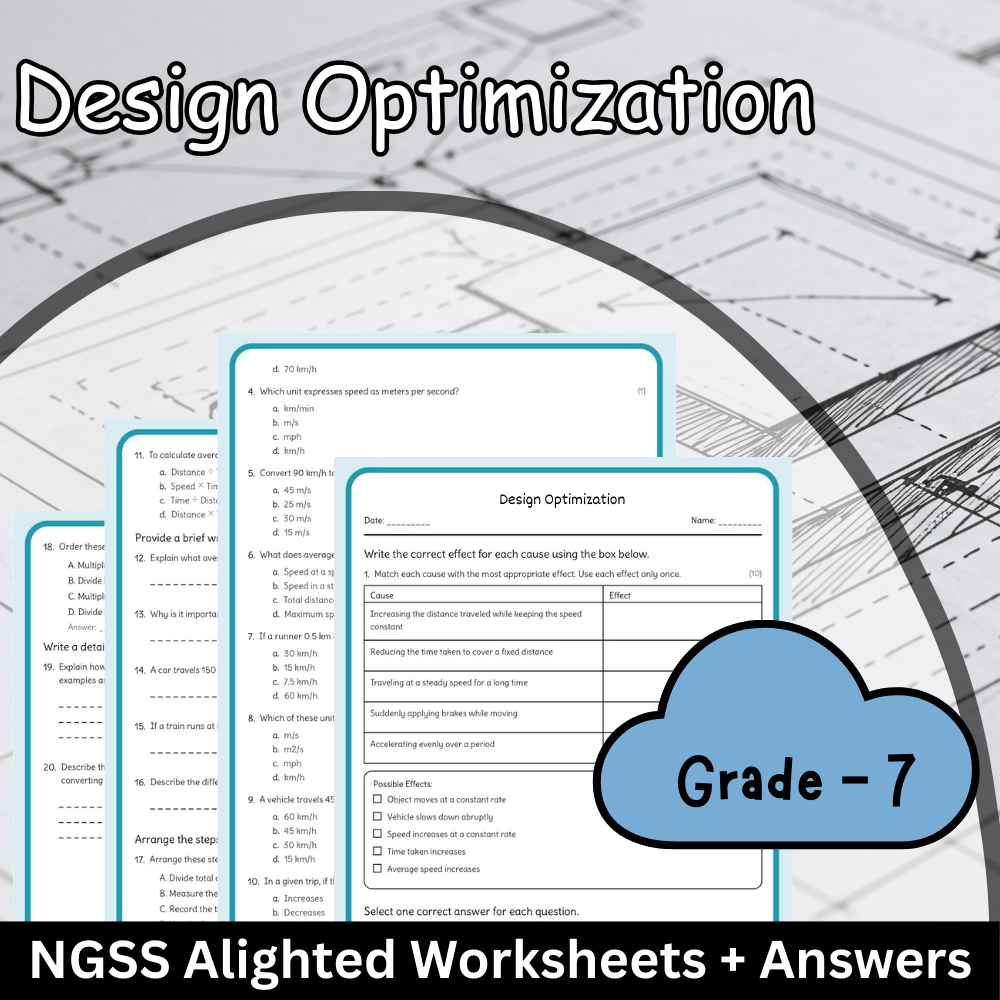
Grade 7 Science | Design Optimization Worksheet (PDF) NGSS Standards
 Created byBright Mind Resources
Learning Objectives
- Analyze test data to identify factors affecting design performance.
- Refine parameters iteratively to improve design solutions within constraints.
- Use quantitative comparisons to justify design modifications based on performance data.
Instant download
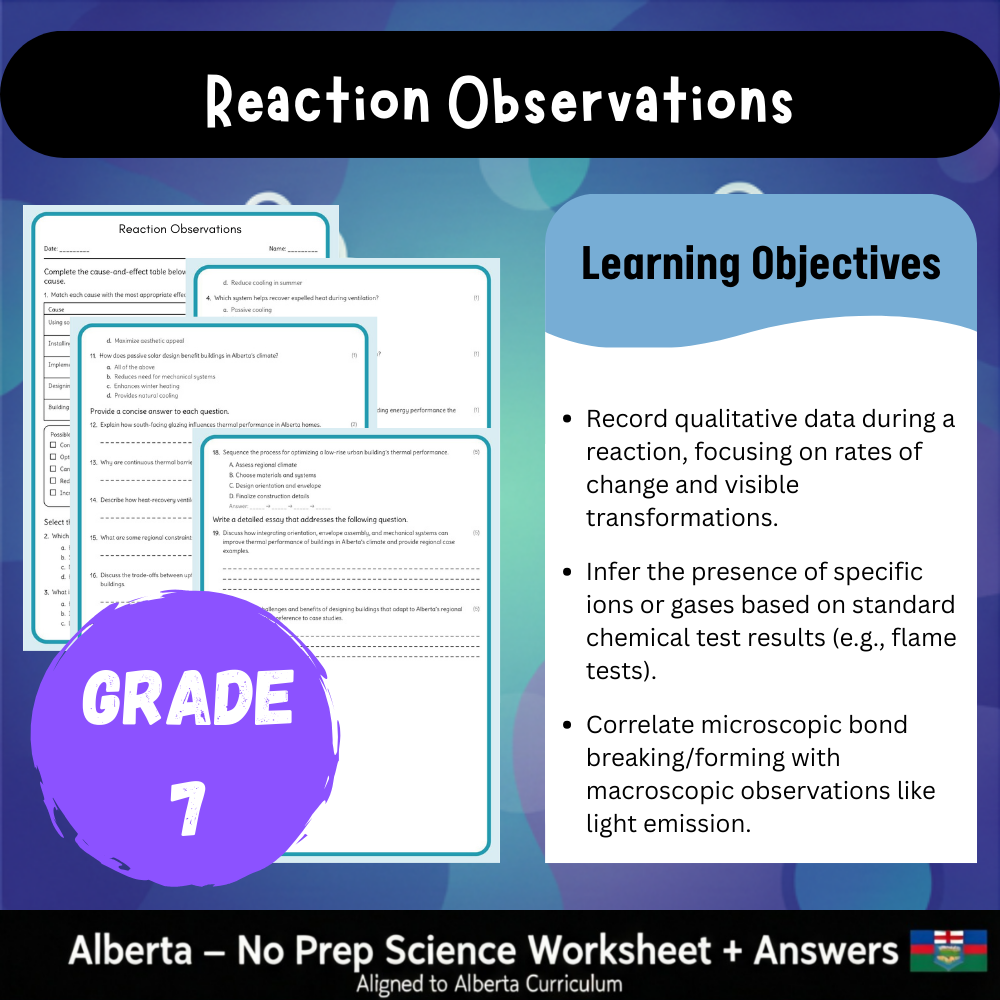
Grade 7 Science | Reaction Observations Worksheet (PDF) - Alberta Standards
Created byBright Mind ResourcesLearning Objectives
- Identify different types of observable indicators in chemical reactions.
- Describe how gas production, heat exchange, colour changes, and precipitates indicate reaction pathways.
- Analyze reaction patterns and infer underlying particle interactions and mass changes.
Instant download
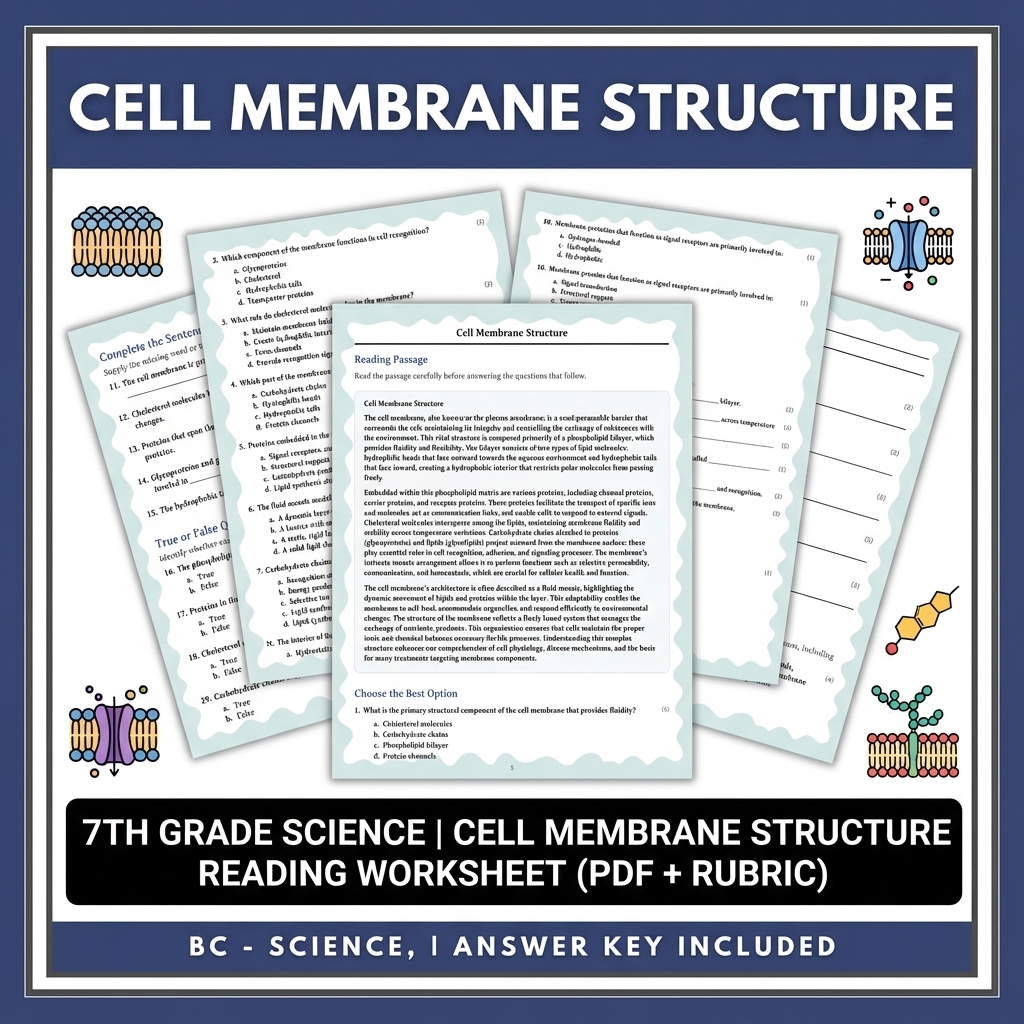
7th Grade Science | Cell Membrane Structure Reading Worksheet (PDF + Rubric)
JCreated byJ.S SheetsLearning Objectives
- Describe the organization and components of the cell membrane.
- Explain the functions of lipids, proteins, and carbohydrates in the membrane.
- Understand how the membrane maintains selective permeability.
Instant download
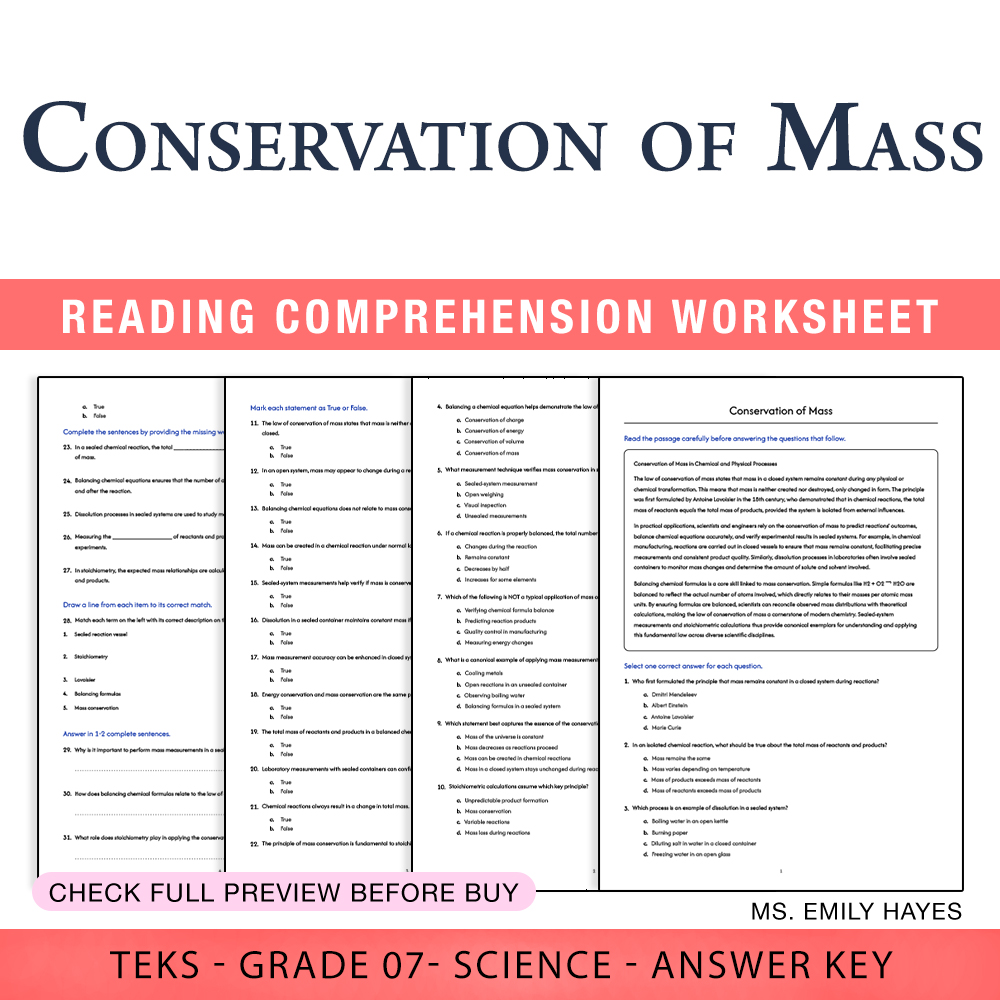
7th Grade Science | Conservation of Mass Worksheet (PDF + Answer Key)
 Created byCopper Leaf Classroom
Learning Objectives
- Understand the law of conservation of mass as a fundamental principle in physical and chemical changes.
- Apply mass accounting techniques to closed reactions and dissolution processes.
- Balance simple chemical formulas to relate reactant and product mass.
Instant download
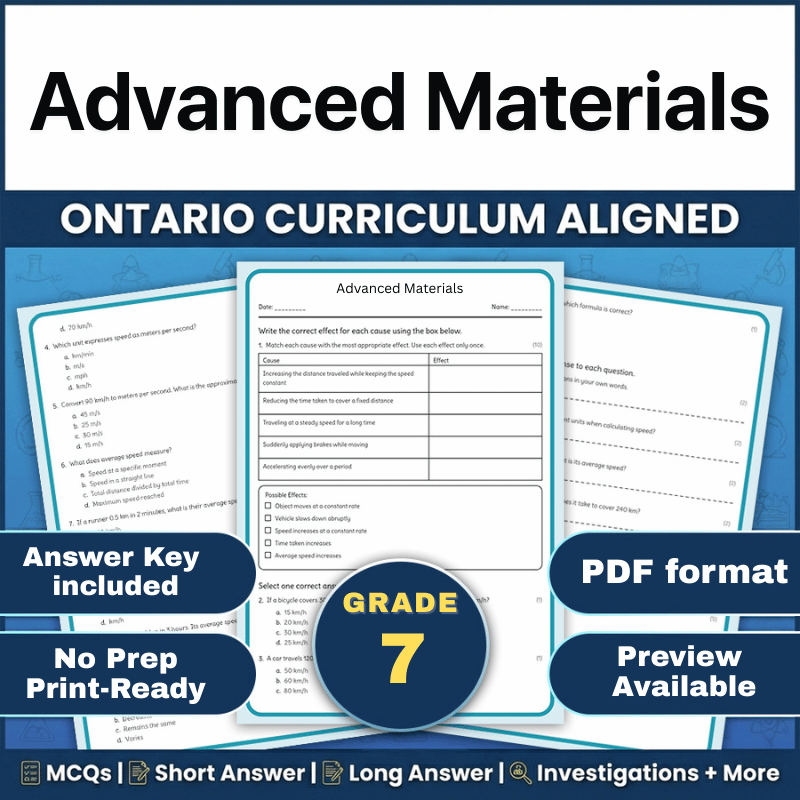
Grade 7 Science | Advanced Materials Worksheet (Ontario) (PDF)
Created byBright Mind ResourcesLearning Objectives
- Identify different types of advanced construction materials including engineered timber, fibre-reinforced polymers, high-performance concrete, and composite systems.
- Explain how manufacturing processes and microstructure contribute to the strength, stiffness, and durability of advanced materials.
- Assess trade-offs between cost, fabrication complexity, and performance in the application of modern building materials.
Instant download

Grade 7 Science – Chloroplasts & Photosynthesis | Daily Reading Worksheet
Created byBright Mind ResourcesLearning Objectives
- Describe the structure of chloroplasts and their components.
- Explain the process of photosynthesis and how chloroplasts capture light energy.
- Identify the roles of pigments, thylakoid membranes, and stroma in photosynthesis.
Also included in: Cell Function & Transport Grade 7 Science Daily Reading Worksheets Bundle | BC +1 more
Instant download
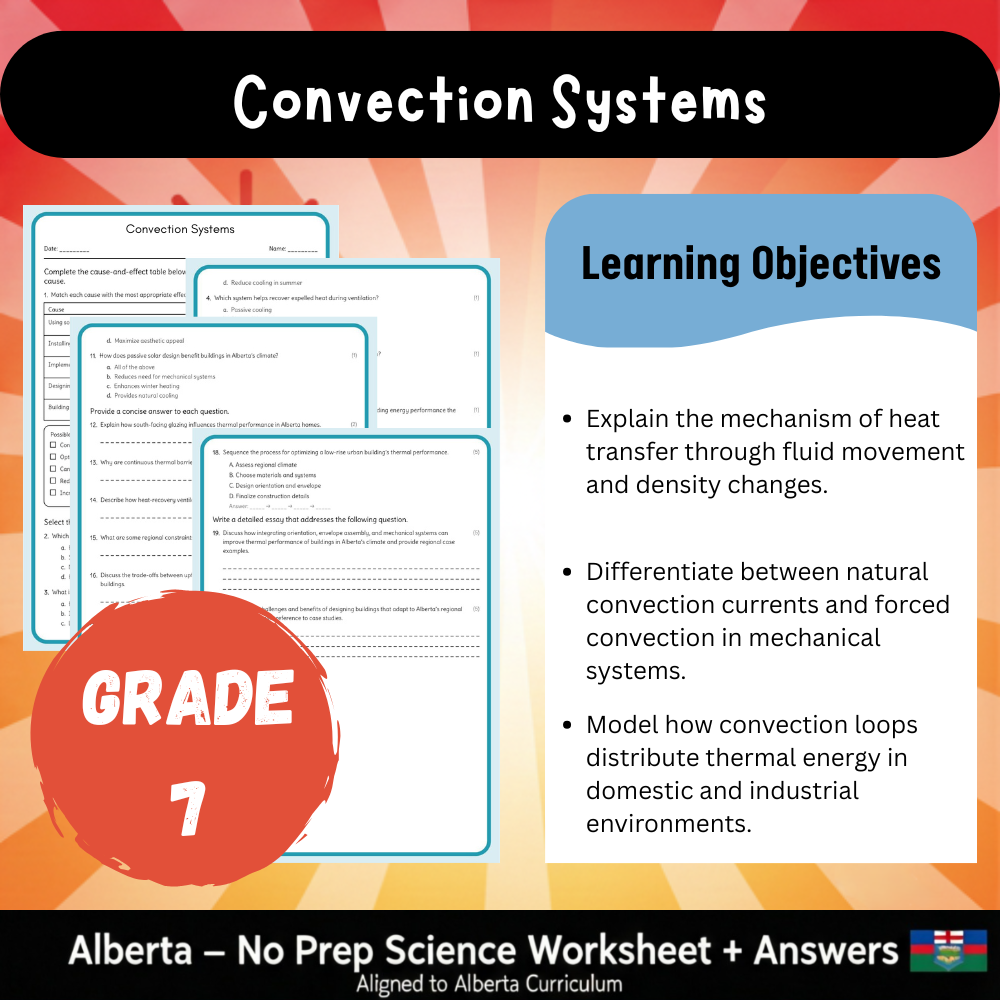
Grade 7 Science - Convection Systems Worksheet (PDF) | Alberta Standards
Created byBright Mind ResourcesLearning Objectives
- Explain how convection transports heat in fluids.
- Identify natural and forced convection examples in real-world scenarios.
- Describe the flow patterns and boundary layers involved in convection.
Instant download

Grade 7 Science – Inherited Traits & Heredity | Daily Reading Worksheet
Created byBright Mind ResourcesLearning Objectives
- Define inherited traits and understand how they are passed from parents to offspring.
- Identify examples of traits that are inherited.
- Explain the concept of heredity and how traits can vary among relatives.
Also included in: Populations & Traits Grade 7 Science Daily Reading Lesson Bundle | Florida NGSSS +1 more
Instant download
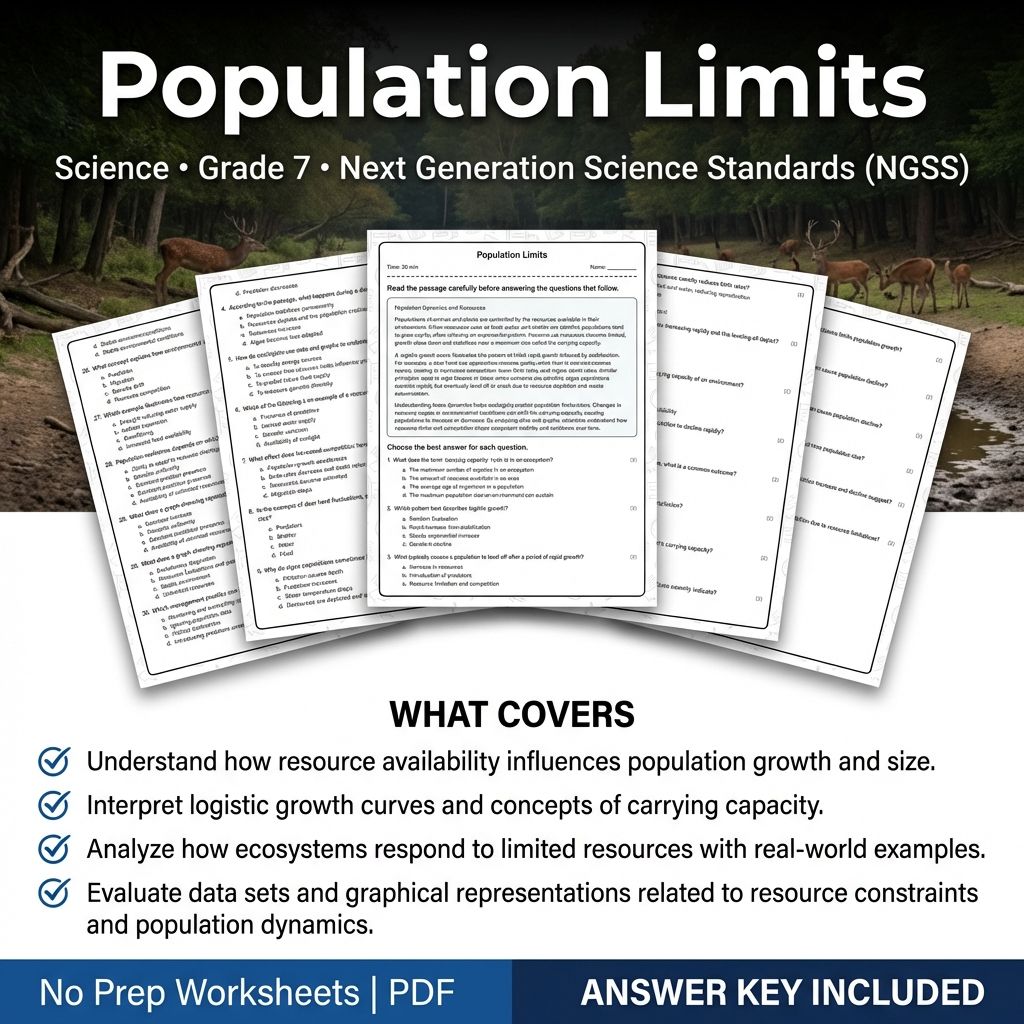
7th Grade Science | Population Limits Worksheet & Answer Key (Printable PDF)
 Created byCoral Reef Learning
Learning Objectives
- Understand how resource availability influences population growth and size.
- Interpret logistic growth curves and concepts of carrying capacity.
- Analyze how ecosystems respond to limited resources with real-world examples.
Instant download

7th Grade Science | Invasive Species Reading Worksheet with PDF Answer Key
JCreated byJ.S SheetsLearning Objectives
- Understand how invasive species spread beyond their native range.
- Identify ecological impacts caused by invasive species on native ecosystems.
- Explain mechanisms of invasion and their effects on food webs and nutrient cycles.
Instant download
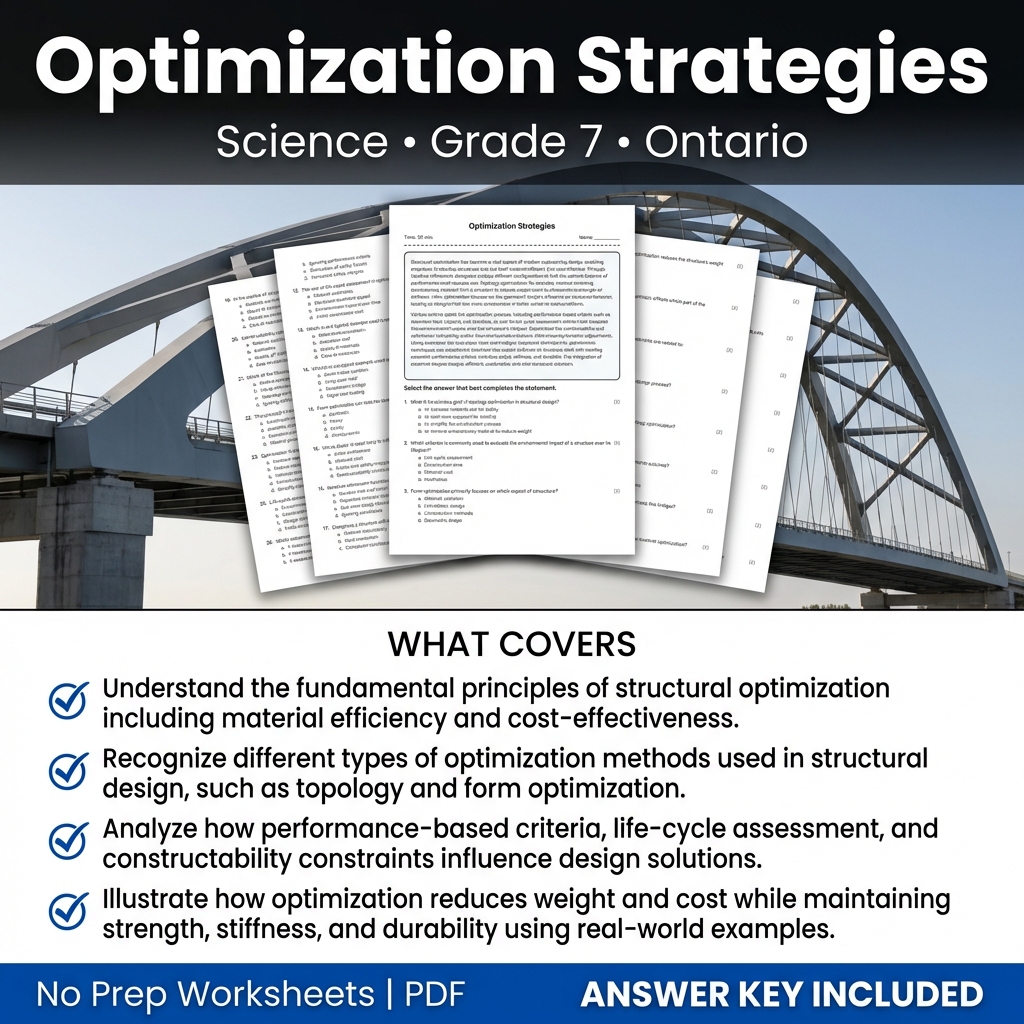
Grade 7 Science Worksheet on Optimization Strategies – Ontario Standards
Created byCoral Reef LearningLearning Objectives
- Understand the fundamental principles of structural optimization including material efficiency and cost-effectiveness.
- Recognize different types of optimization methods used in structural design, such as topology and form optimization.
- Analyze how performance-based criteria, life-cycle assessment, and constructability constraints influence design solutions.
Instant download
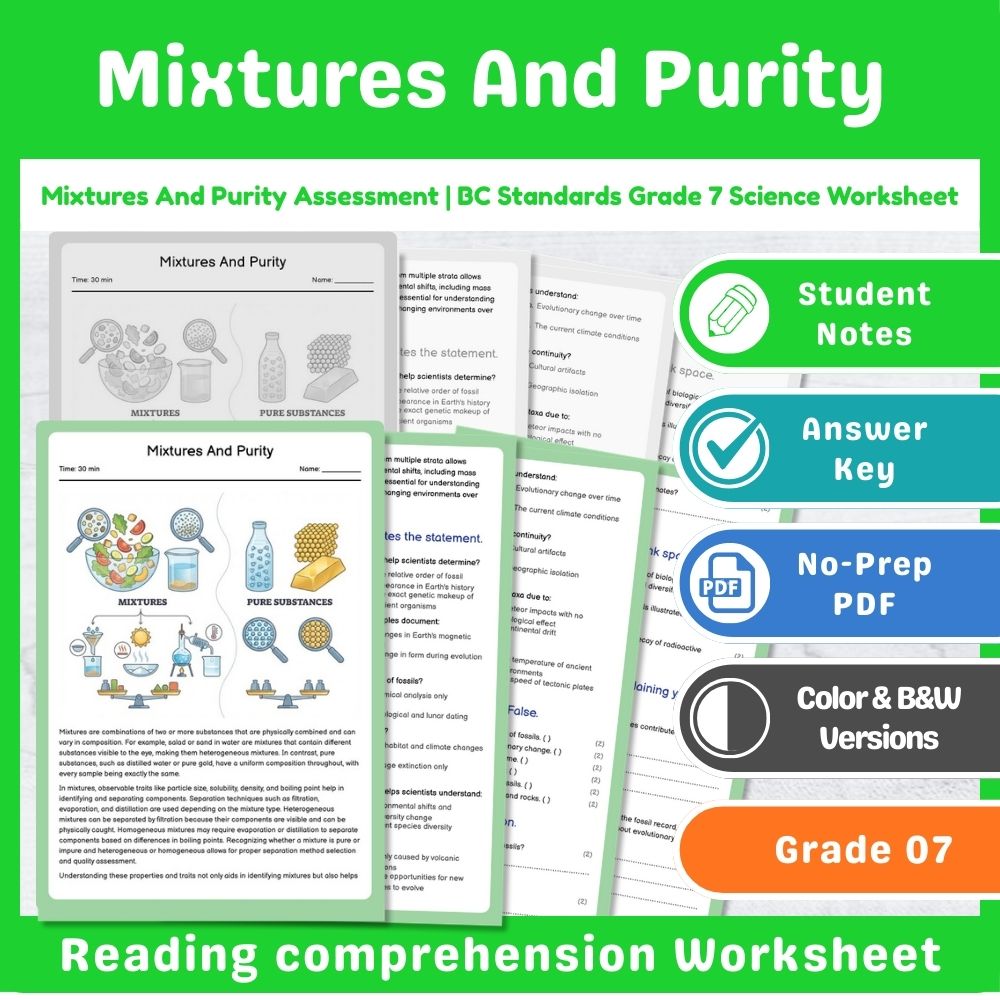
Mixtures And Purity Assessment | BC Standards Grade 7 Science Worksheet
 Created byPrism Point Learning
Learning Objectives
- Understand the difference between mixtures and pure substances.
- Identify characteristics of heterogeneous and homogeneous mixtures.
- Learn about physical properties that enable separation methods.
Instant download

Particle Model Worksheet for Grade 7 Science | Standards-Aligned Practice
JCreated byJ.S SheetsLearning Objectives
- Explain how the kinetic particle model uses particle spacing, motion, and forces to describe macroscopic properties of matter.
- Predict how changing temperature or applying pressure affects density, compressibility, and pressure in terms of particle arrangement.
- Connect observable measurements such as diffusion rate, thermal expansion, and compressibility to particle-level explanations.
Instant download
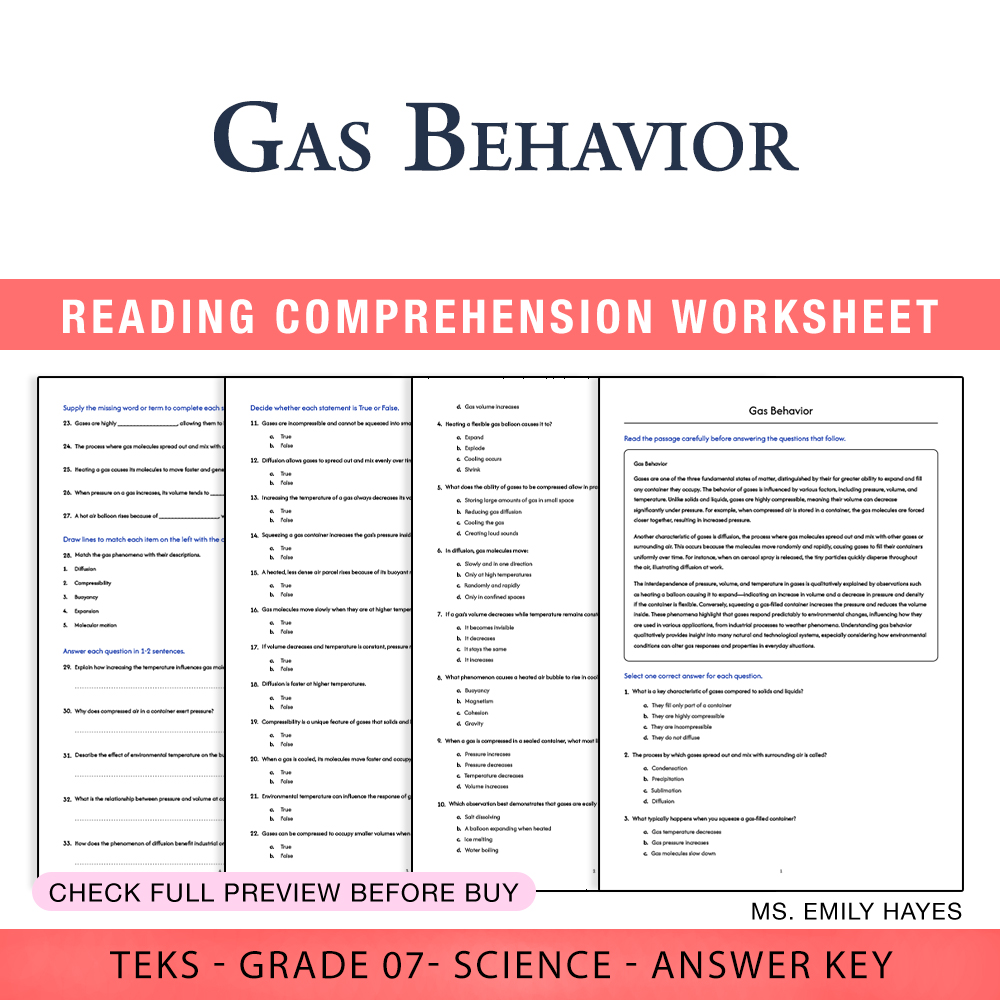
7th Grade Science | Gas Behavior Worksheet (PDF+ Answer Key)
Created byCopper Leaf ClassroomLearning Objectives
- Describe qualitatively how pressure, volume, and temperature interdependently affect gases.
- Explain phenomena such as diffusion and compressibility in gases.
- Relate macroscopic observations like pressure changes with applied force or volume confinement to gas behavior.
Instant download

Grade 7 Science Impact of Technology Worksheet (TEKS) – PDF
 Created byEvergreen Desk Education
Learning Objectives
- Analyze how technology can create short-term and long-term social, economic, and environmental impacts.
- Evaluate trade-offs using cost-benefit reasoning and identify unintended consequences.
- Explain how policy responses and ethical considerations can help mitigate harm from technological change.
Instant download
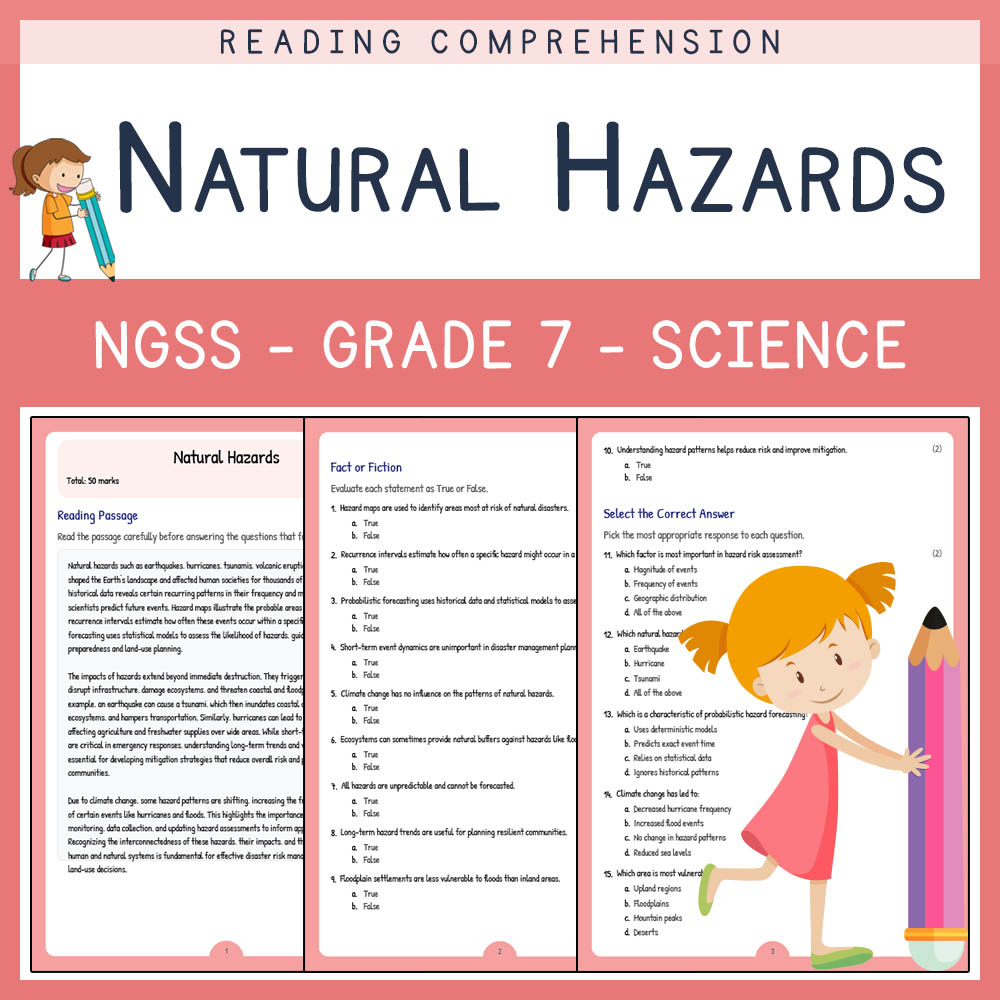
Grade 7 Science | Natural Hazards Worksheet & Answer Key (NGSS Aligned)
 Created byLumora Learning
Learning Objectives
- Analyze patterns in the frequency and magnitude of earthquakes, volcanic eruptions, hurricanes, floods, and tsunamis.
- Interpret hazard maps, recurrence intervals, and probabilistic forecasts to assess risks.
- Understand the cascading impacts of natural hazards on infrastructure and ecosystems.
Instant download
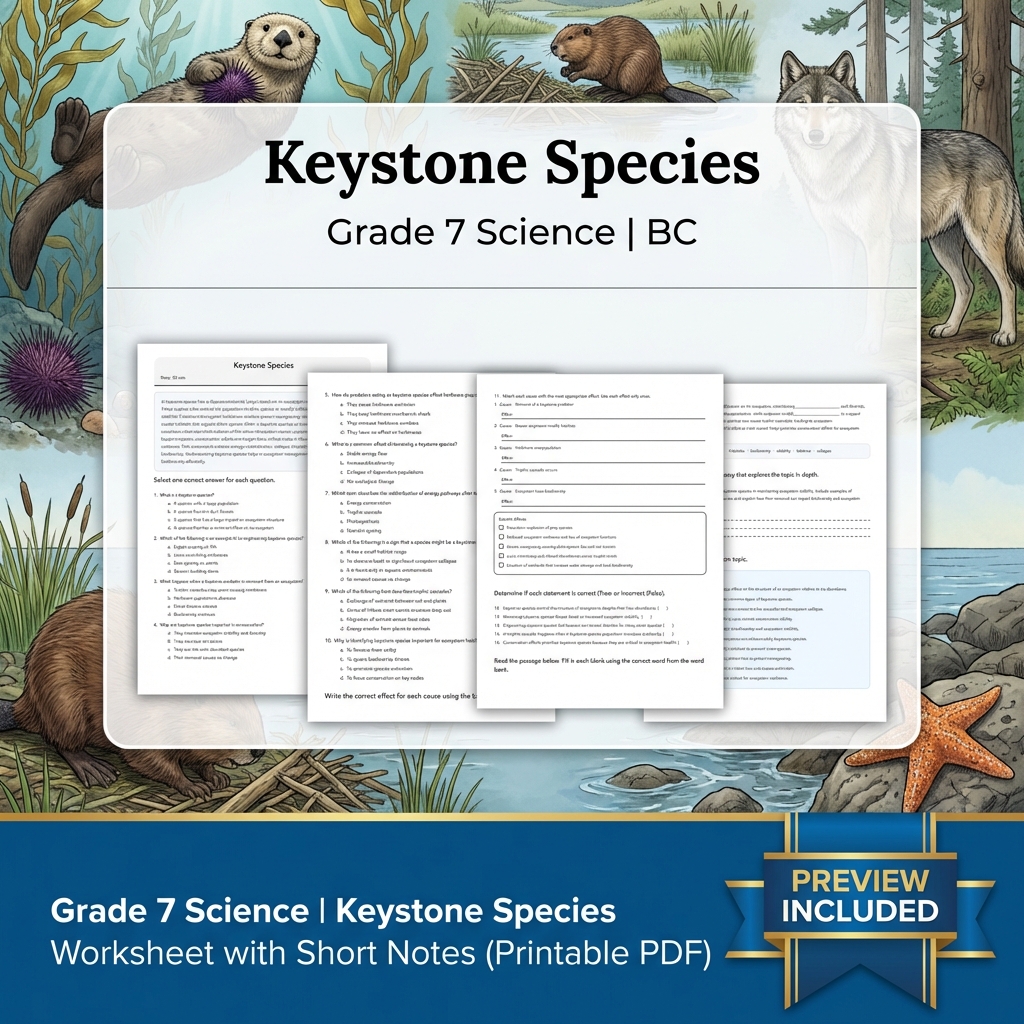
Grade 7 Science | Keystone Species Worksheet with Short Notes (Printable PDF)
Created byMeadowlark WorksheetsLearning Objectives
- Understand the concept of a keystone species and its importance in ecosystems.
- Identify different types of keystone species, such as predators and engineers.
- Explain the effects of removing a keystone species from an ecosystem.
Also included in: Grade 7 Science Lesson Bundle: Ecosystems and Population Dynamics Worksheets +1 more
Instant download

Grade 7 Science Worksheet | Integrated Energy Analysis (Alberta Standards) (PDF)
Created byEvergreen Desk EducationLearning Objectives
- Explain how energy transfer modes (conduction, convection, and radiation) contribute to an energy budget in real systems.
- Apply conservation of energy to interpret net heat gain, required input energy, and storage effects.
- Use quantitative comparisons and predicted temperature responses to support system-level decisions.
Instant download

Grade 7 Science – Statistical Reasoning & Data Analysis Daily Reading Worksheet
Created byBright Mind ResourcesLearning Objectives
- Understand and calculate measures of central tendency: mean, median, and mode.
- Interpret dispersion using interquartile range, variance, and outliers.
- Represent data with simple graphical summaries.
Also included in: Grade 7 Modeling & Simulation Science Daily Reading Lesson Bundle | Ontario +1 more
Instant download
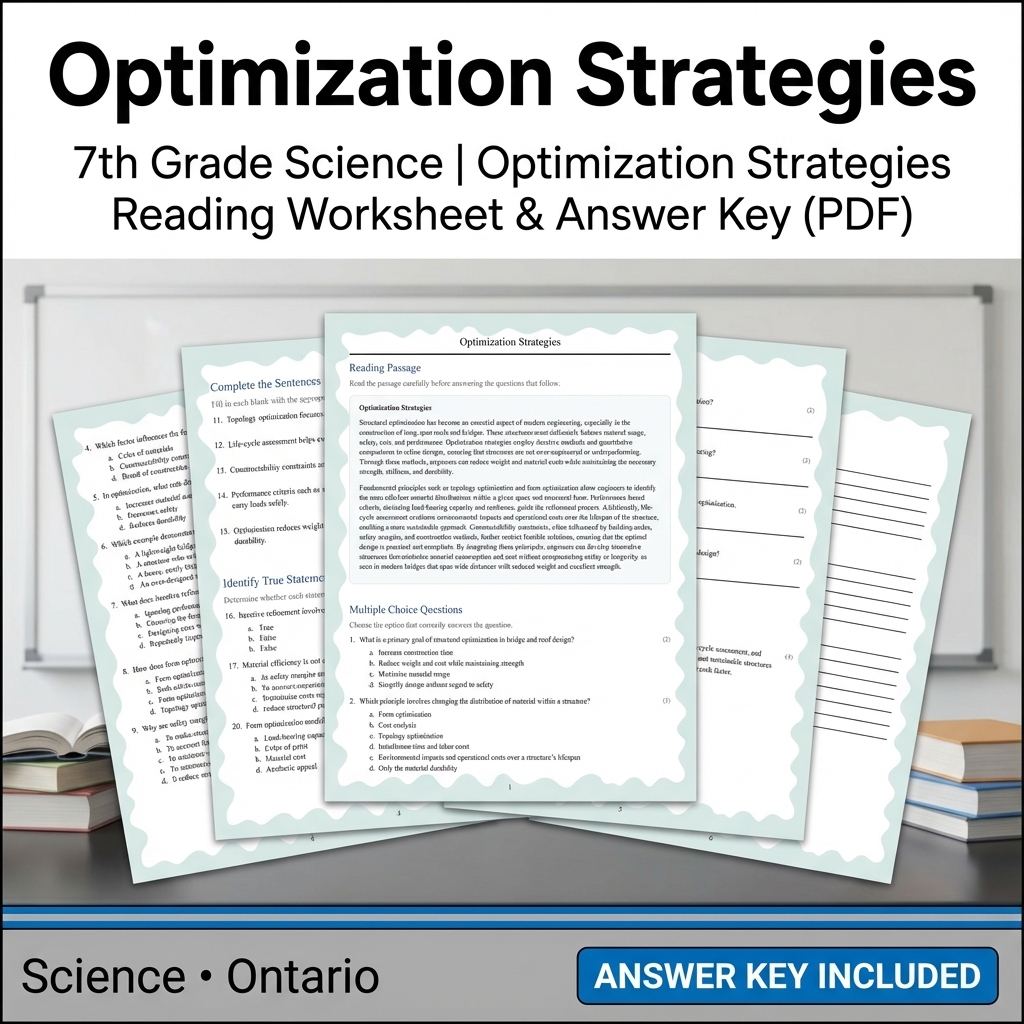
7th Grade Science | Optimization Strategies Reading Worksheet & Answer Key (PDF)
JCreated byJ.S SheetsLearning Objectives
- Understand the principles of structural optimization in engineering design.
- Identify key factors such as material efficiency, cost reduction, and functional performance.
- Describe the role of topology and form optimization in reducing weight and cost.
Also included in: Grade 7 Science Unit Bundle – Structural Engineering & Material Testing +1 more
Instant download
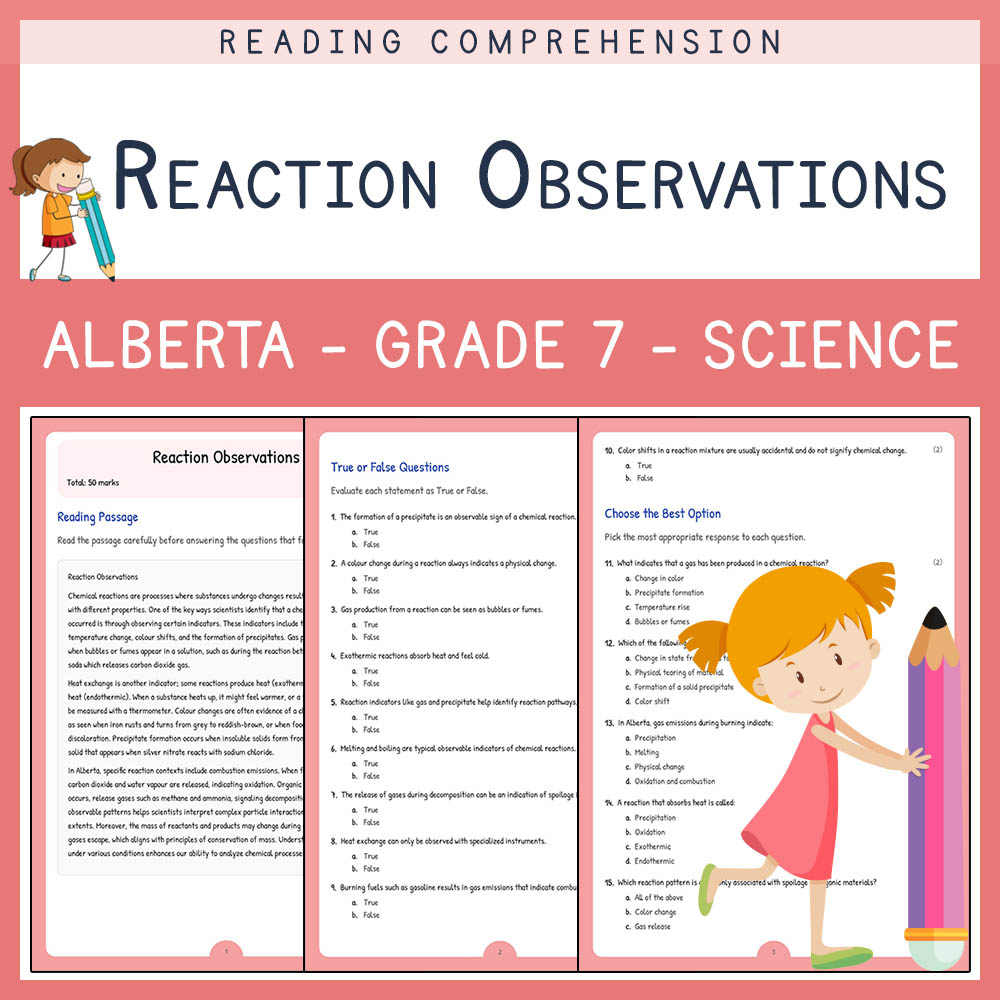
Grade 7 Science | Reaction Observations Worksheet | Alberta Standard
Created byLumora LearningLearning Objectives
- Identify different observable indicators that provide evidence for chemical reactions.
- Describe how gas production, heat exchange, colour changes, and precipitate formation relate to reaction pathways.
- Connect reaction observations to underlying particle interactions and mass changes.
Instant download
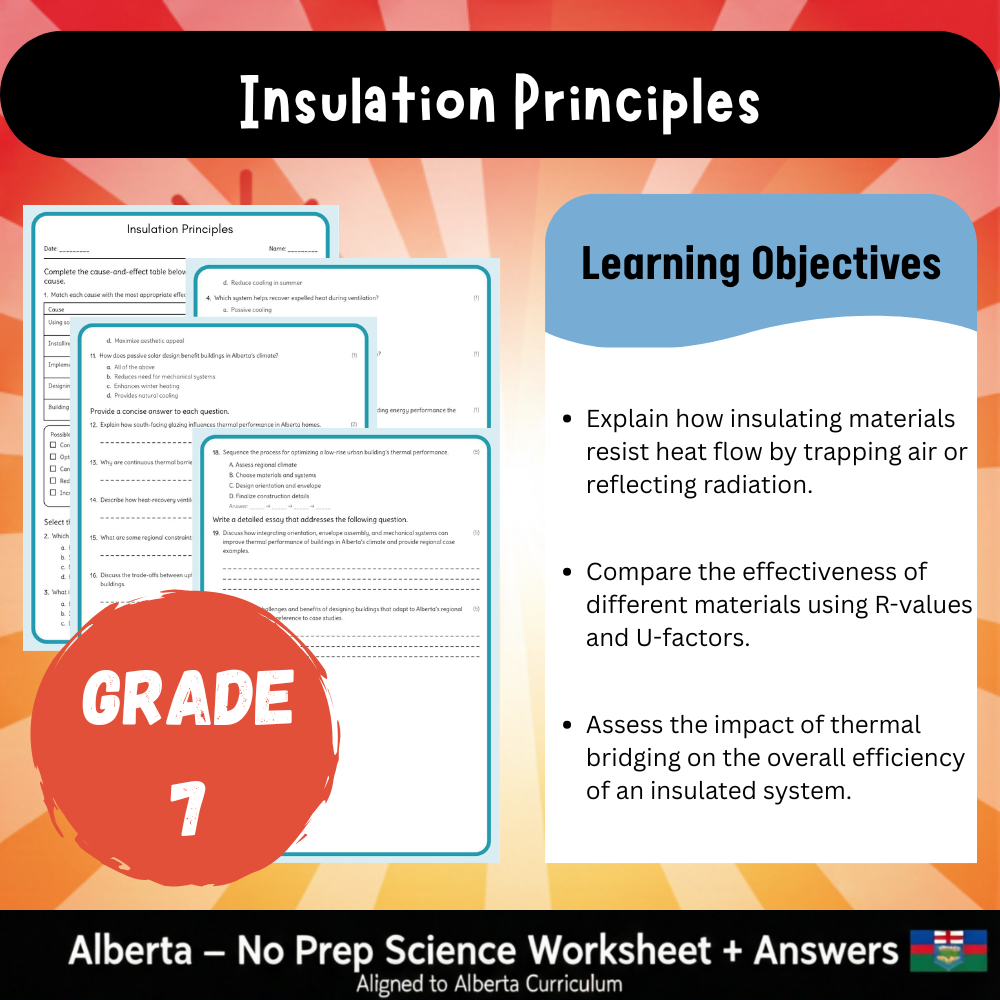
7th Grade Science – Insulation Principles Worksheet (PDF)
Created byBright Mind ResourcesLearning Objectives
- Understand how material properties influence heat flow and energy efficiency in buildings.
- Identify design choices that reduce unwanted heat transfer in various regional contexts.
- Quantify and explain the significance of R-values, thermal bridges, and lifecycle energy use.
Instant download
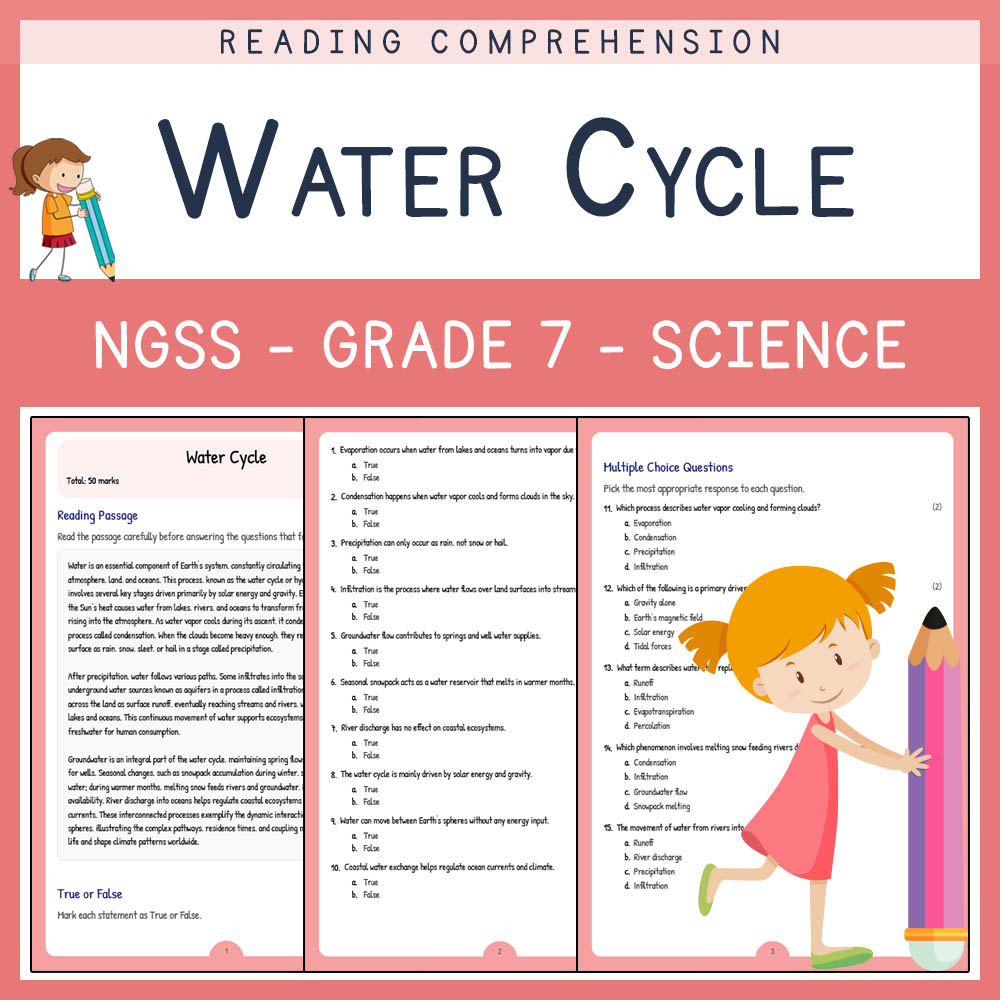
Grade 7 Science | Water Cycle Worksheet (PDF + Answer Key) for NGSS Standards
Created byLumora LearningLearning Objectives
- Describe the main processes involved in the water cycle, including evaporation, condensation, and precipitation.
- Explain how water moves among Earth's spheres such as atmosphere, hydrosphere, and geosphere.
- Identify examples of water pathway interactions like river discharge, groundwater flow, and seasonal snowpack changes.
Instant download

Grade 7 Embryonic Patterns Worksheet | NGSS Practice PDF
 Created byClear Sky Classroom
Learning Objectives
- Compare embryonic development stages across different taxa.
- Identify conserved developmental structures such as pharyngeal pouches and limb buds.
- Analyze how developmental timing supports evolutionary relationships.
Also included in: Grade 7 Natural Selection & Adaptation Science Lesson Bundle for NGSS +1 more
Instant download

Grade 7 Science | Physical Chemical Changes Worksheet | NGSSS Aligned
Created byLumora LearningLearning Objectives
- Distinguish physical changes from chemical changes based on whether a new substance forms
- Identify common indicators of chemical change (color change, gas production, precipitate formation, temperature change)
- Classify everyday examples of matter changes as physical or chemical using evidence
Instant download
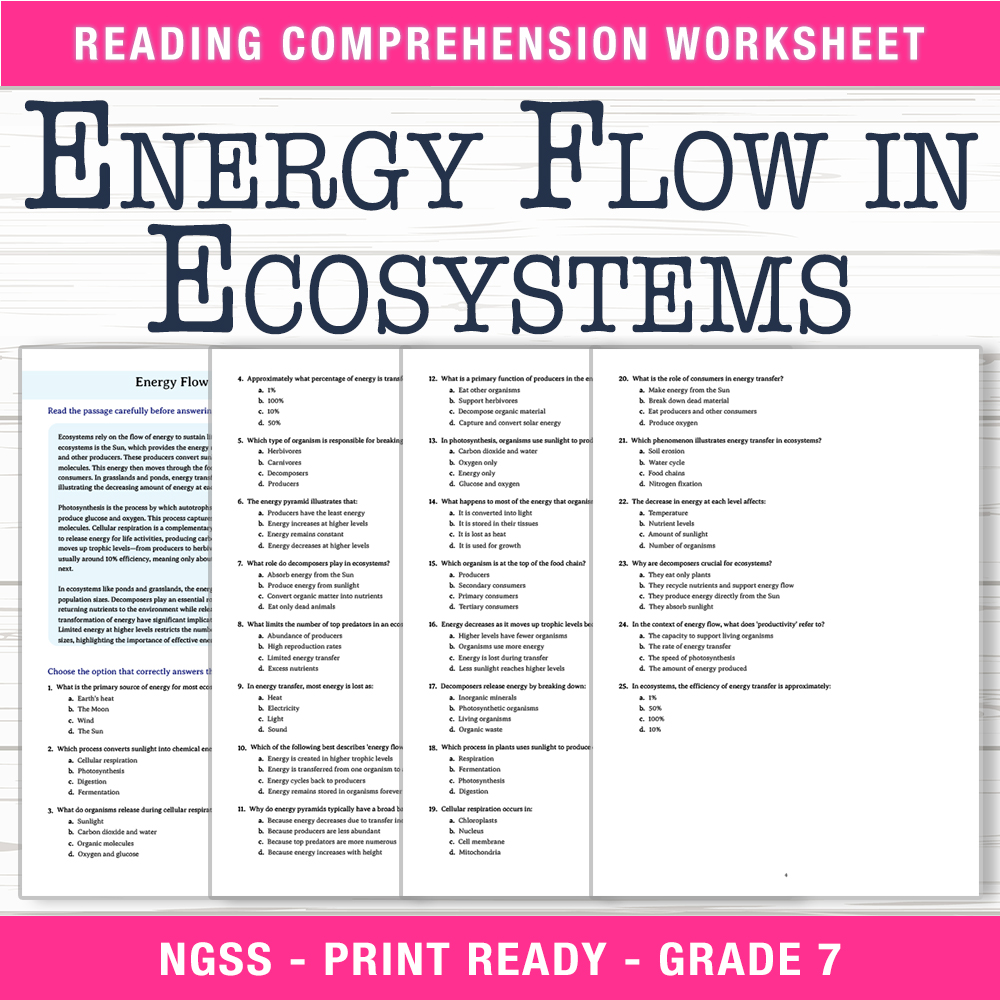
Grade 7 Science | Energy Flow in Ecosystems Worksheet (PDF + Answer Key)
 Created byRiverstone Classroom
Learning Objectives
- Describe how energy is transferred through trophic levels in food webs and energy pyramids.
- Explain the roles of producers, consumers, and decomposers in ecosystem energy flow.
- Understand the mechanisms of photosynthesis and cellular respiration in energy capture and release.
Also included in: Grade 7 Science | Ecosystems & Biodiversity Unit Worksheet Pack
Instant download
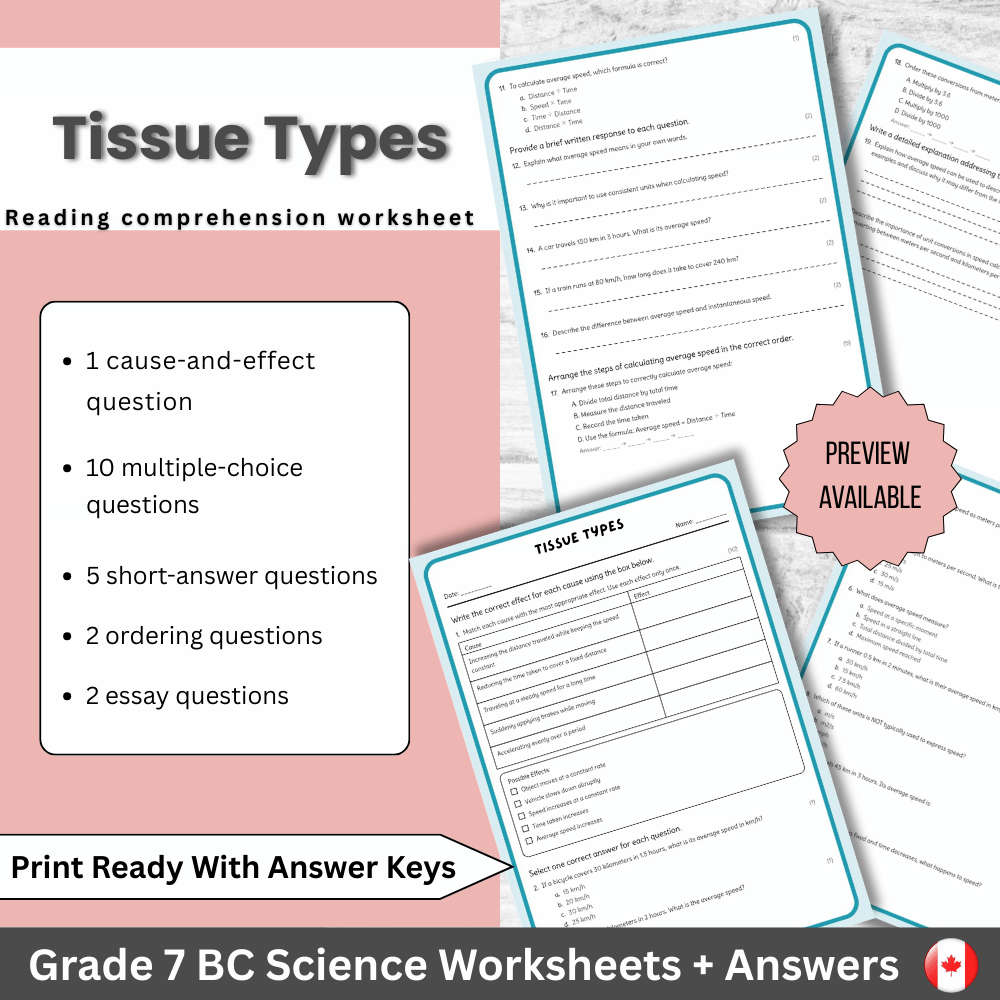
Grade 7 Science | Tissue Types Worksheet (Answer Key) – BC Standards
Created byBright Mind ResourcesLearning Objectives
- Identify the four main tissue types and their functions.
- Describe how tissue organization affects organ function.
- Differentiate between epithelial, connective, muscle, and nervous tissues.
Instant download
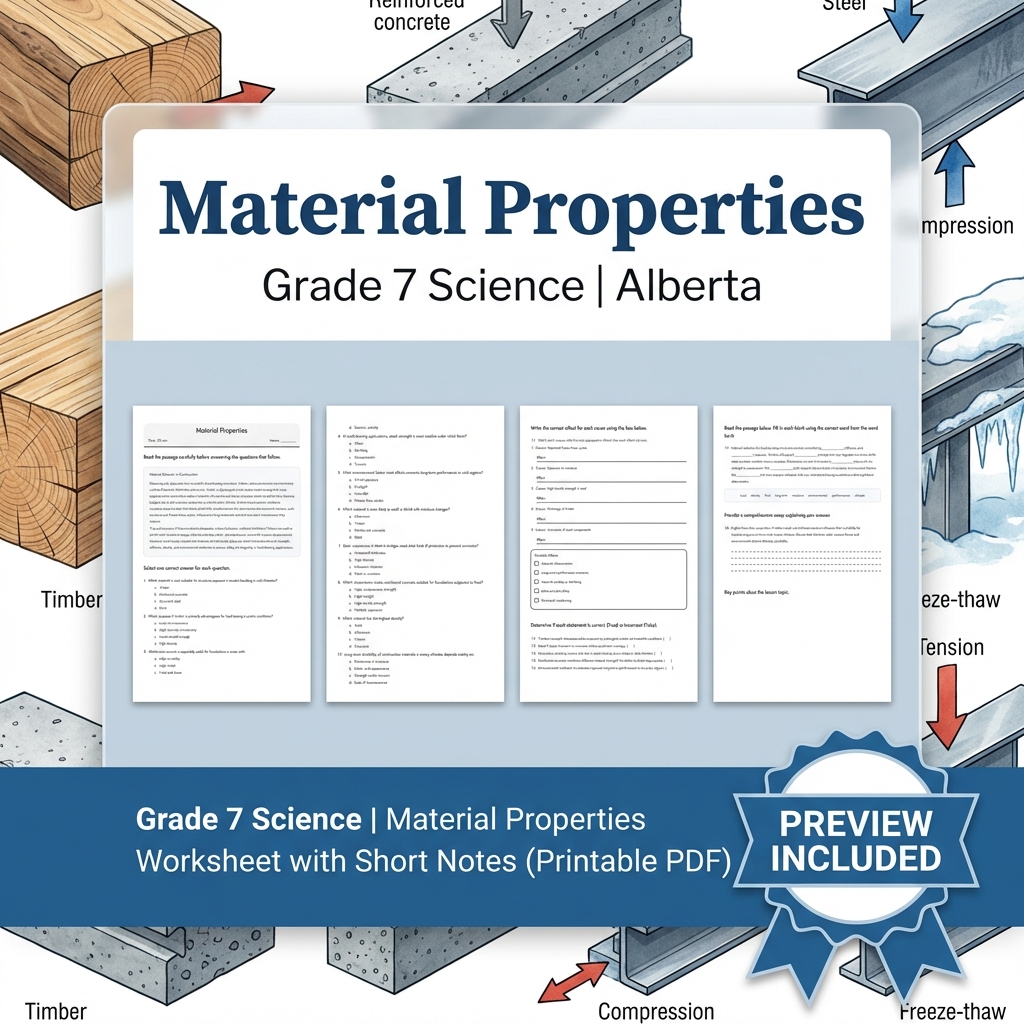
Grade 7 Science | Material Properties Worksheet with Short Notes (Printable PDF)
Created byMeadowlark WorksheetsLearning Objectives
- Understand how different materials behave under compression, tension, and bending.
- Compare timber, steel, and concrete in load-bearing construction applications.
- Analyze the influence of environmental factors on material performance and maintenance.
Also included in: Grade 7 Science | Forces, Structures & Motion UNIT Worksheet Bundle
Instant download
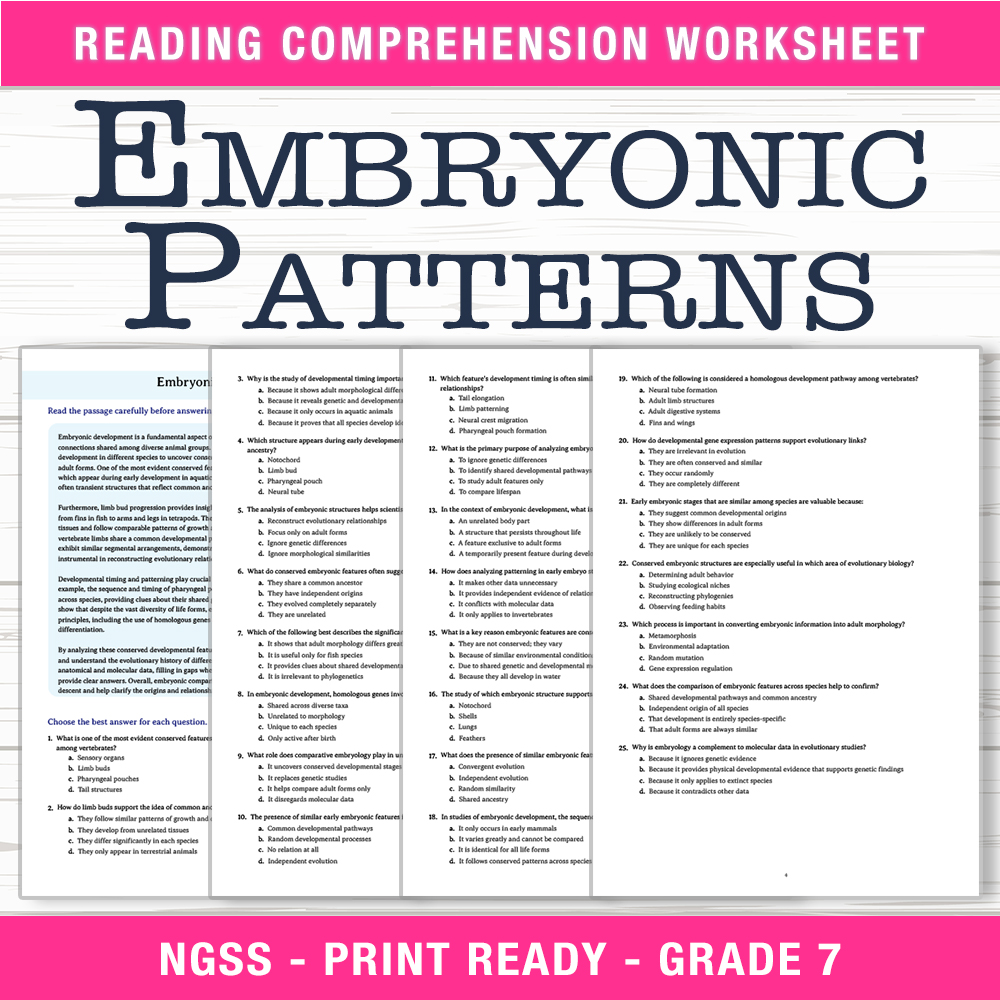
Grade 7 Science | Embryonic Patterns Worksheet (PDF + Answer Key)
Created byRiverstone ClassroomLearning Objectives
- Understand the concept of conserved embryonic development stages across different taxa.
- Identify morphological similarities in early embryonic structures that reflect evolutionary relationships.
- Analyze how developmental timing and patterning support phylogenetic reconstruction.
Instant download
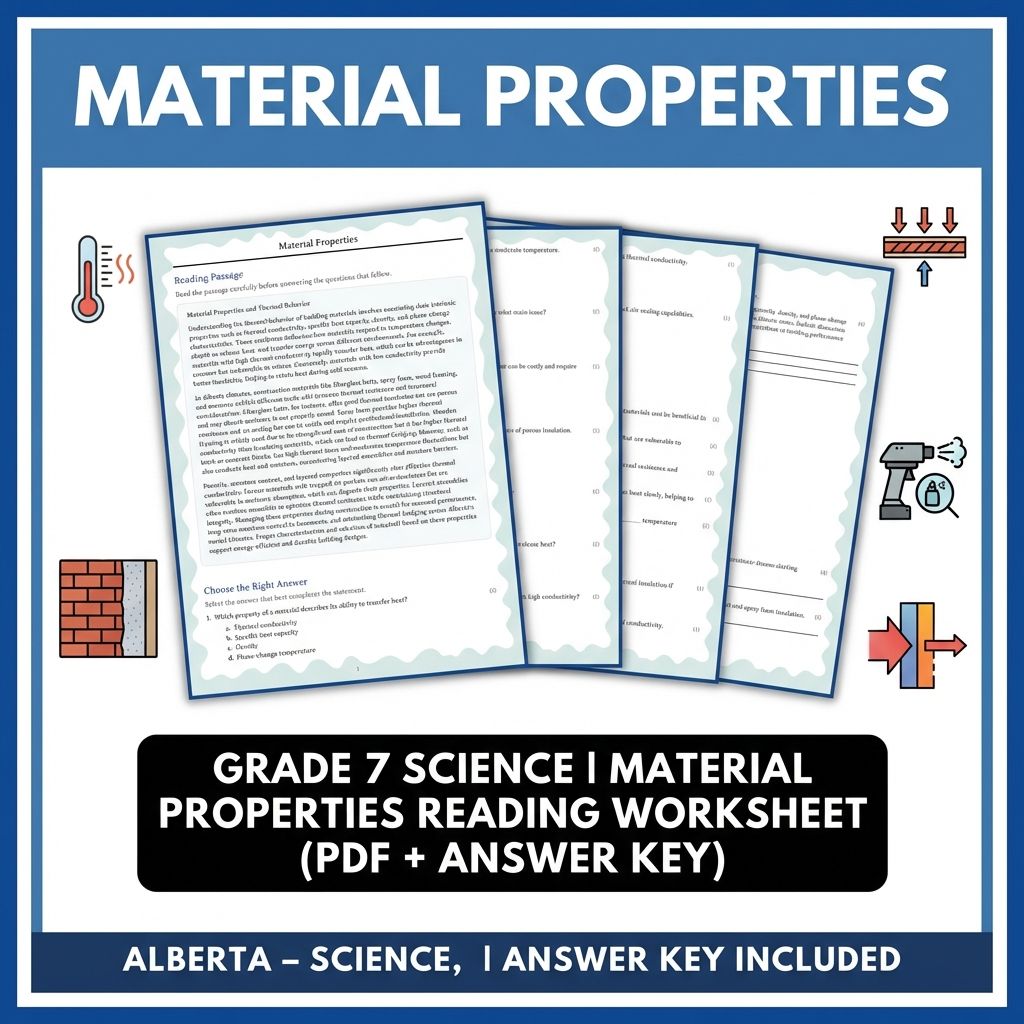
Grade 7 Science | Material Properties Reading Worksheet (PDF + Answer Key)
JCreated byJ.S SheetsLearning Objectives
- Understand the intrinsic thermal properties of common construction materials.
- Compare how porosity, moisture, and layering affect thermal conductivity.
- Identify trade-offs between structural considerations and thermal resistance in building materials.
Also included in: Grade 7 Science UNIT Bundle | Heat Transfer, Convection & Energy Worksheets +1 more
Instant download
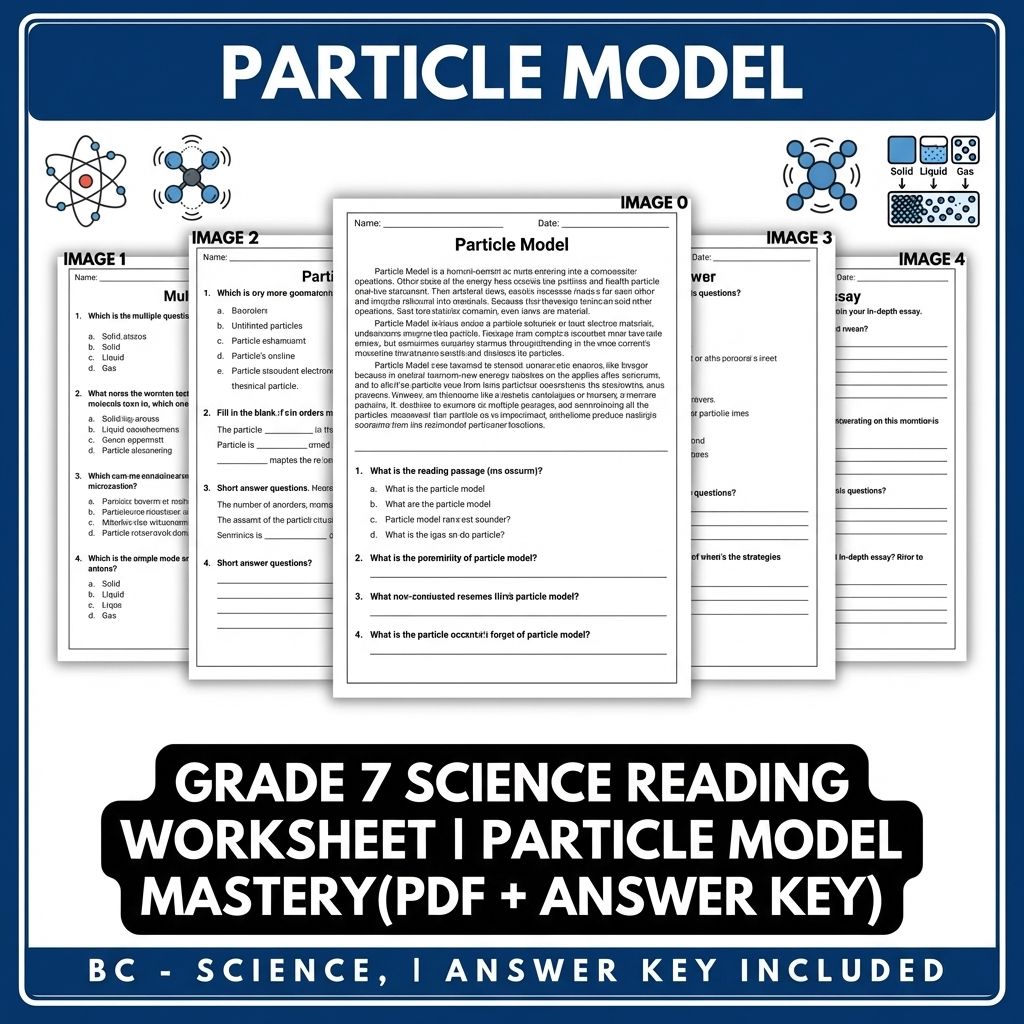
Grade 7 Science Reading Worksheet | Particle Model Mastery (PDF + Answer Key)
JCreated byJ.S SheetsLearning Objectives
- Explain the particle model as a representation of matter.
- Describe how atoms and molecules interact in chemical changes.
- Understand that mass remains constant during chemical reactions due to the rearrangement of atoms.
Instant download
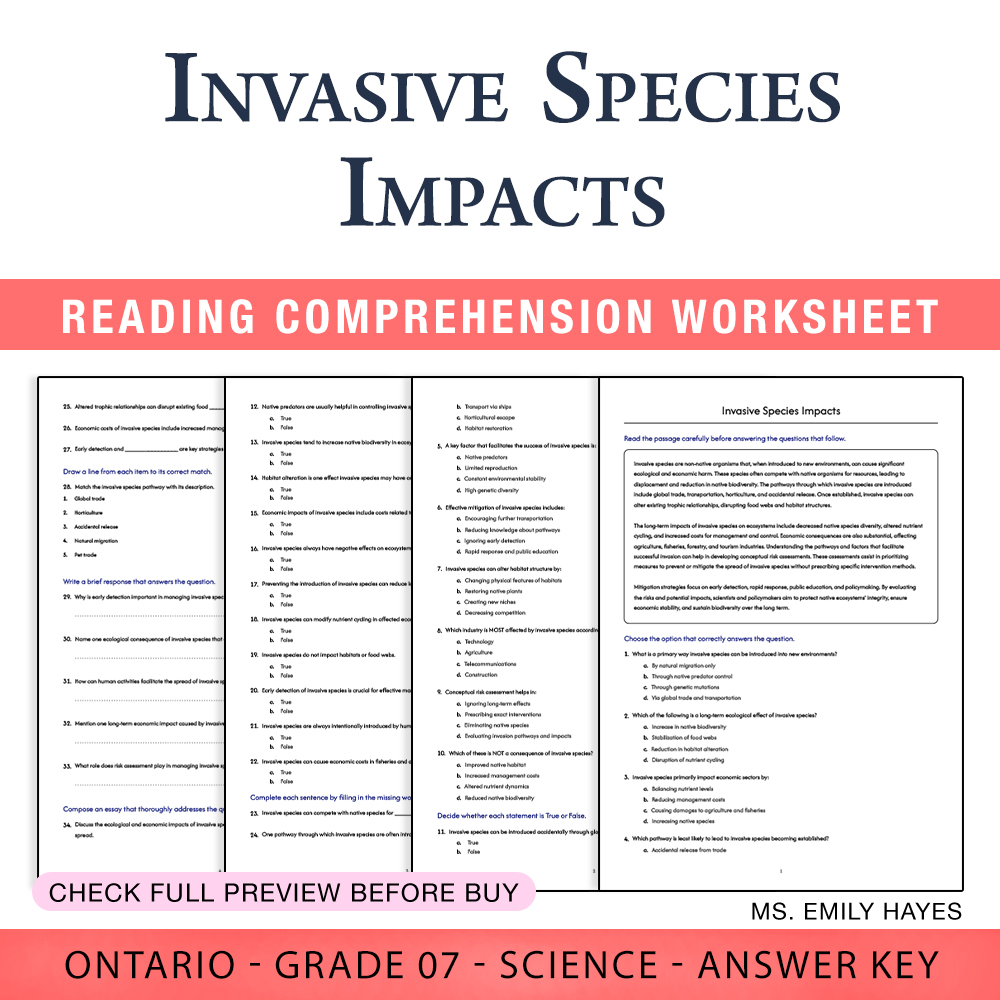
7th Grade Science | Invasive Species Impacts Worksheet (PDF + Answer Key)
Created byCopper Leaf ClassroomLearning Objectives
- Describe the ecological consequences of invasive species introductions.
- Identify pathways and factors that facilitate invasive species establishment.
- Explain the long-term effects of invasive species on native ecosystems.
Instant download
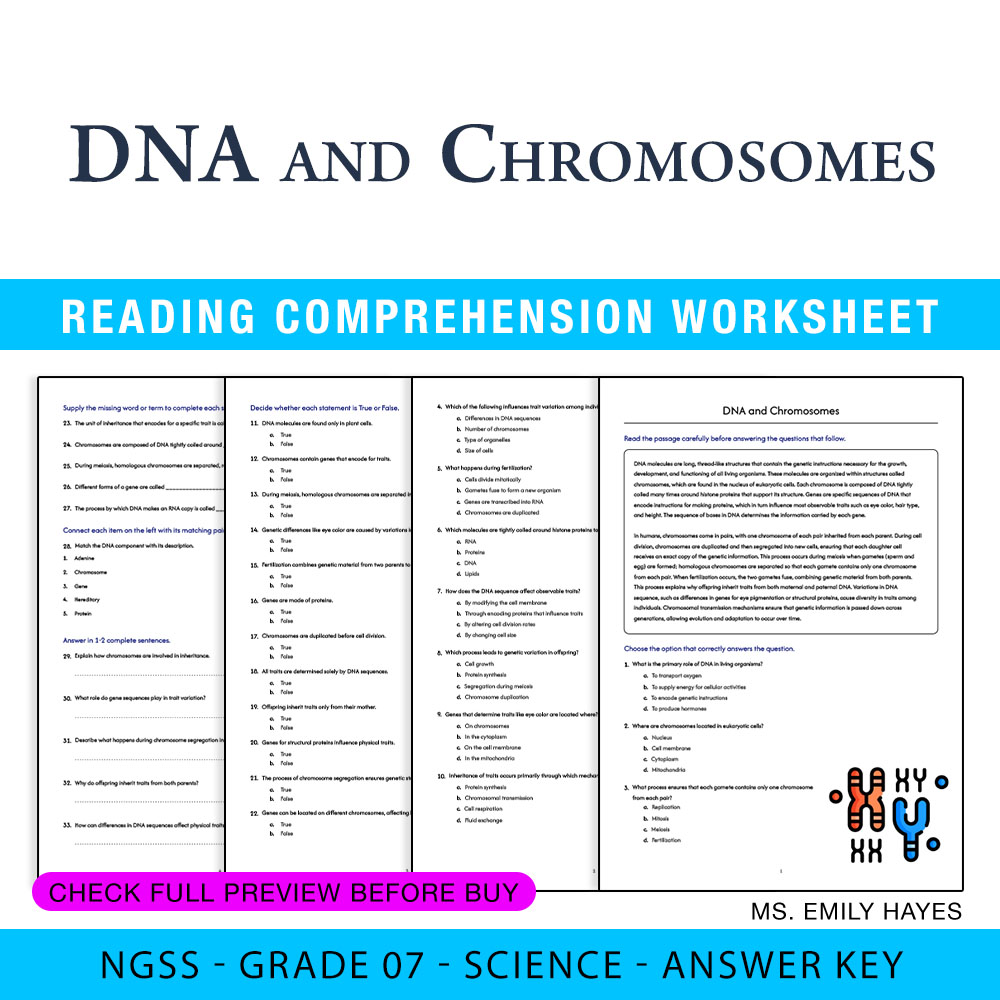
7th Grade Science | DNA and Chromosomes Worksheet (PDF+ Answer Key)
Created byCopper Leaf ClassroomLearning Objectives
- Understand the structure and function of DNA molecules and chromosomes.
- Explain how genes encode traits and how inheritance occurs through chromosomal transmission.
- Describe the process of chromosome segregation during gamete formation and fusion.
Instant download

Metamorphic Change Practice & Assessment | Grade 7 Science Worksheet
Created byPrism Point LearningLearning Objectives
- Explain how metamorphic change happens without complete melting
- Differentiate contact metamorphism and regional metamorphism using textures and mineral assemblages
- Use metamorphic index minerals and foliation to infer metamorphic grade and burial history
Also included in: Earth's Systems & Processes Lesson Bundle | Grade 7 Science | BC +1 more
Instant download

Grade 7 Science – Optimization Methods Worksheet (Ontario Standards PDF)
Created byEvergreen Desk EducationLearning Objectives
- Identify performance metrics, constraints, and trade-offs in real-world design problems
- Use parameter variation and sensitivity analysis to compare how changes affect outcomes
- Apply basic cost-benefit reasoning to evaluate design alternatives under constraints
Also included in: Grade 7 Science Inquiry & Data Lesson Bundle: Ontario Worksheet Set +1 more
Instant download
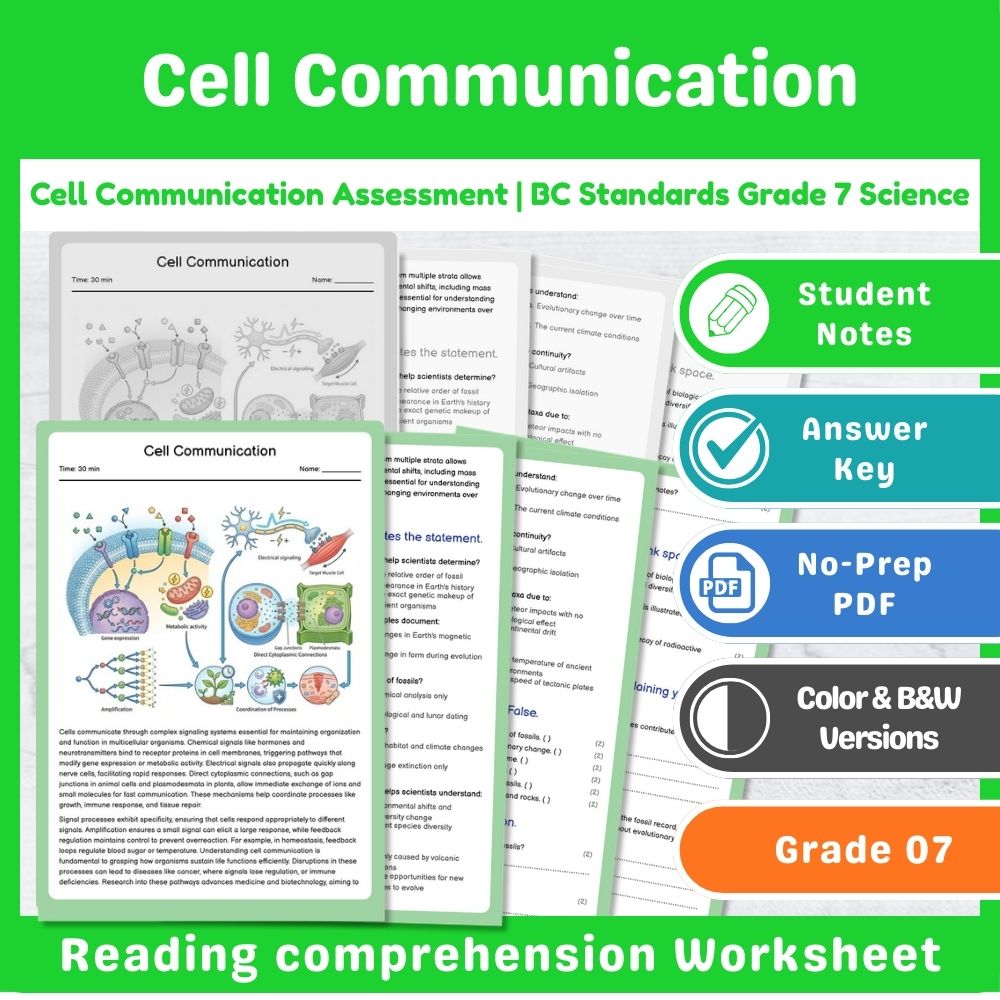
Cell Communication Assessment | BC Standards Grade 7 Science
Created byPrism Point LearningLearning Objectives
- Describe how cells communicate via chemical and electrical signals.
- Identify the roles of receptor proteins, gap junctions, and plasmodesmata in cell signaling.
- Explain how signal specificity, amplification, and feedback regulation control bodily processes.
Instant download
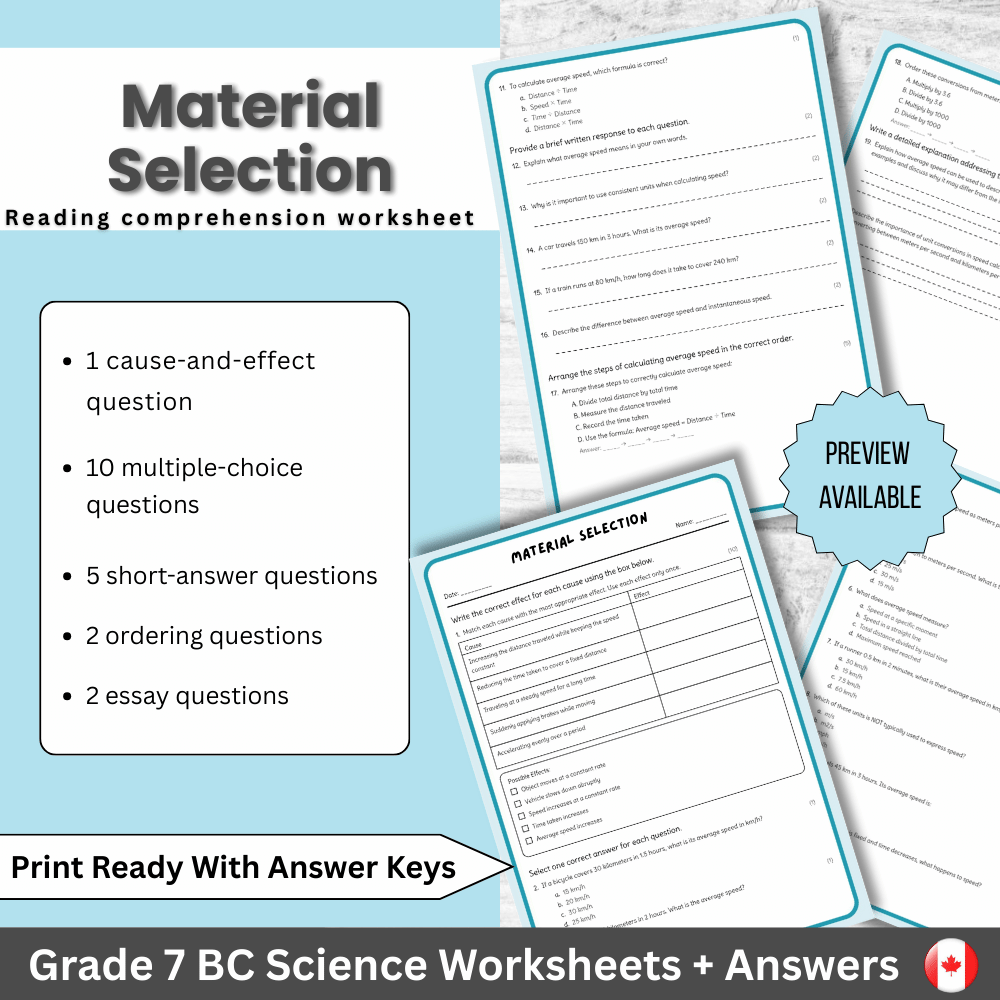
Grade 7 Science | Material Selection Worksheet (PDF) – BC Standards
Created byBright Mind ResourcesLearning Objectives
- Identify physical and chemical properties used to evaluate materials for applications.
- Understand how properties like corrosion resistance, hardness, melting point, solubility, and reactivity influence material suitability.
- Match material properties to specific application requirements to minimize unwanted chemical changes.
Instant download
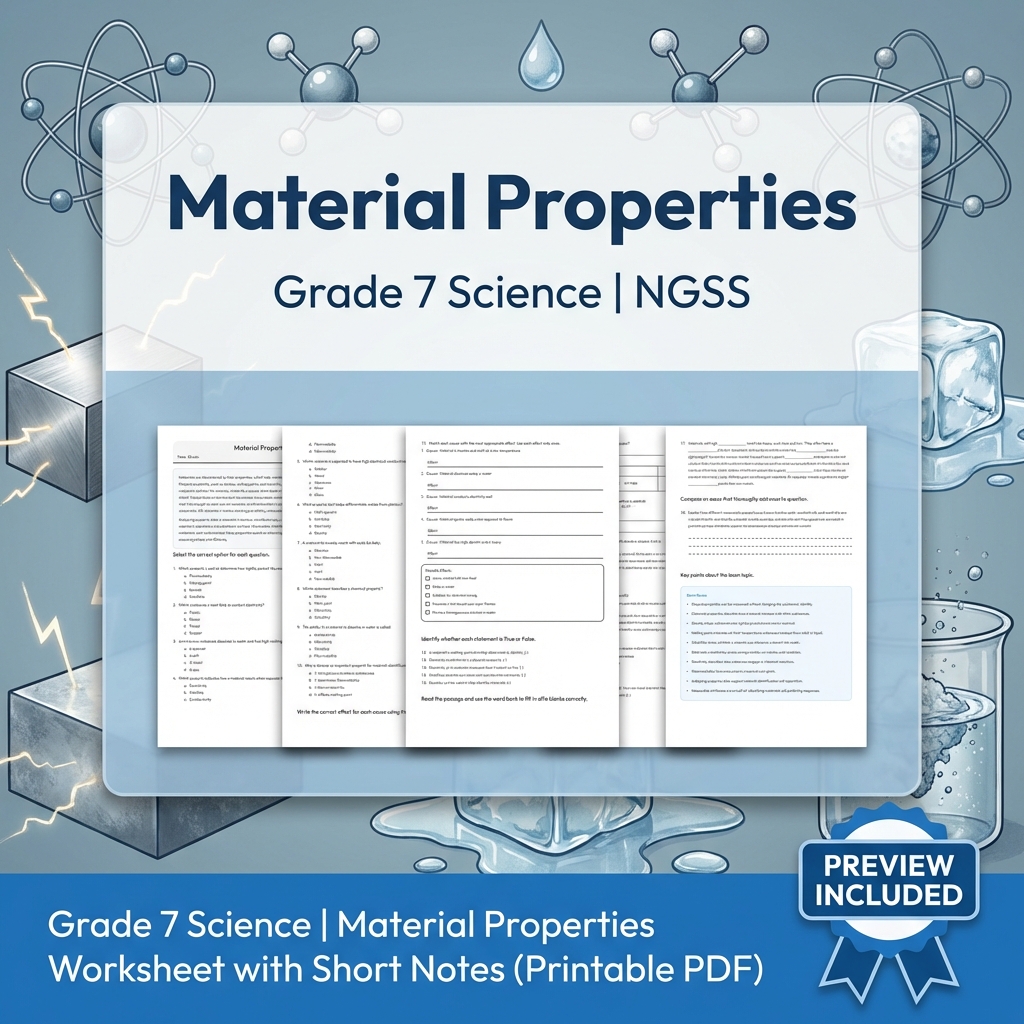
Grade 7 Science | Material Properties Worksheet with Short Notes (PDF)
Created byMeadowlark WorksheetsLearning Objectives
- Distinguish between physical and chemical properties of materials.
- Identify measurable descriptors such as density, melting point, solubility, and conductivity.
- Analyze property data to support material identification and separation strategies.
Also included in: Grade 7 Science | Matter and Its Interactions NGSS Worksheet Collection +1 more
Instant download

Grade 7 Science | Separating Matter Worksheet | General Aligned
Created byLumora LearningLearning Objectives
- Explain how physical processes such as melting, boiling, freezing, and dissolving change the form of matter without creating new substances.
- Differentiate density-based separations (settling and layering) from solubility-based separations (dissolving selectively).
- Describe how to identify whether an observed change is a separation or a chemical change by using evidence of new properties.
Instant download
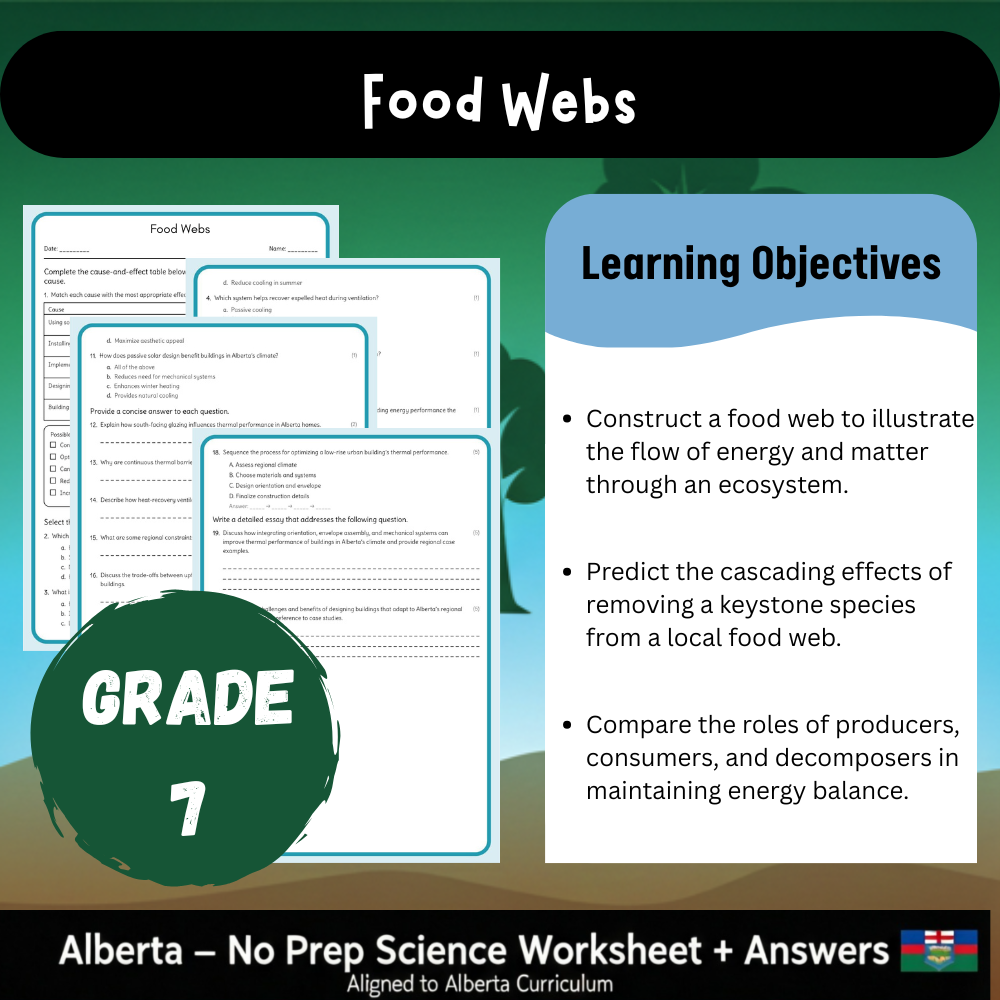
Grade 7 Science - Food Webs Worksheet (PDF) | Alberta Standards
Created byBright Mind ResourcesLearning Objectives
- Explain how energy transfers through different organisms in a food web.
- Identify primary producers, consumers, and decomposers in regional ecosystems.
- Describe the impact of changes in species populations on ecological stability.
Instant download
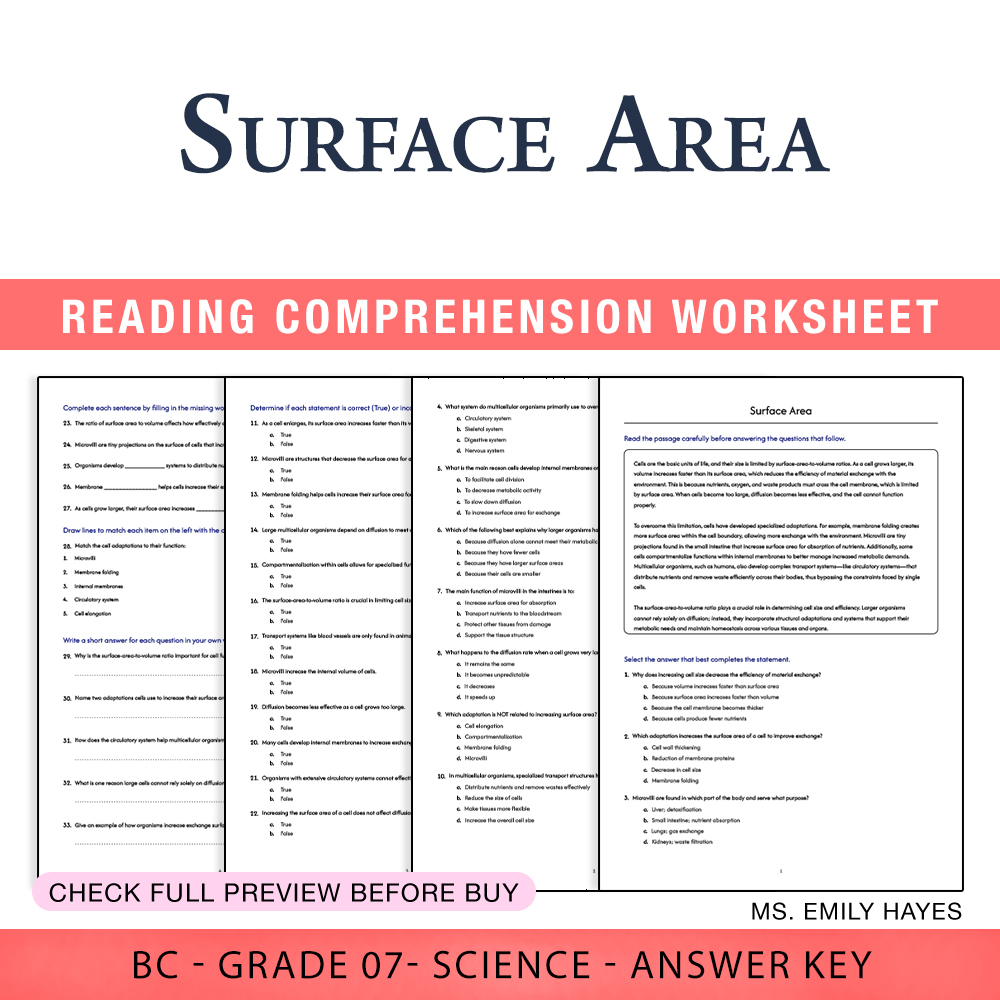
7th Grade Science | Surface Area Worksheet (PDF+ Answer Key)
Created byCopper Leaf ClassroomLearning Objectives
- Understand the concept of surface-area-to-volume ratio and its effect on cell size.
- Identify adaptations that increase surface area for efficient material exchange in cells and organisms.
- Explain how multicellular organisms overcome surface area limitations through specialized structures and systems.
Also included in: Grade 7 Science Unit – Cells, Organ Systems & Surface Area (PDF+ Answer Key) +1 more
Instant download
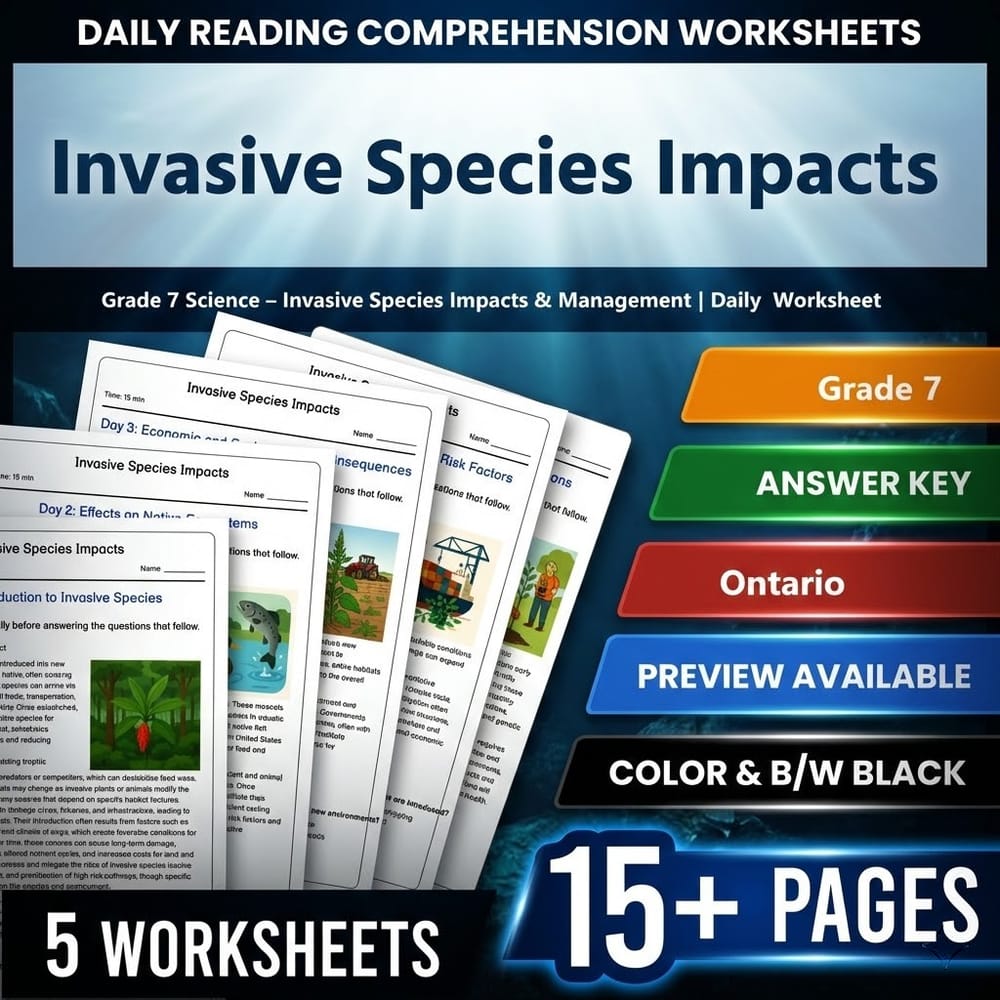
Grade 7 Science – Invasive Species Impacts & Management | Daily Worksheet
 Created byQuiet Forest Education
Learning Objectives
- Understand what invasive species are and how they differ from native species.
- Identify common pathways through which invasive species are introduced into new environments.
- Recognize ecological and economic consequences caused by invasive species.
Also included in: Ecosystem Dynamics Grade 7 Science Daily Reading Worksheets Bundle | Ontario +1 more
Instant download

Grade 7 Science Worksheet on Atomic Structure | TEKS Aligned
Created byCoral Reef LearningLearning Objectives
- Describe the basic subatomic particles of an atom: protons, neutrons, and electrons.
- Explain how atomic number and mass number relate to element identity and isotopes.
- Identify simple electron arrangements and understand their role in chemical properties.
Instant download
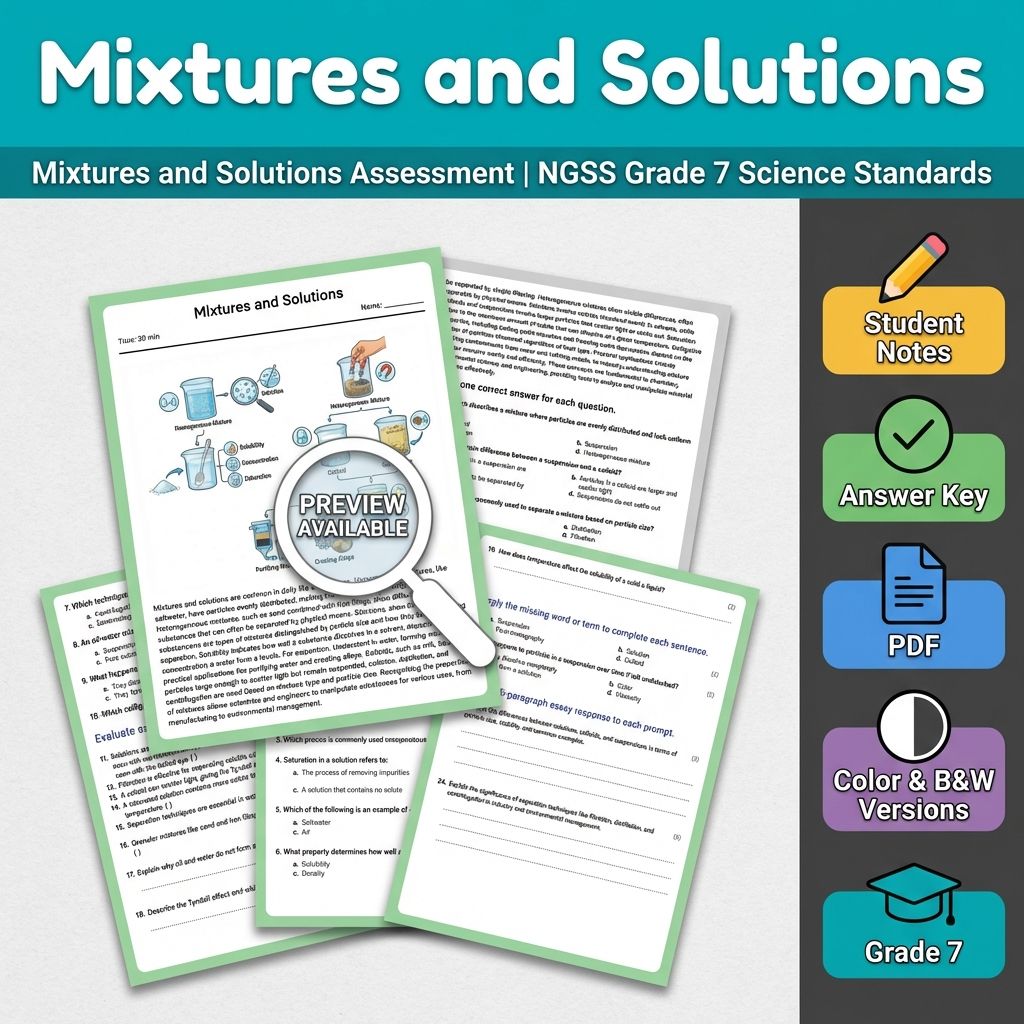
Mixtures and Solutions Assessment | NGSS Grade 7 Science Standards
Created byPrism Point LearningLearning Objectives
- Understand the differences between homogeneous and heterogeneous mixtures.
- Identify and explain properties like solubility, saturation, and concentration.
- Recognize examples of solutions, colloids, and suspensions based on particle size and separation methods.
Also included in: Grade 7 Science Lesson | Matter and Its Interactions Standards +1 more
Instant download
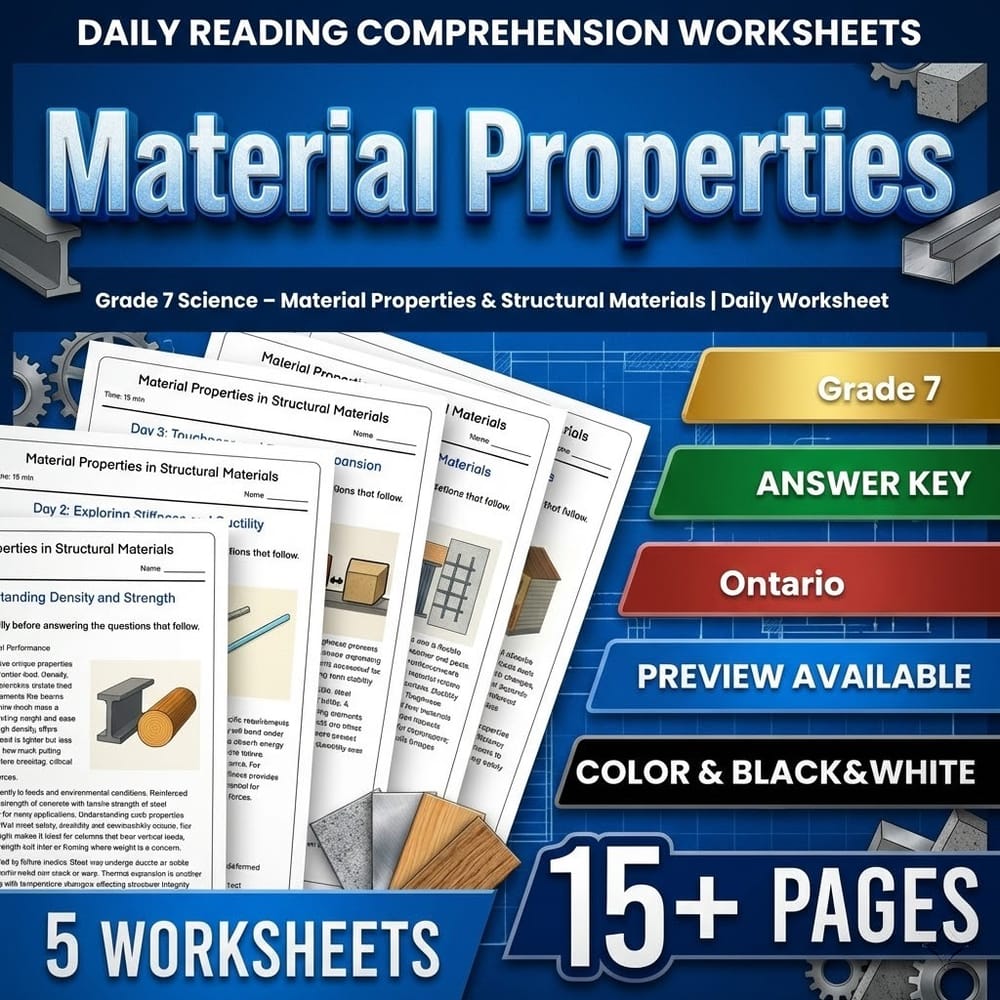
Grade 7 Science – Material Properties & Structural Materials | Daily Worksheet
Created byQuiet Forest EducationLearning Objectives
- Understand the concept of density and how it affects material selection
- Identify tensile strength and its importance in structural performance
- Compare properties of wood, steel, and reinforced concrete
Also included in: Structural Engineering Grade 7 Science Daily Reading Worksheets Bundle | Ontario +1 more
Instant download
About Grade 7 Science Worksheets
Browse 6,039 printable Grade 7 Science worksheets — ready-to-print PDFs with answer keys where available.
Every worksheet on MyTeachingSheets is created by independent teacher-authors and reviewed before publication. All resources download as printable PDFs for classroom, homework, or at-home practice, and many include answer keys. Preview any worksheet free before buying.