
Grade 9 Science Worksheets
6,926 worksheets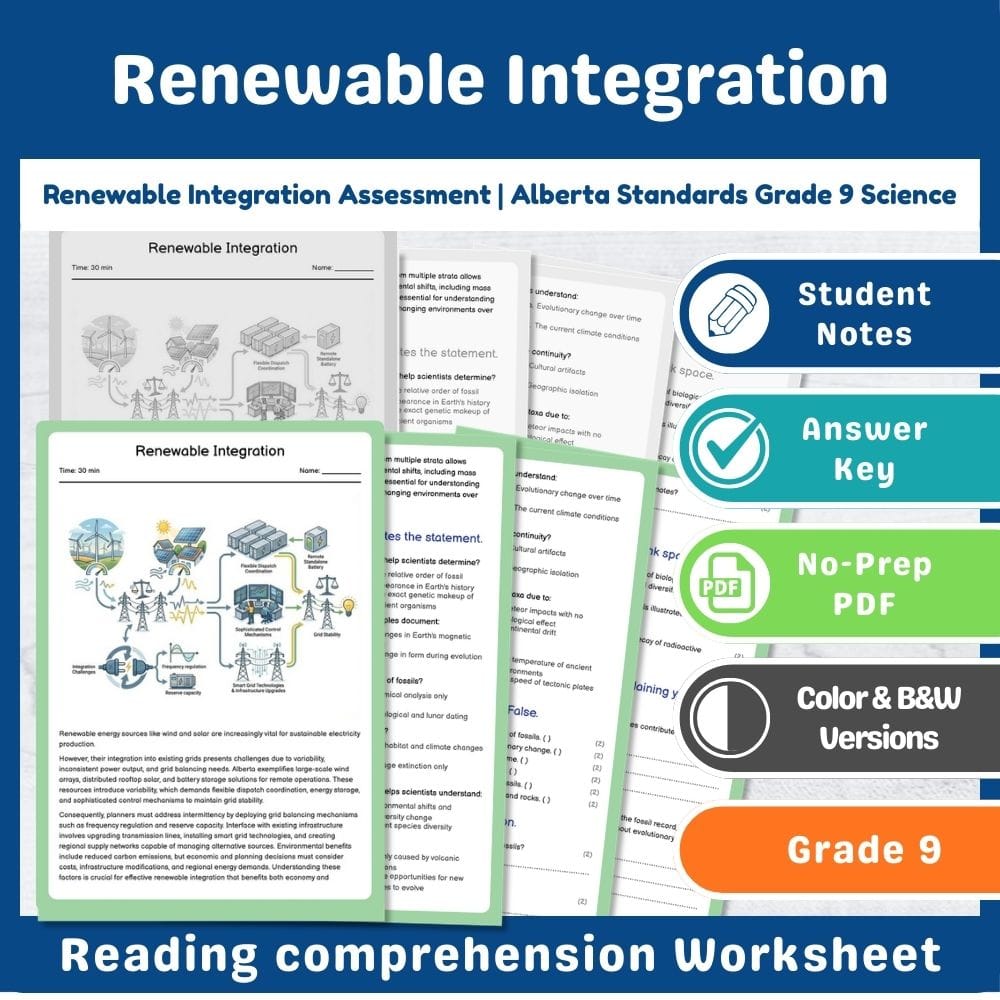
Renewable Integration Assessment | Alberta Standards Grade 9 Science
 Created byPrism Point Learning
Learning Objectives
- Understand the challenges of integrating wind and solar resources into the electrical grid.
- Identify mechanisms for grid balancing and storage needs related to renewable energy sources.
- Analyze the environmental and economic implications of renewable integration in regional power networks.
Also included in: Grade 9 Electricity and Magnetism Science Lesson Bundle | Alberta Framework +1 more
Instant download
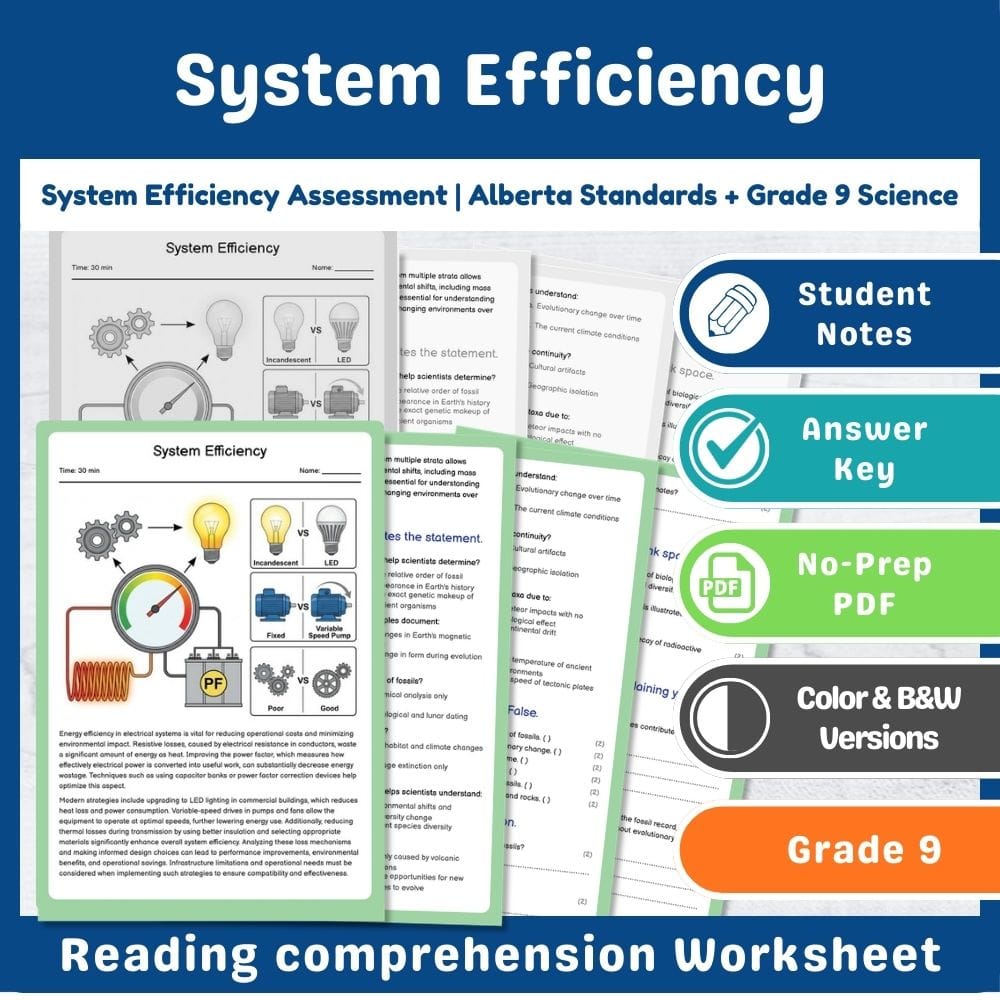
System Efficiency Assessment | Alberta Standards + Grade 9 Science
Created byPrism Point LearningLearning Objectives
- Understand the factors affecting energy efficiency in electrical systems, including resistive losses and power factor.
- Identify various strategies and devices used to improve system performance and reduce energy waste.
- Analyze the impact of inefficient energy systems on the environment and operational costs.
Also included in: Grade 9 Electricity and Magnetism Science Lesson Bundle | Alberta Framework +1 more
Instant download
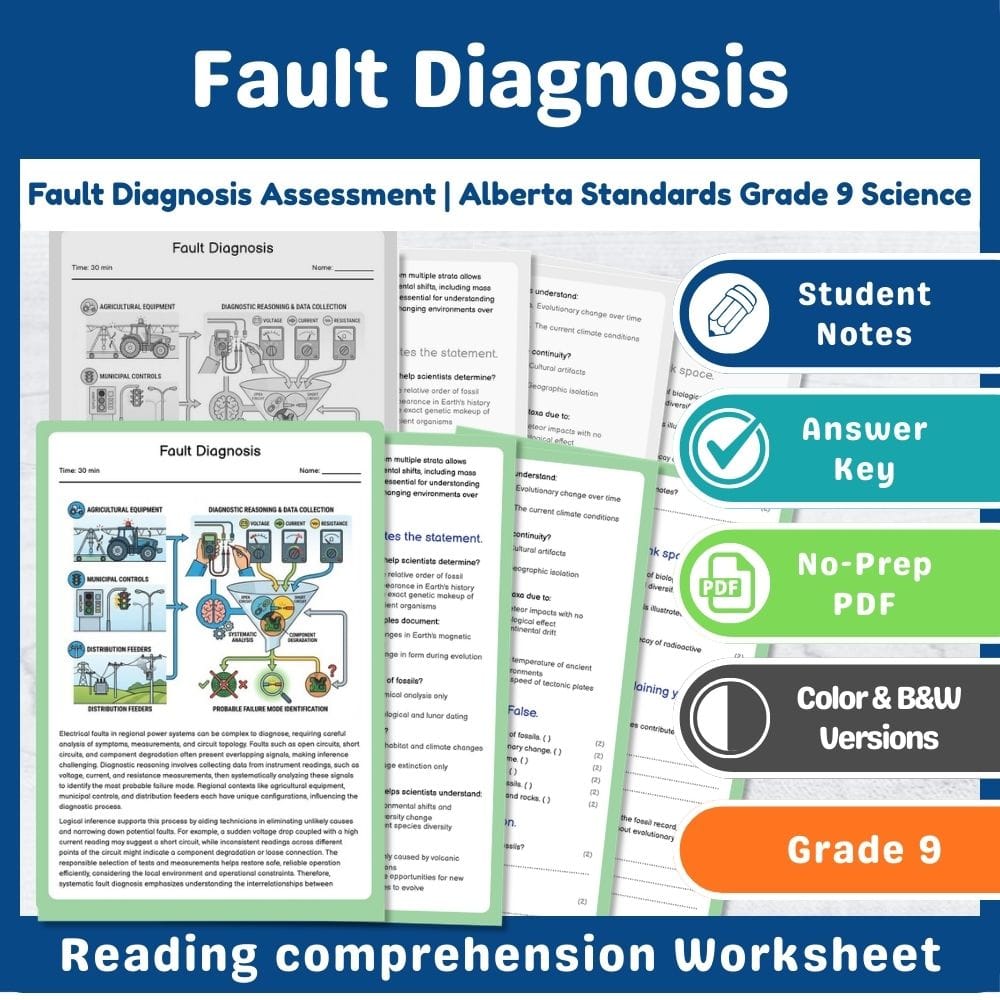
Fault Diagnosis Assessment | Alberta Standards Grade 9 Science
Created byPrism Point LearningLearning Objectives
- Understand the principles of diagnostic reasoning in electrical fault analysis.
- Identify symptoms and measurement data that suggest specific failure modes.
- Apply logical inference to determine probable causes of faults in electrical systems.
Also included in: Grade 9 Electricity and Magnetism Science Lesson Bundle | Alberta Framework +1 more
Instant download

Speciation and Reproductive Isolation Worksheets | Grade 9 Science
 Created byTeachers Club
Learning Objectives
- Explain how geographic separation can change gene pools over generations
- Compare allopatric and sympatric speciation through reproductive isolation
- Describe how genetic divergence produces diagnostic traits in lineages
Also included in: Grade 9 Biology Evolution Worksheets | NGSS Unit Bundle +1 more
Instant download
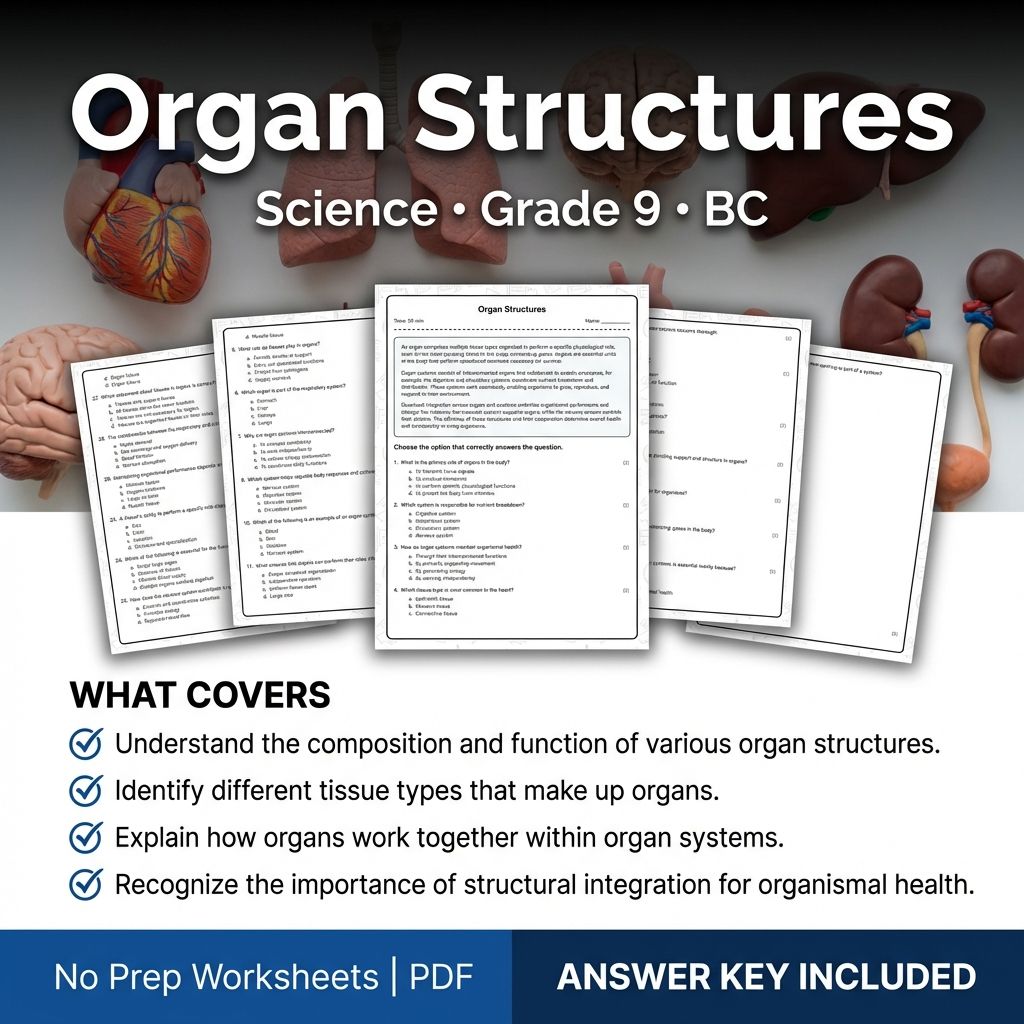
Organ Structures Worksheet for Grade 9 Science | BC Standards Practice
 Created byCoral Reef Learning
Learning Objectives
- Understand the composition and function of various organ structures.
- Identify different tissue types that make up organs.
- Explain how organs work together within organ systems.
Instant download
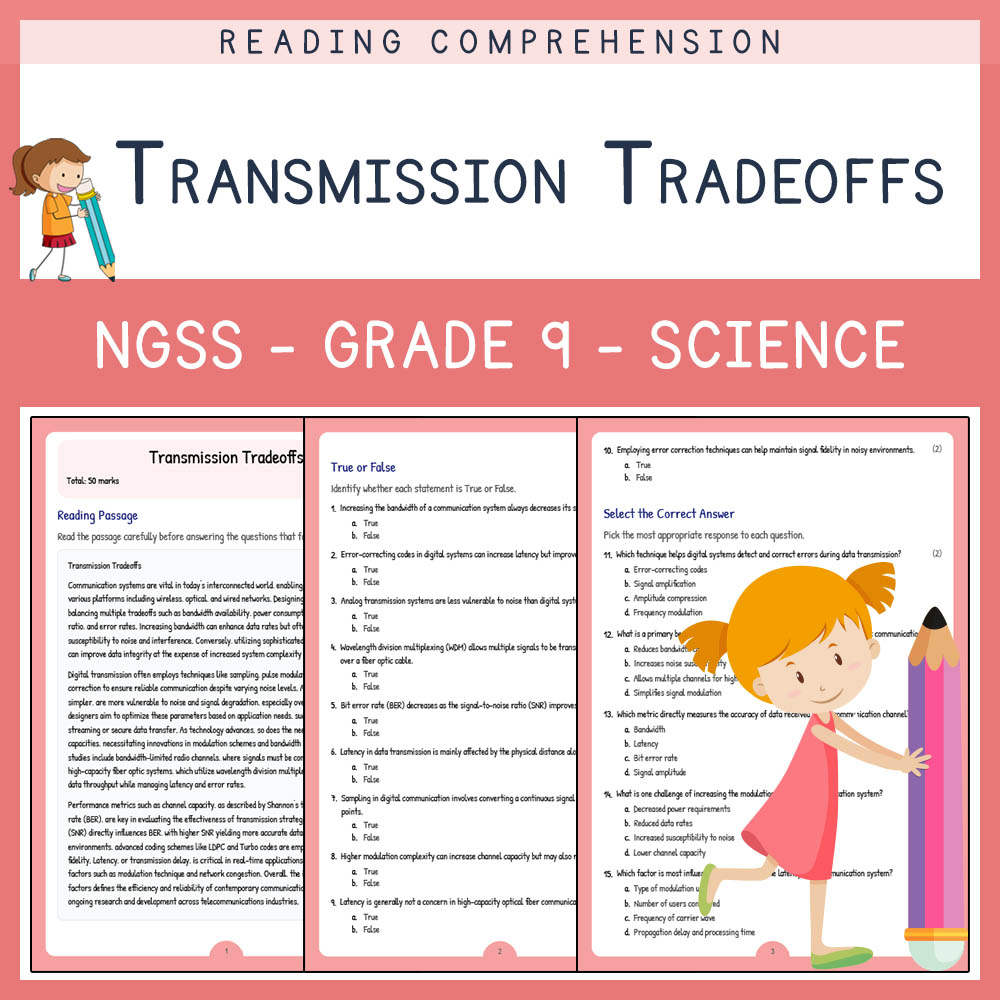
Grade 9 Science | Transmission Tradeoffs Worksheet & Answer Key (NGSS-Aligned)
 Created byLumora Learning
Learning Objectives
- Understand the fundamental tradeoffs involved in digital and analog communication systems.
- Evaluate system performance metrics such as bandwidth, signal-to-noise ratio, and channel capacity.
- Analyze case studies related to bandwidth limitations and error correction in communication systems.
Instant download
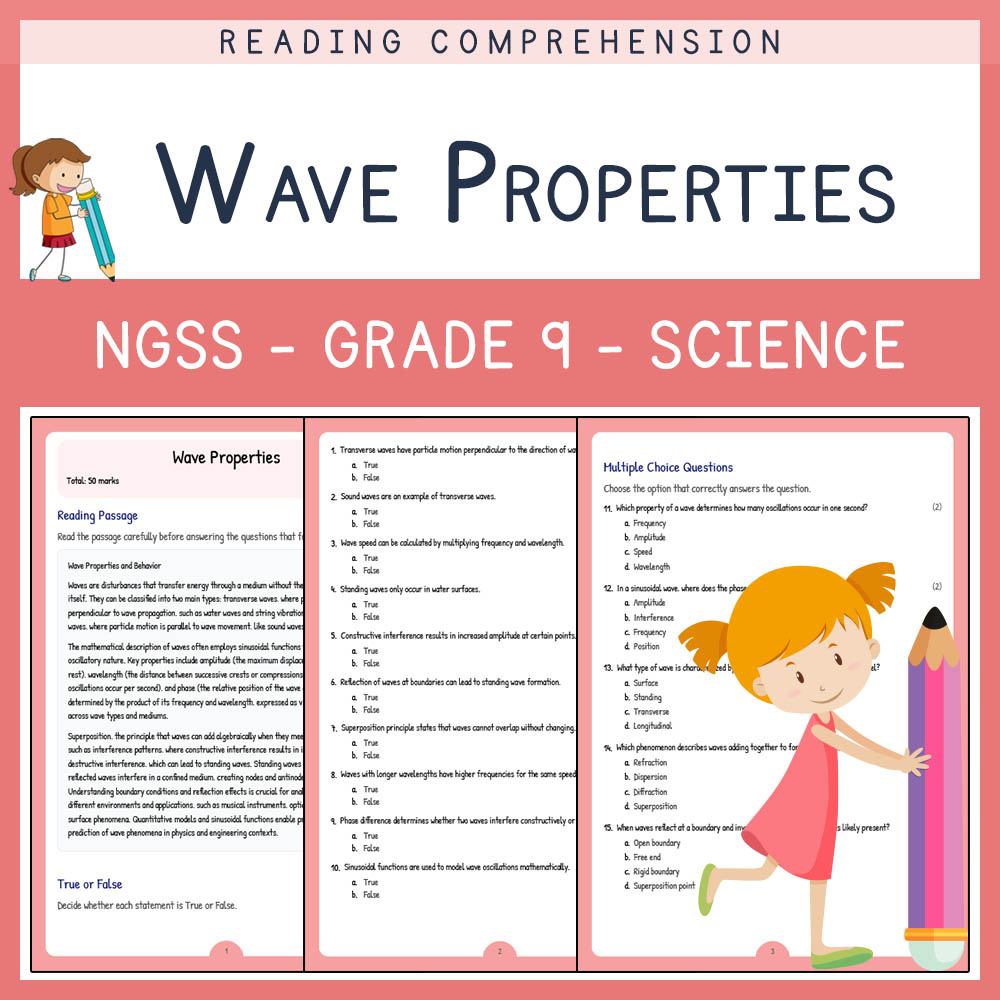
Grade 9 Science | Wave Properties Worksheet (Answer Key) – NGSS Aligned
Created byLumora LearningLearning Objectives
- Understand and explain the amplitude, frequency, wavelength, and phase of waves.
- Relate wave speed to frequency and wavelength in different types of waves.
- Apply sinusoidal functions and superposition principles to explain interference and standing waves.
Instant download
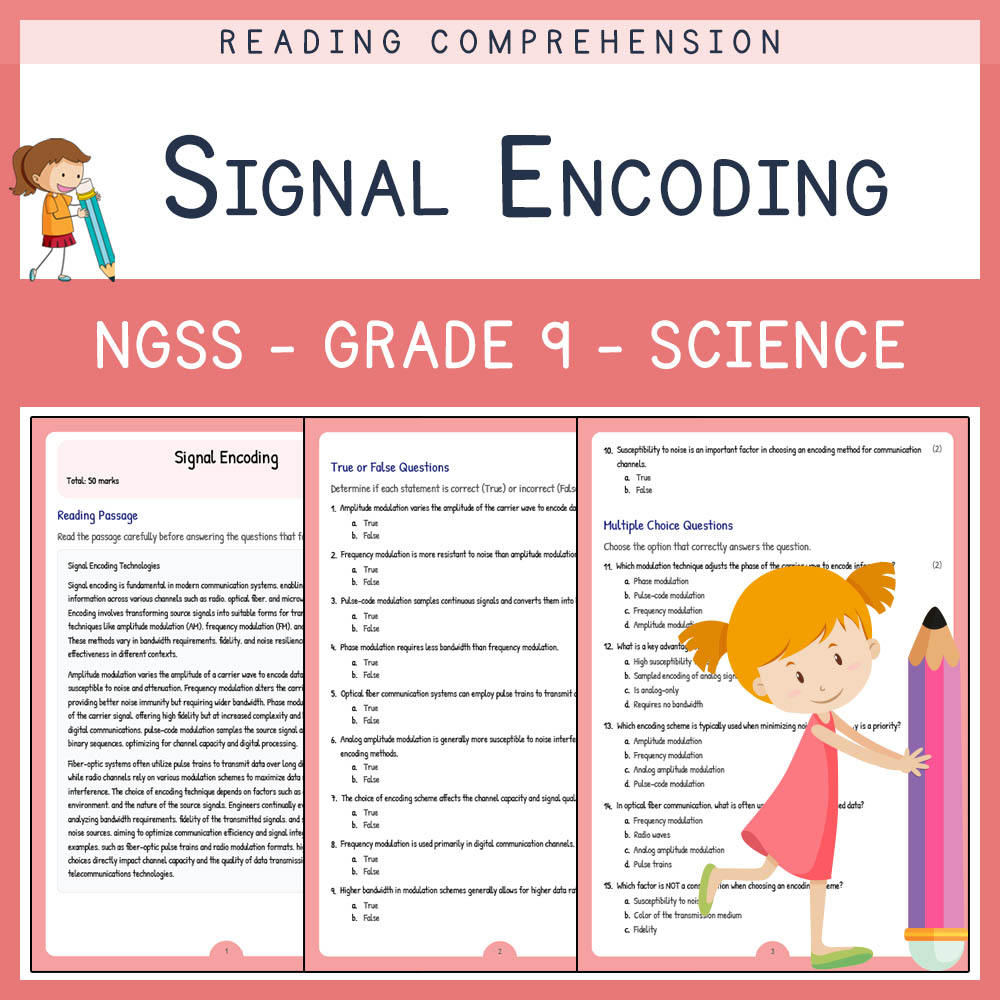
Grade 9 Science | Signal Encoding Worksheet & Answer Key for NGSS Alignment
Created byLumora LearningLearning Objectives
- Explain how modulation techniques encode information onto carrier waves.
- Compare pulse-code modulation and amplitude modulation in terms of bandwidth, fidelity, and noise susceptibility.
- Identify practical applications of different encoding schemes in communication channels.
Instant download
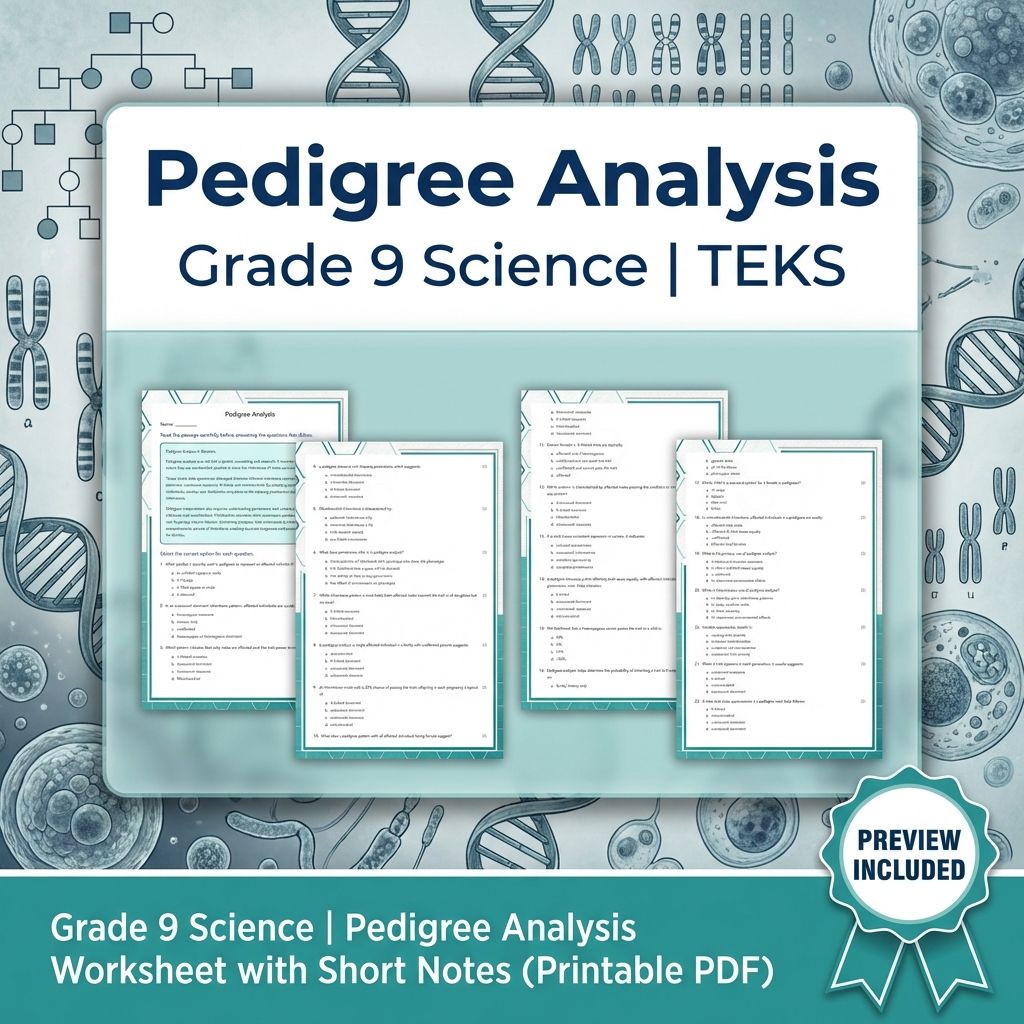
Grade 9 Science | Pedigree Analysis Worksheet with Short Notes (Printable PDF)
 Created byMeadowlark Worksheets
Learning Objectives
- Understand how to interpret family charts and pedigree symbols to trace inheritance patterns.
- Identify differences among autosomal dominant, autosomal recessive, X-linked, and mitochondrial inheritance modes.
- Analyze pedigree patterns to distinguish between different inheritance types.
Instant download

Atomic Structure Worksheet Grade 9 NGSS | Protons, Neutrons & Electrons
 Created byAmber Owl Education
Learning Objectives
- Explain the roles of protons, neutrons, and electrons in atomic structure.
- Use valence electrons to predict common ion charges and basic trends in chemical behavior.
- Relate quantized energy levels to electron transitions in atoms.
Also included in: Grade 9 Science Chemical Reactions Lesson Bundle | NGSS +1 more
Instant download

Grade 9 Reaction Stoichiometry Worksheet | Mass, Moles & Limiting Reagent
Created byAmber Owl EducationLearning Objectives
- Use balanced chemical equations and conservation of mass to relate reactant and product amounts.
- Convert between moles, mass, and particle counts using molar mass.
- Determine the limiting reactant and predict product yield from stoichiometric ratios.
Also included in: Grade 9 Science Chemical Reactions Lesson Bundle | NGSS +1 more
Instant download

Grade 9 Science | Central Tendencies in Data - Daily Reading Comprehension
Created byCoral Reef LearningLearning Objectives
- Define and distinguish among mean, median, and mode.
- Calculate the mean, median, and mode of different data sets.
- Interpret when each measure of central tendency is most appropriate.
Also included in: Science Practices Lesson Bundle – Grade 9 Science, Advanced Placement Reading +1 more
Instant download

Grade 9 Science – Simulated Predictions & Models | Daily Reading Worksheet
 Created byBright Mind Resources
Learning Objectives
- Identify the components of simple computational simulations.
- Explain how models generate predictions from hypotheses.
- Describe how uncertainty and variability are visualized in simulations.
Also included in: Grade 9 Science Data Analysis Daily Reading Worksheets Lesson Bundle | AP +2 more
Instant download

Grade 9 Science – Classification Overview & Properties | Daily Reading Worksheet
Created byBright Mind ResourcesLearning Objectives
- Understand the definitions of elements, compounds, and mixtures.
- Identify key features that distinguish pure substances from mixtures.
- Use symbols and formulas to represent elements and compounds.
Also included in: Grade 9 Chemistry Science Lesson Bundle Daily Reading Worksheets | Ontario +1 more
Instant download

Grade 9 Science – Chemical Properties & Reactions | Daily Reading Worksheet
Created byBright Mind ResourcesLearning Objectives
- Understand the concept of chemical properties and how they differ from physical properties.
- Identify common chemical properties such as flammability, reactivity, oxidation, and stability.
- Observe and recognize signs of chemical changes like color change, gas evolution, precipitate formation, and formation of new substances.
Also included in: Grade 9 Chemistry Science Lesson Bundle Daily Reading Worksheets | Ontario +1 more
Instant download

Grade 9 Science – Balancing Equations & Conservation of Atoms | Worksheet
Created byBright Mind ResourcesLearning Objectives
- Understand the concept of chemical symbols and their significance.
- Identify reactants and products in chemical equations.
- Comprehend the importance of balancing chemical equations to reflect the conservation of atoms and mass.
Also included in: Grade 9 Chemistry Science Lesson Bundle Daily Reading Worksheets | Ontario +1 more
Instant download

Grade 9 Science – Conservation of Mass in Reactions | Daily Reading Worksheet
Created byBright Mind ResourcesLearning Objectives
- Understand the principle of conservation of mass in closed systems
- Recognize how mass remains constant during chemical reactions
- Differentiate between apparent and actual mass changes
Also included in: Grade 9 Chemistry Science Lesson Bundle Daily Reading Worksheets | Ontario +1 more
Instant download

Grade 9 Science – Mixtures & Separation | Daily Reading Worksheet
Created byBright Mind ResourcesLearning Objectives
- Understand the difference between homogeneous and heterogeneous mixtures
- Learn about various physical methods used to separate mixtures
- Identify examples of mixtures in everyday life
Also included in: Grade 9 Chemistry Science Lesson Bundle Daily Reading Worksheets | Ontario +1 more
Instant download

Grade 9 Science – Physical Changes & Melting | Daily Reading Worksheet
Created byBright Mind ResourcesLearning Objectives
- Define physical change and identify its characteristics.
- Explain melting as a physical change, including energy transfer involved.
- Differentiate between reversible and irreversible physical changes.
Also included in: Grade 9 Chemistry Science Lesson Bundle Daily Reading Worksheets | Ontario +1 more
Instant download

Grade 9 Science | Redox Concepts Worksheet | BC Standards
Created byLumora LearningLearning Objectives
- Explain the fundamental principles of oxidation and reduction in chemical reactions.
- Identify electron transfer events and changes in oxidation states during redox reactions.
- Track oxidation state changes to determine oxidizing and reducing agents in chemical equations.
Instant download

Grade 9 Science | Bond Types Worksheet | BC Standard
Created byLumora LearningLearning Objectives
- Understand the differences between ionic, covalent, and metallic bonds.
- Describe how electron arrangements influence material properties.
- Identify characteristics associated with each bond type.
Instant download

Grade 9 Science | Crystal Lattices Worksheet | BC Aligned
Created byLumora LearningLearning Objectives
- Understand the three-dimensional arrangements of ions and atoms in crystal lattices.
- Identify different lattice types and their properties such as hardness, conductivity, and melting points.
- Describe the role of unit cells in the structure of solids.
Instant download

Sex-Linked Inheritance Worksheets | Grade 9 Heredity Science
 Created bySunny Desk Resources
Learning Objectives
- Explain how sex chromosomes determine sex in mammals and how sex-linked genes are inherited
- Describe X-linked recessive inheritance and hemizygosity in males
- Use dosage compensation ideas to predict why traits can differ in frequency between males and females
Also included in: Genetics & Heredity Lesson Bundle | Grade 9 Science | Alberta Framework +1 more
Instant download

Allele Frequencies and Population Genetics Worksheets | Grade 9
Created bySunny Desk ResourcesLearning Objectives
- Explain how allele frequency changes under selection, drift, gene flow, and population bottlenecks.
- Describe Hardy-Weinberg equilibrium and the conditions needed to maintain it.
- Interpret how small population size and isolation affect genetic diversity and conservation decisions.
Also included in: Genetics & Heredity Lesson Bundle | Grade 9 Science | Alberta Framework +1 more
Instant download

DNA, Chromosomes, and Genome Packaging Worksheets | Grade 9
Created bySunny Desk ResourcesLearning Objectives
- Describe the structure of DNA and how base pairing supports heredity.
- Explain how chromosomes organize DNA and enable genetic information to be copied and inherited.
- Compare nuclear DNA with organelle DNA in terms of genome location and inheritance context.
Also included in: Genetics & Heredity Lesson Bundle | Grade 9 Science | Alberta Framework +1 more
Instant download
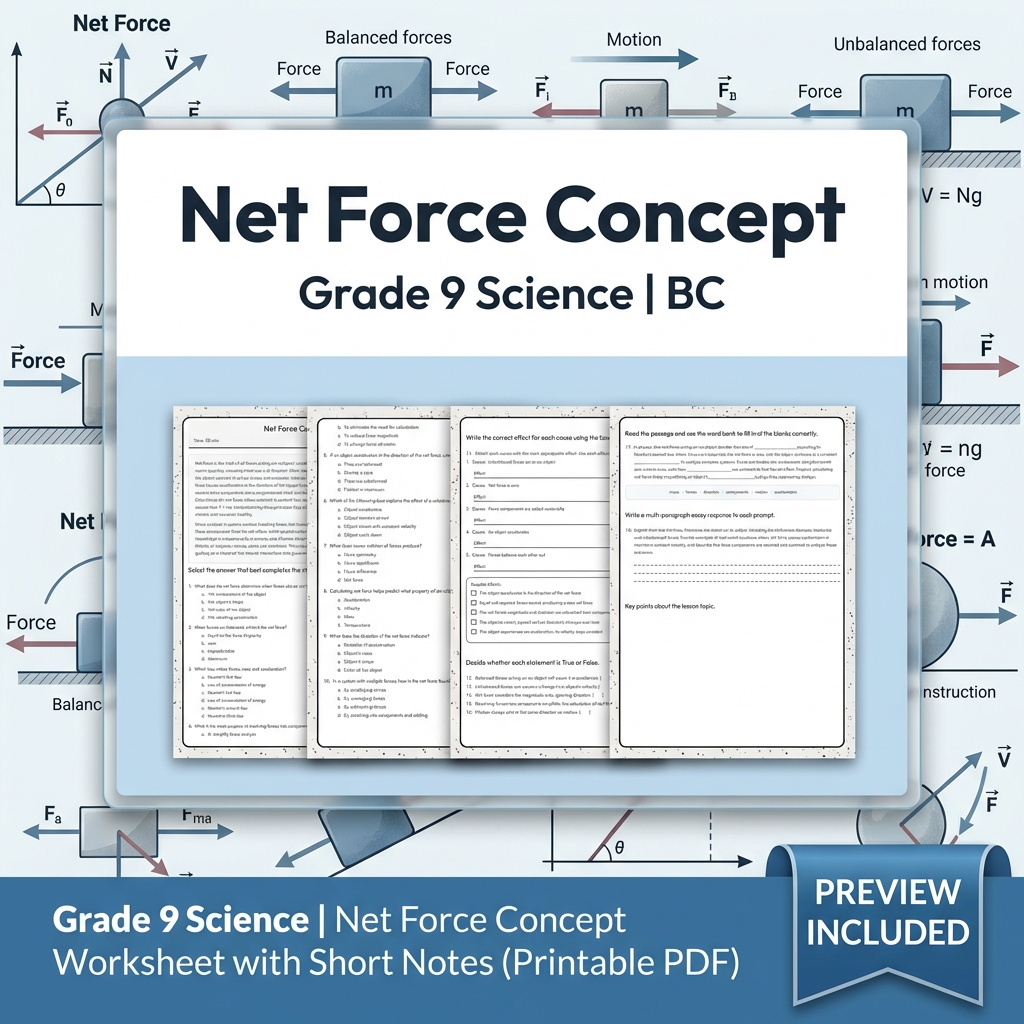
Grade 9 Science | Net Force Concept Worksheet with Short Notes (Printable PDF)
Created byMeadowlark WorksheetsLearning Objectives
- Understand the definition of net force and how it affects motion.
- Learn how forces balance and unbalance influence acceleration.
- Develop skills to resolve forces into components and calculate net effect.
Also included in: Grade 9 Science Lesson Bundle | Energy, Forces & Motion Worksheets +1 more
Instant download

Genetic Technologies Risks and Benefits Worksheets Grade 9 Science
Created bySunny Desk ResourcesLearning Objectives
- Describe how gene flow, resistance development, and market impacts can create risks and benefits in genetic technologies.
- Explain how risk assessment, mitigation, and long-term monitoring reduce uncertainty in real-world decisions.
- Use examples such as canola introgression and cattle genetics to support evidence-based trade-off evaluations.
Also included in: Genetics & Heredity Lesson Bundle | Grade 9 Science | Alberta Framework +1 more
Instant download

Mendelian Inheritance and Probability Worksheet | Grade 9 Science
Created bySunny Desk ResourcesLearning Objectives
- Distinguish genotype from phenotype in single-gene inheritance patterns
- Predict offspring outcomes using dominant and recessive allele interactions
- Interpret Punnett squares and calculate simple probabilities from them
Also included in: Genetics & Heredity Lesson Bundle | Grade 9 Science | Alberta Framework +1 more
Instant download

Grade 9 Science | Integrated Metabolism Reading Worksheet (PDF + Rubric)
JCreated byJ.S SheetsLearning Objectives
- Understand the connection between catabolic and anabolic pathways in metabolism.
- Describe how hormonal signals and nutrient availability influence metabolic processes.
- Explain the systemic coordination of energy flow during high demand or scarcity in organisms.
Instant download

Grade 9 Science | Particle Theory - Grade Science - Daily Reading Comprehension
Created byCoral Reef LearningLearning Objectives
- Understand the basic principles of the particle model of matter.
- Identify the arrangement and behavior of particles in solids, liquids, and gases.
- Relate particle motion to temperature and energy.
Instant download

Orbital Motion Worksheet | NGSS Grade 9 Science assessment printable PDF
Learning Objectives
- Explain the basic principles of orbital motion and gravitational interactions.
- Describe Kepler's laws of planetary motion and Newton's law of universal gravitation.
- Analyze the relationship between orbital period and semi-major axis in planetary and satellite orbits.
Also included in: Grade 9 Science Earth's Place in the Universe Lesson Bundle NGSS +1 more
Instant download
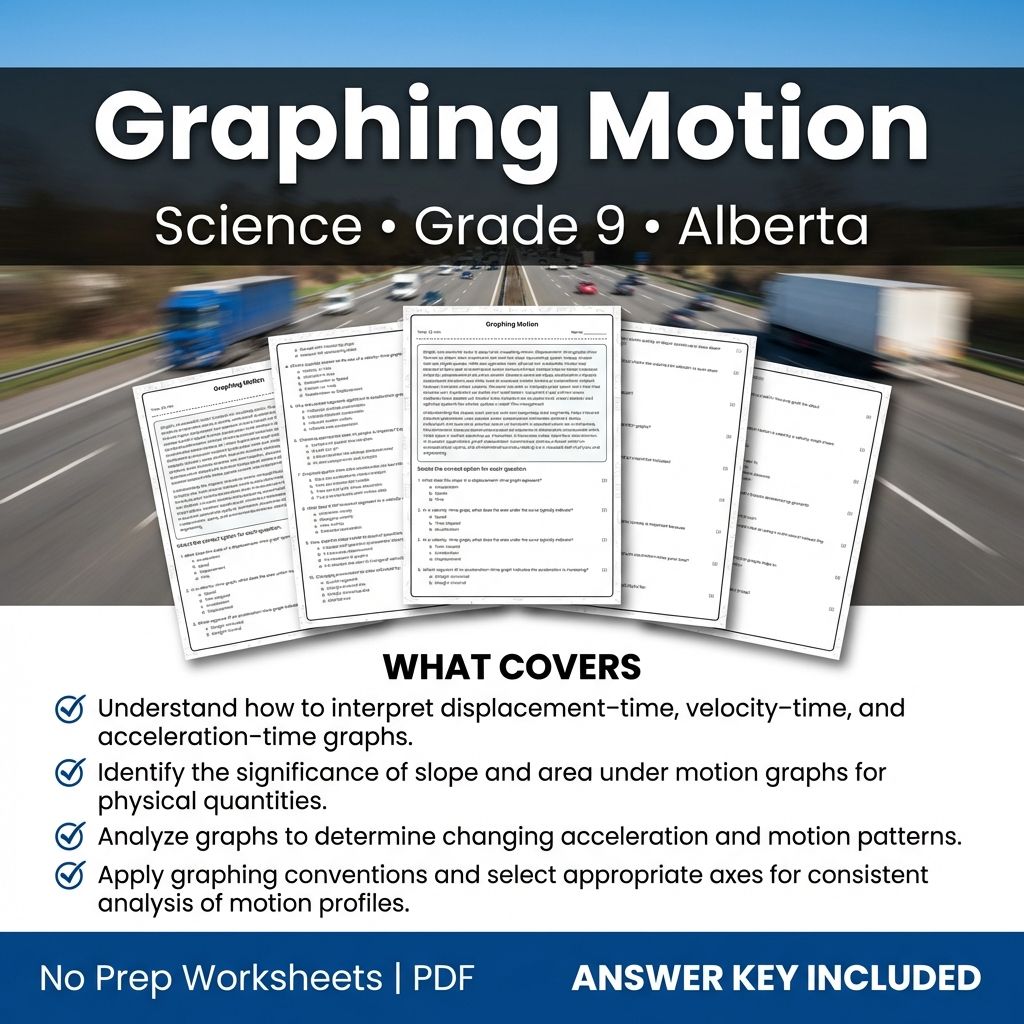
Graphing Motion Worksheet for Grade 9 Science | Alberta Standards
Created byCoral Reef LearningLearning Objectives
- Understand how to interpret displacement–time, velocity–time, and acceleration–time graphs.
- Identify the significance of slope and area under motion graphs for physical quantities.
- Analyze graphs to determine changing acceleration and motion patterns.
Instant download
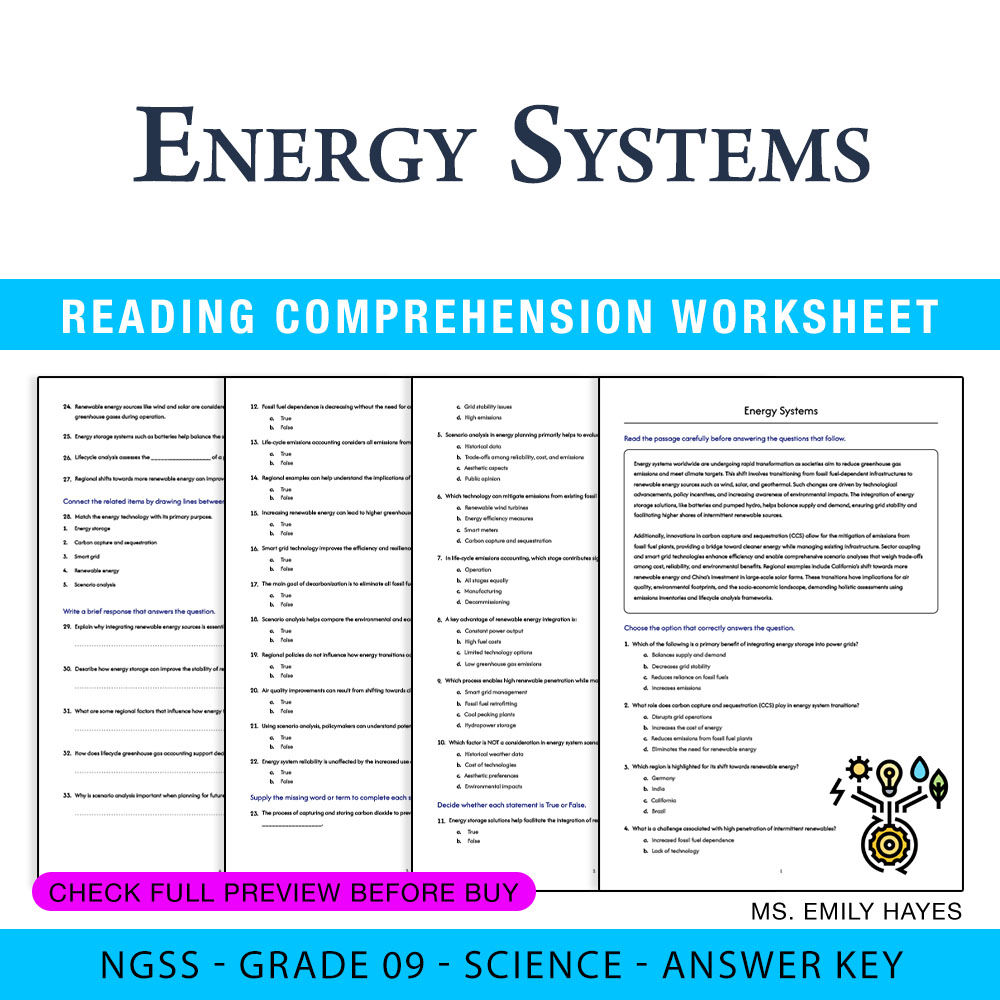
Grade 9 Science | Energy Systems Worksheet (PDF+ Answer Key)
 Created byCopper Leaf Classroom
Learning Objectives
- Understand the concept of energy system transitions and decarbonization pathways.
- Analyze the trade-offs between reliability, affordability, and greenhouse gas reduction in energy scenarios.
- Evaluate the role of renewable energy, storage, and carbon capture in reducing emissions.
Instant download

Cosmic Timescales Worksheet | NGSS Grade 9 Science Assessment
 Created byCedar Grove Learning
Learning Objectives
- Understand the observational evidence used to determine the age and expansion of the universe.
- Identify key concepts such as redshift, cosmic microwave background, and primordial abundances.
- Explain how different measurements constrain the universe's timeline from seconds to billions of years.
Instant download
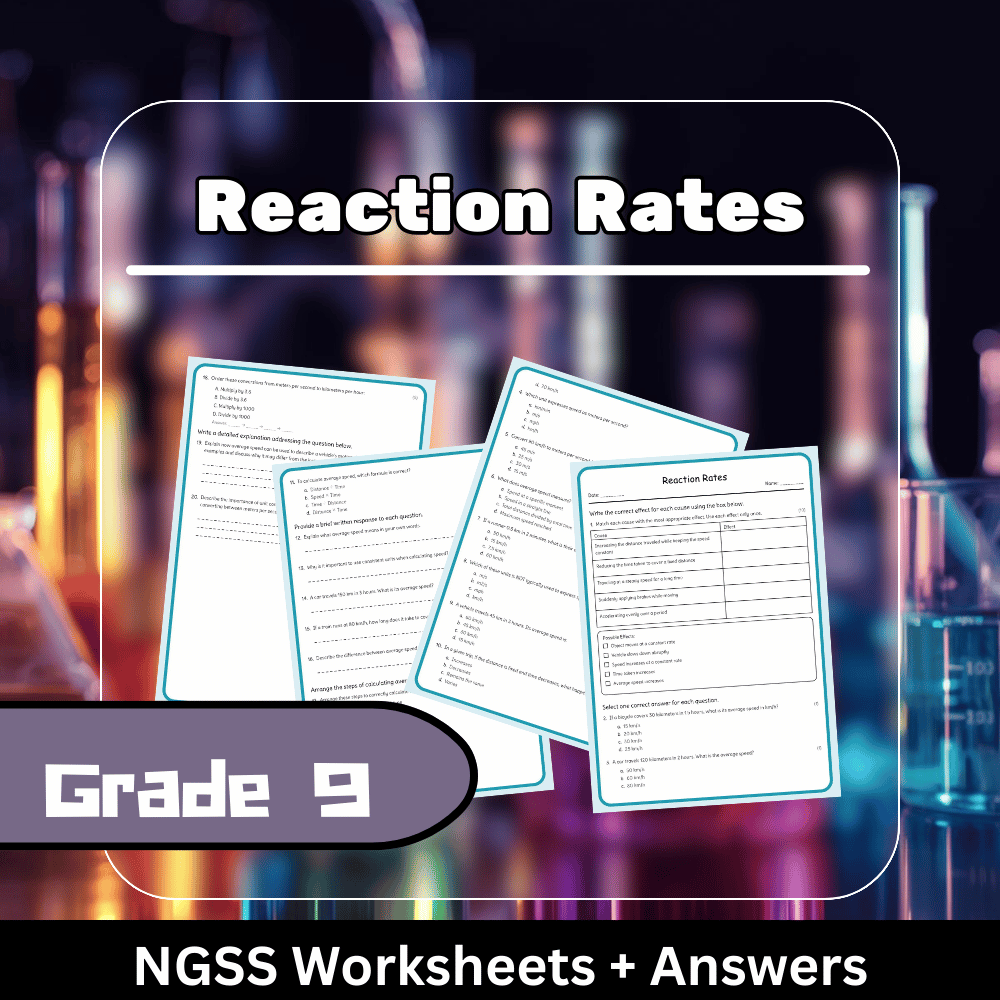
Grade 9 Science | Reaction Rates Worksheet + Answer Key (NGSS Aligned)
Created byBright Mind ResourcesLearning Objectives
- Understand how collision frequency, activation energy, and reaction pathways influence reaction rates.
- Explain how temperature, concentration, and catalysts modify energy distributions and affect reaction speed.
- Describe rate laws, reaction order, and how these relate quantitatively to reaction mechanisms.
Instant download
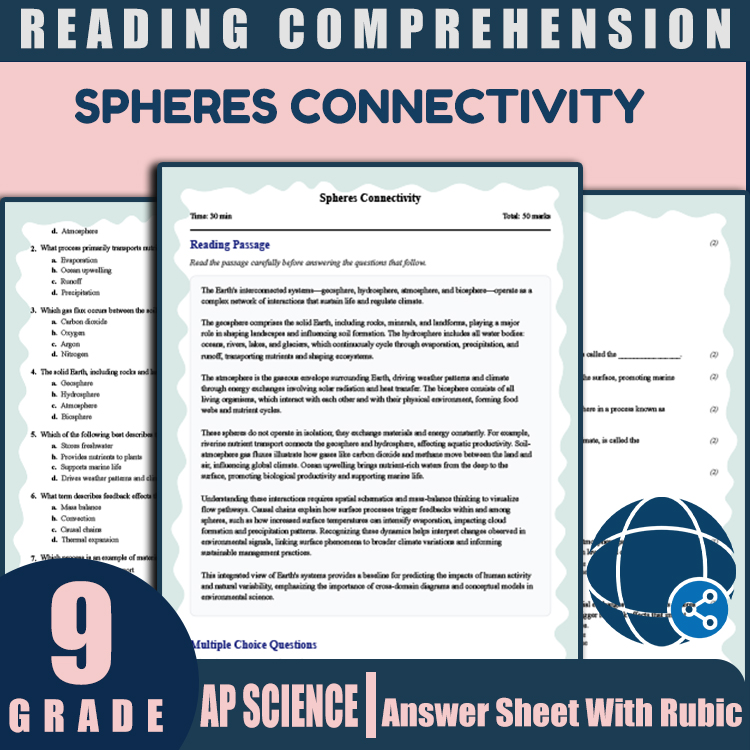
Grade 9 Science | Spheres Connectivity Reading Worksheet & Answer Key (PDF)
JCreated byJ.S SheetsLearning Objectives
- Describe the interactions among the geosphere, hydrosphere, atmosphere, and biosphere using conceptual models.
- Explain material and energy exchanges such as riverine nutrient transport, soil-atmosphere gas fluxes, and ocean upwelling effects.
- Use spatial schematics, mass-balance thinking, and causal chains to interpret coupled environmental phenomena.
Instant download
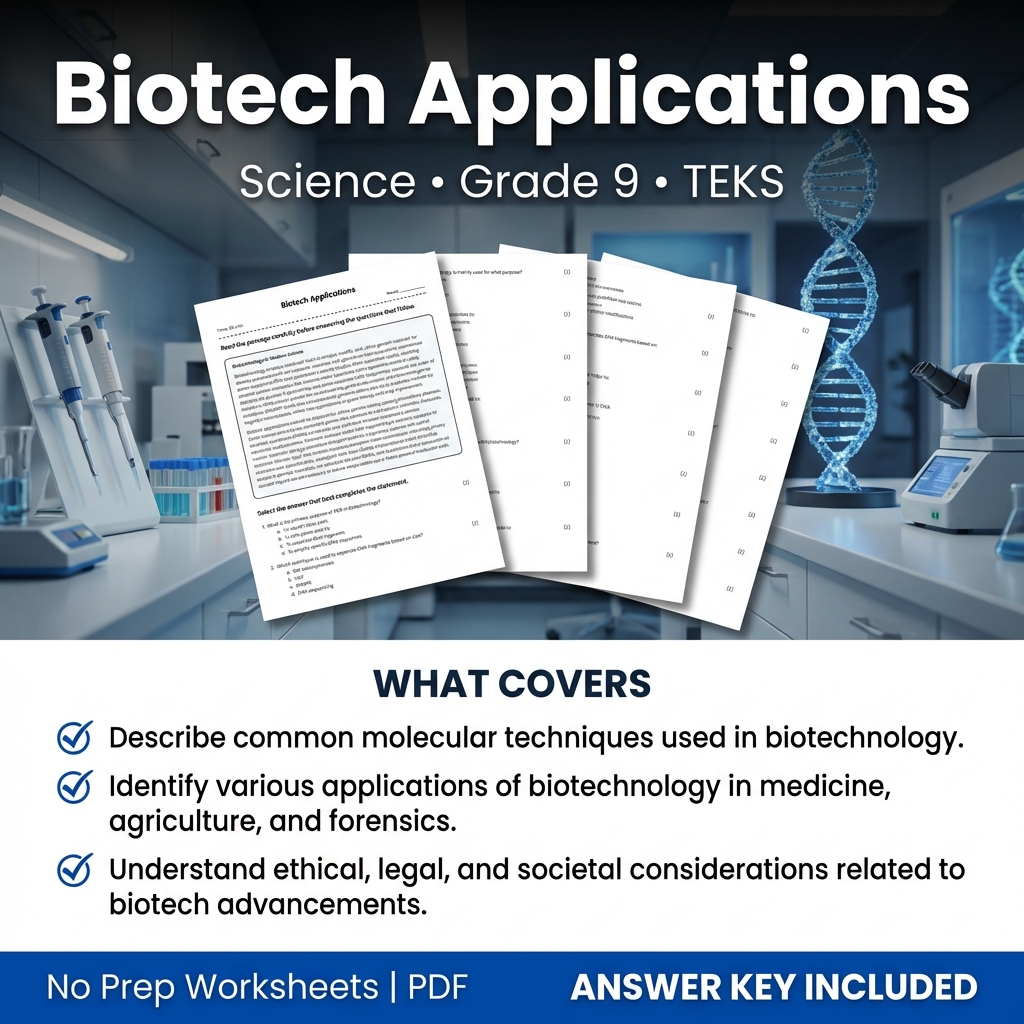
Biotech Applications Science Worksheet for Grade 9 | TEKS Aligned
Created byCoral Reef LearningLearning Objectives
- Describe common molecular techniques used in biotechnology.
- Identify various applications of biotechnology in medicine, agriculture, and forensics.
- Understand ethical, legal, and societal considerations related to biotech advancements.
Instant download

Grade 9 Science – Phylogenetic Trees & Evolutionary Relationships | Worksheet
Created byBright Mind ResourcesLearning Objectives
- Identify basic components of phylogenetic trees
- Understand the significance of shared derived characters
- Learn methods of tree construction such as parsimony and molecular distance
Also included in: Grade 9 Speciation Science Daily Reading Worksheets Lesson Bundle | NGSS +2 more
Instant download

Grade 9 Science — Worksheet MCQ Paper for Mastering One-Dimensional Motion
 Created byThe Resource Hub
Learning Objectives
- Understand the core relationships among displacement, velocity, and acceleration along a straight line.
- Interpret position–time and velocity–time graphs to analyze motion.
- Apply constant-acceleration equations to solve kinematic problems.
Also included in: Grade 9 Physics Principles Bundle | AP Science Worksheets for Motion & Force +1 more
Instant download
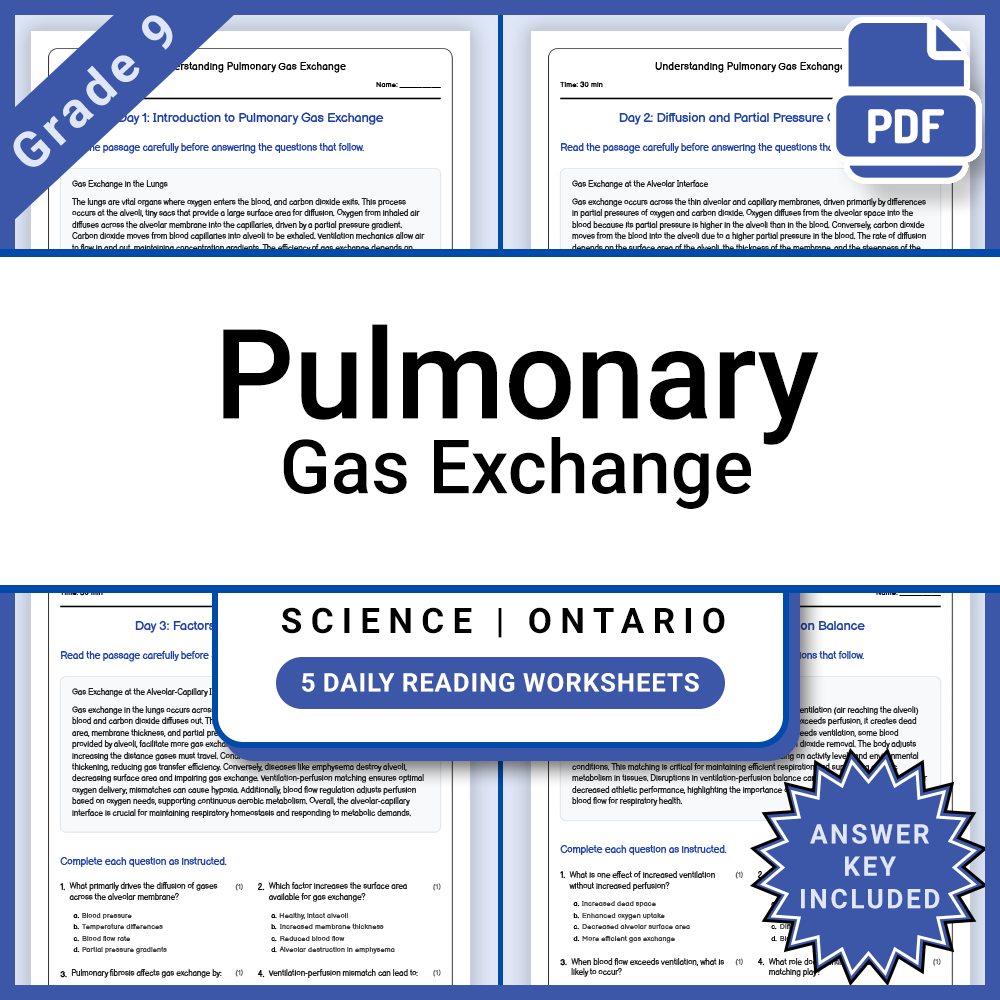
Grade 9 Science – Pulmonary Gas Exchange Daily Reading Worksheet + Answer Key
JCreated byJ.S SheetsLearning Objectives
- Describe the process of gas exchange at the alveolar–capillary interface.
- Identify factors affecting oxygen and carbon dioxide movement in the lungs.
- Explain the mechanics of ventilation and the role of alveoli in respiration.
Also included in: Grade 9 Science Lesson Group | Human Body Systems, Environment & Energy +1 more
Instant download

Grade 9 Speed Distance & Time Alberta Science Motion Worksheet
 Created byBRIGHT PATH RESOURCES
Learning Objectives
- Define speed as distance travelled per unit time
- Identify speed in a description and choose correct distance-per-time units
- Use correct unit reasoning to compare speeds in familiar contexts
Instant download
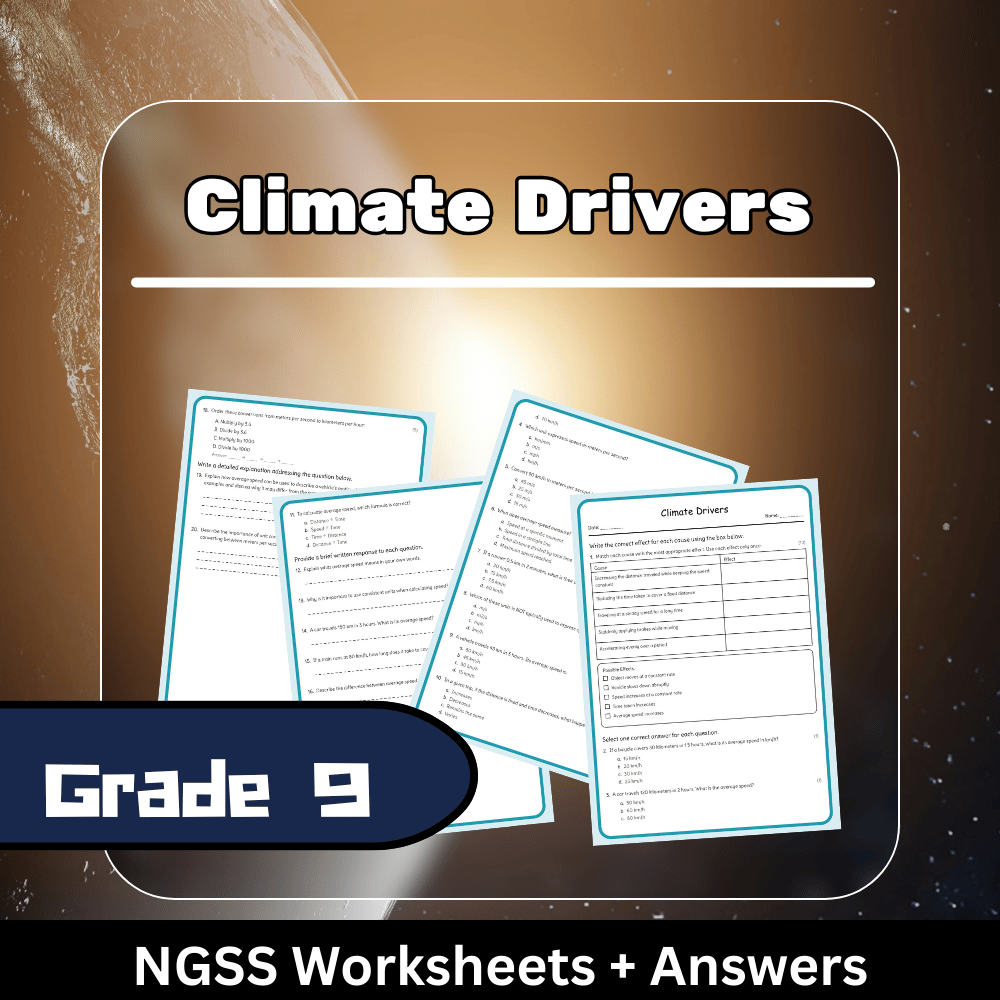
Grade 9 Science | Climate Drivers Worksheet (Answer Key) - NGSS Aligned
Created byBright Mind ResourcesLearning Objectives
- Explain how Earth's energy budget influences climate and weather patterns.
- Identify key factors such as solar flux, albedo, greenhouse gases, and ocean heat transport that affect climate variability.
- Analyze models and observational data used to study short-term and long-term climate changes.
Instant download

Grade 9 Science – Biotech Applications Daily Reading Worksheet with Answer Key
JCreated byJ.S SheetsLearning Objectives
- Understand key concepts related to Science
- Apply knowledge through practice questions
- Demonstrate comprehension of the material
Also included in: Grade 9 Science Lesson Bundle on Genetics and DNA TEKS Aligned +1 more
Instant download

Plate Boundaries Worksheet Practice for Grade 9 Science
 Created byBright Quill Resources
Learning Objectives
- Explain how plate tectonics is supported by evidence such as seafloor age patterns, paleomagnetic stripes, and earthquake locations.
- Distinguish divergent, convergent, and transform plate boundaries by describing characteristic landforms and processes.
- Connect lithospheric motion to crustal deformation, volcanic fronts, and seismic activity using map and cross-section reasoning.
Instant download

Grade 9 Science | Mountain Building Worksheet | BC Standards
Created byLumora LearningLearning Objectives
- Describe the processes involved in mountain building such as plate convergence, thrust faulting, and crustal uplift.
- Identify geological features and structural patterns associated with mountain ranges.
- Explain the roles of weathering and erosion in sculpting mountain landscapes.
Also included in: Grade 9 Science | Earth Systems Unit Bundle | BC Aligned Worksheets
Instant download

Grade 9 Science – Celestial Motions & Earth's Rotation | Daily Reading Worksheet
 Created byQuiet Forest Education
Learning Objectives
- Understand the basic motions of planets within the solar system.
- Describe the Earth's rotation and its effects on day and night.
- Explain the significance of planetary orbits and their paths around the Sun.
Instant download

Grade 9 Science – Biodiversity & Ecological Factors | Daily Reading Worksheet
Created byBright Mind ResourcesLearning Objectives
- Understand key concepts related to Science
- Apply knowledge through practice questions
- Demonstrate comprehension of the material
Also included in: Evolution Grade 9 Science Daily Reading Worksheets Lesson Bundle | CA Standards +1 more
Instant download
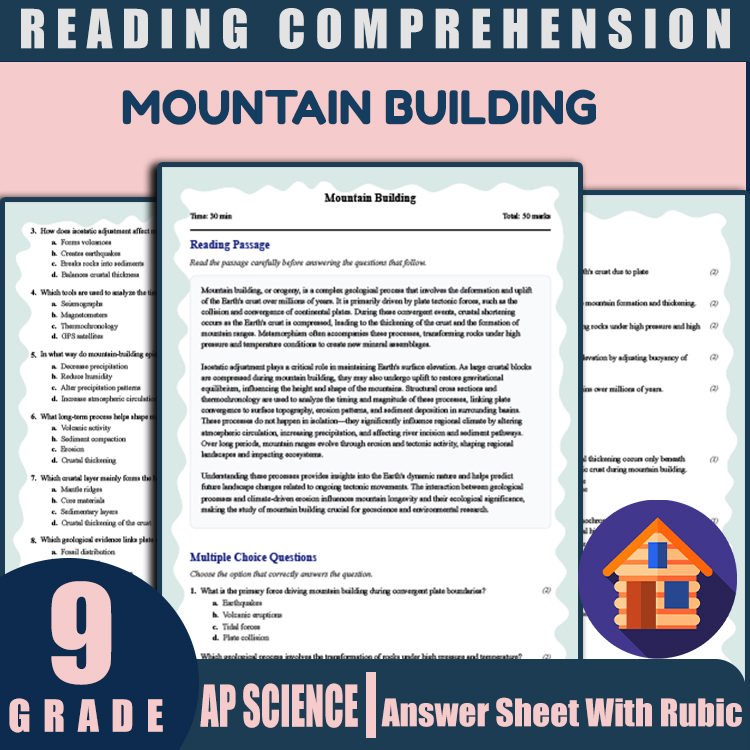
Grade 9 Science | Mountain Building Reading Worksheet (PDF + Rubric)
JCreated byJ.S SheetsLearning Objectives
- Describe the processes involved in orogenic mountain formation including crustal shortening, thickening, and metamorphism.
- Explain how isostatic adjustments influence mountain belt elevation.
- Analyze how mountain-building episodes affect regional climate, river erosion, and sediment delivery.
Instant download
About Grade 9 Science Worksheets
Find Science worksheets built for Grade 9. All 6,926 cover core skills, practice, and review, each an instant PDF download.
Every worksheet on MyTeachingSheets is created by independent teacher-authors and reviewed before publication. All resources download as printable PDFs for classroom, homework, or at-home practice, and many include answer keys. Preview any worksheet free before buying.