
Science Worksheets
44,376 subject resources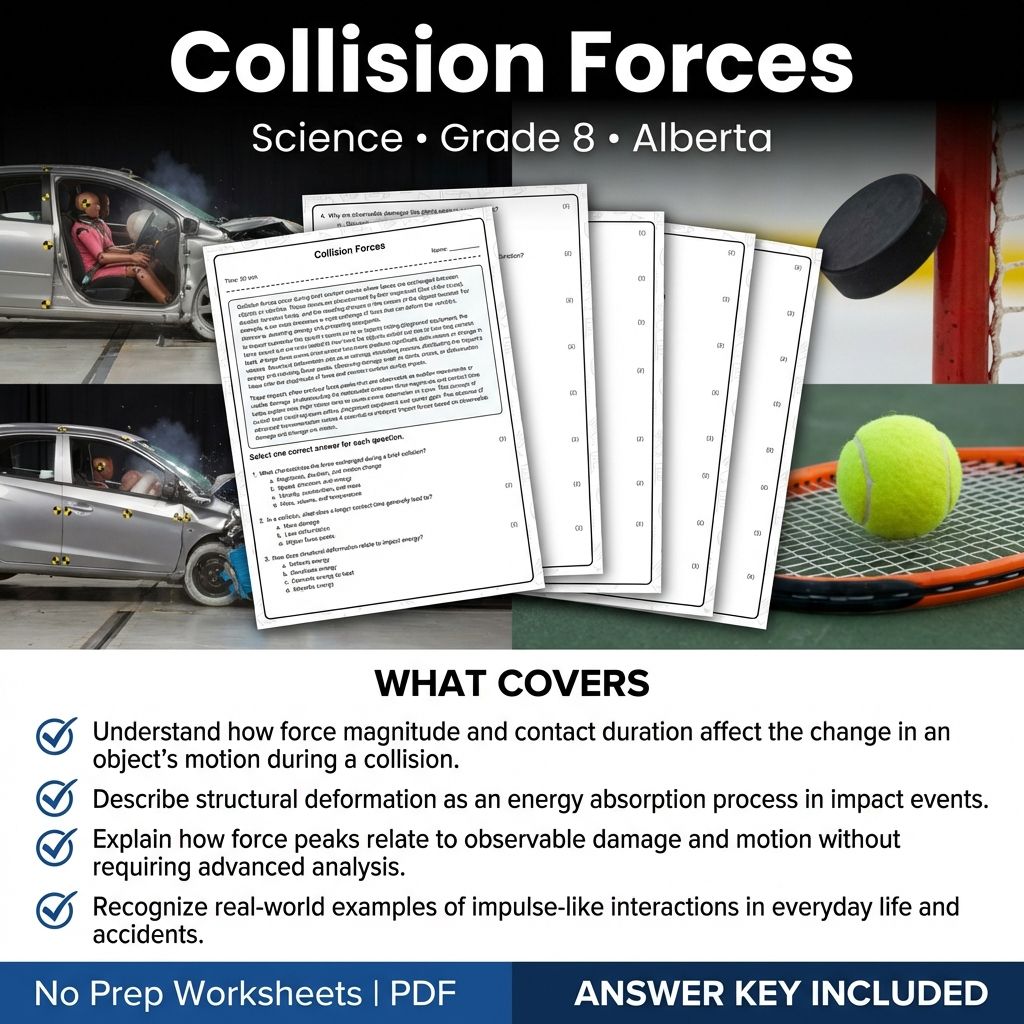
Collision Forces Worksheet for Grade 8 Science | Alberta Standards
 Created byCoral Reef Learning
Learning Objectives
- Understand how force magnitude and contact duration affect the change in an object's motion during a collision.
- Describe structural deformation as an energy absorption process in impact events.
- Explain how force peaks relate to observable damage and motion without requiring advanced analysis.
Instant download
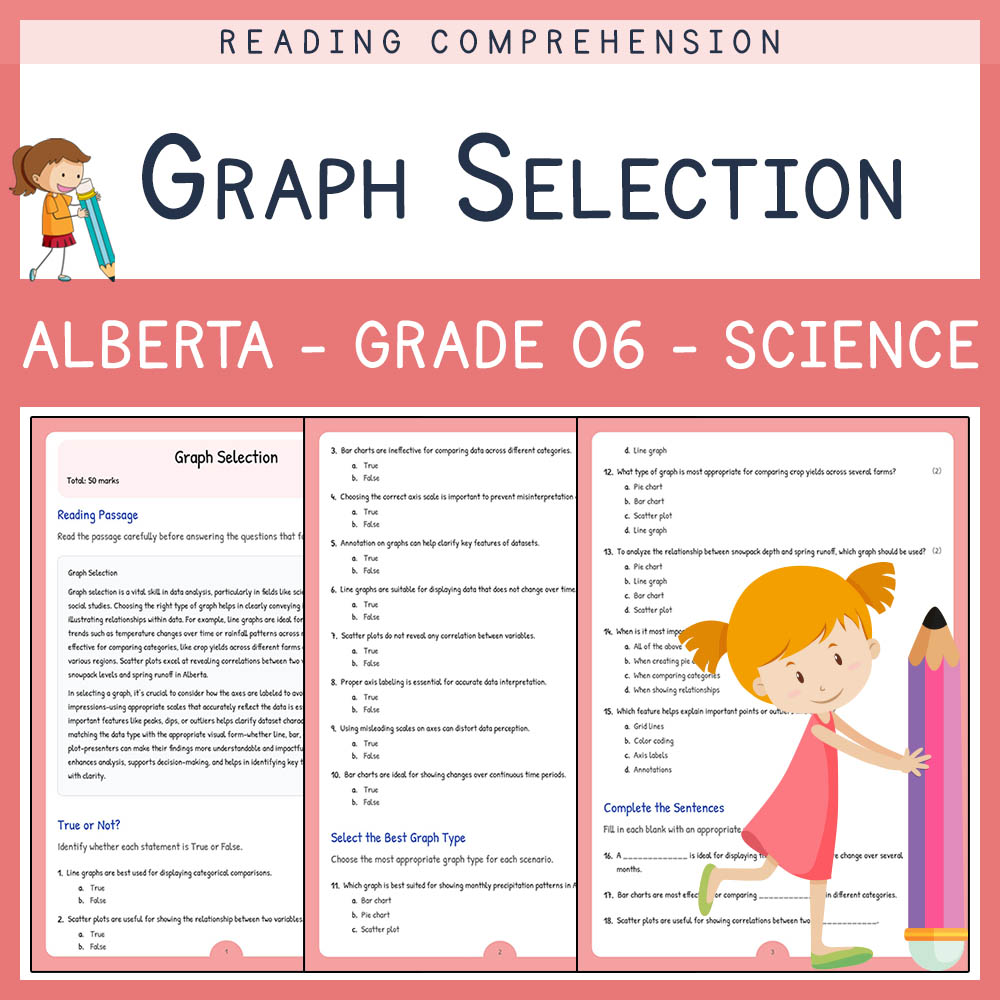
Grade 6 Science | Graph Selection Worksheet | Alberta | Data Analysis Skills
 Created byLumora Learning
Learning Objectives
- Understand different types of graphs and when to use each one.
- Learn how to appropriately label axes and choose scales to accurately represent data.
- Identify datasets where line graphs, bar charts, and scatter plots are most effective.
Also included in: Grade 6 Science | Evidence and Investigation Custom Bundle | Alberta
Instant download
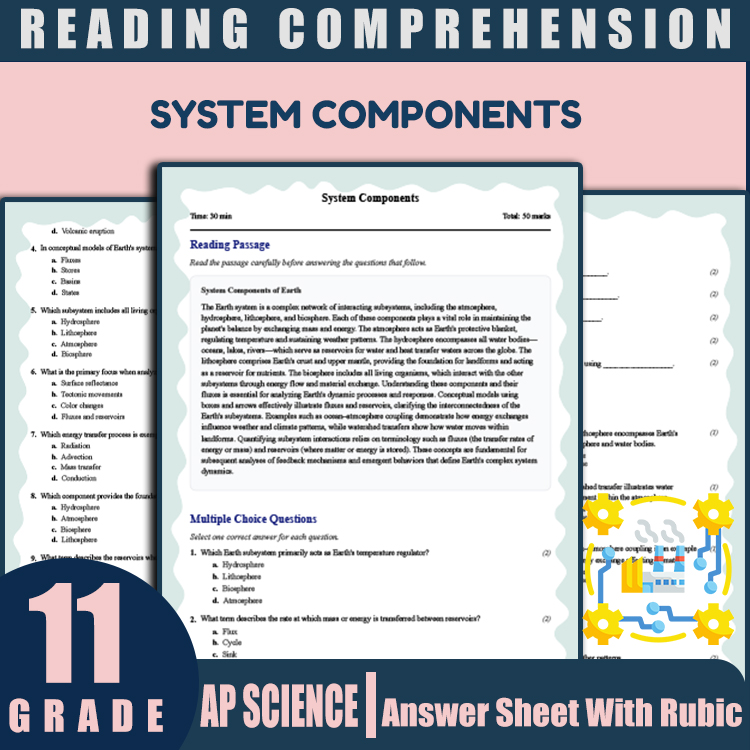
11th Grade Science | System Components Reading Worksheet & Answer Key (PDF)
JCreated byJ.S SheetsLearning Objectives
- Understand the major Earth subsystems: atmosphere, hydrosphere, lithosphere, and biosphere.
- Describe how mass and energy transfer among Earth's subsystems.
- Use conceptual models to visualize fluxes and reservoirs within the Earth system.
Also included in: Grade 11 Science Unit Bundle | Earth Systems & Climate Change Worksheets +1 more
Instant download
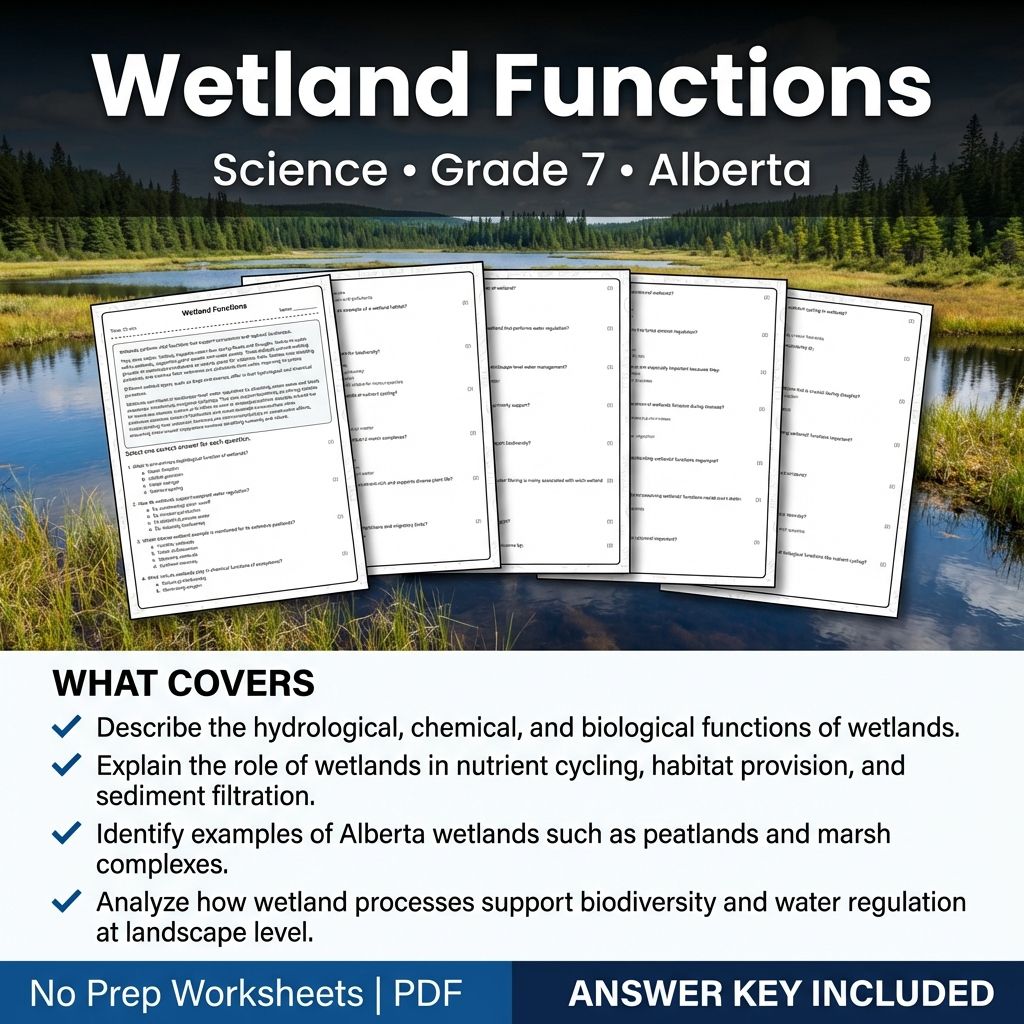
Wetland Functions Worksheet Grade 7 Science | Alberta Standards
Created byCoral Reef LearningLearning Objectives
- Describe the hydrological, chemical, and biological functions of wetlands.
- Explain the role of wetlands in nutrient cycling, habitat provision, and sediment filtration.
- Identify examples of Alberta wetlands such as peatlands and marsh complexes.
Instant download

Control Variables Worksheet for Grade 11 Science | AP Standards Practice
JCreated byJ.S SheetsLearning Objectives
- Understand the purpose of control variables in experimental design.
- Identify appropriate control treatments and baseline conditions.
- Describe strategies to minimize systematic bias in experiments.
Instant download
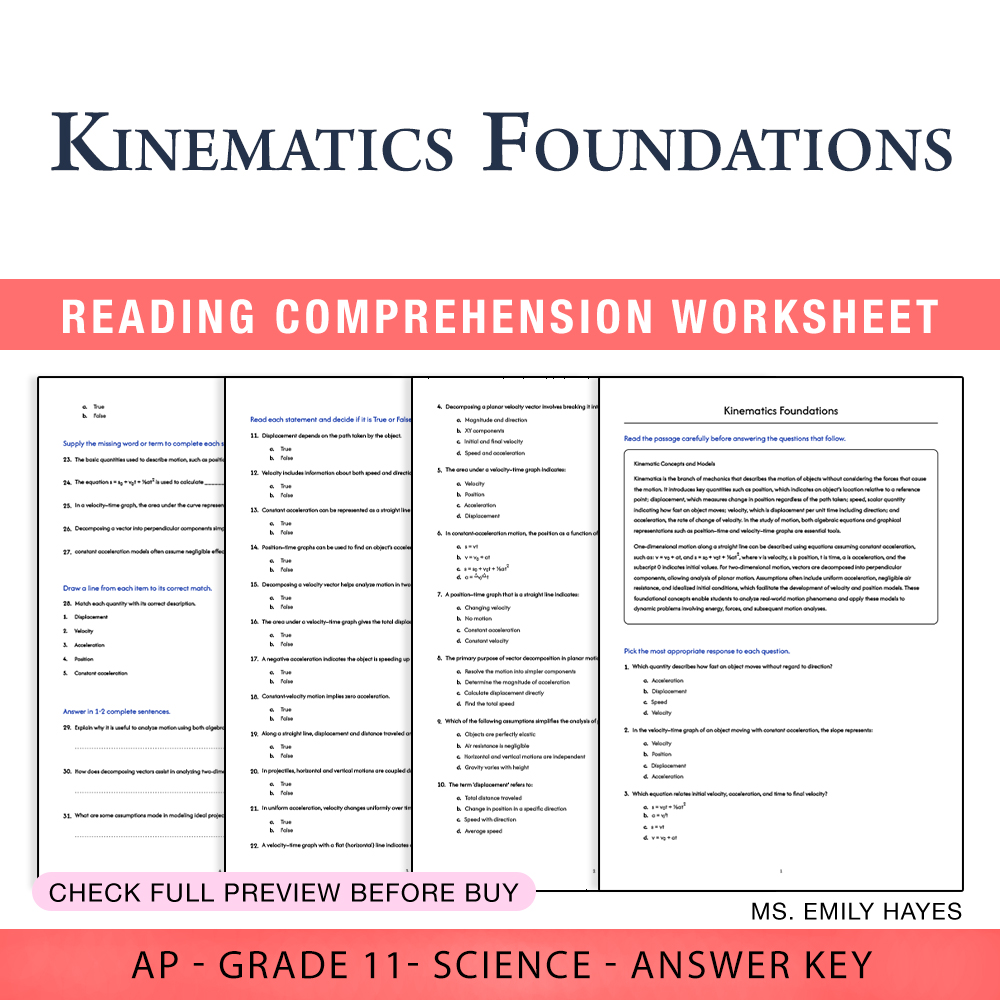
11th Grade Science | Kinematics Foundations Worksheet (PDF+ Answer Key)
 Created byCopper Leaf Classroom
Learning Objectives
- Define and differentiate between position, displacement, speed, velocity, and acceleration.
- Represent motion graphically using position–time and velocity–time plots.
- Apply constant-acceleration equations to analyze one-dimensional motion.
Also included in: Grade 11 Science | Physics Principles Worksheet Bundle (PDF+ Answer Key)) +1 more
Instant download

Grade 10 Ecosystem Modeling Worksheet | NGSS Science Systems Activity
 Created byBRIGHT PATH RESOURCES
Learning Objectives
- Understand different types of ecosystem models and their purposes
- Interpret the use of models like Lotka–Volterra equations and mass-balance models
- Analyze how models predict ecosystem responses to disturbances
Also included in: Grade 10 Ecology Lesson Bundle | Daily Reading | ngss Science +1 more
Instant download
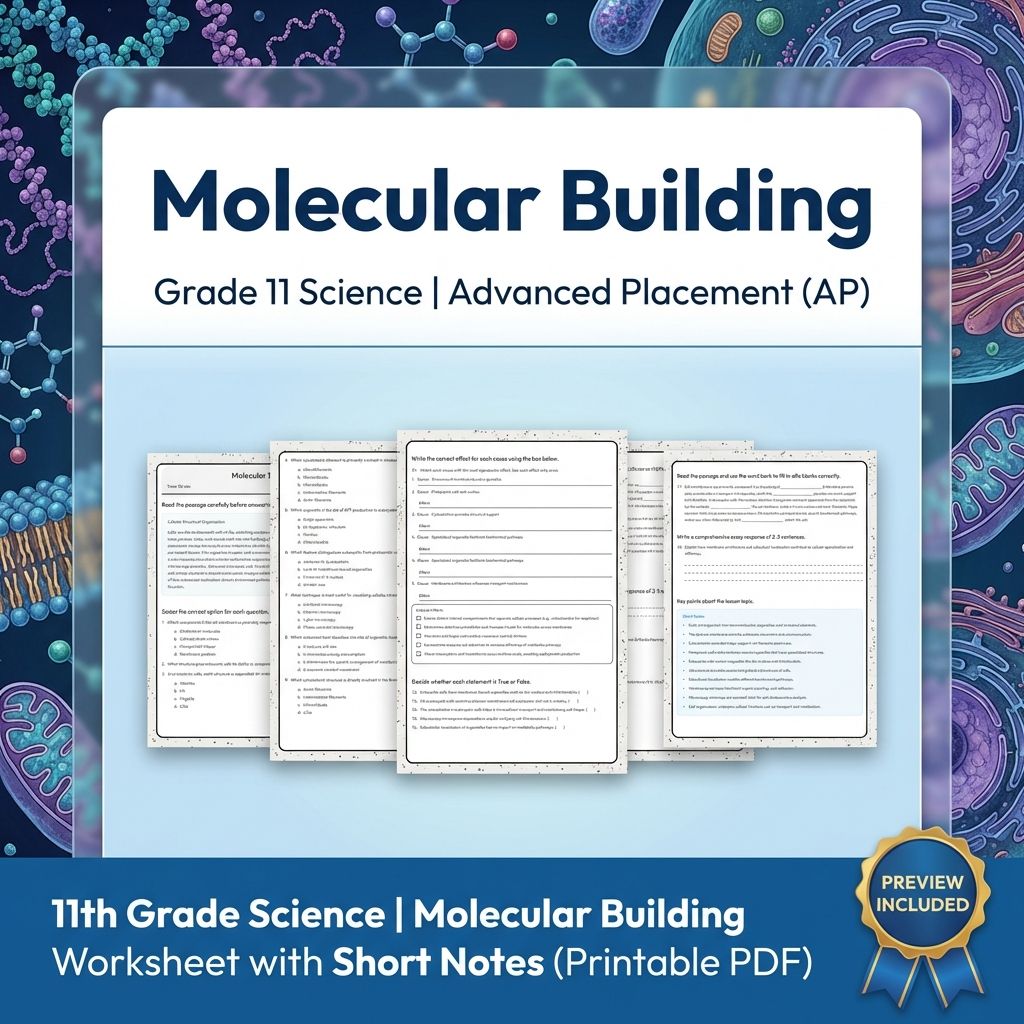
11th Grade Science | Molecular Building Worksheet with Short Notes (PDF)
 Created byMeadowlark Worksheets
Learning Objectives
- Describe cellular structural organization from macromolecules to organelles.
- Compare membrane architecture and cytoskeleton features in prokaryotic and eukaryotic cells.
- Analyze evidence for organelle specialization and the importance of subcellular localization.
Also included in: Grade 11 Science | Biological Systems & Genetics Unit Worksheet Pack (PDF) +1 more
Instant download

Grade 11 Worksheet B: Impulse Applications Crash Protection System Design | NGSS
 Created byClear Sky Classroom
Learning Objectives
- Apply the impulse–momentum relationship (Δp = ∫F dt) to analyze how crash forces and collision time affect momentum change.
- Use force–time and material deformation parameters to predict and compare peak force and stopping time for crash protection designs.
- Evaluate design ideas (airbags, crumple zones, restraints) and justify refinements using safety constraints such as maximum force and displacement limits.
Also included in: Grade 11 Forces and Conservation Science Lesson Bundle for NGSS | Worksheet B +1 more
Instant download
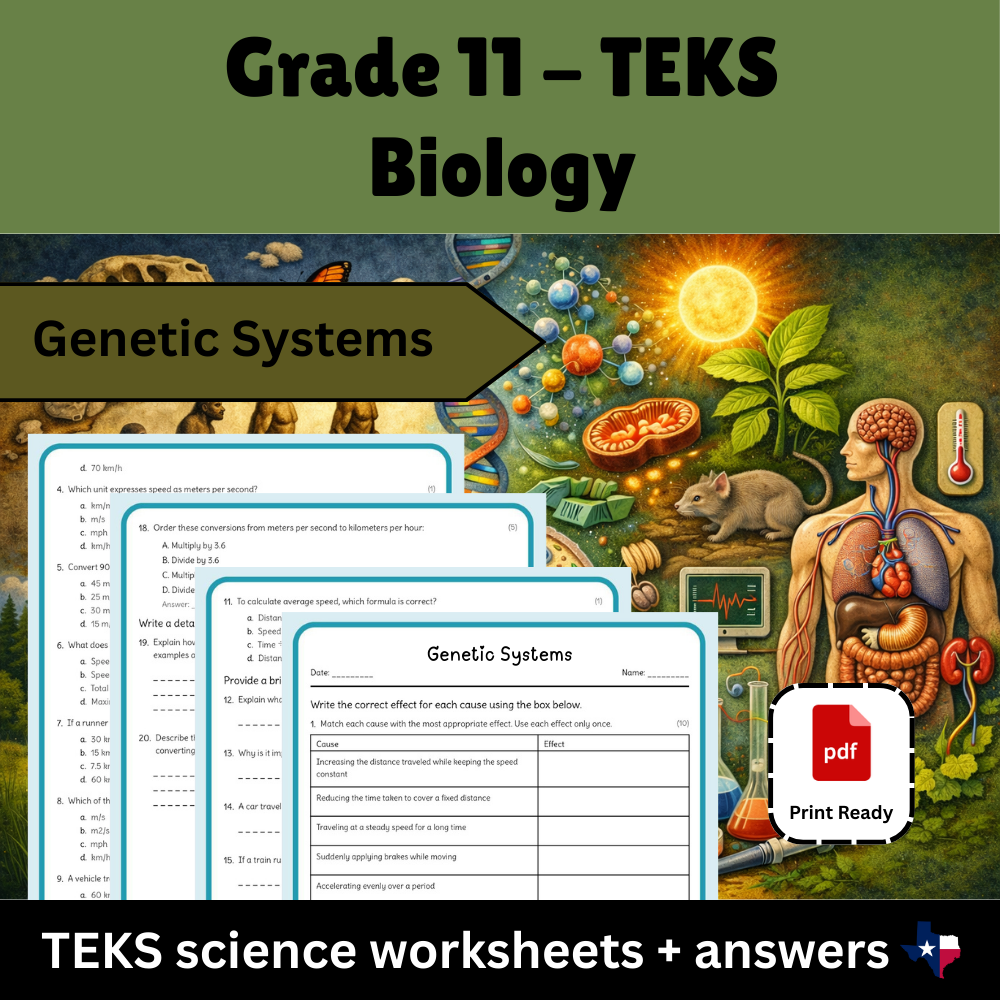
Grade 11 Science | Genetic Systems Worksheet (Answer Key) – TEKS Aligned
 Created byBright Mind Resources
Learning Objectives
- Compare genome organization and gene expression mechanisms in prokaryotes and eukaryotes.
- Identify structural differences in prokaryotic and eukaryotic genomes.
- Explain how differences in genetic systems impact transcriptions, regulation, and replication processes.
Also included in: Grade 11 Science | Cell & Systems Dynamics Unit Worksheet Bundle (TEKS-Aligned) +2 more
Instant download

Grade 9 Science – Risks & Benefits of Genetic Technologies | Reading Worksheet
Created byBright Mind ResourcesLearning Objectives
- Understand the ecological, economic, and health implications of genetic technologies.
- Identify potential risks such as gene flow, resistance development, and market impacts.
- Evaluate benefits including therapeutic opportunities and ecological advancements.
Also included in: Grade 9 Genetics & Inheritance Science Daily Reading Lesson Bundle | Alberta +1 more
Instant download
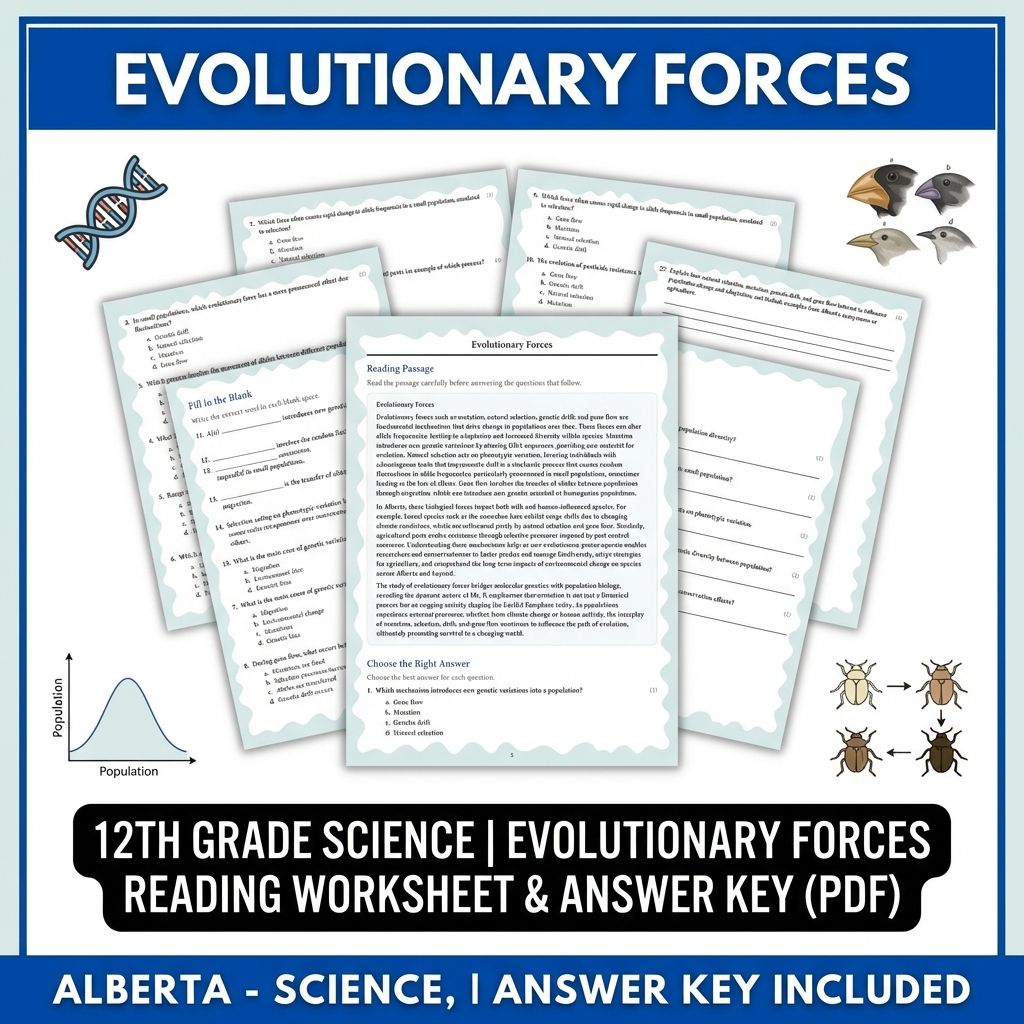
12th Grade Science | Evolutionary Forces Reading Worksheet & Answer Key (PDF)
JCreated byJ.S SheetsLearning Objectives
- Explain how mutation, natural selection, genetic drift, and gene flow influence allele frequencies over time.
- Describe how these forces lead to adaptation and diversity in populations.
- Analyze examples of evolutionary mechanisms in Alberta's ecosystems and agriculture.
Also included in: Grade 12 Science UNIT Bundle: Molecular Genetics, Evolution & Ecology Activities +1 more
Instant download
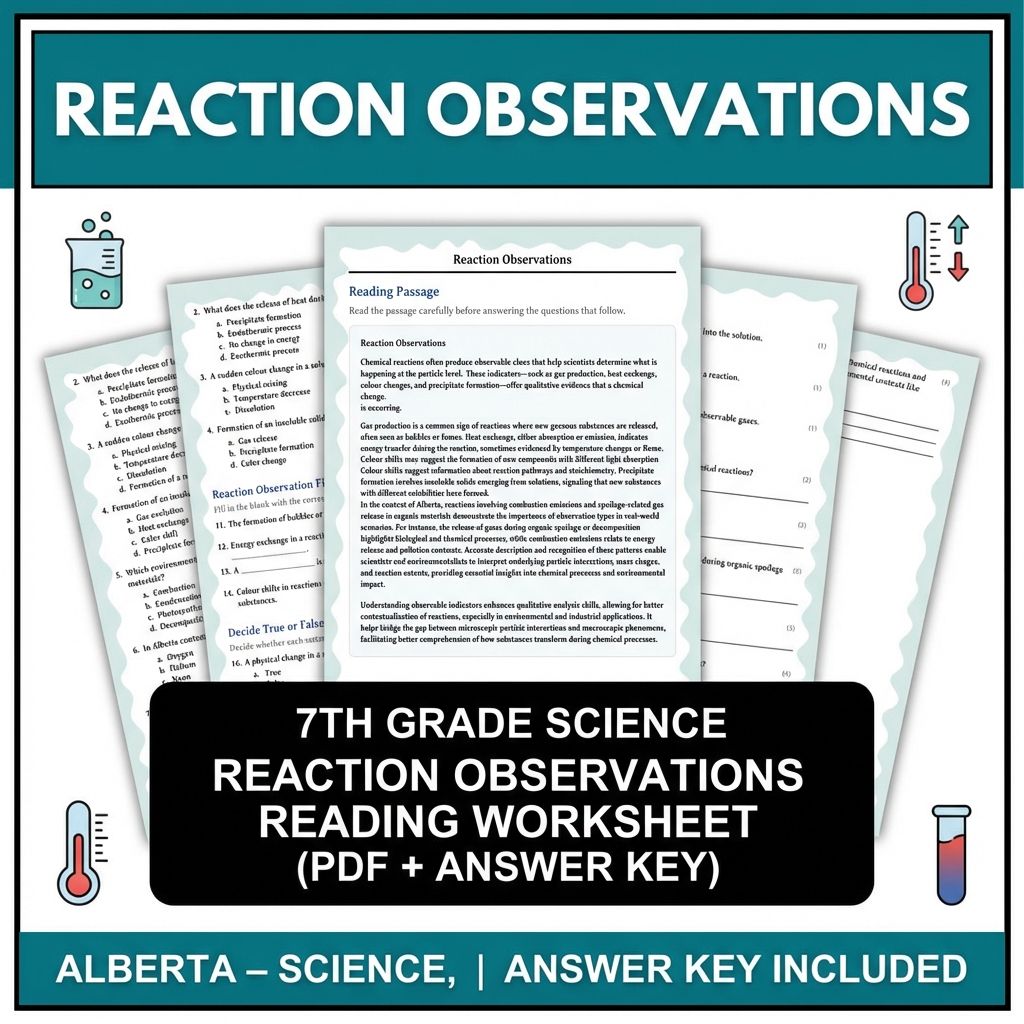
7th Grade Science | Reaction Observations Reading Worksheet (PDF + Answer Key)
JCreated byJ.S SheetsLearning Objectives
- Identify observable indicators that signify chemical reactions.
- Explain the significance of gas production, heat exchange, colour shifts, and precipitate formation in reactions.
- Relate observation patterns to reaction types and particle interactions.
Also included in: Grade 7 Science UNIT Worksheet Bundle | Matter, Solutions & Physical Changes +1 more
Instant download
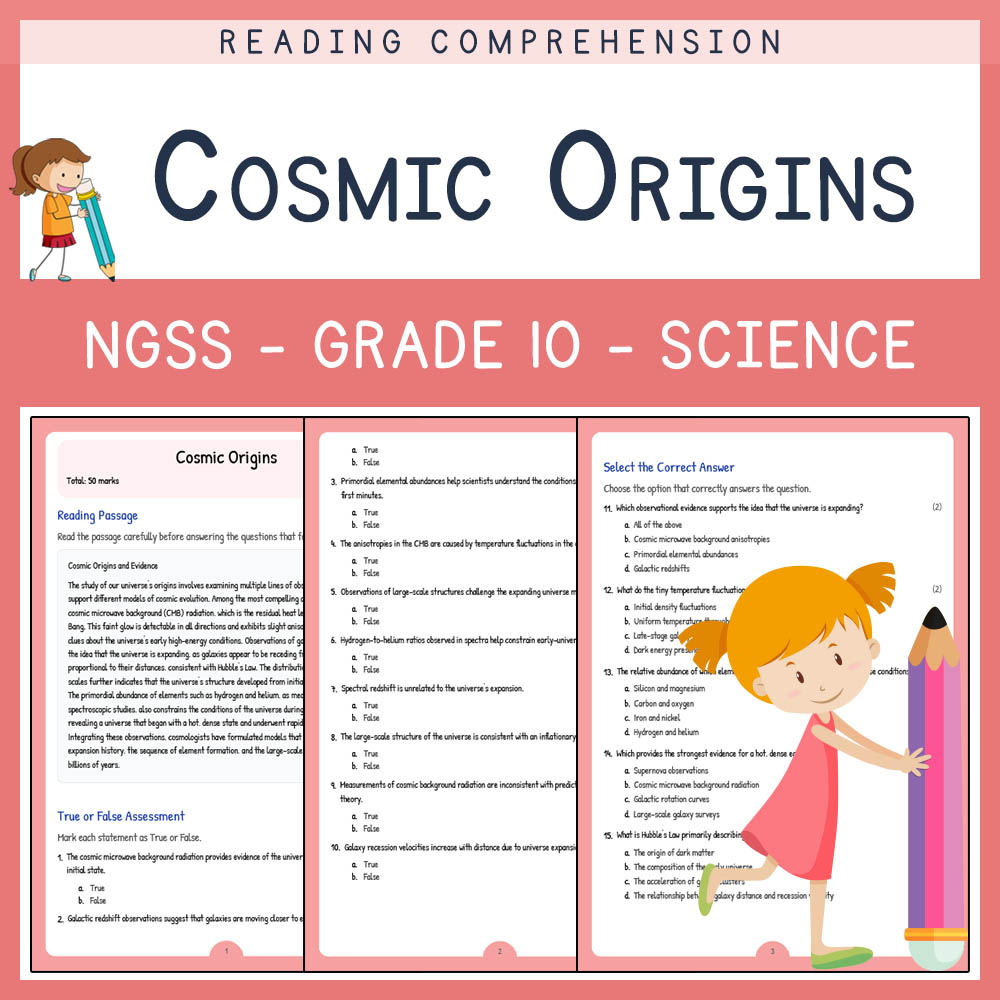
Grade 10 Science | Cosmic Origins Worksheet & Answer Key for NGSS Alignment
Created byLumora LearningLearning Objectives
- Understand the evidence supporting models of cosmic origin, including observations of cosmic microwave background radiation, galactic redshifts, and elemental abundances.
- Explain how spectral redshift and large-scale structure observations support an expanding universe.
- Identify the role of cosmic microwave background anisotropies and primordial element ratios in constraining early-universe conditions.
Instant download
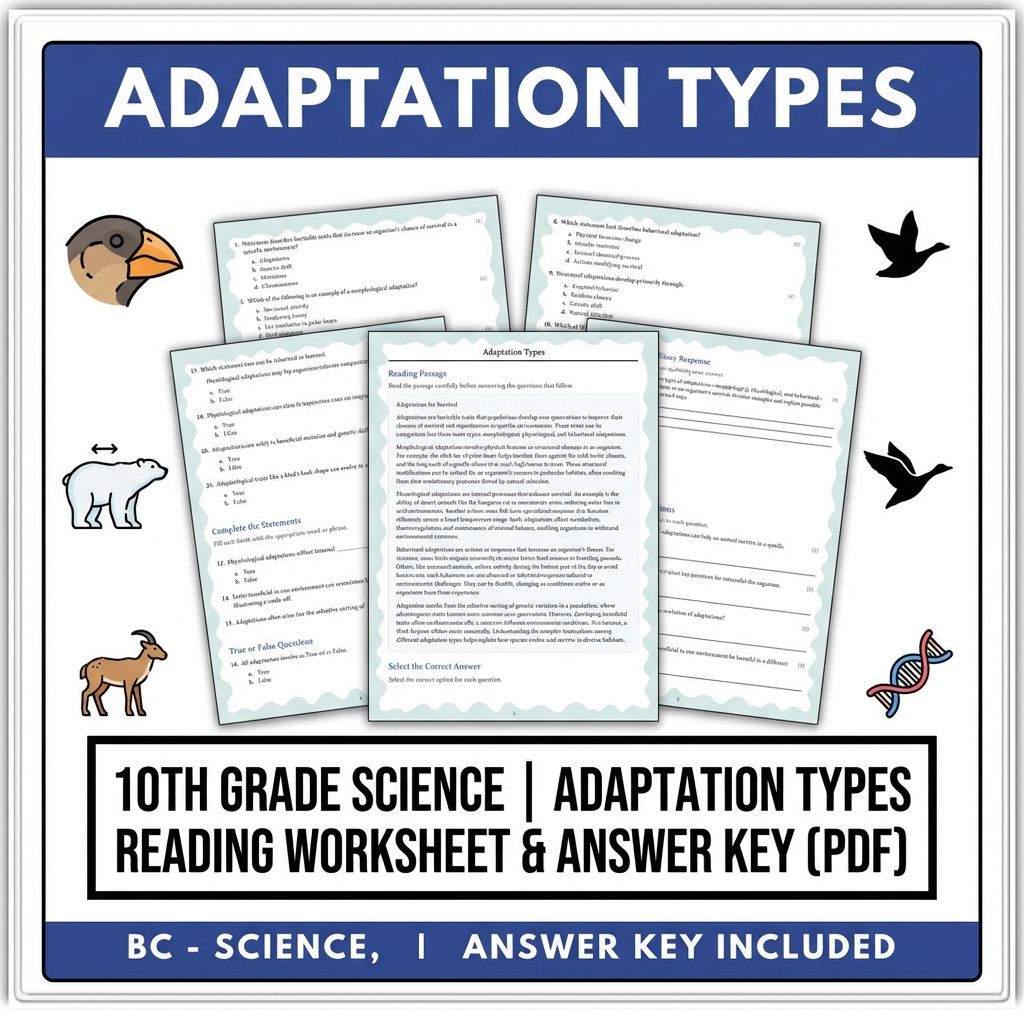
10th Grade Science | Adaptation Types Reading Worksheet & Answer Key (PDF)
JCreated byJ.S SheetsLearning Objectives
- Understand the different types of adaptations: morphological, physiological, and behavioral.
- Identify examples of adaptation in various environments.
- Explain how adaptations improve survival and reproduction.
Instant download
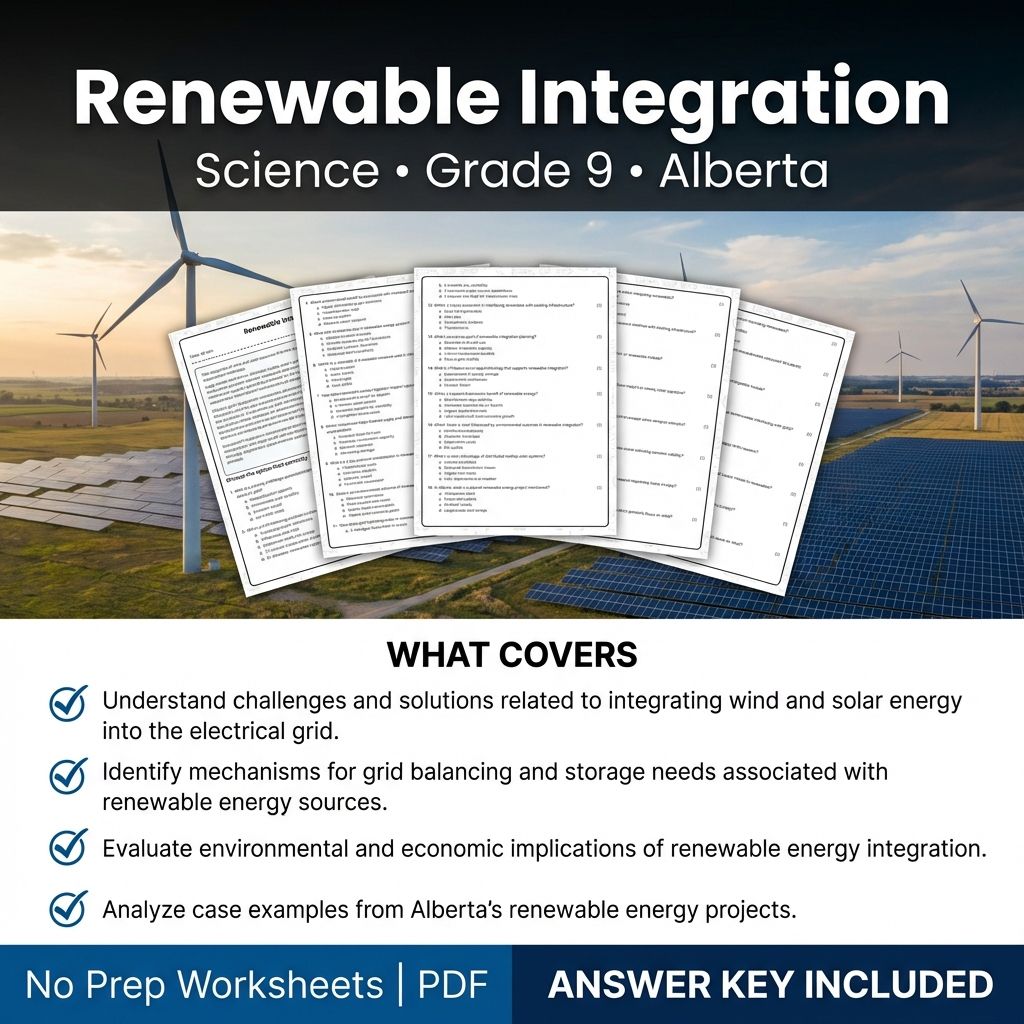
Renewable Integration Worksheet | Science Grade 9 | Alberta Standards
Created byCoral Reef LearningLearning Objectives
- Understand challenges and solutions related to integrating wind and solar energy into the electrical grid.
- Identify mechanisms for grid balancing and storage needs associated with renewable energy sources.
- Evaluate environmental and economic implications of renewable energy integration.
Instant download
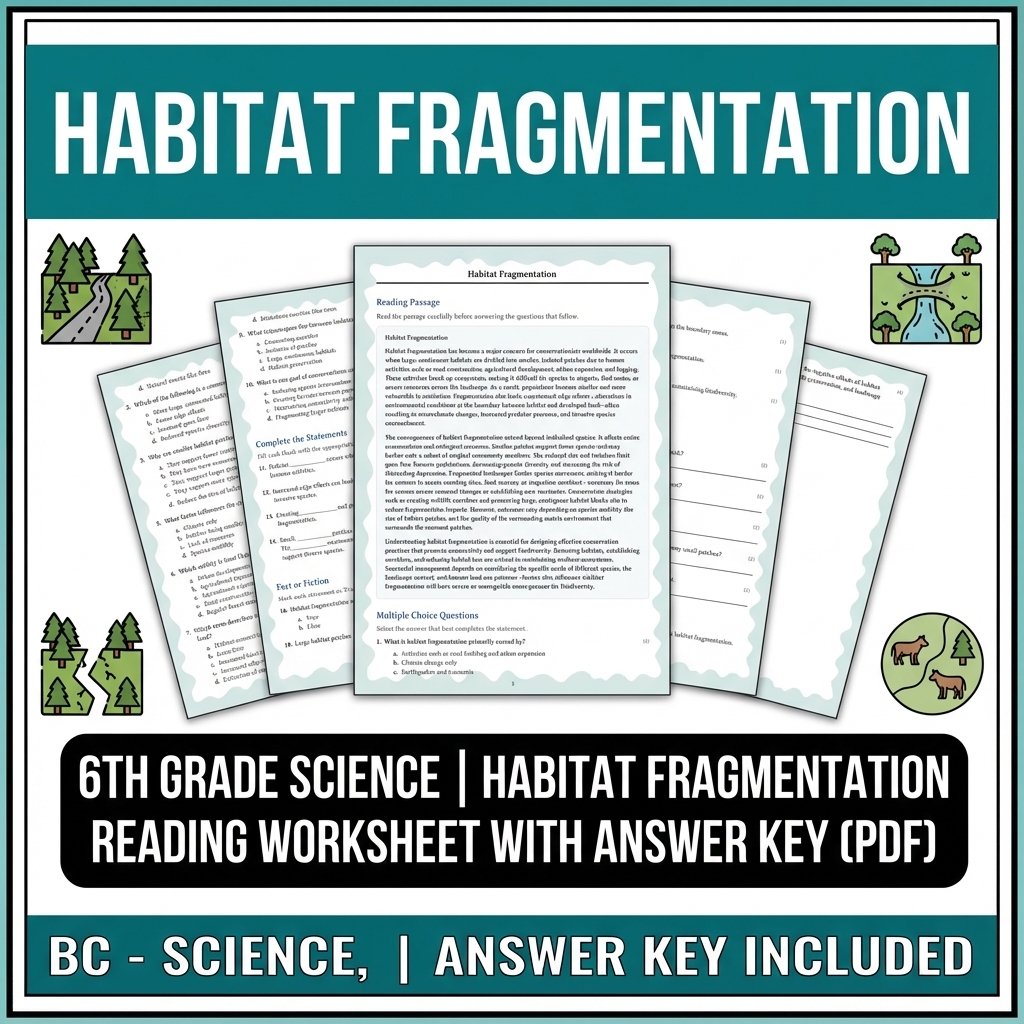
6th Grade Science | Habitat Fragmentation Reading Worksheet with Answer Key
JCreated byJ.S SheetsLearning Objectives
- Understand the causes and effects of habitat fragmentation.
- Identify strategies to mitigate habitat fragmentation impacts.
- Explain how habitat patches affect biodiversity and species survival.
Instant download
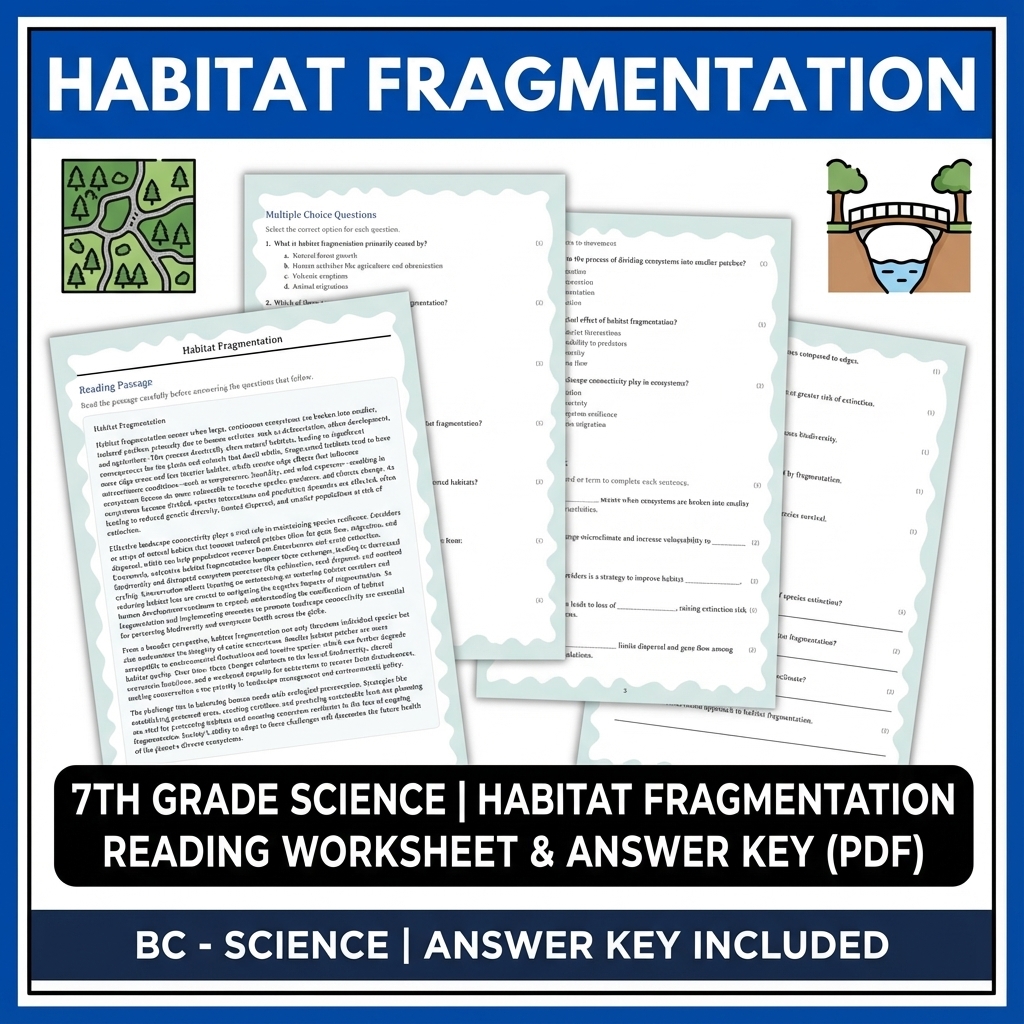
7th Grade Science | Habitat Fragmentation Reading Worksheet & Answer Key (PDF)
JCreated byJ.S SheetsLearning Objectives
- Understand what habitat fragmentation is and how it affects ecosystems.
- Identify the effects of habitat fragmentation on species survival and biodiversity.
- Analyze landscape connectivity and its role in ecosystem resilience.
Instant download

9th Grade Science Worksheet | Atomic Structure Practice PDF & Answer Key
Created byCoral Reef LearningLearning Objectives
- Describe the basic particles that make up an atom: protons, neutrons, and electrons.
- Explain electron configurations and energy levels in atoms.
- Organize elements in the periodic table based on valence electrons and predict chemical behavior.
Also included in: Grade 9 Science Worksheet Bundle | Reaction, Molecules & Energy Topics +1 more
Instant download
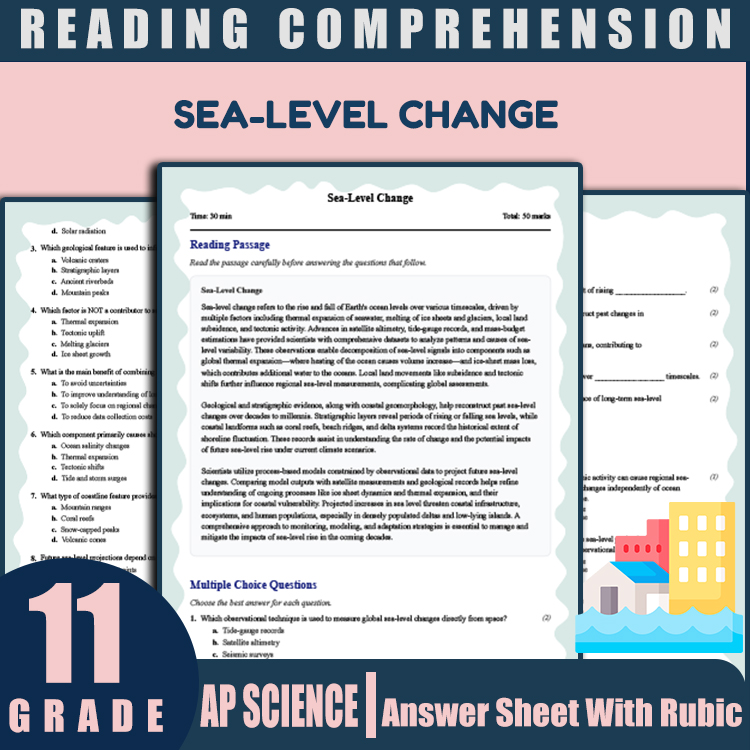
11th Grade Science | Sea-Level Change Reading Worksheet & Answer Key (PDF)
JCreated byJ.S SheetsLearning Objectives
- Understand the causes of sea-level variability using satellite and geological data.
- Analyze the methods used to measure and project sea-level changes over time.
- Interpret stratigraphic and coastal geomorphology evidence related to sea-level history.
Also included in: Grade 11 Science Unit Bundle | Earth Systems & Climate Change Worksheets +1 more
Instant download
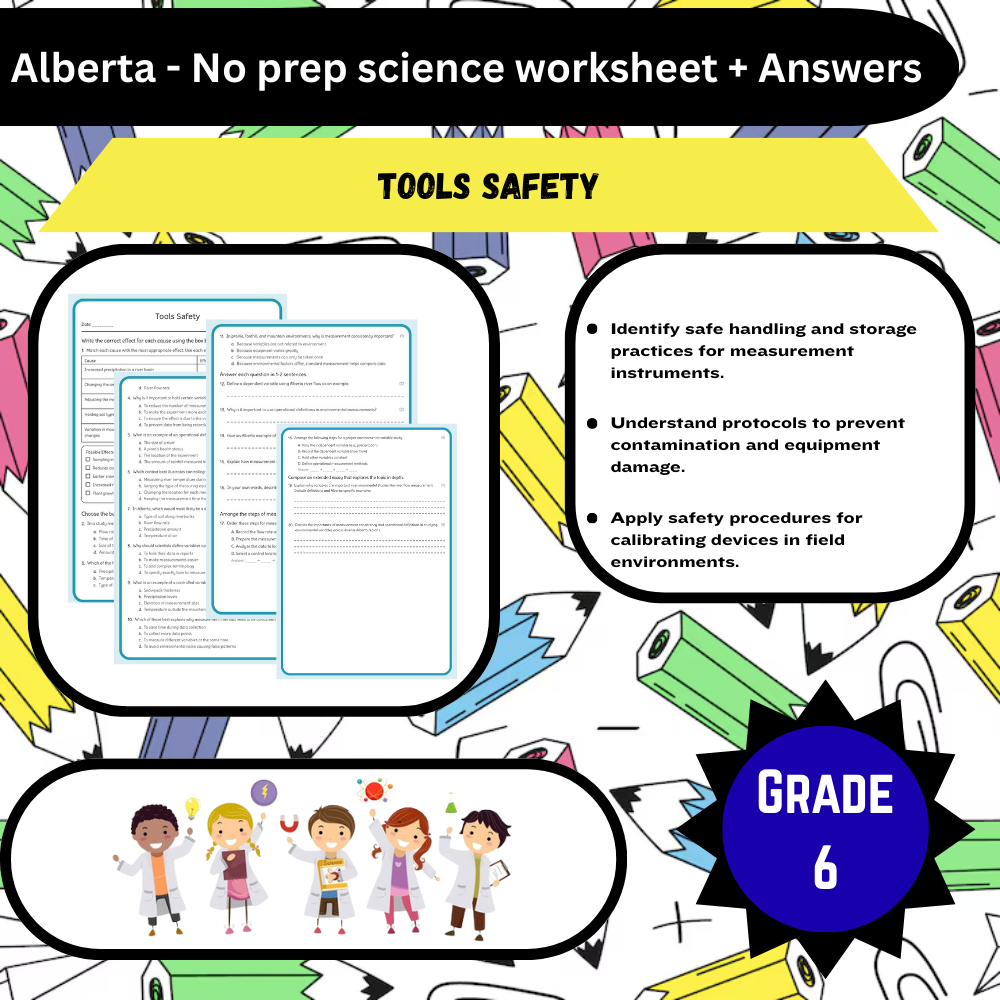
6th Grade Science | Tools Safety Worksheet (PDF) – Alberta Standards
Created byBright Mind ResourcesLearning Objectives
- Identify safe handling and storage practices for measurement instruments.
- Understand protocols to prevent contamination and equipment damage when using scientific tools.
- Apply safety procedures for calibrating and maintaining devices in field environments.
Instant download

Grade 9 Science – Trophic Dynamics & Ecosystem Food Webs | Reading Worksheet
Created byBright Mind ResourcesLearning Objectives
- Identify different trophic levels within a food web.
- Understand how energy flows from producers to top predators.
- Recognize common structures of food webs in various ecosystems.
Also included in: Ecosystem Food Webs Grade 9 Science Daily Reading Worksheets Bundle | NGSS +2 more
Instant download

Energy Forms Worksheet for Grade 10 Science | Standards-Aligned Practice
JCreated byJ.S SheetsLearning Objectives
- Define kinetic and potential energy with real-world examples.
- Explain the principle of energy conservation in mechanical systems.
- Describe how non-conservative forces affect energy distribution.
Also included in: Grade 10 Science Practice Worksheets: Alberta Science Full-Year Bundle
Instant download
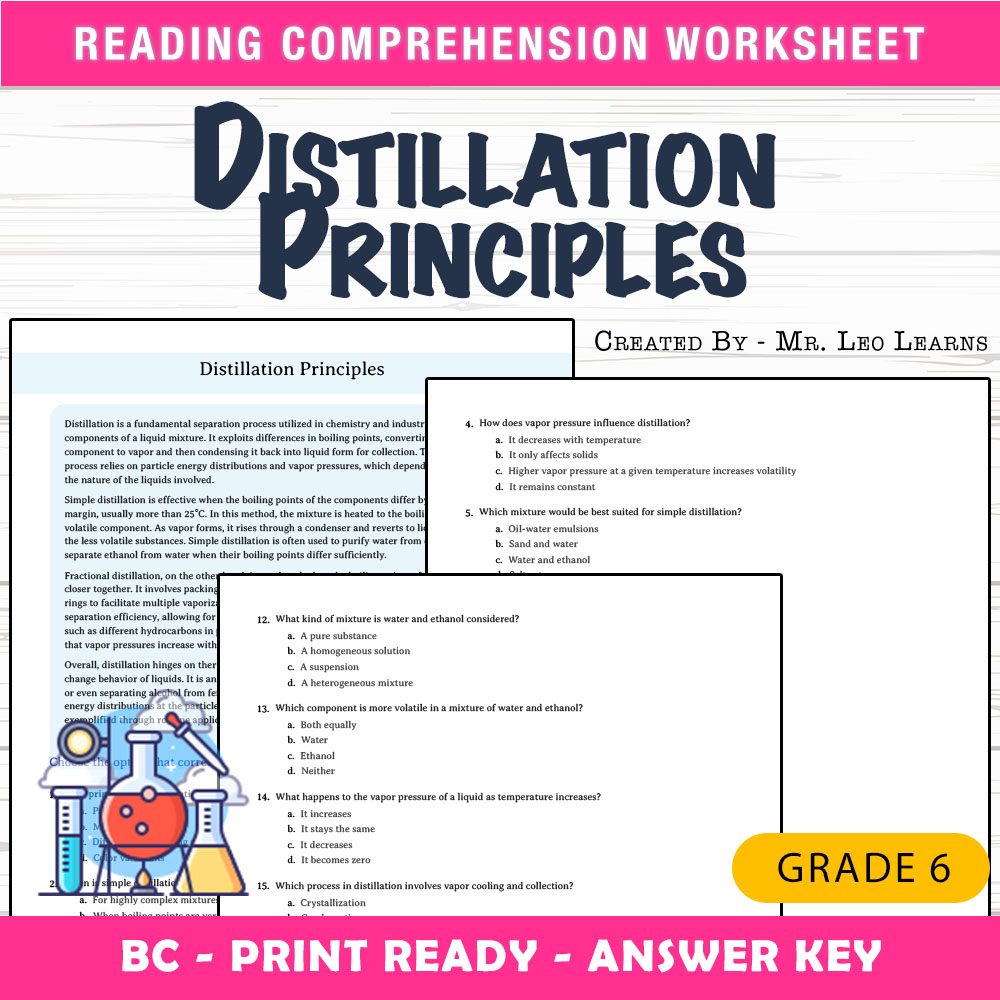
Grade 6 Science — Worksheet MCQ Paper for Mastering Distillation Principles
 Created byThe Resource Hub
Learning Objectives
- Understand the basic principles of distillation and how it separates liquid components.
- Differentiate between simple and fractional distillation techniques.
- Explain the role of boiling points, vapor pressure, and phase changes in distillation.
Also included in: Grade 6 Science | Matter, Properties & Change Worksheet Bundle (BC Framework) +1 more
Instant download

Grade 8 Science | Gas Behaviour - Daily Reading Comprehension
Created byCoral Reef LearningLearning Objectives
- Understand how particle motion affects gas properties such as pressure and volume.
- Describe the relationship between gas particle movement and phenomena like expansion, compression, and diffusion.
- Interpret observable relationships involving temperature, pressure, and particle activity in gases.
Also included in: Matter and Chemical Change Lesson Bundle – Alberta Grade 8 Science +1 more
Instant download

Grade 10 Science | Thermodynamic Limits Worksheet | BC Standards
Created byLumora LearningLearning Objectives
- Understand the fundamental principles of thermodynamics, including energy conservation and entropy.
- Explain how heat engines and refrigerators operate between temperature reservoirs.
- Apply Carnot relationships to determine maximum efficiency of heat engines.
Instant download

Grade 8 Science | Understanding State Properties - Daily Reading Comprehension
Created byCoral Reef LearningLearning Objectives
- Describe the particle arrangement in solids, liquids, and gases.
- Identify the physical properties that distinguish solids, liquids, and gases.
- Explain how particle bonding and energy levels influence states of matter.
Also included in: Matter and Chemical Change Lesson Bundle – Alberta Grade 8 Science +1 more
Instant download

Grade 8 Science | Separation Methods in Science - Daily Reading Comprehension
Created byCoral Reef LearningLearning Objectives
- Understand the concept of filtration as a separation technique.
- Identify different physical properties used in separation methods.
- Explain the practical applications of filtration in industry and daily life.
Also included in: Matter and Chemical Change Lesson Bundle – Alberta Grade 8 Science +1 more
Instant download
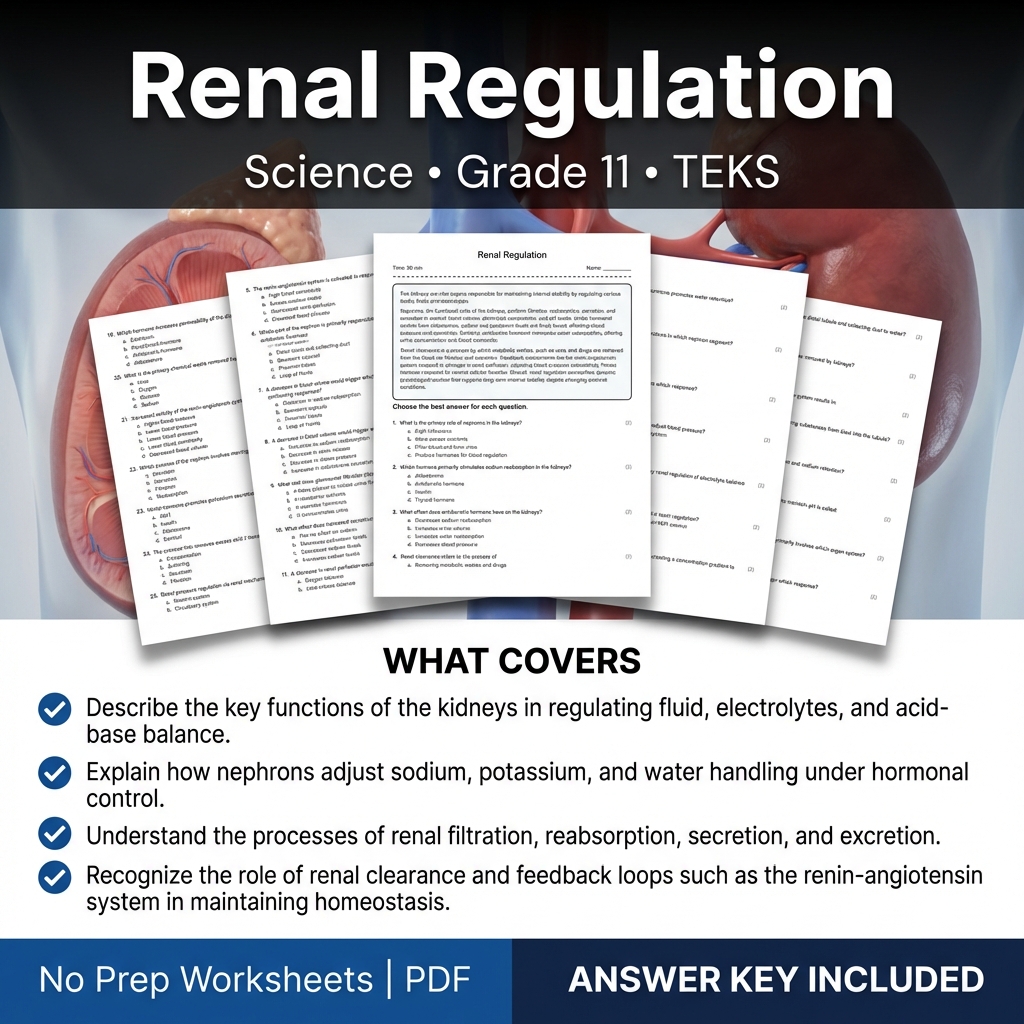
Renal Regulation Worksheet for Grade 11 Science TEKS Standards
Created byCoral Reef LearningLearning Objectives
- Describe the key functions of the kidneys in regulating fluid, electrolytes, and acid-base balance.
- Explain how nephrons adjust sodium, potassium, and water handling under hormonal control.
- Understand the processes of renal filtration, reabsorption, secretion, and excretion.
Instant download
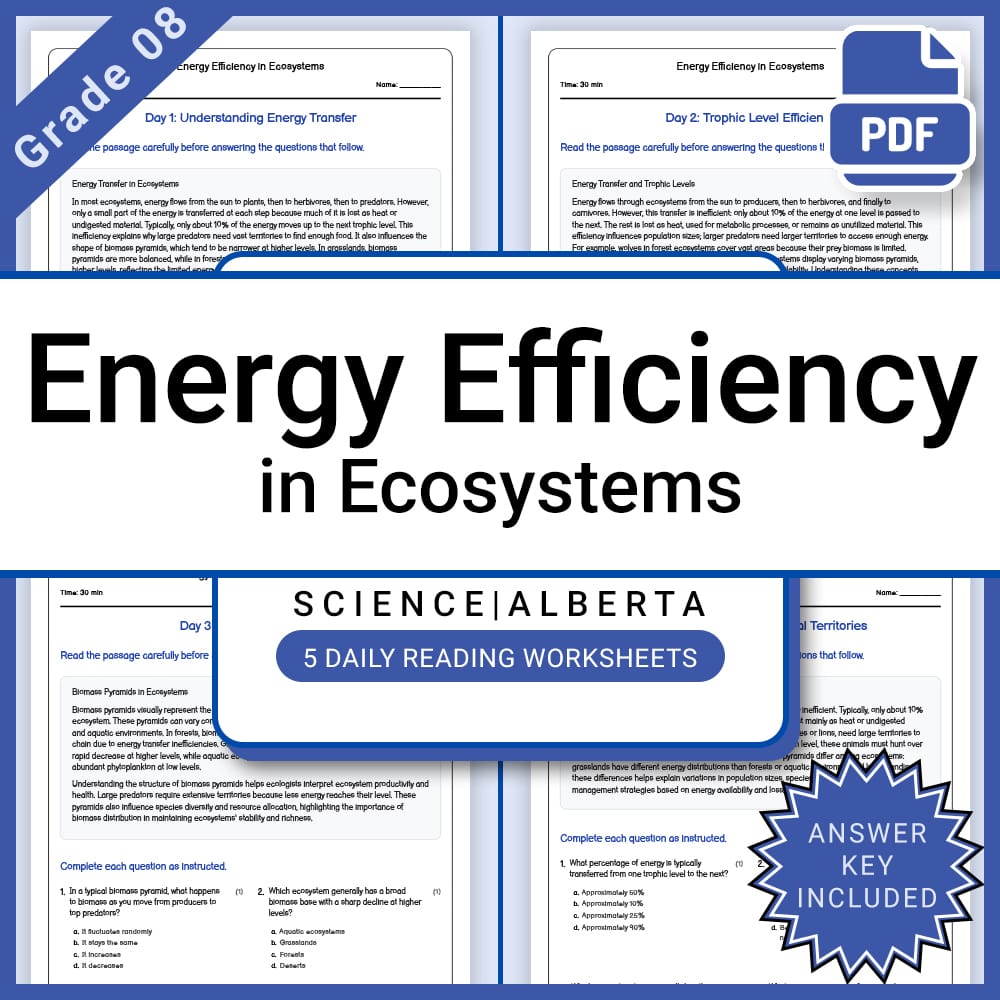
Grade 8 Science – Energy Efficiency in Ecosystems Daily Worksheet + Answer Key
JCreated byJ.S SheetsLearning Objectives
- Explain how energy flows between trophic levels in an ecosystem
- Understand why energy transfer is inefficient and how this affects organism sizes and populations
- Apply knowledge of biomass pyramids across different ecosystems
Also included in: Grade 8 Science Lesson Bundle | Ecosystems, Energy, and Environmental Impact +1 more
Instant download
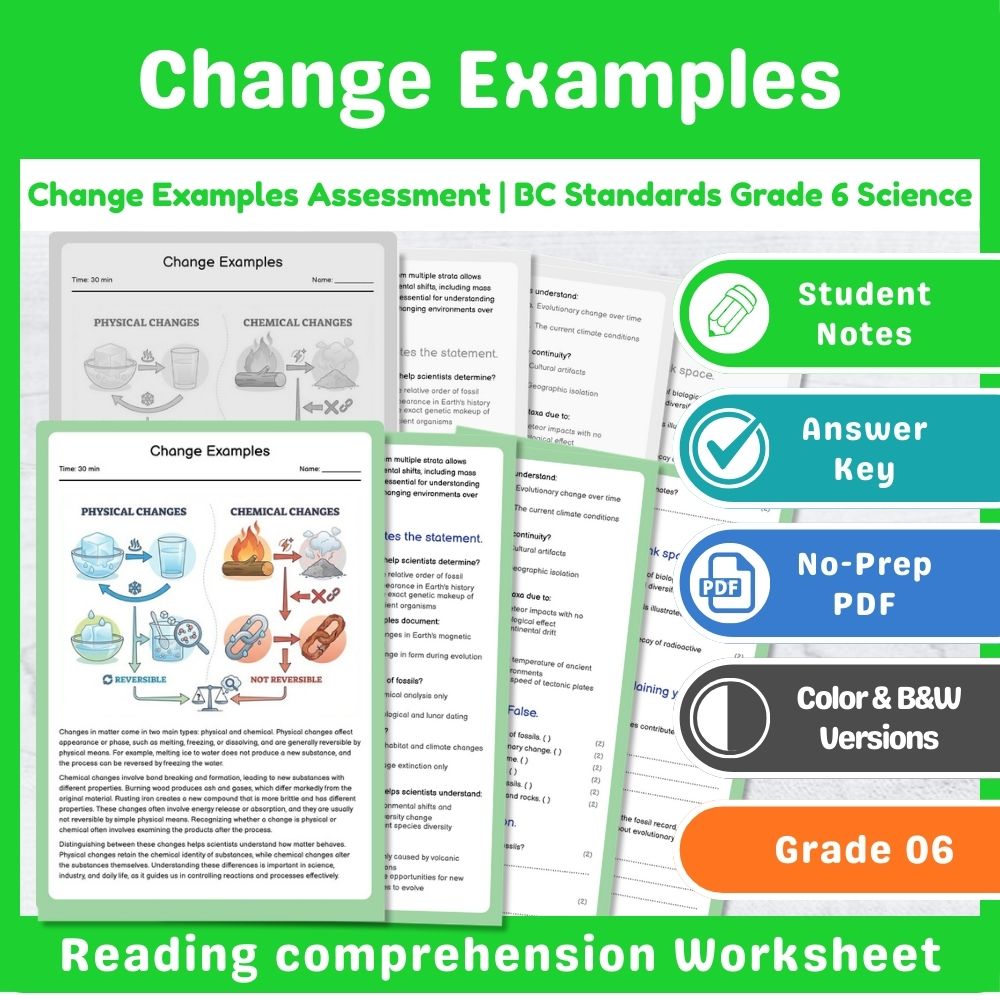
Change Examples Assessment | BC Standards Grade 6 Science
 Created byPrism Point Learning
Learning Objectives
- Differentiate between physical and chemical changes using examples.
- Identify products and properties that remain or change during a change.
- Explain the reversibility of physical changes versus chemical changes.
Instant download
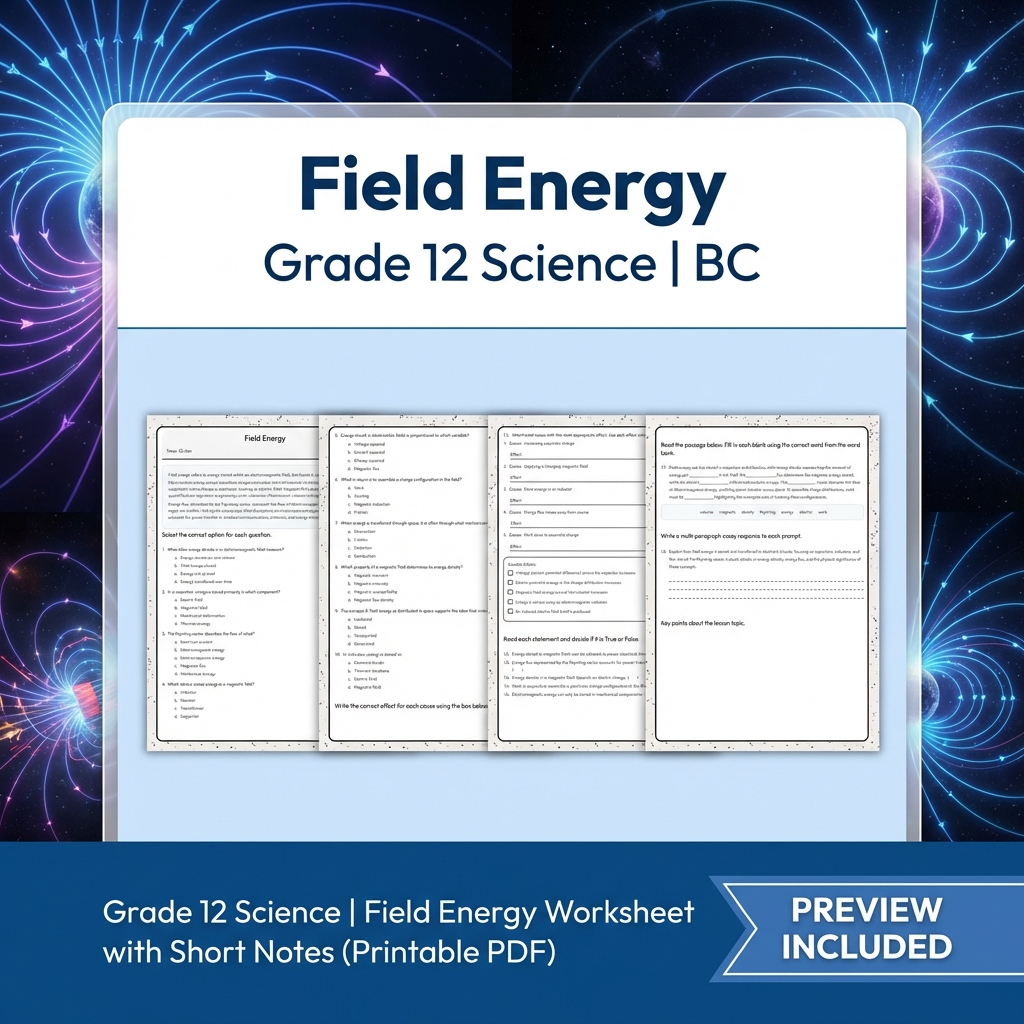
Grade 12 Science | Field Energy Worksheet with Short Notes (Printable PDF)
Created byMeadowlark WorksheetsLearning Objectives
- Define energy density for electrostatic and magnetic fields.
- Explain how capacitors and inductors store and release energy in circuits.
- Describe the concept of field energy as distributed in space.
Also included in: Grade 12 Science Lesson Bundle | Wave, Quantum, Electromagnetism Worksheets +1 more
Instant download
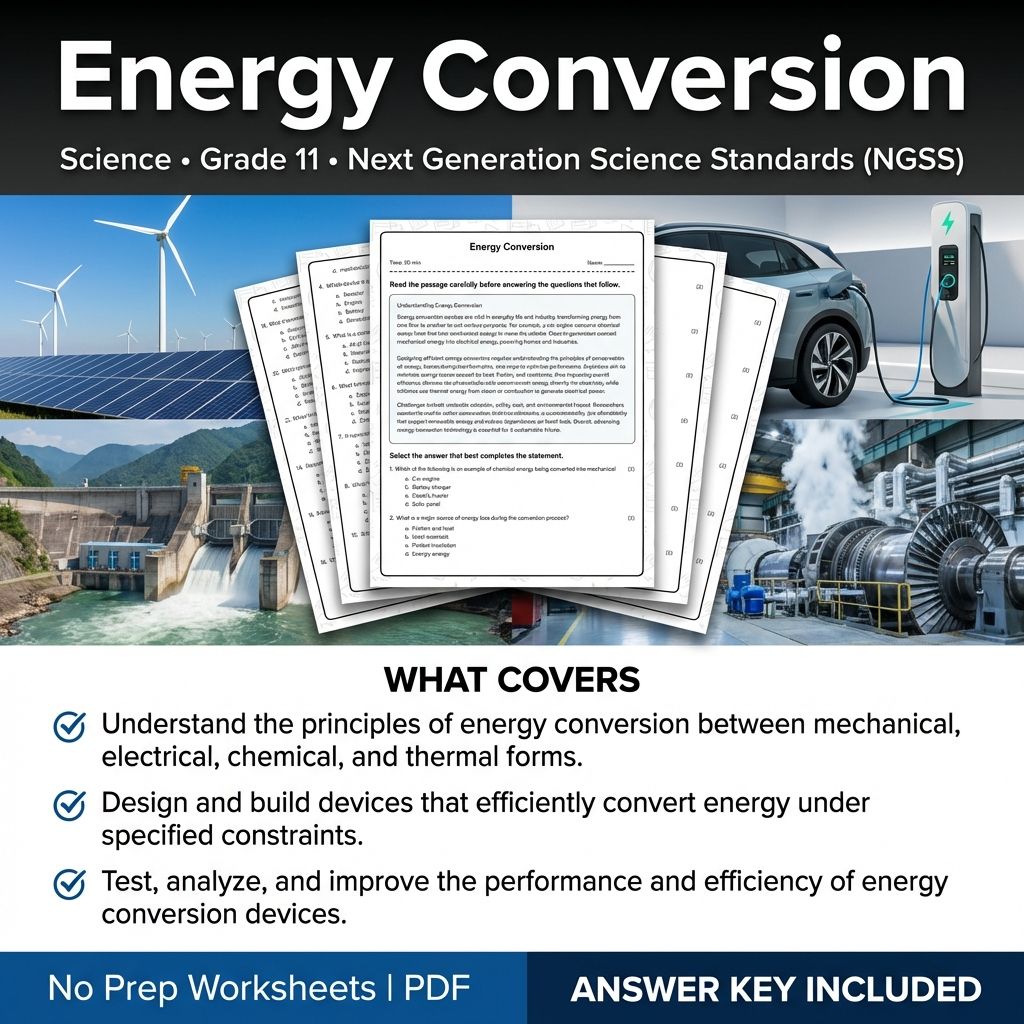
11th Grade Science | Energy Conversion Worksheet & Answer Key (Printable PDF)
Created byCoral Reef LearningLearning Objectives
- Understand the principles of energy conversion between mechanical, electrical, chemical, and thermal forms.
- Design and build devices that efficiently convert energy under specified constraints.
- Test, analyze, and improve the performance and efficiency of energy conversion devices.
Also included in: Grade 11 Science Unit Worksheet Pack | Energy, Heat Transfer & Power NGSS +1 more
Instant download
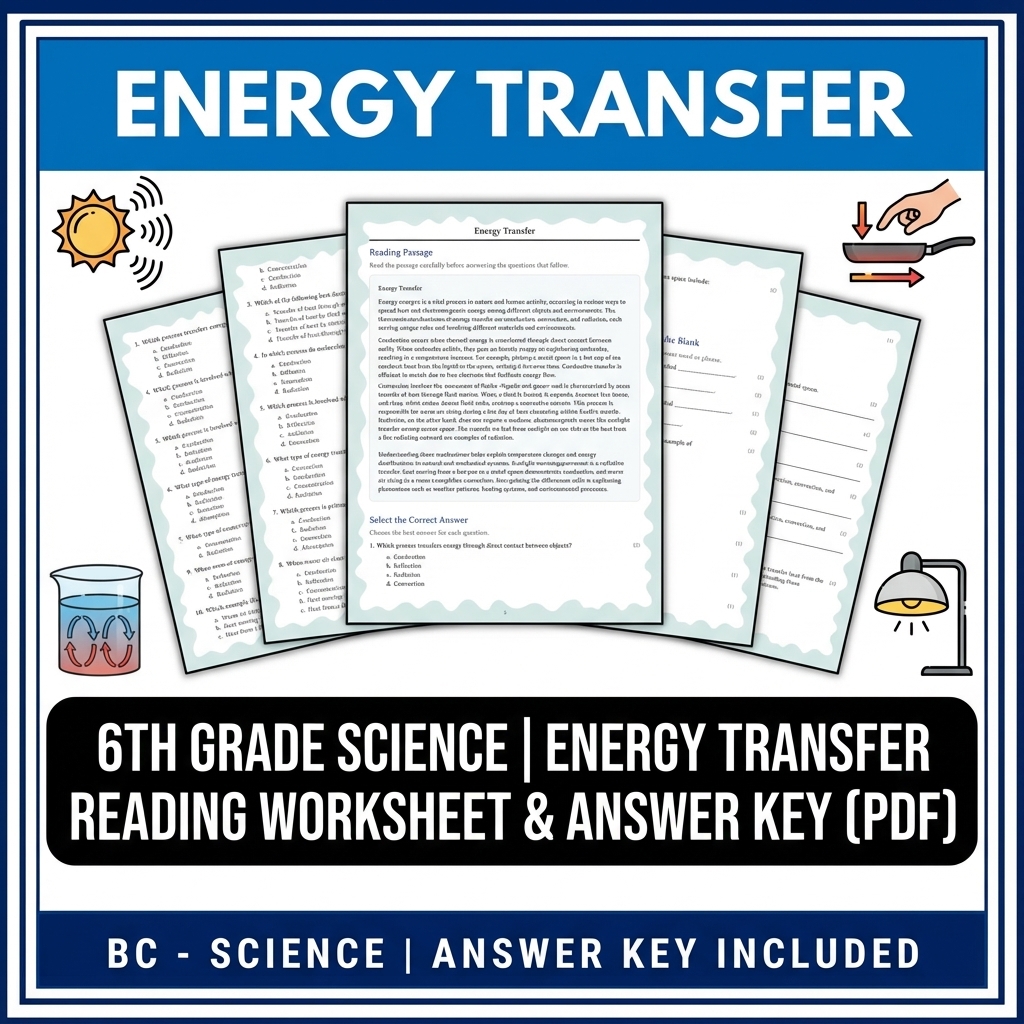
6th Grade Science | Energy Transfer Reading Worksheet & Answer Key (PDF)
JCreated byJ.S SheetsLearning Objectives
- Understand the three main mechanisms of energy transfer: conduction, convection, and radiation.
- Identify examples of each energy transfer process in real-world situations.
- Distinguish between conduction, convection, and radiation based on their characteristics.
Instant download
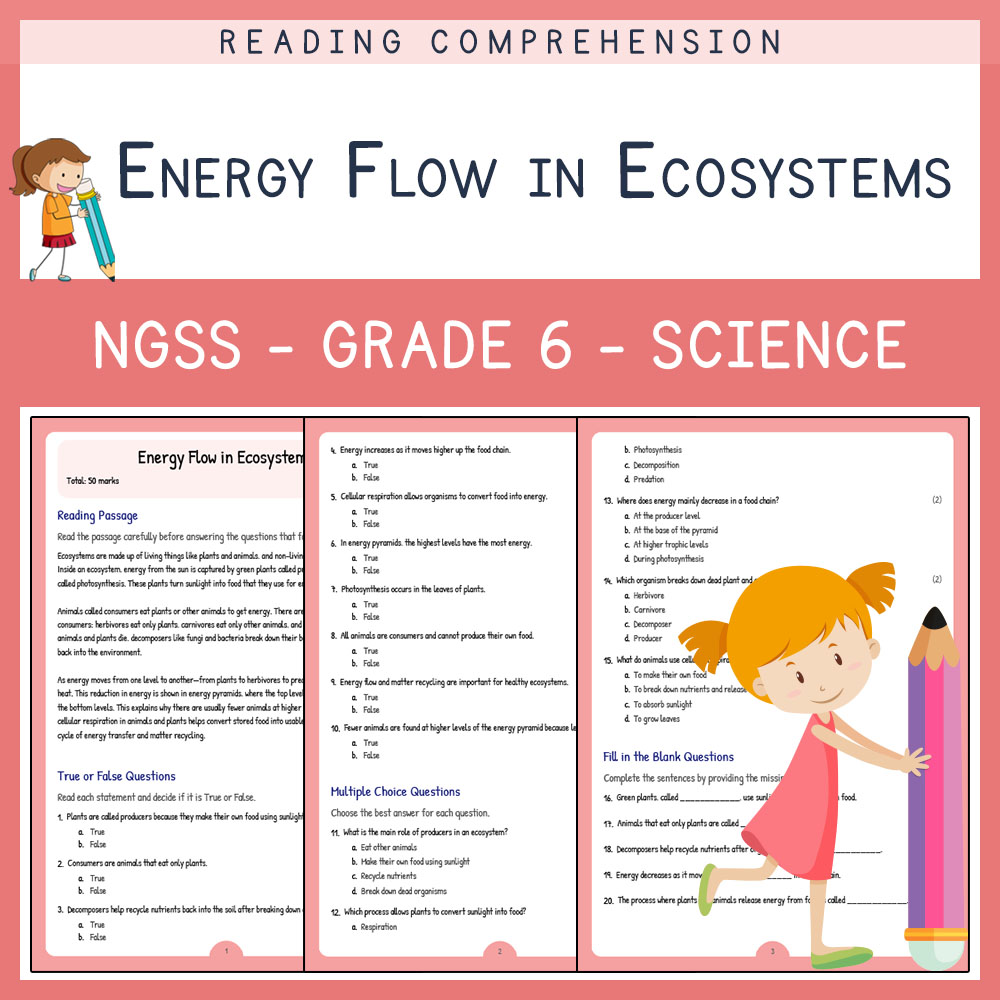
Grade 6 Science | Energy Flow in Ecosystems Worksheet (PDF) | NGSS Aligned
Created byLumora LearningLearning Objectives
- Understand the flow of energy through food webs in different ecosystems.
- Identify producers, consumers, and decomposers in food chains.
- Explain how energy diminishes at higher trophic levels.
Instant download

Grade 9 Science – Seismic Waves and Earth's Interior Worksheet with Answer Key
JCreated byJ.S SheetsLearning Objectives
- Identify and describe different types of seismic waves: P-waves, S-waves, and surface waves.
- Understand how seismic waves propagate through Earth's layers.
- Explain how seismic wave travel times help locate earthquakes and model Earth's interior.
Also included in: Grade 9 Science Lesson Group Bundle – Earth Systems & Planetary Concepts +1 more
Instant download
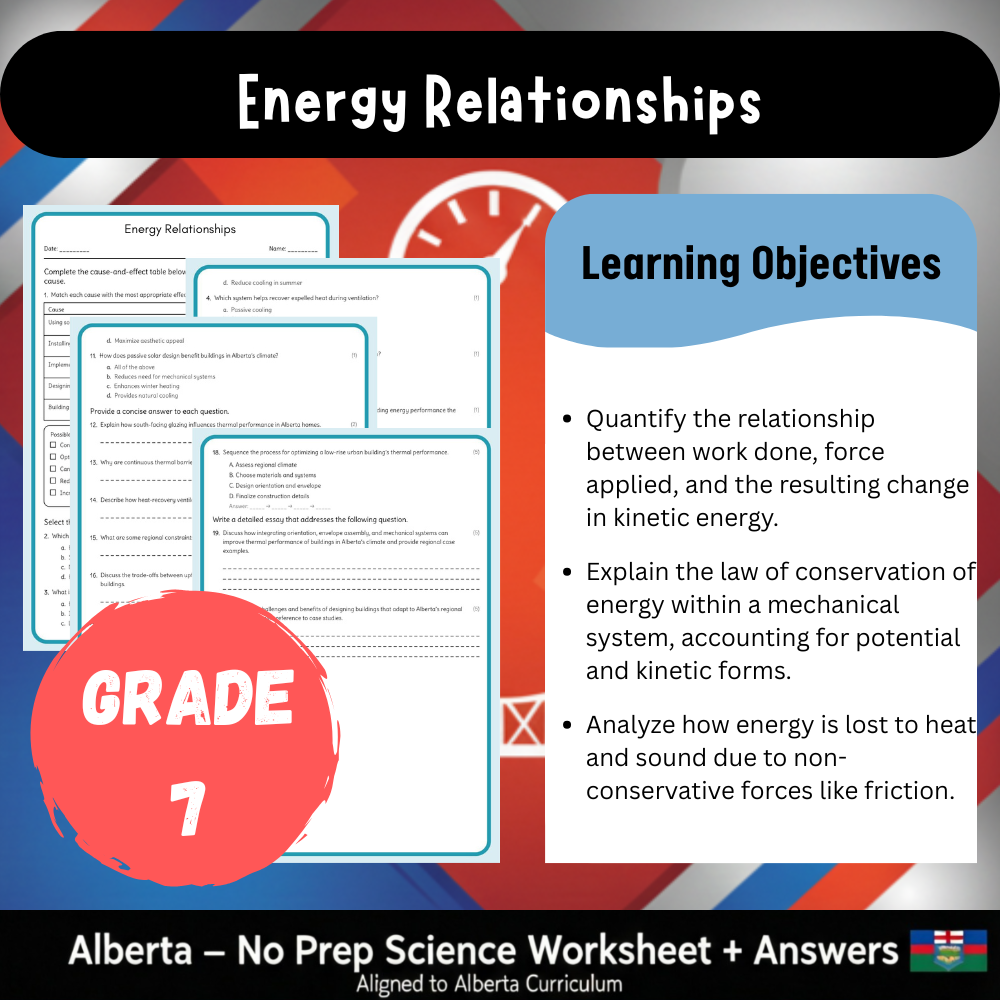
Grade 7 Science – Inclined Planes Worksheet (PDF) | Alberta Standards
Created byBright Mind ResourcesLearning Objectives
- Explain how inclined planes change the force required to move loads by increasing distance.
- Analyze the force components parallel and perpendicular to an inclined plane.
- Calculate the mechanical advantage of ramps used in real-world Alberta contexts.
Instant download
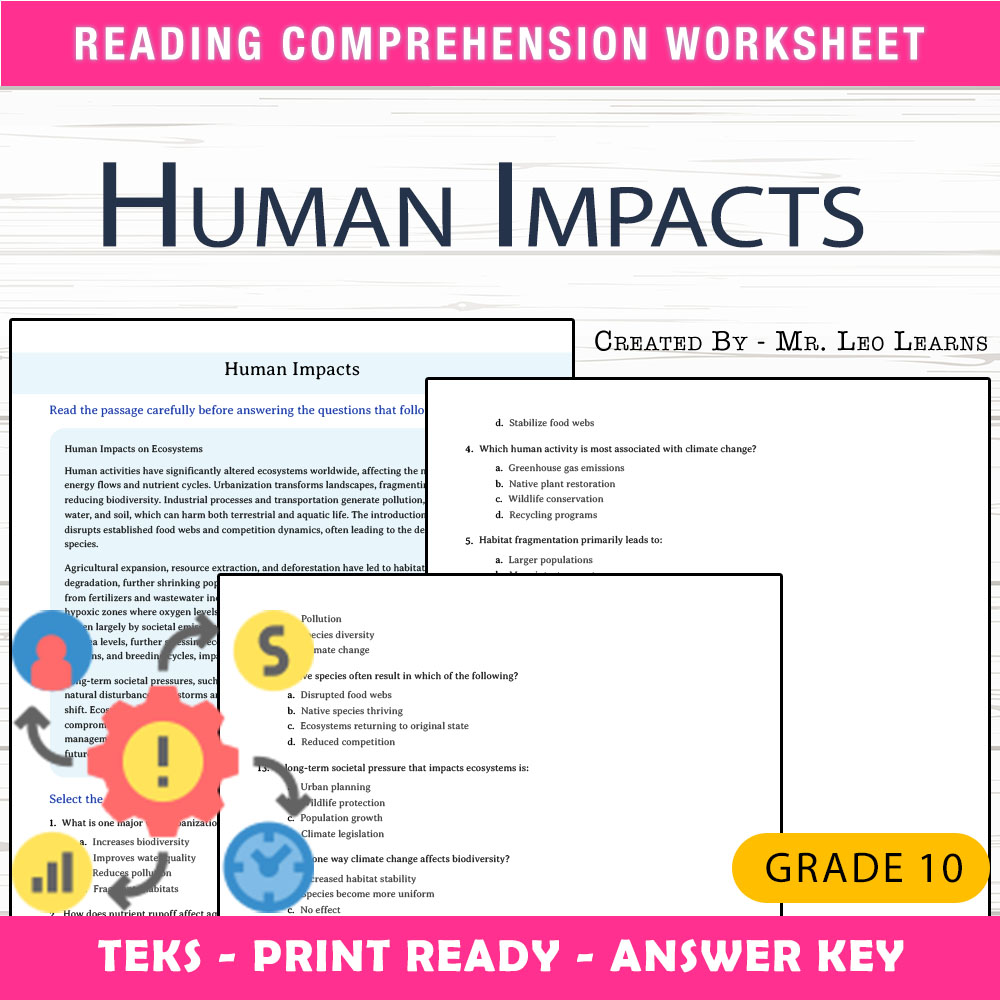
Grade 10 Science — Human Impacts Worksheet for Ecosystem Learning
Created byThe Resource HubLearning Objectives
- Describe how human activities modify ecosystems through habitat change, pollution, and species introductions.
- Explain the effects of urbanization and agriculture on biodiversity and community dynamics.
- Identify causes and consequences of nutrient runoff, invasive species, and climate change on ecosystems.
Also included in: Grade 10 Science Unit Bundle | Ecosystems & Ecology Worksheets +1 more
Instant download
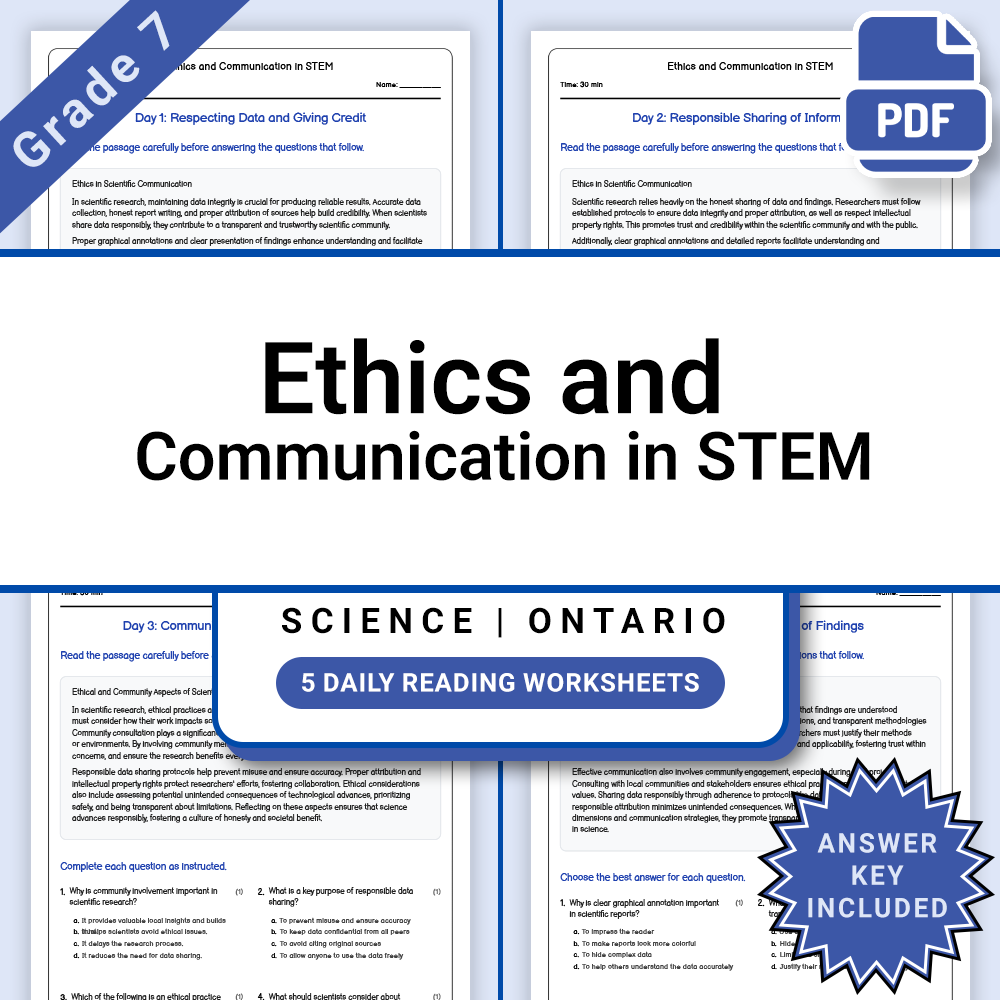
Grade 7 Science – Ethics and Communication Daily Reading Worksheet + Answer Key
JCreated byJ.S SheetsLearning Objectives
- Understand the importance of data integrity and proper attribution in scientific work.
- Identify conventions for effective technical reporting and graphical annotation.
- Recognize the significance of peer review and transparent communication of findings.
Also included in: Grade 7 Science Lesson Bundle | Ontario Curriculum Reading Worksheets +1 more
Instant download
Grade 7 Science – Measurement Uncertainty Daily Reading Worksheet + Answer Key
JCreated byJ.S SheetsLearning Objectives
- Understand the importance of standard measurement units in science.
- Identify different measurement instruments and scales.
- Comprehend concepts of accuracy, precision, and sources of measurement uncertainty.
Also included in: Grade 7 Science Lesson Bundle | Ontario Curriculum Reading Worksheets +1 more
Instant download
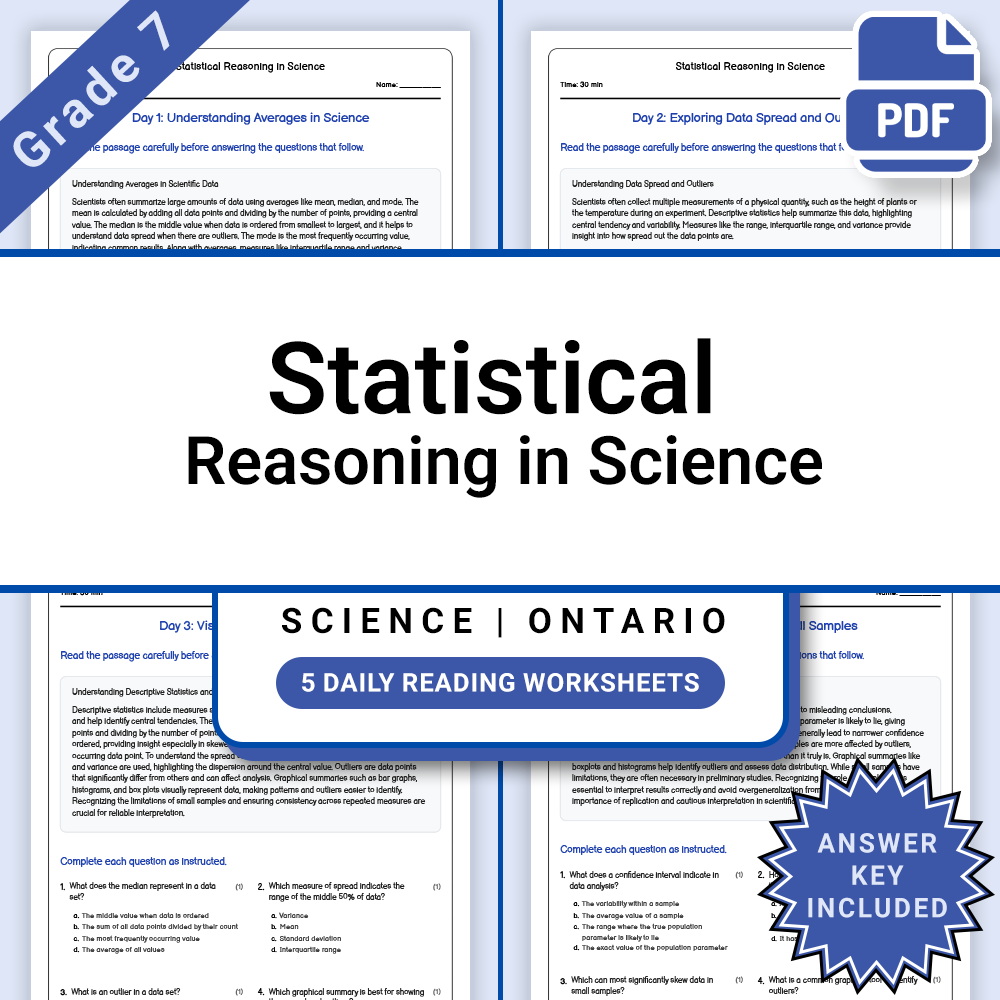
Grade 7 Science – Statistical Reasoning Daily Reading Worksheet with Answer Key
JCreated byJ.S SheetsLearning Objectives
- Understand and define mean, median, and mode
- Interpret measures of dispersion such as interquartile range and variance
- Recognize the role of outliers and their impact on data
Also included in: Grade 7 Science Lesson Bundle | Ontario Curriculum Reading Worksheets +1 more
Instant download
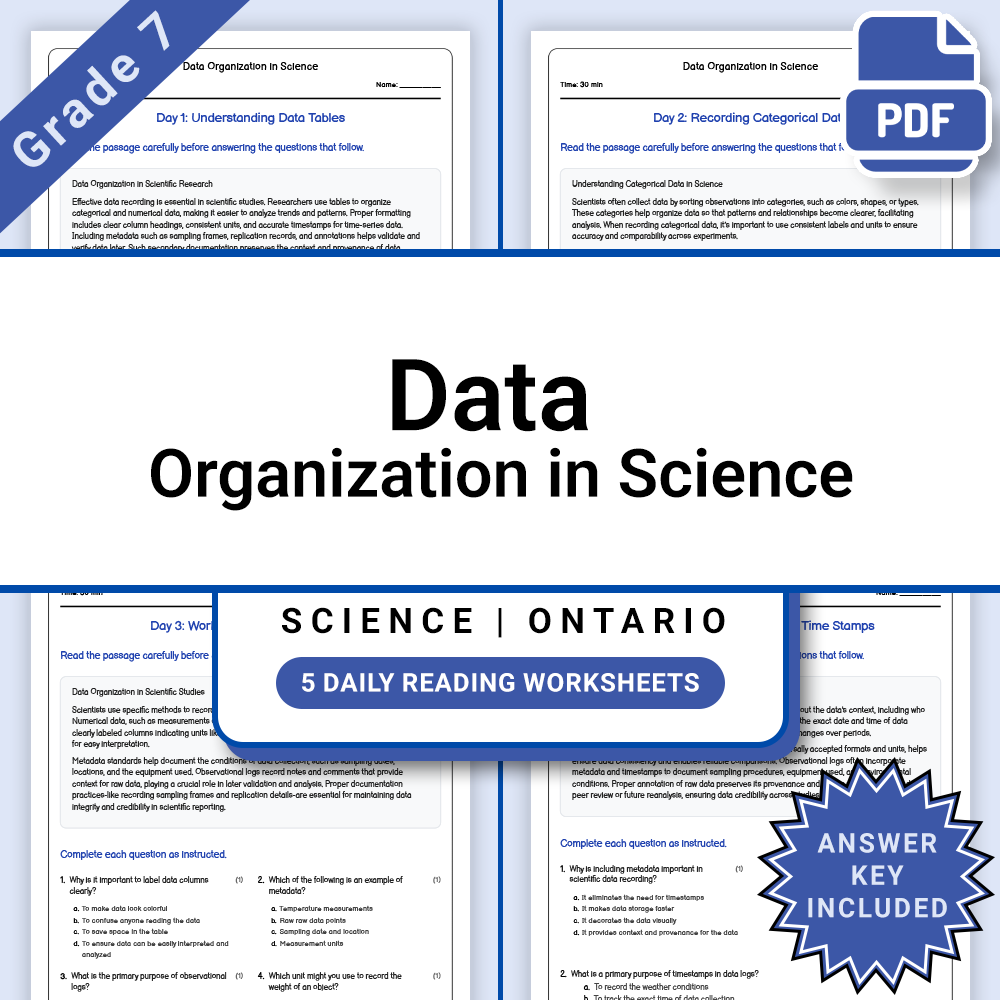
Grade 7 Science – Data Organization Daily Reading Worksheet with Answer Key
JCreated byJ.S SheetsLearning Objectives
- Understand the importance of organized data presentation in scientific research.
- Identify different types of data structures such as tables and logs.
- Learn proper formatting standards including units, column headings, and timestamps.
Also included in: Grade 7 Science Lesson Bundle | Ontario Curriculum Reading Worksheets +1 more
Instant download
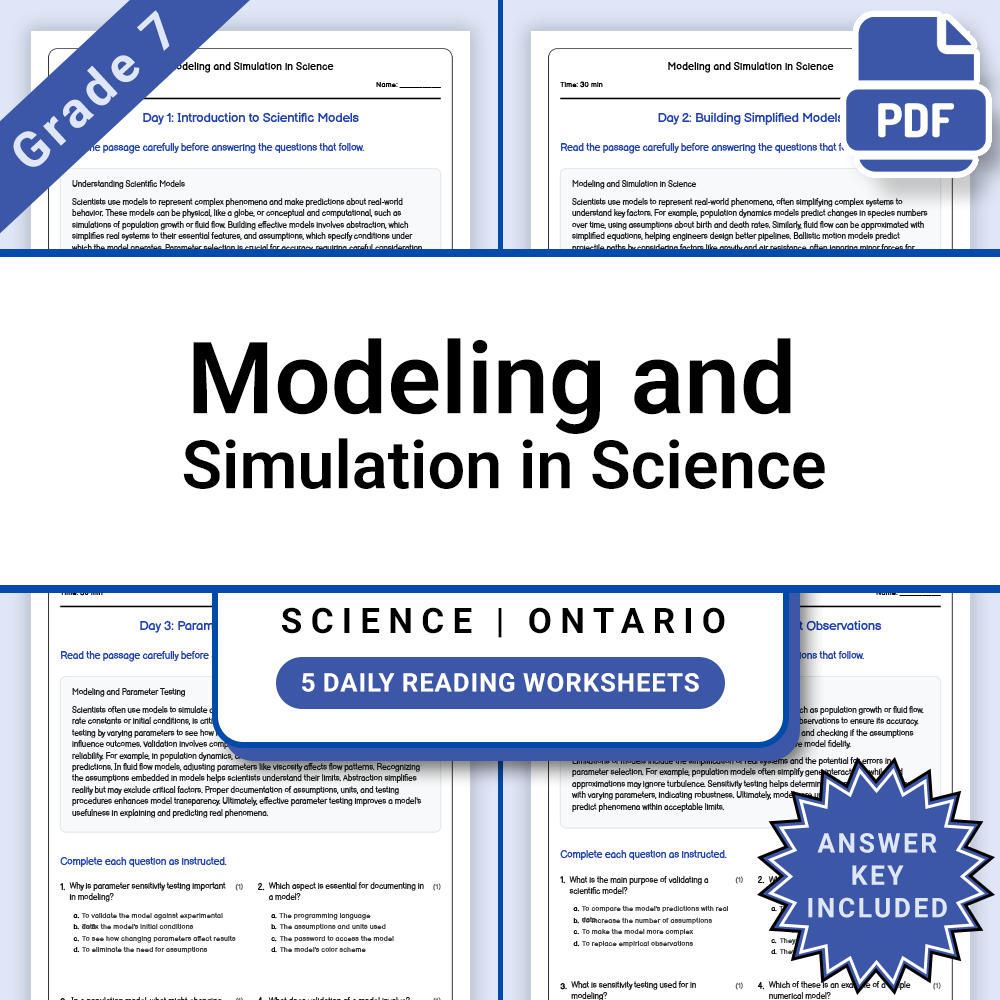
Grade 7 Science – Modeling and Simulation Daily Reading Worksheet + Answer Key
JCreated byJ.S SheetsLearning Objectives
- Understand key concepts related to Science
- Apply knowledge through practice questions
- Demonstrate comprehension of the material
Also included in: Grade 7 Science Lesson Bundle | Ontario Curriculum Reading Worksheets +1 more
Instant download
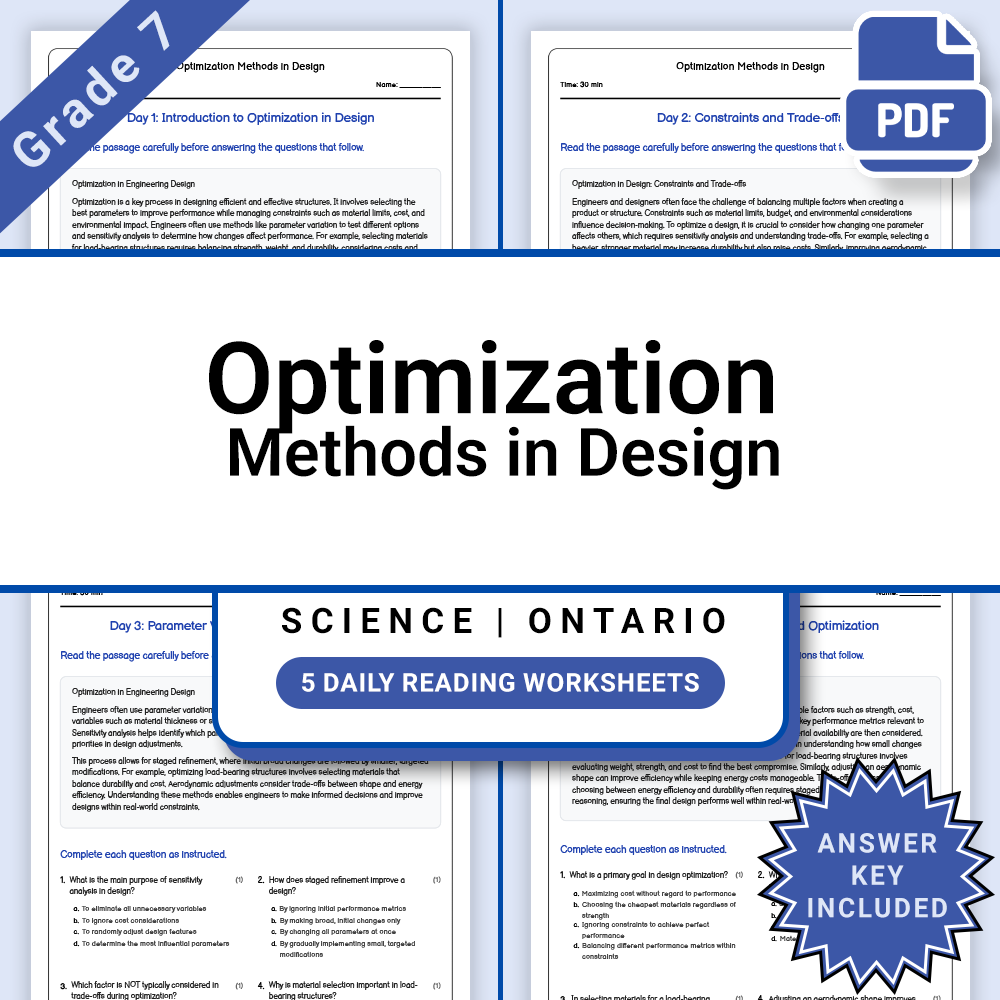
Grade 7 Science – Optimization Methods in Design Daily Worksheet + Answer Key
JCreated byJ.S SheetsLearning Objectives
- Understand the concept of optimization in engineering design.
- Identify what performance metrics are and how they are used.
- Learn how to manage constraints during optimization.
Also included in: Grade 7 Science Lesson Bundle | Ontario Curriculum Reading Worksheets +1 more
Instant download
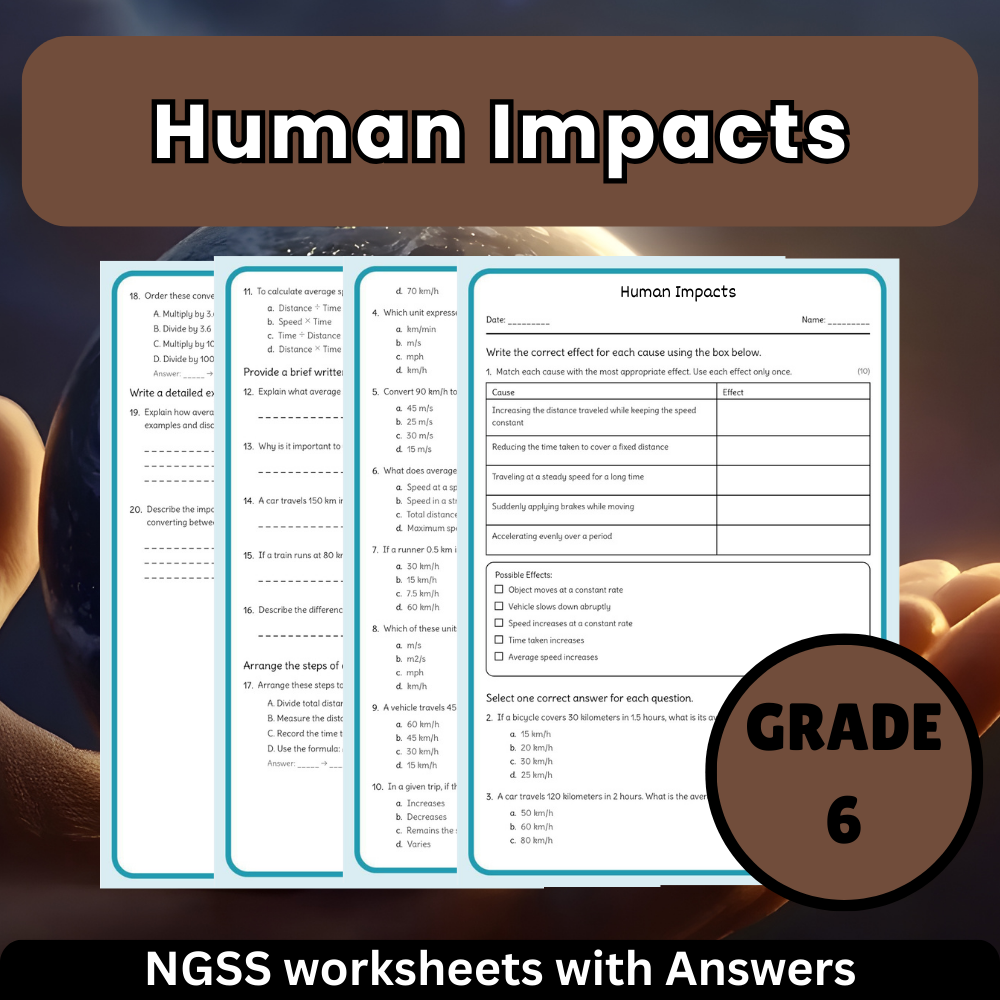
Grade 6 Science | Human Impacts on Earth Systems Worksheet (Answer Key) – NGSS
Created byBright Mind ResourcesLearning Objectives
- Describe how human activities modify earth systems such as biogeochemical cycles and climate drivers.
- Identify examples of human-induced environmental changes and their effects on ecosystems.
- Analyze causal links between human activities and environmental trends.
Also included in: Grade 6 Science Unit | Natural Hazards & Human Impacts Worksheet Pack (NGSS) +2 more
Instant download
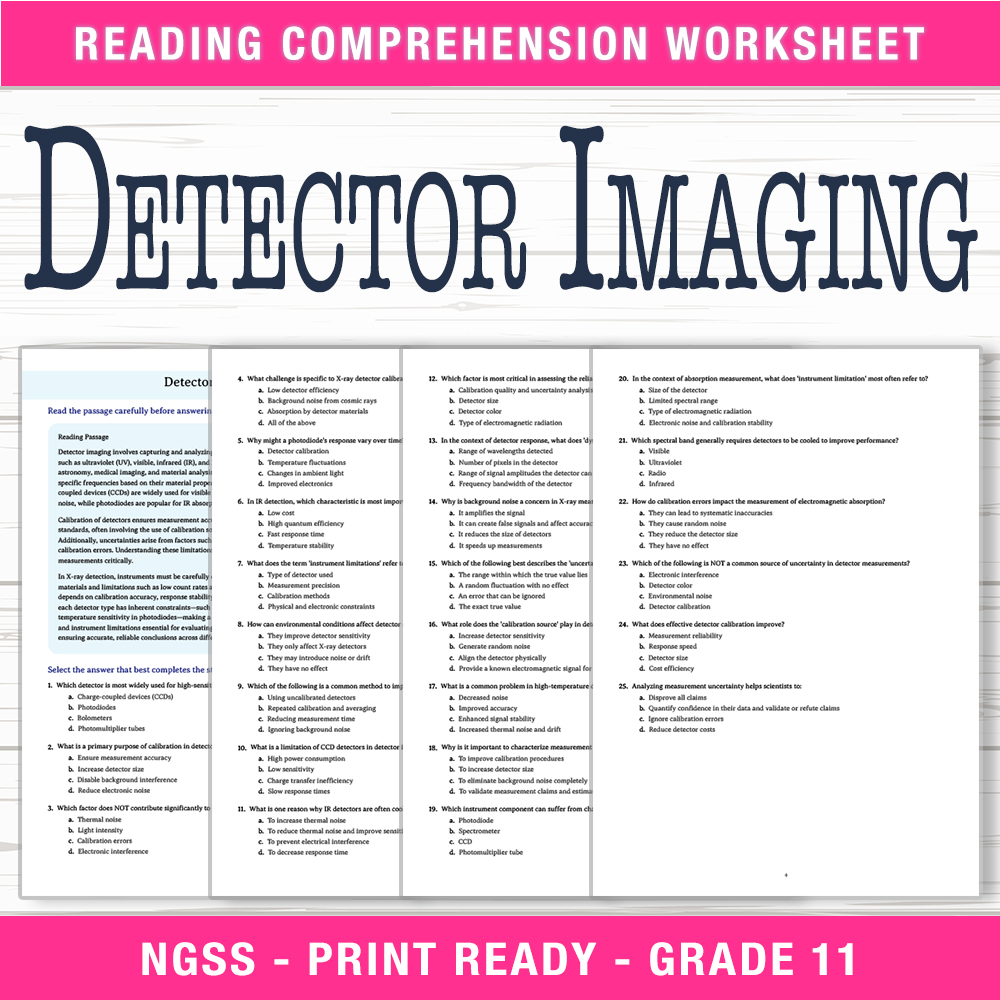
Grade 11 Science | Detector Imaging Worksheet (PDF + Answer Key)
 Created byRiverstone Classroom
Learning Objectives
- Understand how electromagnetic radiation interacts with matter across UV, visible, IR, and X-ray bands.
- Evaluate the reliability and limitations of different detector types such as CCDs and photodiodes.
- Analyze calibration procedures, uncertainties, and instrument limitations in electromagnetic measurement.
Instant download
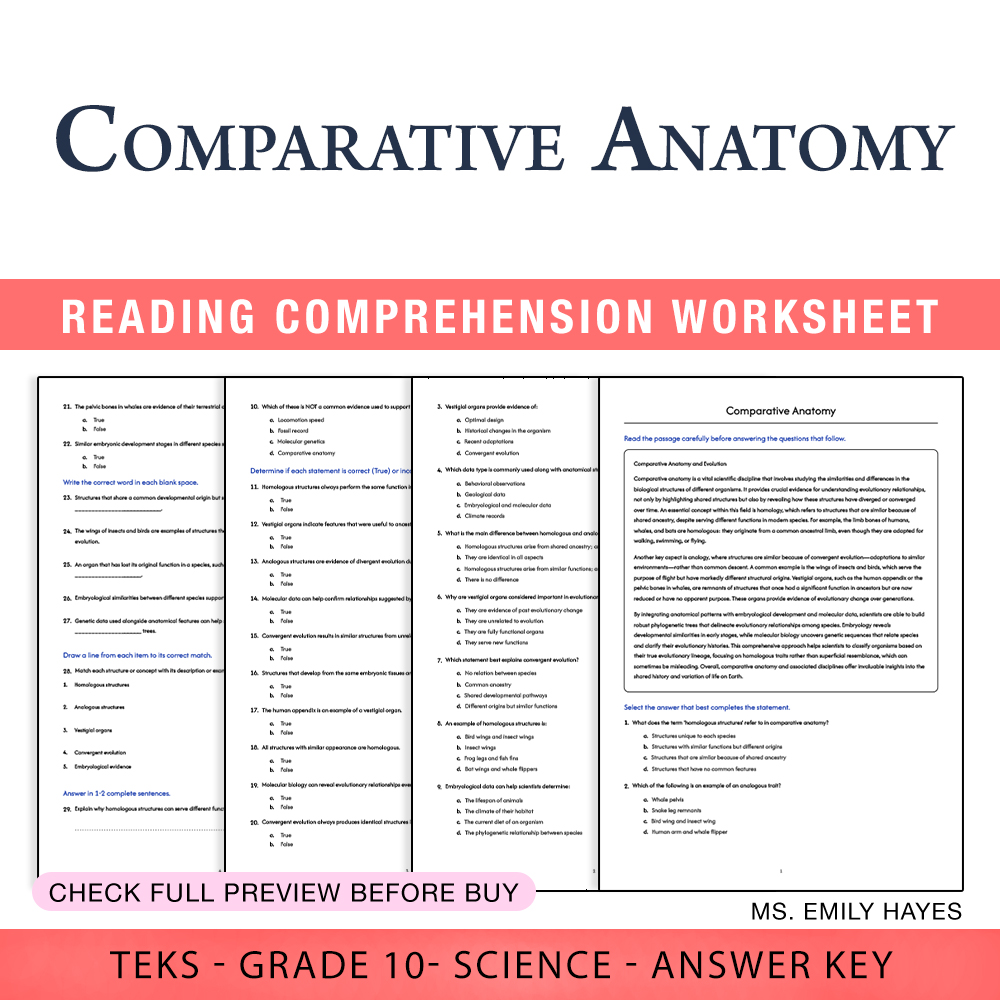
10th Grade Science | Comparative Anatomy Worksheet (PDF+ Answer Key)
Created byCopper Leaf ClassroomLearning Objectives
- Understand the concept of homologous and analogous structures in different organisms.
- Identify vestigial organs and their significance in evolutionary history.
- Analyze how embryological and molecular data contribute to phylogenetic reconstructions.
Instant download

Grade 10 Science | Phylogenetic Trees Worksheet (TEKS) Practice Set
 Created byEvergreen Desk Education
Learning Objectives
- Explain how branching patterns in phylogenetic trees represent common ancestry and evolutionary divergence.
- Identify how synapomorphies, molecular sequences, and fossil placements support or challenge evolutionary hypotheses.
- Use evidence to interpret relationships and relative timing of splits in phylogenetic trees.
Instant download
Browse more categories
About Science Worksheets
Find Science worksheets spanning core skills, practice, and review. All 44,376 resources are instant PDF downloads for the classroom or home.
Every worksheet on MyTeachingSheets is created by independent teacher-authors and reviewed before publication. All resources download as printable PDFs for classroom, homework, or at-home practice, and many include answer keys. Preview any worksheet free before buying.