
Science Worksheets
44,376 subject resources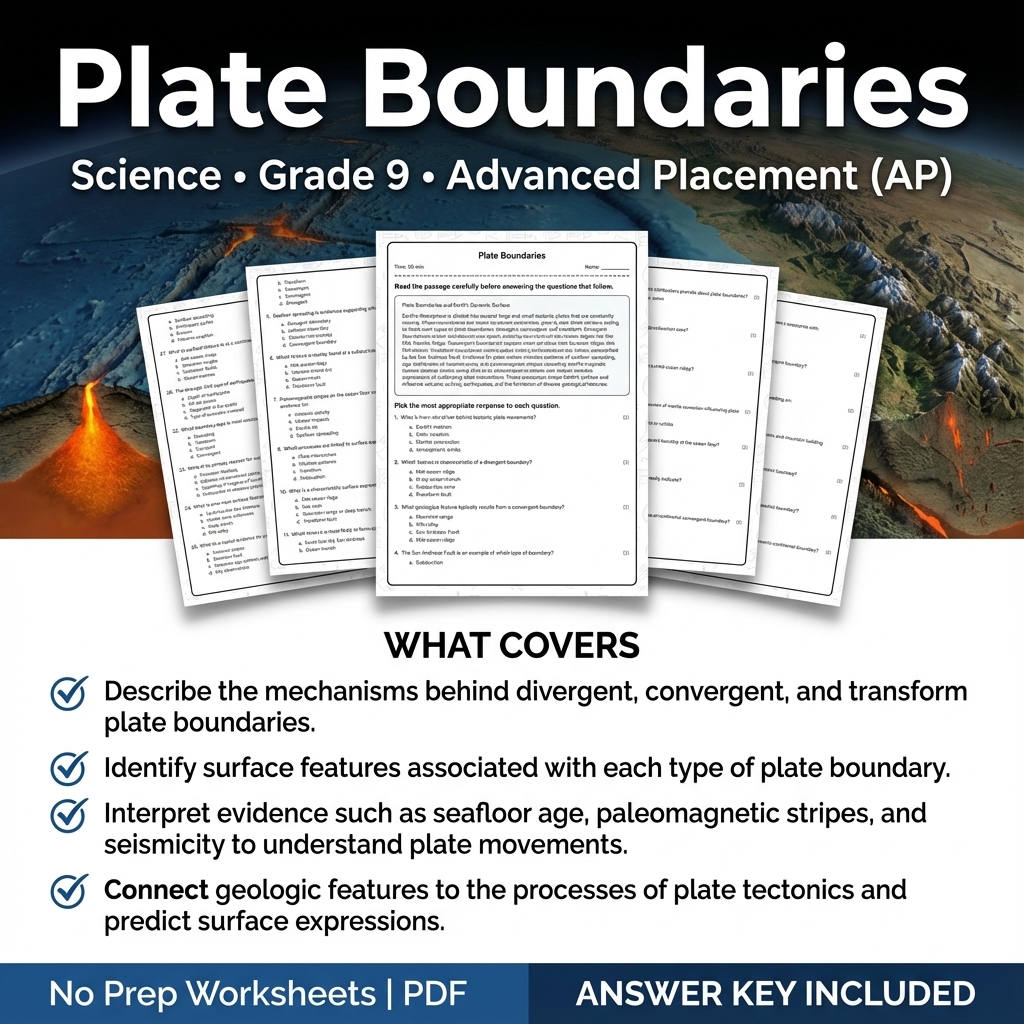
9th Grade Science | Plate Boundaries Worksheet (Printable PDF + Answer Key)
 Created byCoral Reef Learning
Learning Objectives
- Describe the mechanisms behind divergent, convergent, and transform plate boundaries.
- Identify surface features associated with each type of plate boundary.
- Interpret evidence such as seafloor age, paleomagnetic stripes, and seismicity to understand plate movements.
Also included in: Grade 9 Science Unit | Earth Processes & Climate Worksheets Pack (PDF & Answer Keys) +2 more
Instant download
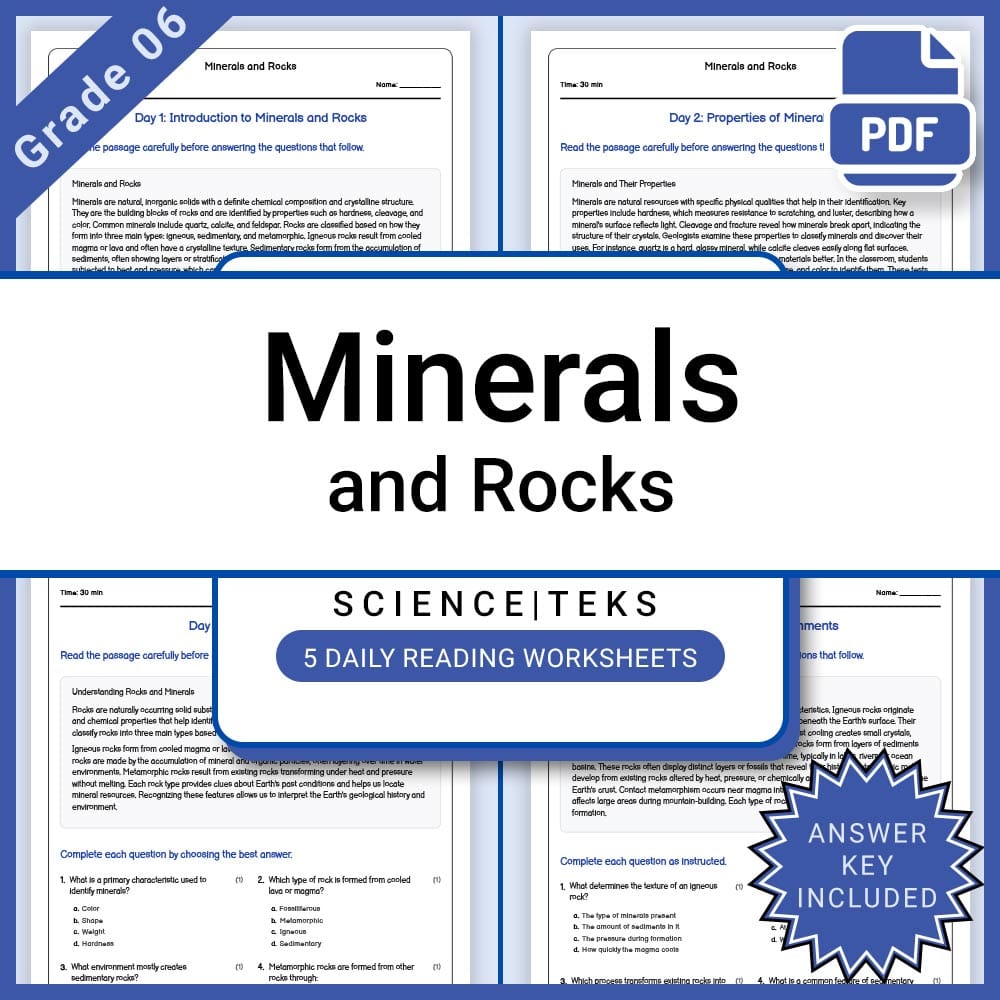
Grade 6 Science – Minerals and Rocks Daily Reading Worksheet + Answer Key
JCreated byJ.S SheetsLearning Objectives
- Understand the basic properties used to identify minerals
- Learn how rocks are classified into igneous, sedimentary, and metamorphic types
- Explore how mineral resources relate to the rock cycle
Also included in: Grade 6 Science Lesson Bundle: Space, Water, Earth, and Resources TEKS +1 more
Instant download
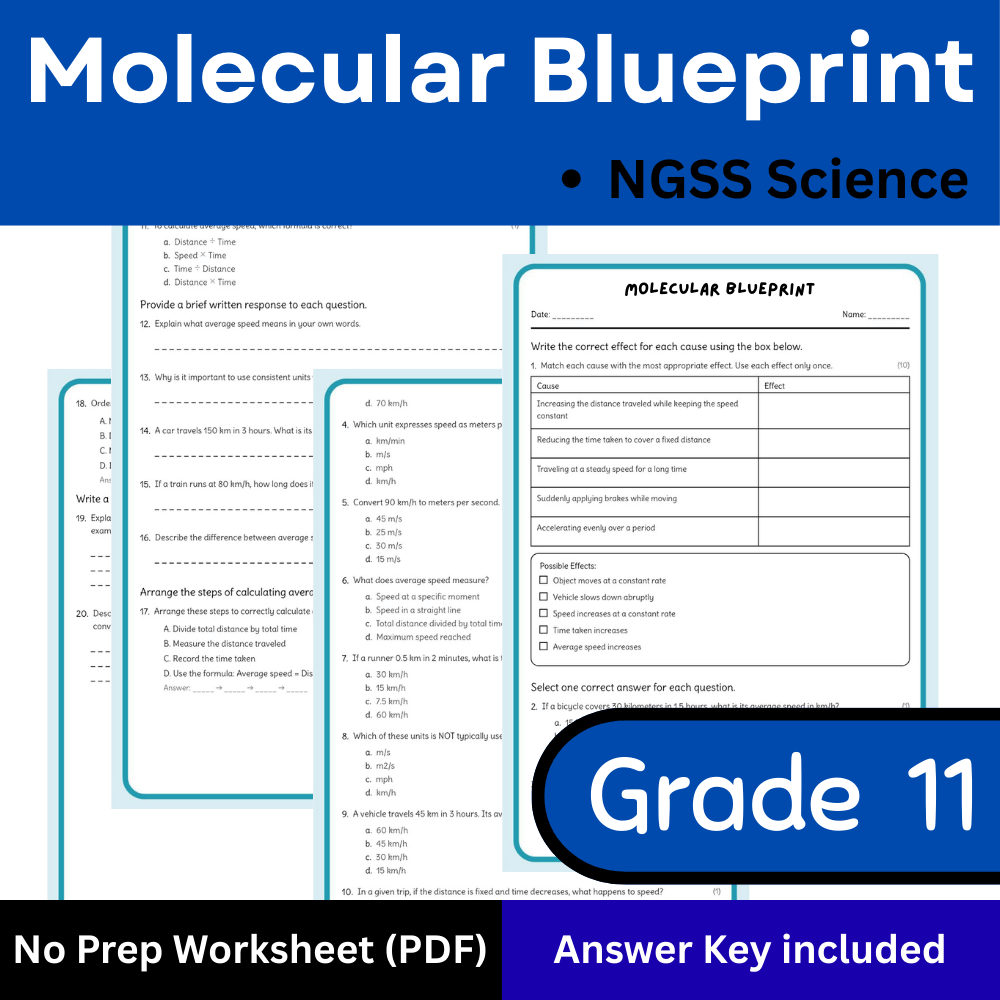
Grade 11 Science – Molecular Mechanisms Worksheet (NGSS Aligned) PDF
 Created byBright Mind Resources
Learning Objectives
- Understand the biochemical processes such as phosphorylation, ubiquitination, and gene regulatory motifs that influence cellular functions.
- Describe how receptor-ligand interactions and second messengers regulate cellular signaling pathways.
- Explain the roles of intracellular compartmentalization and membrane transport in molecular mechanisms.
Instant download
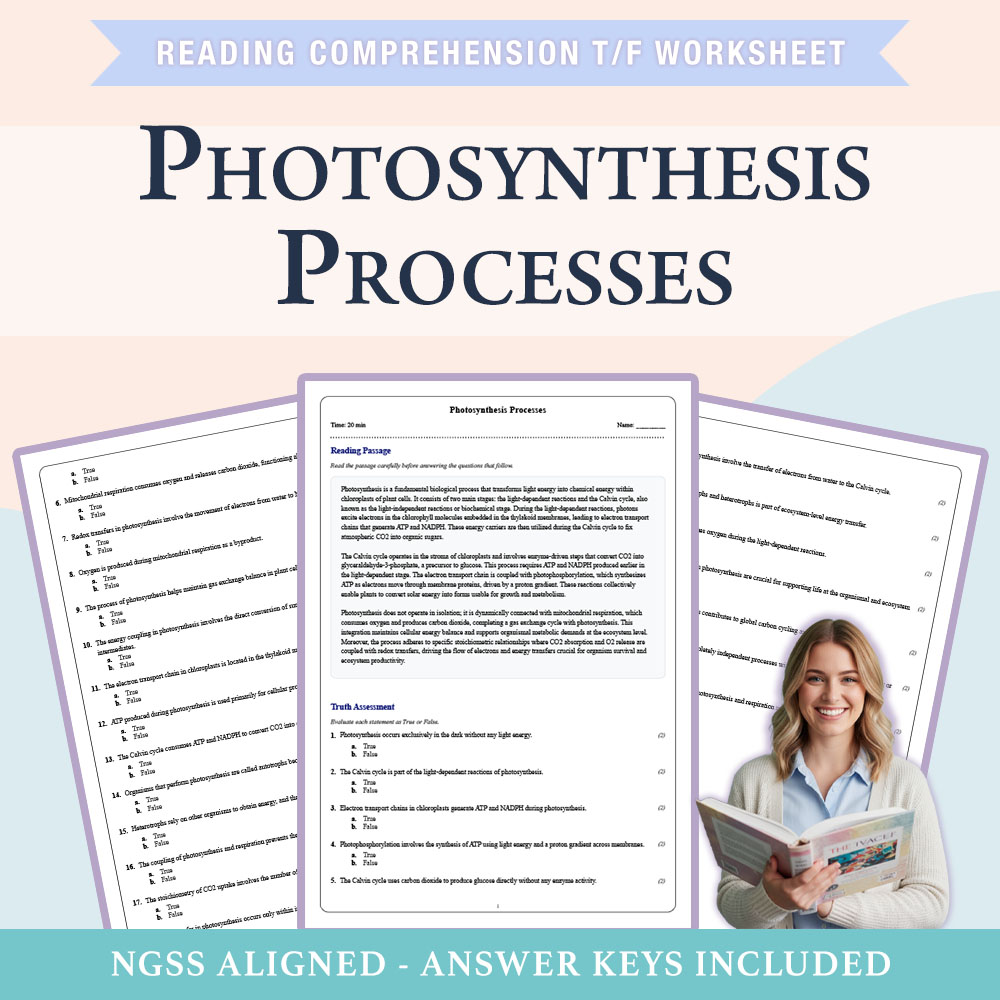
Grade 11 Science | Photosynthesis Processes Worksheet (PDF + Answer Key)
 Created byCopper Leaf Classroom
Learning Objectives
- Understand the light-driven and biochemical stages of photosynthesis within chloroplasts.
- Explain the processes of electron transport, photophosphorylation, and the Calvin cycle.
- Describe the integration of photosynthesis with mitochondrial respiration, including gas exchange and ATP production.
Also included in: Grade 11 Science Bundle | Cellular Metabolism & Organization (PDF + Answer Key) +1 more
Instant download

6th Grade Science | Phases Mechanics Worksheet (Ontario Standards) (PDF)
 Created byEvergreen Desk Education
Learning Objectives
- Explain how the changing relative positions of the Sun, Earth, and Moon create the visible fractions of the Moon during its phases.
- Describe the typical sequence of lunar phases and relate it to the Moon’s repeating cycle over time.
- Distinguish lunar phase appearance from eclipse circumstances using observational patterns.
Also included in: Grade 6 Solar System Space Science Lesson Bundle – Ontario Worksheets +1 more
Instant download

Grade 8 Science | Human Effects Worksheet (PDF) Alberta Standards
 Created bySilver Birch Teaching
Learning Objectives
- Explain how human land use and resource extraction can change habitat structure and ecosystem processes.
- Describe how activities such as agriculture, irrigation, and wetland drainage can alter nutrient cycles and species interactions.
- Identify how invasive species introductions and cumulative watershed effects can impact river systems.
Also included in: Grade 8 Trophic Modeling & Ecosystems Science Lesson Bundle for Alberta Standards +1 more
Instant download
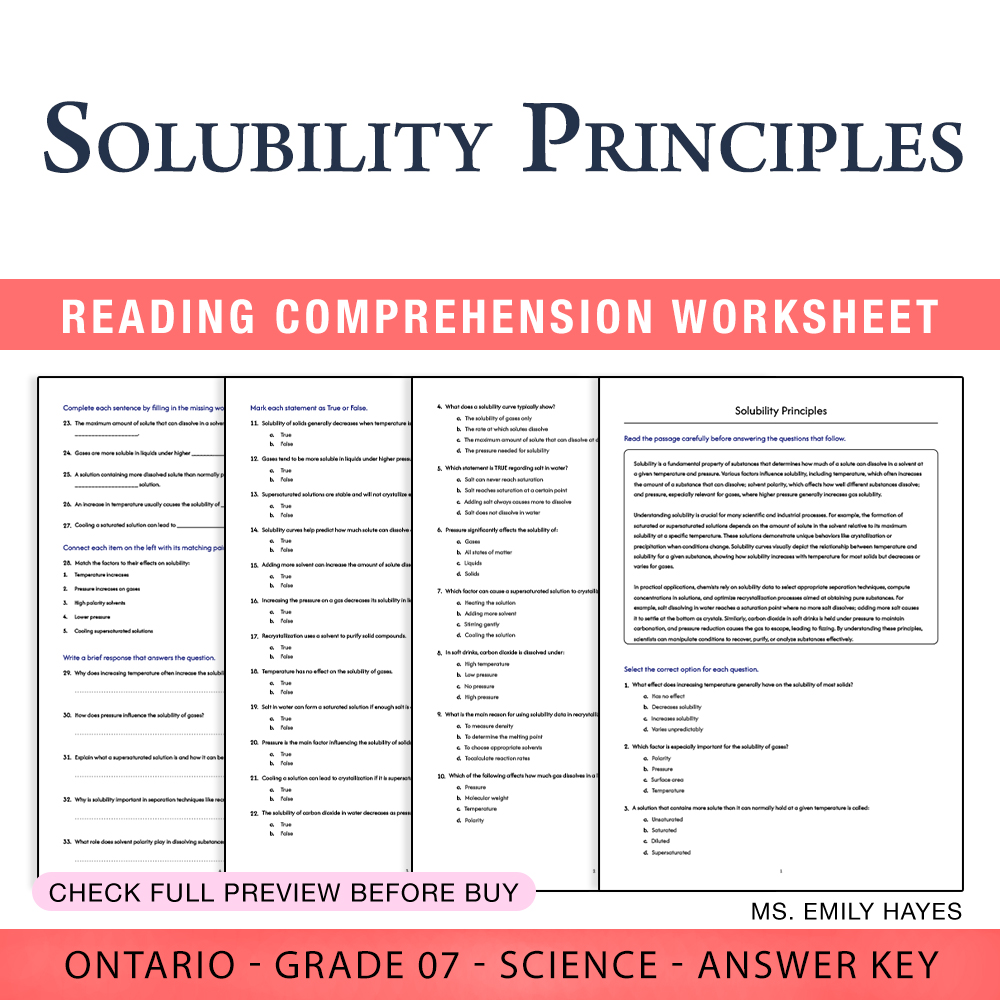
7th Grade Science | Solubility Principles Worksheet (PDF+ Answer Key)
Created byCopper Leaf ClassroomLearning Objectives
- Understand the basic concepts of solubility and factors affecting dissolution.
- Interpret solubility curves and concepts of saturation and supersaturation.
- Identify how temperature, pressure, and solvent polarity influence solubility.
Instant download
7th Grade Science Worksheets Phase Changes & States of Matter (PDF & Answer Key)
JCreated byJ.S SheetsLearning Objectives
- Describe energy transfer during phase changes such as melting, freezing, evaporation, and condensation.
- Use models to understand how particle energy and spacing change during phase transitions.
- Interpret phase diagrams to determine conditions for phase changes.
Instant download

Grade 12 Science – Introduction to AC Circuits & Power | Daily Reading Worksheet
Created byBright Mind ResourcesLearning Objectives
- Identify and describe basic components and properties of AC circuits
- Understand the concept of phase relationships, impedance, and reactance
- Differentiate between resistive, inductive, and capacitive elements in AC circuits
Also included in: Grade 12 Daily Reading Science Full-Year Bundle Alberta Curriculum
Instant download
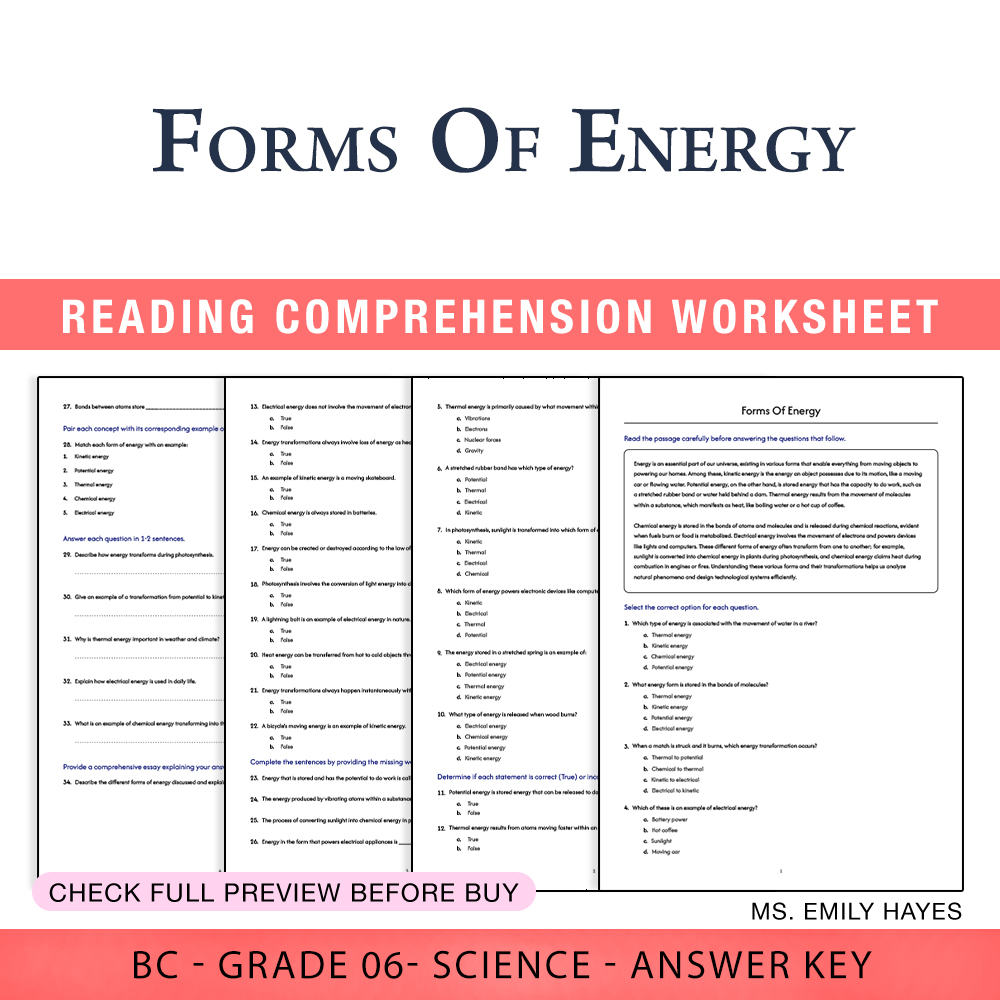
6th Grade Science | Forms of Energy Worksheet (PDF+ Answer Key)
Created byCopper Leaf ClassroomLearning Objectives
- Identify and describe different forms of energy such as kinetic, potential, thermal, chemical, and electrical.
- Explain the process of energy transformations between different forms.
- Recognize common examples of energy forms and their typical transformations in real-world systems.
Also included in: Grade 6 Science BC | Waves, Sound, Light & Energy Worksheets (PDF + Answer Key) +1 more
Instant download
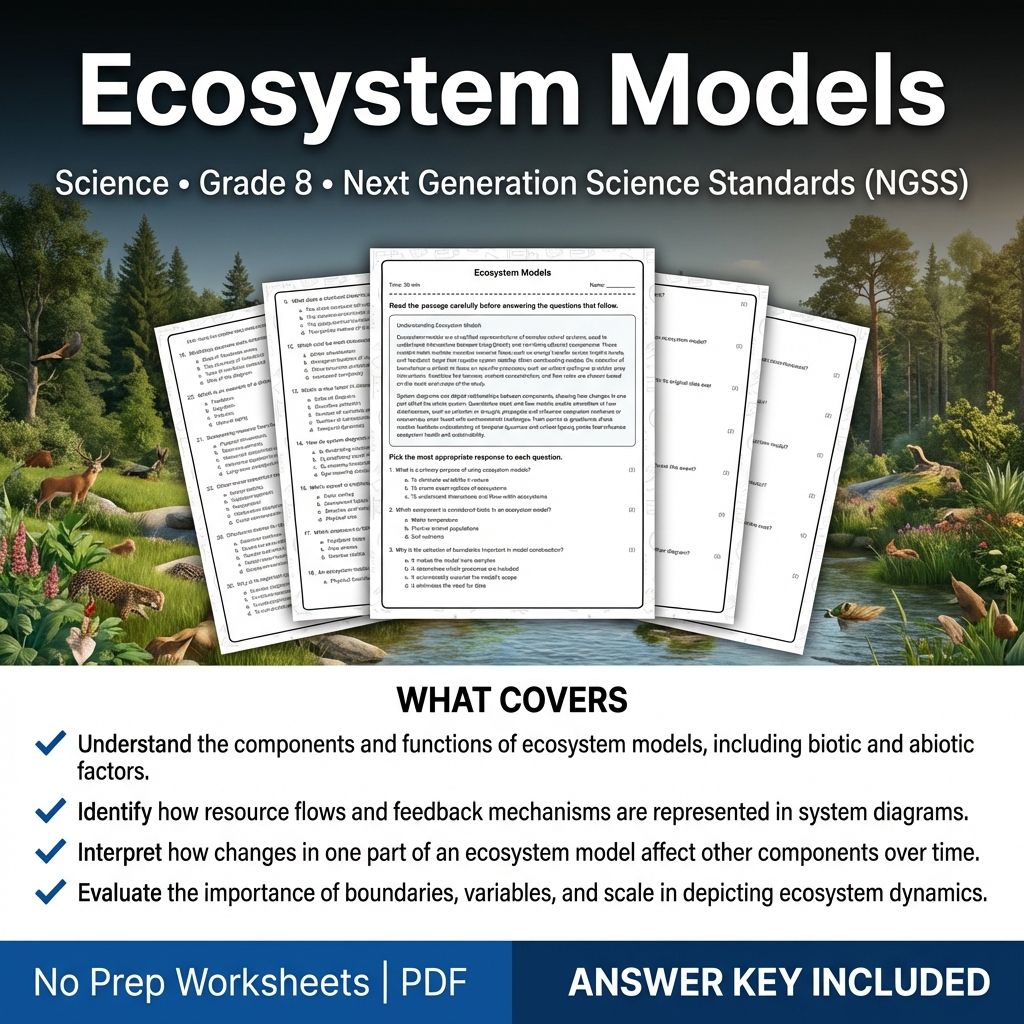
Grade 8 Science | Ecosystem Models Worksheet & Answer Key (Printable PDF)
Created byCoral Reef LearningLearning Objectives
- Understand the components and functions of ecosystem models, including biotic and abiotic factors.
- Identify how resource flows and feedback mechanisms are represented in system diagrams.
- Interpret how changes in one part of an ecosystem model affect other components over time.
Instant download
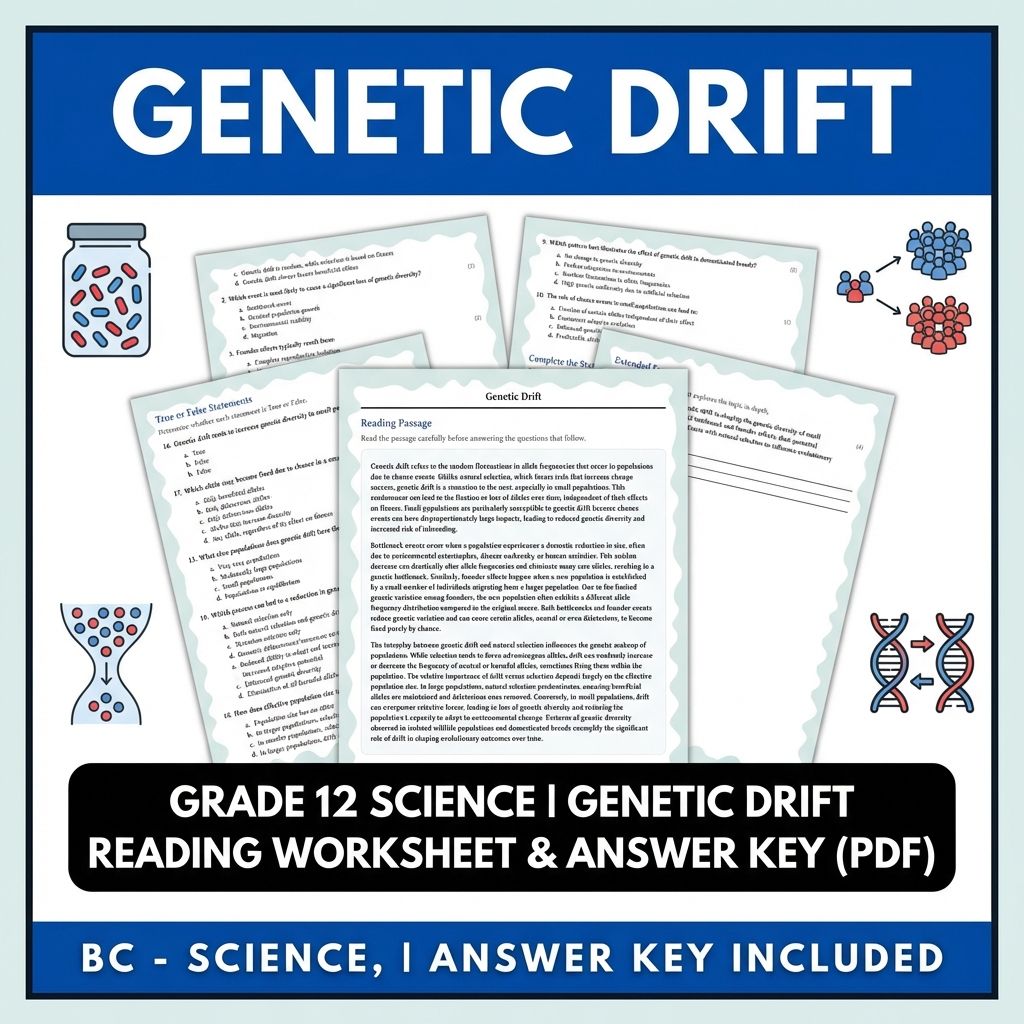
Grade 12 Science | Genetic Drift Reading Worksheet & Answer Key (PDF)
JCreated byJ.S SheetsLearning Objectives
- Understand the mechanism of genetic drift and its effects on allele frequencies in populations.
- Identify the impact of bottlenecks and founder events on genetic diversity.
- Explain how genetic drift can influence neutral and deleterious alleles independently of natural selection.
Instant download
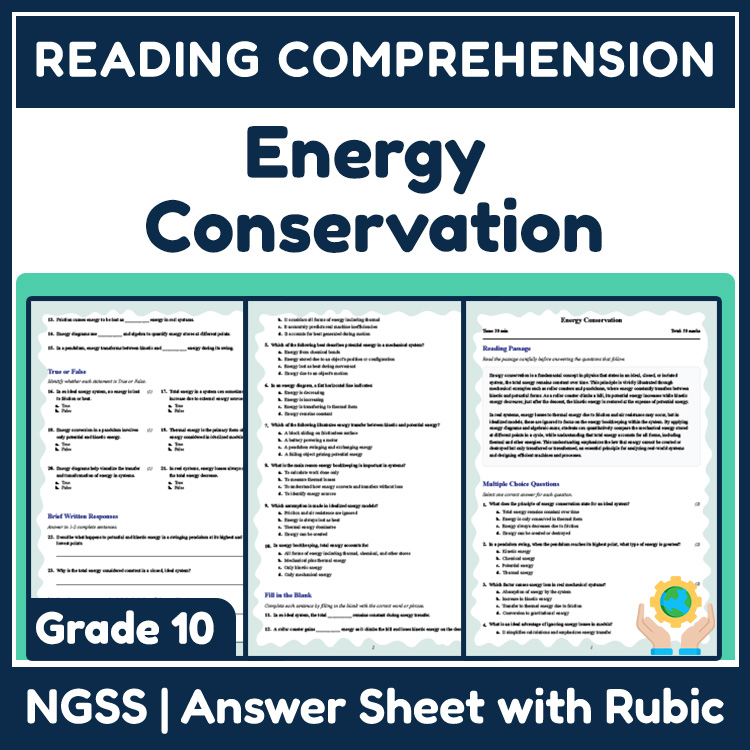
Grade 10 Science | Energy Conservation Reading Worksheet & Answer Key (PDF)
JCreated byJ.S SheetsLearning Objectives
- Explain the principles of energy conservation in closed and isolated systems.
- Describe the transformations between kinetic and potential energy in mechanical examples.
- Analyze energy diagrams and apply basic algebra to quantify energy stores.
Also included in: Grade 10 Science | Energy & Thermal Transfer Unit Worksheet Bundle
Instant download
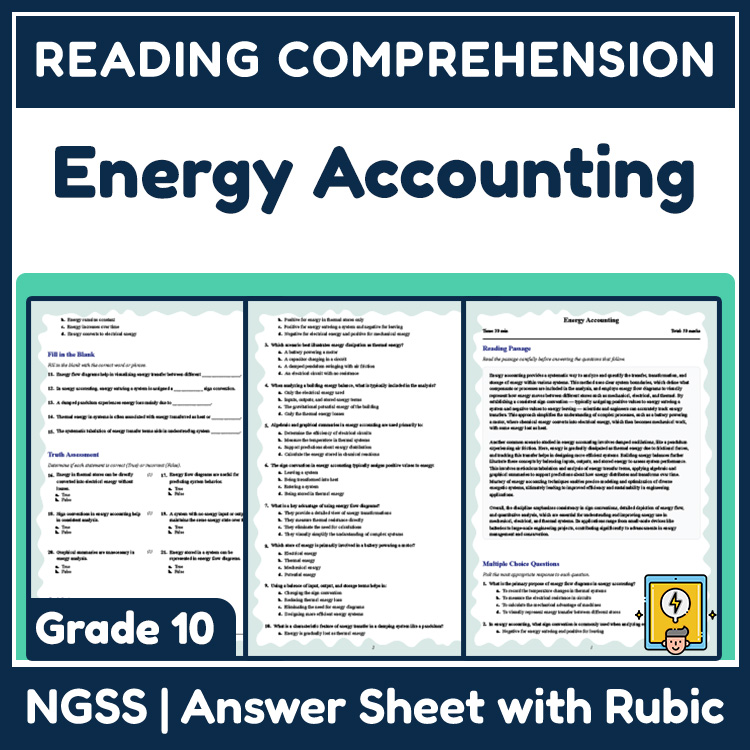
Grade 10 Science | Energy Accounting Reading Worksheet (PDF + Answer Key)
JCreated byJ.S SheetsLearning Objectives
- Understand and interpret energy flow diagrams for different systems.
- Apply system boundaries and sign conventions to quantify energy transfers.
- Use algebraic and graphical methods to analyze energy distribution in mechanical, electrical, and thermal stores.
Also included in: Grade 10 Science | Energy & Thermal Transfer Unit Worksheet Bundle
Instant download
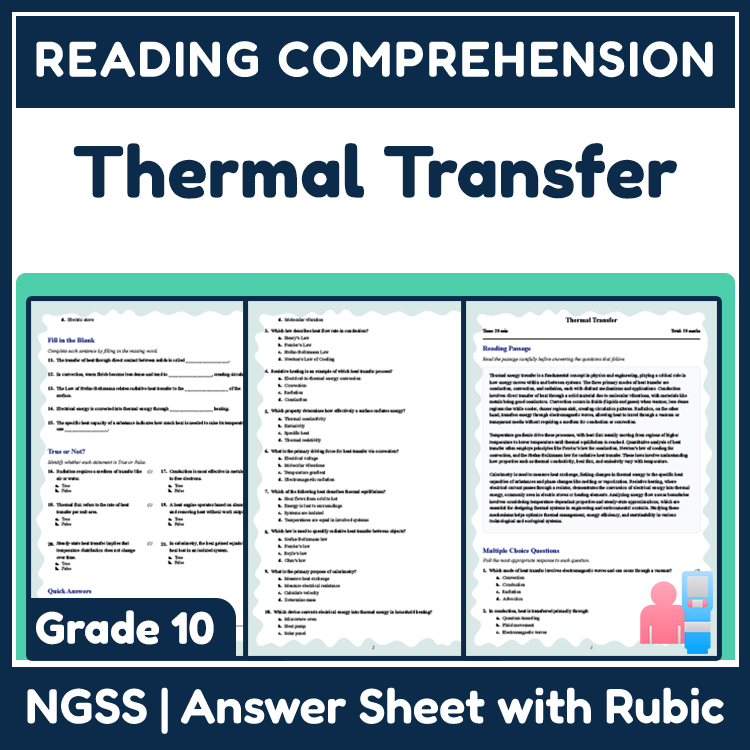
Grade 10 Science | Thermal Transfer Reading Worksheet (PDF + Answer Key)
JCreated byJ.S SheetsLearning Objectives
- Understand the mechanisms of heat transfer: conduction, convection, and radiation.
- Apply calorimetric reasoning to relate thermal energy changes to specific heat and phase changes.
- Describe how resistive heating converts electrical energy into thermal energy.
Also included in: Grade 10 Science | Energy & Thermal Transfer Unit Worksheet Bundle
Instant download
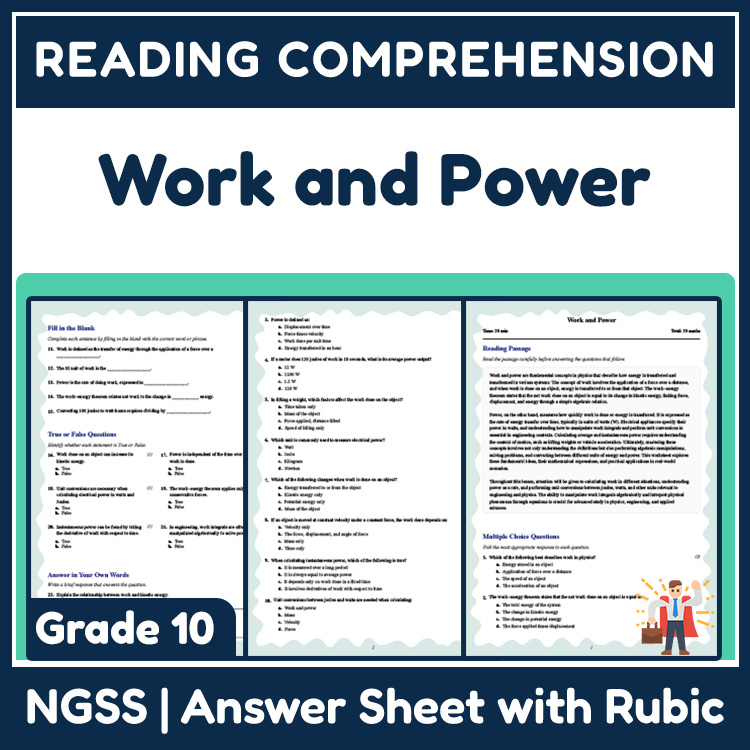
10th Grade Science Reading Worksheet | Work and Power – NGSS Formatted (PDF)
JCreated byJ.S SheetsLearning Objectives
- Understand the relationship between work, force, displacement, and energy.
- Apply the work–energy theorem to solve problems involving kinetic energy and work.
- Calculate power as the rate of energy transfer in various contexts.
Also included in: Grade 10 Science | Energy & Thermal Transfer Unit Worksheet Bundle
Instant download
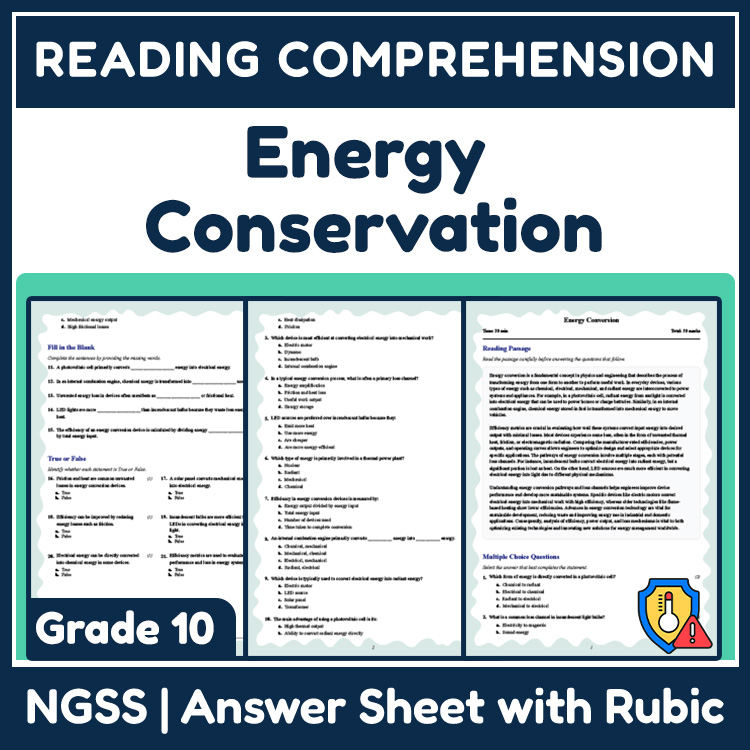
Grade 10 Science | Energy Conversion Reading Worksheet (PDF + Answer Key)
JCreated byJ.S SheetsLearning Objectives
- Understand the different forms of energy and their conversions in practical devices
- Analyze the efficiency and loss mechanisms in energy conversion systems
- Compare different energy conversion devices based on their characteristics and efficiency metrics
Also included in: Grade 10 Science | Energy & Thermal Transfer Unit Worksheet Bundle
Instant download
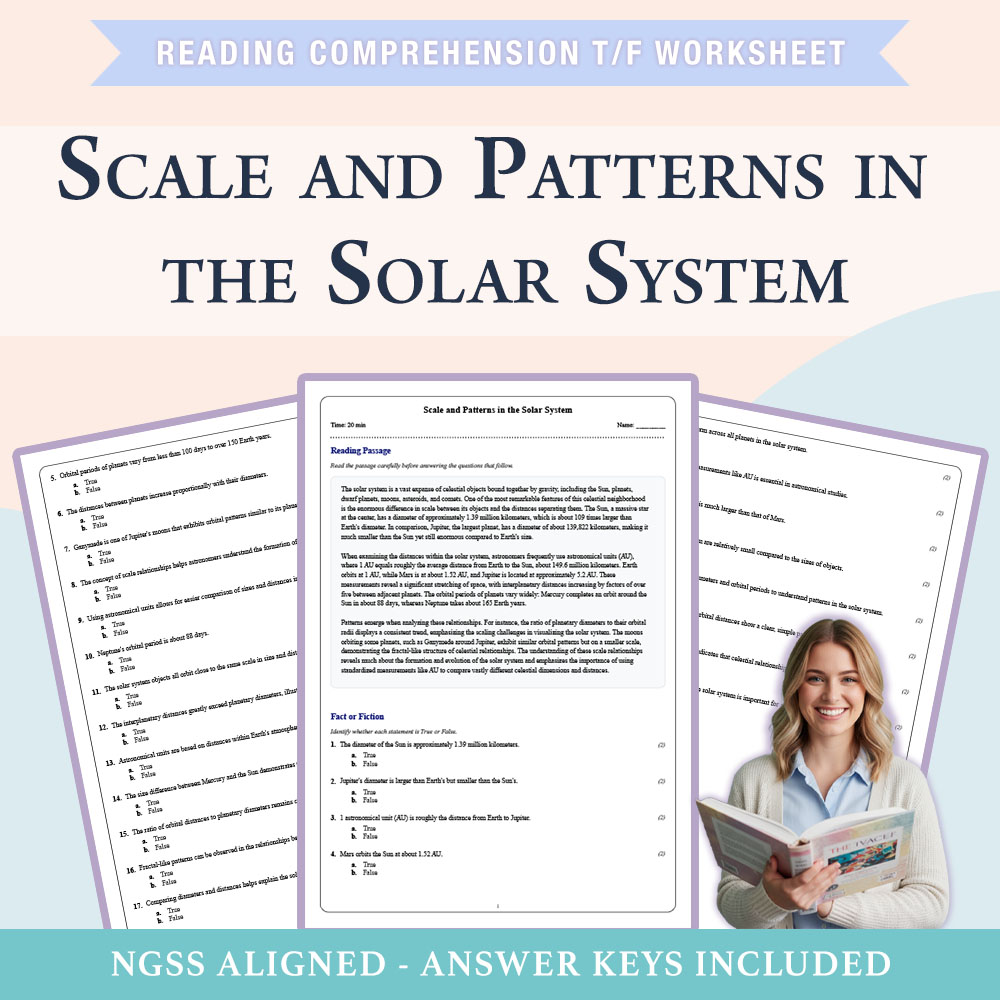
8th Grade Science | Scale and Patterns in the Solar System (PDF + Answer Key)
Created byCopper Leaf ClassroomLearning Objectives
- Understand the relative sizes and distances of objects in the solar system
- Interpret astronomical data concerning diameters, distances, and orbital periods
- Identify patterns and relationships among solar system objects
Also included in: Grade 8 Science | Solar System Patterns, Orbital Cycles & Gravity (PDF +Answers) +1 more
Instant download
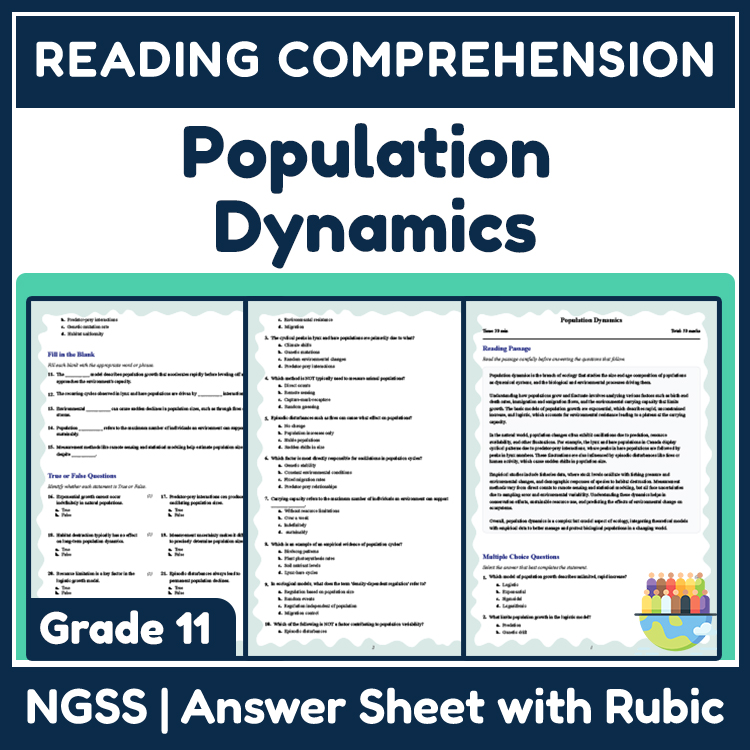
11th Grade Science | Population Dynamics Reading Worksheet & Answer Key (PDF)
JCreated byJ.S SheetsLearning Objectives
- Understand the key concepts of population growth, including exponential and logistic models.
- Analyze factors influencing population size changes such as birth rates, death rates, immigration, and emigration.
- Describe how predator-prey interactions and environmental disturbances affect population cycles.
Also included in: Grade 11 Science | Ecosystems & Population Dynamics Worksheet Bundle
Instant download
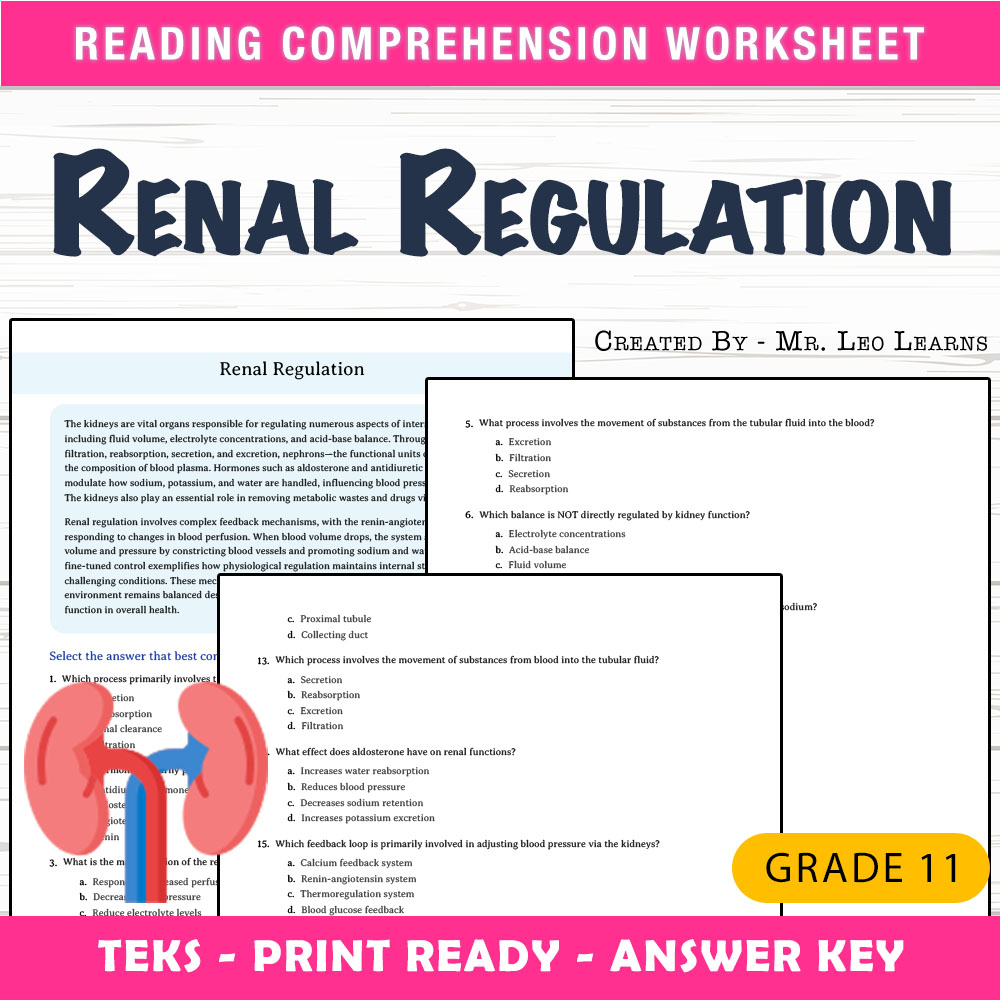
Grade 11 Science | Renal Regulation Worksheet for Mastery
 Created byThe Resource Hub
Learning Objectives
- Understand how kidneys regulate fluid, electrolyte, and acid-base balance.
- Identify the roles of nephrons and hormones in renal regulation.
- Explain mechanisms of renal clearance and feedback systems.
Also included in: Grade 11 Science | Human Body Systems & Physiology Worksheet Bundle +1 more
Instant download
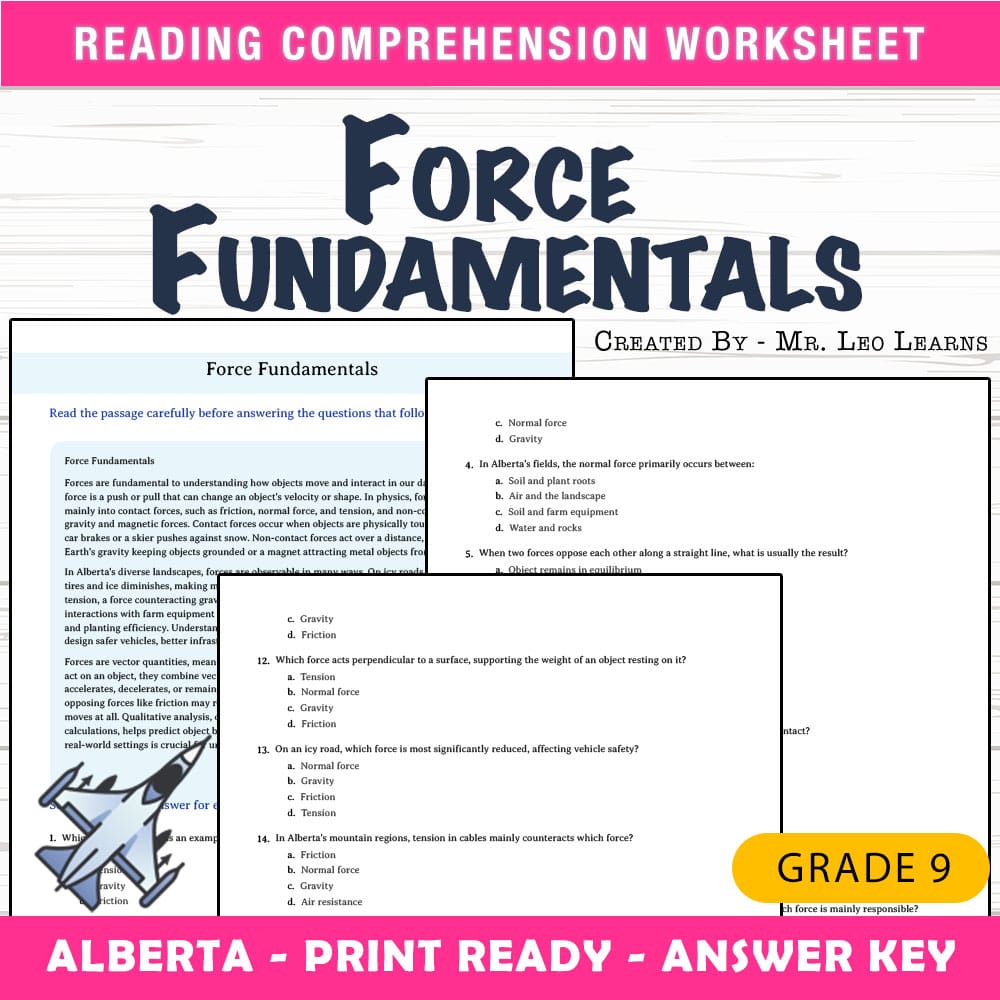
Grade 9 Science — Worksheet MCQ Paper for Mastering Force Fundamentals
Created byThe Resource HubLearning Objectives
- Describe the different types of forces including contact and non-contact forces.
- Understand how vector quantities like magnitude and direction combine to influence motion.
- Apply qualitative reasoning to predict the effects of opposing forces on objects.
Also included in: Grade 9 Science Forces and Motion Worksheet Pack | Alberta Curriculum +1 more
Instant download
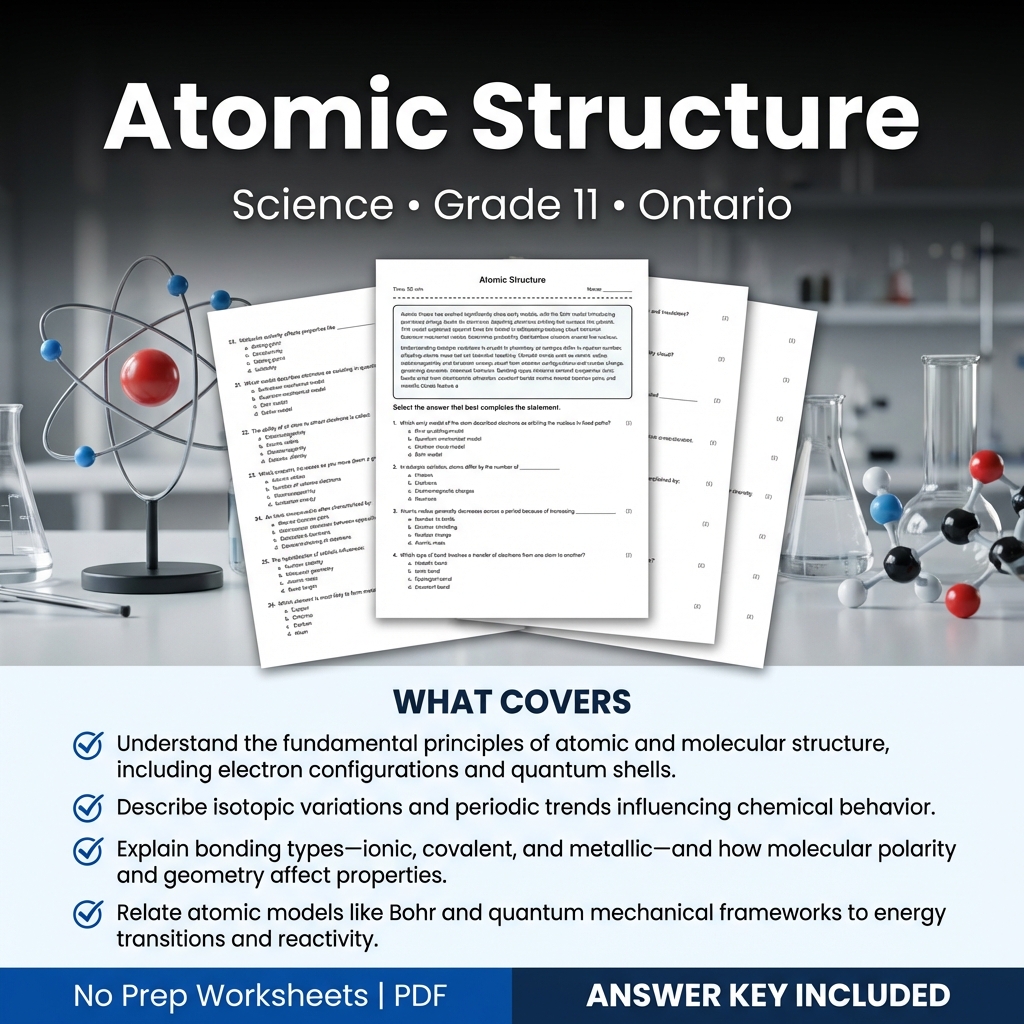
Atomic Structure Worksheet for Grade 11 Science | Ontario Standards
Created byCoral Reef LearningLearning Objectives
- Understand the fundamental principles of atomic and molecular structure, including electron configurations and quantum shells.
- Describe isotopic variations and periodic trends influencing chemical behavior.
- Explain bonding types—ionic, covalent, and metallic—and how molecular polarity and geometry affect properties.
Instant download
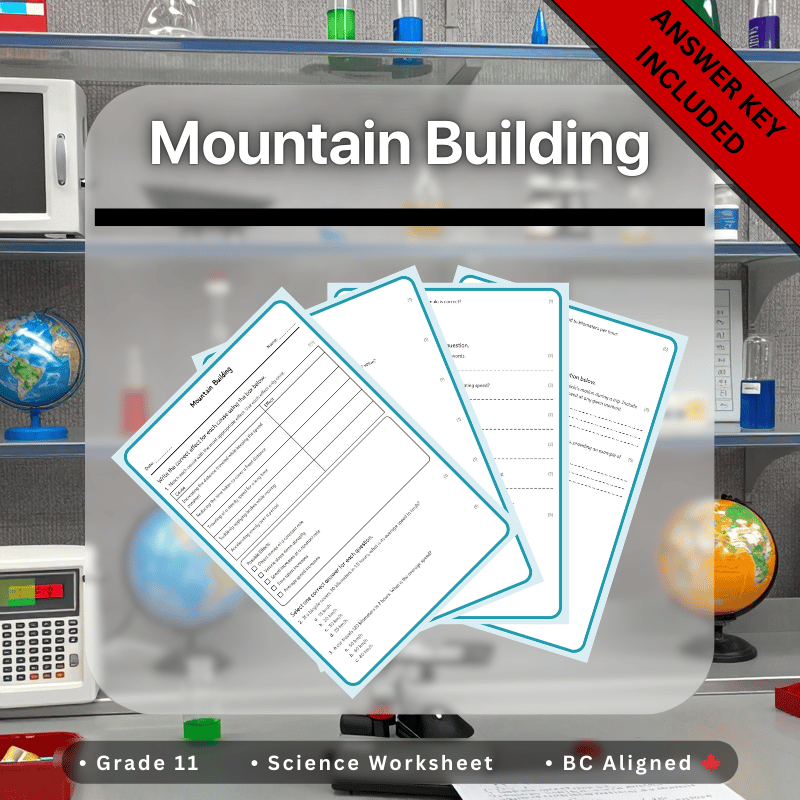
Grade 11 Science | Mountain Building Worksheet (PDF) – BC Standards
Created byBright Mind ResourcesLearning Objectives
- Understand the processes that lead to mountain formation, including tectonic convergence, crustal shortening, and uplift.
- Identify structural features associated with mountain ranges such as folded strata, thrust faults, and metamorphic cores.
- Explain how rates of uplift and erosion influence the evolution of mountain landscapes.
Instant download

Series and Parallel Circuits Worksheets: Grade 8 Electricity Practice
 Created bySunny Desk Resources
Learning Objectives
- Calculate current, voltage, and power in simple series and parallel circuits using circuit laws
- Determine equivalent resistance and predict how changes in components affect circuit behavior
- Compare expected and measured values to identify likely circuit faults
Also included in: Electricity and Magnetism Grade 8 Alberta Unit Lesson Bundle +1 more
Instant download
Grade 9 Science – Power and Efficiency Daily Reading Worksheet with Answer Key
JCreated byJ.S SheetsLearning Objectives
- Understand the concepts of power and efficiency in engineering systems.
- Identify practical examples of power transfer and energy conversion.
- Analyze the relationship between input power, output work, and energy losses.
Also included in: Grade 9 Science Lesson Bundle | Physics and Motion Worksheets +1 more
Instant download
Grade 9 Science – Graph Interpretation in Motion Daily Worksheet + Answer Key
JCreated byJ.S SheetsLearning Objectives
- Understand how the slope of displacement–time graphs relates to velocity.
- Recognize how the slope of velocity–time graphs indicates acceleration.
- Interpret the area under a velocity–time graph as displacement.
Also included in: Grade 9 Science Lesson Bundle | Physics and Motion Worksheets +1 more
Instant download
Grade 9 Science Motion Equations Daily Reading Worksheet with Answer Key
JCreated byJ.S SheetsLearning Objectives
- Identify variables in constant-acceleration motion equations
- Understand the sign convention for velocity and acceleration
- Apply algebraic formulas to predict displacement and velocity
Also included in: Grade 9 Science Lesson Bundle | Physics and Motion Worksheets +1 more
Instant download
Grade 9 Science – Relative Motion Daily Reading Worksheet + Answer Key
JCreated byJ.S SheetsLearning Objectives
- Define relative motion and understand the concept of frames of reference.
- Identify different examples of relative motion in everyday life.
- Describe how velocity depends on the observer's frame of reference.
Also included in: Grade 9 Science Lesson Bundle | Physics and Motion Worksheets +1 more
Instant download
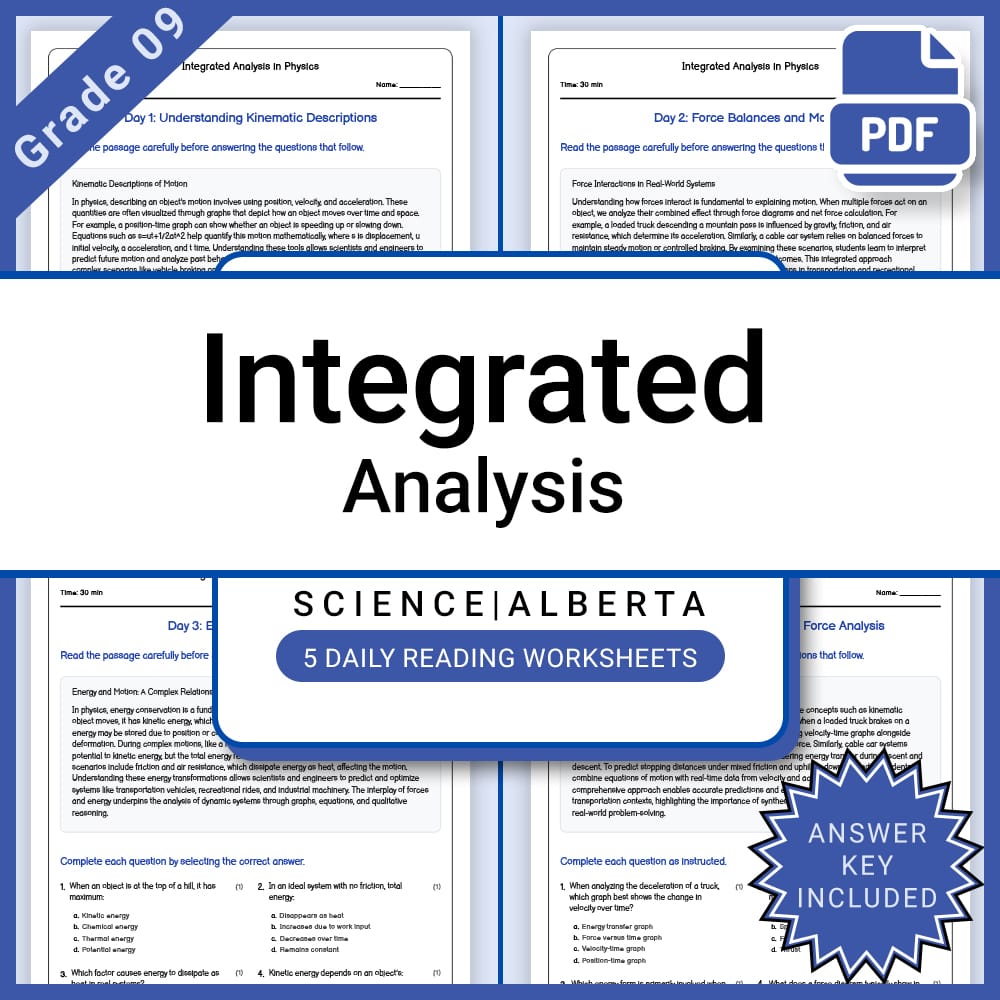
Grade 9 Science – Integrated Analysis in Physics Worksheet + Answer Key
JCreated byJ.S SheetsLearning Objectives
- Understand the fundamentals of kinematic descriptions through graphs and equations.
- Apply force balance principles to analyze complex motion scenarios.
- Integrate energy considerations with motion analysis for comprehensive explanations.
Also included in: Grade 9 Science Lesson Bundle | Physics and Motion Worksheets +1 more
Instant download
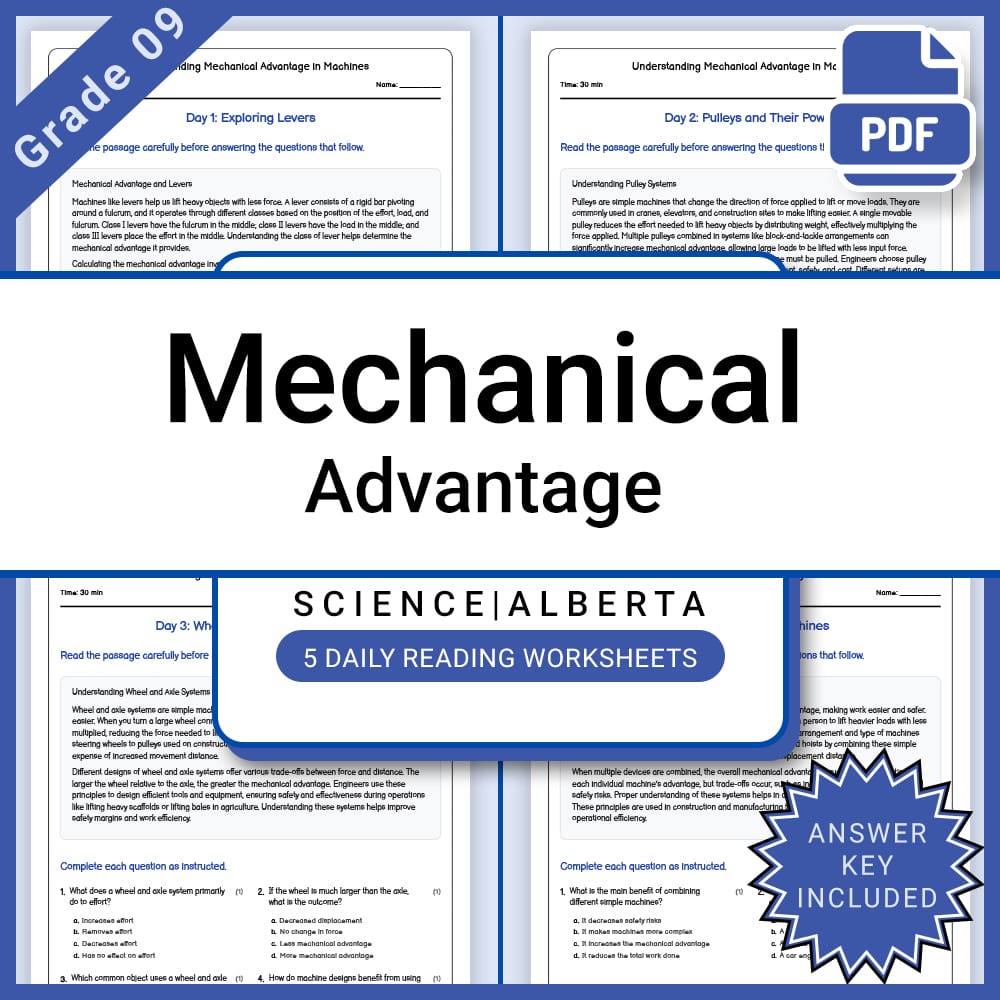
Grade 9 – Mechanical Advantage in Machines Daily Worksheet with Answer Key
JCreated byJ.S SheetsLearning Objectives
- Define mechanical advantage and explain its importance in machinery.
- Identify different classes of levers and how they relate to mechanical advantage.
- Calculate mechanical advantage ratios for various simple machines.
Also included in: Grade 9 Science Lesson Bundle | Physics and Motion Worksheets +1 more
Instant download
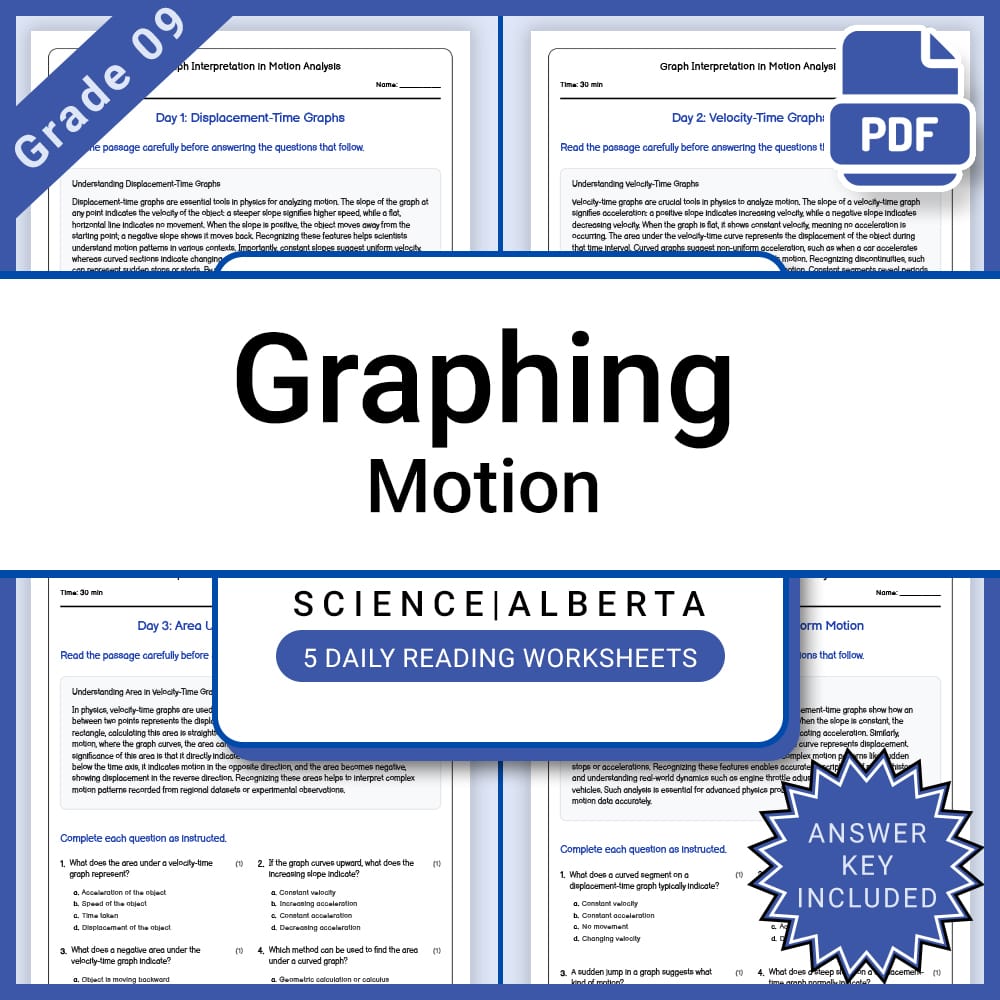
Grade 9 Science – Graphing Motion Daily Reading Worksheet with Answer Key
JCreated byJ.S SheetsLearning Objectives
- Understand the basics of displacement-time graphs
- Interpret the slope of displacement-time graphs to determine speed
- Recognize different segments indicating uniform and changing motion
Also included in: Grade 9 Science Lesson Bundle | Physics and Motion Worksheets +1 more
Instant download
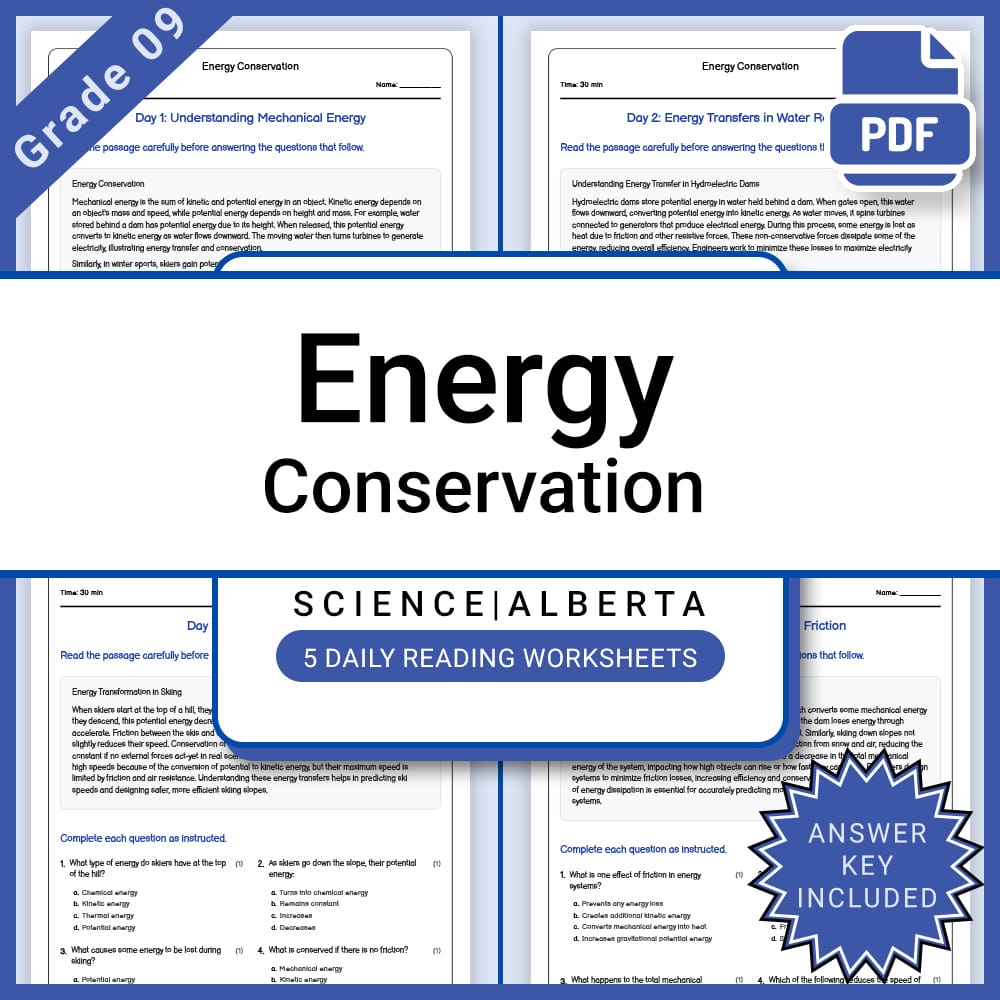
Grade 9 Science – Energy Conservation Daily Reading Worksheet + Answer Key
JCreated byJ.S SheetsLearning Objectives
- Understand the concepts of kinetic and potential energy
- Identify examples of energy transfer in real-world scenarios
- Explain how energy conservation applies to different situations
Also included in: Grade 9 Science Lesson Bundle | Physics and Motion Worksheets +1 more
Instant download
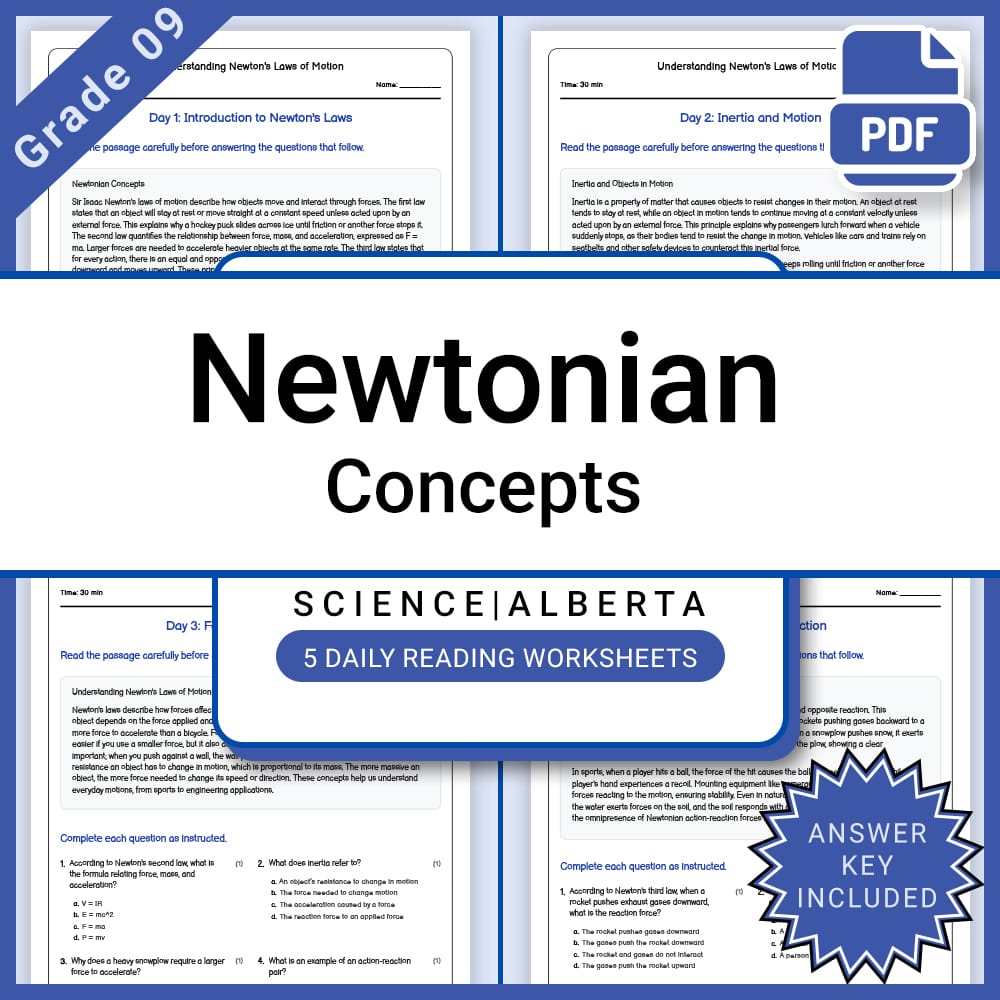
Grade 9 Science – Newton's Laws Daily Reading Worksheet + Answer Key
JCreated byJ.S SheetsLearning Objectives
- Identify the three laws of motion developed by Sir Isaac Newton.
- Explain how forces influence the movement of objects.
- Apply Newtonian principles to real-world situations such as transportation and structural stability.
Also included in: Grade 9 Science Lesson Bundle | Physics and Motion Worksheets +1 more
Instant download
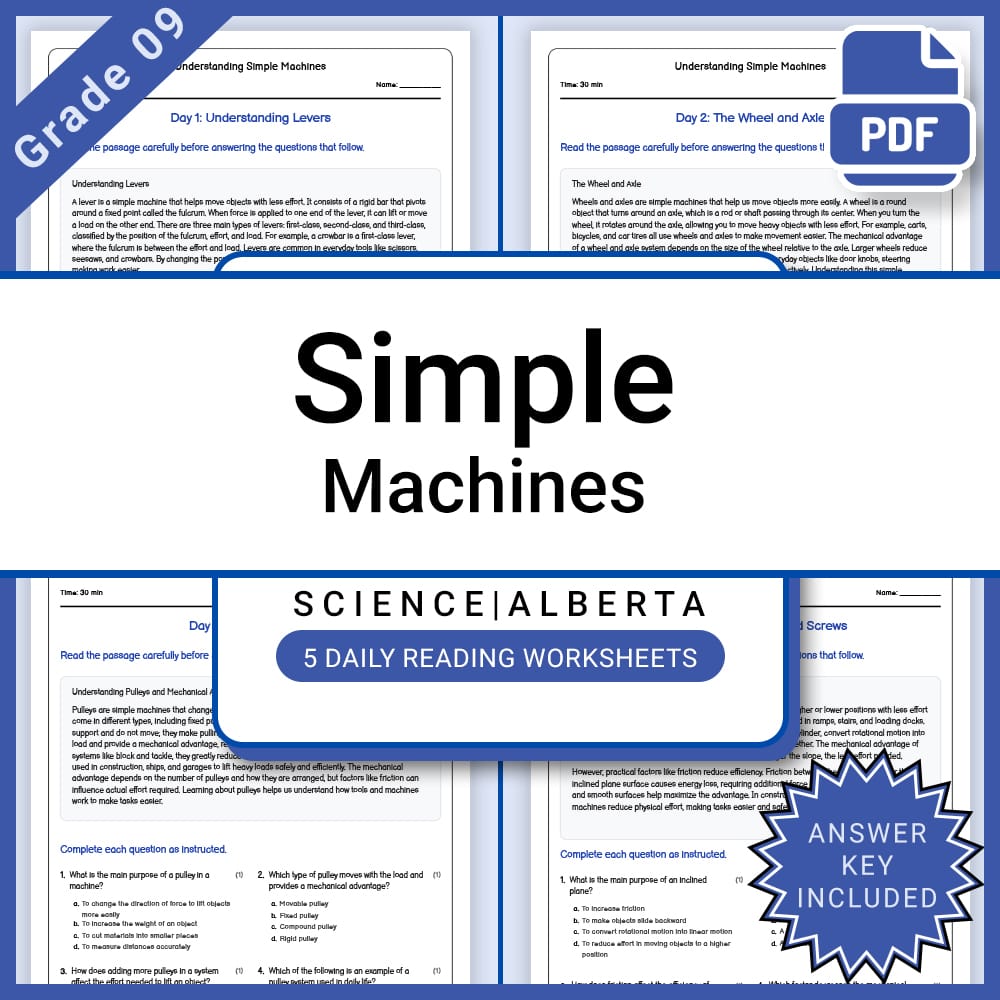
Grade 9 Science – Simple Machines Daily Reading Worksheet + Answer Key
JCreated byJ.S SheetsLearning Objectives
- Describe the parts and operation of a lever.
- Identify different types of simple machines.
- Explain how simple machines reduce effort and change direction.
Also included in: Grade 9 Science Lesson Bundle | Physics and Motion Worksheets +1 more
Instant download
Grade 9 Science – Work and Machines Daily Reading Worksheet with Answer Key
JCreated byJ.S SheetsLearning Objectives
- Understand key concepts related to Science
- Apply knowledge through practice questions
- Demonstrate comprehension of the material
Also included in: Grade 9 Science Lesson Bundle | Physics and Motion Worksheets +1 more
Instant download

Grade 9 Science – Friction and Drag Daily Reading Worksheet + Answer Key
JCreated byJ.S SheetsLearning Objectives
- Understand the concept of friction and how surface texture influences it.
- Identify everyday examples of friction and drag.
- Explain how friction and drag affect the performance of vehicles and objects.
Also included in: Grade 9 Science Lesson Bundle | Physics and Motion Worksheets +1 more
Instant download

Grade 9 Science – Net Force Daily Reading Worksheet + Answer Key
JCreated byJ.S SheetsLearning Objectives
- Define net force and explain its role in motion.
- Describe how vector addition determines the resultant force.
- Identify factors influencing net force in practical scenarios.
Also included in: Grade 9 Science Lesson Bundle | Physics and Motion Worksheets +1 more
Instant download

Grade 7 Equilibrium Forces Worksheet | NGSS Science Activity Pack
 Created byAmber Owl Education
Learning Objectives
- Explain equilibrium as the condition where the vector sum of forces equals zero
- Differentiate static equilibrium from dynamic equilibrium using acceleration and velocity
- Analyze forces such as weight, normal force, and tension to predict an object’s motion
Also included in: Grade 7 Science Forces and Motion Lesson Bundle – NGSS Worksheets +1 more
Instant download

Rock Cycle Worksheet Grade 7 NGSS | Igneous Sedimentary Metamorphic
Created byAmber Owl EducationLearning Objectives
- Explain how igneous, sedimentary, and metamorphic rocks transform through the rock cycle.
- Describe key energy-driven processes (melting, crystallization, burial, metamorphism, and weathering).
- Trace a material pathway using examples from subduction zones and mid-ocean ridges.
Also included in: Earth's Systems Lesson Bundle | Grade 7 Science | Next-Gen Science Standards +1 more
Instant download

Surface Processes Worksheet Grade 7 NGSS | Weathering & Erosion
Created byAmber Owl EducationLearning Objectives
- Explain how weathering, erosion, transport, and deposition change Earth’s surface across short and long timescales
- Compare mechanical vs. chemical weathering and identify agent-specific evidence in landscapes
- Describe how moving water, waves, and glaciers create characteristic landforms and sediment deposits
Also included in: Earth's Systems Lesson Bundle | Grade 7 Science | Next-Gen Science Standards +1 more
Instant download

Population Impacts Worksheet | Grade 7 NGSS Human Impact Activity
Created byAmber Owl EducationLearning Objectives
- Explain how population growth and per-capita consumption increase demand for water, energy, land, and raw materials
- Describe how these demands can change ecosystems, biodiversity, and resource cycles
- Use quantitative ideas (cause-and-effect links) to compare environmental pressures across regions
Also included in: Grade 7 Science Human Impacts and Climate Interactions Lesson Bundle – NGSS +1 more
Instant download

Grade 7 Human Impacts Worksheet | NGSS Ecosystems & Environmental Change
Created byAmber Owl EducationLearning Objectives
- Identify common human activities that affect ecosystems (deforestation, urban expansion, agriculture, groundwater use, and fossil-fuel emissions).
- Use evidence from water-quality, air-quality, and ecological indicators to describe impacts and trends.
- Explain how mitigation strategies can reduce harm while considering trade-offs and resilience.
Also included in: Grade 7 Science Human Impacts and Climate Interactions Lesson Bundle – NGSS +1 more
Instant download

Grade 7 Cell Structures Worksheet | Plant & Animal Cells NGSS
Created byAmber Owl EducationLearning Objectives
- Identify major organelles in plant and animal eukaryotic cells and describe what each organelle does.
- Explain how cell structures support key processes such as transport, synthesis, and compartmentalization.
- Compare plant vs. animal cell organization using structural features (e.g., chloroplasts and lysosome vs. central vacuole and chloroplasts).
Also included in: Grade 7 Science Matter Cycling & Energy Transformations Lesson Bundle | NGSS +1 more
Instant download

Grade 7 Collisions Worksheet | Momentum & Conservation of Momentum
Created byAmber Owl EducationLearning Objectives
- Explain how momentum depends on mass and velocity and how momentum transfers during collisions.
- Use conservation of momentum to predict motion after one-dimensional impacts.
- Differentiate elastic and inelastic collisions using changes in kinetic energy and the meaning of “equal and opposite” contact forces.
Also included in: Grade 7 Science Forces and Motion Lesson Bundle – NGSS Worksheets +1 more
Instant download

Cell Evidence Worksheet | Grade 7 Science NGSS Cells & Microscopy
Created byAmber Owl EducationLearning Objectives
- Use microscopy observations to explain how cells provide direct evidence that organisms are made of discrete cellular units
- Compare unicellular and multicellular organization using cell boundaries, tissues, and examples such as onion epidermis and protists
- Interpret cell structures (cell walls, plasma membranes, nuclei, cytoplasm, vacuoles) and connect them to what is seen under a microscope
Also included in: Grade 7 Science Matter Cycling & Energy Transformations Lesson Bundle | NGSS +1 more
Instant download

Water Cycle Worksheet | Grade 7 NGSS Science Activities & Doodle Note
Created byAmber Owl EducationLearning Objectives
- Describe the main processes in the water cycle, including evaporation, condensation, precipitation, infiltration, runoff, and groundwater flow.
- Explain how solar energy and gravity drive movement of water among Earth’s spheres.
- Model how water moves through a river basin and into oceans, and how groundwater contributes to springs.
Also included in: Earth's Systems Lesson Bundle | Grade 7 Science | Next-Gen Science Standards +1 more
Instant download

Grade 7 Interactions Worksheet | NGSS Forces at a Distance Activity
Created byAmber Owl EducationLearning Objectives
- Explain how gravity, electric, and magnetic forces can act over a distance without direct contact.
- Describe how mass and distance qualitatively affect gravitational attraction.
- Identify examples of attractive and repulsive electromagnetic interactions using everyday situations.
Also included in: Grade 7 Science Forces and Motion Lesson Bundle – NGSS Worksheets +1 more
Instant download

Synthetic Materials Science Worksheet | Grade 7 NGSS Activity Pack
Created byAmber Owl EducationLearning Objectives
- Explain how synthetic materials can be produced from natural resources through feedstock selection, polymerization, and refining steps.
- Describe how chemical composition changes can affect material functions such as strength, flexibility, and melting behavior.
- Compare benefits and trade-offs of synthetic materials, including durability, recyclability, and environmental impacts.
Also included in: Grade 7 Science Stoichiometry, Mixtures & Material Properties Lesson Bundle | NGSS +1 more
Instant download
Browse more categories
About Science Worksheets
Find Science worksheets spanning core skills, practice, and review. All 44,376 resources are instant PDF downloads for the classroom or home.
Every worksheet on MyTeachingSheets is created by independent teacher-authors and reviewed before publication. All resources download as printable PDFs for classroom, homework, or at-home practice, and many include answer keys. Preview any worksheet free before buying.