
Science Worksheets
44,538 subject resources
Grade 11 Science | Energy Changes In Reactions Worksheet | General Standards
 Created byLumora Learning
Learning Objectives
- Explain conservation of energy in chemical and physical changes by describing energy transfer between a system and its surroundings
- Identify endothermic and exothermic reactions using energy changes (ΔE/ΔH) and energy diagram trends
- Use energy diagrams to interpret the direction and magnitude of energy transfer and connect them to heat flow
Instant download

Grade 11 Science | Detector Imaging - Daily Reading Comprehension
 Created byCoral Reef Learning
Learning Objectives
- Understand the basic principles of electromagnetic detection.
- Identify different types of detectors used in imaging across UV, visible, IR, and X-ray bands.
- Analyze how detector measurements are used to interpret electromagnetic wave interactions with matter.
Instant download
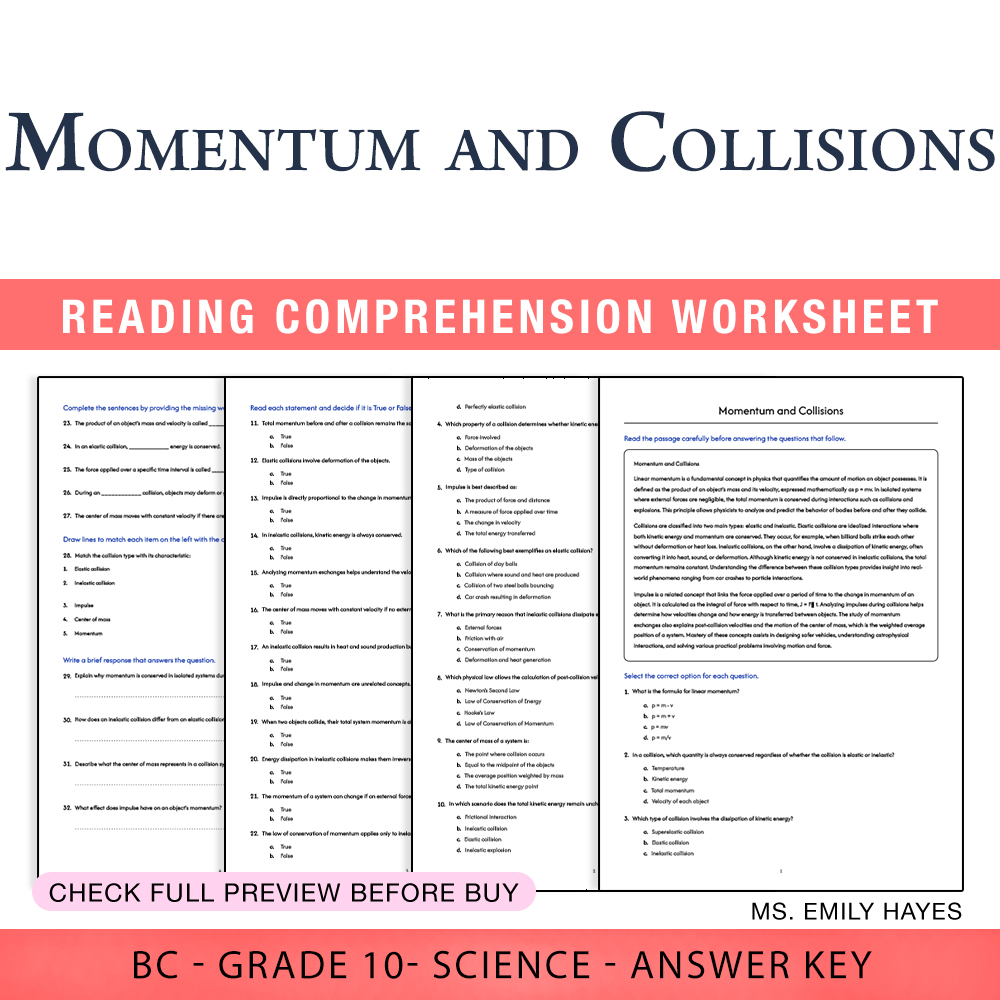
10th Grade Science | Momentum and Collisions Worksheet (PDF+ Answer Key)
 Created byCopper Leaf Classroom
Learning Objectives
- Understand the concept of linear momentum and its conservation in collisions.
- Distinguish between elastic and inelastic collisions and their characteristics.
- Explain the relationship between impulse, force, and change in momentum.
Also included in: Grade 10 Science BC | Forces, Motion & Fields Worksheets (PDF + Answer Key) +1 more
Instant download

Grade 11 Science | Organelle Pathways in Cells - Daily Reading Comprehension
Created byCoral Reef LearningLearning Objectives
- Understand the main functions of cell organelles involved in intracellular trafficking.
- Identify the pathways proteins follow from synthesis to secretion or degradation.
- Describe the roles of the endoplasmic reticulum, Golgi apparatus, lysosomes, peroxisomes, mitochondria, and chloroplasts.
Instant download

Natural Selection Test Prep Printables | Grade 8 Science
 Created byPrism Point Learning
Learning Objectives
- Explain how heritable variation and environmental pressures affect differential survival and reproduction in populations.
- Use trait-frequency changes over generations to describe adaptive evolution through natural selection.
- Distinguish between selective agents (e.g., predators, disease, antibiotics) and traits that may be favored.
Also included in: Grade 8 Speciation & Natural Selection Science Lesson Bundle (NGSS)
Instant download

Grade 8 Cell Structure Worksheet | NGSS Practice & PDF
 Created byClear Sky Classroom
Learning Objectives
- Describe the key organelles of cells and their functions.
- Compare prokaryotic and eukaryotic cells in structure and organization.
- Identify differences between single-celled and multicellular organisms.
Also included in: Grade 8 Cell Modeling & Organ Systems Science Lesson Bundle | NGSS +1 more
Instant download

Energy Transformations Worksheet | NGSS Grade 7 Science Practice
JCreated byJ.S SheetsLearning Objectives
- Explain how light energy is converted into chemical energy during photosynthesis.
- Describe the process of cellular respiration and how organisms harvest energy from food.
- Connect the roles of chloroplasts and mitochondria in energy transfer within cells.
Also included in: Grade 7 Cellular and Organ Systems Science Lesson Bundle: NGSS Practice +1 more
Instant download
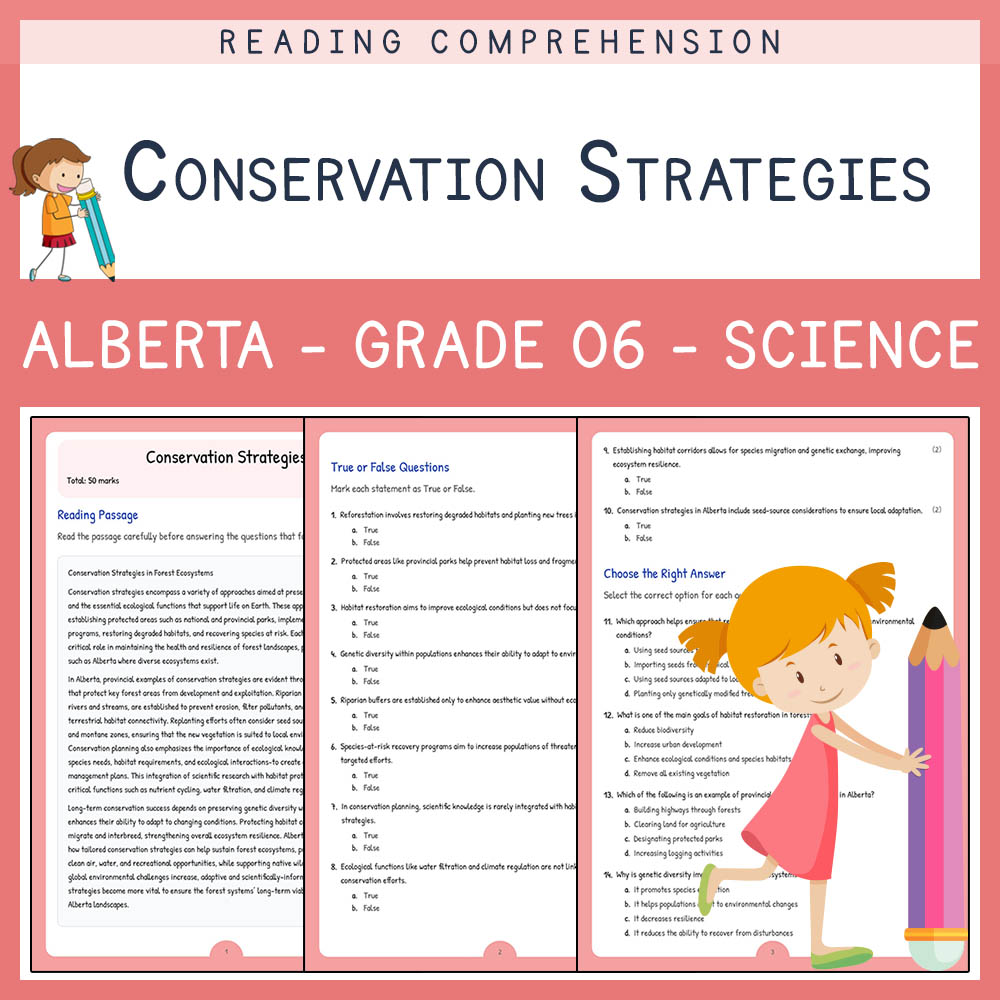
Grade 6 Science Assessment | Conservation Strategies Worksheet | Alberta
Created byLumora LearningLearning Objectives
- Understand different conservation strategies used to maintain forest biodiversity and ecosystems.
- Identify examples of provincial conservation efforts such as protected areas and reforestation.
- Learn how habitat protection and ecological knowledge are integrated in conservation planning.
Instant download
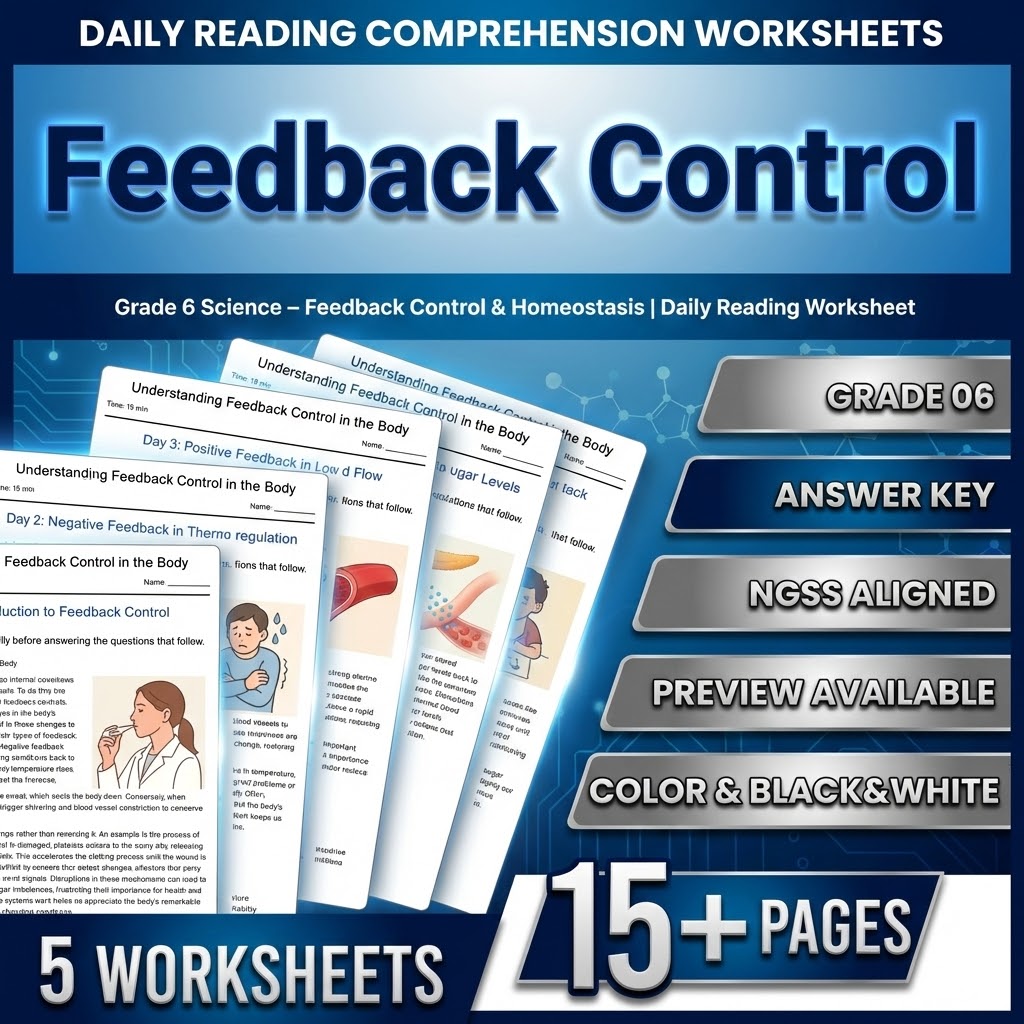
Grade 6 Science – Feedback Control & Homeostasis | Daily Reading Worksheet
 Created byElena Brooks
Learning Objectives
- Define feedback control mechanisms involved in maintaining internal stability.
- Describe the difference between negative and positive feedback.
- Identify examples of feedback control such as temperature regulation and blood sugar regulation.
Also included in: Grade 6 Science From Molecules to Organisms Worksheet Bundle | NGSS +1 more
Instant download

Grade 8 Science Worksheet | Collision Forces & Impact Concepts (PDF)
 Created bySilver Birch Teaching
Learning Objectives
- Explain how collision forces depend on both force magnitude and contact time (duration).
- Describe how collisions change an object's motion and what impulse-like interactions mean.
- Relate structural deformation and safety design to energy absorption during collisions.
Also included in: Grade 8 Forces, Motion, and Energy Science Lesson Bundle for Alberta +1 more
Instant download
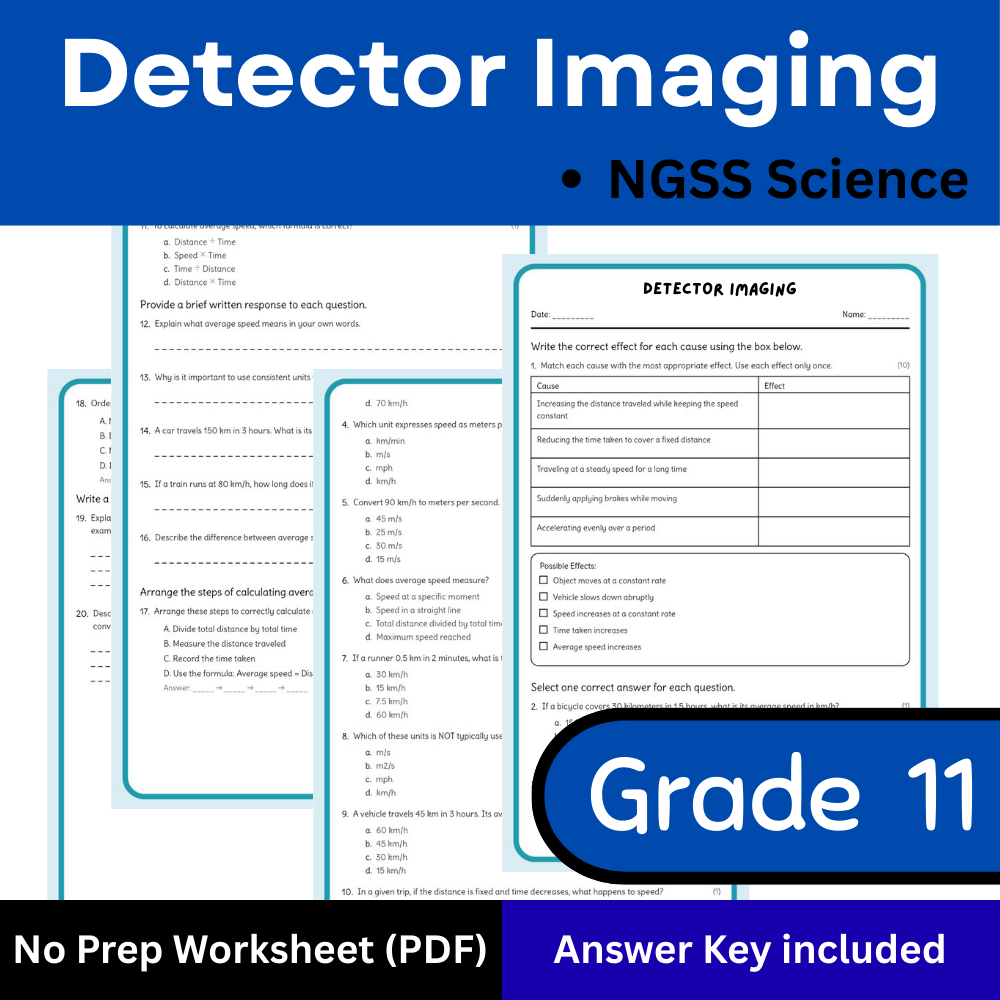
Grade 11 Science – Detector Imaging Worksheet (PDF) | NGSS Aligned Practice
 Created byBright Mind Resources
Learning Objectives
- Analyze how different electromagnetic frequencies are absorbed by matter through detector measurements.
- Evaluate the reliability and limitations of calibration and instruments across UV, visible, IR, and X-ray bands.
- Understand the response of CCDs and photodiodes in different spectrums and assess measurement uncertainties.
Instant download
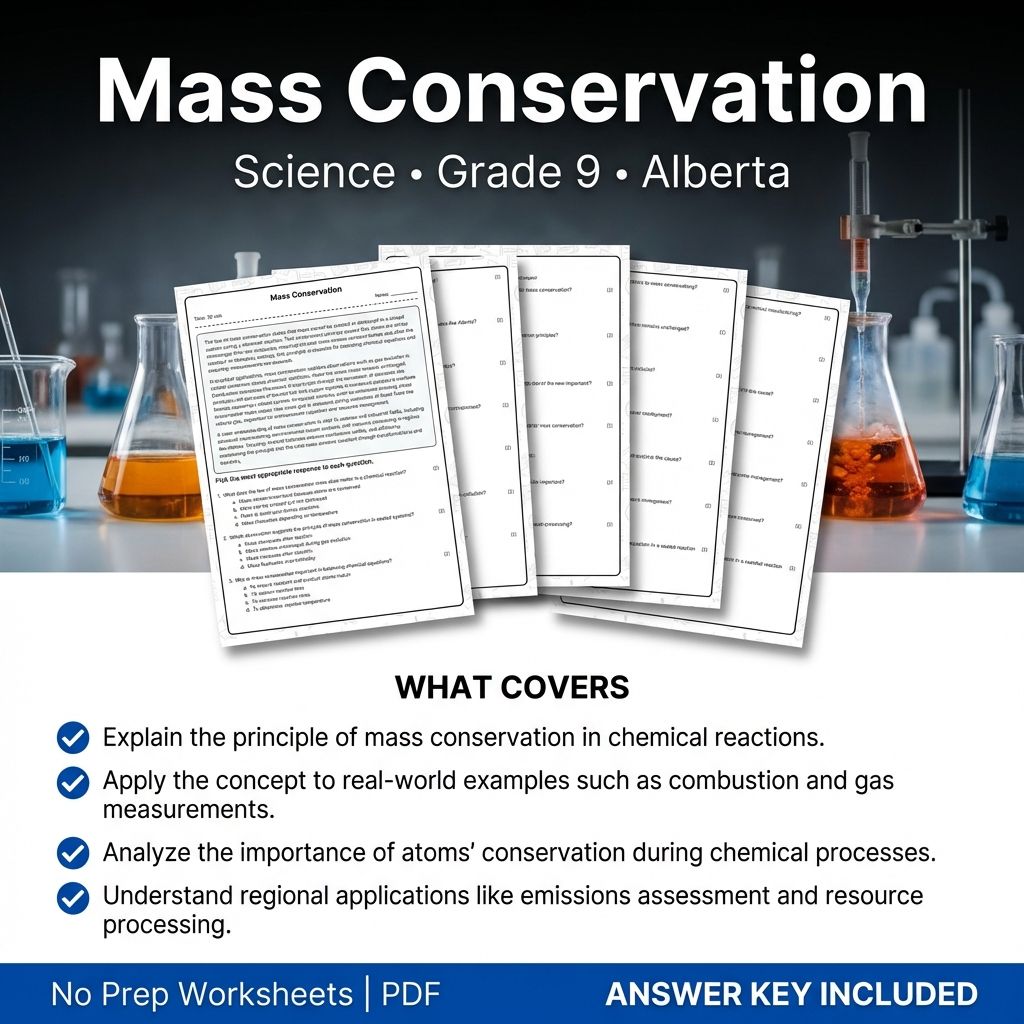
Mass Conservation Worksheet | Science Practice for Grade 9 Alberta Standards
Created byCoral Reef LearningLearning Objectives
- Explain the principle of mass conservation in chemical reactions.
- Apply the concept to real-world examples such as combustion and gas measurements.
- Analyze the importance of atoms' conservation during chemical processes.
Instant download

Deep Time Processes Assessment | Florida NGSSS Grade 12 Science
Created byPrism Point LearningLearning Objectives
- Explain how weathering, erosion, and deposition shape landscapes over geologic time.
- Describe how plate tectonics and catastrophic events (volcanoes and earthquakes) modify Earth’s surface.
- Use evidence from rocks and landforms to infer relationships between process rate and deep time.
Also included in: Grade 12 Science Assessment Lesson Bundle: Florida NGSSS Standards +1 more
Instant download
6th Grade Science | Surface Change Worksheet + Answer Key | NGSS Aligned
Created byBright Mind ResourcesLearning Objectives
- Describe geologic processes that modify Earth's surface over different time scales.
- Identify evidence such as rock strata and erosion rates that explain landscape evolution.
- Differentiate between rapid events like volcanic eruptions and slow processes like weathering.
Also included in: Grade 6 Science Unit Bundle - Weather, Water Cycle & Climate Systems - NGSS +2 more
Instant download
6th Grade Science | Climate Systems Worksheet (NGSS | Science PDF)
Created byBright Mind ResourcesLearning Objectives
- Explain how uneven solar heating affects global circulation patterns.
- Identify the main atmospheric cells and wind systems in Earth's climate.
- Describe the role of ocean currents in heat and moisture transport.
Also included in: Grade 6 Science Unit Bundle - Weather, Water Cycle & Climate Systems - NGSS +2 more
Instant download
6th Grade Science | System Interactions NGSS Worksheet(PDF) for System Processes
Created byBright Mind ResourcesLearning Objectives
- Describe the coupled interactions among Earth's systems using models of matter and energy transfer.
- Identify feedback mechanisms such as albedo changes, sediment transport, and nutrient movement.
- Explain the flow of energy sources and sinks, including phase change energy transfers.
Also included in: Grade 6 Science Unit Bundle - Weather, Water Cycle & Climate Systems - NGSS +2 more
Instant download
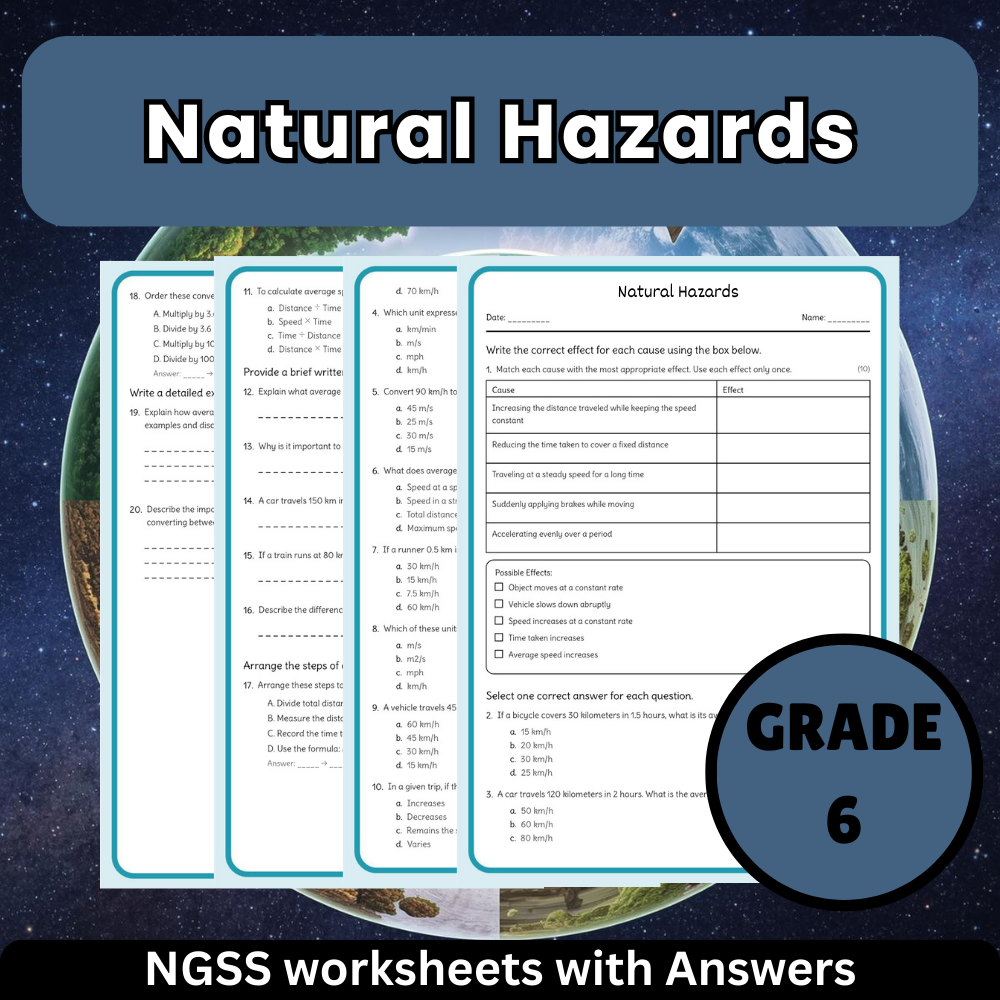
Grade 6 Science | Natural Hazards Worksheet (NGSS-Aligned) with Answer Key
Created byBright Mind ResourcesLearning Objectives
- Analyze observational and instrumental data related to natural hazards.
- Identify patterns and recurrence intervals of hazards such as earthquakes and floods.
- Estimate probable locations and magnitudes of natural hazard events.
Also included in: Grade 6 Science Unit Bundle - Weather, Water Cycle & Climate Systems - NGSS +2 more
Instant download
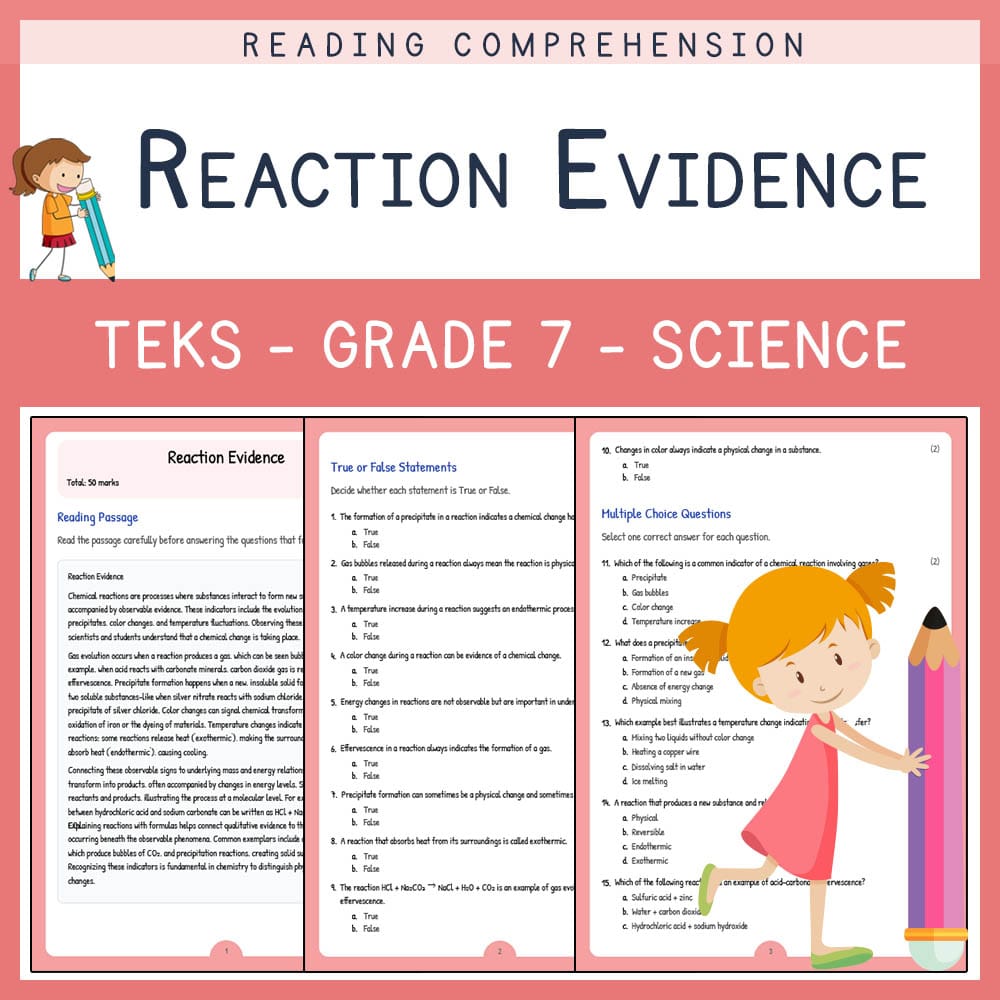
Grade 7 Science | Reaction Evidence Worksheet | TEKS-Aligned
Created byLumora LearningLearning Objectives
- Describe observable indicators of chemical reactions such as gas production, precipitate formation, color change, and temperature change.
- Connect qualitative evidence of chemical reactions to changes in mass and energy.
- Identify common reaction types like acid–carbonate effervescence and precipitation based on observable evidence.
Also included in: Grade 7 Science | Matter and Energy Lesson Bundle | TEKS Aligned
Instant download

Grade 12 Science – Gene Expression & Biotechnology | Daily Reading Worksheet
Created byBright Mind ResourcesLearning Objectives
- Define gene expression and explain its significance in biology.
- Identify key components involved in gene transcription and translation.
- Describe how regulatory elements influence gene activity.
Also included in: Grade 12 Molecular Genetics & Evolution Lesson Bundle Daily Reading | Alberta +1 more
Instant download
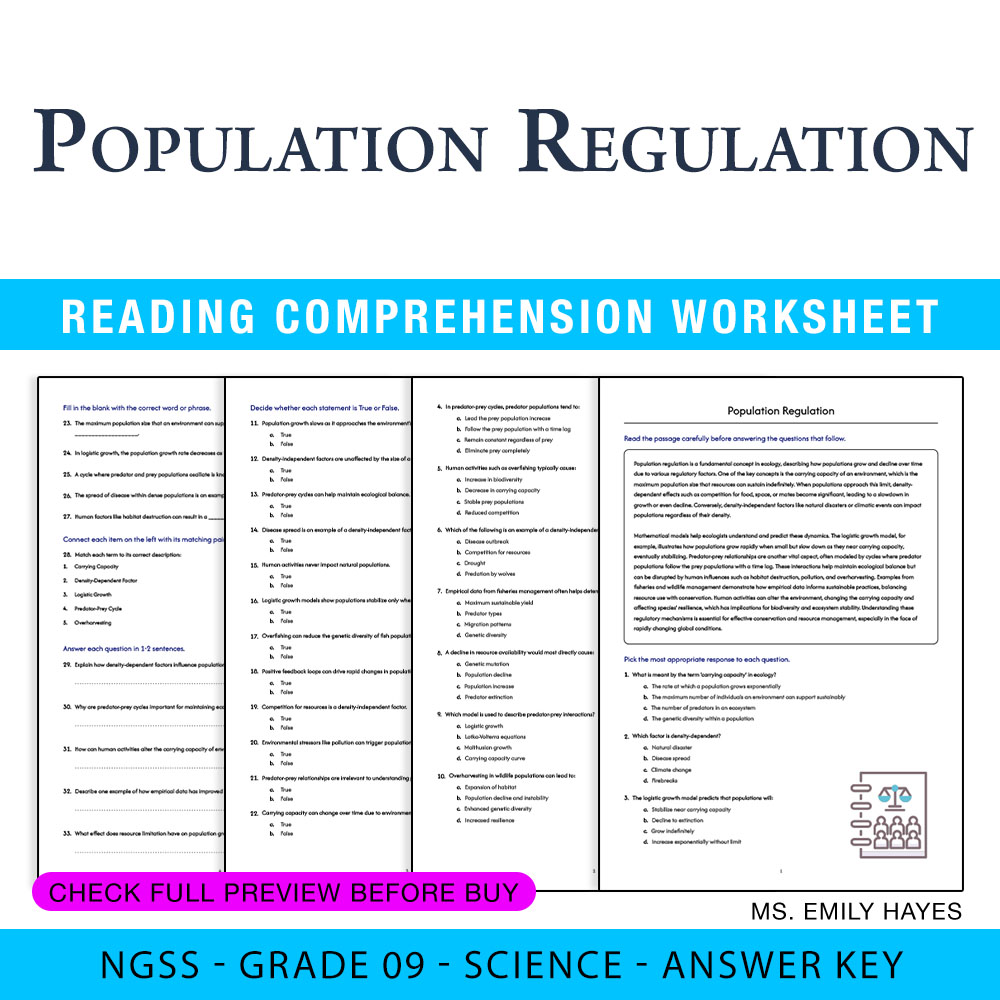
9th Grade Science | Population Regulation Worksheet (PDF+ Answer Key)
Created byCopper Leaf ClassroomLearning Objectives
- Describe factors that influence population sizes, including carrying capacity, competition, predation, and disease.
- Explain mathematical models such as logistic growth and predator-prey cycles in population dynamics.
- Analyze how human activities affect population resilience and ecosystems.
Instant download

Grade 7 Science | Wetland Functions Worksheet (Alberta Standard) (PDF)
 Created byEvergreen Desk Education
Learning Objectives
- Explain how wetlands store and release water that affects regional hydrology.
- Describe how wetlands cycle nutrients and help improve water quality.
- Connect wetland habitats to biodiversity, including amphibians and migratory birds.
Instant download
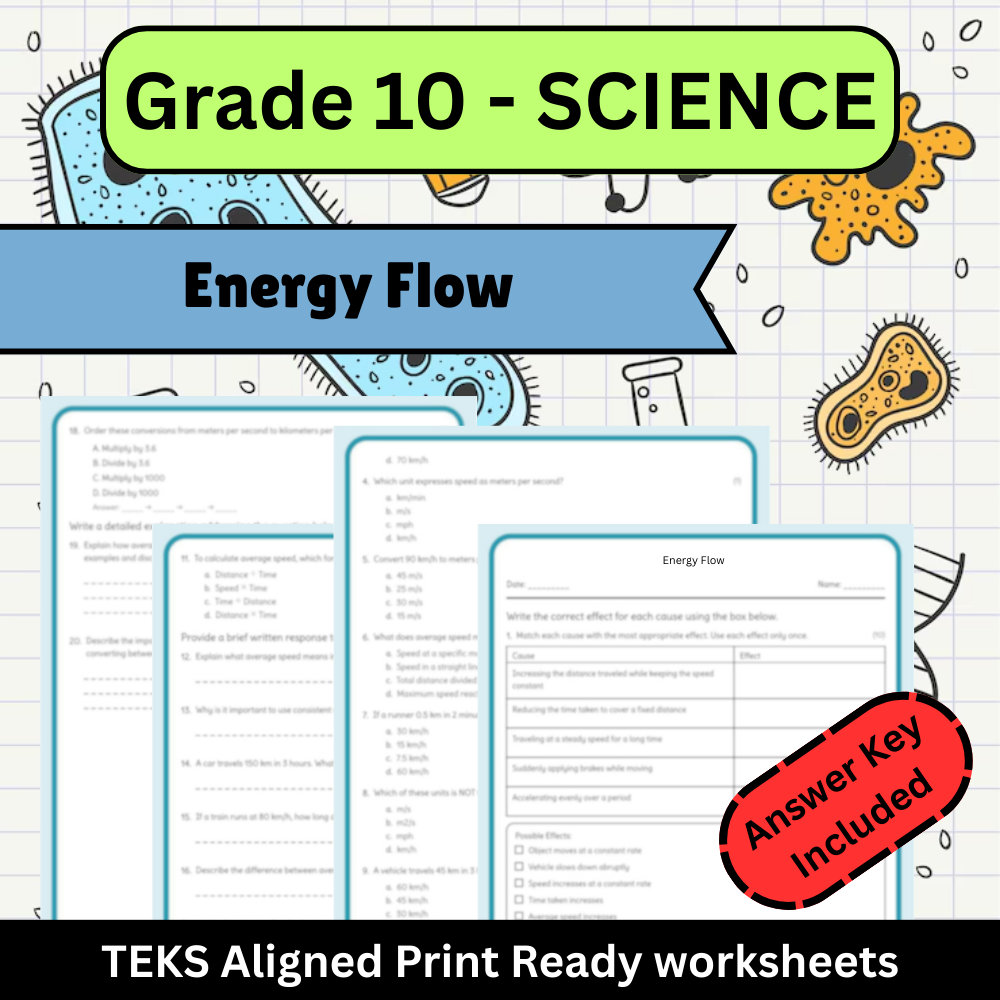
Grade 10 Science | Energy Flow Worksheet (Worksheet + Answer Key) aligned with TEKS
Created byBright Mind ResourcesLearning Objectives
- Describe how energy flows through ecosystems from sunlight to various trophic levels.
- Explain the concept of transfer efficiency and how energy decreases at each level.
- Understand net primary productivity and its significance in ecosystems.
Also included in: Grade 10 Science Unit Bundle – Photosynthesis, Respiration & Energy TEKS +5 more
Instant download
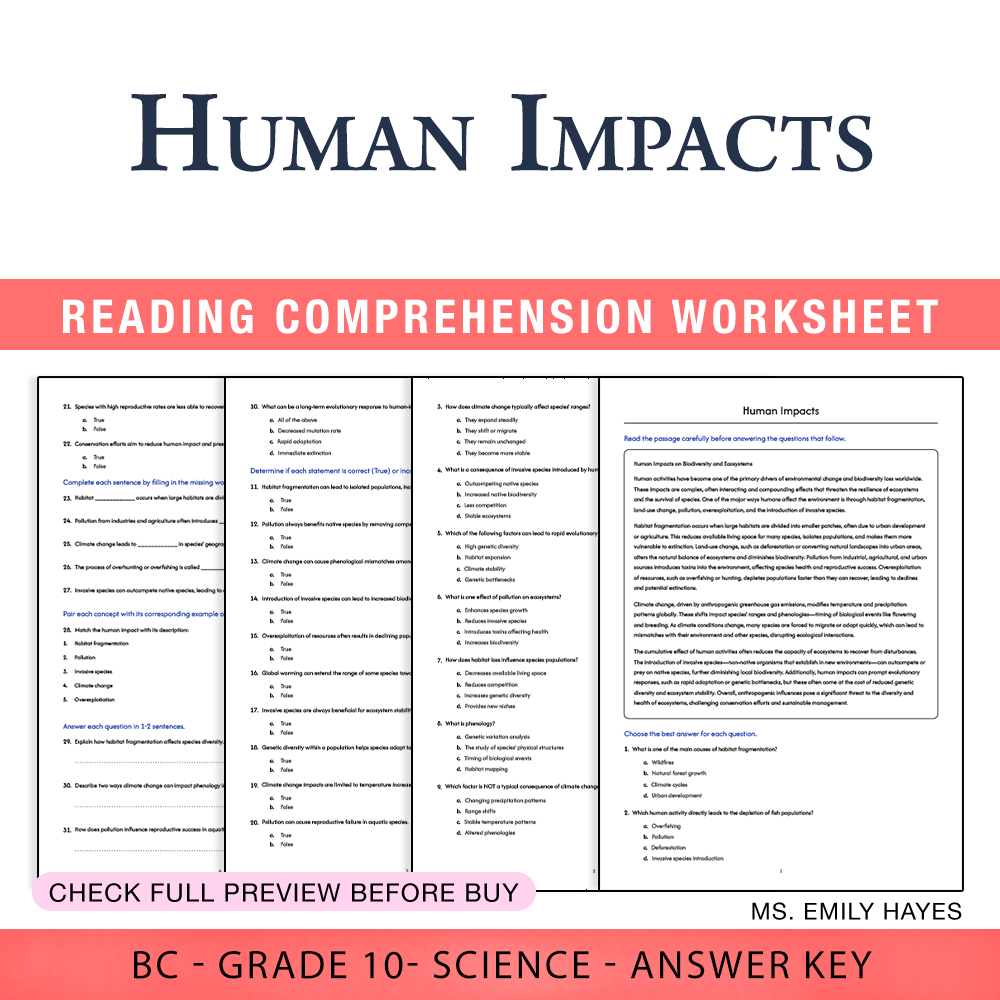
Grade 10 Science | Human Impacts Worksheet (PDF+ Answer Key)
Created byCopper Leaf ClassroomLearning Objectives
- Understand how human activities affect biodiversity and ecosystems.
- Identify the different factors through which human impacts alter the environment.
- Evaluate the effects of climate change on species and ecosystems.
Also included in: Grade 10 Science BC | Evolution, Biodiversity & Ecology (PDF + Answer Key) +1 more
Instant download
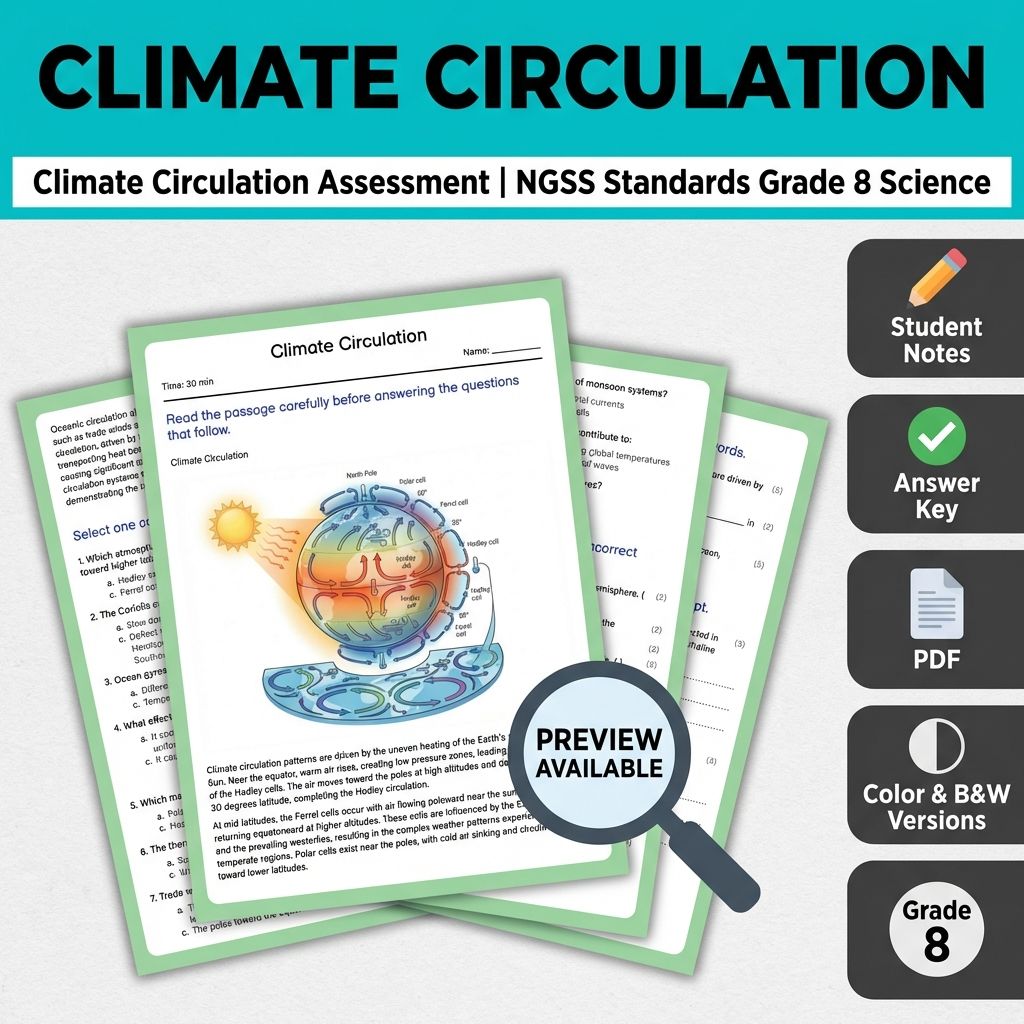
Climate Circulation Assessment | NGSS Standards Grade 8 Science
Created byPrism Point LearningLearning Objectives
- Describe the models of Hadley, Ferrel, and polar cells and their role in atmospheric circulation.
- Explain how planetary rotation affects wind patterns via the Coriolis effect.
- Analyze how oceanic circulation, including gyres and thermohaline circulation, influences regional climates.
Also included in: Grade 8 Science Mini Bundle – Earth's Systems & NGSS Standards-Aligned +1 more
Instant download
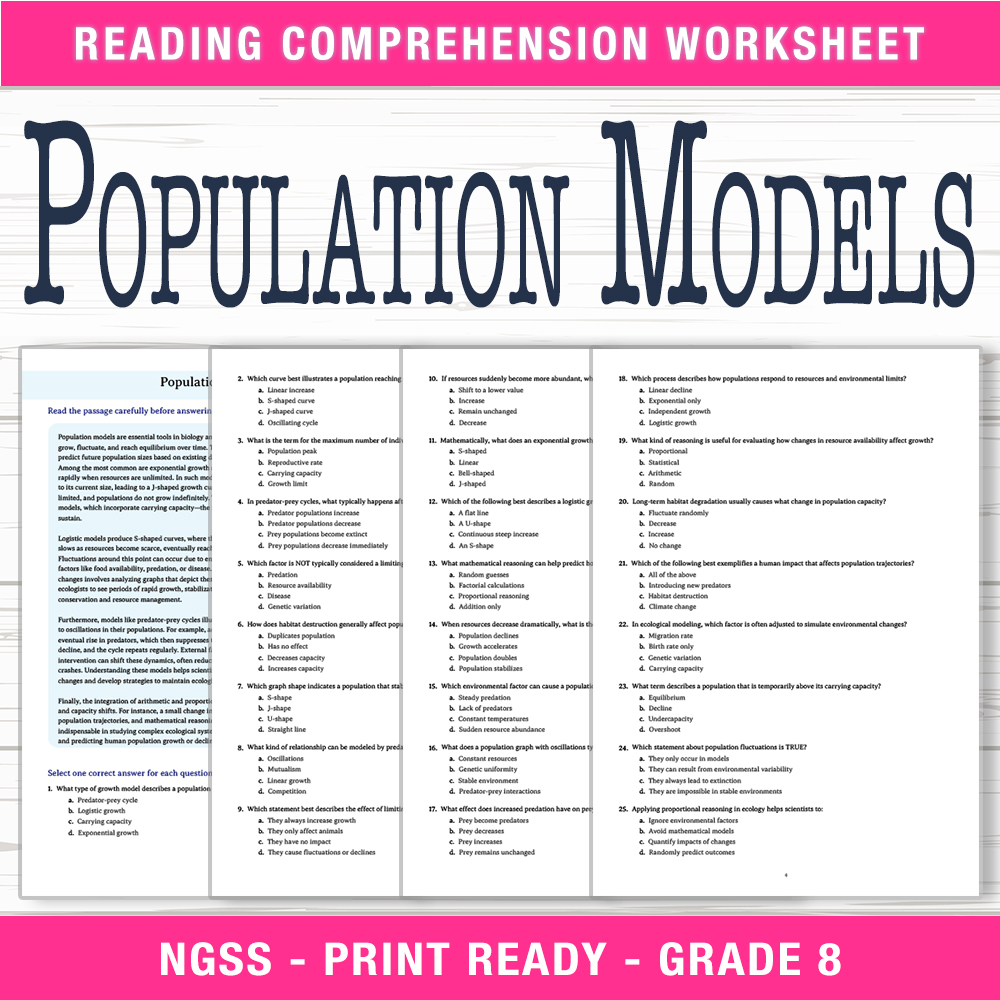
Grade 8 Science | Population Models Worksheet (PDF + Answer Key)
 Created byRiverstone Classroom
Learning Objectives
- Describe different types of population growth models, including exponential and logistic growth.
- Interpret graphs of population dynamics to identify steady states, oscillations, and overshoot scenarios.
- Explain how limiting factors such as resources and predation influence long-term population trajectories.
Instant download
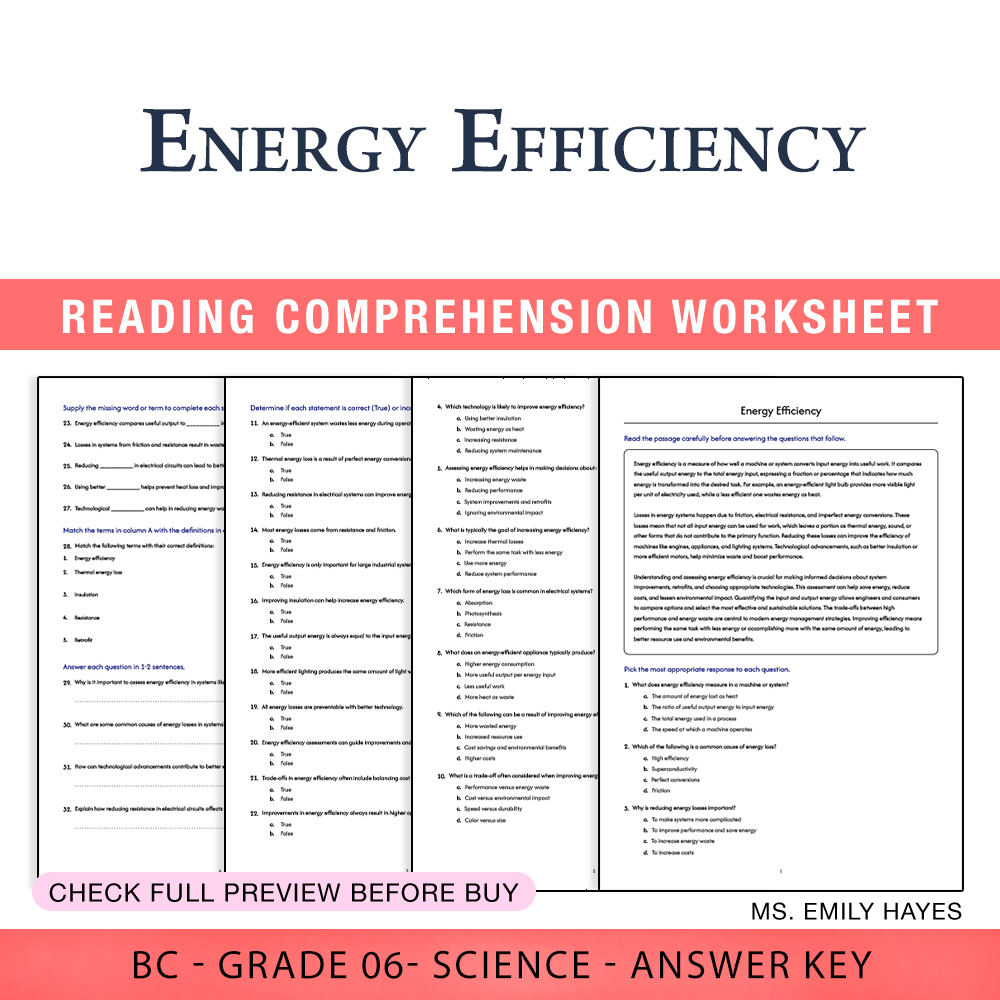
Grade 6 Science | Energy Efficiency Worksheet (PDF+ Answer Key)
Created byCopper Leaf ClassroomLearning Objectives
- Define energy efficiency and explain its importance in systems like machines and lighting.
- Identify common energy losses and understand their causes.
- Calculate the efficiency of a system by comparing useful output to total input energy.
Also included in: Grade 6 Science BC | Waves, Sound, Light & Energy Worksheets (PDF + Answer Key) +1 more
Instant download
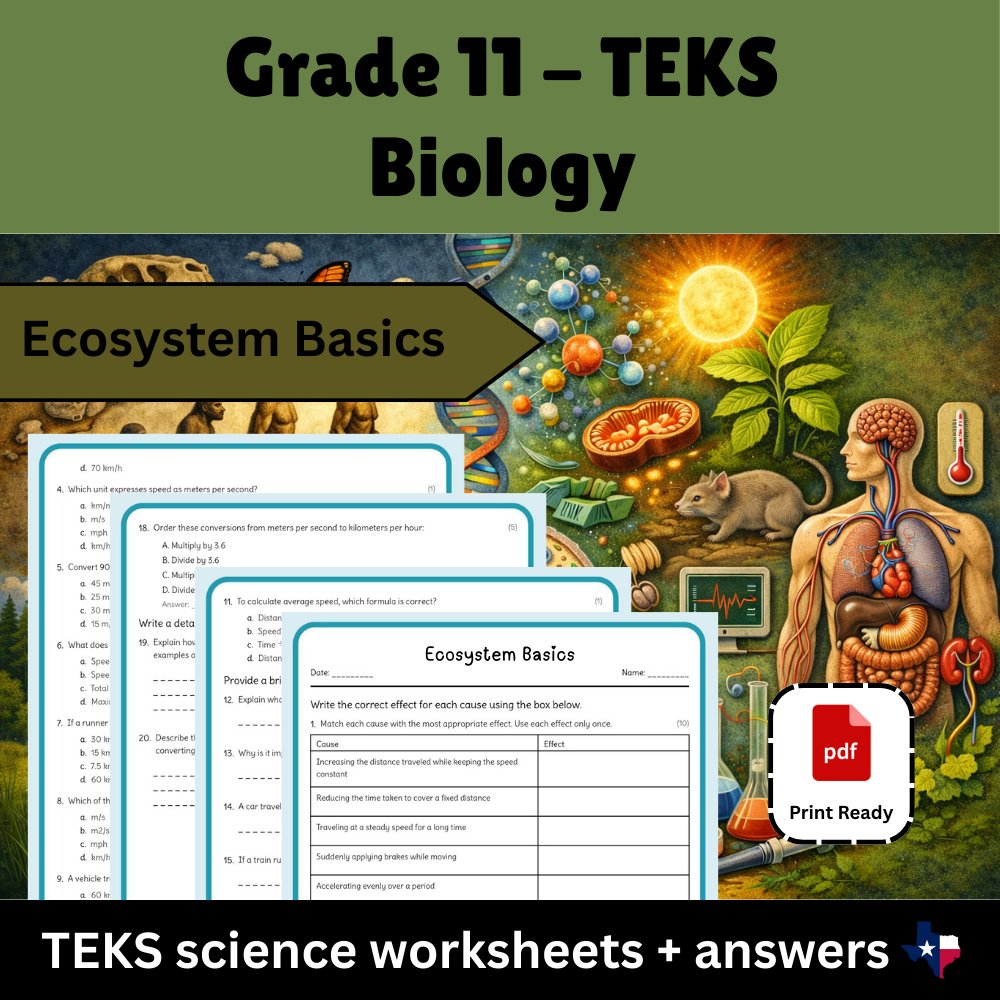
Grade 11 Science | Ecosystem Basics Worksheet (Worksheet + Answer Key) – TEKS-Aligned
Created byBright Mind ResourcesLearning Objectives
- Define the fundamental components of an ecosystem and their interactions.
- Explain how energy flows through food chains and food webs.
- Describe nutrient cycling processes such as carbon and nitrogen cycles.
Also included in: Grade 11 Science - Ecosystem & Biogeochemical Cycles Unit Worksheet Pack - TEKS +2 more
Instant download
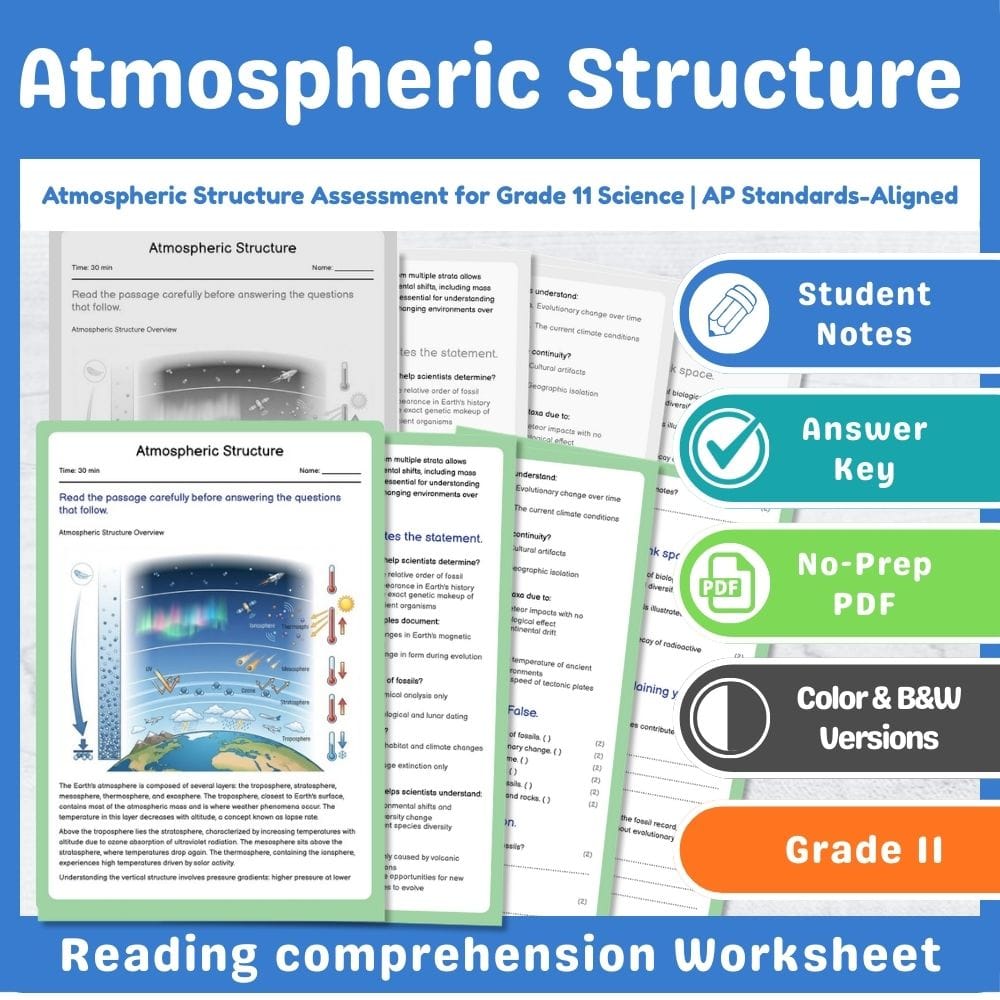
Atmospheric Structure Assessment for Grade 11 Science | AP Standards-Aligned
Created byPrism Point LearningLearning Objectives
- Describe the vertical and horizontal layers of the atmosphere and their characteristics.
- Explain pressure gradients, temperature profiles, and their role in atmospheric circulation.
- Interpret sounding profiles, pressure maps, and radiative diagrams to understand weather patterns.
Also included in: Lesson Grade 11 Science Assessment Bundle | Earth Systems & Climate
Instant download
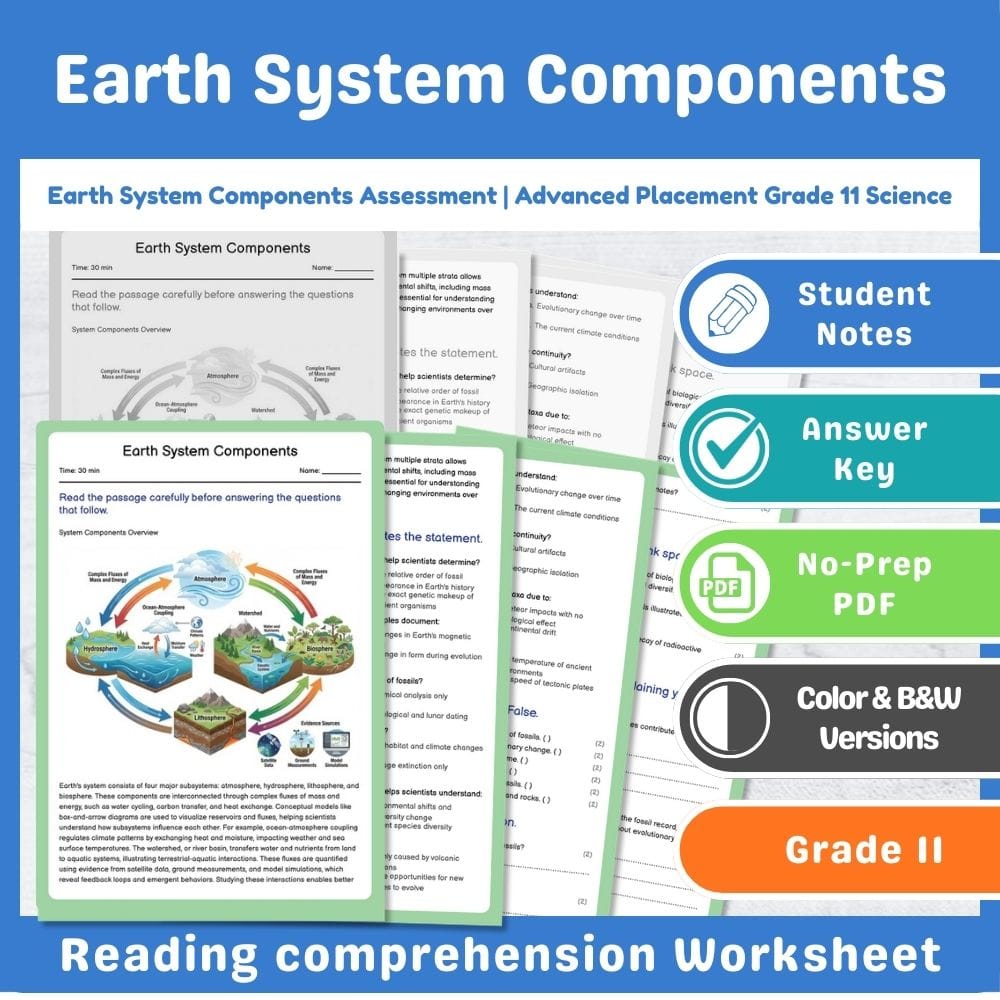
Earth System Components Assessment | Advanced Placement Grade 11 Science
Created byPrism Point LearningLearning Objectives
- Identify the major Earth subsystems and explain their roles and interactions.
- Understand mass and energy fluxes among atmosphere, hydrosphere, lithosphere, and biosphere.
- Use conceptual models to analyze subsystem exchanges and feedback mechanisms.
Also included in: Lesson Grade 11 Science Assessment Bundle | Earth Systems & Climate
Instant download
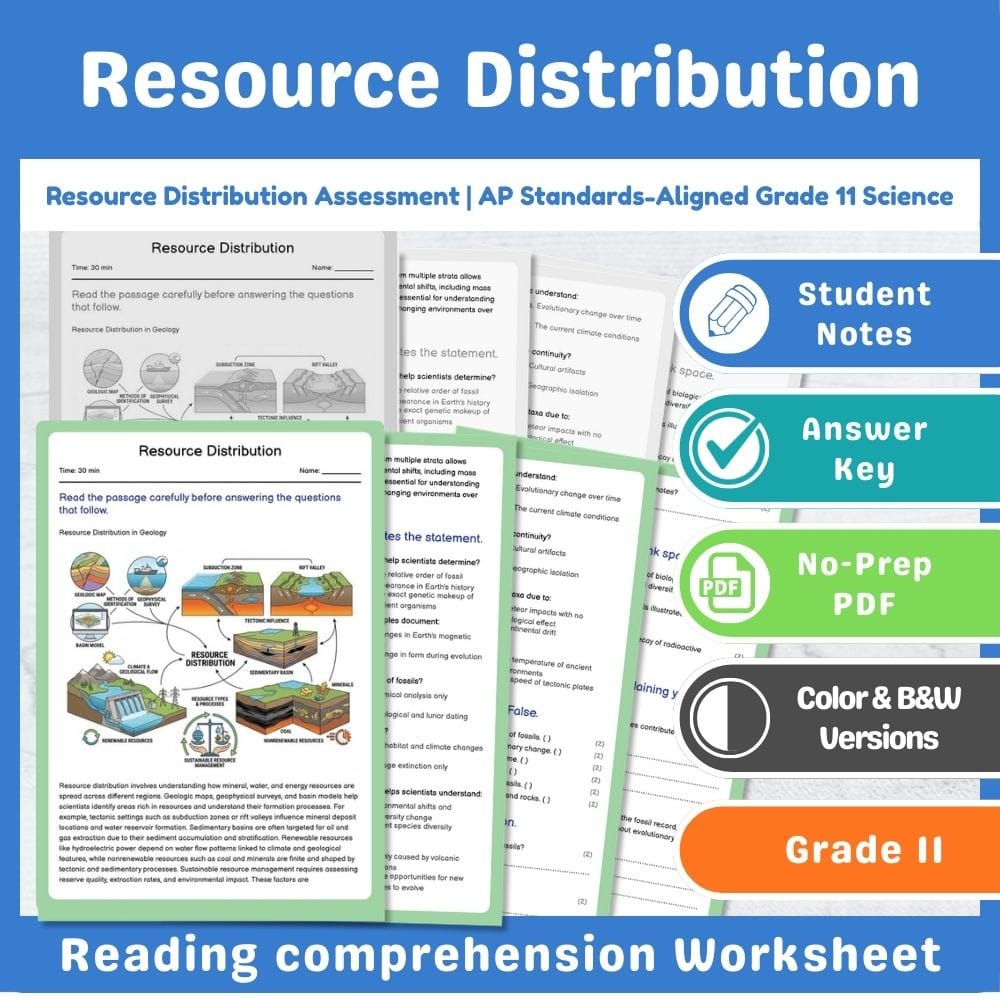
Resource Distribution Assessment | AP Standards-Aligned Grade 11 Science
Created byPrism Point LearningLearning Objectives
- Map and analyze the spatial patterns of mineral, water, and energy resources using various geologic tools.
- Distinguish between renewable and nonrenewable reservoirs and evaluate their sustainability.
- Assess resource occurrence in relation to tectonic setting and sedimentary processes using geologic information.
Also included in: Lesson Grade 11 Science Assessment Bundle | Earth Systems & Climate
Instant download
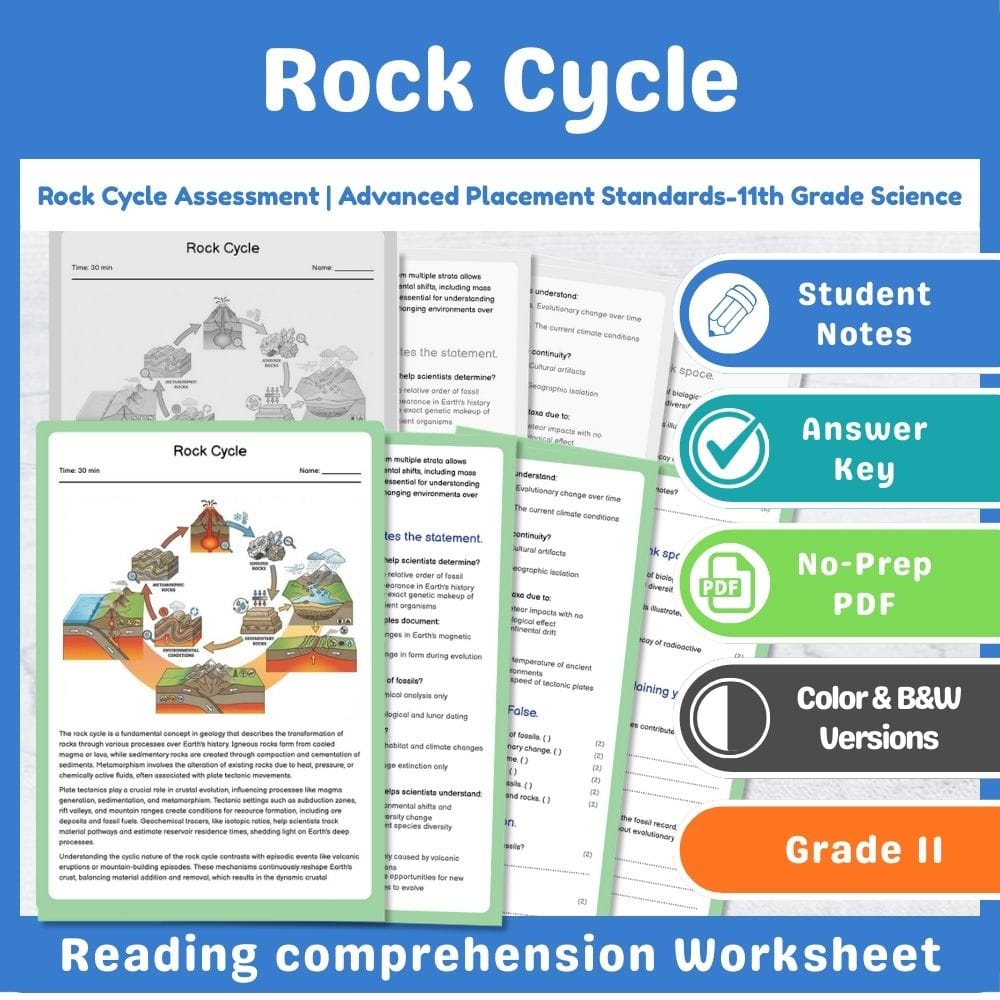
Rock Cycle Assessment | Advanced Placement Standards-Aligned 11th Grade Science
Created byPrism Point LearningLearning Objectives
- Explain the processes of rock formation, metamorphism, and destruction over geologic time.
- Identify the role of plate tectonics in shaping crustal evolution.
- Analyze geochemical tracers and stratigraphic data related to resource formation.
Also included in: Lesson Grade 11 Science Assessment Bundle | Earth Systems & Climate
Instant download
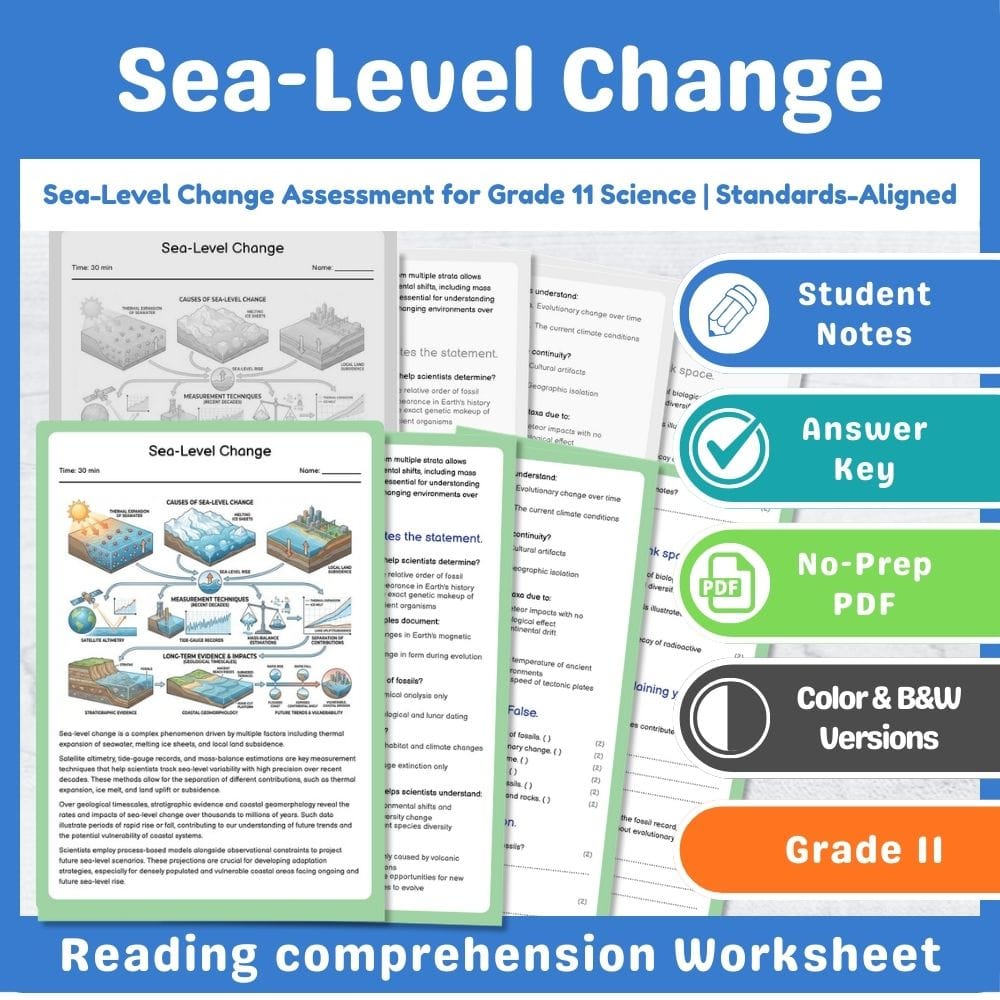
Sea-Level Change Assessment for Grade 11 Science | Standards-Aligned
Created byPrism Point LearningLearning Objectives
- Understand the causes of sea-level variability, including thermal expansion and ice-sheet mass loss.
- Analyze methods used to measure sea-level changes, such as satellite altimetry and tide-gauge records.
- Evaluate the impacts of sea-level change over different timescales using stratigraphic and geomorphological evidence.
Also included in: Lesson Grade 11 Science Assessment Bundle | Earth Systems & Climate
Instant download
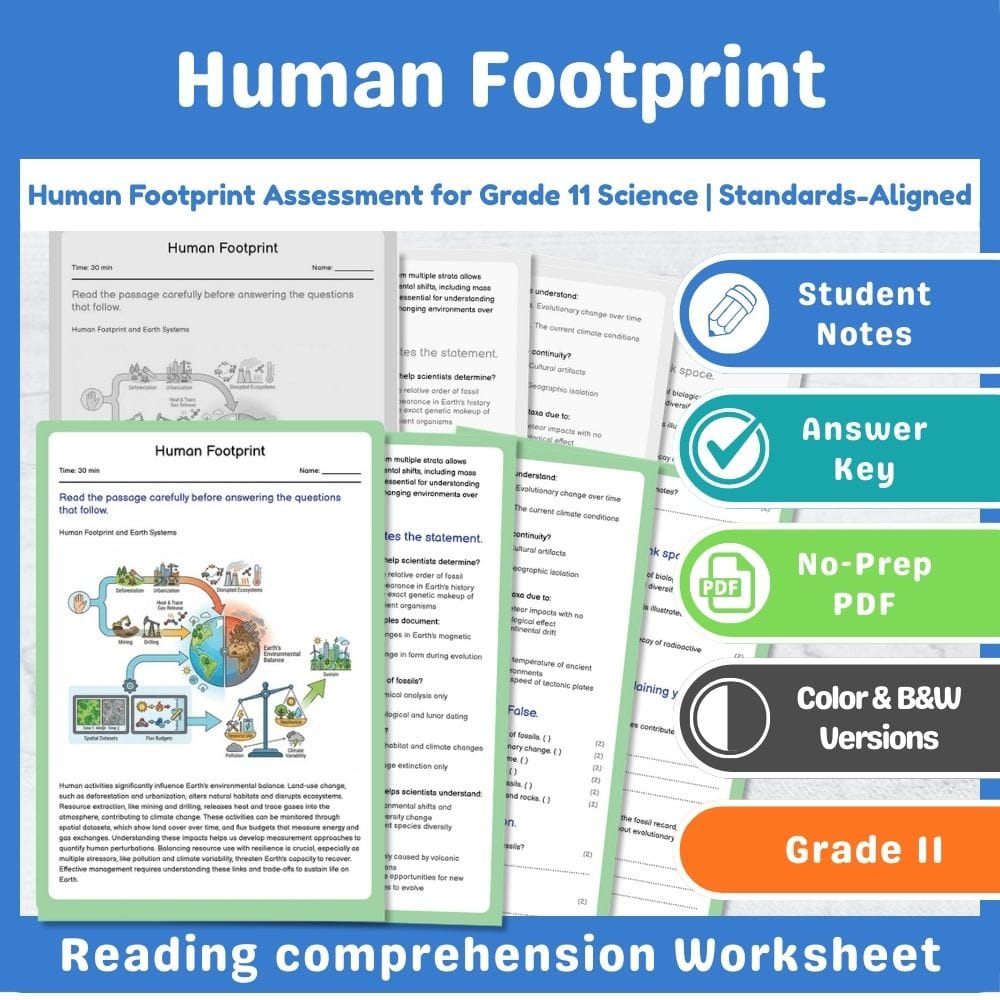
Human Footprint Assessment for Grade 11 Science | Standards-Aligned
Created byPrism Point LearningLearning Objectives
- Understand how human activities alter Earth's systems through land-use change, resource extraction, and emission of gases.
- Analyze spatial datasets and time-series data to identify environmental impacts of human actions.
- Evaluate measurement approaches for quantifying anthropogenic perturbations.
Also included in: Lesson Grade 11 Science Assessment Bundle | Earth Systems & Climate
Instant download

Grade 11 Science – Scientific Methods & Inquiry | Daily Reading Worksheet
Created byBright Mind ResourcesLearning Objectives
- Identify the key steps involved in the scientific method
- Understand the role of measurement technologies in scientific research
- Recognize the importance of hypothesis formulation and variable control
Also included in: Grade 11 Daily Reading & Graphs Science lesson bundle Worksheets | Ontario +1 more
Instant download

Grade 8 Science Excel with Motors and Generators Worksheet (Alberta Standard) (PDF)
Created bySilver Birch TeachingLearning Objectives
- Explain how electric motors convert electrical energy into mechanical motion using magnetic fields and current-carrying conductors
- Describe how generators convert mechanical motion into electrical energy using electromagnetic induction
- Compare key design factors (coil turns, magnetic flux strength, and load) that affect efficiency and power output
Also included in: Grade 8 Electricity & Circuits Science Lesson Bundle: Alberta Framework +1 more
Instant download
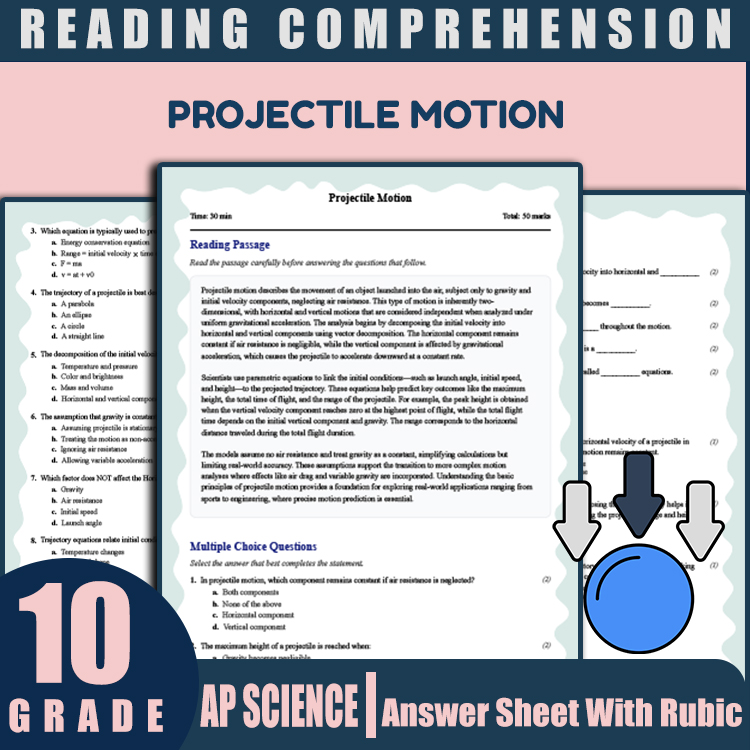
10th Grade Science | Projectile Motion Reading Worksheet with Answer Key (PDF)
JCreated byJ.S SheetsLearning Objectives
- Understand the two-dimensional kinematic description of projectile motion.
- Apply vector decomposition to predict range, time of flight, and peak height of projectiles.
- Explain the assumptions and approximations used in projectile motion models.
Also included in: Grade 10 Science Unit Bundle | Motion, Forces & Energy Worksheets (PDF) +1 more
Instant download

Grade 10 Science | Conservation of Energy Worksheet (PDF)
Created byEvergreen Desk EducationLearning Objectives
- Explain energy conservation using the idea that energy is transferred and transformed but not created or destroyed
- Use qualitative energy accounting to track changes in a system’s energy forms across an initial and final state
- Describe how nonconservative forces (like friction and air resistance) can reduce mechanical energy while conserving total energy
Also included in: Grade 10 Conservation Laws in Science Lesson Bundle – General Framework +1 more
Instant download

Circular Motion Worksheet | Grade 8 Science Standards-Aligned
JCreated byJ.S SheetsLearning Objectives
- Understand the concept of centripetal force and how it acts towards the center of curvature.
- Analyze how variables such as mass, turn radius, and force magnitude influence circular motion.
- Evaluate real-world phenomena involving circular motion, such as road curves and amusement rides.
Also included in: Grade 8 Forces & Motion Science Lesson Bundle – Alberta framework worksheets +1 more
Instant download

Grade 8 Total Energy Balance Worksheet | Energy Conservation | CA Standards
Created byEvergreen Desk EducationLearning Objectives
- Explain conservation of energy using energy accounting for a chosen system and its surroundings
- Identify how energy transfers and converts between kinetic, potential, thermal, and other forms
- Use an energy balance model to predict how changes in motion and temperature can occur over time
Instant download

Grade 9 Science – Chemical Changes & Observable Signs | Daily Reading Worksheet
Created byBright Mind ResourcesLearning Objectives
- Identify key indicators of chemical reactions such as gas production, temperature change, precipitate formation, and color change.
- Distinguish between physical and chemical changes based on observable evidence.
- Understand microscopic processes involved in chemical transformations.
Also included in: Grade 9 Chemistry Science Lesson Bundle Daily Reading Worksheets | Ontario +1 more
Instant download

Grade 9 Science – States & Energy Daily Reading Worksheet | Ontario Standards
Created byBright Mind ResourcesLearning Objectives
- Understand the particle arrangements in solids, liquids, and gases.
- Describe how energy transfer causes phase changes such as melting, vaporization, sublimation, and condensation.
- Explain latent heat and how phase transitions occur without changing chemical identity.
Also included in: Grade 9 Chemistry Science Lesson Bundle Daily Reading Worksheets | Ontario +1 more
Instant download

Grade 9 Science – Gas Behaviour & Properties | Daily Reading Worksheet
Created byBright Mind ResourcesLearning Objectives
- Describe the properties of gas particles using the particle model.
- Explain how pressure, volume, and temperature relate to particle motion.
- Connect microscopic particle behavior to macroscopic gas phenomena.
Also included in: Grade 9 Chemistry Science Lesson Bundle Daily Reading Worksheets | Ontario +1 more
Instant download

Grade 9 Science – States of Matter & Particle Theory | Daily Reading Worksheet
Created byBright Mind ResourcesLearning Objectives
- Describe the particle arrangements in solids, liquids, and gases.
- Explain how particle motion varies with temperature and state.
- Relate microscopic particle behavior to observable properties like pressure and diffusion.
Also included in: Grade 9 Chemistry Science Lesson Bundle Daily Reading Worksheets | Ontario +1 more
Instant download

Grade 9 Science – Societal Impacts of Chemicals | Daily Reading Worksheet
Created byBright Mind ResourcesLearning Objectives
- Understand the benefits and risks of common household chemicals
- Analyze how chemical properties affect their environmental and health impacts
- Evaluate the importance of safe handling, disposal, and regulation of chemicals
Also included in: Grade 9 Chemistry Science Lesson Bundle Daily Reading Worksheets | Ontario +1 more
Instant download
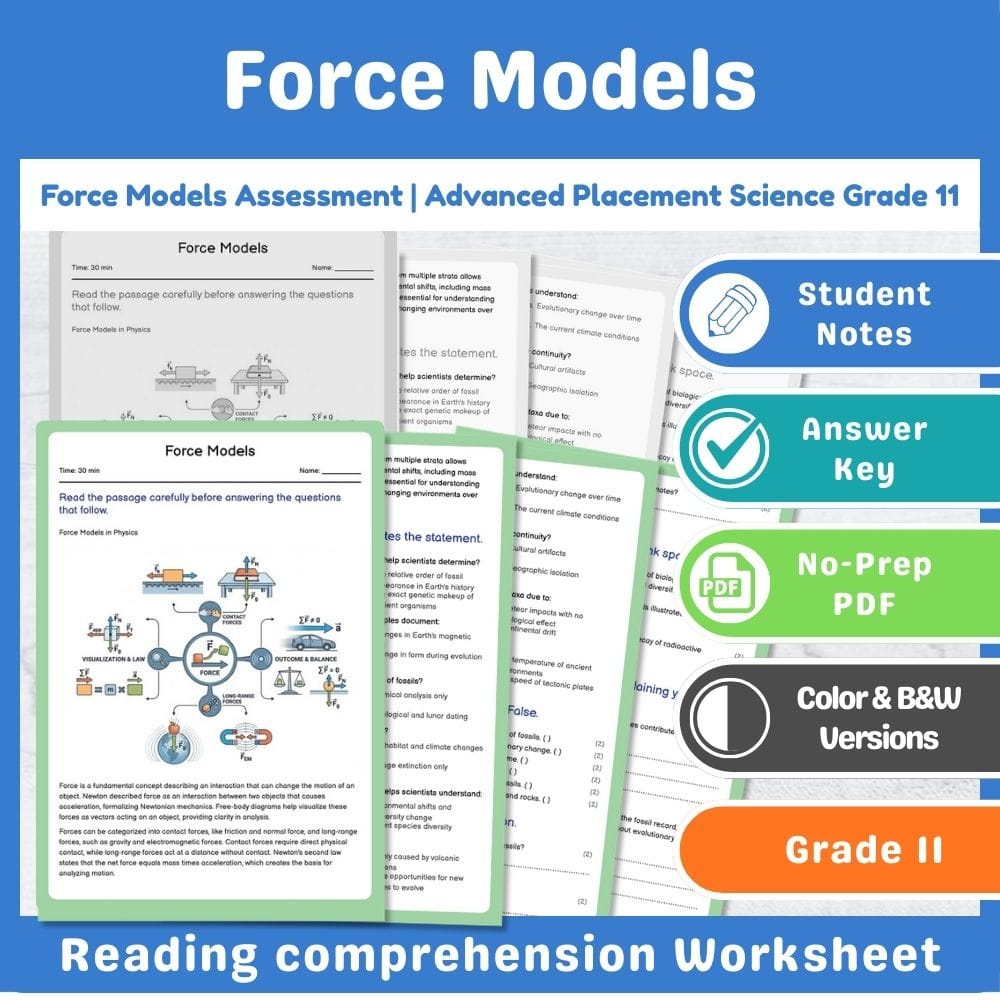
Force Models Assessment | Advanced Placement Science Grade 11
Created byPrism Point LearningLearning Objectives
- Explain the concept of force as an interaction between objects.
- Understand and apply Newton's laws of motion using free-body diagrams.
- Distinguish between contact and long-range forces such as gravity and electromagnetic forces.
Instant download

6th Grade Science | System Interactions Worksheet (PDF + Answer Key)
Created byCopper Leaf ClassroomLearning Objectives
- Describe how Earth's systems interact through transfers of matter and energy.
- Identify feedback mechanisms such as albedo changes, sediment transport, and nutrient movement.
- Explain energy sources and sinks within Earth's systems.
Also included in: Grade 6 Science | Weather and Climate System Bundle (PDF+ Answer Key)
Instant download
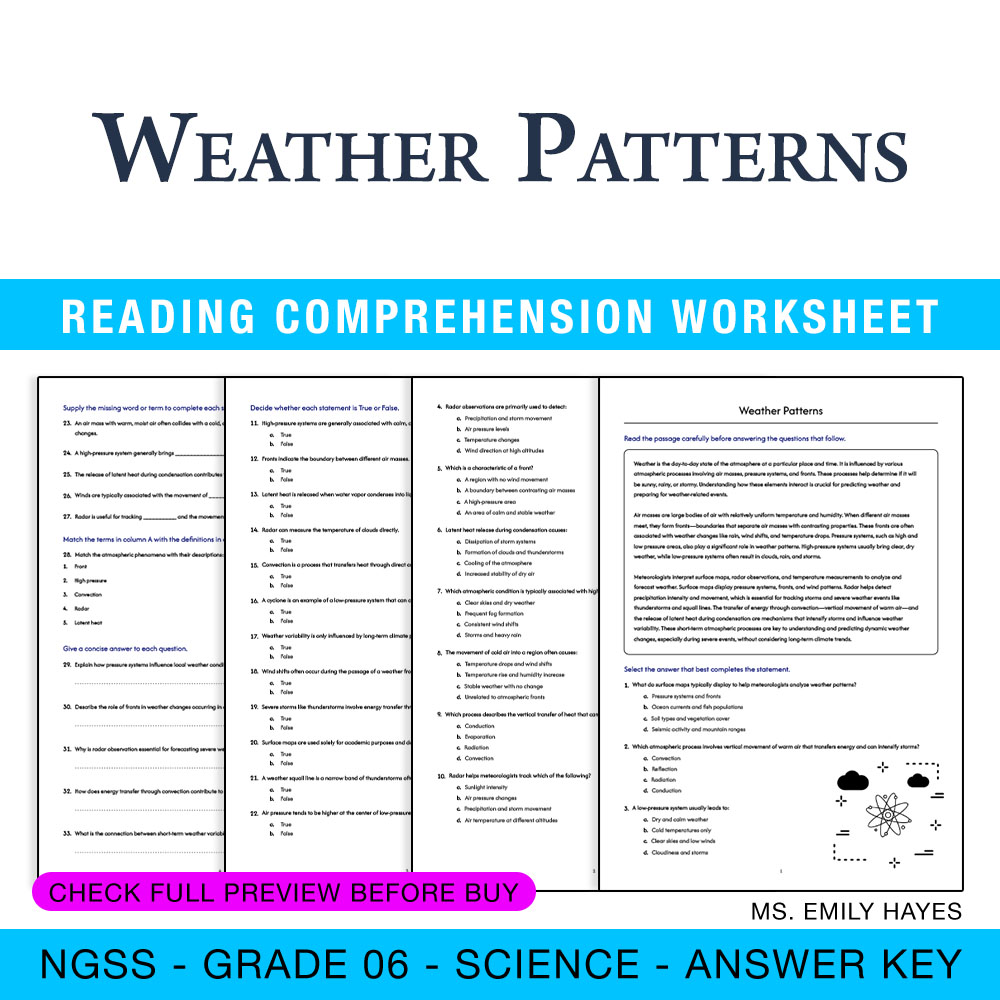
6th Grade Science | Weather Patterns Worksheet (PDF + Answer Key)
Created byCopper Leaf ClassroomLearning Objectives
- Explain how atmospheric processes produce local and regional weather phenomena.
- Interpret surface maps, temperature and pressure measurements, and radar data to identify weather conditions.
- Describe the formation and movement of air masses, fronts, and pressure systems.
Also included in: Grade 6 Science | Weather and Climate System Bundle (PDF+ Answer Key)
Instant download
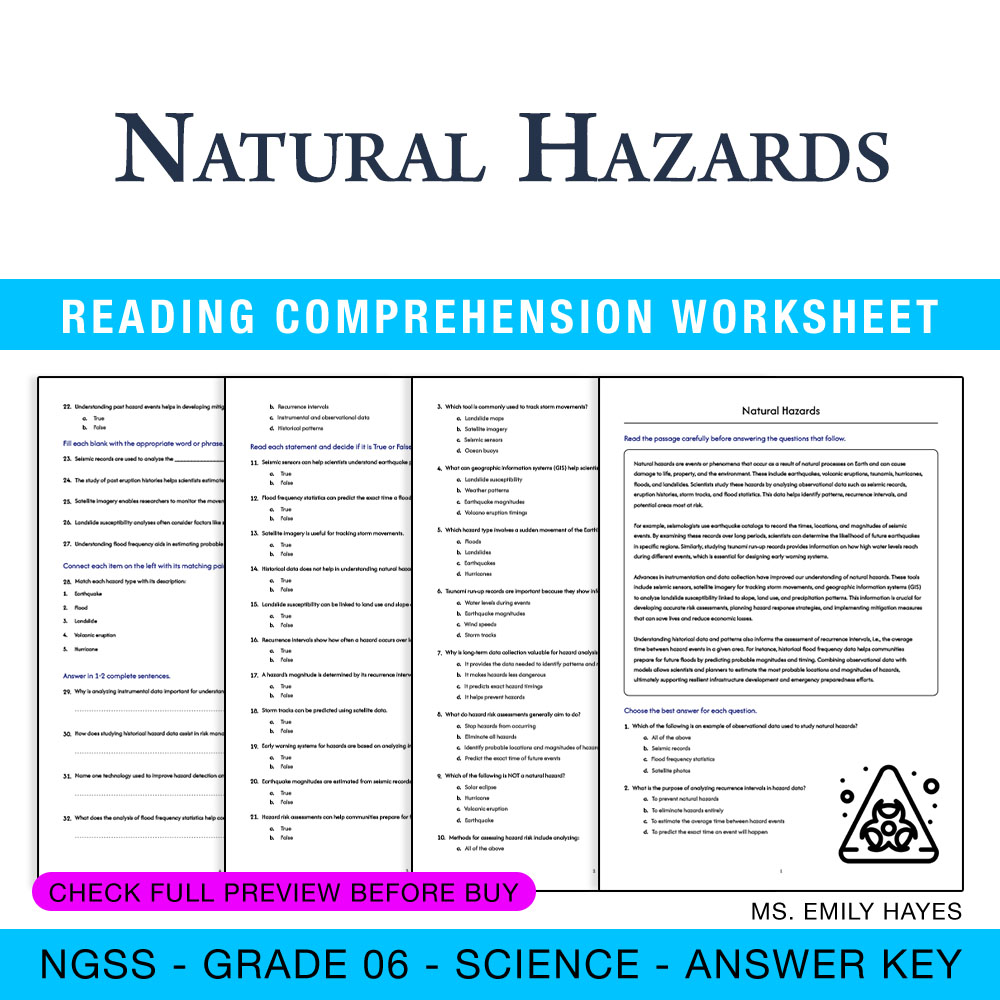
6th Grade Science | Natural Hazards Worksheet (PDF + Answer Key)
Created byCopper Leaf ClassroomLearning Objectives
- Understand how observational and instrumental data are used to analyze natural hazards.
- Identify patterns and recurrence intervals in natural hazard data.
- Learn methods for estimating the probable locations and magnitudes of hazards.
Also included in: Grade 6 Science | Weather and Climate System Bundle (PDF+ Answer Key)
Instant download
Browse more categories
About Science Worksheets
Find Science worksheets spanning core skills, practice, and review. All 44,538 resources are instant PDF downloads for the classroom or home.
Every worksheet on MyTeachingSheets is created by independent teacher-authors and reviewed before publication. All resources download as printable PDFs for classroom, homework, or at-home practice, and many include answer keys. Preview any worksheet free before buying.