
Science Worksheets
44,628 subject resources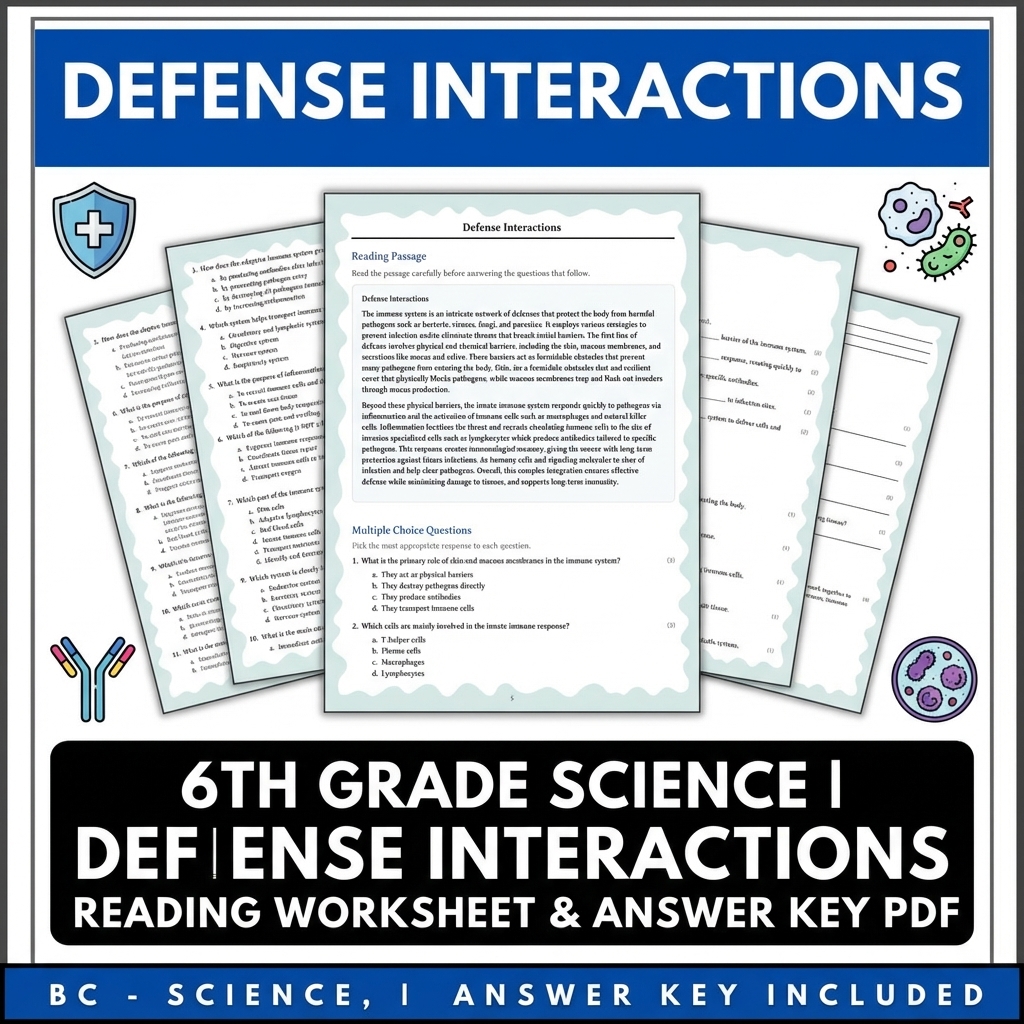
6th Grade Science | Defense Interactions Reading Worksheet & Answer Key PDF
JCreated byJ.S SheetsLearning Objectives
- Understand the components of the immune system and their roles in defending organisms.
- Identify how barrier defenses and immune responses work together to fight pathogens.
- Explain the functions of skin, mucous membranes, immune cells, and lymphatic vessels in immunity.
Instant download
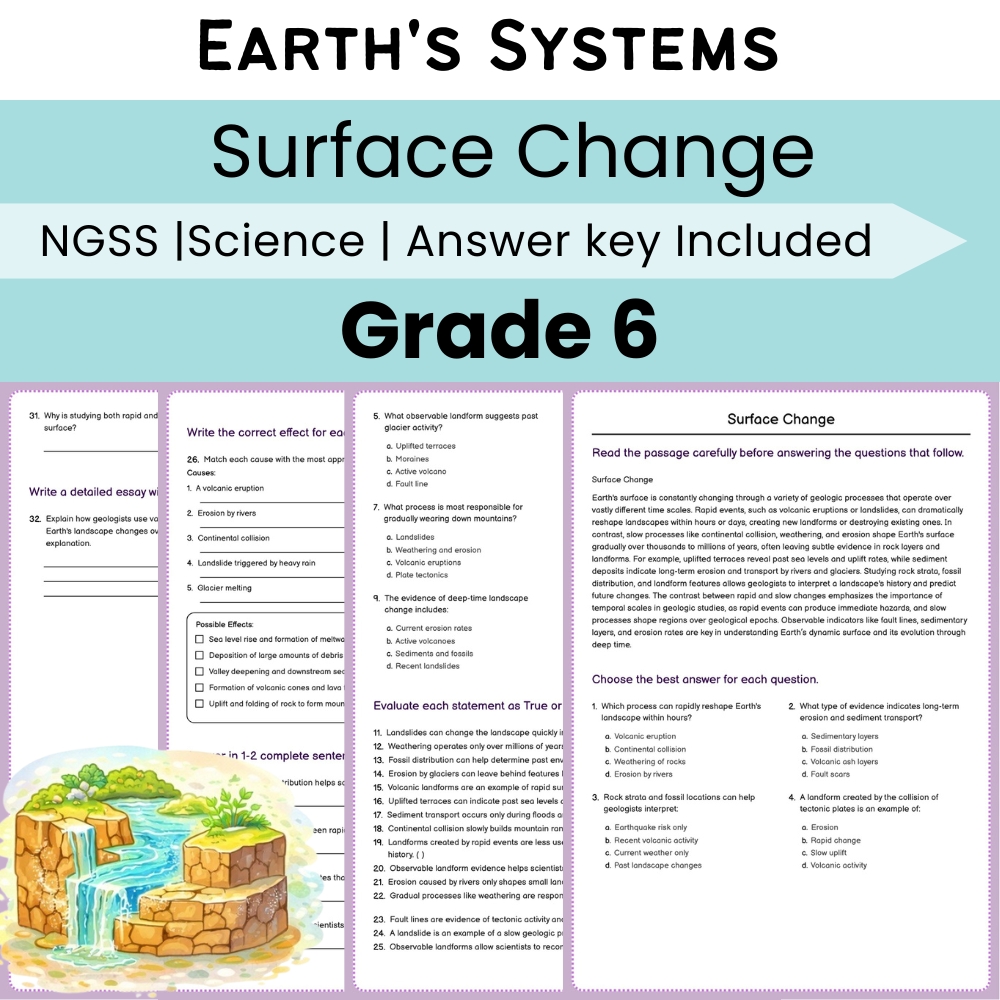
Surface Change Worksheet | NGSS Grade 6 Science printable PDF
Learning Objectives
- Understand various geological processes that alter Earth's surface over time.
- Identify observable indicators in rock and landforms that reveal landscape evolution.
- Differentiate between rapid and slow earth surface events.
Also included in: Grade 6 Science | Earth's Systems Unit Worksheet Bundle (NGSS Aligned) +1 more
Instant download
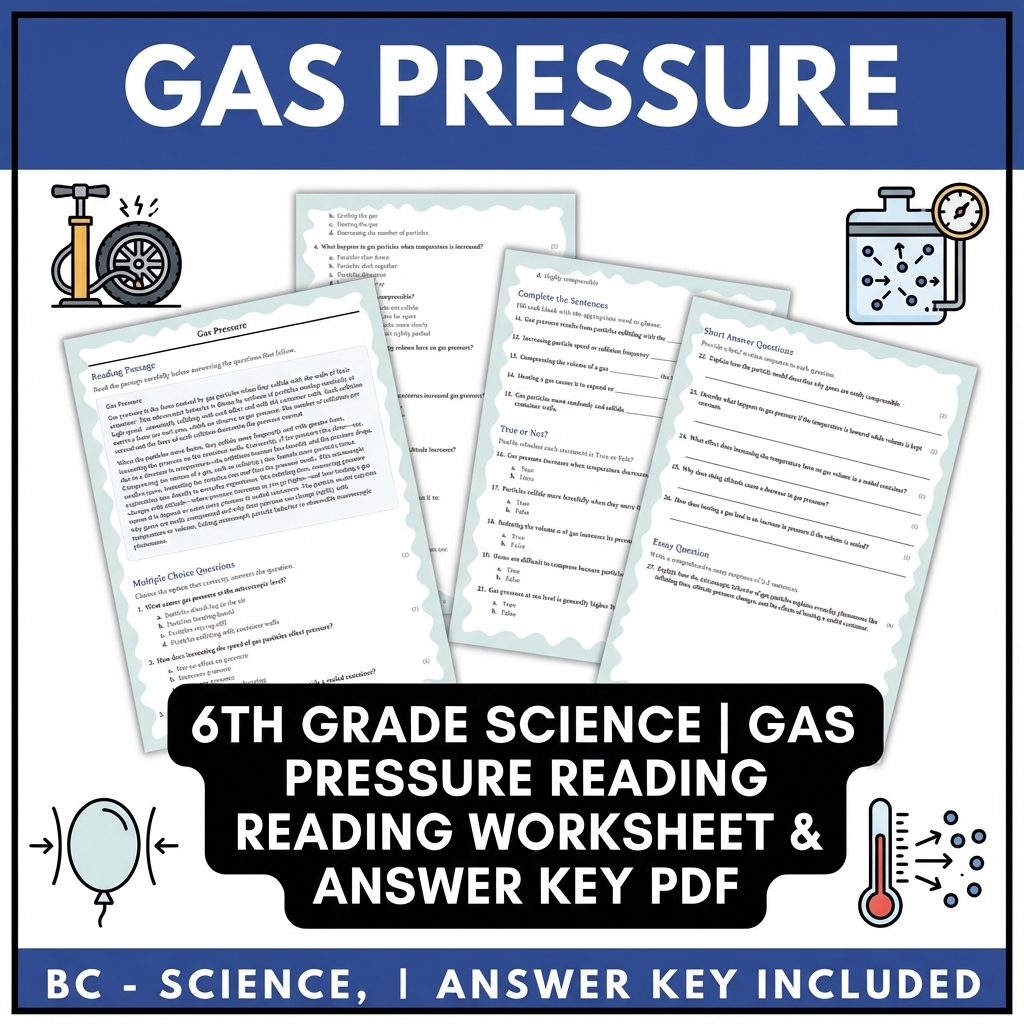
6th Grade Science | Gas Pressure Reading Worksheet & Answer Key PDF
JCreated byJ.S SheetsLearning Objectives
- Understand how gas pressure results from particle collisions and what factors influence it.
- Explain how particle speed and collision frequency affect gas pressure.
- Describe how temperature changes impact gas pressure and volume.
Instant download

7th Grade Science Worksheet | Friction & Gravity TEKS (PDF)
 Created byEvergreen Desk Education
Learning Objectives
- Explain how friction acts as a contact force that resists motion and how surface roughness changes friction’s effect
- Describe how gravity is a long-range force that causes acceleration near planetary surfaces
- Differentiate weight, normal force, and friction using examples such as sliding blocks and objects on inclined planes
Instant download

Grade 8 Fossil Evidence Worksheet | NGSS Practice & PDF
 Created byClear Sky Classroom
Learning Objectives
- Explain how the fossil record provides evidence that life changes over long periods.
- Use comparisons between older and younger rock layers to support claims about organism change.
- Identify how anatomy similarities and differences can suggest evolutionary relationships.
Instant download
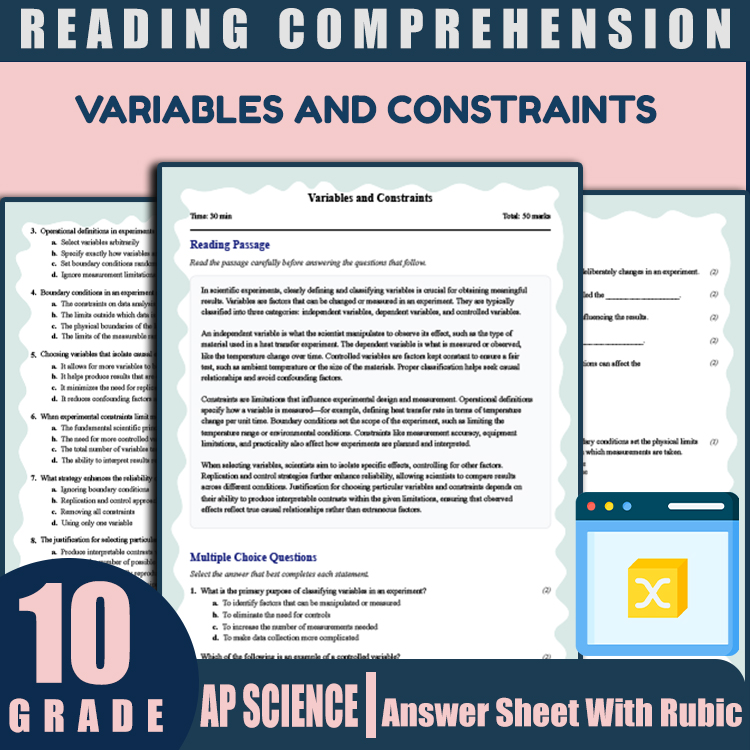
10th Grade Science Reading Worksheet | Variables and Constraints – PDF
JCreated byJ.S SheetsLearning Objectives
- Explain the classification of variables as independent, dependent, and controlled factors in scientific experiments.
- Describe how constraints influence the design and interpretation of measurements and observations.
- Identify strategies for selecting variables that isolate causal relationships in experimental setups.
Also included in: Grade 10 Science Unit Worksheet Pack – Data Analysis & Scientific Reasoning +1 more
Instant download
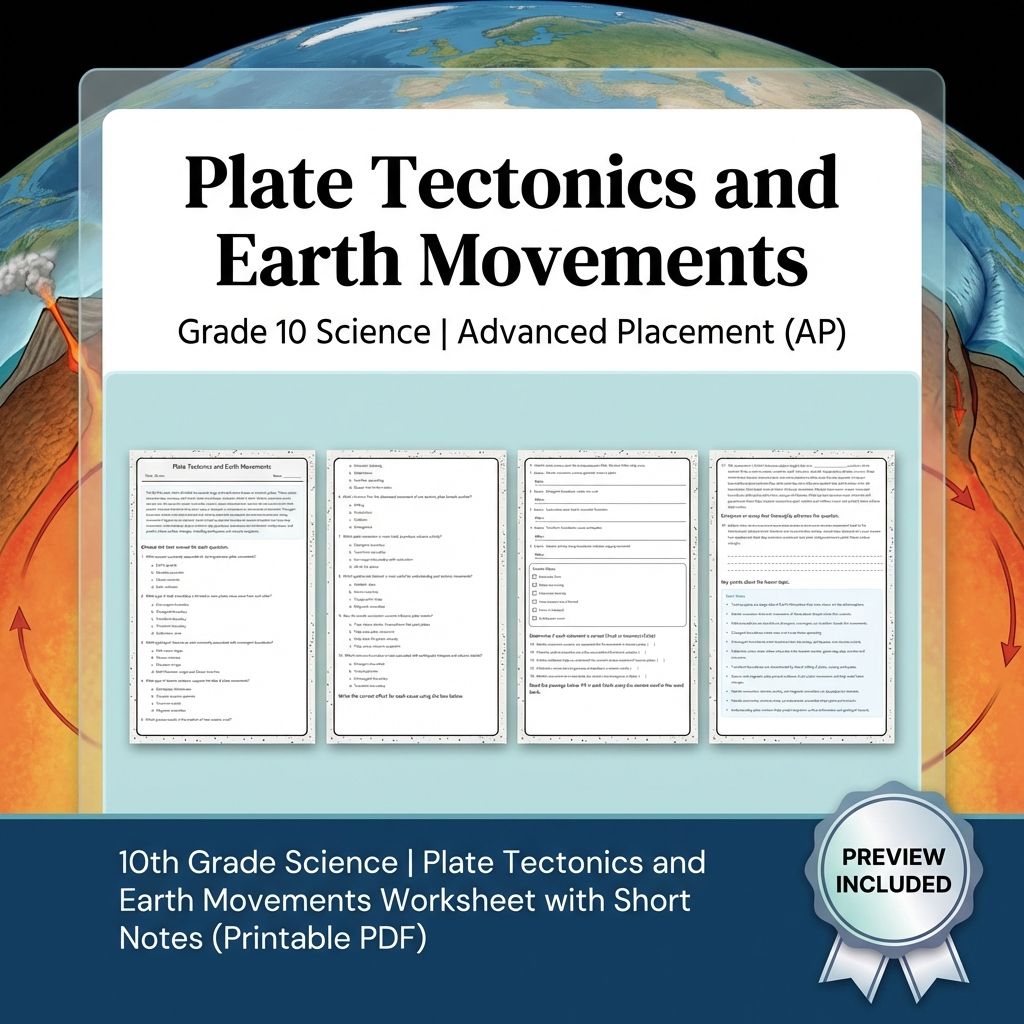
10th Grade Science | Plate Tectonics and Earth Movements Worksheet (PDF)
 Created byMeadowlark Worksheets
Learning Objectives
- Understand the mechanisms of plate motion and mantle convection.
- Interpret tectonic settings using various geophysical datasets.
- Connect plate interactions to geological phenomena like mountain building, volcanism, and earthquakes.
Instant download

Grade 9 Science – Inclined Planes Worksheet (BC Standards) (PDF)
Created byEvergreen Desk EducationLearning Objectives
- Resolve gravitational force into components parallel and perpendicular to an inclined plane and relate them to net force and acceleration.
- Explain how mechanical advantage changes the required applied force on an inclined plane, trading force for distance.
- Analyze how friction and the slope angle affect motion and determine qualitative energy/work outcomes.
Instant download

Grade 9 Science | Selection and Fitness Worksheet | NGSSS Aligned
 Created byLumora Learning
Learning Objectives
- Explain what fitness means in terms of survival and reproduction relative to other individuals
- Describe how natural selection depends on environmental conditions and heritable traits
- Use the idea of conditional fitness to predict how advantages can change when the environment changes
Instant download

Reaction Stoichiometry Worksheet | AP Standards Grade 10 Science Practice
JCreated byJ.S SheetsLearning Objectives
- Understand the mole concept and how it relates to chemical reactions.
- Perform mass-to-mass and mole-to-mole calculations using balanced equations.
- Identify limiting reagents and calculate theoretical yields.
Also included in: Grade 10 Chemistry Lesson Bundle – AP Chemistry Concepts & Practice
Instant download
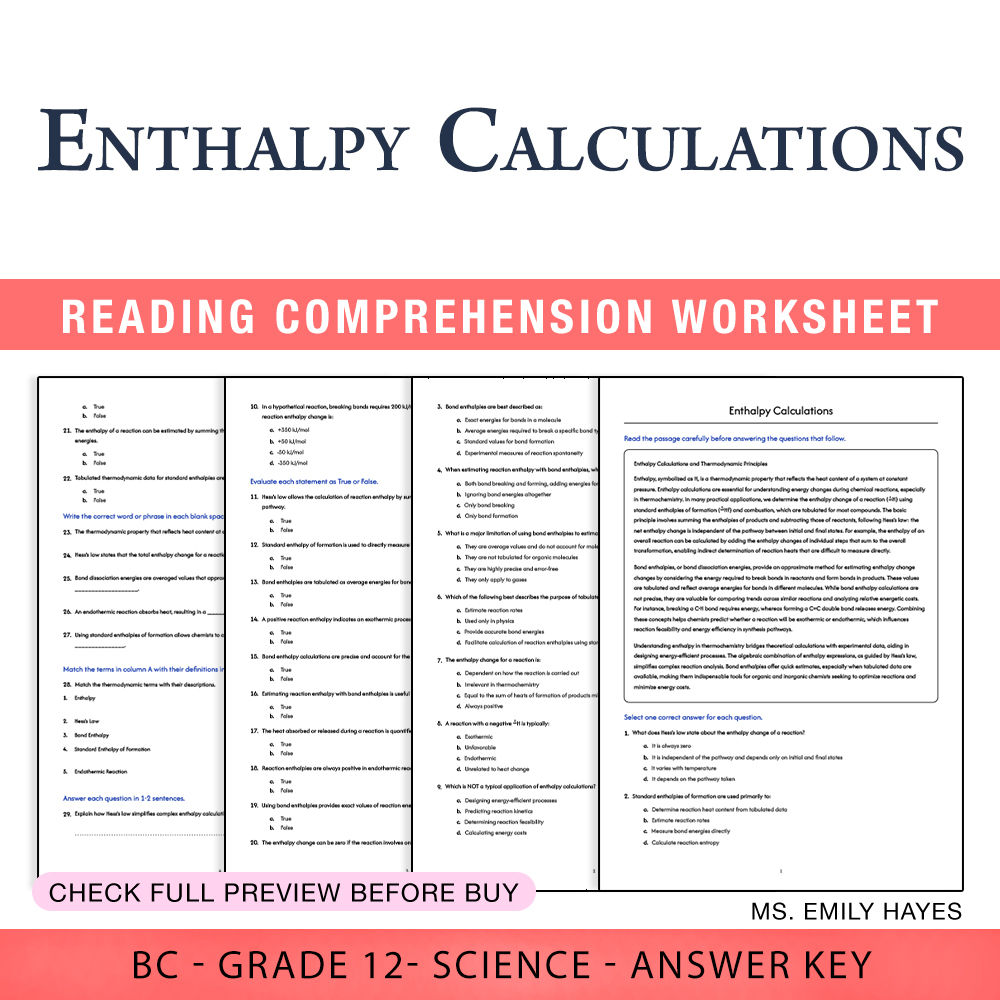
12th Grade Science | Enthalpy Calculations Worksheet (PDF + Answer Key)
 Created byCopper Leaf Classroom
Learning Objectives
- Understand how standard enthalpies of formation and combustion are used to calculate reaction enthalpies.
- Apply Hess's law to algebraically combine enthalpy terms for complex reactions.
- Estimate reaction enthalpies using bond enthalpies and compare reaction energy trends.
Also included in: Grade 12 Science BC – Thermochemistry to Atomic Structures (PDF+ Answer Keys) +1 more
Instant download
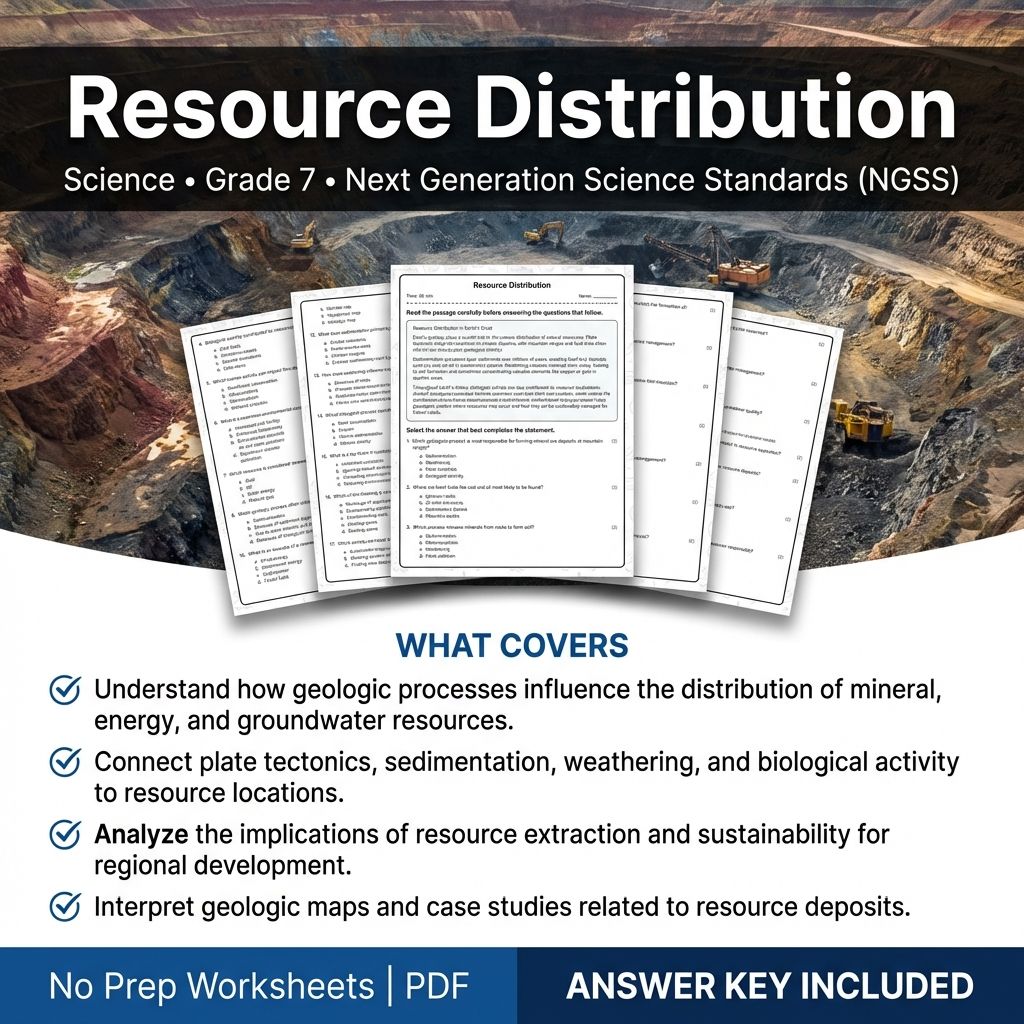
7th Grade Science Worksheet | Resource Distribution & Geology (PDF + Answer Key)
 Created byCoral Reef Learning
Learning Objectives
- Understand how geologic processes influence the distribution of mineral, energy, and groundwater resources.
- Connect plate tectonics, sedimentation, weathering, and biological activity to resource locations.
- Analyze the implications of resource extraction and sustainability for regional development.
Instant download
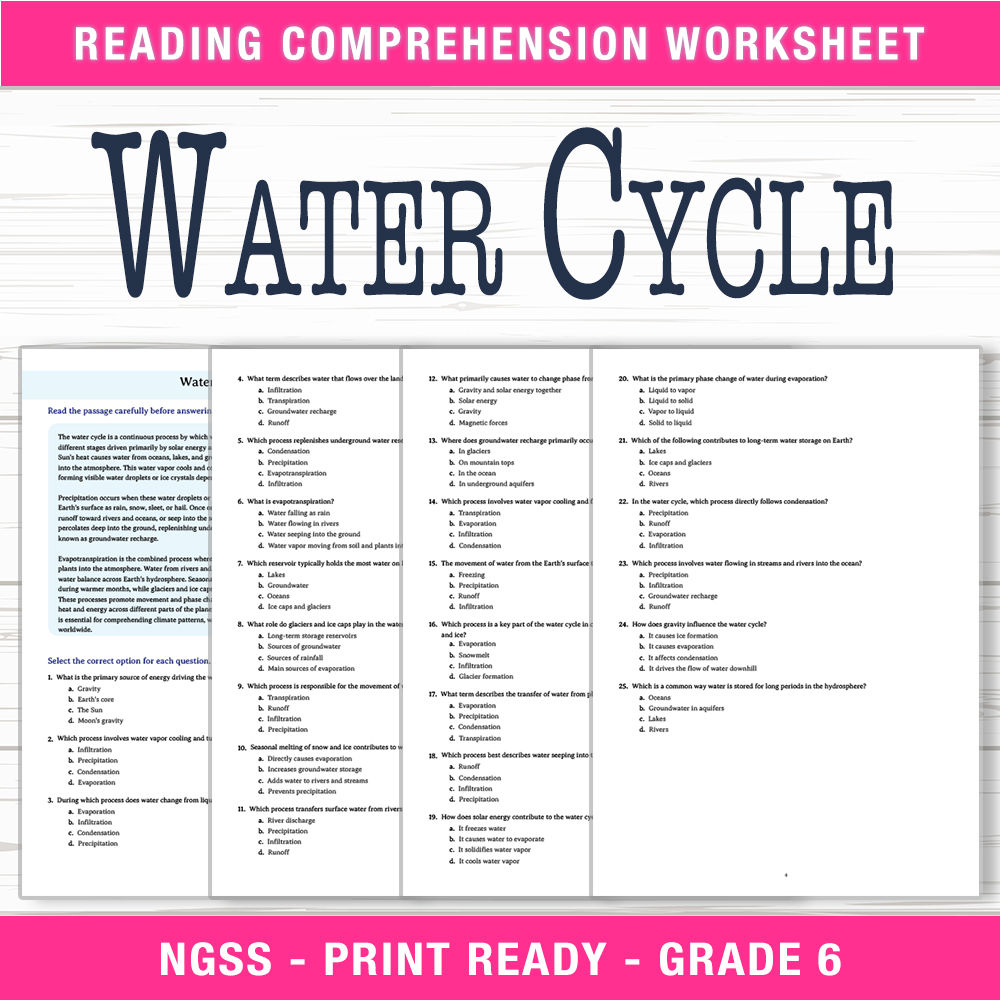
6th Grade Science – Water Cycle Worksheet (PDF + Answer Key)
 Created byRiverstone Classroom
Learning Objectives
- Describe the main processes of the water cycle, including evaporation, condensation, precipitation, runoff, infiltration, and groundwater storage.
- Explain how solar energy and gravity drive water movement across different parts of the hydrosphere.
- Identify and understand models illustrating water reservoirs like oceans, ice, and groundwater, and how mass transfer and energy flow occur between them.
Instant download

Energy Conversion Worksheets: Everyday Devices | Grade 4 Science
 Created byTeachers Club
Learning Objectives
- Explain that energy can change form when it moves through a device.
- Identify input and output energy forms for common devices such as batteries, motors, and light bulbs.
- Describe how some energy conversions are not 100% efficient because some energy is lost as heat.
Also included in: Energy Grade 4 Science Worksheets | NGSS Energy Unit Bundle +1 more
Instant download
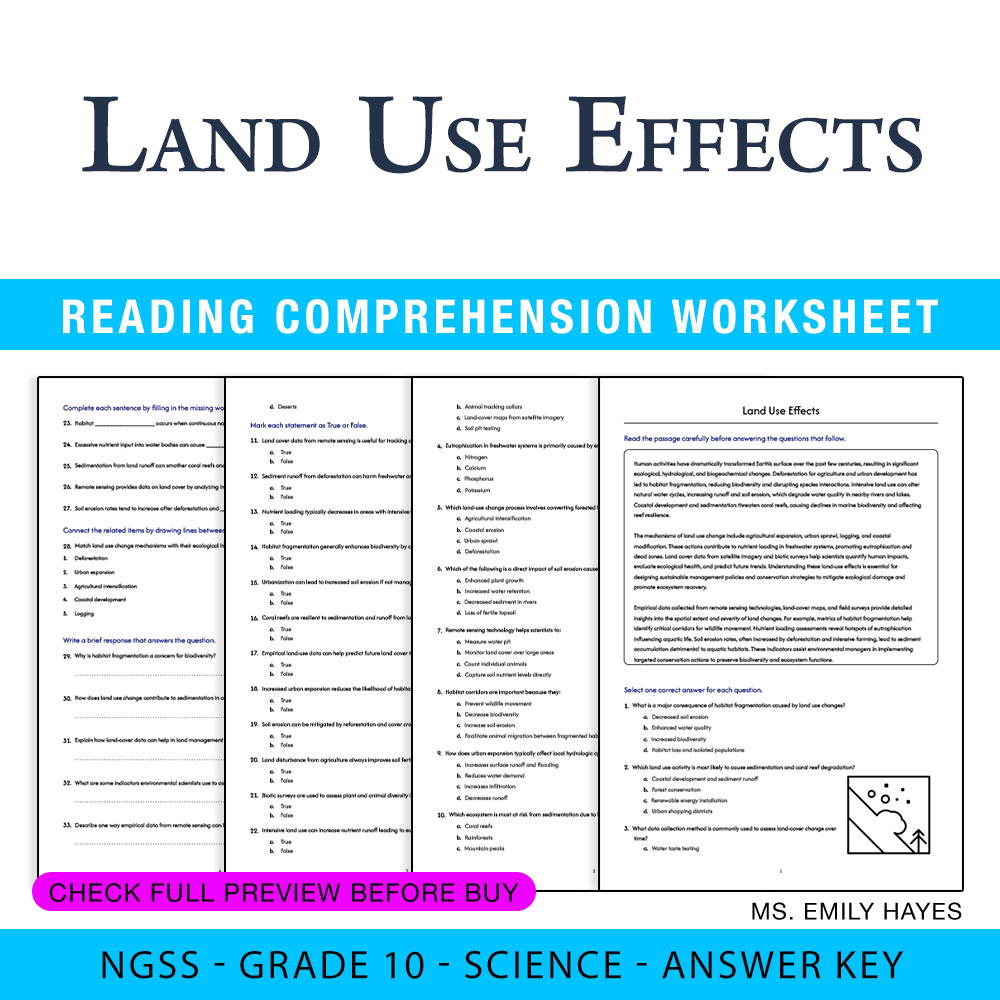
10th Grade Science | Land Use Effects Worksheet (PDF+ Answer Key)
Created byCopper Leaf ClassroomLearning Objectives
- Understand how human land-use activities alter ecosystems and biogeochemical cycles.
- Analyze empirical land-cover data and remote sensing images to assess ecological impacts.
- Evaluate the consequences of land-change mechanisms such as deforestation and urban expansion.
Instant download

Separation Methods Worksheet | Grade 8 Science Activities
 Created byPrism Point Learning
Learning Objectives
- Identify how physical property differences (particle size, solubility, boiling point, and magnetic susceptibility) are used to separate mixtures.
- Match common separation methods (filtration, evaporation, distillation) to the property they rely on.
- Explain why some separation methods work better than others for a given mixture in real-world contexts.
Also included in: Grade 8 Matter & Chemical Change Lesson Bundle | Alberta Science
Instant download

Reaction Quantities Worksheet | Grade 8 Science Activities
Created byPrism Point LearningLearning Objectives
- Use balanced chemical equations to relate reactant and product quantities in a closed system.
- Apply the idea of mass conservation to check whether observed changes are reasonable.
- Identify limiting reactants and predict which substances determine the amount of product formed.
Also included in: Grade 8 Matter & Chemical Change Lesson Bundle | Alberta Science
Instant download
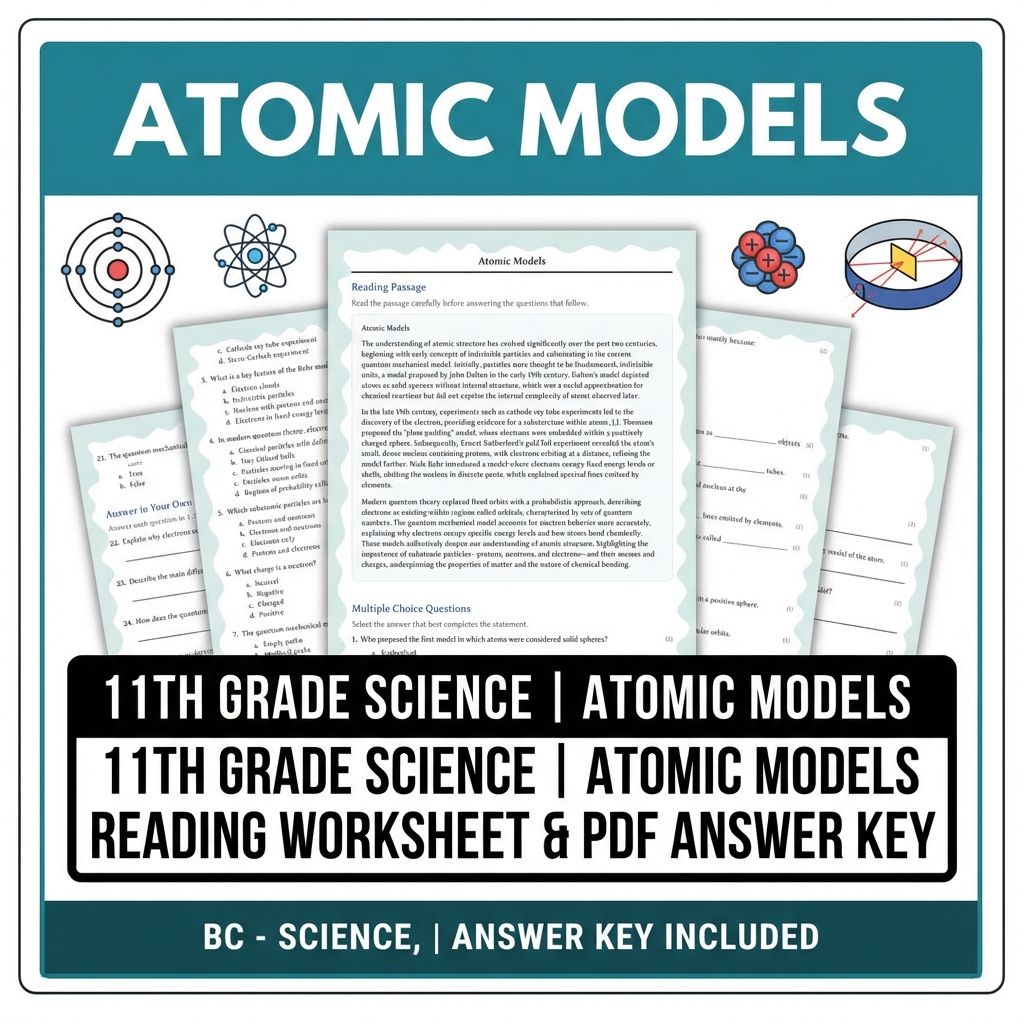
11th Grade Science | Atomic Models Reading Worksheet & PDF Answer Key
JCreated byJ.S SheetsLearning Objectives
- Describe the progression of atomic models from early to modern theories.
- Identify key features of the Bohr and quantum mechanical models of the atom.
- Explain the significance of subatomic particles' charges and masses.
Instant download

Integrated Management of Water Resources Worksheet Grade 8 Science
 Created byChalk and Compass
Learning Objectives
- Explain key components of integrated water resources management, including allocation, supply planning, and transboundary governance
- Describe how monitoring and adaptive management support trade-off decisions among municipal, agricultural, and ecological water needs
- Use examples of governance instruments (such as licensing and source-protection zones) to connect scientific evidence to policy choices
Also included in: Grade 8 Science Watershed Systems Lesson Bundle | Ontario Framework +1 more
Instant download
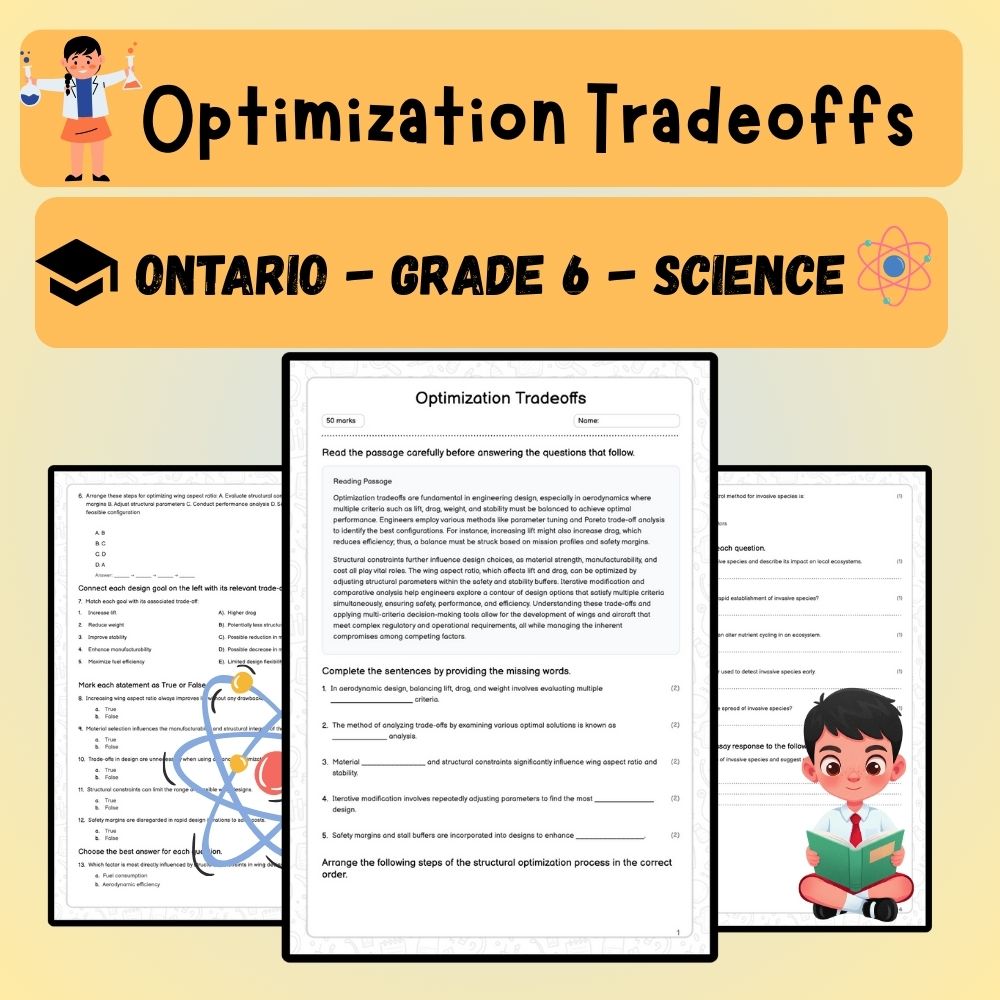
6th Grade Science | Optimization Tradeoffs Worksheet (PDF )
Created byPrism Point LearningLearning Objectives
- Understand the concept of multi-criteria decision-making in aerodynamic design.
- Learn how trade-offs between lift, drag, weight, and stability affect performance envelopes.
- Explore methods such as parameter tuning and Pareto trade-offs in structural optimization.
Instant download

Grade 8 Thermal Transfer Modes Worksheet | California Standards Practice PDF
Created byClear Sky ClassroomLearning Objectives
- Describe and distinguish conduction, convection, and radiation as three modes of thermal energy transfer.
- Use evidence from everyday situations to explain how heat moves from warmer to cooler regions.
- Connect particle motion and fluid motion to conduction and convection, and connect electromagnetic waves to radiation.
Instant download
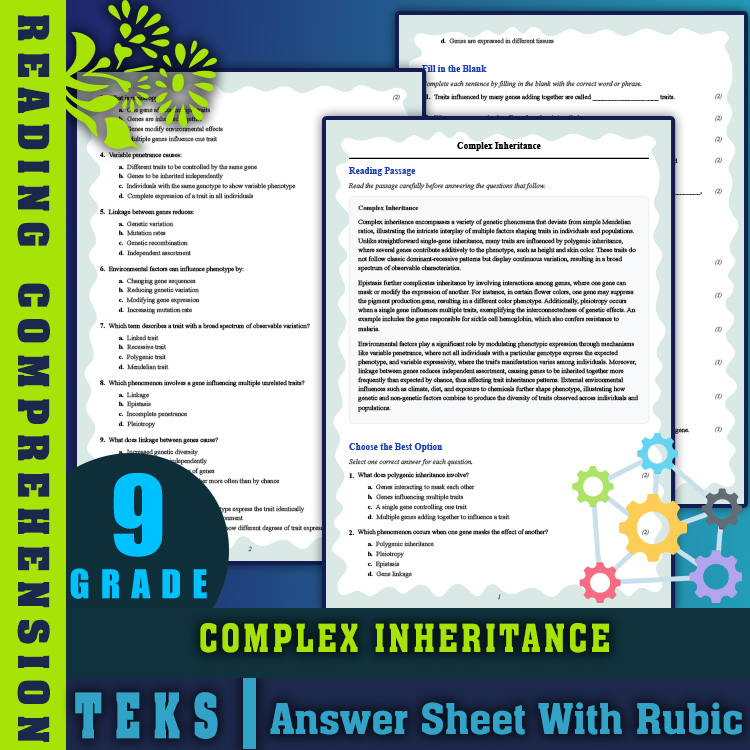
9th Grade Science | Complex Inheritance Reading Worksheet (PDF + Answer Key)
JCreated byJ.S SheetsLearning Objectives
- Understand the key concepts of complex inheritance including polygenic traits, epistasis, and pleiotropy.
- Identify factors influencing phenotype beyond simple Mendelian inheritance.
- Analyze how environmental and genetic factors interact to shape observable traits.
Instant download

Chemical Corrosion Worksheets | Grade 8 Science Matter & Change
 Created bySunny Desk Resources
Learning Objectives
- Explain how corrosion involves chemical change that forms new substances on materials.
- Identify how moisture and salinity affect corrosion rate and damage to structures.
- Describe protective measures that reduce corrosion by changing conditions or reactions.
Also included in: Matter & Chemical Change Grade 8 Science Bundle | Alberta Worksheets +1 more
Instant download

Environmental Mass Balance & Nutrient Cycling Worksheets | Grade 8
Created bySunny Desk ResourcesLearning Objectives
- Explain how particle theory and phases help interpret chemical changes in environmental systems.
- Use mass conservation ideas to describe sources, sinks, and transport in a closed or semi-closed system.
- Classify substances as elements, compounds, or mixtures and relate this to environmental chemistry.
Also included in: Matter & Chemical Change Grade 8 Science Bundle | Alberta Worksheets +1 more
Instant download

Homogeneous Mixtures and Concentration Worksheets Grade 8 Science
Created bySunny Desk ResourcesLearning Objectives
- Define homogeneous mixtures and distinguish them from heterogeneous mixtures using observable evidence
- Use ideas of solubility and concentration to predict how mixture behaviour changes
- Explain how colligative properties depend on the number of solute particles in a solution
Also included in: Matter & Chemical Change Grade 8 Science Bundle | Alberta Worksheets +1 more
Instant download
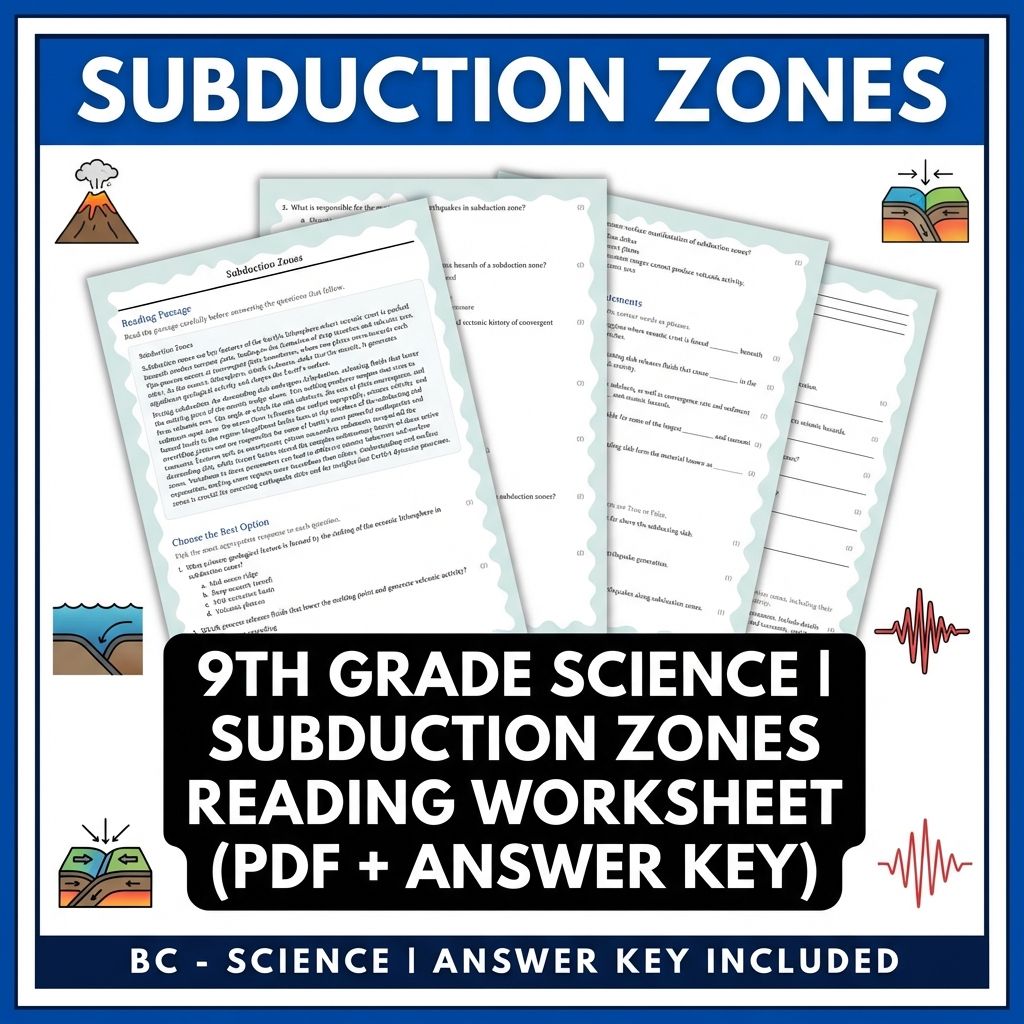
9th Grade Science | Subduction Zones Reading Worksheet (PDF + Answer Key)
JCreated byJ.S SheetsLearning Objectives
- Describe the process of subduction and how it forms deep oceanic trenches.
- Explain the geological and seismic phenomena associated with subduction zones.
- Identify factors that influence the topography and hazards of subduction margins.
Instant download
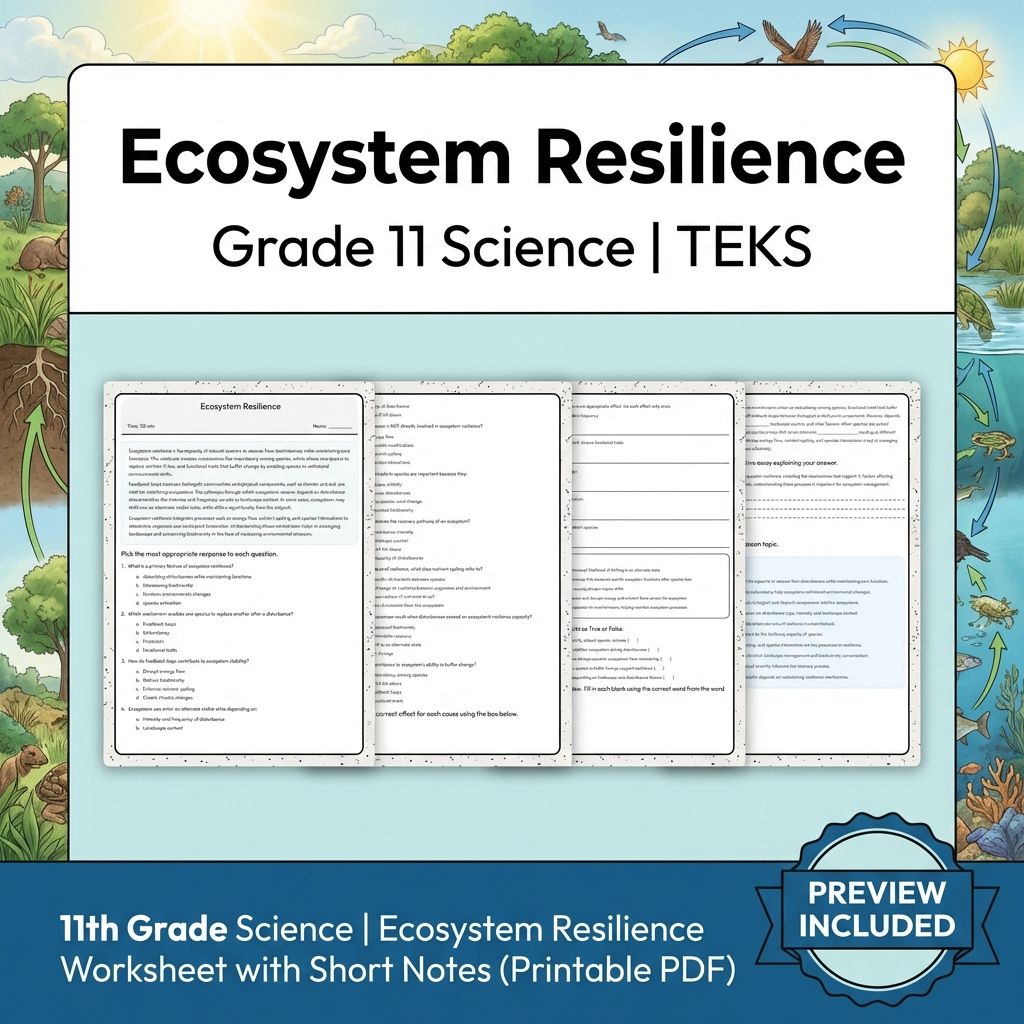
11th Grade Science | Ecosystem Resilience Worksheet with Short Notes (PDF)
Created byMeadowlark WorksheetsLearning Objectives
- Define ecosystem resilience and identify its key mechanisms.
- Explain how ecosystems recover from disturbances and the factors influencing their stability.
- Describe the role of feedback loops, redundancy, and functional traits in resilience.
Instant download
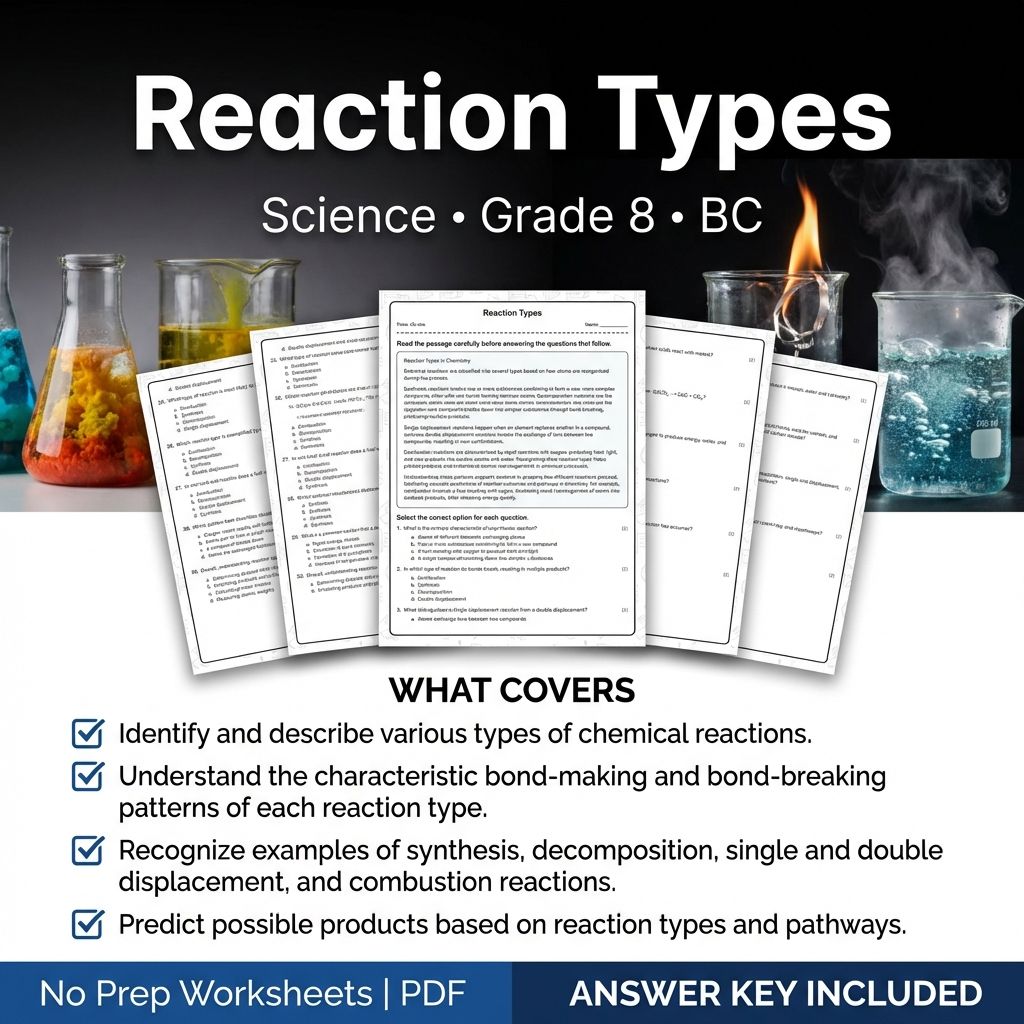
8th Grade Science | Reaction Types Practice Worksheet & Answer Key (PDF)
Created byCoral Reef LearningLearning Objectives
- Identify and describe various types of chemical reactions.
- Understand the characteristic bond-making and bond-breaking patterns of each reaction type.
- Recognize examples of synthesis, decomposition, single and double displacement, and combustion reactions.
Instant download

Grade 7 Science – Insulation Principles & Materials | Daily Reading Worksheet
 Created byBright Mind Resources
Learning Objectives
- Understand the basic concepts of heat transfer and insulation.
- Identify different materials used for insulation.
- Explain how insulation improves energy efficiency in buildings.
Also included in: Grade 7 Heat Transfer Science Daily Reading Worksheets Lesson Bundle | Alberta +2 more
Instant download

Grade 7 Science – Conduction & Heat Transfer | Daily Reading Worksheet
Created byBright Mind ResourcesLearning Objectives
- Define conduction and explain how it involves the transfer of kinetic energy between particles in solids.
- Identify materials that are good conductors of heat and those that are poor conductors.
- Describe how contact resistance and material properties affect heat conduction in structures.
Also included in: Grade 7 Heat Transfer Science Daily Reading Worksheets Lesson Bundle | Alberta +2 more
Instant download

Stratigraphic Columns Worksheet for Grade 11 Science | BC Standards
JCreated byJ.S SheetsLearning Objectives
- Understand the components and significance of stratigraphic columns in geology.
- Interpret depositional histories and environmental changes from stratigraphic data.
- Identify features such as unconformities, facies, and correlation techniques in stratigraphy.
Instant download
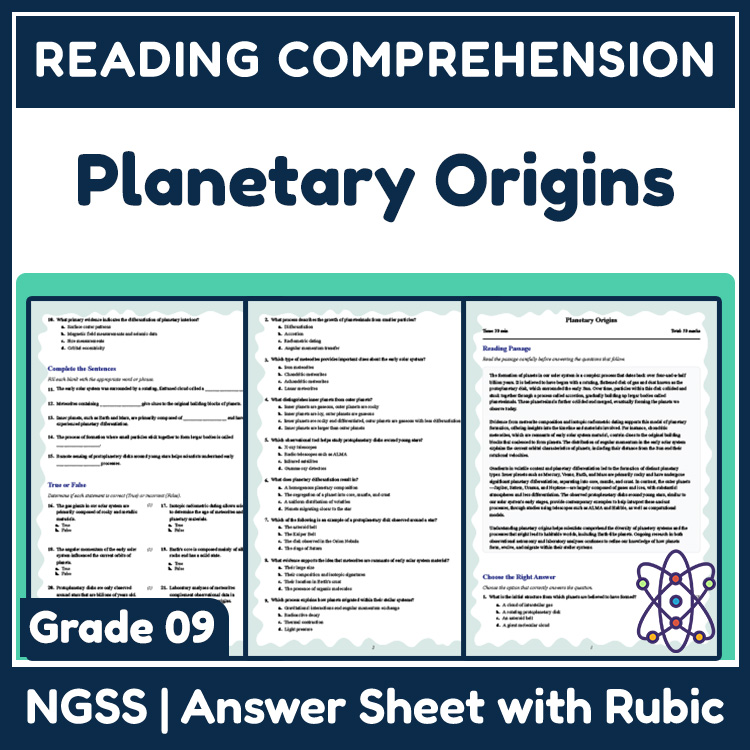
9th Grade Science | Planetary Origins Reading Worksheet (PDF + Rubric)
JCreated byJ.S SheetsLearning Objectives
- Understand the formation of the solar system from a protoplanetary disk.
- Identify key evidence such as meteorite composition and isotopic dating in planetary science.
- Explain the differences between inner rocky planets and outer gas giants based on planetary differentiation and volatile content.
Also included in: Grade 9 Science | Stellar & Cosmic Evolution Unit Worksheet Bundle
Instant download
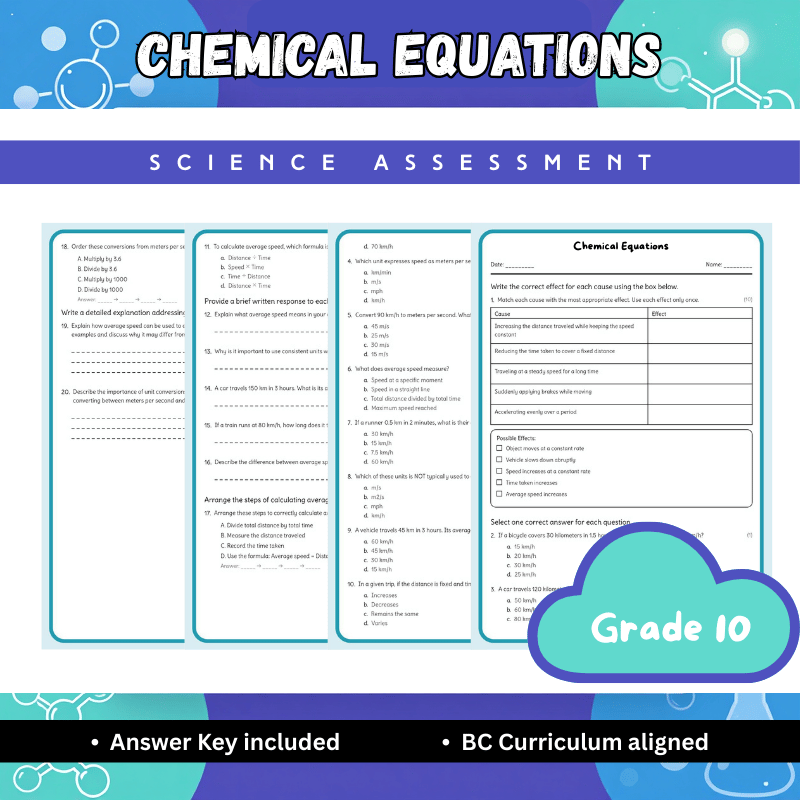
Grade 10 Science | Chemical Equations Worksheet (Answer Key) – BC Standards
Created byBright Mind ResourcesLearning Objectives
- Understand the components and structure of chemical equations.
- Learn how to balance chemical equations to obey conservation of mass.
- Identify states of matter in chemical reactions using symbols.
Instant download
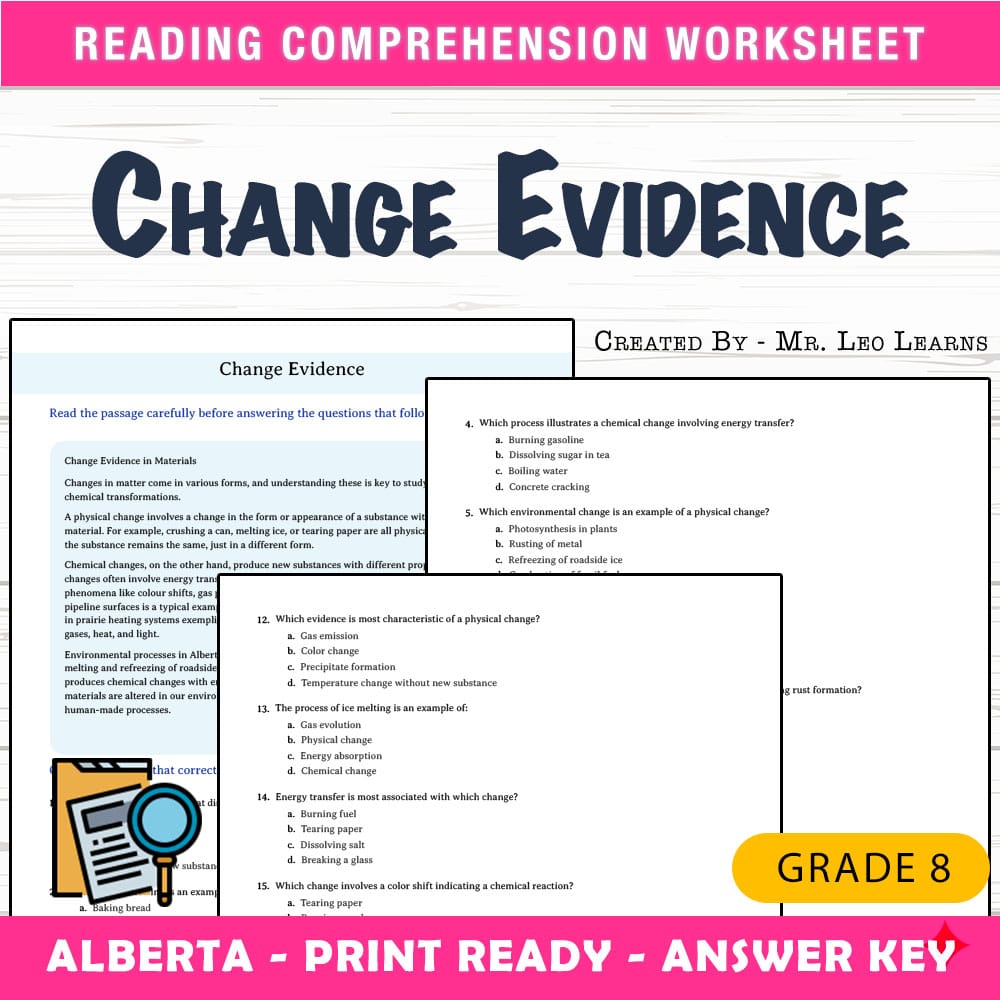
Grade 8 Science — Change Evidence Worksheet for Mastery
 Created byThe Resource Hub
Learning Objectives
- Identify the different types of evidence for physical and chemical changes.
- Distinguish between physical and chemical changes based on their evidence.
- Recognize real-world examples of physical and chemical changes.
Also included in: Grade 8 Science Bundle | Matter and Chemical Change Worksheets +1 more
Instant download
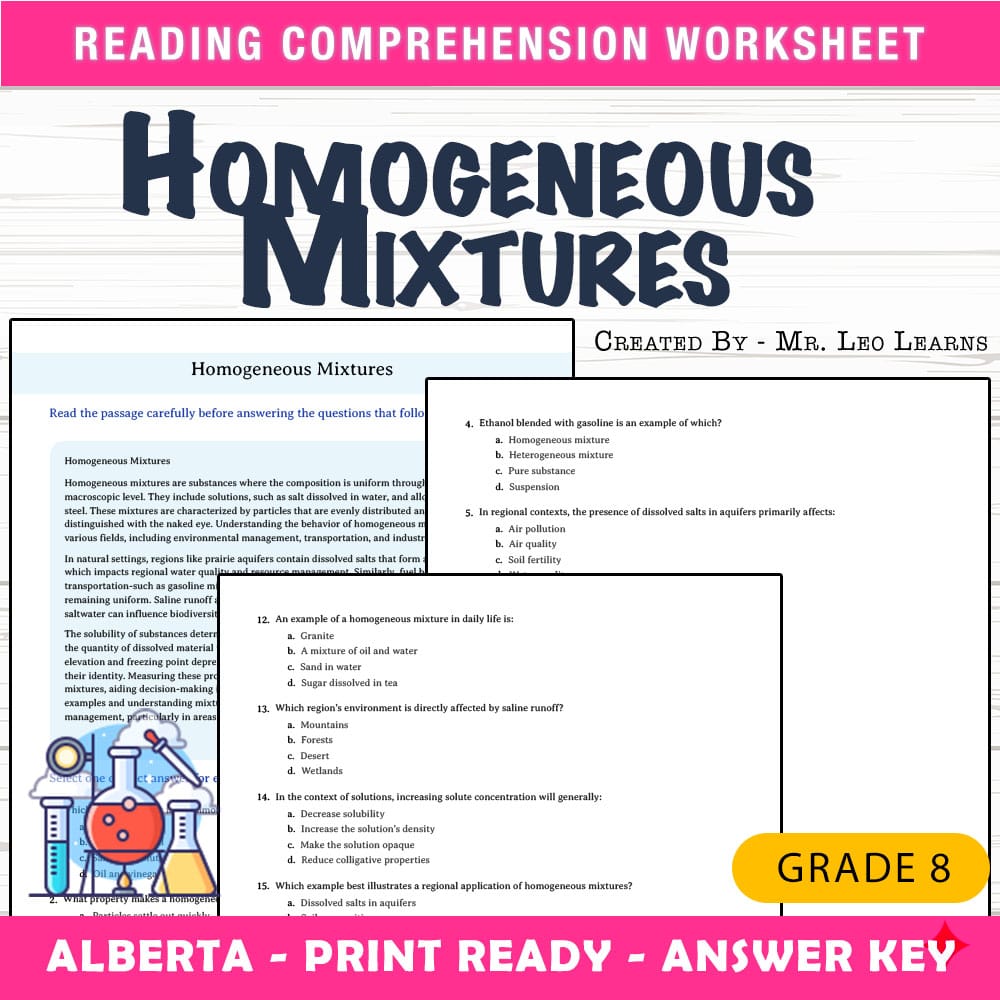
Grade 8 Science — Homogeneous Mixtures Worksheet MCQ Paper
Created byThe Resource HubLearning Objectives
- Understand the concept of homogeneous mixtures and their properties.
- Identify examples of homogeneous mixtures in real-life contexts.
- Learn how solubility and concentration influence the behavior of solutions.
Also included in: Grade 8 Science Bundle | Matter and Chemical Change Worksheets +1 more
Instant download
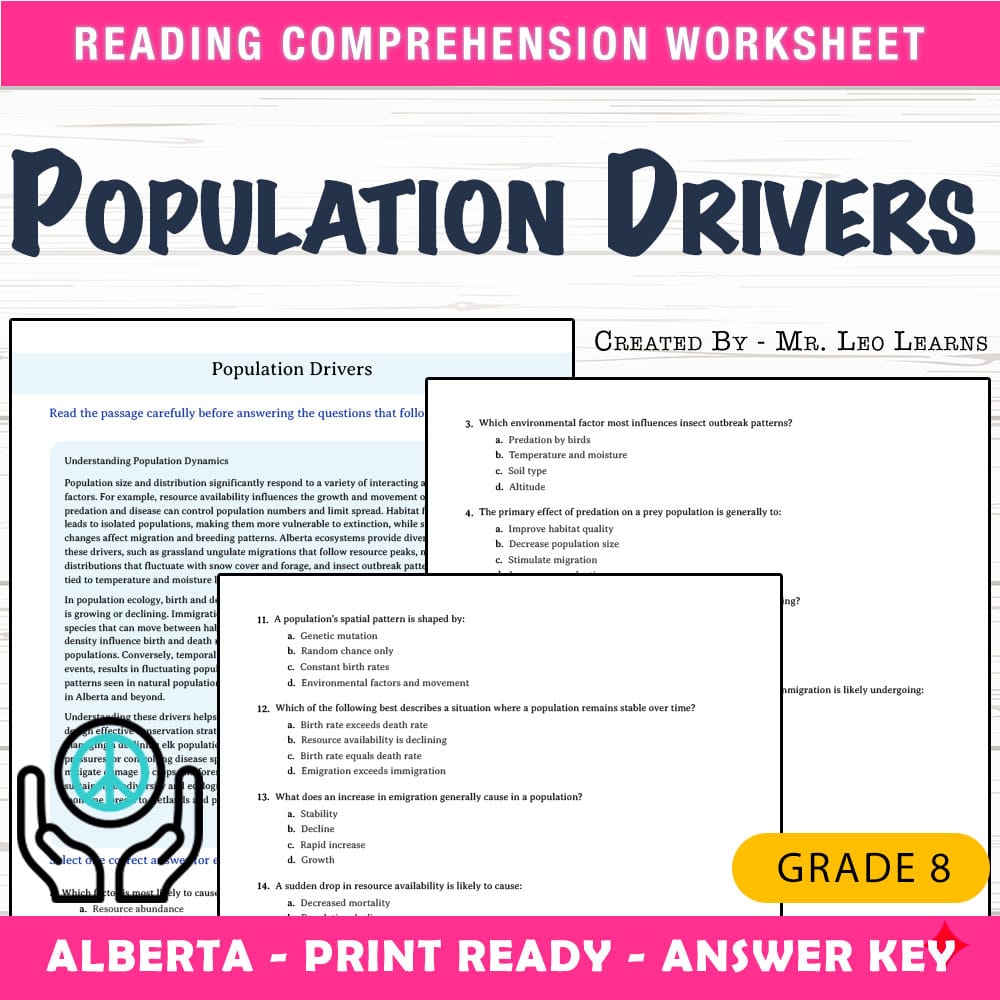
Grade 8 Science — Population Drivers Worksheet MCQ Paper
Created byThe Resource HubLearning Objectives
- Understand the key factors that influence population size and distribution.
- Identify examples of population responses to abiotic and biotic factors in Alberta ecosystems.
- Explain the concepts of birth, death, immigration, and emigration rates in population dynamics.
Also included in: Grade 8 Science Bundle | Interactions and Ecosystems Worksheets +1 more
Instant download
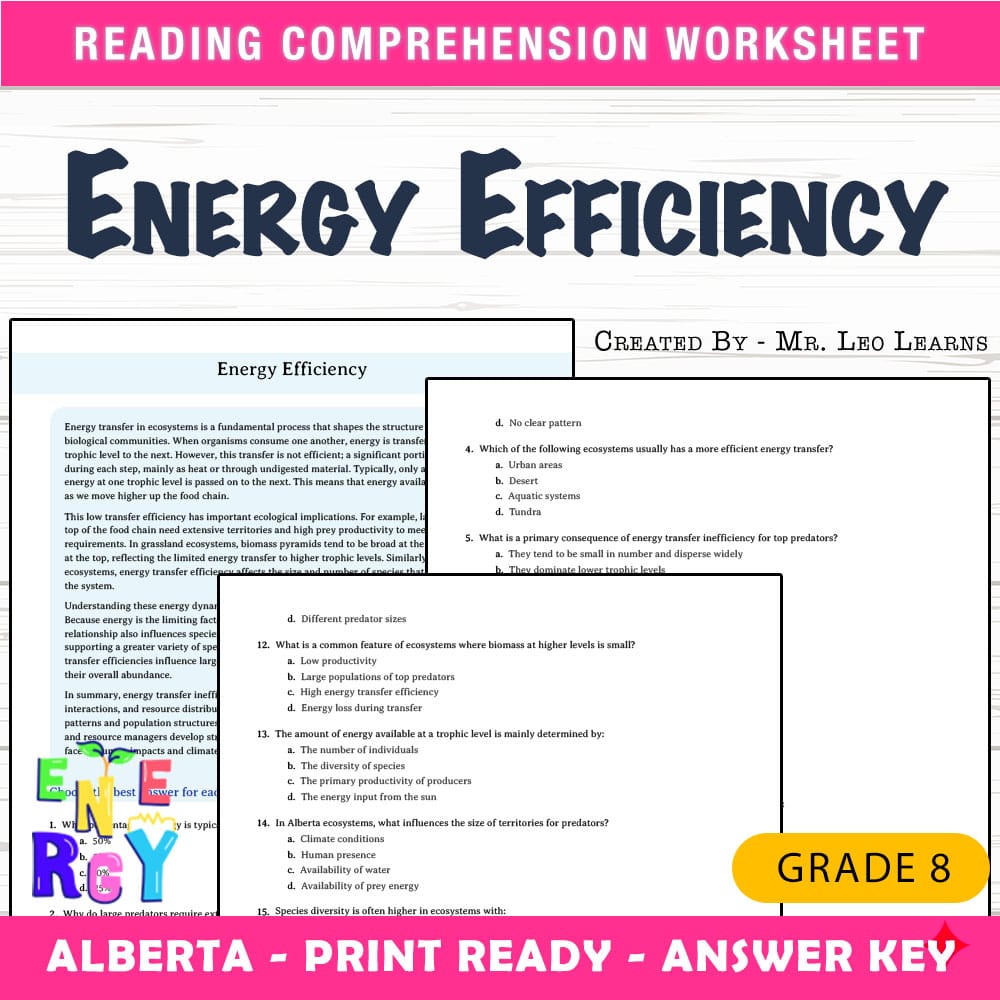
Grade 8 Science — Worksheet MCQ Paper for Mastering Energy Efficiency
Created byThe Resource HubLearning Objectives
- Understand the basics of energy transfer between trophic levels and its inherent inefficiencies.
- Recognize how energy transfer efficiency affects biomass distribution in different ecosystems.
- Explain why large predators require expansive territories due to energy limitations.
Also included in: Grade 8 Science Bundle | Interactions and Ecosystems Worksheets +1 more
Instant download
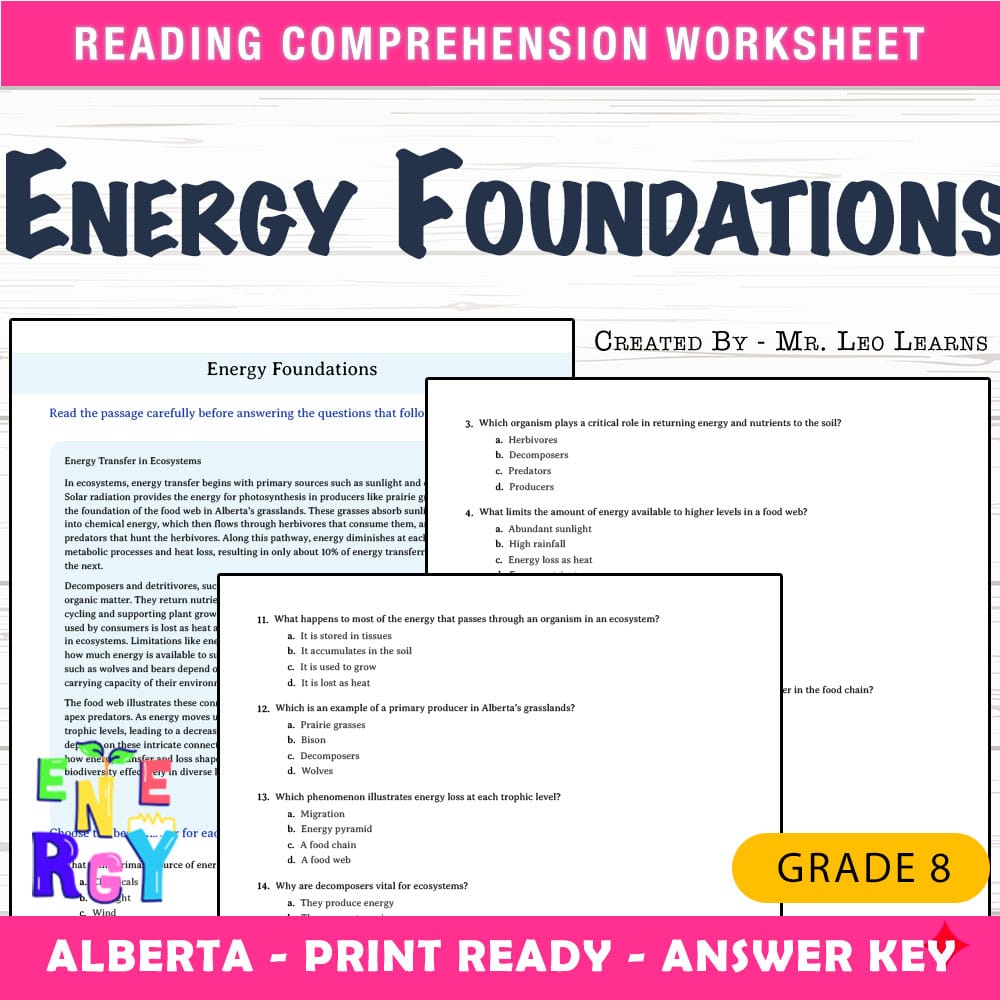
Grade 8 Science — Worksheet MCQ Paper for Mastering Energy Foundations
Created byThe Resource HubLearning Objectives
- Understand how energy is transferred through ecosystems from primary sources.
- Identify the roles of producers, consumers, decomposers, and detritivores in energy flow.
- Explain energy loss between trophic levels and its impact on community diversity.
Also included in: Grade 8 Science Bundle | Interactions and Ecosystems Worksheets +1 more
Instant download
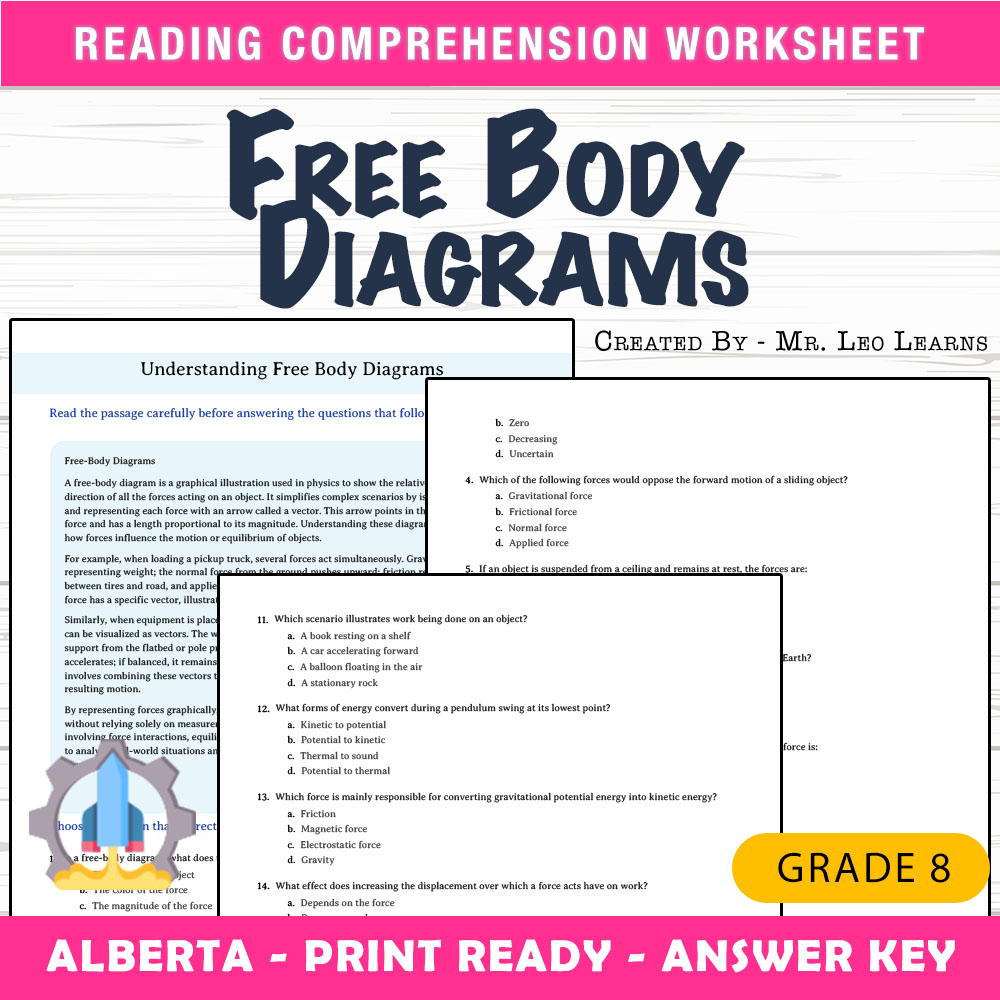
Grade 8 Science — Worksheet MCQ Paper for Mastering Free Body Diagrams
Created byThe Resource HubLearning Objectives
- Explain the components and significance of free-body diagrams in physics.
- Identify different types of forces such as gravitational, normal, frictional, and applied forces.
- Interpret vector representations of forces acting on objects in various scenarios.
Also included in: Grade 8 Science Forces and Motion Lesson Bundle | Alberta Curriculum +1 more
Instant download
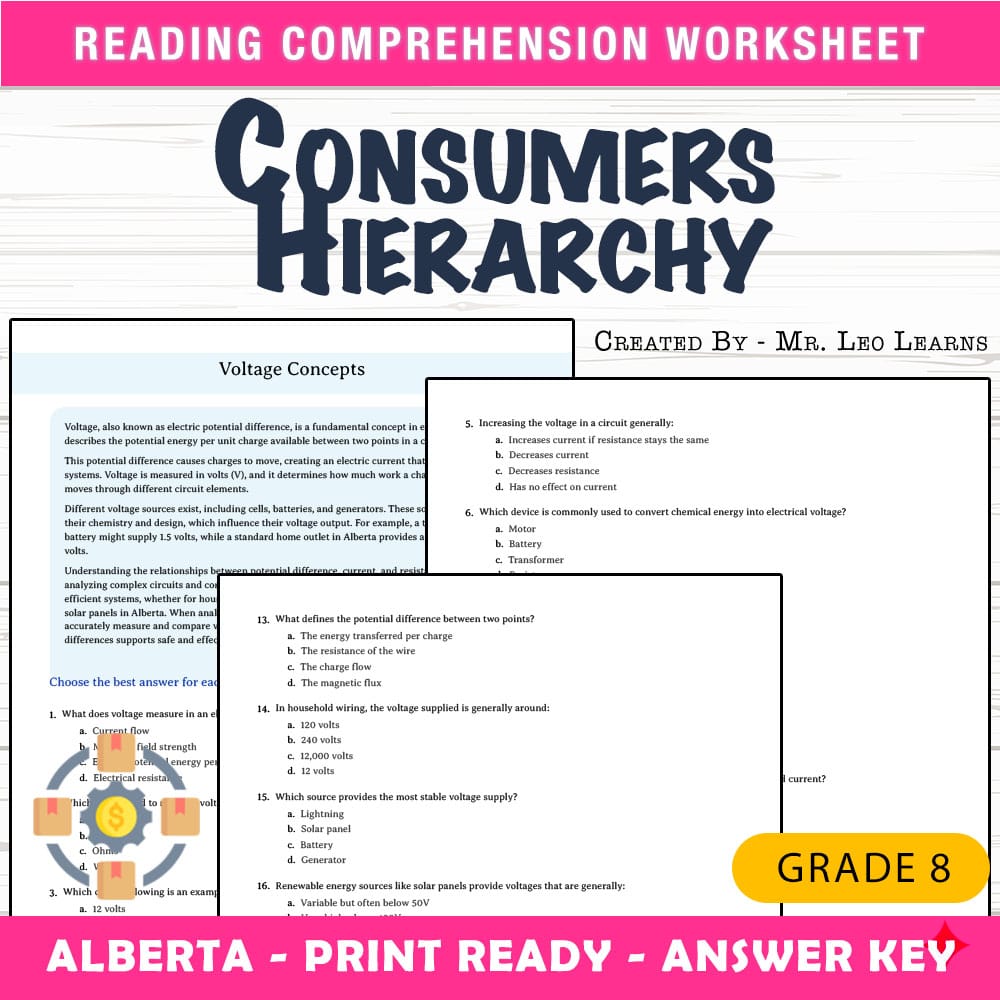
Grade 8 Science — Worksheet MCQ Paper for Mastering Consumers Hierarchy
Created byThe Resource HubLearning Objectives
- Understand the different trophic positions of herbivores, omnivores, and carnivores.
- Identify feeding relationships and energy transfer patterns in food chains.
- Explain how omnivory blurs discrete trophic levels and affects ecosystems.
Also included in: Grade 8 Science Bundle | Interactions and Ecosystems Worksheets +1 more
Instant download
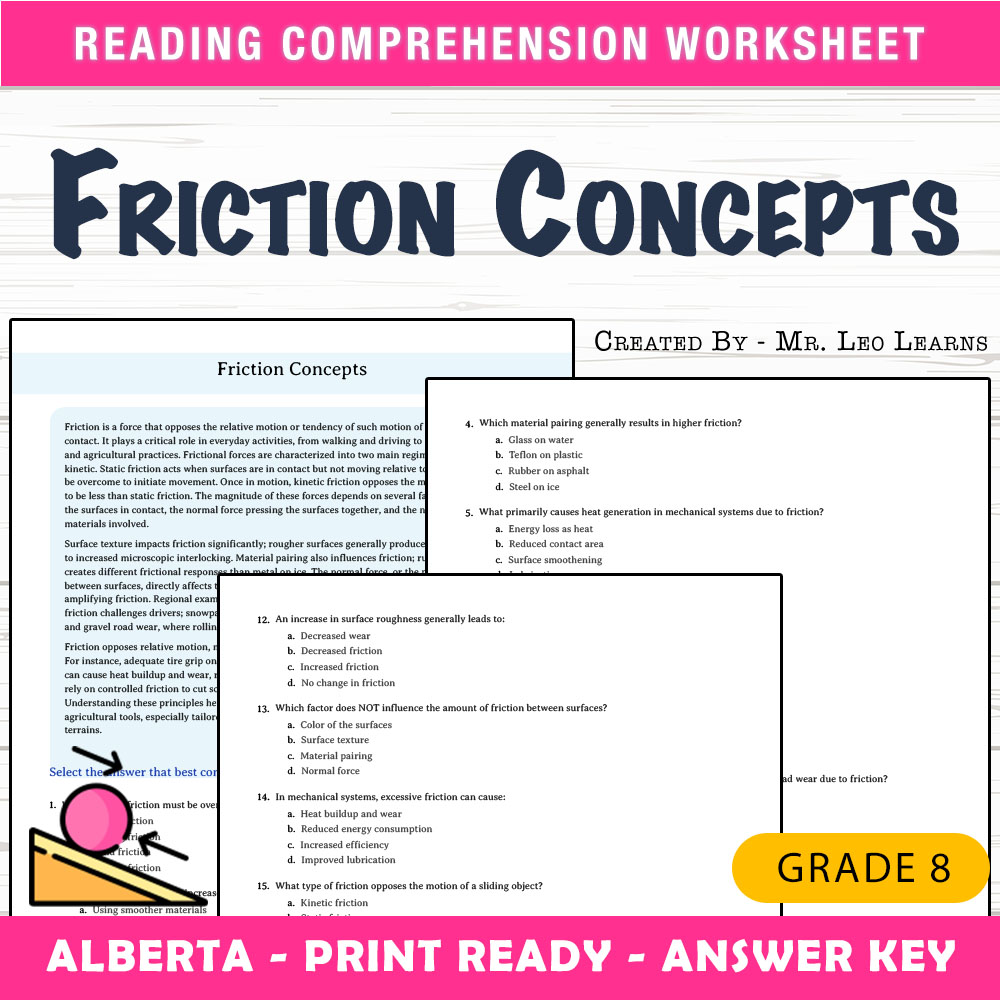
Grade 8 Science — Friction Concepts Worksheet MCQ Paper for Mastery
Created byThe Resource HubLearning Objectives
- Understand the difference between static and kinetic friction.
- Identify factors affecting frictional forces in real-world scenarios.
- Explain how surface texture, normal force, and material pairing influence friction.
Also included in: Grade 8 Science Forces and Motion Lesson Bundle | Alberta Curriculum +1 more
Instant download
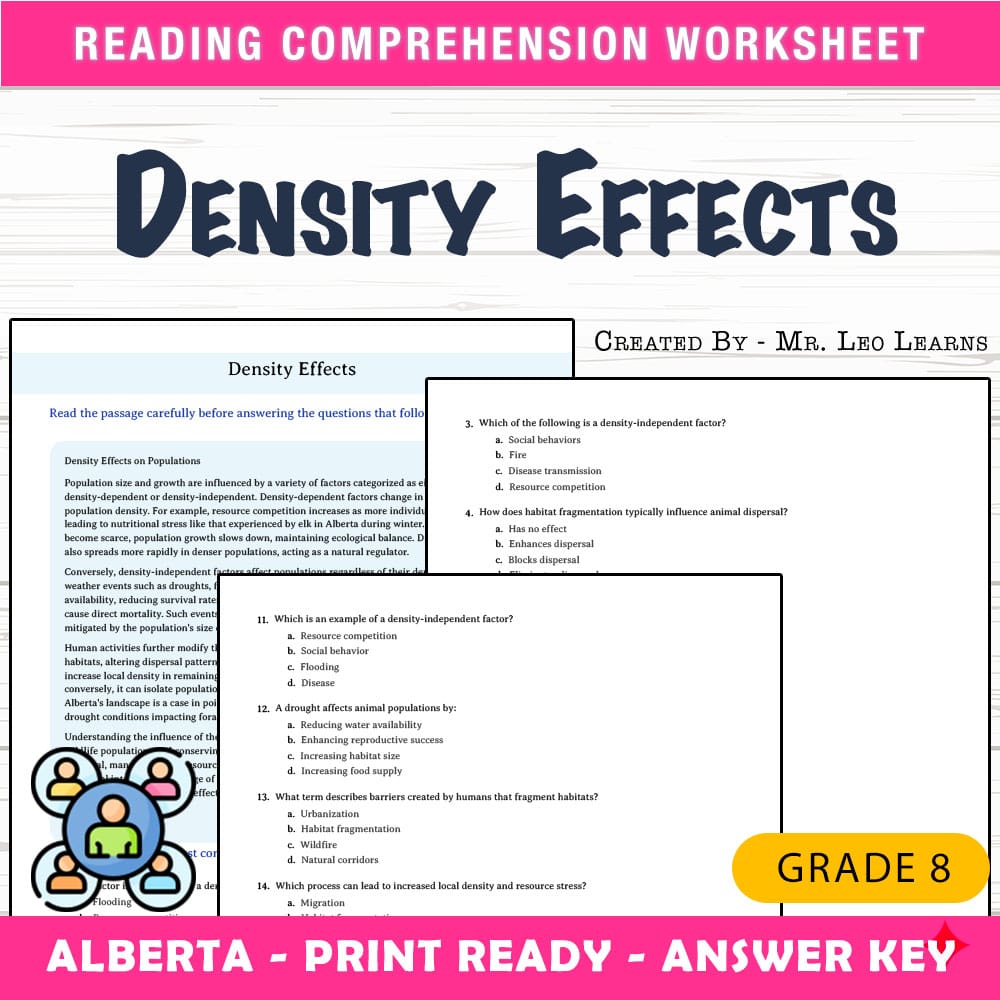
Grade 8 Science — Density Effects Worksheet MCQ Paper for Mastery
Created byThe Resource HubLearning Objectives
- Understand the difference between density-dependent and density-independent factors.
- Identify examples of population regulators in Alberta ecosystems.
- Explore how human activities influence population dynamics through fragmentation and dispersal.
Also included in: Grade 8 Science Bundle | Interactions and Ecosystems Worksheets +1 more
Instant download
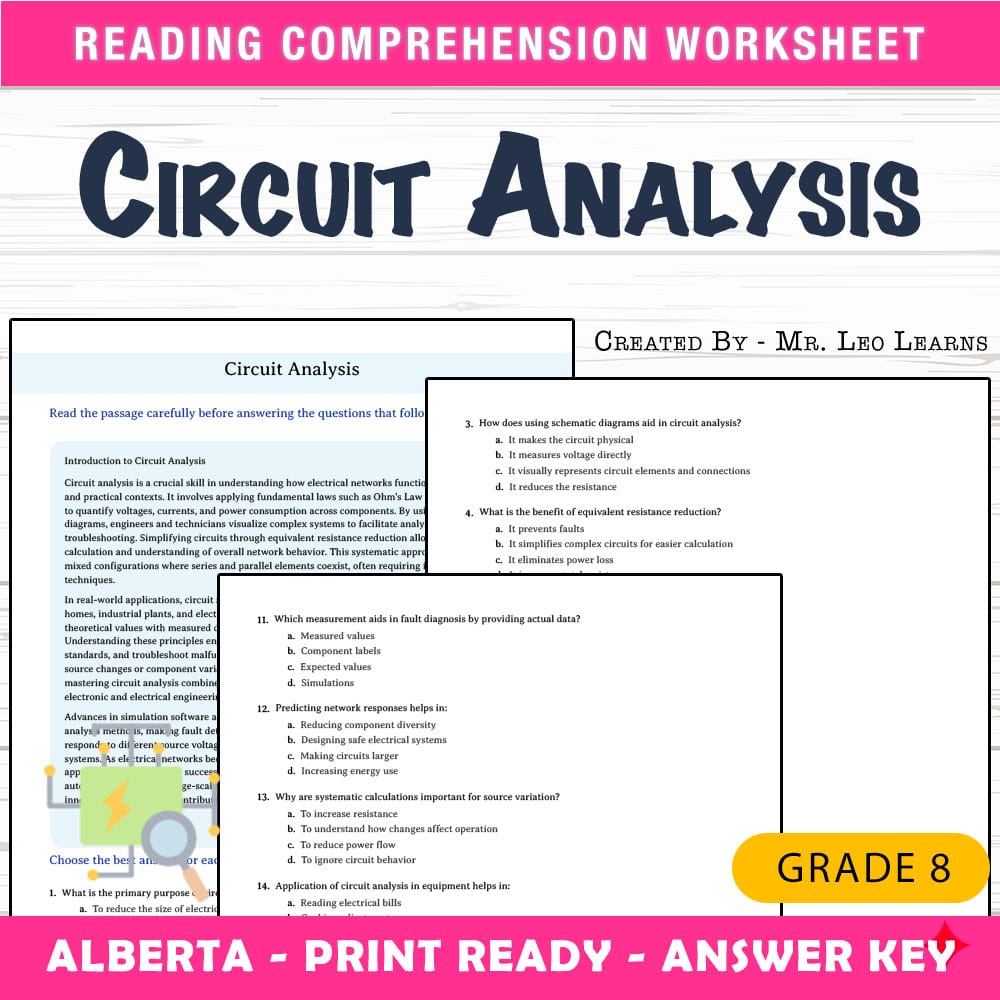
Grade 8 Science — Worksheet MCQ Paper for Circuit Analysis
Created byThe Resource HubLearning Objectives
- Understand the fundamental principles of circuit analysis using conservation laws.
- Apply schematic diagrams and equivalent resistance reduction techniques.
- Calculate voltages, currents, and power in various network configurations.
Also included in: Grade 8 Science Electricity & Magnetism Worksheet Bundle | Alberta Standards +1 more
Instant download
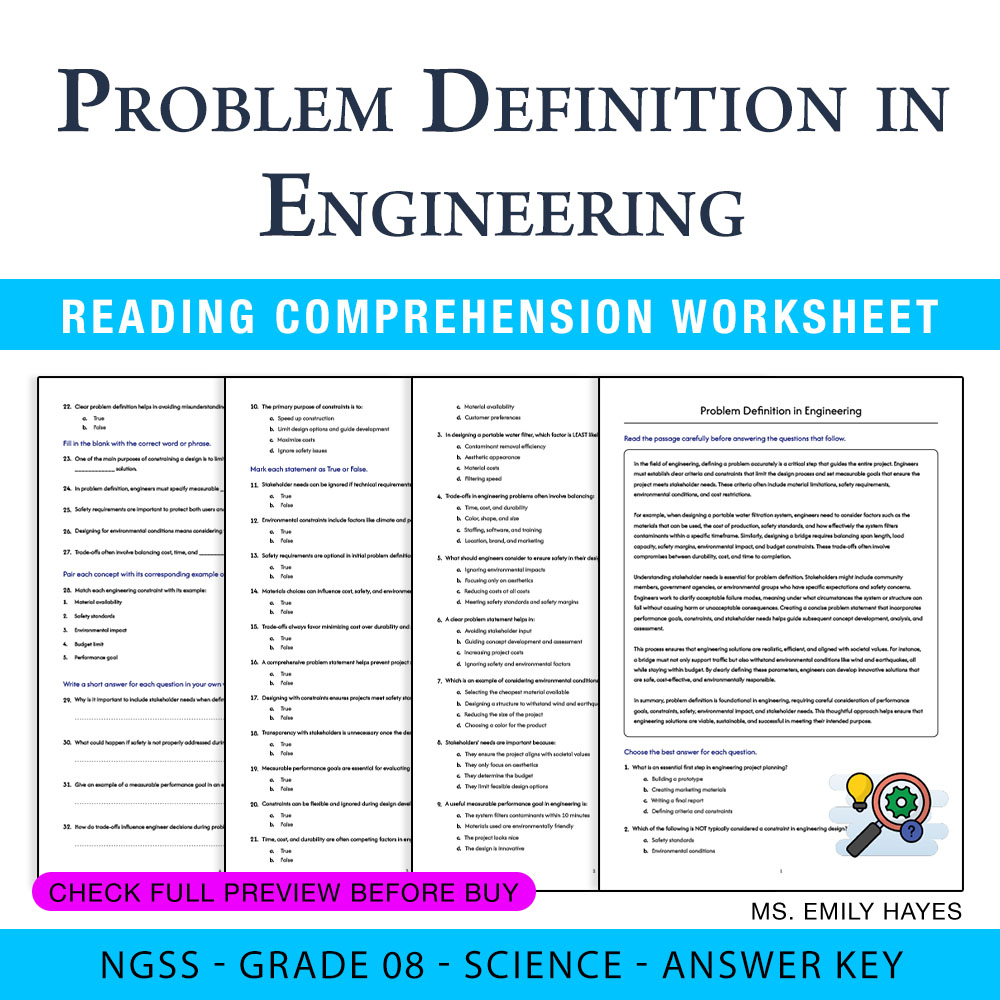
8th Grade Science | Problem Definition in Engineering Worksheet(PDF+ Answer Key)
Created byCopper Leaf ClassroomLearning Objectives
- Understand the criteria and constraints involved in defining engineering problems.
- Identify stakeholders' needs and establish measurable performance goals.
- Analyze trade-offs among cost, time, durability, safety, and environmental conditions.
Instant download
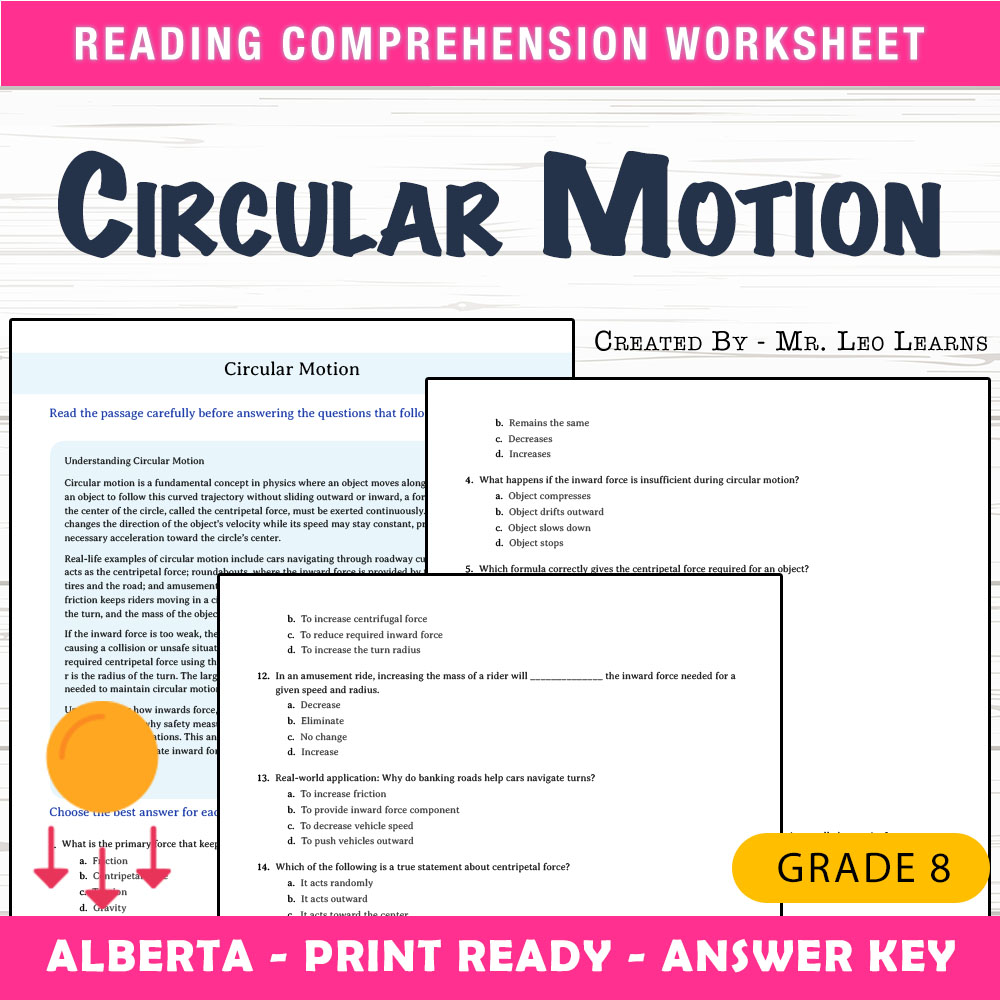
Grade 8 Science — Worksheet MCQ Paper for Mastering Circular Motion
Created byThe Resource HubLearning Objectives
- Understand the concept of centripetal force and its role in circular motion.
- Identify factors such as force magnitude, turn radius, and mass that influence centripetal force.
- Explain what happens when the inward force is insufficient during circular motion.
Also included in: Grade 8 Science Forces and Motion Lesson Bundle | Alberta Curriculum +1 more
Instant download
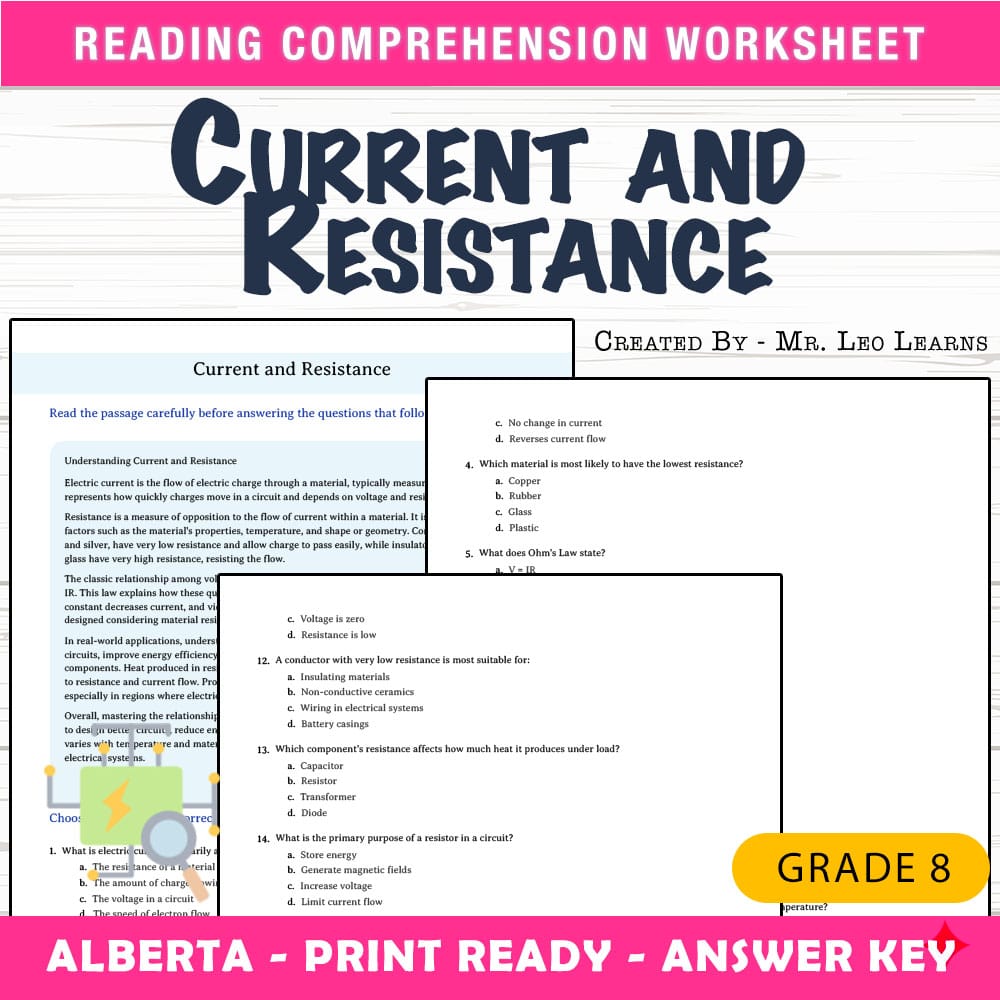
Grade 8 Science — Current and Resistance Worksheet MCQ Paper
Created byThe Resource HubLearning Objectives
- Understand the concept of electric current as the rate of charge flow.
- Recognize how resistance opposes current within materials and is affected by material properties, temperature, and geometry.
- Explain the relationship between voltage, current, and resistance in electrical circuits.
Also included in: Grade 8 Science Electricity & Magnetism Worksheet Bundle | Alberta Standards +1 more
Instant download
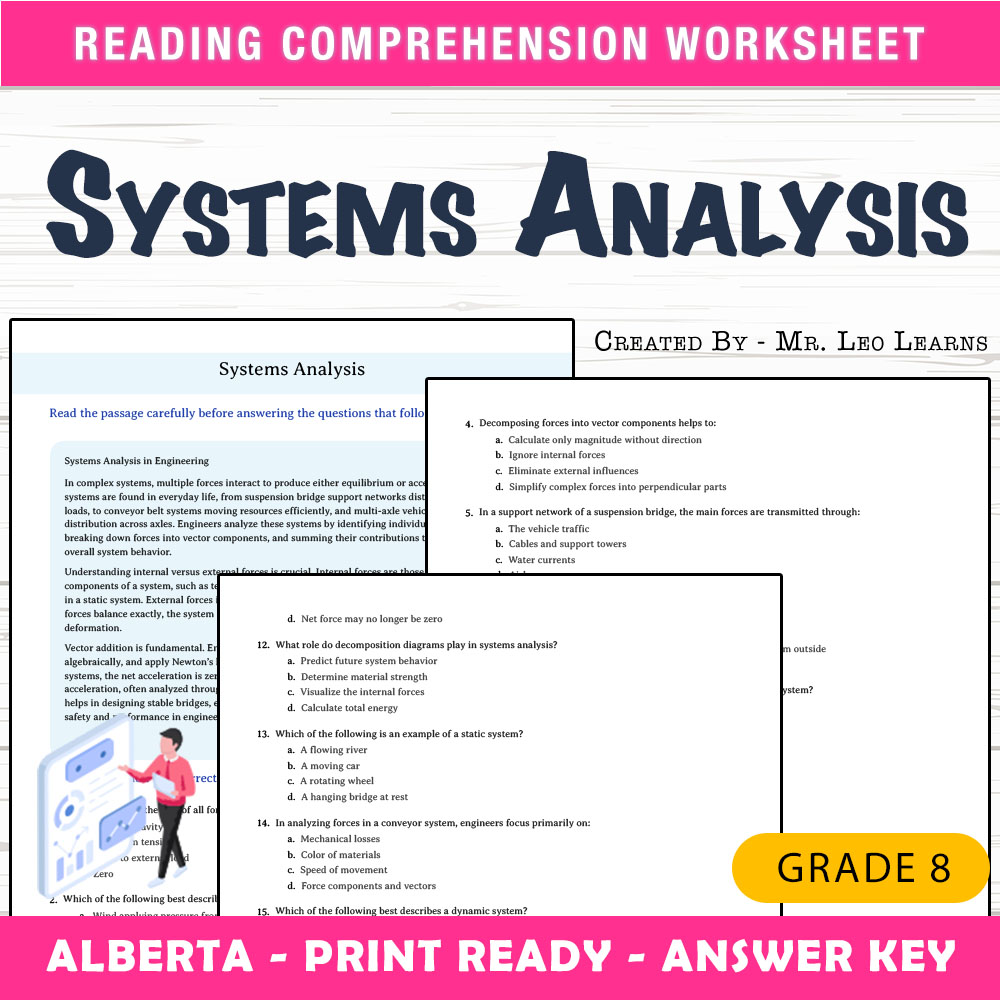
Grade 8 Science — Systems Analysis Worksheet MCQ Paper for Mastery
Created byThe Resource HubLearning Objectives
- Understand how to decompose complex systems into components and forces.
- Learn to distinguish between internal and external interactions in a system.
- Apply vector analysis to evaluate equilibrium or net acceleration in systems.
Also included in: Grade 8 Science Forces and Motion Lesson Bundle | Alberta Curriculum +1 more
Instant download
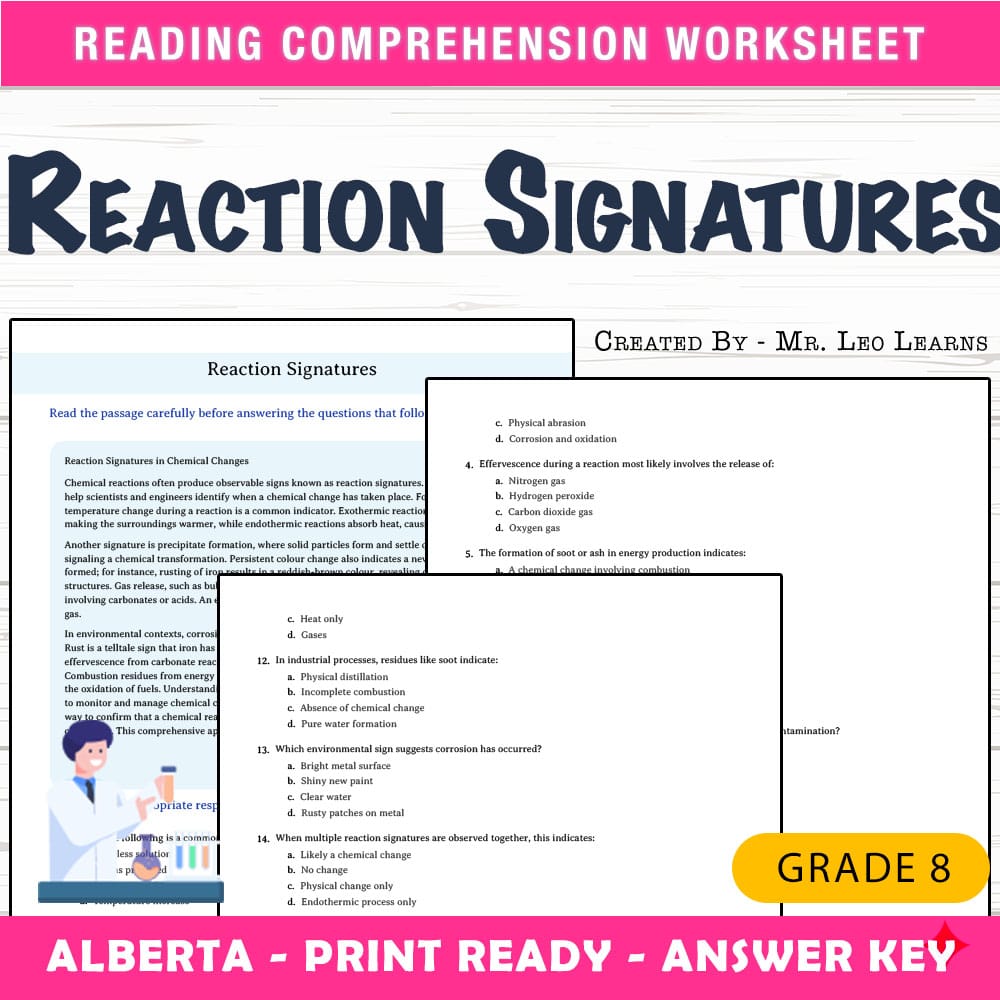
Grade 8 Science — Reaction Signatures Worksheet for Mastery
Created byThe Resource HubLearning Objectives
- Identify observable signatures that indicate a chemical change has occurred.
- Analyze examples of chemical reactions in environmental and industrial contexts.
- Understand how multiple indicators support the identification of chemical transformations.
Also included in: Grade 8 Science Bundle | Matter and Chemical Change Worksheets +1 more
Instant download
Browse more categories
About Science Worksheets
Find Science worksheets spanning core skills, practice, and review. All 44,628 resources are instant PDF downloads for the classroom or home.
Every worksheet on MyTeachingSheets is created by independent teacher-authors and reviewed before publication. All resources download as printable PDFs for classroom, homework, or at-home practice, and many include answer keys. Preview any worksheet free before buying.