
Science Worksheets
42,859 subject resources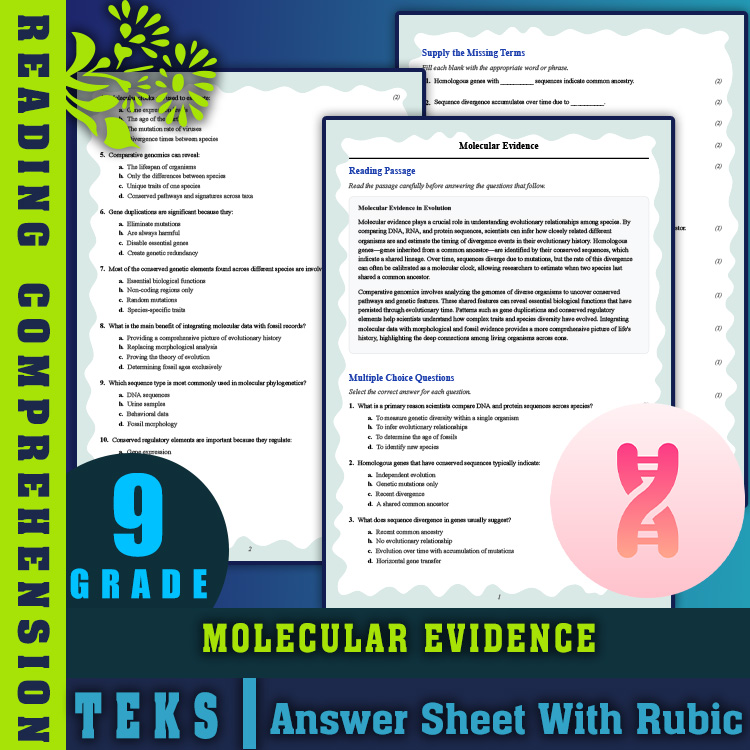
9th Grade Science | Molecular Evidence Reading Worksheet (PDF + Answer Key)
JCreated byJ.S SheetsLearning Objectives
- Understand how molecular data such as DNA, RNA, and protein sequences are used to infer evolutionary relationships.
- Identify the significance of conserved gene sequences and molecular clocks in determining divergence times.
- Explain how comparative genomics helps clarify lineage relationships and evolutionary processes.
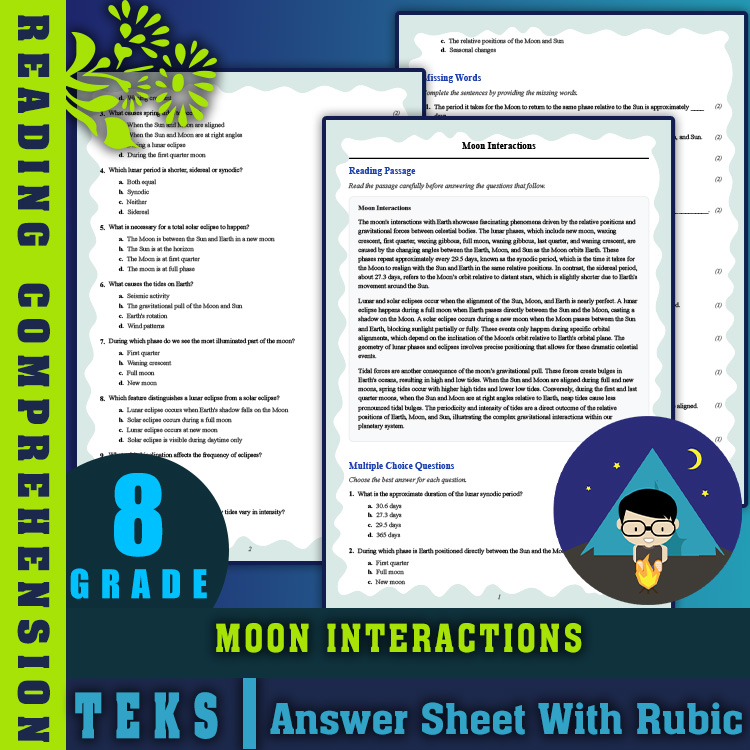
Grade 8 Science Reading Worksheets | Moon Interactions TEKS (PDF + Answer Key)
JCreated byJ.S SheetsLearning Objectives
- Describe the phases of the moon and their causes.
- Explain the conditions that lead to lunar and solar eclipses.
- Understand tidal phenomena and their relationship to the moon's position.
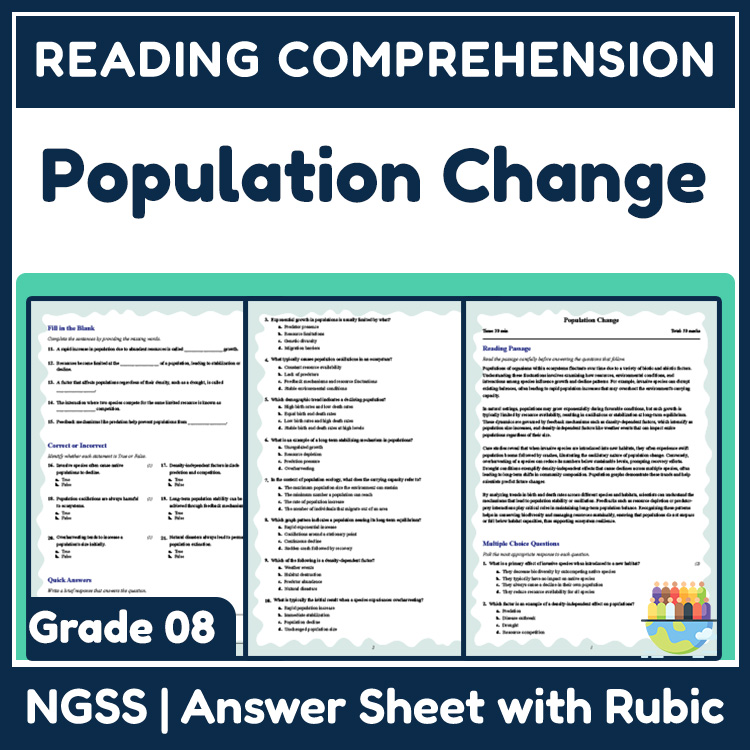
8th Grade Science | Population Change Reading Worksheets (NGSS Aligned)
JCreated byJ.S SheetsLearning Objectives
- Understand factors influencing population dynamics, including carrying capacity and feedback mechanisms.
- Analyze case studies of invasive species, overharvesting, and drought effects on populations.
- Interpret population graphs and birth/death rate trends to assess population stability and oscillations.
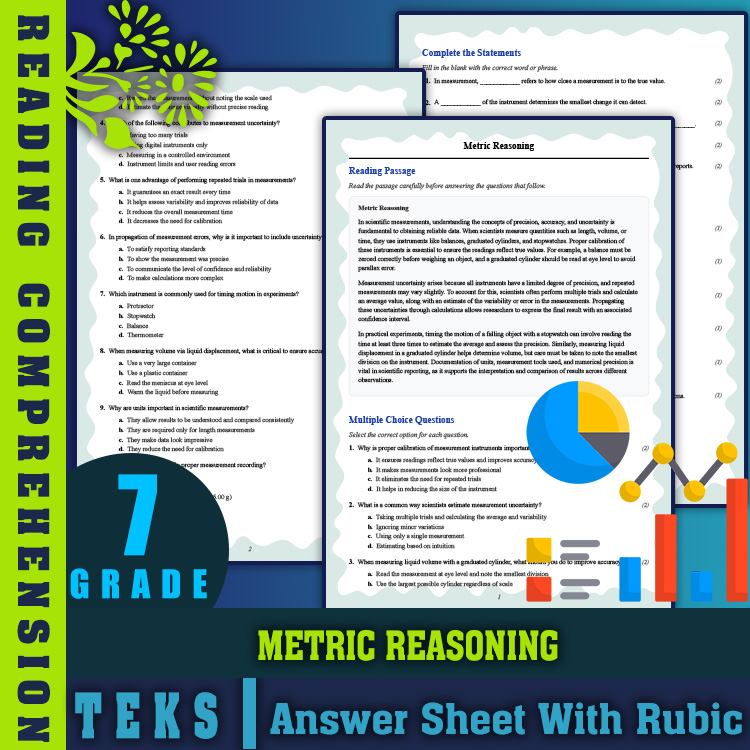
7th Grade Science | Metric Reasoning Reading Worksheets with Answer Key (PDF)
JCreated byJ.S SheetsLearning Objectives
- Understand the importance of measurement precision and uncertainty in scientific observations.
- Learn how to properly calibrate and select measurement instruments for accurate data collection.
- Develop skills in estimating measurement uncertainty and propagating errors in calculations.
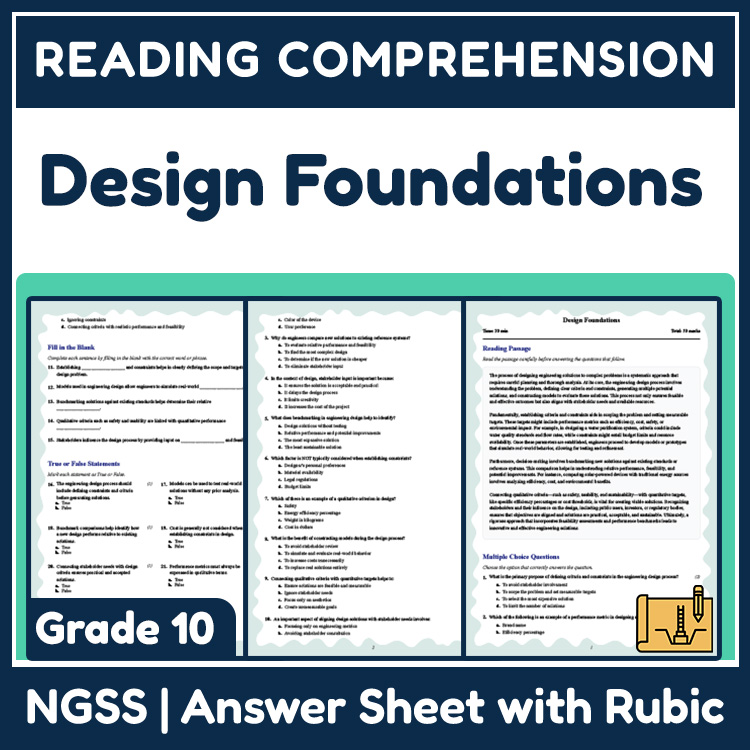
10th Grade Science | Design Foundations Reading Worksheet (PDF + Answer Key)
JCreated byJ.S SheetsLearning Objectives
- Understand the engineering design process and its key components.
- Learn how to define criteria and constraints for complex problems.
- Develop skills to construct models and generate multiple solution concepts.
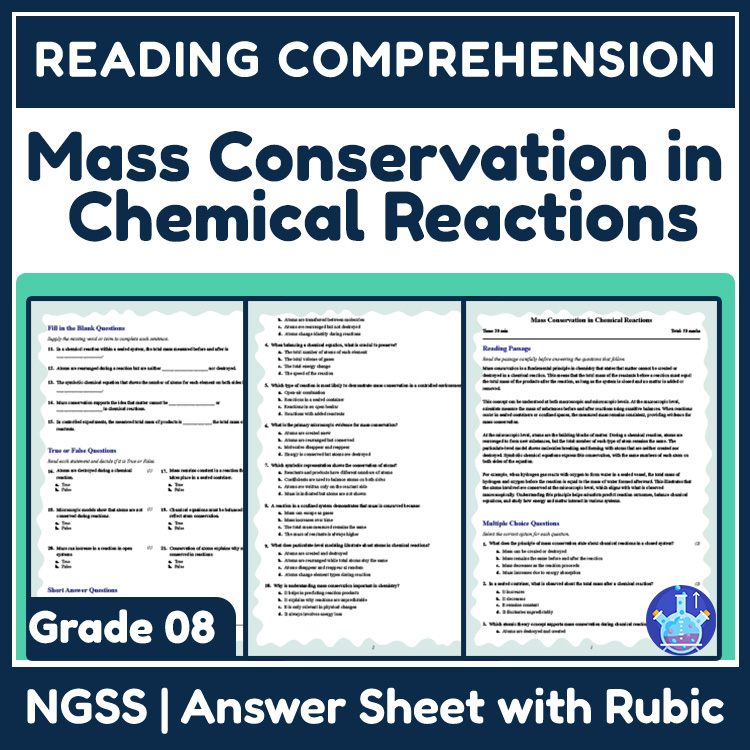
Grade 8 Science | Mass Conservation in Chemical Reactions Reading Worksheet
JCreated byJ.S SheetsLearning Objectives
- Understand the principle of mass conservation in chemical reactions
- Link macroscopic mass measurements to microscopic atomic behavior
- Recognize examples of mass conservation in closed systems
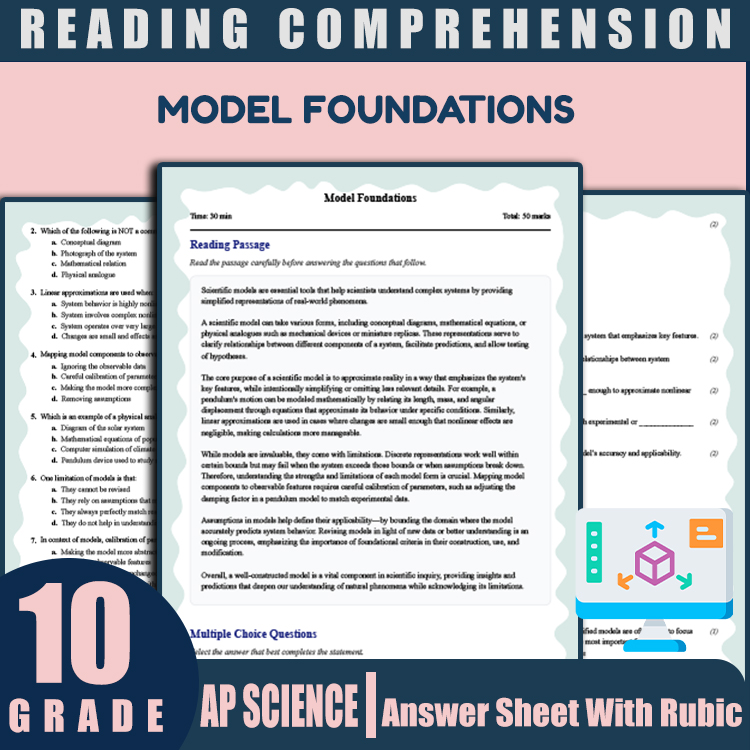
Grade 10 Science | Model Foundations Reading Worksheet (PDF & Answer Key)
JCreated byJ.S SheetsLearning Objectives
- Understand the purpose and types of scientific models, including conceptual, mathematical, and physical analogues.
- Compare the strengths and limitations of different model representations using examples such as pendulum motion and linear approximations.
- Explain key concepts like mapping model components to observable features, parameter calibration, and the role of assumptions in modeling.
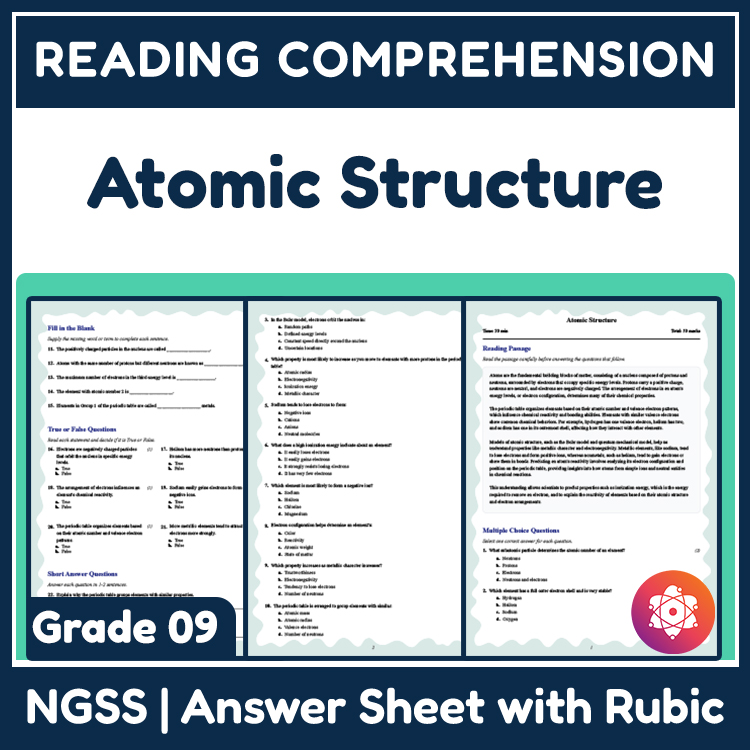
9th Grade Science | Atomic Structure Reading Worksheet & Answer Key (PDF)
JCreated byJ.S SheetsLearning Objectives
- Describe the subatomic particles that make up atoms: protons, neutrons, and electrons.
- Explain electron configurations and quantized energy levels in atoms.
- Understand how the periodic table organizes elements based on valence electrons and chemical behaviors.
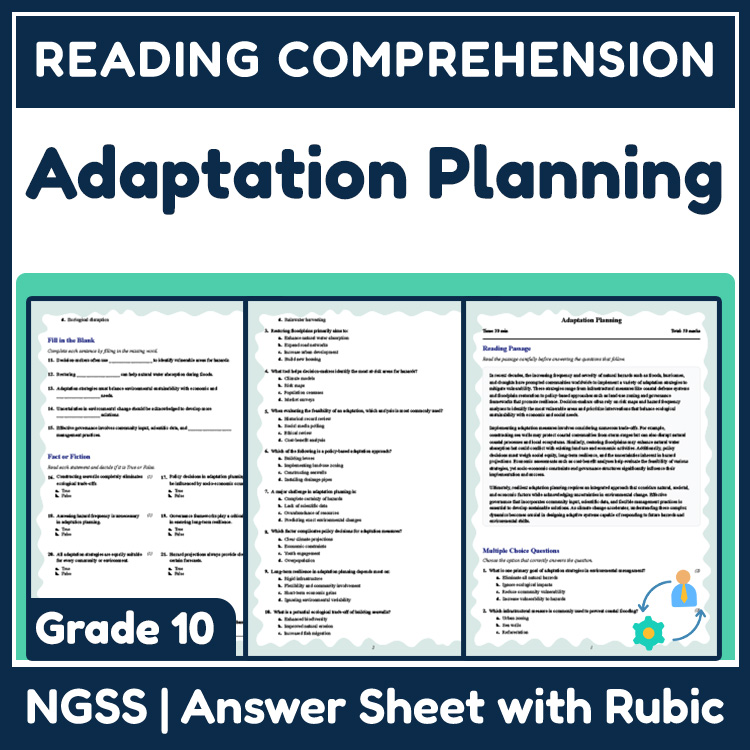
10th Grade Science | Adaptation Planning Reading Worksheet & Answer Key (PDF)
JCreated byJ.S SheetsLearning Objectives
- Understand the concept of environmental adaptation responses to natural hazards.
- Evaluate the trade-offs involved in infrastructural and policy responses to reduce vulnerability.
- Analyze risk maps, hazard analyses, and governance frameworks to assess adaptation feasibility.
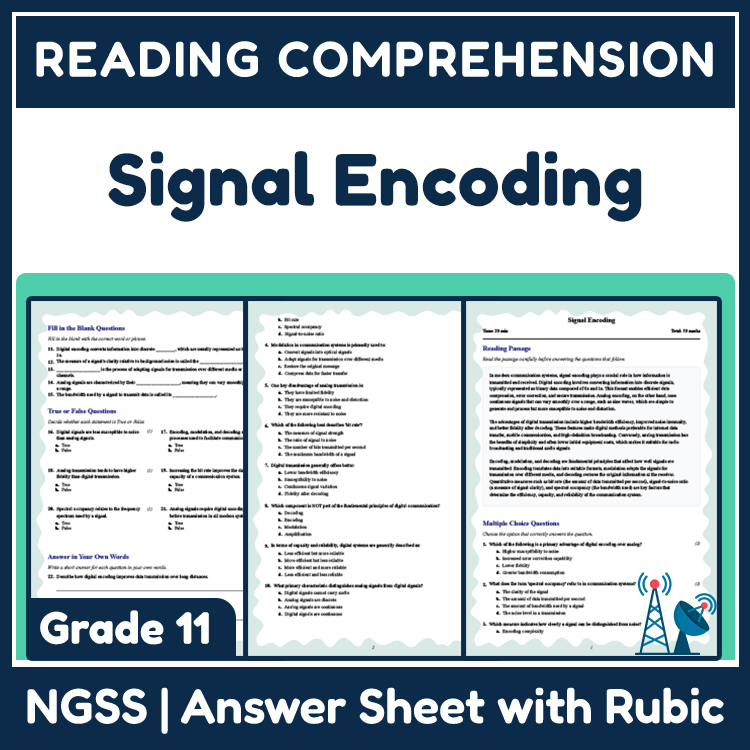
Grade 11 Science | Signal Encoding Reading Worksheet (PDF + Answer Key)
JCreated byJ.S SheetsLearning Objectives
- Understand the differences between digital and analog transmission methods in terms of bandwidth, noise, and fidelity.
- Explain fundamental principles of encoding, modulation, and decoding used in communication systems.
- Compare capacity and reliability of different transmission types using quantitative measures such as bit rate, signal-to-noise ratio, and spectral occupancy.
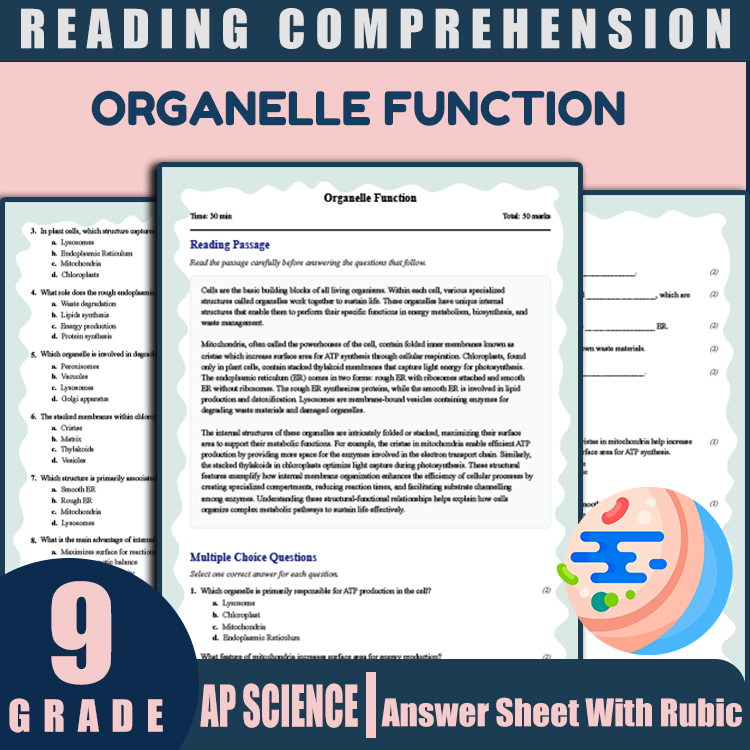
Grade 9 Science | Organelle Function Reading Worksheets (PDF + Rubric)
JCreated byJ.S SheetsLearning Objectives
- Identify the major organelles involved in cellular metabolic pathways and maintenance.
- Describe the internal structures of organelles such as mitochondria, chloroplasts, endoplasmic reticulum, and lysosomes.
- Explain how organelle compartmentation supports energy production, macromolecule processing, and cellular organization.
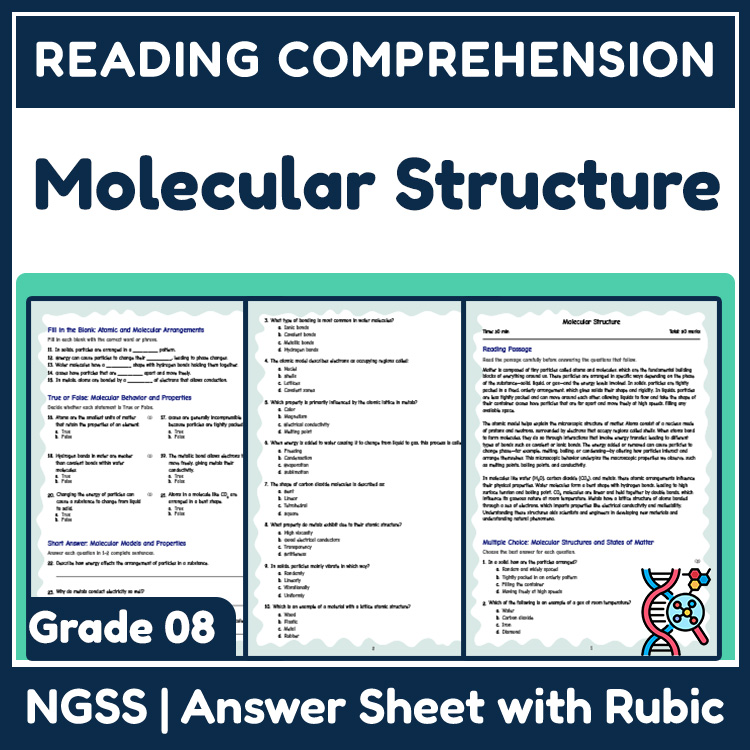
8th Grade Science | Molecular Structure Reading Worksheets (NGSS Aligned)
JCreated byJ.S SheetsLearning Objectives
- Understand how atoms and molecules make up matter in different states
- Describe how energy influences particle arrangement and bonding
- Connect microscopic atomic interactions to macroscopic properties of solids, liquids, and gases
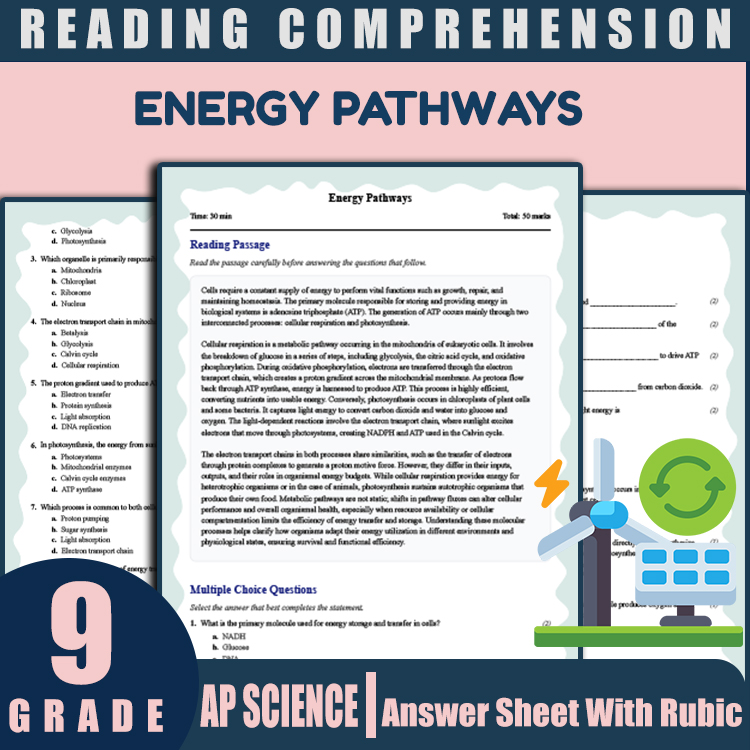
Grade 9 Science | Energy Pathways Reading Worksheet (PDF + Answer Key)
JCreated byJ.S SheetsLearning Objectives
- Understand the processes of ATP production in cellular respiration and photosynthesis.
- Explain how energy is transferred and coupled in metabolic reactions.
- Compare the roles of electron transport chains in photosynthesis and cellular respiration.
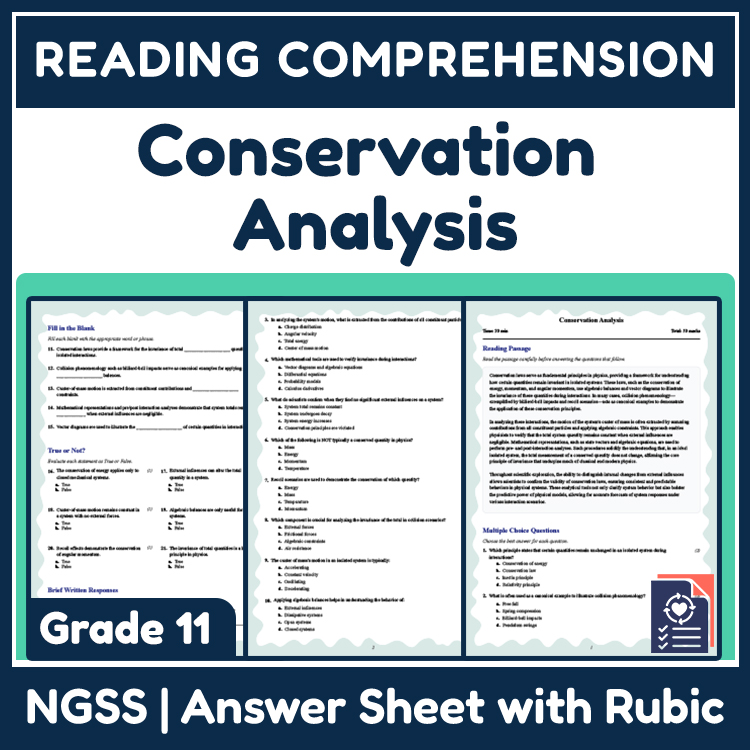
11th Grade Science | Conservation Analysis Reading Worksheet (PDF + Answer Key)
JCreated byJ.S SheetsLearning Objectives
- Understand the fundamental principles of conservation laws in physics.
- Apply algebraic balances and vector diagrams to analyze isolated interactions.
- Explore collision phenomenology through real-world examples such as billiard impacts and recoil scenarios.
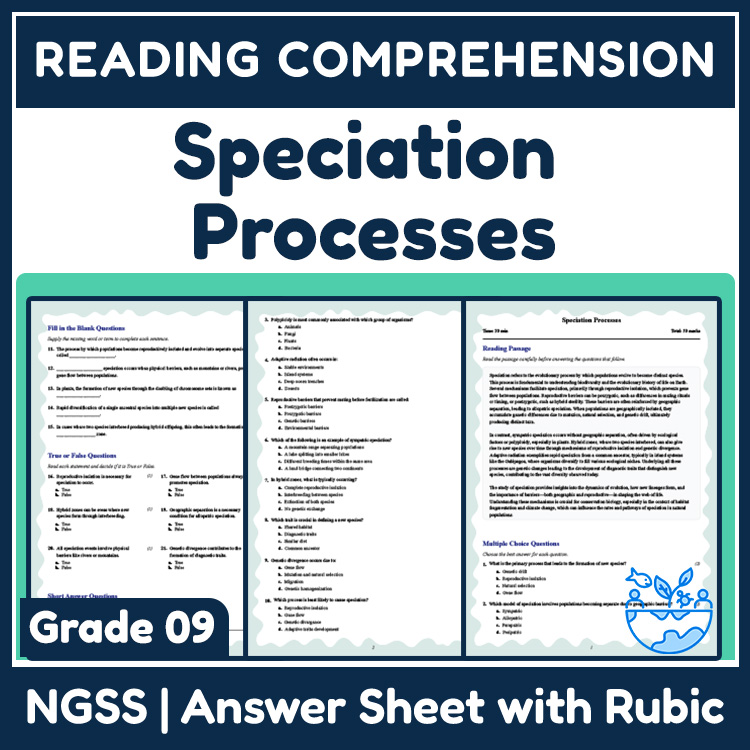
Grade 9 Science | Speciation Processes Reading Worksheet (PDF + Answer Key)
JCreated byJ.S SheetsLearning Objectives
- Understand the mechanisms involved in reproductive isolation and how they lead to speciation.
- Identify different models of speciation such as allopatric, sympatric, and adaptive radiation.
- Explain the significance of genetic divergence and diagnostic traits in forming new species.
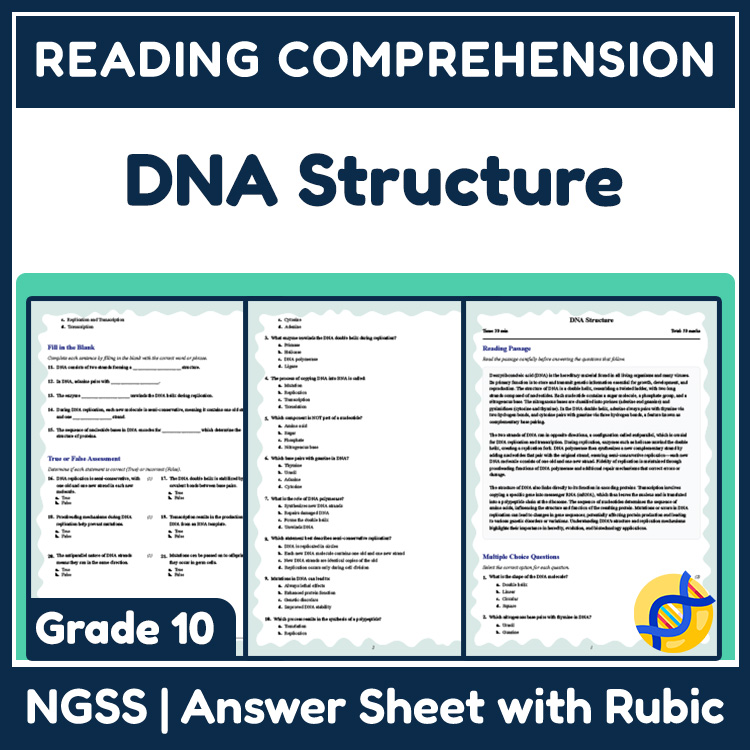
10th Grade Science | DNA Structure Reading Worksheet (PDF + Answer Key)
JCreated byJ.S SheetsLearning Objectives
- Describe the basic structural features of DNA, including the double helix, complementary base pairing, and antiparallel strands.
- Explain the mechanisms of DNA replication, including the roles of DNA polymerase and helicase, and how fidelity is maintained through proofreading and repair.
- Connect DNA structure to processes such as transcription and translation, illustrating how nucleotide sequences encode proteins.
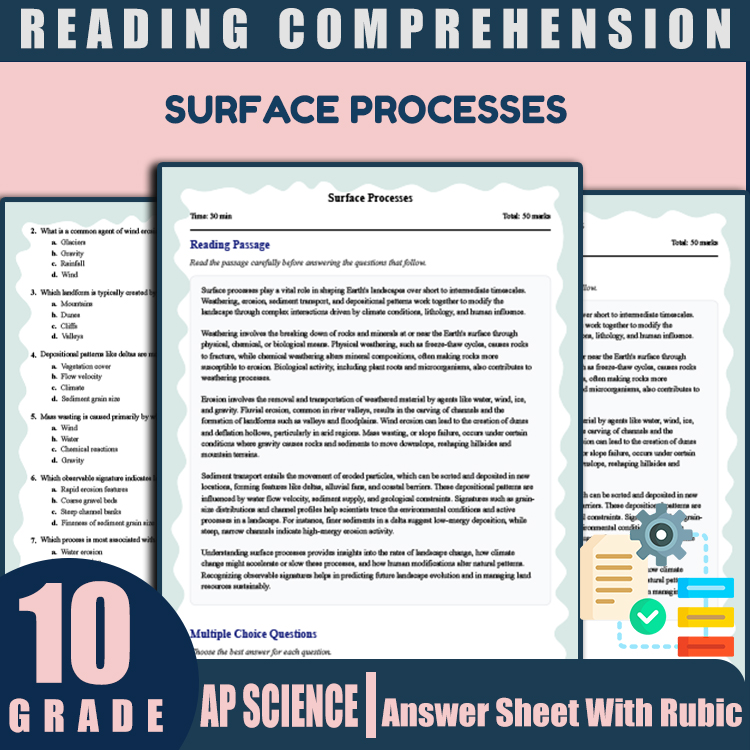
10th Grade Science | Surface Processes Reading Worksheet & Answer Key (PDF)
JCreated byJ.S SheetsLearning Objectives
- Describe the key surface processes such as weathering, erosion, sediment transport, and deposition.
- Interpret morphological changes in landscapes due to surface processes.
- Relate surface process patterns to climate, lithology, and human activities.
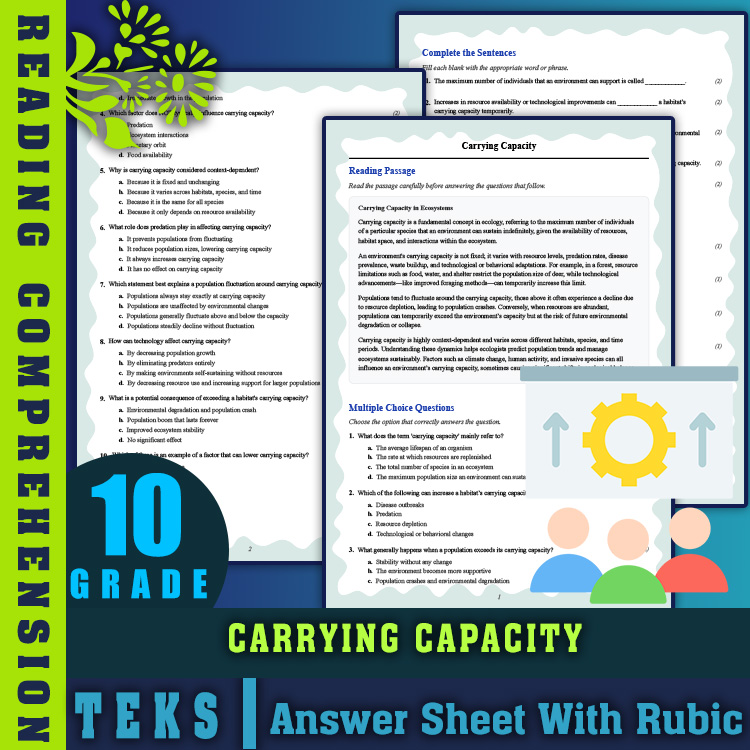
10th Grade Science | Carrying Capacity Reading Worksheet & Answer Key (PDF)
JCreated byJ.S SheetsLearning Objectives
- Understand the concept of carrying capacity and factors that influence it.
- Analyze how resource limitations and ecosystem interactions affect population sizes.
- Evaluate the effects of exceeding carrying capacity on environments and populations.
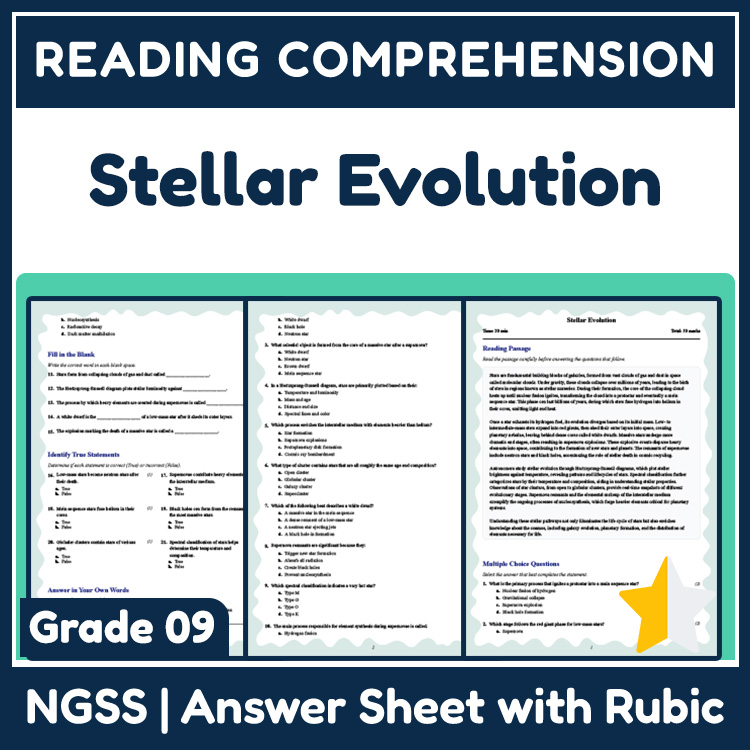
9th Grade Science | Stellar Evolution Reading Worksheet (PDF + Answer Key)
JCreated byJ.S SheetsLearning Objectives
- Describe the main stages of stellar evolution from star formation to end states.
- Interpret Hertzsprung-Russell diagrams and spectral classifications of stars.
- Explain processes such as supernovae and nucleosynthesis that enrich the interstellar medium.
Grade 7 Science | Genetic Variation Reading Worksheets & Practice (Answer Key)
JCreated byJ.S SheetsLearning Objectives
- Understand sources of genetic diversity such as mutations, crossing over, and independent assortment.
- Explain how microscopic genetic changes contribute to population-level variation.
- Analyze real-world examples like bacterial mutations and chromosome crossover in fruit flies.
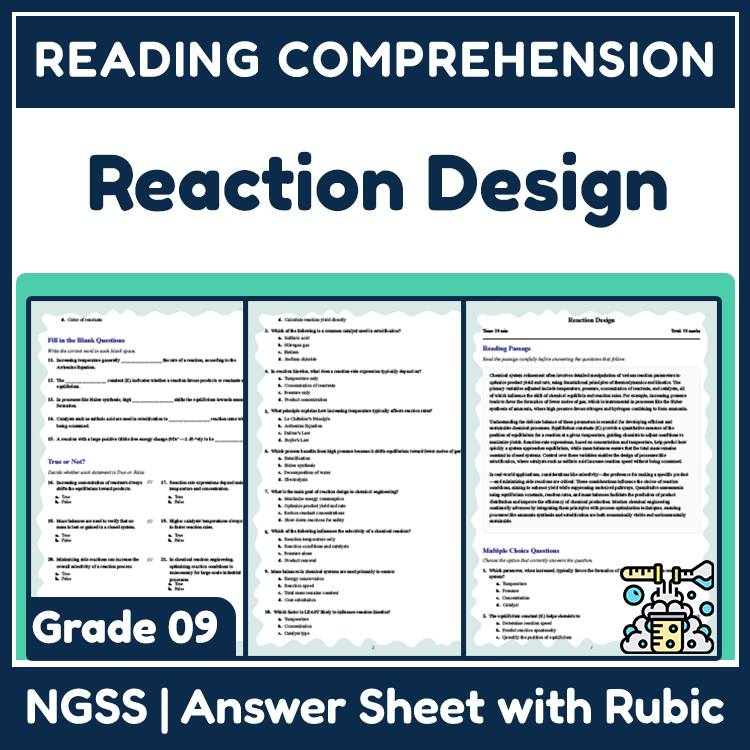
Grade 9 Science | Reaction Design Reading Worksheets (PDF + Rubric)
JCreated byJ.S SheetsLearning Objectives
- Understand the principles of chemical equilibrium and kinetics in reaction systems.
- Apply concepts of reaction conditions optimization in processes like Haber synthesis and esterification.
- Interpret equilibrium constants, reaction-rate expressions, and mass balances to predict product distribution.
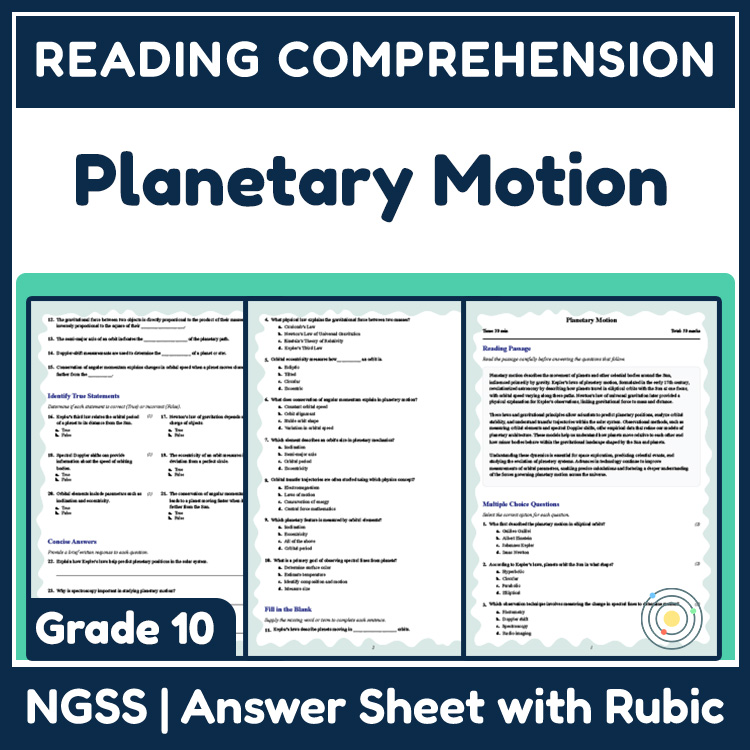
10th Grade Science | Planetary Motion Reading Worksheet with Answer Key (PDF)
JCreated byJ.S SheetsLearning Objectives
- Understand the principles of gravitational dynamics governing planetary orbits
- Explain Kepler's laws and their application to planetary motion
- Relate orbital elements such as eccentricity and semi-major axis to planetary trajectories
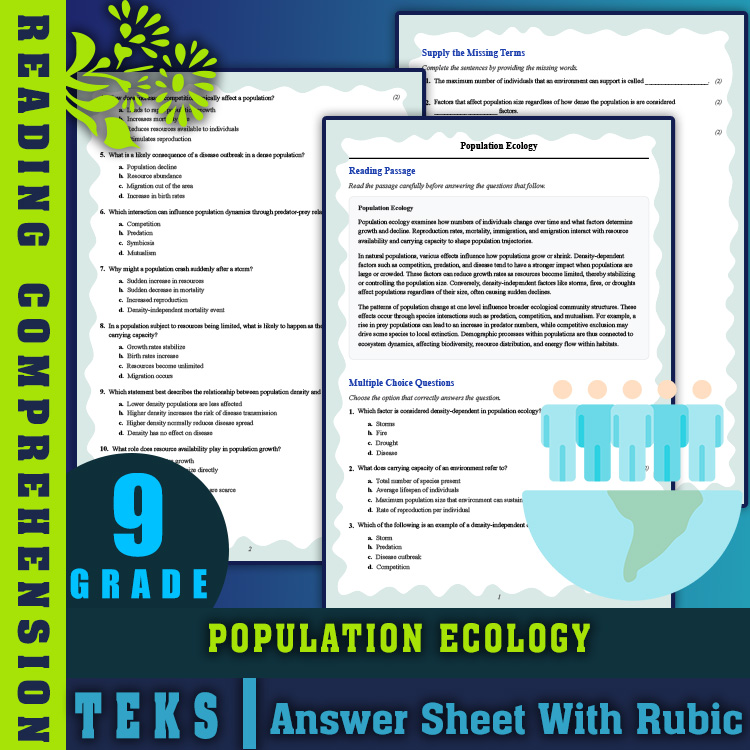
Grade 9 Science | Population Ecology Reading Worksheet (PDF + Answer Key)
JCreated byJ.S SheetsLearning Objectives
- Understand the key factors influencing population growth and decline.
- Explain the difference between density-dependent and density-independent factors.
- Describe how population patterns affect community interactions and ecosystem dynamics.
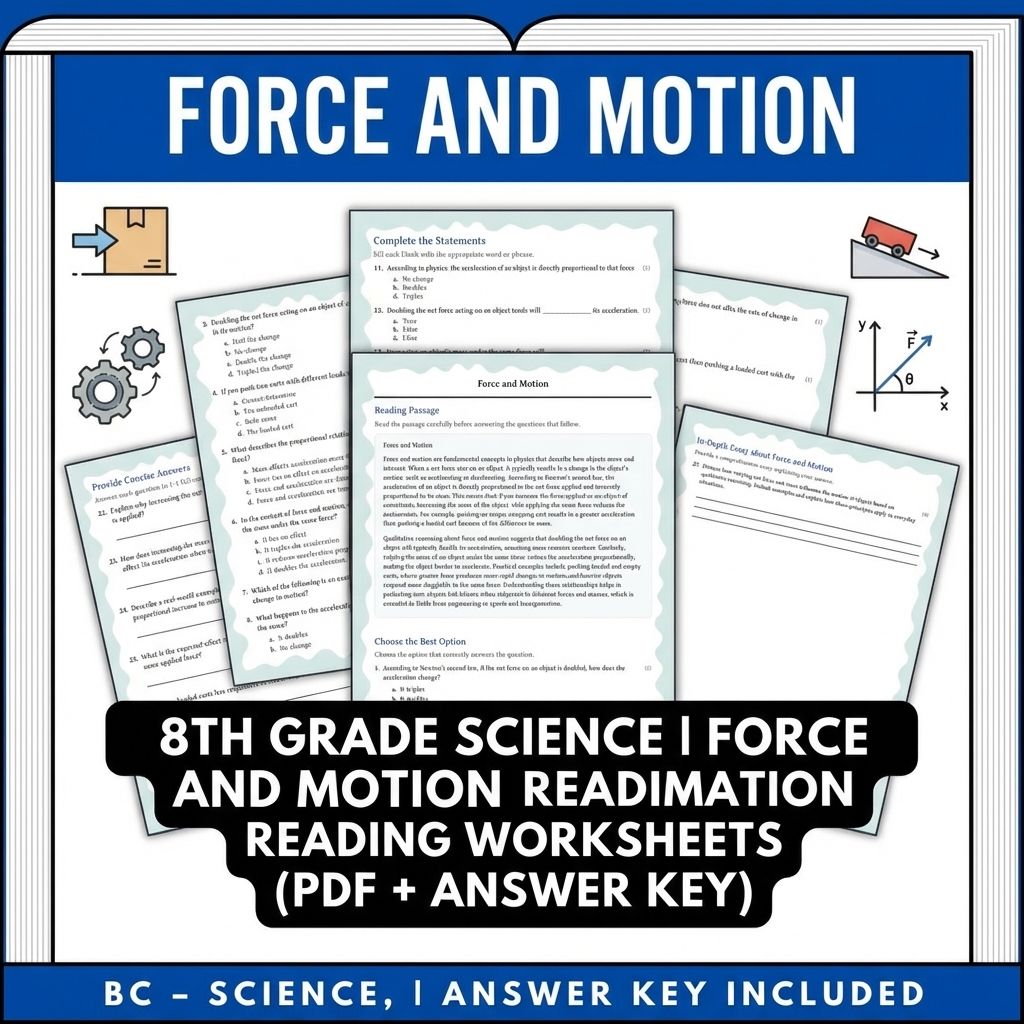
8th Grade Science | Force and Motion Reading Worksheets (PDF + Answer Key)
JCreated byJ.S SheetsLearning Objectives
- Understand how net force influences the acceleration of objects.
- Explain the relationship between mass, force, and motion.
- Predict motion changes when net force or mass is altered based on qualitative reasoning.
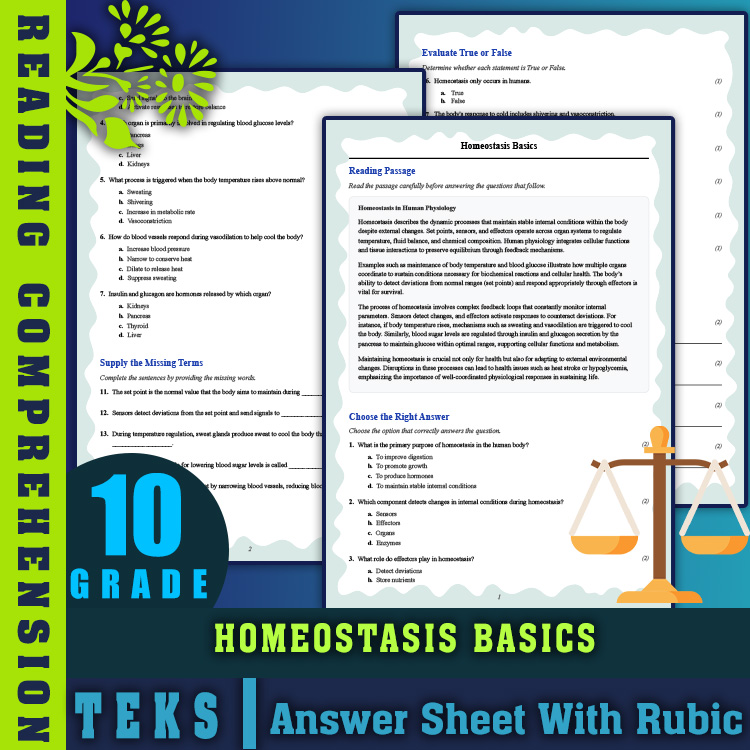
Grade 10 Science | Homeostasis Basics Reading Worksheet & Answer Key (PDF)
JCreated byJ.S SheetsLearning Objectives
- Understand the concept of homeostasis and its importance in human physiology.
- Identify the key components involved in maintaining internal stability, including set points, sensors, and effectors.
- Describe feedback mechanisms that regulate temperature, fluid balance, and chemical composition in the body.
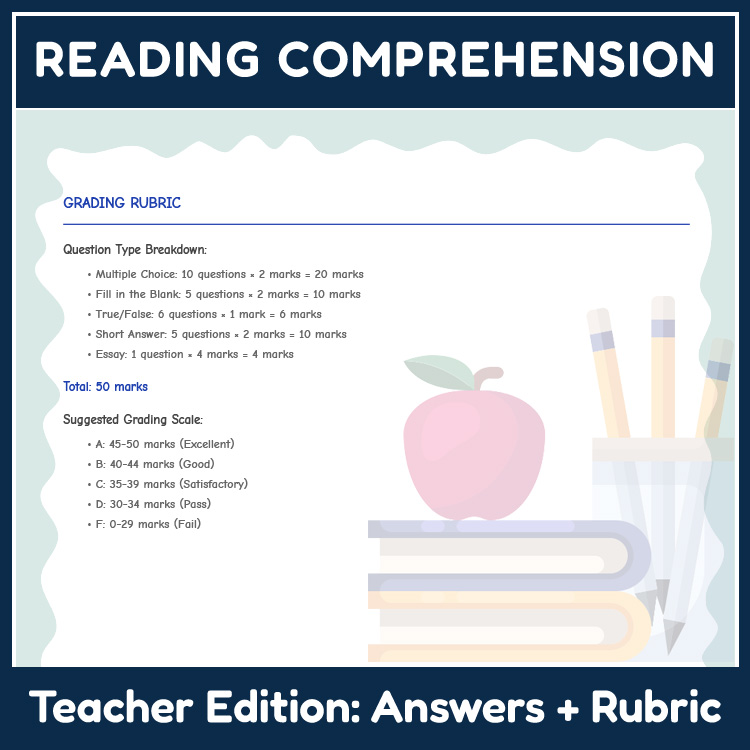
Grade 8 Science Reading Worksheet | Gravitational Interactions PDF + Answer Key
JCreated byJ.S SheetsLearning Objectives
- Understand the universal attraction of gravity and how it depends on mass and distance.
- Describe how gravitational forces influence planetary orbits, satellite motion, and tidal effects.
- Apply the inverse-square law to explain variations in gravitational force.
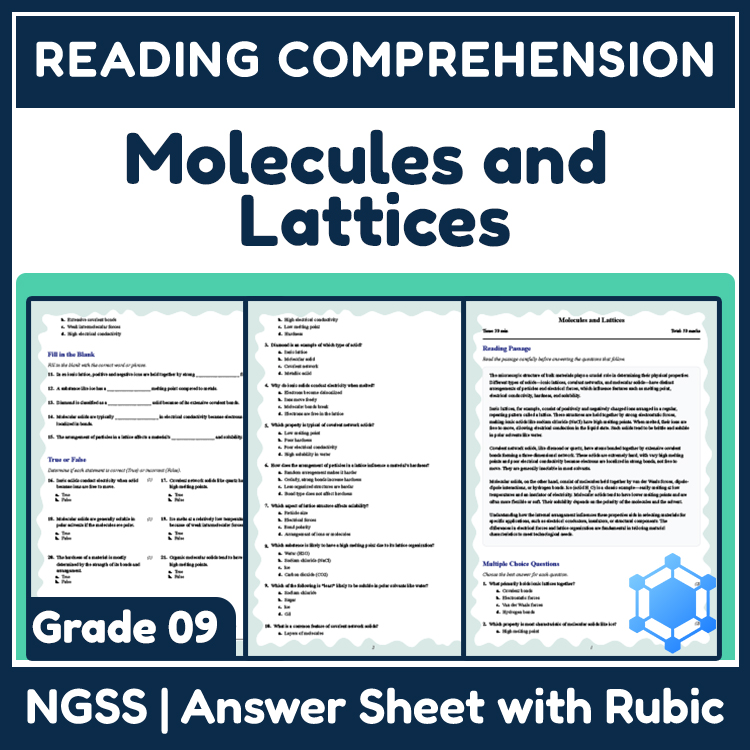
9th Grade Science | Molecules and Lattices Reading Worksheet & Answer Key
JCreated byJ.S SheetsLearning Objectives
- Understand how the arrangement of particles affects the properties of different types of solids
- Identify the characteristics of ionic lattices, covalent networks, and molecular solids
- Explain how melting point, electrical conductivity, hardness, and solubility relate to lattice organization
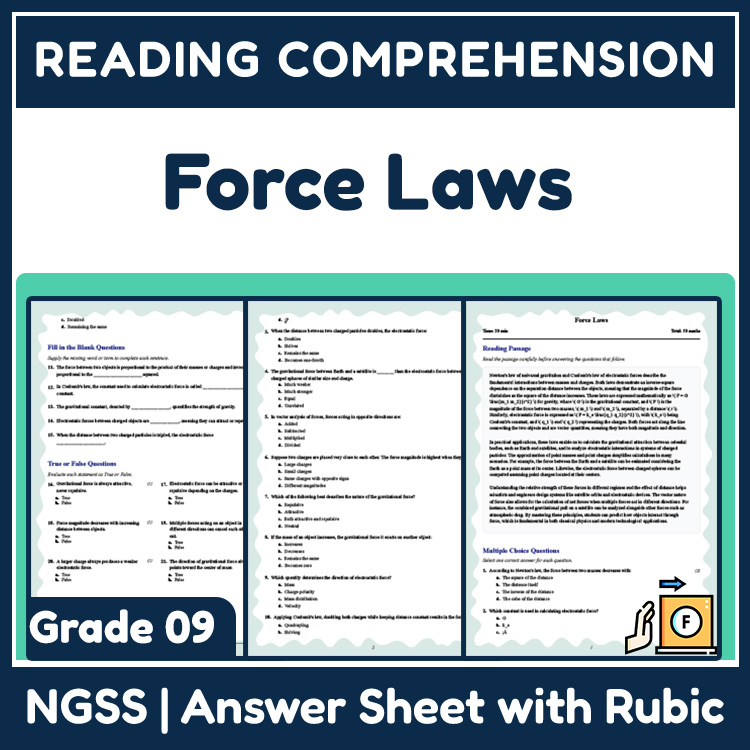
Grade 9 Science | Force Laws Reading Worksheet (PDF + Answer Key)
JCreated byJ.S SheetsLearning Objectives
- Understand the mathematical form of gravitational and electrostatic force equations.
- Apply inverse-square law formulas to calculate magnitudes of forces between objects.
- Analyze the directions of forces in vector form in various scenarios.
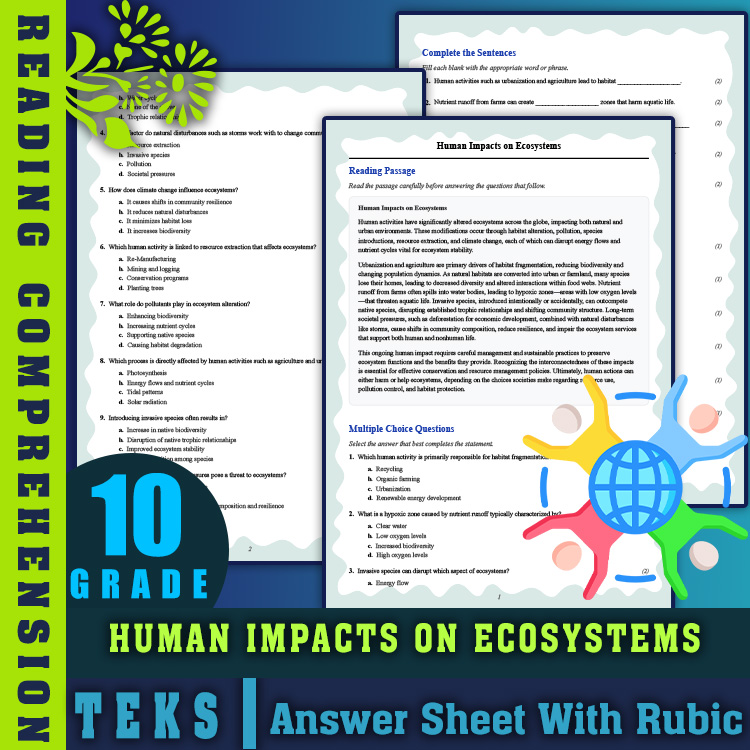
Grade 10 Science | Human Impacts on Ecosystems Reading (PDF & Answer Key)
JCreated byJ.S SheetsLearning Objectives
- Understand how human activities alter ecosystems through habitat modification, pollution, and resource use.
- Identify specific human impacts such as urbanization, pollution, invasive species, and climate change.
- Analyze the effects of human impacts on energy flow, nutrient cycles, biodiversity, and community resilience.
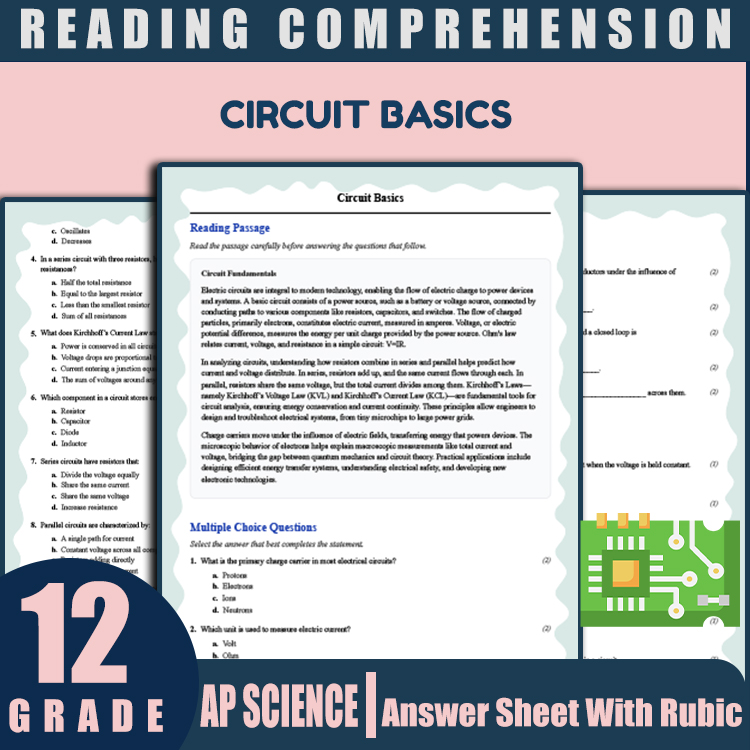
12th Grade Science | Circuit Basics Reading Worksheet & Answer Key PDF
JCreated byJ.S SheetsLearning Objectives
- Understand the concepts of electric charge, current, and potential difference.
- Describe basic circuit models using resistors, voltage sources, and conductors.
- Apply Ohm’s law to analyze simple circuits and understand series and parallel connections.
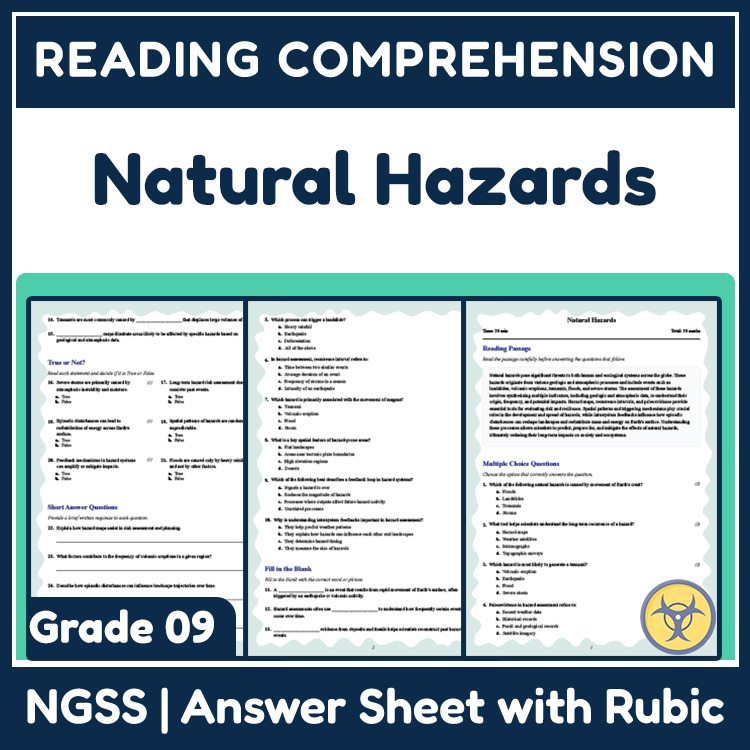
9th Grade Science | Natural Hazards Reading Worksheet with Answer Key (PDF)
JCreated byJ.S SheetsLearning Objectives
- Understand the different types of natural hazards and their origins.
- Analyze how spatial patterns and triggering mechanisms influence hazard risks.
- Evaluate the long-term impacts of natural hazards on landscapes and human systems.
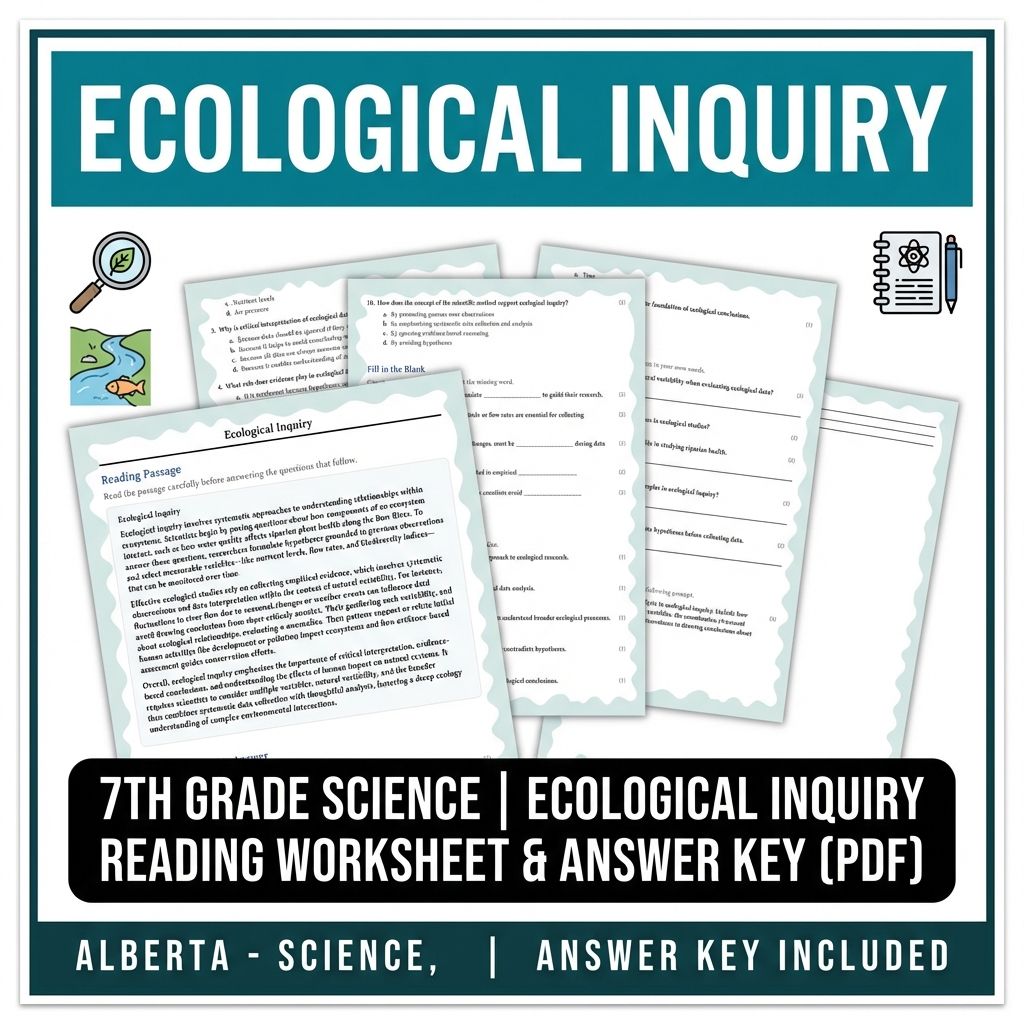
7th Grade Science | Ecological Inquiry Reading Worksheet & Answer Key (PDF)
JCreated byJ.S SheetsLearning Objectives
- Understand the process of ecological inquiry including hypothesis framing and data interpretation.
- Recognize the role of measurable variables and evidence in ecological studies.
- Apply critical thinking to analyze ecological data and consider natural variability.
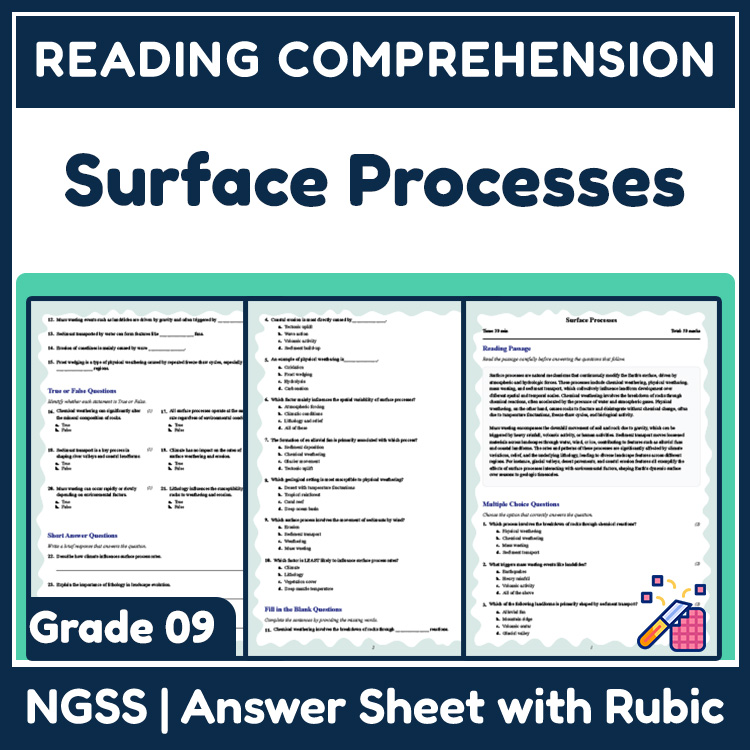
9th Grade Science | Surface Processes Reading Worksheet & Answer Key (PDF)
JCreated byJ.S SheetsLearning Objectives
- Understand the various types of surface processes and their roles in shaping landscapes.
- Analyze how climate, lithology, and relief influence geomorphic change and soil development.
- Identify examples of surface processes such as weathering, mass wasting, and sediment transport.
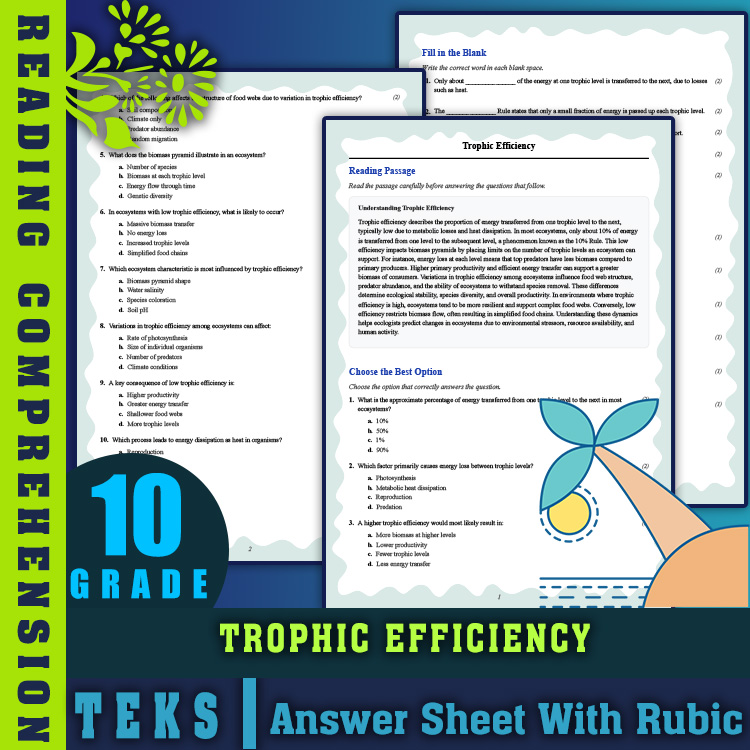
10th Grade Science | Trophic Efficiency Reading Worksheet with Answer Key (PDF)
JCreated byJ.S SheetsLearning Objectives
- Understand the concept of trophic efficiency and its role in ecosystems
- Identify factors that influence energy transfer between trophic levels
- Explain how trophic efficiency affects biomass pyramids and food web structure
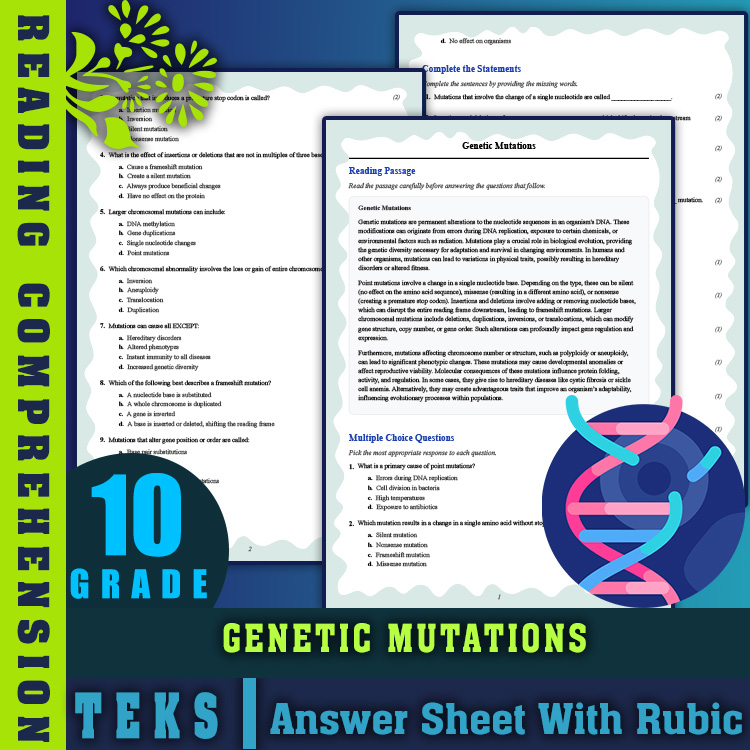
Grade 10 Science | Genetic Mutations Reading Worksheet (PDF + Answer Key)
JCreated byJ.S SheetsLearning Objectives
- Describe different types of genetic mutations and their effects on DNA.
- Explain how mutations can impact gene expression and protein function.
- Identify examples of mutations and their potential phenotypic outcomes.
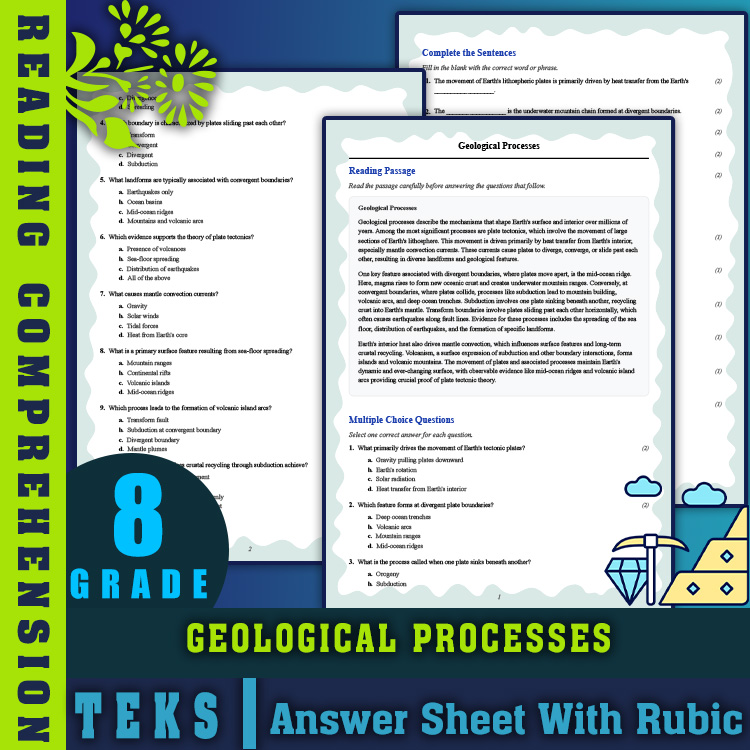
Grade 8 Science | Geological Processes Reading Worksheet & Answer Key (PDF)
JCreated byJ.S SheetsLearning Objectives
- Understand Earth's internal heat transfer mechanisms and their surface expressions.
- Identify different types of plate boundaries and associated landforms and geological activity.
- Explain evidence for plate tectonics such as mid-ocean ridges and volcanic arcs.
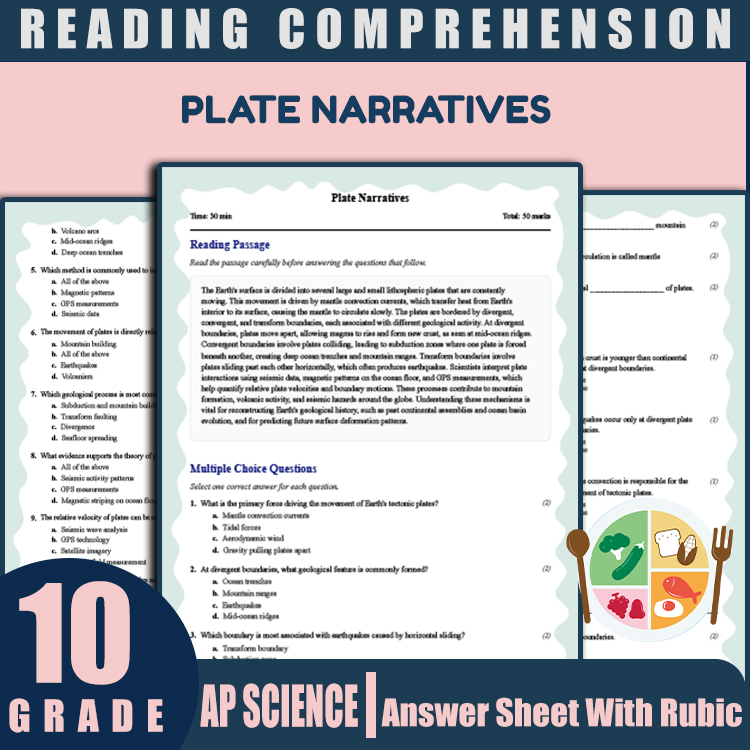
10th Grade Science | Plate Narratives Reading Worksheet (PDF + Answer Key)
JCreated byJ.S SheetsLearning Objectives
- Describe the mechanisms of plate motion, including mantle convection and subduction.
- Interpret tectonic settings using maps, cross-sections, and seismic evidence.
- Connect plate interactions to geological phenomena such as mountain building, volcanism, and earthquakes.
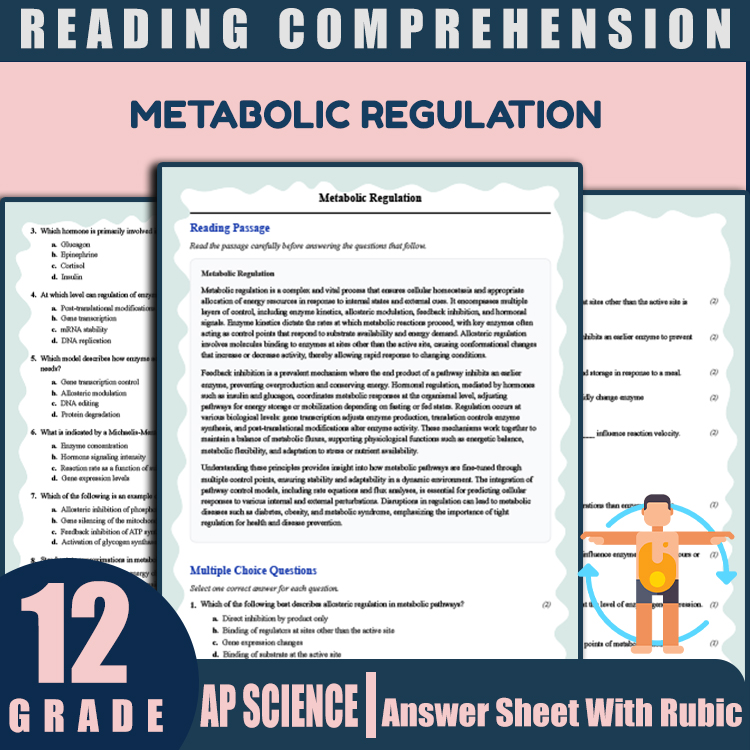
Grade 12 Science | Metabolic Regulation Reading Worksheet (PDF + Rubric)
JCreated byJ.S SheetsLearning Objectives
- Understand the principles of enzyme kinetics and how they influence metabolic pathways.
- Explain the mechanisms of allosteric modulation, feedback inhibition, and hormonal regulation in metabolism.
- Distinguish between regulation at transcriptional, translational, and post-translational levels.
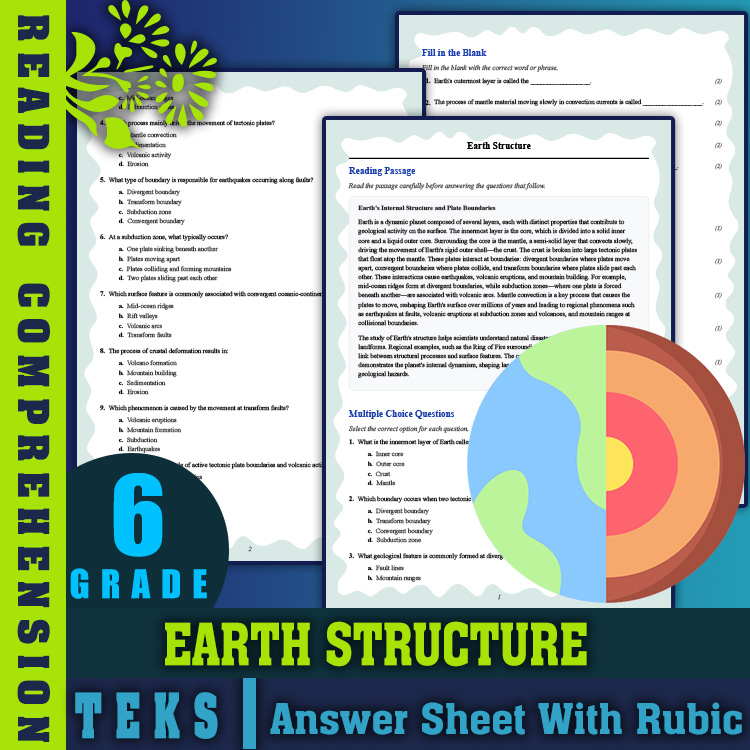
6th Grade Science | Earth Structure Reading Worksheet & Answer Key (PDF)
JCreated byJ.S SheetsLearning Objectives
- Describe the internal structure of Earth, including the crust, mantle, and core.
- Identify different types of plate boundaries and their associated geological features.
- Explain how tectonic processes such as mantle convection and crustal deformation lead to earthquakes, volcanic eruptions, and mountain formation.
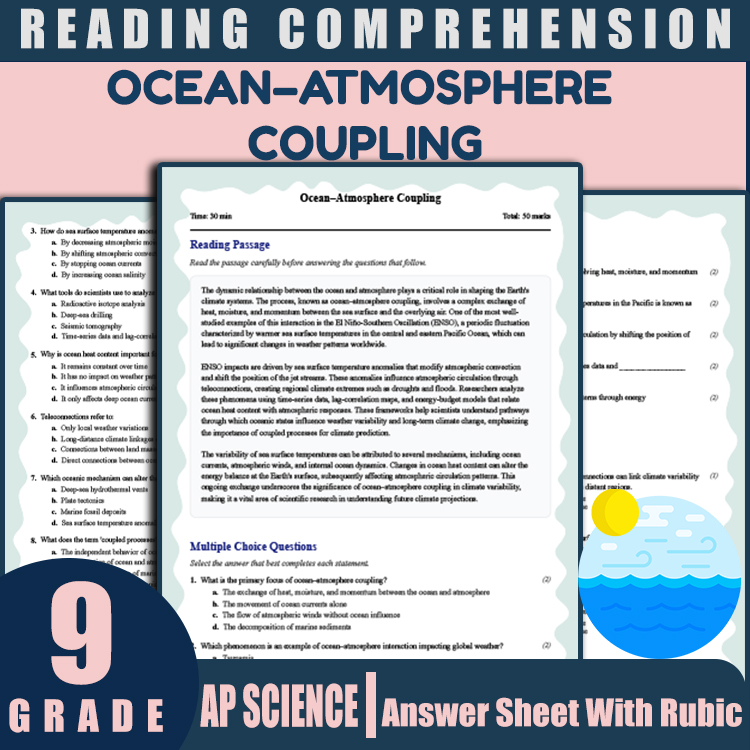
Grade 9 Science | Ocean–Atmosphere Coupling Reading Worksheet (PDF + Answer Key)
JCreated byJ.S SheetsLearning Objectives
- Describe the mechanisms of ocean–atmosphere interactions and their impact on regional climate patterns.
- Explain phenomena such as ENSO and their effects on weather variability.
- Analyze how sea surface temperature anomalies influence atmospheric circulation and teleconnections.
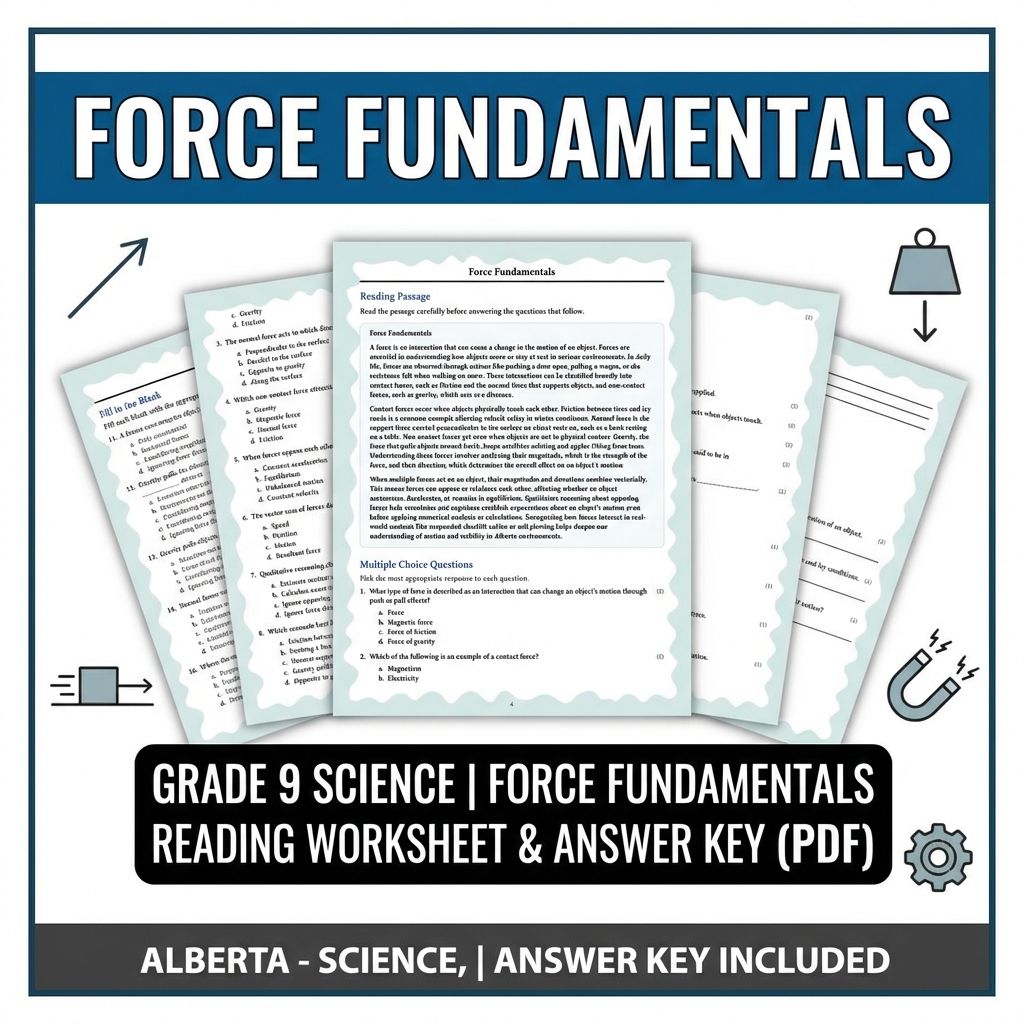
Grade 9 Science | Force Fundamentals Reading Worksheet & Answer Key (PDF)
JCreated byJ.S SheetsLearning Objectives
- Explain the concept of force and how it can change an object's motion.
- Identify and describe contact forces such as friction and normal force.
- Describe non-contact forces like gravity and their effects in real-world scenarios.
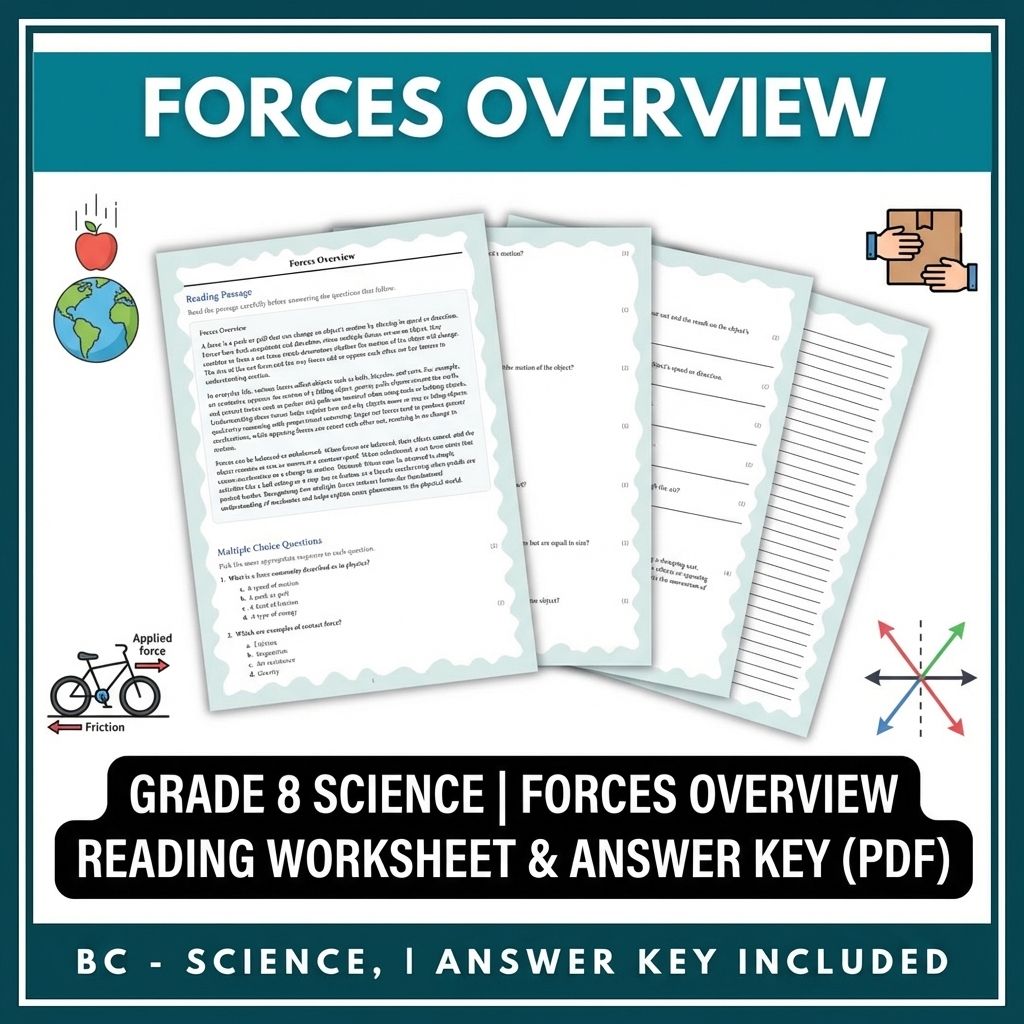
Grade 8 Science | Forces Overview Reading Worksheet & Answer Key (PDF)
JCreated byJ.S SheetsLearning Objectives
- Understand the concept of force as a push or pull that affects motion.
- Identify different types of forces such as gravity, air resistance, and contact forces.
- Explain how multiple forces combine as a net force to change an object's motion.
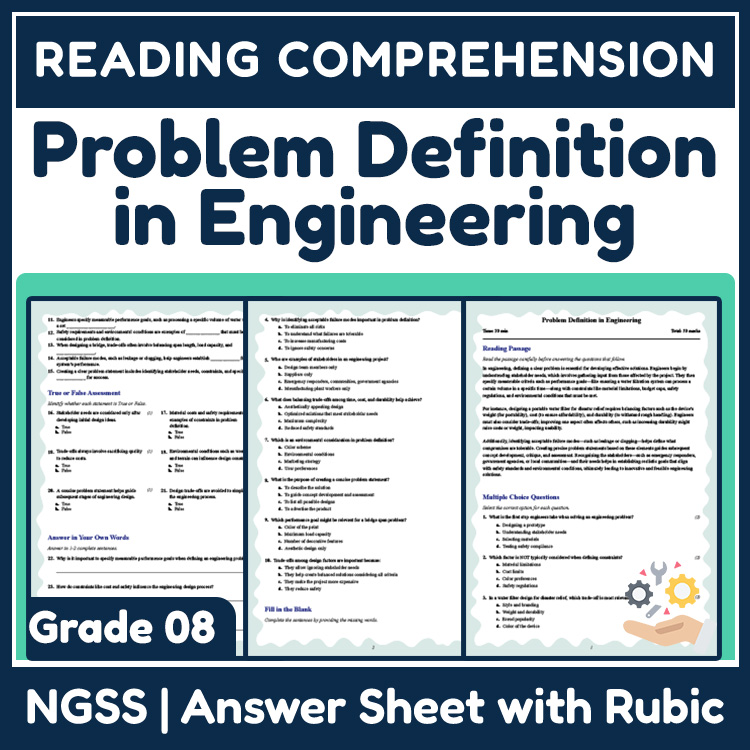
8th Grade Science | Problem Definition in Engineering Reading Worksheet (NGSS)
JCreated byJ.S SheetsLearning Objectives
- Understand how to define criteria and constraints for engineering problems.
- Identify measurable performance goals, material and cost limits, safety requirements, and environmental conditions.
- Analyze trade-offs among time, cost, and durability in problem scenarios.
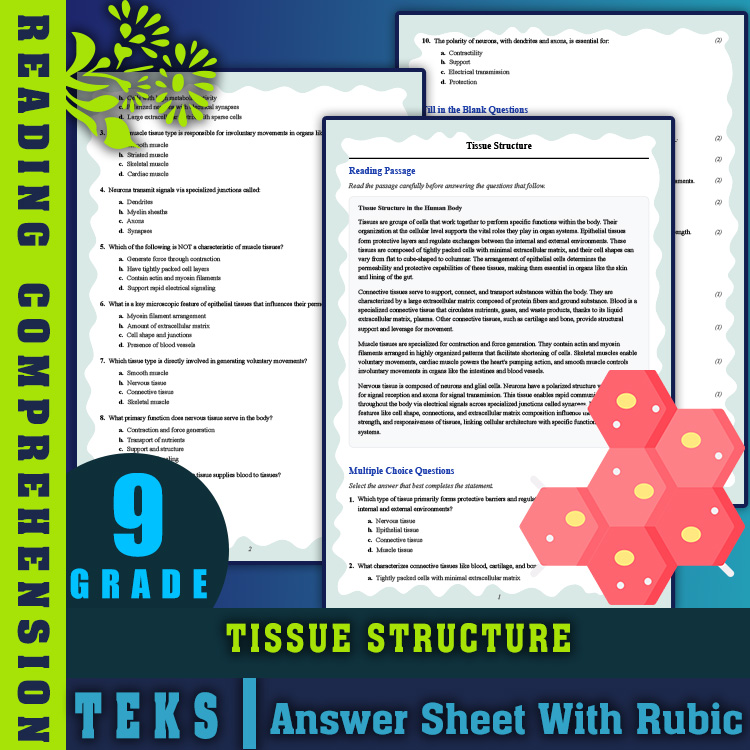
Grade 9 Science | Tissue Structure Reading Worksheets PDF (Answer Key Included)
JCreated byJ.S SheetsLearning Objectives
- Identify the different types of tissue in the human body and understand their cellular organization.
- Explain how tissue structure supports the functions within organs and organ systems.
- Describe microscopic features like cell shape, junctions, and extracellular components that determine tissue properties.
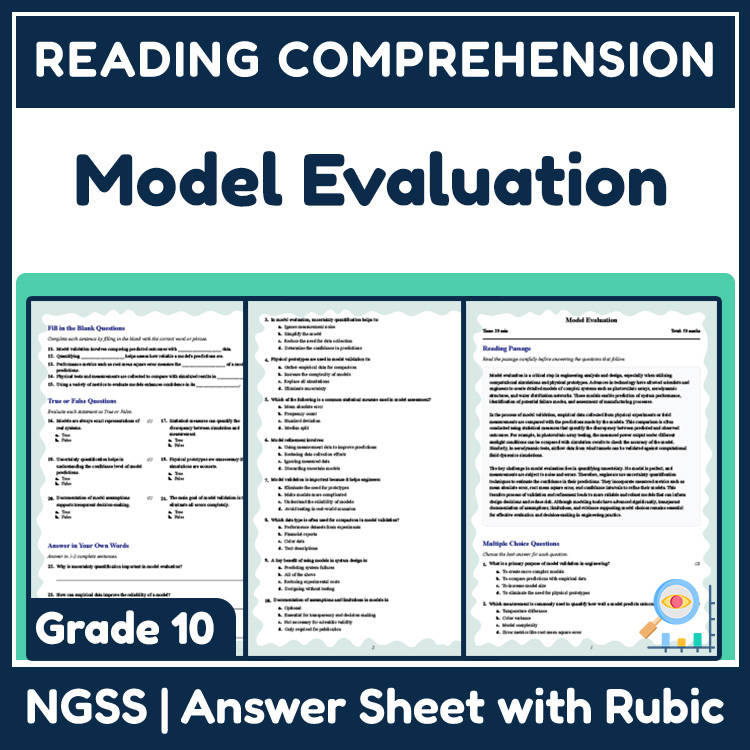
Grade 10 Science | Model Evaluation Reading Worksheet with Answer Key (PDF)
JCreated byJ.S SheetsLearning Objectives
- Understand the role of quantitative modeling and data analysis in evaluating models.
- Explain methods for validating models through comparison of simulations and measurements.
- Apply statistical tools to assess model accuracy and uncertainty.
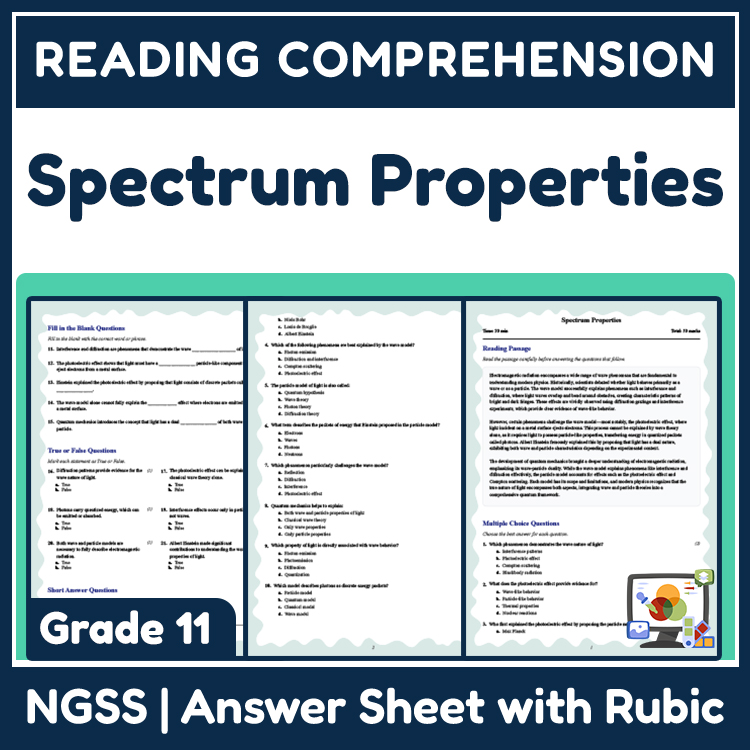
Grade 11 Science | Spectrum Properties Reading Worksheet & Answer Key (PDF)
JCreated byJ.S SheetsLearning Objectives
- Evaluate the evidence for wave and particle models of electromagnetic radiation.
- Describe phenomena such as interference, diffraction gratings, and the photoelectric effect.
- Explain where wave and particle models of electromagnetic radiation work and where they break down.
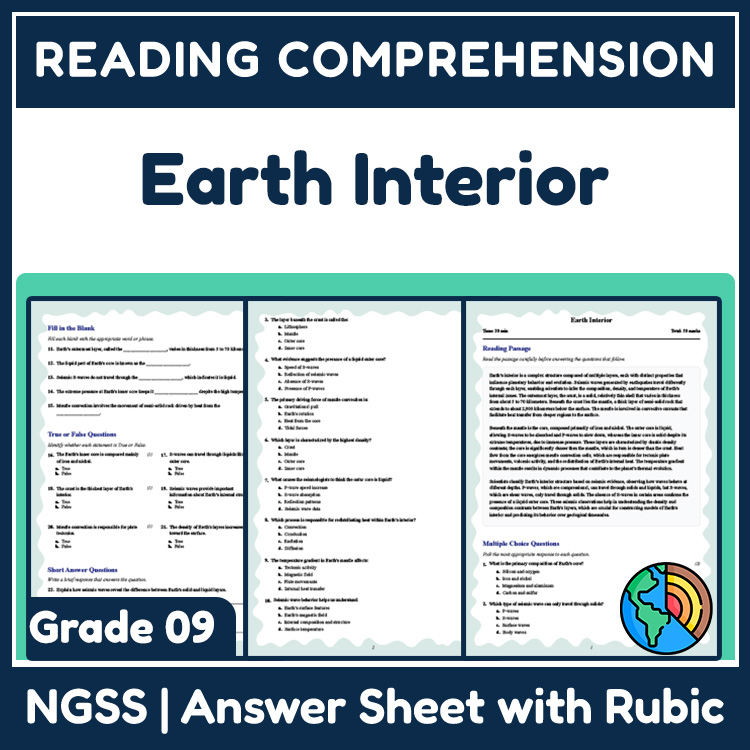
Grade 9 Science | Earth Interior Reading Worksheet (PDF + Answer Key)
JCreated byJ.S SheetsLearning Objectives
- Describe the layered structure of Earth's interior based on seismic, gravity, and heat-flow evidence.
- Explain how P-wave and S-wave behaviors inform us about Earth's internal composition.
- Analyze the role of mantle convection in thermal energy transfer and material cycling within Earth.
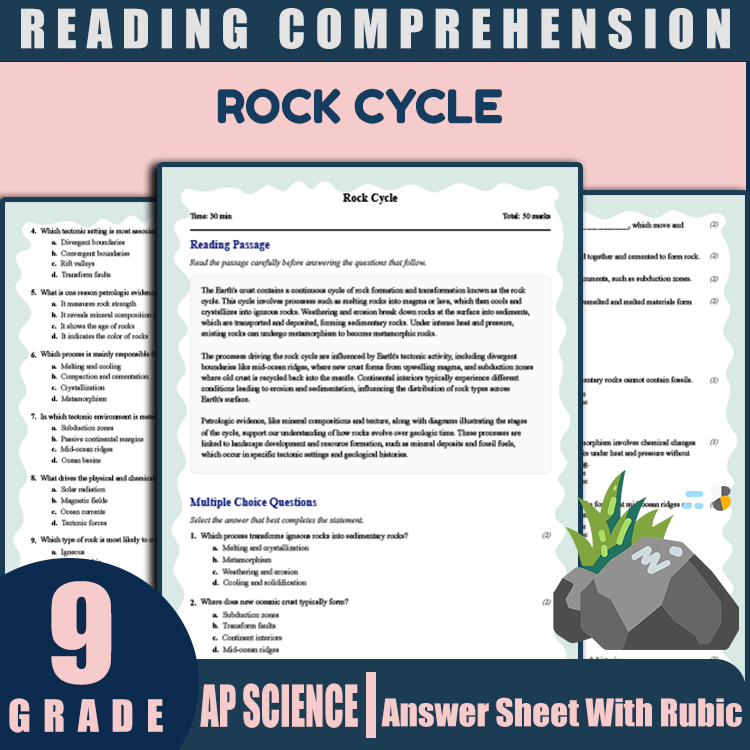
Grade 9 Science | Rock Cycle Reading Worksheets (PDF + Answer Key)
JCreated byJ.S SheetsLearning Objectives
- Explain the processes involved in the rock cycle, including melting, crystallization, weathering, transport, deposition, and metamorphism.
- Identify how tectonic settings such as mid-ocean ridges, subduction zones, and continental interiors influence rock formation and transformation.
- Analyze petrologic evidence and diagrams to understand rock distribution and history.
Browse more categories
About Science Worksheets
Find Science worksheets spanning core skills, practice, and review. All 42,859 resources are instant PDF downloads for the classroom or home.
Every worksheet on MyTeachingSheets is created by independent teacher-authors and reviewed before publication. All resources download as printable PDFs for classroom, homework, or at-home practice, and many include answer keys. Preview any worksheet free before buying.