
Science Worksheets
44,295 subject resources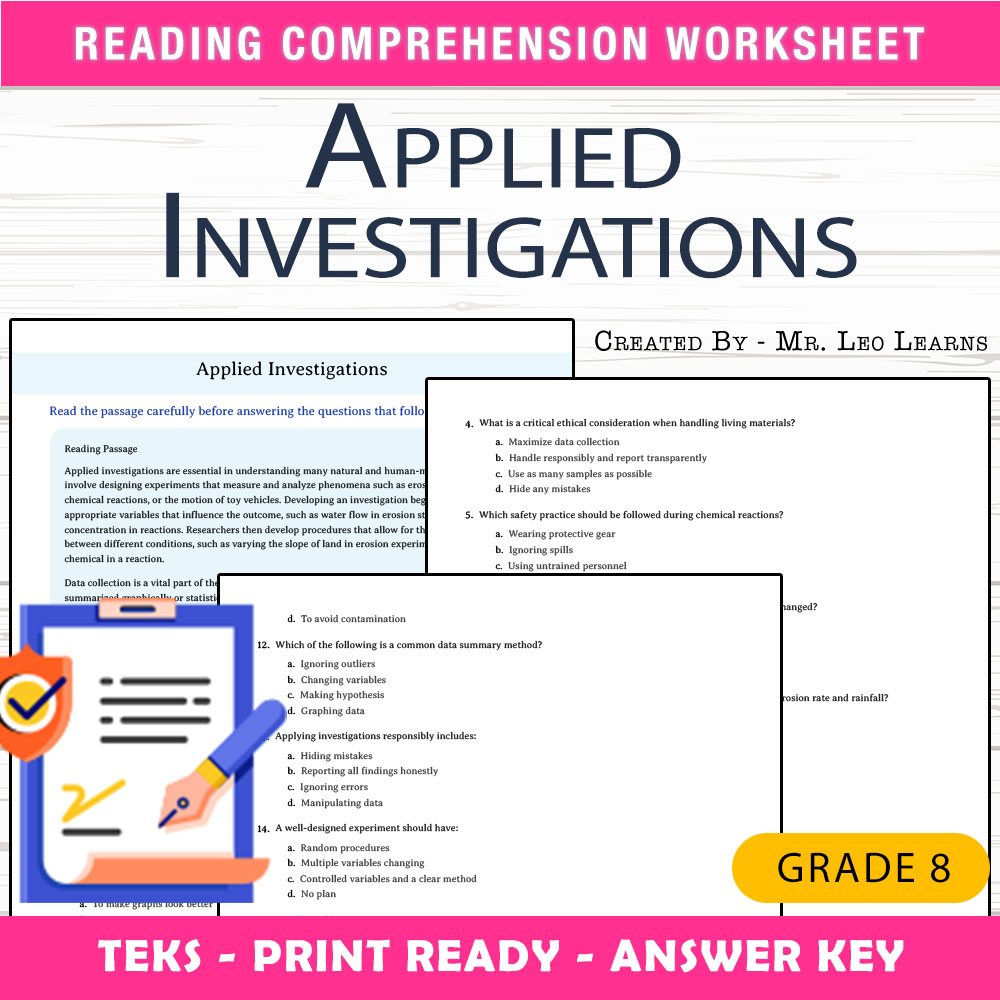
Grade 8 Science — Applied Investigations Worksheet for Mastery
 Created byThe Resource Hub
Learning Objectives
- Understand how to design experiments that measure real-world phenomena.
- Learn how to select appropriate variables and procedures for investigations.
- Analyze data using graphical and statistical summaries to draw conclusions.
Also included in: Grade 8 Science Unit Bundle | Scientific Inquiry & Data Skills Worksheet Pack +1 more
Instant download
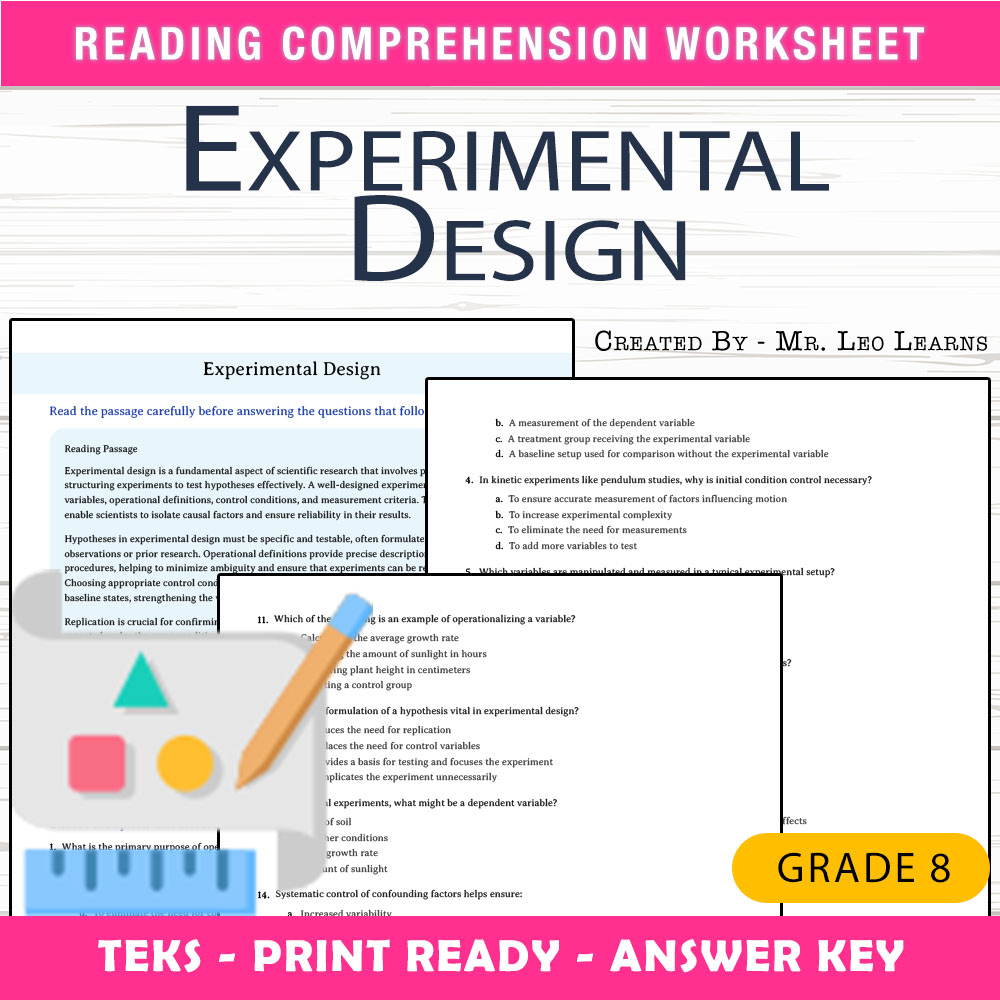
8th Grade Science — Experimental Design Worksheet for Mastery
Created byThe Resource HubLearning Objectives
- Understand the key components and procedures of experimental design.
- Identify variables and controls in scientific experiments.
- Explain the importance of replication and systematic measurement.
Also included in: Grade 8 Science Unit Bundle | Scientific Inquiry & Data Skills Worksheet Pack +1 more
Instant download
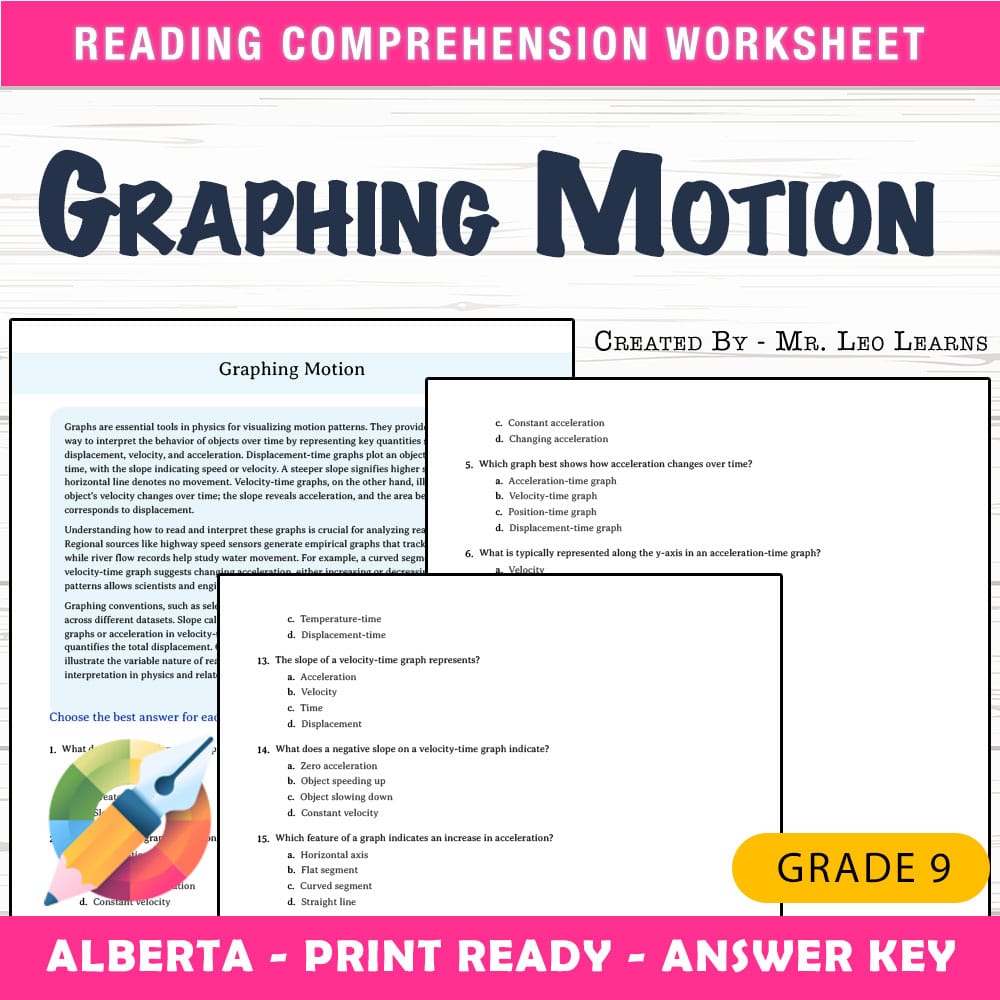
Grade 9 Science — Graphing Motion Worksheet MCQ Paper
Created byThe Resource HubLearning Objectives
- Understand how motion graphs represent displacement, velocity, and acceleration.
- Interpret the slope and area under motion graphs to determine physical quantities.
- Identify curved segments in graphs as changing acceleration regions.
Also included in: Grade 9 Science Forces and Motion Worksheet Pack | Alberta Curriculum +1 more
Instant download
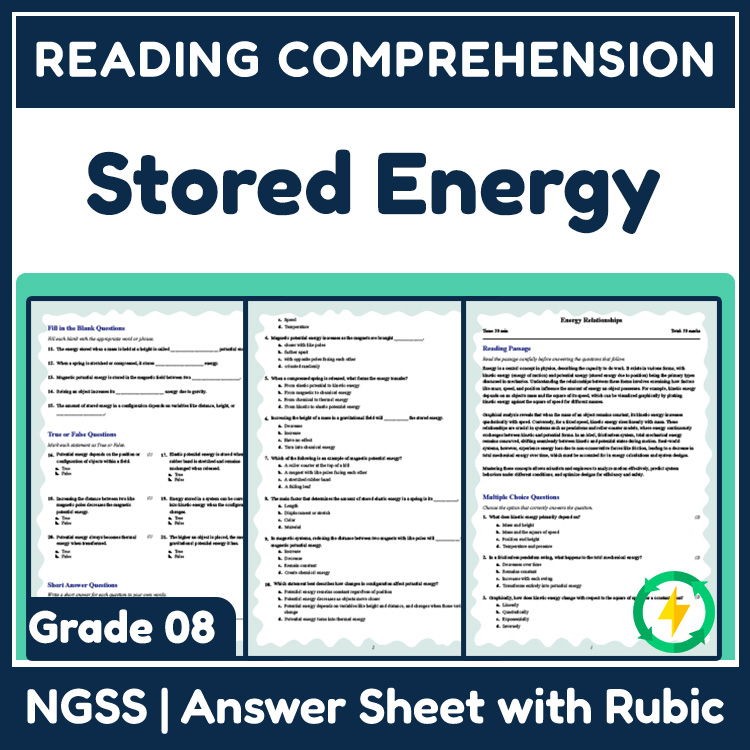
8th Grade Science | Stored Energy Reading Worksheets (NGSS Aligned)
JCreated byJ.S SheetsLearning Objectives
- Understand the concept of stored energy due to the position and configuration of objects
- Identify different types of potential energy including gravitational, elastic, and magnetic
- Analyze how changes in the position or arrangement of objects affect stored energy
Instant download
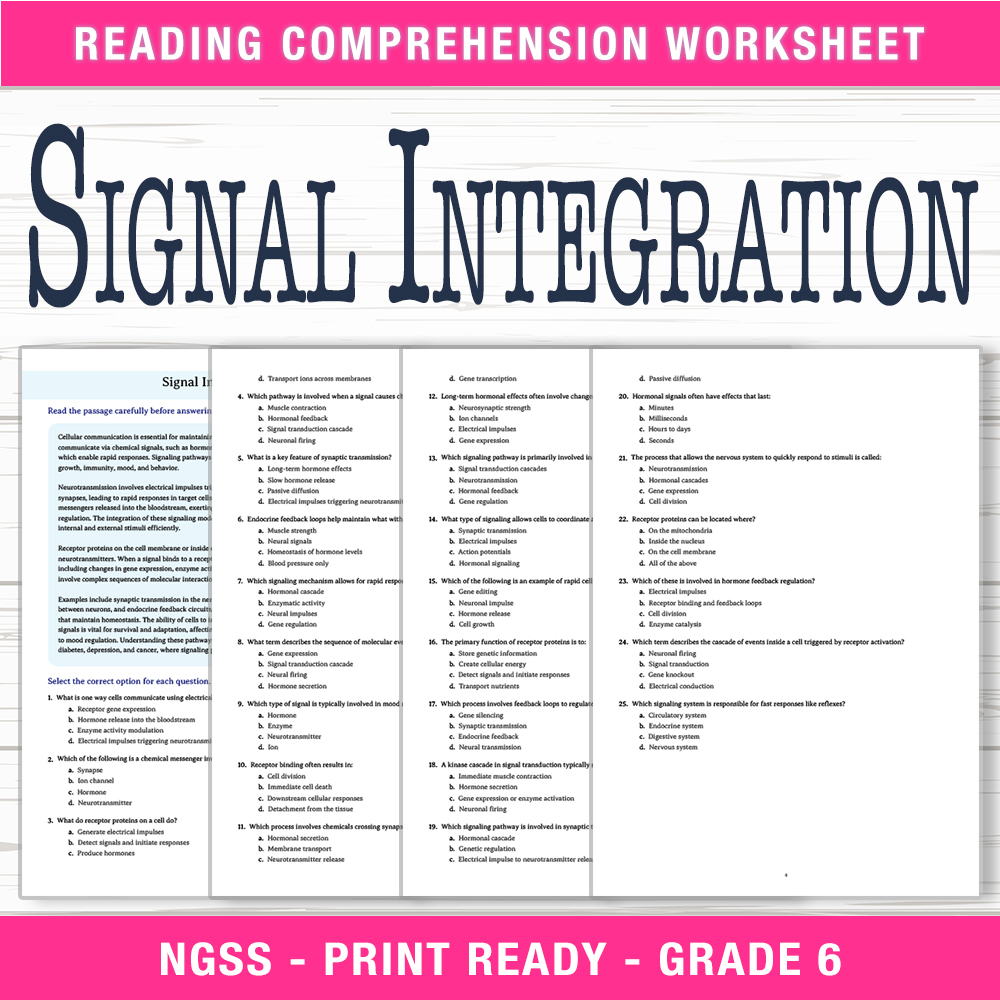
6th Grade Science | Signal Integration Worksheet (PDF + Answer Key)
 Created byRiverstone Classroom
Learning Objectives
- Explain how cells communicate through chemical and electrical signals.
- Differentiate between rapid nervous responses and longer-term hormonal effects.
- Describe key signaling pathways such as synaptic transmission and endocrine feedback.
Instant download
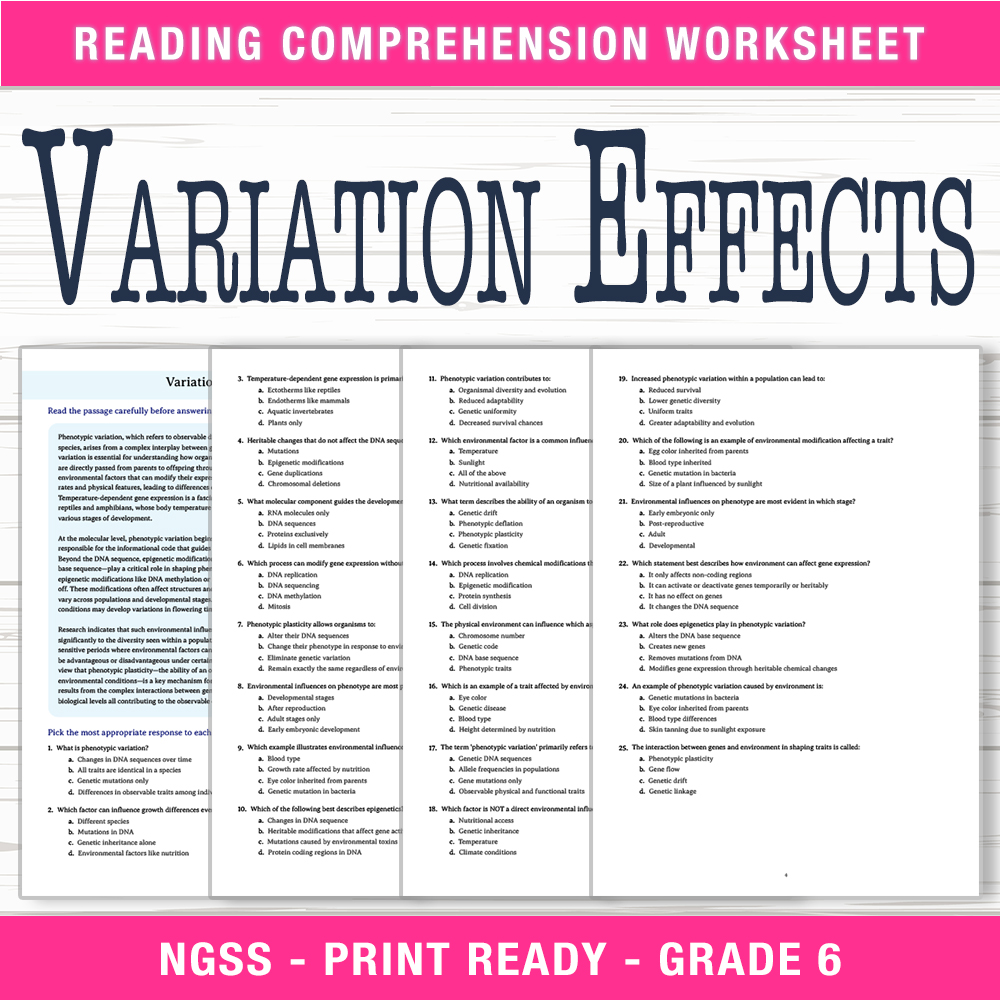
6th Grade Science | Variation Effects Worksheet (PDF + Answer Key)
Created byRiverstone ClassroomLearning Objectives
- Understand how phenotypic variation arises from genetic and environmental interactions.
- Identify examples of phenotypic variation such as inherited traits, growth differences, and temperature-dependent genes.
- Explain the connection between DNA, epigenetics, and observable differences in organisms.
Instant download
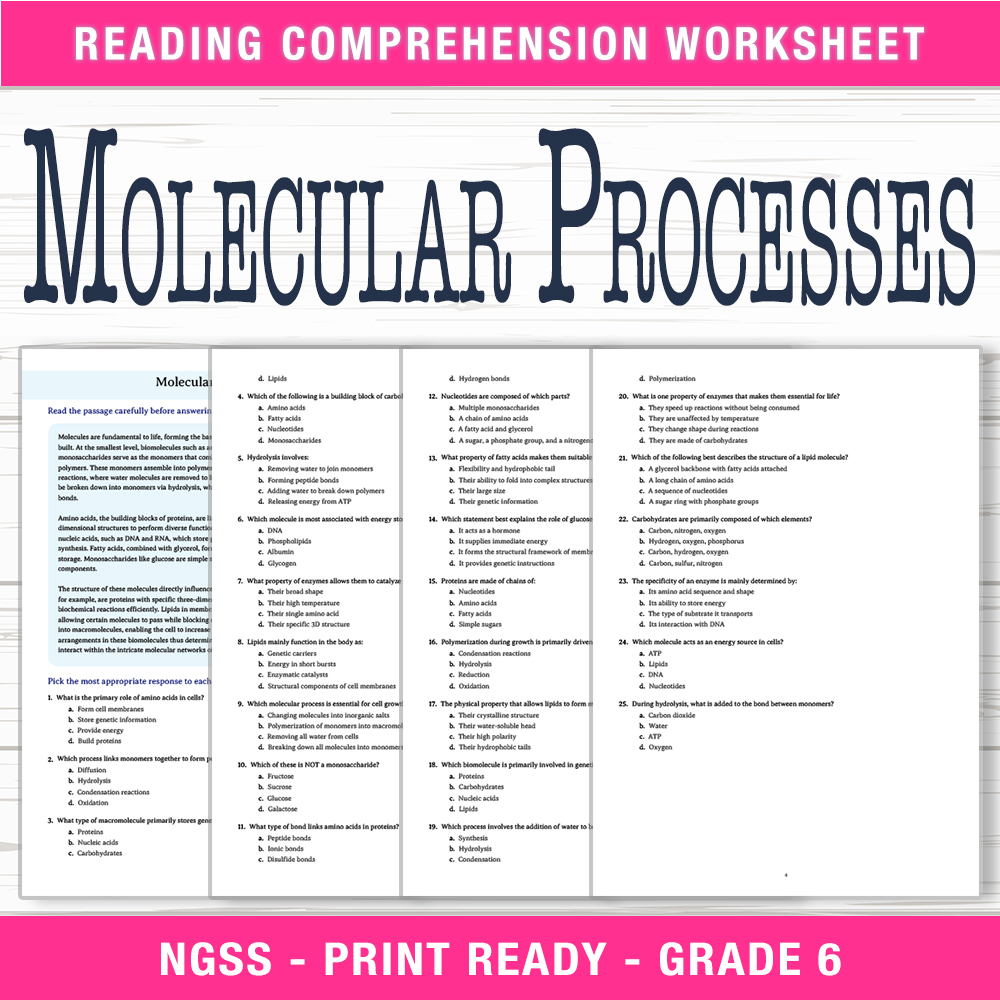
6th Grade Science | Molecular Processes Worksheet (PDF + Answer Key)
Created byRiverstone ClassroomLearning Objectives
- Identify the basic building blocks of biomolecules such as amino acids, nucleotides, fatty acids, and monosaccharides.
- Describe how monomers polymerize into macromolecules through condensation reactions and are broken down via hydrolysis.
- Explain the relationship between molecular structures and their functions, including enzyme activity, membrane transport, and polymerization.
Instant download
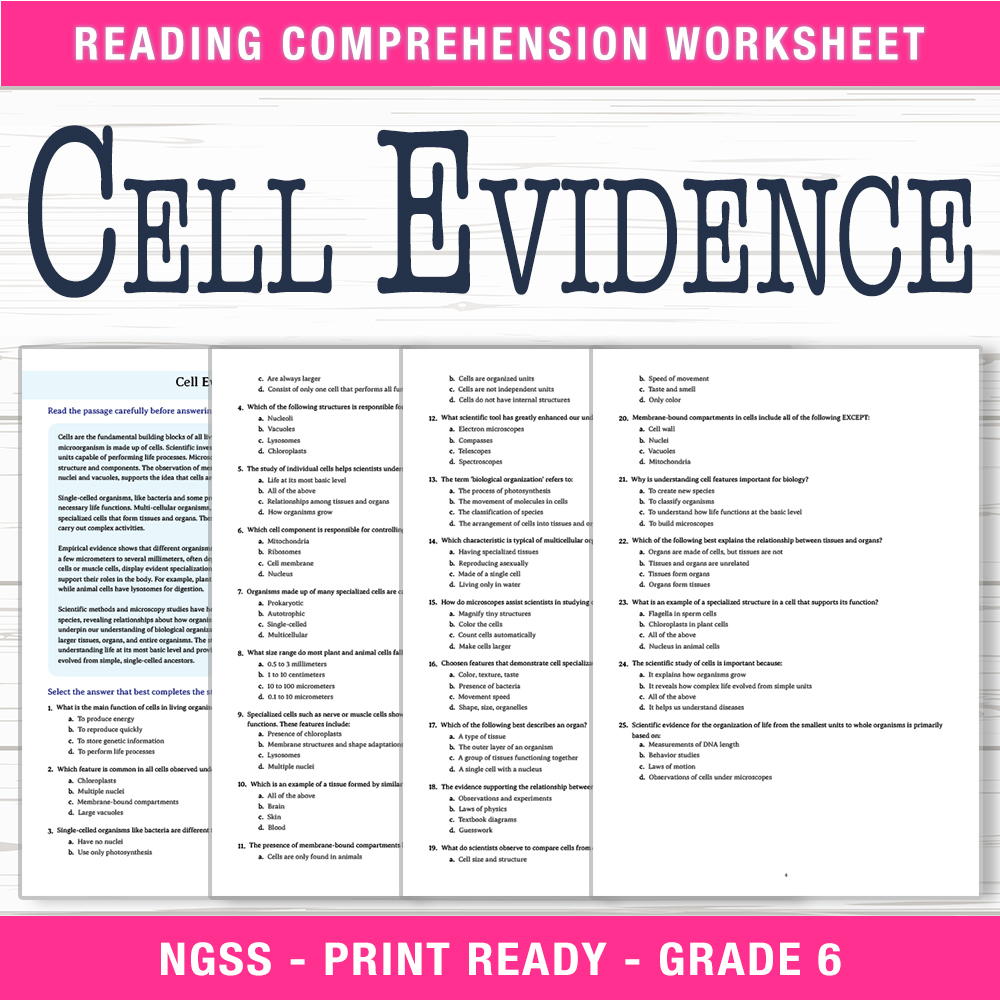
6th Grade Science | Cell Evidence Worksheet (PDF + Answer Key)
Created byRiverstone ClassroomLearning Objectives
- Understand that cells are the basic units of life and can be observed using microscopy.
- Identify different types of cells and distinguish between single-celled and multicellular organisms.
- Recognize empirical features such as membrane-bound compartments, cell size ranges, and specialization in various organisms.
Instant download
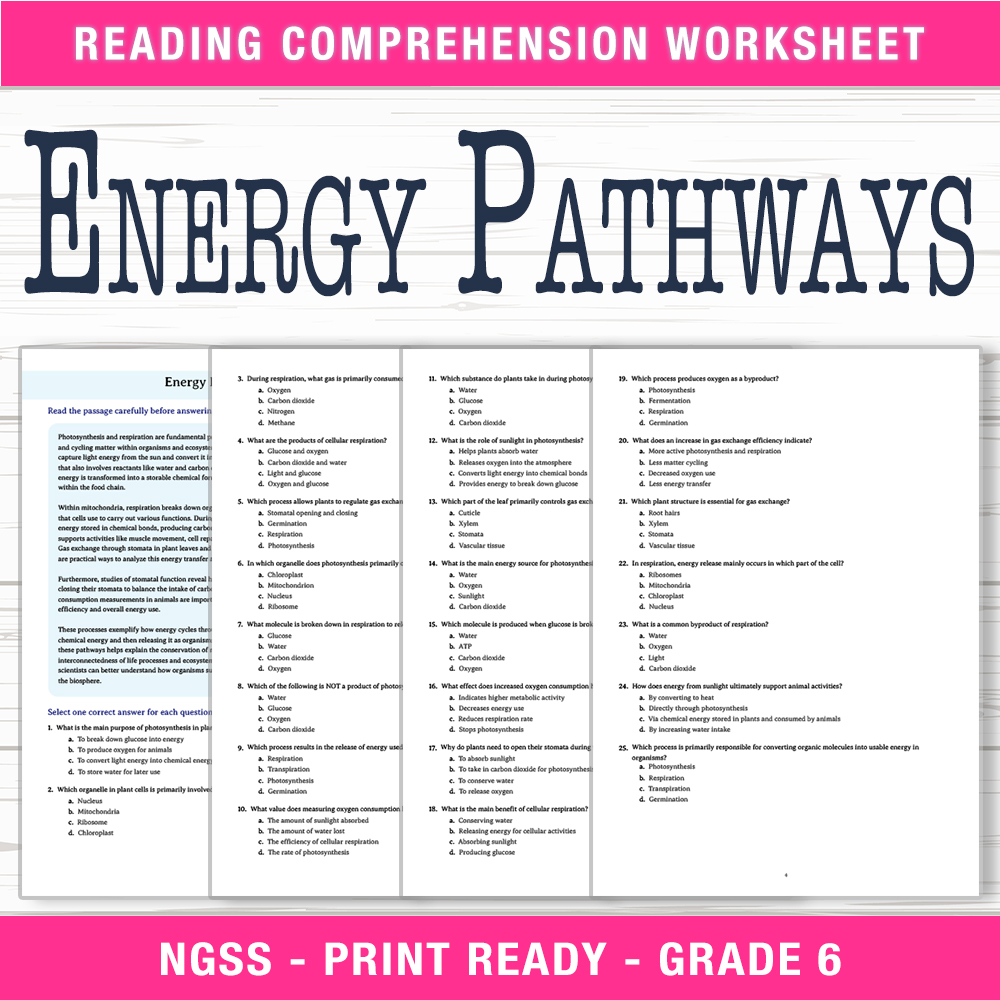
6th Grade Science | Energy Pathways Worksheet (PDF + Answer Key)
Created byRiverstone ClassroomLearning Objectives
- Describe how photosynthesis converts light energy into chemical energy in plants.
- Explain how respiration breaks down organic molecules to release usable energy.
- Identify key processes involved in energy transfer and mass conservation in biological systems.
Instant download
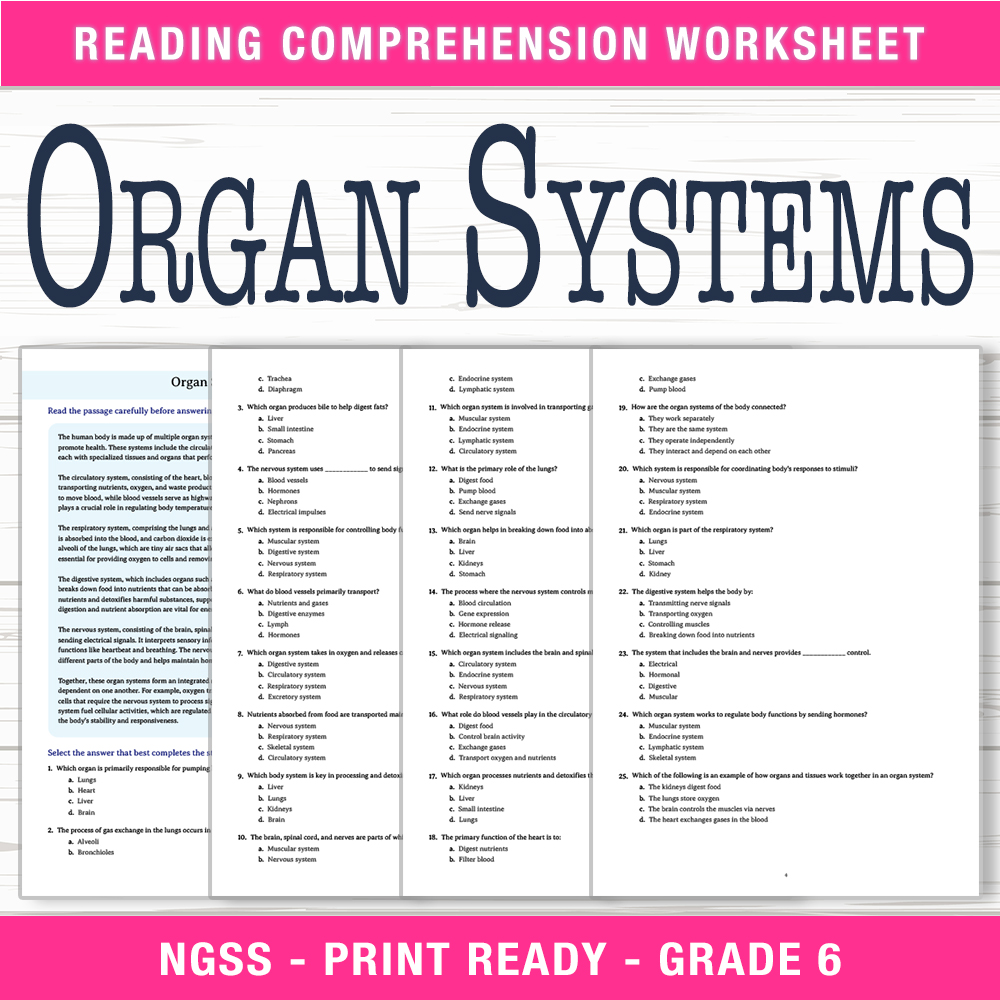
6th Grade Science | Organ Systems Worksheet (PDF + Answer Key)
Created byRiverstone ClassroomLearning Objectives
- Describe the major human organ systems involved in circulation, respiration, digestion, and nervous function.
- Explain how tissues and organs interact within each organ system to support body functions.
- Connect cellular activities to system-level processes such as nutrient transport, gas exchange, and coordination.
Instant download
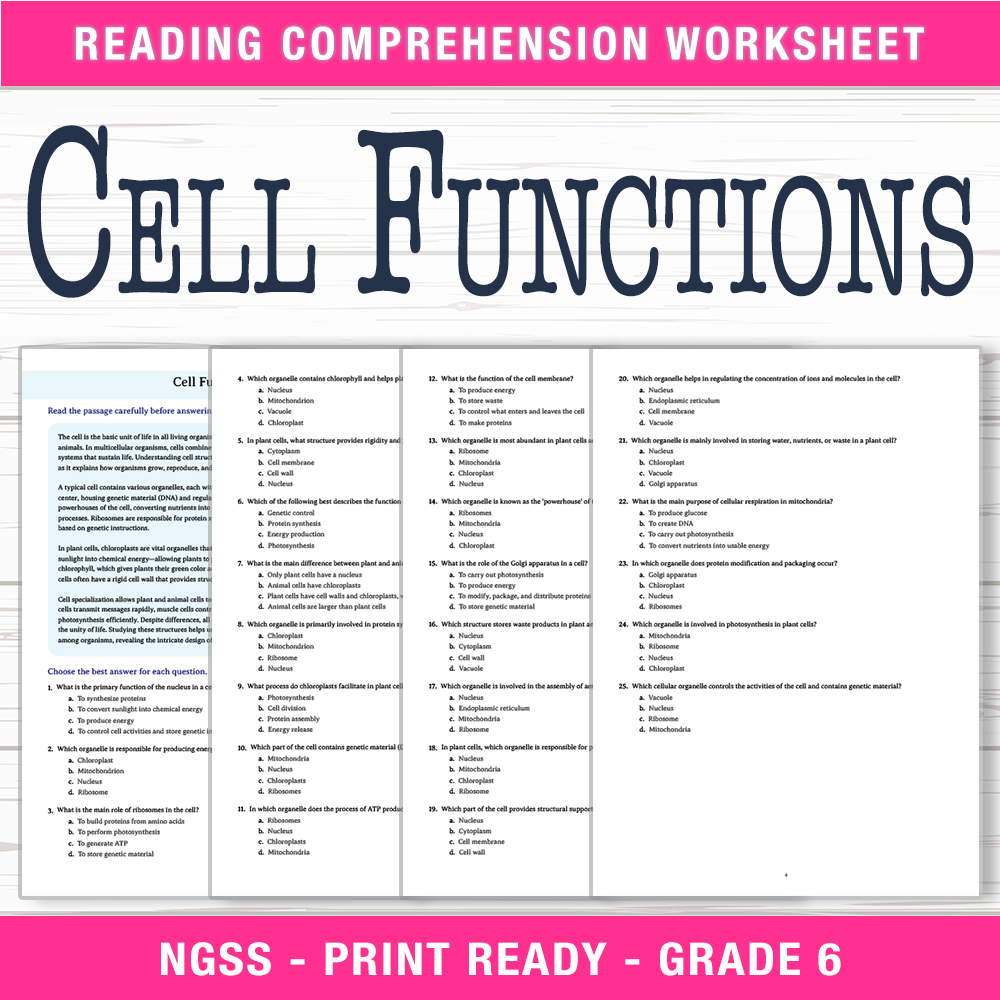
6th Grade Science | Cell Functions Worksheet (PDF + Answer Key)
Created byRiverstone ClassroomLearning Objectives
- Identify the structure and function of major organelles in plant and animal cells.
- Explain how organelles work together to perform essential cellular functions.
- Compare and contrast plant and animal cell components related to cell specialization.
Instant download
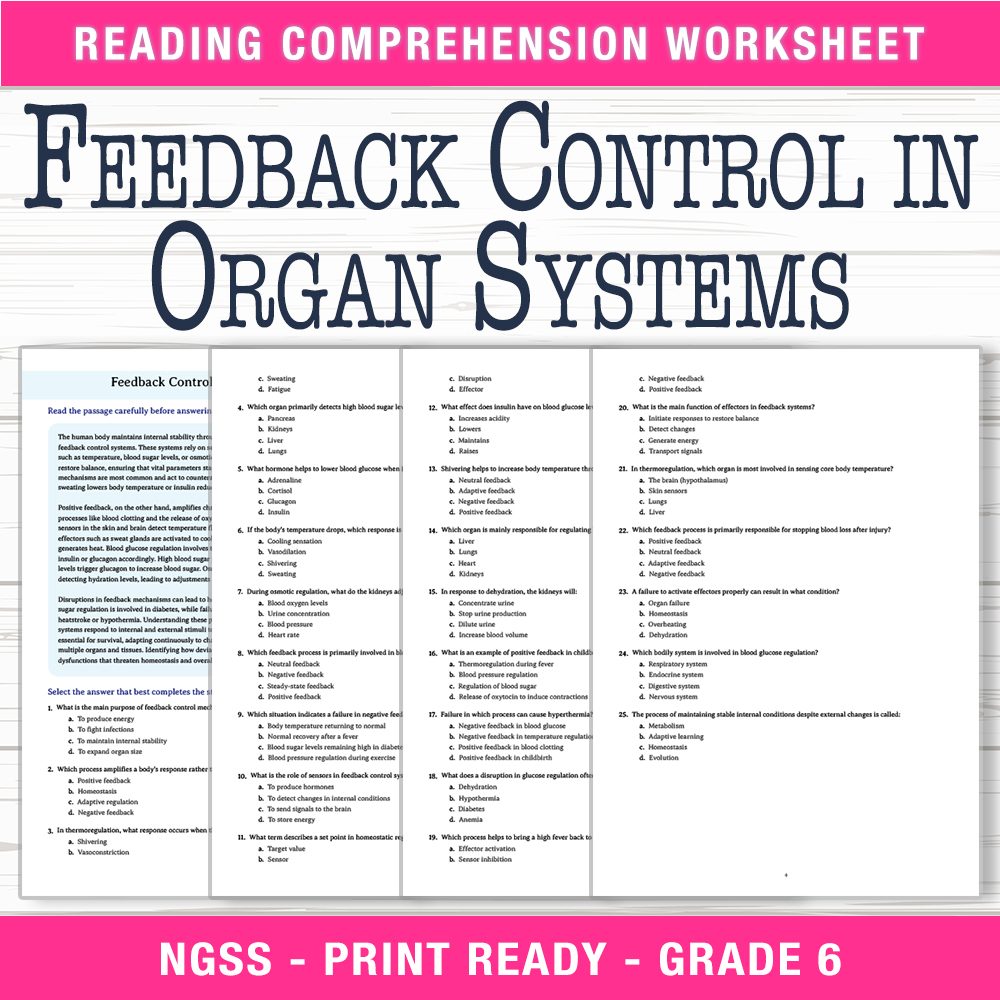
6th Grade Science | Feedback Control in Organ Systems Worksheet (PDF)
Created byRiverstone ClassroomLearning Objectives
- Explain the concept of feedback control mechanisms in maintaining internal stability.
- Identify examples of negative and positive feedback processes in the human body.
- Describe the roles of sensors, effectors, and set points in physiological regulation.
Instant download

Grade 8 Science – Stored Energy & Types | Daily Reading Worksheet
 Created byBright Mind Resources
Learning Objectives
- Identify different forms of stored energy based on object positions
- Understand how changes in configuration affect potential energy
- Recognize examples of gravitational, elastic, and magnetic potential energy
Also included in: Thermal Energy Grade 8 Science Daily Reading Worksheets Lesson Bundle | NGSS +1 more
Instant download

Grade 6 Adaptation and Speciation Worksheet | NGSS Science Activity
 Created byAmber Owl Education
Learning Objectives
- Explain how adaptations can change survival and reproduction in different environments
- Describe how populations can diverge and form new species through speciation
- Identify evidence of speciation using morphology, reproductive compatibility, and biogeography
Also included in: Grade 6 Science Natural Selection & Biodiversity Lesson Bundle | NGSS +1 more
Instant download
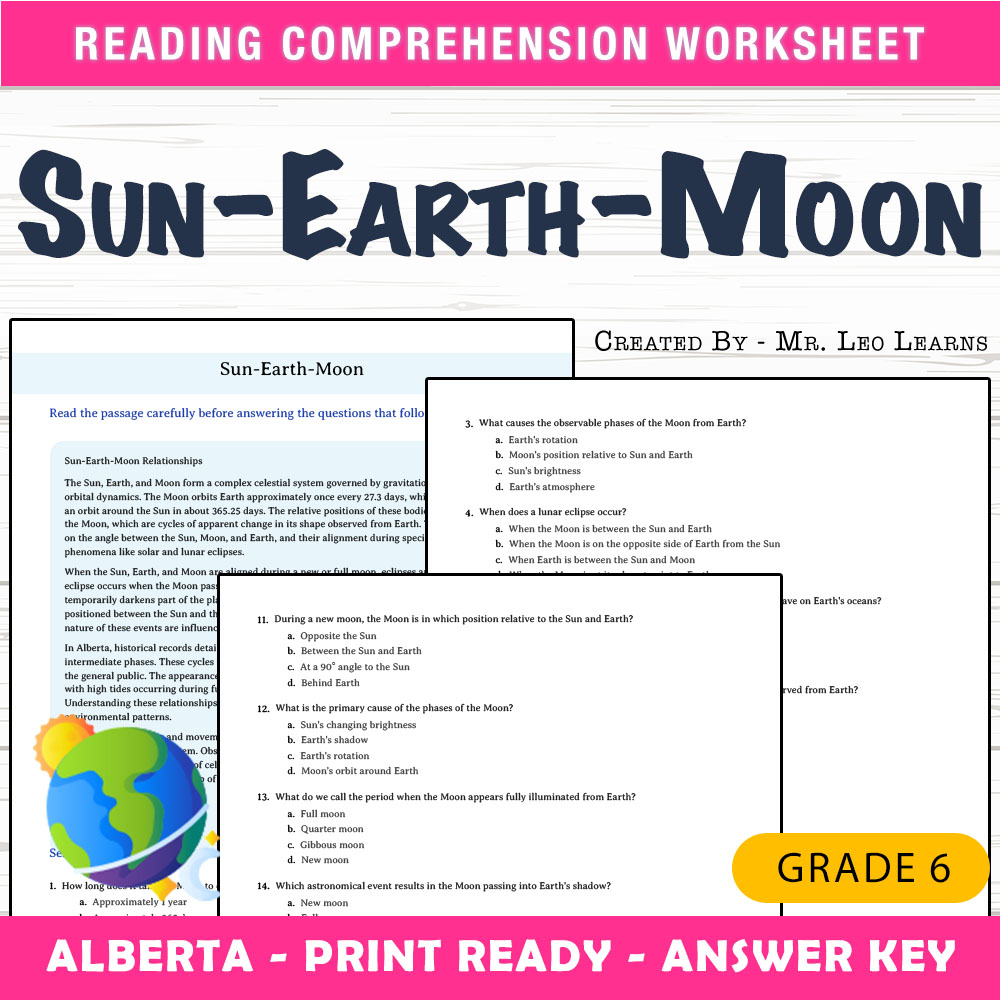
Grade 6 Science — Sun–Earth–Moon Worksheet MCQ Paper for Mastery
Created byThe Resource HubLearning Objectives
- Understand the relative positions and relationships among the Sun, Earth, and Moon.
- Identify how gravitational interactions influence lunar phases, eclipses, and tides.
- Explain how celestial alignments produce observable phenomena such as solar and lunar eclipses.
Also included in: Grade 6 Science Sky Science Unit Bundle – Celestial Motion & Earth-Sun Relations +1 more
Instant download
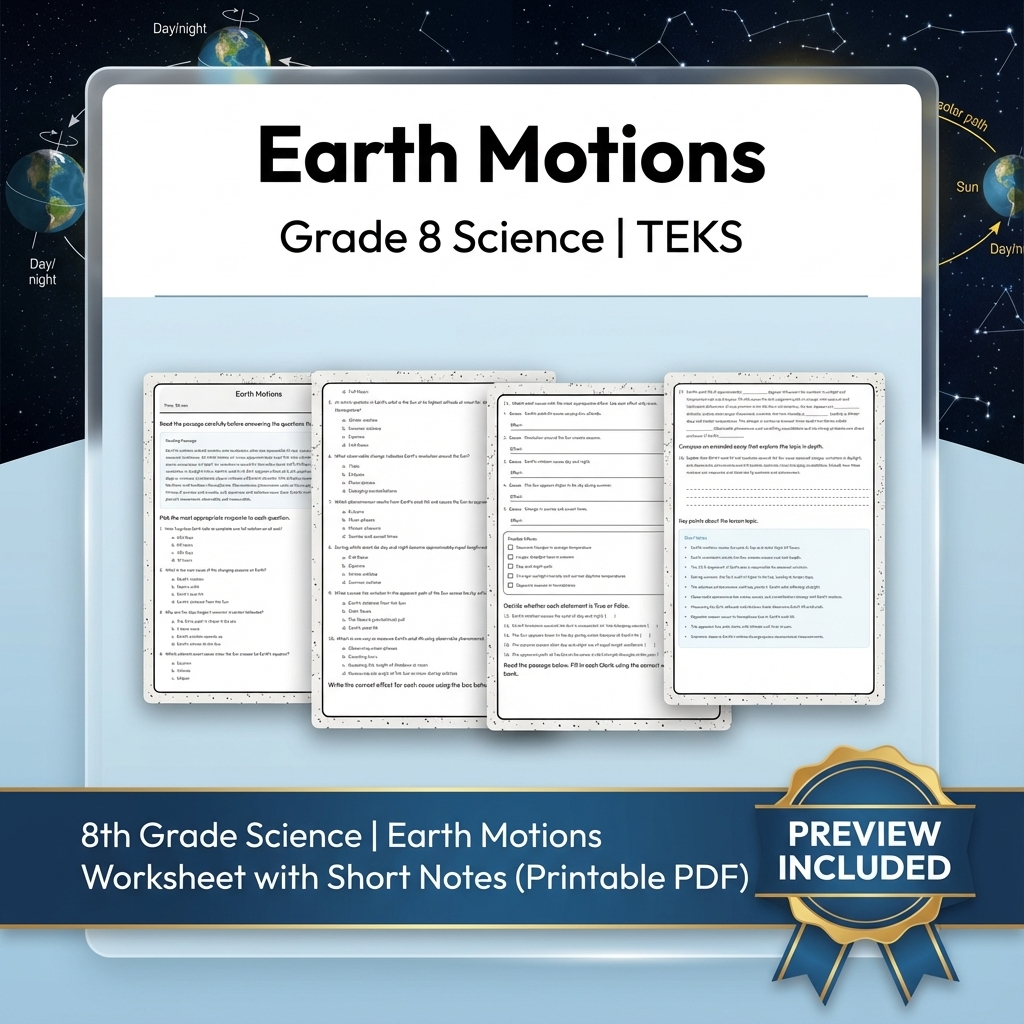
8th Grade Science | Earth Motions Worksheet with Short Notes (Printable PDF)
 Created byMeadowlark Worksheets
Learning Objectives
- Understand Earth's rotation and revolution and their effects on day and night cycles.
- Describe how axial tilt influences seasonal changes in temperature and daylight.
- Explain the apparent path of the Sun and how it varies with latitude and time of year.
Instant download

Atomic Structure Worksheet | Grade 8 Science Practice
 Created byPrism Point Learning
Learning Objectives
- Distinguish elements, compounds, and mixtures using examples such as hydrogen, oxygen, sodium, and sodium chloride
- Explain how atoms combine to form formulas and how that relates to chemical bonding
- Use ideas from simple atomic models (protons, neutrons, electrons) to describe atomic structure
Also included in: Grade 8 Matter & Reactions Science Lesson Bundle (TEKS Worksheets) +1 more
Instant download

Reaction Rates Worksheet | Grade 8 Science Activities
Created byPrism Point LearningLearning Objectives
- Explain how reaction rate changes with temperature, concentration, surface area, and catalysts using collision and activation-energy ideas
- Relate molecular changes to observable time scales, such as rusting and effervescence
- Use quantitative reasoning (relative speed and time) to predict which conditions increase or decrease reaction rates
Also included in: Grade 8 Matter & Reactions Science Lesson Bundle (TEKS Worksheets) +1 more
Instant download

Energy Transfer Worksheet | Grade 8 Science Activities
Created byPrism Point LearningLearning Objectives
- Explain how conduction, convection, and radiation transfer thermal energy.
- Describe how energy transfer can cause observable temperature changes and phase changes.
- Distinguish between endothermic and exothermic processes using everyday examples.
Also included in: Grade 8 Matter & Reactions Science Lesson Bundle (TEKS Worksheets) +1 more
Instant download

Energy Changes Worksheet for Grade 10 Science | Alberta Standards Practice
 Created byCoral Reef Learning
Learning Objectives
- Explain the concepts of endothermic and exothermic reactions involving energy transfer.
- Relate molecular bond breaking and formation to energy absorption and release in chemical changes.
- Interpret calorimetric and temperature data to understand energy flow in natural and industrial processes.
Instant download

Grade 12 Genetic Drift Worksheet | BC Practice PDF
 Created byClear Sky Classroom
Learning Objectives
- Explain how genetic drift changes allele frequencies through chance events, especially in small populations
- Compare bottleneck and founder events and describe how each reduces genetic diversity
- Evaluate how drift and selection differ in their effects depending on effective population size
Instant download
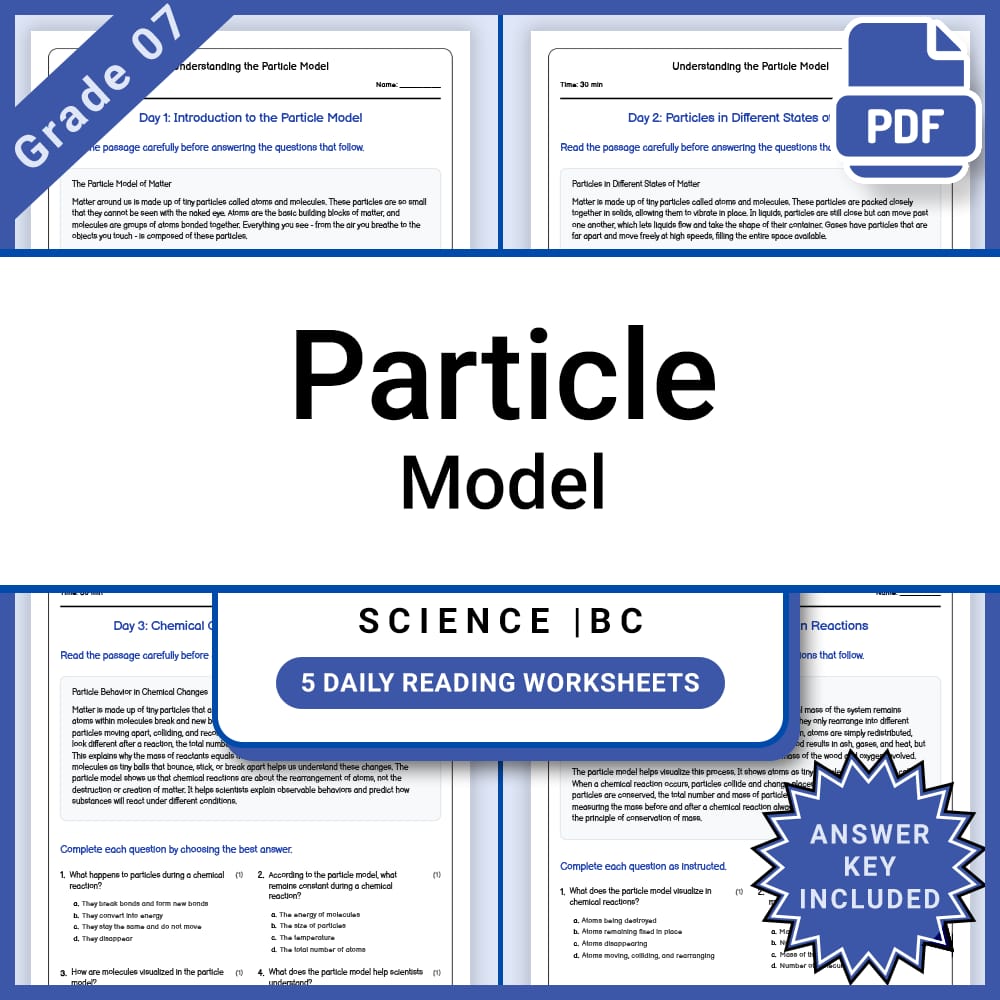
Grade 7 Science – the Particle Model Daily Reading Worksheet Answer Key
JCreated byJ.S SheetsLearning Objectives
- Explain what atoms and molecules are as the basic particles of matter.
- Describe how particles behave during chemical changes.
- Understand the principle of conservation of mass during reactions.
Also included in: Grade 7 Science Lesson Group Bundle | States, Reactions & Properties +1 more
Instant download

Grade 11 Science | Gene Expression Worksheet (AP Standards) PDF
 Created byEvergreen Desk Education
Learning Objectives
- Explain the main stages of gene expression from transcription initiation to regulated translation
- Describe how promoter architecture, transcription factors, and chromatin remodeling influence transcriptional output
- Interpret how epigenetic marks and RNA processing affect mRNA availability and translation efficiency
Also included in: Grade 11 Biology and Ecosystems Science Lesson Bundle (AP) +1 more
Instant download

Observational Instruments & Wavelengths Worksheets Grade 6 Science
Created byPrism Point LearningLearning Objectives
- Describe how optical and radio telescopes observe the solar system
- Explain how spectrometers reveal information from incoming light
- Interpret spectral patterns as evidence of composition and motion
Also included in: Grade 6 Space Science Lesson Bundle | Ontario Science Framework
Instant download

Forces In Equilibrium Assessment | Florida NGSSS Grade 12 Science
Created byPrism Point LearningLearning Objectives
- Explain the condition for mechanical equilibrium using net force and acceleration
- Interpret vector force diagrams to determine whether forces balance in static or constant-velocity situations
- Use Newton’s laws to justify how tension, weight, and other forces can produce equilibrium
Also included in: Grade 12 Momentum, Energy, and Reactions Science Assessment Lesson Bundle – Florida NGSSS +1 more
Instant download

Grade 9 Science | Hydrologic Fluxes Worksheet | AP Aligned
 Created byLumora Learning
Learning Objectives
- Quantify surface and subsurface water flows using water-budget frameworks and hydrographs.
- Relate precipitation, evapotranspiration, and human withdrawals to streamflow variability.
- Analyze connections between altered hydrologic fluxes and geomorphic responses.
Also included in: Grade 9 Science | Earth and Space Science Custom Bundle | AP Aligned
Instant download

Grade 10 Science Representing Data Worksheet | Ontario Standards
JCreated byJ.S SheetsLearning Objectives
- Choose appropriate tabular or graphical representations for a given data question.
- Apply correct axis scaling and labeling (including units) to support accurate interpretation.
- Use error bars and best-fit lines to represent uncertainty and overall trends responsibly.
Instant download
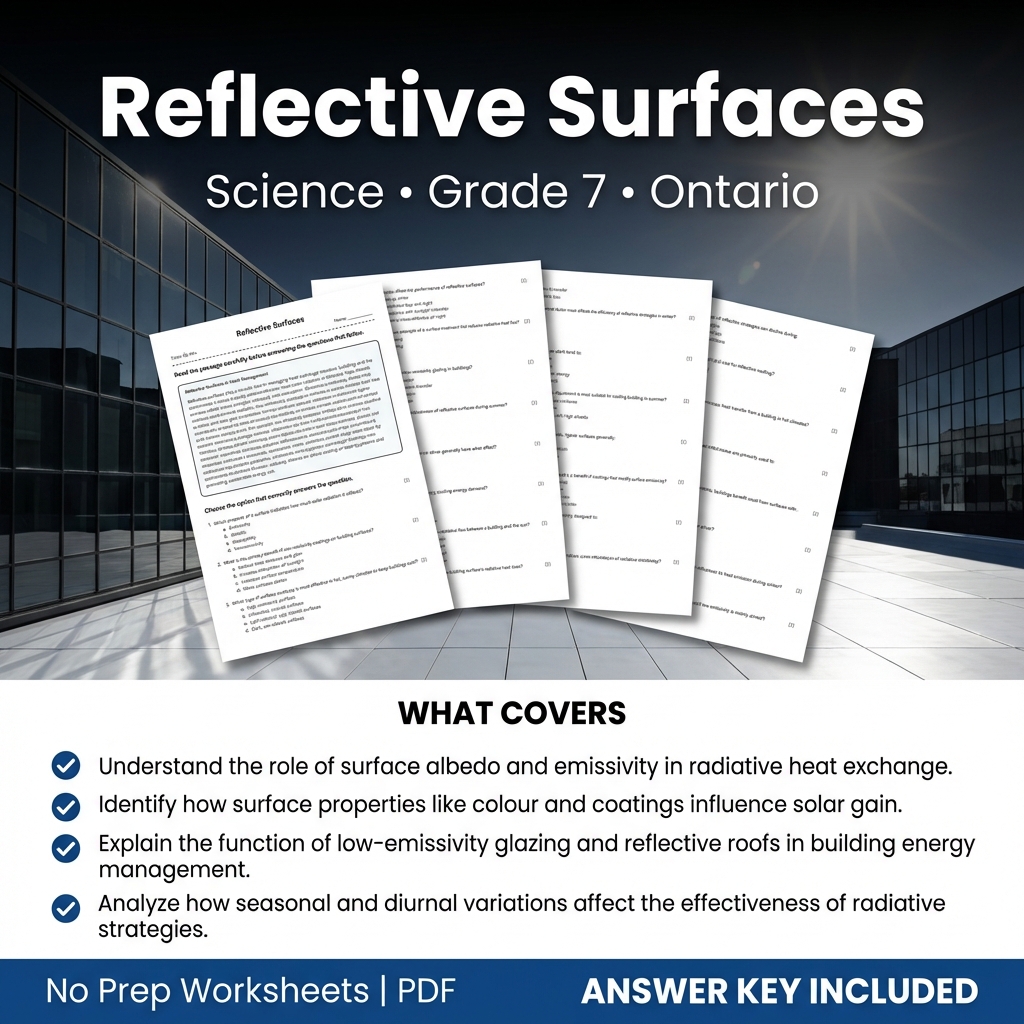
Reflective Surfaces Science Worksheet Grade 7 | Ontario Standards
Created byCoral Reef LearningLearning Objectives
- Understand the role of surface albedo and emissivity in radiative heat exchange.
- Identify how surface properties like colour and coatings influence solar gain.
- Explain the function of low-emissivity glazing and reflective roofs in building energy management.
Instant download
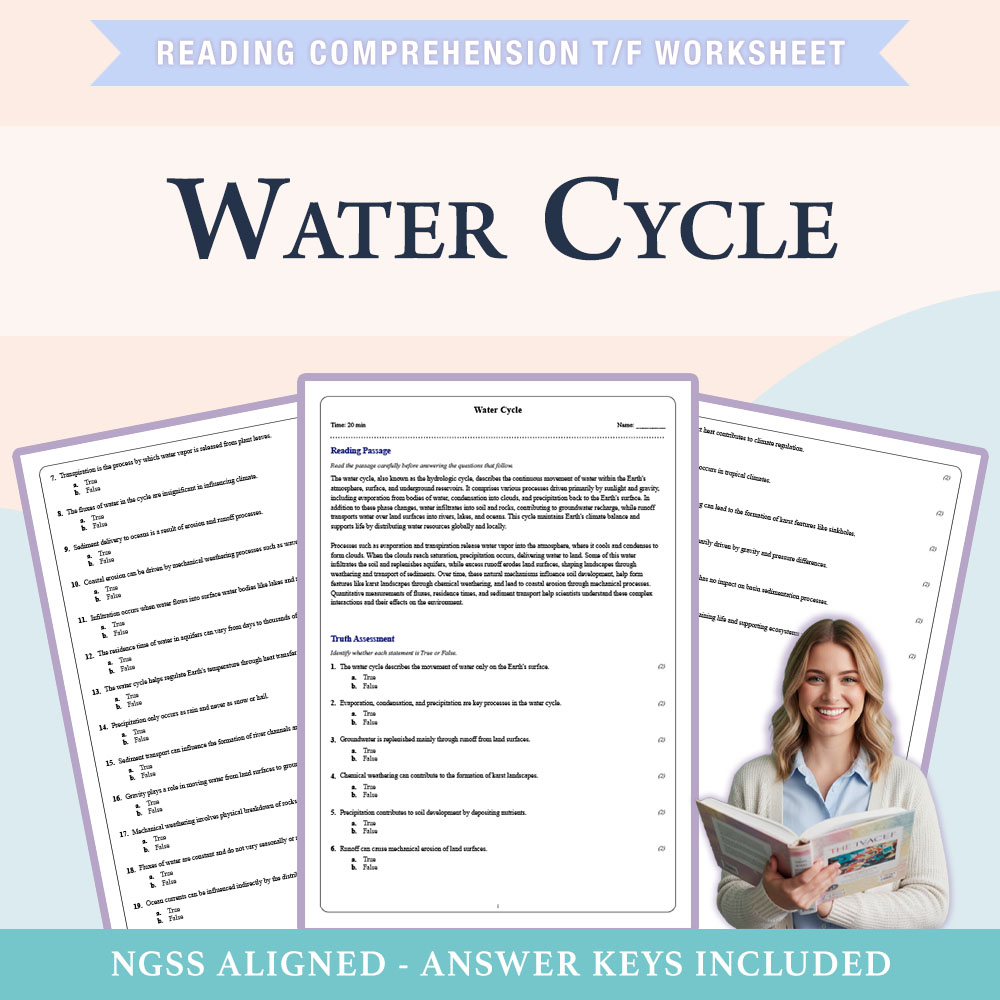
8th Grade Science | Water Cycle Worksheet (PDF +Answer Key)
 Created byCopper Leaf Classroom
Learning Objectives
- Understand the processes involved in the water cycle including evaporation, condensation, precipitation, infiltration, runoff, and groundwater flow.
- Explain how the water cycle influences weathering and erosion processes on land surfaces.
- Identify the connection between hydrologic fluxes and observable environmental effects such as soil development and sediment transport.
Also included in: Grade 8 Science Unit Bundle | Earth Materials Worksheets (PDF + Answer Key) +1 more
Instant download

8th Grade Science | Plate Motions Worksheet (PDF +Answer Key)
Created byCopper Leaf ClassroomLearning Objectives
- Understand the mechanisms of plate tectonics including seafloor spreading, subduction, rifting, and continental collision.
- Identify landforms associated with different plate movements such as mountains, ocean basins, and volcanic arcs.
- Explain how paleomagnetic and stratigraphic evidence support theories of past continental configurations.
Also included in: Grade 8 Science Unit Bundle | Earth Materials Worksheets (PDF + Answer Key) +1 more
Instant download
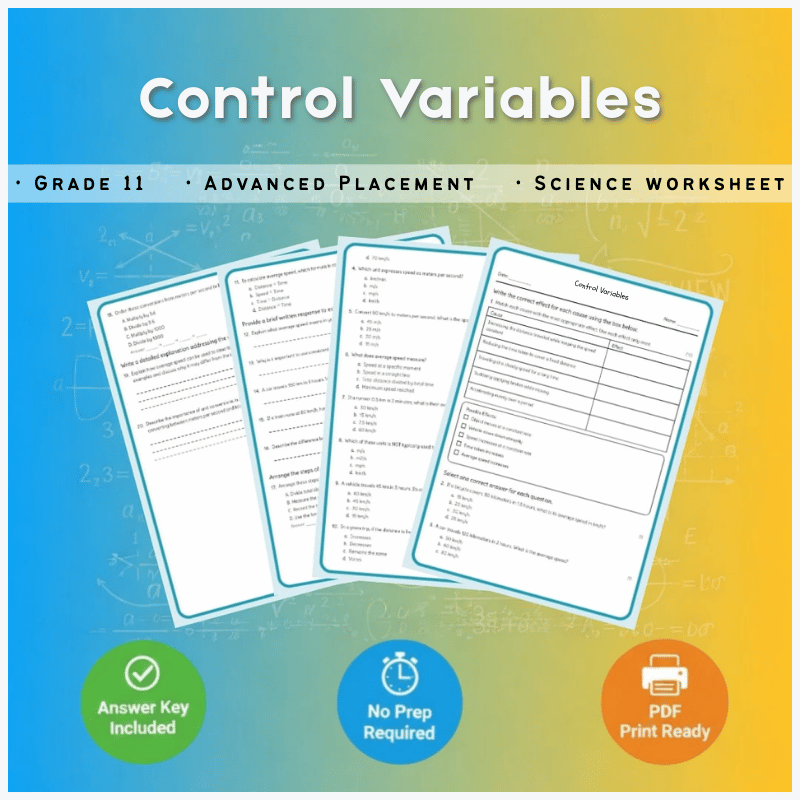
Grade 11 Science | Control Variables Worksheet + Answer Key (AP Standards)
Created byBright Mind ResourcesLearning Objectives
- Identify strategies for selecting and implementing control variables in experiments.
- Understand how control variables influence the validity and reliability of experimental results.
- Explain the importance of baseline conditions and procedural constraints in scientific studies.
Instant download
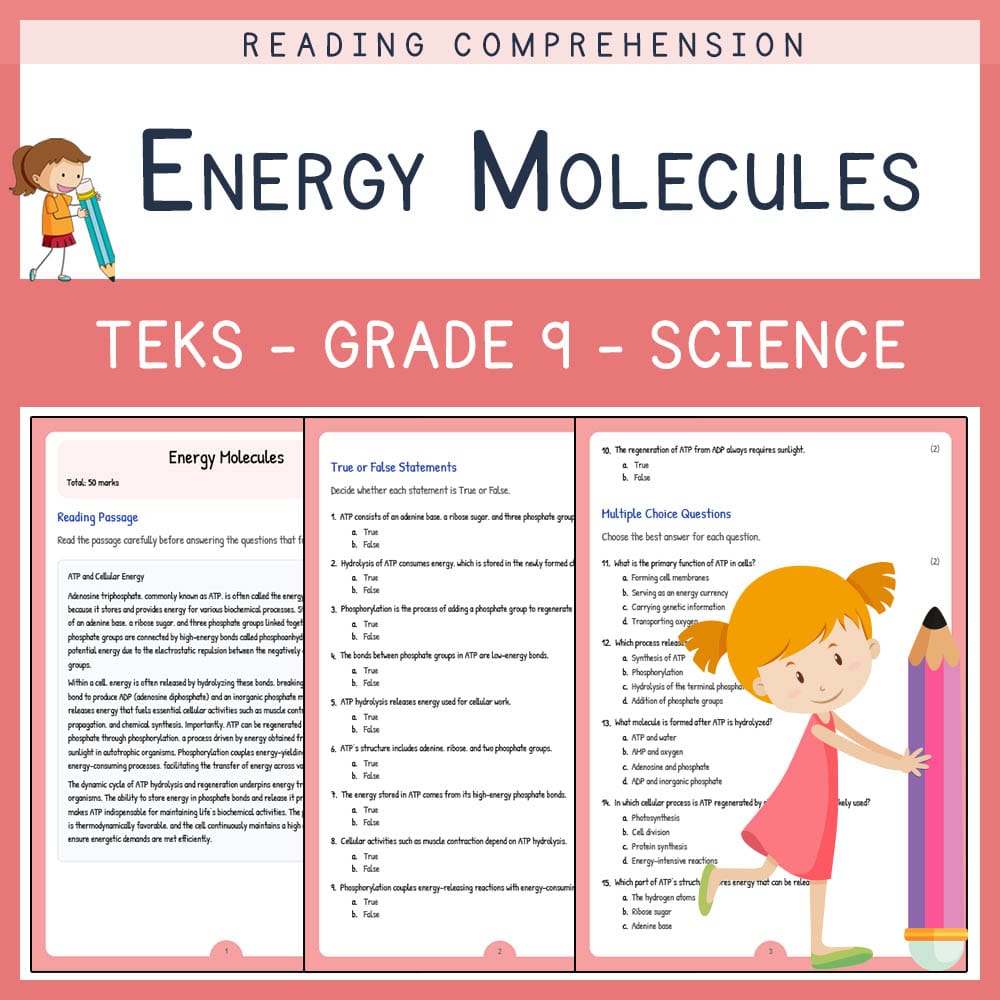
Grade 9 Science | Energy Molecules Worksheet | TEKS-Aligned
Created byLumora LearningLearning Objectives
- Describe the structure and function of ATP as the cell's energy currency.
- Explain the process of hydrolysis of ATP and how it releases energy.
- Understand the role of phosphorylation in regenerating ATP and coupling biochemical reactions.
Instant download
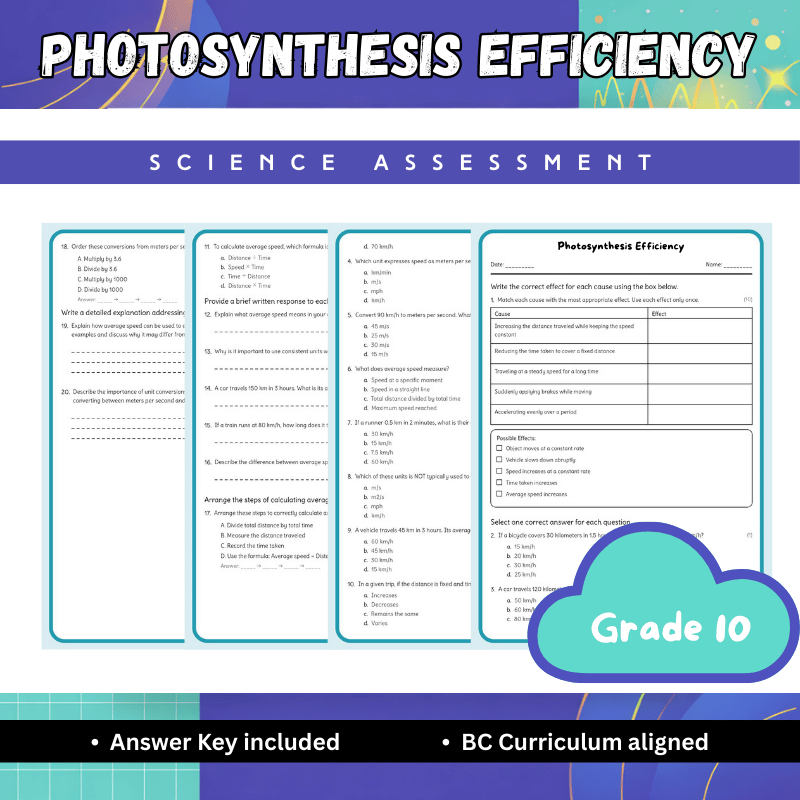
Grade 10 Science| Photosynthesis Efficiency Worksheet(Answer Key) – BC Standards
Created byBright Mind ResourcesLearning Objectives
- Explain the process of photosynthesis and its components.
- Identify factors limiting the efficiency of photosynthesis.
- Compare natural photosynthesis with engineered solar energy technologies.
Instant download
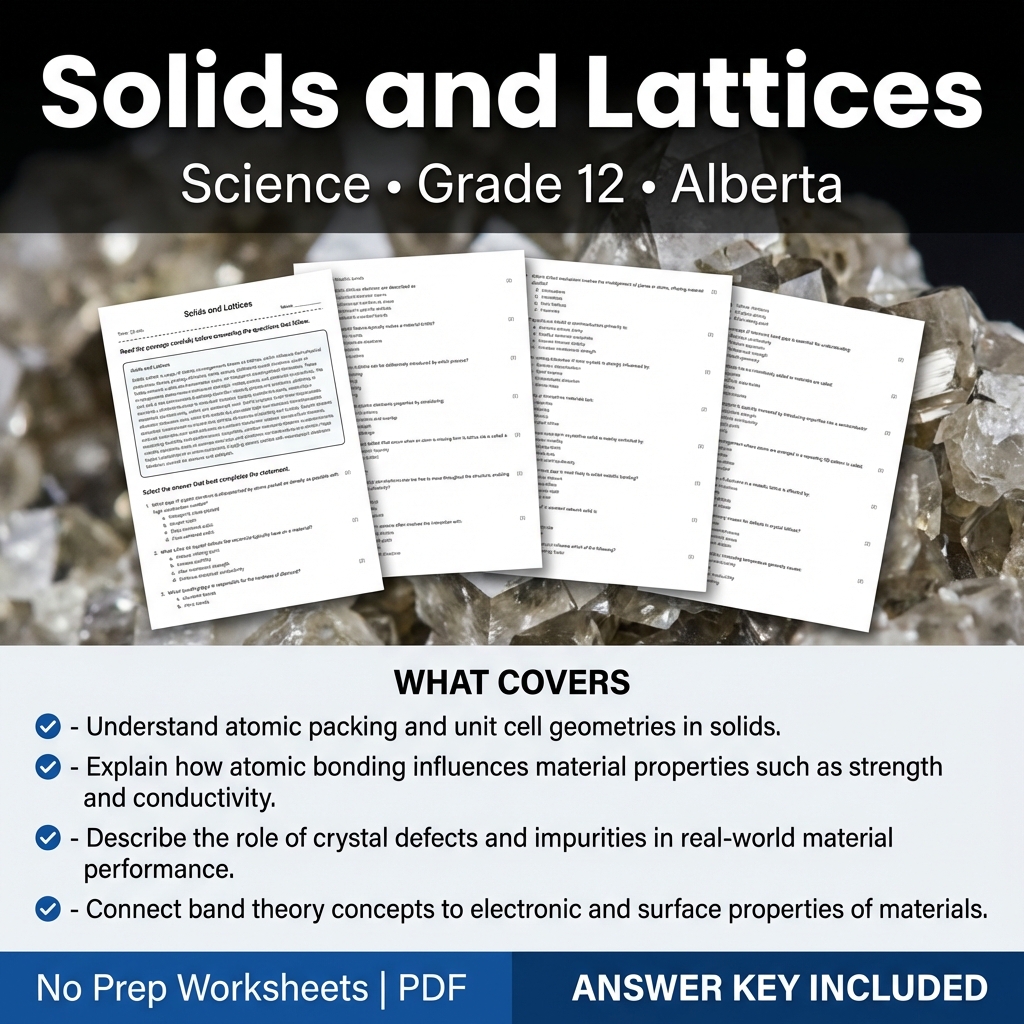
Grade 12 Science Worksheet on Solids and Lattices | Alberta Standards
Created byCoral Reef LearningLearning Objectives
- Understand atomic packing and unit cell geometries in solids.
- Explain how atomic bonding influences material properties such as strength and conductivity.
- Describe the role of crystal defects and impurities in real-world material performance.
Instant download
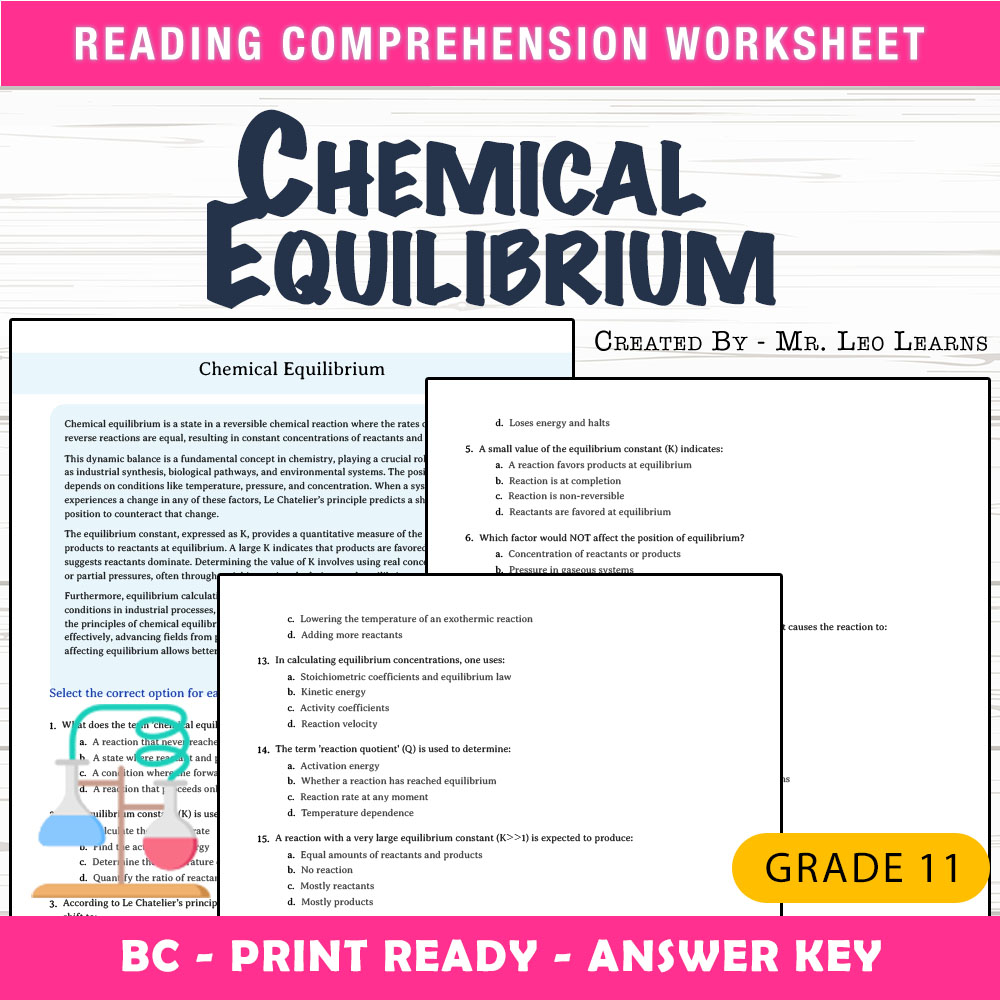
Grade 11 Science — Worksheet MCQ Paper for Mastering Chemical Equilibrium
Created byThe Resource HubLearning Objectives
- Describe the concept of chemical equilibrium and its dynamic nature.
- Explain how the equilibrium constant relates reactant and product concentrations.
- Predict the shift in equilibrium following changes in concentration, temperature, or pressure.
Also included in: Grade 11 Science – Chemistry Unit Worksheet Bundle (BC) +1 more
Instant download
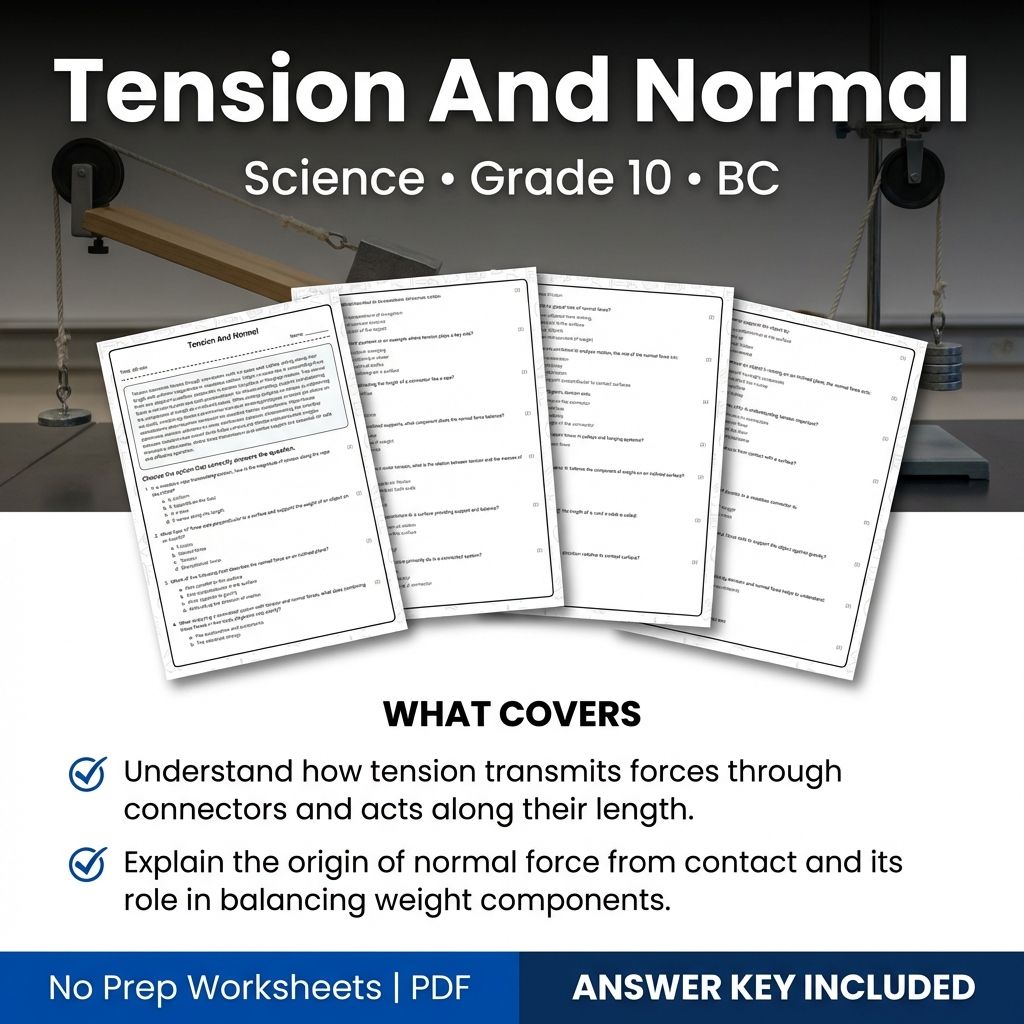
Grade 10 Science | Tension and Normal Forces Worksheet (PDF + Answer Key)
Created byCoral Reef LearningLearning Objectives
- Understand how tension transmits forces through connectors and acts along their length.
- Explain the origin of normal force from contact and its role in balancing weight components.
Instant download

Grade 5 Phase Behaviour Worksheet Ontario Science PDF with Answer Key
Created byClear Sky ClassroomLearning Objectives
- Explain phase changes using particle behaviour and kinetic energy
- Connect melting, freezing, evaporation, and condensation to energy transfers
- Identify how intermolecular forces affect the state of matter
Instant download

Grade 6 Niche Dynamics Worksheet | Ontario Science Ecosystems Activity
 Created byChalk and Compass
Learning Objectives
- Differentiate between a species’ fundamental niche and realized niche.
- Explain how abiotic factors and biotic interactions influence where organisms can live and what resources they use.
- Describe how temporal and spatial partitioning can reduce competition among similar species.
Also included in: Grade 6 Science Ecosystems, Adaptations & Biodiversity Lesson Bundle | Ontario +1 more
Instant download

Grade 6 Genetics Trait Heritability Worksheet | Doodle Notes & Ontario
Created byChalk and CompassLearning Objectives
- Explain what heritability means and how genetic variation contributes to differences in traits among individuals
- Distinguish heritable (genetic) influences from environmental influences on traits
- Describe how heritable traits can change allele frequencies and shift trait distributions over generations
Also included in: Grade 6 Science Ecosystems, Adaptations & Biodiversity Lesson Bundle | Ontario +1 more
Instant download

Grade 6 Food Webs Worksheet | Ontario Science Activity & Doodle Notes
Created byChalk and CompassLearning Objectives
- Identify producers, consumers, and decomposers in food webs
- Explain how energy flows through trophic levels and why energy decreases at each step
- Describe how removing or adding a species can affect other organisms in interconnected food webs
Also included in: Grade 6 Science Ecosystems, Adaptations & Biodiversity Lesson Bundle | Ontario +1 more
Instant download

Classification Genetics Worksheet Grade 6 Science Ontario + Doodle Notes
Created byChalk and CompassLearning Objectives
- Explain how DNA barcoding and sequence comparison help identify species when morphology is unclear
- Use basic ideas from phylogenetic trees to describe relationships among organisms
- Compare morphological keys with genetic markers and describe how cryptic species can be discovered using DNA
Also included in: Grade 6 Science Ecosystems, Adaptations & Biodiversity Lesson Bundle | Ontario +1 more
Instant download
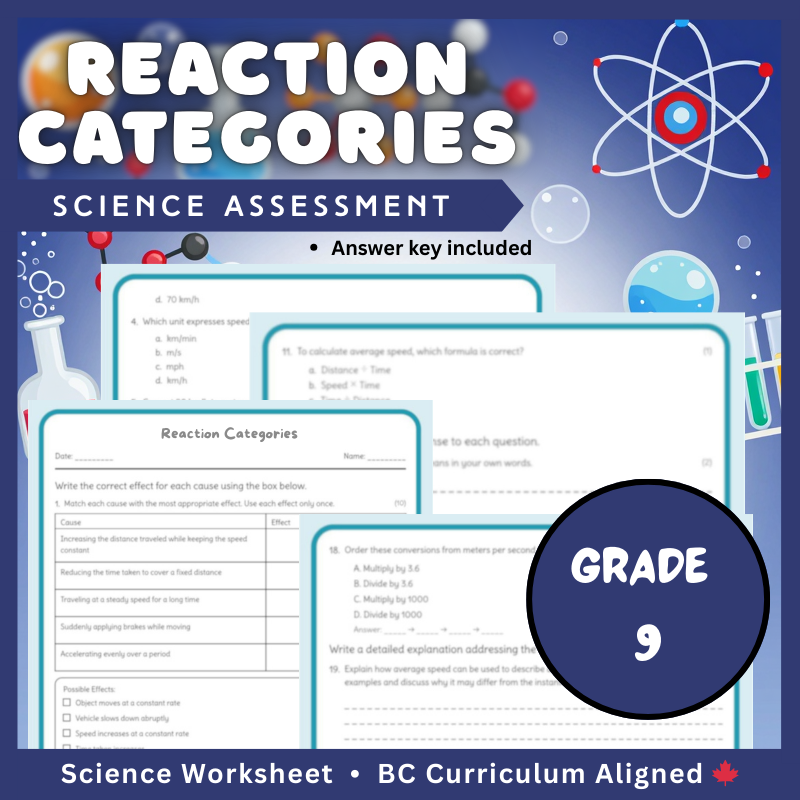
Grade 9 Science | Reaction Essentials Worksheet (PDF) – BC Standards & Practice
Created byBright Mind ResourcesLearning Objectives
- Understand how reactants transform into products during chemical reactions.
- Learn to represent reactions using chemical formulas and symbolic equations.
- Identify the roles of bond breaking and forming in energy changes during reactions.
Instant download
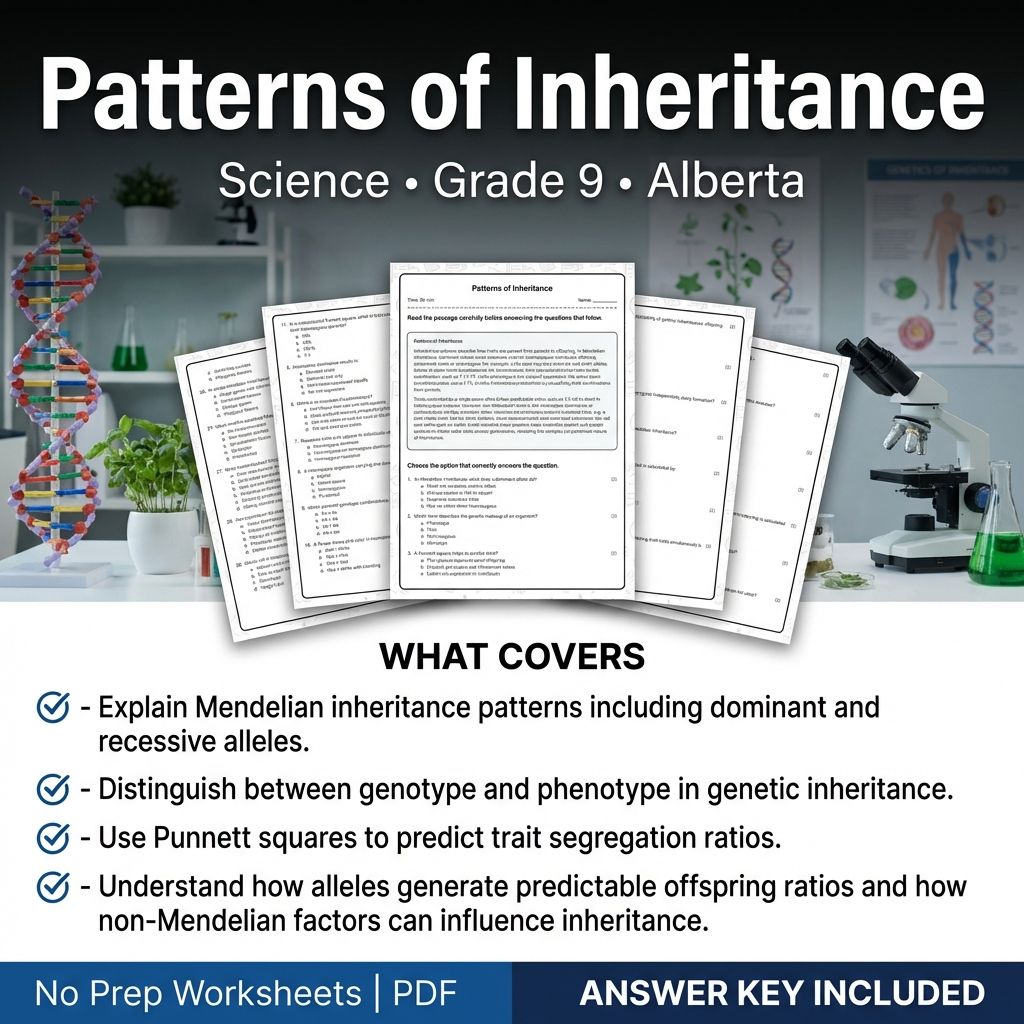
Patterns of Inheritance Worksheet Grade 9 Science Alberta Standards PDF
Created byCoral Reef LearningLearning Objectives
- Explain Mendelian inheritance patterns including dominant and recessive alleles.
- Distinguish between genotype and phenotype in genetic inheritance.
- Use Punnett squares to predict trait segregation ratios.
Instant download
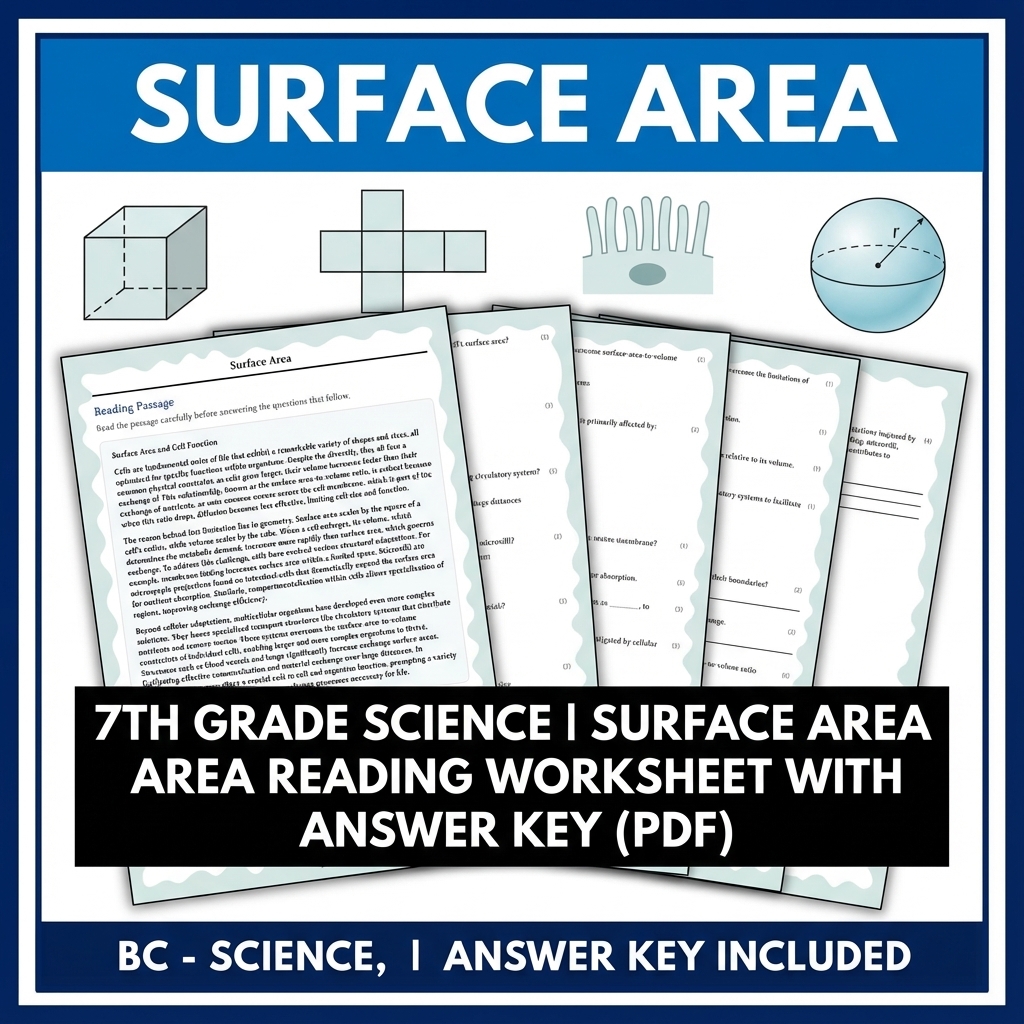
7th Grade Science | Surface Area Reading Worksheet with Answer Key (PDF)
JCreated byJ.S SheetsLearning Objectives
- Understand how surface-area-to-volume ratios limit cell size and function.
- Identify adaptations that increase exchange surfaces in cells and organisms.
- Explain how multicellular organisms overcome diffusion limitations through specialized structures.
Instant download

Grade 8 Science | Ecosystem Shifts - Daily Reading Comprehension
Created byCoral Reef LearningLearning Objectives
- Identify components of an ecosystem and their functions
- Understand how natural events cause changes in ecosystems
- Recognize the impact of human activities on ecosystems
Instant download
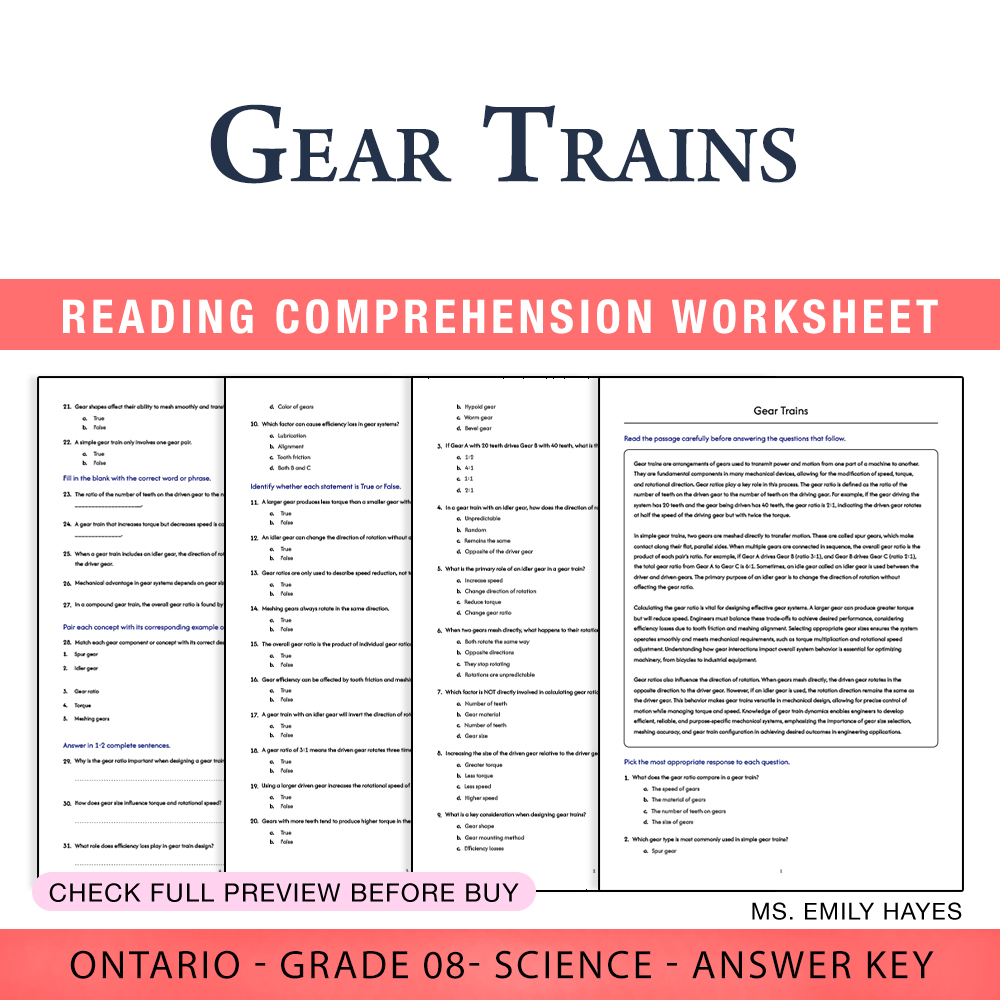
Grade 8 Science | Gear Trains Worksheet (PDF+ Answer Key)
Created byCopper Leaf ClassroomLearning Objectives
- Explain the concept of gear ratios and how they determine mechanical advantage in gear trains.
- Calculate the overall gear ratio, including in simple and compound gear trains.
- Describe the roles of spur gears and idler gears in changing direction and transferring torque.
Instant download

Collision Conservation Test Prep Worksheet | Grade 10 Science NGSS
Created byPrism Point LearningLearning Objectives
- Use conservation of linear momentum in two dimensions by resolving vectors into x- and y-components.
- Explain how center-of-mass motion relates to momentum conservation in multi-body collisions.
- Distinguish elastic from inelastic collisions using kinetic energy behavior and speed/angle outcomes.
Also included in: Grade 10 Forces and Conservation Science Lesson Bundle – NGSS
Instant download
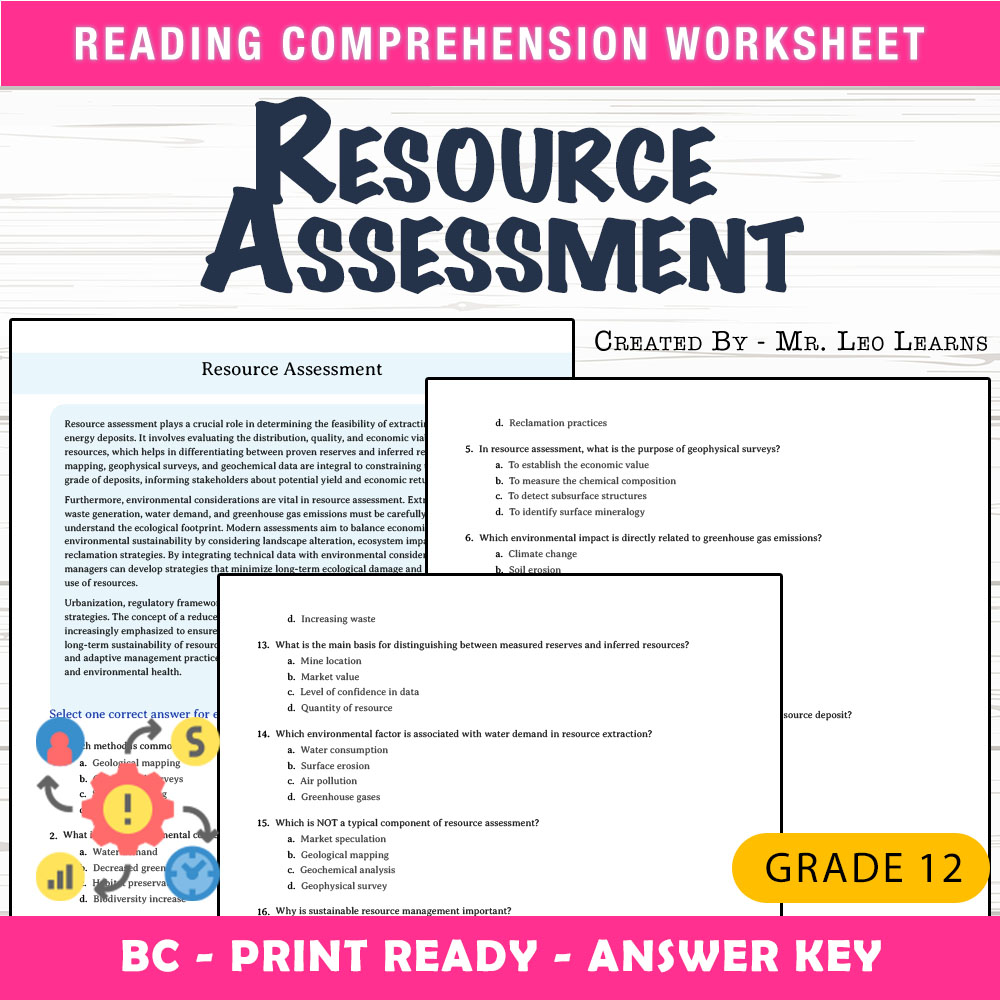
Grade 12 Science — Resource Assessment Worksheet MCQ PDF + Answer Key
Created byThe Resource HubLearning Objectives
- Understand the methods used for evaluating mineral and energy deposits.
- Identify factors that influence environmental and economic viability of resource extraction.
- Analyze the balance between resource benefits and environmental impacts.
Also included in: Grade 12 Science | Earth Science BC Worksheet Bundle (15-Worksheet MCQ Pack) +1 more
Instant download
Browse more categories
About Science Worksheets
Find Science worksheets spanning core skills, practice, and review. All 44,295 resources are instant PDF downloads for the classroom or home.
Every worksheet on MyTeachingSheets is created by independent teacher-authors and reviewed before publication. All resources download as printable PDFs for classroom, homework, or at-home practice, and many include answer keys. Preview any worksheet free before buying.