
Science Worksheets
44,295 subject resources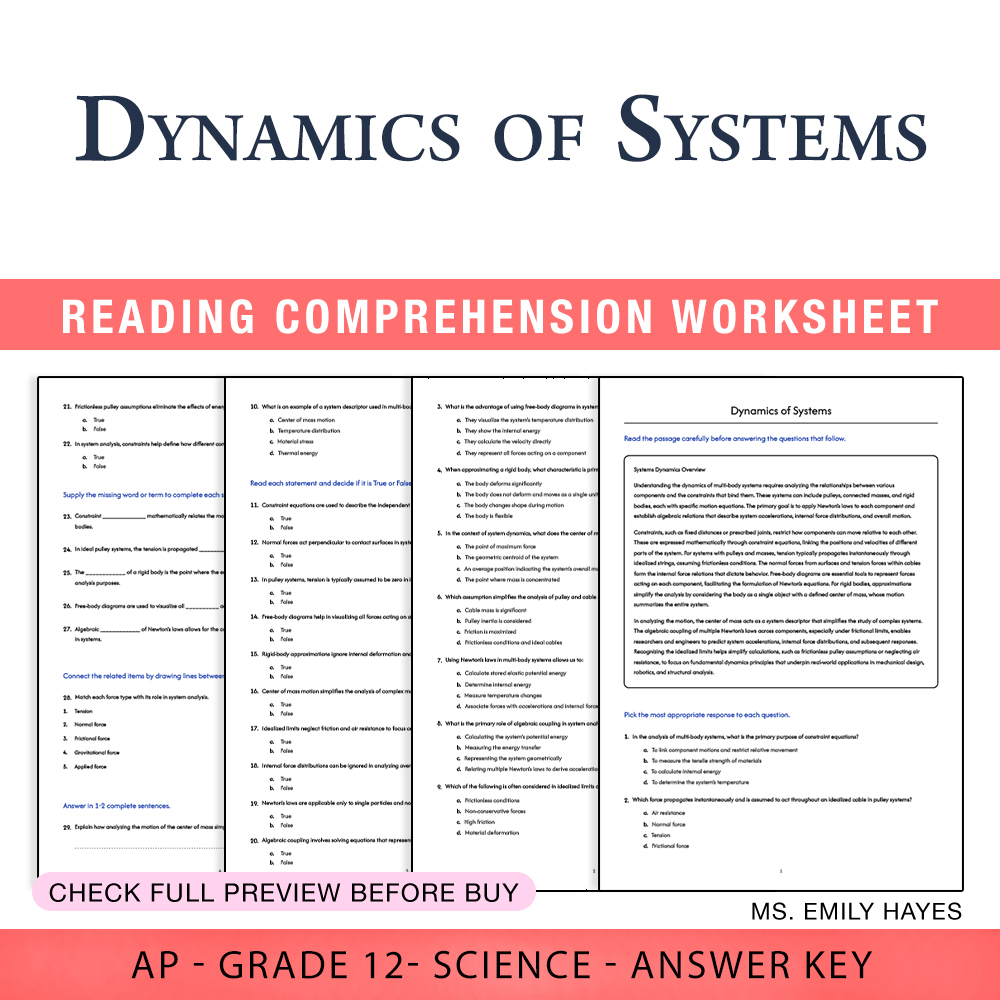
12th Grade Science | Dynamics of Systems Worksheet (PDF+ Answer Key)
 Created byCopper Leaf Classroom
Learning Objectives
- Analyze multi-body systems with constraints using equations and internal force relations.
- Understand pulley, mass configurations, and rigid-body approximations in system dynamics.
- Model motion of center of mass and interpret free-body diagrams for system components.
Also included in: Grade 12 Science AP – Energy, Motion & Electricity Mastery(PDF+ Answer Key) +1 more
Instant download
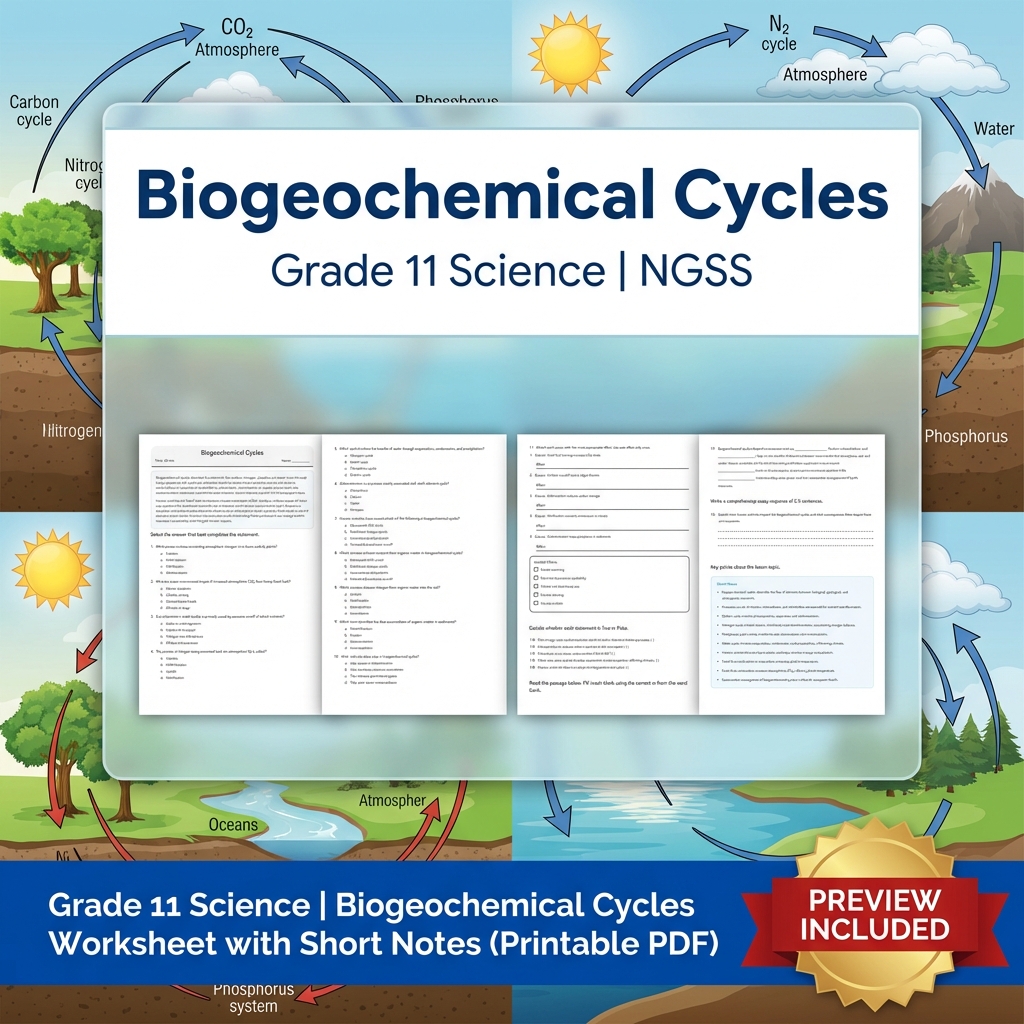
Grade 11 Science | Biogeochemical Cycles Worksheet with Short Notes (PDF)
 Created byMeadowlark Worksheets
Learning Objectives
- Explain the main processes involved in biogeochemical cycles of key elements.
- Identify how human activities impact nutrient pools and fluxes.
- Describe the role of biological, geological, and atmospheric reservoirs in matter cycling.
Also included in: Grade 11 Science Ecosystems Interactions & Dynamics Unit Bundle +1 more
Instant download

Blood Glucose Worksheet | Grade 10 Science TEKS Practice
 Created byPrism Point Learning
Learning Objectives
- Explain how insulin and glucagon regulate blood glucose using negative feedback.
- Describe roles of the pancreas, liver, adipose tissue, and muscle in maintaining energy homeostasis.
- Compare how glycogen synthesis, glycogenolysis, and gluconeogenesis change blood glucose during feeding and fasting.
Instant download
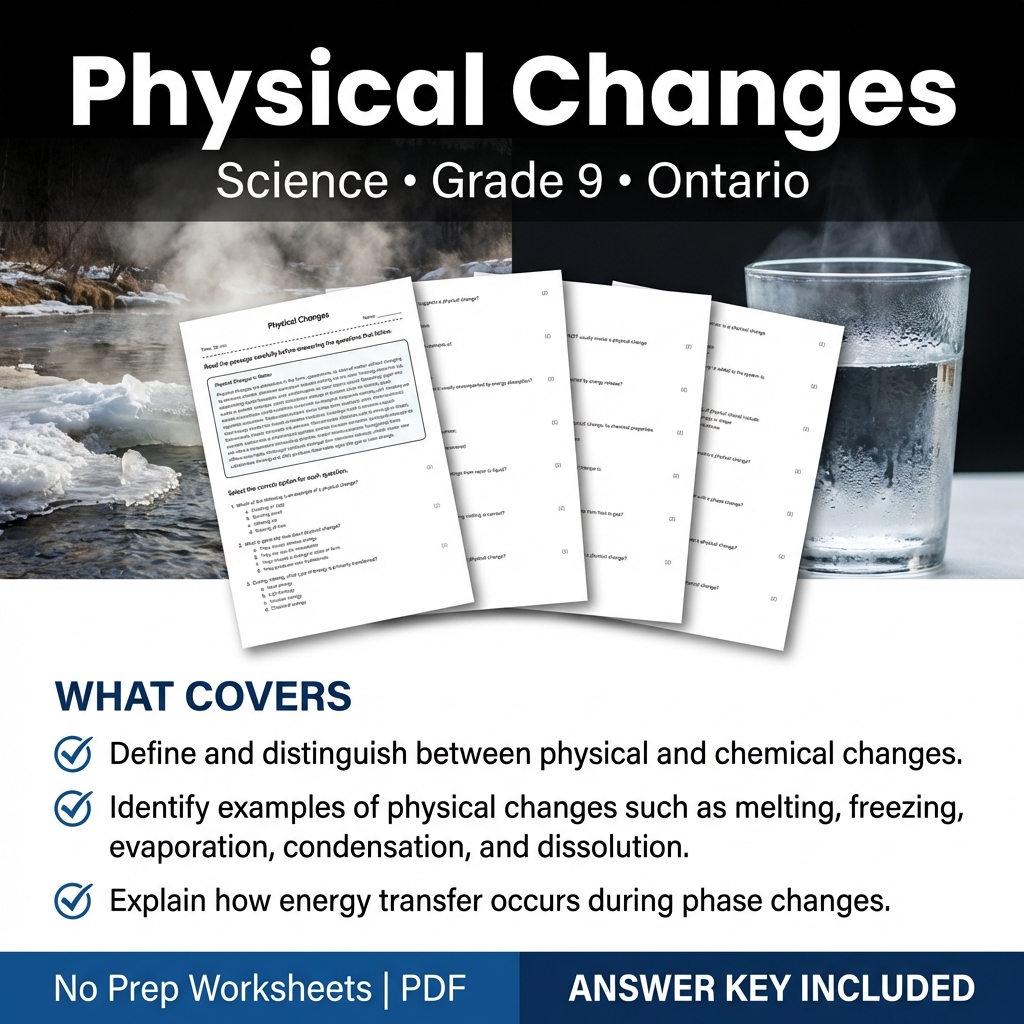
Physical Changes Worksheet Grade 9 Science Ontario Standards PDF
 Created byCoral Reef Learning
Learning Objectives
- Define and distinguish between physical and chemical changes.
- Identify examples of physical changes such as melting, freezing, evaporation, condensation, and dissolution.
- Explain how energy transfer occurs during phase changes.
Instant download

Conservation Analysis Worksheet Pack Grade 8 Science Activities
Created byPrism Point LearningLearning Objectives
- Explain why total mass remains constant in a closed system during chemical processes.
- Interpret qualitative evidence (like mass change or lack of change) to infer what is happening at the particle level.
- Differentiate closed and open systems and relate system boundaries to reaction accounting.
Also included in: Grade 8 Matter & Reactions Science Lesson Bundle (TEKS Worksheets) +1 more
Instant download

Grade 8 Science | Reaction Signatures Worksheet (PDF) aligned with Alberta standards
 Created bySilver Birch Teaching
Learning Objectives
- Identify observable reaction signatures of chemical change, including temperature change, precipitate formation, persistent colour change, and gas release
- Explain how multiple evidence types together support identifying chemical transformations in real-world conditions
- Use particle-level reasoning to connect reaction signatures with changes in substances
Also included in: Grade 8 Matter & Chemical Change Science Lesson Bundle | Alberta Framework +1 more
Instant download
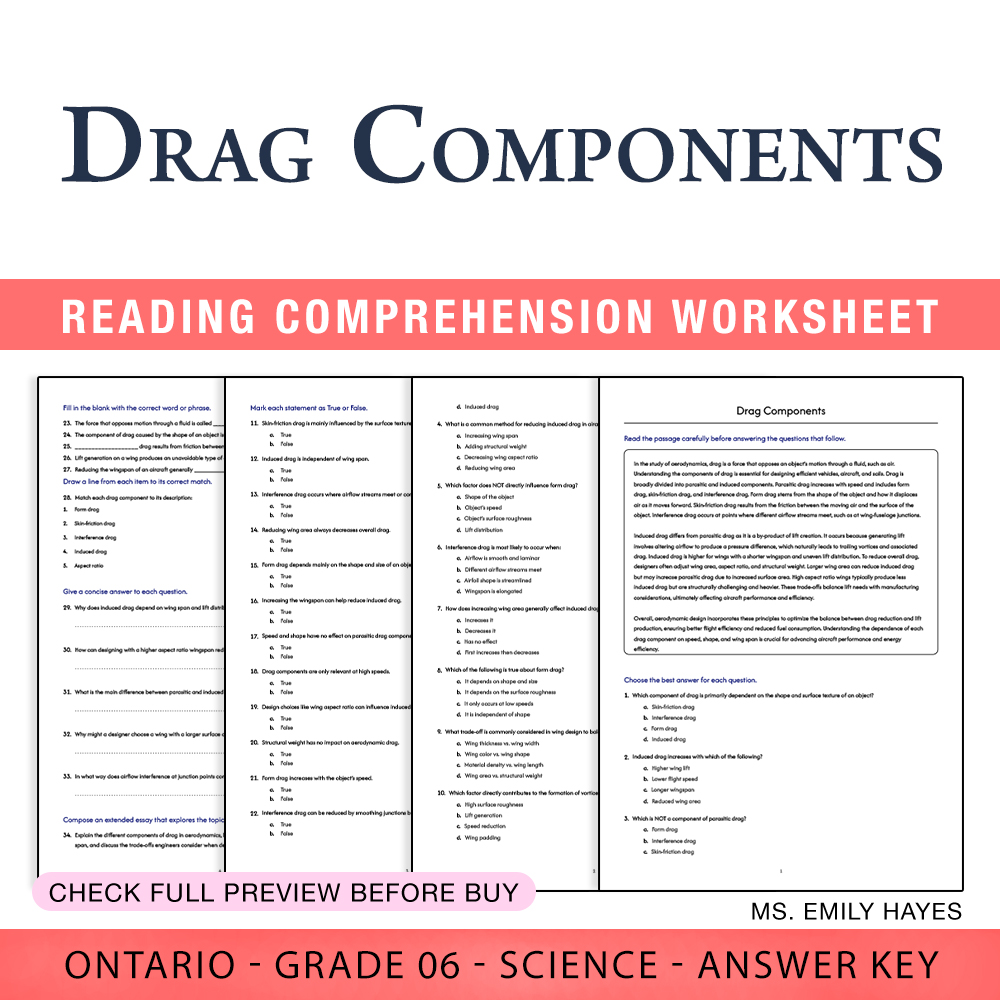
6th Grade Science | Drag Components Worksheet (PDF + Answer Key)
Created byCopper Leaf ClassroomLearning Objectives
- Understand the different components of drag and their causes
- Explain the dependence of parasitic and induced drag on aerodynamic factors
- Identify various forms of parasitic drag and how design influences drag reduction
Instant download

Electronegativity Worksheet | Science Assessment for Grade 11 Alberta
JCreated byJ.S SheetsLearning Objectives
- Understand the concept of electronegativity and how it influences bond polarity.
- Identify trends in electronegativity across periods and groups in the periodic table.
- Explain how differences in electronegativity lead to polar and nonpolar covalent bonds.
Instant download
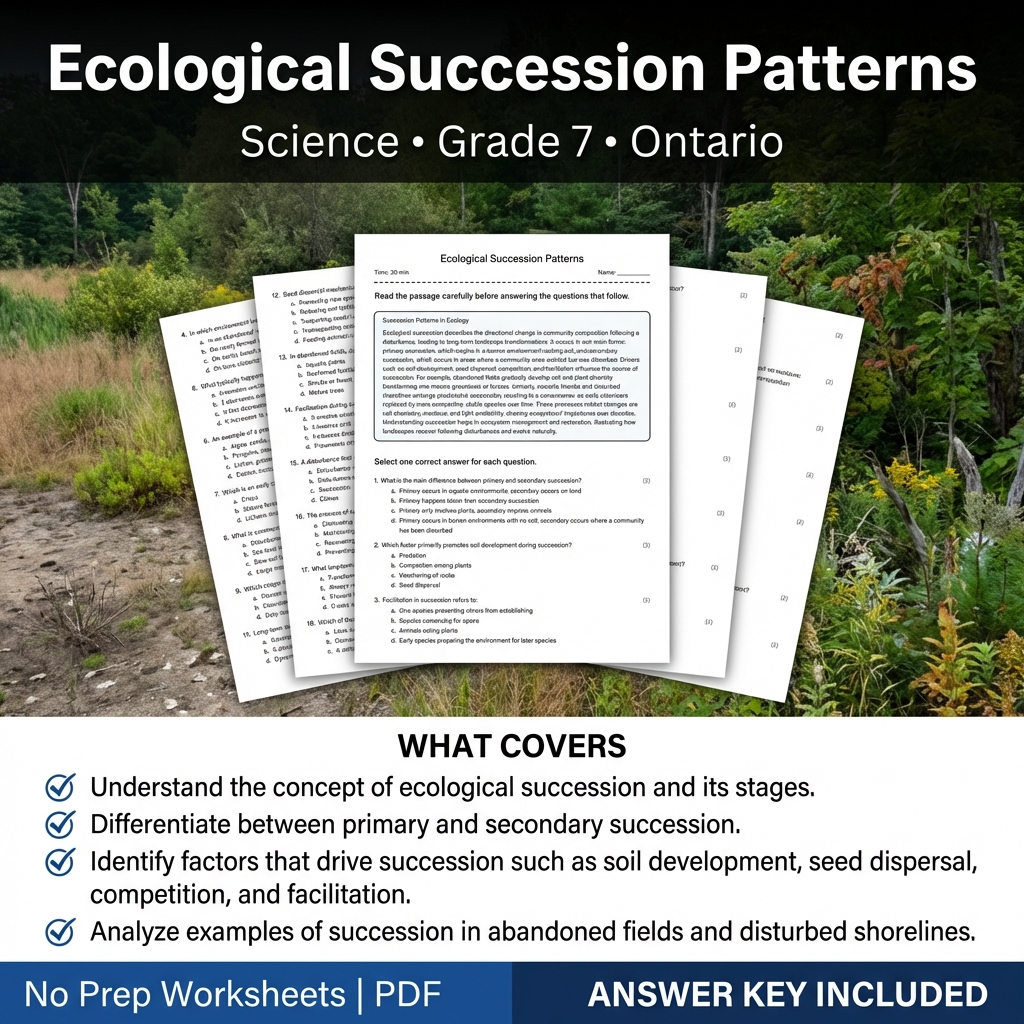
Ecological Succession Patterns Worksheet | Grade 7 Science Ontario Standards
Created byCoral Reef LearningLearning Objectives
- Understand the concept of ecological succession and its stages.
- Differentiate between primary and secondary succession.
- Identify factors that drive succession such as soil development, seed dispersal, competition, and facilitation.
Instant download

Grade 6 Science | Claim Evaluation Worksheet (Alberta Standards) (PDF)
 Created byEvergreen Desk Education
Learning Objectives
- Explain how to judge whether a claim follows from data, methods, and results.
- Use criteria such as evidence relevance, consistency, uncertainty, and alternative explanations to evaluate conclusions.
- Match the scope of a claim to the strength and limits of a dataset.
Instant download
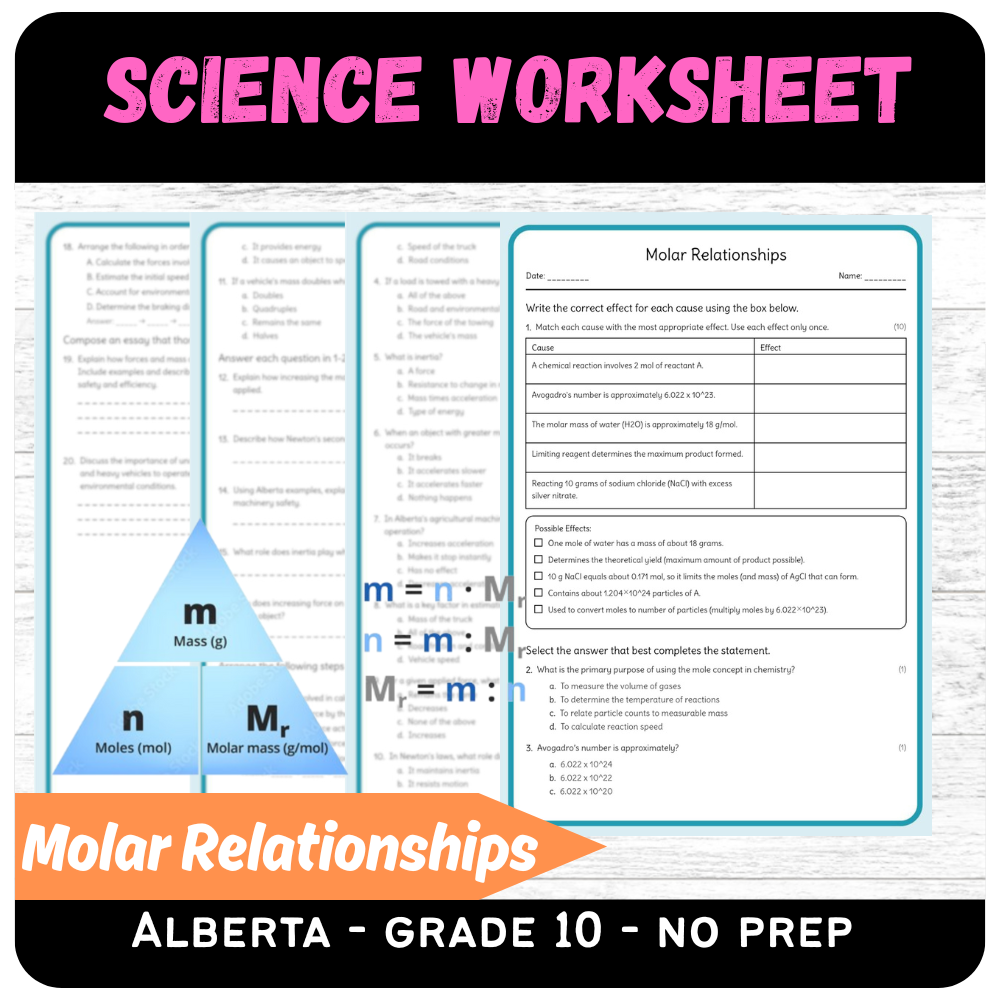
Grade 10 Science – Molar Relationships Worksheet (PDF) | Alberta Standards
 Created byBright Mind Resources
Learning Objectives
- Explain the concept of the mole and its significance in chemistry.
- Perform mole-to-mass and mole-to-mole conversions accurately.
- Identify limiting reagents in chemical reactions.
Instant download

Grade 12 Heat, Work, and Energy Change Worksheet | California Science
Created byPrism Point LearningLearning Objectives
- Explain how heat and work transfer energy to a system and how each process affects internal energy
- Use thermodynamic ideas to predict changes in temperature, expansion, or phase state under different conditions
- Apply quantitative energy accounting concepts to reason about energy changes during heat/work interactions
Instant download

11th Grade Science | Structure and Function Worksheet with Short Notes (PDF)
Created byMeadowlark WorksheetsLearning Objectives
- Understand how organelle architecture influences metabolic efficiency.
- Identify the roles of thylakoid membranes and mitochondrial cristae in cellular processes.
- Describe how enzyme structure facilitates substrate binding and energy transfer.
Instant download
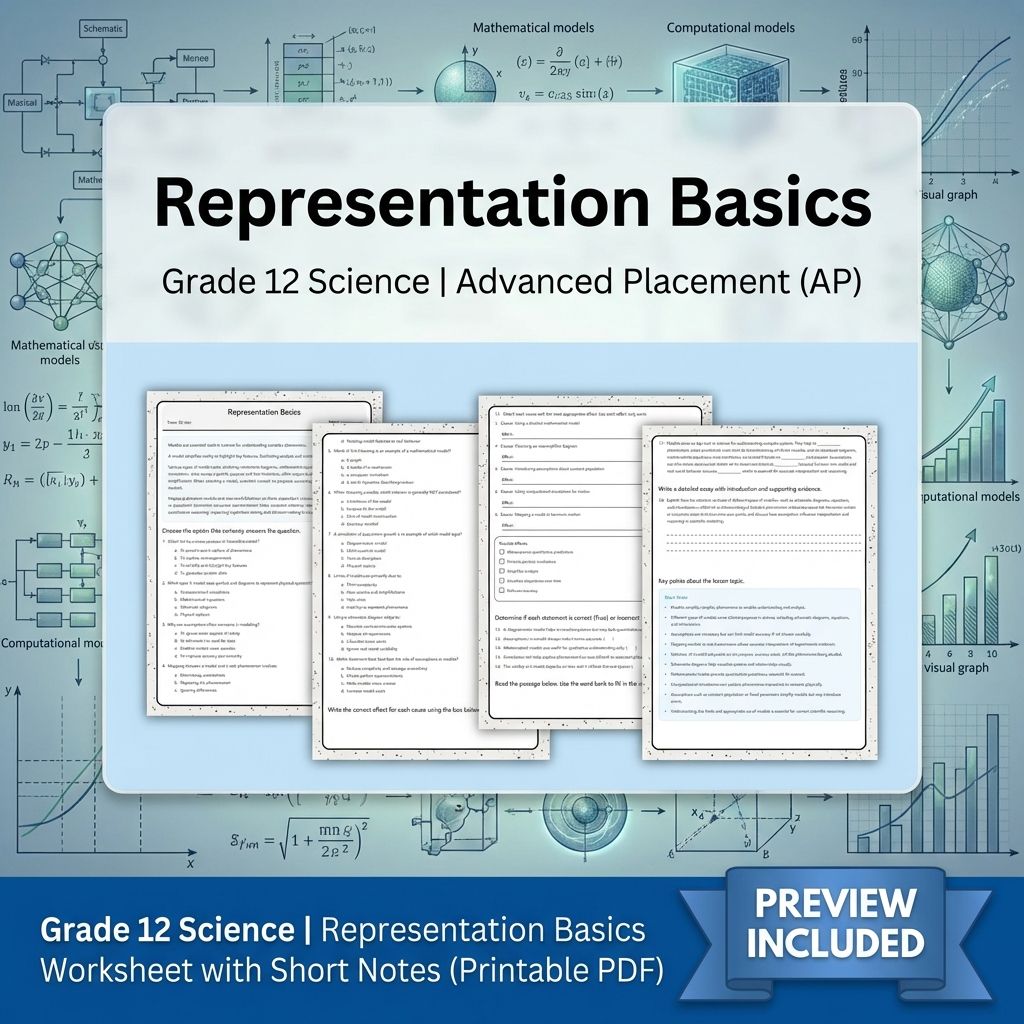
Grade 12 Science | Representation Basics Worksheet with Short Notes (PDF)
Created byMeadowlark WorksheetsLearning Objectives
- Understand core principles of modeling and representation in science.
- Identify various types of models such as schematic diagrams, equations, and simulations.
- Analyze the mapping between representations and physical phenomena like harmonic motion and population growth.
Also included in: Grade 12 Science Unit Bundle Data Analysis & Probabilistic Reasoning Worksheets +1 more
Instant download

Grade 6 Root Adaptations & Water Uptake Worksheet | Alberta Science
 Created byBRIGHT PATH RESOURCES
Learning Objectives
- Summarize the main idea and key details about how roots help trees get water.
- Identify specific root jobs that support tree health.
- Explain how root traits and relationships help trees in different environments.
Also included in: Forest Ecosystem Adaptations Grade 6 Science Worksheets Lesson Bundle | Alberta +1 more
Instant download
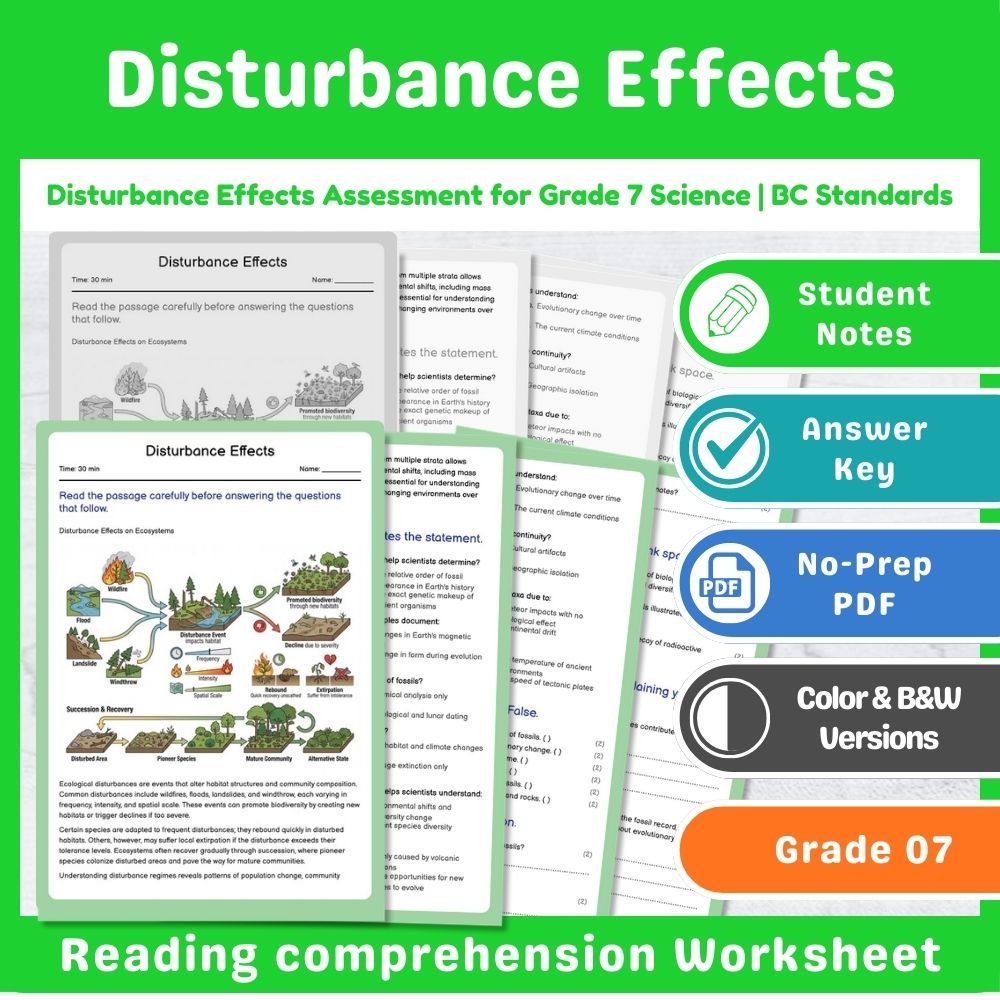
Disturbance Effects Assessment | BC Grade 7 Science Standards-Aligned
Created byPrism Point LearningLearning Objectives
- Understand how disturbances impact ecosystems and habitats.
- Identify different types of disturbance regimes and their ecological consequences.
- Analyze species adaptation to disturbance frequency and intensity.
Instant download
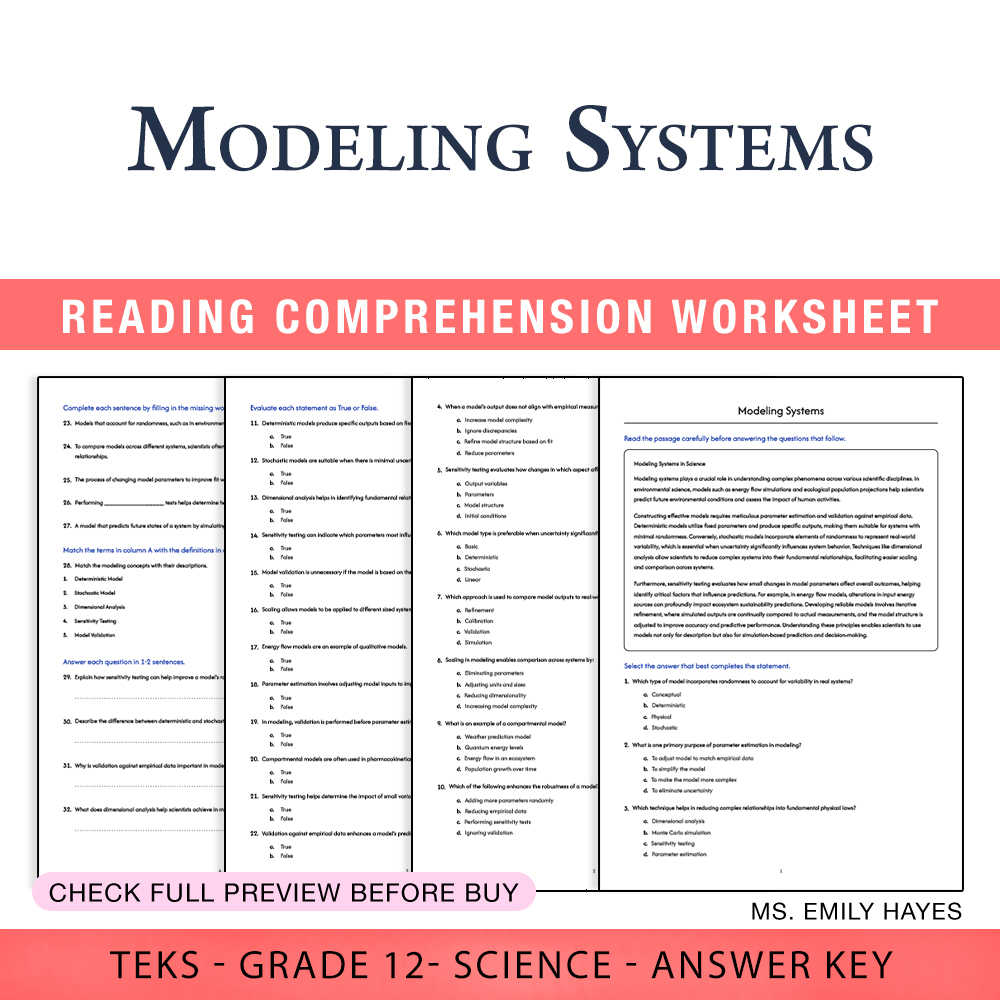
Grade 12 Science | Modeling Systems Worksheet (PDF+ Answer Key)
Created byCopper Leaf ClassroomLearning Objectives
- Understand different types of models used in scientific systems, including conceptual and quantitative frameworks.
- Learn how to estimate parameters, validate models, and perform simulations for prediction.
- Differentiate between deterministic and stochastic modeling approaches and assess their applications.
Instant download
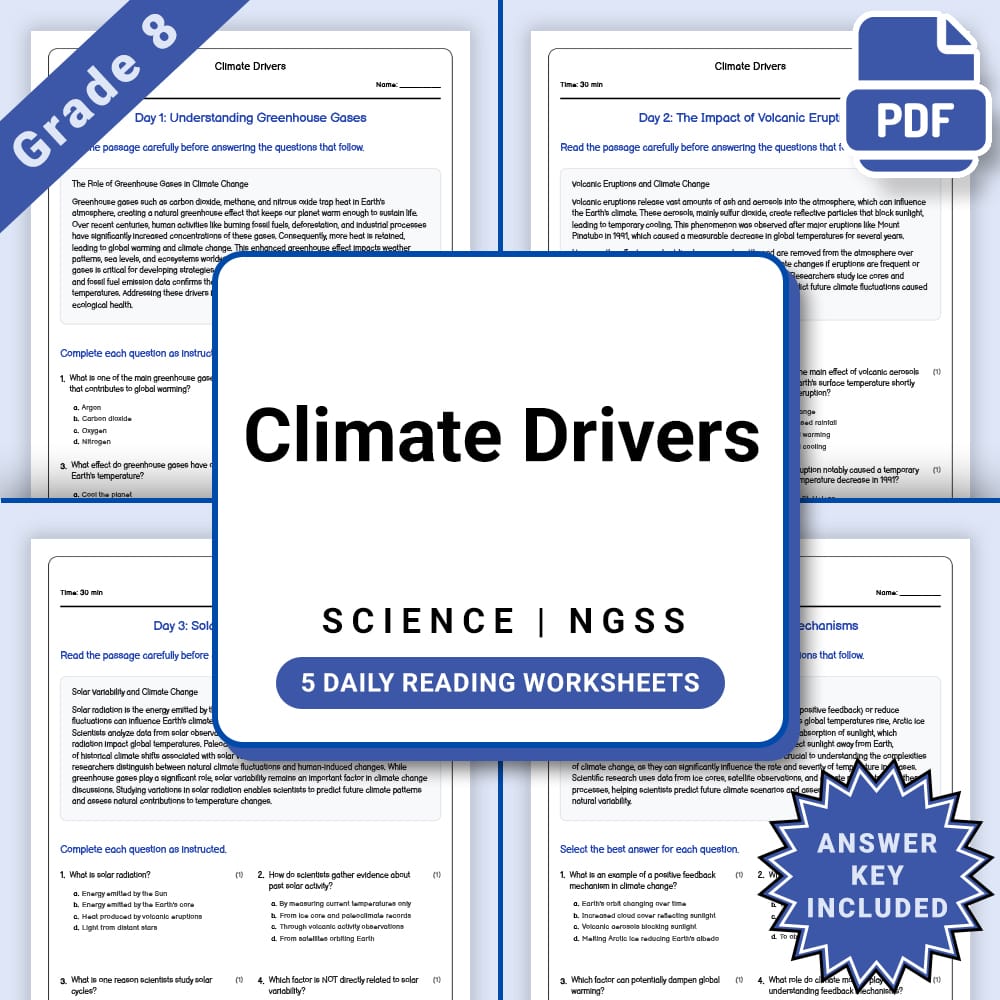
Grade 8 Science Climate Drivers Daily Reading Worksheet(PDF + Answer Key)
Created byCopper Leaf ClassroomLearning Objectives
- Identify and explain the role of greenhouse gases in climate change
Instant download

Grade 11 Science | Stoichiometric Calculations - Daily Reading Comprehension
Created byCoral Reef LearningLearning Objectives
- Understand the concept of the mole and its significance in chemistry.
- Calculate the number of moles from given mass and molar mass.
- Use molar mass and Avogadro's number to relate particles, molecules, and moles.
Instant download
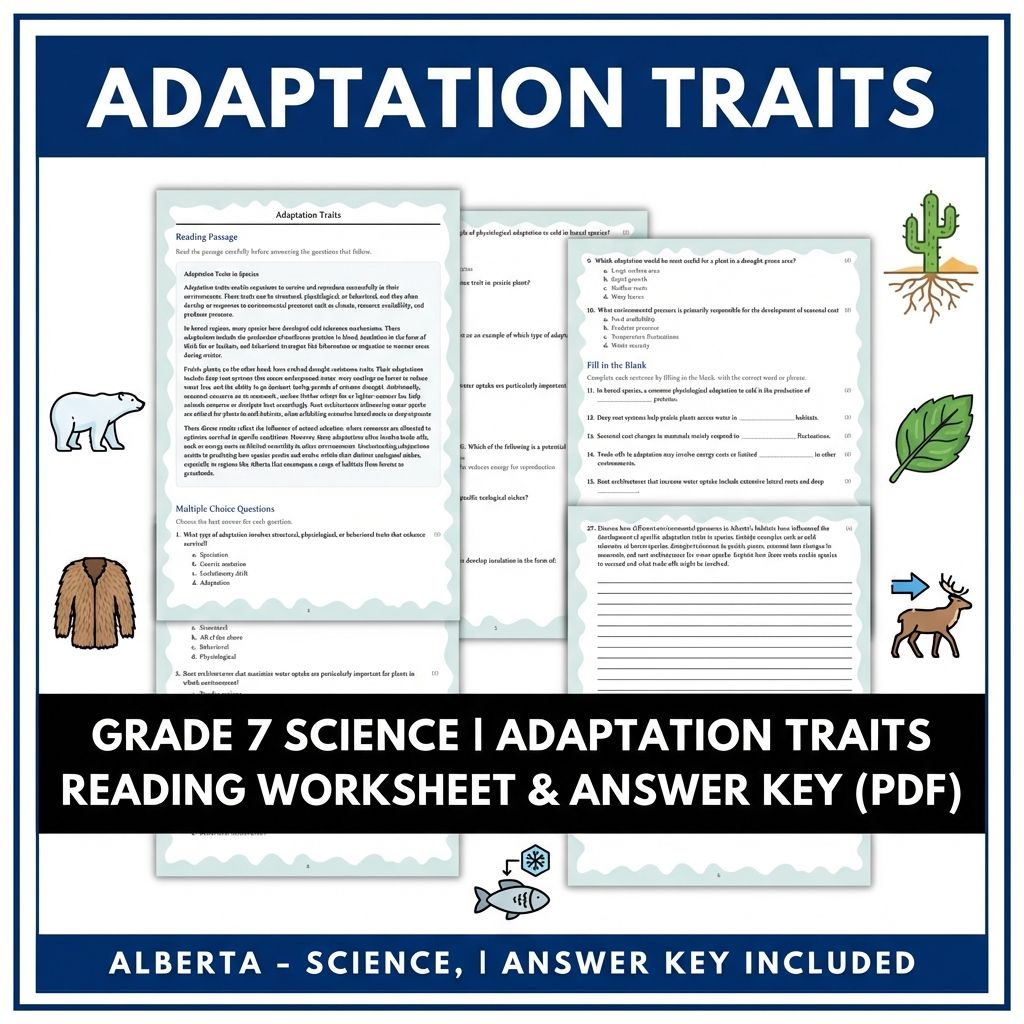
Grade 7 Science | Adaptation Traits Reading Worksheet & Answer Key (PDF)
JCreated byJ.S SheetsLearning Objectives
- Understand how structural, physiological, and behavioral traits contribute to survival in different environments.
- Identify specific adaptation traits such as cold tolerance, drought resistance, seasonal coat changes, and root architectures.
- Explain the relationship between adaptive traits and environmental pressures in various habitats.
Also included in: Grade 7 Science Bundle | Ecology, Ecosystems & Environmental Topics (Pack) +1 more
Instant download

Grade 9 Science – Cell Division & Processes | Daily Reading Worksheet
Created byBright Mind ResourcesLearning Objectives
- Understand the differences between mitosis and meiosis
- Identify the phases of cell division
- Explain the significance of chromosome pairing, segregation, and errors
Also included in: Grade 9 Genetics & Inheritance Science Daily Reading Lesson Bundle | Alberta +1 more
Instant download
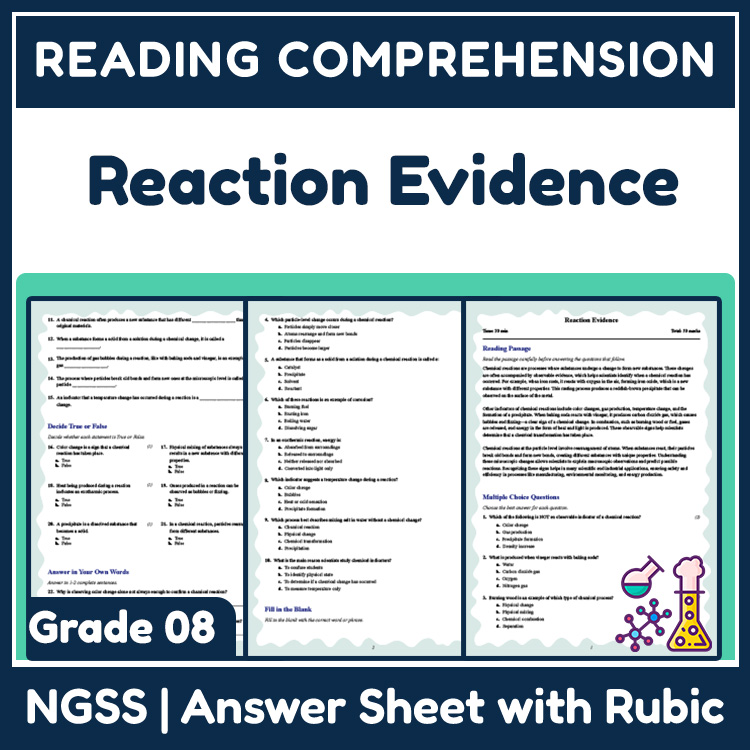
Grade 8 Science | Reaction Evidence Reading Worksheet (Answer Key)
JCreated byJ.S SheetsLearning Objectives
- Analyze properties of substances before and after interaction to identify chemical change
- Identify observable indicators of chemical reactions such as color change, gas production, precipitate formation, and temperature change
- Interpret qualitative and quantitative data from reactions like corrosion, combustion, and acid-base interactions
Instant download
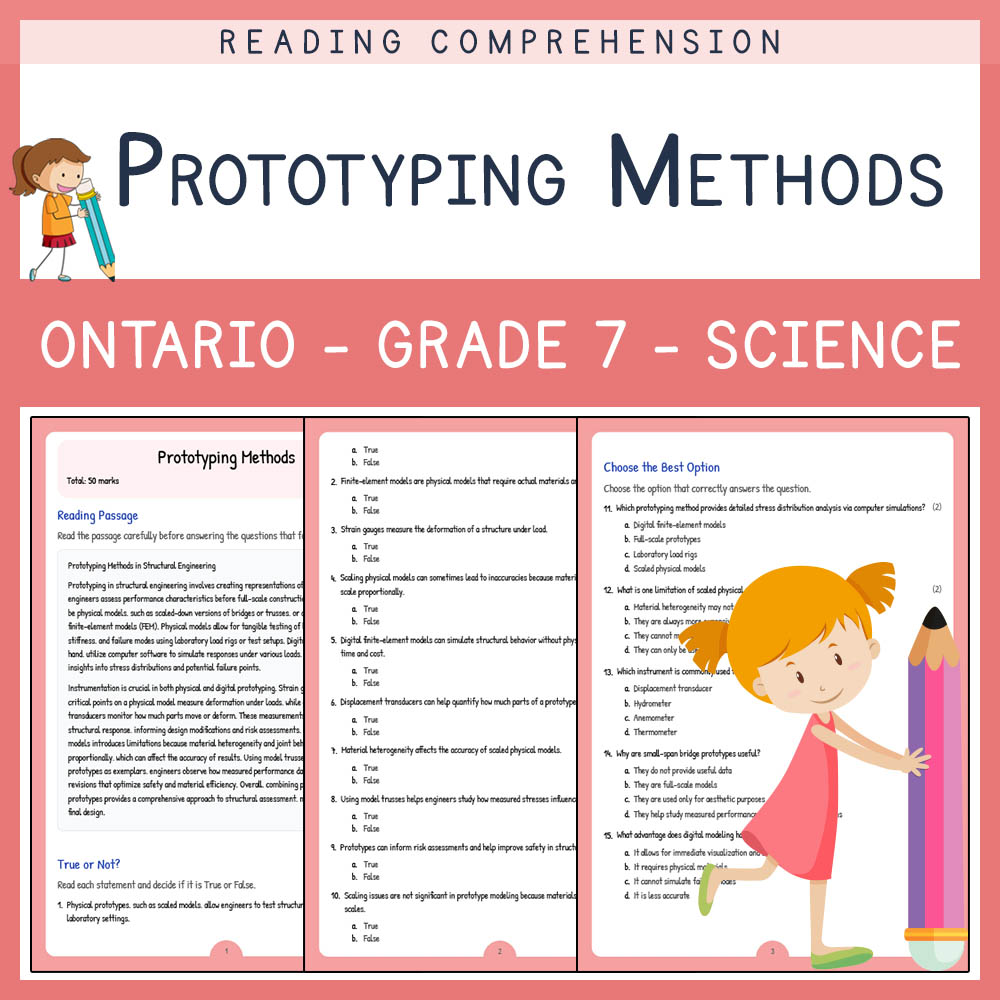
Grade 7 Science | Prototyping Methods Worksheet & Answer Key - Ontario Standard
 Created byLumora Learning
Learning Objectives
- Understand different prototyping approaches including scaled physical models, digital finite-element models, and laboratory load rigs.
- Compare advantages of each prototyping method for assessing strength, stiffness, and failure modes.
- Explain how instrumentation such as strain gauges and displacement transducers are used to quantify responses.
Also included in: Grade 7 Science | Form Function Design Structures Unit Bundle | Ontario
Instant download
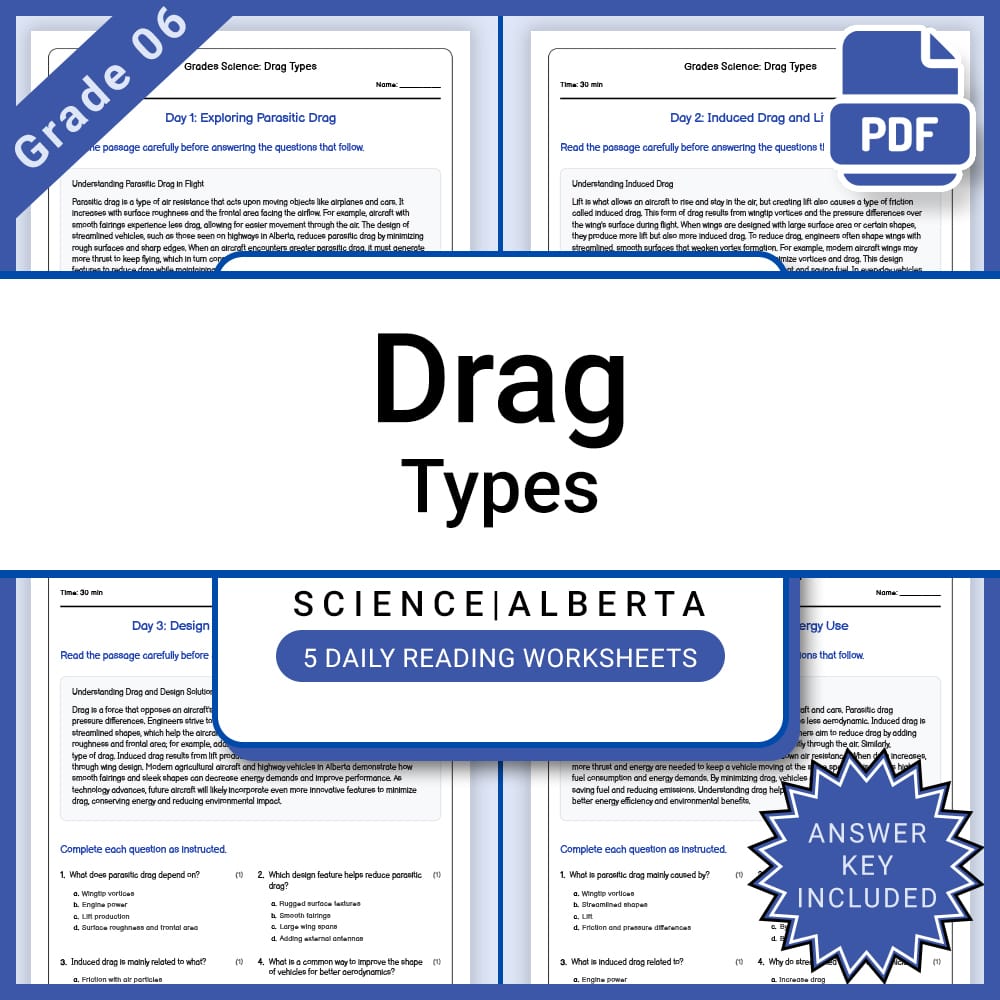
Grade 6 Science – Drag Types Daily Reading Worksheet with Answer Key
JCreated byJ.S SheetsLearning Objectives
- Understand what parasitic drag is and its causes.
- Identify how surface smoothness reduces drag.
- Explore different design features that minimize drag in aircraft and vehicles.
Also included in: Grade 6 Science Lesson Bundle: Flight, Weather, and Aerodynamics +1 more
Instant download
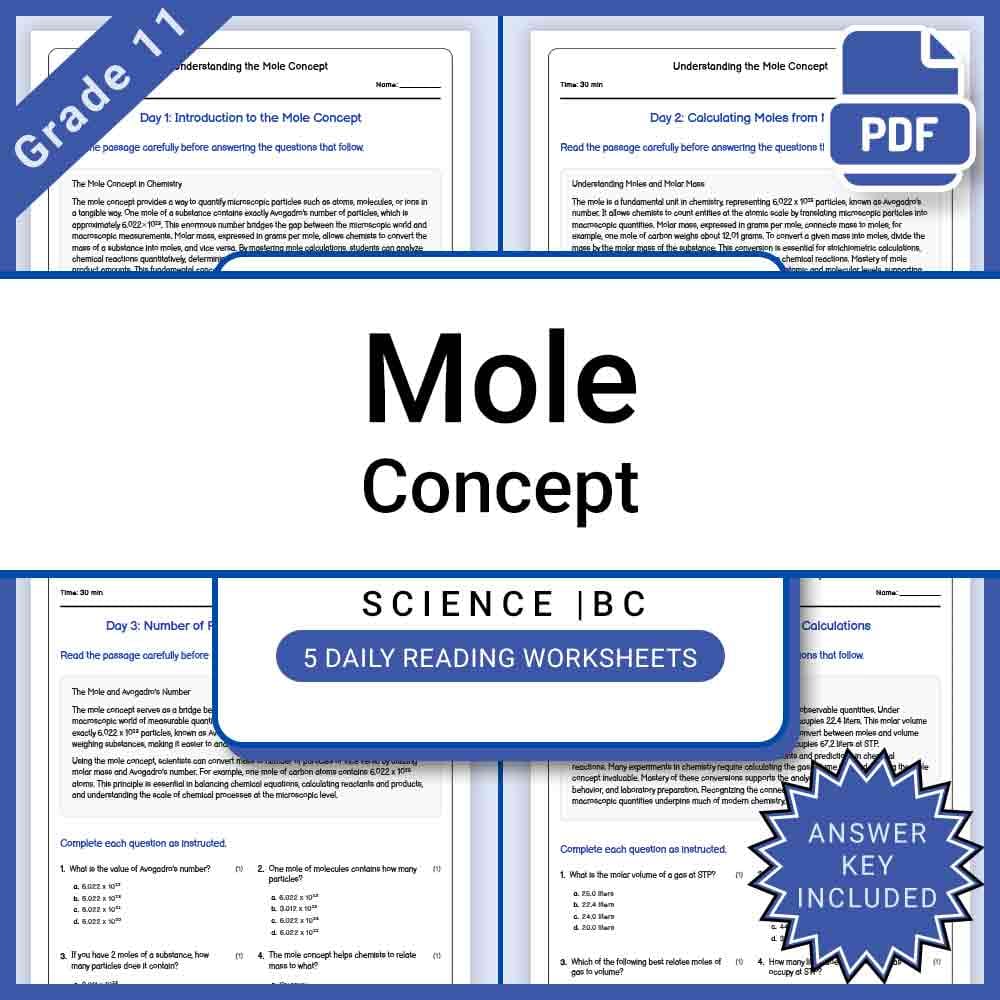
Grade 11 Science – Mole Concept Daily Reading Worksheet + Answer Key
JCreated byJ.S SheetsLearning Objectives
- Understand key concepts related to Science
- Apply knowledge through practice questions
- Demonstrate comprehension of the material
Also included in: Grade 11 Science Lesson Group | BC Framework Daily Reading Worksheets +1 more
Instant download

8th Grade Science | Force Diagrams Worksheet (PDF+ Answer Key)
Created byCopper Leaf ClassroomLearning Objectives
- Understand the concept of free-body diagrams and how to draw them for systems under various forces.
- Identify and distinguish between contact and non-contact forces such as normal force, tension, friction, and gravity.
- Apply the principles of balanced and unbalanced forces to determine the motion of objects in linear systems.
Instant download
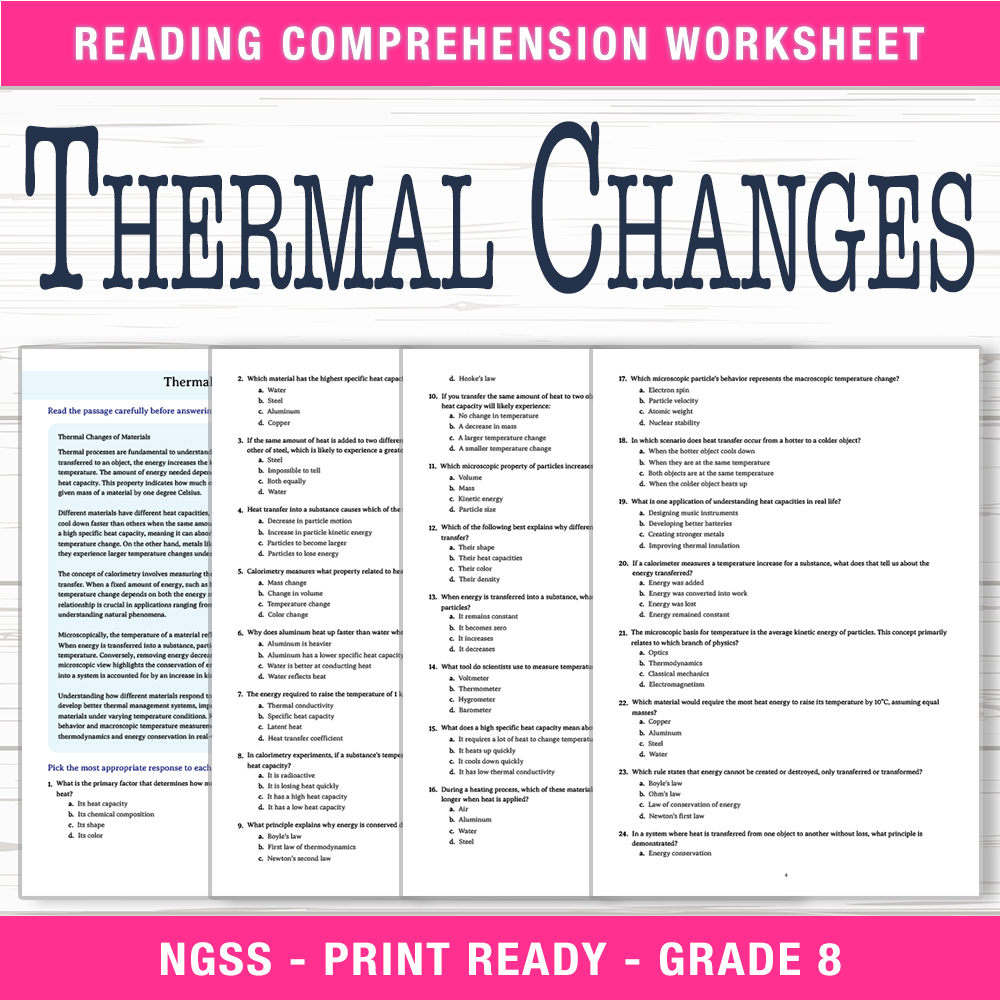
Grade 8 Science | Thermal Changes Worksheet (PDF + Answer Key)
 Created byRiverstone Classroom
Learning Objectives
- Describe the relationship between energy transfer, material type, mass, and temperature change.
- Explain the concept of specific heat capacity and its role in thermal processes.
- Analyze how different materials respond differently to the same energy input based on their heat capacities.
Instant download
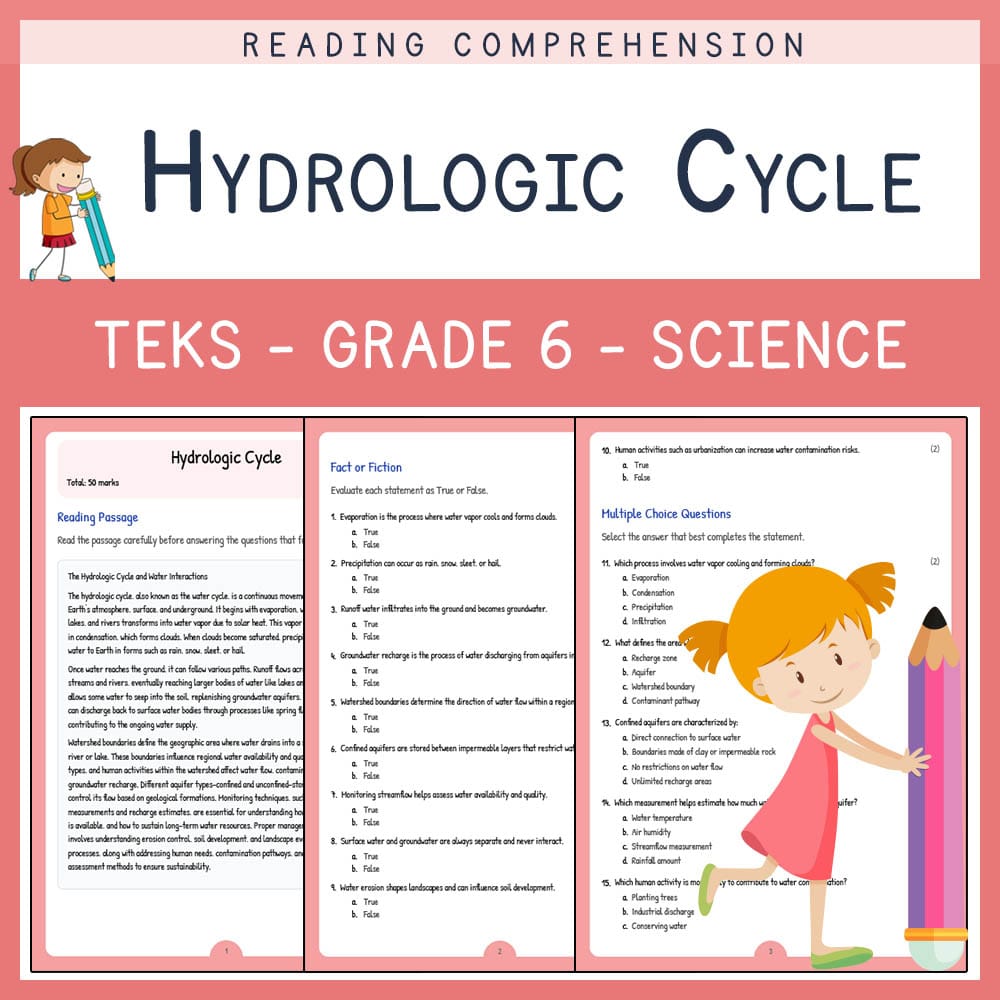
Grade 6 Science | Hydrologic Cycle Worksheet | TEKS-Aligned
Created byLumora LearningLearning Objectives
- Describe the processes involved in the hydrologic cycle, including evaporation, condensation, and precipitation.
- Explain the interactions between surface water, groundwater, and soil in watershed regions.
- Identify human impacts on water systems and methods used to monitor water quality.
Also included in: Grade 6 Science | Earth and Space Science Unit Bundle | TEKS Standard
Instant download
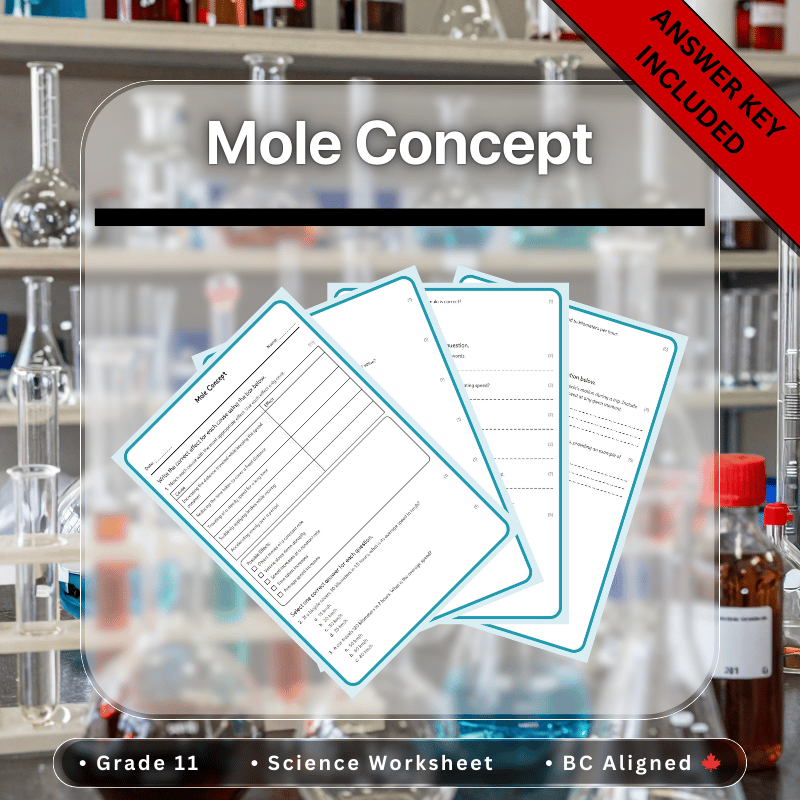
Grade 11 Science | Mole Concept Worksheet + Answer Key (BC Standards, PDF)
Created byBright Mind ResourcesLearning Objectives
- Understand the definition and significance of the mole in chemistry.
- Perform calculations involving molar mass, number of particles, and mass.
- Convert between moles, mass, and number of particles using Avogadro's number.
Instant download
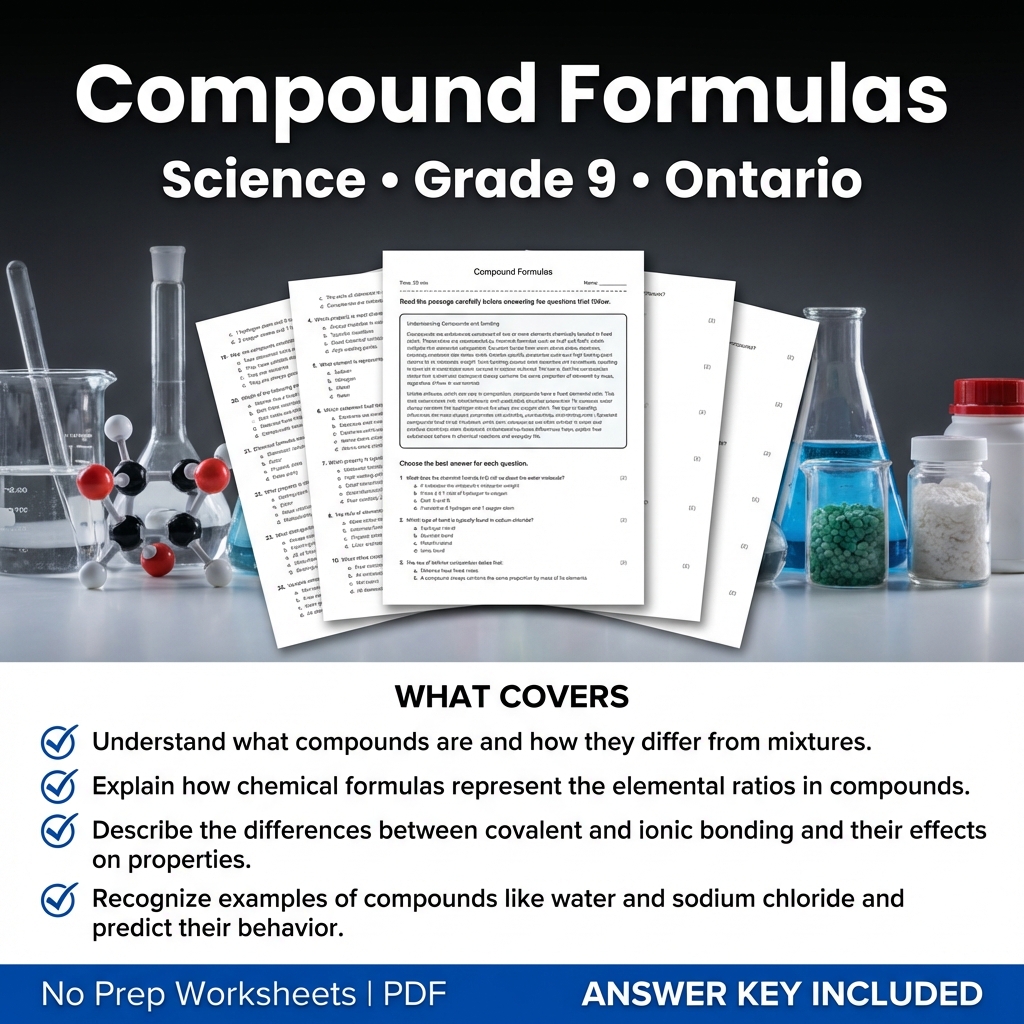
Grade 9 Science Worksheet on Compound Formulas | Ontario Standards
Created byCoral Reef LearningLearning Objectives
- Understand what compounds are and how they differ from mixtures.
- Explain how chemical formulas represent the elemental ratios in compounds.
- Describe the differences between covalent and ionic bonding and their effects on properties.
Instant download
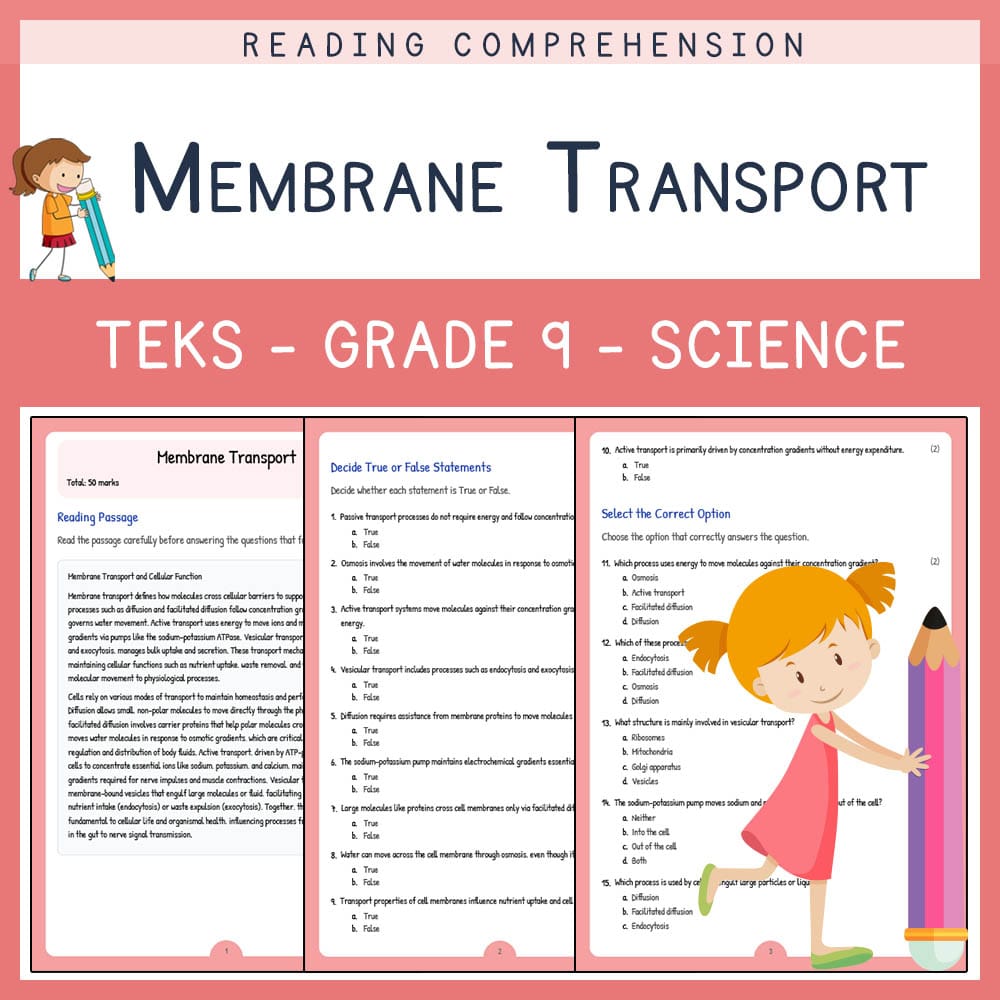
Grade 9 Science | Membrane Transport Worksheet | TEKS Aligned
Created byLumora LearningLearning Objectives
- Describe various mechanisms of membrane transport including passive and active processes.
- Differentiate between diffusion, facilitated diffusion, osmosis, and active transport.
- Explain the role of vesicular transport in cellular processes such as endocytosis and exocytosis.
Instant download
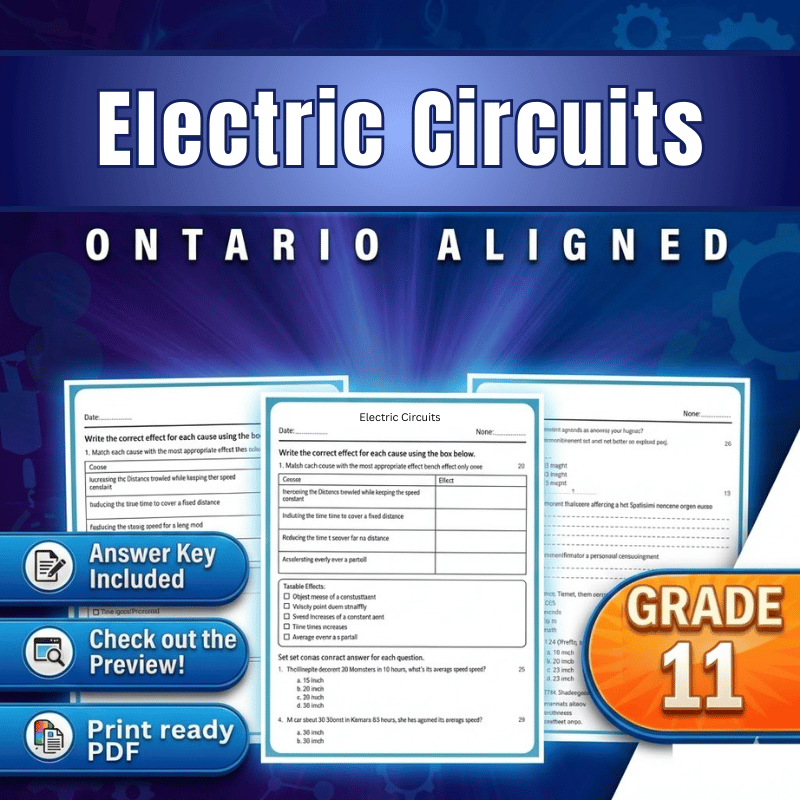
High School Science 1 | Electric Circuits Worksheet (PDF) – Ontario Standards
Created byBright Mind ResourcesLearning Objectives
- Explain the relationships between charge, current, voltage, and resistance in electrical circuits.
- Apply Ohm's law to calculate voltage, current, and resistance in series and parallel circuits.
- Analyze circuit configurations using Kirchhoff’s rules and equivalence techniques.
Instant download

Grade 8 Science | Power Grid Concepts Worksheet (Alberta Standards) (PDF)
Created bySilver Birch TeachingLearning Objectives
- Explain how an electric power grid moves electricity from generation to consumers through transmission and distribution
- Describe how grid operators balance supply and demand in real time to maintain reliability
- Relate regional energy sources (wind, hydro, thermal) to grid characteristics such as intermittency and energy losses
Also included in: Grade 8 Electricity & Circuits Science Lesson Bundle: Alberta Framework +1 more
Instant download

Grade 8 Science Worksheet – Measuring Electricity (Alberta Standards) (PDF)
Created bySilver Birch TeachingLearning Objectives
- Explain how voltage, current, and resistance are measured and what each quantity represents in a circuit.
- Select correct multimeter connection conventions and ranges to obtain accurate readings.
- Describe how meter impedance can affect circuit measurements and why this matters for diagnosis.
Also included in: Grade 8 Electricity & Circuits Science Lesson Bundle: Alberta Framework +1 more
Instant download

Grade 8 Science | Circuit Analysis Worksheet (Alberta Standards) (Practice Set)
Created bySilver Birch TeachingLearning Objectives
- Use Kirchhoff’s current and voltage laws to relate currents and voltages in series and parallel circuits.
- Calculate equivalent resistance and use Ohm’s law to determine current and voltage in mixed resistor networks.
- Determine power in circuits using appropriate quantitative relationships (P = IV or P = I^2R).
Also included in: Grade 8 Electricity & Circuits Science Lesson Bundle: Alberta Framework +1 more
Instant download
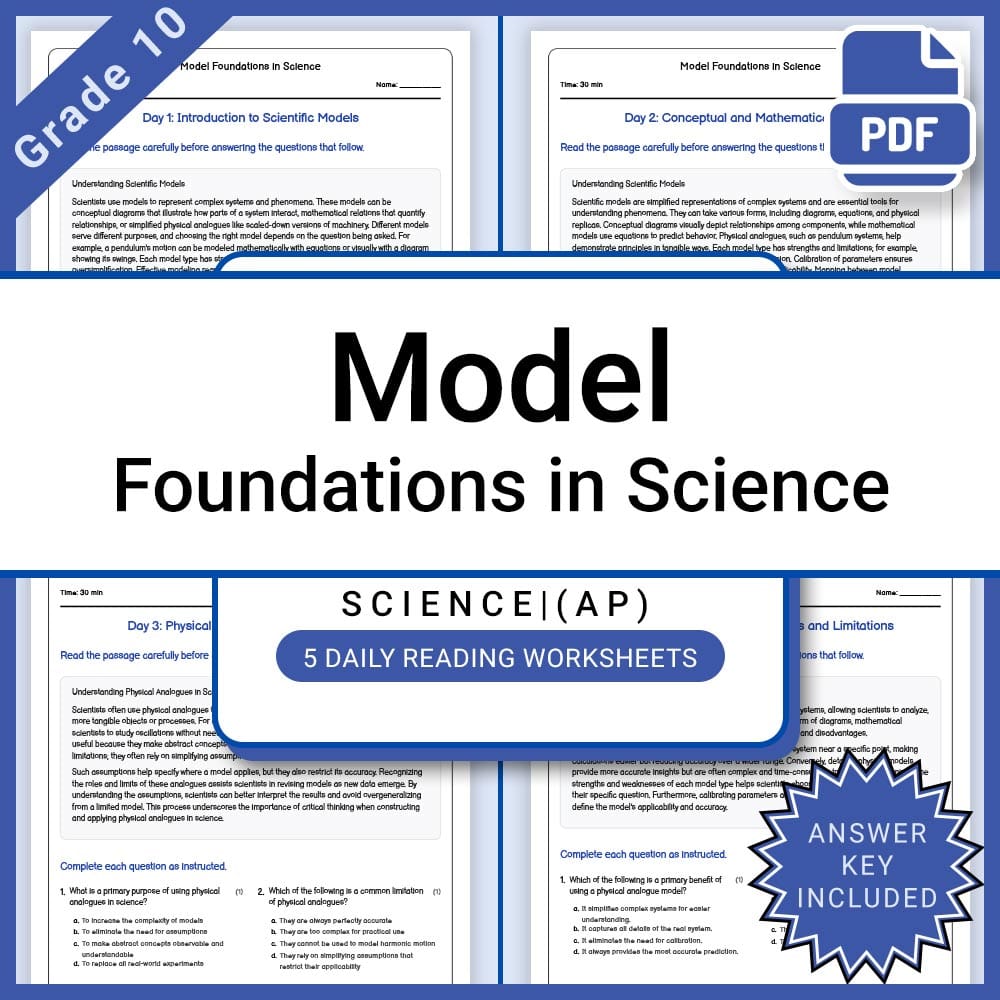
Grade 10 Science – Model Foundations Daily Reading Worksheet with Answer Key
JCreated byJ.S SheetsLearning Objectives
- Understand different types of scientific models including conceptual, mathematical, and physical analogues.
- Compare strengths and limitations of various model representations.
- Learn how to map model components to observable features and calibrate parameters.
Also included in: Grade 10 Science Lesson Group – AP Curriculum Worksheets Bundle
Instant download
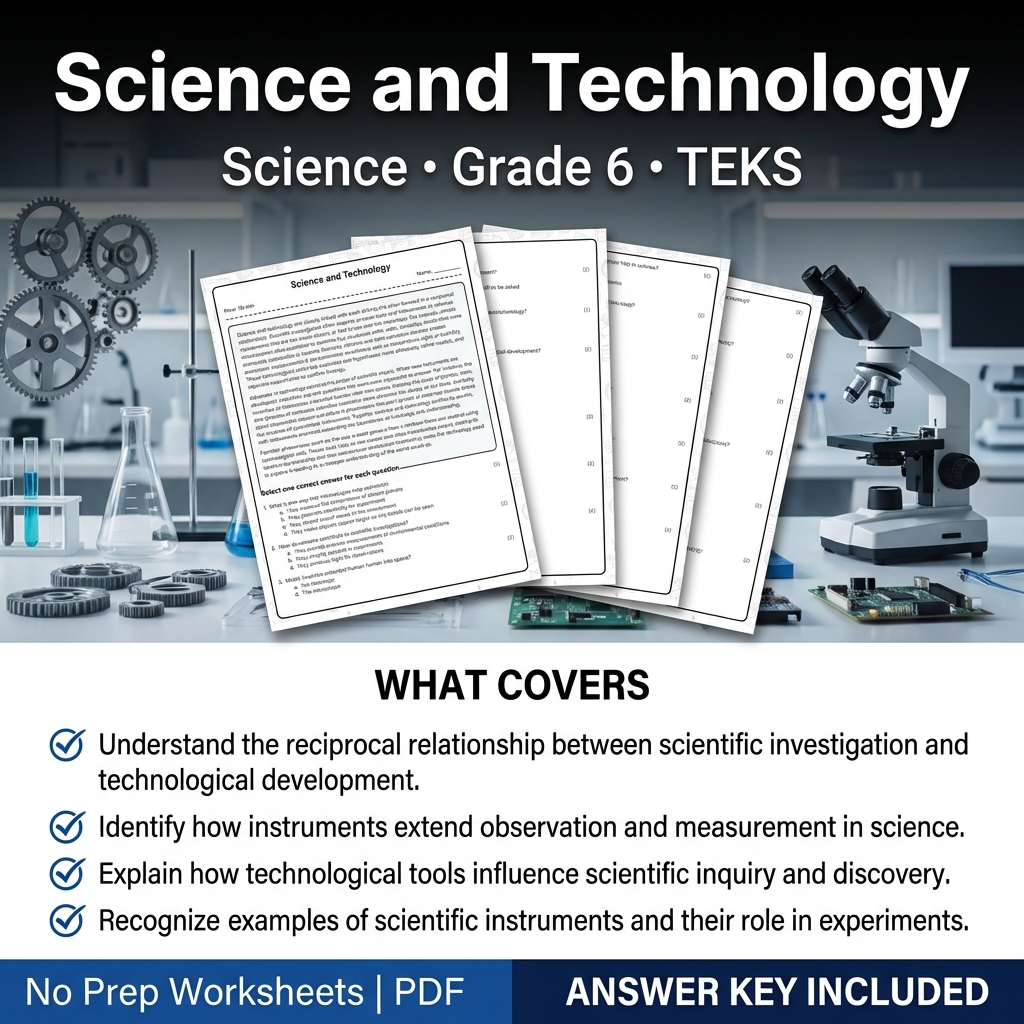
Grade 6 Science Worksheet on Science and Technology | TEKS-Aligned Assessment
Created byCoral Reef LearningLearning Objectives
- Understand the reciprocal relationship between scientific investigation and technological development.
- Identify how instruments extend observation and measurement in science.
- Explain how technological tools influence scientific inquiry and discovery.
Instant download

Grade 10 Science | Momentum & Collisions - Daily Reading Comprehension
Created byCoral Reef LearningLearning Objectives
- Understand the concept of linear momentum
- Learn how to calculate momentum
- Distinguish between elastic and inelastic collisions
Instant download

Predictive Models Practice Worksheet | Grade 11 Science NGSS Assessment
Created byPrism Point LearningLearning Objectives
- Explain how predictive models simulate Earth system interactions and project future climate outcomes
- Use model validation, sensitivity testing, and ensembles to interpret confidence in projections
- Connect emission pathways and greenhouse gas trajectories to expected temperature, precipitation, and sea-level responses
Instant download
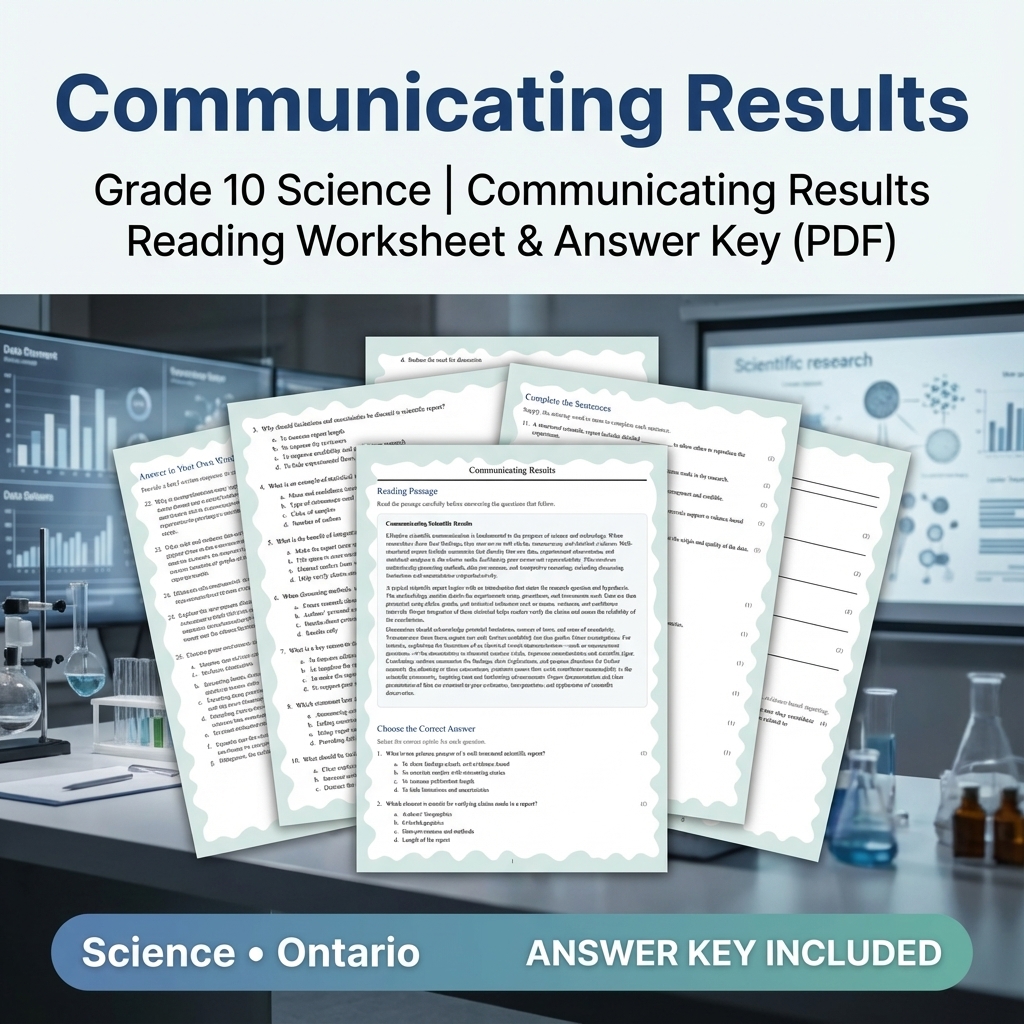
Grade 10 Science | Communicating Results Reading Worksheet & Answer Key (PDF)
JCreated byJ.S SheetsLearning Objectives
- Understand the conventions for clear and evidence-based reporting of scientific investigations.
- Identify how to integrate tables, graphs, and statistics to support conclusions.
- Learn how to discuss limitations and uncertainties transparently in scientific reports.
Also included in: Grade 10 Science UNIT Bundle – Data Representation, Safety & Research Skills +1 more
Instant download
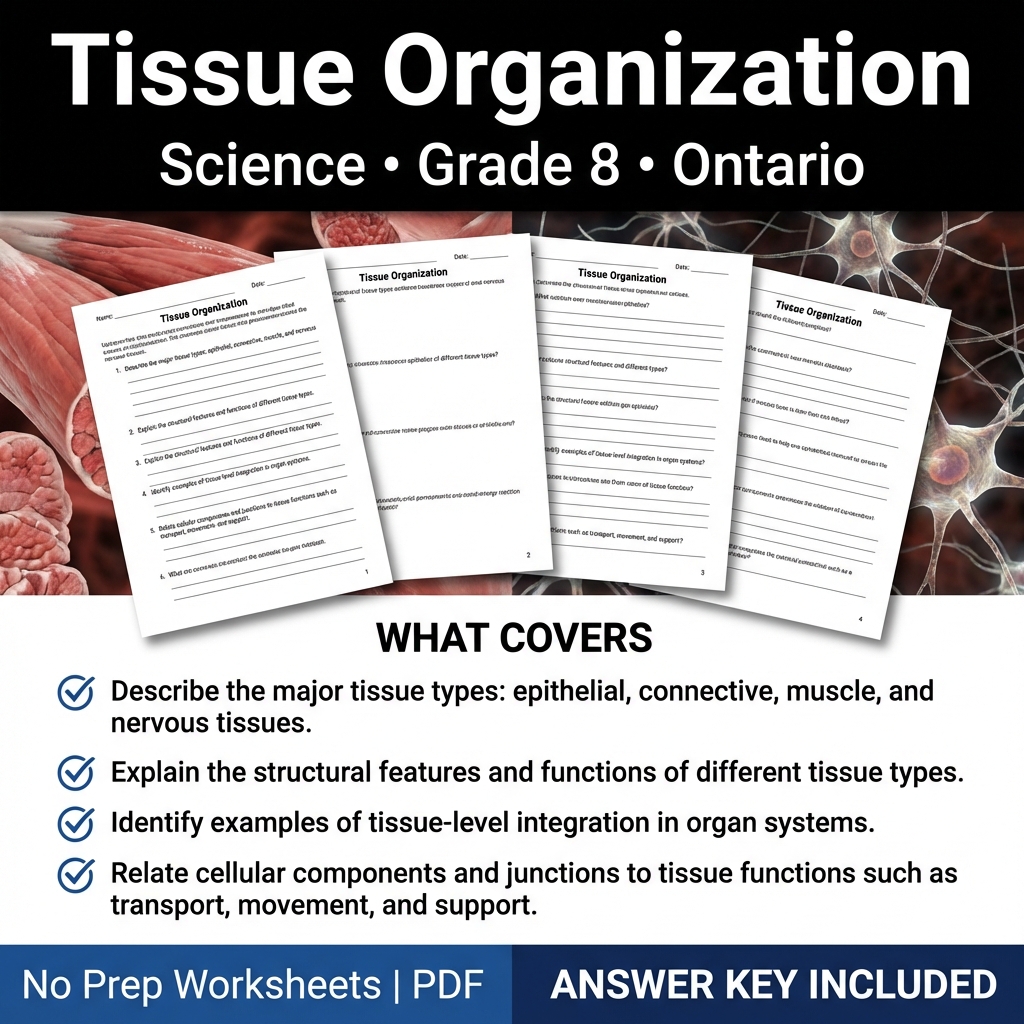
Grade 8 Science Worksheet on Tissue Organization | Ontario Standards
Created byCoral Reef LearningLearning Objectives
- Describe the major tissue types: epithelial, connective, muscle, and nervous tissues.
- Explain the structural features and functions of different tissue types.
- Identify examples of tissue-level integration in organ systems.
Instant download
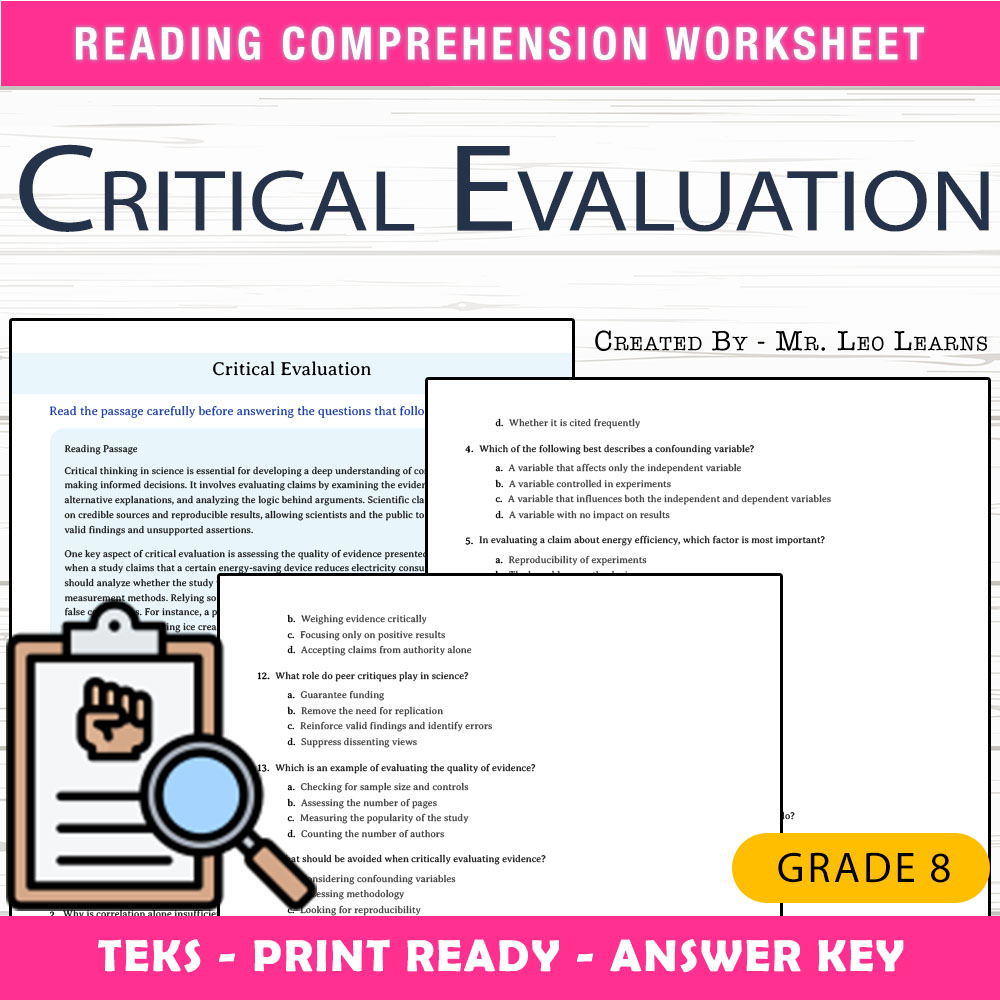
Grade 8 Science – Critical Evaluation Worksheet for Developing Critical Thinking
 Created byThe Resource Hub
Learning Objectives
- Learn to evaluate scientific claims critically by assessing evidence quality.
- Identify logical fallacies and distinguish correlation from causation in data.
- Evaluate the methodology and credibility of scientific sources.
Also included in: Grade 8 Science Unit Bundle | Scientific Inquiry & Data Skills Worksheet Pack +1 more
Instant download
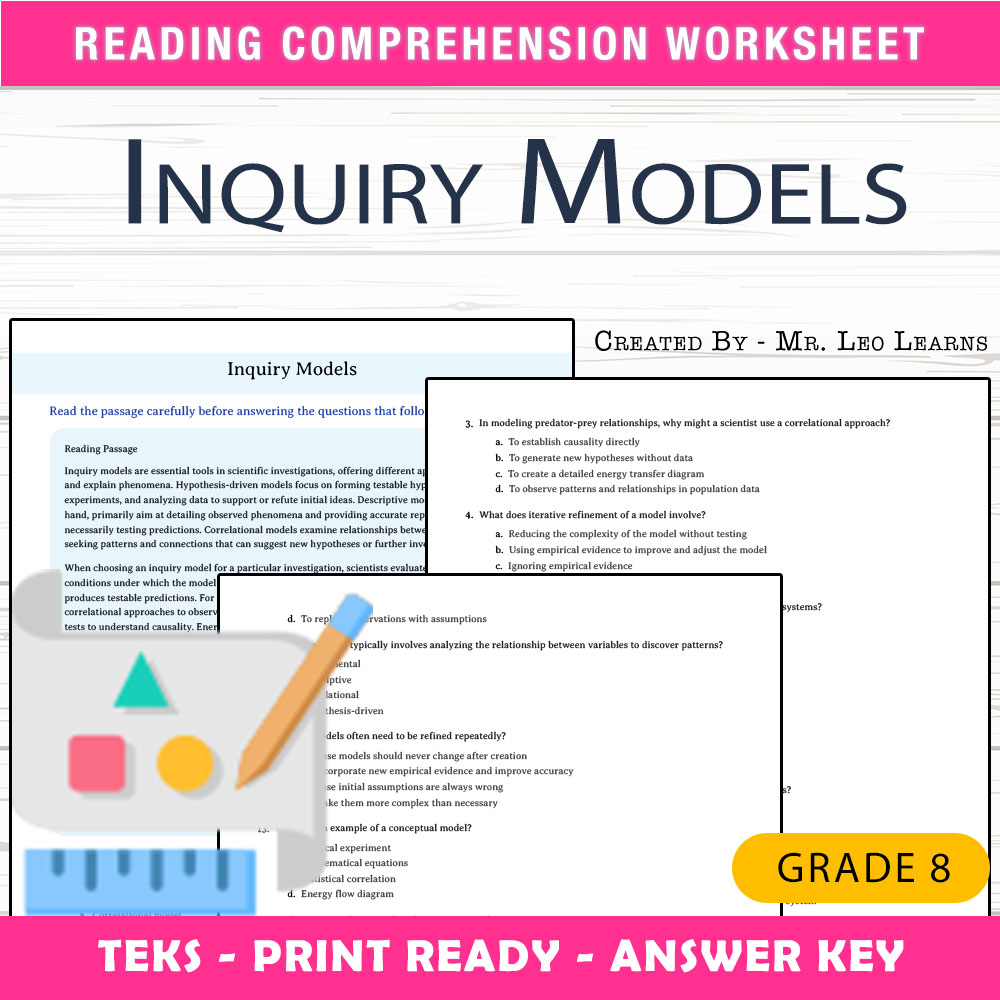
Grade 8 Science – Inquiry Models Worksheet for Mastering Scientific Investigation
Created byThe Resource HubLearning Objectives
- Compare hypothesis-driven, descriptive, and correlational inquiry models in science.
- Identify the strengths and limitations of different inquiry models.
- Understand how to select appropriate models for specific scientific contexts.
Also included in: Grade 8 Science Unit Bundle | Scientific Inquiry & Data Skills Worksheet Pack +1 more
Instant download
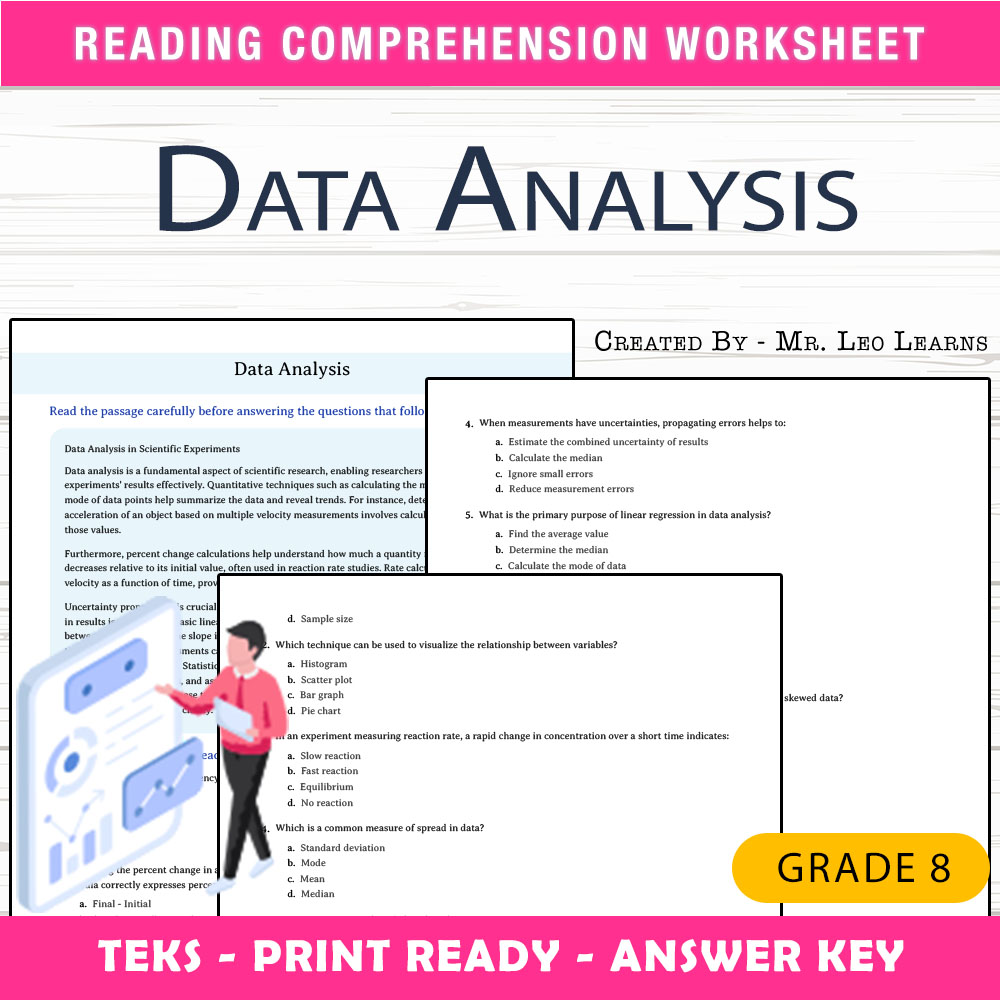
Grade 8 Science — Data Analysis Worksheet for Mastering Scientific Data
Created byThe Resource HubLearning Objectives
- Understand and interpret statistical measures such as mean, median, and mode in data sets.
- Apply quantitative techniques such as percent change, rate calculations, and density assessment to analyze experimental data.
- Evaluate relationships in data through linear regression and slope interpretation.
Also included in: Grade 8 Science Unit Bundle | Scientific Inquiry & Data Skills Worksheet Pack +1 more
Instant download
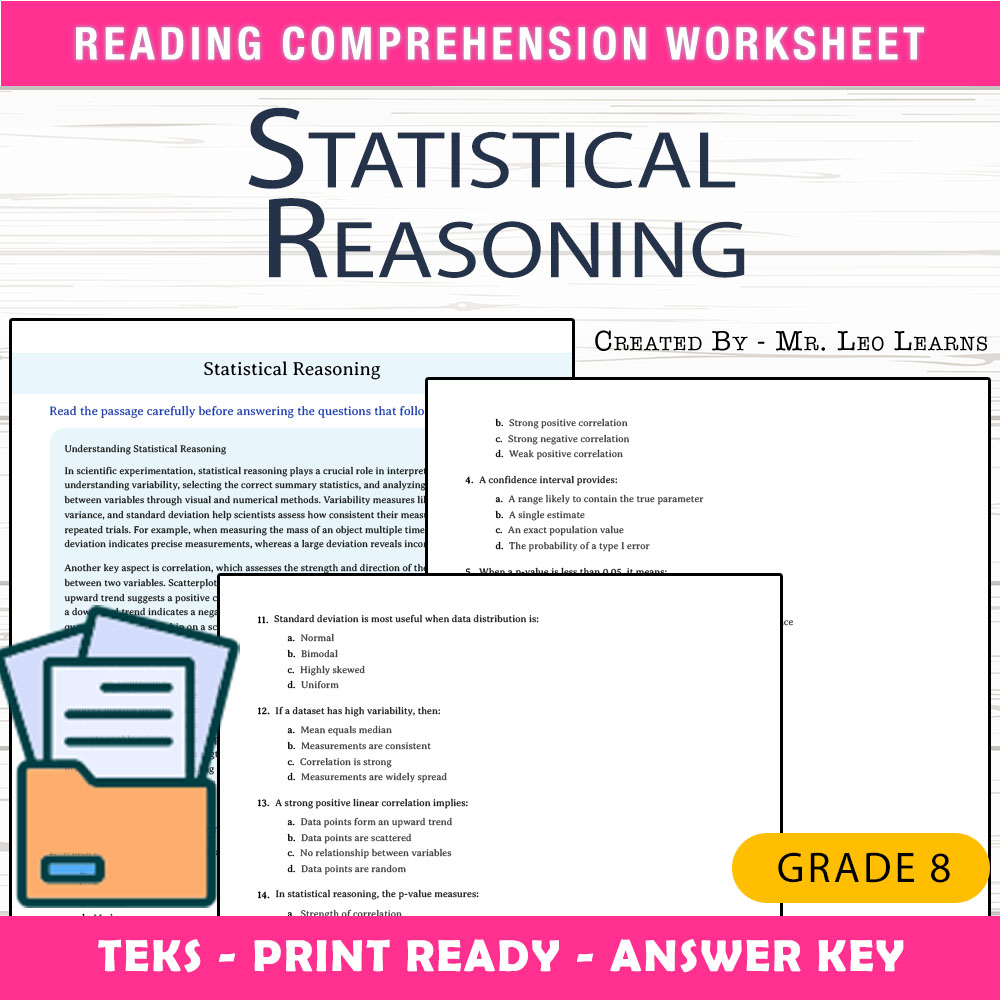
Grade 8 Science — Statistical Reasoning Worksheet for Data Interpretation
Created byThe Resource HubLearning Objectives
- Understand how to interpret measures of variability and correlation in experimental data.
- Identify appropriate summary statistics for different data distributions.
- Apply basic hypothesis testing logic to evaluate experimental trends.
Also included in: Grade 8 Science Unit Bundle | Scientific Inquiry & Data Skills Worksheet Pack +1 more
Instant download
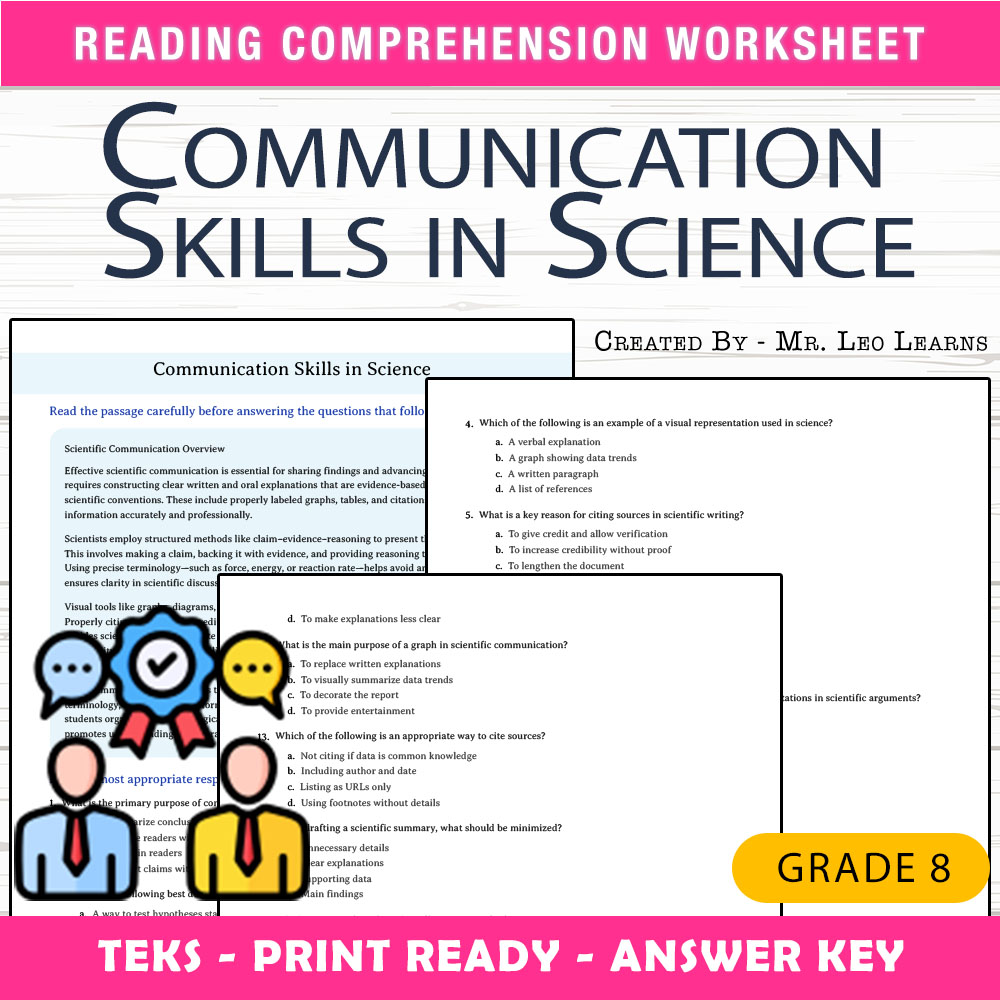
Grade 8 Science — Communication Skills Worksheet for Mastering Scientific Explanation
Created byThe Resource HubLearning Objectives
- Understand and construct clear, evidence-based scientific explanations
- Apply standard scientific conventions in graphs, tables, and citations
- Utilize claim–evidence–reasoning structure to support scientific arguments
Also included in: Grade 8 Science Unit Bundle | Scientific Inquiry & Data Skills Worksheet Pack +1 more
Instant download
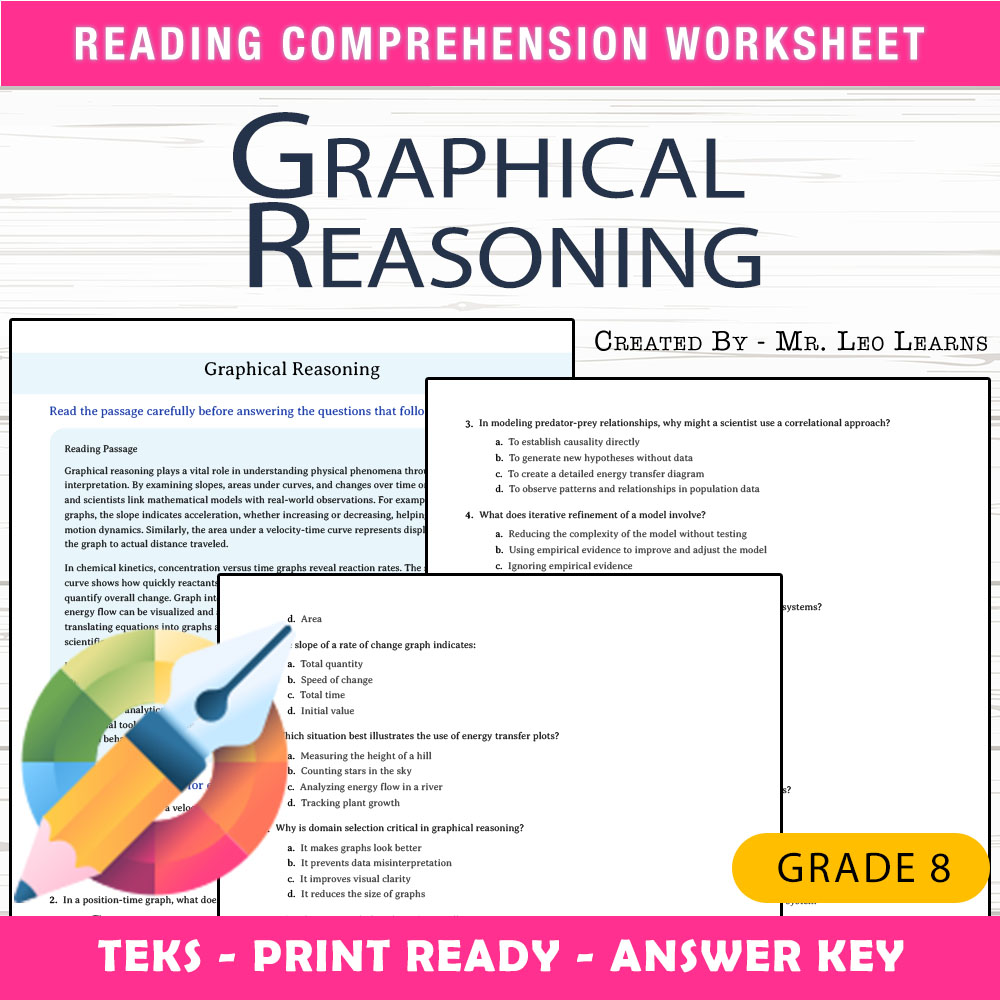
Grade 8 Science — Graphical Reasoning Worksheet for Visual Data Analysis
Created byThe Resource HubLearning Objectives
- Interpret slopes, areas under curves, and rates of change in graphical data.
- Connect graphical representations with physical phenomena like motion, velocity, and reaction rates.
- Translate between equations, data tables, and graphs to analyze and predict physical behaviors.
Also included in: Grade 8 Science Unit Bundle | Scientific Inquiry & Data Skills Worksheet Pack +1 more
Instant download
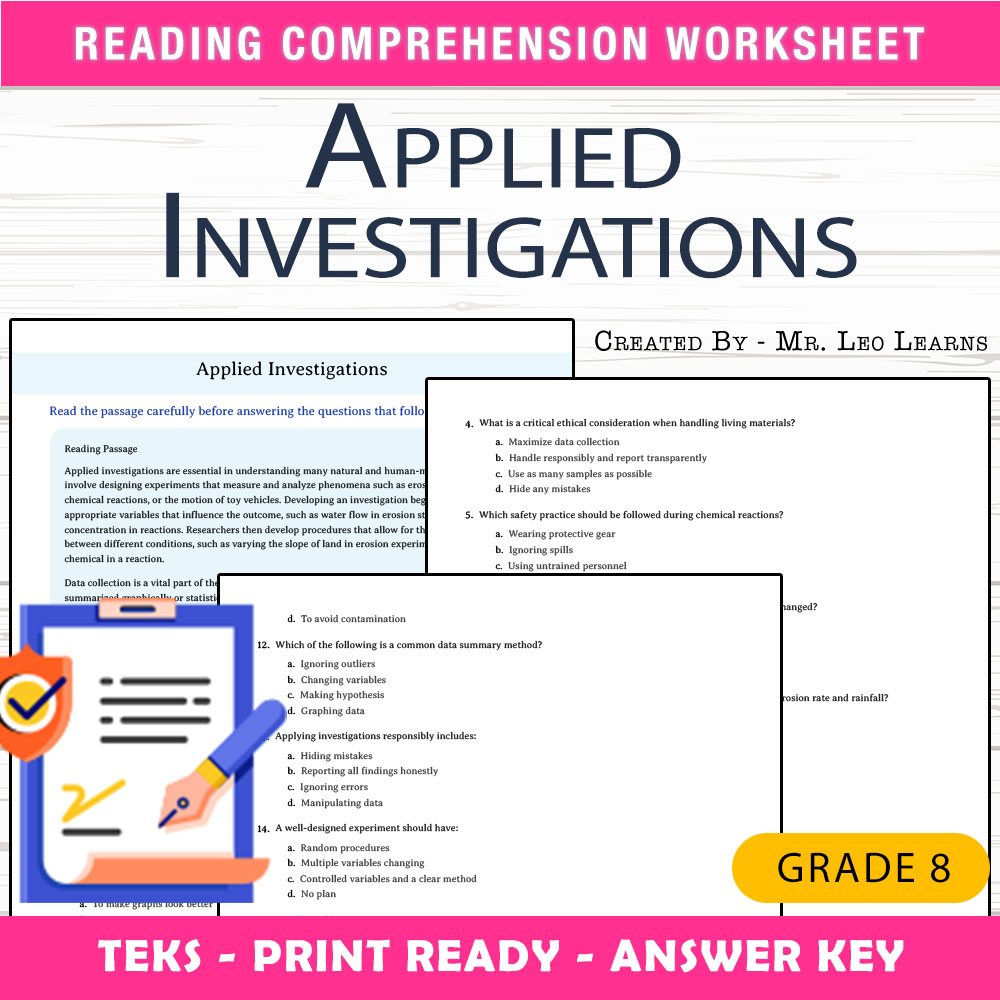
Grade 8 Science — Applied Investigations Worksheet for Mastery
Created byThe Resource HubLearning Objectives
- Understand how to design experiments that measure real-world phenomena.
- Learn how to select appropriate variables and procedures for investigations.
- Analyze data using graphical and statistical summaries to draw conclusions.
Also included in: Grade 8 Science Unit Bundle | Scientific Inquiry & Data Skills Worksheet Pack +1 more
Instant download
Browse more categories
About Science Worksheets
Find Science worksheets spanning core skills, practice, and review. All 44,295 resources are instant PDF downloads for the classroom or home.
Every worksheet on MyTeachingSheets is created by independent teacher-authors and reviewed before publication. All resources download as printable PDFs for classroom, homework, or at-home practice, and many include answer keys. Preview any worksheet free before buying.