
Science Worksheets
42,859 subject resources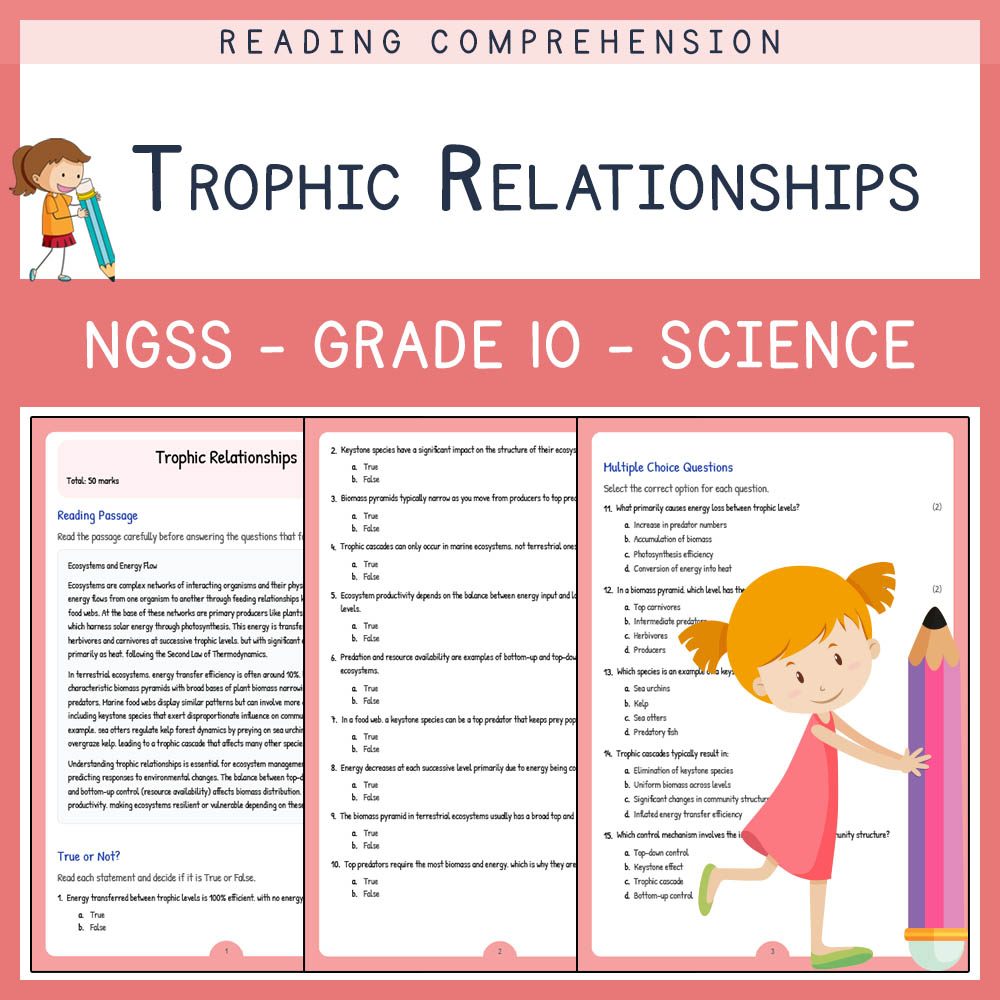
Grade 10 Science | Trophic Relationships Worksheet & Answer Key (NGSS Aligned)
 Created byLumora Learning
Learning Objectives
- Explain the transfer of energy through different trophic levels in ecosystems.
- Describe the structure and function of trophic pyramids in terrestrial and marine environments.
- Analyze the impact of keystone species and trophic cascades on community stability.
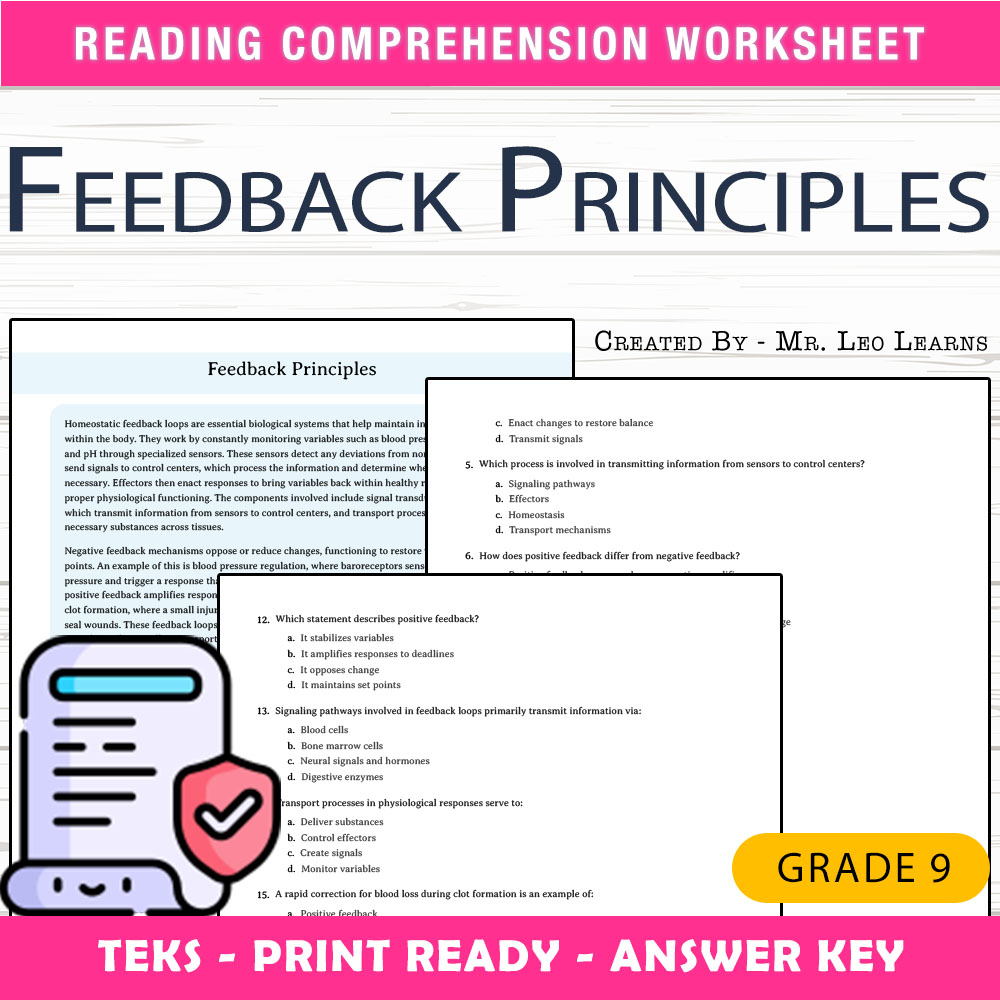
Grade 9 Science — Feedback Principles Worksheet for Mastery | PDF + Answer Key
 Created byThe Resource Hub
Learning Objectives
- Understand the core components of homeostatic feedback loops and their functions.
- Differentiate between negative and positive feedback mechanisms and their roles in the body.
- Describe the signaling pathways and transport processes involved in feedback regulation.
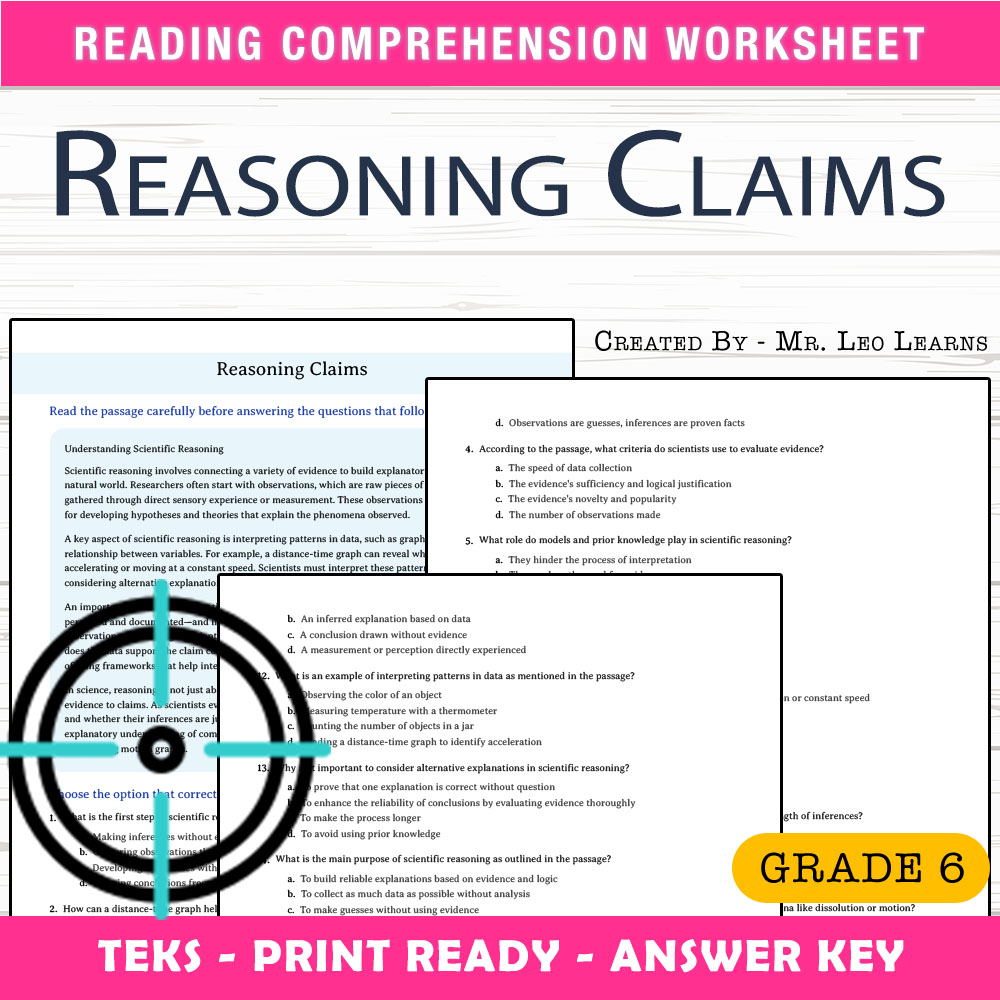
Grade 6 Science — Reasoning Claims Worksheet for Critical Thinking
Created byThe Resource HubLearning Objectives
- Understand the process of connecting evidence to explanatory claims in science.
- Interpret data patterns such as graphs to make inferences.
- Evaluate the strength and validity of scientific arguments and evidence.
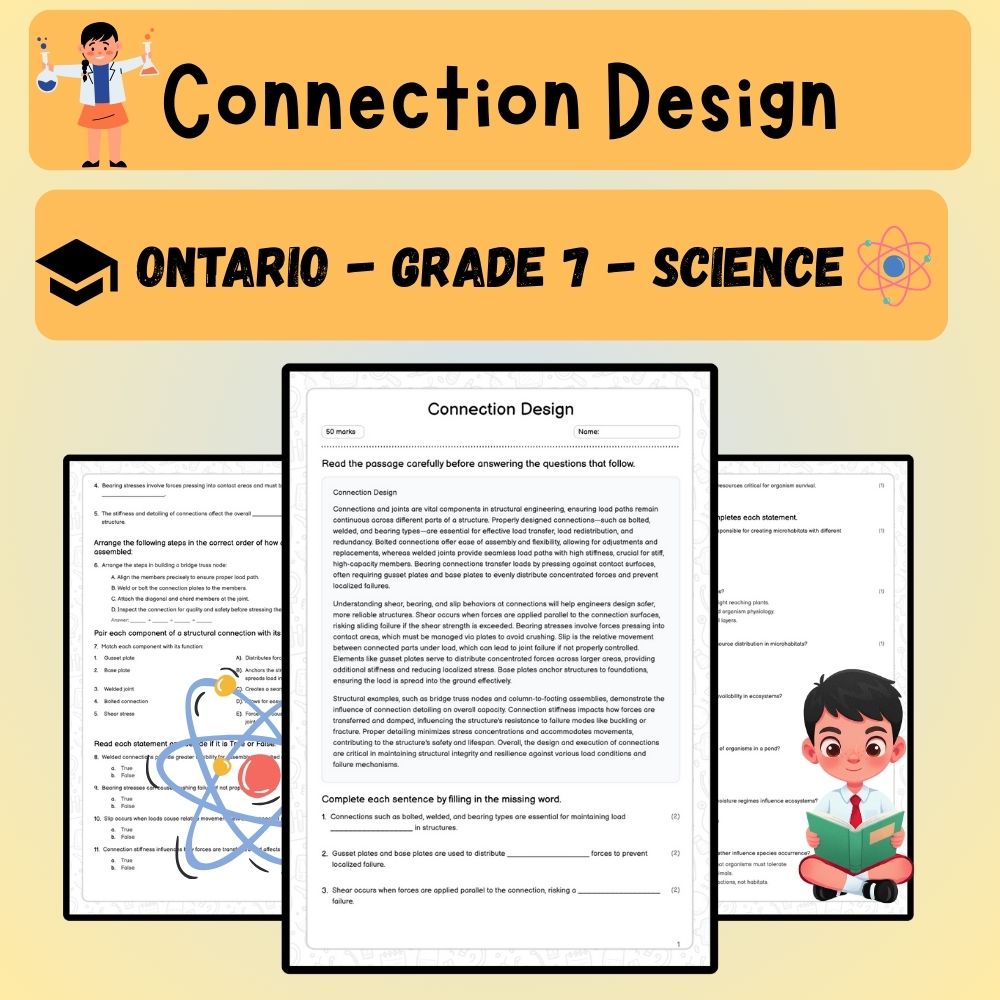
Grade 7 Science | Connection Design Worksheet – Structural Engineering (PDF)
 Created byPrism Point Learning
Learning Objectives
- Understand the role of different types of connections in load transfer and structural redundancy.
- Identify and describe shear, bearing, and slip effects at connections.
- Explain the function of gusset plates and base plates in distributing forces.
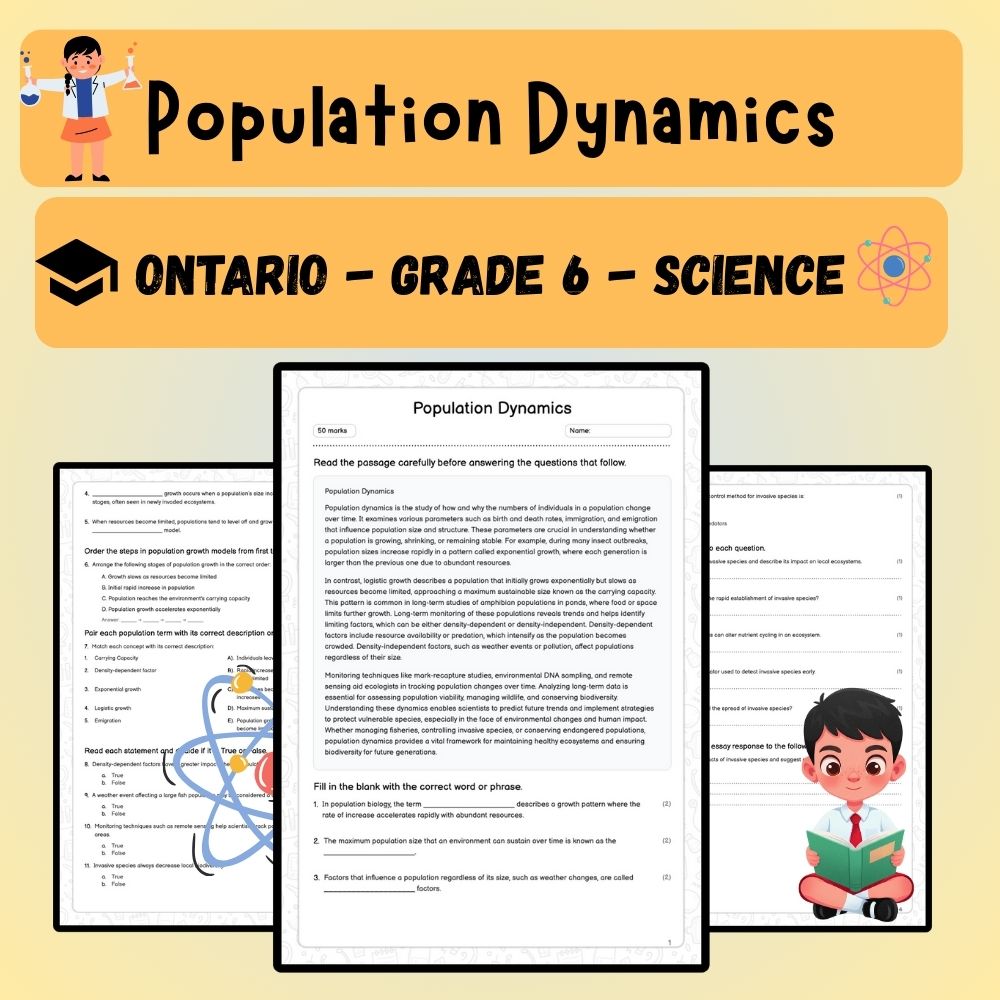
6th Grade Science – Population Dynamics Worksheet (PDF ) – Ontario Standards
Created byPrism Point LearningLearning Objectives
- Understand the factors influencing population growth and decline in terrestrial and aquatic systems.
- Explain the concepts of logistic and exponential growth models through real-world examples.
- Identify density-dependent and density-independent factors affecting populations.
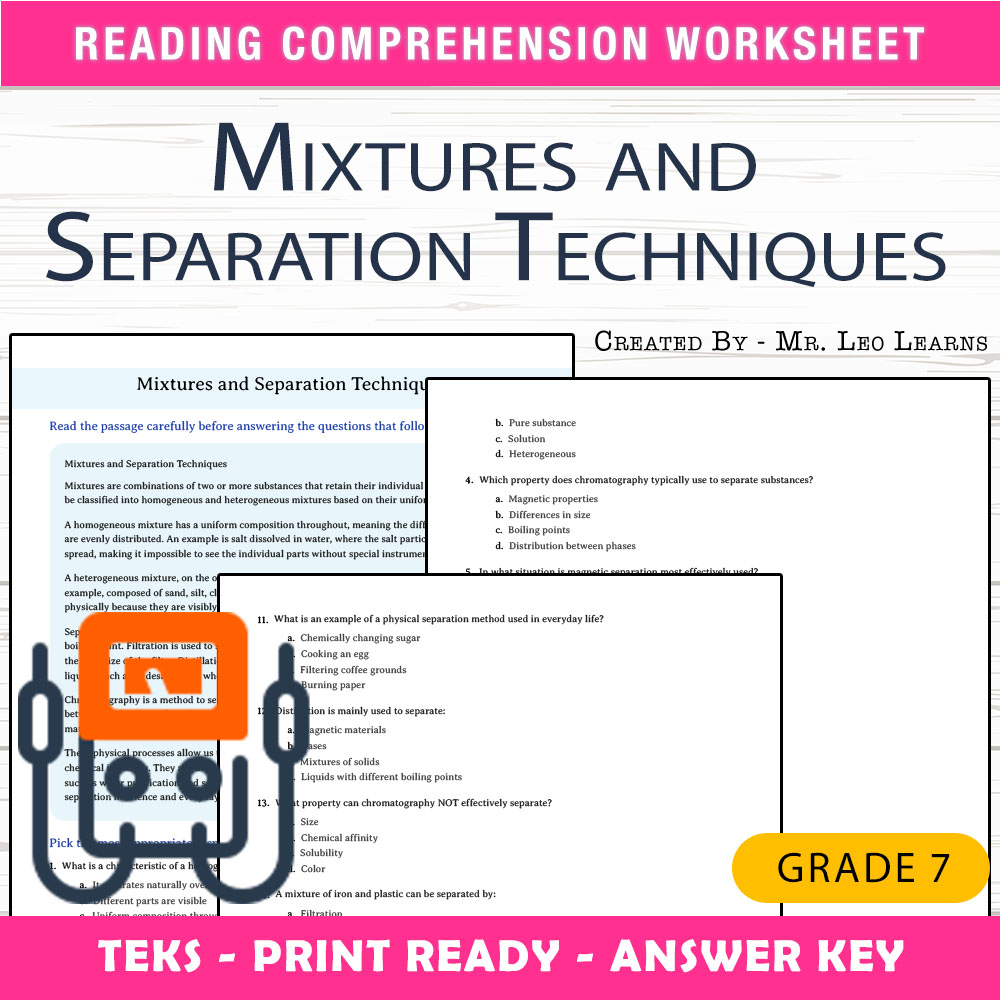
Grade 7 Science — Mixtures & Separation Techniques Worksheet
Created byThe Resource HubLearning Objectives
- Identify and distinguish between homogeneous and heterogeneous mixtures.
- Describe common physical separation methods such as filtration, distillation, chromatography, and magnetic separation.
- Explain how differences in properties like solubility, particle size, and boiling points influence separation techniques.
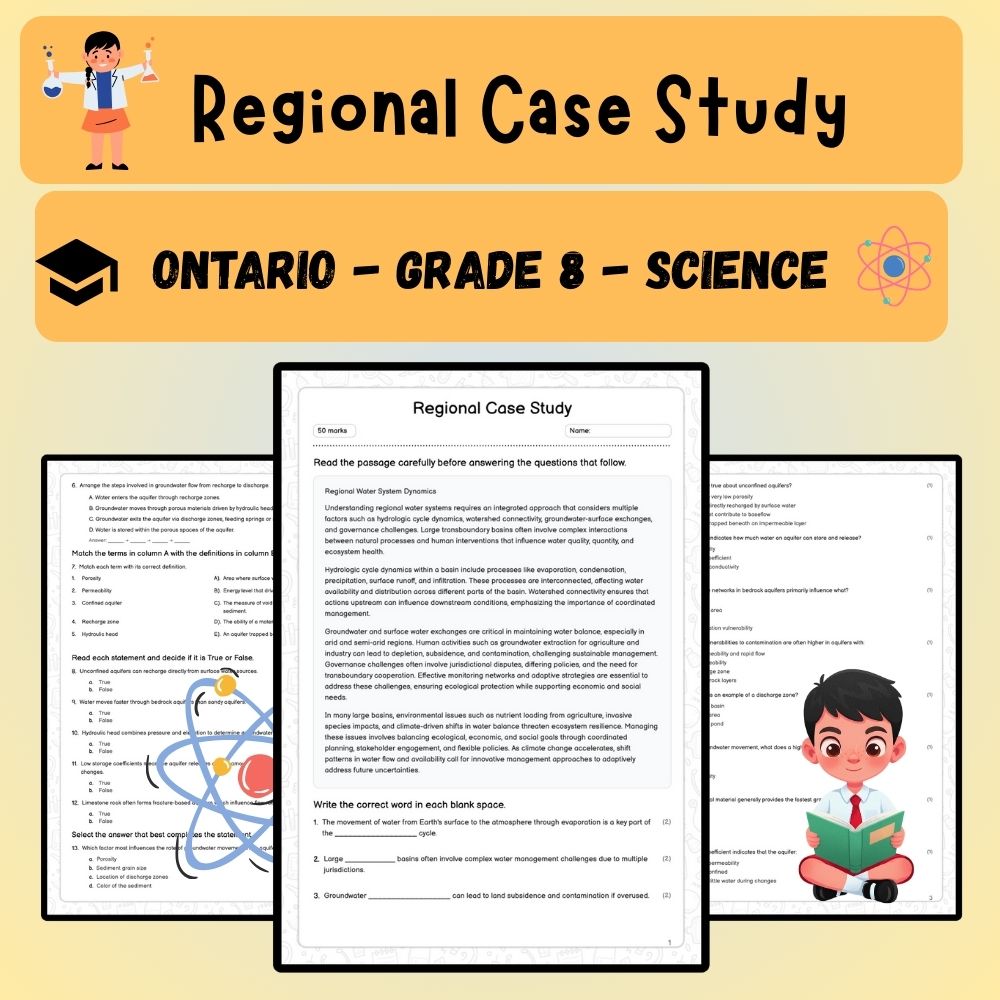
Grade 8 Science | Regional Water Systems Case Study Worksheet (PDF )
Created byPrism Point LearningLearning Objectives
- Describe the components and dynamics of a large regional water system, including hydrologic cycle processes and watershed connectivity.
- Analyze challenges related to governance, transboundary water management, and environmental impacts within regional water systems.
- Evaluate strategies for adaptive management, ecological protection, and balancing different water uses in large basins.
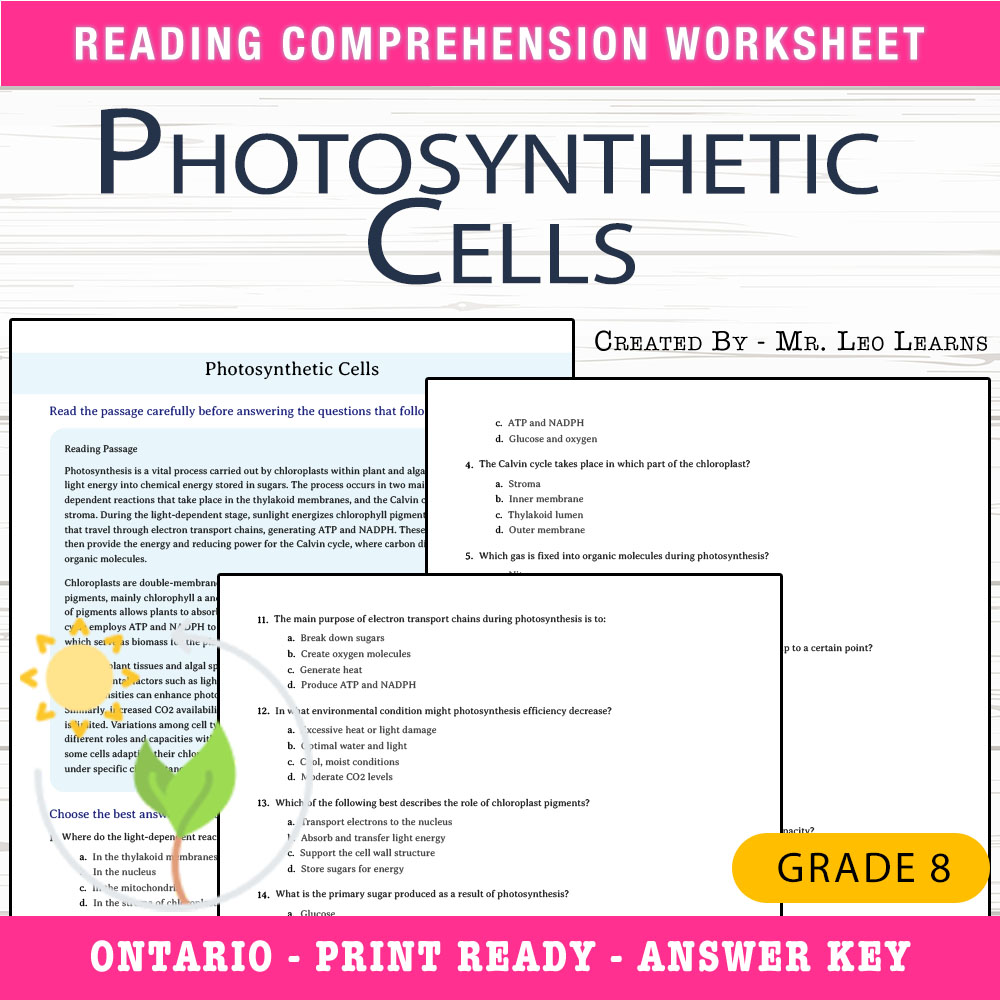
Grade 8 Science — Photosynthetic Cells Worksheet for Mastering Photosynthesis
Created byThe Resource HubLearning Objectives
- Explain the process of photosynthesis, including light-dependent reactions and the Calvin cycle.
- Describe the structure of chloroplasts and the roles of pigments in photosynthesis.
- Identify environmental factors that influence photosynthetic efficiency in plant and algal cells.
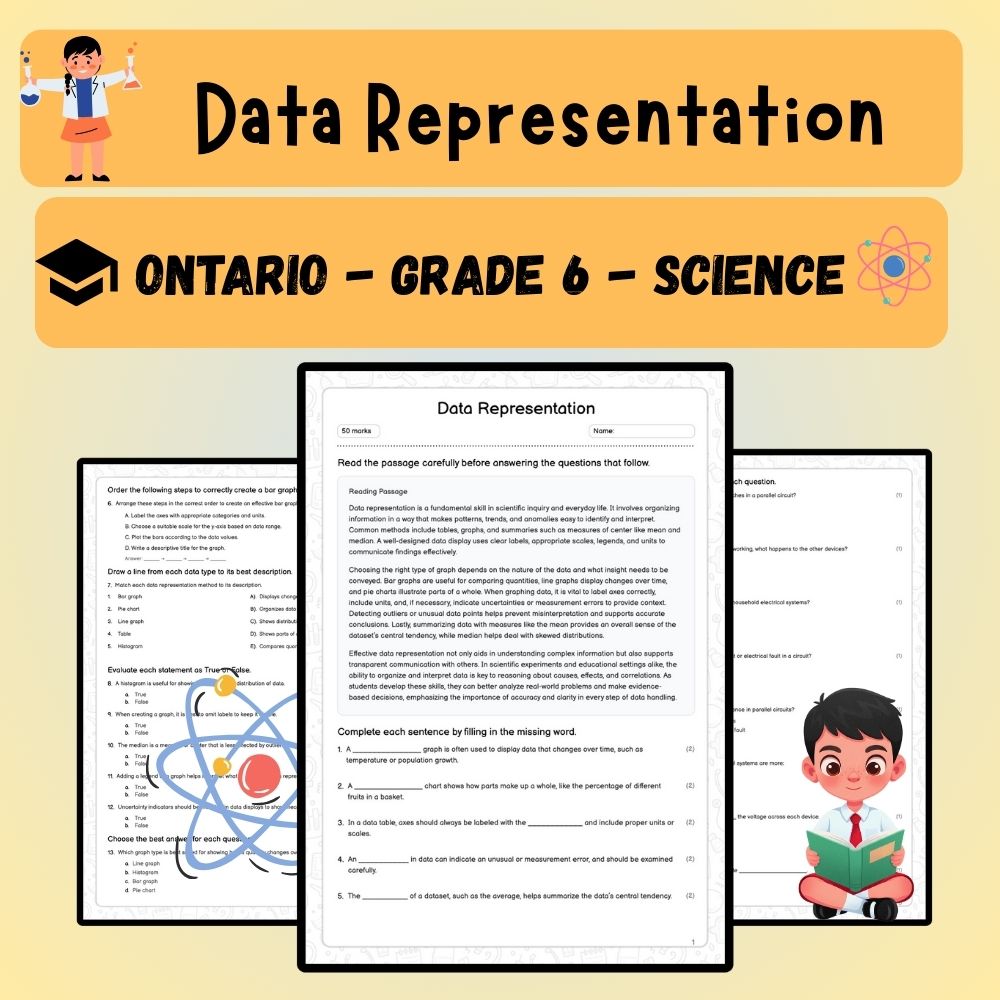
Grade 6 Science – Data Representation Worksheet (PDF) – Ontario Standards
Created byPrism Point LearningLearning Objectives
- Understand the importance of clear data organization and representation.
- Identify suitable graph types and labeling techniques for data display.
- Interpret trends, outliers, and summary measures in datasets.
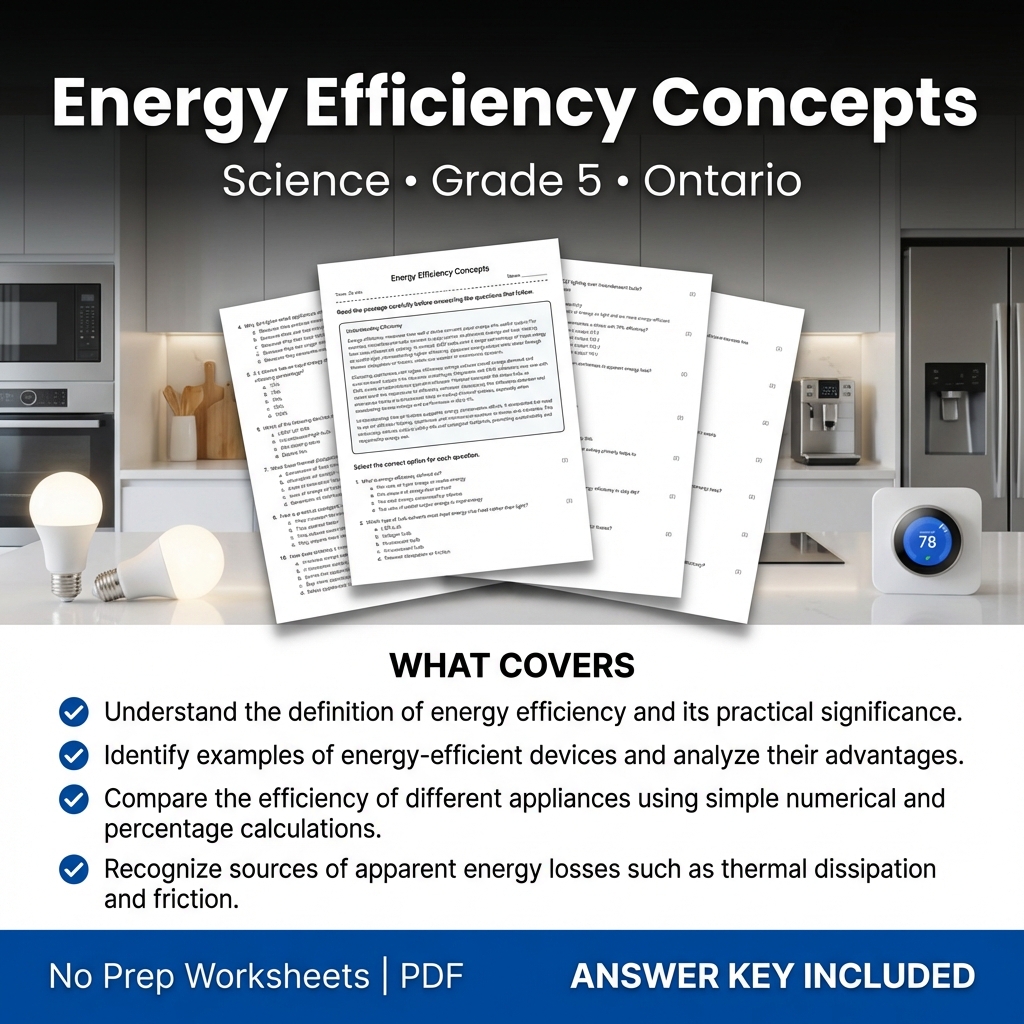
Grade 5 Science Worksheet on Energy Efficiency Concepts for Classroom Practice
 Created byCoral Reef Learning
Learning Objectives
- Understand the definition of energy efficiency and its practical significance.
- Identify examples of energy-efficient devices and analyze their advantages.
- Compare the efficiency of different appliances using simple numerical and percentage calculations.
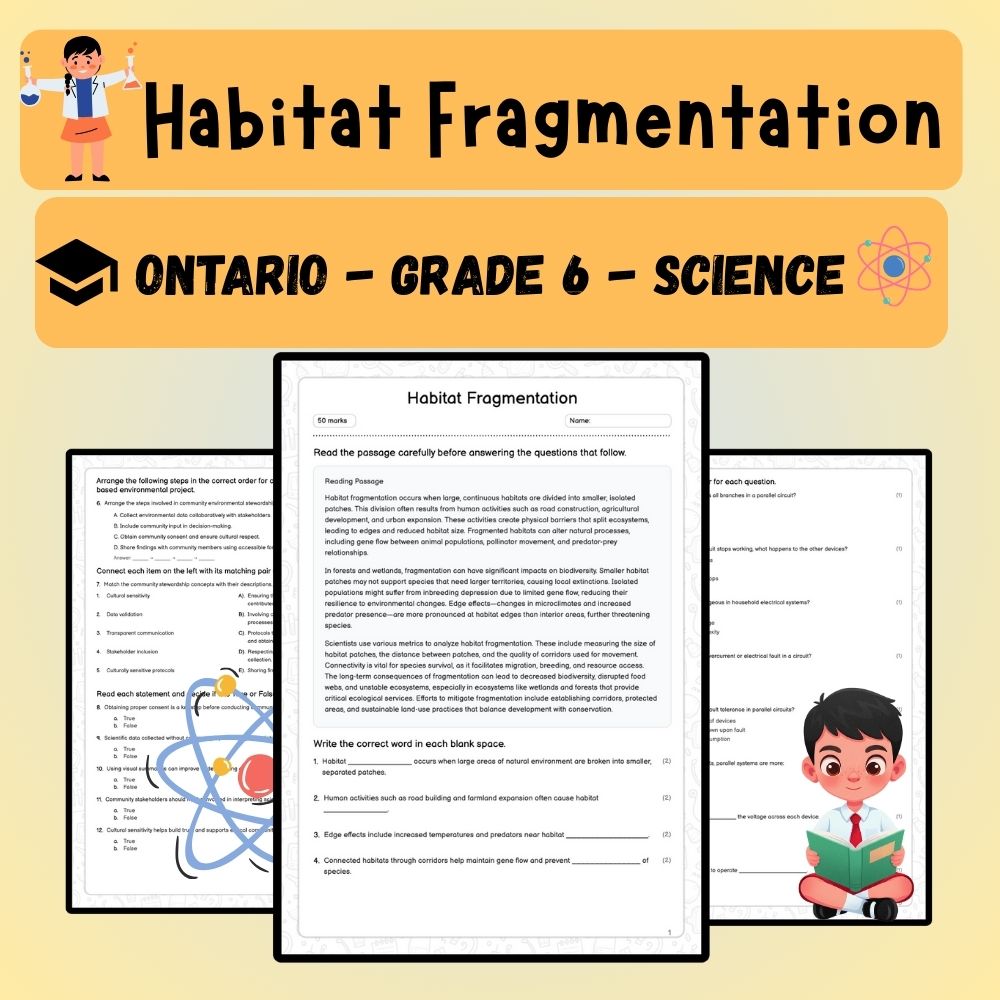
6th Grade Science Habitat Fragmentation Worksheet – Ontario Standards (PDF )
Created byPrism Point LearningLearning Objectives
- Understand what habitat fragmentation is and how it affects ecosystems.
- Identify the causes and consequences of habitat fragmentation in forests and wetlands.
- Learn about metrics used to assess habitat patches and corridors.
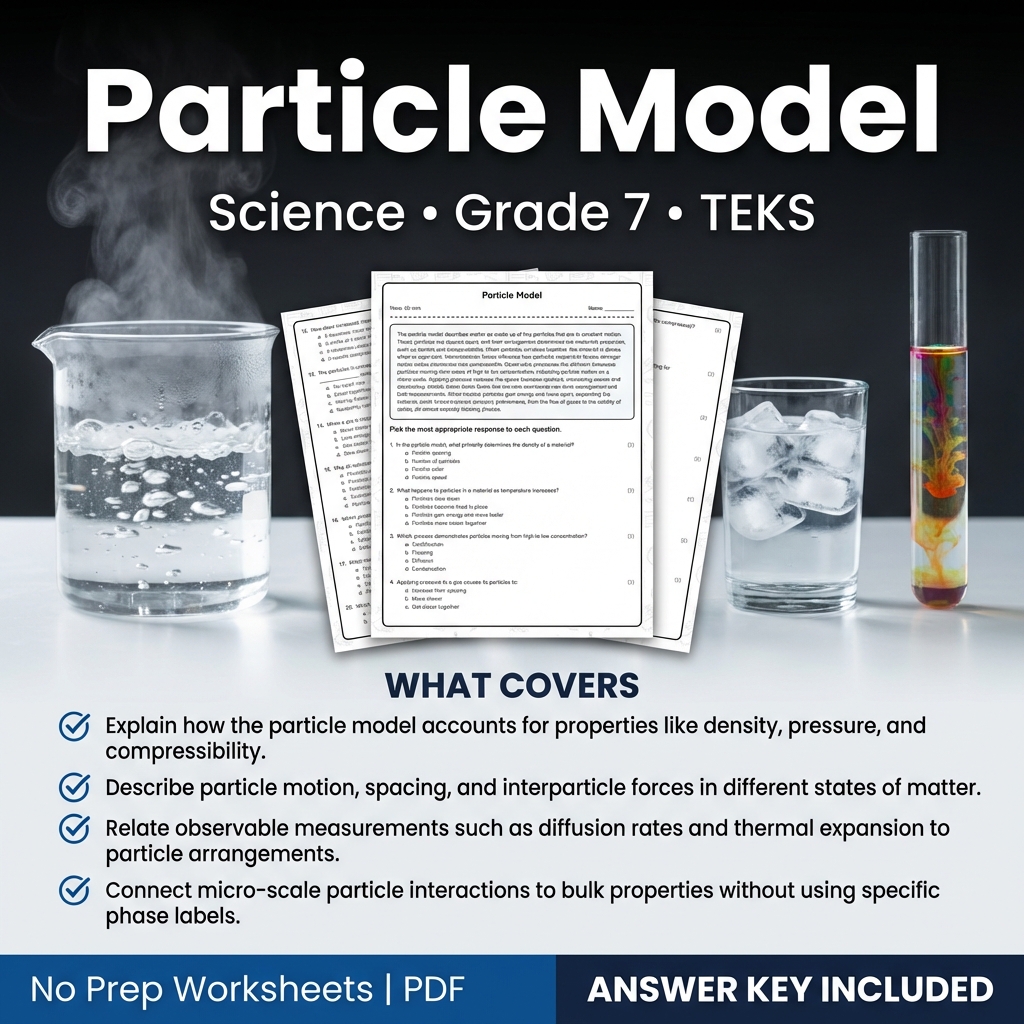
Grade 7 Science Particle Model Worksheet with PDF Answer Key
Created byCoral Reef LearningLearning Objectives
- Explain how the particle model accounts for properties like density, pressure, and compressibility.
- Describe particle motion, spacing, and interparticle forces in different states of matter.
- Relate observable measurements such as diffusion rates and thermal expansion to particle arrangements.
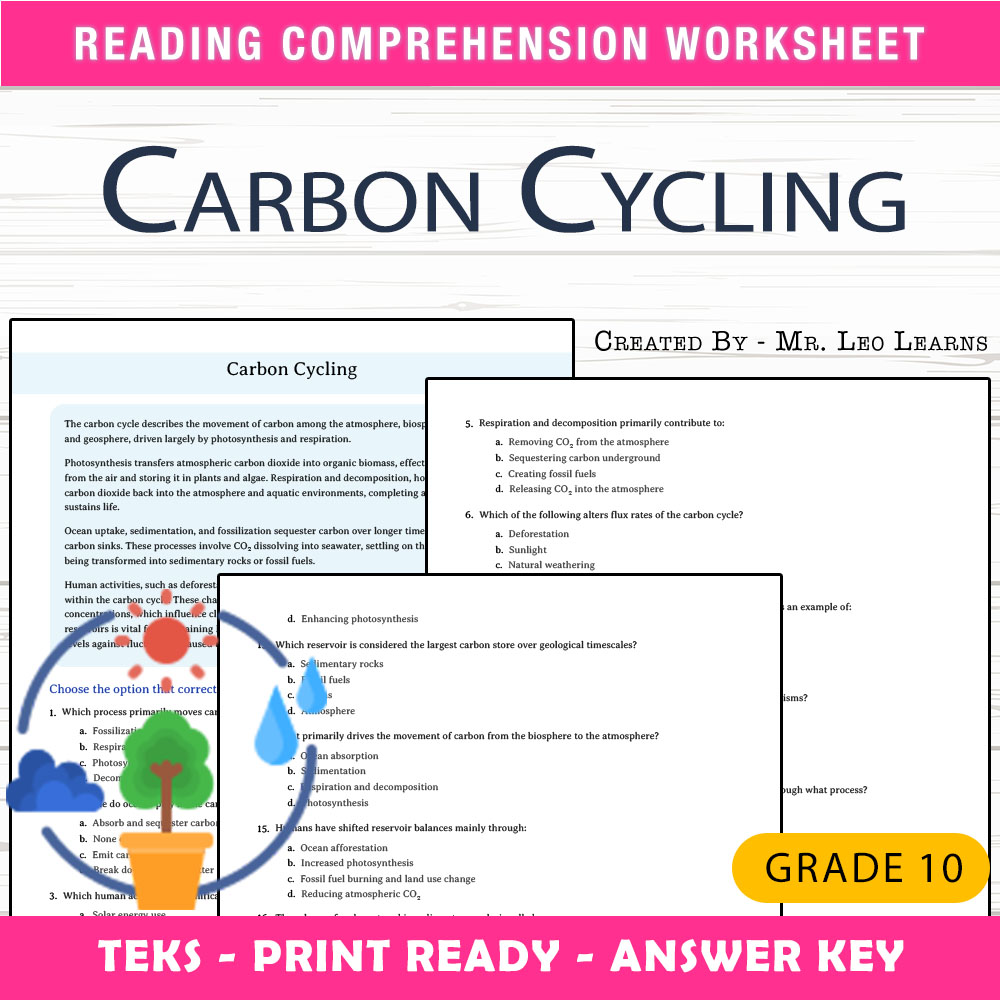
Grade 10 Science – Carbon Cycling Worksheet for Mastery
Created byThe Resource HubLearning Objectives
- Describe the main processes involved in the carbon cycle including photosynthesis, respiration, and decomposition.
- Explain how natural and human activities influence the flow of carbon among Earth's reservoirs.
- Identify different carbon sinks and sources in the environment.
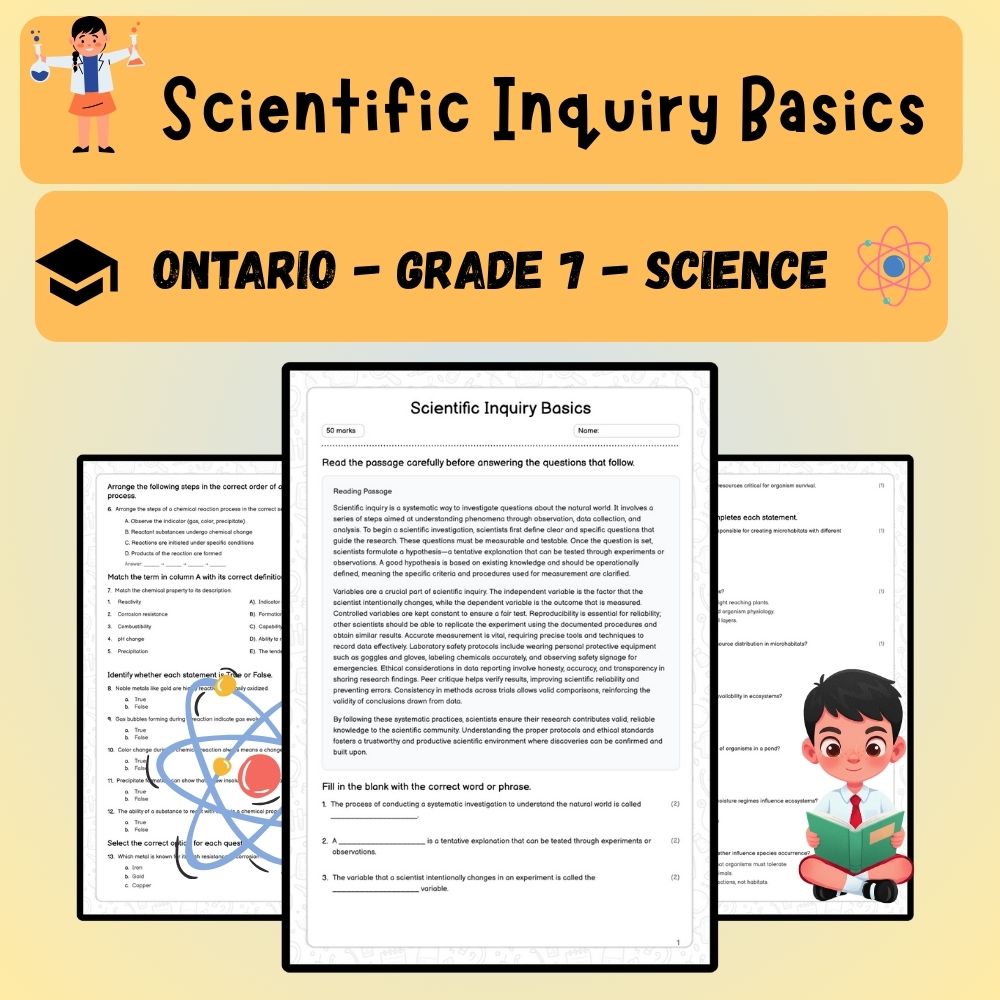
Grade 7 Science | Scientific Inquiry Basics Worksheet (PDF )
Created byPrism Point LearningLearning Objectives
- Understand the fundamental steps of the scientific inquiry process, including question formulation and hypothesis development.
- Recognize the importance of operational definitions, variables, and reproducibility in experiments.
- Learn basic laboratory safety protocols such as proper measurement, documentation, and safety sign recognition.
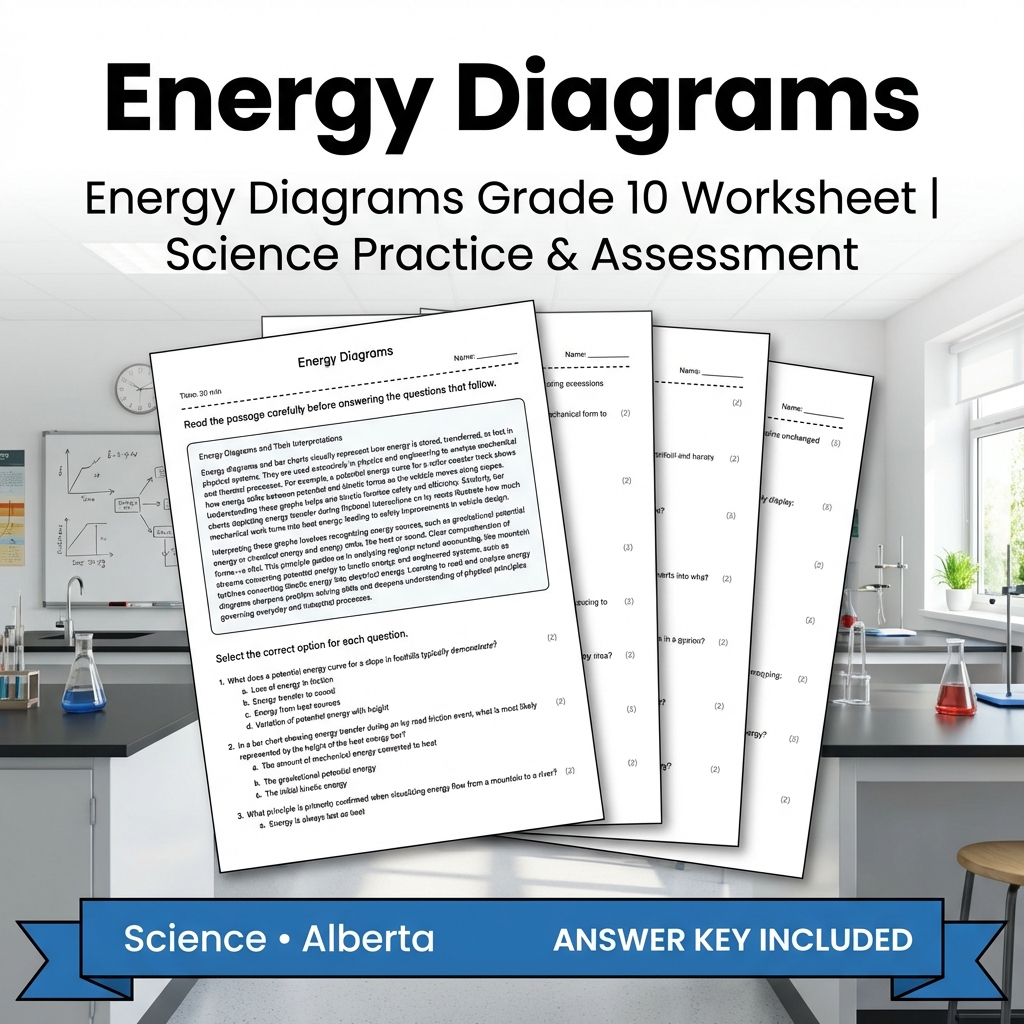
Energy Diagrams Grade 10 Worksheet | Science Practice & Assessment
Created byCoral Reef LearningLearning Objectives
- Interpret energy diagrams and bar charts to analyze energy transfer and distribution.
- Identify sources and sinks of energy in various processes.
- Link visual graph representations to conservation principles in real-world phenomena.
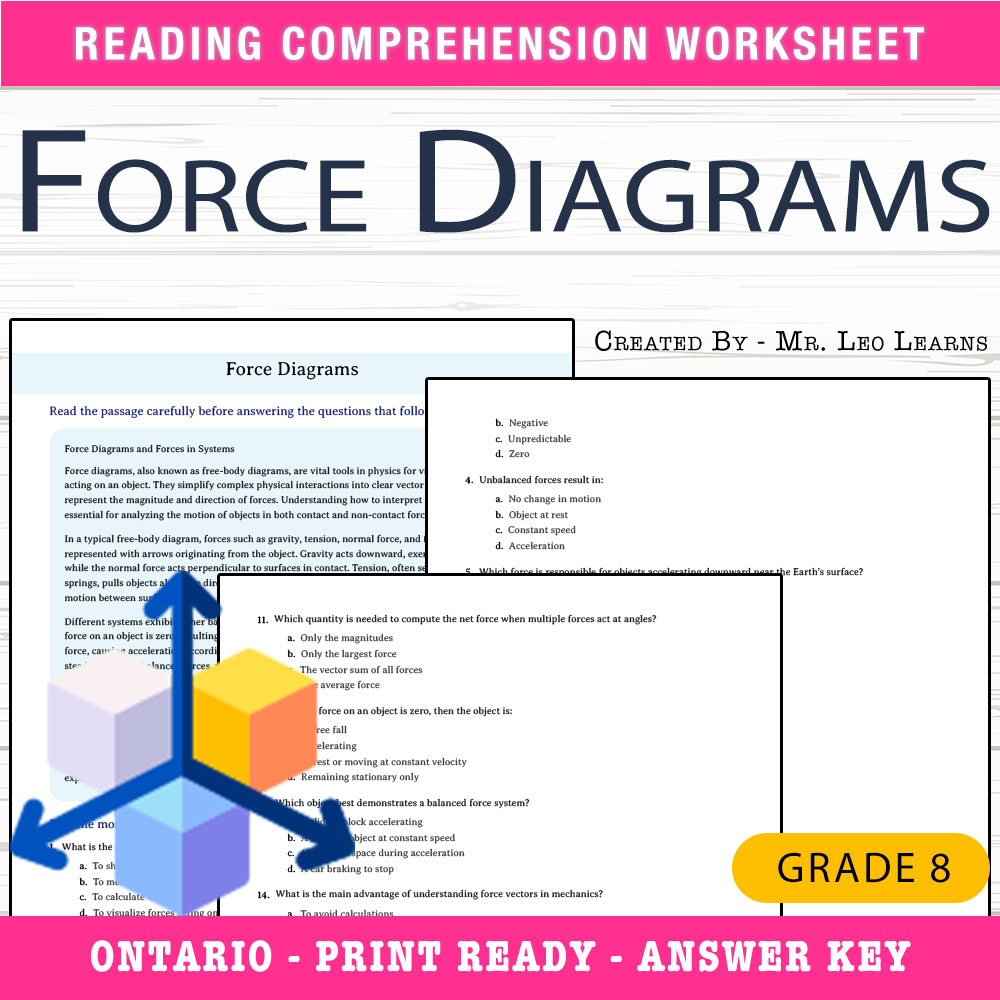
Grade 8 Science – Force Diagrams Worksheet for Mastery
Created byThe Resource HubLearning Objectives
- Understand the purpose and components of free-body diagrams in representing forces on objects.
- Identify contact and non-contact forces such as normal force, tension, friction, and gravity in various systems.
- Differentiate between balanced and unbalanced forces and relate these to constant velocity and acceleration.
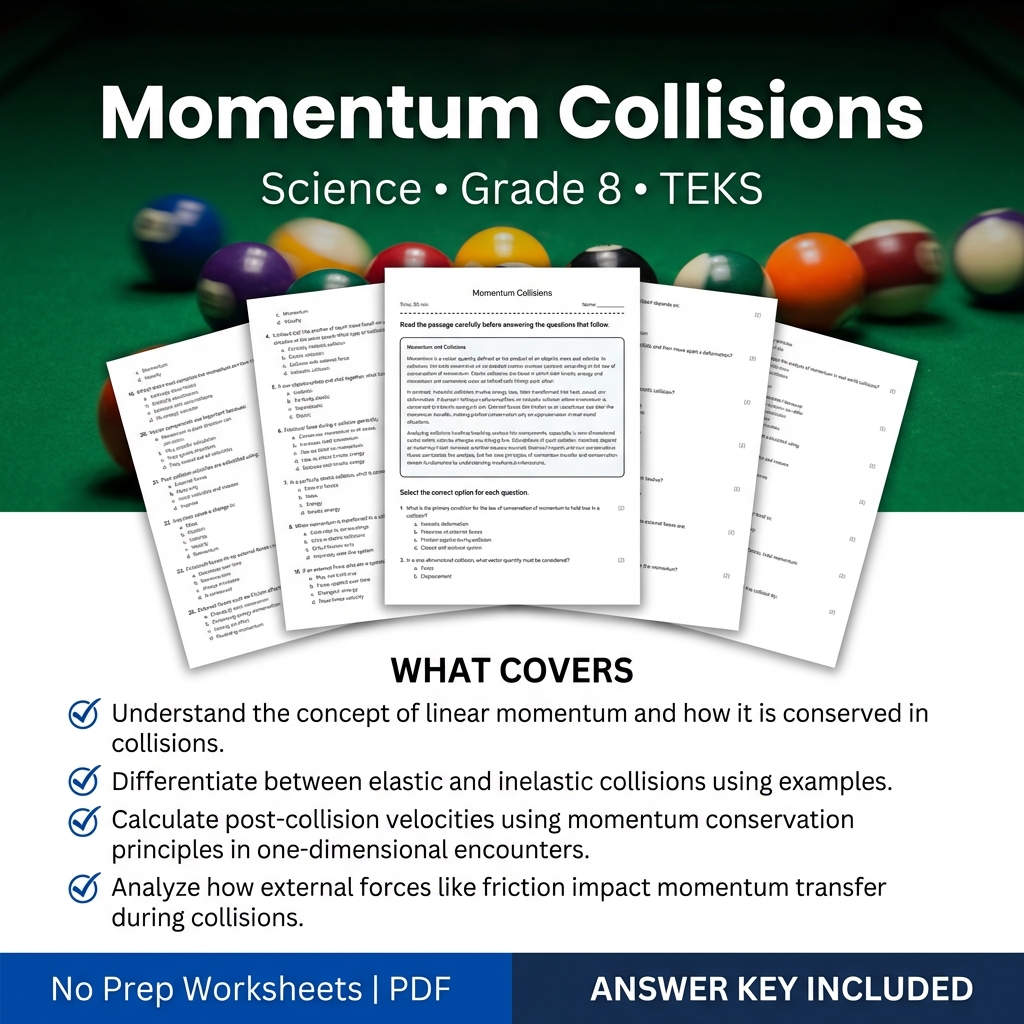
Momentum Collisions Worksheet for Grade 8 Science | TEKS Aligned
Created byCoral Reef LearningLearning Objectives
- Understand the concept of linear momentum and how it is conserved in collisions.
- Differentiate between elastic and inelastic collisions using examples.
- Calculate post-collision velocities using momentum conservation principles in one-dimensional encounters.
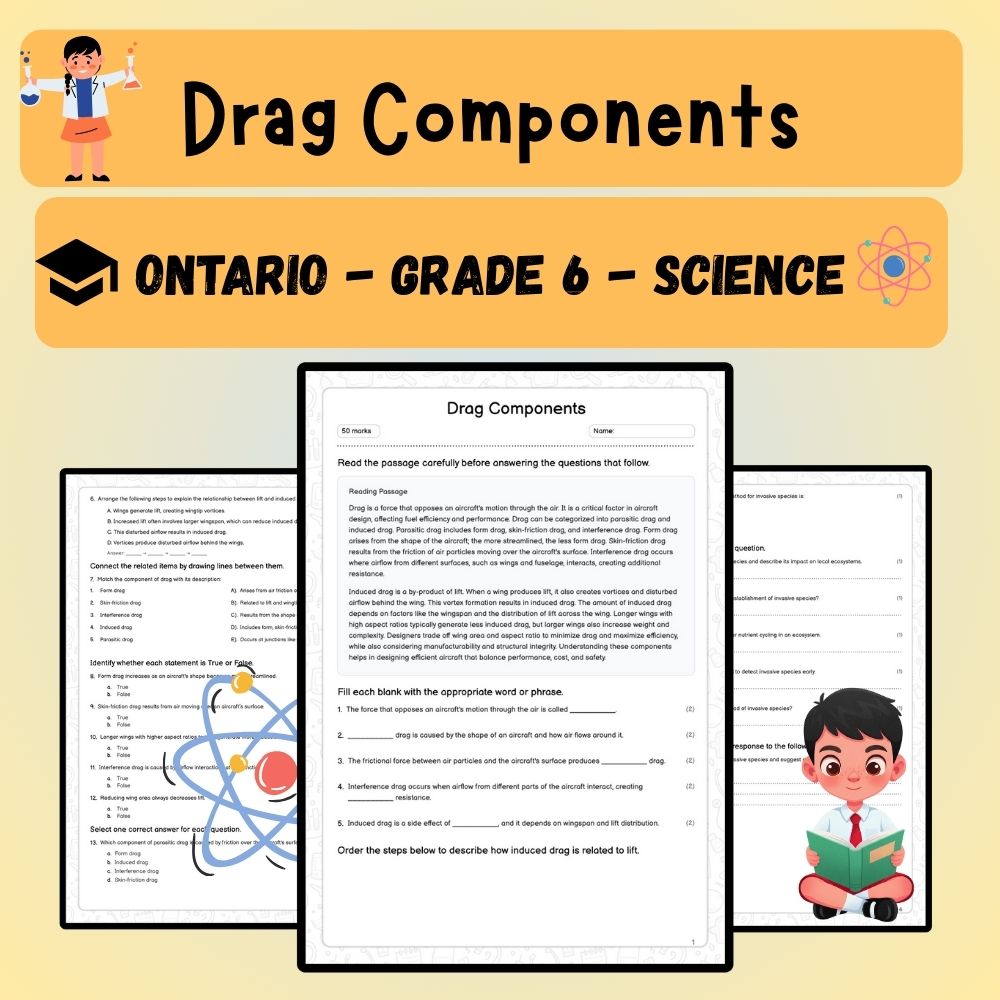
Grade 6 Science – Drag Components Worksheet (PDF ) - Ontario Standards
Created byPrism Point LearningLearning Objectives
- Understand the categorization of drag into parasitic and induced sources.
- Identify and explain the components of parasitic drag: form, skin-friction, and interference drag.
- Describe the concept of induced drag and how it relates to lift generation.
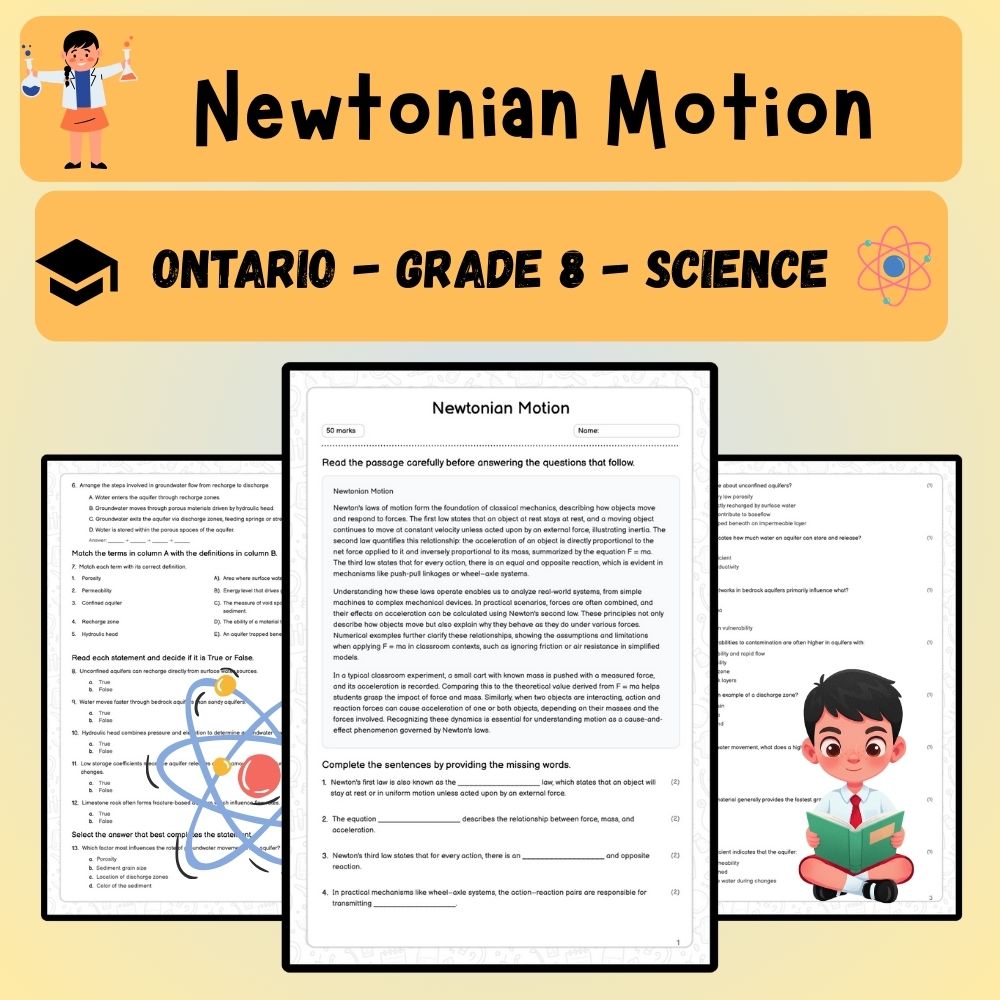
Grade 8 Science | Newtonian Motion Worksheet (PDF) – Ontario Standards
Created byPrism Point LearningLearning Objectives
- Understand and explain Newton's three laws of motion in the context of mechanical systems.
- Apply the equation F = ma to analyze forces and resulting accelerations in single- and two-object systems.
- Identify cause-and-effect relationships between forces, mass, and acceleration in various mechanisms.
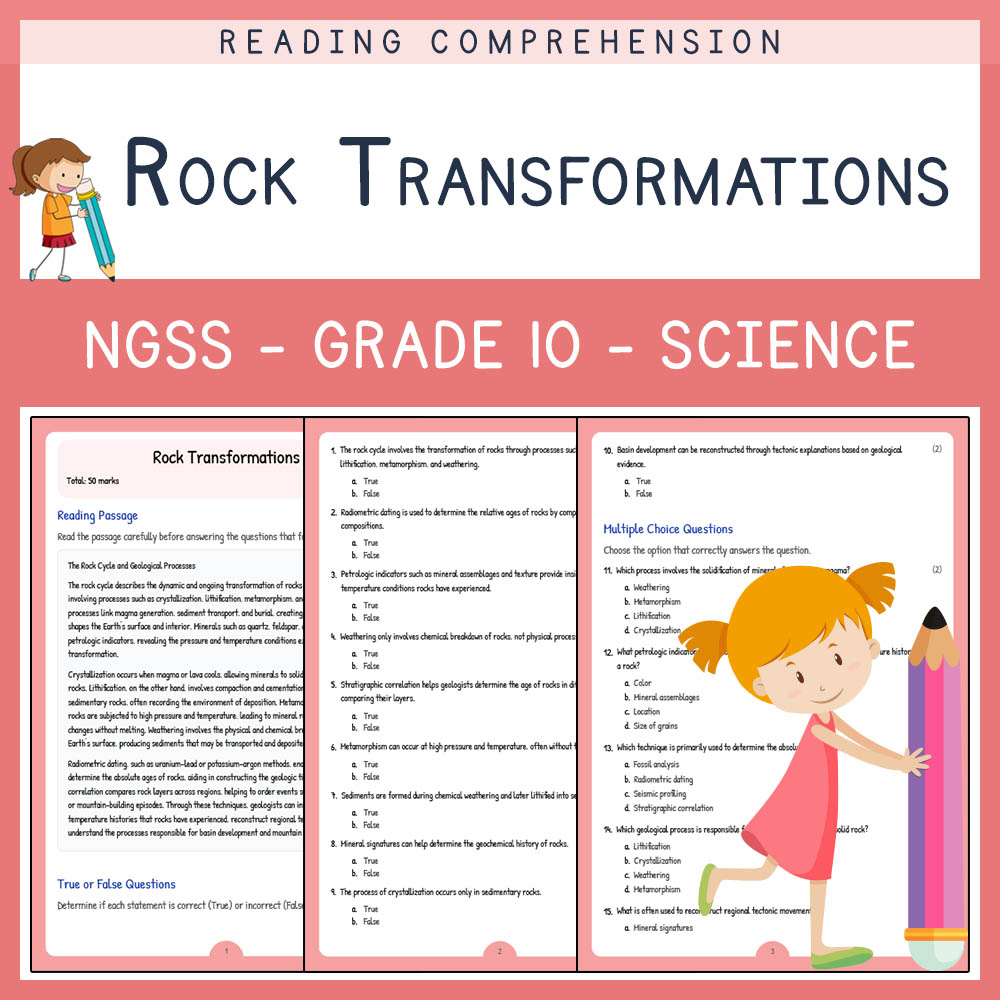
Grade 10 Science | Rock Transformations Worksheet (PDF + Answer Key) for NGSS
Created byLumora LearningLearning Objectives
- Understand the processes involved in the rock cycle, including crystallization, lithification, metamorphism, and weathering.
- Identify petrologic indicators such as mineral assemblages, texture, and geochemical signatures to interpret pressure–temperature histories.
- Explain how radiometric dating and stratigraphic correlation are used to order geological events and reconstruct regional geologic histories.
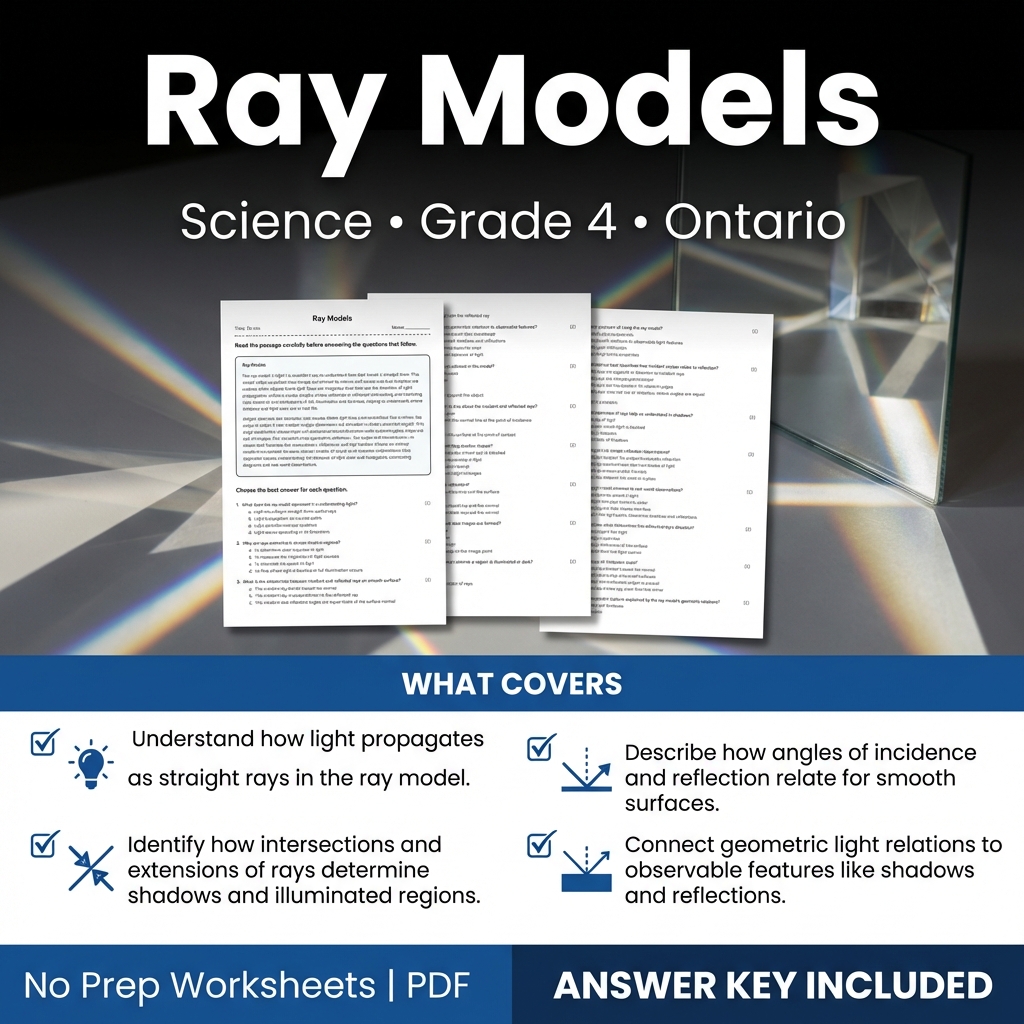
Ray Models Worksheet for Grade 4 Science | Ontario Standards Practice
Created byCoral Reef LearningLearning Objectives
- Understand how light propagates as straight rays in the ray model.
- Identify how intersections and extensions of rays determine shadows and illuminated regions.
- Describe how angles of incidence and reflection relate for smooth surfaces.
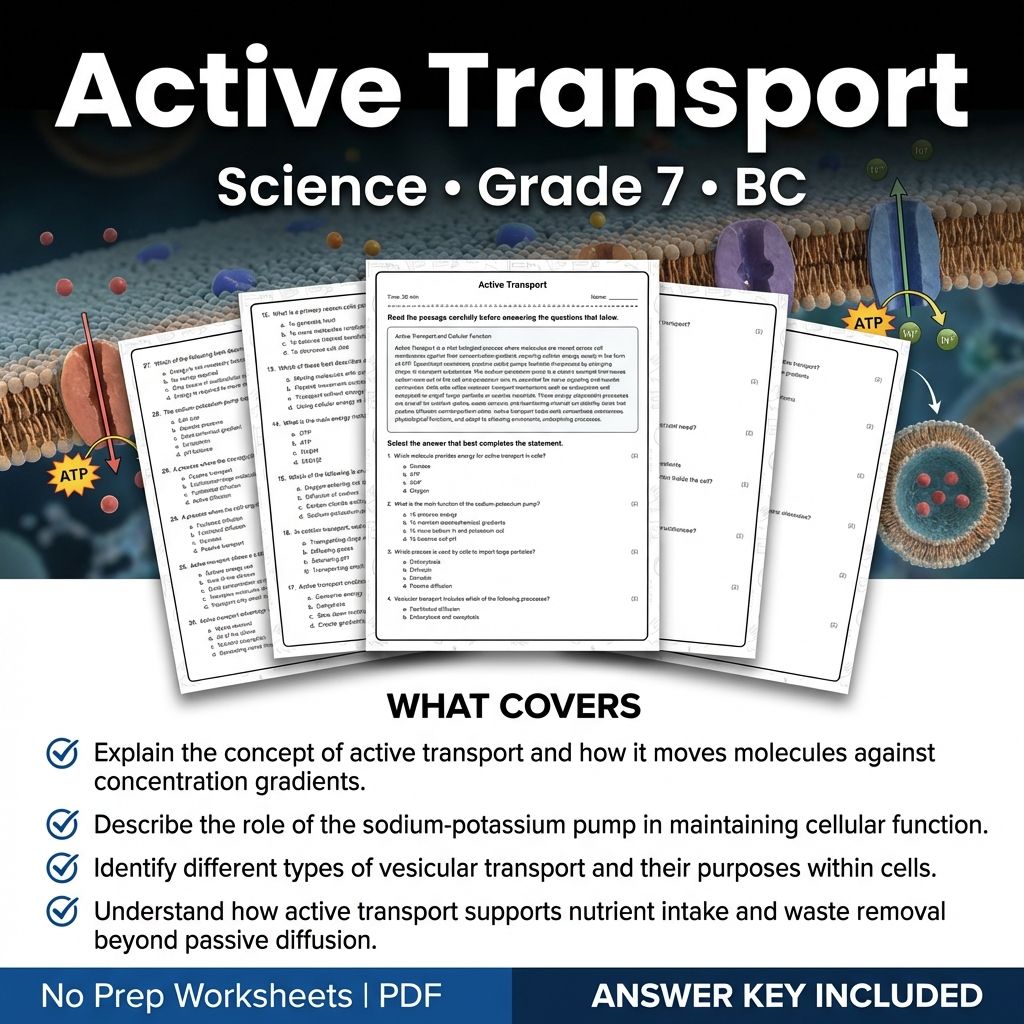
7th Grade Science | Active Transport Worksheet & Answer Key (Printable PDF)
Created byCoral Reef LearningLearning Objectives
- Explain the concept of active transport and how it moves molecules against concentration gradients.
- Describe the role of the sodium-potassium pump in maintaining cellular function.
- Identify different types of vesicular transport and their purposes within cells.
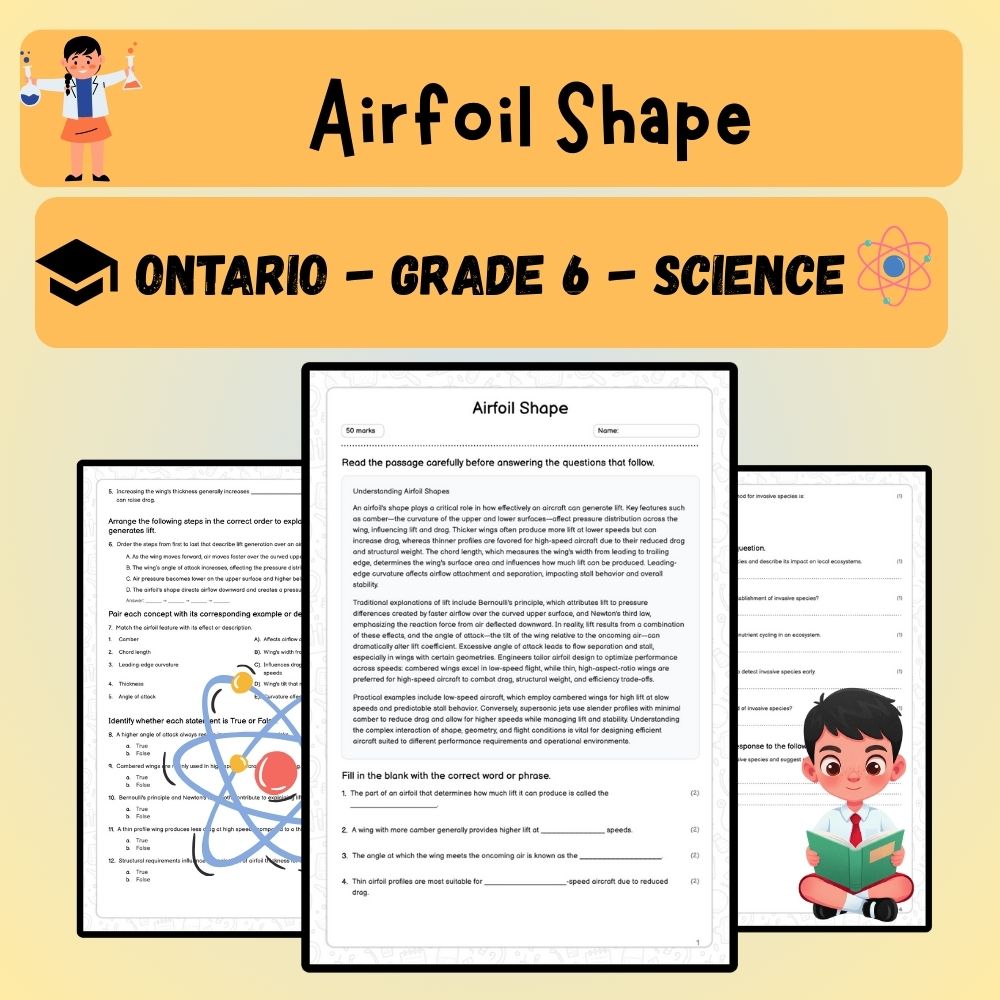
Grade 6 Science | Airfoil Shape Worksheet (PDF ) – Ontario Standards
Created byPrism Point LearningLearning Objectives
- Describe how camber, thickness, chord length, and leading-edge curvature influence airfoil pressure distribution and lift.
- Explain the differences between Bernoulli and Newtonian models of lift.
- Analyze how angle of attack and airfoil geometry affect lift coefficient across various speeds.
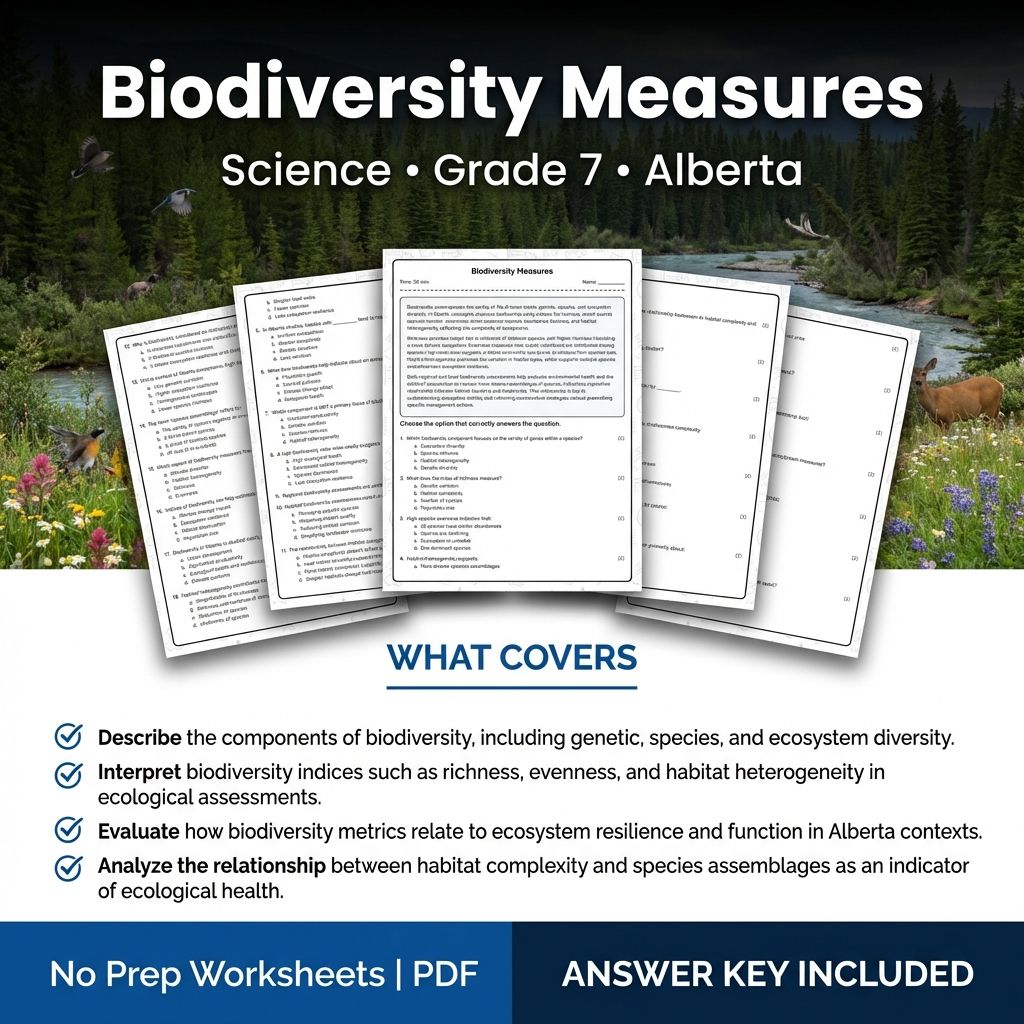
Grade 7 Science Worksheet on Biodiversity Measures for Classroom Practice
Created byCoral Reef LearningLearning Objectives
- Describe the components of biodiversity, including genetic, species, and ecosystem diversity.
- Interpret biodiversity indices such as richness, evenness, and habitat heterogeneity in ecological assessments.
- Evaluate how biodiversity metrics relate to ecosystem resilience and function in Alberta contexts.
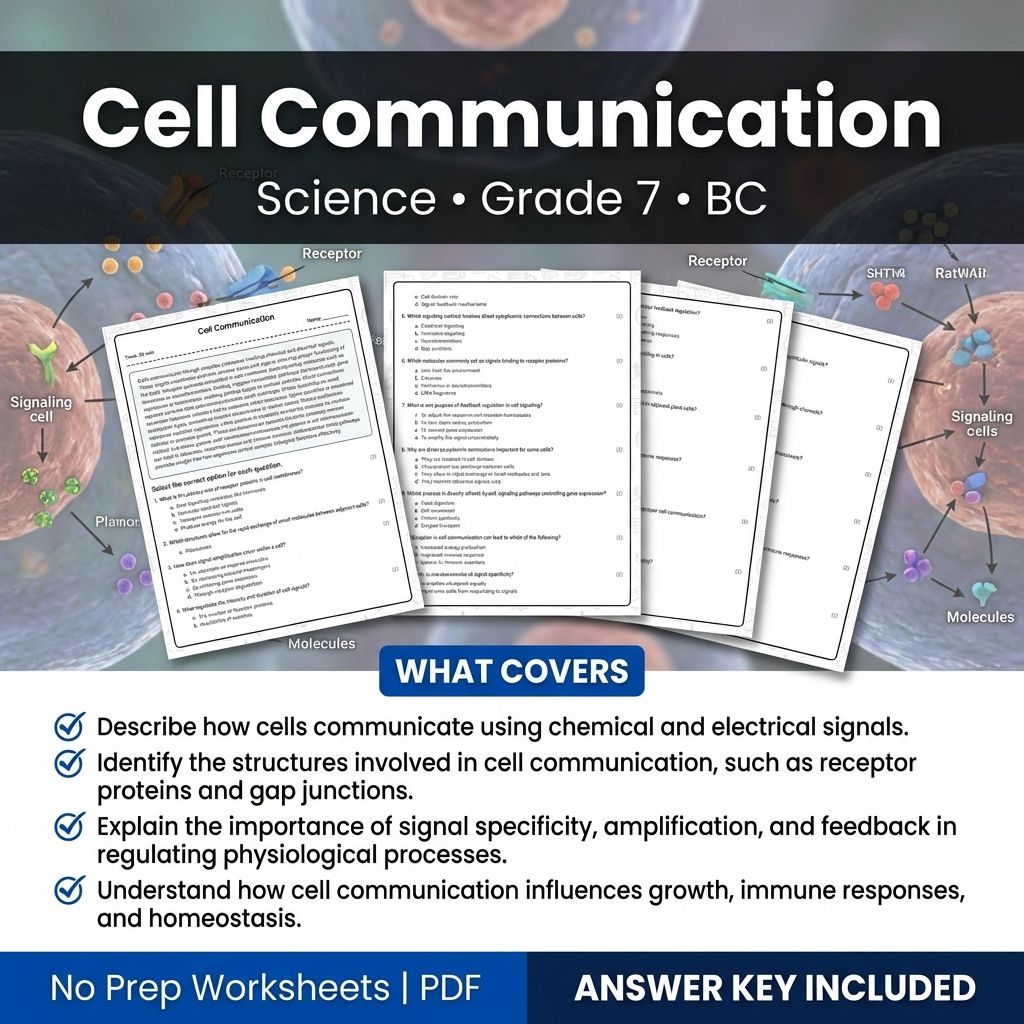
Grade 7 Science Worksheet | Cell Communication Practice with Answer Key PDF
Created byCoral Reef LearningLearning Objectives
- Describe how cells communicate using chemical and electrical signals.
- Identify the structures involved in cell communication, such as receptor proteins and gap junctions.
- Explain the importance of signal specificity, amplification, and feedback in regulating physiological processes.
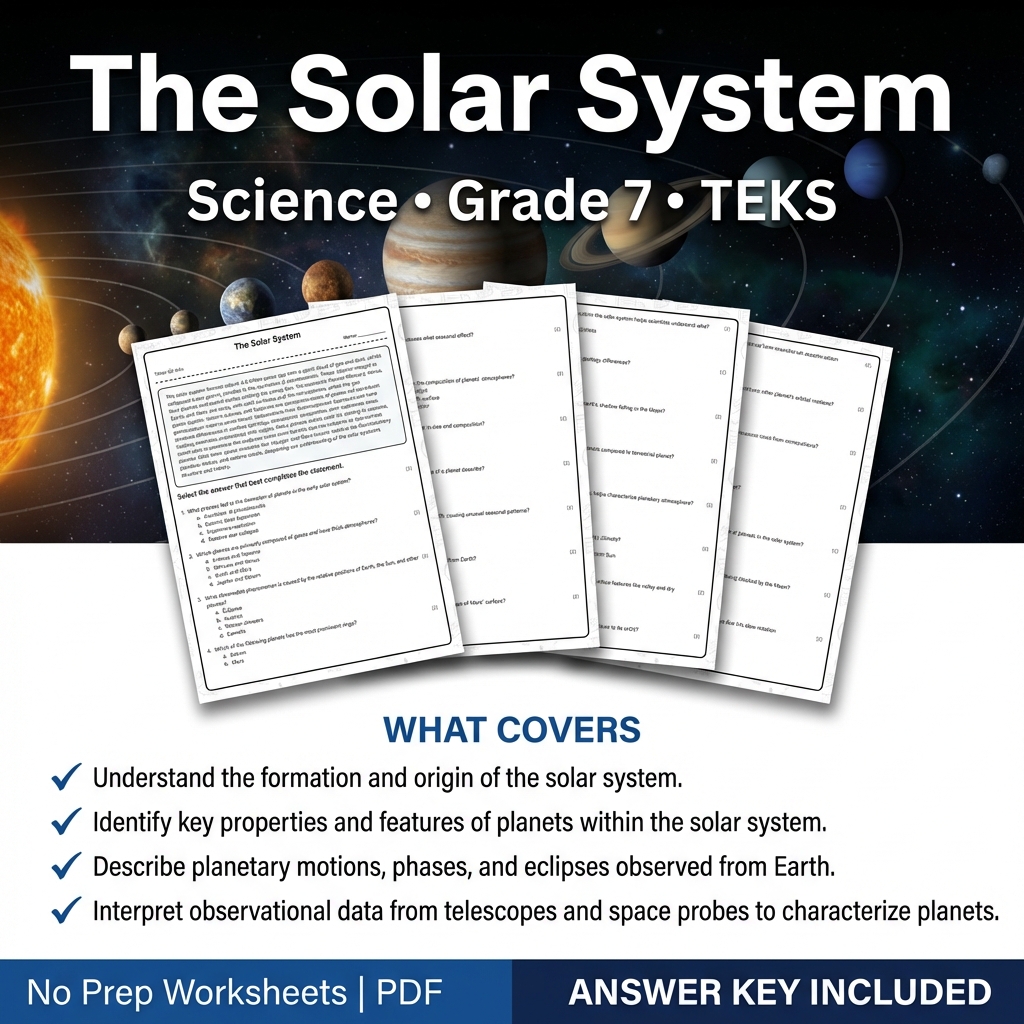
Grade 7 Science Worksheet on The Solar System | TEKS Aligned
Created byCoral Reef LearningLearning Objectives
- Understand the formation and origin of the solar system.
- Identify key properties and features of planets within the solar system.
- Describe planetary motions, phases, and eclipses observed from Earth.
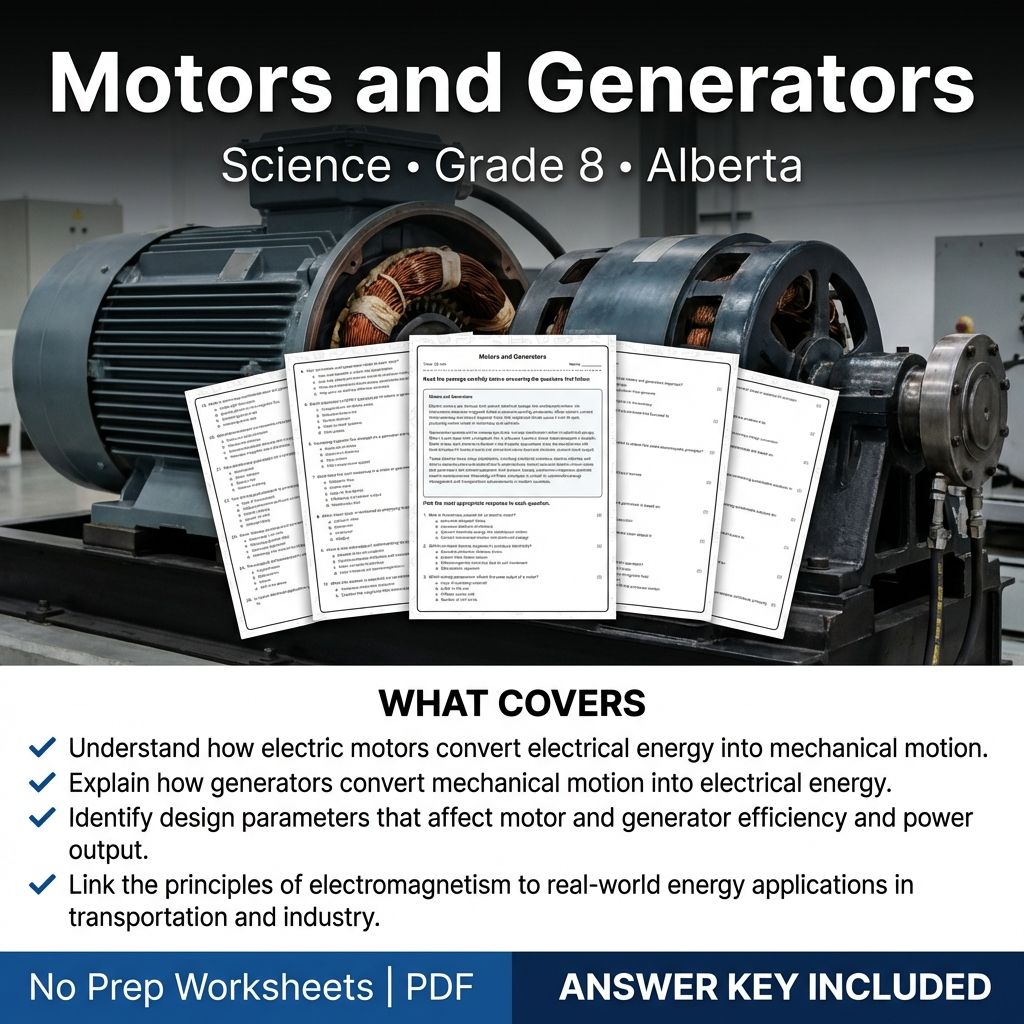
Motors and Generators Worksheet | Science | Alberta Grade 8
Created byCoral Reef LearningLearning Objectives
- Understand how electric motors convert electrical energy into mechanical motion.
- Explain how generators convert mechanical motion into electrical energy.
- Identify design parameters that affect motor and generator efficiency and power output.
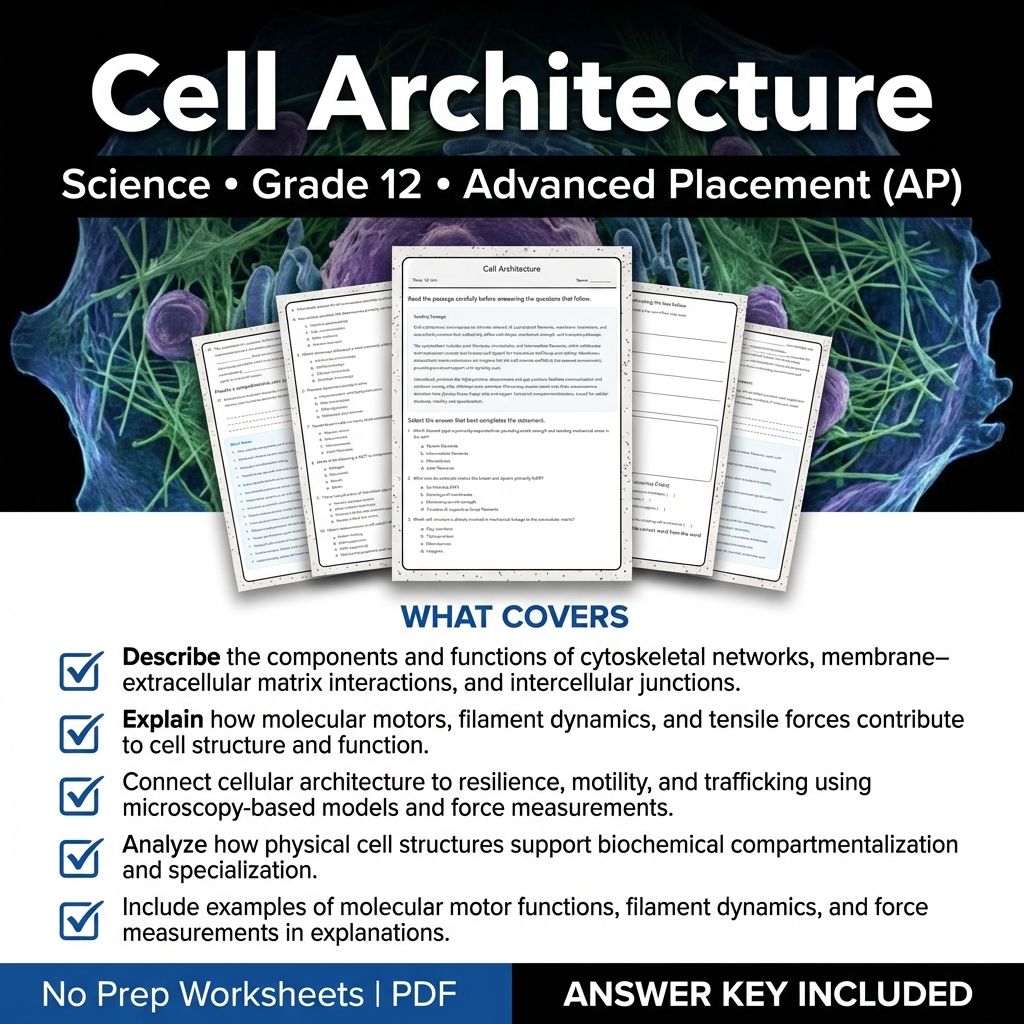
12th Grade Science | Cell Architecture Worksheet with Answer Key (PDF)
Created byCoral Reef LearningLearning Objectives
- Describe the components and functions of cytoskeletal networks, membrane–extracellular matrix interactions, and intercellular junctions.
- Explain how molecular motors, filament dynamics, and tensile forces contribute to cell structure and function.
- Connect cellular architecture to resilience, motility, and trafficking using microscopy-based models and force measurements.
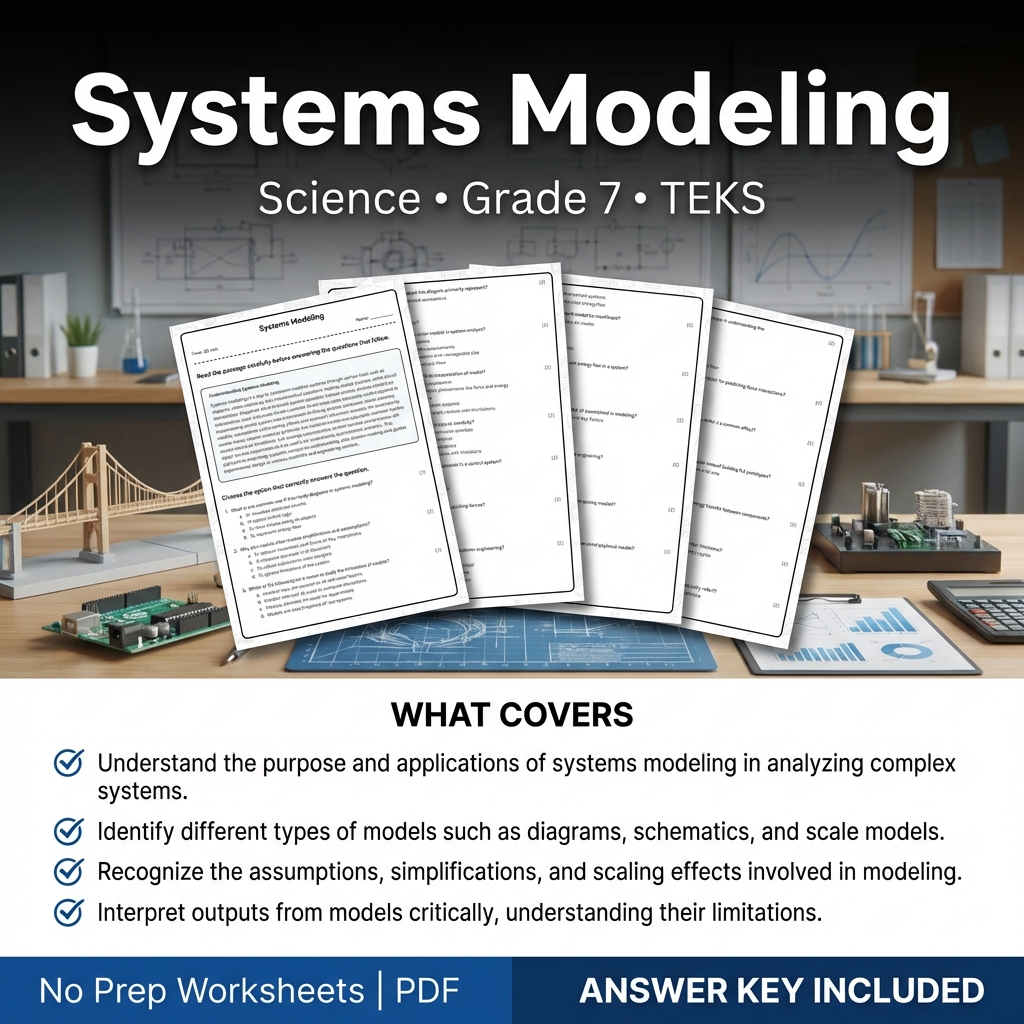
Grade 7 Science Worksheet on Systems Modeling | TEKS-Aligned Practice
Created byCoral Reef LearningLearning Objectives
- Understand the purpose and applications of systems modeling in analyzing complex systems.
- Identify different types of models such as diagrams, schematics, and scale models.
- Recognize the assumptions, simplifications, and scaling effects involved in modeling.
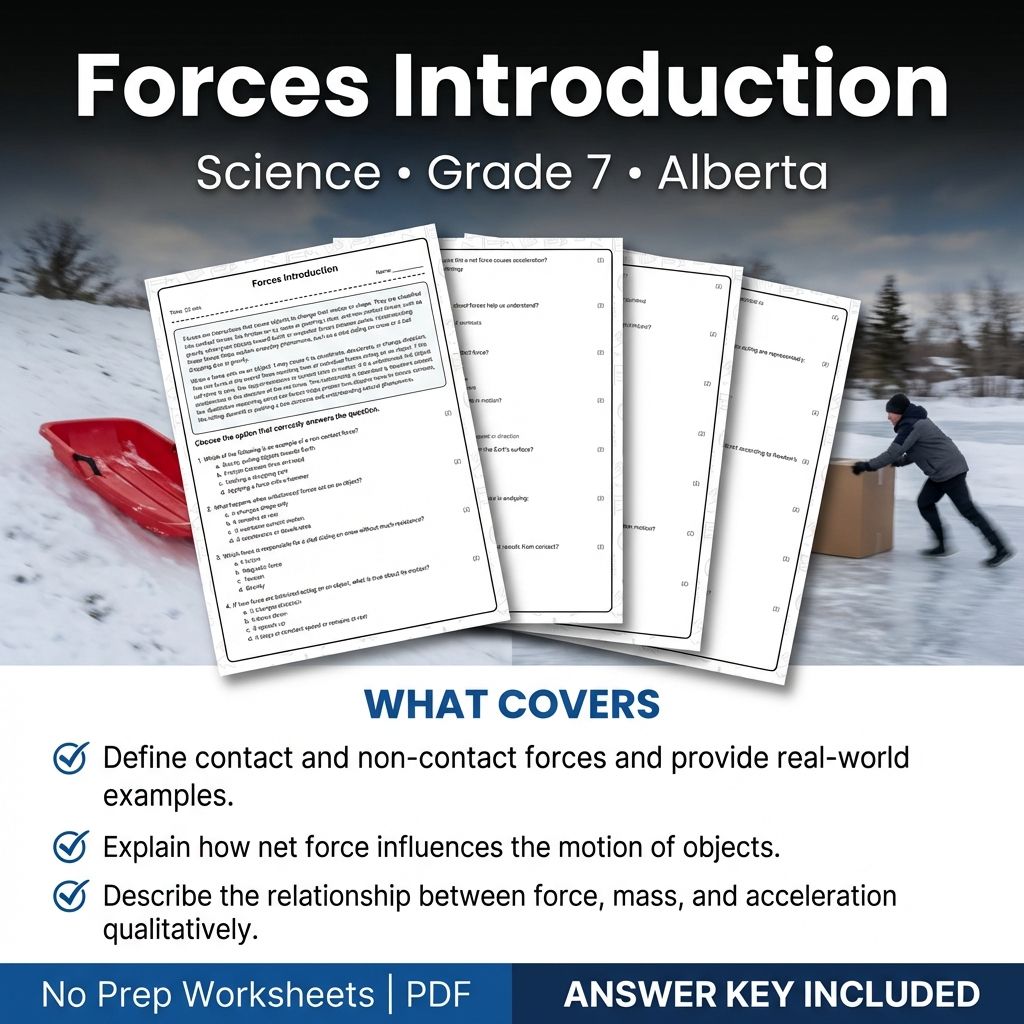
Forces Introduction Worksheet | Alberta Grade 7 Science Practice and Assessment
Created byCoral Reef LearningLearning Objectives
- Define contact and non-contact forces and provide real-world examples.
- Explain how net force influences the motion of objects.
- Describe the relationship between force, mass, and acceleration qualitatively.
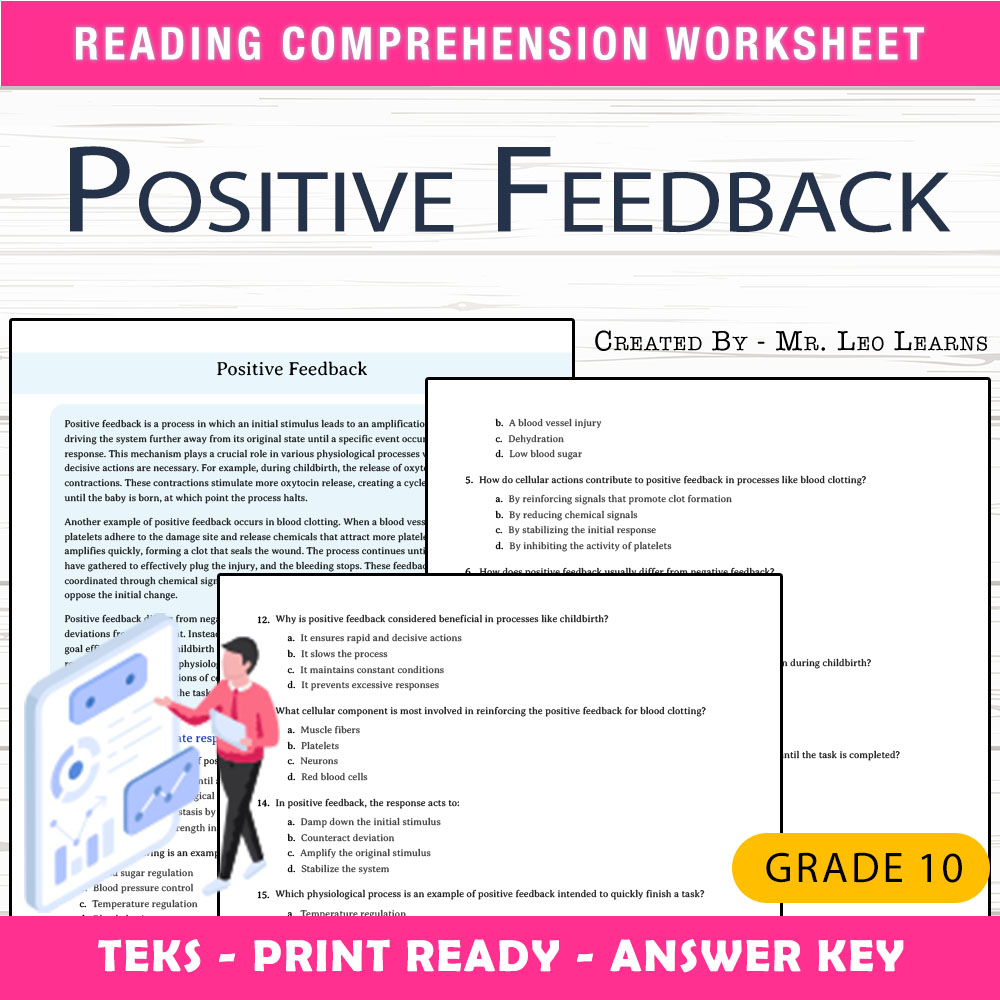
Grade 10 Science – Positive Feedback Worksheet for Mastery
Created byThe Resource HubLearning Objectives
- Explain the concept of positive feedback and how it amplifies initial changes in biological systems.
- Identify examples of positive feedback mechanisms such as childbirth and blood clotting.
- Describe how positive feedback differs from negative feedback in maintaining homeostasis.
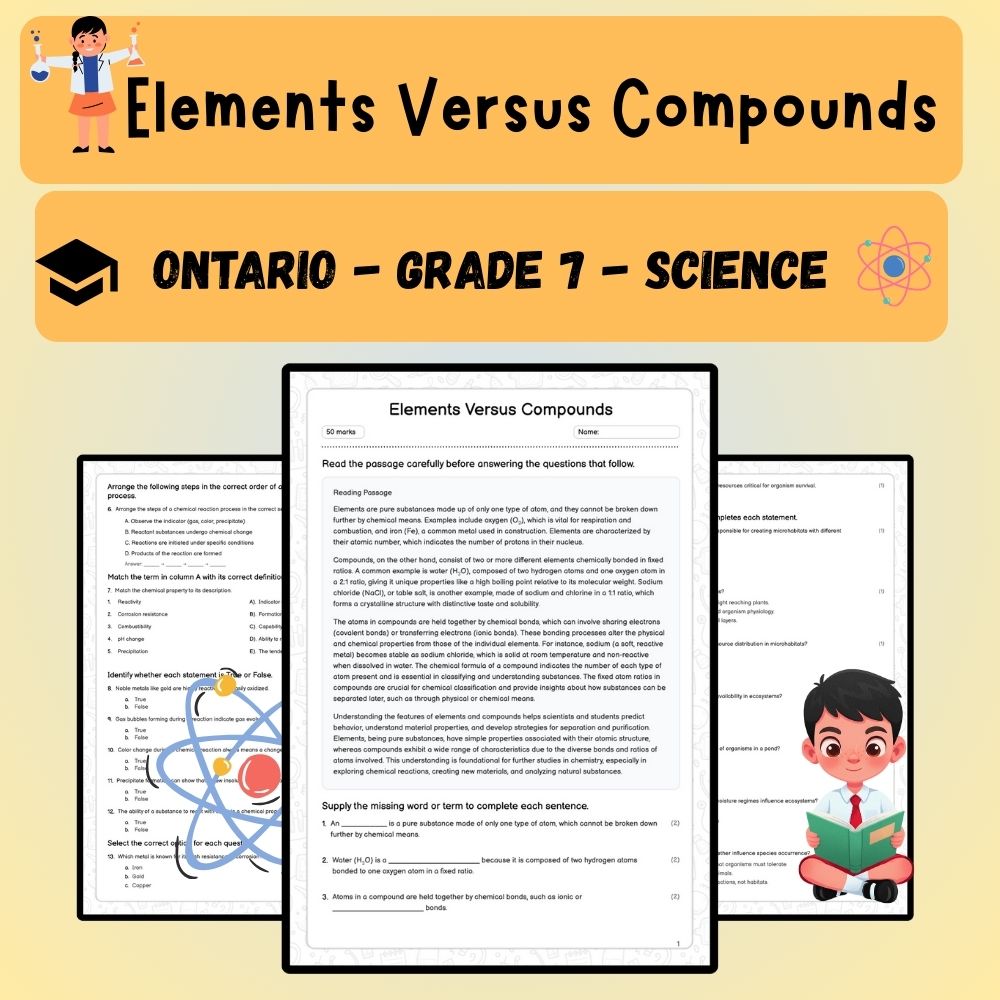
Grade 7 Science | Elements vs Compounds Worksheet (PDF )
Created byPrism Point LearningLearning Objectives
- Understand the differences between elements and compounds based on atomic composition and bonding.
- Identify characteristic properties of elements and compounds such as melting point and conductivity.
- Interpret chemical formulas and recognize fixed ratios of atoms in compounds.

Grade 10 Science | One-Dimensional Motion Worksheet (Answer Key) PDF
Created byPrism Point LearningLearning Objectives
- Define and relate key kinematic quantities such as displacement, speed, velocity, and acceleration.
- Differentiate between average and instantaneous measures of motion.
- Apply constant-acceleration equations to scenarios like free-fall and uniformly accelerated motion.
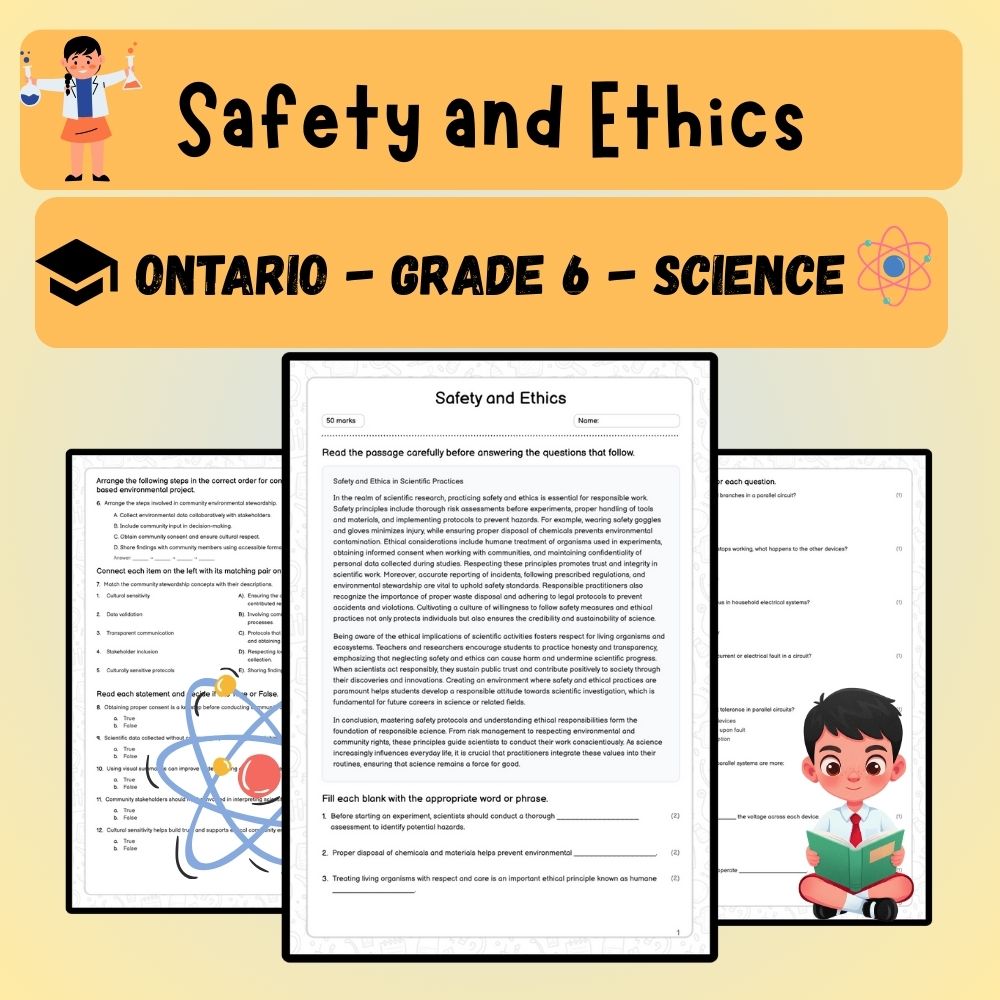
6th Grade Science | Safety and Ethics Worksheet (PDF )
Created byPrism Point LearningLearning Objectives
- Understand fundamental safety principles in scientific practice, including risk assessment and hazard prevention.
- Recognize ethical considerations such as humane treatment, informed consent, and environmental stewardship in scientific work.
- Apply protocols for proper disposal, accurate incident reporting, and adherence to regulations to promote responsible scientific conduct.
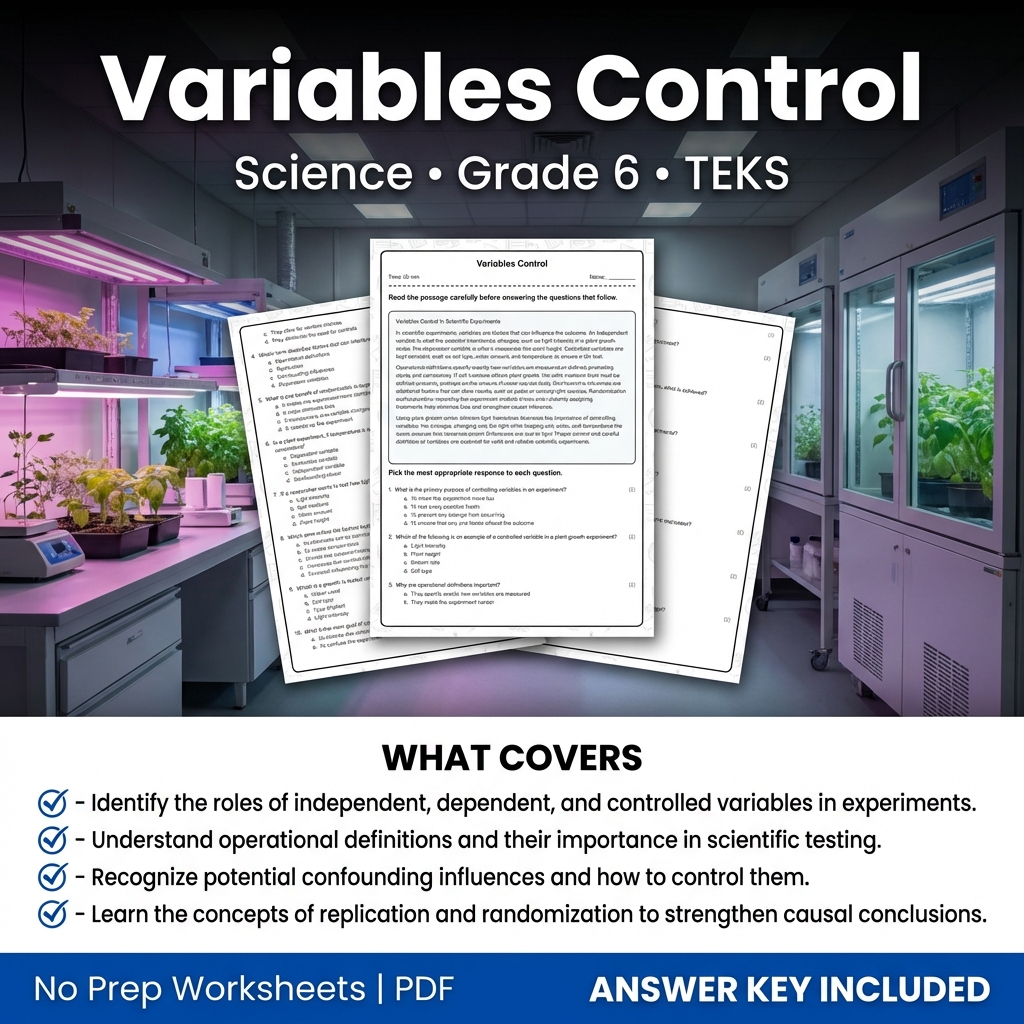
Variables Control Science Worksheet Grade 6 TEKS Practice PDF
Created byCoral Reef LearningLearning Objectives
- Identify the roles of independent, dependent, and controlled variables in experiments.
- Understand operational definitions and their importance in scientific testing.
- Recognize potential confounding influences and how to control them.
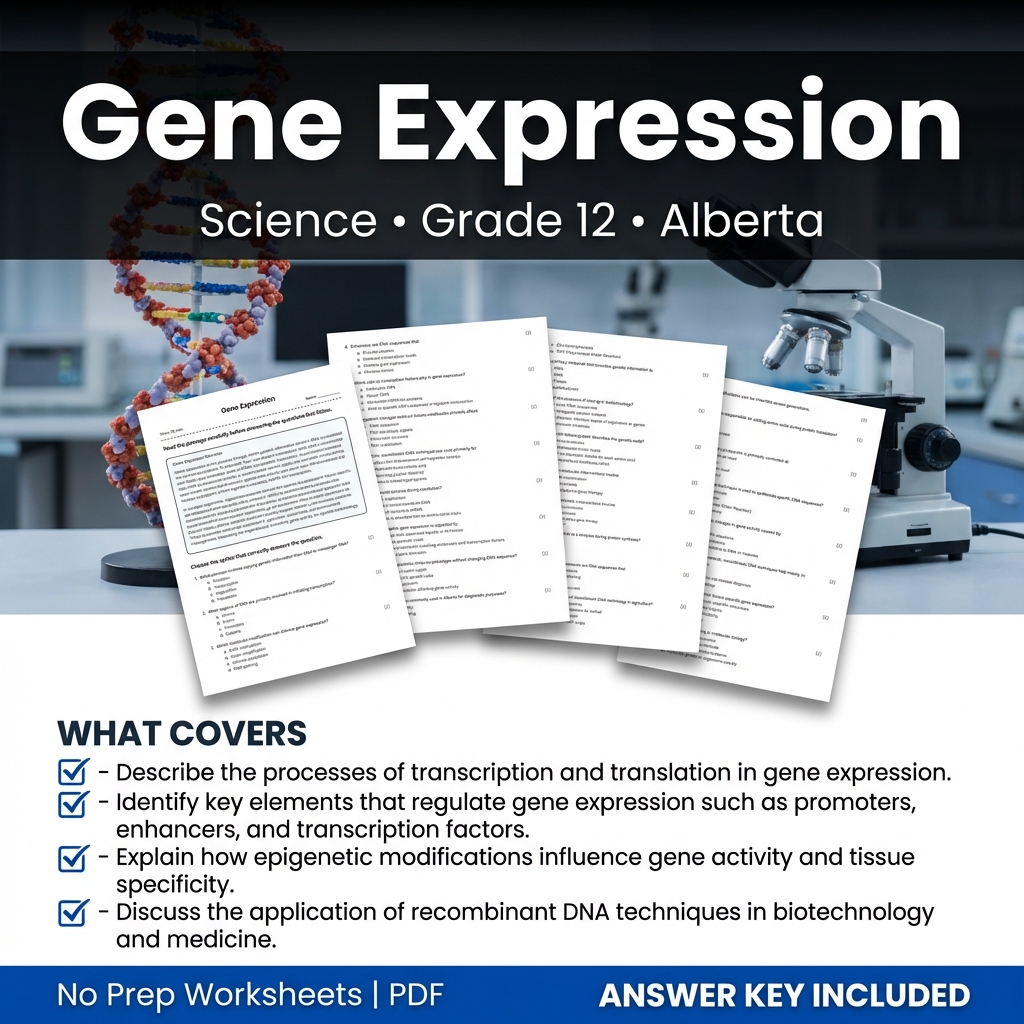
Gene Expression Worksheet for Grade 12 Science | Alberta Standards
Created byCoral Reef LearningLearning Objectives
- Describe the processes of transcription and translation in gene expression.
- Identify key elements that regulate gene expression such as promoters, enhancers, and transcription factors.
- Explain how epigenetic modifications influence gene activity and tissue specificity.
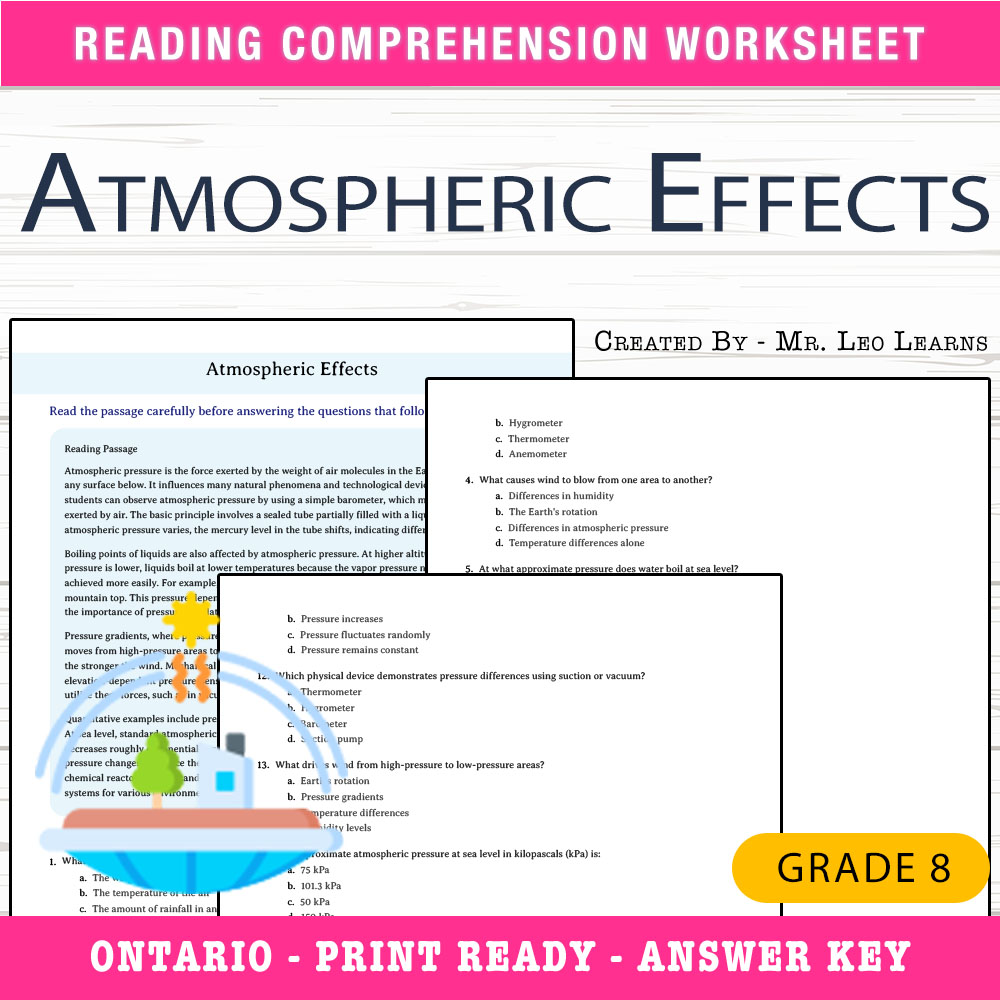
Grade 8 Science – Atmospheric Effects Worksheet for Mastery
Created byThe Resource HubLearning Objectives
- Understand how atmospheric pressure influences boiling points and weather instruments.
- Describe the operation of a barometer and the effects of pressure gradients on wind.
- Analyze the relationship between altitude and pressure variations, including implications for high-altitude systems.
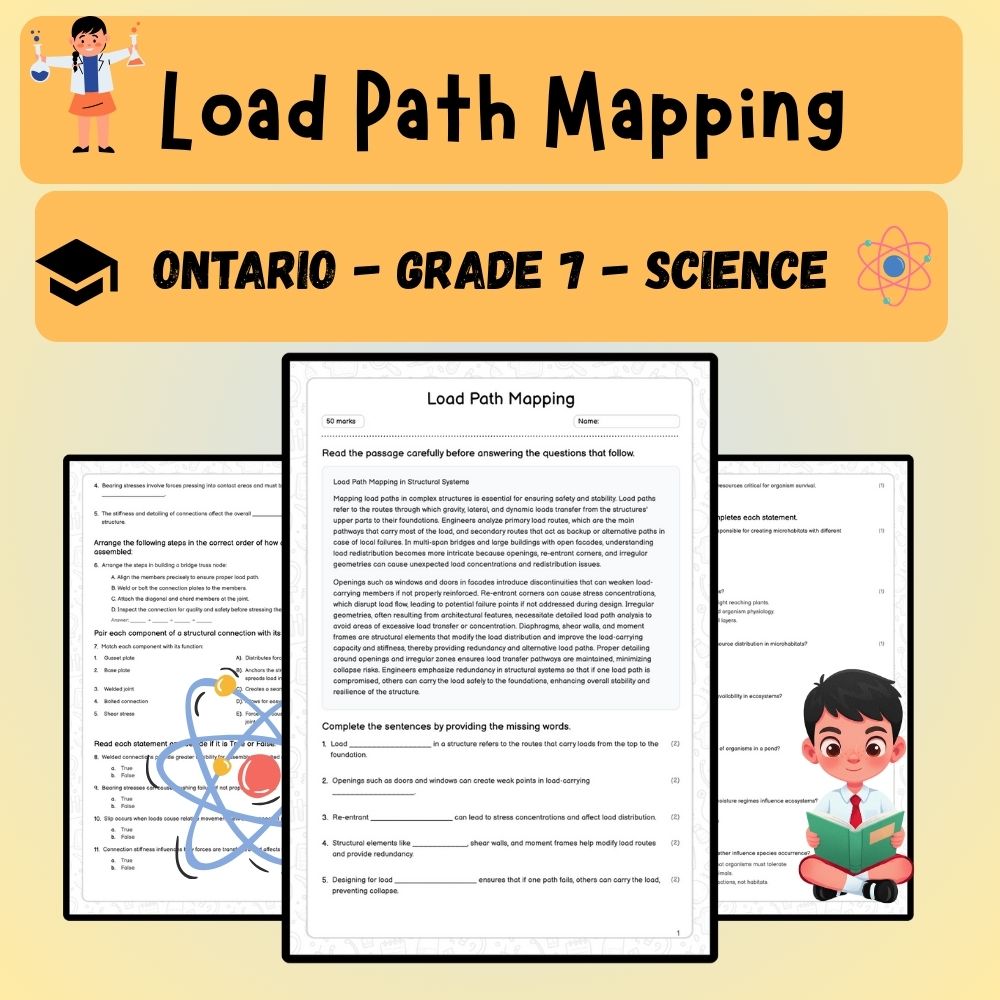
Grade 7 Science | Load Path Mapping Worksheet (PDF) - Ontario Standards
Created byPrism Point LearningLearning Objectives
- Understand methods for mapping load paths in complex structures.
- Identify primary and secondary load routes in structural systems.
- Analyze how openings and irregular geometries influence load redistribution.
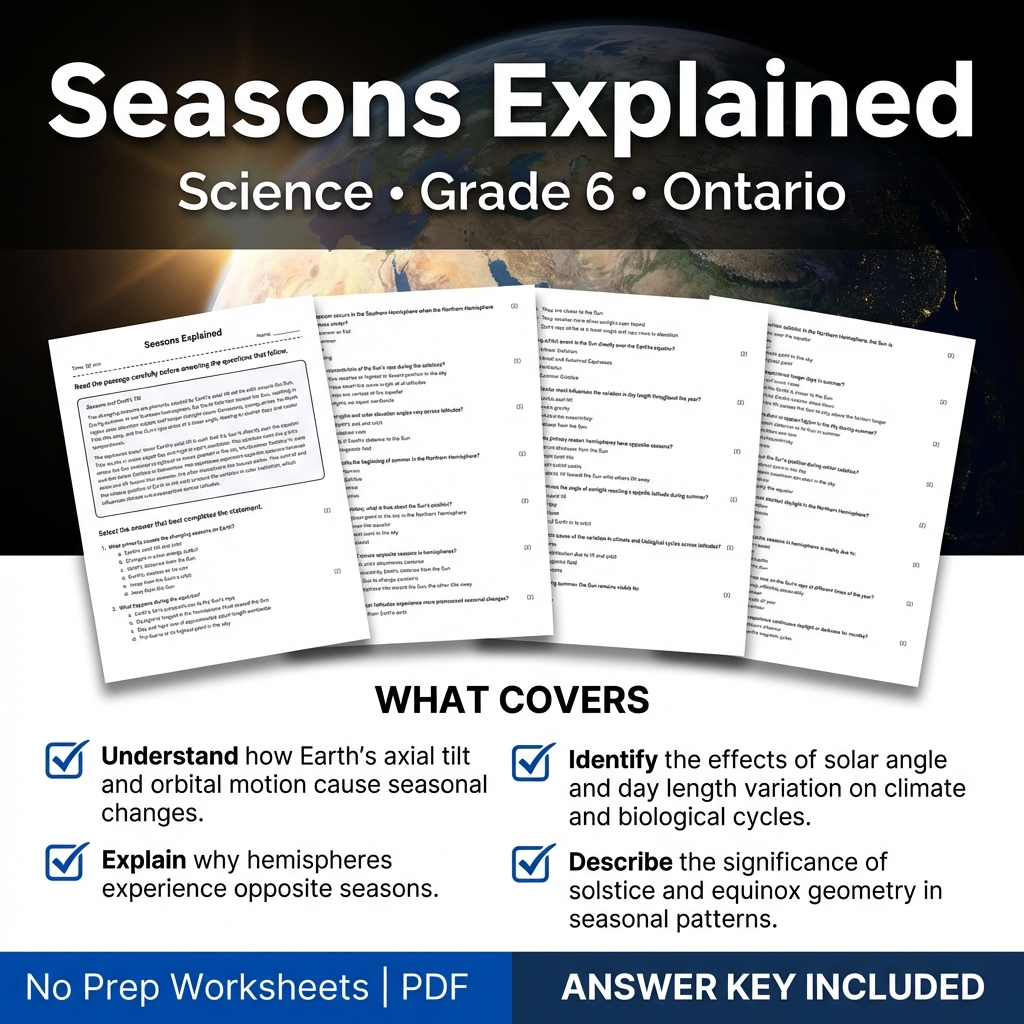
Seasons Explained Science Worksheet for Grade 6 | Ontario Standards
Created byCoral Reef LearningLearning Objectives
- Understand how Earth's axial tilt and orbital motion cause seasonal changes.
- Explain why hemispheres experience opposite seasons.
- Identify the effects of solar angle and day length variation on climate and biological cycles.
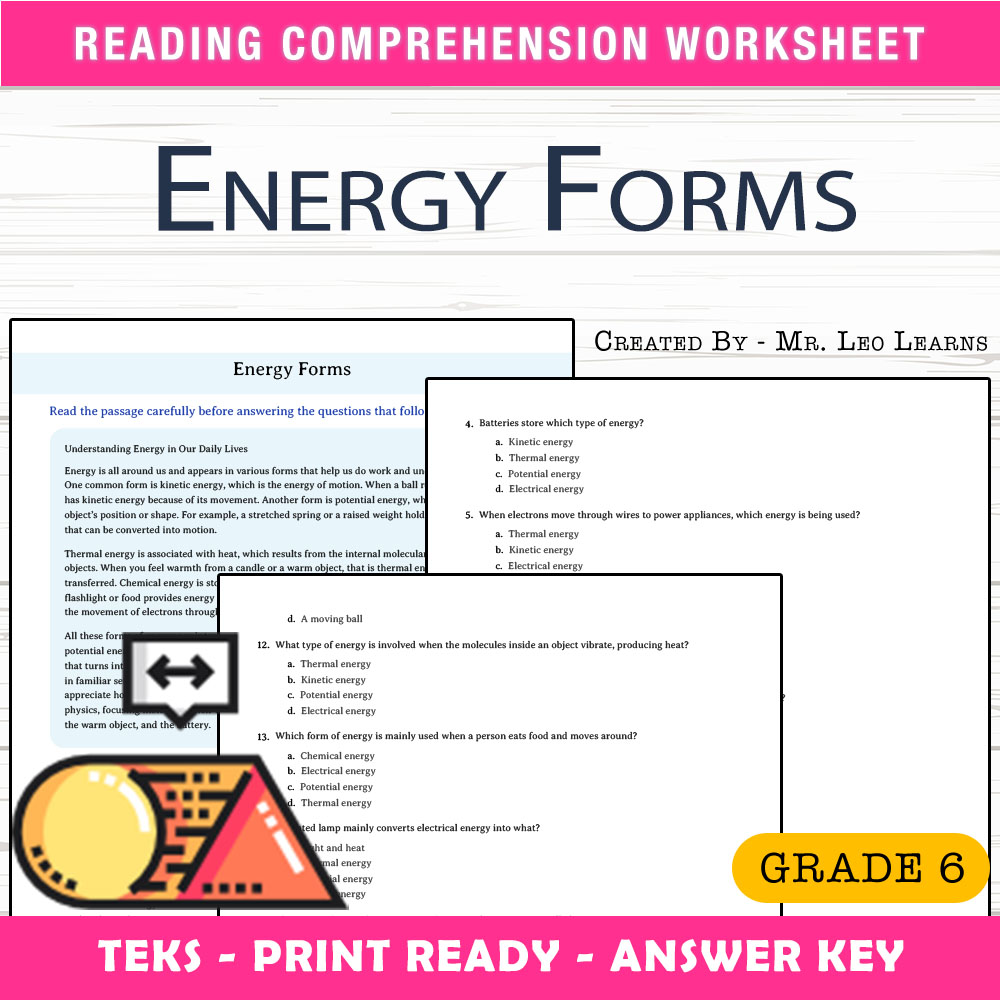
Grade 6 Science – Energy Forms Worksheet for Mastery
Created byThe Resource HubLearning Objectives
- Identify and describe common forms of energy including kinetic, potential, thermal, chemical, and electrical.
- Relate each form of energy to familiar phenomena such as moving objects, stretched springs, warm objects, and batteries.
- Distinguish between different forms of energy based on their characteristics and everyday examples.
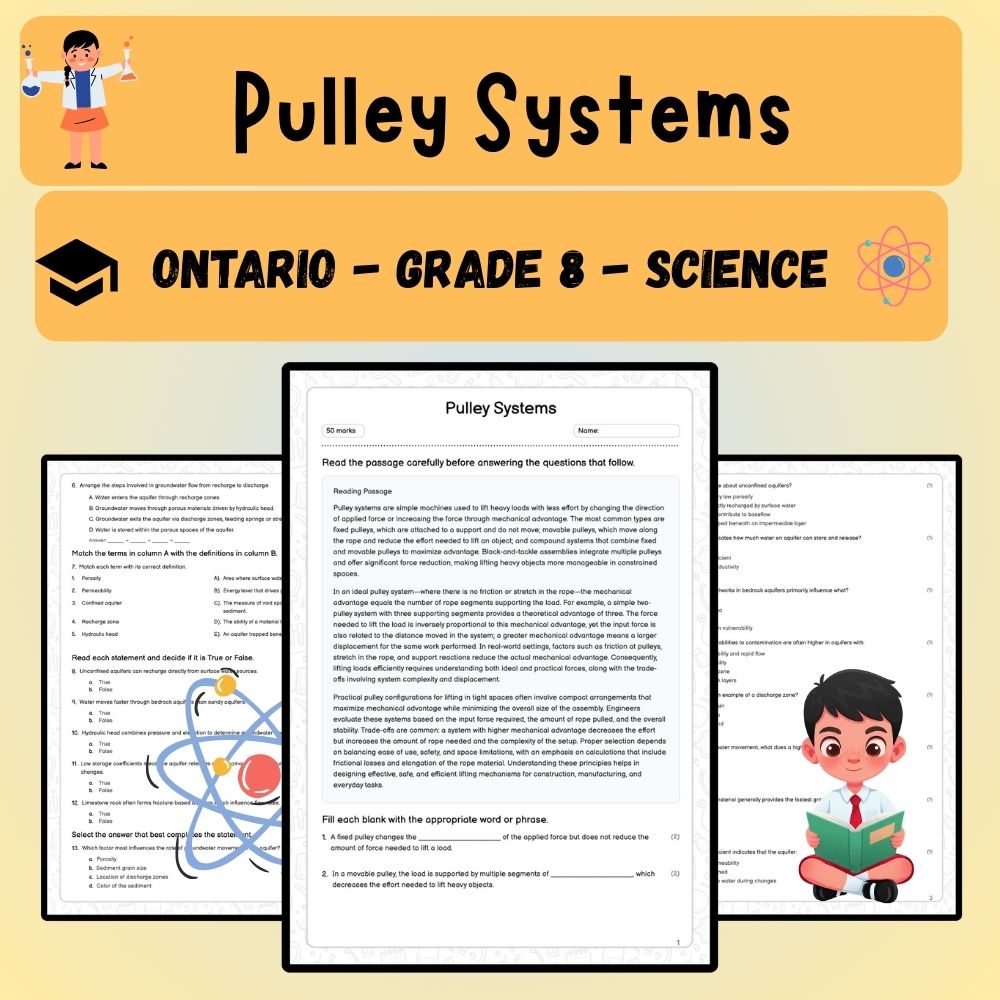
Grade 8 Science | Pulley Systems Worksheet (PDF) – Ontario Standards
Created byPrism Point LearningLearning Objectives
- Understand the difference between fixed, movable, and compound pulley arrangements.
- Explain how mechanical advantage is achieved and calculated in pulley systems.
- Analyze real-world factors such as friction and rope stretch that affect pulley performance.
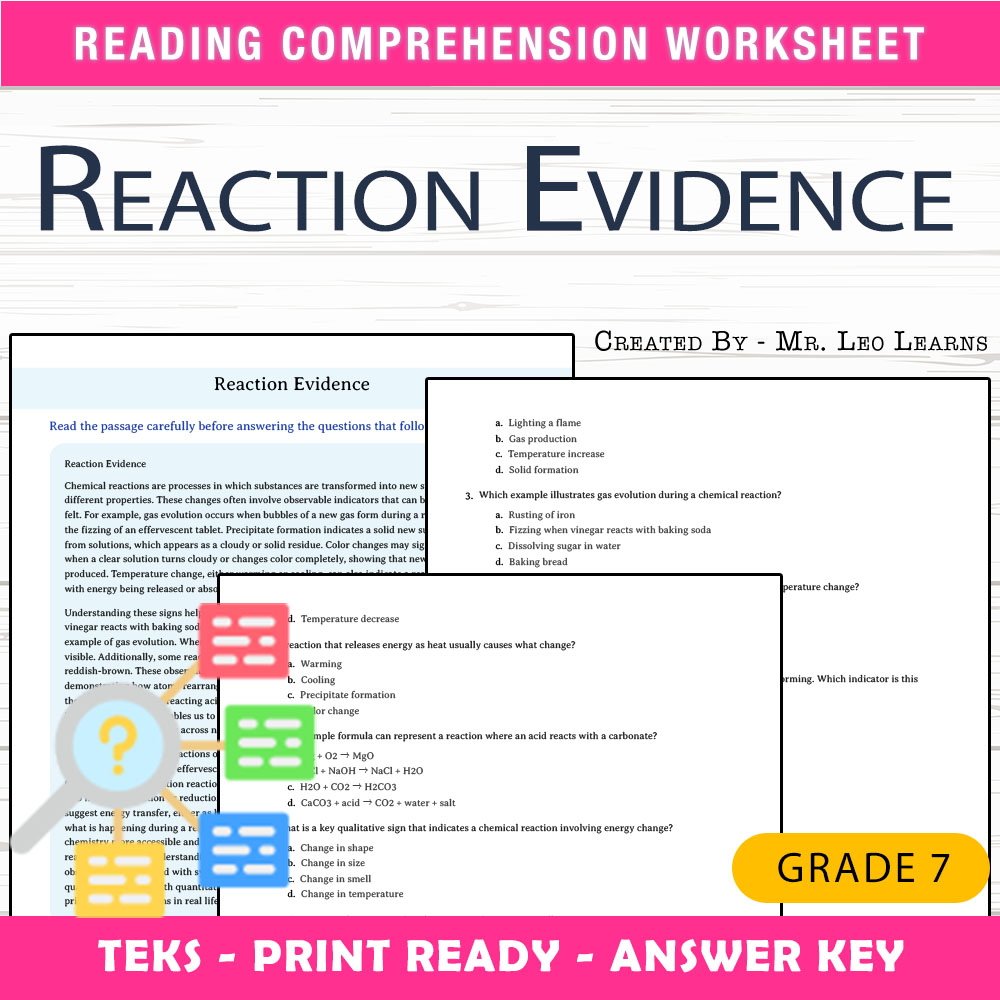
Grade 7 Science — Reaction Evidence Worksheet for Mastery
Created byThe Resource HubLearning Objectives
- Understand that chemical reactions produce observable indicators such as gas evolution, precipitate formation, color change, and temperature change.
- Connect observable signs of reactions to underlying mass and energy changes.
- Identify common reaction types like acid–carbonate effervescence and precipitation through qualitative evidence.
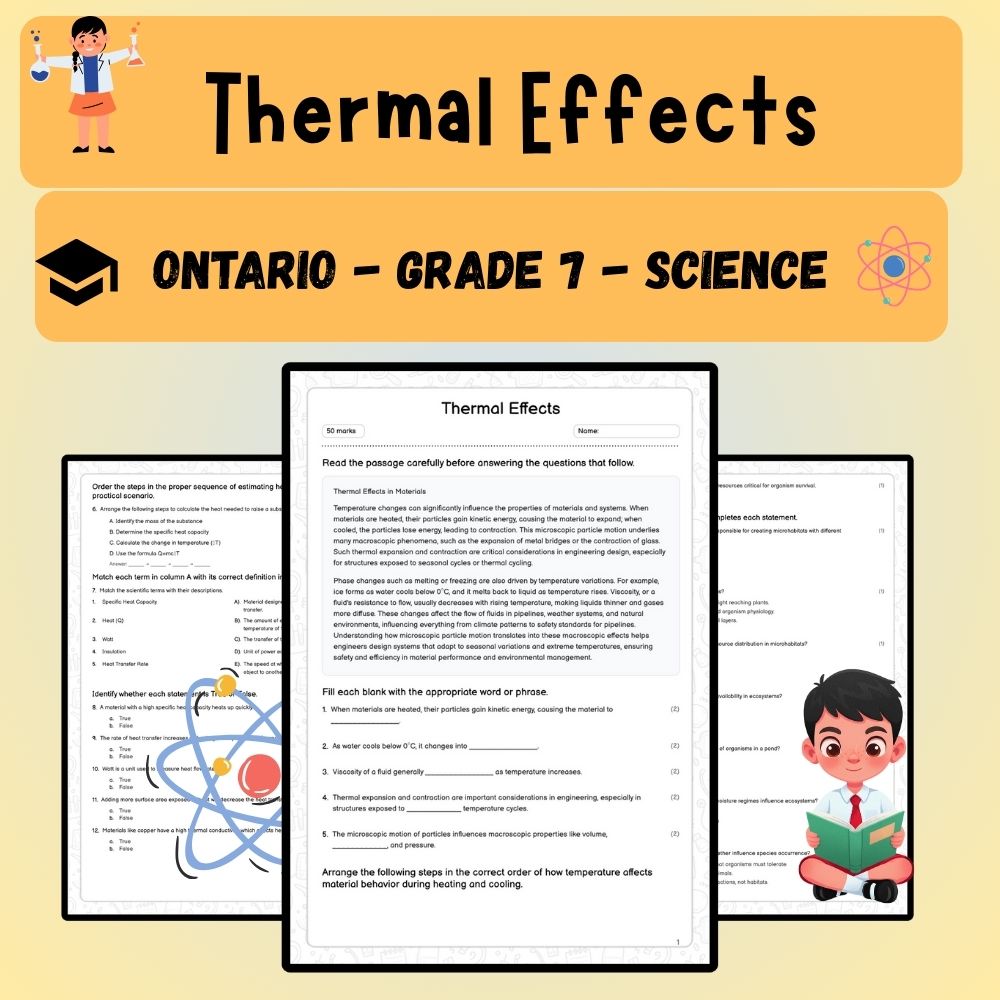
Grade 7 Science | Thermal Effects Worksheet (PDF )
Created byPrism Point LearningLearning Objectives
- Explain how temperature changes affect material properties such as expansion, contraction, and viscosity.
- Describe phase changes and their relation to temperature variations in systems.
- Connect microscopic particle motion to macroscopic changes like volume, density, and pressure.
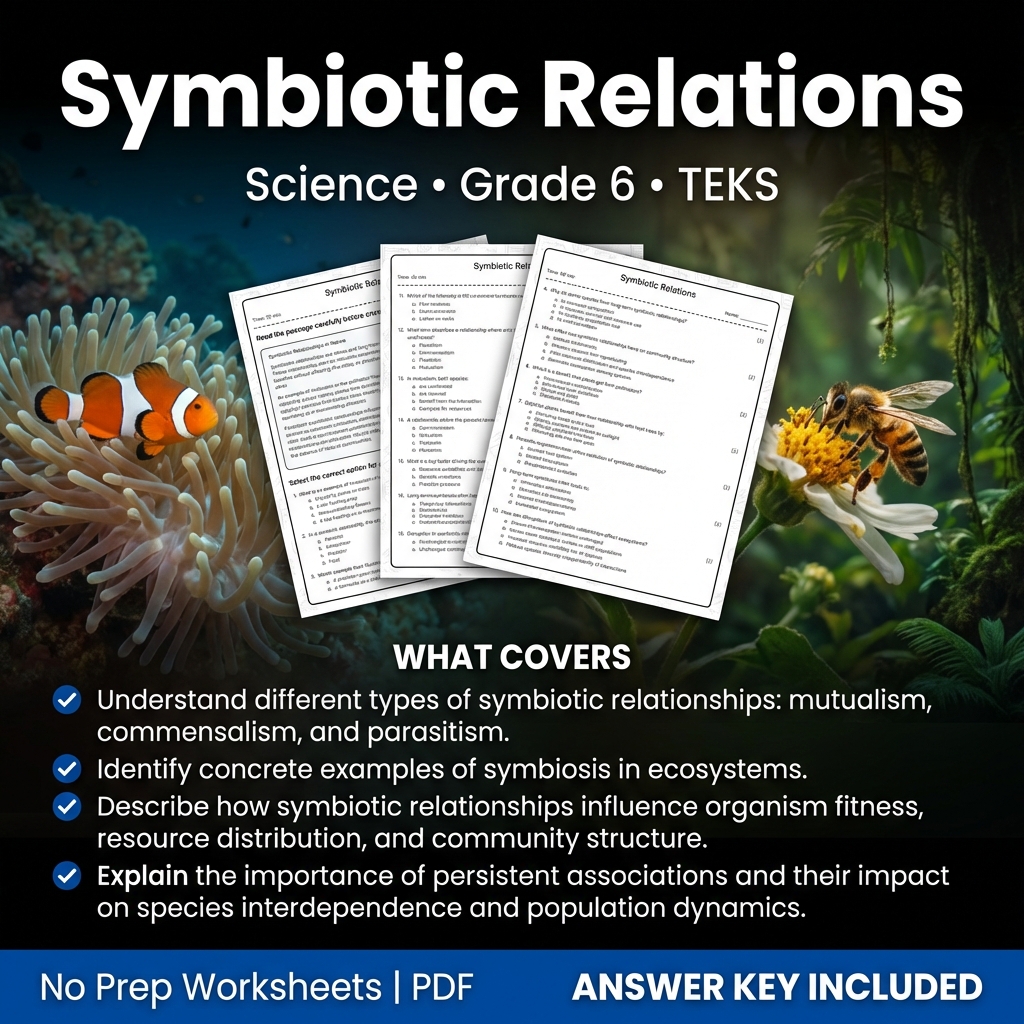
Grade 6 Science Worksheet on Symbiotic Relations – Standard TEKS Practice
Created byCoral Reef LearningLearning Objectives
- Understand different types of symbiotic relationships: mutualism, commensalism, and parasitism.
- Identify concrete examples of symbiosis in ecosystems.
- Describe how symbiotic relationships influence organism fitness, resource distribution, and community structure.
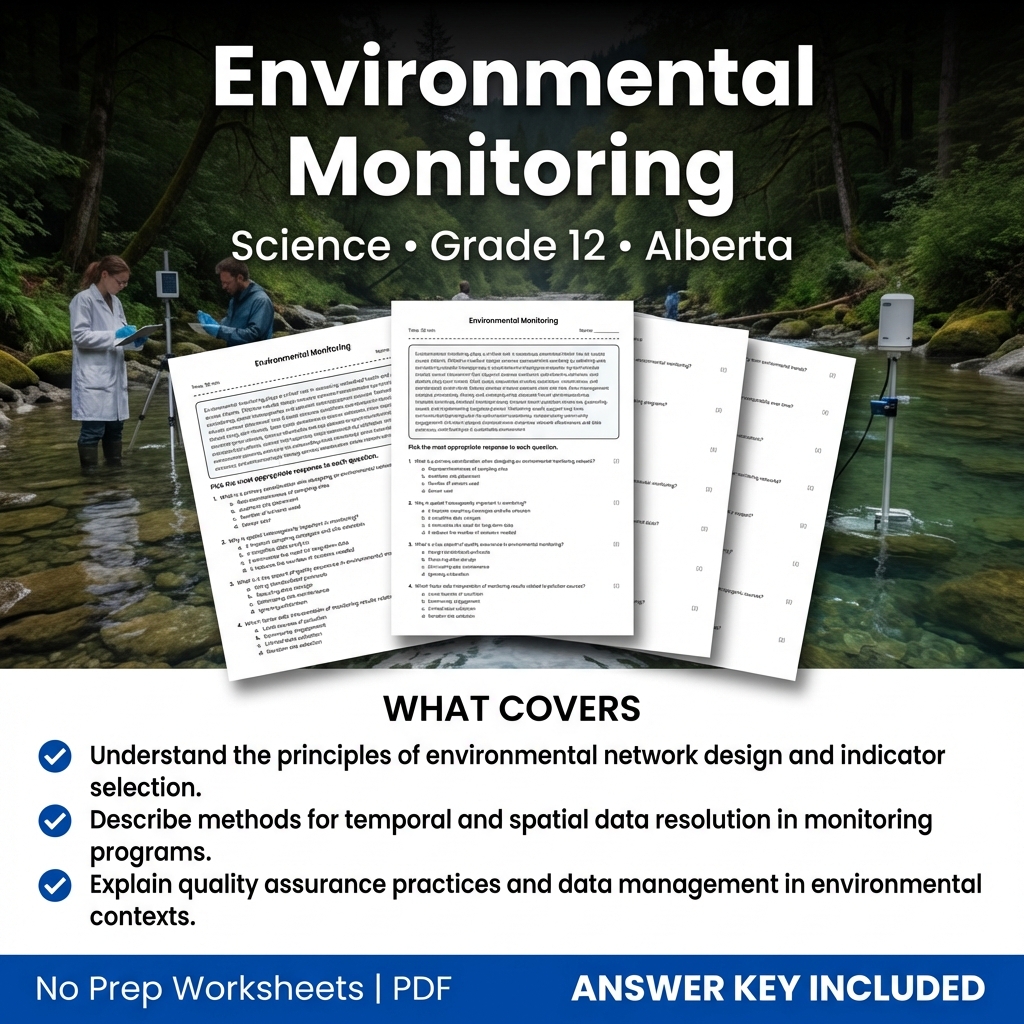
Environmental Monitoring Worksheet for Grade 12 Science - Alberta Standards
Created byCoral Reef LearningLearning Objectives
- Understand the principles of environmental network design and indicator selection.
- Describe methods for temporal and spatial data resolution in monitoring programs.
- Explain quality assurance practices and data management in environmental contexts.
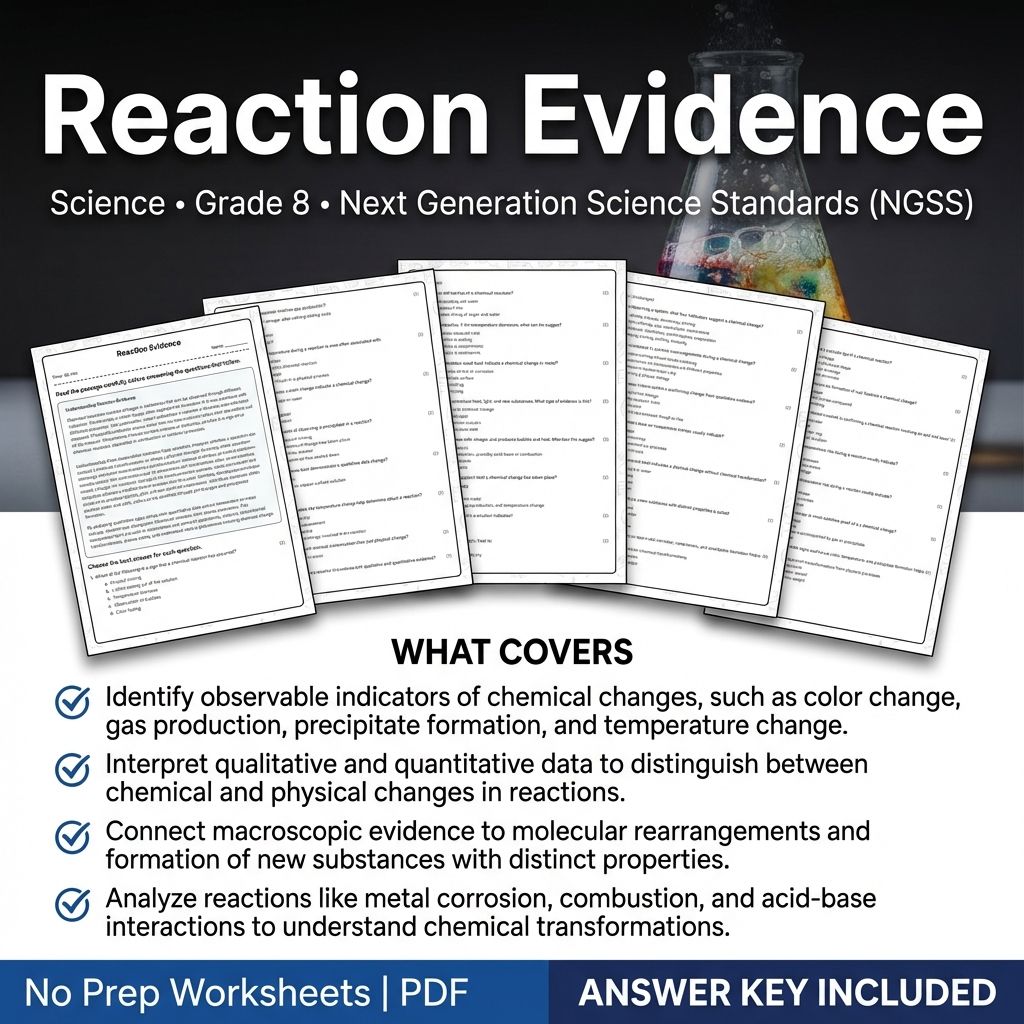
8th Grade Science | Reaction Evidence Worksheet & Answer Key (Printable PDF)
Created byCoral Reef LearningLearning Objectives
- Identify observable indicators of chemical changes, such as color change, gas production, precipitate formation, and temperature change.
- Interpret qualitative and quantitative data to distinguish between chemical and physical changes in reactions.
- Connect macroscopic evidence to molecular rearrangements and formation of new substances with distinct properties.
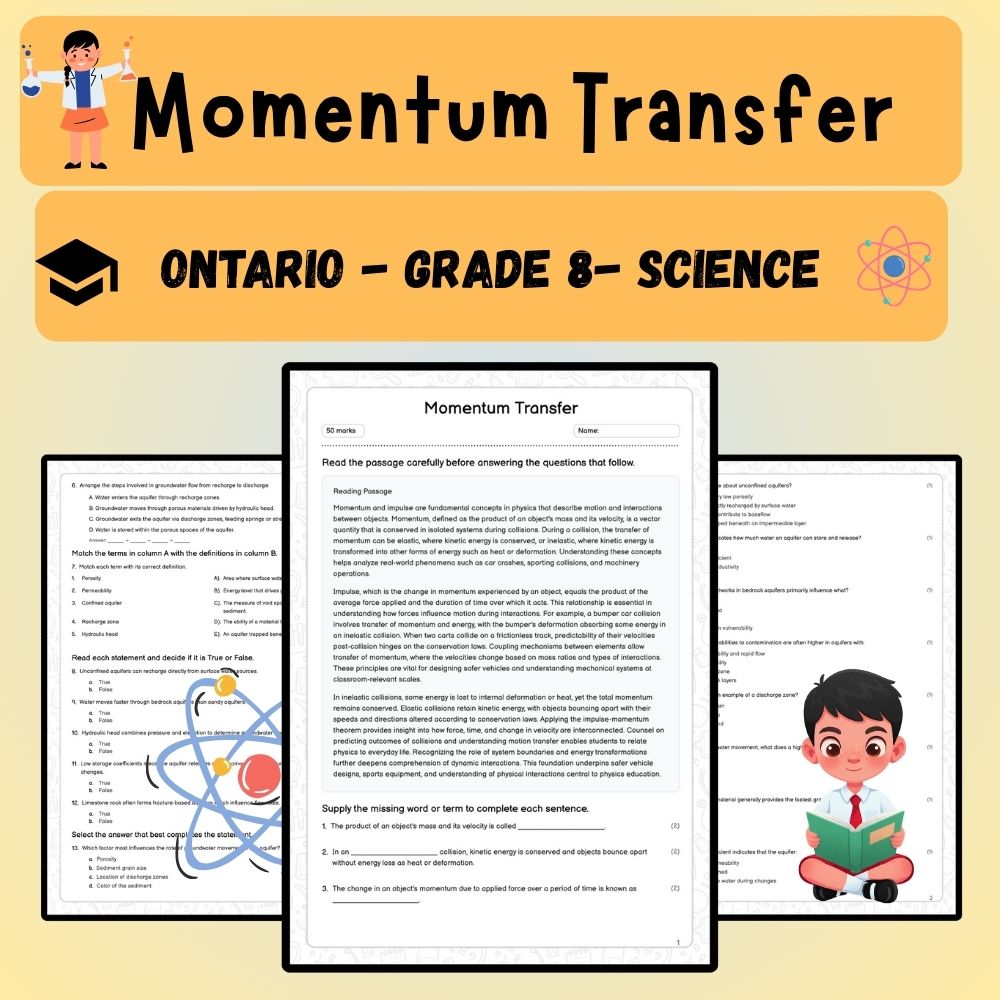
Grade 8 Science | Momentum Transfer Worksheet (PDF )
Created byPrism Point LearningLearning Objectives
- Describe the concept of linear momentum and how it is conserved in closed systems.
- Explain the relationship between impulse and change in momentum.
- Differentiate between elastic and inelastic collisions in terms of momentum transfer.
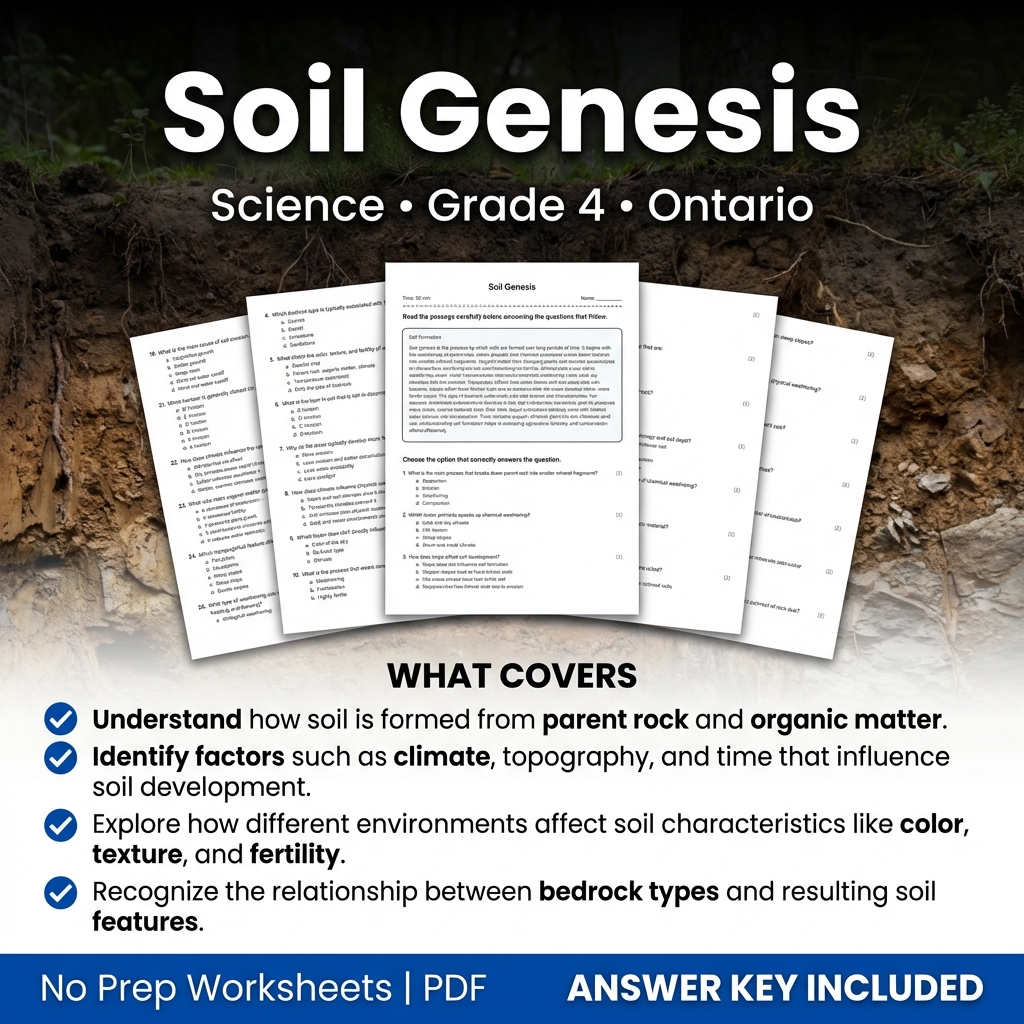
Soil Genesis Grade 4 Science Worksheet | Ontario Standards
Created byCoral Reef LearningLearning Objectives
- Understand how soil is formed from parent rock and organic matter.
- Identify factors such as climate, topography, and time that influence soil development.
- Explore how different environments affect soil characteristics like color, texture, and fertility.
Browse more categories
About Science Worksheets
Find Science worksheets spanning core skills, practice, and review. All 42,859 resources are instant PDF downloads for the classroom or home.
Every worksheet on MyTeachingSheets is created by independent teacher-authors and reviewed before publication. All resources download as printable PDFs for classroom, homework, or at-home practice, and many include answer keys. Preview any worksheet free before buying.