
Science Worksheets
42,859 subject resources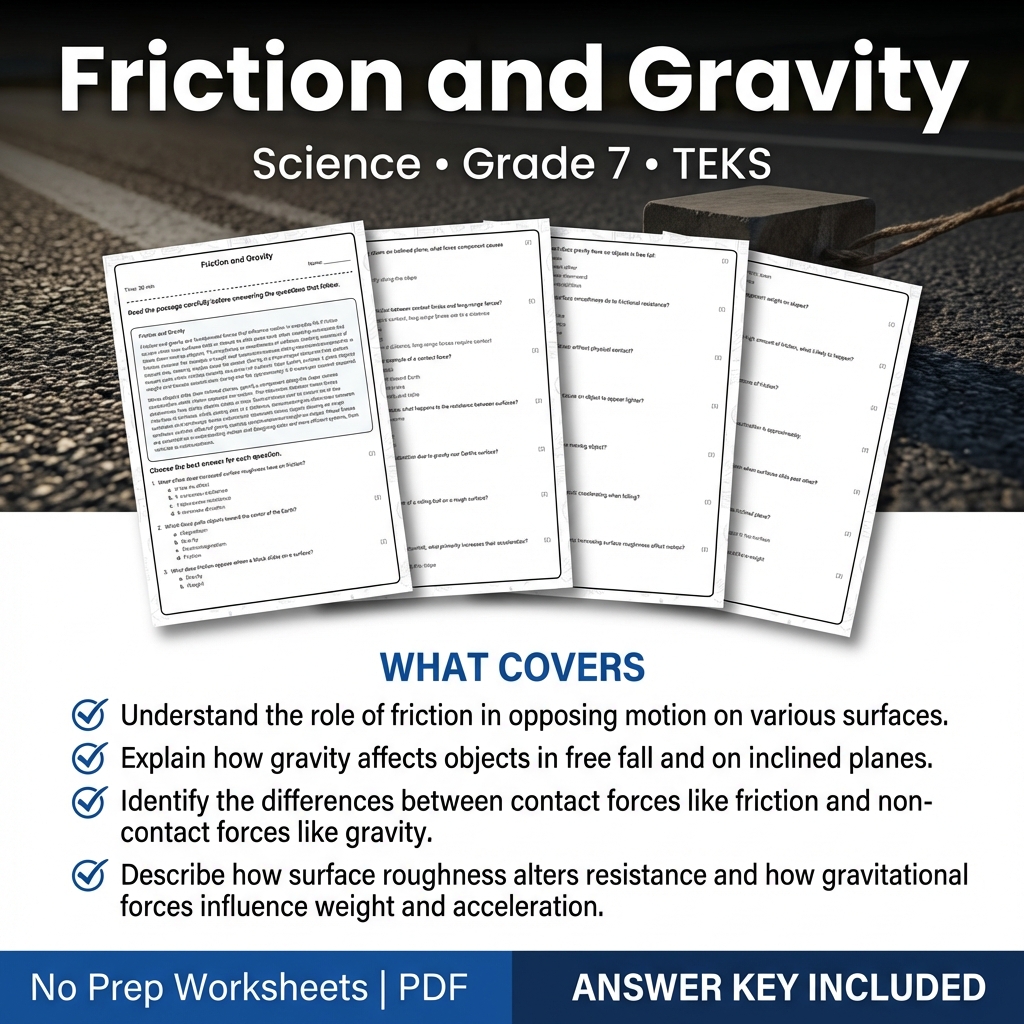
Grade 7 Science Worksheet on Friction and Gravity | TEKS Aligned
 Created byCoral Reef Learning
Learning Objectives
- Understand the role of friction in opposing motion on various surfaces.
- Explain how gravity affects objects in free fall and on inclined planes.
- Identify the differences between contact forces like friction and non-contact forces like gravity.
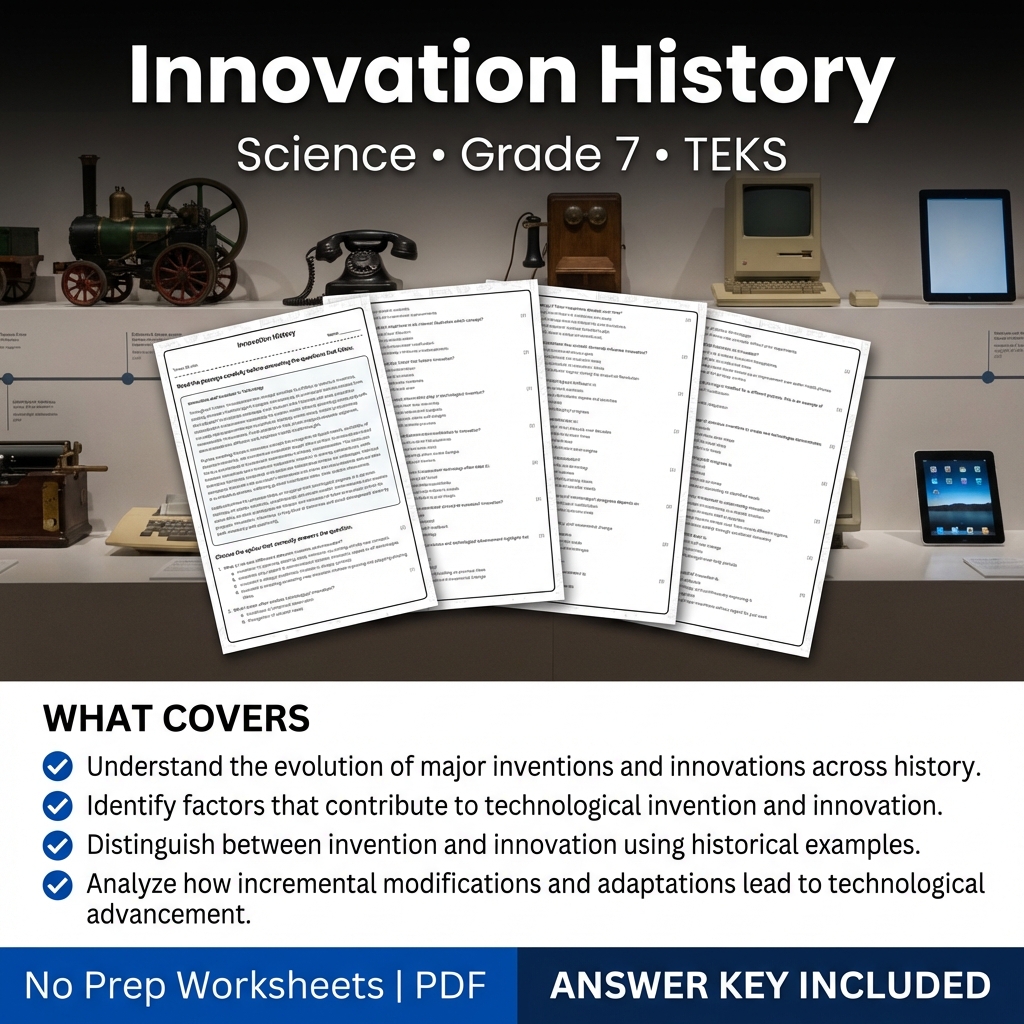
Grade 7 Science Worksheet on Innovation History | TEKS Standards Practice
Created byCoral Reef LearningLearning Objectives
- Understand the evolution of major inventions and innovations across history.
- Identify factors that contribute to technological invention and innovation.
- Distinguish between invention and innovation using historical examples.
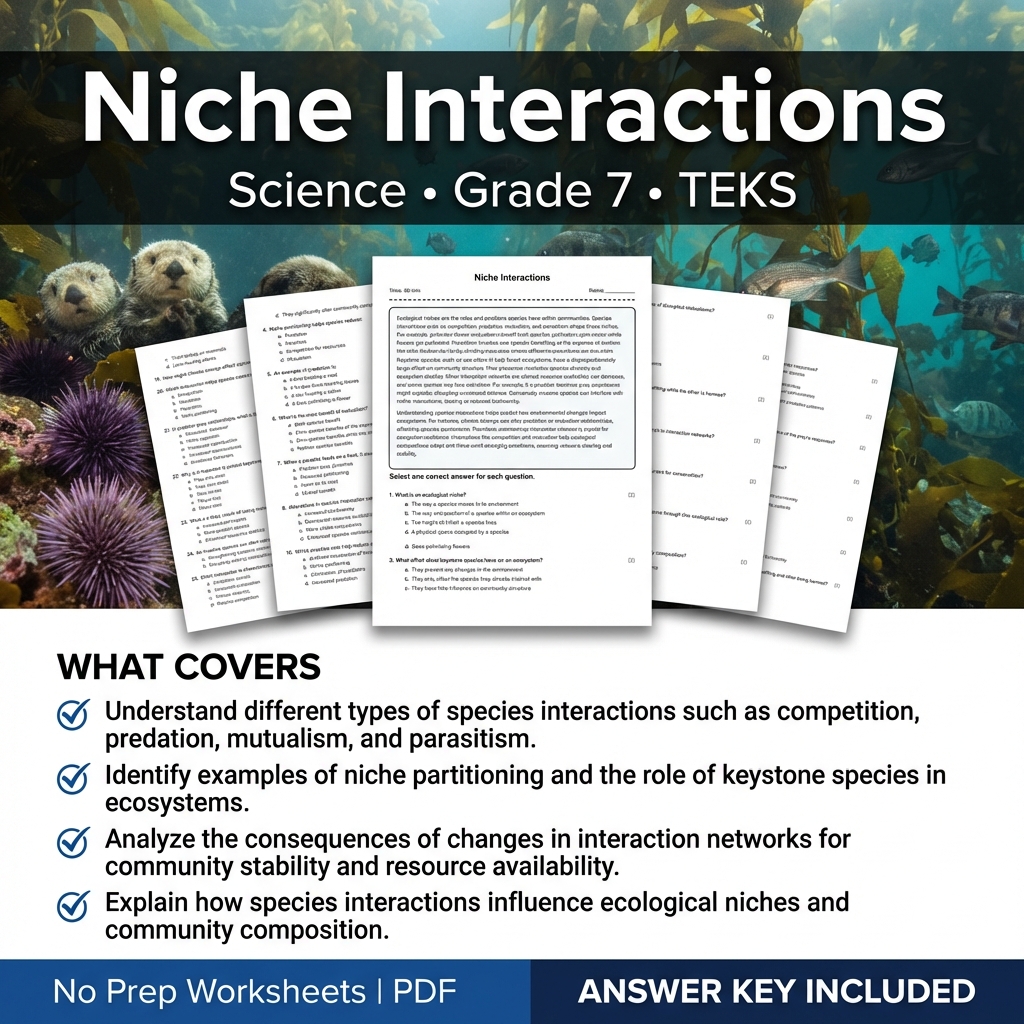
Grade 7 Science Niche Interactions Worksheet | TEKS Aligned Practice
Created byCoral Reef LearningLearning Objectives
- Understand different types of species interactions such as competition, predation, mutualism, and parasitism.
- Identify examples of niche partitioning and the role of keystone species in ecosystems.
- Analyze the consequences of changes in interaction networks for community stability and resource availability.
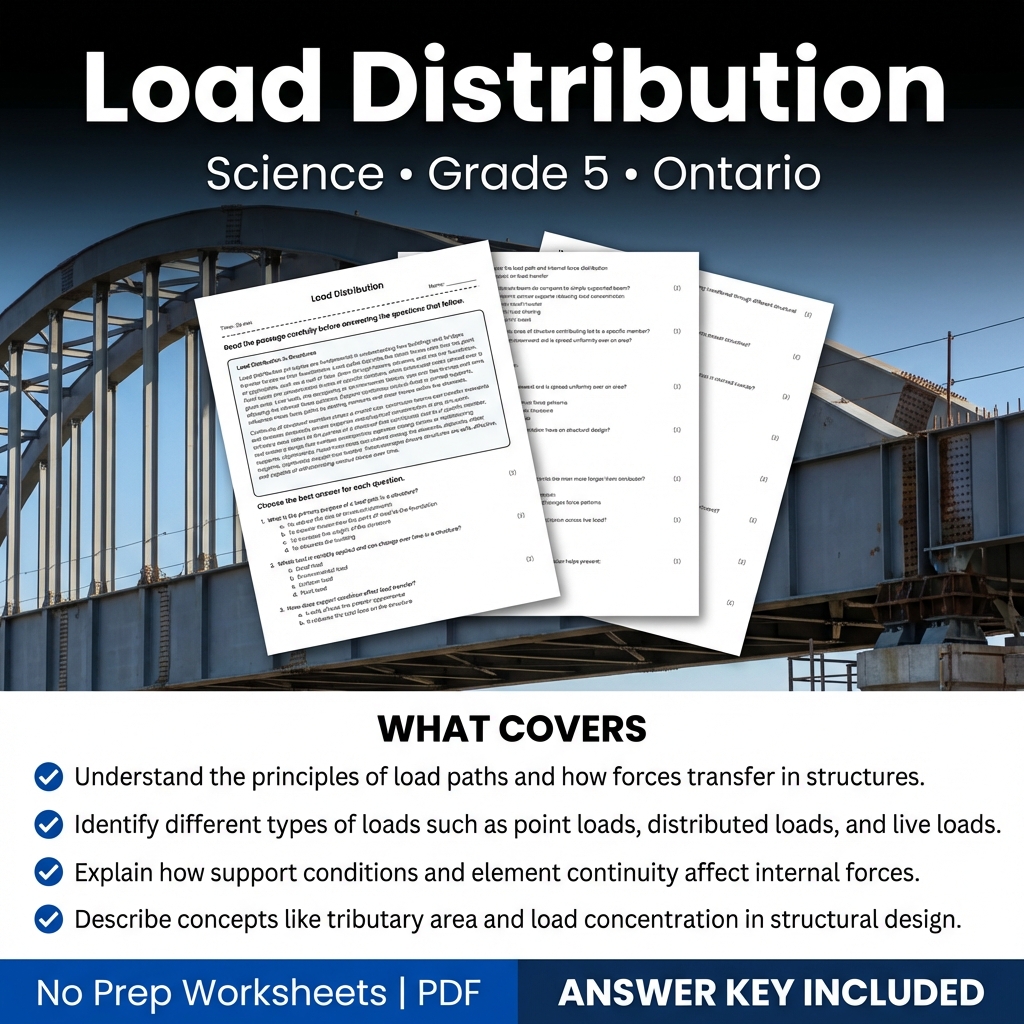
Grade 5 Science Worksheet Load Distribution | Ontario Standards Practice
Created byCoral Reef LearningLearning Objectives
- Understand the principles of load paths and how forces transfer in structures.
- Identify different types of loads such as point loads, distributed loads, and live loads.
- Explain how support conditions and element continuity affect internal forces.
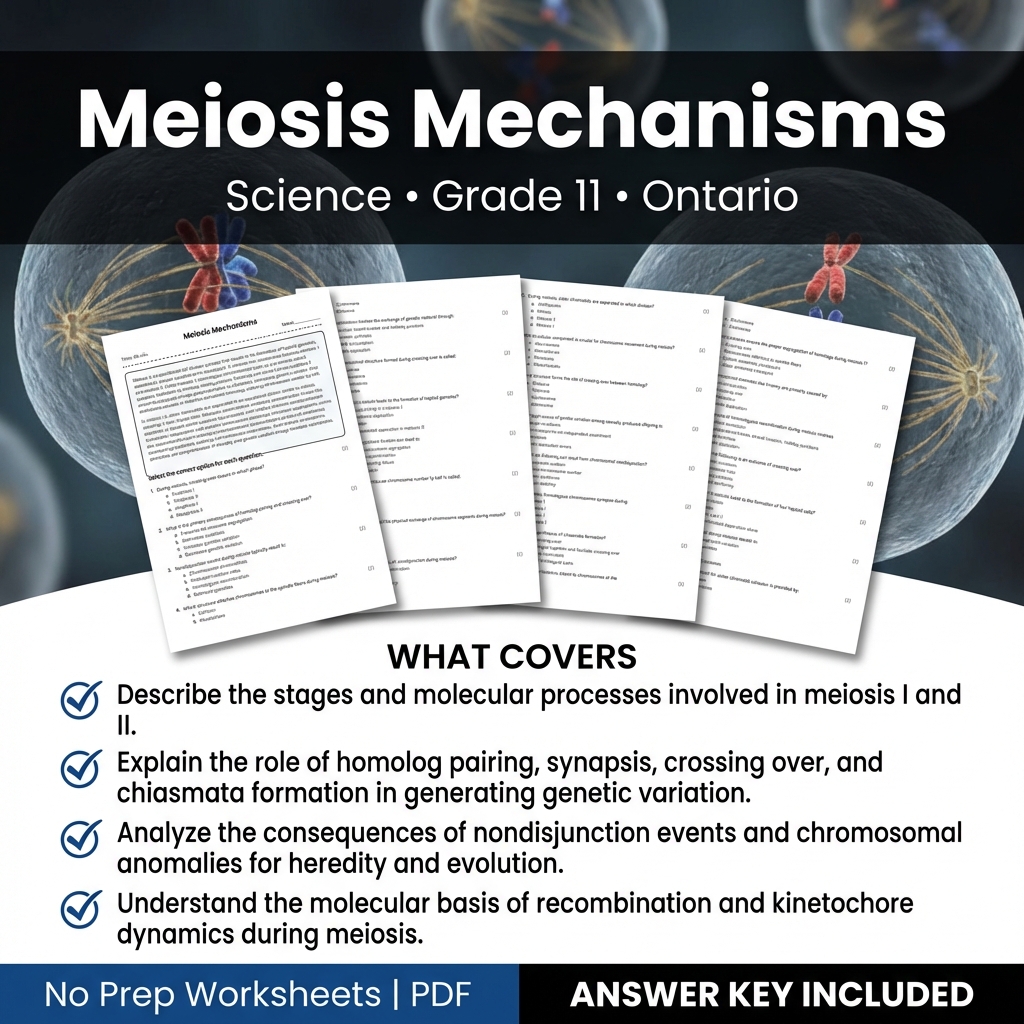
Meiosis Mechanisms Worksheet | Science Practice and Assessment Grade 11
Created byCoral Reef LearningLearning Objectives
- Describe the stages and molecular processes involved in meiosis I and II.
- Explain the role of homolog pairing, synapsis, crossing over, and chiasmata formation in generating genetic variation.
- Analyze the consequences of nondisjunction events and chromosomal anomalies for heredity and evolution.
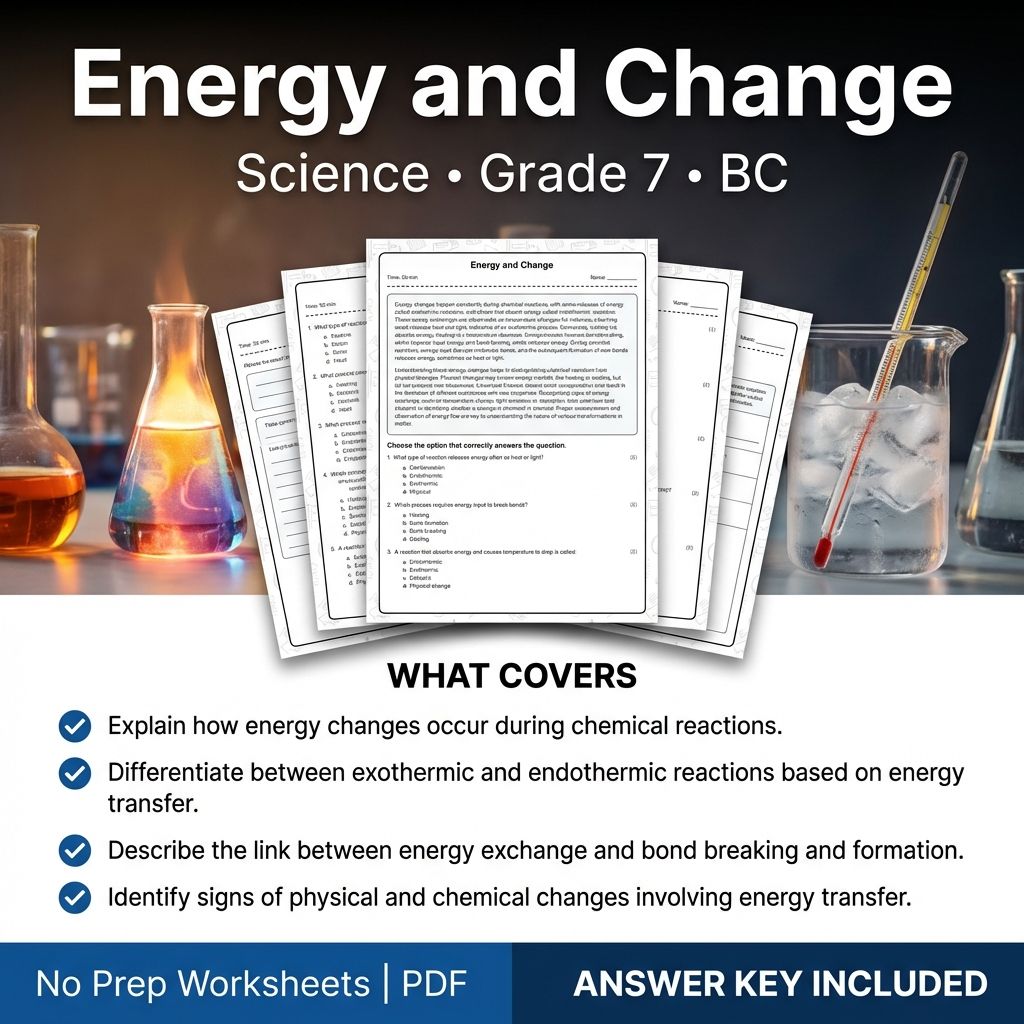
Grade 7 Science Worksheet | Energy and Change Practice + Answer Key (Printable PDF)
Created byCoral Reef LearningLearning Objectives
- Explain how energy changes occur during chemical reactions.
- Differentiate between exothermic and endothermic reactions based on energy transfer.
- Describe the link between energy exchange and bond breaking and formation.
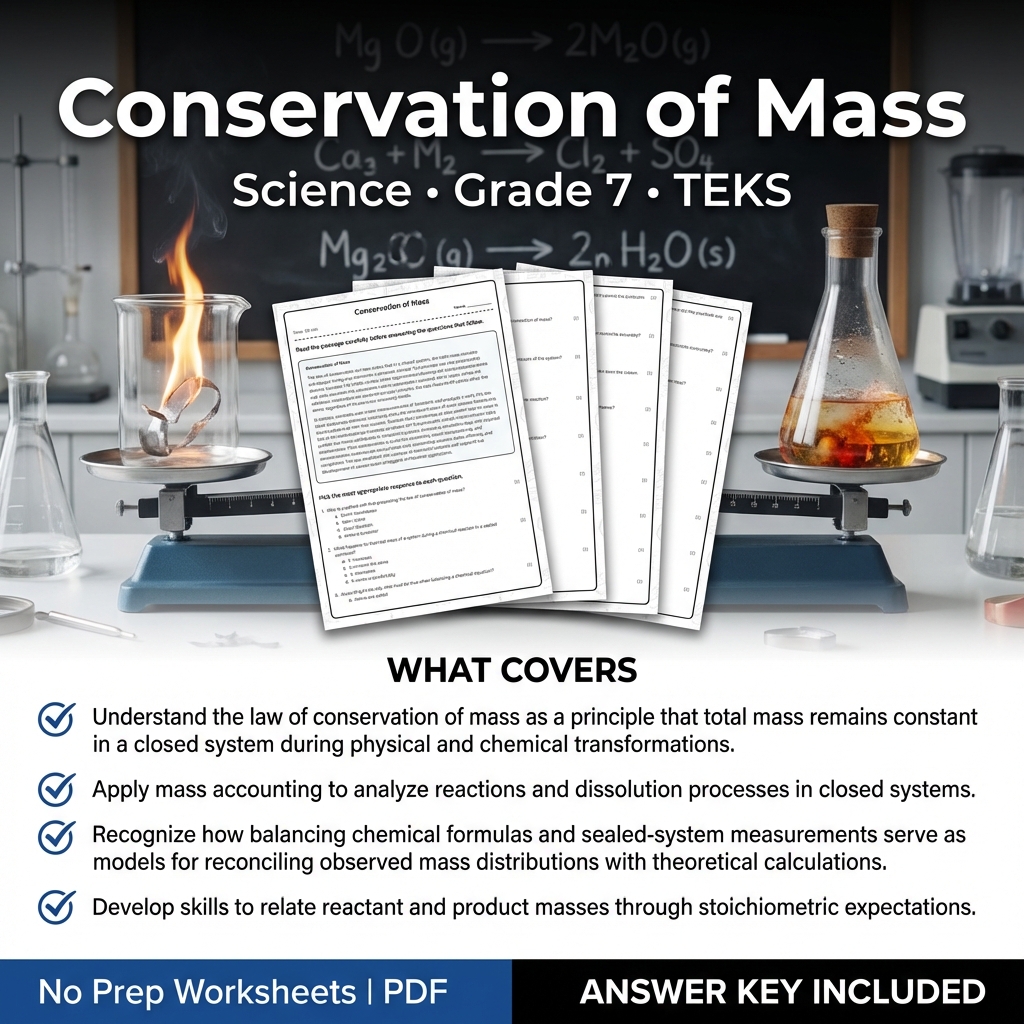
Grade 7 Science Worksheet on Conservation of Mass | TEKS Aligned
Created byCoral Reef LearningLearning Objectives
- Understand the law of conservation of mass as a principle that total mass remains constant in a closed system during physical and chemical transformations.
- Apply mass accounting to analyze reactions and dissolution processes in closed systems.
- Recognize how balancing chemical formulas and sealed-system measurements serve as models for reconciling observed mass distributions with theoretical calculations.

Grade 2 Science Worksheet on Selection Criteria | Ontario Standards
Created byCoral Reef LearningLearning Objectives
- Understand different properties and measurements used to select materials and containers.
- Identify real-life examples where capacity and material properties influence selection.
- Learn how to match properties like weight, strength, and capacity to specific needs.
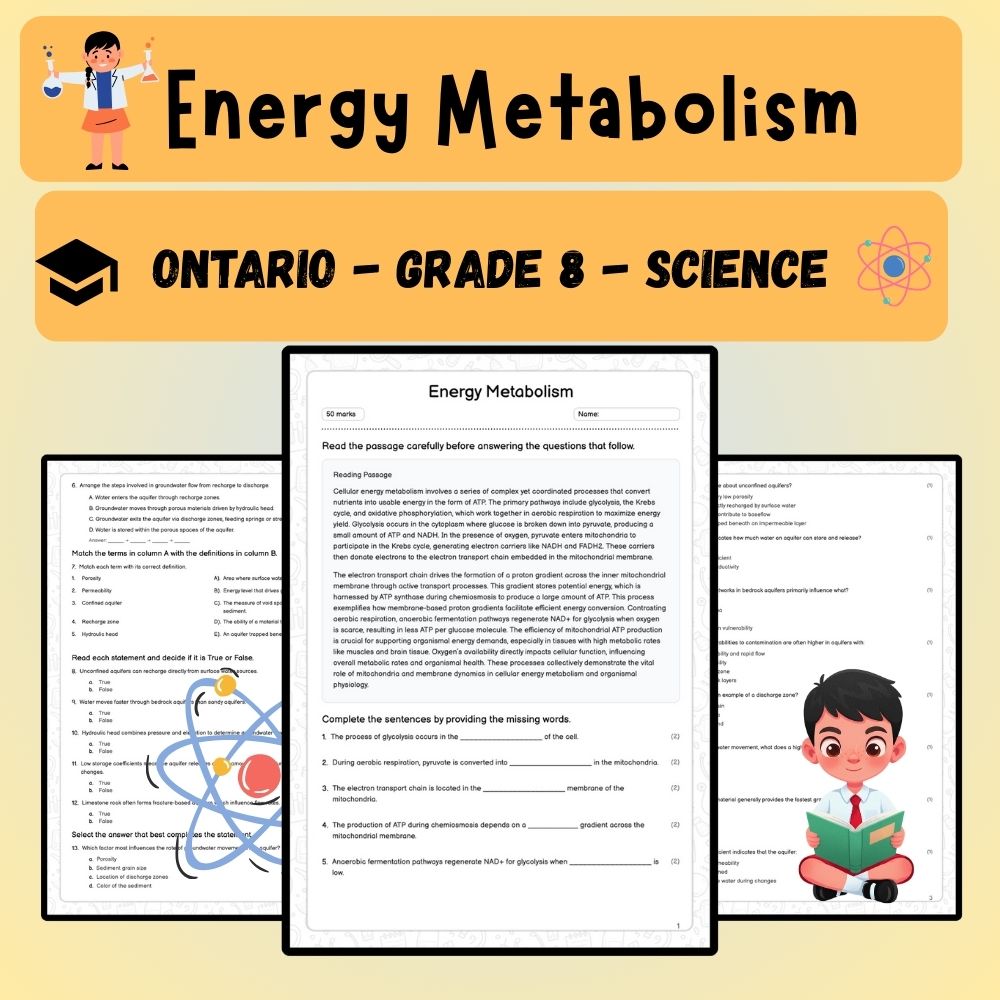
Grade 8 Science – Energy Metabolism Worksheet (PDF ) – Ontario Standards
 Created byPrism Point Learning
Learning Objectives
- Describe the stages of aerobic respiration and their roles in energy production.
- Compare aerobic respiration with anaerobic fermentation pathways.
- Explain how mitochondria contribute to ATP synthesis via membrane gradients and chemiosmosis.
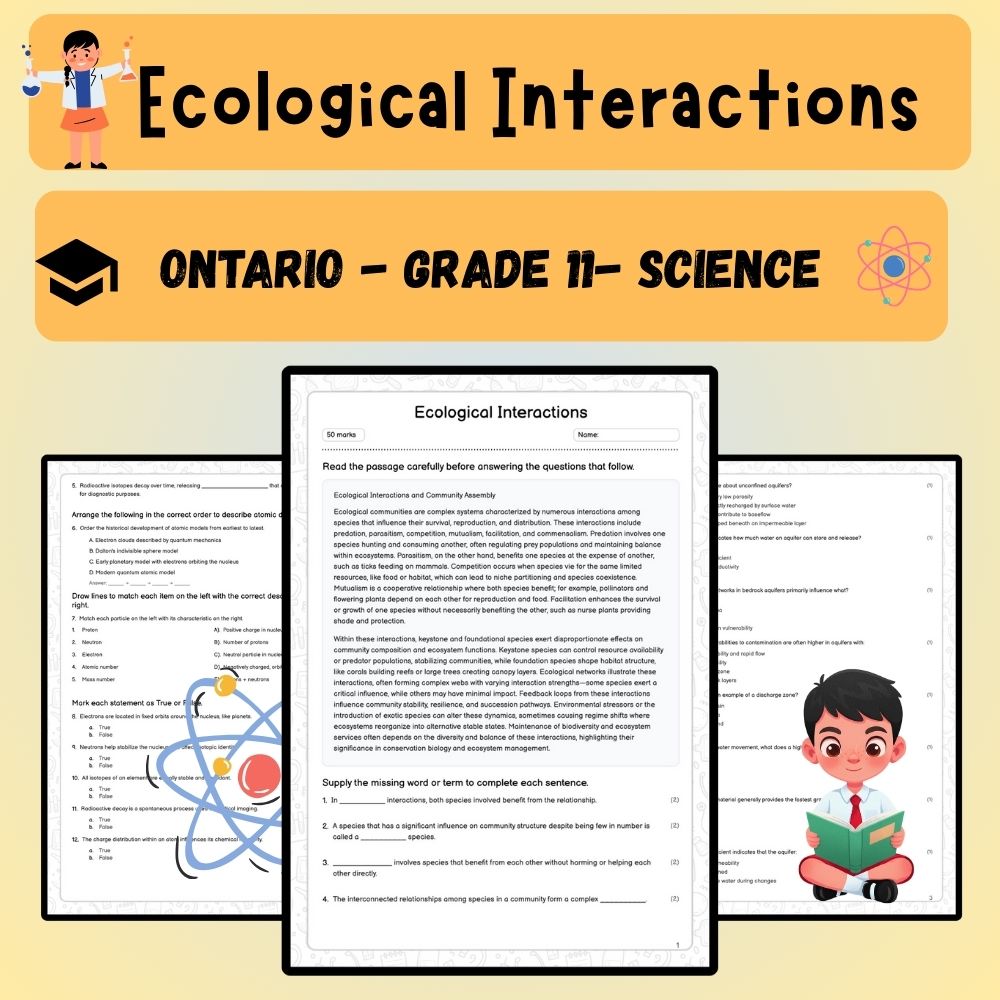
Grade 11 Science – Ecological Interactions Worksheet (PDF) | Ontario Standards
Created byPrism Point LearningLearning Objectives
- Describe various types of species interactions, including predation, parasitism, competition, mutualism, facilitation, and commensalism.
- Analyze the role of keystone and foundational species in community structure and ecosystem processes.
- Explain ecological networks, interaction strength, and feedback loops.
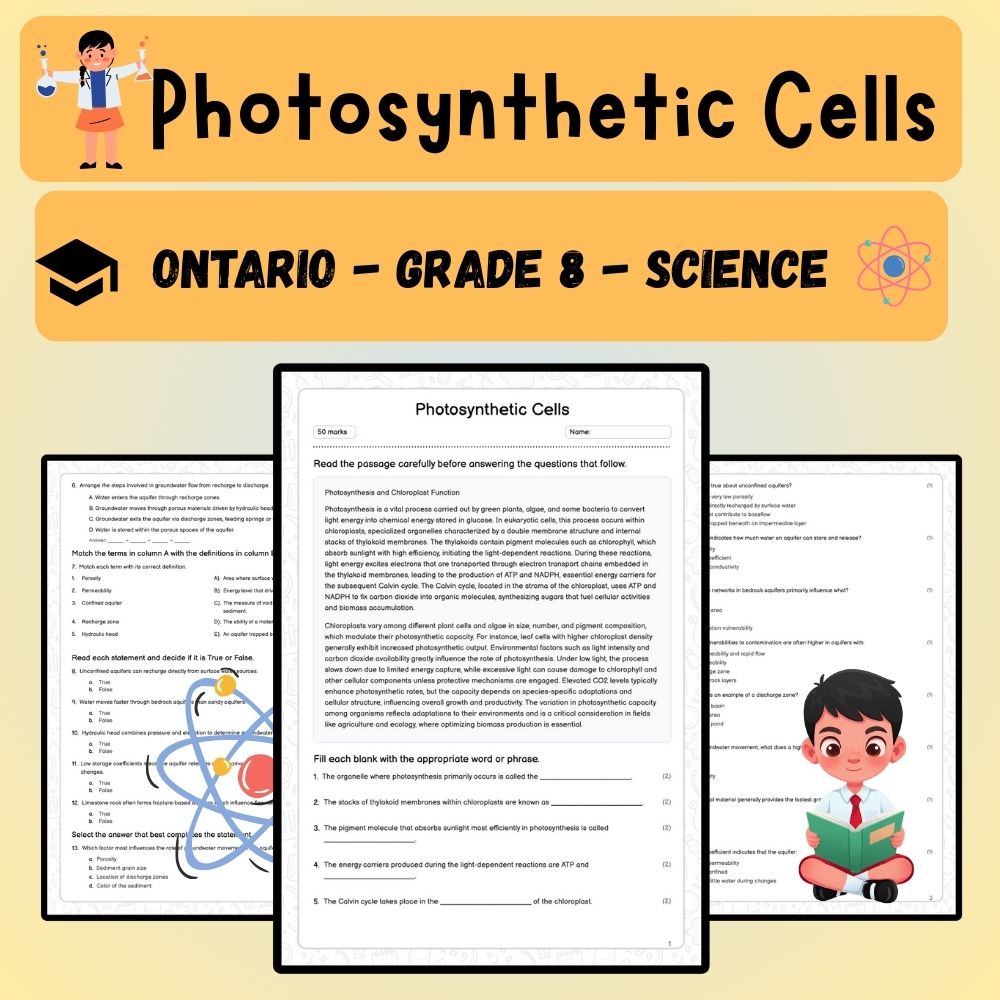
Grade 8 Science | Photosynthetic Cells Worksheet (PDF)
Created byPrism Point LearningLearning Objectives
- Describe the structure of chloroplasts and their role in photosynthesis.
- Explain the light-dependent reactions and the Calvin cycle in photosynthesis.
- Identify environmental factors affecting photosynthetic efficiency.
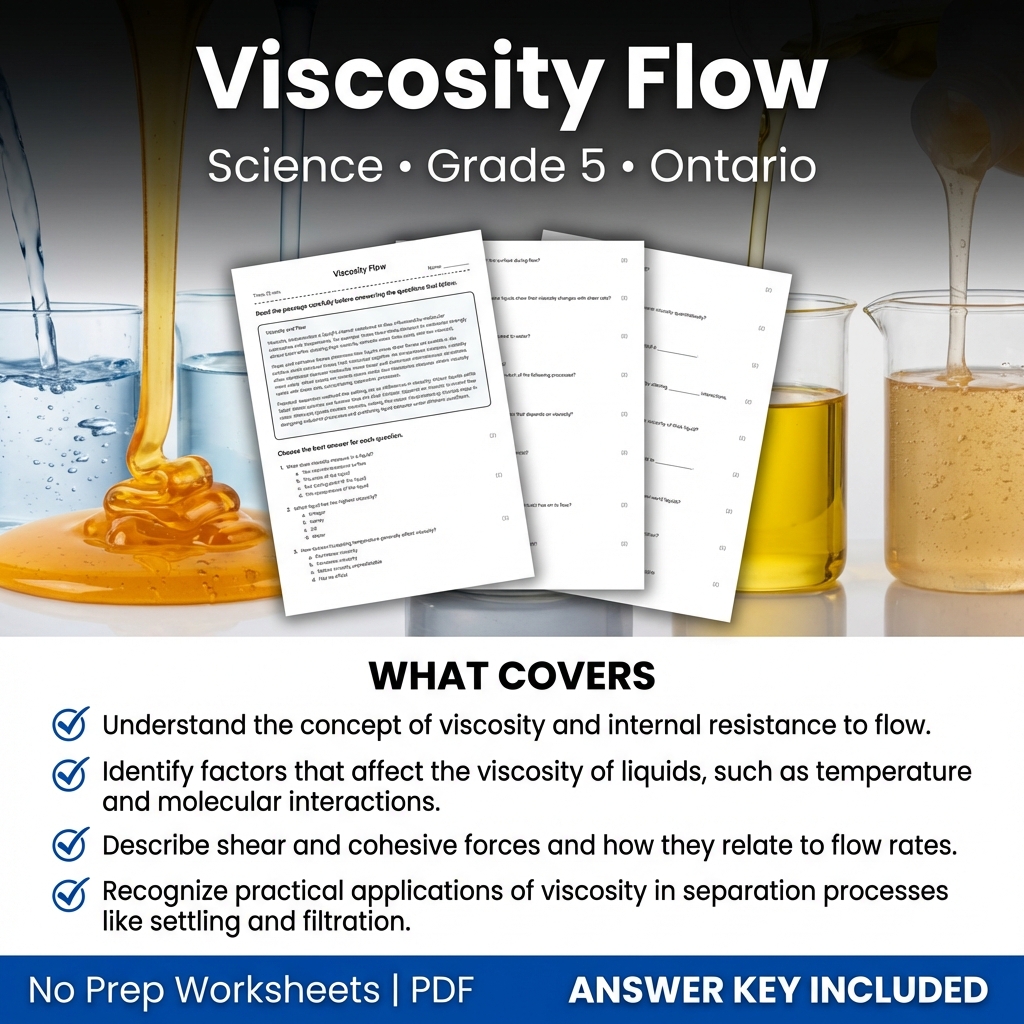
Viscosity Flow Worksheet for Grade 5 Science | Ontario Standards
Created byCoral Reef LearningLearning Objectives
- Understand the concept of viscosity and internal resistance to flow.
- Identify factors that affect the viscosity of liquids, such as temperature and molecular interactions.
- Describe shear and cohesive forces and how they relate to flow rates.
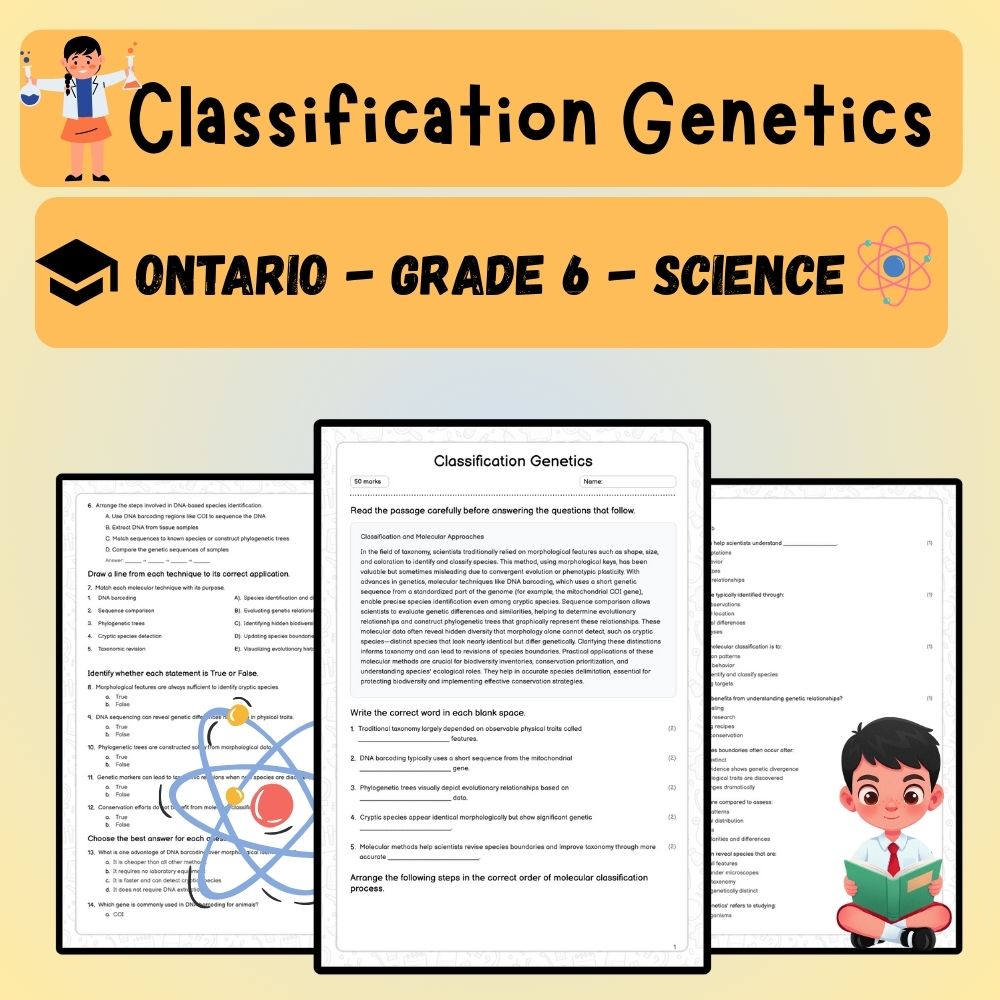
6th Grade Science – Classification & Genetics Worksheet (PDF)
Created byPrism Point LearningLearning Objectives
- Understand molecular methods used in species classification, including DNA barcoding and sequence comparison.
- Differentiate between morphological and genetic approaches to taxonomy.
- Interpret how DNA evidence can reveal cryptic species and influence taxonomy.
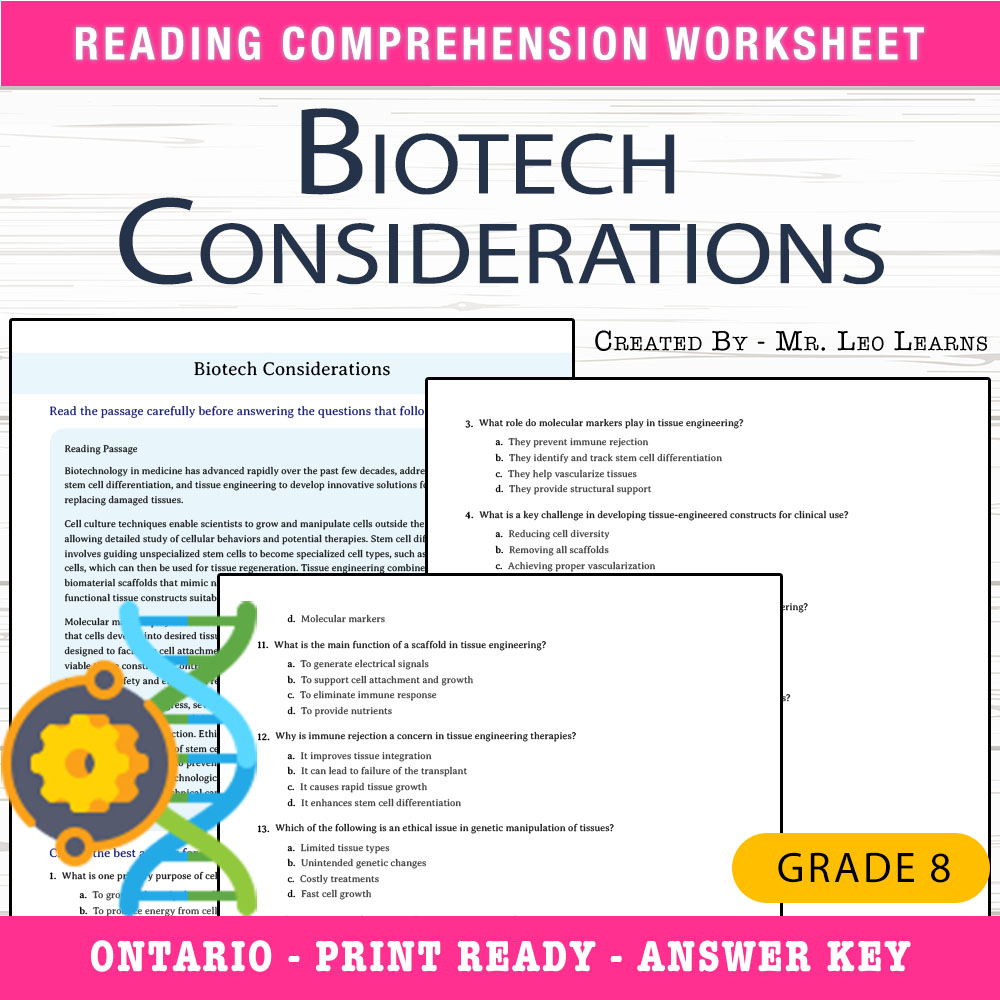
Grade 8 Science — Biotech Considerations Worksheet for Mastery
 Created byThe Resource Hub
Learning Objectives
- Understand the key biotechnological approaches used in cell culture, stem cell differentiation, and tissue engineering.
- Recognize the implications of biotechnological advances for tissue repair and replacement.
- Identify the scientific, ethical, safety, and regulatory considerations associated with manipulation of cells and tissues.
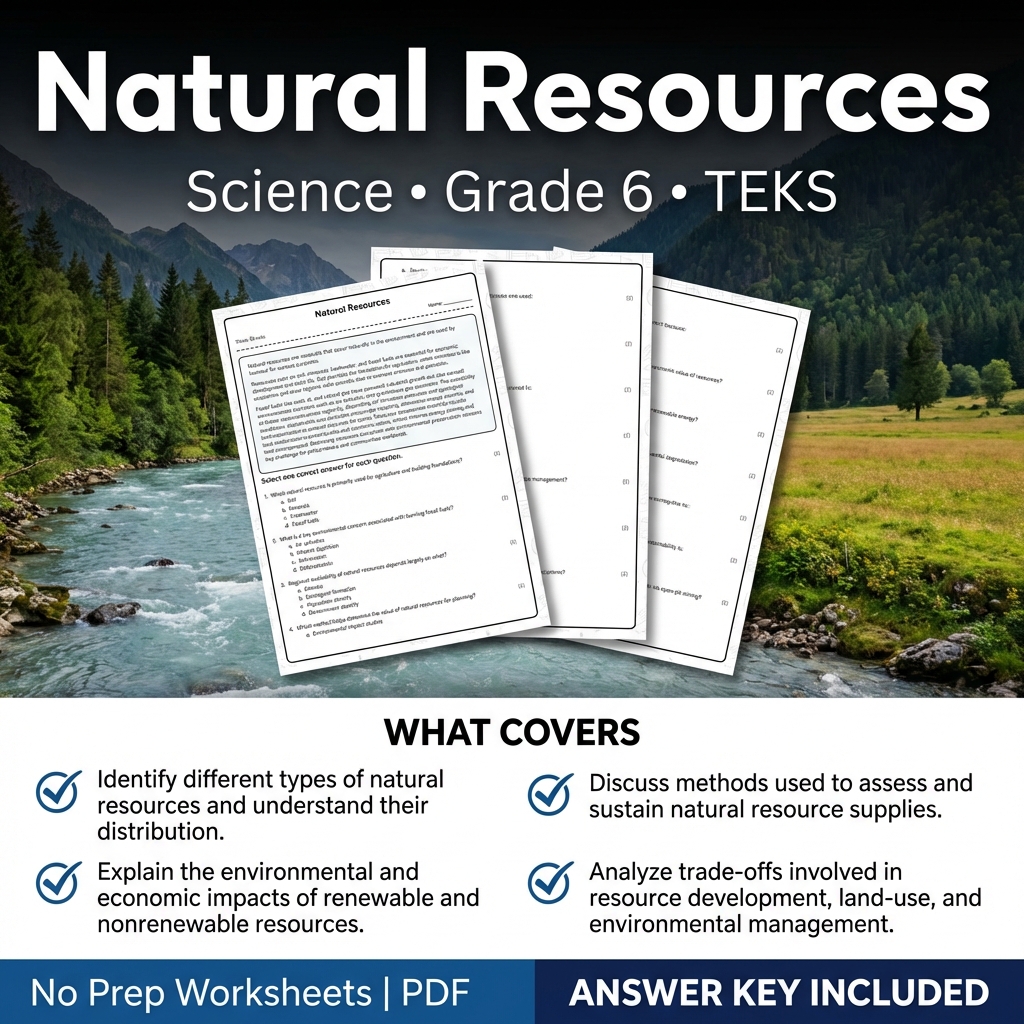
Grade 6 Science Worksheet on Natural Resources | TEKS-Aligned Practice
Created byCoral Reef LearningLearning Objectives
- Identify different types of natural resources and understand their distribution.
- Explain the environmental and economic impacts of renewable and nonrenewable resources.
- Discuss methods used to assess and sustain natural resource supplies.
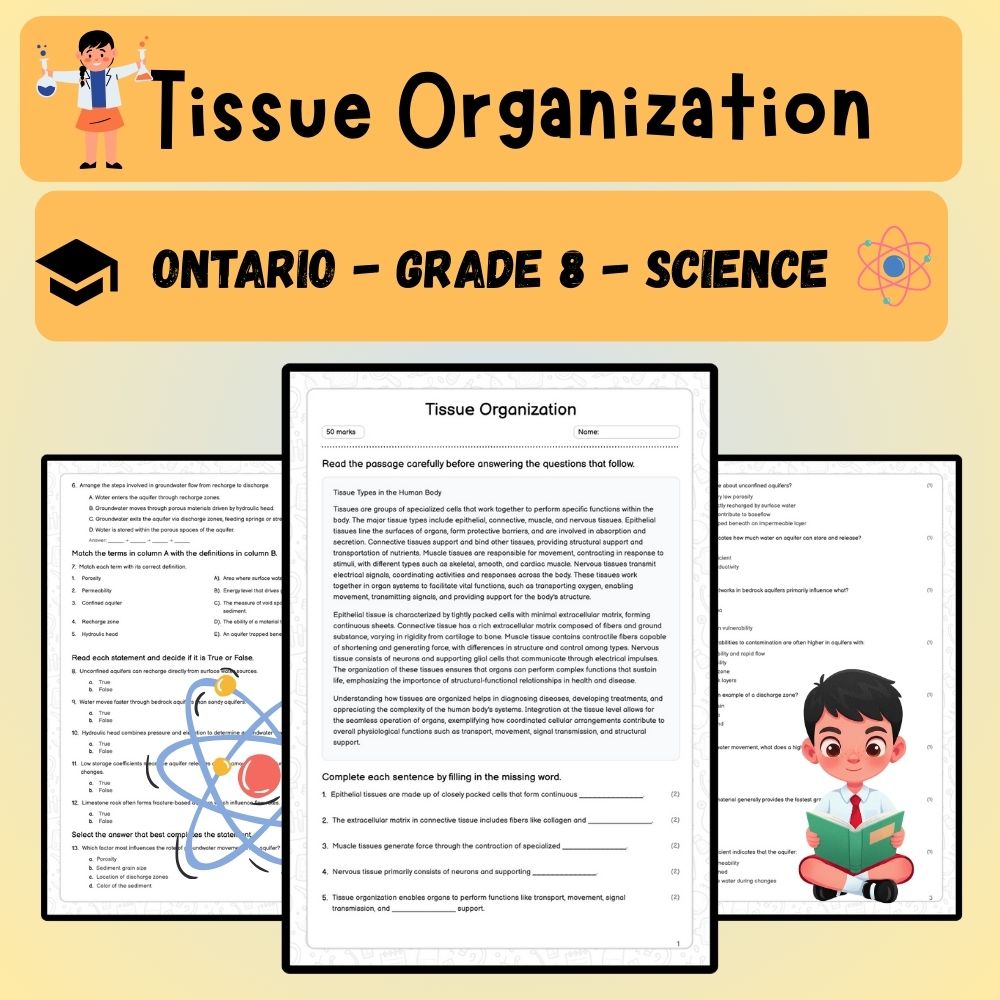
Grade 8 Science | Tissue Organization Worksheet (PDF ) - Ontario Standards
Created byPrism Point LearningLearning Objectives
- Describe the major tissue types in the human body and their cellular components.
- Explain the structural and functional differences among epithelial, connective, muscle, and nervous tissues.
- Identify examples of tissue-level integration that contribute to organ functions in transport, movement, signaling, and support.
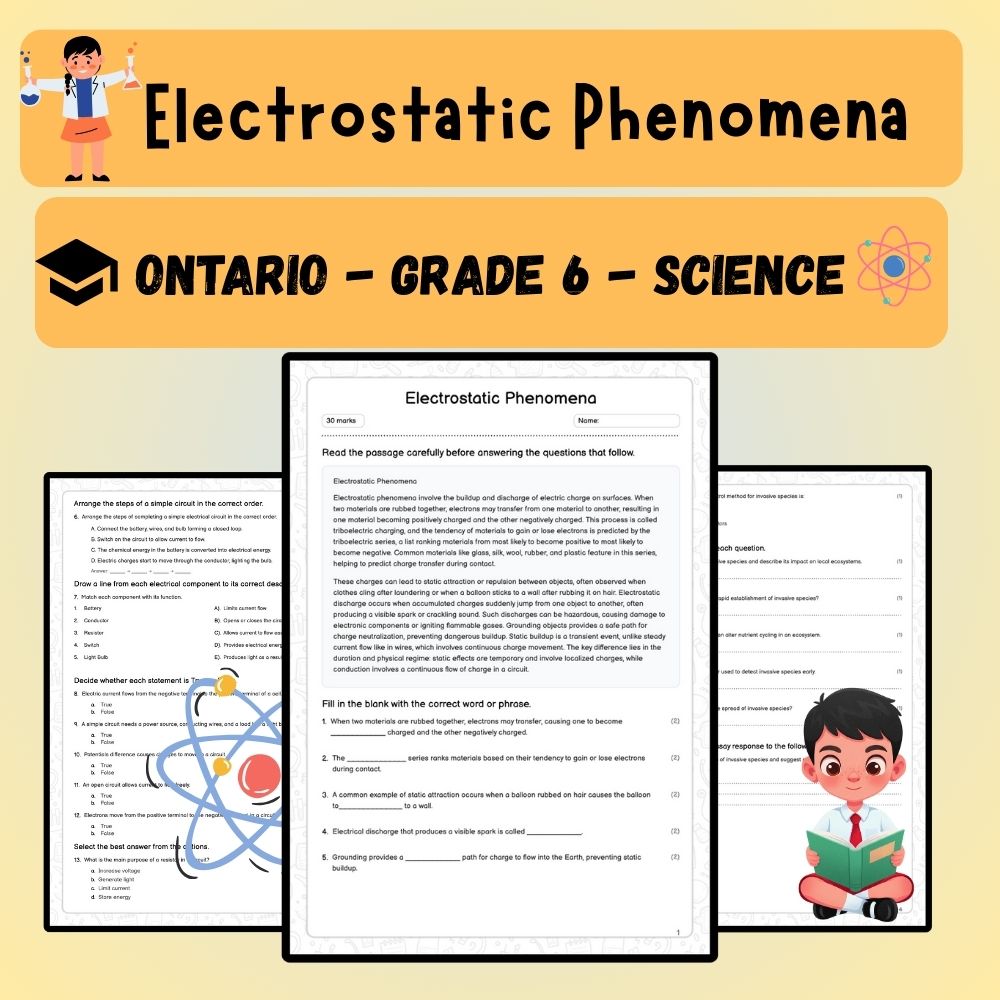
6th Grade Science | Electrostatic Phenomena Worksheet (PDF)
Created byPrism Point LearningLearning Objectives
- Understand the concept of charge transfer through triboelectric effects
- Explain how electrostatic discharge occurs and its common manifestations
- Describe the triboelectric series and how it predicts charge tendencies of materials
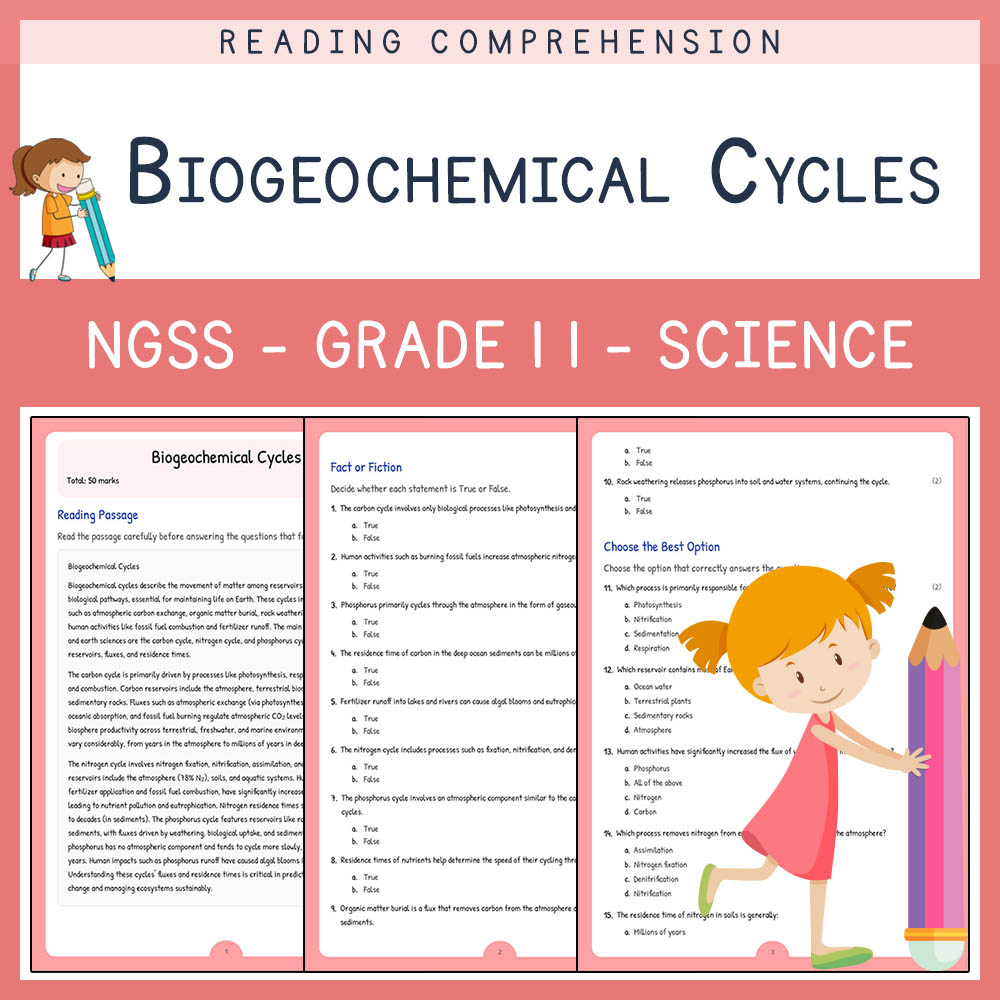
Grade 11 Science | Biogeochemical Cycles Worksheet (NP + Answer Key)
 Created byLumora Learning
Learning Objectives
- Explain the processes involved in carbon, nitrogen, and phosphorus cycles.
- Identify reservoirs and fluxes within biogeochemical cycles.
- Evaluate human impacts on nutrient cycling and their ecological consequences.
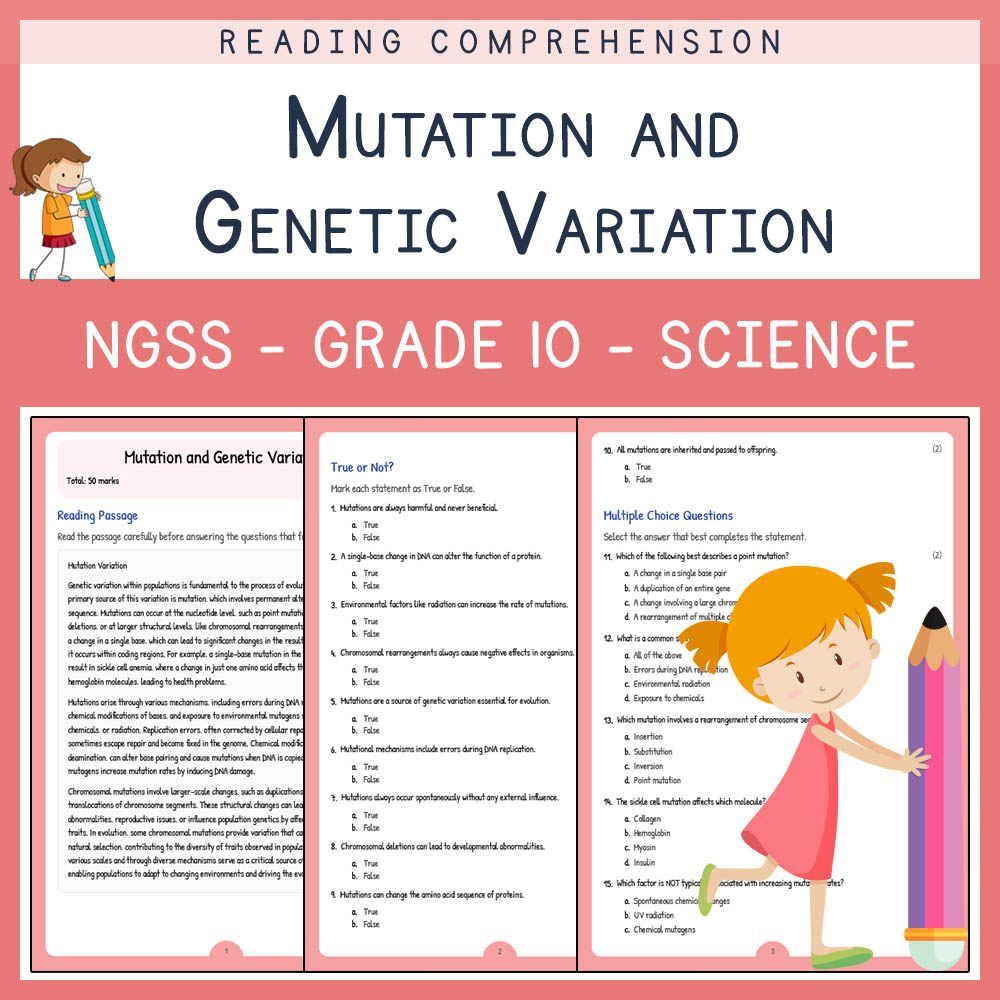
Grade 10 Science | Mutation and Genetic Variation Worksheet (PDF + Answer Key)
Created byLumora LearningLearning Objectives
- Understand different types of genetic mutations and their mechanisms.
- Recognize how mutations contribute to phenotypic diversity and evolution.
- Identify examples of mutations, including point mutations and chromosomal alterations.
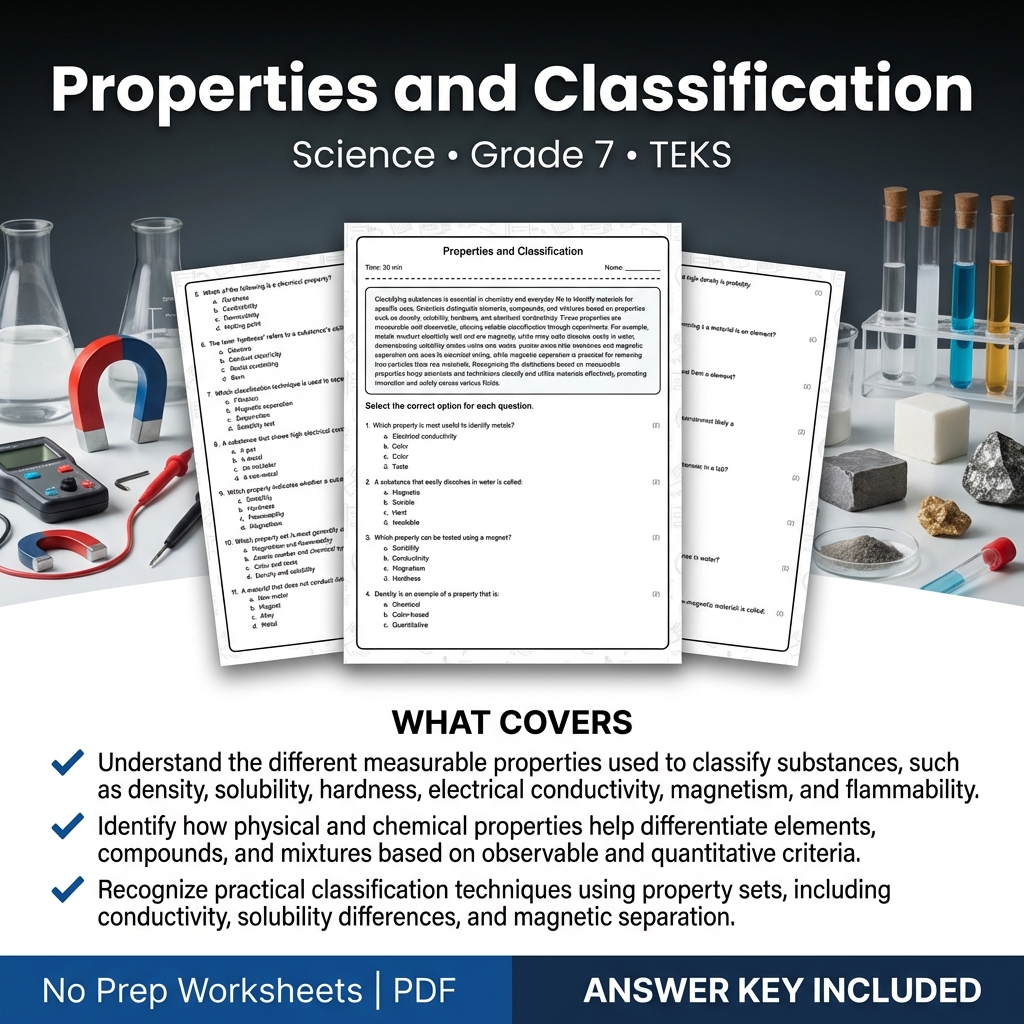
Grade 7 Science Properties and Classification Worksheet | TEKS Aligned PDF
Created byCoral Reef LearningLearning Objectives
- Understand the different measurable properties used to classify substances, such as density, solubility, hardness, electrical conductivity, magnetism, and flammability.
- Identify how physical and chemical properties help differentiate elements, compounds, and mixtures based on observable and quantitative criteria.
- Recognize practical classification techniques using property sets, including conductivity, solubility differences, and magnetic separation.

Conservation Analysis Worksheet for Grade 8 Science TEKS Alignment
Created byCoral Reef LearningLearning Objectives
- Understand the principle of mass conservation in chemical processes within closed systems.
- Identify and analyze implications of mass conservation for reaction accounting and qualitative balancing.
- Differentiate between open and closed systems in chemical observations and inferences about matter.
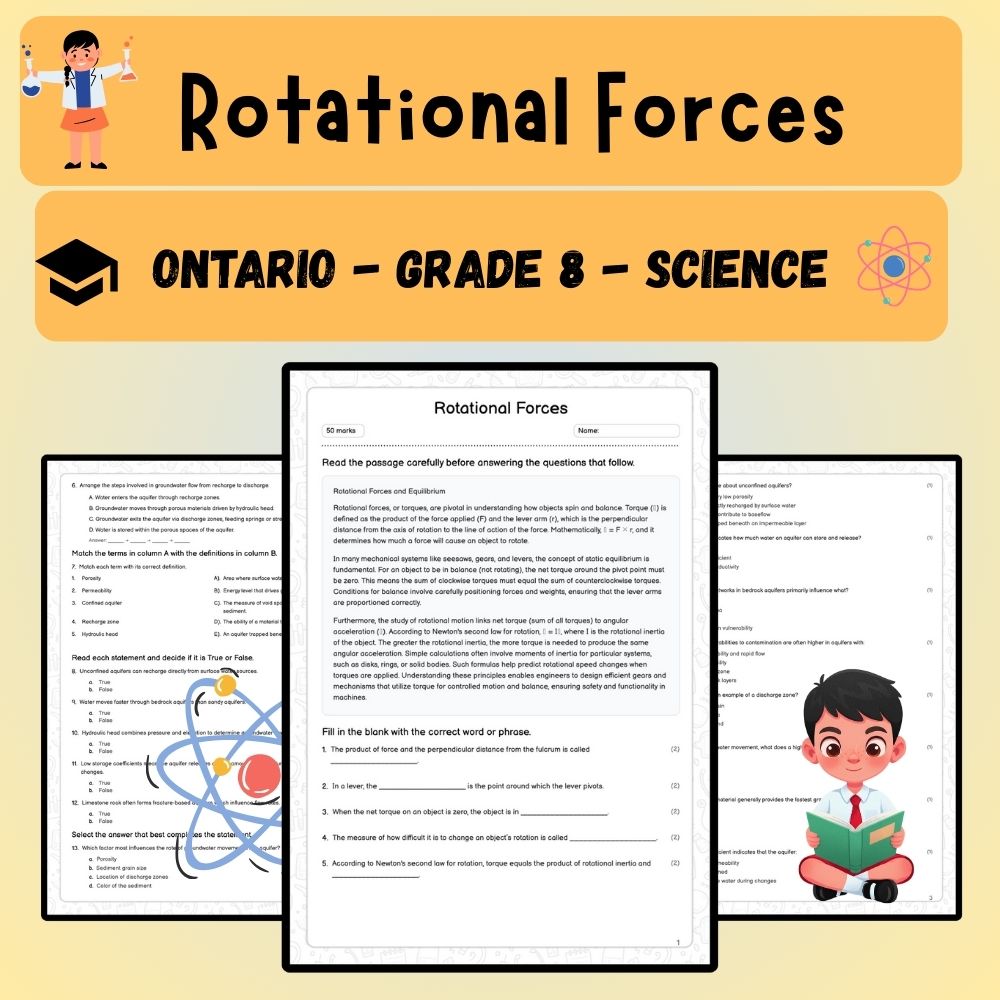
Grade 8 Science | Rotational Forces Worksheet (PDF ) - Ontario Standards
Created byPrism Point LearningLearning Objectives
- Explain the concepts of torque, lever arm, and moment of force and how they relate to rotational equilibrium.
- Identify the conditions for static balance in systems such as seesaws and crank mechanisms.
- Apply formulas linking rotational inertia, applied torque, and angular acceleration to simple rotational systems.
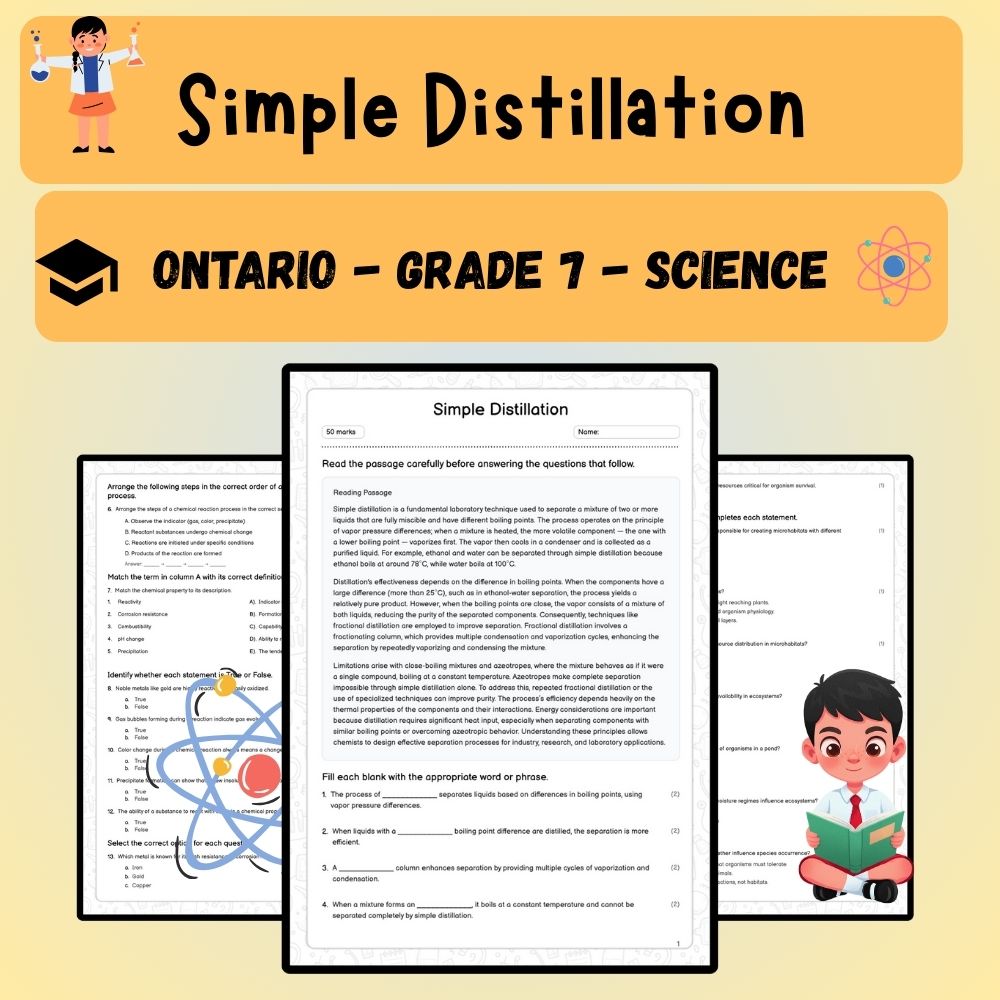
Grade 7 Science | Simple Distillation Worksheet (PDF ) – Ontario Standards
Created byPrism Point LearningLearning Objectives
- Understand the principles of simple distillation and vapor pressure differences.
- Identify the limitations of distillation when separating close-boiling mixtures and azeotropes.
- Explain how fractional distillation improves separation efficiency.
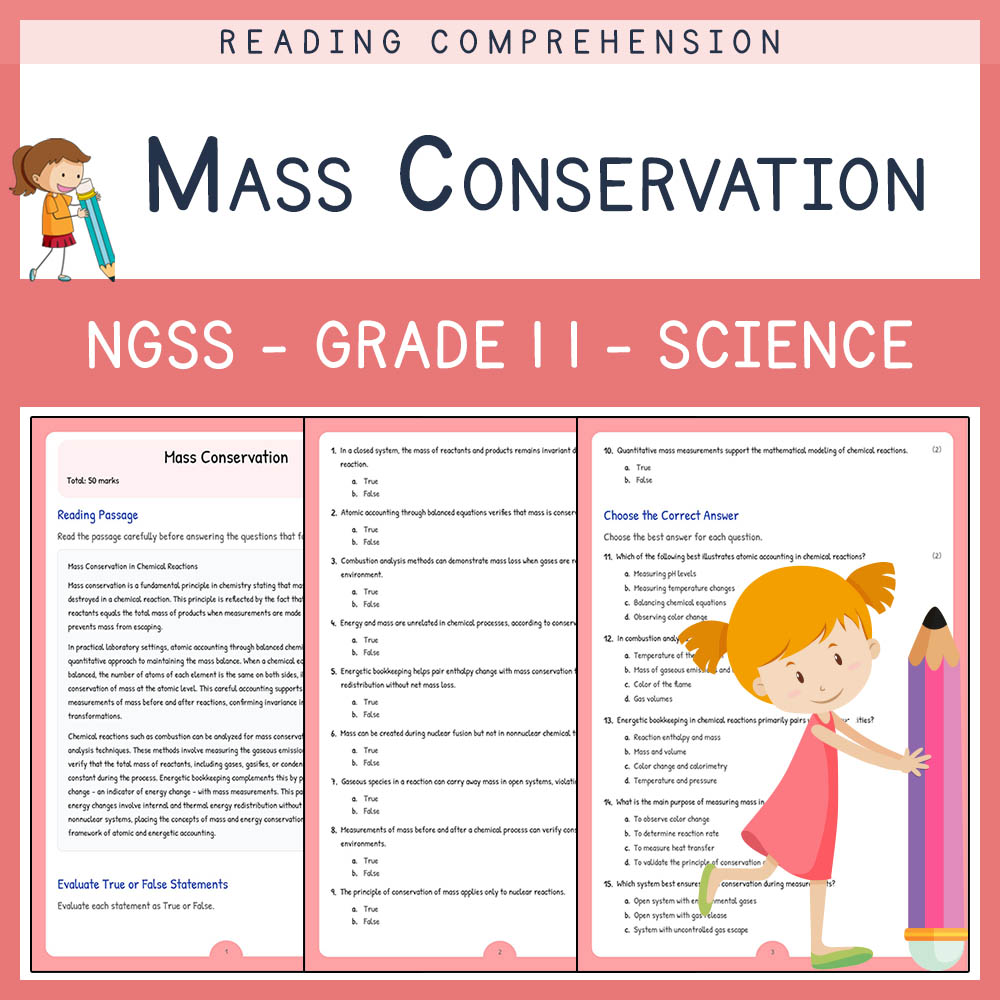
Grade 11 Science | Mass Conservation Worksheet with Answer Key (PDF)
Created byLumora LearningLearning Objectives
- Explain the principle of conservation of mass in chemical reactions.
- Apply balanced equations to demonstrate mass invariance.
- Describe methods such as closed-system measurements and combustion analysis for mass conservation.
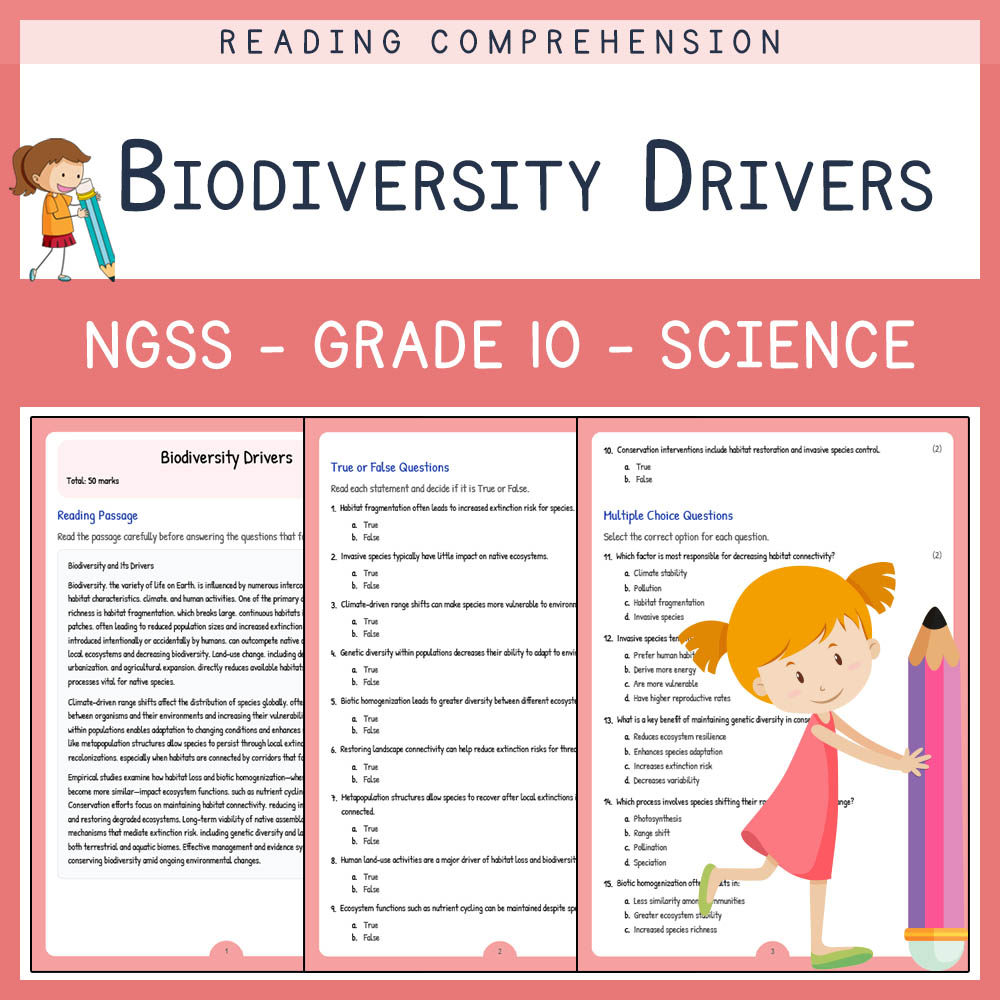
Grade 10 Science | Biodiversity Drivers Worksheet (PDF + Answer Key) – NGSS Aligned
Created byLumora LearningLearning Objectives
- Identify major factors influencing species richness and composition in ecosystems.
- Understand how habitat fragmentation, invasive species, land-use changes, and climate shifts affect biodiversity.
- Describe mechanisms such as genetic diversity and connectivity that mediate extinction risks.
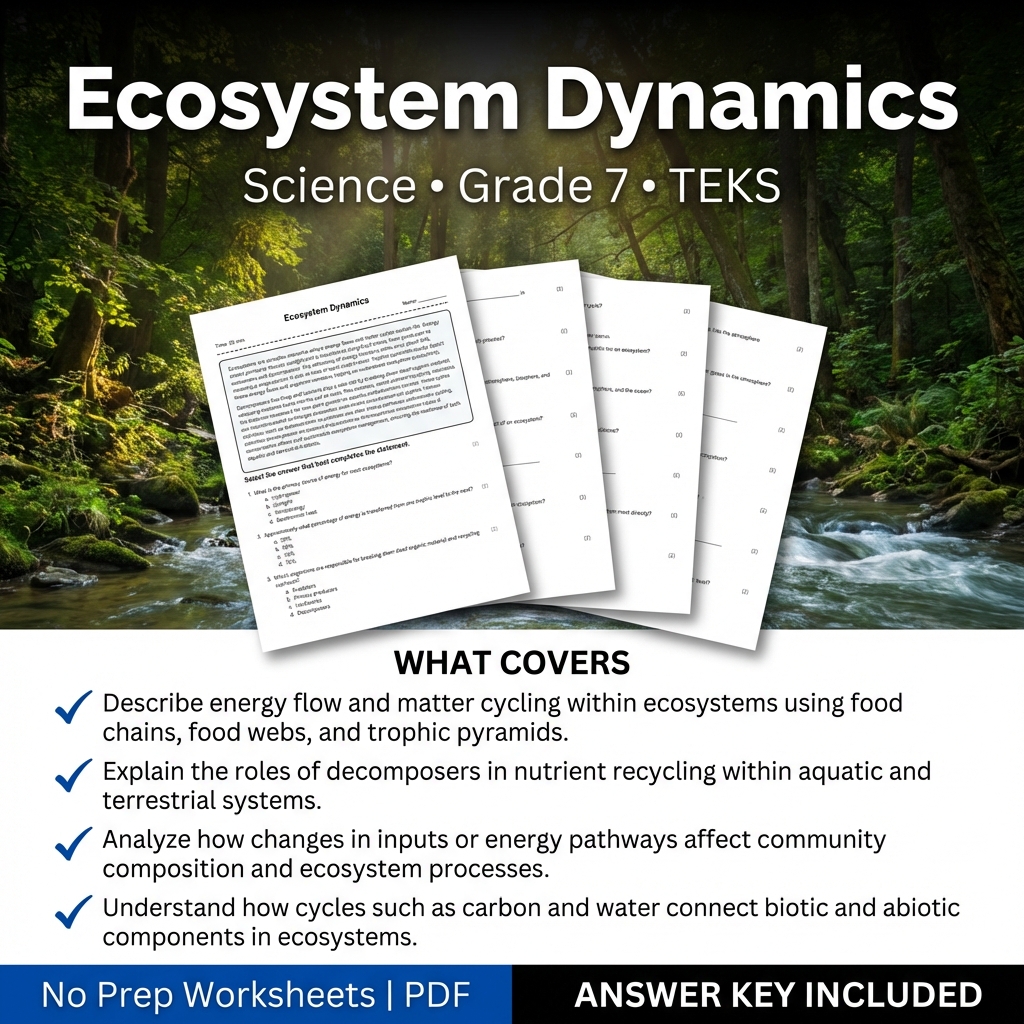
Ecosystem Dynamics Grade 7 Science Worksheet | TEKS Aligned Practice
Created byCoral Reef LearningLearning Objectives
- Describe energy flow and matter cycling within ecosystems using food chains, food webs, and trophic pyramids.
- Explain the roles of decomposers in nutrient recycling within aquatic and terrestrial systems.
- Analyze how changes in inputs or energy pathways affect community composition and ecosystem processes.
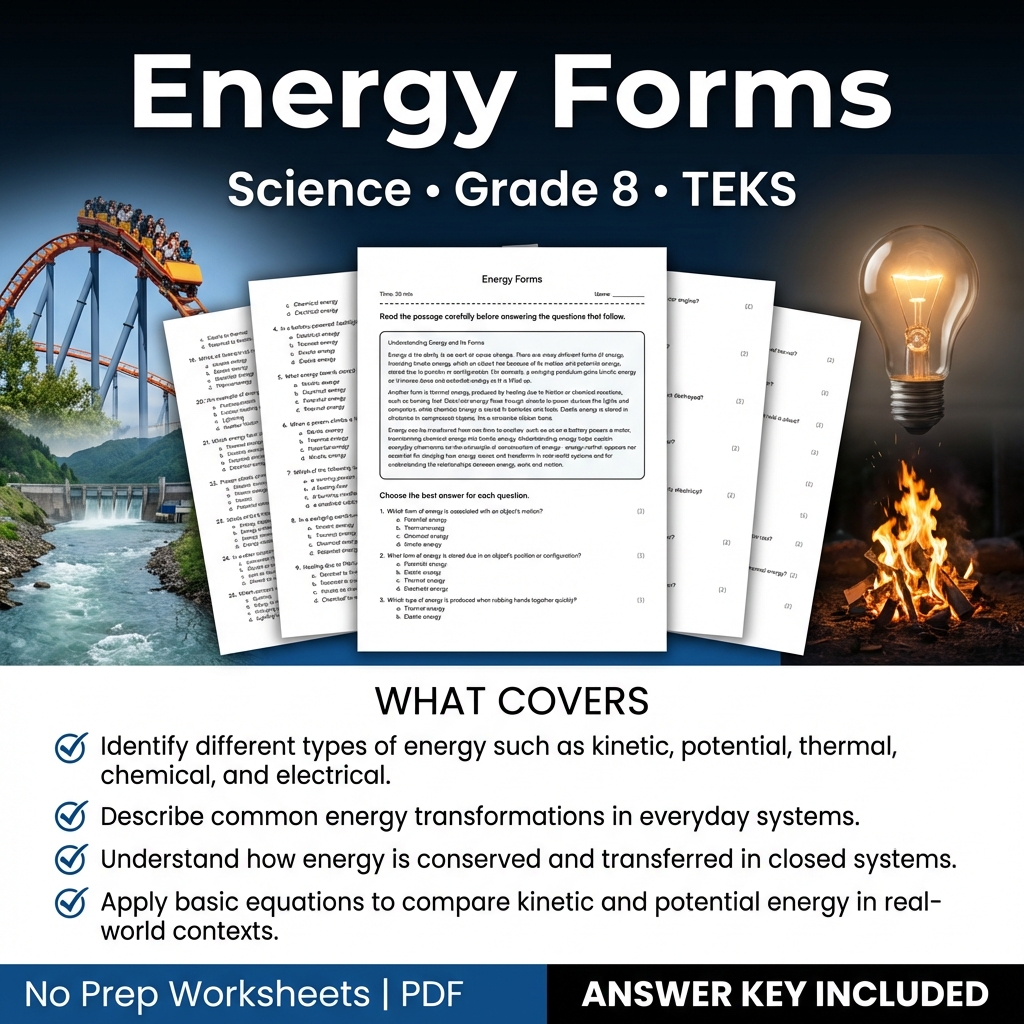
Grade 8 Science Energy Forms Worksheet | TEKS-Aligned Practice & Answer Key
Created byCoral Reef LearningLearning Objectives
- Identify different types of energy such as kinetic, potential, thermal, chemical, and electrical.
- Describe common energy transformations in everyday systems.
- Understand how energy is conserved and transferred in closed systems.
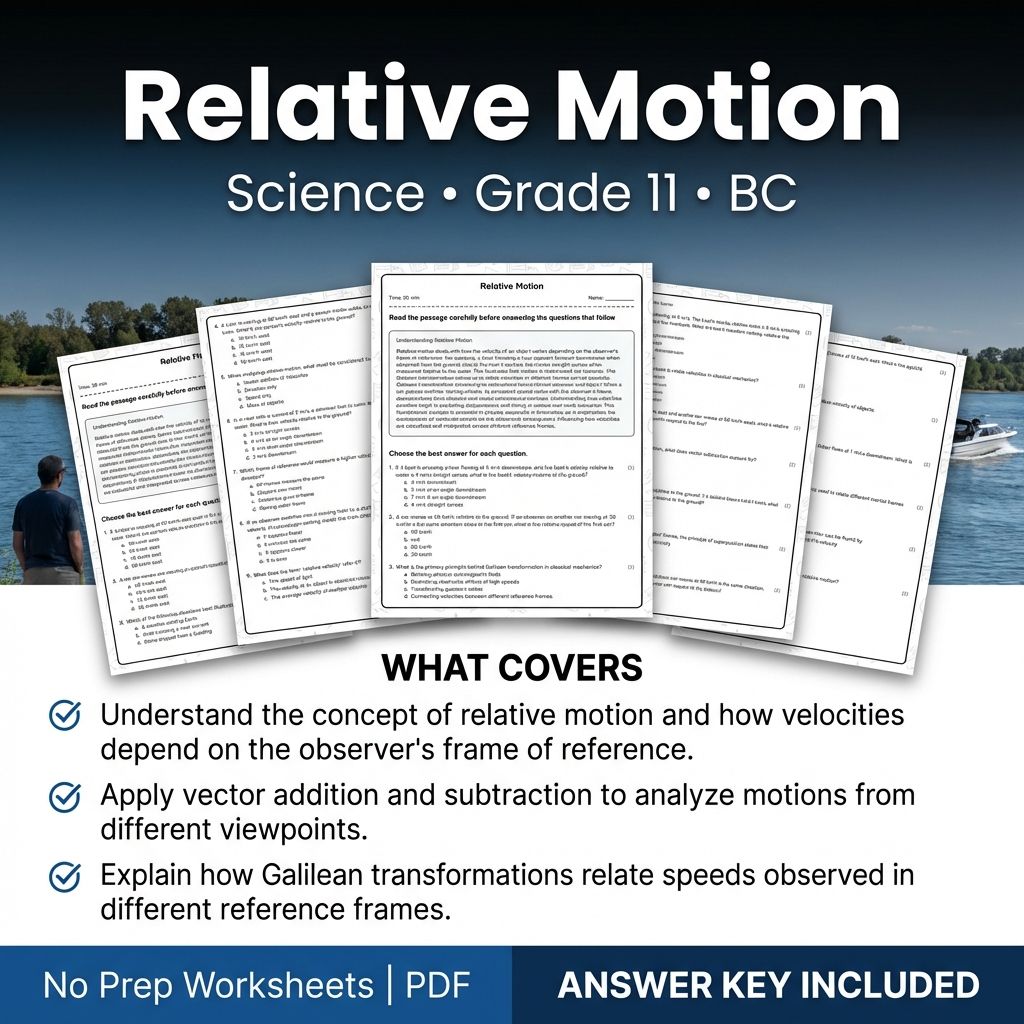
Relative Motion Worksheet for Grade 11 Science BC Standards | Classroom Practice
Created byCoral Reef LearningLearning Objectives
- Understand the concept of relative motion and how velocities depend on the observer's frame of reference.
- Apply vector addition and subtraction to analyze motions from different viewpoints.
- Explain how Galilean transformations relate speeds observed in different reference frames.
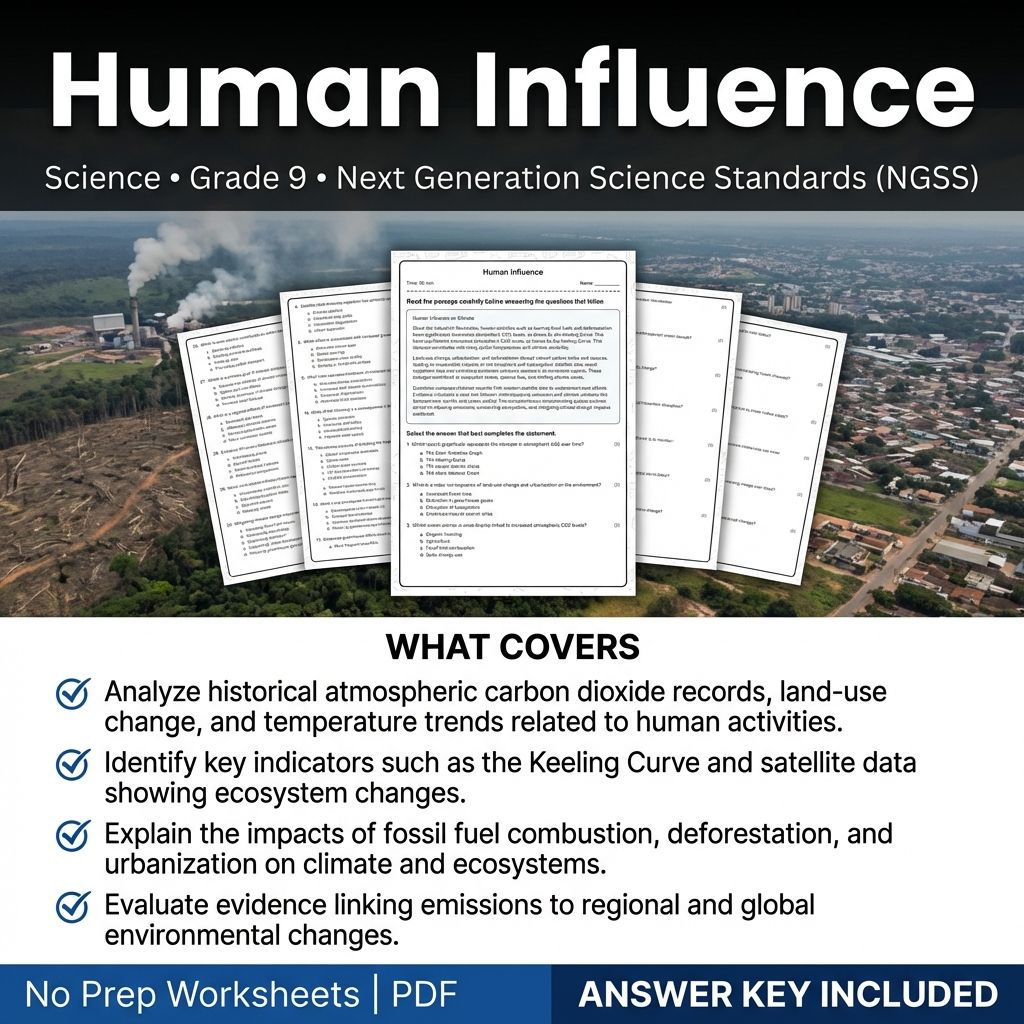
9th Grade Science | Human Influence Worksheet & Answer Key (PDF)
Created byCoral Reef LearningLearning Objectives
- Analyze historical atmospheric carbon dioxide records, land-use change, and temperature trends related to human activities.
- Identify key indicators such as the Keeling Curve and satellite data showing ecosystem changes.
- Explain the impacts of fossil fuel combustion, deforestation, and urbanization on climate and ecosystems.
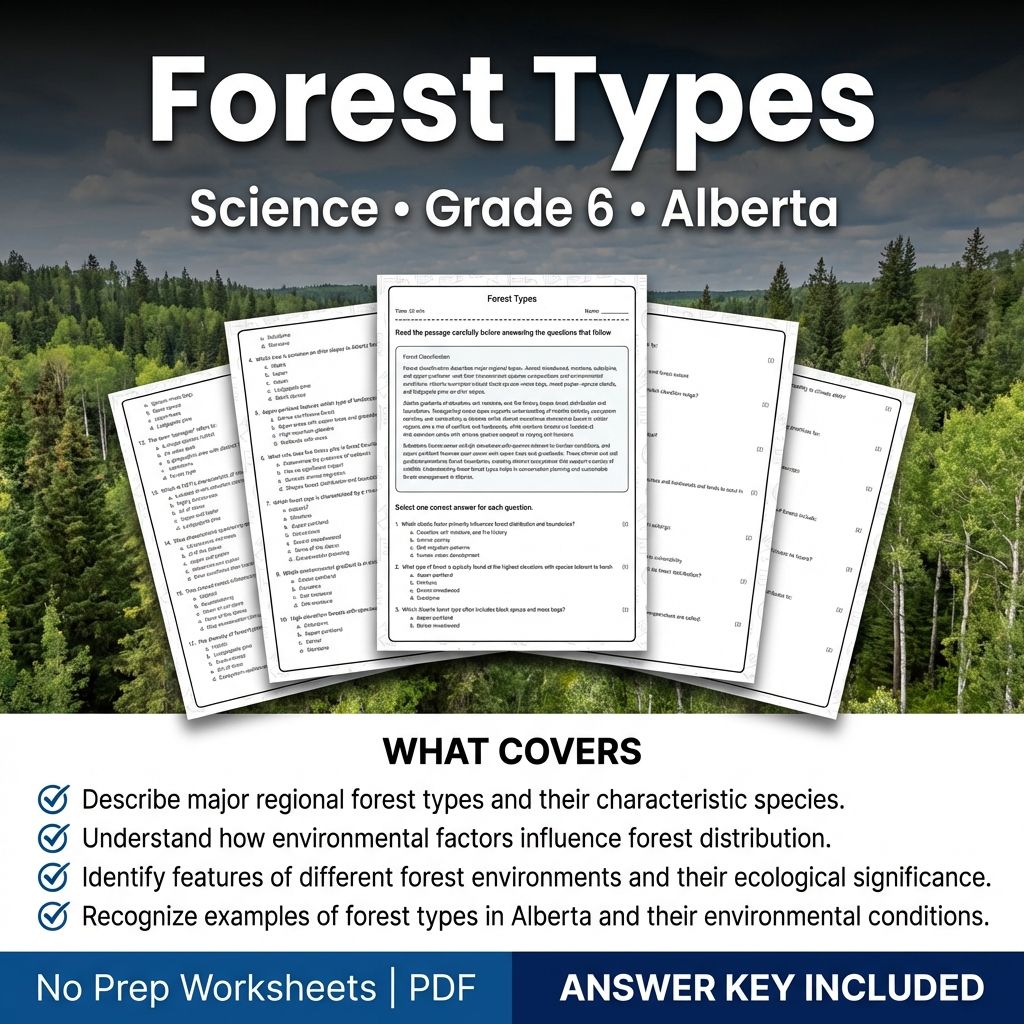
Grade 6 Science Worksheet on Forest Types | Alberta Standard Practice
Created byCoral Reef LearningLearning Objectives
- Describe major regional forest types and their characteristic species.
- Understand how environmental factors influence forest distribution.
- Identify features of different forest environments and their ecological significance.
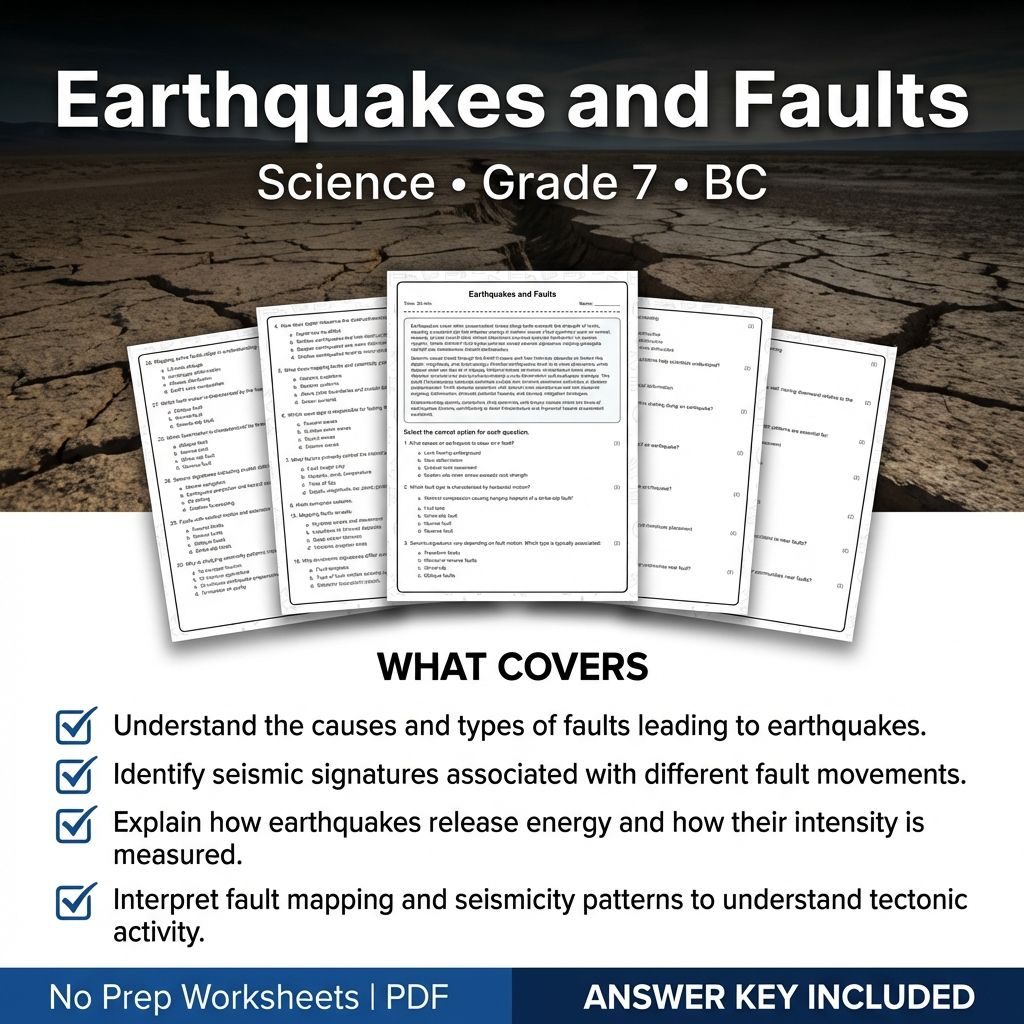
Grade 7 Science | Earthquakes and Faults Worksheet (Printable PDF + Answer Key)
Created byCoral Reef LearningLearning Objectives
- Understand the causes and types of faults leading to earthquakes.
- Identify seismic signatures associated with different fault movements.
- Explain how earthquakes release energy and how their intensity is measured.
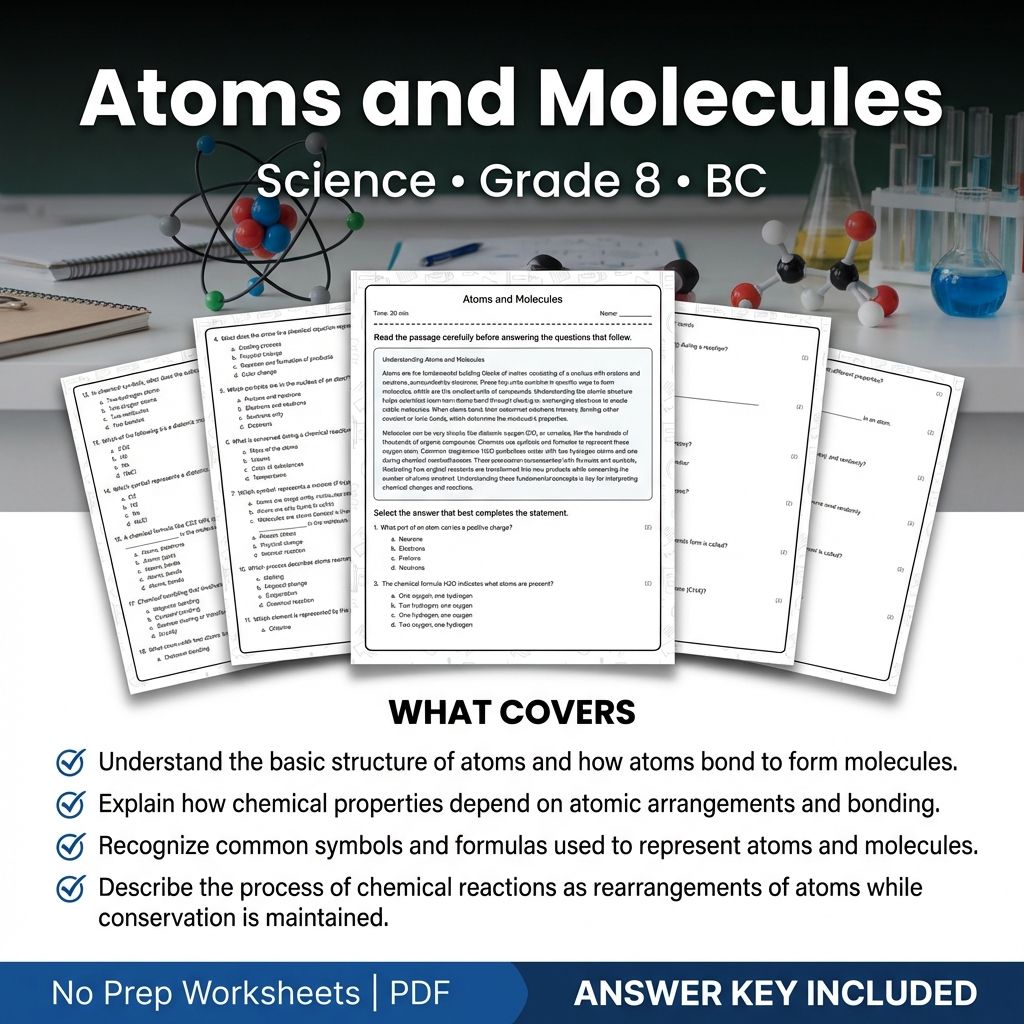
8th Grade Science | Atoms and Molecules Practice Worksheet + Answer Key (PDF)
Created byCoral Reef LearningLearning Objectives
- Understand the basic structure of atoms and how atoms bond to form molecules.
- Explain how chemical properties depend on atomic arrangements and bonding.
- Recognize common symbols and formulas used to represent atoms and molecules.
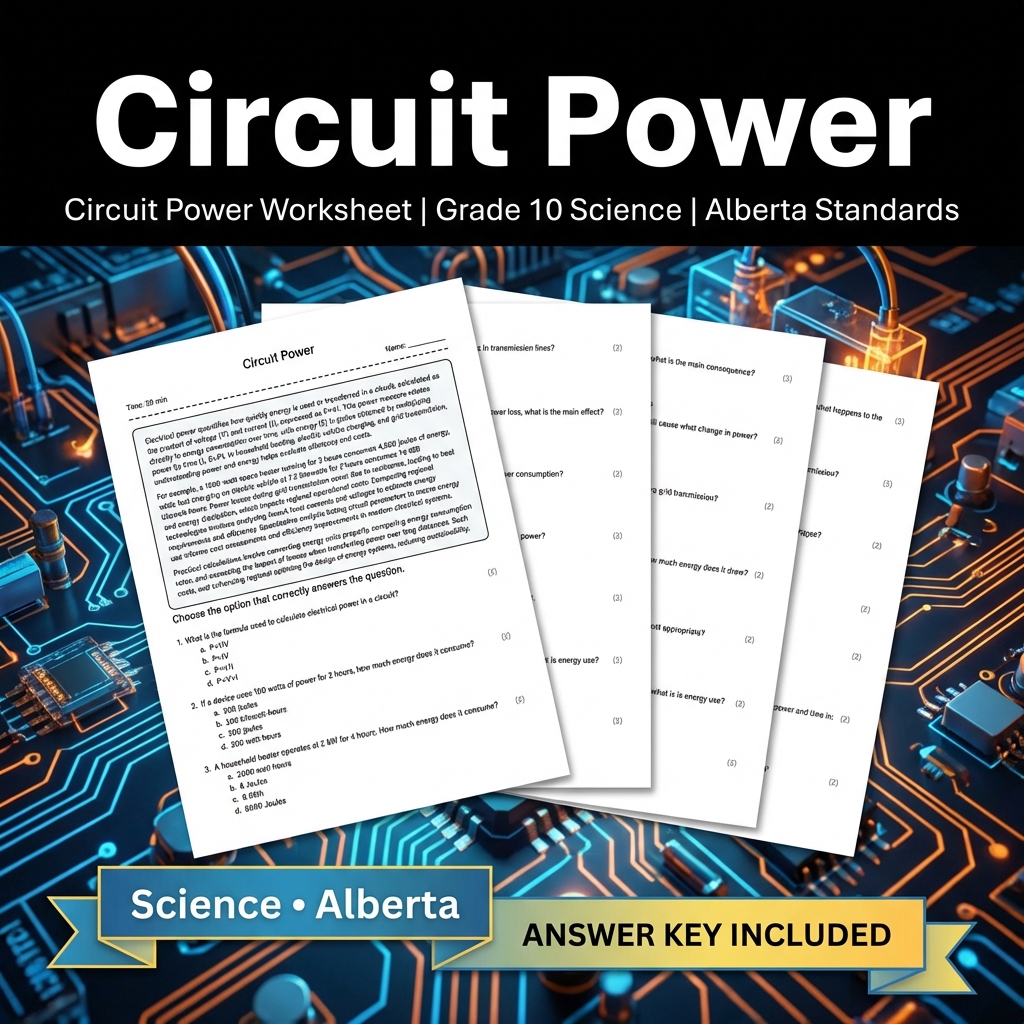
Circuit Power Worksheet | Grade 10 Science | Alberta Standards
Created byCoral Reef LearningLearning Objectives
- Understand how electrical power is calculated using voltage and current.
- Apply power, energy, and time relationships to practical electrical scenarios.
- Analyze energy consumption in household appliances, electric vehicles, and transmission systems.
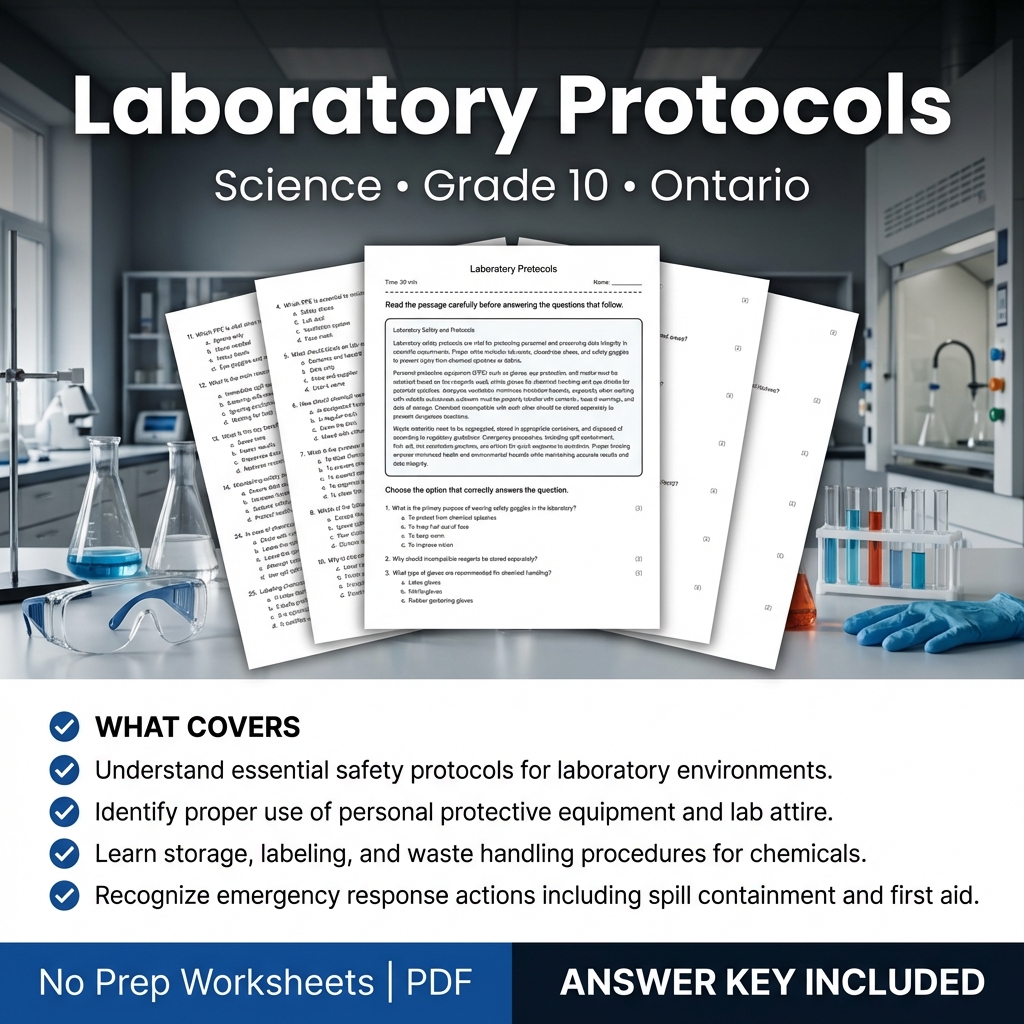
Laboratory Protocols Worksheet for Grade 10 Science | Ontario Standards
Created byCoral Reef LearningLearning Objectives
- Understand essential safety protocols for laboratory environments.
- Identify proper use of personal protective equipment and lab attire.
- Learn storage, labeling, and waste handling procedures for chemicals.
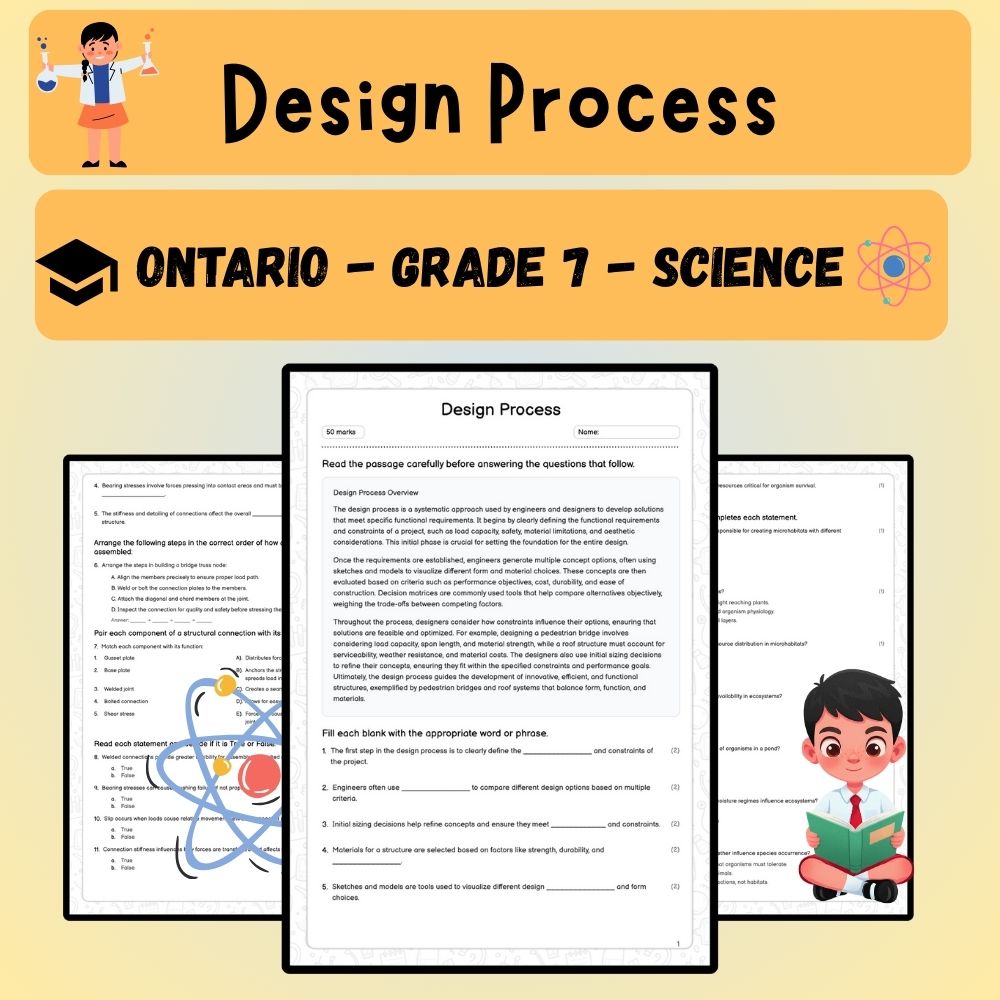
Grade 7 Science - Design Process Worksheet (PDF) – Ontario Standards
Created byPrism Point LearningLearning Objectives
- Understand the steps involved in the design process from defining requirements to selecting solutions.
- Identify key performance objectives and how they influence design choices.
- Apply decision matrices and sketches to compare different design alternatives.
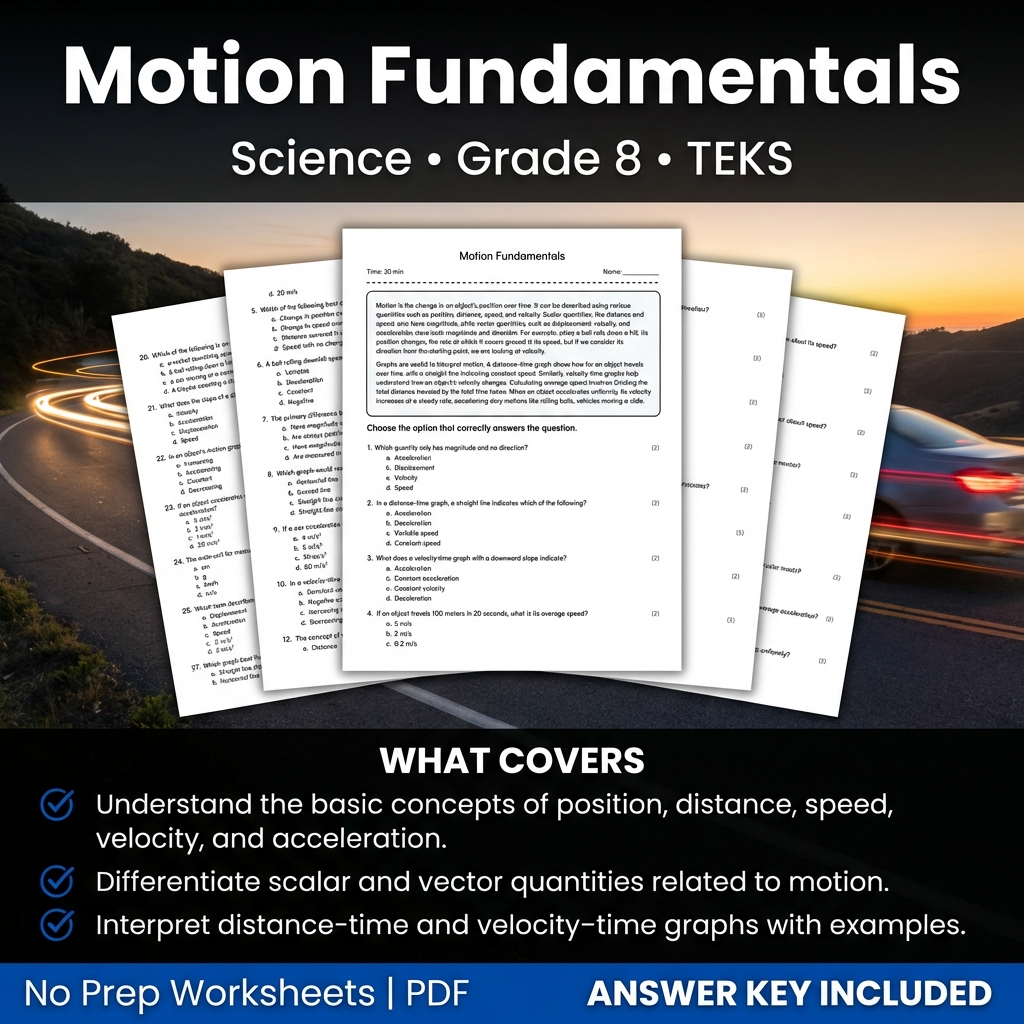
Grade 8 Science Worksheet on Motion Fundamentals | TEKS-Aligned Practice PDF
Created byCoral Reef LearningLearning Objectives
- Understand the basic concepts of position, distance, speed, velocity, and acceleration.
- Differentiate scalar and vector quantities related to motion.
- Interpret distance–time and velocity–time graphs with examples.
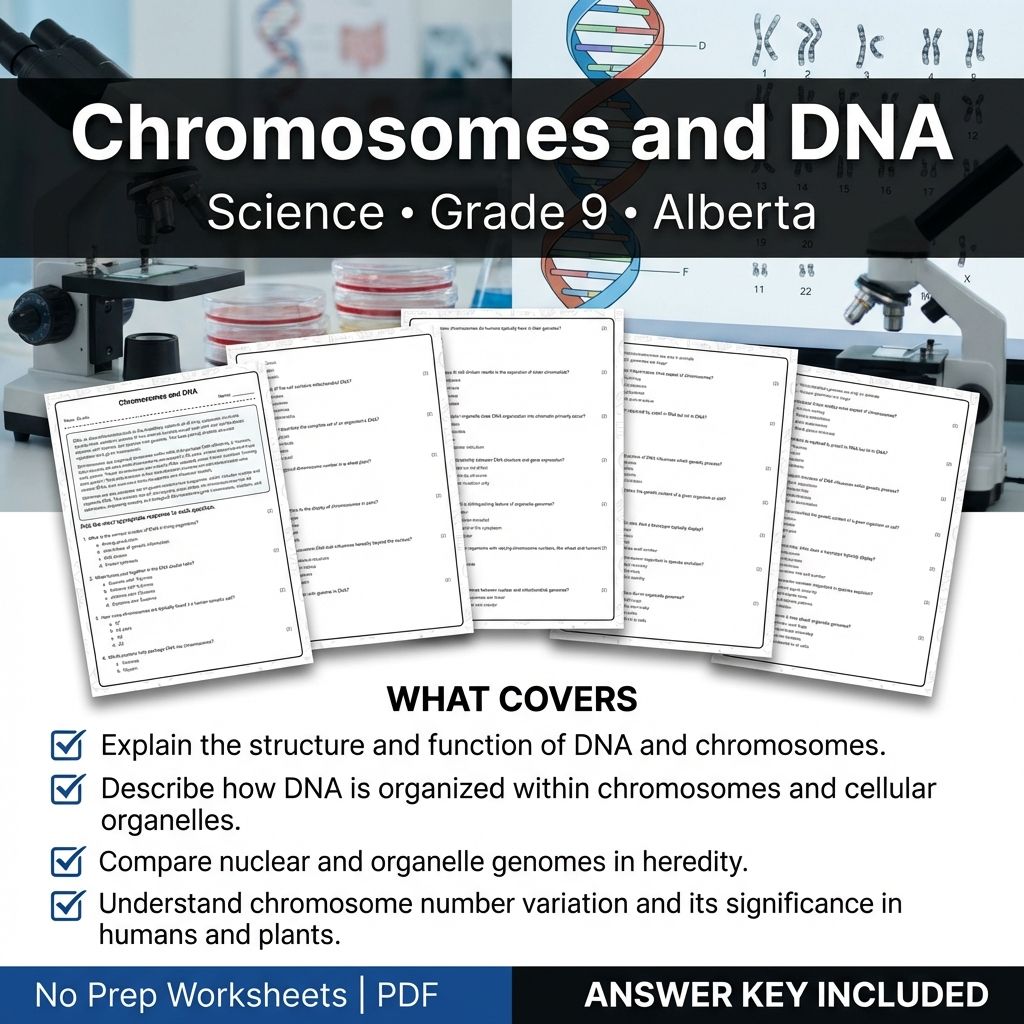
Chromosomes and DNA Worksheet | Grade 9 Science | Alberta
Created byCoral Reef LearningLearning Objectives
- Explain the structure and function of DNA and chromosomes.
- Describe how DNA is organized within chromosomes and cellular organelles.
- Compare nuclear and organelle genomes in heredity.
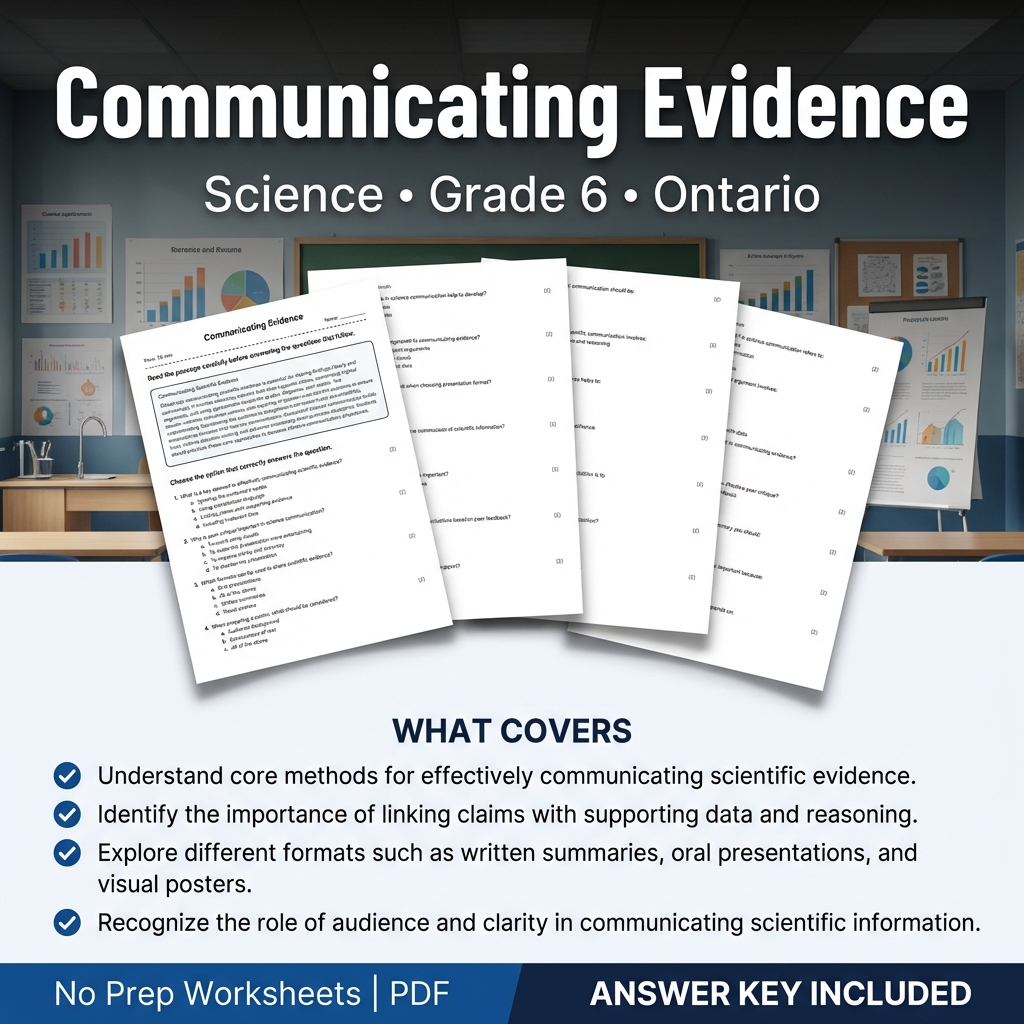
Grade 6 Science Worksheet | Communicating Evidence | Ontario Standards
Created byCoral Reef LearningLearning Objectives
- Understand core methods for effectively communicating scientific evidence.
- Identify the importance of linking claims with supporting data and reasoning.
- Explore different formats such as written summaries, oral presentations, and visual posters.
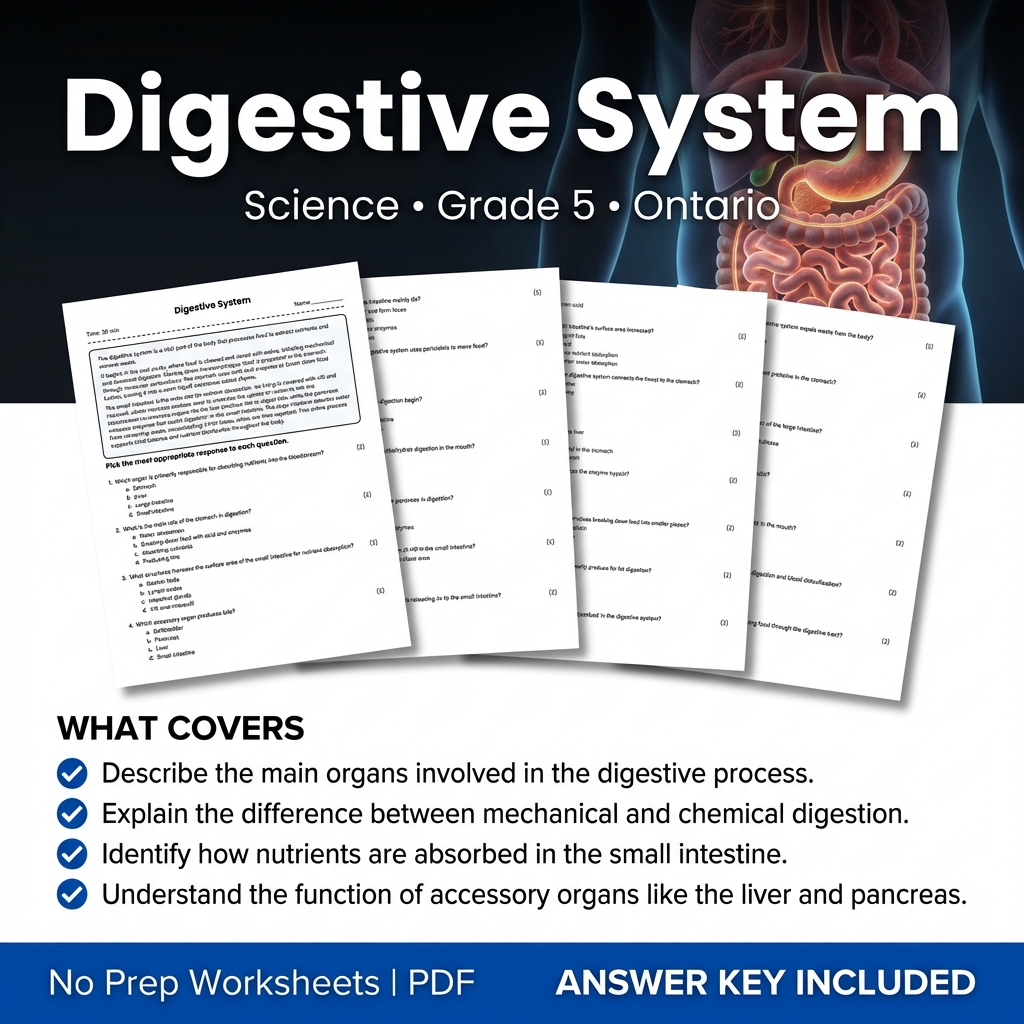
Digestive System Science Worksheet | Grade 5 Standard Practice PDF
Created byCoral Reef LearningLearning Objectives
- Describe the main organs involved in the digestive process.
- Explain the difference between mechanical and chemical digestion.
- Identify how nutrients are absorbed in the small intestine.
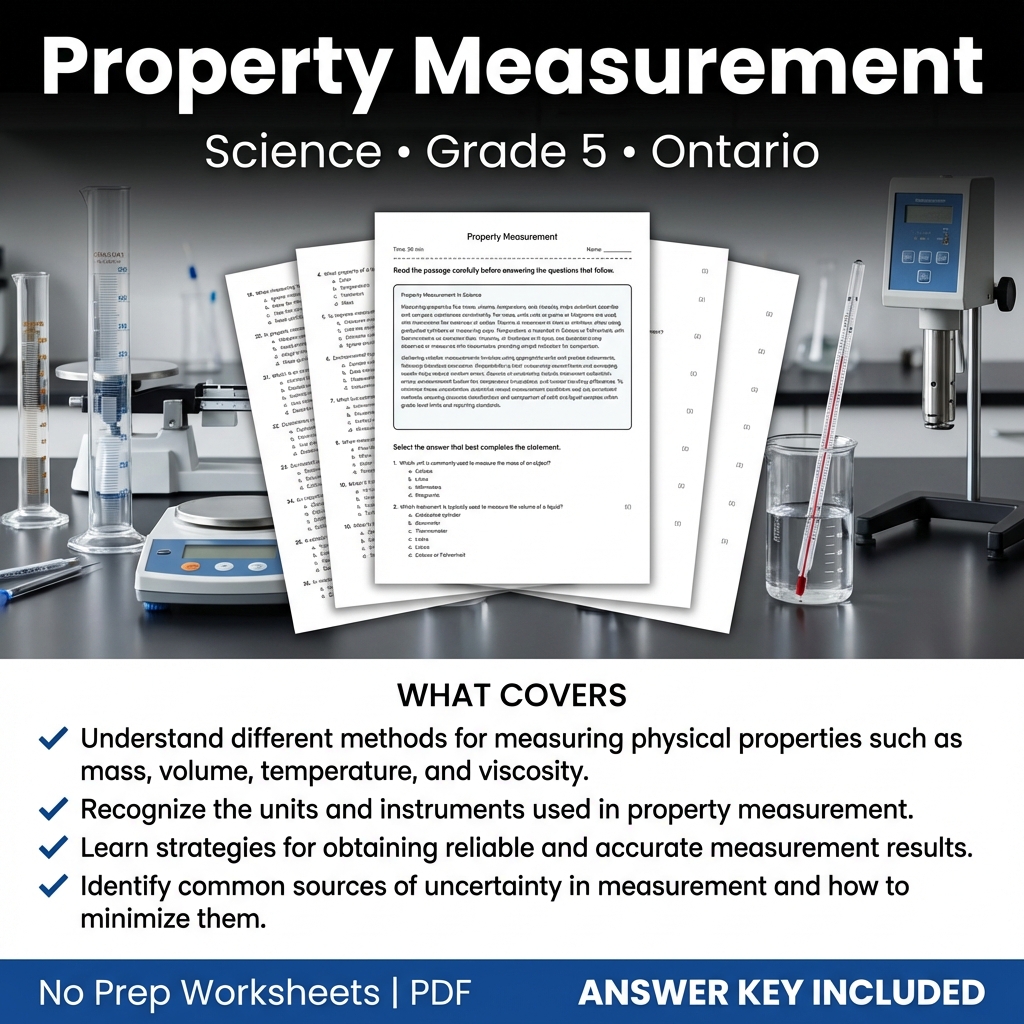
Property Measurement Worksheet for Grade 5 Science | Ontario Standards
Created byCoral Reef LearningLearning Objectives
- Understand different methods for measuring physical properties such as mass, volume, temperature, and viscosity.
- Recognize the units and instruments used in property measurement.
- Learn strategies for obtaining reliable and accurate measurement results.
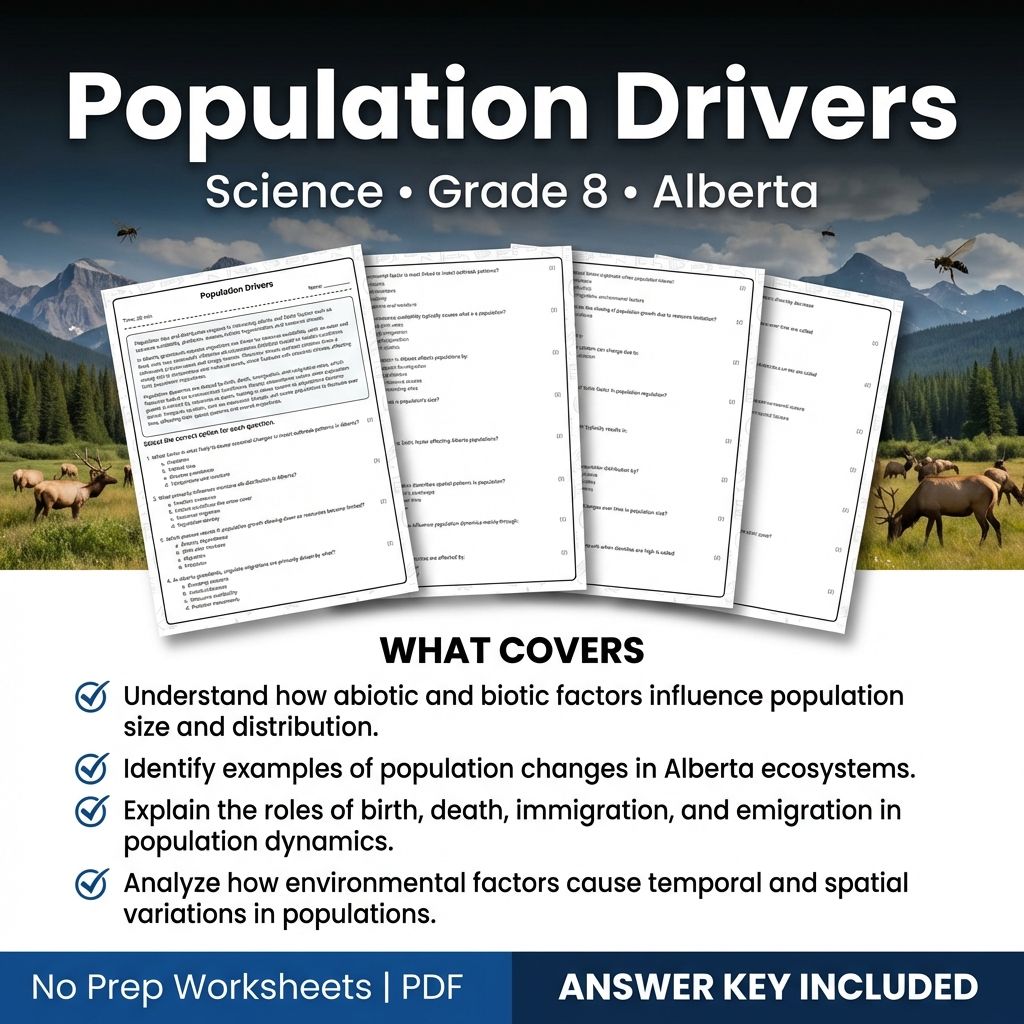
Population Drivers Worksheet for Grade 8 Science | Alberta Standards
Created byCoral Reef LearningLearning Objectives
- Understand how abiotic and biotic factors influence population size and distribution.
- Identify examples of population changes in Alberta ecosystems.
- Explain the roles of birth, death, immigration, and emigration in population dynamics.
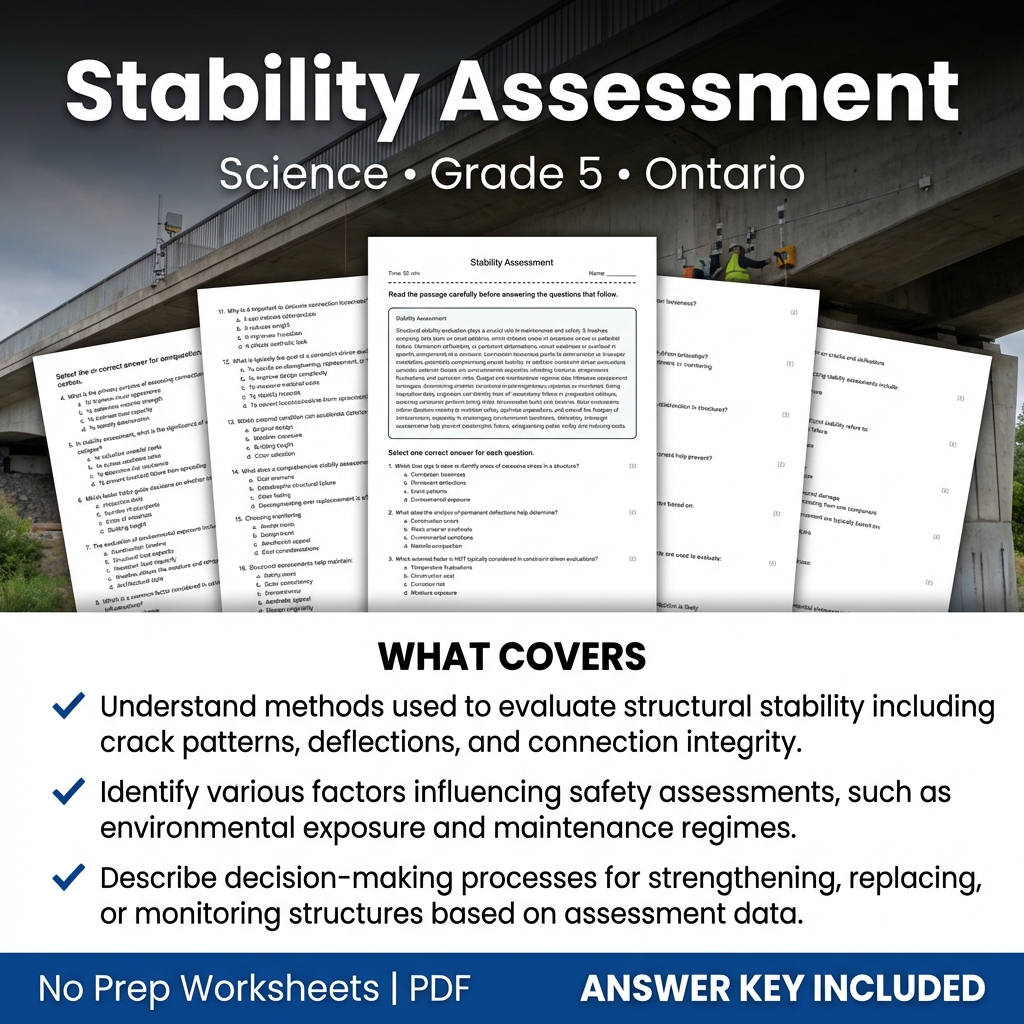
Grade 5 Science Worksheet on Stability Assessment – Printable PDF
Created byCoral Reef LearningLearning Objectives
- Understand methods used to evaluate structural stability including crack patterns, deflections, and connection integrity.
- Identify various factors influencing safety assessments, such as environmental exposure and maintenance regimes.
- Describe decision-making processes for strengthening, replacing, or monitoring structures based on assessment data.
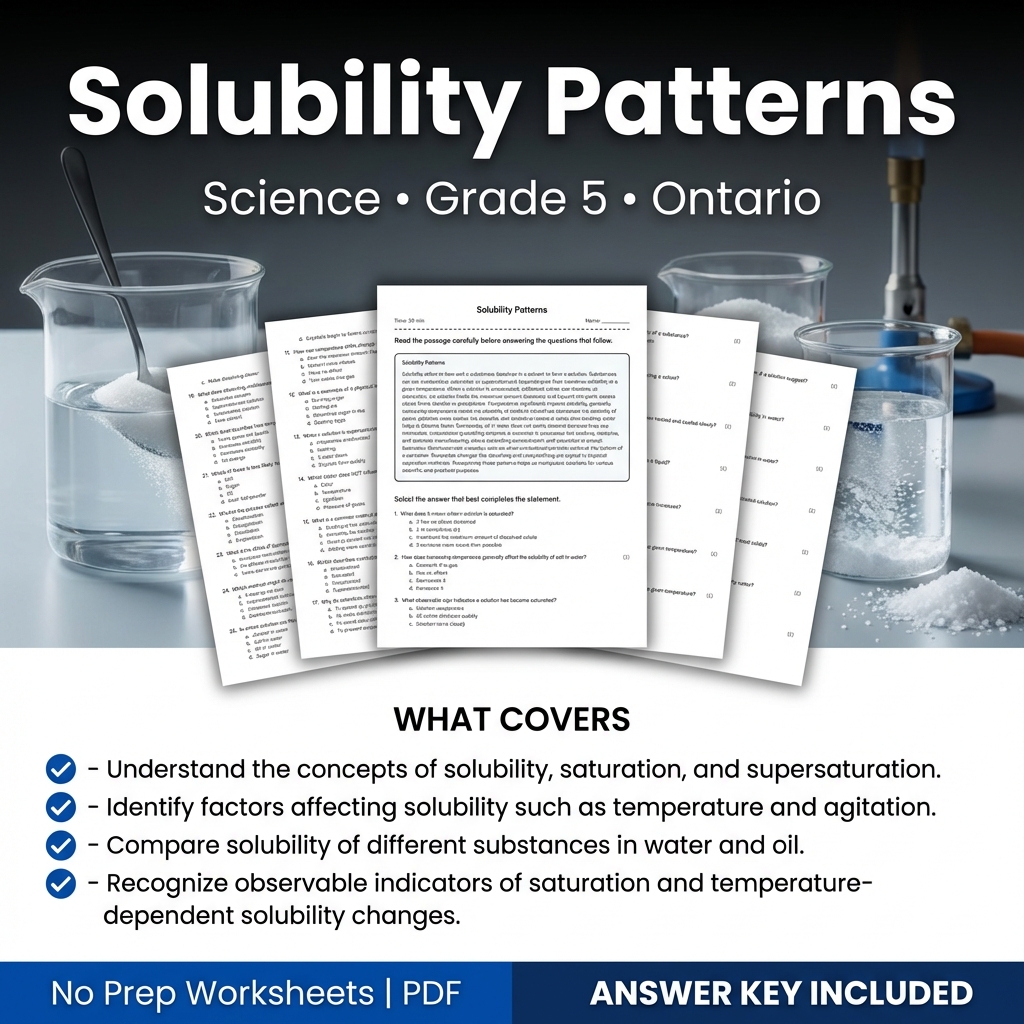
Grade 5 Science Worksheet on Solubility Patterns | Ontario Standards
Created byCoral Reef LearningLearning Objectives
- Understand the concepts of solubility, saturation, and supersaturation.
- Identify factors affecting solubility such as temperature and agitation.
- Compare solubility of different substances in water and oil.
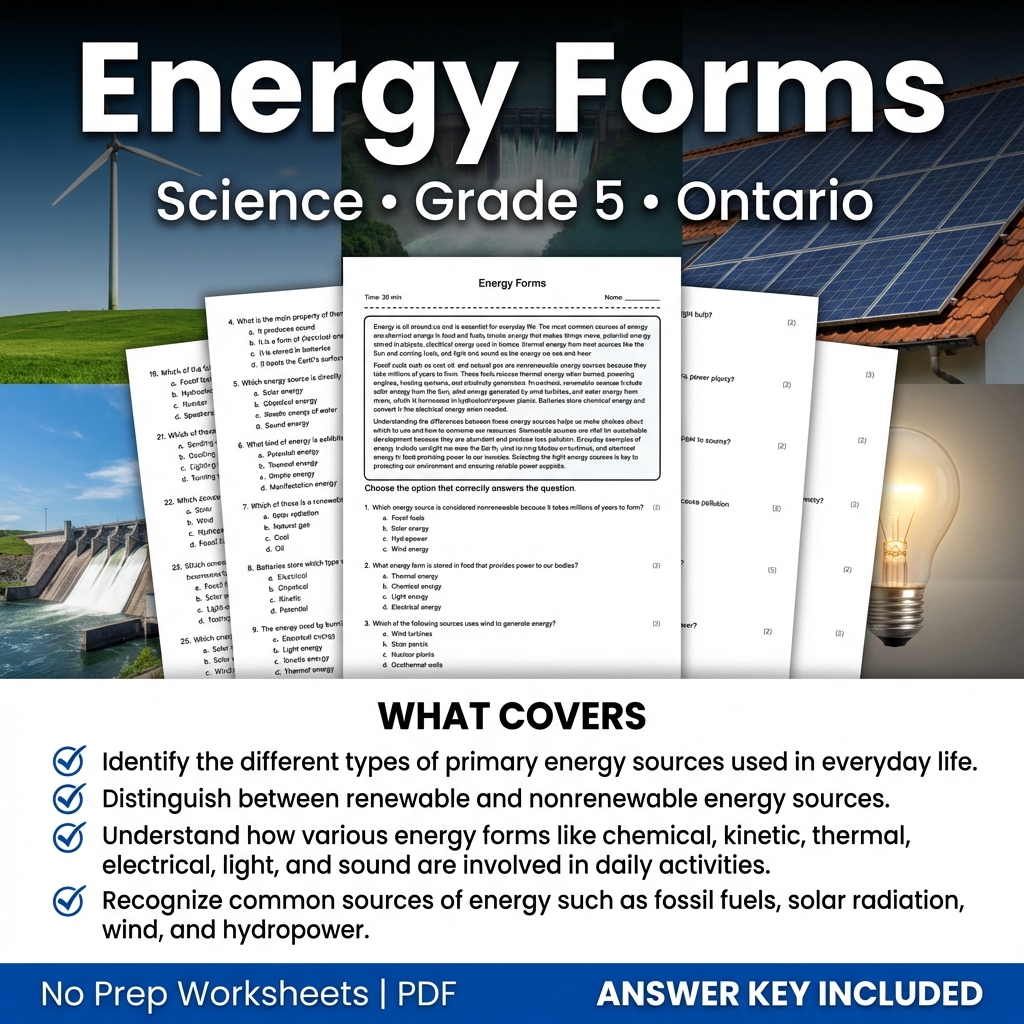
Energy Forms Worksheet for Grade 5 Science Ontario Standards PDF
Created byCoral Reef LearningLearning Objectives
- Identify the different types of primary energy sources used in everyday life.
- Distinguish between renewable and nonrenewable energy sources.
- Understand how various energy forms like chemical, kinetic, thermal, electrical, light, and sound are involved in daily activities.
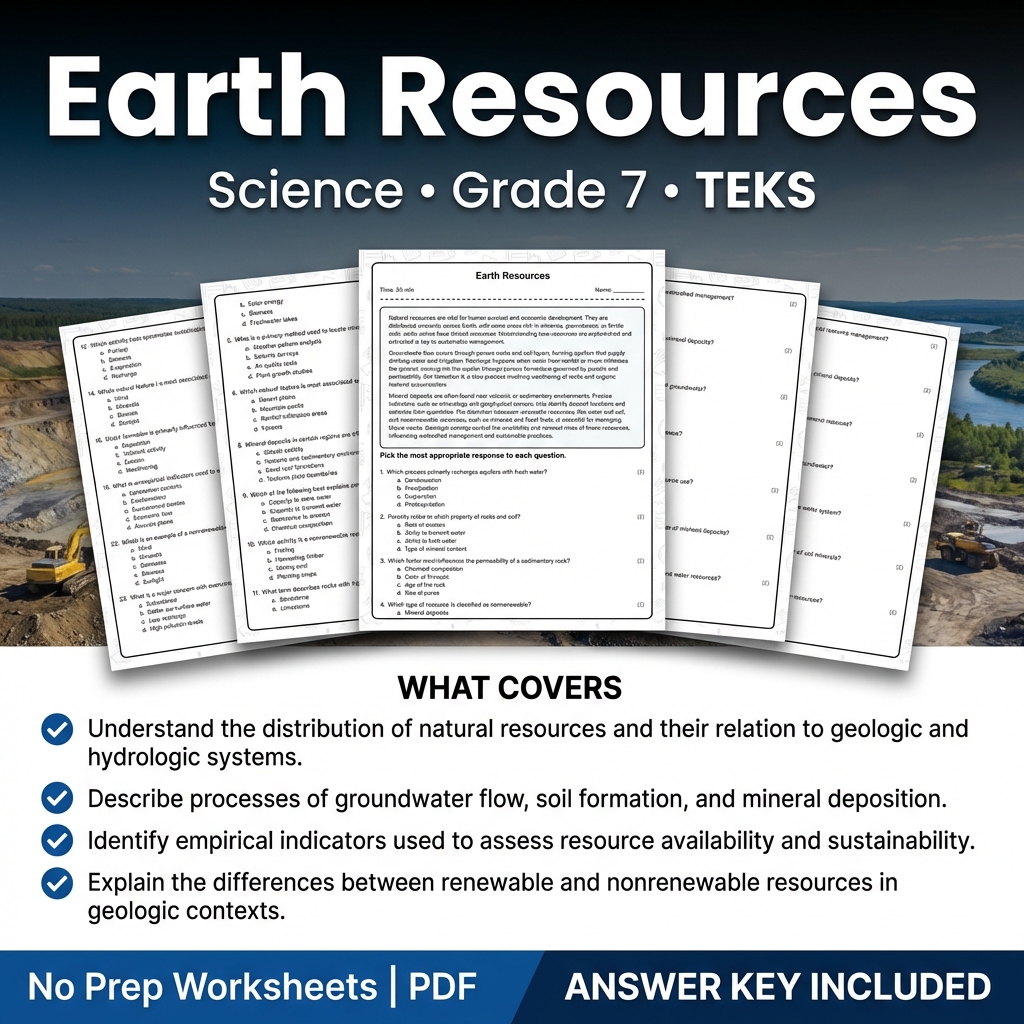
Earth Resources Worksheet for Grade 7 Science | TEKS Aligned Practice
Created byCoral Reef LearningLearning Objectives
- Understand the distribution of natural resources and their relation to geologic and hydrologic systems.
- Describe processes of groundwater flow, soil formation, and mineral deposition.
- Identify empirical indicators used to assess resource availability and sustainability.
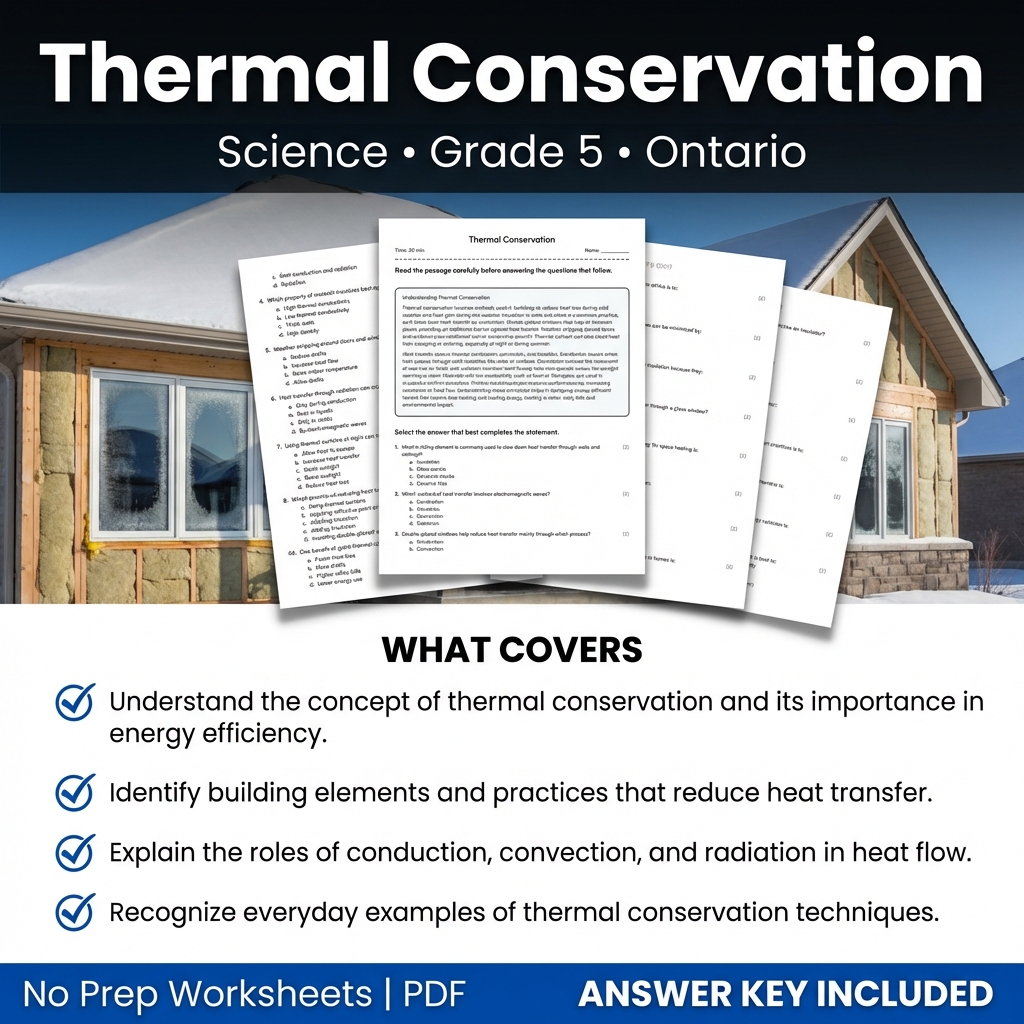
Grade 5 Science Worksheet on Thermal Conservation with Answer Key PDF
Created byCoral Reef LearningLearning Objectives
- Understand the concept of thermal conservation and its importance in energy efficiency.
- Identify building elements and practices that reduce heat transfer.
- Explain the roles of conduction, convection, and radiation in heat flow.
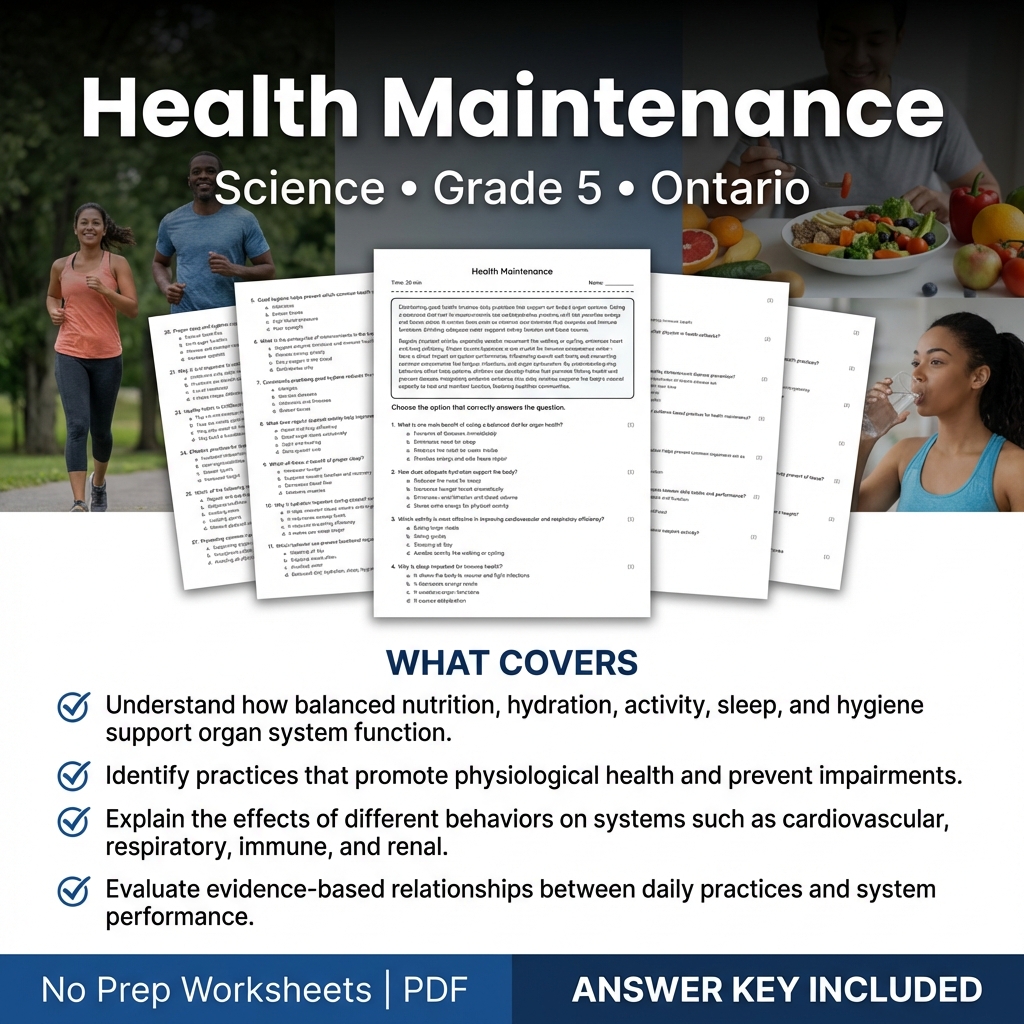
Health Maintenance Worksheet for Grade 5 Science Ontario Standards
Created byCoral Reef LearningLearning Objectives
- Understand how balanced nutrition, hydration, activity, sleep, and hygiene support organ system function.
- Identify practices that promote physiological health and prevent impairments.
- Explain the effects of different behaviors on systems such as cardiovascular, respiratory, immune, and renal.
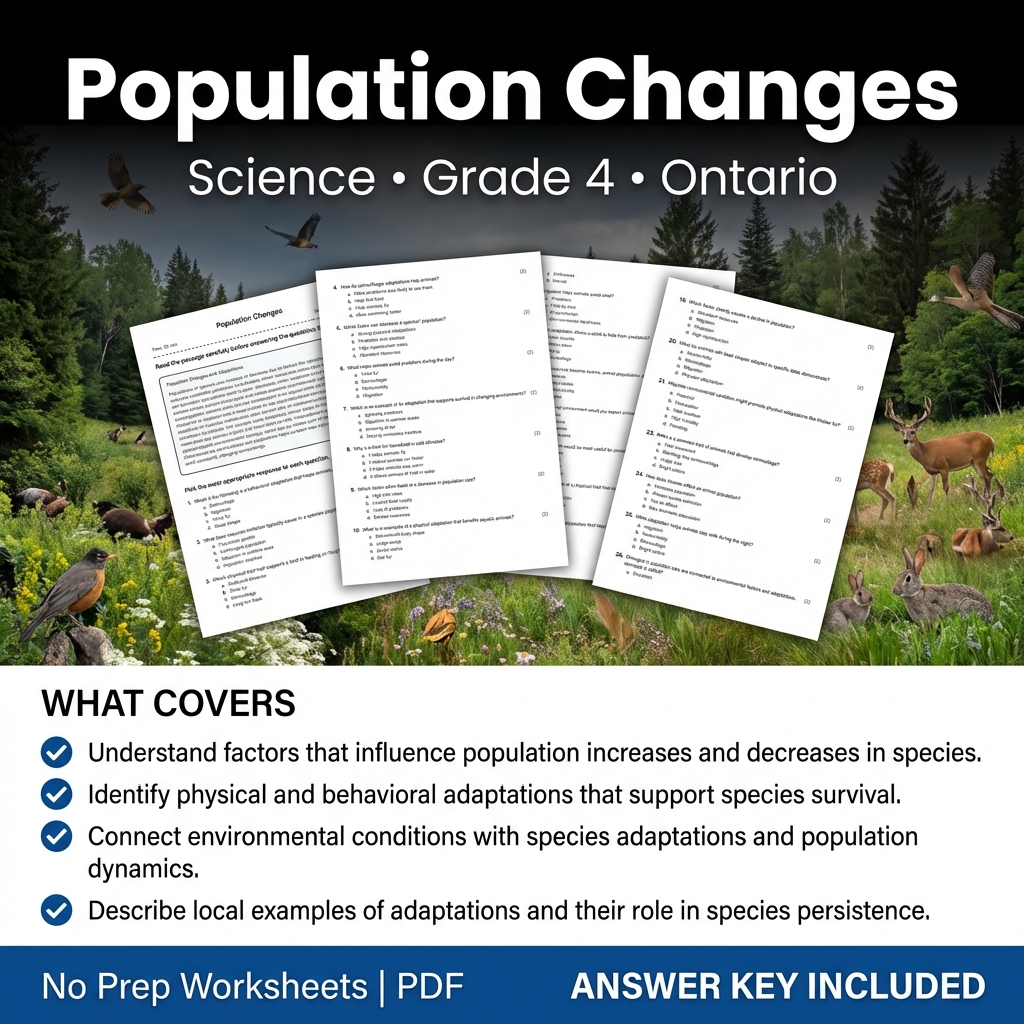
Population Changes Worksheet | Grade 4 Science | Ontario Standards
Created byCoral Reef LearningLearning Objectives
- Understand factors that influence population increases and decreases in species.
- Identify physical and behavioral adaptations that support species survival.
- Connect environmental conditions with species adaptations and population dynamics.
Browse more categories
About Science Worksheets
Find Science worksheets spanning core skills, practice, and review. All 42,859 resources are instant PDF downloads for the classroom or home.
Every worksheet on MyTeachingSheets is created by independent teacher-authors and reviewed before publication. All resources download as printable PDFs for classroom, homework, or at-home practice, and many include answer keys. Preview any worksheet free before buying.