
Grade 10 Science Worksheets
7,038 worksheets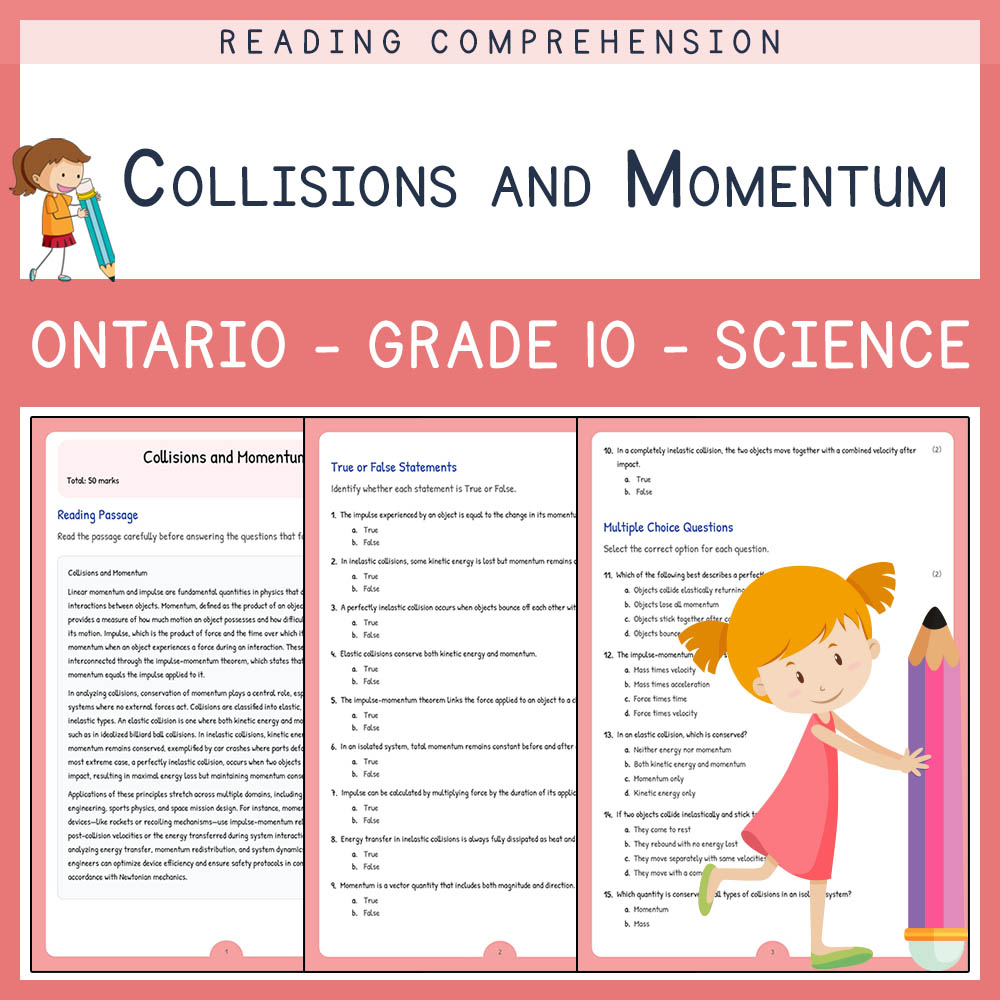
Grade 10 Science | Collisions and Momentum Worksheet | Ontario Standard
 Created byLumora Learning
Learning Objectives
- Understand the principles of linear momentum, impulse, and their relationship to changes in motion.
- Explain the conservation of momentum in elastic, inelastic, and perfectly inelastic collisions.
- Differentiate between different types of collisions based on energy and momentum transfer.
Also included in: Grade 10 Science | Motion & Forces Lesson Bundle | Ontario Standards
Instant download
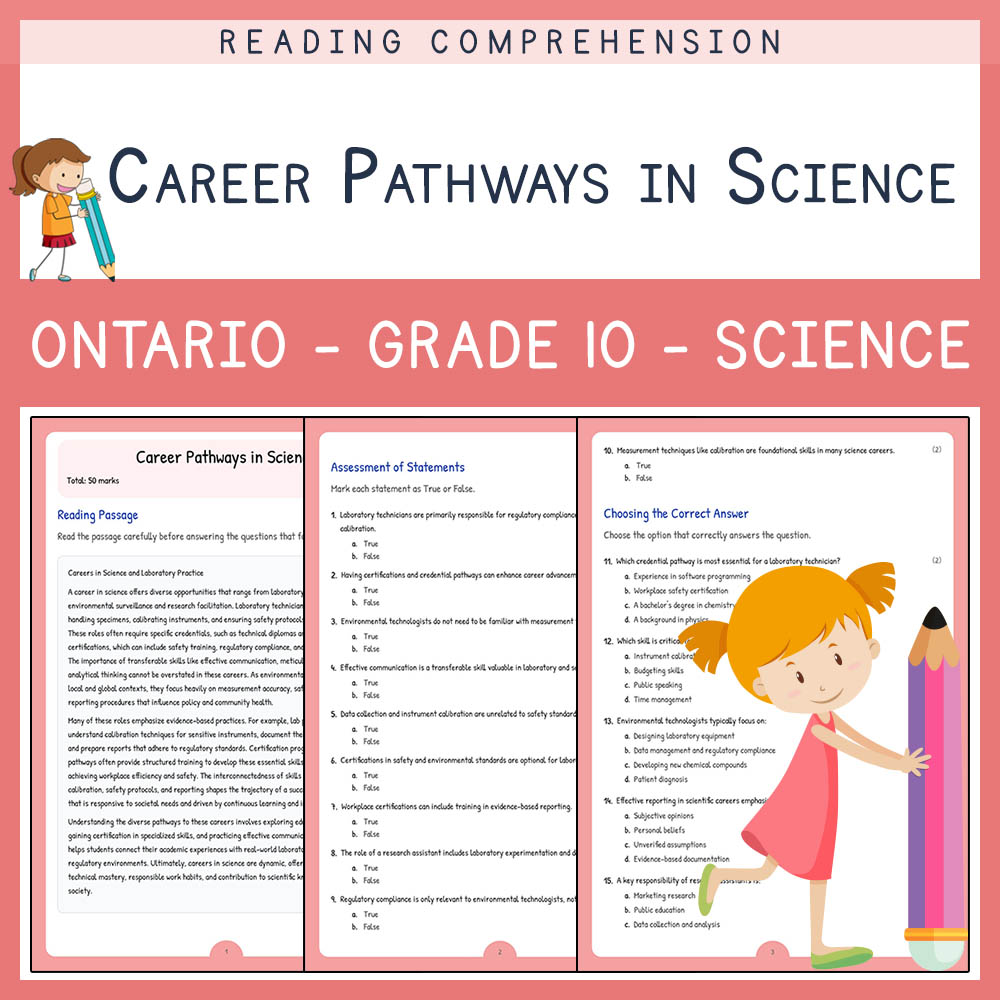
Grade 10 Science | Career Pathways in Science Worksheet Elena | Ontario
Created byLumora LearningLearning Objectives
- Identify various career roles linked to scientific inquiry and laboratory practices.
- Understand credential pathways, workplace certifications, and transferable skills for science-related careers.
- Recognize responsibilities such as data collection, instrument calibration, and regulatory compliance in laboratory settings.
Instant download
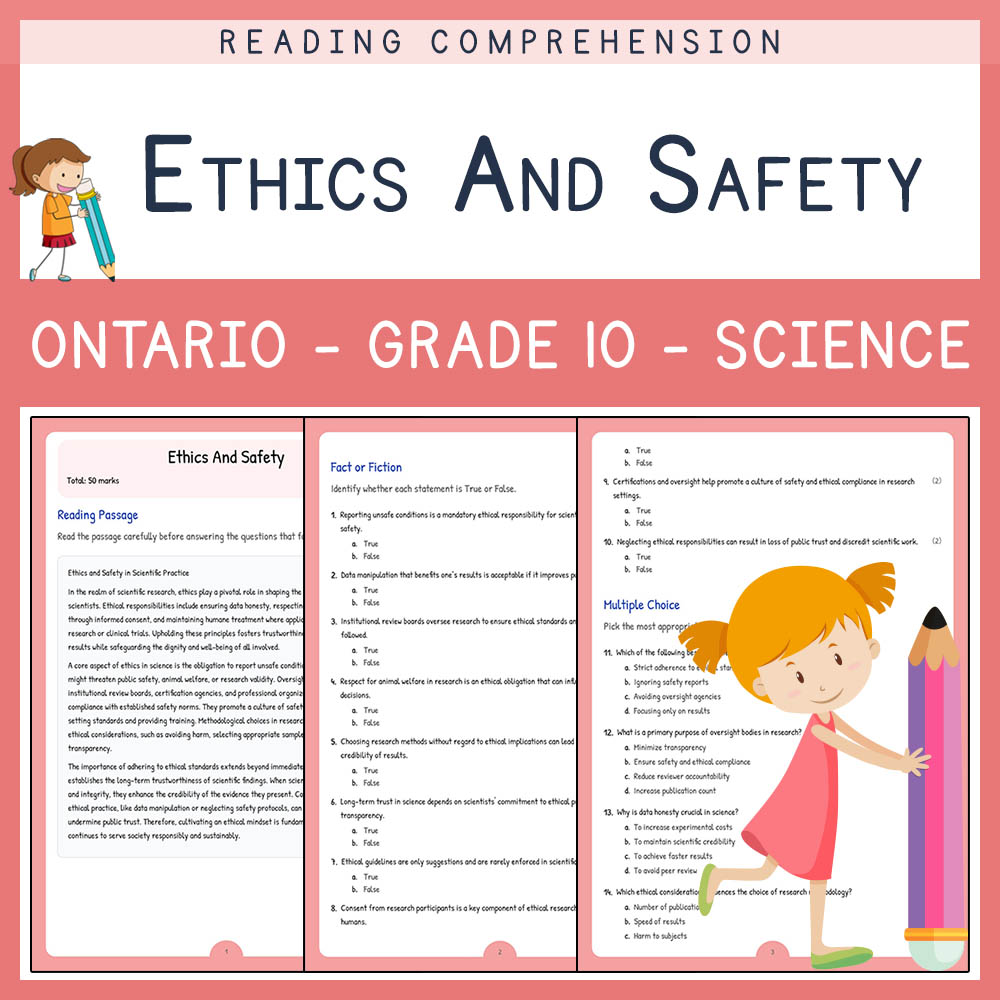
Grade 10 Science | Ethics and Safety Worksheet | Ontario Standards
Created byLumora LearningLearning Objectives
- Understand the ethical responsibilities related to safety and integrity in scientific work.
- Identify guidelines for data honesty, consent, and humane treatment in research.
- Recognize reporting obligations for unsafe conditions and oversight roles in maintaining safety culture.
Instant download
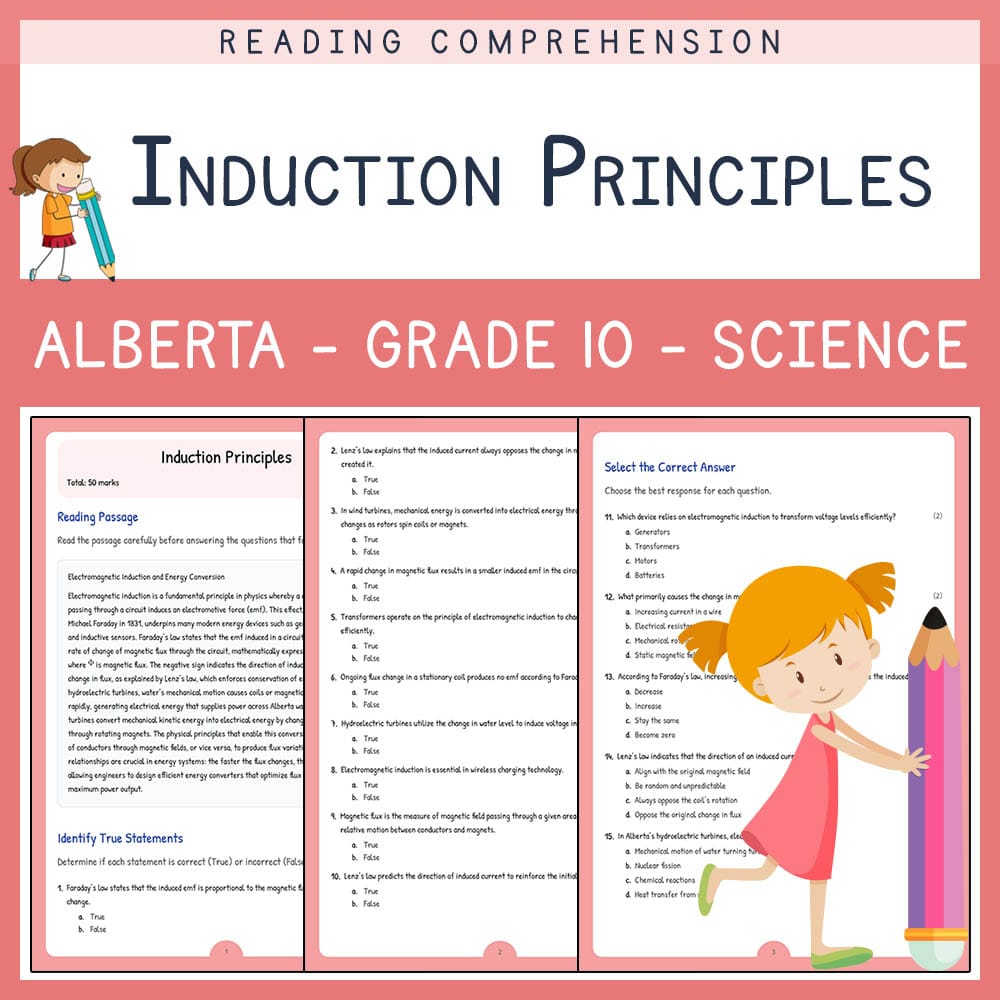
Grade 10 Science | Induction Principles Worksheet | Alberta Standards
Created byLumora LearningLearning Objectives
- Understand the fundamental concepts of electromagnetic induction, including Faraday’s law and Lenz's law.
- Explain how changing magnetic flux induces voltage in conductors.
- Identify real-world energy devices that utilize electromagnetic induction, such as turbines and transformers.
Instant download
Grade 10 Science |Organelle Architecture Worksheet | Ontario Standards
Created byLumora LearningLearning Objectives
- Identify and describe the major cellular organelles and their structural features.
- Compare the ultrastructural characteristics of organelles in eukaryotic cells observable by electron microscopy.
- Differentiate between prokaryotic and eukaryotic cellular organization based on compartmentalization and morphology.
Instant download
Grade 10 Science | Specialized Cells Worksheet Elena | Ontario Standard
Created byLumora LearningLearning Objectives
- Understand the concept of cellular specialization and how cells adapt structurally for specific functions.
- Identify examples of morphological adaptations in different cell types and tissues.
- Explain how gene expression and structural changes influence cell differentiation.
Instant download
Grade 10 Science | Microbe Diversity Worksheet Elena | Ontario Standards
Created byLumora LearningLearning Objectives
- Describe the major groups of microorganisms and their cellular organization.
- Understand differences in genetic material and reproductive strategies among microbes.
- Identify ecological roles and niches of bacteria, archaea, viruses, fungi, and protists.
Instant download
Grade 10 | Mineral Overview Worksheet Elena | Ontario Standard
Created byLumora LearningLearning Objectives
- Understand key properties used to classify minerals, including crystal habit, hardness, cleavage, and specific gravity.
- Differentiate between ores, industrial minerals, and gemstones based on their properties and formation conditions.
- Identify common geological settings where minerals and mineral deposits are formed, such as hydrothermal veins, magmatic segregation, and sedimentary concentration.
Instant download
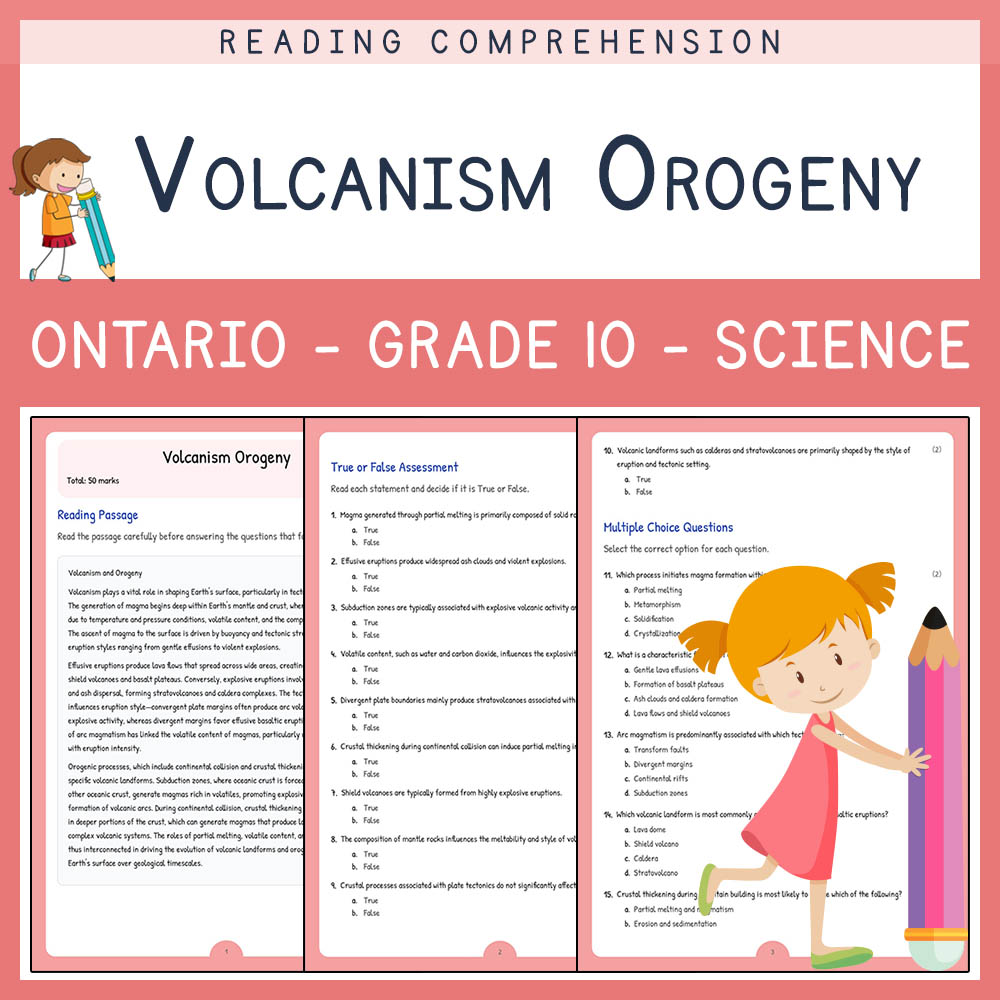
Grade 10 Science | Volcanism Orogeny Worksheet Elena | Ontario Standards
Created byLumora LearningLearning Objectives
- Describe the processes involved in magma generation, ascent, and eruption styles.
- Differentiate between effusive and explosive volcanism and their resulting landforms.
- Explain the roles of partial melting, volatile content, and tectonic setting in volcanic behavior.
Instant download
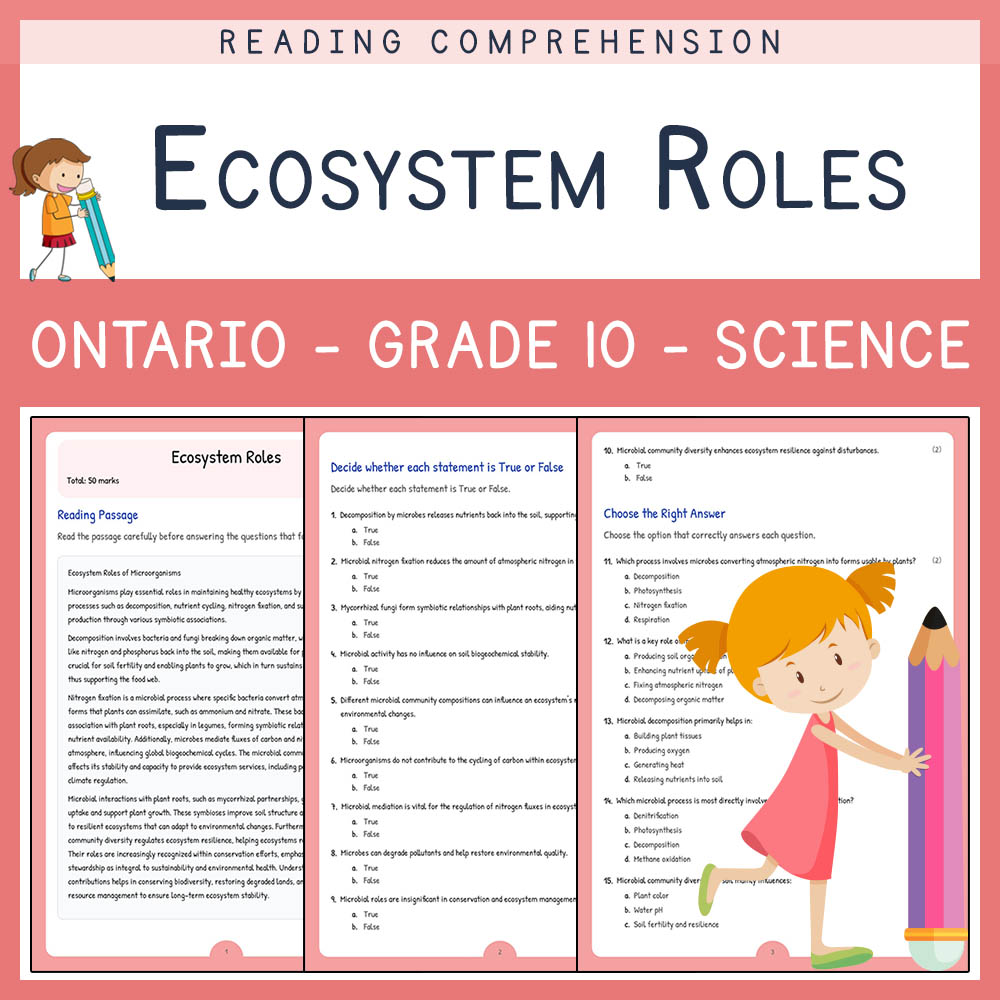
Grade 10 Science | Ecosystem Roles Worksheet Elena | Ontario Standards
Created byLumora LearningLearning Objectives
- Describe how microorganisms contribute to decomposition, nutrient cycling, nitrogen fixation, and primary production in ecosystems.
- Explain the microbial mediation of carbon and nitrogen fluxes and their influence on soil fertility and biogeochemical stability.
- Analyze the impact of microbial community composition on ecosystem services and resilience.
Instant download
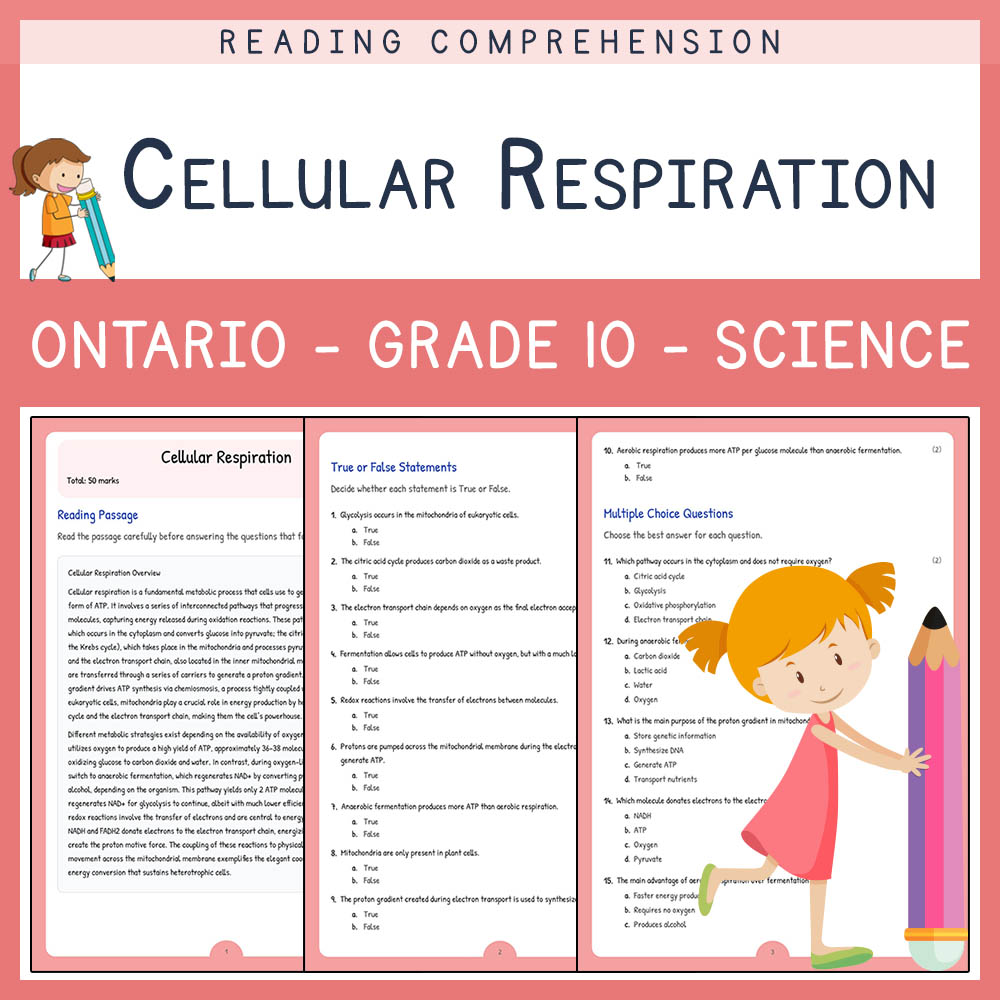
Grade 10 Science | Cellular Respiration Worksheet Elena | Ontario Standard
Created byLumora LearningLearning Objectives
- Explain the sequential pathways involved in cellular respiration, including glycolysis, the citric acid cycle, and the electron transport chain.
- Describe the role of mitochondria in energy transformation during cellular respiration.
- Differentiate between aerobic ATP production and anaerobic fermentation regarding oxygen dependence and efficiency.
Instant download
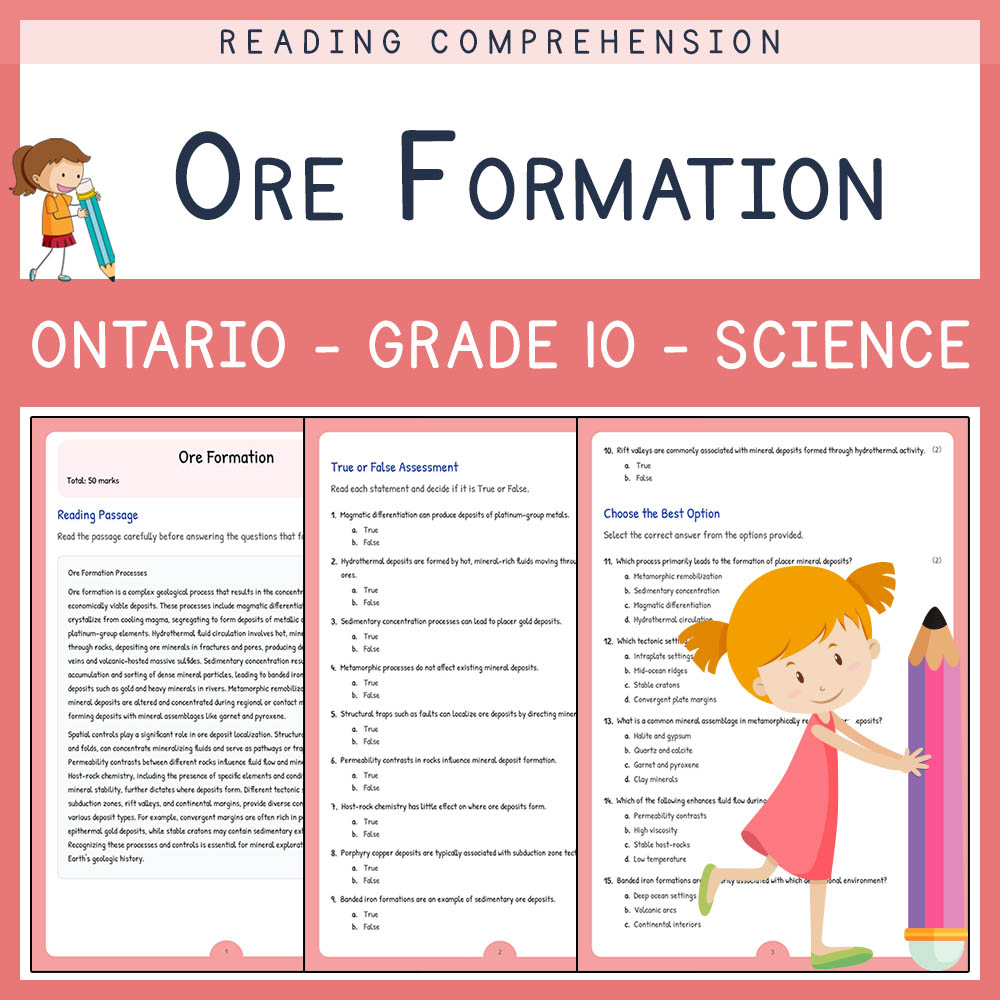
Grade 10 | Ore Formation Worksheet Elena | Science | Ontario Standards
Created byLumora LearningLearning Objectives
- Describe principal ore-forming processes including magmatic differentiation, hydrothermal circulation, sedimentary concentration, and metamorphic remobilization.
- Identify spatial controls such as structural traps, permeability contrasts, and host-rock chemistry that influence ore deposits.
- Recognize typical mineral assemblages and tectonic settings associated with different deposit types.
Instant download
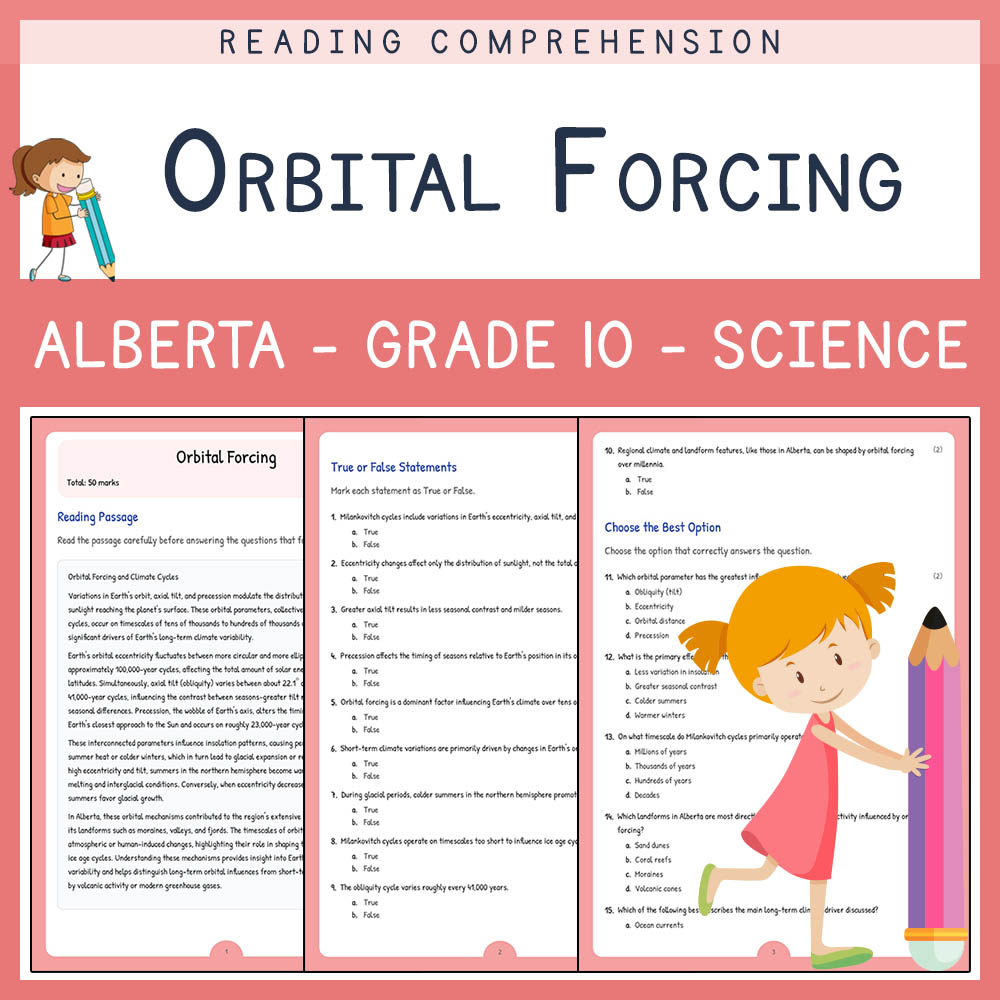
Grade 10 Science | Earth's Orbital Forcing Worksheet | Alberta Standards
Created byLumora LearningLearning Objectives
- Understand how variations in Earth's orbit influence climate cycles over long timescales.
- Explain the mechanisms by which orbital parameters affect insolation distribution and seasonal contrast.
- Distinguish between orbital drivers and shorter-term atmospheric or anthropogenic climate influences.
Also included in: Grade 10 Science | Earth and Space Systems Unit Bundle | Alberta
Instant download
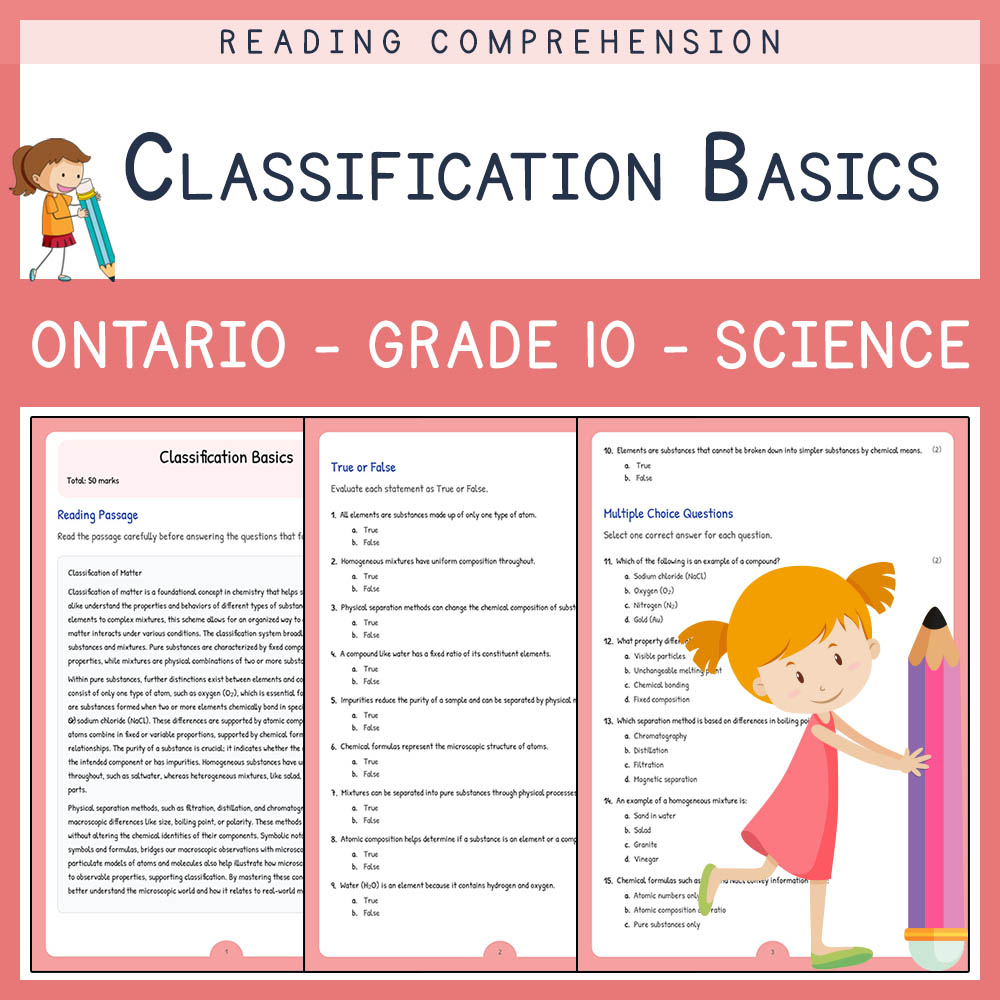
Grade 10 Science | Classification Basics Worksheet Elena | Ontario Standard
Created byLumora LearningLearning Objectives
- Understand the fundamental schemes used to classify matter into states, pure substances, and mixtures.
- Distinguish elements from compounds with representative examples such as oxygen, water, and sodium chloride.
- Explain how atomic composition, chemical formulas, and empirical relationships support classification.
Instant download

Grade 10 Science | Biotic and Abiotic Factors Worksheet Elena | TEKS Aligned
Created byLumora LearningLearning Objectives
- Understand the differences between biotic and abiotic factors in ecosystems.
- Recognize examples of biotic and abiotic components in environmental contexts.
- Explain how interactions between biotic and abiotic factors influence habitats and community structure.
Instant download

Grade 10 Science | Positive Feedback Worksheet | TEKS-Aligned
Created byLumora LearningLearning Objectives
- Understand the concept of positive feedback in human physiology.
- Identify examples of positive feedback mechanisms like childbirth and clotting.
- Explain how positive feedback amplifies physiological responses.
Also included in: Grade 10 Science | Homeostasis & Body Systems Lesson Bundle | TEKS Aligned +1 more
Instant download

Grade 10 Science | Predator Prey Dynamics Worksheet Elena | California Standards
Created byLumora LearningLearning Objectives
- Explain how predator-prey interactions influence population sizes in an ecosystem
- Describe feedback mechanisms that affect growth rates, stability, and carrying capacity
- Analyze how predator and prey changes can reshape community structure and resource use
Instant download

Grade 10 Science | Energy Flow Worksheet | TEKS Aligned
Created byLumora LearningLearning Objectives
- Understand the process by which energy enters ecosystems primarily through sunlight.
- Explain how energy moves through trophic levels and the concept of energy loss.
- Describe the roles of food chains and food webs in illustrating energy pathways.
Instant download

Grade 10 Science | Gravity and Orbits Worksheet | NGSSS Aligned
Created byLumora LearningLearning Objectives
- Explain how gravity influences the motion of celestial bodies
- Describe how orbital paths and speeds relate to distance from the central body, including elliptical orbits
- Connect gravitational interactions to observable effects on Earth, such as tides
Instant download

Grade 10 Science | Rock Cycle Processes Worksheet | NGSSS Aligned
Created byLumora LearningLearning Objectives
- Explain how weathering and erosion break down rocks and transport sediments in the rock cycle
- Describe how sedimentary and igneous rocks form through lithification and magma cooling
- Compare metamorphism and melting by using heat, pressure, and mineral structure evidence
Instant download

Grade 10 Science | Earth System Cycles Worksheet | NGSSS Aligned
Created byLumora LearningLearning Objectives
- Explain how the geosphere, hydrosphere, atmosphere, and biosphere interact to cycle matter and transform energy
- Describe how solar energy drives atmospheric circulation and the water cycle
- Explain how internal heat influences plate movement and volcanism
Instant download
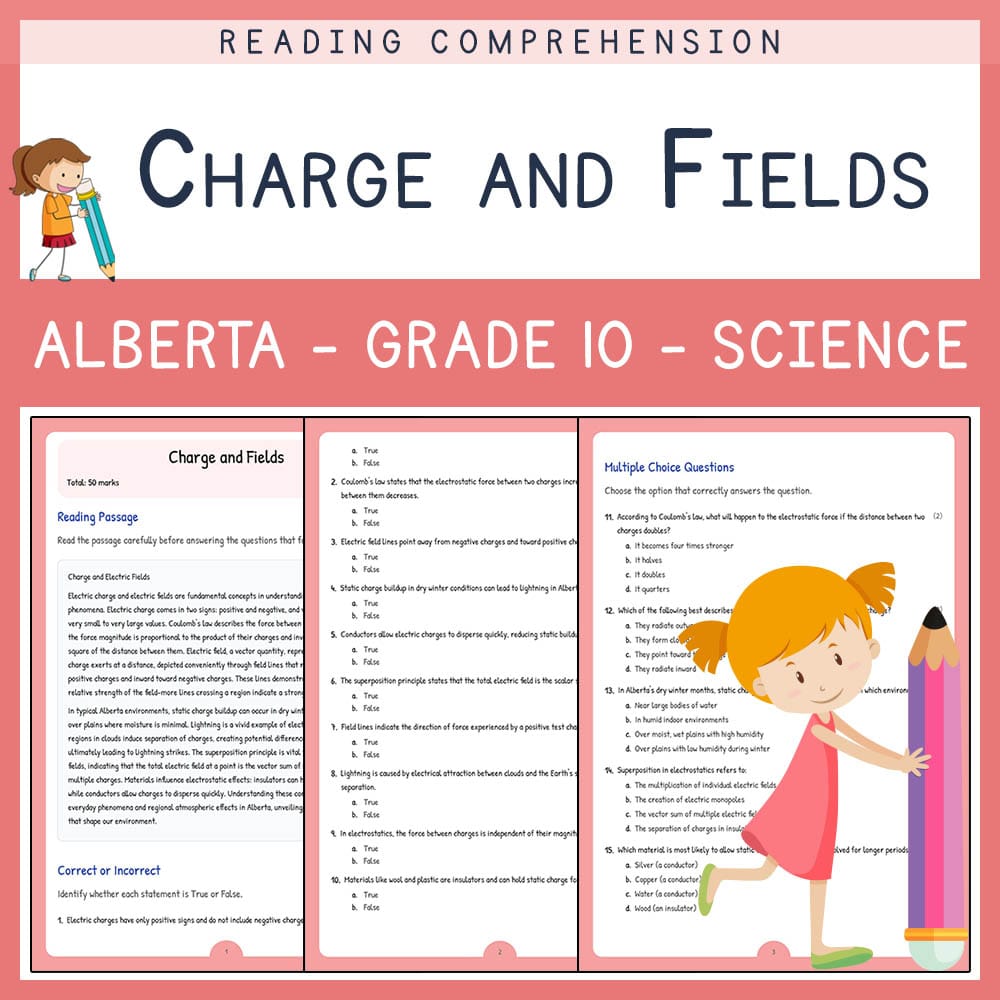
Grade 10 Science | Charge and Fields Worksheet | Alberta Standards
Created byLumora LearningLearning Objectives
- Understand the concept of electric charge, including sign and magnitude.
- Describe the electric field and how field lines represent forces at a distance.
- Explain Coulomb's law and perform force calculations between charges.
Instant download
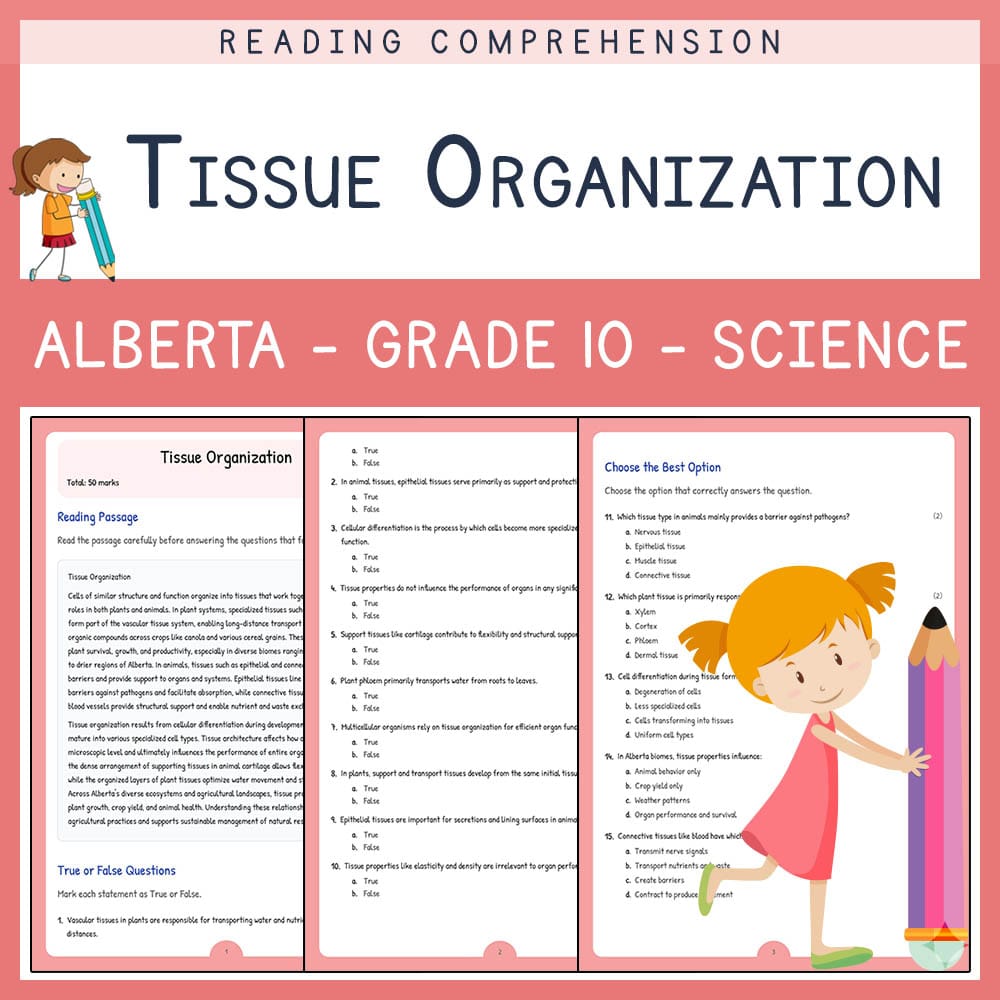
Grade 10 Science Worksheet | Tissue Organization | Alberta Standards
Created byLumora LearningLearning Objectives
- Understand the different types of tissues and their functions in plant and animal systems.
- Explain how tissue properties influence organ performance across various biomes and agricultural settings.
- Identify cellular differentiation and tissue architecture in plant and animal organisms.
Also included in: Grade 10 Science | Cells and Systems Custom Bundle Worksheets | Alberta
Instant download
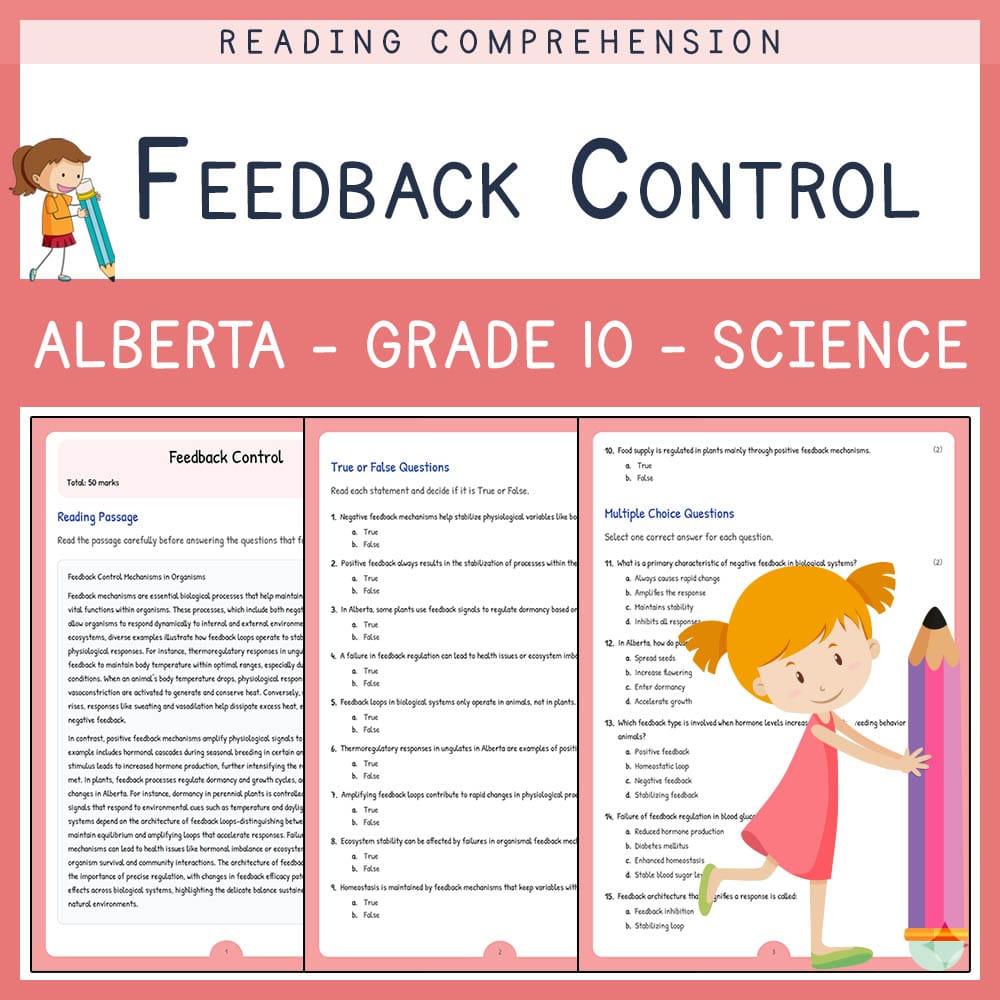
Grade 10 Science | Feedback Control Worksheet | Alberta Standards
Created byLumora LearningLearning Objectives
- Understand the concepts of negative and positive feedback mechanisms in physiological regulation.
- Identify examples of feedback processes in animals and plants, particularly in Alberta environments.
- Analyze the architecture of feedback loops and their influence on stability and amplification.
Also included in: Grade 10 Science | Cells and Systems Custom Bundle Worksheets | Alberta
Instant download

Grade 10 Science – Electron Configuration Worksheet (PDF) | BC Standards
 Created byEvergreen Desk Education
Learning Objectives
- Describe how electrons fill energy levels and orbitals in an atom using quantized rules.
- Identify valence electrons from an electron configuration and explain their role in bonding and reactivity.
- Relate electron configuration patterns to groups and periods on the periodic table.
Instant download

Grade 10 Science – Variation and Heredity Worksheet (TEKS) (PDF)
Created byEvergreen Desk EducationLearning Objectives
- Explain how mutation, recombination, and gene flow create genetic variation within populations
- Describe how heritable traits influence survival and reproduction in particular environments
- Analyze how natural selection changes allele frequencies across generations without directed intent
Instant download

Specialized Cells Worksheet | Cell Biology Structure Grade 10 NGSSS Science
Created byEvergreen Desk EducationLearning Objectives
- Explain how specialized cell structures help cells perform specific functions in multicellular organisms.
- Compare how different specialized cells support transport, protection, absorption, and signaling.
- Use examples (nerve and muscle cells) to connect cellular structure to tissue-level performance.
Instant download

Cell Structure Worksheet Grade 10 Biology NGSSS Science Resource
Created byEvergreen Desk EducationLearning Objectives
- Compare eukaryotic and prokaryotic cell structures and explain how differences relate to cell function
- Describe the roles of major cell components such as the cell membrane, cytoplasm, nucleus, and genetic material
- Explain how specialized cell structures support growth, maintenance, and reproduction in living systems
Instant download

Grade 10 Science | Energy Flow Worksheet (TEKS) PDF
Created byEvergreen Desk EducationLearning Objectives
- Explain how energy moves through ecosystems from sunlight to producers and then to consumers and decomposers
- Describe why energy transfer efficiency decreases at each trophic level and how this limits the number of trophic levels
- Use net primary productivity (NPP) to interpret energy capture as biomass and connect energy flow to population and food-web patterns
Instant download

Grade 10 Scientific Reasoning Worksheet | NGSSS Science Skills Practice Activity
Created byEvergreen Desk EducationLearning Objectives
- Explain how scientific questions lead to testable hypotheses and investigations.
- Distinguish correlation from causation using evidence and reasoning.
- Evaluate alternative explanations and identify limits of what evidence can justify.
Instant download

Grade 10 Mutation Driven Change Worksheet | California Science Standards
Created byEvergreen Desk EducationLearning Objectives
- Explain how mutations can introduce new alleles and heritable genetic variation.
- Describe ways mutations can affect gene expression, protein structure, or regulatory timing.
- Evaluate how natural selection changes allele frequencies based on fitness in a specific environment.
Instant download

Grade 10 Science – Trophic Efficiency Worksheet (TEKS) PDF
Created byEvergreen Desk EducationLearning Objectives
- Explain trophic efficiency and how energy transfer between trophic levels is constrained by metabolic losses and heat dissipation.
- Use trophic efficiency to predict how energy availability affects biomass pyramids and the maximum number of trophic levels in an ecosystem.
- Analyze how differences in trophic efficiency among ecosystems can shape food web structure and predator abundance.
Instant download

Grade 10 Paleoclimate Records Worksheet | Alberta Science Climate PDF
Created byEvergreen Desk EducationLearning Objectives
- Explain how proxy archives (tree rings, lake sediments, peat deposits) preserve evidence of past climate variability.
- Describe how scientists extract and validate temporal signals in proxy records.
- Interpret how proxy evidence can reconstruct past temperature, precipitation, and fire regimes.
Instant download

Grade 10 Science Organ Systems Worksheet | Alberta Biology PDF
Created byEvergreen Desk EducationLearning Objectives
- Explain how organ structure and tissue types work together to carry out physiological functions (e.g., nutrient processing, gas exchange).
- Analyze how organ-level interfaces with the external environment support survival and reproduction across different environments in Alberta.
- Use examples from plant root systems and mammalian digestive organs to describe structure–function relationships, including vascularization and microbial interactions.
Instant download

Transmission Losses Worksheet Grade 10 Science Alberta Power Grid PDF
Created byEvergreen Desk EducationLearning Objectives
- Explain how current and conductor resistance contribute to power (energy) loss during electrical transmission.
- Describe how increasing transmission voltage helps reduce current and resistive losses over long distances.
- Evaluate trade-offs in transmission infrastructure, including insulation, transformer use, and grid reliability.
Instant download

Grade 10 Science | Chemical Equations Worksheet (PDF) BC Standards
Created byEvergreen Desk EducationLearning Objectives
- Interpret chemical equations by identifying reactants, products, and the arrow that shows the reaction direction.
- Use coefficients and state symbols to explain relative amounts and physical phases in chemical reactions.
- Apply conservation of matter to predict what must be balanced in a chemical equation.
Instant download

Astronomical Scale Worksheet for Grade 10 Science | Florida NGSSS PDF
Created byEvergreen Desk EducationLearning Objectives
- Explain how scale and models connect size, distance, and motion when studying space phenomena.
- Use astronomical units and light-years to compare distances within and beyond the solar system.
- Describe how angular size and apparent brightness help infer relative distance and intrinsic power.
Instant download

Grade 10 Science Worksheet | Blood Glucose Regulation TEKS (PDF)
Created byEvergreen Desk EducationLearning Objectives
- Explain how insulin and glucagon regulate blood glucose using negative feedback during fasting and after eating.
- Compare insulin and glucagon effects on the liver, muscle, and adipose tissue to maintain energy homeostasis.
- Use cause-and-effect reasoning to describe what happens to blood glucose when one hormone is increased or decreased.
Instant download

Grade 10 Science | Energy Flow Worksheet (TEKS) with Answer Key (PDF)
Created byEvergreen Desk EducationLearning Objectives
- Explain how energy enters ecosystems through sunlight and moves through trophic levels.
- Describe how energy transfer losses limit biomass and population sizes at higher trophic levels.
- Use food chains and food webs to interpret energy flow and ecosystem constraints.
Instant download

Grade 10 Science | Process Comparison Worksheet (PDF) aligned to TEKS standards
Created byEvergreen Desk EducationLearning Objectives
- Compare photosynthesis and cellular respiration by tracing their inputs and outputs at the cellular level.
- Explain how carbon atoms and energy change forms as they move through autotrophs and heterotrophs.
- Use reaction and system-scale comparisons to interpret reciprocal relationships between processes.
Instant download

Model Revision Evidence Worksheet | Scientific Reasoning Grade 10 NGSSS
Created byEvergreen Desk EducationLearning Objectives
- Explain how scientific models are revised when new evidence conflicts with prior expectations
- Evaluate evidence quality using consistency, explanatory power, and predictive accuracy
- Distinguish evidence-driven model refinement from changes made without empirical support
Instant download

Grade 10 Science | Sustainable Strategies Worksheet (Ontario PDF)
Created byEvergreen Desk EducationLearning Objectives
- Explain how circular economy principles (reduce, reuse, recycle, and substitute) can lower the environmental footprint of resource extraction and use
- Describe how landscape restoration and integrated watershed management support long-term stewardship
- Evaluate trade-offs among economic development, community needs, and environmental outcomes using life-cycle thinking
Also included in: Grade 10 Earth Systems Geology Science Lesson Bundle: Ontario Worksheets +1 more
Instant download

Grade 10 Science Worksheet | Understanding Two-Dimensional Motion (Ontario)
Created byEvergreen Desk EducationLearning Objectives
- Decompose an initial velocity into independent horizontal and vertical components for 2D projectile motion.
- Use kinematic equations under uniform gravitational acceleration (neglecting air resistance) to find time of flight, range, and maximum height.
- Explain how perpendicular (orthogonal) motions remain independent and how trigonometry resolves velocity directions.
Also included in: Grade 10 Kinematics Forces & Mechanics Science Lesson Bundle Ontario Worksheets +1 more
Instant download

Grade 10 Science – Earth System Cycles Worksheet (PDF)
Created byEvergreen Desk EducationLearning Objectives
- Identify Earth system reservoirs (atmosphere, hydrosphere, geosphere, biosphere) and explain how they interact through cycles.
- Explain how energy from the Sun and internal Earth heat drive transformations within matter cycles.
- Use examples (water, carbon, and nutrient cycling) to describe how processes move matter across Earth’s systems.
Also included in: Grade 10 Weather & Climate Science Lesson Bundle - General Framework +1 more
Instant download

Grade 10 Science – Heat Engines Worksheet (BC Standards) PDF
Created byEvergreen Desk EducationLearning Objectives
- Explain how heat engines convert thermal energy into mechanical work using a cycle and temperature differences.
- Describe how efficiency is affected by peak and sink temperatures, cycle design, and real-world losses.
- Compare internal combustion engines, gas turbines, and steam turbines using efficiency and environmental trade-offs.
Instant download

Grade 10 Science – Collisions and Momentum Worksheet (Ontario Standards) (PDF)
Created byEvergreen Desk EducationLearning Objectives
- Define linear momentum and impulse and explain how impulse changes momentum in Newtonian systems.
- Use conservation of momentum to predict outcomes of collisions in isolated two-body systems.
- Distinguish elastic, inelastic, and perfectly inelastic collisions using momentum and kinetic energy reasoning.
Also included in: Grade 10 Kinematics Forces & Mechanics Science Lesson Bundle Ontario Worksheets +1 more
Instant download

Grade 10 Science | Measurement-Based Prototyping Worksheet (PDF)
Created byEvergreen Desk EducationLearning Objectives
- Explain how measurements connect design features to performance outcomes in prototypes.
- Identify sources of variation and limitations that affect the reliability of conclusions.
- Use measurement results to compare performance across conditions and decide whether goals are met.
Also included in: Grade 10 Engineering Design Trade-Offs Science Lesson Bundle: General +1 more
Instant download

Grade 10 Science – Weather and Climate Links Worksheet (PDF)
Created byEvergreen Desk EducationLearning Objectives
- Explain how unequal heating of Earth drives pressure differences and winds.
- Describe how rising air leads to cloud formation and precipitation.
- Connect weather patterns (fronts, convection, circulation) to longer-term climate statistics.
Also included in: Grade 10 Weather & Climate Science Lesson Bundle - General Framework +1 more
Instant download
About Grade 10 Science Worksheets
Find Science worksheets built for Grade 10. All 7,038 cover core skills, practice, and review, each an instant PDF download.
Every worksheet on MyTeachingSheets is created by independent teacher-authors and reviewed before publication. All resources download as printable PDFs for classroom, homework, or at-home practice, and many include answer keys. Preview any worksheet free before buying.