
Grade 10 Science Worksheets
7,069 worksheets
Grade 10 Science – Cellular Specialization Daily Reading Worksheet + Answer Key
JCreated byJ.S SheetsLearning Objectives
- Understand the concept of cellular specialization and its importance.
- Learn about specific organelles and their roles in specialized cells.
- Describe how different cells form tissues and organ systems.
Also included in: Grade 10 Science Lesson Group Bundle | Cell Structure & Function TEKS +1 more
Instant download
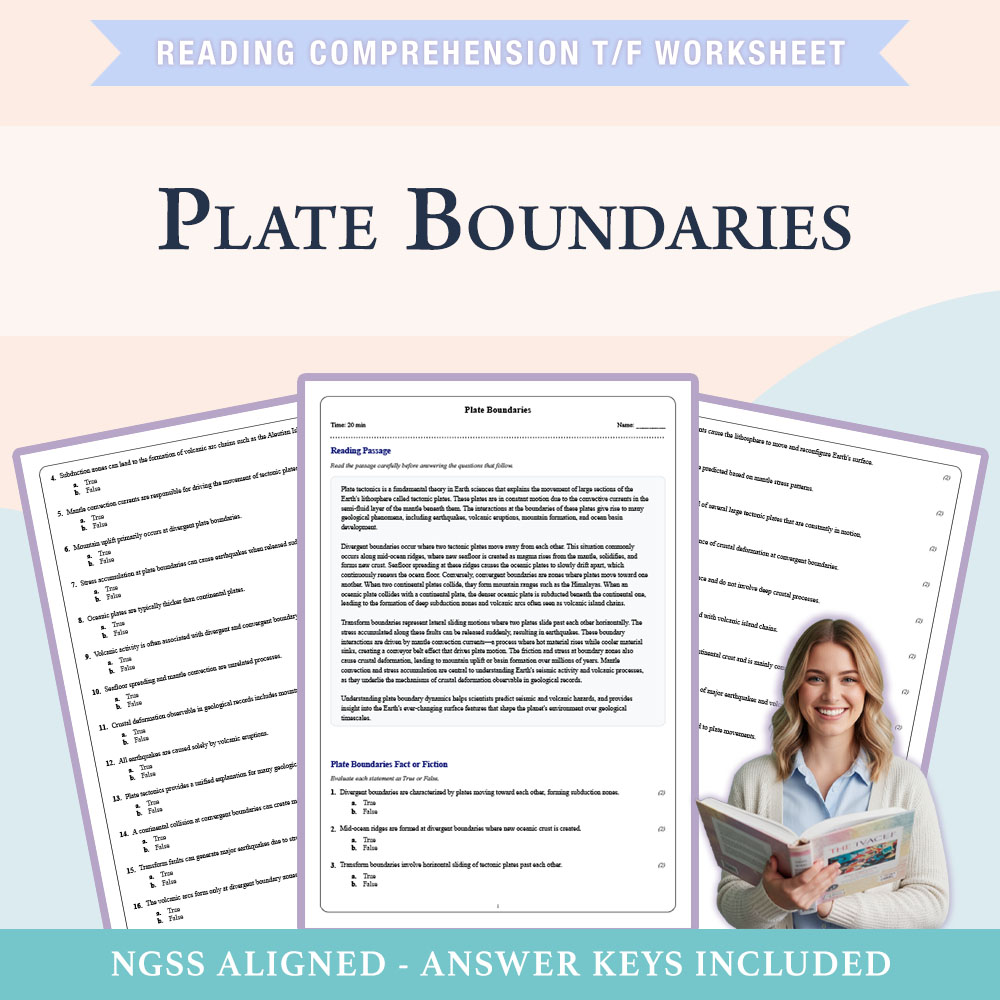
10th Grade Science | Plate Boundaries Worksheet (PDF +Answer Key)
 Created byCopper Leaf Classroom
Learning Objectives
- Understand and identify different types of plate boundaries: divergent, convergent, and transform.
- Describe key geological phenomena associated with plate boundaries, such as mid-ocean ridges, subduction zones, and mountain ranges.
- Explain the processes of mantle convection, seafloor spreading, volcanic arc formation, and mountain uplift.
Also included in: Grade 10 Science | Earth Systems & Climate Change Bundle (PDF + Answer Key) +1 more
Instant download
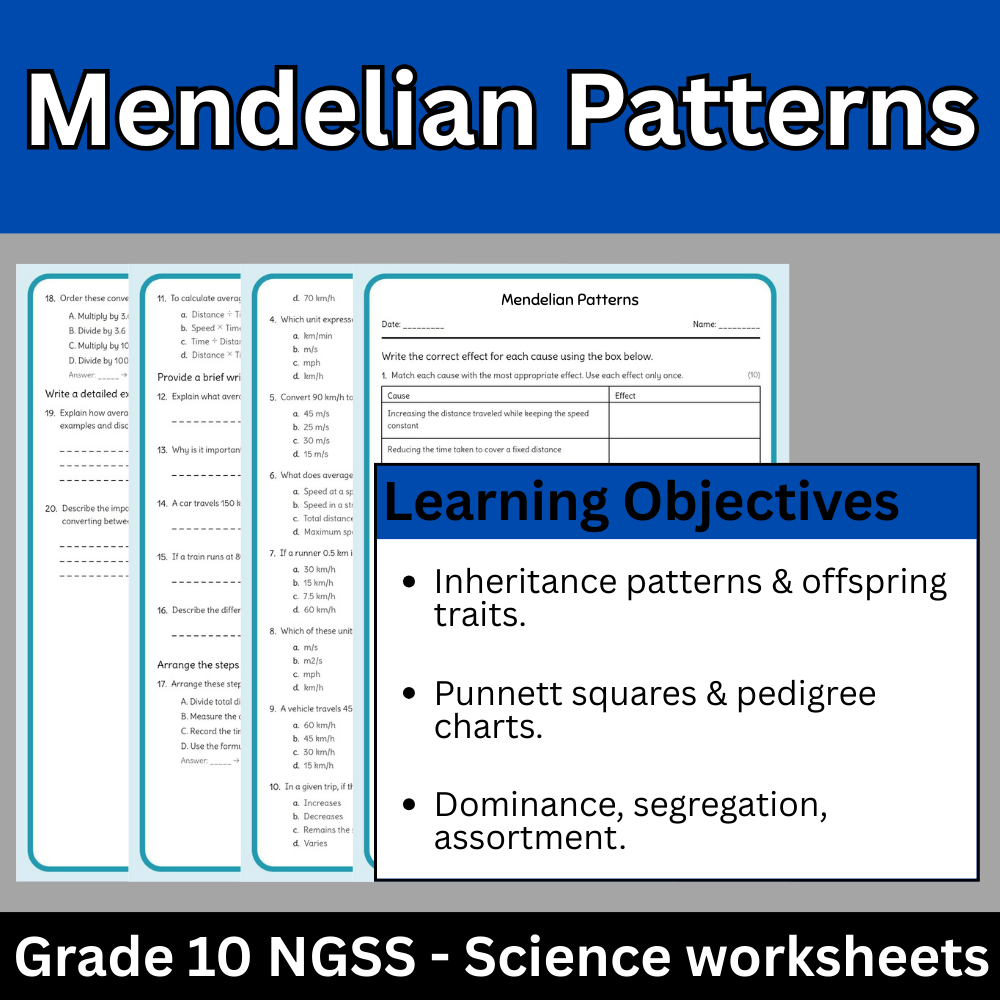
Grade 10 Science – Mendelian Patterns Worksheet (NGSS Aligned) (PDF)
 Created byBright Mind Resources
Learning Objectives
- Understand basic Mendelian inheritance patterns and how they relate to offspring traits.
- Analyze Punnett squares, pedigree charts, and probability in genetic inheritance.
- Explain concepts of dominance, segregation, and independent assortment during meiosis.
Instant download
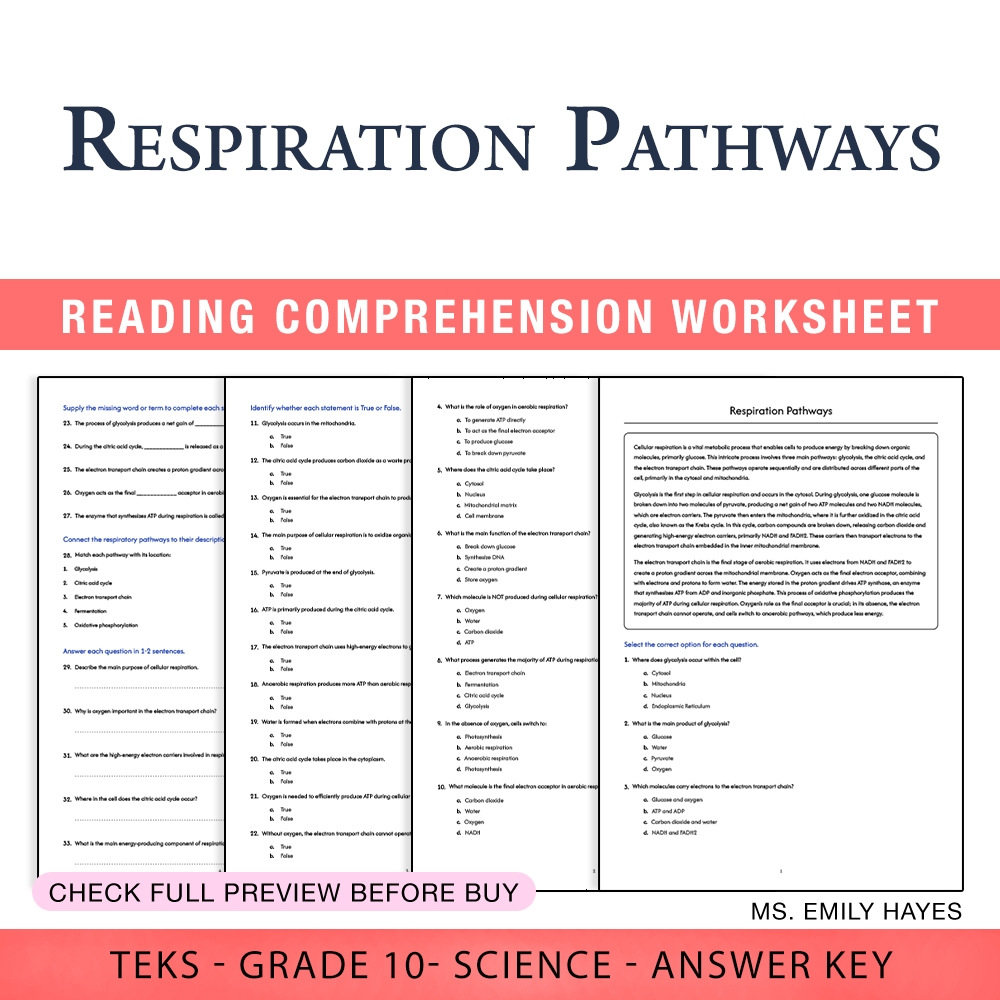
10th Grade Science | Respiration Pathways Worksheet (PDF+ Answer Key)
Created byCopper Leaf ClassroomLearning Objectives
- Describe the main stages of cellular respiration: glycolysis, the citric acid cycle, and the electron transport chain.
- Explain where each stage occurs within the cell and what molecules are produced.
- Identify the role of oxygen as the final electron acceptor in aerobic respiration.
Instant download
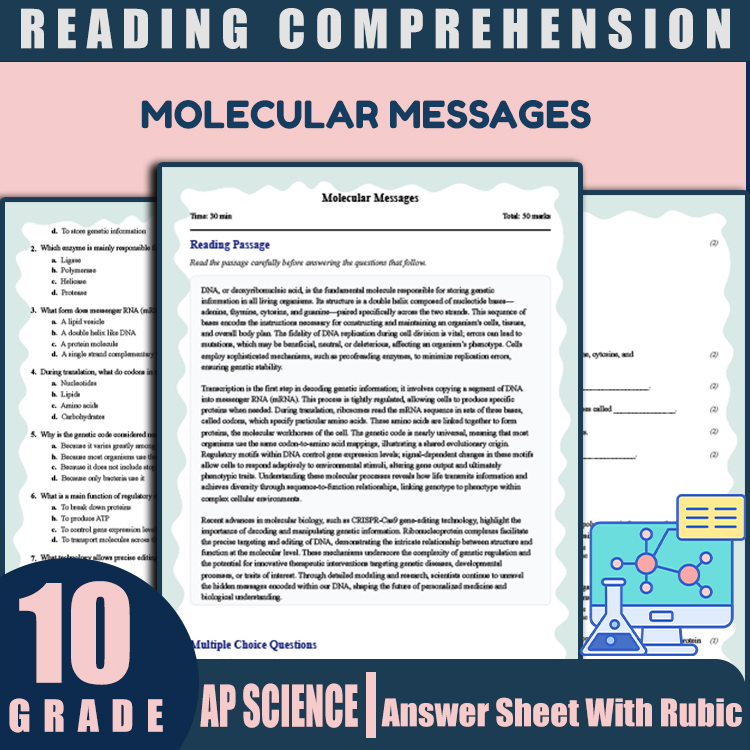
Grade 10 Science | Metabolic Pathways Reading Worksheet & Answer Key (PDF)
JCreated byJ.S SheetsLearning Objectives
- Understand the key steps and components of glycolysis, the tricarboxylic acid cycle, and oxidative phosphorylation.
- Identify where energy is conserved and released in metabolic pathways.
- Explain how electrons flow through redox reactions during cellular respiration.
Also included in: Grade 10 Science Unit | Cell Biology, Genetics, & Ecosystems Worksheet Pack +1 more
Instant download
10th Grade Science | Meiosis & Genetic Variation Reading Worksheet
JCreated byJ.S SheetsLearning Objectives
- Understand the processes involved in meiosis, including homologous pairing, recombination, and chromosomal segregation.
- Explain how genetic variation arises through mechanisms such as crossing-over and independent assortment.
- Relate the mechanisms of meiosis to evolutionary outcomes and inheritance patterns.
Also included in: Grade 10 Science Unit | Cell Biology, Genetics, & Ecosystems Worksheet Pack +1 more
Instant download
10th Grade Science | Energy Currency Reading Worksheet (PDF Answer Key & Rubric)
JCreated byJ.S SheetsLearning Objectives
- Understand the role of adenosine triphosphate (ATP) as the energy currency in biological systems.
- Explain the coupling of exergonic and endergonic reactions in cellular energy transfer.
- Compare different representations of redox reactions, bond energy changes, and free energy diagrams.
Also included in: Grade 10 Science Unit | Cell Biology, Genetics, & Ecosystems Worksheet Pack +1 more
Instant download
10th Grade Science | Population Genomics Reading Worksheet (PDF + Answer Key)
JCreated byJ.S SheetsLearning Objectives
- Understand how molecular variation contributes to population diversity.
- Interpret allele frequency models and their role in population structure.
- Describe the processes of mutation, gene flow, selection, and genetic drift.
Also included in: Grade 10 Science Unit | Cell Biology, Genetics, & Ecosystems Worksheet Pack +1 more
Instant download
10th Grade Science | Gene Expression Regulation Reading Worksheet
JCreated byJ.S SheetsLearning Objectives
- Understand the mechanisms controlling gene expression in prokaryotic and eukaryotic systems.
- Identify key components such as promoters, transcription factors, chromatin modifications, and post-transcriptional controls.
- Analyze regulatory network diagrams and interpret expression profiles to understand signal integration.
Also included in: Grade 10 Science Unit | Cell Biology, Genetics, & Ecosystems Worksheet Pack +1 more
Instant download
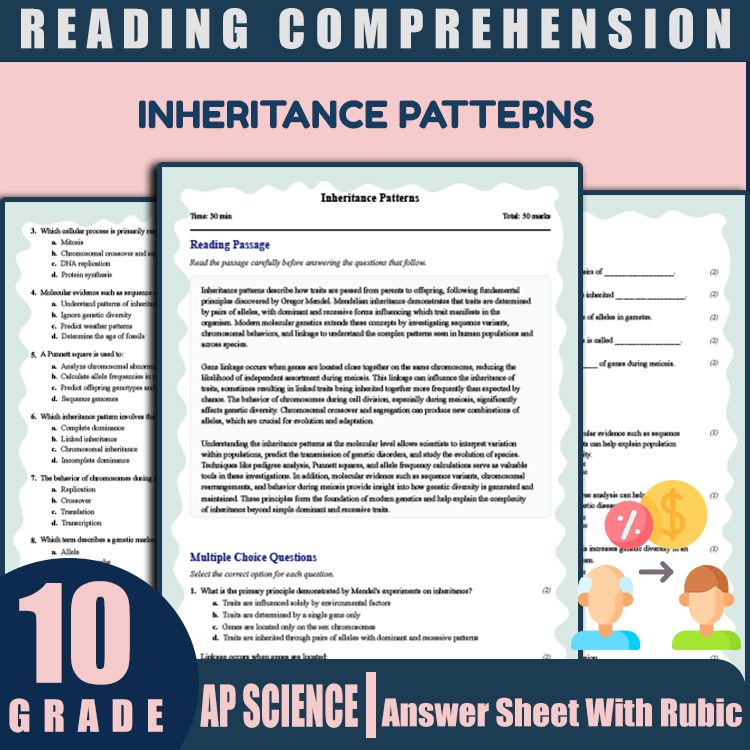
Grade 10 Science | Inheritance Patterns Reading Worksheet (PDF + Answer Key)
JCreated byJ.S SheetsLearning Objectives
- Understand the principles of Mendelian inheritance and how traits are transmitted across generations.
- Describe various inheritance patterns including dominance, linkage, and chromosomal inheritance.
- Interpret genetic information using pedigree charts, Punnett squares, and allele frequency data.
Also included in: Grade 10 Science Unit | Cell Biology, Genetics, & Ecosystems Worksheet Pack +1 more
Instant download
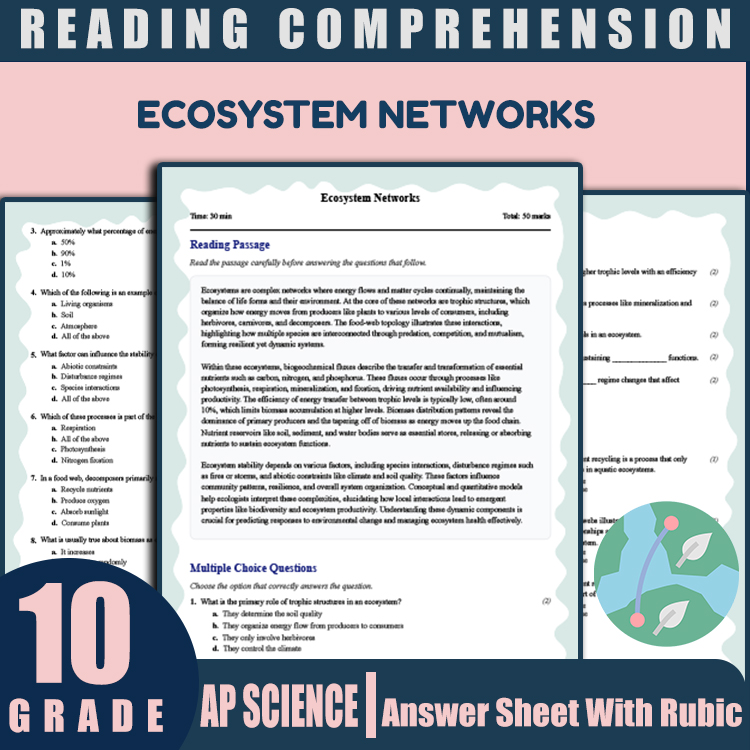
10th Grade Science | Ecosystem Networks Reading Worksheet (PDF + Answer Key)
JCreated byJ.S SheetsLearning Objectives
- Understand the flow of energy within ecosystems and how matter cycles through various components.
- Identify key structures like food webs, trophic levels, and biogeochemical fluxes in ecosystems.
- Quantify energy transfer efficiencies, biomass distributions, and nutrient reservoirs.
Also included in: Grade 10 Science Unit | Cell Biology, Genetics, & Ecosystems Worksheet Pack +1 more
Instant download
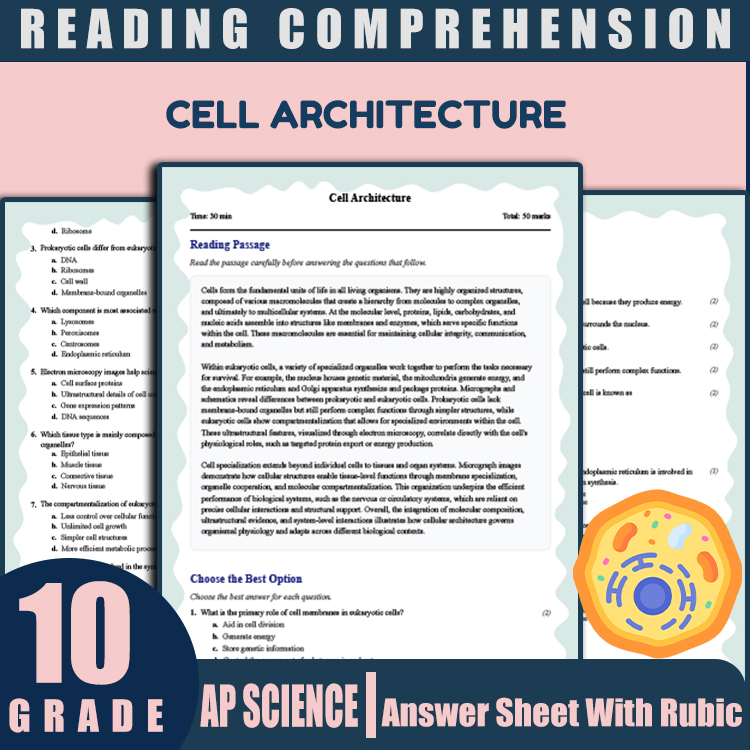
10th Grade Science | Cell Architecture Reading Worksheet & Answer Key (PDF)
JCreated byJ.S SheetsLearning Objectives
- Understand the hierarchical organization of biological molecules, organelles, and cellular systems.
- Compare structural features of prokaryotic and eukaryotic cells and relate ultrastructural evidence to their functions.
- Explain how cell structures enable processes such as compartmentalization and protein targeting in organisms.
Also included in: Grade 10 Science Unit | Cell Biology, Genetics, & Ecosystems Worksheet Pack +1 more
Instant download

Grade 10 Science | Ocean Atmosphere Coupling Worksheet (PDF)
 Created byEvergreen Desk Education
Learning Objectives
- Explain how the ocean and atmosphere exchange heat and moisture and how this affects winds and convection.
- Describe how changes in sea-surface temperature can shift evaporation, storms, and rainfall belts.
- Compare El Niño and La Niña as coupled ocean-atmosphere climate patterns and infer likely regional impacts.
Also included in: Grade 10 Weather & Climate Science Lesson Bundle - General Framework +1 more
Instant download
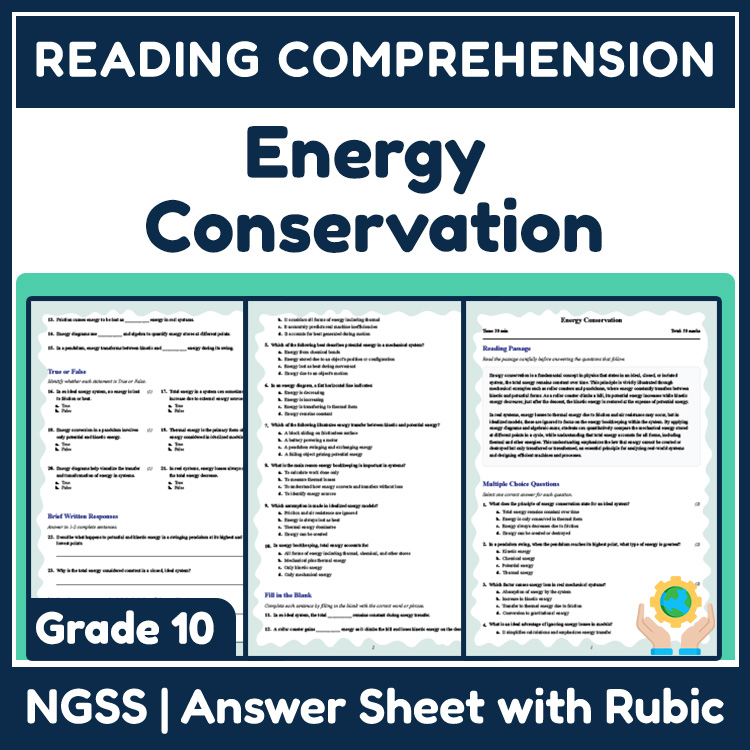
Grade 10 Science | Energy Conservation Reading Worksheet & Answer Key (PDF)
JCreated byJ.S SheetsLearning Objectives
- Explain the principles of energy conservation in closed and isolated systems.
- Describe the transformations between kinetic and potential energy in mechanical examples.
- Analyze energy diagrams and apply basic algebra to quantify energy stores.
Also included in: Grade 10 Science | Energy & Thermal Transfer Unit Worksheet Bundle
Instant download
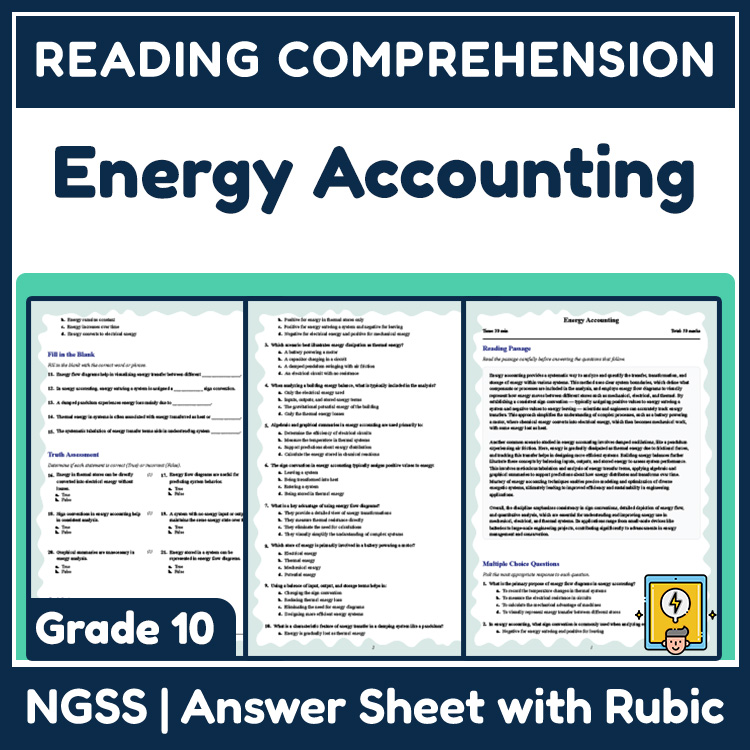
Grade 10 Science | Energy Accounting Reading Worksheet (PDF + Answer Key)
JCreated byJ.S SheetsLearning Objectives
- Understand and interpret energy flow diagrams for different systems.
- Apply system boundaries and sign conventions to quantify energy transfers.
- Use algebraic and graphical methods to analyze energy distribution in mechanical, electrical, and thermal stores.
Also included in: Grade 10 Science | Energy & Thermal Transfer Unit Worksheet Bundle
Instant download
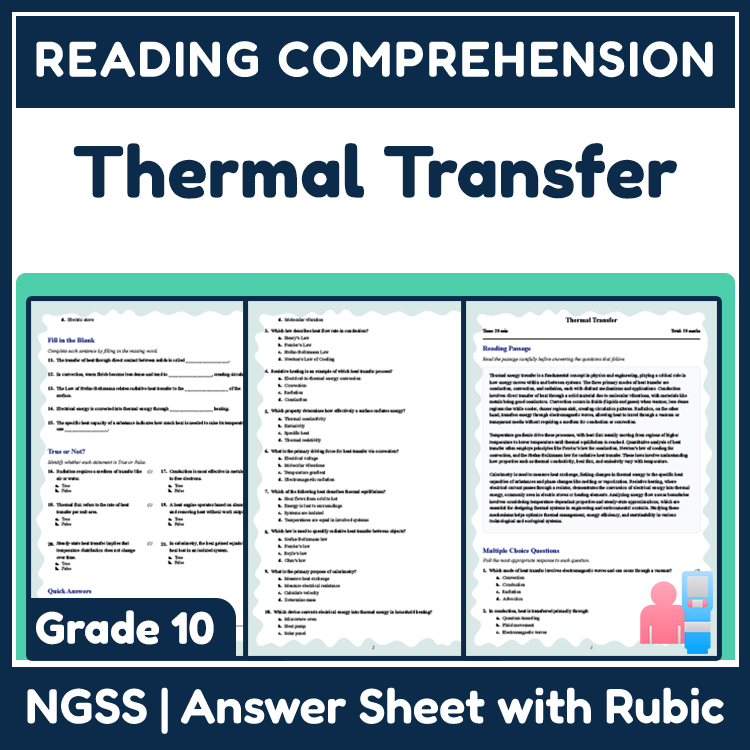
Grade 10 Science | Thermal Transfer Reading Worksheet (PDF + Answer Key)
JCreated byJ.S SheetsLearning Objectives
- Understand the mechanisms of heat transfer: conduction, convection, and radiation.
- Apply calorimetric reasoning to relate thermal energy changes to specific heat and phase changes.
- Describe how resistive heating converts electrical energy into thermal energy.
Also included in: Grade 10 Science | Energy & Thermal Transfer Unit Worksheet Bundle
Instant download
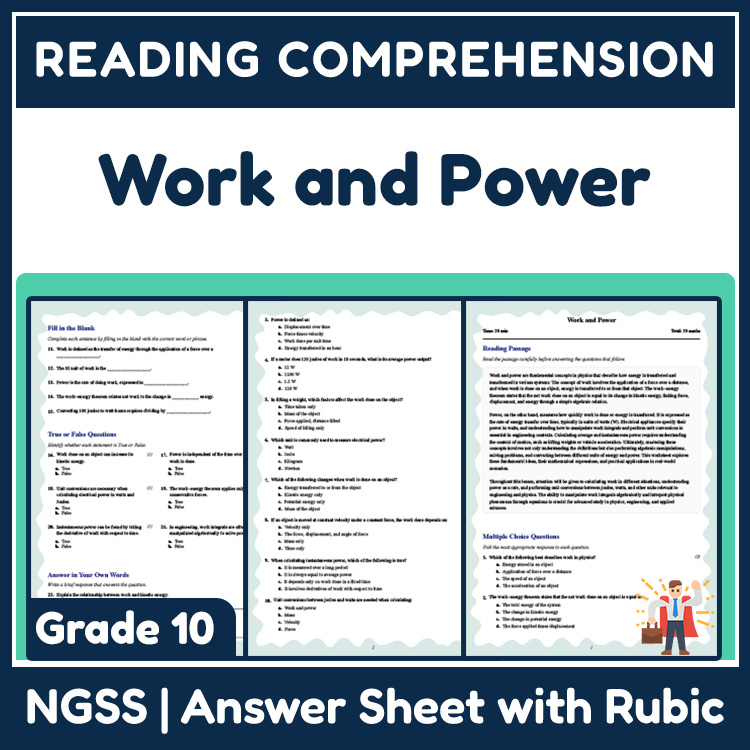
10th Grade Science Reading Worksheet | Work and Power – NGSS Formatted (PDF)
JCreated byJ.S SheetsLearning Objectives
- Understand the relationship between work, force, displacement, and energy.
- Apply the work–energy theorem to solve problems involving kinetic energy and work.
- Calculate power as the rate of energy transfer in various contexts.
Also included in: Grade 10 Science | Energy & Thermal Transfer Unit Worksheet Bundle
Instant download
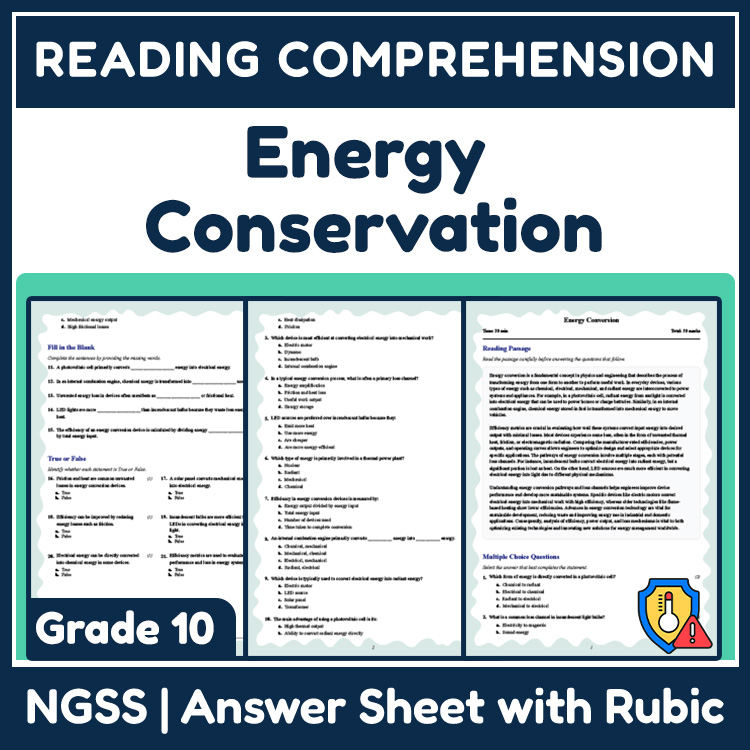
Grade 10 Science | Energy Conversion Reading Worksheet (PDF + Answer Key)
JCreated byJ.S SheetsLearning Objectives
- Understand the different forms of energy and their conversions in practical devices
- Analyze the efficiency and loss mechanisms in energy conversion systems
- Compare different energy conversion devices based on their characteristics and efficiency metrics
Also included in: Grade 10 Science | Energy & Thermal Transfer Unit Worksheet Bundle
Instant download
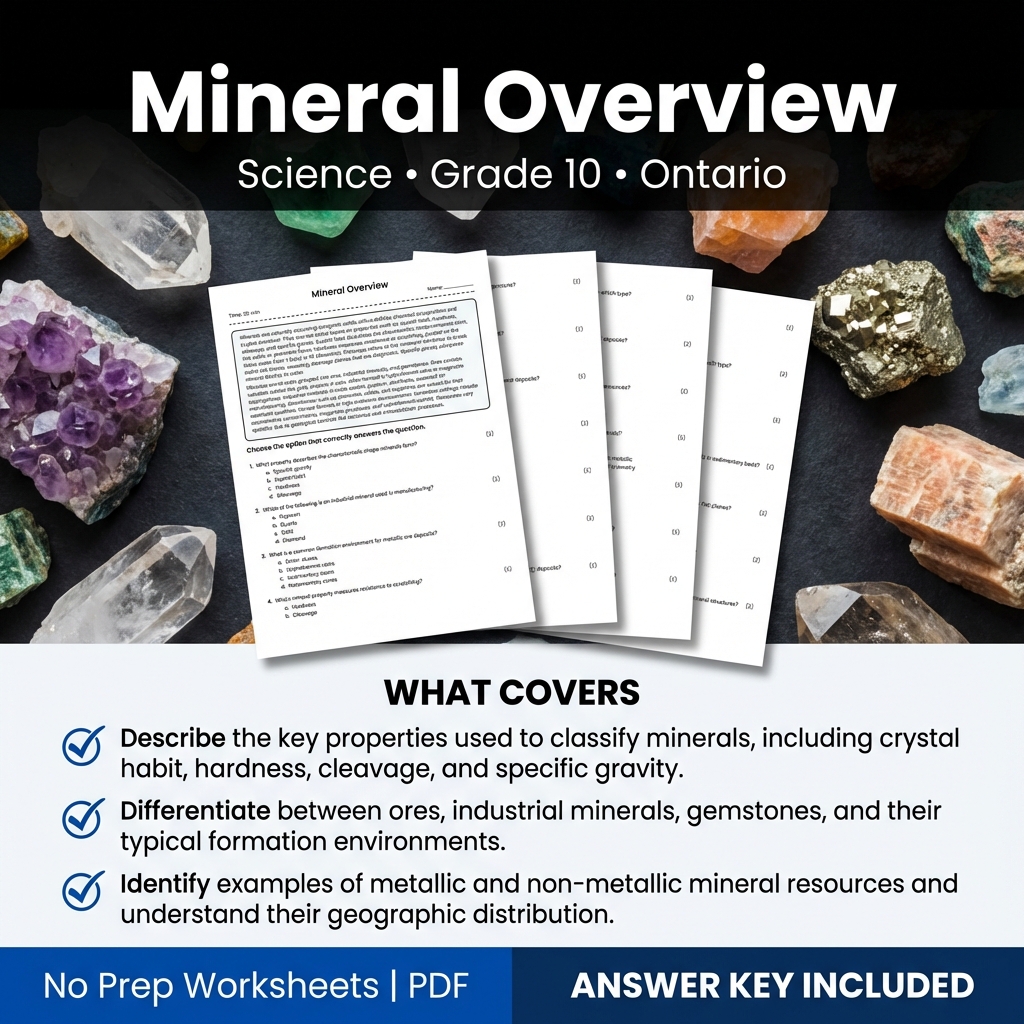
Mineral Overview Grade 10 Science Worksheet | Ontario Standards
 Created byCoral Reef Learning
Learning Objectives
- Describe the key properties used to classify minerals, including crystal habit, hardness, cleavage, and specific gravity.
- Differentiate between ores, industrial minerals, gemstones, and their typical formation environments.
- Identify examples of metallic and non-metallic mineral resources and understand their geographic distribution.
Instant download
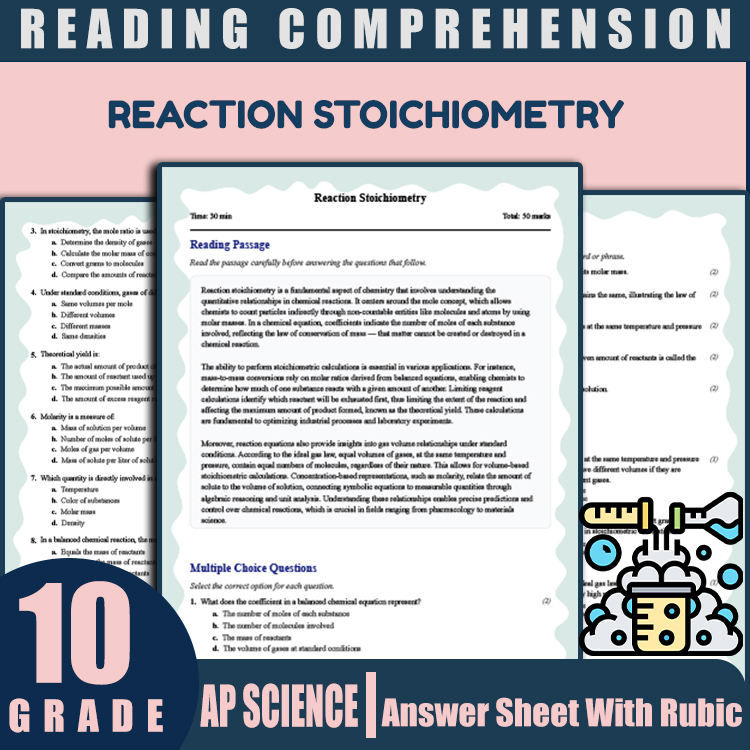
10th Grade Science | Reaction Stoichiometry Reading Worksheets (PDF + Rubric)
JCreated byJ.S SheetsLearning Objectives
- Understand the mole concept and how it relates to chemical quantities.
- Interpret and balance chemical equations to represent conservation of matter.
- Perform stoichiometric calculations including mass-to-mass conversions, limiting reagent, and theoretical yield.
Also included in: Grade 10 Science Unit Worksheet Bundle | Chemical Reactions & Atomic Structure +1 more
Instant download
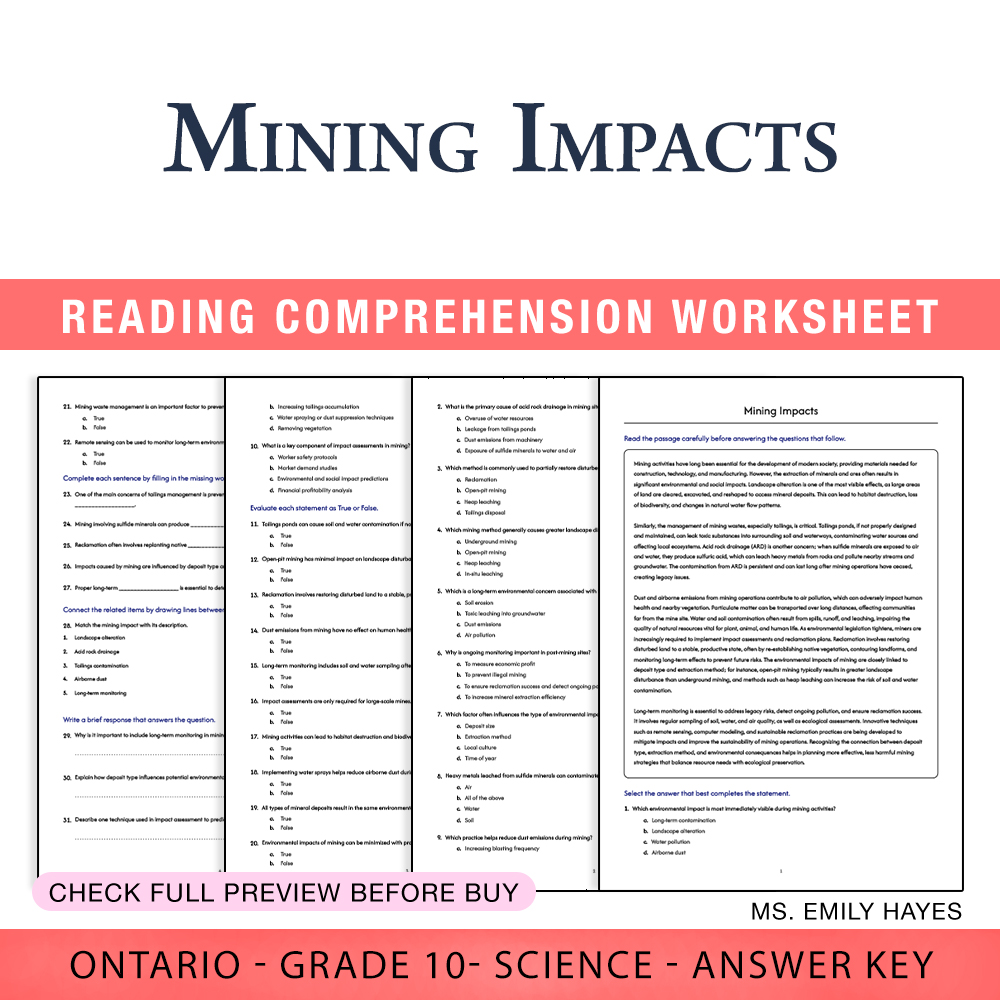
10th Grade Science | Mining Impacts Worksheet (PDF + Answer Key)
Created byCopper Leaf ClassroomLearning Objectives
- Identify and describe various environmental impacts caused by mineral extraction activities.
- Assess reclamation principles and long-term monitoring approaches used in mining sites.
- Explain the relationships between deposit type, extraction method, and potential environmental outcomes.
Instant download
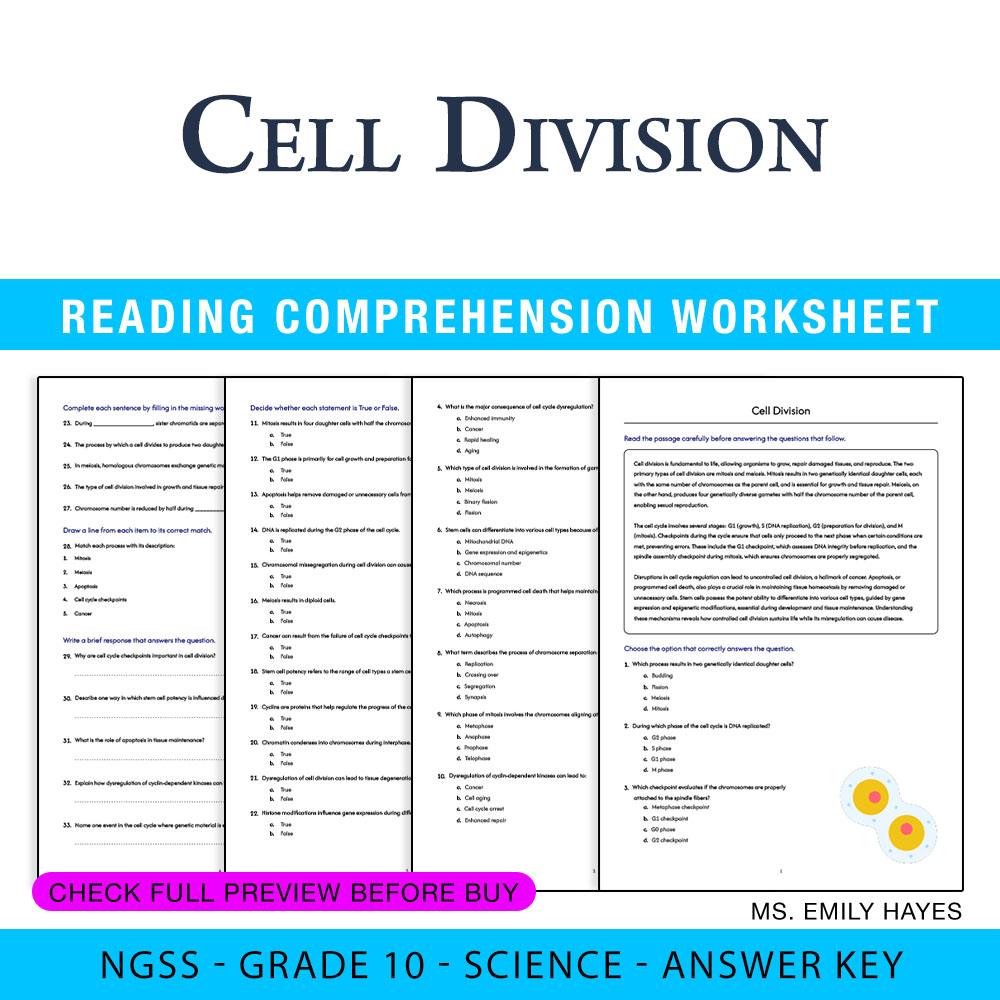
Grade 10 Science | Cell Division Worksheet (PDF+ Answer Key)
Created byCopper Leaf ClassroomLearning Objectives
- Explain the processes of mitosis and meiosis and their roles in cell division.
- Describe the cell cycle, including checkpoints and regulation mechanisms.
- Identify consequences of cell cycle dysregulation, such as cancer.
Instant download

Grade 10 Science | Ionic Solids Worksheet Elena | AP Aligned
 Created byLumora Learning
Learning Objectives
- Understand the crystal lattice structures and their influence on material properties.
- Explain the concepts of lattice energy, coordination number, and Coulombic interactions in ionic solids.
- Describe how ion packing models affect solubility, melting point, and electrical conductivity.
Instant download
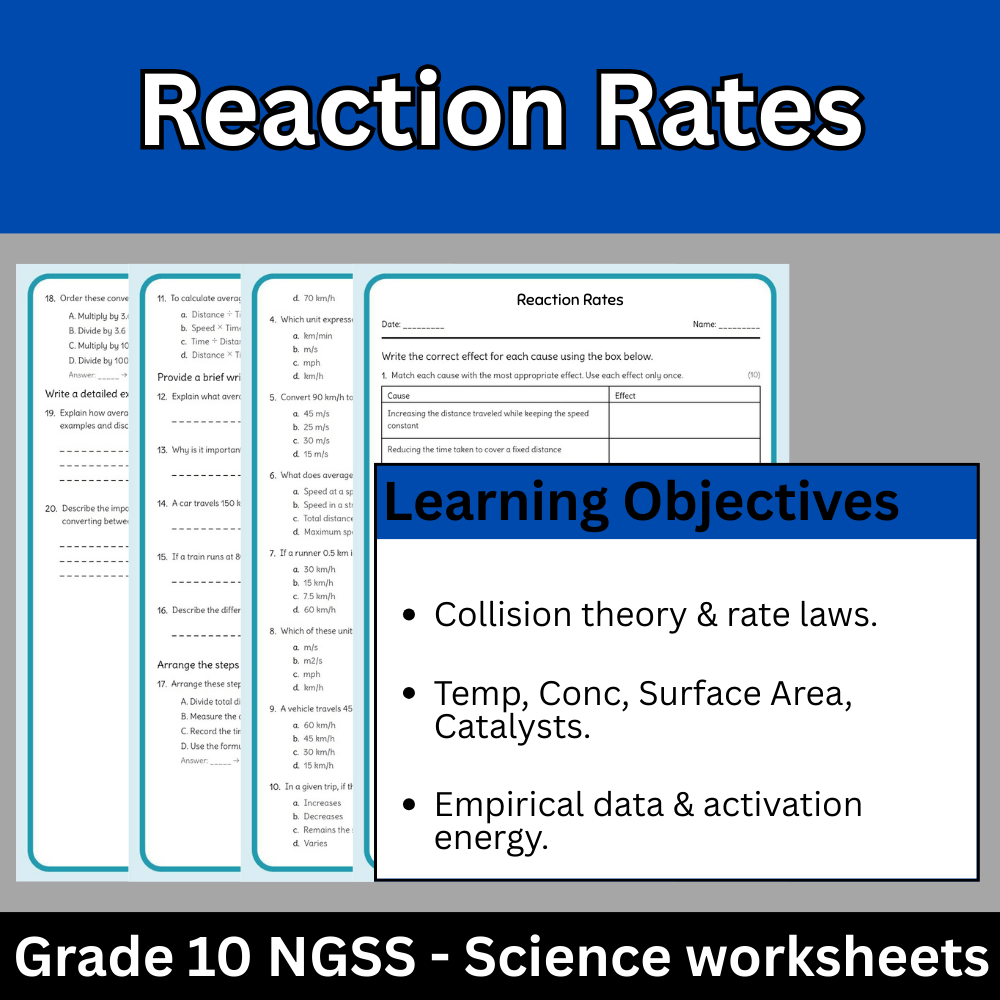
Grade 10 Science | Reaction Rates Worksheet + Answer Key (NGSS Aligned PDF)
Created byBright Mind ResourcesLearning Objectives
- Explain how collision theory and rate laws influence reaction speed.
- Identify factors such as temperature, concentration, surface area, and catalysts that affect reaction rates.
- Interpret empirical rate data in terms of molecular collisions, activation energy, and rate constants.
Instant download
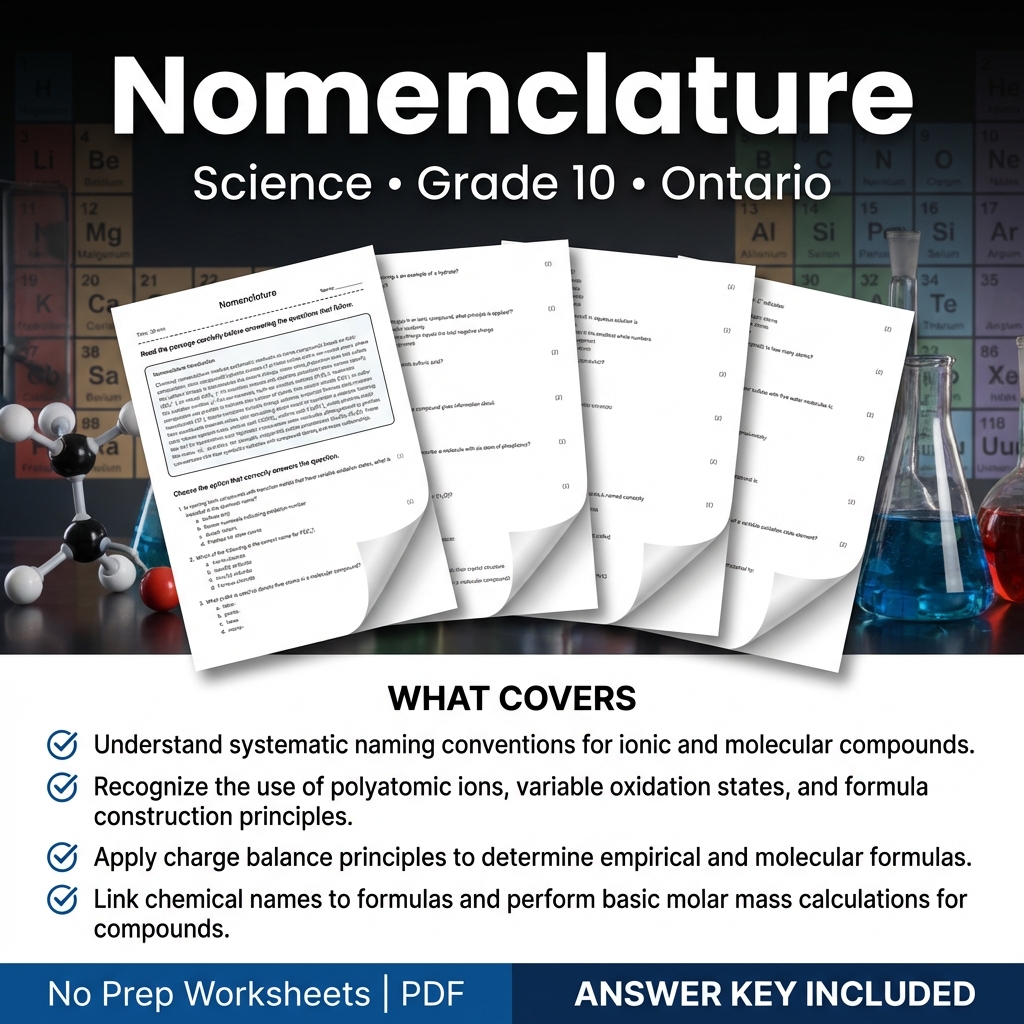
Nomenclature Worksheet for Grade 10 Science | Ontario Standards Practice
Created byCoral Reef LearningLearning Objectives
- Understand systematic naming conventions for ionic and molecular compounds.
- Recognize the use of polyatomic ions, variable oxidation states, and formula construction principles.
- Apply charge balance principles to determine empirical and molecular formulas.
Instant download
Tissue Organization Worksheet for Grade 10 Science | Alberta Standards
Created byCoral Reef LearningLearning Objectives
- Understand the concept of tissue organization and its importance in both plant and animal systems.
- Identify different types of plant vascular tissues and animal epithelial and connective tissues and their functions.
- Describe how tissue properties influence organ performance across diverse biomes and agricultural systems.
Instant download
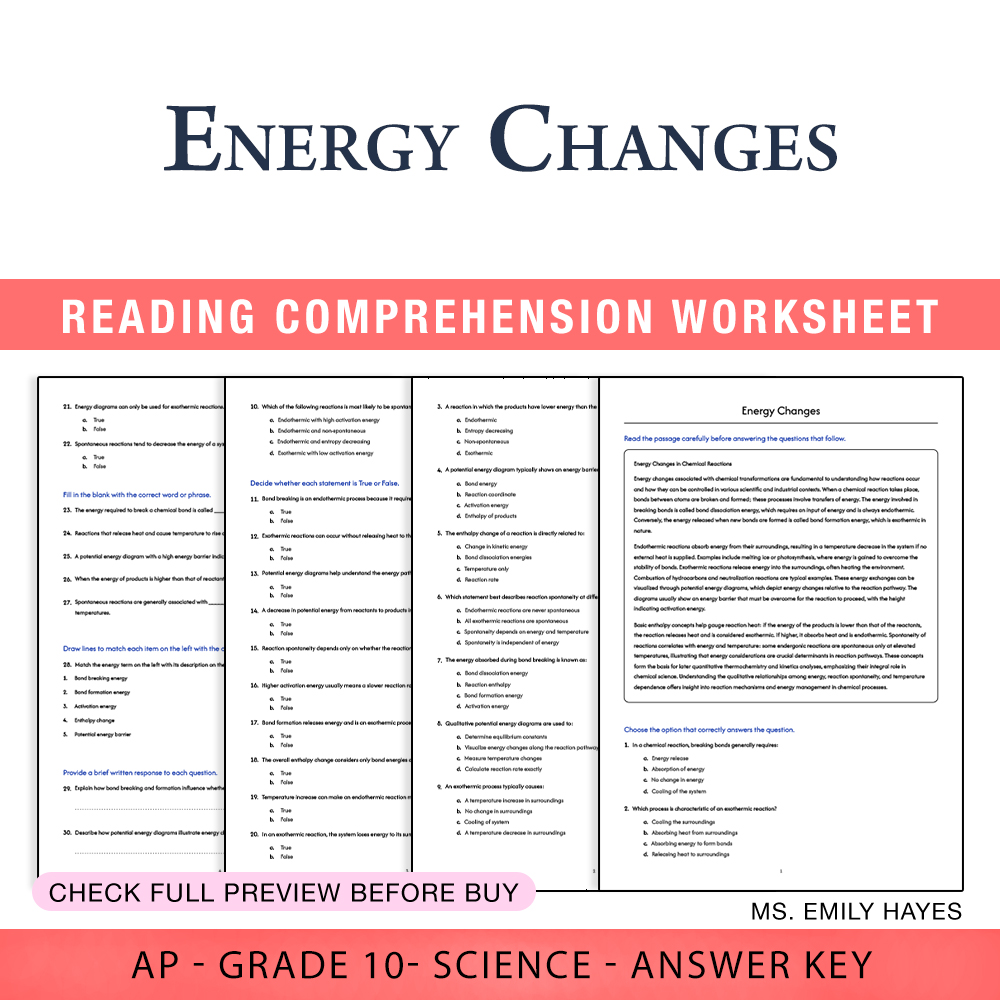
Grade 10 Science | Energy Changes Worksheet (PDF+ Answer Key)
Created byCopper Leaf ClassroomLearning Objectives
- Understand the distinctions between endothermic and exothermic processes in chemical reactions.
- Explain how bond breaking and bond formation affect reaction enthalpy and heat exchange.
- Describe qualitative relationships among energy, temperature, and reaction spontaneity.
Also included in: Grade 10 Science -Atomic Structure & Chemical Reactions (PDF+ Answer Key) +1 more
Instant download
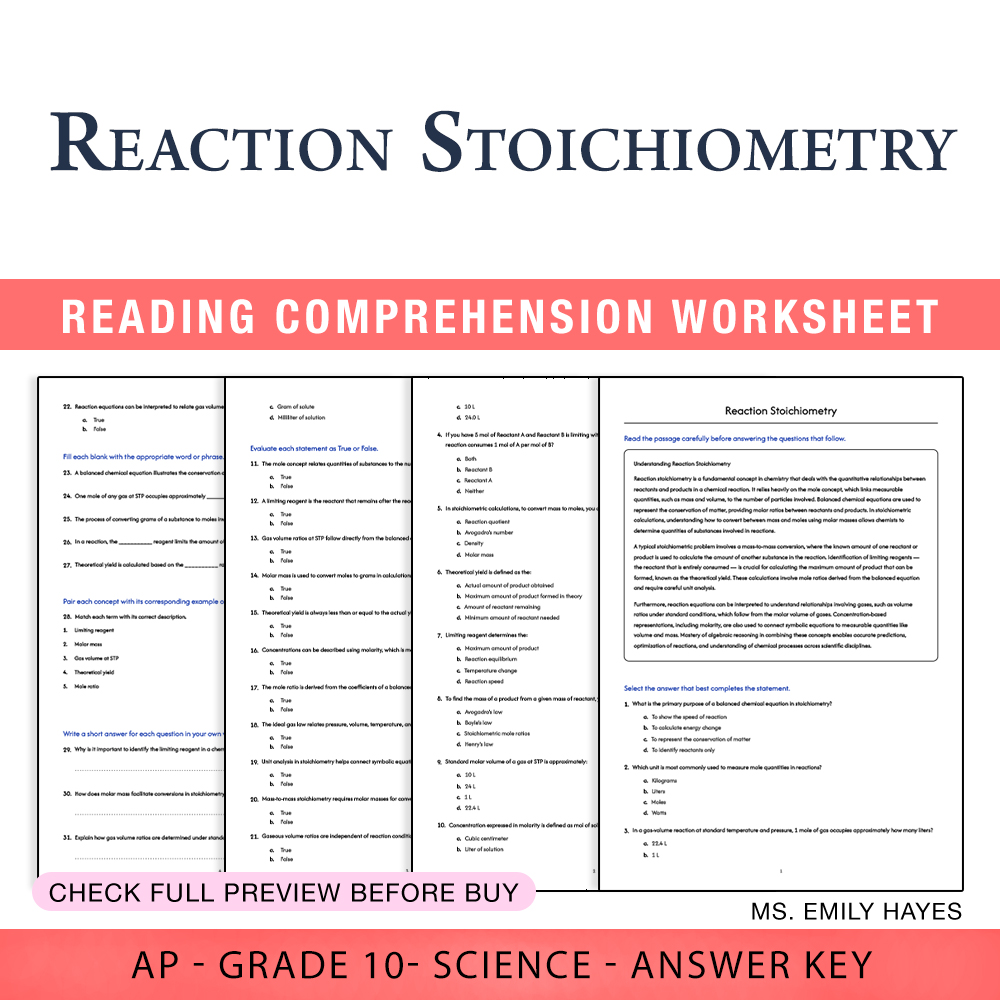
10th Grade Science | Reaction Stoichiometry Worksheet (PDF+ Answer Key)
Created byCopper Leaf ClassroomLearning Objectives
- Explain the mole concept and its application in quantitative chemical reactions.
- Perform stoichiometric calculations to determine mass-to-mass conversions and limiting reagents.
- Calculate theoretical yields based on balanced chemical equations and mole ratios.
Also included in: Grade 10 Science -Atomic Structure & Chemical Reactions (PDF+ Answer Key) +1 more
Instant download
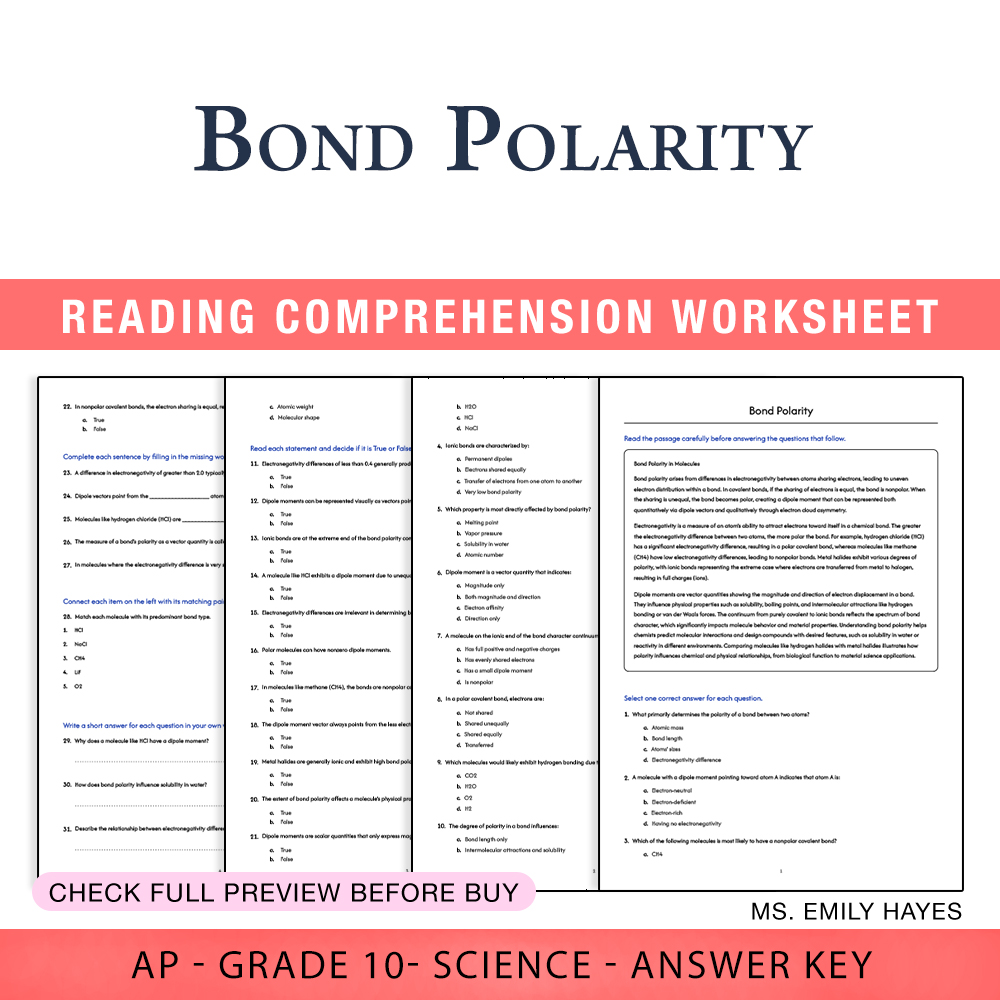
10th Grade Science | Bond Polarity Worksheet (PDF+ Answer Key)
Created byCopper Leaf ClassroomLearning Objectives
- Describe how electronegativity differences influence bond polarity.
- Interpret dipole moment vectors and relate them to electron distribution.
- Distinguish between polar covalent and ionic bonds along a continuum.
Also included in: Grade 10 Science -Atomic Structure & Chemical Reactions (PDF+ Answer Key) +1 more
Instant download
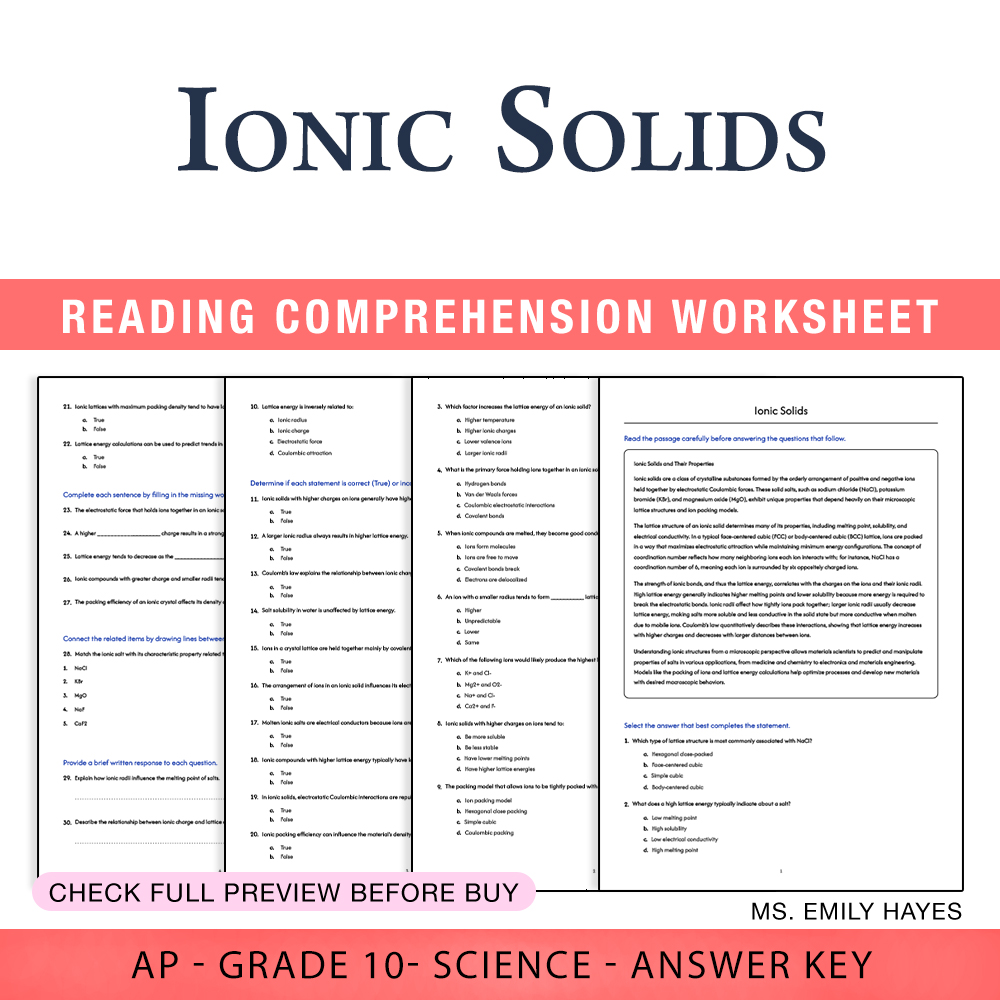
10th Grade Science | Ionic Solids Mastery Worksheet (PDF + Answer Key)
Created byCopper Leaf ClassroomLearning Objectives
- Understand the lattice structures and packing models of ionic solids.
- Explain the role of Coulombic interactions in determining lattice energy.
- Analyze how ionic radii and charge influence melting point, solubility, and conductivity.
Also included in: Grade 10 Science -Atomic Structure & Chemical Reactions (PDF+ Answer Key) +1 more
Instant download

Grade 10 Science – Mendelian Inheritance & Patterns | Daily Reading Worksheet
Created byBright Mind ResourcesLearning Objectives
- Understand key Mendelian concepts such as dominance, segregation, and independent assortment.
- Interpret Punnett squares to predict inheritance patterns of single-gene traits.
- Analyze pedigrees to determine parental genotypes and offspring phenotypes.
Also included in: Grade 10 Genetics Science Daily Reading Lesson Bundle | NGSS +2 more
Instant download

Graphical Kinematics Practice Worksheet | Grade 10 Science Review Assessment
 Created byPrism Point Learning
Learning Objectives
- Interpret displacement–time, velocity–time, and acceleration–time graphs to identify key motion quantities.
- Relate slope and area on kinematics graphs to acceleration and displacement.
- Compare piecewise and uniformly accelerating motion using graph features such as changes in slope.
Also included in: Grade 10 Motion & Forces Kinematics Science Lesson Bundle for Ontario
Instant download

Grade 10 Science | Electromagnetic Waves - Daily Reading Comprehension
Created byCoral Reef LearningLearning Objectives
- Understand the basic nature and properties of electromagnetic waves
- Identify the parts of the electromagnetic spectrum
- Explain how waves propagate and interact with materials
Instant download
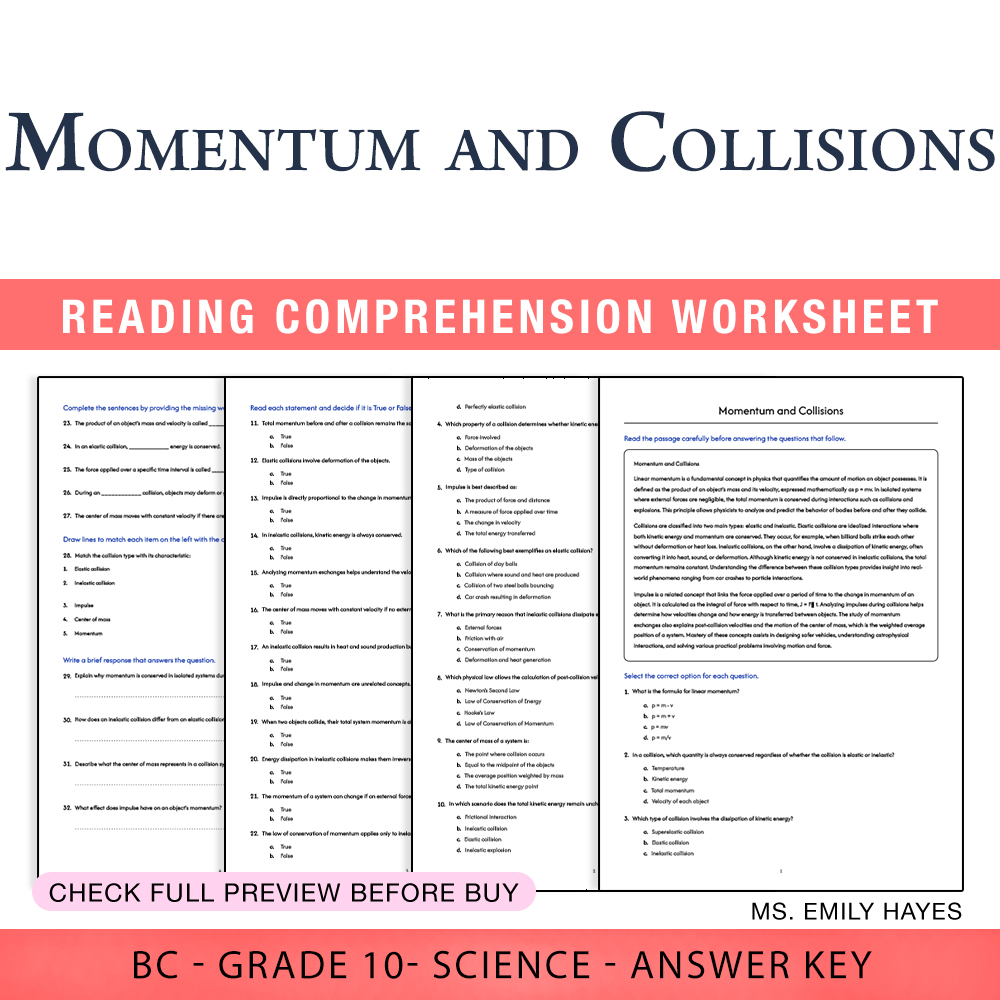
10th Grade Science | Momentum and Collisions Worksheet (PDF+ Answer Key)
Created byCopper Leaf ClassroomLearning Objectives
- Understand the concept of linear momentum and its conservation in collisions.
- Distinguish between elastic and inelastic collisions and their characteristics.
- Explain the relationship between impulse, force, and change in momentum.
Also included in: Grade 10 Science BC | Forces, Motion & Fields Worksheets (PDF + Answer Key) +1 more
Instant download
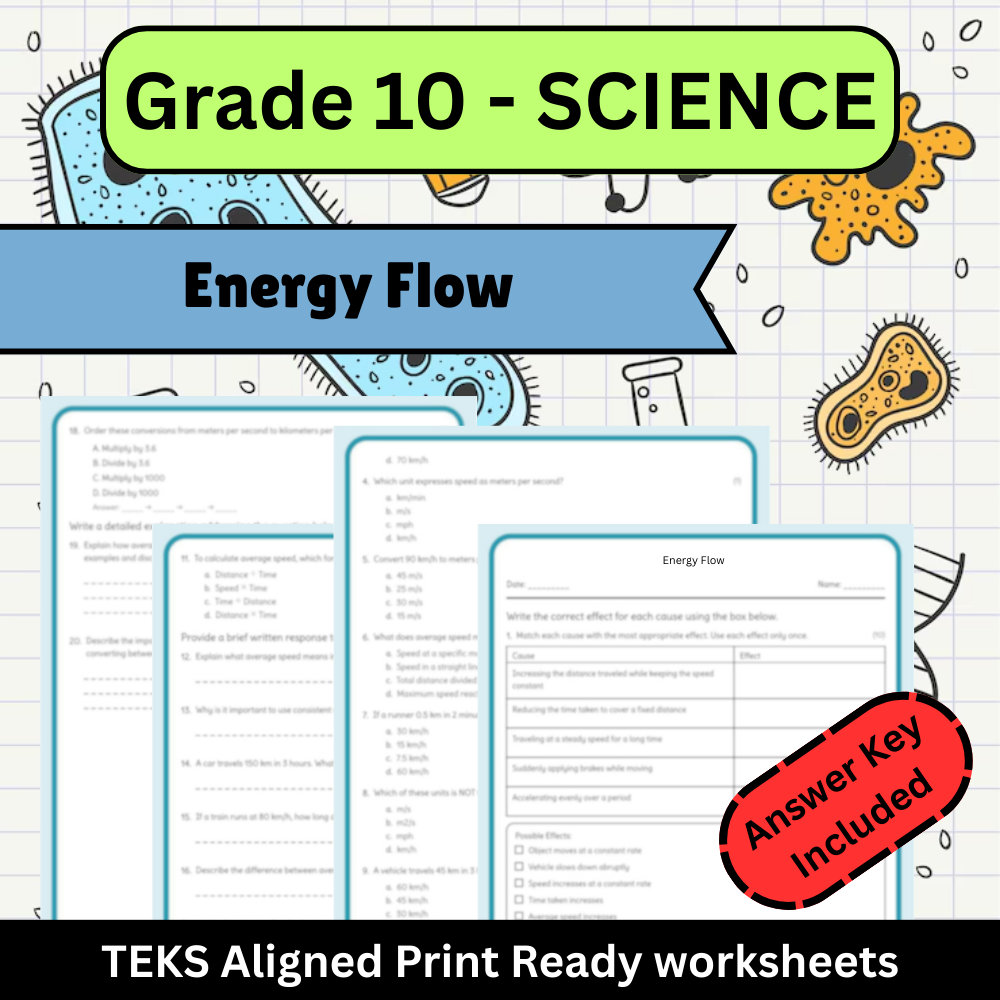
Grade 10 Science | Energy Flow Worksheet (Worksheet + Answer Key) aligned with TEKS
Created byBright Mind ResourcesLearning Objectives
- Describe how energy flows through ecosystems from sunlight to various trophic levels.
- Explain the concept of transfer efficiency and how energy decreases at each level.
- Understand net primary productivity and its significance in ecosystems.
Also included in: Grade 10 Science Unit Bundle – Photosynthesis, Respiration & Energy TEKS +5 more
Instant download
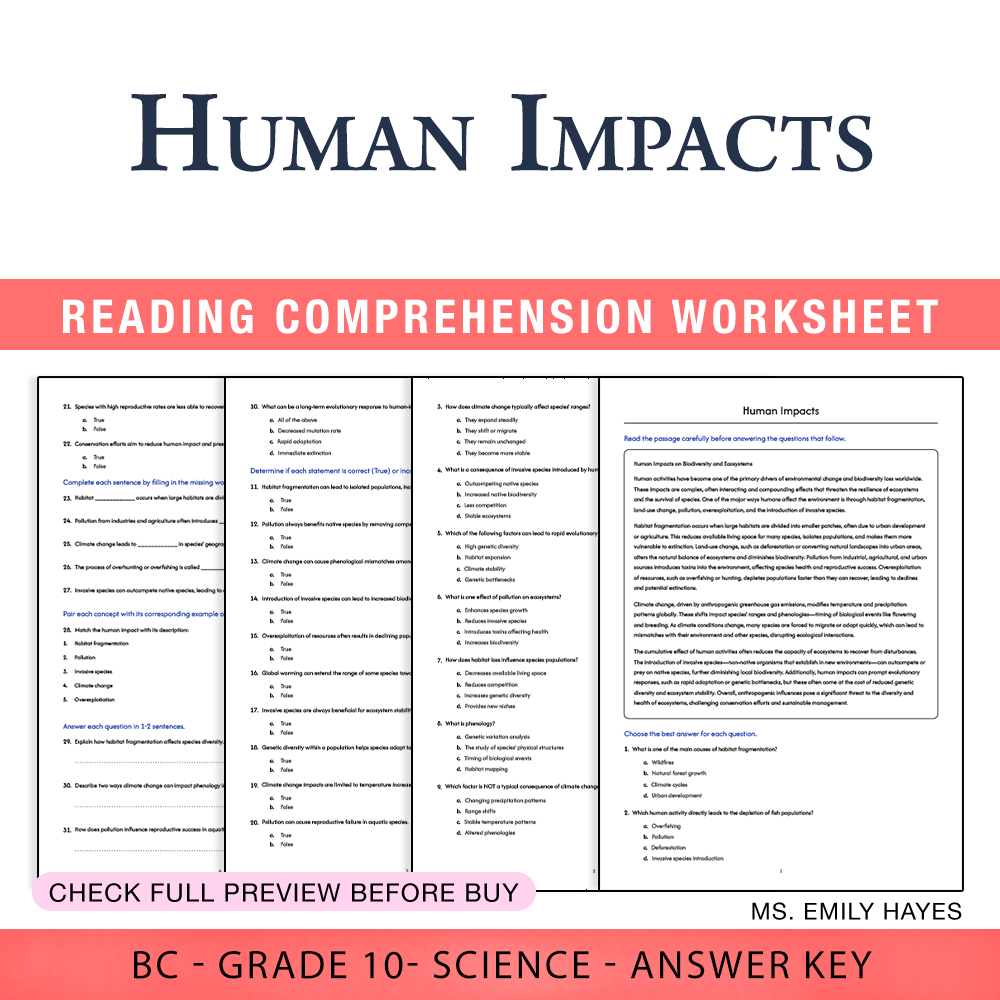
Grade 10 Science | Human Impacts Worksheet (PDF+ Answer Key)
Created byCopper Leaf ClassroomLearning Objectives
- Understand how human activities affect biodiversity and ecosystems.
- Identify the different factors through which human impacts alter the environment.
- Evaluate the effects of climate change on species and ecosystems.
Also included in: Grade 10 Science BC | Evolution, Biodiversity & Ecology (PDF + Answer Key) +1 more
Instant download
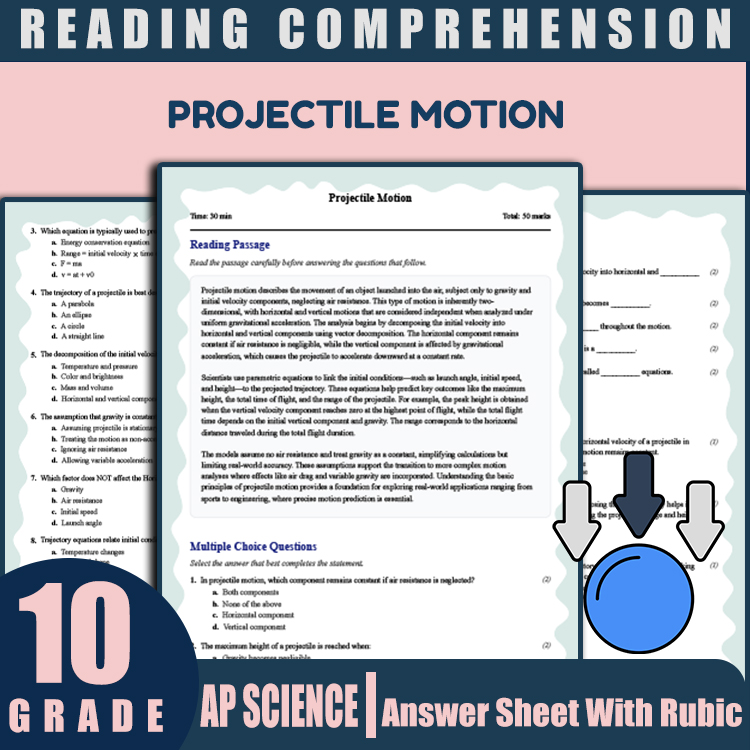
10th Grade Science | Projectile Motion Reading Worksheet with Answer Key (PDF)
JCreated byJ.S SheetsLearning Objectives
- Understand the two-dimensional kinematic description of projectile motion.
- Apply vector decomposition to predict range, time of flight, and peak height of projectiles.
- Explain the assumptions and approximations used in projectile motion models.
Also included in: Grade 10 Science Unit Bundle | Motion, Forces & Energy Worksheets (PDF) +1 more
Instant download

Grade 10 Science | Conservation of Energy Worksheet (PDF)
Created byEvergreen Desk EducationLearning Objectives
- Explain energy conservation using the idea that energy is transferred and transformed but not created or destroyed
- Use qualitative energy accounting to track changes in a system’s energy forms across an initial and final state
- Describe how nonconservative forces (like friction and air resistance) can reduce mechanical energy while conserving total energy
Also included in: Grade 10 Conservation Laws in Science Lesson Bundle – General Framework +1 more
Instant download

Transport Mechanisms Grade 10 Assessment | TEKS Science Standards
Created byPrism Point LearningLearning Objectives
- Describe passive and active transport processes across cell membranes.
- Distinguish between diffusion, osmosis, facilitated diffusion, and active transport.
- Explain the role of pumps like the sodium–potassium pump in maintaining cell function.
Also included in: Grade 10 Cell Structure and Function Unit Science Lesson Bundle TEKS
Instant download

Intercellular Communication Assessment for Grade 10 Science TEKS
Created byPrism Point LearningLearning Objectives
- Explain different modes of intercellular communication including autocrine, paracrine, endocrine, and synaptic signaling.
- Identify key components of signal transduction pathways and receptor–ligand specificity.
- Describe mechanisms of direct cytoplasmic connections like gap junctions and plasmodesmata.
Also included in: Grade 10 Cell Structure and Function Unit Science Lesson Bundle TEKS
Instant download

Cytoskeleton Roles Grade 10 Science Assessment | TEKS Standards
Created byPrism Point LearningLearning Objectives
- Describe the structure and functions of microfilaments, intermediate filaments, and microtubules in the cytoskeleton.
- Explain how motor proteins facilitate intracellular transport along microtubules.
- Identify the roles of actin filaments in cell movement and cytokinesis.
Also included in: Grade 10 Cell Structure and Function Unit Science Lesson Bundle TEKS
Instant download

Membrane Structure Assessment | TEKS Grade 10 Science Standards
Created byPrism Point LearningLearning Objectives
- Explain the fluid mosaic model and the dynamic nature of the plasma membrane.
- Identify the roles of phospholipid bilayer asymmetry and cholesterol in membrane fluidity.
- Describe different membrane protein types and their functions such as receptors and transporters.
Also included in: Grade 10 Cell Structure and Function Unit Science Lesson Bundle TEKS
Instant download

Grade 10 Science Analytical Techniques Worksheet PDF | Alberta
Created byEvergreen Desk EducationLearning Objectives
- Distinguish qualitative and quantitative information produced by analytical chemistry methods (spectroscopy, chromatography, and titrimetric analysis).
- Interpret instrument data by connecting signals (peaks, retention time, titration endpoints) to substance identity and concentration.
- Explain detection limits and uncertainty in analytical results and how they affect reporting.
Instant download

Grade 10 Science – Bonding Types Daily Reading Worksheet with Answer Key
JCreated byJ.S SheetsLearning Objectives
- Understand key concepts related to Science
- Apply knowledge through practice questions
- Demonstrate comprehension of the material
Also included in: Grade 10 Science Lesson Group - AP Curriculum - Daily Reading Worksheets
Instant download
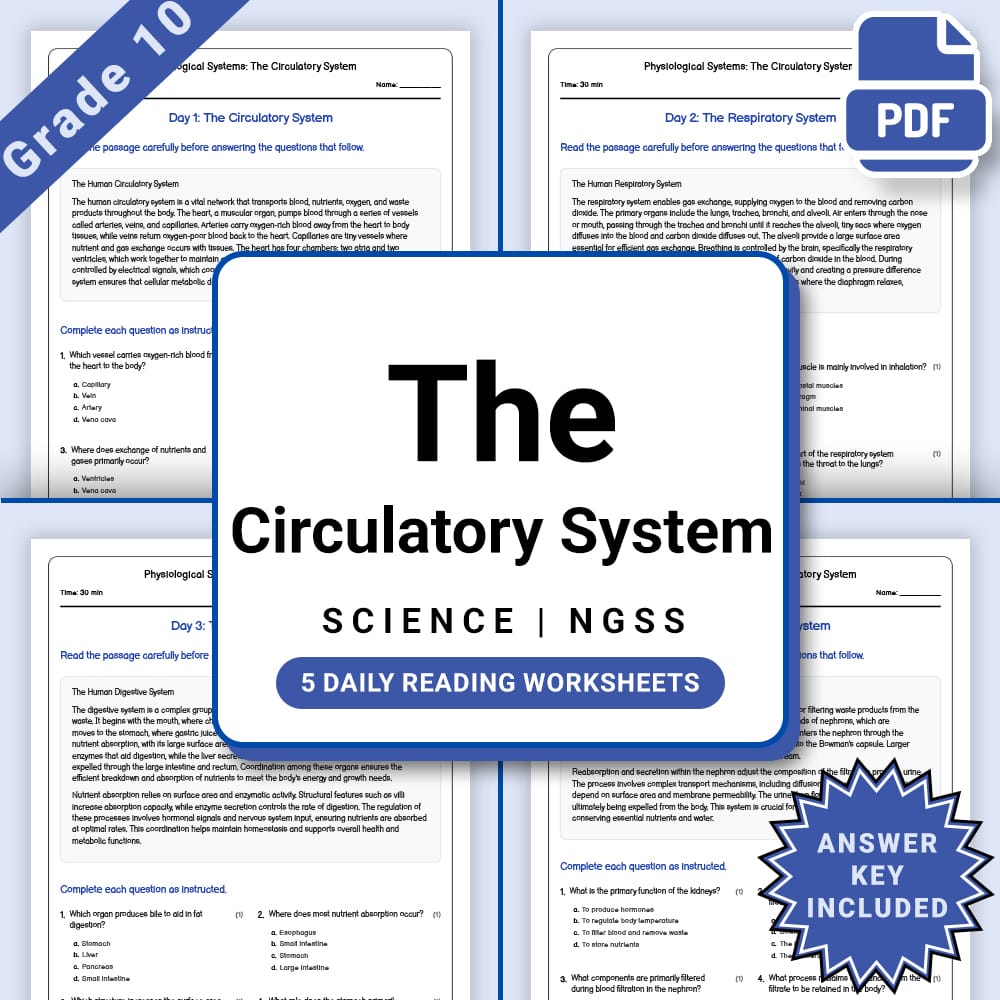
Grade 10 Science – Circulatory System Worksheet (PDF +Answer Key)
Created byCopper Leaf ClassroomLearning Objectives
- Understand key concepts related to Science
- Apply knowledge through practice questions
- Demonstrate comprehension of the material
Instant download

Grade 10 Science | Stellar Lifecycles NGSS Worksheet (PDF)
 Created bySilver Birch Teaching
Learning Objectives
- Describe the processes involved in stellar evolution, including nuclear fusion, energy transport, and changes in luminosity and temperature.
- Interpret the Hertzsprung-Russell diagram to understand stellar stages and outcomes.
- Explain nucleosynthesis pathways and how stars contribute to elemental enrichment of the interstellar medium.
Also included in: Grade 10 Earth and Space Science Lesson Bundle Worksheets for NGSS +1 more
Instant download

Grade 10 Science | Light & Carbon in Photosynthesis - Daily Reading Practice
Created byCoral Reef LearningLearning Objectives
- Understand the process of light reactions in photosynthesis
- Identify the role of chlorophyll and accessory pigments
- Explain how ATP and NADPH are produced
Instant download
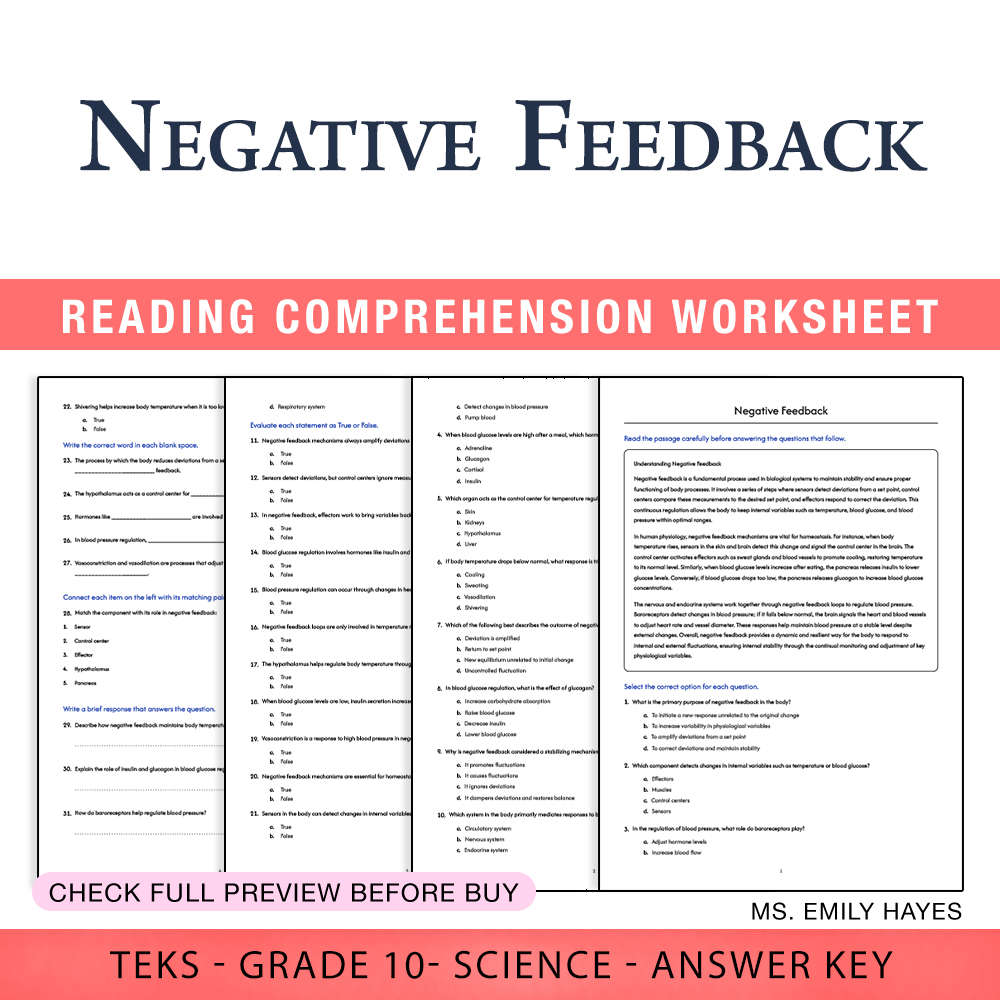
10th Grade Science | Negative Feedback Worksheet (PDF+ Answer Key)
Created byCopper Leaf ClassroomLearning Objectives
- Understand the concept of negative feedback in physiological regulation.
- Identify the components involved in negative feedback mechanisms, including sensors, control centers, and effectors.
- Explain how negative feedback maintains homeostasis for temperature, blood glucose, and blood pressure.
Instant download
About Grade 10 Science Worksheets
Find Science worksheets built for Grade 10. All 7,069 cover core skills, practice, and review, each an instant PDF download.
Every worksheet on MyTeachingSheets is created by independent teacher-authors and reviewed before publication. All resources download as printable PDFs for classroom, homework, or at-home practice, and many include answer keys. Preview any worksheet free before buying.