
Grade 10 Science Worksheets
7,069 worksheets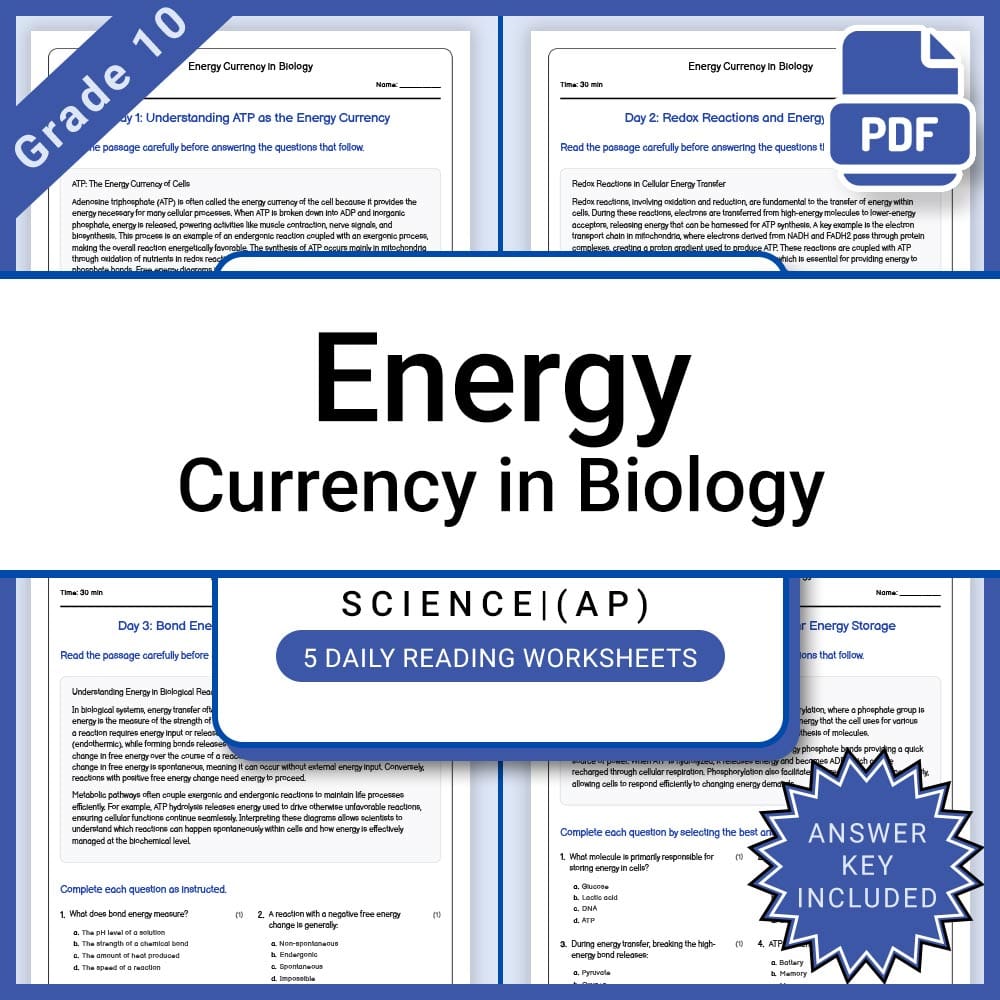
Grade 10 Science – Energy Currency Biology Daily Worksheet with Answer Key
JCreated byJ.S SheetsLearning Objectives
- Understand the role of ATP in cellular energy transfer.
- Identify redox reactions and their importance in energy metabolism.
- Explain bond energy changes and free energy diagrams related to ATP.
Also included in: Grade 10 Science Lesson Group Bundle | AP Framework & Daily Worksheets
Instant download

Speciation Processes Worksheet | Grade 10 Science Activities
 Created byPrism Point Learning
Learning Objectives
- Explain how genetic divergence can lead to reproductive isolation and the formation of new species.
- Compare allopatric and sympatric speciation and describe the role of gene flow.
- Identify how reinforcement, hybrid zones, and polyploidy can influence speciation outcomes.
Also included in: Grade 10 Evolution, Speciation & Biodiversity Lesson Bundle | BC Science +1 more
Instant download
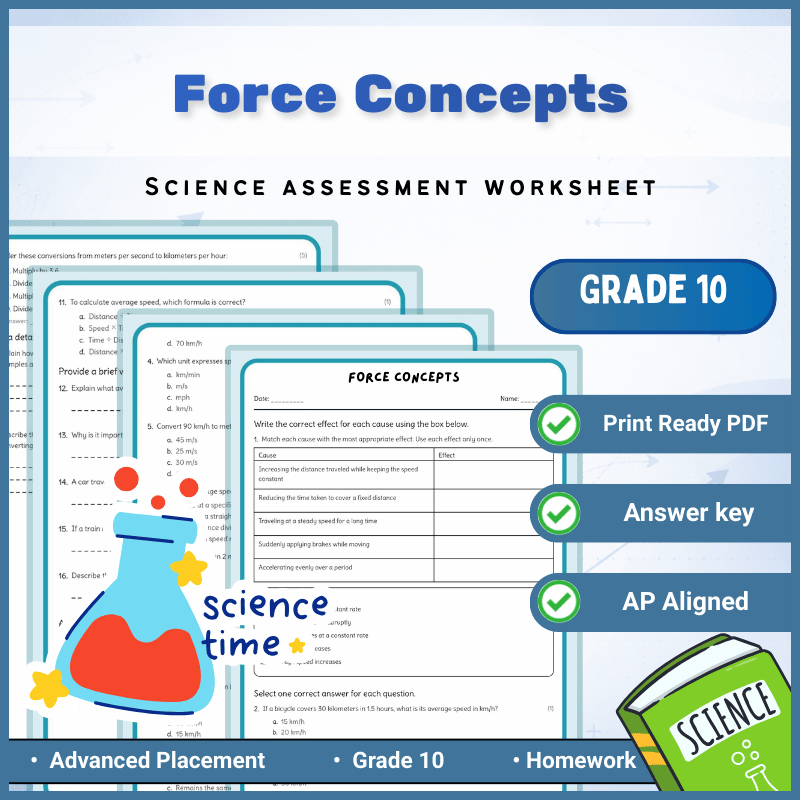
Grade 10 Science – Force Concepts Worksheet (AP Standard + Answer Key) (PDF)
 Created byBright Mind Resources
Learning Objectives
- Define interactions through force concepts and explain Newton’s three laws as principles for motion and equilibrium.
- Understand the vector nature of forces and how to determine net force.
- Use free-body diagrams to represent forces acting on objects.
Instant download

Grade 10 Science | Understanding Orbital Gravity - Daily Reading Comprehension
 Created byCoral Reef Learning
Learning Objectives
- Explain how gravity affects planetary and satellite motion.
- Identify key concepts of orbital paths and centripetal force.
- Describe the relationship between gravitational force and orbital period.
Instant download

Grade 10 Science | Protein Synthesis Worksheet (TEKS) PDF
 Created byEvergreen Desk Education
Learning Objectives
- Trace the flow of genetic information from DNA to mRNA to a polypeptide during protein synthesis.
- Describe the roles of transcription, mRNA processing, and translation in building a protein.
- Explain how initiation, elongation, and termination contribute to producing a polypeptide with a specific sequence.
Instant download

Grade 10 Science – Limiting Reagent Worksheet (PDF) | BC Standards
Created byEvergreen Desk EducationLearning Objectives
- Explain what a limiting reagent is and how it determines the maximum product formed in a reaction.
- Use balanced chemical equations and mole ratios to identify the limiting reactant from given quantities.
- Predict what happens to an excess reactant and relate limiting reagents to theoretical yield and conservation of mass.
Instant download

Science Worksheet Endothermic and Exothermic Reactions | Grade 10 Practice
JCreated byJ.S SheetsLearning Objectives
- Differentiate endothermic and exothermic reactions using energy flow and energy profile diagrams.
- Explain how bond breaking and bond forming relate to whether energy is absorbed or released.
- Connect observable evidence (temperature change and light/heat release) to particle kinetic energy and chemical potential changes.
Also included in: Grade 10 Conservation Laws and Stoichiometry Science Lesson Bundle | General +1 more
Instant download

Grade 10 One-Dimensional Motion Physics Worksheet | Ontario Science
 Created byClear Sky Classroom
Learning Objectives
- Define and distinguish displacement, speed, velocity, and acceleration in one-dimensional motion using consistent sign conventions.
- Use average and instantaneous quantities to interpret motion from graphs or motion scenarios.
- Apply constant-acceleration (kinematics) equations to numerical problems, including free-fall under uniform gravity.
Instant download
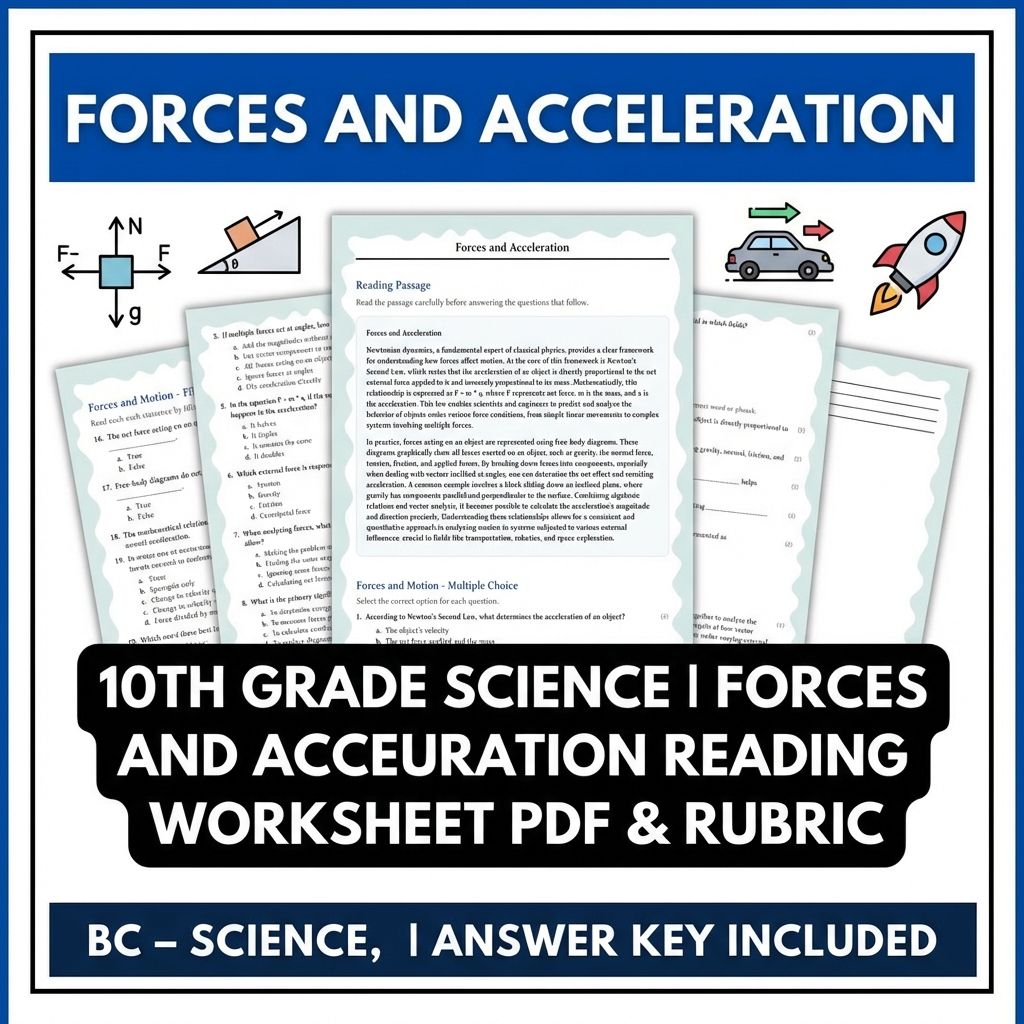
10th Grade Science | Forces And Acceleration Reading Worksheet PDF & Rubric
JCreated byJ.S SheetsLearning Objectives
- Understand the relationship between net force, mass, and acceleration as described by Newton's Second Law.
- Interpret free-body diagrams to identify individual forces acting on an object.
- Use algebraic and vector components to analyze how forces influence motion.
Instant download

Grade 10 Rock Cycle Energy Flow Worksheet | NGSS Practice PDF
Created byClear Sky ClassroomLearning Objectives
- Explain how Earth’s internal heat drives processes in the rock cycle.
- Describe how energy flow affects rates and outcomes of melting, cooling, erosion, deposition, and metamorphism.
- Use evidence (outcrops, fossils, and geochemical signatures) to connect materials to rock-cycle processes while noting that atoms are conserved.
Instant download
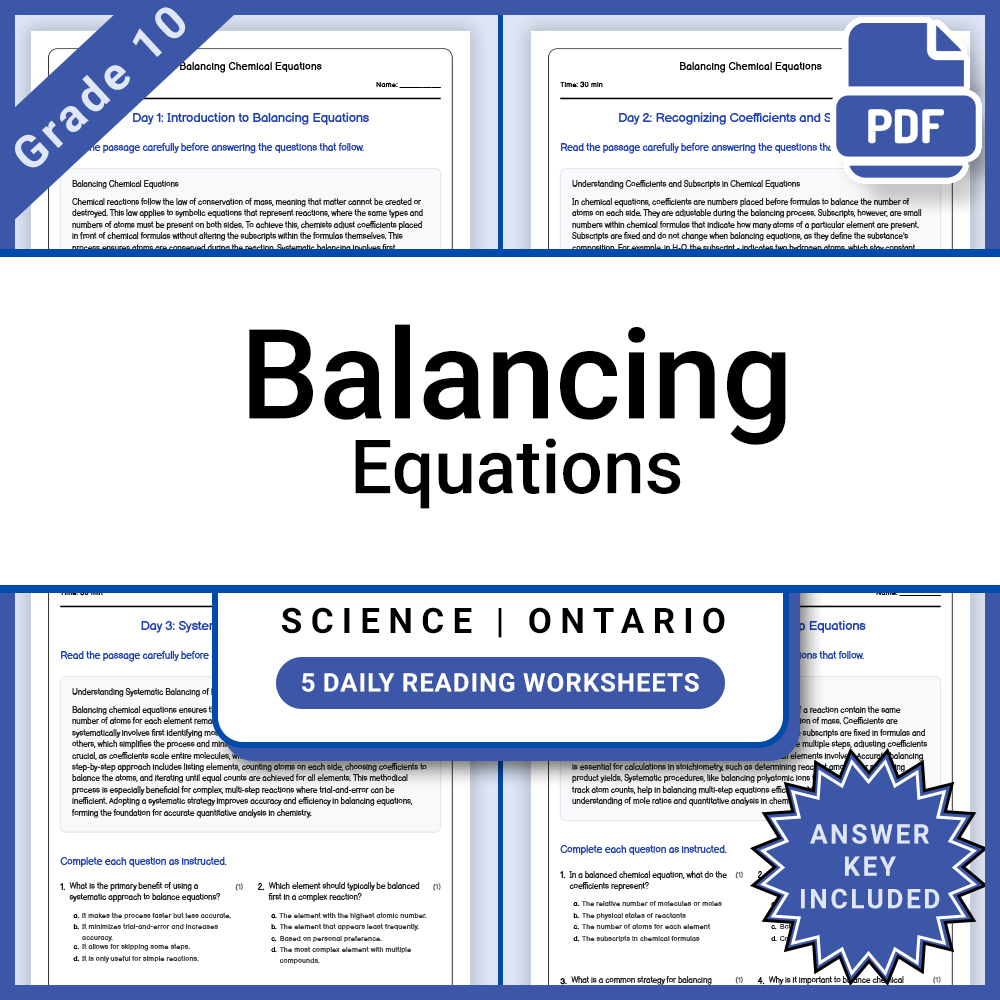
Grade 10 Science – Balancing Chemical Equations Daily Worksheet + Answer Key
JCreated byJ.S SheetsLearning Objectives
- Understand the law of conservation of mass in chemical reactions
- Distinguish between coefficients and subscripts in chemical equations
- Learn strategies for systematically balancing multi-step chemical equations
Also included in: Grade 10 Science Lesson Group Bundle | Ontario Framework +1 more
Instant download
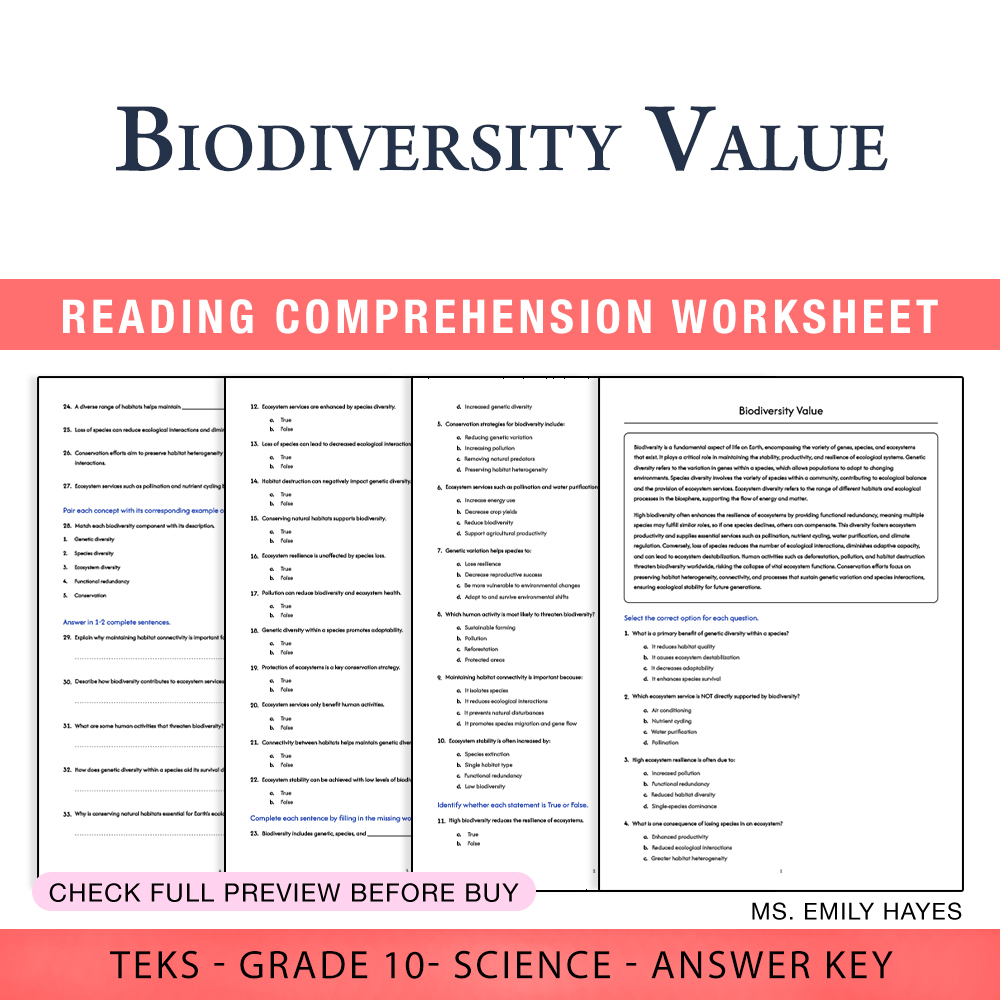
10th Grade Science | Biodiversity Value Worksheet (PDF+ Answer Key)
 Created byCopper Leaf Classroom
Learning Objectives
- Understand the different components of biodiversity and their importance to ecosystem health.
- Explain how biodiversity support ecosystem resilience and services.
- Recognize the consequences of species loss on ecological processes.
Instant download
Gas Behavior Worksheet for Grade 10 Science | Alberta Standards
Created byCoral Reef LearningLearning Objectives
- Explain how particulate motion relates to gas laws and measurable properties.
- Describe the effects of pressure, temperature, and volume changes in gases.
- Analyze real-world regional phenomena influenced by gas behavior, such as mountain pressure changes and pipeline storage.
Instant download

Grade 10 Periodic Trends Worksheet | Atomic Radius, Ionization Energy
 Created byChalk and Compass
Learning Objectives
- Explain how atomic radius, ionization energy, and electronegativity change across a period and down a group
- Use valence electron patterns to predict typical reactivity of representative elements
- Classify metals, nonmetals, and metalloids by shared periodic properties
Also included in: Chemistry Foundations & Chemical Reactions Lesson Bundle: Grade 10 Science +1 more
Instant download
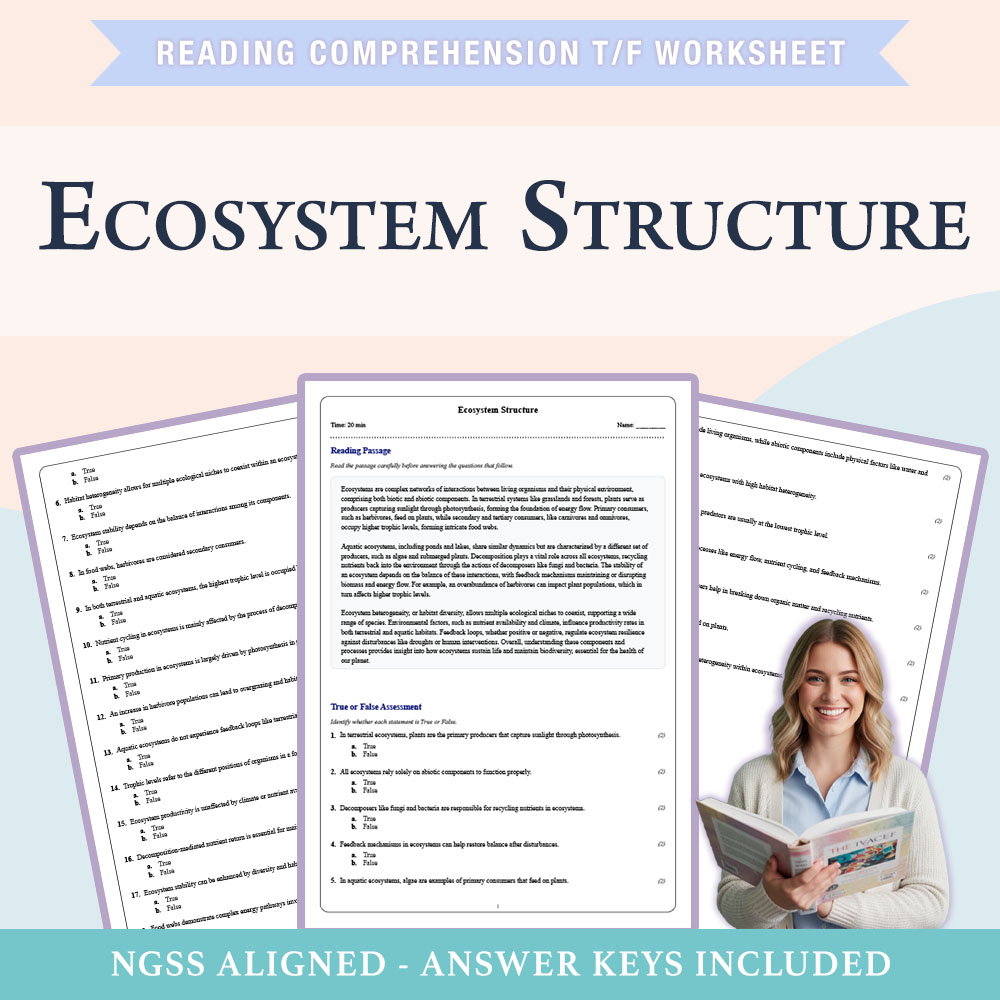
10th Grade Science | Ecosystem Structure Worksheet (PDF + Answer Key)
Created byCopper Leaf ClassroomLearning Objectives
- Understand the roles of biotic and abiotic components in ecosystems.
- Identify energy pathways and trophic levels within food webs.
- Explain ecosystem dynamics including stability and feedback loops.
Also included in: Grade 10 Science Unit | Ecosystem Dynamics & Biodiversity (PDF +Answer Key) +1 more
Instant download
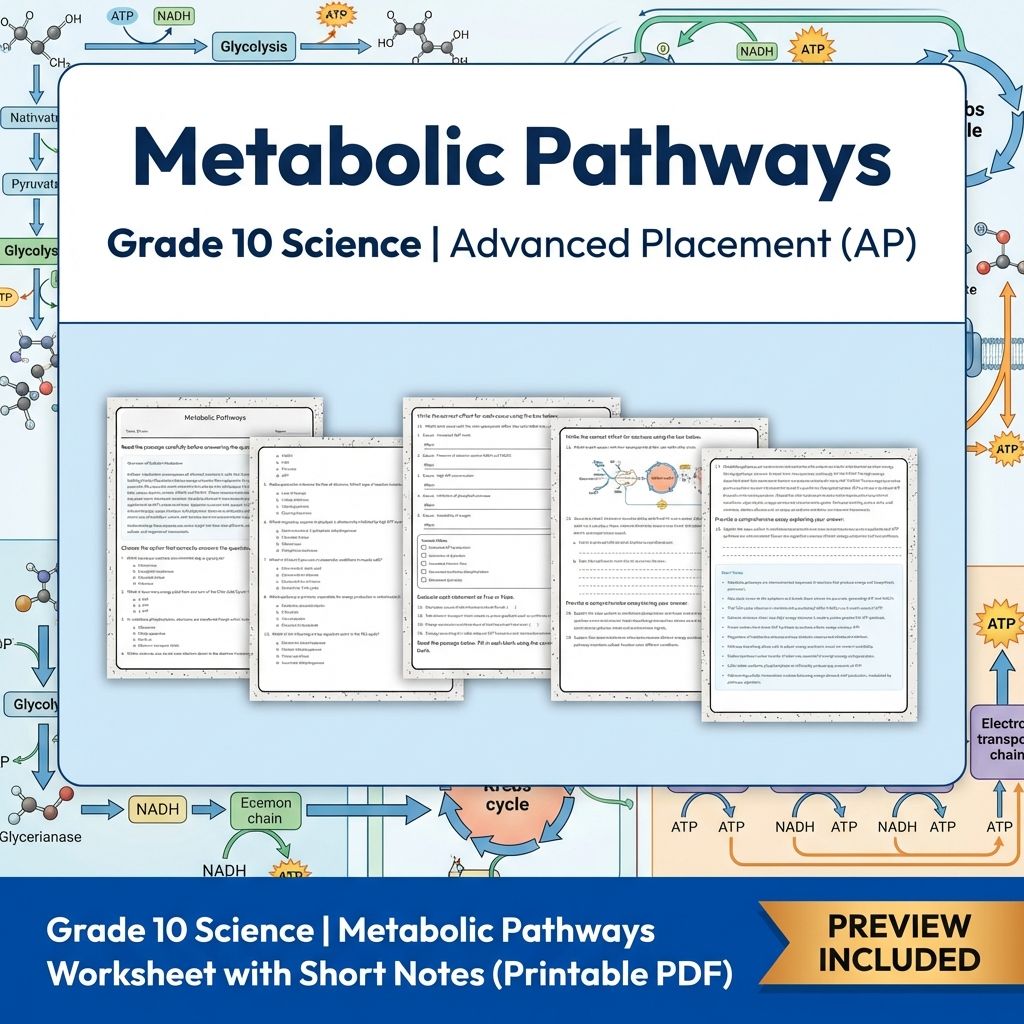
Grade 10 Science | Metabolic Pathways Worksheet with Short Notes (Printable PDF)
 Created byMeadowlark Worksheets
Learning Objectives
- Map and describe the core metabolic pathways including glycolysis, the TCA cycle, and oxidative phosphorylation.
- Explain how cells generate and conserve energy through these pathways.
- Identify key intermediates, enzymes, and energy carriers involved in cellular respiration.
Instant download

Grade 10 Science | Heat Engines Worksheet | BC Aligned
 Created byLumora Learning
Learning Objectives
- Understand the basic principles of heat engines and how they convert thermal energy into mechanical work.
- Identify different types of heat engines and their common designs.
- Explain factors affecting the efficiency of heat engines, including temperature differences and cycle design.
Instant download

Grade 10 Science | Gene Expression Regulation Worksheet | AP Aligned
Created byLumora LearningLearning Objectives
- Understand the mechanisms that regulate gene expression in prokaryotic and eukaryotic systems.
- Identify key components such as promoters, transcription factors, and chromatin modifications.
- Describe how signal integration influences transcriptional output and phenotypic plasticity.
Also included in: Grade 10 Science | Biology and Ecosystems Custom Bundle | AP
Instant download

Grade 10 Photosynthesis Basics Worksheet | Light Reactions & Calvin Cycle
Created byChalk and CompassLearning Objectives
- Explain how chloroplast thylakoid membranes help capture light energy and convert it to chemical energy
- Describe how the Calvin cycle fixes carbon dioxide into organic molecules
- Identify how light intensity, carbon dioxide availability, and temperature limit net carbon fixation
Also included in: Cells, Photosynthesis, Respiration & Microbes Lesson Bundle – Grade 10 Science +1 more
Instant download
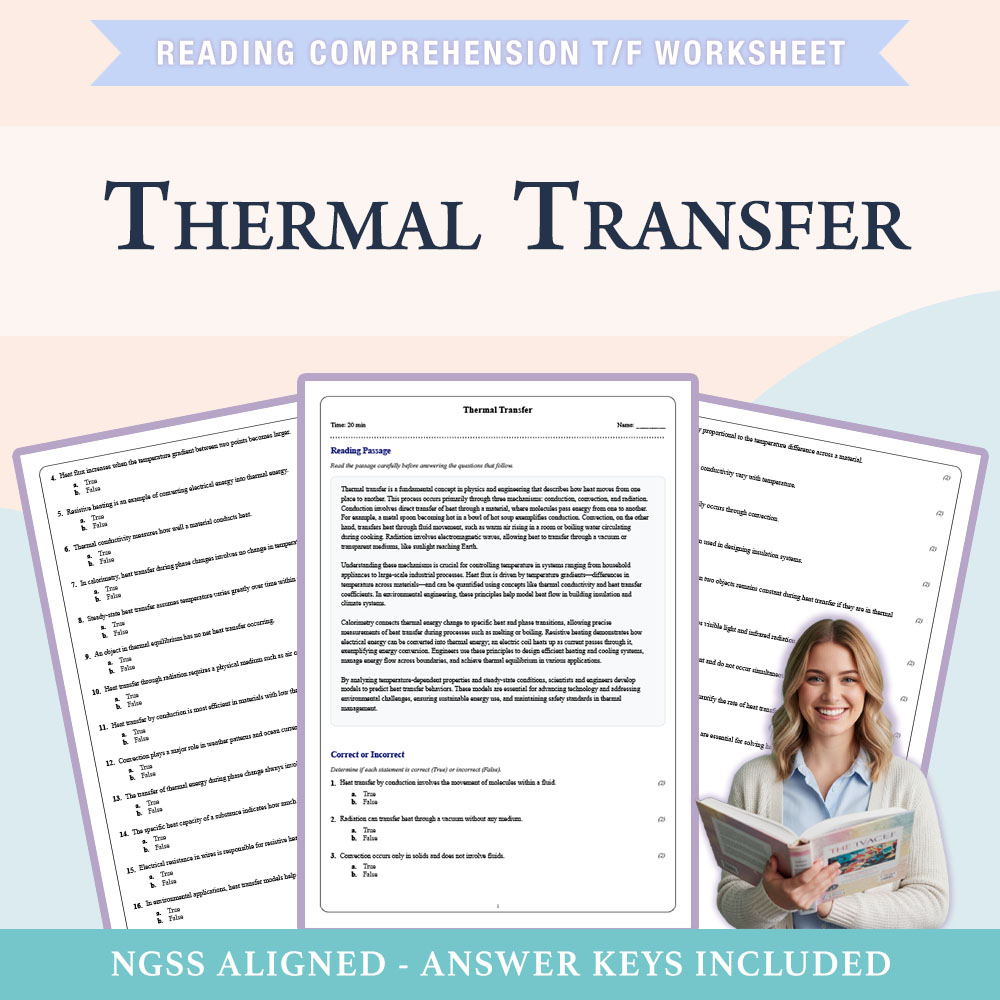
Grade 10 Science | Thermal Transfer Worksheet (PDF +Answer Key)
Created byCopper Leaf ClassroomLearning Objectives
- Understand the mechanisms of heat transfer: conduction, convection, and radiation.
- Explain the concept of thermal energy and heat flux in temperature gradients.
- Connect calorimetric reasoning to thermal energy changes involving specific heat and phase changes.
Also included in: Grade 10 Science | Energy and Work Worksheets Bundle (PDF + Answer Key) +1 more
Instant download
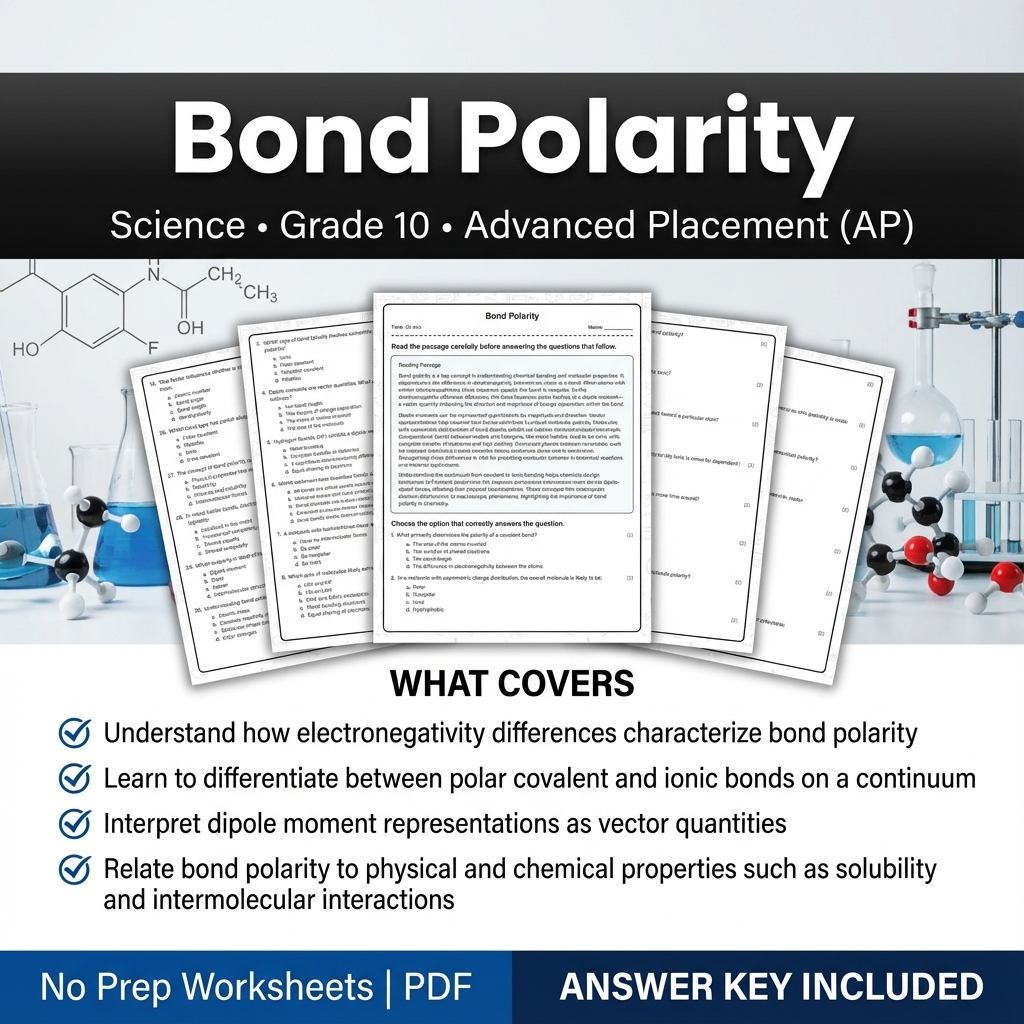
10th Grade Science | Bond Polarity Worksheet (Printable PDF + Answer Key)
Created byCoral Reef LearningLearning Objectives
- Understand how electronegativity differences characterize bond polarity
- Learn to differentiate between polar covalent and ionic bonds on a continuum
- Interpret dipole moment representations as vector quantities
Also included in: Grade 10 Science Unit Bundle | Thermochemistry, Stoichiometry & Atomic Structure +1 more
Instant download
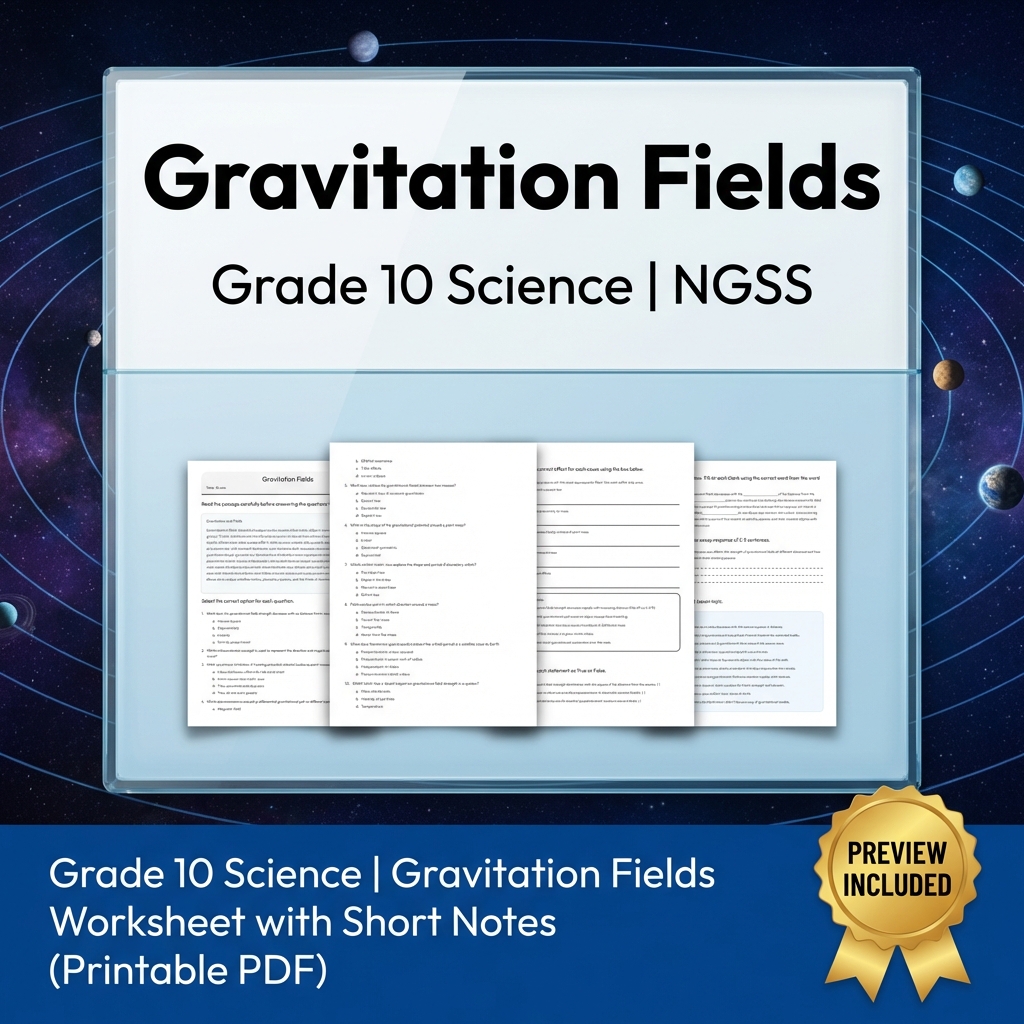
Grade 10 Science | Gravitation Fields Worksheet with Short Notes (Printable PDF)
Created byMeadowlark WorksheetsLearning Objectives
- Understand the inverse-square behavior of gravitational fields.
- Analyze orbital dynamics using Newtonian gravity.
- Represent gravitational fields using vectors and potentials.
Also included in: Grade 10 Science NGSS Unit | Motion & Forces Interactions Worksheet Bundle +1 more
Instant download
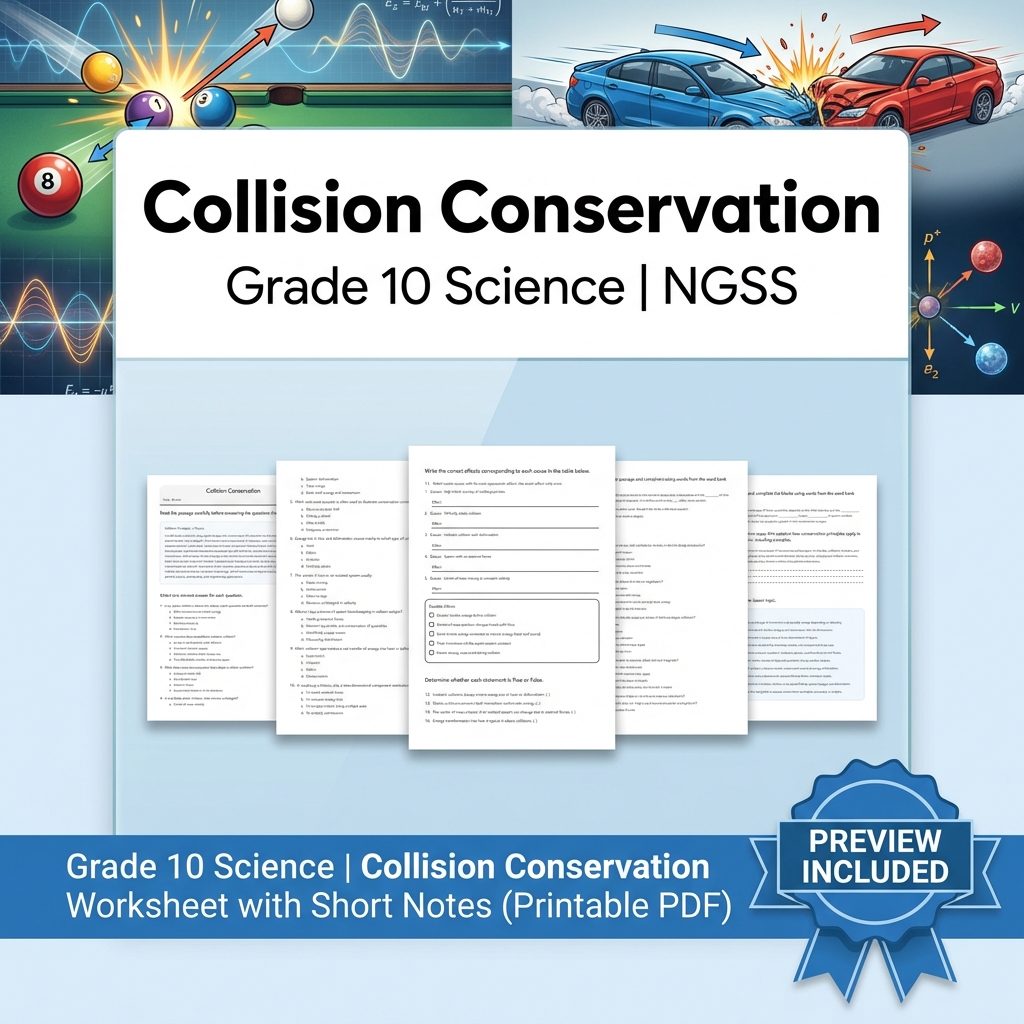
Grade 10 Science | Collision Conservation Worksheet with Short Notes (PDF)
Created byMeadowlark WorksheetsLearning Objectives
- Understand the principles of conservation of momentum and energy in multi-body collisions.
- Analyze two-dimensional collision components using vector resolution.
- Differentiate between elastic and inelastic collisions through speed and energy analysis.
Also included in: Grade 10 Science NGSS Unit | Motion & Forces Interactions Worksheet Bundle +1 more
Instant download
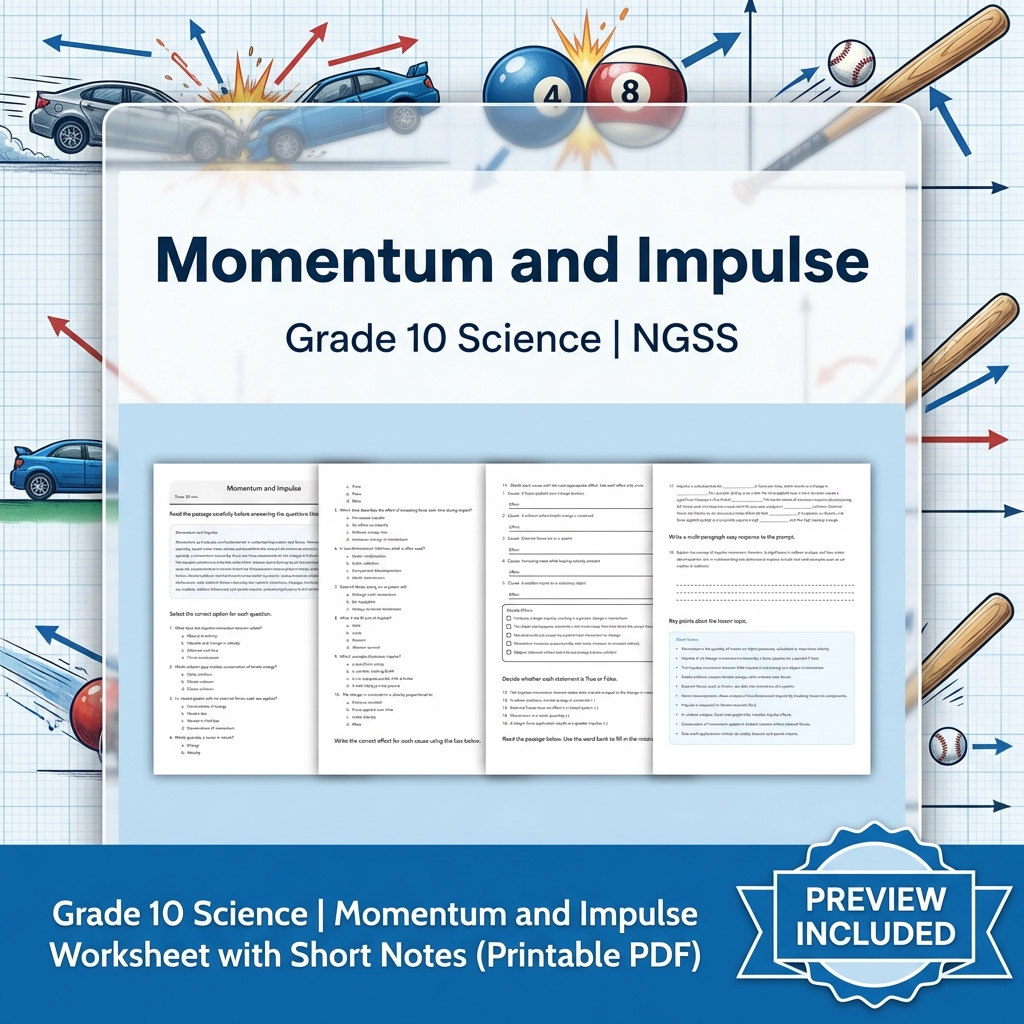
Grade 10 Science | Momentum and Impulse Worksheet with Short Notes (PDF)
Created byMeadowlark WorksheetsLearning Objectives
- Understand and apply the concepts of momentum and impulse in physical systems.
- Explain the impulse-momentum theorem and conservation principles in collisions.
- Analyze two-dimensional momentum interactions and vector decomposition.
Also included in: Grade 10 Science NGSS Unit | Motion & Forces Interactions Worksheet Bundle +1 more
Instant download
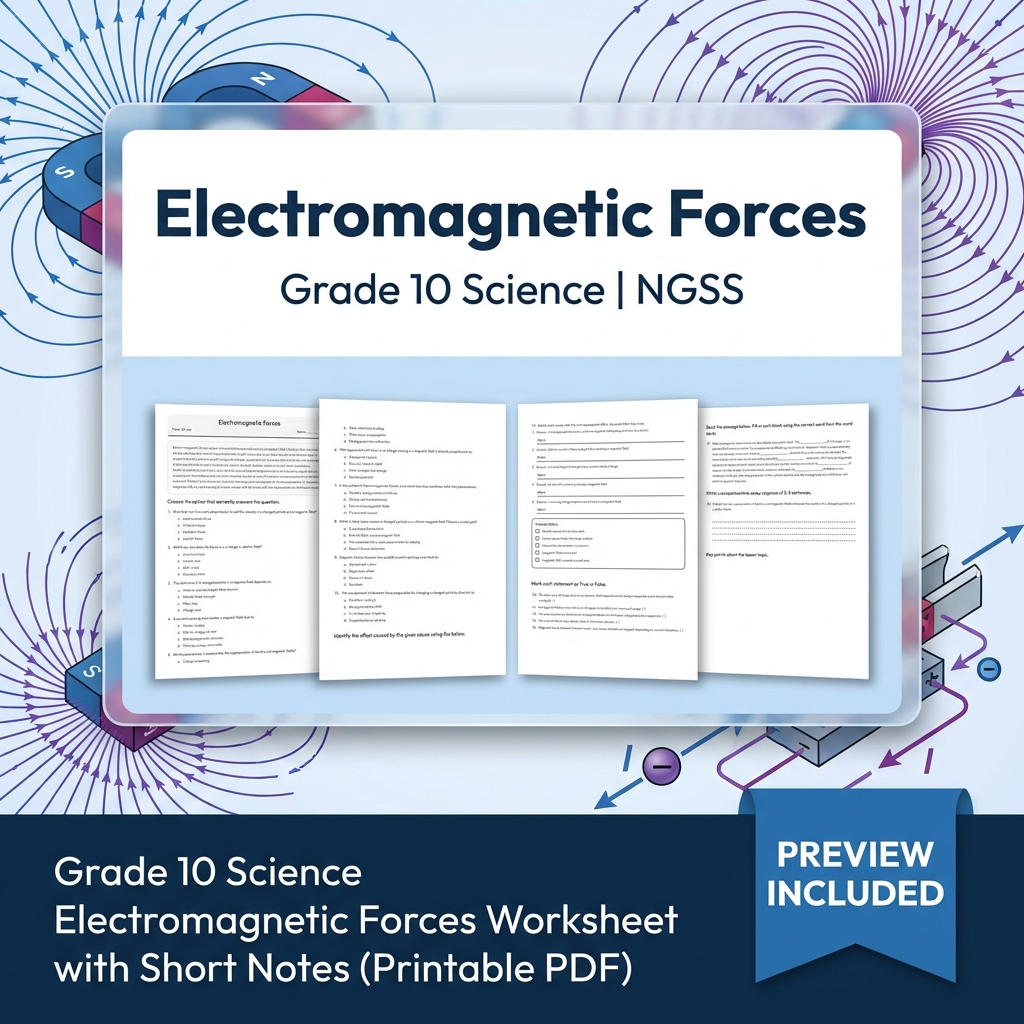
Grade 10 Science Electromagnetic Forces Worksheet with Short Notes (PDF)
Created byMeadowlark WorksheetsLearning Objectives
- Explain the concepts of electric and magnetic field interactions and their vector relationships.
- Describe the forces on charges and currents in uniform electromagnetic fields.
- Apply the Lorentz force law to simple charged particle deflections and current interactions.
Also included in: Grade 10 Science NGSS Unit | Motion & Forces Interactions Worksheet Bundle +1 more
Instant download
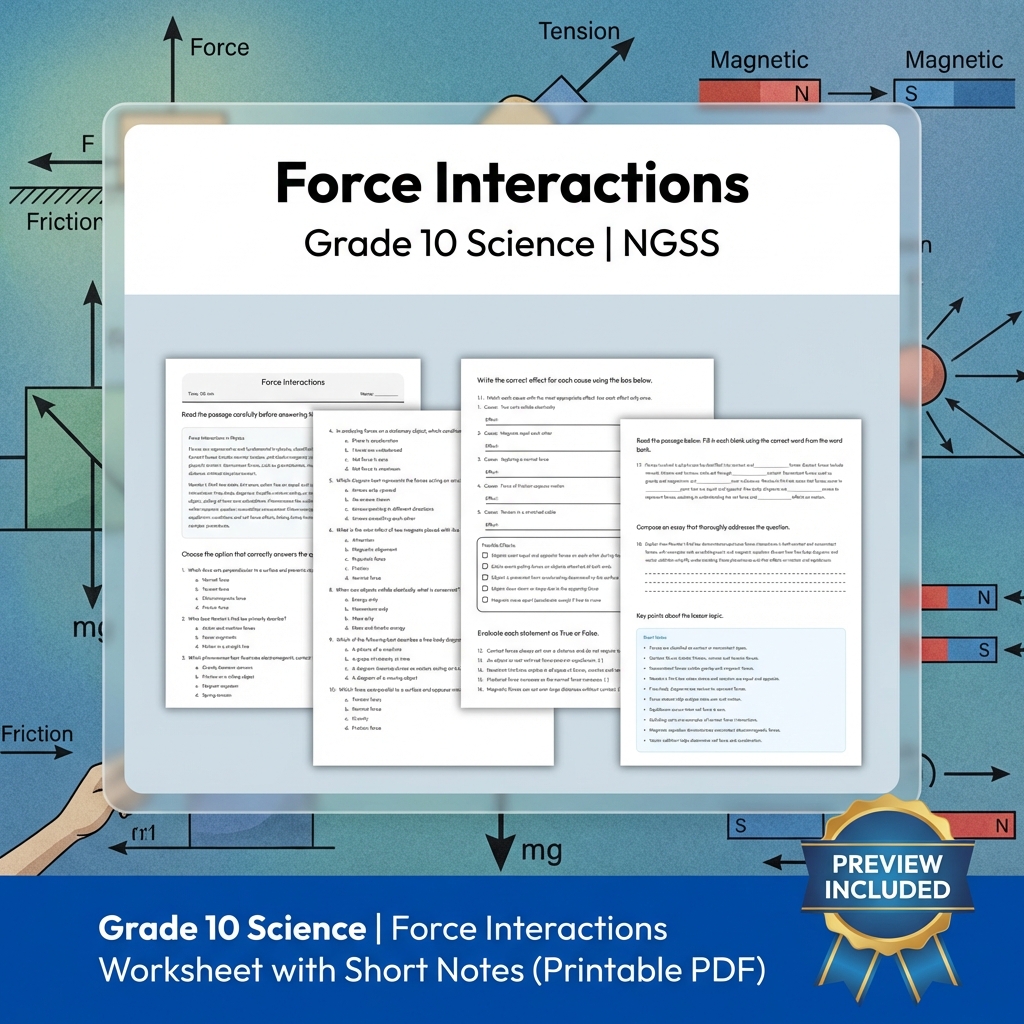
Grade 10 Science | Force Interactions Worksheet with Short Notes (Printable PDF)
Created byMeadowlark WorksheetsLearning Objectives
- Understand the classification of contact and noncontact forces.
- Represent force interactions using vectors and free-body diagrams.
- Explain Newton's third law and pairwise force interactions.
Also included in: Grade 10 Science NGSS Unit | Motion & Forces Interactions Worksheet Bundle +1 more
Instant download
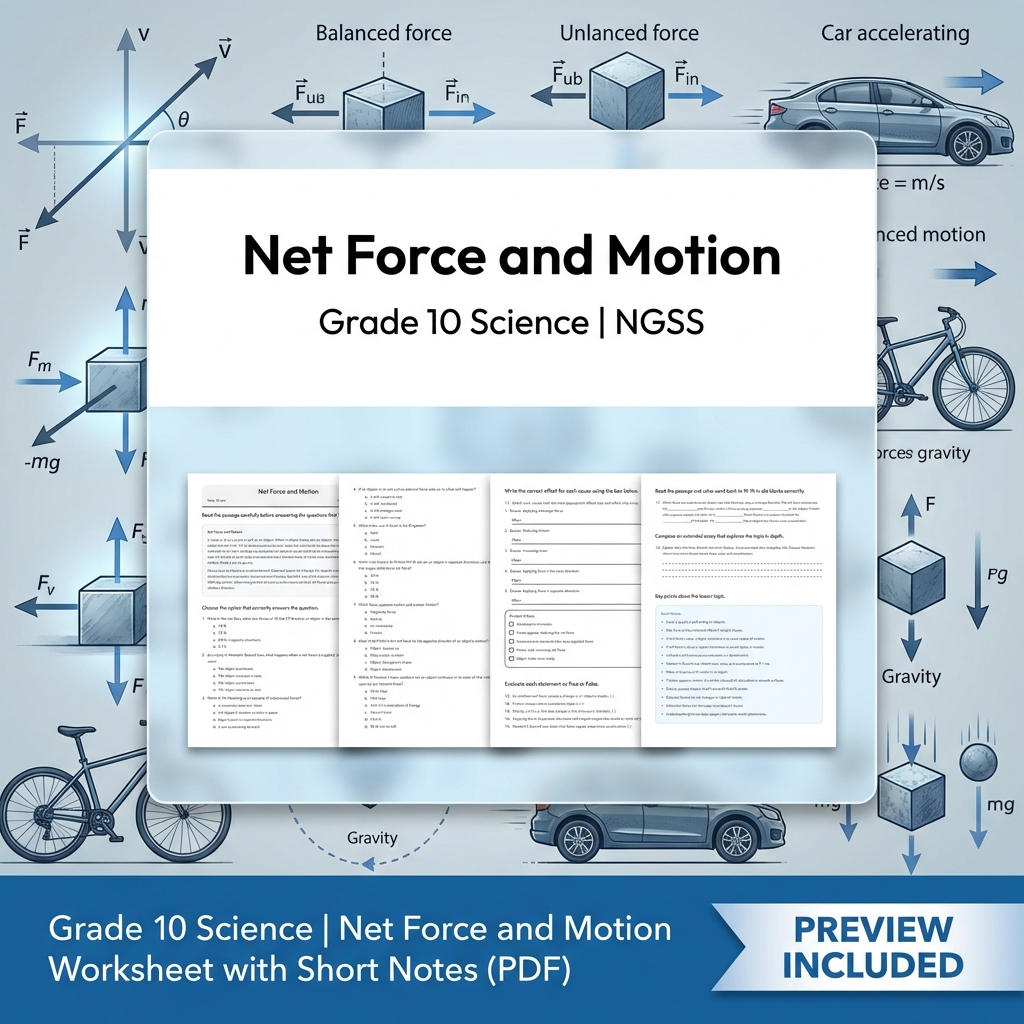
Grade 10 Science | Net Force and Motion Worksheet with Short Notes (PDF)
Created byMeadowlark WorksheetsLearning Objectives
- Understand the concept of net force and how it affects motion.
- Identify different types of forces and their effects on objects.
- Calculate net force in various scenarios.
Also included in: Grade 10 Science NGSS Unit | Motion & Forces Interactions Worksheet Bundle +1 more
Instant download
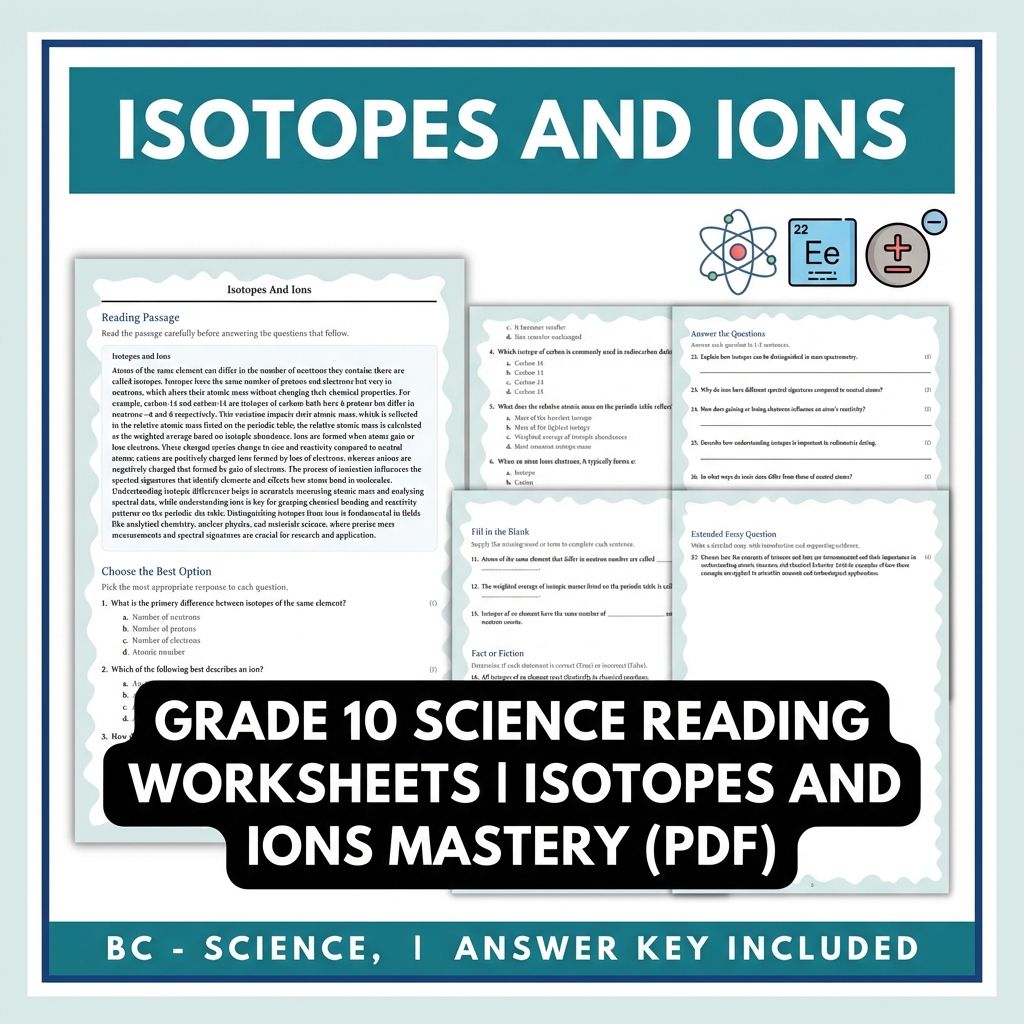
Grade 10 Science Reading Worksheets | Isotopes and Ions Mastery (PDF)
JCreated byJ.S SheetsLearning Objectives
- Understand the concept of isotopes and how they differ in neutron count while maintaining the same chemical properties.
- Explain how ions are formed through gain or loss of electrons and how their sizes and reactivities differ from neutral atoms.
- Distinguish between isotopic and ionic variations and their relevance in mass measurements, spectral signatures, and chemical bonding.
Instant download
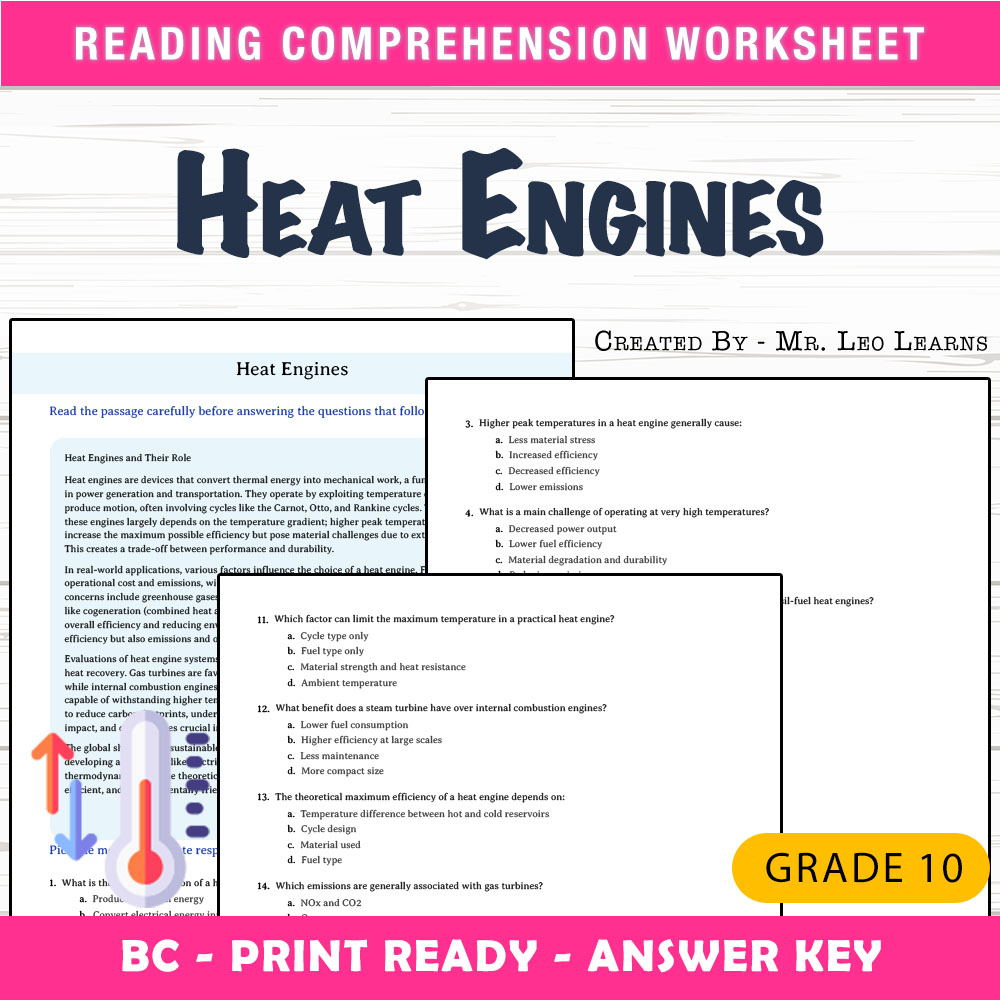
Grade 10 Science — Heat Engines Worksheet MCQ Paper for Mastery
 Created byThe Resource Hub
Learning Objectives
- Understand the basic principles of heat engines and their functions.
- Identify different types of heat engines and their efficiency factors.
- Evaluate environmental impacts of various heat engine designs.
Also included in: Grade 10 Science | Energy Transfer & Conservation UNIT Worksheet Bundle +1 more
Instant download
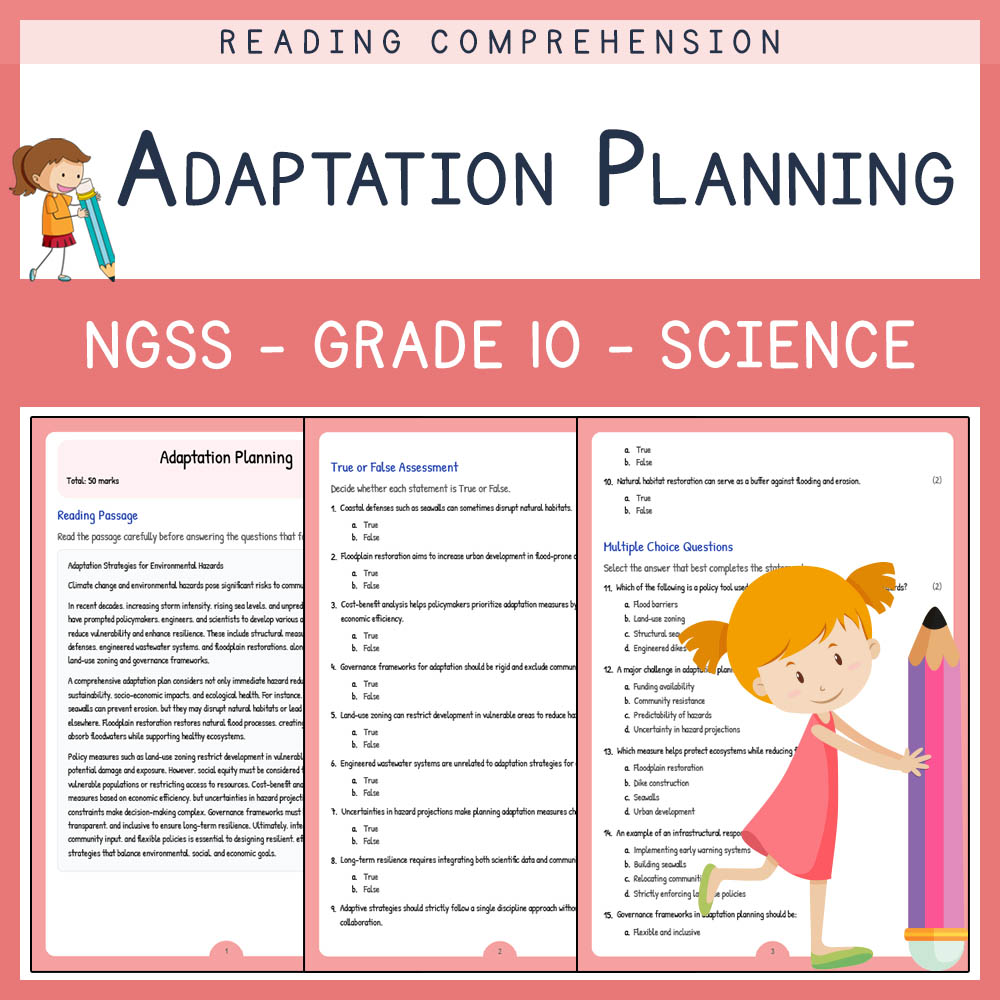
Grade 10 Science | Adaptation Planning Worksheet & Answer Key (NGSS Aligned)
Created byLumora LearningLearning Objectives
- Understand the key concepts of infrastructural and policy responses to natural hazards.
- Evaluate different adaptation strategies considering social, ecological, and economic trade-offs.
- Analyze risk maps, hazard frequency, and cost–benefit data to assess feasibility and resilience.
Instant download

Heat Transfer Worksheet | Grade 10 Science Activities
Created byPrism Point LearningLearning Objectives
- Explain how heat moves through conduction, convection, and radiation
- Describe how material properties and temperature differences affect the rate of heat transfer
- Interpret real-world examples of heating and cooling using heat-transfer mechanisms
Also included in: Grade 10 Energy, Efficiency & Conservation Science Lesson Bundle | BC +1 more
Instant download
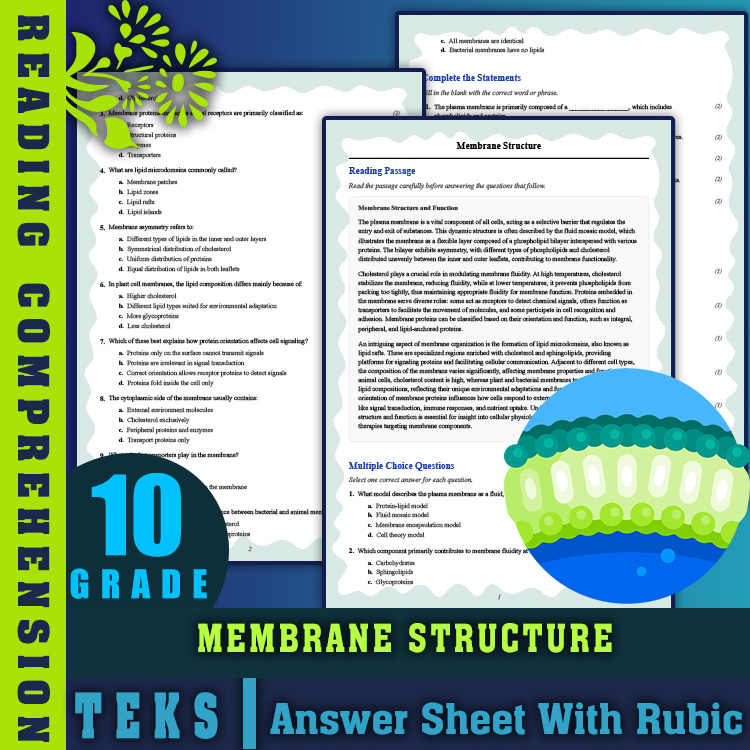
10th Grade Science | Membrane Structure Reading Worksheet (PDF + Answer Key)
JCreated byJ.S SheetsLearning Objectives
- Explain the fluid mosaic model and the asymmetry of the phospholipid bilayer.
- Describe how cholesterol influences membrane fluidity at different temperatures.
- Identify the types and functions of membrane proteins, such as receptors and transporters.
Instant download
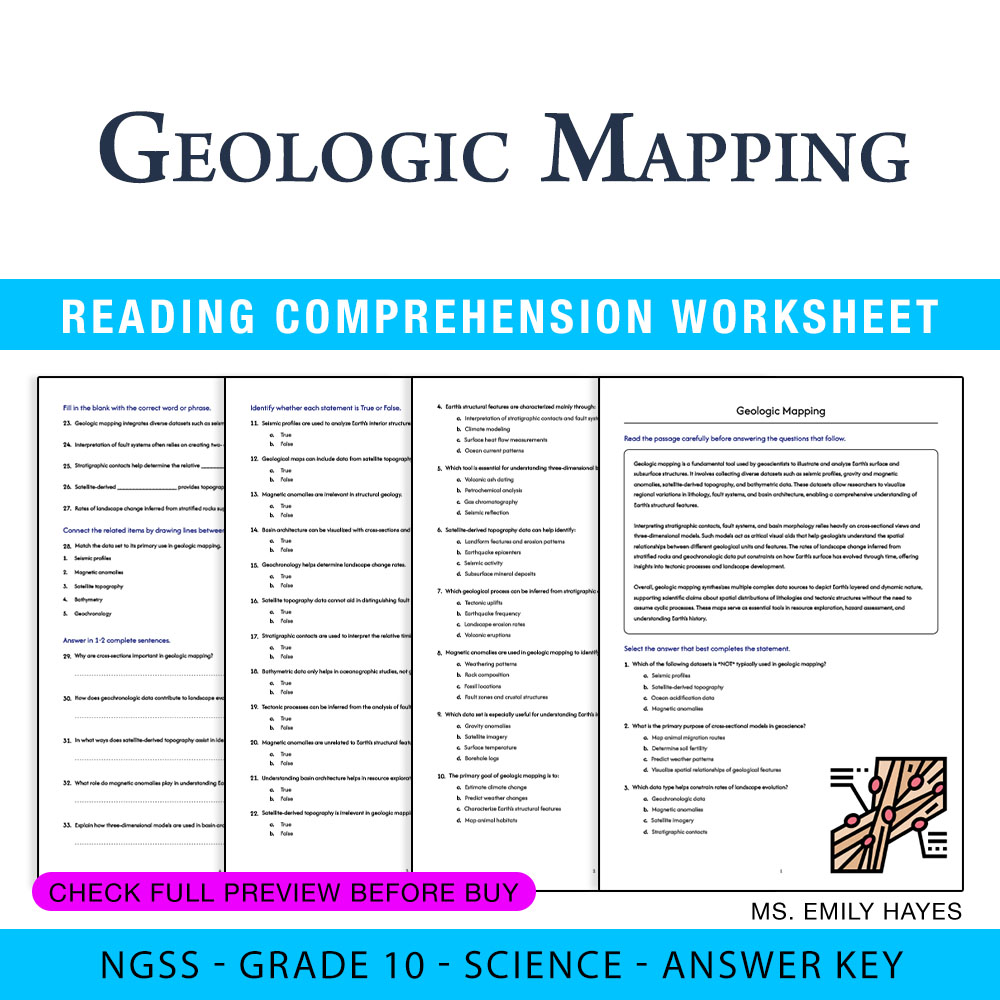
10th Grade Science | Geologic Mapping Worksheet (PDF+ Answer Key)
Created byCopper Leaf ClassroomLearning Objectives
- Understand the process and purpose of geologic mapping in earth sciences.
- Identify key data sets and interpret structural features from geologic maps.
- Apply knowledge of stratigraphy, fault systems, and basin architecture to analyze Earth's surface.
Instant download
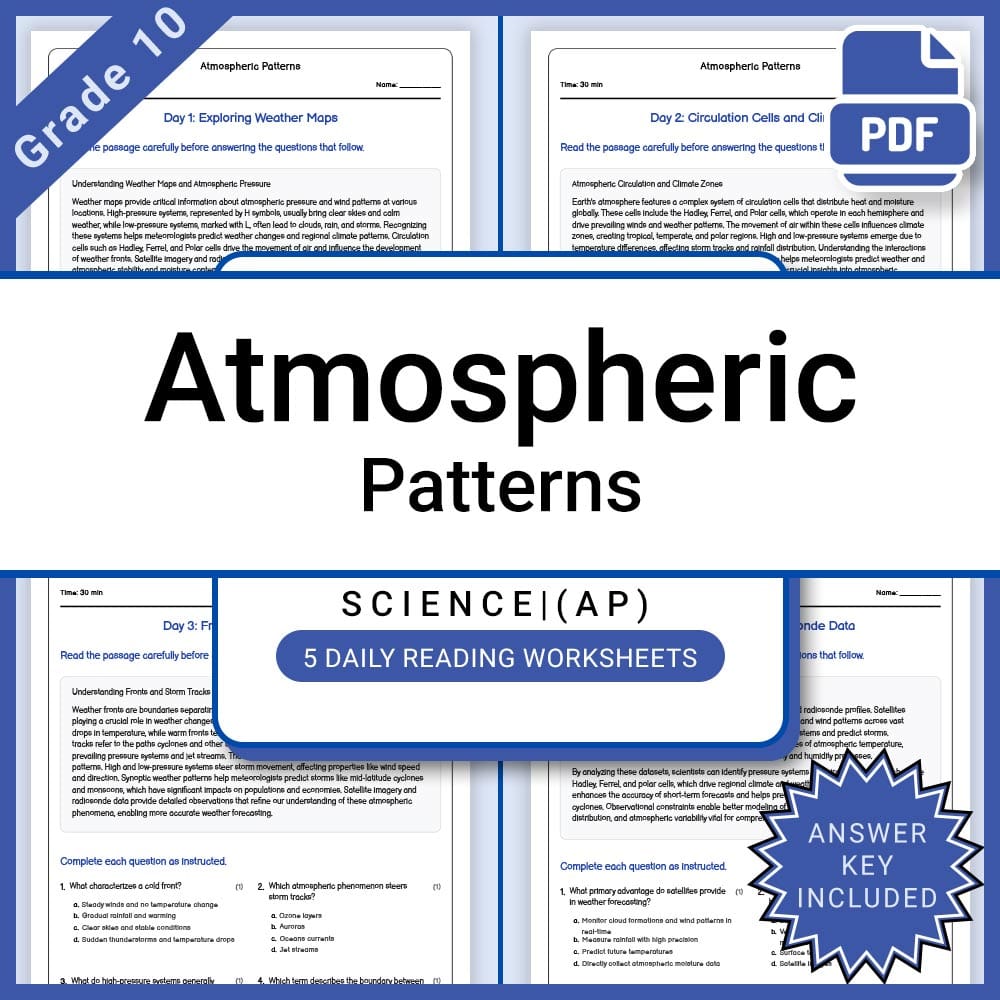
Grade 10 Science Atmospheric Patterns Daily Reading Worksheet with Answer Key
JCreated byJ.S SheetsLearning Objectives
- Understand the structure of the atmosphere and pressure systems.
- Interpret weather maps and symbols related to pressure and wind patterns.
- Connect pressure systems to weather phenomena like storms and monsoons.
Also included in: Grade 10 Science Lesson Bundle | AP Earth & Environmental Topics
Instant download
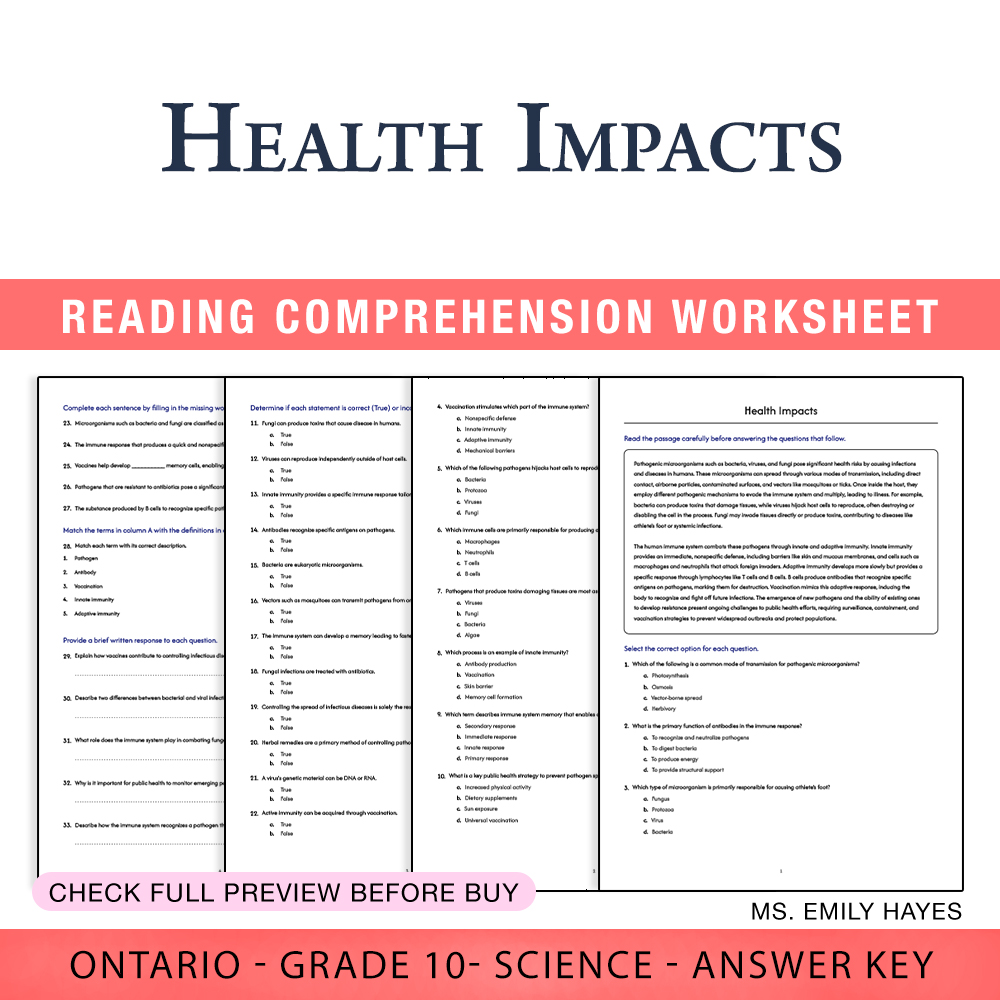
Grade 10 Science | Health Impacts Worksheet (PDF + Answer Key)
Created byCopper Leaf ClassroomLearning Objectives
- Describe the modes of transmission and pathogenic mechanisms of microorganisms.
- Differentiate bacterial, viral, and fungal disease processes.
- Explain the principles of innate and adaptive immunity, including antibody recognition.
Instant download
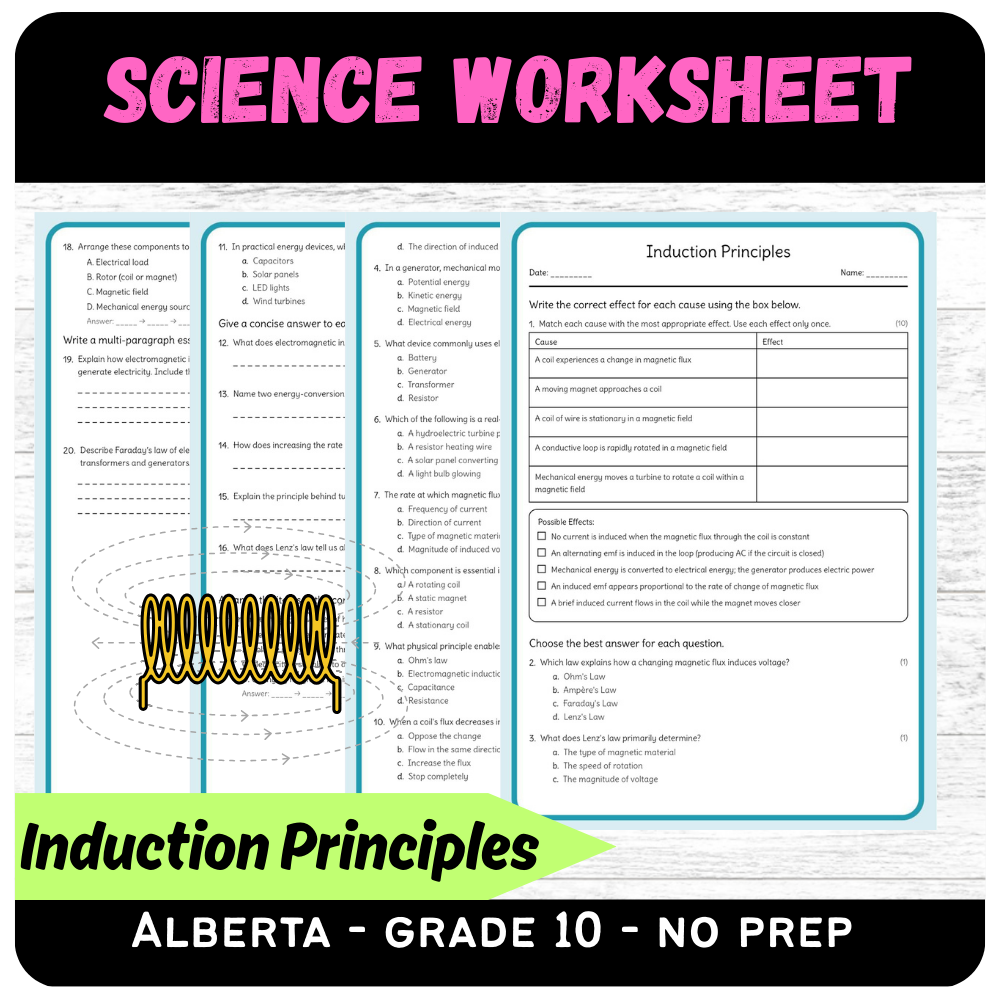
Grade 10 Science – Induction Principles Worksheet (PDF) – Alberta Standards
Created byBright Mind ResourcesLearning Objectives
- Explain the basic concept of electromagnetic induction and how changing magnetic flux induces voltage.
- Describe Faraday’s law and the directionality described by Lenz’s law in electromagnetic induction.
- Identify real-world examples of electromagnetic induction in energy-conversion devices such as turbines and transformers.
Instant download
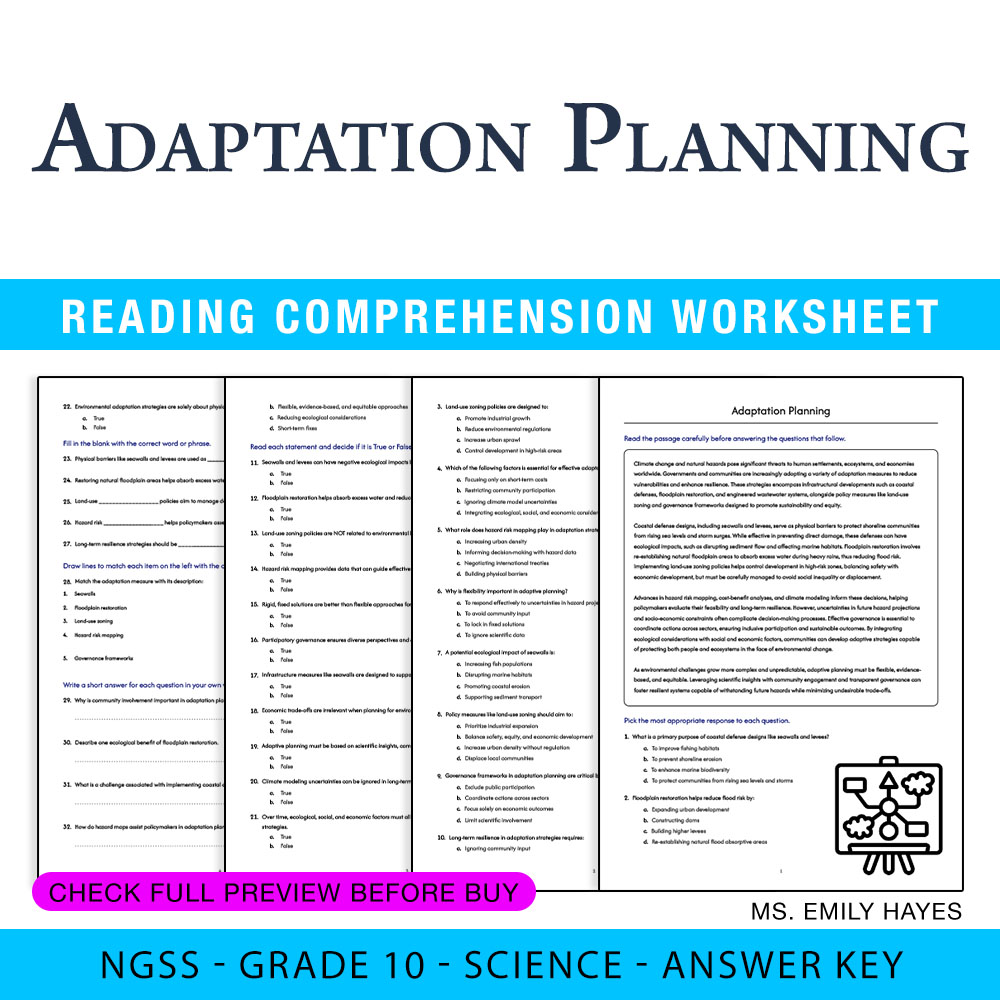
10th Grade Science | Adaptation Planning Worksheet (PDF+ Answer Key)
Created byCopper Leaf ClassroomLearning Objectives
- Evaluate infrastructural strategies and policy options for reducing environmental vulnerability.
- Analyze trade-offs in ecological, social, and economic aspects of adaptation measures.
- Assess the feasibility and resilience of proposed adaptation projects using risk and cost-benefit data.
Instant download

Grade 10 Tissue Organization Worksheet | Practice & Alberta PDF
Created byClear Sky ClassroomLearning Objectives
- Explain how cells with similar structure and function form tissues that perform collective roles
- Compare plant vascular tissues with animal epithelial and connective tissues in terms of their structures and functions
- Describe how tissue architecture and properties influence organ-level performance in Alberta ecosystems and agricultural systems
Instant download

Grade 10 Science | Bond Polarity Worksheet | AP Aligned
Created byLumora LearningLearning Objectives
- Describe how electronegativity differences influence bond polarity.
- Represent bond dipoles using vector and quantitative methods.
- Differentiate between polar covalent and ionic bonds on a continuum.
Instant download

Grade 10 Astronomical Climate Cycles Worksheet | Practice & PDF
Created byClear Sky ClassroomLearning Objectives
- Explain how Earth’s tilt, orbital eccentricity, and precession influence the distribution and timing of incoming solar energy.
- Describe how astronomical models can connect to changes in seasonal intensity and long-term insolation patterns.
- Interpret how geological and paleoclimate records provide evidence for repeating climate rhythms.
Instant download
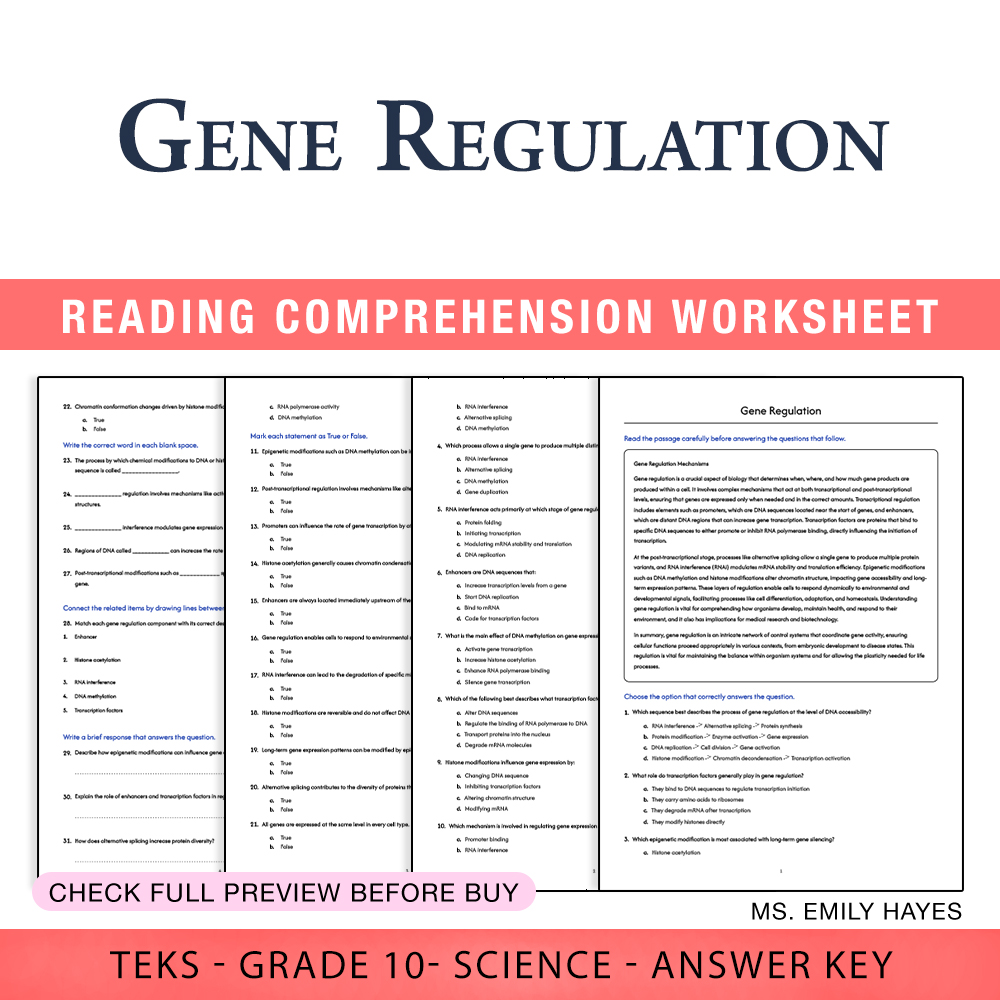
10th Grade Science | Gene Regulation Worksheet (PDF+ Answer Key)
Created byCopper Leaf ClassroomLearning Objectives
- Understand the mechanisms of gene regulation at transcriptional and post-transcriptional stages.
- Identify the roles of promoters, enhancers, transcription factors, and epigenetic modifications in gene expression.
- Explain how cells respond to signals, differentiate, and maintain homeostasis through gene regulation.
Instant download

Grade 10 Science | Molecular Geometry Worksheet | AP Aligned
Created byLumora LearningLearning Objectives
- Define molecular geometry using electron-domain models and orbital hybridization.
- Predict three-dimensional molecular arrangements based on electron domains.
- Explain how spatial distribution of electron domains influences molecular shape and polarity.
Instant download

Control Strategies Worksheet | Grade 10 Science Review & Practice
Created byPrism Point LearningLearning Objectives
- Explain why control groups, randomization, blocking, and replication help isolate causal effects in experiments.
- Identify common sources of bias and confounding and describe practical ways to reduce them (e.g., equipment variability, environmental fluctuations).
- Design and justify appropriate control levels and document procedure fidelity to support valid comparisons across trials.
Also included in: Grade 10 Evidence-Based Science Data Analysis Lesson Bundle: Ontario
Instant download

Grade 10 Science | Communicating Scientific Results - Reading Comprehension
Created byCoral Reef LearningLearning Objectives
- Understand the key components of clear scientific reporting
- Identify how data, visualizations, and discussions support scientific claims
- Recognize the importance of transparency and reproducibility in reports
Instant download

Grade 10 Science | Bonding Types - Daily Reading Comprehension
Created byCoral Reef LearningLearning Objectives
- Understand the different types of chemical bonds: ionic, covalent, and metallic.
- Identify properties unique to ionic bonds.
- Explain how electron transfer and sharing occur in bonding.
Instant download
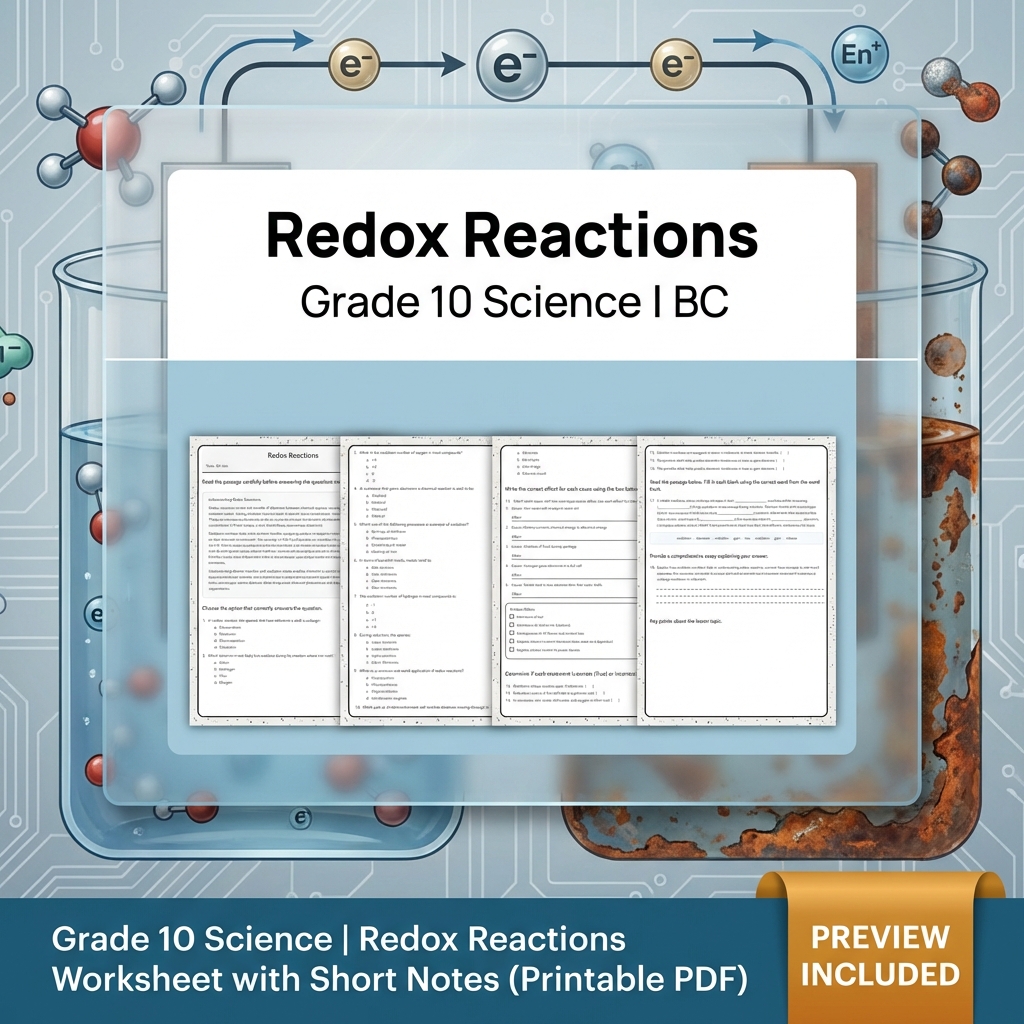
Grade 10 Science | Redox Reactions Worksheet with Short Notes (Printable PDF)
Created byMeadowlark WorksheetsLearning Objectives
- Understand the concept of oxidation and reduction in chemical reactions.
- Identify changes in oxidation states during redox processes.
- Link electron transfer to observable phenomena like combustion and corrosion.
Also included in: Grade 10 Science Lesson Bundle | BC Framework Worksheets Pack +1 more
Instant download

Grade 10 Science | Measurement & Interpretation in Science - Reading Comp.
Created byCoral Reef LearningLearning Objectives
- Understand the purpose of different measurement tools and units in scientific experiments.
- Identify appropriate instruments for measuring length, volume, mass, and temperature.
- Recognize the importance of calibration and proper technique for accurate measurements.
Instant download

Grade 10 Science | Ecosystem Structure - Daily Reading Comprehension
Created byCoral Reef LearningLearning Objectives
- Identify biotic and abiotic components of ecosystems
- Understand energy pathways and trophic levels
- Recognize examples of food webs, primary production, and decomposition
Instant download
About Grade 10 Science Worksheets
Find Science worksheets built for Grade 10. All 7,069 cover core skills, practice, and review, each an instant PDF download.
Every worksheet on MyTeachingSheets is created by independent teacher-authors and reviewed before publication. All resources download as printable PDFs for classroom, homework, or at-home practice, and many include answer keys. Preview any worksheet free before buying.