
Grade 10 Science Worksheets
7,069 worksheets
Grade 10 Science | Ecosystem Structure - Daily Reading Comprehension
 Created byCoral Reef Learning
Learning Objectives
- Identify biotic and abiotic components of ecosystems
- Understand energy pathways and trophic levels
- Recognize examples of food webs, primary production, and decomposition
Instant download

Grade 10 Science | Phylogenetics for Grade Science - Daily Reading Comprehension
Created byCoral Reef LearningLearning Objectives
- Understand the concept of shared traits among species
- Identify how traits indicate common ancestry
- Learn how evolutionary patterns are inferred from genetic data
Instant download
Grade 10 Science | Immune System Worksheet for Mastering Homeostasis
 Created byThe Resource Hub
Learning Objectives
- Explain how the immune system contributes to homeostasis and overall human physiology.
- Identify the roles of inflammatory responses, fever, and immune regulation in maintaining balance.
- Analyze how chronic immune activation can disrupt homeostatic set points and impact health.
Also included in: Grade 10 Science Worksheet Bundle – Cellular, Genetics & Ecology Mastery
Instant download
Electric Circuits Assessment for Grade 10 Science – BC Standards
 Created byPrism Point Learning
Learning Objectives
- Understand the basic components and functions of electric circuits.
- Evaluate the factors affecting system efficiency in electrical transmission.
- Compare centralized versus distributed energy generation methods.
Also included in: Grade 10 Science | Energy Assessment - BC Standards-Aligned Mini Bundle
Instant download

Cytoskeleton Roles Worksheet | Grade 10 Science TEKS Practice
Created byPrism Point LearningLearning Objectives
- Explain how microtubules, actin filaments, and intermediate filaments each contribute to cell structure and function.
- Describe how motor proteins and filament systems move materials or support processes like mitosis.
- Connect cytoskeleton organization to real examples such as axonal transport, muscle contraction, and cilia-driven fluid movement.
Instant download
10th Grade Science | Molecular Coding Reading Worksheet (PDF + Answer Key)
JCreated byJ.S SheetsLearning Objectives
- Understand how DNA sequence determines amino acid order in proteins
- Describe the process of transcription and translation
- Explain codon usage and ribosomal synthesis
Also included in: Grade 10 Science Unit | Cellular & Physiological Systems Worksheets
Instant download
10th Grade Science | Evolutionary Evidence Worksheet (PDF + Answer Key)
 Created byCopper Leaf Classroom
Learning Objectives
- Describe the different lines of empirical evidence supporting common ancestry and evolution.
- Explain how fossil records, comparative anatomy, molecular data, and biogeography contribute to understanding evolution.
- Analyze various types of evidence to interpret evolutionary patterns and relationships among organisms.
Instant download
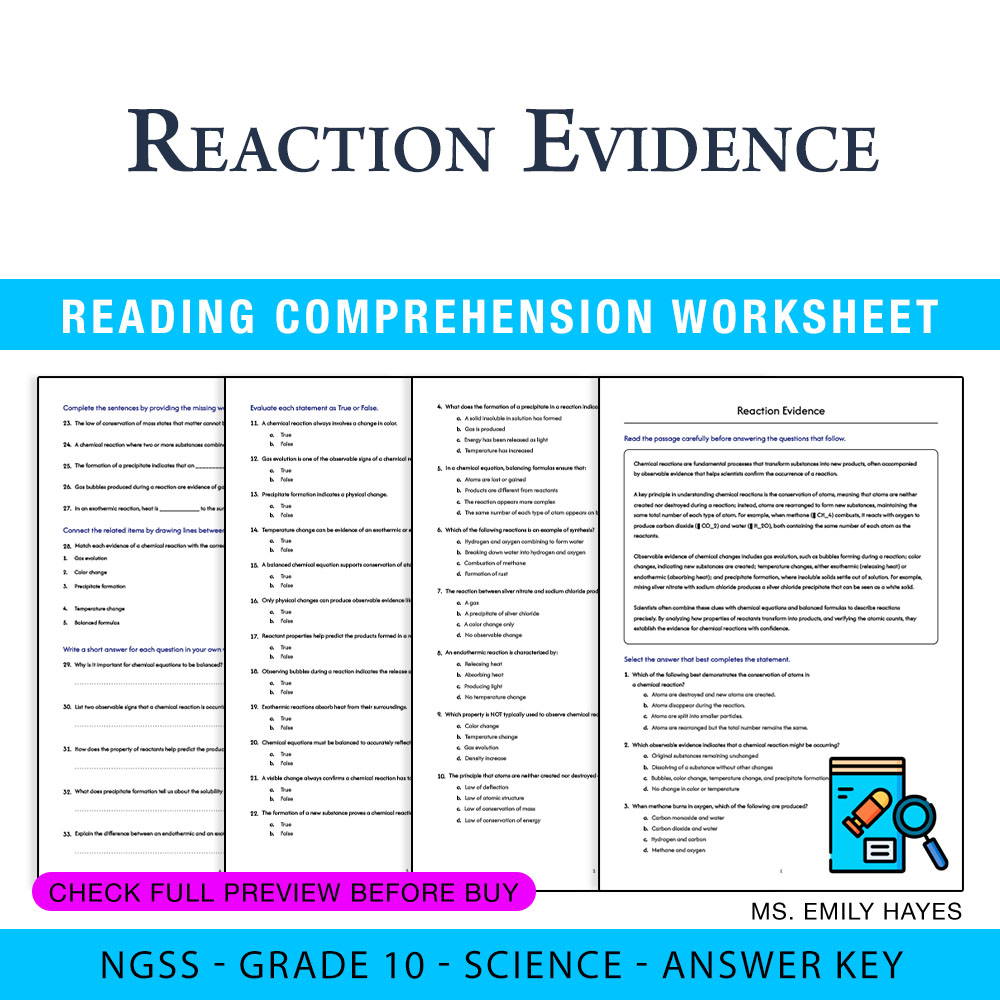
10th Grade Science | Reaction Evidence Worksheet (PDF+ Answer Key)
Created byCopper Leaf ClassroomLearning Objectives
- Understand how conservation of atoms supports chemical reaction analysis
- Identify observable evidence indicating chemical reactions
- Relate reactant properties to product formation
Instant download
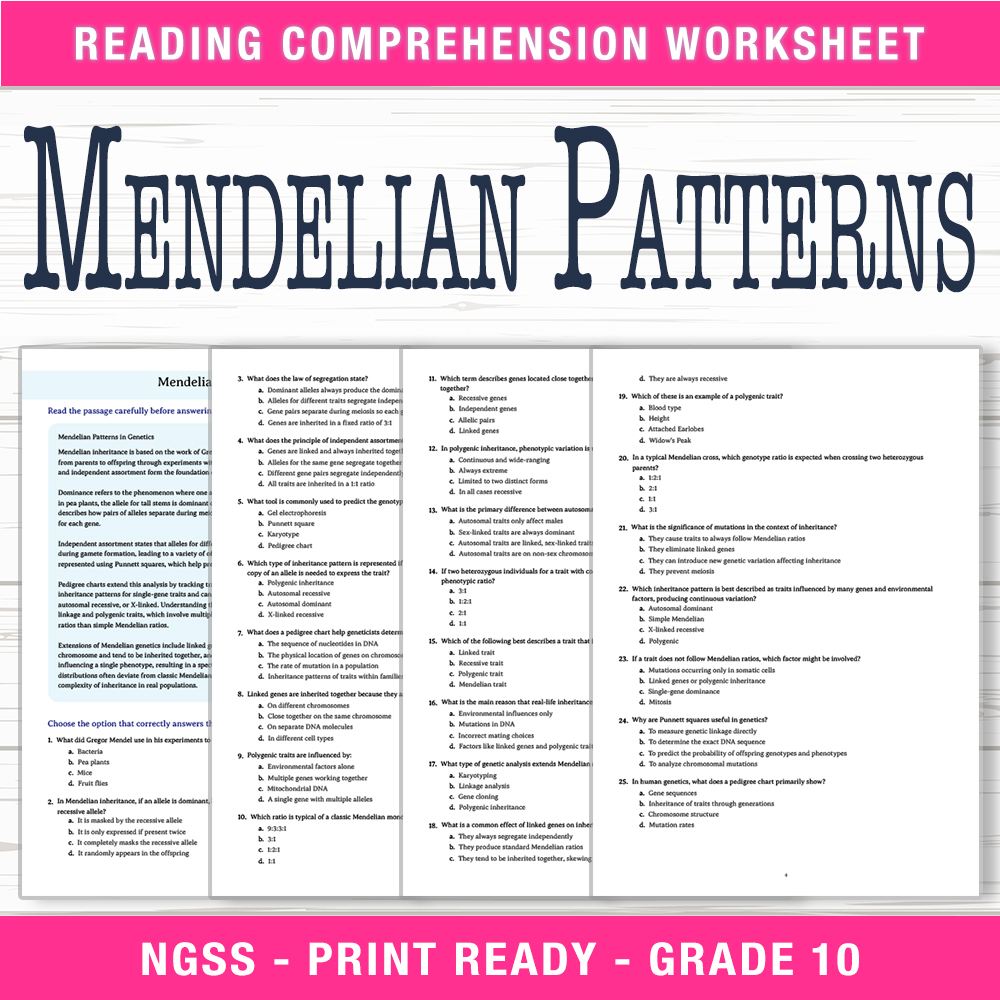
Grade 10 Science | Mendelian Patterns Worksheet (PDF + Answer Key)
 Created byRiverstone Classroom
Learning Objectives
- Explain the principles of dominance, segregation, and independent assortment in Mendelian genetics.
- Use Punnett squares to predict offspring genotypes and phenotypes from parental crosses.
- Analyze inheritance patterns using pedigree charts for single-gene traits.
Instant download

Evolution Evidence Worksheet | Grade 10 Biology Activities & Practice
Created byPrism Point LearningLearning Objectives
- Explain how fossil records provide evidence for evolutionary change over geologic time.
- Identify homologous structures as evidence for common ancestry and shared evolutionary history.
- Describe how biogeographic patterns and genetic similarities support descent with modification.
Instant download

Atomic Particles Worksheet Pack | Grade 10 Science Activities
Created byPrism Point LearningLearning Objectives
- Explain how protons and neutrons in the nucleus determine atomic number and mass number
- Describe how electrons in energy levels (shells) affect an atom’s chemical behavior
- Connect subatomic particles to how elements are organized on the periodic table
Also included in: Grade 10 Science Chemical Reactions & Atomic Structure Lesson Bundle | Bc +1 more
Instant download
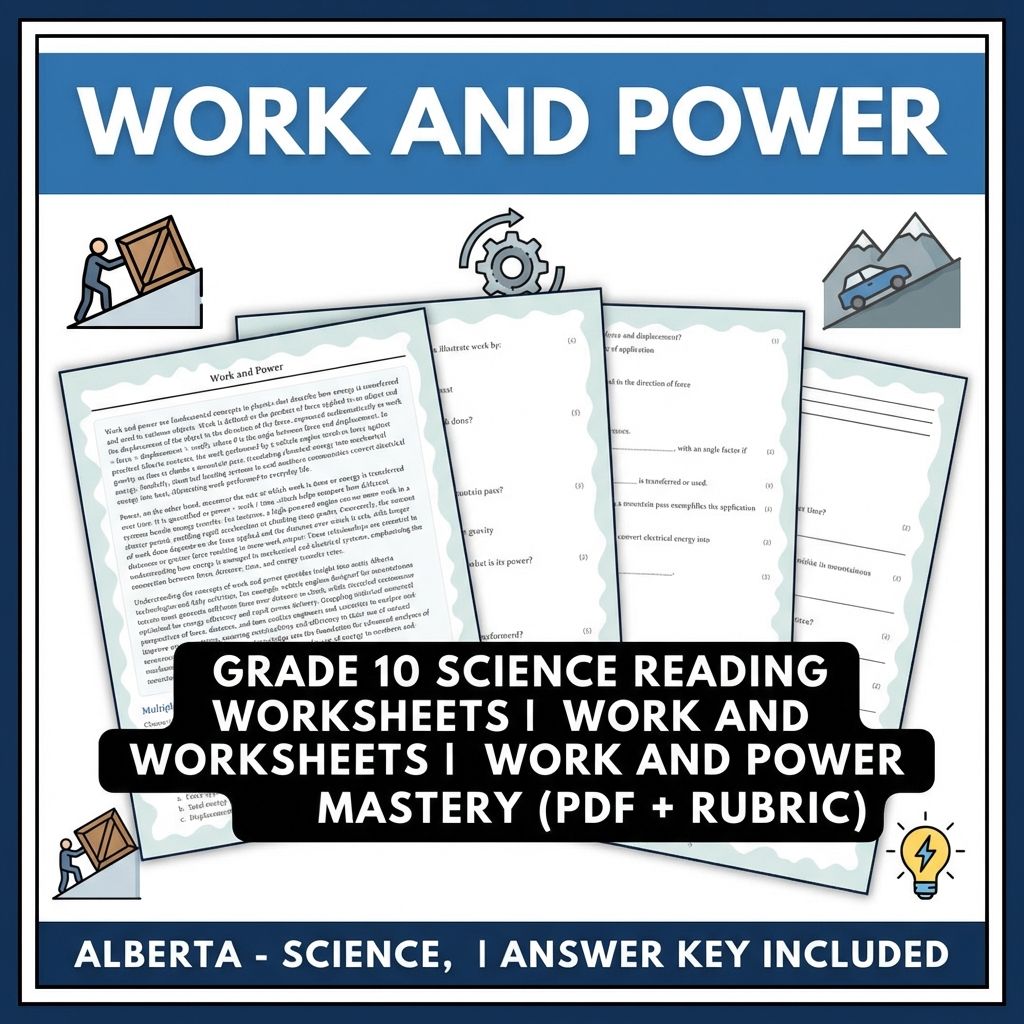
Grade 10 Science Reading Worksheets | Work and Power Mastery (PDF + Rubric)
JCreated byJ.S SheetsLearning Objectives
- Explain the concepts of work and power in relation to energy transfer.
- Calculate work done using force and displacement measurements.
- Describe how power relates to energy transfer over time.
Also included in: Grade 10 Science Bundle | Energy, Circuits & Mechanics (Answer Keys Included) +1 more
Instant download
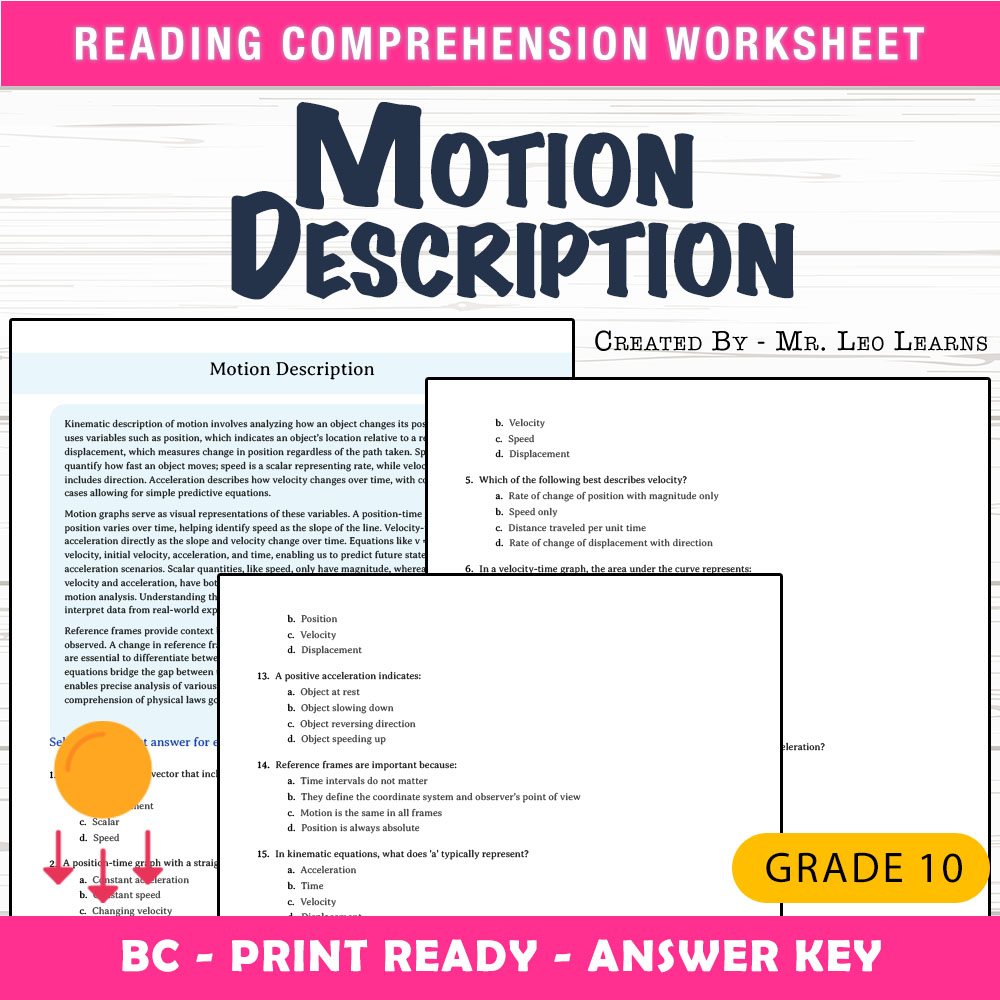
Grade 10 Science — Motion Worksheet MCQ Paper for Mastery
Created byThe Resource HubLearning Objectives
- Understand the key variables used to describe motion along a line or curve.
- Identify and interpret graphs and equations related to kinematic motion.
- Differentiate between scalar and vector quantities in motion analysis.
Also included in: Grade 10 Science | Forces, Motion & Fields UNIT Worksheet Bundle +1 more
Instant download

Grade 10 Science — Worksheet MCQ Paper for Mastering Momentum
Created byThe Resource HubLearning Objectives
- Understand the concept of linear momentum and its conservation in collisions.
- Differentiate between elastic and inelastic collisions.
- Explain the relationship between impulse, force, and change in momentum.
Also included in: Grade 10 Science | Forces, Motion & Fields UNIT Worksheet Bundle +1 more
Instant download

Grade 10 Science | Stoichiometric Analysis Worksheet | AP Aligned
 Created byLumora Learning
Learning Objectives
- Develop algebraic and unit-based strategies for complex stoichiometric relationships.
- Apply mole ratios, limiting reagent identification, and percent yield calculations in chemical problems.
- Utilize gas law approximations and concentration representations to extend stoichiometric reasoning.
Instant download
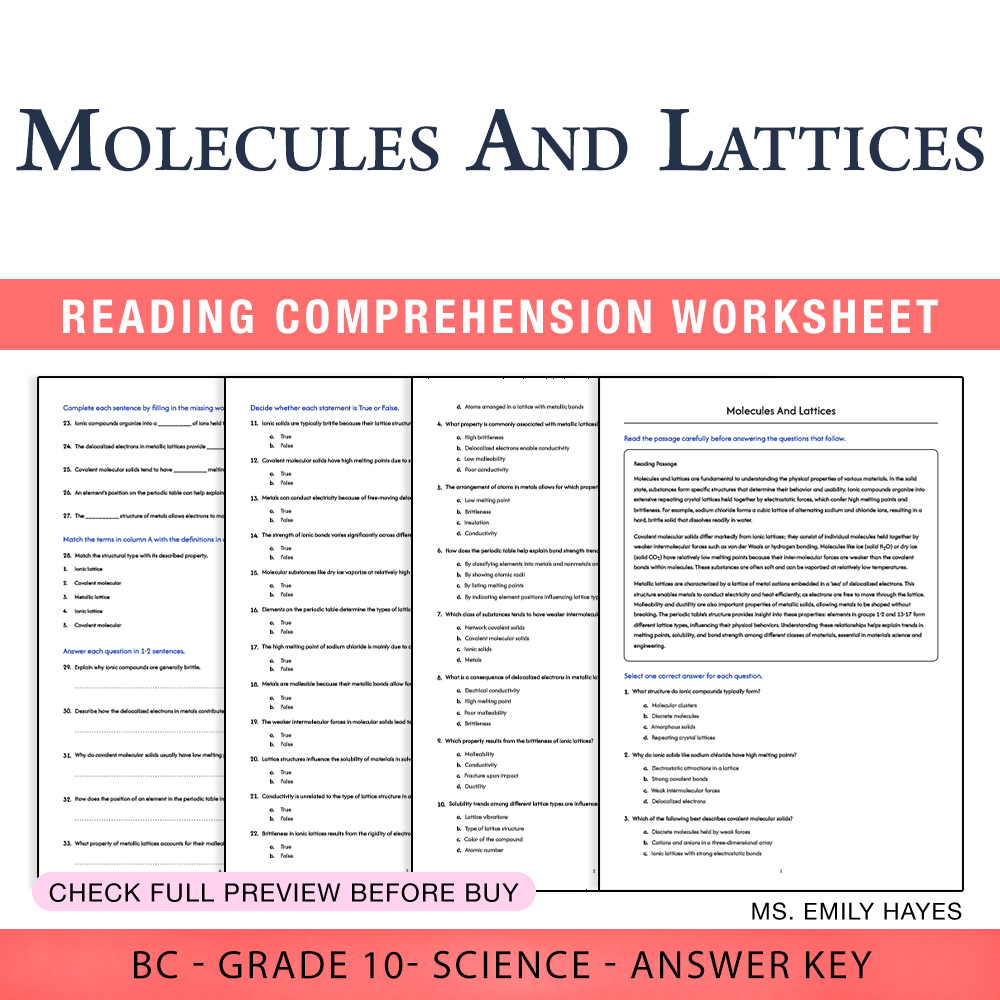
Grade 10 Science | Molecules and Lattices Practice Worksheet (PDF + Answer Key)
Created byCopper Leaf ClassroomLearning Objectives
- Explain the structural arrangements of ionic, covalent molecular, and metallic substances.
- Describe how lattice structures influence properties like melting point, conductivity, and brittleness.
- Link the arrangement of atoms and molecules to their position on the periodic table and properties.
Also included in: Grade 10 Science BC| Chemistry, Reactions & Atomic Structure (PDF+ Answer Keys) +1 more
Instant download
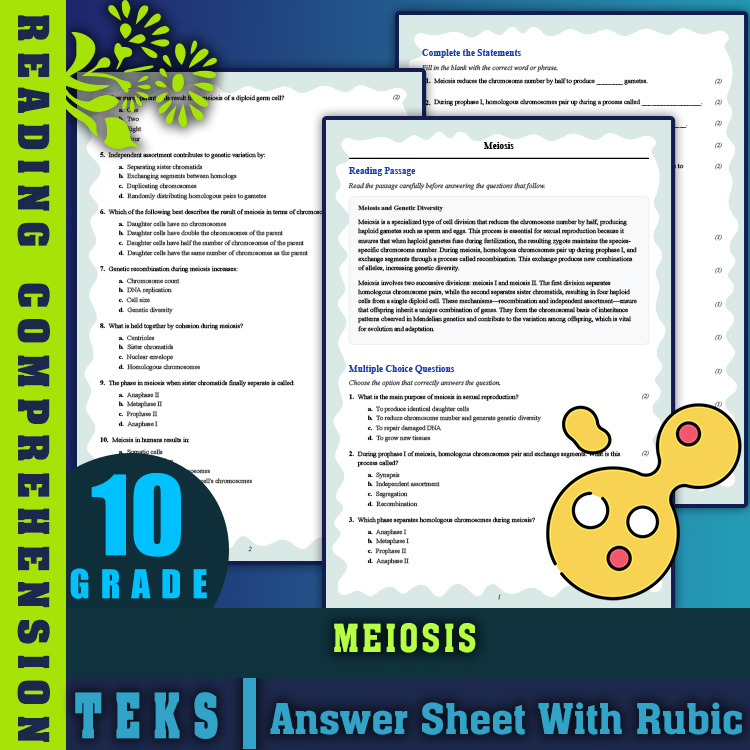
10th Grade Science | Meiosis Reading Worksheet with Answer Key (PDF)
JCreated byJ.S SheetsLearning Objectives
- Describe the process of meiosis and how it reduces chromosome number.
- Explain how genetic diversity is generated through recombination and independent assortment.
- Identify the phases of meiosis and key events occurring in each.
Instant download

Grade 10 TEKS Body Temperature Regulation & Hypothalamus Worksheet
 Created byBRIGHT PATH RESOURCES
Learning Objectives
- Explain how the hypothalamus compares core body temperature to a set point.
- Identify how vasodilation, vasoconstriction, sweating, and shivering help restore thermal equilibrium.
Also included in: Grade 10 Homeostasis & Body Systems Science Worksheets Bundle | TEKS +1 more
Instant download

Grade 10 Projectile Motion Worksheet | BC Practice & PDF
 Created byClear Sky Classroom
Learning Objectives
- Explain how projectile motion separates into independent horizontal and vertical components.
- Use kinematics relationships to predict time of flight, range, and maximum height for a projectile.
- Interpret motion graphs or descriptions using constant horizontal velocity and constant vertical acceleration due to gravity.
Instant download

Bond Polarity Worksheet | AP Science Practice for Grade 10
JCreated byJ.S SheetsLearning Objectives
- Understand how electronegativity differences influence bond polarity.
- Interpret dipole moment representations and their vector analysis.
- Differentiate between polar covalent and ionic bonds on a continuum.
Also included in: Grade 10 Chemistry Lesson Bundle – AP Chemistry Concepts & Practice
Instant download

Grade 10 Science | Plate Narratives Worksheet | AP Aligned
Created byLumora LearningLearning Objectives
- Explain the mechanisms of plate motion, mantle convection, and subduction.
- Interpret tectonic settings using maps, cross-sections, and seismic evidence.
- Connect plate interactions to mountain building, volcanism, and earthquake distribution.
Instant download

Grade 10 Science | Human Footprints Worksheet | AP Science
Created byLumora LearningLearning Objectives
- Understand how human activities alter Earth systems through land-use change, emissions, and resource extraction.
- Analyze the observable environmental consequences of anthropogenic forcing such as soil degradation and coastal subsidence.
- Interpret emission inventories, land-cover time series, and system diagrams to quantify perturbations to Earth's cycles.
Instant download
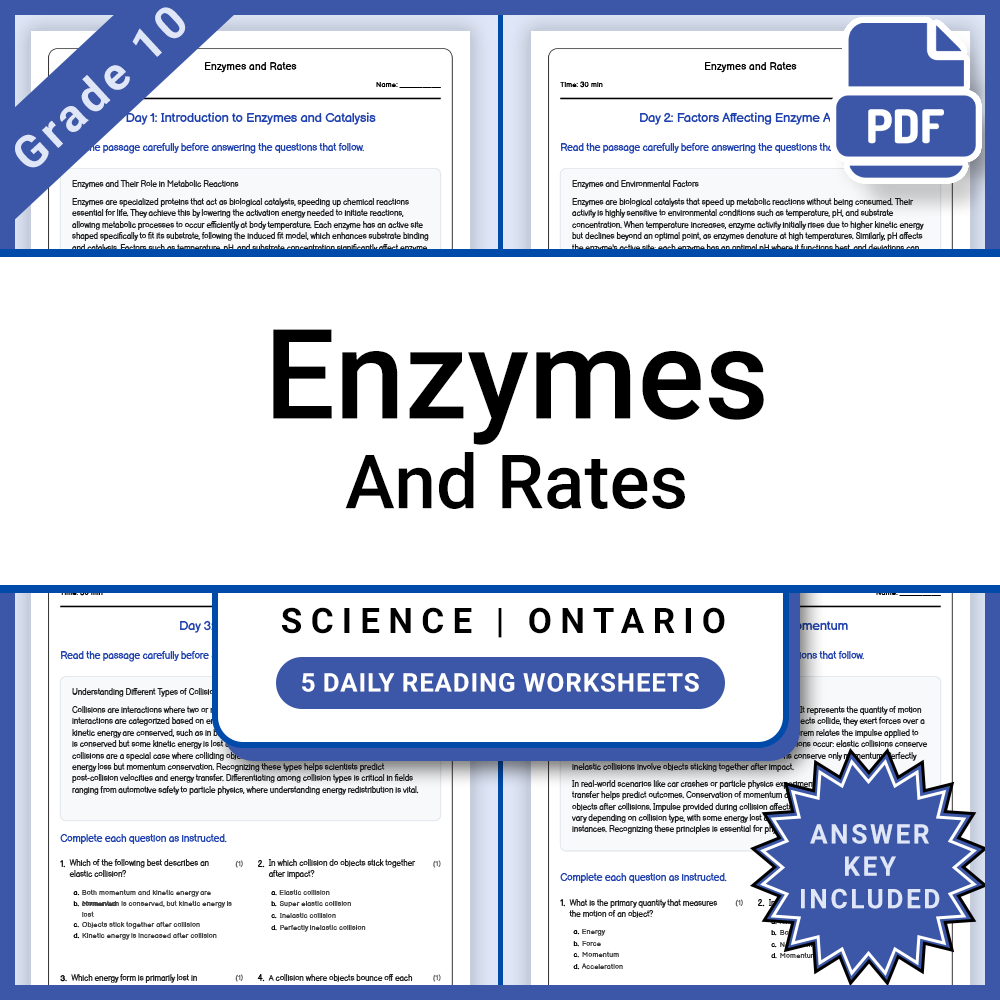
Grade 10 Science – Enzymes and Rates Daily Reading Worksheet + Answer Key
JCreated byJ.S SheetsLearning Objectives
- Understand the properties of enzymes and how they function as biological catalysts.
- Identify factors that influence enzyme activity, including temperature, pH, substrate concentration, and inhibitors.
- Describe mechanisms of enzyme regulation such as allosteric regulation and feedback inhibition.
Also included in: Grade 10 Science Lesson Bundle | Ontario Curriculum and Daily Reading Worksheets +1 more
Instant download
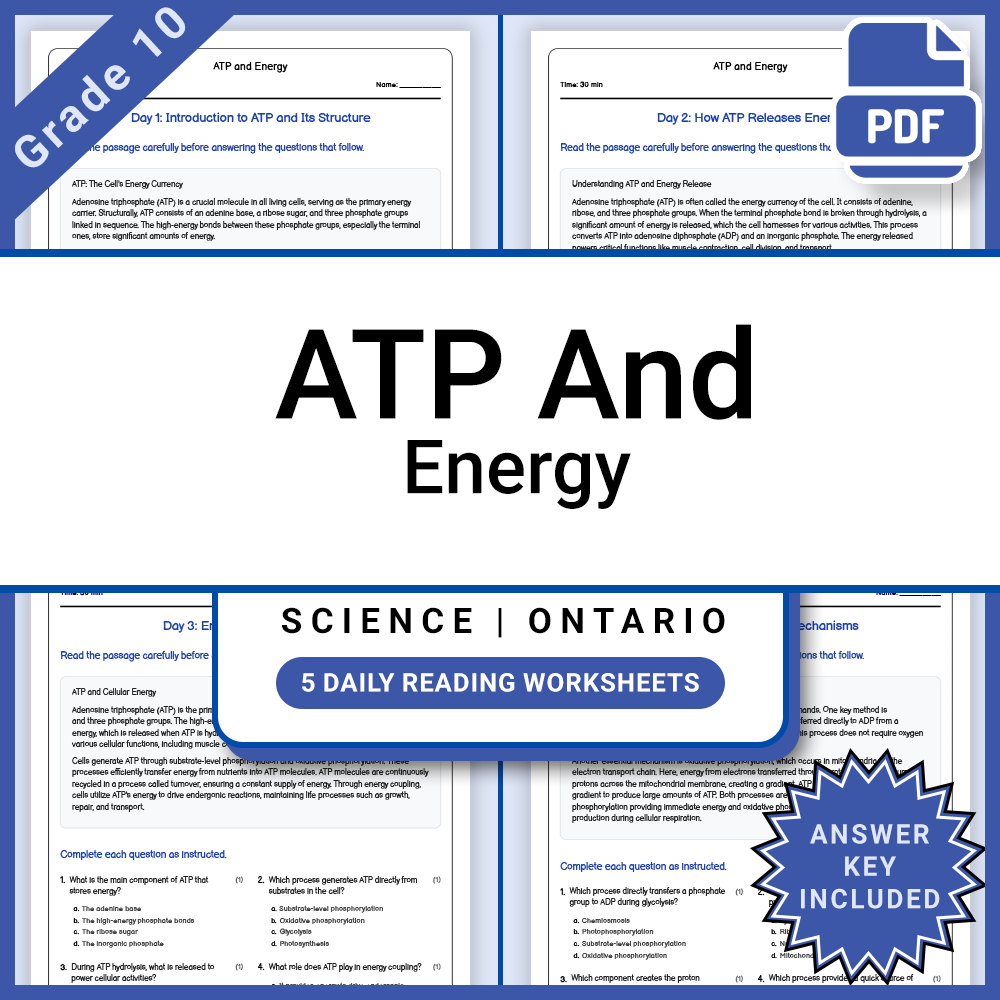
Grade 10 Science – ATP and Energy Daily Reading Worksheet with Answer Key
JCreated byJ.S SheetsLearning Objectives
- Understand the molecular structure of ATP
- Explain how ATP releases energy during hydrolysis
- Describe the mechanisms of ATP regeneration
Also included in: Grade 10 Science Lesson Bundle | Ontario Curriculum and Daily Reading Worksheets +1 more
Instant download
Grade 10 Science – Specialized Cells Daily Reading Worksheet + Answer Key
JCreated byJ.S SheetsLearning Objectives
- Identify different types of specialized cells and their functions
- Understand how cell shapes relate to their roles
- Recognize examples of cellular adaptations and tissue organization
Also included in: Grade 10 Science Lesson Bundle | Ontario Curriculum and Daily Reading Worksheets +1 more
Instant download
Grade 10 Science – Cellular Respiration Daily Reading Worksheet with Answer Key
JCreated byJ.S SheetsLearning Objectives
- Identify the main stages of cellular respiration: glycolysis, citric acid cycle, and electron transport chain.
- Describe the role of mitochondria in eukaryotic cells during respiration.
- Compare aerobic ATP production with anaerobic fermentation outcomes.
Also included in: Grade 10 Science Lesson Bundle | Ontario Curriculum and Daily Reading Worksheets +1 more
Instant download
Grade 10 Science – Membrane Transport Daily Reading Worksheet with Answer Key
JCreated byJ.S SheetsLearning Objectives
- Identify the structural components of the plasma membrane
- Understand the fluid mosaic model of membrane architecture
- Differentiate between transport protein types
Also included in: Grade 10 Science Lesson Bundle | Ontario Curriculum and Daily Reading Worksheets +1 more
Instant download
Grade 10 Science – Cell Organelles and Nuclear Structure Worksheet + Answer Key
JCreated byJ.S SheetsLearning Objectives
- Understand key concepts related to Science
- Apply knowledge through practice questions
- Demonstrate comprehension of the material
Also included in: Grade 10 Science Lesson Bundle | Ontario Curriculum and Daily Reading Worksheets +1 more
Instant download
Grade 10 – Ecosystem Roles Microorganisms Decomposition Worksheet + Answer Key
JCreated byJ.S SheetsLearning Objectives
- Understand how microorganisms contribute to decomposition in ecosystems.
- Identify microbial processes involved in nutrient cycling.
- Explain the role of microbes in nitrogen fixation and primary production.
Also included in: Grade 10 Science Lesson Bundle | Ontario Curriculum and Daily Reading Worksheets +1 more
Instant download
Grade 10 Science – Cell Theory Basics Daily Reading Worksheet + Answer Key
JCreated byJ.S SheetsLearning Objectives
- Understand the fundamental principles of cell theory
- Learn about the historical development and evidence for microscopic life
- Differentiate between unicellular and multicellular organisms
Also included in: Grade 10 Science Lesson Bundle | Ontario Curriculum and Daily Reading Worksheets +1 more
Instant download
Grade 10 Science – Microbe Diversity Daily Reading Worksheet with Answer Key
JCreated byJ.S SheetsLearning Objectives
- Identify and describe the major groups of microorganisms
- Understand differences in cellular organization among microbes
- Recognize the unique roles of viruses, bacteria, fungi, archaea, and protists in ecosystems
Also included in: Grade 10 Science Lesson Bundle | Ontario Curriculum and Daily Reading Worksheets +1 more
Instant download
Grade 10 Science – Biotech Microorganisms Daily Reading Worksheet + Answer Key
JCreated byJ.S SheetsLearning Objectives
- Understand the role of microorganisms in food production through fermentation.
- Identify bioremediation processes involving microbes and their environmental impact.
- Describe how microbes are used in industrial enzyme synthesis.
Also included in: Grade 10 Science Lesson Bundle | Ontario Curriculum and Daily Reading Worksheets +1 more
Instant download

Speciation Processes Worksheet | Grade 10 Science Activities
Created byPrism Point LearningLearning Objectives
- Explain how reproductive isolation can form through geographic, ecological, behavioral, or chromosomal barriers.
- Compare allopatric, sympatric, and parapatric speciation in terms of spatial and gene-flow conditions.
- Describe how selection, genetic drift, and mutation contribute to divergence over time.
Instant download
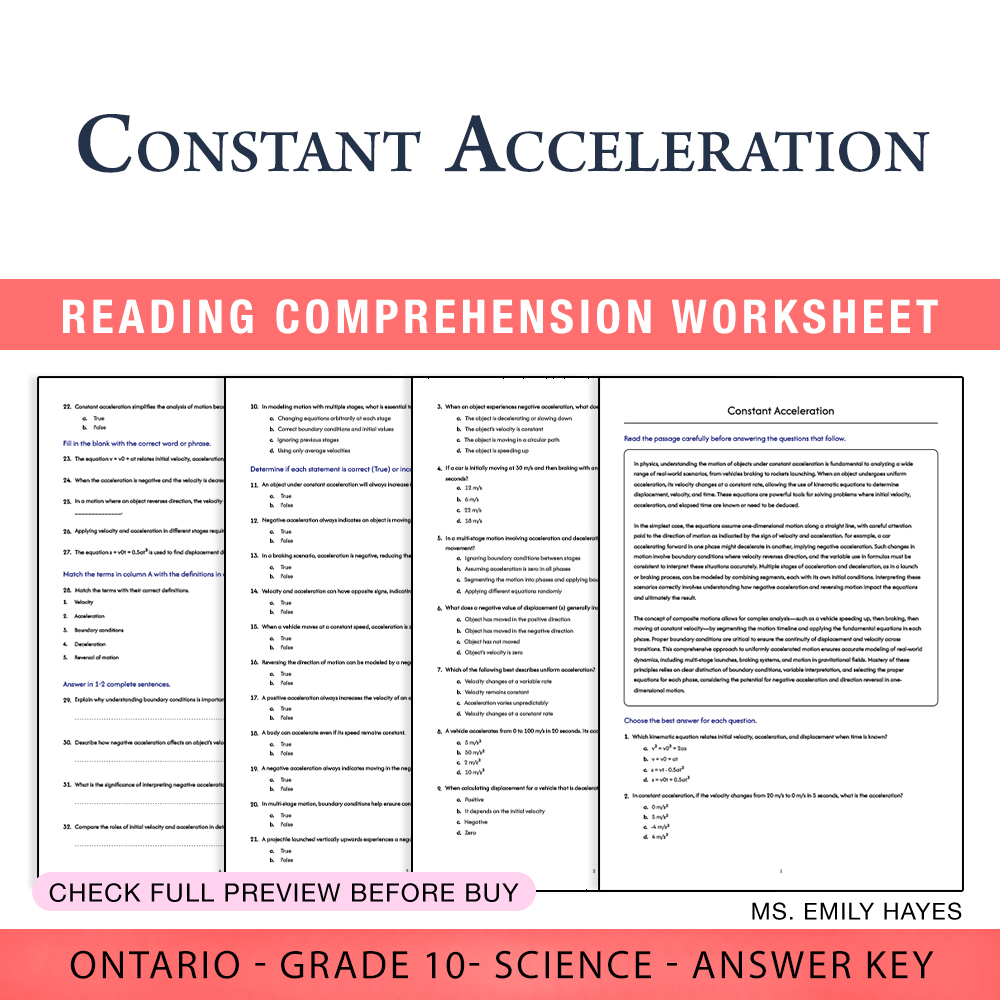
Grade 10 Science | Constant Acceleration Worksheet (PDF + Answer Key)
Created byCopper Leaf ClassroomLearning Objectives
- Understand the principles of uniformly accelerated motion and how to apply kinematic formulas in various scenarios.
- Analyze and interpret the effects of initial velocity, acceleration, and displacement on an object's motion.
- Solve complex problems involving multi-stage acceleration, braking, and launch motions using algebraic and conceptual approaches.
Instant download
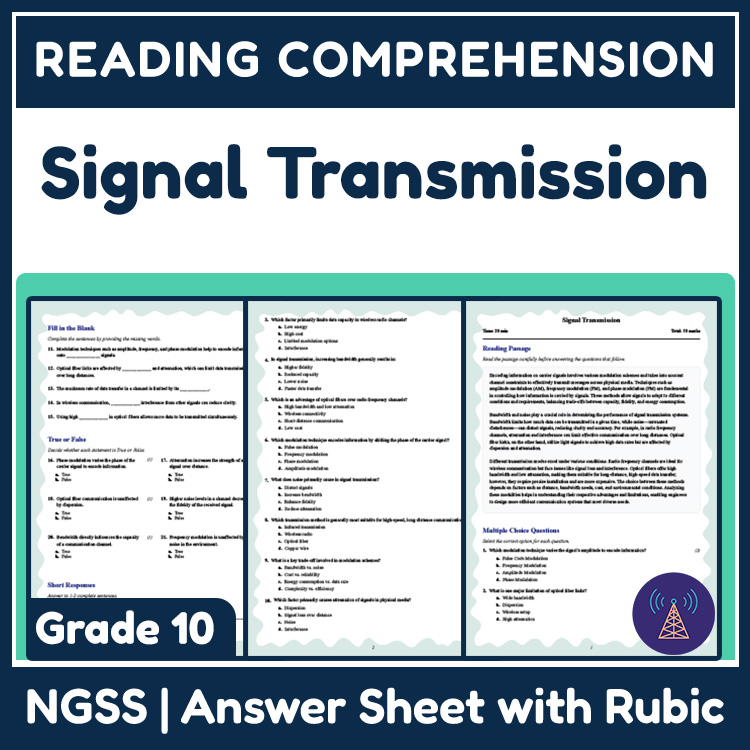
Grade 10 Science | Signal Transmission Reading Worksheet (PDF + Rubric)
JCreated byJ.S SheetsLearning Objectives
- Understand the principles of modulation techniques such as amplitude, frequency, and phase modulation.
- Describe how bandwidth and noise influence signal capacity and fidelity.
- Compare different transmission modes, including radio frequency channels and optical fiber links, regarding their advantages and limitations.
Instant download
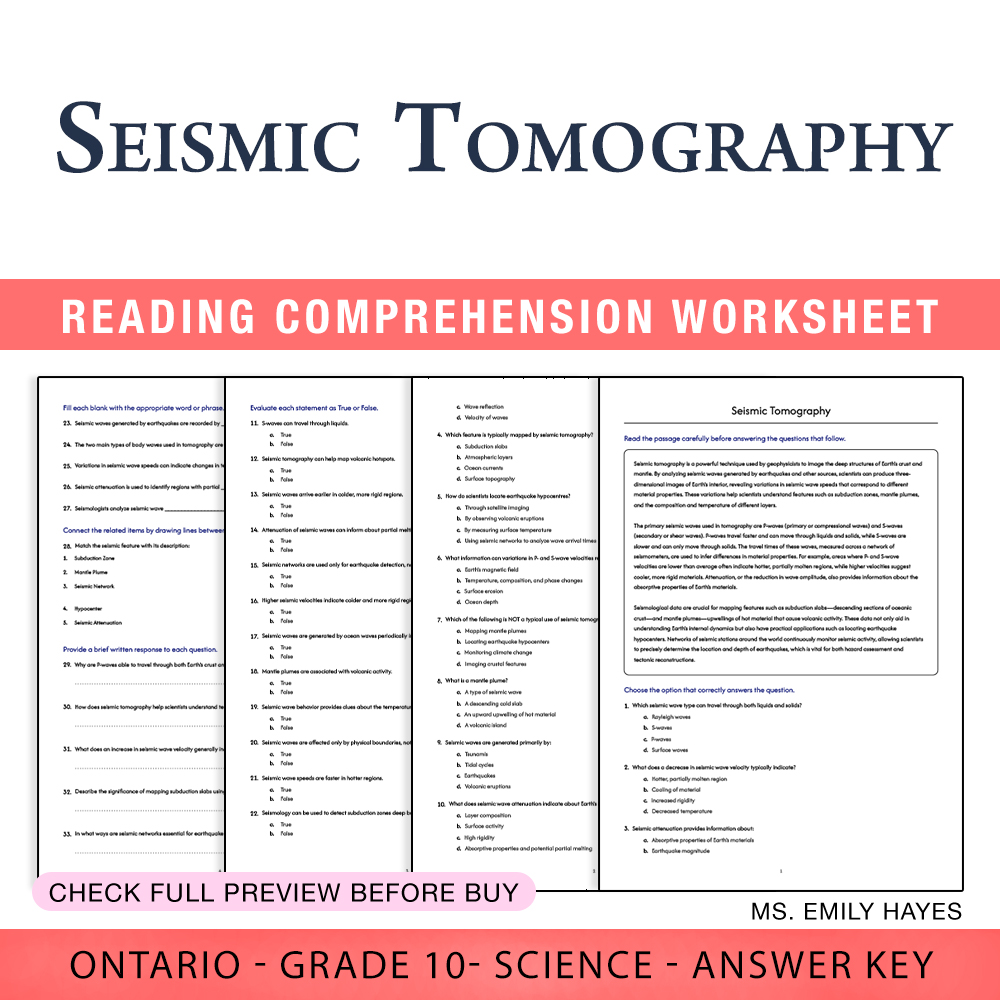
Grade 10 Science | Seismic Tomography Worksheet (PDF + Answer Key)
Created byCopper Leaf ClassroomLearning Objectives
- Explain the different types of seismic waves and their properties.
- Describe how seismic travel times and attenuation are used to image Earth's crust and mantle.
- Interpret variations in P- and S-wave velocities to infer geological features and phase changes.
Instant download
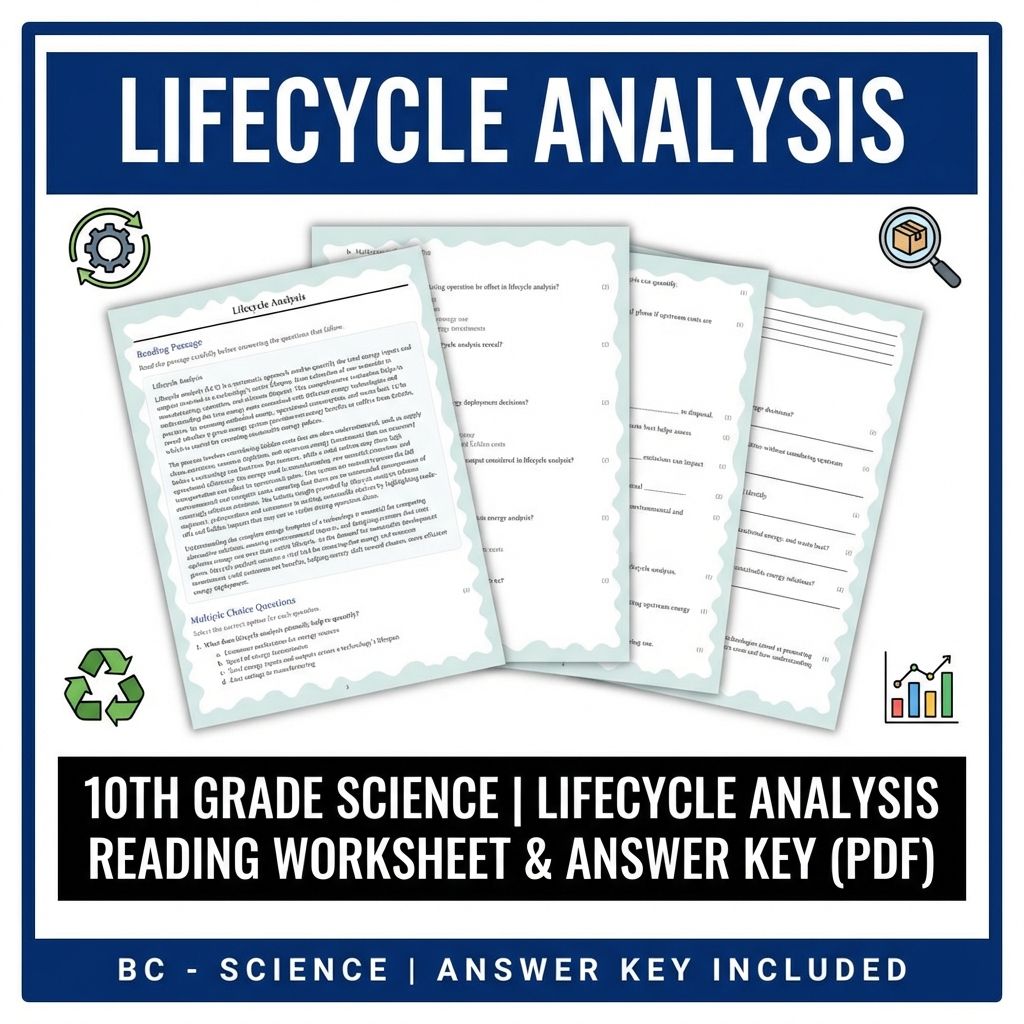
10th Grade Science | Lifecycle Analysis Reading Worksheet & Answer Key (PDF)
JCreated byJ.S SheetsLearning Objectives
- Understand the concept of lifecycle analysis and its significance in energy evaluation.
- Identify the stages involved in a technology's cradle-to-grave energy inputs and outputs.
- Analyze how conservation principles apply to lifecycle energy assessments.
Instant download
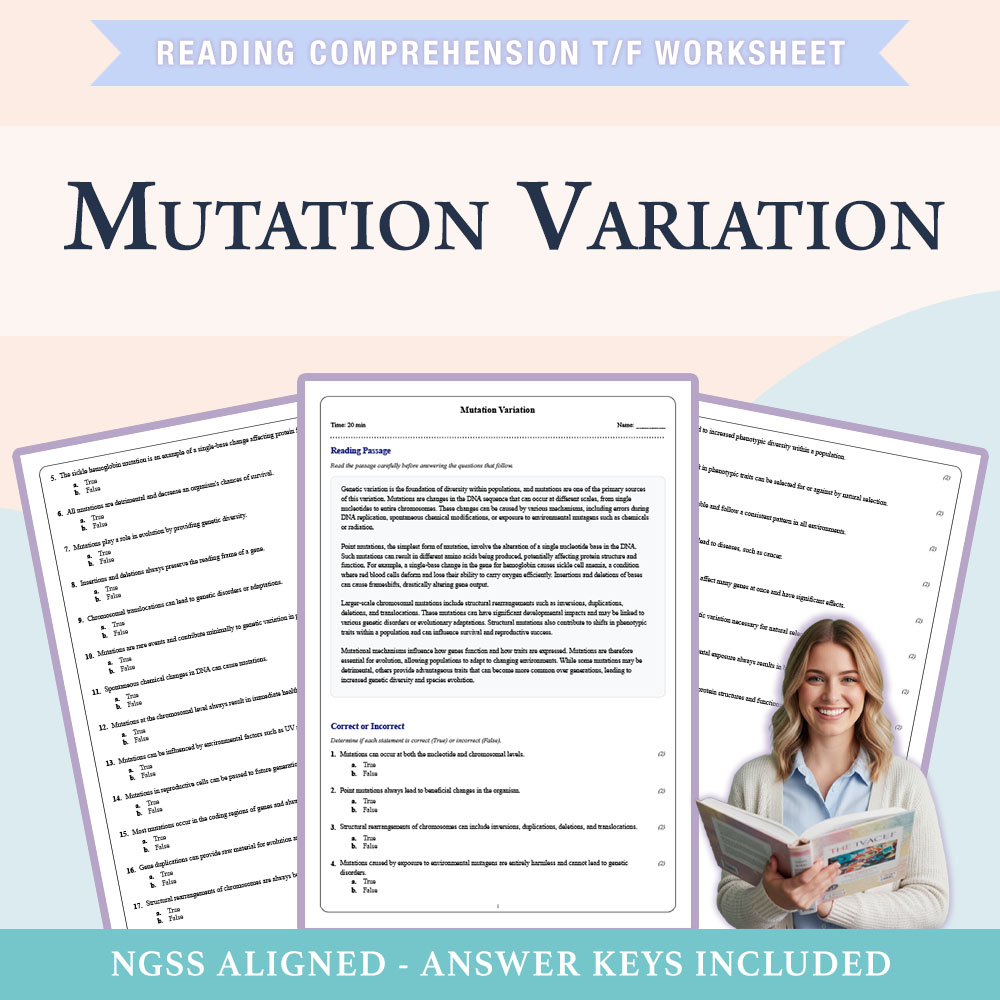
10th Grade Science | Mutation Variation Worksheet (PDF + Answer Key)
Created byCopper Leaf ClassroomLearning Objectives
- Understand how genetic mutations at nucleotide and chromosomal levels contribute to genetic variation.
- Identify different mutational mechanisms and their effects on gene function and phenotype.
- Differentiate between small-scale mutations (point mutations, insertions, deletions) and large-scale chromosomal changes.
Also included in: Grade 10 Science | Genetics & DNA Unit Worksheet Pack (PDF +Answer Key) +1 more
Instant download
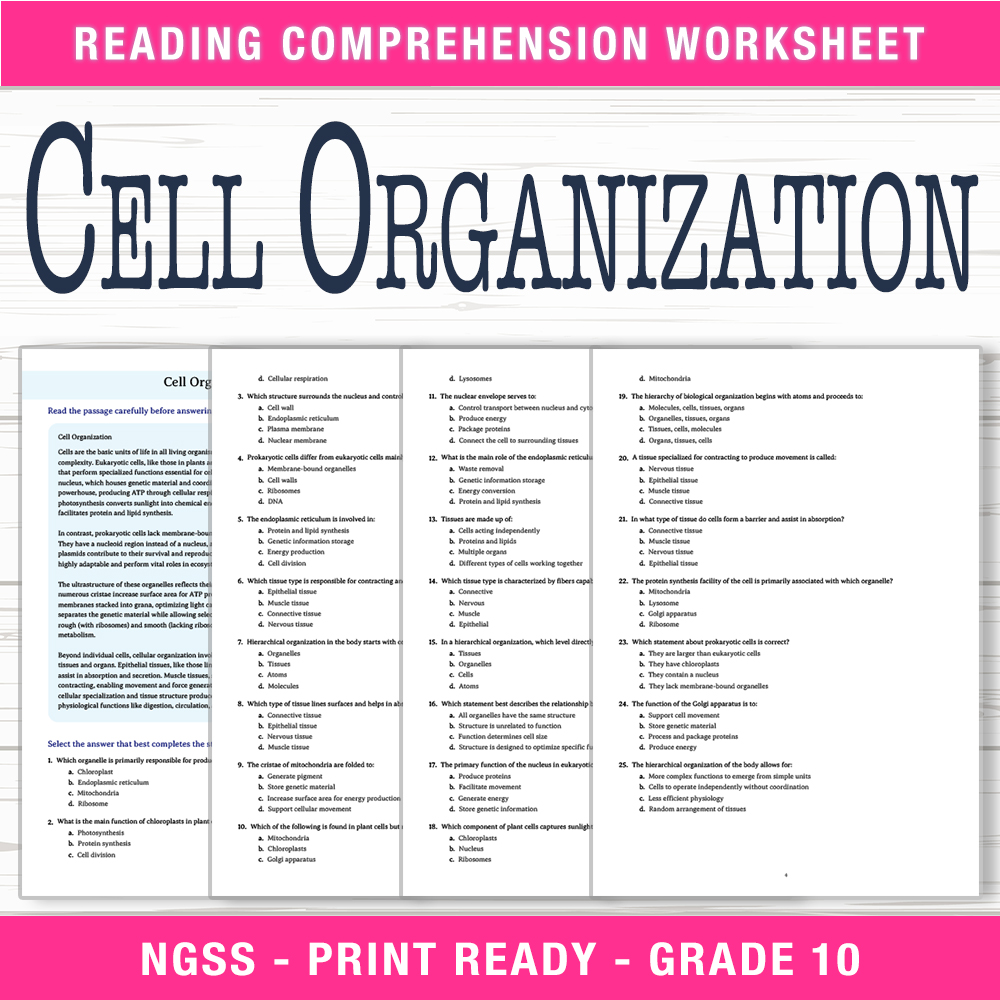
Grade 10 Science | Cell Organization Worksheet (PDF + Answer Key)
Created byRiverstone ClassroomLearning Objectives
- Understand the structure and function of membrane-bound organelles in eukaryotic and prokaryotic cells.
- Compare the ultrastructure of mitochondria, chloroplasts, endoplasmic reticulum, and nucleus and link their structures to their functions.
- Explain how cellular arrangements and tissue organization contribute to organ performance and physiological properties.
Instant download
Grade 10 Science | Bonding Models Worksheet (AP Standards) – Science 1 (PDF)
 Created byBright Mind Resources
Learning Objectives
- Describe the major types of chemical bonding: ionic, covalent, and metallic.
- Relate bonding frameworks to observable properties like conductivity, melting point, and solubility.
- Interpret Lewis structures, electron-sharing, and electron-transfer representations.
Instant download
Grade 10 Science | Population Dynamics Worksheet (Answer Key) aligned with TEKS
Created byBright Mind ResourcesLearning Objectives
- Explain how birth rates, death rates, immigration, and emigration influence population size.
- Analyze how interactions like competition, predation, and resource availability affect population survival.
- Use mathematical models to describe exponential and logistic growth patterns.
Also included in: Grade 10 Science | Ecosystems & Biodiversity Unit Worksheet Bundle(TEKS-Aligned) +5 more
Instant download
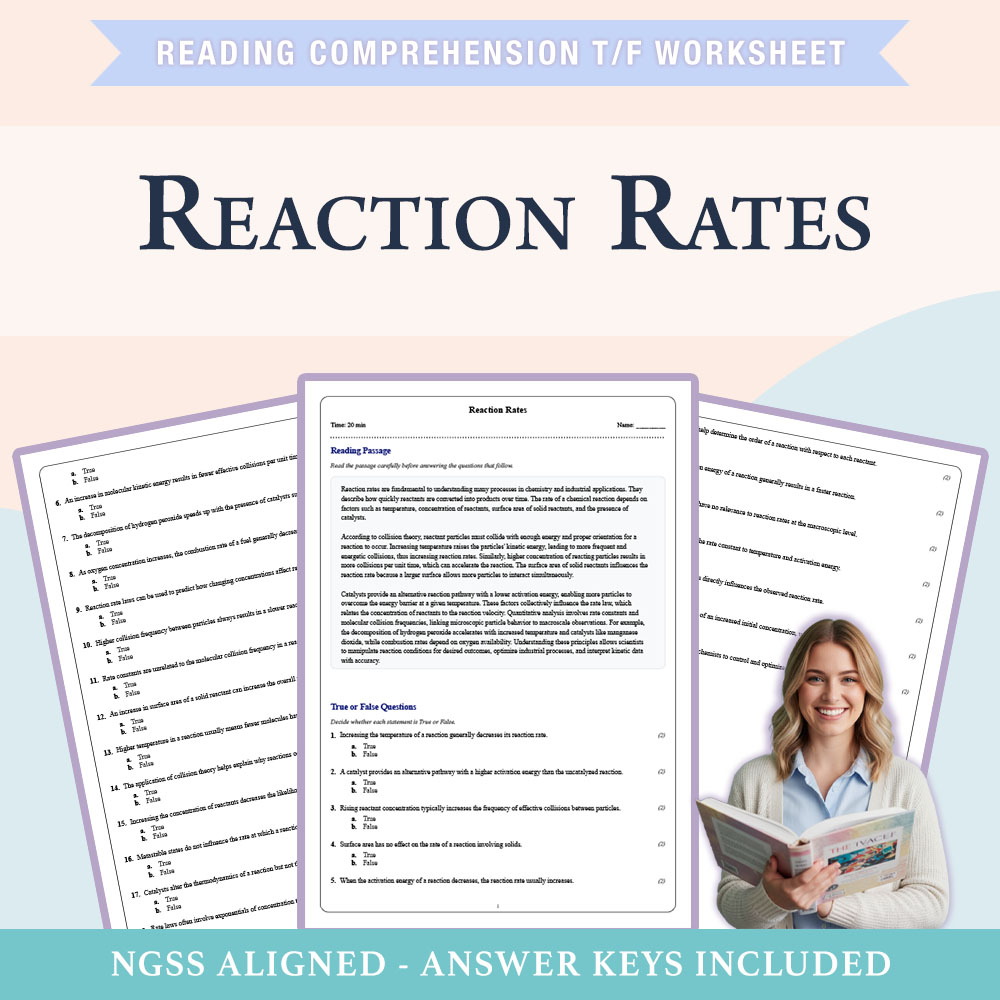
10th Grade Science | Reaction Rates Worksheet (PDF + Answer Key)
Created byCopper Leaf ClassroomLearning Objectives
- Explain how temperature, concentration, surface area, and catalysts influence reaction rates.
- Interpret empirical rate data using collision theory, activation energy, and rate laws.
- Describe how particle kinetic energy and collision frequency affect macroscopic reaction progress.
Also included in: Grade 10 Science | Chemical Reaction & Particle Interactions (PDF + Answer Key) +1 more
Instant download
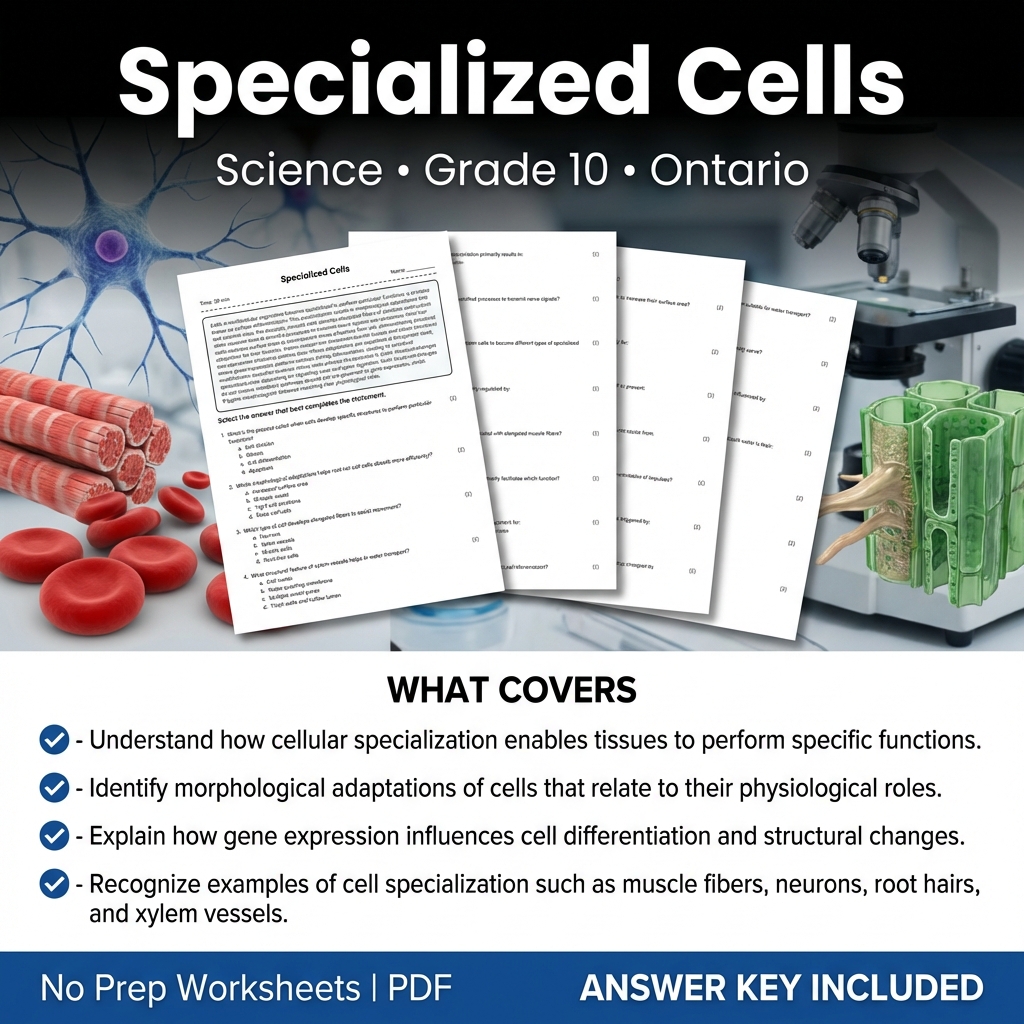
Specialized Cells Science Worksheet for Grade 10 | Ontario Standards
Created byCoral Reef LearningLearning Objectives
- Understand how cellular specialization enables tissues to perform specific functions.
- Identify morphological adaptations of cells that relate to their physiological roles.
- Explain how gene expression influences cell differentiation and structural changes.
Instant download
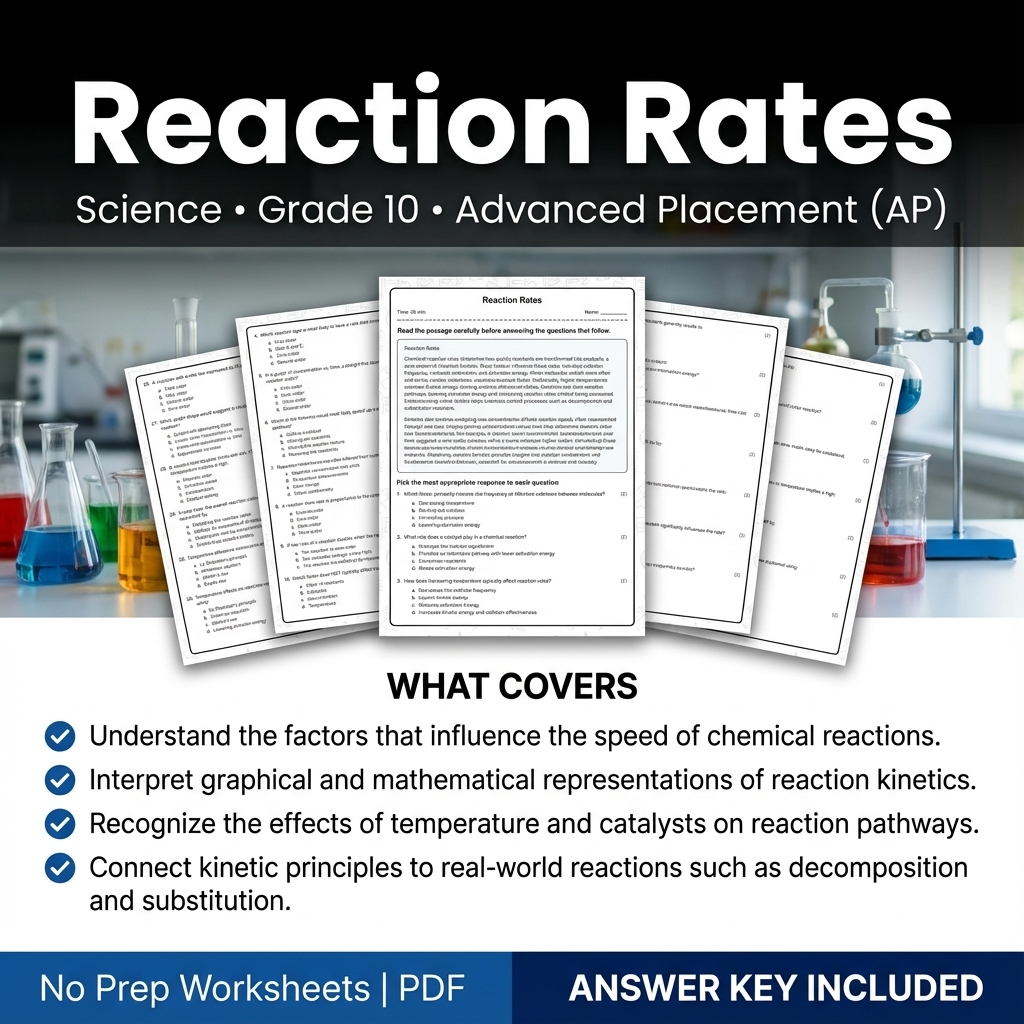
10th Grade Science | Reaction Rates Worksheet (Printable PDF + Answer Key)
Created byCoral Reef LearningLearning Objectives
- Understand the factors that influence the speed of chemical reactions.
- Interpret graphical and mathematical representations of reaction kinetics.
- Recognize the effects of temperature and catalysts on reaction pathways.
Also included in: Grade 10 Science Unit Bundle | Thermochemistry, Stoichiometry & Atomic Structure +1 more
Instant download

Stoichiometry and Reaction Rate Worksheets | Grade 10 Chemistry
 Created bySunny Desk Resources
Learning Objectives
- Explain how mass conservation and reaction stoichiometry are used to balance industrial chemical processes.
- Calculate expected product yields using reagent amounts and conversion assumptions.
- Describe how reaction rate and process conditions affect throughput without violating conservation of mass.
Also included in: Grade 10 Chemistry Lesson Bundle | Alberta Science Reaction & Analysis +1 more
Instant download
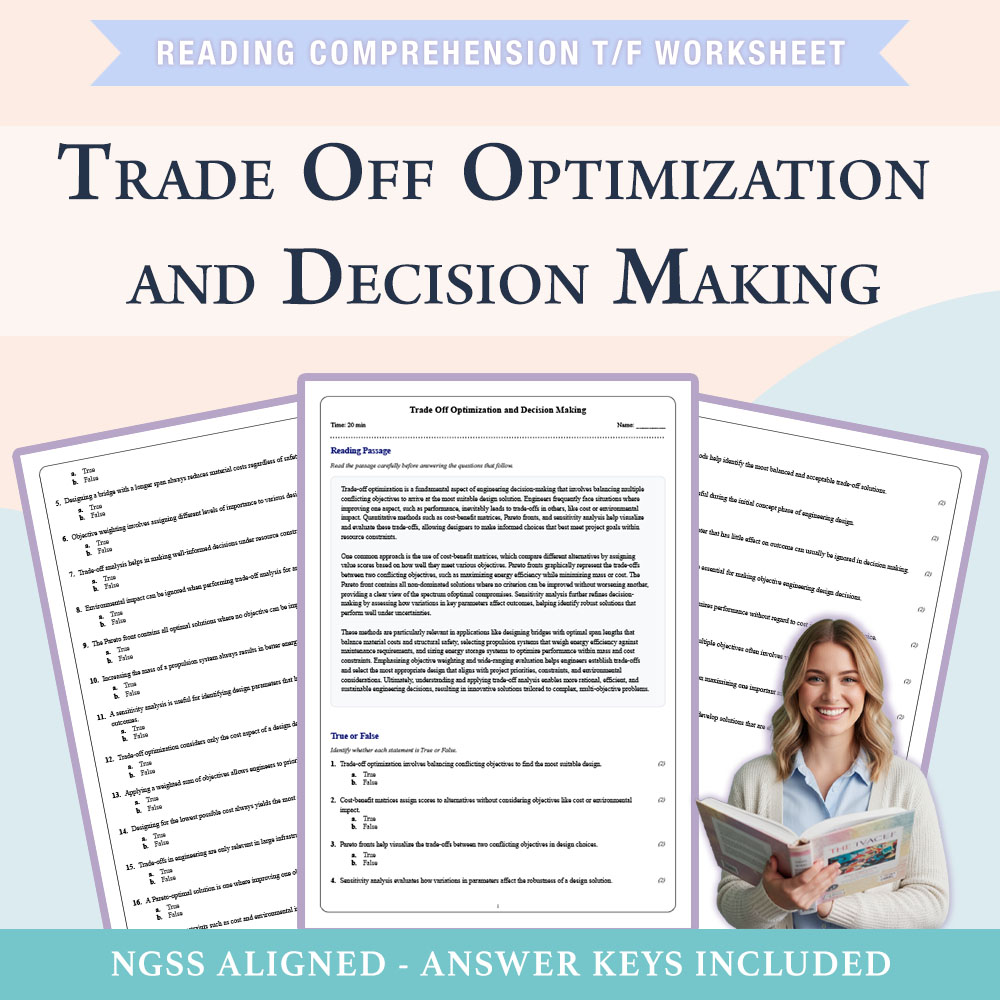
Grade 10 Science | Trade-Off Optimization and Decision Making (PDF + Answer Key)
Created byCopper Leaf ClassroomLearning Objectives
- Understand the concept of trade-offs and how to quantify competing objectives in engineering design.
- Analyze and interpret cost-benefit matrices, Pareto fronts, and sensitivity analyses for optimal decision-making.
- Apply concepts of trade-off analysis to real-world examples such as bridge spans, propulsion systems, and energy storage sizing.
Also included in: Grade 10 Science Bundle |Systems, Decision-Making & Engineering (PDF+Answer Key) +1 more
Instant download
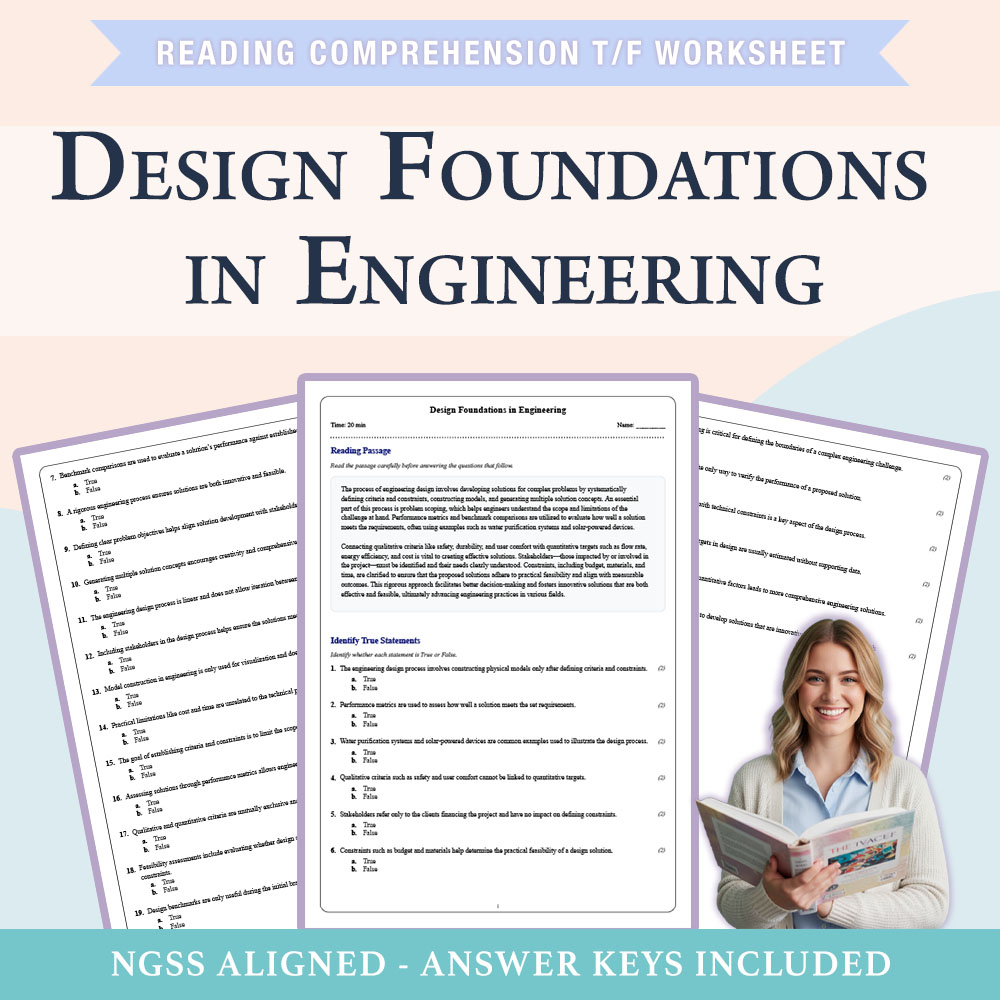
10th Grade Science | Design Foundations in Engineering Worksheet (PDF + Answers)
Created byCopper Leaf ClassroomLearning Objectives
- Understand the engineering design process for complex problems.
- Identify and evaluate criteria, constraints, and stakeholders in design solutions.
- Connect qualitative criteria with quantitative performance metrics.
Also included in: Grade 10 Science Bundle |Systems, Decision-Making & Engineering (PDF+Answer Key) +1 more
Instant download

Grade 10 Science | Lifecycle Analysis in Scientific Technology - Reading Comp.
Created byCoral Reef LearningLearning Objectives
- Understand the concept of lifecycle analysis and its role in assessing energy consumption.
- Identify the stages involved in a technology's lifecycle: extraction, manufacturing, operation, and disposal.
- Learn how to quantify total energy inputs and outputs across different lifecycle stages.
Instant download
About Grade 10 Science Worksheets
Find Science worksheets built for Grade 10. All 7,069 cover core skills, practice, and review, each an instant PDF download.
Every worksheet on MyTeachingSheets is created by independent teacher-authors and reviewed before publication. All resources download as printable PDFs for classroom, homework, or at-home practice, and many include answer keys. Preview any worksheet free before buying.