
Grade 10 Science Worksheets
7,069 worksheets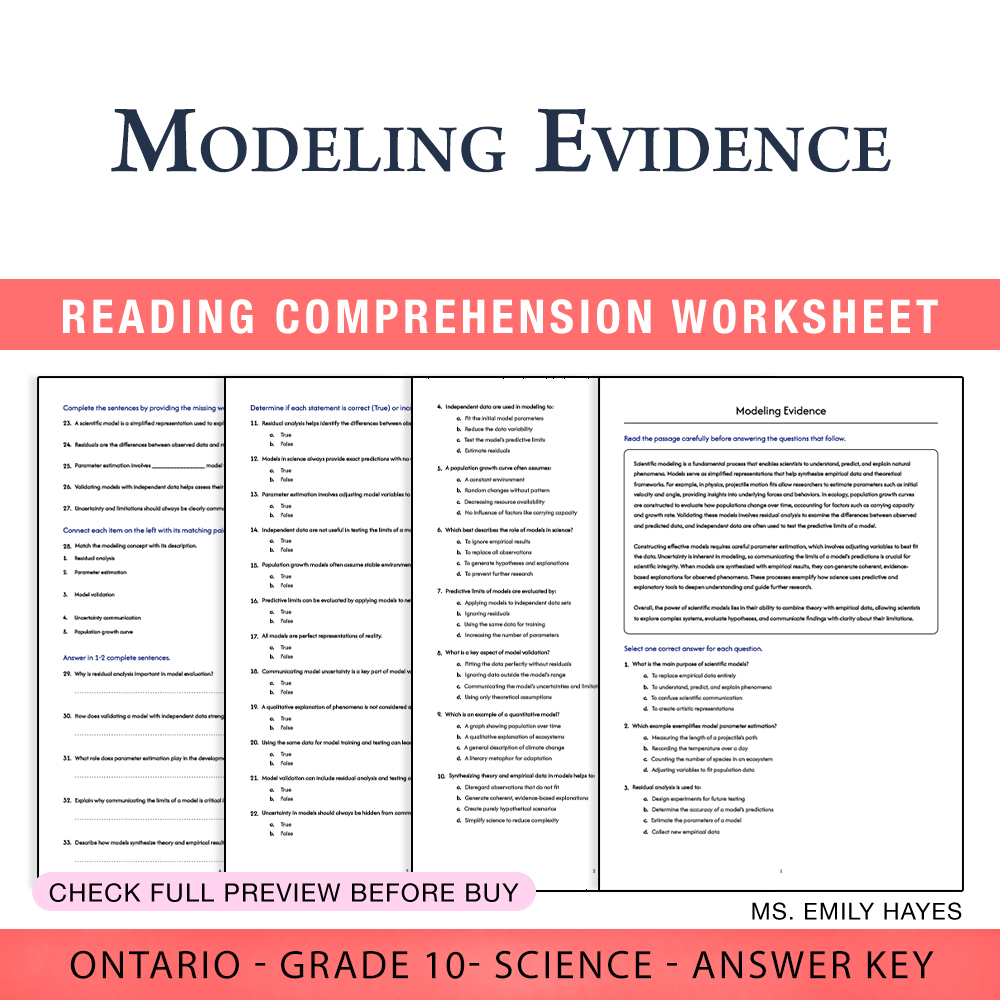
10th Grade Science | Modeling Evidence Worksheet (PDF + Answer Key)
 Created byCopper Leaf Classroom
Learning Objectives
- Understand how to construct and interpret scientific models for observed phenomena.
- Evaluate and analyze the accuracy and reliability of different types of models.
- Apply parameter estimation, residual analysis, and model validation techniques.
Instant download

Grade 10 Science | Ecosystem Modeling - Daily Reading Comprehension
 Created byCoral Reef Learning
Learning Objectives
- Understand the flow of energy and matter within ecosystems.
- Interpret diagrams representing energy and matter exchange.
- Learn about different models used to simulate ecosystem dynamics.
Instant download
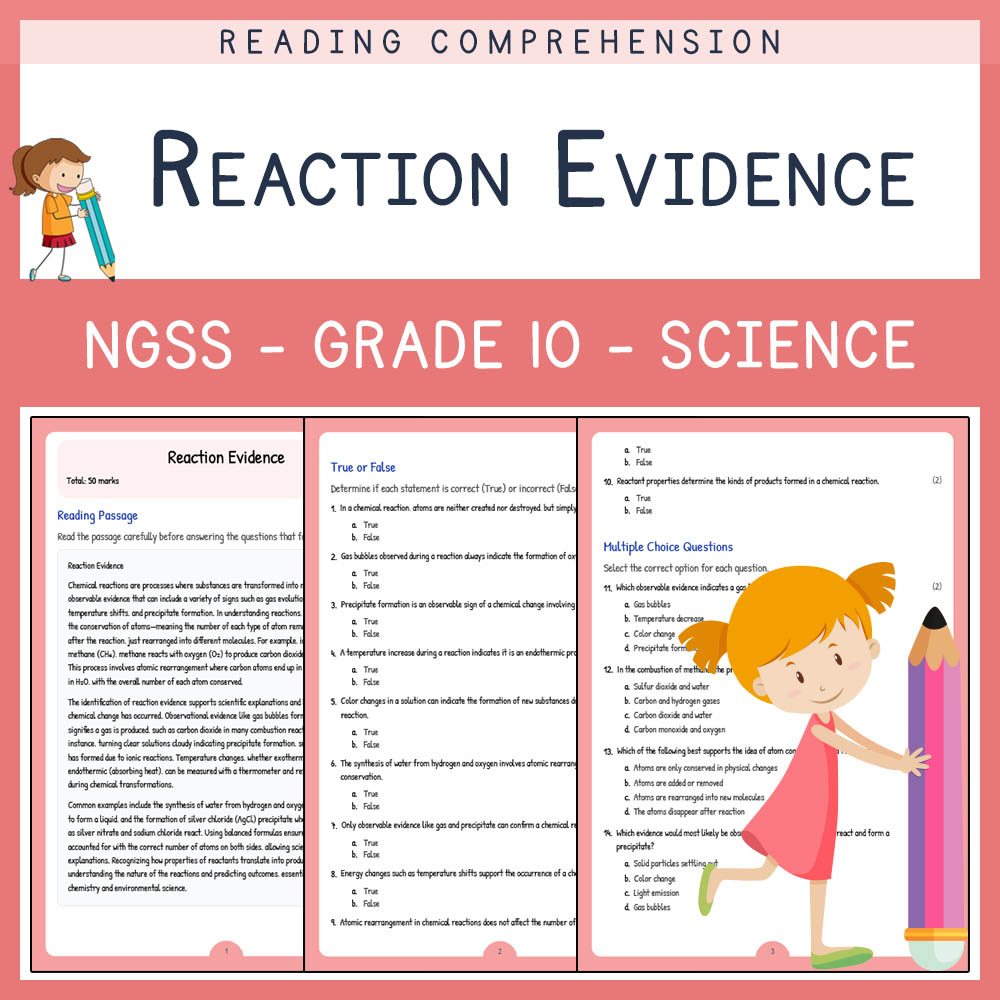
Grade 10 Science | Reaction Evidence Worksheet (PDF + Answer Key) NGSS-Aligned
 Created byLumora Learning
Learning Objectives
- Understand how conservation of atoms applies in chemical reactions.
- Identify observable evidence of chemical reactions such as gas evolution, color changes, temperature changes, and precipitate formation.
- Correlate reactant properties with product identities using balanced chemical formulas.
Instant download
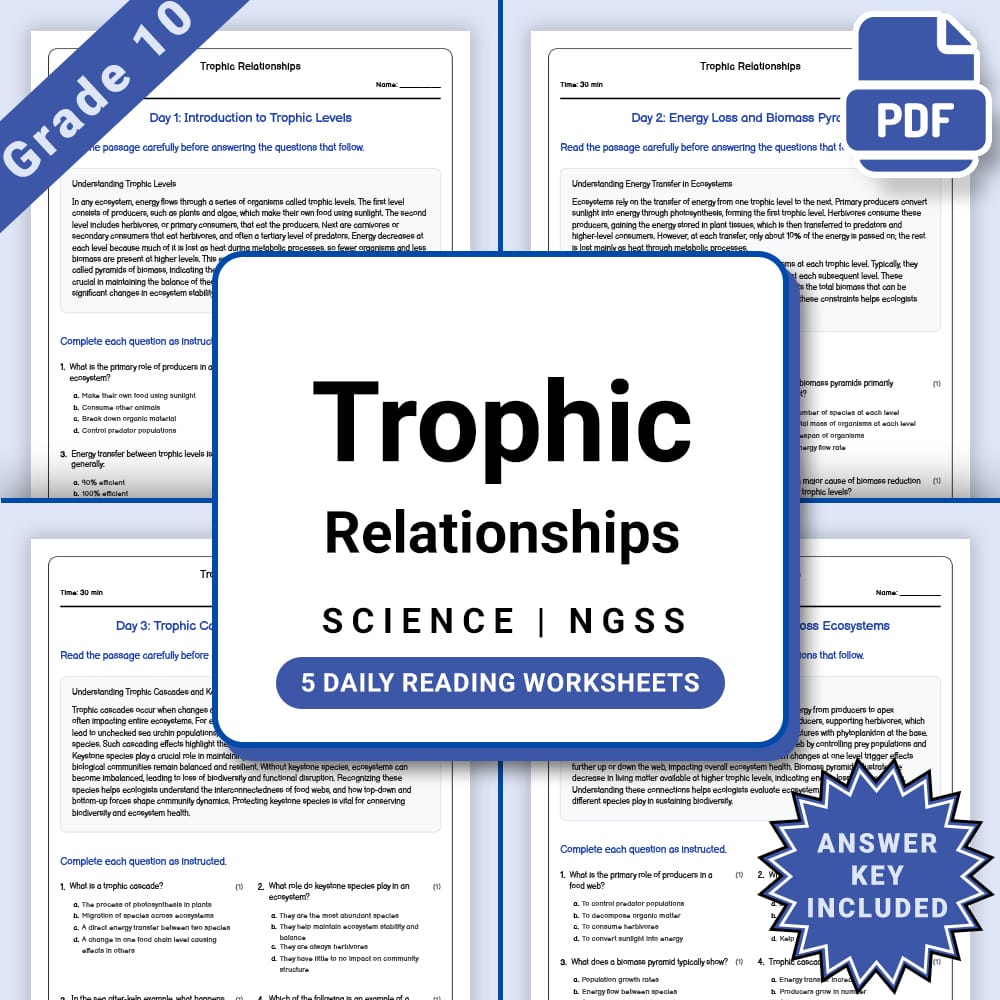
Grade 10 Science – Trophic Relationships Worksheet (PDF +Answer Key)
Created byCopper Leaf ClassroomLearning Objectives
- Understand the structure of food webs and the flow of energy between trophic levels.
- Identify various trophic levels in ecosystems and their functions.
- Learn concepts of energy transfer efficiency, biomass pyramids, and keystone species.
Instant download

Laboratory Protocols Test Prep Worksheet | Grade 10 Science Ontario
 Created byPrism Point Learning
Learning Objectives
- Identify appropriate personal protective equipment (PPE) for common laboratory tasks and hazards
- Apply protocols for reagent storage, labeling, segregation, and waste handling to reduce risk
- Use emergency response steps (spill containment and first-aid escalation) to protect people and preserve data quality
Also included in: Grade 10 Evidence-Based Science Data Analysis Lesson Bundle: Ontario
Instant download

Variable Isolation Practice Worksheet | Grade 10 Science Assessment Ontario
Created byPrism Point LearningLearning Objectives
- Explain how variable isolation and control techniques (factorial layouts, blocking, replication) support stronger causal claims in multifactor inquiries.
- Interpret interaction effects and blocking choices to understand when results are due to the variables of interest versus nuisance variables.
- Evaluate whether evidence is attributable causation or mainly correlational, using design criteria and ethical constraints.
Also included in: Grade 10 Evidence-Based Science Data Analysis Lesson Bundle: Ontario
Instant download

Equilibrium Systems Practice Worksheet | Grade 10 Science Ontario
Created byPrism Point LearningLearning Objectives
- Explain static equilibrium using the criteria ΣF = 0 and (when applicable) Στ = 0.
- Determine how support reactions and tensions distribute in simple static systems (qualitatively).
- Interpret equilibrium as zero net acceleration, not as the absence of individual forces.
Also included in: Grade 10 Motion & Forces Kinematics Science Lesson Bundle for Ontario
Instant download

Grade 10 Science | Human Impacts Worksheet | BC Aligned
Created byLumora LearningLearning Objectives
- Understand how human activities affect biodiversity and ecosystems.
- Identify the main factors through which human impacts alter natural environments.
- Explain how climate change interacts with human activities to influence species and habitats.
Also included in: Grade 10 Science | Evolution & Biodiversity Lesson Bundle | BC Framework
Instant download

Grade 10 Science | Mechanisms Overview Worksheet | BC Standards
Created byLumora LearningLearning Objectives
- Understand the main mechanisms of evolution and how they influence allele frequencies.
- Explain how natural selection leads to adaptation within populations.
- Identify the roles of genetic drift, gene flow, and mutation in evolution.
Also included in: Grade 10 Science | Evolution & Biodiversity Lesson Bundle | BC Framework
Instant download
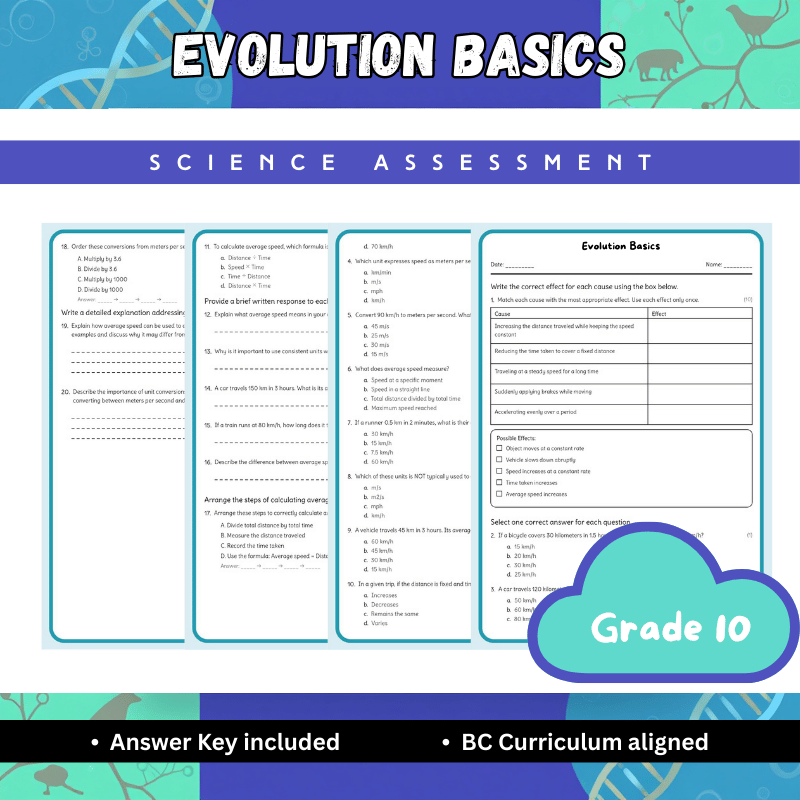
10th Grade Science | Evolution Basics Worksheet (PDF) – BC Standards
 Created byBright Mind Resources
Learning Objectives
- Understand the concept of evolution and how populations change over generations.
- Identify different types of evidence that support the theory of evolution.
- Interpret data from fossils, biogeography, and molecular similarities to explain common ancestry.
Instant download

Oscillations Basics Worksheet | AP Science Practice for Grade 10
JCreated byJ.S SheetsLearning Objectives
- Understand the fundamental concepts of simple harmonic motion, including period, frequency, amplitude, and phase.
- Describe the energy transfer between kinetic and potential forms during oscillations.
- Use sinusoidal functions and phase-space sketches to analyze oscillatory systems.
Also included in: Grade 10 Motion, Waves & Electricity Science Lesson Bundle
Instant download
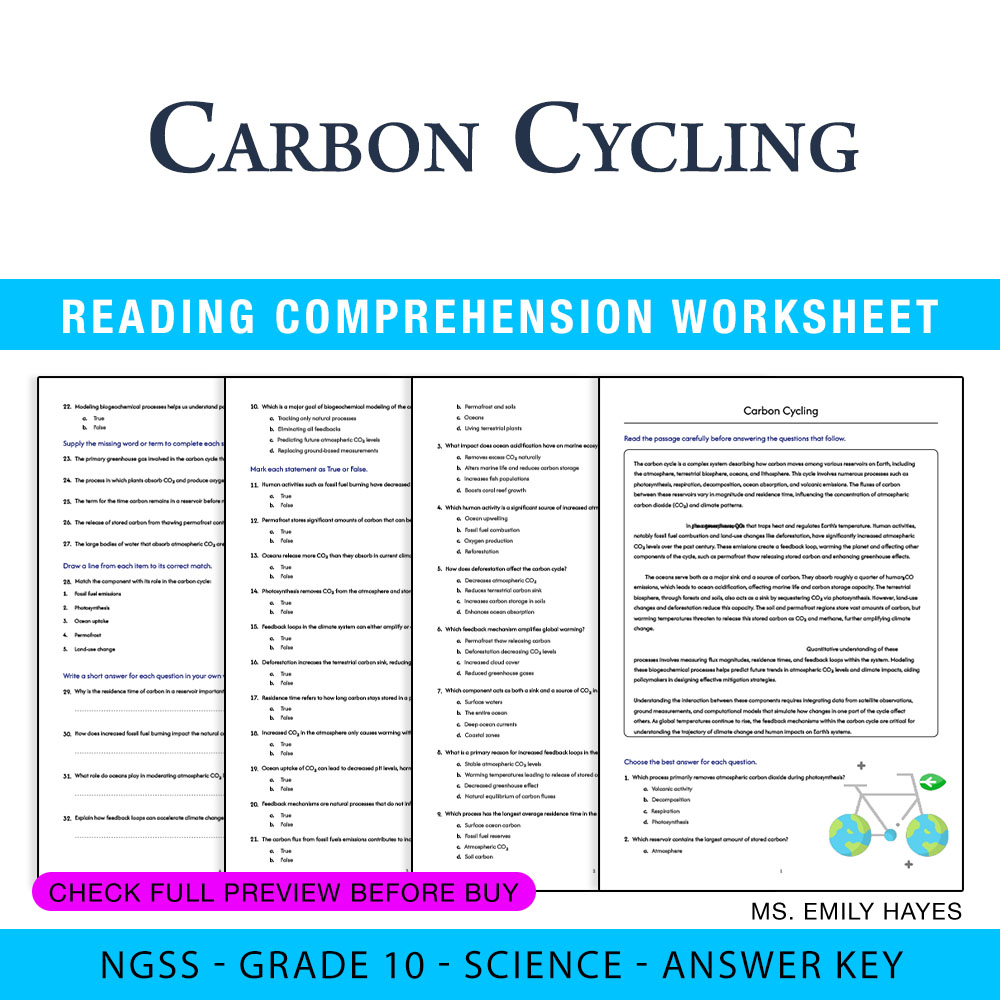
10th Grade Science | Carbon Cycling Worksheet (PDF+ Answer Key)
Created byCopper Leaf ClassroomLearning Objectives
- Describe the main components and pathways involved in the global carbon cycle.
- Explain how fluxes, residence times, and feedback mechanisms influence atmospheric carbon dioxide levels.
- Analyze the impacts of human activities on carbon fluxes and climate change.
Instant download

Grade 10 Stoichiometry Basics Worksheet | Ontario Chemistry + Answer Key
 Created byClear Sky Classroom
Learning Objectives
- Explain the mole concept and use Avogadro’s number to relate particle counts to amount of substance
- Use molar mass to convert between mass and moles of a chemical substance
- Apply balanced chemical equations to determine molar ratios and mass-to-mass relationships
Instant download

Fossil Formation Worksheet | Science Practice for Grade 10 TEKS
JCreated byJ.S SheetsLearning Objectives
- Explain the main processes that lead to fossil formation, including mineralization and imprint preservation
- Describe how fossil distribution and stratigraphic succession can be used for relative dating
- Compare relative dating with radiometric dating of igneous layers to determine absolute ages
Instant download
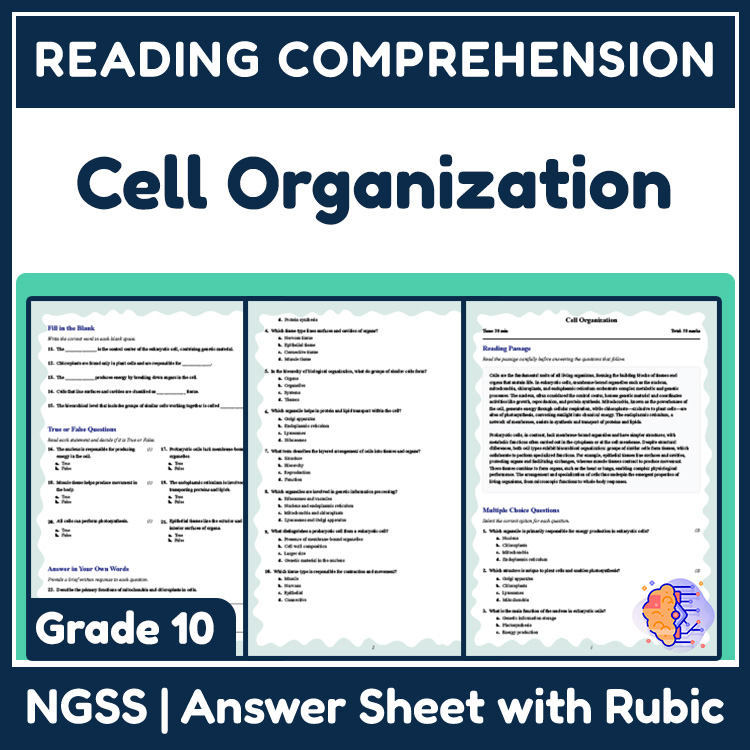
10th Grade Science | Cell Organization Reading Worksheet (PDF + Answer Key)
JCreated byJ.S SheetsLearning Objectives
- Understand the structure and function of membrane-bound organelles in eukaryotic and prokaryotic cells
- Compare cellular ultrastructures such as mitochondria, chloroplasts, endoplasmic reticulum, and nucleus
- Explain how cellular compartmentalization relates to metabolic and genetic functions
Also included in: Grade 10 Science Unit | Cellular & Physiological Systems Worksheets
Instant download
Grade 10 Science – Rock Cycle Worksheet (Ontario) (PDF)
Created byBright Mind ResourcesLearning Objectives
- Explain the processes involved in the formation and transformation of rocks within the rock cycle.
- Identify the physical and chemical drivers that influence rock transformation over geological timescales.
- Describe how plate tectonics and surface processes influence the rock cycle.
Instant download

Grade 10 Science – Balancing Equations Reading Worksheet | Ontario Standards
Created byBright Mind ResourcesLearning Objectives
- Understand the concept of conservation of mass in chemical reactions
- Recognize unbalanced chemical equations
- Learn how to assign coefficients to balance equations correctly
Also included in: Grade 10 Chemistry Science Daily Reading Worksheets Lesson Bundle | Ontario +1 more
Instant download
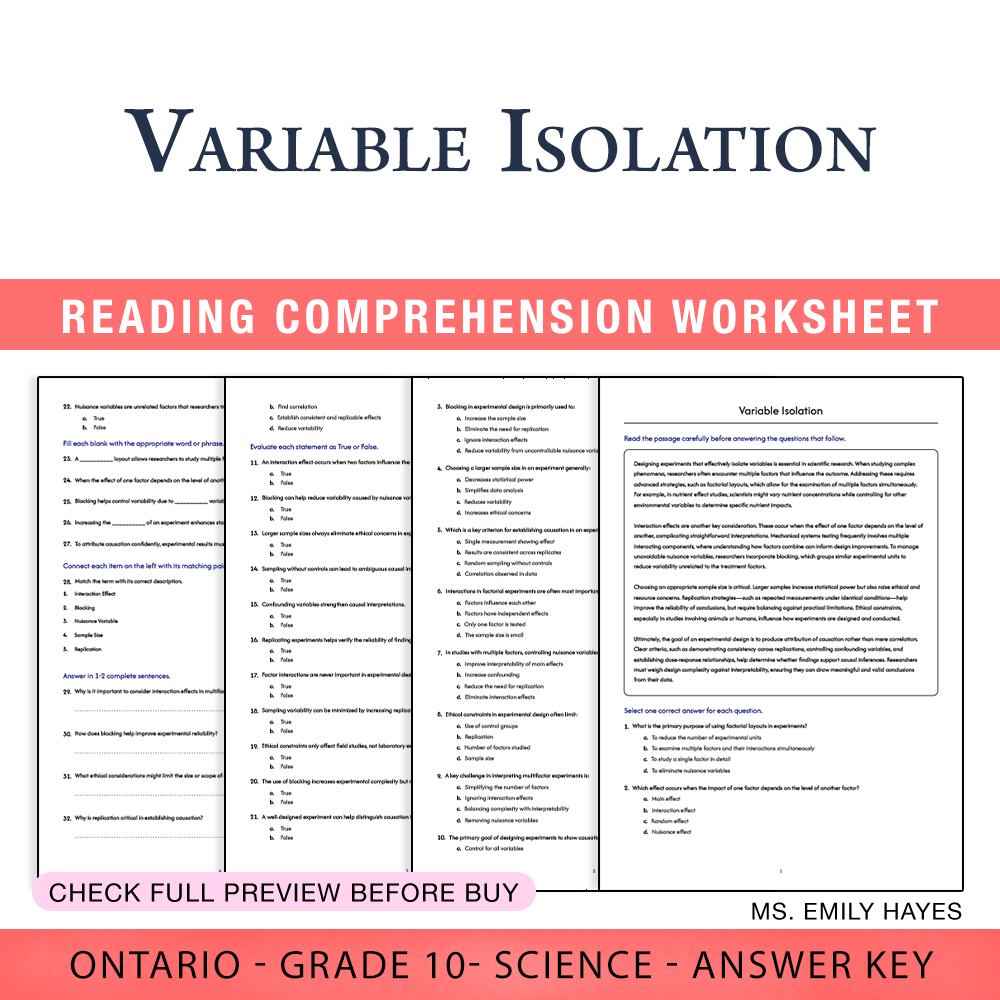
10th Grade Science | Variable Isolation Worksheet (PDF + Answer Key)
Created byCopper Leaf ClassroomLearning Objectives
- Understand the concept of variable isolation in experimental design.
- Analyze the effects of multiple factors and interactions in complex experiments.
- Evaluate design trade-offs such as complexity versus interpretability.
Instant download
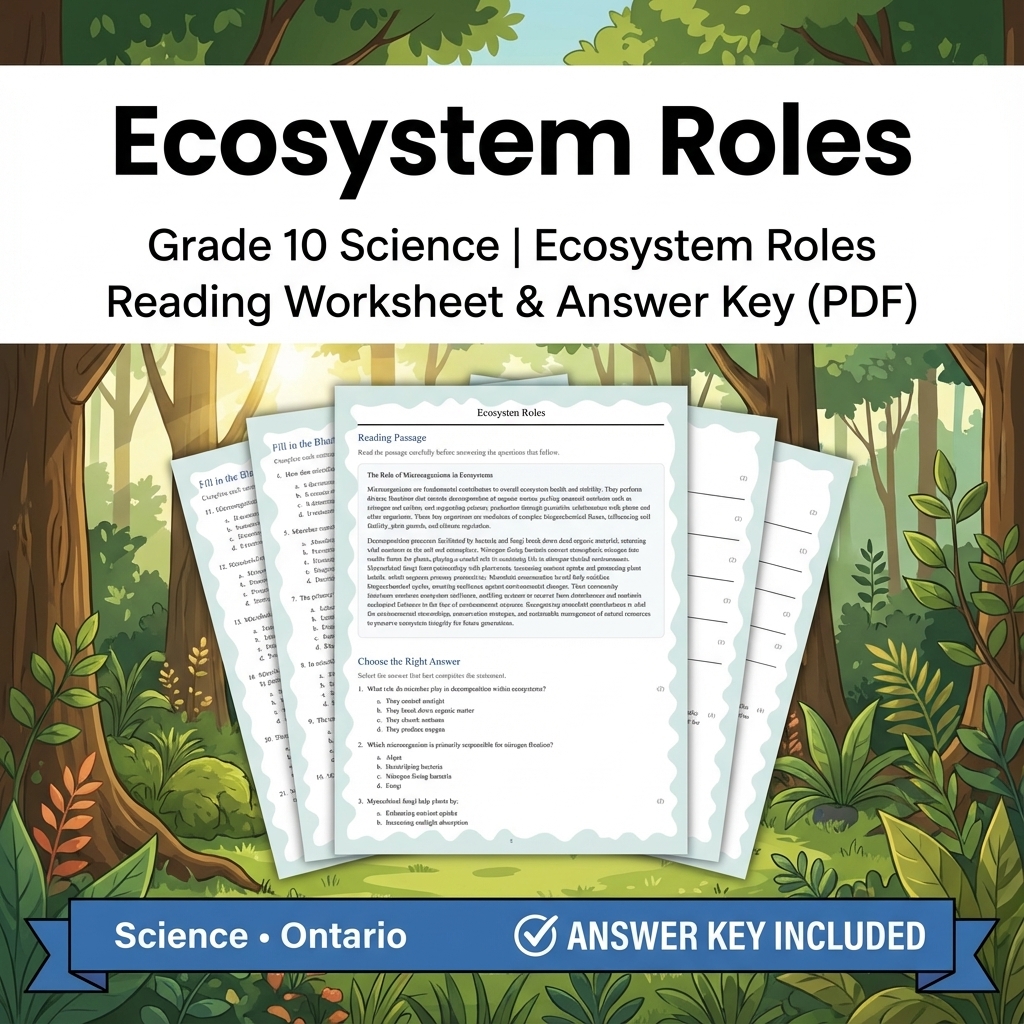
Grade 10 Science | Ecosystem Roles Reading Worksheet & Answer Key (PDF)
JCreated byJ.S SheetsLearning Objectives
- Understand how microorganisms contribute to ecosystem processes such as decomposition and nutrient cycling.
- Identify microbial interactions like nitrogen fixation and symbiosis that support primary production.
- Explain how microbial community composition affects ecosystem services and resilience.
Also included in: Grade 10 Science Unit Bundle | Cell Biology, Microbes & Energy Activities +1 more
Instant download
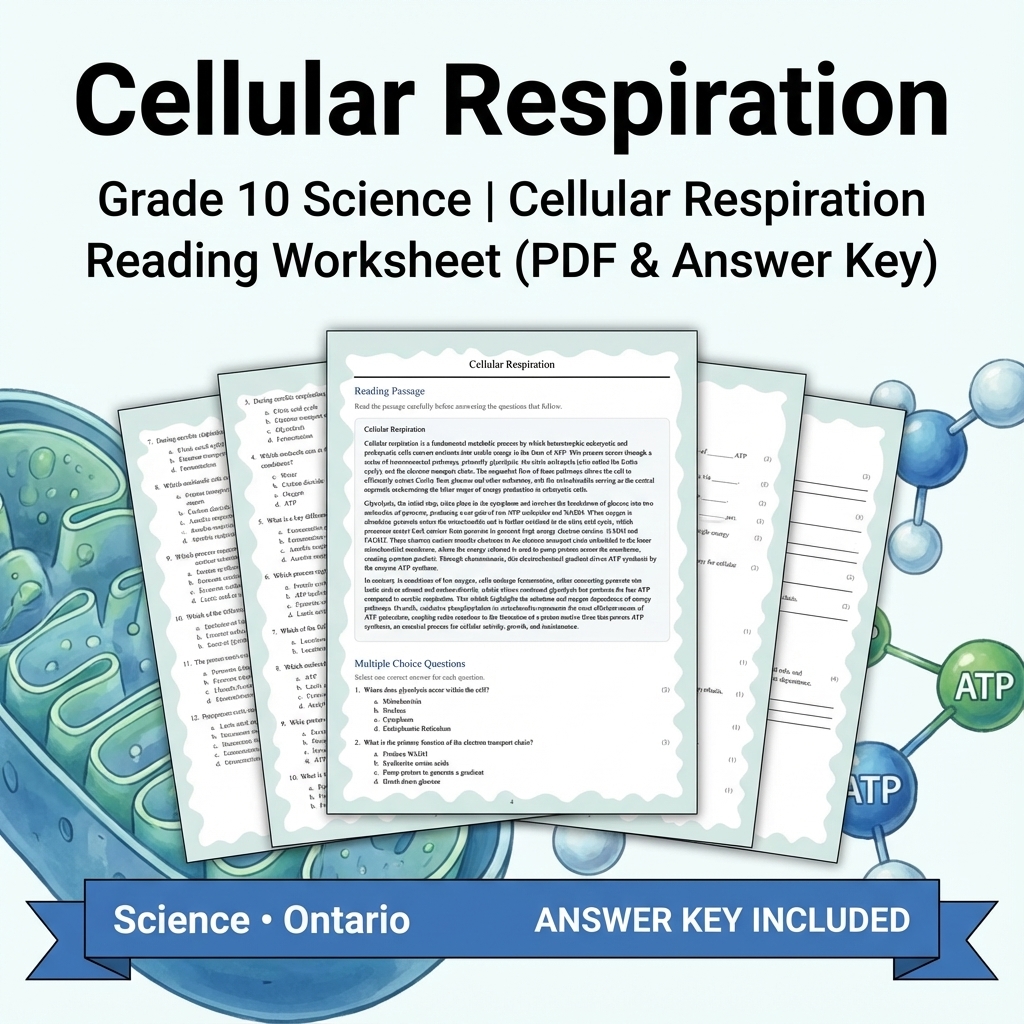
Grade 10 Science | Cellular Respiration Reading Worksheet (PDF & Answer Key)
JCreated byJ.S SheetsLearning Objectives
- Describe the sequence of pathways involved in cellular respiration.
- Explain the role of mitochondria in energy production.
- Differentiate between aerobic respiration and anaerobic fermentation in terms of efficiency and oxygen dependence.
Also included in: Grade 10 Science Unit Bundle | Cell Biology, Microbes & Energy Activities +1 more
Instant download
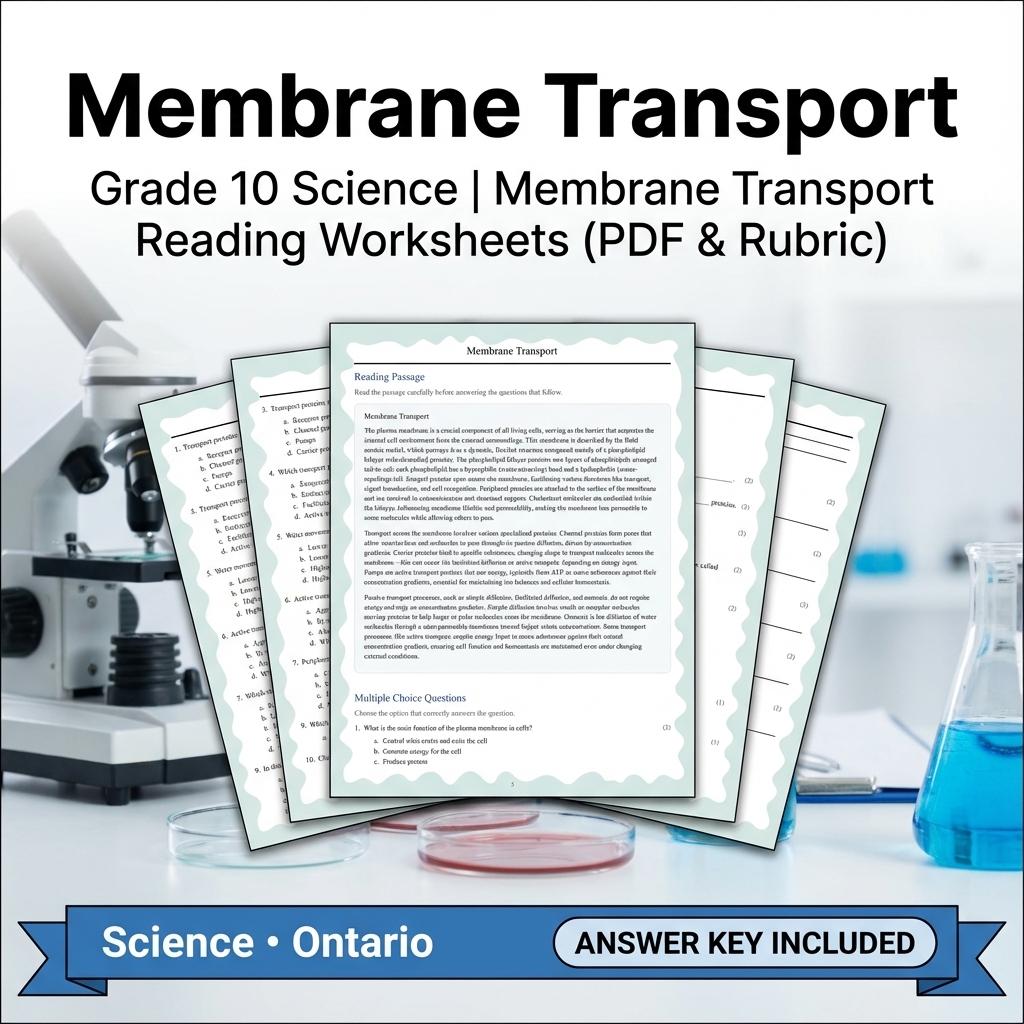
Grade 10 Science | Membrane Transport Reading Worksheets (PDF & Rubric)
JCreated byJ.S SheetsLearning Objectives
- Describe the structure of the plasma membrane based on the fluid mosaic model.
- Differentiate between types of transport proteins such as channels, carriers, and pumps.
- Explain passive transport mechanisms including diffusion, facilitated diffusion, and osmosis.
Also included in: Grade 10 Science Unit Bundle | Cell Biology, Microbes & Energy Activities +1 more
Instant download
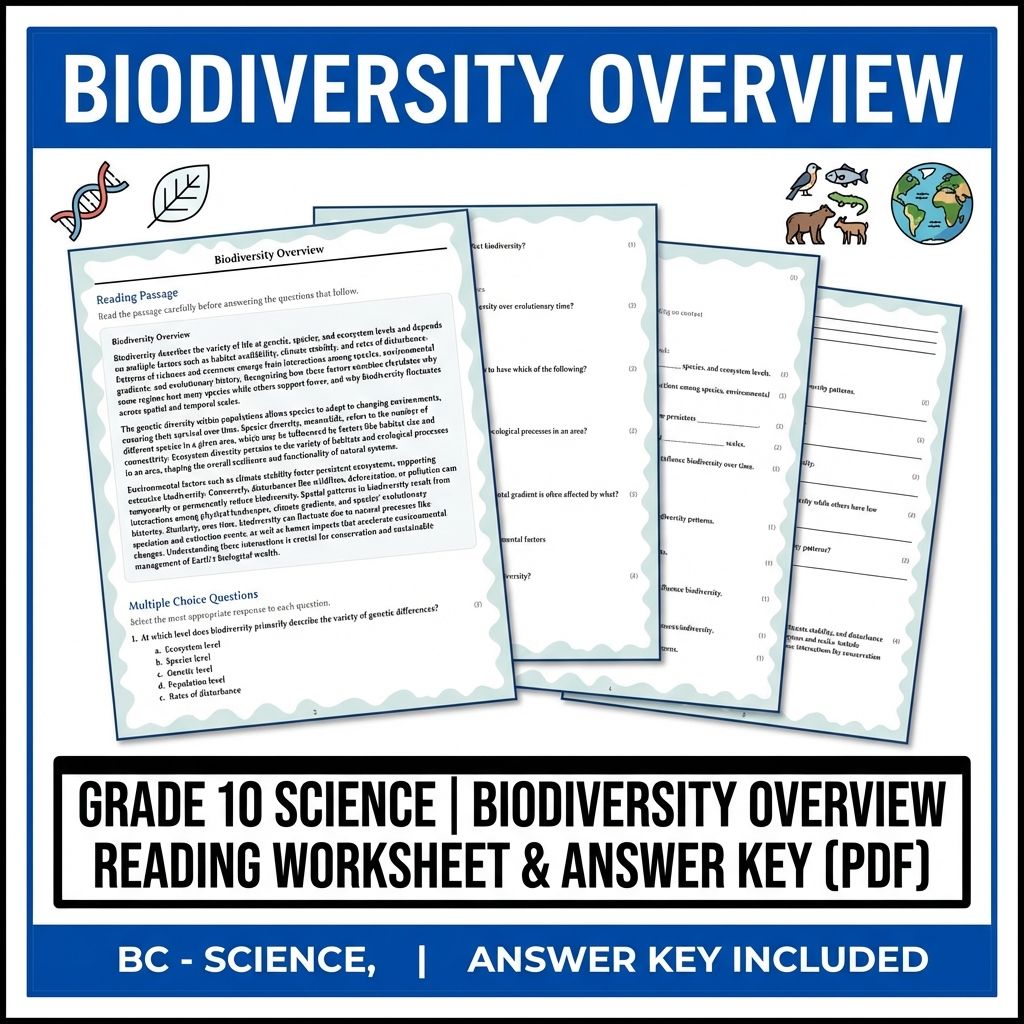
Grade 10 Science | Biodiversity Overview Reading Worksheet & Answer Key (PDF)
JCreated byJ.S SheetsLearning Objectives
- Understand the concept of biodiversity at genetic, species, and ecosystem levels.
- Identify factors that influence patterns of biodiversity across regions.
- Explain how environmental gradients, habitat availability, and evolutionary history affect biodiversity.
Instant download
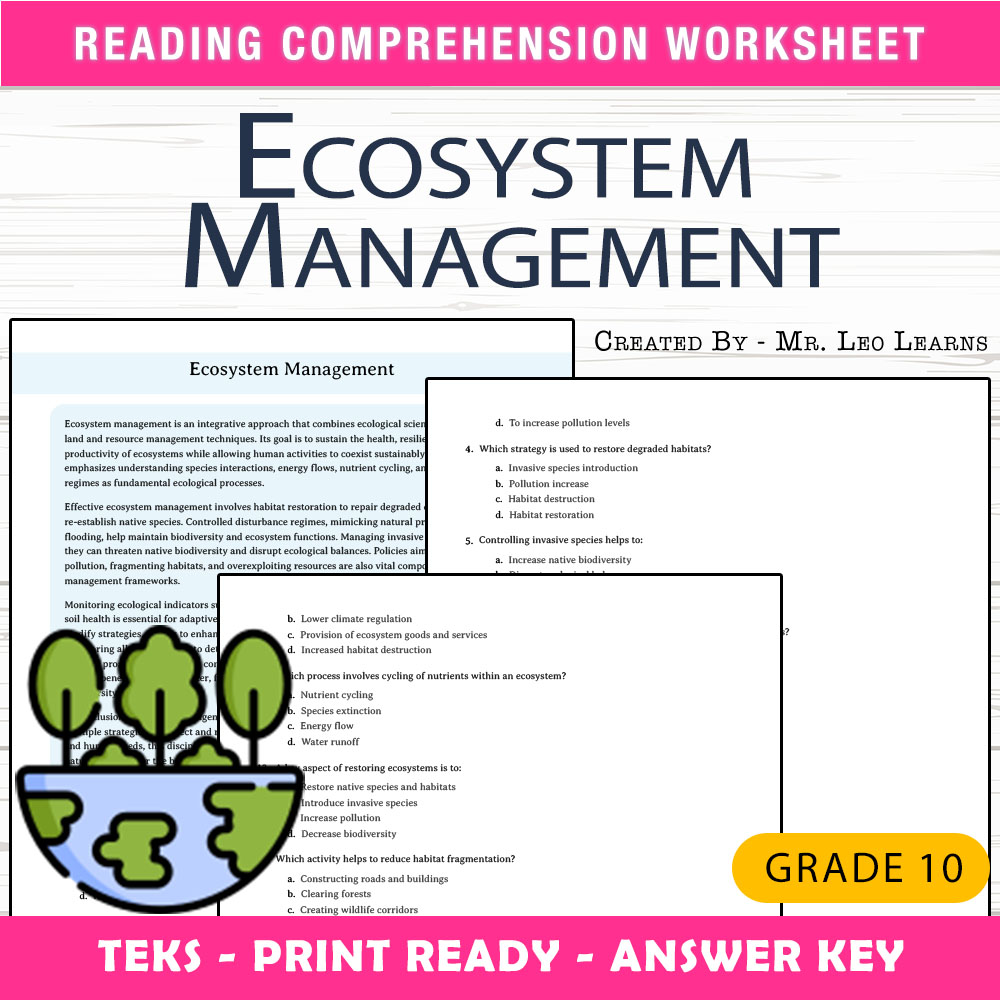
Grade 10 Science – Ecosystem Management Worksheet for Practice
 Created byThe Resource Hub
Learning Objectives
- Understand ecological principles involved in ecosystem management.
- Identify strategies used in conserving and restoring ecosystems.
- Explain the importance of monitoring ecological indicators for adaptive management.
Also included in: Grade 10 Science Unit Bundle | Ecosystems & Ecology Worksheets +1 more
Instant download
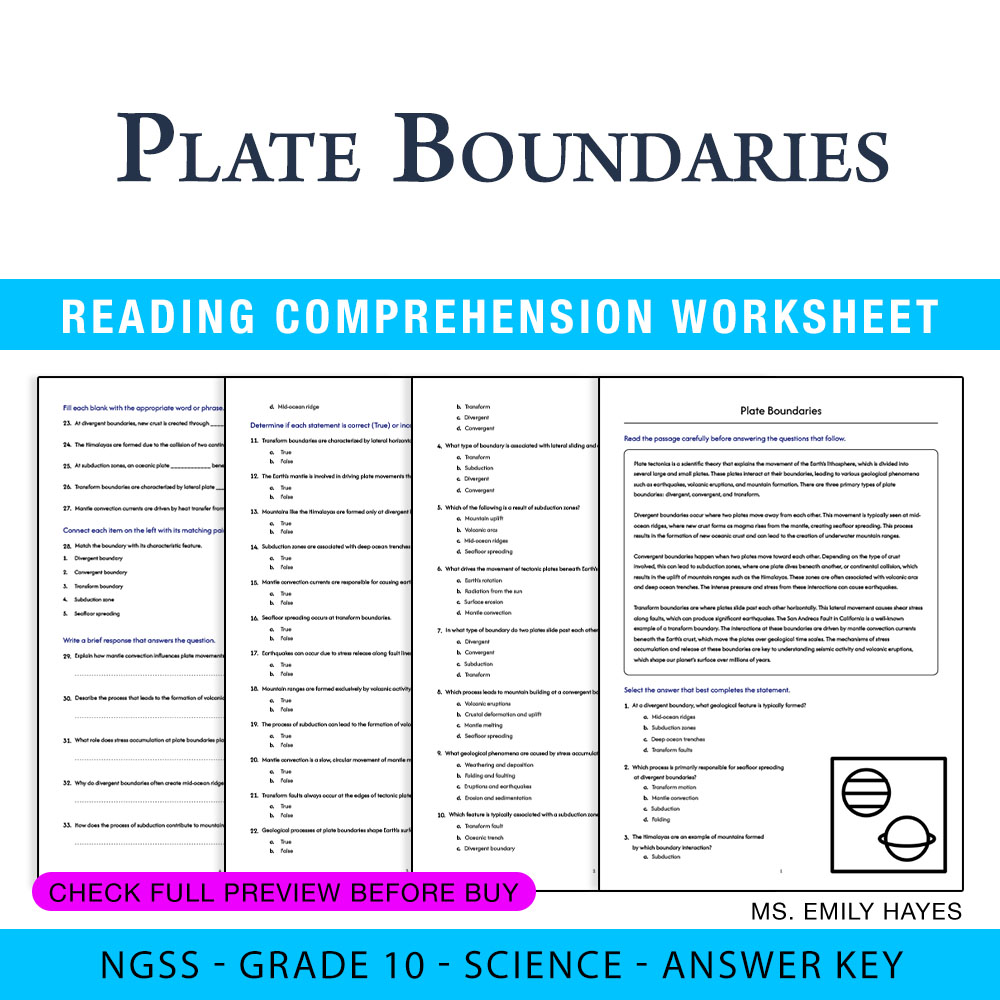
10th Grade Science | Plate Boundaries Worksheet (PDF + Answer Key)
Created byCopper Leaf ClassroomLearning Objectives
- Describe the different types of plate boundaries (divergent, convergent, transform).
- Explain the geological phenomena associated with each boundary type, such as mid-ocean ridges, subduction zones, and mountain uplift.
- Analyze the processes of mantle convection and stress accumulation that cause earthquakes and volcanic activity.
Instant download
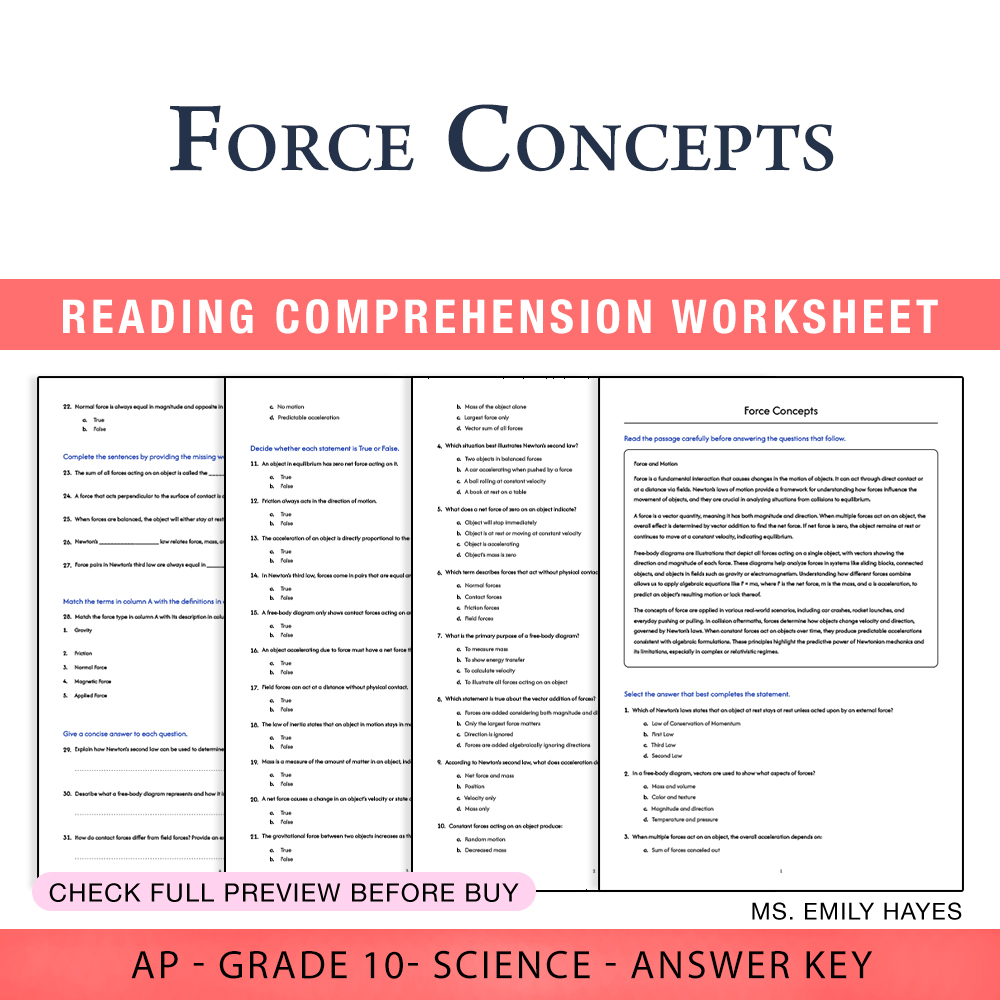
10th Grade Science | Force Concepts Worksheet (PDF+ Answer Key)
Created byCopper Leaf ClassroomLearning Objectives
- Explain the vector nature of forces and determine net force in various scenarios.
- Interpret free-body diagrams and identify force interactions.
- Apply Newton's three laws to predict motion, equilibrium, and outcomes of collisions and constant-force situations.
Also included in: Grade 10 Science AP | Physics & Energy Concepts (PDF+ Answer Key) +1 more
Instant download
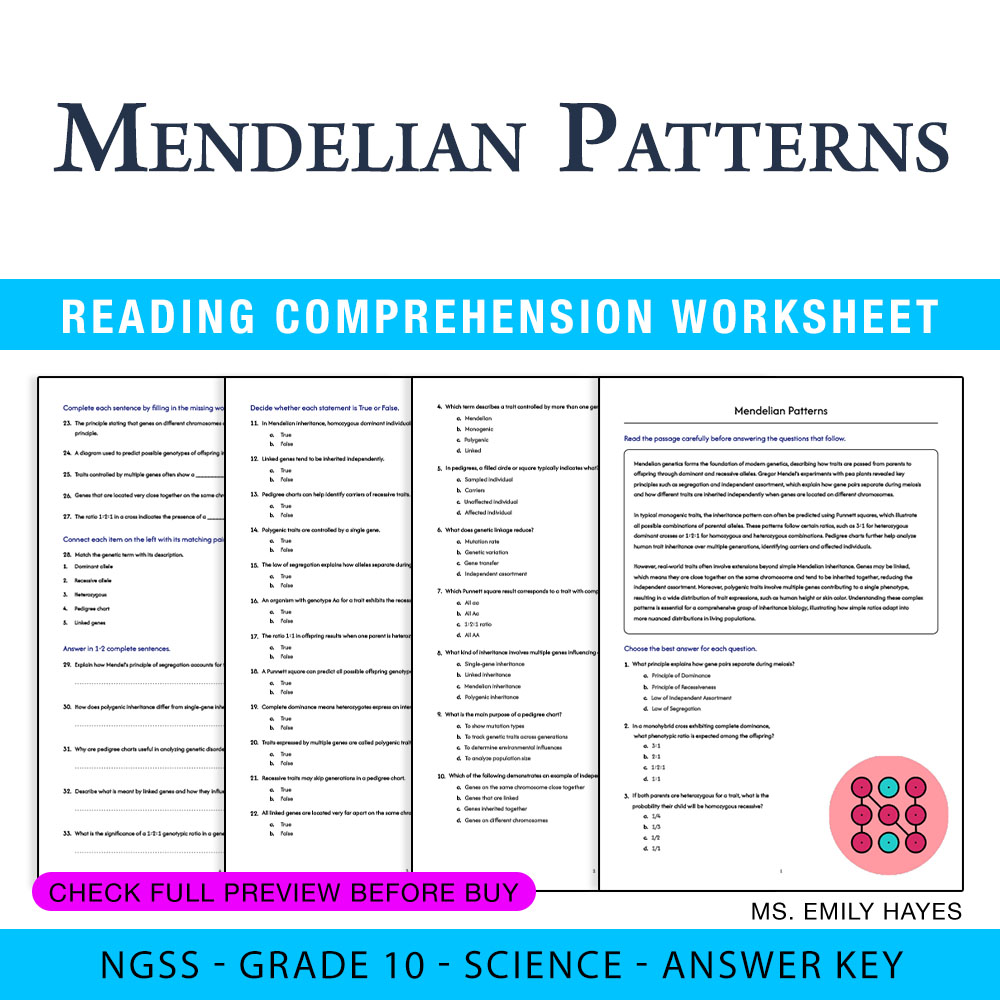
10th Grade Science | Mendelian Patterns Worksheet (PDF+ Answer Key)
Created byCopper Leaf ClassroomLearning Objectives
- Understand the principles of dominant and recessive inheritance patterns.
- Use Punnett squares to predict offspring genotypes and phenotypes.
- Interpret pedigree charts to analyze inheritance of traits.
Instant download
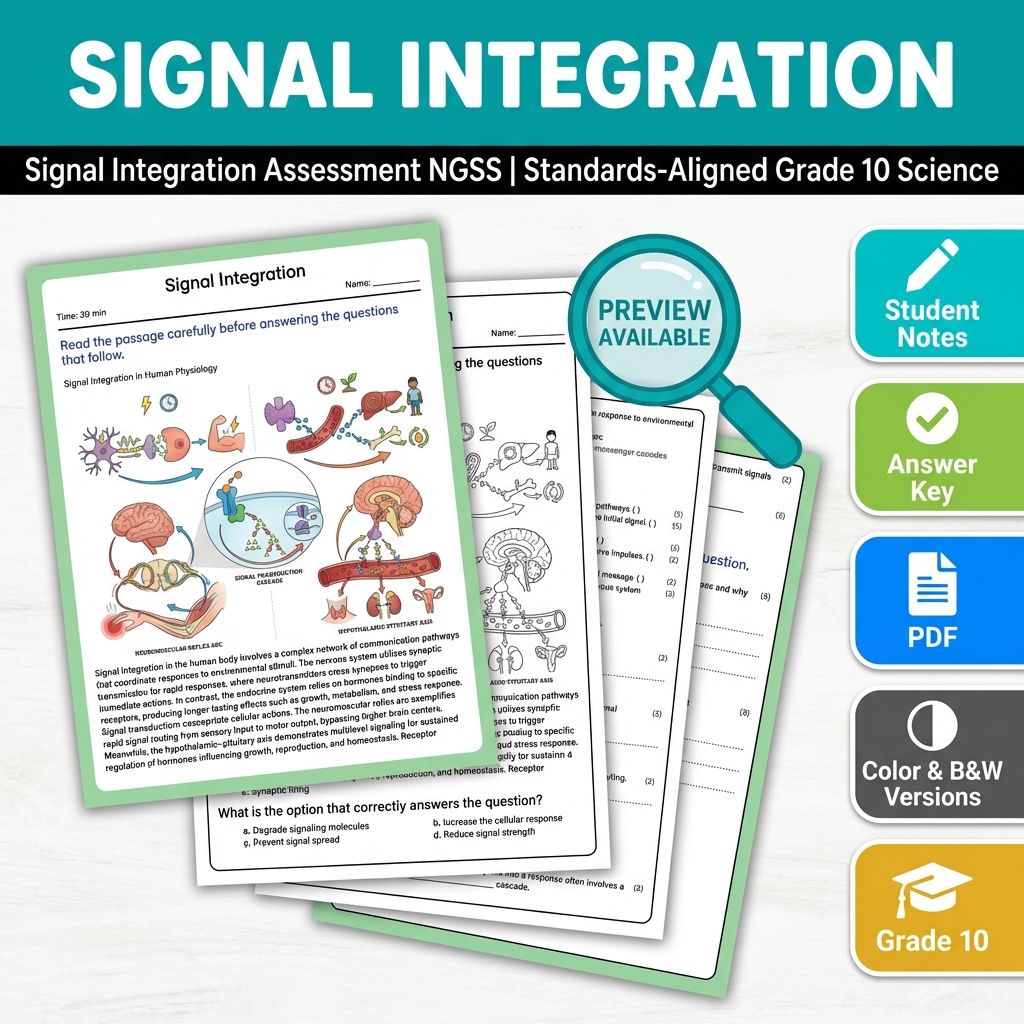
Signal Integration Assessment NGSS | Standards-Aligned Grade 10 Science
Created byPrism Point LearningLearning Objectives
- Understand how nervous and endocrine systems coordinate responses through signal integration.
- Identify mechanisms like receptor specificity and signal transduction cascades that regulate physiological responses.
- Describe the processes involved in synaptic transmission, hormone-receptor interactions, and amplification pathways.
Also included in: Grade 10 Science | Cell Signaling & Physiology NGSS Assessment Bundle
Instant download
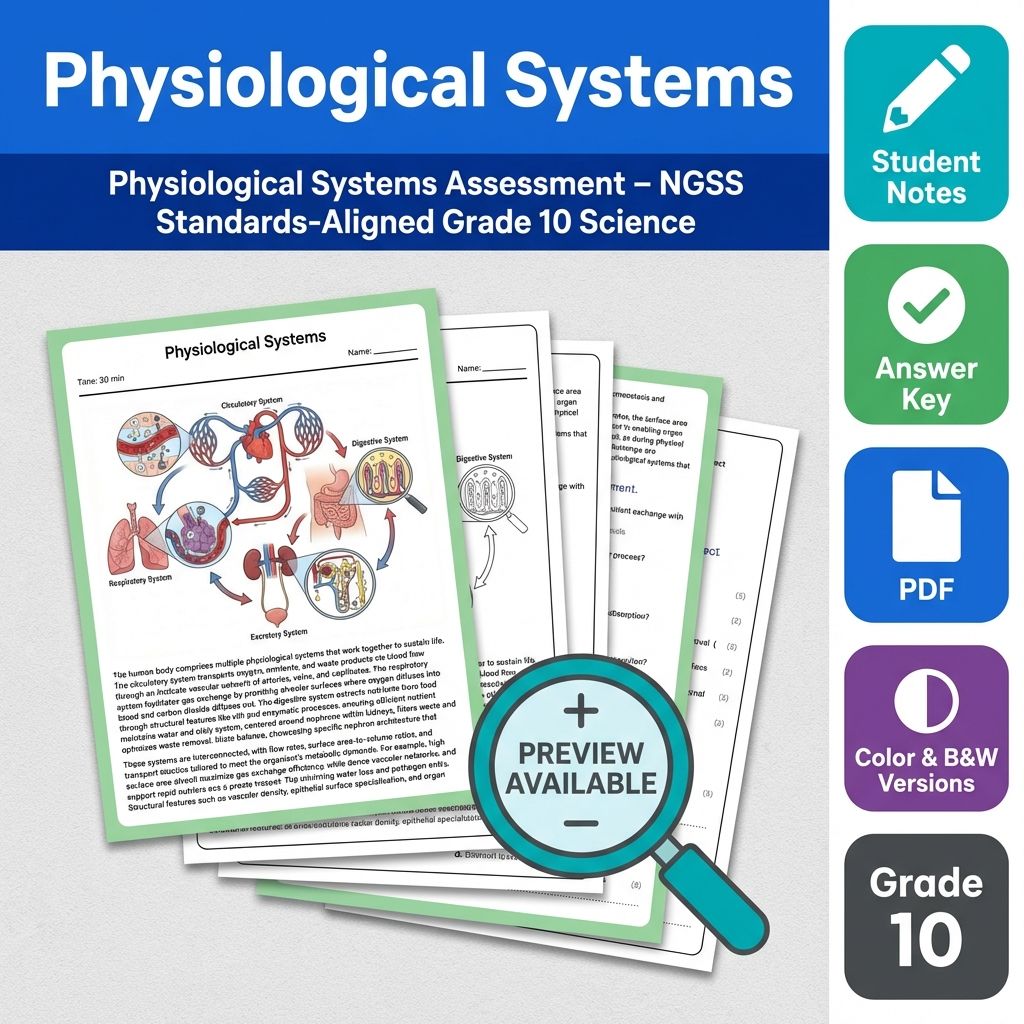
Physiological Systems Assessment – NGSS Standards-Aligned Grade 10 Science
Created byPrism Point LearningLearning Objectives
- Understand the structural features of circulatory, respiratory, digestive, excretory, and integumentary systems.
- Analyze how organ systems coordinate to meet organismal metabolic demands.
- Describe functional imperatives such as transport rates, surface area relationships, and transport kinetics.
Also included in: Grade 10 Science | Cell Signaling & Physiology NGSS Assessment Bundle
Instant download
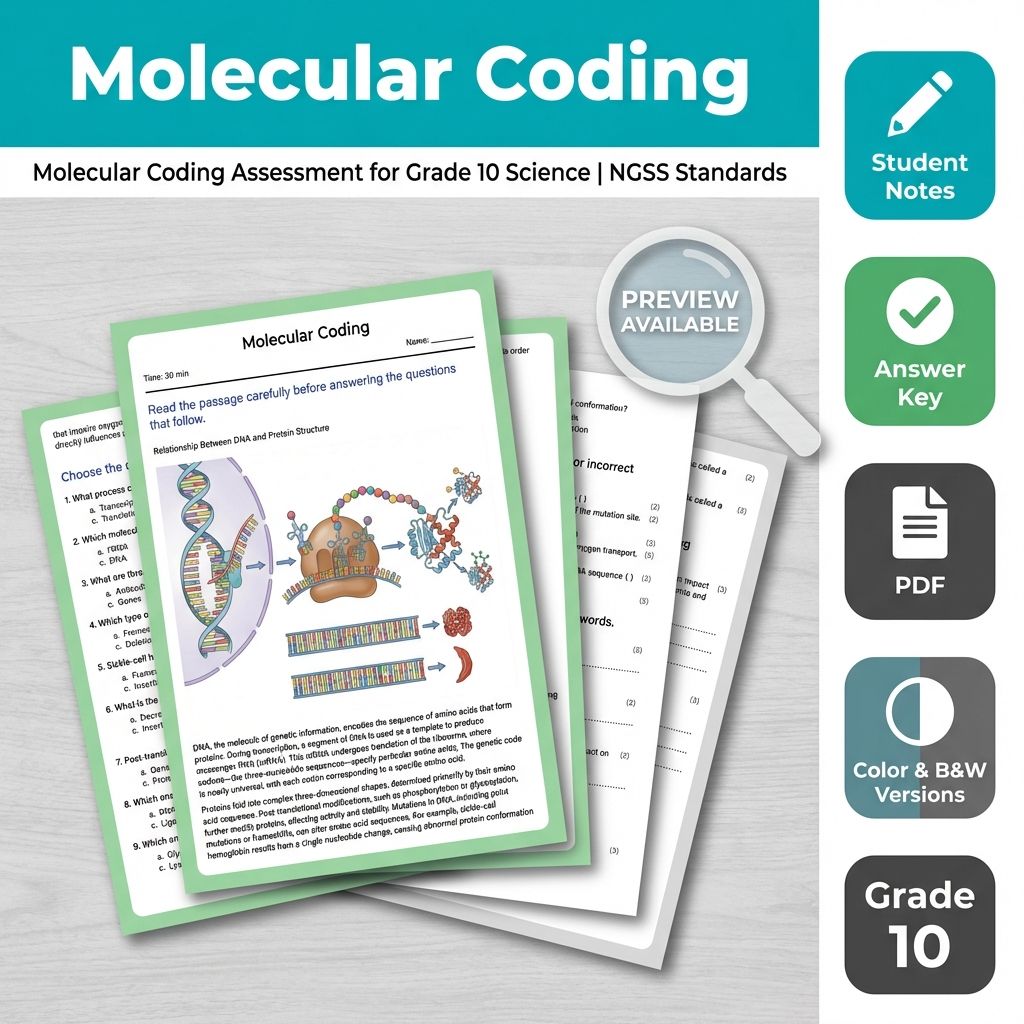
Molecular Coding Assessment for Grade 10 Science | NGSS Standards
Created byPrism Point LearningLearning Objectives
- Explain how DNA sequences determine amino acid sequences during protein synthesis.
- Describe the processes of transcription and translation in gene expression.
- Illustrate the effects of point mutations and frameshifts on protein structure.
Also included in: Grade 10 Science | Cell Signaling & Physiology NGSS Assessment Bundle
Instant download
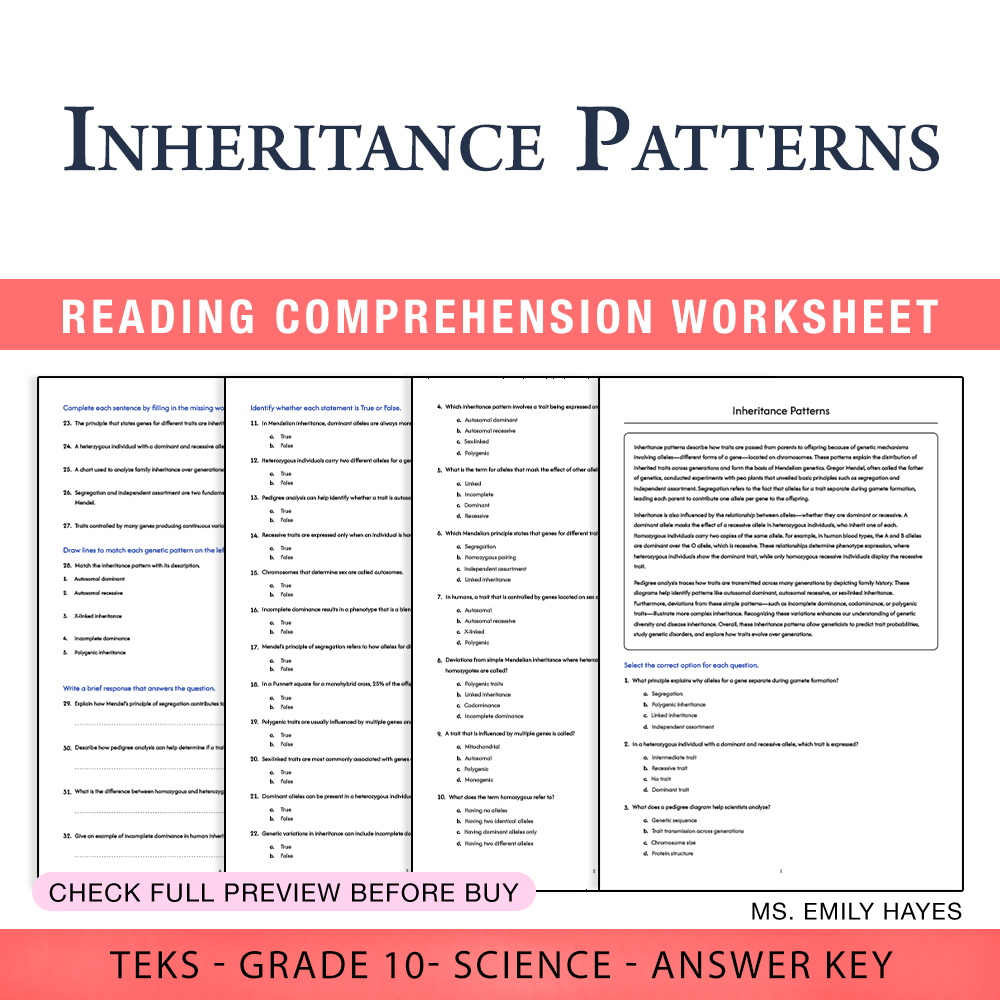
10th Grade Science | Inheritance Patterns Worksheet (PDF+ Answer Key)
Created byCopper Leaf ClassroomLearning Objectives
- Understand how dominant and recessive alleles influence phenotype expression.
- Identify different inheritance patterns such as Mendelian segregation and independent assortment.
- Analyze pedigrees to trace trait transmission across generations.
Instant download
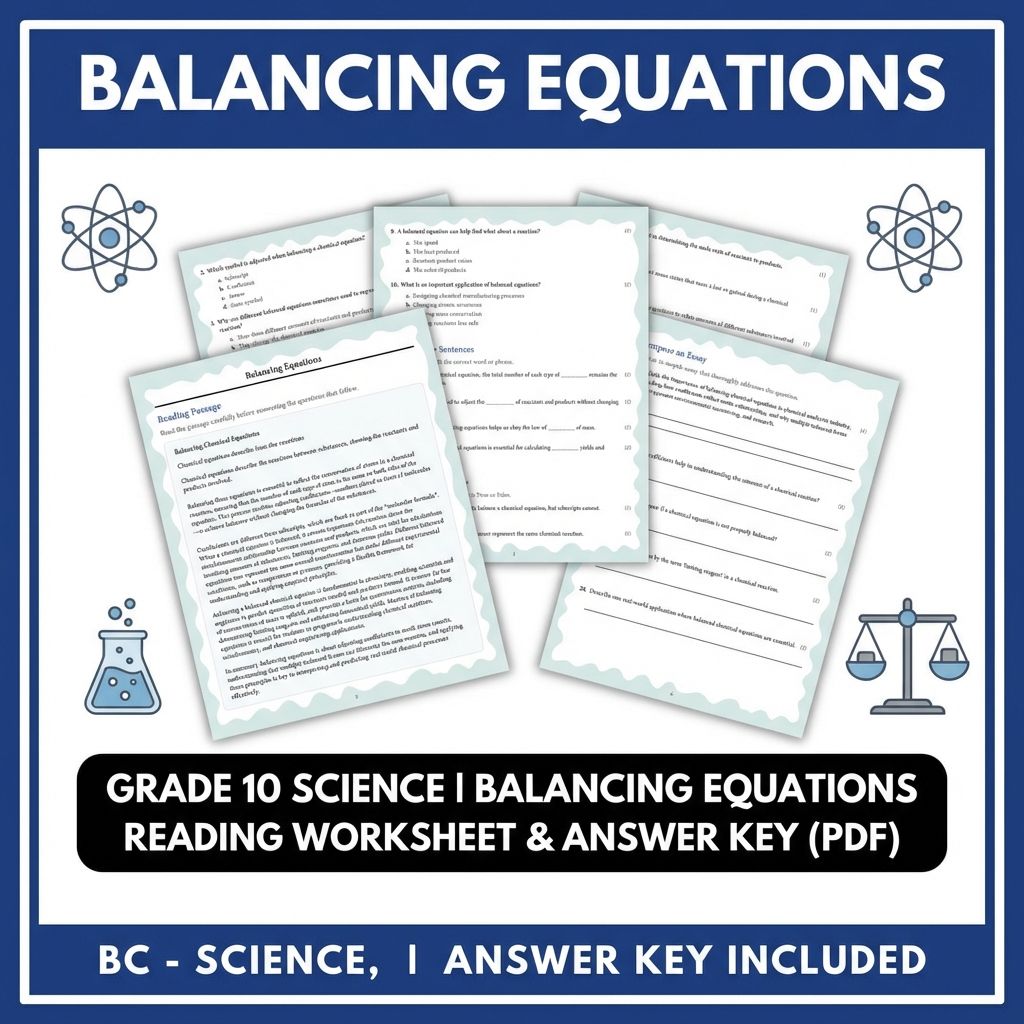
Grade 10 Science | Balancing Equations Reading Worksheet & Answer Key (PDF)
JCreated byJ.S SheetsLearning Objectives
- Understand the concept of balancing chemical equations to obey the law of conservation of mass.
- Learn how coefficients are used to balance reactants and products in chemical equations.
- Recognize that different balanced equations can represent the same chemical transformation under various conditions.
Instant download
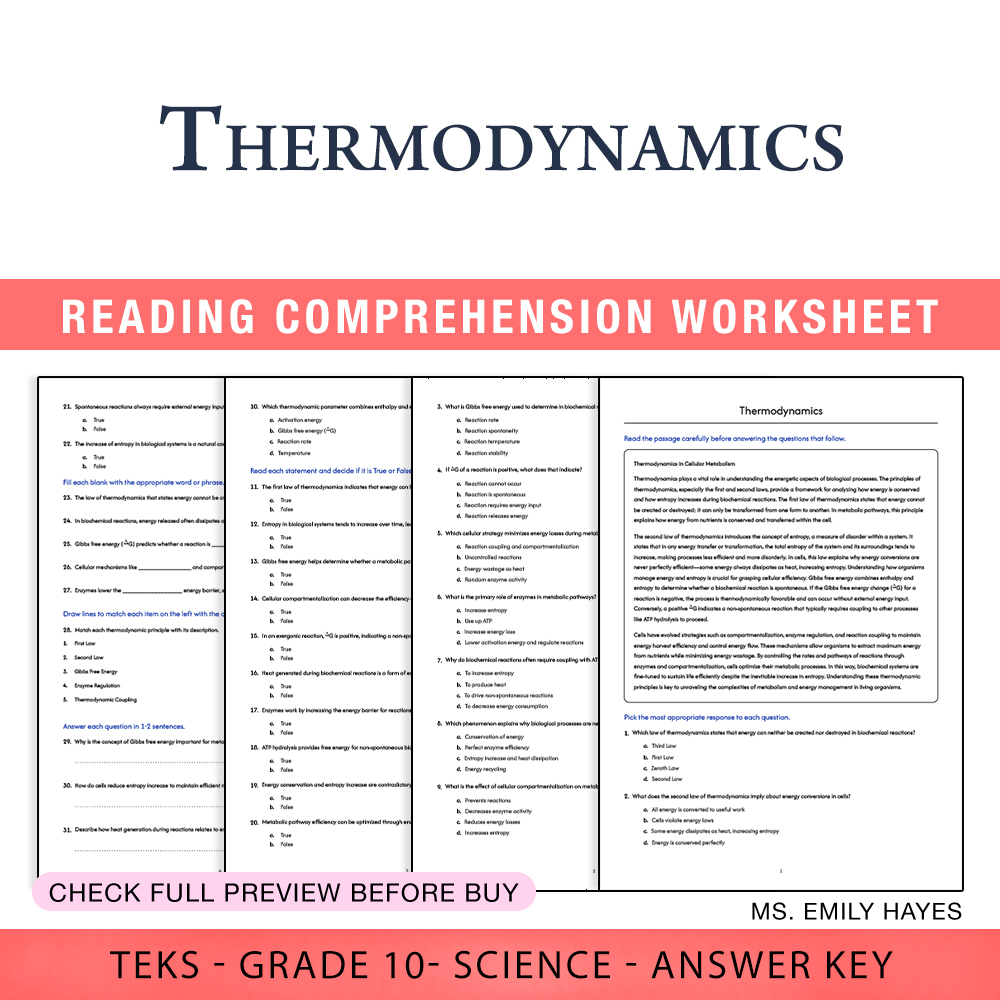
10th Grade Science | Thermodynamics Worksheet (PDF+ Answer Key)
Created byCopper Leaf ClassroomLearning Objectives
- Understand the fundamental principles of thermodynamics as they apply to biochemical reactions.
- Explain the significance of energy conservation and entropy in cellular metabolism.
- Describe how Gibbs free energy determines reaction spontaneity and pathway coupling.
Instant download
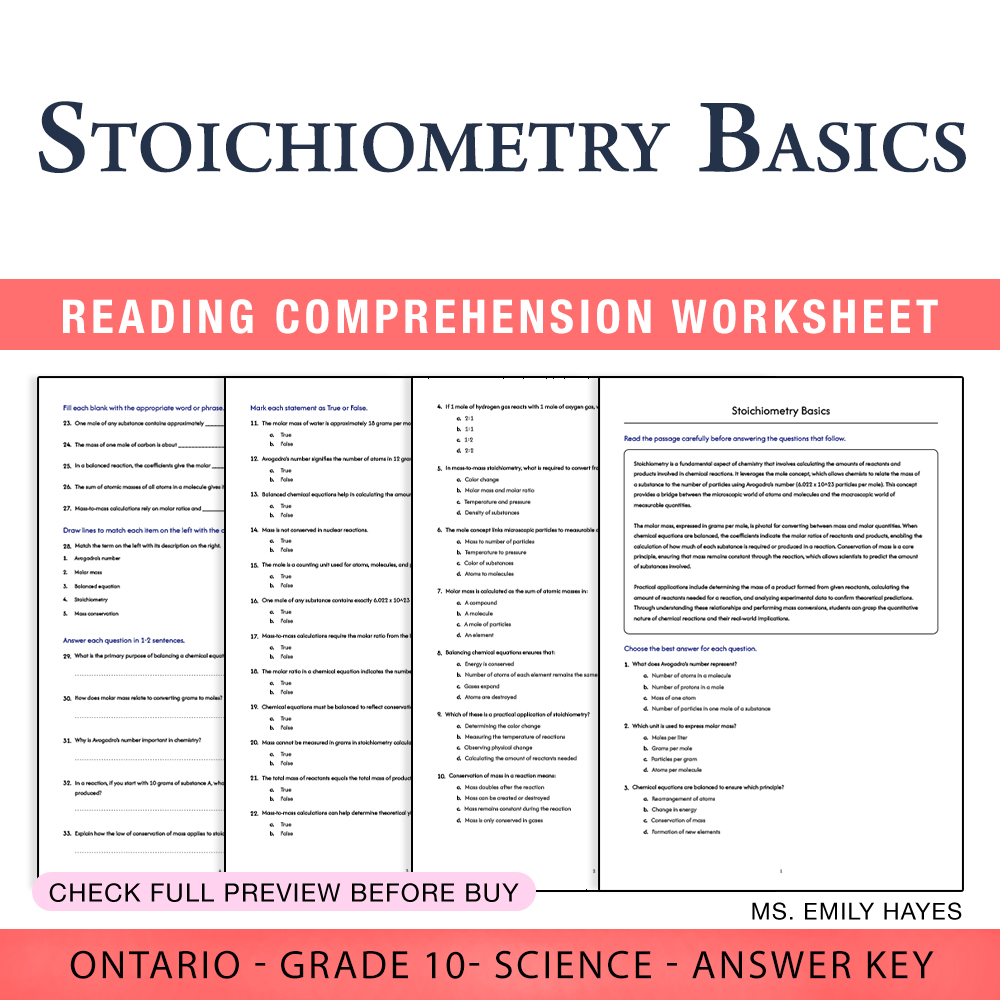
10th Grade Science | Stoichiometry Basics Worksheet (PDF + Answer Key)
Created byCopper Leaf ClassroomLearning Objectives
- Understand the mole concept and its significance in chemistry.
- Use Avogadro's number to convert between quantity of particles and moles.
- Determine molar mass and perform mass-to-mole conversions.
Instant download
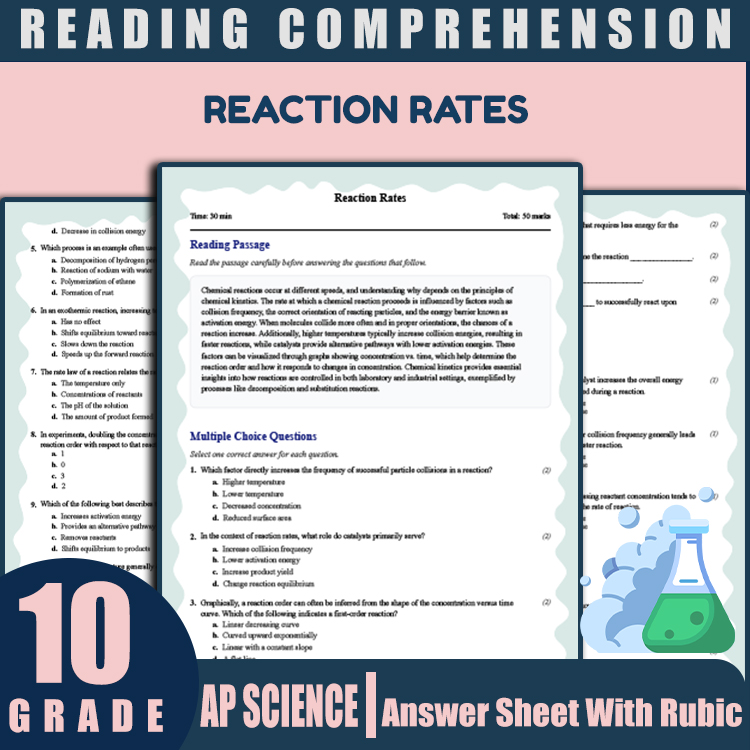
Grade 10 Science | Reaction Rates Reading Worksheet & Answer Key (PDF)
JCreated byJ.S SheetsLearning Objectives
- Explain the basic principles of chemical kinetics, including how collision frequency, orientation, and activation energy influence reaction rates.
- Interpret graphical and mathematical representations of concentration versus time to determine reaction order.
- Describe how temperature changes and catalysts modify reaction pathways without using advanced mathematics.
Also included in: Grade 10 Science Unit Worksheet Bundle | Chemical Reactions & Atomic Structure +1 more
Instant download
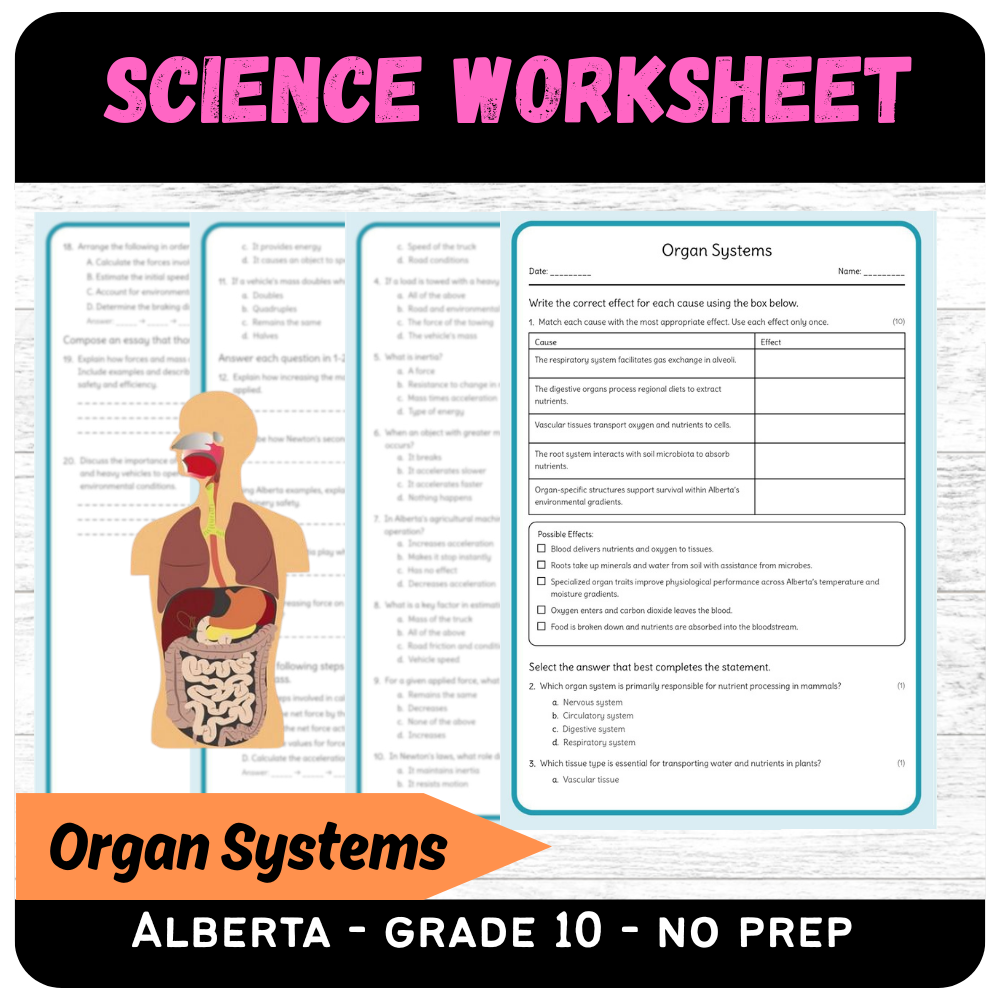
Grade 10 Science | Organ Systems (Worksheet + Answer Key) – Alberta Standard
Created byBright Mind ResourcesLearning Objectives
- Explain how different organ systems work together to support physiological functions in humans and plants.
- Identify the structure-function relationships of key organs within various systems.
- Describe how organ systems interface with external environments to support survival in Alberta’s environments.
Instant download

Molecular Geometry Worksheet | AP Chemistry Practice for Grade 10
JCreated byJ.S SheetsLearning Objectives
- Define molecular geometry using electron-domain models and orbital hybridization.
- Predict three-dimensional arrangements of molecules based on electron domains.
- Explain how electron distribution affects molecular shape and polarity.
Also included in: Grade 10 Chemistry Lesson Bundle – AP Chemistry Concepts & Practice
Instant download

Grade 10 Science — Worksheet MCQ Paper for Mastering Stoichiometric Analysis
Created byThe Resource HubLearning Objectives
- Apply algebraic methods to analyze complex stoichiometric relationships.
- Utilize mole ratios and unit conversions to solve reaction problems.
- Identify limiting reagents and calculate percent yields.
Also included in: Grade 10 Science Chemistry Foundations Lesson Bundle for AP Curriculum +1 more
Instant download
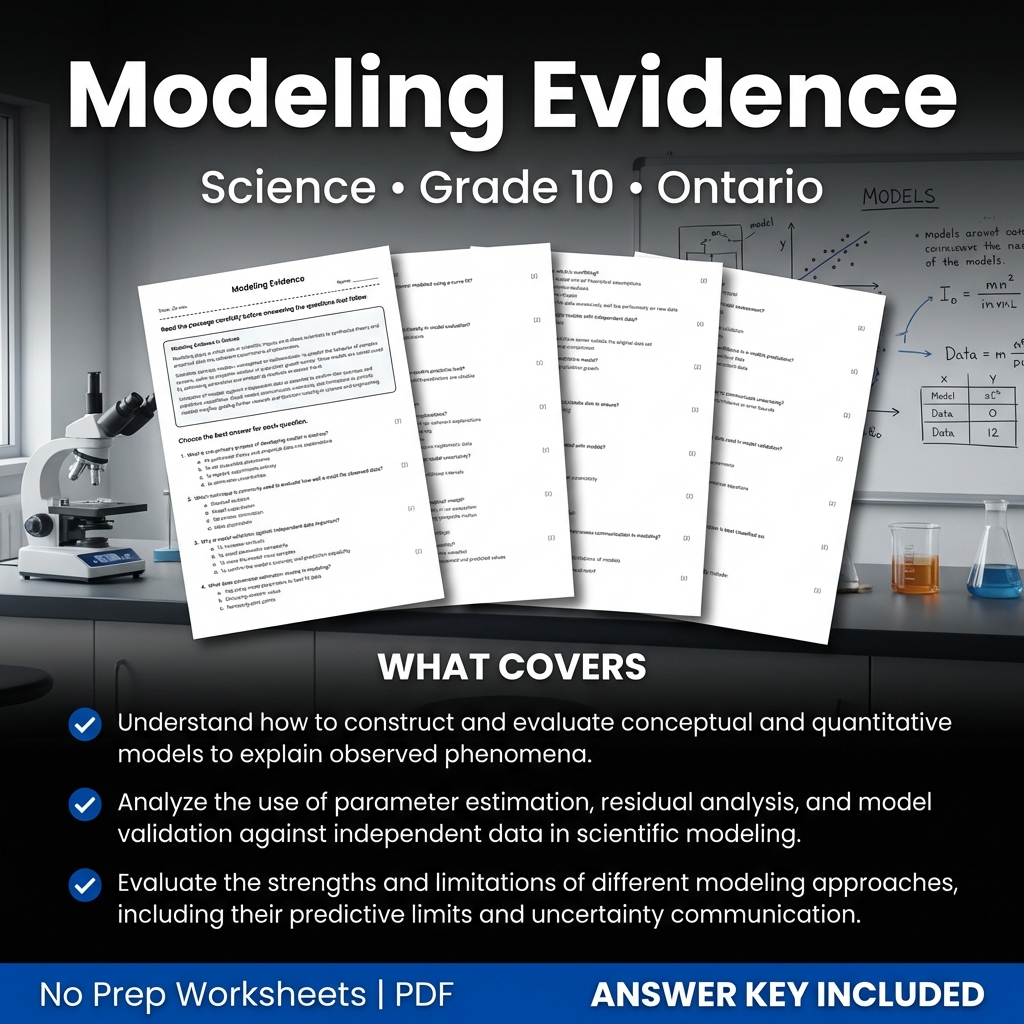
Modeling Evidence Science Worksheet Grade 10 | Ontario Standards
Created byCoral Reef LearningLearning Objectives
- Understand how to construct and evaluate conceptual and quantitative models to explain observed phenomena.
- Analyze the use of parameter estimation, residual analysis, and model validation against independent data in scientific modeling.
- Evaluate the strengths and limitations of different modeling approaches, including their predictive limits and uncertainty communication.
Instant download
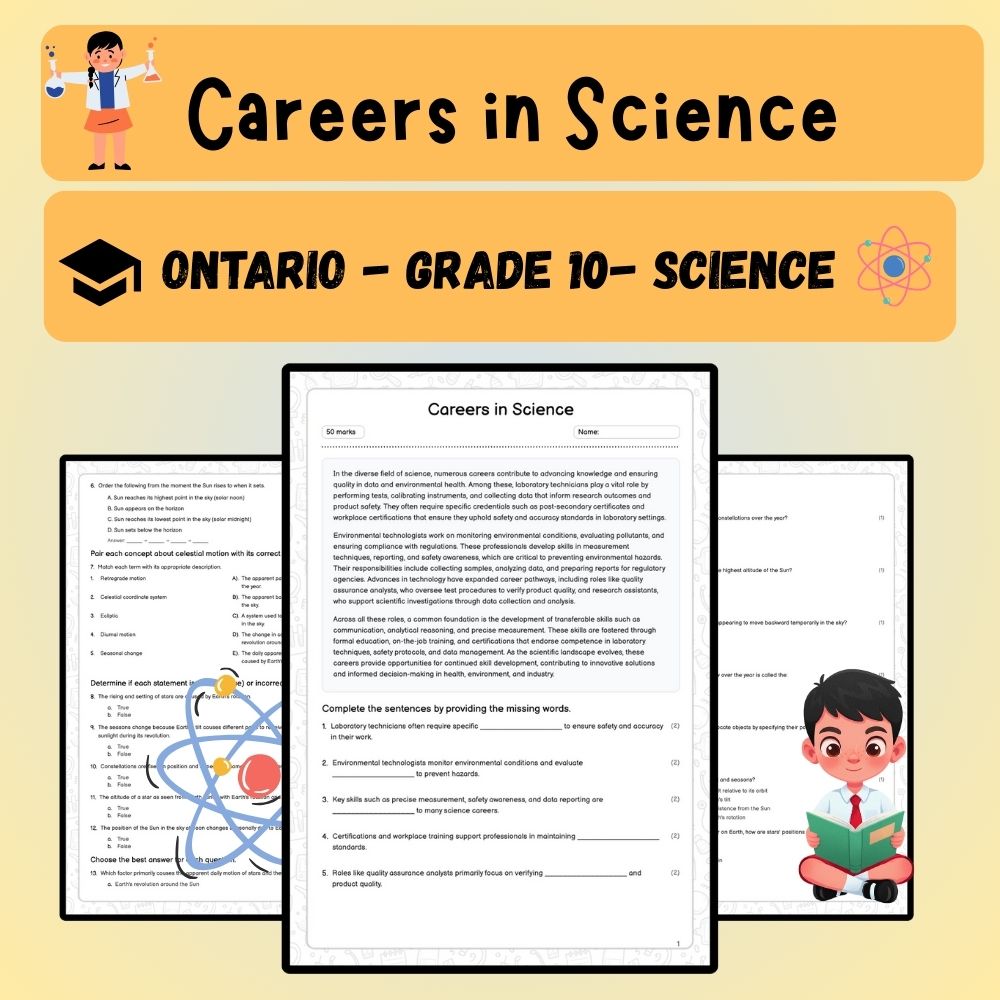
Grade 10 Science Worksheet | Careers in Science | Ontario Standard (PDF)
Created byPrism Point LearningLearning Objectives
- Identify various scientific career pathways such as laboratory technician, quality assurance analyst, environmental technologist, and research assistant.
- Understand credential and certification requirements for careers in science.
- Describe key skills like measurement techniques, safety procedures, and data reporting used in laboratory and environmental roles.
Also included in: Grade 10 Science UNIT Bundle | Data Analysis, Safety & Modeling Worksheets +1 more
Instant download
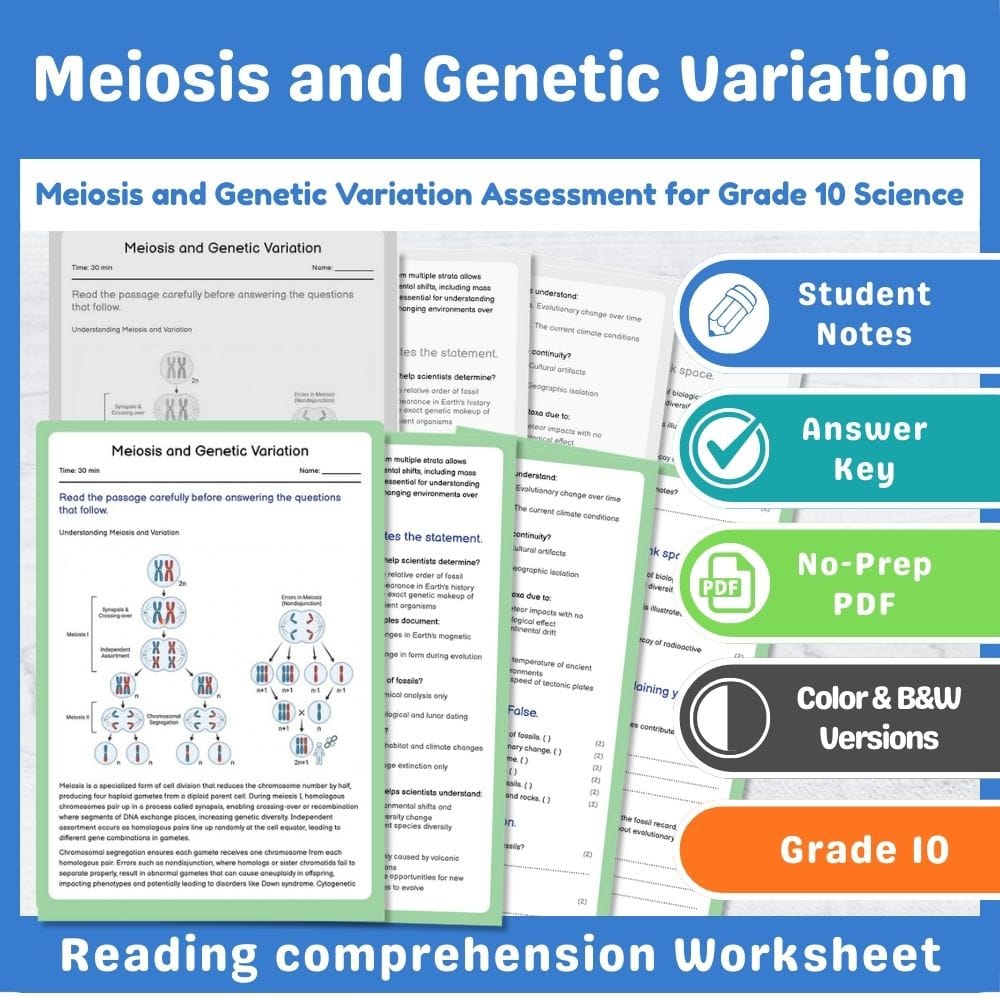
Meiosis and Genetic Variation Assessment for Grade 10 Science
Created byPrism Point LearningLearning Objectives
- Understand key concepts related to Science
- Apply knowledge through practice questions
- Demonstrate comprehension of the material
Also included in: Lesson Grade 10 Science Assessment Bundle | AP Standards-Aligned
Instant download

Grade 10 Chemical Properties Reactivity Worksheet | Ontario Science Activity
 Created byChalk and Compass
Learning Objectives
- Explain how chemical properties describe a substance’s tendency to undergo reactions.
- Identify evidence of chemical change such as pH shifts, gas evolution, and new substance formation.
- Compare reactivity patterns involving oxygen, acids, and water while considering safety.
Also included in: Chemistry Foundations & Chemical Reactions Lesson Bundle: Grade 10 Science +1 more
Instant download

Grade 10 Science | Biodiversity Change Worksheet with Short Notes (PDF)
 Created byMeadowlark Worksheets
Learning Objectives
- Understand factors that influence changes in biodiversity, such as habitat fragmentation and invasive species.
- Evaluate the evidence used in assessing biodiversity decline and recovery potential.
- Analyze the impacts of human activities on ecosystems and genetic diversity.
Also included in: Grade 10 Science NGSS Unit Bundle | Biological Evolution & Diversity Worksheets +1 more
Instant download

Grade 10 Science | Selective Mechanisms Worksheet with Short Notes (PDF)
Created byMeadowlark WorksheetsLearning Objectives
- Understand how natural selection operates through variation, reproductive success, and environmental pressures.
- Identify empirical examples of natural selection such as antibiotic resistance, melanism, and beak variation.
- Connect observable phenotypic changes to changes in allele frequencies within populations.
Also included in: Grade 10 Science NGSS Unit Bundle | Biological Evolution & Diversity Worksheets +1 more
Instant download

Grade 10 Science | Speciation Processes Worksheet with Short Notes (PDF)
Created byMeadowlark WorksheetsLearning Objectives
- Understand the mechanisms that lead to the formation of new species.
- Identify examples of allopatric, sympatric, and polyploid speciation in different organisms.
- Analyze phylogenetic patterns and evidence of reproductive barriers in speciation.
Also included in: Grade 10 Science NGSS Unit Bundle | Biological Evolution & Diversity Worksheets +1 more
Instant download

Grade 10 Science | Trait Origins Worksheet with Short Notes (Printable PDF)
Created byMeadowlark WorksheetsLearning Objectives
- Understand how heritable traits originate from genetic mutations, recombination, gene flow, and chromosomal changes.
- Identify examples of genetic variation such as enzyme variants and morphological trait changes.
- Explain how population processes like genetic drift and nonrandom mating influence trait distribution across generations.
Also included in: Grade 10 Science NGSS Unit Bundle | Biological Evolution & Diversity Worksheets +1 more
Instant download

Scientific Reasoning Assessment for Grade 10 Science | NGSSS Standards
Created byPrism Point LearningLearning Objectives
- Use evidence to support or refute a scientific claim through logical reasoning.
- Distinguish correlation from causation and explain why correlation alone cannot prove causation.
- Evaluate whether alternative explanations fit the same evidence and describe how scientists test them.
Also included in: Grade 10 Scientific Reasoning Science Lesson Bundle – Florida NGSSS +1 more
Instant download

Grade 10 Science | Net Force Outcomes - Daily Reading Comprehension
Created byCoral Reef LearningLearning Objectives
- Understand how different forces affect the motion of objects
- Predict the direction of acceleration based on net force
- Recognize how opposing and aligned forces combine or oppose each other
Instant download

Electromagnetic Waves Worksheet Grade 10 Science Activities & NGSSS
Created byPrism Point LearningLearning Objectives
- Explain how oscillating electric and magnetic fields form electromagnetic waves that can travel through a vacuum
- Relate frequency and wavelength to the energy of electromagnetic waves across the electromagnetic spectrum
- Describe how reflection, transmission, and absorption depend on a material’s response to different wavelengths and frequencies
Also included in: Grade 10 Physical Science Lesson Bundle | Florida NGSSS
Instant download
About Grade 10 Science Worksheets
Find Science worksheets built for Grade 10. All 7,069 cover core skills, practice, and review, each an instant PDF download.
Every worksheet on MyTeachingSheets is created by independent teacher-authors and reviewed before publication. All resources download as printable PDFs for classroom, homework, or at-home practice, and many include answer keys. Preview any worksheet free before buying.