
Grade 10 Science Worksheets
7,069 worksheets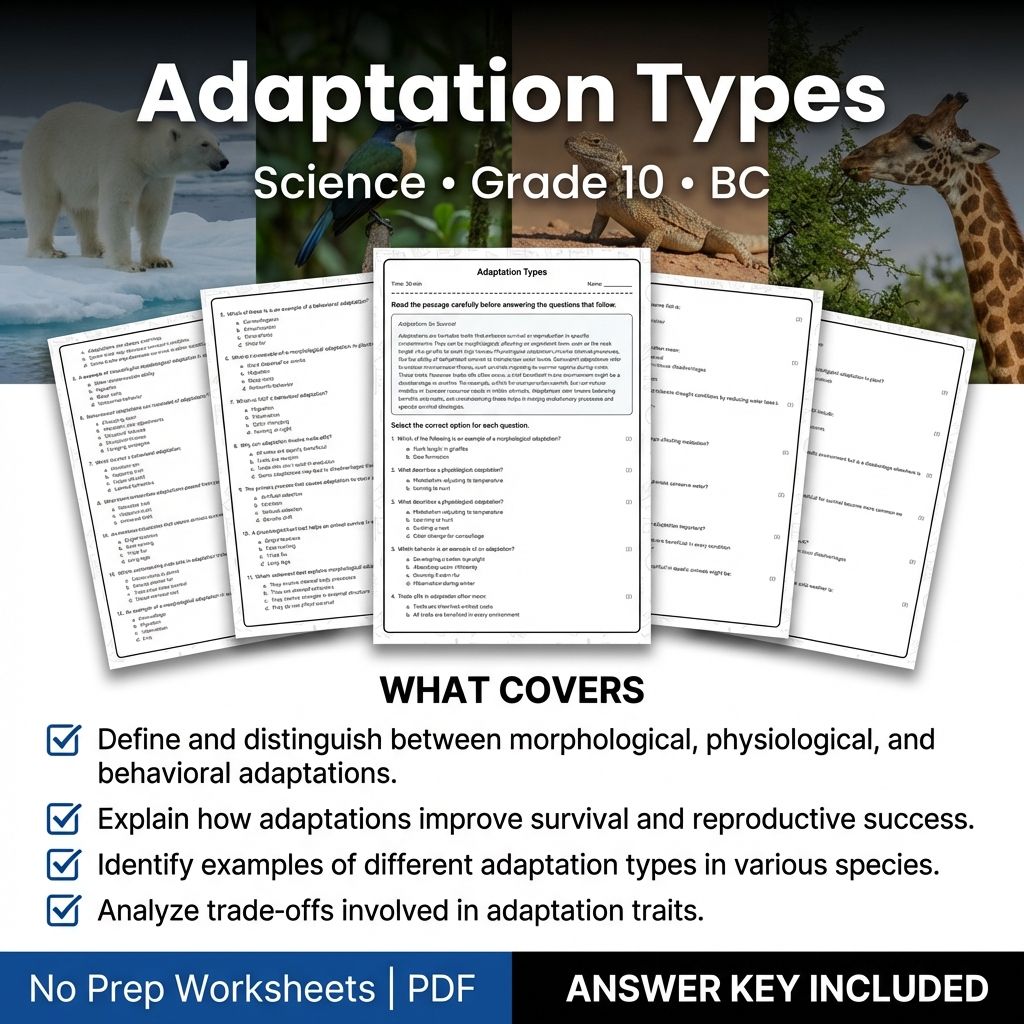
10th Grade Science | Adaptation Types Worksheet & Answer Key (PDF)
 Created byCoral Reef Learning
Learning Objectives
- Define and distinguish between morphological, physiological, and behavioral adaptations.
- Explain how adaptations improve survival and reproductive success.
- Identify examples of different adaptation types in various species.
Instant download

Grade 10 Science – Biotic & Abiotic Factors in Ecosystems | Reading Worksheet
 Created byBright Mind Resources
Learning Objectives
- Define biotic and abiotic factors in ecosystems.
- Identify examples of biotic components such as plants, animals, and microbes.
- Recognize abiotic factors like temperature, moisture, soil chemistry, light, and topography.
Also included in: Grade 10 Ecosystems Science Lesson Bundle Daily Reading | TEKS +2 more
Instant download

Astronomical Scale Worksheet Grade 10 Science Space Size & Distance Activity
 Created byPrism Point Learning
Learning Objectives
- Explain how scale and units such as astronomical units and light-years are used to describe distances in space.
- Use angular size and brightness ideas to infer how distance and intrinsic power affect how objects appear.
- Describe the hierarchy of the solar system within the Milky Way using appropriate astronomical structures.
Also included in: Space & Earth Systems Lesson Bundle | Grade 10 Science | Florida NGSSS
Instant download
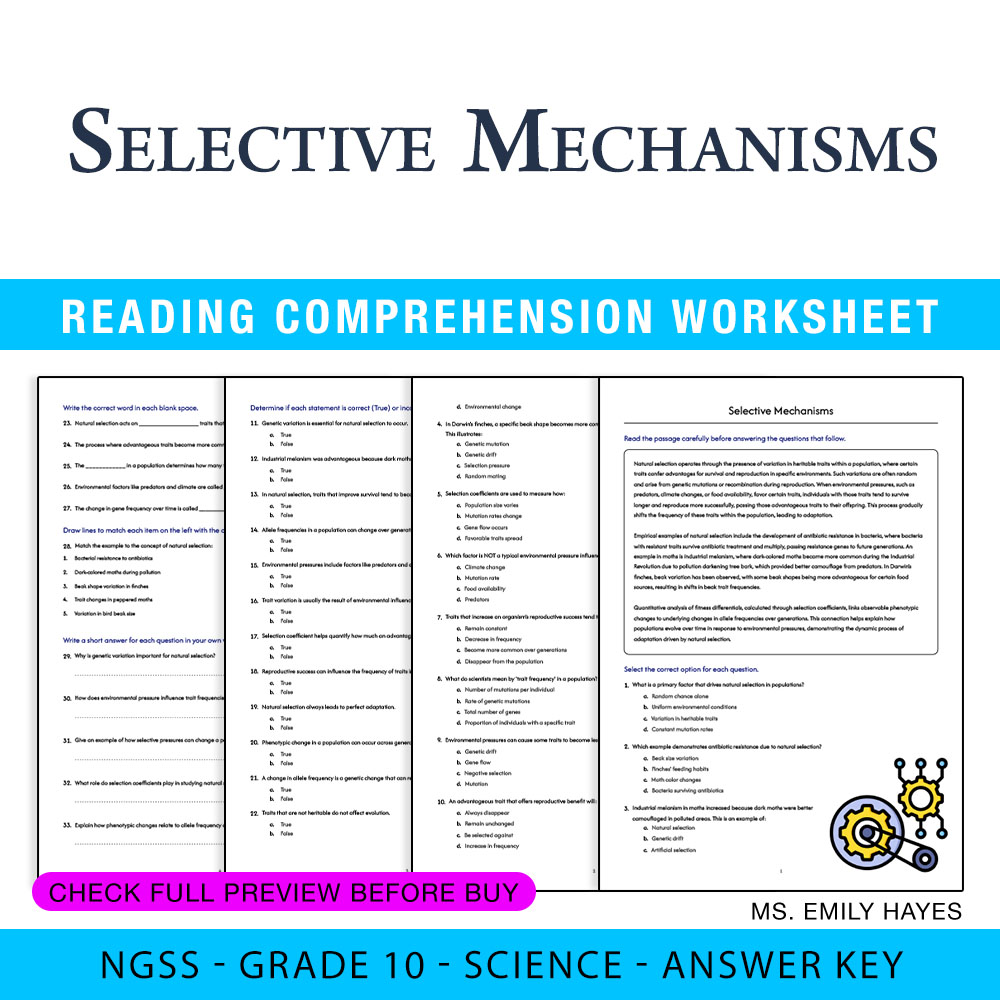
10th Grade Science | Selective Mechanisms Worksheet (PDF + Answer Key)
 Created byCopper Leaf Classroom
Learning Objectives
- Explain how natural selection involves variation and environmental pressures.
- Identify real-world examples of selective mechanisms such as antibiotic resistance, industrial melanism, and beak variation.
- Analyze how traits increase or decrease in frequency due to survival and reproduction advantages.
Instant download

Grade 10 Science – Organelle Architecture & Cell Structures | Daily Worksheet
 Created byQuiet Forest Education
Learning Objectives
- Identify major cellular organelles and their structural features
- Compare the differences between prokaryotic and eukaryotic cell organization
- Understand the role of compartmentalization in cellular complexity
Also included in: Cell Biology Grade 10 Science Daily Reading Worksheets Bundle | Ontario +1 more
Instant download

Grade 10 Science – Cellular Respiration & Pathways | Daily Reading Worksheet
Created byQuiet Forest EducationLearning Objectives
- Understand the process of cellular respiration
- Identify the main stages and components involved in respiration
- Explain how energy is produced in cells
Also included in: Cell Biology Grade 10 Science Daily Reading Worksheets Bundle | Ontario +1 more
Instant download

Physiological Systems Worksheet for Grade 10 Science | NGSS Assessment
Learning Objectives
- Compare how the circulatory, respiratory, digestive, excretory, and integumentary systems support internal transport and homeostasis
- Explain how structure (e.g., vascular networks, alveoli, nephrons, epithelial barriers) supports function (e.g., diffusion, filtration, reabsorption, waste removal)
- Describe how flow rates, surface area-to-volume ratios, and transport kinetics affect the movement of gases, nutrients, and wastes
Also included in: From Molecules to Organisms Lesson Bundle | Grade 10 Science | NGSS
Instant download

Molecular Coding Worksheet | Assessment Grade 10 NGSS Science printable PDF
Learning Objectives
- Explain how DNA nucleotide order determines mRNA codons and the resulting amino-acid sequence of a protein.
- Describe how codon usage, translation timing, protein folding, and post-translational modification contribute to protein function.
- Analyze how mutations (point mutations and frameshifts) can change proteins and affect organismal traits, using sickle-cell hemoglobin as an example.
Also included in: From Molecules to Organisms Lesson Bundle | Grade 10 Science | NGSS
Instant download

Signal Integration Worksheet | NGSS Grade 10 Science printable PDF
Learning Objectives
- Explain how receptor specificity enables cells to respond to particular hormones or neurotransmitters.
- Describe signal transduction cascades, including second messengers and amplification, that link stimuli to cellular responses.
- Compare how nervous and endocrine signaling contribute to rapid versus sustained physiological changes.
Also included in: From Molecules to Organisms Lesson Bundle | Grade 10 Science | NGSS
Instant download
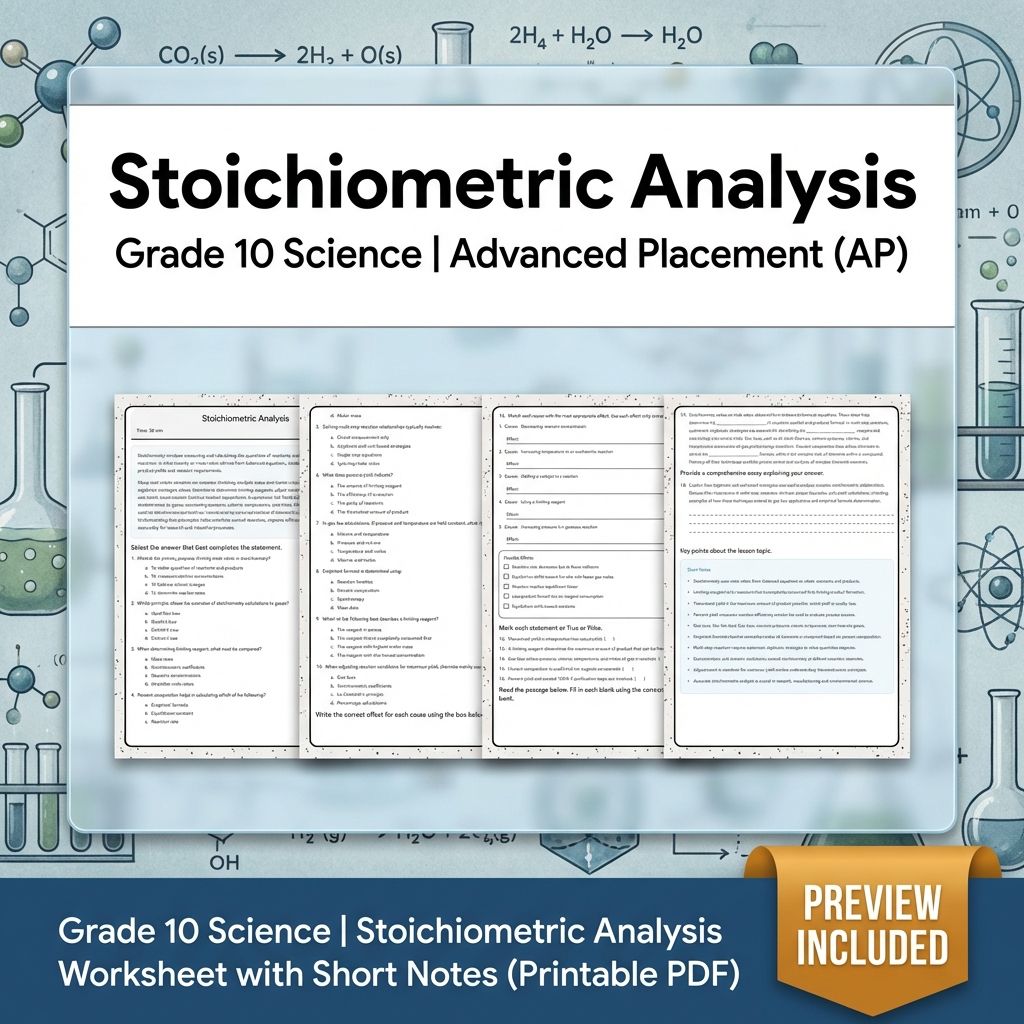
Grade 10 Science | Stoichiometric Analysis Worksheet with Short Notes (PDF)
 Created byMeadowlark Worksheets
Learning Objectives
- Apply algebraic methods and unit conversions to solve complex stoichiometric problems.
- Identify limiting reagents and calculate theoretical and actual yields.
- Utilize gas law principles and concentration concepts in chemical calculations.
Also included in: Grade 10 Science | Comprehensive Unit Bundle on Atomic Structure
Instant download
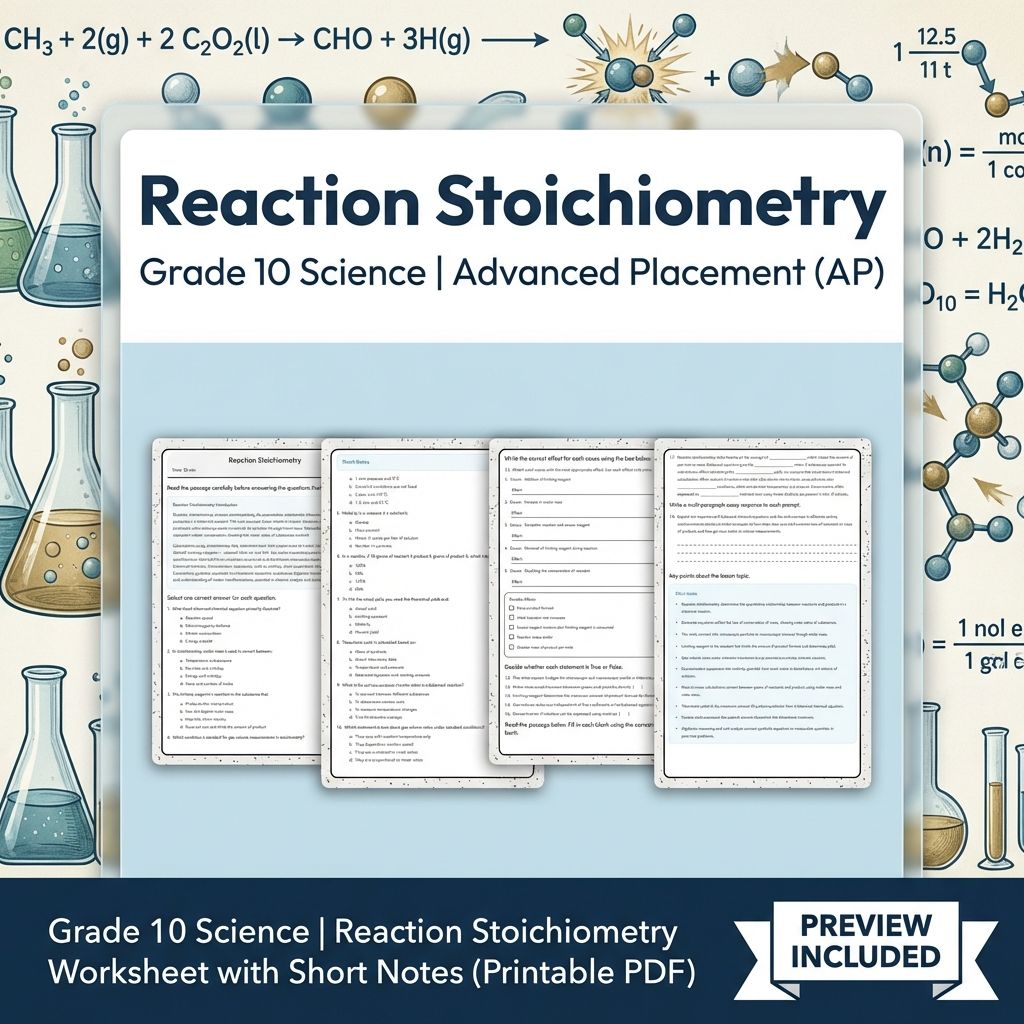
Grade 10 Science | Reaction Stoichiometry Worksheet with Short Notes (PDF)
Created byMeadowlark WorksheetsLearning Objectives
- Understand and interpret chemical reactions through mole ratios and balanced equations.
- Perform mass-to-mass conversion calculations using molar masses and mole ratios.
- Identify limiting reagents and calculate theoretical yields in chemical reactions.
Also included in: Grade 10 Science | Comprehensive Unit Bundle on Atomic Structure
Instant download
10th Grade Science | Energy Changes Worksheet with Short Notes (Printable PDF)
Created byMeadowlark WorksheetsLearning Objectives
- Explain the difference between endothermic and exothermic processes in chemical reactions.
- Describe the concepts of enthalpy and bond energetics in relation to reaction heat.
- Relate potential energy diagrams to energy changes during reactions.
Also included in: Grade 10 Science | Comprehensive Unit Bundle on Atomic Structure
Instant download

Grade 10 Science | Resource Availability & Tradeoffs - Reading Comprehension
Created byCoral Reef LearningLearning Objectives
- Identify renewable and non-renewable resources in different contexts.
- Understand how resource limits influence ecosystem and human system decisions.
- Analyze case studies related to freshwater stress, mineral extraction, and land use.
Instant download
10th Grade Science | Variables & Constraints Worksheet (PDF+ Answer Key)
Created byCopper Leaf ClassroomLearning Objectives
- Identify and classify independent, dependent, and controlled variables in experimental scenarios.
- Explain the role of operational definitions, boundary conditions, and constraints in scientific measurements.
- Select and justify variables that isolate causal relationships within experimental design.
Also included in: Grade 10 Science AP | Data Analysis & Modeling Skills (PDF + Answer Key) +1 more
Instant download
Grade 10 Science – Evolutionary Synthesis Worksheet for Mastery
 Created byThe Resource Hub
Learning Objectives
- Understand how genetics, paleontology, systematics, and ecology contribute to evolutionary theory.
- Explain mechanisms such as natural selection, genetic drift, mutation, and gene flow in species change.
- Interpret fossil records, phylogenetic trees, and ecological data to reconstruct evolutionary history.
Also included in: Grade 10 Science | Evolution & Heredity Worksheet Bundle (Mastery Skills Pack) +2 more
Instant download
10th Grade Science | Evolutionary Synthesis Worksheet (PDF+ Answer Key)
Created byCopper Leaf ClassroomLearning Objectives
- Understand the interdisciplinary evidence supporting the evolutionary synthesis model.
- Identify mechanisms such as natural selection, genetic drift, mutation, and gene flow in evolution.
- Explain how fossil records, phylogenetic trees, and ecological data converge to elucidate species change.
Instant download
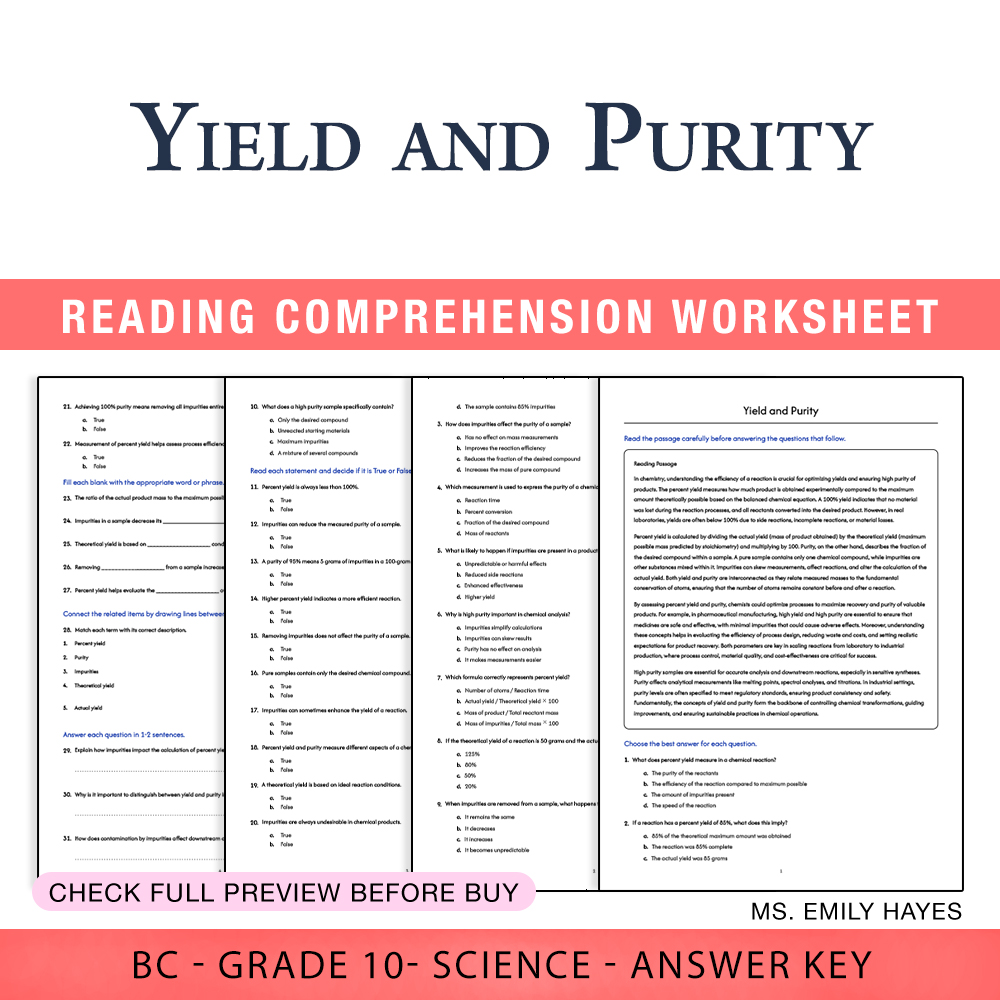
Grade 10 Science | Yield and Purity Worksheet (PDF + Answer Key)
Created byCopper Leaf ClassroomLearning Objectives
- Understand the concepts of percent yield and purity in chemical reactions.
- Calculate percent yield using actual and theoretical product masses.
- Explain how impurities affect the purity of a sample.
Also included in: Grade 10 Science BC| Chemistry, Reactions & Atomic Structure (PDF+ Answer Keys) +1 more
Instant download
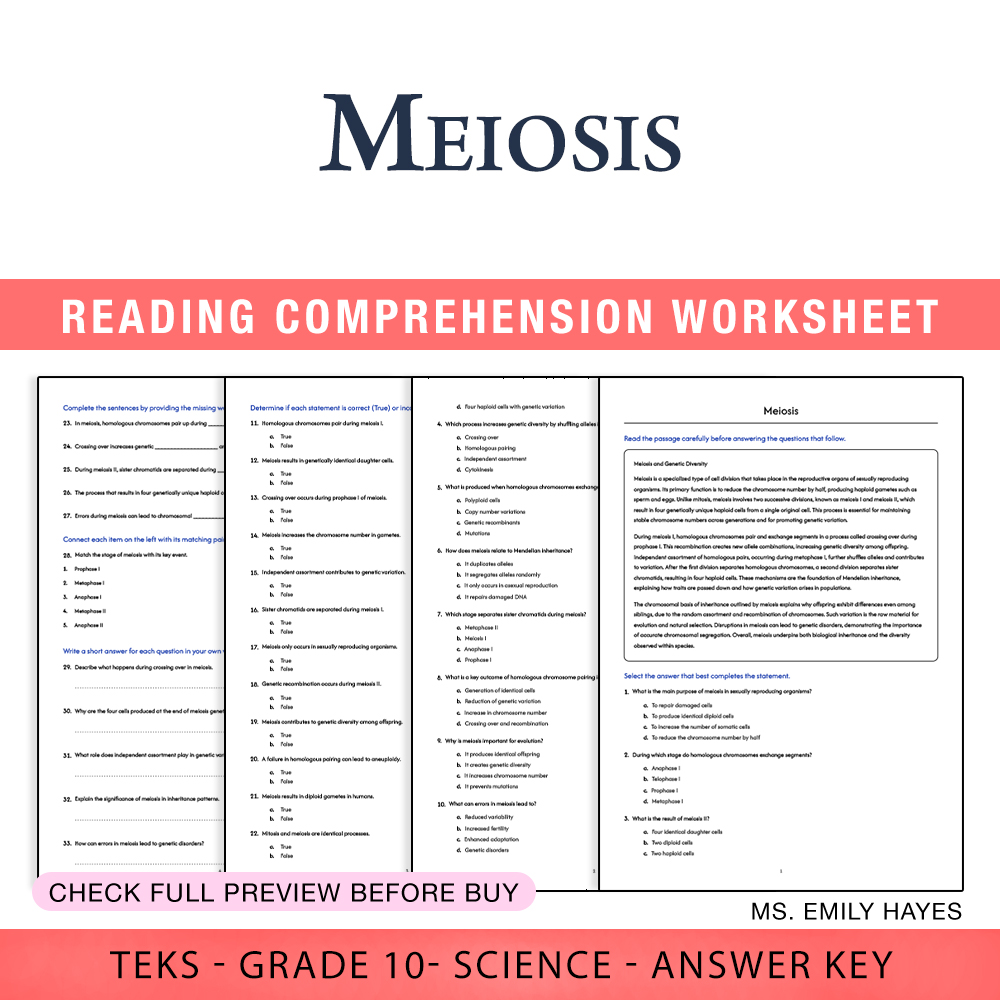
10th Grade Science | Meiosis Worksheet (PDF+ Answer Key)
Created byCopper Leaf ClassroomLearning Objectives
- Understand the process of meiosis and its role in reducing chromosome numbers.
- Describe how genetic diversity is produced during meiosis through recombination and independent assortment.
- Explain the stages of meiosis and the significance of homologous chromosome pairing and separation.
Instant download

Electric Fields Worksheet | Grade 10 Science Practice
Created byPrism Point LearningLearning Objectives
- Explain what an electric field represents in terms of force per unit positive charge.
- Describe how electric field lines show direction and relative strength around charges.
- Use superposition to predict the net electric field from multiple charges.
Also included in: Forces, Motion & Fields Lesson Bundle | Grade 10 Science | BC +1 more
Instant download
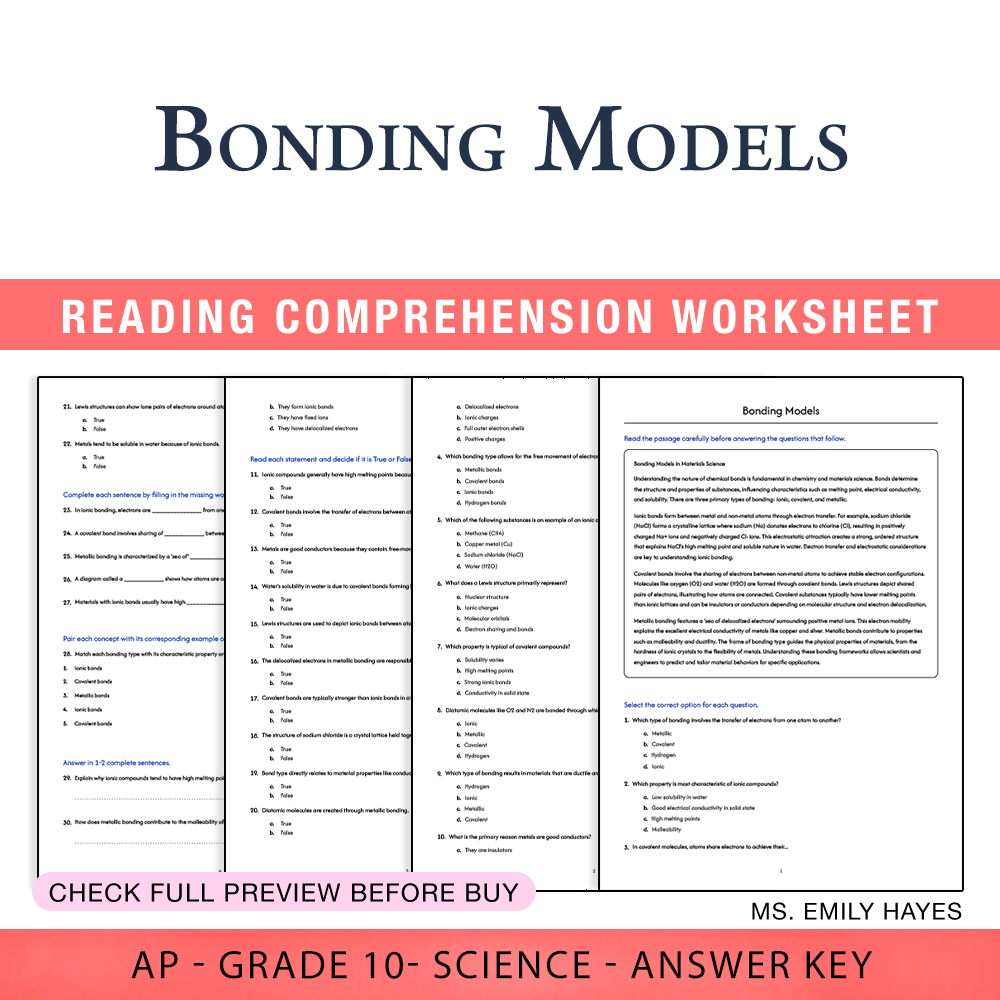
10th Grade Science | Bonding Models Worksheet (PDF+ Answer Key)
Created byCopper Leaf ClassroomLearning Objectives
- Describe the major types of bonding: ionic, covalent, and metallic.
- Relate bonding frameworks to observable properties like conductivity, melting point, and solubility.
- Illustrate electron-sharing and electron-transfer representations, Lewis structures, and basic molecular orbital concepts.
Also included in: Grade 10 Science -Atomic Structure & Chemical Reactions (PDF+ Answer Key) +1 more
Instant download
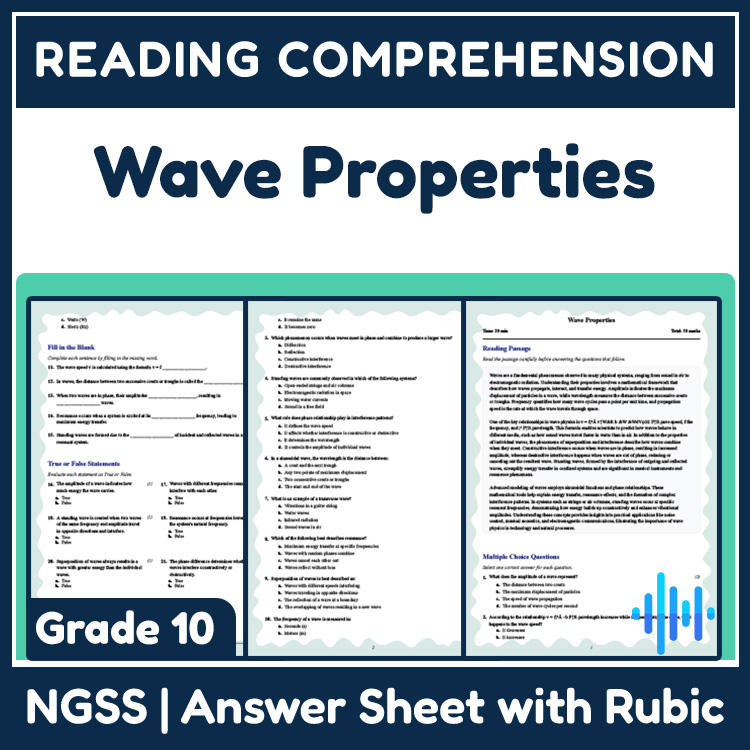
Grade 10 Science | Wave Properties Reading Worksheet (PDF + Answer Key)
JCreated byJ.S SheetsLearning Objectives
- Understand the mathematical characterization of wave properties such as amplitude, wavelength, frequency, and propagation speed.
- Explain the relationship v = fλ and apply it to various mechanical wave examples.
- Describe the concepts of superposition, interference patterns, and standing waves using trigonometric functions and phase relationships.
Instant download
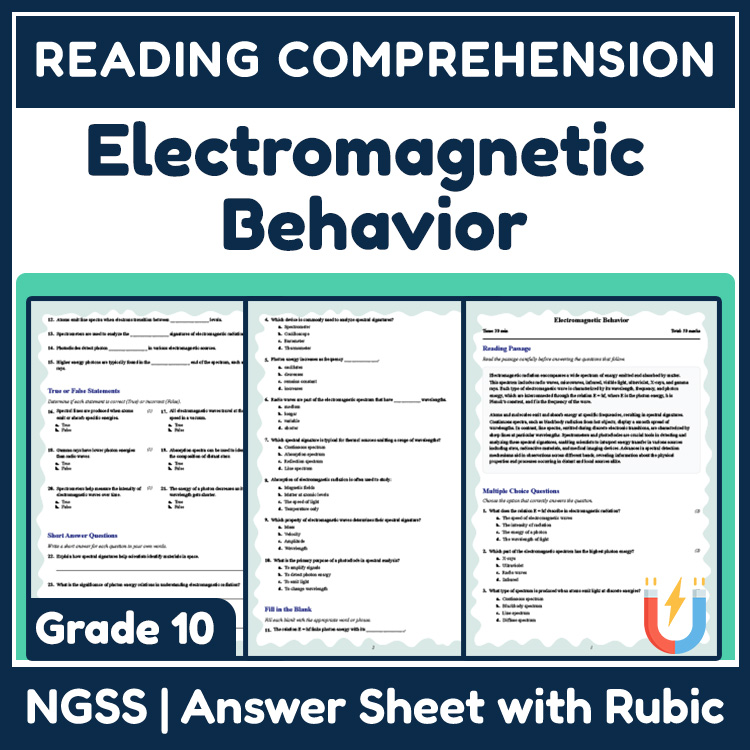
Grade 10 Science | Electromagnetic Behavior Reading Worksheet (PDF + Answer Key)
JCreated byJ.S SheetsLearning Objectives
- Understand the properties of electromagnetic emission and absorption through photon energy relations and spectral signatures.
- Apply Planck’s relation E = hf to interpret spectral data from various sources.
- Analyze atomic emission spectra to distinguish between continuous and line spectra.
Instant download
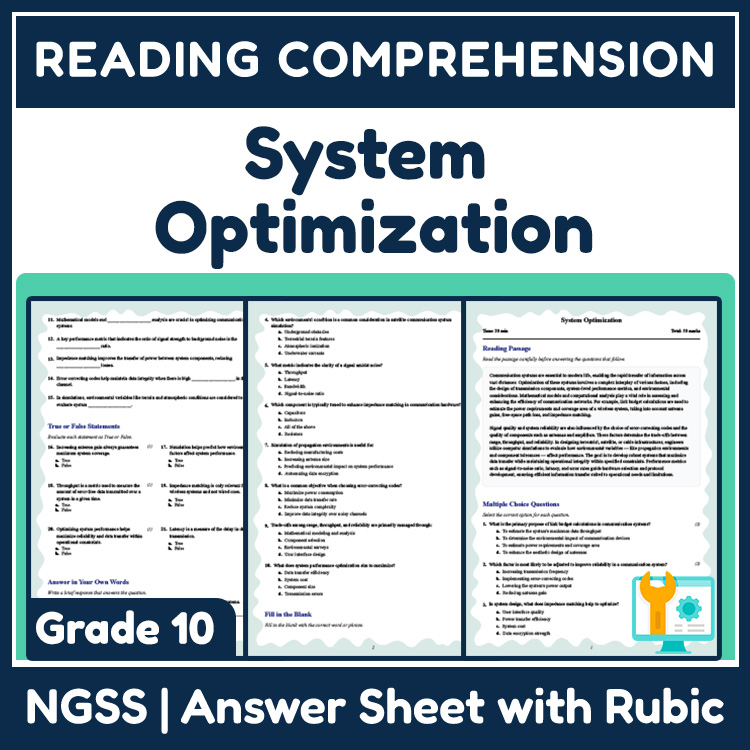
Grade 10 Science | System Optimization Reading Worksheet (PDF & Rubric)
JCreated byJ.S SheetsLearning Objectives
- Understand key concepts involved in the optimization of communication systems.
- Analyze factors affecting system performance such as gain, impedance matching, and error correction.
- Apply mathematical models to assess and improve communication system efficiency.
Instant download
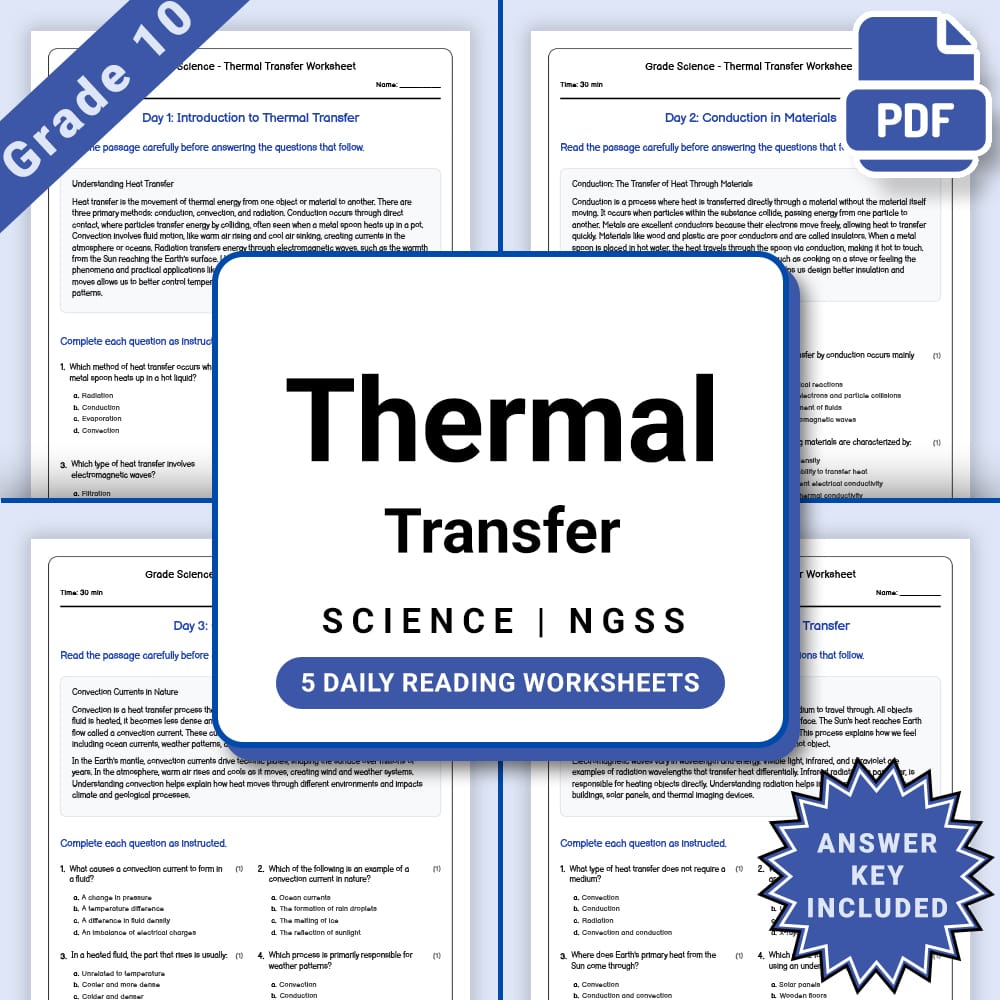
Grade 10 Science – Thermal Transfer Worksheet (PDF +Answer Key)
Created byCopper Leaf ClassroomLearning Objectives
- Understand the three methods of heat transfer: conduction, convection, and radiation.
- Identify examples of each heat transfer method in everyday life.
- Explain how thermal transfer affects temperature regulation and environmental processes.
Instant download
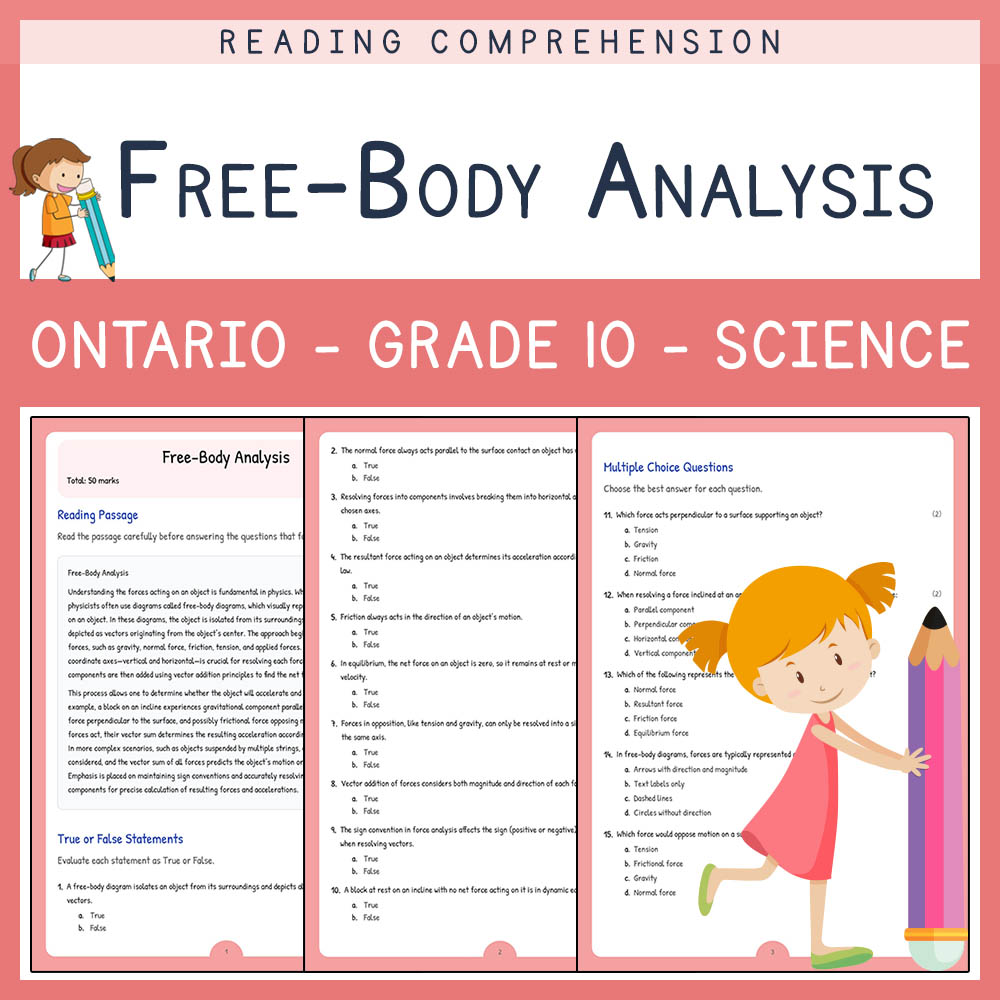
Grade 10 Science | Free-Body Analysis Worksheet Elena | Ontario Standard
 Created byLumora Learning
Learning Objectives
- Understand the concept of free-body diagrams and how they represent forces acting on objects.
- Learn procedures for identifying individual forces, choosing coordinate axes, and resolving force components.
- Apply vector addition to find the resultant force and relate it to the object's acceleration.
Also included in: Grade 10 Science | Motion & Forces Lesson Bundle | Ontario Standards
Instant download
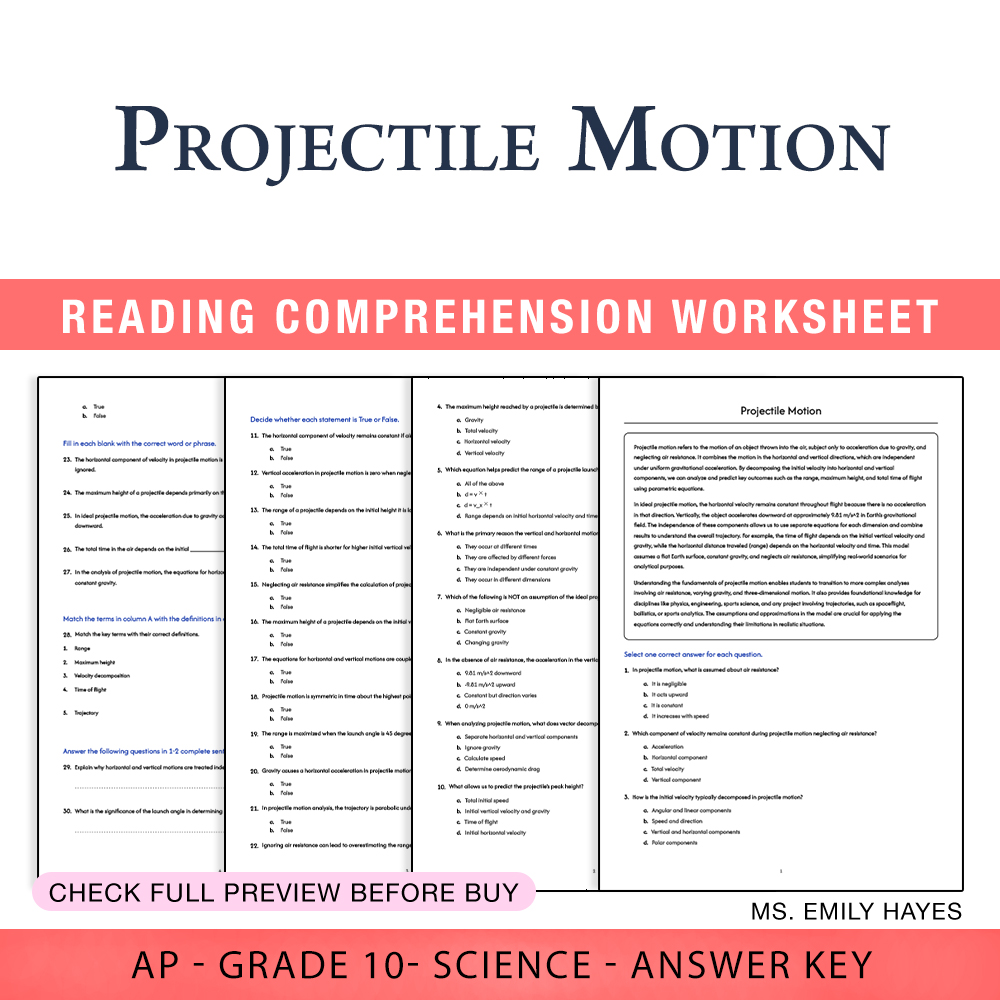
10th Grade Science | Projectile Motion Worksheet (PDF+ Answer Key)
Created byCopper Leaf ClassroomLearning Objectives
- Explain the independence of horizontal and vertical components of projectile motion.
- Calculate range, time of flight, and peak height for projectile trajectories ignoring air resistance.
- Use vector decomposition and parametric equations to analyze projectile motion scenarios.
Also included in: Grade 10 Science AP | Physics & Energy Concepts (PDF+ Answer Key) +1 more
Instant download
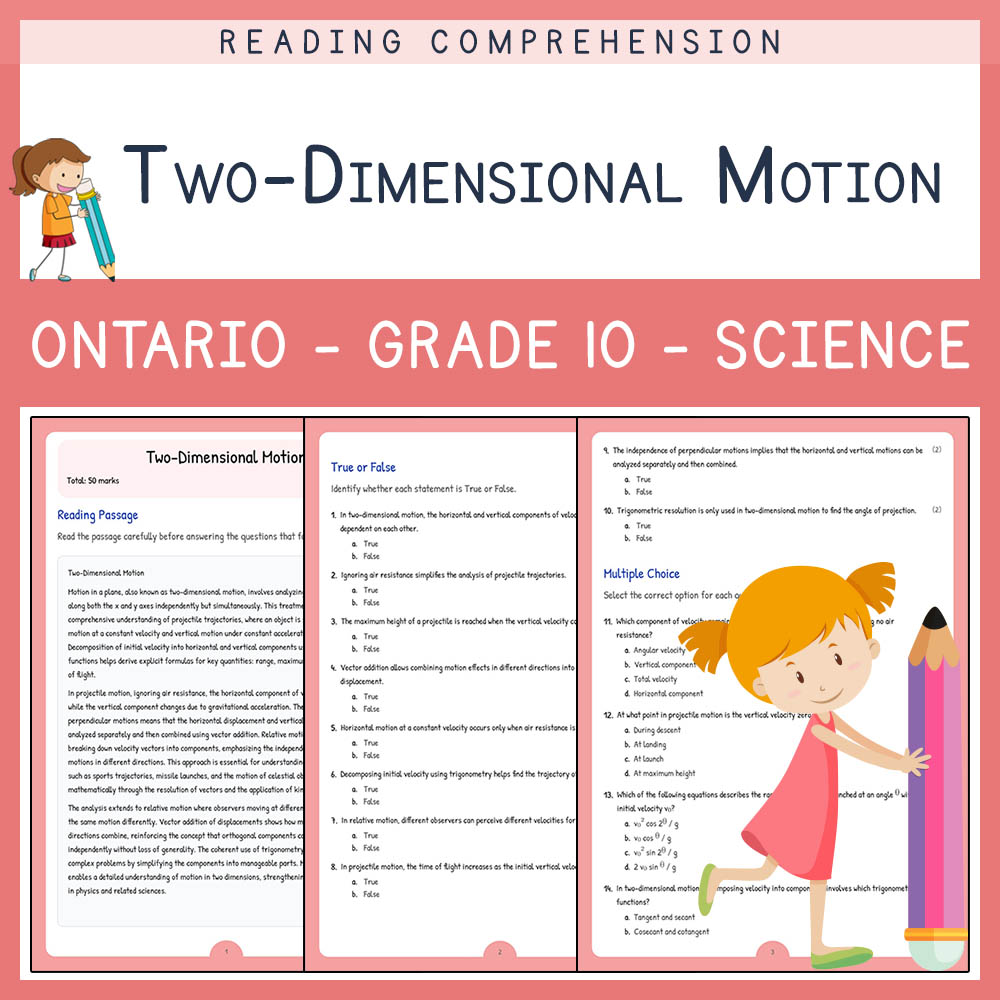
Grade 10 Science | Two-Dimensional Motion Worksheet Elena | Ontario Standard
Created byLumora LearningLearning Objectives
- Explain the concept of motion in a plane and the decomposition of velocity into orthogonal components.
- Analyze projectile trajectories using uniform gravitational acceleration neglecting air resistance.
- Derive and understand expressions for range, maximum height, and time of flight in two-dimensional motion.
Also included in: Grade 10 Science | Motion & Forces Lesson Bundle | Ontario Standards
Instant download
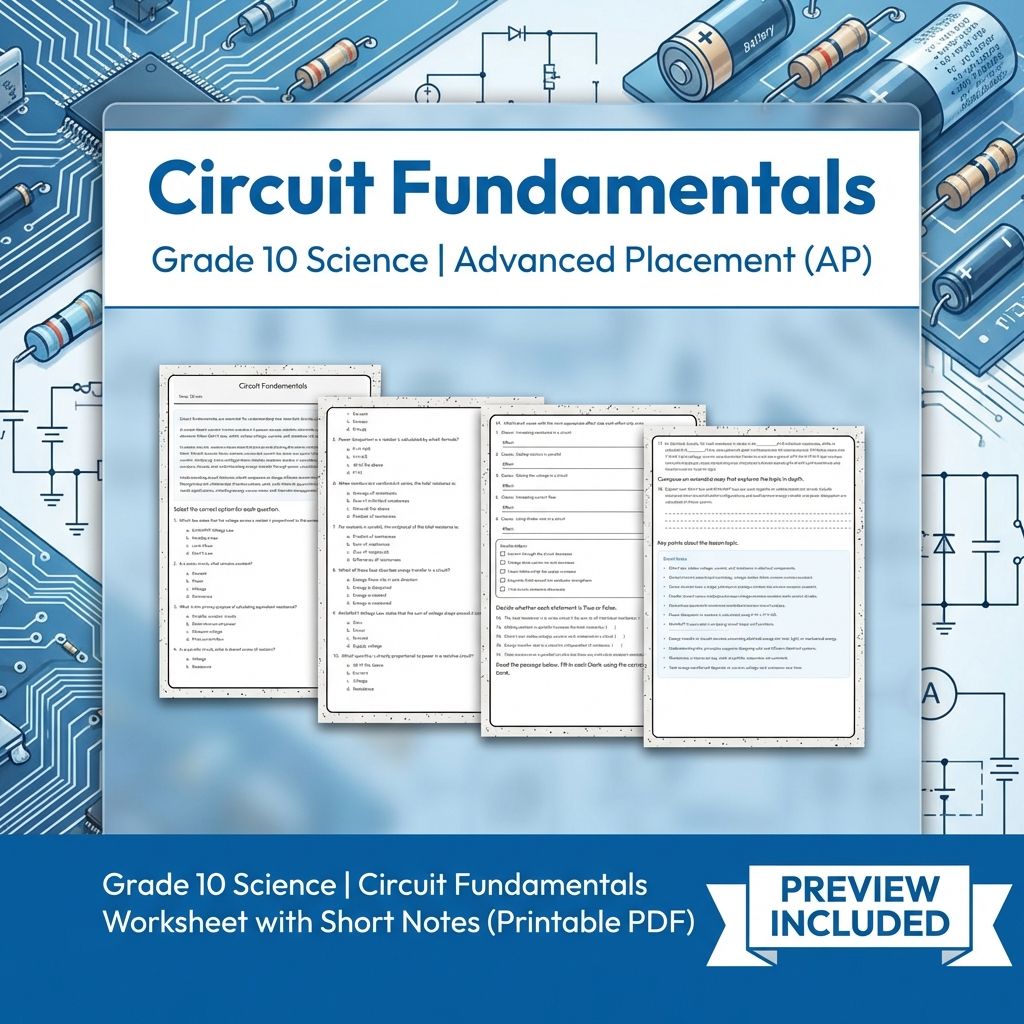
Grade 10 Science | Circuit Fundamentals Worksheet with Short Notes (PDF)
Created byMeadowlark WorksheetsLearning Objectives
- Understand the basic components and functions of direct-current circuits.
- Apply Ohm's law and Kirchhoff's laws to analyze series and parallel circuits.
- Calculate equivalent resistance in complex circuits.
Instant download

Grade 10 Science | Understanding Organ Systems - Reading Comprehension
Created byCoral Reef LearningLearning Objectives
- Identify the main organs involved in the human digestive system.
- Describe the structure and function of the stomach, intestines, and liver.
- Explain how the digestive organs work together to process food.
Also included in: Cells and Systems Lesson Bundle | Grade 10 Science | Alberta Framework +1 more
Instant download

Grade 10 Science | Homeostatic Balance - Daily Reading Comprehension
Created byCoral Reef LearningLearning Objectives
- Understand the concept of homeostasis and its importance in maintaining internal stability.
- Identify mechanisms involved in temperature regulation in mammals.
- Describe the role of sensor-effector loops and metabolic adjustments.
Also included in: Cells and Systems Lesson Bundle | Grade 10 Science | Alberta Framework +1 more
Instant download

Grade 10 Science | Cell Types - Daily Reading Comprehension
Created byCoral Reef LearningLearning Objectives
- Identify the basic differences between prokaryotic and eukaryotic cells
- Understand the structural complexity of different cell types
- Recognize examples of prokaryotic and eukaryotic organisms
Also included in: Cells and Systems Lesson Bundle | Grade 10 Science | Alberta Framework +1 more
Instant download

Grade 10 Science | Cell Basics - Daily Reading Comprehension
Created byCoral Reef LearningLearning Objectives
- Understand the fundamental structure of a cell.
- Identify key features of cell components such as the membrane, cytoplasm, and genetic material.
- Recognize examples of plant and moss cells relevant to Alberta ecosystems.
Also included in: Cells and Systems Lesson Bundle | Grade 10 Science | Alberta Framework +1 more
Instant download
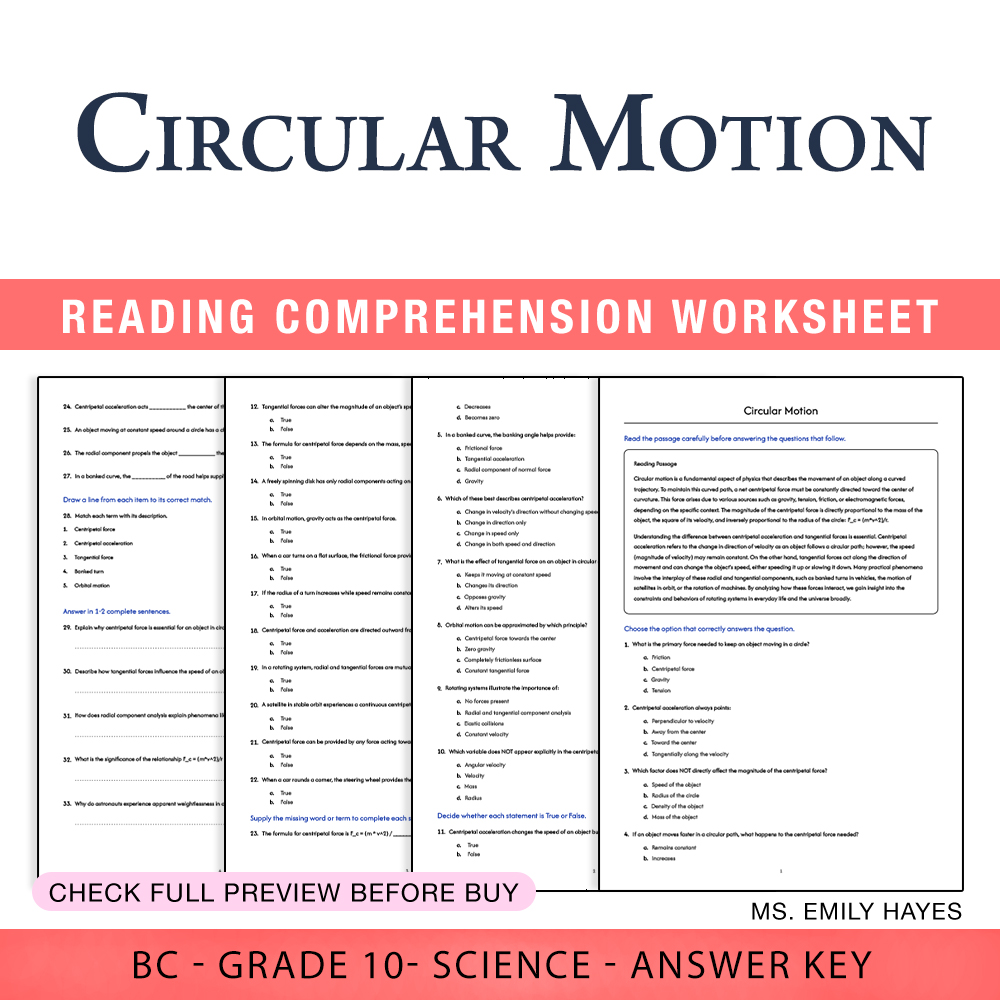
Grade 10 Science | Circular Motion Worksheet (PDF+ Answer Key)
Created byCopper Leaf ClassroomLearning Objectives
- Understand the concept of centripetal force and its role in circular motion.
- Differentiate between centripetal acceleration and tangential forces.
- Explain real-world phenomena involving radial and tangential components in rotating systems.
Also included in: Grade 10 Science BC | Forces, Motion & Fields Worksheets (PDF + Answer Key) +1 more
Instant download
Grade 10 Science | Motion Description Worksheet (PDF+ Answer Key)
Created byCopper Leaf ClassroomLearning Objectives
- Explain key kinematic quantities such as position, displacement, speed, velocity, and acceleration.
- Describe how time and reference frames provide context for measuring motion.
- Interpret and analyze motion graphs and equations relating variables in one- and two-dimensional motion.
Also included in: Grade 10 Science BC | Forces, Motion & Fields Worksheets (PDF + Answer Key) +1 more
Instant download
Grade 10 Science | Tension and Normal Forces Worksheet (PDF + Answer Key)
Created byCopper Leaf ClassroomLearning Objectives
- Understand how tension transmits forces through connectors and acts along their length in different situations.
- Explain how the normal force arises from contact and balances components of weight on inclined surfaces.
- Analyze the combined effects of tension and normal force in objects connected by cords or resting on slopes.
Also included in: Grade 10 Science BC | Forces, Motion & Fields Worksheets (PDF + Answer Key) +1 more
Instant download
Grade 10 Science | Orbits and Energy Worksheet (PDF + Answer Key)
Created byCopper Leaf ClassroomLearning Objectives
- Explain how gravitational attraction provides the centripetal force for orbital motion.
- Describe the relationship between orbital speed, central mass, and orbital radius.
- Differentiate between circular and elliptical orbits and understand energy partitioning.
Also included in: Grade 10 Science BC | Forces, Motion & Fields Worksheets (PDF + Answer Key) +1 more
Instant download
10th Grade Science | Friction and Drag Worksheet (PDF+ Answer Key)
Created byCopper Leaf ClassroomLearning Objectives
- Explain the mechanisms of friction and drag and how they oppose motion.
- Describe factors affecting static and kinetic friction between surfaces.
- Understand how drag force increases with speed and achieves terminal velocity.
Also included in: Grade 10 Science BC | Forces, Motion & Fields Worksheets (PDF + Answer Key) +1 more
Instant download
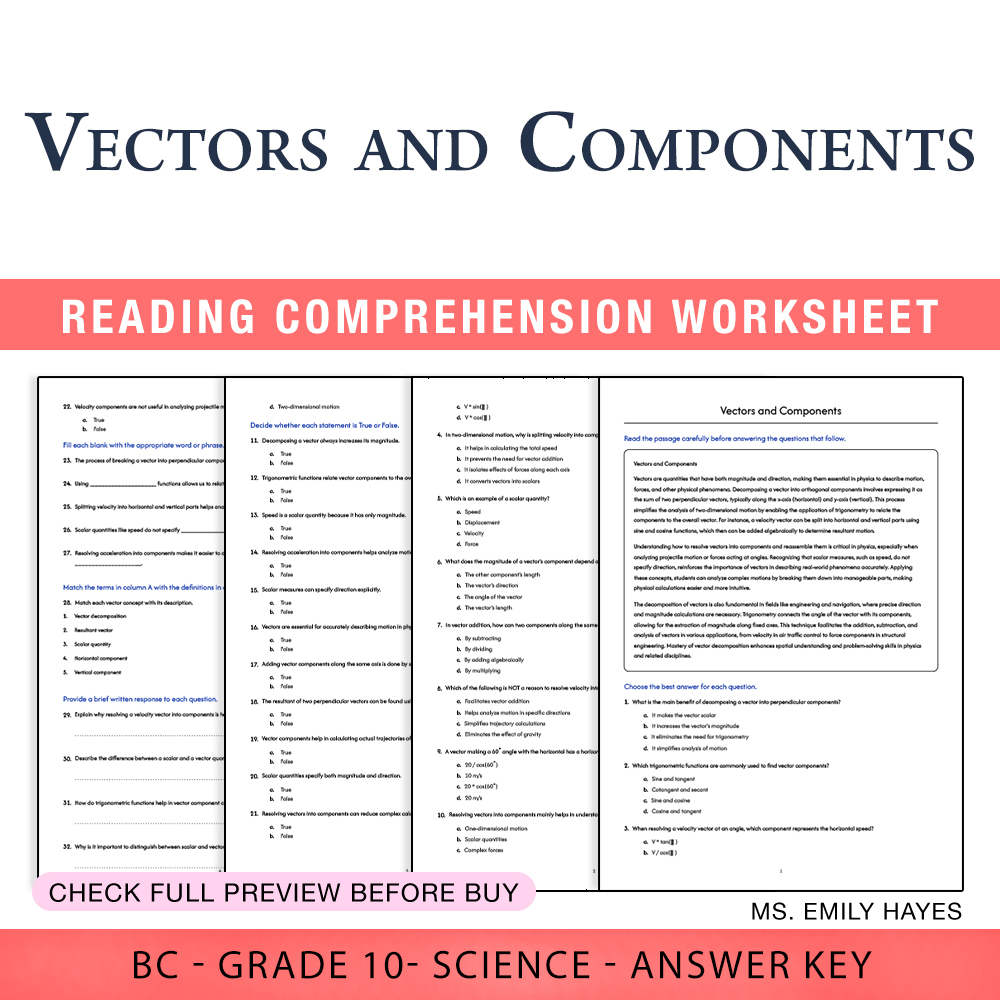
Grade 10 Science | Vectors and Components Worksheet (PDF+ Answer Key)
Created byCopper Leaf ClassroomLearning Objectives
- Understand the concept of vector decomposition into perpendicular components.
- Apply trigonometric functions to relate vector components to magnitude and direction.
- Analyze two-dimensional motion by resolving velocity and acceleration into horizontal and vertical components.
Also included in: Grade 10 Science BC | Forces, Motion & Fields Worksheets (PDF + Answer Key) +1 more
Instant download
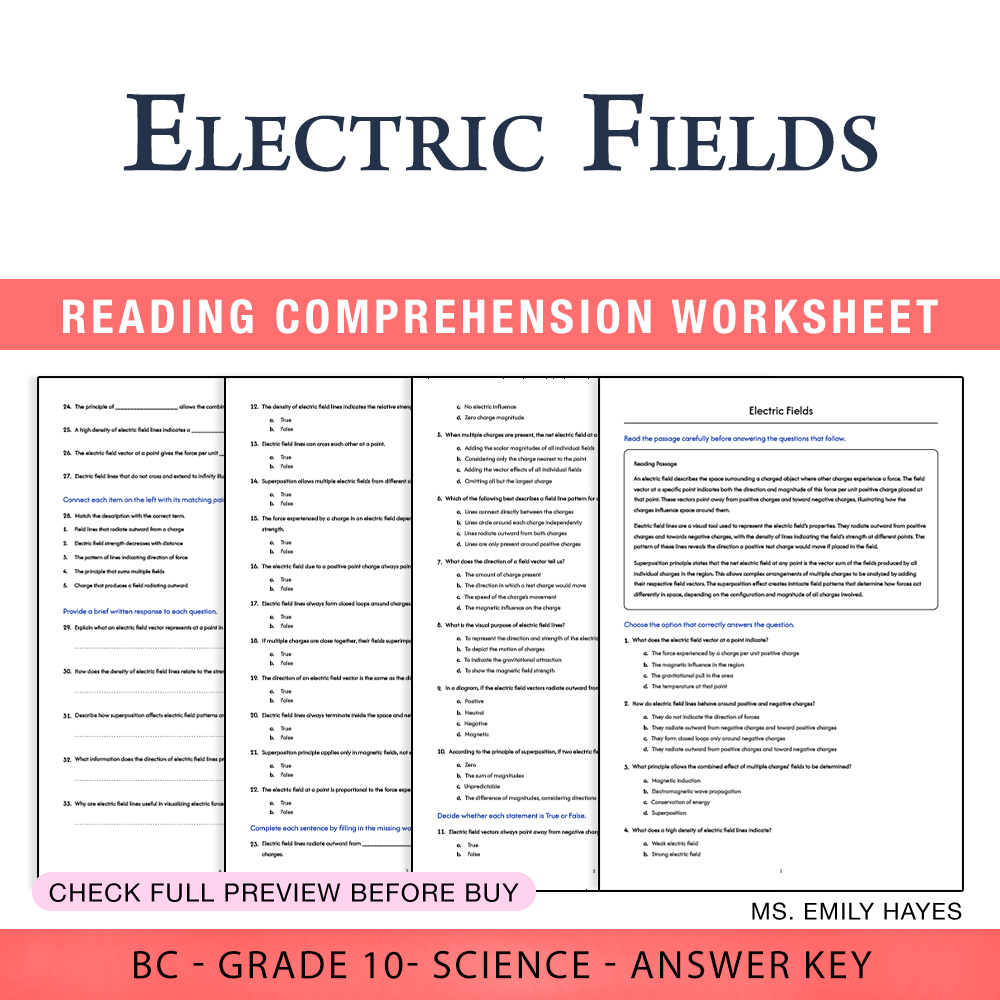
Grade 10 Science | Electric Fields Worksheet (PDF+ Answer Key)
Created byCopper Leaf ClassroomLearning Objectives
- Describe the concept of an electric field and how it affects charges in space.
- Interpret the meaning of field vectors and how they indicate force direction and magnitude.
- Explain how electric field lines represent the influence of positive and negative charges.
Also included in: Grade 10 Science BC | Forces, Motion & Fields Worksheets (PDF + Answer Key) +1 more
Instant download
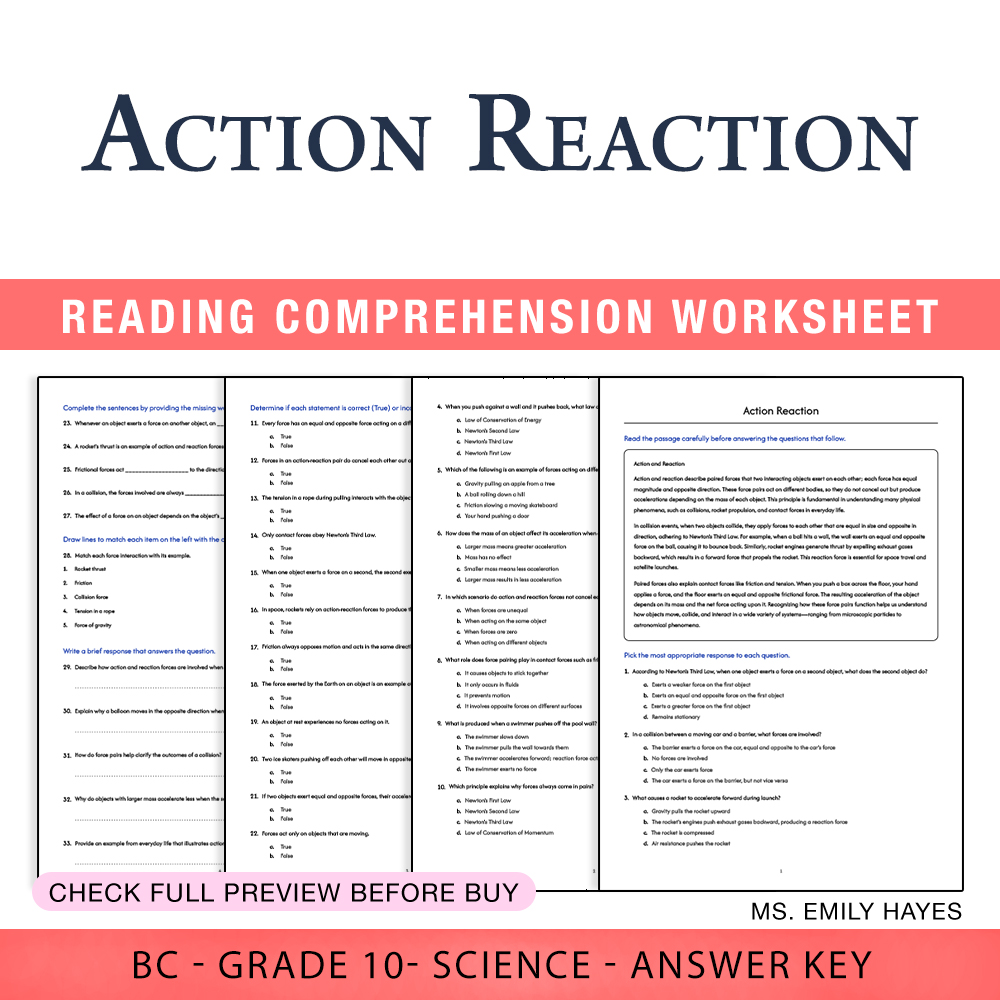
Grade 10 Science | Action and Reaction Forces Worksheet (PDF+ Answer Key)
Created byCopper Leaf ClassroomLearning Objectives
- Understand the concept of paired forces in action and reaction.
- Explain how forces act on different objects and their effects on motion.
- Identify real-world examples of Newton's Third Law, including collisions and rocket thrust.
Also included in: Grade 10 Science BC | Forces, Motion & Fields Worksheets (PDF + Answer Key) +1 more
Instant download
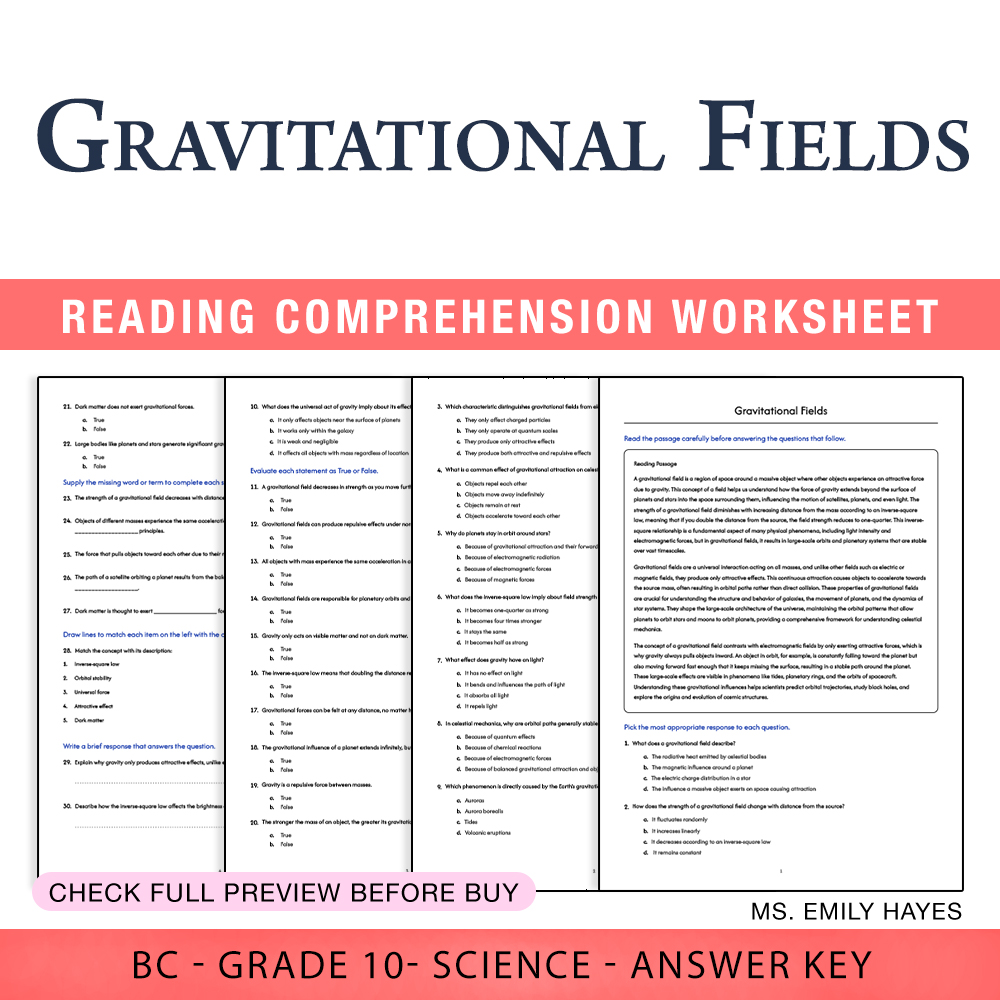
10th Grade Science | Gravitational Fields Worksheet (PDF+ Answer Key)
Created byCopper Leaf ClassroomLearning Objectives
- Explain the concept of a gravitational field and how it influences objects in space.
- Describe the inverse-square relationship between field strength and distance from a mass.
- Differentiate gravitational fields from other force fields by their universal attraction and large-scale effects.
Also included in: Grade 10 Science BC | Forces, Motion & Fields Worksheets (PDF + Answer Key) +1 more
Instant download
Grade 10 Science | Field Superposition Worksheet (PDF+ Answer Key)
Created byCopper Leaf ClassroomLearning Objectives
- Understand the principle of field superposition and its application in physics.
- Calculate the resultant field at a point due to multiple sources.
- Identify regions where fields reinforce or cancel each other.
Also included in: Grade 10 Science BC | Forces, Motion & Fields Worksheets (PDF + Answer Key) +1 more
Instant download
10th Grade Science | Magnetic Fields Worksheet (PDF+ Answer Key)
Created byCopper Leaf ClassroomLearning Objectives
- Explain how magnetic fields are generated by moving charges and electric currents.
- Interpret the representation of magnetic field lines and their direction.
- Describe the effects of magnetic forces on moving charges and their trajectories.
Also included in: Grade 10 Science BC | Forces, Motion & Fields Worksheets (PDF + Answer Key) +1 more
Instant download
Grade 10 Science | Relative Velocity Worksheet (PDF+ Answer Key)
Created byCopper Leaf ClassroomLearning Objectives
- Understand the concept of relative velocity and how it is calculated between different reference frames.
- Apply basic vector subtraction to find the apparent velocity of objects from different perspectives.
- Explain the effect of frame of reference on the observation of motion, including everyday examples.
Also included in: Grade 10 Science BC | Forces, Motion & Fields Worksheets (PDF + Answer Key) +1 more
Instant download
10th Grade Science | Ecosystem Stability Worksheet (PDF + Answer Key)
Created byCopper Leaf ClassroomLearning Objectives
- Explain the concepts of resilience, resistance, and thresholds in ecosystems.
- Analyze recovery pathways and potential stable states after disturbances.
- Interpret quantitative indicators used to assess ecosystem resilience and function.
Instant download
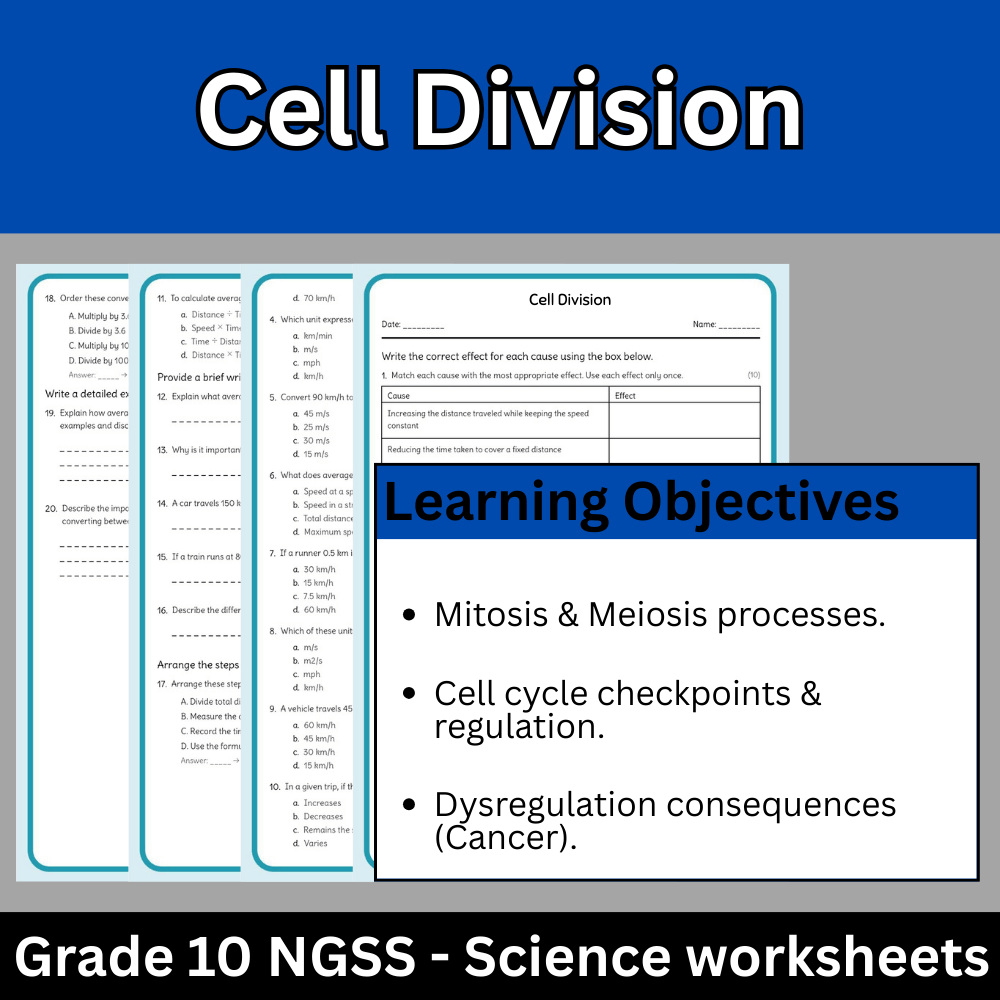
Grade 10 Science – Cell Division Worksheet (Answer Key) | NGSS Aligned
Created byBright Mind ResourcesLearning Objectives
- Describe the processes of mitosis and meiosis and their roles in cell division.
- Explain the cell cycle, including checkpoints and regulation mechanisms.
- Discuss the consequences of cell cycle dysregulation, such as cancer.
Instant download
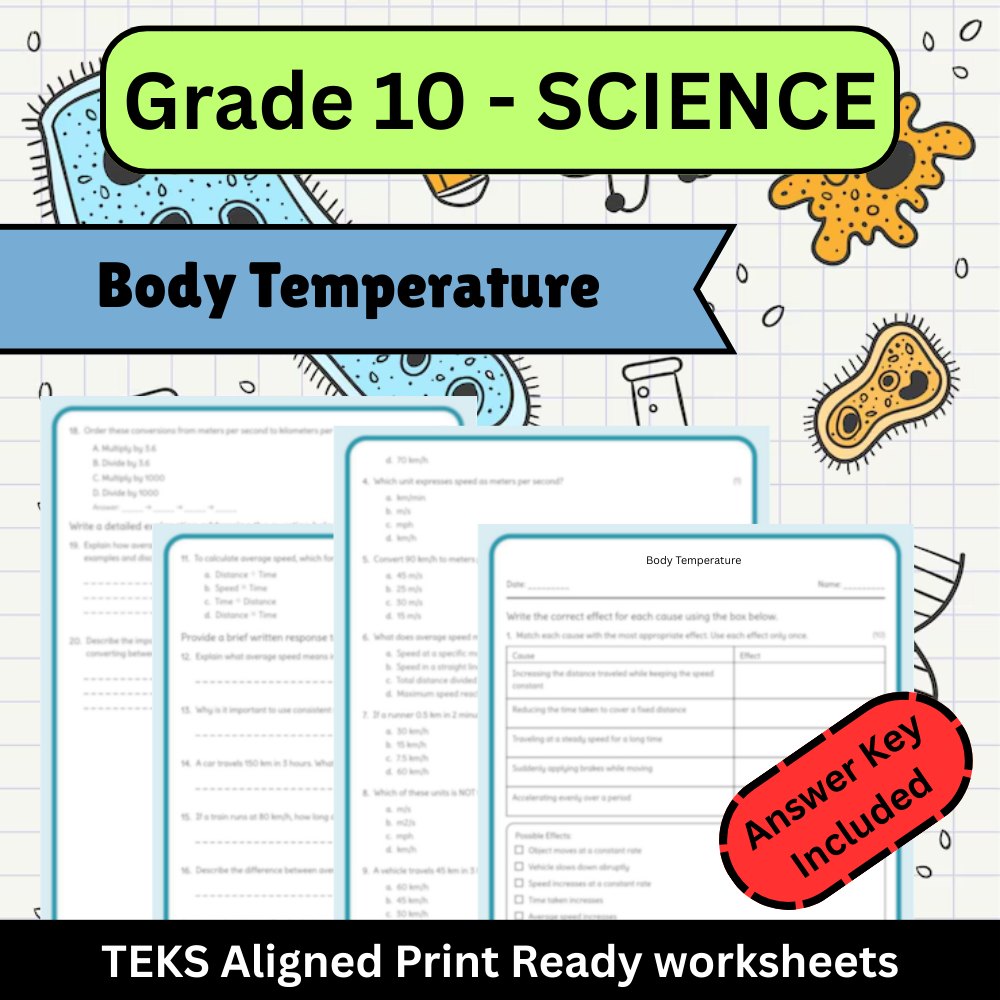
Grade 10 Science – Body Temperature Regulation Worksheet (Worksheet + Answer Key) - TEKS Aligned
Created byBright Mind ResourcesLearning Objectives
- Describe how the nervous, circulatory, muscular, and integumentary systems work together to regulate body temperature.
- Explain the roles of vasodilation, vasoconstriction, sweating, and shivering in thermal regulation.
- Understand feedback mechanisms that help maintain homeostasis of body temperature.
Also included in: Grade 10 Science | Body Systems & Homeostasis Worksheet Bundle (TEKS Aligned) +5 more
Instant download
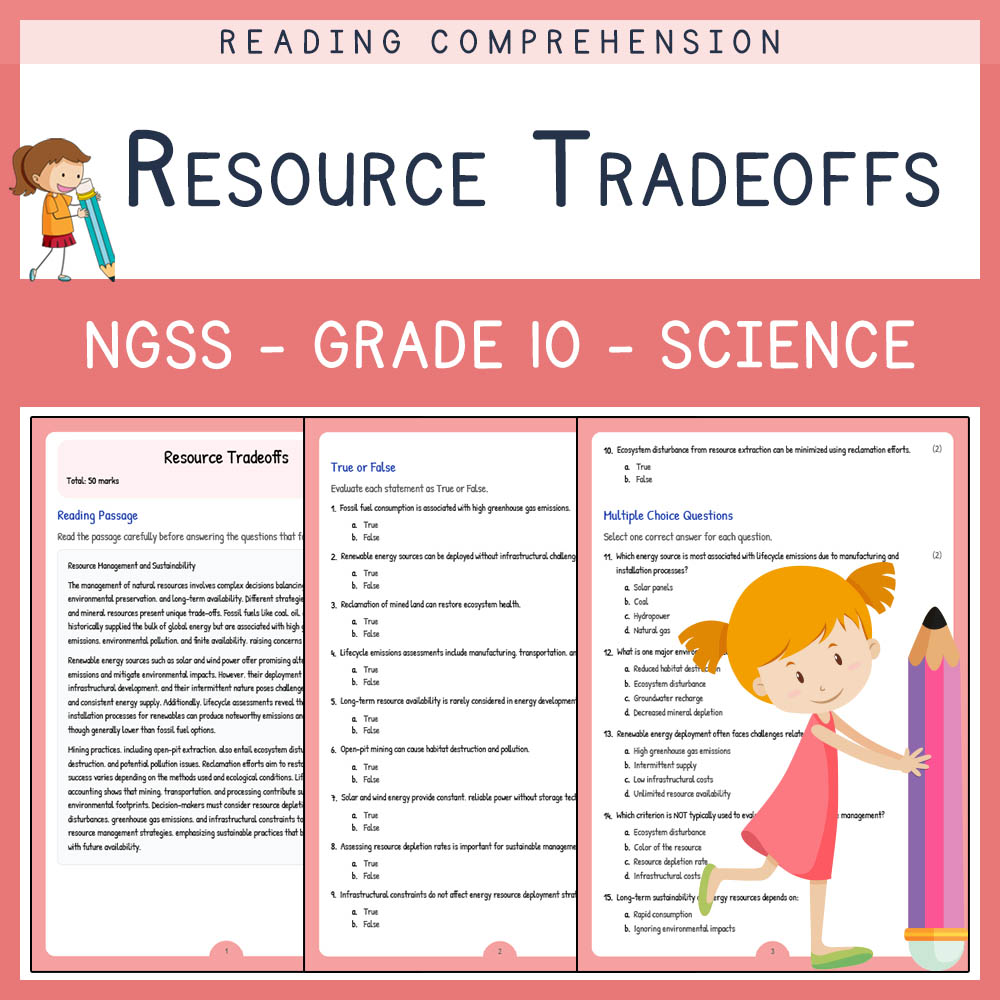
Grade 10 Science | Resource Tradeoffs Worksheet & Answer Key (NGSS Aligned)
Created byLumora LearningLearning Objectives
- Analyze and evaluate different energy and mineral resource development strategies considering environmental and economic trade-offs.
- Compare the impacts of fossil fuel extraction, renewable energy deployment, and mining reclamation using sustainability criteria.
- Interpret case studies related to resource management and assess sustainability implications for future resource utilization.
Instant download
About Grade 10 Science Worksheets
Find Science worksheets built for Grade 10. All 7,069 cover core skills, practice, and review, each an instant PDF download.
Every worksheet on MyTeachingSheets is created by independent teacher-authors and reviewed before publication. All resources download as printable PDFs for classroom, homework, or at-home practice, and many include answer keys. Preview any worksheet free before buying.