
Grade 10 Science Worksheets
7,069 worksheets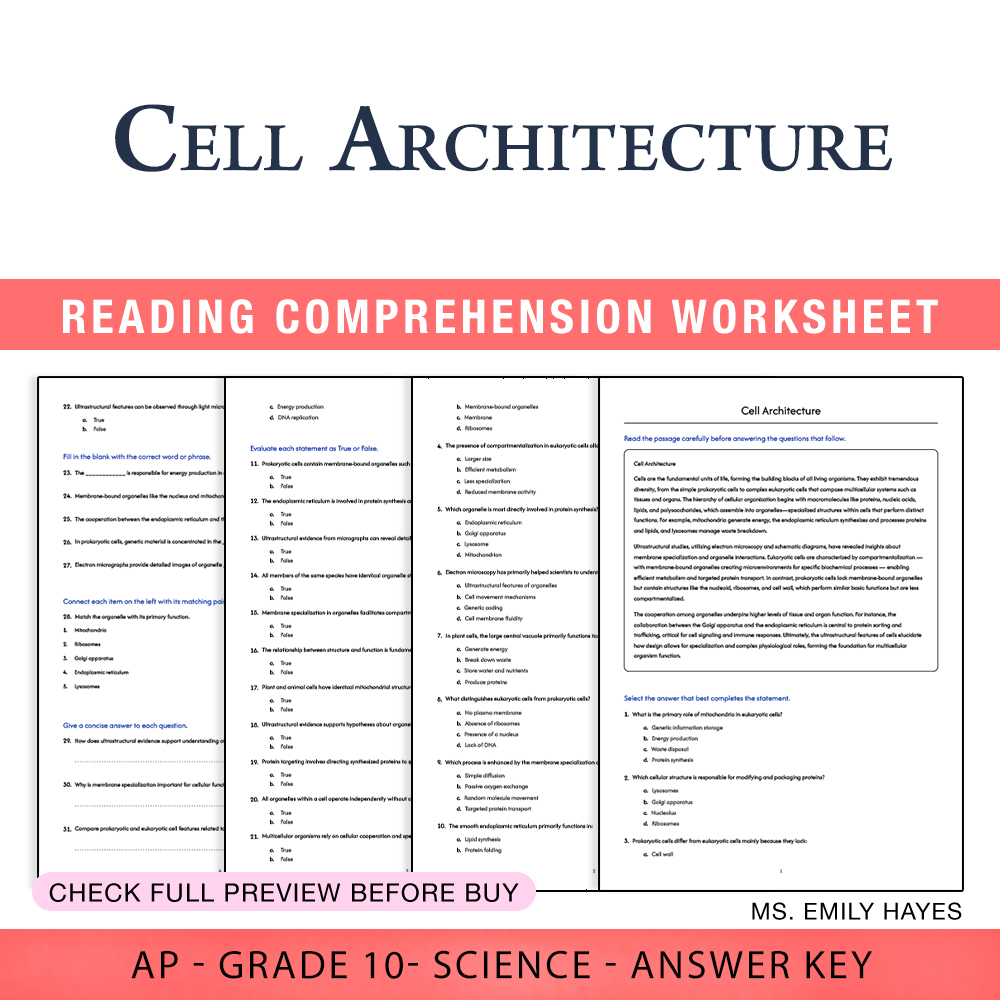
Grade 10 Science | Cell Architecture Worksheet (PDF+ Answer Key)
 Created byCopper Leaf Classroom
Learning Objectives
- Describe the hierarchical organization of macromolecules, organelles, and systems within cells.
- Compare structural features of prokaryotic and eukaryotic cells and relate these to their functions.
- Explain how ultrastructural evidence supports cellular specialization and physiological roles.
Also included in: Grade 10 Science | Key Concepts in Biology & Ecosystems (PDF+ Answer Key) +1 more
Instant download
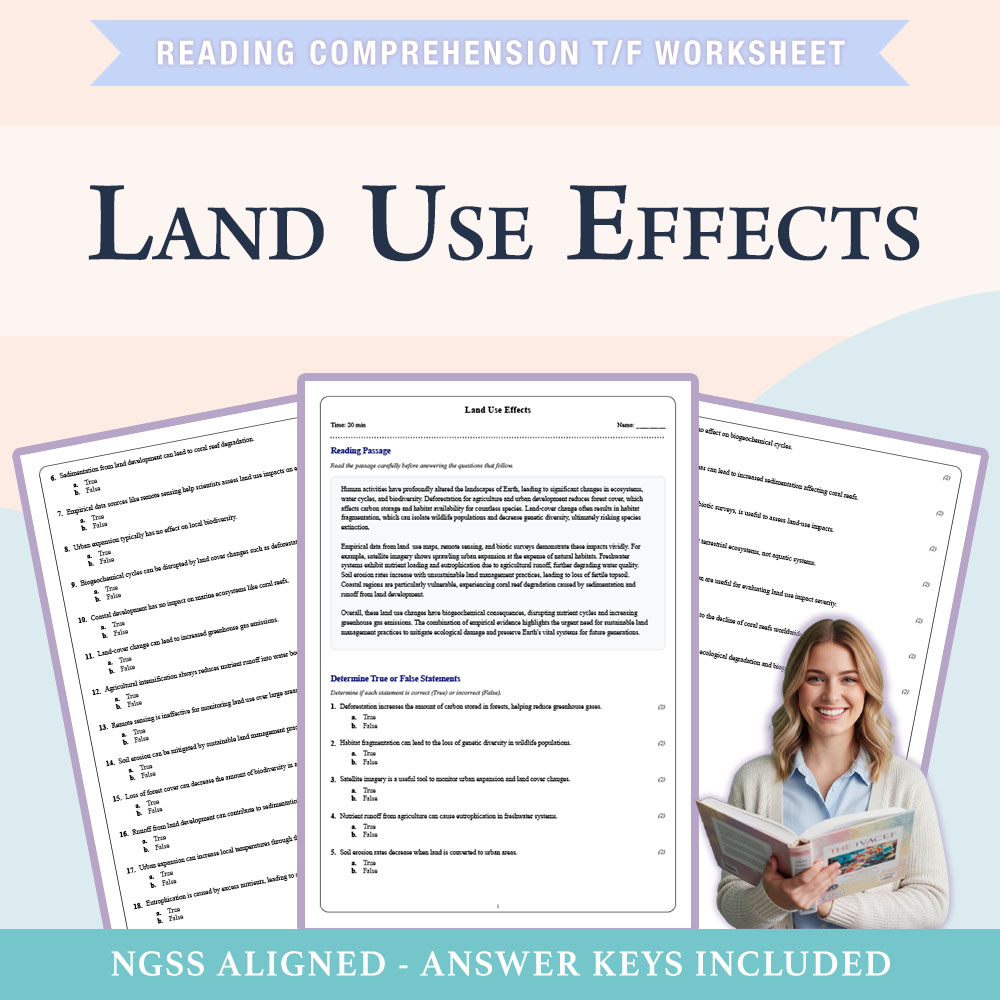
10th Grade Science | Land Use Effects Worksheet (PDF + Answer Key)
Created byCopper Leaf ClassroomLearning Objectives
- Understand how human land-use activities impact ecosystems, hydrological cycles, and biodiversity.
- Identify indicators of land use changes such as habitat fragmentation, soil erosion, and coral reef degradation.
- Analyze empirical data sources like land‑use maps and remote sensing to link human activities to ecological consequences.
Also included in: Grade 10 Science | Environmental Management & Climate Change (PDF + Answer Key) +1 more
Instant download

Grade 10 Science – Lifecycle Analysis & Environmental Impact | Reading Worksheet
 Created byBright Mind Resources
Learning Objectives
- Understand the concept of lifecycle analysis and its stages
- Identify energy inputs and outputs during a technology's lifecycle
- Evaluate the environmental impact of different lifecycle stages
Also included in: Grade 10 Energy Science Daily Reading Worksheets Lesson Bundle | BC +1 more
Instant download

Lifecycle Analysis Worksheet | Grade 10 Science Activities
 Created byPrism Point Learning
Learning Objectives
- Explain cradle-to-grave lifecycle analysis and identify its main energy stages: extraction, manufacturing, operation, and disposal.
- Apply conservation of energy to compare total embodied energy and operational energy with outputs such as waste heat.
- Interpret lifecycle analysis results to evaluate net energy benefits or deficits and recognize hidden upstream impacts.
Also included in: Grade 10 Energy, Efficiency & Conservation Science Lesson Bundle | BC +1 more
Instant download
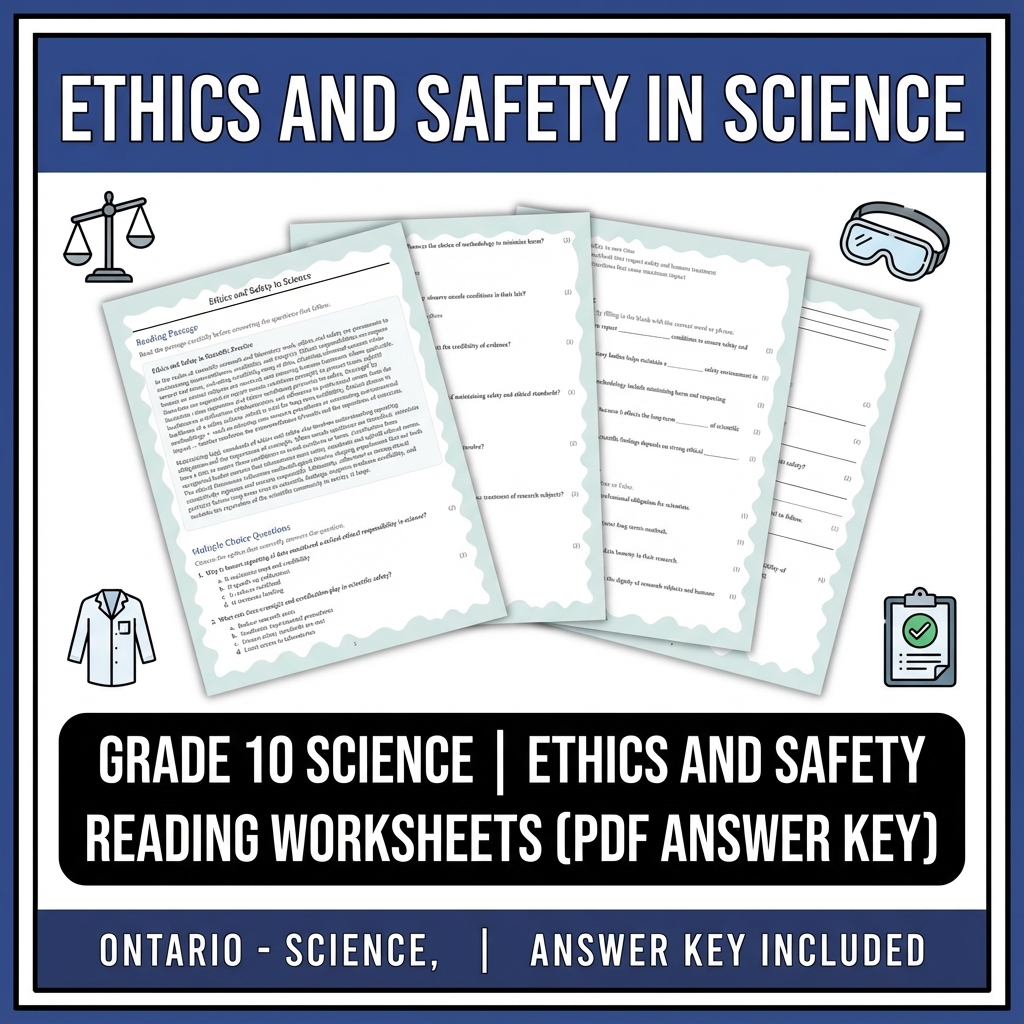
Grade 10 Science | Ethics and Safety Reading Worksheets (PDF Answer Key)
JCreated byJ.S SheetsLearning Objectives
- Understand the ethical responsibilities associated with maintaining safety and integrity in scientific work.
- Identify the roles of oversight, reporting, and certification in promoting a safety culture.
- Recognize how ethical considerations influence methodological choices and impact the credibility of scientific findings.
Also included in: Grade 10 Science UNIT Bundle – Data Representation, Safety & Research Skills +1 more
Instant download
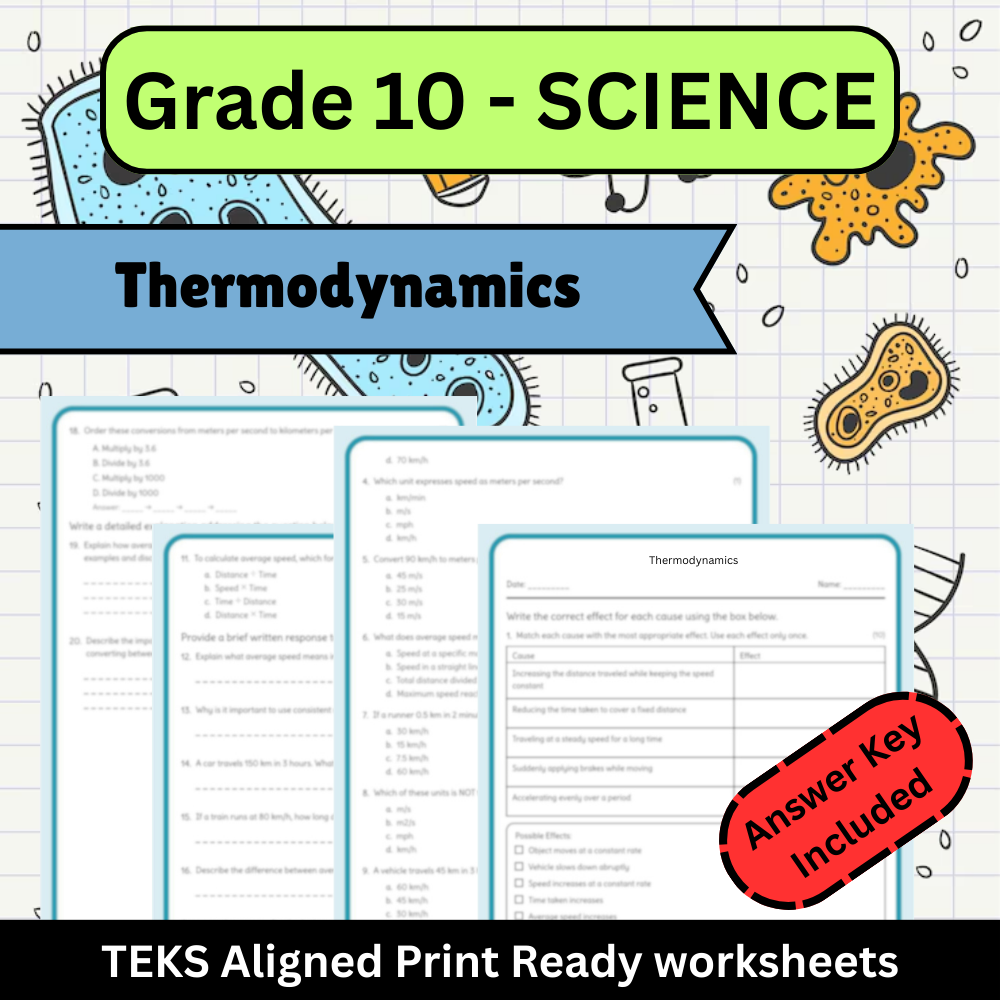
Grade 10 Science | Thermodynamics Worksheet (Worksheet + Answer Key) - TEKS Aligned
Created byBright Mind ResourcesLearning Objectives
- Understand the principles of the first and second laws of thermodynamics as they apply to biological systems.
- Explain how Gibbs free energy determines reaction spontaneity and coupling mechanisms in metabolism.
- Describe methods cells use to optimize energy efficiency through compartmentalization and enzyme control.
Also included in: Grade 10 Science Unit Bundle – Photosynthesis, Respiration & Energy TEKS +5 more
Instant download
10th Grade Science | Representing Data Reading Worksheet with Answer Key (PDF)
JCreated byJ.S SheetsLearning Objectives
- Understand conventions for tabular and graphical data representation
- Identify appropriate chart types for different data sets
- Analyze how visual choices impact trend recognition and interpretation
Also included in: Grade 10 Science UNIT Bundle – Data Representation, Safety & Research Skills +1 more
Instant download

Grade 10 Science – Organelle Architecture Worksheet (Ontario Standard) (PDF)
 Created byEvergreen Desk Education
Learning Objectives
- Compare the structure and membrane arrangement of major eukaryotic cell organelles using electron-microscopy terminology.
- Explain how compartmentalization supports cellular complexity by contrasting prokaryotic and eukaryotic internal organization.
- Relate organelle size, ultrastructure features, and observable patterns to what is seen in microscopy.
Also included in: Grade 10 Cell Functions & Energy Science Lesson Bundle - Ontario Framework +1 more
Instant download

Grade 10 Science | Biotech Applications Worksheet (Ontario Standards)
Created byEvergreen Desk EducationLearning Objectives
- Explain how microorganisms are used in fermentation, bioremediation, and industrial enzyme production.
- Describe how genetic manipulation can be used to increase microbial product synthesis.
- Evaluate how antimicrobial agents and antibiotic resistance develop, including the roles of horizontal gene transfer and ecological impacts.
Also included in: Grade 10 Cell Functions & Energy Science Lesson Bundle - Ontario Framework +1 more
Instant download

Grade 10 Science | Photosynthesis Basics Worksheet (Ontario Standards) (PDF)
Created byEvergreen Desk EducationLearning Objectives
- Describe where photosynthesis occurs in autotrophic organisms and identify key chloroplast structures involved.
- Explain how light reactions capture energy and convert it into ATP and NADPH.
- Summarize carbon fixation in the Calvin cycle and how net carbon fixation depends on environmental factors.
Also included in: Grade 10 Cell Functions & Energy Science Lesson Bundle - Ontario Framework +1 more
Instant download

Grade 10 Science - Cell Theory Basics Worksheet (Ontario Standards) (PDF)
Created byEvergreen Desk EducationLearning Objectives
- Explain the three principles of cell theory and describe why cells are the basic units of life.
- Summarize how microscopy enabled scientists to discover microscopic life and build the evidence behind cell theory.
- Compare unicellular and multicellular organization using conceptual examples.
Also included in: Grade 10 Cell Functions & Energy Science Lesson Bundle - Ontario Framework +1 more
Instant download

Grade 10 Science | Cellular Respiration Worksheet (Ontario Standard) (PDF)
Created byEvergreen Desk EducationLearning Objectives
- Describe the sequence of glycolysis, the citric acid cycle, and the electron transport chain in cellular respiration.
- Explain how mitochondria in eukaryotic cells help transform energy using redox reactions and chemiosmosis.
- Contrast aerobic energy yield with anaerobic fermentation outcomes, including oxygen and substrate dependence.
Also included in: Grade 10 Cell Functions & Energy Science Lesson Bundle - Ontario Framework +1 more
Instant download

Grade 10 Science Enzymes & Rates Worksheet (Ontario) (PDF)
Created byEvergreen Desk EducationLearning Objectives
- Explain how enzymes lower activation energy using specific active sites and induced fit to increase reaction rates.
- Predict how temperature, pH, substrate concentration, and inhibitors change enzyme activity and reaction rate.
- Describe how allosteric regulation and feedback inhibition help control pathway flux in cells.
Also included in: Grade 10 Cell Functions & Energy Science Lesson Bundle - Ontario Framework +1 more
Instant download

Grade 10 Science Worksheet – Membrane Transport (Ontario) (PDF)
Created byEvergreen Desk EducationLearning Objectives
- Explain the fluid mosaic model of the plasma membrane and how membrane components (phospholipids, proteins, and cholesterol) affect transport.
- Differentiate channels, carriers, and pumps by structure and selectivity and predict the direction of transport.
- Describe passive transport mechanisms (simple diffusion, facilitated diffusion, and osmosis) using concentration gradients and membrane permeability.
Also included in: Grade 10 Cell Functions & Energy Science Lesson Bundle - Ontario Framework +1 more
Instant download
Yield And Purity Worksheet for Grade 10 Science | Printable PDF + Answer Key
 Created byMeadowlark Worksheets
Learning Objectives
- Understand the concepts of percent yield and how it reflects process efficiency.
- Explain the meaning of purity and its impact on material analysis and stoichiometry.
- Relate measured masses to atomic counts and how they inform material transformations.
Also included in: Grade 10 Science Lesson Bundle | BC Framework Worksheets Pack +1 more
Instant download
10th Grade Science | Variable Isolation Reading Worksheet & PDF Answer Key
JCreated byJ.S SheetsLearning Objectives
- Understand advanced design considerations for multifactor inquiries, including factorial layouts, interaction effects, and blocking.
- Analyze examples from nutrient effect studies and mechanical systems testing to evaluate design trade-offs.
- Learn criteria for determining whether an experiment yields attributable causation or only correlational evidence.
Also included in: Grade 10 Science UNIT Bundle – Data Representation, Safety & Research Skills +1 more
Instant download
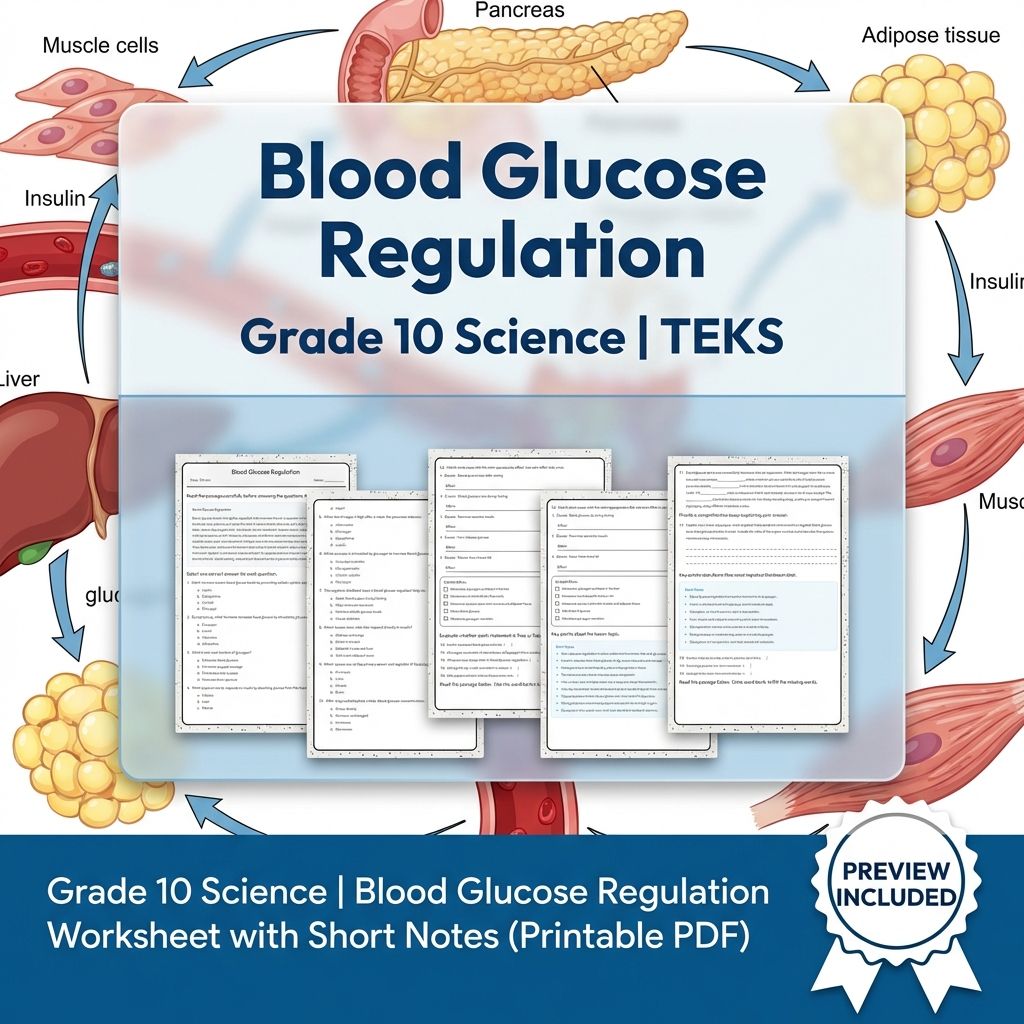
Grade 10 Science | Blood Glucose Regulation Worksheet with Short Notes (PDF)
Created byMeadowlark WorksheetsLearning Objectives
- Explain the roles of insulin and glucagon in maintaining blood glucose levels.
- Describe the organs involved in blood glucose regulation.
- Understand the feedback mechanisms maintaining energy homeostasis.
Instant download
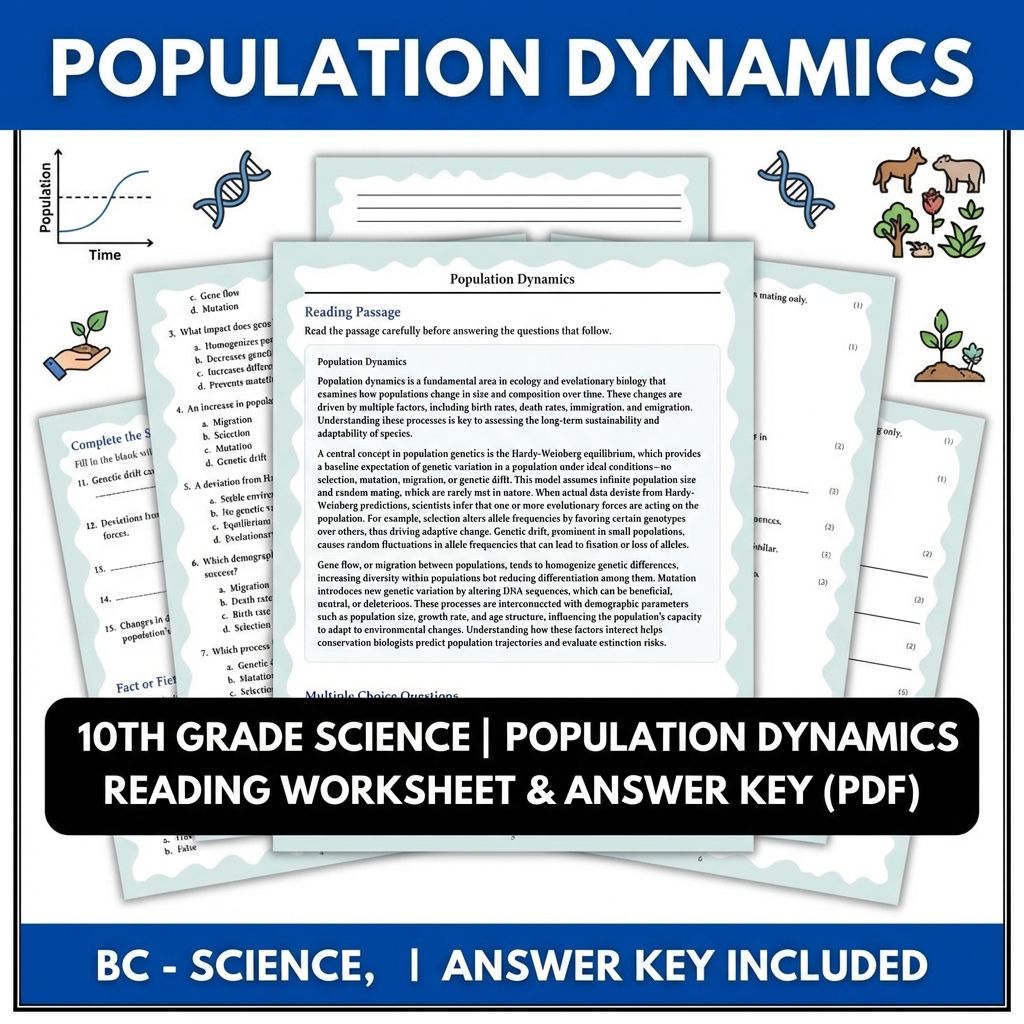
10th Grade Science | Population Dynamics Reading Worksheet & Answer Key (PDF)
JCreated byJ.S SheetsLearning Objectives
- Understand the basic concepts of population dynamics and evolutionary processes.
- Identify key models such as Hardy-Weinberg equilibrium and their assumptions.
- Explain how deviations from models indicate forces like selection, mutation, migration, and drift.
Instant download
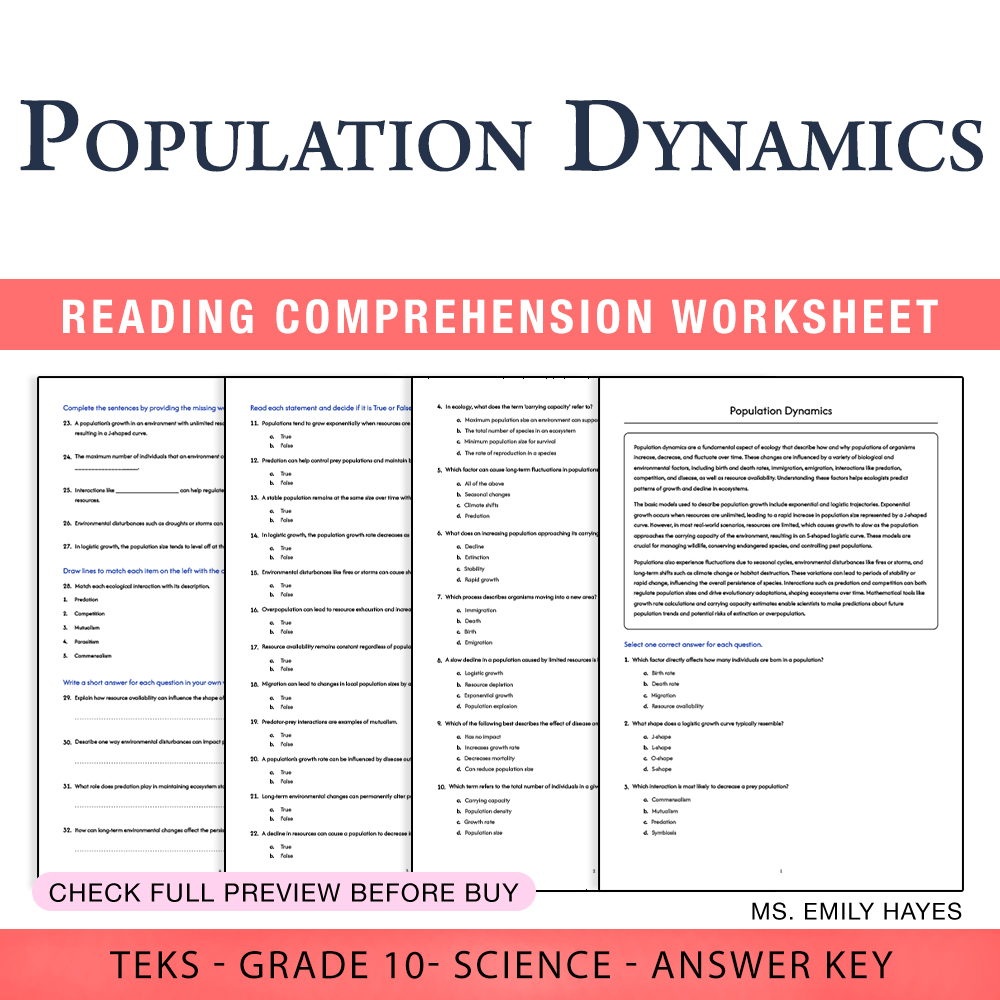
10th Grade Science | Population Dynamics Worksheet (PDF+ Answer Key)
Created byCopper Leaf ClassroomLearning Objectives
- Describe the factors that influence population size and distribution over time.
- Explain the concepts of exponential and logistic population growth patterns.
- Identify biological interactions affecting populations, such as competition and predation.
Instant download
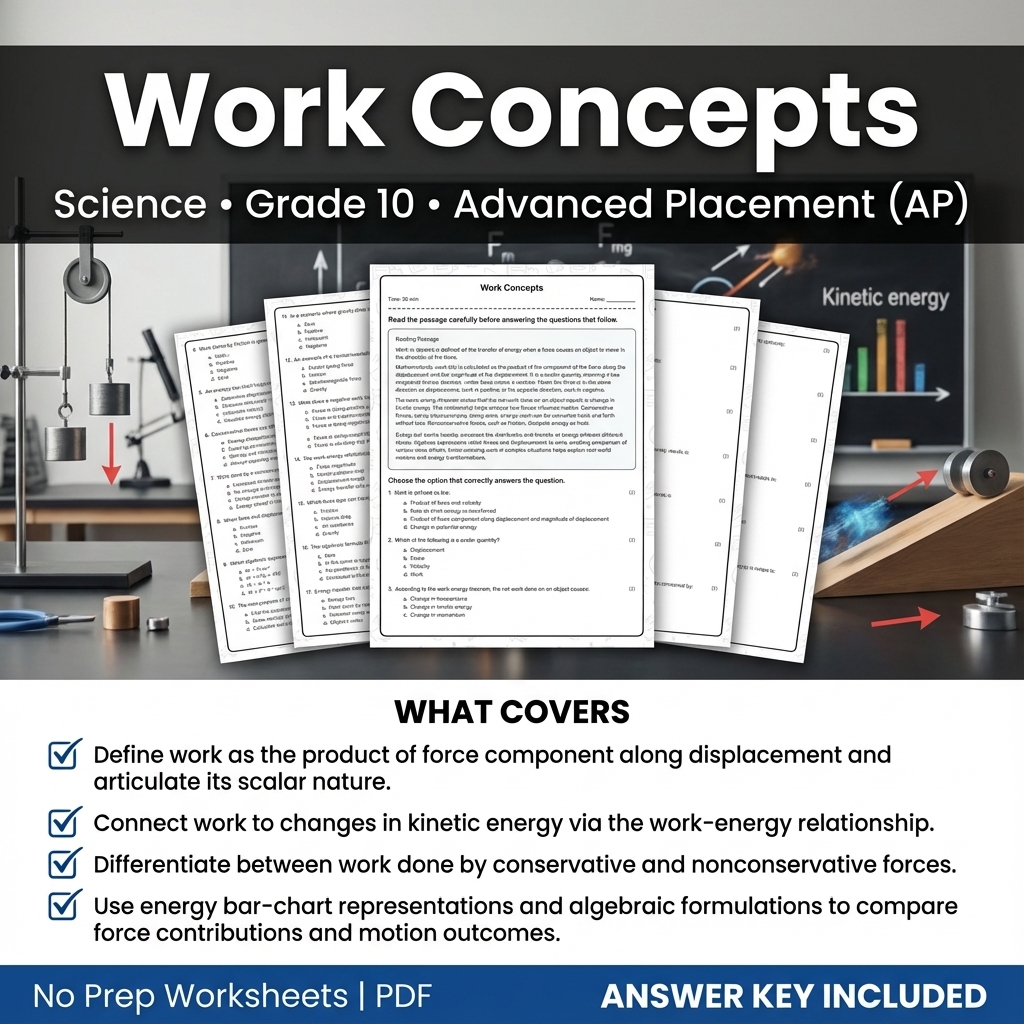
Grade 10 Science | Work Concepts Worksheet (Printable PDF + Answer Key)
 Created byCoral Reef Learning
Learning Objectives
- Define work as the product of force component along displacement and articulate its scalar nature.
- Connect work to changes in kinetic energy via the work-energy relationship.
- Differentiate between work done by conservative and nonconservative forces.
Also included in: Grade 10 Science Unit Worksheet Bundle – Motion, Energy & Forces (PDF Answers) +1 more
Instant download
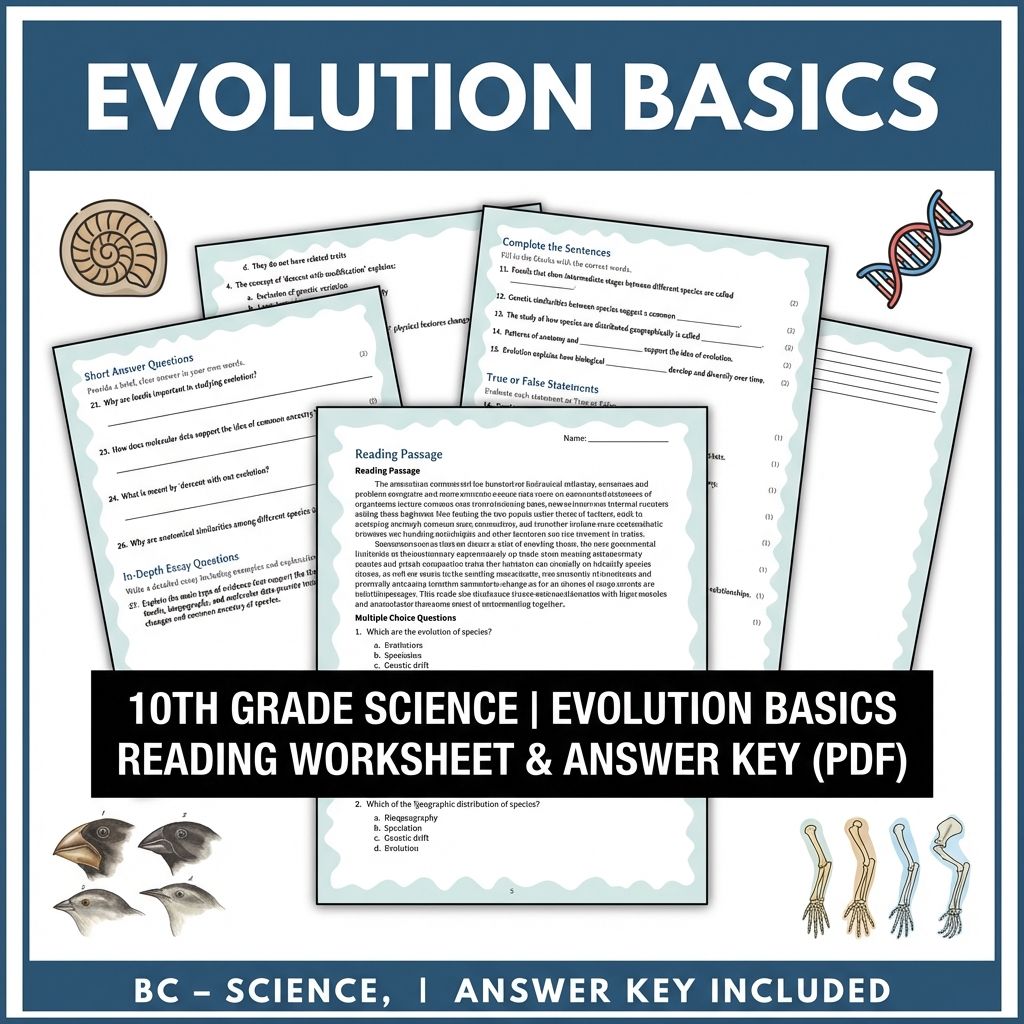
10th Grade Science | Evolution Basics Reading Worksheet & Answer Key (PDF)
JCreated byJ.S SheetsLearning Objectives
- Understand the main evidence supporting the theory of evolution.
- Identify different sources of evidence such as fossils, biogeography, and molecular data.
- Explain how genetic, morphological, and paleontological data indicate common ancestry.
Instant download
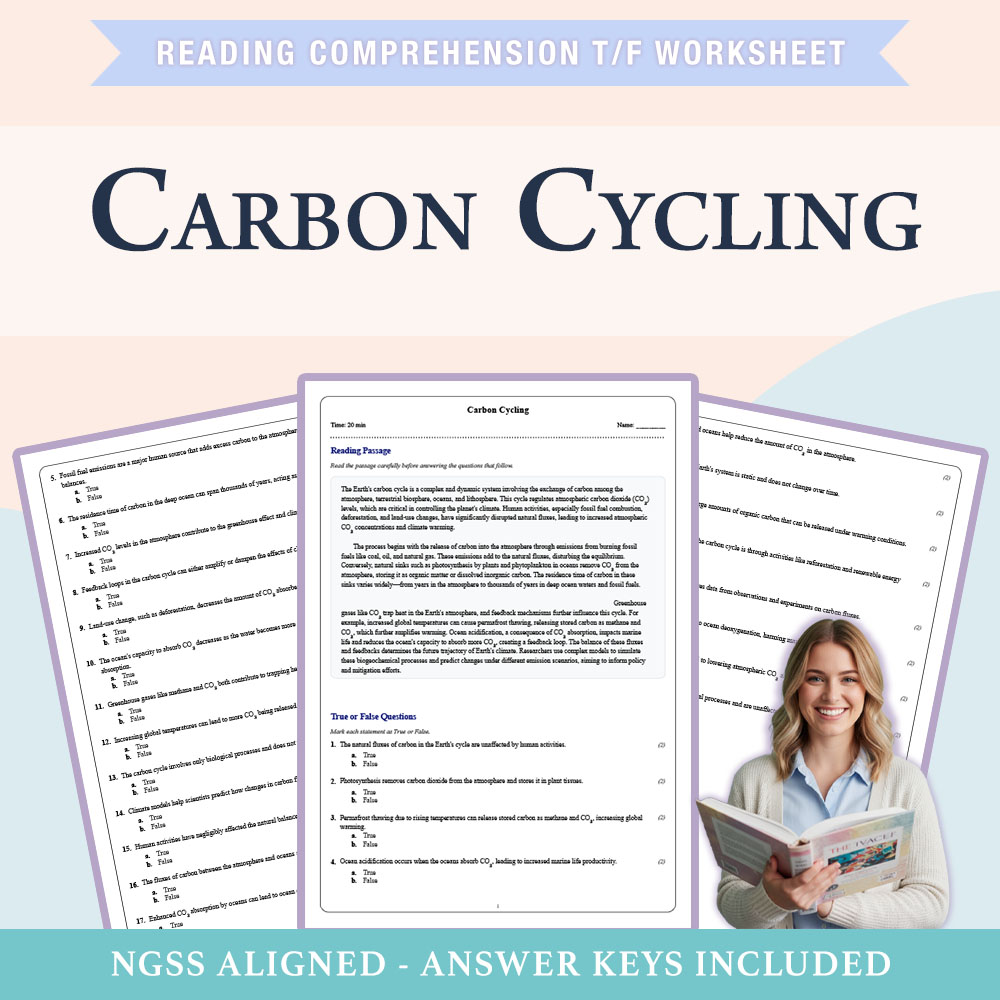
10th Grade Science | Carbon Cycling Worksheet (PDF + Answer Key)
Created byCopper Leaf ClassroomLearning Objectives
- Understand the key components and processes involved in the Earth's carbon cycle.
- Identify sources and sinks of atmospheric carbon dioxide and their impacts on climate change.
- Analyze feedback mechanisms within the carbon cycle that influence global climate systems.
Also included in: Grade 10 Science | Environmental Management & Climate Change (PDF + Answer Key) +1 more
Instant download

Grade 10 Reaction Energetics Worksheet | BC Practice & PDF
 Created byClear Sky Classroom
Learning Objectives
- Explain how bond energy differences between reactants and products determine the sign of enthalpy change (ΔH).
- Differentiate exothermic and endothermic reactions using energy flow and observable temperature changes.
- Apply quantitative reasoning using bond energy ideas to predict reaction energetics and direction under given conditions.
Instant download
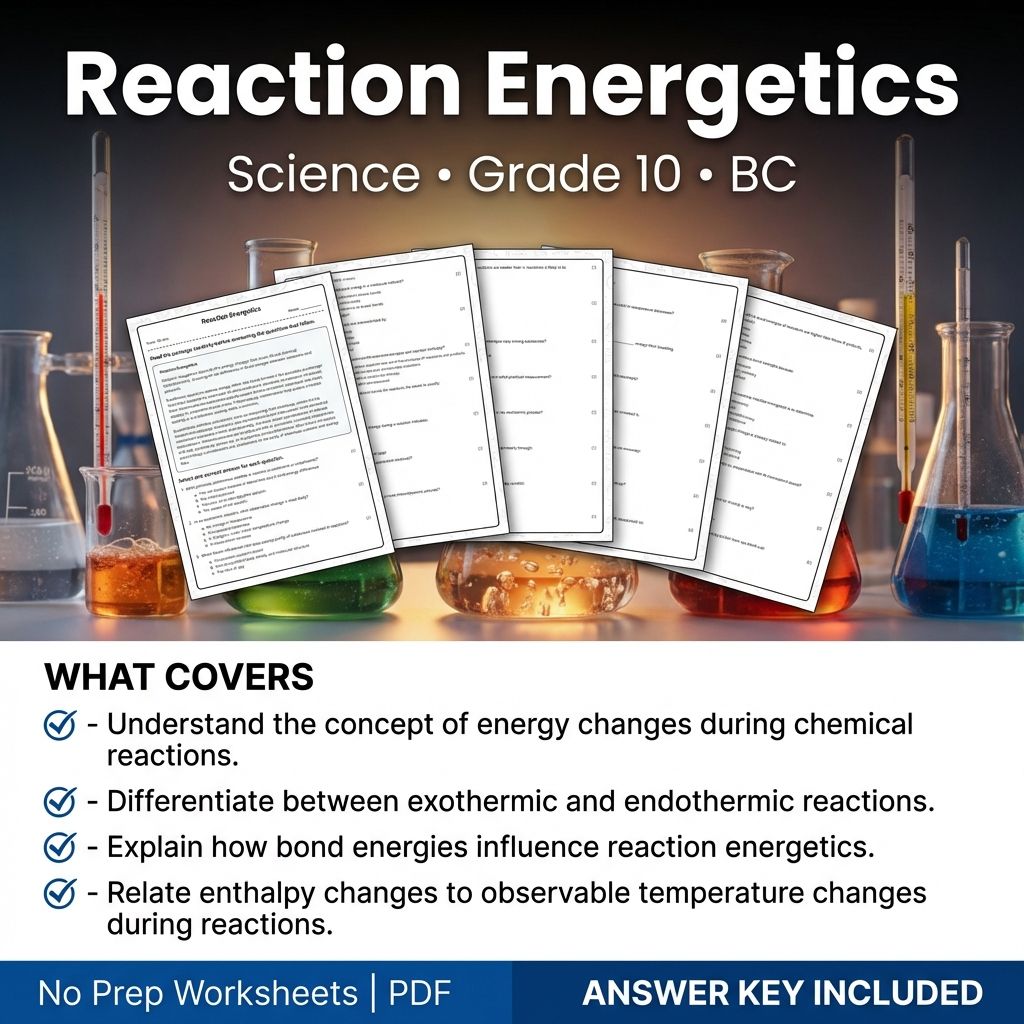
10th Grade Science | Reaction Energetics Worksheet & Answer Key (Printable PDF)
Created byCoral Reef LearningLearning Objectives
- Understand the concept of energy changes during chemical reactions.
- Differentiate between exothermic and endothermic reactions.
- Explain how bond energies influence reaction energetics.
Instant download
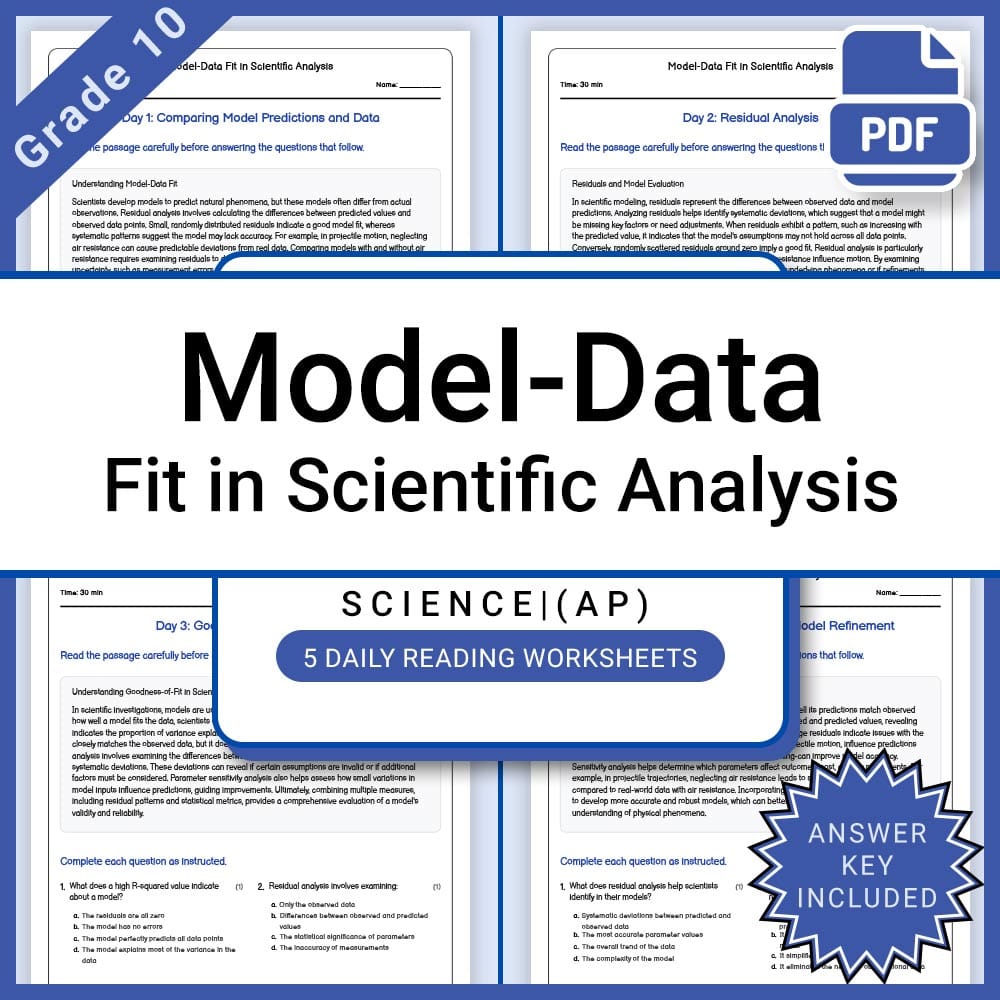
Grade 10 Science – Model-Data Fit Daily Reading Worksheet with Answer Key
JCreated byJ.S SheetsLearning Objectives
- Understand the concept of residuals and how they help evaluate model predictions against observed data.
- Learn to identify systematic deviations indicating model inadequacies.
- Compare different models using residual analysis to determine the best fit for data.
Also included in: Grade 10 Science Lesson Group – AP Curriculum Worksheets Bundle
Instant download
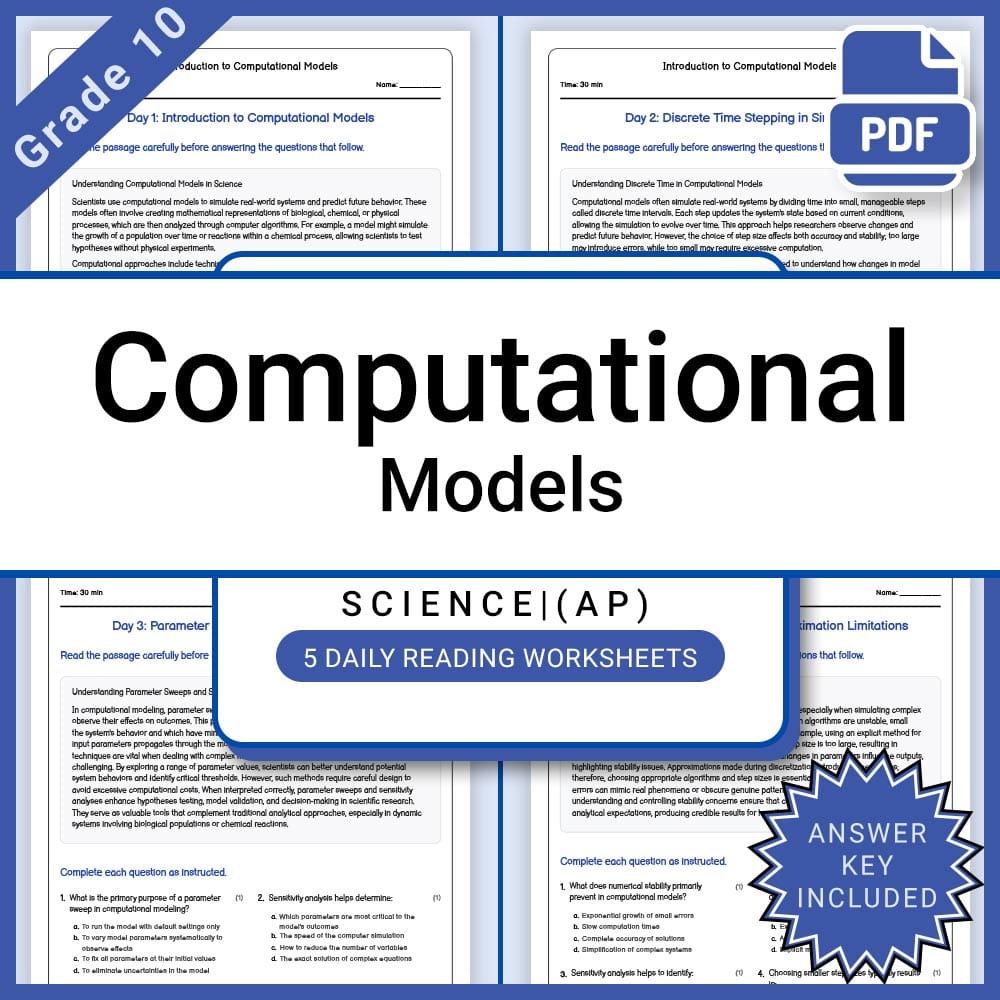
Grade 10 Science – Introduction to Computational Worksheet with Answer Key
JCreated byJ.S SheetsLearning Objectives
- Understand key concepts related to Science
- Apply knowledge through practice questions
- Demonstrate comprehension of the material
Also included in: Grade 10 Science Lesson Group – AP Curriculum Worksheets Bundle
Instant download
Grade 10 Science – Comparative Design Daily Reading Worksheet + Answer Key
JCreated byJ.S SheetsLearning Objectives
- Understand key concepts related to Science
- Apply knowledge through practice questions
- Demonstrate comprehension of the material
Also included in: Grade 10 Science Lesson Group – AP Curriculum Worksheets Bundle
Instant download
Grade 10 Science Argument Critique Daily Reading Worksheet with Answer Key
JCreated byJ.S SheetsLearning Objectives
- Understand key concepts related to Science
- Apply knowledge through practice questions
- Demonstrate comprehension of the material
Also included in: Grade 10 Science Lesson Group – AP Curriculum Worksheets Bundle
Instant download
Grade 10 Science – Understanding Causal Relationships Daily Reading Worksheet + Answer Key
JCreated byJ.S SheetsLearning Objectives
- Identify direct and indirect causality in complex ecological systems
- Apply conceptual frameworks such as control matrices, causal graphs, and stratified comparisons
- Analyze how confounding factors and interaction effects influence ecological data
Also included in: Grade 10 Science Lesson Group – AP Curriculum Worksheets Bundle
Instant download
Grade 10 Science – Statistical Reasoning Data Analysis Worksheet + Answer Key
JCreated byJ.S SheetsLearning Objectives
- Understand and interpret measures of central tendency: mean, median, and mode
- Learn how to compare datasets using spread metrics like range and standard deviation
- Explore the concept of confidence intervals and their role in data analysis
Also included in: Grade 10 Science Lesson Group – AP Curriculum Worksheets Bundle
Instant download
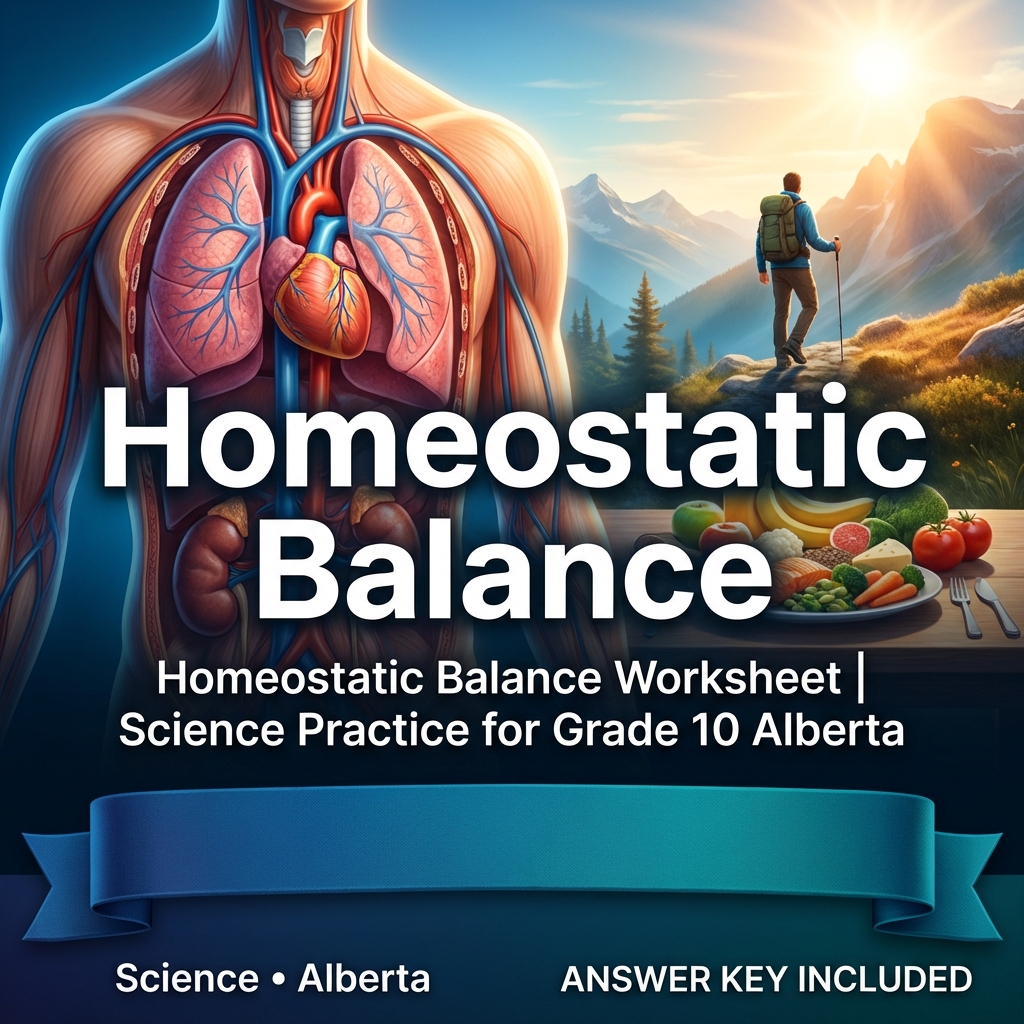
Homeostatic Balance Worksheet | Science Practice for Grade 10 Alberta
Created byCoral Reef LearningLearning Objectives
- Describe the concept of homeostasis and its importance in maintaining internal stability.
- Identify mechanisms involved in temperature regulation and osmotic balance in mammals and freshwater fishes.
- Explain the role of sensor-effector loops, transport, and metabolic adjustments in homeostatic processes.
Instant download
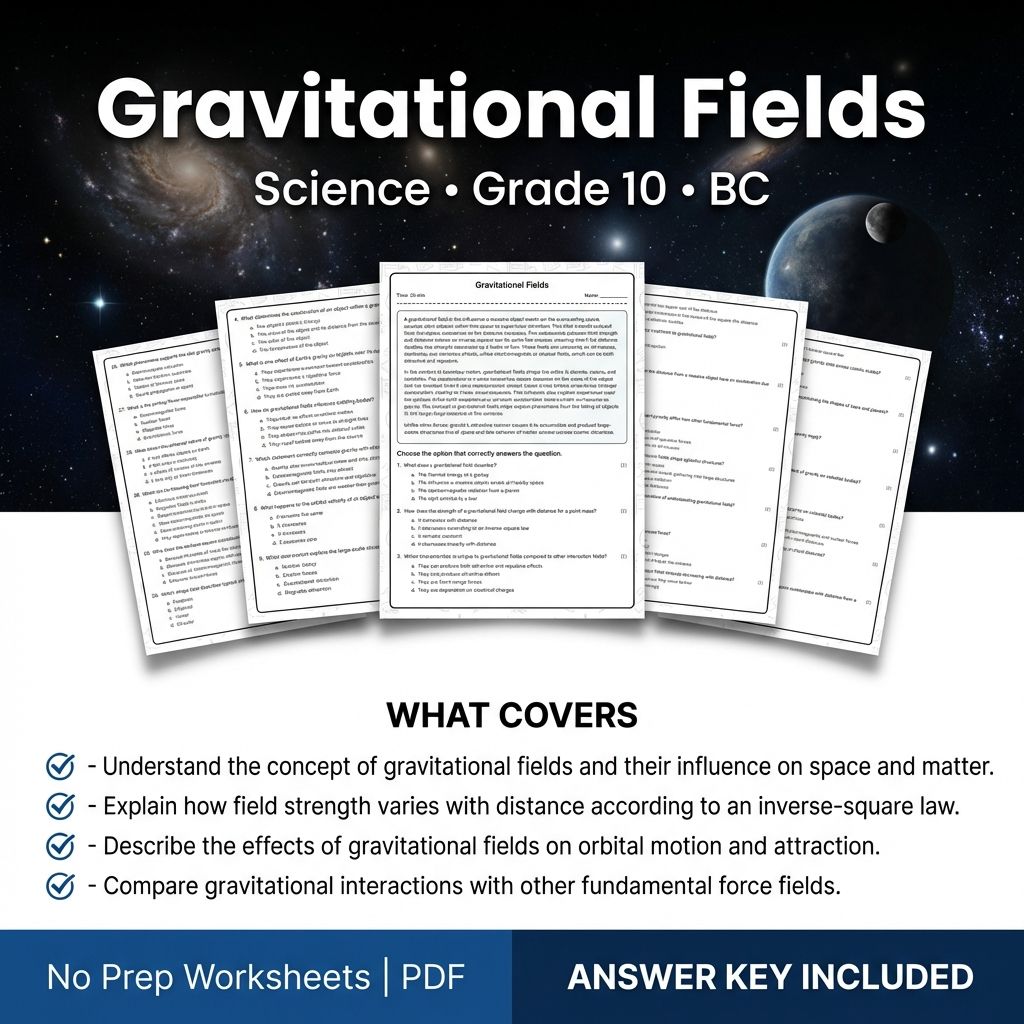
10th Grade Science | Gravitational Fields Worksheet with Answer Key (PDF)
Created byCoral Reef LearningLearning Objectives
- Understand the concept of gravitational fields and their influence on space and matter.
- Explain how field strength varies with distance according to an inverse-square law.
- Describe the effects of gravitational fields on orbital motion and attraction.
Instant download

Grade 10 Science | Electric Fields Worksheet (PDF) BC Standards
Created byEvergreen Desk EducationLearning Objectives
- Explain what an electric field represents and how it relates to force on a charge
- Interpret electric field line direction for positive and negative charges and infer relative field strength
- Use the principle of superposition to reason about net electric fields from multiple charges
Instant download

Grade 10 Science Mixture Separation Worksheet | Standards-Aligned Practice
JCreated byJ.S SheetsLearning Objectives
- Distinguish homogeneous solutions, colloids, and suspensions using particle dispersion and optical properties
- Match separation techniques to key physical differences such as solubility, particle size, and boiling point
- Explain how purity can be assessed using qualitative indicators and quantitative measures
Instant download

Cellular Respiration Practice Worksheet | Grade 10 Science Assessment
Created byPrism Point LearningLearning Objectives
- Describe the order of glycolysis, the citric acid cycle, and the electron transport chain in cellular respiration.
- Explain how mitochondrial structure and proton gradients enable chemiosmotic ATP synthesis in eukaryotes.
- Compare aerobic energy efficiency with anaerobic fermentation outcomes using substrate and oxygen dependence.
Also included in: Grade 10 Cells & Energy Science Lesson Bundle Ontario Framework Pack
Instant download

Health Impacts Worksheet | Grade 10 Science Review & Practice
Created byPrism Point LearningLearning Objectives
- Explain how bacterial, viral, and fungal pathogens can enter a host and cause disease through different mechanisms.
- Describe innate and adaptive immune responses, including how antibodies recognize specific antigens.
- Differentiate transmission routes and discuss why vaccination represents an induced adaptive immune response concept.
Also included in: Grade 10 Cells & Energy Science Lesson Bundle Ontario Framework Pack
Instant download

Biotech Applications Test Prep Worksheet | Grade 10 Science
Created byPrism Point LearningLearning Objectives
- Explain how microorganisms are used in biotechnology for food fermentation, bioremediation, and industrial enzyme production
- Describe how genetic manipulation in microbes can increase the production of useful products
- Evaluate how antibiotic resistance can emerge and spread through horizontal gene transfer, and discuss ecological and ethical impacts
Also included in: Grade 10 Cells & Energy Science Lesson Bundle Ontario Framework Pack
Instant download
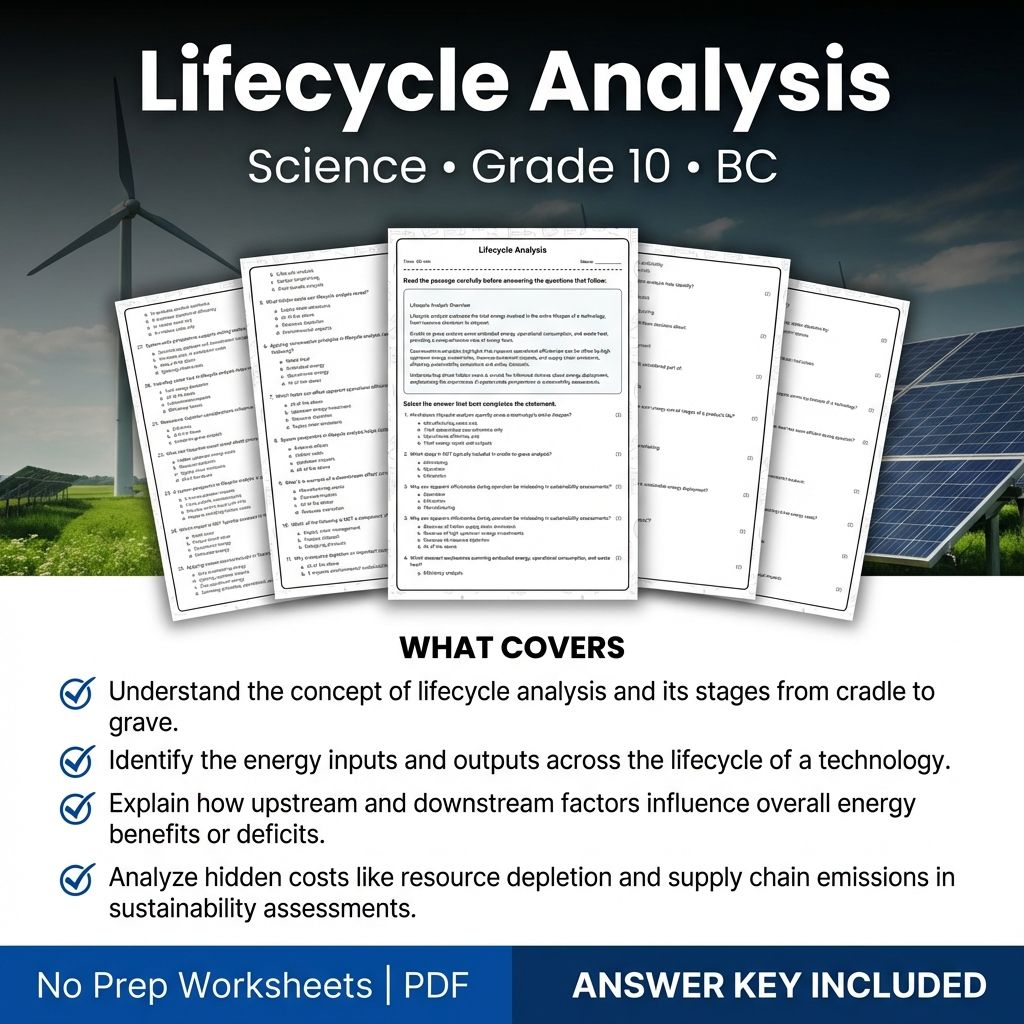
10th Grade Science | Lifecycle Analysis Worksheet & Answer Key (Printable PDF)
Created byCoral Reef LearningLearning Objectives
- Understand the concept of lifecycle analysis and its stages from cradle to grave.
- Identify the energy inputs and outputs across the lifecycle of a technology.
- Explain how upstream and downstream factors influence overall energy benefits or deficits.
Instant download
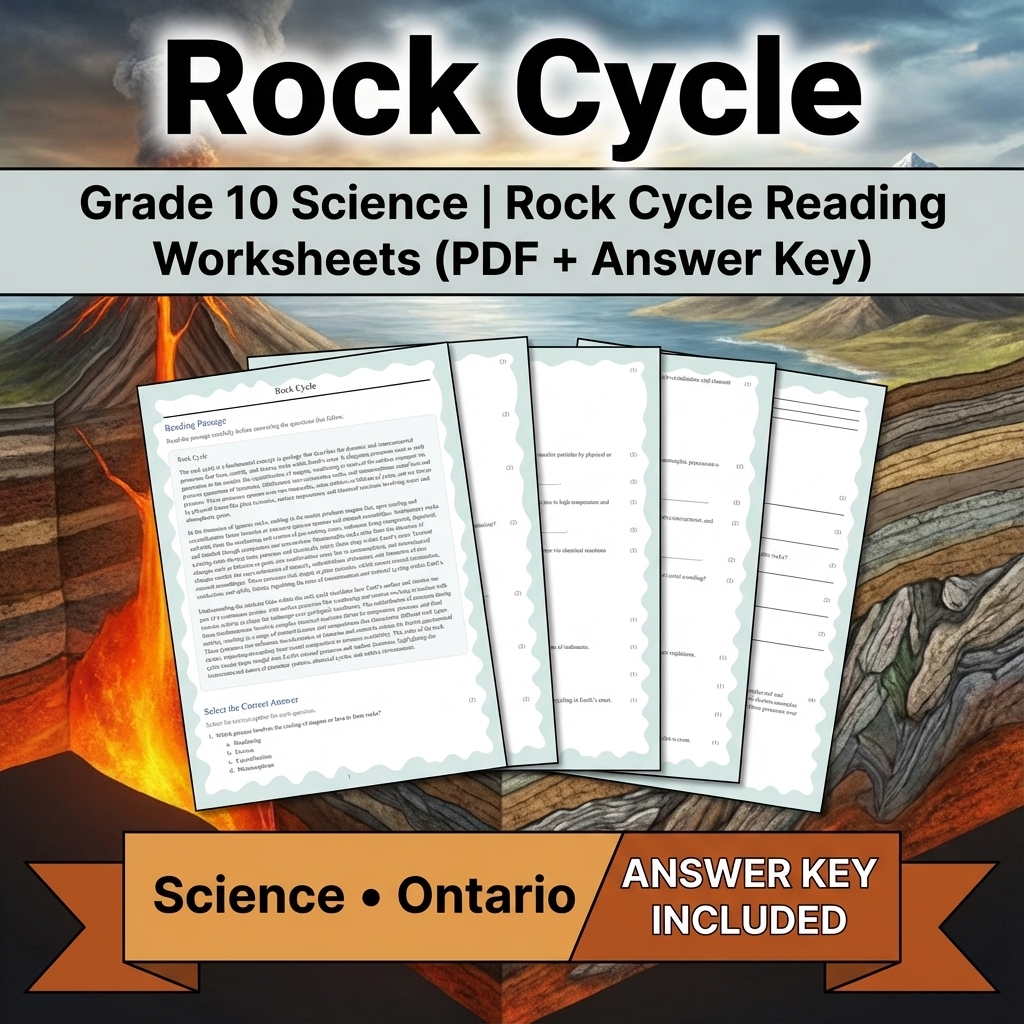
Grade 10 Science | Rock Cycle Reading Worksheets (PDF + Answer Key)
JCreated byJ.S SheetsLearning Objectives
- Describe the processes involved in the rock cycle, including melting, crystallization, weathering, transport, deposition, lithification, and metamorphism.
- Explain the physical and chemical drivers that cause transformations in rocks.
- Understand the timescales of rock-type turnover and their links to plate tectonics and surface processes.
Also included in: Grade 10 Science Unit Bundle – Earth Dynamics & Resources (PDF + Rubrics) +1 more
Instant download
10th Grade Science | The Rock Cycle Worksheet (PDF + Answer Key)
Created byCopper Leaf ClassroomLearning Objectives
- Describe the processes involved in the rock cycle, including melt generation, crystallization, weathering, transport, deposition, lithification, and metamorphism.
- Explain the physical and chemical drivers of transformations in rocks and how these relate to plate tectonics.
- Identify and differentiate among igneous, sedimentary, and metamorphic rocks based on textural and mineralogical changes.
Instant download

Grade 10 Worksheet B: Energy Conservation Worksheet | NGSS Practice PDF
Created byClear Sky ClassroomLearning Objectives
- Explain how energy conservation applies to closed and isolated systems
- Differentiate between kinetic and potential energy and describe their conversions
- Account for energy transfers and losses using energy bookkeeping (including thermal energy)
Also included in: Grade 10 Energy and Work Science Lesson Bundle Worksheets Set | NGSS +1 more
Instant download

Grade 10 Worksheet B: Thermal Transfer Practice | NGSS PDF
Created byClear Sky ClassroomLearning Objectives
- Explain how thermal energy moves through conduction, convection, and radiation.
- Use temperature gradients and the idea of heat flux to describe heat transfer direction and rate.
- Apply calorimetry concepts to relate temperature change and phase change to energy transfer.
Also included in: Grade 10 Energy and Work Science Lesson Bundle Worksheets Set | NGSS +1 more
Instant download
10th Grade Science Reading Worksheets | Cell Theory Basics with Answer Key (PDF)
JCreated byJ.S SheetsLearning Objectives
- Define the fundamental principles of cell theory.
- Identify historical evidence supporting the existence of microscopic life.
- Differentiate between unicellular and multicellular organisms.
Also included in: Grade 10 Science Unit Bundle | Cell Biology, Microbes & Energy Activities +1 more
Instant download
Grade 10 Science | Photosynthesis Basics Reading Worksheet (PDF + Rubric)
JCreated byJ.S SheetsLearning Objectives
- Understand the process of photosynthesis including light-dependent reactions and the Calvin cycle.
- Identify the roles of chloroplast structures, pigments, and energy transfer in photosynthesis.
- Analyze the factors affecting the rate of photosynthesis, such as light intensity, CO2 concentration, and temperature.
Also included in: Grade 10 Science Unit Bundle | Cell Biology, Microbes & Energy Activities +1 more
Instant download
Grade 10 Science | Specialized Cells Reading Worksheet (PDF + Answer Key)
JCreated byJ.S SheetsLearning Objectives
- Understand the concept of cellular specialization and tissue organization.
- Identify morphological adaptations that enable specific cell functions.
- Link cell structure to its physiological role at a structural level.
Also included in: Grade 10 Science Unit Bundle | Cell Biology, Microbes & Energy Activities +1 more
Instant download
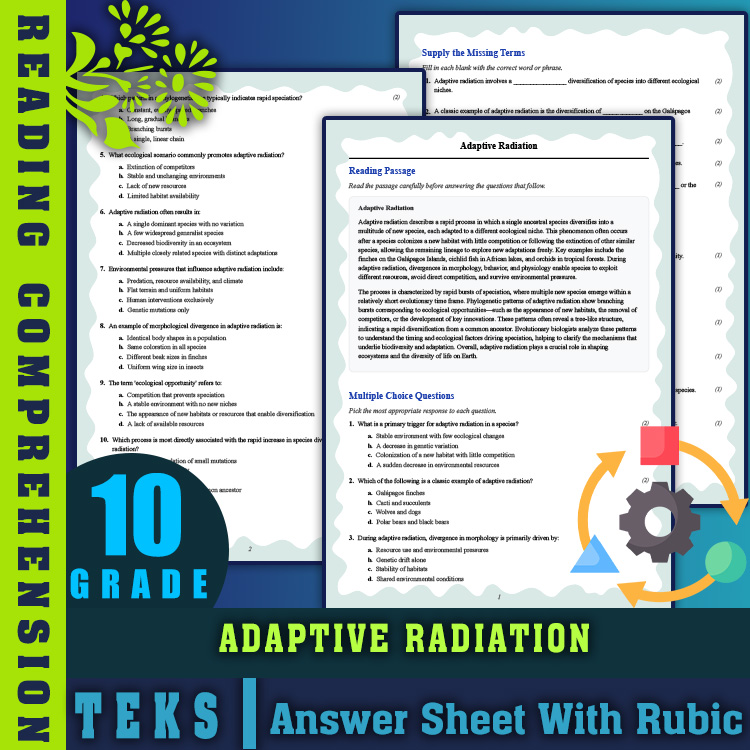
10th Grade Science | Adaptive Radiation Reading Worksheets (PDF + Answer Key)
JCreated byJ.S SheetsLearning Objectives
- Understand the concept of adaptive radiation and how it leads to speciation.
- Identify examples of adaptive radiation in nature, such as island and lake species.
- Explain how morphological, behavioral, and physiological divergence occurs during adaptive radiation.
Instant download

Resource Tradeoffs Worksheet for Grade 10 Science | NGSS Assessment PDF
Learning Objectives
- Compare energy and mineral resource options using economic, environmental, and long-term availability criteria
- Explain how lifecycle emissions and resource depletion affect sustainable planning
- Evaluate tradeoffs among fossil fuels, solar, wind, and mining practices using evidence-based reasoning
Also included in: Earth and Human Activity Lesson Bundle Grade 10 Science NGSS
Instant download

Carbon Cycling Worksheet | Science Grade 10 Assessment & Student Practice
Learning Objectives
- Explain how carbon moves among the atmosphere, terrestrial biosphere, oceans, and lithosphere
- Identify key sources, sinks, and feedbacks that affect atmospheric CO2 concentrations
- Interpret carbon-cycle ideas using fluxes, residence times, and conceptual/model reasoning
Also included in: Earth and Human Activity Lesson Bundle Grade 10 Science NGSS
Instant download
About Grade 10 Science Worksheets
Find Science worksheets built for Grade 10. All 7,069 cover core skills, practice, and review, each an instant PDF download.
Every worksheet on MyTeachingSheets is created by independent teacher-authors and reviewed before publication. All resources download as printable PDFs for classroom, homework, or at-home practice, and many include answer keys. Preview any worksheet free before buying.