
Grade 10 Science Worksheets
7,069 worksheets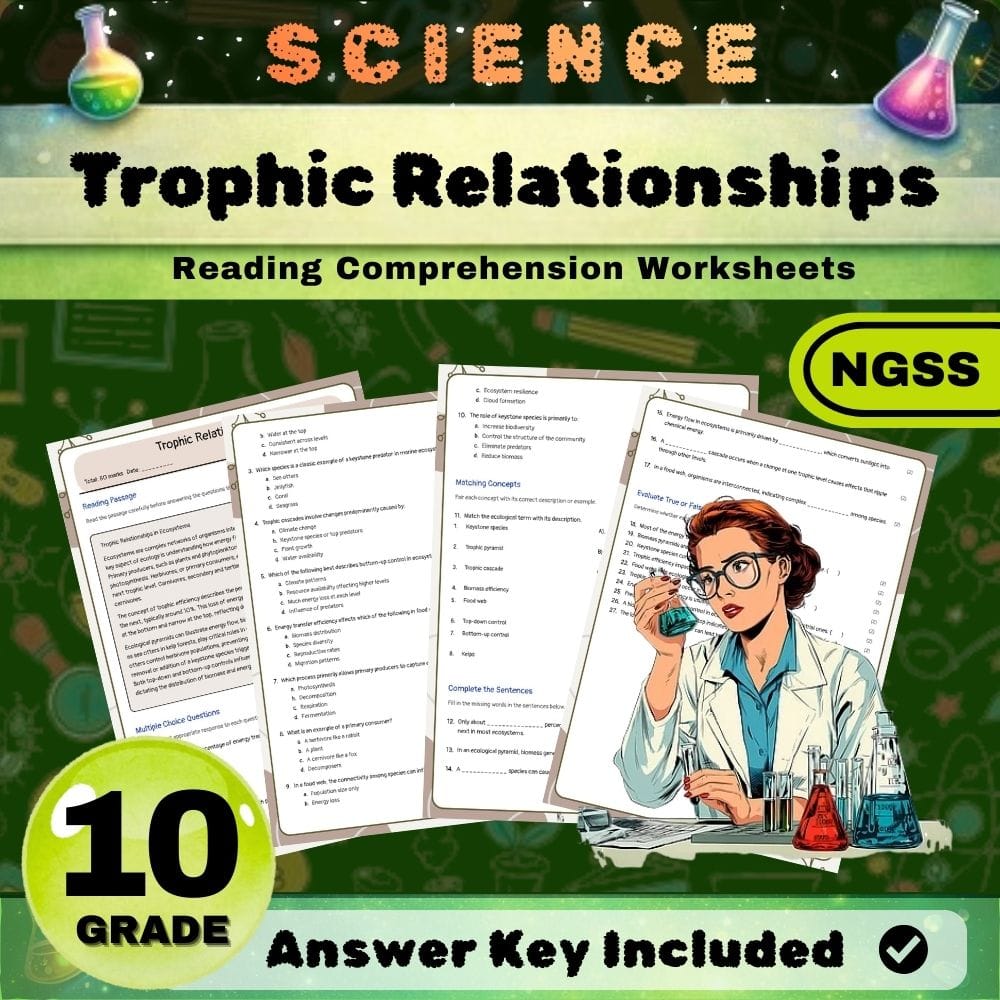
Grade 10 Science – Trophic Relationships Worksheet (NGSS) PDF
 Created byMaple Path Learning
Learning Objectives
- Understand the flow of energy through trophic levels in ecosystems.
- Describe the concepts of biomass pyramids and trophic efficiency.
- Analyze food web connectivity and the impact of keystone species.
Also included in: Grade 10 Science Ecosystems Interactions Energy and Dynamics Lesson Bundle | NGSS +1 more
Instant download
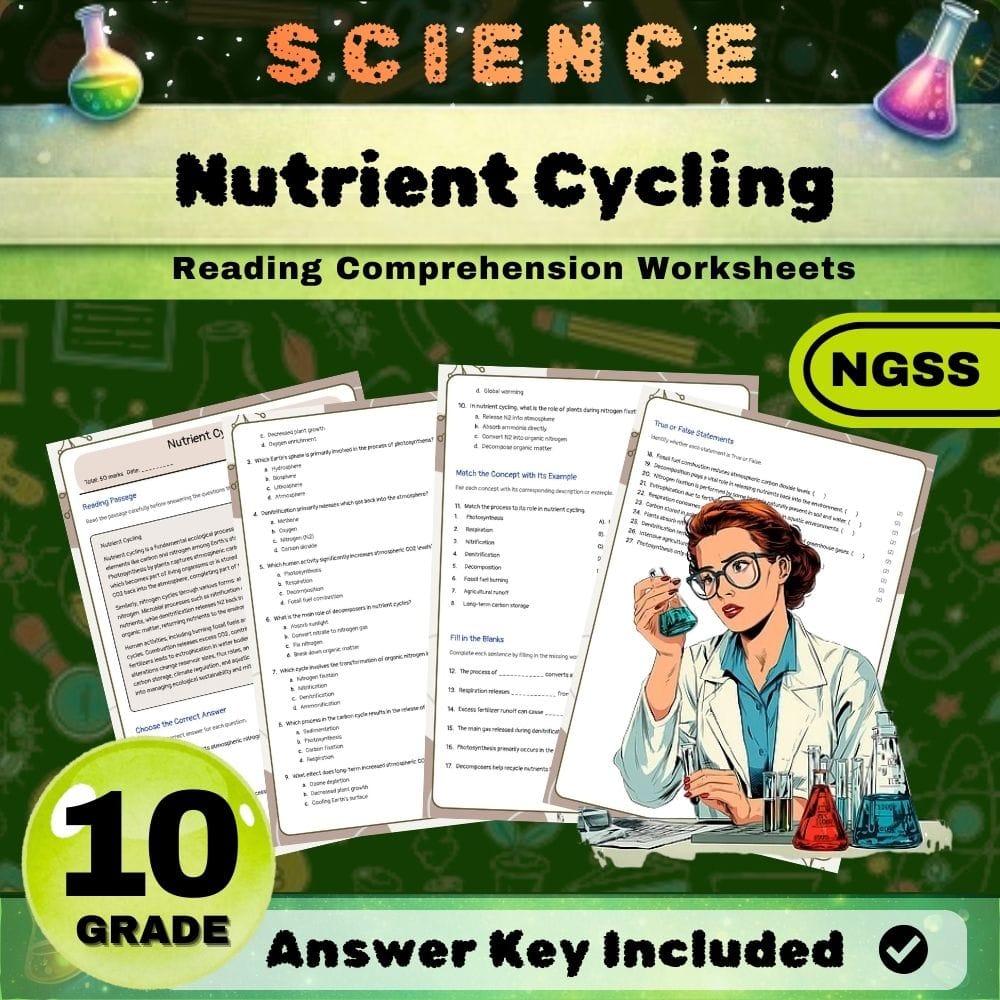
Grade 10 Science | Nutrient Cycling Worksheet (NGSS Practice Set) (PDF)
Created byMaple Path LearningLearning Objectives
- Understand the major biogeochemical cycles, including carbon and nitrogen fluxes among Earth's spheres.
- Describe processes such as photosynthesis, respiration, nitrification, denitrification, and decomposition that influence nutrient pools and flux rates.
- Analyze how human activities like fossil fuel combustion and agriculture alter nutrient reservoirs and affect ecological consequences such as eutrophication and carbon sequestration.
Also included in: Grade 10 Science Ecosystems Interactions Energy and Dynamics Lesson Bundle | NGSS +1 more
Instant download
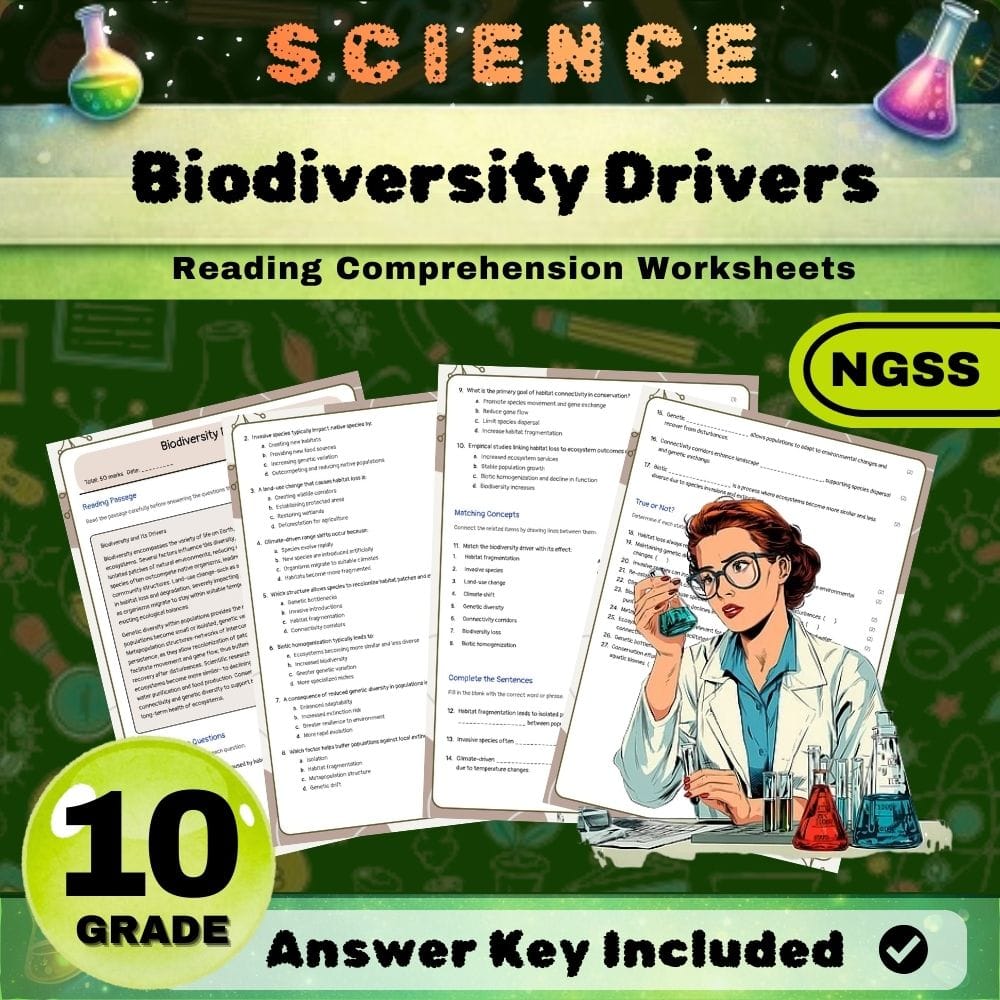
Grade 10 Science | Biodiversity Drivers NGSS Worksheet (PDF)
Created byMaple Path LearningLearning Objectives
- Identify key factors that influence species richness and ecosystem composition.
- Explain how habitat fragmentation, invasive species, land-use change, and climate shifts affect biodiversity.
- Analyze mechanisms such as genetic diversity and connectivity that mediate extinction risk.
Also included in: Grade 10 Science Ecosystems Interactions Energy and Dynamics Lesson Bundle | NGSS +1 more
Instant download
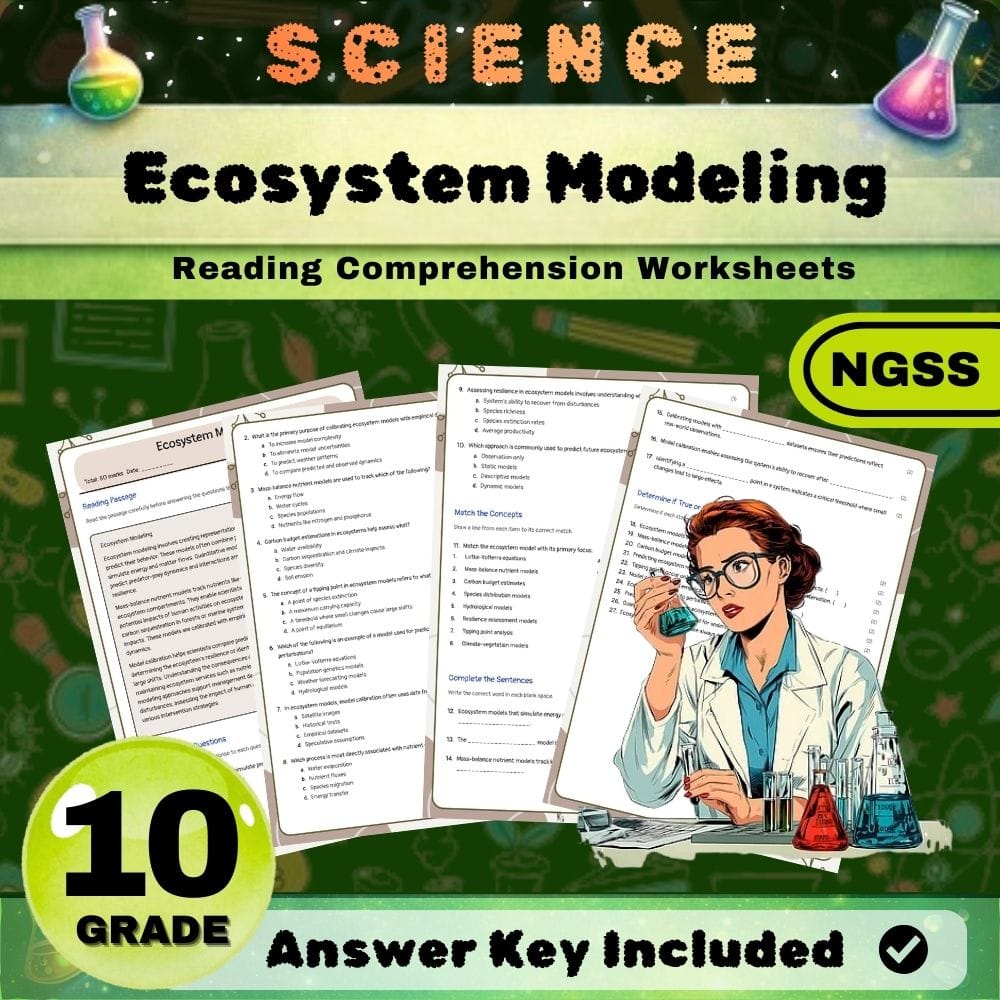
Grade 10 Science – Ecosystem Modeling Worksheet (NGSS PDF)
Created byMaple Path LearningLearning Objectives
- Understand the development and application of conceptual and quantitative models of ecosystems.
- Interpret flows of energy and matter within ecosystems and predict responses to perturbations.
- Familiarize with models such as Lotka–Volterra equations, mass-balance nutrient models, and carbon budget estimations.
Also included in: Grade 10 Science Ecosystems Interactions Energy and Dynamics Lesson Bundle | NGSS +1 more
Instant download
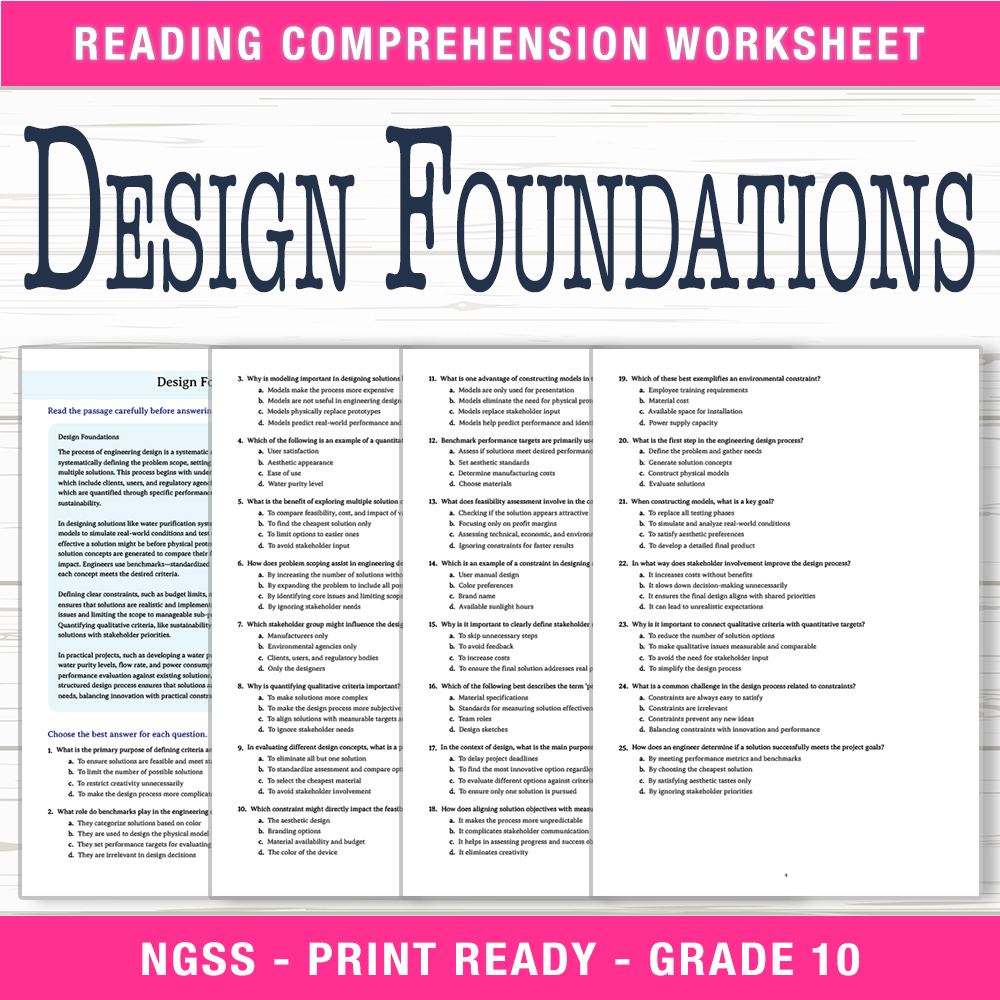
Grade 10 Science | Design Foundations Worksheet (PDF + Answer Key)
 Created byRiverstone Classroom
Learning Objectives
- Understand the engineering design process for complex problems.
- Identify and define criteria and constraints in problem-solving scenarios.
- Construct models and generate multiple solution concepts.
Also included in: Grade 10 Science Unit | Systems & Design Worksheets Bundle
Instant download

Grade 10 Heat Transfer Mechanisms and Calorimetry Worksheet | NGSS
 Created byAmber Owl Education
Learning Objectives
- Explain thermal energy transfer using conduction, convection, and radiation
- Use temperature gradients and ideas of heat flux to interpret heat flow directions
- Apply calorimetry reasoning with specific heat to predict temperature change
Instant download
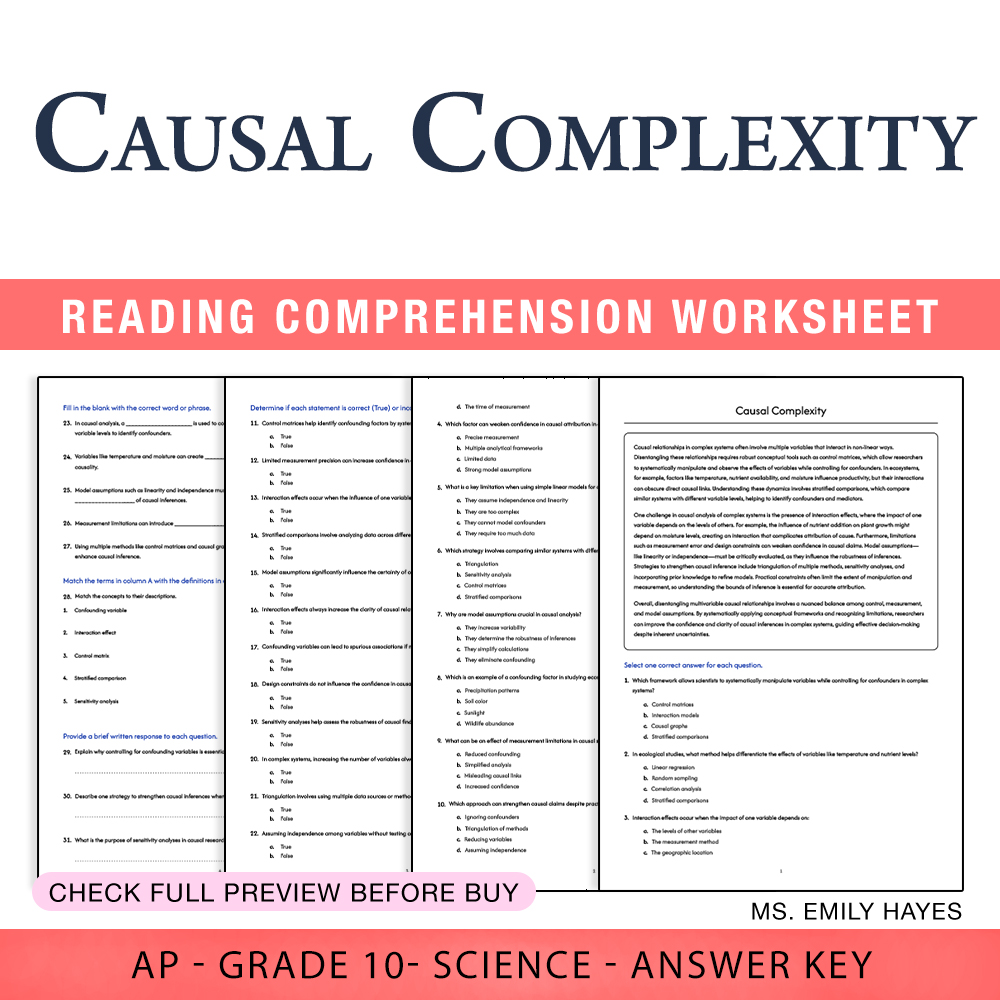
10th Grade Science | Causal Complexity Worksheet (PDF+ Answer Key)
 Created byCopper Leaf Classroom
Learning Objectives
- Understand different frameworks used to analyze multivariable causal relationships.
- Identify confounding factors and interaction effects in complex systems.
- Evaluate the influence of design constraints and model assumptions on causal inference.
Also included in: Grade 10 Science AP | Data Analysis & Modeling Skills (PDF + Answer Key) +1 more
Instant download
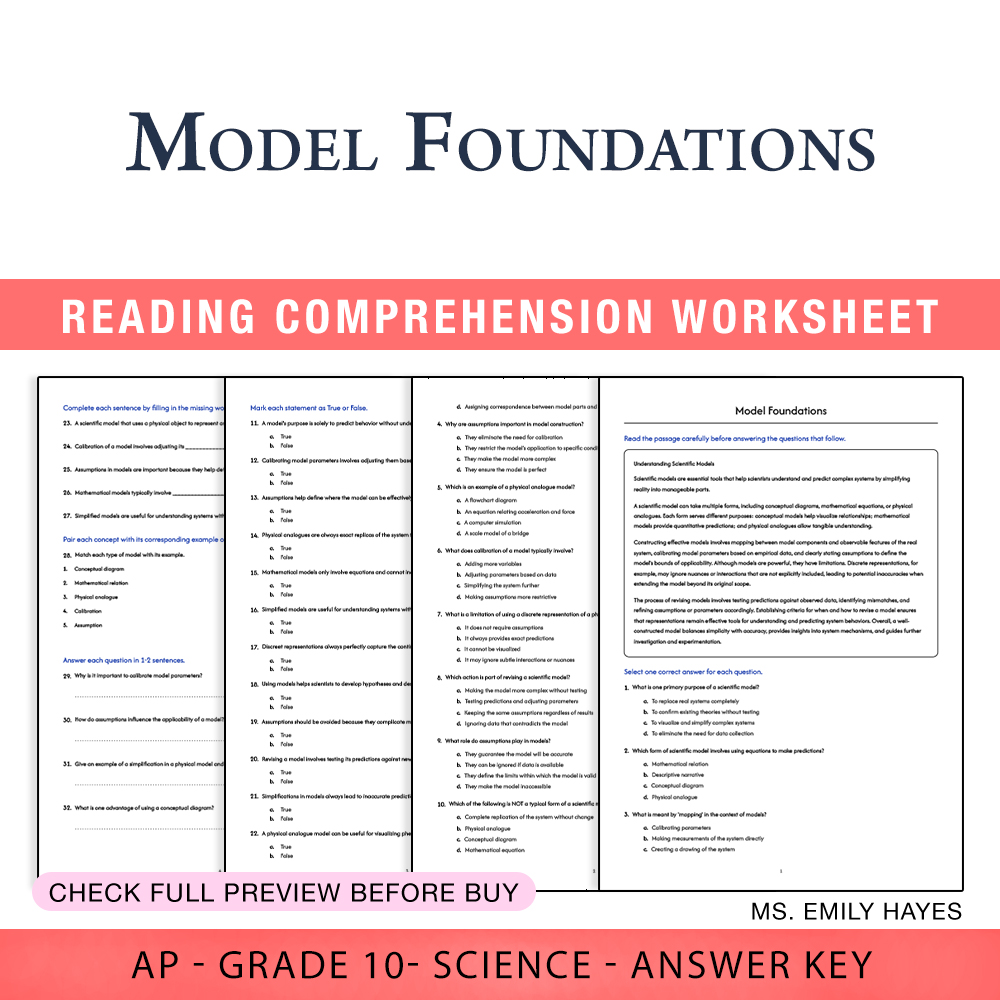
10th Grade Science | Model Foundations Worksheet (PDF+ Answer Key)
Created byCopper Leaf ClassroomLearning Objectives
- Define core purposes and forms of scientific models, including conceptual diagrams, mathematical relations, and physical analogues.
- Compare strengths and limitations of discrete representations through examples such as pendulum motion and linear approximations.
- Explain the importance of mapping model components to observable features and calibrating parameters.
Also included in: Grade 10 Science AP | Data Analysis & Modeling Skills (PDF + Answer Key) +1 more
Instant download
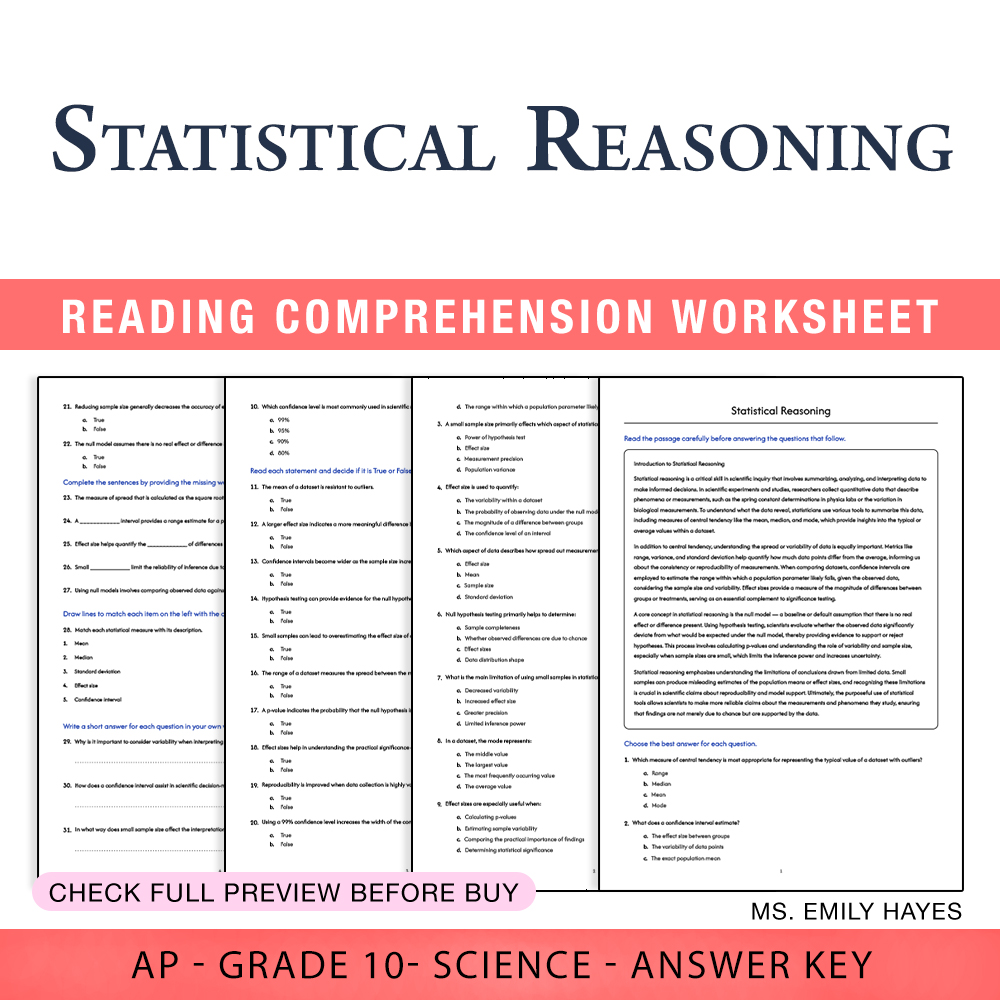
Grade 10 Science | Statistical Reasoning Worksheet (PDF+ Answer Key)
Created byCopper Leaf ClassroomLearning Objectives
- Understand how to summarize datasets using measures of central tendency and variability.
- Interpret and construct confidence intervals and effect sizes in statistical analysis.
- Apply null model concepts and hypothesis testing to evaluate observed data against expected variability.
Also included in: Grade 10 Science AP | Data Analysis & Modeling Skills (PDF + Answer Key) +1 more
Instant download
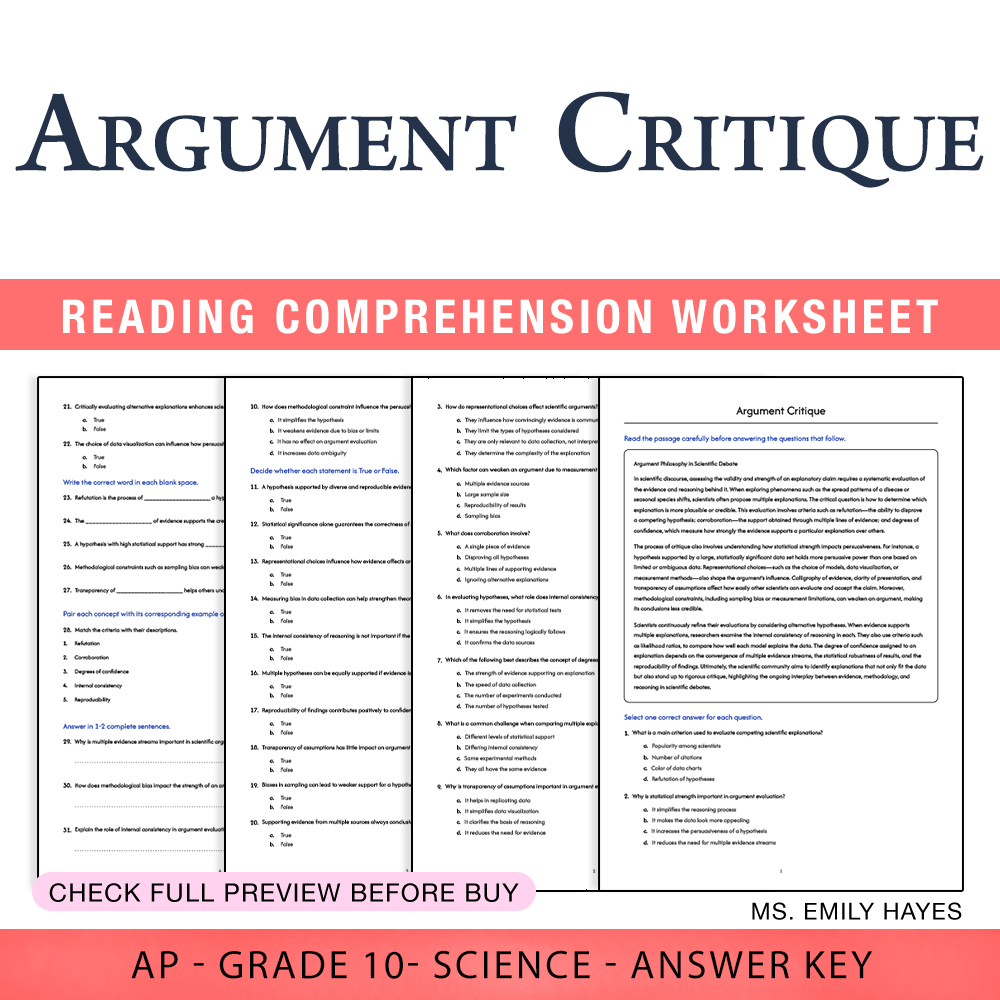
10th Grade Science | Argument Critique Worksheet (PDF+ Answer Key)
Created byCopper Leaf ClassroomLearning Objectives
- Evaluate explanatory claims systematically by examining evidence quality, alternative hypotheses, and reasoning internal consistency.
- Identify criteria such as refutation, corroboration, and confidence levels in scientific arguments.
- Understand how statistical strength, methodological constraints, and representational choices influence argument persuasiveness.
Also included in: Grade 10 Science AP | Data Analysis & Modeling Skills (PDF + Answer Key) +1 more
Instant download

Grade 10 Science Newton's Laws Worksheet (Ontario) – Practice Set with Answer Key
 Created byEvergreen Desk Education
Learning Objectives
- Explain how inertia relates to the first law of motion and predict motion when net force is zero.
- Use Newton’s second law to calculate acceleration from net force and mass.
- Apply Newton’s third law to action–reaction pairs and interpret what forces do in real interactions.
Also included in: Grade 10 Kinematics Forces & Mechanics Science Lesson Bundle Ontario Worksheets +1 more
Instant download
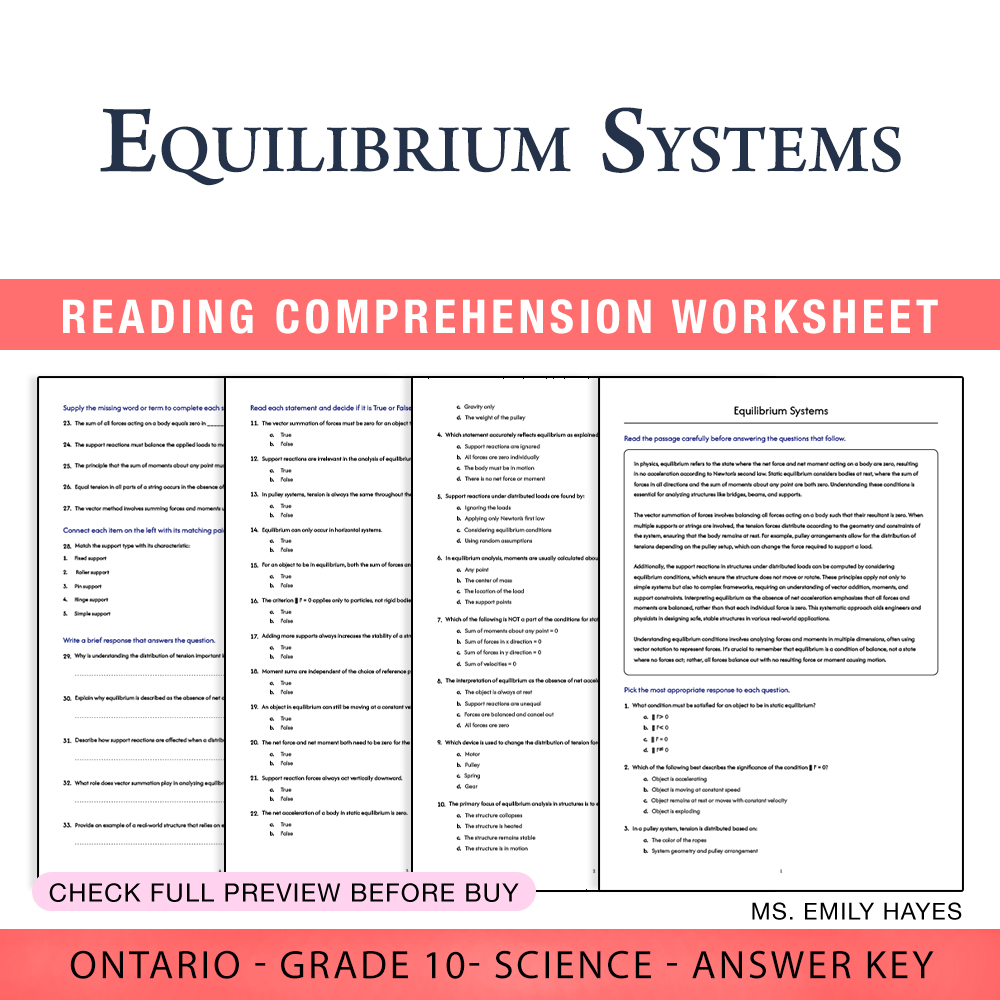
10th Grade Science | Equilibrium Systems Worksheet (PDF + Answer Key)
Created byCopper Leaf ClassroomLearning Objectives
- Explain the conditions required for static equilibrium using vector summation of forces and moments.
- Apply the criteria ΣF = 0 to analyze the support reactions in rigid bodies.
- Describe the distribution of tension in pulley systems and the effects of supports under various loads.
Instant download

Grade 10 Science – Tension and Normal Forces Worksheet (PDF) for BC Standards
Created byEvergreen Desk EducationLearning Objectives
- Explain how tension acts along a connector and how it is represented on free-body diagrams
- Determine the direction and role of the normal force when an object rests on or moves along an incline
- Connect tension and normal-force representations to Newton’s second law predictions about motion
Instant download
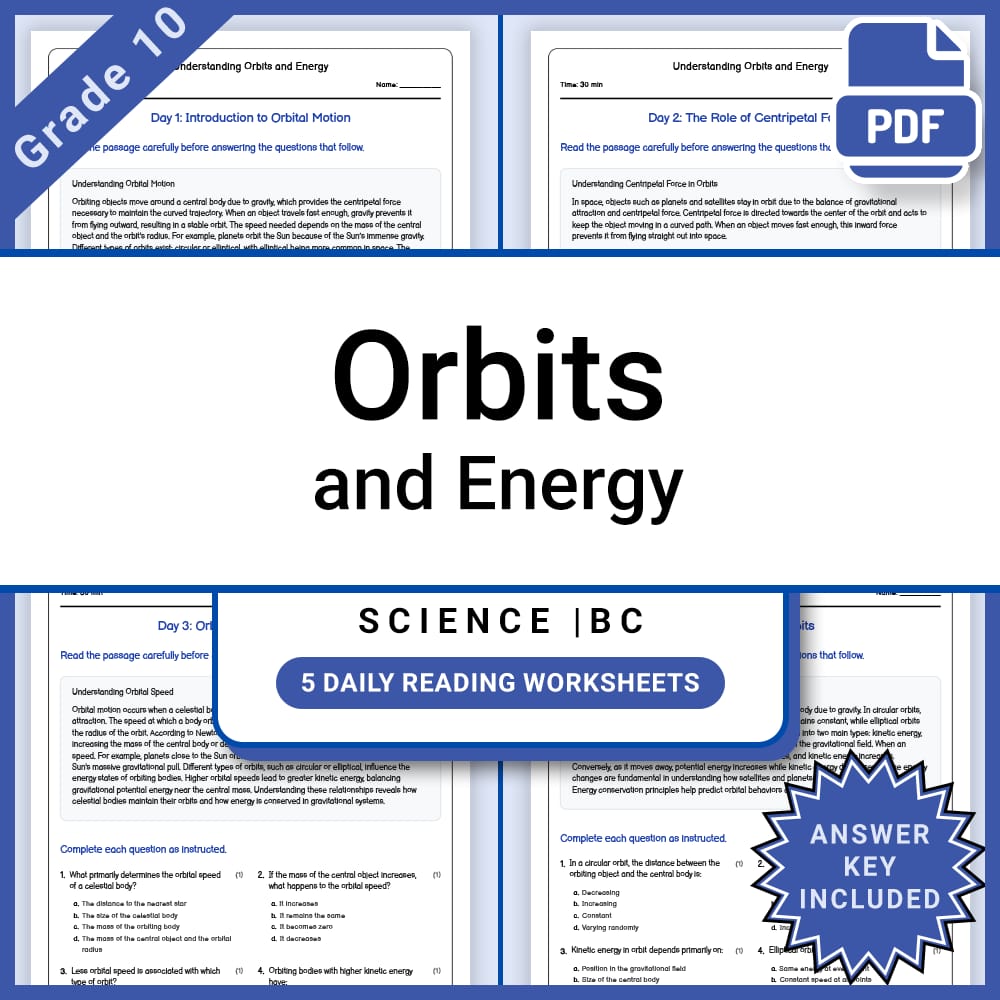
Grade 10 Science – Orbits and Energy Daily Reading Worksheet + Answer Key
JCreated byJ.S SheetsLearning Objectives
- Explain how gravitational attraction causes objects to orbit
- Describe the relationship between orbital speed, central mass, and radius
- Differentiate between circular and elliptical orbits
Also included in: Grade 10 Science Lesson Group Bundle – Physics and Fields +1 more
Instant download
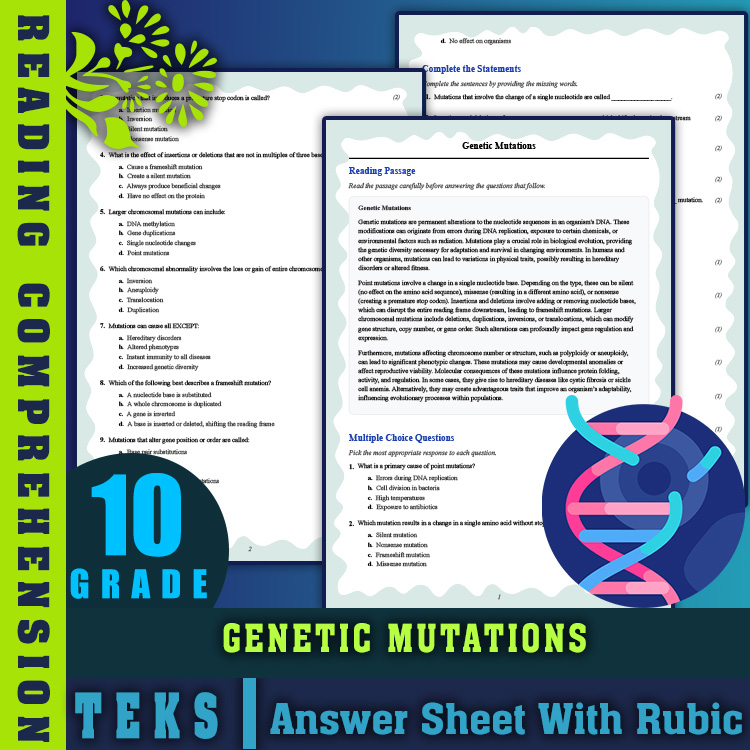
Grade 10 Science | Genetic Mutations Reading Worksheet (PDF + Answer Key)
JCreated byJ.S SheetsLearning Objectives
- Describe different types of genetic mutations and their effects on DNA.
- Explain how mutations can impact gene expression and protein function.
- Identify examples of mutations and their potential phenotypic outcomes.
Instant download

Specialized Cells Worksheet Grade 10 Science | Form Fits Function Ontario
 Created byChalk and Compass
Learning Objectives
- Explain how specialized cells have morphological adaptations that support specific functions.
- Describe how tissues show organization based on the roles of different specialized cells.
- Connect stem cell differentiation to changes in gene expression and cell structure.
Also included in: Cells, Photosynthesis, Respiration & Microbes Lesson Bundle – Grade 10 Science +1 more
Instant download
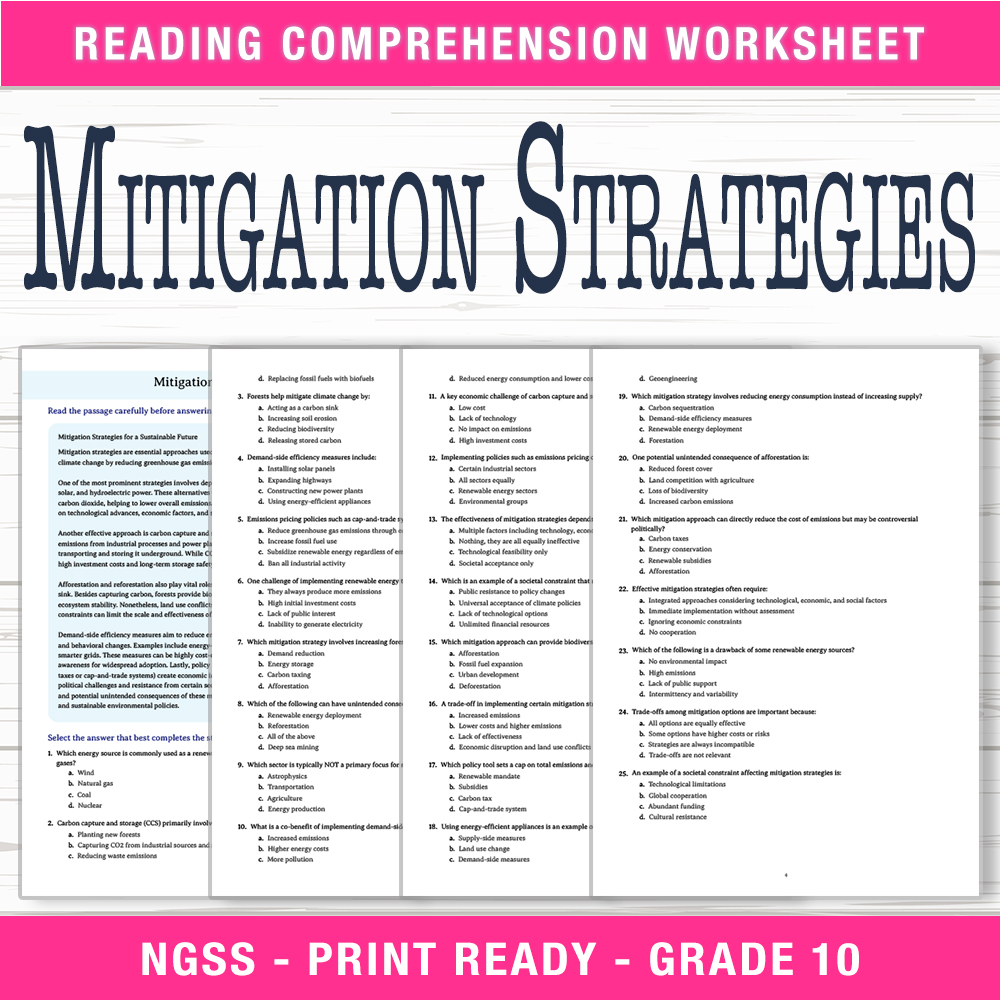
Grade 10 Science | Mitigation Strategies Worksheet (PDF + Answer Key)
Created byRiverstone ClassroomLearning Objectives
- Describe various mitigation strategies used to reduce greenhouse gas emissions
- Analyze the effectiveness and trade-offs of different mitigation approaches
- Evaluate the societal, economic, and environmental impacts of mitigation options
Instant download
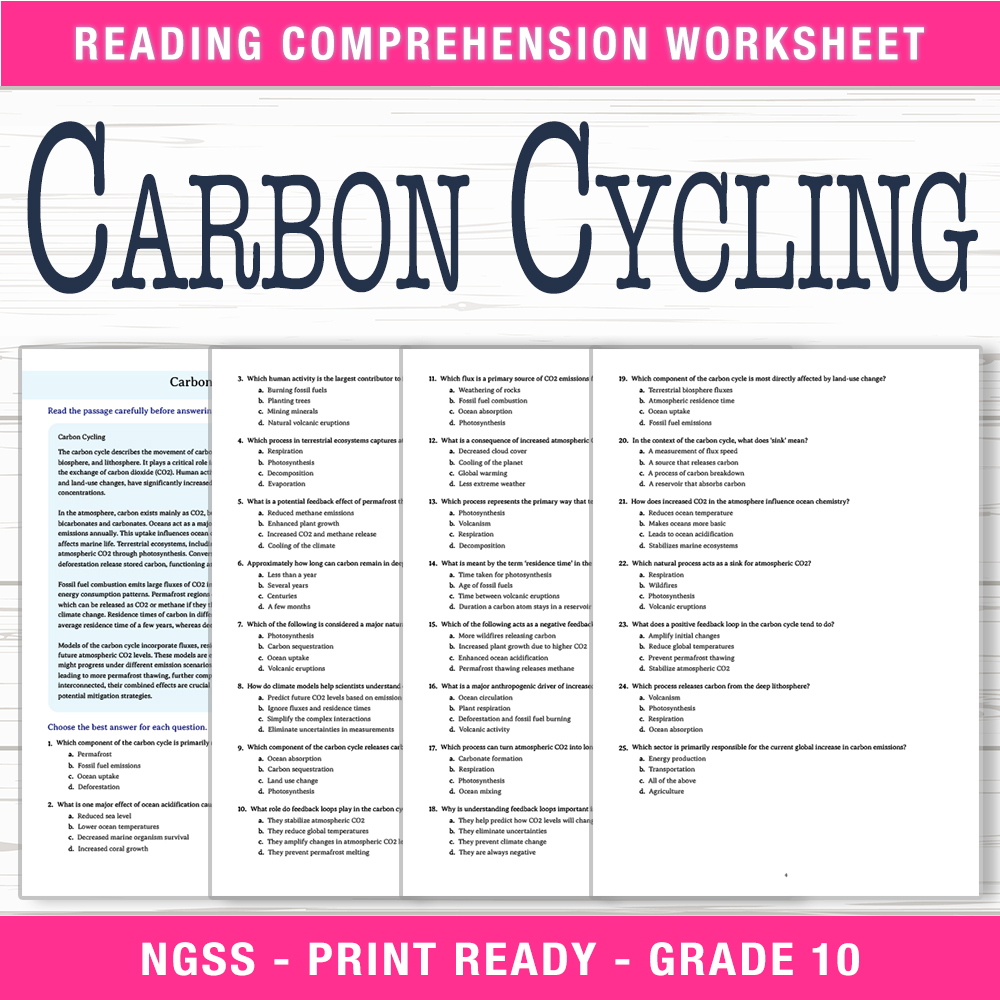
Grade 10 Science | Carbon Cycling Worksheet (PDF + Answer Key)
Created byRiverstone ClassroomLearning Objectives
- Describe the main components and processes involved in the global carbon cycle.
- Explain how fluxes, residence times, and feedback loops influence atmospheric carbon dioxide levels.
- Analyze the role of different sources and sinks in maintaining climate balance.
Instant download

Grade 10 Science | Biodiversity Overview - Daily Reading Comprehension
 Created byCoral Reef Learning
Learning Objectives
- Identify the different levels of biodiversity: genetic, species, and ecosystem.
- Understand the factors influencing biodiversity, such as habitat, climate, and disturbances.
- Recognize patterns of biodiversity across different regions and scales.
Instant download

Meiosis Worksheet | Standards-Aligned Practice for Grade 10 Science
JCreated byJ.S SheetsLearning Objectives
- Explain how meiosis reduces chromosome number by half to produce haploid gametes.
- Describe how crossing over and independent assortment during meiosis increase genetic diversity.
- Connect the stages of meiosis to Mendelian patterns of segregation and inheritance.
Instant download
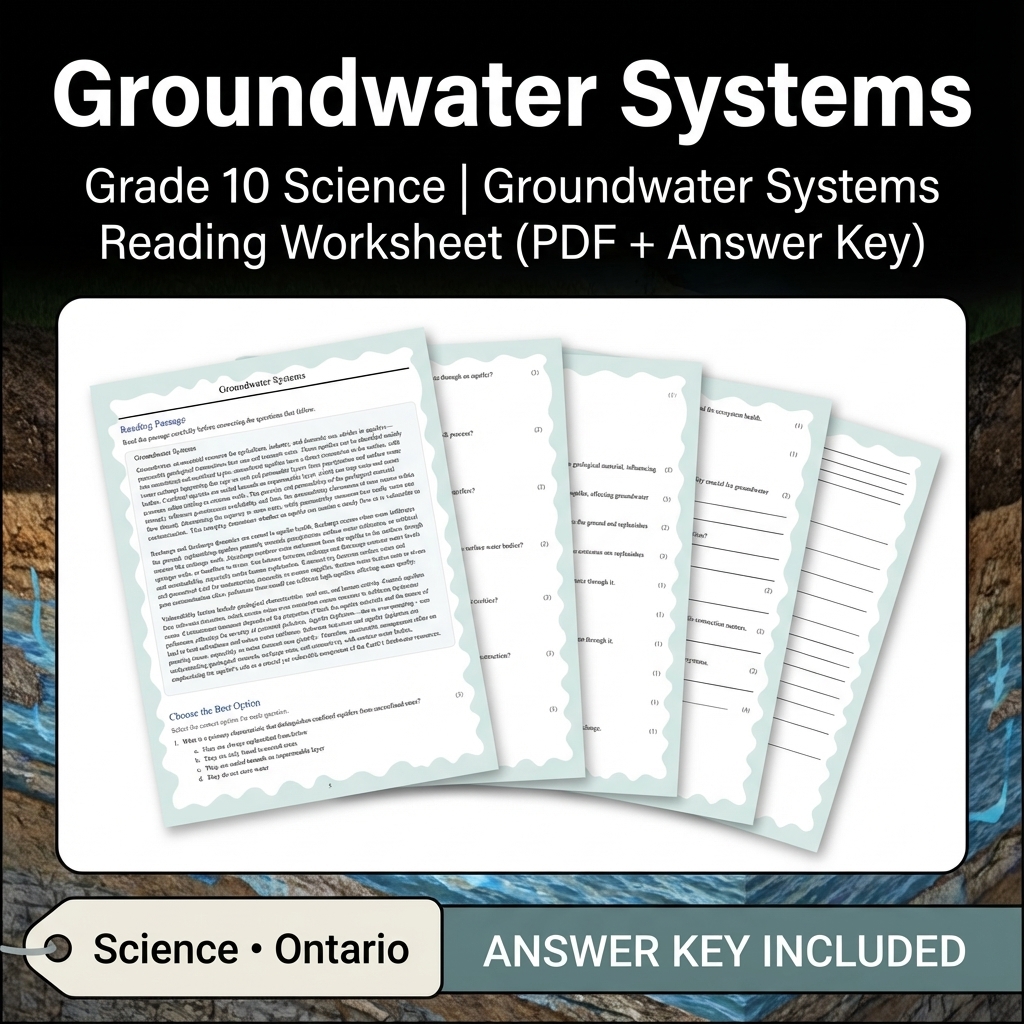
Grade 10 Science | Groundwater Systems Reading Worksheet (PDF + Answer Key)
JCreated byJ.S SheetsLearning Objectives
- Understand the different types and properties of aquifers and their controls on groundwater flow.
- Describe the recharge and discharge processes in groundwater systems.
- Explain the connectivity between surface water and groundwater and its importance.
Also included in: Grade 10 Science Unit Bundle – Earth Dynamics & Resources (PDF + Rubrics) +1 more
Instant download

Grade 10 Science | System Responses in Biological Systems - Reading Practice
Created byCoral Reef LearningLearning Objectives
- Understand the basic concepts of cellular and organ responses to environmental signals.
- Identify how organisms coordinate multi-scale responses to environmental changes.
- Recognize signaling networks involved in adaptive responses.
Also included in: Cells and Systems Lesson Bundle | Grade 10 Science | Alberta Framework +1 more
Instant download

Cell Basics Worksheet | Grade 10 Science Assessment PDF Alberta Standards
JCreated byJ.S SheetsLearning Objectives
- Describe the fundamental features of a cell, including membrane boundaries, cytoplasm, genetic material, and metabolic capabilities.
- Identify regional examples of cells, such as canola leaf cells and moss cells, and understand their significance in Alberta ecosystems.
- Explain how cellular organization relates to the structure and function of living organisms.
Also included in: Grade 10 Cell Systems & Homeostasis Science Lesson Bundle | Alberta +1 more
Instant download

Energy Diagrams Worksheet | Grade 10 Science | Alberta Standards
JCreated byJ.S SheetsLearning Objectives
- Interpret energy diagrams and bar charts related to mechanical and thermal processes.
- Identify sources and sinks of energy in various systems using graphical data.
- Link visual representations like graphs to principles of energy conservation in regional and engineered systems.
Also included in: Grade 10 Science Practice Worksheets: Alberta Science Full-Year Bundle
Instant download

Grade 10 Science – Seismic Tomography Daily Reading Worksheet with Answer Key
JCreated byJ.S SheetsLearning Objectives
- Identify and distinguish between primary (P) and secondary (S) seismic waves.
- Understand how seismic wave travel times are measured and interpreted.
- Explain the concepts of seismic wave attenuation and velocity variations.
Also included in: Grade 10 Science Lesson Bundle | Earth and Resource Management +1 more
Instant download

Grade 10 Uncertainty Ranges Worksheet | General Use Practice PDF
 Created byClear Sky Classroom
Learning Objectives
- Explain how uncertainty ranges help interpret measurement results from repeated or independent trials.
- Distinguish central tendency from variability and describe how each affects conclusions.
- Use ranges to judge whether differences are likely meaningful or could be caused by random variation.
Instant download

Grade 10 Spheres Overview Worksheet | Practice & Assessment PDF
Created byClear Sky ClassroomLearning Objectives
- Describe the geosphere, hydrosphere, atmosphere, and biosphere and identify what each sphere includes.
- Explain how matter and energy move among Earth’s spheres through pathways such as weathering, water transport, and biological cycling.
- Use examples from Alberta landscapes (mountains, prairies, and boreal forests) to predict observable regional patterns in climate and landforms.
Instant download

Grade 10 Science – Classification & States of Matter | Daily Reading Worksheet
 Created byBright Mind Resources
Learning Objectives
- Understand the different states of matter: solids, liquids, and gases.
- Identify and differentiate pure substances from mixtures.
- Learn examples of elements, compounds, and mixtures.
Also included in: Grade 10 Chemistry Science Daily Reading Worksheets Lesson Bundle | Ontario +1 more
Instant download
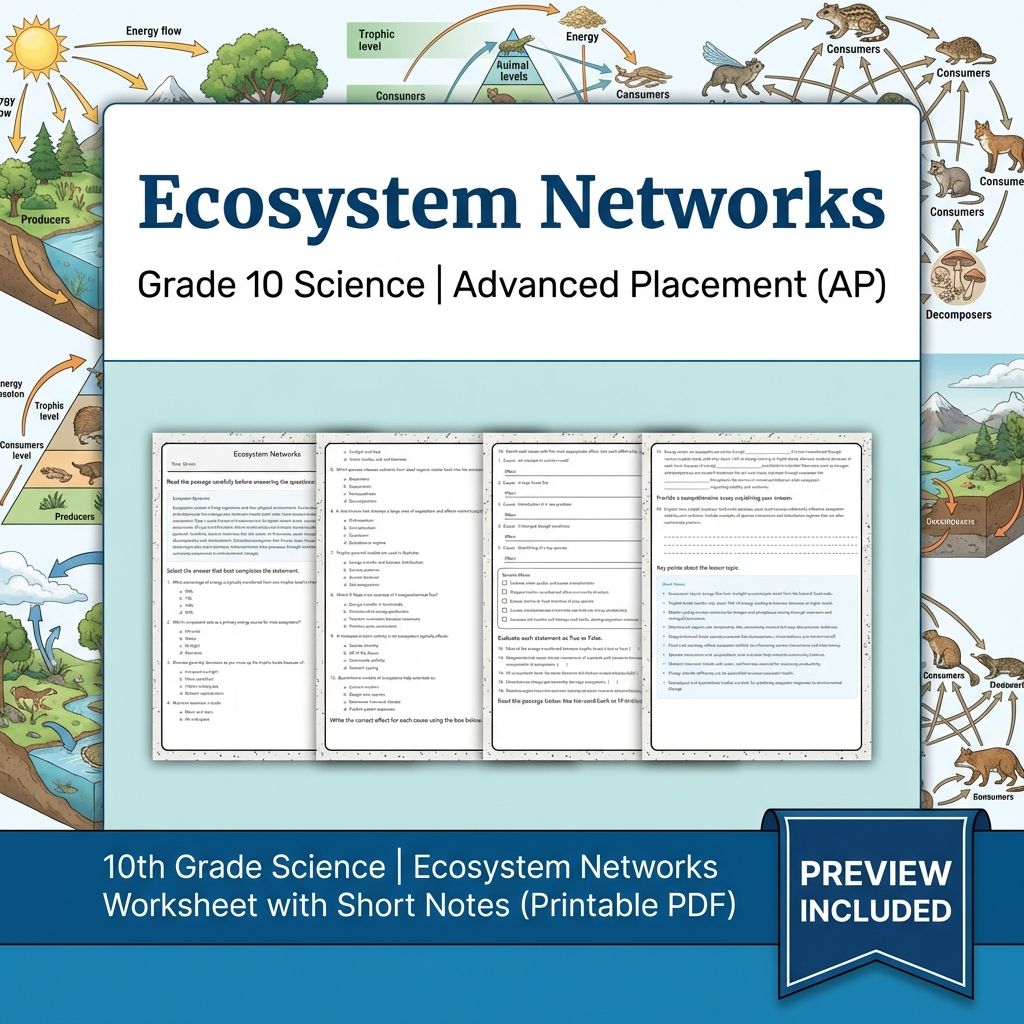
10th Grade Science | Ecosystem Networks Worksheet with Short Notes (PDF)
 Created byMeadowlark Worksheets
Learning Objectives
- Analyze energy flow and matter cycling within ecosystems using trophic structures and food webs.
- Quantify ecosystem energy transfer efficiency, biomass distribution, and nutrient reservoirs.
- Describe how species interactions, disturbance regimes, and abiotic factors influence ecosystem stability.
Instant download
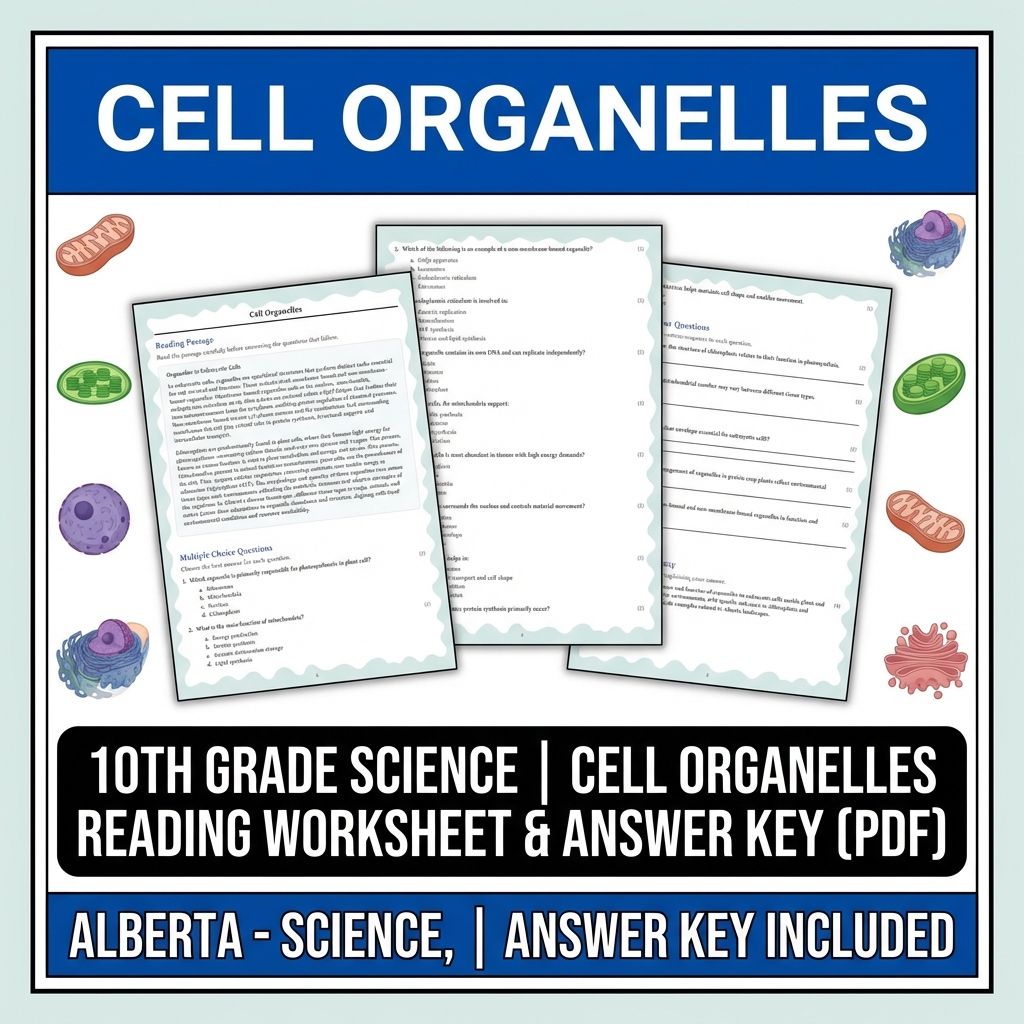
10th Grade Science | Cell Organelles Reading Worksheet & Answer Key (PDF)
JCreated byJ.S SheetsLearning Objectives
- Identify the different types of membrane-bound and non-membrane-bound organelles in eukaryotic cells.
- Explain how organelle structure relates to its function within the cell.
- Describe the roles of chloroplasts and mitochondria in plant and animal cells.
Also included in: Grade 10 Science | Cell Systems, Energy, & Homeostasis (Standards-Aligned) +1 more
Instant download

Grade 10 Science | Enzymes and Transport Worksheet (PDF) Standards
Created byEvergreen Desk EducationLearning Objectives
- Explain how enzymes act as specific catalysts that affect reaction rates in cells
- Describe how membrane structure influences diffusion, osmosis, and selective transport
- Use models (channels, pumps) to predict how substances move across membranes
Also included in: Grade 10 Evolution & Genetics Science Lesson Bundle: General Framework +1 more
Instant download

Planetary Comparisons Worksheet Pack | Grade 10 Science Activities
 Created byPrism Point Learning
Learning Objectives
- Compare terrestrial planets using atmosphere, greenhouse warming, and magnetic protection.
- Explain how differences in volatile inventories affect surface conditions on Earth, Mars, and Venus.
- Use remote sensing ideas and solar proximity to interpret climate outcomes across planets.
Instant download

Hydroecological Links Worksheet | Grade 10 Science Practice
Created byPrism Point LearningLearning Objectives
- Explain how hydrology (water timing, availability, and connectivity) influences habitat suitability and species distributions.
- Describe river–floodplain, wetland, and groundwater–vegetation interactions that control nutrient cycling and ecosystem services.
- Evaluate how altered hydrologic regimes can cause cascading ecological effects and reduce resilience to disturbance.
Instant download

Human Footprint Worksheet Grade 10 Science | Alberta Standards Practice
Created byPrism Point LearningLearning Objectives
- Explain how land use, resource extraction, and greenhouse gas emissions change Earth systems.
- Describe how these changes can affect soil, water, and atmospheric processes over time.
- Use measurable indicators (like habitat area, water quality, and emissions) to evaluate environmental impacts.
Instant download

Solar Context Worksheet | Grade 10 Science Activities
Created byPrism Point LearningLearning Objectives
- Explain how Earth’s rotation and revolution determine seasonal daylight and solar angle changes.
- Relate solar irradiance and orbital geometry to energy input patterns that affect climate and ecosystems.
- Describe the roles of gravity and orbital motion in the Earth–Moon–Sun system.
Instant download
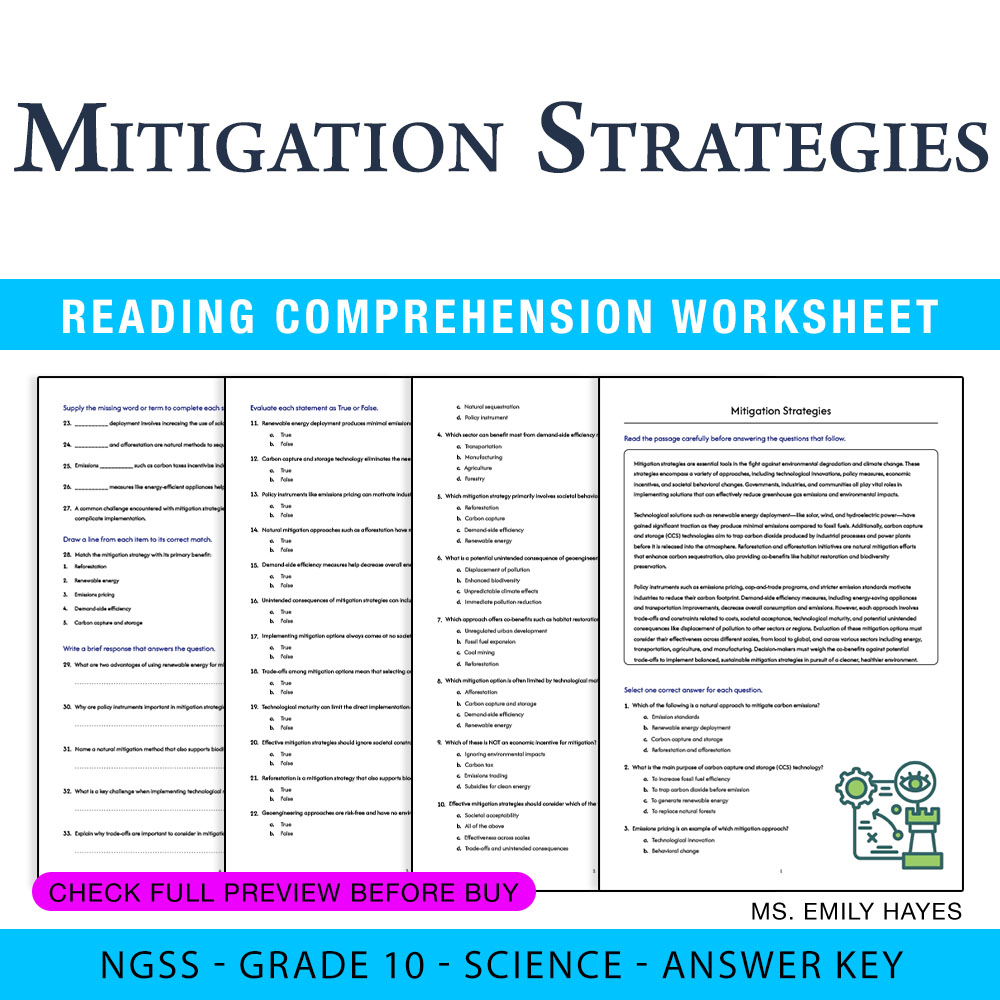
Grade 10 Science | Mitigation Strategies Worksheet (PDF+ Answer Key)
Created byCopper Leaf ClassroomLearning Objectives
- Understand various mitigation and management approaches to reduce environmental impacts and greenhouse gas emissions.
- Evaluate the effectiveness, co-benefits, trade-offs, and potential unintended consequences of different mitigation options.
- Analyze technological, economic, and societal constraints influencing mitigation strategies.
Instant download
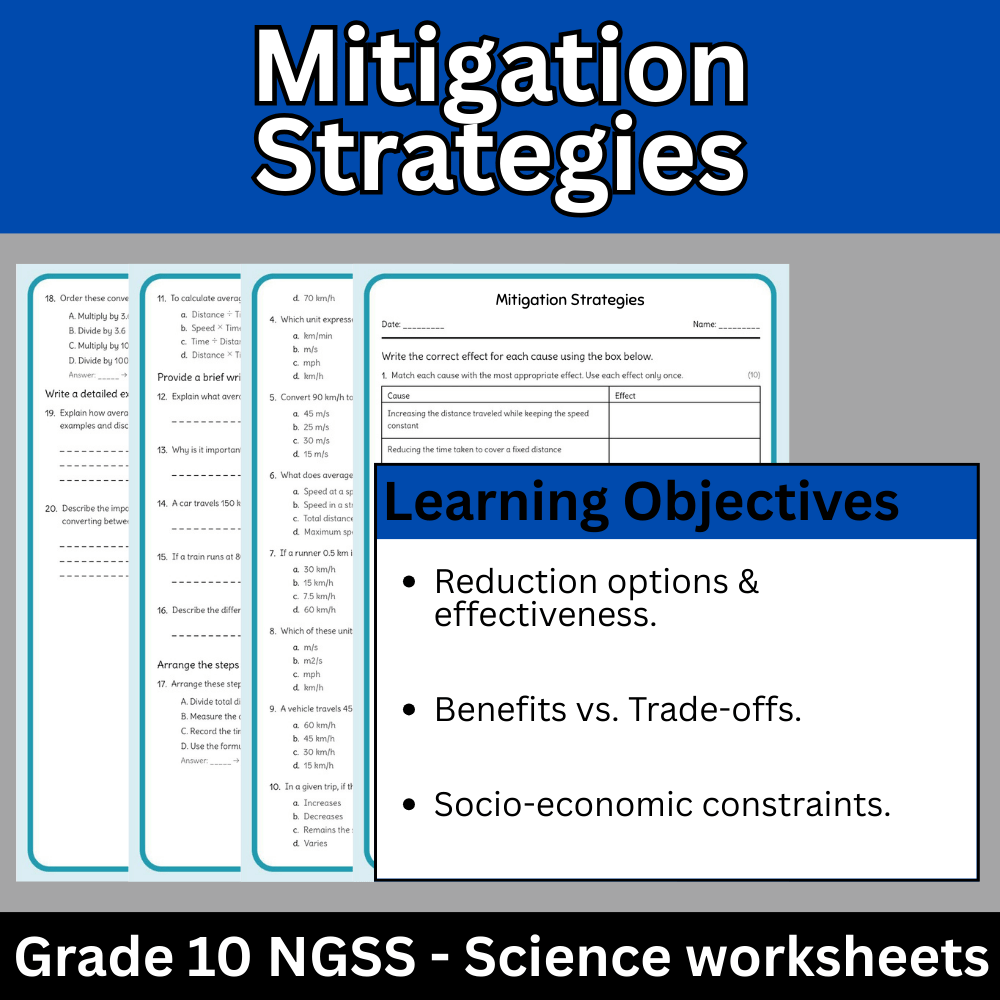
Grade 10 Science – Mitigation Strategies Worksheet (PW) | NGSS Aligned
Created byBright Mind ResourcesLearning Objectives
- Understand various mitigation options and their roles in reducing environmental impacts
- Evaluate the effectiveness, benefits, and trade-offs of different mitigation strategies
- Analyze the societal, economic, and technological constraints influencing mitigation choices
Instant download

Mitigation Strategies Worksheet | Assessment Grade 10 Science printable PDF
Learning Objectives
- Explain major mitigation approaches for reducing greenhouse gas emissions, including renewables, carbon capture, afforestation, and demand-side efficiency.
- Evaluate mitigation options by considering effectiveness, co-benefits, unintended consequences, and trade-offs across sectors and scales.
- Analyze how economic and societal constraints shape real-world mitigation policy choices such as emissions pricing.
Also included in: Earth and Human Activity Lesson Bundle Grade 10 Science NGSS
Instant download
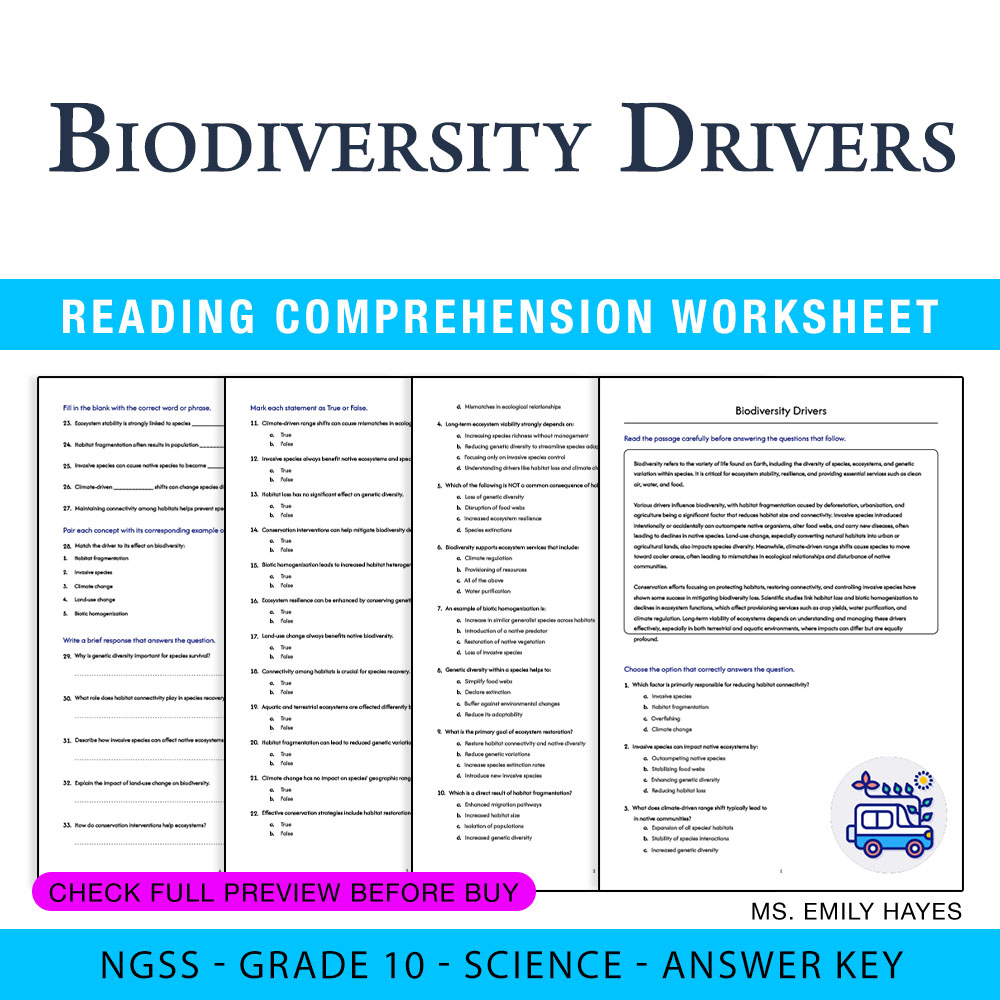
10th Grade Science | Biodiversity Drivers Worksheet (PDF + Answer Key)
Created byCopper Leaf ClassroomLearning Objectives
- Describe factors that influence species richness and community composition.
- Explain mechanisms like habitat fragmentation, invasive species, and climate-driven range shifts.
- Assess the impact of habitat loss, biotic homogenization, and conservation efforts on ecosystems.
Instant download
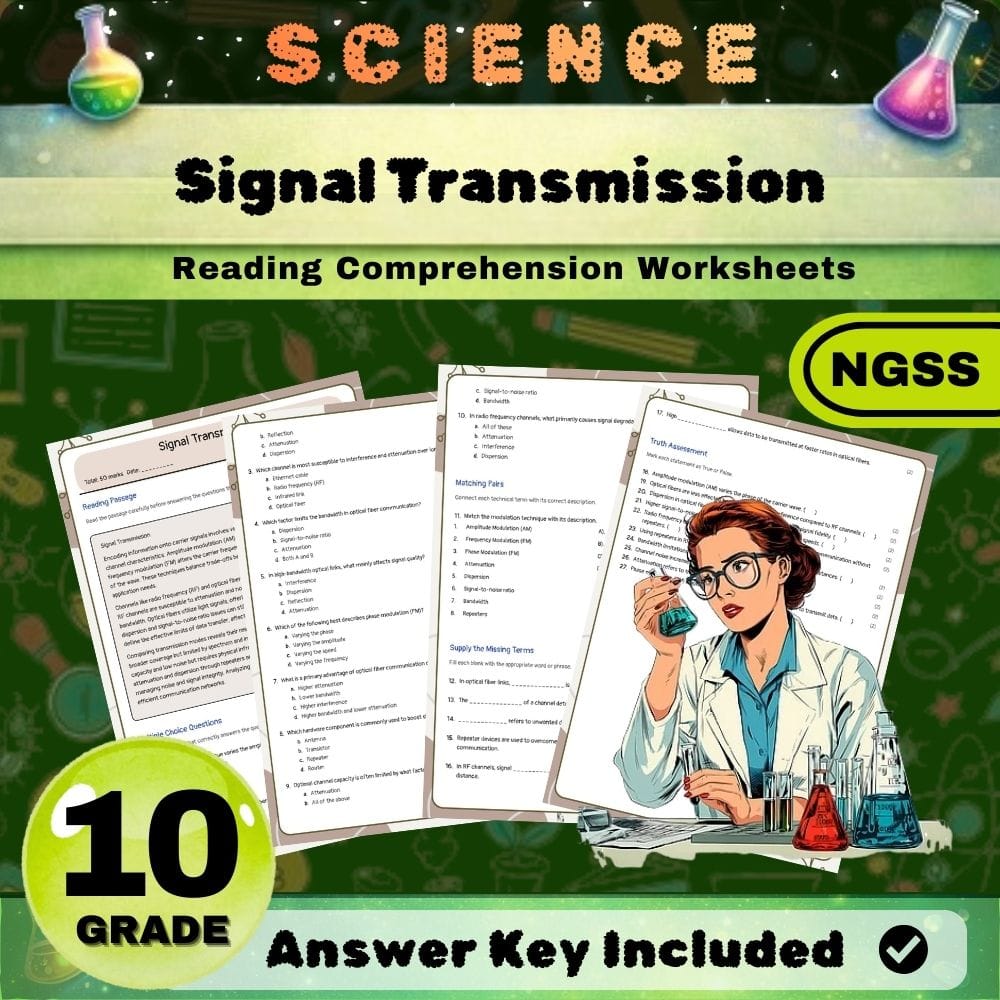
Grade 10 Science | Signal Transmission Worksheet (NGSS) PDF
Created byMaple Path LearningLearning Objectives
- Understand the principles of modulation techniques such as amplitude, frequency, and phase modulation.
- Compare the advantages and limitations of different communication channels like radio frequency and optical fiber links.
- Evaluate how channel constraints like bandwidth, noise, and attenuation affect signal capacity and fidelity.
Also included in: Grade 10 Science Waves and Their Applications in Technologies Bundle +1 more
Instant download
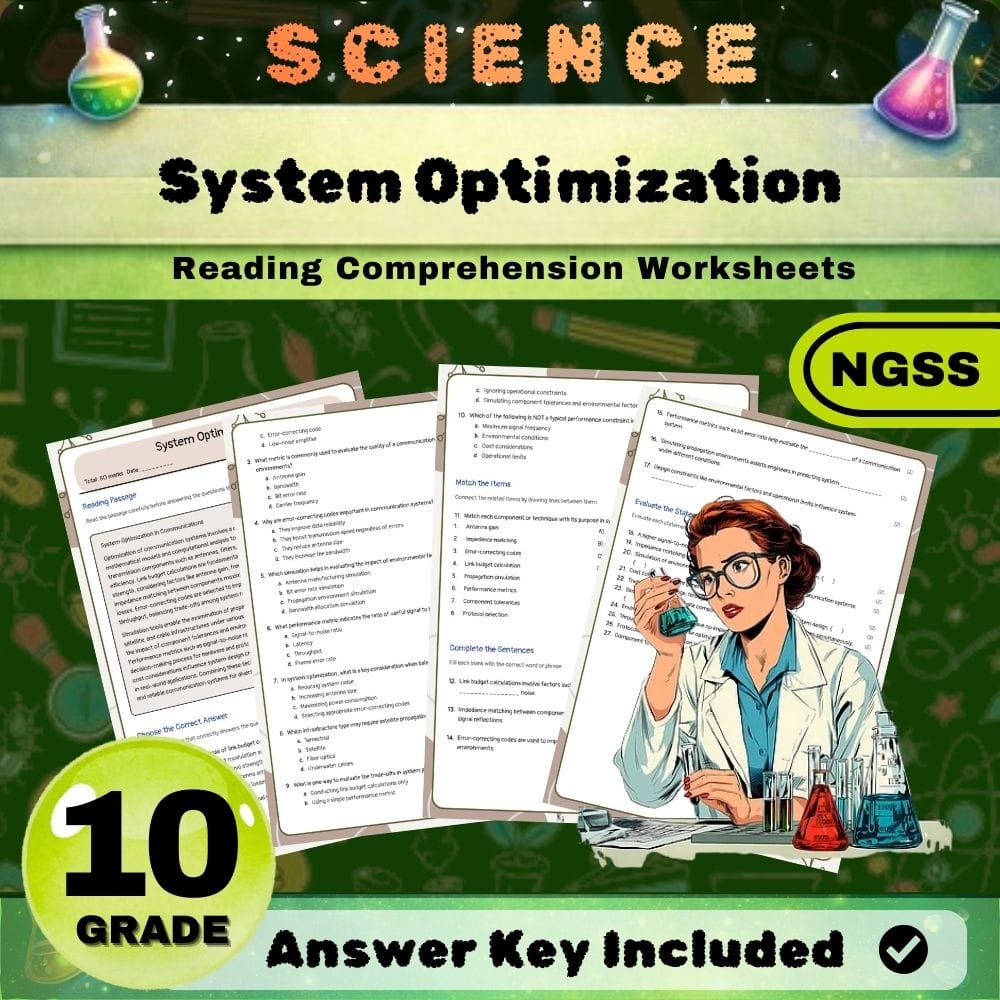
Grade 10 Science – System Optimization Worksheet (NGSS) (PDF)
Created byMaple Path LearningLearning Objectives
- Understand how mathematical models and computational analysis are used to optimize communication systems.
- Identify key system components such as antennas, impedance matching, and error-correcting codes.
- Analyze trade-offs among range, throughput, and reliability in system design.
Also included in: Grade 10 Science Waves and Their Applications in Technologies Bundle +1 more
Instant download
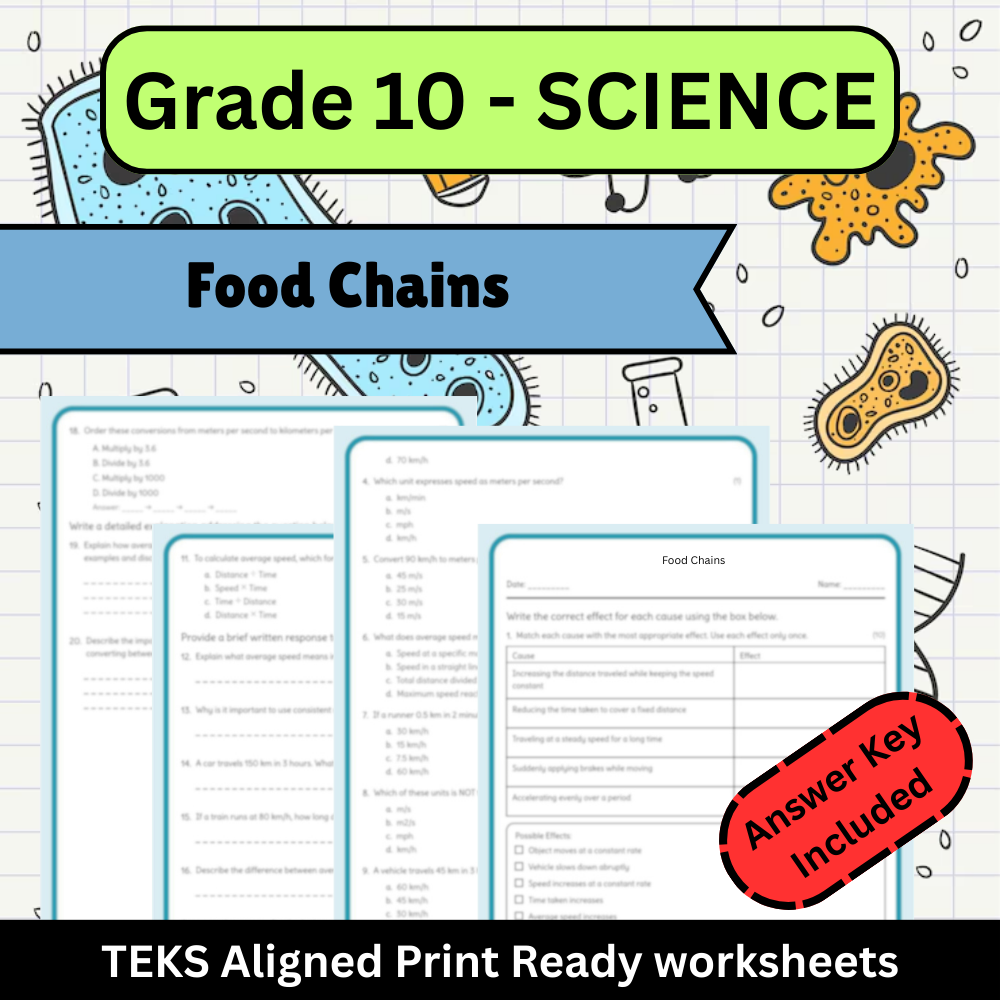
Grade 10 Science – Food Chains & Energy Flow Worksheet (Answer Key) | TEKS Aligned
Created byBright Mind ResourcesLearning Objectives
- Understand the roles of producers, consumers, and decomposers in food chains and food webs.
- Identify the flow of energy and matter through different organisms in an ecosystem.
- Analyze the effects of disruptions in food chains and how they propagate through ecosystems.
Also included in: Grade 10 Science | Ecosystems & Biodiversity Unit Worksheet Bundle(TEKS-Aligned) +5 more
Instant download
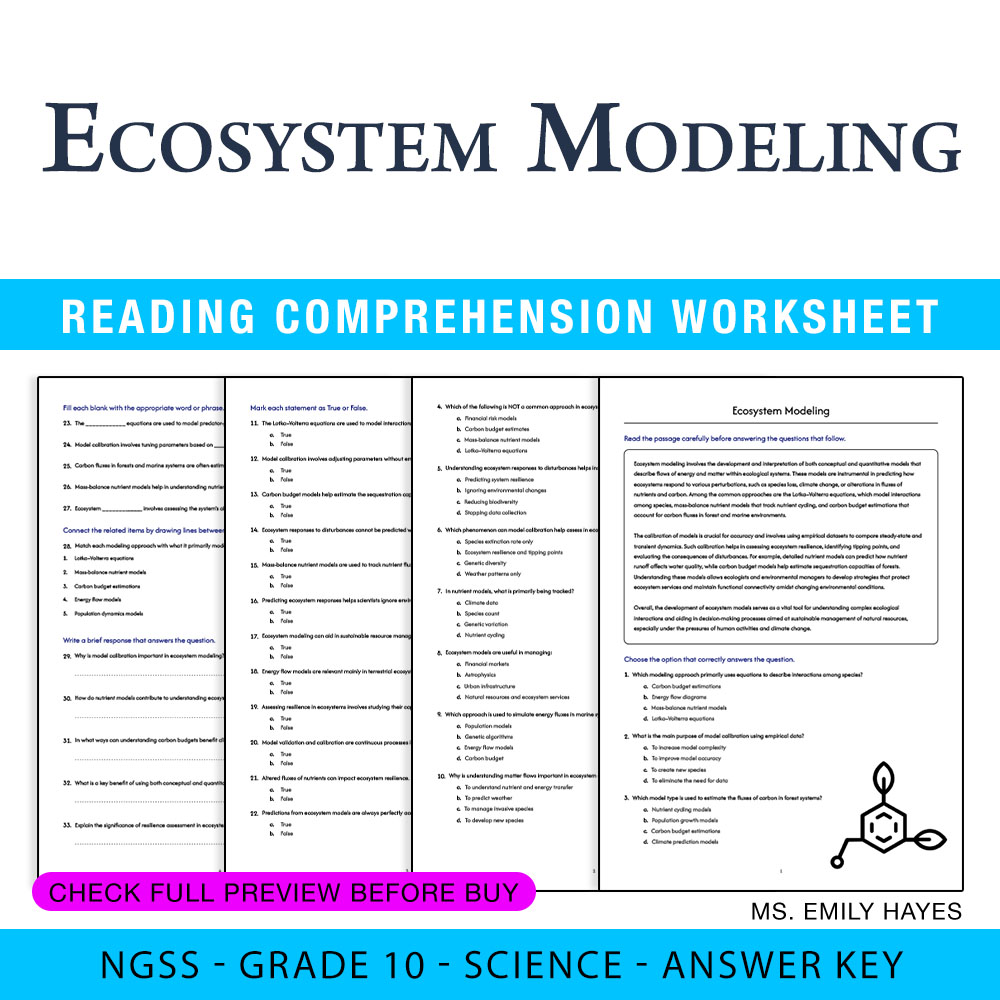
10th Grade Science | Ecosystem Modeling Worksheet (PDF + Answer Key)
Created byCopper Leaf ClassroomLearning Objectives
- Understand the principles of ecosystem modeling including energy and matter flows
- Interpret both conceptual and quantitative models such as Lotka–Volterra equations and nutrient models
- Analyze the responses of ecosystems to perturbations using modeling approaches
Instant download
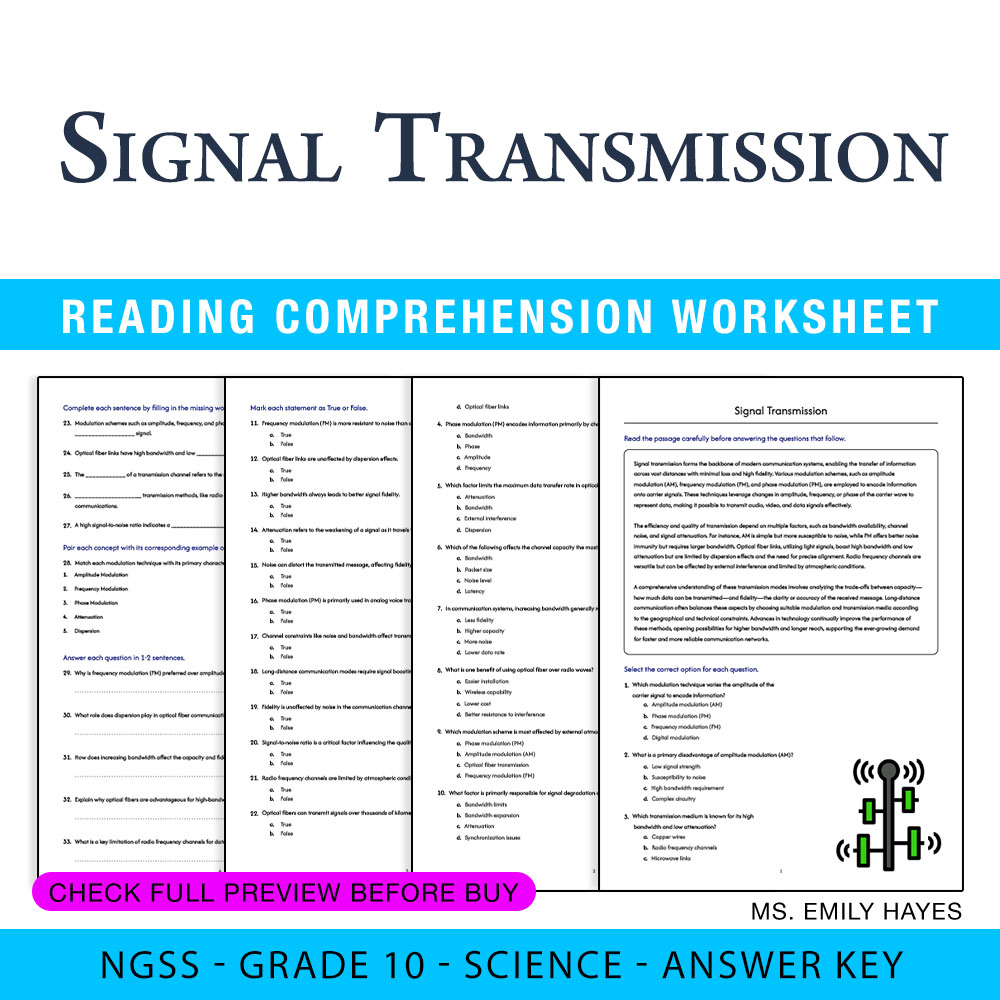
Grade 10 Science | Signal Transmission Worksheet (PDF+ Answer Key)
Created byCopper Leaf ClassroomLearning Objectives
- Explain the principles of amplitude, frequency, and phase modulation techniques.
- Describe the factors affecting the capacity and fidelity of transmission channels.
- Compare different transmission modes such as radio frequency channels and optical fibers.
Instant download
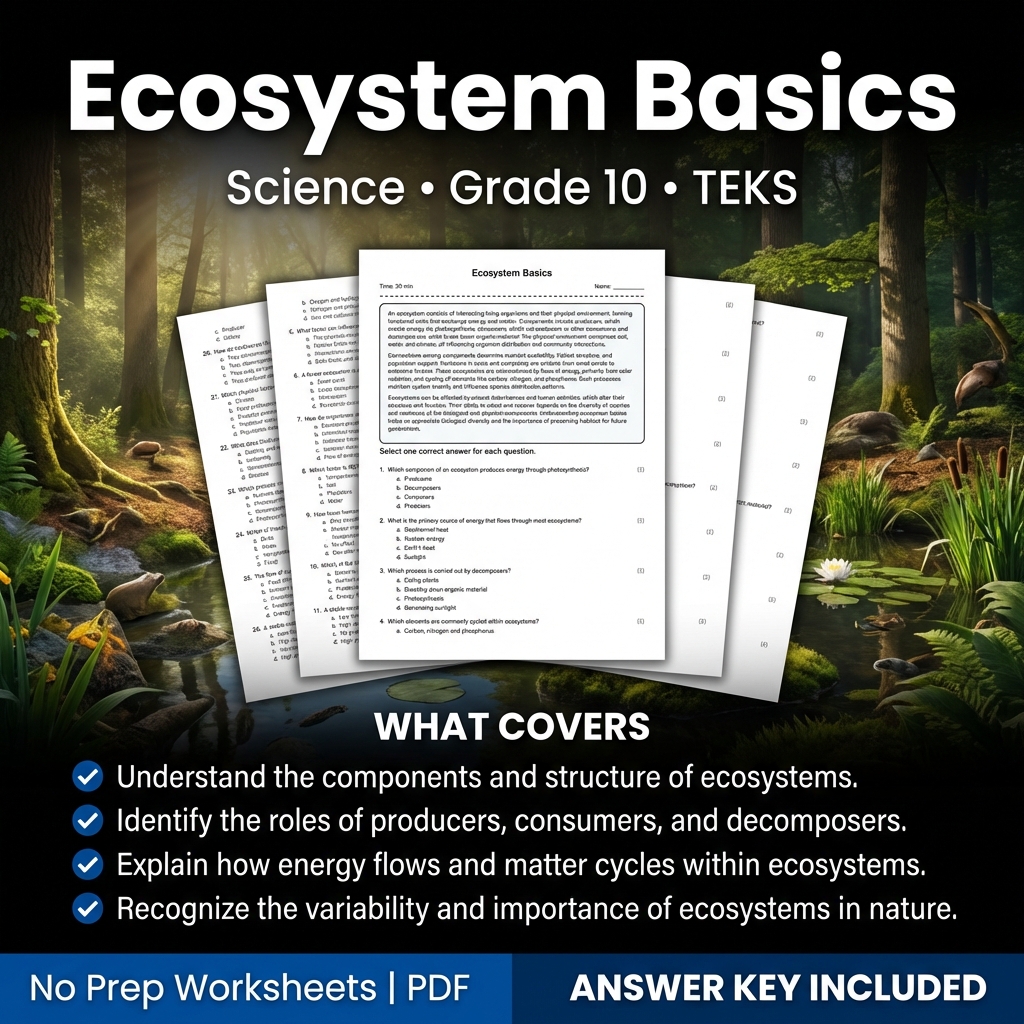
Ecosystem Basics Grade 10 Science Worksheet & Answer Key TEKS
Created byCoral Reef LearningLearning Objectives
- Understand the components and structure of ecosystems.
- Identify the roles of producers, consumers, and decomposers.
- Explain how energy flows and matter cycles within ecosystems.
Instant download
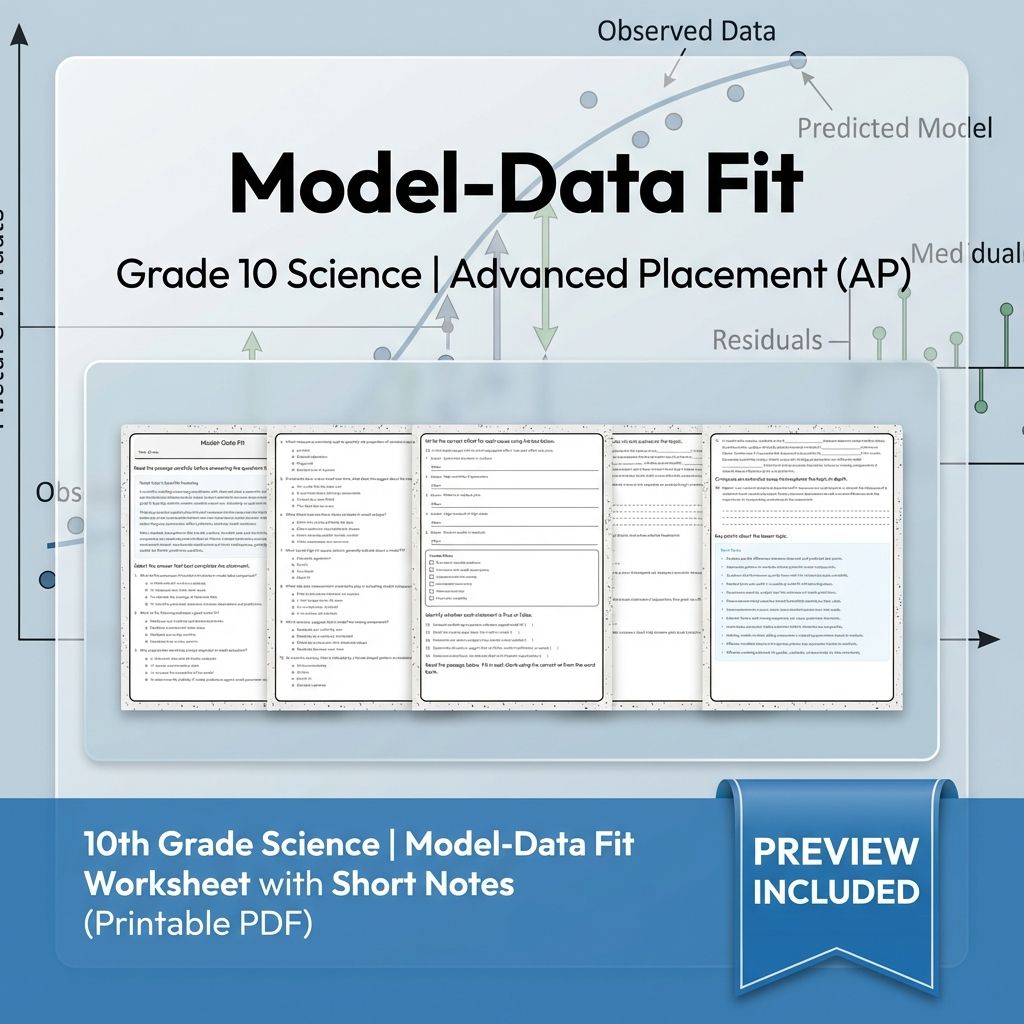
10th Grade Science | Model-Data Fit Worksheet with Short Notes (Printable PDF)
Created byMeadowlark WorksheetsLearning Objectives
- Understand how to compare model predictions with observed data using residual analysis.
- Interpret goodness-of-fit measures to evaluate model adequacy.
- Assess the impact of model parameter sensitivity on predictive accuracy.
Also included in: Grade 10 Science Unit | Data Analysis, Modelling Worksheet Pack
Instant download
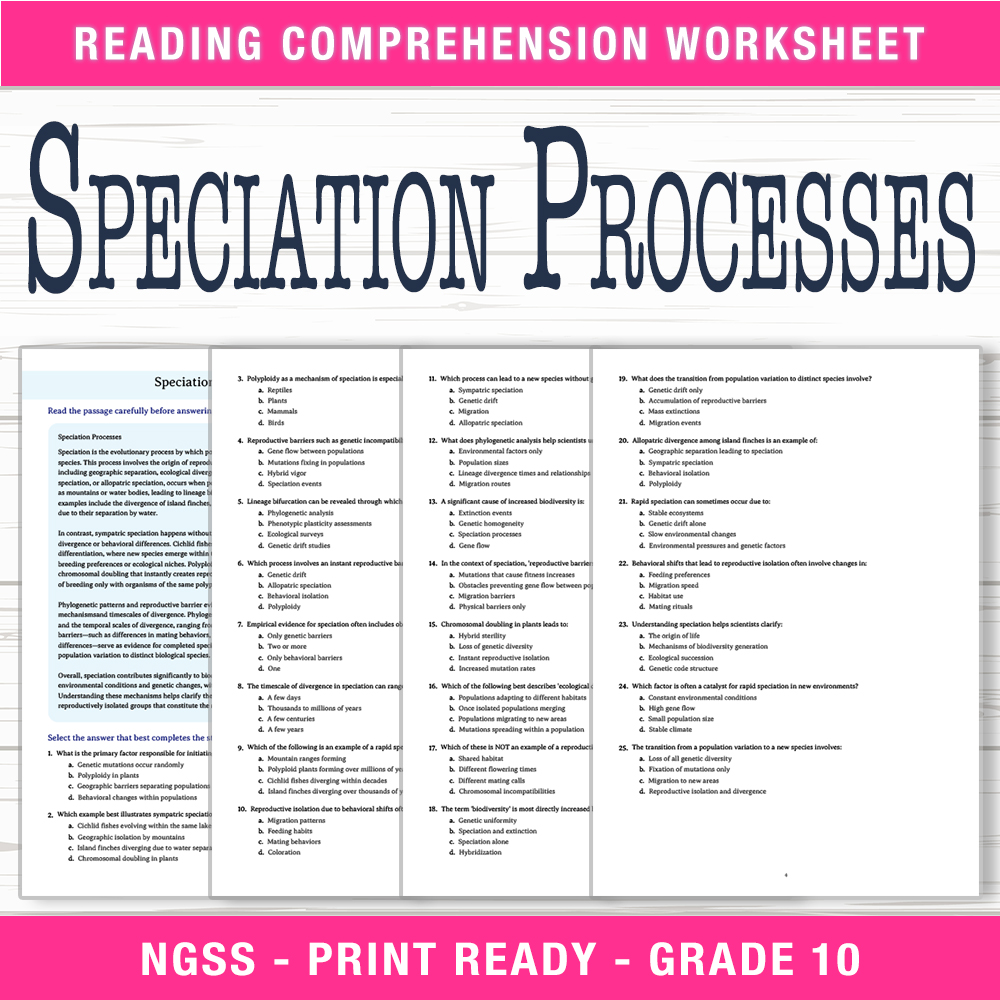
Grade 10 Science – Speciation Processes Worksheet (PDF + Answer Key)
Created byRiverstone ClassroomLearning Objectives
- Explain the mechanisms underlying different modes of speciation such as allopatric, sympatric, and polyploidy.
- Identify empirical examples of speciation in natural populations and understand their significance.
- Describe how phylogenetic patterns and reproductive barriers provide evidence for speciation events.
Also included in: Grade 10 Science | Evolution & Biodiversity Unit Worksheet Bundle
Instant download
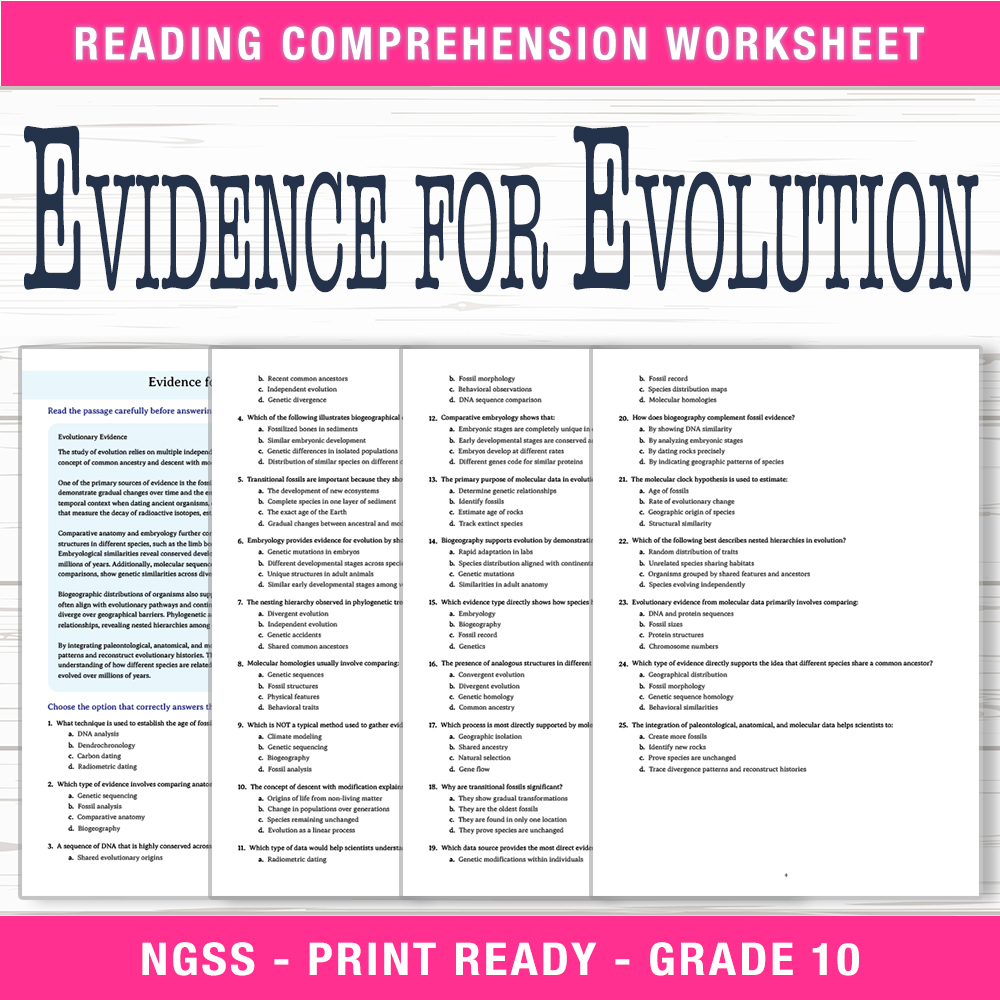
Grade 10 Science | Evidence for Evolution Worksheet (PDF + Answer Key)
Created byRiverstone ClassroomLearning Objectives
- Understand the multiple lines of evidence supporting common ancestry and descent with modification.
- Identify and explain the significance of fossil records, comparative anatomy, embryology, molecular data, and biogeography in evolutionary studies.
- Interpret phylogenetic trees and DNA sequence homologies to trace evolutionary relationships.
Also included in: Grade 10 Science | Evolution & Biodiversity Unit Worksheet Bundle
Instant download
About Grade 10 Science Worksheets
Find Science worksheets built for Grade 10. All 7,069 cover core skills, practice, and review, each an instant PDF download.
Every worksheet on MyTeachingSheets is created by independent teacher-authors and reviewed before publication. All resources download as printable PDFs for classroom, homework, or at-home practice, and many include answer keys. Preview any worksheet free before buying.