
Grade 10 Science Worksheets
7,069 worksheets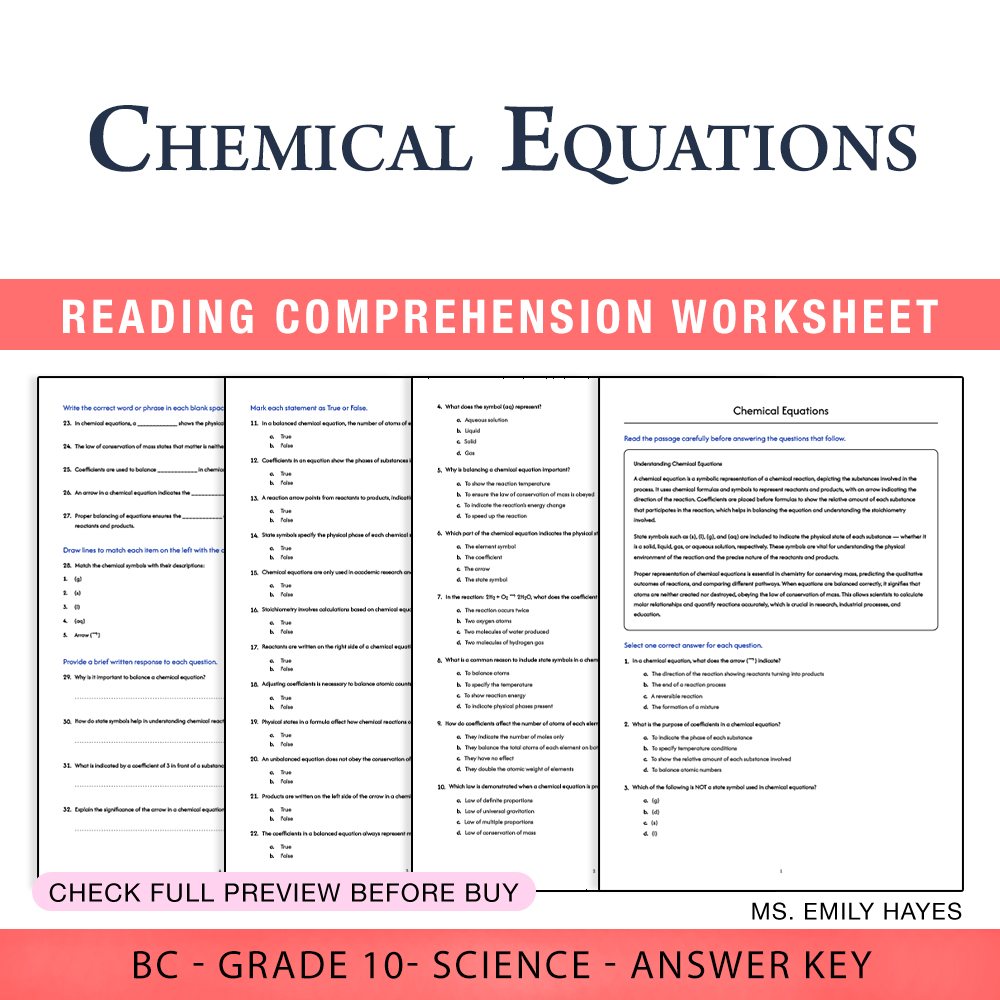
10th Grade Science | Chemical Equations Worksheet (PDF + Answer Key)
 Created byCopper Leaf Classroom
Learning Objectives
- Understand the components and notation used in chemical equations.
- Analyze the roles of coefficients, formulas, and state symbols in balancing equations.
- Interpret the conservation of mass as represented in chemical equations.
Also included in: Grade 10 Science BC| Chemistry, Reactions & Atomic Structure (PDF+ Answer Keys) +1 more
Instant download
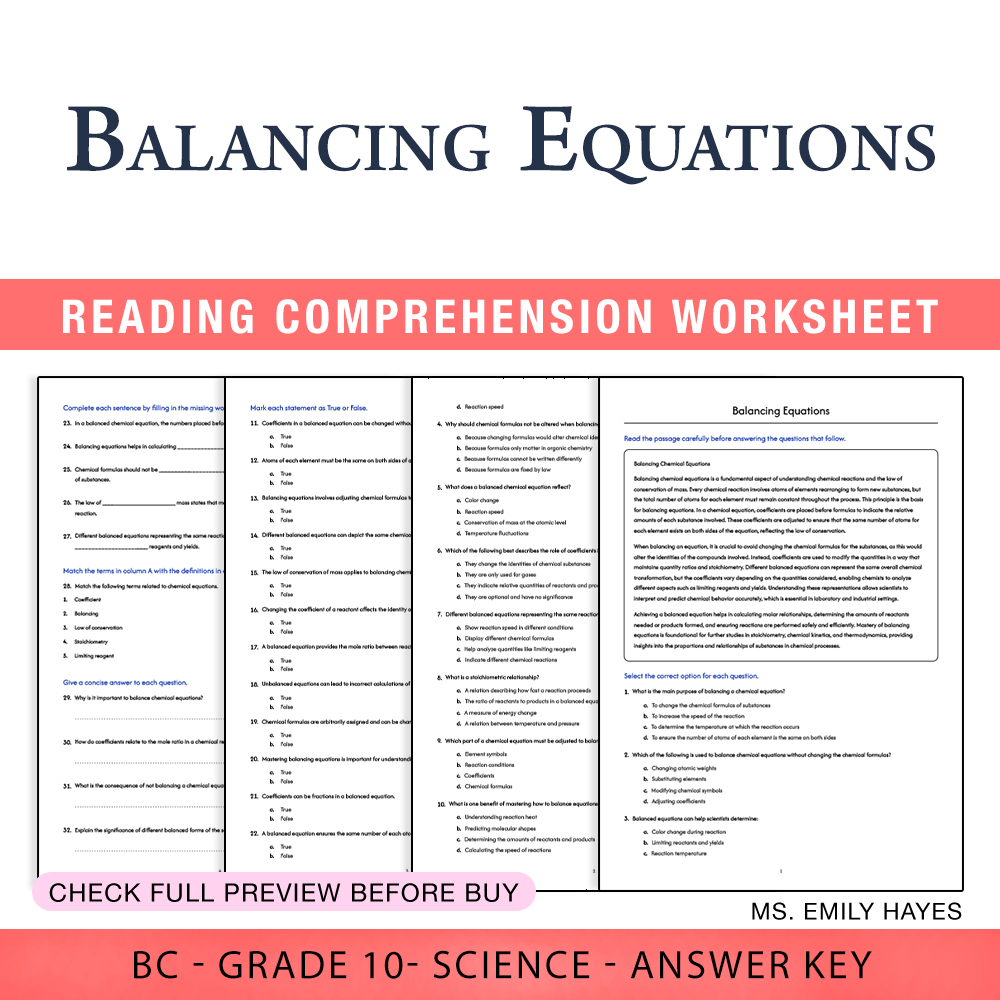
Grade 10 Science | Balancing Chemical Equations Worksheet (PDF + Answer Key)
Created byCopper Leaf ClassroomLearning Objectives
- Understand the concept of balancing chemical equations and the law of conservation of mass.
- Identify and apply appropriate coefficients to balance chemical equations.
- Interpret stoichiometric relationships from balanced equations.
Also included in: Grade 10 Science BC| Chemistry, Reactions & Atomic Structure (PDF+ Answer Keys) +1 more
Instant download
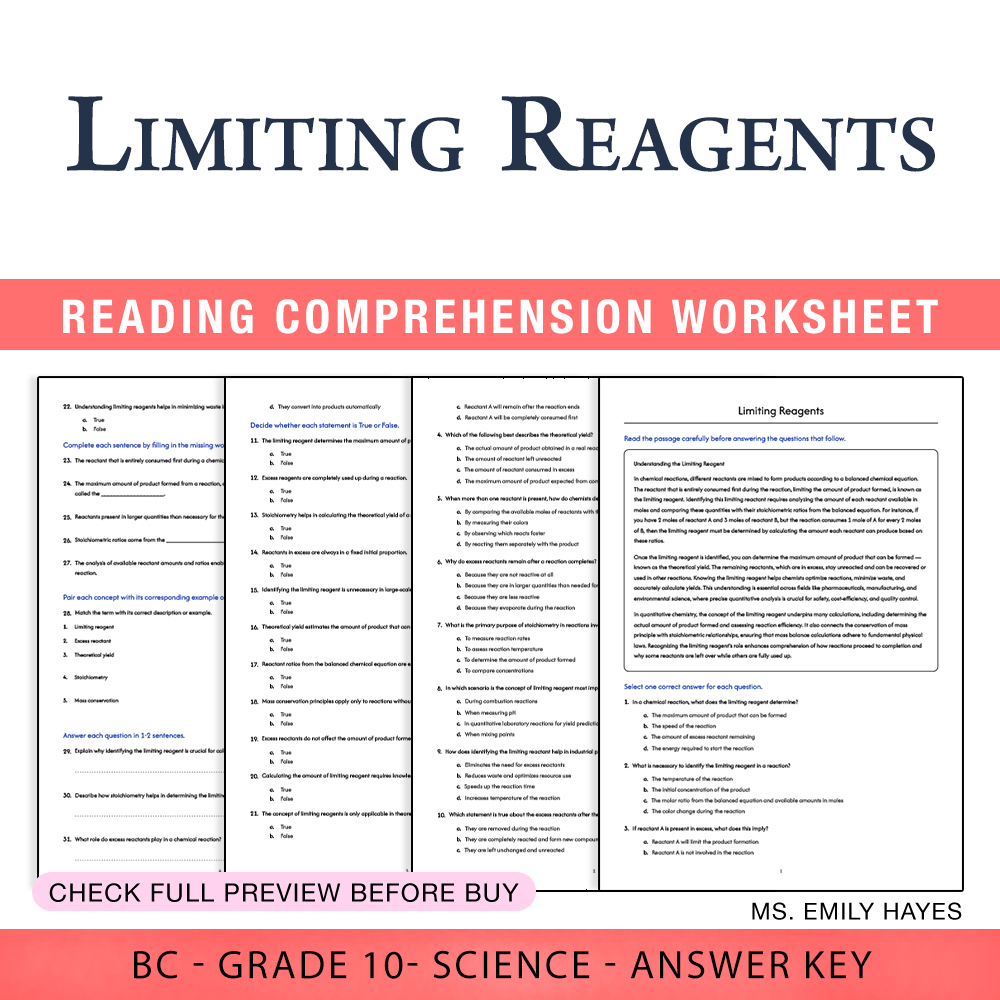
Grade 10 Science | Limiting Reagents Worksheet (PDF + Answer Key)
Created byCopper Leaf ClassroomLearning Objectives
- Define and explain the concept of a limiting reagent in a chemical reaction.
- Identify the limiting reactant using stoichiometric ratios and available moles.
- Calculate the theoretical yield of a product based on limiting reagent analysis.
Also included in: Grade 10 Science BC| Chemistry, Reactions & Atomic Structure (PDF+ Answer Keys) +1 more
Instant download
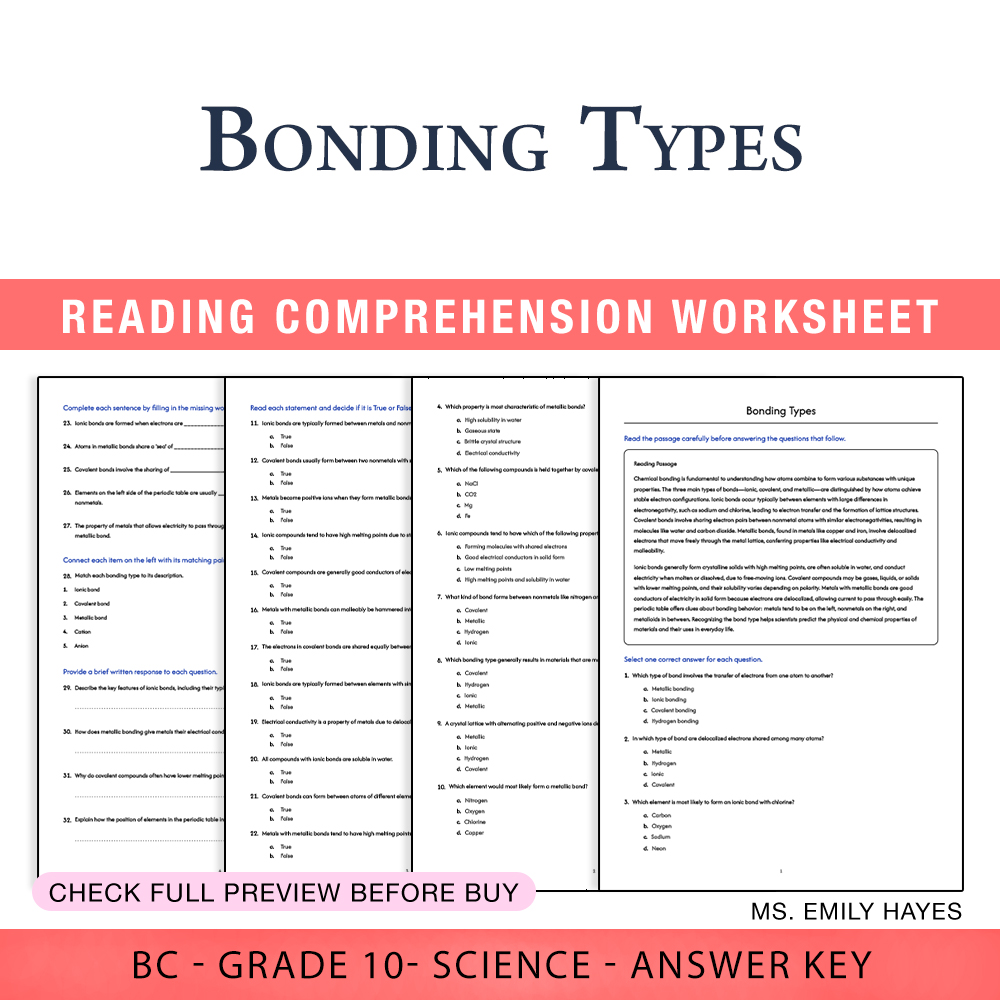
10th Grade Science | Bonding Types Worksheet (PDF + Answer Key)
Created byCopper Leaf ClassroomLearning Objectives
- Describe the differences between ionic, covalent, and metallic bonds.
- Identify examples of substances with each bonding type.
- Explain how bonding type influences properties like melting point, solubility, and conductivity.
Also included in: Grade 10 Science BC| Chemistry, Reactions & Atomic Structure (PDF+ Answer Keys) +1 more
Instant download

Transitional Fossils Worksheet | Grade 10 Science TEKS Practice
JCreated byJ.S SheetsLearning Objectives
- Explain what transitional fossils are and why they matter for understanding evolution
- Describe examples of transitional fossils and the traits they preserve
- Evaluate how taphonomic bias and an incomplete fossil record affect interpretations
Instant download
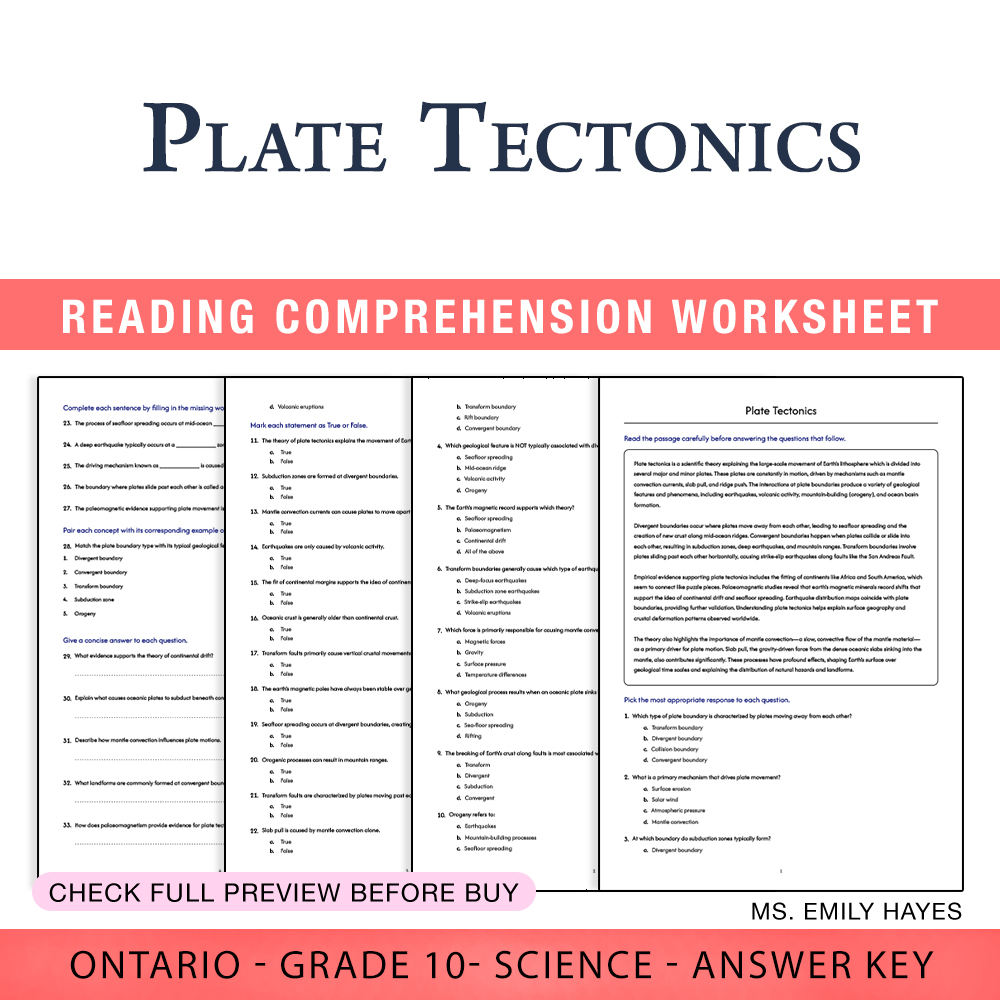
10th Grade Science | Plate Tectonics Worksheet (PDF + Answer Key)
Created byCopper Leaf ClassroomLearning Objectives
- Describe the main types of plate boundaries and their movement directions.
- Explain the driving mechanisms behind plate motions, including mantle convection and slab pull.
- Identify geological features and processes resulting from plate interactions such as seafloor spreading, subduction, and orogeny.
Instant download
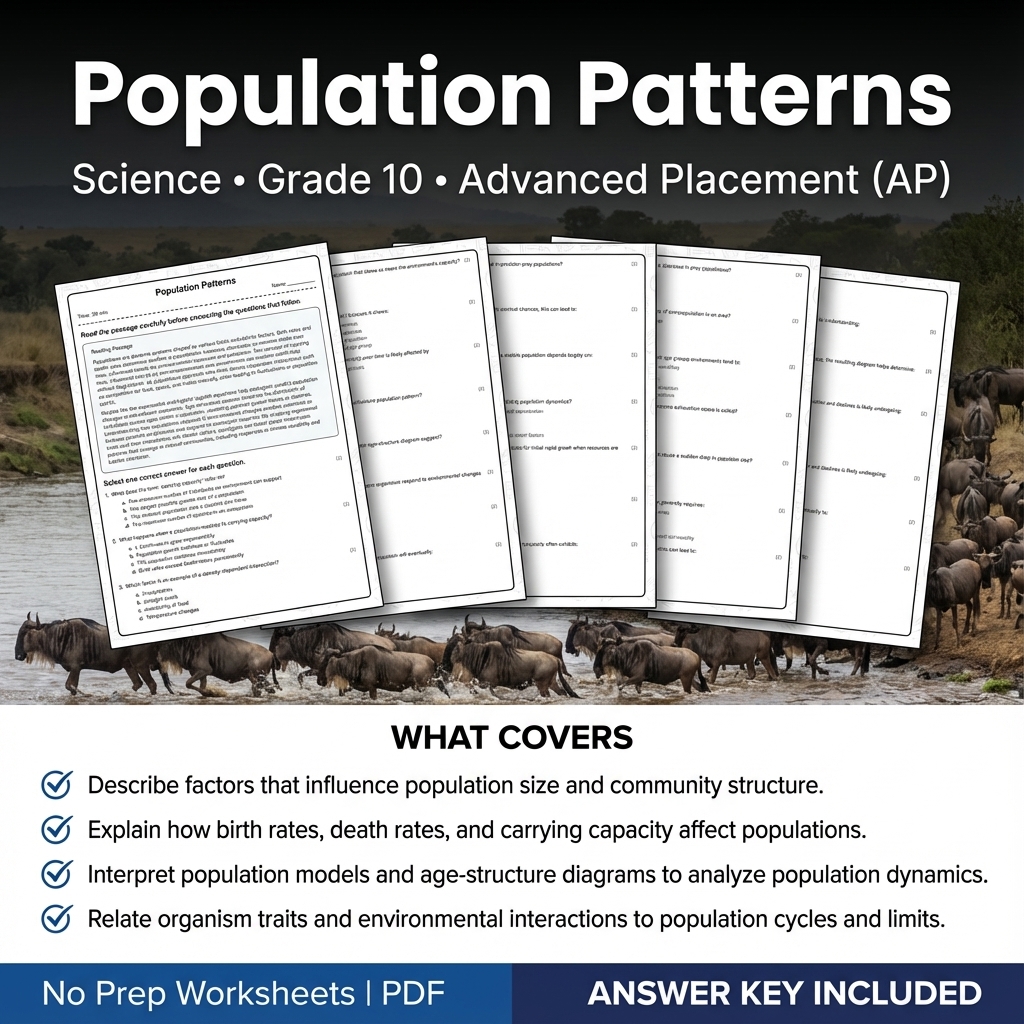
10th Grade Science | Population Patterns Worksheet (Printable PDF + Answer Key)
 Created byCoral Reef Learning
Learning Objectives
- Describe factors that influence population size and community structure.
- Explain how birth rates, death rates, and carrying capacity affect populations.
- Interpret population models and age-structure diagrams to analyze population dynamics.
Also included in: Grade 10 Science UNIT Worksheet Bundle – Genetics, Ecosystems & Cell Biology +1 more
Instant download

Grade 10 Science | Atomic Particles Worksheet | BC Aligned
 Created byLumora Learning
Learning Objectives
- Understand the composition and structure of atoms, including protons, neutrons, and electrons.
- Explain how the number of protons determines the element and how neutrons influence atomic mass.
- Describe the arrangement of electrons in shells and how this affects chemical behavior.
Instant download

Variation And Heredity Worksheet | Grade 10 Science Practice
 Created byPrism Point Learning
Learning Objectives
- Explain how genetic variation arises through mutation, recombination, and gene flow.
- Describe how heritable traits can change survival and reproduction in different environments.
- Connect natural selection to changes in allele frequencies across generations.
Instant download

Adaptive Radiation Worksheet | Grade 10 Science Activities
Created byPrism Point LearningLearning Objectives
- Explain how adaptive radiation leads to multiple closely related species occupying different ecological niches.
- Describe common triggers for adaptive radiation, such as colonization of new habitats and the removal of competitors.
- Interpret how morphology, behavior, and physiology changes can reflect different resource use and environmental pressures.
Instant download

Comparative Anatomy Worksheet | Grade 10 Science Activities
Created byPrism Point LearningLearning Objectives
- Explain how homologous, analogous, and vestigial structures provide evidence for evolution.
- Use comparative anatomy with embryology and molecular data to infer common ancestry and adaptations.
- Distinguish between evolutionary explanations for similarities that arise from common descent versus convergent evolution.
Instant download

Fossil Formation Worksheet | Grade 10 Science Activities
Created byPrism Point LearningLearning Objectives
- Explain how fossils form through burial in sediment and processes like mineralization and compression
- Describe how fossil distributions and stratigraphic succession provide relative dating
- Differentiate relative dating from absolute dating using radiometric methods
Instant download
10th Grade Science | Plate Tectonics Worksheet (AP Standards + Answer Key) (PDF)
 Created byBright Mind Resources
Learning Objectives
- Explain mechanisms of plate motion including mantle convection and subduction.
- Interpret tectonic settings using maps, cross-sections, and seismic evidence.
- Connect plate interactions to mountain formation, volcanism, and earthquake distribution.
Instant download

Force Interactions Worksheet | NGSS Physics Activity + Answer Key
Learning Objectives
- Classify forces as contact or noncontact and identify examples from real situations
- Use Newton’s third law to describe action–reaction force pairs in pairwise interactions
- Represent forces as vectors on free-body diagrams and relate net force to acceleration conceptually
Instant download
Grade 10 Science | Inheritance Patterns Worksheet (AP Standard) PDF
Created byBright Mind ResourcesLearning Objectives
- Describe the principles of heredity from Mendelian segregation.
- Interpret patterns of inheritance using pedigree, Punnett square, and allele frequency models.
- Explain dominance, linkage, and chromosomal inheritance mechanisms.
Instant download
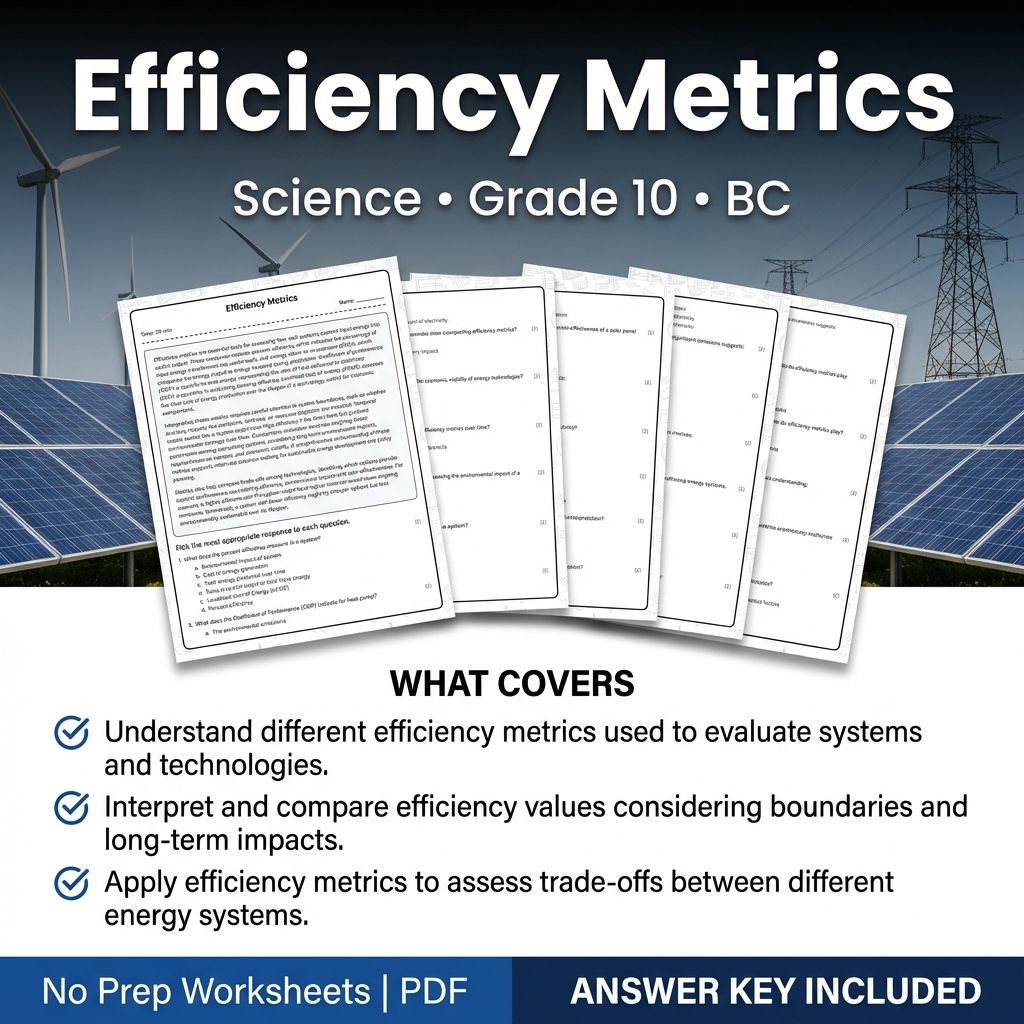
10th Grade Science | Efficiency Metrics Worksheet & Answer Key (PDF)
Created byCoral Reef LearningLearning Objectives
- Understand different efficiency metrics used to evaluate systems and technologies.
- Interpret and compare efficiency values considering boundaries and long-term impacts.
- Apply efficiency metrics to assess trade-offs between different energy systems.
Instant download

Trait Origins Worksheet | Grade 10 Science printable PDF | assessment
Learning Objectives
- Explain how mutations, recombination, gene flow, and chromosomal changes can create heritable trait variation through allele frequency changes.
- Connect population-level processes (genetic drift and nonrandom mating) to shifts in trait distributions across generations.
- Use cause-and-effect reasoning to relate molecular/genetic mechanisms to phenotypic outcomes.
Instant download
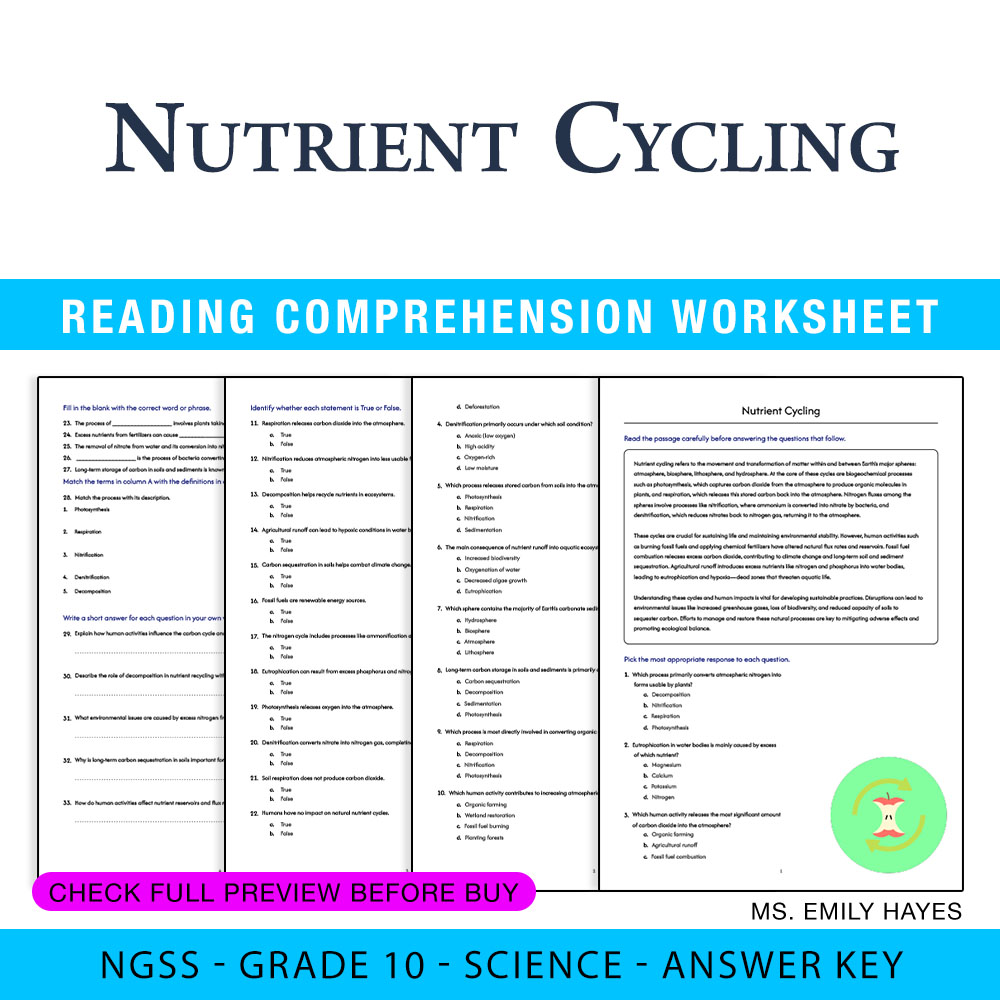
10th Grade Science | Nutrient Cycling Worksheet (PDF + Answer Key)
Created byCopper Leaf ClassroomLearning Objectives
- Describe the major biogeochemical cycles, including the carbon and nitrogen fluxes between Earth's spheres.
- Analyze human impacts such as fossil fuel combustion and agricultural runoff on nutrient reservoirs and ecological processes.
- Explain processes like photosynthesis, respiration, nitrification, denitrification, and decomposition and their roles in nutrient cycling.
Instant download
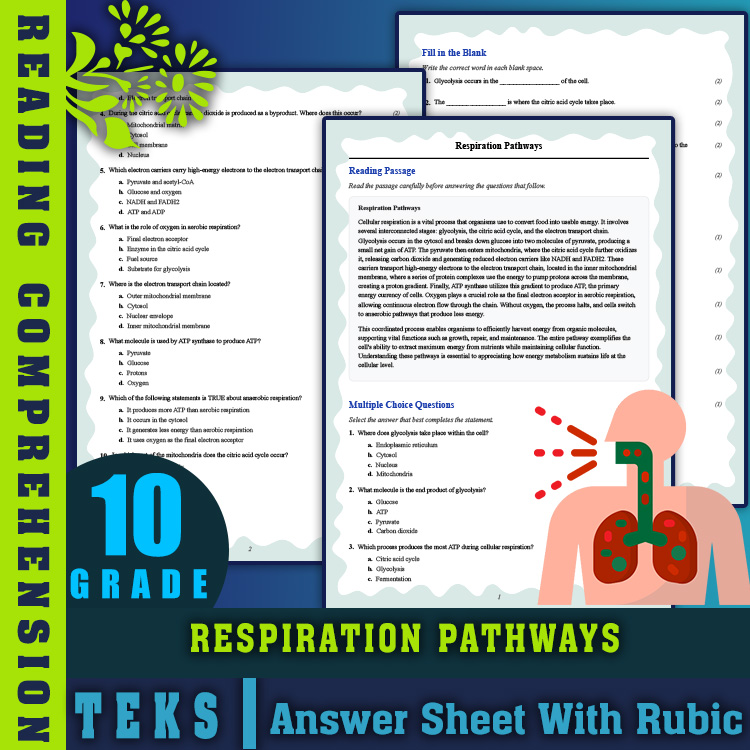
10th Grade Science | Respiration Pathways Reading Worksheet & Answer Key (PDF)
JCreated byJ.S SheetsLearning Objectives
- Describe the processes of glycolysis, the citric acid cycle, and the electron transport chain in cellular respiration.
- Explain how energy is harvested during aerobic respiration and the role of oxygen as the final electron acceptor.
- Identify the locations within the cell where each stage of respiration occurs.
Instant download

Grade 10 Science – Immune System TEKS Worksheet (PDF)
 Created byEvergreen Desk Education
Learning Objectives
- Explain how immune responses help maintain homeostasis during infection and tissue damage.
- Describe how inflammation and fever involve coordinated signaling across immune cells, the nervous system, and endocrine mediators.
- Evaluate how chronic immune activation can disrupt physiological set points and affect long-term health.
Instant download

Grade 10 Science | Health Impacts Worksheet (Ontario) PDF
Created byEvergreen Desk EducationLearning Objectives
- Explain how bacterial, viral, and fungal pathogens cause disease at a conceptual level.
- Describe common modes of pathogen transmission and how they relate to outbreaks.
- Summarize how innate and adaptive immunity protect the host, including antibody-mediated recognition.
Also included in: Grade 10 Cell Functions & Energy Science Lesson Bundle - Ontario Framework +1 more
Instant download
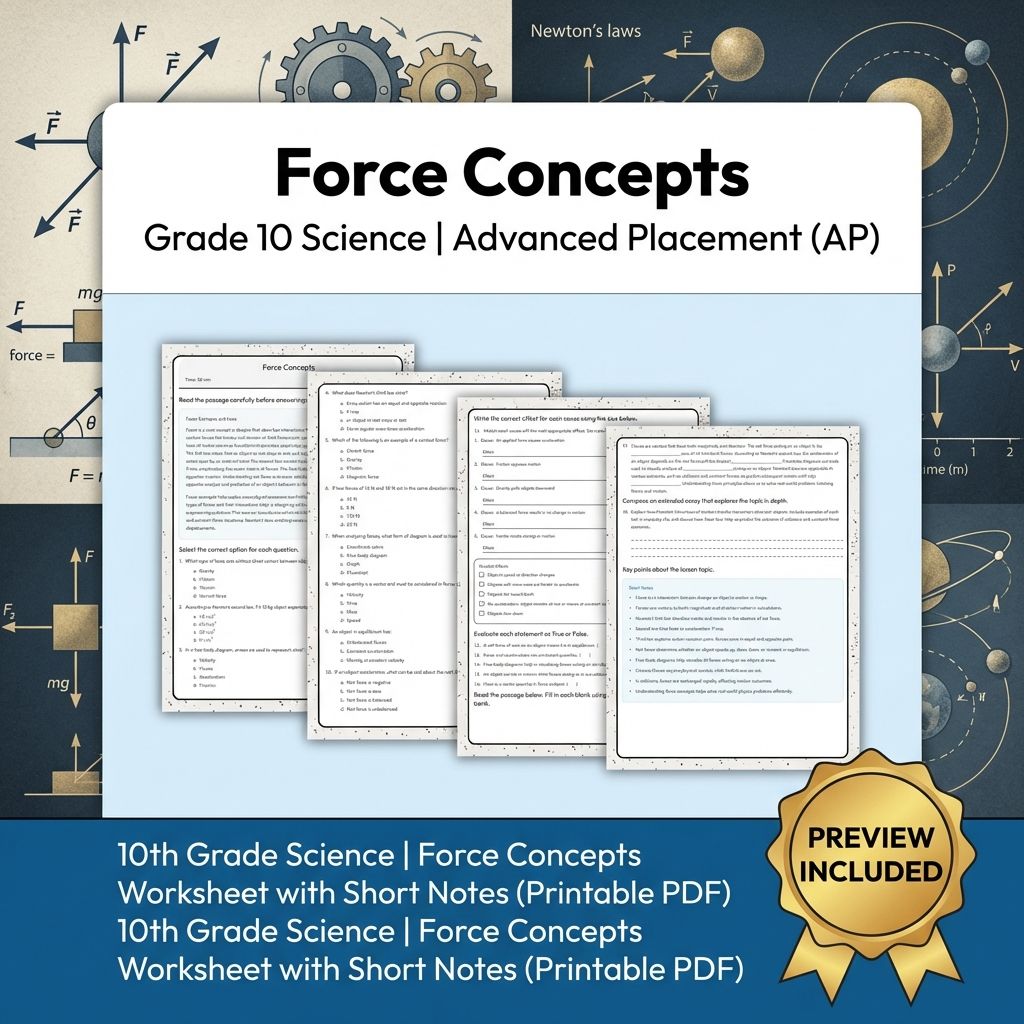
10th Grade Science | Force Concepts Worksheet with Short Notes (Printable PDF)
 Created byMeadowlark Worksheets
Learning Objectives
- Define interactions through force concepts and interpret Newton’s three laws.
- Analyze the vector nature of forces and determine net force in various situations.
- Create free-body diagrams to represent forces acting on objects.
Instant download
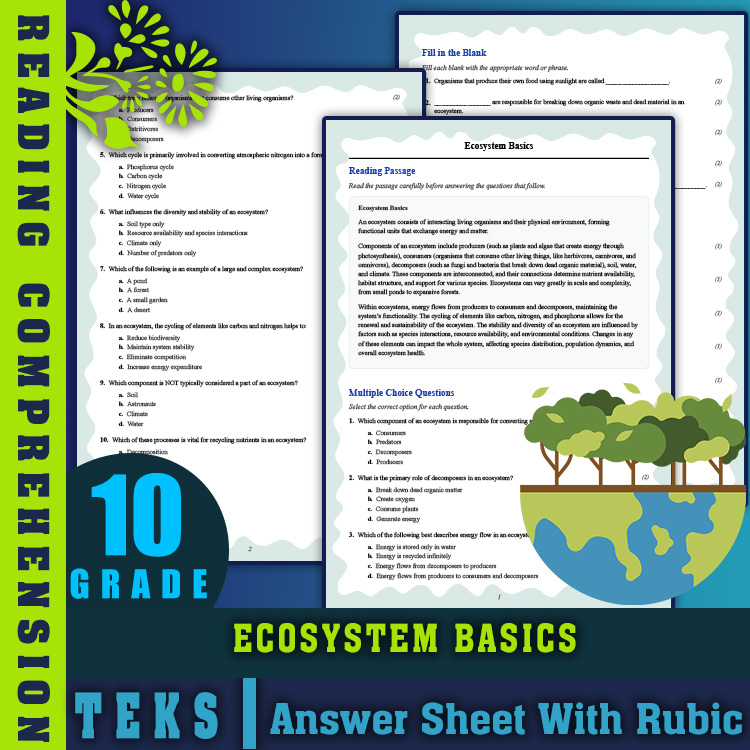
10th Grade Science | Ecosystem Basics Reading Worksheets (PDF + Rubric)
JCreated byJ.S SheetsLearning Objectives
- Understand the components and functions of an ecosystem.
- Explain how energy flows and matter cycles within different ecosystems.
- Identify factors that influence the stability and diversity of ecosystems.
Instant download
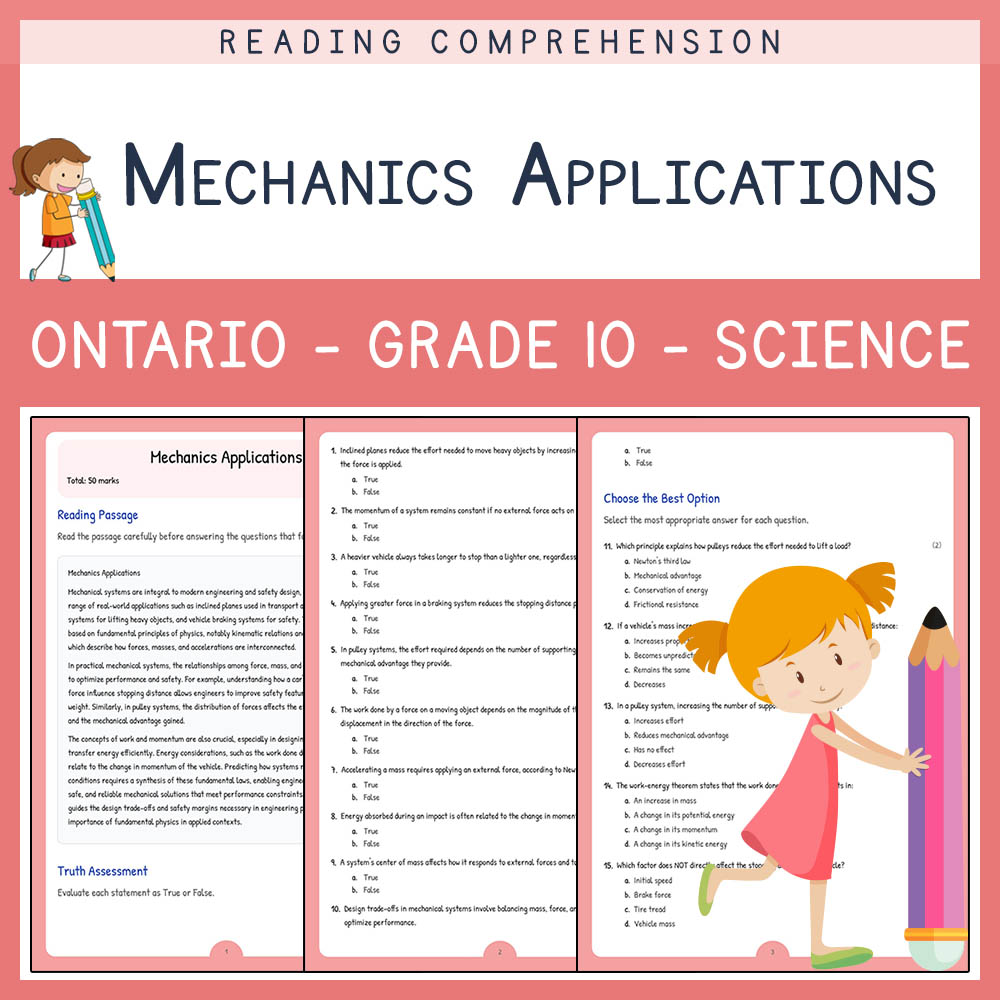
Grade 10 Science | Mechanics Applications Worksheet | Ontario Standards
Created byLumora LearningLearning Objectives
- Understand how kinematic relations and Newtonian dynamics apply to real-world mechanical systems.
- Analyze the connection between force, mass, acceleration, work, and momentum in practical contexts.
- Predict system behavior and interpret trade-offs between mass, force, and acceleration in engineering scenarios.
Also included in: Grade 10 Science | Motion & Forces Lesson Bundle | Ontario Standards
Instant download
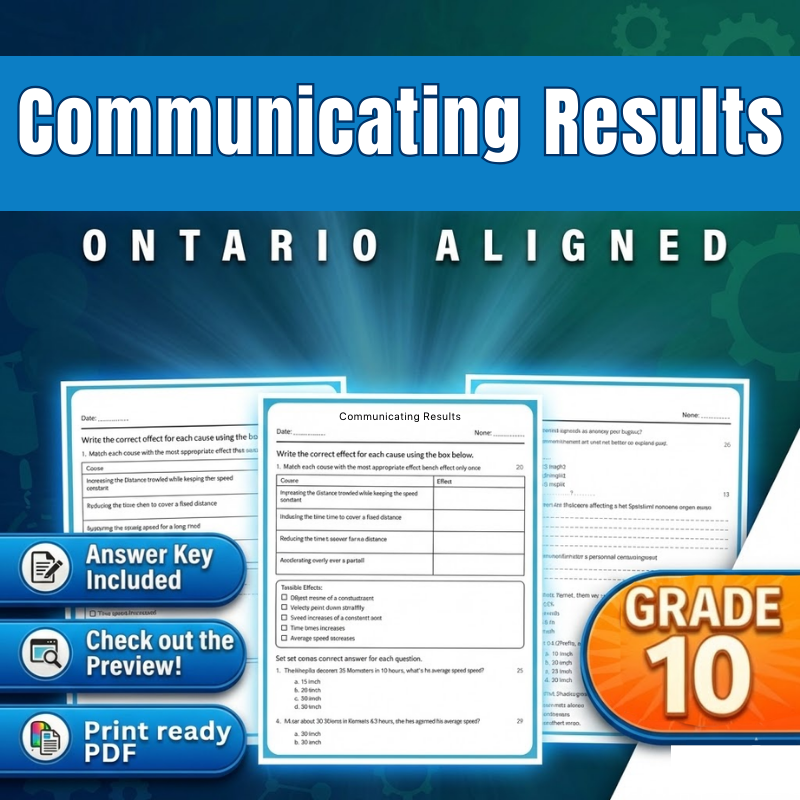
Grade 10 Science | Communicating Results Worksheet (Ontario, PDF)
Created byBright Mind ResourcesLearning Objectives
- Understand the conventions for clear, evidence-based reporting of scientific investigations.
- Learn how to structure summaries linking data to claims and discuss limitations.
- Gain skills in integrating tables, graphs, and statistical indicators to substantiate conclusions.
Instant download

Grade 10 Science | Fossil Formation - Daily Reading Comprehension
Created byCoral Reef LearningLearning Objectives
- Understand the processes involved in fossil formation
- Identify different methods of dating fossils
- Recognize the significance of fossils in studying Earth's history
Instant download
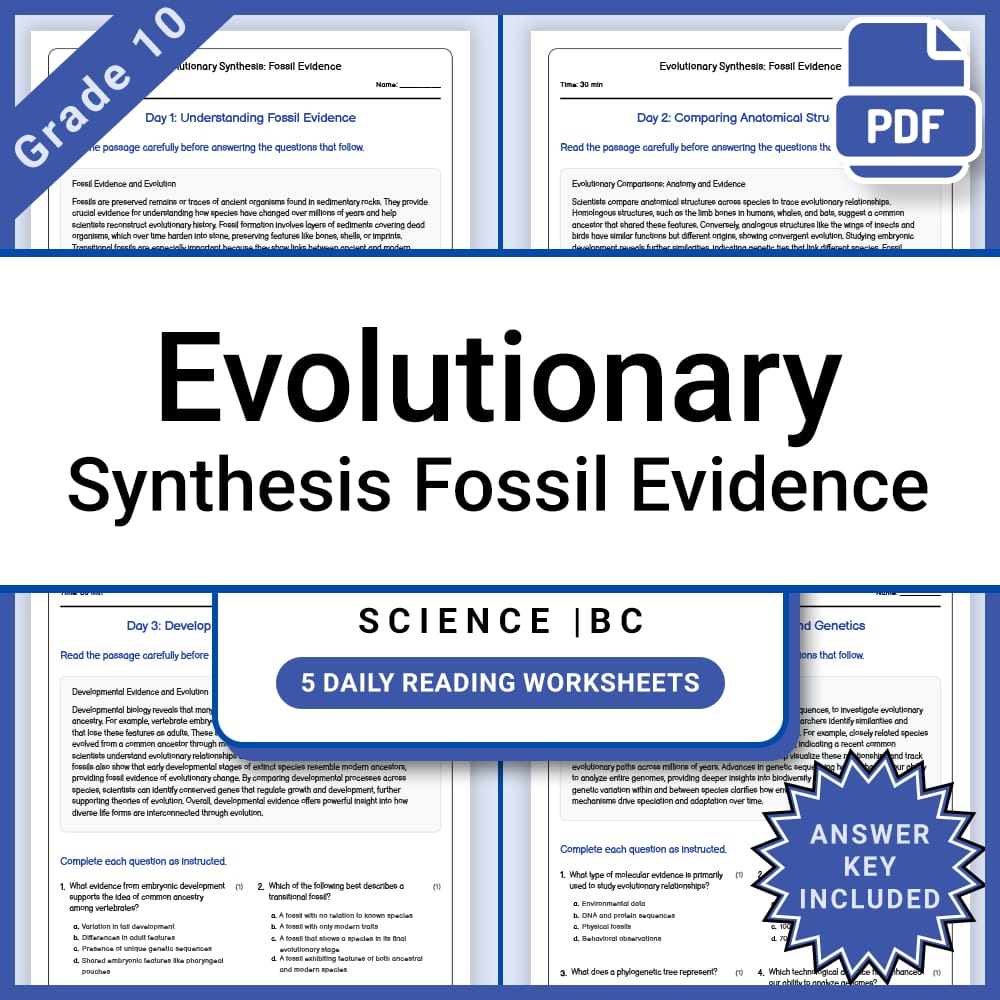
Grade 10 Science – Fossil Evidence Daily Reading Worksheet with Answer Key
JCreated byJ.S SheetsLearning Objectives
- Understand the role of fossils in studying evolutionary history
- Analyze fossil evidence to infer evolutionary relationships
- Evaluate how environmental factors influence fossil formation and preservation
Also included in: Grade 10 Science Lesson Bundle | Genetics, Evolution, Biodiversity & More +1 more
Instant download
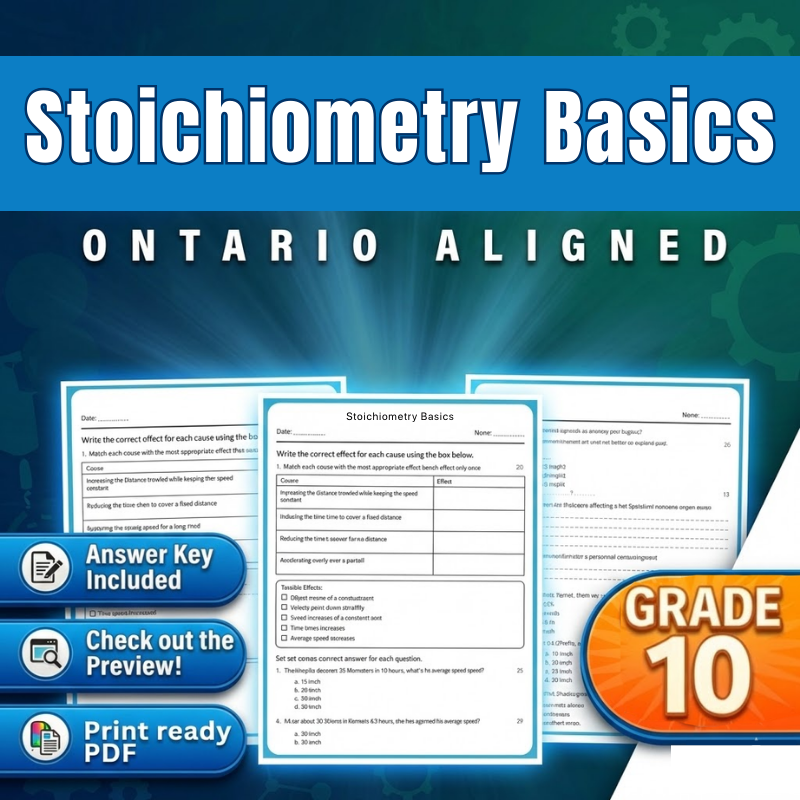
Grade 10 Science – Stoichiometry Basics Worksheet (Ontario Standard) (PDF)
Created byBright Mind ResourcesLearning Objectives
- Understand the mole concept and its application in chemical calculations.
- Use balanced chemical equations to determine molar ratios.
- Perform mass-to-mass conversions using molar mass and stoichiometric relationships.
Instant download

Speciation and Diversity Worksheet | Evolution Science Grade 10 NGSSS Activity
Created byEvergreen Desk EducationLearning Objectives
- Explain how reproductive isolation can arise and how it limits gene flow between populations.
- Describe how divergent selection and genetic drift can accumulate differences over time.
- Connect mechanisms of speciation to patterns of biodiversity and lineage diversification.
Instant download
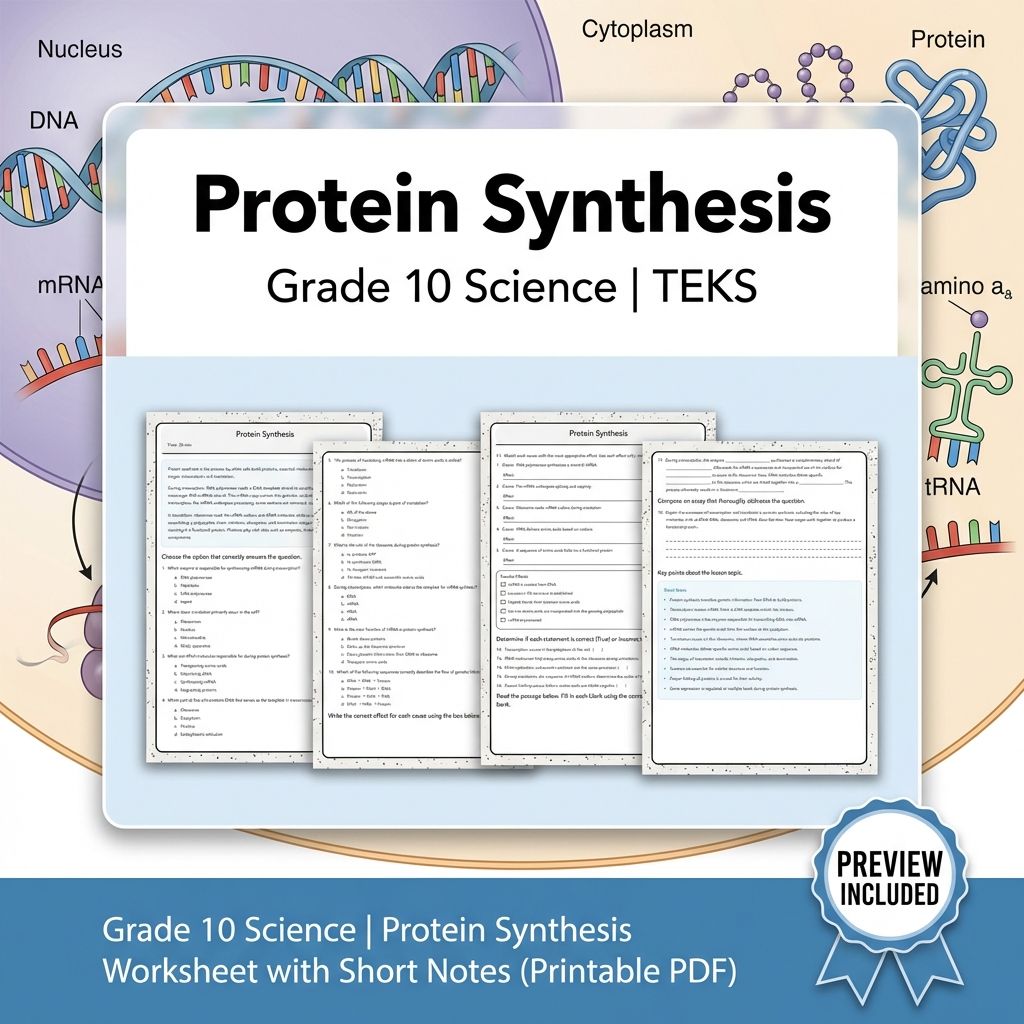
Grade 10 Science | Protein Synthesis Worksheet with Short Notes (Printable PDF)
Created byMeadowlark WorksheetsLearning Objectives
- Describe the flow of genetic information from DNA to protein.
- Explain the process of transcription and how mRNA is synthesized and processed.
- Identify the stages of translation and how amino acids are assembled into proteins.
Instant download

Cell Division Worksheet Assessment for Grade 10 Science
Learning Objectives
- Explain how the cell cycle supports growth and repair through regulated stages of DNA replication and division.
- Compare mitosis and meiosis in terms of chromosome behavior and the outcomes for cells and organisms.
- Describe how cell cycle checkpoints and apoptosis prevent damaged or incorrect cells from persisting.
Also included in: From Molecules to Organisms Lesson Bundle | Grade 10 Science | NGSS
Instant download

Grade 10 Science | Negative Feedback in Human Physiology - Reading Comprehension
Created byCoral Reef LearningLearning Objectives
- Define negative feedback and explain its purpose in the body.
- Identify the components involved in negative feedback mechanisms.
- Describe how negative feedback maintains physiological stability.
Instant download

Cell Types & Gene Regulation Worksheet | Grade 10 Biology Practice
Created byPrism Point LearningLearning Objectives
- Explain how differential gene expression helps produce specialized cell types within the same organism.
- Describe how regulatory patterns change over time to support development and tissue maintenance.
- Connect gene regulation to differences in protein profiles between cells.
Also included in: Grade 10 Life Science Lesson Bundle | California Standards Framework
Instant download
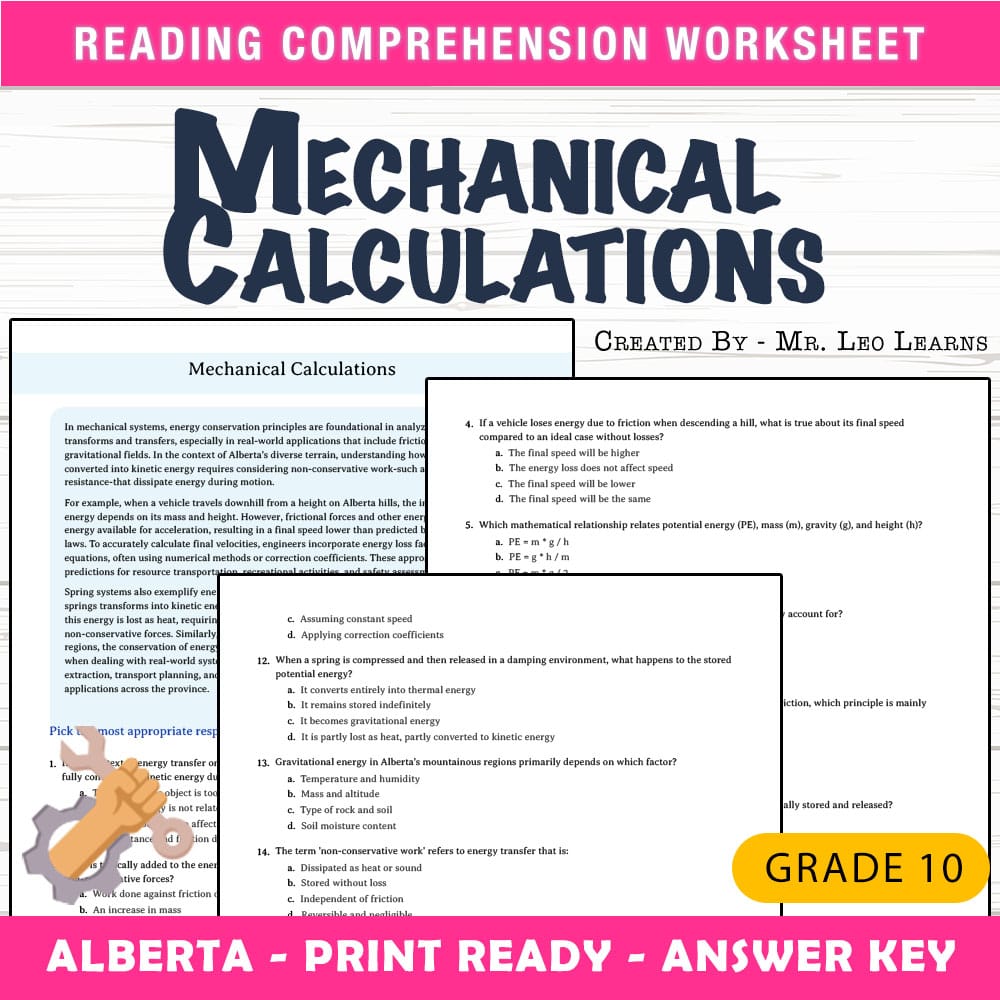
Grade 10 Science — Mechanical Calculations Worksheet MCQ Paper for Mastery
 Created byThe Resource Hub
Learning Objectives
- Understand the principles of energy conservation in mechanical systems
- Apply numerical methods to solve energy transfer problems involving friction, springs, and gravity
- Compute final speeds or heights from potential energy considering non-conservative work
Also included in: Grade 10 Science | Energy, Motion & Electricity Worksheet Bundle | Alberta +1 more
Instant download
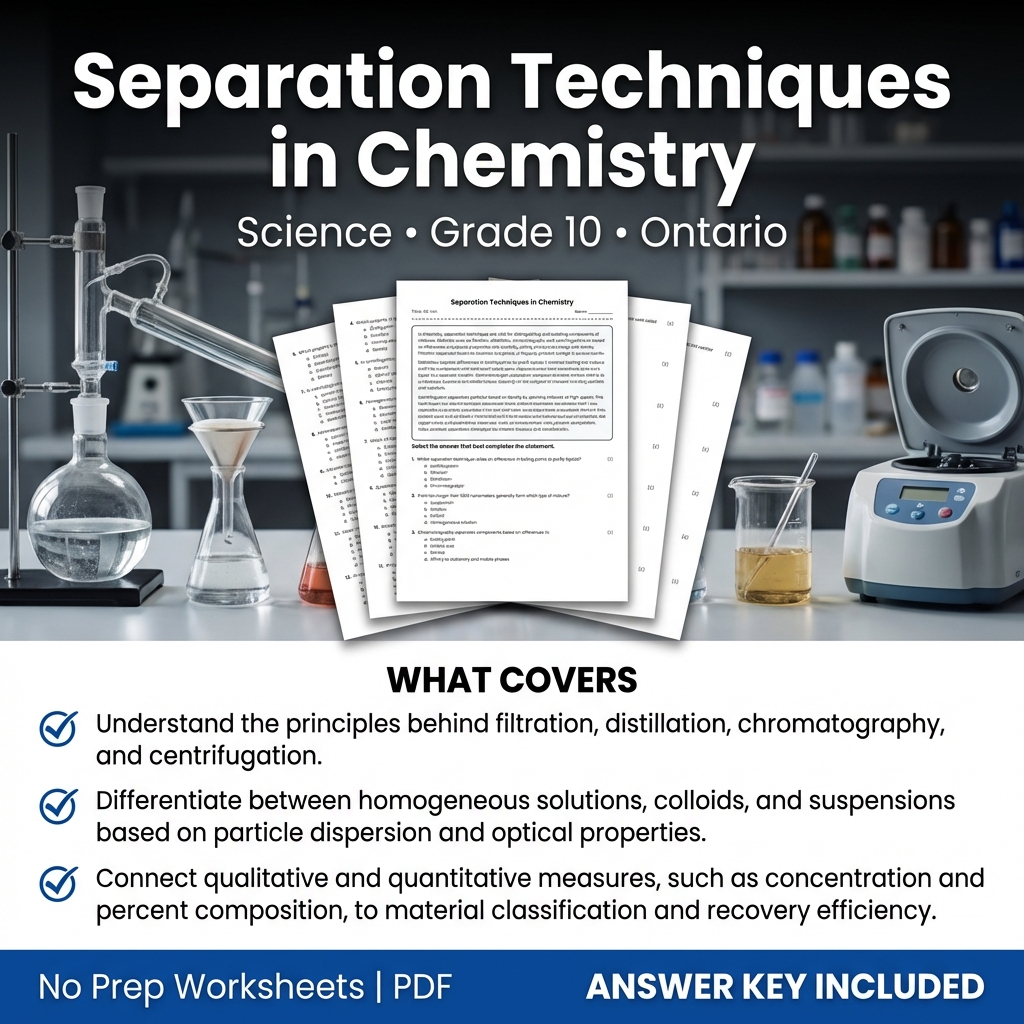
Separation Techniques in Chemistry Worksheet | Grade 10 Science Ontario
Created byCoral Reef LearningLearning Objectives
- Understand the principles behind filtration, distillation, chromatography, and centrifugation.
- Differentiate between homogeneous solutions, colloids, and suspensions based on particle dispersion and optical properties.
- Connect qualitative and quantitative measures, such as concentration and percent composition, to material classification and recovery efficiency.
Instant download

Geologic Time Worksheet | NGSS Aligned Science Practice for Grade 10
JCreated byJ.S SheetsLearning Objectives
- Understand the methods used to reconstruct Earth's geologic history, including stratigraphy and radiometric dating.
- Identify key concepts such as half-life decay, isotopic ratios, and cross-cutting relationships.
- Explain how terrestrial and lunar time scales are integrated to understand planetary evolution.
Also included in: Grade 10 Cosmic Origins Space Science lesson bundle – NGSS worksheet set
Instant download
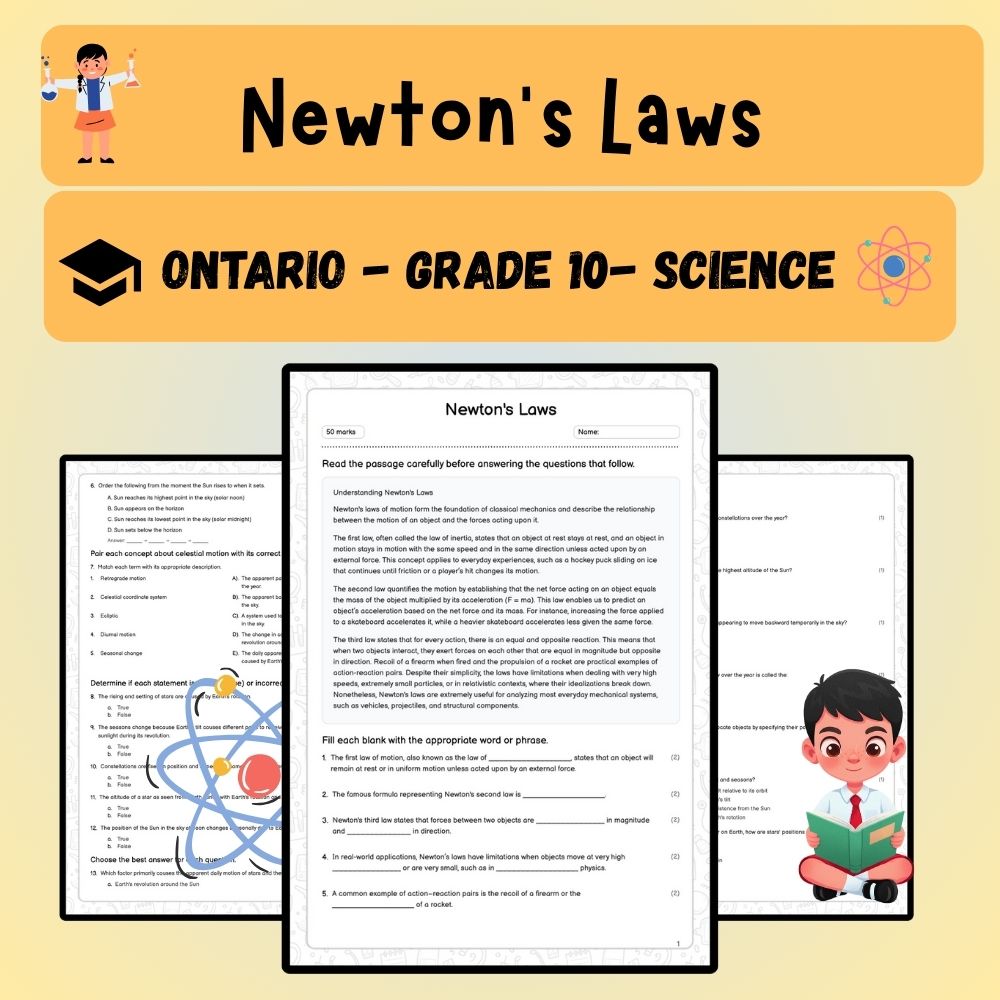
Grade 10 Science | Newton's Laws Worksheet (Answer Key) aligned with Ontario standards
Created byPrism Point LearningLearning Objectives
- Explain the three laws of motion and their conceptual significance.
- Apply Newton's second law to analyze forces and acceleration in various systems.
- Describe action-reaction pairs and their implications in physical interactions.
Also included in: Grade 10 Science Unit Bundle | Motion, Forces & Mechanics Worksheets (Ontario Standards) +1 more
Instant download
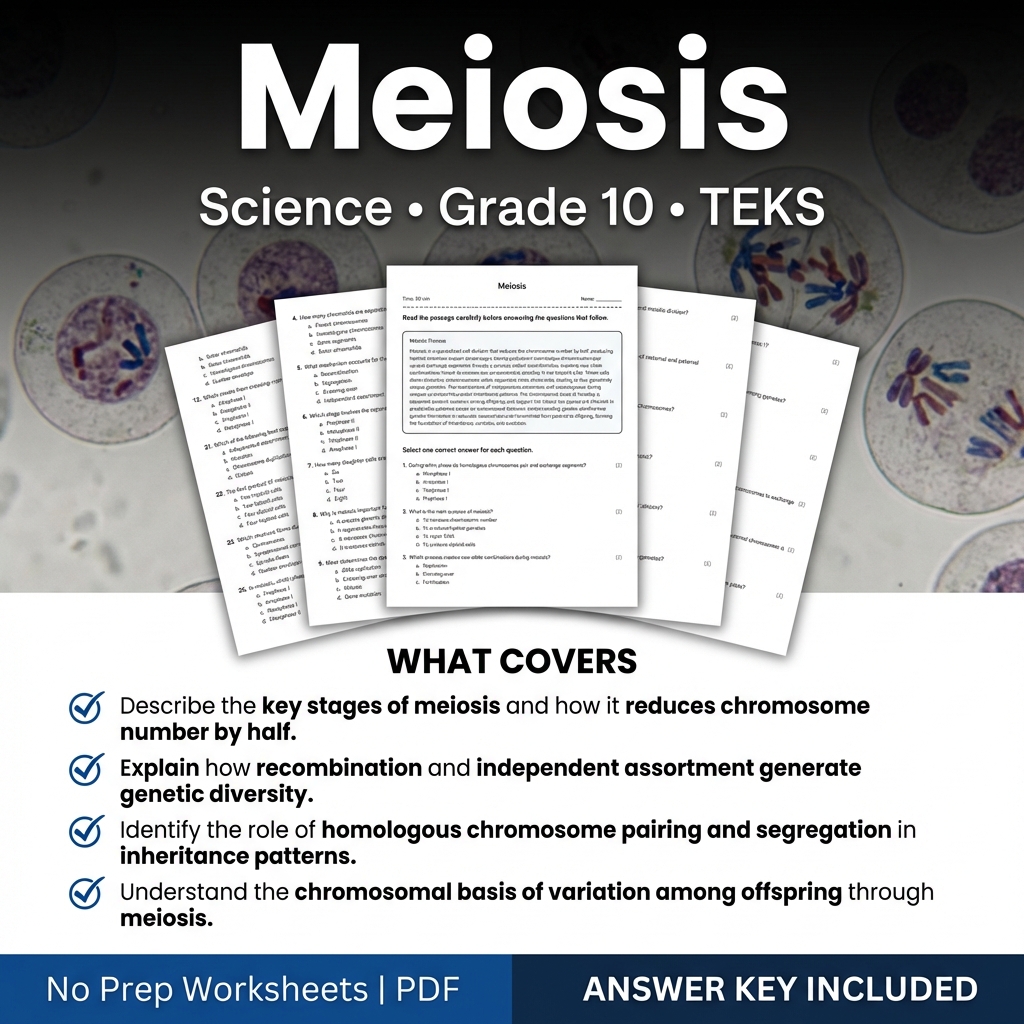
Meiosis Worksheet for Grade 10 Science | TEKS-Aligned Practice
Created byCoral Reef LearningLearning Objectives
- Describe the key stages of meiosis and how it reduces chromosome number by half.
- Explain how recombination and independent assortment generate genetic diversity.
- Identify the role of homologous chromosome pairing and segregation in inheritance patterns.
Instant download

Grade 10 Science | Cell Membrane Worksheet | TEKS-Aligned
Created byLumora LearningLearning Objectives
- Understand the composition and structure of the cell membrane, including phospholipid bilayers, proteins, cholesterol, and carbohydrate markers.
- Explain how components of the cell membrane influence fluidity, recognition, and transport functions.
- Relate the structure of the cell membrane to its role in processes like diffusion, osmosis, and ion transport.
Also included in: Grade 10 Science | Cell Structure, Transport & Communication Bundle | TEKS +1 more
Instant download

Grade 10 Science | Organelles Worksheet Elena | TEKS-Aligned
Created byLumora LearningLearning Objectives
- Describe the functions of major cell organelles and understand how compartmentalization increases efficiency.
- Compare the structures and roles of mitochondria, chloroplasts, endoplasmic reticulum, Golgi apparatus, lysosomes, ribosomes, and the nucleus.
- Explain how specific organelles contribute to energy conversion, synthesis, storage, and genetic control.
Also included in: Grade 10 Science | Cell Structure, Transport & Communication Bundle | TEKS +1 more
Instant download

Grade 10 Science | Cellular Specialization Worksheet | TEKS Aligned
Created byLumora LearningLearning Objectives
- Understand how cells develop specific structures to perform specialized functions within multicellular organisms.
- Identify relationships between organelle abundance and their roles in different cell types.
- Explain how specialized cells form tissues and organ systems and contribute to physiological functions like contraction, secretion, and gas transport.
Also included in: Grade 10 Science | Cell Structure, Transport & Communication Bundle | TEKS +1 more
Instant download

Grade 10 Science | Intercellular Communication Worksheet | TEKS Aligned
Created byLumora LearningLearning Objectives
- Describe the different modes of intercellular signaling including autocrine, paracrine, endocrine, and synaptic signaling.
- Explain the role of membrane receptors and ligands in cellular communication.
- Identify the mechanisms of signal transduction cascades and their significance.
Also included in: Grade 10 Science | Cell Structure, Transport & Communication Bundle | TEKS +1 more
Instant download

Grade 10 Science | Cytoskeleton Roles Worksheet | TEKS Aligned
Created byLumora LearningLearning Objectives
- Describe the three main components of the cytoskeleton and their functions.
- Explain how motor proteins facilitate intracellular transport along microtubules.
- Understand how actin filaments enable cell movement and cytokinesis.
Also included in: Grade 10 Science | Cell Structure, Transport & Communication Bundle | TEKS +1 more
Instant download
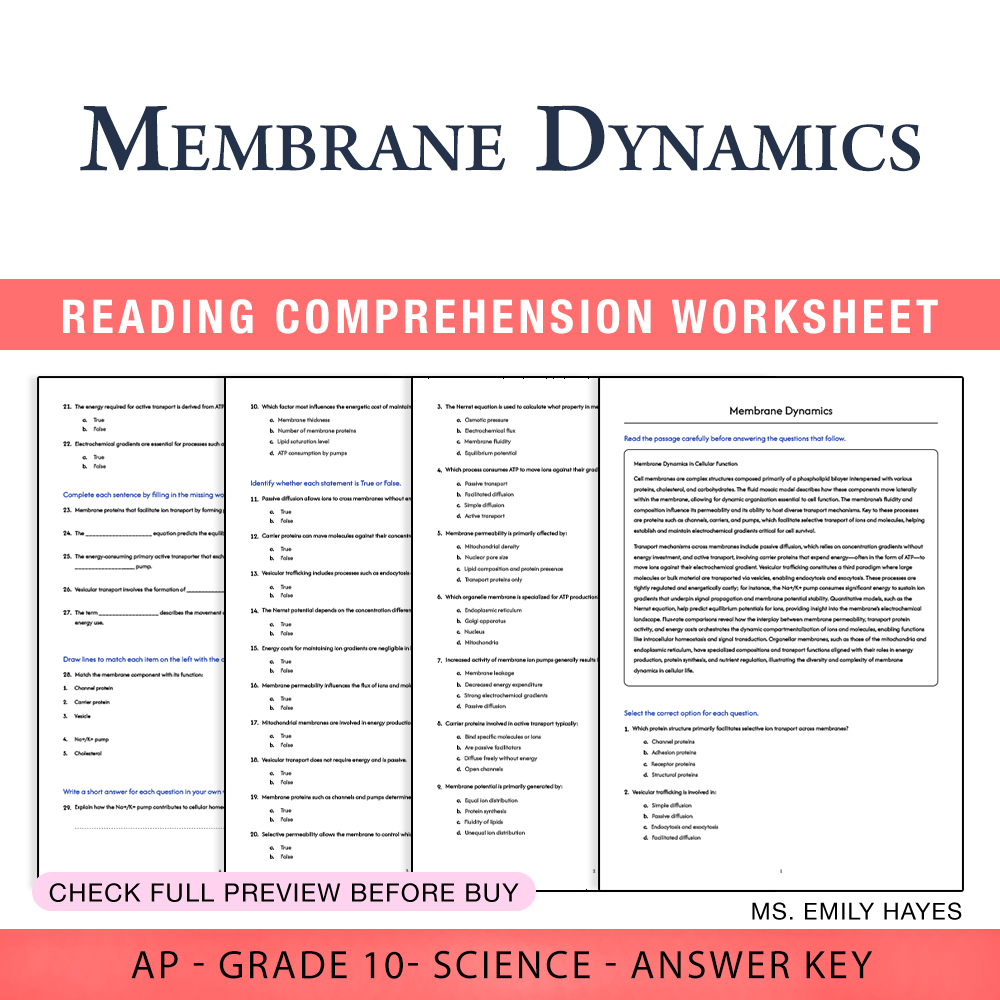
10th Grade Science | Membrane Dynamics Worksheet (PDF+ Answer Key)
Created byCopper Leaf ClassroomLearning Objectives
- Explain the composition of biological membranes and their role in cellular transport.
- Describe mechanisms of membrane transport including diffusion, carrier-mediated transport, and vesicular trafficking.
- Utilize quantitative concepts like Nernst potentials and flux-rate comparisons to analyze ion movement and electrochemical gradients.
Also included in: Grade 10 Science | Key Concepts in Biology & Ecosystems (PDF+ Answer Key) +1 more
Instant download
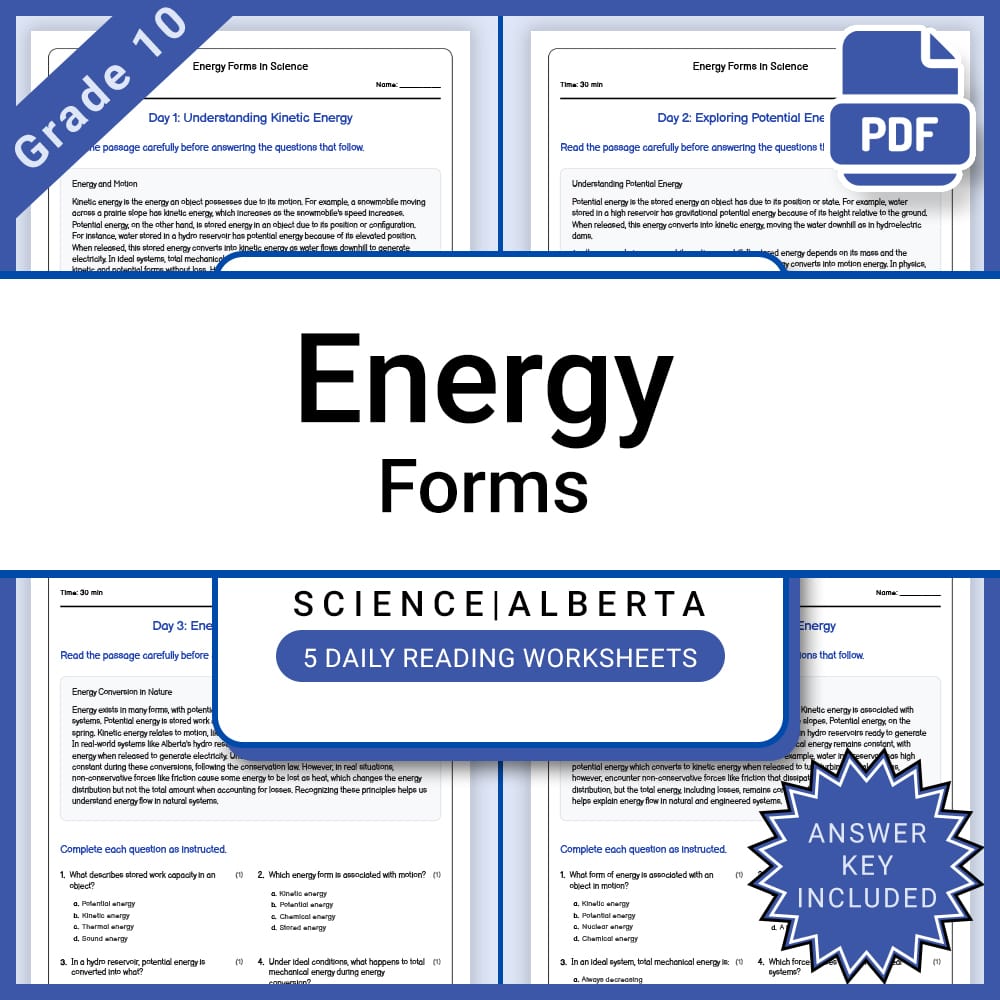
Grade 10 Science – Photosynthesis Energy Capture Worksheet + Answer Key
JCreated byJ.S SheetsLearning Objectives
- Identify key components involved in photosynthesis
- Understand the process of light-dependent reactions
- Explain the role of chlorophyll and other pigments
Also included in: Grade 10 Science Lesson Group: Alberta Curriculum — Daily Reading Worksheets +1 more
Instant download
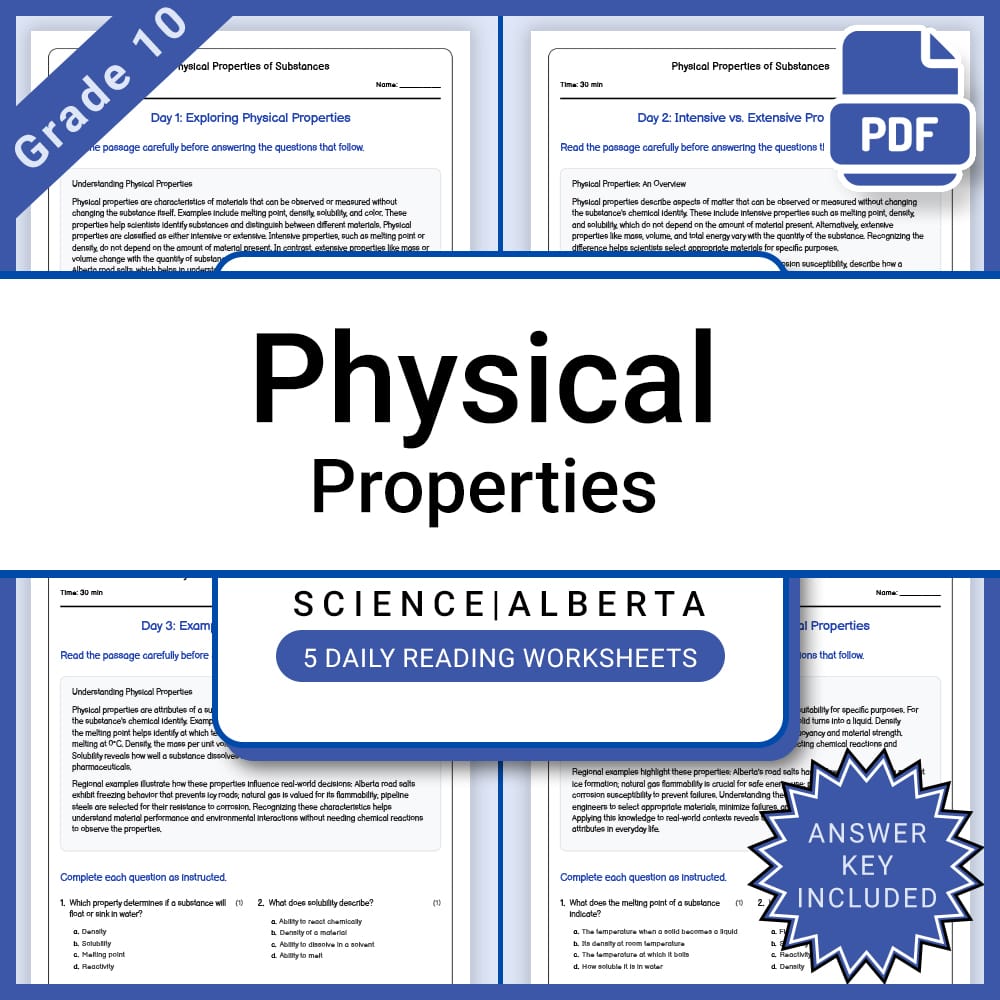
Grade 10 Science – Physical Properties Daily Reading Worksheet + Answer Key
JCreated byJ.S SheetsLearning Objectives
- Identify and differentiate between physical and chemical properties.
- Understand the concepts of intensive and extensive physical properties.
- Apply knowledge of physical properties to real-world examples such as road salt freezing behavior, natural gas flammability, and pipeline corrosion.
Also included in: Grade 10 Science Lesson Group Bundle Alberta | Worksheets & Activities +1 more
Instant download

Homology and Commonality Worksheet for Grade 10 Science
JCreated byJ.S SheetsLearning Objectives
- Understand the concept of homologous structures and how they indicate shared ancestry.
- Identify examples of conserved biological features across different species.
- Explain how comparative anatomy and developmental evidence support evolutionary relationships.
Also included in: Grade 10 Genetic Variation and Evolution Science Lesson Bundle +1 more
Instant download

Grade 10 Science | Electron Configuration - Daily Reading Comprehension
Created byCoral Reef LearningLearning Objectives
- Understand how electrons occupy energy levels around the nucleus.
- Recognize the pattern of electron filling in atomic orbitals.
- Explain the significance of valence electrons in chemical bonding.
Instant download
About Grade 10 Science Worksheets
Find Science worksheets built for Grade 10. All 7,069 cover core skills, practice, and review, each an instant PDF download.
Every worksheet on MyTeachingSheets is created by independent teacher-authors and reviewed before publication. All resources download as printable PDFs for classroom, homework, or at-home practice, and many include answer keys. Preview any worksheet free before buying.