
Grade 10 Science Worksheets
7,069 worksheets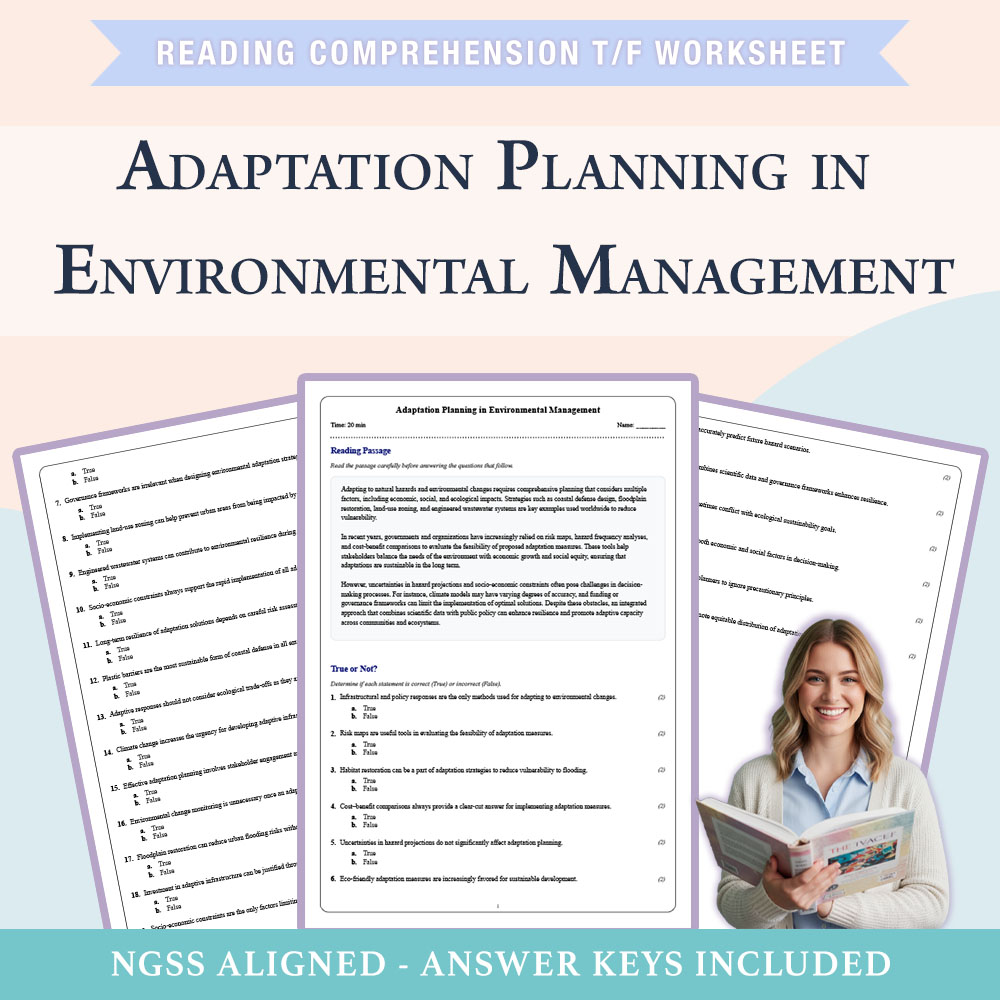
Grade 10 Science|Adaptation Planning in Environmental Management (PDF + Answers)
 Created byCopper Leaf Classroom
Learning Objectives
- Understand the concept of infrastructural and policy responses for environmental adaptation.
- Evaluate various adaptation strategies considering ecological, social, and economic trade-offs.
- Analyze risk maps, hazard frequency, and governance frameworks to assess adaptation feasibility.
Also included in: Grade 10 Science | Environmental Management & Climate Change (PDF + Answer Key) +1 more
Instant download
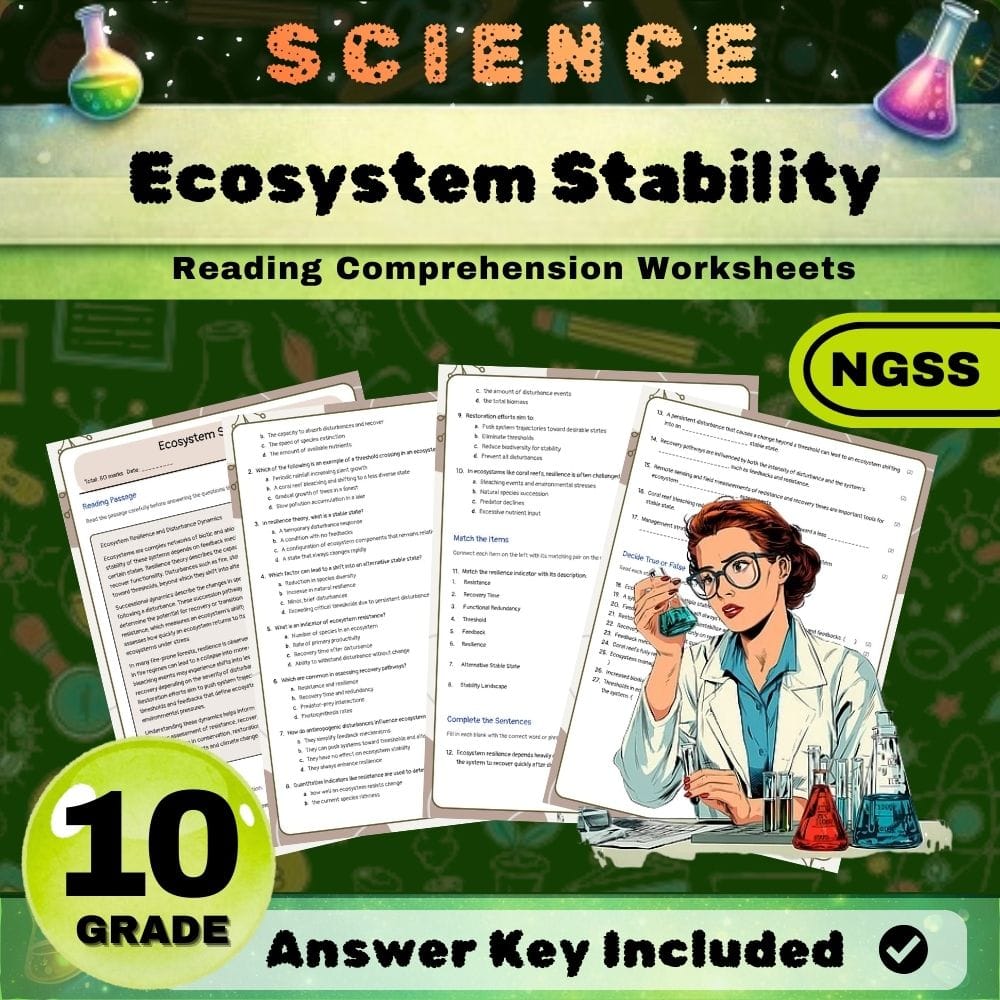
Grade 10 Science – Ecosystem Stability Worksheet (NGSS) PDF
 Created byMaple Path Learning
Learning Objectives
- Understand the concepts of resilience theory, thresholds, and feedbacks in ecosystems.
- Analyze how natural and human disturbances affect long-term ecosystem trajectories.
- Evaluate recovery pathways, stable states, and management implications for ecosystems like forests and coral reefs.
Also included in: Grade 10 Science Ecosystems Interactions Energy and Dynamics Lesson Bundle | NGSS +1 more
Instant download
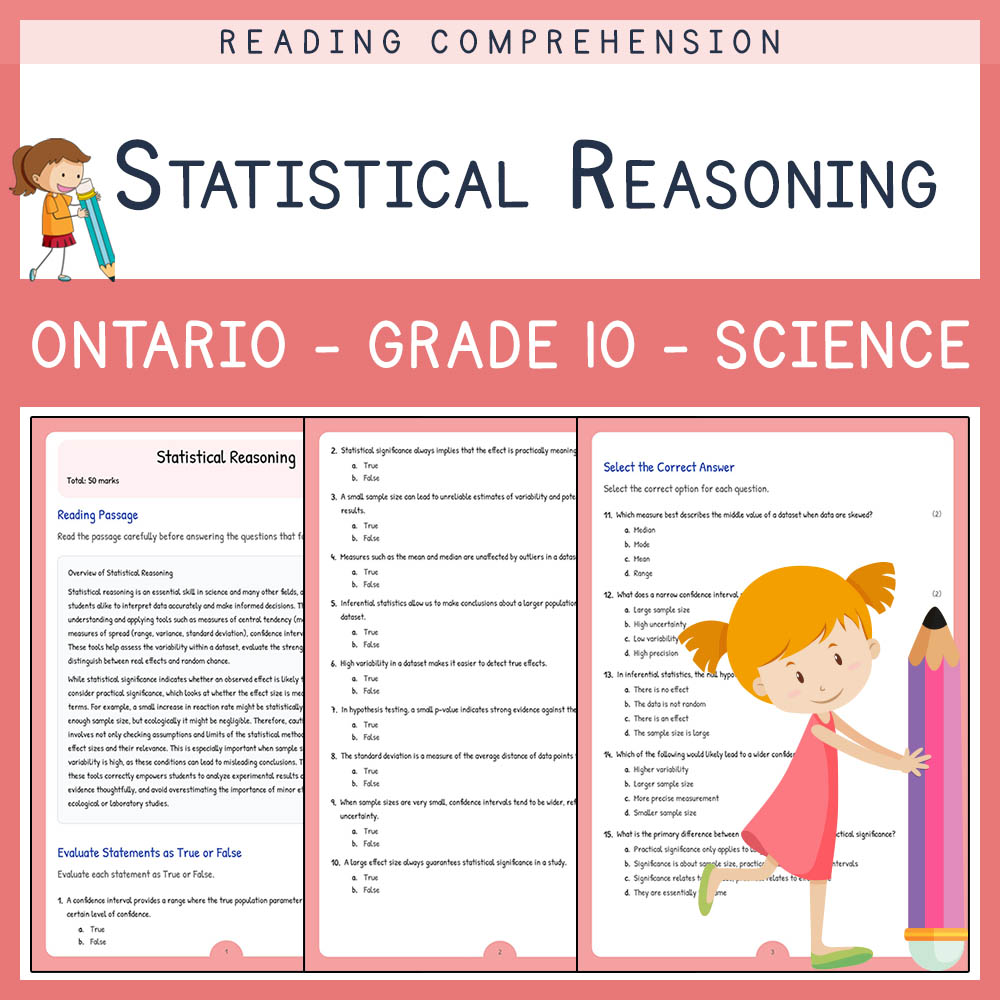
Grade 10 Science | Statistical Reasoning Worksheet | Ontario Standard
 Created byLumora Learning
Learning Objectives
- Understand and interpret measures of central tendency and variability in datasets.
- Differentiate between statistical significance and practical significance in data comparisons.
- Apply confidence intervals and basic inferential tools to classroom-scale datasets.
Instant download
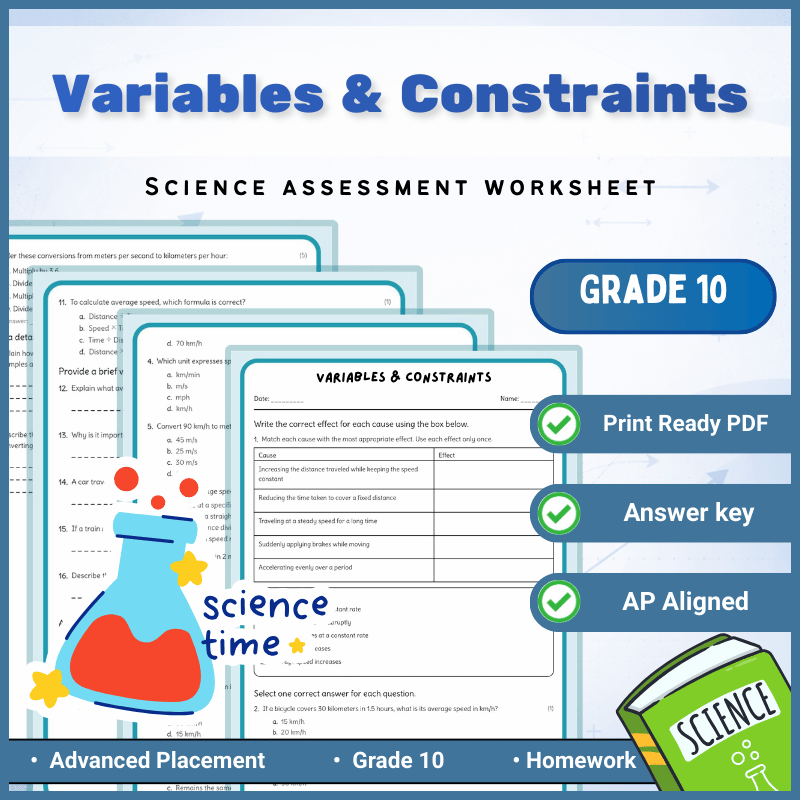
Grade 10 Science | Variables & Constraints Worksheet (AP Standards) PDF
 Created byBright Mind Resources
Learning Objectives
- Identify and classify independent, dependent, and controlled variables in experiments.
- Understand how constraints shape experimental design and measurement.
- Analyze scenarios involving heat transfer to determine operational definitions and boundary conditions.
Instant download
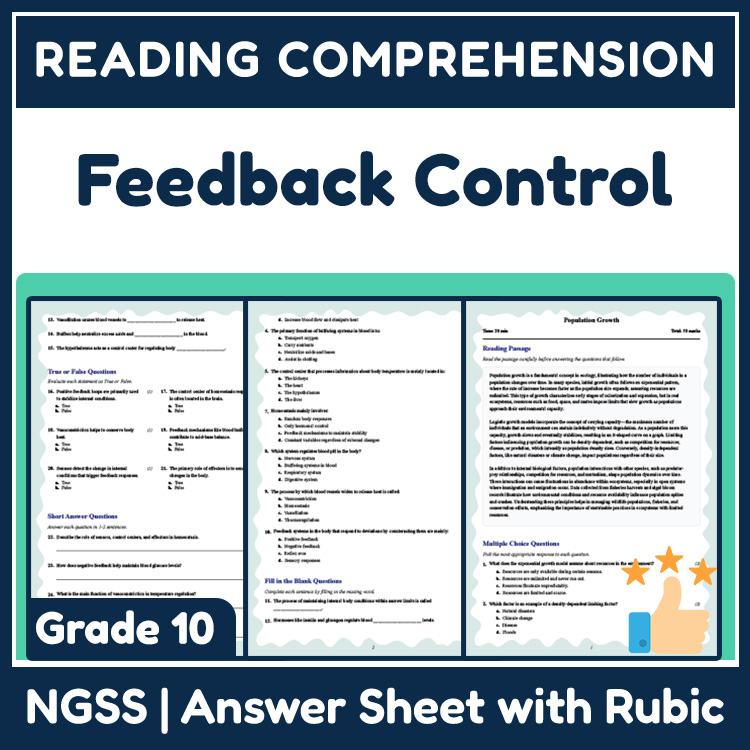
10th Grade Science | Feedback Control Reading Worksheet & Answer Key (PDF)
JCreated byJ.S SheetsLearning Objectives
- Understand the principles of homeostasis and feedback mechanisms in the human body.
- Identify the roles of sensors, control centers, and effectors in physiological regulation.
- Describe the processes involved in negative and positive feedback loops for internal stability.
Also included in: Grade 10 Science Unit | Cellular & Physiological Systems Worksheets
Instant download
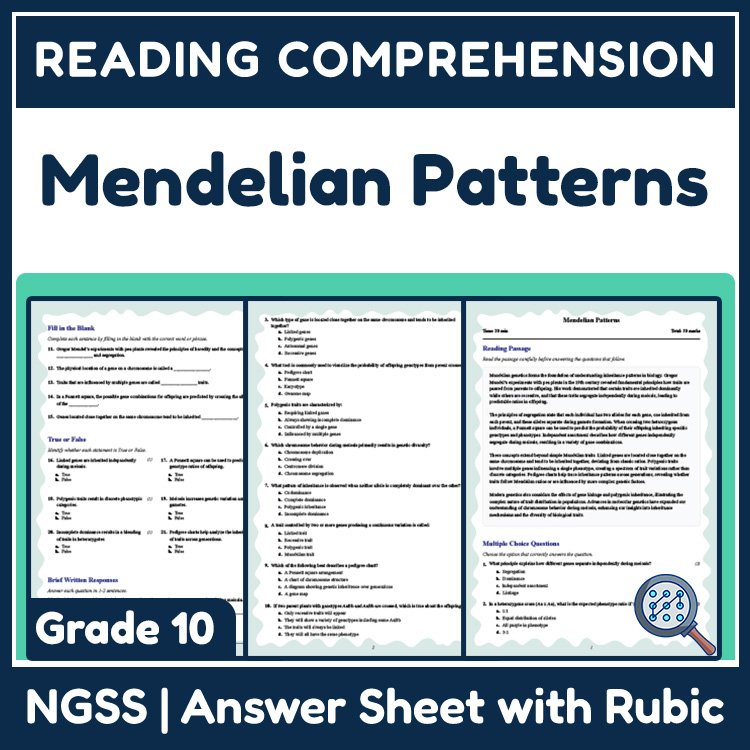
10th Grade Science | Mendelian Patterns Reading Practice Worksheet
JCreated byJ.S SheetsLearning Objectives
- Understand and explain Mendelian inheritance principles such as dominance, segregation, and independent assortment.
- Interpret Punnett squares and pedigree charts to analyze inheritance patterns of single-gene traits.
- Relate chromosome behavior during meiosis to Mendelian inheritance laws.
Instant download
Grade 10 Science | Microbe Diversity Worksheet (Ontario Standards) (PDF)
Created byBright Mind ResourcesLearning Objectives
- Identify major groups of microorganisms and distinguish their characteristics.
- Compare cellular organization, genetic material, and reproduction strategies among microbes.
- Explain the ecological roles and habitats occupied by bacteria, archaea, viruses, fungi, and protists.
Instant download

Grade 10 Sustainability Assessment Worksheet | Alberta Science PDF
 Created byEvergreen Desk Education
Learning Objectives
- Explain how sustainability assessments use environmental, economic, and social indicators to evaluate long-term resource viability.
- Identify key metrics used to compare water allocation, land reclamation performance, and cumulative development effects.
- Interpret how indicator trends and trade-offs support decision-making for extraction, conservation, and restoration.
Instant download
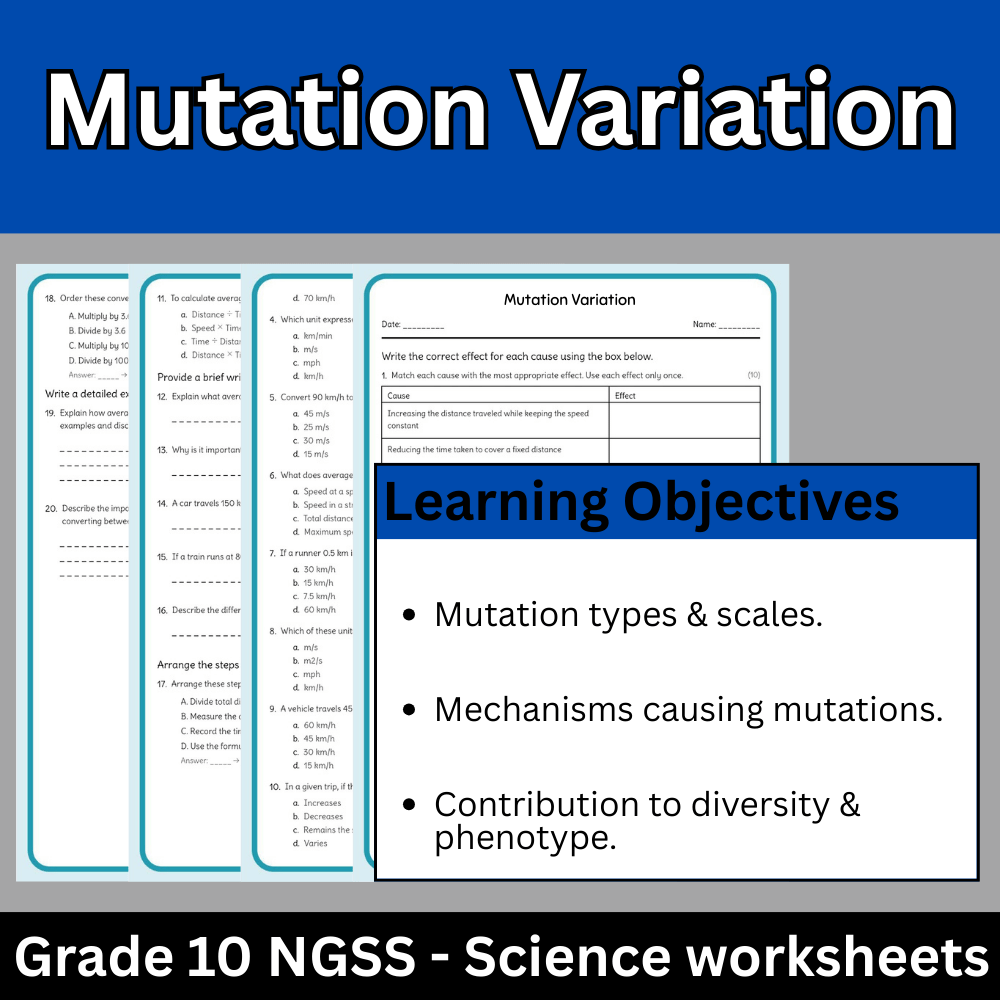
Grade 10 Science | Mutation Variation Worksheet with NGSS Alignment (PDF)
Created byBright Mind ResourcesLearning Objectives
- Understand different types of genetic mutations and their scales.
- Identify the mechanisms that cause mutations.
- Explore how mutations contribute to genetic diversity and phenotypic changes.
Instant download

Grade 10 Science | Cell Organization Worksheet NGSS (PDF)
 Created bySilver Birch Teaching
Learning Objectives
- Identify membrane-bound organelles and their functions within eukaryotic and prokaryotic cells.
- Compare structures such as mitochondria, chloroplasts, endoplasmic reticulum, and nucleus, and link ultrastructure to metabolic and genetic roles.
- Describe the hierarchical organization from cells to tissues and organs, including examples like epithelial and muscle tissues.
Also included in: Grade 10 Cellular Systems & Energy Pathways Science Lesson Bundle NGSS +1 more
Instant download

Grade 10 Science – Physiological Systems Worksheet (NGSS10 PDF)
Created bySilver Birch TeachingLearning Objectives
- Compare the structure and function of circulatory, respiratory, digestive, excretory, and integumentary systems.
- Identify key structural features like vascular networks, alveoli, nephron architecture, and epithelial barriers.
- Explain how organ systems coordinate through flow rates, surface area-to-volume ratios, and transport kinetics.
Also included in: Grade 10 Cellular Systems & Energy Pathways Science Lesson Bundle NGSS +1 more
Instant download

Grade 10 Science – Feedback Control Worksheet (NGSS10) (PDF)
Created bySilver Birch TeachingLearning Objectives
- Understand the mechanisms of homeostasis and feedback loops in the human body.
- Identify examples of negative and positive feedback in physiological processes.
- Explain the roles of sensors, control centers, and effectors in maintaining internal stability.
Also included in: Grade 10 Cellular Systems & Energy Pathways Science Lesson Bundle NGSS +1 more
Instant download

Grade 10 Science | Molecular Coding Worksheet NGSS (PDF)
Created bySilver Birch TeachingLearning Objectives
- Explain how DNA sequences determine amino acid sequences through transcription and translation.
- Describe how mutations, such as point mutations and frameshifts, affect protein structure and function.
- Understand the processes of protein folding and post-translational modifications in creating functional proteins.
Also included in: Grade 10 Cellular Systems & Energy Pathways Science Lesson Bundle NGSS +1 more
Instant download
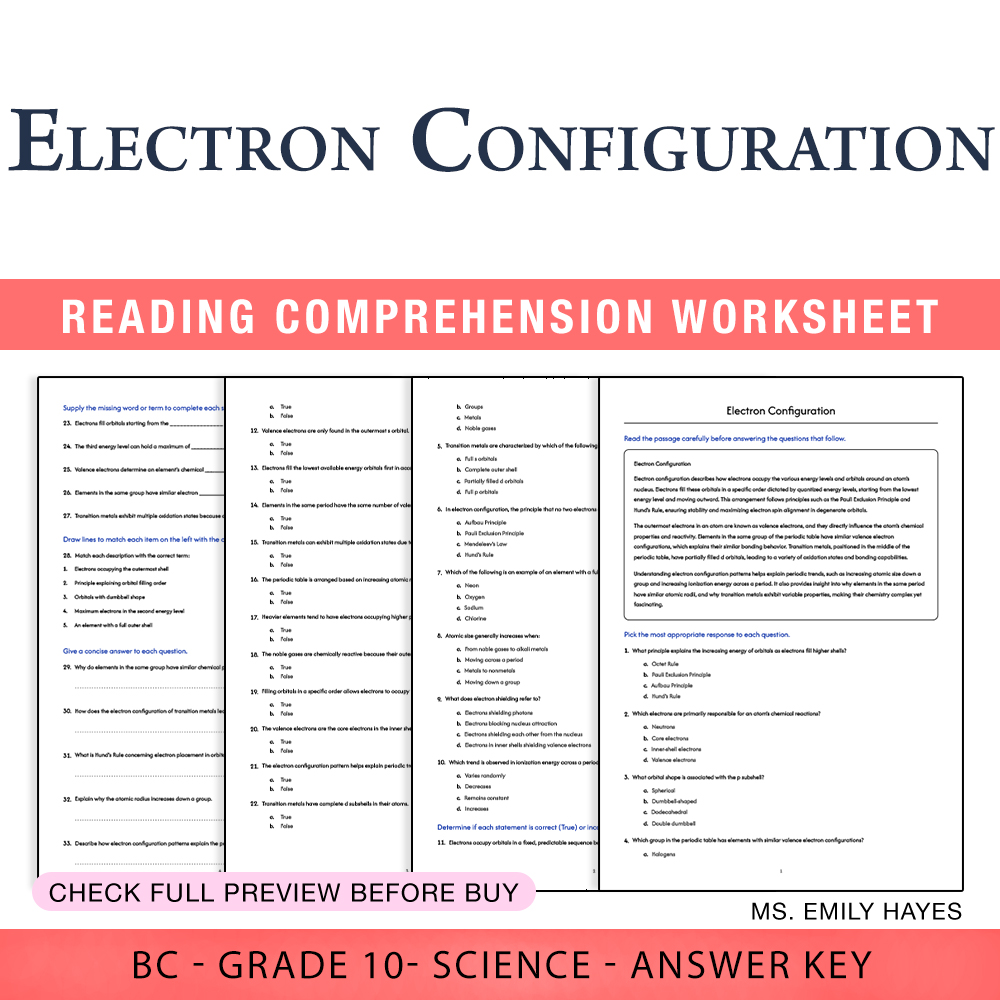
10th Grade Science | Electron Configuration Worksheet (PDF + Answer Key)
Created byCopper Leaf ClassroomLearning Objectives
- Explain how electrons occupy energy levels and orbitals in atoms.
- Identify valence electrons and their role in bonding and reactivity.
- Describe the principles governing electron distribution across shells.
Also included in: Grade 10 Science BC| Chemistry, Reactions & Atomic Structure (PDF+ Answer Keys) +1 more
Instant download
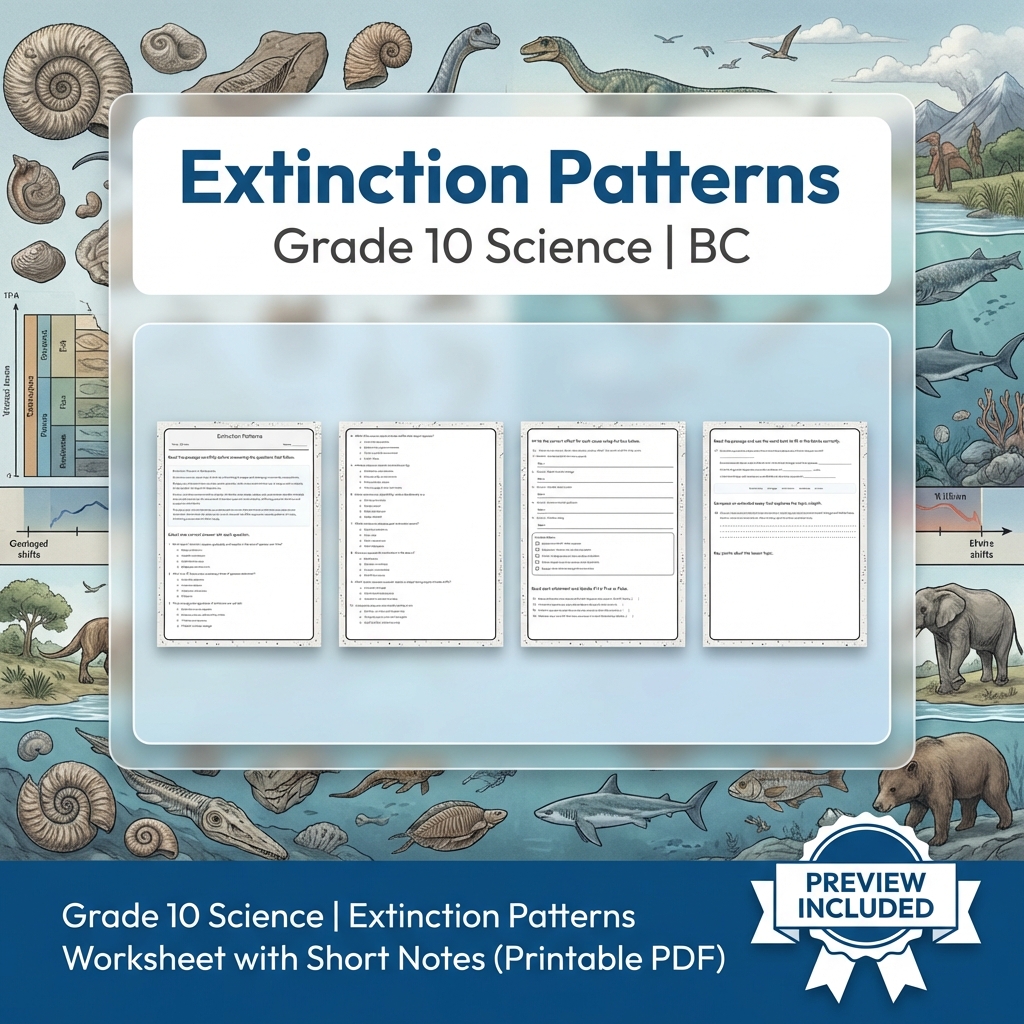
Grade 10 Science | Extinction Patterns Worksheet with Short Notes (PDF)
 Created byMeadowlark Worksheets
Learning Objectives
- Understand the different types of extinction events and their impact on biodiversity.
- Identify the primary drivers that cause species extinction.
- Analyze how fossil and genetic evidence reveal past extinction crises.
Also included in: Grade 10 Science | BC Framework Lesson Group Worksheet Pack +1 more
Instant download
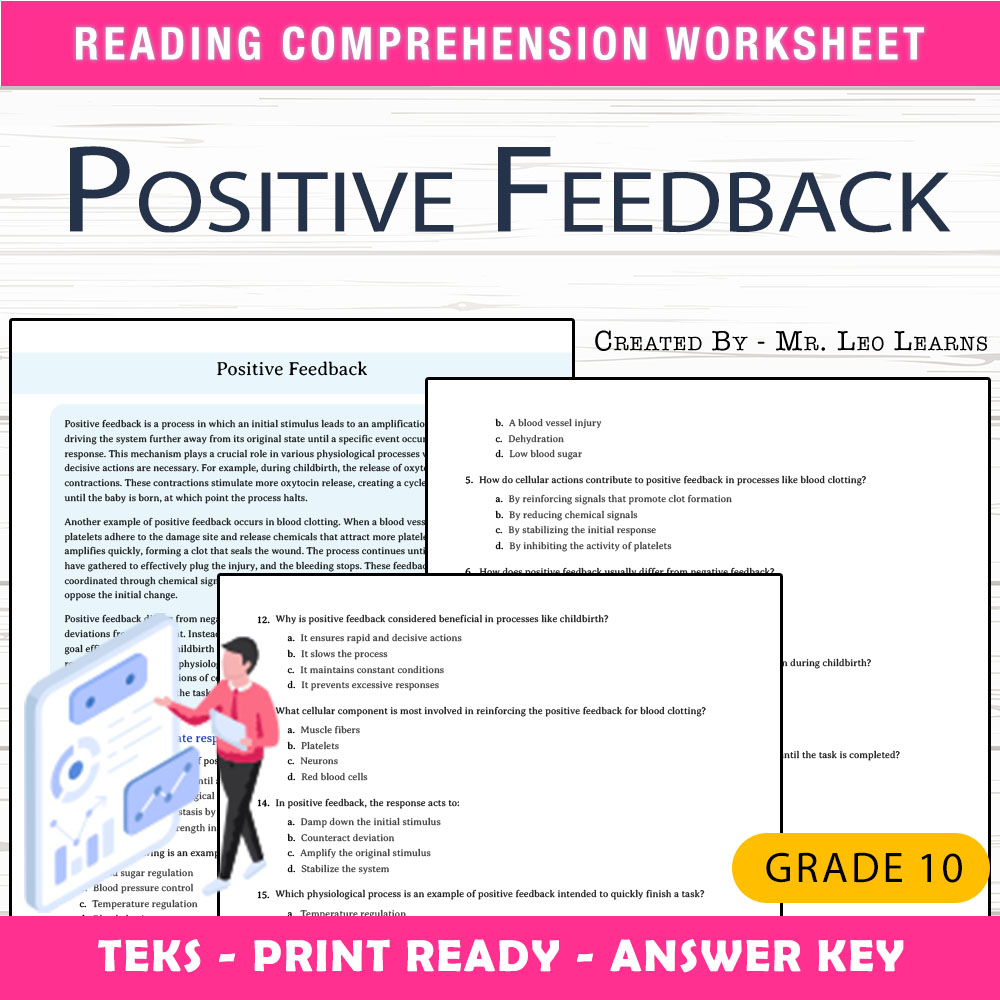
Grade 10 Science – Positive Feedback Worksheet for Mastery
 Created byThe Resource Hub
Learning Objectives
- Explain the concept of positive feedback and how it amplifies initial changes in biological systems.
- Identify examples of positive feedback mechanisms such as childbirth and blood clotting.
- Describe how positive feedback differs from negative feedback in maintaining homeostasis.
Also included in: Grade 10 Science Worksheet Bundle – Cellular, Genetics & Ecology Mastery
Instant download

Speciation Processes Worksheet | TEKS-Aligned Grade 10 Science Practice
JCreated byJ.S SheetsLearning Objectives
- Explain how reproductive isolation and reduced gene flow lead to speciation.
- Compare allopatric, sympatric, and parapatric speciation based on spatial/ecological conditions.
- Describe how selection, drift, and mutation contribute to genetic divergence over time.
Instant download
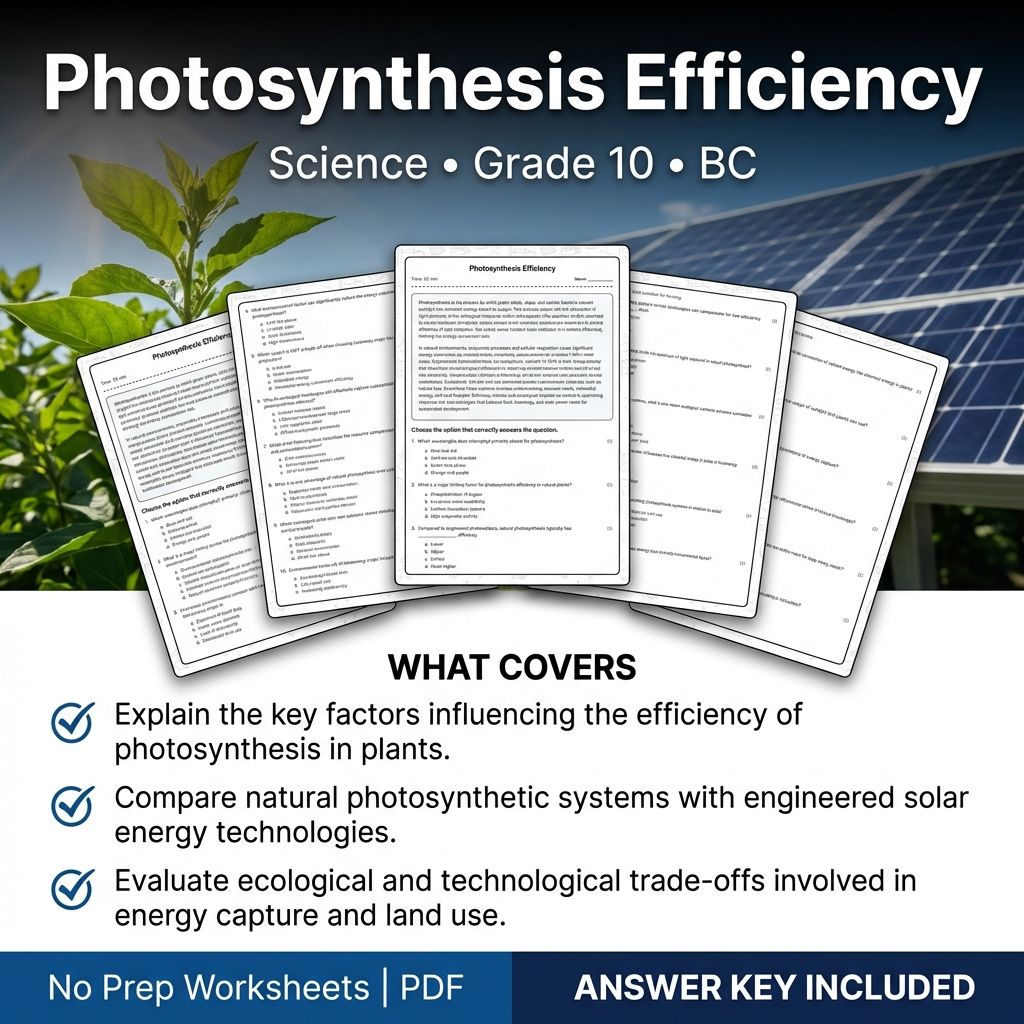
10th Grade Science | Photosynthesis Efficiency Worksheet & Answer Key (PDF)
 Created byCoral Reef Learning
Learning Objectives
- Explain the key factors influencing the efficiency of photosynthesis in plants.
- Compare natural photosynthetic systems with engineered solar energy technologies.
- Evaluate ecological and technological trade-offs involved in energy capture and land use.
Instant download
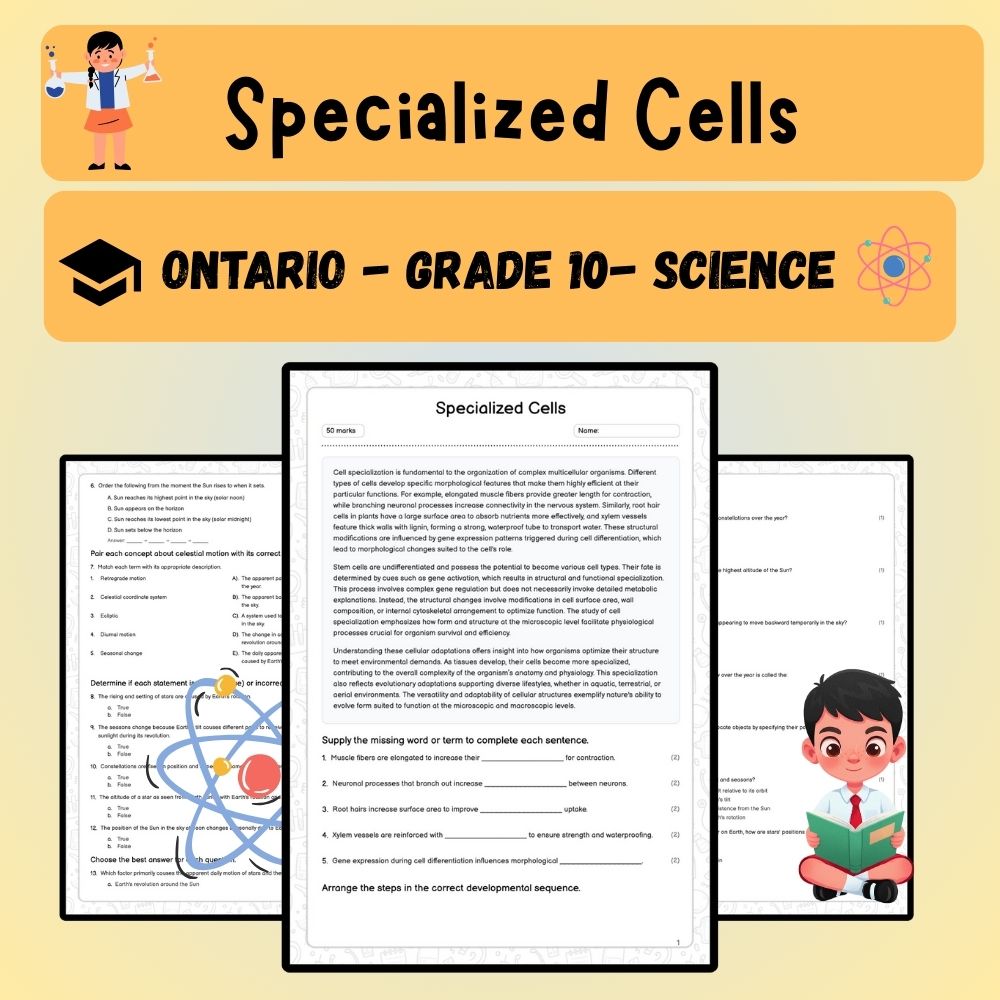
Grade 10 Science | Specialized Cells Worksheet – Ontario Standards (PDF)
 Created byPrism Point Learning
Learning Objectives
- Understand the concept of cellular specialization and tissue organization.
- Identify morphological features that relate form to function in specialized cells.
- Explain how gene expression influences cell differentiation and structural adaptation.
Also included in: Grade 10 Science Unit | Cells, Photosynthesis & Microbes Worksheet Pack +1 more
Instant download
Grade 10 Science | Photosynthesis Basics Worksheet (PDF) for Ontario Standards
Created byPrism Point LearningLearning Objectives
- Describe the process of photosynthesis and its main steps, including light-dependent reactions and the Calvin cycle.
- Explain the role of pigment absorption spectra and chloroplast structures in energy capture.
- Identify factors such as light intensity, carbon dioxide, and temperature that affect the rate of photosynthesis.
Also included in: Grade 10 Science Unit | Cells, Photosynthesis & Microbes Worksheet Pack +1 more
Instant download
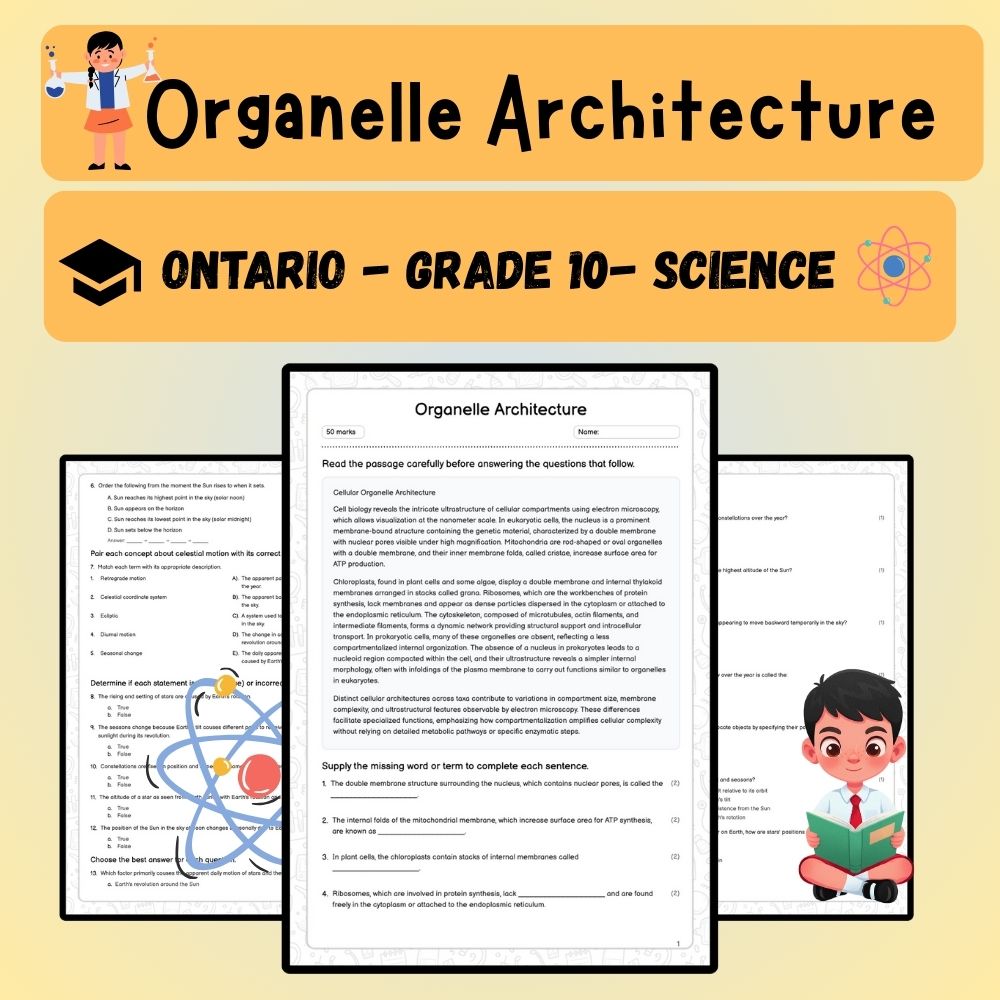
Grade 10 Science | Organelle Architecture Worksheet (Answer Key) - Ontario Standards
Created byPrism Point LearningLearning Objectives
- Identify the major cellular organelles and describe their structural features observable by electron microscopy.
- Compare the morphology of nucleus, mitochondria, chloroplasts, and other membrane-bound compartments in different cell types.
- Explain how compartmentalization contributes to cellular complexity and function without detailing specific metabolic pathways.
Also included in: Grade 10 Science Unit | Cells, Photosynthesis & Microbes Worksheet Pack +1 more
Instant download
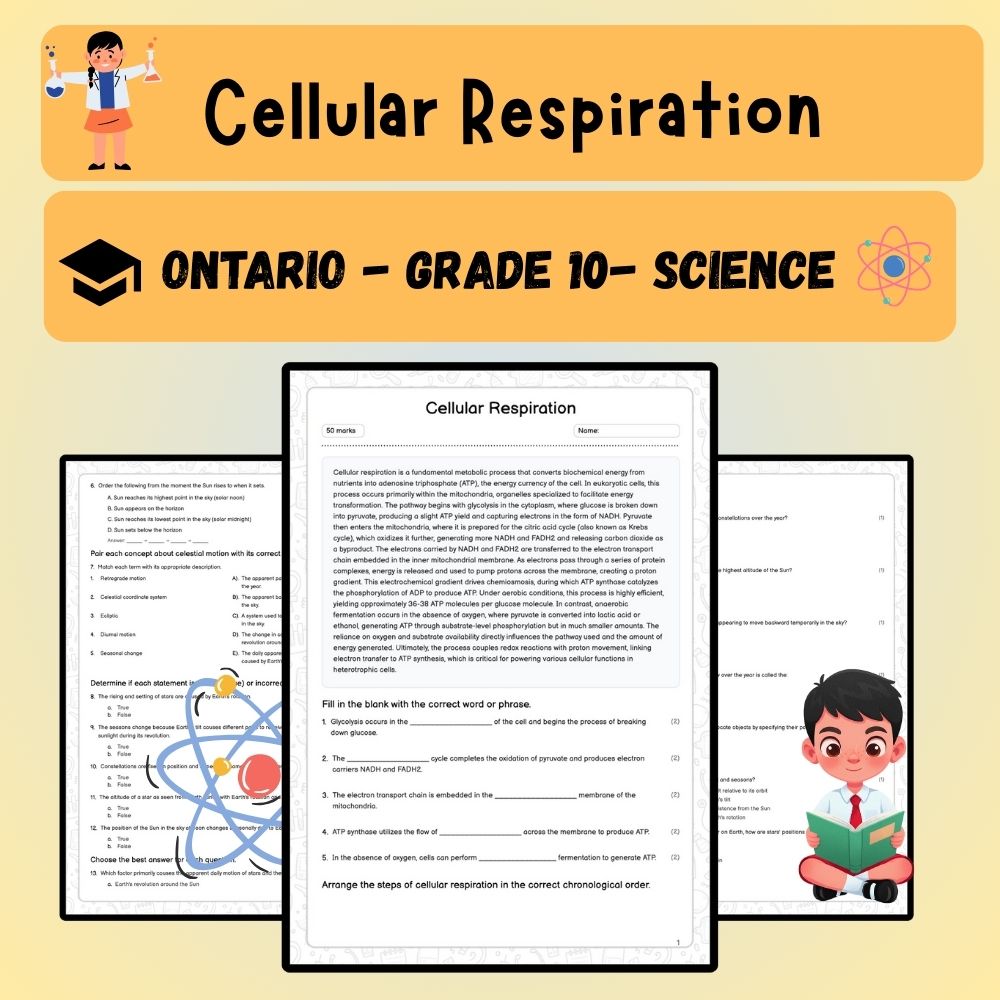
Grade 10 Science | Cellular Respiration Worksheet (Answer Key) – Ontario Standards
Created byPrism Point LearningLearning Objectives
- Describe the sequential pathways of cellular respiration: glycolysis, citric acid cycle, and electron transport chain.
- Explain the mitochondrial role in energy transformation within eukaryotic cells.
- Compare aerobic ATP production with anaerobic fermentation in terms of efficiency, substrate use, and oxygen dependence.
Also included in: Grade 10 Science Unit | Cells, Photosynthesis & Microbes Worksheet Pack +1 more
Instant download
Grade 10 Science | Ecosystem Roles of Microorganisms Worksheet (PDF)
Created byPrism Point LearningLearning Objectives
- Understand the contributions of microorganisms to ecosystem processes such as decomposition and nutrient cycling.
- Identify microbial roles in nitrogen fixation, primary production, and soil fertility.
- Explain how microbial community composition influences ecosystem resilience and services.
Also included in: Grade 10 Science Unit | Cells, Photosynthesis & Microbes Worksheet Pack +1 more
Instant download
Grade 10 Science | Microbe Diversity Worksheet (PDF) – Ontario Standard
Created byPrism Point LearningLearning Objectives
- Describe major groups of microorganisms and their cellular organization.
- Identify differences in genetic material and reproduction strategies among microbes.
- Explain the ecological roles of bacteria, archaea, viruses, fungi, and protists.
Also included in: Grade 10 Science Unit | Cells, Photosynthesis & Microbes Worksheet Pack +1 more
Instant download
Grade 10 Science | Cell Theory Foundations Worksheet (Answer Key) - Ontario
Created byPrism Point LearningLearning Objectives
- Define the fundamental principles of cell theory and their historical development.
- Differentiate between unicellular and multicellular organisms at a conceptual level.
- Understand the basic dimensions and scales involved in microscopy.
Also included in: Grade 10 Science Unit | Cells, Photosynthesis & Microbes Worksheet Pack +1 more
Instant download
Grade 10 Science | Enzymes and Rates Worksheet (Worksheet + Answer Key) – Ontario Standards
Created byPrism Point LearningLearning Objectives
- Understand the properties of enzymes and their role in catalyzing metabolic reactions.
- Explain how factors like temperature, pH, substrate concentration, and inhibitors affect enzyme activity.
- Describe mechanisms of allosteric regulation and feedback inhibition in metabolic pathways.
Also included in: Grade 10 Science Unit | Cells, Photosynthesis & Microbes Worksheet Pack +1 more
Instant download
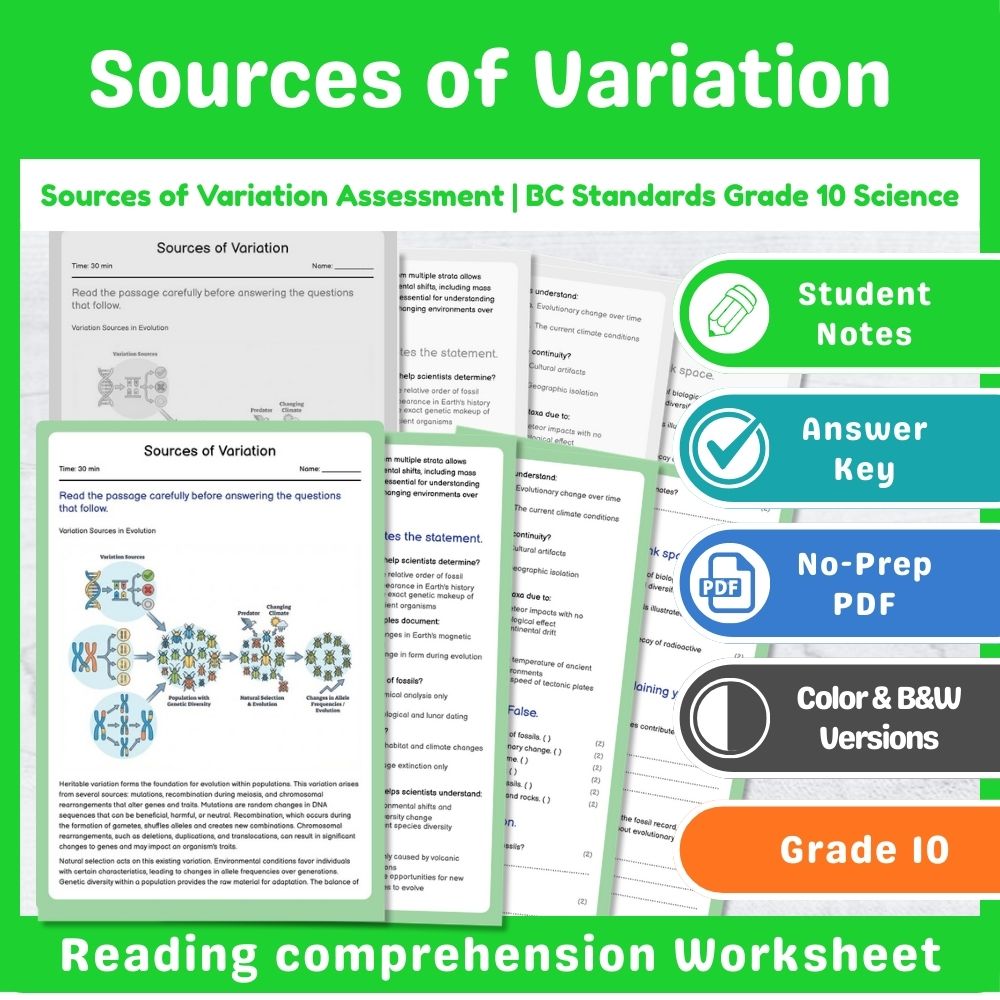
Sources of Variation Assessment | BC Standards Grade 10 Science
Created byPrism Point LearningLearning Objectives
- Understand different sources of heritable variation such as mutations, recombination, and chromosomal rearrangements.
- Explain how natural selection acts on variation within populations.
- Describe the importance of genetic diversity for adaptation and evolution.
Instant download
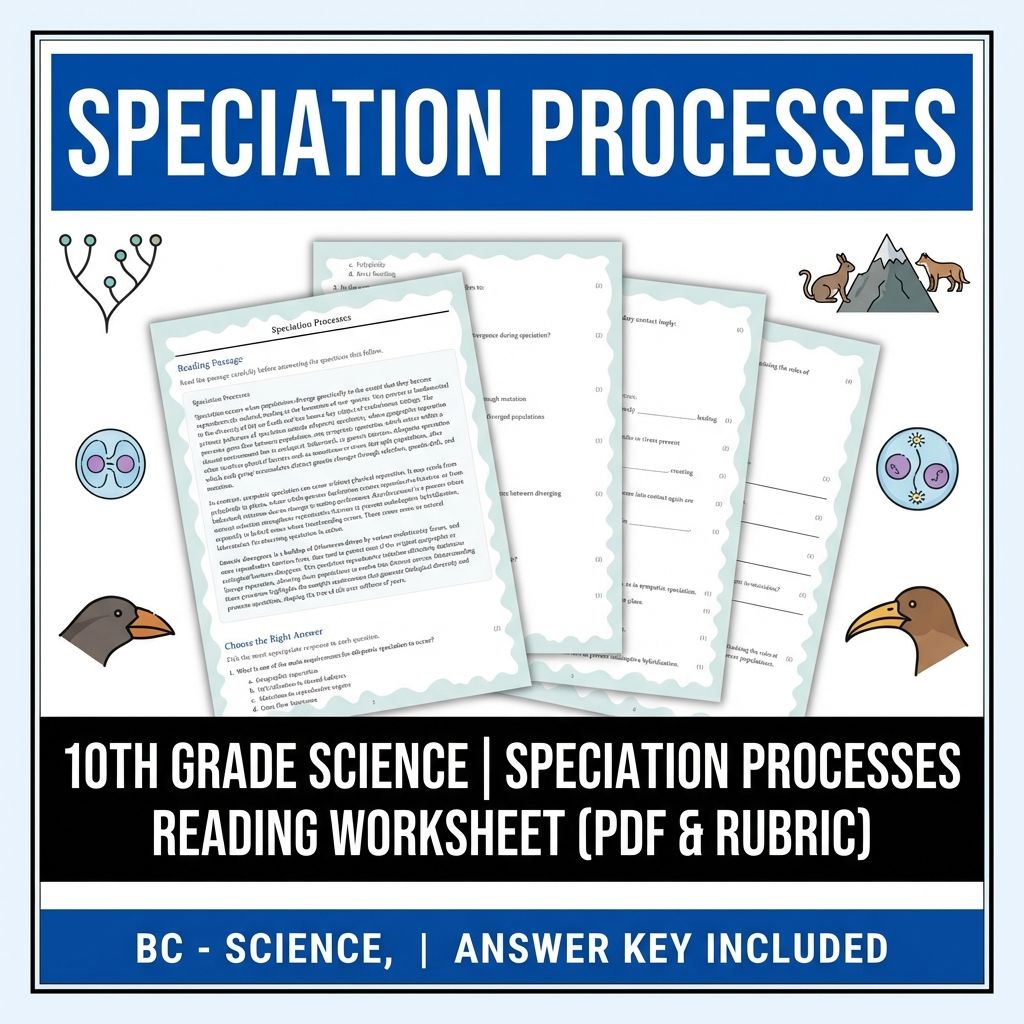
10th Grade Science | Speciation Processes Reading Worksheet (PDF & Rubric)
JCreated byJ.S SheetsLearning Objectives
- Understand the mechanisms of allopatric and sympatric speciation.
- Explain how reproductive barriers contribute to species divergence.
- Identify examples of speciation pathways such as reinforcement and polyploidy.
Instant download
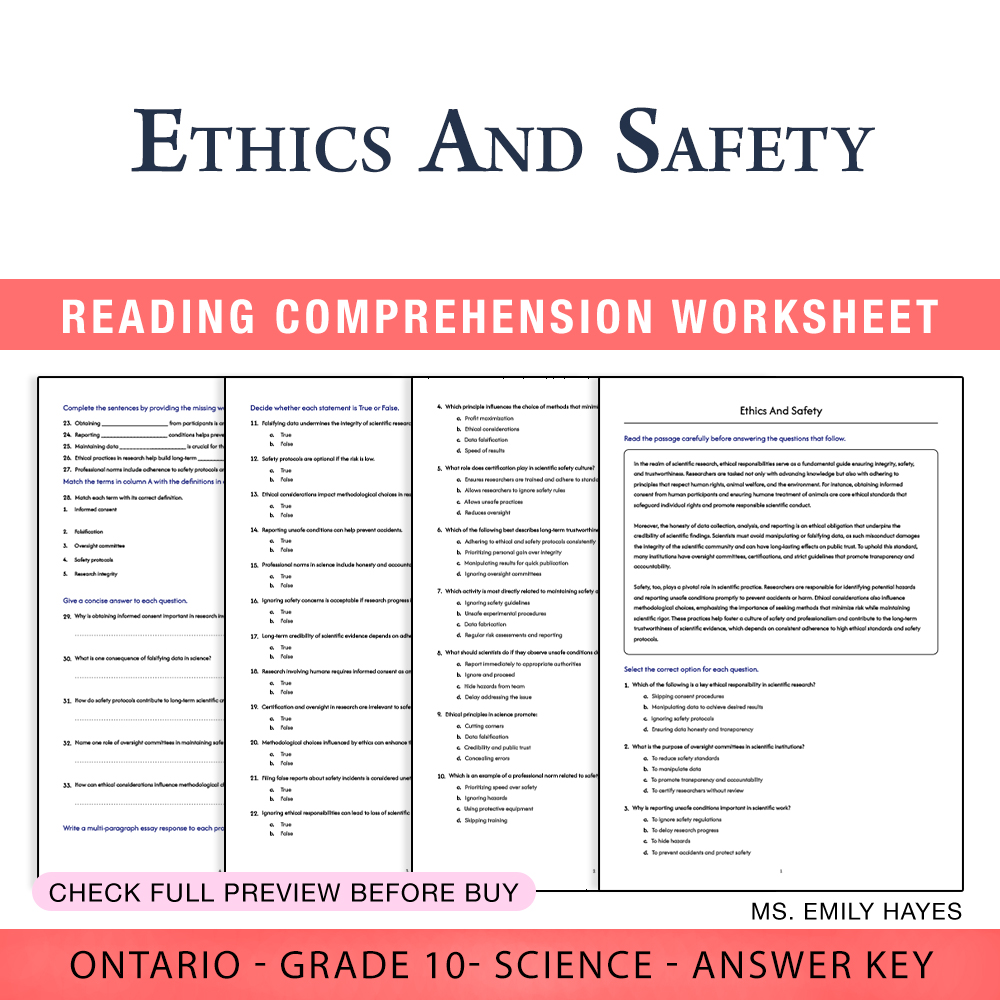
10th Grade Science | Ethics and Safety Worksheet (PDF + Answer Key)
Created byCopper Leaf ClassroomLearning Objectives
- Understand the importance of ethical responsibilities in scientific research.
- Identify key safety practices and reporting obligations in scientific work.
- Explain how ethics influence methodological choices and credibility of evidence.
Instant download
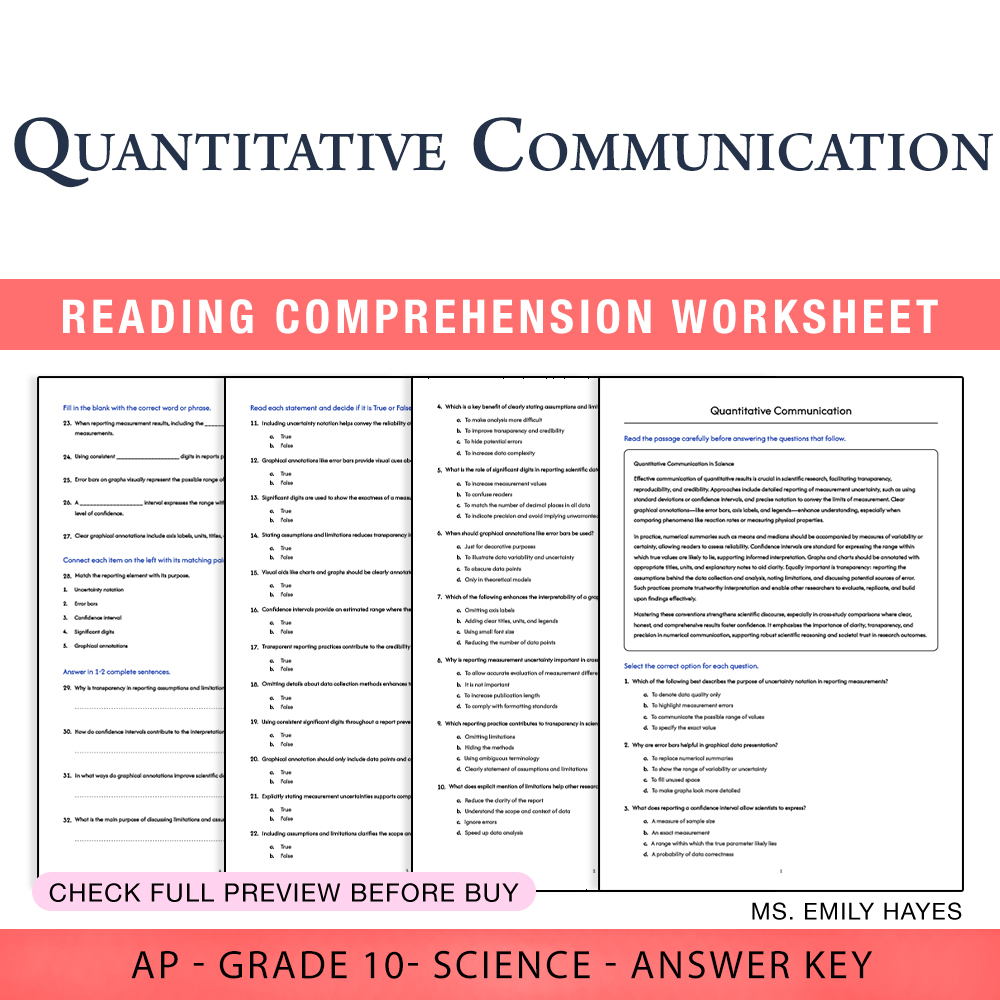
10th Grade Science | Quantitative Communication Worksheet (PDF+ Answer Key)
Created byCopper Leaf ClassroomLearning Objectives
- Understand conventions and strategies for reporting quantitative results with clarity.
- Interpret and use uncertainty notation, significant figures, and graphical annotations appropriately.
- Evaluate the contribution of numerical summaries, confidence intervals, and visual aids to credible conclusions.
Also included in: Grade 10 Science AP | Data Analysis & Modeling Skills (PDF + Answer Key) +1 more
Instant download
10th Grade Science | Feedback Control Reading Worksheet & Answer Key (PDF)
JCreated byJ.S SheetsLearning Objectives
- Understand the concepts of negative and positive feedback mechanisms in biological systems.
- Identify examples of feedback control in human physiology and ecosystems.
- Compare the architecture and function of stabilizing versus amplifying feedback loops.
Also included in: Grade 10 Science | Cell Systems, Energy, & Homeostasis (Standards-Aligned) +1 more
Instant download
10th Grade Science | Atomic Structure Worksheet (PDF+ Answer Key)
Created byCopper Leaf ClassroomLearning Objectives
- Describe the subatomic components of atoms, including proton, neutron, and electron roles and masses.
- Explain how experimental evidence from emission spectra and scattering supports atomic models.
- Connect shell models and quantum numbers to observable atomic properties like spectral lines.
Also included in: Grade 10 Science -Atomic Structure & Chemical Reactions (PDF+ Answer Key) +1 more
Instant download
10th Grade Science | Chemical Equilibrium Worksheet (PDF+ Answer Key)
Created byCopper Leaf ClassroomLearning Objectives
- Explain the concept of chemical equilibrium and how it is affected by changes in conditions.
- Describe the role of catalysts and equilibrium constants in chemical systems.
- Analyze how shifts in pressure, concentration, and temperature influence product yield in equilibrium reactions.
Instant download
Grade 10 Science Energy Conversion Worksheet (PDF +Answer Key)
Created byCopper Leaf ClassroomLearning Objectives
- Understand how chemical energy is converted into electrical energy in batteries.
- Identify key devices involved in energy conversion processes.
- Analyze efficiency and loss channels in energy transformation systems.
Instant download
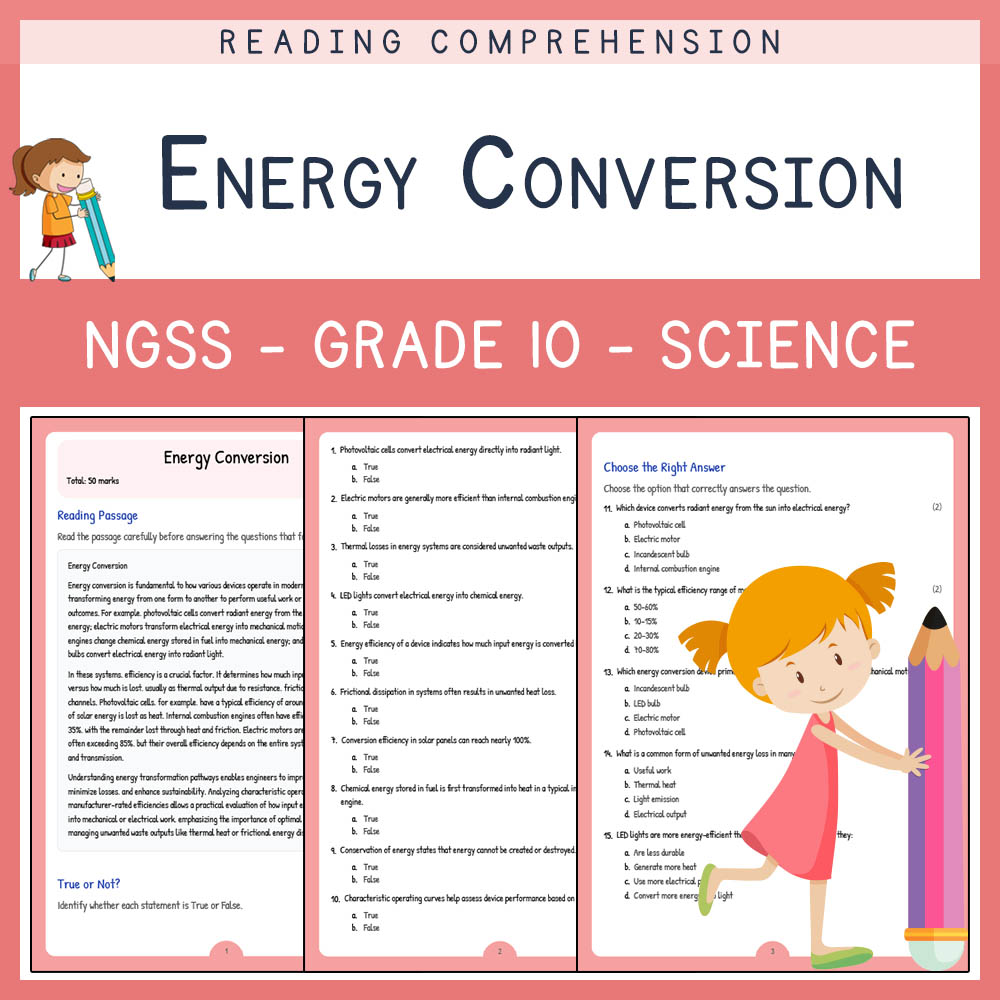
Grade 10 Science | Energy Conversion Worksheet & Answer Key (NGSS Aligned)
Created byLumora LearningLearning Objectives
- Describe the main types of energy conversions involving practical devices.
- Analyze efficiency pathways and identify common loss channels in energy systems.
- Compare different energy conversion devices using manufacturer-rated efficiencies and power outputs.
Instant download
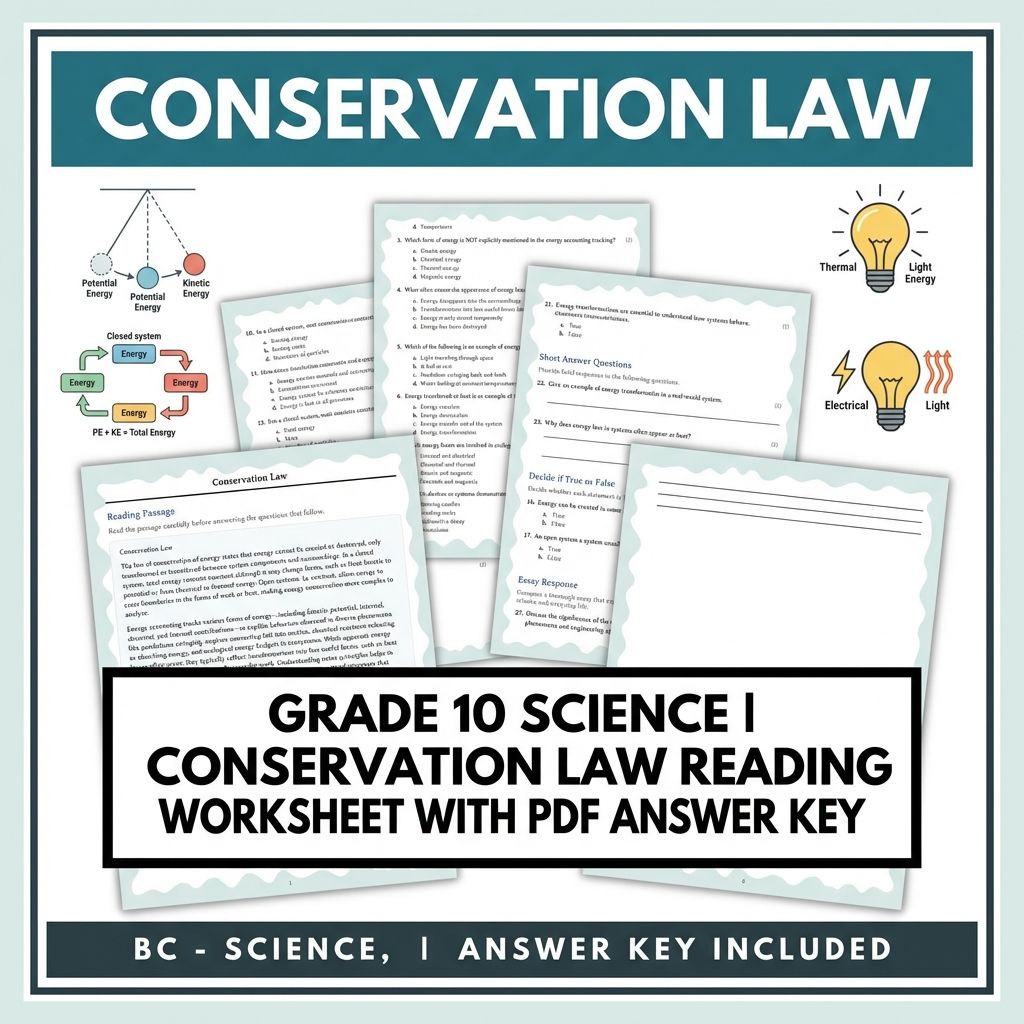
Grade 10 Science | Conservation Law Reading Worksheet with PDF Answer Key
JCreated byJ.S SheetsLearning Objectives
- Understand the principle of conservation of energy and how it applies to various systems.
- Describe different forms of energy and how they TRANSFORM or transfer between components.
- Identify examples of energy conservation in natural and engineered systems.
Instant download
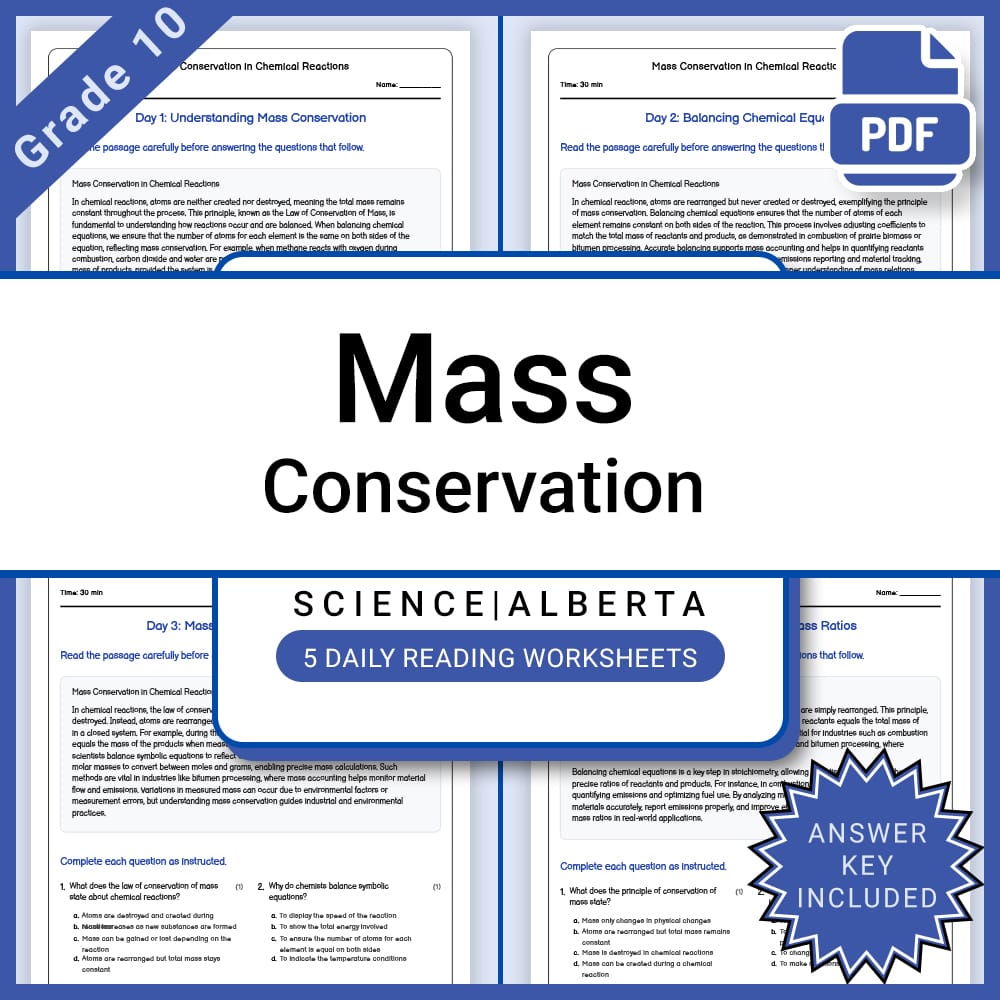
Grade 10 Science – Mass Conservation Daily Reading Worksheet + Answer Key
JCreated byJ.S SheetsLearning Objectives
- Understand key concepts related to Science
- Apply knowledge through practice questions
- Demonstrate comprehension of the material
Also included in: Grade 10 Science Lesson Group Bundle Alberta | Worksheets & Activities +1 more
Instant download
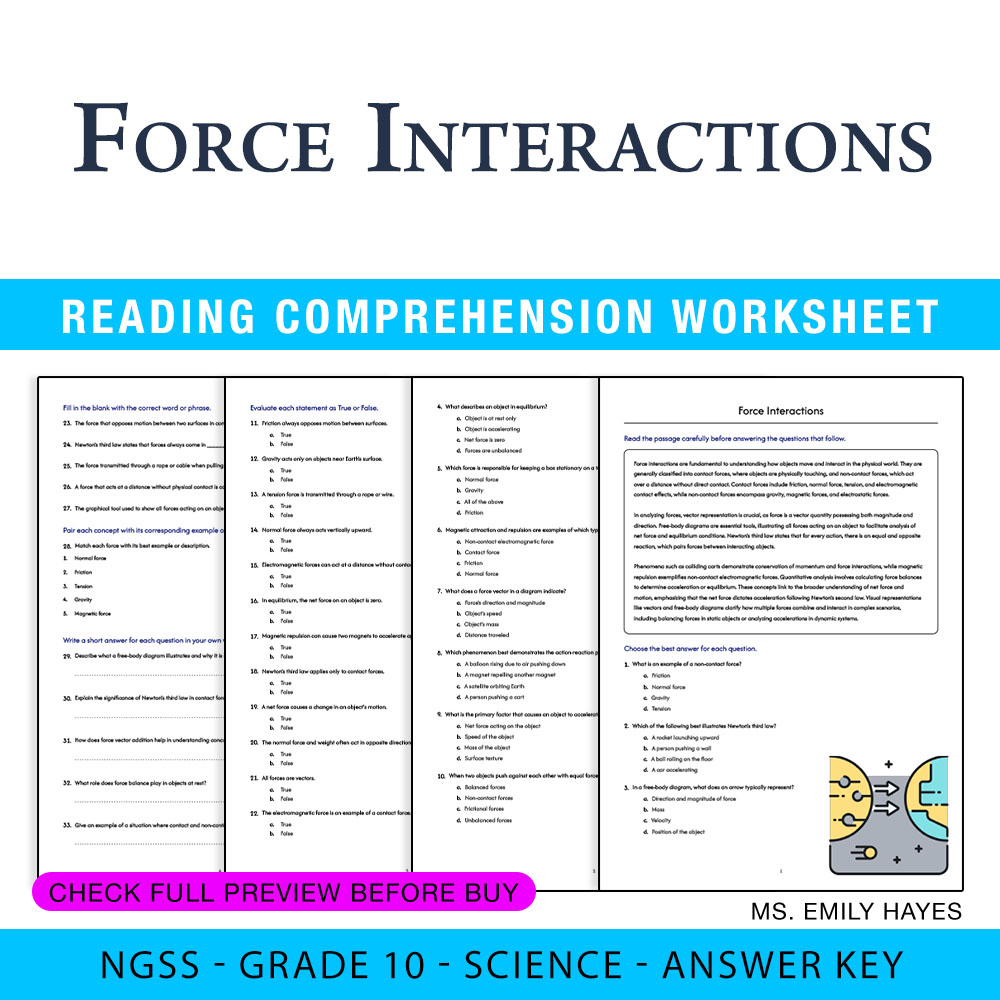
10th Grade Science | Force Interactions Worksheet (PDF+ Answer Key)
Created byCopper Leaf ClassroomLearning Objectives
- Understand the classification of contact and non-contact forces.
- Represent forces graphically using vectors and free-body diagrams.
- Explain Newton's third law and pairwise force interactions.
Instant download
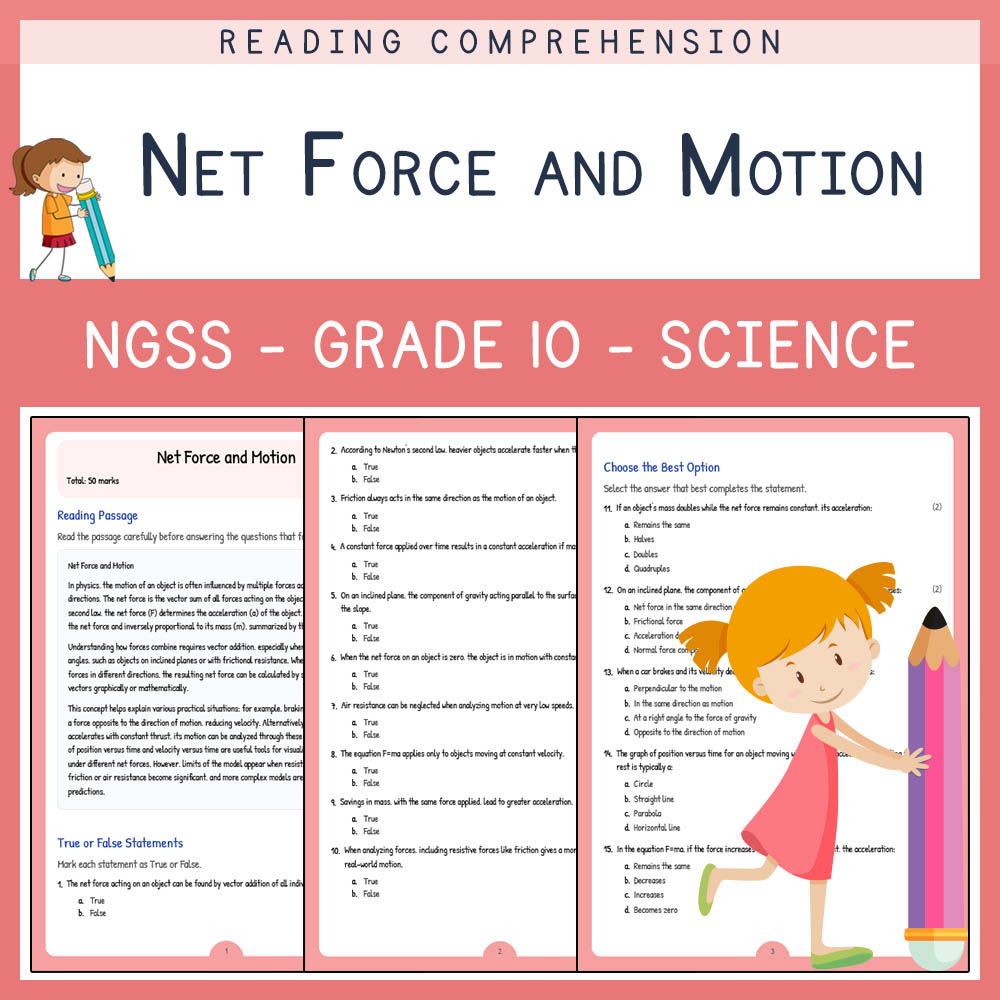
Grade 10 Science | Net Force and Motion Worksheet(PDF + Answer Key) NGSS Aligned
Created byLumora LearningLearning Objectives
- Understand the relationship between net force, mass, and acceleration as described by Newton's second law.
- Apply vector addition to analyze forces acting on objects in different contexts such as inclined planes and resistive media.
- Interpret motion graphs to understand the effects of forces on an object's acceleration and velocity.
Instant download

Grade 10 Science Worksheet | Intercellular Communication (TEKS) PDF
Created byEvergreen Desk EducationLearning Objectives
- Identify and compare autocrine, paracrine, endocrine, and synaptic modes of intercellular communication
- Explain how receptor–ligand specificity enables cells to respond selectively to signals
- Describe how signal transduction cascades amplify cellular responses
Instant download
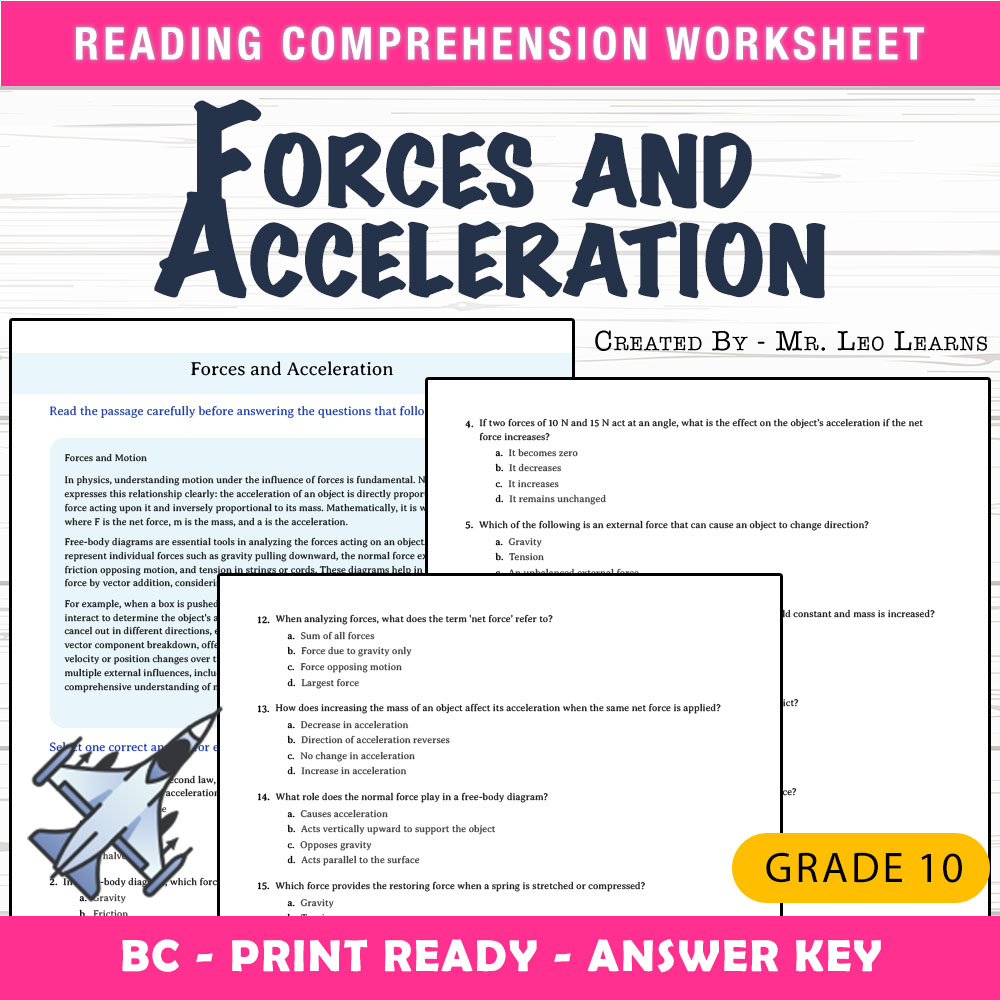
Grade 10 Science — Forces and Acceleration Worksheet for Mastery
Created byThe Resource HubLearning Objectives
- Understand Newton's second law relating net force, mass, and acceleration.
- Interpret free-body diagrams to identify individual forces.
- Apply algebraic and vector analysis to determine the net effect of forces on motion.
Also included in: Grade 10 Science | Forces, Motion & Fields UNIT Worksheet Bundle +1 more
Instant download
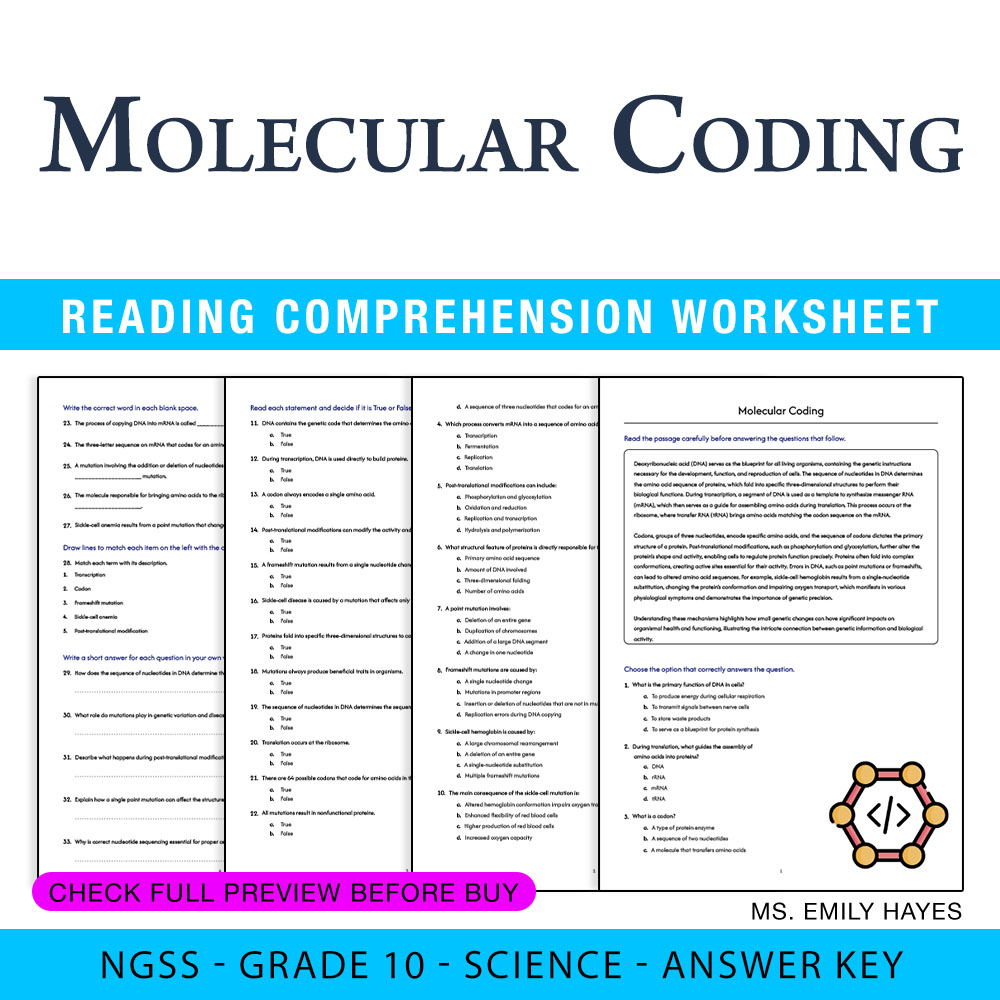
10th Grade Science | Molecular Coding Worksheet (PDF+ Answer Key)
Created byCopper Leaf ClassroomLearning Objectives
- Understand the relationship between DNA sequences and protein structure.
- Explain the processes of transcription and translation in protein synthesis.
- Identify how mutations can alter protein function, including sickle-cell hemoglobin.
Instant download
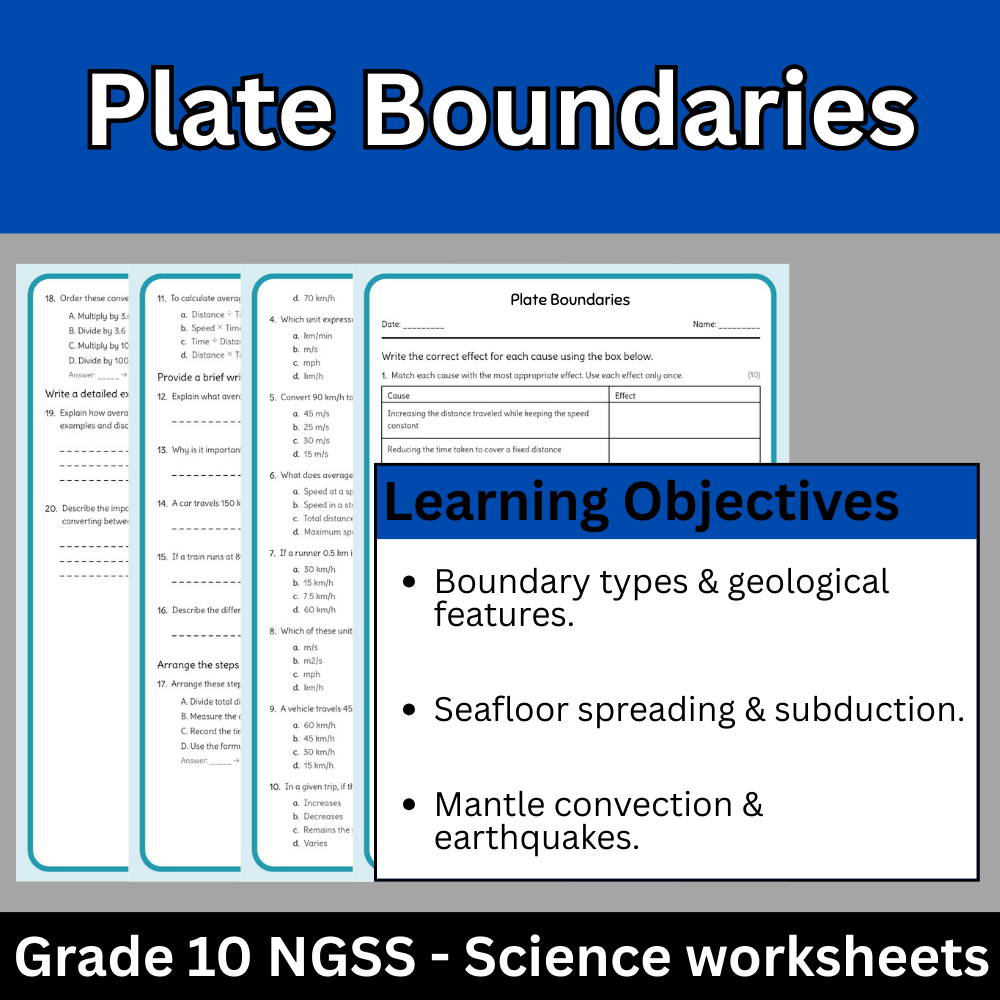
Grade 10 Science | Plate Boundaries Worksheet + Answer Key (NGSS Aligned)
Created byBright Mind ResourcesLearning Objectives
- Explain the different types of plate boundaries and their associated geological features.
- Identify key processes such as seafloor spreading, subduction, and continental collision.
- Describe the mechanisms of mantle convection and stress accumulation leading to earthquakes and volcanic activity.
Instant download
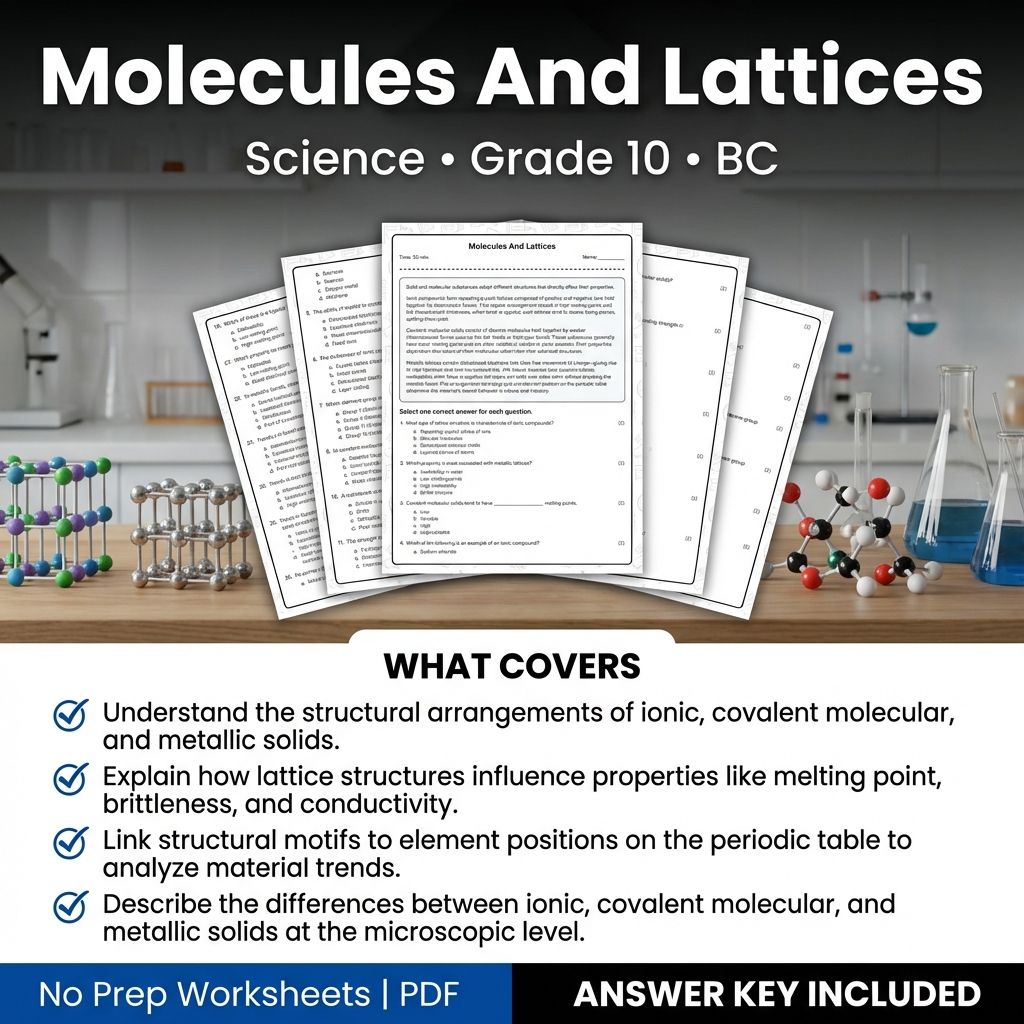
10th Grade Science | Molecules and Lattices Worksheet & Answer Key PDF
Created byCoral Reef LearningLearning Objectives
- Understand the structural arrangements of ionic, covalent molecular, and metallic solids.
- Explain how lattice structures influence properties like melting point, brittleness, and conductivity.
- Link structural motifs to element positions on the periodic table to analyze material trends.
Instant download
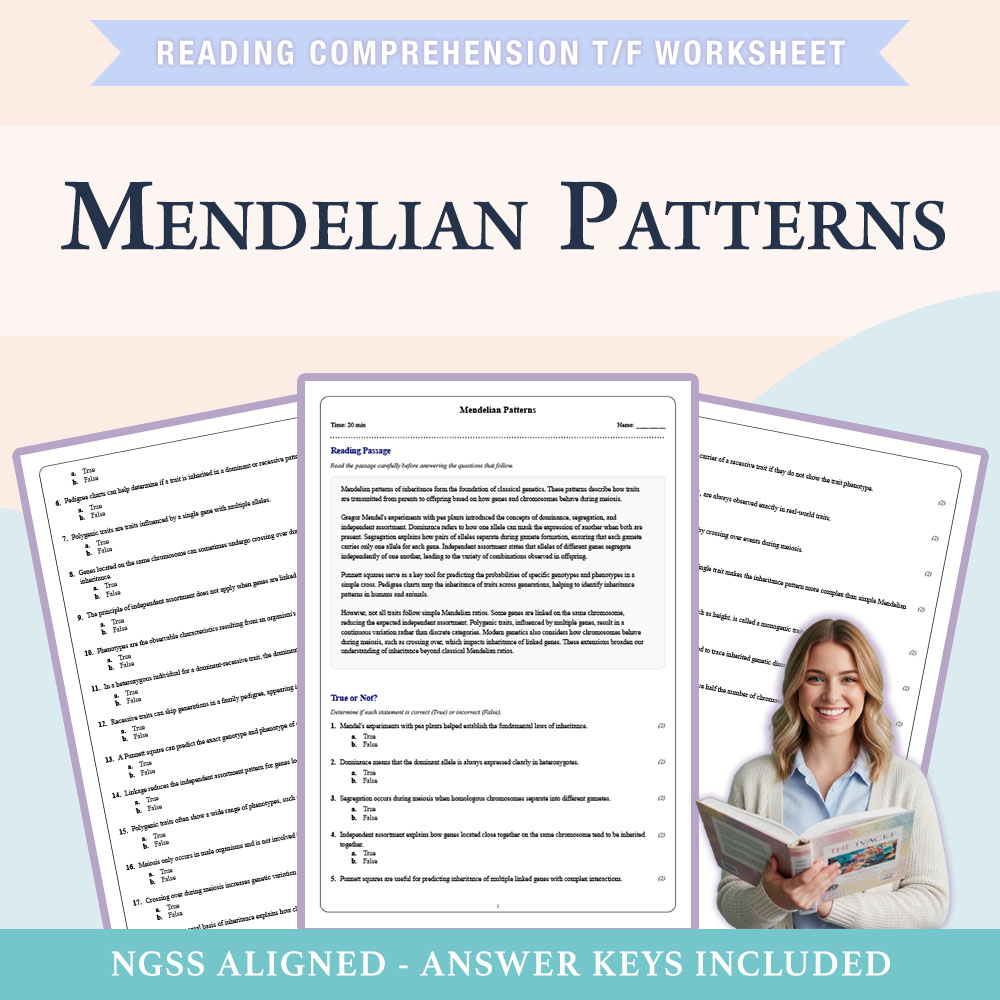
10th Grade Science | Mendelian Patterns Worksheet (PDF + Answer Key)
Created byCopper Leaf ClassroomLearning Objectives
- Understand the basic principles of Mendelian inheritance, including dominance, segregation, and independent assortment.
- Explain how Punnett squares and pedigree charts are used to analyze inheritance patterns.
- Recognize the effects of linked genes and polygenic traits on simple Mendelian ratios.
Also included in: Grade 10 Science | Genetics & DNA Unit Worksheet Pack (PDF +Answer Key) +1 more
Instant download
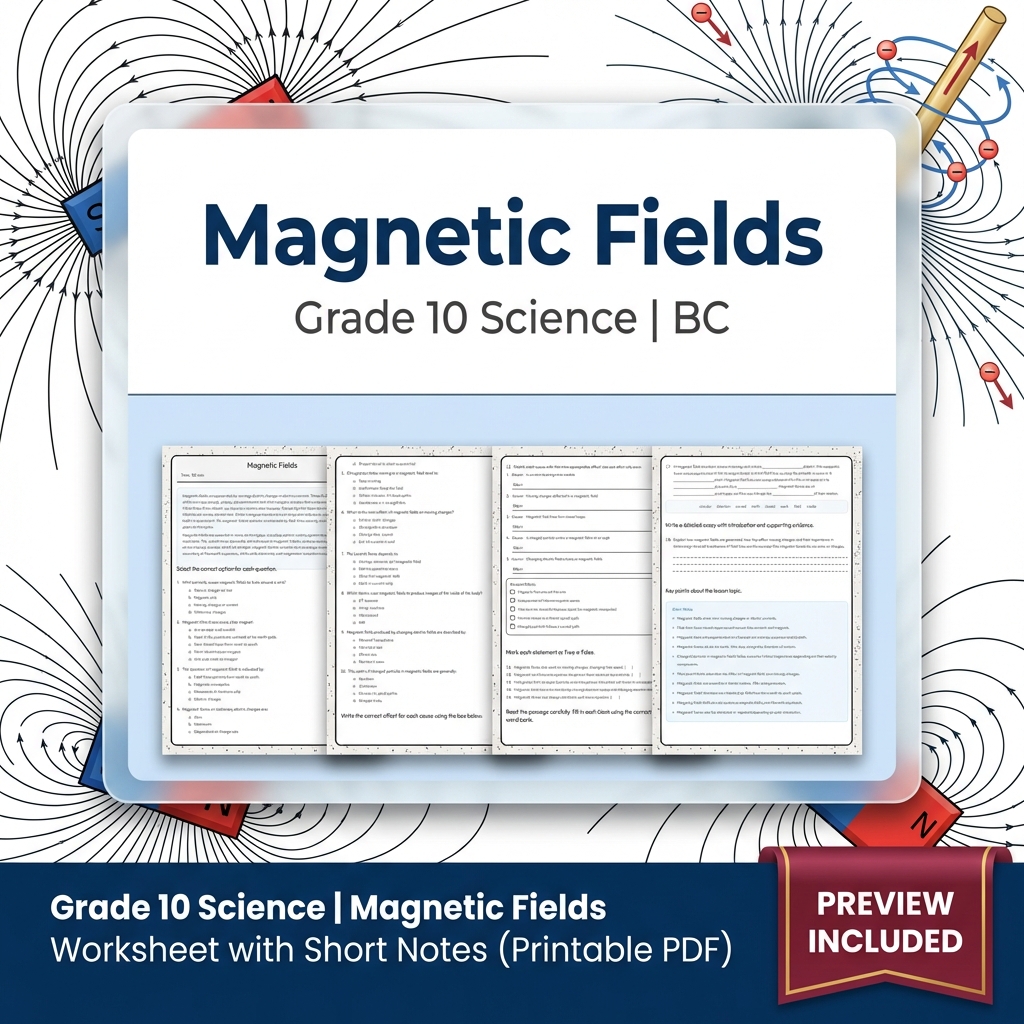
Grade 10 Science | Magnetic Fields Worksheet with Short Notes (Printable PDF)
Created byMeadowlark WorksheetsLearning Objectives
- Explain the origin and properties of magnetic fields from moving charges and currents.
- Describe the pattern of magnetic field lines and their relationship to current-carrying conductors and magnets.
- Differentiate between magnetic and electrostatic fields, particularly in terms of work on charges.
Also included in: Grade 10 Science Lesson Bundle | Physics and Forces Worksheets | BC Framework +1 more
Instant download
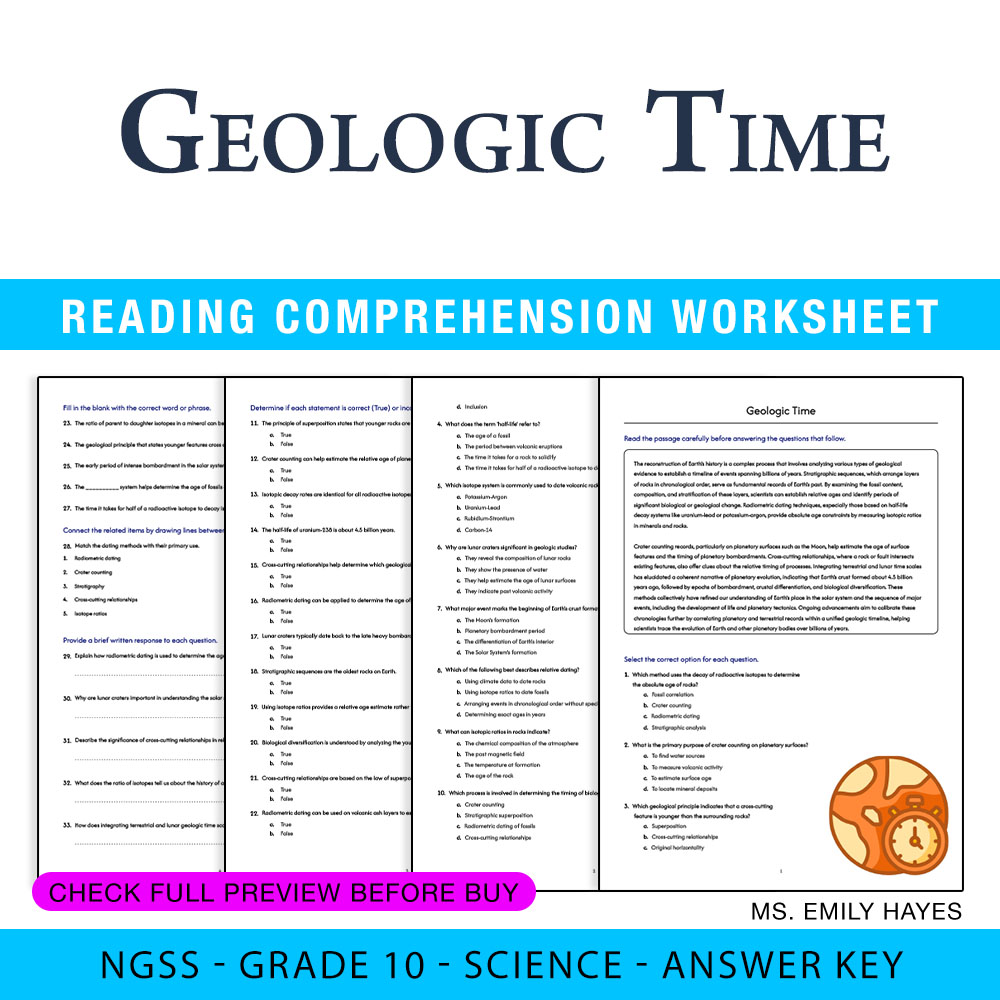
10th Grade Science | Geologic Time Worksheet (PDF+ Answer Key)
Created byCopper Leaf ClassroomLearning Objectives
- Understand methods used to reconstruct Earth's geologic history, including stratigraphy and radiometric dating.
- Describe the role of isotopic ratios, half-life decay, and crater counting in determining relative and absolute ages.
- Explain how terrestrial and lunar geologic time scales are integrated to understand Earth's history within the solar system context.
Instant download
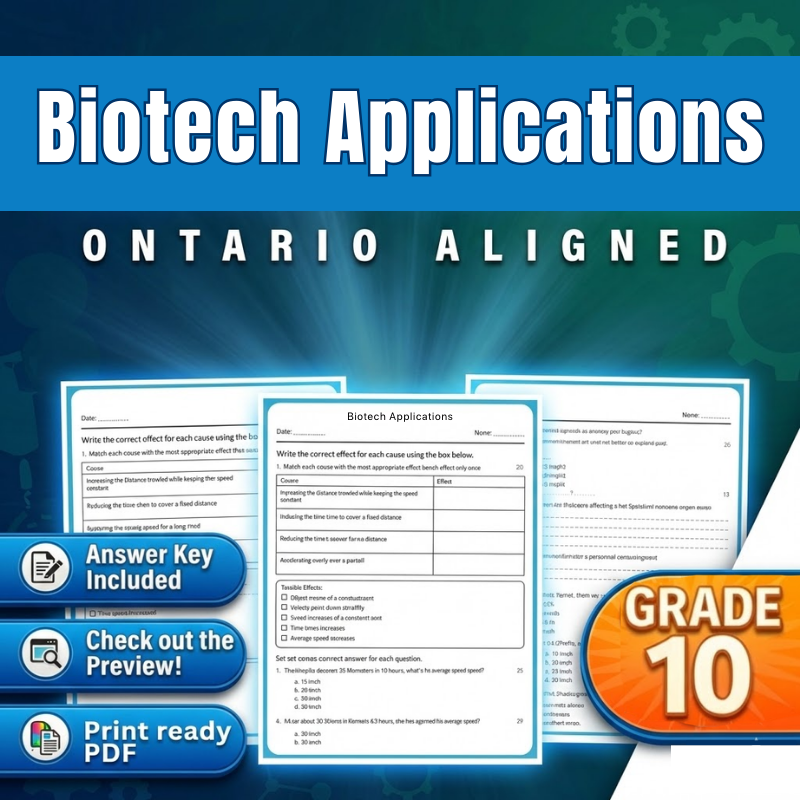
Grade 10 Science – Biotech Applications Worksheet (Ontario) PDF
Created byBright Mind ResourcesLearning Objectives
- Describe how microorganisms are used in food fermentation and bioremediation processes.
- Explain genetic manipulation techniques in microbial systems for production purposes.
- Assess the ecological and health impacts of microbial biotechnology, including antibiotic resistance.
Instant download
About Grade 10 Science Worksheets
Find Science worksheets built for Grade 10. All 7,069 cover core skills, practice, and review, each an instant PDF download.
Every worksheet on MyTeachingSheets is created by independent teacher-authors and reviewed before publication. All resources download as printable PDFs for classroom, homework, or at-home practice, and many include answer keys. Preview any worksheet free before buying.