
Grade 10 Science Worksheets
7,038 worksheets
Biogeochemical Cycles Worksheet Pack | Grade 10 Science Activities
 Created byPrism Point Learning
Learning Objectives
- Explain how carbon, nitrogen, phosphorus, and water cycle through living organisms and Earth systems
- Describe how biological processes (photosynthesis, respiration, decomposition) transform matter in biogeochemical cycles
- Analyze how human activities can disrupt or speed up nutrient cycling and affect ecosystem productivity
Instant download
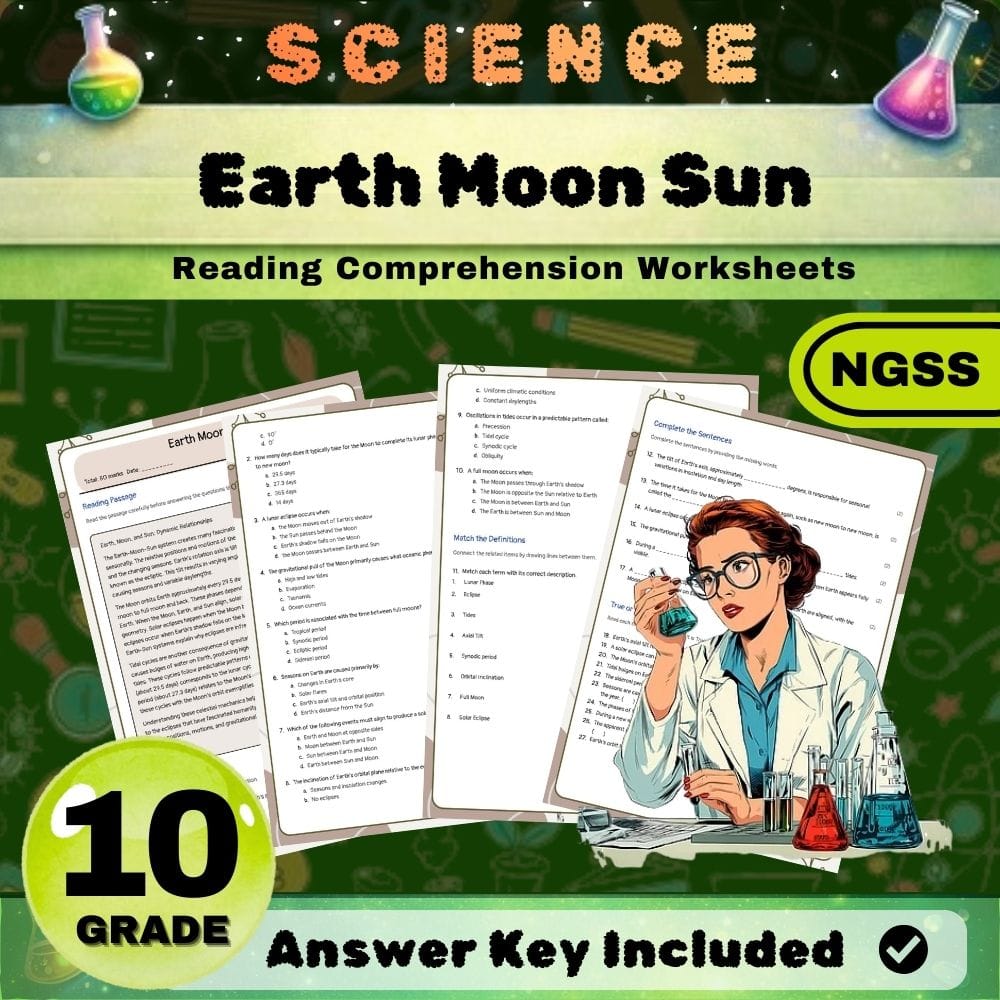
Grade 10 Science | Earth Moon Sun System Worksheet (NGSS) PDF
 Created byMaple Path Learning
Learning Objectives
- Explain the relative positions and motions of Earth, Moon, and Sun that produce lunar phases, eclipses, and seasons.
- Describe how axial tilt and orbital inclination influence daylength and insolation variations.
- Analyze the geometric conditions that produce solar and lunar eclipses.
Instant download
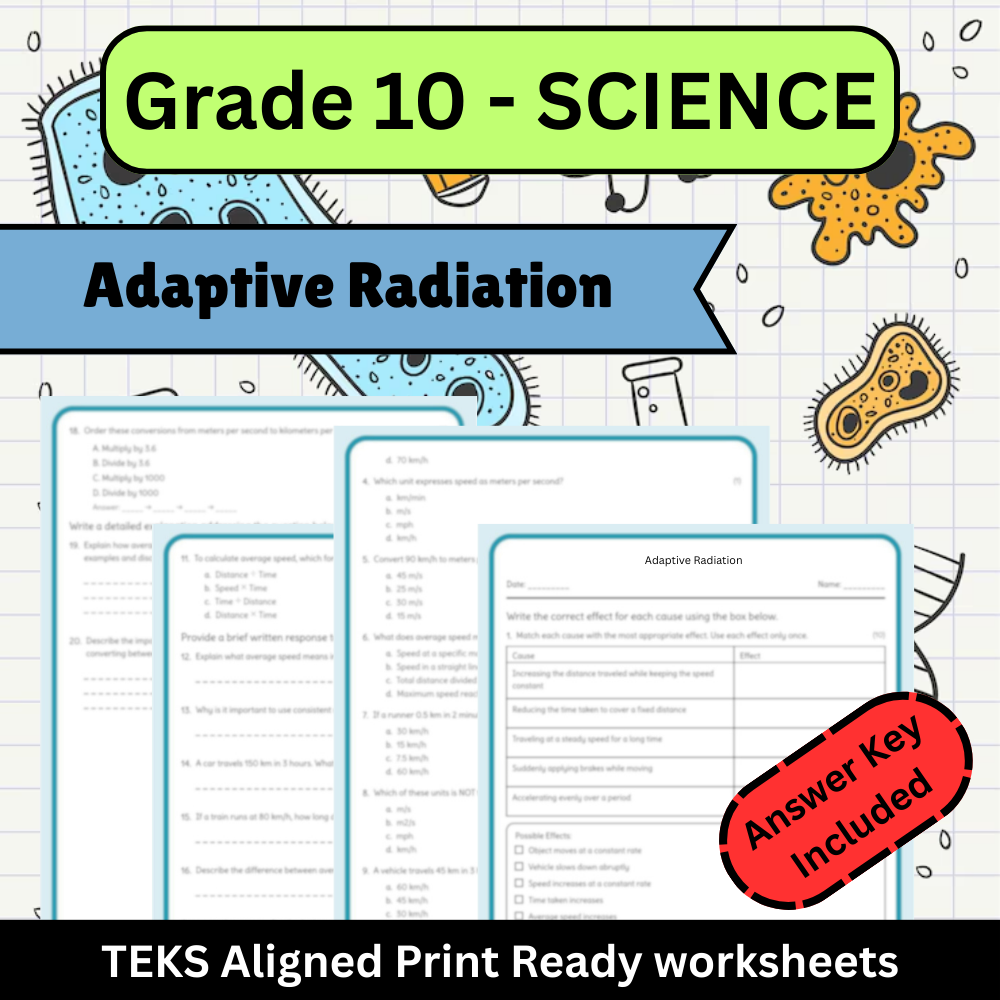
Grade 10 Science – Adaptive Radiation TEKS Worksheet (PDF) with Answer Key
 Created byBright Mind Resources
Learning Objectives
- Explain the concept of adaptive radiation and its significance in evolution.
- Identify factors that promote rapid diversification of species.
- Describe examples of adaptive radiation in nature, such as island archipelagos and lakes.
Also included in: Grade 10 Science | Evolution & Heredity Unit Worksheet Bundle (TEKS Aligned) +5 more
Instant download

Grade 10 Science | Graphical Statistics Worksheet (PDF)
 Created byEvergreen Desk Education
Learning Objectives
- Choose appropriate graphs (line, scatter, histogram, box plot) based on variable types and the question being asked
- Interpret key graph features such as center, spread, clusters, trends, and outliers to support conclusions
- Compare groups using consistent scales and statistical summaries shown on graphs
Also included in: Grade 10 Uncertainty & Evidence Data Science Lesson Bundle (General) +1 more
Instant download

Models And Explanations Assessment | Florida NGSSS Grade 10 Science
Created byPrism Point LearningLearning Objectives
- Explain how scientific models represent complex systems and predict system behavior using evidence.
- Use multiple lines of representation (diagrams, relationships, and simulations) to connect observations to mechanisms.
- Evaluate where a model works well and where it fails, including realistic limitations.
Also included in: Grade 10 Scientific Reasoning Science Lesson Bundle – Florida NGSSS +1 more
Instant download

Ohm's Law Worksheets for Grade 10 Science | Standards-Aligned Practice PDF
JCreated byJ.S SheetsLearning Objectives
- Explain the relationship between voltage, current, and resistance as described by Ohm's Law.
- Calculate equivalent resistance in series and parallel resistor networks.
- Analyze how temperature variations affect the resistance of conductors and resistors.
Also included in: Grade 10 Science Practice Worksheets: Alberta Science Full-Year Bundle
Instant download

Cell Transport, Respiration and Homeostasis Worksheets Grade 10
 Created byBRIGHT PATH RESOURCES
Learning Objectives
- Explain how membrane transport moves oxygen and nutrients
- Connect cellular respiration to organism-level transport
- Describe how organ structures support faster exchange
Also included in: Grade 10 Life Science Worksheets Bundle | Evolution & Genetics +1 more
Instant download

Grade 10 Science – Energy Components & Conservation | Daily Reading Worksheet
Created byBright Mind ResourcesLearning Objectives
- Understand different forms of energy within a system
- Learn how energy transfers between components
- Represent energy conservation visually and quantitatively
Also included in: Grade 10 Energy & Models Science Lesson Bundle | CA Standards Daily Reading +1 more
Instant download
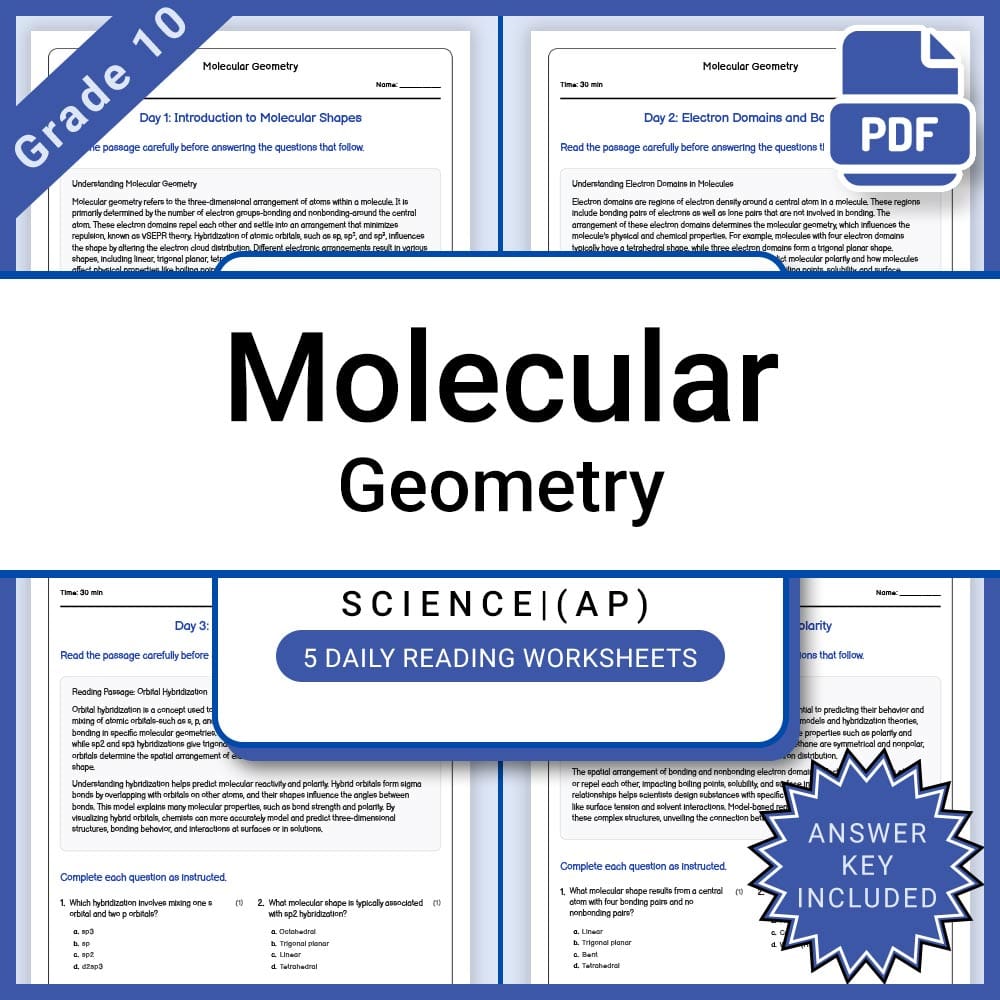
Grade 10 Science – Molecular Geometry Daily Reading Worksheet + Answer Key
JCreated byJ.S SheetsLearning Objectives
- Define molecular geometry using electron-domain models and orbital hybridization.
- Describe how electron domains influence three-dimensional molecular shapes.
- Connect molecular shape to polarity, intermolecular forces, and macroscopic properties.
Also included in: Grade 10 Science Lesson Group - AP Curriculum - Daily Reading Worksheets
Instant download

Grade 10 Science – Collision Momentum & Forces | Daily Reading Worksheet
Created byBright Mind ResourcesLearning Objectives
- Understand key concepts related to Science
- Apply knowledge through practice questions
- Demonstrate comprehension of the material
Also included in: Grade 10 Energy & Models Science Lesson Bundle | CA Standards Daily Reading +1 more
Instant download
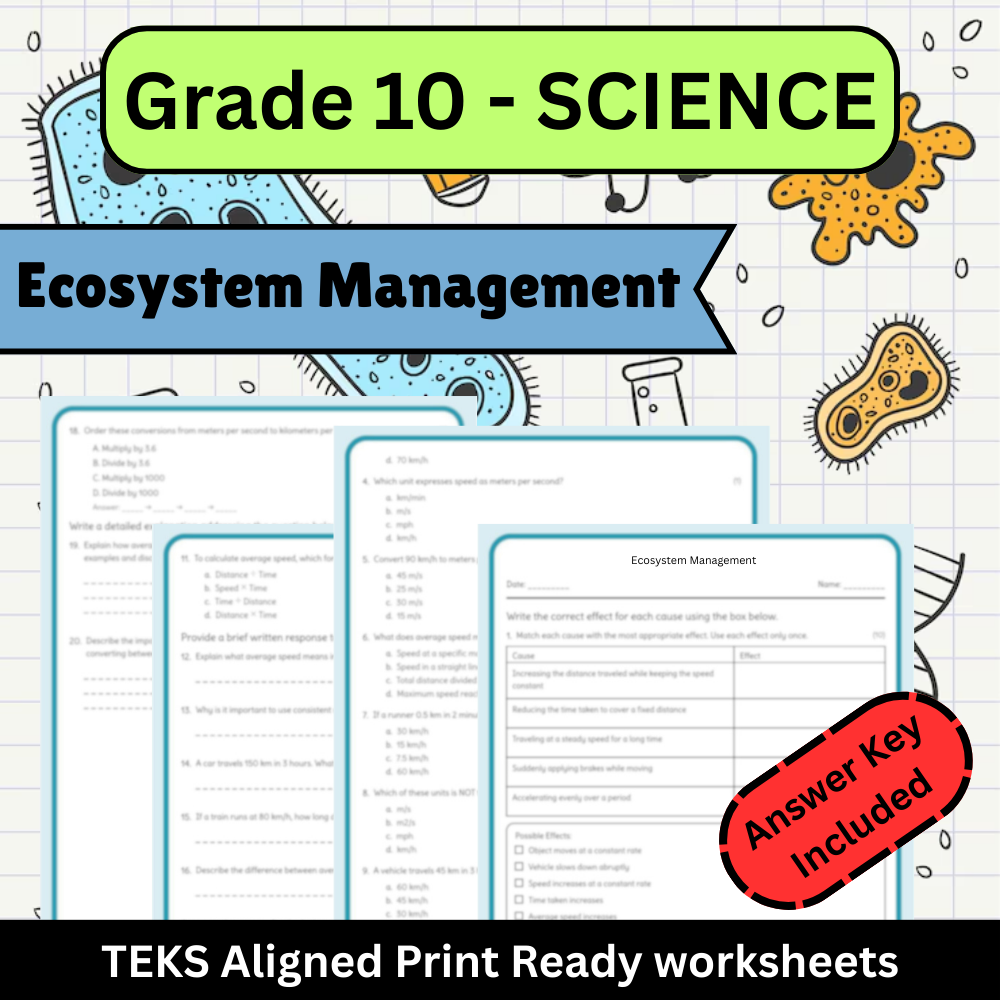
Grade 10 Science | Ecosystem Management Worksheet (Answer Key) – TEKS
Created byBright Mind ResourcesLearning Objectives
- Understand the key principles and approaches of ecosystem management
- Identify strategies used to maintain or restore ecosystems
- Analyze the impact of management actions on biodiversity and resilience
Also included in: Grade 10 Science | Ecosystems & Biodiversity Unit Worksheet Bundle(TEKS-Aligned) +5 more
Instant download
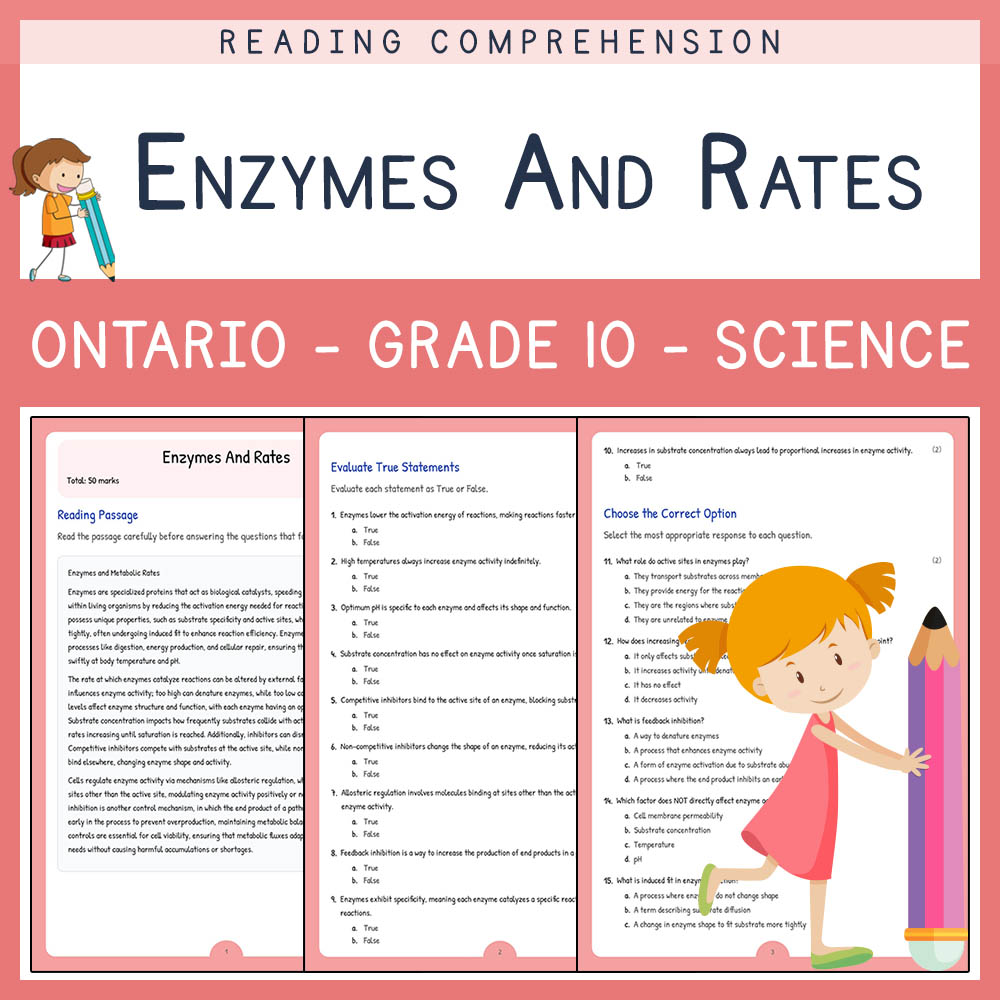
Grade 10 Science | Enzymes And Rates Worksheet | Ontario Standard
 Created byLumora Learning
Learning Objectives
- Explain the properties of enzymes and how they catalyze metabolic reactions.
- Describe the factors affecting enzyme activity, including temperature, pH, substrate concentration, and inhibitors.
- Understand concepts of allosteric regulation and feedback inhibition in metabolic pathways.
Instant download
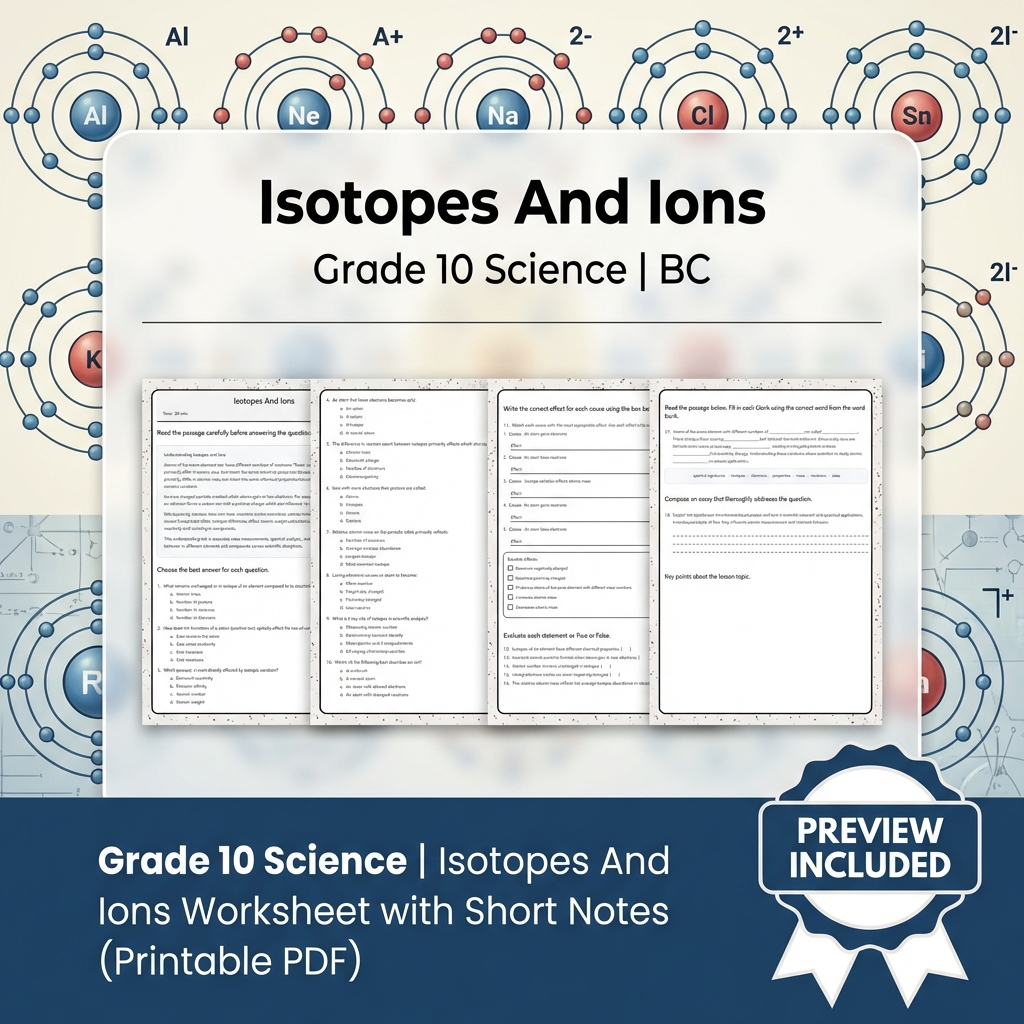
Grade 10 Science | Isotopes And Ions Worksheet with Short Notes (Printable PDF)
 Created byMeadowlark Worksheets
Learning Objectives
- Define and explain isotopes and how they differ from regular atoms.
- Describe how ions are formed and their impact on atomic size and reactivity.
- Identify differences between isotopic variations and ionic charges in atomic behavior.
Also included in: Grade 10 Science Lesson Bundle | BC Framework Worksheets Pack +1 more
Instant download
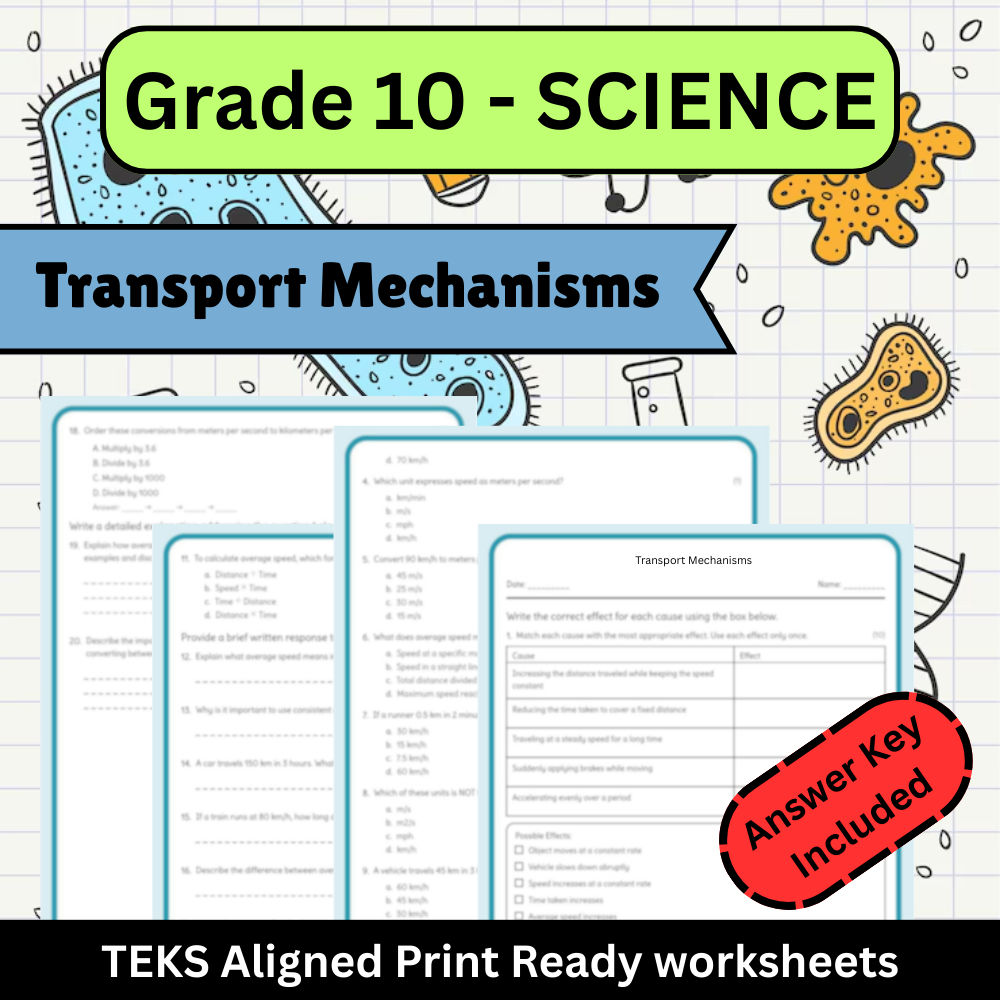
Grade 10 Science | Transport Mechanisms Worksheet (Answer Key, TEKS Aligned)
Created byBright Mind ResourcesLearning Objectives
- Identify passive and active transport processes across cell membranes.
- Distinguish between different types of gradients involved in transport.
- Explain the functions of specific membrane transport proteins such as pumps and carriers.
Also included in: Grade 10 Science | Cell Structure & Function Unit Worksheet Bundle(TEKS-Aligned) +5 more
Instant download
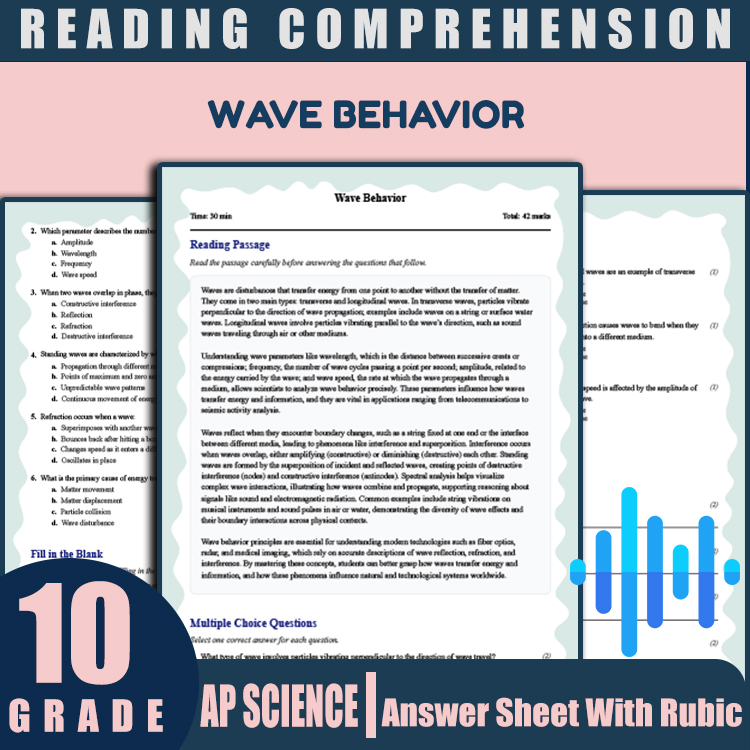
Grade 10 Science | Wave Behavior Reading Worksheet (PDF + Rubric)
JCreated byJ.S SheetsLearning Objectives
- Understand the differences between transverse and longitudinal waves using parameters such as wavelength, frequency, amplitude, and wave speed.
- Explain how waves transfer energy and information through phenomena like reflection, refraction, interference, superposition, and standing waves.
- Apply graphical and mathematical descriptions to analyze complex wave interactions and spectral representations in real-world examples like string and sound waves.
Also included in: Grade 10 Science Unit Bundle | Motion, Forces & Energy Worksheets (PDF) +1 more
Instant download

Grade 10 Science – Collision & Conservation | Daily Reading Worksheet
Created byBright Mind ResourcesLearning Objectives
- Understand key concepts related to Science
- Apply knowledge through practice questions
- Demonstrate comprehension of the material
Also included in: Forces & Motion Grade 10 Science Daily Reading Worksheets Lesson Bundle | NGSS +2 more
Instant download

Grade 10 Science – Body Temperature Regulation & Systems | Reading Worksheet
Created byBright Mind ResourcesLearning Objectives
- Understand the role of the hypothalamus in regulating body temperature.
- Identify the different mechanisms the body uses to maintain thermal equilibrium.
- Explain the feedback processes involved in temperature regulation.
Also included in: Systems Interactions Grade 10 Science Daily Reading Worksheets Bundle | TEKS +2 more
Instant download
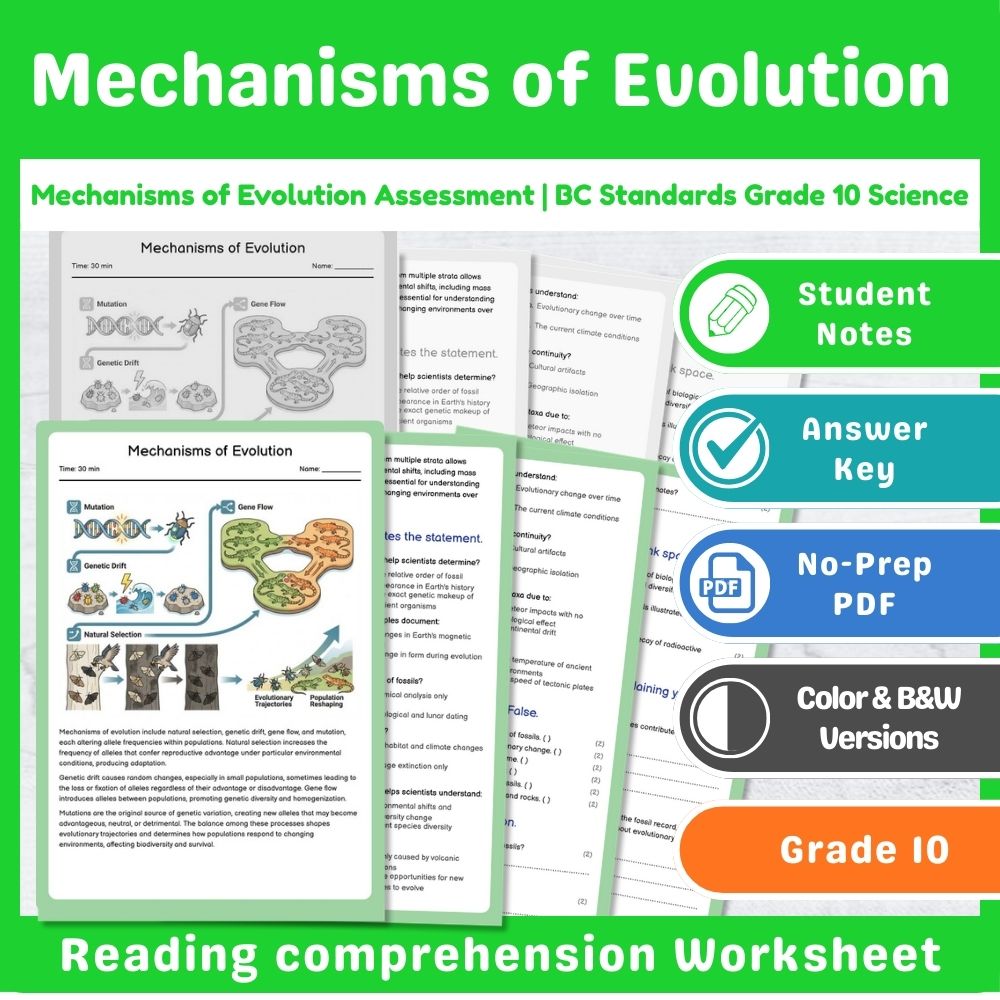
Mechanisms of Evolution Assessment | BC Standards Grade 10 Science
Created byPrism Point LearningLearning Objectives
- Describe the main mechanisms that drive evolutionary change.
- Understand how natural selection, genetic drift, gene flow, and mutation influence populations.
- Explain how these mechanisms interact and affect allele frequencies over time.
Instant download
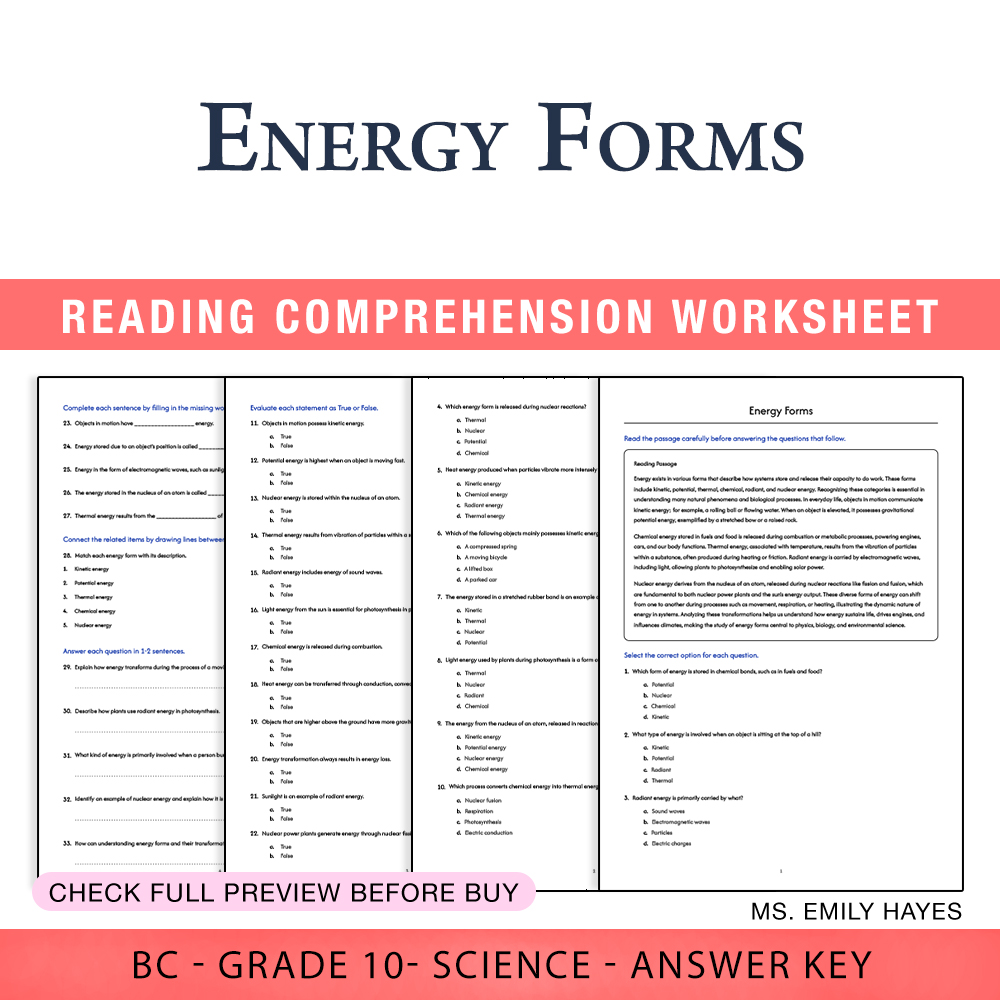
Grade 10 Science | Energy Forms Worksheet (PDF + Answer Key)
 Created byCopper Leaf Classroom
Learning Objectives
- Identify and describe different forms of energy such as kinetic, potential, thermal, chemical, radiant, and nuclear.
- Explain how energy transforms between different forms during natural and biological processes.
- Apply understanding of energy forms to analyze movement, respiration, and heating processes.
Also included in: Grade 10 Science BC – Energy, Thermodynamics & Ecosystems (PDF + Answer Key) +1 more
Instant download
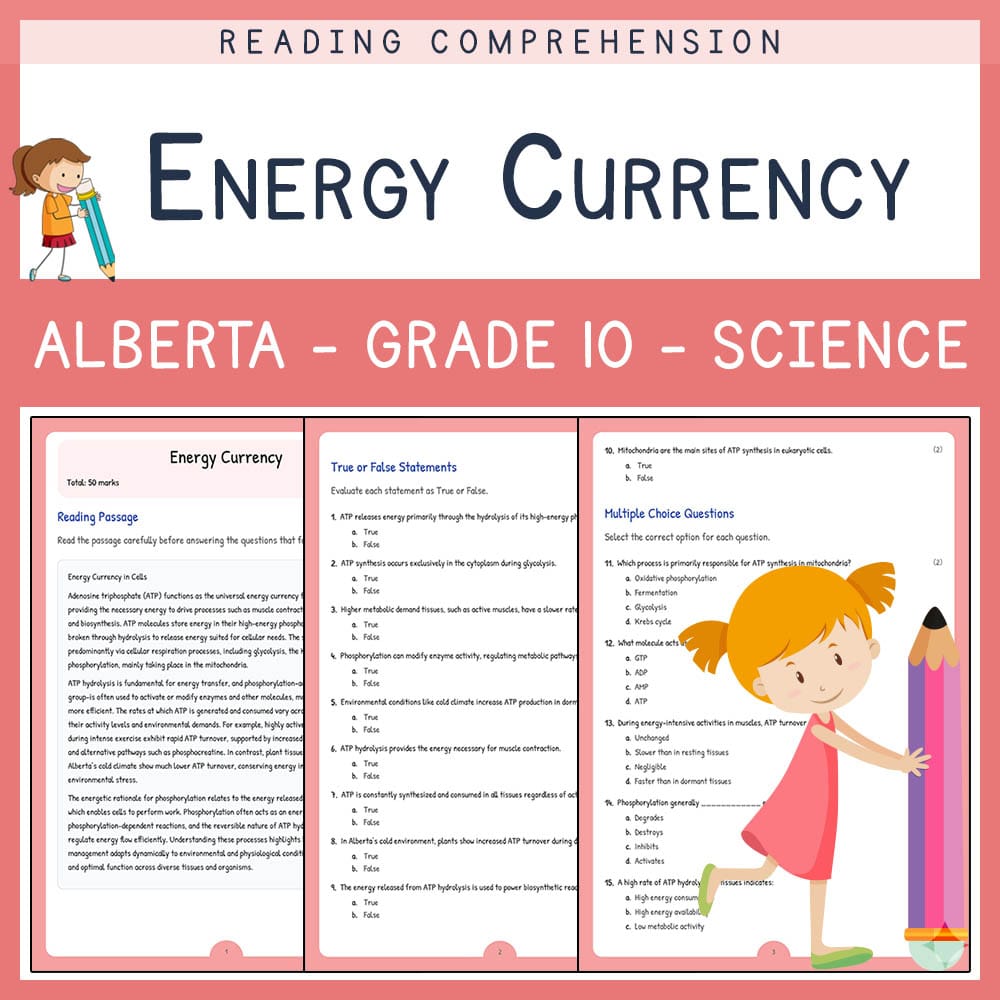
Grade 10 Science | Energy Currency Worksheet | Alberta Standards
Created byLumora LearningLearning Objectives
- Explain the role of ATP as the primary energy currency in cellular processes.
- Describe the mechanisms of ATP synthesis and hydrolysis.
- Understand how environmental factors influence ATP turnover across different tissues.
Also included in: Grade 10 Science | Cells and Systems Custom Bundle Worksheets | Alberta
Instant download
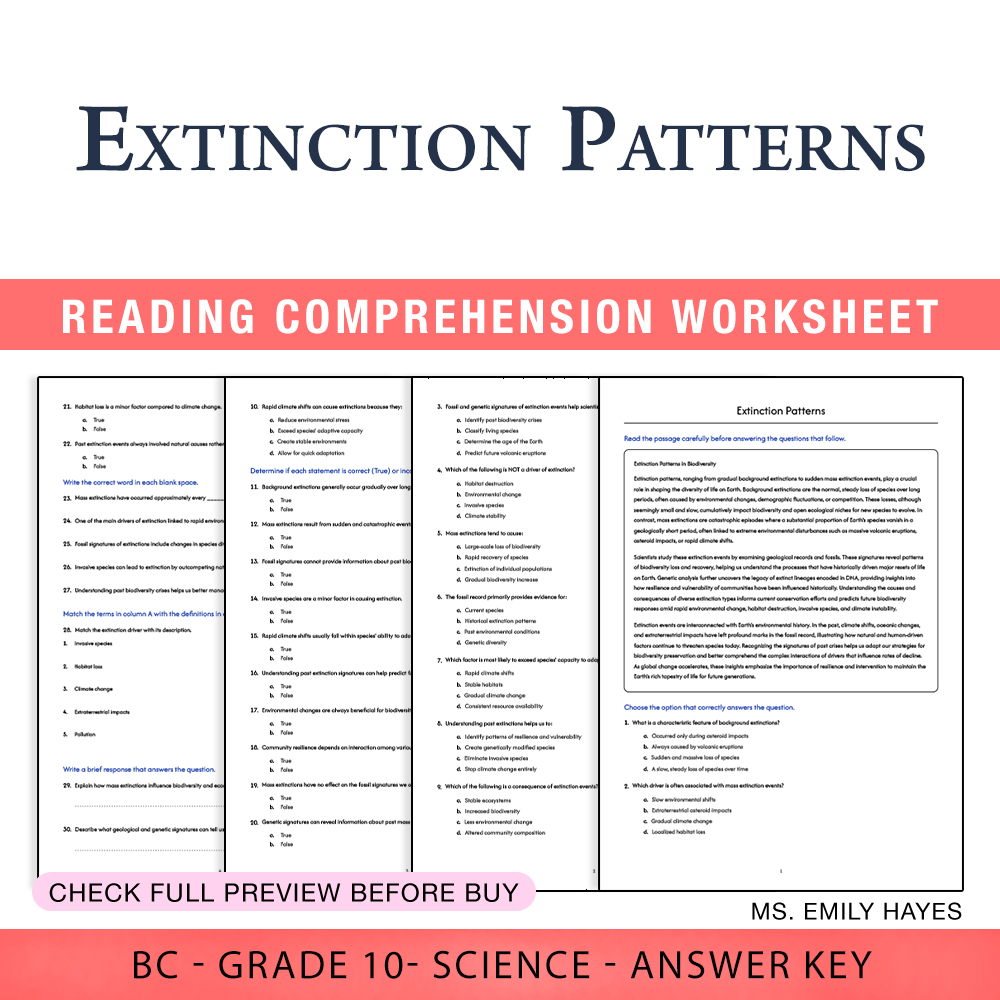
Grade 10 Science | Extinction Patterns Worksheet (PDF+ Answer Key)
Created byCopper Leaf ClassroomLearning Objectives
- Understand the different types of extinction patterns from background losses to mass extinctions.
- Identify major drivers of extinction such as environmental change, habitat loss, and invasive species.
- Analyze the signatures of past extinctions found in fossils and genetics.
Also included in: Grade 10 Science BC | Evolution, Biodiversity & Ecology (PDF + Answer Key) +1 more
Instant download
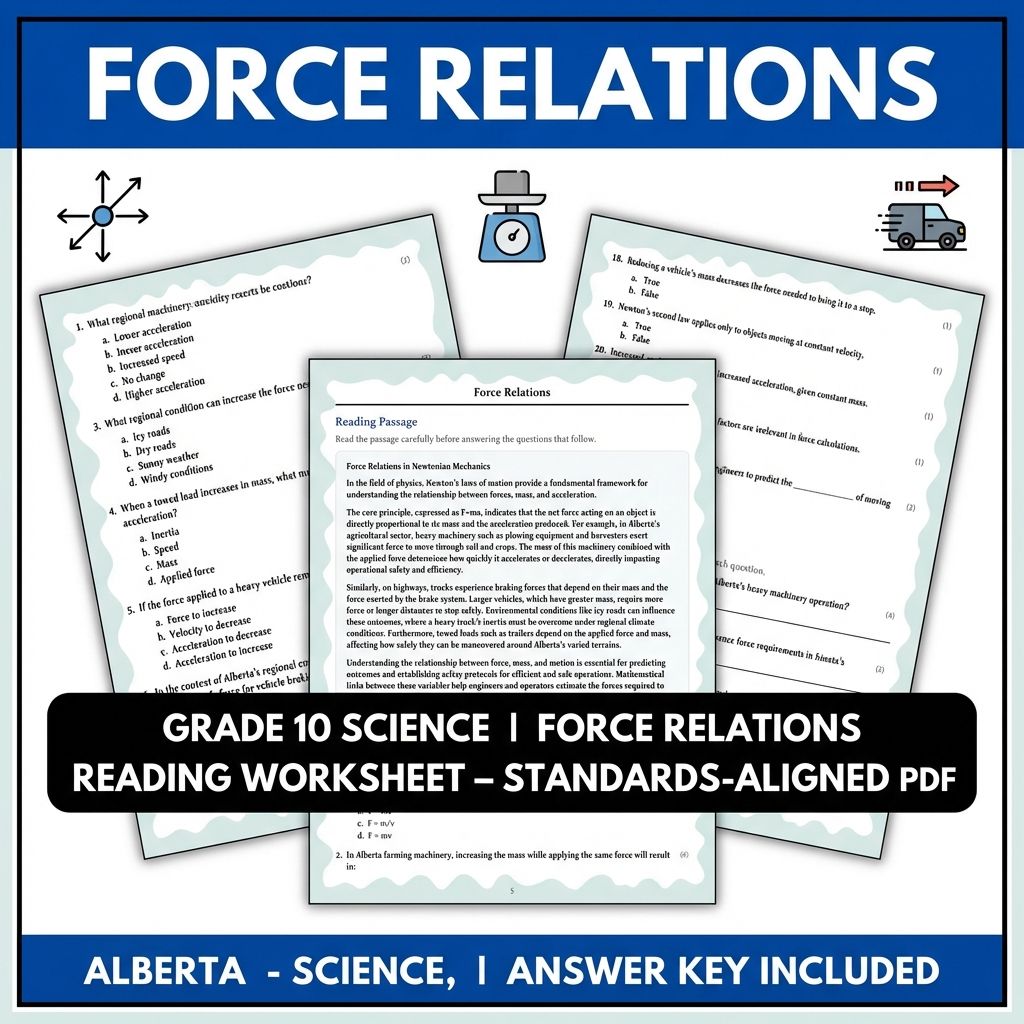
Grade 10 Science | Force Relations Reading Worksheet – Standards-Aligned PDF
JCreated byJ.S SheetsLearning Objectives
- Explain the relationship between force, mass, and acceleration according to Newton's laws.
- Describe how varying mass and applied forces affect motion outcomes in real-world Alberta examples.
- Analyze different scenarios involving forces such as heavy machinery, vehicle braking, and towed loads.
Also included in: Grade 10 Science Bundle | Energy, Circuits & Mechanics (Answer Keys Included) +1 more
Instant download
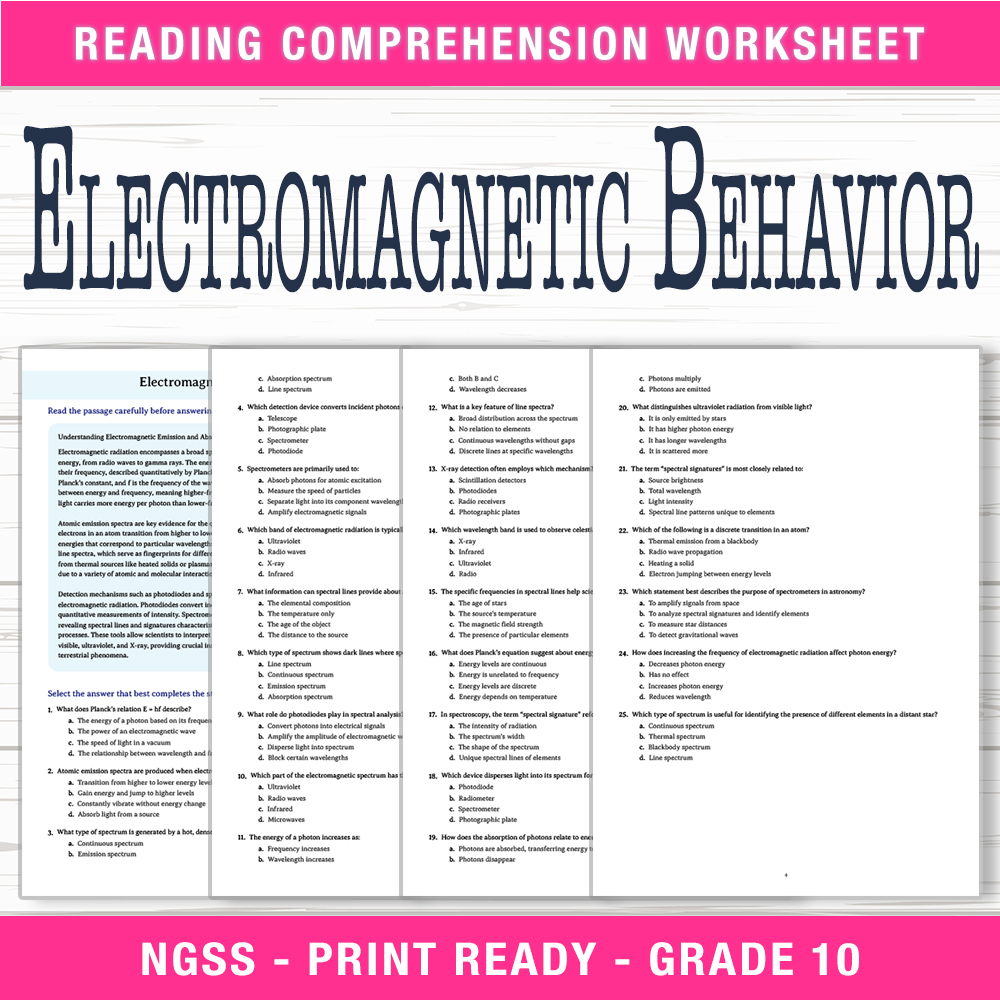
Grade 10 Science | Electromagnetic Behavior Worksheet (PDF + Answer Key)
 Created byRiverstone Classroom
Learning Objectives
- Explain the relationship between photon energy and electromagnetic radiation using Planck's equation E = hf.
- Describe how atomic emission spectra provide evidence for discrete energy transitions in atoms.
- Identify different detection mechanisms such as photodiodes and spectrometers and their applications in spectral analysis.
Also included in: Grade 10 Science Unit | Wave & Signal Transmission Worksheets
Instant download
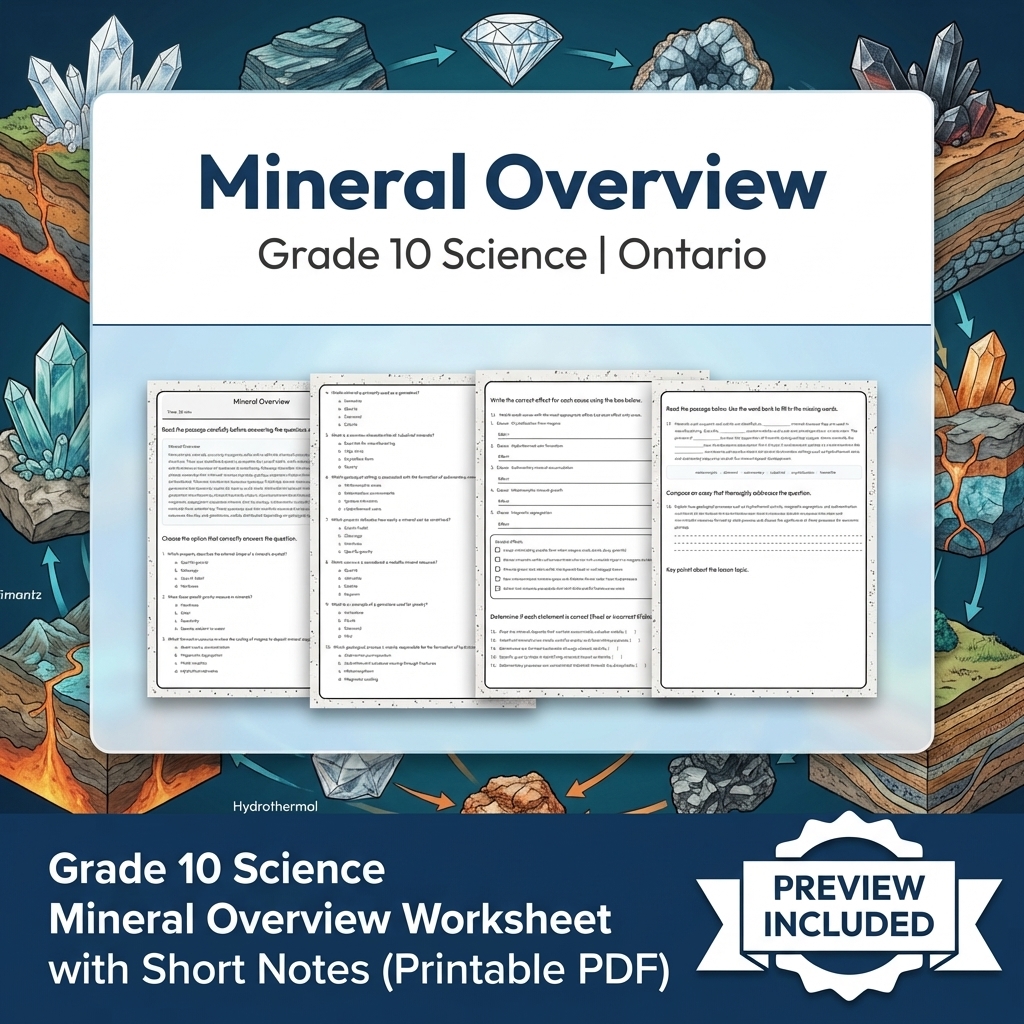
Grade 10 Science Mineral Overview Worksheet with Short Notes (Printable PDF)
Created byMeadowlark WorksheetsLearning Objectives
- Understand the properties used to classify minerals, including crystal habit, hardness, cleavage, and specific gravity.
- Differentiate between ores, industrial minerals, and gemstones based on their features and formation settings.
- Identify common geological processes such as hydrothermal veins, magmatic segregation, and sedimentary concentration that form mineral deposits.
Also included in: Grade 10 Science Lesson Group Bundle | Ontario Curriculum and STEM Topics +1 more
Instant download
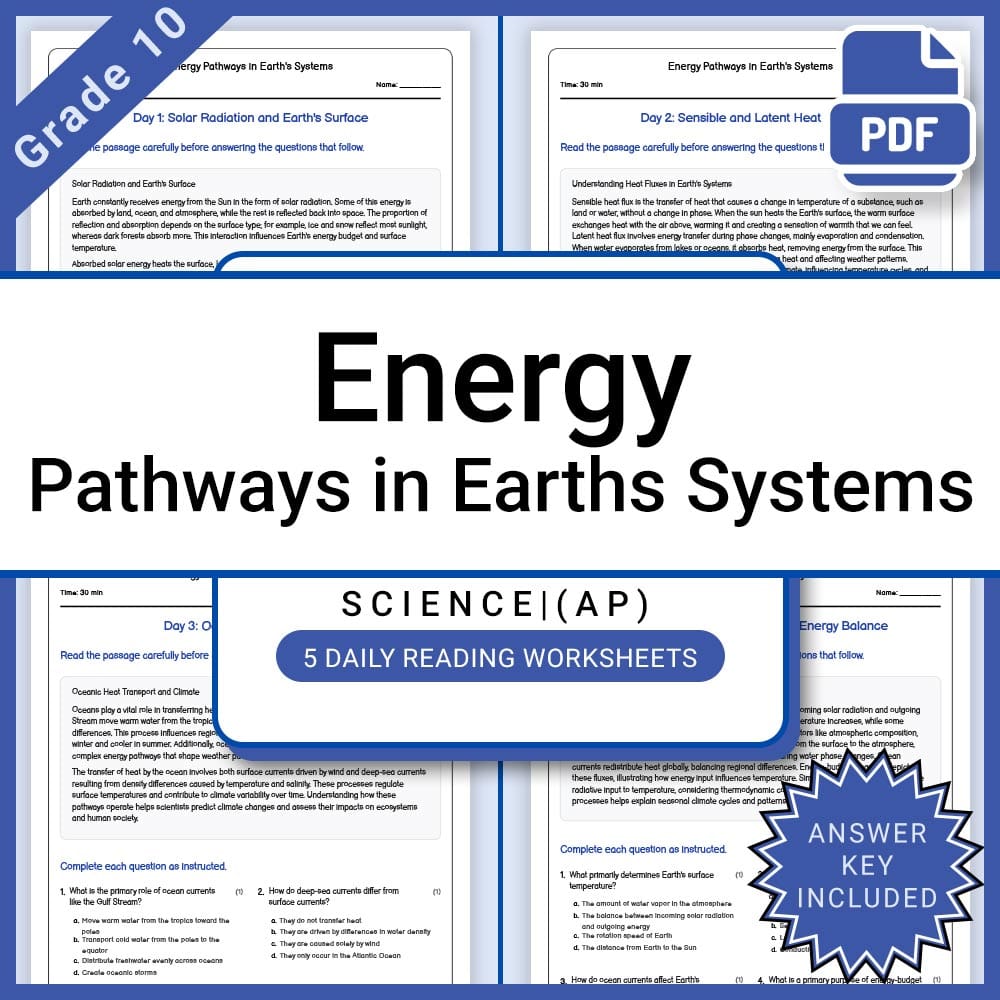
Grade 10 Science – Energy Pathways Daily Reading Worksheet + Answer Key
JCreated byJ.S SheetsLearning Objectives
- Understand how solar radiation is absorbed and reflected by Earth's surface.
- Identify different energy transfer processes such as sensible and latent heat fluxes.
- Analyze how oceanic heat transport affects regional climate variability.
Also included in: Grade 10 Science Lesson Bundle | AP Earth & Environmental Topics
Instant download
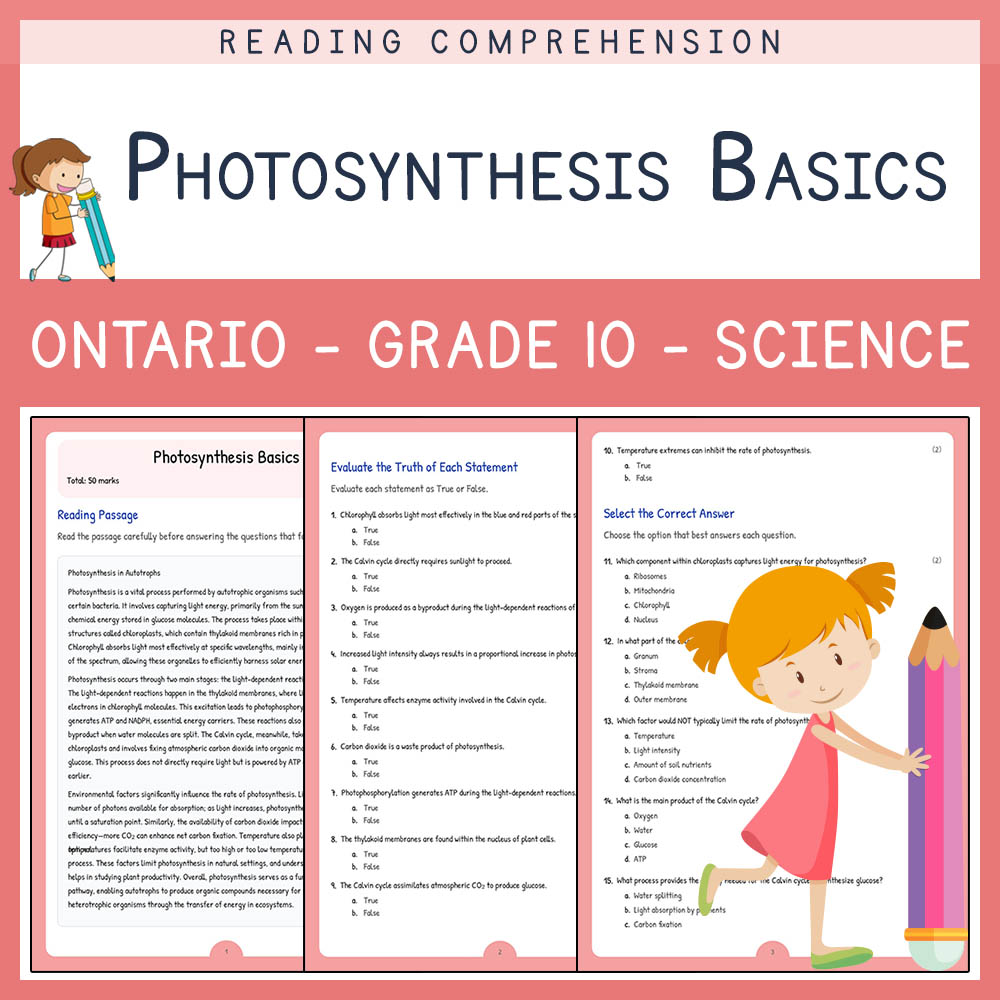
Grade 10 Science | Photosynthesis Basics Worksheet Elena | Ontario Standard
Created byLumora LearningLearning Objectives
- Explain the fundamental processes involved in photosynthesis, including light-dependent reactions and the Calvin cycle.
- Identify key structures such as chloroplasts, thylakoid membranes, and pigments involved in photosynthesis.
- Assess the environmental factors like light intensity, carbon dioxide levels, and temperature that influence photosynthetic efficiency.
Instant download

Grade 10 Science | Ecosystem Management Worksheet | TEKS Aligned
Created byLumora LearningLearning Objectives
- Understand the principles and strategies of ecosystem management.
- Identify human impacts on ecosystems and ways to mitigate them.
- Analyze ecological indicators used for monitoring ecosystem health.
Instant download
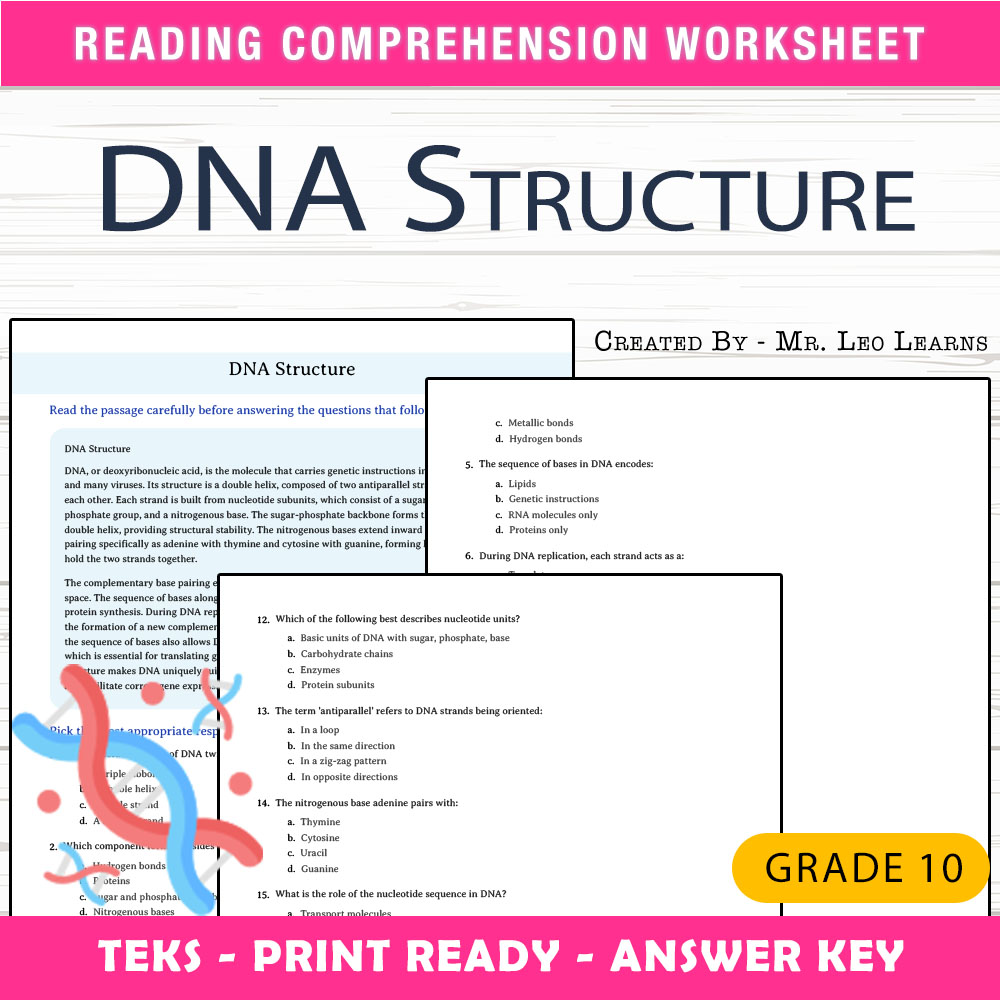
Grade 10 Science — DNA Structure Worksheet for Mastery
 Created byThe Resource Hub
Learning Objectives
- Describe the basic structure of DNA and its double helix formation.
- Identify the roles of nucleotides and the sugar-phosphate backbone in DNA.
- Explain specific base pairing rules and how they contribute to genetic information storage.
Also included in: Grade 10 Science DNA & Genetics Worksheet Bundle (Mastery & Reinforcement) +1 more
Instant download
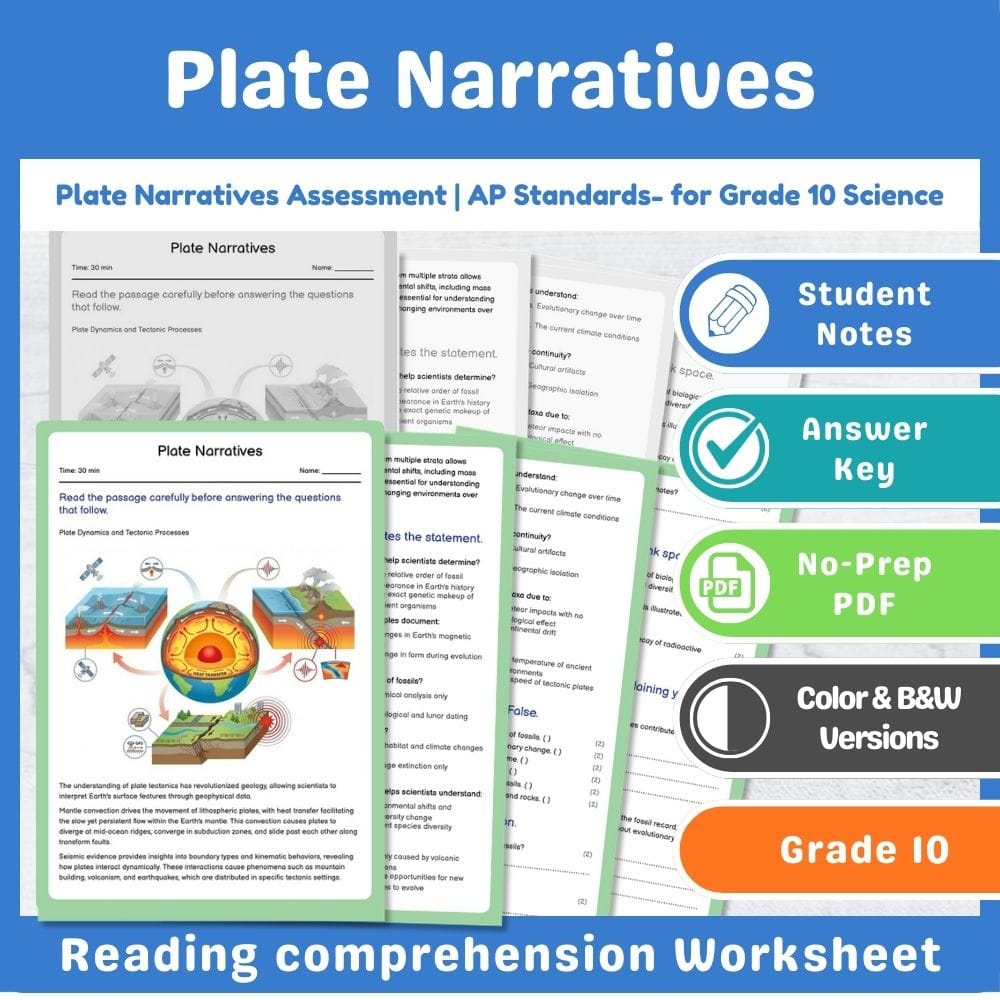
Plate Narratives Assessment | AP Standards-Aligned Evaluation for Grade 10 Science
Created byPrism Point LearningLearning Objectives
- Explain mechanisms of plate motion, mantle convection, and subduction.
- Interpret tectonic settings using maps, cross-sections, and seismic evidence.
- Connect plate interactions to mountain building, volcanism, and earthquake distribution.
Also included in: Lesson Bundle | Grade 10 Science Earth and Space Standards-Aligned
Instant download
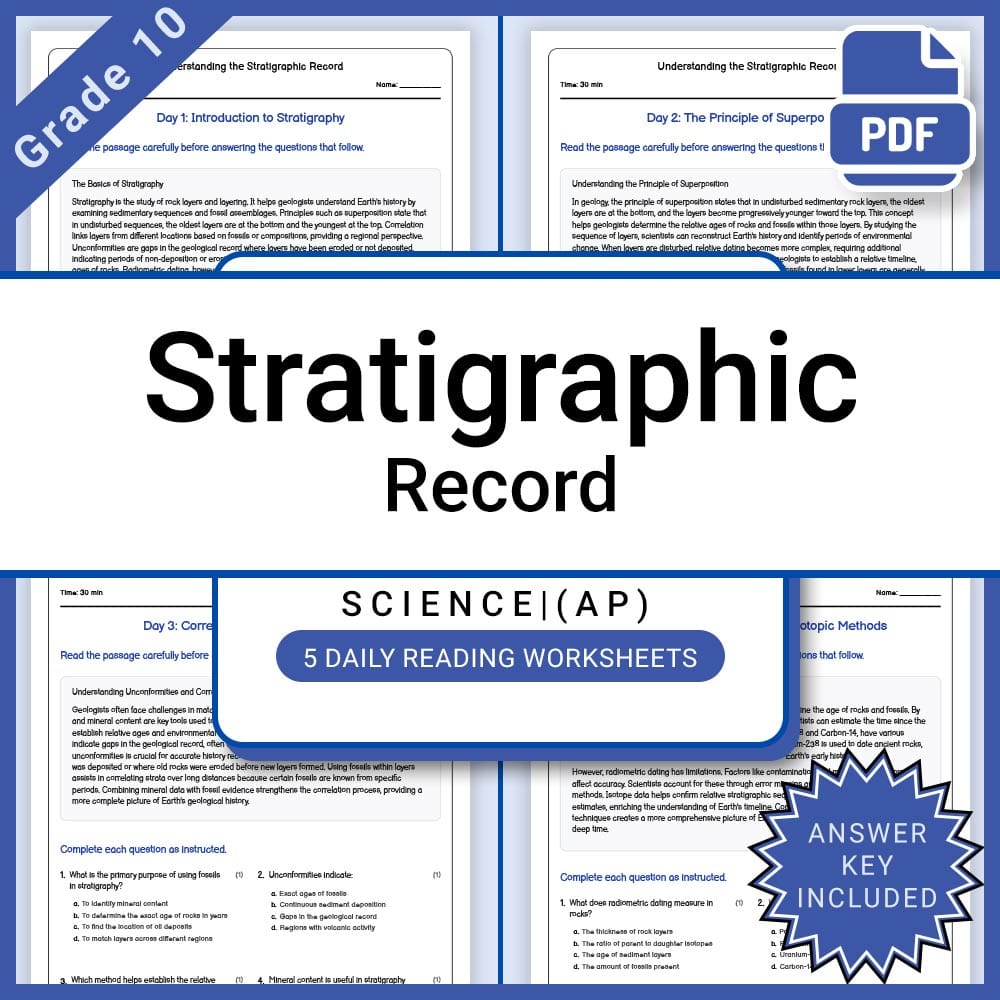
Grade 10 Science – Stratigraphic Record Daily Reading Worksheet + Answer Key
JCreated byJ.S SheetsLearning Objectives
- Understand key concepts related to Science
- Apply knowledge through practice questions
- Demonstrate comprehension of the material
Also included in: Grade 10 Science Lesson Bundle | AP Earth & Environmental Topics
Instant download
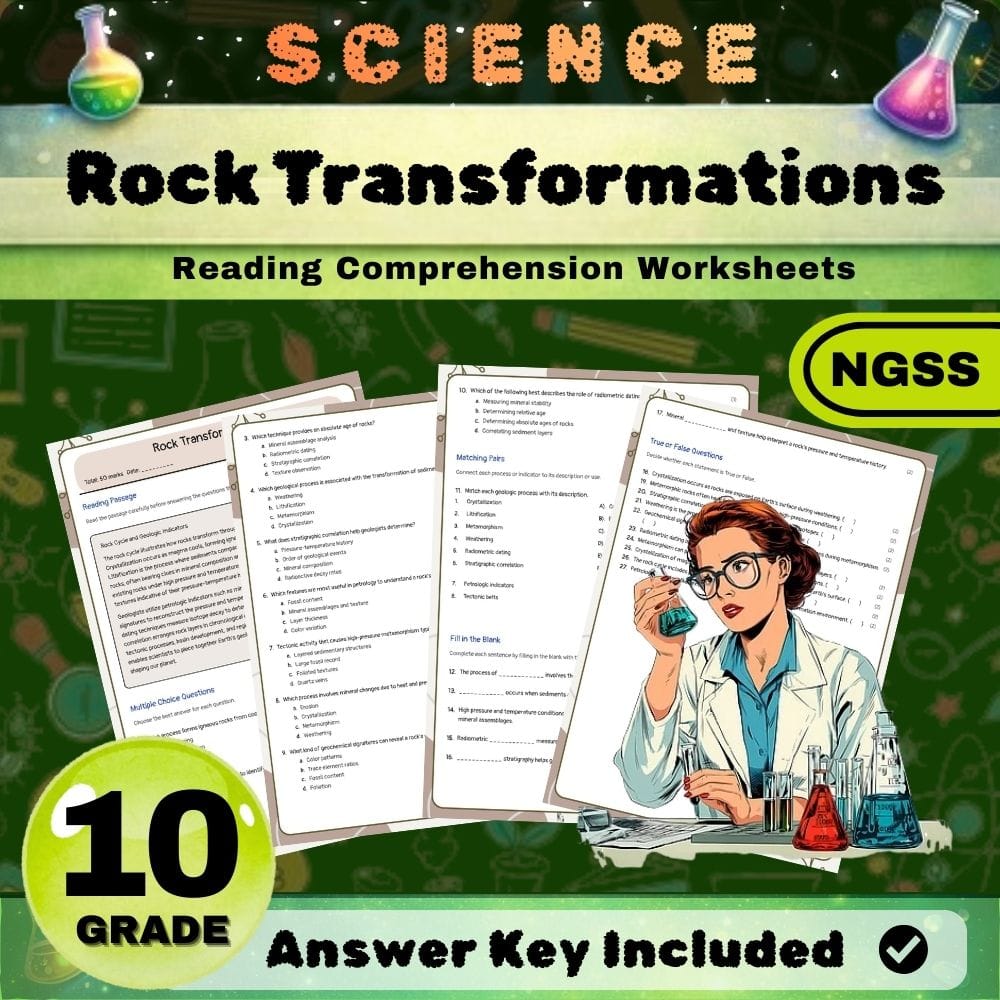
Grade 10 Science | Rock Transformations Worksheet (NGSS)
Created byMaple Path LearningLearning Objectives
- Explain the processes involved in the rock cycle, including crystallization, lithification, metamorphism, and weathering.
- Describe how geologic indicators such as mineral assemblages, texture, and signatures help determine pressure-temperature histories.
- Understand how radiometric dating and stratigraphic correlation are used to sequence igneous, sedimentary, and metamorphic events.
Also included in: Grade 10 Earth’s Systems Science Worksheets Bundle | NGSS +1 more
Instant download
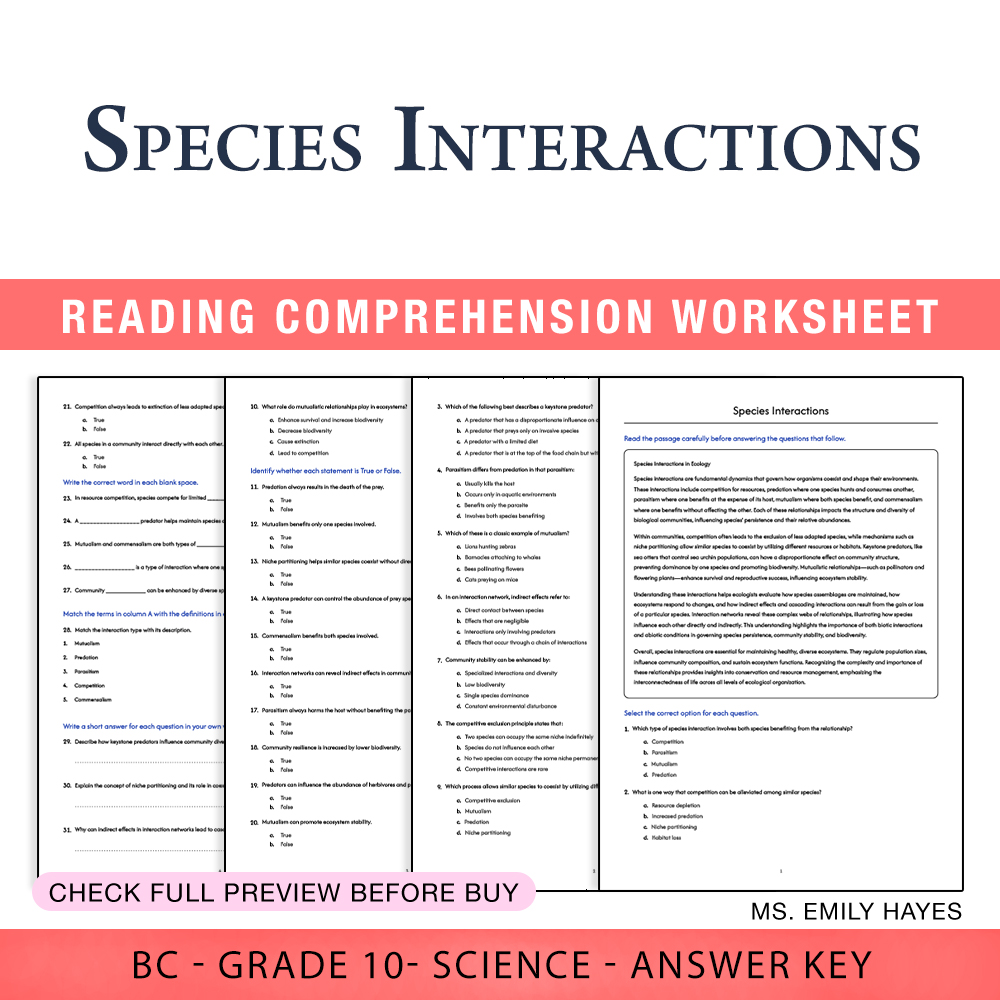
10th Grade Science | Species Interactions Worksheet (PDF+ Answer Key)
Created byCopper Leaf ClassroomLearning Objectives
- Describe different types of species interactions such as competition, predation, parasitism, mutualism, and commensalism.
- Explain how species interactions influence community structure and biodiversity across scales.
- Analyze how mechanisms like competitive exclusion and niche partitioning facilitate coexistence.
Also included in: Grade 10 Science BC | Evolution, Biodiversity & Ecology (PDF + Answer Key) +1 more
Instant download

Yield And Purity Worksheet Pack | Grade 10 Science Activities
Created byPrism Point LearningLearning Objectives
- Explain percent yield using actual and theoretical product amounts from a balanced chemical equation.
- Distinguish yield from purity and describe how impurities affect measured mass and stoichiometric calculations.
- Use purity to correct product mass and connect chemical calculations to realistic lab outcomes.
Also included in: Grade 10 Science Chemical Reactions & Atomic Structure Lesson Bundle | Bc +1 more
Instant download
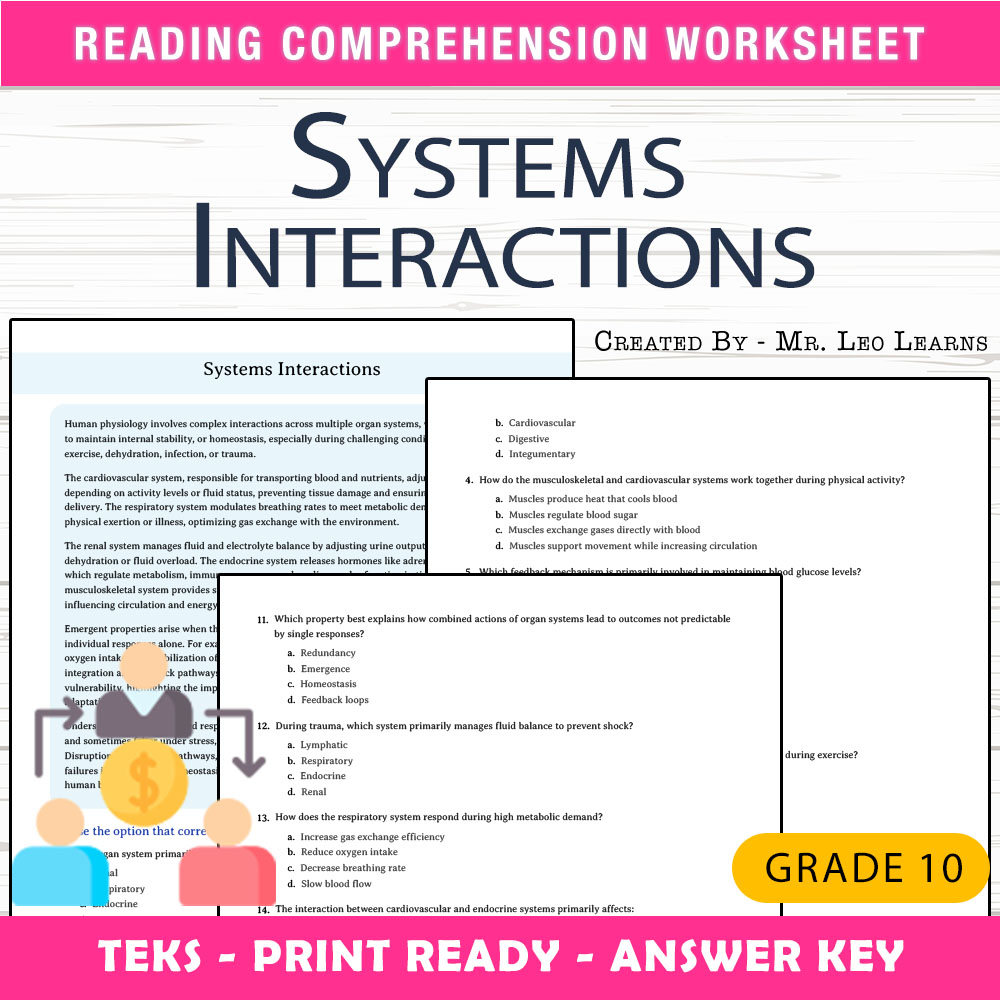
Grade 10 Science — Systems Interactions Worksheet for Mastering Body Systems
Created byThe Resource HubLearning Objectives
- Understand how multiple organ systems coordinate to maintain homeostasis during various challenges.
- Describe the roles of cardiovascular, respiratory, renal, endocrine, and musculoskeletal systems in response to stress.
- Explain how feedback mechanisms and emergent properties contribute to physiological resilience or vulnerability.
Also included in: Grade 10 Science Worksheet Bundle – Cellular, Genetics & Ecology Mastery
Instant download
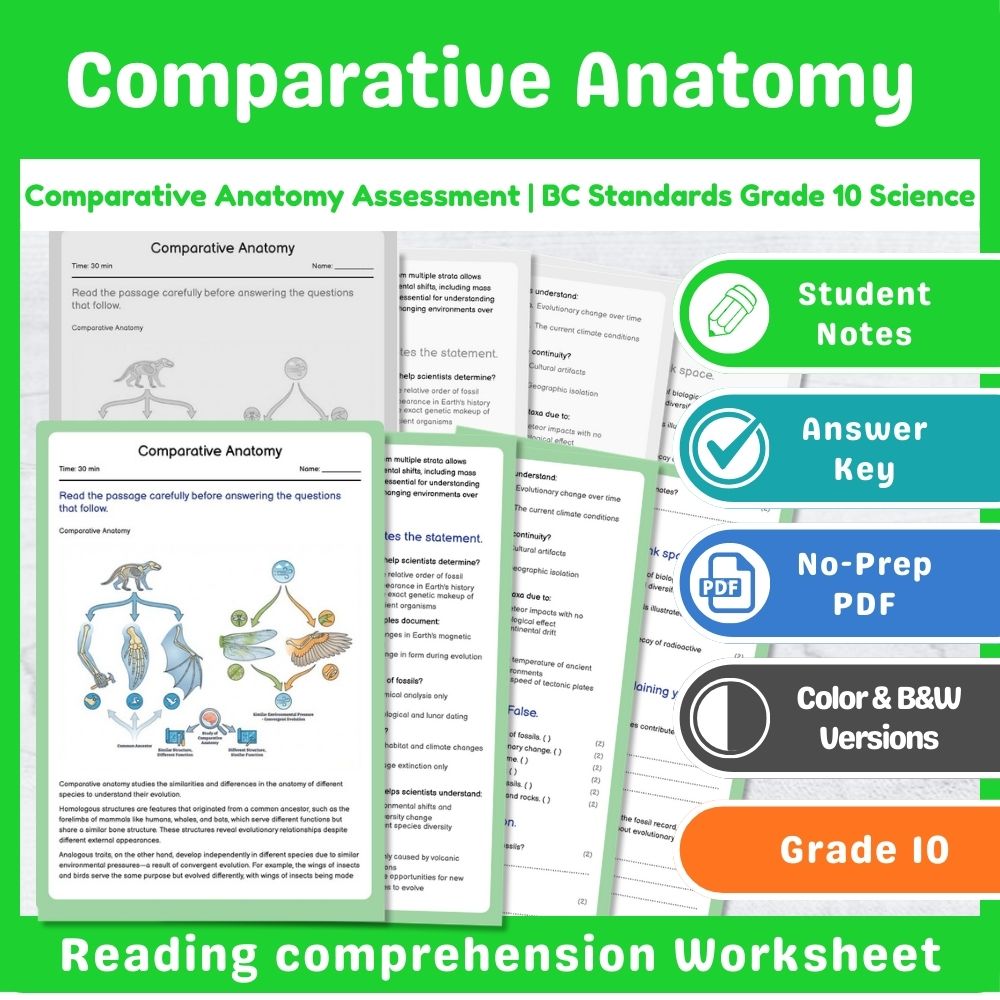
Comparative Anatomy Assessment | BC Standards Grade 10 Science
Created byPrism Point LearningLearning Objectives
- Understand the concepts of homologous and analogous structures and their significance in evolution.
- Identify vestigial organs and their implications for evolutionary history.
- Compare anatomical features across different organisms to infer phylogenetic relationships.
Instant download

Grade 10 Science Systems Analysis Worksheet with Short Notes (Printable PDF)
Created byMeadowlark WorksheetsLearning Objectives
- Understand how to identify subsystem interactions within engineering systems.
- Apply systems thinking concepts such as boundary definitions and emergent behaviors.
- Model and analyze energy, material, and information flows in complex systems.
Also included in: Grade 10 Science | Engineering Design Unit Bundle – NGSS Classroom Worksheets +1 more
Instant download
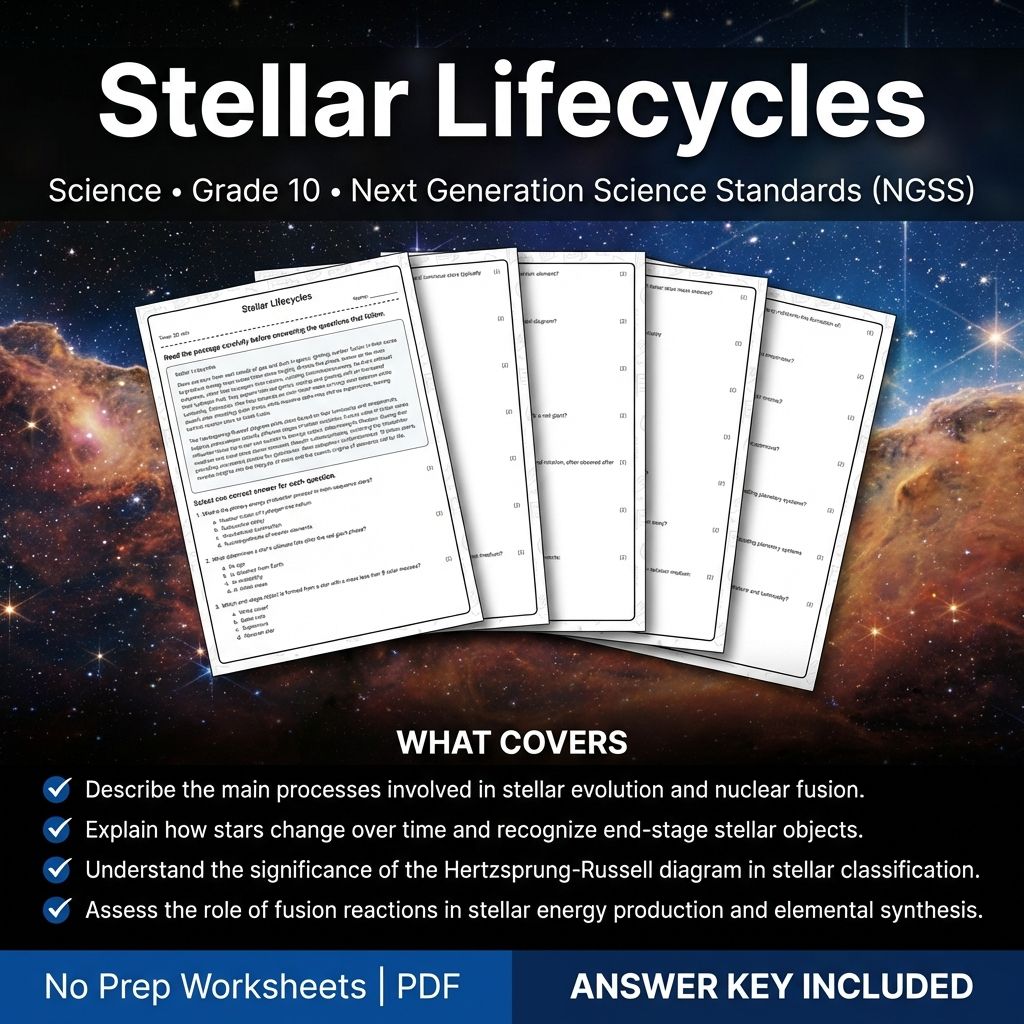
Grade 10 Science Worksheet| Stellar Lifecycles for Classroom Practice+Answer Key
 Created byCoral Reef Learning
Learning Objectives
- Describe the main processes involved in stellar evolution and nuclear fusion.
- Explain how stars change over time and recognize end-stage stellar objects.
- Understand the significance of the Hertzsprung-Russell diagram in stellar classification.
Also included in: Grade 10 Science Unit Worksheet Bundle | Space, Geology & Astronomy Practice +1 more
Instant download

Grade 10 Science | Light and Carbon Worksheet | TEKS Aligned
Created byLumora LearningLearning Objectives
- Describe the processes involved in light reactions of photosynthesis.
- Explain how the Calvin cycle fixes carbon dioxide into sugars.
- Compare the roles of chlorophyll, accessory pigments, and enzymes like RuBisCO.
Also included in: Grade 10 Science | Metabolism & Energy Processes Lesson Bundle | TEKS Aligned +1 more
Instant download
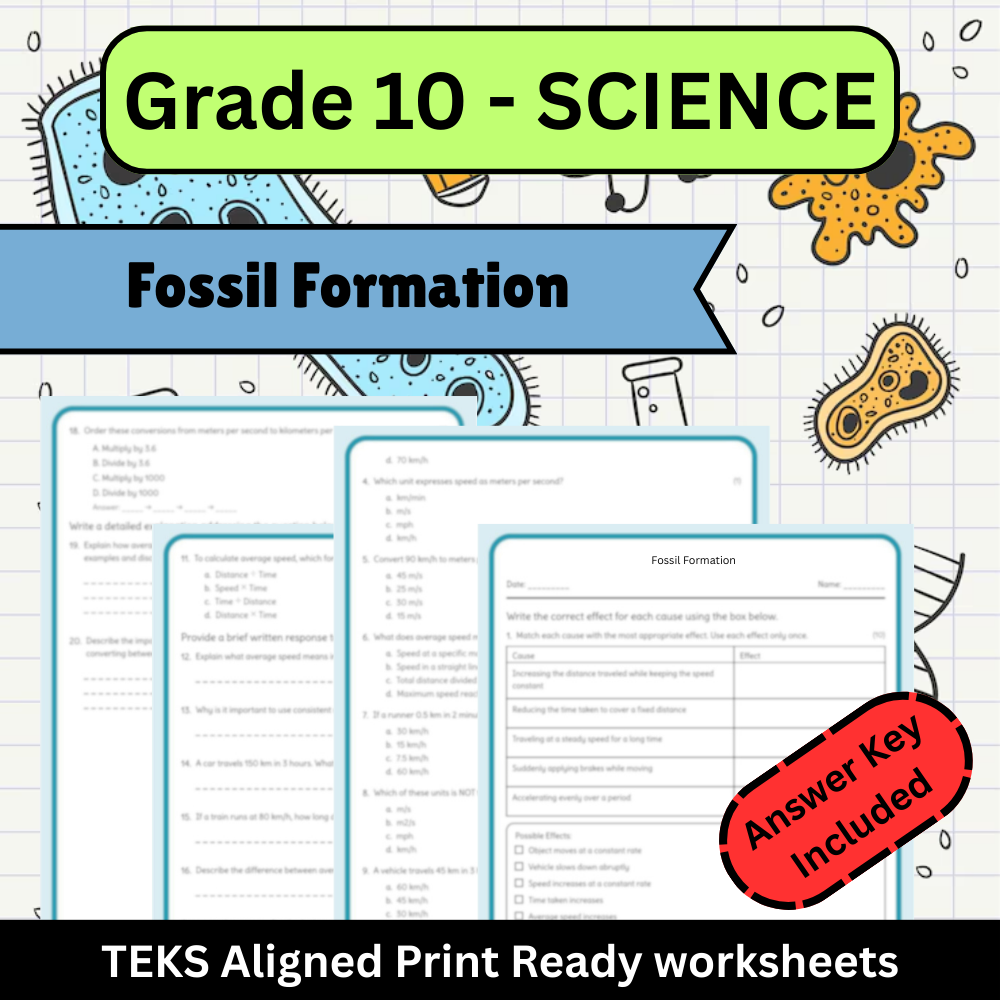
Grade 10 Science – Fossil Formation Worksheet (Answer Key) | TEKS Standards
Created byBright Mind ResourcesLearning Objectives
- Understand how fossils form in sedimentary rocks.
- Identify different methods used for dating fossils and their significance.
- Explain the importance of fossil evidence in studying Earth's biological history.
Also included in: Grade 10 Science | Evolution & Heredity Unit Worksheet Bundle (TEKS Aligned) +5 more
Instant download
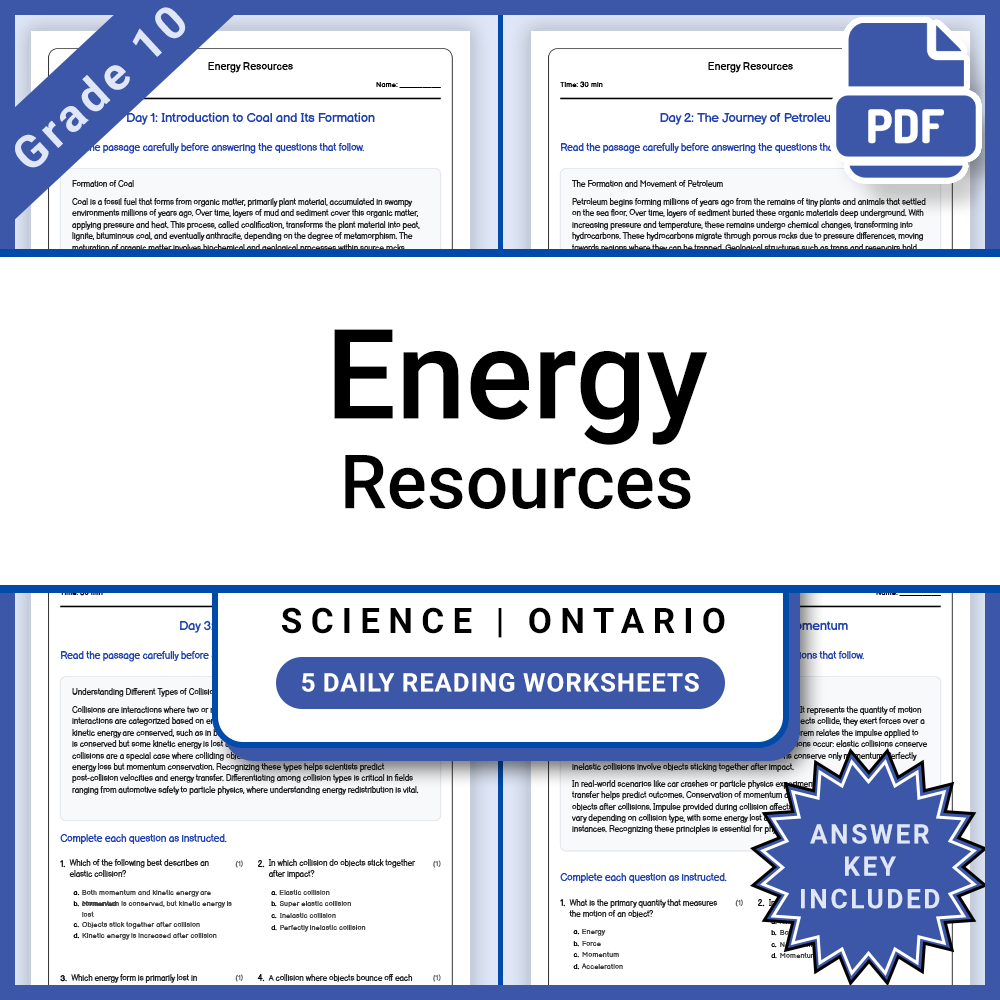
Grade 10 Science – Energy Resources Daily Reading Worksheet + Answer Key
JCreated byJ.S SheetsLearning Objectives
- Understand how coal forms from organic matter over geological time.
- Describe the geological processes involved in coal formation.
- Identify key concepts such as source rock, maturation, migration, reservoir, and trap in relation to energy resources.
Also included in: Grade 10 Science Lesson Bundle | Earth and Resource Management +1 more
Instant download
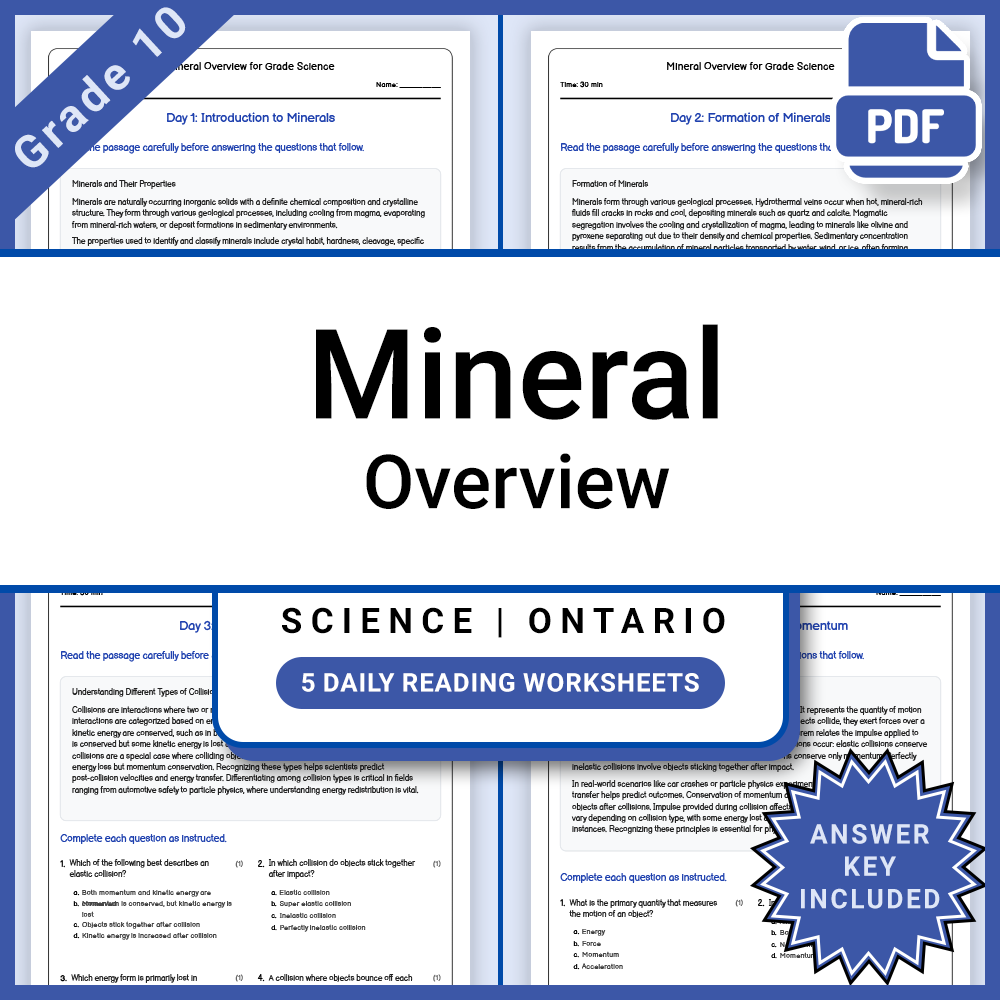
Grade 10 Science – Mineral Overview Daily Reading Worksheet + Answer Key
JCreated byJ.S SheetsLearning Objectives
- Understand the basic properties and classifications of minerals.
- Identify different mineral formation environments.
- Differentiate between ores, industrial minerals, and gemstones.
Also included in: Grade 10 Science Lesson Bundle | Earth and Resource Management +1 more
Instant download
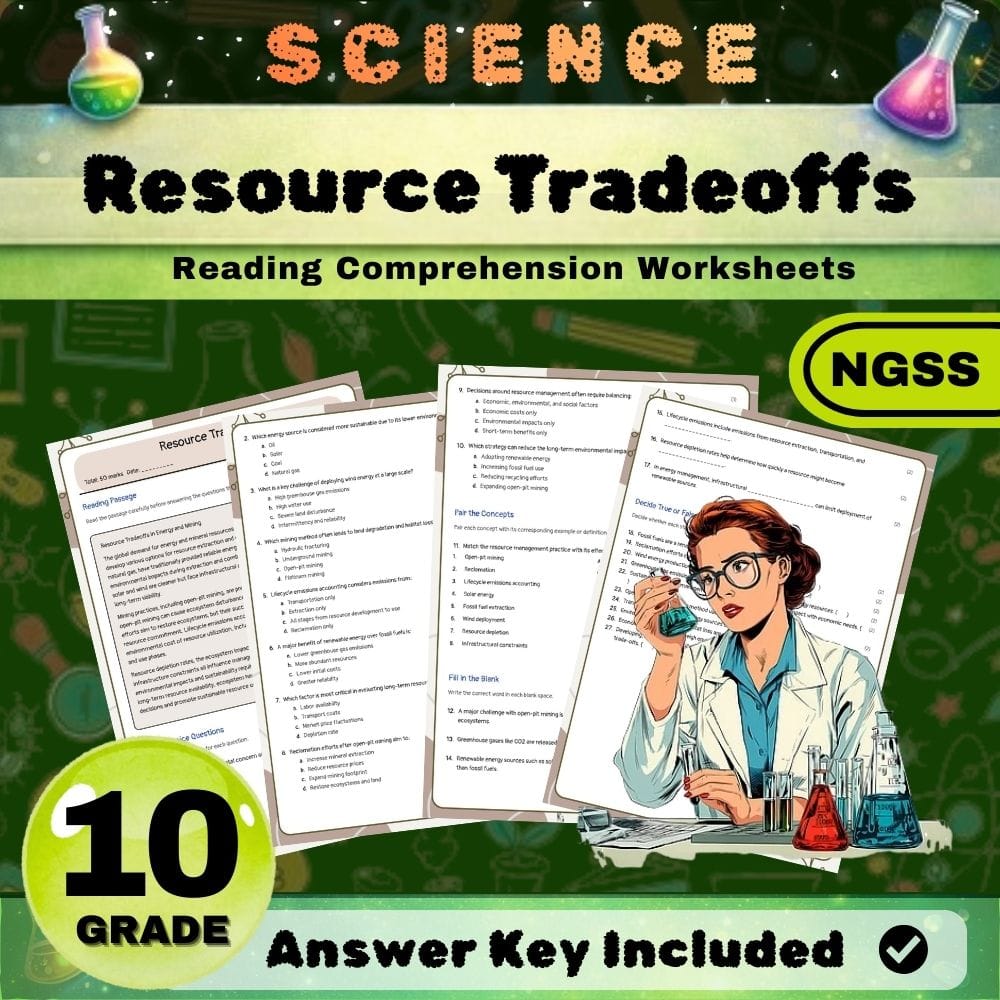
Grade 10 Science | Resource Tradeoffs NGSS Worksheet (PDF)
Created byMaple Path LearningLearning Objectives
- Compare the environmental, economic, and sustainability trade-offs of different energy and mineral resource development strategies.
- Evaluate the long-term impacts of resource extraction methods, including fossil fuels and renewable energy sources.
- Analyze case studies involving mining reclamation, emissions accounting, and resource management.
Also included in: Grade 10 Science Earth and Human Activity Lesson Bundle | NGSS +1 more
Instant download
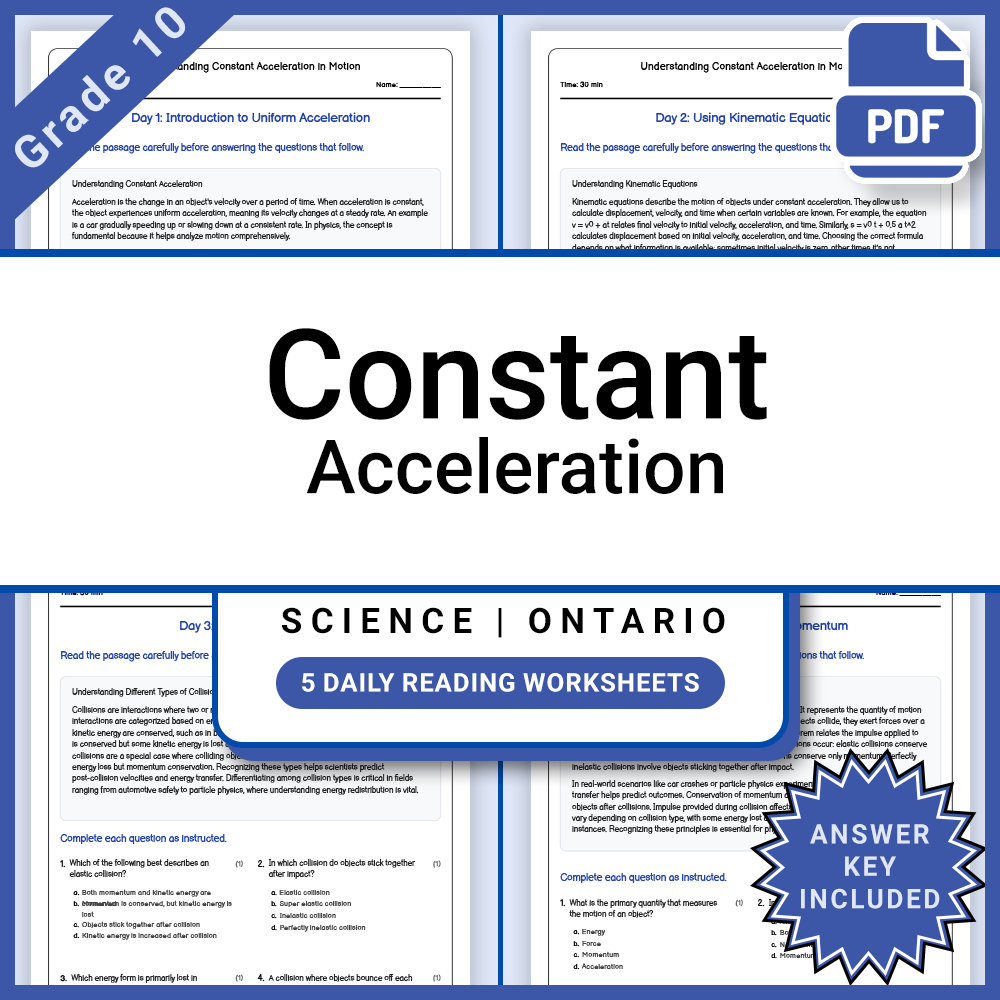
Grade 10 Science – Constant Acceleration Daily Reading Worksheet + Answer Key
JCreated byJ.S SheetsLearning Objectives
- Define constant or uniform acceleration and identify it in motion scenarios.
- Apply basic kinematic formulas to problems involving uniform acceleration.
- Interpret negative acceleration and what it indicates about object motion.
Also included in: Grade 10 Science Lesson Bundle | Physics and Motion Ontario Framework +1 more
Instant download

Grade 10 Science | Systems Trade Interactions Worksheet (PDF)
Created byEvergreen Desk EducationLearning Objectives
- Explain how a design can be modeled as a system with interacting components and dependencies.
- Identify trade-offs that arise from system interactions, constraints, and feedback.
- Use cause-and-effect reasoning to predict how changes in one component affect other outcomes.
Also included in: Grade 10 Engineering Design Trade-Offs Science Lesson Bundle: General +1 more
Instant download
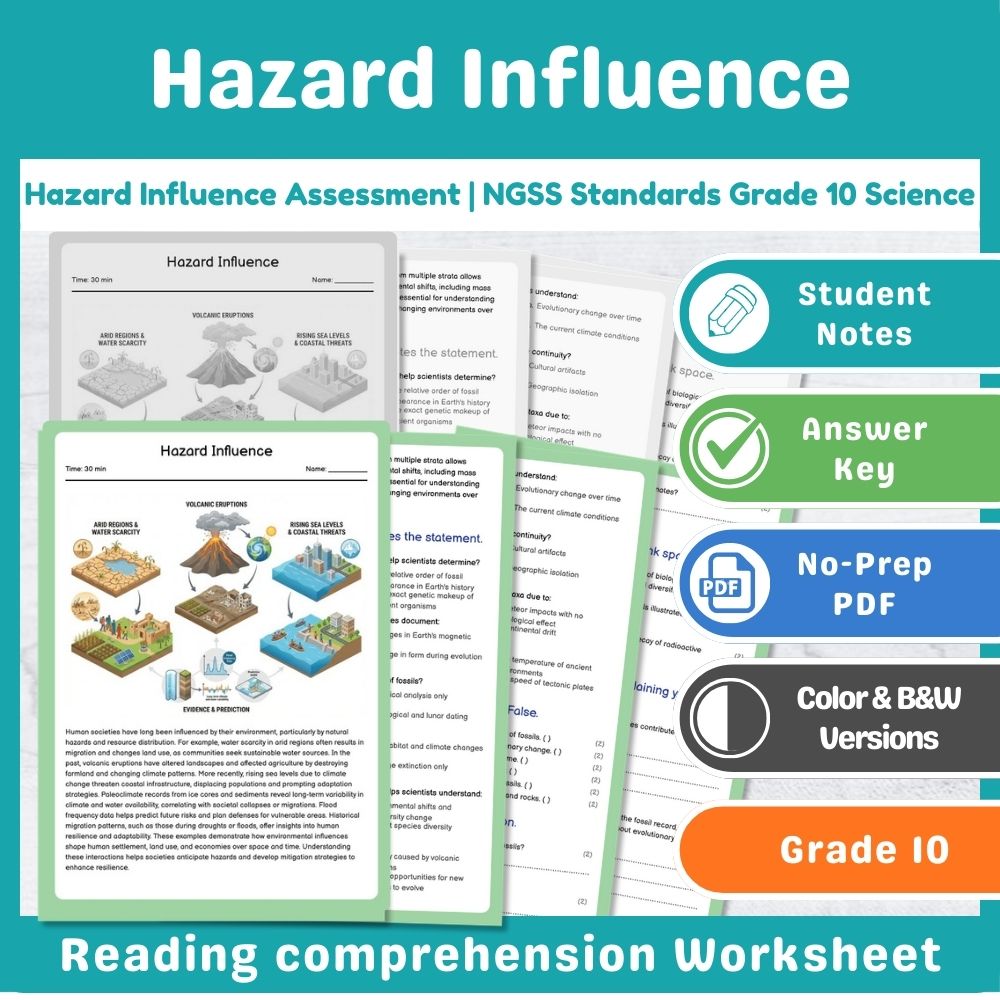
Hazard Influence Assessment | NGSS Standards Grade 10 Science
Created byPrism Point LearningLearning Objectives
- Understand how freshwater availability, natural hazards, and climate variability impact human settlement and land use.
- Analyze examples such as water scarcity, volcanic eruptions, and sea-level rise to evaluate societal responses.
- Interpret paleoclimate records, flood data, and migration patterns to recognize links between environmental factors and society.
Also included in: Grade 10 Science Resource Tradeoffs Assessment | NGSS Standards-Aligned
Instant download

Grade 10 Science | Heat Transfer Worksheet with Short Notes (Printable PDF)
Created byMeadowlark WorksheetsLearning Objectives
- Understand the mechanisms of heat transfer: conduction, convection, and radiation.
- Identify factors affecting heat transfer rates and material properties.
- Describe real-world examples of heat transfer processes in nature and engineering.
Also included in: Grade 10 Science Lesson Bundle | Energy & Thermodynamics Worksheets +1 more
Instant download
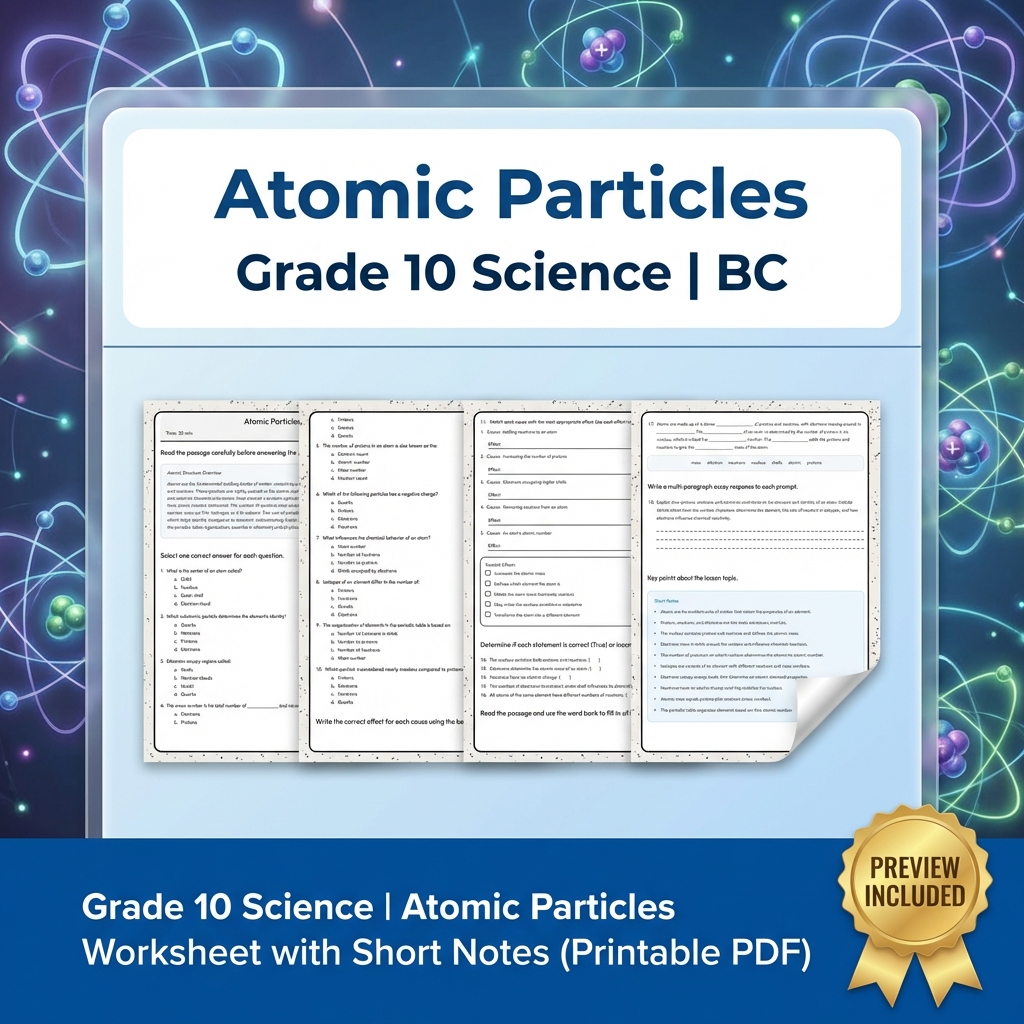
Grade 10 Science | Atomic Particles Worksheet with Short Notes (Printable PDF)
Created byMeadowlark WorksheetsLearning Objectives
- Understand the internal structure of atoms including protons, neutrons, and electrons.
- Explain how the number of protons determines the element.
- Describe how electrons occupy shells and influence chemical behavior.
Also included in: Grade 10 Science Lesson Bundle | BC Framework Worksheets Pack +1 more
Instant download
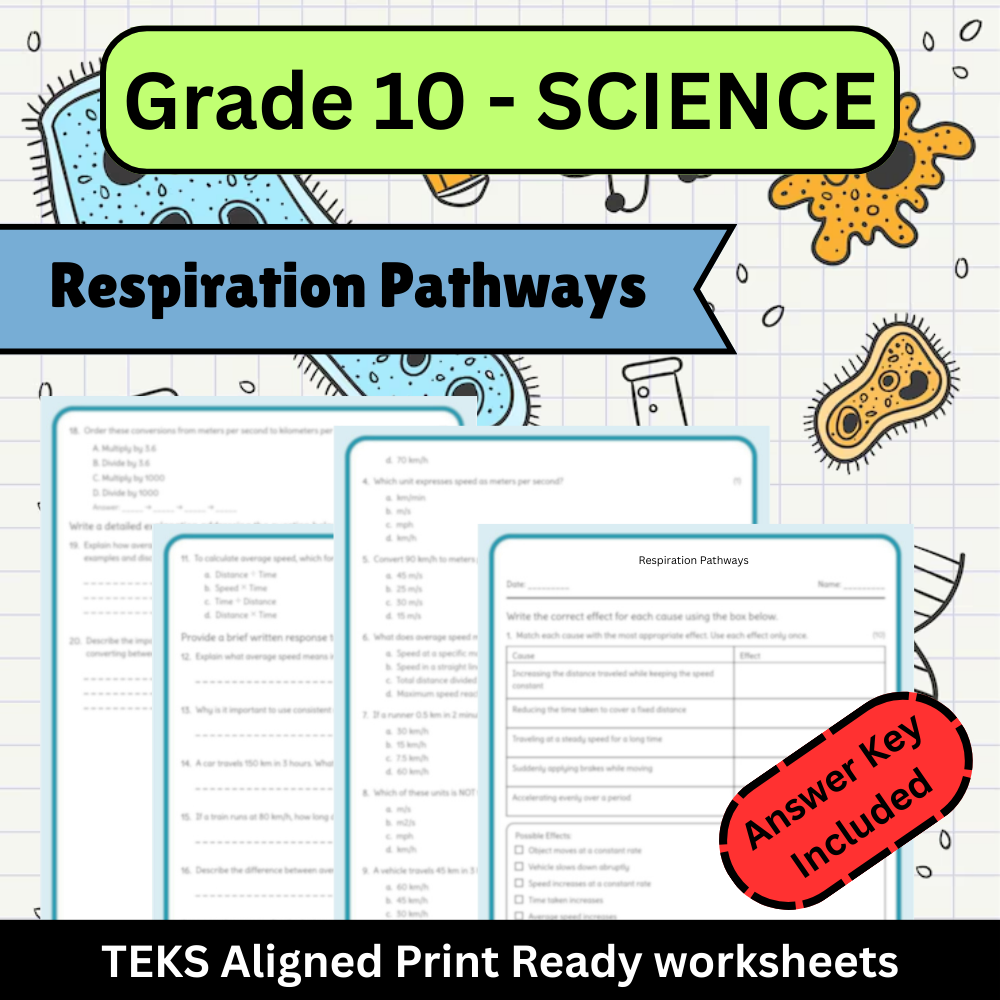
Grade 10 Science | Respiration Pathways Worksheet + Answer Key (TEKS Aligned)
Created byBright Mind ResourcesLearning Objectives
- Describe the processes involved in cellular respiration, including glycolysis, the citric acid cycle, and the electron transport chain.
- Explain how oxygen functions as the final electron acceptor in aerobic respiration.
- Identify where in the cell these processes occur and what energy molecules are produced.
Also included in: Grade 10 Science Unit Bundle – Photosynthesis, Respiration & Energy TEKS +5 more
Instant download
About Grade 10 Science Worksheets
Find Science worksheets built for Grade 10. All 7,038 cover core skills, practice, and review, each an instant PDF download.
Every worksheet on MyTeachingSheets is created by independent teacher-authors and reviewed before publication. All resources download as printable PDFs for classroom, homework, or at-home practice, and many include answer keys. Preview any worksheet free before buying.