
Grade 10 Science Worksheets
7,038 worksheets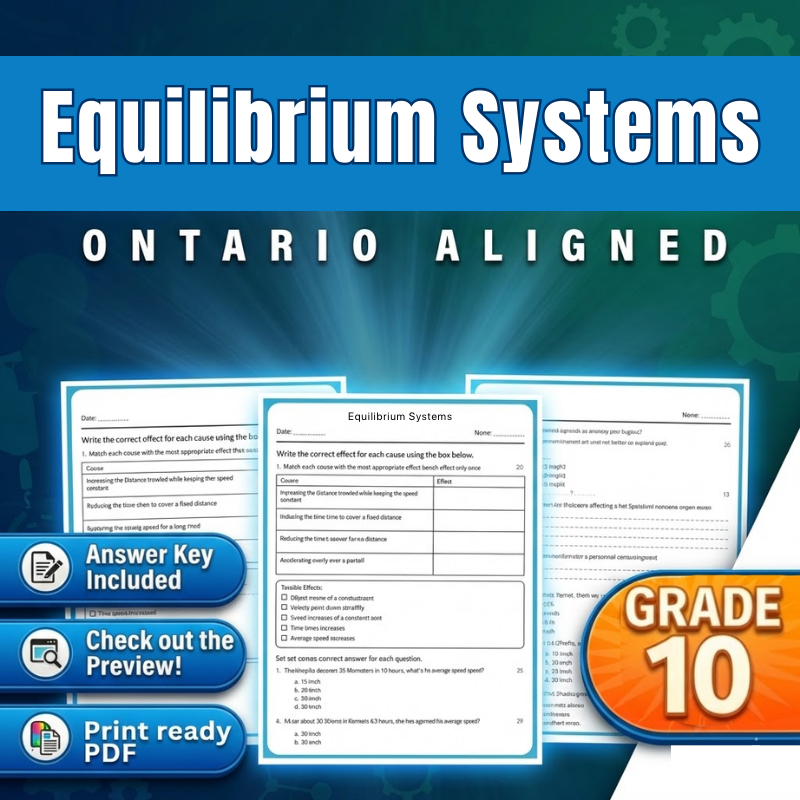
Grade 10 Science | Equilibrium Systems Worksheet (PDF) – Ontario Standards
 Created byBright Mind Resources
Learning Objectives
- Understand the conditions for static equilibrium through vector analysis of forces and moments.
- Apply the equilibrium criteria ΣF = 0 to various supported and suspended bodies.
- Interpret equilibrium as the absence of net acceleration rather than the lack of individual forces.
Instant download
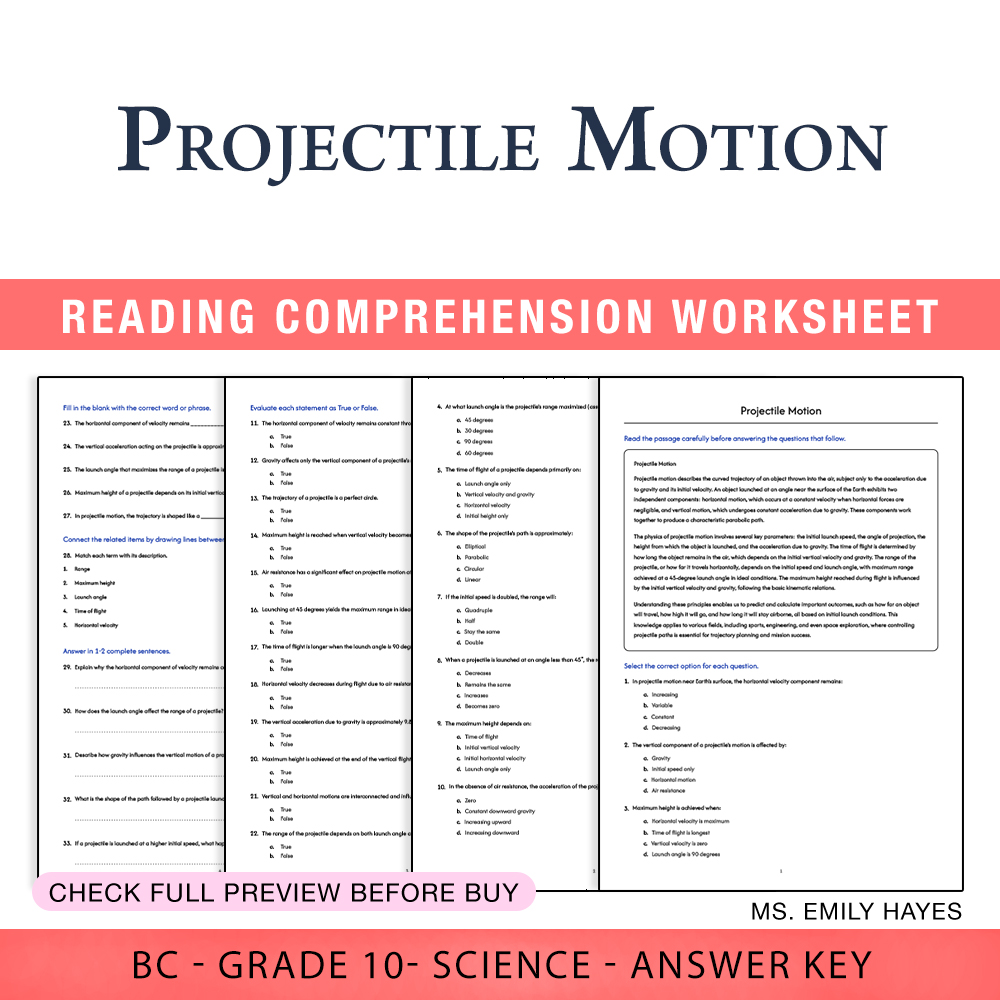
10th Grade Science | Projectile Motion Worksheet (PDF+ Answer Key)
 Created byCopper Leaf Classroom
Learning Objectives
- Understand the components of projectile motion and their independence
- Explain how initial velocity and launch angle influence the range and height
- Apply kinematic equations to solve problems involving projectile motion
Also included in: Grade 10 Science BC | Forces, Motion & Fields Worksheets (PDF + Answer Key) +1 more
Instant download
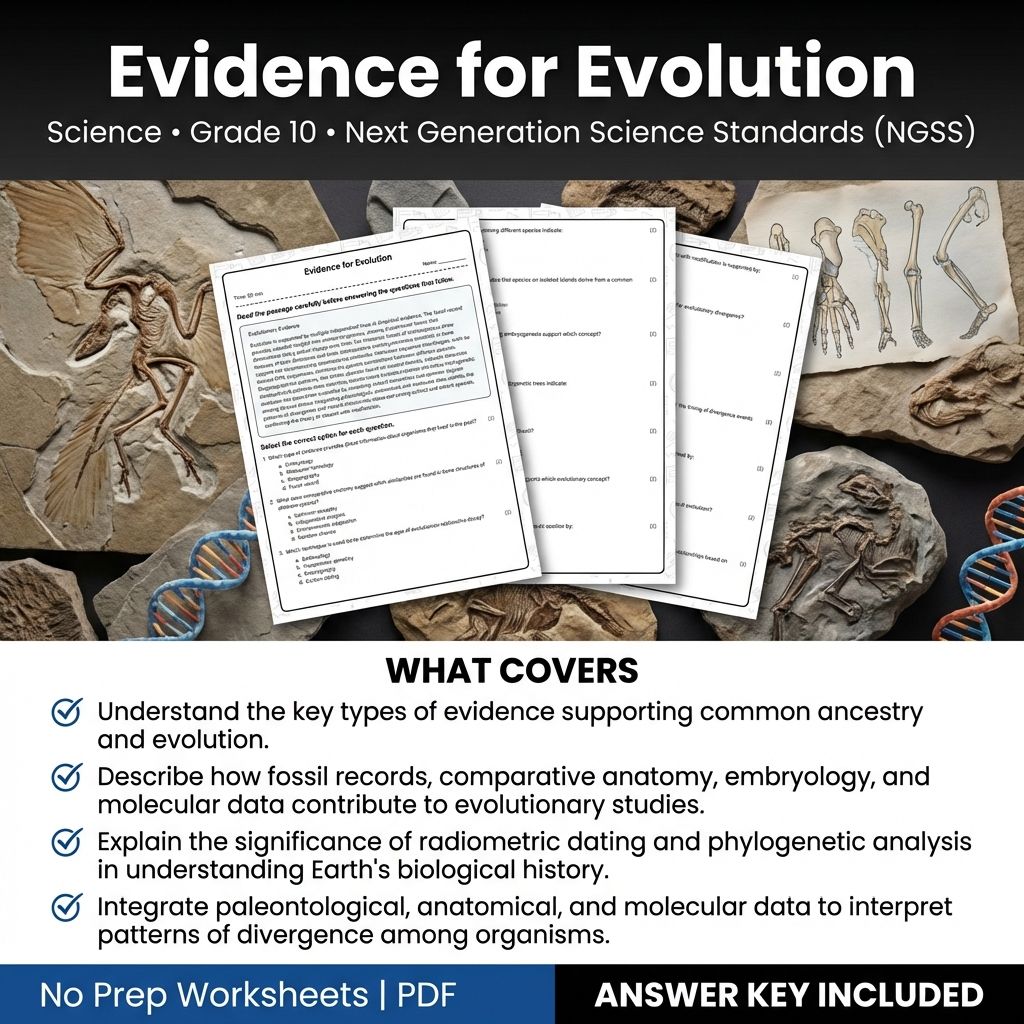
10th Grade Science | Evidence for Evolution Worksheet & Answer Key (PDF)
 Created byCoral Reef Learning
Learning Objectives
- Understand the key types of evidence supporting common ancestry and evolution.
- Describe how fossil records, comparative anatomy, embryology, and molecular data contribute to evolutionary studies.
- Explain the significance of radiometric dating and phylogenetic analysis in understanding Earth's biological history.
Also included in: Grade 10 Science Unit Worksheet Bundle – Genetics, Evolution & Biodiversity +1 more
Instant download
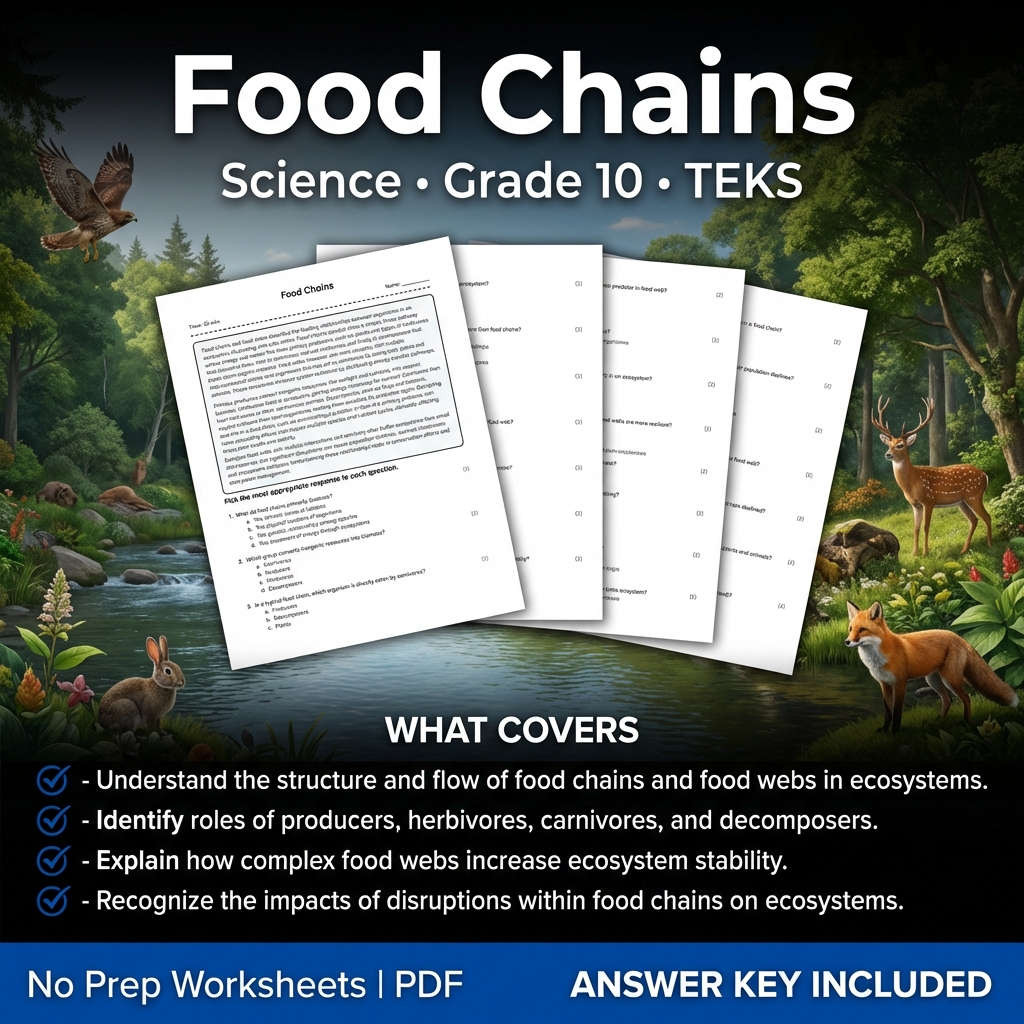
Food Chains Science Worksheet for Grade 10 | TEKS | Printable PDF
Created byCoral Reef LearningLearning Objectives
- Understand the structure and flow of food chains and food webs in ecosystems.
- Identify roles of producers, herbivores, carnivores, and decomposers.
- Explain how complex food webs increase ecosystem stability.
Instant download
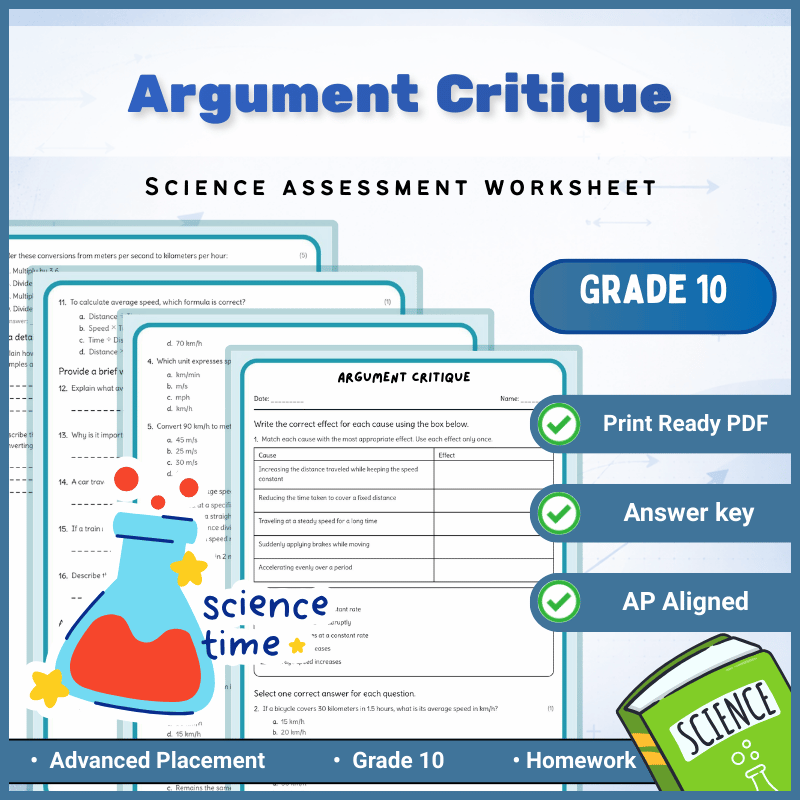
Grade 10 Science | Critical Argument Analysis Worksheet (AP Standard + PDF)
Created byBright Mind ResourcesLearning Objectives
- Evaluate explanatory claims systematically by assessing evidence quality, alternative hypotheses, and reasoning consistency.
- Apply criteria for refutation and corroboration to determine the plausibility of competing explanations.
- Analyze how statistical strength, representational choices, and methodological constraints influence argument persuasiveness.
Instant download
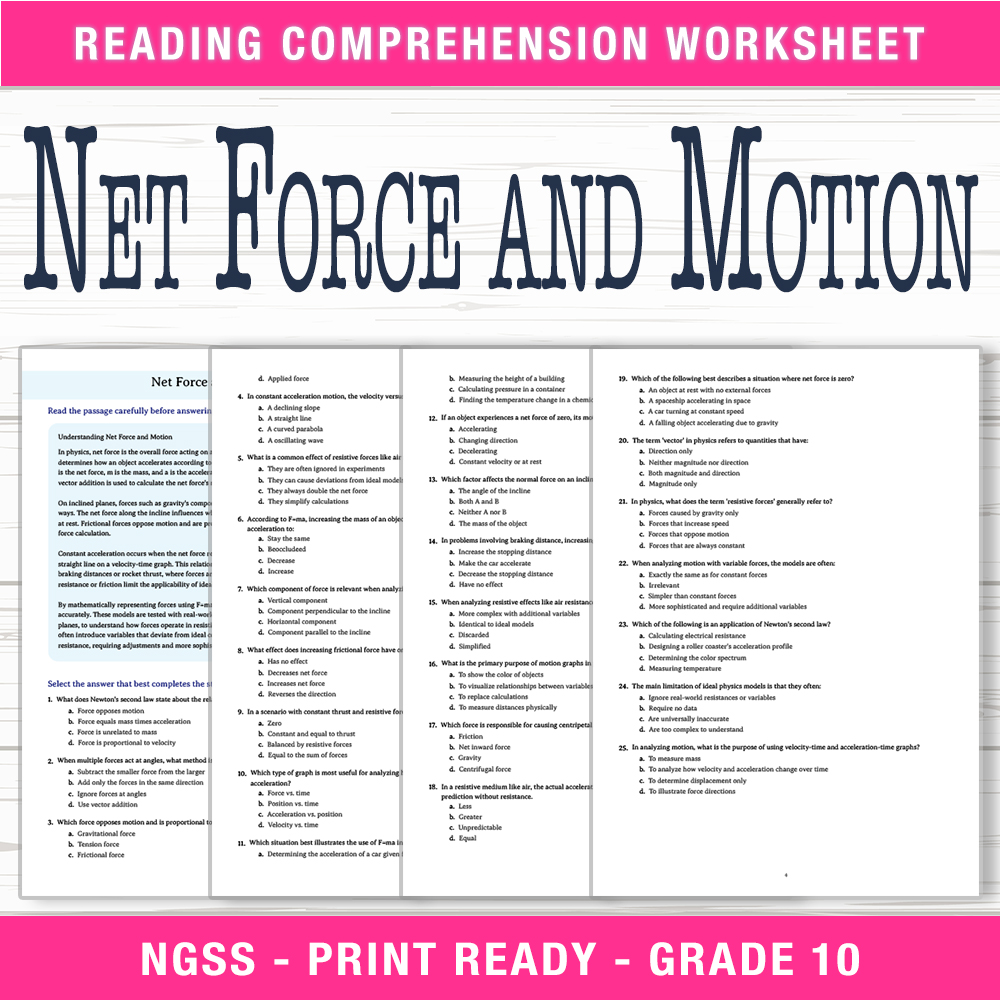
Grade 10 Science | Net Force and Motion Worksheet (PDF + Answer Key)
 Created byRiverstone Classroom
Learning Objectives
- Understand the relationship between net force, mass, and acceleration as described by Newton's second law.
- Analyze how vector summation affects net force in different scenarios, including inclined planes and resistive forces.
- Apply mathematical models to solve problems involving force, motion, and energy concepts in various contexts.
Instant download

Grade 10 Science | Evidence for Evolution Worksheet with Short Notes (PDF)
 Created byMeadowlark Worksheets
Learning Objectives
- Understand the main types of evidence supporting evolution and common ancestry.
- Describe how fossil records, comparative anatomy, embryology, and molecular data support evolutionary theory.
- Explain the importance of radiometric dating and molecular sequencing in reconstructing evolutionary history.
Also included in: Grade 10 Science NGSS Unit Bundle | Biological Evolution & Diversity Worksheets +1 more
Instant download
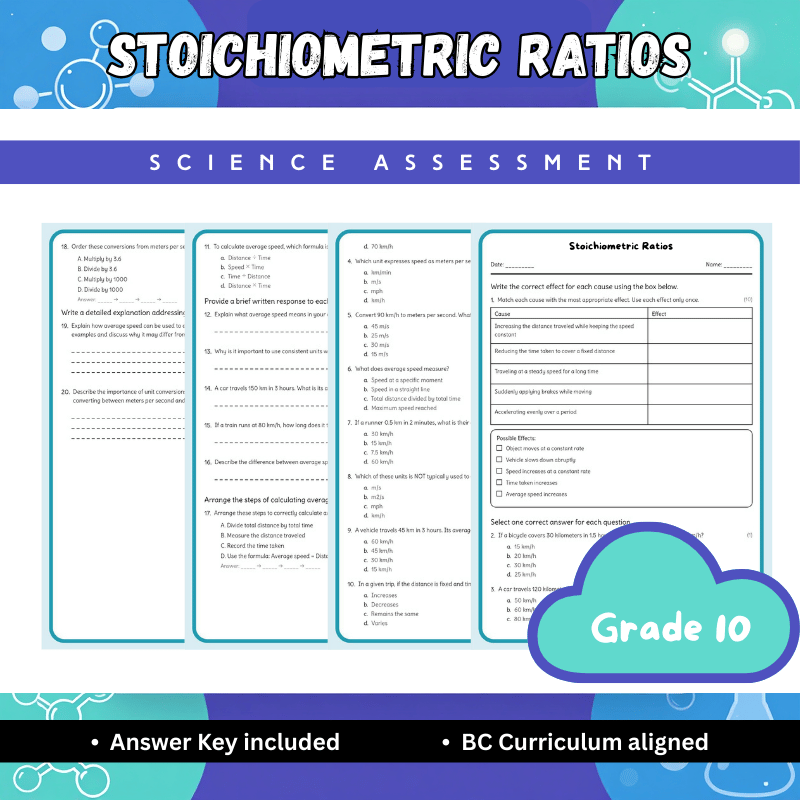
Grade 10 Science | Stoichiometric Ratios Worksheet (Answer Key) PDF
Created byBright Mind ResourcesLearning Objectives
- Understand how to interpret and use molar ratios from balanced chemical equations.
- Apply molar mass conversions to relate mass and moles of reactants and products.
- Calculate expected yields and required reactant amounts using stoichiometric ratios.
Instant download

Grade 10 Science | Sustainable Strategies for Environmental Stewardship
Created byCoral Reef LearningLearning Objectives
- Understand the principles of the circular economy and how it reduces environmental impact.
- Identify key approaches for resource recycling and substitution.
- Describe landscape restoration and watershed management techniques.
Instant download
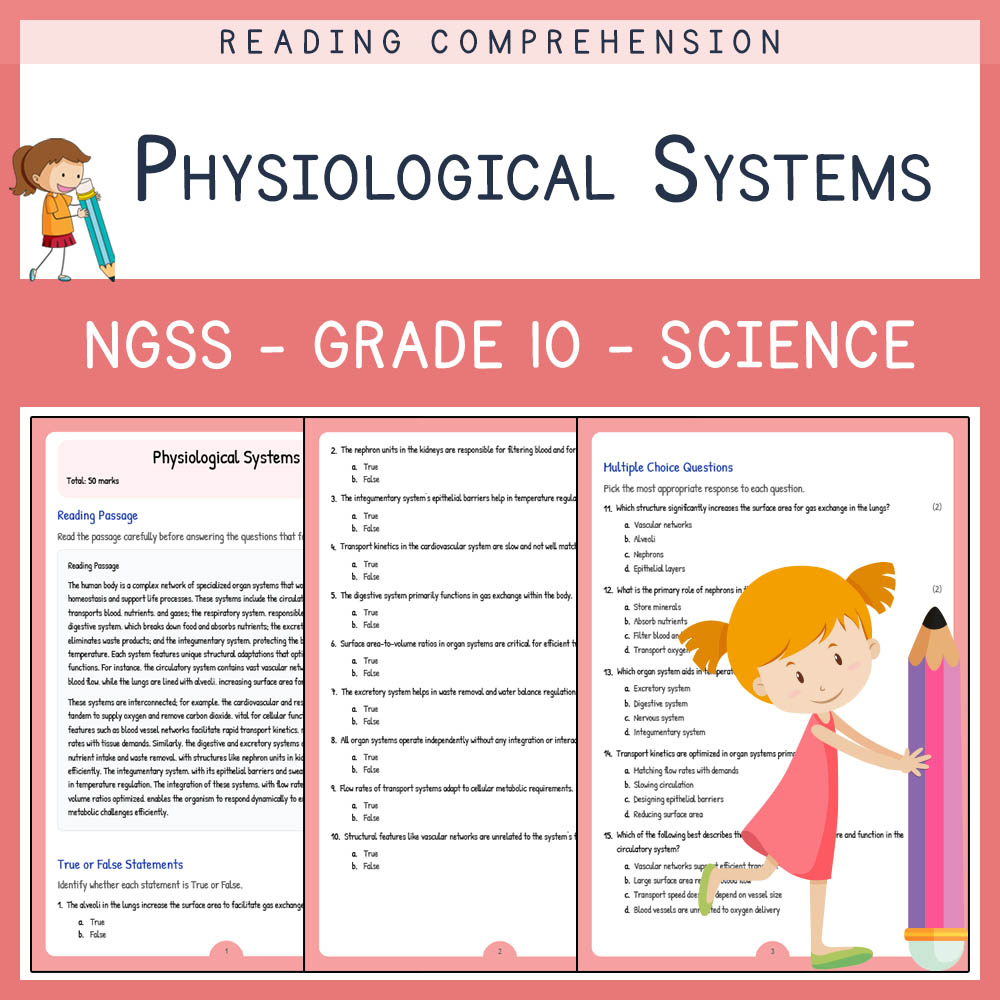
Grade 10 Science | Physiological Systems Worksheet & Answer Key (PDF)
 Created byLumora Learning
Learning Objectives
- Describe the structural features of different physiological systems and their functional significance.
- Compare how organ systems integrate to meet organismal metabolic demands.
- Explain the relationship between structure and function in systems such as circulatory, respiratory, digestive, excretory, and integumentary.
Instant download
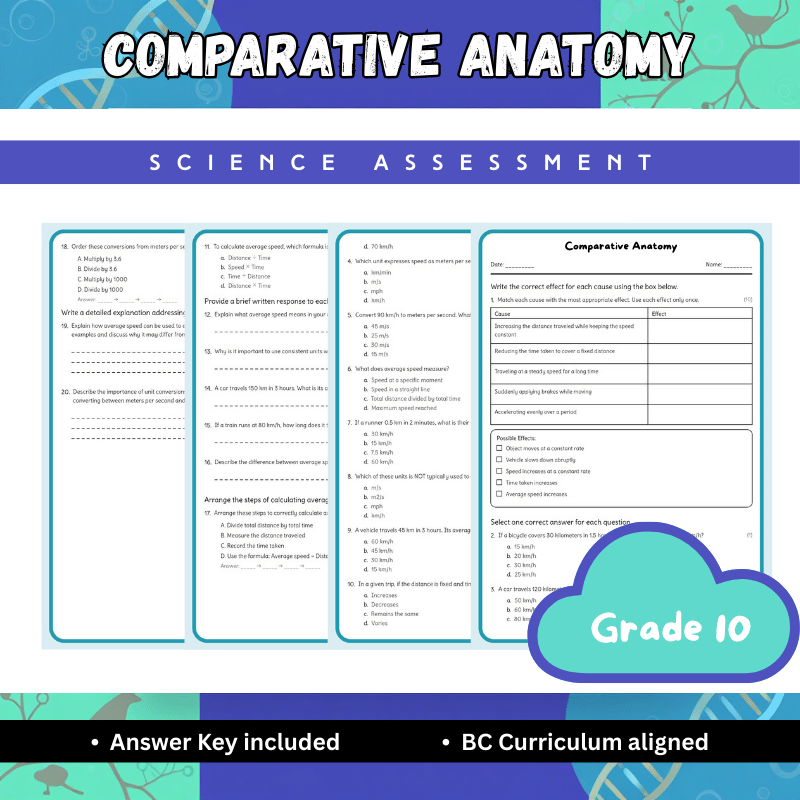
Grade 10 Science | Comparative Anatomy Learning (Answer Key) | BC Standards
Created byBright Mind ResourcesLearning Objectives
- Understand the concept of homologous, analogous, and vestigial structures in organisms.
- Identify evidence from anatomy that supports evolutionary relationships.
- Differentiate between homologous and analogous structures through examples.
Instant download

Grade 10 Science – Atomic Structure & Particles Worksheet | Florida NGSSS
Created byBright Mind ResourcesLearning Objectives
- Identify the main subatomic particles: protons, neutrons, and electrons.
- Understand the concept of isotopes and their atomic differences.
- Explain electron configurations and energy levels in atoms.
Also included in: Physical Science Grade 10 Daily Reading Worksheets Lesson Bundle | Florida NGSSS +1 more
Instant download
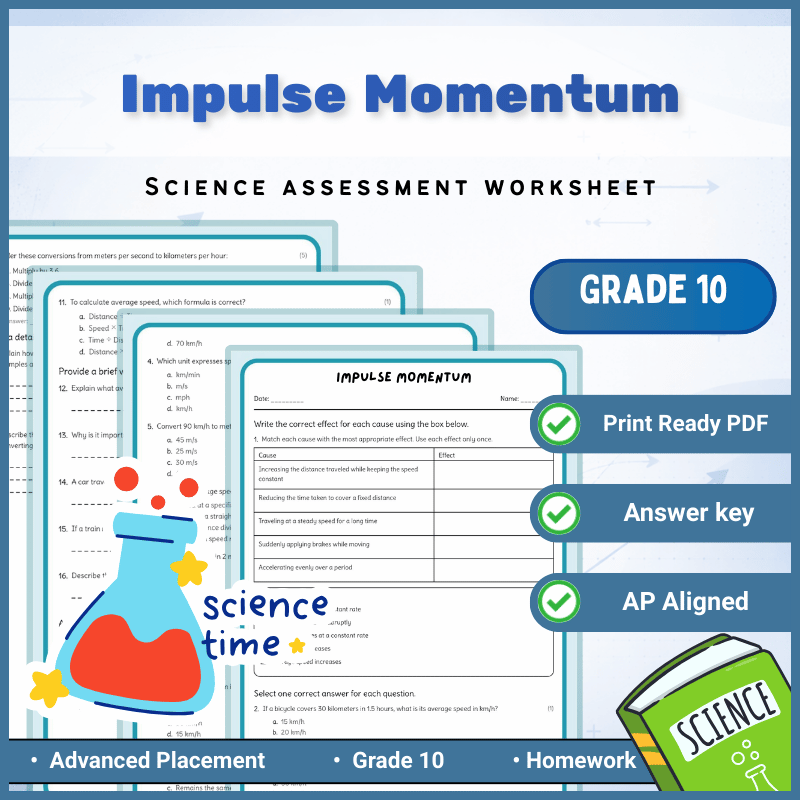
Grade 10 Science | Impulse and Momentum Practice Worksheet (Answer Key)
Created byBright Mind ResourcesLearning Objectives
- Explain the concept of impulse and how it relates to change in momentum.
- Analyze collision events using conservation of momentum in isolated systems.
- Differentiate between elastic, inelastic, and perfectly inelastic collisions and describe energy transformations.
Instant download
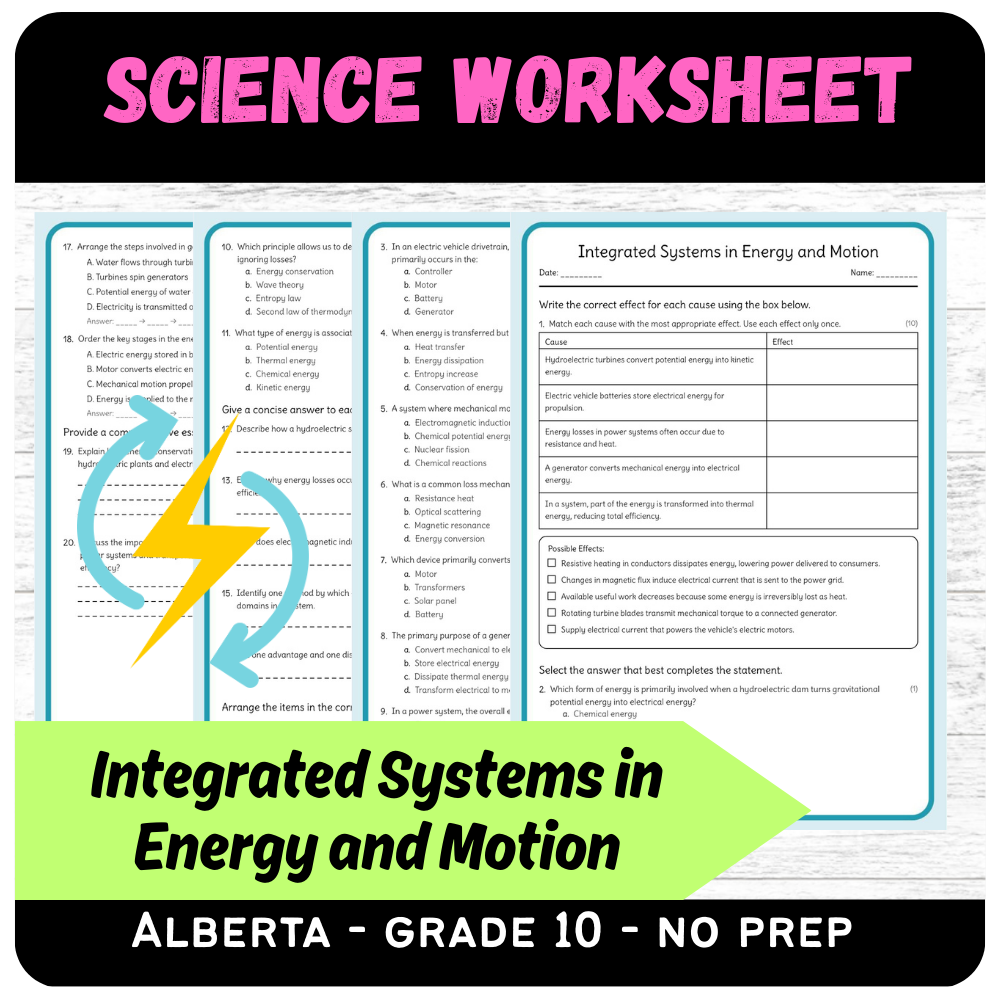
Grade 10 Science | Integrated Energy Systems Worksheet (PDF)
Created byBright Mind ResourcesLearning Objectives
- Explain the energy transformations involved in mechanical and electrical systems
- Analyze how energy losses and conservation principles affect system performance
- Apply concepts of work, energy, and electromagnetic conversion to real-world integrated systems
Instant download
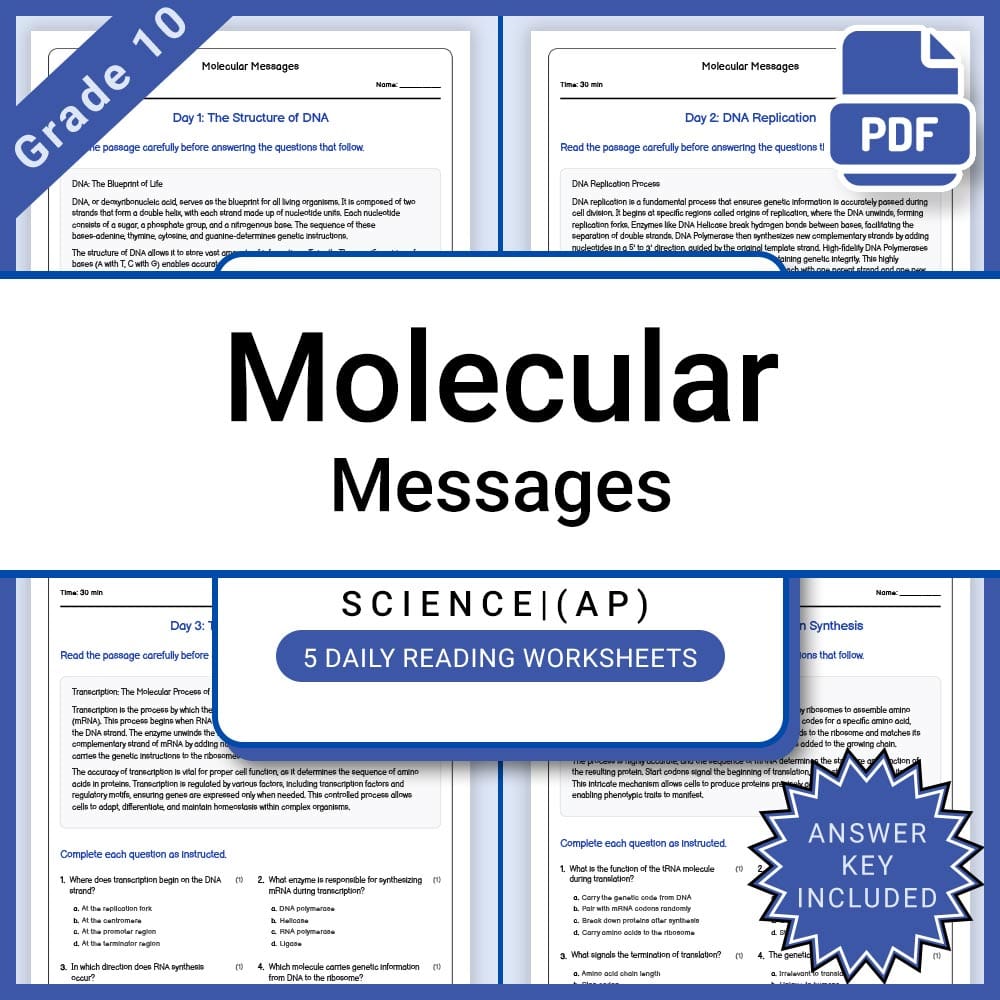
Grade 10 Science – Molecular Messages Daily Reading Worksheet + Answer Key
JCreated byJ.S SheetsLearning Objectives
- Understand the structure of DNA and its components.
- Explain how DNA stores genetic information.
- Describe the processes of transcription and translation.
Also included in: Grade 10 Science Lesson Group Bundle | AP Framework & Daily Worksheets
Instant download
Grade 10 Science | Redox Reactions Worksheet (Answer Key) for BC Standards
Created byBright Mind ResourcesLearning Objectives
- Understand the concept of oxidation and reduction in chemical reactions.
- Identify changes in oxidation states during redox processes.
- Explain how electron transfer links microscopic processes to macroscopic phenomena.
Instant download
Grade 10 Science | DNA Structure Worksheet + Answer Key (TEKS-Aligned PDF)
Created byBright Mind ResourcesLearning Objectives
- Describe the basic components of DNA and its double helix structure.
- Explain how nucleotide base pairing stabilizes the DNA molecule.
- Understand how DNA encodes genetic information through sequence order.
Also included in: Grade 10 Science | Genetics & DNA Unit Worksheet Pack (TEKS Aligned) +5 more
Instant download

Stoichiometric Ratios Worksheet | Grade 10 Science Practice
 Created byPrism Point Learning
Learning Objectives
- Use balanced chemical equations to interpret mole-to-mole ratios from coefficients.
- Convert between mass, moles, and molar mass to predict product masses.
- Apply stoichiometric relationships to check consistency with conservation of mass.
Also included in: Grade 10 Science Chemical Reactions & Atomic Structure Lesson Bundle | Bc +1 more
Instant download
Grade 10 Science — Cell Theory Worksheet for Mastery
 Created byThe Resource Hub
Learning Objectives
- Understand the core principles of cell theory, including the role of cells as the basic units of life.
- Describe how advances in microscopy revealed cellular diversity across different organisms.
- Distinguish between unicellular and multicellular organisms and explain how structure supports function.
Also included in: Grade 10 Science Cell Biology Unit | Cell Structures & Functions Worksheet Pack +1 more
Instant download
Grade 10 Science | Molar Relationships Reading Worksheet & Answer Key (PDF)
JCreated byJ.S SheetsLearning Objectives
- Understand the concept of the mole and its role in linking particle count to mass.
- Perform mole-to-mass and mole-to-mole conversions in chemical calculations.
- Identify limiting reagents and calculate reaction yields using molar relationships.
Also included in: Grade 10 Science Unit Bundle | Chemical Reactions & Properties Worksheets +1 more
Instant download
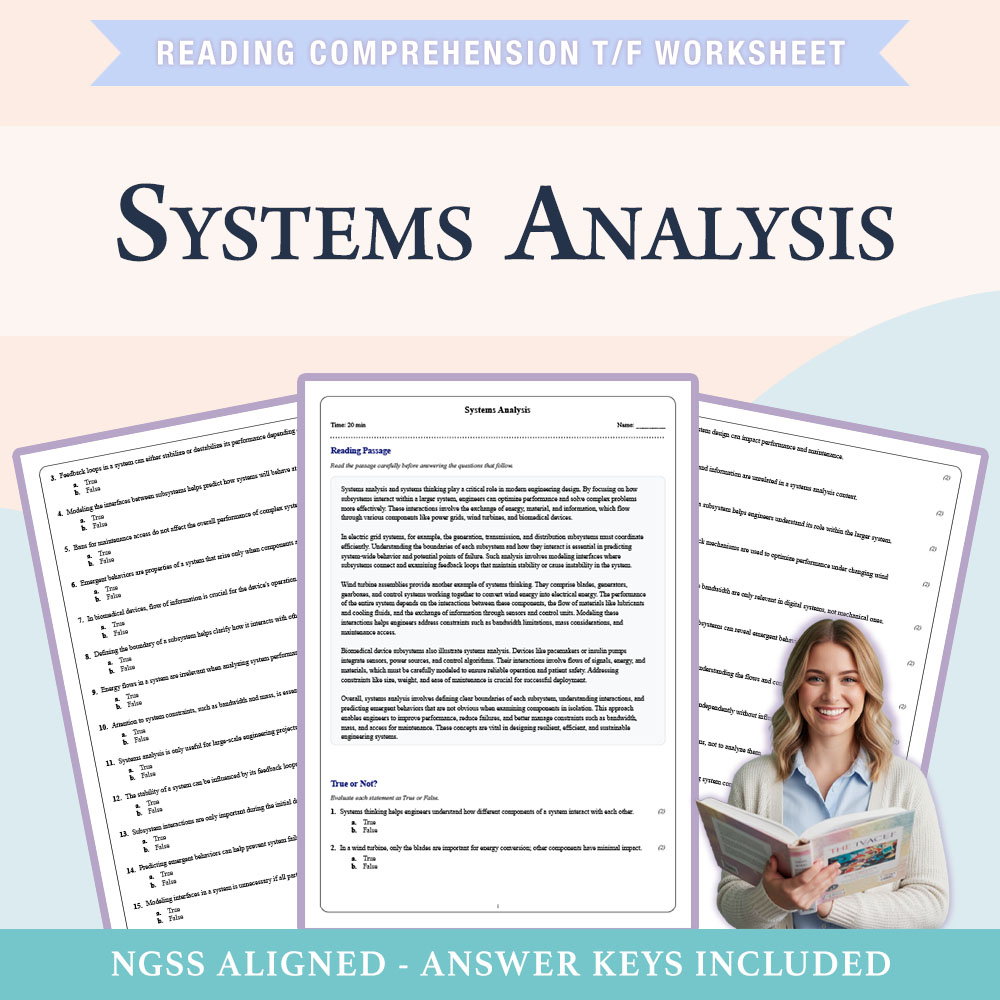
Grade 10 Science | Systems Analysis Worksheet (PDF + Answer Key)
Created byCopper Leaf ClassroomLearning Objectives
- Understand how subsystem interactions are identified within complex systems.
- Recognize the importance of boundary definitions and emergent behaviors in system design.
- Evaluate statements about flows of energy, material, and information in systems.
Also included in: Grade 10 Science Bundle |Systems, Decision-Making & Engineering (PDF+Answer Key) +1 more
Instant download
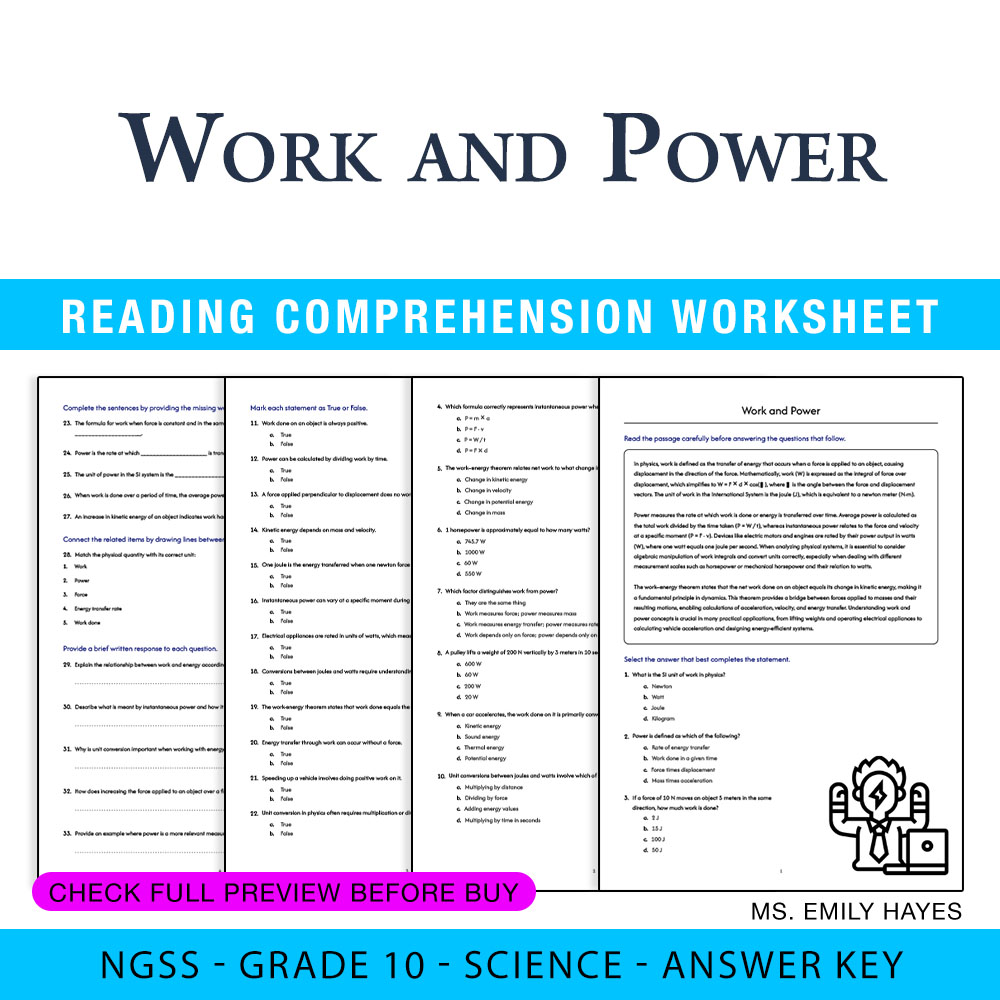
Grade 10 Science | Work and Power Worksheet (PDF+ Answer Key)
Created byCopper Leaf ClassroomLearning Objectives
- Understand the relationships among force, displacement, and energy through the work–energy theorem.
- Calculate work done and power in practical scenarios involving physical and mechanical systems.
- Apply algebraic manipulation of work integrals and perform unit conversions between joules, watts, and engineering units.
Instant download
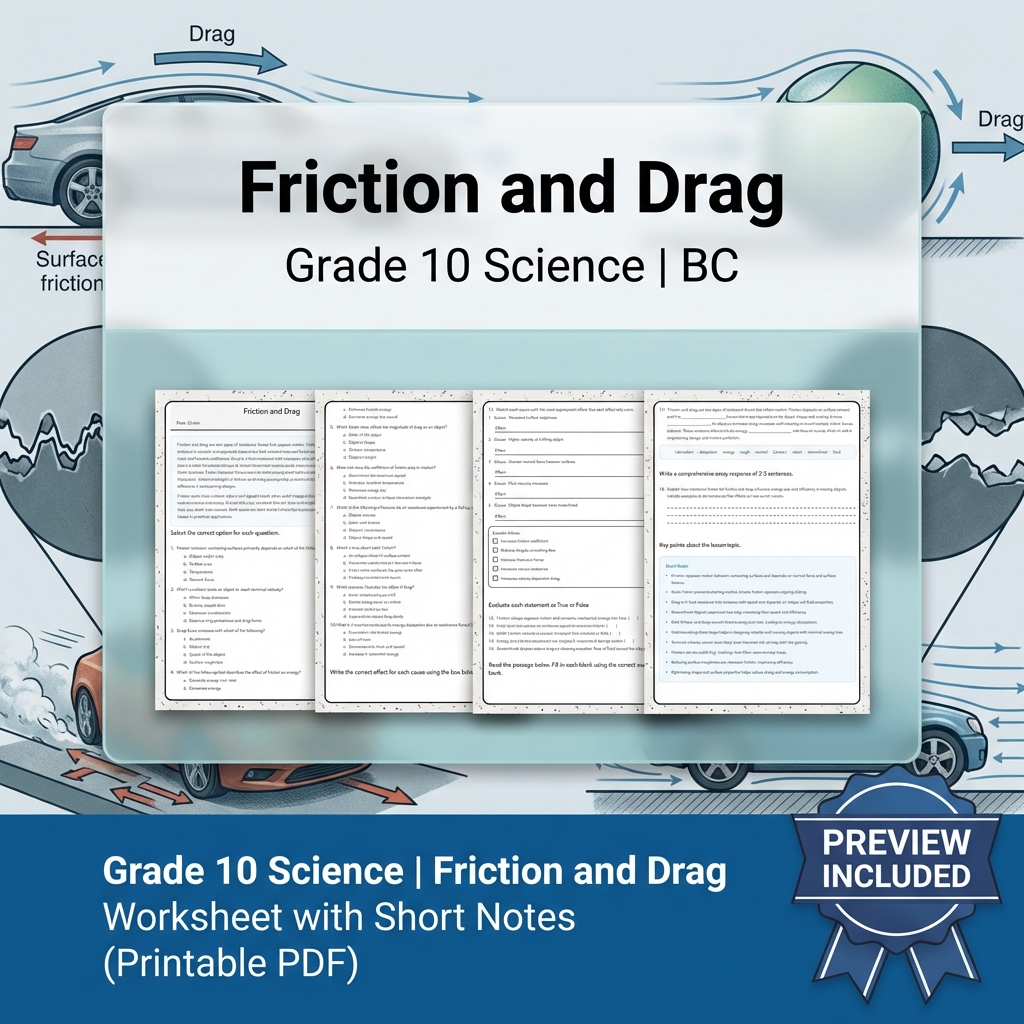
Grade 10 Science | Friction and Drag Worksheet with Short Notes (Printable PDF)
Created byMeadowlark WorksheetsLearning Objectives
- Understand the mechanisms of friction and drag and their effects on motion.
- Identify factors influencing friction and drag forces.
- Explain the concept of terminal velocity due to drag.
Also included in: Grade 10 Science Lesson Bundle | Physics and Forces Worksheets | BC Framework +1 more
Instant download
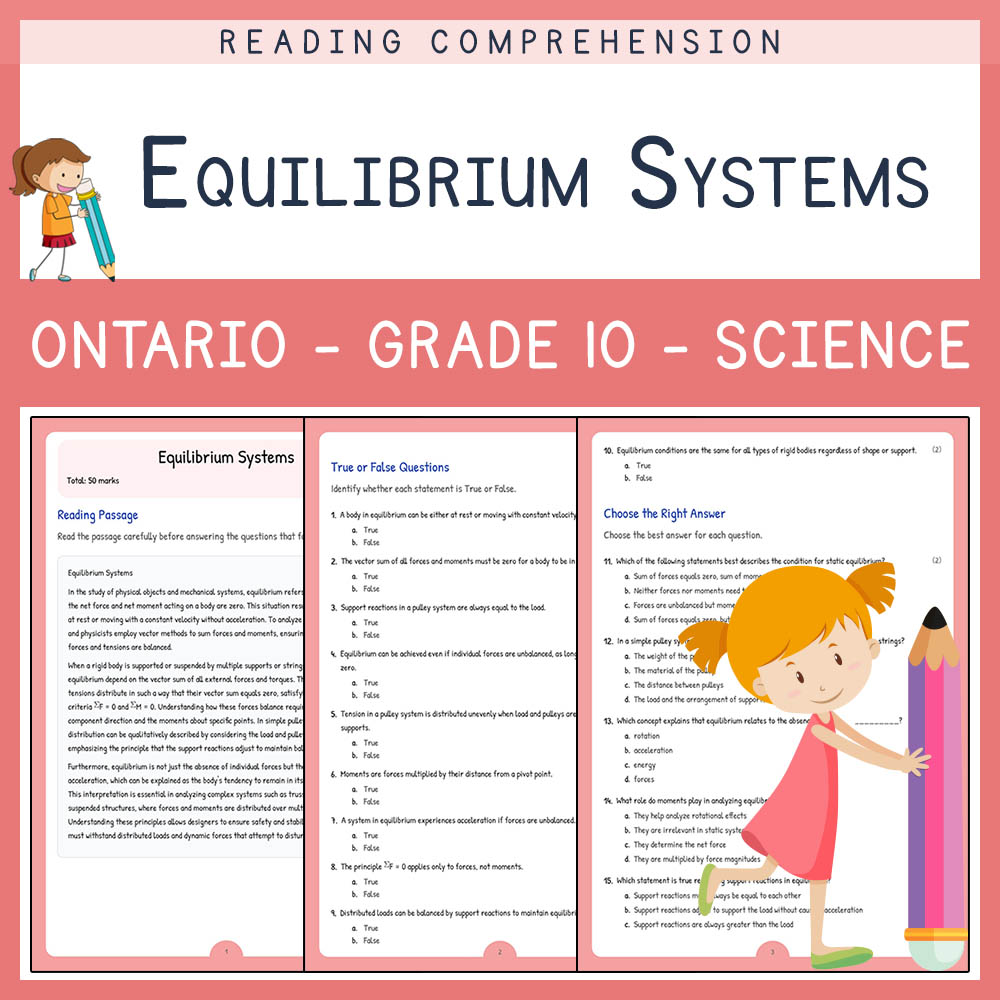
Grade 10 Science | Equilibrium Systems Worksheet | Ontario Standard
Created byLumora LearningLearning Objectives
- Explain conditions for static equilibrium using vector summation of forces and moments.
- Describe how support reactions and tension distribution relate to equilibrium.
- Interpret equilibrium as the state of no net acceleration, not the absence of forces.
Also included in: Grade 10 Science | Motion & Forces Lesson Bundle | Ontario Standards
Instant download

Grade 10 Science | Molecules and Lattices Worksheet | BC Standards
Created byLumora LearningLearning Objectives
- Describe the structural arrangements of ionic, covalent molecular, and metallic solids.
- Explain how lattice structures influence properties such as melting point, brittleness, and conductivity.
- Relate the types of bonding and lattice arrangements to the position of elements on the periodic table.
Instant download
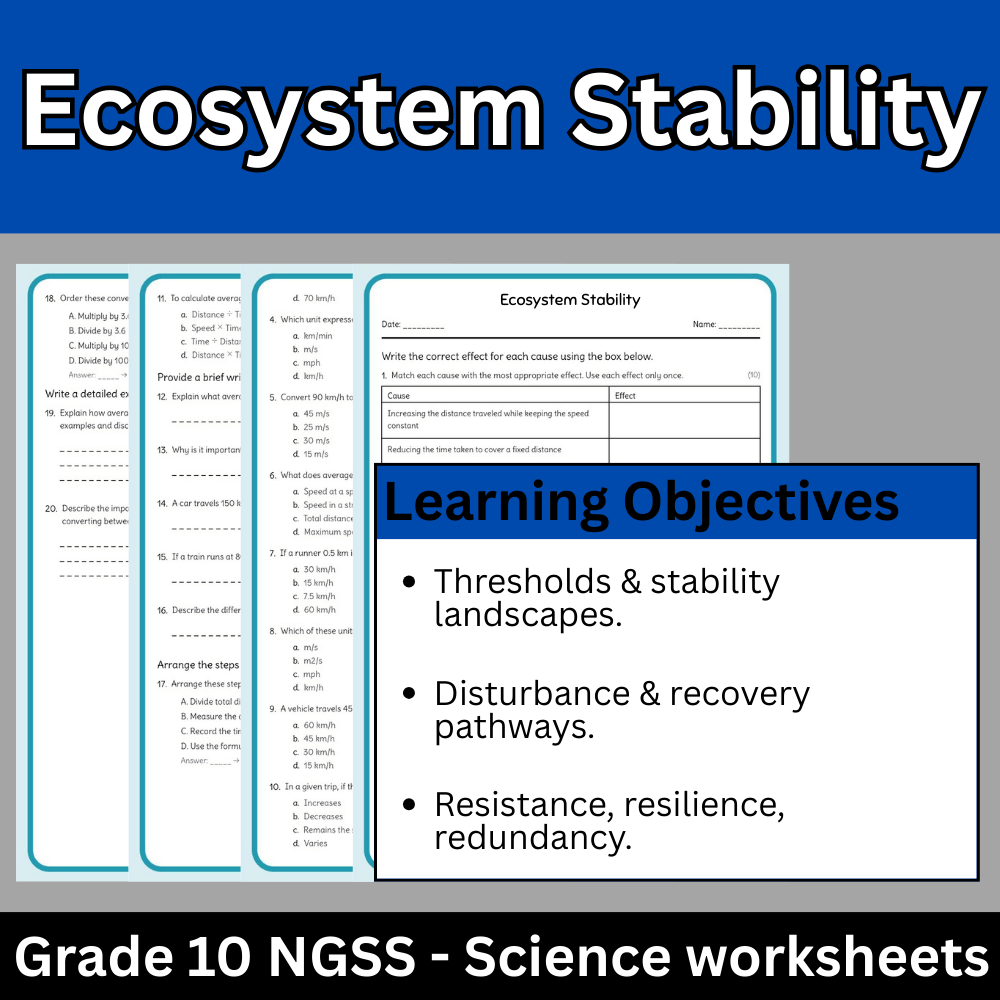
Grade 10 Science | Ecosystem Stability Worksheet – NGSS Aligned (PDF)
Created byBright Mind ResourcesLearning Objectives
- Understand feedback mechanisms, thresholds, and stability landscapes in ecosystems.
- Identify the effects of natural and human disturbances on ecosystem recovery pathways.
- Apply quantitative indicators to assess ecosystem resistance, resilience, and redundancy.
Instant download
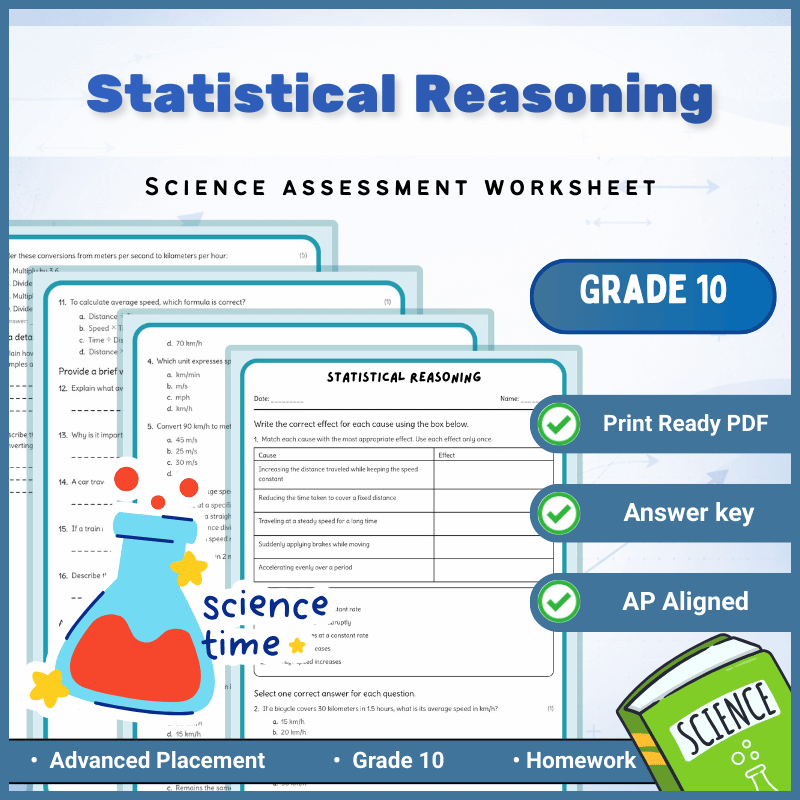
Grade 10 Science | Statistical Reasoning Worksheet (AP Standard) PDF
Created byBright Mind ResourcesLearning Objectives
- Summarize and compare datasets using measures of central tendency and spread
- Interpret confidence intervals and effect sizes in experimental contexts
- Evaluate the role of null models and hypothesis testing in data analysis
Instant download
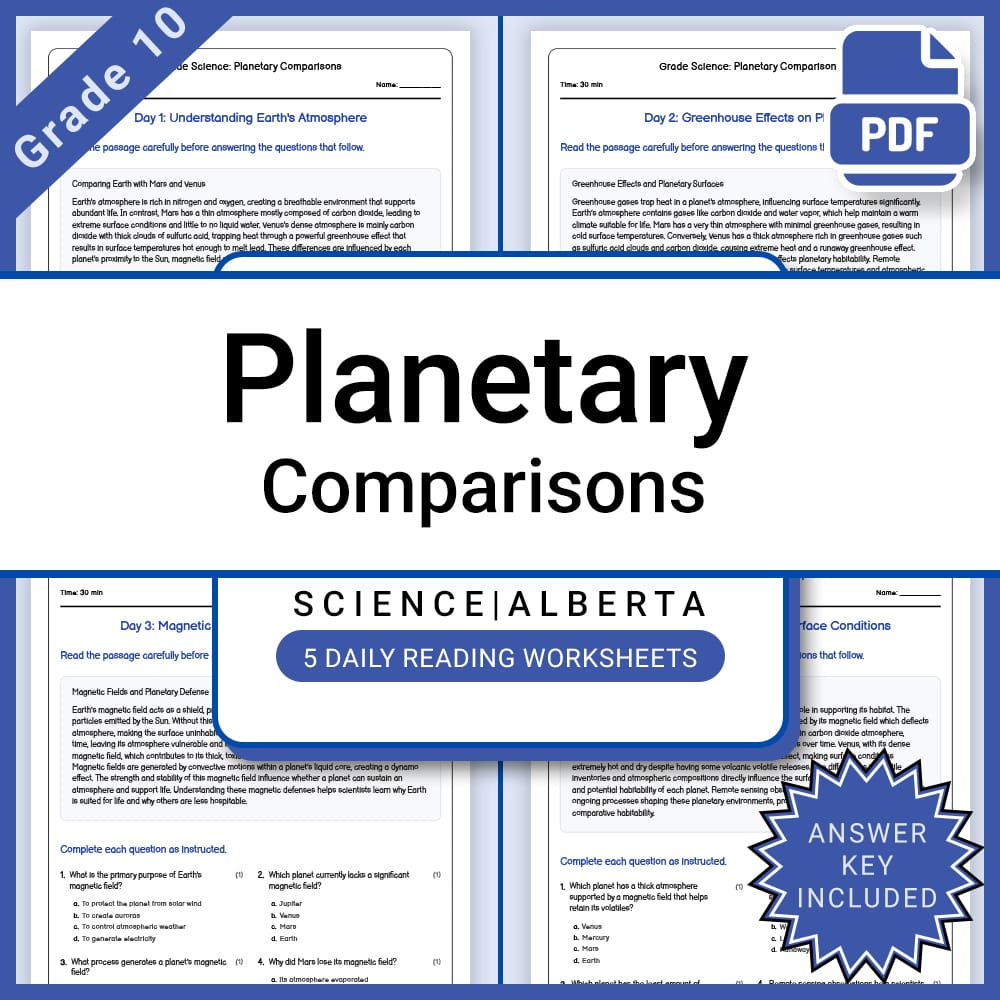
Grade 10 Science – Exploring Mechanical Daily Reading Worksheet + Answer Key
JCreated byJ.S SheetsLearning Objectives
- Identify energy transformations in mechanical and electrical systems
- Understand principles of conservation of energy
- Analyze energy losses in integrated systems
Also included in: Grade 10 Science Lesson Group | Energy and Electricity Alberta Framework +1 more
Instant download
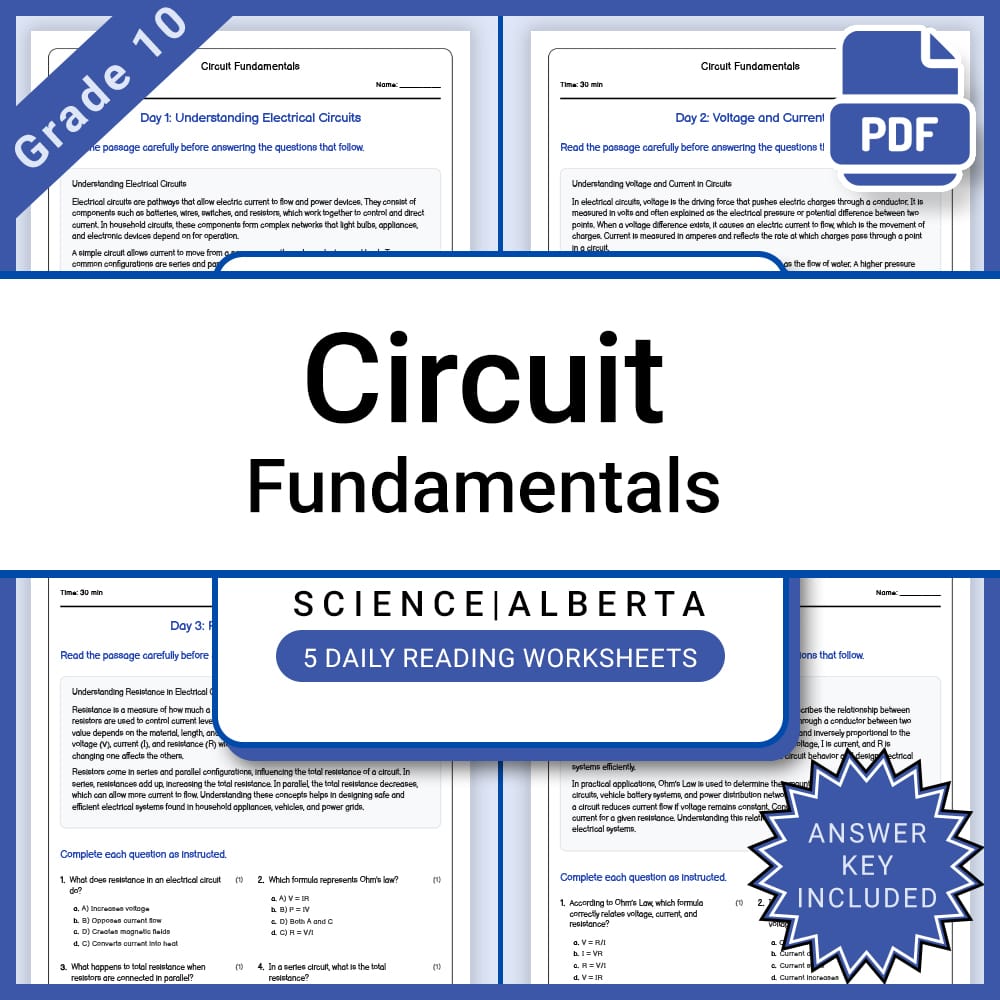
Grade 10 Science – Circuit Fundamentals Daily Reading Worksheet + Answer Key
JCreated byJ.S SheetsLearning Objectives
- Understand the basic components of electrical circuits
- Learn the relationship between current, voltage, and resistance
- Explore series and parallel circuit configurations
Also included in: Grade 10 Science Lesson Group | Energy and Electricity Alberta Framework +1 more
Instant download
Grade 10 Science – Energy Diagrams Daily Reading Worksheet with Answer Key
JCreated byJ.S SheetsLearning Objectives
- Interpret potential energy curves on inclined slopes.
- Analyze bar charts representing energy transfer.
- Identify sources and sinks of energy in mechanical systems.
Also included in: Grade 10 Science Lesson Group | Energy and Electricity Alberta Framework +1 more
Instant download
Grade 10 Science – Momentum and Impulse Daily Reading Worksheet + Answer Key
JCreated byJ.S SheetsLearning Objectives
- Understand the concepts of linear momentum and impulse
- Explain conservation of momentum in isolated systems
- Describe how collisions affect object velocities and mass distribution
Also included in: Grade 10 Science Lesson Group | Energy and Electricity Alberta Framework +1 more
Instant download
Grade 10 Science – Kinematic Graphs Position-Time Worksheet + Answer Key
JCreated byJ.S SheetsLearning Objectives
- Understand how to interpret position versus time graphs
- Determine object speed from the slope of the graph
- Differentiate between average and instantaneous velocity
Also included in: Grade 10 Science Lesson Group | Energy and Electricity Alberta Framework +1 more
Instant download
Grade 10 Science – Electromagnetic Induction Worksheet + Answer Key
JCreated byJ.S SheetsLearning Objectives
- Understand the basic concept of electromagnetic induction
- Comprehend Faraday's law of induction
- Recognize how changing magnetic flux induces voltage
Also included in: Grade 10 Science Lesson Group | Energy and Electricity Alberta Framework +1 more
Instant download
Grade 10 Science – Energy Forms Daily Reading Worksheet with Answer Key
JCreated byJ.S SheetsLearning Objectives
- Understand the concepts of kinetic and potential energy
- Identify examples of energy transformation in real-world situations
- Explain conservation of energy principles
Also included in: Grade 10 Science Lesson Group | Energy and Electricity Alberta Framework +1 more
Instant download
Grade 10 Science – Work and Power Daily Reading Worksheet + Answer Key
JCreated byJ.S SheetsLearning Objectives
- Explain the concepts of work and power in physics.
- Calculate work done given force and displacement.
- Determine power in terms of energy transfer rate.
Also included in: Grade 10 Science Lesson Group | Energy and Electricity Alberta Framework +1 more
Instant download
Grade 10 Science – Force Relations Daily Reading Worksheet with Answer Key
JCreated byJ.S SheetsLearning Objectives
- Understand the concept of net force and how it affects object motion.
- Calculate resultant forces in various scenarios.
- Interpret the relationship between force, mass, and acceleration.
Also included in: Grade 10 Science Lesson Group | Energy and Electricity Alberta Framework +1 more
Instant download
Grade 10 Science – Motors and Generators Daily Reading Worksheet with Answer Key
JCreated byJ.S SheetsLearning Objectives
- Understand key concepts related to Science
- Apply knowledge through practice questions
- Demonstrate comprehension of the material
Also included in: Grade 10 Science Lesson Group | Energy and Electricity Alberta Framework +1 more
Instant download

Grade 10 Science | Critique in Scientific Explanations - Reading Practice
Created byCoral Reef LearningLearning Objectives
- Evaluate the quality and relevance of evidence in scientific claims.
- Identify strengths and weaknesses in scientific arguments regarding disease spread.
- Differentiate between corroborated explanations and refuted hypotheses.
Also included in: Science Practices Reading Comprehension Lesson Bundle: Grade 10 Science AP +1 more
Instant download
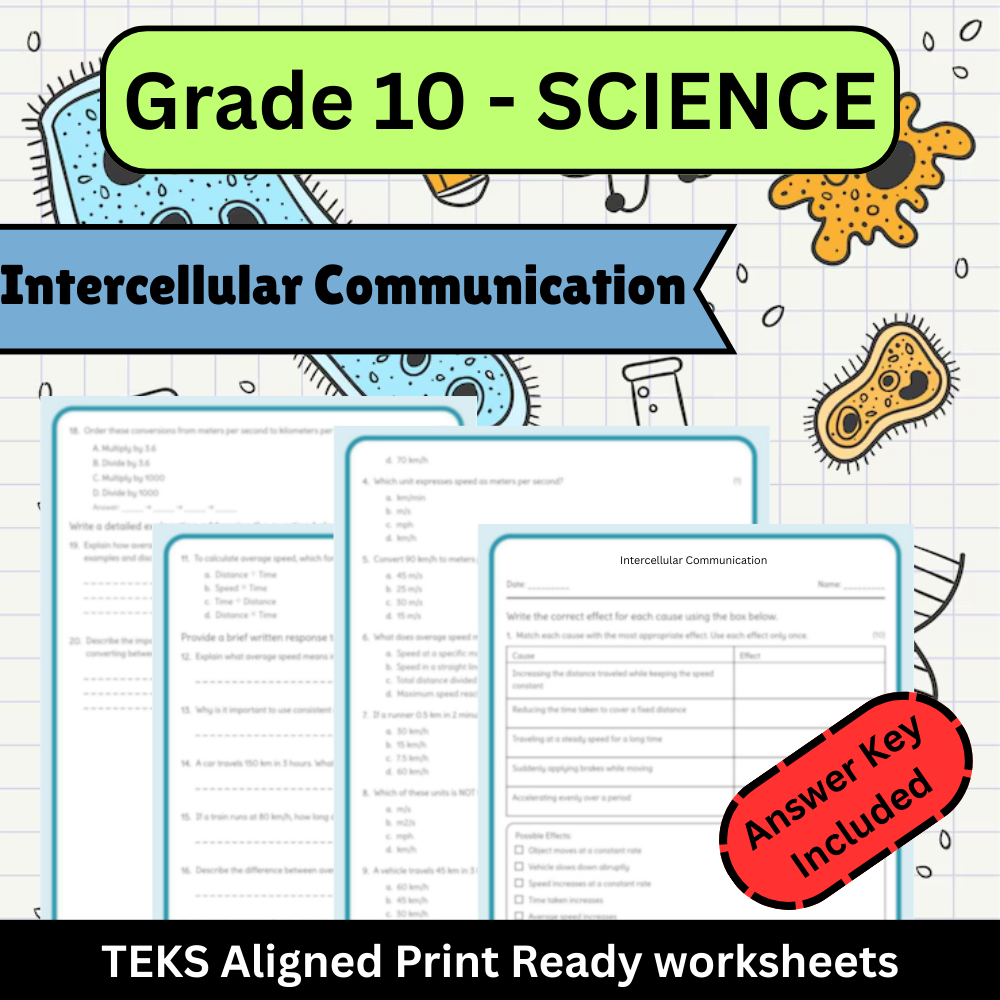
Grade 10 Science | Intercellular Communication Worksheet (PDF) – TEKS-Aligned
Created byBright Mind ResourcesLearning Objectives
- Describe the different modes of intercellular signaling such as autocrine, paracrine, endocrine, and synaptic signaling.
- Explain how membrane receptors and signal transduction cascades facilitate cellular communication.
- Identify examples of intercellular signaling in physiological processes like hormone regulation and neural transmission.
Also included in: Grade 10 Science | Cell Structure & Function Unit Worksheet Bundle(TEKS-Aligned) +5 more
Instant download

Risk Management in Laboratory and Field Sampling Worksheet | Grade 10
JCreated byJ.S SheetsLearning Objectives
- Identify hazards systematically in laboratory and field sampling workflows using credible sources (e.g., SDS, labels, and observations).
- Explain qualitative risk assessment using likelihood and consequence to rank hazards and decide controls.
- Apply the hierarchy of controls (elimination, substitution, engineering controls, administrative procedures) to reduce risk.
Instant download

Energy Component Accounting Worksheet | Grade 10 Science Practice
JCreated byJ.S SheetsLearning Objectives
- Understand how energy flows between components in a system and how to model energy conservation.
- Identify different forms of energy and how changes relate to energy transfers like work and energy exchange.
- Apply quantitative reasoning to energy budgets to verify energy conservation across different representations.
Also included in: Grade 10 Energy, Forces, and Reactions Science Lesson Bundle +1 more
Instant download

Evolutionary Relationships Worksheet | Grade 10 Science Standards-Aligned
JCreated byJ.S SheetsLearning Objectives
- Understand how phylogenetic relationships organize biological diversity based on shared characteristics.
- Interpret patterns in genetic data and trait similarities to infer evolutionary history.
- Explain how long-term evolutionary forces influence branching patterns in lineages.
Also included in: Grade 10 Genetic Variation and Evolution Science Lesson Bundle +1 more
Instant download

Gene Regulation Switches Worksheet | Science Practice for Grade 10
JCreated byJ.S SheetsLearning Objectives
- Understand the concept of gene regulation and how it influences protein production.
- Identify different regulatory mechanisms involved in gene expression control.
- Explain the significance of gene switches in development and environmental responses.
Also included in: Grade 10 Genetic Variation and Evolution Science Lesson Bundle +1 more
Instant download

Collision Momentum Changes Worksheet | California Standards Grade 10 Science
JCreated byJ.S SheetsLearning Objectives
- Understand how forces during collisions change an object's velocity over time.
- Explain the concept of impulse and how it relates to momentum change in collisions.
- Analyze how unbalanced forces act briefly during contact to produce motion changes.
Also included in: Grade 10 Energy, Forces, and Reactions Science Lesson Bundle +1 more
Instant download

Heritable Variation Worksheet | Standards-Aligned Science Practice Grade 10
JCreated byJ.S SheetsLearning Objectives
- Explain the concept of heritable variation and its role in natural selection.
- Identify sources of genetic variation that lead to differences among individuals.
- Describe how variation affects survival and reproduction in populations.
Also included in: Grade 10 Genetic Variation and Evolution Science Lesson Bundle +1 more
Instant download

Transitional Fossils Assessment for Grade 10 Science – TEKS Standards
Created byPrism Point LearningLearning Objectives
- Understand the role of transitional fossils in illustrating evolutionary changes.
- Identify examples of fossil evidence that connect major vertebrate lineages.
- Explain the factors affecting the visibility and interpretation of transitional fossils.
Also included in: Grade 10 Evolution and Heredity Science Lesson Bundle for TEKS Standards
Instant download

Net Force Motion Test Prep Worksheet | Grade 10 Science NGSS
Created byPrism Point LearningLearning Objectives
- Explain how net force determines acceleration using Newton’s second law (F=ma) and vector ideas.
- Solve and interpret constant-acceleration motion problems with friction or incline effects.
- Use motion graphs and kinematic relationships to reason about proportionality between net force and acceleration.
Also included in: Grade 10 Forces and Conservation Science Lesson Bundle – NGSS
Instant download

Grade 10 Science – Gas Behavior & Gas Laws Daily Reading Worksheet
Created byBright Mind ResourcesLearning Objectives
- Understand the principles of particle motion in gases
- Connect gas laws to real-world regional phenomena
- Explain deviations from ideal gas behavior
Also included in: Grade 10 Chemistry Science Lesson Bundle Daily Reading Worksheets | Alberta +1 more
Instant download
About Grade 10 Science Worksheets
Find Science worksheets built for Grade 10. All 7,038 cover core skills, practice, and review, each an instant PDF download.
Every worksheet on MyTeachingSheets is created by independent teacher-authors and reviewed before publication. All resources download as printable PDFs for classroom, homework, or at-home practice, and many include answer keys. Preview any worksheet free before buying.