
Grade 10 Science Worksheets
7,038 worksheets
Planetary Comparisons Assessment for Grade 10 Science – Alberta Standards
 Created byPrism Point Learning
Learning Objectives
- Analyze differences in atmosphere, magnetic fields, and volatile inventories among terrestrial planets.
- Understand how atmospheric composition and greenhouse effects influence planetary surface conditions.
- Evaluate remote sensing observations and their implications for climate and habitability.
Also included in: Grade 10 Earth and Space Systems Science Lesson Bundle for Alberta +1 more
Instant download

Grade 10 Feedback Control in the Human Body Worksheet | NGSS Science
 Created byBRIGHT PATH RESOURCES
Learning Objectives
- Understand how the body regulates internal temperature using feedback mechanisms
- Identify sensors, control centers, and effectors involved in temperature regulation
- Distinguish between negative and positive feedback loops
Also included in: Human Physiology Grade 10 Science Daily Reading Worksheets Lesson Bundle | Ngss +1 more
Instant download
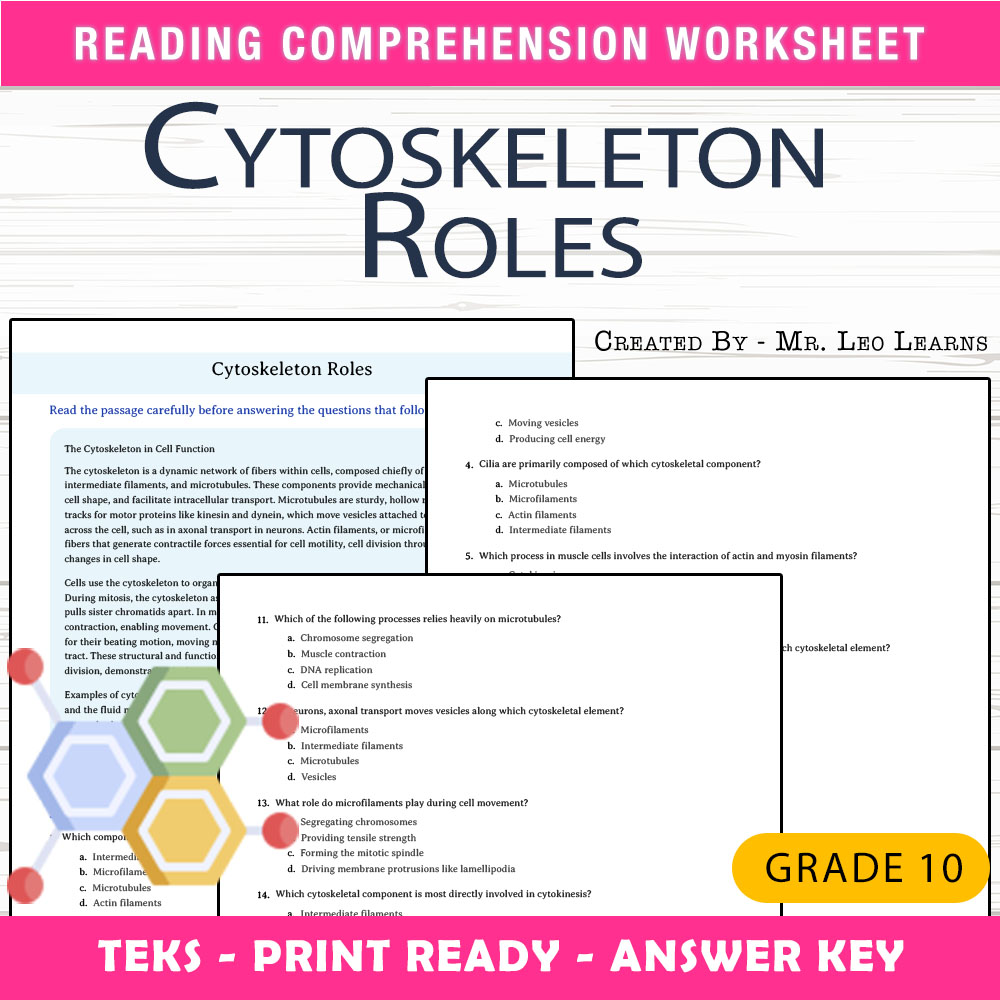
Grade 10 Science — Cytoskeleton Roles Worksheet for Mastery
 Created byThe Resource Hub
Learning Objectives
- Describe the structural components of the cytoskeleton and its functions in cells.
- Explain how motor proteins transport vesicles along microtubules.
- Understand the role of actin filaments in cell movement and cytokinesis.
Also included in: Grade 10 Science Cell Biology Unit | Cell Structures & Functions Worksheet Pack +1 more
Instant download
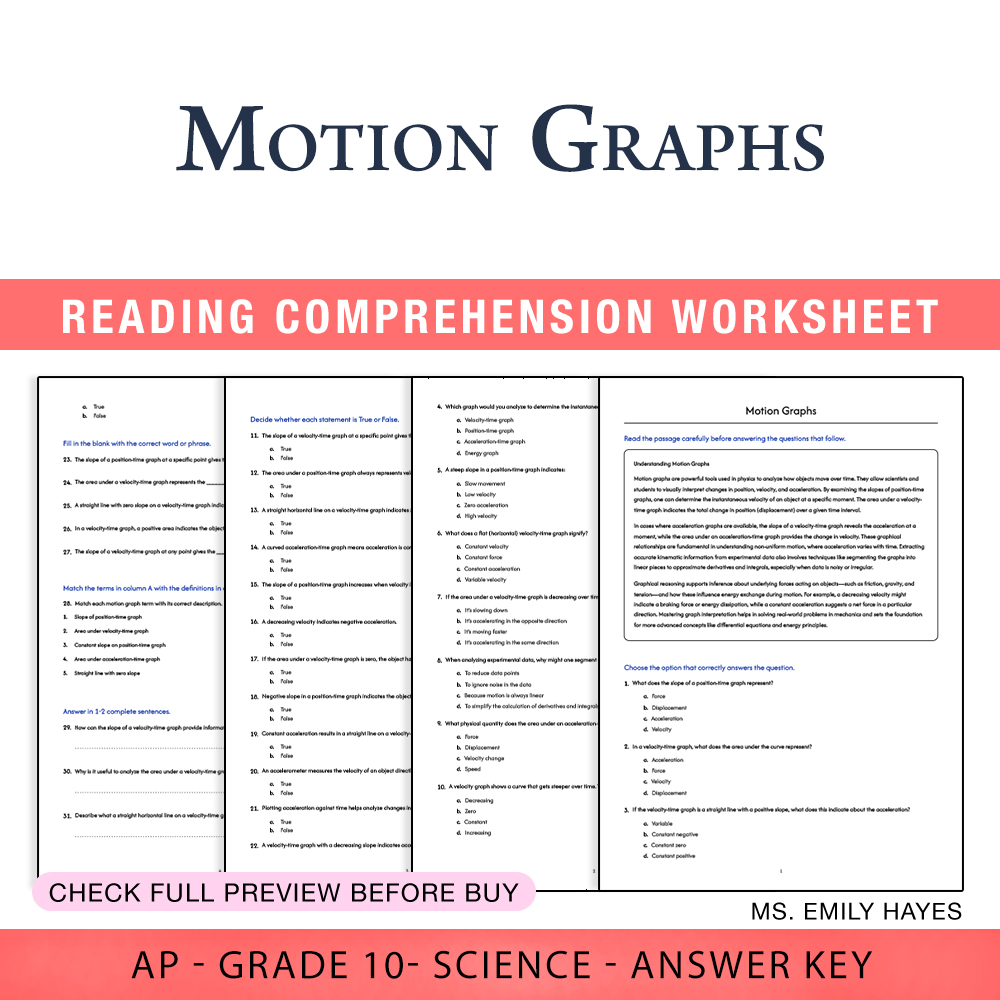
10th Grade Science | Motion Graphs Worksheet (PDF+ Answer Key)
 Created byCopper Leaf Classroom
Learning Objectives
- Interpret slopes and areas of position, velocity, and acceleration graphs to determine instantaneous rates and accumulated change.
- Connect features of graphs to derivatives and integrals in the context of non-uniform motion.
- Extract kinematic quantities from experimental data using graphical methods, including piecewise-linear models.
Also included in: Grade 10 Science AP | Physics & Energy Concepts (PDF+ Answer Key) +1 more
Instant download
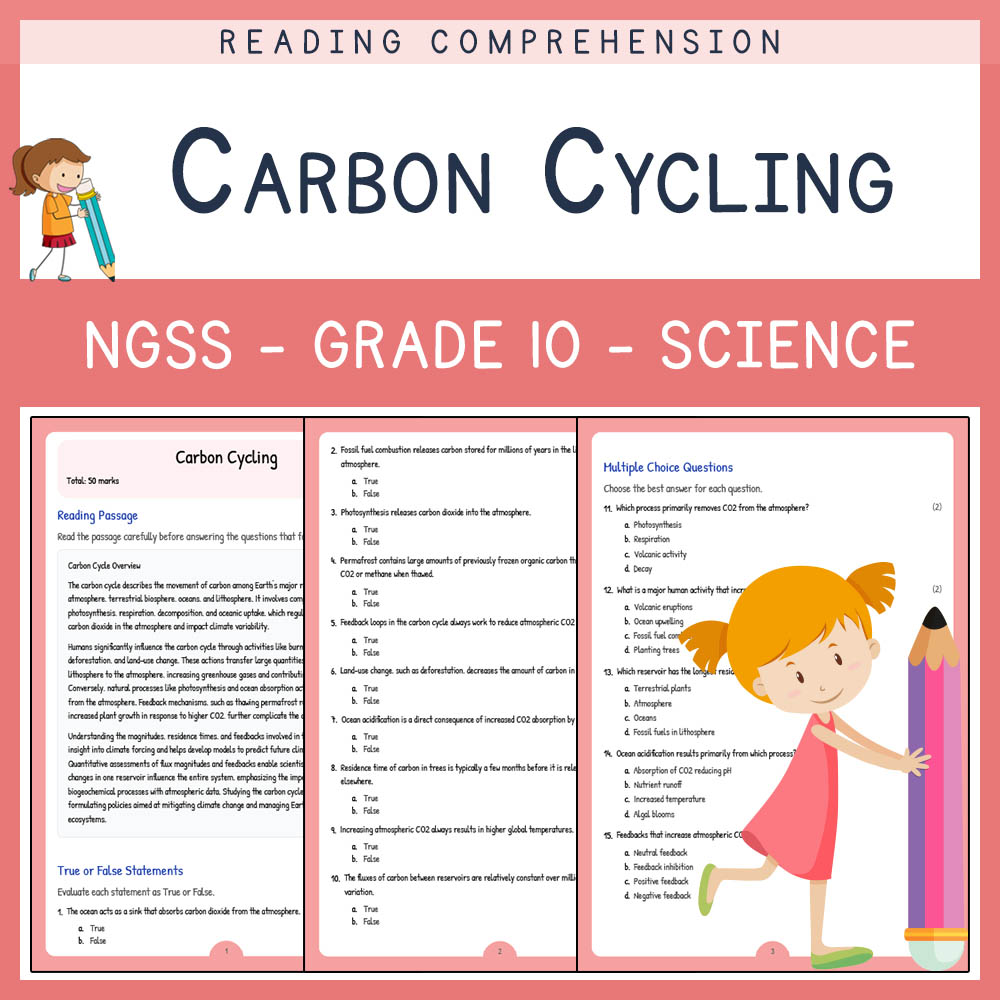
Grade 10 Science | Carbon Cycling Worksheet (PDF + Answer Key) | NGSS Alignment
 Created byLumora Learning
Learning Objectives
- Describe the key components and fluxes involved in the global carbon cycle.
- Explain how sources, sinks, and feedback mechanisms influence atmospheric CO2 concentrations.
- Analyze the impacts of human activities and natural processes on carbon fluxes and climate.
Instant download
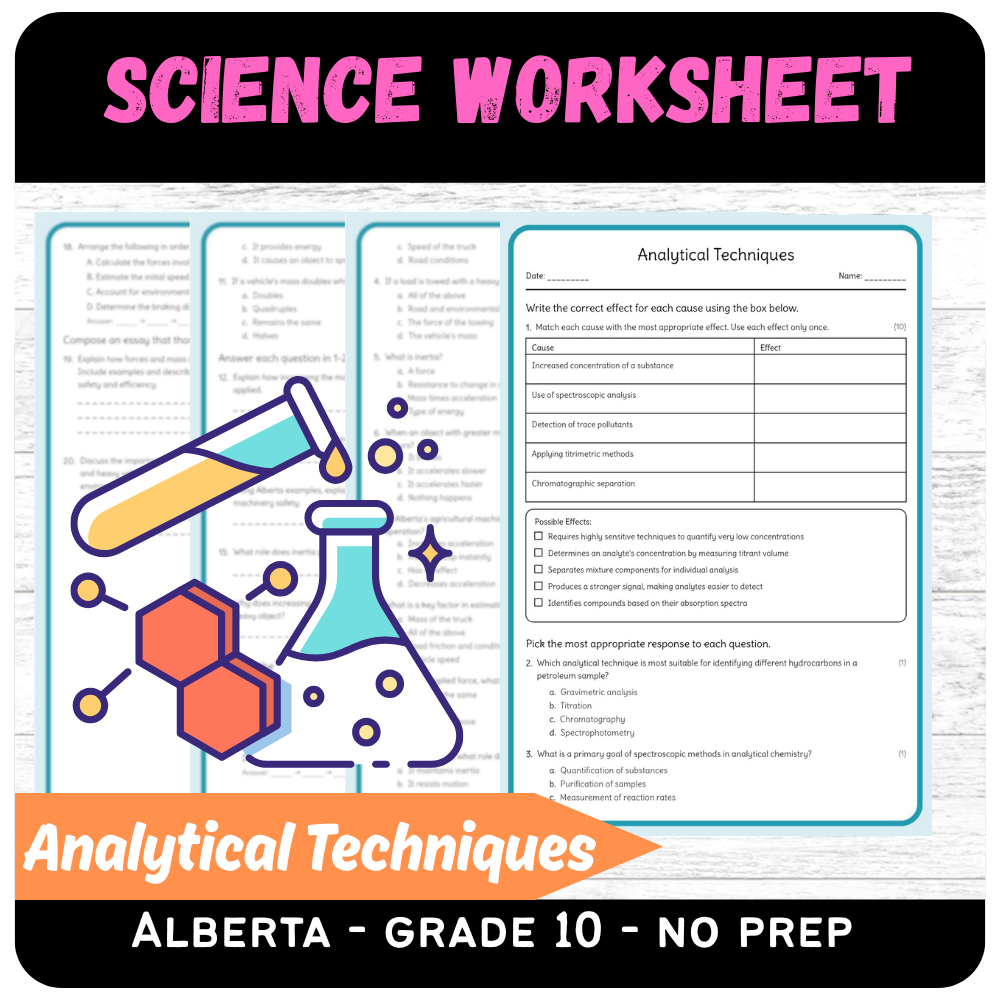
Grade 10 Science | Analytical Techniques Worksheet (PDF) – Alberta Standards
 Created byBright Mind Resources
Learning Objectives
- Understand the role of spectroscopic, chromatographic, and titrimetric methods in analytical chemistry.
- Interpret instrumental data, detection limits, and perform mass-based calculations for analysis and compliance reporting.
- Recognize applications of analytical techniques in environmental and industrial contexts.
Instant download

Grade 10 Science | Inheritance Patterns Worksheet (AP Standards) (PDF)
 Created byEvergreen Desk Education
Learning Objectives
- Explain how Mendelian segregation and independent assortment shape offspring genotypes and phenotypes.
- Interpret pedigrees and Punnett-square predictions using dominance, linkage, and chromosomal inheritance concepts.
- Use molecular markers (e.g., sequence variants) and allele frequencies to infer genetic variation within populations.
Also included in: Grade 10 Genetics & Cell Systems Science Lesson Bundle – Advanced Placement (AP) +1 more
Instant download

Grade 10 Science | Bond Energetics Worksheet with Short Notes (Printable PDF)
 Created byMeadowlark Worksheets
Learning Objectives
- Understand how bond formation and breaking relate to energy changes in chemical reactions.
- Distinguish between exothermic and endothermic processes using bond energy models.
- Interpret potential energy diagrams and bond enthalpy values to analyze energy flow during reactions.
Also included in: Grade 10 Science – Matter and Its Interactions NGSS Unit Bundle (7 Worksheets) +1 more
Instant download

Grade 10 Science | Net Force Direction Worksheet Elena | California Standards
Created byLumora LearningLearning Objectives
- Explain how net force direction determines the direction of acceleration.
- Use vector addition of multiple forces to predict the direction of an object’s changing velocity.
- Distinguish acceleration direction from the directions of individual forces.
Instant download
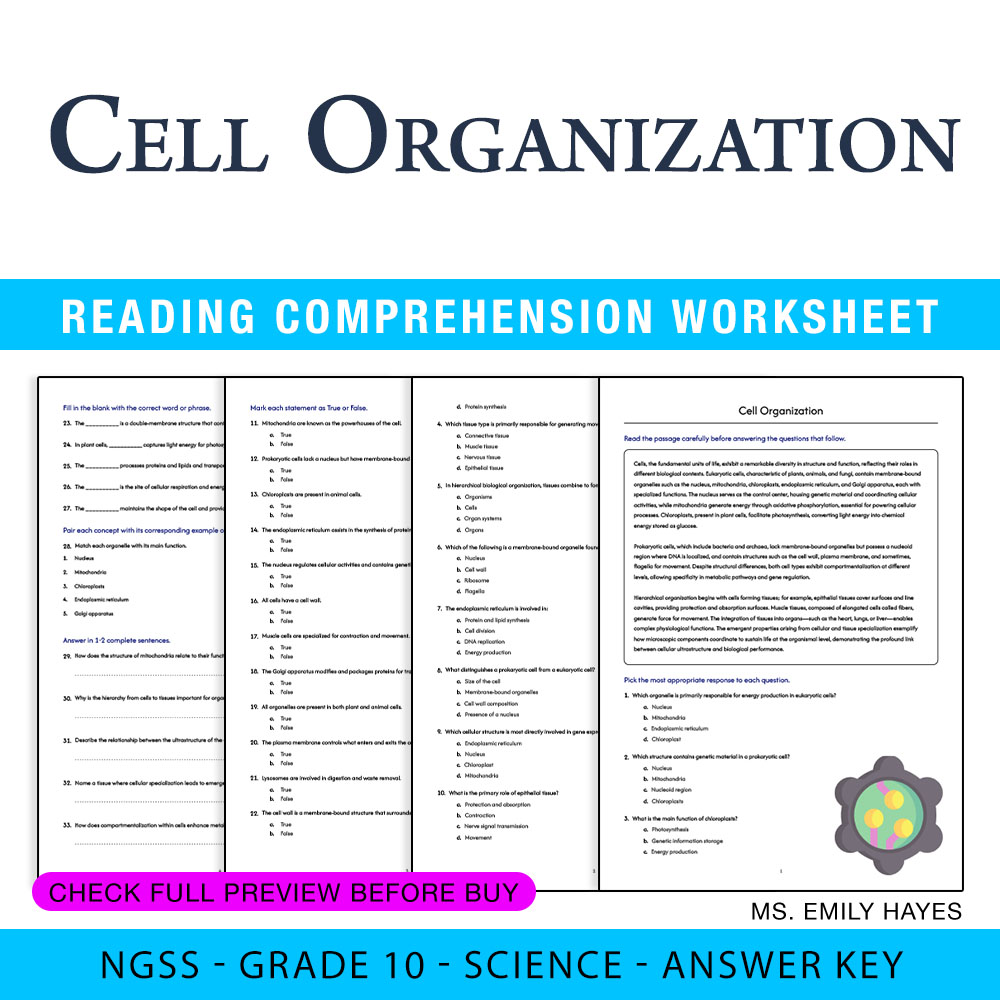
10th Grade Science | Cell Organization Worksheet (PDF+ Answer Key)
Created byCopper Leaf ClassroomLearning Objectives
- Describe the structure and functions of key membrane-bound organelles within eukaryotic and prokaryotic cells.
- Explain the hierarchical organization of cells into tissues and organs and how cellular specialization contributes to organ function.
- Compare and contrast the ultrastructure and metabolic roles of mitochondria, chloroplasts, endoplasmic reticulum, and nucleus.
Instant download

Mutations and Traits Assessment | Florida NGSSS Grade 10 Science
Created byPrism Point LearningLearning Objectives
- Explain how mutations can change DNA and lead to new genetic variants
- Describe common mutation sources and how mutations can affect gene function or expression
- Analyze how fitness and the environment influence whether mutations spread over generations
Also included in: Grade 10 Cells, Genetics & Evolution Science Lesson Bundle | Florida NGSSS +1 more
Instant download
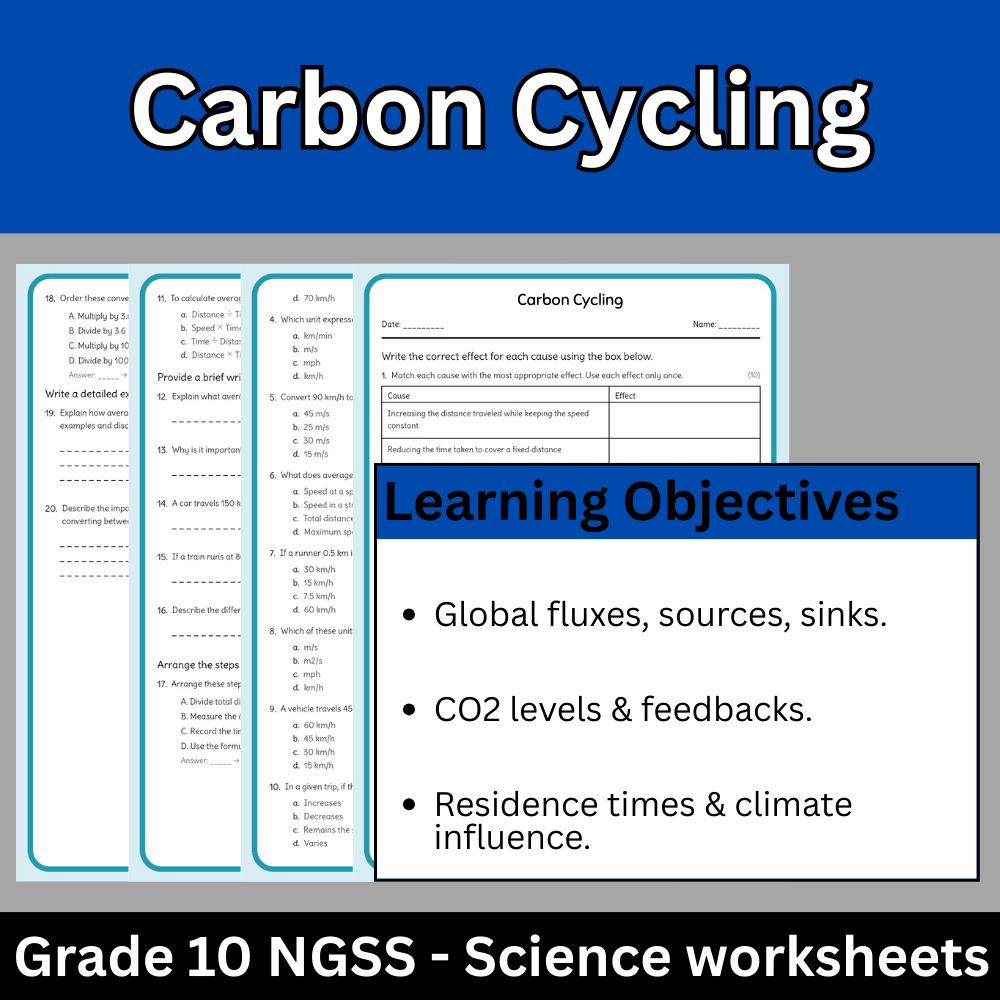
Grade 10 Science | Carbon Cycling Worksheet (NGSS Aligned) – Answer Key (PDF)
Created byBright Mind ResourcesLearning Objectives
- Describe the components and fluxes involved in the global carbon cycle.
- Explain how sources, sinks, and feedbacks influence atmospheric carbon dioxide levels.
- Analyze flux magnitudes, residence times, and feedback loops affecting climate.
Instant download

Particle Interactions Worksheet for Grade 10 Science – NGSS-Aligned Practice
JCreated byJ.S SheetsLearning Objectives
- Compare how crystal structures and molecular interactions influence material properties.
- Explain the role of electrical forces, lattice energy, and hydrogen bonding in phase transitions.
- Distinguish between ionic lattices and molecular solids based on properties like melting points and solubility.
Also included in: Grade 10 Chemical Reactions and Equilibrium Science – Lesson Bundle NGSS
Instant download
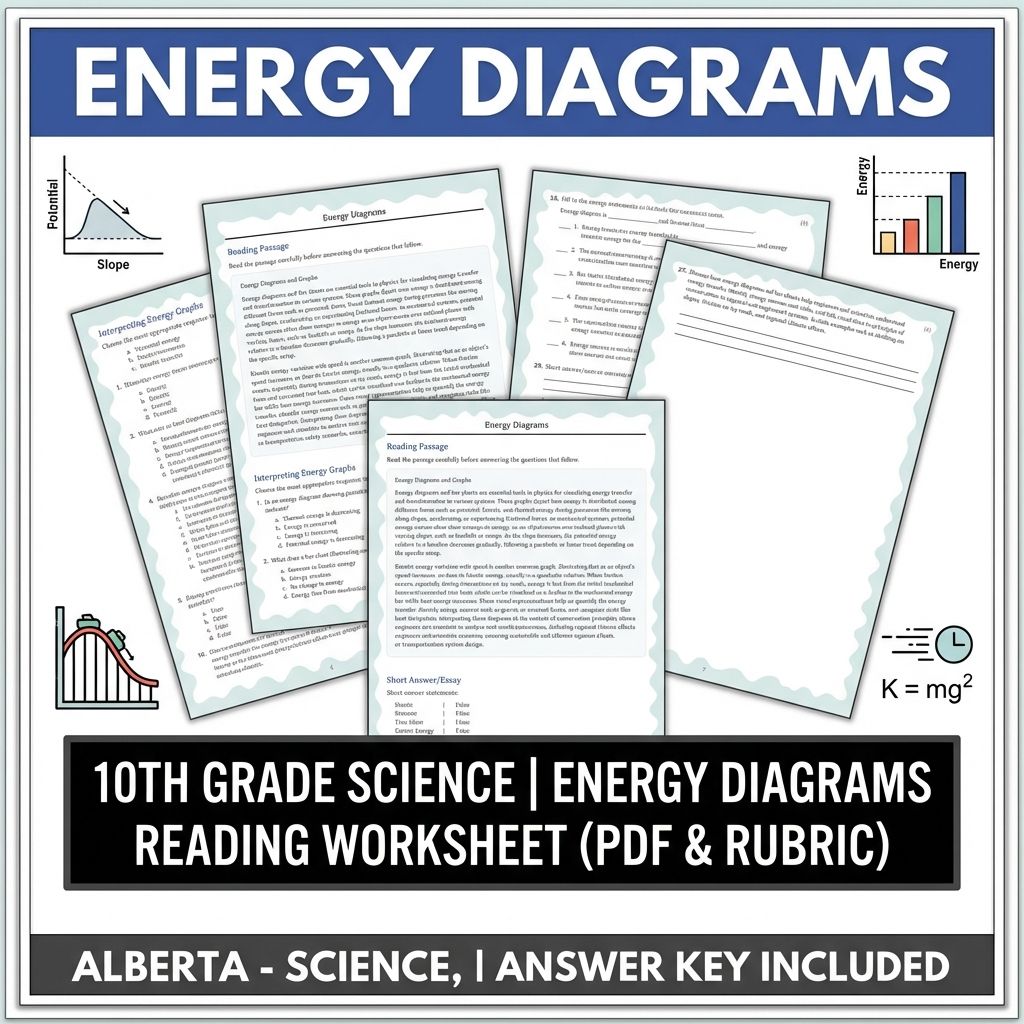
10th Grade Science | Energy Diagrams Reading Worksheet (PDF & Rubric)
JCreated byJ.S SheetsLearning Objectives
- Interpret energy diagrams and bar charts representing energy transfer in mechanical and thermal processes.
- Analyze potential and kinetic energy variations and energy loss due to heat during friction.
- Identify sources and sinks of energy in graphs related to regional phenomena and engineered systems.
Also included in: Grade 10 Science Bundle | Energy, Circuits & Mechanics (Answer Keys Included) +1 more
Instant download
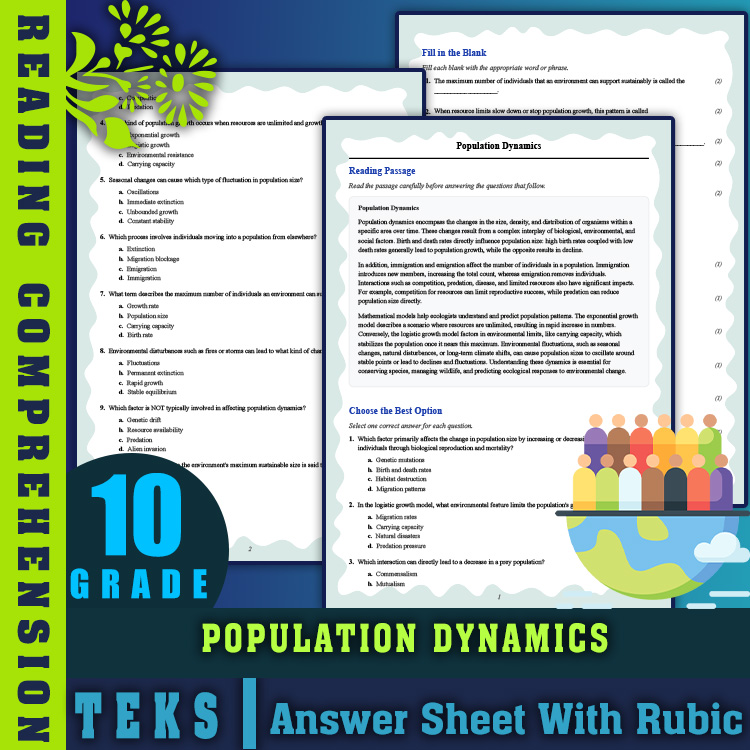
Grade 10 Science | Population Dynamics Reading Worksheet & Answer Key PDF
JCreated byJ.S SheetsLearning Objectives
- Understand the key factors influencing changes in populations over time.
- Interpret models and patterns of population growth, such as exponential and logistic growth.
- Analyze how interactions like competition, predation, and resource availability impact populations.
Instant download
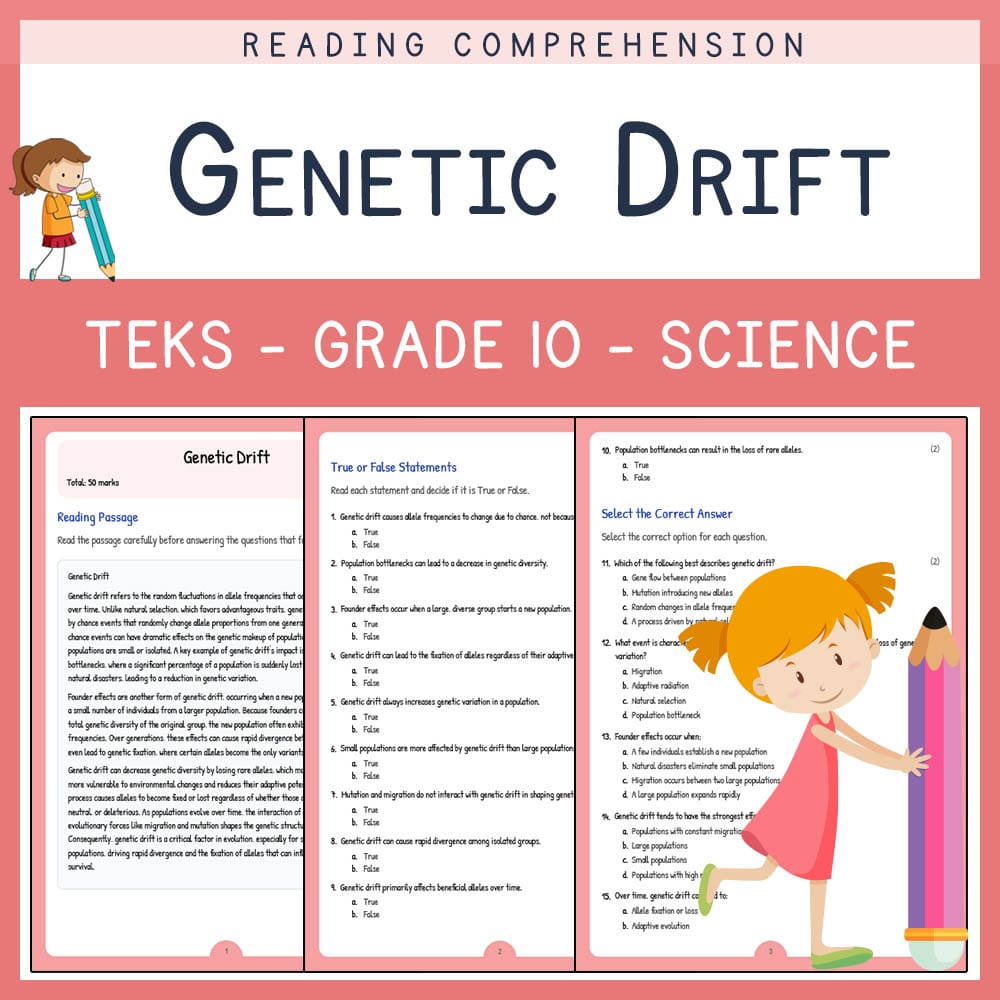
Grade 10 Science | Genetic Drift Worksheet | TEKS-Aligned
Created byLumora LearningLearning Objectives
- Explain the concept of genetic drift and its effects on small populations.
- Differentiate between genetic drift, selection, mutation, and migration.
- Describe the impacts of founder effects and population bottlenecks on genetic diversity.
Also included in: Grade 10 Science | Evolution & Classification Lesson Bundle | TEKS Aligned +1 more
Instant download
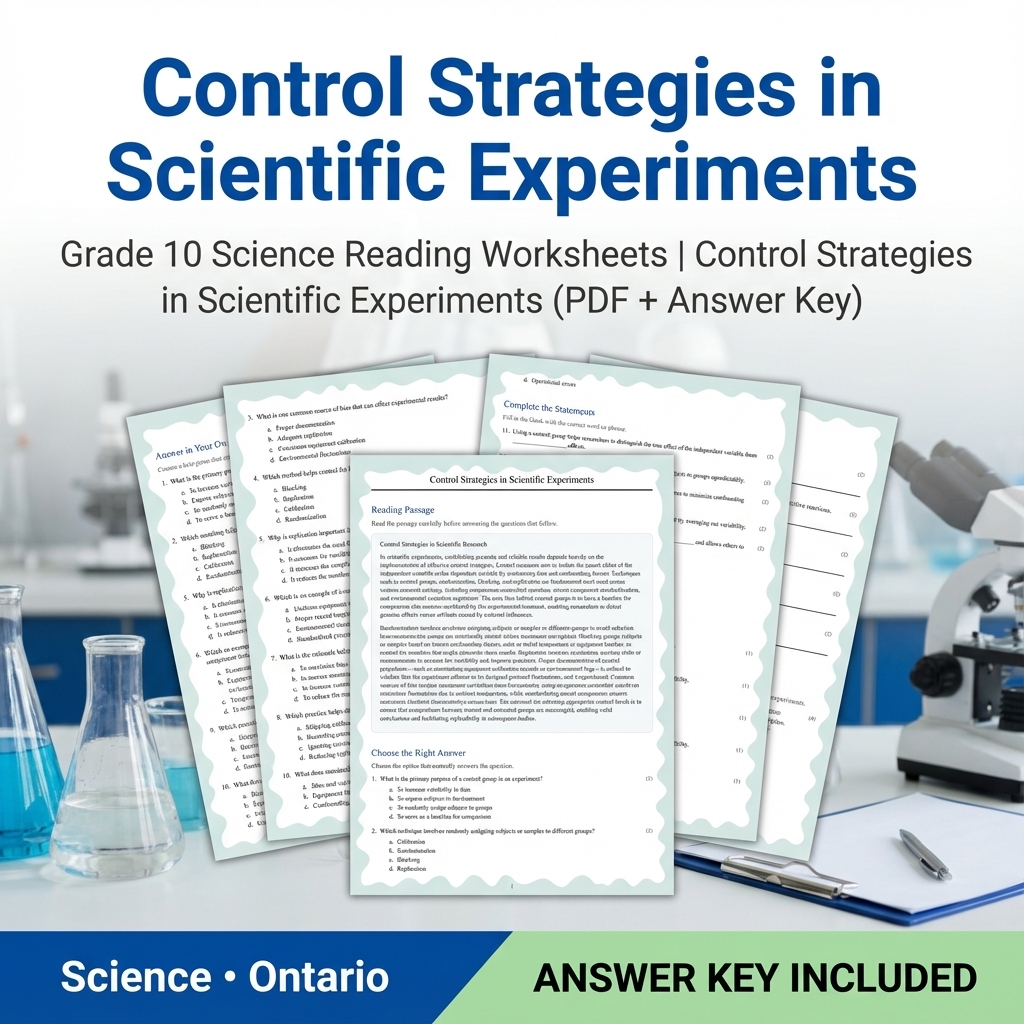
Grade 10 Science | Control Strategies in Scientific Experiments
JCreated byJ.S SheetsLearning Objectives
- Explain the purpose of control groups in experiments
- Describe methods such as randomization, blocking, and replication
- Identify common sources of bias and confounding factors in experiments
Also included in: Grade 10 Science UNIT Bundle – Data Representation, Safety & Research Skills +1 more
Instant download

Grade 10 Science – Stratigraphic Record & Practice | Daily Reading Worksheet
Created byBright Mind ResourcesLearning Objectives
- Identify and explain the principles of stratigraphy such as superposition and correlation.
- Interpret stratigraphic sequences and fossil assemblages to infer Earth's historical events.
- Understand the methods used for dating rocks, including radiometric decay and isotopic analysis.
Also included in: Grade 10 Earth Science Daily Reading Worksheets Lesson Bundle | AP +2 more
Instant download

Grade 10 Science | Design Problem Constraints Worksheet (PDF)
Created byEvergreen Desk EducationLearning Objectives
- Explain how constraints (time, cost, safety, energy use, and materials) shape the range of acceptable engineering design solutions
- Justify design choices by linking each major decision to a specific constraint and describing trade-offs
- Evaluate whether a proposed solution is feasible by checking evidence, calculations, and safety considerations
Also included in: Grade 10 Engineering Design Trade-Offs Science Lesson Bundle: General +1 more
Instant download
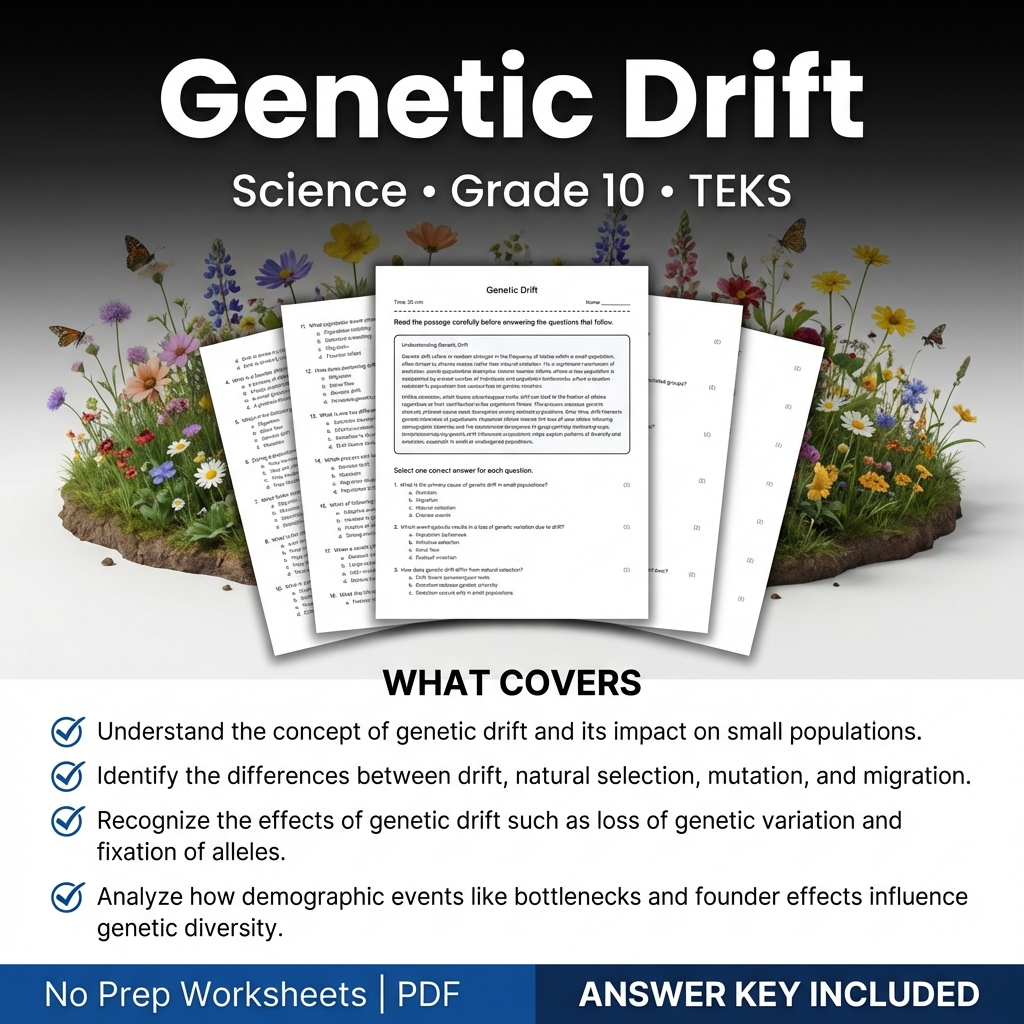
Genetic Drift Worksheet for Grade 10 Science | TEKS Aligned Practice
 Created byCoral Reef Learning
Learning Objectives
- Understand the concept of genetic drift and its impact on small populations.
- Identify the differences between drift, natural selection, mutation, and migration.
- Recognize the effects of genetic drift such as loss of genetic variation and fixation of alleles.
Instant download
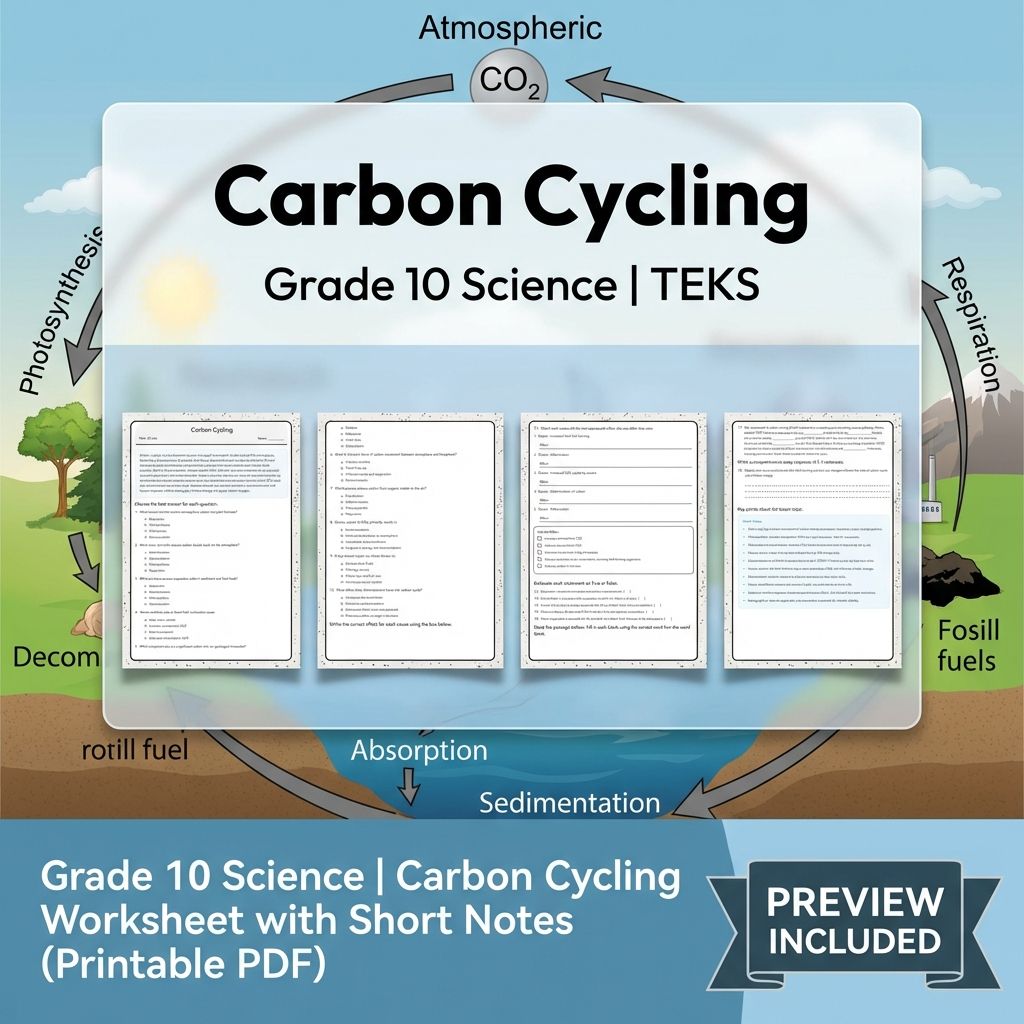
Grade 10 Science | Carbon Cycling Worksheet with Short Notes (Printable PDF)
Created byMeadowlark WorksheetsLearning Objectives
- Describe the process of carbon cycling and its components.
- Identify the roles of photosynthesis and respiration in carbon transfer.
- Explain how human activities influence carbon fluxes and climate change.
Instant download
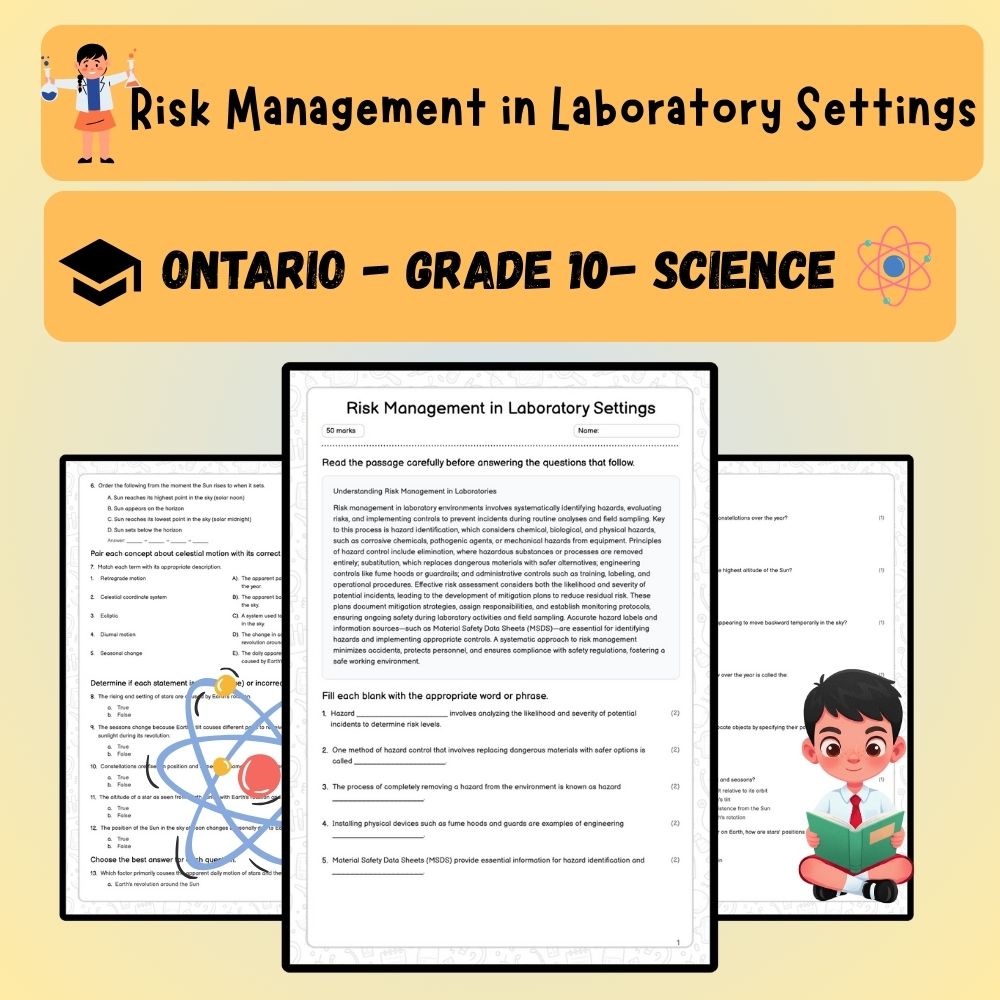
Grade 10 Science | Risk Management in Laboratory Settings Worksheet (Answer Key)
Created byPrism Point LearningLearning Objectives
- Understand the principles of hazard identification and risk assessment.
- Identify chemical, biological, and physical hazards in laboratory environments.
- Learn strategies for hazard elimination, substitution, and control measures.
Also included in: Grade 10 Science UNIT Bundle | Data Analysis, Safety & Modeling Worksheets +1 more
Instant download
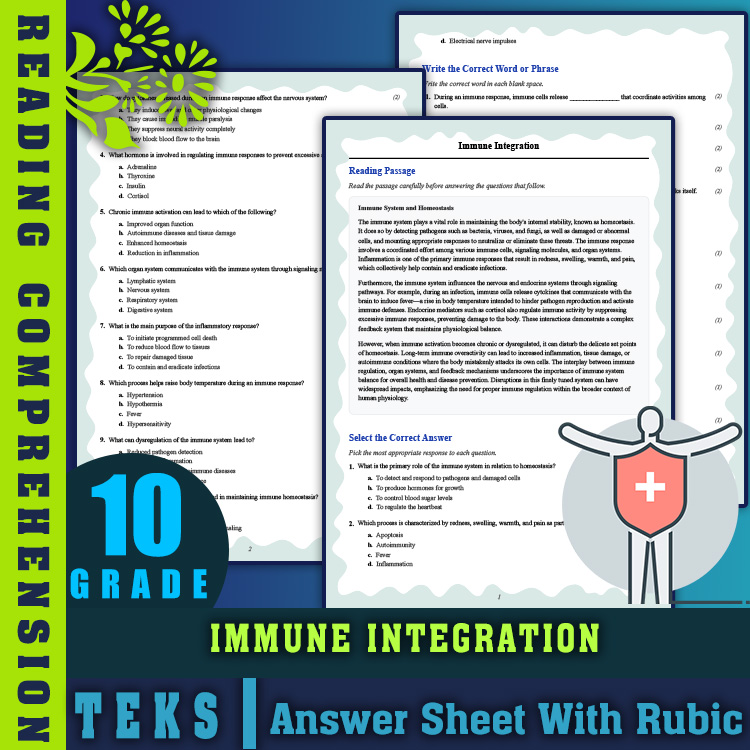
10th Grade Science | Immune Integration Reading Worksheet (PDF + Answer Key)
JCreated byJ.S SheetsLearning Objectives
- Understand how the immune system contributes to maintaining homeostasis in the human body.
- Describe the roles of inflammatory responses, fever, and immune regulation in human physiology.
- Analyze how chronic immune activation can impact overall health and organ system interactions.
Instant download

Grade 10 Hydroecological Links Worksheet | Alberta Science Resource
Created byEvergreen Desk EducationLearning Objectives
- Explain how river flow patterns and timing influence habitat suitability and primary productivity in floodplain and riparian ecosystems.
- Describe how wetlands regulate nutrient cycling and ecosystem services through water storage, filtering, and habitat complexity.
- Interpret how groundwater availability and seasonal water use affect plant communities and species distributions.
Instant download

Grade 10 Science | Force Interactions in Science - Daily Reading Comprehension
Created byCoral Reef LearningLearning Objectives
- Understand different types of contact and non-contact forces
- Identify examples of force interactions in real-world scenarios
- Learn to represent forces using vectors and free-body diagrams
Instant download

Grade 10 Science Worksheet B: Trade-Off Optimization Practice | NGSS PDF
 Created byClear Sky Classroom
Learning Objectives
- Analyze trade-offs by comparing competing objectives using cost-benefit thinking and constraints.
- Identify design compromises using Pareto-front style reasoning (improving one objective limits another).
- Apply sensitivity analysis ideas to choose robust options under changing assumptions.
Also included in: Grade 10 Trade-Off Optimization Science Lesson Bundle: NGSS +1 more
Instant download

Population Patterns Worksheet with Answer Key & AP Science Guide
 Created byBright Quill Resources
Learning Objectives
- Explain how birth and death rates shape population size over time
- Describe carrying capacity and density-dependent interactions in real ecosystems
- Interpret population patterns such as cycles and range limits using age structure and simple models
Instant download

Grade 10 Science | Comparative Anatomy Worksheet (BC Standard) (PDF)
Created byEvergreen Desk EducationLearning Objectives
- Explain how homologous, analogous, and vestigial structures provide evidence for evolutionary history.
- Differentiate between common ancestry and convergent evolution using anatomical traits.
- Use anatomical evidence to make evidence-based claims about phylogenetic relationships.
Instant download
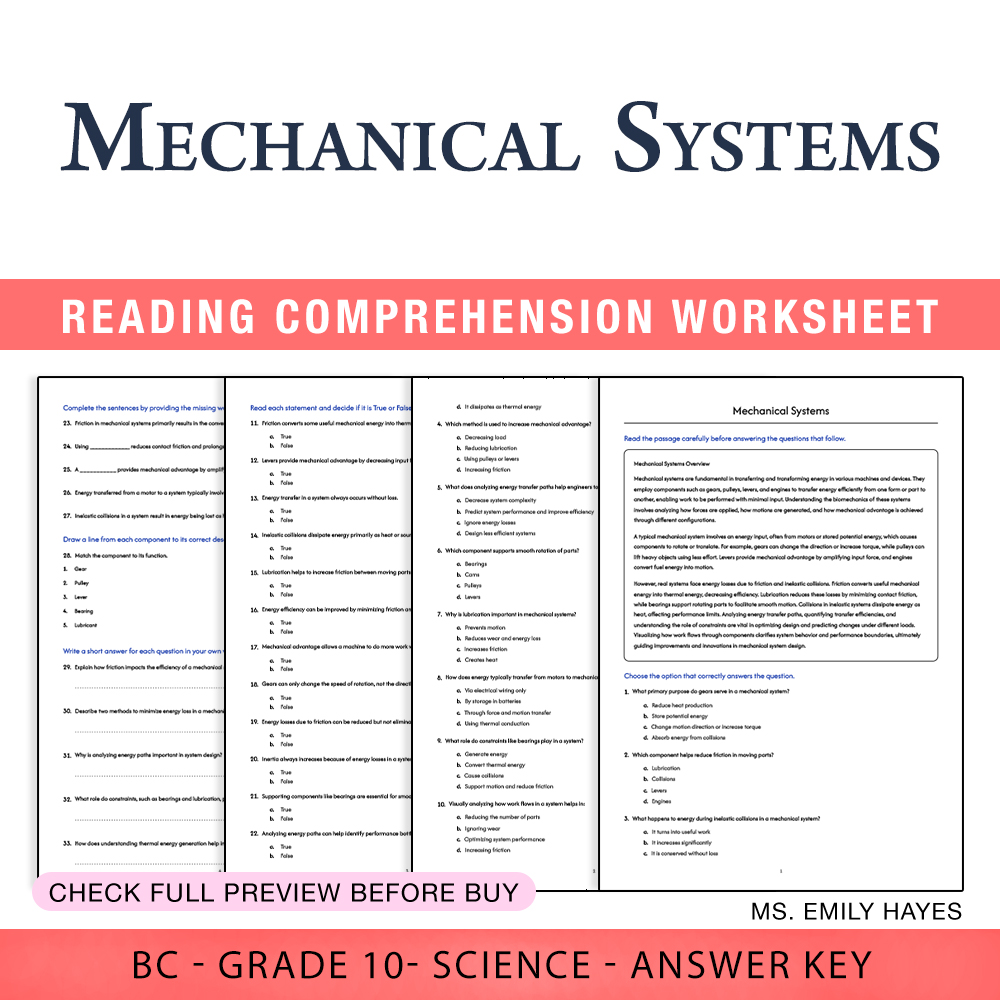
10th Grade Science | Mechanical Systems Worksheet (PDF + Answer Key)
Created byCopper Leaf ClassroomLearning Objectives
- Describe how mechanical systems transfer and transform energy using forces, gears, pulleys, and levers.
- Analyze the roles of energy input, friction, and collisions in mechanical efficiency.
- Visualize energy paths and understand how system components influence performance.
Also included in: Grade 10 Science BC – Energy, Thermodynamics & Ecosystems (PDF + Answer Key) +1 more
Instant download
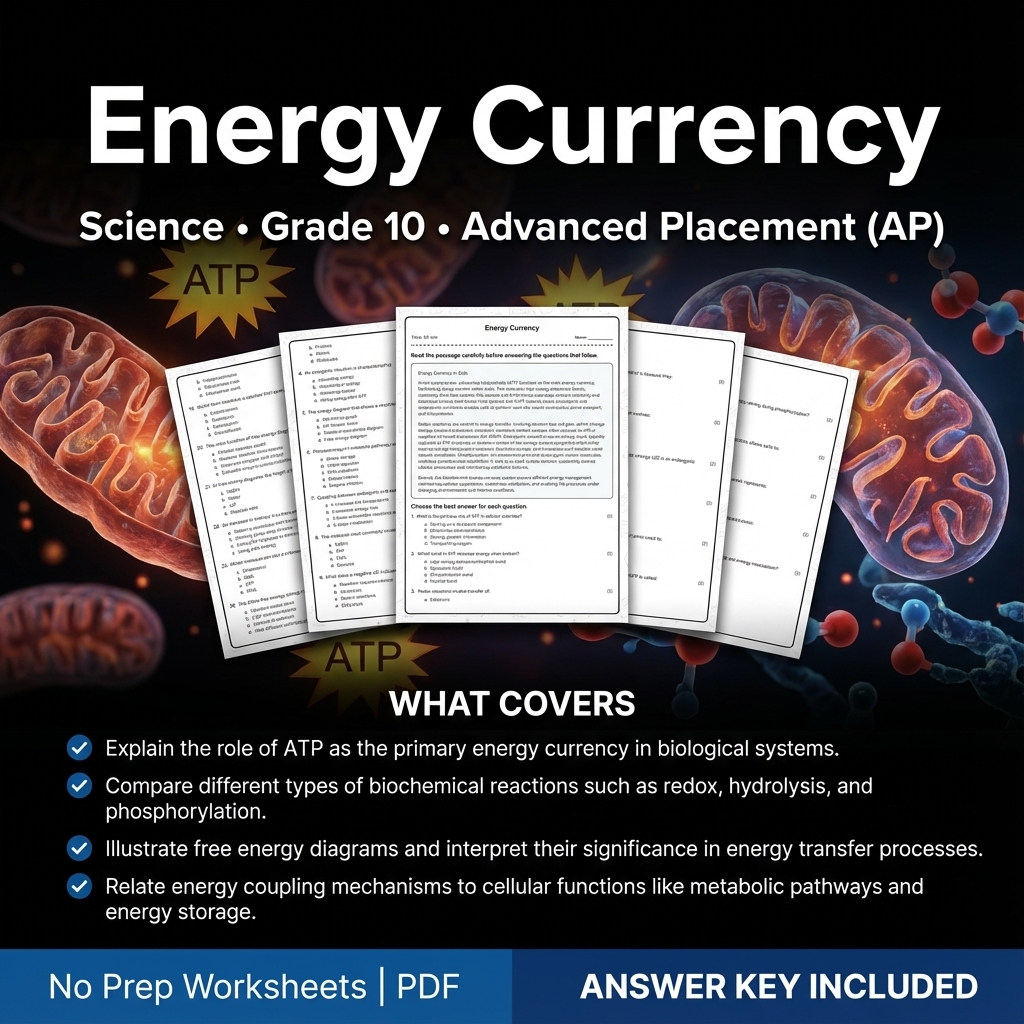
Grade 10 Science | Energy Currency Worksheet (Printable PDF + Answer Key)
Created byCoral Reef LearningLearning Objectives
- Explain the role of ATP as the primary energy currency in biological systems.
- Compare different types of biochemical reactions such as redox, hydrolysis, and phosphorylation.
- Illustrate free energy diagrams and interpret their significance in energy transfer processes.
Also included in: Grade 10 Science UNIT Worksheet Bundle – Genetics, Ecosystems & Cell Biology +1 more
Instant download
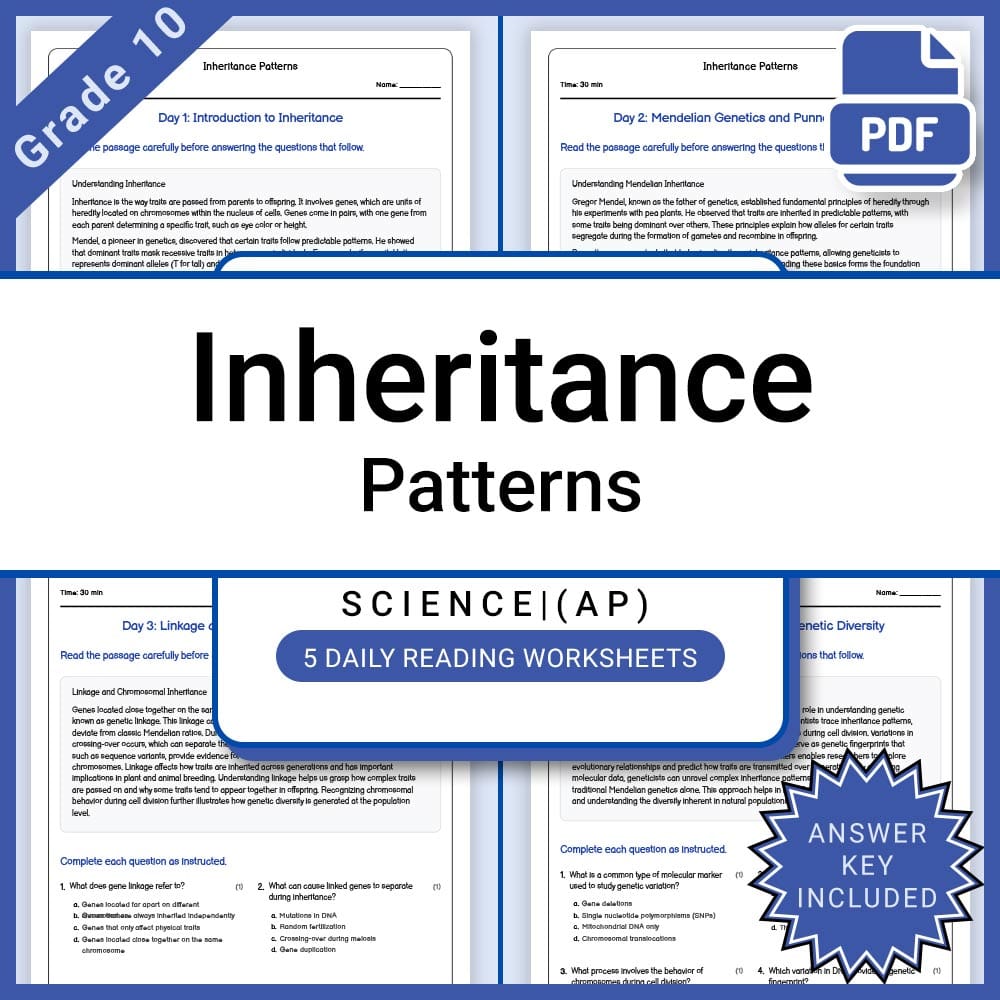
Grade 10 Science Inheritance Patterns Daily Reading Worksheet with Answer Key
JCreated byJ.S SheetsLearning Objectives
- Understand basic principles of heredity and genetics.
- Identify dominant and recessive traits through Punnett squares.
- Recognize patterns of inheritance such as linkage and chromosomal inheritance.
Also included in: Grade 10 Science Lesson Group Bundle | AP Framework & Daily Worksheets
Instant download
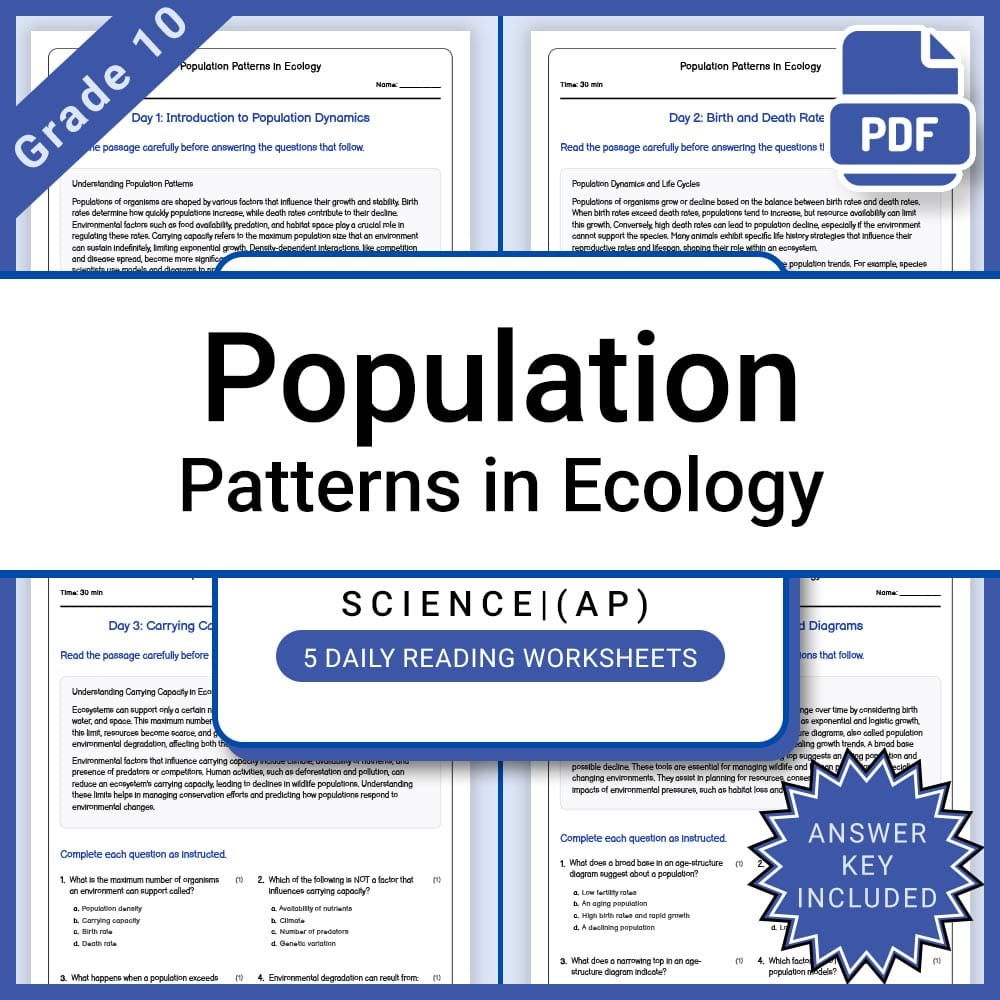
Grade 10 Science – Population Patterns Daily Reading Worksheet + Answer Key
JCreated byJ.S SheetsLearning Objectives
- Identify key factors that influence population size and structure.
- Understand the concepts of birth rates, death rates, and carrying capacity.
- Interpret age-structure diagrams and population models.
Also included in: Grade 10 Science Lesson Group Bundle | AP Framework & Daily Worksheets
Instant download
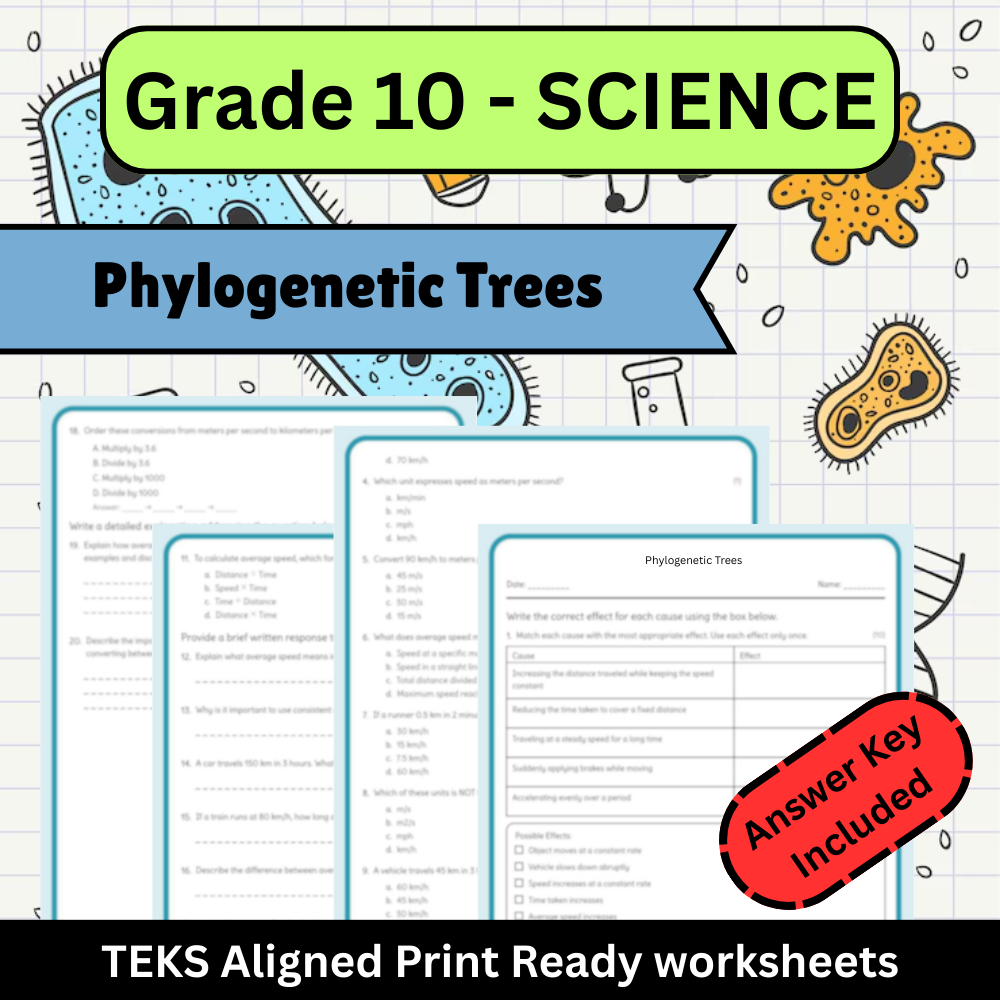
Grade 10 Science | Phylogenetic Trees Worksheet (Worksheet + Answer Key) - TEKS Aligned
Created byBright Mind ResourcesLearning Objectives
- Understand how phylogenetic trees represent hypotheses of evolutionary relationships.
- Identify shared derived traits, molecular sequences, and fossil data used in constructing trees.
- Explain how classification reflects evolutionary history through nested groups.
Also included in: Grade 10 Science | Evolution & Heredity Unit Worksheet Bundle (TEKS Aligned) +5 more
Instant download

Grade 10 Science – Radiation Energy Transfer & Sunlight | Reading Worksheet
Created byBright Mind ResourcesLearning Objectives
- Understand how electromagnetic radiation transfers energy without direct contact.
- Describe ways radiation can raise temperature and cause physical or chemical changes.
- Interpret how sunlight interacts with surfaces and influences system states.
Also included in: Grade 10 Energy & Models Science Lesson Bundle | CA Standards Daily Reading +1 more
Instant download

Grade 10 Science – Reaction Yield & Stoichiometry | Daily Reading Worksheet
 Created byQuiet Forest Education
Learning Objectives
- Understand the concept of limiting reagents in a chemical reaction.
- Differentiate between theoretical yield and actual yield.
- Calculate percent yield of a reaction.
Also included in: Matter and Chemical Change Grade 10 Science Daily Reading Bundle | Ontario +1 more
Instant download
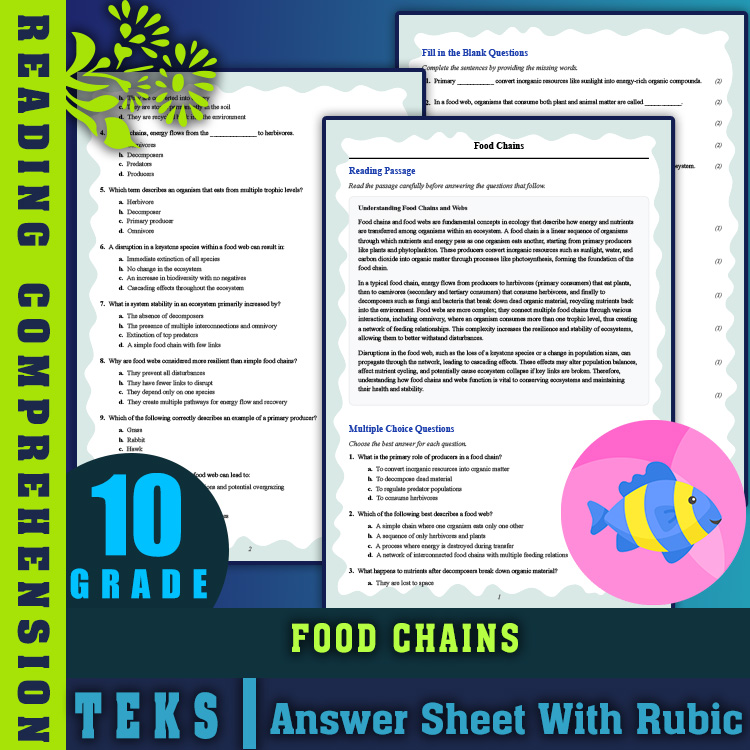
10th Grade Science | Food Chains Reading Worksheet (PDF + Answer Key)
JCreated byJ.S SheetsLearning Objectives
- Understand the concept of food chains and food webs and how energy flows through ecosystems.
- Identify the roles of producers, consumers, and decomposers in food chains.
- Explain the effects of disruptions in food webs on ecosystems.
Instant download

Engineering Problem Worksheet | California Standards Grade 10 Science
JCreated byJ.S SheetsLearning Objectives
- Understand how to define engineering problems in terms of success criteria and constraints.
- Learn how criteria and constraints influence engineering design decisions.
- Analyze real-world examples of engineering problems and solution pathways.
Also included in: Grade 10 Engineering Design Optimization Science Lesson Bundle +1 more
Instant download

Optimizing Design Worksheet | California Standards Grade 10 Science
JCreated byJ.S SheetsLearning Objectives
- Understand the principles of design optimization in engineering contexts.
- Identify criteria and constraints that influence structural design choices.
- Analyze trade-offs involved in selecting design parameters for bridges.
Also included in: Grade 10 Engineering Design Optimization Science Lesson Bundle +1 more
Instant download

Measurable Criteria Worksheet for Grade 10 Science | California Standards
JCreated byJ.S SheetsLearning Objectives
- Understand the difference between constraints and criteria in design processes.
- Identify measurable performance targets for projects.
- Distinguish between constraints that limit choices and criteria that define goals.
Also included in: Grade 10 Engineering Design Optimization Science Lesson Bundle +1 more
Instant download
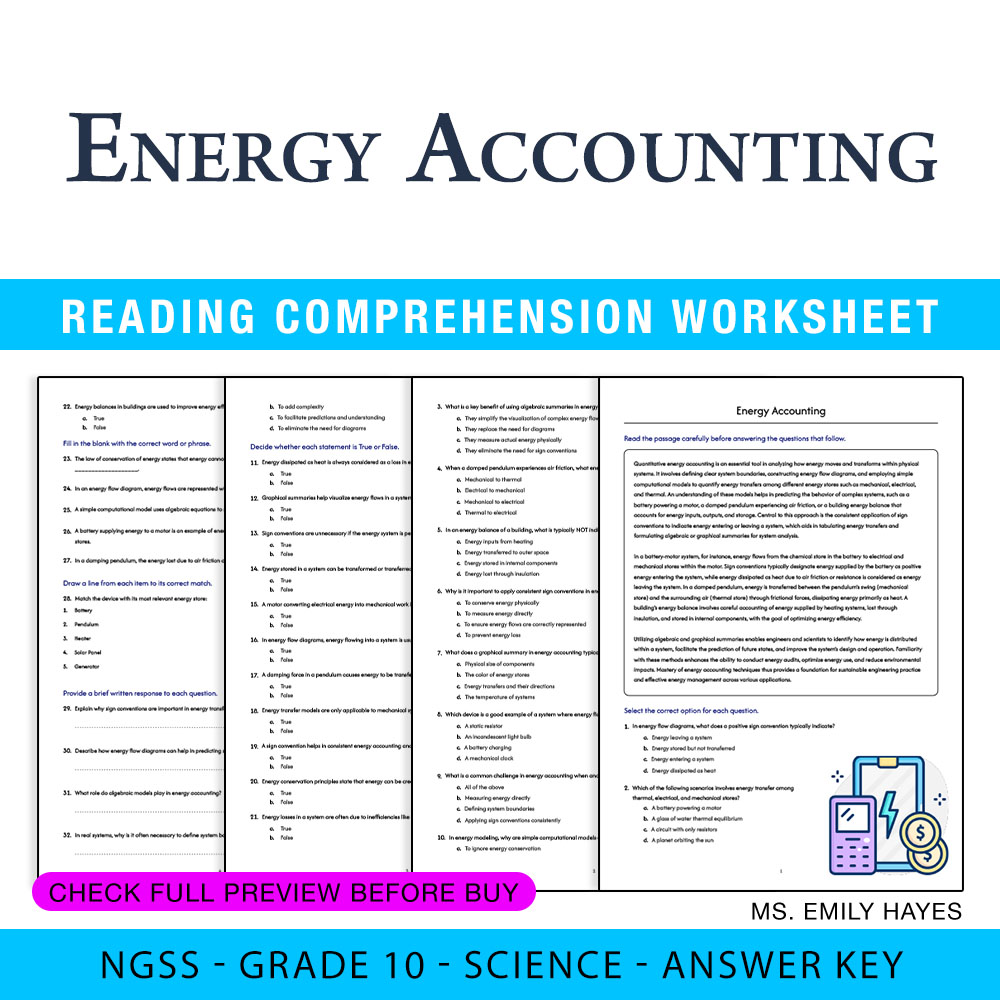
10th Grade Science | Energy Accounting Worksheet (PDF + Answer Key)
Created byCopper Leaf ClassroomLearning Objectives
- Understand the principles of energy flow in physical systems using energy flow diagrams.
- Apply system boundary definitions and sign conventions effectively in energy calculations.
- Use algebraic and graphical methods to summarize energy transfers and predict energy distribution.
Instant download

Grade 10 Dynamic Equilibrium Worksheet | Practice & Assessment PDF
Created byClear Sky ClassroomLearning Objectives
- Explain why chemical equilibrium is dynamic using forward and reverse reaction rates
- Interpret equilibrium expressions and predict how equilibrium shifts under changes in concentration, pressure, or temperature
- Use Le Châtelier’s principle and K (equilibrium constant) reasoning to forecast net reaction trends
Instant download
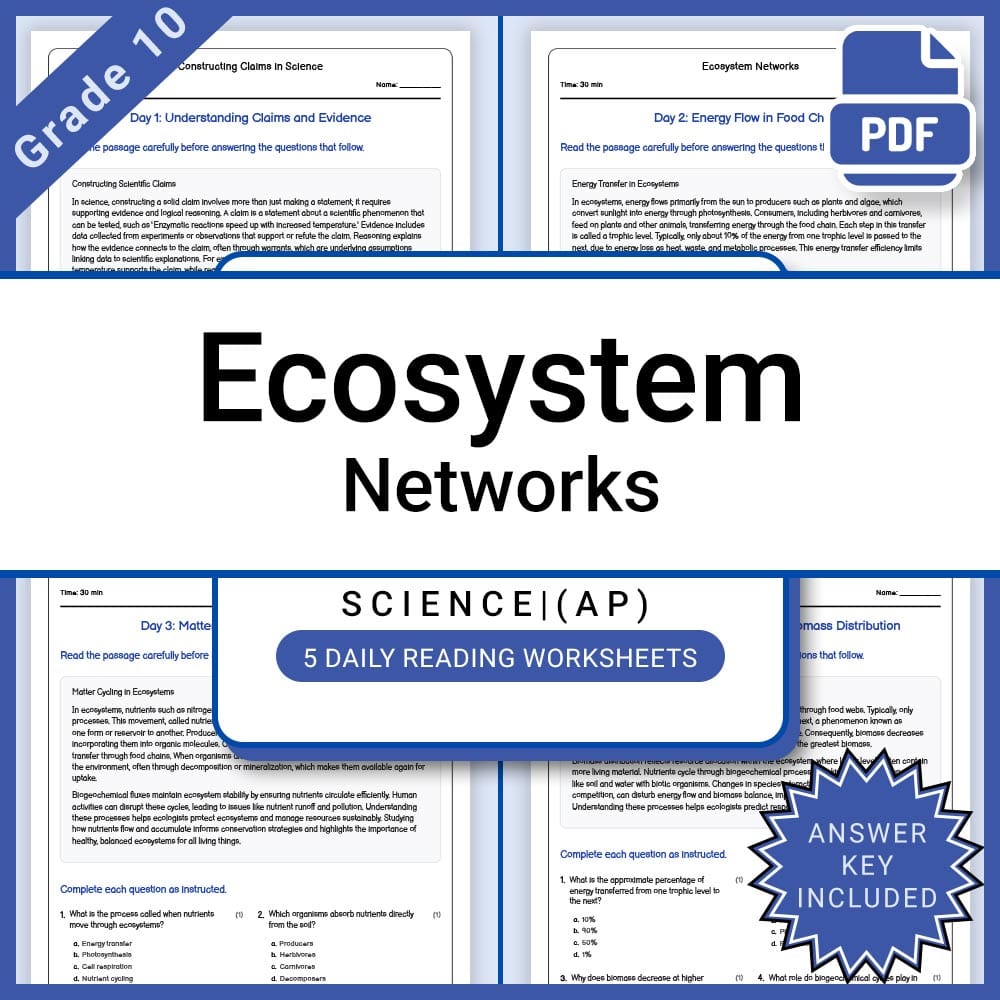
Grade 10 Science – Ecosystem Networks Daily Reading Worksheet + Answer Key
JCreated byJ.S SheetsLearning Objectives
- Identify components of ecosystems and food webs
- Understand energy flow and matter cycling within ecosystems
- Examine trophic levels and their interactions
Also included in: Grade 10 Science Lesson Group Bundle | AP Framework & Daily Worksheets
Instant download

Grade 10 Genetic Variation Worksheet | Practice & Assessment PDF
Created byClear Sky ClassroomLearning Objectives
- Explain how recombination during meiosis (independent assortment and crossing over) creates new allele combinations within a population.
- Describe how mutations and gene flow contribute additional genetic variation beyond what recombination produces.
- Connect sources of genetic variation to how natural selection can change population traits over time.
Instant download

Grade 10 Science | Meiosis and Genetic Variation Worksheet | AP Practice
Created byLumora LearningLearning Objectives
- Explain the processes of homologous pairing, recombination, independent assortment, and chromosomal segregation in meiosis.
- Describe how crossing-over and nondisjunction contribute to genetic variation and their effects on genotypic and phenotypic outcomes.
- Relate mechanisms of genetic variation to evolutionary processes and patterns observed in inheritance and molecular population data.
Also included in: Grade 10 Science | Biology and Ecosystems Custom Bundle | AP
Instant download
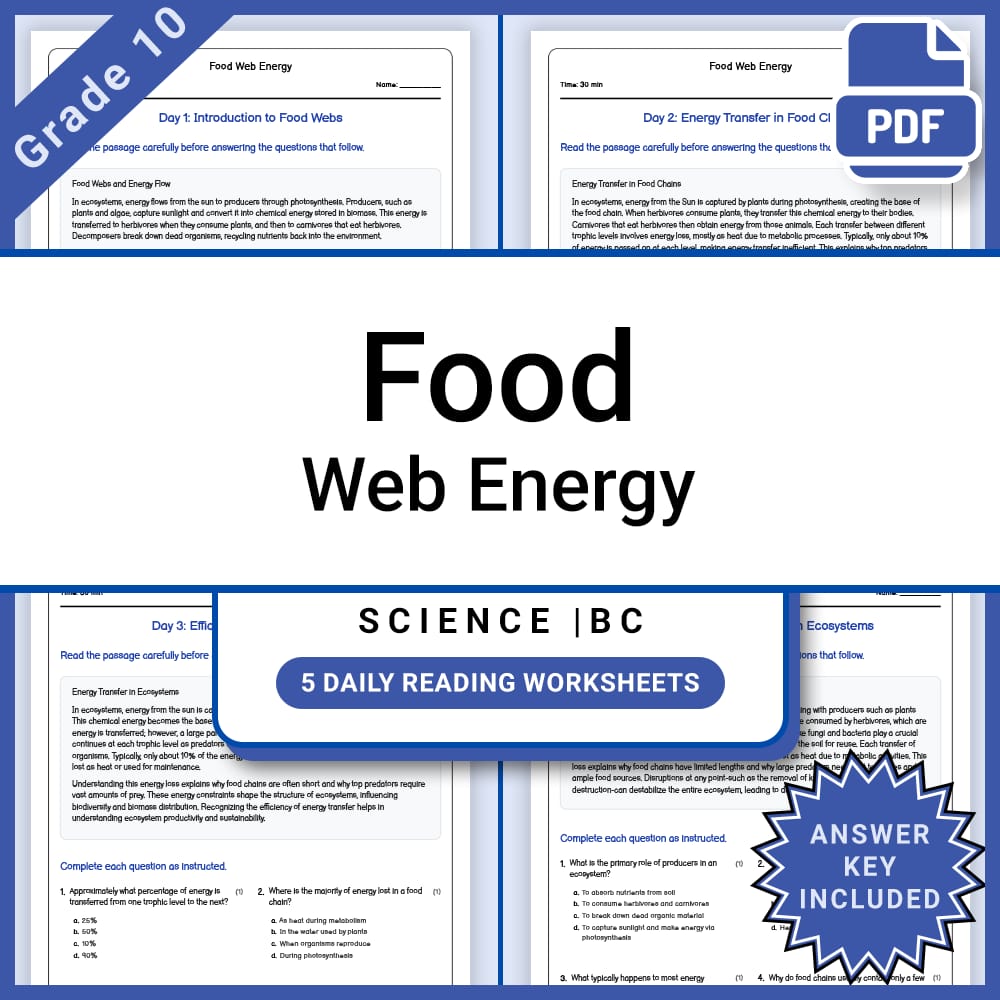
Grade 10 Science – Food Web Energy Daily Reading Worksheet + Answer Key
JCreated byJ.S SheetsLearning Objectives
- Understand the components of a food web and their roles
- Explain how energy flows through ecosystems
- Identify the connections between photosynthesis, respiration, and biomass
Also included in: Grade 10 Science Lesson Group BC Framework – Daily Reading Worksheets Bundle +1 more
Instant download
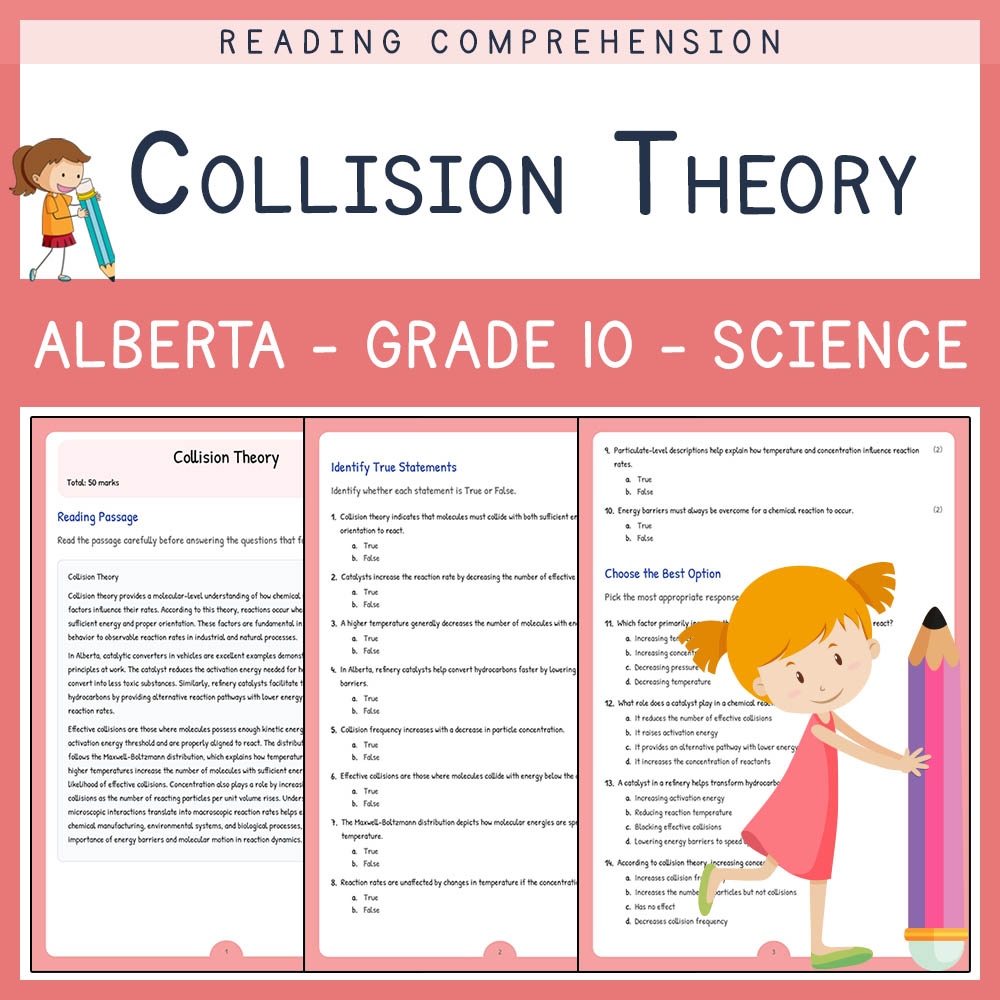
Grade 10 Science | Collision Theory Worksheet | Alberta Standard
Created byLumora LearningLearning Objectives
- Explain how molecular collisions influence reaction rates according to collision theory.
- Describe the concepts of activation energy and effective collisions.
- Analyze the role of energy barriers in chemical reactions, including examples like catalysts in Alberta's industrial applications.
Instant download
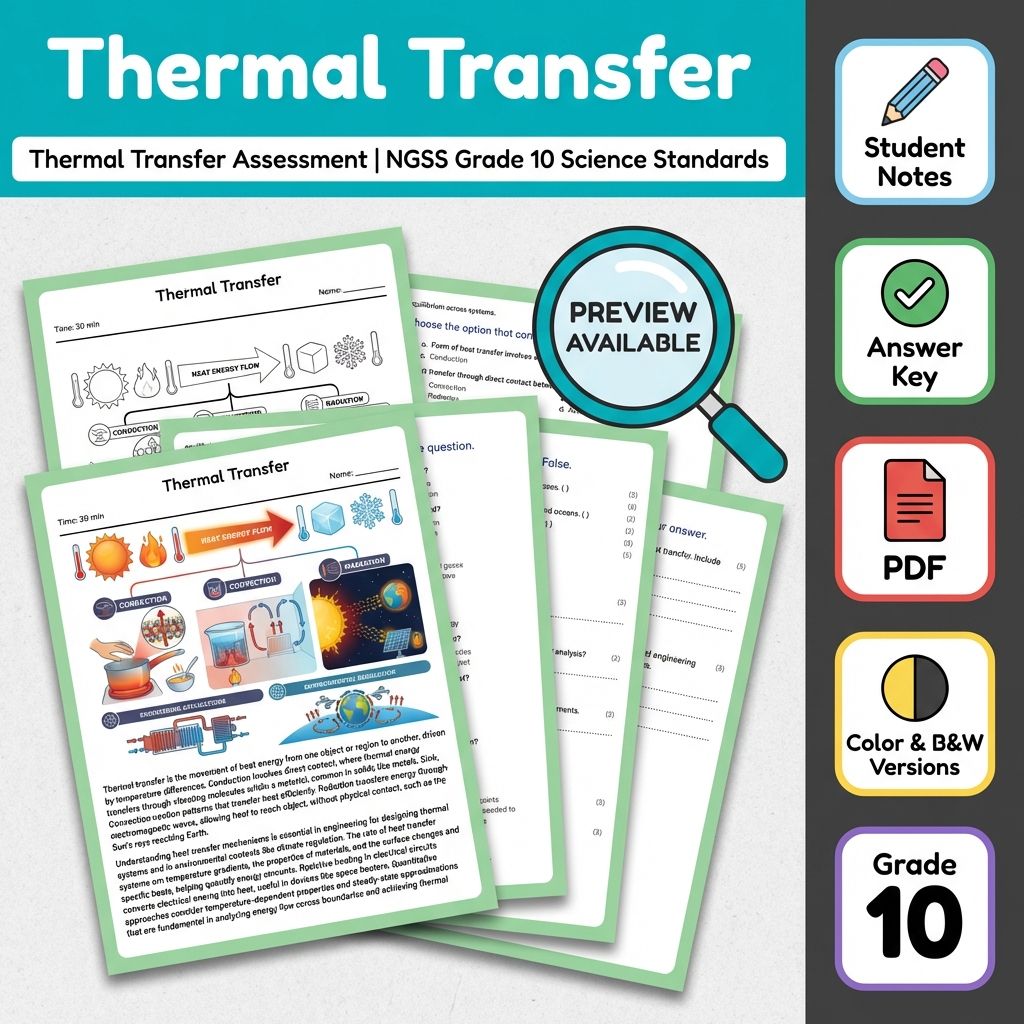
Thermal Transfer Assessment | NGSS Grade 10 Science Standards
Created byPrism Point LearningLearning Objectives
- Understand the mechanisms of heat transfer: conduction, convection, and radiation.
- Connect thermal energy changes to specific heat and phase change phenomena.
- Explain resistive heating and how electrical energy converts to thermal energy.
Also included in: Grade 10 Science | Work & Power NGSS Assessment Mini Bundle – Printable
Instant download

Grade 10 Stratigraphic Record Worksheet | AP Practice PDF
Created byClear Sky ClassroomLearning Objectives
- Use principles of stratigraphy (superposition, correlation, and unconformities) to interpret relative Earth history.
- Explain how radiometric decay helps determine absolute ages and why uncertainty matters.
- Connect fossil assemblages and biostratigraphic ranges to reconstruct past environments and climate changes.
Also included in: Grade 10 Earth & Space Sciences Science Lesson Bundle: Advanced Placement (AP) +1 more
Instant download
About Grade 10 Science Worksheets
Find Science worksheets built for Grade 10. All 7,038 cover core skills, practice, and review, each an instant PDF download.
Every worksheet on MyTeachingSheets is created by independent teacher-authors and reviewed before publication. All resources download as printable PDFs for classroom, homework, or at-home practice, and many include answer keys. Preview any worksheet free before buying.