
Grade 10 Science Worksheets
7,038 worksheets
Science Worksheet: Orbital Geometry Practice | General Grade 10 Standards
JCreated byJ.S SheetsLearning Objectives
- Explain how Earth’s axial tilt and yearly revolution change the angle and length of sunlight, producing seasons and day-length variation.
- Describe how the Moon’s orbit and relative position to the Sun produce lunar phases.
- Connect Earth’s rotation and orbital relationships to apparent motion of stars and planets.
Also included in: Grade 10 Earth and Space Systems Models Science lesson bundle – General +1 more
Instant download

Grade 10 Science | Process Comparison in Photosynthesis & Respiration - Practice
 Created byCoral Reef Learning
Learning Objectives
- Identify the inputs and outputs of photosynthesis.
- Understand the relationship between photosynthesis and cellular respiration.
- Compare the energy flow in autotrophic and heterotrophic organisms.
Instant download

Grade 10 Science | Electric Circuits Worksheet (PDF) | BC Standards
 Created byEvergreen Desk Education
Learning Objectives
- Explain how electrical energy is converted and transferred in an electric power system (generators, transformers, transmission lines, and loads).
- Analyze how resistive losses, reactive effects, and transmission distance reduce delivered energy and overall system efficiency.
- Compare centralized and distributed generation in terms of efficiency trade-offs, resilience, grid reliability, and environmental impact.
Instant download

Grade 10 Science | Human Impacts Worksheet | TEKS Aligned
 Created byLumora Learning
Learning Objectives
- Understand how human activities modify ecosystems through habitat alteration, pollution, and resource extraction.
- Identify the effects of urbanization and agriculture on biodiversity and ecosystem resilience.
- Explain how nutrient runoff and invasive species disrupt ecological functions.
Instant download

Grade 10 Science – Atomic Structure & Subatomic Particles | Daily Worksheet
 Created byQuiet Forest Education
Learning Objectives
- Identify protons, neutrons, and electrons within an atom
- Explain the functions of each subatomic particle
- Understand atomic number, mass number, and isotopes
Also included in: Matter and Chemical Change Grade 10 Science Daily Reading Bundle | Ontario +1 more
Instant download
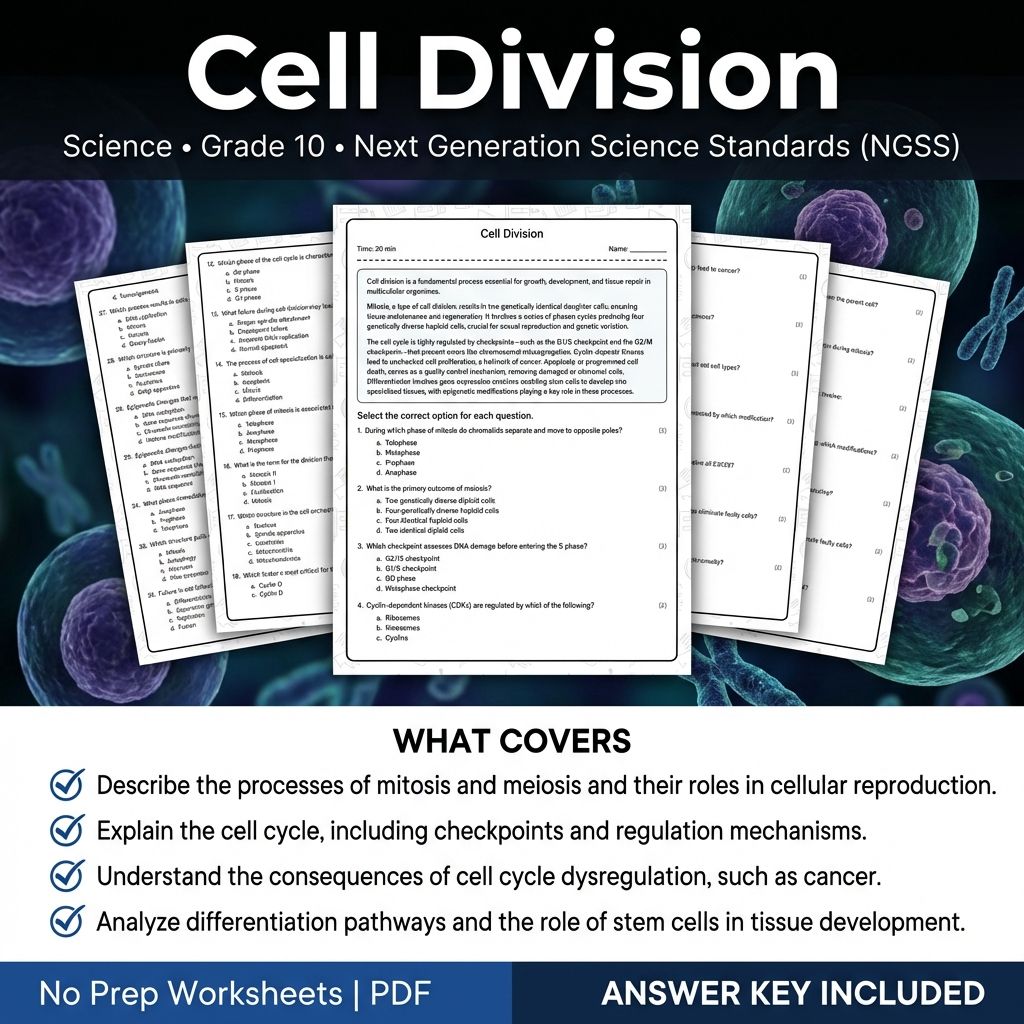
10th Grade Science | Cell Division Worksheets & Answer Key (Printable PDF)
Created byCoral Reef LearningLearning Objectives
- Describe the processes of mitosis and meiosis and their roles in cellular reproduction.
- Explain the cell cycle, including checkpoints and regulation mechanisms.
- Understand the consequences of cell cycle dysregulation, such as cancer.
Also included in: Grade 10 Science UNIT Worksheet Pack – Signal Integration, Physiology & Genetics +1 more
Instant download
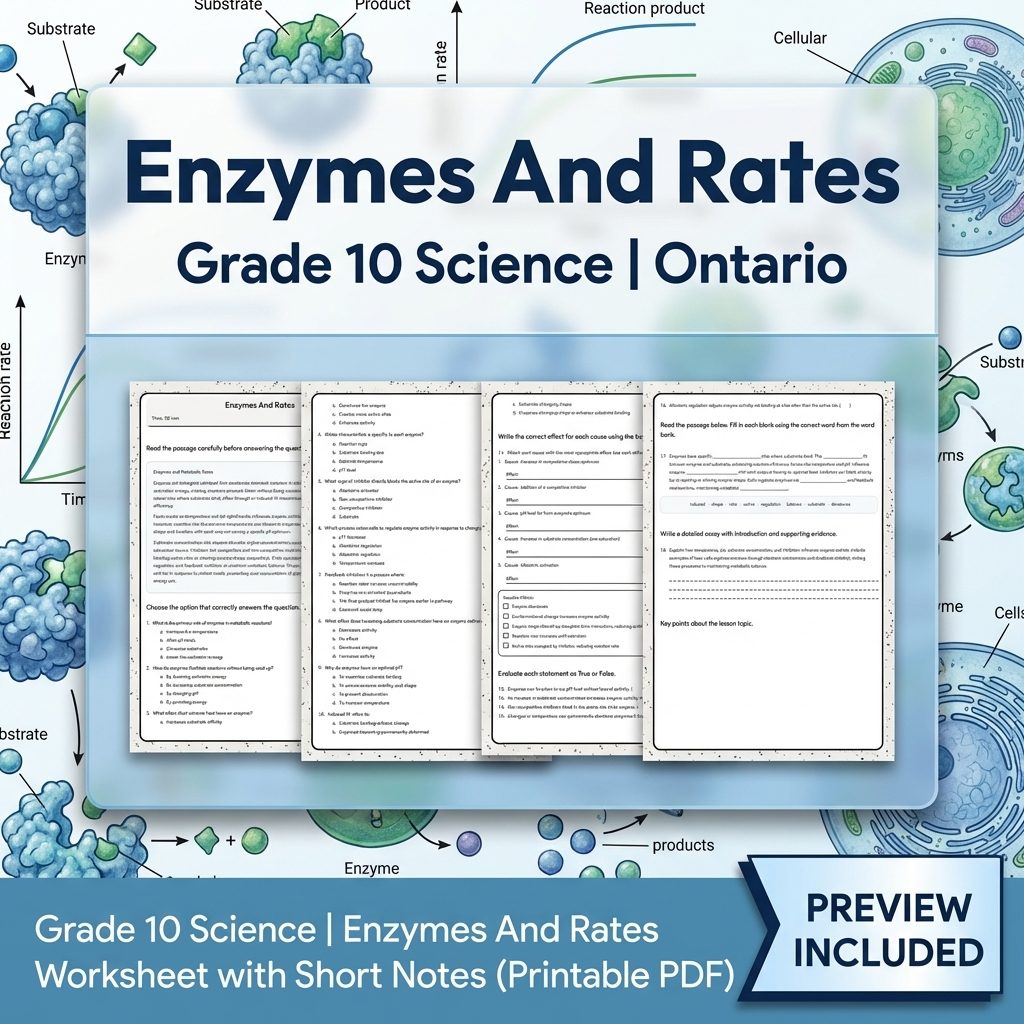
Grade 10 Science | Enzymes And Rates Worksheet with Short Notes (Printable PDF)
 Created byMeadowlark Worksheets
Learning Objectives
- Explain the properties and functions of enzymes in biological reactions.
- Describe how temperature, pH, substrate concentration, and inhibitors affect enzyme activity.
- Understand concepts of allosteric regulation and feedback inhibition in metabolic pathways.
Also included in: Grade 10 Science Lesson Group Bundle | Ontario Curriculum +1 more
Instant download

Grade 10 Science – Trophic Levels & Relationships | Daily Reading Worksheet
 Created byBright Mind Resources
Learning Objectives
- Identify different trophic levels in a food web.
- Explain how energy flows between trophic levels.
- Describe the roles of producers, consumers, and decomposers.
Also included in: Ecosystems Grade 10 Science Daily Reading Worksheets Bundle | NGSS +2 more
Instant download

Grade 10 Science | Human Impact Evidence Worksheet | General Standard
Created byLumora LearningLearning Objectives
- Explain how human activities can change Earth systems using measurable indicators in air, water, land, and life.
- Identify types of evidence (e.g., long-term climate records, satellites, chemical measurements) that support human impact claims.
- Use cause-and-effect reasoning to connect sources, transport processes, and system responses.
Instant download

Grade 10 Science | Design Problem Constraints - Daily Reading Comprehension
Created byCoral Reef LearningLearning Objectives
- Understand the concept of constraints in a design process
- Identify various constraints such as time, cost, safety, energy use, and materials
- Analyze how constraints influence design solutions
Instant download

Grade 10 Science | One-Dimensional Motion - Daily Reading Comprehension
Created byCoral Reef LearningLearning Objectives
- Define and explain displacement, speed, velocity, and acceleration.
- Differentiate between average and instantaneous kinematic quantities.
- Apply constant-acceleration equations to free-fall and uniformly accelerated motion scenarios.
Instant download
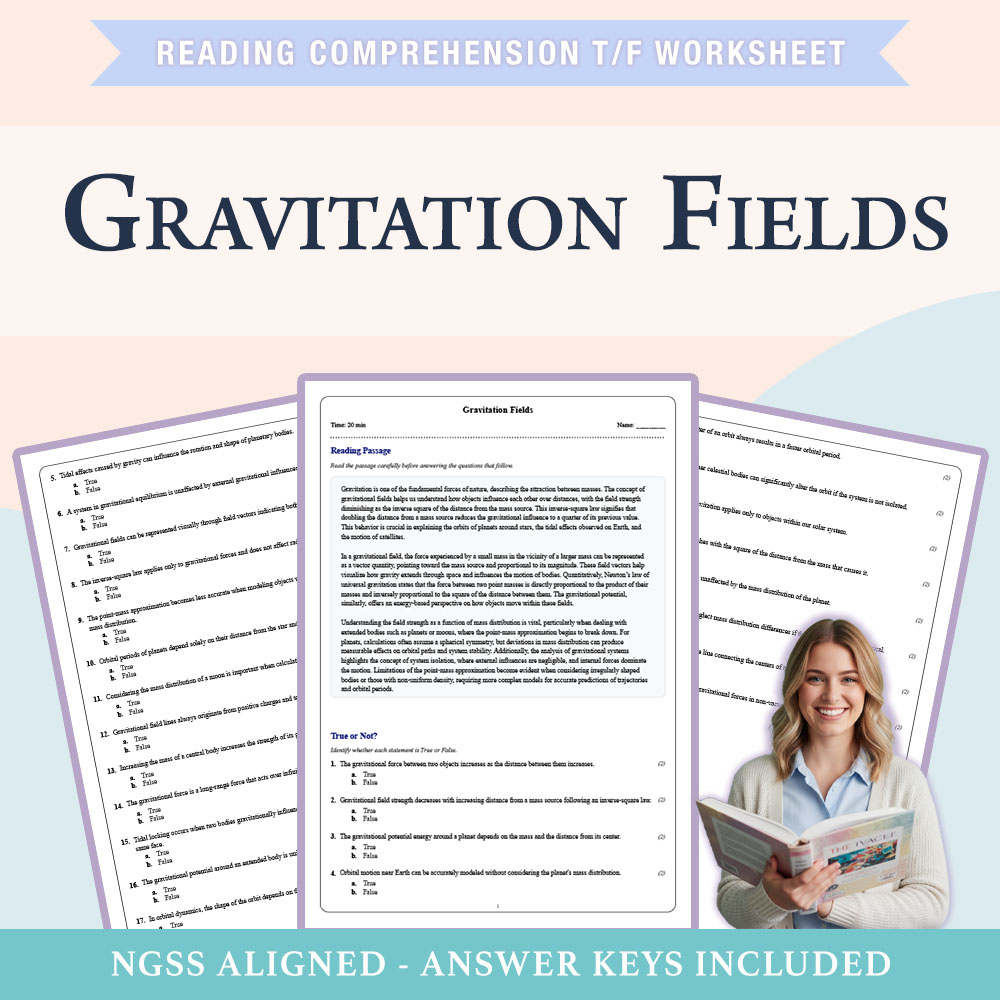
Grade 10 Science | Gravitation Fields Worksheet (PDF + Answer Key)
 Created byCopper Leaf Classroom
Learning Objectives
- Explain the concept of gravitational fields and their inverse-square behavior.
- Describe how gravitational fields influence planetary orbits and tidal effects.
- Apply Newtonian gravity principles to analyze orbital trajectories and periods.
Instant download

Grade 10 Science | Photosynthesis Efficiency - Daily Reading Comprehension
Created byCoral Reef LearningLearning Objectives
- Understand the basic process of photosynthesis and how plants convert sunlight into energy.
- Identify factors that influence the efficiency of photosynthesis in plants.
- Compare natural photosynthetic efficiency with engineered solar technologies.
Instant download

Metabolic Pathways Worksheet | AP Science Grade 10 | PDF Practice
JCreated byJ.S SheetsLearning Objectives
- Map and describe the core metabolic pathways: glycolysis, TCA cycle, and oxidative phosphorylation.
- Explain how cells conserve energy through ATP generation, electron flow, and intermediate fates.
- Identify regulatory checkpoints and pathway branching points that maintain cellular energy balance.
Also included in: Grade 10 Genetics & Cellular Systems Science Lesson Bundle – AP Unit
Instant download

Respiratory Exchange Worksheet for Grade 10 Science | TEKS Alignment
JCreated byJ.S SheetsLearning Objectives
- Explain how oxygen enters the blood and carbon dioxide leaves the blood during alveolar gas diffusion
- Describe how changes in CO2 affect blood pH through the bicarbonate buffer system
- Connect chemoreceptor sensing of CO2/pH changes to adjustments in breathing rate via negative feedback
Instant download

Grade 10 Science | Weather Climate Links Worksheet | General Standard
Created byLumora LearningLearning Objectives
- Explain how unequal heating of Earth creates pressure differences that drive winds.
- Describe how rising and cooling air can produce clouds and precipitation.
- Connect weather processes (fronts, convection, jet streams) to patterns in climate over time.
Instant download
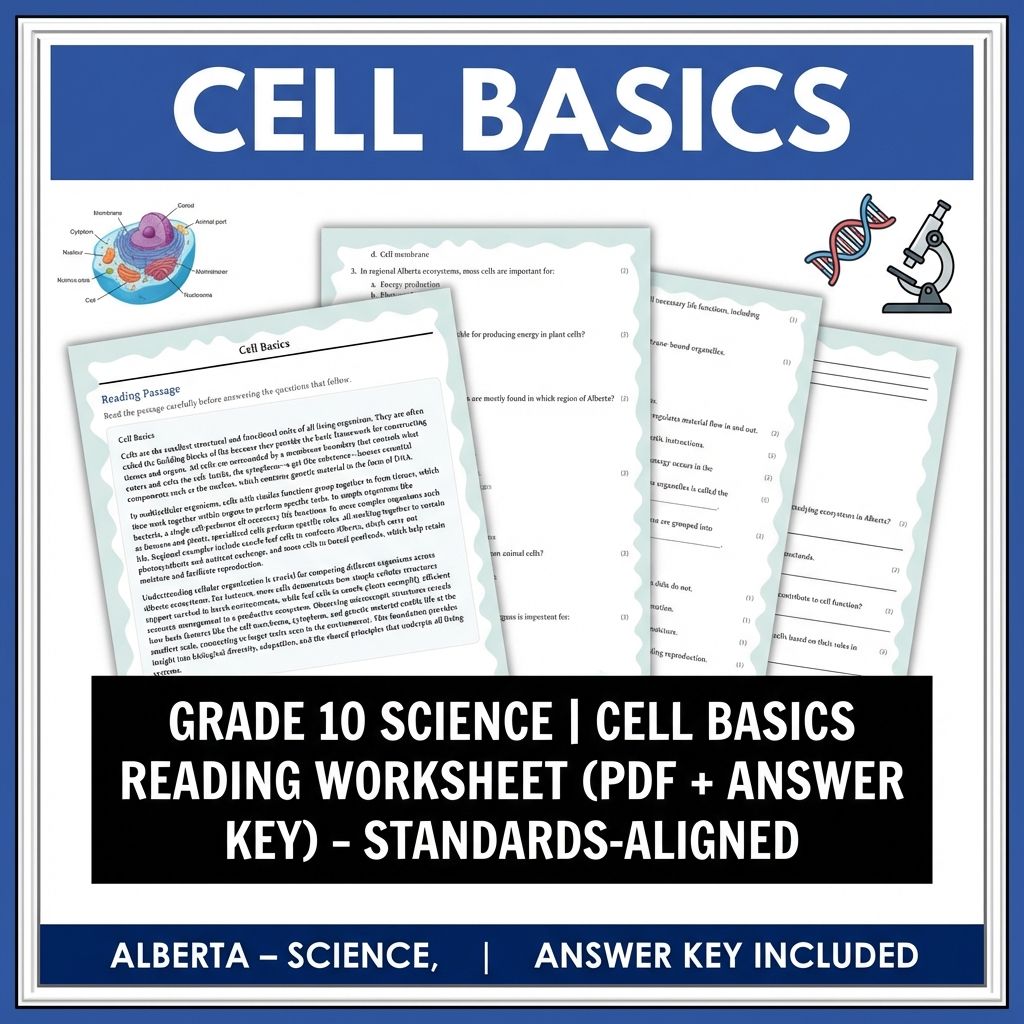
Grade 10 Science | Cell Basics Worksheet (PDF + Answer Key) – Standards-Aligned
JCreated byJ.S SheetsLearning Objectives
- Understand the fundamental features of cells in living organisms.
- Identify and describe key cellular components such as membranes, cytoplasm, and genetic material.
- Connect microscopic cellular structures to traits observed in Alberta ecosystems.
Also included in: Grade 10 Science | Cell Systems, Energy, & Homeostasis (Standards-Aligned) +1 more
Instant download

Grade 10 Science | Meiosis Worksheet (TEKS) with Answer Key (PDF)
Created byEvergreen Desk EducationLearning Objectives
- Explain how meiosis reduces chromosome number by half to form haploid gametes
- Describe how homologous chromosome pairing and recombination during prophase I create genetic diversity
- Connect the stages of meiosis to Mendelian segregation and patterns of inheritance
Instant download

Sphere Interactions Models Assessment | General Grade 10 Science Standards
 Created byPrism Point Learning
Learning Objectives
- Explain how changes in one Earth's sphere can influence others through energy and matter transfer.
- Identify examples of interactions among Earth's spheres such as atmosphere, land, water, and biosphere.
- Analyze data and models that connect quantities like temperature, rainfall, and aerosol levels to environmental outcomes.
Also included in: Grade 10 Climate Systems Science Lesson Bundle Assessments – General
Instant download

Extinction Patterns Worksheet | Science Assessment Grade 10 | BC Standards
JCreated byJ.S SheetsLearning Objectives
- Understand the different types of extinction events and their causes.
- Identify drivers that contribute to biodiversity loss and extinction.
- Analyze how extinction patterns leave signatures in the fossil and genetic record.
Instant download
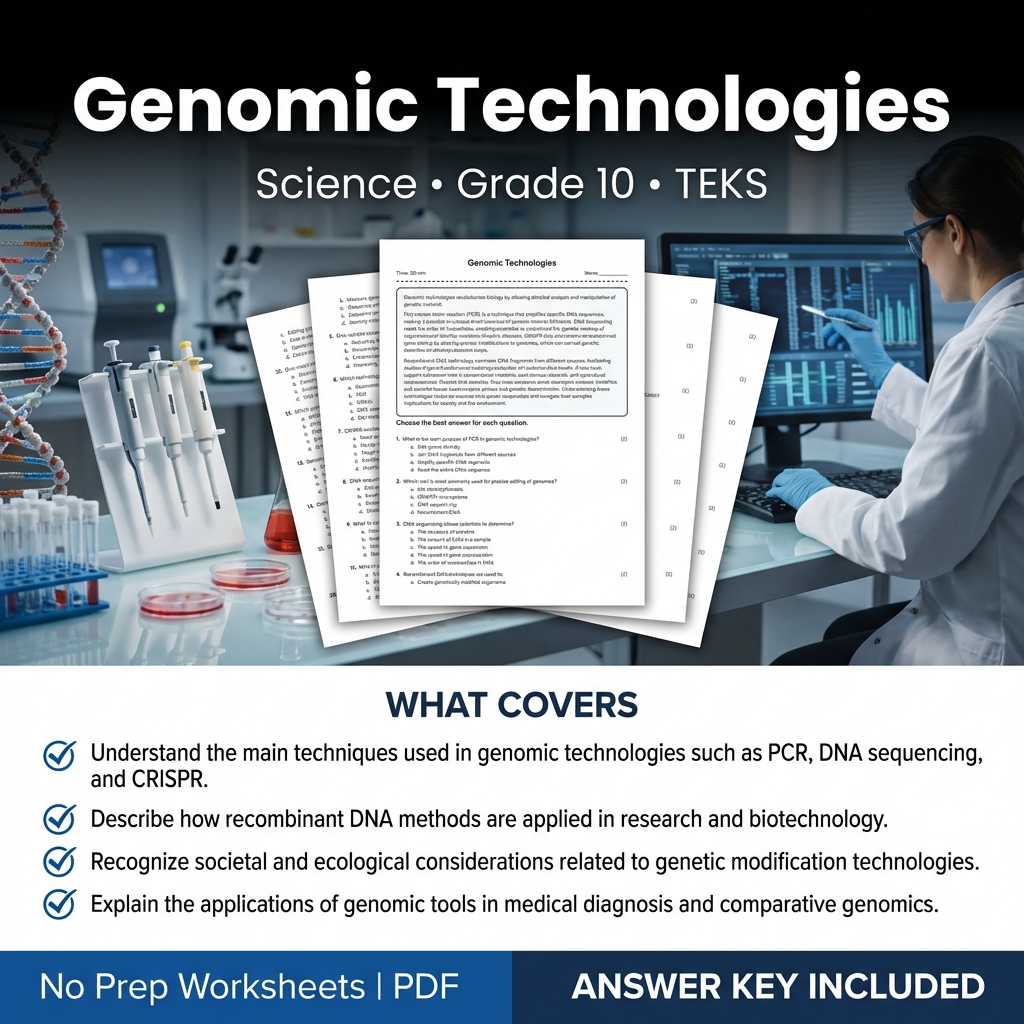
Genomic Technologies Science Worksheet for Grade 10 | TEKS Aligned Practice
Created byCoral Reef LearningLearning Objectives
- Understand the main techniques used in genomic technologies such as PCR, DNA sequencing, and CRISPR.
- Describe how recombinant DNA methods are applied in research and biotechnology.
- Recognize societal and ecological considerations related to genetic modification technologies.
Instant download
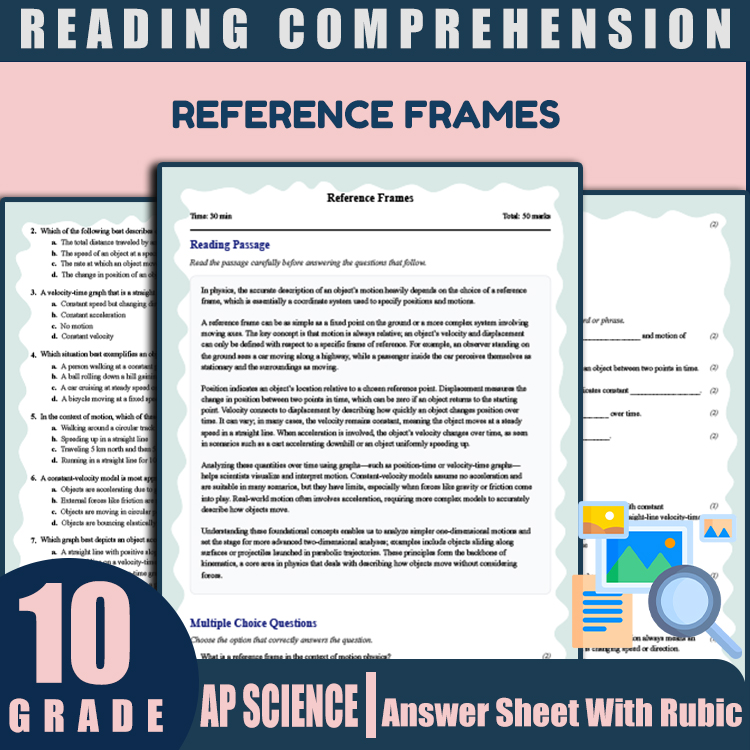
Grade 10 Science | Reference Frames Reading Worksheet with Answer Key (PDF)
JCreated byJ.S SheetsLearning Objectives
- Understand the concept of reference frames and their role in describing motion.
- Distinguish between position, displacement, velocity, and acceleration in one-dimensional motion.
- Analyze motion using algebraic expressions and graphing methods.
Also included in: Grade 10 Science Unit Bundle | Motion, Forces & Energy Worksheets (PDF) +1 more
Instant download

Grade 10 Science | Heritable Variation in Genetics - Daily Reading Comprehension
Created byCoral Reef LearningLearning Objectives
- Identify different sources of genetic variation
- Understand how genetic differences influence traits
- Explain how variation affects natural selection and evolution
Instant download
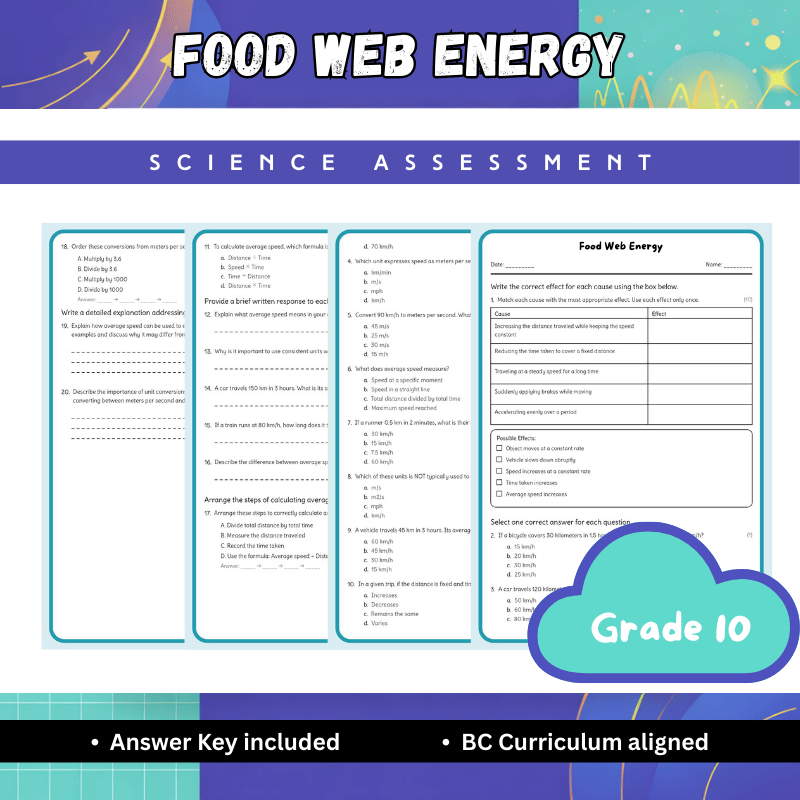
Grade 10 Science | Food Web Energy Concept Worksheet (Answer Key) – BC Standards
Created byBright Mind ResourcesLearning Objectives
- Describe how energy flows through ecosystems via food webs.
- Explain the efficiency of energy transfer between trophic levels.
- Identify the roles of producers, consumers, and decomposers in energy transfer.
Instant download

Grade 10 Science – Cellular Respiration Daily Reading Worksheet with Answer Key
JCreated byJ.S SheetsLearning Objectives
- Identify the main stages of cellular respiration
- Describe the function of glycolysis, the citric acid cycle, and the electron transport chain
- Understand where these processes occur within the cell
Also included in: Grade 10 Science Lesson Bundle: Photosynthesis & Cellular Respiration TEKS +1 more
Instant download

Grade 10 Science – Thermodynamics & Biological Systems | Daily Reading Worksheet
Created byBright Mind ResourcesLearning Objectives
- Understand the fundamental principles of energy conservation and entropy increase in metabolism
- Identify the roles of Gibbs free energy in reaction spontaneity
- Explain cellular strategies for energy efficiency through compartmentalization and enzyme control
Also included in: Grade 10 Energy in Biological Systems Science Daily Reading Lesson Bundle | TEKS +2 more
Instant download

Grade 10 Science Worksheet | Mixture Separation & Property Analysis (PDF)
Created byEvergreen Desk EducationLearning Objectives
- Explain how filtration, distillation, chromatography, and centrifugation separate mixtures using key physical properties.
- Differentiate homogeneous solutions, colloids, and suspensions using particle dispersion and optical behavior.
- Connect separation choices to purity assessment using qualitative indicators and quantitative measures such as concentration and percent composition.
Also included in: Grade 10 Chemistry Fundamentals Science Lesson Bundle Worksheets: Ontario +1 more
Instant download
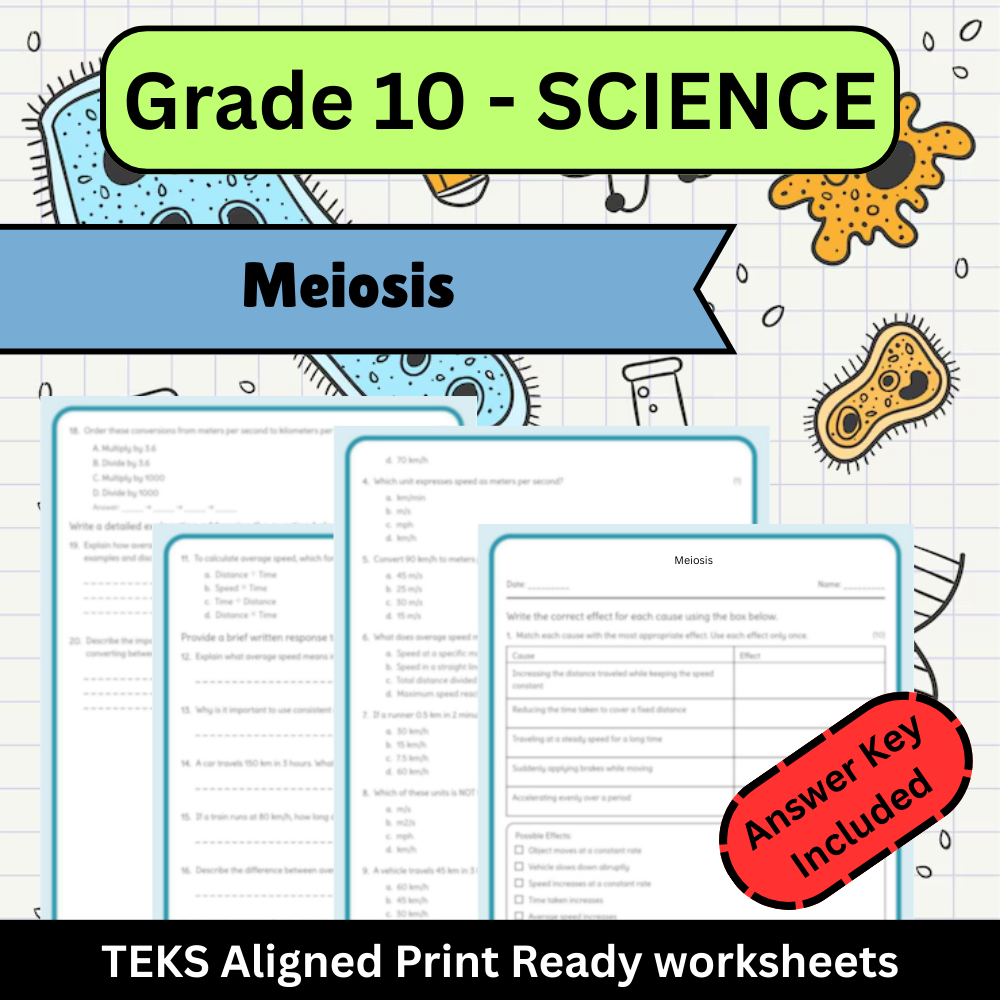
Grade 10 Science | Meiosis Worksheet (Worksheet + Answer Key) - TEKS Standards
Created byBright Mind ResourcesLearning Objectives
- Understand the process of meiosis and its role in reducing chromosome number.
- Explain how genetic diversity is created through recombination and independent assortment.
- Describe the stages of meiosis and their significance in inheritance patterns.
Also included in: Grade 10 Science | Genetics & DNA Unit Worksheet Pack (TEKS Aligned) +5 more
Instant download

Career Pathways Worksheet for Grade 10 Science | Standards-Aligned Practice
JCreated byJ.S SheetsLearning Objectives
- Identify laboratory and science career roles and describe how they use scientific inquiry and measurement skills.
- Explain how education credentials and workplace certifications connect to safety, calibration, and data-quality expectations.
- Analyze typical responsibilities for different career pathways and relate them to transferable technical and communication skills.
Instant download
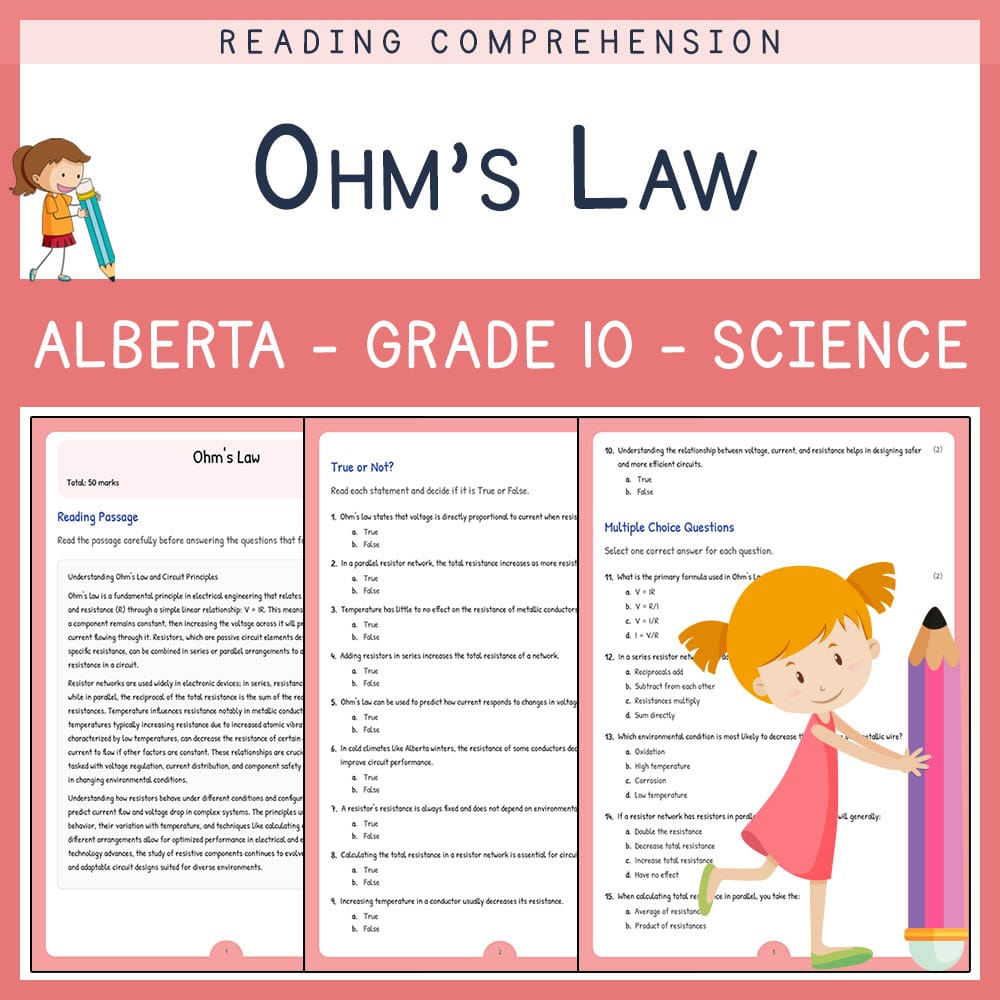
Grade 10 Science | Ohm's Law Worksheet | Alberta Standards
Created byLumora LearningLearning Objectives
- Understand the principles of Ohm's Law and how it relates voltage, current, and resistance.
- Calculate equivalent resistance in series and parallel resistor networks.
- Analyze how temperature impacts the resistance of conductors and resistors.
Instant download

Carbon Balance Worksheet | Grade 10 Science Activities
Created byPrism Point LearningLearning Objectives
- Explain how carbon moves among the atmosphere, vegetation, soil, and ocean through major flux pathways
- Describe how natural disturbances and succession can change carbon uptake, release, and long-term storage
- Use carbon-balance ideas to predict how changes in fluxes may affect greenhouse gas concentrations and climate feedbacks
Instant download

Grade 10 Science – Microorganisms & Biotechnology Applications | Worksheet
Created byBright Mind ResourcesLearning Objectives
- Understand the role of microorganisms in food production through fermentation
- Identify microbial processes involved in bioremediation
- Explain how microbes are used in industrial enzyme production
Also included in: Grade 10 Cell Processes & Energy Science Daily Reading Lesson Bundle | Ontario +1 more
Instant download
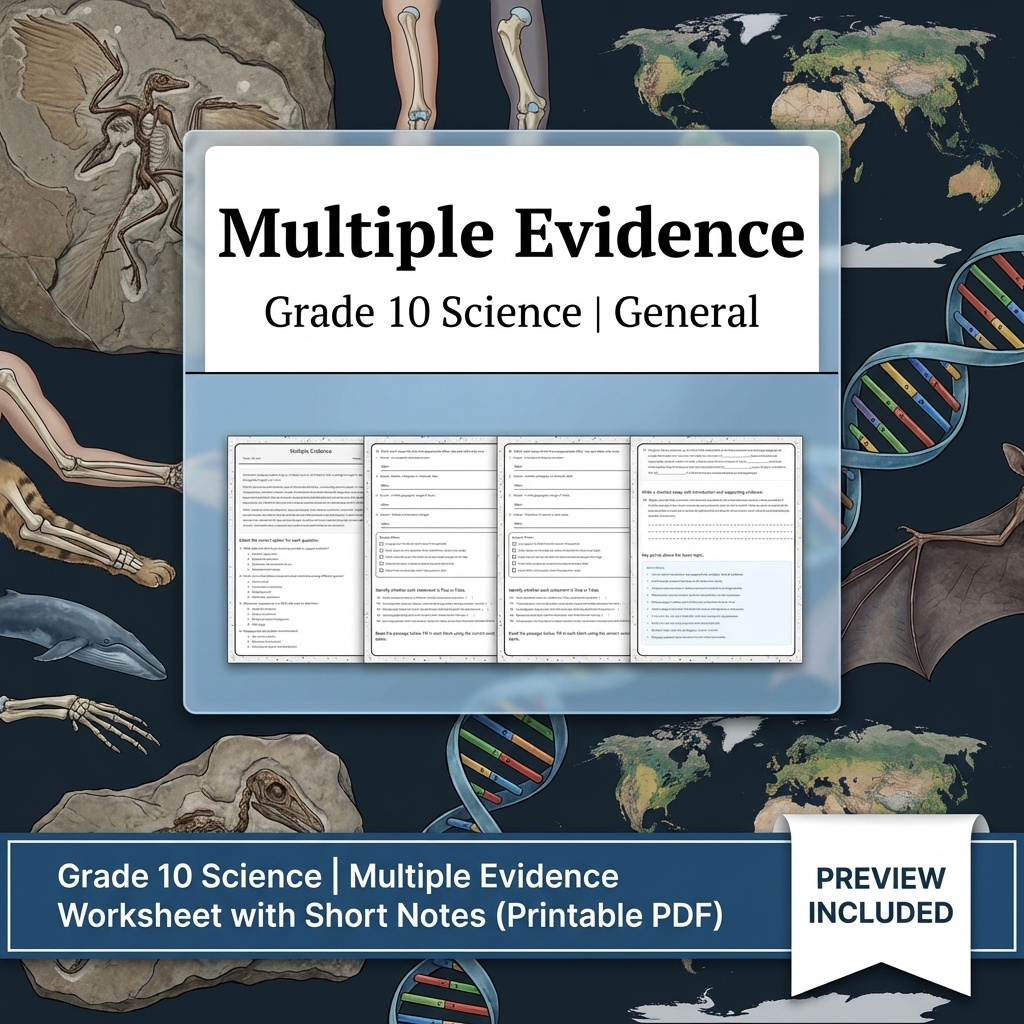
Grade 10 Science | Multiple Evidence Worksheet with Short Notes (Printable PDF)
Created byMeadowlark WorksheetsLearning Objectives
- Understand how different sources of evidence support claims about biological change over time.
- Identify and interpret evidence from fossils, comparative anatomy, molecular data, and biogeography.
- Analyze how converging evidence strengthens scientific conclusions about evolution.
Also included in: Grade 10 Natural Selection & Heredity Science Lesson Bundle - General +1 more
Instant download

Cosmic Origins Worksheet | NGSS Science Assessment for Grade 10
JCreated byJ.S SheetsLearning Objectives
- Understand the observational evidence supporting models of the universe's origin.
- Identify key phenomena such as cosmic microwave background radiation, galactic redshifts, and elemental abundances.
- Explain how measurements like spectral redshift and large-scale structure support an expanding universe.
Also included in: Grade 10 Cosmic Origins Space Science lesson bundle – NGSS worksheet set
Instant download

Grade 10 Science – Measurement & Data Interpretation | Daily Reading Worksheet
Created byBright Mind ResourcesLearning Objectives
- Understand the importance of units, instruments, and calibration in measurement.
- Recognize key measurement tools used in scientific data collection.
- Learn how to interpret graphs and identify trends.
Also included in: Nature of Science Grade 10 Science Worksheets Lesson Bundle | Florida NGSSS +1 more
Instant download

Grade 10 Science | Respiratory Exchange Worksheet (TEKS) PDF
Created byEvergreen Desk EducationLearning Objectives
- Explain how alveolar gas diffusion allows oxygen to enter the blood and carbon dioxide to leave it.
- Describe how changes in CO2 concentration affect blood pH through the bicarbonate buffer system.
- Evaluate how chemoreceptors regulate breathing rate to maintain homeostasis.
Instant download

Biological Change Evidence Worksheet | Standards-Based Grade 10 Science
JCreated byJ.S SheetsLearning Objectives
- Explain how multiple independent evidence sources can converge on the same evolutionary explanation.
- Identify what each type of evidence (fossils, anatomy/development, molecules, biogeography) contributes to evolution claims.
- Use examples to describe why consistency across evidence increases confidence in scientific conclusions.
Also included in: Grade 10 Genetics, Evolution, and Cell Science Lesson Bundle: General +2 more
Instant download

Human Impact Evidence Worksheet Grade 10 Environmental Science Activity
Created byPrism Point LearningLearning Objectives
- Explain how human activities can change Earth systems in ways that can be measured
- Use evidence such as climate records, satellite observations, and chemical measurements to evaluate claims
- Make cause-and-effect connections between pollution sources, transport processes, and system responses
Instant download

Mass Conservation Worksheet | Grade 10 Science Activities
Created byPrism Point LearningLearning Objectives
- Explain conservation of mass using particle ideas and closed-system reasoning.
- Interpret and balance chemical equations to account for atoms and mass.
- Use mass accounting to calculate and compare reactant and product masses in real contexts.
Also included in: Grade 10 Chemistry & Dynamic Equilibrium Lesson Bundle | Alberta Science
Instant download

Grade 10 Endothermic and Exothermic Reactions Worksheet | General Practice PDF
 Created byClear Sky Classroom
Learning Objectives
- Distinguish endothermic and exothermic reactions using qualitative energy flow and energy profile trends
- Explain how temperature change and other observations relate to particle kinetic energy during reactions
- Use bond-energy ideas to connect energy profiles with whether energy is absorbed or released
Instant download
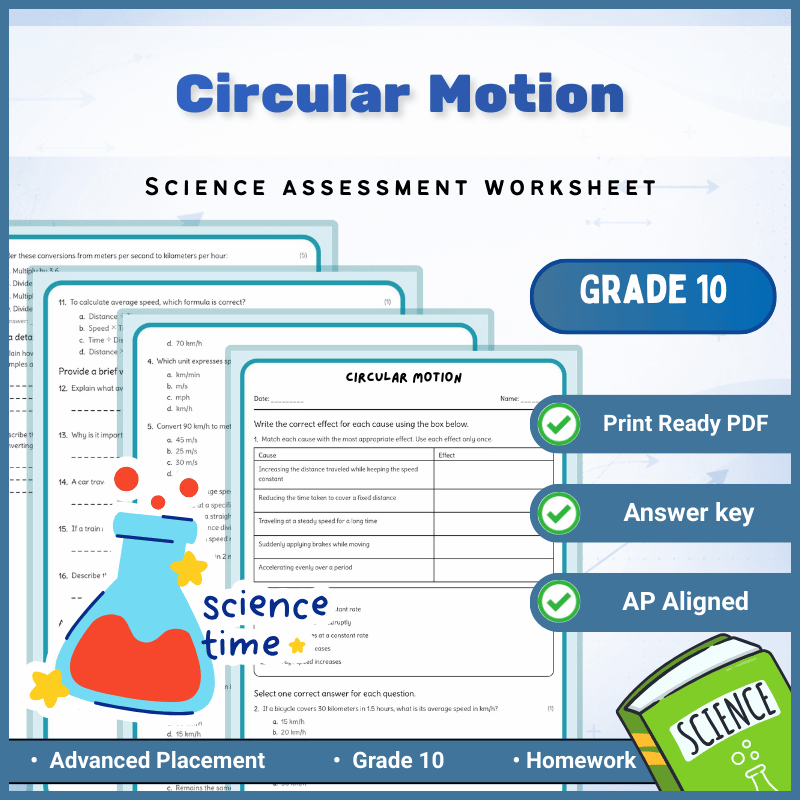
Grade 10 Science | Circular Motion Worksheet + Answer Key (AP Standard)
Created byBright Mind ResourcesLearning Objectives
- Understand the relationship between angular and linear quantities in uniform and non-uniform circular motion.
- Explain how centripetal acceleration arises without a change in speed.
- Differentiate between radial and tangential components of acceleration and force.
Instant download
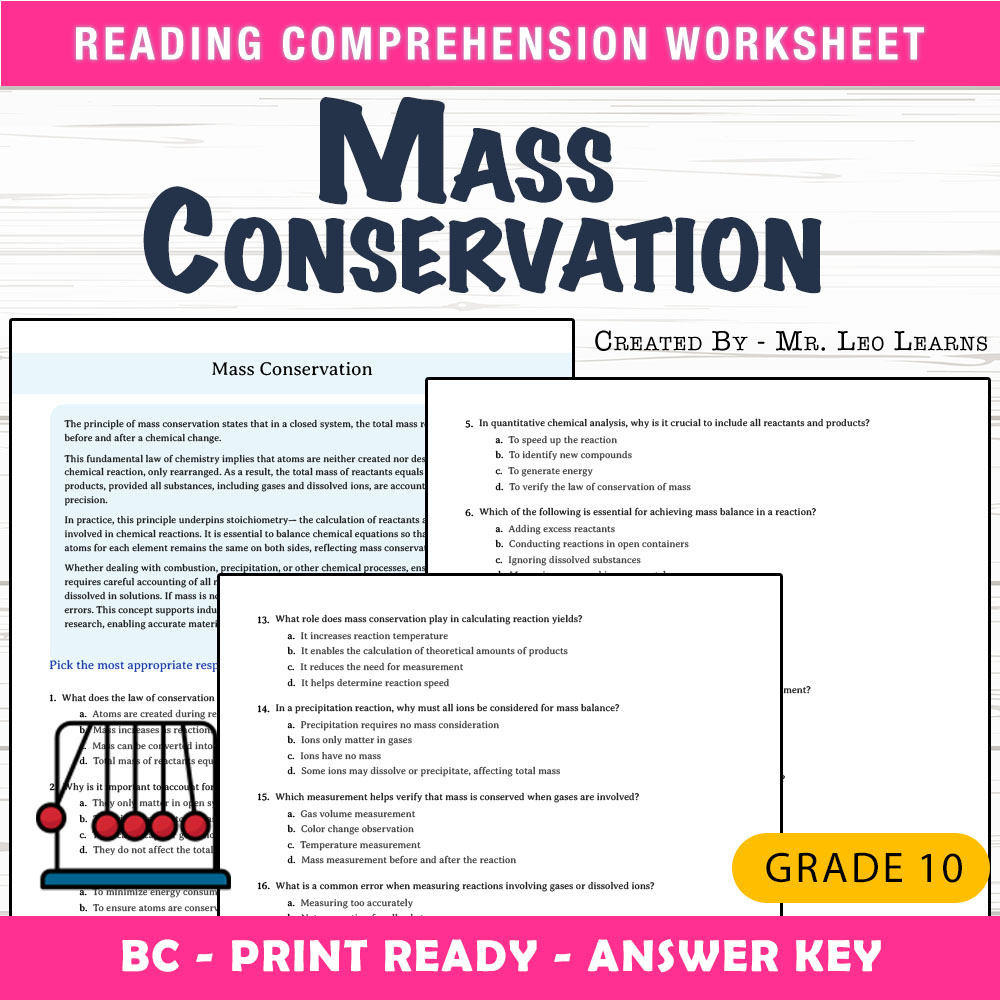
Grade 10 Science — Mass Conservation Worksheet MCQ Paper
 Created byThe Resource Hub
Learning Objectives
- Understand the principle of conservation of mass in chemical reactions
- Recognize the importance of mass balance and balanced equations
- Apply mass conservation to stoichiometric calculations
Also included in: Grade 10 Science | Matter & Chemical Change UNIT Worksheet Pack (BC Framework) +1 more
Instant download
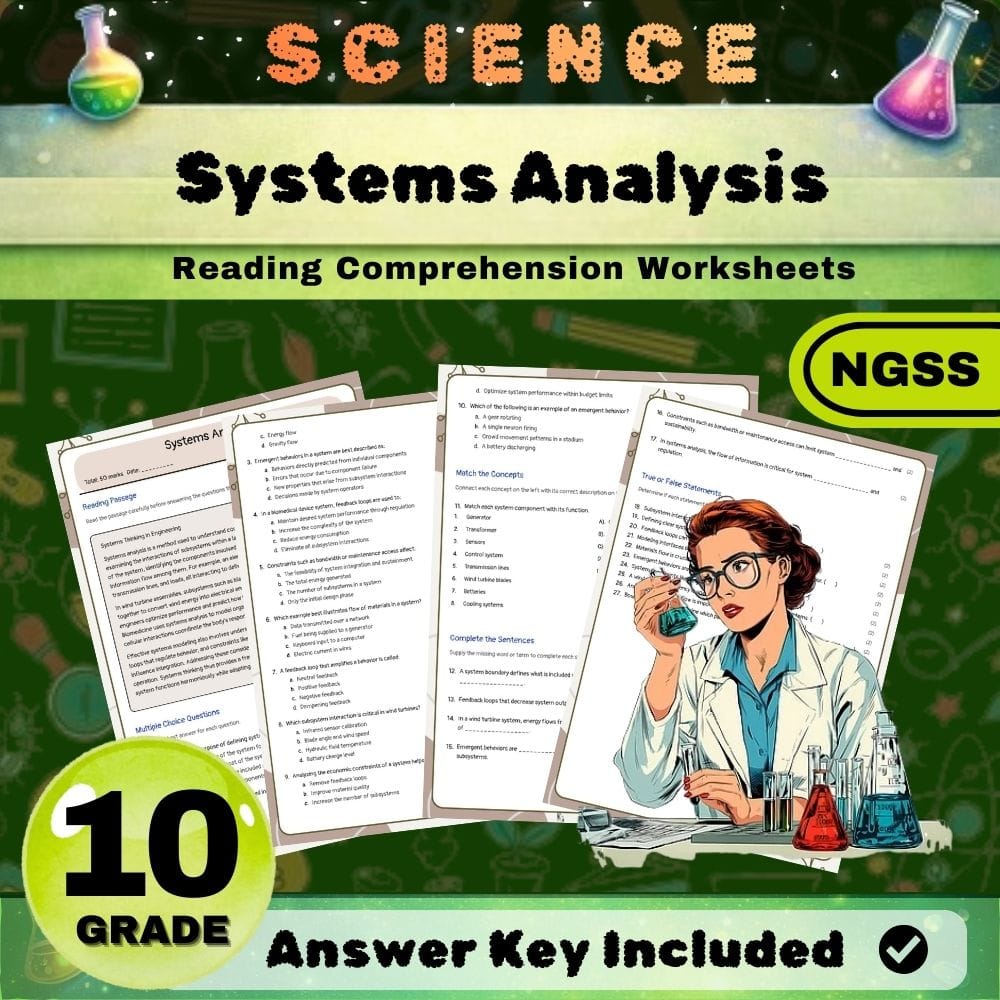
Grade 10 Science | Systems Analysis NGSS Worksheet (PDF)
 Created byMaple Path Learning
Learning Objectives
- Understand how to identify subsystem interactions within complex systems.
- Learn to define system boundaries for accurate modeling.
- Analyze emergent behaviors that arise from subsystem interactions.
Instant download

Grade 10 Worksheet B: Stellar Lifecycles Practice | NGSS PDF
Created byClear Sky ClassroomLearning Objectives
- Explain how nuclear fusion in stellar cores changes over time during stellar evolution.
- Describe how energy transport (radiation and convection) affects a star’s luminosity and temperature.
- Interpret the Hertzsprung-Russell (H-R) diagram to connect main-sequence, red giant, and end-stage outcomes.
Also included in: Grade 10 Space Systems Science Lesson Bundle: Stellar Lifecycles & Motion NGSS +1 more
Instant download
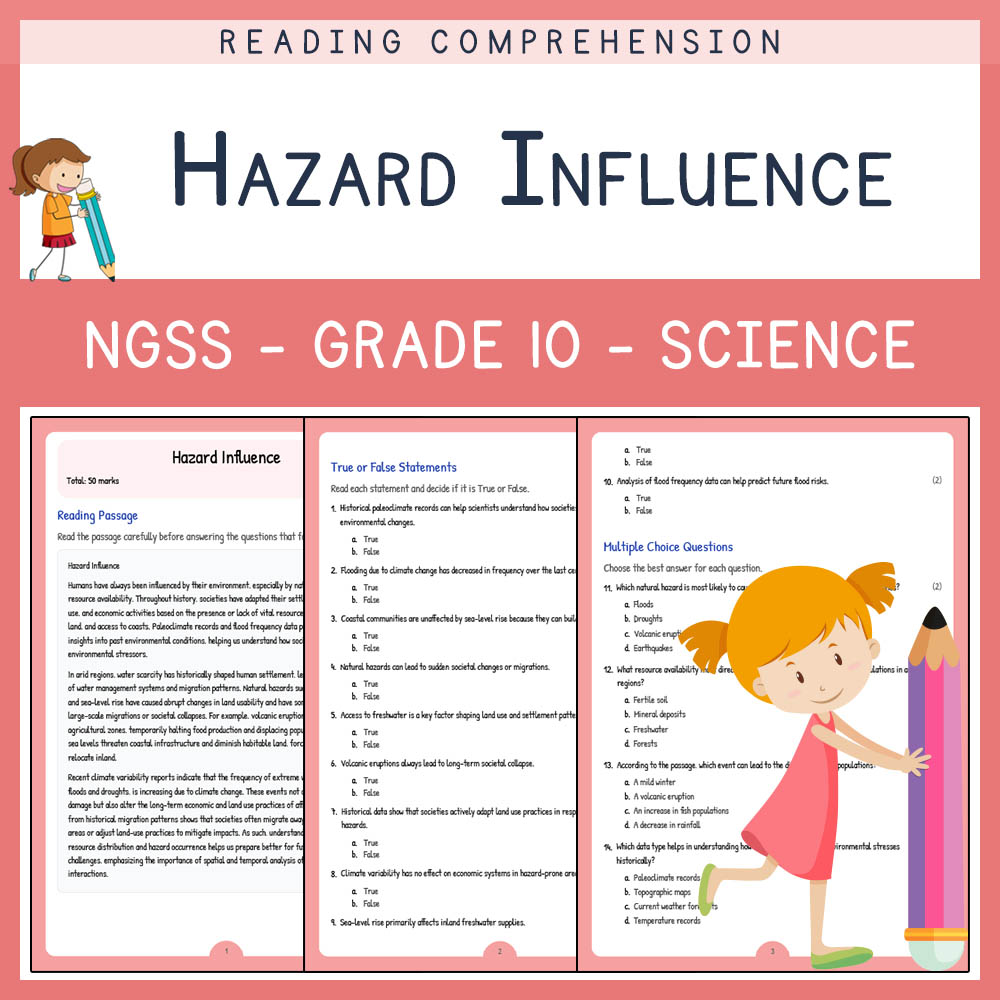
Grade 10 Science | Hazard Influence Worksheet (PDF + Answer Key) NGSS Aligned
Created byLumora LearningLearning Objectives
- Understand how freshwater availability influences human settlement and land use.
- Analyze the impact of natural hazards like volcanic eruptions and sea-level rise on societies.
- Evaluate evidence from paleoclimate records and historical data to understand societal responses to hazards.
Instant download

Grade 10 Science – Protein Synthesis Daily Reading Worksheet with Answer Key
JCreated byJ.S SheetsLearning Objectives
- Understand the flow of genetic information from DNA to protein
- Describe the processes of transcription and translation
- Identify roles of RNA, mRNA, tRNA, ribosomes, and amino acids in protein synthesis
Also included in: Grade 10 Science Lesson Group Bundle – TEKS | Genetics & Genomic Technologies +1 more
Instant download

Grade 10 Conservation Energy Worksheet | Practice & PDF
Created byClear Sky ClassroomLearning Objectives
- Explain energy conservation using the idea that energy is neither created nor destroyed, only transferred and transformed
- Use qualitative energy accounting to track how energy forms change within a closed system
- Relate decreases in mechanical energy to nonconservative forces such as friction
Instant download

Grade 10 Science – Scientific Claims & Evidence | Daily Reading Worksheet
Created byBright Mind ResourcesLearning Objectives
- Identify and analyze claims made in scientific texts
- Evaluate supporting evidence used to substantiate scientific claims
- Differentiate between correlation and causation in scientific arguments
Also included in: Measurement Uncertainty Grade 10 Science Reading Worksheets Bundle | General +1 more
Instant download
About Grade 10 Science Worksheets
Find Science worksheets built for Grade 10. All 7,038 cover core skills, practice, and review, each an instant PDF download.
Every worksheet on MyTeachingSheets is created by independent teacher-authors and reviewed before publication. All resources download as printable PDFs for classroom, homework, or at-home practice, and many include answer keys. Preview any worksheet free before buying.