
Grade 10 Science Worksheets
7,038 worksheets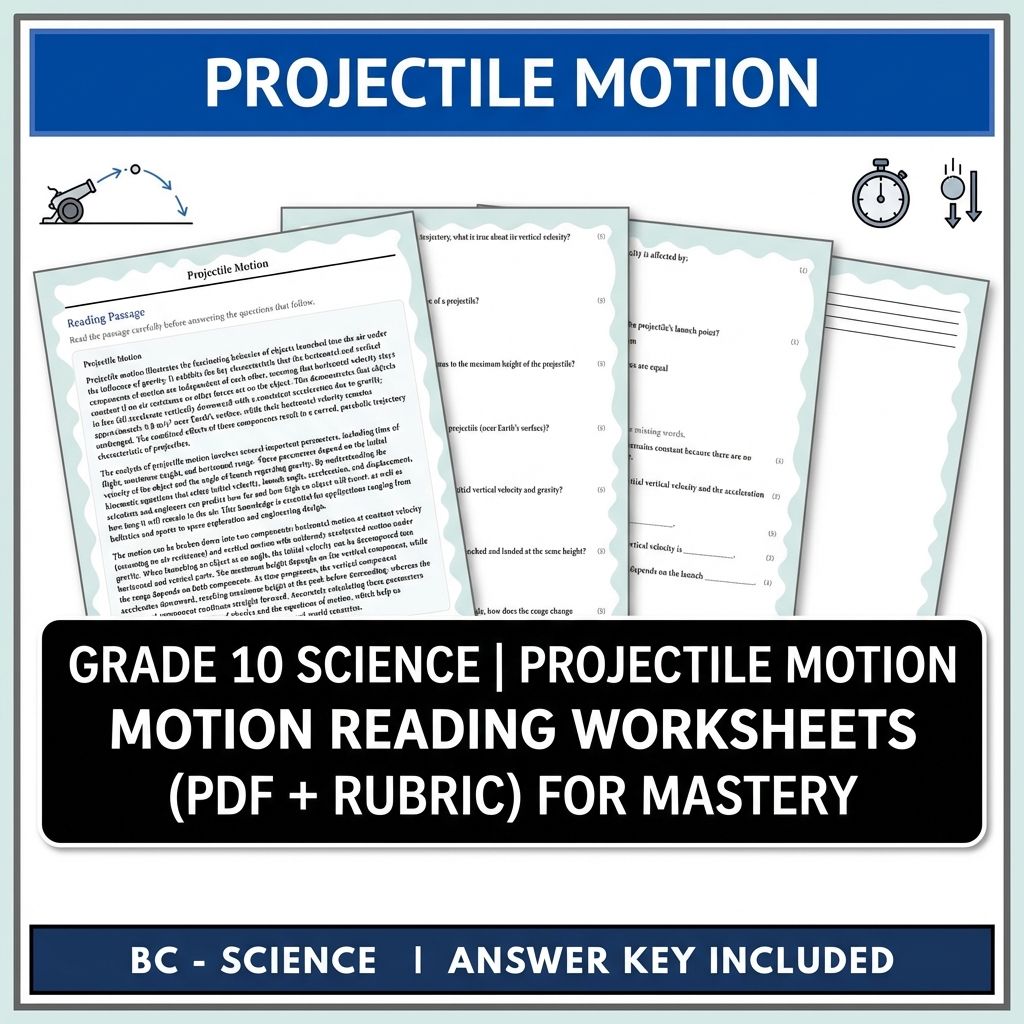
Grade 10 Science | Projectile Motion Worksheets (PDF + Rubric) for Mastery
JCreated byJ.S SheetsLearning Objectives
- Understand the components of projectile motion and their independence.
- Explain how horizontal velocity remains constant absent horizontal forces.
- Analyze vertical motion under gravity and its impact on projectile trajectories.
Instant download

Grade 10 Science – Cell Types & Structures | Daily Reading Worksheet
 Created byBright Mind Resources
Learning Objectives
- Identify the main differences between prokaryotic and eukaryotic cells
- Understand examples of each cell type in ecological contexts
- Describe how structural differences influence cell function and classification
Also included in: Grade 10 Science Daily Reading: Cells & Systems Lesson Bundle | Alberta +1 more
Instant download

Grade 10 Human Footprint Worksheet | Alberta Science Environmental Impact
 Created byEvergreen Desk Education
Learning Objectives
- Explain how human activities modify Earth systems through land-use change, resource extraction, and greenhouse-gas emissions.
- Identify how these changes can alter soil, water, and atmospheric processes in Alberta regions.
- Use measurable environmental indicators to describe cumulative impacts on ecosystem services and sustainability.
Instant download

Organ Systems Worksheet | Grade 10 Science Practice Activities
 Created byPrism Point Learning
Learning Objectives
- Explain how organ structure supports specific functions in organ systems (structure–function relationships).
- Describe how vascularization and material exchange (nutrients, gases, wastes) help organs maintain homeostasis.
- Connect examples from plants and mammals to how organs interact with their environments in Alberta’s varied conditions.
Also included in: Cell Organization & Homeostasis Grade 10 Science Lesson Bundle | Alberta
Instant download
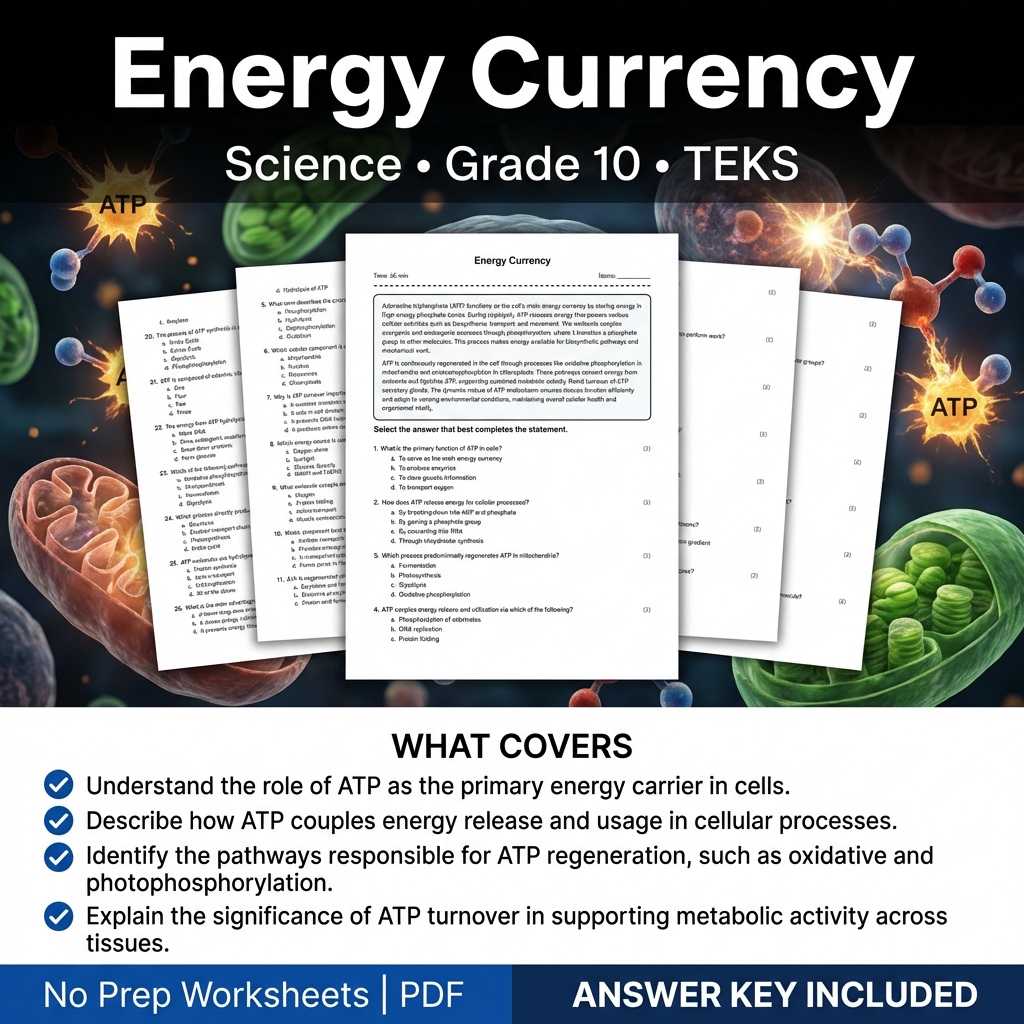
Grade 10 Science Worksheet on Energy Currency | TEKS Aligned
 Created byCoral Reef Learning
Learning Objectives
- Understand the role of ATP as the primary energy carrier in cells.
- Describe how ATP couples energy release and usage in cellular processes.
- Identify the pathways responsible for ATP regeneration, such as oxidative and photophosphorylation.
Instant download

Balancing Equations Worksheet | Grade 10 Science Activities
Created byPrism Point LearningLearning Objectives
- Explain why balancing chemical equations keeps the same number of each type of atom on both sides (conservation of mass).
- Balance chemical equations by adjusting coefficients without changing chemical formulas.
- Use balanced equations to interpret reactant–product ratios and relate them to stoichiometry.
Also included in: Grade 10 Science Chemical Reactions & Atomic Structure Lesson Bundle | Bc +1 more
Instant download
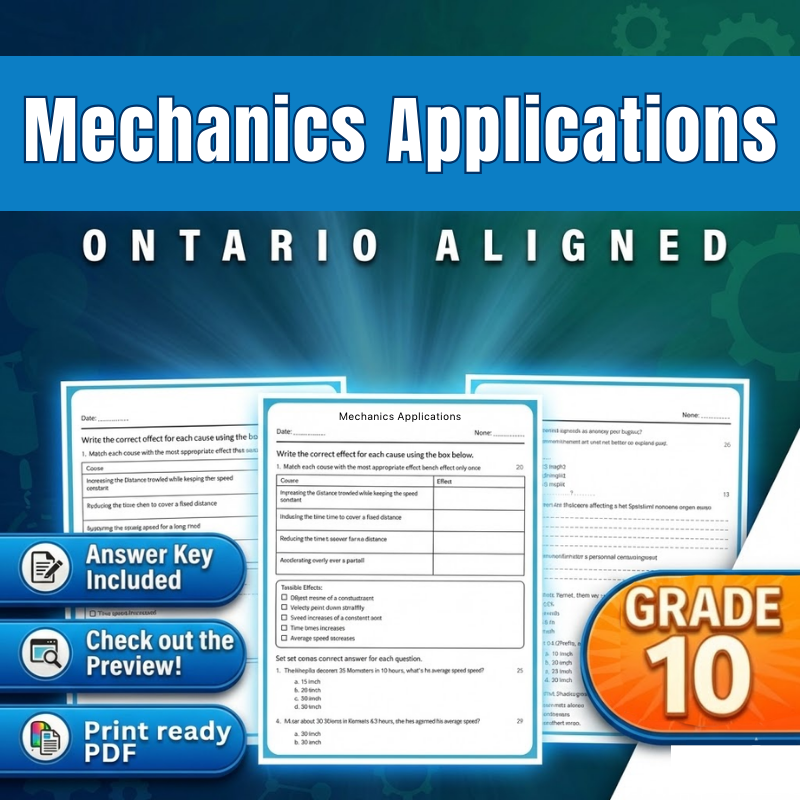
Grade 10 Science | Mechanics Applications Worksheet (Ontario Standards, PDF)
Created byBright Mind ResourcesLearning Objectives
- Understand the application of kinematic relations and Newtonian dynamics in mechanical systems.
- Analyze the relationships among force, mass, acceleration, work, and momentum in practical contexts.
- Predict system behavior and interpret trade-offs in engineering scenarios involving vehicles and inclined planes.
Instant download
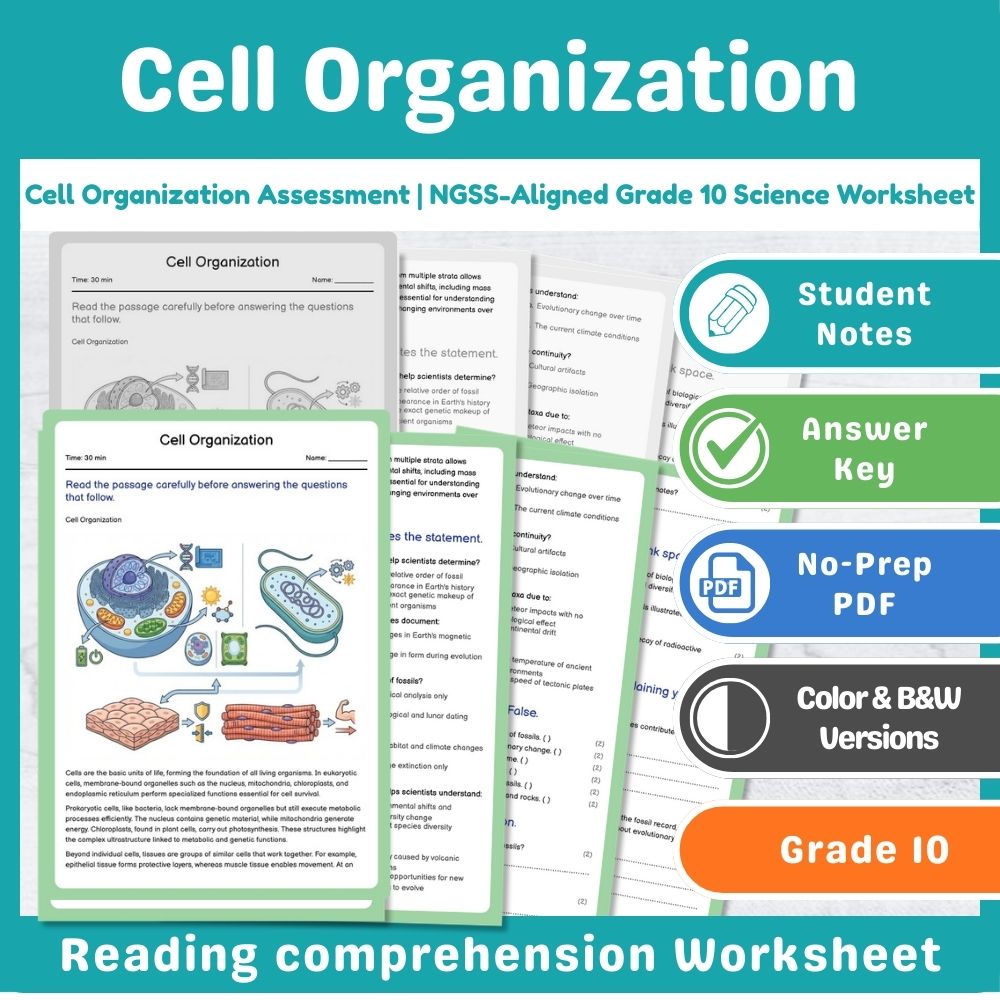
Cell Organization Assessment | NGSS-Aligned Grade 10 Science Worksheet
Created byPrism Point LearningLearning Objectives
- Identify and describe the functions of membrane-bound organelles in eukaryotic cells.
- Compare the cellular structures of prokaryotic and eukaryotic cells.
- Explain the hierarchical organization from cells to tissues and organs.
Also included in: Grade 10 Science | Cell Signaling & Physiology NGSS Assessment Bundle
Instant download

Constant Acceleration Physics Worksheet Grade 10 Science Ontario Curriculum
 Created byClear Sky Classroom
Learning Objectives
- Apply kinematic equations to uniformly accelerated motion with consistent sign conventions for velocity, displacement, and acceleration.
- Determine velocity and displacement in single-stage and multi-stage motion using appropriate boundary conditions.
- Interpret negative acceleration and sign changes in one-dimensional motion, including possible reversal of direction.
Instant download

Grade 10 Science | Free-Body Analysis in Physics - Daily Reading Comprehension
Created byCoral Reef LearningLearning Objectives
- Understand the concept of free-body diagrams
- Identify and label forces acting on an object
- Learn how to select coordinate axes for force analysis
Instant download

Rock Cycle Processes Worksheet for Grade 10 Science | Florida NGSSS
Created byEvergreen Desk EducationLearning Objectives
- Describe how weathering and erosion change existing rocks at Earth’s surface
- Explain how sediments can lithify into sedimentary rock and how heat/pressure cause metamorphism
- Connect magma formation and cooling to the formation of igneous rock
Instant download
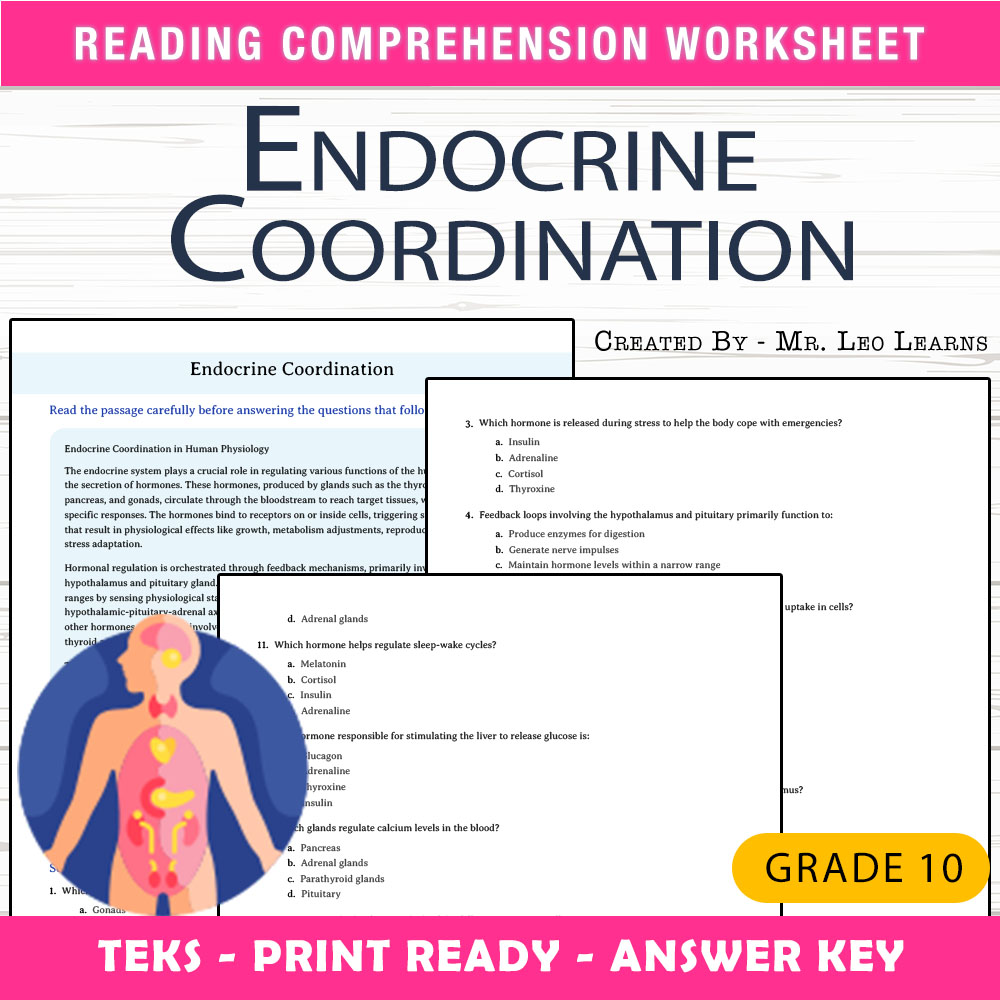
Grade 10 Science | Endocrine Coordination Worksheet for Mastery
 Created byThe Resource Hub
Learning Objectives
- Explain how hormones regulate growth, metabolism, reproduction, and stress responses.
- Describe the role of specific endocrine glands and hormones in human physiological processes.
- Understand feedback loops involving the hypothalamus and pituitary to maintain hormonal balance.
Also included in: Grade 10 Science Worksheet Bundle – Cellular, Genetics & Ecology Mastery
Instant download

Reaction Energetics Worksheet | Grade 10 Science Activities
Created byPrism Point LearningLearning Objectives
- Explain how bond energies relate to whether a chemical reaction is exothermic or endothermic
- Interpret how enthalpy changes and temperature observations support reaction energetics
- Apply periodic and structural factors to predict typical bond-strength trends
Also included in: Grade 10 Science Chemical Reactions & Atomic Structure Lesson Bundle | Bc +1 more
Instant download
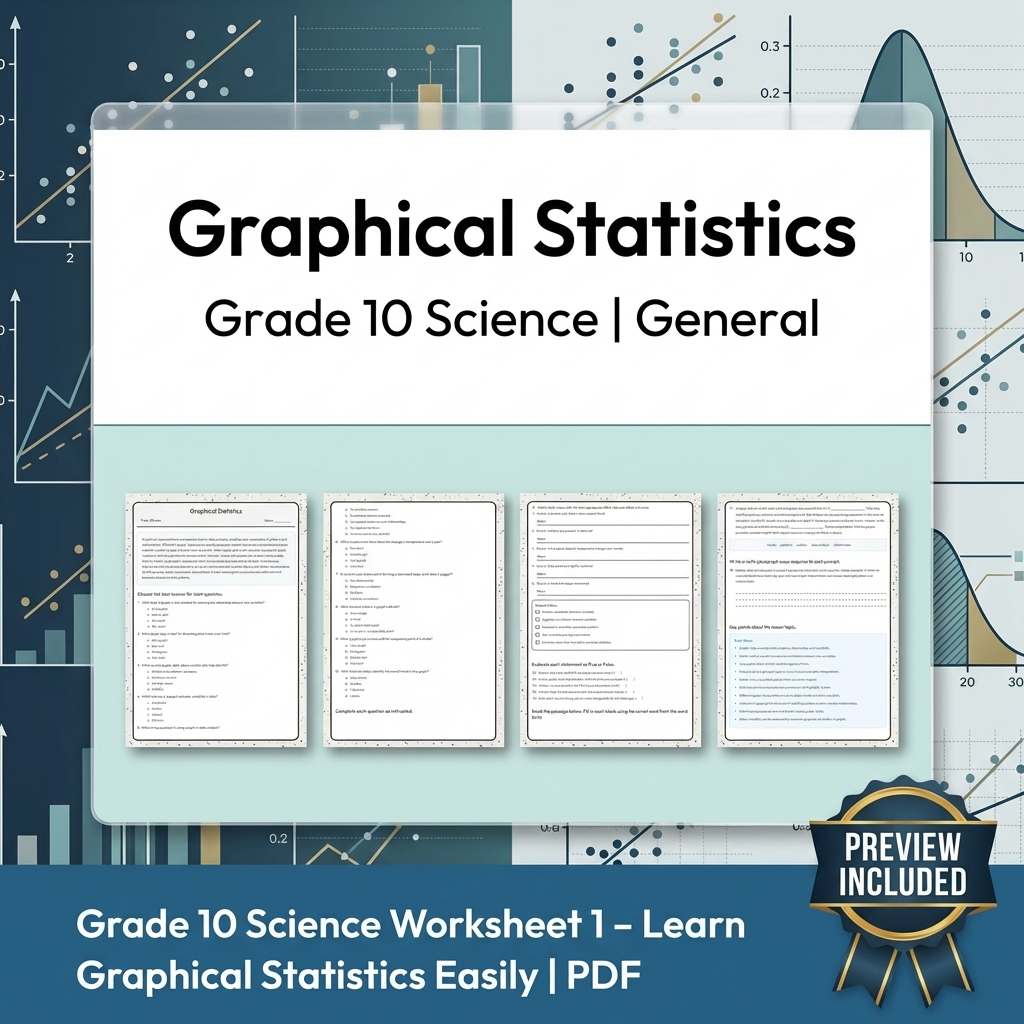
Grade 10 Science Worksheet Learn Graphical Statistics Easily | PDF
 Created byMeadowlark Worksheets
Learning Objectives
- Understand how to interpret different types of graphs such as scatter plots and line graphs.
- Describe patterns, variability, and relationships in data using appropriate graphs.
- Summarize statistical features to compare data sets and identify outliers or trends.
Also included in: Grade 10 Measurement Uncertainty Science Lesson Bundle: General +1 more
Instant download

Grade 10 Science | Momentum and Collisions Worksheet (PDF) BC Standards
Created byEvergreen Desk EducationLearning Objectives
- Explain linear momentum and how it changes with mass and velocity
- Use conservation of momentum to analyze collisions in an isolated system
- Differentiate elastic and inelastic collisions using momentum and kinetic energy
Instant download
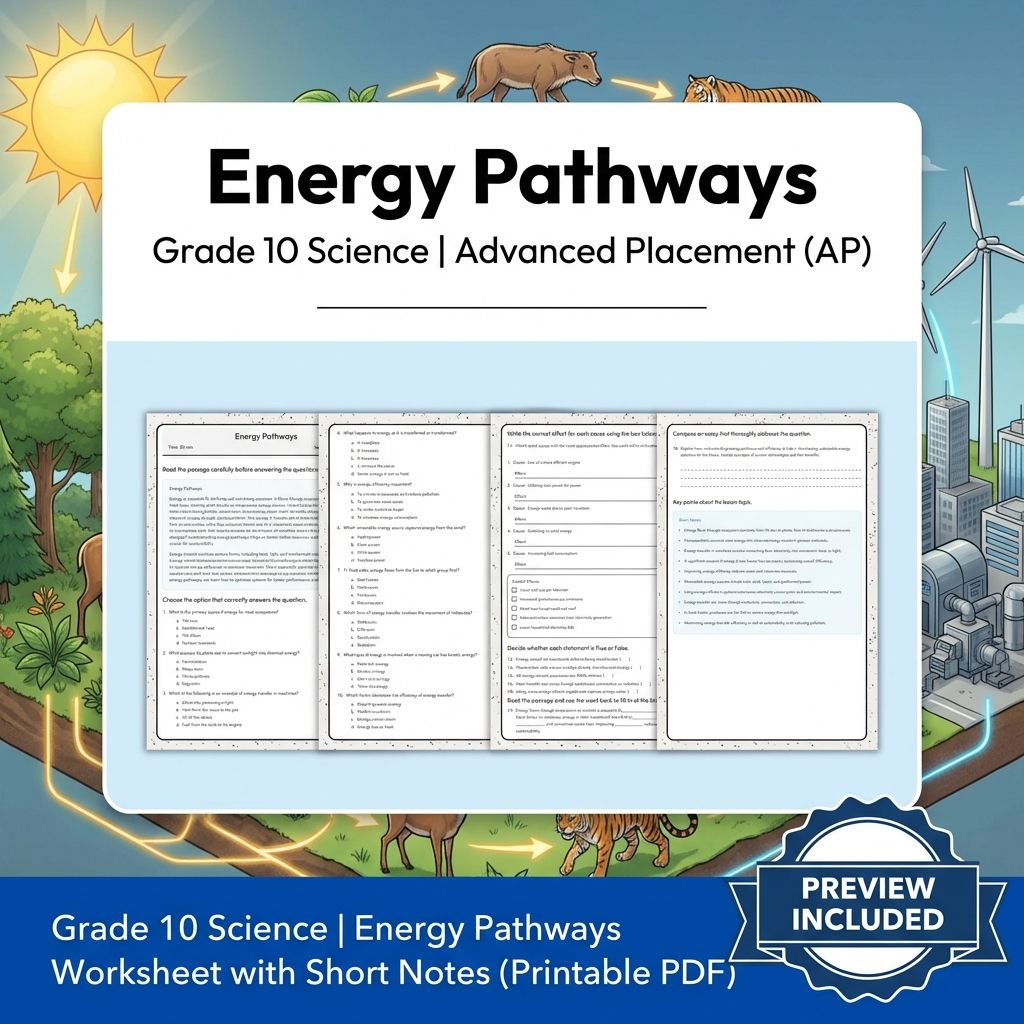
Grade 10 Science | Energy Pathways Worksheet with Short Notes (Printable PDF)
Created byMeadowlark WorksheetsLearning Objectives
- Understand the concept of energy transfer and transformation in different pathways.
- Identify various energy sources and their roles in energy transfer.
- Analyze how energy flows through ecosystems and machines.
Instant download

Ocean Atmosphere Coupling Worksheet Grade 10 Earth Science Practice
Created byPrism Point LearningLearning Objectives
- Explain how the ocean and atmosphere exchange heat and moisture and why this affects climate.
- Describe how changes in sea-surface temperature can shift evaporation, storms, and rainfall belts.
- Connect El Niño and La Niña conditions to regional weather patterns using observational data.
Instant download

Energy Currency Assessment | TEKS Grade 10 Science Standards-Aligned
Created byPrism Point LearningLearning Objectives
- Understand how ATP functions as the primary energy carrier in cells.
- Describe the processes of ATP synthesis, including oxidative phosphorylation and photophosphorylation.
- Explain the role of ATP in coupling exergonic and endergonic reactions for cellular activities.
Instant download

Grade 10 Science Worksheet – Isotopes and Ions (PDF) for BC Standards
Created byEvergreen Desk EducationLearning Objectives
- Explain how isotopes differ by neutron count and why they keep the same chemical identity while changing atomic mass.
- Interpret relative atomic mass on the periodic table in terms of isotopic abundance.
- Describe how ions form when atoms gain or lose electrons and predict charges and particle differences.
Instant download

Grade 10 Science | Reaction Yield - Daily Reading Comprehension
Created byCoral Reef LearningLearning Objectives
- Understand the concepts of theoretical and actual yields in chemical reactions
- Identify limiting reagents in chemical equations
- Calculate percent yield based on experimental data
Instant download
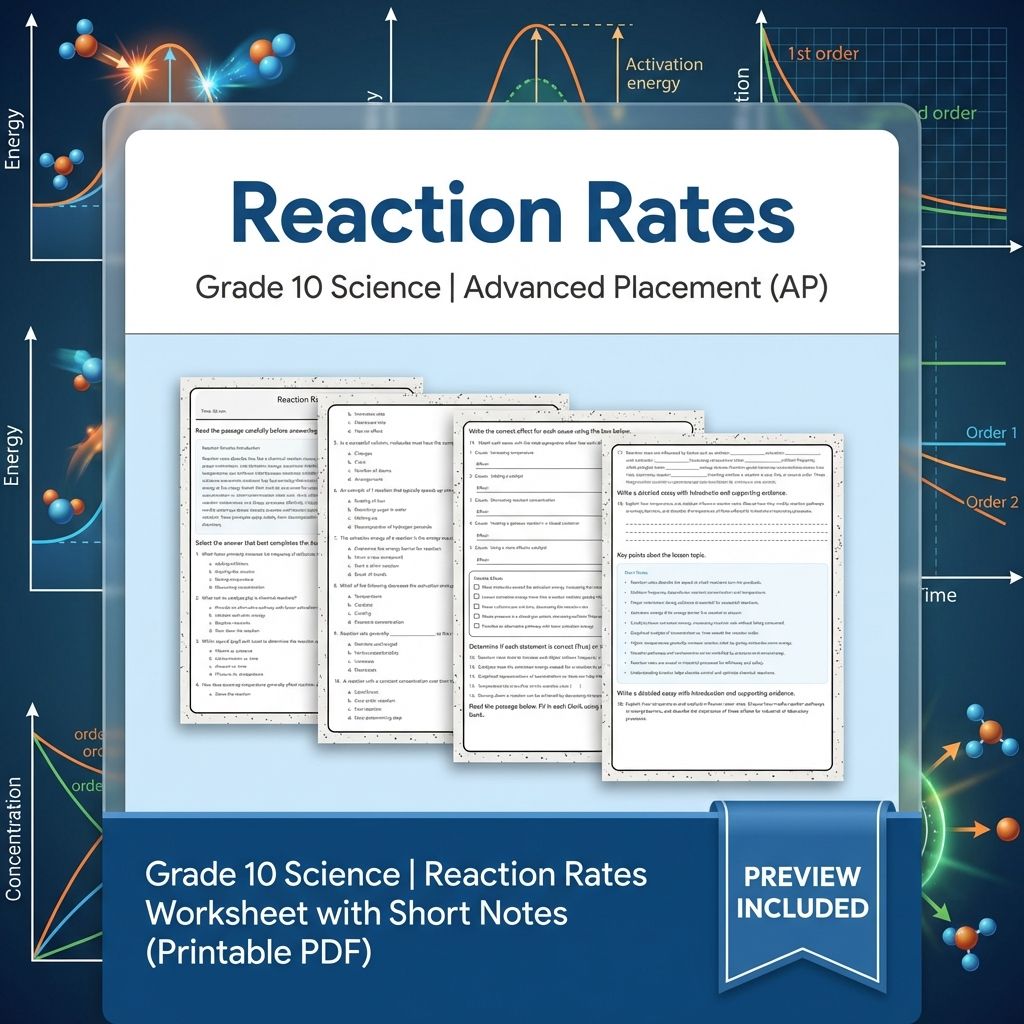
Grade 10 Science | Reaction Rates Worksheet with Short Notes (Printable PDF)
Created byMeadowlark WorksheetsLearning Objectives
- Describe how collision frequency, orientation, and activation energy influence reaction rates.
- Explain the concept of reaction order through graphical and mathematical representations.
- Identify the effects of temperature and catalysts on reaction pathways and rates.
Also included in: Grade 10 Science | Comprehensive Unit Bundle on Atomic Structure
Instant download

Grade 10 Science – Evolutionary Change Daily Reading Worksheet + Answer Key
JCreated byJ.S SheetsLearning Objectives
- Identify key concepts of the evolutionary synthesis
- Describe how different scientific fields contribute to understanding evolution
- Apply knowledge of mechanisms like natural selection and genetic drift
Also included in: Grade 10 Science Lesson Bundle: Evolution and Genetics TEKS Framework +1 more
Instant download

Grade 10 Science Worksheet | Ecosystem Management & TEKS Alignment (PDF)
Created byEvergreen Desk EducationLearning Objectives
- Explain how ecosystem management uses ecological principles to maintain or restore ecosystem structure, function, and services
- Analyze the roles of energy flow, nutrient cycles, species interactions, and disturbance regimes in resilience and biodiversity
- Evaluate ecosystem management strategies such as habitat restoration, invasive species control, and pollution/fragmentation reduction
Instant download

Hazard Influence Worksheet | NGSS Aligned Science Practice for Grade 10
JCreated byJ.S SheetsLearning Objectives
- Understand how freshwater availability, natural hazards, and climate variability influence human settlement and land use.
- Analyze examples such as water scarcity, volcanic eruptions, and sea-level rise to see their societal impacts.
- Interpret paleoclimate records, flood data, and migration patterns to understand resource-hazard-society links.
Also included in: Grade 10 Climate Change Science Lesson Bundle | NGSS Practice Worksheets
Instant download

Grade 10 Science – Energy Currency in Cells & ATP | Daily Reading Worksheet
Created byBright Mind ResourcesLearning Objectives
- Understand the structure and function of ATP as the main energy carrier in cells.
- Explain how ATP is synthesized and hydrolyzed during cellular activities.
- Identify differences in ATP turnover rates across various tissues and environmental conditions.
Also included in: Grade 10 Science Daily Reading: Cells & Systems Lesson Bundle | Alberta +1 more
Instant download

Grade 10 Mixture Separation Worksheet | Solubility, Filtration & Distillation
 Created byChalk and Compass
Learning Objectives
- Explain how solubility, particle size, and boiling point determine which separation method to use.
- Differentiate homogeneous solutions, colloids, and suspensions using particle dispersion and optical properties.
- Evaluate purity qualitatively and quantitatively using indicators such as concentration and percent composition.
Also included in: Chemistry Foundations & Chemical Reactions Lesson Bundle: Grade 10 Science +1 more
Instant download

Grade 10 Science — Worksheet MCQ Paper for Mastering Statistical Reasoning
Created byThe Resource HubLearning Objectives
- Understand methods to summarize and compare datasets using measures of central tendency and variability.
- Interpret confidence intervals and effect sizes in the context of experimental data.
- Apply basic hypothesis testing principles to evaluate observed differences against null models.
Also included in: Grade 10 Science Bundle: Master Scientific Modeling & Data Analysis +1 more
Instant download

Grade 10 Science | Mechanical Calculations Worksheet (Alberta Standards) (PDF)
 Created bySilver Birch Teaching
Learning Objectives
- Apply quantitative energy-balance equations to determine final speed or height in systems with friction and gravity
- Identify how non-conservative work affects mechanical energy during motion
- Use correct units and algebraic rearrangements when solving for unknown variables
Instant download

Grade 10 Population Patterns Worksheet | AP Practice & PDF
Created byClear Sky ClassroomLearning Objectives
- Explain how birth rate, death rate, immigration, and emigration influence population size and density.
- Describe carrying capacity (K) and how density-dependent interactions change population growth.
- Interpret population patterns using age structure, population density, and simple population models.
Also included in: Grade 10 Population, Genetics, and Cellular Processes Science Lesson Bundle AP +1 more
Instant download

Carbon Cycling Worksheet | Standards-Aligned Science Practice for Grade 10
JCreated byJ.S SheetsLearning Objectives
- Explain how carbon moves between the atmosphere, biosphere, hydrosphere, and geosphere during carbon cycling.
- Compare the roles of photosynthesis and respiration in changing carbon dioxide levels.
- Describe how oceans, sediments, and fossilization sequester carbon over longer timescales.
Instant download
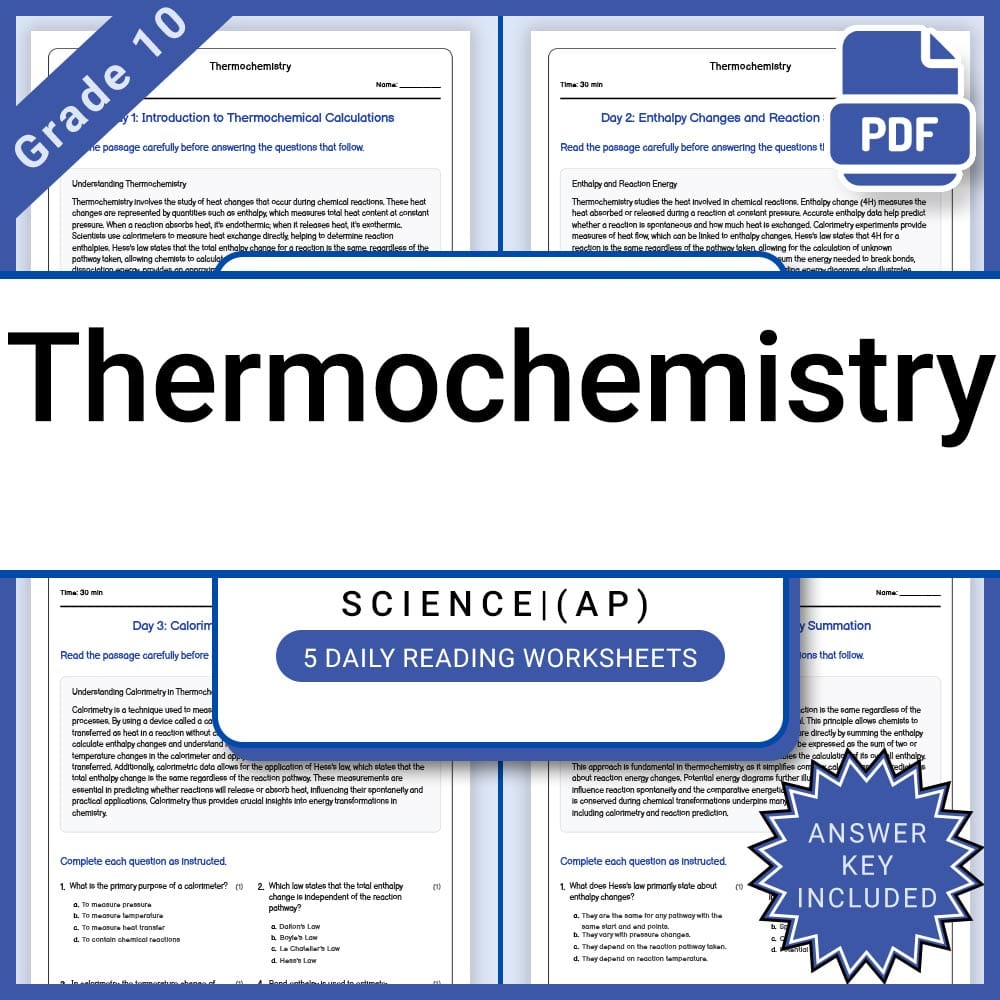
Grade 10 Science – Thermochemistry Daily Reading Worksheet + Answer Key
JCreated byJ.S SheetsLearning Objectives
- Understand basic thermochemical concepts and reaction enthalpy.
- Connect enthalpy changes to reaction stoichiometry.
- Apply calorimetric principles to measure heat exchange.
Also included in: Grade 10 Science Lesson Group - AP Curriculum - Daily Reading Worksheets
Instant download

Data Visualization Worksheet for Grade 10 Science | AP Standards-Aligned
JCreated byJ.S SheetsLearning Objectives
- Understand principles and conventions for graphical and tabular data representation.
- Identify different types of data visualizations such as scatterplots, histograms, and boxplots.
- Interpret patterns, variability, outliers, and the role of error bars or confidence intervals in data analysis.
Instant download

Chromosomes and Inheritance Worksheet Grade 10 Genetics NGSSS
Created byEvergreen Desk EducationLearning Objectives
- Explain how chromosomes are transmitted from parents to offspring and how this affects allele distribution.
- Describe the relationship between gene loci on chromosomes and observed inheritance patterns.
- Use dominance and gene combinations to predict potential offspring phenotypes.
Instant download
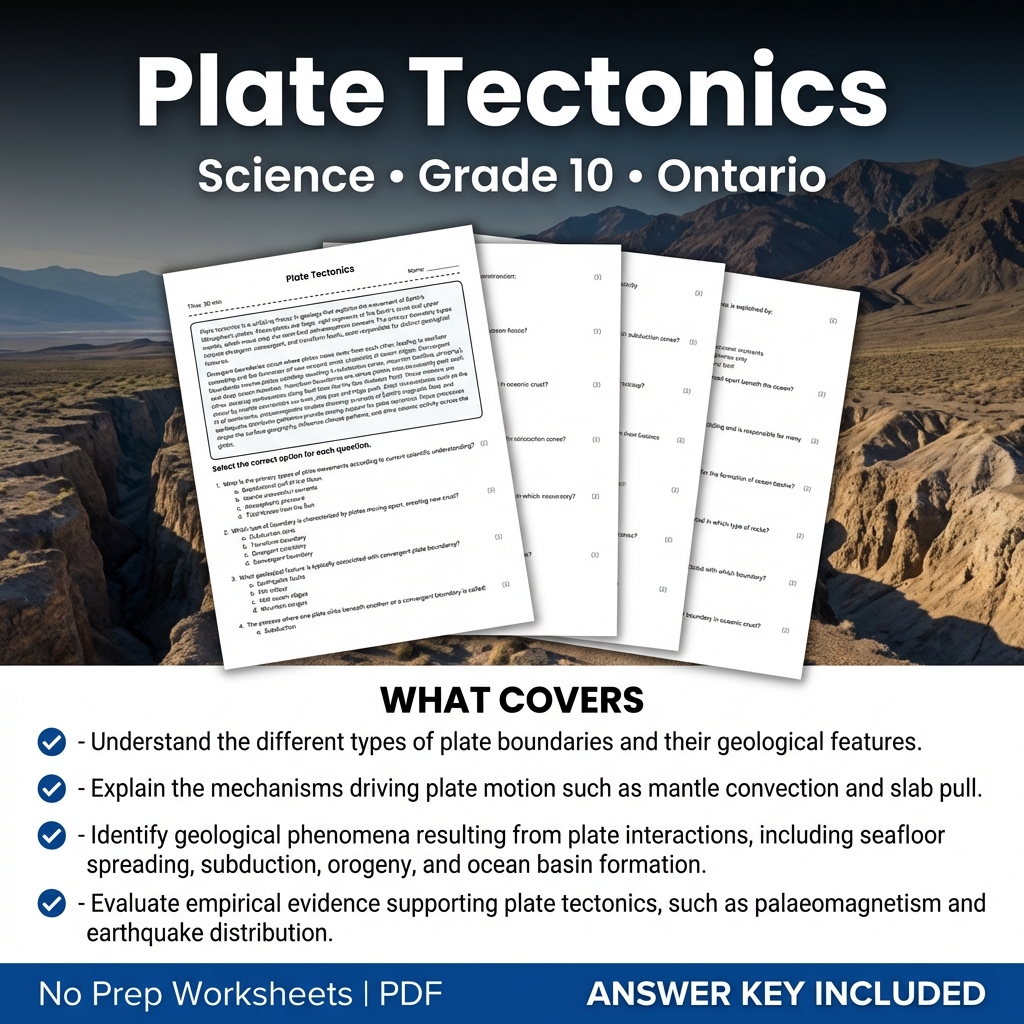
Plate Tectonics Grade 10 Science Worksheet | Ontario Standards
Created byCoral Reef LearningLearning Objectives
- Understand the different types of plate boundaries and their geological features.
- Explain the mechanisms driving plate motion such as mantle convection and slab pull.
- Identify geological phenomena resulting from plate interactions, including seafloor spreading, subduction, orogeny, and ocean basin formation.
Instant download

Grade 10 Science – Forces & Motion Daily Reading Worksheet | Florida NGSSS
Created byBright Mind ResourcesLearning Objectives
- Understand the concept of forces and their effect on motion.
- Identify different types of forces acting on objects.
- Explain the relationship between net force, mass, and acceleration.
Also included in: Physical Science Grade 10 Daily Reading Worksheets Lesson Bundle | Florida NGSSS +1 more
Instant download

Grade 10 Species Interactions Worksheet | BC Practice & PDF
Created byClear Sky ClassroomLearning Objectives
- Explain how competition, predation, parasitism, mutualism, and commensalism shape species abundance and biodiversity.
- Describe how niche partitioning and competitive exclusion can determine which species coexist in a community.
- Use interaction examples to infer direct and indirect effects in food webs and species interaction networks.
Instant download

Grade 10 Worksheet B: Model Evaluation (Grade 10 Science) Worksheet | NGSS
Created byClear Sky ClassroomLearning Objectives
- Compare simulation results to empirical prototype or field measurements using quantitative metrics.
- Explain validation, uncertainty quantification, and bias/fit in model evaluation.
- Use evidence from datasets to justify model refinement and design decisions.
Also included in: Grade 10 Trade-Off Optimization Science Lesson Bundle: NGSS +1 more
Instant download

Chemical Reactions and Predicting Products Worksheets | Grade 10 Science
 Created bySunny Desk Resources
Learning Objectives
- Identify synthesis, decomposition, single displacement, double displacement, and combustion reactions from word descriptions and equations.
- Predict likely product patterns for common reaction types using balancing and particle-charge ideas.
- Use observable indicators such as gas formation, temperature change, or precipitation to support reaction classification.
Also included in: Grade 10 Chemistry Lesson Bundle | Alberta Science Reaction & Analysis +1 more
Instant download

Grade 10 Integrated Systems Worksheet | Practice & Assessment PDF
Created byClear Sky ClassroomLearning Objectives
- Apply conservation of energy to combined mechanical-and-electrical systems and account for energy losses.
- Connect work–energy ideas and kinematics to how motion drives electrical generation or power delivery.
- Explain how electromagnetic conversion (generator/motor) relates mechanical motion to electrical energy flow.
Instant download
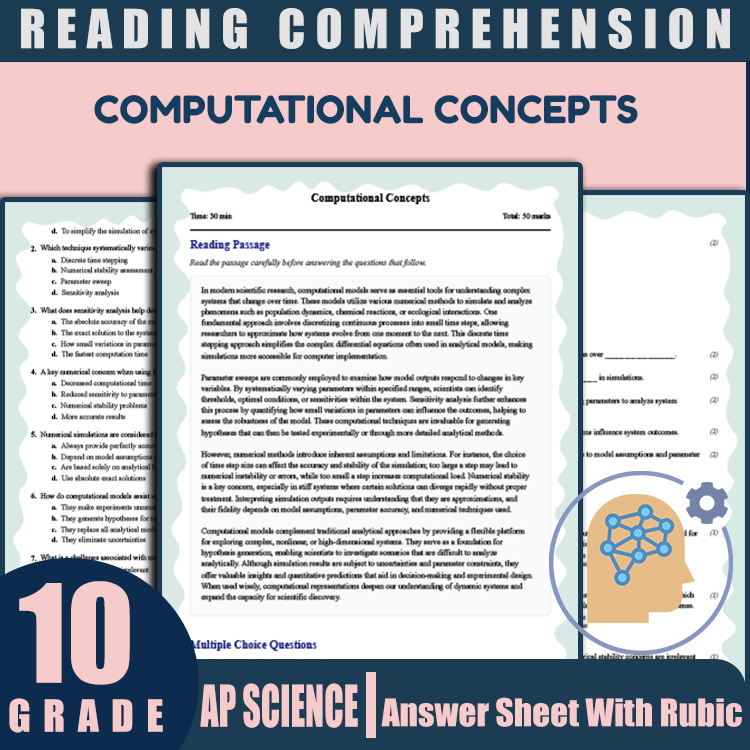
Grade 10 Science | Computational Concepts Reading Worksheet & Answer Key (PDF)
JCreated byJ.S SheetsLearning Objectives
- Understand basic computational approaches for representing dynamic systems.
- Identify the use of discrete time stepping, parameter sweeps, and sensitivity analysis in modeling.
- Recognize the assumptions and limitations of numerical simulations.
Also included in: Grade 10 Science Unit Worksheet Pack – Data Analysis & Scientific Reasoning +1 more
Instant download
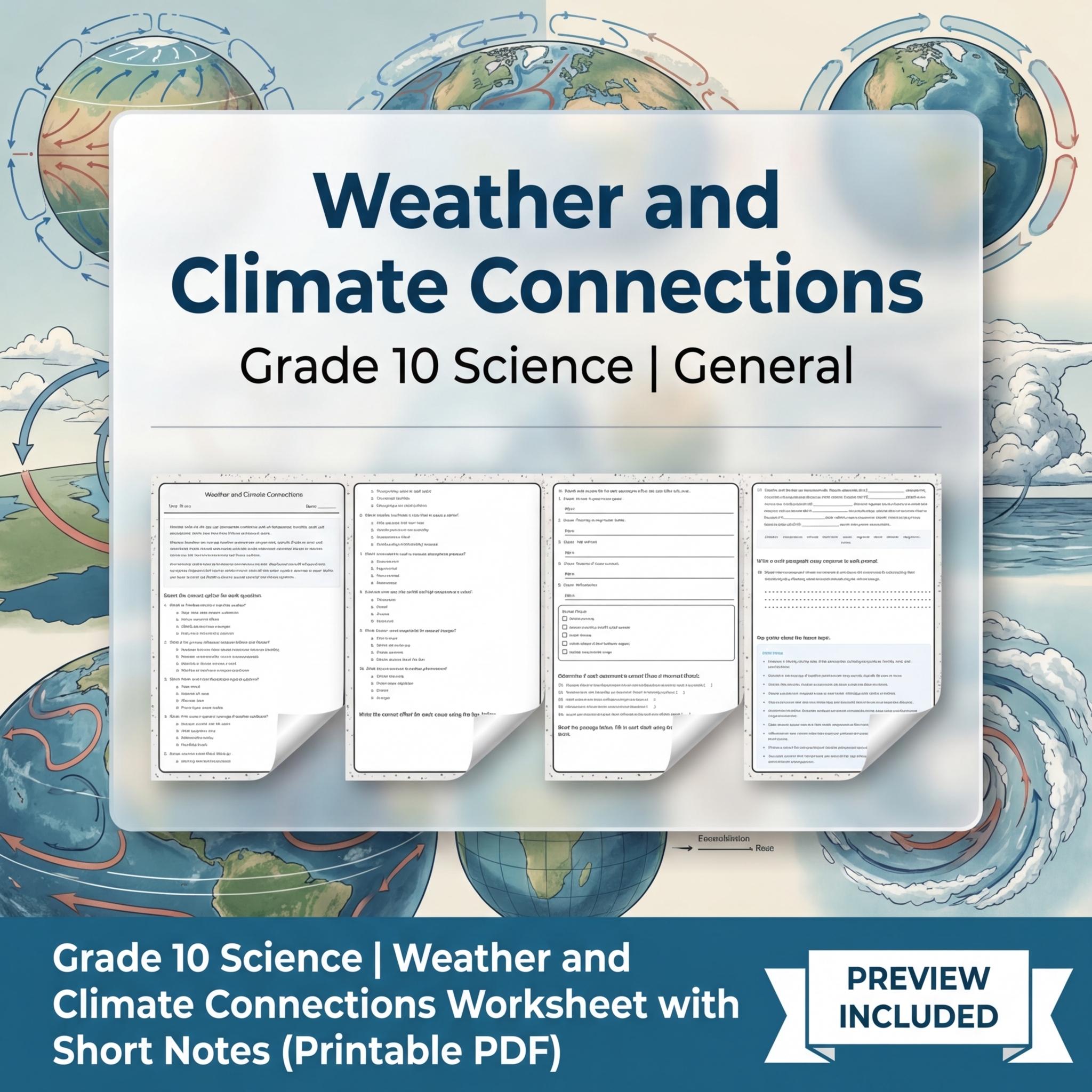
Grade 10 Science | Weather and Climate Connections Worksheet with Short Notes
Created byMeadowlark WorksheetsLearning Objectives
- Understand the relationship between weather patterns and climate.
- Identify key factors that influence weather and climate.
- Explain how weather and climate affect ecosystems and human activities.
Also included in: Grade 10 Earth Systems Science Lesson Bundle: General Framework Worksheets +1 more
Instant download

Grade 10 Forces And Motion Worksheet | Practice & General PDF
Created byClear Sky ClassroomLearning Objectives
- Explain how net force relates to changes in velocity and motion
- Differentiate gravity, contact forces, and friction as real forces that can accelerate objects
- Use inertia and the direction of net force to predict the direction of acceleration
Instant download

Energy Flow Worksheet | Science Assessment for Grade 10 TEKS
JCreated byJ.S SheetsLearning Objectives
- Explain how sunlight energy enters ecosystems through photosynthesis and moves through trophic levels.
- Describe how energy transfer between trophic levels decreases due to respiration and heat loss.
- Use food chains and food webs to trace energy flow and predict limits on biomass and population sizes.
Instant download
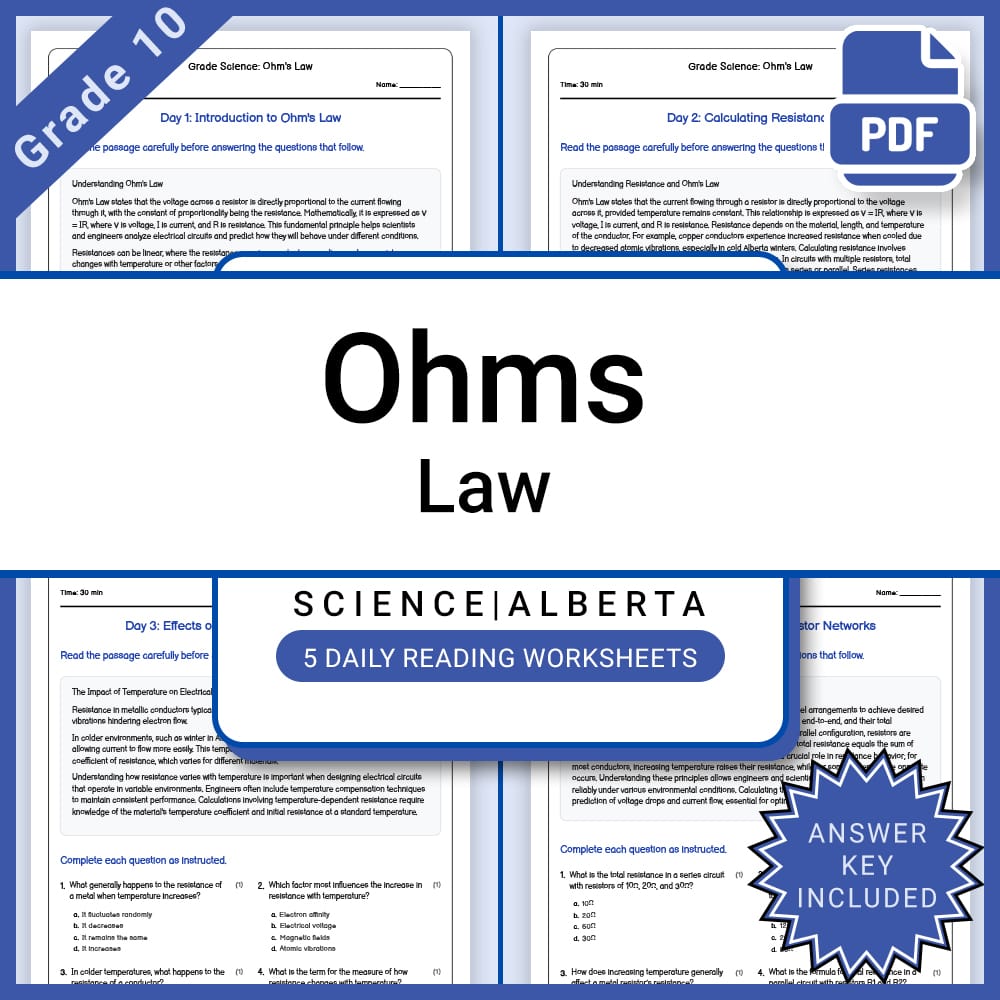
Grade 10 Science – Ohm's Law Daily Reading Worksheet + Answer Key
JCreated byJ.S SheetsLearning Objectives
- Understand the relationship between voltage, current, and resistance
- Identify linear and non-linear resistive behaviors
- Analyze how temperature influences resistance in conductors
Also included in: Grade 10 Science Lesson Group | Energy and Electricity Alberta Framework +1 more
Instant download
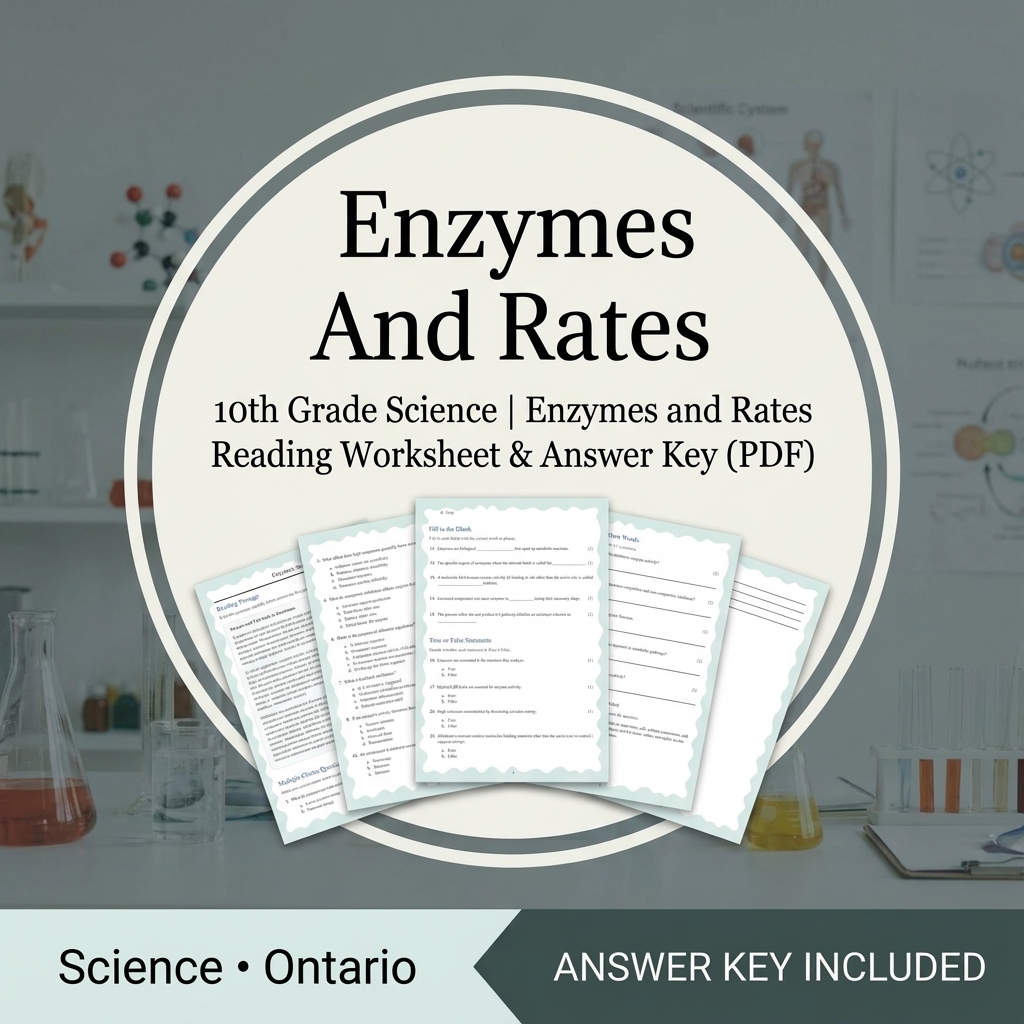
10th Grade Science | Enzymes and Rates Reading Worksheet & Answer Key (PDF)
JCreated byJ.S SheetsLearning Objectives
- Describe how enzymes lower activation energy and facilitate metabolic reactions.
- Explain factors affecting enzyme activity, including temperature, pH, substrate concentration, and inhibitors.
- Understand the concepts of allosteric regulation and feedback inhibition in metabolic pathways.
Also included in: Grade 10 Science Unit Bundle | Cell Biology, Microbes & Energy Activities +1 more
Instant download

Grade 10 Science | Balanced Force Motion Worksheet Elena | California Standards
 Created byLumora Learning
Learning Objectives
- Explain how net force determines acceleration and how balanced forces lead to constant velocity or no change in motion
- Distinguish between individual forces acting on an object and the combined effect (net force)
- Use force diagrams and everyday scenarios to predict whether an object will speed up, slow down, or maintain the same motion
Instant download

Grade 10 Science – Energy Pathways Daily Reading Worksheet | AP Standards
Created byBright Mind ResourcesLearning Objectives
- Understand how solar energy is absorbed and reflected by Earth's surface.
- Explain the processes of sensible and latent heat transfer.
- Identify how oceanic heat transport influences regional climates.
Also included in: Grade 10 Earth Science Daily Reading Worksheets Lesson Bundle | AP +2 more
Instant download
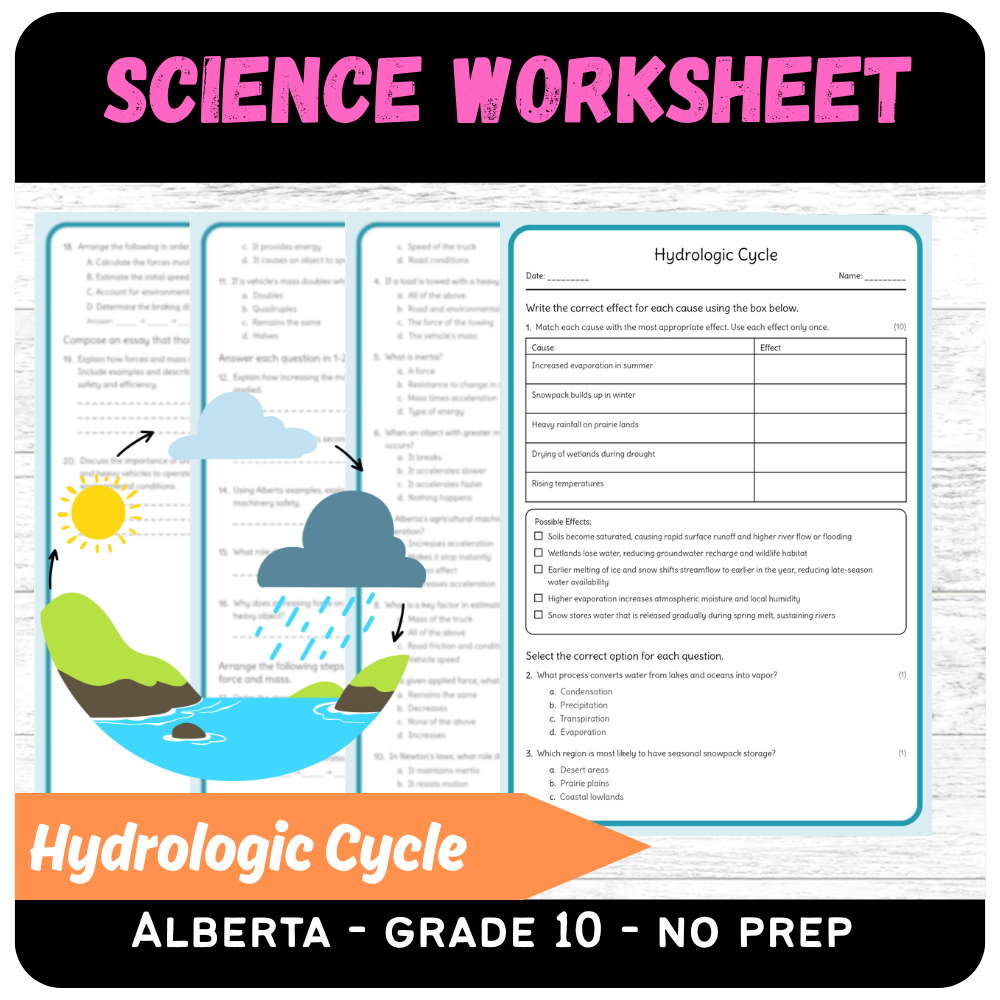
Grade 10 Science – Hydrologic Cycle Worksheet (PDF) – Alberta Standards
Created byBright Mind ResourcesLearning Objectives
- Describe the key processes of the hydrologic cycle and their roles in water movement.
- Explain the regional impacts of climate variability and watershed characteristics on water availability.
- Analyze how wetlands, groundwater, and streamflow interact within the water cycle.
Instant download
About Grade 10 Science Worksheets
Find Science worksheets built for Grade 10. All 7,038 cover core skills, practice, and review, each an instant PDF download.
Every worksheet on MyTeachingSheets is created by independent teacher-authors and reviewed before publication. All resources download as printable PDFs for classroom, homework, or at-home practice, and many include answer keys. Preview any worksheet free before buying.