
Grade 6 Worksheets
8,578 grade resources
Infographic Details Grade 6 ELA Worksheet | Standards-Aligned Practice
JCreated byJ.S SheetsLearning Objectives
- Explain how infographic elements (axes, scales, labels, icons, timelines, and legends) help readers interpret information.
- Identify relationships between visuals and accompanying text to determine the main claim of an infographic.
- Use evidence from an infographic’s categories and numbers to answer comprehension questions accurately.
Instant download

Grade 6 Science | Angle Effects - Daily Reading Comprehension Practice
 Created byCoral Reef Learning
Learning Objectives
- Understand key concepts related to Science
- Apply knowledge through practice questions
- Demonstrate comprehension of the material
Instant download

Grade 6 Current Electricity Fundamentals Worksheet | Ontario Science
 Created byClear Sky Classroom
Learning Objectives
- Explain electric current as an organized movement of charges through a conductor
- Distinguish conventional current direction from electron flow in metals
- Describe potential difference as the driving force that makes current flow
Instant download
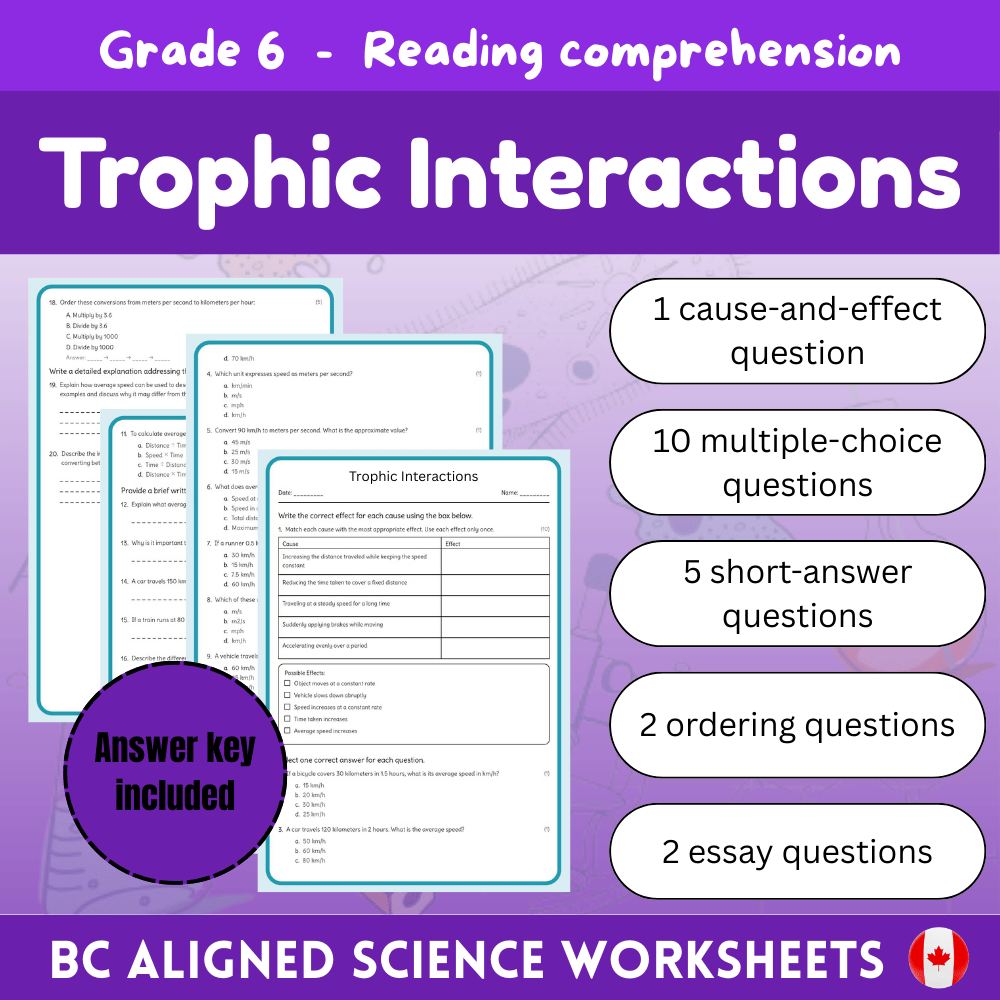
6th Grade Science | Trophic Interactions Worksheet (PDF) – BC Standard
 Created byBright Mind Resources
Learning Objectives
- Identify different types of trophic interactions including predation, herbivory, parasitism, competition, and mutualism.
- Explain how each trophic interaction affects species survival and ecosystem stability.
- Analyze examples of trophic interactions and their role in community structure.
Instant download

Constructing Accounts Worksheet | Standards-Aligned Grade 6 Social Studies
JCreated byJ.S SheetsLearning Objectives
- Explain how historians use primary and secondary sources to build historical accounts
- Evaluate evidence by considering reliability, context, and possible bias
- Organize historical information using chronological reasoning and cause-and-effect thinking
Instant download

Constructing Accounts Historical Evidence Worksheet | Grade 6 BC
 Created byQuiet Forest Education
Learning Objectives
- Identify and distinguish between primary and secondary sources.
- Understand how historians use different sources to construct historical narratives.
- Analyze the reliability and bias of various historical evidence.
Also included in: Chronology & Change Grade 6 Social Studies Daily Reading Worksheets Bundle | BC +1 more
Instant download
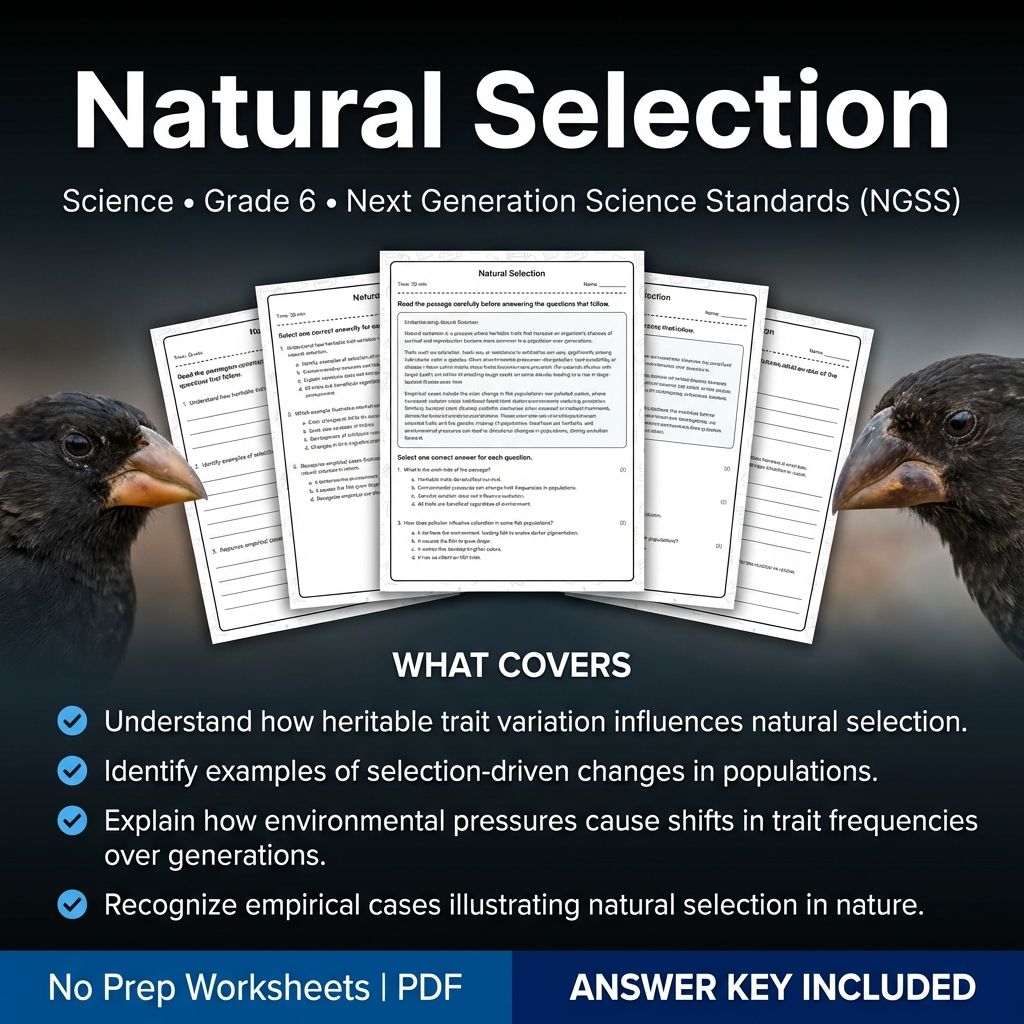
Grade 6 Science | Natural Selection Worksheet & Answer Key (Printable PDF)
Created byCoral Reef LearningLearning Objectives
- Understand how heritable trait variation influences natural selection.
- Identify examples of selection-driven changes in populations.
- Explain how environmental pressures cause shifts in trait frequencies over generations.
Instant download
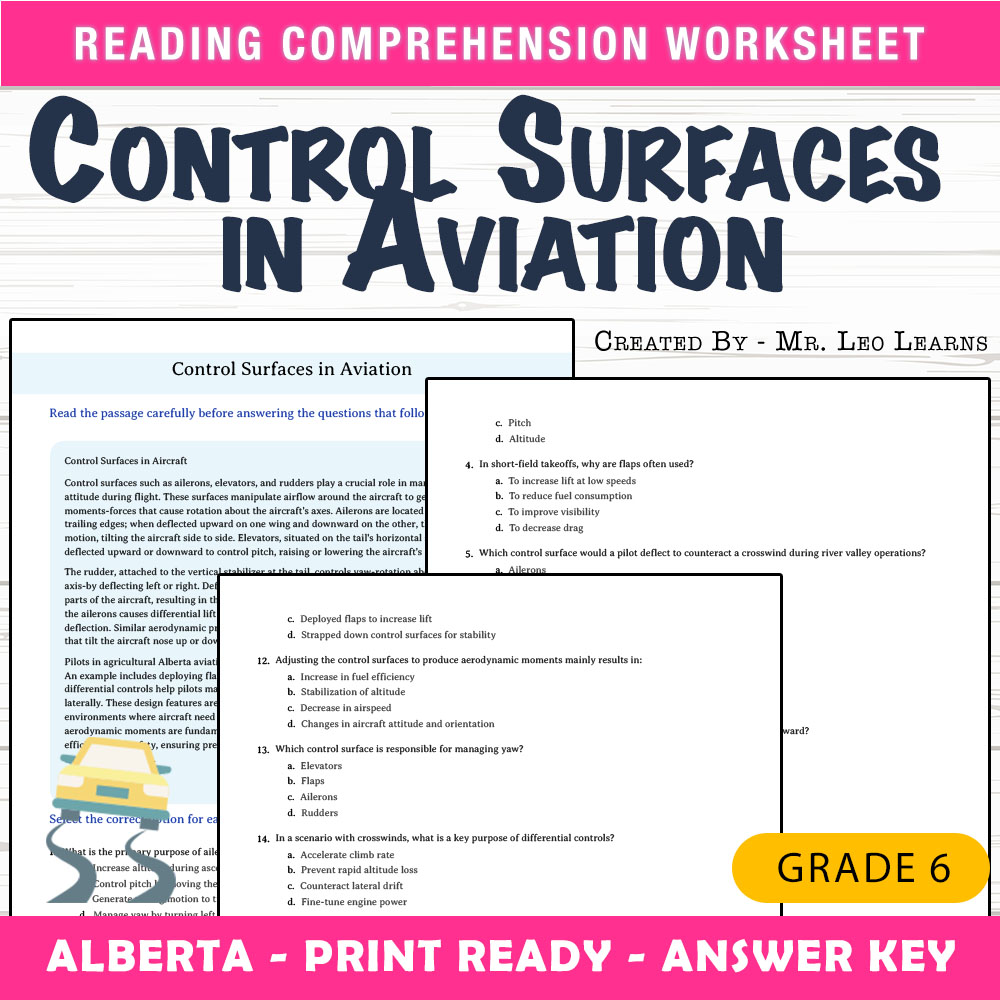
Grade 6 Science — Control Surfaces in Aviation Worksheet MCQ Paper
 Created byThe Resource Hub
Learning Objectives
- Understand the function of control surfaces such as ailerons, elevators, and rudders.
- Explain how deflection of control surfaces alters airflow to produce aircraft movements.
- Describe how aerodynamic moments create rolling, pitching, and yawing motions.
Also included in: Grade 6 Science | Air and Aerodynamics UNIT Worksheet Bundle (Alberta Framework) +1 more
Instant download
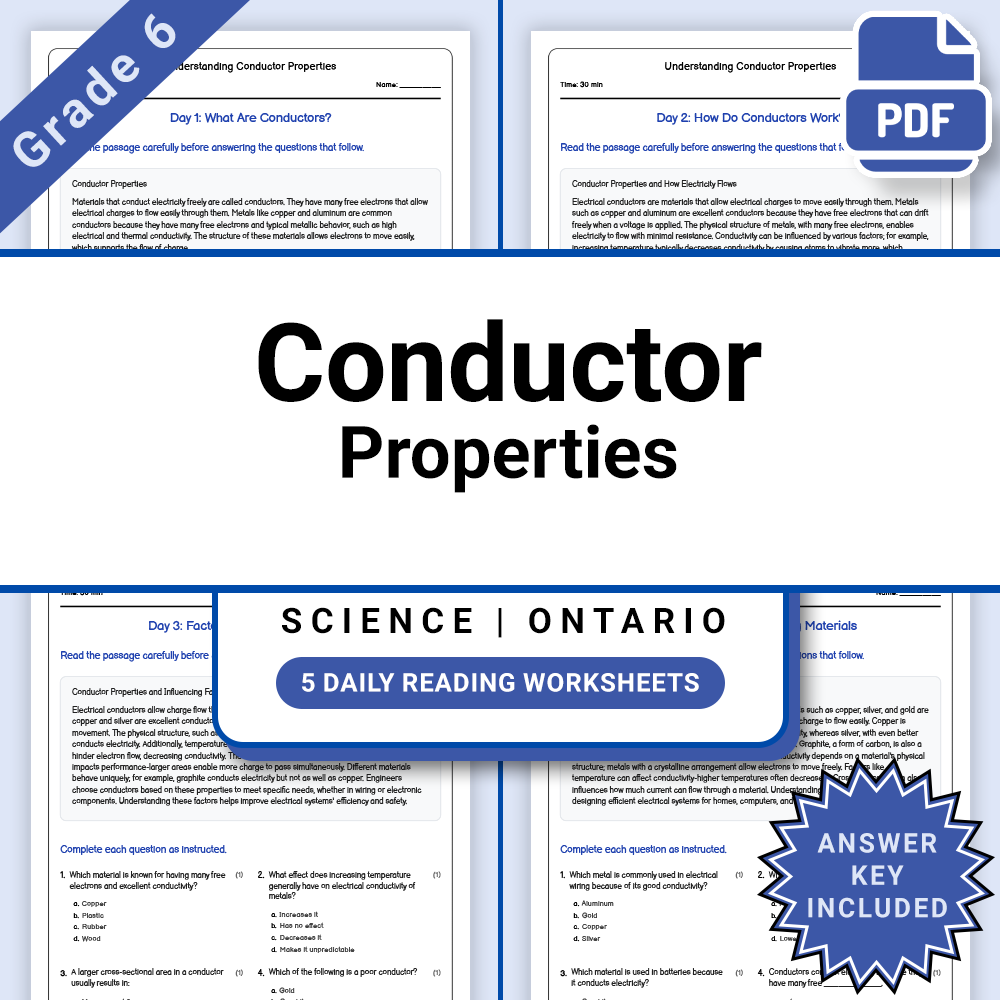
Grade 6 Science – Conductor Properties Daily Reading Worksheet with Answer Key
JCreated byJ.S SheetsLearning Objectives
- Understand key concepts related to Science
- Apply knowledge through practice questions
- Demonstrate comprehension of the material
Also included in: Grade 6 Science Lesson Group – Circuits and Energy Ontario Framework +1 more
Instant download

Roman Expansion Worksheet | Standards-Aligned Grade 6 Social Studies PDF
JCreated byJ.S SheetsLearning Objectives
- Explain how Rome expanded its territory through conquest, alliances, and colonization.
- Describe how Roman expansion influenced citizenship laws for non-Latin peoples.
- Analyze how Roman expansion changed trade and access to resources across the Mediterranean.
Instant download
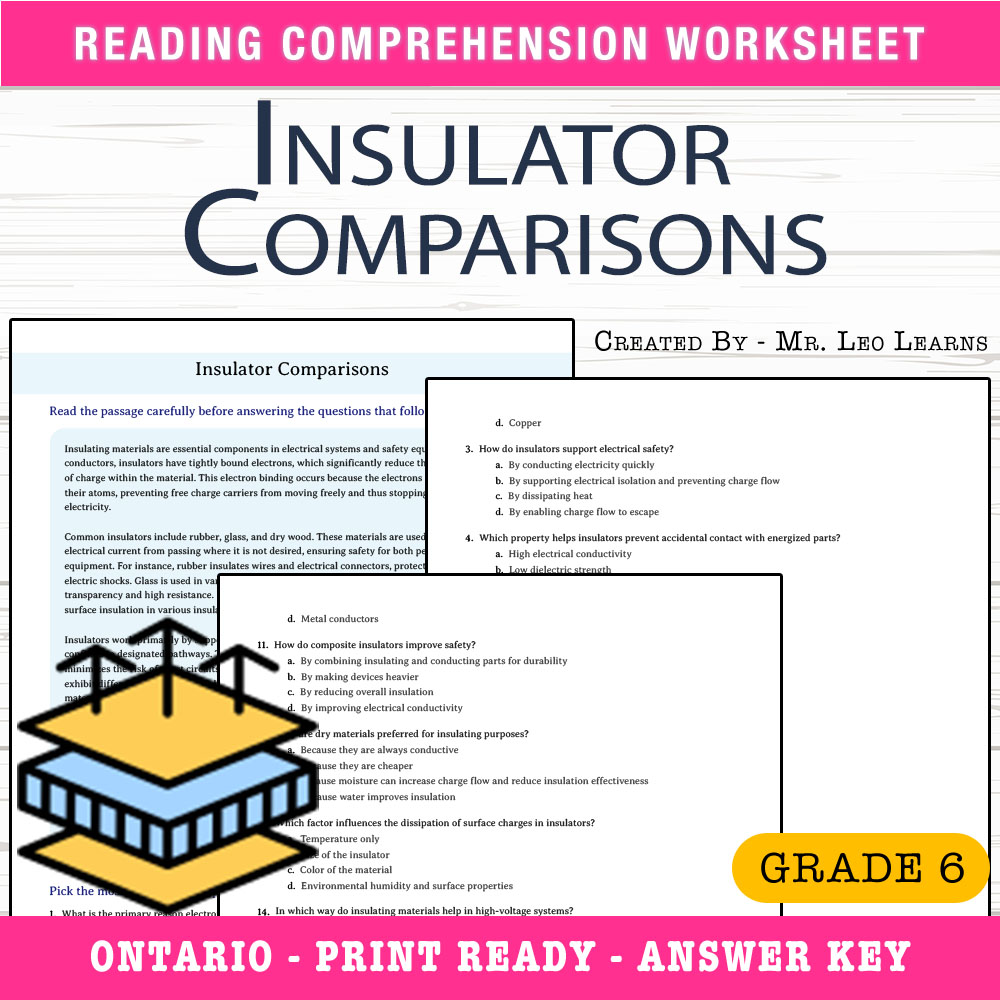
Grade 6 Science — Insulator Comparisons Worksheet for Mastery
Created byThe Resource HubLearning Objectives
- Describe the properties of insulating materials and how they prevent electrical charge flow.
- Identify common insulating materials such as rubber, glass, and dry wood.
- Explain how insulators support electrical safety through isolation.
Also included in: Grade 6 Science Unit Bundle – Circuits, Electricity & Energy Worksheets +1 more
Instant download
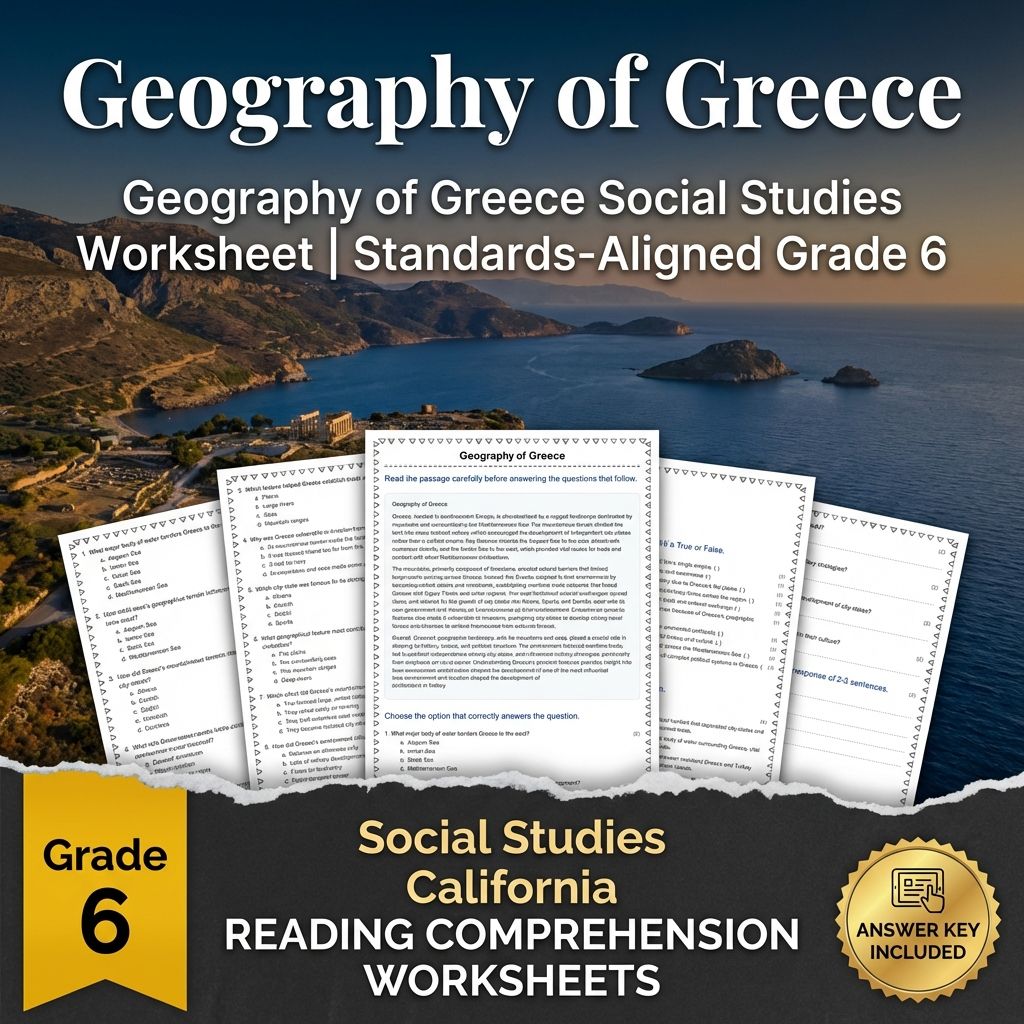
Geography of Greece Social Studies Worksheet | Standards-Aligned Grade 6
JCreated byJ.S SheetsLearning Objectives
- Understand the major geographic features of Greece and their impact on ancient Greek civilization.
- Identify key bodies of water and mountainous regions in Greece and analyze their influence on trade and settlement.
- Explain how Greece's environment shaped its political and military interactions among city-states.
Also included in: Grade 6 Social Studies Unit Bundle – Ancient Greece & Rome | Standards-Aligned +1 more
Instant download

Geography of Greece Worksheet | Standards-Aligned Grade 6 Social Studies
JCreated byJ.S SheetsLearning Objectives
- Explain how Greece’s seas (Aegean and Ionian) supported maritime travel and trade.
- Describe how mountainous terrain affected where Greeks settled and how city-states developed.
- Analyze how geography influenced conflict and cooperation among Greek city-states.
Instant download

Accountable Discussion Worksheet for Grade 6 ELA | Ontario Standards
JCreated byJ.S SheetsLearning Objectives
- Use accountable discussion moves (clarifying questions, paraphrasing, and evidence-based responses) to keep a conversation focused.
- Connect ideas across turns by building on earlier claims and using respectful disagreement when needed.
- Use evidence from texts or observations to support claims and to explain how details relate to the topic.
Instant download
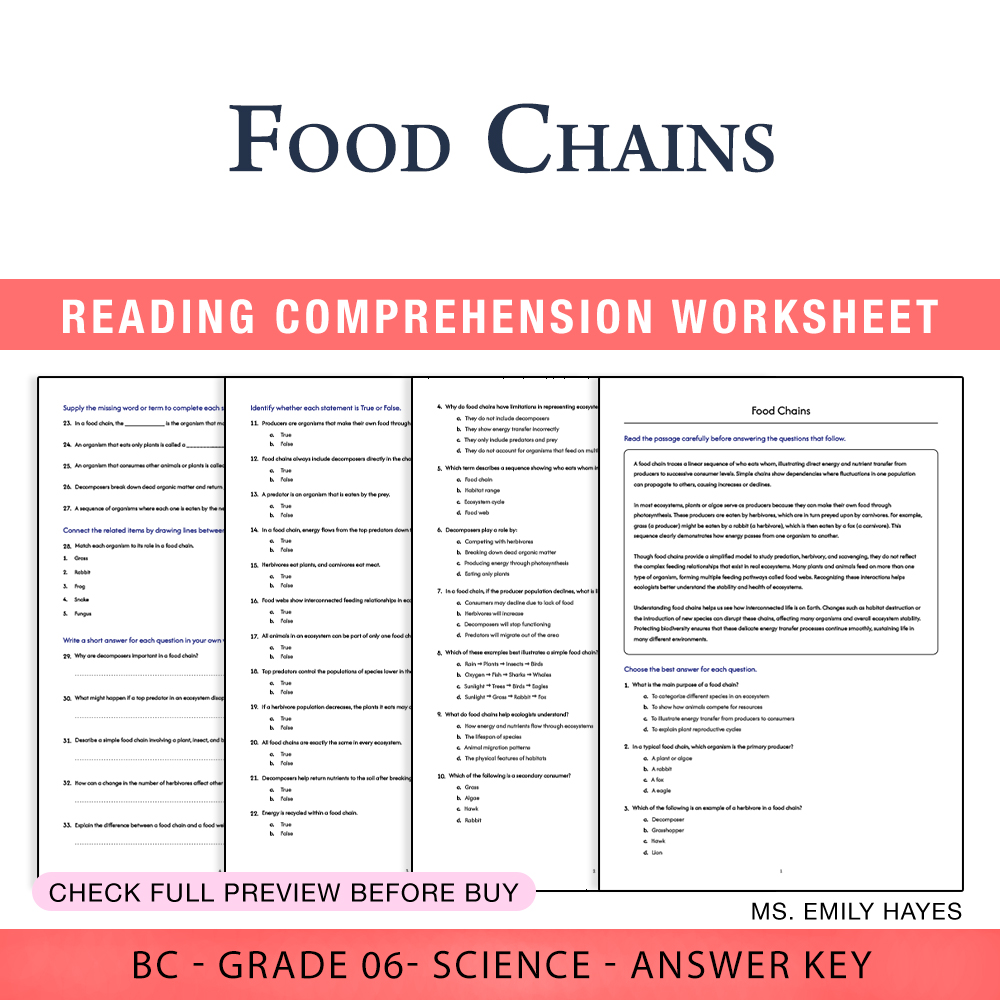
6th Grade Science | Food Chains Worksheet (PDF+ Answer Key)
 Created byCopper Leaf Classroom
Learning Objectives
- Understand the concept of a food chain and how energy flows from producer to consumer.
- Identify the roles of producers, consumers, and decomposers in an ecosystem.
- Illustrate and explain examples of simple food chains in different habitats.
Also included in: Grade 6 Science BC | Ecosystems and Human Impact Unit (PDF + Answer Keys) +1 more
Instant download
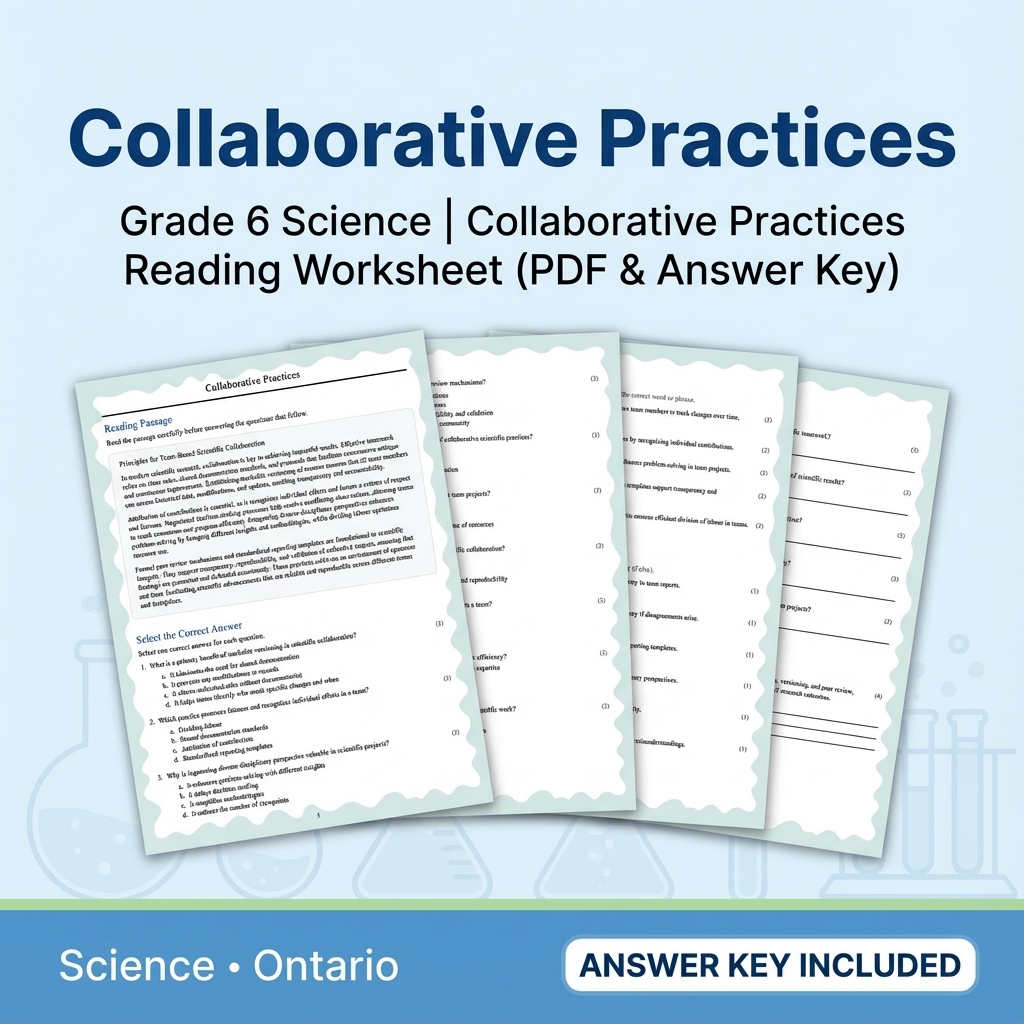
Grade 6 Science | Collaborative Practices Reading Worksheet (PDF & Answer Key)
JCreated byJ.S SheetsLearning Objectives
- Understand principles of team-based organization and communication in scientific contexts.
- Recognize the importance of versioning, attribution, and standardized reporting to enhance transparency.
- Identify methods for integrating diverse perspectives and resolving conflicts in collaborative projects.
Also included in: Grade 6 Science Unit | Inquiry, Data, & Ethical Practices Worksheet Pack +1 more
Instant download

Introduction Strategies Worksheet for Grade 6 ELA Practice & Review
 Created bySunny Desk Resources
Learning Objectives
- Identify effective introduction strategies (hooks, background information, and thesis statements) in different types of writing.
- Write a clear thesis statement that states the purpose and main focus of a piece of writing.
- Revise an introduction so it provides context and engages the reader without being too broad.
Also included in: Grade 6 ELA Writing Lesson Bundle: Argument, Narrative & Informative CCSS +1 more
Instant download

6th Grade Health | Advocacy Worksheet (NHES) for Critical Thinking (PDF)
Created bySunny Desk ResourcesLearning Objectives
- Explain what health advocacy is and why it matters in communities.
- Describe effective ways to communicate about health issues using respectful, evidence-based information.
- Identify strategies for getting involved in health promotion and influencing health-related decisions.
Also included in: Grade 6 Functional Health Concepts in Health Lesson Bundle NHES Framework +1 more
Instant download

Step-by-Step Algorithm Design Worksheet | Grade 6 Computer Science
Created byBright Mind ResourcesLearning Objectives
- Define the terms algorithm, instruction, sequence, and process.
- Identify the correct order of steps in a simple algorithm.
- Complete an algorithm paragraph by selecting appropriate vocabulary.
Instant download

Indigenous Relations Worksheet | Social Studies Grade 6 | Ontario Standard
JCreated byJ.S SheetsLearning Objectives
- Explain how trade, treaties, conflict, and cooperation shaped relationships among First Nations, Métis, and Inuit and other groups.
- Analyze causes and impacts of contact, including changes to land use and cultural exchange.
- Describe how Indigenous governance and legal frameworks show continuity and change over time.
Instant download

Grade 6 Science | Forces & Motion - Daily Reading Comprehension
Created byCoral Reef LearningLearning Objectives
- Identify different types of forces affecting motion
- Understand how unbalanced forces change an object's speed or direction
- Recognize situations involving balanced forces
Instant download

Biodiversity Solutions Worksheet Grade 6 Science NGSS Answer Key
 Created byNorthstar Worksheets
Learning Objectives
- Compare conservation strategies, habitat restoration, protected areas, and invasive species management as solutions for maintaining biodiversity.
- Explain how ecological trade-offs can affect species persistence and ecosystem services such as pollination, water purification, and nutrient cycling.
- Use case studies to evaluate which biodiversity solutions may work best under different environmental pressures.
Also included in: Grade 6 Ecosystems Lesson Bundle | NGSS Science: Species, Energy & Biodiversity +1 more
Instant download

Multiple Perspectives in History Worksheet Grade 6 Social Studies BC
Created byQuiet Forest EducationLearning Objectives
- Understand the concept of multiple viewpoints in historical narratives.
- Identify different perspectives such as Indigenous, settler, and immigrant viewpoints.
- Analyze how diverse perspectives influence historical interpretation.
Also included in: Chronology & Change Grade 6 Social Studies Daily Reading Worksheets Bundle | BC +1 more
Instant download

Understanding Facts, Opinions & Inference Worksheet | Grade 6 BC
Created byQuiet Forest EducationLearning Objectives
- Differentiate between facts and opinions in sources.
- Make inferences based on textual evidence.
- Analyze quotes from historical figures and articles critically.
Also included in: Chronology & Change Grade 6 Social Studies Daily Reading Worksheets Bundle | BC +1 more
Instant download
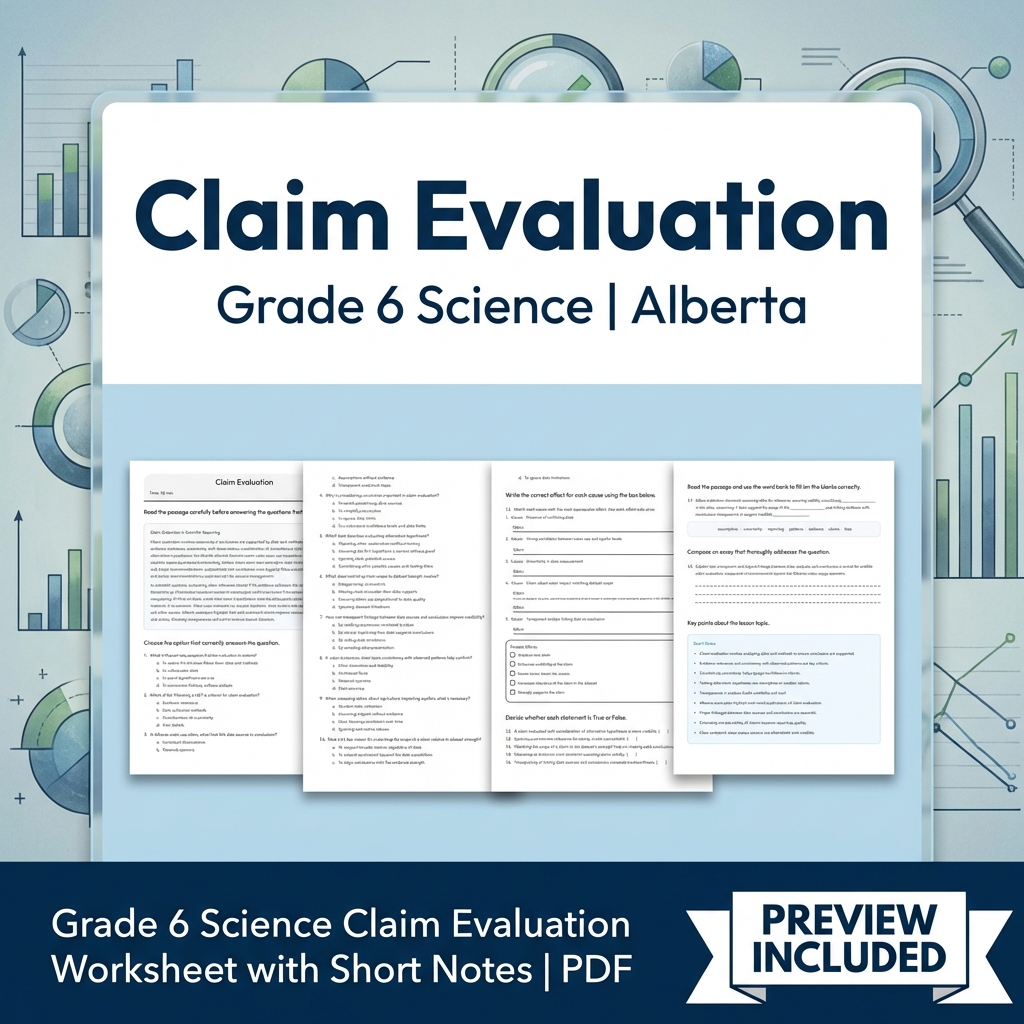
Grade 6 Science Claim Evaluation Worksheet with Short Notes | PDF
 Created byMeadowlark Worksheets
Learning Objectives
- Understand criteria for assessing whether conclusions logically follow from data and methods.
- Evaluate evidence relevance, consistency with observed patterns, and consideration of uncertainty.
- Apply principles to real-world examples, such as Alberta agricultural water use claims.
Also included in: Grade 6 Science | Evidence & Investigation Unit Worksheet Bundle +1 more
Instant download

Grade 6 ELA – Evidence From Character Actions | Daily Reading Worksheet
Created byQuiet Forest EducationLearning Objectives
- Understand key concepts related to ELA
- Apply knowledge through practice questions
- Demonstrate comprehension of the material
Also included in: Theme & Inferences Grade 6 ELA Daily Reading Worksheets Lesson Bundle | BC +1 more
Instant download

6th Grade Social Studies | Archival Records Worksheet (Ontario Standards)
Created bySunny Desk ResourcesLearning Objectives
- Explain how documentary archival records (censuses, maps, letters, and municipal minutes) help historians reconstruct community history
- Identify ways biases and omissions in records can shape interpretations of the past
- Compare continuity and change across successive versions of archival records
Also included in: Grade 6 Communities Through Time Social Studies Lesson Bundle for Ontario +1 more
Instant download

6th Grade Social Studies Worksheet | Oral Histories & Cultural Persistence (Ontario Standards)
Created bySunny Desk ResourcesLearning Objectives
- Explain how oral traditions and testimonies function as primary sources that preserve community memory
- Describe why narratives can change over time in oral history accounts
- Compare reliability and perspective in oral and written sources
Also included in: Grade 6 Communities Through Time Social Studies Lesson Bundle for Ontario +1 more
Instant download

6th Grade Social Studies Worksheet | Continuity Patterns (Ontario Standards) (PDF)
Created bySunny Desk ResourcesLearning Objectives
- Identify examples of continuity and change in community life (family roles, seasonal practices, and governance).
- Explain how environment, economy, and culture interact to keep some traditions stable over time.
- Analyze consequences of continuity and change for community identity and historical perspective.
Also included in: Grade 6 Communities Through Time Social Studies Lesson Bundle for Ontario +1 more
Instant download

Grade 6 Social Studies | Migration Waves Worksheet (Ontario Standards) (PDF)
Created bySunny Desk ResourcesLearning Objectives
- Explain push and pull factors that drive immigration and internal migration.
- Describe how migration changes demographics, culture, and local labor systems over time.
- Analyze how government policy and community responses shape settlement patterns and continuity/change.
Also included in: Grade 6 Communities Through Time Social Studies Lesson Bundle for Ontario +1 more
Instant download
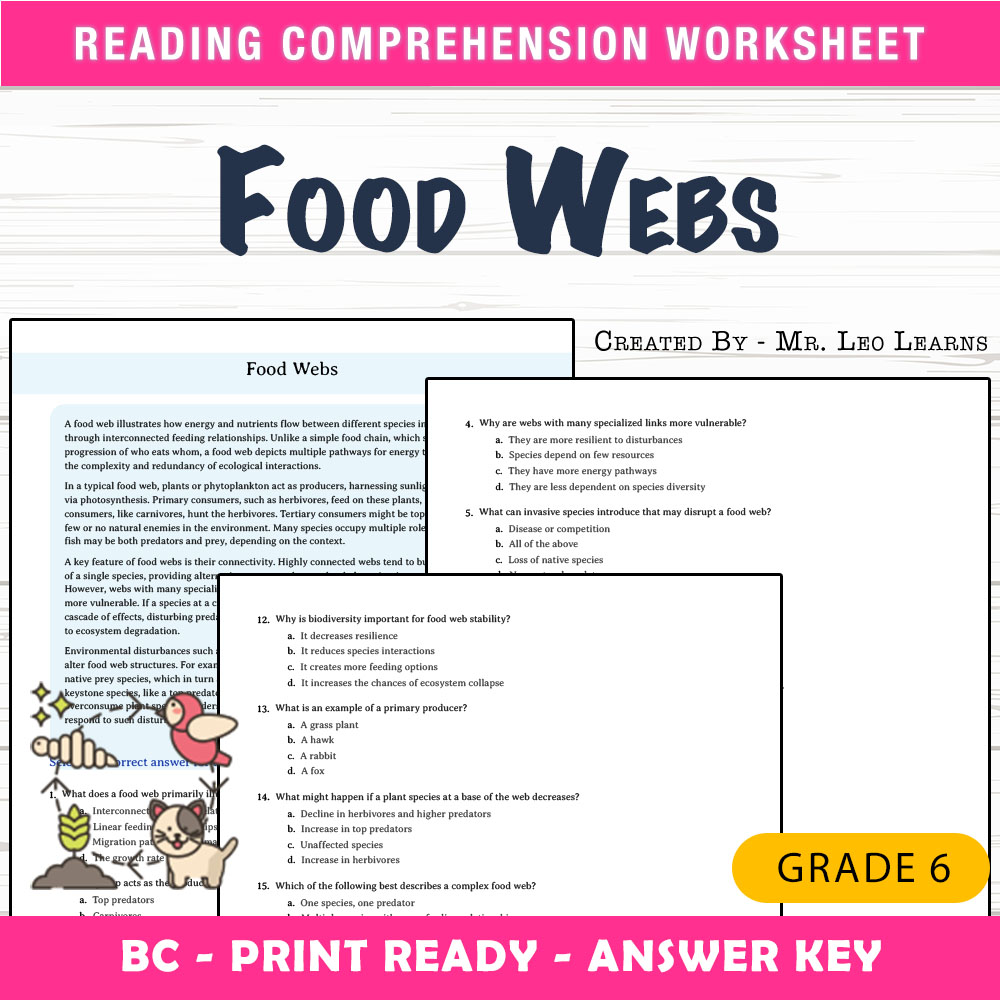
Grade 6 Science — Food Webs Worksheet MCQ Paper for Mastery
Created byThe Resource HubLearning Objectives
- Understand the components of a food web and how species are interconnected.
- Identify the roles of producers, consumers, and predators in an ecosystem.
- Explain how changes in one species can affect the entire food web.
Also included in: Grade 6 Science Ecosystems & Interdependence Worksheet Bundle – BC Curriculum +1 more
Instant download

Scientific Inquiry Worksheet for Grade 6 | Standards-Aligned Science Practice
JCreated byJ.S SheetsLearning Objectives
- Understand the key components of scientific inquiry and how observations are used to form questions.
- Learn the importance of evidence and logical reasoning in developing scientific explanations.
- Recognize measurement and observation terms used in describing natural phenomena.
Also included in: Grade 6 Scientific Inquiry Evidence Reasoning Science Lesson Bundle +1 more
Instant download
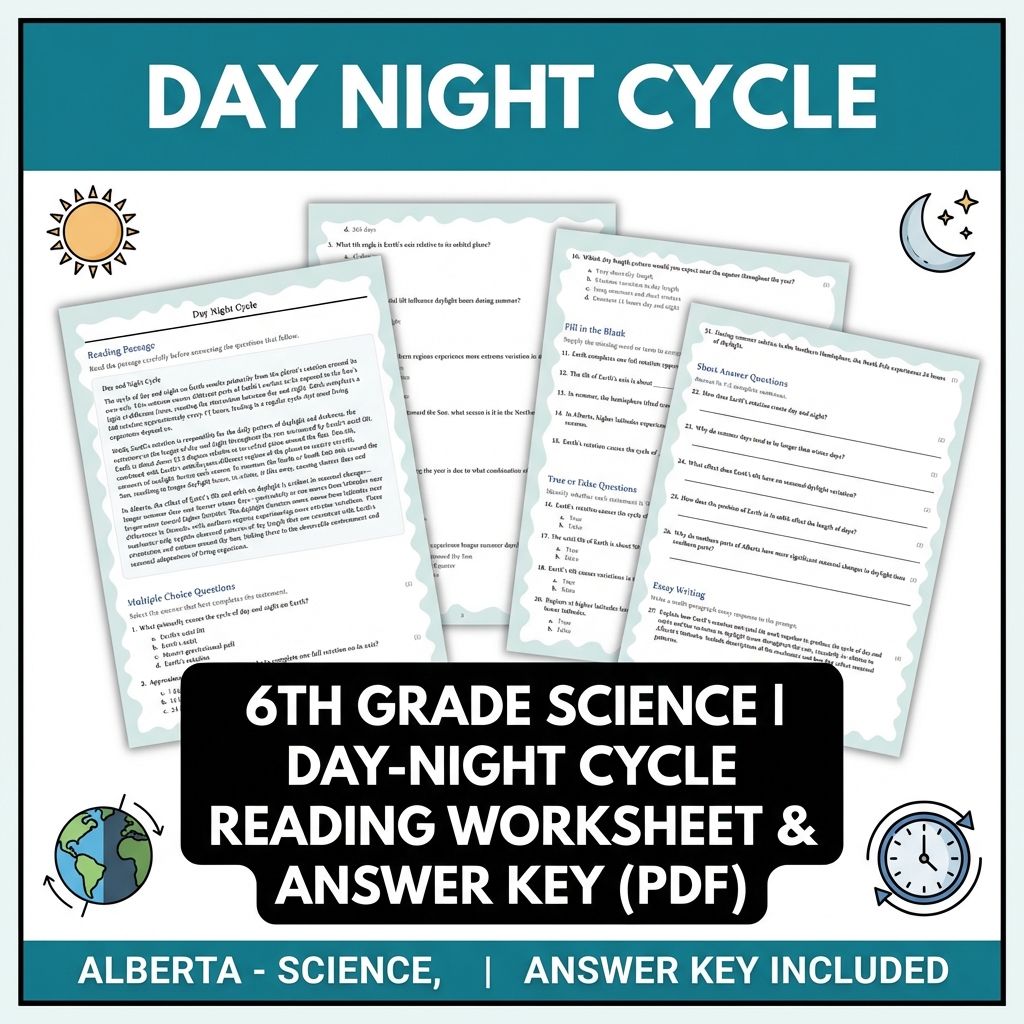
6th Grade Science | Day-Night Cycle Reading Worksheet & Answer Key (PDF)
JCreated byJ.S SheetsLearning Objectives
- Describe the mechanics of Earth's rotation that create day and night.
- Explain how axial tilt and Earth's orbit affect daylight duration throughout the year.
- Relate changes in day length to Earth's position and orientation relative to the Sun.
Also included in: Grade 6 Science | Celestial Motion & Sky Observation Worksheets Bundle +1 more
Instant download
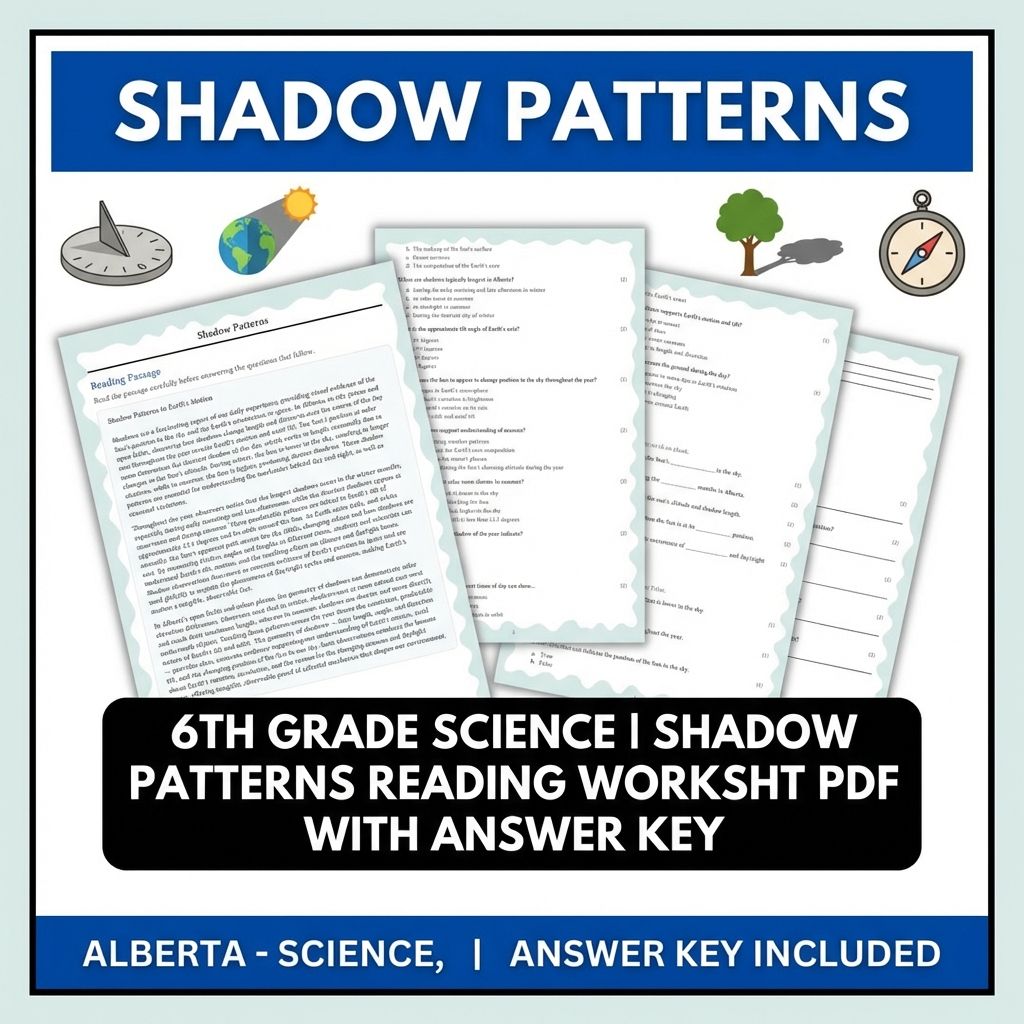
6th Grade Science | Shadow Patterns Reading Worksheet PDF with Answer Key
JCreated byJ.S SheetsLearning Objectives
- Understand how daily and seasonal changes in the Sun's angle affect shadow length and direction.
- Identify patterns in shadow noon, longest, and shortest shadows throughout the year.
- Explain how Earth's motion and axial tilt influence shadow geometry.
Also included in: Grade 6 Science | Celestial Motion & Sky Observation Worksheets Bundle +1 more
Instant download

Constitution Day Worksheets: Constitutional Principles Grade 6
 Created byShaNova Worksheets
Learning Objectives
- Identify justice as fair treatment within the legal system
- Explain equality and equal protection in everyday situations
- Describe limits and responsibilities connected to individual freedom
Instant download

Fall of Rome Worksheet | Standards-Aligned Grade 6 Social Studies
JCreated byJ.S SheetsLearning Objectives
- Identify major causes of the fall of the Western Roman Empire, including invasions, economic problems, and political conflict.
- Explain how these causes developed over time and weakened central authority.
- Analyze how multiple factors worked together to contribute to the transition to medieval Europe.
Instant download
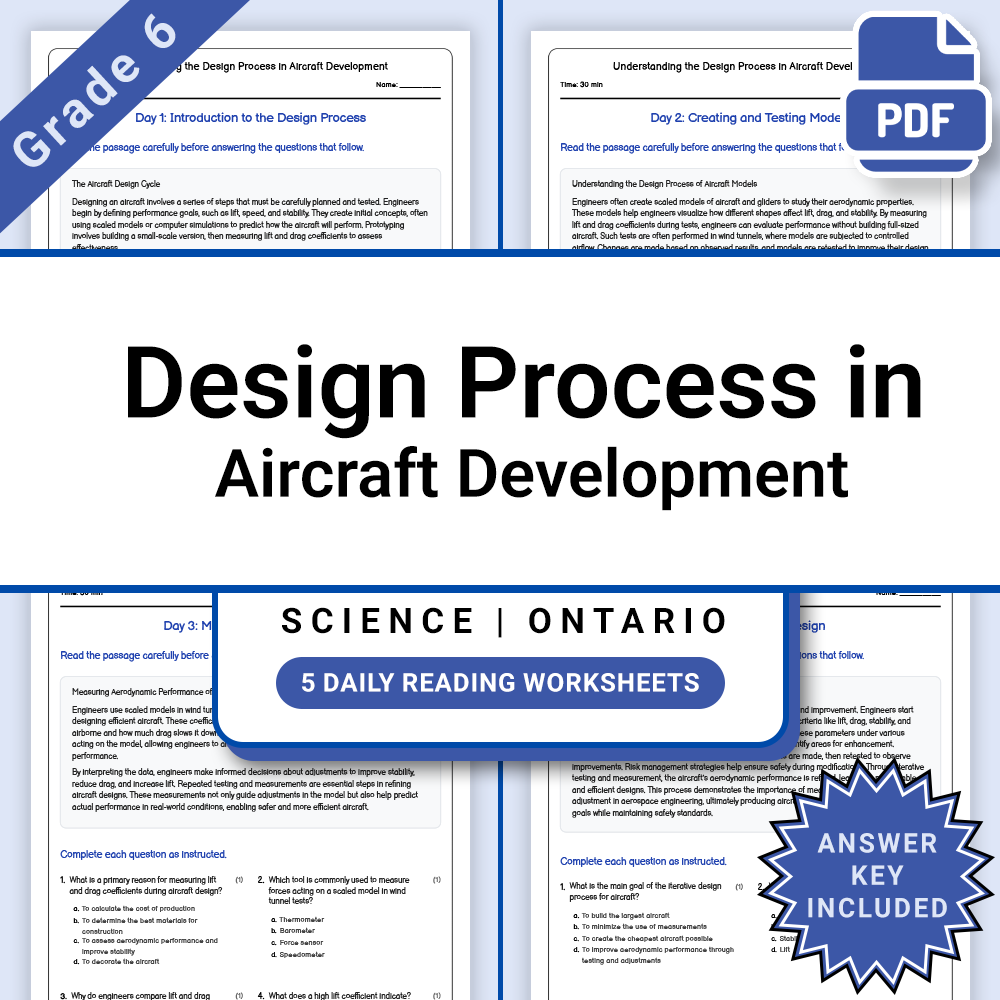
Grade 6 Science – the Design Process Daily Reading Worksheet + Answer Key
JCreated byJ.S SheetsLearning Objectives
- Identify and describe the steps involved in designing an aircraft.
- Understand the importance of planning and iterative testing in engineering.
- Learn how measurement and refinement improve aerodynamic performance.
Also included in: Grade 6 Science Flight Lesson Bundle | Ontario Framework +1 more
Instant download
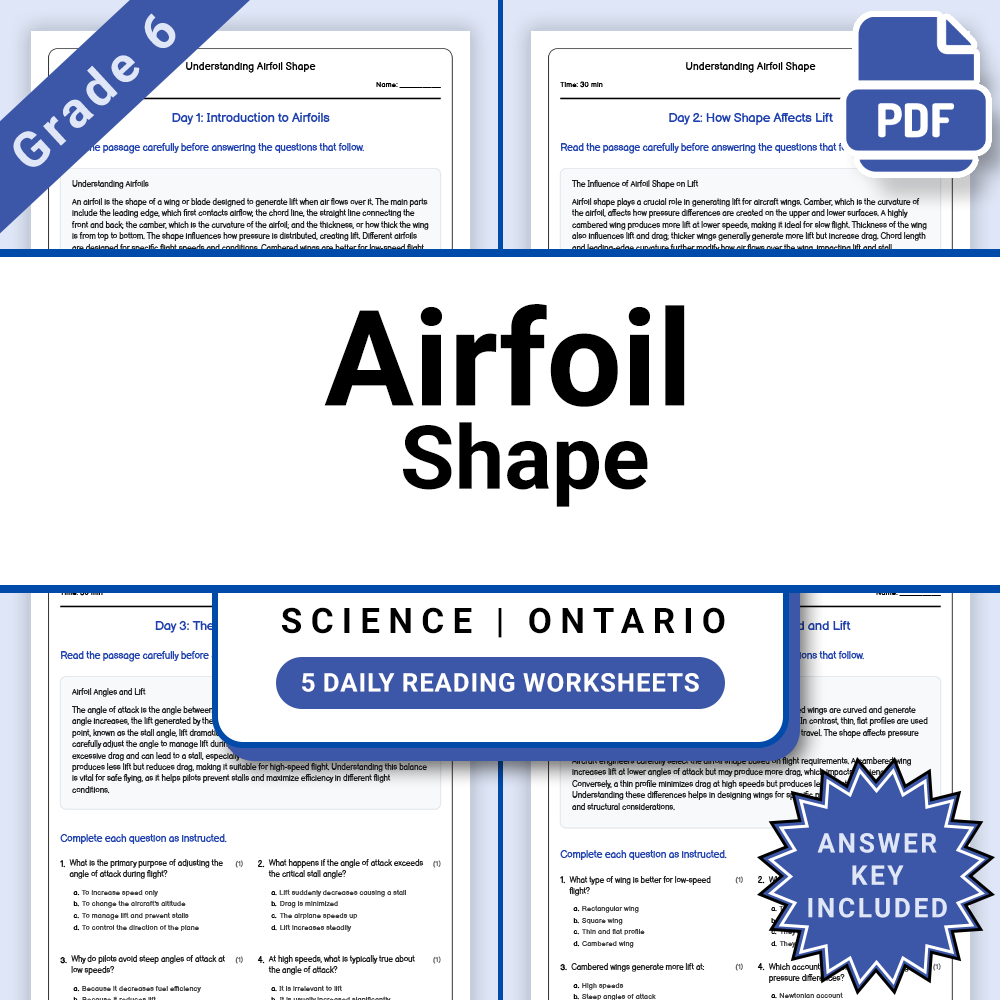
Grade 6 Science – Airfoil Shape Daily Reading Worksheet + Answer Key
JCreated byJ.S SheetsLearning Objectives
- Identify parts of an airfoil and understand their functions
- Describe how airfoil shape affects lift and pressure distribution
- Distinguish between different factors influencing airfoil performance
Also included in: Grade 6 Science Flight Lesson Bundle | Ontario Framework +1 more
Instant download
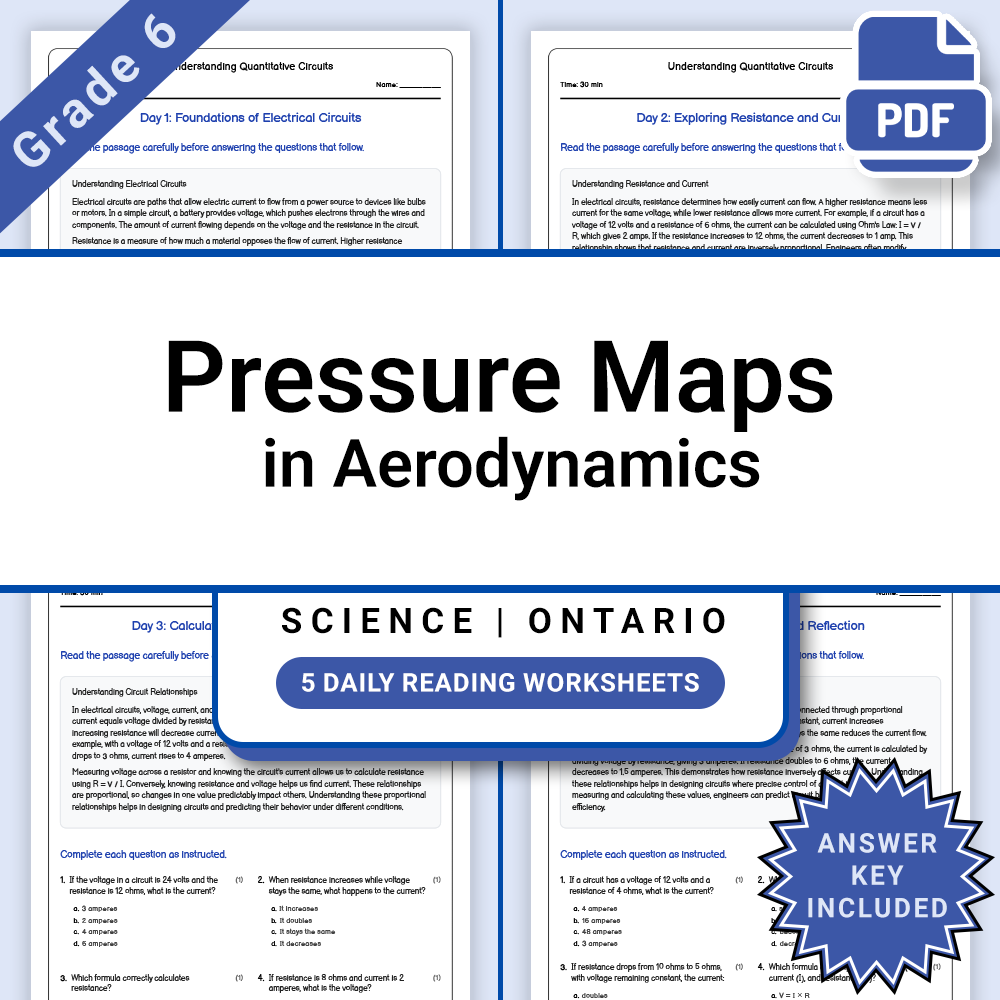
Grade 6 Science – Pressure Maps in Aerodynamics Daily Worksheet + Answer Key
JCreated byJ.S SheetsLearning Objectives
- Identify key pressure areas on an airfoil, such as stagnation points, suction peaks, and pressure minima.
- Understand how surface pressure distribution affects lift and stability.
- Recognize factors that shift pressure patterns, including camber and angle of attack.
Also included in: Grade 6 Science Flight Lesson Bundle | Ontario Framework +1 more
Instant download
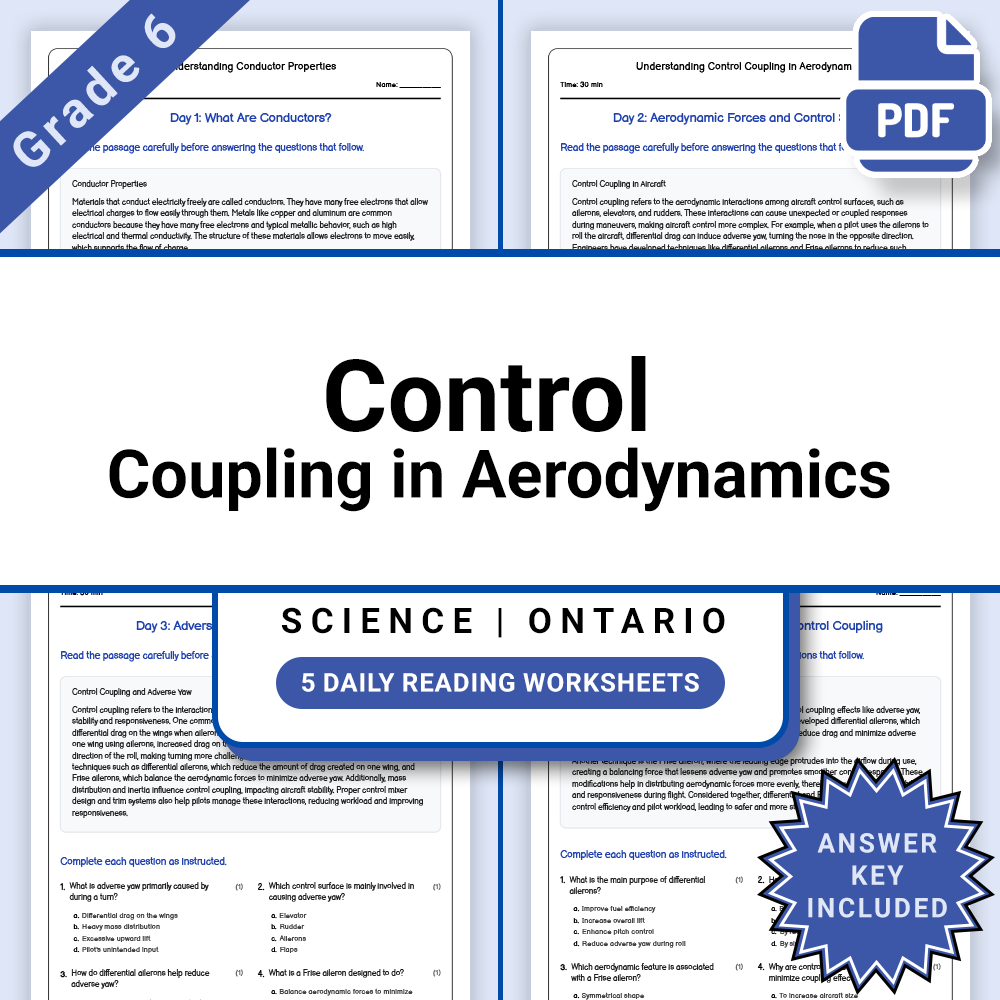
Grade 6 Science – Understanding Control Coupling Daily Worksheet + Answer Key
JCreated byJ.S SheetsLearning Objectives
- Understand key concepts related to Science
- Apply knowledge through practice questions
- Demonstrate comprehension of the material
Also included in: Grade 6 Science Flight Lesson Bundle | Ontario Framework +1 more
Instant download
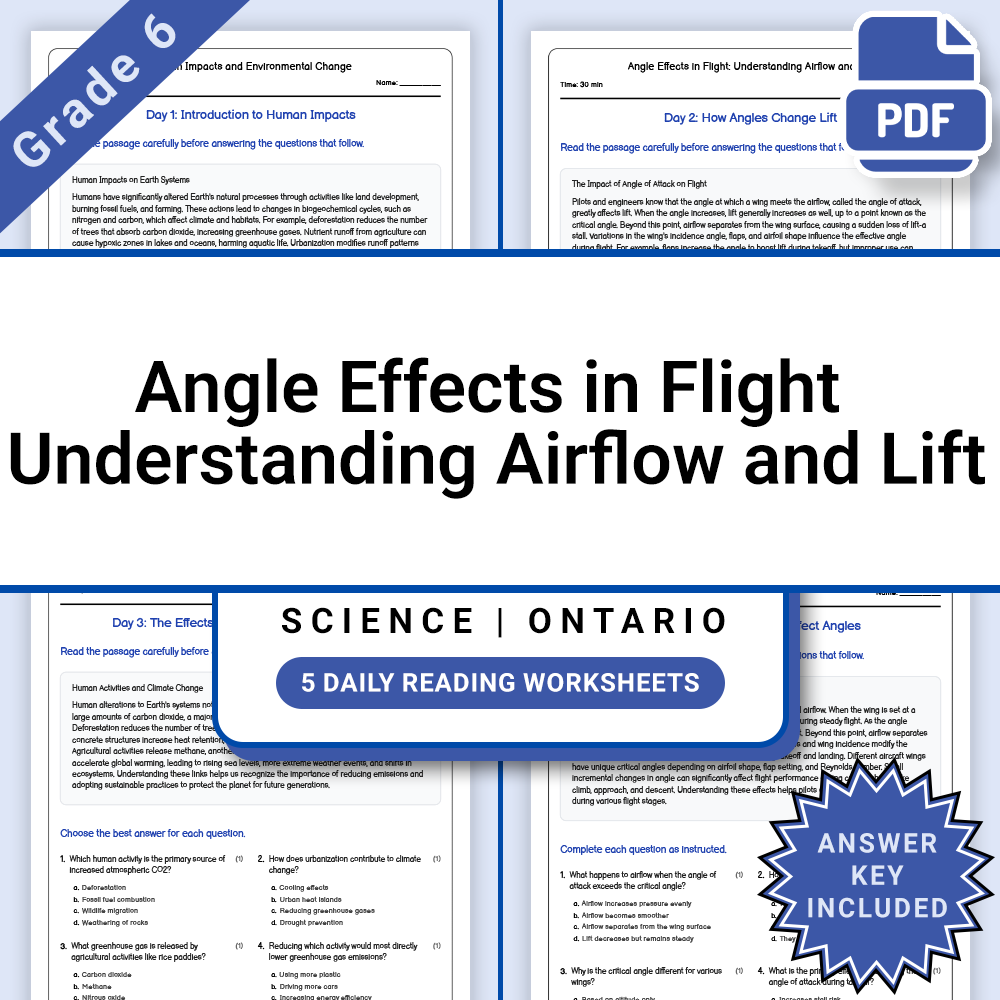
Grade 6 Science – Angle Effects in Flight Daily Reading Worksheet + Answer Key
JCreated byJ.S SheetsLearning Objectives
- Identify different angles related to wings and airflow.
- Understand how changing angles affects lift and airflow.
- Describe the role of wing incidence and pilot input in flight performance.
Also included in: Grade 6 Science Flight Lesson Bundle | Ontario Framework +1 more
Instant download
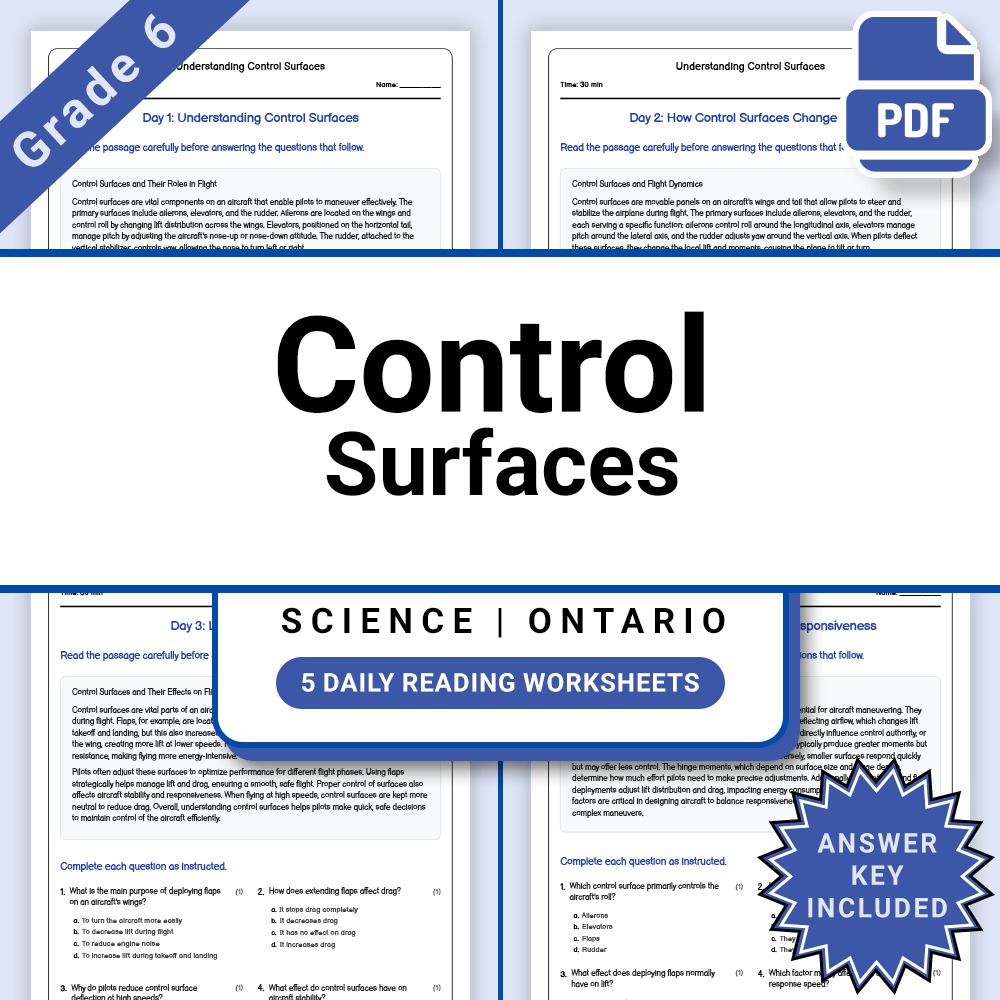
Grade 6 Science – Control Surfaces Daily Reading Worksheet + Answer Key
JCreated byJ.S SheetsLearning Objectives
- Identify primary control surfaces such as ailerons, elevators, rudder, and flaps.
- Explain how each control surface affects roll, pitch, and yaw movements.
- Describe how deflections in control surfaces change lift and moments.
Also included in: Grade 6 Science Flight Lesson Bundle | Ontario Framework +1 more
Instant download
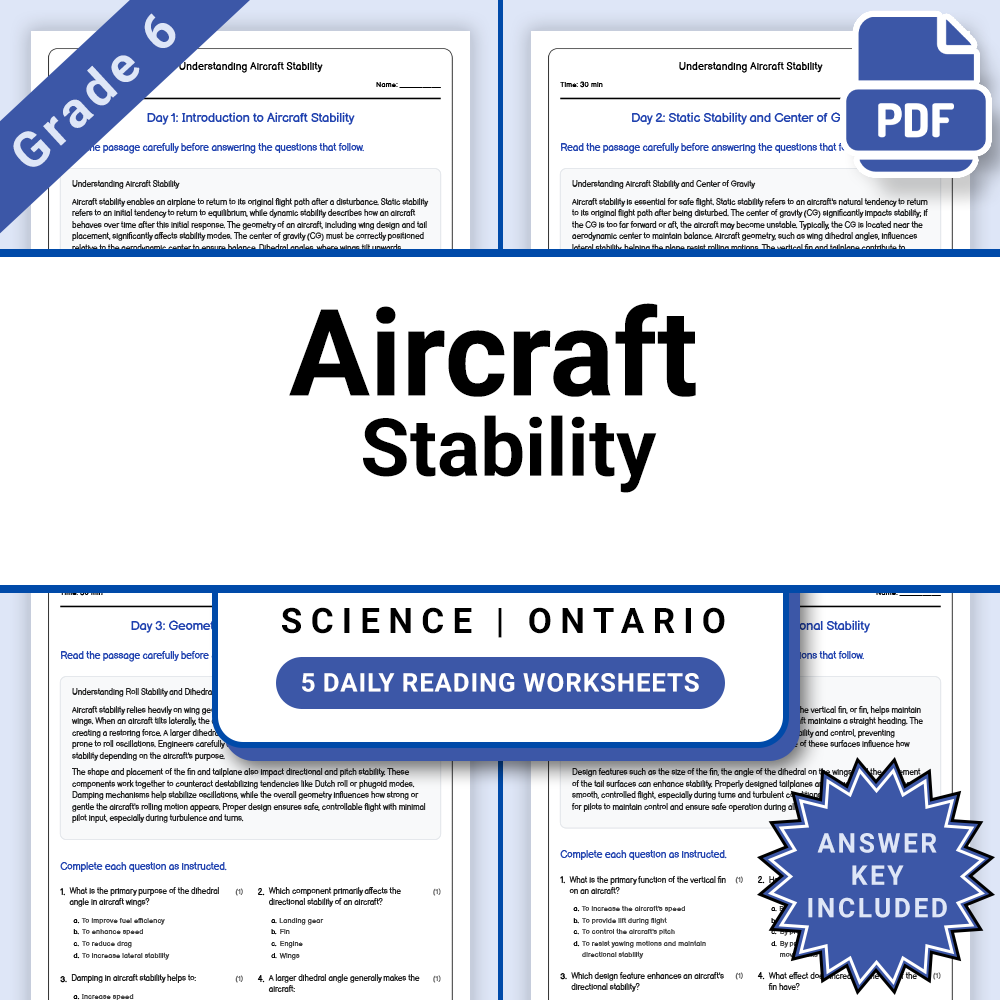
Grade 6 Science – Aircraft Stability Daily Reading Worksheet + Answer Key
JCreated byJ.S SheetsLearning Objectives
- Define static and dynamic stability in aircraft
- Identify how aircraft geometry affects different stability modes
- Explain the roles of center of gravity and aerodynamic center
Also included in: Grade 6 Science Flight Lesson Bundle | Ontario Framework +1 more
Instant download
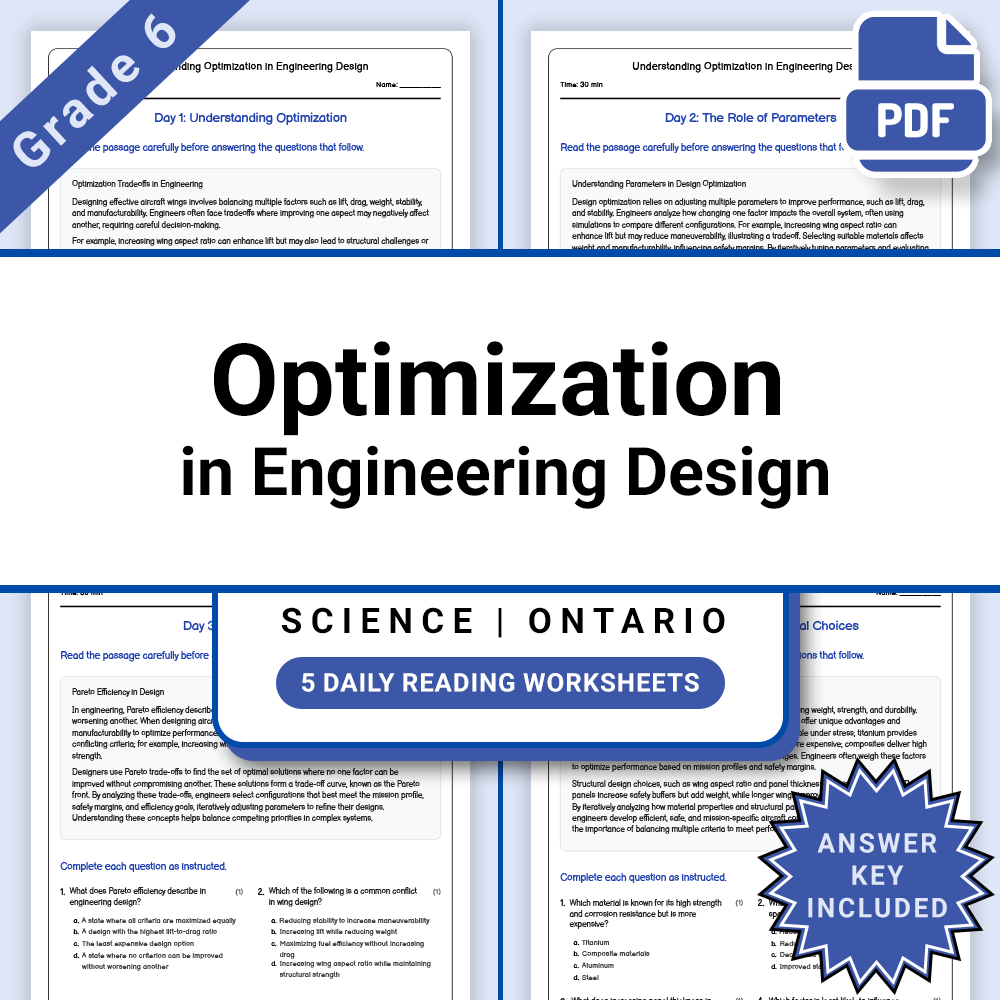
Grade 6 Science – Optimization Daily Reading Worksheet + Answer Key
JCreated byJ.S SheetsLearning Objectives
- Define what optimization tradeoffs are in engineering design.
- Identify the factors involved in optimizing aerodynamic structures.
- Explain how tradeoffs impact performance, safety, and manufacturability.
Also included in: Grade 6 Science Flight Lesson Bundle | Ontario Framework +1 more
Instant download
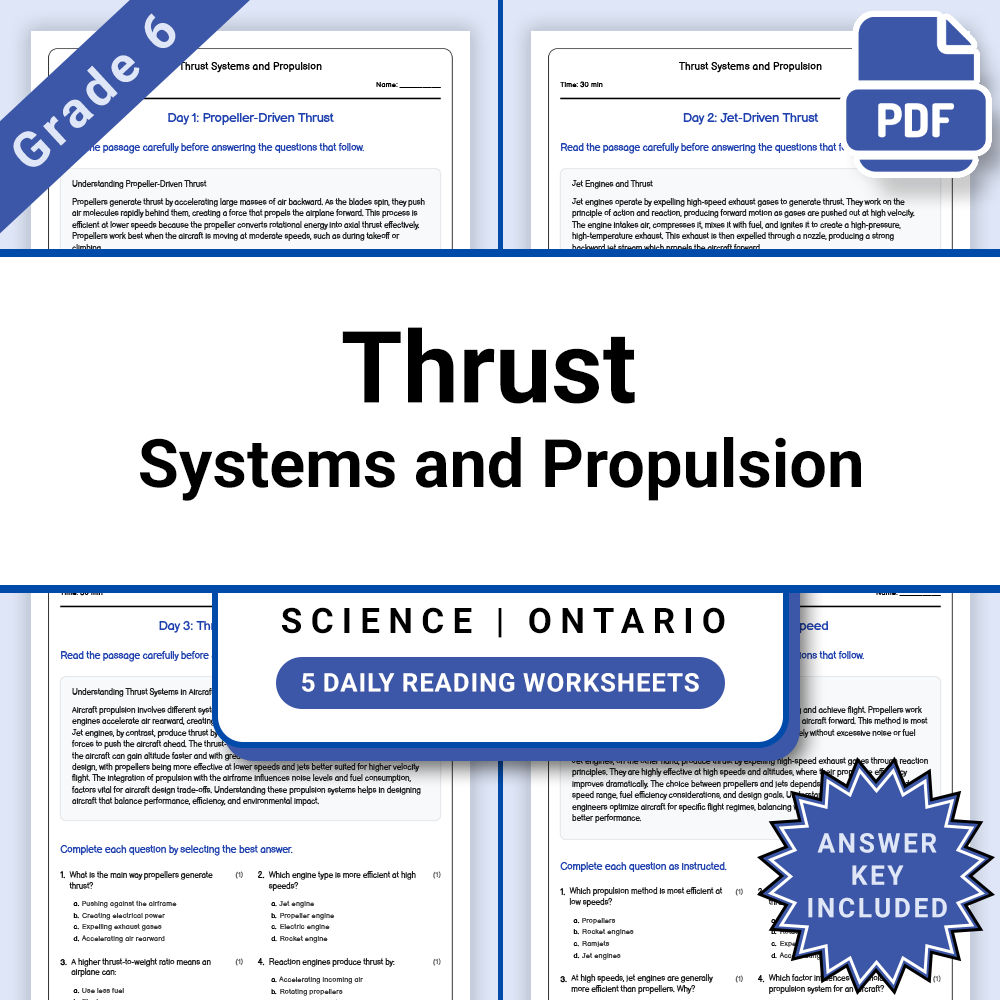
Grade 6 Science – Thrust Systems and Propulsion Daily Worksheet + Answer Key
JCreated byJ.S SheetsLearning Objectives
- Understand key concepts related to Science
- Apply knowledge through practice questions
- Demonstrate comprehension of the material
Also included in: Grade 6 Science Flight Lesson Bundle | Ontario Framework +1 more
Instant download
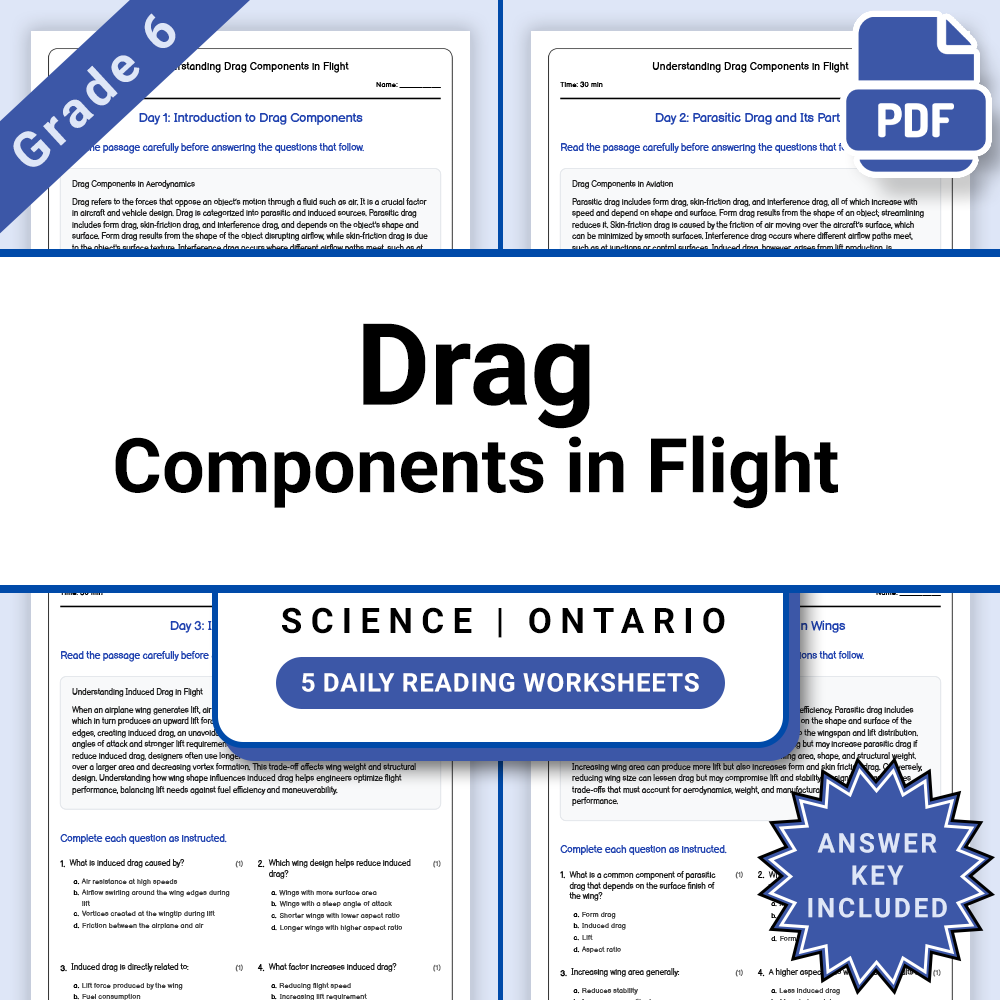
Grade 6 Science – Drag Components in Flight Daily Reading Worksheet + Answer Key
JCreated byJ.S SheetsLearning Objectives
- Understand key concepts related to Science
- Apply knowledge through practice questions
- Demonstrate comprehension of the material
Also included in: Grade 6 Science Flight Lesson Bundle | Ontario Framework +1 more
Instant download
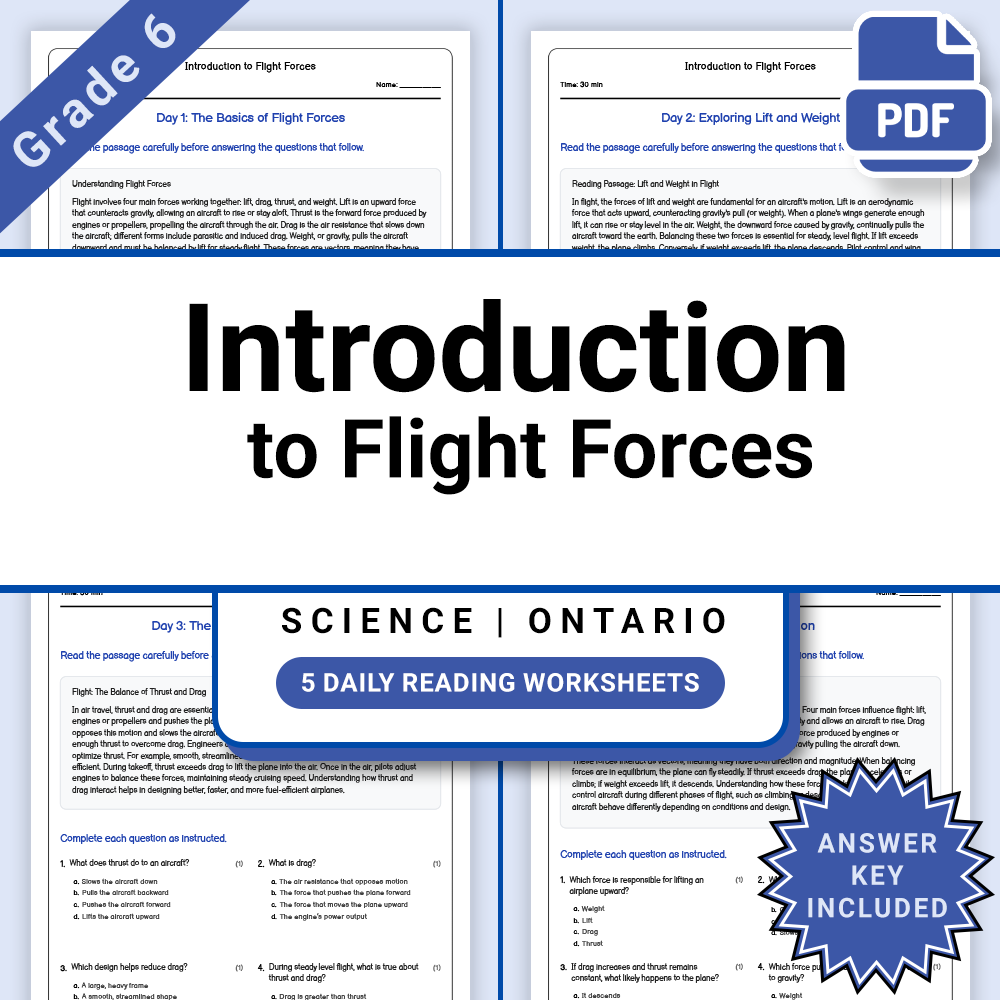
Grade 6 Science – Introduction to Flight Forces Reading Worksheet + Answer Key
JCreated byJ.S SheetsLearning Objectives
- Identify the four main aerodynamic forces: lift, drag, thrust, and weight.
- Understand how these forces interact to produce motion in flight.
- Explain the role of gravity as weight and propulsion as thrust.
Also included in: Grade 6 Science Flight Lesson Bundle | Ontario Framework +1 more
Instant download
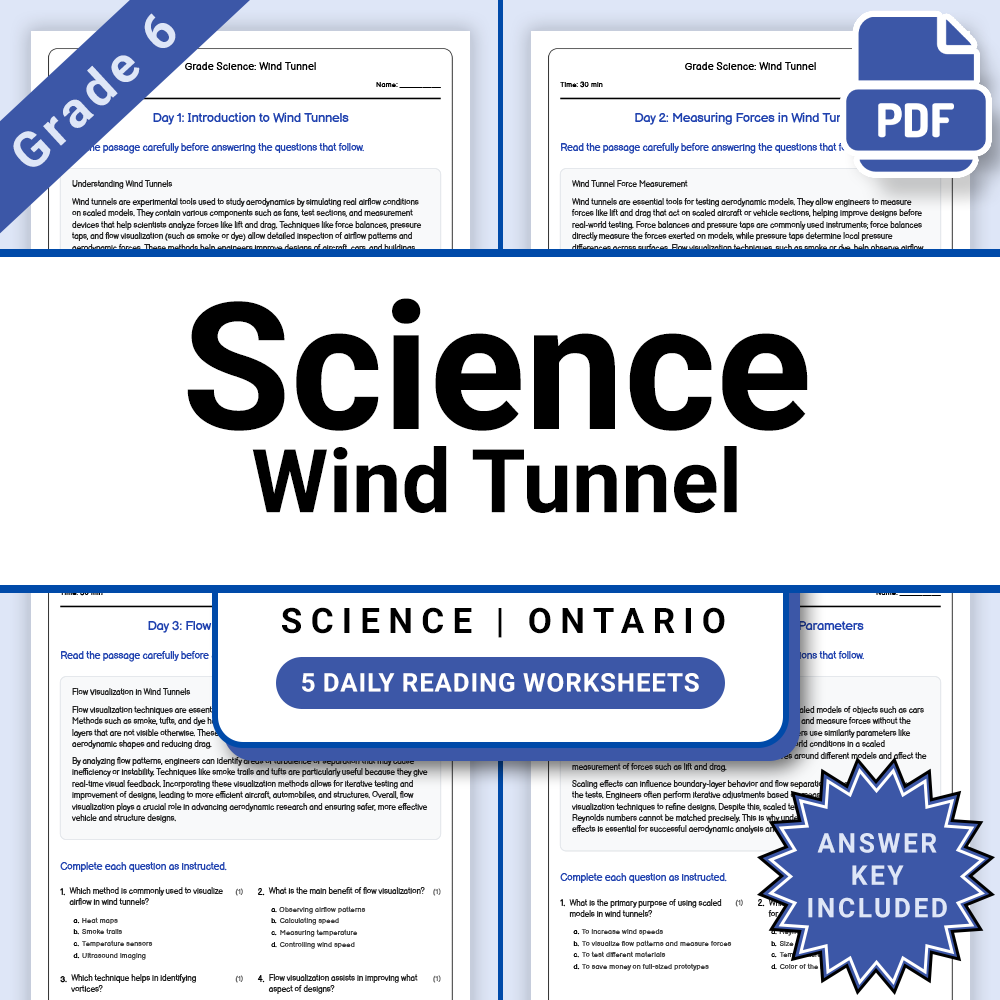
Grade 6 Science Wind Tunnel Daily Worksheet with Answer Key | Ontario Standards
JCreated byJ.S SheetsLearning Objectives
- Understand the purpose of wind tunnels in aerodynamics testing.
- Identify key components and methods used in wind tunneling.
- Learn how force balance, pressure taps, and flow visualization techniques contribute to aerodynamic measurements.
Also included in: Grade 6 Science Flight Lesson Bundle | Ontario Framework +1 more
Instant download
Browse more categories
About Grade 6 Worksheets
Browse 8,578 printable Grade 6 worksheets across math, ELA, science, and social studies — each a ready-to-print PDF with optional answer keys.
MyTeachingSheets worksheets are made by real teacher-authors and checked before they go live. Download any as a print-ready PDF for lessons, homework, or independent practice — most include answer keys, and previews are always free.