
Grade 6 Science Worksheets
5,969 worksheets
Integrated Forest Management Learning Stations Activity | Grade 6 Science
 Created byMTS Academic Studio
Learning Objectives
- Explain how forest managers balance multiple management objectives
- Compare tools used for landscape-scale forest management
- Identify how monitoring supports forest management decisions
Also included in: Grade 6 Alberta Science Trees and Forests Learning Stations Bundle
Instant download

Food Webs Learning Stations Activity | Grade 6 Forest Ecosystems
Created byMTS Academic StudioLearning Objectives
- Identify producers, consumers, and nutrient recyclers in forest food webs
- Trace effects of population changes through interconnected food webs
- Explain how habitat changes affect ecosystem relationships
Also included in: Grade 6 Alberta Science Trees and Forests Learning Stations Bundle
Instant download

Sampling Methods Learning Stations Activity | Grade 6 Science Alberta
Created byMTS Academic StudioLearning Objectives
- Identify five sampling approaches used in environmental investigations
- Compare systematic, stratified, targeted, repeated, and broad-area sampling
- Explain how sample location and spacing affect representation
Also included in: Grade 6 Alberta Science Investigations Learning Stations Bundle
Instant download

Alberta Forest Types Learning Stations Activity | Grade 6 Science
Created byMTS Academic StudioLearning Objectives
- Identify Alberta forest types using vegetation and environmental clues
- Explain how elevation influences forest distribution
- Explain how soil moisture and climate shape forest environments
Also included in: Grade 6 Alberta Science Trees and Forests Learning Stations Bundle
Instant download

Alberta Trees and Forests Learning Stations | Grade 6 Species Classification
Created byMTS Academic StudioLearning Objectives
- Classify organisms by their ecological roles in ecosystems
- Distinguish native, introduced, invasive, and pest species
- Explain how organisms influence energy flow and decomposition
Also included in: Grade 6 Alberta Science Trees and Forests Learning Stations Bundle
Instant download

Evaluating Scientific Claims Learning Stations Activity | Grade 6 Science
Created byMTS Academic StudioLearning Objectives
- Identify evidence used to support a scientific claim
- Evaluate the relevance of evidence to a stated claim
- Judge whether evidence is strong enough for a conclusion
Also included in: Grade 6 Alberta Science Investigations Learning Stations Bundle
Instant download

Leaf Functions Learning Stations Activity | Grade 6 Alberta Science
Created byMTS Academic StudioLearning Objectives
- Explain how leaves support photosynthesis, gas exchange, and transpiration
- Compare drought, insect, and wildfire effects on leaf function
- Relate leaf traits to tree growth and water use
Also included in: Grade 6 Alberta Science Trees and Forests Learning Stations Bundle
Instant download

Digital Sources Learning Stations | Grade 6 Alberta Science Activity
Created byMTS Academic StudioLearning Objectives
- Identify digital sources used to investigate environmental events
- Explain why metadata matters when selecting digital evidence
- Compare time and spatial coverage across digital sources
Also included in: Grade 6 Alberta Science Investigations Learning Stations Bundle
Instant download

Comparative Flight Learning Stations | Grade 6 Air and Aerodynamics
Created byMTS Academic StudioLearning Objectives
- Compare how different flying devices create lift and drag
- Explain how design features affect flight stability
- Compare design choices that influence maneuverability
Also included in: Grade 6 Air and Aerodynamics Science Stations Bundle | Alberta
Instant download

Measurement Uncertainty Learning Stations Activity | Grade 6 Science
Created byMTS Academic StudioLearning Objectives
- Identify sources of uncertainty in scientific measurements
- Explain how repeated measurements help describe uncertainty
- Explain how calibration supports dependable measurements
Also included in: Grade 6 Alberta Science Investigations Learning Stations Bundle
Instant download

Alberta Seasons Learning Stations Activity | Grade 6 Sky Science
Created byMTS Academic StudioLearning Objectives
- Identify seasonal changes in daylight, temperature, snow, ice, and weather
- Compare seasonal events across different Alberta environments
- Explain how Earth's yearly orbit connects to seasonal patterns
Also included in: Grade 6 Sky Science Learning Stations Bundle | Alberta Science
Instant download

Human Impacts on Forests Learning Stations Activity | Grade 6 Science
Created byMTS Academic StudioLearning Objectives
- Identify human activities that change forest and freshwater ecosystems
- Explain how land use affects forest and freshwater habitats
- Explain impacts of resource extraction, pollution, and introduced species
Also included in: Grade 6 Alberta Science Trees and Forests Learning Stations Bundle
Instant download

Air Properties Learning Stations | Grade 6 Air and Aerodynamics Activity
Created byMTS Academic StudioLearning Objectives
- Explain how temperature changes the properties of air
- Explain how altitude affects air pressure and density
- Identify how gas composition can change air properties
Also included in: Grade 6 Air and Aerodynamics Science Stations Bundle | Alberta
Instant download

Aerodynamic Drag Learning Stations Activity | Grade 6 Science
Created byMTS Academic StudioLearning Objectives
- Identify major forms of aerodynamic drag from real-world evidence
- Explain how shape and surface airflow influence aerodynamic drag
- Explain how lift affects aerodynamic drag
Also included in: Grade 6 Air and Aerodynamics Science Stations Bundle | Alberta
Instant download

Shadow Patterns Learning Stations Activity | Grade 6 Sky Science
Created byMTS Academic StudioLearning Objectives
- Describe changes in shadow length as the Sun appears to move
- Describe changes in shadow direction throughout the day
- Explain daily shadow patterns using Earth's rotation
Also included in: Grade 6 Sky Science Learning Stations Bundle | Alberta Science
Instant download

Lunar Phases Learning Stations Activity | Grade 6 Moon in Motion
Created byMTS Academic StudioLearning Objectives
- Identify lunar phases using Sun-Earth-Moon geometry
- Explain how orbital position changes the Moon's illuminated appearance
- Interpret sequences of lunar phase observations
Also included in: Grade 6 Sky Science Learning Stations Bundle | Alberta Science
Instant download

Air Density Learning Stations Activity | Grade 6 Science Alberta
Created byMTS Academic StudioLearning Objectives
- Explain how temperature changes air density
- Explain how altitude affects air density
- Connect air density changes with buoyancy and lift
Also included in: Grade 6 Air and Aerodynamics Science Stations Bundle | Alberta
Instant download

Science Tools Safety Learning Stations Activity | Grade 6 Alberta
Created byMTS Academic StudioLearning Objectives
- Identify safe methods for selecting and handling scientific field equipment
- Explain how calibration supports reliable scientific measurements
- Describe appropriate methods for cleaning and storing field equipment
Also included in: Grade 6 Alberta Science Investigations Learning Stations Bundle
Instant download

Operational Definitions Learning Stations Activity | Grade 6 Science
Created byMTS Academic StudioLearning Objectives
- Explain how operational definitions make scientific measurements repeatable
- Identify variables and units used in environmental monitoring
- Identify measurement locations and timing in monitoring procedures
Also included in: Grade 6 Alberta Science Investigations Learning Stations Bundle
Instant download

Biodiversity Roles Learning Stations Activity | Grade 6 Alberta Science
Created byMTS Academic StudioLearning Objectives
- Identify roles organisms play in maintaining healthy ecosystems
- Explain how species interactions affect habitats and food webs
- Connect organism roles to important ecosystem processes
Also included in: Grade 6 Alberta Science Trees and Forests Learning Stations Bundle
Instant download

Sky Science Learning Stations Activity | Grade 6 Alberta
Created byMTS Academic StudioLearning Objectives
- Identify repeating patterns in sunrise and sunset observations
- Recognize recurring patterns in Moon phases
- Identify patterns in observed star positions
Also included in: Grade 6 Sky Science Learning Stations Bundle | Alberta Science
Instant download

Stability in Flight Learning Stations Activity | Grade 6 Science
Created byMTS Academic StudioLearning Objectives
- Explain how mass placement affects aircraft stability
- Explain how aerodynamic forces influence stable flight
- Compare features that improve longitudinal and lateral stability
Also included in: Grade 6 Air and Aerodynamics Science Stations Bundle | Alberta
Instant download

Sky Science Learning Stations Activity | Historical Perspectives Grade 6
Created byMTS Academic StudioLearning Objectives
- Compare Indigenous and settler uses of repeated sky patterns
- Explain how sky observations supported navigation and seasonal planning
- Explain how celestial observations supported scientific measurement
Also included in: Grade 6 Sky Science Learning Stations Bundle | Alberta Science
Instant download

Solar Timekeeping Learning Stations | Grade 6 Sky Science Activity
Created byMTS Academic StudioLearning Objectives
- Explain how apparent Sun motion can measure local solar time
- Compare local solar time with standardized clock time
- Explain how longitude affects differences in local solar time
Also included in: Grade 6 Sky Science Learning Stations Bundle | Alberta Science
Instant download

Sun Earth Moon Learning Stations Activity | Grade 6 Sky Science
Created byMTS Academic StudioLearning Objectives
- Explain changing Sun–Earth–Moon positions using real observations
- Connect celestial alignments to lunar phases and eclipses
- Explain how Sun–Earth–Moon relationships influence tides
Also included in: Grade 6 Sky Science Learning Stations Bundle | Alberta Science
Instant download

Wing Shapes Learning Stations Activity | Grade 6 Air and Aerodynamics
Created byMTS Academic StudioLearning Objectives
- Compare wing shapes used for different aircraft missions
- Explain how aspect ratio affects flight performance
- Connect wing thickness and area to lift and drag
Also included in: Grade 6 Air and Aerodynamics Science Stations Bundle | Alberta
Instant download

Tree Roots and Water Learning Stations Activity | Grade 6 Science
Created byMTS Academic StudioLearning Objectives
- Explain how roots help trees obtain water
- Compare root systems during establishment and recovery
- Identify effects of changing soil moisture on trees
Also included in: Grade 6 Alberta Science Trees and Forests Learning Stations Bundle
Instant download

Apparent Sun Path Learning Stations | Alberta Grade 6 Sky Science
Created byMTS Academic StudioLearning Objectives
- Describe seasonal changes in the Sun's apparent path
- Compare Sun patterns at different Alberta latitudes
- Compare sunrise, sunset, noon Sun height, and day length
Also included in: Grade 6 Sky Science Learning Stations Bundle | Alberta Science
Instant download

Alberta Trees and Forests Stewardship Learning Stations Grade 6 Science
Created byMTS Academic StudioLearning Objectives
- Identify stewardship practices used to protect Alberta landscapes
- Explain how planting and restoration benefit ecosystems
- Describe how community involvement supports landscape stewardship
Also included in: Grade 6 Alberta Science Trees and Forests Learning Stations Bundle
Instant download

Four Forces of Flight Learning Stations Activity | Grade 6 Science
Created byMTS Academic StudioLearning Objectives
- Identify lift, thrust, drag, and weight in flight situations
- Explain how force balance changes motion through air
- Compare forces acting during powered flight and gliding
Also included in: Grade 6 Air and Aerodynamics Science Stations Bundle | Alberta
Instant download

Angle of Attack Learning Stations | Grade 6 Air and Aerodynamics
Created byMTS Academic StudioLearning Objectives
- Explain how angle of attack affects lift and drag
- Describe how wing angle changes airflow around a wing
- Identify how airflow separation can produce a stall
Also included in: Grade 6 Air and Aerodynamics Science Stations Bundle | Alberta
Instant download

Alberta Forest Conservation Learning Stations Activity | Grade 6 Science
Created byMTS Academic StudioLearning Objectives
- Identify strategies used to protect and restore Alberta ecosystems
- Explain how conservation actions address habitat and species threats
- Compare different approaches used to support biodiversity
Also included in: Grade 6 Alberta Science Trees and Forests Learning Stations Bundle
Instant download

Earth's Tilt and Seasons Learning Stations Activity | Grade 6 Science
Created byMTS Academic StudioLearning Objectives
- Explain how Earth's axial tilt changes seasonal solar angle
- Compare daylight length during different times of the year
- Compare seasonal sunlight patterns at different latitudes
Also included in: Grade 6 Sky Science Learning Stations Bundle | Alberta Science
Instant download

Sky Science Predictive Models Learning Stations Activity | Grade 6
Created byMTS Academic StudioLearning Objectives
- Explain how Earth-Sun-Moon models predict observable sky events
- Connect axial tilt to predictions made by sky models
- Relate orbital position and relative motion to model predictions
Also included in: Grade 6 Sky Science Learning Stations Bundle | Alberta Science
Instant download

Plant Reproduction Learning Stations | Seeds, Cones & New Growth Grade 6
Created byMTS Academic StudioLearning Objectives
- Identify reproductive structures and strategies used by plants
- Compare seed dispersal, cone opening, and vegetative reproduction
- Explain how reproductive strategies support recovery after disturbance
Also included in: Grade 6 Alberta Science Trees and Forests Learning Stations Bundle
Instant download
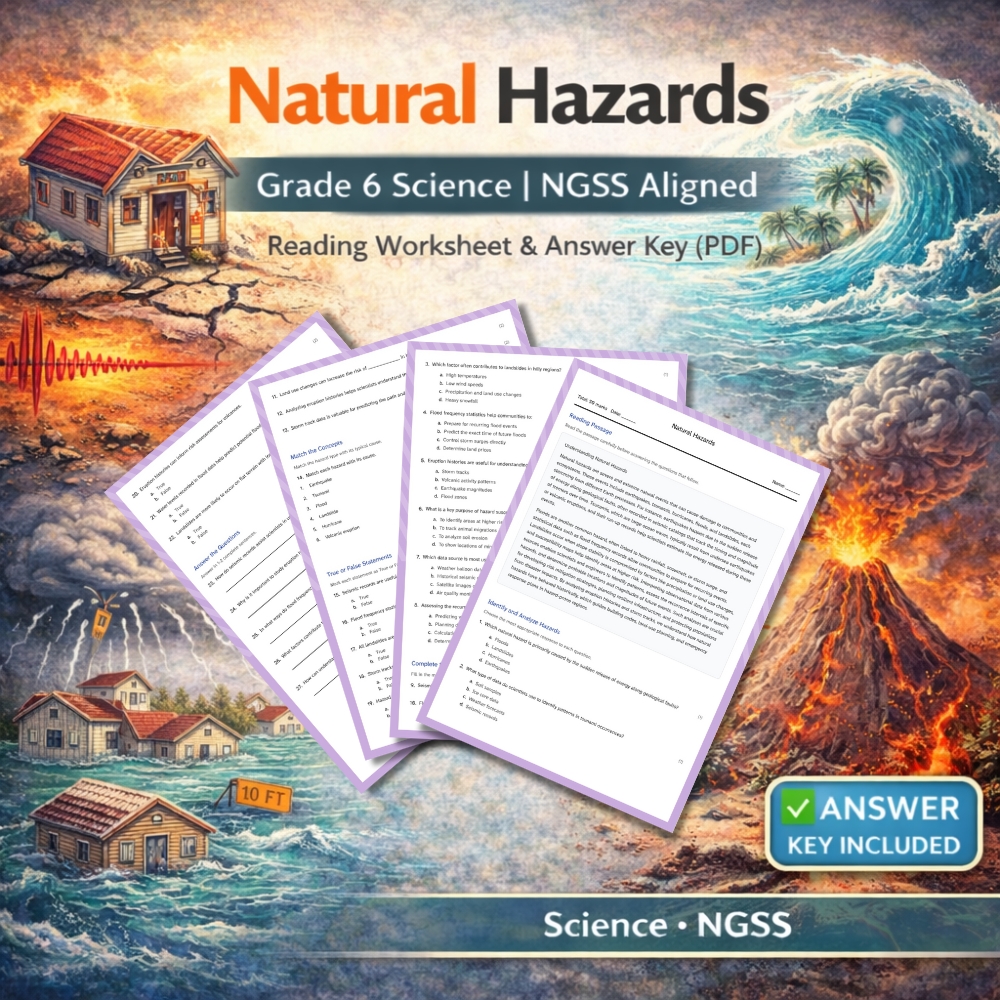
6th Grade Science | Natural Hazards (Worksheet + Answer Key) NGSS Aligned
 Created byCedar Grove Learning
Learning Objectives
- Analyze observational and instrumental data related to natural hazards such as earthquakes, tsunamis, floods, and landslides.
- Identify patterns and recurrence intervals of natural hazard events to assess risks and inform response strategies.
- Interpret examples like seismic records, eruption histories, storm tracks, and flood statistics to understand hazard impacts.
Also included in: Grade 6 Science | Weather, Water Cycle & Climate NGSS Worksheet Bundle +1 more
Instant download
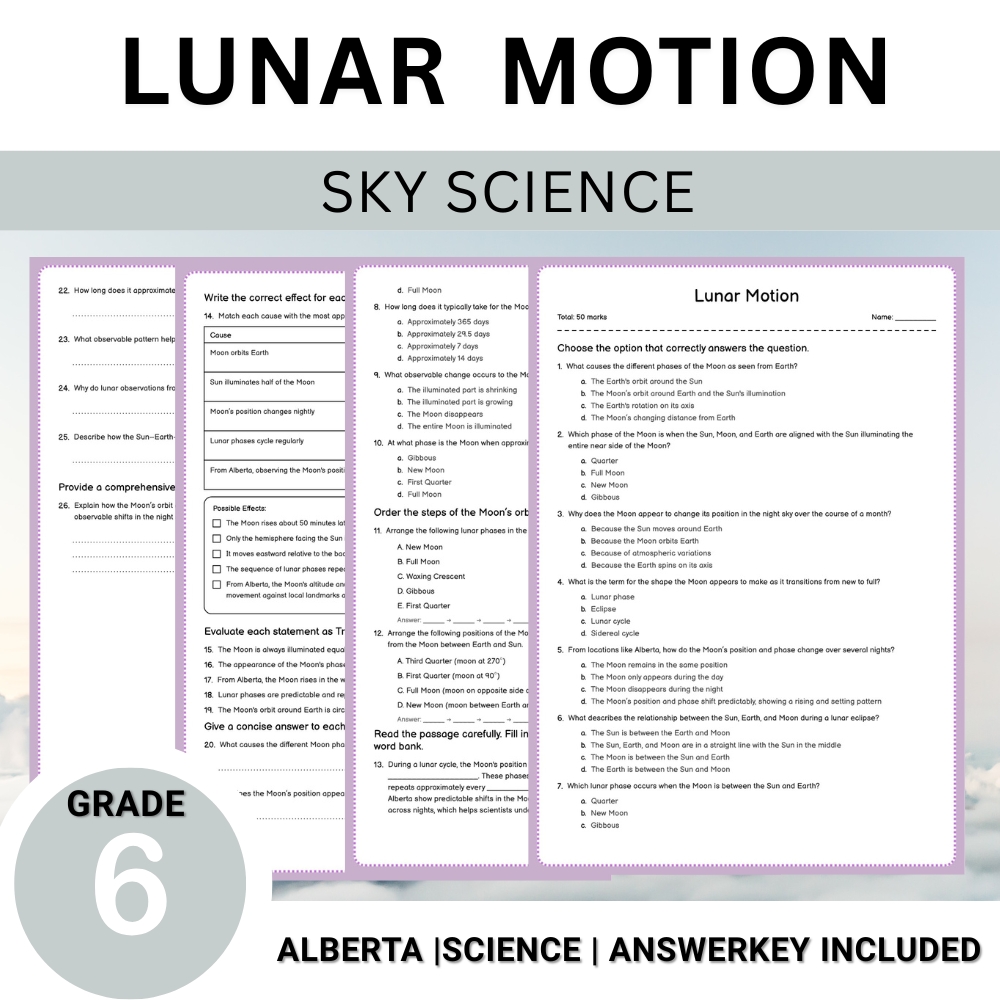
6th Grade Science | Lunar Motion Worksheet (Answer Key) for Classroom Assessment
Learning Objectives
- Describe the orbit and phases of the Moon relative to Earth and the Sun.
- Explain the observable patterns of the Moon's position and phase from different locations.
- Relate lunar motion to Sun–Earth–Moon relationships and how they influence night sky observations.
Also included in: Grade 6 Science | Celestial & Space Phenomena UNIT Worksheet Bundle (Assessment & Practice) +1 more
Instant download
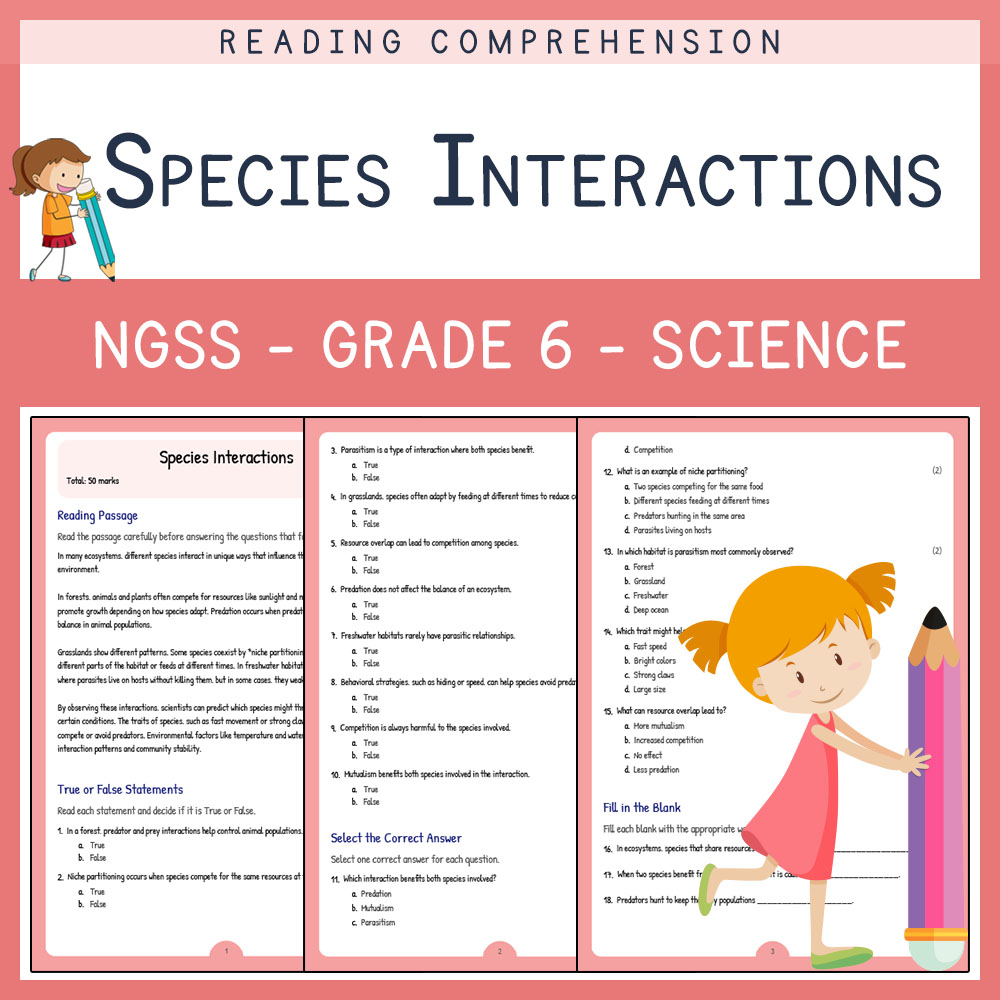
Grade 6 Science | Species Interactions Worksheet (PDF) | NGSS Aligned
 Created byLumora Learning
Learning Objectives
- Construct explanations predicting patterns of species interactions across ecosystems
- Identify types of species interactions such as mutualism, competition, predation, and parasitism
- Compare interaction outcomes in forest, grassland, and freshwater environments
Instant download
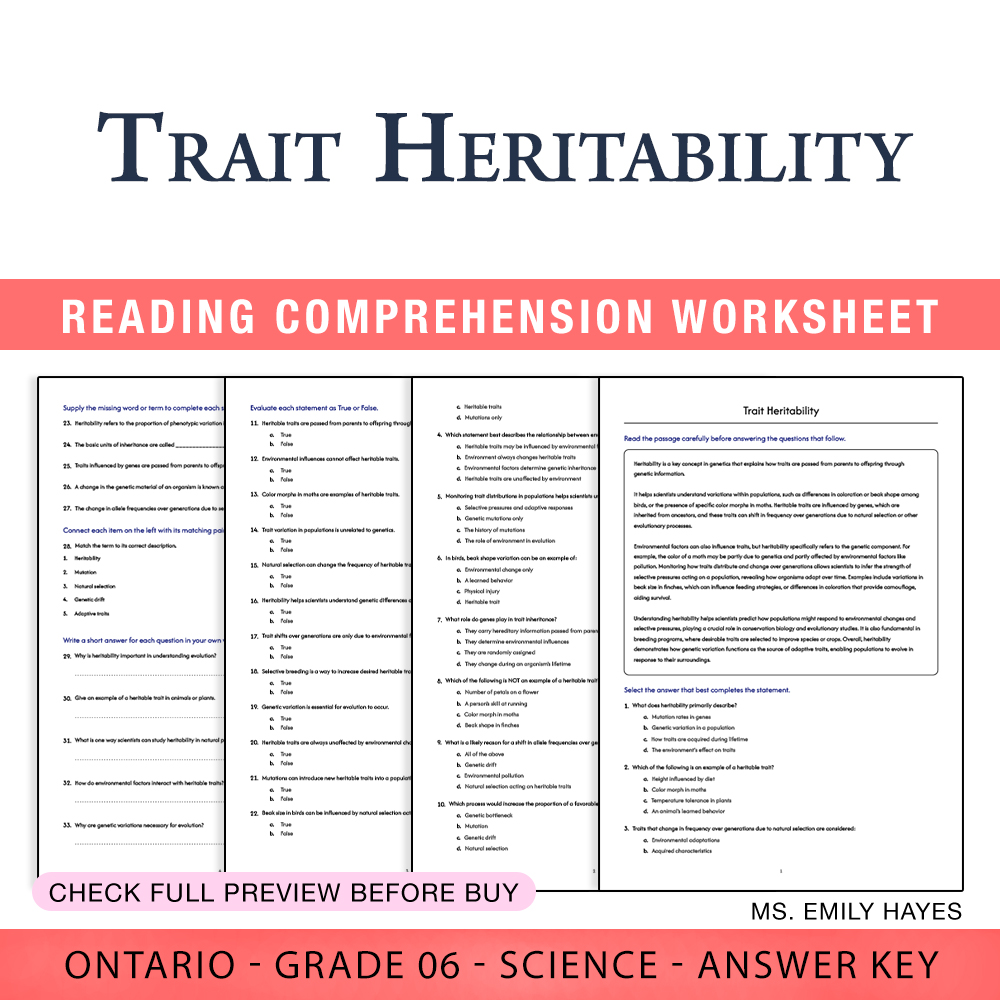
6th Grade Science | Trait Heritability Worksheet (PDF + Answer Key)
 Created byCopper Leaf Classroom
Learning Objectives
- Explain the concept of heritability and how it relates to genetic variation in populations.
- Distinguish between heritable and environmental influences on traits.
- Describe basic mechanisms of inheritance and how they affect trait distribution over generations.
Instant download
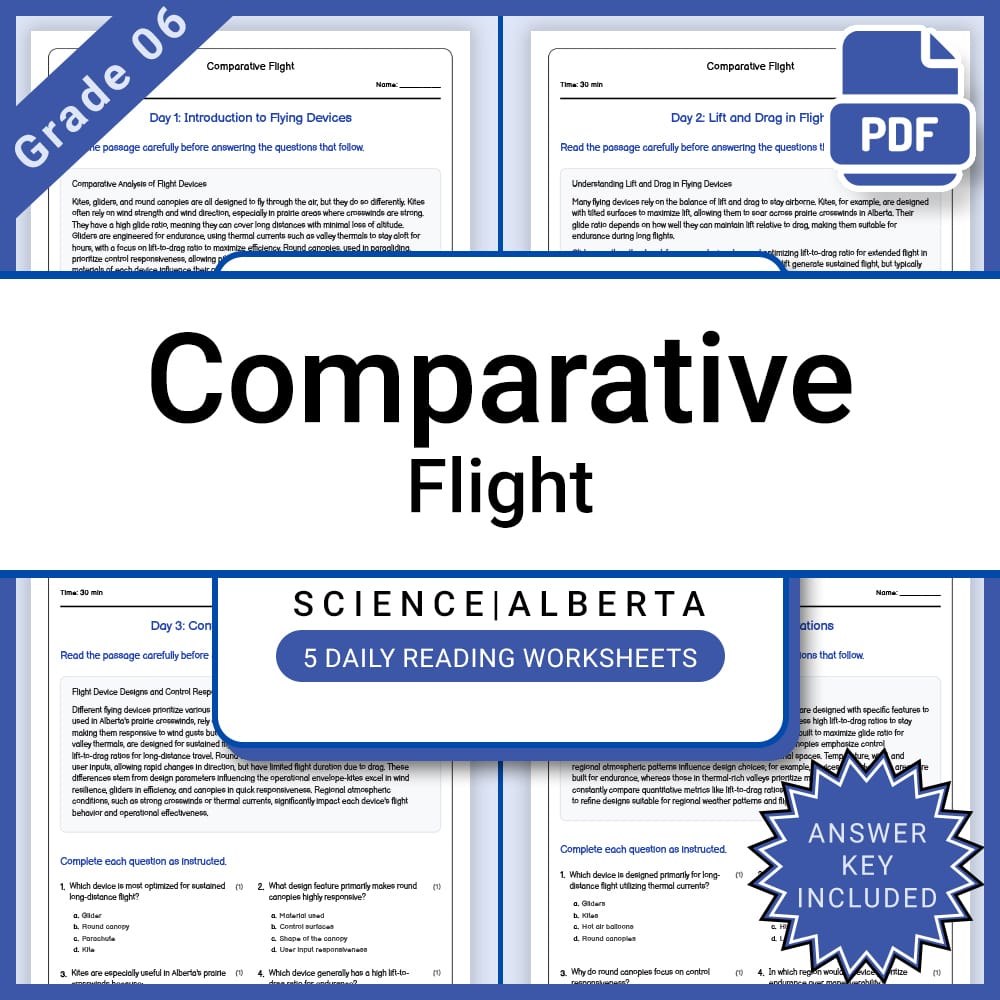
Grade 6 Science – Comparative Flight Daily Reading Worksheet + Answer Key
JCreated byJ.S SheetsLearning Objectives
- Understand the differences in design and performance among kites, gliders, and round canopies.
- Analyze how glide ratio, lift-to-drag performance, and control responsiveness influence flight.
- Connect design parameters to operational environments like prairie crosswinds and valley thermals.
Also included in: Grade 6 Science Lesson Bundle: Flight, Weather, and Aerodynamics +1 more
Instant download

6th Grade Science Worksheet | Measurement Precision TEKS (PDF)
 Created byEvergreen Desk Education
Learning Objectives
- Determine how instrument resolution affects the precision of measurements and how to record an estimated digit
- Use consistent units and correct significant-figure reporting when recording scientific measurements
- Explain how repeated trials and averaging reduce random error and how calibration addresses systematic bias
Instant download

Grade 6 Science – Erosion & Deposition | Daily Reading Worksheet
 Created byBright Mind Resources
Learning Objectives
- Understand how moving water causes erosion and deposition.
- Identify landforms created by water erosion and deposition such as river terraces, deltas, and alluvial deposits.
- Explain how water volume, speed, and surface materials influence erosion and deposition processes.
Also included in: Water Cycle Grade 6 Science Lesson Bundle Daily Reading | California Standards +1 more
Instant download

6th Grade Science | Systems Thinking in Solutions Worksheet (PDF)
Created byEvergreen Desk EducationLearning Objectives
- Explain how systems thinking treats a solution as interacting parts with inputs, pathways, and outputs
- Use cause-and-effect reasoning to predict how changes to one component affect overall performance
- Describe how real-world testing can reveal why a design succeeds or fails
Also included in: Grade 6 Prototype Design Science Lesson Bundle: General Systems Thinking +1 more
Instant download
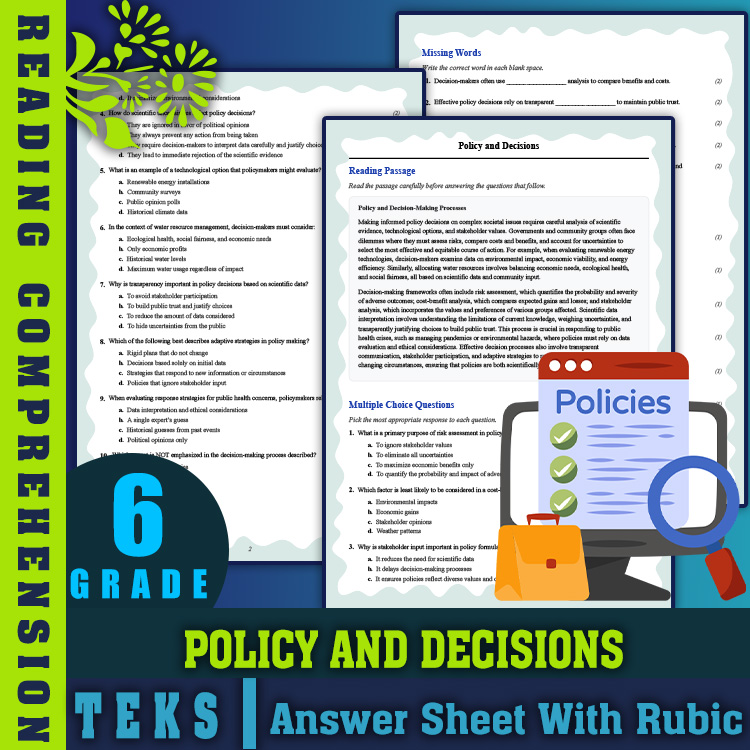
6th Grade Science Reading Worksheets | Policy & Decisions TEKS Practice (PDF)
JCreated byJ.S SheetsLearning Objectives
- Understand how scientific evidence influences policy-making processes.
- Analyze the factors considered in risk assessment and cost-benefit analysis for societal issues.
- Evaluate stakeholder values and how they shape decision outcomes.
Instant download
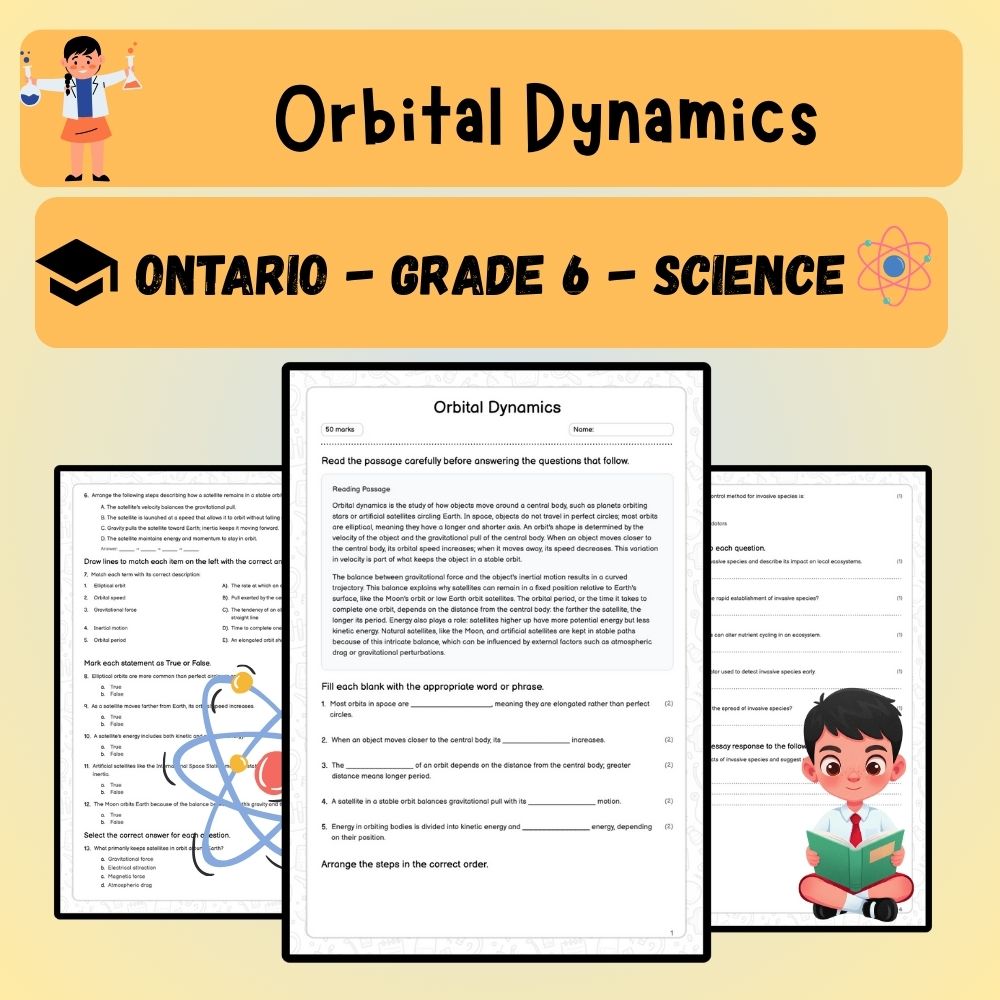
6th Grade Science | Orbital Dynamics Worksheet (PDF )
 Created byPrism Point Learning
Learning Objectives
- Understand the difference between elliptical and near-circular orbits and their characteristics.
- Explain how the orbital speed varies with distance from the central body.
- Describe the balance of gravitational force and inertial motion that produces stable orbits.
Instant download

6th Grade Science | Phase Energy Worksheet (BC Standards) (PDF)
Created byEvergreen Desk EducationLearning Objectives
- Explain how phase changes involve energy transfer without changing chemical identity.
- Use the particle model to connect latent heat to particle motion and particle bonding strength.
- Predict whether energy will be absorbed or released during melting, boiling, freezing, and condensation.
Instant download

6th Grade Science | Series and Parallel Circuits Worksheet & Answer Key (PDF)
JCreated byJ.S SheetsLearning Objectives
- Understand the fundamental differences between series and parallel circuit arrangements.
- Explain how current and voltage distribute in series and parallel circuits.
- Describe how energy flow and device behavior are affected by circuit configurations.
Instant download
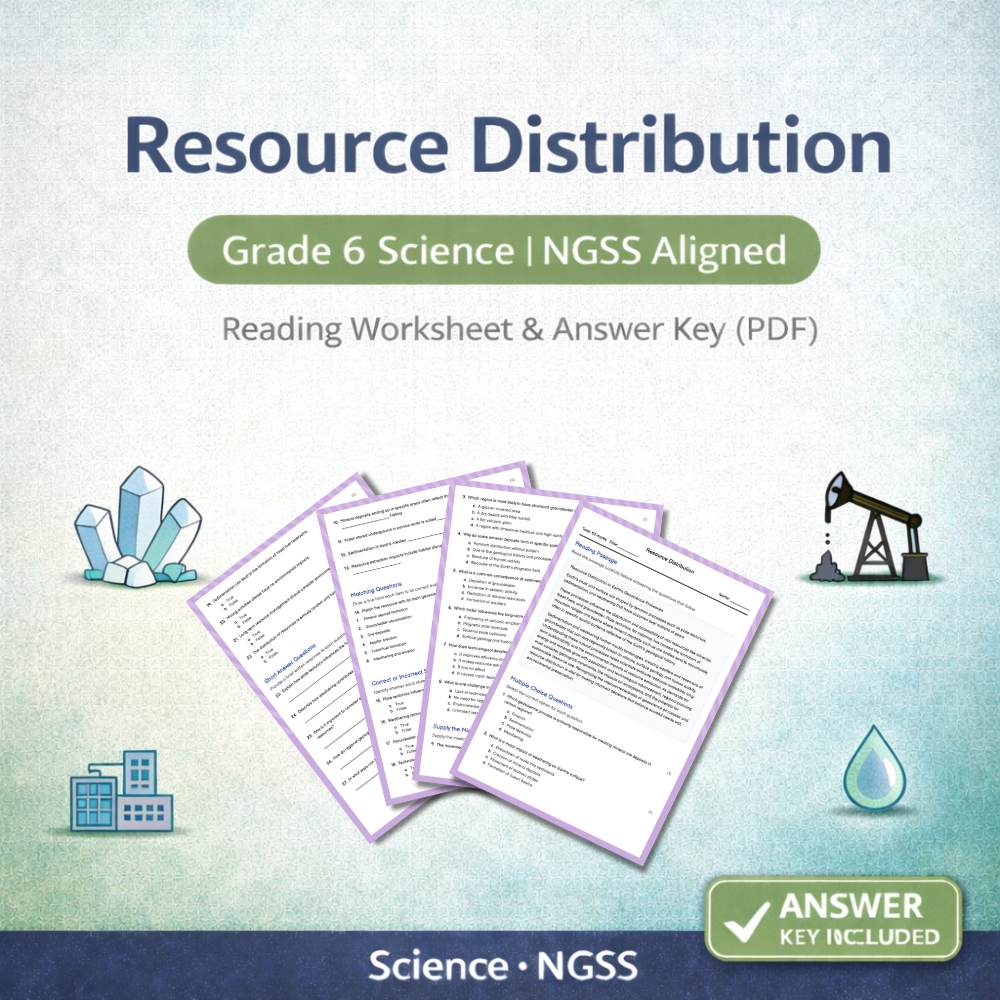
6th Grade Science | Resource Distribution | NGSS Worksheet & Answer Key
Created byCedar Grove LearningLearning Objectives
- Understand the geological processes that influence the distribution of mineral, energy, and groundwater resources.
- Analyze spatial patterns of resource deposits and evaluate trade-offs in resource management based on demand and environmental impacts.
- Explore how Earth's history and geoscience processes shape resource availability in regional and global contexts.
Also included in: Grade 6 Science Bundle | Sustainability, Hazards & Earth Systems NGSS Worksheets +1 more
Instant download
About Grade 6 Science Worksheets
Explore Grade 6 Science worksheets for classwork, homework, or review. Our 5,969 printables download instantly as PDFs.
MyTeachingSheets worksheets are made by real teacher-authors and checked before they go live. Download any as a print-ready PDF for lessons, homework, or independent practice — most include answer keys, and previews are always free.