
Grade 6 Science Worksheets
5,735 worksheets
Grade 6 Science – Societal Impacts & Water Treatment | Daily Reading Worksheet
 Created byBright Mind Resources
Learning Objectives
- Understand how water treatment processes improve public health
- Analyze the societal benefits of environmental regulations
- Evaluate scientific data related to resource management
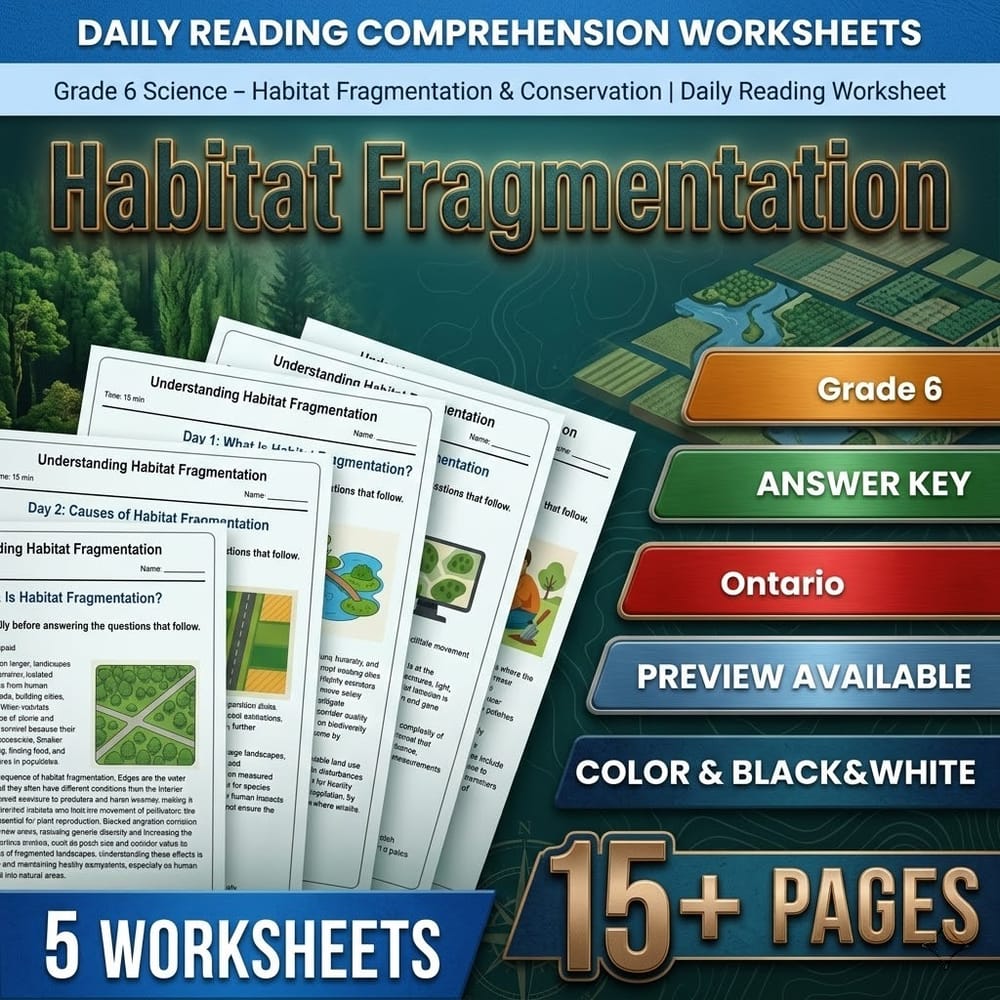
Grade 6 Science – Habitat Fragmentation & Conservation | Daily Reading Worksheet
 Created byQuiet Forest Education
Learning Objectives
- Understand key concepts related to Science
- Apply knowledge through practice questions
- Demonstrate comprehension of the material
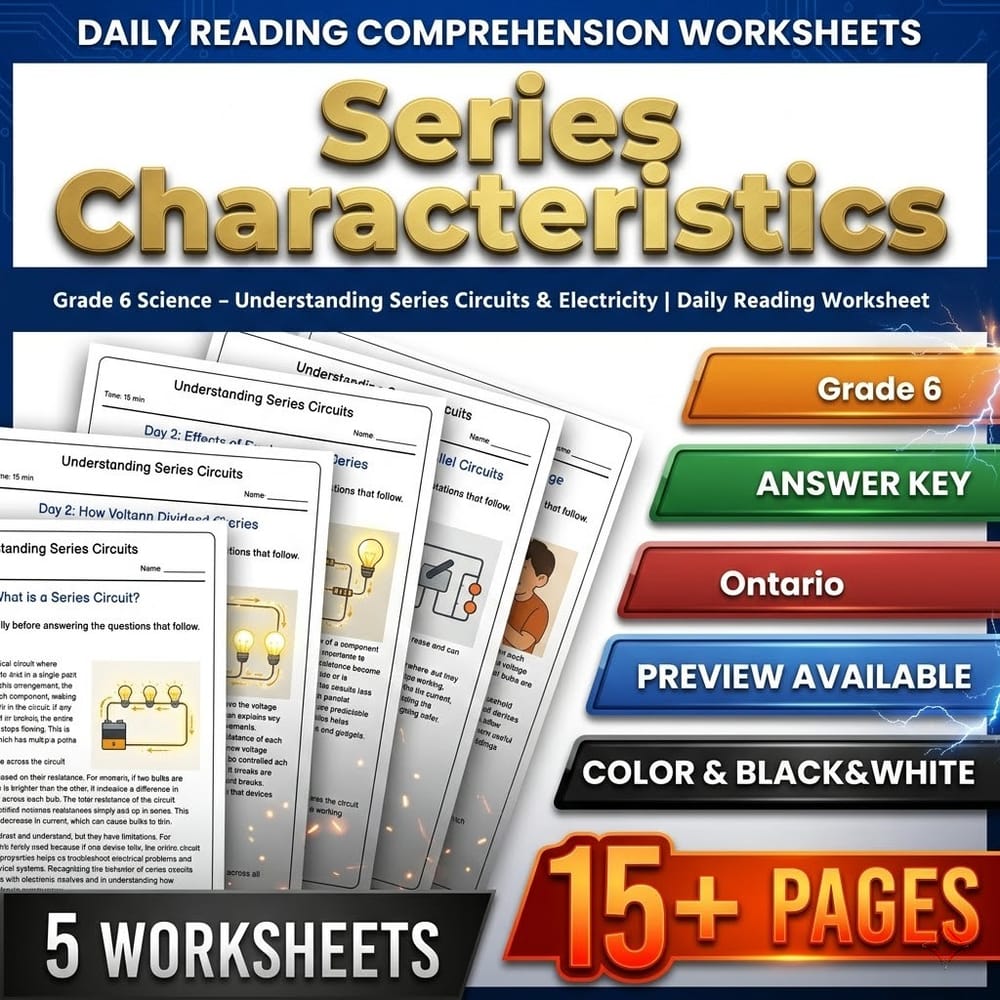
Grade 6 Science – Understanding Series Circuits & Electricity | Daily Worksheet
Created byQuiet Forest EducationLearning Objectives
- Identify the main components of a series circuit
- Describe how current flows through a series circuit
- Explain how voltage is divided among components in a series
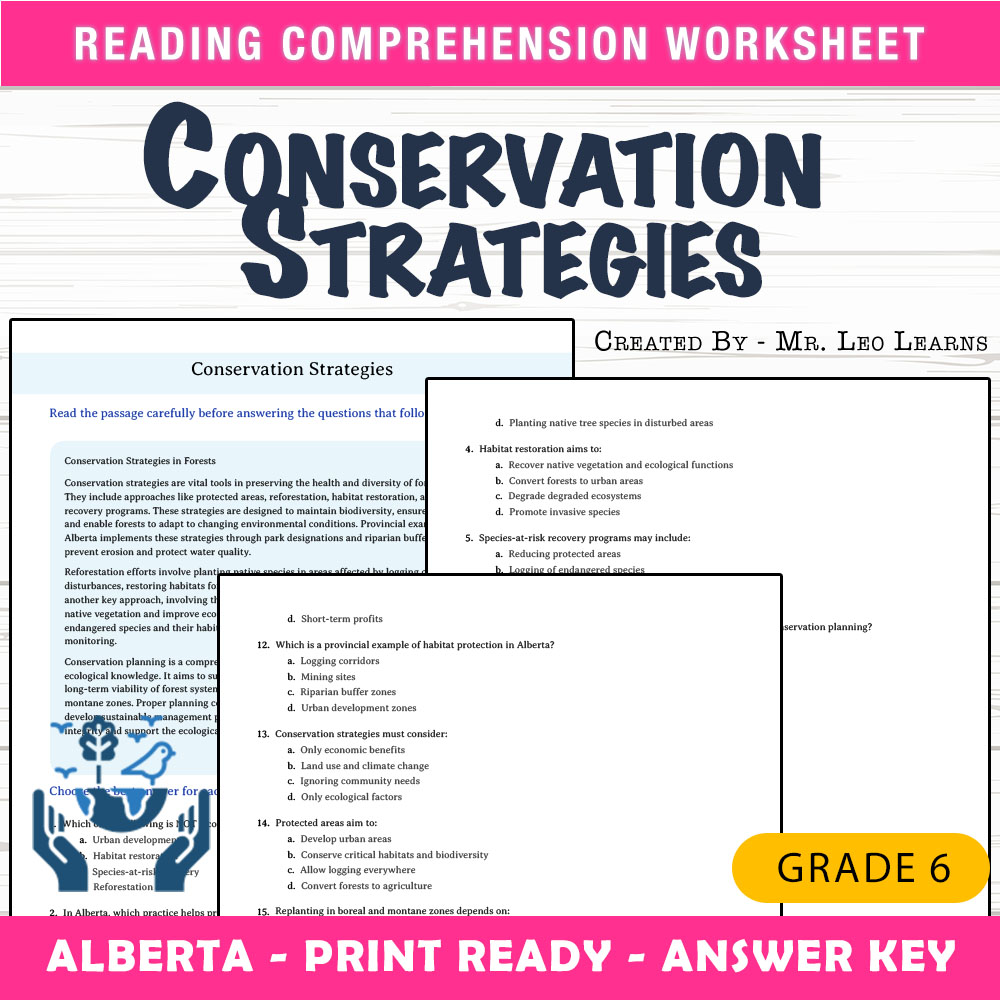
Grade 6 Science — Conservation Strategies Worksheet for Mastery
 Created byThe Resource Hub
Learning Objectives
- Understand various approaches used to conserve forest biodiversity and ecosystem functions.
- Identify examples of conservation strategies, including protected areas and habitat restoration.
- Recognize provincial examples of conservation planning in Alberta's landscapes.

Grade 6 Adaptation and Speciation Worksheet | NGSS Evolution Activity
 Created byCurriculum Foundation
Learning Objectives
- Explain how heritable differences and natural selection can lead to adaptation in a population.
- Describe how populations can diverge into new species through reproductive isolation.
- Identify evidence of speciation using morphology, compatibility, and biogeographic patterns.
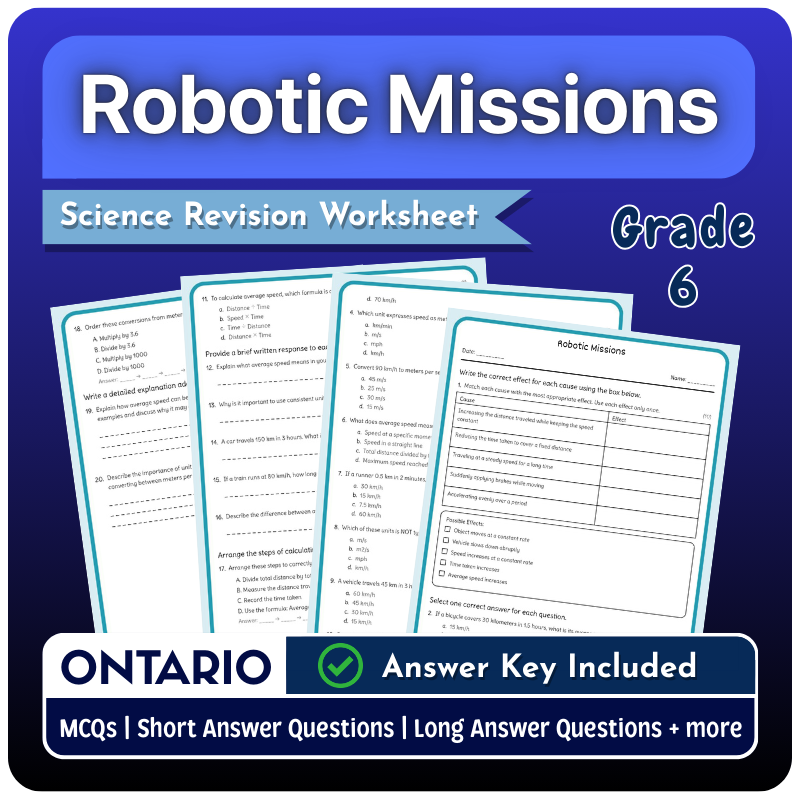
6th Grade Science | Robotic Missions Worksheet (Ontario Standards PDF)
Created byBright Mind ResourcesLearning Objectives
- Understand the different types of robotic space missions such as flyby, orbiter, lander, and sample-return missions.
- Describe engineering constraints faced in robotic space exploration, including distance, communication delay, and planetary environments.
- Explain how mission design addresses issues like propulsion, instrumentation, and data retrieval.
Grade 6 Science – Quantitative Circuits Worksheet (Ontario Science 1) (PDF)
Created byBright Mind ResourcesLearning Objectives
- Understand the relationship between voltage, current, and resistance in electrical circuits.
- Apply proportional reasoning to calculate unknown circuit values using measured data.
- Predict how changes in resistance affect current flow in a fixed voltage circuit.
Grade 6 Science | Series Circuit Characteristics Worksheet (Ontario PDF)
Created byBright Mind ResourcesLearning Objectives
- Understand the single-path configuration of series circuits and how current remains consistent through all elements.
- Explain how voltage divides among components in a series circuit and how this affects brightness of bulbs and resistance.
- Identify the limitations of series wiring for household electrical systems and compare predictable series behavior with branching circuits.

Grade 6 Biodiversity Patterns Worksheet | Ontario Science Activity
 Created byChalk and Compass
Learning Objectives
- Explain biodiversity using species richness, abundance, and evenness.
- Describe how transects and quadrats can be used to sample biodiversity.
- Interpret spatial biodiversity patterns in relation to habitat heterogeneity.
Grade 6 Science | Measuring Circuits Worksheet (PDF) Ontario Standards
Created byBright Mind ResourcesLearning Objectives
- Understand how current and voltage measurements characterize circuit performance.
- Identify proper instrument placement for accurate readings.
- Interpret typical measurement patterns in various circuit configurations.
Grade 6 Science | Component Functions Worksheet (Ontario | PDF)
Created byBright Mind ResourcesLearning Objectives
- Identify the roles of power sources, resistive loads, switches, and connectors in circuits.
- Explain how each component influences current and voltage in a circuit.
- Link physical components to schematic symbols used in circuit diagrams.

Chemical Reactions Indicators of New Substances Worksheet | NGSS Grade 6 Science
 Created bySkylark Worksheets
Learning Objectives
- Identify evidence of chemical reactions using qualitative indicators such as color change, gas formation, and precipitate formation.
- Use quantitative data (mass, temperature, and measurements of reactants/products) to determine whether a new substance forms.
- Interpret before-and-after observations from common reactions such as acid–carbonate reactions and metal oxidation.

Adaptation and Speciation Worksheet | NGSS Grade 6 Science Assessment
Created bySkylark WorksheetsLearning Objectives
- Explain how heritable variation and natural selection can cause adaptation in populations
- Describe how geographic separation and reproductive isolation can lead to speciation
- Identify evidence for speciation using morphology, reproductive compatibility, and biogeographic patterns
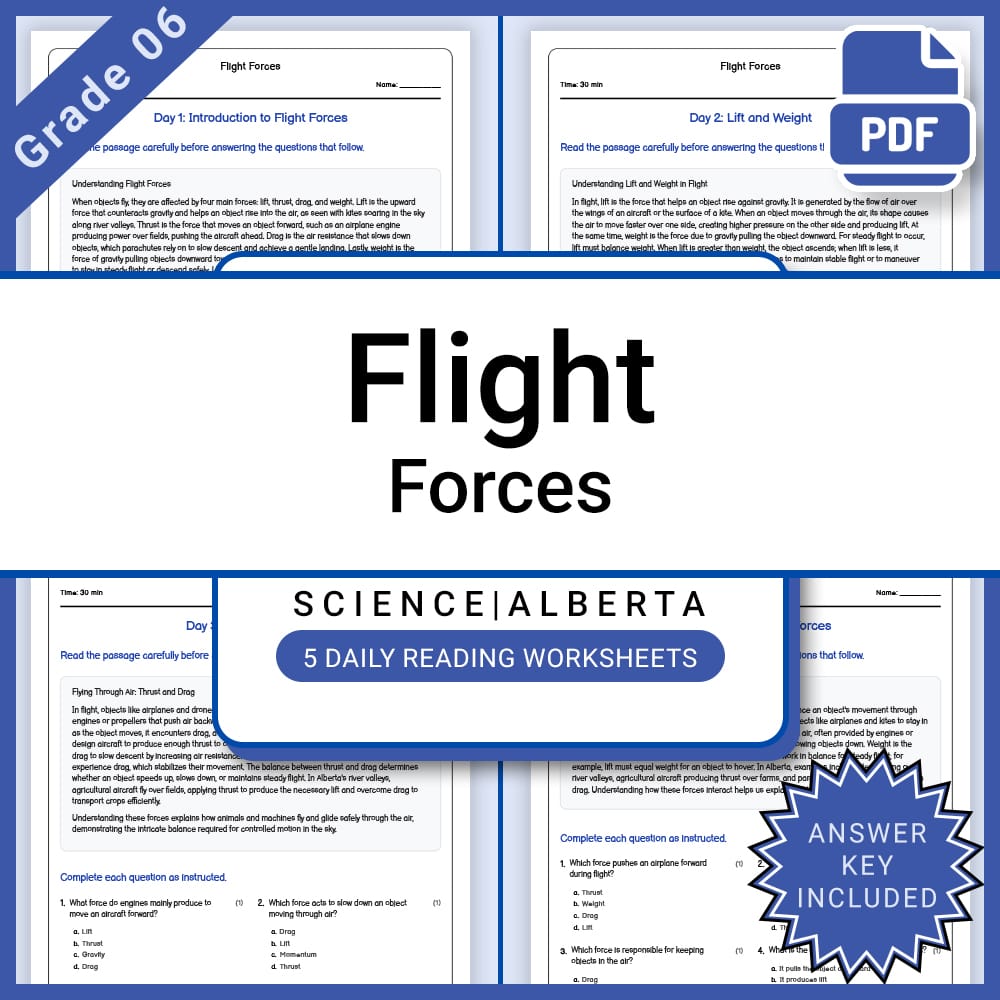
Grade 6 Science – Flight Forces Daily Reading Worksheet + Answer Key
JCreated byJ.S SheetsLearning Objectives
- Identify the key forces involved in flight: lift, drag, thrust, and gravity.
- Understand how airplane and device shapes affect their aerodynamic performance.
- Recognize how modifications in design, such as wing curvature and surface area, influence flight stability.
6th Grade Science | Stewardship Strategies Worksheet (Ontario Standards) (PDF)
Created byBright Mind ResourcesLearning Objectives
- Identify different stewardship strategies used in biodiversity conservation.
- Understand the criteria for prioritizing conservation actions.
- Evaluate trade-offs among various conservation approaches.
6th Grade Science – Niche Dynamics Worksheet (Ontario Standard) (PDF)
Created byBright Mind ResourcesLearning Objectives
- Understand the difference between fundamental and realized niches.
- Identify biotic and abiotic factors that influence species distribution.
- Explain how interspecific interactions affect resource use and habitat occupation.
6th Grade Science | Thrust Systems Worksheet (Ontario Standards) (PDF)
Created byBright Mind ResourcesLearning Objectives
- Understand how propeller-driven and jet-driven thrust generate propulsion.
- Compare propulsive efficiency across different flight regimes.
- Analyze the impact of propulsion methods on aircraft design, mass distribution, noise, and fuel considerations.
6th Grade Science | Data Representation Worksheet (Ontario Standard) (PDF)
Created byBright Mind ResourcesLearning Objectives
- Understand various methods for organizing and displaying data.
- Identify appropriate graph types and interpret their information.
- Learn to analyze patterns, trends, and outliers in data sets.
6th Grade Science | Constructing Key Practice Worksheet (Ontario) (PDF)
Created byBright Mind ResourcesLearning Objectives
- Understand the procedures for constructing dichotomous and multi-access keys.
- Identify contrasting traits and how to select them for classification.
- Learn the methodology for testing the accuracy of keys with local taxa such as mosses, beetles, and flowering plants.

Grade 6 Atomic Composition Worksheet | NGSS Science Atoms & Matter
 Created byElena Brooks
Learning Objectives
- Identify atoms and molecules in simple chemical formulas.
- Understand how atoms combine to form molecules like H2O and NaCl.
- Learn different models used to represent atomic structures.
6th Grade Science – Apparent Motion Worksheet (Ontario | Science 1 PDF)
Created byBright Mind ResourcesLearning Objectives
- Describe the apparent daily and annual motions of the Sun, Moon, and stars from an Earth perspective.
- Explain how Earth's rotation and orbit cause the observed motions of celestial objects.
- Understand the concept of the celestial sphere, horizon, and stellar paths across the sky.
6th Grade Science | Digital Instrumentation Worksheet (Ontario Standards) (PDF)
Created byBright Mind ResourcesLearning Objectives
- Understand the components and functions of electronic sensors, data loggers, and digital probes.
- Learn proper calibration and operation techniques for accurate measurements.
- Identify factors affecting sampling rate, resolution, and units in digital data collection.
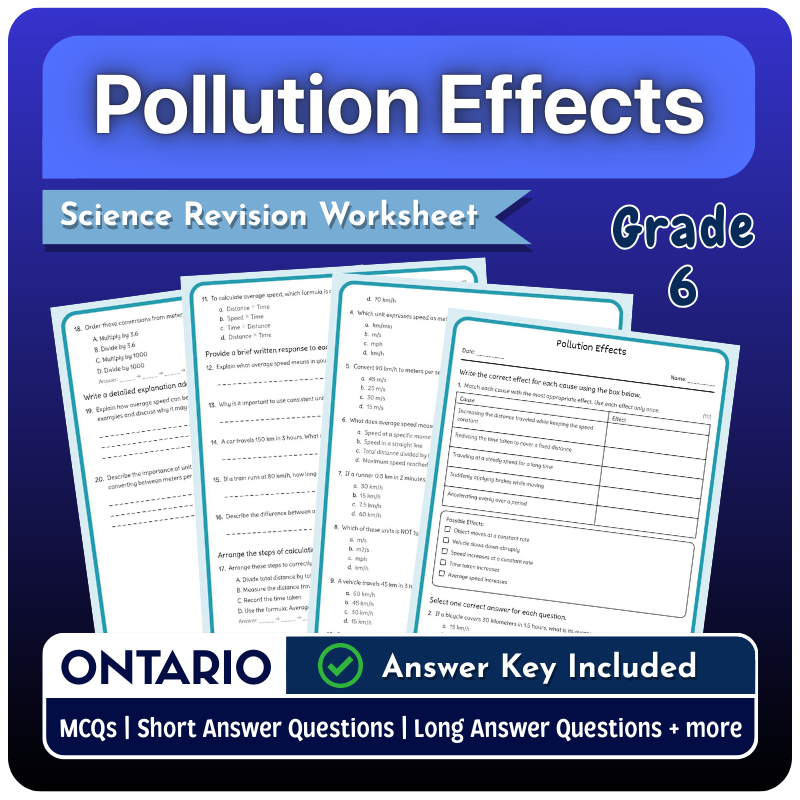
6th Grade Science | Pollution Effects Worksheet (Ontario) (Practice Set)
Created byBright Mind ResourcesLearning Objectives
- Understand the ecological impacts of pollution such as eutrophication, endocrine disruption, and biomagnification.
- Identify measurable indicators like dissolved oxygen, algal biomass, and contaminant residues for assessing pollution effects.
- Analyze how pollution influences species diversity and ecosystem functioning.

Adaptation Basics Worksheet | Ontario Grade 6 Science Assessment
 Created byCedar Grove Learning
Learning Objectives
- Distinguish structural, behavioural, and physiological adaptations and identify examples.
- Explain how inherited traits can increase survival and reproductive success in a specific niche.
- Differentiate inherited traits from acquired characteristics and describe how natural selection acts over generations.
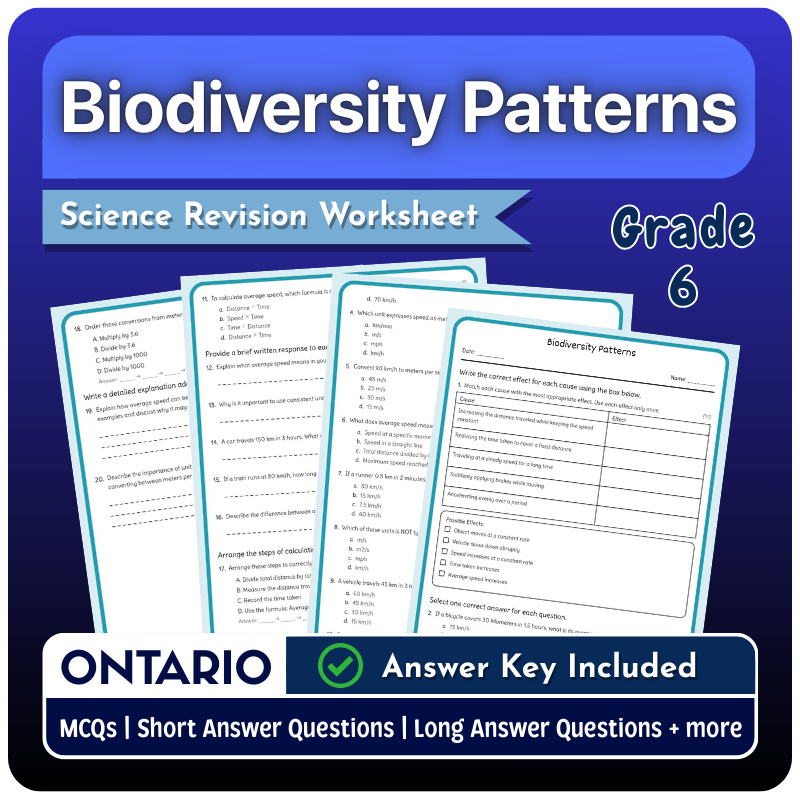
6th Grade Science – Biodiversity Patterns Worksheet (Ontario) PDF
Created byBright Mind ResourcesLearning Objectives
- Understand measures of biodiversity such as species richness, abundance, and evenness.
- Identify sampling methods like transects and quadrats used in ecological surveys.
- Interpret spatial patterns in biodiversity and their implications for ecosystem health.
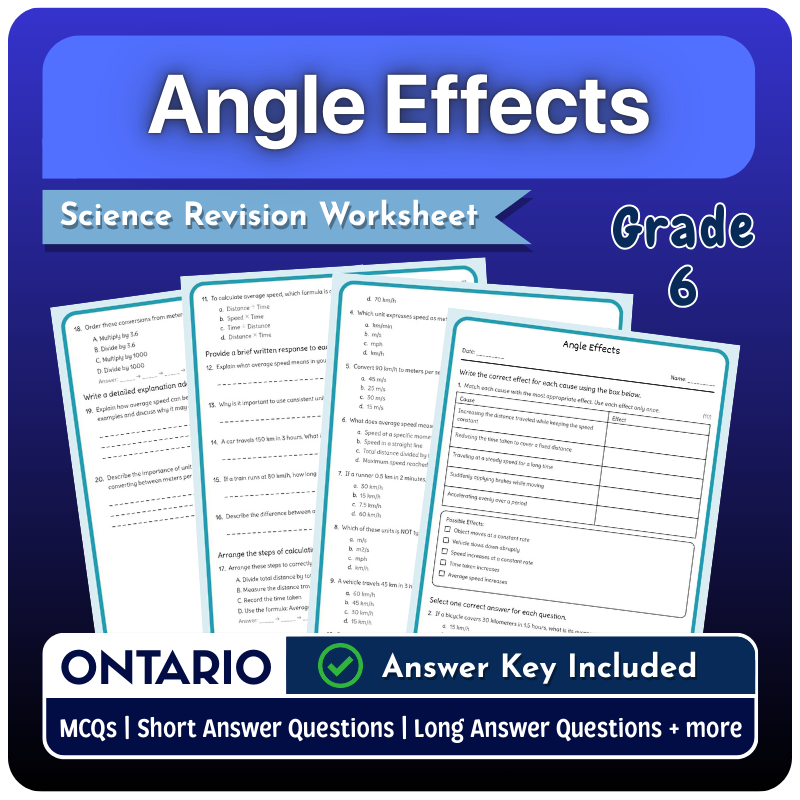
Grade 6 Science | Effects of Angle of Attack Worksheet (Ontario, PDF)
Created byBright Mind ResourcesLearning Objectives
- Understand how the angle of attack influences airflow and lift generation.
- Identify the effects of changing wing incidence and pilot input on effective angle.
- Explain how factors like airfoil shape, flap settings, and Reynolds number affect critical angle.
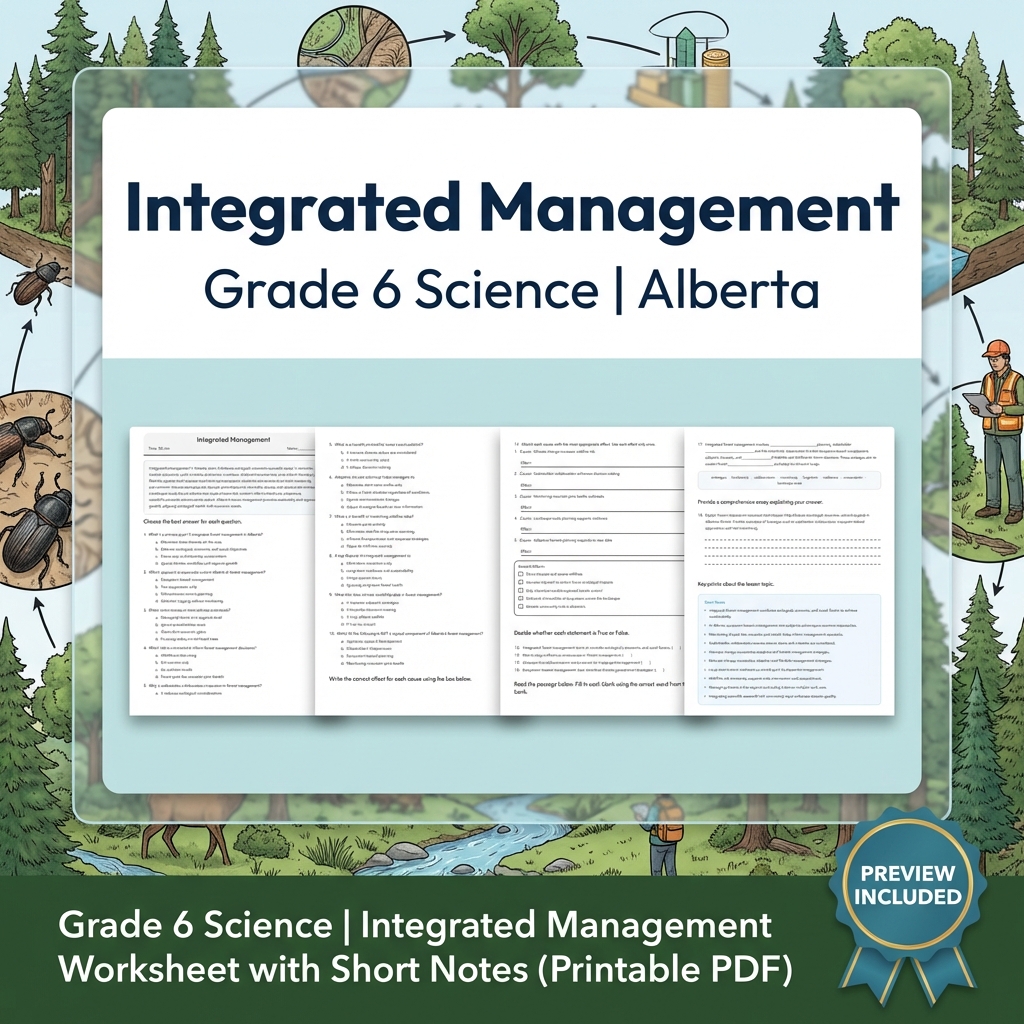
Grade 6 Science | Integrated Management Worksheet with Short Notes (PDF)
 Created byMeadowlark Worksheets
Learning Objectives
- Understand the concept of integrated management considering ecological, economic, and social factors.
- Identify forest management approaches used in Alberta, such as ecosystem-based management and adaptive planning.
- Analyze how landscape-scale planning and stakeholder collaboration support forest resilience.

Biodiversity Patterns Worksheet | NGSS Grade 6 Ecology Activity
Created byElena BrooksLearning Objectives
- Understand how island size influences species diversity.
- Analyze spatial patterns of biodiversity.
- Interpret data related to species richness across ecosystems.
6th Grade Science | Wind Tunnel Worksheet (Ontario Standards) (PDF)
Created byBright Mind ResourcesLearning Objectives
- Understand the methods used to measure aerodynamic forces and moments.
- Identify and explain the concept of similarity parameters such as Reynolds and Mach numbers.
- Describe flow visualization techniques and their importance in wind tunnel testing.
6th Grade Science | Circuit Symbols Worksheet (Ontario, Science 1) (PDF)
Created byBright Mind ResourcesLearning Objectives
- Identify standard symbols used in circuit diagrams for components like cells, batteries, resistors, lamps, switches, ammeters, and voltmeters.
- Interpret and read circuit schematics to understand circuit behavior and arrangement.
- Distinguish between series, parallel, and mixed circuit configurations based on diagram symbols.
Grade 6 Science | Genetics Classification Worksheet (Ontario PDF)
Created byBright Mind ResourcesLearning Objectives
- Understand molecular tools used in species classification, including DNA barcoding and phylogenetic trees.
- Compare genetic markers with morphological keys in identifying species.
- Explain how molecular evidence can reveal cryptic species and inform taxonomy.
Grade 6 Science | Inquiry Foundations Worksheet (Ontario) PDF
Created byBright Mind ResourcesLearning Objectives
- Understand operational definitions and the role of variables in scientific inquiry.
- Distinguish between independent and dependent variables in experiments.
- Develop testable questions and establish fair comparisons in scientific investigations.
6th Grade Science | Instrumentation Principles Worksheet (Ontario Standards)
Created byBright Mind ResourcesLearning Objectives
- Understand the roles of ammeters and voltmeters in electrical measurements.
- Identify measurement units of amperes and volts.
- Describe the placement of instruments in simple circuits (series and parallel).

Adaptation Tradeoffs Worksheet | Ontario Grade 6 Science Assessment
Created byCedar Grove LearningLearning Objectives
- Explain how specialization and generalization are adaptation strategies with different fitness trade-offs
- Compare how organisms can benefit and lose fitness when environments change
- Use examples (plant ecotypes, insect activity patterns, and migration) to describe trade-offs and survival outcomes
6th Grade Science | Adaptation Basics Worksheet (Ontario) (PDF)
Created byBright Mind ResourcesLearning Objectives
- Understand the different types of adaptations and their roles in survival.
- Identify examples of structural, behavioral, and physiological adaptations.
- Analyze how environmental pressures influence the development of advantageous traits.
Grade 6 Science | Insulator Comparisons Worksheet (Ontario Standards PDF)
Created byBright Mind ResourcesLearning Objectives
- Understand the properties and behaviour of insulating materials.
- Identify common insulators such as rubber, glass, and dry wood.
- Explain how insulators prevent electrical charge flow and support safety.
6th Grade Science | Keystone Species Worksheet (Ontario)(Worksheet + Answer Key)
Created byBright Mind ResourcesLearning Objectives
- Understand the concept of keystone species and their influence on ecosystems.
- Identify regional examples of keystone species and their ecological roles.
- Analyze cascading effects caused by keystone species' activities.
6th Grade Science | Seasons and Earth's Tilt Worksheet (PDF)
Created byBright Mind ResourcesLearning Objectives
- Understand how Earth's axial tilt and orbital motion cause seasonal changes.
- Explain why hemispheres experience opposite seasons.
- Describe how day length and solar elevation vary throughout the year.
6th Grade Science | Phases Mechanics Worksheet (PDF) Ontario Standards
Created byBright Mind ResourcesLearning Objectives
- Explain the relative positions of the Sun, Earth, and Moon that produce lunar phases.
- Identify and sequence the different lunar phases based on illumination geometry.
- Differentiate between lunar phases and eclipse circumstances.

Component Functions Worksheet | Ontario Grade 6 Science Assessment
Created byCedar Grove LearningLearning Objectives
- Identify the function of major circuit components: power sources, resistive loads, switches, and connectors.
- Match physical circuit components to their roles in circuit behavior and to common schematic ideas.
- Describe qualitative effects of component changes on current and voltage in everyday circuits.
6th Grade Science | Collaborative Practices Worksheet (Ontario PDF)
Created byBright Mind ResourcesLearning Objectives
- Understand principles of team-based organization and communication in scientific projects.
- Identify protocols for versioning, attribution, and peer review to ensure transparency.
- Recognize the importance of diverse perspectives and standardized reporting in collaboration.
6th Grade Science | Electrostatic Phenomena Worksheet (PDF) Ontario Standard
Created byBright Mind ResourcesLearning Objectives
- Understand the causes and effects of static charge transfer between materials.
- Identify and interpret the triboelectric series and its application in predicting charge tendencies.
- Describe phenomena such as attraction, repulsion, and discharge sparked by static electricity.
6th Grade Science | Exploring Satellite Systems Worksheet (PDF)
Created byBright Mind ResourcesLearning Objectives
- Identify the different functions and categories of artificial satellites.
- Understand the significance of orbital choices such as geostationary and polar orbits.
- Explain how satellite data contribute to Earth observation, communication, navigation, and scientific monitoring.
6th Grade Science | Orbital Dynamics Worksheet (Ontario Standard) (PDF)
Created byBright Mind ResourcesLearning Objectives
- Describe the differences between elliptical and near-circular orbits.
- Explain how orbital speed varies with distance from the central body.
- Understand the balance of gravitational forces and inertial motion that produce stable orbits.
6th Grade Science | Design Process Worksheet (Ontario, Science 1) (PDF)
Created byBright Mind ResourcesLearning Objectives
- Describe the steps involved in the design process for aircraft and gliders.
- Explain how measurement and refinement improve aerodynamic performance.
- Identify key performance criteria such as lift, drag, weight, and stability.
6th Grade Science | Airfoil Shape Worksheet (Ontario) (Practice Set)
Created byBright Mind ResourcesLearning Objectives
- Understand how camber, thickness, chord length, and leading-edge curvature influence pressure distribution and lift.
- Compare Bernoulli and Newtonian explanations of lift.
- Identify how angle of attack affects lift and stall conditions.
Grade 6 Science – Electricity Fundamentals Worksheet (PDF) – Ontario Standards
Created byBright Mind ResourcesLearning Objectives
- Describe electric current as a organized movement of charges through a conductor.
- Distinguish between conventional current direction and electron flow.
- Explain potential difference as a driving force in electric circuits.
Grade 6 Science | Flight Forces Worksheet – Ontario Standards (PDF)
Created byBright Mind ResourcesLearning Objectives
- Understand the four main aerodynamic forces: lift, drag, thrust, and weight.
- Explain how these forces interact to produce steady, level flight.
- Identify how force magnitude and direction affect climbing, cruising, and descending in flight.
About Grade 6 Science Worksheets
Explore Grade 6 Science worksheets for classwork, homework, or review. Our 5,735 printables download instantly as PDFs.
MyTeachingSheets worksheets are made by real teacher-authors and checked before they go live. Download any as a print-ready PDF for lessons, homework, or independent practice — most include answer keys, and previews are always free.