
Grade 6 Science Worksheets
5,997 worksheets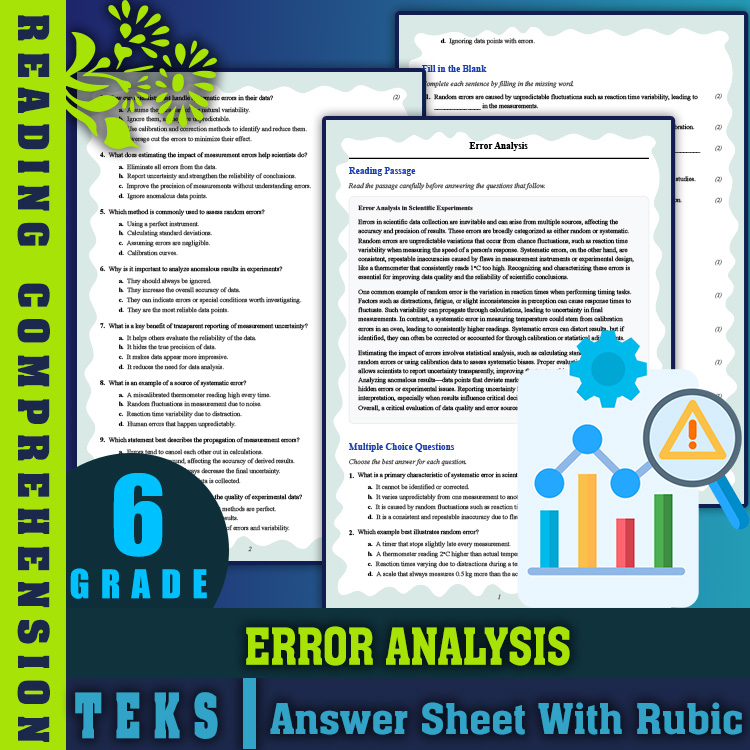
6th Grade Science | Error Analysis Reading Worksheet & Answer Key (PDF)
JCreated byJ.S SheetsLearning Objectives
- Understand the sources of random and systematic errors in scientific data collection.
- Learn methods to identify, characterize, and estimate the impacts of errors in experiments.
- Develop critical thinking skills to evaluate data quality and analyze anomalous results.
Instant download

Grade 6 Science | Earth System Interactions - Daily Reading Comprehension
 Created byCoral Reef Learning
Learning Objectives
- Identify the Earth's main spheres: atmosphere, hydrosphere, geosphere, and biosphere.
- Describe the functions of each sphere.
- Understand how different earth processes connect these spheres.
Instant download
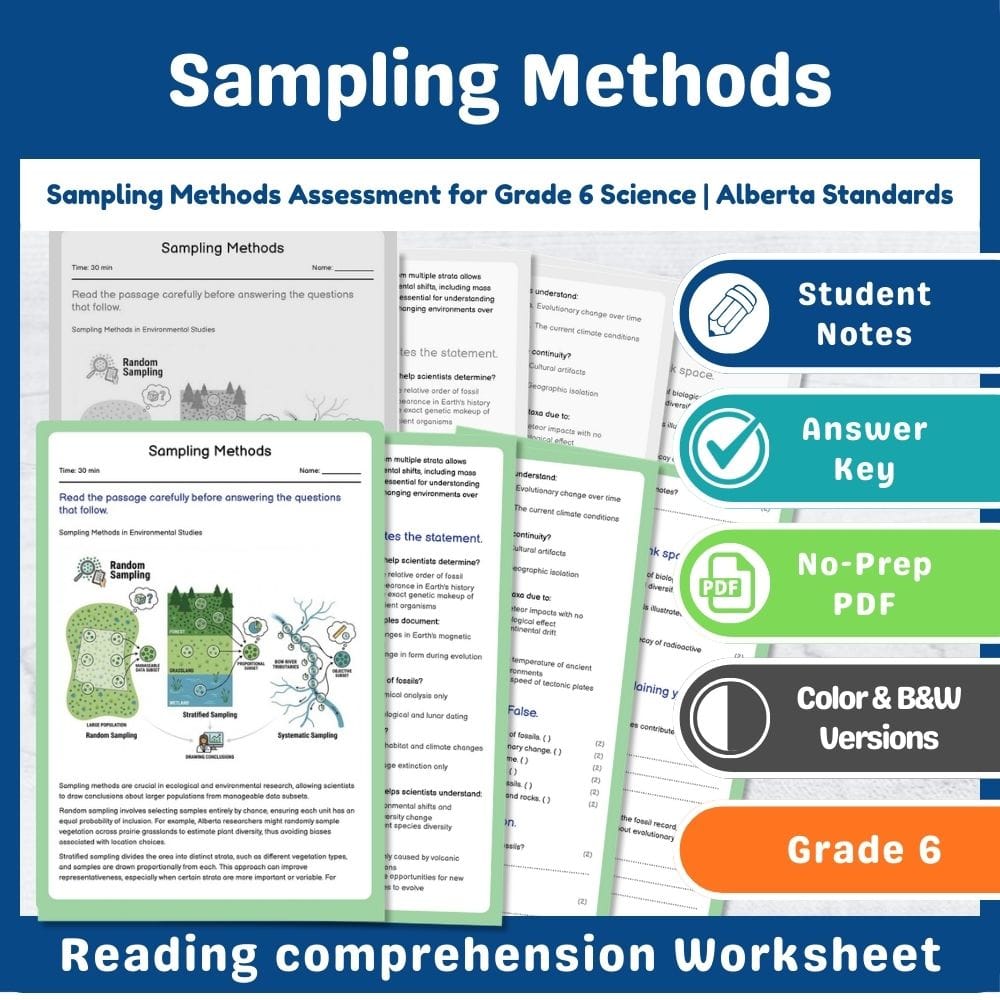
Sampling Methods Assessment for Grade 6 Science | Alberta Standards
 Created byPrism Point Learning
Learning Objectives
- Understand different sampling methods and their applications.
- Compare systematic, stratified, and random sampling techniques.
- Evaluate trade-offs between coverage, practicality, and interpretation in sampling.
Also included in: Lesson Grade 6 Science Mini Bundle | Evidence and Investigation
Instant download
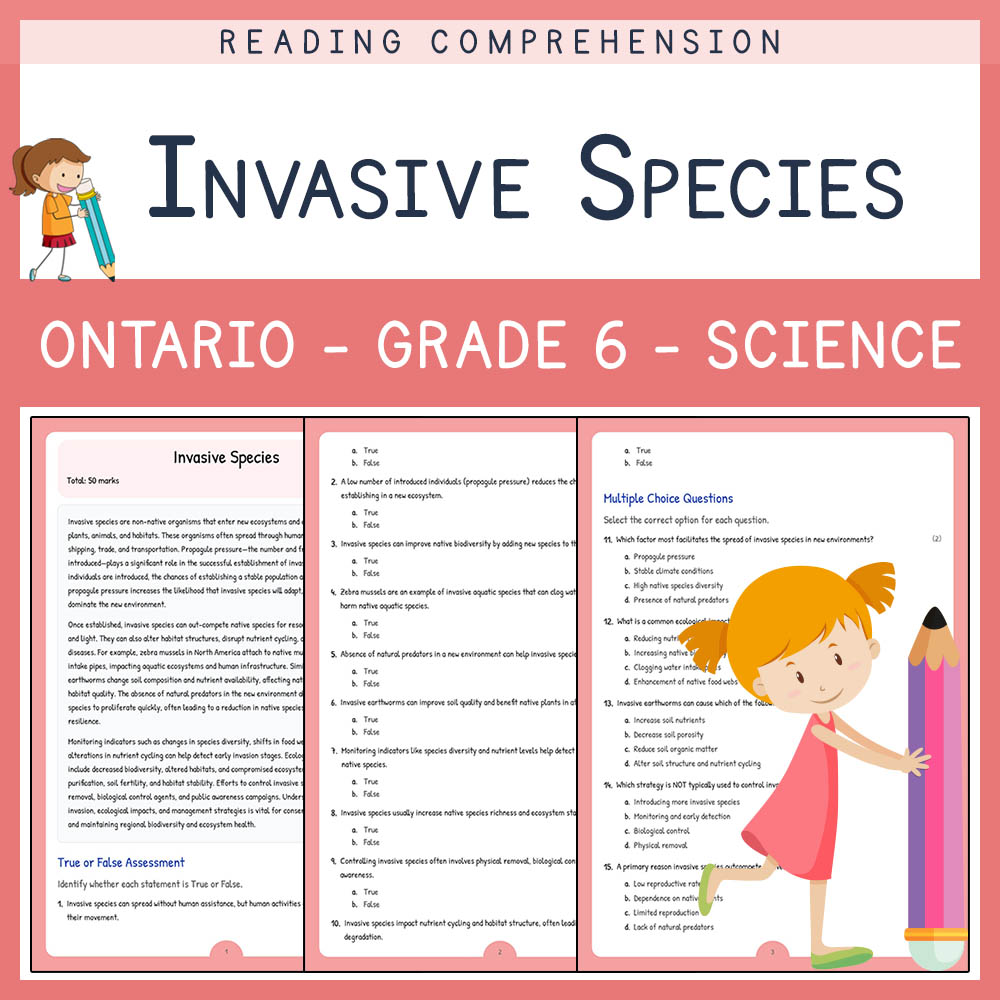
Grade 6 Science | Invasive Species Worksheet & Answer Key | Ontario Standards
 Created byLumora Learning
Learning Objectives
- Understand the pathways and mechanisms by which invasive species establish in new habitats.
- Identify the ecological impacts of invasive species on native ecosystems and food webs.
- Analyze how factors like propagule pressure and lack of predators facilitate invasive species spread.
Also included in: Grade 6 Science | Biodiversity Custom Unit Resource | Ontario Framework
Instant download
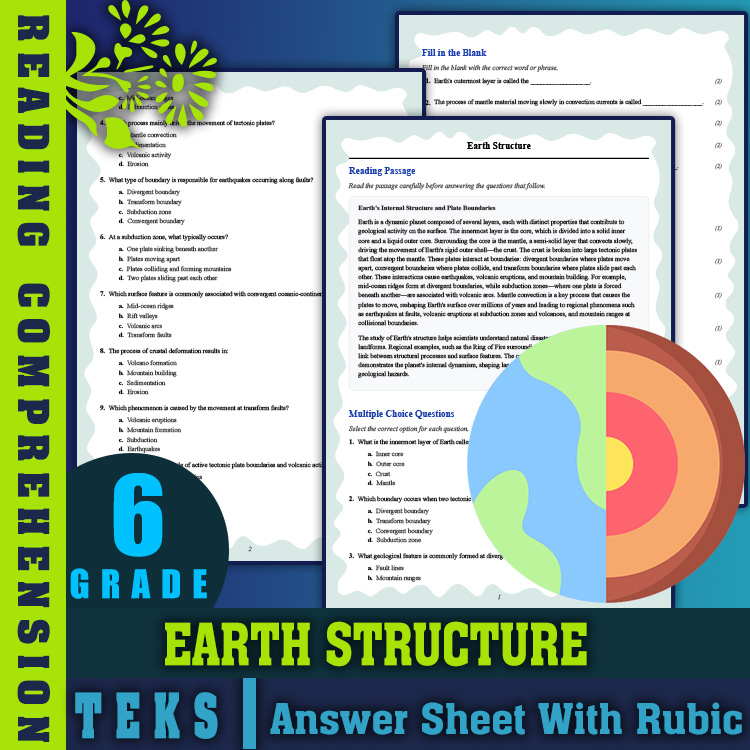
6th Grade Science | Earth Structure Reading Worksheet & Answer Key (PDF)
JCreated byJ.S SheetsLearning Objectives
- Describe the internal structure of Earth, including the crust, mantle, and core.
- Identify different types of plate boundaries and their associated geological features.
- Explain how tectonic processes such as mantle convection and crustal deformation lead to earthquakes, volcanic eruptions, and mountain formation.
Instant download
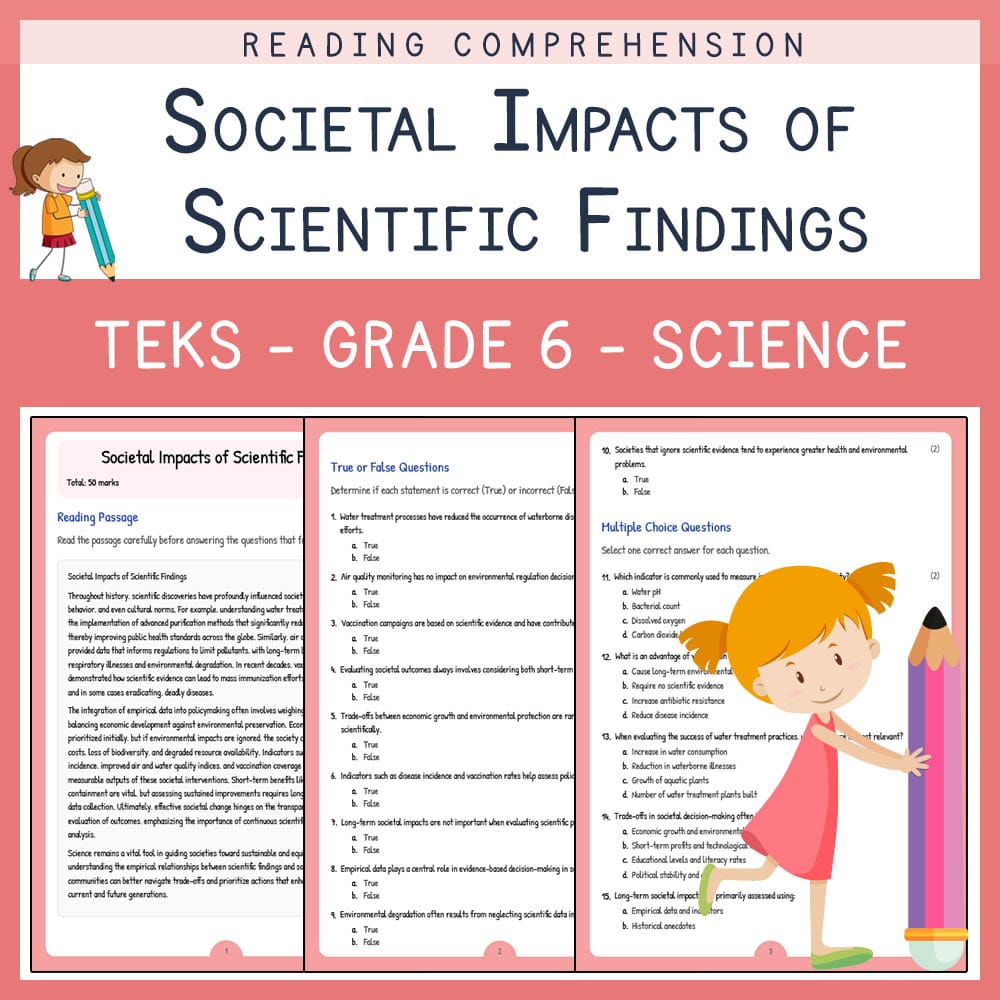
Grade 6 Science | Societal Impacts of Scientific Findings Worksheet | TEKS
Created byLumora LearningLearning Objectives
- Analyze how scientific data influences societal decisions and policies.
- Evaluate the trade-offs between economic growth and environmental protection.
- Identify indicators used to measure the effectiveness of public health and environmental measures.
Instant download
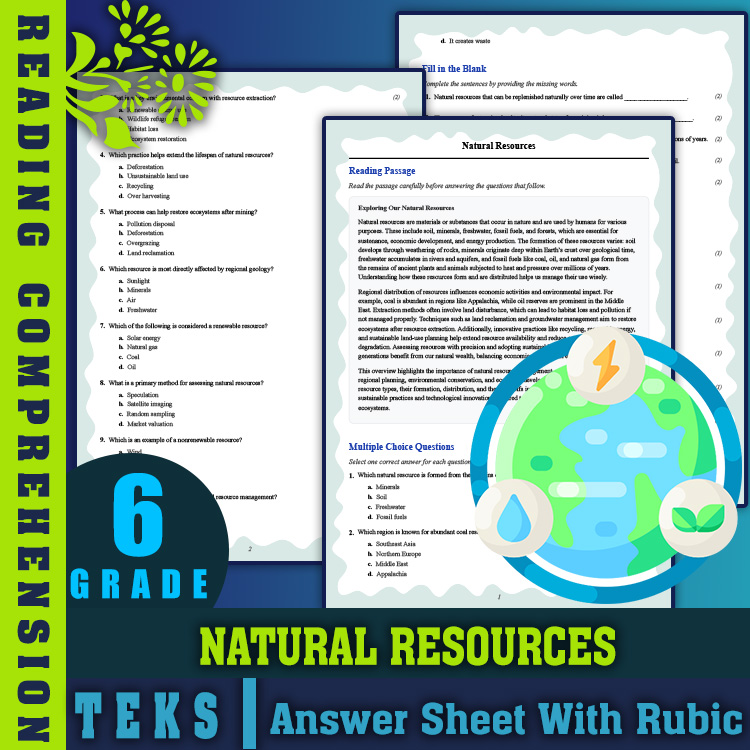
6th Grade Science | Natural Resources Reading Worksheet (PDF + Answer Key)
JCreated byJ.S SheetsLearning Objectives
- Understand different types of natural resources and their regional distribution.
- Explore the environmental and economic implications of renewable and nonrenewable resources.
- Learn about methods of resource assessment and sustainable use principles.
Instant download

Model Boundaries and Uncertainty Worksheets | Grade 6 Science
Created byPrism Point LearningLearning Objectives
- Explain how models represent systems and support predictions
- Identify assumptions and boundaries within a given model
- Compare model predictions with observable outcomes
Instant download
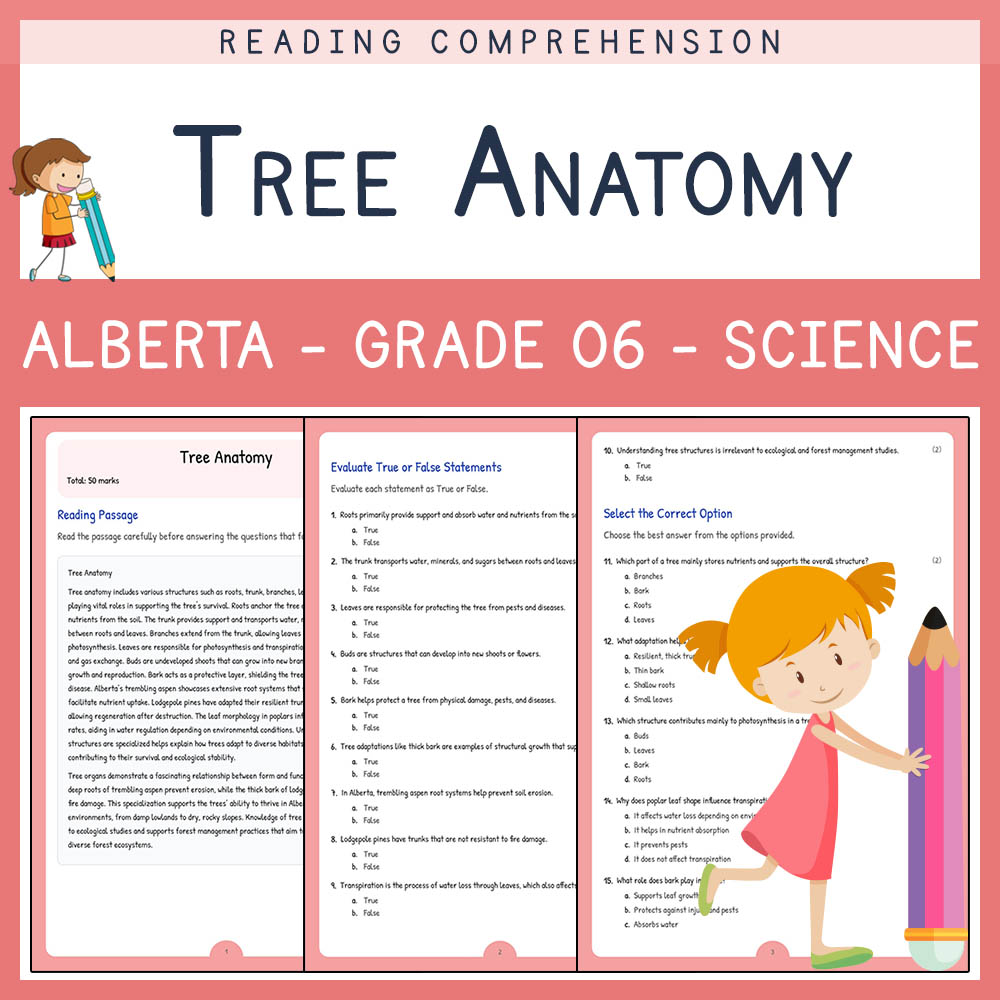
Grade 6 Science Assessment | Tree Anatomy Worksheet Elena | Alberta Standard
Created byLumora LearningLearning Objectives
- Identify major structures of a tree and their functions.
- Explain how structural features support tree survival in Alberta habitats.
- Describe relationships between form and function in tree organs.
Instant download

Grade 6 Science – Variables Control & Effects on Plant Growth | Worksheet
 Created byBright Mind Resources
Learning Objectives
- Identify independent, dependent, and controlled variables in plant growth experiments.
- Understand operational definitions and their importance.
- Recognize potential confounding influences in scientific testing.
Also included in: Grade 6 Science Inquiry & Modeling Daily Reading Lesson Bundle | TEKS +2 more
Instant download

Transport and Sediment Sorting Worksheet | Grade 6 Science Standards
JCreated byJ.S SheetsLearning Objectives
- Explain how flow speed or wind strength affects what sizes of particles can be transported.
- Describe how decreasing energy leads to sediment sorting and layered deposits.
- Use evidence from grain size patterns to predict where different sediments may settle.
Also included in: Grade 6 Earth System Cycles Science Lesson Bundle: General Framework +1 more
Instant download

Grade 6 Science – Cellular Respiration & Oxygen | Daily Reading Worksheet
Created byBright Mind ResourcesLearning Objectives
- Understand the basic process of cellular respiration
- Recognize the importance of oxygen in energy production
- Identify the outputs and inputs of cellular respiration
Also included in: Grade 6 Ecosystems and Energy Science Lesson Bundle | California Standards +1 more
Instant download
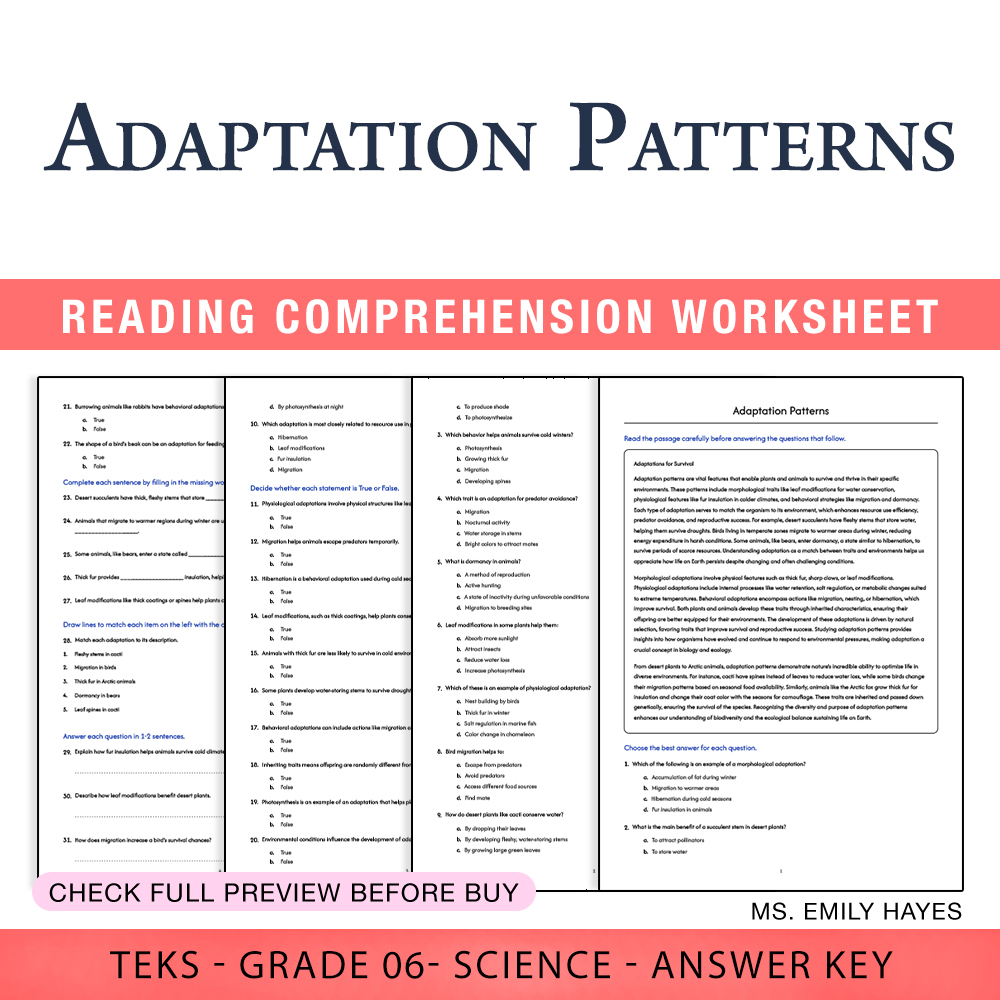
6th Grade Science | Adaptation Patterns Worksheet (PDF+ Answer Key)
 Created byCopper Leaf Classroom
Learning Objectives
- Understand different types of adaptation patterns in plants and animals.
- Identify morphological, physiological, and behavioral adaptations and their functions.
- Explain how adaptations help organisms survive in specific environments.
Instant download

Natural Selection Worksheet for Grade 6 Science | NGSS-Aligned Assessments
JCreated byJ.S SheetsLearning Objectives
- Explain how heritable variation influences natural selection.
- Identify environmental pressures that drive changes in traits within populations.
- Analyze case studies illustrating selection-driven trait shifts such as coloration, beak variation, and antibiotic resistance.
Also included in: Grade 6 Evolution and Natural Selection Science Lesson Bundle NGSS +1 more
Instant download

Grade 6 Science | Atom Rearrangement in Chemical Reactions - Reading Compreh.
Created byCoral Reef LearningLearning Objectives
- Explain how atoms are rearranged during a chemical reaction
- Identify properties of substances based on atomic arrangements
- Describe how new substances form from reactants
Instant download

Science Data Representations Worksheet | Standards-Aligned Grade 6 Assessment
JCreated byJ.S SheetsLearning Objectives
- Identify when to use a table, bar graph, or line graph to represent different kinds of data.
- Read graphs and tables using correct labels, units, and scales.
- Compare categories and describe change over time using appropriate graph types.
Also included in: Grade 6 Scientific Investigation Science lesson bundle: General Framework +1 more
Instant download
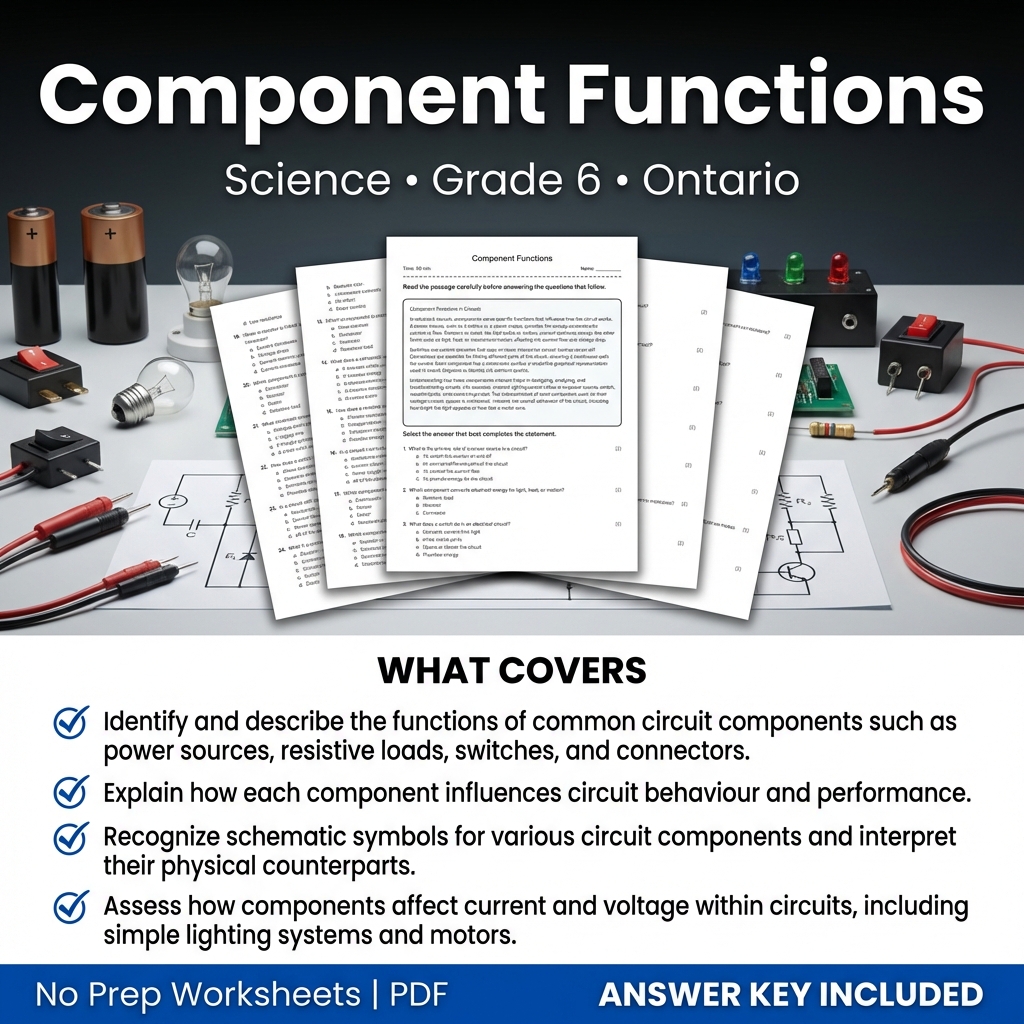
Component Functions Grade 6 Science Worksheet | Ontario Standards
Created byCoral Reef LearningLearning Objectives
- Identify and describe the functions of common circuit components such as power sources, resistive loads, switches, and connectors.
- Explain how each component influences circuit behaviour and performance.
- Recognize schematic symbols for various circuit components and interpret their physical counterparts.
Instant download

Resource Management Solutions Worksheets | Grade 6 Science TEKS
Created byPrism Point LearningLearning Objectives
- Explain how conservation can reduce unnecessary resource use
- Compare conservation and efficiency as resource-management strategies
- Analyze effects of resource decisions on people and environments
Instant download

Biodiversity Patterns Worksheet | Ontario Grade 6 Science Assessment
 Created byCedar Grove Learning
Learning Objectives
- Explain how species richness, abundance, and evenness describe biodiversity patterns across ecosystems
- Use basic sampling ideas (transects and quadrats) to understand how scientists measure diversity
- Interpret how habitat heterogeneity can influence spatial patterns of biodiversity
Also included in: Grade 6 Biodiversity and Adaptations Science Lesson Bundle Ontario +1 more
Instant download

Grade 6 Earthquake Data Analysis Worksheet | NGSS Natural Hazards Science
 Created byBRIGHT PATH RESOURCES
Learning Objectives
- Analyze seismic records for patterns.
- Assess recurrence intervals of earthquakes.
- Interpret observational data related to natural hazards.
Also included in: Earth's Systems Grade 6 Science Daily Reading Worksheets Lesson Bundle | NGSS +2 more
Instant download
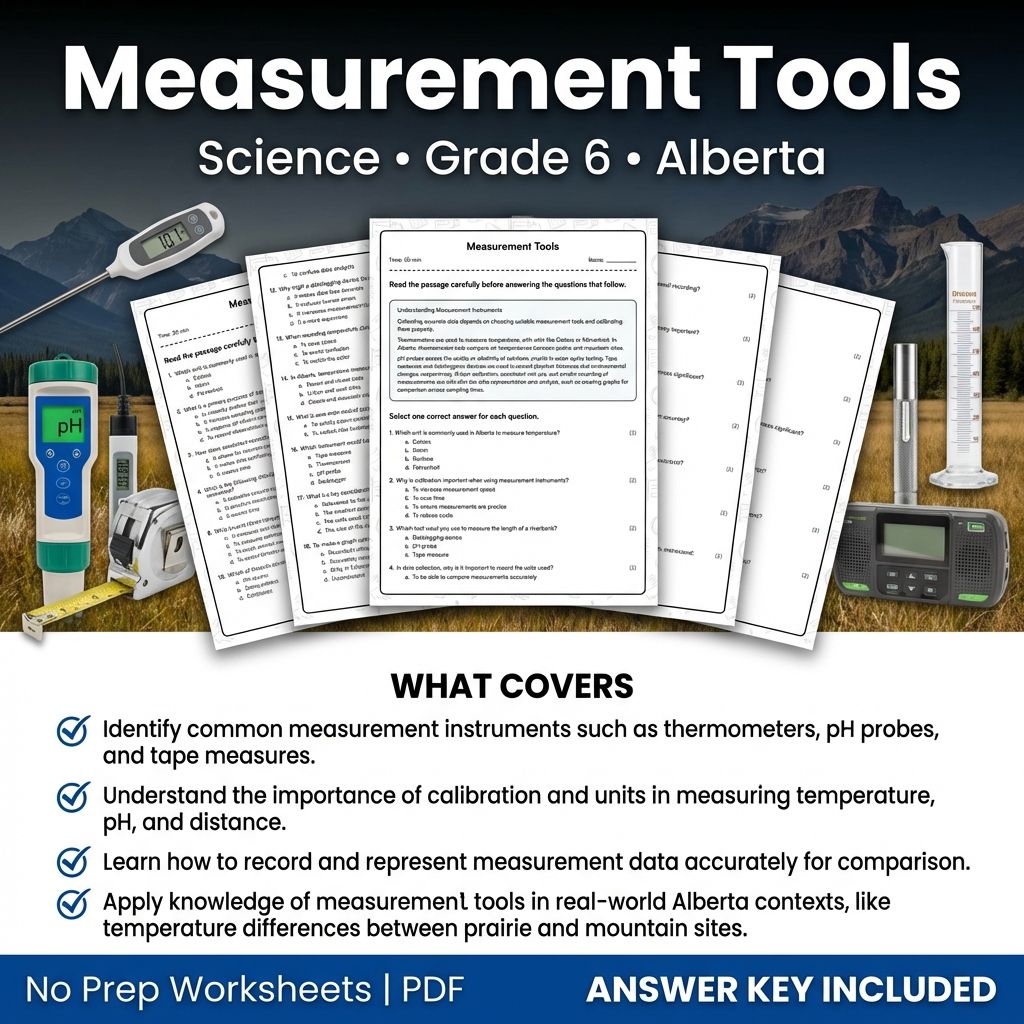
Grade 6 Science Worksheet on Measurement Tools | Alberta Standards
Created byCoral Reef LearningLearning Objectives
- Identify common measurement instruments such as thermometers, pH probes, and tape measures.
- Understand the importance of calibration and units in measuring temperature, pH, and distance.
- Learn how to record and represent measurement data accurately for comparison.
Instant download
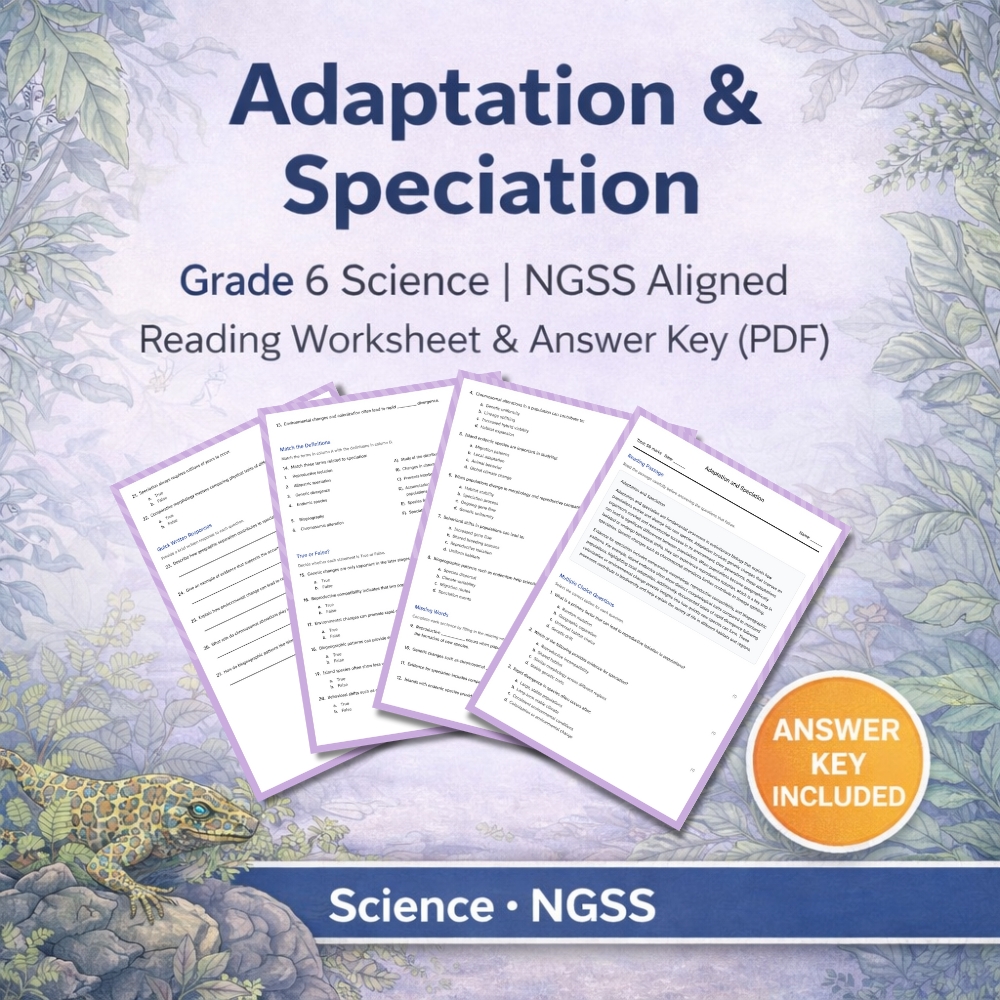
6th Grade Science | Adaptation and Speciation | NGSS Worksheets with Answer Key
Created byCedar Grove LearningLearning Objectives
- Explain the processes of adaptation and how they lead to speciation in populations.
- Describe evidence that supports the occurrence of speciation events in different environments.
- Identify factors such as geographic separation, behavioral shifts, and genetic changes that contribute to lineage divergence.
Also included in: Grade 6 Science | Ecosystems, Evolution & Biodiversity | NGSS Worksheet Bundle +1 more
Instant download

Shadow Patterns Worksheet | Standards-Aligned Grade 6 Science Practice
JCreated byJ.S SheetsLearning Objectives
- Understand how daily and seasonal Sun angle changes affect shadow length and direction.
- Observe and describe shadow noon, longest, and shortest shadows across the year.
- Explain how shadow patterns provide evidence of Earth's motion and axial tilt.
Instant download

Resource Distribution Worksheet | NGSS Grade 6 Science Assessment
JCreated byJ.S SheetsLearning Objectives
- Understand the processes that influence the distribution of mineral, energy, and groundwater resources.
- Identify how geological history and hydrologic flow shape resource availability and patterns.
- Evaluate trade-offs in resource extraction considering demand, environmental impact, and technological constraints.
Also included in: Grade 6 Earth Systems and Human Impacts Science Lesson Bundle – NGSS +1 more
Instant download

Orbital Dynamics Worksheet | Ontario Grade 6 Science Assessment
Created byCedar Grove LearningLearning Objectives
- Explain how gravity and inertia work together to keep objects in orbit
- Compare elliptical and near-circular orbital paths and describe how distance affects orbital speed
- Relate orbital period to distance from a central body in qualitative terms
Also included in: Grade 6 Earth and Space Systems Science Lesson Bundle: Ontario +1 more
Instant download

Stewardship Strategies for Biodiversity Grade 6 Science Ontario Worksheet
 Created byTeacher's Corner
Learning Objectives
- Explain how habitat restoration and protected areas help maintain biodiversity.
- Describe trade-offs among conservation actions and choose priorities using clear criteria.
- Use metrics and adaptive management to evaluate whether stewardship strategies are working.
Instant download

Grade 6 Science | Cell Specialization - Daily Reading Comprehension
Created byCoral Reef LearningLearning Objectives
- Understand what cell specialization is and why it is important for living organisms.
- Identify different types of specialized cells and their roles.
- Explain how groups of specialized cells form tissues and organs.
Instant download

Integrated Synthesis Worksheet | Grade 6 Science Activities
Created byPrism Point LearningLearning Objectives
- Explain how integrated synthesis connects question framing, fair study design, measurement strategy, data handling, and evidence-based reporting.
- Identify practices that improve cross-site comparability and data provenance in multi-site environmental monitoring.
- Evaluate claims by matching them to documented methods, limitations, and the strength of combined evidence.
Instant download

Digital Measurement With Sensors Worksheets | Grade 6 Science
Created byPrism Point LearningLearning Objectives
- Explain how sensors and data loggers collect digital measurements
- Identify how sampling rate affects captured measurement changes
- Describe resolution and units in digital measurement
Instant download
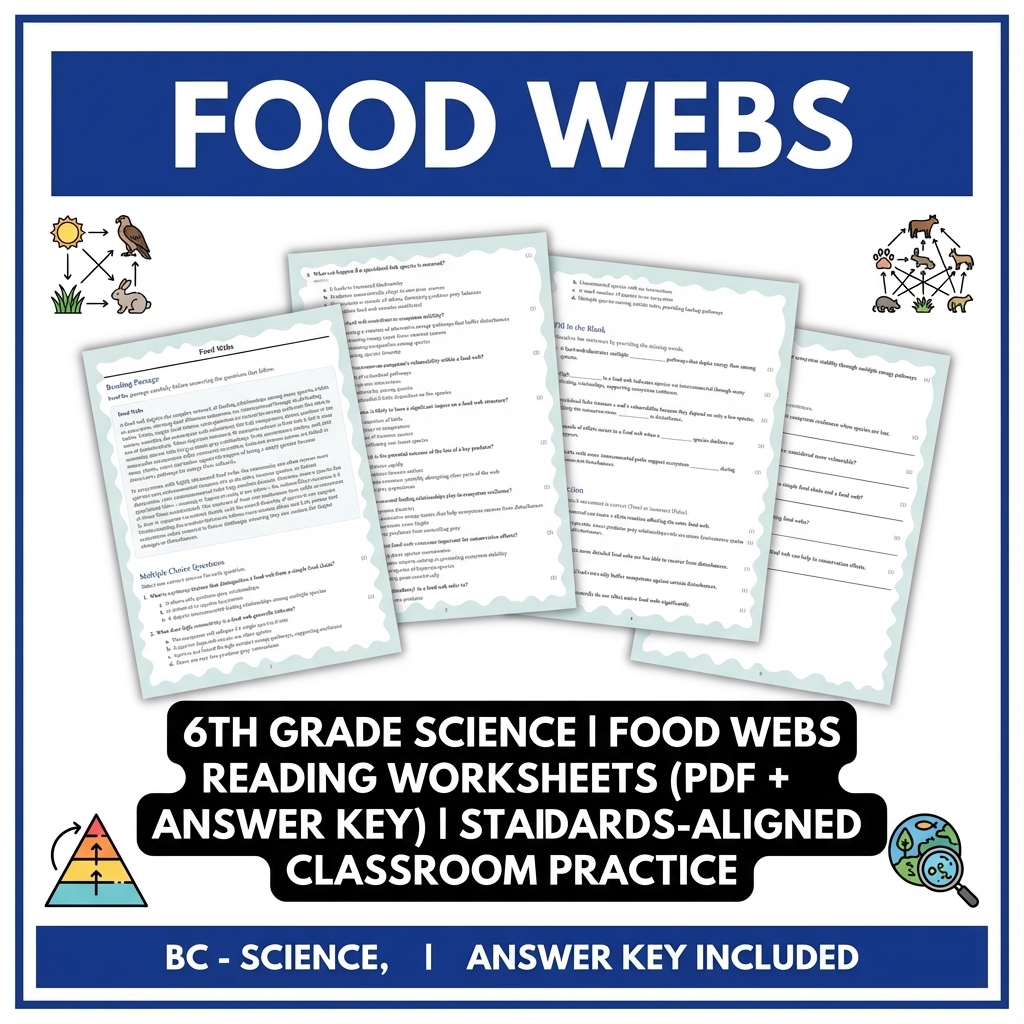
6th Grade Science | Food Webs Reading Worksheets (PDF + Answer Key)
JCreated byJ.S SheetsLearning Objectives
- Describe what a food web is and how it illustrates interconnected feeding relationships among species.
- Explain the concept of ecosystem resilience provided by food web connectivity.
- Identify effects of species decline or removal within a food web.
Instant download
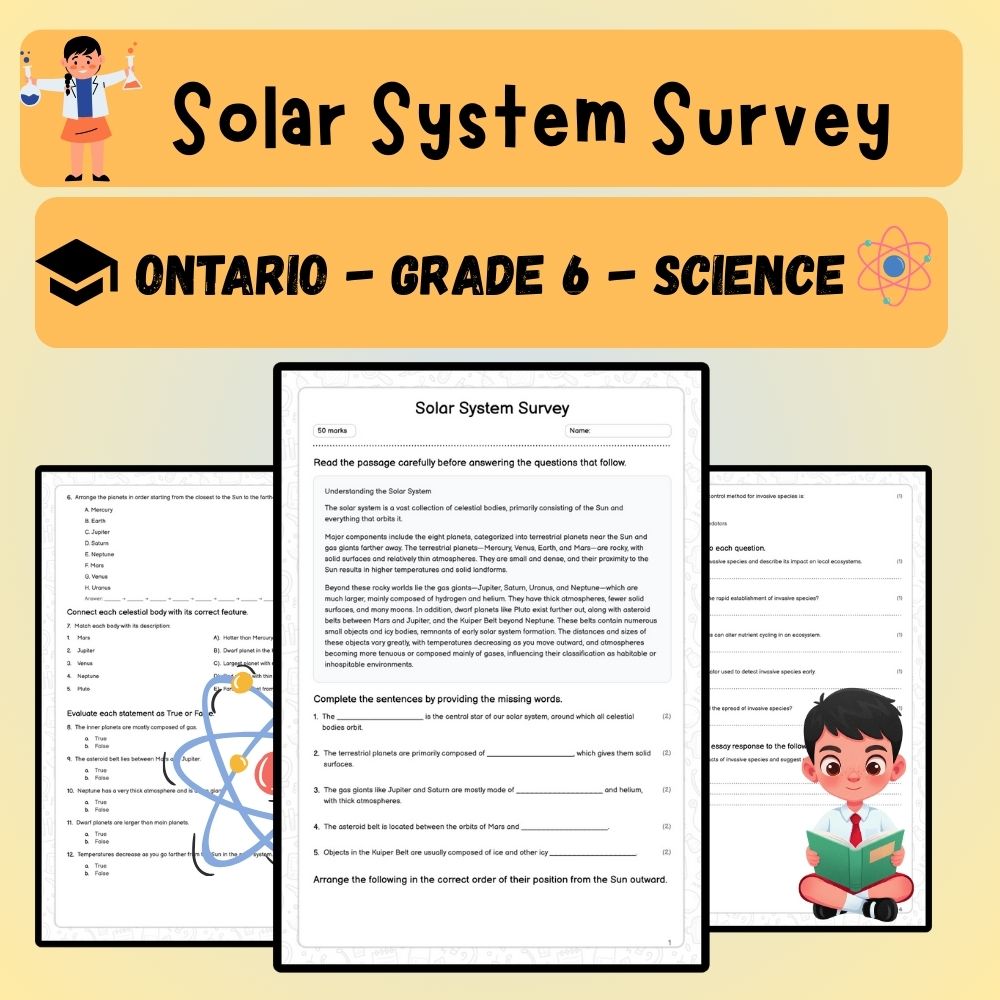
Grade 6 Science – Solar System Exploration Worksheet (PDF )
Created byPrism Point LearningLearning Objectives
- Describe the major components of the solar system, including planets, dwarf planets, and belts.
- Compare and contrast terrestrial planets with gas giants in terms of composition, size, and orbital characteristics.
- Explain the factors influencing planetary habitability, such as atmosphere, surface conditions, and energy sources.
Instant download
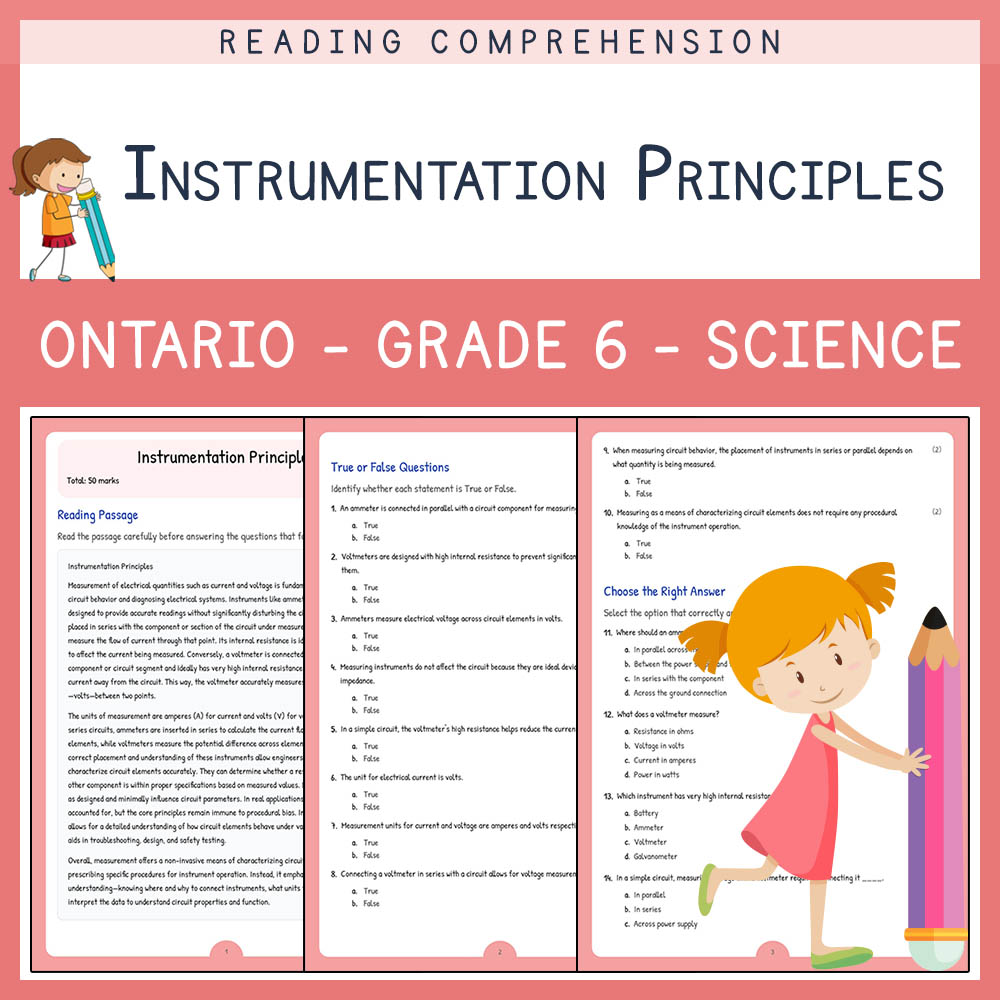
Grade 6 Science | Instrumentation Principles Worksheet & Answer Key – Ontario Standards
Created byLumora LearningLearning Objectives
- Explain the roles of ammeters and voltmeters in circuit measurements.
- Identify measurement units such as amperes and volts.
- Describe how instruments are conceptually placed in simple circuits.
Also included in: Grade 6 Science | Electricity Unit Custom Bundle | Ontario Framework
Instant download

6th Grade Science | Chromatography Basics Worksheet (PDF) for Standards BC
 Created byEvergreen Desk Education
Learning Objectives
- Explain how paper chromatography separates components using solubility and attraction to stationary and mobile phases
- Identify how solvent movement and chemical interactions affect where pigments form on chromatography paper
- Interpret and predict separation outcomes based on relative distances traveled and spot patterns
Instant download
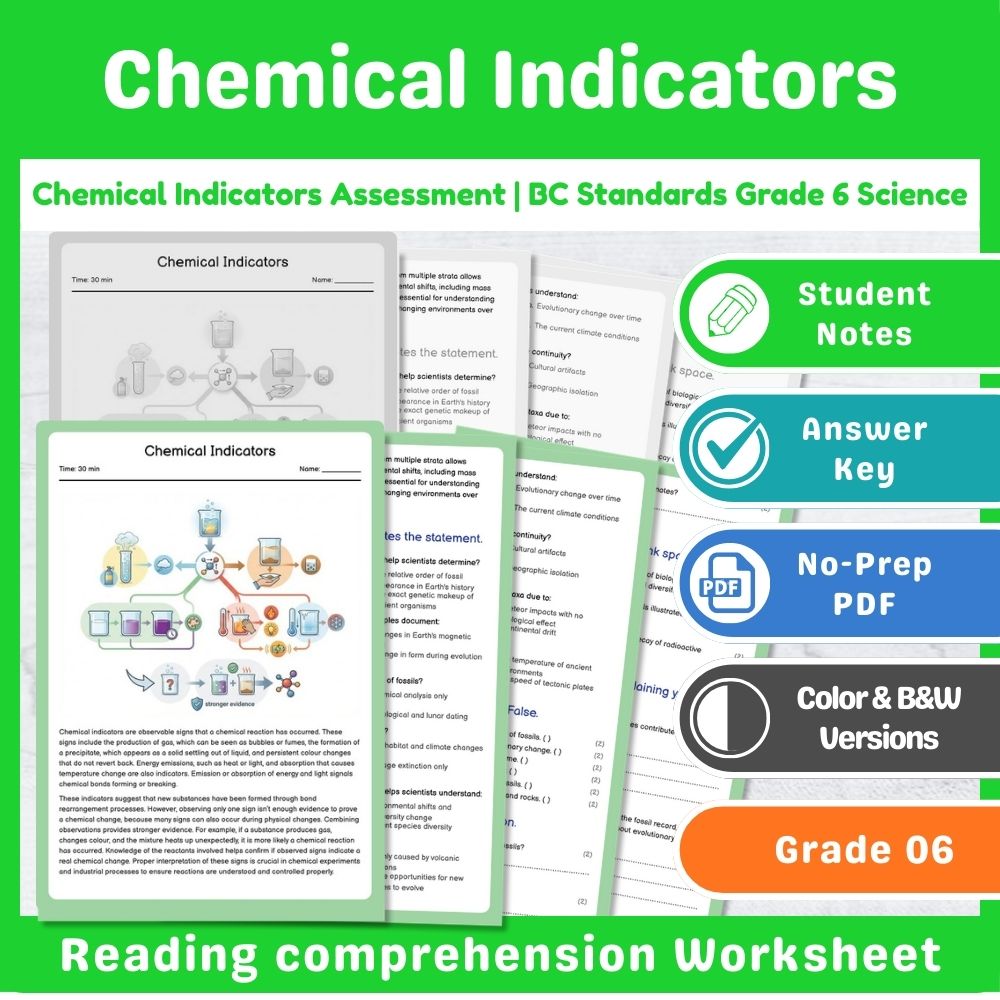
Chemical Indicators Assessment | BC Standards Grade 6 Science
Created byPrism Point LearningLearning Objectives
- Understand what chemical indicators are and identify observable signs of chemical reactions.
- Recognize different signs that suggest a chemical change has taken place.
- Explain why no single indicator definitively proves a chemical change, emphasizing the importance of combining observations.
Instant download
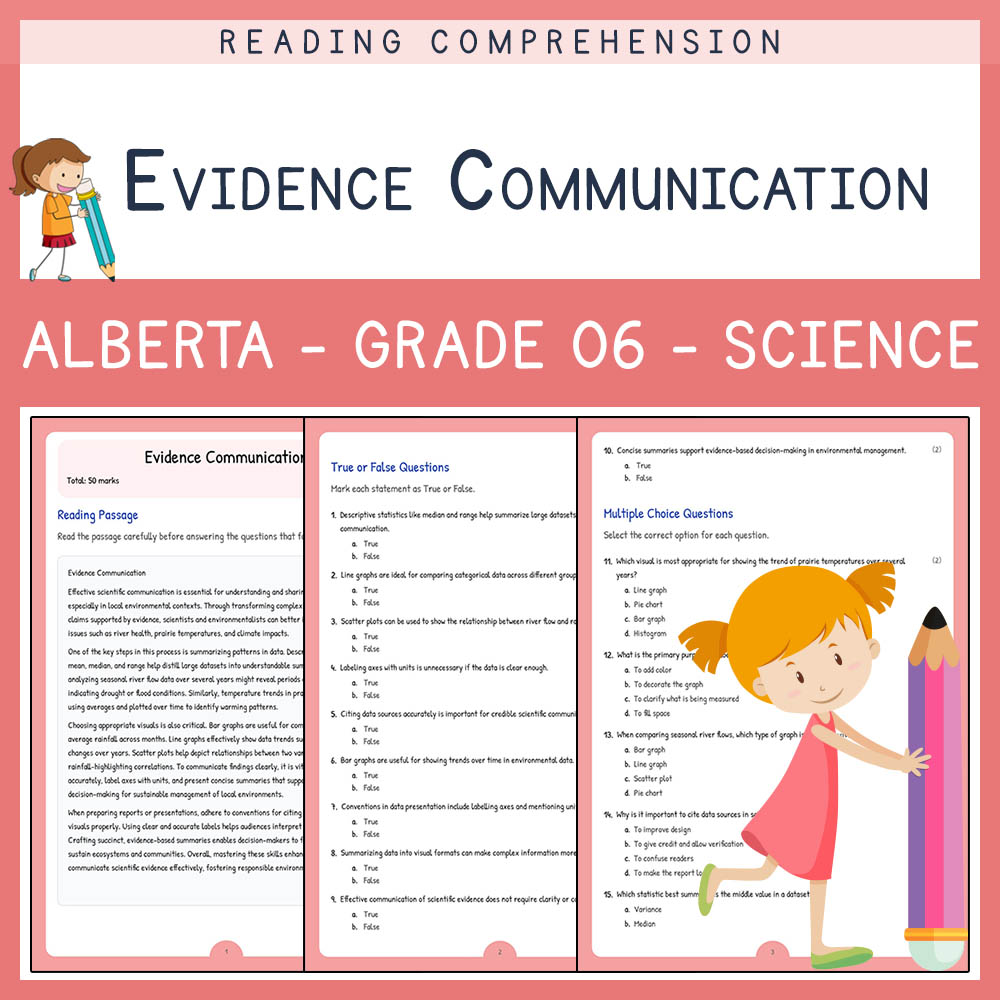
Grade 6 Science | Evidence Communication Worksheet Elena | Alberta Standards
Created byLumora LearningLearning Objectives
- Understand methods of summarizing patterns and using descriptive statistics in scientific communication.
- Identify appropriate visuals such as bar, line, and scatter plots for environmental data.
- Learn conventions for citing data sources, labeling units, and crafting concise evidence-based summaries.
Also included in: Grade 6 Science | Evidence and Investigation Custom Bundle | Alberta
Instant download

Grade 6 Forest Food Web Roles & Ecosystems Worksheet | Alberta Science
Created byBRIGHT PATH RESOURCESLearning Objectives
- Identify producers, consumers, and decomposers in a food web
- Explain how energy moves through trophic relationships
- Describe how decomposers recycle organic matter to support soil fertility
Also included in: Forest Ecosystem Adaptations Grade 6 Science Worksheets Lesson Bundle | Alberta +1 more
Instant download
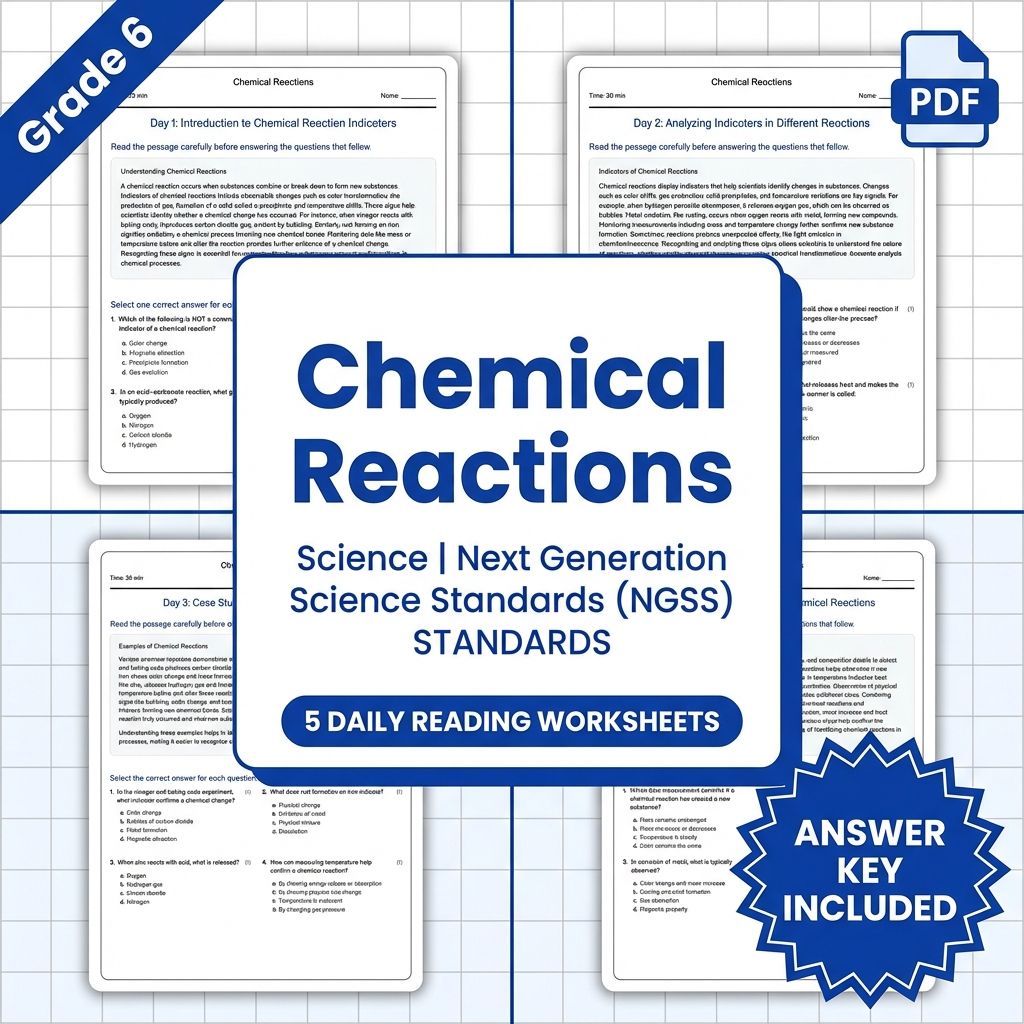
Grade 6 Science –Chemical Reaction Indicators Worksheet (PDF+ Answer Key)
Created byCopper Leaf ClassroomLearning Objectives
- Identify key indicators that suggest a chemical reaction is occurring.
- Analyze qualitative and quantitative data to determine if a new substance has formed.
- Understand classic examples such as acid–carbonate reactions and metal oxidation.
Instant download
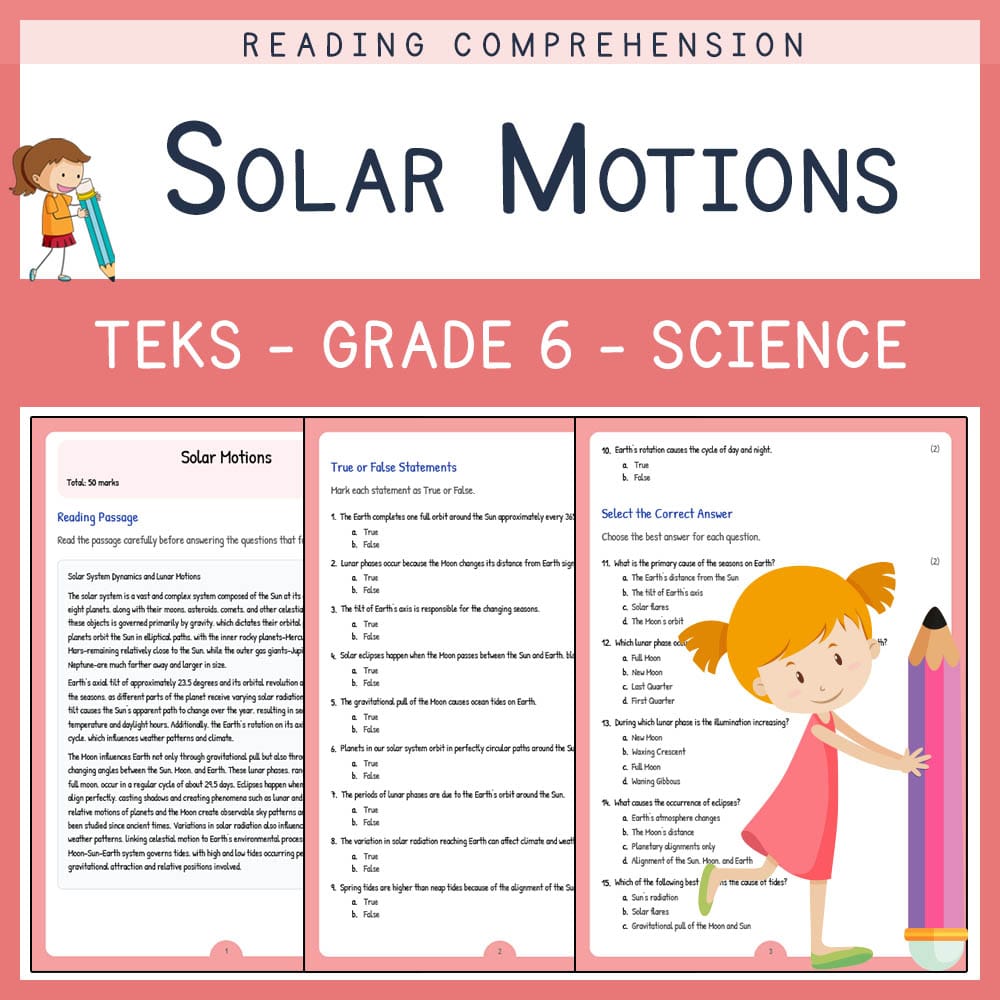
Grade 6 Science | Solar Motions Worksheet | TEKS-Aligned
Created byLumora LearningLearning Objectives
- Describe the orbital motions and gravitational interactions within the solar system.
- Explain how Earth's axial tilt and revolution cause seasonal changes.
- Identify the phases of the Moon and understand lunar cycles.
Also included in: Grade 6 Science | Earth and Space Science Unit Bundle | TEKS Standard
Instant download

Grade 6 Science – Understanding Combined Circuits | Daily Reading Worksheet
Created byBright Mind ResourcesLearning Objectives
- Identify and distinguish between series and parallel circuits.
- Understand how current and voltage distribute in combined circuits.
- Decompose complex circuits into simpler series and parallel parts for analysis.
Also included in: Grade 6 Electricity Science Daily Reading Lesson Bundle | Ontario +1 more
Instant download

Grade 6 Science | Forms of Energy Worksheet | BC Standard
Created byLumora LearningLearning Objectives
- Identify and describe different forms of energy such as kinetic, potential, thermal, chemical, and electrical.
- Understand how energy can transform from one form to another in natural and engineered systems.
- Recognize common examples of energy transformations like sunlight to chemical in plants and combustion to thermal energy.
Also included in: Grade 6 Science | Energy, Waves & Circuits | Custom Bundle | BC Aligned
Instant download

Grade 6 Science | Iterative Improvement Worksheet | General Standard
Created byLumora LearningLearning Objectives
- Explain how evaluation results guide iterative improvement in science and engineering designs
- Identify how changes can target the cause of failure while respecting constraints and trade-offs
- Use evidence from testing to justify modifications to a prototype
Instant download
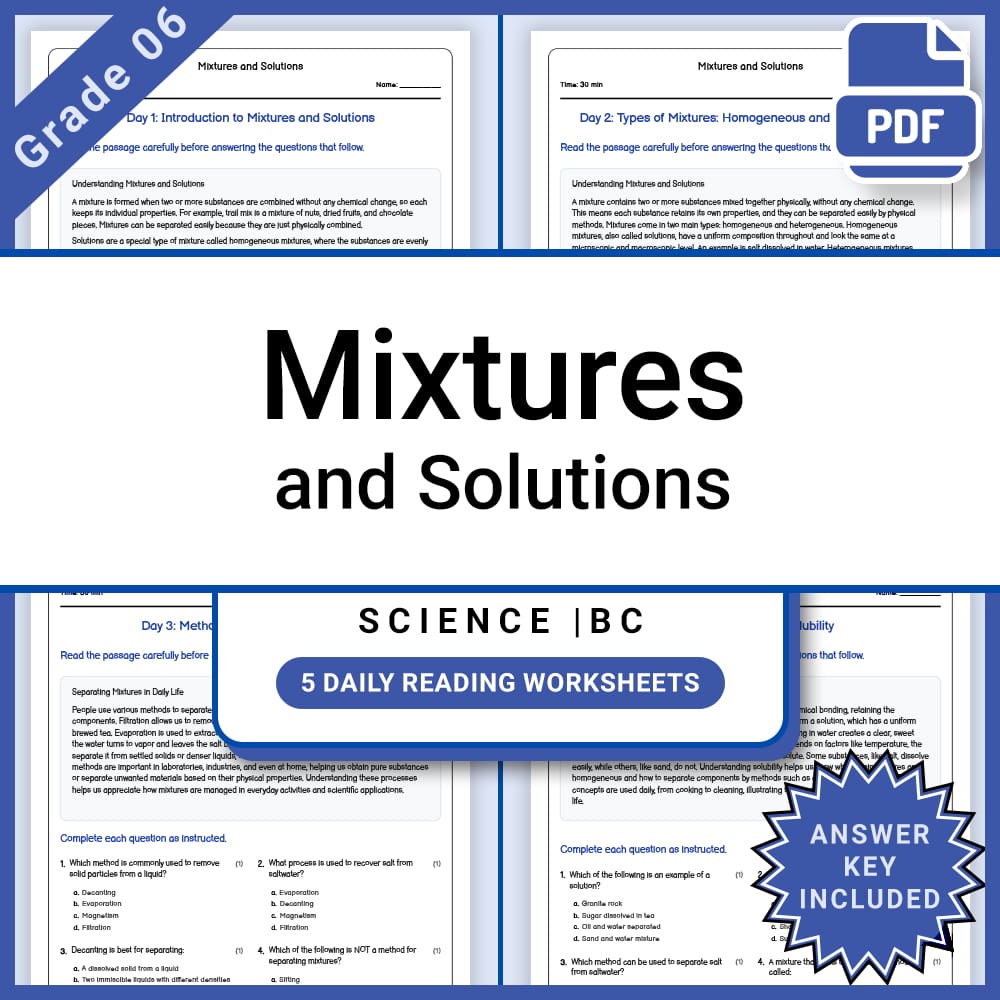
Grade 6 Science – Mixtures and Solutions Daily Reading Worksheet + Answer Key
JCreated byJ.S SheetsLearning Objectives
- Understand the difference between mixtures and solutions.
- Identify homogeneous and heterogeneous mixtures.
- Learn methods to separate components of mixtures.
Also included in: Grade 6 Science Lesson Group Bundle | Inquiry-Based Science Activities +1 more
Instant download
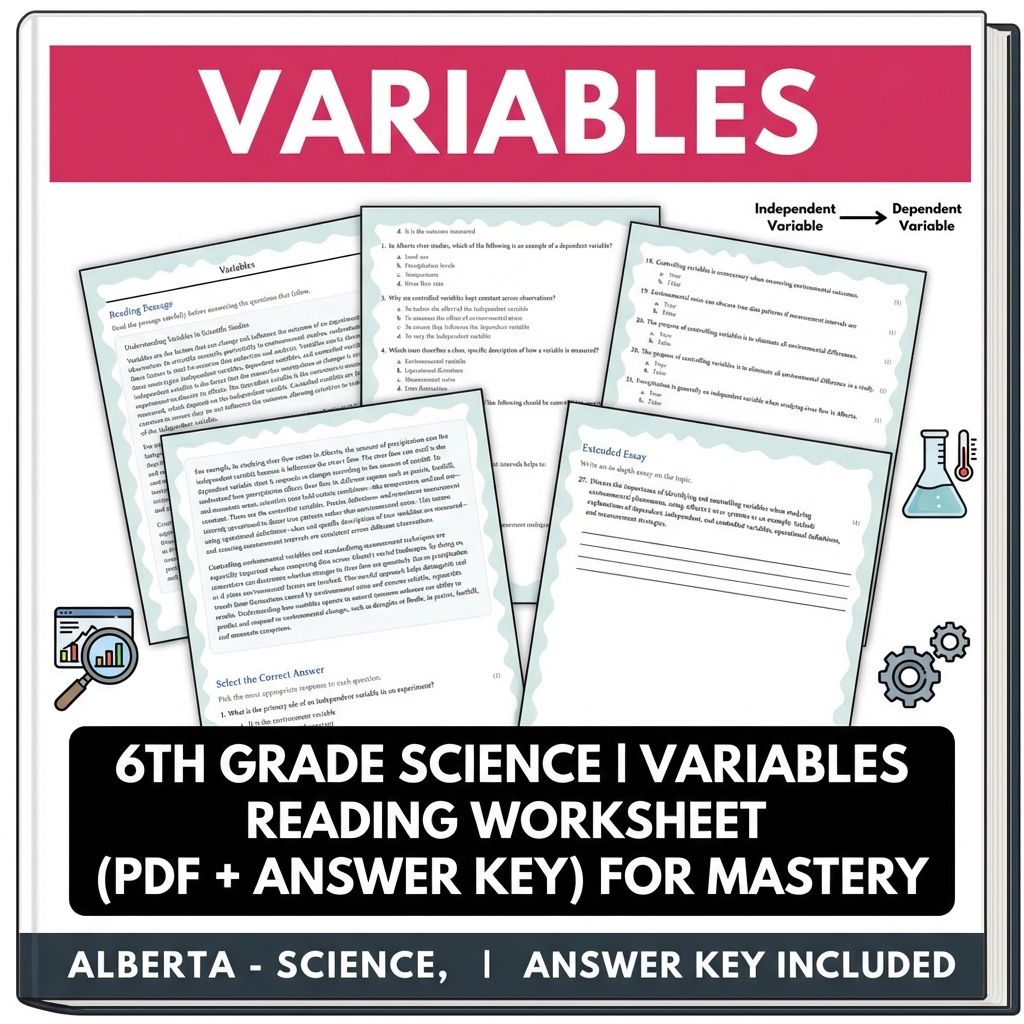
6th Grade Science | Variables Reading Worksheet (PDF + Answer Key) for Mastery
JCreated byJ.S SheetsLearning Objectives
- Define and distinguish between independent, dependent, and controlled variables.
- Explain the importance of operational definitions and measurement consistency in experiments.
- Describe how variables influence observable outcomes in natural contexts, such as Alberta ecosystems.
Also included in: Grade 6 Science Bundle – Data Analysis, Scientific Inquiry & Measurement Skills +1 more
Instant download

Conservation of Mass | MS-PS1-5 Phenomenon Lesson + CER | Grade 6
 Created byLearn Nest
Learning Objectives
- Calculate mass change from provided measurements
- Compare open and sealed trials to identify the mass pattern
- Decide whether matter entered or left the system using CER
Instant download

Energy Flow and Matter Cycling in Food Webs Worksheets Grade 6
 Created byTeachers Club
Learning Objectives
- Explain how photosynthesis and cellular respiration contribute to energy flow in food webs.
- Describe how energy decreases at each trophic level using an energy pyramid.
- Identify producers, consumers, and decomposers and explain their roles in matter cycling.
Also included in: Ecosystems Worksheets Grade 6 Science | NGSS Unit Bundle +2 more
Instant download

6th Grade Science| Water Cycle and Resources Worksheet (PDF)
Created byEvergreen Desk EducationLearning Objectives
- Explain how evaporation, precipitation, and runoff move water through the water cycle.
- Describe how infiltration and groundwater recharge help store freshwater over time.
- Analyze how land cover and temperature affect streamflow and local humidity.
Also included in: 6th Grade Earth & Climate Science Lesson Bundle – General Framework +1 more
Instant download

6th Grade Science Tools Safety Worksheet – Alberta Standards (Worksheet + Answer Key)
Created byEvergreen Desk EducationLearning Objectives
- Identify safe choices for using common field measurement tools (thermometers, pH probes, handheld anemometers, and electronic dataloggers).
- Describe proper handling, storage, cleaning, and battery management to prevent equipment damage and incorrect data.
- Explain how to reduce contamination of samples and protect people when working near wetlands or river edges.
Instant download
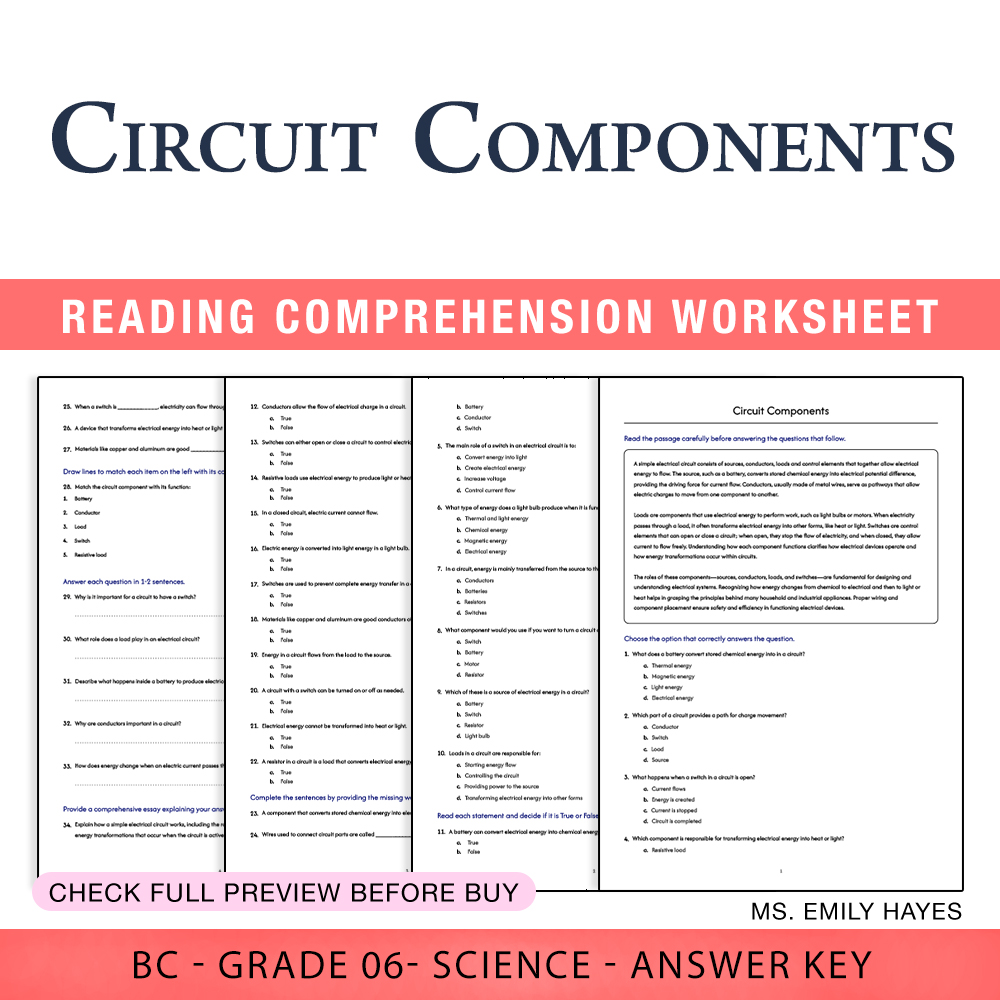
6th Grade Science | Circuit Components Worksheet (PDF+ Answer Key)
Created byCopper Leaf ClassroomLearning Objectives
- Describe the roles of key components in a simple electrical circuit.
- Explain how energy is transformed within electrical devices and circuits.
- Identify different circuit components and their functions.
Also included in: Grade 6 Science BC | Waves, Sound, Light & Energy Worksheets (PDF + Answer Key) +1 more
Instant download
About Grade 6 Science Worksheets
Explore Grade 6 Science worksheets for classwork, homework, or review. Our 5,997 printables download instantly as PDFs.
MyTeachingSheets worksheets are made by real teacher-authors and checked before they go live. Download any as a print-ready PDF for lessons, homework, or independent practice — most include answer keys, and previews are always free.