
Grade 6 Science Worksheets
5,997 worksheets
Grade 6 Optimization Tradeoffs in Aircraft Design Science Worksheet Ontario
 Created byTeacher's Corner
Learning Objectives
- Explain how designers balance multiple performance goals when making changes to a configuration.
- Describe Pareto trade-offs and identify why improvements in one area can limit another.
- Use structural constraints to justify choices for stability, efficiency, and manufacturability.
Instant download
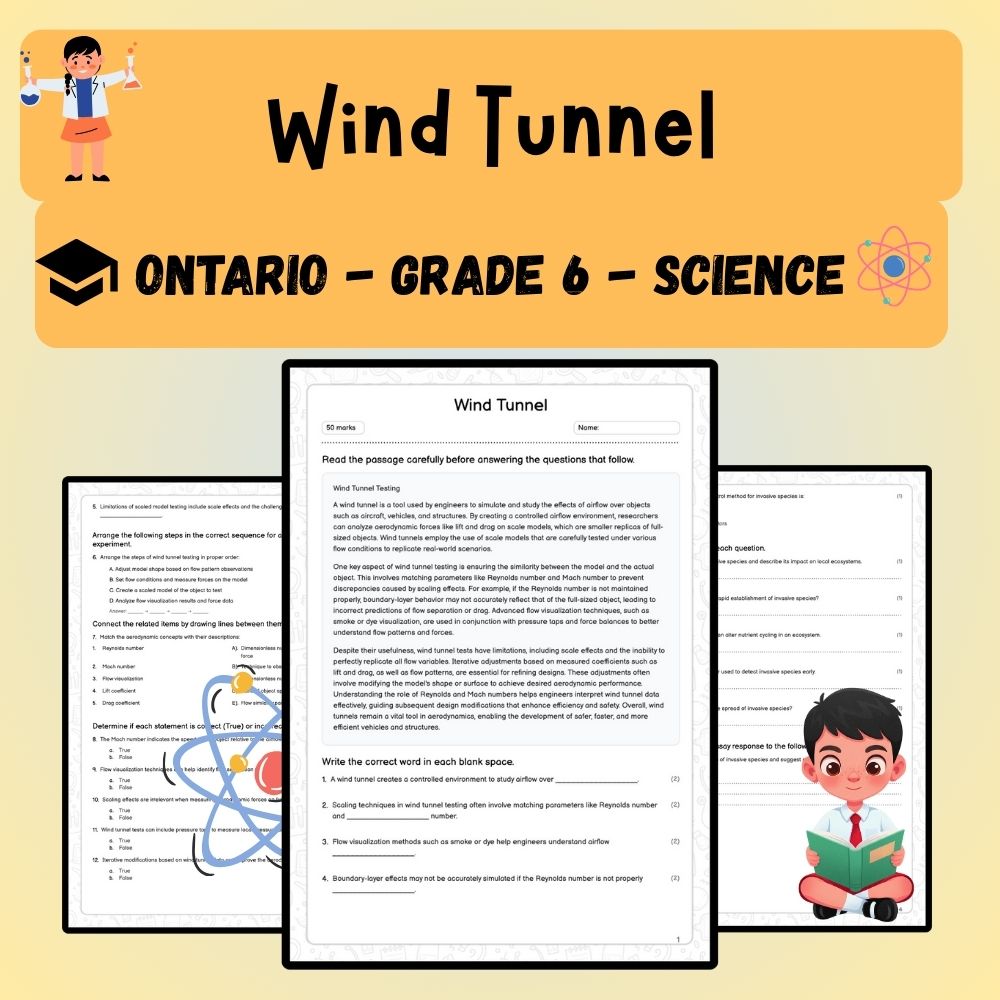
Grade 6 Science | Wind Tunnel Worksheet (PDF ) – Ontario Standards
 Created byPrism Point Learning
Learning Objectives
- Understand the purpose and methods of wind tunnel testing for aerodynamics.
- Explain how scale models are used to measure lift and drag forces.
- Identify the limitations of scaled aerodynamic testing and the importance of flow visualization techniques.
Instant download

Grade 6 Forest Management & Sustainability Worksheet | Alberta Science
 Created byBRIGHT PATH RESOURCES
Learning Objectives
- Identify the main idea of an informational text about integrated management.
- Explain how ecological, economic, and social objectives can be balanced in forest decisions.
- Use details from a passage to answer questions about stakeholder collaboration and monitoring.
Also included in: Forest Ecosystem Adaptations Grade 6 Science Worksheets Lesson Bundle | Alberta +1 more
Instant download

Choosing Materials for Performance Worksheets Grade 6 Science
Created byBRIGHT PATH RESOURCESLearning Objectives
- Match material properties to a design need such as strength, water resistance, or heat transfer.
- Explain how filtration design factors like membrane thickness and pore size affect contaminant reduction over time.
- Compare material choices using practical limits such as cost, availability, and ease of shaping.
Also included in: Grade 6 Engineering Design Worksheets | Criteria & Constraints Bundle +2 more
Instant download

Grade 6 Science | Understanding Condensation & Clouds - Daily Reading Practice
 Created byCoral Reef Learning
Learning Objectives
- Explain the process of condensation in the water cycle.
- Describe how clouds are formed from water vapor.
- Identify the importance of clouds in weather and climate.
Instant download
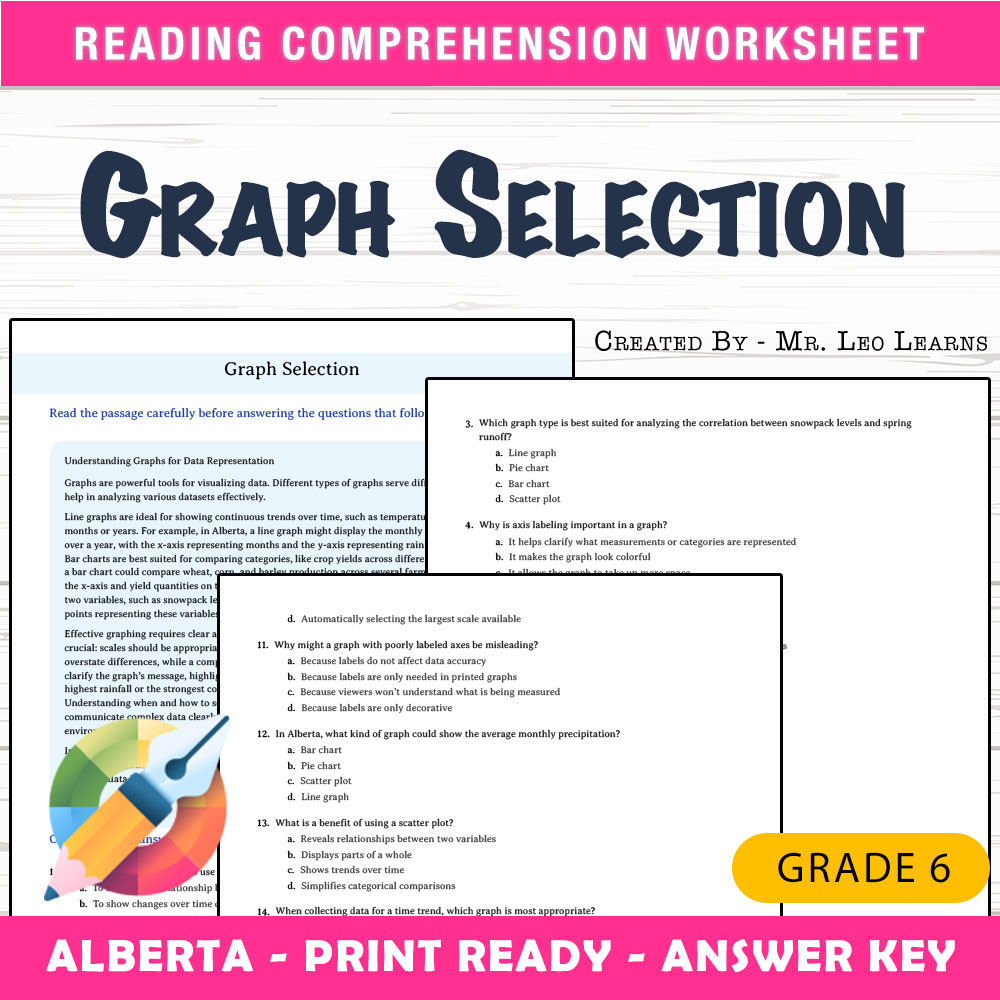
Grade 6 Science — Graph Selection Worksheet MCQ Paper for Mastery
 Created byThe Resource Hub
Learning Objectives
- Understand how to match data types to appropriate graph types.
- Identify when to use line graphs, bar charts, and scatter plots.
- Learn to label axes clearly and choose scales that accurately represent data.
Also included in: Grade 6 Science Unit | Evidence and Investigation Worksheets – Alberta Framework +1 more
Instant download
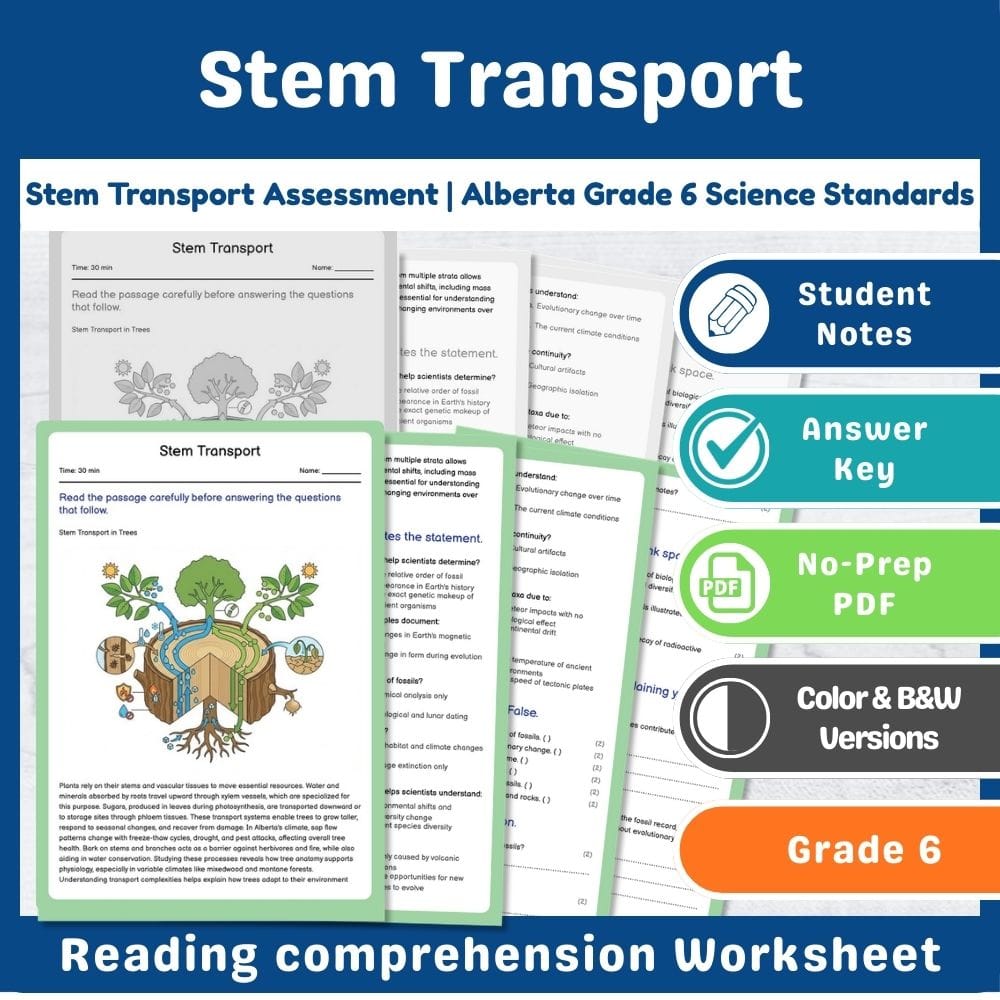
Stem Transport Assessment | Alberta Grade 6 Science Standards
Created byPrism Point LearningLearning Objectives
- Describe how stems and vascular tissues transport water, minerals, and sugars in plants.
- Explain the roles of xylem and phloem in long-distance resource movement.
- Understand how environmental conditions like freeze–thaw cycles and drought affect sap flow patterns.
Also included in: Lesson Grade 6 Science Mini Bundle Trees and Forests Alberta Standards
Instant download

Grade 6 Physical vs Chemical Worksheet | NGSS Practice & PDF
 Created byClear Sky Classroom
Learning Objectives
- Distinguish between physical changes and chemical changes by identifying evidence of new substances.
- Classify common matter changes using observable clues such as gas formation, color change, and permanence.
- Use accurate science vocabulary (substance, state, reaction, evidence) to explain why a change is physical or chemical.
Instant download
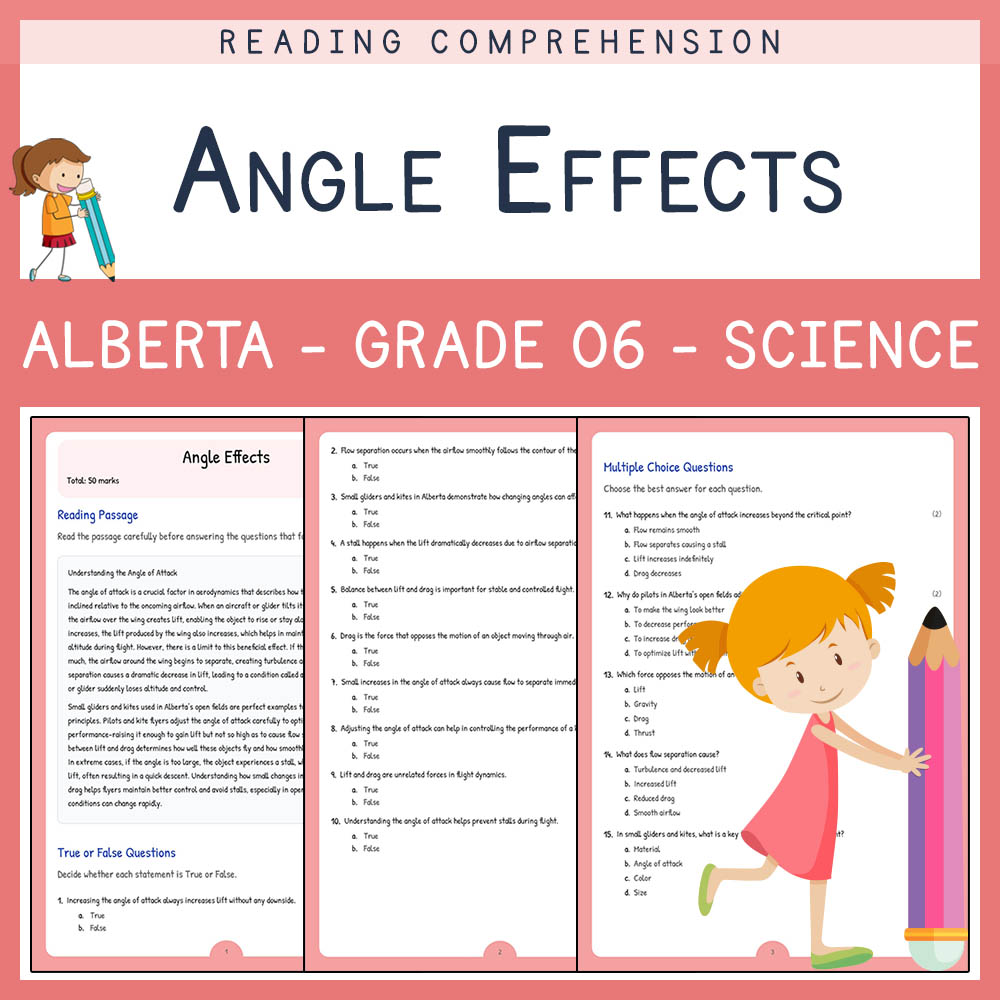
Grade 6 Science Worksheet | Angle Effects | Alberta Standard Alignment
 Created byLumora Learning
Learning Objectives
- Understand how the angle of attack influences lift and drag in flight.
- Identify the relationship between angle adjustments and performance in gliders and kites.
- Explain what happens at the critical angle of attack causing a stall.
Also included in: Grade 6 Science | Air and Aerodynamics Science Lesson Bundle | Alberta
Instant download

Forest Types and Environmental Gradients Worksheets Grade 6 Science
 Created bySunny Desk Resources
Learning Objectives
- Identify major forest types and describe typical species found in each type
- Explain how elevation, soil moisture, and fire history help determine where forest types grow
- Use evidence from a passage to answer questions about forest distribution and habitat diversity
Also included in: Trees and Forests Grade 6 Alberta Science Worksheets Bundle +1 more
Instant download

Inquiry Foundations Variables and Fair Tests Worksheet | Grade 6 Science
JCreated byJ.S SheetsLearning Objectives
- Identify independent and dependent variables in a scientific investigation.
- Define key terms using operational definitions to make measurements clear and repeatable.
- Design fair comparisons by keeping controlled variables constant.
Instant download
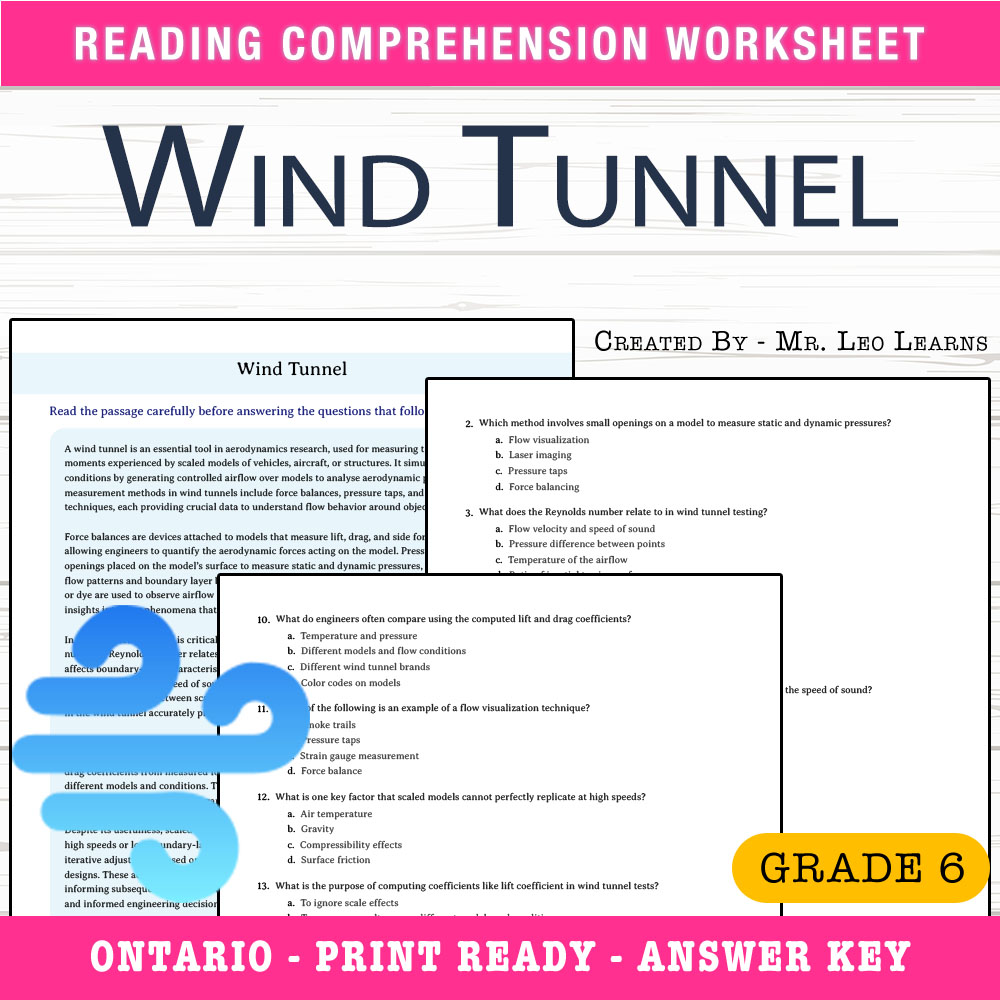
Grade 6 Science – Wind Tunnel Worksheet for Mastering Aerodynamics
Created byThe Resource HubLearning Objectives
- Understand the methods used to measure aerodynamic forces and moments on scaled models using wind tunnels.
- Identify the significance of similarity parameters such as Reynolds and Mach numbers in wind tunnel testing.
- Explain the concept of scaling effects on boundary-layer behavior and how they influence aerodynamic measurements.
Also included in: Grade 6 Science | Aerodynamics & Engineering Unit Workbook (Worksheet Pack) +1 more
Instant download
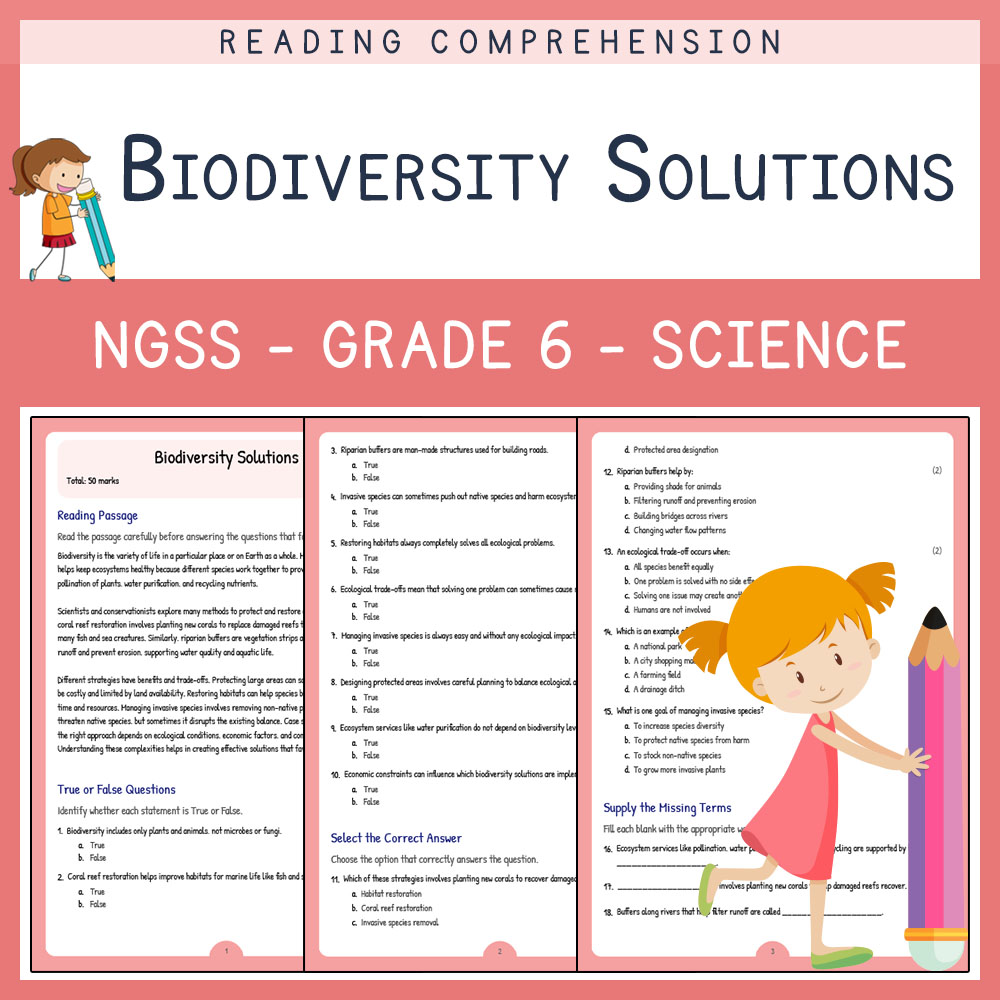
Grade 6 Science | Biodiversity Solutions Worksheet (PDF) | NGSS Aligned
Created byLumora LearningLearning Objectives
- Compare different conservation strategies for maintaining biodiversity
- Understand ecological trade-offs and feasibility of different solutions
- Analyze case studies such as coral reef restoration and riparian buffers
Instant download
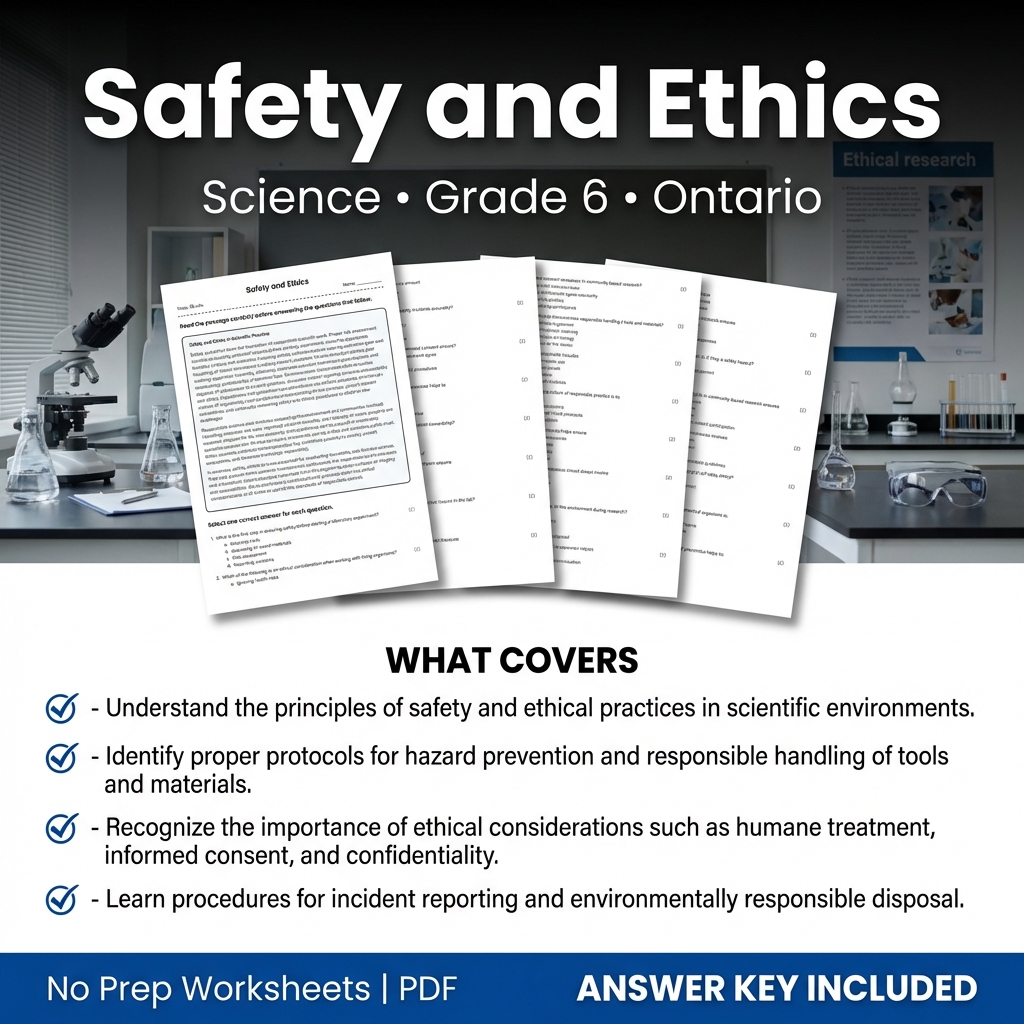
Grade 6 Science Worksheet on Safety and Ethics – Ontario Standards
Created byCoral Reef LearningLearning Objectives
- Understand the principles of safety and ethical practices in scientific environments.
- Identify proper protocols for hazard prevention and responsible handling of tools and materials.
- Recognize the importance of ethical considerations such as humane treatment, informed consent, and confidentiality.
Instant download

Series Circuit Behavior and Voltage Division Worksheets Grade 6
Created byPrism Point LearningLearning Objectives
- Describe how a single path affects current in series circuits
- Explain why current remains the same through series components
- Predict voltage sharing and bulb brightness in series circuits
Also included in: Grade 6 Electricity Lesson Bundle | Ontario Science Framework
Instant download
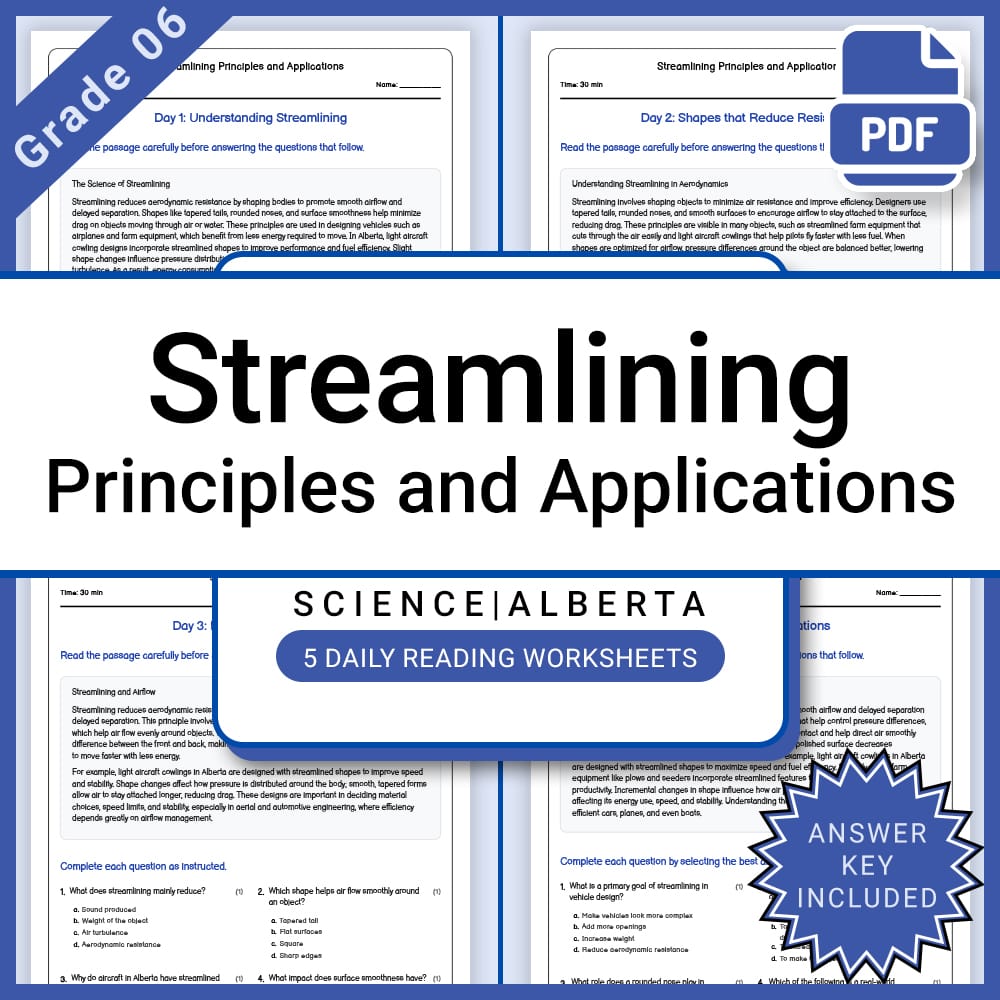
Grade 6 – Stewardship Practices in Land Care Daily Worksheet + Answer Key
JCreated byJ.S SheetsLearning Objectives
- Understand community-based planting initiatives
- Recognize different stewardship practices for land care
- Identify how local efforts benefit regional ecosystems
Also included in: Grade 6 Science Lesson Bundle – Ecosystems, Trees, and Land Management +1 more
Instant download
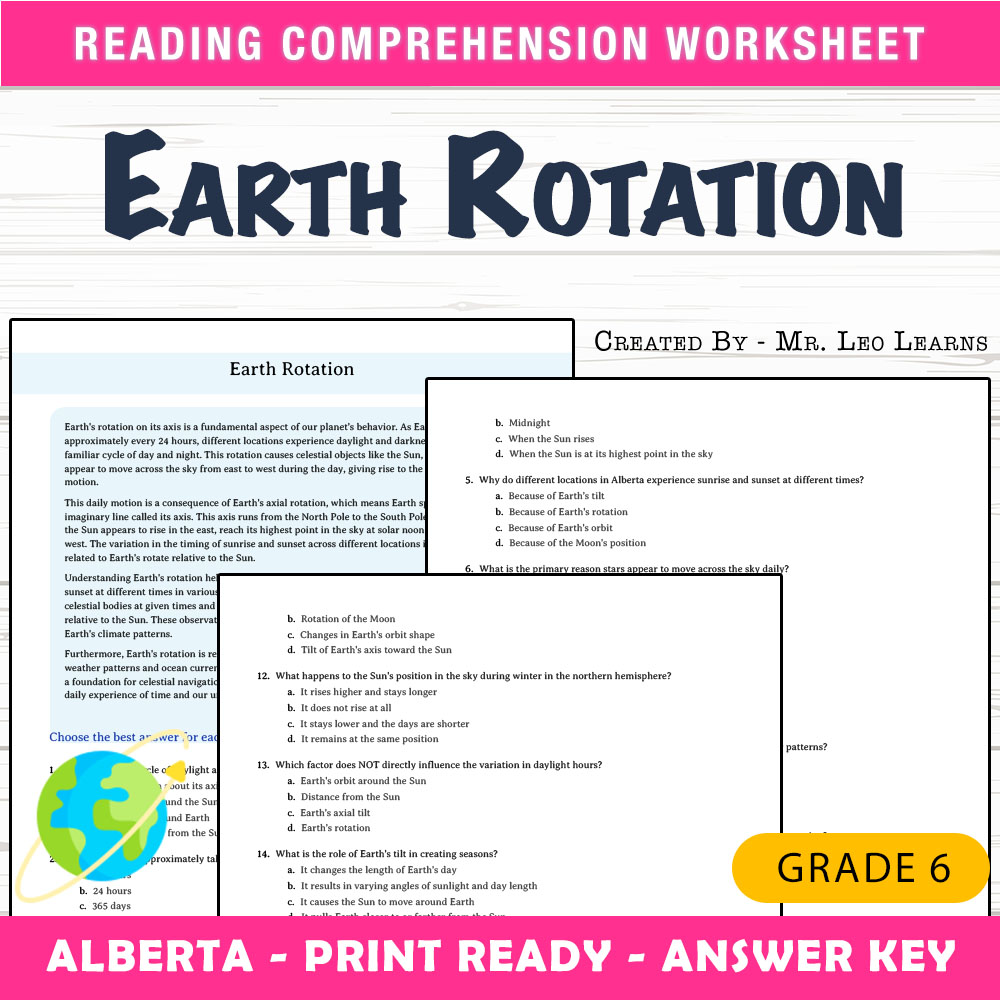
Grade 6 Science — Earth Rotation Worksheet for Mastery
Created byThe Resource HubLearning Objectives
- Understand the concept of Earth's rotation and how it causes day and night.
- Identify the sequence of sunrise, solar noon, and sunset observed across Alberta time zones.
- Explain how Earth's rotation relates to the apparent daily motion of celestial objects.
Also included in: Grade 6 Science Sky Science Unit Bundle – Celestial Motion & Earth-Sun Relations +1 more
Instant download

Adaptation and Speciation Worksheets | Grade 6 Science Evolution
 Created byTeachers Club
Learning Objectives
- Explain how adaptations can change over generations in populations.
- Describe how reproductive isolation can lead to speciation.
- Identify evidence that supports speciation using morphology, compatibility, and biogeography.
Also included in: Biological Evolution & Unity and Diversity | Grade 6 Science NGSS +2 more
Instant download

Adaptation and Speciation Worksheets | Grade 6 Evolution Practice
 Created byWorld Paper Hub
Learning Objectives
- Explain how heritable differences can become more common in a population over generations.
- Describe how geographic separation and reproductive isolation can lead to speciation.
- Identify evidence for speciation using morphology, reproductive compatibility, and biogeographic patterns.
Instant download
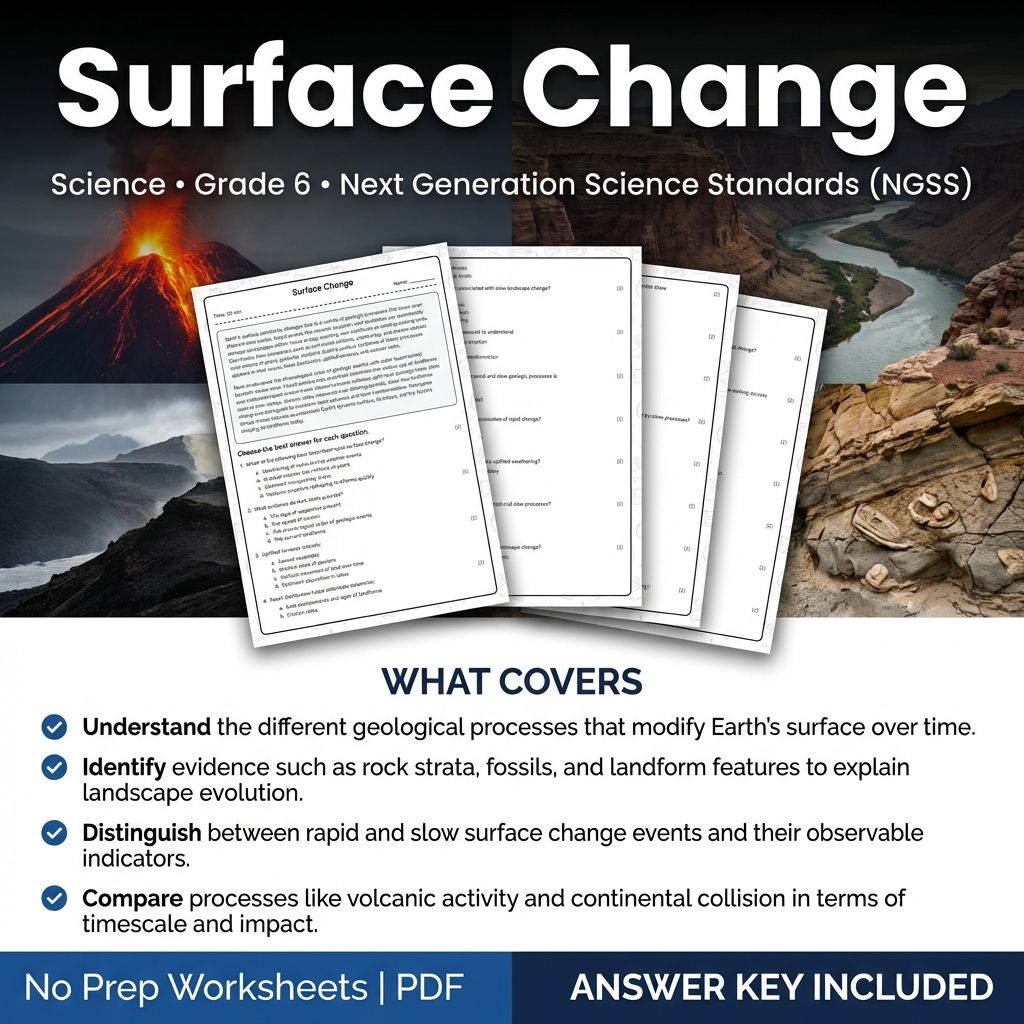
Grade 6 Science | Surface Change Worksheet & Answer Key (PDF Printable)
Created byCoral Reef LearningLearning Objectives
- Understand the different geological processes that modify Earth's surface over time.
- Identify evidence such as rock strata, fossils, and landform features to explain landscape evolution.
- Distinguish between rapid and slow surface change events and their observable indicators.
Instant download

Describing Motion Worksheets and Review | Grade 6 Physical Science
LCreated byLearnora ResourcesLearning Objectives
- Define motion as a change in position relative to a reference point
- Identify suitable reference points for describing an object's motion
- Describe an object's position using clear relative-location vocabulary
Instant download

Grade 6 Wind Tunnel Measurements & Similarity Worksheet | Ontario Science
Created byTeacher's CornerLearning Objectives
- Describe how wind tunnels measure aerodynamic forces and moments on models
- Identify key similarity parameters (Reynolds and Mach numbers) and explain why they matter
- Calculate lift and drag coefficients from measured force values
Instant download

Grade 6 Science | Understanding Groundwater & Baseflow - Daily Reading Practice
Created byCoral Reef LearningLearning Objectives
- Define groundwater and describe where it is stored within the earth.
- Explain how precipitation can recharge aquifers.
- Understand the concept of baseflow and its role in maintaining river flow during dry periods.
Instant download
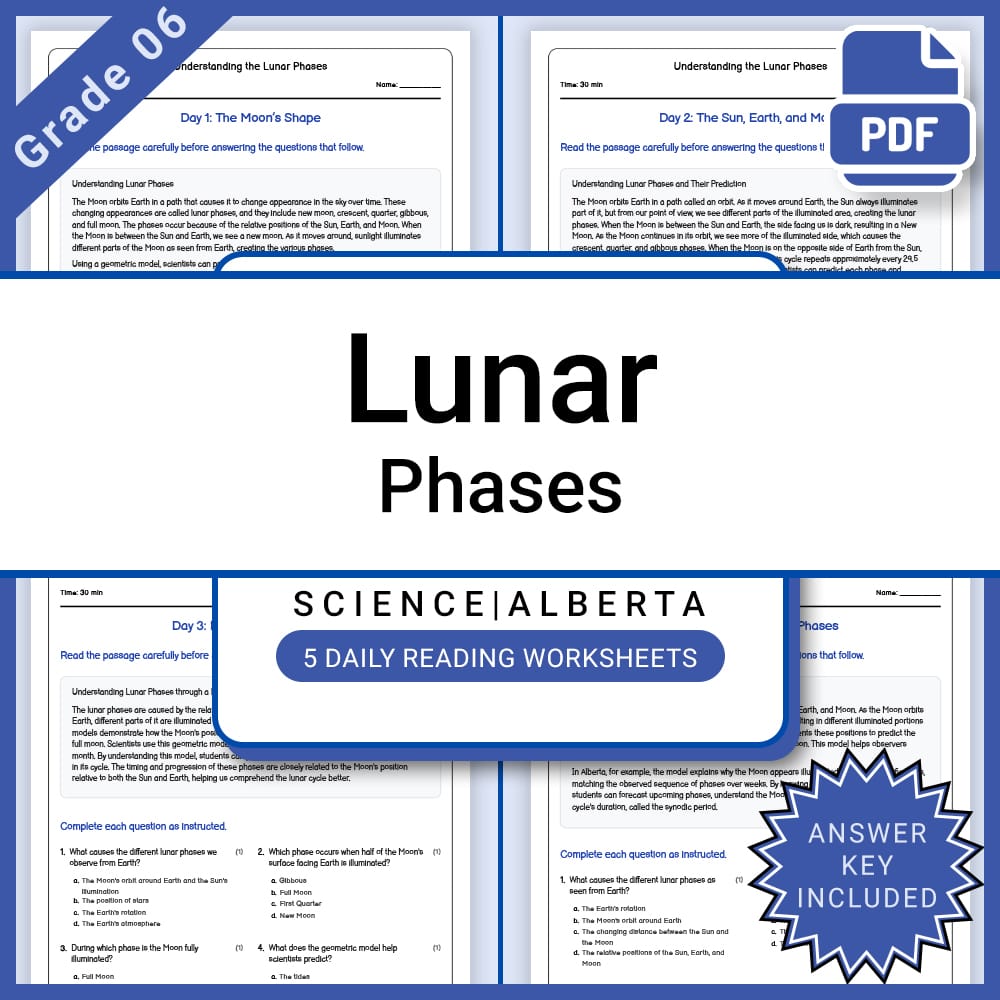
Grade 6 Science – Lunar Phases Daily Reading Worksheet + Answer Key
JCreated byJ.S SheetsLearning Objectives
- Explain the geometric model of the Moon's orbit related to lunar phases.
- Identify the sequence and timing of lunar phases using the model.
- Describe how the relative positions of the Sun, Earth, and Moon influence visible illumination.
Also included in: Grade 6 Science Lesson Group: Earth & Space Reading Worksheets Bundle +1 more
Instant download
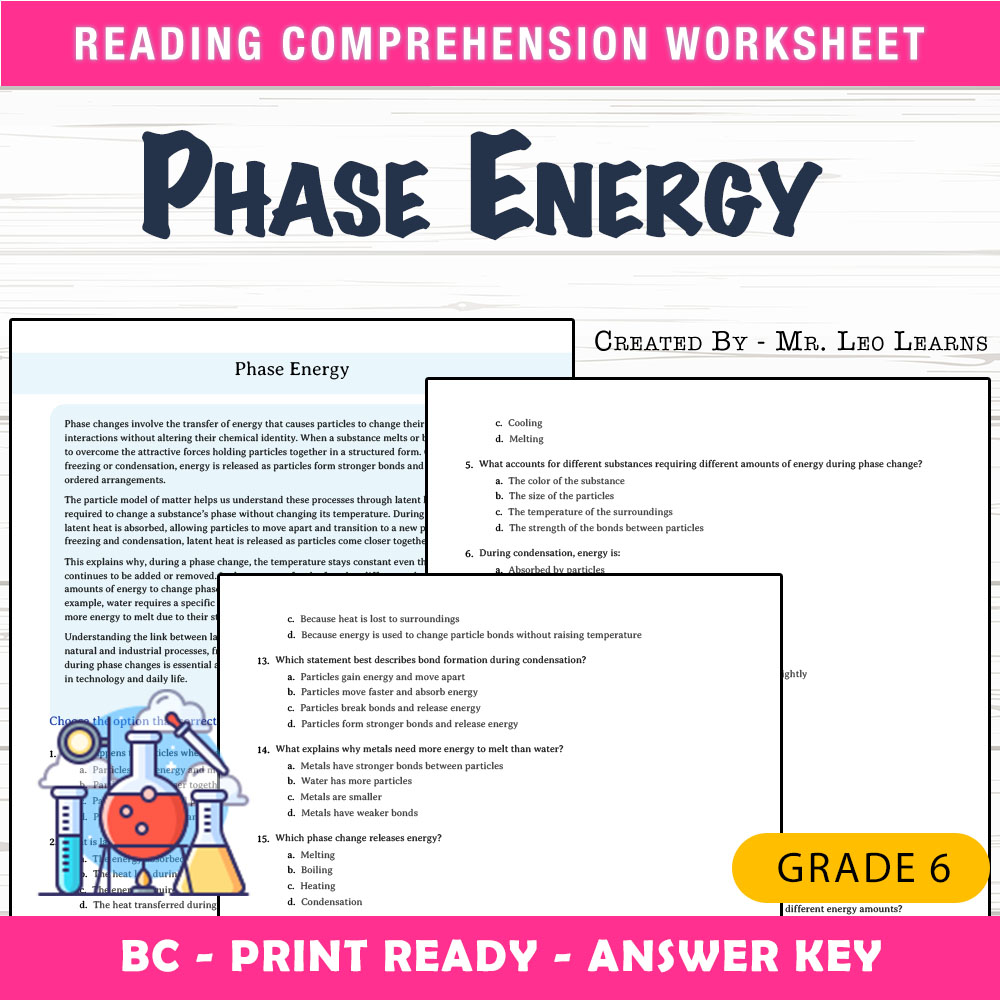
Grade 6 Science — Phase Energy Worksheet MCQ Paper for Mastery
Created byThe Resource HubLearning Objectives
- Understand how energy transfer occurs during phase changes such as melting, boiling, freezing, and condensation.
- Explain the particle model of matter in relation to latent heat and phase changes.
- Describe why temperature can plateau during phase changes despite continued energy input.
Also included in: Grade 6 Science | Matter, Properties & Change Worksheet Bundle (BC Framework) +1 more
Instant download

Systems Thinking in Design Solutions Worksheets Grade 6 Science
Created byBRIGHT PATH RESOURCESLearning Objectives
- Explain how systems have inputs, outputs, and pathways that interact to affect performance
- Identify cause-and-effect relationships between a component change and system behavior
- Use system thinking language to describe why a design may succeed or fail under real conditions
Also included in: Grade 6 Engineering Design Worksheets | Criteria & Constraints Bundle +2 more
Instant download
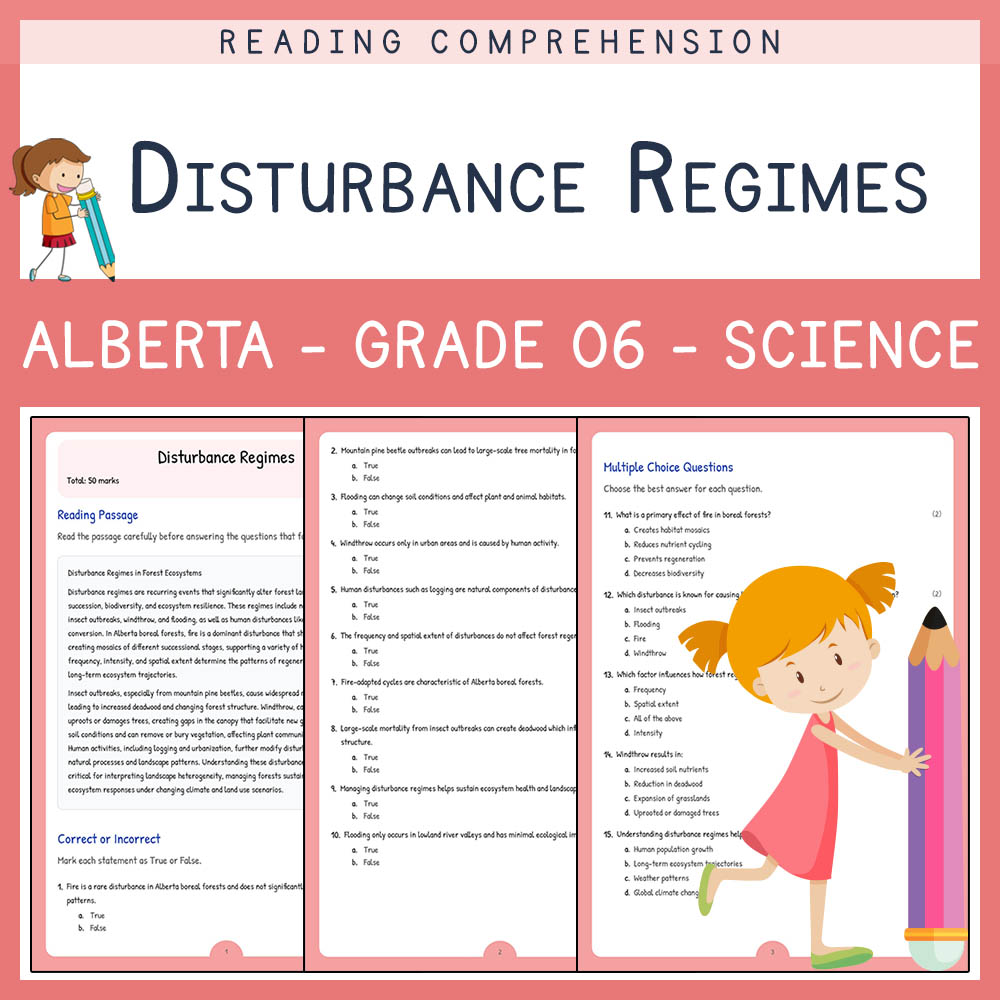
Grade 6 Science Worksheet on Disturbance Regimes | Alberta Standards
Created byLumora LearningLearning Objectives
- Explain the concept of disturbance regimes and their components.
- Identify different types of disturbance events in forest ecosystems.
- Understand how disturbance frequency and intensity influence forest succession.
Instant download

6th Grade Science Worksheet | Habitat Fragmentation BC Standards (PDF)
 Created byEvergreen Desk Education
Learning Objectives
- Explain how habitat fragmentation reduces available habitat and affects species survival
- Describe how fragmentation increases edge effects and limits movement between wildlife populations
- Identify human activities that cause fragmentation and propose mitigation strategies such as corridors
Instant download

Scientific Models Worksheets | Identify, Evaluate & Improve Models
LCreated byLearnora ResourcesLearning Objectives
- Identify scientific models and distinguish them from real systems
- Explain what scientific models represent and simplify
- Interpret information shown by diagrams and scientific models
Instant download

Wind Tunnel Worksheet | Grade 6 Science PDF | Ontario Standard
 Created byCedar Grove Learning
Learning Objectives
- Describe how wind tunnels measure aerodynamic forces such as lift and drag on scaled models.
- Explain why similarity parameters (like Reynolds number and Mach number) matter when scaling experiments.
- Identify how force balances, pressure taps, and flow visualization help interpret wind tunnel results.
Also included in: Grade 6 Aerodynamics | Flight - Science Lesson Bundle – Ontario Framework +1 more
Instant download
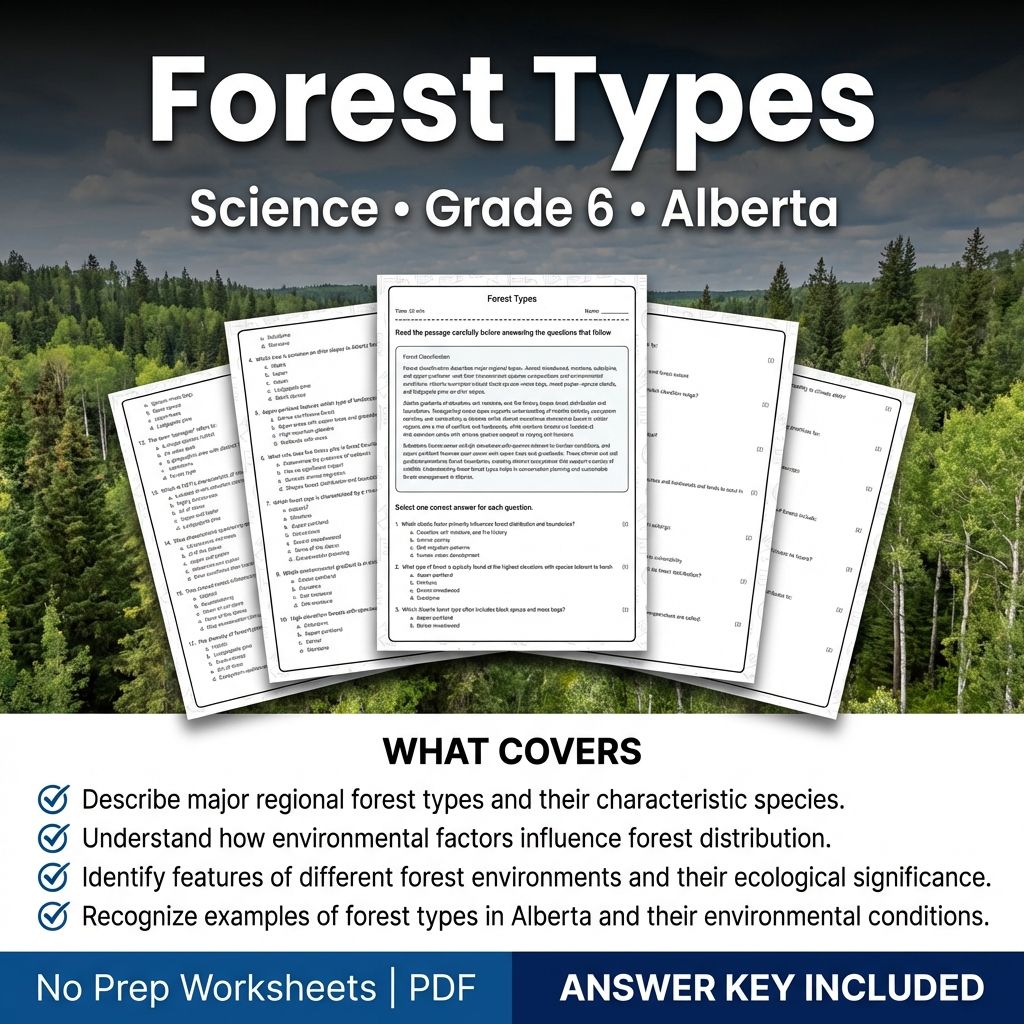
Grade 6 Science Worksheet on Forest Types | Alberta Standard Practice
Created byCoral Reef LearningLearning Objectives
- Describe major regional forest types and their characteristic species.
- Understand how environmental factors influence forest distribution.
- Identify features of different forest environments and their ecological significance.
Instant download

Biodiversity Solutions & Ecosystem Services Worksheets Grade 6
Created byTeachers ClubLearning Objectives
- Compare conservation strategies and habitat restoration approaches for maintaining biodiversity over time.
- Evaluate how protected area design and invasive species management affect ecosystem services.
- Explain ecological trade-offs and consider feasibility and economic constraints when choosing solutions.
Also included in: Ecosystems Worksheets Grade 6 Science | NGSS Unit Bundle +2 more
Instant download
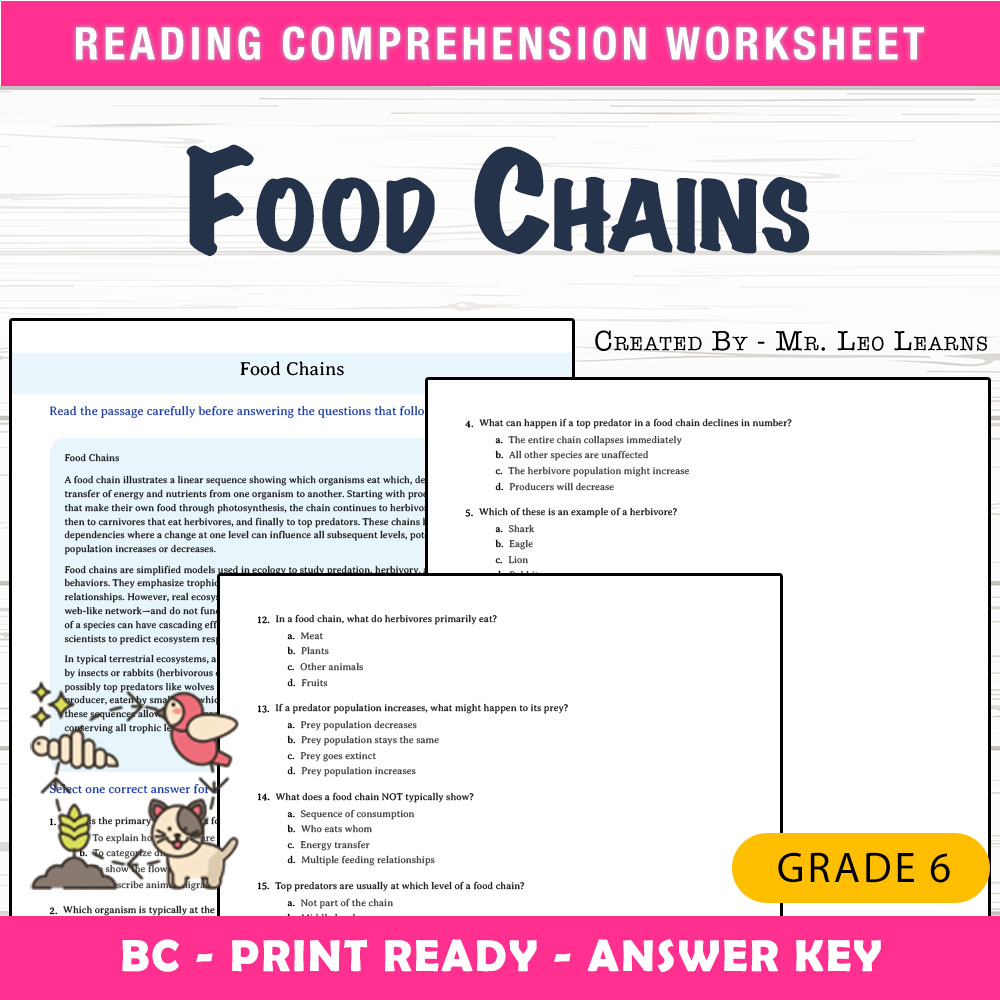
Grade 6 Science — Food Chains Worksheet MCQ Paper for Mastery
Created byThe Resource HubLearning Objectives
- Understand the concept of a food chain and how energy transfers from producers to consumers.
- Identify different trophic levels in a food chain.
- Recognize key organisms at each stage of a typical food chain.
Also included in: Grade 6 Science Ecosystems & Interdependence Worksheet Bundle – BC Curriculum +1 more
Instant download
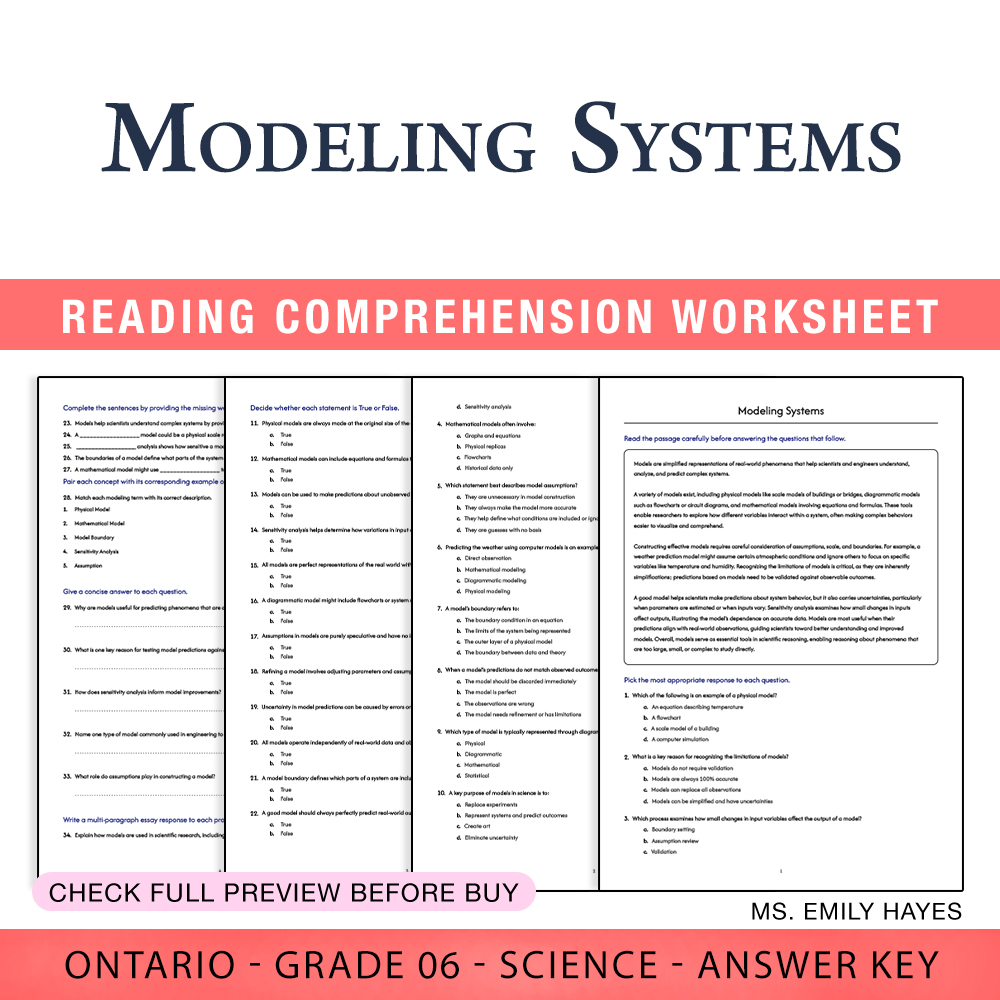
6th Grade Science | Modeling Systems Worksheet (PDF+ Answer Key)
 Created byCopper Leaf Classroom
Learning Objectives
- Understand the importance of modeling as a tool for representing complex systems.
- Identify different types of models and their purposes.
- Analyze the assumptions, boundaries, and limitations of models.
Instant download
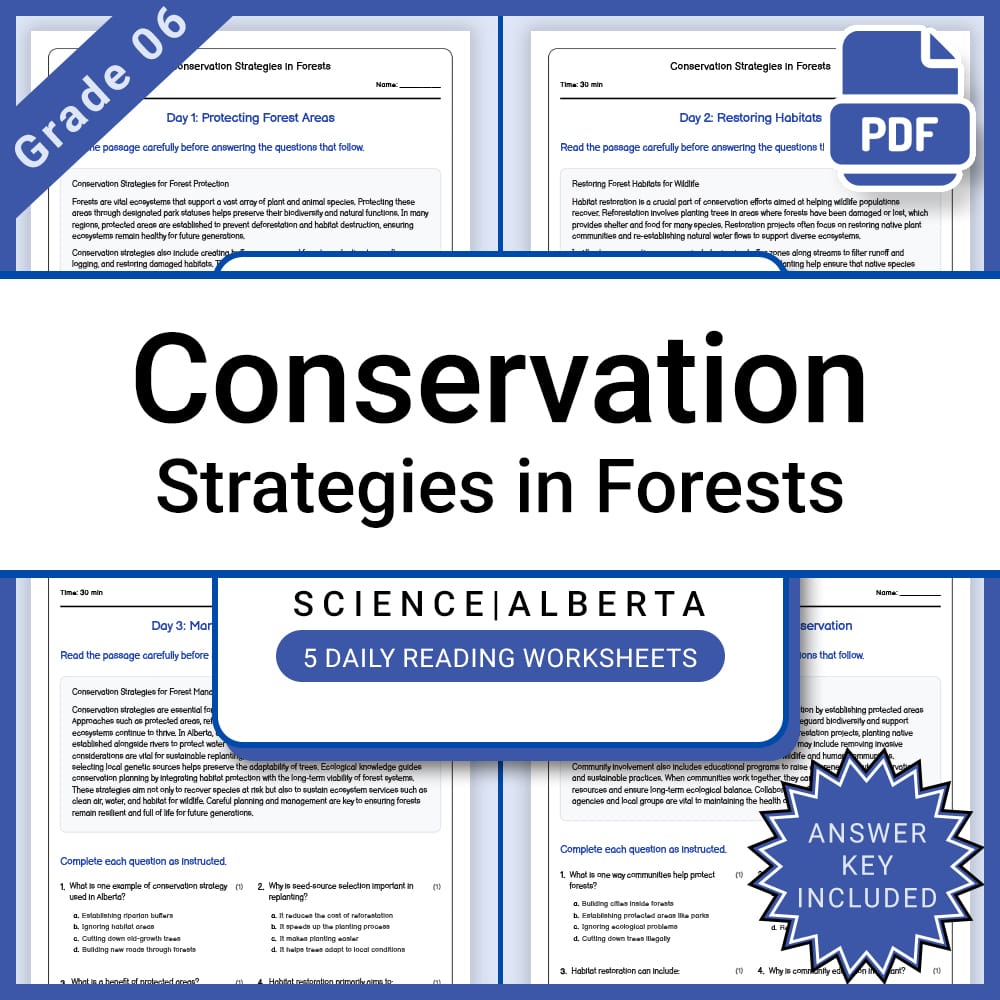
Grade 6 – Conservation Strategies in Forests | Daily Worksheet + Answer Key
JCreated byJ.S SheetsLearning Objectives
- Understand the importance of protected areas and park designations.
- Identify different conservation strategies such as reforestation and habitat restoration.
- Recognize the role of ecological knowledge in conservation planning.
Also included in: Grade 6 Science Lesson Bundle – Ecosystems, Trees, and Land Management +1 more
Instant download

Ecological Succession Worksheet | Standards-Aligned Grade 6 Science Practice
JCreated byJ.S SheetsLearning Objectives
- Understand the process and types of ecological succession.
- Identify pioneer species and their roles in succession.
- Explain how succession impacts biodiversity and community structure.
Instant download

Science Grade 6 Design Process for Aircraft and Gliders Worksheet
JCreated byJ.S SheetsLearning Objectives
- Explain the iterative design process (conceptual design, prototyping, measurement, and refinement).
- Use performance specifications and trade-offs involving lift, drag, weight, and stability.
- Describe how scaled models and computational approximations help predict aerodynamic performance.
Instant download
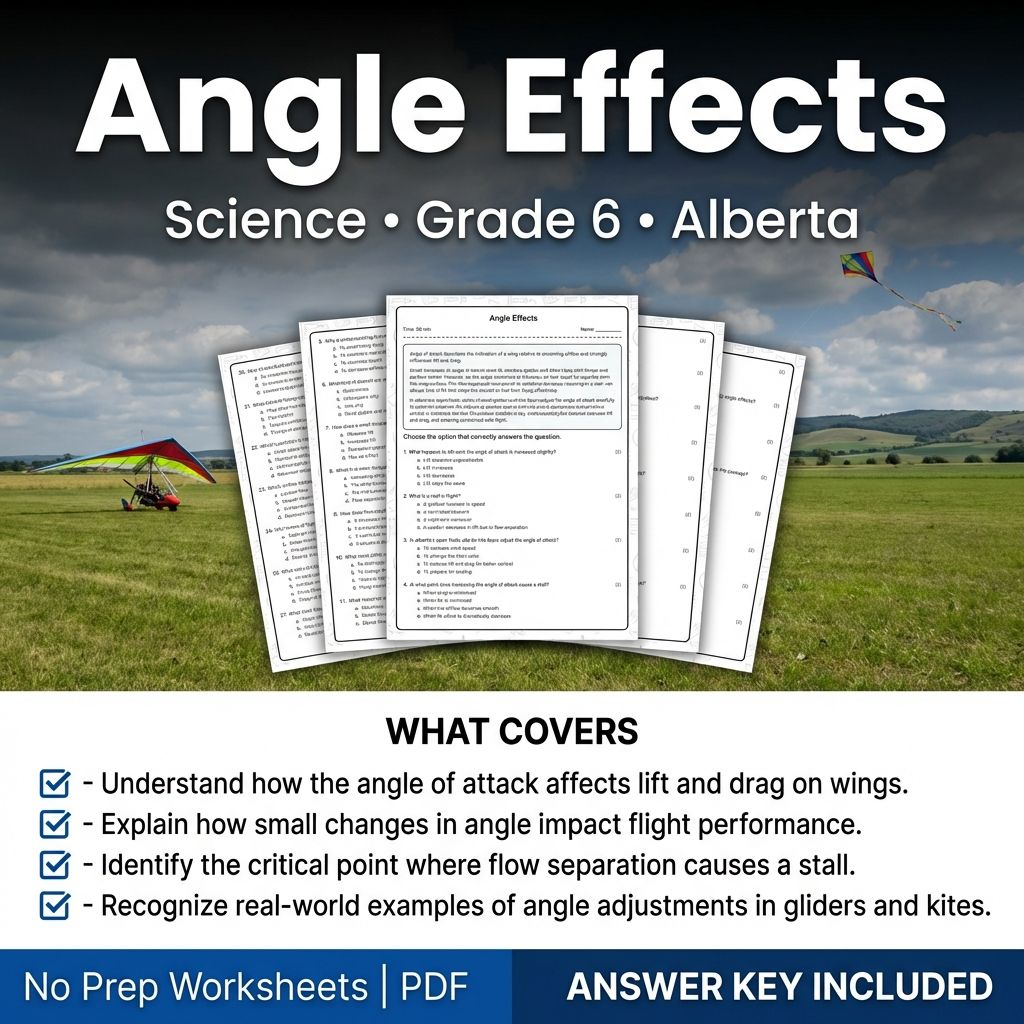
Grade 6 Science Worksheet on Angle Effects | Alberta Standards
Created byCoral Reef LearningLearning Objectives
- Understand how the angle of attack affects lift and drag on wings.
- Explain how small changes in angle impact flight performance.
- Identify the critical point where flow separation causes a stall.
Instant download
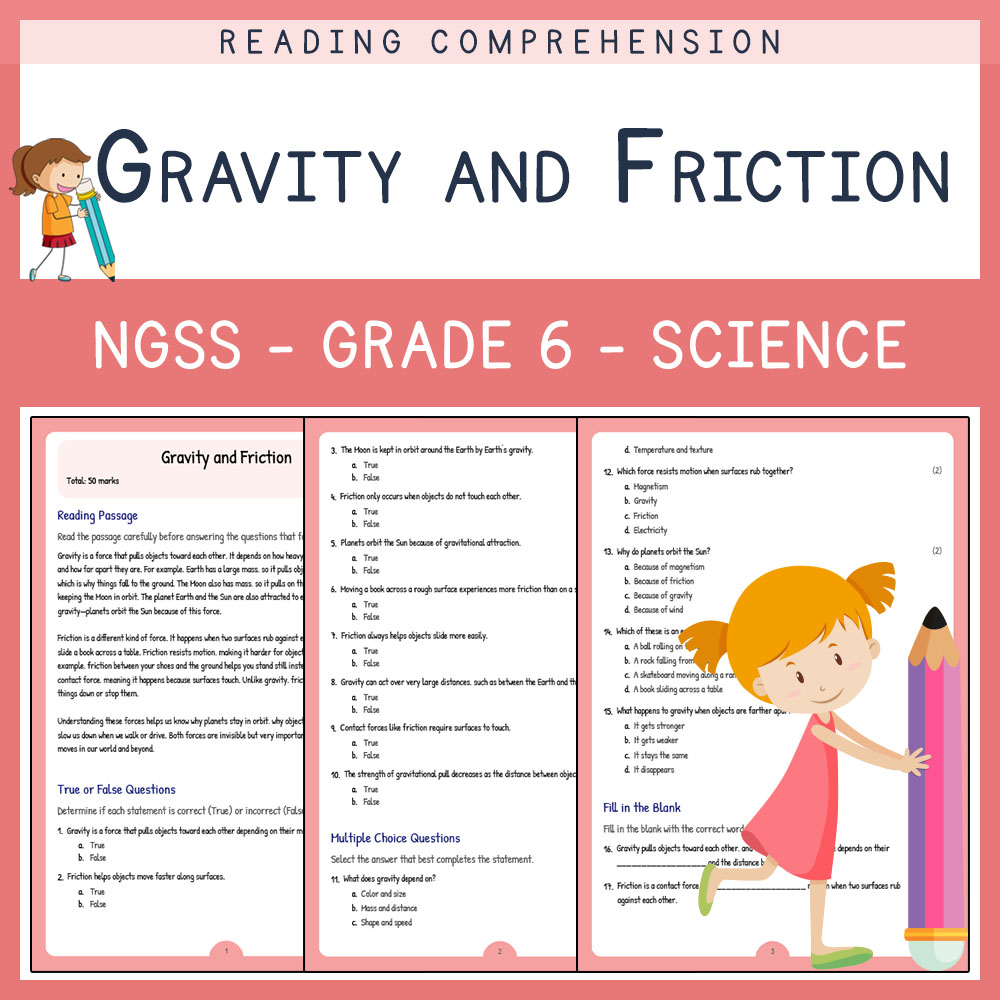
Grade 6 Science | Gravity and Friction Worksheets (PDF + Answer Key) | NGSS
Created byLumora LearningLearning Objectives
- Understand how gravity depends on mass and distance
- Differentiate between gravitational forces and contact forces like friction
- Identify examples of gravitational and frictional forces in everyday life
Instant download

Grade 6 Science | Biomass Building Worksheet Elena | California Standards
Created byLumora LearningLearning Objectives
- Explain how photosynthesis provides the matter and energy plants need to build biomass
- Describe how carbohydrates become structures like cellulose and other molecules used for living systems
- Use evidence from plant growth to connect biomass changes to continuous inputs of matter and energy
Instant download
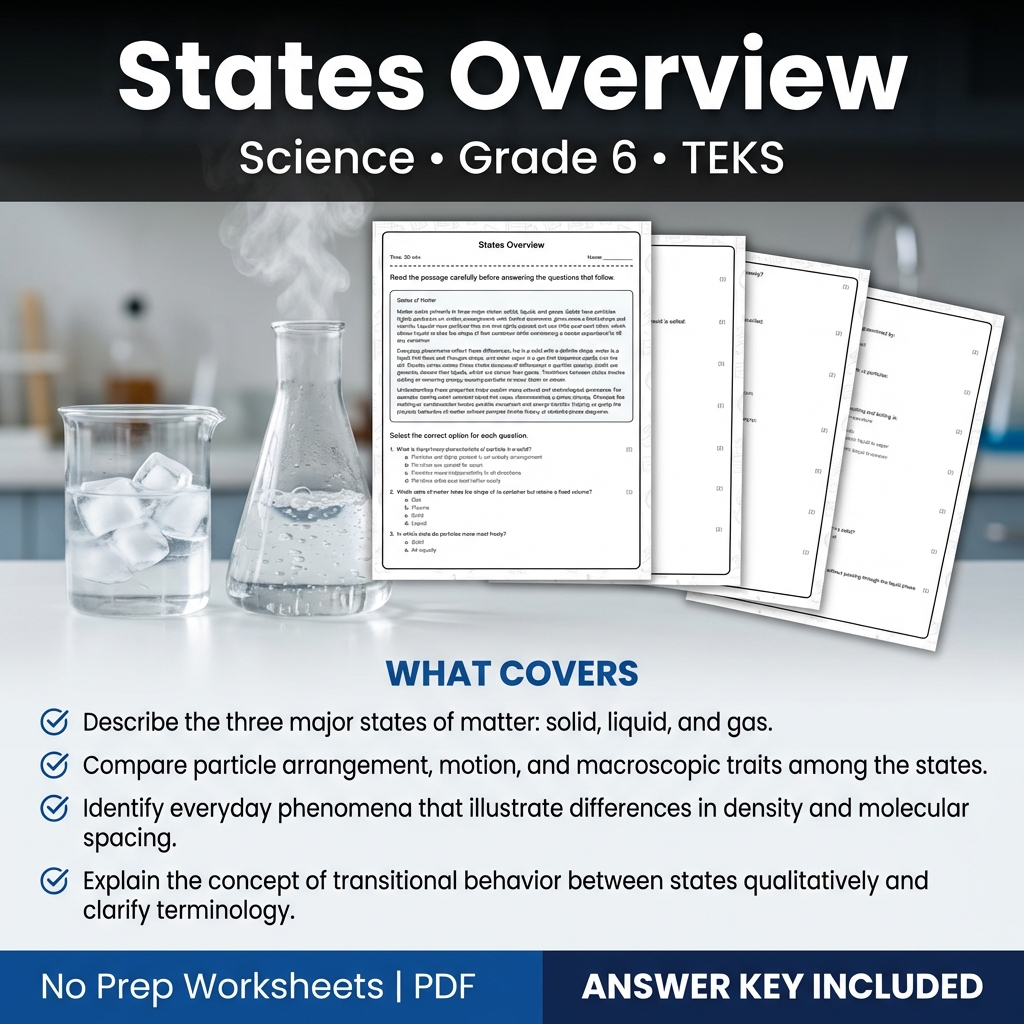
States Overview Science Worksheet Grade 6 TEKS | Printable PDF & Answer Key
Created byCoral Reef LearningLearning Objectives
- Describe the three major states of matter: solid, liquid, and gas.
- Compare particle arrangement, motion, and macroscopic traits among the states.
- Identify everyday phenomena that illustrate differences in density and molecular spacing.
Instant download

Science Grade 6 Worksheet | Circulatory Transport – Standards-Aligned Practice
JCreated byJ.S SheetsLearning Objectives
- Explain how the heart’s rhythmic pumping creates pressure that helps blood move through the body.
- Compare the functions of arteries, veins, and capillaries in transporting blood and materials.
- Describe how capillary walls enable exchange of oxygen, nutrients, and wastes between blood and body cells.
Also included in: Grade 6 Life Processes & Ecosystems Science lesson bundle: General Framework +1 more
Instant download

Grade 6 Density Properties Worksheet | NGSS Practice PDF
Created byClear Sky ClassroomLearning Objectives
- Explain how density relates mass and volume and why it is a useful property of matter
- Calculate density conceptually by comparing masses of equal volumes and predicting float/sink outcomes
- Describe how density can change when a material’s state or composition changes
Instant download
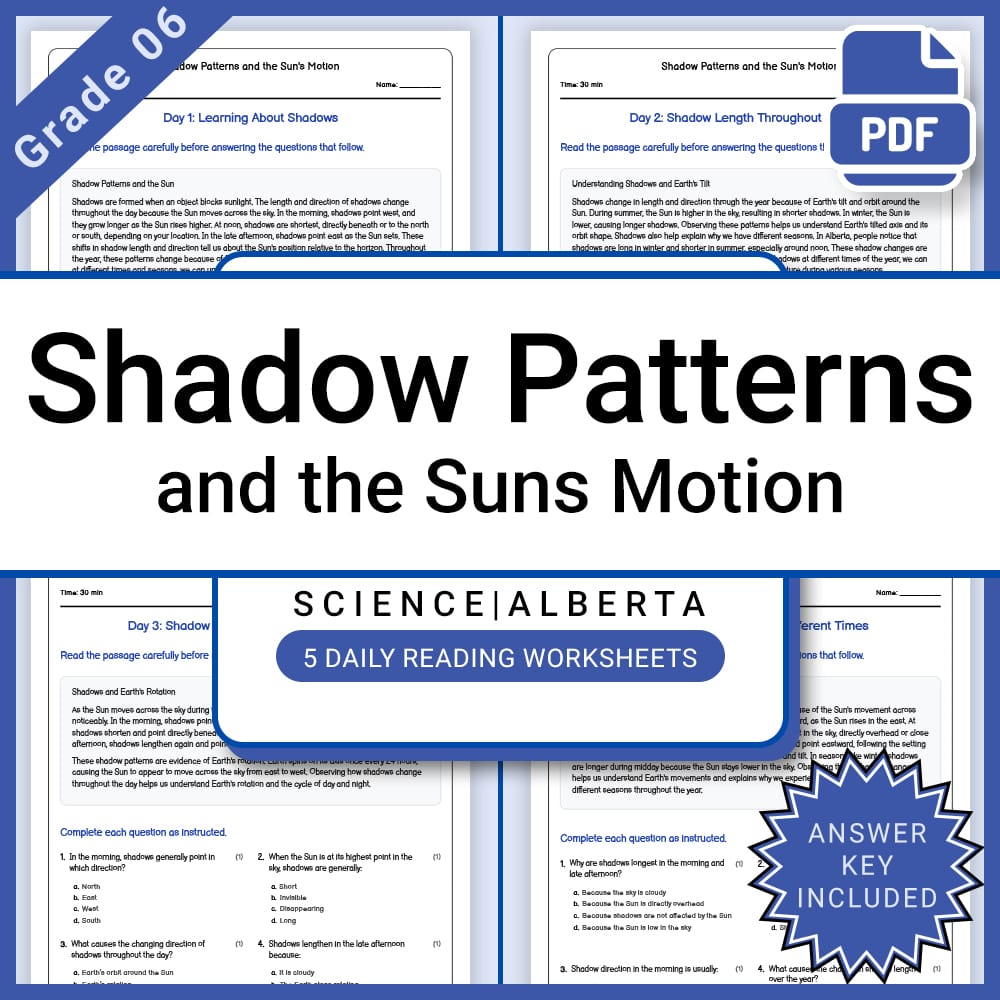
Grade 6 Science – Shadows and Sun's Motion Daily Reading Worksheet + Answer Key
JCreated byJ.S SheetsLearning Objectives
- Understand key concepts related to Science
- Apply knowledge through practice questions
- Demonstrate comprehension of the material
Also included in: Grade 6 Science Lesson Group: Earth & Space Reading Worksheets Bundle +1 more
Instant download

Grade 6 Flight Forces Worksheet | Ontario Science Activity PDF
Created byClear Sky ClassroomLearning Objectives
- Identify and describe lift, drag, thrust, and weight and how each affects motion in flight.
- Explain weight as the force of gravity and connect thrust generation to propulsion systems.
- Use equilibrium ideas to describe steady level flight when forces balance.
Instant download

Variable Control in Fair Tests Science Worksheets for Grade 6
Created byBRIGHT PATH RESOURCESLearning Objectives
- Identify the independent variable and the dependent variable in a fair test scenario.
- Explain why controls are needed to make evidence reliable.
- Match examples of variables to their roles in an investigation.
Also included in: Grade 6 Scientific Inquiry Science Worksheets Bundle | General Science +2 more
Instant download
Grade 6 Science – Optimizing Bridge Designs & Data Analysis | Daily Reading
 Created byElena Brooks
Learning Objectives
- Analyze data from different prototype tests to compare structural strength.
- Interpret graphs and averages to assess design performance.
- Discuss trade-offs involved in optimizing bridge models such as weight versus strength.
Also included in: Grade 6 Science Engineering Design Lesson Bundle | NGSS Worksheets +1 more
Instant download

Natural Hazards: Origins, Patterns, and Effects Worksheet | NGSS Grade 6 Science
 Created bySkylark Worksheets
Learning Objectives
- Explain how tectonic, atmospheric, and hydrologic processes help cause different natural hazards.
- Describe patterns of hazard frequency, intensity, and location using evidence such as historical records and data.
- Analyze cause-and-effect relationships between hazard occurrence and impacts on communities and infrastructure.
Also included in: Grade 6 Earth Systems & Human Impacts Science Lesson Bundle: NGSS Worksheets +1 more
Instant download
About Grade 6 Science Worksheets
Explore Grade 6 Science worksheets for classwork, homework, or review. Our 5,997 printables download instantly as PDFs.
MyTeachingSheets worksheets are made by real teacher-authors and checked before they go live. Download any as a print-ready PDF for lessons, homework, or independent practice — most include answer keys, and previews are always free.