Grade 7 Science Worksheets
6,039 worksheets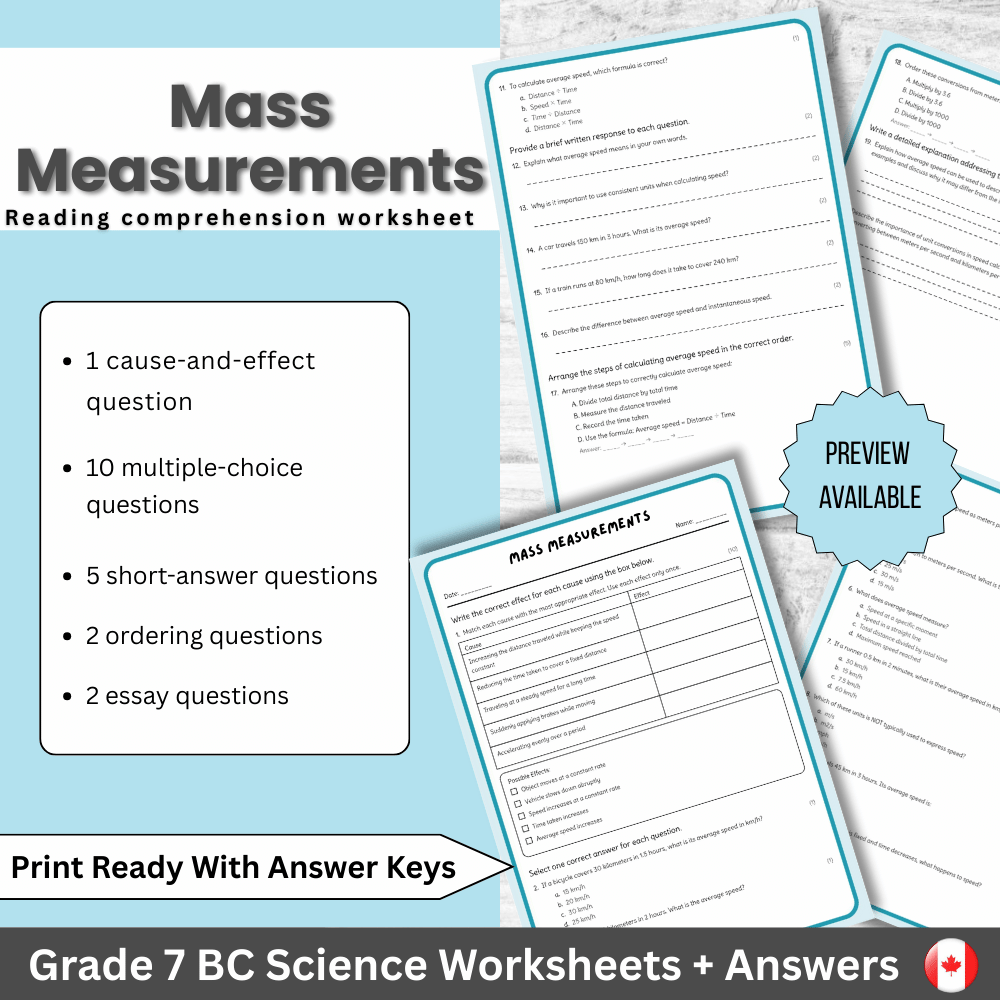
Grade 7 Science | Mass Measurements Worksheet (Answer Key) | BC Standards
 Created byBright Mind Resources
Learning Objectives
- Understand how mass measurements relate to conservation of mass during chemical processes.
- Identify factors that can affect mass measurements and how to control them.
- Describe the importance of including all phases of reactants and products in mass accounting.
Instant download

Science Grade 7 Worksheet: Predator Prey Dynamics | Standards-Aligned Practice
JCreated byJ.S SheetsLearning Objectives
- Explain how predator and prey populations influence each other through feedback over time.
- Describe how predator-prey cycles can change resources and affect other species in a community.
- Use cause-and-effect reasoning to predict outcomes when predator or prey populations increase or decrease.
Also included in: Grade 7 Ecosystem Dynamics Science Lesson Bundle Worksheets – General +1 more
Instant download

Science Worksheet Food Web Flows Grade 7 | Practice & Standards-Aligned
JCreated byJ.S SheetsLearning Objectives
- Explain how energy flows through trophic levels in a food web.
- Describe how matter cycles through ecosystems via decomposition and nutrient release.
- Use examples to predict how changes in one population affect other organisms.
Also included in: Grade 7 Ecosystem Dynamics Science Lesson Bundle Worksheets – General +1 more
Instant download

Grade 7 Climate Drivers Science Worksheet | Florida NGSSS with Answer Key
 Created byEvergreen Desk Education
Learning Objectives
- Explain how latitude affects the angle of incoming sunlight and changes temperature patterns.
- Describe how elevation and distance from water influence temperature and precipitation.
- Use ocean currents and climate examples to connect multiple climate drivers to regional weather differences.
Instant download

Forces and Motion Worksheet | Grade 7 Science Activity & Practice
 Created byPrism Point Learning
Learning Objectives
- Explain how balanced and unbalanced forces affect an object's motion
- Describe how a net force relates to changes in speed, direction, or rest
- Use real-world examples (like bicycles and skateboards) to connect force interactions to observable motion
Also included in: Physical Science Lesson Bundle | Grade 7 Science | Florida NGSSS
Instant download

7th Grade Science | Niche Interactions Worksheet (PDF+ Answer Key)
 Created byCopper Leaf Classroom
Learning Objectives
- Describe different types of species interactions such as competition, predation, mutualism, and parasitism.
- Explain how niche partitioning reduces competition among species.
- Identify examples of keystone species and their influence on community structure.
Instant download
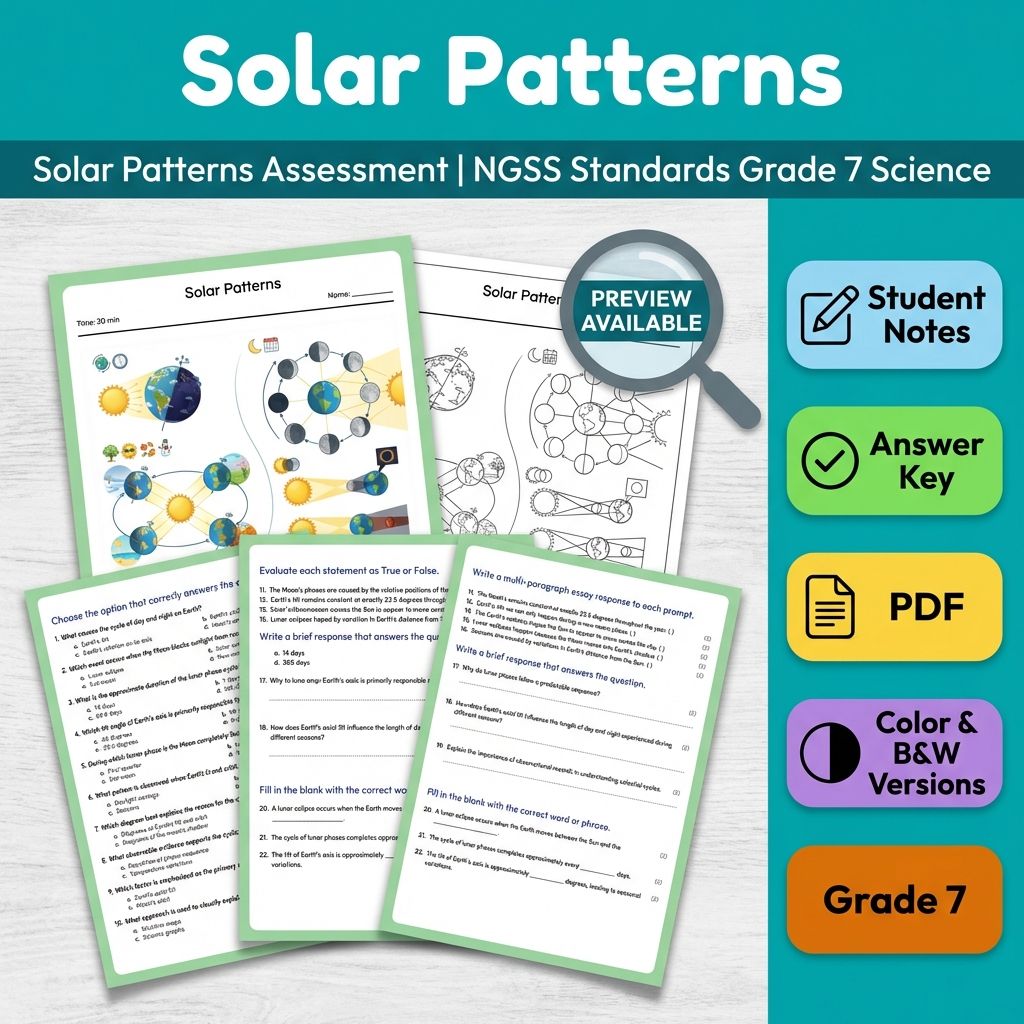
Solar Patterns Assessment | NGSS Standards Grade 7 Science
Created byPrism Point LearningLearning Objectives
- Describe the cyclic patterns produced by the relative motions of the Sun, Earth, and Moon.
- Explain how orbital geometry and axial tilt contribute to day-night cycles and seasonal changes.
- Analyze observational records to understand predictable temporal patterns in the solar system.
Also included in: Grade 7 Science Mini Bundle – Earth's Place in the Universe | NGSS Standards +1 more
Instant download

Grade 7 Adaptation Function Worksheet | Practice & Assessment PDF
 Created byClear Sky Classroom
Learning Objectives
- Explain how structural adaptations help organisms carry out life processes such as respiration, protection, and water regulation
- Compare behavioral and morphological adaptations and describe how each can improve survival or reproduction
- Identify trade-offs in adaptations and explain how improving one function can limit another
Instant download

Grade 7 Science | Particle Model Worksheet (PDF) – Alberta Standards
Created byEvergreen Desk EducationLearning Objectives
- Describe how the particle model represents matter as discrete particles with spaces and motion.
- Use particle motion and arrangement to explain macroscopic properties such as state of matter and diffusion.
- Differentiate physical changes from chemical changes using the particle model (rearrangement vs new substances).
Instant download
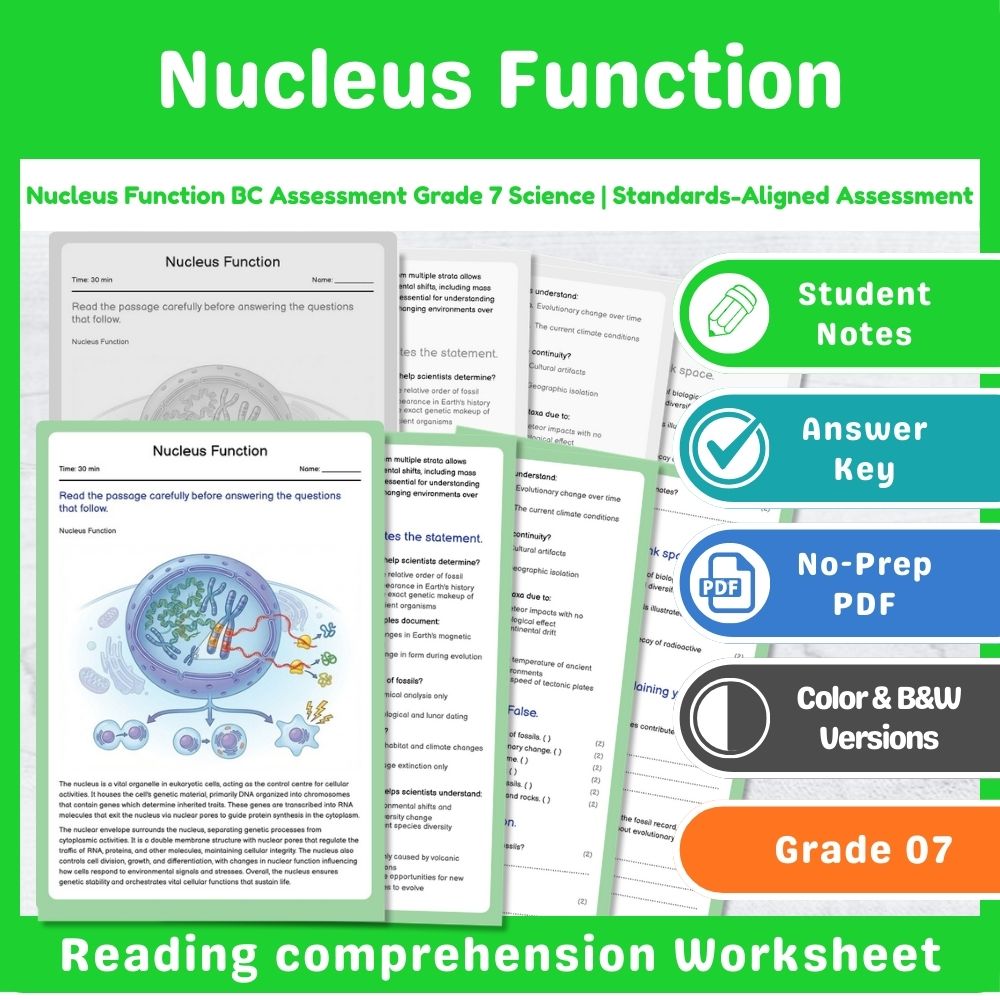
Nucleus Function BC Assessment Grade 7 Science | Standards-Aligned Assessment
Created byPrism Point LearningLearning Objectives
- Describe the structure and role of the nucleus in the cell.
- Explain how genetic material is organized within the nucleus.
- Identify the functions of nuclear envelope and nuclear pores.
Instant download
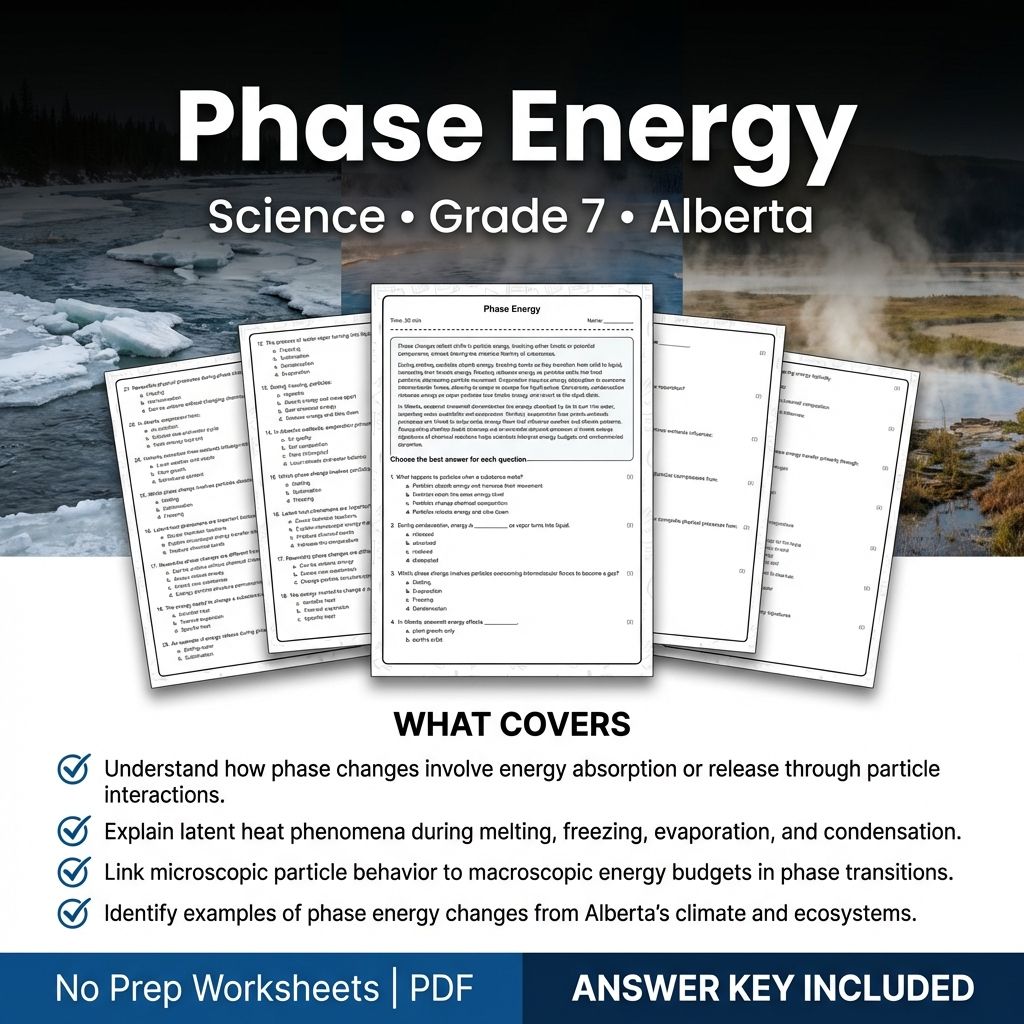
Phase Energy Worksheet for Grade 7 Science | Alberta Standards Practice
 Created byCoral Reef Learning
Learning Objectives
- Understand how phase changes involve energy absorption or release through particle interactions.
- Explain latent heat phenomena during melting, freezing, evaporation, and condensation.
- Link microscopic particle behavior to macroscopic energy budgets in phase transitions.
Instant download
Grade 7 Science – Atomic Structure Worksheet (Worksheet + Answer Key) – TEKS Aligned
Created byBright Mind ResourcesLearning Objectives
- Describe the basic components of an atom: protons, neutrons, and electrons.
- Explain how atomic number and mass number define an element and its isotopes.
- Relate atomic structure to periodic trends and chemical formulas.
Also included in: Grade 7 Science Unit Bundle | States of Matter & Atomic Structure Worksheets +2 more
Instant download
Grade 7 Science – Abiotic Influences Worksheet (Worksheet + Answer Key) – TEKS Aligned
Created byBright Mind ResourcesLearning Objectives
- Understand how nonliving factors like temperature, water, light, soil, and salinity affect species distribution and ecosystems.
- Describe how gradients and microclimates influence organism tolerances and seasonal patterns.
- Explain the interactions between abiotic factors and biotic relationships in shaping biodiversity and ecosystem function.
Also included in: Grade 7 Science Unit Bundle – Ecosystems, Adaptation & Environmental Impact +2 more
Instant download

Grade 7 Science – Population Change Worksheet (Answer Key) | TEKS Aligned
Created byBright Mind ResourcesLearning Objectives
- Identify factors that influence population size and distribution
- Explain patterns of exponential and logistic growth in populations
- Describe how limiting factors affect population dynamics
Also included in: Grade 7 Science Unit Bundle – Ecosystems, Adaptation & Environmental Impact +2 more
Instant download
Grade 7 Science | Scaling Effects Worksheet (Answer Key) – TEKS Aligned
Created byBright Mind ResourcesLearning Objectives
- Understand how scaling influences physical behavior in structures, fluids, and heat transfer.
- Analyze the relationships between size, surface area, volume, and their effects on forces and heat transfer.
- Calculate and predict performance differences in scaled models versus full-size applications.
Also included in: Grade 7 Science Unit Bundle | Standards, Safety, Innovation & Systems Aligned TEKS +2 more
Instant download

Grade 7 Science – Innovation History Worksheet (Worksheet + Answer Key) | TEKS-Aligned
Created byBright Mind ResourcesLearning Objectives
- Describe how technological innovations are influenced by causes such as needs and available materials.
- Trace the diffusion and cumulative modification of inventions across different technological lineages.
- Identify factors that enable invention and innovation, including incremental improvements and adaptation.
Also included in: Grade 7 Science Unit Bundle | Standards, Safety, Innovation & Systems Aligned TEKS +2 more
Instant download

Grade 7 Science | Standards and Safety Worksheet (PDF) – TEKS Alignment
Created byBright Mind ResourcesLearning Objectives
- Understand the importance of safety standards in technology and construction.
- Identify key safety considerations such as load ratings, grounding, and protective measures.
- Explain the rationale for safety margins and inspection protocols.
Also included in: Grade 7 Science Unit Bundle | Standards, Safety, Innovation & Systems Aligned TEKS +2 more
Instant download
Grade 7 Science — Particle Model Worksheet for Mastery
 Created byThe Resource Hub
Learning Objectives
- Explain the basic concepts of the particle model of matter, including particle spacing, motion, and forces.
- Relate the particle model to observable properties such as density, pressure, and compressibility.
- Describe how particle arrangements influence phenomena like diffusion, thermal expansion, and response to forces.
Also included in: Grade 7 Science Unit Bundle – States, Reactions & Atomic Structure Worksheets +1 more
Instant download
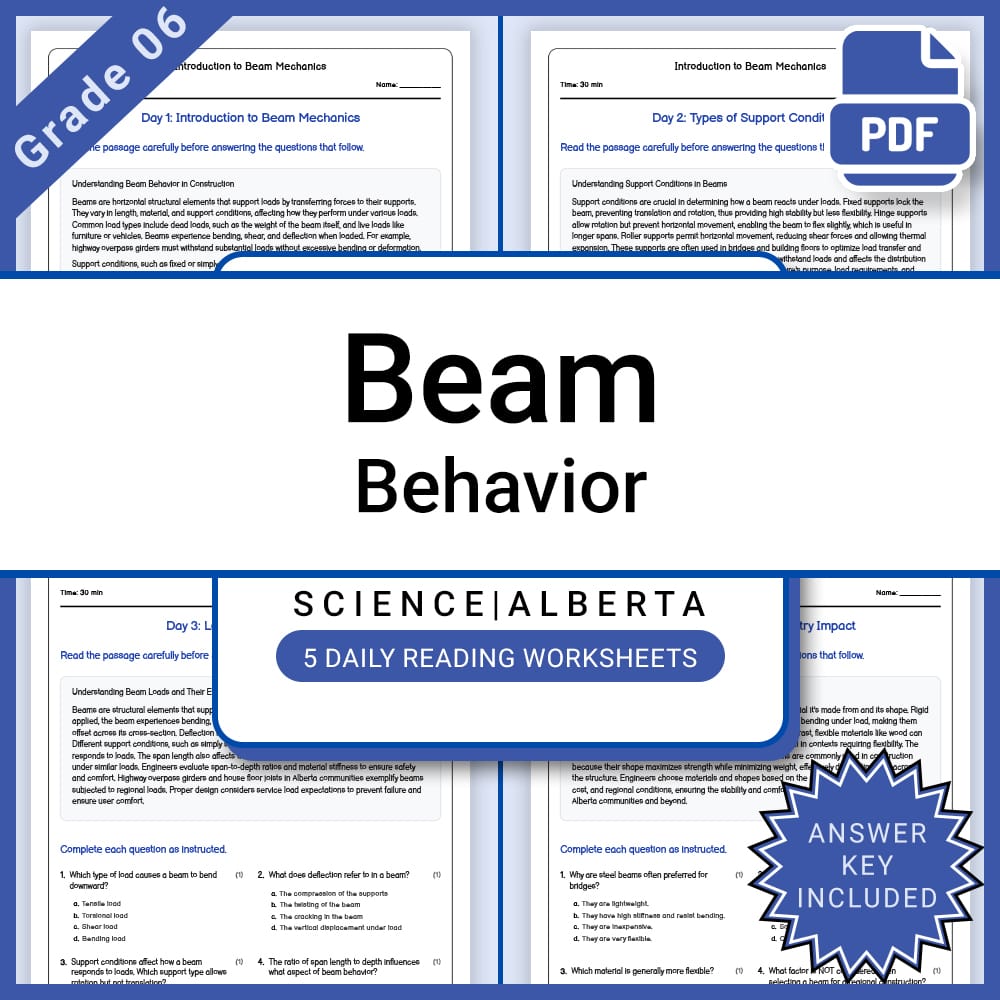
Grade 7 Science – Introduction to Beam Mechanics Daily Worksheet + Answer Key
JCreated byJ.S SheetsLearning Objectives
- Identify the key parts of beams such as span, support conditions, and load types
- Understand the effects of different loads on beams like bending, shear, and deflection
- Relate real-world examples of beams in infrastructure to their mechanical behavior
Also included in: Grade 7 Science Lesson Group | Structural Engineering & Motion Worksheets +1 more
Instant download
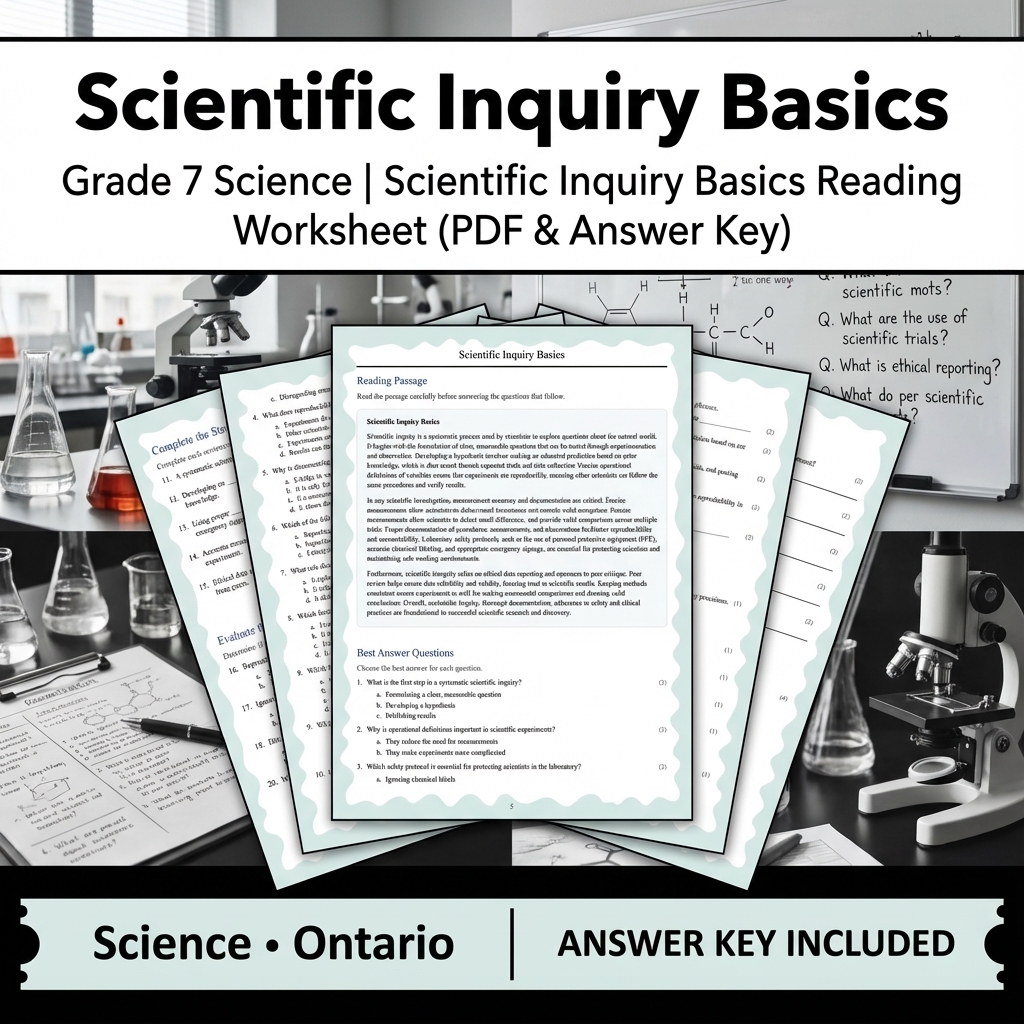
Grade 7 Science | Scientific Inquiry Basics Reading Worksheet (PDF & Answer Key)
JCreated byJ.S SheetsLearning Objectives
- Understand the essential steps involved in scientific inquiry, including question formulation and hypothesis development.
- Recognize the importance of operational definitions, measurement precision, and documentation for reproducibility.
- Learn laboratory safety protocols such as proper use of protective equipment, chemical labeling, and emergency signage.
Also included in: Grade 7 Science Unit Bundle | Inquiry, Data & Modeling Skills +1 more
Instant download
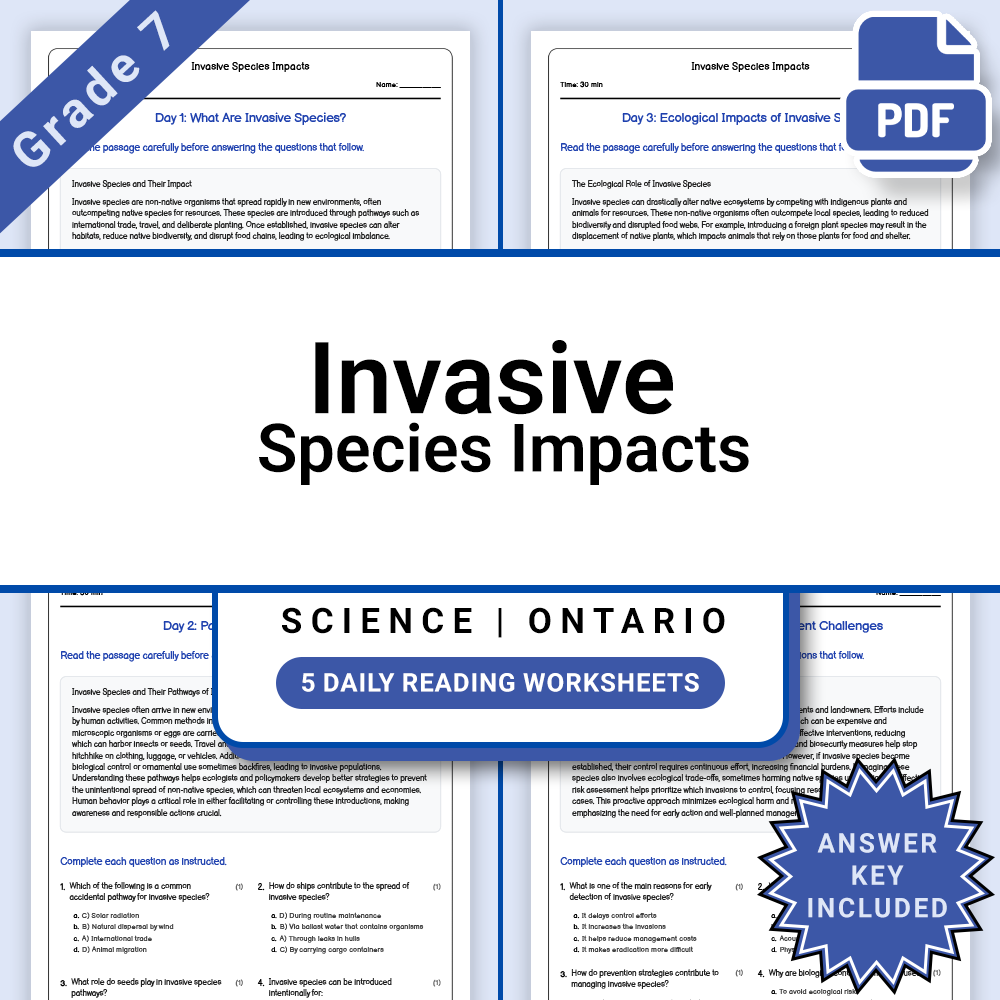
Grade 7 Science – Invasive Species Impacts Daily Reading Worksheet + Answer Key
JCreated byJ.S SheetsLearning Objectives
- Identify characteristics of invasive species
- Understand ecological and economic consequences
- Recognize pathways of species introduction
Also included in: Grade 7 Science Lesson Group Bundle | Ecology & Ecosystems Framework +1 more
Instant download
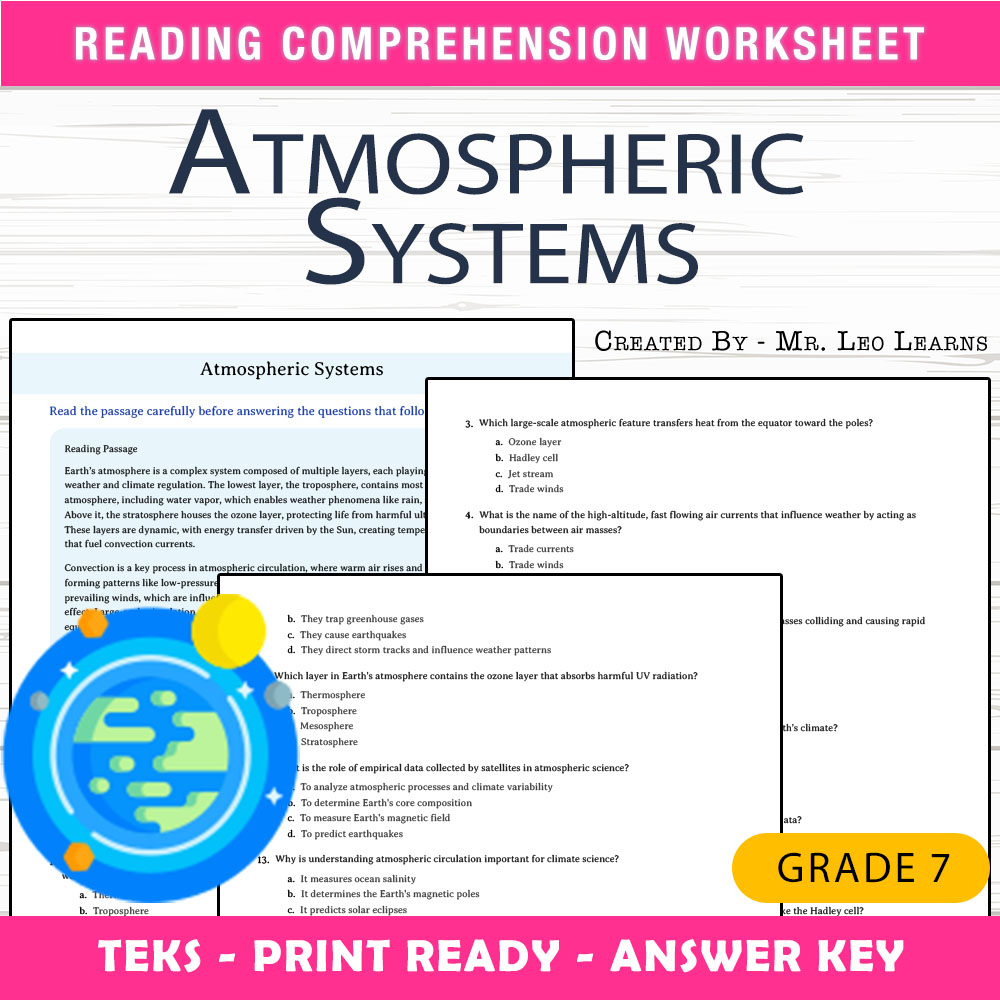
Grade 7 Science — Atmospheric Systems Worksheet for Mastery
Created byThe Resource HubLearning Objectives
- Describe the major components and processes of Earth's atmosphere, including energy transfer, convection, and wind patterns.
- Explain large-scale atmospheric circulation features such as pressure systems, cells, fronts, and jet streams, and their impact on weather and climate.
- Analyze how atmospheric phenomena like greenhouse gases and observational data influence climate variability and radiative balance.
Also included in: Grade 7 Science UNIT Bundle | Earth & Space Systems Mastery Worksheets +1 more
Instant download
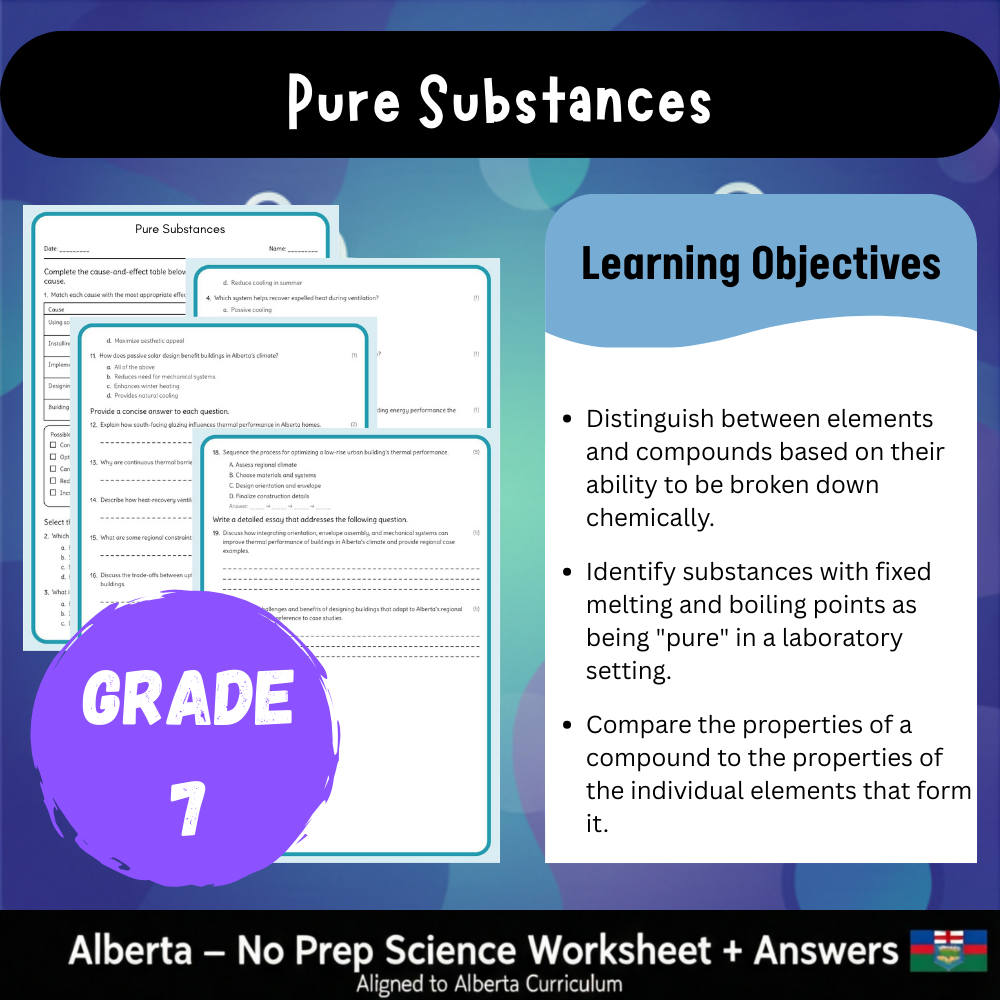
Grade 7 Science | Pure Substances Worksheet (PDF) – Alberta Standards
Created byBright Mind ResourcesLearning Objectives
- Understand the distinguishing properties of pure substances such as fixed melting and boiling points, density, and reactivity
- Differentiate between elements and compounds using physical and chemical tests
- Identify examples of pure elements and compounds in local and global contexts
Instant download
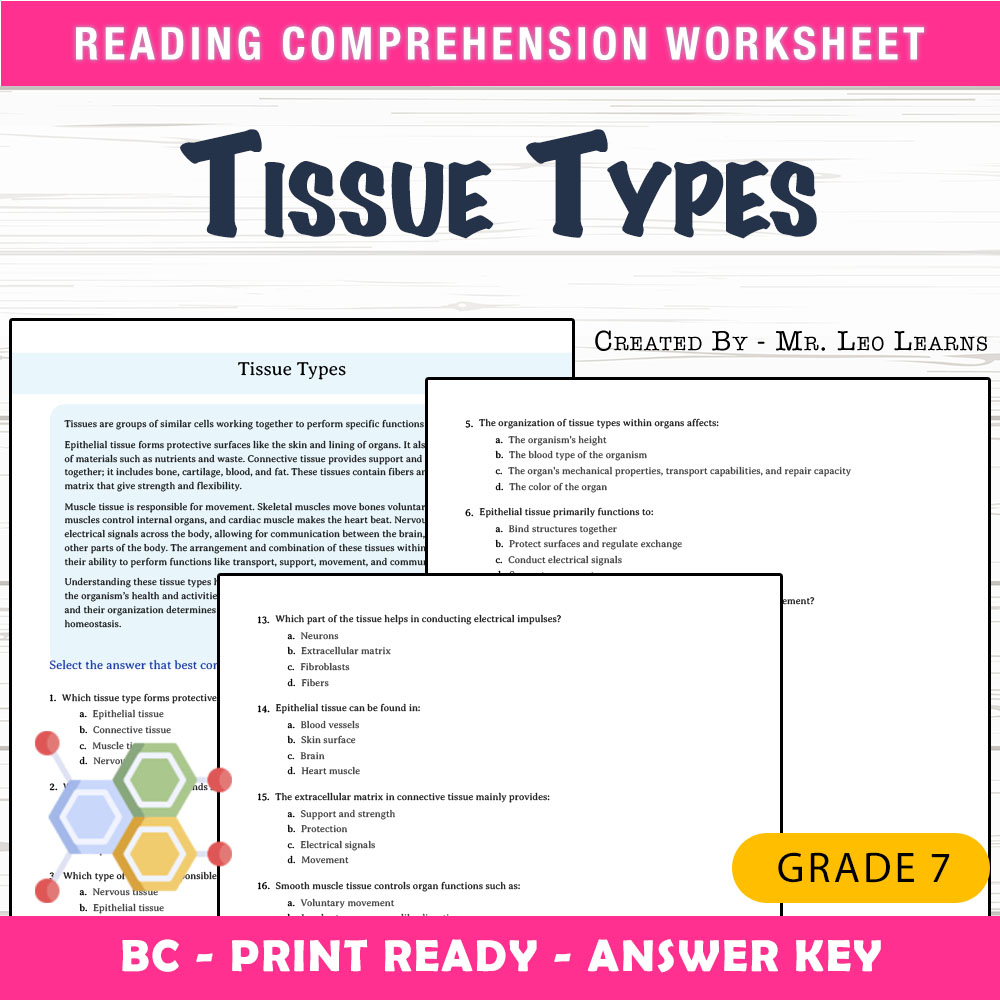
Grade 7 Science — Tissue Types Worksheet MCQ Paper for Mastery
Created byThe Resource HubLearning Objectives
- Understand the different tissue types and their functions.
- Identify characteristics of epithelial, connective, muscle, and nervous tissues.
- Recognize the role of tissue organization in organ function.
Also included in: Grade 7 Science | Cell Structure & Function Worksheet Bundle +1 more
Instant download
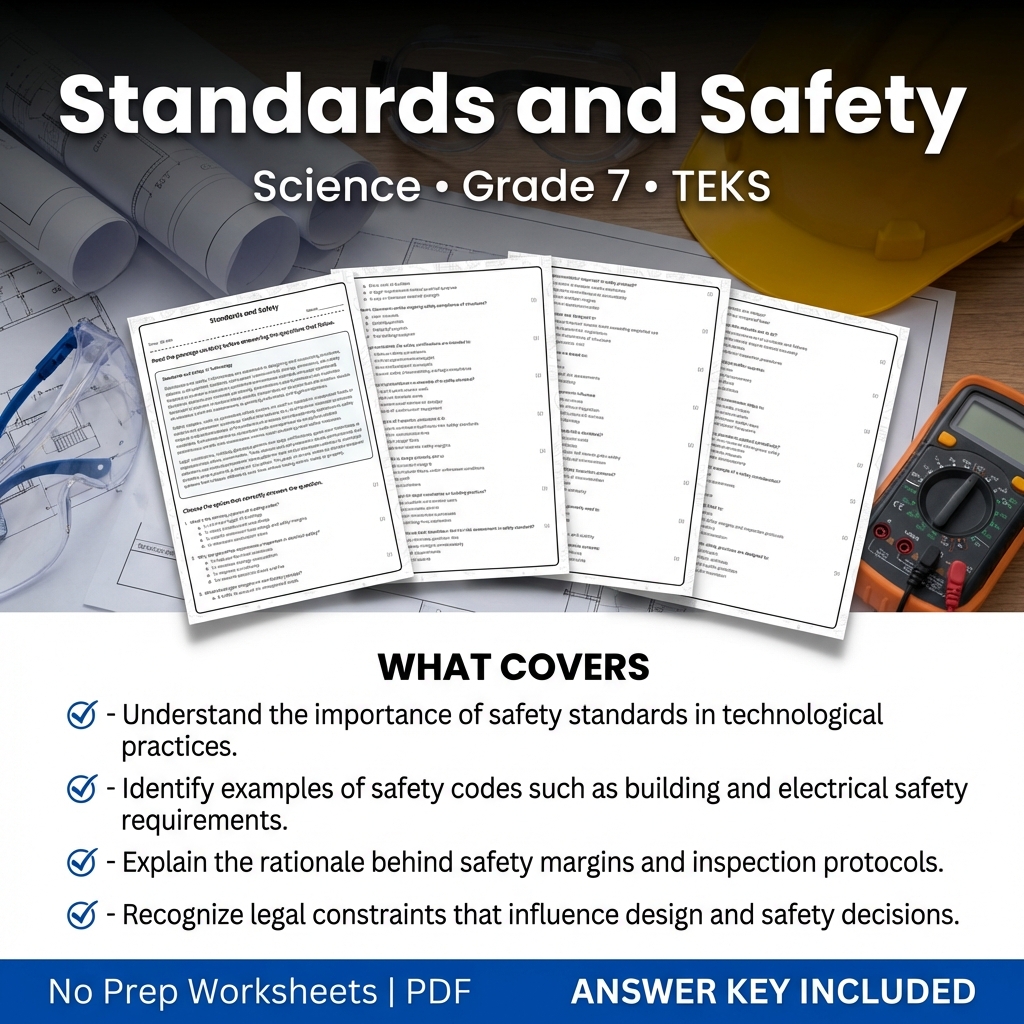
Grade 7 Science Worksheet on Standards and Safety | TEKS-Aligned Practice
Created byCoral Reef LearningLearning Objectives
- Understand the importance of safety standards in technological practices.
- Identify examples of safety codes such as building and electrical safety requirements.
- Explain the rationale behind safety margins and inspection protocols.
Instant download
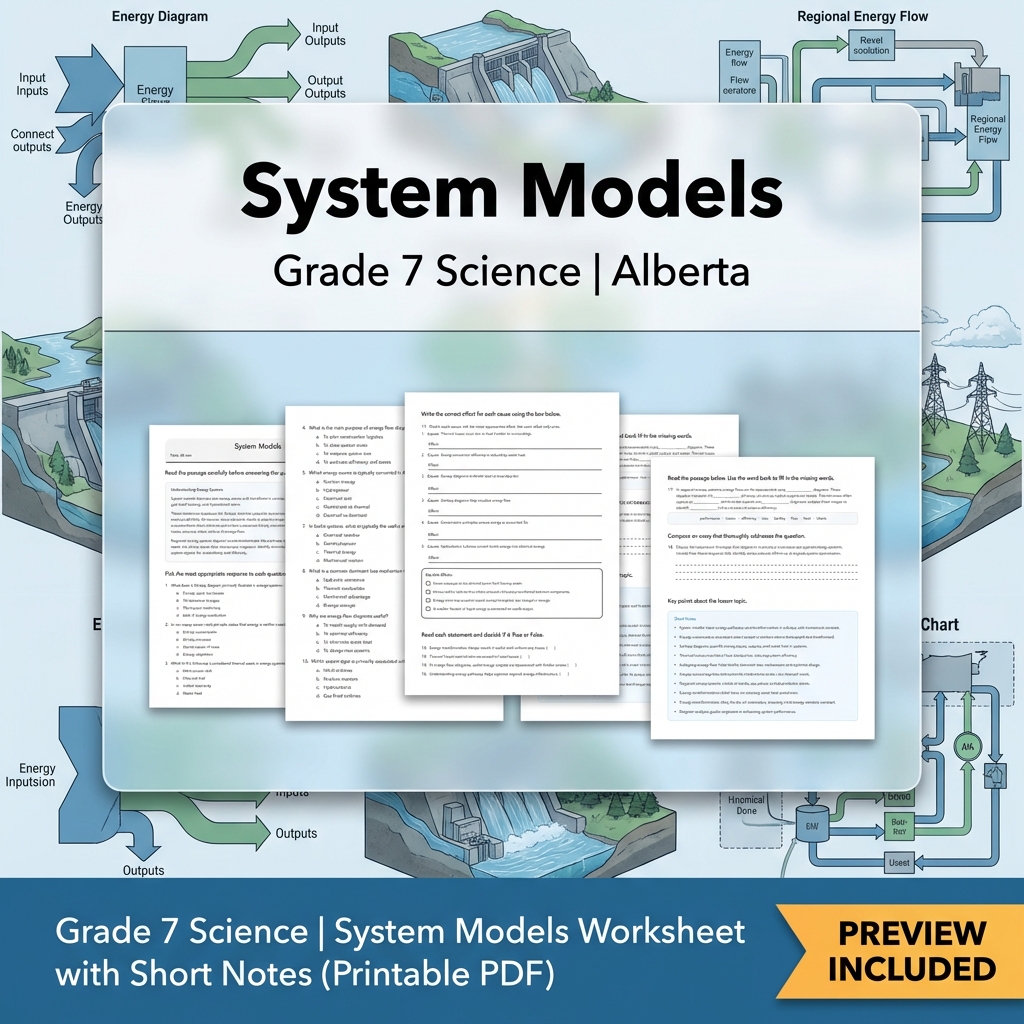
Grade 7 Science | System Models Worksheet with Short Notes (Printable PDF)
 Created byMeadowlark Worksheets
Learning Objectives
- Explain how energy pathways operate within mechanical and industrial systems.
- Identify principles of energy conservation in real-world energy systems.
- Analyze Sankey diagrams and energy flow representations to evaluate system efficiencies.
Instant download
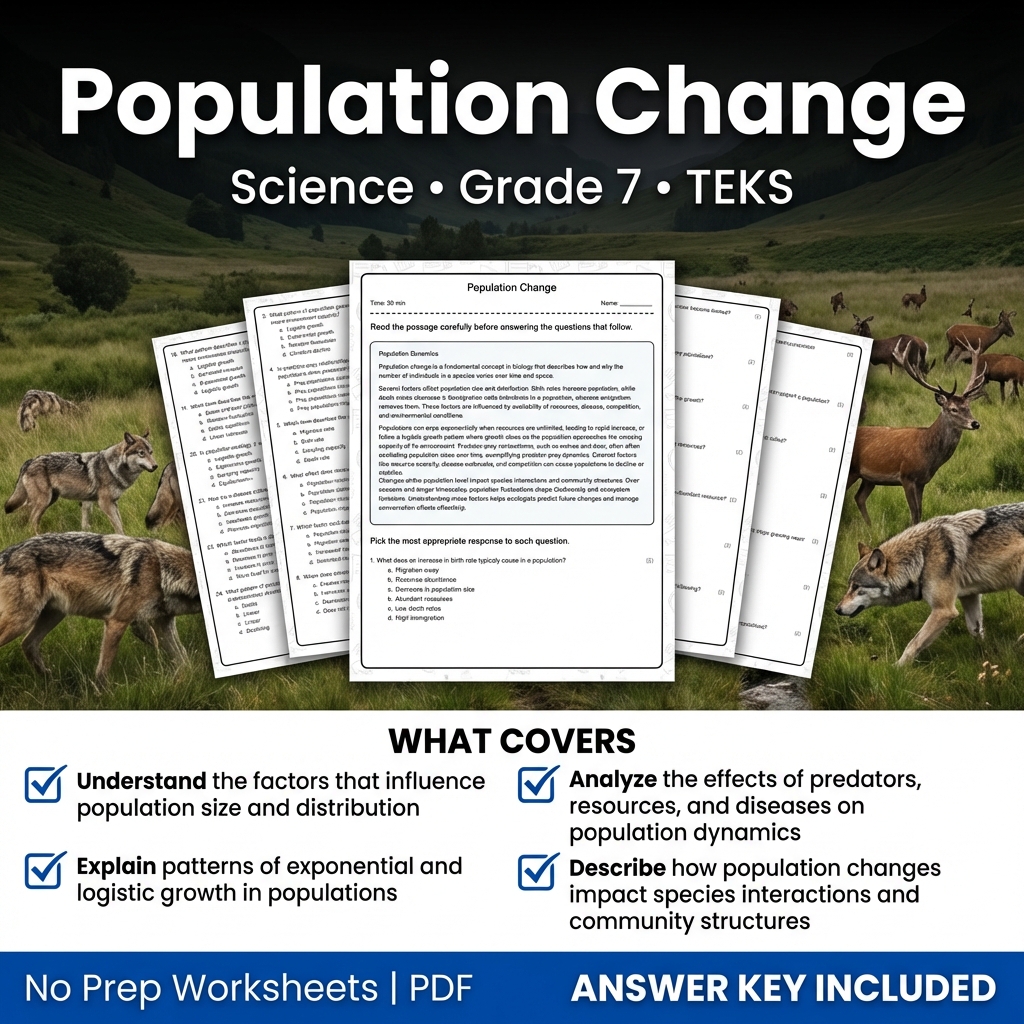
Population Change Worksheet | TEKS Grade 7 Science Practice PDF
Created byCoral Reef LearningLearning Objectives
- Understand the factors that influence population size and distribution
- Explain patterns of exponential and logistic growth in populations
- Analyze the effects of predators, resources, and diseases on population dynamics
Instant download

Grade 7 Science | Material Properties in Science - Daily Reading Comprehension
Created byCoral Reef LearningLearning Objectives
- Understand the concept of thermal conductivity and how it varies among different materials.
- Compare the thermal behaviors of common Alberta construction materials such as fiberglass, spray foam, wood, and masonry.
- Identify factors that influence thermal properties, including porosity, moisture content, and layered assemblies.
Also included in: Energy, Heat and Thermal Processes Lesson Bundle: Grade 7 Science Alberta +1 more
Instant download

Thermal Effects Worksheet | Grade 7 Science | Ontario Standards
JCreated byJ.S SheetsLearning Objectives
- Explain how temperature affects particle motion and connects it to changes in macroscopic properties like volume and pressure.
- Describe thermal expansion and contraction and give real-world examples of where they matter in engineering design.
- Model how phase changes and viscosity vary with temperature and predict impacts on systems during thermal cycling.
Instant download
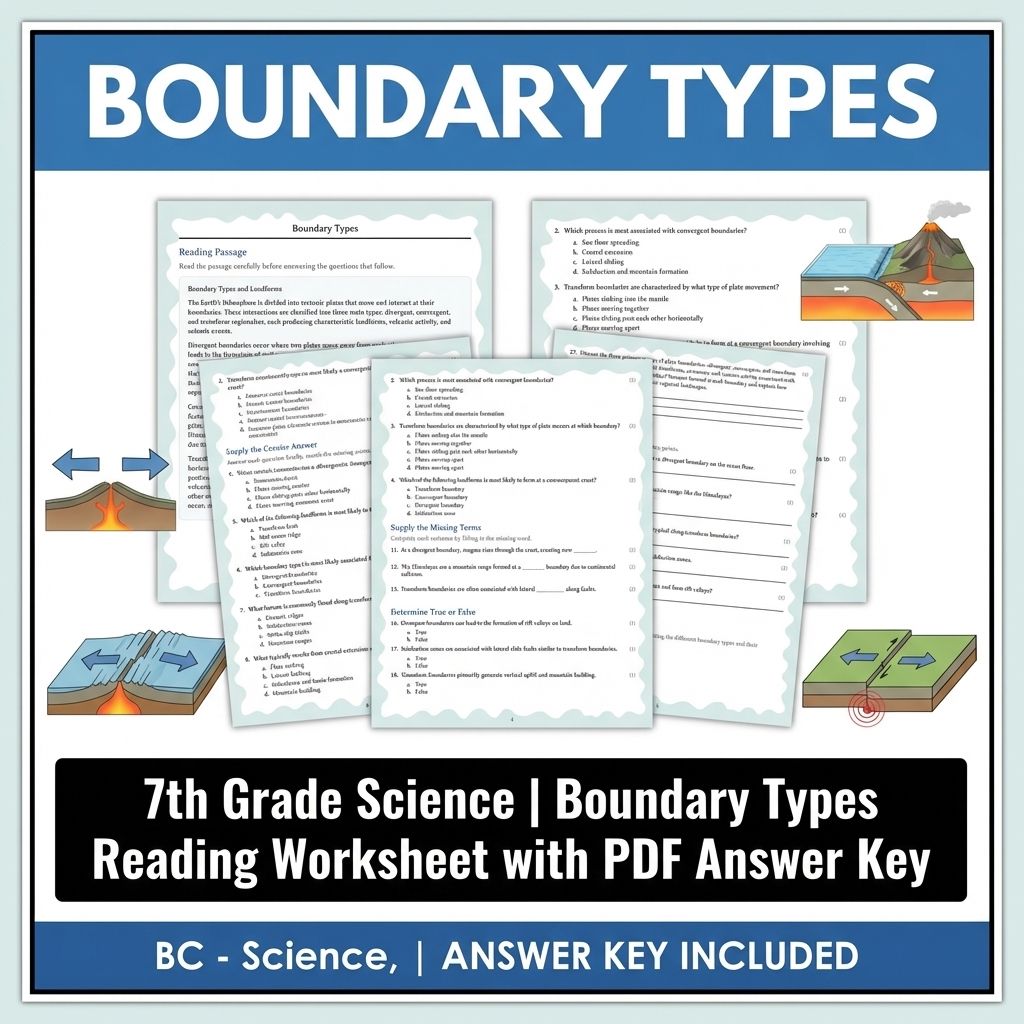
7th Grade Science | Boundary Types Reading Worksheet with PDF Answer Key
JCreated byJ.S SheetsLearning Objectives
- Describe the three principal types of plate boundaries and their characteristic features.
- Explain how divergent boundaries form mid-ocean ridges and rift valleys.
- Identify the landforms and processes associated with convergent plate boundaries.
Instant download
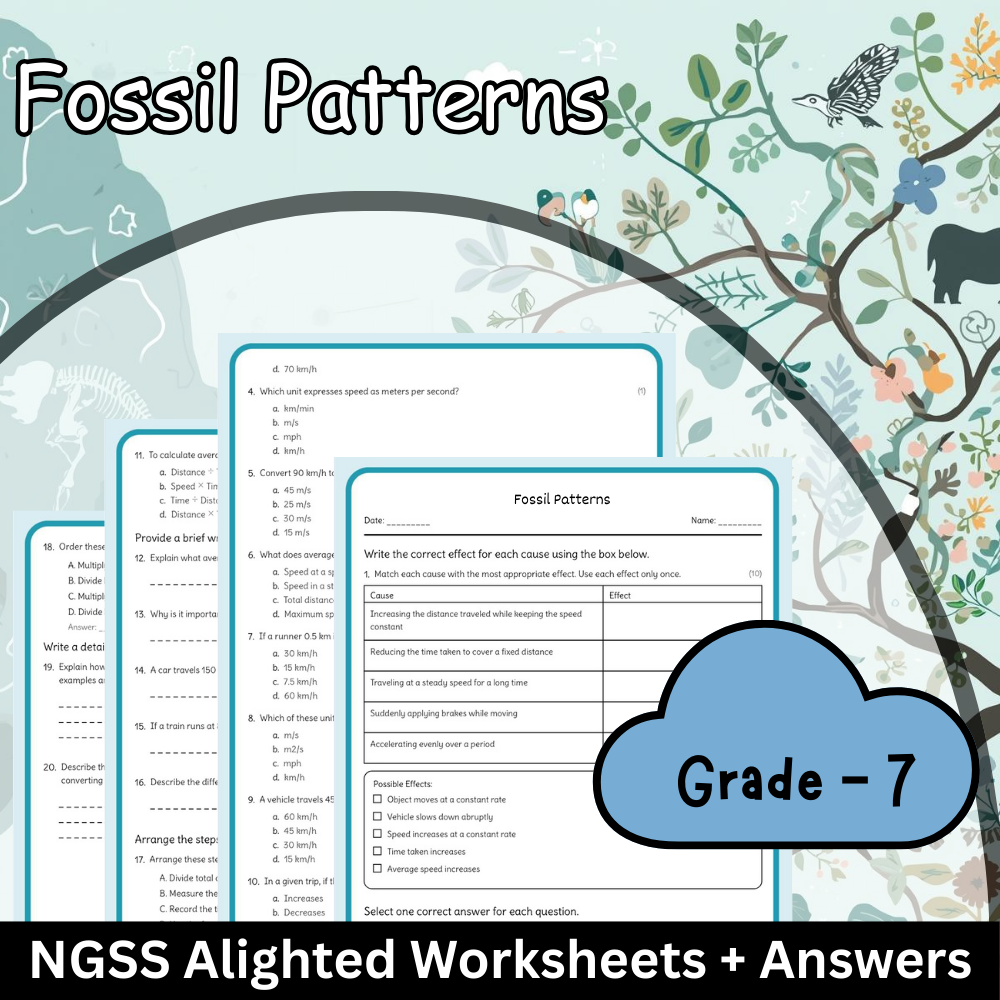
Grade 7 Science | Fossil Patterns Worksheet & Answer Key – NGSS Aligned (PDF)
Created byBright Mind ResourcesLearning Objectives
- Analyze patterns and trends in the fossil record to understand macroevolution and extinction events.
- Identify and interpret stratigraphic sequences, index fossils, and transitional forms to infer evolutionary lineages.
- Evaluate the methods used to date and correlate fossil assemblages across sedimentary layers.
Instant download

Gravity on Objects Worksheet | Standards-Aligned Science Practice Grade 7
JCreated byJ.S SheetsLearning Objectives
- Understand how gravity affects objects' weight and motion near Earth.
- Explain the relationship between mass, gravitational force, and acceleration.
- Describe the role of support forces in balancing gravity in stable situations.
Also included in: Grade 7 Forces and Matter Science lesson bundle – California Standards +1 more
Instant download

Grade 7 Science – Ecological Inquiry & Data Analysis | Daily Reading Worksheet
Created byBright Mind ResourcesLearning Objectives
- Understand the principles of ecological inquiry and hypothesis formulation.
- Identify measurable variables in ecological studies.
- Interpret ecological data and evidence critically.
Also included in: Grade 7 Ecosystems Science Lesson Bundle for Daily Reading Worksheets | Alberta +2 more
Instant download
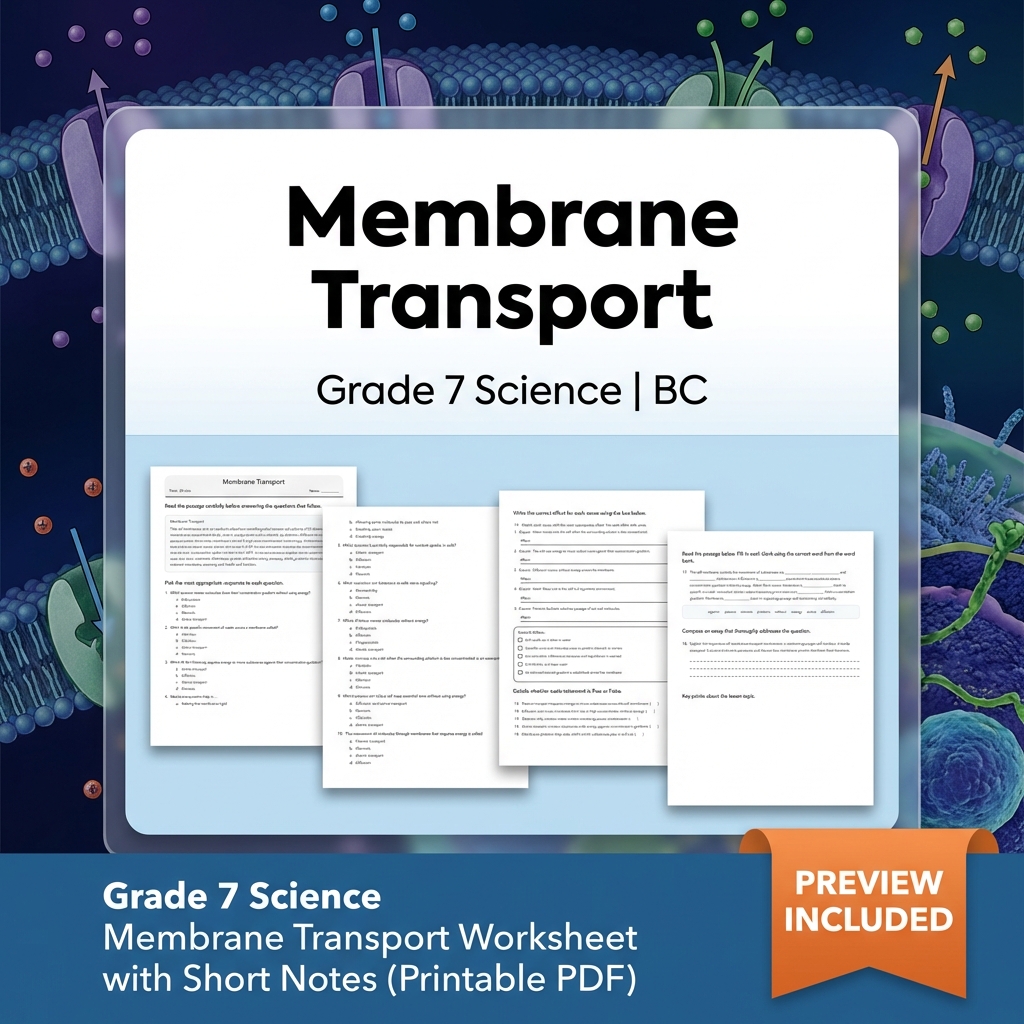
Grade 7 Science Membrane Transport Worksheet with Short Notes (Printable PDF)
Created byMeadowlark WorksheetsLearning Objectives
- Describe passive and active mechanisms of membrane transport.
- Explain how diffusion and osmosis differ.
- Identify the role of membrane proteins in substance passage.
Also included in: Grade 7 Science Lesson Bundle | Cell Structures & Functions Worksheets +1 more
Instant download
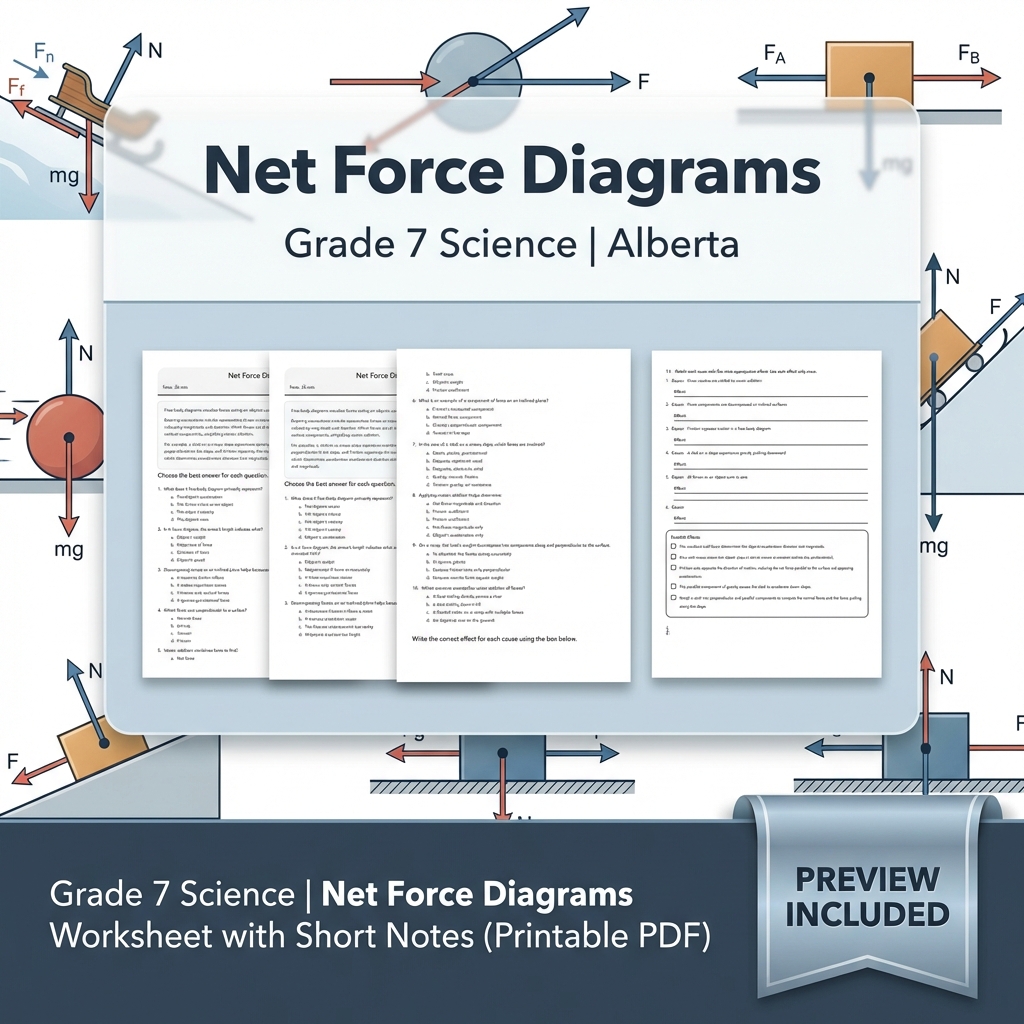
Grade 7 Science | Net Force Diagrams Worksheet with Short Notes (Printable PDF)
Created byMeadowlark WorksheetsLearning Objectives
- Understand how to draw and interpret free-body diagrams.
- Learn to decompose forces on inclined surfaces into perpendicular components.
- Apply vector addition to determine net force magnitude and direction.
Also included in: Grade 7 Science | Forces, Structures & Motion UNIT Worksheet Bundle
Instant download
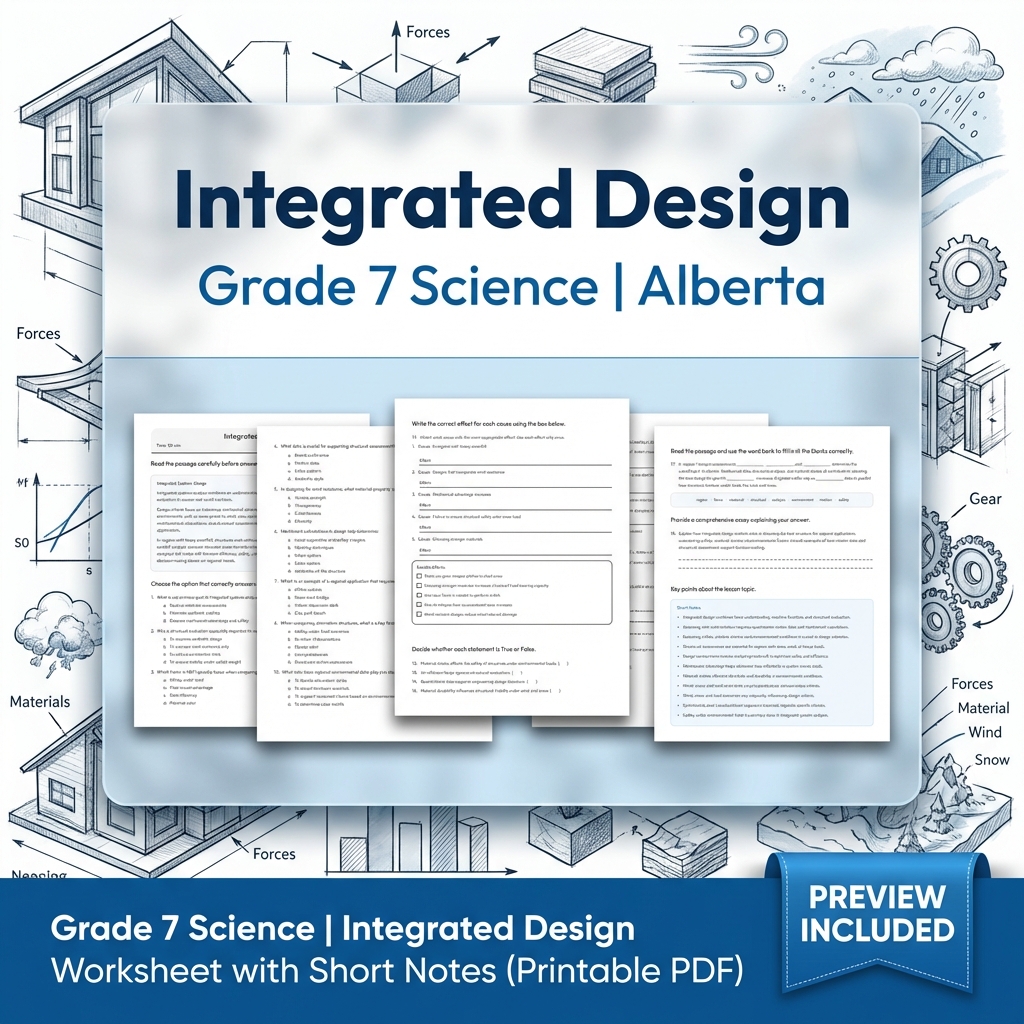
Grade 7 Science | Integrated Design Worksheet with Short Notes (Printable PDF)
Created byMeadowlark WorksheetsLearning Objectives
- Understand how force, material choice, and structural evaluation influence design decisions.
- Analyze criteria-based comparisons of alternative designs in real-world applications.
- Apply quantitative motion data and mechanical calculations to support engineering reasoning.
Also included in: Grade 7 Science | Forces, Structures & Motion UNIT Worksheet Bundle
Instant download
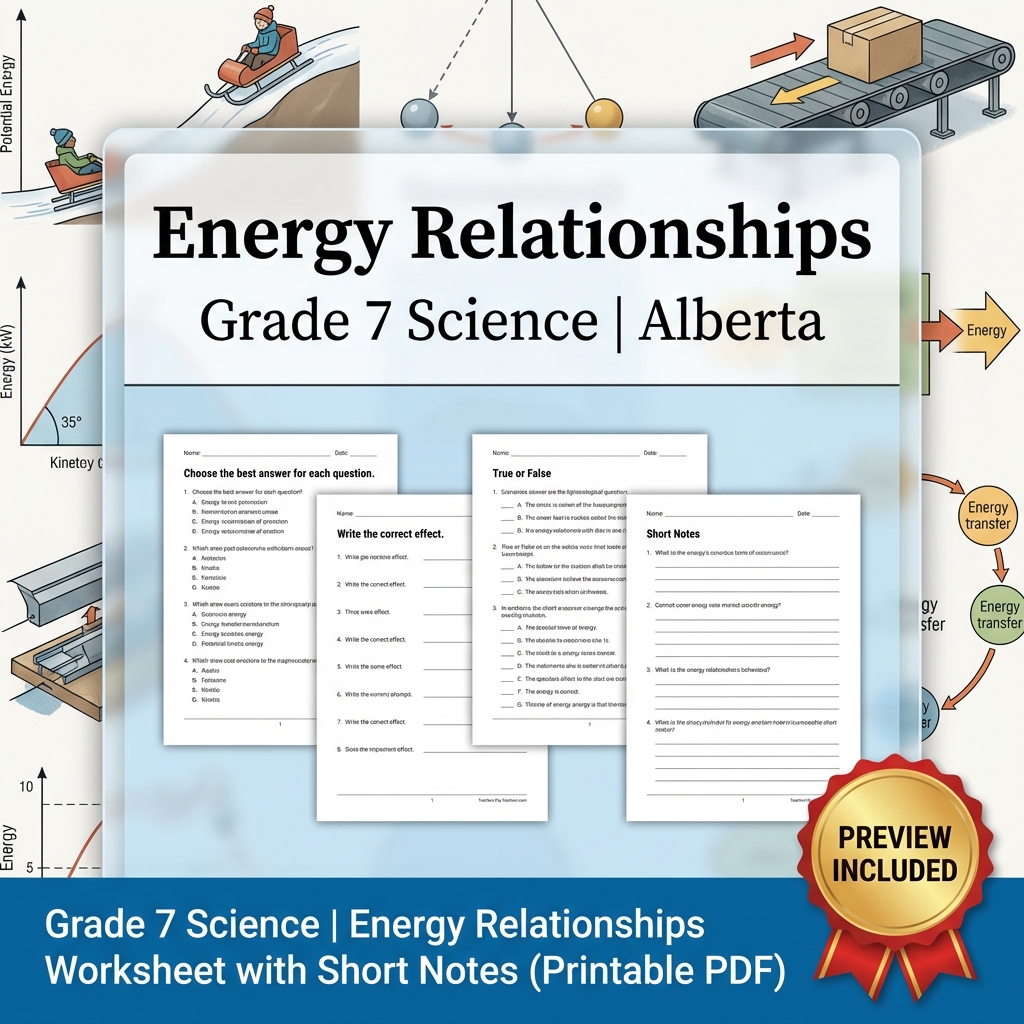
Grade 7 Science | Energy Relationships Worksheet with Short Notes (PDF)
Created byMeadowlark WorksheetsLearning Objectives
- Understand how elevation, mass, and speed influence mechanical energy in systems.
- Identify examples of potential and kinetic energy transfer in real-world scenarios.
- Analyze how energy conversion affects safety and structural loading in transportation and industry.
Also included in: Grade 7 Science | Forces, Structures & Motion UNIT Worksheet Bundle
Instant download
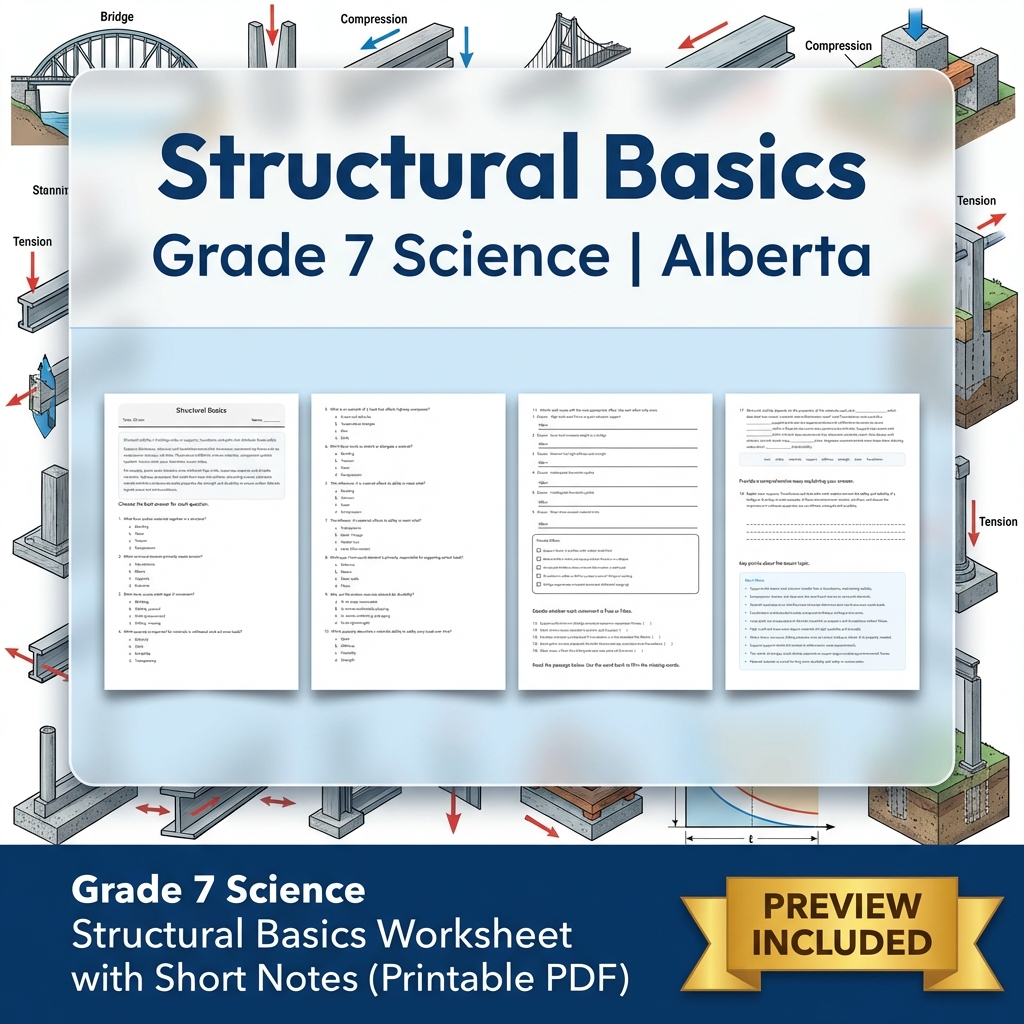
Grade 7 Science Structural Basics Worksheet with Short Notes (Printable PDF)
Created byMeadowlark WorksheetsLearning Objectives
- Understand the roles of supports, foundations, and load paths in construction.
- Identify how compression, tension, and shear forces affect structural elements.
- Evaluate material properties like stiffness, strength, and durability for safety.
Also included in: Grade 7 Science | Forces, Structures & Motion UNIT Worksheet Bundle
Instant download
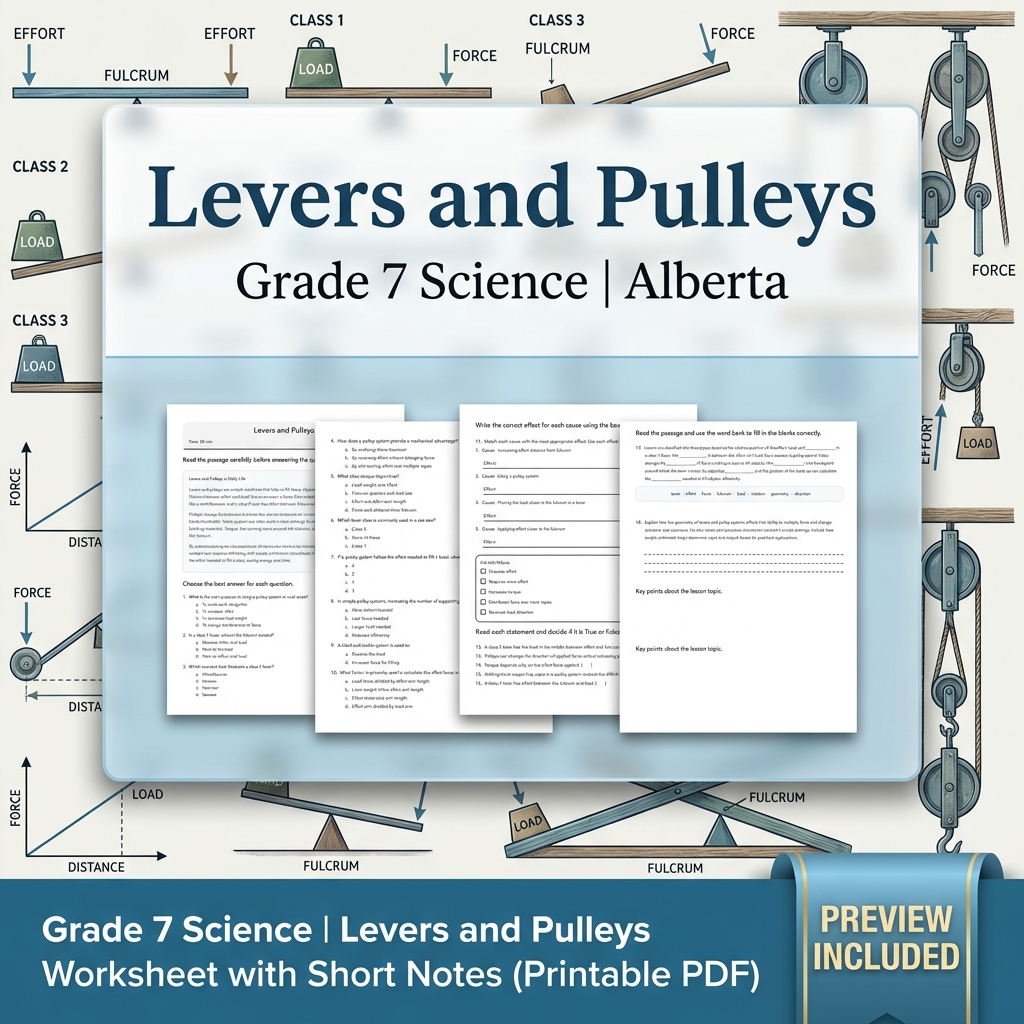
Grade 7 Science | Levers and Pulleys Worksheet with Short Notes (Printable PDF)
Created byMeadowlark WorksheetsLearning Objectives
- Understand how levers and pulleys modify effort and direction to provide mechanical advantage.
- Explain the concepts of torque, fulcrum placement, and ideal mechanical advantage calculations.
- Relate the geometry of levers and pulleys to force multiplication in practical, regional examples.
Also included in: Grade 7 Science | Forces, Structures & Motion UNIT Worksheet Bundle
Instant download
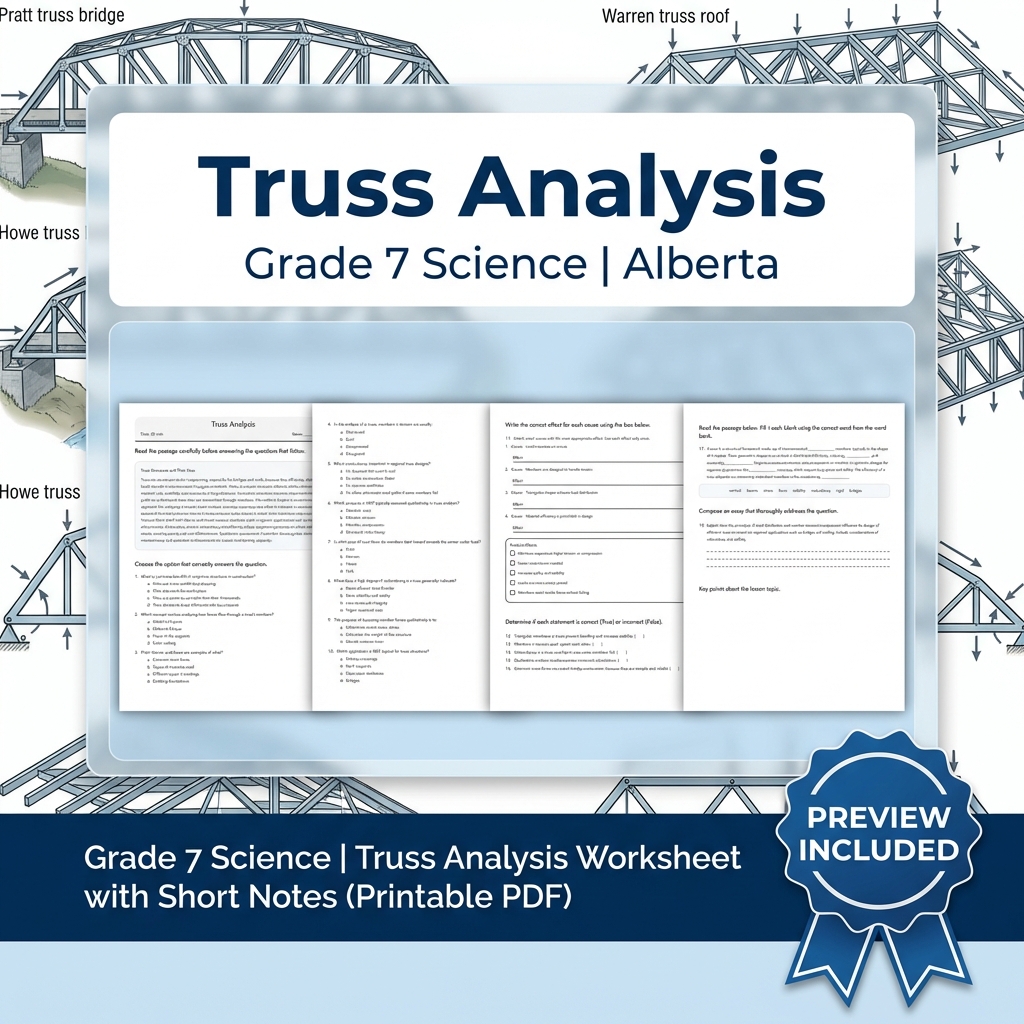
Grade 7 Science | Truss Analysis Worksheet with Short Notes (Printable PDF)
Created byMeadowlark WorksheetsLearning Objectives
- Understand basic concepts of truss structures and load distribution
- Identify internal force paths in trusses
- Apply criteria for assessing efficiency and redundancy in truss designs
Also included in: Grade 7 Science | Forces, Structures & Motion UNIT Worksheet Bundle
Instant download
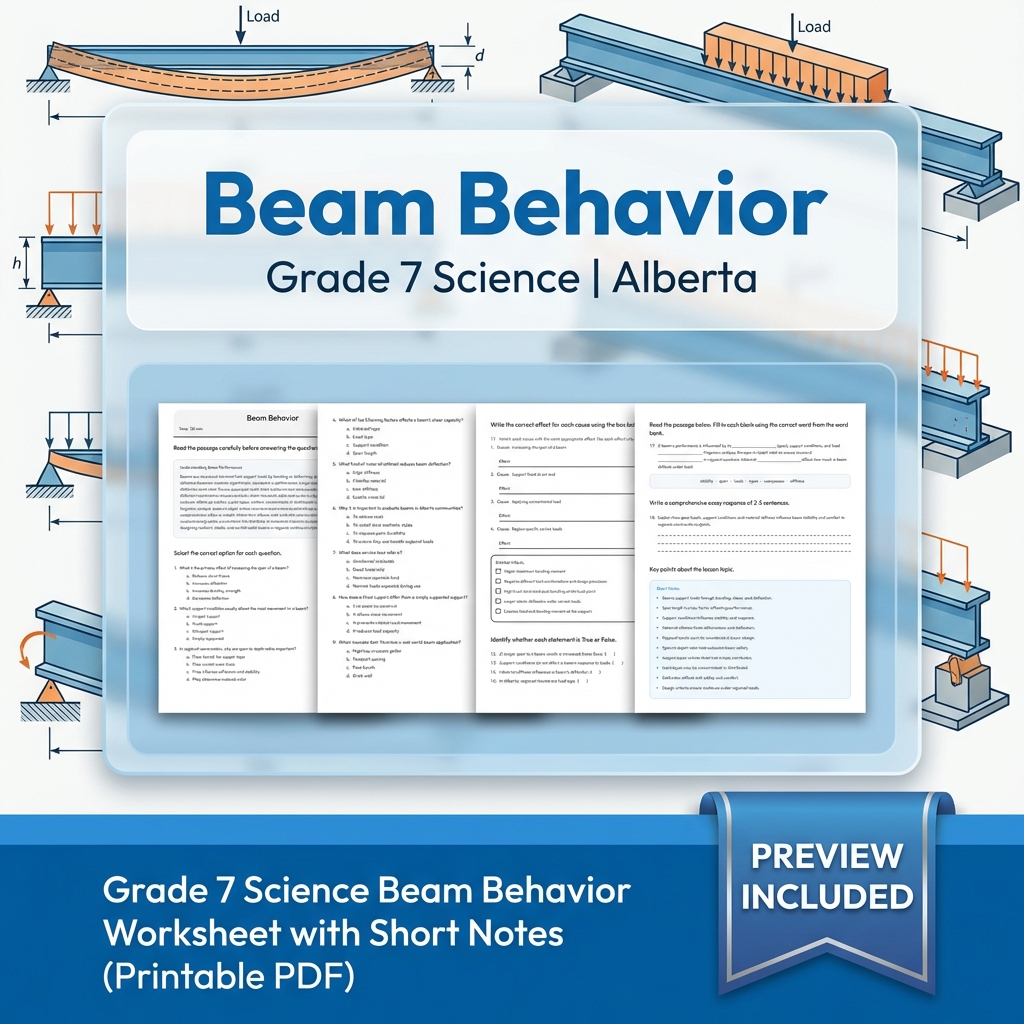
Grade 7 Science Beam Behavior Worksheet with Short Notes (Printable PDF)
Created byMeadowlark WorksheetsLearning Objectives
- Understand the concepts of bending, shear, and deflection in beams.
- Identify factors affecting beam stability under regional loads.
- Relate span, support conditions, and load types to real-world examples.
Also included in: Grade 7 Science | Forces, Structures & Motion UNIT Worksheet Bundle
Instant download
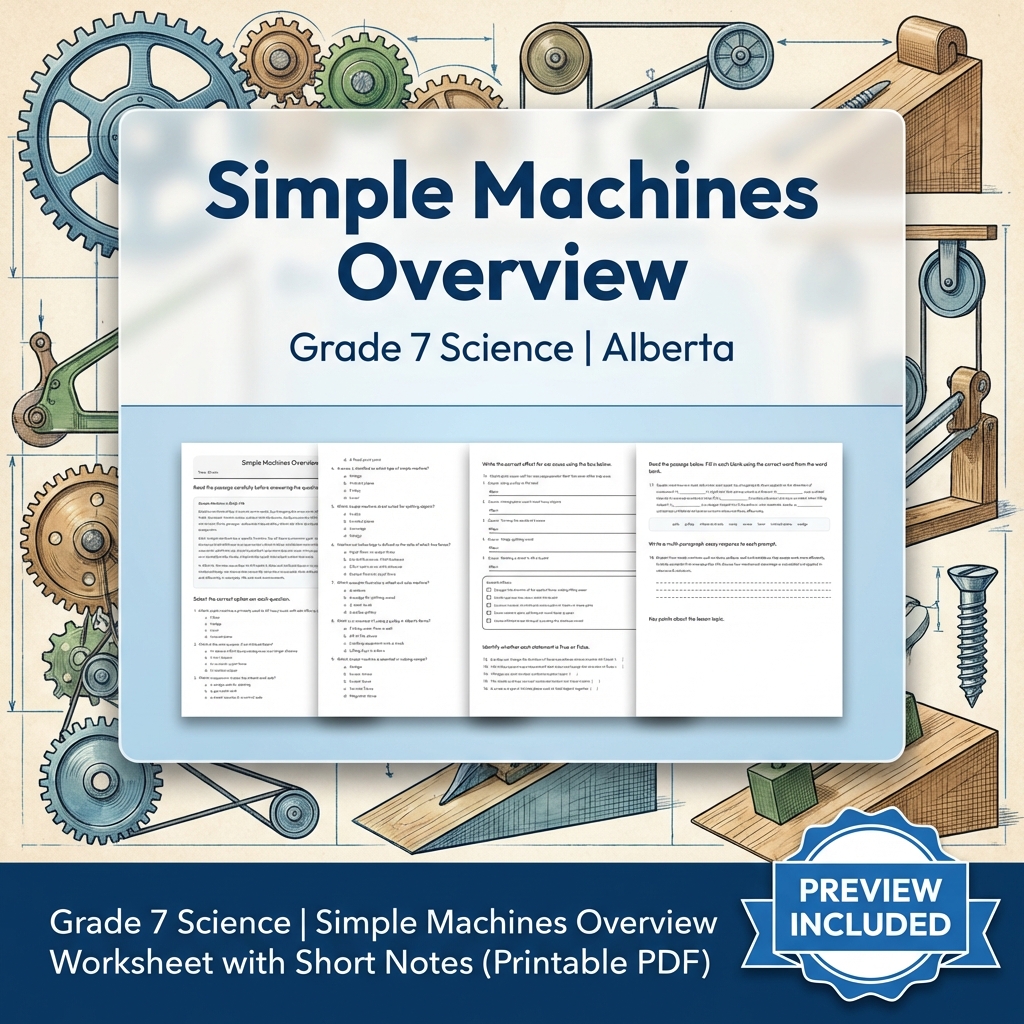
Grade 7 Science | Simple Machines Overview Worksheet with Short Notes (PDF)
Created byMeadowlark WorksheetsLearning Objectives
- Understand the basic concepts of simple machines and their functions.
- Identify different types of simple machines and their components.
- Explain how simple machines alter force and movement in everyday tools.
Also included in: Grade 7 Science | Forces, Structures & Motion UNIT Worksheet Bundle
Instant download
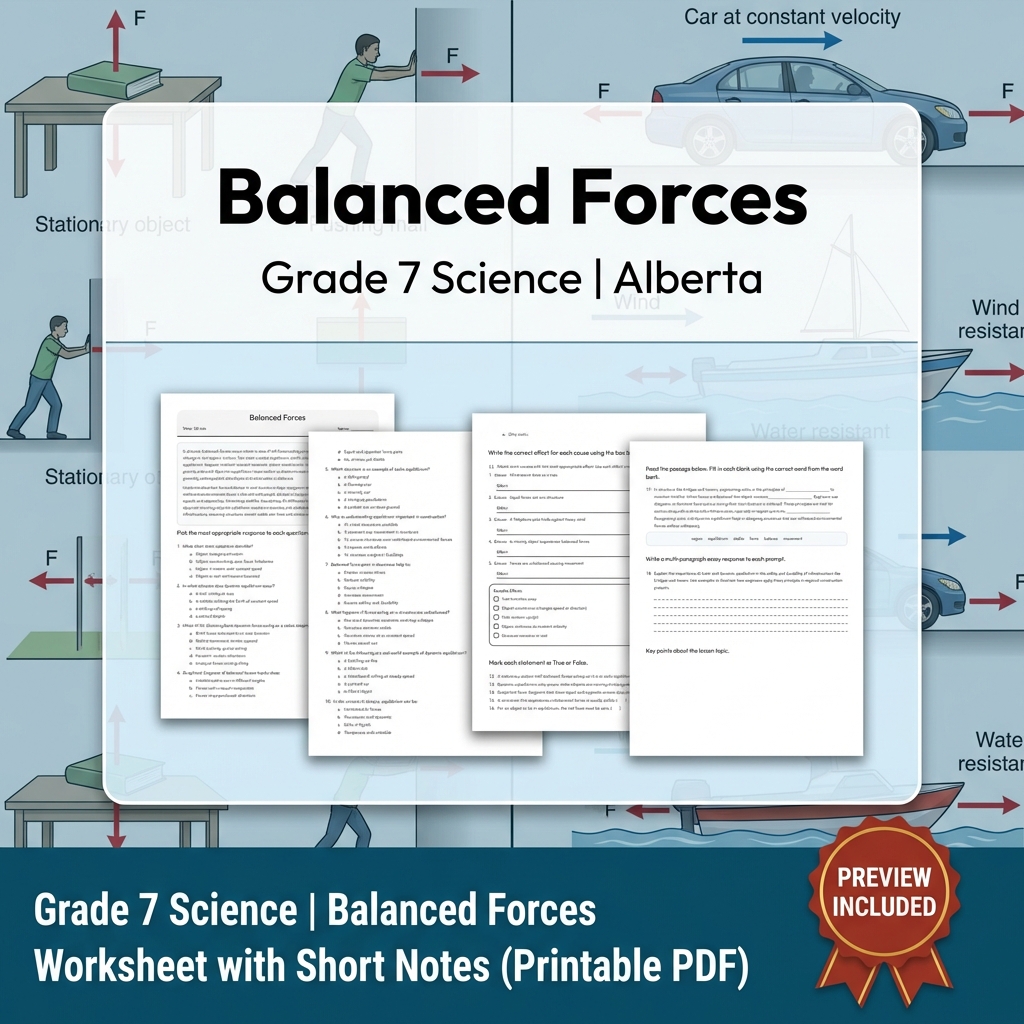
Grade 7 Science | Balanced Forces Worksheet with Short Notes (Printable PDF)
Created byMeadowlark WorksheetsLearning Objectives
- Explain the concept of static and dynamic equilibrium in different structures.
- Identify graphical representations of balanced force pairs in real-world examples.
- Describe how forces acting on objects relate to safety and durability in infrastructure.
Also included in: Grade 7 Science | Forces, Structures & Motion UNIT Worksheet Bundle
Instant download
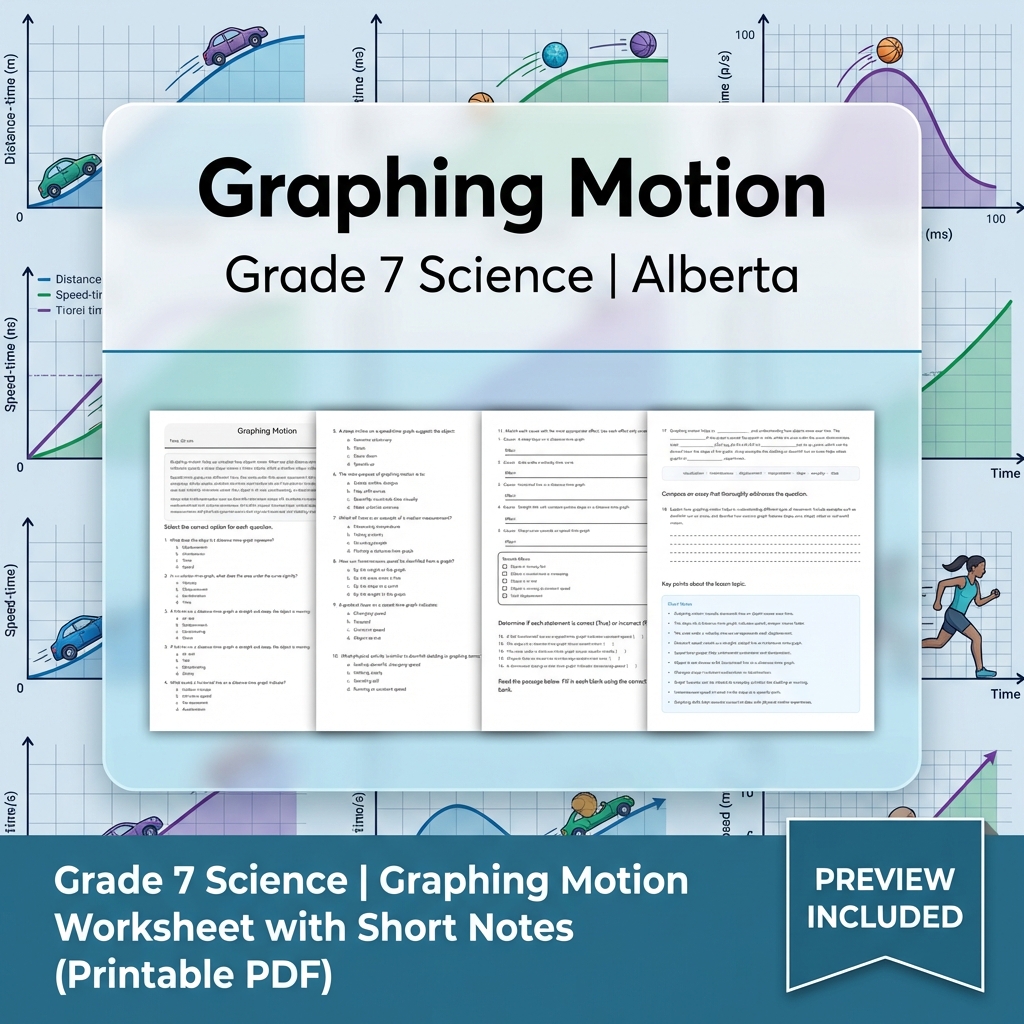
Grade 7 Science | Graphing Motion Worksheet with Short Notes (Printable PDF)
Created byMeadowlark WorksheetsLearning Objectives
- Understand how to interpret distance–time and speed–time graphs
- Learn to calculate and analyze the slope of a motion graph
- Identify the area under a velocity-time graph as displacement
Also included in: Grade 7 Science | Forces, Structures & Motion UNIT Worksheet Bundle
Instant download
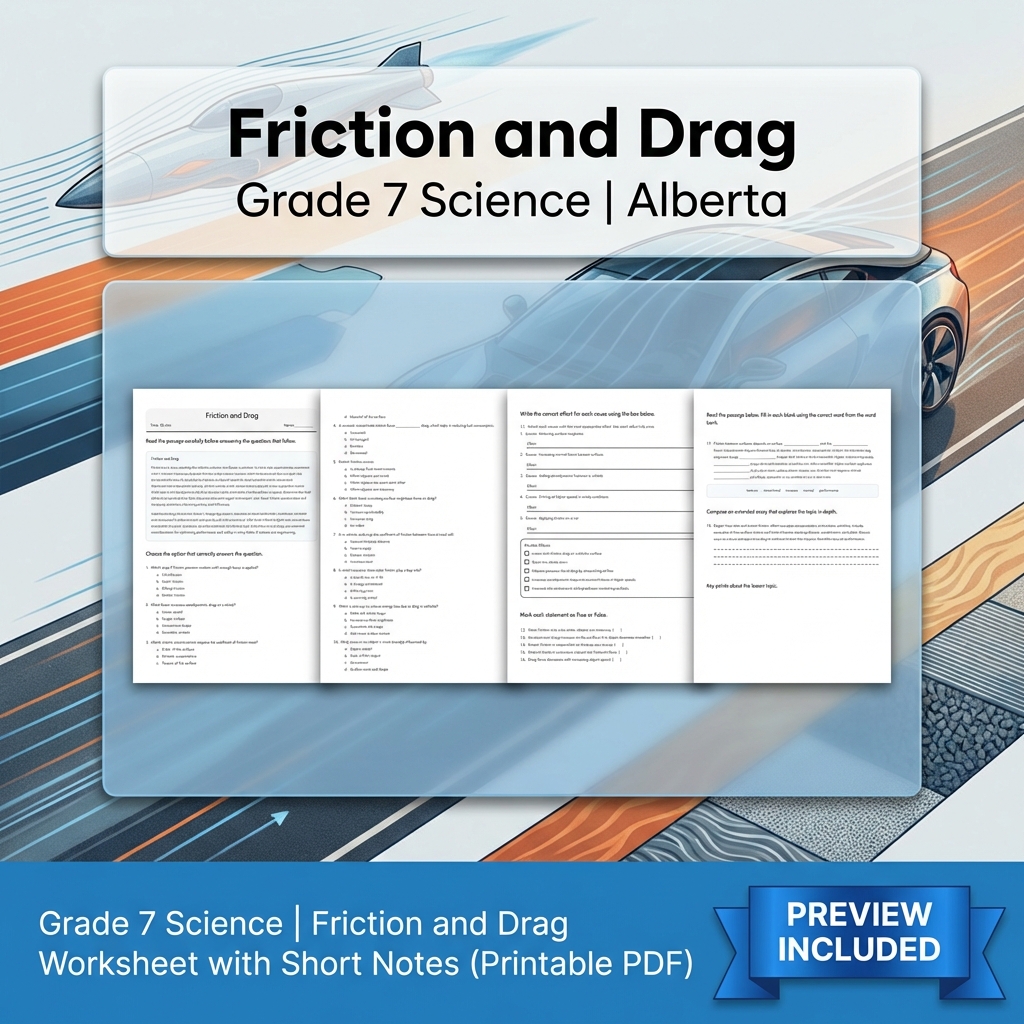
Grade 7 Science | Friction and Drag Worksheet with Short Notes (Printable PDF)
Created byMeadowlark WorksheetsLearning Objectives
- Understand how static and kinetic friction operate in real-world scenarios.
- Explore the effects of aerodynamic drag on moving objects such as vehicles and outdoor equipment.
- Analyze the relationship between surface texture, normal force, and frictional force.
Also included in: Grade 7 Science | Forces, Structures & Motion UNIT Worksheet Bundle
Instant download
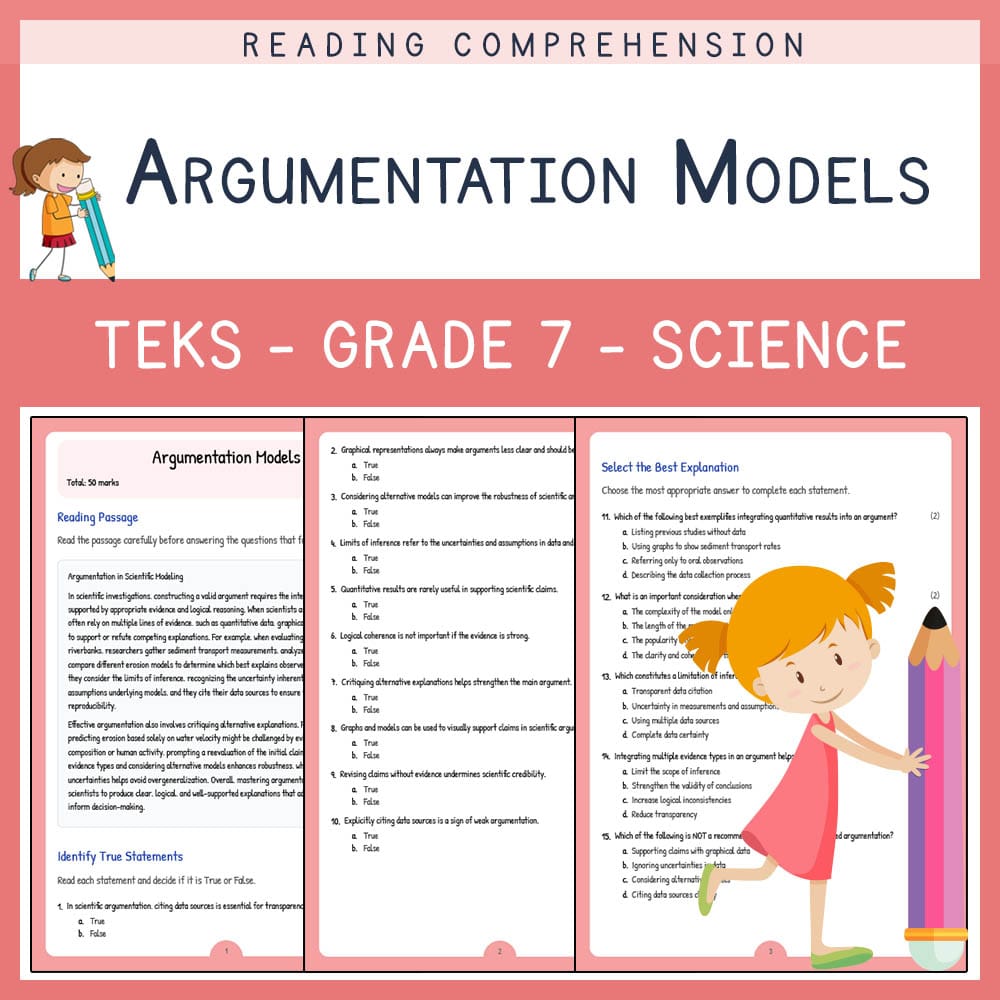
Grade 7 Science | Argumentation Models Worksheet | TEKS Alligned
 Created byLumora Learning
Learning Objectives
- Understand the components of evidence-based arguments including claims, evidence, and reasoning.
- Critically analyze and construct logical, coherent arguments supported by data and graphical representations.
- Evaluate alternative models and recognize limits of inference in argumentation.
Instant download

Grade 7 Science | Reaction Observations - Reading Comprehension Practice
Created byCoral Reef LearningLearning Objectives
- Identify signs of chemical reactions such as gas production, heat exchange, and color change.
- Observe and describe the formation of gases during chemical reactions.
- Connect observable indicators to the underlying particle interactions and reaction pathways.
Also included in: Matter and Chemical Change Lesson Bundle: Grade 7 Science Alberta +1 more
Instant download
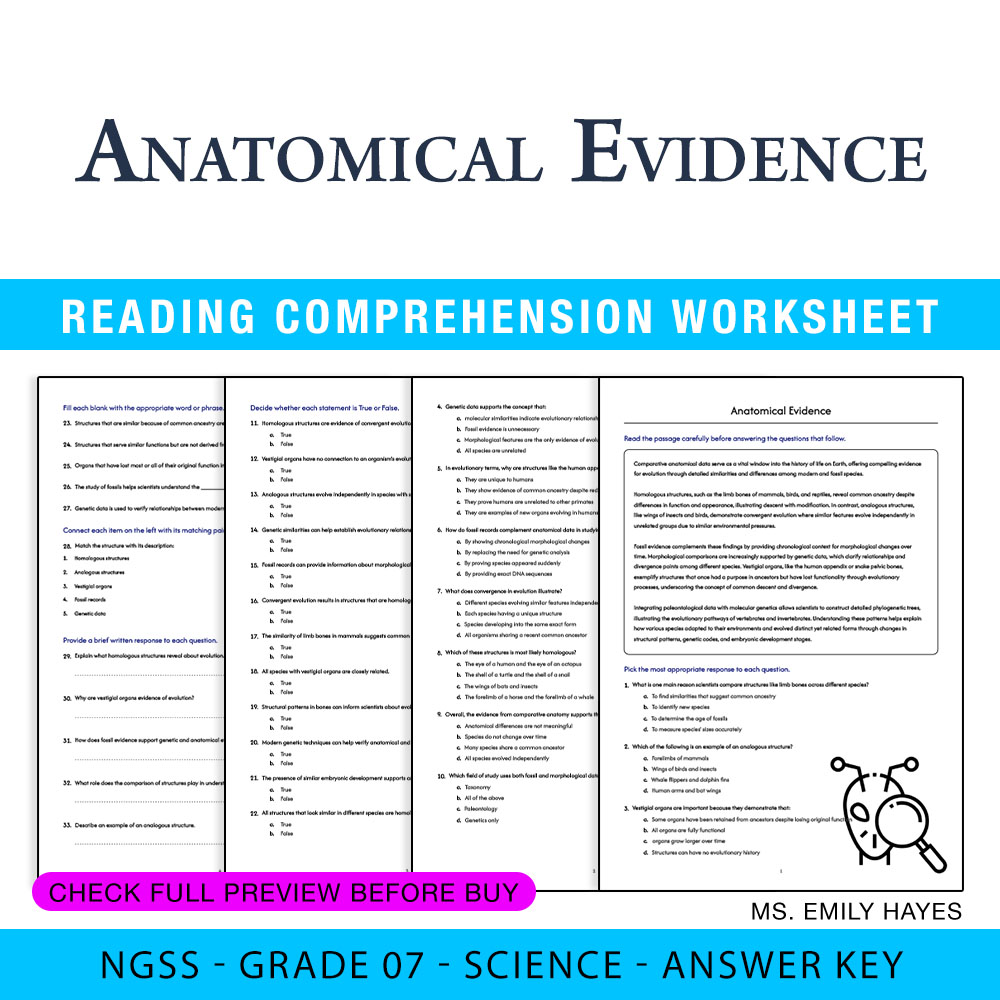
Grade 7 Science | Anatomical Evidence Worksheet (PDF + Answer Key)
Created byCopper Leaf ClassroomLearning Objectives
- Understand how comparative anatomy provides evidence for evolution.
- Identify homologous and analogous structures in different species.
- Explain how morphological, genetic, and paleontological data are integrated in evolutionary studies.
Instant download
About Grade 7 Science Worksheets
Browse 6,039 printable Grade 7 Science worksheets — ready-to-print PDFs with answer keys where available.
Every worksheet on MyTeachingSheets is created by independent teacher-authors and reviewed before publication. All resources download as printable PDFs for classroom, homework, or at-home practice, and many include answer keys. Preview any worksheet free before buying.