
Grade 7 Science Worksheets
6,039 worksheets
Grade 7 Science | Population Basics Worksheet | BC-Aligned
 Created byLumora Learning
Learning Objectives
- Understand the fundamental concepts of population including size, density, and distribution.
- Identify factors affecting population growth and decline.
- Explain how demographic and environmental factors influence populations over time.
Instant download

Grade 7 Science | Trophic Efficiency Worksheet | BC Aligned
Created byLumora LearningLearning Objectives
- Understand the concept of trophic efficiency and energy transfer in ecosystems.
- Explain why energy diminishes at higher trophic levels.
- Identify the visual representation of energy flow in food chains.
Instant download

Grade 7 Science | Keystone Species Worksheet | BC Standards
Created byLumora LearningLearning Objectives
- Understand the concept of keystone species and their impact on ecosystems.
- Identify examples of keystone species and their roles in maintaining ecological balance.
- Analyze how removal or decline of keystone species can affect food webs and biodiversity.
Instant download

Grade 7 Science | Producers and Consumers Worksheet | BC Aligned
Created byLumora LearningLearning Objectives
- Describe the roles of producers and consumers in an ecosystem.
- Explain how energy transfer occurs between trophic levels and why it is inefficient.
- Understand the structure of energy pyramids and population dynamics within a food web.
Instant download
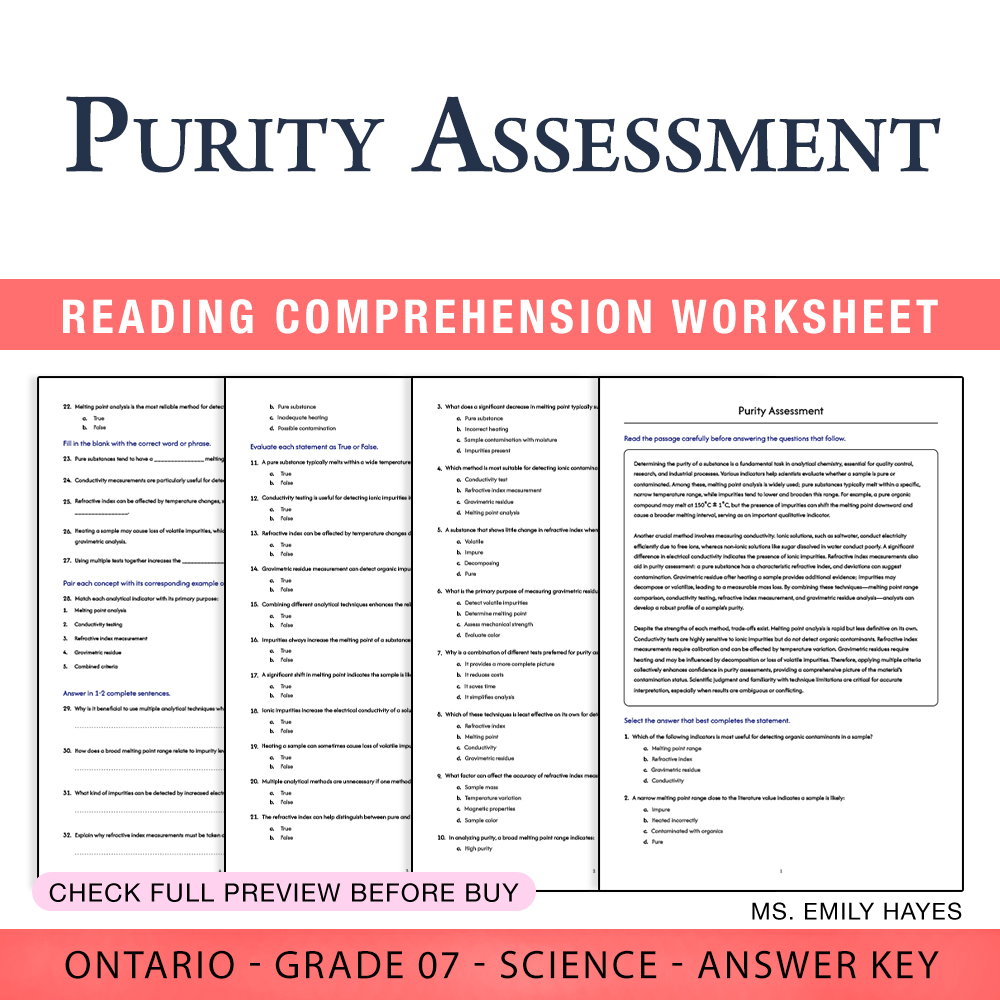
7th Grade Science | Purity Assessment Worksheet (PDF+ Answer Key)
 Created byCopper Leaf Classroom
Learning Objectives
- Understand the different analytical indicators used to assess the purity of a substance.
- Identify methods such as melting point analysis, conductivity testing, refractive index, and gravimetric residue.
- Evaluate which techniques provide the most reliable evidence when used together for purity assessment.
Instant download

Grade 7 Forces and Net Force on Motion Worksheet | Alberta Science
 Created byBRIGHT PATH RESOURCES
Learning Objectives
- Identify examples of contact and non-contact forces.
- Explain how net force relates to acceleration.
- Use key terms to describe how forces affect an object’s state of motion.
Also included in: Grade 7 Alberta Science Forces Structures and Motion Worksheet Bundle +1 more
Instant download
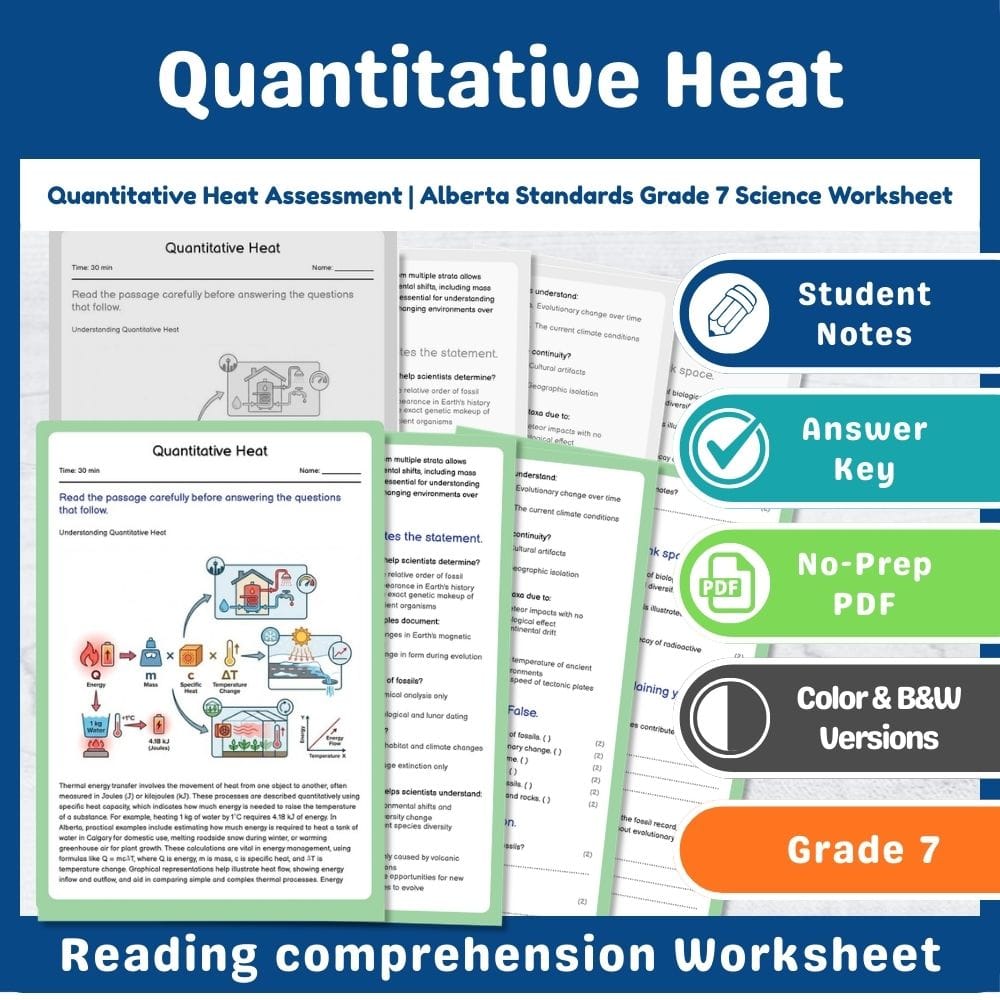
Quantitative Heat Assessment | Alberta Standards Grade 7 Science Worksheet
 Created byPrism Point Learning
Learning Objectives
- Understand how to quantify energy transfer in thermal processes using numerical representations.
- Apply calculations involving specific heat, mass, and temperature change to solve energy transfer problems.
- Interpret practical examples of heat transfer in real-world contexts such as heating water, melting snow, and warming air.
Also included in: Lesson Grade 7 Science Mini Bundle | Energy, Heat & Thermal Processes +1 more
Instant download

Surface Processes Assessment Printables | Grade 7 Science
Created byPrism Point LearningLearning Objectives
- Explain how weathering, erosion, transport, and deposition reshape Earth’s surface over different timescales.
- Compare mechanical and chemical weathering and identify evidence of each in land and soil features.
- Describe how water, coasts, and glaciers create distinctive landforms such as canyons, deltas, and moraines.
Also included in: Grade 7 Earth Systems Science Lesson Bundle: NGSS Review Worksheets
Instant download

Grade 7 Science – Surface Processes & Weathering Daily Reading Worksheet
 Created byBright Mind Resources
Learning Objectives
- Understand key concepts related to Science
- Apply knowledge through practice questions
- Demonstrate comprehension of the material
Also included in: Earth & Space Grade 7 Science Daily Reading Worksheets Bundle | TEKS +2 more
Instant download
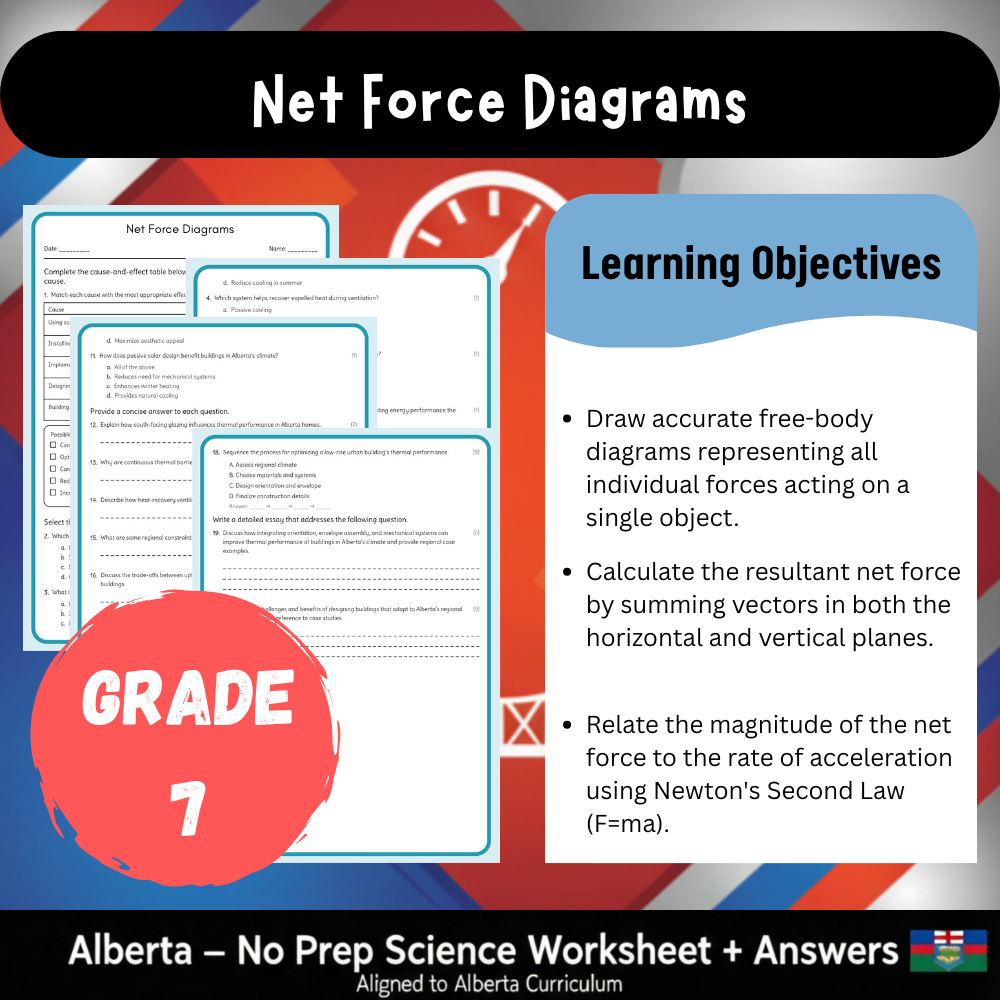
Grade 7 Science – Net Force Diagrams Worksheet (PDF) – Alberta Standards
Created byBright Mind ResourcesLearning Objectives
- Understand the concepts of free-body diagrams and how to represent forces graphically.
- Learn how to decompose forces on inclined surfaces into perpendicular components.
- Apply vector addition principles to find the net force magnitude and direction.
Instant download
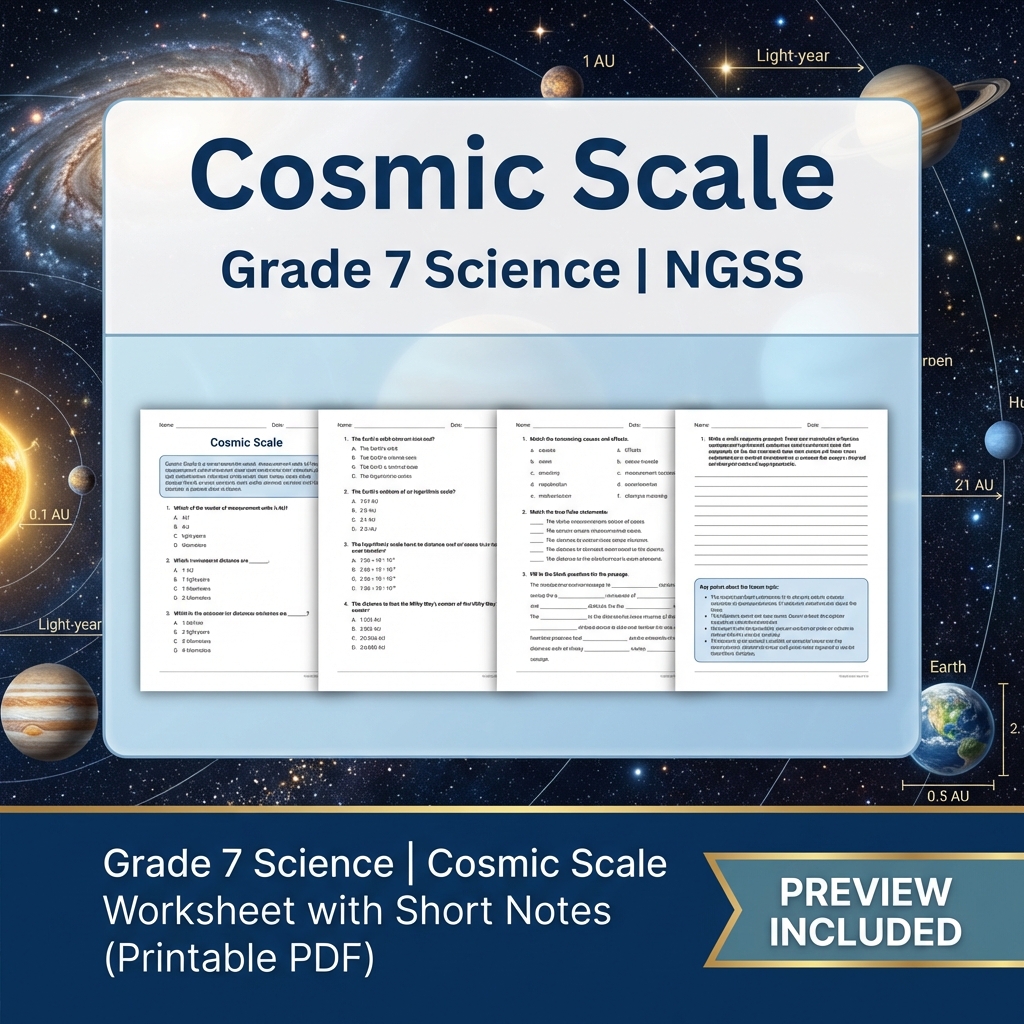
Grade 7 Science | Cosmic Scale Worksheet with Short Notes (Printable PDF)
 Created byMeadowlark Worksheets
Learning Objectives
- Understand and compare sizes and distances within the solar system and beyond using various units of measurement.
- Interpret scaled diagrams and logarithmic representations of astronomical data.
- Analyze how scale influences observed motion and observational limits in astronomy.
Also included in: Grade 7 Science | Earth's Place in the Universe Bundle(NGSS Aligned Worksheets) +1 more
Instant download
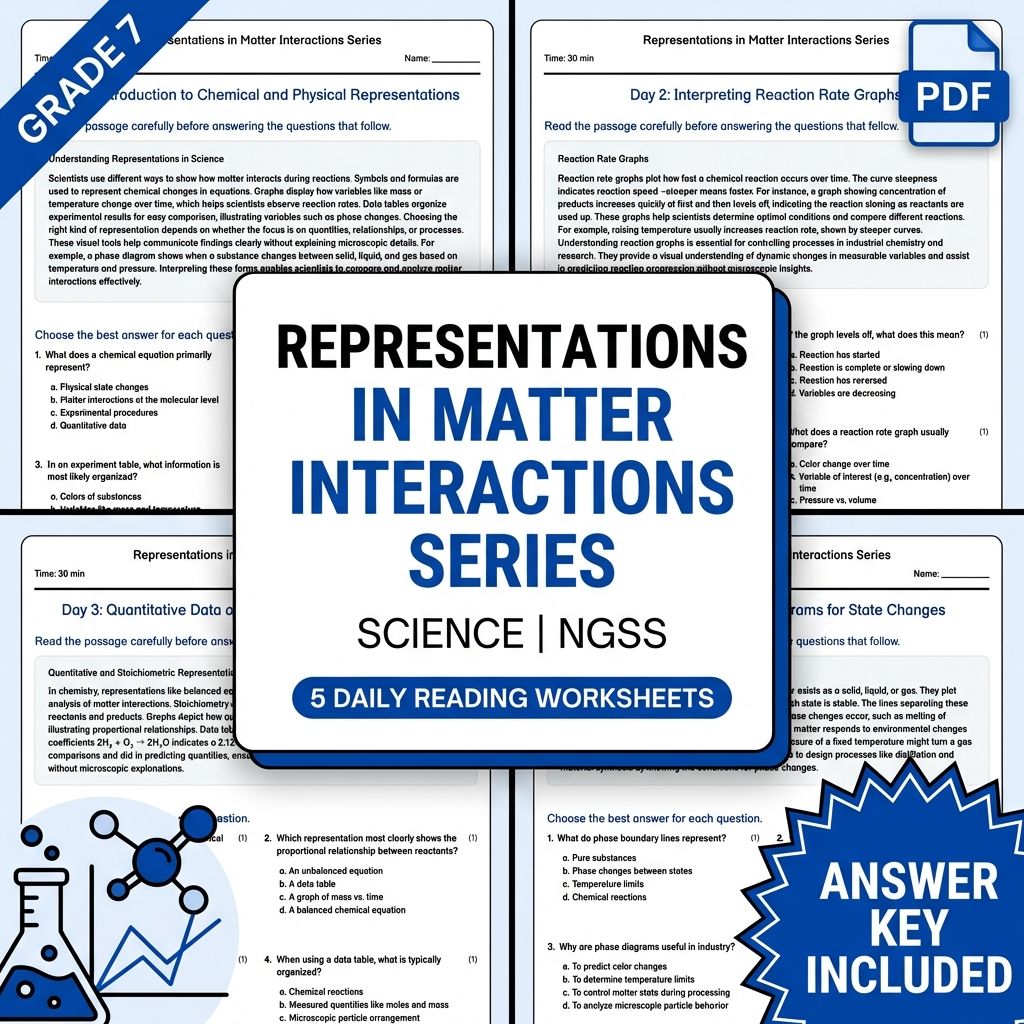
7th Grade Science | Representations in Matter Interactions (PDF + Answer Key)
Created byCopper Leaf ClassroomLearning Objectives
- Understand how various representations convey matter interactions, including symbolic equations, graphs, and data tables.
- Interpret reaction rate graphs, stoichiometric ratios, and phase diagrams.
- Select appropriate representations for quantitative comparison and communicate relationships among measurable variables.
Instant download

Grade 7 Science | Relative Geologic Time - Daily Reading Comprehension
 Created byCoral Reef Learning
Learning Objectives
- Understand the principles of relative dating in geology.
- Identify and interpret geological layers and their sequence.
- Explain the concept of superposition and how it relates to relative age.
Instant download

Science Investigation Variables Worksheet Grade 7 | Standards-Aligned Practice
JCreated byJ.S SheetsLearning Objectives
- Identify independent, dependent, and controlled variables in a scientific investigation.
- Connect an investigation question to measurable quantities and clear evidence.
- Describe how controlled variables improve the fairness and reliability of results.
Also included in: Grade 7 Evidence-Based Scientific Modeling Science Lesson Bundle: General +1 more
Instant download

Science Grade 7 Data Representations Worksheet | Standards-Aligned Practice
JCreated byJ.S SheetsLearning Objectives
- Explain how measurements are organized into tables with consistent units and meaningful labels.
- Describe how graphs represent data using correctly labeled axes, appropriate scales, and clear categories.
- Interpret graphs by using trends, clusters, and comparisons of groups based on the direction and shape of relationships.
Also included in: Grade 7 Evidence-Based Scientific Modeling Science Lesson Bundle: General +1 more
Instant download

Science Grade 7 Model-Based Predictions Worksheet | Standards-Aligned
JCreated byJ.S SheetsLearning Objectives
- Explain how models translate observations into representations that support predictions
- Differentiate physical, diagrammatic, and computational models and give an example of each
- Use model assumptions to predict outcomes for new conditions, such as lunar phases
Also included in: Grade 7 Evidence-Based Scientific Modeling Science Lesson Bundle: General +1 more
Instant download

Reaction Evidence Worksheet | Grade 7 Science Activities
Created byPrism Point LearningLearning Objectives
- Identify observable evidence that a chemical reaction has occurred, including gas evolution, precipitate formation, color change, and temperature change
- Explain how qualitative observations connect to reactant-to-product changes described by symbolic formulas
- Use particle- and energy-based reasoning to interpret reaction evidence during common classroom reactions
Also included in: Grade 7 Matter, States, and Reactions in Science Lesson Bundle TEKS
Instant download

Food Webs and Matter Cycles Learning Stations Activity | Grade 7 Science
 Created byMTS Academic Studio
Learning Objectives
- Trace direct and indirect changes through food webs
- Explain how matter moves through interconnected ecosystems
- Explain movement of nutrients, water, and pollutants
Also included in: Grade 7 Alberta Science Ecosystems Learning Stations Bundle
Instant download

Earth Materials & Interior Evidence Learning Stations | Grade 7 Science
Created byMTS Academic StudioLearning Objectives
- Describe Earth materials using observable rock and mineral properties
- Compare rock and mineral observations using consistent properties
- Distinguish direct observations from scientific inferences
Also included in: Grade 7 Alberta Science Planet Earth Learning Stations Bundle
Instant download

Rock Cycle Learning Stations Activity | Grade 7 Alberta Science
Created byMTS Academic StudioLearning Objectives
- Identify evidence of igneous, sedimentary, and metamorphic rock processes
- Explain how weathering and erosion reshape Earth's surface
- Connect transport and deposition to changing surface materials
Also included in: Grade 7 Alberta Science Planet Earth Learning Stations Bundle
Instant download

Energy Sources and Conservation Learning Stations | Grade 7 Science
Created byMTS Academic StudioLearning Objectives
- Compare heating systems by energy source and resource needs
- Identify energy losses associated with heating systems
- Compare environmental effects of different heating choices
Also included in: Grade 7 Heat & Temperature Station Lesson Bundle | Alberta Science
Instant download

Structures and Forces Learning Stations Activity | Grade 7 Science
Created byMTS Academic StudioLearning Objectives
- Identify external loads acting on structures
- Explain tension, compression, shear, bending and twisting
- Interpret deformation as evidence of structural stress
Also included in: Grade 7 Alberta Science: Structures and Forces Learning Stations Bundle
Instant download

Fossils and Geological Time Learning Stations Activity | Grade 7 Science
Created byMTS Academic StudioLearning Objectives
- Compare fossil preservation processes and their effects on evidence
- Interpret fossils and rock relationships to infer past environments
- Sequence geological events using fossil and rock evidence
Also included in: Grade 7 Alberta Science Planet Earth Learning Stations Bundle
Instant download

Heat and Temperature Learning Stations Activity | Grade 7 Alberta Science
Created byMTS Academic StudioLearning Objectives
- Explain thermal energy transfer using observations and measurements
- Compare evidence from real heating and cooling problems
- Identify limitations and uncertainties in scientific conclusions
Also included in: Grade 7 Heat & Temperature Station Lesson Bundle | Alberta Science
Instant download

Heat and Temperature Learning Stations Activity | Grade 7 Science Alberta
Created byMTS Academic StudioLearning Objectives
- Trace energy from its source to a useful heating purpose
- Compare how heating technologies control energy transfer
- Explain how resources influence heating technology design
Also included in: Grade 7 Heat & Temperature Station Lesson Bundle | Alberta Science
Instant download

Structures and Forces Learning Stations Activity | Grade 7 Science
Created byMTS Academic StudioLearning Objectives
- Compare strength, stiffness, flexibility, and fatigue in structures
- Explain how joints and connections transfer structural loads
- Identify connections that can become critical structural failure points
Also included in: Grade 7 Alberta Science: Structures and Forces Learning Stations Bundle
Instant download

Plants for Food and Fibre Learning Stations Activity | Grade 7 Science
Created byMTS Academic StudioLearning Objectives
- Identify predictions and fair comparisons in agricultural investigations
- Interpret measurements and observations as scientific evidence
- Recognize uncertainty when interpreting investigation results
Instant download

Structures and Forces Learning Stations Activity | Grade 7 Alberta Science
Created byMTS Academic StudioLearning Objectives
- Explain how design margins prepare structures for uncertain loads
- Compare structural improvements involving shape, bracing, connections and damping
- Evaluate structural changes using safety, cost, function and environmental considerations
Also included in: Grade 7 Alberta Science: Structures and Forces Learning Stations Bundle
Instant download

Plant Reproduction Learning Stations | Seeds & Vegetative Propagation Grade 7
Created byMTS Academic StudioLearning Objectives
- Compare seed reproduction with forms of vegetative propagation
- Explain how pollination leads to seed formation
- Explain how germination produces a new plant
Instant download

Plant Structures Learning Stations Activity | Grade 7 Alberta Science
Created byMTS Academic StudioLearning Objectives
- Explain how roots support important plant life processes
- Explain how stems, leaves and flowers support plant functions
- Connect investigation evidence with water movement in plants
Instant download

Ecosystem Evidence Learning Stations Activity | Grade 7 Science Alberta
Created byMTS Academic StudioLearning Objectives
- Explain ecosystem changes using observations and monitoring evidence
- Compare investigations with long-term ecosystem monitoring
- Evaluate ecosystem actions using available scientific evidence
Also included in: Grade 7 Alberta Science Ecosystems Learning Stations Bundle
Instant download

Ecosystem Change Learning Stations Activity | Grade 7 Alberta Science
Created byMTS Academic StudioLearning Objectives
- Compare ecological change after natural and human-caused disturbances
- Explain patterns revealed by repeated ecosystem observations
- Interpret changes in species and environmental conditions over time
Also included in: Grade 7 Alberta Science Ecosystems Learning Stations Bundle
Instant download

Plants for Food and Fibre Learning Stations | Grade 7 Alberta Science
Created byMTS Academic StudioLearning Objectives
- Identify products supplied through managed plant production
- Compare land changes across plant-production systems
- Explain how plant-production systems use resources
Instant download

Conduction, Convection and Radiation Learning Stations | Grade 7 Science
Created byMTS Academic StudioLearning Objectives
- Identify conduction, convection and radiation in heating and cooling systems
- Explain how materials affect paths of thermal-energy transfer
- Explain how design choices increase or reduce thermal-energy transfer
Also included in: Grade 7 Heat & Temperature Station Lesson Bundle | Alberta Science
Instant download

Structures and Forces Learning Stations Activity | Grade 7 Science Alberta
Created byMTS Academic StudioLearning Objectives
- Explain how forces affect structures using investigation evidence
- Compare observations and measurements from structural investigations
- Identify limitations and uncertainty in engineering conclusions
Also included in: Grade 7 Alberta Science: Structures and Forces Learning Stations Bundle
Instant download

Interactions and Ecosystems Learning Stations Activity | Grade 7 Science
Created byMTS Academic StudioLearning Objectives
- Compare intended benefits with unintended environmental consequences
- Evaluate environmental choices using scientific monitoring evidence
- Interpret long-term observations when comparing environmental alternatives
Also included in: Grade 7 Alberta Science Ecosystems Learning Stations Bundle
Instant download

Soil, Crops and Pest Control Learning Stations | Grade 7 Science
Created byMTS Academic StudioLearning Objectives
- Explain how soil conditions affect plant production
- Explain how water and nutrients influence crop growth
- Compare biological, chemical and management approaches to crop problems
Instant download

Heat and Temperature Learning Stations | Particle Model Grade 7 Science
Created byMTS Academic StudioLearning Objectives
- Explain heating and cooling effects using the particle model
- Distinguish temperature change from thermal-energy transfer
- Explain expansion and contraction in materials
Also included in: Grade 7 Heat & Temperature Station Lesson Bundle | Alberta Science
Instant download

Structures and Forces Learning Stations Activity | Grade 7 Science Alberta
Created byMTS Academic StudioLearning Objectives
- Compare frame and shell structures by form and function
- Explain how different materials help structures support loads
- Identify factors that contribute to structural success or failure
Also included in: Grade 7 Alberta Science: Structures and Forces Learning Stations Bundle
Instant download

Planet Earth Evidence & Decisions Learning Stations | Grade 7 Science
Created byMTS Academic StudioLearning Objectives
- Explain Earth processes using observations and measurements
- Compare evidence sources used to investigate Earth science problems
- Recognize uncertainty in scientific explanations and interpretations
Also included in: Grade 7 Alberta Science Planet Earth Learning Stations Bundle
Instant download

Habitats and Human Needs Learning Stations Activity | Grade 7 Science
Created byMTS Academic StudioLearning Objectives
- Identify resources and conditions organisms require from habitats
- Explain how human activities change habitat conditions
- Explain changes in relationships among species
Also included in: Grade 7 Alberta Science Ecosystems Learning Stations Bundle
Instant download

Plate Tectonics Learning Stations | Grade 7 Earth Science Activity
Created byMTS Academic StudioLearning Objectives
- Compare evidence of crustal movement from different geological processes
- Explain how plate movements deform rock and create landforms
- Interpret earthquakes and volcanism as evidence of crustal change
Also included in: Grade 7 Alberta Science Planet Earth Learning Stations Bundle
Instant download
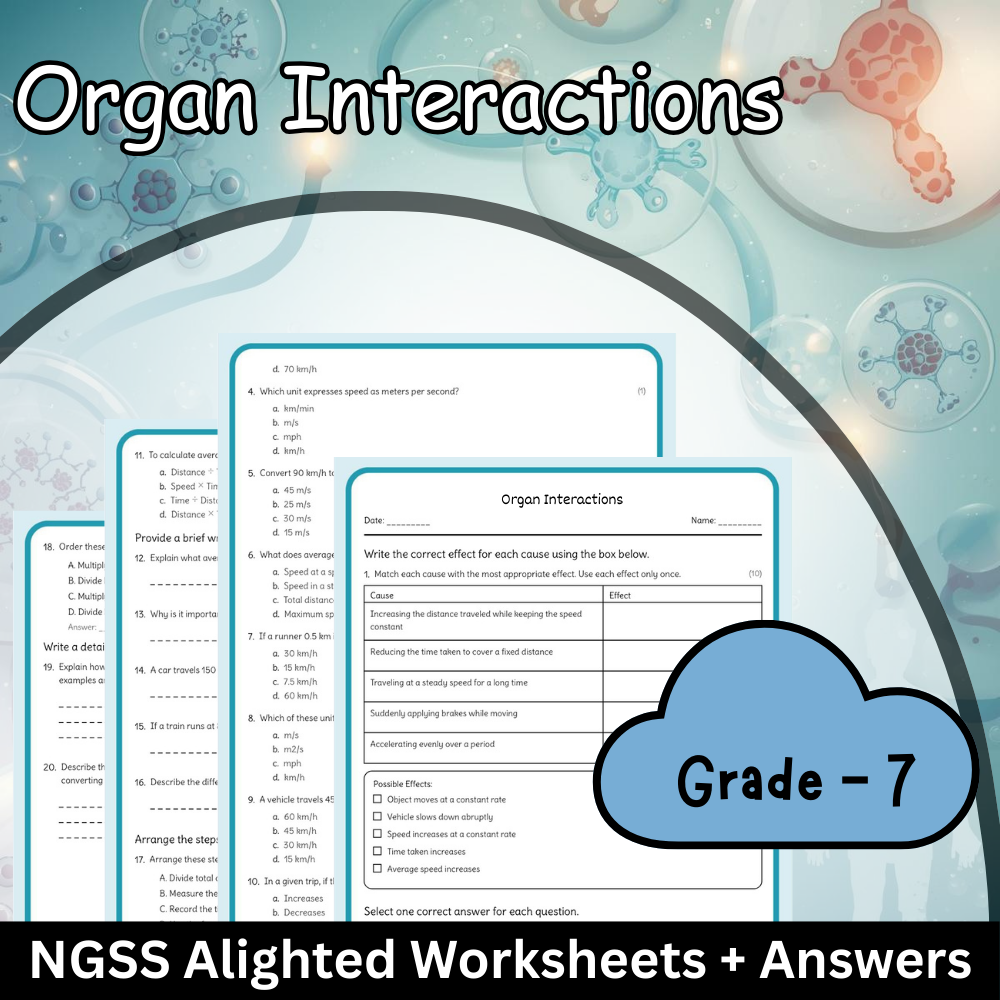
Grade 7 Science – Organ Interactions Worksheet + Answer Key | NGSS Aligned
Created byBright Mind ResourcesLearning Objectives
- Describe the main organ systems in multicellular animals and their functions.
- Explain how different organ systems cooperate to support processes like gas exchange, nutrient distribution, and homeostasis.
- Compare system interactions in humans and plants, emphasizing dependencies and feedback mechanisms.
Instant download
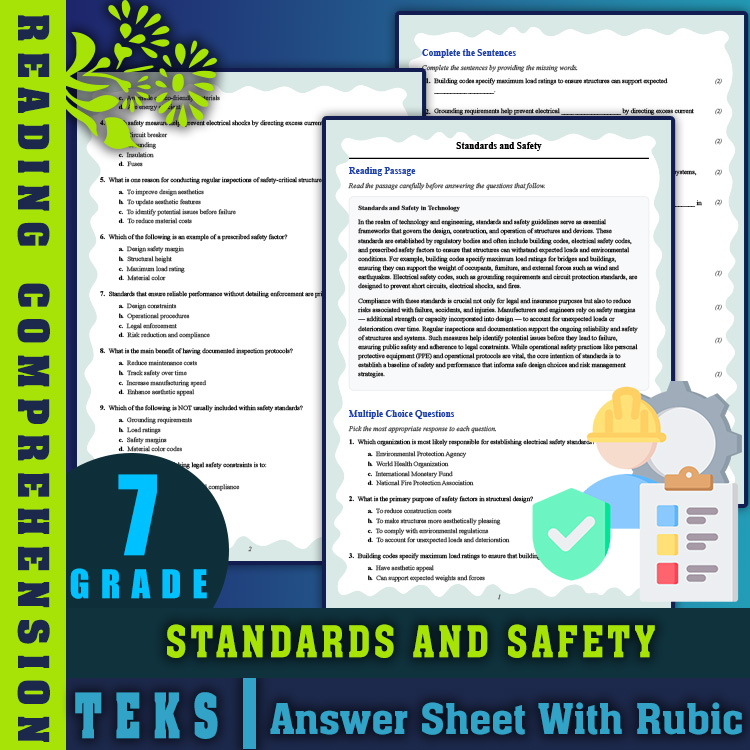
7th Grade Science | Standards and Safety Reading Worksheet with Answer Key (PDF)
JCreated byJ.S SheetsLearning Objectives
- Understand the importance of safety standards in technological design.
- Identify key safety considerations such as building codes, electrical safety, and safety margins.
Instant download

Grade 7 Science – Reaction Evidence & Gas Production Daily Reading Worksheet
Created byBright Mind ResourcesLearning Objectives
- Identify signs of gas evolution during chemical reactions
- Understand how gas production indicates reaction changes
- Connect observable evidence to chemical processes
Also included in: 7th Grade States of Matter Science Daily Reading Lesson Bundle | TEKS +2 more
Instant download

Grade 7 Science | Particle Model - Daily Reading Comprehension
Created byCoral Reef LearningLearning Objectives
- Understand the concept that matter is made up of tiny particles
- Recognize that particles are in constant motion
- Relate temperature to particle motion and energy
Instant download
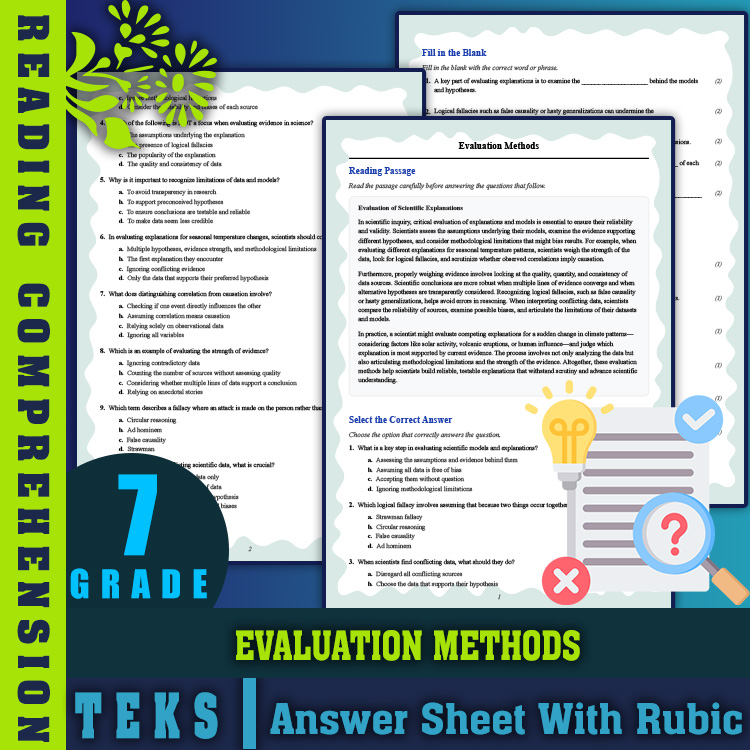
7th Grade Science | Evaluation Methods Reading Worksheet (PDF + Answer Key)
JCreated byJ.S SheetsLearning Objectives
- Develop skills to critically analyze explanations, models, and evidence.
- Identify logical fallacies, distinguish correlation from causation, and evaluate data limitations.
- Apply evaluation techniques to real-world scientific scenarios and interpret conflicting information.
Instant download
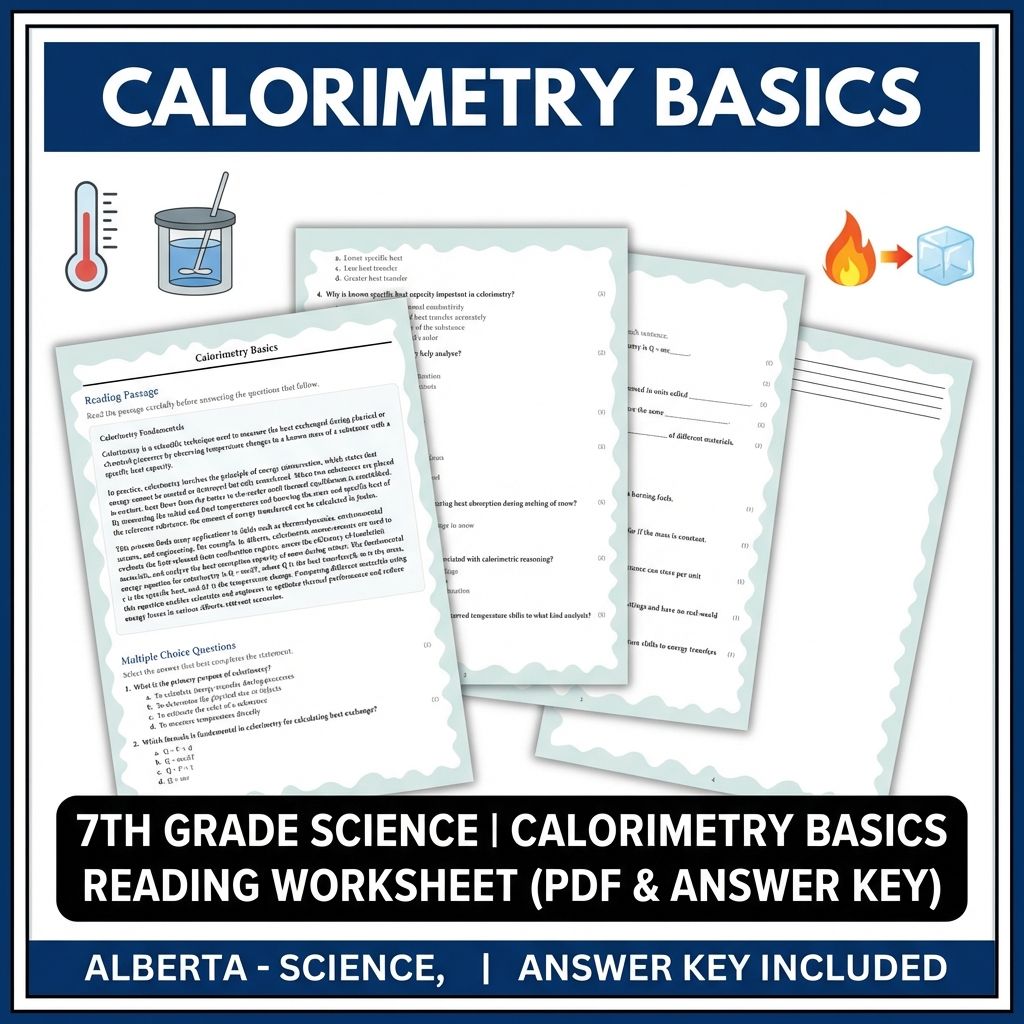
7th Grade Science | Calorimetry Basics Reading Worksheet (PDF & Answer Key)
JCreated byJ.S SheetsLearning Objectives
- Understand the principles of calorimetry in measuring energy transfer.
- Explain how temperature changes relate to heat exchange in different scenarios.
- Apply energy conservation equations to real-world thermal processes.
Also included in: Grade 7 Science UNIT Bundle | Heat Transfer, Convection & Energy Worksheets +1 more
Instant download
About Grade 7 Science Worksheets
Browse 6,039 printable Grade 7 Science worksheets — ready-to-print PDFs with answer keys where available.
Every worksheet on MyTeachingSheets is created by independent teacher-authors and reviewed before publication. All resources download as printable PDFs for classroom, homework, or at-home practice, and many include answer keys. Preview any worksheet free before buying.