
Grade 7 Science Worksheets
6,039 worksheets
Ecosystem Evidence Learning Stations Activity | Grade 7 Science Alberta
 Created byMTS Academic Studio
Learning Objectives
- Explain ecosystem changes using observations and monitoring evidence
- Compare investigations with long-term ecosystem monitoring
- Evaluate ecosystem actions using available scientific evidence
Also included in: Grade 7 Alberta Science Ecosystems Learning Stations Bundle
Instant download

Ecosystem Change Learning Stations Activity | Grade 7 Alberta Science
Created byMTS Academic StudioLearning Objectives
- Compare ecological change after natural and human-caused disturbances
- Explain patterns revealed by repeated ecosystem observations
- Interpret changes in species and environmental conditions over time
Also included in: Grade 7 Alberta Science Ecosystems Learning Stations Bundle
Instant download

Plants for Food and Fibre Learning Stations | Grade 7 Alberta Science
Created byMTS Academic StudioLearning Objectives
- Identify products supplied through managed plant production
- Compare land changes across plant-production systems
- Explain how plant-production systems use resources
Instant download

Conduction, Convection and Radiation Learning Stations | Grade 7 Science
Created byMTS Academic StudioLearning Objectives
- Identify conduction, convection and radiation in heating and cooling systems
- Explain how materials affect paths of thermal-energy transfer
- Explain how design choices increase or reduce thermal-energy transfer
Also included in: Grade 7 Heat & Temperature Station Lesson Bundle | Alberta Science
Instant download

Interactions and Ecosystems Learning Stations Activity | Grade 7 Science
Created byMTS Academic StudioLearning Objectives
- Compare intended benefits with unintended environmental consequences
- Evaluate environmental choices using scientific monitoring evidence
- Interpret long-term observations when comparing environmental alternatives
Also included in: Grade 7 Alberta Science Ecosystems Learning Stations Bundle
Instant download

Soil, Crops and Pest Control Learning Stations | Grade 7 Science
Created byMTS Academic StudioLearning Objectives
- Explain how soil conditions affect plant production
- Explain how water and nutrients influence crop growth
- Compare biological, chemical and management approaches to crop problems
Instant download

Heat and Temperature Learning Stations | Particle Model Grade 7 Science
Created byMTS Academic StudioLearning Objectives
- Explain heating and cooling effects using the particle model
- Distinguish temperature change from thermal-energy transfer
- Explain expansion and contraction in materials
Also included in: Grade 7 Heat & Temperature Station Lesson Bundle | Alberta Science
Instant download

Habitats and Human Needs Learning Stations Activity | Grade 7 Science
Created byMTS Academic StudioLearning Objectives
- Identify resources and conditions organisms require from habitats
- Explain how human activities change habitat conditions
- Explain changes in relationships among species
Also included in: Grade 7 Alberta Science Ecosystems Learning Stations Bundle
Instant download

Earth Materials & Interior Evidence Learning Stations | Grade 7 Science
Created byMTS Academic StudioLearning Objectives
- Describe Earth materials using observable rock and mineral properties
- Compare rock and mineral observations using consistent properties
- Distinguish direct observations from scientific inferences
Also included in: Grade 7 Alberta Science Planet Earth Learning Stations Bundle
Instant download

Structures and Forces Learning Stations Activity | Grade 7 Science Alberta
Created byMTS Academic StudioLearning Objectives
- Compare frame and shell structures by form and function
- Explain how different materials help structures support loads
- Identify factors that contribute to structural success or failure
Also included in: Grade 7 Alberta Science: Structures and Forces Learning Stations Bundle
Instant download

Planet Earth Evidence & Decisions Learning Stations | Grade 7 Science
Created byMTS Academic StudioLearning Objectives
- Explain Earth processes using observations and measurements
- Compare evidence sources used to investigate Earth science problems
- Recognize uncertainty in scientific explanations and interpretations
Also included in: Grade 7 Alberta Science Planet Earth Learning Stations Bundle
Instant download

Energy Sources and Conservation Learning Stations | Grade 7 Science
Created byMTS Academic StudioLearning Objectives
- Compare heating systems by energy source and resource needs
- Identify energy losses associated with heating systems
- Compare environmental effects of different heating choices
Also included in: Grade 7 Heat & Temperature Station Lesson Bundle | Alberta Science
Instant download

Food Webs and Matter Cycles Learning Stations Activity | Grade 7 Science
Created byMTS Academic StudioLearning Objectives
- Trace direct and indirect changes through food webs
- Explain how matter moves through interconnected ecosystems
- Explain movement of nutrients, water, and pollutants
Also included in: Grade 7 Alberta Science Ecosystems Learning Stations Bundle
Instant download

Plate Tectonics Learning Stations | Grade 7 Earth Science Activity
Created byMTS Academic StudioLearning Objectives
- Compare evidence of crustal movement from different geological processes
- Explain how plate movements deform rock and create landforms
- Interpret earthquakes and volcanism as evidence of crustal change
Also included in: Grade 7 Alberta Science Planet Earth Learning Stations Bundle
Instant download
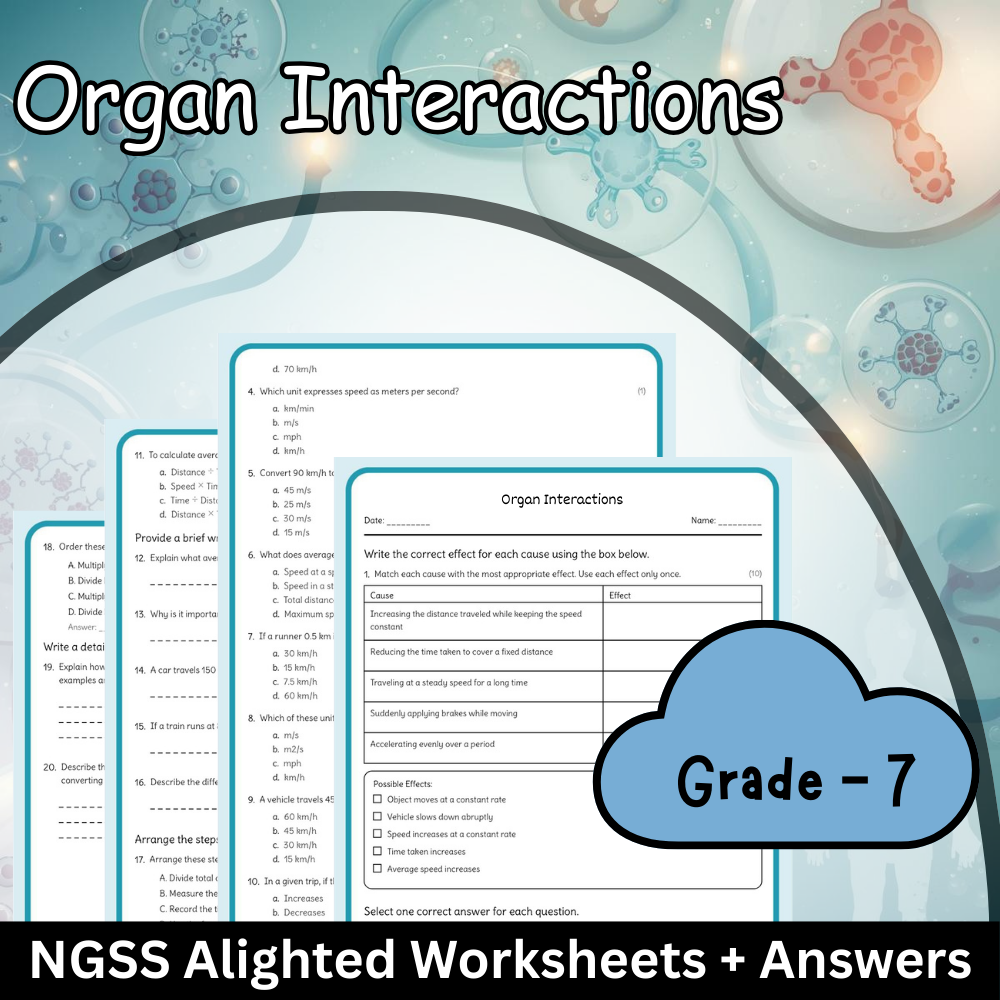
Grade 7 Science – Organ Interactions Worksheet + Answer Key | NGSS Aligned
 Created byBright Mind Resources
Learning Objectives
- Describe the main organ systems in multicellular animals and their functions.
- Explain how different organ systems cooperate to support processes like gas exchange, nutrient distribution, and homeostasis.
- Compare system interactions in humans and plants, emphasizing dependencies and feedback mechanisms.
Instant download
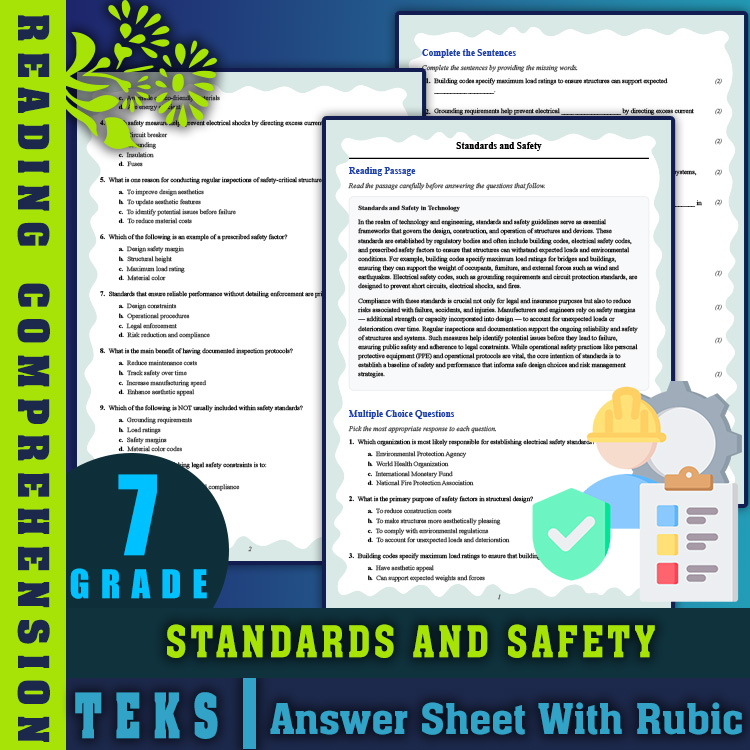
7th Grade Science | Standards and Safety Reading Worksheet with Answer Key (PDF)
JCreated byJ.S SheetsLearning Objectives
- Understand the importance of safety standards in technological design.
- Identify key safety considerations such as building codes, electrical safety, and safety margins.
Instant download

Grade 7 Science – Reaction Evidence & Gas Production Daily Reading Worksheet
Created byBright Mind ResourcesLearning Objectives
- Identify signs of gas evolution during chemical reactions
- Understand how gas production indicates reaction changes
- Connect observable evidence to chemical processes
Also included in: 7th Grade States of Matter Science Daily Reading Lesson Bundle | TEKS +2 more
Instant download

Grade 7 Science | Particle Model - Daily Reading Comprehension
 Created byCoral Reef Learning
Learning Objectives
- Understand the concept that matter is made up of tiny particles
- Recognize that particles are in constant motion
- Relate temperature to particle motion and energy
Instant download
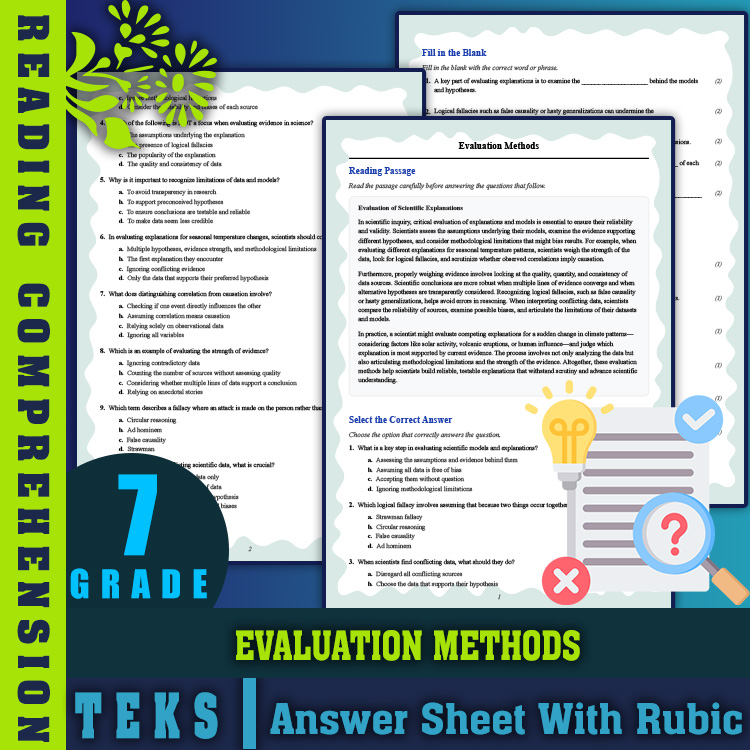
7th Grade Science | Evaluation Methods Reading Worksheet (PDF + Answer Key)
JCreated byJ.S SheetsLearning Objectives
- Develop skills to critically analyze explanations, models, and evidence.
- Identify logical fallacies, distinguish correlation from causation, and evaluate data limitations.
- Apply evaluation techniques to real-world scientific scenarios and interpret conflicting information.
Instant download
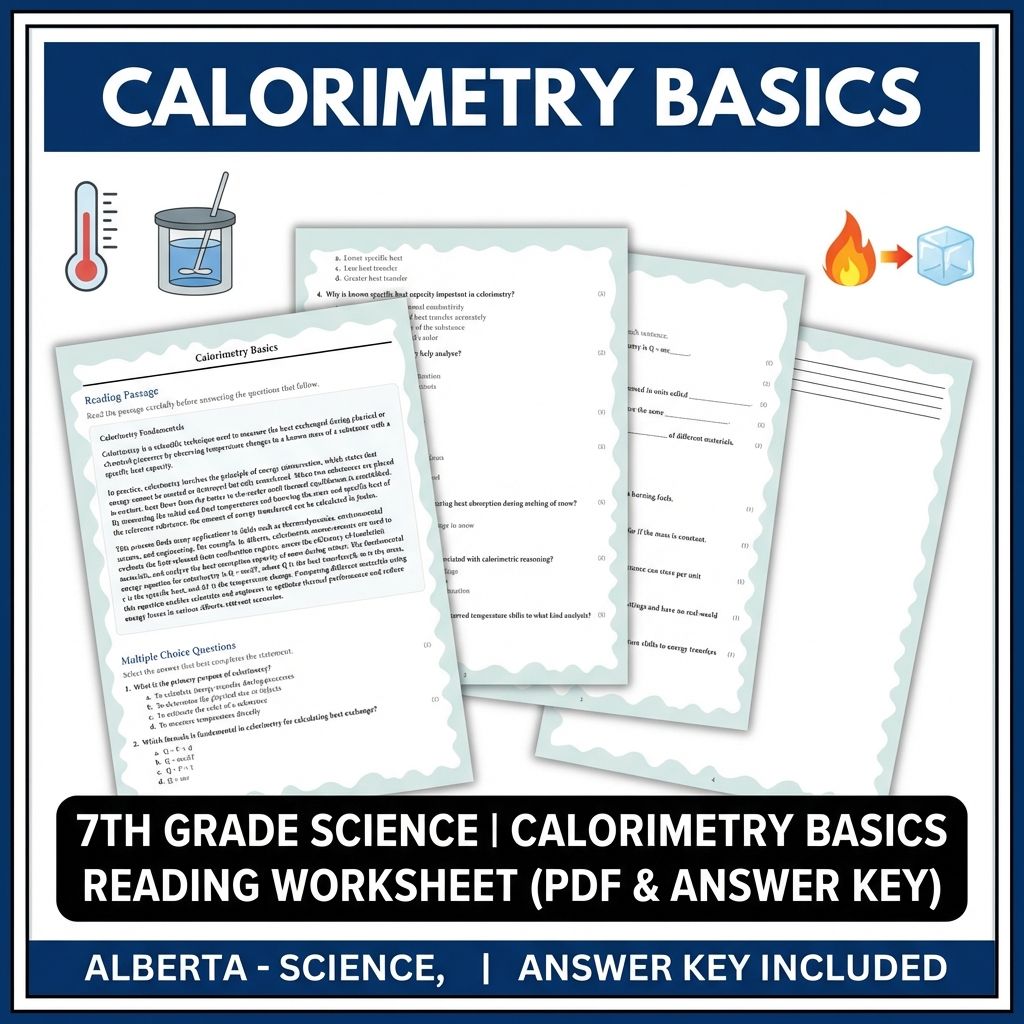
7th Grade Science | Calorimetry Basics Reading Worksheet (PDF & Answer Key)
JCreated byJ.S SheetsLearning Objectives
- Understand the principles of calorimetry in measuring energy transfer.
- Explain how temperature changes relate to heat exchange in different scenarios.
- Apply energy conservation equations to real-world thermal processes.
Also included in: Grade 7 Science UNIT Bundle | Heat Transfer, Convection & Energy Worksheets +1 more
Instant download
7th Grade Science | Cell Communication Reading Worksheet (PDF + Answer Key)
JCreated byJ.S SheetsLearning Objectives
- Understand how cells communicate through chemical and electrical signals.
- Identify the role of receptor proteins, gap junctions, and plasmodesmata in cell signaling.
- Explain the processes of signal amplification and feedback regulation in cell communication.
Instant download

Simple Machines Overview Worksheet | Grade 7 Science Activities
 Created byPrism Point Learning
Learning Objectives
- Explain how simple machines change the magnitude or direction of a force to make work easier
- Describe the roles of levers, pulleys, wedges, screws, inclined planes, and wheel-and-axles in everyday tools
- Calculate mechanical advantage from input and output forces and interpret what the result means
Instant download
Grade 7 Science | Particle Model Worksheet (PDF) – Standards-Based Practice
Created byBright Mind ResourcesLearning Objectives
- Understand how the particle model explains the behavior of matter.
- Describe how chemical changes involve breaking and forming bonds between particles.
- Explain the conservation of mass during chemical reactions using the particle model.
Instant download
7th Grade Science | Ecosystem Dynamics Worksheet (PDF+ Answer Key)
 Created byCopper Leaf Classroom
Learning Objectives
- Describe how energy flows through food chains, food webs, and trophic pyramids in ecosystems.
- Explain the cycling of matter and the roles of decomposers in nutrient recycling.
- Analyze how changes in inputs or energy pathways affect community composition and ecosystem functions.
Instant download
7th Grade Science | Evaporation & Crystallization Worksheet (PDF + Answer Key)
Created byCopper Leaf ClassroomLearning Objectives
- Explain the processes of evaporation and crystallization and how they recover solutes from solutions.
- Identify factors that influence crystal formation, size, and purity.
- Describe real-world examples of crystallization, such as salt production and sugar crystallization.
Instant download

7th Grade Science Worksheet – Trophic Efficiency (PDF) BC Standards
 Created byEvergreen Desk Education
Learning Objectives
- Define trophic efficiency and describe how energy transfer changes between trophic levels
- Explain why energy pyramids show fewer organisms and less energy at higher levels
- Use a trophic efficiency idea to interpret ecosystem energy flow and predator-prey patterns
Instant download

Grade 7 Science – Earth Structure & Interior | Daily Reading Worksheet
Created byBright Mind ResourcesLearning Objectives
- Identify and describe the main layers of the Earth: crust, mantle, outer core, and inner core.
- Understand how seismic waves provide evidence for Earth's internal structure.
- Explain mantle convection and its role in plate motion.
Also included in: Earth & Space Grade 7 Science Daily Reading Worksheets Bundle | TEKS +2 more
Instant download

Grade 7 Heat Energy Temperature Change Worksheet | Alberta Science Activity
 Created byBRIGHT PATH RESOURCES
Learning Objectives
- Explain how temperature change relates to energy transfer in heating and cooling
- Use energy units (J and kJ) and temperature scales to describe thermal processes
- Identify key variables in heat calculations: specific heat, mass, and temperature change
Also included in: Grade 7 Alberta Science Energy Heat and Thermal Processes Worksheet Bundle +1 more
Instant download
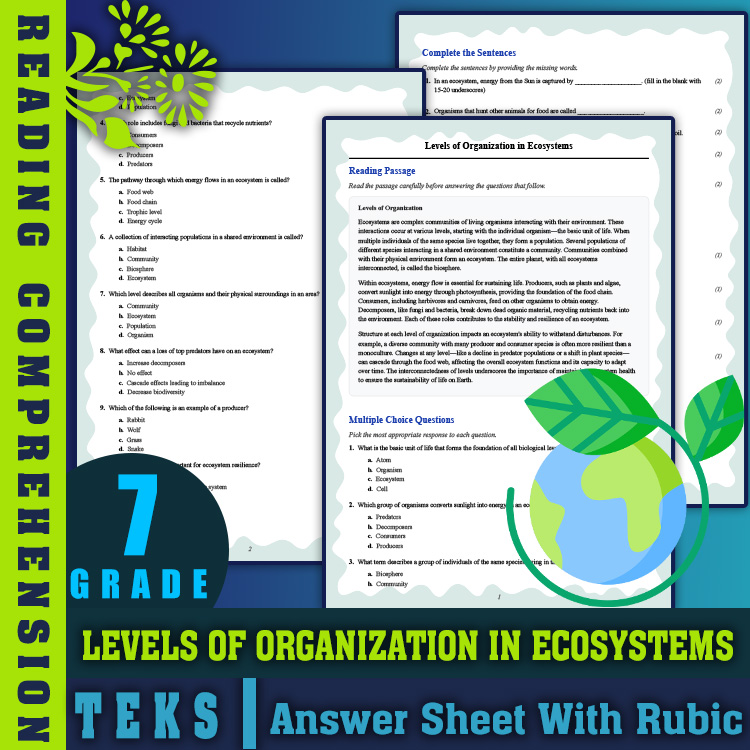
7th Grade Science | Levels of Ecosystem Organization Reading Worksheet
JCreated byJ.S SheetsLearning Objectives
- Understand the hierarchical levels of biological organization from individuals to the biosphere.
- Identify roles of producers, consumers, and decomposers within food webs.
- Explain how energy flows through trophic levels and impacts ecosystem stability.
Instant download
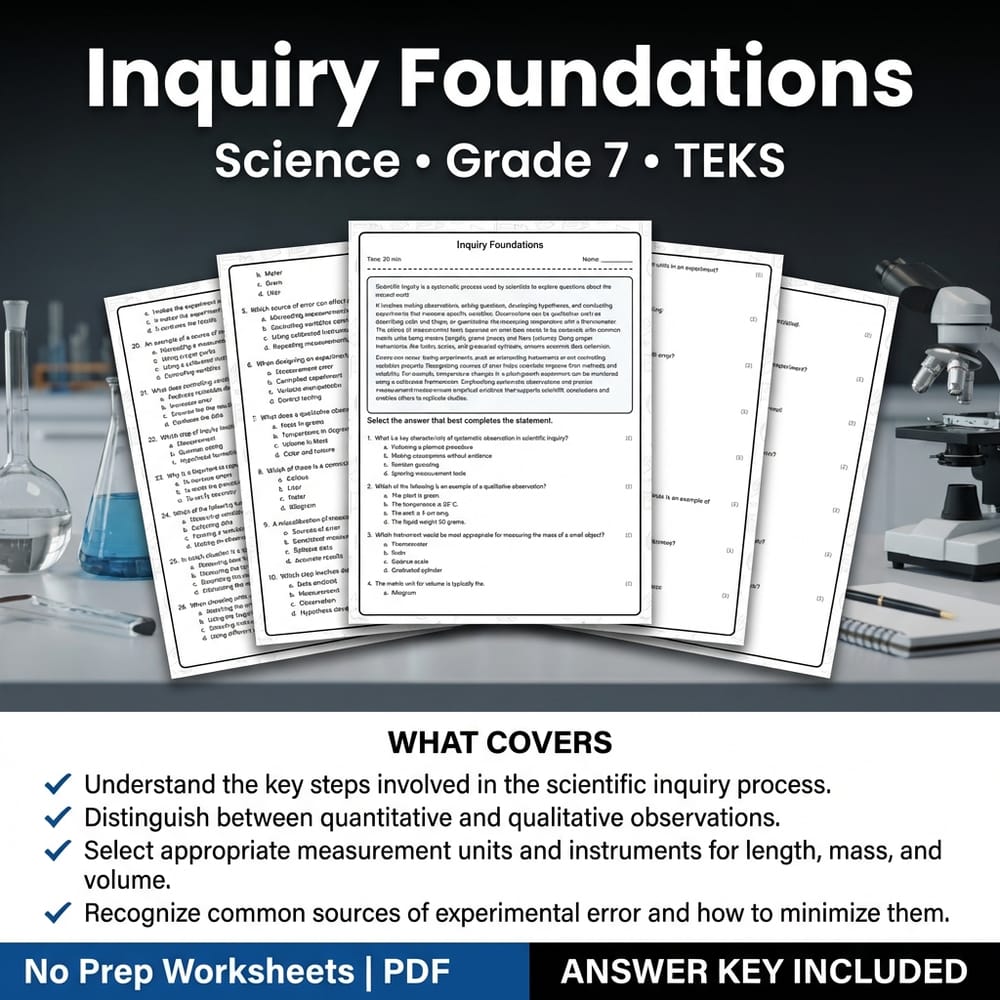
Grade 7 Science Inquiry Foundations Worksheet with Answer Key | TEKS
Created byCoral Reef LearningLearning Objectives
- Understand the key steps involved in the scientific inquiry process.
- Distinguish between quantitative and qualitative observations.
- Select appropriate measurement units and instruments for length, mass, and volume.
Instant download
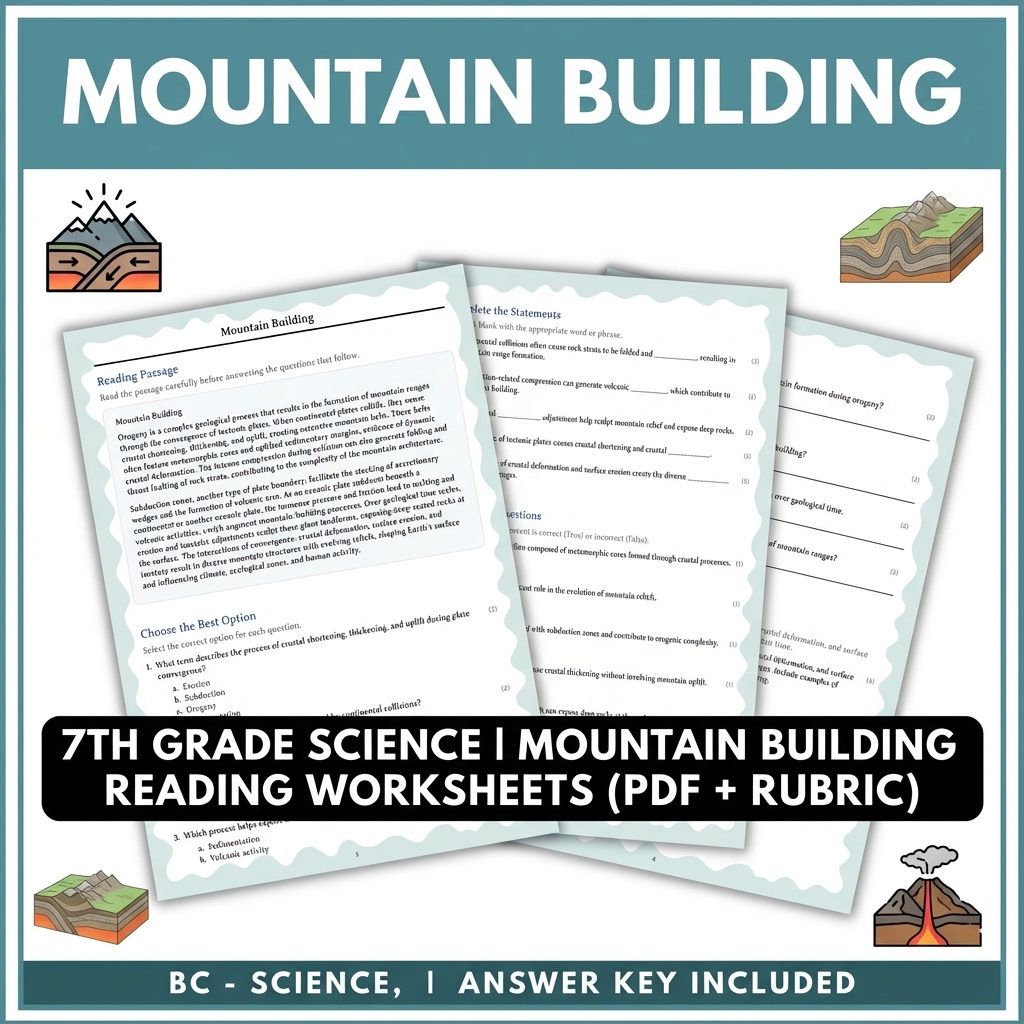
7th Grade Science | Mountain Building Reading Worksheets (PDF + Rubric)
JCreated byJ.S SheetsLearning Objectives
- Understand the processes involved in mountain building and orogeny.
- Identify different geological features associated with convergent plate boundaries.
- Explain how tectonic activities shape mountain architecture over time.
Instant download
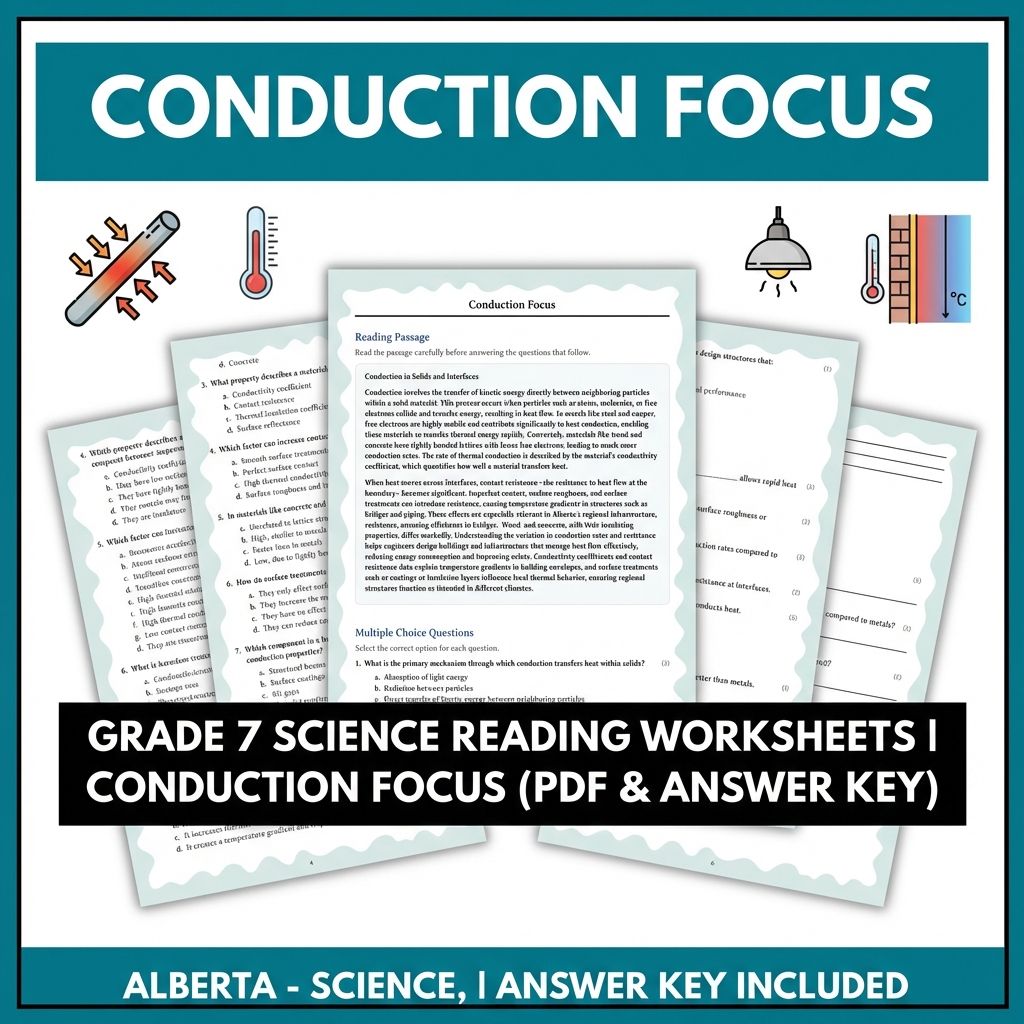
Grade 7 Science Reading Worksheets | Conduction Focus (PDF & Answer Key)
JCreated byJ.S SheetsLearning Objectives
- Explain how conduction transfers heat within solids and across interfaces.
- Identify materials with high and low thermal conductivity in regional infrastructure.
- Describe how material properties such as electron mobility and lattice structure affect conduction rates.
Also included in: Grade 7 Science UNIT Bundle | Heat Transfer, Convection & Energy Worksheets +1 more
Instant download

Modes Of Transfer Test Prep Printable | Grade 7 Science
Created byPrism Point LearningLearning Objectives
- Identify the three modes of thermal energy transfer: conduction, convection, and radiation.
- Describe the molecular particle behavior that drives conduction and convection and explain how radiation transfers energy without direct contact.
- Contrast typical media (solids, fluids, space/vacuum) and relative rates of heat transfer in common situations.
Instant download

Recoil And Thrust Assessment | California Standards Grade 7 Science
Created byPrism Point LearningLearning Objectives
- Explain recoil and thrust using Newton’s third law (action-reaction forces).
- Predict how forces and accelerations relate when two objects interact through pushing or expelling matter.
- Describe how equal and opposite interaction forces can produce different accelerations due to different masses.
Also included in: Grade 7 Forces and Matter Science Lesson Bundle: California Standards +1 more
Instant download
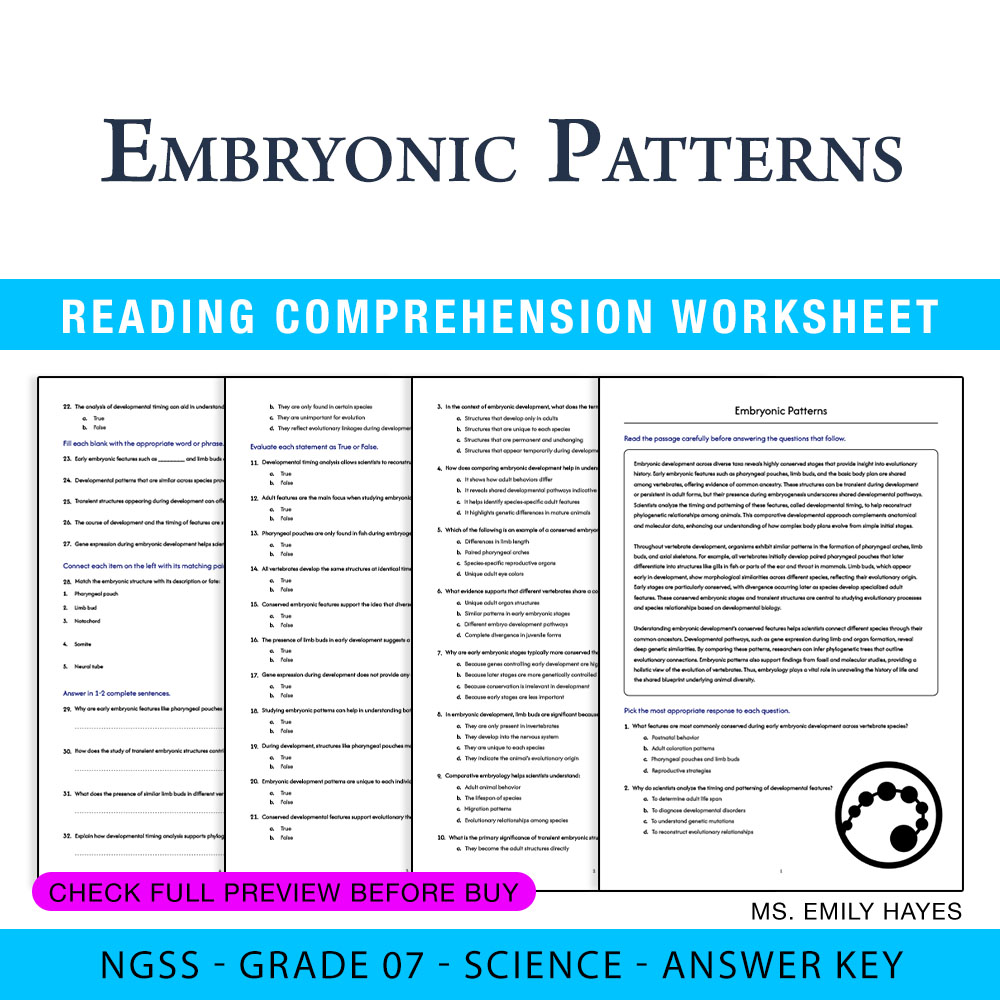
7th Grade Science | Embryonic Patterns Worksheet (PDF + Answer Key)
Created byCopper Leaf ClassroomLearning Objectives
- Describe key developmental stages observed across different taxa during embryonic development.
- Analyze the significance of conserved embryonic features in understanding evolutionary relationships.
- Identify specific morphological similarities such as pharyngeal pouches and limb buds in various vertebrates.
Instant download
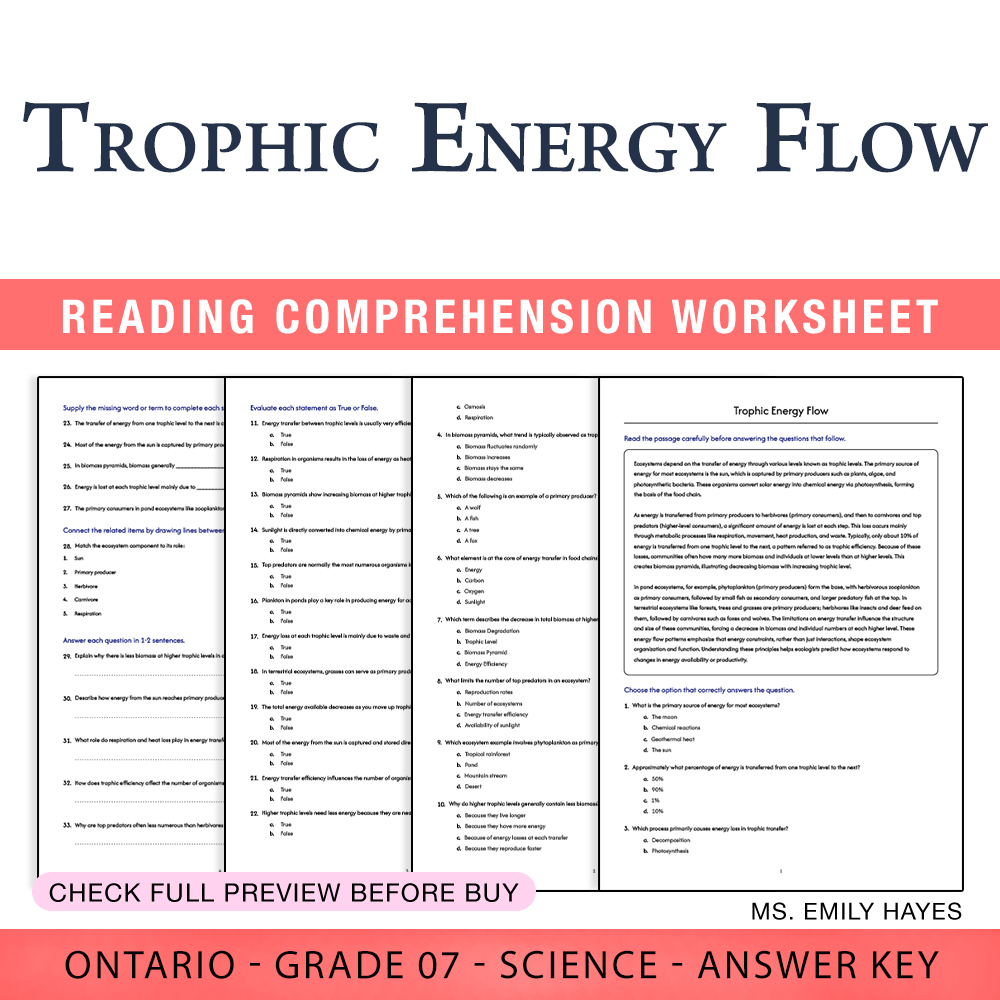
7th Grade Science | Trophic Energy Flow Worksheet (PDF+ Answer Key)
Created byCopper Leaf ClassroomLearning Objectives
- Explain how energy is transferred through trophic levels in ecosystems.
- Describe the concept of energy efficiency and biomass pyramids in ecological communities.
- Analyze the limitations on energy flow between trophic levels due to energy losses.
Instant download

7th Grade Science Worksheet | Surface Processes TEKS (PDF)
Created byEvergreen Desk EducationLearning Objectives
- Explain how weathering, erosion, deposition, and mass wasting change Earth’s surface over time
- Identify the main driving forces (water flow, wind, glaciers, and gravity) behind common landforms
- Use observations and mapped patterns to interpret how fast or slow surface changes occur
Instant download
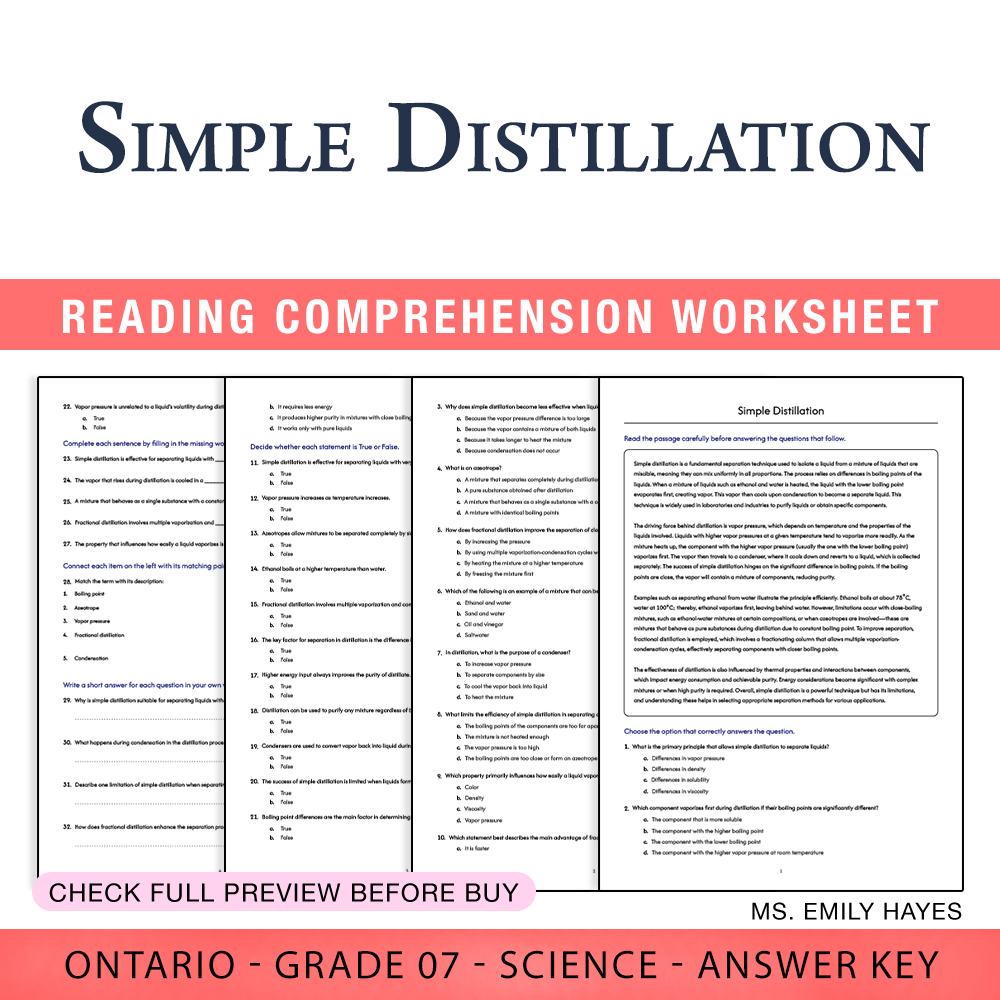
7th Grade Science | Simple Distillation Worksheet (PDF+ Answer Key)
Created byCopper Leaf ClassroomLearning Objectives
- Understand the principles of simple distillation and how it separates miscible liquids based on boiling points.
- Explain the concepts of vapor pressure, boiling point differences, and condensation in distillation processes.
- Identify examples where simple distillation is applicable and recognize its limitations with close-boiling mixtures.
Instant download
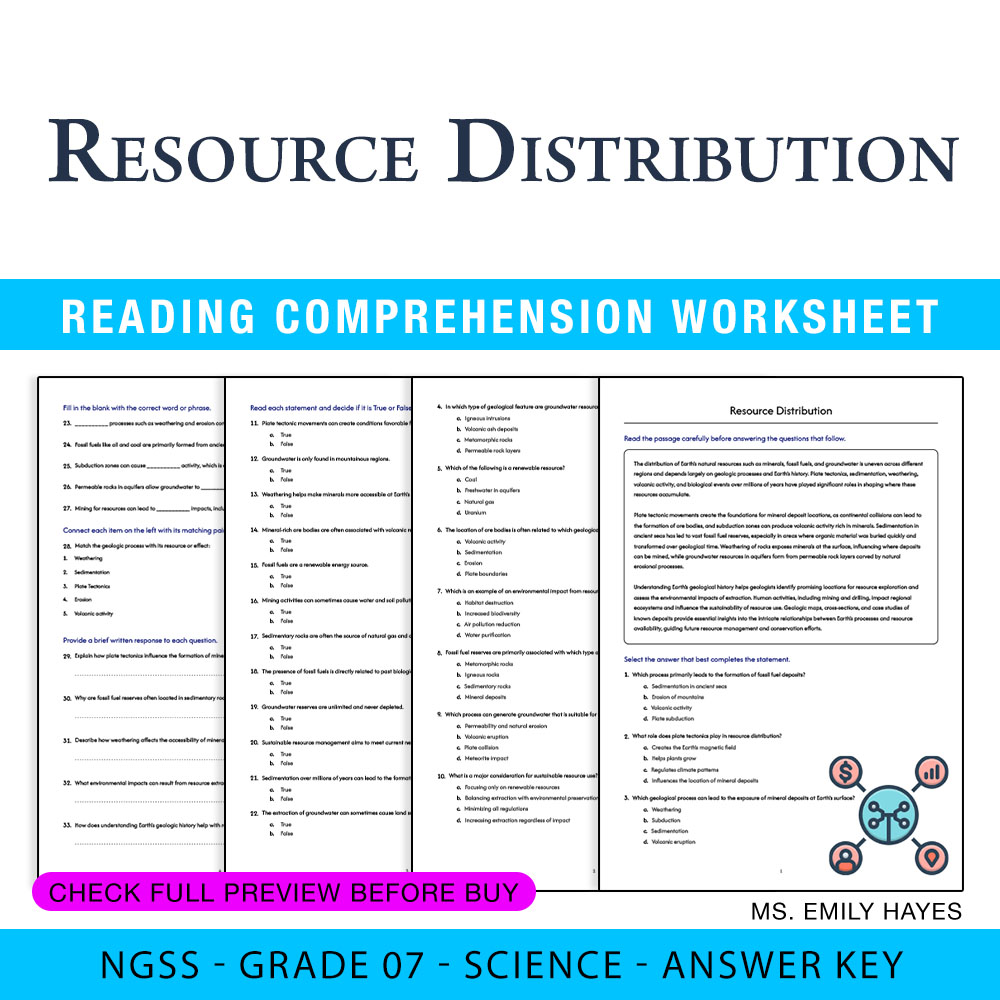
7th Grade Science | Resource Distribution Worksheet (PDF+ Answer Key)
Created byCopper Leaf ClassroomLearning Objectives
- Understand how geological processes affect the distribution of mineral, energy, and groundwater resources.
- Identify the relationship between plate tectonics, sedimentation, weathering, and resource locations.
- Analyze case studies of mineral deposits and aquifer locations to interpret geologic history and resource accessibility.
Instant download

Grade 7 Science – Energy Relationships & Reading Worksheet | Alberta Standards
Created byBright Mind ResourcesLearning Objectives
- Identify potential and kinetic energy in different situations
- Understand how energy changes during motion and elevation
- Analyze real-world examples of energy transfer and conservation
Also included in: Grade 7 Structures & Forces Science Lesson Bundle Daily Reading | Alberta +2 more
Instant download
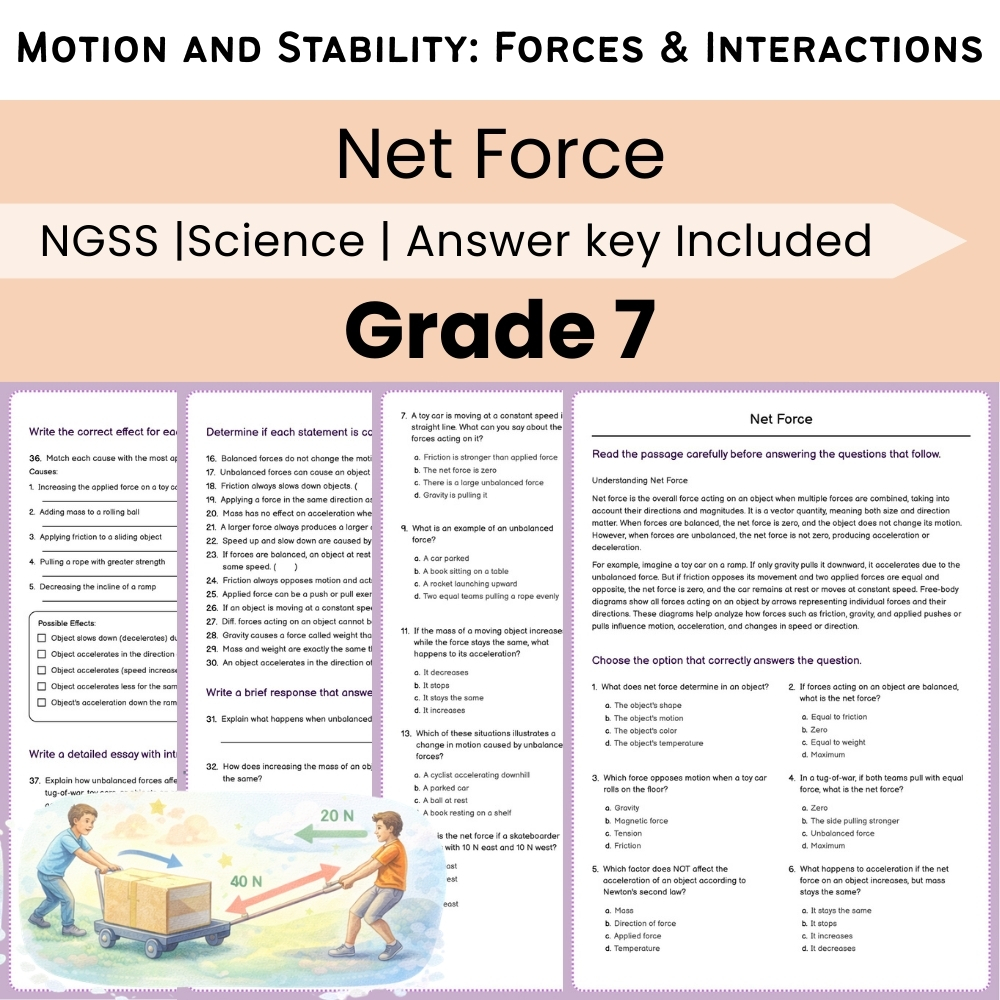
Net Force Worksheet | Grade 7 Science Printable PDF for Assessment & Student Practice
Learning Objectives
- Define net force as the vector sum of all forces acting on an object.
- Describe how unbalanced forces cause changes in motion.
- Explain the relationship between net force, mass, and acceleration using diagrams and reasoning.
Also included in: Grade 7 Science Lesson Bundle | Motion and Stability: Forces and Interactions +1 more
Instant download
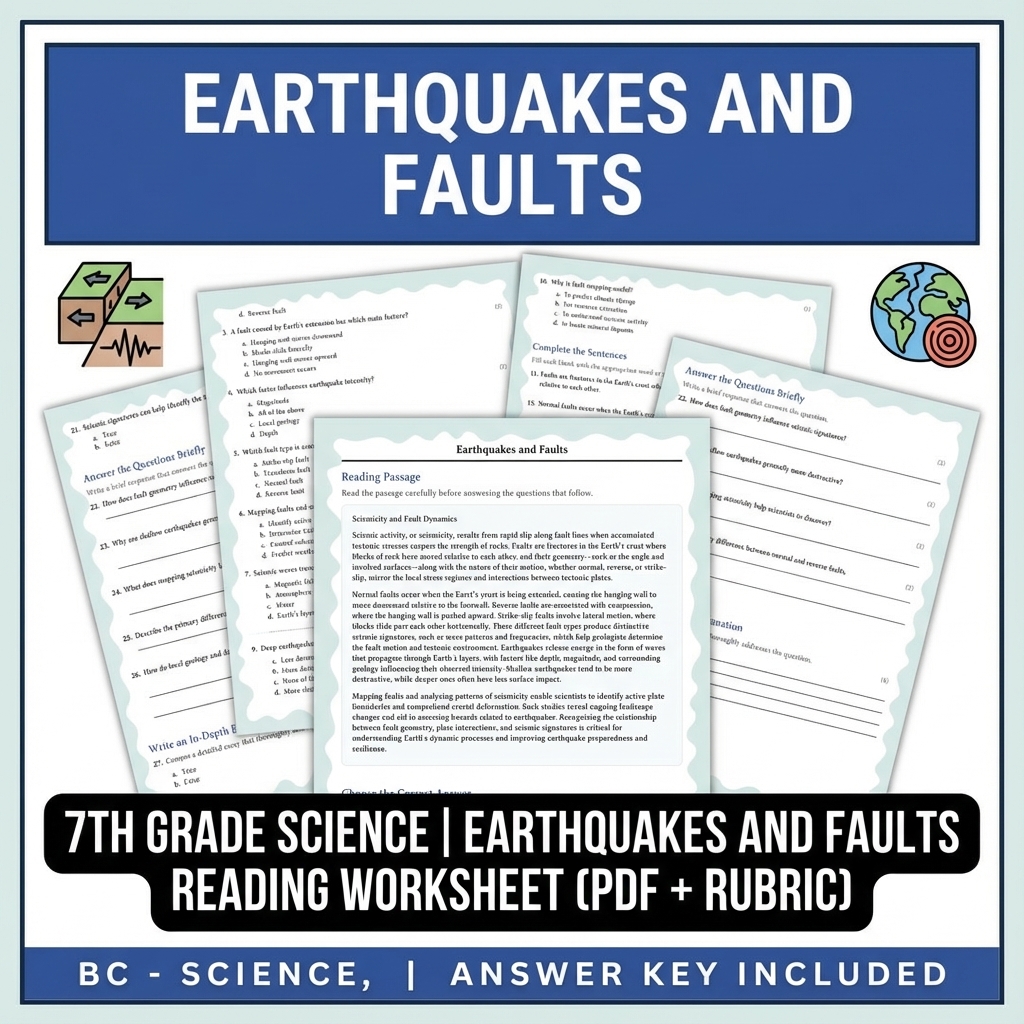
7th Grade Science | Earthquakes and Faults Reading Worksheet (PDF + Rubric)
JCreated byJ.S SheetsLearning Objectives
- Understand the causes and types of faults and earthquakes.
- Identify characteristic seismic signatures related to fault motion.
- Explain how fault geometry and local geology influence seismic intensity.
Instant download
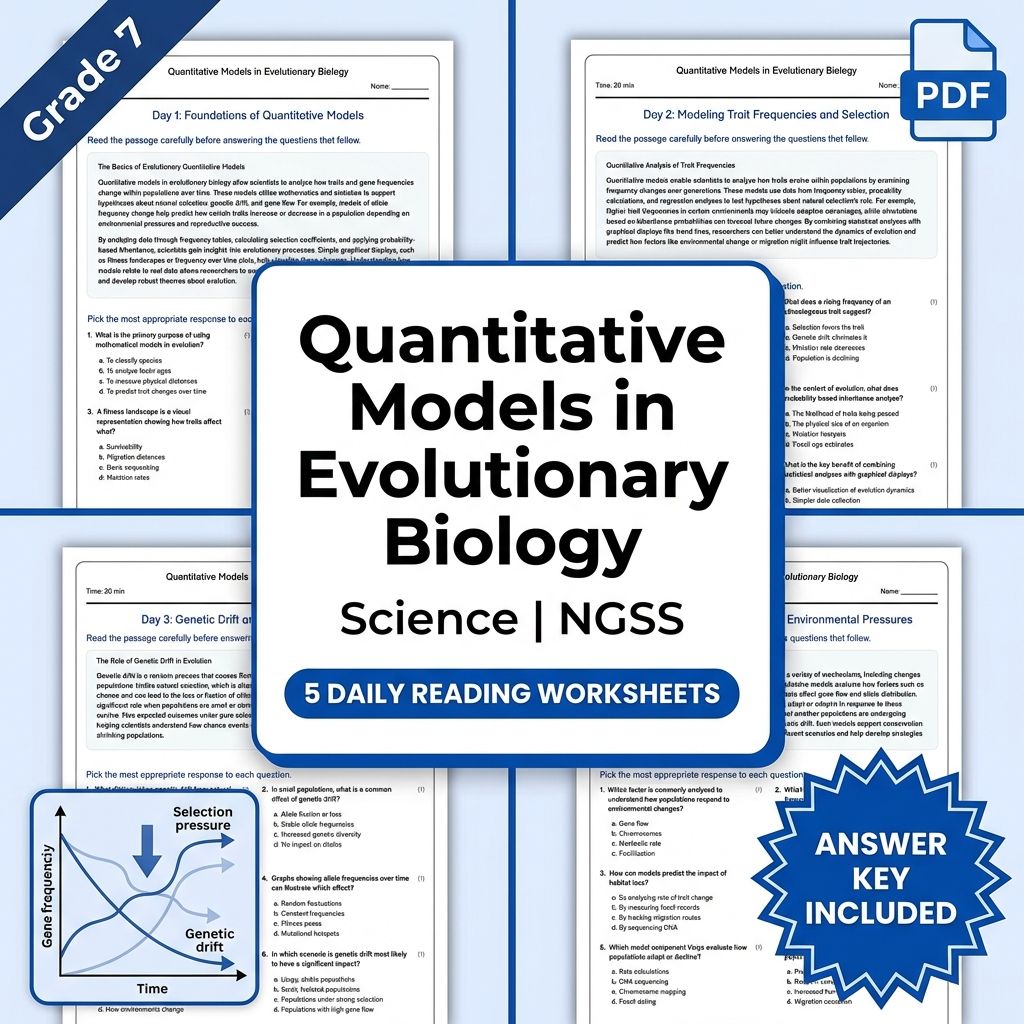
7th Grade Science |Quantitative Models in Evolutionary Biology(PDF + Answer Key)
Created byCopper Leaf ClassroomLearning Objectives
- Understand how mathematical representations express trait frequency changes over time
- Describe statistical analyses used to support evolutionary hypotheses
- Evaluate models of allele frequency change and genetic drift effects
Instant download

Load Path Mapping Practice Worksheet | Grade 7 Science Assessment Ontario
Created byPrism Point LearningLearning Objectives
- Describe how gravity loads, lateral loads, and dynamic loads travel through structural members to foundations using load paths.
- Identify primary vs. secondary load routes and explain how redundancy helps prevent collapse.
- Explain how openings, re-entrant corners, and irregular geometry can change stiffness and redistribute loads.
Instant download
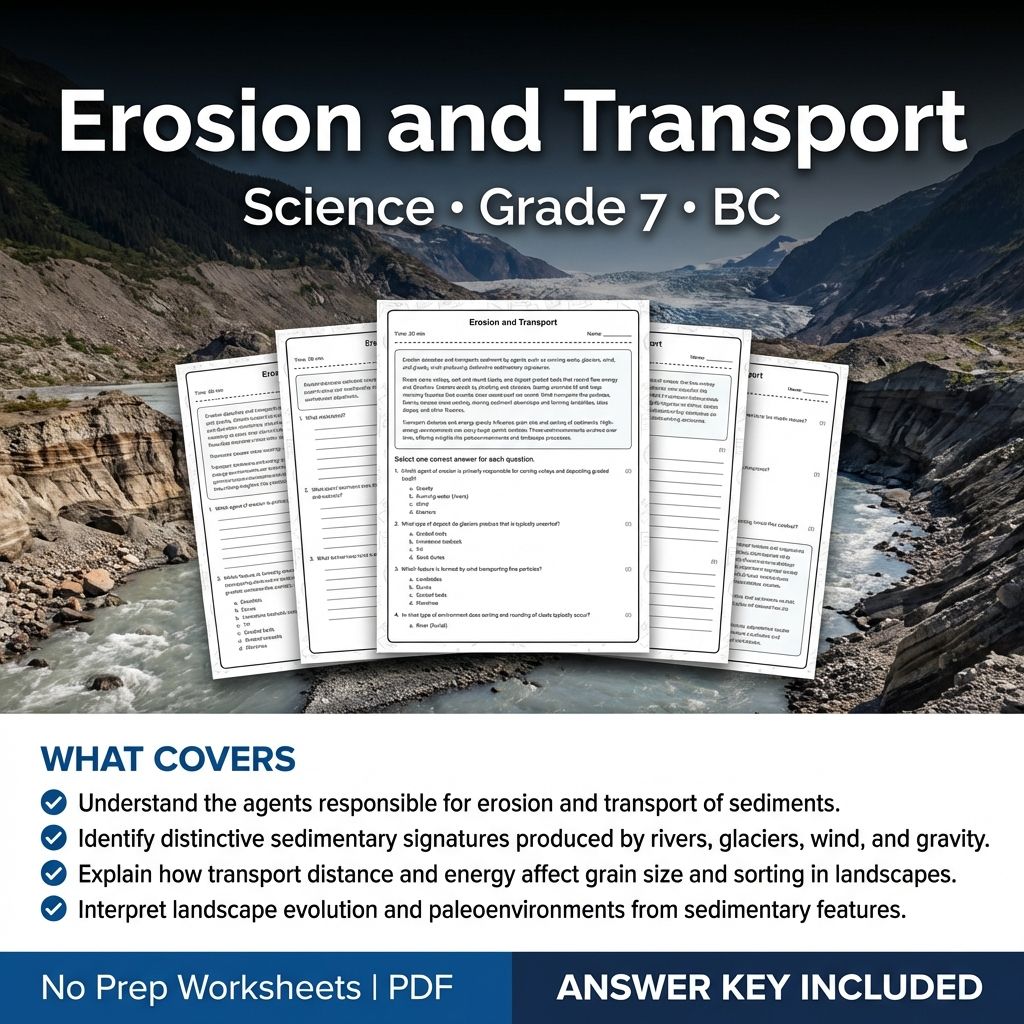
7th Grade Science | Erosion and Transport Worksheet + Answer Key (Printable PDF)
Created byCoral Reef LearningLearning Objectives
- Understand the agents responsible for erosion and transport of sediments.
- Identify distinctive sedimentary signatures produced by rivers, glaciers, wind, and gravity.
- Explain how transport distance and energy affect grain size and sorting in landscapes.
Instant download

Matter and Energy Flow Worksheet Grade 7 Science | Ecosystems Activity
Created byPrism Point LearningLearning Objectives
- Explain how matter and energy move through ecosystems using producers, consumers, and decomposers.
- Describe how energy is transferred through food chains and webs and why less energy reaches higher trophic levels.
- Connect metabolism and heat loss to the decreasing amount of usable energy at each trophic level.
Also included in: Life Science - Grade 7 Bundle
Instant download

Matter Cycling Worksheet Grade 7 Science Activities | Ecosystems & Matter
Created byPrism Point LearningLearning Objectives
- Explain how atoms move through an ecosystem during matter cycling processes such as photosynthesis, respiration, feeding, and decomposition.
- Describe how decomposers return nutrients to soil and water so that new plants can grow.
- Distinguish matter cycling (reused atoms) from energy flow (one-way transfer with heat loss).
Also included in: Life Science - Grade 7 Bundle
Instant download
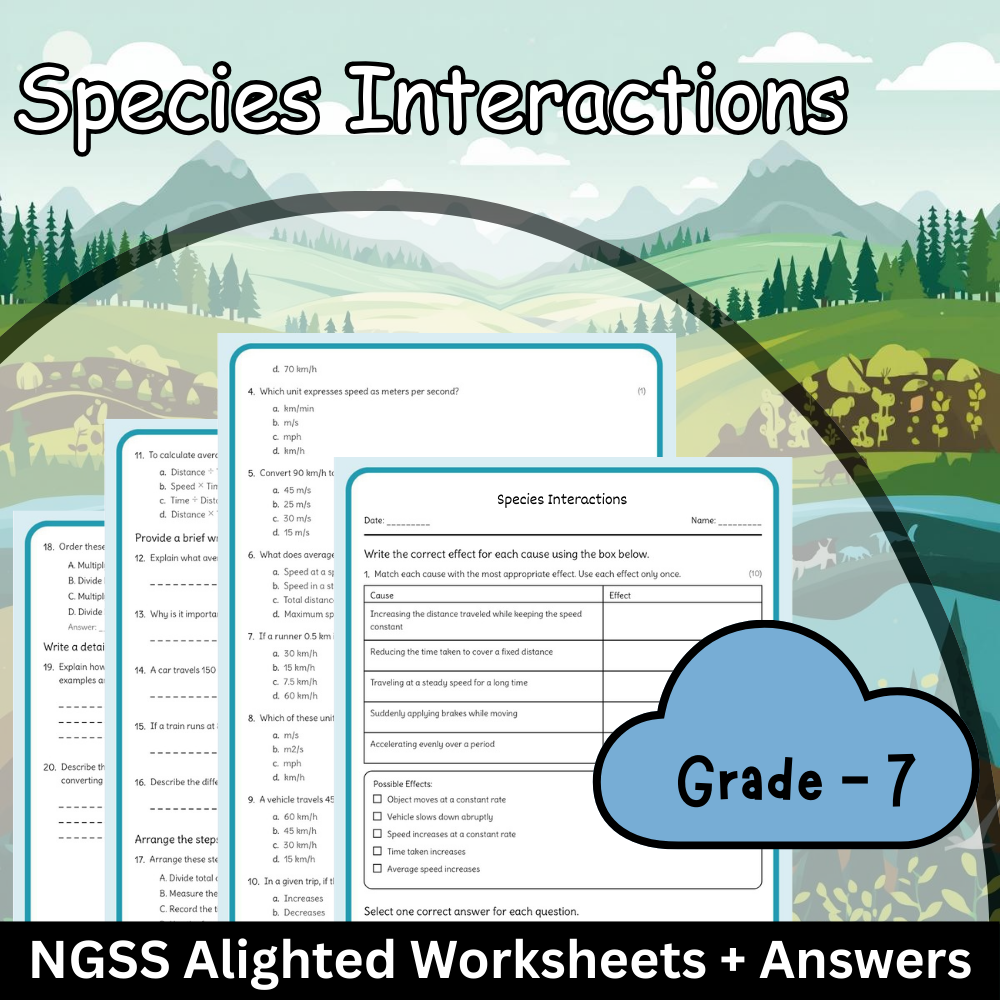
7th Grade Science | Species Interactions Worksheet (PDF) – NGSS Standards
Created byBright Mind ResourcesLearning Objectives
- Understand different patterns of species interactions such as predation, competition, parasitism, mutualism, and commensalism.
- Analyze the effects of species interactions on community structure and resource partitioning.
- Interpret food web diagrams and trophic networks to identify direct and indirect effects among species.
Instant download
About Grade 7 Science Worksheets
Browse 6,039 printable Grade 7 Science worksheets — ready-to-print PDFs with answer keys where available.
Every worksheet on MyTeachingSheets is created by independent teacher-authors and reviewed before publication. All resources download as printable PDFs for classroom, homework, or at-home practice, and many include answer keys. Preview any worksheet free before buying.