
Grade 9 Science Worksheets
6,926 worksheets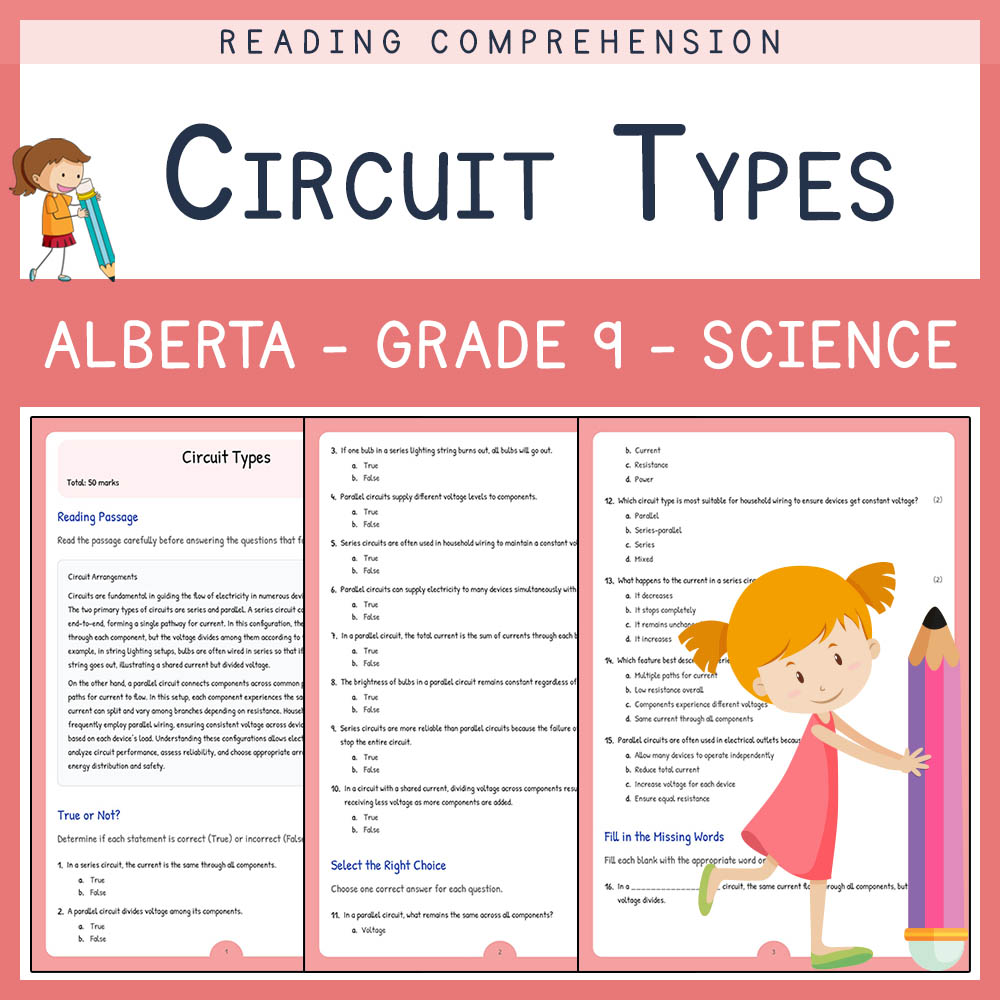
Grade 9 Science | Circuit Types Worksheet Elena | Alberta Standards
 Created byLumora Learning
Learning Objectives
- Understand the difference between series and parallel circuits.
- Identify circuit behavior based on component arrangements.
- Explain how current and voltage behave in series and parallel circuits.
Instant download
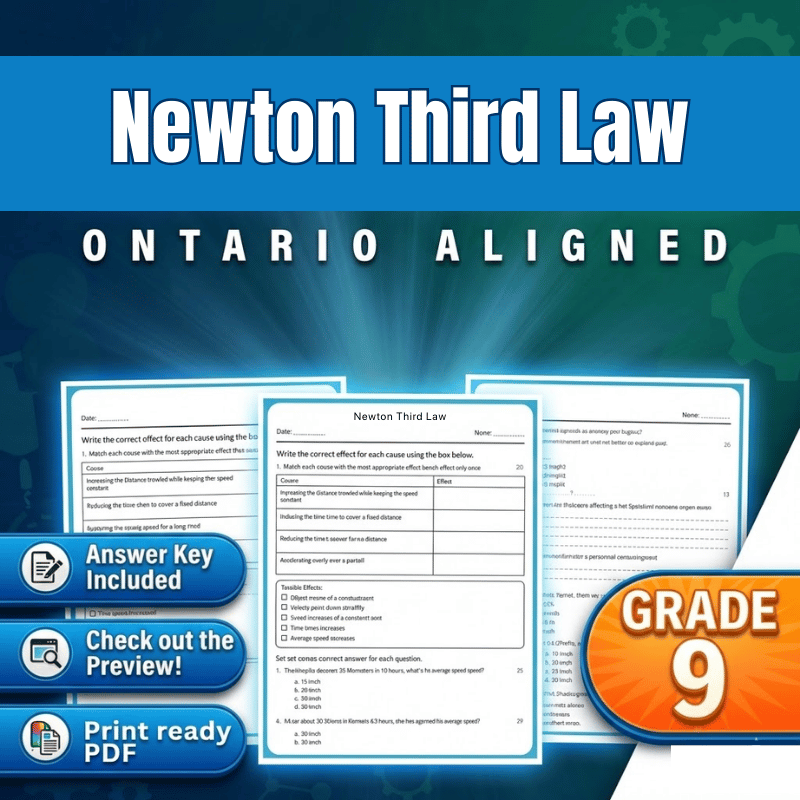
Grade 9 Science | Newton's Third Law Worksheet (Ontario Standards) (PDF)
 Created byBright Mind Resources
Learning Objectives
- Understand the concept of action–reaction force pairs in Newton's third law.
- Identify examples of equal magnitude and opposite directions in force interactions.
- Analyze the implications of Newton's third law in real-world phenomena like propulsion and collisions.
Instant download
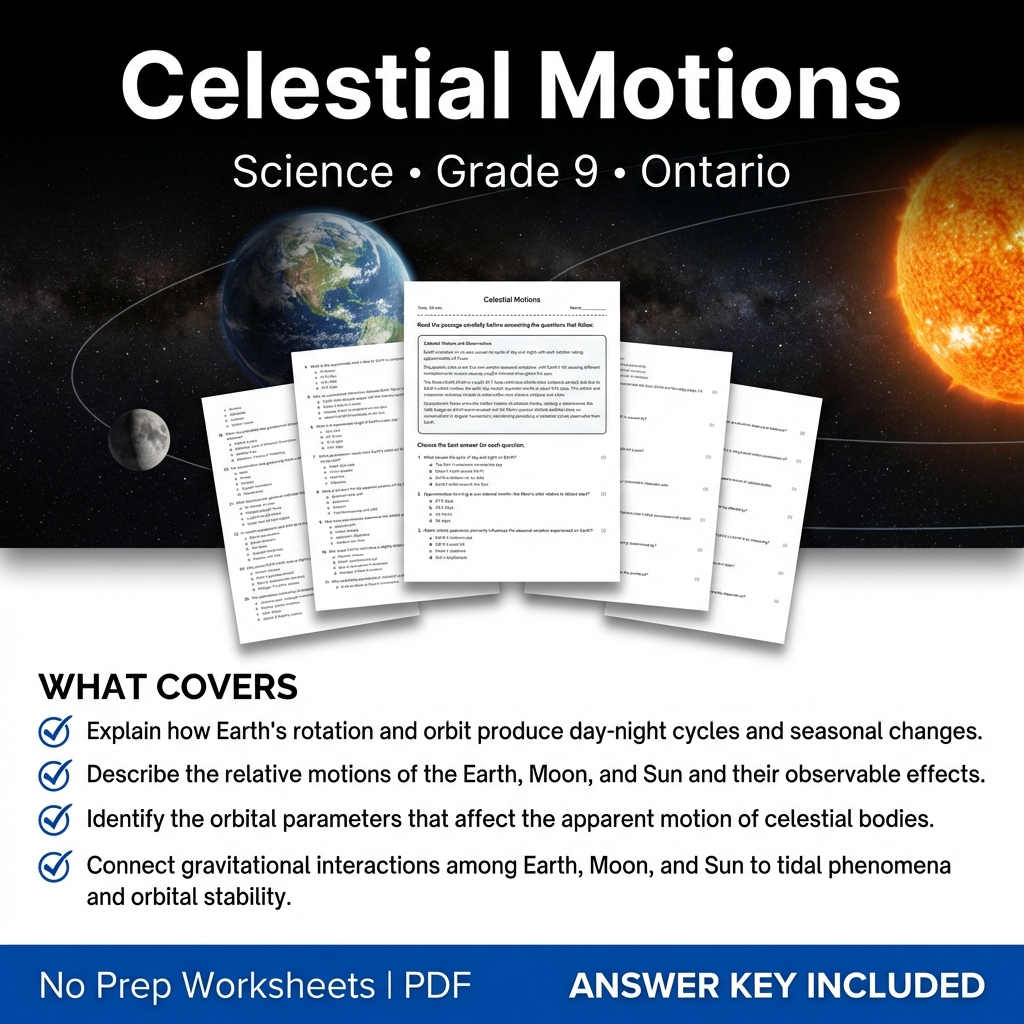
Celestial Motions Worksheet for Grade 9 Science | Ontario Standards
 Created byCoral Reef Learning
Learning Objectives
- Explain how Earth's rotation and orbit produce day-night cycles and seasonal changes.
- Describe the relative motions of the Earth, Moon, and Sun and their observable effects.
- Identify the orbital parameters that affect the apparent motion of celestial bodies.
Instant download
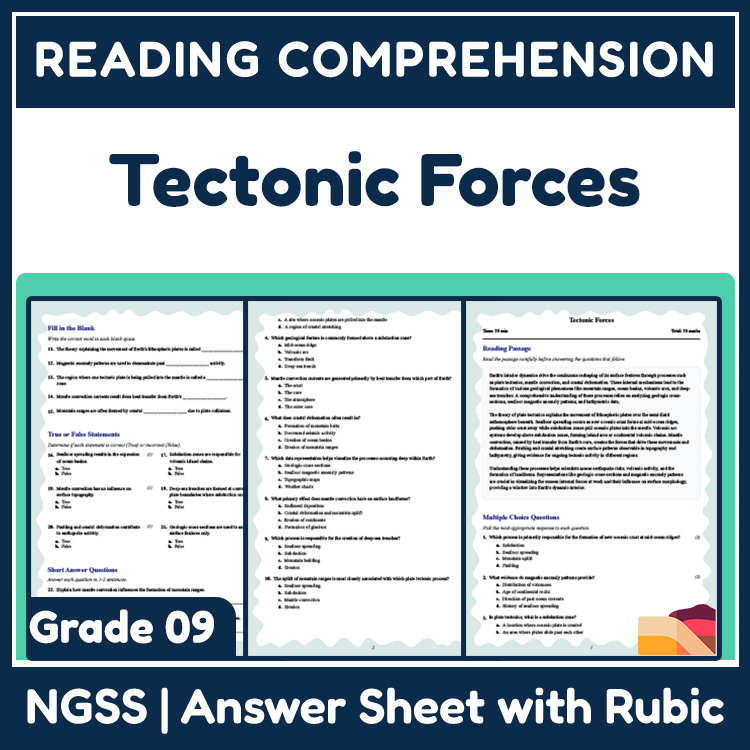
Grade 9 Science | Tectonic Forces Reading Worksheet & Answer Key (PDF)
JCreated byJ.S SheetsLearning Objectives
- Understand the key mechanisms of plate tectonics, including seafloor spreading and subduction zones.
- Interpret geologic cross-sections and magnetic anomaly patterns as evidence of Earth's internal processes.
- Describe how mantle convection and crustal deformation influence surface features such as mountains and ocean basins.
Instant download
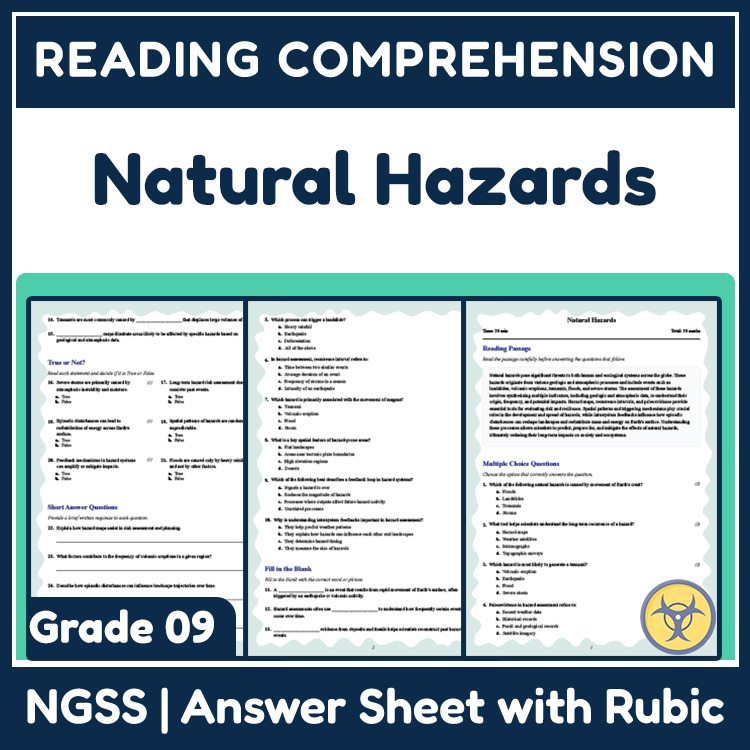
9th Grade Science | Natural Hazards Reading Worksheet with Answer Key (PDF)
JCreated byJ.S SheetsLearning Objectives
- Understand the different types of natural hazards and their origins.
- Analyze how spatial patterns and triggering mechanisms influence hazard risks.
- Evaluate the long-term impacts of natural hazards on landscapes and human systems.
Instant download
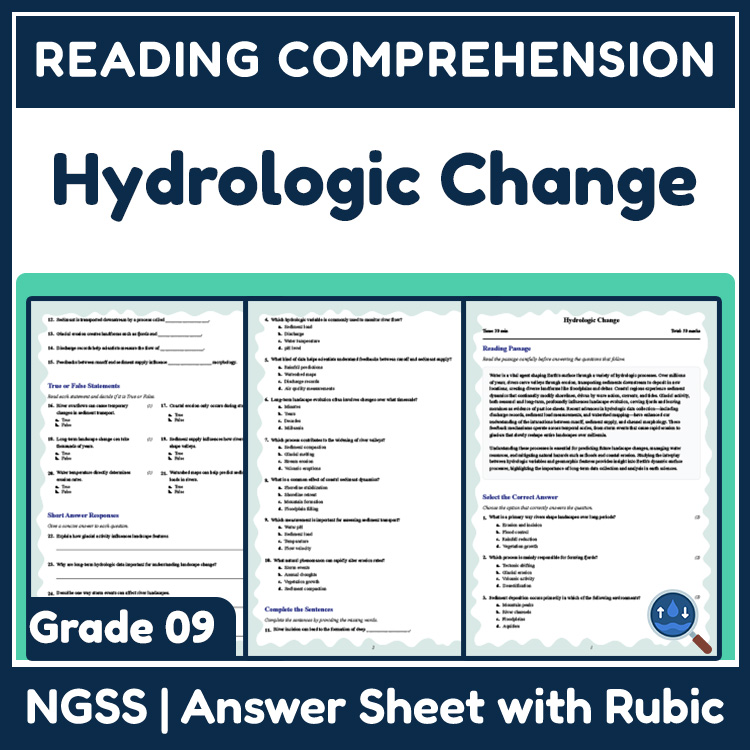
9th Grade Science Reading Worksheet | Hydrologic Change & Landscape Processes
JCreated byJ.S SheetsLearning Objectives
- Understand how water movement shapes Earth's surface features through erosion, transport, and deposition.
- Analyze hydrologic data such as discharge records and sediment measurements to interpret landscape evolution.
- Evaluate the effects of storm events and long-term processes on watershed morphology.
Instant download

Force Laws Worksheet | NGSS Grade 9 Science Assessment
 Created bySkylark Worksheets
Learning Objectives
- Use inverse-square relationships to calculate gravitational and electrostatic force magnitudes.
- Determine force directions using vector reasoning for attraction and repulsion.
- Compare how force strength changes across different separation distances and between force types.
Also included in: Newtonian Motion, Momentum & Forces Lesson Bundle | Grade 9 Science | ngss +1 more
Instant download
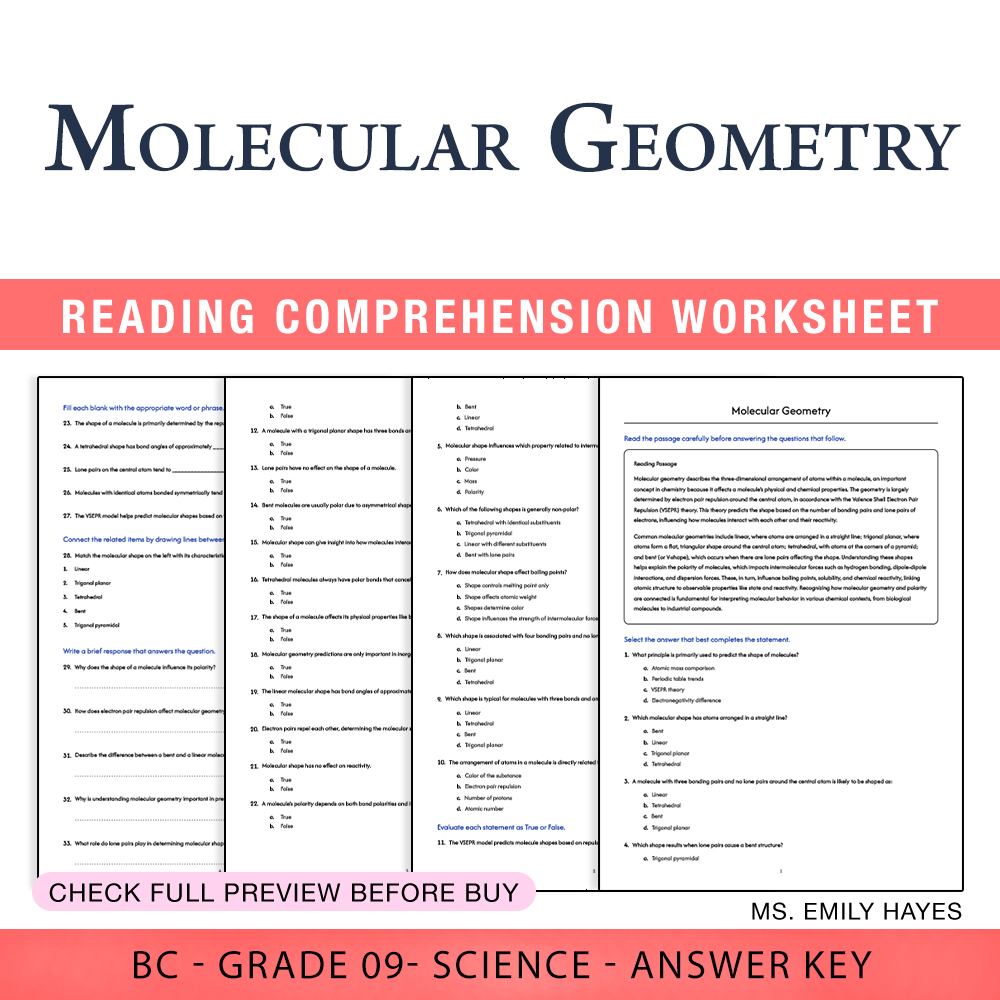
Grade 9 Science | Molecular Geometry Worksheet (PDF+ Answer Key)
 Created byCopper Leaf Classroom
Learning Objectives
- Explain the principles of VSEPR theory related to molecular shapes.
- Identify common molecular geometries such as linear, trigonal planar, tetrahedral, and bent.
- Understand how molecular shape influences polarity and physical properties.
Also included in: Grade 9 Science Bundle | Chemistry, Physics & Atomic Concepts (PDF + Answer Key) +1 more
Instant download
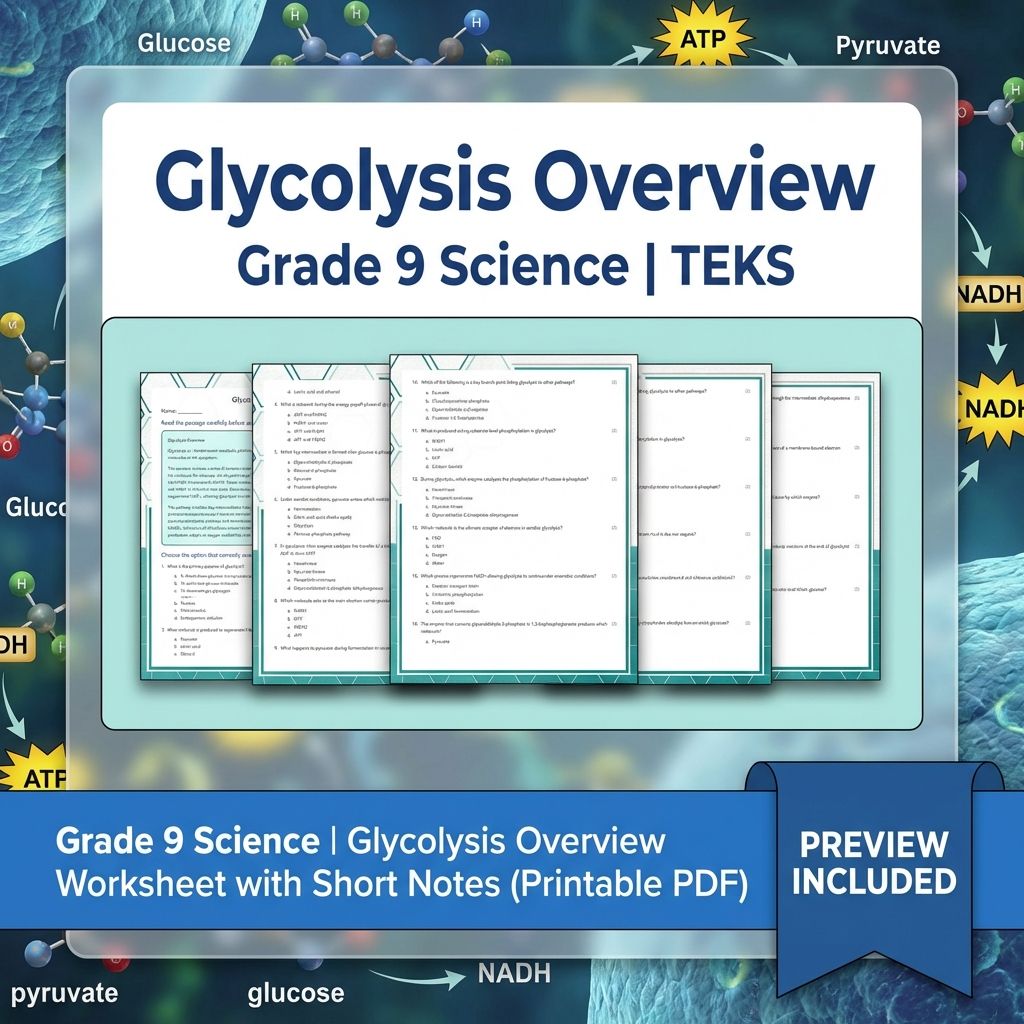
Grade 9 Science | Glycolysis Overview Worksheet with Short Notes(Printable PDF)
 Created byMeadowlark Worksheets
Learning Objectives
- Understand the stepwise process of glycolysis and its energy changes.
- Identify the key intermediates and branch points in glycolysis.
- Describe how glycolysis functions under aerobic and anaerobic conditions.
Instant download
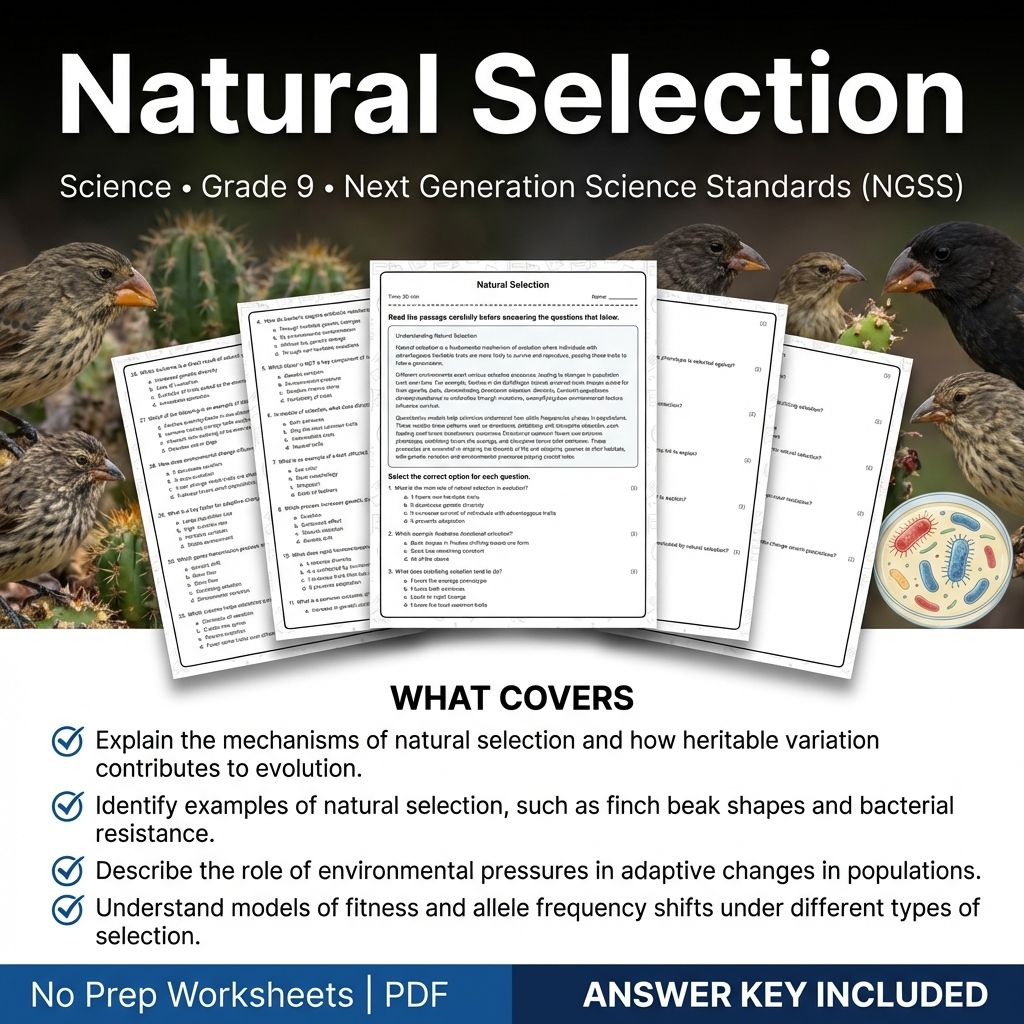
Grade 9 Science | Natural Selection Worksheet & Answer Key (Printable PDF)
Created byCoral Reef LearningLearning Objectives
- Explain the mechanisms of natural selection and how heritable variation contributes to evolution.
- Identify examples of natural selection, such as finch beak shapes and bacterial resistance.
- Describe the role of environmental pressures in adaptive changes in populations.
Also included in: Grade 9 Science | Evolution & Phylogenetics Worksheet Bundle (Printable PDFs) +1 more
Instant download
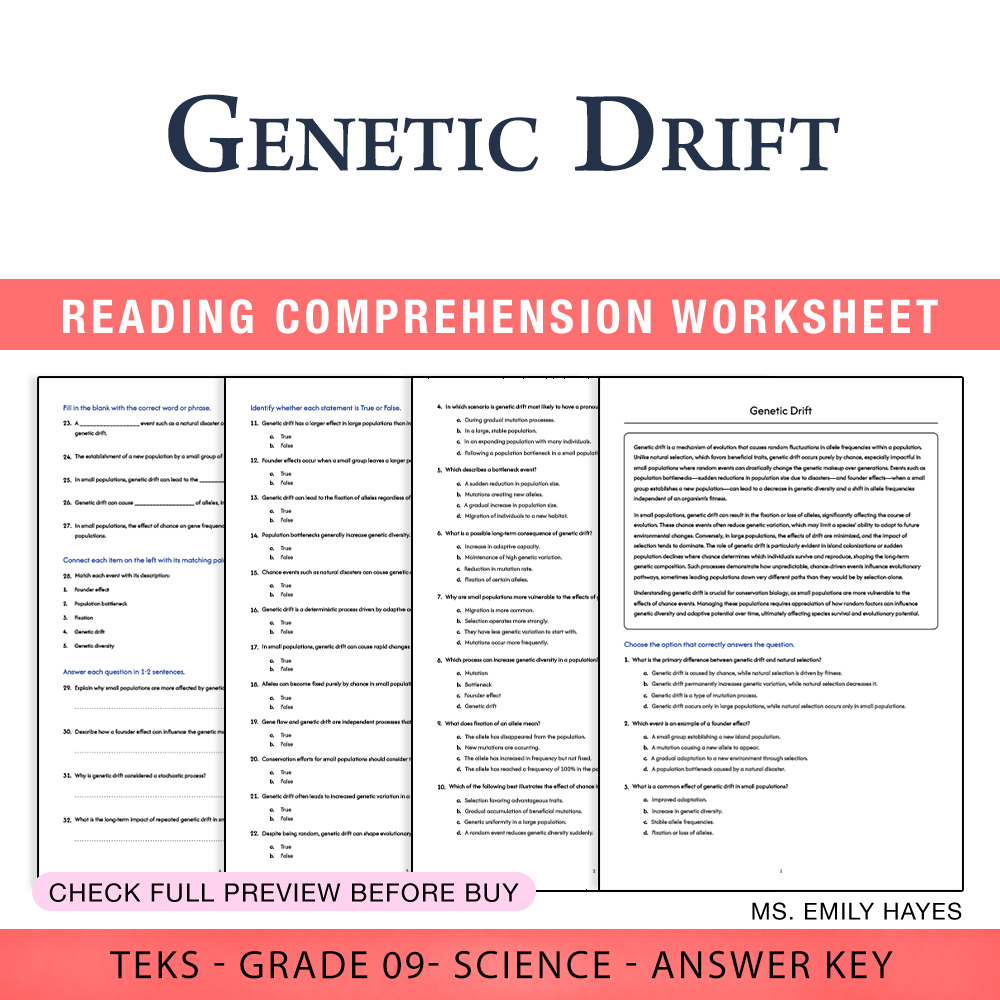
9th Grade Science | Genetic Drift Worksheet (PDF+ Answer Key)
Created byCopper Leaf ClassroomLearning Objectives
- Understand the concept of genetic drift and its role in evolution.
- Identify different events that cause genetic drift, such as bottlenecks and founder effects.
- Explain how chance events can influence genetic diversity in small populations.
Instant download
Grade 9 Science | Chemical Changes Worksheet (Ontario) (PDF)
Created byBright Mind ResourcesLearning Objectives
- Understand what constitutes a chemical change and how it differs from physical change.
- Identify common observable indicators of chemical reactions such as temperature change, gas production, precipitate formation, and color change.
- Interpret microscopic evidence of reactant-to-product transformation in chemical reactions.
Instant download
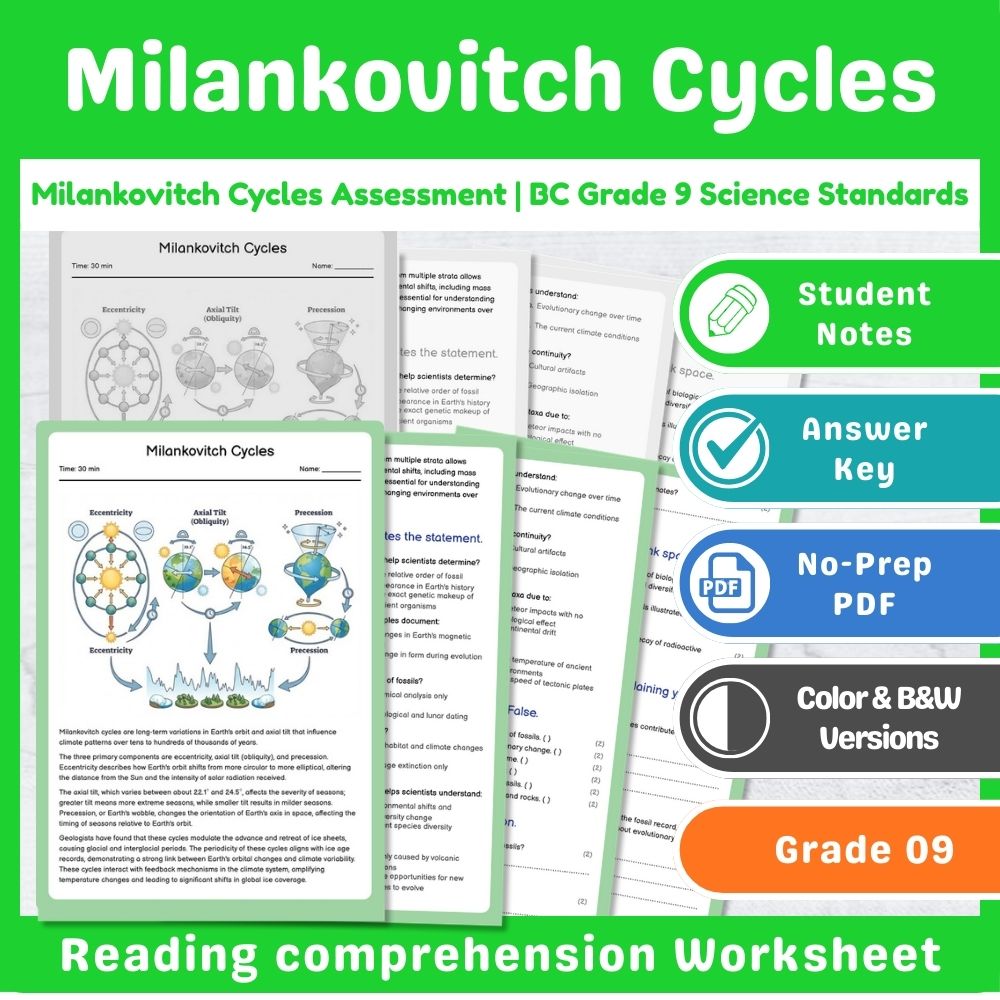
Milankovitch Cycles Assessment | BC Grade 9 Science Standards
 Created byPrism Point Learning
Learning Objectives
- Describe the key components of Milankovitch cycles and their effects on Earth's climate.
- Explain how variations in Earth's orbit influence glacial and interglacial periods.
- Analyze the relationship between astronomical forcing and long-term climate variability.
Also included in: Grade 9 Science Mini Bundle – Earth & Space Assessment & Activities
Instant download
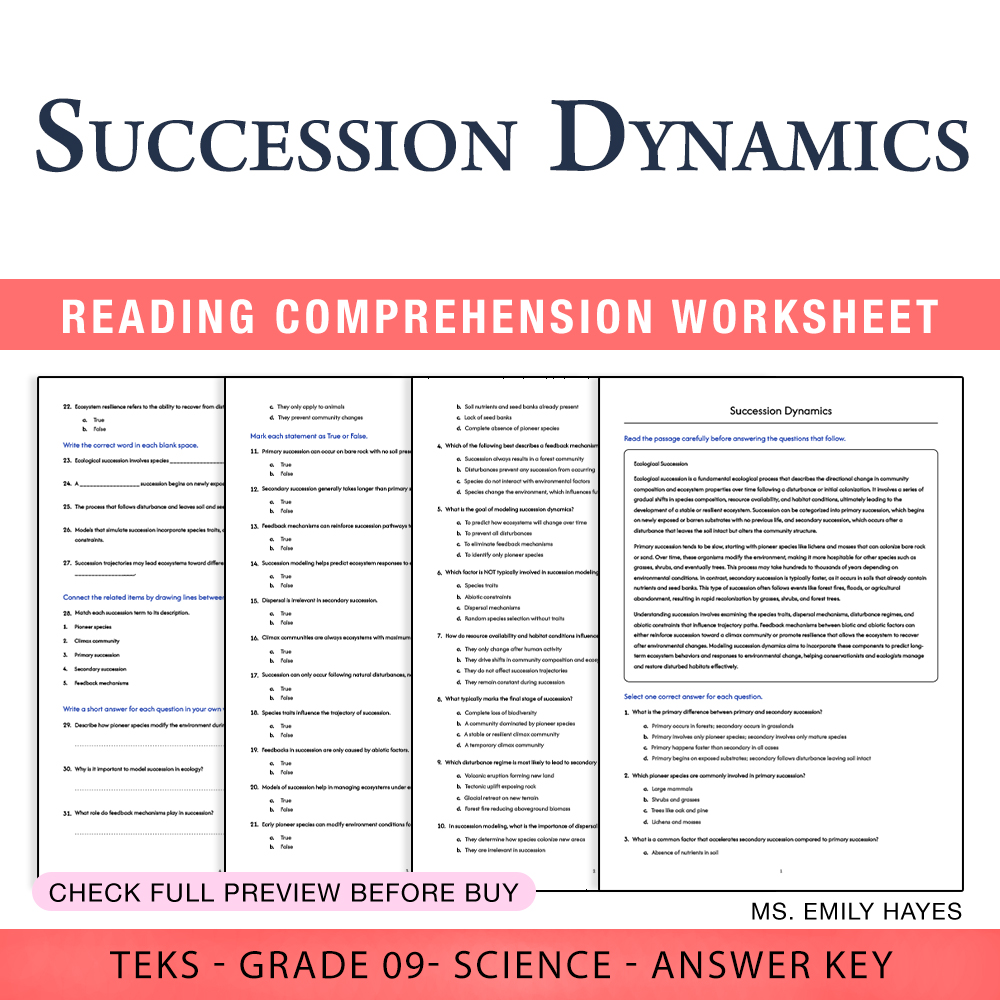
9th Grade Science | Succession Dynamics Worksheet (PDF+ Answer Key)
Created byCopper Leaf ClassroomLearning Objectives
- Explain the process and stages of ecological succession, including primary and secondary succession.
- Identify key species and environmental factors involved in succession.
- Model and predict long-term ecosystem changes using species traits, dispersal, and disturbance regimes.
Instant download

Grade 9 Science Meiosis Variation Worksheet | Genetics | Florida NGSSS
 Created byEvergreen Desk Education
Learning Objectives
- Explain how crossing over during meiosis creates genetic variation in gametes
- Describe how independent assortment increases variation by changing chromosome combinations
- Connect meiotic variation to differences observed in offspring after fertilization
Instant download
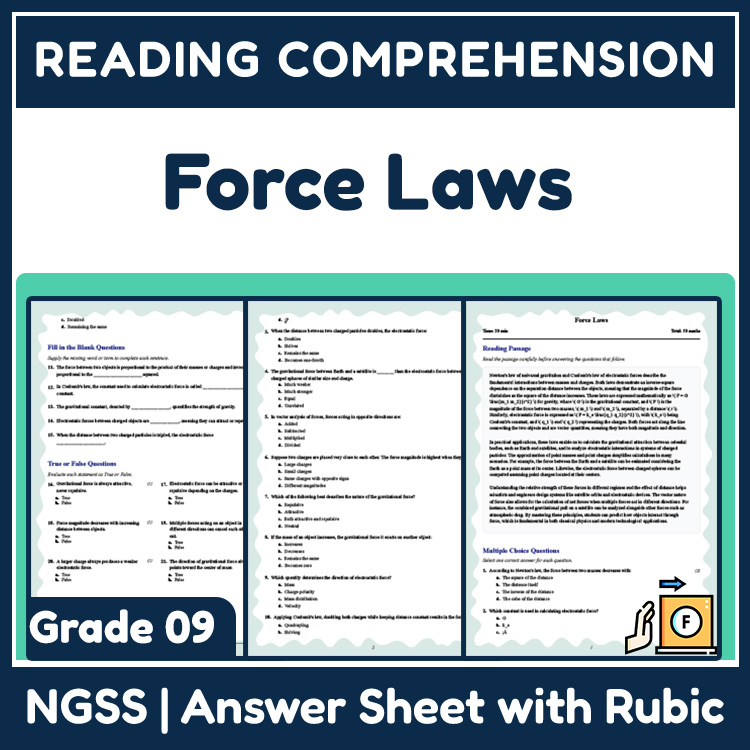
Grade 9 Science | Force Laws Reading Worksheet (PDF + Answer Key)
JCreated byJ.S SheetsLearning Objectives
- Understand the mathematical form of gravitational and electrostatic force equations.
- Apply inverse-square law formulas to calculate magnitudes of forces between objects.
- Analyze the directions of forces in vector form in various scenarios.
Also included in: Grade 9 Science Unit Bundle – Newtonian Motion & Force Laws Worksheets
Instant download

Grade 9 Science – Levels Of Organization & Tissues Daily Reading Worksheet
Created byBright Mind ResourcesLearning Objectives
- Understand the hierarchical organization of cells, tissues, organs, and systems.
- Identify examples of different tissue types and their functions.
- Explain how cell specialization leads to specific tissue and organ functions.
Also included in: Grade 9 Science Daily Reading Worksheets: Body Systems Lesson Bundle | Ontario +1 more
Instant download

9th Grade Science | Mendelian Patterns Worksheet (PDF + Answer Key)
Created byCopper Leaf ClassroomLearning Objectives
- Understand the basic principles of Mendelian inheritance, including dominant and recessive allele interactions.
- Interpret Punnett squares for monohybrid and dihybrid crosses to predict genotype and phenotype ratios.
- Analyze pedigree charts to determine inheritance patterns.
Also included in: Grade 9 Science | Genetics & Heredity Worksheets Bundle (PDF +Answer Key) +1 more
Instant download

9th Grade Science | Molecular Inheritance Reading Worksheet & Answer Key (PDF)
JCreated byJ.S SheetsLearning Objectives
- Understand the molecular mechanisms of DNA replication, transcription, RNA processing, and translation.
- Explain how sequence variation and mutations affect gene expression and protein function.
- Use molecular models and sequence reasoning to predict phenotypic outcomes of genetic changes.
Instant download
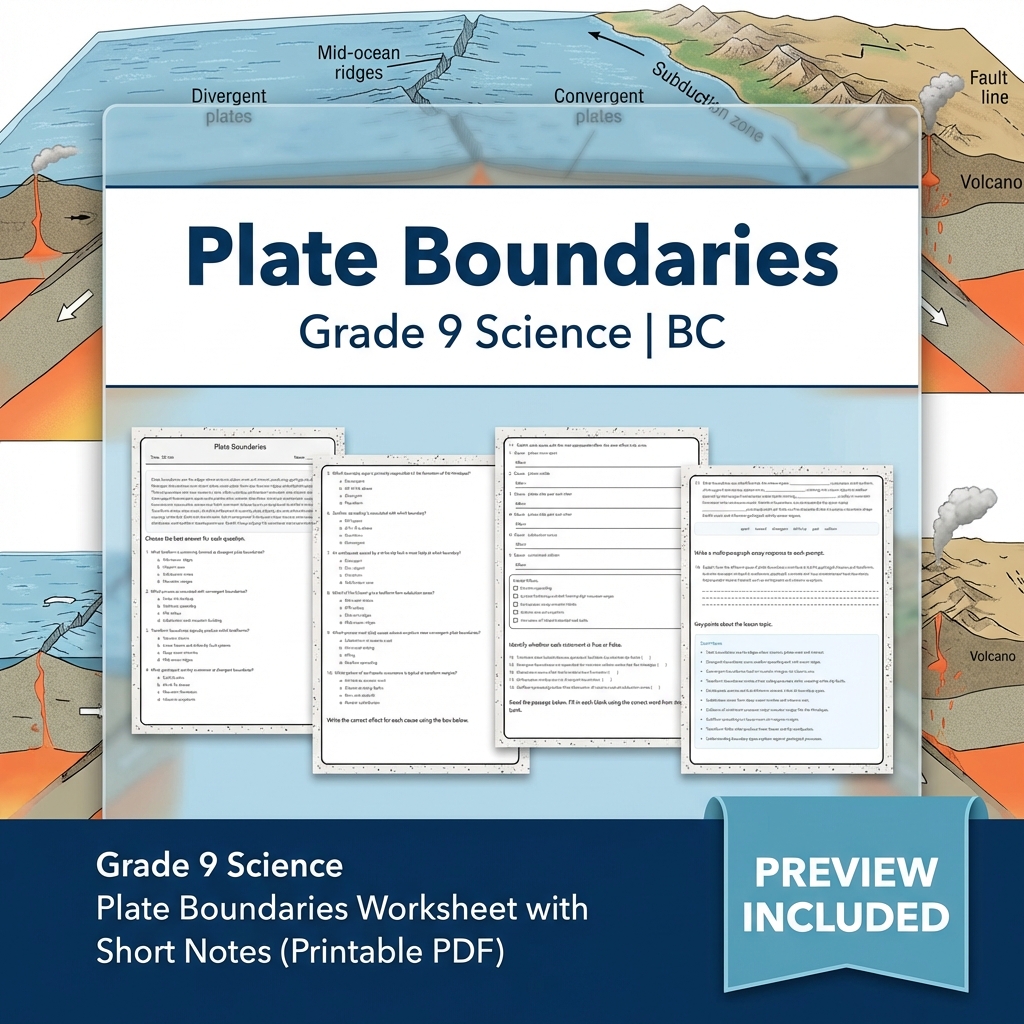
Grade 9 Science Plate Boundaries Worksheet with Short Notes (Printable PDF)
Created byMeadowlark WorksheetsLearning Objectives
- Identify the different types of plate boundaries and their characteristics.
- Explain the geological processes associated with divergent, convergent, and transform boundaries.
- Describe landforms and land features resulting from each boundary type.
Also included in: Grade 9 Science | BC Framework Lesson Bundle on Earth Systems & Climate +1 more
Instant download
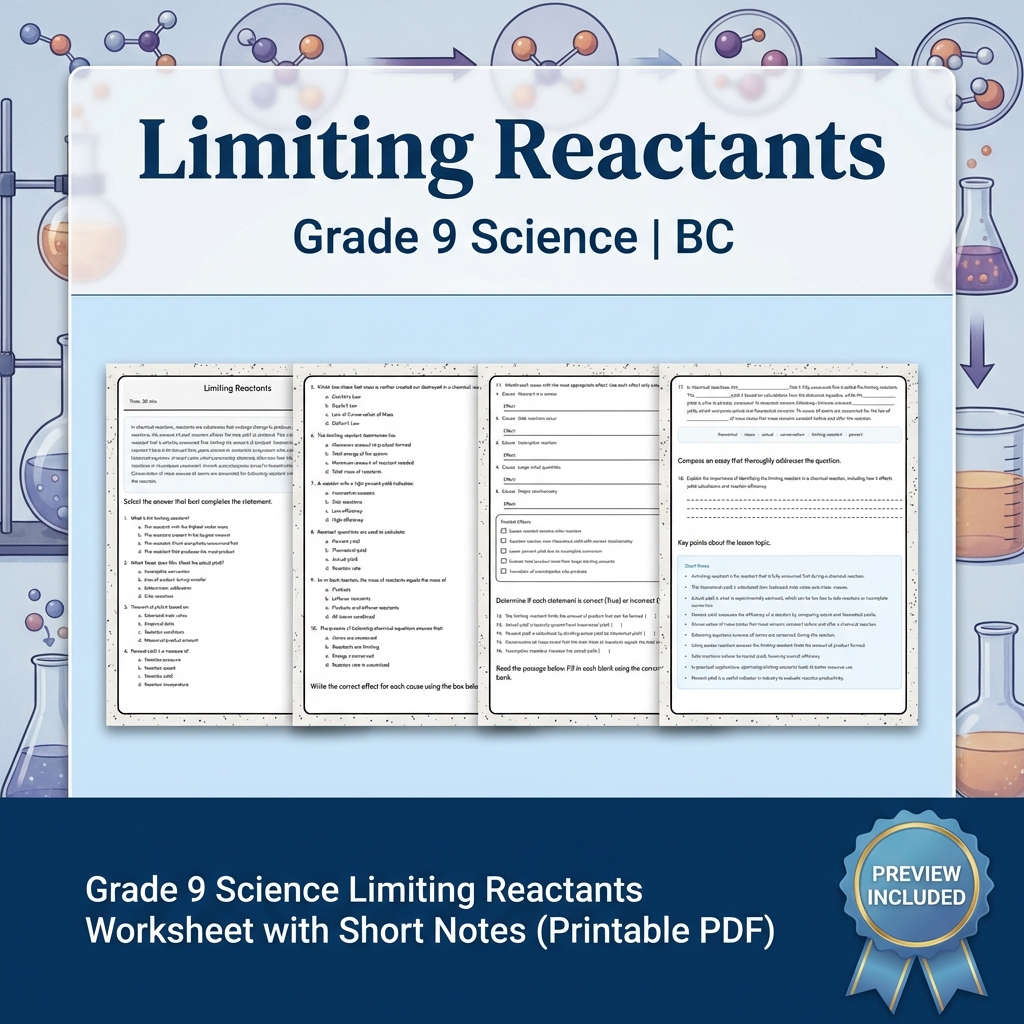
Grade 9 Science Limiting Reactants Worksheet with Short Notes (Printable PDF)
Created byMeadowlark WorksheetsLearning Objectives
- Explain the concept of a limiting reactant in chemical reactions.
- Calculate the theoretical yield of products based on limiting reactants.
- Differentiate between actual yield and theoretical yield.
Also included in: Grade 9 Science Lesson Bundle | BC Framework Focused Worksheets +1 more
Instant download
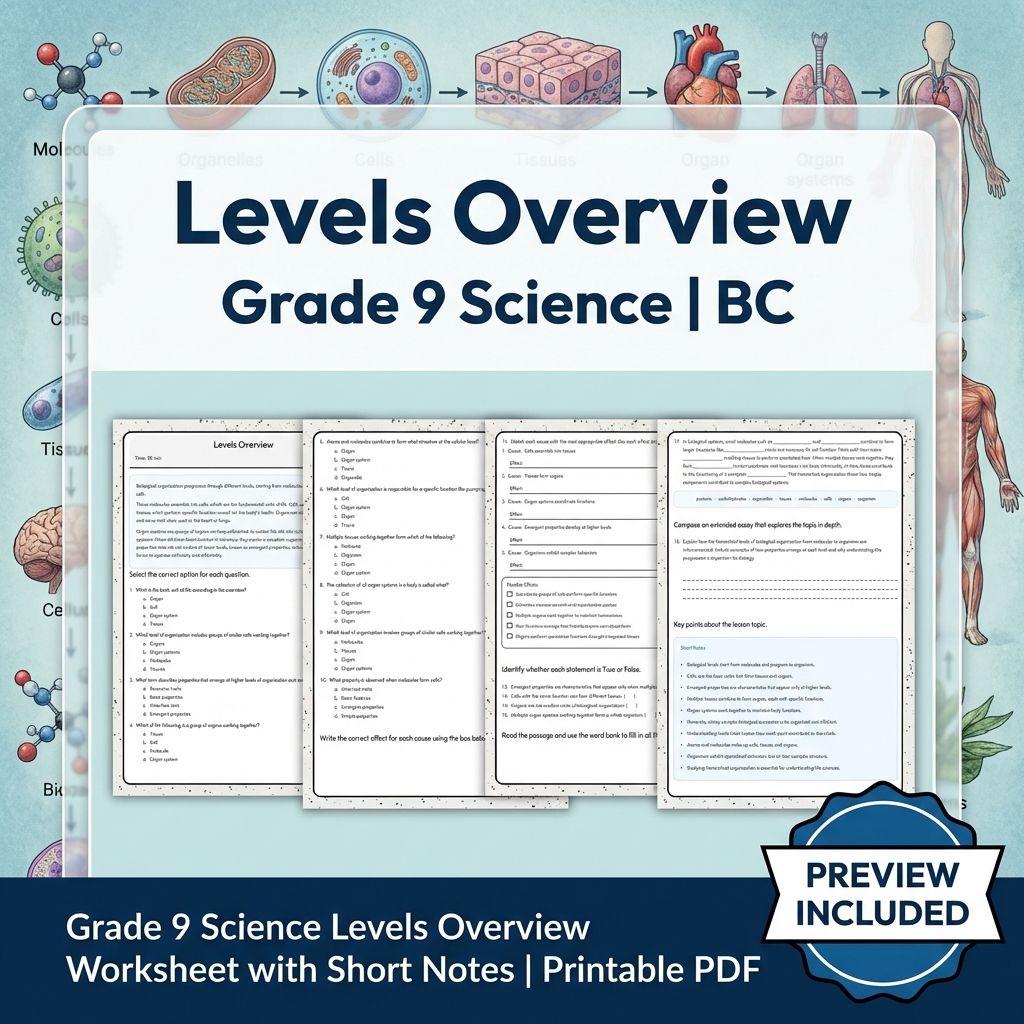
Grade 9 Science Levels Overview Worksheet with Short Notes | Printable PDF
Created byMeadowlark WorksheetsLearning Objectives
- Understand the hierarchical levels in biological organization from molecules to organisms.
- Recognize that each level exhibits emergent properties not present at lower levels.
- Explain how components assemble into complex biological systems scaling from cellular to organismal levels.
Also included in: Grade 9 Science Lesson Bundle | BC Framework Worksheets (15-Piece Collection) +1 more
Instant download
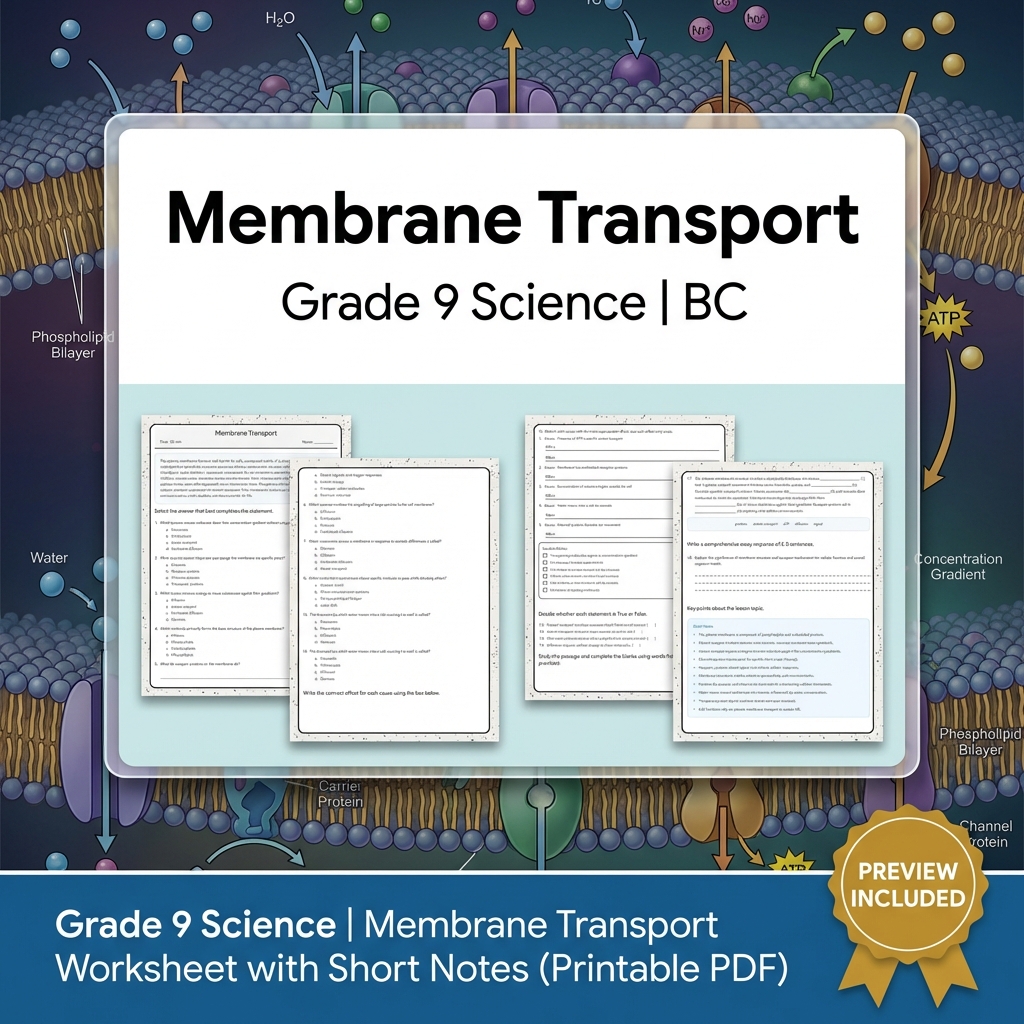
Grade 9 Science | Membrane Transport Worksheet with Short Notes (Printable PDF)
Created byMeadowlark WorksheetsLearning Objectives
- Understand the structure and function of the plasma membrane in cells.
- Differentiate between passive and active transport processes across membranes.
- Identify various proteins involved in membrane transport and their roles.
Also included in: Grade 9 Science Lesson Bundle | BC Framework Worksheets (15-Piece Collection) +1 more
Instant download
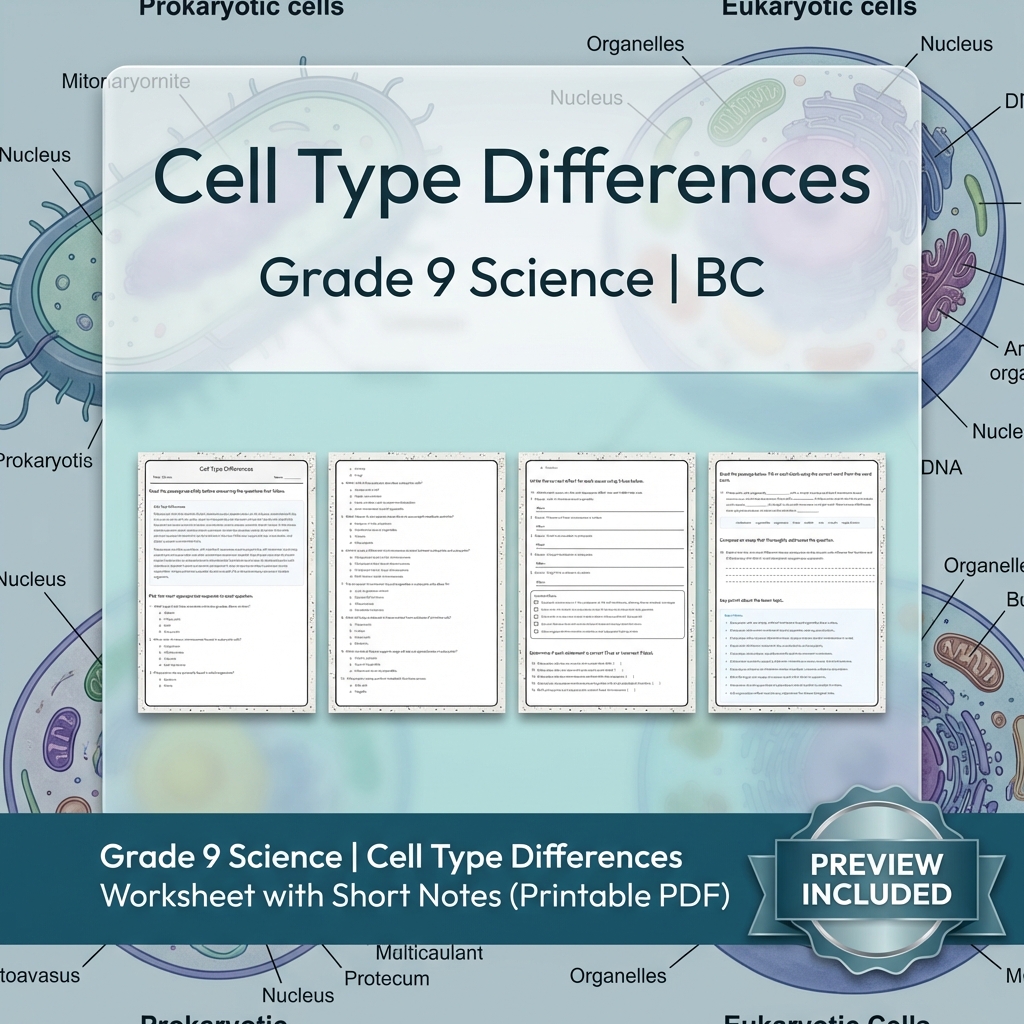
Grade 9 Science | Cell Type Differences Worksheet with Short Notes (PDF)
Created byMeadowlark WorksheetsLearning Objectives
- Describe the fundamental structural differences between prokaryotic and eukaryotic cells.
- Identify key components/organelles unique to each cell type.
- Explain how structural differences relate to cell functions and diversity.
Also included in: Grade 9 Science Lesson Bundle | BC Framework Worksheets (15-Piece Collection) +1 more
Instant download

Heat Quantification Test Prep Worksheets | Grade 9 Science NGSS
Created byPrism Point LearningLearning Objectives
- Use the heat transfer relationships to calculate thermal energy changes from mass and temperature change
- Explain how conduction, convection, and radiation move thermal energy and how signs indicate direction of energy flow
- Apply conservation of energy ideas to closed-system thermal processes such as heating and phase changes
Also included in: Grade 9 Energy Test Prep Science Lesson Bundle Worksheets – NGSS Review
Instant download
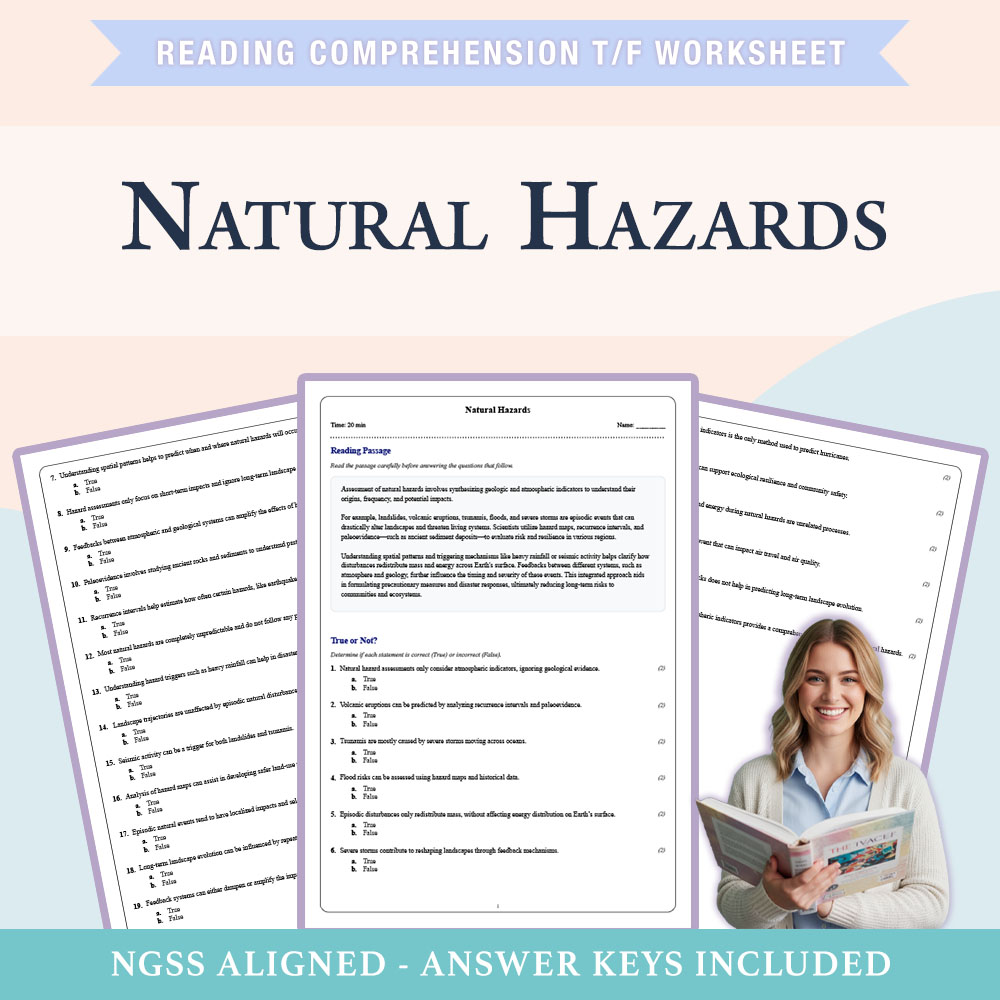
Grade 9 Science | Natural Hazards Worksheet (PDF + Answer Key)
Created byCopper Leaf ClassroomLearning Objectives
- Understand the key types of natural hazards and their characteristics.
- Analyze how geologic and atmospheric indicators are used to assess natural hazard risks.
- Recognize the spatial patterns and triggers of different natural hazard events.
Also included in: Grade 9 Science | Earth Processes & Landform Evolution Bundle (PDF +Answer Key) +1 more
Instant download
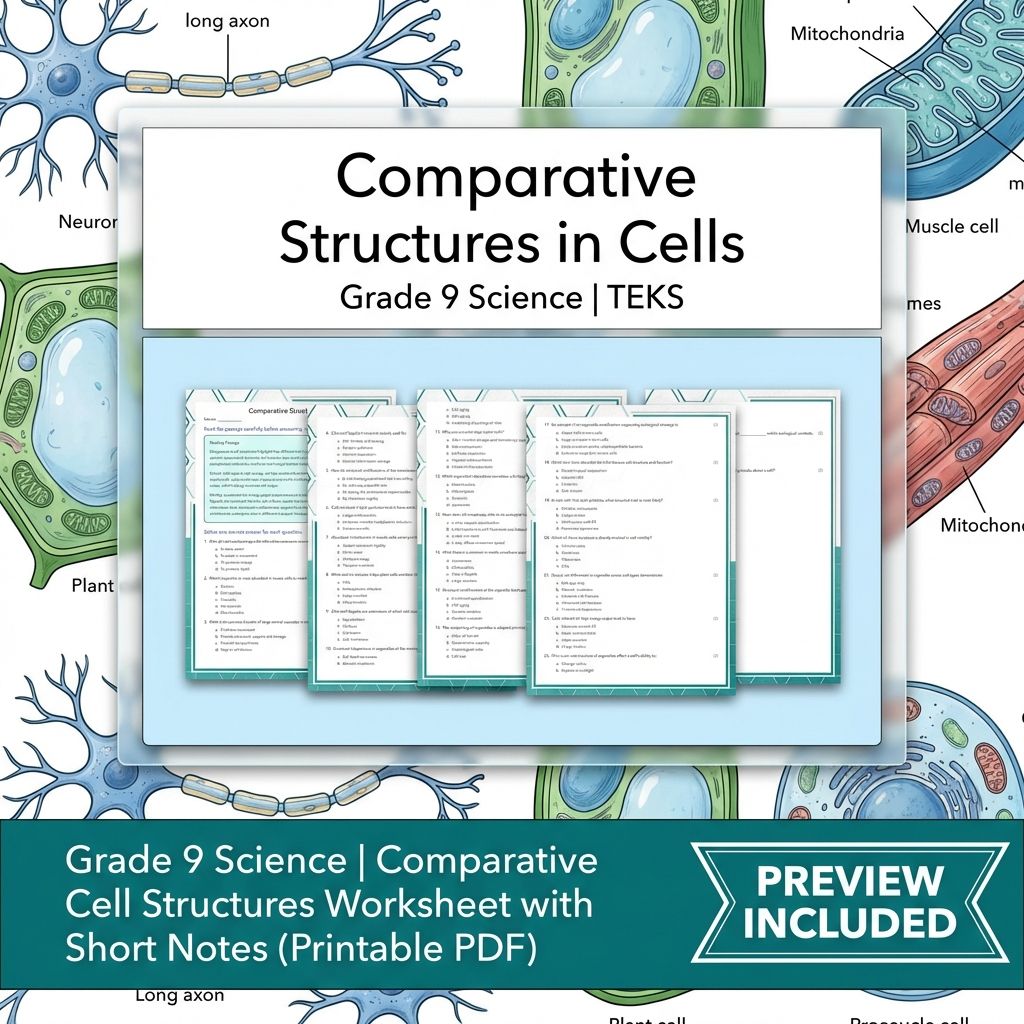
Grade 9 Science Comparative Cell Structures Worksheet with Short Notes (PDF)
Created byMeadowlark WorksheetsLearning Objectives
- Understand how organelle structures vary across cell types and taxa.
- Identify examples of structural adaptations that relate form to function.
- Explain how morphology influences physiological roles and ecological strategies.
Instant download
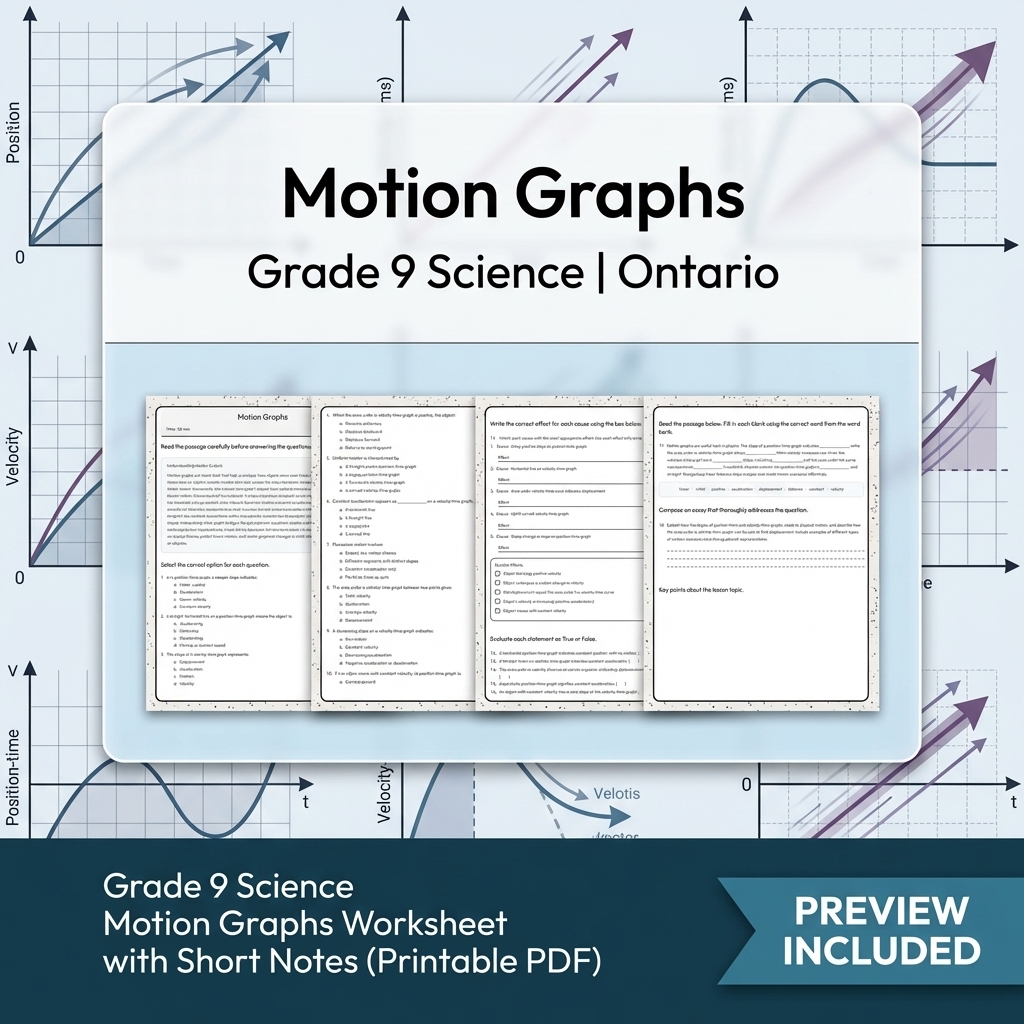
Grade 9 Science Motion Graphs Worksheet with Short Notes (Printable PDF)
Created byMeadowlark WorksheetsLearning Objectives
- Interpret position–time and velocity–time graphs to understand object motion.
- Explain how the slope of position–time graphs indicates velocity, and how the slope of velocity–time graphs indicates acceleration.
- Identify the area under velocity–time graphs to determine displacement.
Also included in: Grade 9 Science Lesson Group: Energy, Forces & Motion Worksheets Bundle
Instant download

Electric Circuits and Ohm's Law Worksheets | Grade 9 Science
 Created bythe curious pencil
Learning Objectives
- Distinguish static charge from sustained electric current
- Explain how conductors, resistors, and switches affect circuit current
- Calculate voltage, current, or resistance using Ohm's law
Instant download

Microscopy Basics Worksheet | Grade 9 Science Activities
Created byPrism Point LearningLearning Objectives
- Explain how magnification, resolution, and contrast affect how microscope images appear.
- Compare how light microscopes and electron microscopes form magnified images.
- Interpret microscope images by using scale bars and recognizing how specimen preparation affects results.
Instant download

Grade 9 Science | Circuit Diagrams Worksheet (Alberta Standards) (PDF)
Created byEvergreen Desk EducationLearning Objectives
- Interpret circuit diagram symbols to identify components, connection types, and circuit topology.
- Use node and reference concepts to predict current paths and relationships between voltages in a simple circuit.
- Translate information from schematic notation (e.g., resistors, switches, power sources) into a clear description of circuit function.
Instant download
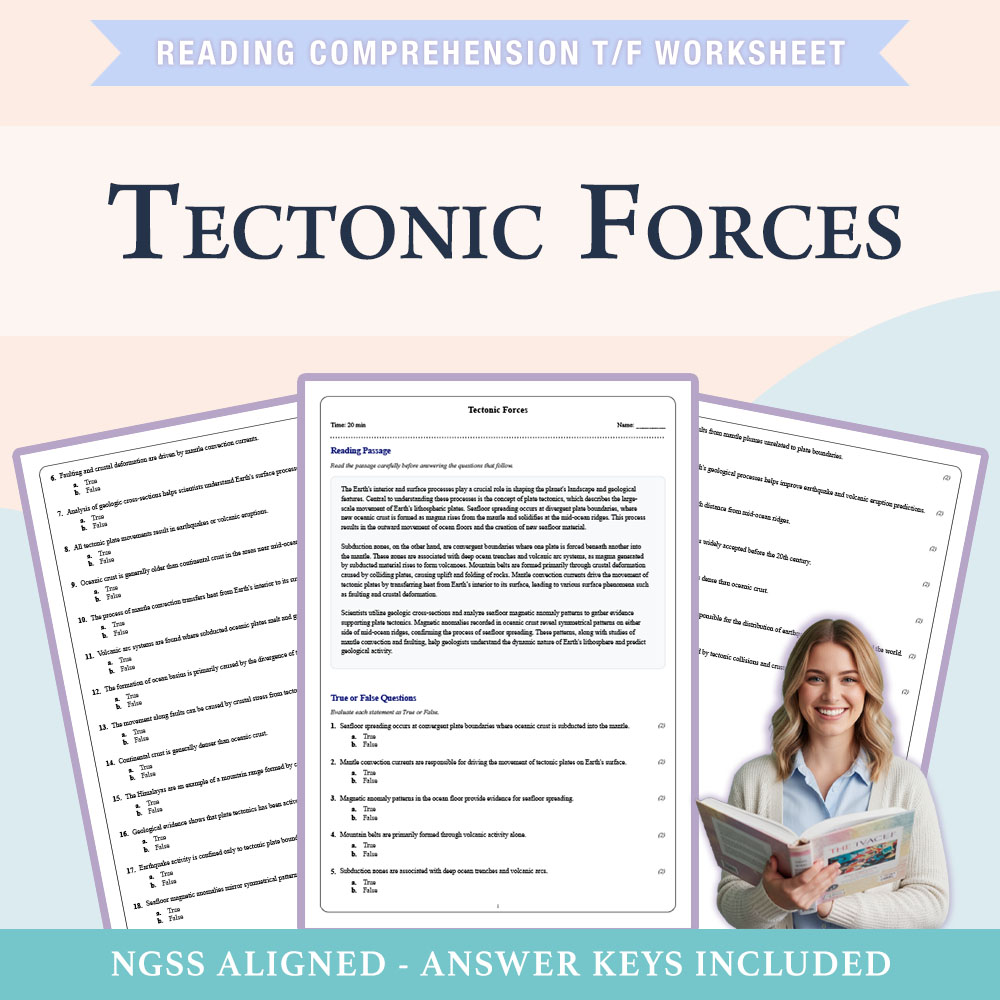
Grade 9 Science | Tectonic Forces True or False Worksheet (PDF + Answer Key)
Created byCopper Leaf ClassroomLearning Objectives
- Understand the processes involved in seafloor spreading, subduction zones, volcanic arc systems, and mountain belt uplift.
- Describe how mantle convection, crustal deformation, and faulting influence Earth's surface features.
- Interpret geologic cross-sections and seafloor magnetic anomaly patterns as evidence for plate tectonics.
Also included in: Grade 9 Science | Earth Processes & Landform Evolution Bundle (PDF +Answer Key) +1 more
Instant download

Signal Integration Worksheet | Standards-Aligned Grade 9 Science Practice
JCreated byJ.S SheetsLearning Objectives
- Understand how the nervous and endocrine systems coordinate responses to stimuli.
- Identify the roles of nerve impulses and hormones in maintaining homeostasis.
- Explain how neural and hormonal signals interact to regulate body functions.
Instant download
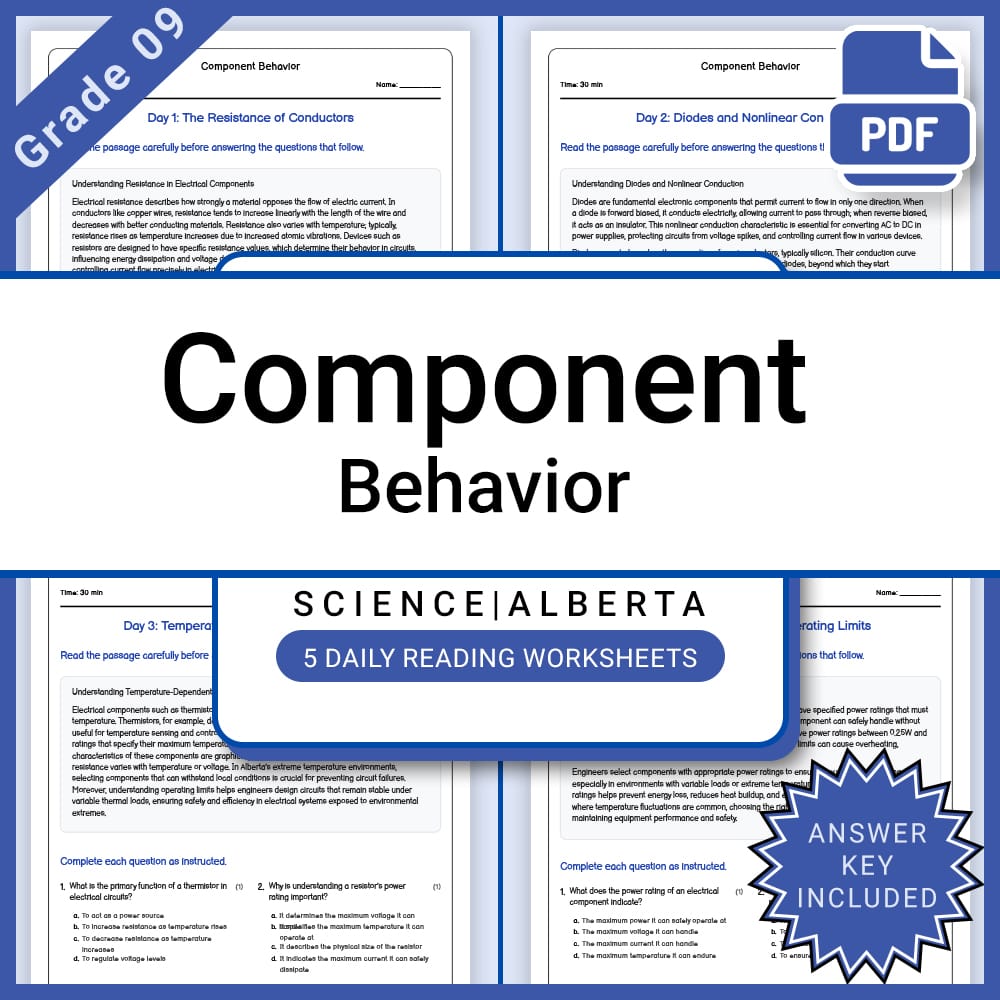
Grade 9 Science – Component Behavior Daily Reading Worksheet + Answer Key
JCreated byJ.S SheetsLearning Objectives
- Identify how resistance in electrical components varies with current and temperature.
- Understand the behavior of diodes and what makes their conduction nonlinear.
- Analyze how temperature affects the resistance of thermistors and other sensors.
Also included in: Grade 9 Science Lesson Bundle: Electrical Systems and Energy Concepts +1 more
Instant download
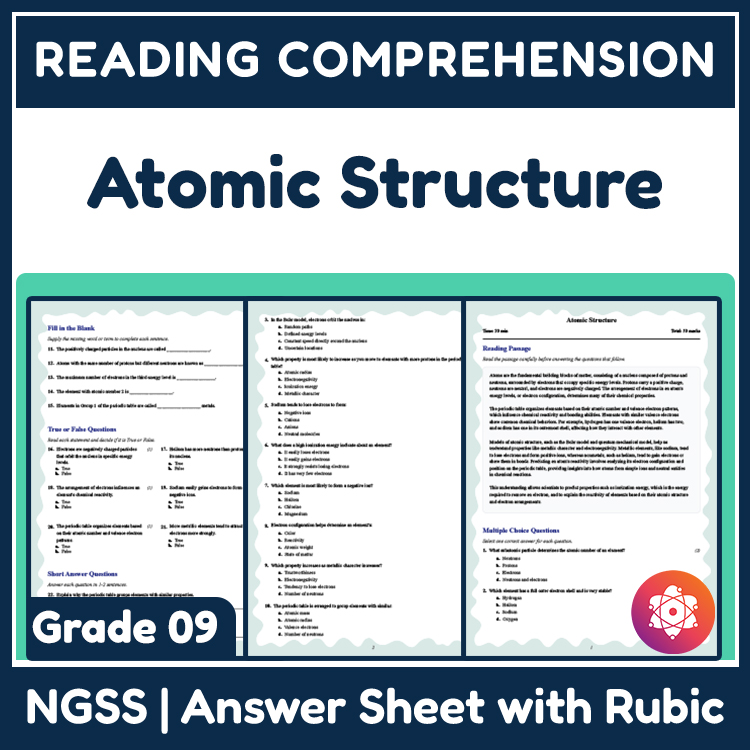
9th Grade Science | Atomic Structure Reading Worksheet & Answer Key (PDF)
JCreated byJ.S SheetsLearning Objectives
- Describe the subatomic particles that make up atoms: protons, neutrons, and electrons.
- Explain electron configurations and quantized energy levels in atoms.
- Understand how the periodic table organizes elements based on valence electrons and chemical behaviors.
Instant download
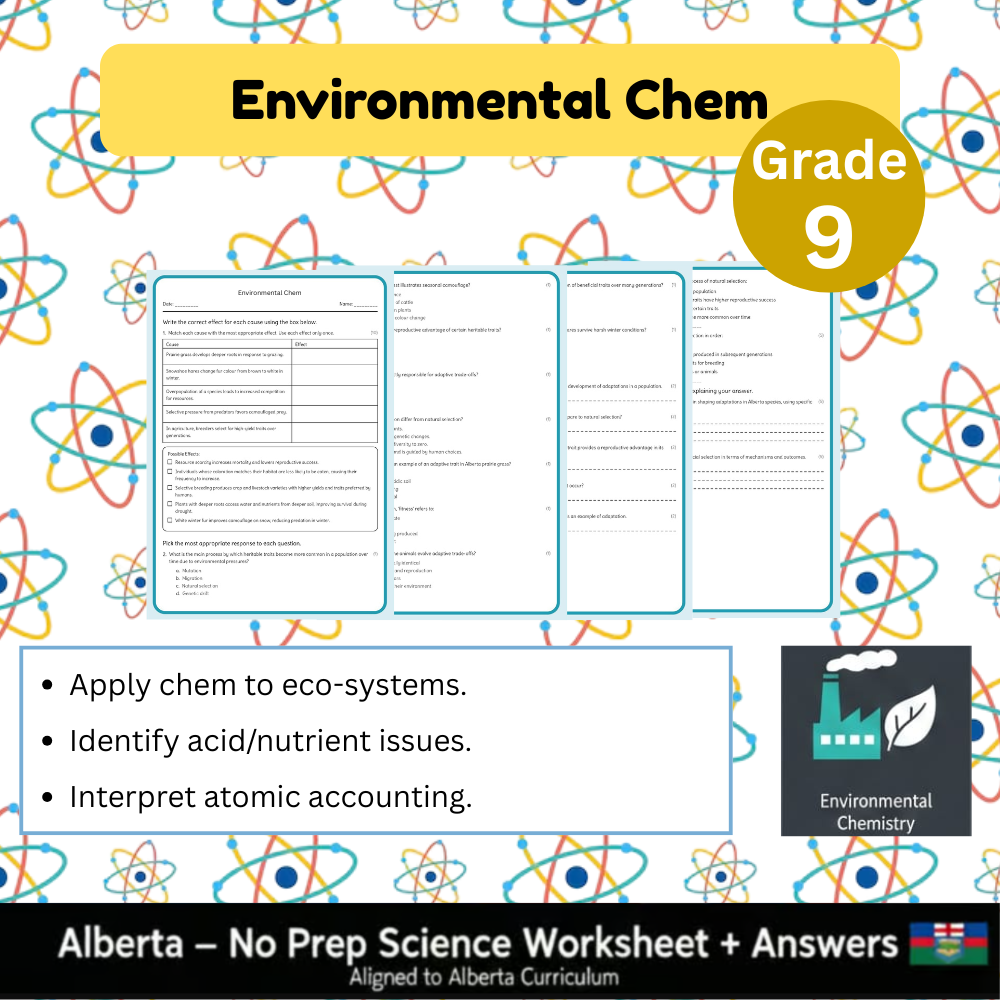
Grade 9 Science | Environmental Chemistry Worksheet (PDF)
Created byBright Mind ResourcesLearning Objectives
- Understand the role of chemical change and mass conservation in environmental systems.
- Identify regional issues such as acid deposition, tailings chemistry, and nutrient cycling.
- Interpret observable evidence of environmental change through particulate, atomic, and mass accounting explanations.
Instant download

Grade 9 Science – Understanding the Design Cycle & Daily Reading Worksheet
Created byBright Mind ResourcesLearning Objectives
- Identify the steps involved in the design cycle.
- Explain the purpose of each step in the engineering process.
- Recognize how the design cycle applies to real-world problems.
Also included in: Engineering & Technology Lesson Bundle | Grade 9 Science | General +1 more
Instant download

Grade 9 Science | Integrated Physiology Worksheet with Short Notes (PDF)
Created byMeadowlark WorksheetsLearning Objectives
- Understand the major systems involved in human physiology and how they work together.
- Identify key organs and their functions within the circulatory, respiratory, and digestive systems.
- Analyze how different physiological processes interact to maintain homeostasis.
Also included in: Grade 9 Science NGSS From Molecules to Organisms Structures & Processes Bundle +1 more
Instant download
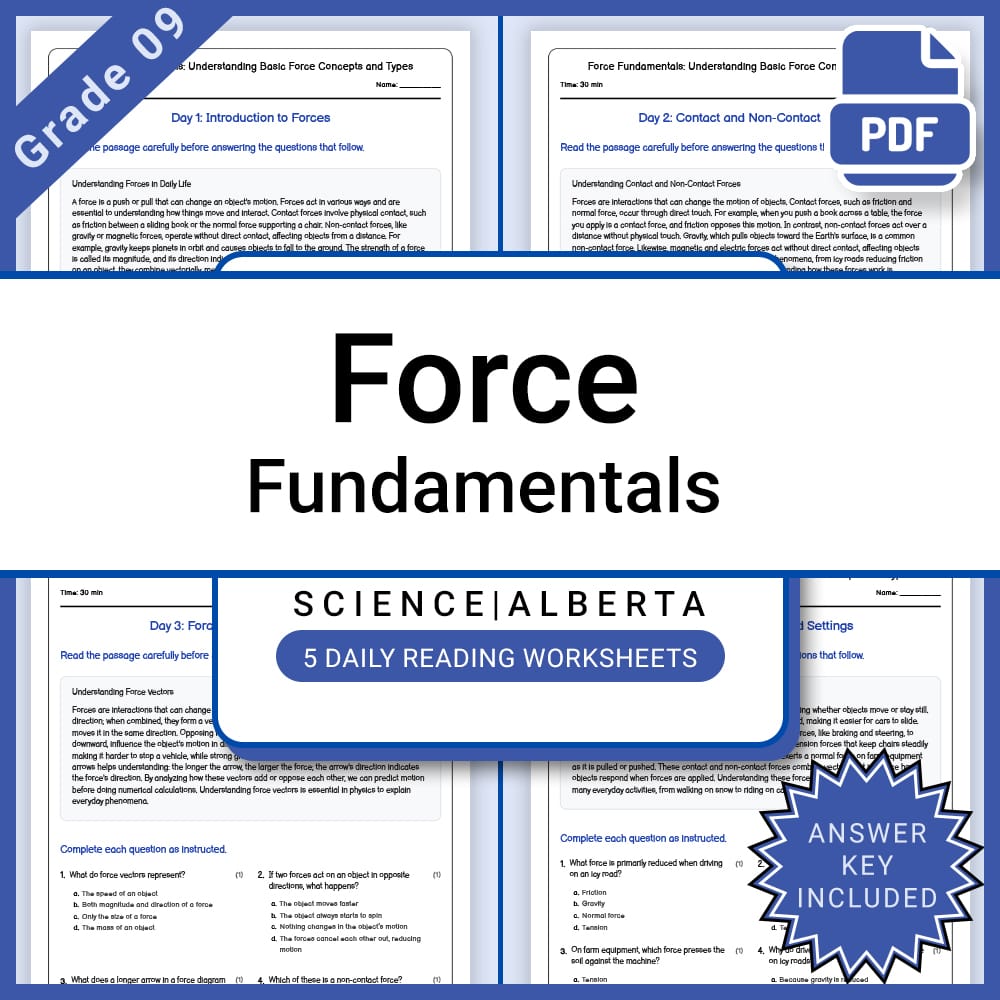
Grade 9 Science – Force Fundamentals Daily Reading Worksheet + Answer Key
JCreated byJ.S SheetsLearning Objectives
- Define what a force is and describe how it affects objects.
- Identify different types of forces, including contact and non-contact forces.
- Explain real-world examples of forces acting on objects.
Also included in: Grade 9 Science Lesson Bundle | Physics and Motion Worksheets +1 more
Instant download
Grade 9 Science | Reaction Quantities Worksheet (PDF) - Alberta Standards
Created byBright Mind ResourcesLearning Objectives
- Understand how to interpret coefficients in balanced chemical equations to determine reaction proportions.
- Apply mass conservation principles to real-world chemical scenarios involving reactants and products.
- Calculate predicted masses of products formed or reactants consumed based on given quantities and coefficients.
Instant download
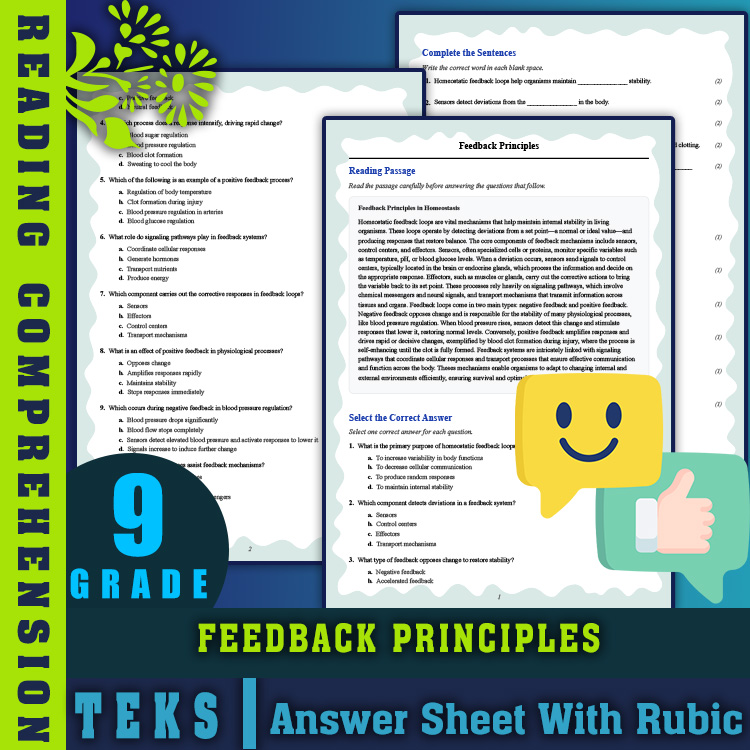
9th Grade Science | Feedback Principles Reading Worksheet (PDF + Answer Key)
JCreated byJ.S SheetsLearning Objectives
- Understand the components and functions of homeostatic feedback loops
- Differentiate between negative and positive feedback mechanisms
- Describe how signaling pathways and transport processes transmit information in feedback systems
Instant download
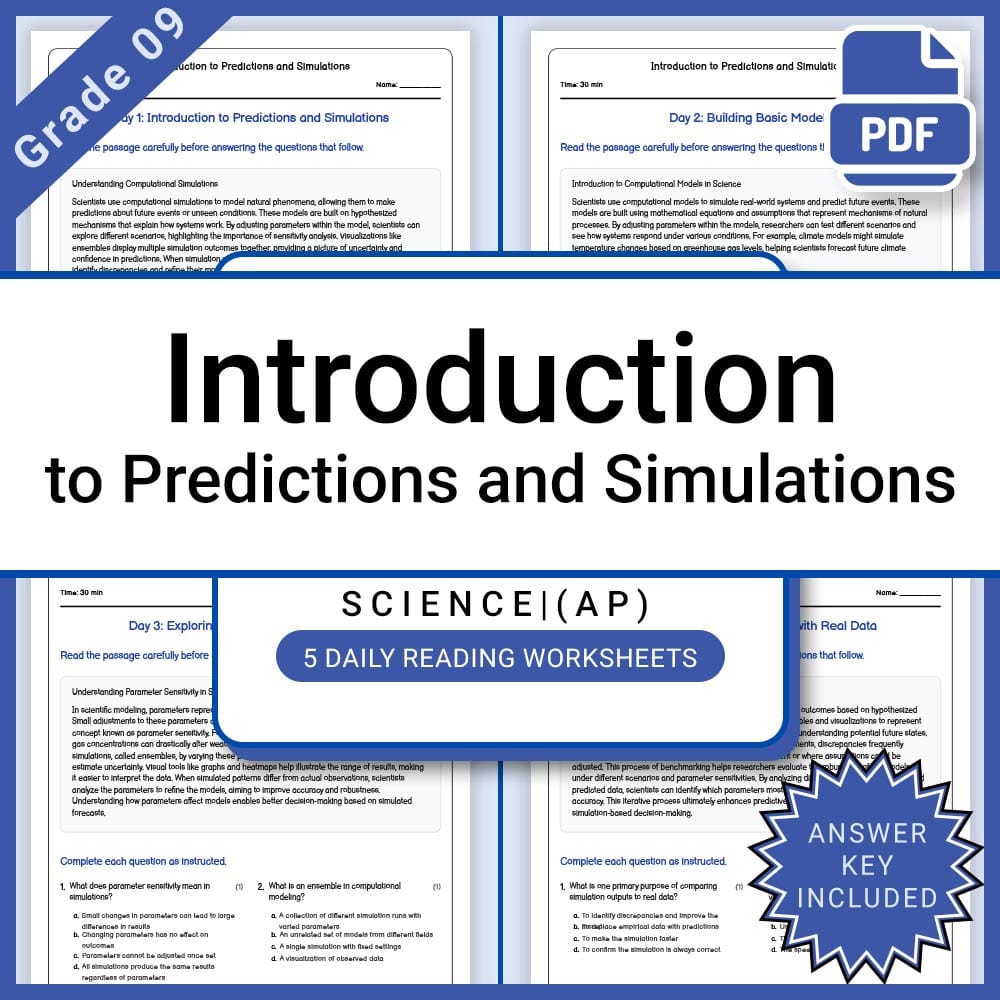
Grade 9 – Introduction to Predictions and Simulations Worksheet + Answer Key
JCreated byJ.S SheetsLearning Objectives
- Understand the purpose of simple computational simulations in science.
- Recognize how models generate predictions based on hypotheses.
- Learn about the role of parameter sensitivity in simulations.
Also included in: Grade 9 Science Lesson Group - AP Framework Daily Reading Worksheets +1 more
Instant download

Molecular Signaling Gene Expression Worksheets | Grade 9 Science
 Created byTeachers Club
Learning Objectives
- Explain how molecular signaling regulates gene expression and protein activity.
- Describe receptor-ligand binding and signal transduction cascades.
- Interpret how mutations alter molecular regulation and systemic outcomes.
Also included in: Grade 9 Science Worksheets: From Molecules to Organisms NGSS Bundle +1 more
Instant download
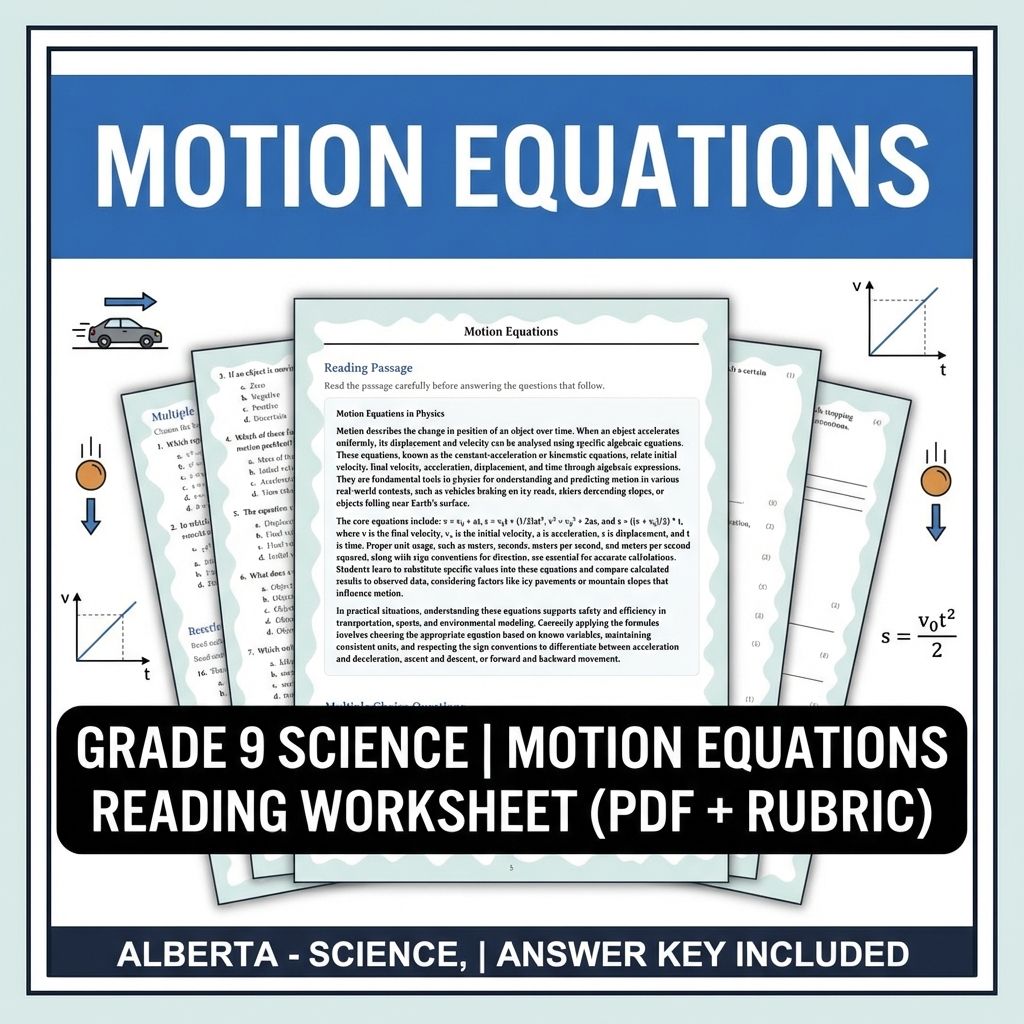
Grade 9 Science | Motion Equations Reading Worksheet (PDF + Rubric)
JCreated byJ.S SheetsLearning Objectives
- Understand the basic form of constant-acceleration motion equations.
- Apply algebraic substitution to solve for displacement, velocity, or time.
- Interpret real-world applications such as stopping distances and falling objects.
Also included in: Grade 9 Science Unit Bundle | Motion, Forces & Energy Activities (PDF) +1 more
Instant download
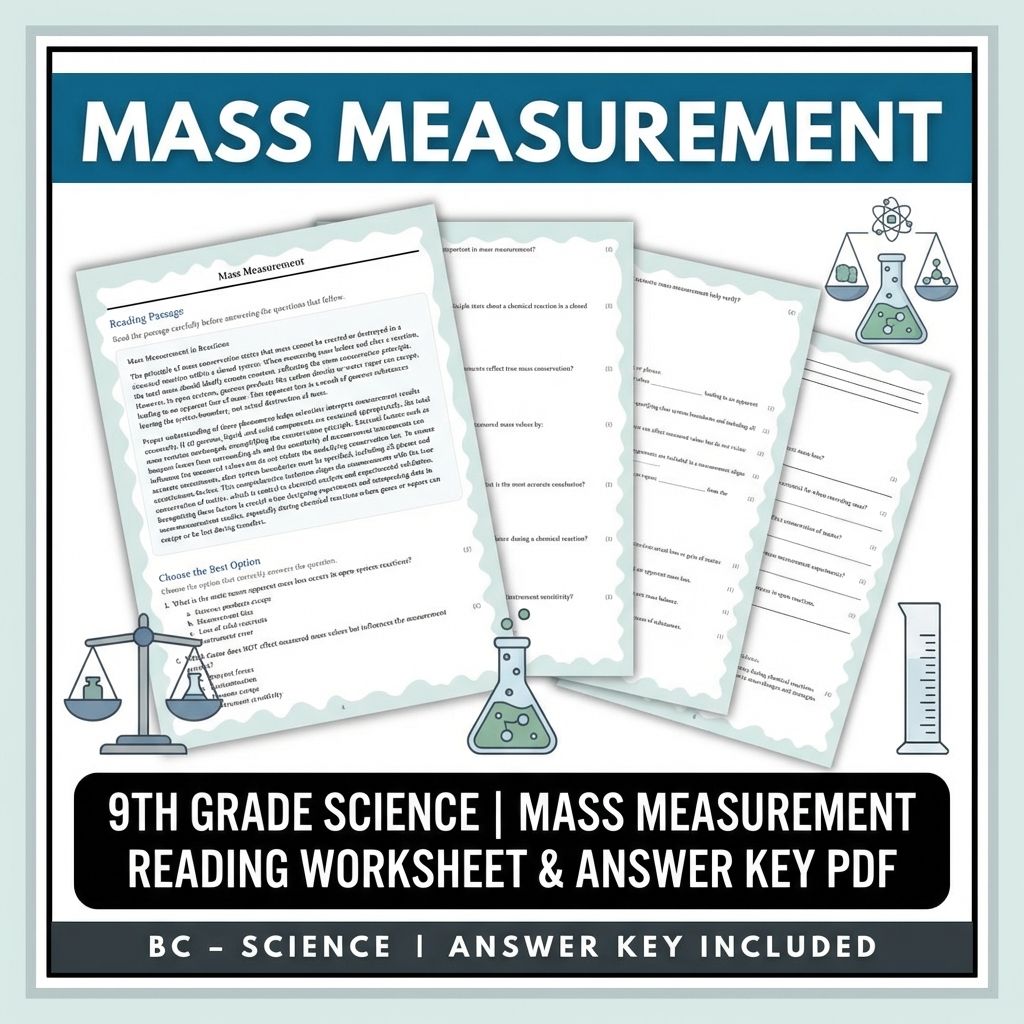
9th Grade Science | Mass Measurement Reading Worksheet & Answer Key PDF
JCreated byJ.S SheetsLearning Objectives
- Understand how measured mass reflects the conservation of atoms during reactions.
- Identify factors affecting the accuracy of mass measurements, such as gaseous escape and external influences.
- Explain the importance of defining system boundaries for mass conservation analysis.
Instant download

Grade 9 Science | Energy Transfer in Mechanical Systems - Reading Comprehension
Created byCoral Reef LearningLearning Objectives
- Identify different types of energy transfer in mechanical systems
- Understand how work, collisions, and friction transfer energy
- Explain how energy changes form during movement
Instant download

Grade 9 Science | Design Communication Worksheet (PDF) | General Standards
Created byEvergreen Desk EducationLearning Objectives
- Explain how labeled diagrams help communicate relationships between components in a design.
- Use data summaries to compare test results to requirements, including noting uncertainty or variation.
- Justify design decisions by connecting observed outcomes to specific design trade-offs.
Also included in: Grade 9 Engineering Design & Prototype Evidence Science Lesson Bundle: General +1 more
Instant download

Cardiopulmonary Interaction Worksheet | Grade 9 Science Practice
Created byPrism Point LearningLearning Objectives
- Explain how the respiratory and cardiovascular systems work together to deliver gases and support cellular respiration.
- Describe how changes in ventilation and blood chemistry can influence heart rate, stroke volume, and vascular resistance.
- Use examples to connect chemoreceptor feedback to regulation of oxygen delivery and acid–base balance.
Instant download
About Grade 9 Science Worksheets
Find Science worksheets built for Grade 9. All 6,926 cover core skills, practice, and review, each an instant PDF download.
Every worksheet on MyTeachingSheets is created by independent teacher-authors and reviewed before publication. All resources download as printable PDFs for classroom, homework, or at-home practice, and many include answer keys. Preview any worksheet free before buying.